EP2614953A1 - Joining of elastomeric pad onto composite part - Google Patents
Joining of elastomeric pad onto composite part Download PDFInfo
- Publication number
- EP2614953A1 EP2614953A1 EP20120155988 EP12155988A EP2614953A1 EP 2614953 A1 EP2614953 A1 EP 2614953A1 EP 20120155988 EP20120155988 EP 20120155988 EP 12155988 A EP12155988 A EP 12155988A EP 2614953 A1 EP2614953 A1 EP 2614953A1
- Authority
- EP
- European Patent Office
- Prior art keywords
- elastomeric
- composite
- shim
- composite part
- layer
- Prior art date
- Legal status (The legal status is an assumption and is not a legal conclusion. Google has not performed a legal analysis and makes no representation as to the accuracy of the status listed.)
- Granted
Links
Images

Classifications
-
- B—PERFORMING OPERATIONS; TRANSPORTING
- B32—LAYERED PRODUCTS
- B32B—LAYERED PRODUCTS, i.e. PRODUCTS BUILT-UP OF STRATA OF FLAT OR NON-FLAT, e.g. CELLULAR OR HONEYCOMB, FORM
- B32B37/00—Methods or apparatus for laminating, e.g. by curing or by ultrasonic bonding
- B32B37/02—Methods or apparatus for laminating, e.g. by curing or by ultrasonic bonding characterised by a sequence of laminating steps, e.g. by adding new layers at consecutive laminating stations
-
- B—PERFORMING OPERATIONS; TRANSPORTING
- B29—WORKING OF PLASTICS; WORKING OF SUBSTANCES IN A PLASTIC STATE IN GENERAL
- B29C—SHAPING OR JOINING OF PLASTICS; SHAPING OF MATERIAL IN A PLASTIC STATE, NOT OTHERWISE PROVIDED FOR; AFTER-TREATMENT OF THE SHAPED PRODUCTS, e.g. REPAIRING
- B29C65/00—Joining or sealing of preformed parts, e.g. welding of plastics materials; Apparatus therefor
- B29C65/02—Joining or sealing of preformed parts, e.g. welding of plastics materials; Apparatus therefor by heating, with or without pressure
-
- B—PERFORMING OPERATIONS; TRANSPORTING
- B29—WORKING OF PLASTICS; WORKING OF SUBSTANCES IN A PLASTIC STATE IN GENERAL
- B29C—SHAPING OR JOINING OF PLASTICS; SHAPING OF MATERIAL IN A PLASTIC STATE, NOT OTHERWISE PROVIDED FOR; AFTER-TREATMENT OF THE SHAPED PRODUCTS, e.g. REPAIRING
- B29C65/00—Joining or sealing of preformed parts, e.g. welding of plastics materials; Apparatus therefor
- B29C65/48—Joining or sealing of preformed parts, e.g. welding of plastics materials; Apparatus therefor using adhesives, i.e. using supplementary joining material; solvent bonding
-
- B—PERFORMING OPERATIONS; TRANSPORTING
- B29—WORKING OF PLASTICS; WORKING OF SUBSTANCES IN A PLASTIC STATE IN GENERAL
- B29C—SHAPING OR JOINING OF PLASTICS; SHAPING OF MATERIAL IN A PLASTIC STATE, NOT OTHERWISE PROVIDED FOR; AFTER-TREATMENT OF THE SHAPED PRODUCTS, e.g. REPAIRING
- B29C65/00—Joining or sealing of preformed parts, e.g. welding of plastics materials; Apparatus therefor
- B29C65/48—Joining or sealing of preformed parts, e.g. welding of plastics materials; Apparatus therefor using adhesives, i.e. using supplementary joining material; solvent bonding
- B29C65/50—Joining or sealing of preformed parts, e.g. welding of plastics materials; Apparatus therefor using adhesives, i.e. using supplementary joining material; solvent bonding using adhesive tape, e.g. thermoplastic tape; using threads or the like
- B29C65/5007—Joining or sealing of preformed parts, e.g. welding of plastics materials; Apparatus therefor using adhesives, i.e. using supplementary joining material; solvent bonding using adhesive tape, e.g. thermoplastic tape; using threads or the like characterised by the structure of said adhesive tape, threads or the like
- B29C65/5014—Joining or sealing of preformed parts, e.g. welding of plastics materials; Apparatus therefor using adhesives, i.e. using supplementary joining material; solvent bonding using adhesive tape, e.g. thermoplastic tape; using threads or the like characterised by the structure of said adhesive tape, threads or the like being fibre-reinforced
-
- B—PERFORMING OPERATIONS; TRANSPORTING
- B29—WORKING OF PLASTICS; WORKING OF SUBSTANCES IN A PLASTIC STATE IN GENERAL
- B29C—SHAPING OR JOINING OF PLASTICS; SHAPING OF MATERIAL IN A PLASTIC STATE, NOT OTHERWISE PROVIDED FOR; AFTER-TREATMENT OF THE SHAPED PRODUCTS, e.g. REPAIRING
- B29C65/00—Joining or sealing of preformed parts, e.g. welding of plastics materials; Apparatus therefor
- B29C65/48—Joining or sealing of preformed parts, e.g. welding of plastics materials; Apparatus therefor using adhesives, i.e. using supplementary joining material; solvent bonding
- B29C65/50—Joining or sealing of preformed parts, e.g. welding of plastics materials; Apparatus therefor using adhesives, i.e. using supplementary joining material; solvent bonding using adhesive tape, e.g. thermoplastic tape; using threads or the like
- B29C65/5007—Joining or sealing of preformed parts, e.g. welding of plastics materials; Apparatus therefor using adhesives, i.e. using supplementary joining material; solvent bonding using adhesive tape, e.g. thermoplastic tape; using threads or the like characterised by the structure of said adhesive tape, threads or the like
- B29C65/5021—Joining or sealing of preformed parts, e.g. welding of plastics materials; Apparatus therefor using adhesives, i.e. using supplementary joining material; solvent bonding using adhesive tape, e.g. thermoplastic tape; using threads or the like characterised by the structure of said adhesive tape, threads or the like being multi-layered
-
- B—PERFORMING OPERATIONS; TRANSPORTING
- B29—WORKING OF PLASTICS; WORKING OF SUBSTANCES IN A PLASTIC STATE IN GENERAL
- B29C—SHAPING OR JOINING OF PLASTICS; SHAPING OF MATERIAL IN A PLASTIC STATE, NOT OTHERWISE PROVIDED FOR; AFTER-TREATMENT OF THE SHAPED PRODUCTS, e.g. REPAIRING
- B29C65/00—Joining or sealing of preformed parts, e.g. welding of plastics materials; Apparatus therefor
- B29C65/48—Joining or sealing of preformed parts, e.g. welding of plastics materials; Apparatus therefor using adhesives, i.e. using supplementary joining material; solvent bonding
- B29C65/50—Joining or sealing of preformed parts, e.g. welding of plastics materials; Apparatus therefor using adhesives, i.e. using supplementary joining material; solvent bonding using adhesive tape, e.g. thermoplastic tape; using threads or the like
- B29C65/5007—Joining or sealing of preformed parts, e.g. welding of plastics materials; Apparatus therefor using adhesives, i.e. using supplementary joining material; solvent bonding using adhesive tape, e.g. thermoplastic tape; using threads or the like characterised by the structure of said adhesive tape, threads or the like
- B29C65/5028—Joining or sealing of preformed parts, e.g. welding of plastics materials; Apparatus therefor using adhesives, i.e. using supplementary joining material; solvent bonding using adhesive tape, e.g. thermoplastic tape; using threads or the like characterised by the structure of said adhesive tape, threads or the like being textile in woven or non-woven form
-
- B—PERFORMING OPERATIONS; TRANSPORTING
- B29—WORKING OF PLASTICS; WORKING OF SUBSTANCES IN A PLASTIC STATE IN GENERAL
- B29C—SHAPING OR JOINING OF PLASTICS; SHAPING OF MATERIAL IN A PLASTIC STATE, NOT OTHERWISE PROVIDED FOR; AFTER-TREATMENT OF THE SHAPED PRODUCTS, e.g. REPAIRING
- B29C65/00—Joining or sealing of preformed parts, e.g. welding of plastics materials; Apparatus therefor
- B29C65/48—Joining or sealing of preformed parts, e.g. welding of plastics materials; Apparatus therefor using adhesives, i.e. using supplementary joining material; solvent bonding
- B29C65/50—Joining or sealing of preformed parts, e.g. welding of plastics materials; Apparatus therefor using adhesives, i.e. using supplementary joining material; solvent bonding using adhesive tape, e.g. thermoplastic tape; using threads or the like
- B29C65/5057—Joining or sealing of preformed parts, e.g. welding of plastics materials; Apparatus therefor using adhesives, i.e. using supplementary joining material; solvent bonding using adhesive tape, e.g. thermoplastic tape; using threads or the like positioned between the surfaces to be joined
-
- B—PERFORMING OPERATIONS; TRANSPORTING
- B29—WORKING OF PLASTICS; WORKING OF SUBSTANCES IN A PLASTIC STATE IN GENERAL
- B29C—SHAPING OR JOINING OF PLASTICS; SHAPING OF MATERIAL IN A PLASTIC STATE, NOT OTHERWISE PROVIDED FOR; AFTER-TREATMENT OF THE SHAPED PRODUCTS, e.g. REPAIRING
- B29C66/00—General aspects of processes or apparatus for joining preformed parts
- B29C66/01—General aspects dealing with the joint area or with the area to be joined
- B29C66/02—Preparation of the material, in the area to be joined, prior to joining or welding
- B29C66/022—Mechanical pre-treatments, e.g. reshaping
- B29C66/0222—Mechanical pre-treatments, e.g. reshaping without removal of material, e.g. cleaning by air blowing or using brushes
-
- B—PERFORMING OPERATIONS; TRANSPORTING
- B29—WORKING OF PLASTICS; WORKING OF SUBSTANCES IN A PLASTIC STATE IN GENERAL
- B29C—SHAPING OR JOINING OF PLASTICS; SHAPING OF MATERIAL IN A PLASTIC STATE, NOT OTHERWISE PROVIDED FOR; AFTER-TREATMENT OF THE SHAPED PRODUCTS, e.g. REPAIRING
- B29C66/00—General aspects of processes or apparatus for joining preformed parts
- B29C66/01—General aspects dealing with the joint area or with the area to be joined
- B29C66/05—Particular design of joint configurations
- B29C66/10—Particular design of joint configurations particular design of the joint cross-sections
- B29C66/11—Joint cross-sections comprising a single joint-segment, i.e. one of the parts to be joined comprising a single joint-segment in the joint cross-section
- B29C66/112—Single lapped joints
- B29C66/1122—Single lap to lap joints, i.e. overlap joints
-
- B—PERFORMING OPERATIONS; TRANSPORTING
- B29—WORKING OF PLASTICS; WORKING OF SUBSTANCES IN A PLASTIC STATE IN GENERAL
- B29C—SHAPING OR JOINING OF PLASTICS; SHAPING OF MATERIAL IN A PLASTIC STATE, NOT OTHERWISE PROVIDED FOR; AFTER-TREATMENT OF THE SHAPED PRODUCTS, e.g. REPAIRING
- B29C66/00—General aspects of processes or apparatus for joining preformed parts
- B29C66/40—General aspects of joining substantially flat articles, e.g. plates, sheets or web-like materials; Making flat seams in tubular or hollow articles; Joining single elements to substantially flat surfaces
- B29C66/41—Joining substantially flat articles ; Making flat seams in tubular or hollow articles
- B29C66/45—Joining of substantially the whole surface of the articles
-
- B—PERFORMING OPERATIONS; TRANSPORTING
- B29—WORKING OF PLASTICS; WORKING OF SUBSTANCES IN A PLASTIC STATE IN GENERAL
- B29C—SHAPING OR JOINING OF PLASTICS; SHAPING OF MATERIAL IN A PLASTIC STATE, NOT OTHERWISE PROVIDED FOR; AFTER-TREATMENT OF THE SHAPED PRODUCTS, e.g. REPAIRING
- B29C66/00—General aspects of processes or apparatus for joining preformed parts
- B29C66/40—General aspects of joining substantially flat articles, e.g. plates, sheets or web-like materials; Making flat seams in tubular or hollow articles; Joining single elements to substantially flat surfaces
- B29C66/47—Joining single elements to sheets, plates or other substantially flat surfaces
- B29C66/472—Joining single elements to sheets, plates or other substantially flat surfaces said single elements being substantially flat
- B29C66/4722—Fixing strips to surfaces other than edge faces
-
- B—PERFORMING OPERATIONS; TRANSPORTING
- B29—WORKING OF PLASTICS; WORKING OF SUBSTANCES IN A PLASTIC STATE IN GENERAL
- B29C—SHAPING OR JOINING OF PLASTICS; SHAPING OF MATERIAL IN A PLASTIC STATE, NOT OTHERWISE PROVIDED FOR; AFTER-TREATMENT OF THE SHAPED PRODUCTS, e.g. REPAIRING
- B29C66/00—General aspects of processes or apparatus for joining preformed parts
- B29C66/70—General aspects of processes or apparatus for joining preformed parts characterised by the composition, physical properties or the structure of the material of the parts to be joined; Joining with non-plastics material
- B29C66/72—General aspects of processes or apparatus for joining preformed parts characterised by the composition, physical properties or the structure of the material of the parts to be joined; Joining with non-plastics material characterised by the structure of the material of the parts to be joined
- B29C66/721—Fibre-reinforced materials
- B29C66/7212—Fibre-reinforced materials characterised by the composition of the fibres
-
- B—PERFORMING OPERATIONS; TRANSPORTING
- B29—WORKING OF PLASTICS; WORKING OF SUBSTANCES IN A PLASTIC STATE IN GENERAL
- B29C—SHAPING OR JOINING OF PLASTICS; SHAPING OF MATERIAL IN A PLASTIC STATE, NOT OTHERWISE PROVIDED FOR; AFTER-TREATMENT OF THE SHAPED PRODUCTS, e.g. REPAIRING
- B29C66/00—General aspects of processes or apparatus for joining preformed parts
- B29C66/70—General aspects of processes or apparatus for joining preformed parts characterised by the composition, physical properties or the structure of the material of the parts to be joined; Joining with non-plastics material
- B29C66/72—General aspects of processes or apparatus for joining preformed parts characterised by the composition, physical properties or the structure of the material of the parts to be joined; Joining with non-plastics material characterised by the structure of the material of the parts to be joined
- B29C66/721—Fibre-reinforced materials
- B29C66/7214—Fibre-reinforced materials characterised by the length of the fibres
- B29C66/72141—Fibres of continuous length
-
- B—PERFORMING OPERATIONS; TRANSPORTING
- B29—WORKING OF PLASTICS; WORKING OF SUBSTANCES IN A PLASTIC STATE IN GENERAL
- B29C—SHAPING OR JOINING OF PLASTICS; SHAPING OF MATERIAL IN A PLASTIC STATE, NOT OTHERWISE PROVIDED FOR; AFTER-TREATMENT OF THE SHAPED PRODUCTS, e.g. REPAIRING
- B29C66/00—General aspects of processes or apparatus for joining preformed parts
- B29C66/70—General aspects of processes or apparatus for joining preformed parts characterised by the composition, physical properties or the structure of the material of the parts to be joined; Joining with non-plastics material
- B29C66/73—General aspects of processes or apparatus for joining preformed parts characterised by the composition, physical properties or the structure of the material of the parts to be joined; Joining with non-plastics material characterised by the intensive physical properties of the material of the parts to be joined, by the optical properties of the material of the parts to be joined, by the extensive physical properties of the parts to be joined, by the state of the material of the parts to be joined or by the material of the parts to be joined being a thermoplastic or a thermoset
- B29C66/737—General aspects of processes or apparatus for joining preformed parts characterised by the composition, physical properties or the structure of the material of the parts to be joined; Joining with non-plastics material characterised by the intensive physical properties of the material of the parts to be joined, by the optical properties of the material of the parts to be joined, by the extensive physical properties of the parts to be joined, by the state of the material of the parts to be joined or by the material of the parts to be joined being a thermoplastic or a thermoset characterised by the state of the material of the parts to be joined
- B29C66/7375—General aspects of processes or apparatus for joining preformed parts characterised by the composition, physical properties or the structure of the material of the parts to be joined; Joining with non-plastics material characterised by the intensive physical properties of the material of the parts to be joined, by the optical properties of the material of the parts to be joined, by the extensive physical properties of the parts to be joined, by the state of the material of the parts to be joined or by the material of the parts to be joined being a thermoplastic or a thermoset characterised by the state of the material of the parts to be joined uncured, partially cured or fully cured
- B29C66/73751—General aspects of processes or apparatus for joining preformed parts characterised by the composition, physical properties or the structure of the material of the parts to be joined; Joining with non-plastics material characterised by the intensive physical properties of the material of the parts to be joined, by the optical properties of the material of the parts to be joined, by the extensive physical properties of the parts to be joined, by the state of the material of the parts to be joined or by the material of the parts to be joined being a thermoplastic or a thermoset characterised by the state of the material of the parts to be joined uncured, partially cured or fully cured the to-be-joined area of at least one of the parts to be joined being uncured, i.e. non cross-linked, non vulcanized
-
- B—PERFORMING OPERATIONS; TRANSPORTING
- B29—WORKING OF PLASTICS; WORKING OF SUBSTANCES IN A PLASTIC STATE IN GENERAL
- B29C—SHAPING OR JOINING OF PLASTICS; SHAPING OF MATERIAL IN A PLASTIC STATE, NOT OTHERWISE PROVIDED FOR; AFTER-TREATMENT OF THE SHAPED PRODUCTS, e.g. REPAIRING
- B29C66/00—General aspects of processes or apparatus for joining preformed parts
- B29C66/70—General aspects of processes or apparatus for joining preformed parts characterised by the composition, physical properties or the structure of the material of the parts to be joined; Joining with non-plastics material
- B29C66/73—General aspects of processes or apparatus for joining preformed parts characterised by the composition, physical properties or the structure of the material of the parts to be joined; Joining with non-plastics material characterised by the intensive physical properties of the material of the parts to be joined, by the optical properties of the material of the parts to be joined, by the extensive physical properties of the parts to be joined, by the state of the material of the parts to be joined or by the material of the parts to be joined being a thermoplastic or a thermoset
- B29C66/737—General aspects of processes or apparatus for joining preformed parts characterised by the composition, physical properties or the structure of the material of the parts to be joined; Joining with non-plastics material characterised by the intensive physical properties of the material of the parts to be joined, by the optical properties of the material of the parts to be joined, by the extensive physical properties of the parts to be joined, by the state of the material of the parts to be joined or by the material of the parts to be joined being a thermoplastic or a thermoset characterised by the state of the material of the parts to be joined
- B29C66/7375—General aspects of processes or apparatus for joining preformed parts characterised by the composition, physical properties or the structure of the material of the parts to be joined; Joining with non-plastics material characterised by the intensive physical properties of the material of the parts to be joined, by the optical properties of the material of the parts to be joined, by the extensive physical properties of the parts to be joined, by the state of the material of the parts to be joined or by the material of the parts to be joined being a thermoplastic or a thermoset characterised by the state of the material of the parts to be joined uncured, partially cured or fully cured
- B29C66/73755—General aspects of processes or apparatus for joining preformed parts characterised by the composition, physical properties or the structure of the material of the parts to be joined; Joining with non-plastics material characterised by the intensive physical properties of the material of the parts to be joined, by the optical properties of the material of the parts to be joined, by the extensive physical properties of the parts to be joined, by the state of the material of the parts to be joined or by the material of the parts to be joined being a thermoplastic or a thermoset characterised by the state of the material of the parts to be joined uncured, partially cured or fully cured the to-be-joined area of at least one of the parts to be joined being fully cured, i.e. fully cross-linked, fully vulcanized
-
- B—PERFORMING OPERATIONS; TRANSPORTING
- B29—WORKING OF PLASTICS; WORKING OF SUBSTANCES IN A PLASTIC STATE IN GENERAL
- B29C—SHAPING OR JOINING OF PLASTICS; SHAPING OF MATERIAL IN A PLASTIC STATE, NOT OTHERWISE PROVIDED FOR; AFTER-TREATMENT OF THE SHAPED PRODUCTS, e.g. REPAIRING
- B29C66/00—General aspects of processes or apparatus for joining preformed parts
- B29C66/80—General aspects of machine operations or constructions and parts thereof
- B29C66/83—General aspects of machine operations or constructions and parts thereof characterised by the movement of the joining or pressing tools
- B29C66/832—Reciprocating joining or pressing tools
- B29C66/8322—Joining or pressing tools reciprocating along one axis
-
- B—PERFORMING OPERATIONS; TRANSPORTING
- B29—WORKING OF PLASTICS; WORKING OF SUBSTANCES IN A PLASTIC STATE IN GENERAL
- B29C—SHAPING OR JOINING OF PLASTICS; SHAPING OF MATERIAL IN A PLASTIC STATE, NOT OTHERWISE PROVIDED FOR; AFTER-TREATMENT OF THE SHAPED PRODUCTS, e.g. REPAIRING
- B29C66/00—General aspects of processes or apparatus for joining preformed parts
- B29C66/90—Measuring or controlling the joining process
- B29C66/91—Measuring or controlling the joining process by measuring or controlling the temperature, the heat or the thermal flux
- B29C66/914—Measuring or controlling the joining process by measuring or controlling the temperature, the heat or the thermal flux by controlling or regulating the temperature, the heat or the thermal flux
- B29C66/9141—Measuring or controlling the joining process by measuring or controlling the temperature, the heat or the thermal flux by controlling or regulating the temperature, the heat or the thermal flux by controlling or regulating the temperature
- B29C66/91411—Measuring or controlling the joining process by measuring or controlling the temperature, the heat or the thermal flux by controlling or regulating the temperature, the heat or the thermal flux by controlling or regulating the temperature of the parts to be joined, e.g. the joining process taking the temperature of the parts to be joined into account
-
- B—PERFORMING OPERATIONS; TRANSPORTING
- B29—WORKING OF PLASTICS; WORKING OF SUBSTANCES IN A PLASTIC STATE IN GENERAL
- B29C—SHAPING OR JOINING OF PLASTICS; SHAPING OF MATERIAL IN A PLASTIC STATE, NOT OTHERWISE PROVIDED FOR; AFTER-TREATMENT OF THE SHAPED PRODUCTS, e.g. REPAIRING
- B29C66/00—General aspects of processes or apparatus for joining preformed parts
- B29C66/90—Measuring or controlling the joining process
- B29C66/91—Measuring or controlling the joining process by measuring or controlling the temperature, the heat or the thermal flux
- B29C66/919—Measuring or controlling the joining process by measuring or controlling the temperature, the heat or the thermal flux characterised by specific temperature, heat or thermal flux values or ranges
-
- B—PERFORMING OPERATIONS; TRANSPORTING
- B32—LAYERED PRODUCTS
- B32B—LAYERED PRODUCTS, i.e. PRODUCTS BUILT-UP OF STRATA OF FLAT OR NON-FLAT, e.g. CELLULAR OR HONEYCOMB, FORM
- B32B25/00—Layered products comprising a layer of natural or synthetic rubber
- B32B25/10—Layered products comprising a layer of natural or synthetic rubber next to a fibrous or filamentary layer
-
- B—PERFORMING OPERATIONS; TRANSPORTING
- B32—LAYERED PRODUCTS
- B32B—LAYERED PRODUCTS, i.e. PRODUCTS BUILT-UP OF STRATA OF FLAT OR NON-FLAT, e.g. CELLULAR OR HONEYCOMB, FORM
- B32B37/00—Methods or apparatus for laminating, e.g. by curing or by ultrasonic bonding
- B32B37/14—Methods or apparatus for laminating, e.g. by curing or by ultrasonic bonding characterised by the properties of the layers
- B32B37/16—Methods or apparatus for laminating, e.g. by curing or by ultrasonic bonding characterised by the properties of the layers with all layers existing as coherent layers before laminating
- B32B37/18—Methods or apparatus for laminating, e.g. by curing or by ultrasonic bonding characterised by the properties of the layers with all layers existing as coherent layers before laminating involving the assembly of discrete sheets or panels only
-
- B—PERFORMING OPERATIONS; TRANSPORTING
- B32—LAYERED PRODUCTS
- B32B—LAYERED PRODUCTS, i.e. PRODUCTS BUILT-UP OF STRATA OF FLAT OR NON-FLAT, e.g. CELLULAR OR HONEYCOMB, FORM
- B32B7/00—Layered products characterised by the relation between layers; Layered products characterised by the relative orientation of features between layers, or by the relative values of a measurable parameter between layers, i.e. products comprising layers having different physical, chemical or physicochemical properties; Layered products characterised by the interconnection of layers
- B32B7/04—Interconnection of layers
- B32B7/12—Interconnection of layers using interposed adhesives or interposed materials with bonding properties
-
- C—CHEMISTRY; METALLURGY
- C08—ORGANIC MACROMOLECULAR COMPOUNDS; THEIR PREPARATION OR CHEMICAL WORKING-UP; COMPOSITIONS BASED THEREON
- C08J—WORKING-UP; GENERAL PROCESSES OF COMPOUNDING; AFTER-TREATMENT NOT COVERED BY SUBCLASSES C08B, C08C, C08F, C08G or C08H
- C08J5/00—Manufacture of articles or shaped materials containing macromolecular substances
- C08J5/12—Bonding of a preformed macromolecular material to the same or other solid material such as metal, glass, leather, e.g. using adhesives
- C08J5/121—Bonding of a preformed macromolecular material to the same or other solid material such as metal, glass, leather, e.g. using adhesives by heating
-
- C—CHEMISTRY; METALLURGY
- C09—DYES; PAINTS; POLISHES; NATURAL RESINS; ADHESIVES; COMPOSITIONS NOT OTHERWISE PROVIDED FOR; APPLICATIONS OF MATERIALS NOT OTHERWISE PROVIDED FOR
- C09J—ADHESIVES; NON-MECHANICAL ASPECTS OF ADHESIVE PROCESSES IN GENERAL; ADHESIVE PROCESSES NOT PROVIDED FOR ELSEWHERE; USE OF MATERIALS AS ADHESIVES
- C09J5/00—Adhesive processes in general; Adhesive processes not provided for elsewhere, e.g. relating to primers
- C09J5/06—Adhesive processes in general; Adhesive processes not provided for elsewhere, e.g. relating to primers involving heating of the applied adhesive
-
- B—PERFORMING OPERATIONS; TRANSPORTING
- B29—WORKING OF PLASTICS; WORKING OF SUBSTANCES IN A PLASTIC STATE IN GENERAL
- B29C—SHAPING OR JOINING OF PLASTICS; SHAPING OF MATERIAL IN A PLASTIC STATE, NOT OTHERWISE PROVIDED FOR; AFTER-TREATMENT OF THE SHAPED PRODUCTS, e.g. REPAIRING
- B29C35/00—Heating, cooling or curing, e.g. crosslinking or vulcanising; Apparatus therefor
- B29C35/02—Heating or curing, e.g. crosslinking or vulcanizing during moulding, e.g. in a mould
-
- B—PERFORMING OPERATIONS; TRANSPORTING
- B29—WORKING OF PLASTICS; WORKING OF SUBSTANCES IN A PLASTIC STATE IN GENERAL
- B29C—SHAPING OR JOINING OF PLASTICS; SHAPING OF MATERIAL IN A PLASTIC STATE, NOT OTHERWISE PROVIDED FOR; AFTER-TREATMENT OF THE SHAPED PRODUCTS, e.g. REPAIRING
- B29C65/00—Joining or sealing of preformed parts, e.g. welding of plastics materials; Apparatus therefor
- B29C65/48—Joining or sealing of preformed parts, e.g. welding of plastics materials; Apparatus therefor using adhesives, i.e. using supplementary joining material; solvent bonding
- B29C65/4805—Joining or sealing of preformed parts, e.g. welding of plastics materials; Apparatus therefor using adhesives, i.e. using supplementary joining material; solvent bonding characterised by the type of adhesives
- B29C65/483—Reactive adhesives, e.g. chemically curing adhesives
- B29C65/4835—Heat curing adhesives
-
- B—PERFORMING OPERATIONS; TRANSPORTING
- B29—WORKING OF PLASTICS; WORKING OF SUBSTANCES IN A PLASTIC STATE IN GENERAL
- B29C—SHAPING OR JOINING OF PLASTICS; SHAPING OF MATERIAL IN A PLASTIC STATE, NOT OTHERWISE PROVIDED FOR; AFTER-TREATMENT OF THE SHAPED PRODUCTS, e.g. REPAIRING
- B29C66/00—General aspects of processes or apparatus for joining preformed parts
- B29C66/70—General aspects of processes or apparatus for joining preformed parts characterised by the composition, physical properties or the structure of the material of the parts to be joined; Joining with non-plastics material
- B29C66/71—General aspects of processes or apparatus for joining preformed parts characterised by the composition, physical properties or the structure of the material of the parts to be joined; Joining with non-plastics material characterised by the composition of the plastics material of the parts to be joined
-
- B—PERFORMING OPERATIONS; TRANSPORTING
- B29—WORKING OF PLASTICS; WORKING OF SUBSTANCES IN A PLASTIC STATE IN GENERAL
- B29C—SHAPING OR JOINING OF PLASTICS; SHAPING OF MATERIAL IN A PLASTIC STATE, NOT OTHERWISE PROVIDED FOR; AFTER-TREATMENT OF THE SHAPED PRODUCTS, e.g. REPAIRING
- B29C66/00—General aspects of processes or apparatus for joining preformed parts
- B29C66/70—General aspects of processes or apparatus for joining preformed parts characterised by the composition, physical properties or the structure of the material of the parts to be joined; Joining with non-plastics material
- B29C66/73—General aspects of processes or apparatus for joining preformed parts characterised by the composition, physical properties or the structure of the material of the parts to be joined; Joining with non-plastics material characterised by the intensive physical properties of the material of the parts to be joined, by the optical properties of the material of the parts to be joined, by the extensive physical properties of the parts to be joined, by the state of the material of the parts to be joined or by the material of the parts to be joined being a thermoplastic or a thermoset
- B29C66/739—General aspects of processes or apparatus for joining preformed parts characterised by the composition, physical properties or the structure of the material of the parts to be joined; Joining with non-plastics material characterised by the intensive physical properties of the material of the parts to be joined, by the optical properties of the material of the parts to be joined, by the extensive physical properties of the parts to be joined, by the state of the material of the parts to be joined or by the material of the parts to be joined being a thermoplastic or a thermoset characterised by the material of the parts to be joined being a thermoplastic or a thermoset
- B29C66/7392—General aspects of processes or apparatus for joining preformed parts characterised by the composition, physical properties or the structure of the material of the parts to be joined; Joining with non-plastics material characterised by the intensive physical properties of the material of the parts to be joined, by the optical properties of the material of the parts to be joined, by the extensive physical properties of the parts to be joined, by the state of the material of the parts to be joined or by the material of the parts to be joined being a thermoplastic or a thermoset characterised by the material of the parts to be joined being a thermoplastic or a thermoset characterised by the material of at least one of the parts being a thermoplastic
-
- B—PERFORMING OPERATIONS; TRANSPORTING
- B29—WORKING OF PLASTICS; WORKING OF SUBSTANCES IN A PLASTIC STATE IN GENERAL
- B29C—SHAPING OR JOINING OF PLASTICS; SHAPING OF MATERIAL IN A PLASTIC STATE, NOT OTHERWISE PROVIDED FOR; AFTER-TREATMENT OF THE SHAPED PRODUCTS, e.g. REPAIRING
- B29C66/00—General aspects of processes or apparatus for joining preformed parts
- B29C66/70—General aspects of processes or apparatus for joining preformed parts characterised by the composition, physical properties or the structure of the material of the parts to be joined; Joining with non-plastics material
- B29C66/73—General aspects of processes or apparatus for joining preformed parts characterised by the composition, physical properties or the structure of the material of the parts to be joined; Joining with non-plastics material characterised by the intensive physical properties of the material of the parts to be joined, by the optical properties of the material of the parts to be joined, by the extensive physical properties of the parts to be joined, by the state of the material of the parts to be joined or by the material of the parts to be joined being a thermoplastic or a thermoset
- B29C66/739—General aspects of processes or apparatus for joining preformed parts characterised by the composition, physical properties or the structure of the material of the parts to be joined; Joining with non-plastics material characterised by the intensive physical properties of the material of the parts to be joined, by the optical properties of the material of the parts to be joined, by the extensive physical properties of the parts to be joined, by the state of the material of the parts to be joined or by the material of the parts to be joined being a thermoplastic or a thermoset characterised by the material of the parts to be joined being a thermoplastic or a thermoset
- B29C66/7394—General aspects of processes or apparatus for joining preformed parts characterised by the composition, physical properties or the structure of the material of the parts to be joined; Joining with non-plastics material characterised by the intensive physical properties of the material of the parts to be joined, by the optical properties of the material of the parts to be joined, by the extensive physical properties of the parts to be joined, by the state of the material of the parts to be joined or by the material of the parts to be joined being a thermoplastic or a thermoset characterised by the material of the parts to be joined being a thermoplastic or a thermoset characterised by the material of at least one of the parts being a thermoset
-
- B—PERFORMING OPERATIONS; TRANSPORTING
- B29—WORKING OF PLASTICS; WORKING OF SUBSTANCES IN A PLASTIC STATE IN GENERAL
- B29C—SHAPING OR JOINING OF PLASTICS; SHAPING OF MATERIAL IN A PLASTIC STATE, NOT OTHERWISE PROVIDED FOR; AFTER-TREATMENT OF THE SHAPED PRODUCTS, e.g. REPAIRING
- B29C66/00—General aspects of processes or apparatus for joining preformed parts
- B29C66/80—General aspects of machine operations or constructions and parts thereof
- B29C66/81—General aspects of the pressing elements, i.e. the elements applying pressure on the parts to be joined in the area to be joined, e.g. the welding jaws or clamps
- B29C66/814—General aspects of the pressing elements, i.e. the elements applying pressure on the parts to be joined in the area to be joined, e.g. the welding jaws or clamps characterised by the design of the pressing elements, e.g. of the welding jaws or clamps
- B29C66/8145—General aspects of the pressing elements, i.e. the elements applying pressure on the parts to be joined in the area to be joined, e.g. the welding jaws or clamps characterised by the design of the pressing elements, e.g. of the welding jaws or clamps characterised by the constructional aspects of the pressing elements, e.g. of the welding jaws or clamps
- B29C66/81455—General aspects of the pressing elements, i.e. the elements applying pressure on the parts to be joined in the area to be joined, e.g. the welding jaws or clamps characterised by the design of the pressing elements, e.g. of the welding jaws or clamps characterised by the constructional aspects of the pressing elements, e.g. of the welding jaws or clamps being a fluid inflatable bag or bladder, a diaphragm or a vacuum bag for applying isostatic pressure
-
- B—PERFORMING OPERATIONS; TRANSPORTING
- B29—WORKING OF PLASTICS; WORKING OF SUBSTANCES IN A PLASTIC STATE IN GENERAL
- B29C—SHAPING OR JOINING OF PLASTICS; SHAPING OF MATERIAL IN A PLASTIC STATE, NOT OTHERWISE PROVIDED FOR; AFTER-TREATMENT OF THE SHAPED PRODUCTS, e.g. REPAIRING
- B29C66/00—General aspects of processes or apparatus for joining preformed parts
- B29C66/80—General aspects of machine operations or constructions and parts thereof
- B29C66/83—General aspects of machine operations or constructions and parts thereof characterised by the movement of the joining or pressing tools
- B29C66/832—Reciprocating joining or pressing tools
- B29C66/8322—Joining or pressing tools reciprocating along one axis
- B29C66/83221—Joining or pressing tools reciprocating along one axis cooperating reciprocating tools, each tool reciprocating along one axis
-
- B—PERFORMING OPERATIONS; TRANSPORTING
- B32—LAYERED PRODUCTS
- B32B—LAYERED PRODUCTS, i.e. PRODUCTS BUILT-UP OF STRATA OF FLAT OR NON-FLAT, e.g. CELLULAR OR HONEYCOMB, FORM
- B32B2262/00—Composition or structural features of fibres which form a fibrous or filamentary layer or are present as additives
- B32B2262/10—Inorganic fibres
- B32B2262/101—Glass fibres
-
- B—PERFORMING OPERATIONS; TRANSPORTING
- B32—LAYERED PRODUCTS
- B32B—LAYERED PRODUCTS, i.e. PRODUCTS BUILT-UP OF STRATA OF FLAT OR NON-FLAT, e.g. CELLULAR OR HONEYCOMB, FORM
- B32B2305/00—Condition, form or state of the layers or laminate
- B32B2305/07—Parts immersed or impregnated in a matrix
- B32B2305/076—Prepregs
-
- B—PERFORMING OPERATIONS; TRANSPORTING
- B32—LAYERED PRODUCTS
- B32B—LAYERED PRODUCTS, i.e. PRODUCTS BUILT-UP OF STRATA OF FLAT OR NON-FLAT, e.g. CELLULAR OR HONEYCOMB, FORM
- B32B2307/00—Properties of the layers or laminate
- B32B2307/50—Properties of the layers or laminate having particular mechanical properties
- B32B2307/54—Yield strength; Tensile strength
-
- B—PERFORMING OPERATIONS; TRANSPORTING
- B32—LAYERED PRODUCTS
- B32B—LAYERED PRODUCTS, i.e. PRODUCTS BUILT-UP OF STRATA OF FLAT OR NON-FLAT, e.g. CELLULAR OR HONEYCOMB, FORM
- B32B2317/00—Animal or vegetable based
- B32B2317/22—Natural rubber
-
- B—PERFORMING OPERATIONS; TRANSPORTING
- B32—LAYERED PRODUCTS
- B32B—LAYERED PRODUCTS, i.e. PRODUCTS BUILT-UP OF STRATA OF FLAT OR NON-FLAT, e.g. CELLULAR OR HONEYCOMB, FORM
- B32B2319/00—Synthetic rubber
-
- B—PERFORMING OPERATIONS; TRANSPORTING
- B32—LAYERED PRODUCTS
- B32B—LAYERED PRODUCTS, i.e. PRODUCTS BUILT-UP OF STRATA OF FLAT OR NON-FLAT, e.g. CELLULAR OR HONEYCOMB, FORM
- B32B37/00—Methods or apparatus for laminating, e.g. by curing or by ultrasonic bonding
- B32B37/12—Methods or apparatus for laminating, e.g. by curing or by ultrasonic bonding characterised by using adhesives
-
- B—PERFORMING OPERATIONS; TRANSPORTING
- B64—AIRCRAFT; AVIATION; COSMONAUTICS
- B64C—AEROPLANES; HELICOPTERS
- B64C27/00—Rotorcraft; Rotors peculiar thereto
- B64C27/32—Rotors
- B64C27/33—Rotors having flexing arms
-
- C—CHEMISTRY; METALLURGY
- C08—ORGANIC MACROMOLECULAR COMPOUNDS; THEIR PREPARATION OR CHEMICAL WORKING-UP; COMPOSITIONS BASED THEREON
- C08J—WORKING-UP; GENERAL PROCESSES OF COMPOUNDING; AFTER-TREATMENT NOT COVERED BY SUBCLASSES C08B, C08C, C08F, C08G or C08H
- C08J2321/00—Characterised by the use of unspecified rubbers
-
- C—CHEMISTRY; METALLURGY
- C09—DYES; PAINTS; POLISHES; NATURAL RESINS; ADHESIVES; COMPOSITIONS NOT OTHERWISE PROVIDED FOR; APPLICATIONS OF MATERIALS NOT OTHERWISE PROVIDED FOR
- C09J—ADHESIVES; NON-MECHANICAL ASPECTS OF ADHESIVE PROCESSES IN GENERAL; ADHESIVE PROCESSES NOT PROVIDED FOR ELSEWHERE; USE OF MATERIALS AS ADHESIVES
- C09J2400/00—Presence of inorganic and organic materials
- C09J2400/10—Presence of inorganic materials
- C09J2400/14—Glass
- C09J2400/143—Glass in the substrate
-
- C—CHEMISTRY; METALLURGY
- C09—DYES; PAINTS; POLISHES; NATURAL RESINS; ADHESIVES; COMPOSITIONS NOT OTHERWISE PROVIDED FOR; APPLICATIONS OF MATERIALS NOT OTHERWISE PROVIDED FOR
- C09J—ADHESIVES; NON-MECHANICAL ASPECTS OF ADHESIVE PROCESSES IN GENERAL; ADHESIVE PROCESSES NOT PROVIDED FOR ELSEWHERE; USE OF MATERIALS AS ADHESIVES
- C09J2421/00—Presence of unspecified rubber
- C09J2421/006—Presence of unspecified rubber in the substrate
-
- Y—GENERAL TAGGING OF NEW TECHNOLOGICAL DEVELOPMENTS; GENERAL TAGGING OF CROSS-SECTIONAL TECHNOLOGIES SPANNING OVER SEVERAL SECTIONS OF THE IPC; TECHNICAL SUBJECTS COVERED BY FORMER USPC CROSS-REFERENCE ART COLLECTIONS [XRACs] AND DIGESTS
- Y10—TECHNICAL SUBJECTS COVERED BY FORMER USPC
- Y10T—TECHNICAL SUBJECTS COVERED BY FORMER US CLASSIFICATION
- Y10T428/00—Stock material or miscellaneous articles
- Y10T428/24—Structurally defined web or sheet [e.g., overall dimension, etc.]
- Y10T428/24942—Structurally defined web or sheet [e.g., overall dimension, etc.] including components having same physical characteristic in differing degree
- Y10T428/2495—Thickness [relative or absolute]
- Y10T428/24967—Absolute thicknesses specified
- Y10T428/24975—No layer or component greater than 5 mils thick
-
- Y—GENERAL TAGGING OF NEW TECHNOLOGICAL DEVELOPMENTS; GENERAL TAGGING OF CROSS-SECTIONAL TECHNOLOGIES SPANNING OVER SEVERAL SECTIONS OF THE IPC; TECHNICAL SUBJECTS COVERED BY FORMER USPC CROSS-REFERENCE ART COLLECTIONS [XRACs] AND DIGESTS
- Y10—TECHNICAL SUBJECTS COVERED BY FORMER USPC
- Y10T—TECHNICAL SUBJECTS COVERED BY FORMER US CLASSIFICATION
- Y10T428/00—Stock material or miscellaneous articles
- Y10T428/26—Web or sheet containing structurally defined element or component, the element or component having a specified physical dimension
- Y10T428/263—Coating layer not in excess of 5 mils thick or equivalent
- Y10T428/264—Up to 3 mils
-
- Y—GENERAL TAGGING OF NEW TECHNOLOGICAL DEVELOPMENTS; GENERAL TAGGING OF CROSS-SECTIONAL TECHNOLOGIES SPANNING OVER SEVERAL SECTIONS OF THE IPC; TECHNICAL SUBJECTS COVERED BY FORMER USPC CROSS-REFERENCE ART COLLECTIONS [XRACs] AND DIGESTS
- Y10—TECHNICAL SUBJECTS COVERED BY FORMER USPC
- Y10T—TECHNICAL SUBJECTS COVERED BY FORMER US CLASSIFICATION
- Y10T442/00—Fabric [woven, knitted, or nonwoven textile or cloth, etc.]
- Y10T442/30—Woven fabric [i.e., woven strand or strip material]
- Y10T442/3472—Woven fabric including an additional woven fabric layer
- Y10T442/3528—Three or more fabric layers
Definitions
- This invention relates generally to elastomeric materials, and more particularly, to an adjustable elastomeric pad.
- An elastomeric material is a material, such as a polymer, having the property of viscoelasticity (colloquially, "elasticity").
- An example of an elastomeric material may include rubber.
- Elastomeric materials generally have a low Young's modulus and a high yield strain when compared to other materials. Elastomeric materials are typically thermosets having long polymer chains that cross-link during curing (i.e., vulcanizing).
- a method comprises calendering an elastomeric material into an elastomeric layer having a thickness that is more uniform than the elastomeric material prior to the calendaring. After calendaring, the elastomeric layer is vulcanized to a composite shim comprising at least one reinforcement layer and at least one layer of adhesive.
- a technical advantage of one embodiment may include the capability to attach elastomeric material to a part without directly vulcanizing the elastomeric material to the part.
- a technical advantage of one embodiment may also include the capability to reduce the required heat and pressure for attaching elastomeric material to a part.
- a technical advantage of one embodiment may also include the capability to ensure a strong bond between elastomeric material and a part while limiting the part's exposure to the elastomeric molding process.
- a technical advantage of one embodiment may also include the capability to manufacture an elastomeric pad for later attachment to a part.
- FIGURE 1 shows a vulcanization system 100.
- Vulcanization system 100 includes a tool 110 for vulcanizing (e.g., curing) elastomeric layers 120 to two sides of composite part 130.
- Elastomeric layers 120 may be provided on composite part 130 for a variety of reasons.
- composite part 130 may be subject to impact forces, and elastomeric layers 120 may strain on composite part 130.
- Elastomeric layers 120 may also reduce impact and friction forces on composite part 130. Reducing forces on composite part 130 may be particularly important depending on the replacement cost of composite part 130.
- Elastomeric layers 130 and composite part 130 may exhibit unique physical and chemical characteristics.
- Elastomeric layers 120 are layers of elastomeric material, such as rubber, that have the property of elasticity.
- the elastomeric material may have long polymer chains that cross-link during curing, i.e., vulcanizing.
- the elasticity may be derived from the ability of the long chains to reconfigure and distribute an applied stress.
- Composite part 130 is a part constructed from two or more constituent materials with different physical or chemical properties.
- the different constituent materials may remain separate and distinct at the macroscopic or microscopic scale within composite part 130 after construction.
- matrix and reinforcement There are two general categories of constituent materials: matrix and reinforcement.
- matrix material may include polymer matrix material, also known as resin solution.
- reinforcement materials may include fibers and ground minerals.
- Composite part 130 may include at least one portion of each category of constituent materials.
- fiberglass has both matrix material (typically a plastic matrix such as epoxy, a thermosetting plastic like polyester or vinylester, or a thermoplastic) and reinforcement material (fibers of glass).
- the matrix material may surround and support the reinforcement materials by maintaining their relative positions.
- the reinforcement materials may impart their mechanical and physical properties to enhance the matrix properties.
- a synergism may produce material properties unavailable from the individual constituent materials.
- Composite part 130 may be constructed by combining the matrix and reinforcement materials to undergo a melding event.
- a melding event for a thermoset polymeric matrix material is a curing reaction initiated by the application of additional heat or chemical activity.
- a melding event for a thermoplastic polymeric matrix material is solidification of the matrix from a prior melted state.
- Composite part 130 may deform, however, under certain conditions. For example, subjecting composite part 130 to additional heat may remelt the matrix material. As another example, subjecting composite part 130 to additional pressure may change the shape of composite part 130.
- composite part 130 may be a yoke for a helicopter rotor system.
- the yoke transmits rotational energy from the drivetrain to the rotor blades.
- a composite helicopter yoke may be expensive to manufacture and difficult to replace once installed, it may be important to protect the composite helicopter yoke during vulcanization of the elastomeric layers 120 to the composite helicopter yoke as well as to protect the composite helicopter yoke from damage once installed in the helicopter rotor system.
- Tool 110 vulcanizes elastomeric layers 120 to composite part 130 by applying heat and/or pressure.
- two uncured elastomeric layers 120 are placed on opposite sides of composite part 130.
- Tool 110 applies pressure and/or heat to both uncured elastomeric layers 120 and cures elastomeric layers 120 such that elastomeric layers 120 vulcanize to composite part 130.
- Vulcanizing two elastomeric layers 120 to composite part 130 using tool 100 may present some problems, however.
- vulcanizing the elastomeric layers 120 to composite part 130 may require heating elastomeric layers 120 and composite part 130 to a temperature of 280 degrees to 300 degrees Fahrenheit.
- Composite part 130 may lag behind elastomeric layers 120 in temperature for several reasons.
- tool 110 applies heat directly to elastomeric layers 120 but not composite part 130.
- composite part 130 may be made of a reinforcement material that acts as an insulator.
- fiberglass is an insulator that resists heat transfer from elastomeric layers 120. If composite part 130 does not heat to near the same temperature as elastomeric layers 120 during vulcanization, elastomeric layers 120 may not stick to composite part 130 after curing.
- Adding more heat to increase the temperature of composite part 130 may cause additional problems, however. For example, overheating elastomeric layers 120 may cause elastomeric layers 120 to become brittle and lose its elasticity. In addition, adding more heat to composite part 130 may cause deformation of composite part 130 in some areas. For example, the matrix and reinforcement materials of composite part 130 may cure together at 350 degrees, and portions of composite part 130 may begin to deform if those portions near 350 degrees.
- One alternative method for vulcanizing two elastomeric layers 120 to composite part 130 may include vulcanizing a first elastomeric layer 120 to one side of composite part 130 first by applying heat directly to the first elastomeric layer 120 and the composite part 130 and then repeating this process for a second elastomeric layer 120 on the opposite side of composite part 130.
- This approach also presents problems. For example, repeating the process for the second elastomeric layer 120 would most likely result in reheating the first elastomeric layer 120. Reheating the first elastomeric layer 120, however, may age the elastomeric layer 120 and cause it to become brittle and lose its elasticity.
- Another alternative method may include curing the elastomeric layers 120 separately of composite part 130 and then gluing the cured elastomeric layers 120 to composite part 130 using a liquid adhesive.
- Liquid adhesives may not form a sufficiently strong bond between elastomeric layers 120 and composite part 130, and elastomeric layers 120 may detach from composite part 130 after being glued.
- dried liquid adhesive may become brittle and break away from elastomeric layers 120 and/or composite part 130.
- the dried liquid adhesive may fracture and undermine the bond between elastomeric layers 120 and composite part 130.
- directly vulcanizing elastomeric layers 120 to composite part 130 may result in a week bond between elastomeric layers 120 and composite part 130 and/or may damage composite part 130 during vulcanization, and liquid adhesive may not be able to securely attach cured elastomeric layers 120 to composite part 130.
- Teachings of certain embodiments recognize the capability to create a strong bond between elastomeric material and a part without directly vulcanizing the elastomeric material to the part.
- FIGURES 2A and 2B show an elastomeric pad 200 according to one example embodiment.
- FIGURE 2A shows a side view of elastomeric pad 200
- FIGURE 2B shows a perspective view.
- Elastomeric pad 200 includes a shim 210 and an elastomeric layer 220.
- Elastomeric layer 220 may be made from material similar to elastomeric layer 120 of FIGURE 1 .
- elastomeric layer 220 may be a layer of elastomeric material, such as rubber, that has the property of elasticity.
- Elastomeric pad 200 may be attached to a part, such as composite part 130, by attaching shim 210 to the part using adhesive 212.
- a part such as composite part 130
- teachings of certain embodiments recognize that vulcanizing elastomeric layer 220 to shim 210 and then attaching shim 210 to composite part 130 may protect composite part 130 from the vulcanization process while still maintaining a strong bond between elastomeric layer 220 and composite part 130.
- shim 210 is a composite shim constructed from a matrix material and a reinforcement material. Shim 210 may include the same matrix material and/or reinforcement material as composite part 130. For example, shim 210 and composite part 130 may both have woven fiberglass reinforcement material. In one example embodiment, shim 212 has a +/- 45 degree fiberglass weave reinforcement material.
- Shim 210 may be relatively thin compared to composite part 130. Teachings of certain embodiments recognize that using a thin shim 210 may allow shim 210 to attach elastomeric layer 220 to composite part 130 without substantially changing the physical attributes of composite part 130. For example, a shim 210 may not change the rigidity of composite part 130, allowing composite part 130 to bend and flex as designed. In addition, a thin shim 210 may improve the ability of elastomeric pad 200 to conform to curved parts.
- shim 210 is a composite shim having woven fiberglass reinforcement material. Using a reinforcement material such as woven fiberglass may allow shim 210 to conform to a part without carrying a structural load from that part. In one example embodiment, shim 210 is less than 0.0025 inches thick (e.g., 0.0015 inches thick). Alternatively, shim 210 may be as thick as 0.1 inches in some embodiments depending on the intended use of elastomeric pad 200. For example, shim 210 may be thicker if elastomeric pad 200 will be attached to a flat surface of composite part 130.
- shim 210 may be relatively thin compared to composite part 130, shim 210 may still be strong enough to support elastomeric layer 220. If shim 210 is too thin, for example, portions of shim 210 may wear away or tear, potentially exposing elastomeric layer 220 to composite part 130. Exposing elastomeric layer 220 to composite part 130 may reduce the strength of the bond between elastomeric pad 200 and composite part 130.
- shim 210 is a composite shim having three layers of woven fiberglass reinforcement material and four layers of adhesive matrix. In some embodiments, shim 210 is at least 0.0004 inches thick.
- elastomeric pad 200 may allow for a thicker elastomeric layer 220 than the elastomeric layer 120 applied by tool 110 to composite part 130.
- elastomeric material may not cure properly if the entire material is not heated to a sufficient temperature.
- shim 210 may be relatively thin, it may be easier to apply heat to both sides of elastomeric layer 220, which may allow for a thicker elastomeric layer 220.
- Adhesive 212 may secure elastomeric pad 200 to composite part 130.
- Adhesive 212 may be a structural adhesive, such as a thermosetting modified epoxy structural adhesive like 3M Scotch-Weld Structural Adhesive Film AF 163.
- a film of adhesive 212 is applied to shim 210 and/or composite part 130.
- adhesive 212 may be the same material as the matrix materials of composite shim 210 and/or composite part 130.
- a layer of adhesive 212 is provided on both shim 210 and composite part 130.
- composite part 130 may be lined with a layer of adhesive 212 when composite part 130 is built.
- the tool used to build composite part 130 may be lined with a layer of adhesive 212, which attaches to composite part 130.
- the tool used to build composite part 130 is lined with an approximately 0.0004 inch layer of adhesive 212.
- FIGURE 3 shows a method 300 for attaching elastomeric material to two sides of a composite part according to one example embodiment.
- FIGURES 4A-4E show elastomeric pad 200 and composite part 130 in various stages of construction according to method 300 of FIGURE 3 .
- elastomeric material is calendered into a elastomeric layer 220, as shown in FIGURE 4A .
- Calendering the elastomeric material may allow elastomeric layer 220 to have a thickness that is more uniform than the elastomeric material was prior to calendering.
- elastomeric layer 220 is vulcanized to composite shim 210, as shown in FIGURE 4B .
- a layer of adhesive 212 is provided on composite shim 210 opposite elastomeric layer 220.
- shim 210 is bonded to composite part 130.
- shim 210 is bonded to composite part 130 by curing adhesive 212.
- adhesive 212 may be cured through a process called vacuum bagging. According to the vacuum bagging process, a vacuum bag is sealed over the material to be cured, and air is removed from inside the vacuum bag to hold the material to be cured in place until it cures. Vacuum bagging may allow shim 210 to conform to the contour of composite part 130.
- adhesive 212 is cured by heating adhesive 212 to a temperature of 200 degrees or less. Heating adhesive 212 over 200 degrees Fahrenheit may result in aging elastomeric layer 220 because first elastomeric layer 220 can become brittle and lose its elasticity if heated over 200 degrees Fahrenheit. Aging of elastomeric layer 220 is a function of both heat and time, however, and adhesive 212 may be heated to a temperature as high as 250 degrees Fahrenheit without aging first elastomeric layer 220 if heat is only applied for a short amount of time.
- elastomeric pad 200 may be cured against composite part 130 without aging elastomeric layer 220.
- elastomeric pad 200 may be cured against composite part 130 without damaging composite part 130 because the heat necessary to cure adhesive 212 may be less than the amount of heat at which composite part 130 will deform.
- the heat necessary to cure adhesive 212 may be less than the heat necessary to build composite part 130 or to vulcanize elastomeric layer 220.
- the matrix material in composite part 130 may cure at a temperature greater than 250 degrees Fahrenheit (e.g., 350 degrees Fahrenheit).
- elastomeric layer 220 may vulcanize at a temperature greater than 250 degrees Fahrenheit (e.g., 280 degrees Fahrenheit).
- teachings of certain embodiments recognize that bonding elastomeric layer 220 to composite part 130 by vulcanizing elastomeric layer 220 to shim 210 and then bonding shim 210 to composite part 130 may protect both elastomeric layer 220 and composite part 130 from damage.
- providing shim 210 between elastomeric layer 220 and composite part 130 may allow for a stronger attachment between elastomeric layer 220 and composite part 130 than if elastomeric layer 220 was glued directly to composite part 130 without shim 210.
- elastomeric pad 200 may include excess shim 210.
- the excess shim 210 may be removed, as shown in FIGURE 4D .
- the excess shim 210 may be sanded down until the sander reaches the structural reinforcement material of composite part 130.
- shim 210 has a 120 weave dry fiberglass reinforcement material, which may be sanded away after shim 210 is attached to composite part 130.
- shim 210 has a colored matrix material (e.g., purple), and excess shim 210 may be sanded down until the colored material disappears.
- steps 310-330 are repeated for a second elastomeric layer 220'.
- a second elastomeric pad 200' may be manufactured and attached to composite part 130 opposite of elastomeric layer 220.
- the second elastomeric pad 220' may be attached to composite part 130 without disrupting or overheating elastomeric layer 220.
- elastomeric pad 200 may be applied to other materials as well.
- elastomeric material may not easily vulcanize to metals such as titanium.
- it may be easier to attach shim 210 to titanium than directly vulcanizing the elastomeric material to titanium.
Landscapes
- Engineering & Computer Science (AREA)
- Mechanical Engineering (AREA)
- Chemical & Material Sciences (AREA)
- Organic Chemistry (AREA)
- Thermal Sciences (AREA)
- Physics & Mathematics (AREA)
- Manufacturing & Machinery (AREA)
- Chemical Kinetics & Catalysis (AREA)
- Medicinal Chemistry (AREA)
- Polymers & Plastics (AREA)
- Health & Medical Sciences (AREA)
- Materials Engineering (AREA)
- Textile Engineering (AREA)
- Casting Or Compression Moulding Of Plastics Or The Like (AREA)
- Laminated Bodies (AREA)
- Heating, Cooling, Or Curing Plastics Or The Like In General (AREA)
Abstract
Description
- This invention relates generally to elastomeric materials, and more particularly, to an adjustable elastomeric pad.
- An elastomeric material is a material, such as a polymer, having the property of viscoelasticity (colloquially, "elasticity"). An example of an elastomeric material may include rubber. Elastomeric materials generally have a low Young's modulus and a high yield strain when compared to other materials. Elastomeric materials are typically thermosets having long polymer chains that cross-link during curing (i.e., vulcanizing).
- According to one embodiment, a method comprises calendering an elastomeric material into an elastomeric layer having a thickness that is more uniform than the elastomeric material prior to the calendaring. After calendaring, the elastomeric layer is vulcanized to a composite shim comprising at least one reinforcement layer and at least one layer of adhesive.
- Particular embodiments of the present disclosure may provide one or more technical advantages. A technical advantage of one embodiment may include the capability to attach elastomeric material to a part without directly vulcanizing the elastomeric material to the part. A technical advantage of one embodiment may also include the capability to reduce the required heat and pressure for attaching elastomeric material to a part. A technical advantage of one embodiment may also include the capability to ensure a strong bond between elastomeric material and a part while limiting the part's exposure to the elastomeric molding process. A technical advantage of one embodiment may also include the capability to manufacture an elastomeric pad for later attachment to a part.
- Certain embodiments of the present disclosure may include some, all, or none of the above advantages. One or more other technical advantages may be readily apparent to those skilled in the art from the figures, descriptions, and claims included herein.
- To provide a more complete understanding of the present invention and the features and advantages thereof, reference is made to the following description taken in conjunction with the accompanying drawings, in which:
-
FIGURE 1 shows a vulcanization system for vulcanizing two layers of elastomeric material directly to a composite part; -
FIGURE 2A shows a side view of an elastomeric pad having elastomeric material that may be attached to the composite part ofFIGURE 1 without direct vulcanization according to one embodiment; -
FIGURE 2B shows a perspective view of the elastomeric pad ofFIGURE 2A ; -
FIGURE 3 shows a method for manufacturing and attaching the elastomeric pad ofFIGURE 2A to the composite part ofFIGURE 1 according to one example embodiment; and -
FIGURES 4A-4E show the elastomeric pad ofFIGURE 2A and the composite part ofFIGURE 1 in various stages of construction according to the method ofFIGURE 3 . -
FIGURE 1 shows avulcanization system 100.Vulcanization system 100 includes atool 110 for vulcanizing (e.g., curing)elastomeric layers 120 to two sides ofcomposite part 130. -
Elastomeric layers 120 may be provided oncomposite part 130 for a variety of reasons. For example,composite part 130 may be subject to impact forces, andelastomeric layers 120 may strain oncomposite part 130.Elastomeric layers 120 may also reduce impact and friction forces oncomposite part 130. Reducing forces oncomposite part 130 may be particularly important depending on the replacement cost ofcomposite part 130. -
Elastomeric layers 130 andcomposite part 130 may exhibit unique physical and chemical characteristics.Elastomeric layers 120 are layers of elastomeric material, such as rubber, that have the property of elasticity. The elastomeric material may have long polymer chains that cross-link during curing, i.e., vulcanizing. The elasticity may be derived from the ability of the long chains to reconfigure and distribute an applied stress. -
Composite part 130 is a part constructed from two or more constituent materials with different physical or chemical properties. The different constituent materials may remain separate and distinct at the macroscopic or microscopic scale withincomposite part 130 after construction. There are two general categories of constituent materials: matrix and reinforcement. Examples of matrix material may include polymer matrix material, also known as resin solution. Examples of reinforcement materials may include fibers and ground minerals. -
Composite part 130 may include at least one portion of each category of constituent materials. For example, fiberglass has both matrix material (typically a plastic matrix such as epoxy, a thermosetting plastic like polyester or vinylester, or a thermoplastic) and reinforcement material (fibers of glass). - In
composite part 130, the matrix material may surround and support the reinforcement materials by maintaining their relative positions. The reinforcement materials may impart their mechanical and physical properties to enhance the matrix properties. A synergism may produce material properties unavailable from the individual constituent materials. -
Composite part 130 may be constructed by combining the matrix and reinforcement materials to undergo a melding event. One example of a melding event for a thermoset polymeric matrix material is a curing reaction initiated by the application of additional heat or chemical activity. One example of a melding event for a thermoplastic polymeric matrix material is solidification of the matrix from a prior melted state. - After the melding event, the shape of
composite part 130 is essentially set.Composite part 130 may deform, however, under certain conditions. For example, subjectingcomposite part 130 to additional heat may remelt the matrix material. As another example, subjectingcomposite part 130 to additional pressure may change the shape ofcomposite part 130. - Some example
composite parts 130 may be quite valuable. For example,composite part 130 may be a yoke for a helicopter rotor system. In the helicopter rotor system, the yoke transmits rotational energy from the drivetrain to the rotor blades. Because a composite helicopter yoke may be expensive to manufacture and difficult to replace once installed, it may be important to protect the composite helicopter yoke during vulcanization of theelastomeric layers 120 to the composite helicopter yoke as well as to protect the composite helicopter yoke from damage once installed in the helicopter rotor system. - Tool 110 vulcanizes
elastomeric layers 120 tocomposite part 130 by applying heat and/or pressure. In operation, two uncuredelastomeric layers 120 are placed on opposite sides ofcomposite part 130.Tool 110 applies pressure and/or heat to both uncuredelastomeric layers 120 and cureselastomeric layers 120 such thatelastomeric layers 120 vulcanize tocomposite part 130. - Vulcanizing two
elastomeric layers 120 tocomposite part 130 usingtool 100 may present some problems, however. For example, vulcanizing theelastomeric layers 120 tocomposite part 130 may require heatingelastomeric layers 120 andcomposite part 130 to a temperature of 280 degrees to 300 degrees Fahrenheit.Composite part 130, however, may lag behindelastomeric layers 120 in temperature for several reasons. First,tool 110 applies heat directly toelastomeric layers 120 but notcomposite part 130. In addition,composite part 130 may be made of a reinforcement material that acts as an insulator. For example, fiberglass is an insulator that resists heat transfer fromelastomeric layers 120. Ifcomposite part 130 does not heat to near the same temperature aselastomeric layers 120 during vulcanization,elastomeric layers 120 may not stick tocomposite part 130 after curing. - Adding more heat to increase the temperature of
composite part 130 may cause additional problems, however. For example, overheatingelastomeric layers 120 may causeelastomeric layers 120 to become brittle and lose its elasticity. In addition, adding more heat tocomposite part 130 may cause deformation ofcomposite part 130 in some areas. For example, the matrix and reinforcement materials ofcomposite part 130 may cure together at 350 degrees, and portions ofcomposite part 130 may begin to deform if those portions near 350 degrees. - One alternative method for vulcanizing two
elastomeric layers 120 tocomposite part 130 may include vulcanizing a firstelastomeric layer 120 to one side ofcomposite part 130 first by applying heat directly to the firstelastomeric layer 120 and thecomposite part 130 and then repeating this process for a secondelastomeric layer 120 on the opposite side ofcomposite part 130. This approach, however, also presents problems. For example, repeating the process for the secondelastomeric layer 120 would most likely result in reheating the firstelastomeric layer 120. Reheating the firstelastomeric layer 120, however, may age theelastomeric layer 120 and cause it to become brittle and lose its elasticity. - Another alternative method may include curing the
elastomeric layers 120 separately ofcomposite part 130 and then gluing the curedelastomeric layers 120 tocomposite part 130 using a liquid adhesive. Liquid adhesives, however, may not form a sufficiently strong bond betweenelastomeric layers 120 andcomposite part 130, andelastomeric layers 120 may detach fromcomposite part 130 after being glued. In addition, dried liquid adhesive may become brittle and break away fromelastomeric layers 120 and/orcomposite part 130. Also, ifcomposite part 130 bends or twists, the dried liquid adhesive may fracture and undermine the bond betweenelastomeric layers 120 andcomposite part 130. - Thus, directly vulcanizing
elastomeric layers 120 tocomposite part 130 may result in a week bond betweenelastomeric layers 120 andcomposite part 130 and/or may damagecomposite part 130 during vulcanization, and liquid adhesive may not be able to securely attach curedelastomeric layers 120 tocomposite part 130. Teachings of certain embodiments recognize the capability to create a strong bond between elastomeric material and a part without directly vulcanizing the elastomeric material to the part. -
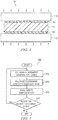
FIGURES 2A and 2B show anelastomeric pad 200 according to one example embodiment.FIGURE 2A shows a side view ofelastomeric pad 200, andFIGURE 2B shows a perspective view. -
Elastomeric pad 200 includes ashim 210 and anelastomeric layer 220.Elastomeric layer 220 may be made from material similar toelastomeric layer 120 ofFIGURE 1 . For example,elastomeric layer 220 may be a layer of elastomeric material, such as rubber, that has the property of elasticity. -
Elastomeric pad 200 may be attached to a part, such ascomposite part 130, by attachingshim 210 to the part using adhesive 212. Teachings of certain embodiments recognize that vulcanizingelastomeric layer 220 to shim 210 and then attachingshim 210 tocomposite part 130 may protectcomposite part 130 from the vulcanization process while still maintaining a strong bond betweenelastomeric layer 220 andcomposite part 130. - In some embodiments,
shim 210 is a composite shim constructed from a matrix material and a reinforcement material.Shim 210 may include the same matrix material and/or reinforcement material ascomposite part 130. For example,shim 210 andcomposite part 130 may both have woven fiberglass reinforcement material. In one example embodiment,shim 212 has a +/- 45 degree fiberglass weave reinforcement material. -
Shim 210 may be relatively thin compared tocomposite part 130. Teachings of certain embodiments recognize that using athin shim 210 may allowshim 210 to attachelastomeric layer 220 tocomposite part 130 without substantially changing the physical attributes ofcomposite part 130. For example, ashim 210 may not change the rigidity ofcomposite part 130, allowingcomposite part 130 to bend and flex as designed. In addition, athin shim 210 may improve the ability ofelastomeric pad 200 to conform to curved parts. - In one example embodiment,
shim 210 is a composite shim having woven fiberglass reinforcement material. Using a reinforcement material such as woven fiberglass may allowshim 210 to conform to a part without carrying a structural load from that part. In one example embodiment,shim 210 is less than 0.0025 inches thick (e.g., 0.0015 inches thick). Alternatively, shim 210 may be as thick as 0.1 inches in some embodiments depending on the intended use ofelastomeric pad 200. For example, shim 210 may be thicker ifelastomeric pad 200 will be attached to a flat surface ofcomposite part 130. - Although
shim 210 may be relatively thin compared tocomposite part 130,shim 210 may still be strong enough to supportelastomeric layer 220. Ifshim 210 is too thin, for example, portions ofshim 210 may wear away or tear, potentially exposingelastomeric layer 220 tocomposite part 130. Exposingelastomeric layer 220 tocomposite part 130 may reduce the strength of the bond betweenelastomeric pad 200 andcomposite part 130. - In one example embodiment,
shim 210 is a composite shim having three layers of woven fiberglass reinforcement material and four layers of adhesive matrix. In some embodiments,shim 210 is at least 0.0004 inches thick. - Teachings of certain embodiments recognize that
elastomeric pad 200 may allow for a thickerelastomeric layer 220 than theelastomeric layer 120 applied bytool 110 tocomposite part 130. In general, elastomeric material may not cure properly if the entire material is not heated to a sufficient temperature. Becauseshim 210 may be relatively thin, it may be easier to apply heat to both sides ofelastomeric layer 220, which may allow for a thickerelastomeric layer 220. - Adhesive 212 may secure
elastomeric pad 200 tocomposite part 130. Adhesive 212 may be a structural adhesive, such as a thermosetting modified epoxy structural adhesive like 3M Scotch-Weld Structural Adhesive Film AF 163. - In one example embodiment, a film of adhesive 212 is applied to shim 210 and/or
composite part 130. In some embodiments, adhesive 212 may be the same material as the matrix materials ofcomposite shim 210 and/orcomposite part 130. - In one example embodiment, a layer of
adhesive 212 is provided on bothshim 210 andcomposite part 130. For example,composite part 130 may be lined with a layer of adhesive 212 whencomposite part 130 is built. In one embodiment, the tool used to buildcomposite part 130 may be lined with a layer ofadhesive 212, which attaches tocomposite part 130. In one example, the tool used to buildcomposite part 130 is lined with an approximately 0.0004 inch layer ofadhesive 212. -
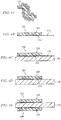
FIGURE 3 shows amethod 300 for attaching elastomeric material to two sides of a composite part according to one example embodiment.FIGURES 4A-4E showelastomeric pad 200 andcomposite part 130 in various stages of construction according tomethod 300 ofFIGURE 3 . - At
step 310, elastomeric material is calendered into aelastomeric layer 220, as shown inFIGURE 4A . Calendering the elastomeric material may allowelastomeric layer 220 to have a thickness that is more uniform than the elastomeric material was prior to calendering. - At
step 320,elastomeric layer 220 is vulcanized tocomposite shim 210, as shown inFIGURE 4B . In this example, a layer ofadhesive 212 is provided oncomposite shim 210 oppositeelastomeric layer 220. - At
step 330,shim 210 is bonded tocomposite part 130. In some embodiments,shim 210 is bonded tocomposite part 130 by curingadhesive 212. In some embodiments, adhesive 212 may be cured through a process called vacuum bagging. According to the vacuum bagging process, a vacuum bag is sealed over the material to be cured, and air is removed from inside the vacuum bag to hold the material to be cured in place until it cures. Vacuum bagging may allowshim 210 to conform to the contour ofcomposite part 130. - In one example embodiment, adhesive 212 is cured by heating adhesive 212 to a temperature of 200 degrees or less.
Heating adhesive 212 over 200 degrees Fahrenheit may result in agingelastomeric layer 220 because firstelastomeric layer 220 can become brittle and lose its elasticity if heated over 200 degrees Fahrenheit. Aging ofelastomeric layer 220 is a function of both heat and time, however, and adhesive 212 may be heated to a temperature as high as 250 degrees Fahrenheit without aging firstelastomeric layer 220 if heat is only applied for a short amount of time. - Thus,
elastomeric pad 200 may be cured againstcomposite part 130 without agingelastomeric layer 220. In addition,elastomeric pad 200 may be cured againstcomposite part 130 without damagingcomposite part 130 because the heat necessary to cure adhesive 212 may be less than the amount of heat at whichcomposite part 130 will deform. - In addition, the heat necessary to cure adhesive 212 may be less than the heat necessary to build
composite part 130 or to vulcanizeelastomeric layer 220. For example, the matrix material incomposite part 130 may cure at a temperature greater than 250 degrees Fahrenheit (e.g., 350 degrees Fahrenheit). In addition,elastomeric layer 220 may vulcanize at a temperature greater than 250 degrees Fahrenheit (e.g., 280 degrees Fahrenheit). - Accordingly, teachings of certain embodiments recognize that bonding
elastomeric layer 220 tocomposite part 130 by vulcanizingelastomeric layer 220 to shim 210 and then bondingshim 210 tocomposite part 130 may protect bothelastomeric layer 220 andcomposite part 130 from damage. In addition, providingshim 210 betweenelastomeric layer 220 andcomposite part 130 may allow for a stronger attachment betweenelastomeric layer 220 andcomposite part 130 than ifelastomeric layer 220 was glued directly tocomposite part 130 withoutshim 210. - During the manufacturing process,
elastomeric pad 200 may includeexcess shim 210. Theexcess shim 210 may be removed, as shown inFIGURE 4D . For example, theexcess shim 210 may be sanded down until the sander reaches the structural reinforcement material ofcomposite part 130. In some embodiments,shim 210 has a 120 weave dry fiberglass reinforcement material, which may be sanded away aftershim 210 is attached tocomposite part 130. In some embodiments,shim 210 has a colored matrix material (e.g., purple), andexcess shim 210 may be sanded down until the colored material disappears. - At
step 340, steps 310-330 are repeated for a second elastomeric layer 220'. For example, a second elastomeric pad 200' may be manufactured and attached tocomposite part 130 opposite ofelastomeric layer 220. In some embodiments, the second elastomeric pad 220' may be attached tocomposite part 130 without disrupting or overheatingelastomeric layer 220. - Although many of the examples described throughout discuss attaching elastomeric material to a composite part, teachings of certain embodiments recognize that
elastomeric pad 200 may be applied to other materials as well. For example, elastomeric material may not easily vulcanize to metals such as titanium. In this example, it may be easier to attachshim 210 to titanium than directly vulcanizing the elastomeric material to titanium. - Modifications, additions, or omissions may be made to the systems and apparatuses described herein without departing from the scope of the invention. The components of the systems and apparatuses may be integrated or separated. Moreover, the operations of the systems and apparatuses may be performed by more, fewer, or other components. The methods may include more, fewer, or other steps. Additionally, steps may be performed in any suitable order.
- Although several embodiments have been illustrated and described in detail, it will be recognized that substitutions and alterations are possible without departing from the spirit and scope of the present invention, as defined by the appended claims.
Claims (14)
- A method for attaching elastomeric material to two sides of a composite part, the composite part comprised of a matrix and at least one layer of woven fiberglass, the method comprising:calendering a first elastomeric material into a first elastomeric layer having a thickness that is more uniform than the first elastomeric material prior to the calendering;vulcanizing the first elastomeric layer to a first composite shim comprising three layers of woven fiberglass and four layers of adhesive, wherein the first composite shim is less than 0.0064 cm (0.0025 inches) thick after the vulcanizing;bonding the first composite shim to a first side of the composite part, wherein the first composite shim has a higher elastic limit than the composite part;calendering a second elastomeric material into a second elastomeric layer having a thickness that is more uniform than the second elastomeric material prior to the calendering;vulcanizing the second elastomeric layer to a second composite shim comprising three layers of woven fiberglass and four layers of adhesive, wherein the second composite shim is less than 0.0064 cm (0.0025 inches) thick after the vulcanizing; andbonding the second composite shim to a second side of the composite part opposite the first side, wherein the second composite shim has a higher elastic limit than the composite part.
- A method comprising:calendering an elastomeric material into an elastomeric layer having a thickness that is more uniform than the elastomeric material prior to the calendering; andvulcanizing the elastomeric layer to a composite shim comprising at least one reinforcement layer and at least one layer of adhesive.
- A product manufactured according to the method of Claim 1.
- An elastomeric pad comprising:a composite shim comprising at least one reinforcement layer and at least one layer of adhesive; andan elastomeric material vulcanized to the composite shim.
- The method of Claim 2 or elastomeric pad of Claim 4, wherein the composite shim comprises three layers of woven fiberglass and four layers of adhesive.
- The method of Claim 2 or Claim 5 or elastomeric pad of Claim 4 or Claim 5, wherein the composite shim is less than 0.0064 cm (0.0025) inches thick after the vulcanizing.
- The method of Claim 2 or Claim 6 or elastomeric pad of Claim 4 or Claim 6, wherein the composite shim is 0.0036-0.0041 cm (0.0014-0.0016 inches) thick after the vulcanizing.
- The method of Claim 2 or Claims 5 to 7, wherein vulcanizing the elastomeric layer to the composite shim cures the elastomeric layer, or wherein vulcanizing the elastomeric layer to the composite shim cures the composite shirrs
- The method of Claim 2 or Claims 5 to 8, wherein the Composite shim is pre-cured fiberglass, or wherein the composite shim is a Style 120 weave.
- The method of Claim 2 or Claims 5 to 9, further comprising bonding the composite shim to a part.
- The product of the method of Claim 11.
- The method of Claim 10, wherein bonding the composite shim to the part comprises heating the composite shim at a temperature 250 degrees or less, or wherein bonding the composite shim to the part comprises heating the composite shim at a temperature 200 degrees or less.
- The method of Claim 10 or Claim 12, wherein the part is a composite part comprised of a matrix and at least one layer of woven fiberglass.
- The method of Claim 10 or Claim 13, wherein the composite shim has a higher elastic limit than the part.
Priority Applications (1)
| Application Number | Priority Date | Filing Date | Title |
|---|---|---|---|
| CN201310011284.XA CN103203947B (en) | 2012-01-13 | 2013-01-11 | The elastomeric pad that can be attached |
Applications Claiming Priority (1)
| Application Number | Priority Date | Filing Date | Title |
|---|---|---|---|
| US13/350,325 US9156237B2 (en) | 2012-01-13 | 2012-01-13 | Attachable elastomeric pad |
Publications (2)
| Publication Number | Publication Date |
|---|---|
| EP2614953A1 true EP2614953A1 (en) | 2013-07-17 |
| EP2614953B1 EP2614953B1 (en) | 2014-10-01 |
Family
ID=45656076
Family Applications (1)
| Application Number | Title | Priority Date | Filing Date |
|---|---|---|---|
| EP20120155988 Active EP2614953B1 (en) | 2012-01-13 | 2012-02-17 | Joining of elastomeric pad onto composite part |
Country Status (4)
| Country | Link |
|---|---|
| US (1) | US9156237B2 (en) |
| EP (1) | EP2614953B1 (en) |
| CN (1) | CN103203947B (en) |
| CA (1) | CA2801296C (en) |
Families Citing this family (3)
| Publication number | Priority date | Publication date | Assignee | Title |
|---|---|---|---|---|
| GB2529186A (en) * | 2014-08-12 | 2016-02-17 | Vestas Wind Sys As | Improvements relating to wind turbine blade manufacture |
| US10207793B2 (en) | 2016-11-30 | 2019-02-19 | Bell Helicopter Textron Inc. | Rotor blade having variable twist |
| FR3153769B1 (en) * | 2023-10-10 | 2025-10-10 | Safran | Method for manufacturing a part made of organic matrix composite material comprising an elastomer layer |
Citations (2)
| Publication number | Priority date | Publication date | Assignee | Title |
|---|---|---|---|---|
| JPH045041A (en) * | 1990-04-23 | 1992-01-09 | Matsushita Electric Works Ltd | Cloth-adhered vulcanized rubber sheet and preparation thereof |
| US20040086735A1 (en) * | 2002-10-29 | 2004-05-06 | Degussa Ag | Bending element with behavior dependent on the direction of rotation |
Family Cites Families (13)
| Publication number | Priority date | Publication date | Assignee | Title |
|---|---|---|---|---|
| US3542080A (en) | 1967-01-30 | 1970-11-24 | Corning Glass Works | Pipe coupling component |
| US3802285A (en) | 1971-11-29 | 1974-04-09 | Wood S T Sons Co | Wear-resistant motion control sheave |
| US4306836A (en) | 1978-05-25 | 1981-12-22 | Kaman Aerospace Corporation | Hub assembly |
| JPS58217352A (en) * | 1982-06-10 | 1983-12-17 | 日産自動車株式会社 | Manufacture of various covers for engine |
| US4886419A (en) | 1988-09-30 | 1989-12-12 | The Boeing Company | Elastomeric bearing for helicopter rotor having lead-lag damping |
| US5904010A (en) | 1997-06-10 | 1999-05-18 | Energy Research, Inc. | Elastomeric seismic isolation bearing and method |
| US6368989B1 (en) * | 1999-01-12 | 2002-04-09 | E. I. Du Pont De Nemours And Company | Puncture resistant composite |
| US7171697B2 (en) * | 2001-08-27 | 2007-02-06 | Sting Free Company | Vibration dampening material and method of making same |
| US20040234744A1 (en) | 2003-05-19 | 2004-11-25 | Byma George B. | Vehicle interior trim component of basalt fibers and thermoplastic binder and method of manufacturing the same |
| DE10325700A1 (en) | 2003-06-06 | 2005-01-05 | Klinger Ag | Elastomer bonded sheet material and method for its production |
| KR20050011549A (en) | 2003-07-23 | 2005-01-29 | 삼성전자주식회사 | Capacity-Variable Type Rotary Compressor |
| CN2868670Y (en) * | 2005-12-14 | 2007-02-14 | 厦门新凯复材科技有限公司 | Fiber composite material product structure |
| EP2303979A2 (en) | 2008-06-30 | 2011-04-06 | Henkel Corporation | High performance adhesives and methods of their use |
-
2012
- 2012-01-13 US US13/350,325 patent/US9156237B2/en active Active
- 2012-02-17 EP EP20120155988 patent/EP2614953B1/en active Active
-
2013
- 2013-01-09 CA CA 2801296 patent/CA2801296C/en active Active
- 2013-01-11 CN CN201310011284.XA patent/CN103203947B/en not_active Expired - Fee Related
Patent Citations (2)
| Publication number | Priority date | Publication date | Assignee | Title |
|---|---|---|---|---|
| JPH045041A (en) * | 1990-04-23 | 1992-01-09 | Matsushita Electric Works Ltd | Cloth-adhered vulcanized rubber sheet and preparation thereof |
| US20040086735A1 (en) * | 2002-10-29 | 2004-05-06 | Degussa Ag | Bending element with behavior dependent on the direction of rotation |
Non-Patent Citations (1)
| Title |
|---|
| DATABASE WPI Week 199208, Derwent World Patents Index; AN 1992-060620, XP002675707 * |
Also Published As
| Publication number | Publication date |
|---|---|
| US9156237B2 (en) | 2015-10-13 |
| CN103203947A (en) | 2013-07-17 |
| US20130183508A1 (en) | 2013-07-18 |
| CA2801296C (en) | 2014-12-30 |
| EP2614953B1 (en) | 2014-10-01 |
| CN103203947B (en) | 2016-06-08 |
| CA2801296A1 (en) | 2013-07-13 |
Similar Documents
| Publication | Publication Date | Title |
|---|---|---|
| JP3839476B2 (en) | Wing structure manufacturing method and manufacturing apparatus | |
| US6739861B2 (en) | High pressure co-cure of lightweight core composite article utilizing a core having a plurality of protruding pins | |
| JP6147436B2 (en) | Rotor blade element for wind power generator, rotor blade, manufacturing method therefor, and wind power generator provided with rotor blade | |
| US20130340252A1 (en) | Method for manufacturing wind turbine blades, blades for propellors, wings, or similar structures, and structure in the form of a blade obtained by means of this procedure | |
| US10322798B2 (en) | Rotor yoke and method of making the same | |
| US20110127698A1 (en) | Vacuum bag for hot drape forming | |
| EP2772416B1 (en) | Vehicle body | |
| JP2017100711A (en) | Tire sound absorbing material fixing structure including sound absorbing material fixing band, tire, and method of using the structure | |
| CA2801296C (en) | Attachable elastomeric pad | |
| EP1930159B1 (en) | A method of applying a constrained layer damping material | |
| US10807325B2 (en) | Methods for combining components of varying stages of cure | |
| US8715560B2 (en) | Method to control thickness in composite parts cured on closed angle tool | |
| EP3698957B1 (en) | Repair patch, method for molding repair patch, method for repairing composite material, and molding jig | |
| CN114320777A (en) | Flexible root platform, manufacturing method and assembling method thereof and wind power blade | |
| KR102315465B1 (en) | Appearance skin-adhesive seatbag frame and method for preparing same | |
| US11155047B2 (en) | Caul body and a method for forming a composite structure | |
| US20030104094A1 (en) | Pressure transmitters for use in the production of composite components | |
| CN108624241A (en) | The method for connecting the antiparallel contact surface of the first and second joint elements for full surface by blank | |
| WO2020178948A1 (en) | Vacuum bag and method for manufacturing vacuum bag | |
| EP4556209A1 (en) | Methods of repairing a contoured composite structure and making a repair tool | |
| JP6541125B2 (en) | Method of manufacturing rubber heater | |
| CN121019633A (en) | Side wall panels, through channels using side wall panels, and methods for preparing side wall panels. |
Legal Events
| Date | Code | Title | Description |
|---|---|---|---|
| PUAI | Public reference made under article 153(3) epc to a published international application that has entered the european phase |
Free format text: ORIGINAL CODE: 0009012 |
|
| 17P | Request for examination filed |
Effective date: 20120217 |
|
| AK | Designated contracting states |
Kind code of ref document: A1 Designated state(s): AL AT BE BG CH CY CZ DE DK EE ES FI FR GB GR HR HU IE IS IT LI LT LU LV MC MK MT NL NO PL PT RO RS SE SI SK SM TR |
|
| AX | Request for extension of the european patent |
Extension state: BA ME |
|
| GRAP | Despatch of communication of intention to grant a patent |
Free format text: ORIGINAL CODE: EPIDOSNIGR1 |
|
| RIC1 | Information provided on ipc code assigned before grant |
Ipc: B32B 37/18 20060101ALN20140324BHEP Ipc: C09J 5/02 20060101ALI20140324BHEP Ipc: B29C 65/50 20060101AFI20140324BHEP Ipc: B32B 37/02 20060101ALI20140324BHEP Ipc: B32B 25/10 20060101ALI20140324BHEP Ipc: B64C 27/33 20060101ALN20140324BHEP |
|
| INTG | Intention to grant announced |
Effective date: 20140422 |
|
| GRAS | Grant fee paid |
Free format text: ORIGINAL CODE: EPIDOSNIGR3 |
|
| GRAA | (expected) grant |
Free format text: ORIGINAL CODE: 0009210 |
|
| AK | Designated contracting states |
Kind code of ref document: B1 Designated state(s): AL AT BE BG CH CY CZ DE DK EE ES FI FR GB GR HR HU IE IS IT LI LT LU LV MC MK MT NL NO PL PT RO RS SE SI SK SM TR |
|
| REG | Reference to a national code |
Ref country code: GB Ref legal event code: FG4D |
|
| REG | Reference to a national code |
Ref country code: AT Ref legal event code: REF Ref document number: 689293 Country of ref document: AT Kind code of ref document: T Effective date: 20141015 Ref country code: CH Ref legal event code: EP |
|
| REG | Reference to a national code |
Ref country code: IE Ref legal event code: FG4D |
|
| REG | Reference to a national code |
Ref country code: DE Ref legal event code: R096 Ref document number: 602012003216 Country of ref document: DE Effective date: 20141113 |
|
| REG | Reference to a national code |
Ref country code: NL Ref legal event code: VDEP Effective date: 20141001 |
|
| REG | Reference to a national code |
Ref country code: AT Ref legal event code: MK05 Ref document number: 689293 Country of ref document: AT Kind code of ref document: T Effective date: 20141001 |
|
| REG | Reference to a national code |
Ref country code: LT Ref legal event code: MG4D |
|
| PG25 | Lapsed in a contracting state [announced via postgrant information from national office to epo] |
Ref country code: NL Free format text: LAPSE BECAUSE OF FAILURE TO SUBMIT A TRANSLATION OF THE DESCRIPTION OR TO PAY THE FEE WITHIN THE PRESCRIBED TIME-LIMIT Effective date: 20141001 |
|
| PG25 | Lapsed in a contracting state [announced via postgrant information from national office to epo] |
Ref country code: LT Free format text: LAPSE BECAUSE OF FAILURE TO SUBMIT A TRANSLATION OF THE DESCRIPTION OR TO PAY THE FEE WITHIN THE PRESCRIBED TIME-LIMIT Effective date: 20141001 Ref country code: NO Free format text: LAPSE BECAUSE OF FAILURE TO SUBMIT A TRANSLATION OF THE DESCRIPTION OR TO PAY THE FEE WITHIN THE PRESCRIBED TIME-LIMIT Effective date: 20150101 Ref country code: ES Free format text: LAPSE BECAUSE OF FAILURE TO SUBMIT A TRANSLATION OF THE DESCRIPTION OR TO PAY THE FEE WITHIN THE PRESCRIBED TIME-LIMIT Effective date: 20141001 Ref country code: CZ Free format text: LAPSE BECAUSE OF FAILURE TO SUBMIT A TRANSLATION OF THE DESCRIPTION OR TO PAY THE FEE WITHIN THE PRESCRIBED TIME-LIMIT Effective date: 20141001 Ref country code: PT Free format text: LAPSE BECAUSE OF FAILURE TO SUBMIT A TRANSLATION OF THE DESCRIPTION OR TO PAY THE FEE WITHIN THE PRESCRIBED TIME-LIMIT Effective date: 20150202 Ref country code: IS Free format text: LAPSE BECAUSE OF FAILURE TO SUBMIT A TRANSLATION OF THE DESCRIPTION OR TO PAY THE FEE WITHIN THE PRESCRIBED TIME-LIMIT Effective date: 20150201 Ref country code: FI Free format text: LAPSE BECAUSE OF FAILURE TO SUBMIT A TRANSLATION OF THE DESCRIPTION OR TO PAY THE FEE WITHIN THE PRESCRIBED TIME-LIMIT Effective date: 20141001 |
|
| PG25 | Lapsed in a contracting state [announced via postgrant information from national office to epo] |
Ref country code: SE Free format text: LAPSE BECAUSE OF FAILURE TO SUBMIT A TRANSLATION OF THE DESCRIPTION OR TO PAY THE FEE WITHIN THE PRESCRIBED TIME-LIMIT Effective date: 20141001 Ref country code: PL Free format text: LAPSE BECAUSE OF FAILURE TO SUBMIT A TRANSLATION OF THE DESCRIPTION OR TO PAY THE FEE WITHIN THE PRESCRIBED TIME-LIMIT Effective date: 20141001 Ref country code: AT Free format text: LAPSE BECAUSE OF FAILURE TO SUBMIT A TRANSLATION OF THE DESCRIPTION OR TO PAY THE FEE WITHIN THE PRESCRIBED TIME-LIMIT Effective date: 20141001 Ref country code: LV Free format text: LAPSE BECAUSE OF FAILURE TO SUBMIT A TRANSLATION OF THE DESCRIPTION OR TO PAY THE FEE WITHIN THE PRESCRIBED TIME-LIMIT Effective date: 20141001 Ref country code: RS Free format text: LAPSE BECAUSE OF FAILURE TO SUBMIT A TRANSLATION OF THE DESCRIPTION OR TO PAY THE FEE WITHIN THE PRESCRIBED TIME-LIMIT Effective date: 20141001 Ref country code: HR Free format text: LAPSE BECAUSE OF FAILURE TO SUBMIT A TRANSLATION OF THE DESCRIPTION OR TO PAY THE FEE WITHIN THE PRESCRIBED TIME-LIMIT Effective date: 20141001 Ref country code: GR Free format text: LAPSE BECAUSE OF FAILURE TO SUBMIT A TRANSLATION OF THE DESCRIPTION OR TO PAY THE FEE WITHIN THE PRESCRIBED TIME-LIMIT Effective date: 20150102 Ref country code: CY Free format text: LAPSE BECAUSE OF FAILURE TO SUBMIT A TRANSLATION OF THE DESCRIPTION OR TO PAY THE FEE WITHIN THE PRESCRIBED TIME-LIMIT Effective date: 20141001 |
|
| PG25 | Lapsed in a contracting state [announced via postgrant information from national office to epo] |
Ref country code: BE Free format text: LAPSE BECAUSE OF NON-PAYMENT OF DUE FEES Effective date: 20150228 |
|
| REG | Reference to a national code |
Ref country code: DE Ref legal event code: R097 Ref document number: 602012003216 Country of ref document: DE |
|
| PG25 | Lapsed in a contracting state [announced via postgrant information from national office to epo] |
Ref country code: EE Free format text: LAPSE BECAUSE OF FAILURE TO SUBMIT A TRANSLATION OF THE DESCRIPTION OR TO PAY THE FEE WITHIN THE PRESCRIBED TIME-LIMIT Effective date: 20141001 Ref country code: RO Free format text: LAPSE BECAUSE OF FAILURE TO SUBMIT A TRANSLATION OF THE DESCRIPTION OR TO PAY THE FEE WITHIN THE PRESCRIBED TIME-LIMIT Effective date: 20141001 Ref country code: DK Free format text: LAPSE BECAUSE OF FAILURE TO SUBMIT A TRANSLATION OF THE DESCRIPTION OR TO PAY THE FEE WITHIN THE PRESCRIBED TIME-LIMIT Effective date: 20141001 Ref country code: SK Free format text: LAPSE BECAUSE OF FAILURE TO SUBMIT A TRANSLATION OF THE DESCRIPTION OR TO PAY THE FEE WITHIN THE PRESCRIBED TIME-LIMIT Effective date: 20141001 |
|
| PLBE | No opposition filed within time limit |
Free format text: ORIGINAL CODE: 0009261 |
|
| STAA | Information on the status of an ep patent application or granted ep patent |
Free format text: STATUS: NO OPPOSITION FILED WITHIN TIME LIMIT |
|
| 26N | No opposition filed |
Effective date: 20150702 |
|
| PG25 | Lapsed in a contracting state [announced via postgrant information from national office to epo] |
Ref country code: LU Free format text: LAPSE BECAUSE OF FAILURE TO SUBMIT A TRANSLATION OF THE DESCRIPTION OR TO PAY THE FEE WITHIN THE PRESCRIBED TIME-LIMIT Effective date: 20150217 |
|
| REG | Reference to a national code |
Ref country code: CH Ref legal event code: PL |
|
| PG25 | Lapsed in a contracting state [announced via postgrant information from national office to epo] |
Ref country code: CH Free format text: LAPSE BECAUSE OF NON-PAYMENT OF DUE FEES Effective date: 20150228 Ref country code: LI Free format text: LAPSE BECAUSE OF NON-PAYMENT OF DUE FEES Effective date: 20150228 Ref country code: MC Free format text: LAPSE BECAUSE OF FAILURE TO SUBMIT A TRANSLATION OF THE DESCRIPTION OR TO PAY THE FEE WITHIN THE PRESCRIBED TIME-LIMIT Effective date: 20141001 |
|
| REG | Reference to a national code |
Ref country code: IE Ref legal event code: MM4A |
|
| PG25 | Lapsed in a contracting state [announced via postgrant information from national office to epo] |
Ref country code: IE Free format text: LAPSE BECAUSE OF NON-PAYMENT OF DUE FEES Effective date: 20150217 |
|
| REG | Reference to a national code |
Ref country code: FR Ref legal event code: PLFP Year of fee payment: 5 |
|
| PG25 | Lapsed in a contracting state [announced via postgrant information from national office to epo] |
Ref country code: SI Free format text: LAPSE BECAUSE OF FAILURE TO SUBMIT A TRANSLATION OF THE DESCRIPTION OR TO PAY THE FEE WITHIN THE PRESCRIBED TIME-LIMIT Effective date: 20141001 |
|
| PG25 | Lapsed in a contracting state [announced via postgrant information from national office to epo] |
Ref country code: MT Free format text: LAPSE BECAUSE OF FAILURE TO SUBMIT A TRANSLATION OF THE DESCRIPTION OR TO PAY THE FEE WITHIN THE PRESCRIBED TIME-LIMIT Effective date: 20141001 |
|
| REG | Reference to a national code |
Ref country code: FR Ref legal event code: PLFP Year of fee payment: 6 |
|
| PG25 | Lapsed in a contracting state [announced via postgrant information from national office to epo] |
Ref country code: HU Free format text: LAPSE BECAUSE OF FAILURE TO SUBMIT A TRANSLATION OF THE DESCRIPTION OR TO PAY THE FEE WITHIN THE PRESCRIBED TIME-LIMIT; INVALID AB INITIO Effective date: 20120217 Ref country code: SM Free format text: LAPSE BECAUSE OF FAILURE TO SUBMIT A TRANSLATION OF THE DESCRIPTION OR TO PAY THE FEE WITHIN THE PRESCRIBED TIME-LIMIT Effective date: 20141001 Ref country code: BG Free format text: LAPSE BECAUSE OF FAILURE TO SUBMIT A TRANSLATION OF THE DESCRIPTION OR TO PAY THE FEE WITHIN THE PRESCRIBED TIME-LIMIT Effective date: 20141001 |
|
| PG25 | Lapsed in a contracting state [announced via postgrant information from national office to epo] |
Ref country code: TR Free format text: LAPSE BECAUSE OF FAILURE TO SUBMIT A TRANSLATION OF THE DESCRIPTION OR TO PAY THE FEE WITHIN THE PRESCRIBED TIME-LIMIT Effective date: 20141001 |
|
| REG | Reference to a national code |
Ref country code: FR Ref legal event code: PLFP Year of fee payment: 7 |
|
| PG25 | Lapsed in a contracting state [announced via postgrant information from national office to epo] |
Ref country code: MK Free format text: LAPSE BECAUSE OF FAILURE TO SUBMIT A TRANSLATION OF THE DESCRIPTION OR TO PAY THE FEE WITHIN THE PRESCRIBED TIME-LIMIT Effective date: 20141001 |
|
| PG25 | Lapsed in a contracting state [announced via postgrant information from national office to epo] |
Ref country code: AL Free format text: LAPSE BECAUSE OF FAILURE TO SUBMIT A TRANSLATION OF THE DESCRIPTION OR TO PAY THE FEE WITHIN THE PRESCRIBED TIME-LIMIT Effective date: 20141001 |
|
| P01 | Opt-out of the competence of the unified patent court (upc) registered |
Effective date: 20230602 |
|
| PGFP | Annual fee paid to national office [announced via postgrant information from national office to epo] |
Ref country code: GB Payment date: 20260227 Year of fee payment: 15 |
|
| PGFP | Annual fee paid to national office [announced via postgrant information from national office to epo] |
Ref country code: DE Payment date: 20260227 Year of fee payment: 15 |
|
| PGFP | Annual fee paid to national office [announced via postgrant information from national office to epo] |
Ref country code: IT Payment date: 20260219 Year of fee payment: 15 |
|
| PGFP | Annual fee paid to national office [announced via postgrant information from national office to epo] |
Ref country code: FR Payment date: 20260225 Year of fee payment: 15 |