EP2611109B1 - System for high reliability and high performance application message delivery - Google Patents
System for high reliability and high performance application message delivery Download PDFInfo
- Publication number
- EP2611109B1 EP2611109B1 EP11306803.5A EP11306803A EP2611109B1 EP 2611109 B1 EP2611109 B1 EP 2611109B1 EP 11306803 A EP11306803 A EP 11306803A EP 2611109 B1 EP2611109 B1 EP 2611109B1
- Authority
- EP
- European Patent Office
- Prior art keywords
- application
- messages
- file
- application data
- control
- Prior art date
- Legal status (The legal status is an assumption and is not a legal conclusion. Google has not performed a legal analysis and makes no representation as to the accuracy of the status listed.)
- Active
Links
Images


Classifications
-
- H—ELECTRICITY
- H04—ELECTRIC COMMUNICATION TECHNIQUE
- H04L—TRANSMISSION OF DIGITAL INFORMATION, e.g. TELEGRAPHIC COMMUNICATION
- H04L67/00—Network arrangements or protocols for supporting network services or applications
- H04L67/01—Protocols
- H04L67/10—Protocols in which an application is distributed across nodes in the network
- H04L67/1095—Replication or mirroring of data, e.g. scheduling or transport for data synchronisation between network nodes
-
- G—PHYSICS
- G06—COMPUTING OR CALCULATING; COUNTING
- G06F—ELECTRIC DIGITAL DATA PROCESSING
- G06F11/00—Error detection; Error correction; Monitoring
- G06F11/07—Responding to the occurrence of a fault, e.g. fault tolerance
- G06F11/14—Error detection or correction of the data by redundancy in operations
- G06F11/1471—Error detection or correction of the data by redundancy in operations involving logging of persistent data for recovery
Definitions
- the present invention relates to the field of delivery of high volume of electronic messages.
- a particularly advantageous but not limitative application relates to airline billing transactions.
- the invention relates to the delivery of high number of asynchronous messages (typically > 8,000 messages per seconds) containing for instance billing information over an unreliable network to a plurality of log servers, where log files containing the billing information for a known interval are created and processing of billing information for the interval is performed on the log file with the lowest loss of billing data.
- UDP User Datagram Protocol
- TCP Transmission Control Protocol
- WO 03062993 discloses a system for redundant log storage.
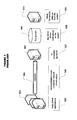
- FIG. 1 an example of a prior art system.
- Such a system based on servers 103 can execute plurality of applications 123 which transmit billing information. Because of the necessity of performing a number of billing transactions which exceeds the capacity of network 105 using synchronous transactions; or because of the corresponding loss of throughput as the application waits for an acknowledgement of the receipt of a transaction, an asynchronous message 125 is sent over network 105. The asynchronous message is or is not received by a log server 127.
- log server 127 is not a fault tolerant or high availability server and is therefore considered unreliable 127. All messages which are received are stored 129 in a file system 109 for processing by billing server 111 using billing system 131.
- the invention relates to a computer-implemented method of providing high reliability and high performance application message delivery.
- the method comprises the following steps performed with at least one data processor:
- the invention allows determining the application data file that is the most reliable and discarding thereby the other application data files without requiring comparing the application data files.
- the invention may comprise any one of the following facultative features:
- control message comprises a number of application messages transmitted by the application server.
- control message comprises an identifier that uniquely identifies the order of the control messages in a sequence of control messages.
- the identifier is a control message number.
- control message comprises at least one of: an identifier of an application and a timestamp of the application server.
- each control message comprises an identifier of an application and a timestamp of the application server.
- the interval for forwarding a control message is a given time period.
- the open/close control message is a Nth control message in a sequence of control messages.
- N is predetermined.
- the Nth control message is the fifth control message in the sequence of control messages and the given time period is a two minute time period.
- the best-candidate file is chosen from a set of application data files for a given interval from the plurality of log servers and that have the same start and stop points.
- the start and stop points are determined by the reception of open/close control messages.
- the best-candidate file is chosen from among the chosen set of files, the file with the lowest application message loss rate.
- the best-candidate file is chosen from among the application data files with the lowest application message loss rate, the file with the lowest control message loss rate.
- the best-candidate file having lost application messages and not having lost more than x percent of application messages for the interval is augmented by the lost application messages existing in other files of the set of files, x being predetermined. In one embodiment, x is comprised between fifteen and forty five.
- the server upon determining from among a plurality of application data files from each of the plurality of log servers, an application data file as a best-candidate for a given interval, the server forwards the best-candidate file for application processing.
- the application is an airline billing transaction application.
- the invention relates to a non-transitory computer-readable medium that contains software program instructions, where execution of the software program instructions by at least one data processor results in performance of operations that comprise execution of the method of the invention.
- Another aspect of the invention relates to a system for high reliability and high performance application message delivery.
- the system comprises:
- the system comprises a plurality of application servers and a plurality of applications executing on a processor of any of the plurality of application servers, each of the application servers having an output coupled to an input of each of the log servers.
- the invention solves the issues of loss by providing high reliability and high performance billing message delivery, forwarding asynchronously a billing message containing billing information for an application transaction to each of a plurality of log servers; forwarding asynchronously control messages to each of the plurality of log servers at a predetermined interval; storing at each of the plurality of log servers received billing messages in a current billing data file; storing at each of the plurality of log servers received control messages in a control file and upon receiving a open-close control message, closing the current billing data file, adding said closed billing data file to a plurality of billing data files and creating a new billing data file as the current billing data file; and determining from among a plurality of billing data files from each of the log servers, a billing data file as a best-candidate for a given interval and forwarding the best-candidate file for billing processing.
- a system for high reliability and high performance application message delivery characterized in that it comprises:
- the application is a billing application executing at least part of a billing transaction.
- the application message is a billing message containing data related to billing.
- the application data file is a billing data file.
- Another aspect of the invention relates to a computer program product comprising instructions capable of performing the steps of the method according to the invention.
- the present invention takes care of the delivery of the notification messages sent by applications by using a cluster of log servers.
- Each application notifies all the redundant log servers at once.
- Each log server splits this stream of notification messages into separate, manageable files.
- the system determines continuously the most reliable files in the cluster and transfers that file to the recipient.
- the invention may comprise any one of the following advantageous but nevertheless facultative features.
- the control message comprises an identifier of a billing application.
- the control message also comprises any one of: a timestamp of the application server, a number of control messages transmitted by the application (for instance billing application) and a number of application messages (for instance billing messages) transmitted by the application.
- Each application has a defined interval for forwarding a control message in a given time period and an open/close control message is every Nth control message in the sequence of control messages.
- the Nth control message is the fifth control message in the sequence of control messages and the given time period is two minutes.
- the system chooses files for processing by a billing system by creating a best-candidate file chosen from a set of files for a given interval from the plurality of log servers that have a same start and stop point.
- the best-candidate file is, from among the chosen set of files, the file with the lowest message loss rate.
- the best-candidate file can be augmented where messages are lost and not having lost more than thirty percent of messages for the interval by copying in the lost messages existing in files of the set of files other than the best-candidate file.
- the server upon determining from among a plurality of application data files from each of the plurality of log servers, an application data file as a best-candidate for a given interval, the server forwards the best-candidate file for application processing.
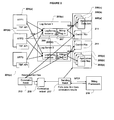
- Fig. 2 illustrates a system implementing the preferred embodiment of the invention.
- the system has a plurality of applications 201(a)-(c). These applications may be a plurality of different applications 201(a)-(c) running on a single server; a single application 201 (a) running on a plurality of servers 103; or combination of multiple applications 201(a)-201(c) running on multiple different servers.
- Each of applications 201 (a)-(c) forwards asynchronous application messages to log servers 203(a)-(b).
- An application message contains information related to the application.
- the application message may comprise data related to any one of: billing, customer profile, customer profile etc. It will be understood that while two log servers 203(a)-(b) are illustrated, the number of log servers is preferably more than 2. While Applications have focused on airline billing transaction data, other types of applications could forward other data in the system of the invention.
- Each of log servers 203(a)-(b) has log server instance 205 and billing plug-in 207 which write received application data messages into a current application data file 209(a) and control messages to control file 211.
- the same application message is sent from an application server 201 (a)-(c) to all the log servers 203(a)-(b). Possibly all the log servers 201 (a)-(c) receive the same application message. However in practical, at least some of the application messages may not be received by all the log servers 201 (a)-(c).
- Control messages are sent at intervals described later in this document, which cause current application data file 209(a) to be closed, creating a plurality of application data files 209(b)-(c) each representative of billing application messages of a given interval.
- control messages are used to (re)synchronize the splitting of the application message stream into files 209(a)-(c). It is crucial that each log server splits the stream at the same points in the stream in order to create the synchronized files. Second, each control message will be used by the correlation algorithm to select the best-candidate amongst the synchronized files. Therefore, a summary of the control messages is stored in a control file 211.
- a billing section comprising a correlation batch 213, correlation output 215 and sending batch 217 are responsible for determining the best-candidate of application data files 209(a)-(c) and forwarding the best-candidate to the billing framework 219.
- Fig. 3 illustrates the structure of a control message as transmitted and stored in control file 211.
- the same control message is sent from an application server 201 (a)-(c) to all the log servers 203(a)-(b). Possibly all the log servers 201 (a)-(c) receive the same control message. However in practical, at least some of the control messages may not be received by all the log servers 201 (a)-(c).
- Each control message sent by an application 201 (a)-(c) comprises preferably at least four elements.
- the control message comprises an application identifier 303 that identifies the application server that is the originator of the control message.
- Each application 201(a)-(c) has application identifier 303, which uniquely identifies the application. This element allows different billed applications to send data and control messages to the same cluster (i.e. log servers 203(a)-(b)). The cluster can easily separate the messages per source.
- Timestamp 305 defines a single reference of time in the sending application server. All the synchronization steps will be based on timestamp 305 of the sending application server. This avoids the clock discrepancies usually found in a cluster of servers 203(a)-(b). This feature is all the most advantageous as the number of application servers 201 (a), 201 (b), 201 (c) is high.
- Control message number 307 indicates the unique sequential identifier for the current control message. This number allows the log server to know whether the previous control message has been lost. For instance, if two control messages successively received at a log server present control message number 307 that differs by more than one increment, then it means that at least one control message has not been received by said log server.
- Application message number 309 indicates the number of application messages sent by the application 201(a)-(c). As each log server knows how many application messages it has actually received, therefore, each log server knows how many application messages were lost based upon this value.
- Type of message 311 indicates the type of control message being forwarded.
- Fig. 4 illustrates the type of control messages that are forwarded from applications 201 (a)-(c) to log servers 203(a)-(c).
- Application-Start 403 indicates that an Application has started and therefore a new application data file should be created.
- the corollary to such a control message is Application-Stop 409 which closes current application data file 209(a) when the application shuts down.
- Timer Interval 405 sends a message every X periods, where X is for instance and preferably 2 minutes.
- N 5 (five) checkpoint sent by applications 201(a)-(c), called a splitting checkpoint, is used by log servers 203(a)-(b) to split the stream: the log server closes the current application data file 209(a) and creates a new file where it will store the next set of sequential application messages.
- Such a splitting creates a stop point in one application data file and a start point in the new application data file.
- a current application data file is closed when the Nth checkpoint control message is received and a new application data file, that becomes the current application data file, is then created.
- Each start point and stop point is associated to a control message number 307 which allows identifying the order of transmission. Therefore, it is easy to identify the application data files having the same start points. It is also easy to identify the application data files having the same stop points. The comparison of the application data files of various log servers as well as the splitting of the stream can therefore be easily achieved.
- the log servers 203(a)-(b) will simply write that lost event to control file 211. Any lost event in control file 211 will decrease the reliability of the appropriate application data file.
- the log servers 203(a)-(b) will close the current application data file 209(a) and open a new one (as if a splitting checkpoint was received).
- the current application data file and the new application data file will be out of synchronization, since they have not been closed/opened at a splitting checkpoint.
- the control file 211 is accordingly updated: a lost event for the missing checkpoint, the events of creating the new file, together with the timestamp. There is no event for closing the application data file. This will inform the correlation algorithm that a splitting checkpoint was lost.
- END-OF-PERIOD 407 control message is sent by applications 201 (a)-(c) at a time determined by the application. Typically this control message is sent at midnight for billing applications in order to separate two working days. Basically, this message forces a complete resynchronization between the billed application and the log server. All internal counters are set to zero and a new application data file and a new control file is started. It is also understood that END-OF-PERIOD could be some other period as multiple days, a week, month or year.
- Every control message contains the current timestamp of the billed application, it is now trivial to find out if an END-OF-PERIOD control message has been lost: the date in the timestamp element sent by the billed application is no longer the same as the last received date on the log server.
- the log server simulates the reception of END-OF-PERIOD messages 407, sets all internal counters to zero and starts a new application data file. Control file 211 is updated as if a splitting checkpoint has been missed.
- control messages 403-409 as stored in control files 211 allow for splitting the stream of application messages into synchronized application data files 209(a)-209(c). If no control messages are lost, all files will be synchronized. When control messages are lost, a number of files in the cluster will be out-of-synchronization: some file(s) will be closed/opened at a different timestamp. In addition to the knowledge that files are synchronized, the system is also informed about the correctness of each file. Both facts about the application data files will be exploited by a correlation algorithm.
- a billing server 219 as implemented in the system of the present invention must receive by determining the best-candidate of log files 209(a)-(c) on each of log servers 203(a)-(b). The decision of the best-candidate is done by the correlation batch 213.
- the best-candidate selection is based on comparing the control file 211 of each log server 203(a)-(b). By not comparing the numerous and large application data files 209(a)-(c), this step is executed in real time.
- the system aligns the open file/close file events in different control files 211 of each log server 203(a)-(b).
- the alignment is based on the timestamp of the events. A quorum of ⁇ ( n +1)/2 ⁇ is needed to agree on an alignment.
- the alignment simply indicates the files for which the stream has been split on identical points in time. In this nominal case, the system determines the best-candidate amongst the synchronized application data files 209(a)-(c) by selecting the application data file that contains firstly the most messages and secondly the least lost checkpoint messages.
- the system will prefer the files for which both an open file event and a close file event is found. In case of a lost splitting checkpoint, there is no close event registered in the control file 211. It means that the system will lower the quorum, but will still only consider the files that received both the open file and close file events.
- the system defines the best-candidate based on firstly the number of application messages and secondly the number of lost checkpoint messages.
- the system also improves the quality of the selected best-candidate by retrieving a part of missing messages in other synchronized files.
- the improvement is only done for synchronized files where the best-candidate has lost less than x% of the messages (i.e. the number of received messages is greater than (100-x)%).
- x% the number of received messages is greater than (100-x)%.
- 15 ⁇ x ⁇ 45 and more advantageously x 30, i.e. the number of received messages is greater than 70%. If even the best-candidate file has lost more than x% messages, it is considered that the other application data file cannot provide the missing messages.
- This method allows improvement of the best-candidate in a real-time matter, since only the events in the summary control files 211 are used to identify the best-blocks in application data files 209(a)-(c).
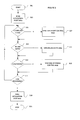
- Fig. 5 illustrates an example of the steps taken by a thread of an application 201 (a)-(c) implementing the invention.
- a process begins and immediately sends in step 503 an Application-Start control message 403 to log servers 203(a)-(c).
- step 505 it is determined if more than the predetermined time period, typically 2 minutes, has elapsed since the last control message has occurred, if the answer is yes, then Checkpoint control message 405 will be sent to log servers 203(a)-(c) in step 507. If the answer is no, proceed to step 509 and determine if an application message (for instance a billing application message) needs to be sent. If the answer is yes, in step 511 send application message with the data to log servers 203(a)-(c).
- the predetermined time period typically 2 minutes
- step 513 If the answer is no, proceed to step 513, where it is determined if it is a new day, or other billing period. If the answer is yes, in step 515 send an END-OF-PERIOD control message 407 to log servers 203(a)-(c).
- step 517 If the answer is no, proceed to step 517, where it is determined if the application program is shutting down. If the answer is yes, send an Application-Stop control message 409 in step 519 and then end processing in step 521, otherwise continue to iterate.
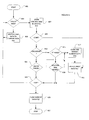
- Fig. 6 illustrates an example of the steps of a program receiving log messages on log servers 203(a)-(b). Processing begins a step 601. In step 603 it is determined if the message is an application message (for instance a billing application message), if yes, store the application message in current log file 209(a) in step 605. If no, store the control message 301 in the control file in step 607, then determine what type of control message 301 has been received. In step 609, determine if control message 301 is an Application-Start control message 403, if yes, then at step 611 open a new current application data file 209(a).
- an application message for instance a billing application message
- step 613 If no, proceed to the next step 613, where it is determined if the control message 301 is a Checkpoint control message 405, if yes determine if this is the N th (N being predetermined and being for instance five (5)) checkpoint message 405 by checking the control message number 307 at step 615. If yes, at step 617 close current application data file 209(a), now becoming the next application data file in the sequence 209(b, c, ). Open a new file as current application data file 209(a).
- step 619 determines if any prior control messages were missed and if such a message was missed, then perform step 617.
- step 621 determine if control message 301 is an END-OF-PERIOD control message 403, if yes, then perform step 617. If no, in step 623 determine if control message 301 is an Application-Stop. If yes, then close current application data file 209(a) now becoming the next application data file in the sequence 209(b, c, ...) in step 625. End processing in step 627.
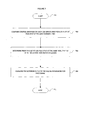
- Fig. 7 illustrates an example of a method according to the invention for determining the best-candidate selection for log files 209(a)-(c) from each of log servers 203(a)-(b).
- step 703 determine application data files 209(a)-(c) that have been split at the same points in time by comparing control messages 301 in each of log servers 203(a)-(b). From the list of application data files 209(a)-(c) that have been split at the same points in time on each of log servers 203(a)-(b), determine 705 the log file that has the largest number of received application messages.
- the system compares the number of lost control messages.
- the best-candidates among the application data files 209(a)-(c) that have been split at the same points in time on each of log servers 203(a)-(b) is the application data files 209(a)-(c) that has the highest number of application messages and that has the highest number of control messages.
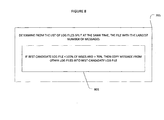
- Fig. 8 illustrates a method of combining files to increase quality. If in step 705 it is determined 801 that application data files are synchronized and the best-candidate has more than 70 % of its billing application messages but less than 100 % of the messages, supplement any missing application messages from the application data files for the same interval of the other log servers into the best-candidate log file.
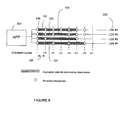
- Figure 9 illustrates an exemplary embodiment where an application 201 sends messages to a cluster of four log servers 203 referred to as LGS #1, LGS #2, LGS #3 and LGS #4.
- the first synchronized checkpoint 100 (checkpoint i) triggers at each of the four log servers 203 the start of an application data file.
- the application data file of the four log servers 203 have the same start point.
- Application messages are also sent to the log servers 203.
- Each log server 203 receives these application messages and stores them in the application data file that has just been opened.
- application messages are stored in application data files 101, 102, 103, 104 by respectively the log servers LGS #1, LGS #2, LGS #3 and LGS #4.
- Some log servers may not receive a normal checkpoint. For example LGS #2 missed checkpoint having the number i+3, LGS #3 missed checkpoint number i+2, checkpoint number i+3, checkpoint number i+4 and LGS #4 missed checkpoint number i+1 and checkpoint number i+3.
- Some log servers may also miss synchronization checkpoint. For instance LGS #4 missed checkpoint having the number i+5, said checkpoint being a synchronization checkpoint.
- This checkpoint is an open/close control message, which triggers the closing of the current application data file and the opening of a new application data file. Therefore, at log servers LGS #1, LGS #2 and LGS #3 the application data files 101, 102, 103 are closed at the same time upon reception of control message i+5. However, at log servers LGS #4 the application data file 104 is closed later. Thus, application data files 101, 102, 103 have the same start and stop points and application data file 104 does not have the same stop point as the other ones.
- the open/close control message is the 5 th control message and the interval for forwarding a control message is depicted by the arrow 105.
- the best candidate file is chosen from the set of application data files having the same start and stop points, i.e., the application data files 101, 102, 103.
- the one that will be considered as the best candidate is the one comprising the highest number of application messages.
- This comparison of the number of application messages is based on the comparison of the control files created by each log server. Therefore, it is not necessary to compare the application data files which requires much more time and processing capacity.
- the best candidate is the one comprising the highest number of control messages. For instance, if application data files 102 and 103 have the same number of application messages, this number being higher than the one of application data files 101, then application data files 102 will be considered as the best candidate and application data files 101, 103 and 104 will be discarded.
- above system and method can by implemented as a computer program stored on a computer readable storage medium such as a hard drive, 903, DVD/CD-ROM 905, thumb drive 907 of Fig. 10 , where the CPU 901 loads the computer program into a RAM 909 across a bus 911 and executes the program as a series of instructions accessing the devices as described above are communicating across a network adapter 913 to network 105 and using a display 915 and input output devices 917 such a keyboard and mouse, etc.
- the computer program is stored on a computer readable storage medium and the verb stored means to make permanent, propagation signals are excluded from the meaning of a computer readable storage medium.
- the invention allows significantly increasing the reliability of the message through sending the same messages to various log servers and while maintaining a high throughout since the most reliable messages can be selected without requiring to process large volume of data.
- the invention allows sending more than 10 000 transactions per second while maintain a ratio of lost message below 0.14%.
Landscapes
- Engineering & Computer Science (AREA)
- Theoretical Computer Science (AREA)
- Quality & Reliability (AREA)
- Physics & Mathematics (AREA)
- General Engineering & Computer Science (AREA)
- General Physics & Mathematics (AREA)
- Computer Networks & Wireless Communication (AREA)
- Signal Processing (AREA)
- Information Retrieval, Db Structures And Fs Structures Therefor (AREA)
- Debugging And Monitoring (AREA)
- Computer And Data Communications (AREA)
- Retry When Errors Occur (AREA)
Priority Applications (11)
| Application Number | Priority Date | Filing Date | Title |
|---|---|---|---|
| PL11306803T PL2611109T3 (pl) | 2011-12-29 | 2011-12-29 | Układ niezawodnej i wysokiej jakości aplikacji doręczającej wiadomości |
| ES11306803.5T ES2555863T3 (es) | 2011-12-29 | 2011-12-29 | Sistema de suministro de mensajes de aplicación de alta fiabilidad y altas prestaciones |
| EP11306803.5A EP2611109B1 (en) | 2011-12-29 | 2011-12-29 | System for high reliability and high performance application message delivery |
| US13/418,819 US8898223B2 (en) | 2011-12-29 | 2012-03-13 | System for high reliability and high performance application message delivery |
| CA2866518A CA2866518C (en) | 2011-12-29 | 2012-12-27 | A system for high reliability and high performance application message delivery |
| JP2014549460A JP5976838B2 (ja) | 2011-12-29 | 2012-12-27 | 高信頼性・高性能のアプリケーションメッセージ配送のためのシステム |
| AU2012327228A AU2012327228B2 (en) | 2011-12-29 | 2012-12-27 | A system for high reliability and high performance application message delivery |
| SG11201403638YA SG11201403638YA (en) | 2011-12-29 | 2012-12-27 | A system for high reliability and high performance application message delivery |
| PCT/EP2012/076937 WO2013098316A1 (en) | 2011-12-29 | 2012-12-27 | A system for high reliability and high performance application message delivery |
| BR112014015671A BR112014015671A2 (pt) | 2011-12-29 | 2012-12-27 | método implementado por computador de prover entrega de mensagem de aplicativo, meio legível por computador e sistema para entrega de mensagem de aplicativo |
| CN201280068838.3A CN104205775B (zh) | 2011-12-29 | 2012-12-27 | 用于高可靠性和高性能应用消息递送的系统 |
Applications Claiming Priority (1)
| Application Number | Priority Date | Filing Date | Title |
|---|---|---|---|
| EP11306803.5A EP2611109B1 (en) | 2011-12-29 | 2011-12-29 | System for high reliability and high performance application message delivery |
Publications (2)
| Publication Number | Publication Date |
|---|---|
| EP2611109A1 EP2611109A1 (en) | 2013-07-03 |
| EP2611109B1 true EP2611109B1 (en) | 2015-09-30 |
Family
ID=45509226
Family Applications (1)
| Application Number | Title | Priority Date | Filing Date |
|---|---|---|---|
| EP11306803.5A Active EP2611109B1 (en) | 2011-12-29 | 2011-12-29 | System for high reliability and high performance application message delivery |
Country Status (11)
| Country | Link |
|---|---|
| US (1) | US8898223B2 (enExample) |
| EP (1) | EP2611109B1 (enExample) |
| JP (1) | JP5976838B2 (enExample) |
| CN (1) | CN104205775B (enExample) |
| AU (1) | AU2012327228B2 (enExample) |
| BR (1) | BR112014015671A2 (enExample) |
| CA (1) | CA2866518C (enExample) |
| ES (1) | ES2555863T3 (enExample) |
| PL (1) | PL2611109T3 (enExample) |
| SG (1) | SG11201403638YA (enExample) |
| WO (1) | WO2013098316A1 (enExample) |
Families Citing this family (5)
| Publication number | Priority date | Publication date | Assignee | Title |
|---|---|---|---|---|
| US9183110B2 (en) * | 2012-11-26 | 2015-11-10 | Google Inc. | Centralized dispatching of application analytics |
| CN103701667A (zh) * | 2013-12-27 | 2014-04-02 | 乐视网信息技术(北京)股份有限公司 | 服务器的心跳的监控方法、装置及系统 |
| CN107124289B (zh) | 2016-02-24 | 2021-06-01 | 华为技术有限公司 | 网络日志时间对齐方法、装置及主机 |
| CN109286843A (zh) * | 2018-10-12 | 2019-01-29 | 四川长虹电器股份有限公司 | 智能电视应用程序自适应快捷启动方法 |
| US10592703B1 (en) * | 2018-12-01 | 2020-03-17 | Cadence Design Systems, Inc. | Method and system for processing verification tests for testing a design under test |
Family Cites Families (9)
| Publication number | Priority date | Publication date | Assignee | Title |
|---|---|---|---|---|
| EP1359219A4 (en) | 2001-02-06 | 2004-09-22 | Takara Bio Inc | AMPLIFIED NUCLEIC ACIDS AND IMMOBILIZED PRODUCTS THEREOF |
| US20030167326A1 (en) * | 2002-01-18 | 2003-09-04 | De Bonet Jeremy S. | Highly redundant, high-reliability and high-performance platform logging/billing generation and collection subsystem |
| AU2003236530A1 (en) * | 2002-01-18 | 2003-09-02 | Idetic, Inc. | A highly redundant, high-reliability and high-performance platform logging/billing generation and collection subsystem |
| US7519859B2 (en) * | 2005-08-30 | 2009-04-14 | International Business Machines Corporation | Fault recovery for transaction server |
| EP2062260A2 (en) * | 2006-08-25 | 2009-05-27 | Koninklijke Philips Electronics N.V. | Method and apparatus for generating a summary |
| JP4333723B2 (ja) * | 2006-09-29 | 2009-09-16 | 株式会社日立製作所 | 通信ログ管理システム |
| CN101409681B (zh) * | 2008-11-24 | 2011-11-23 | 北京交通大学 | 基于节点梯次移动的新型无线传感器网络节能路由算法 |
| US10318477B2 (en) * | 2010-05-26 | 2019-06-11 | Red Hat, Inc. | Managing and archiving system and application log files |
| US8706698B2 (en) * | 2011-09-21 | 2014-04-22 | International Business Machines Corporation | Coordination of event logging operations and log management |
-
2011
- 2011-12-29 EP EP11306803.5A patent/EP2611109B1/en active Active
- 2011-12-29 PL PL11306803T patent/PL2611109T3/pl unknown
- 2011-12-29 ES ES11306803.5T patent/ES2555863T3/es active Active
-
2012
- 2012-03-13 US US13/418,819 patent/US8898223B2/en active Active
- 2012-12-27 AU AU2012327228A patent/AU2012327228B2/en not_active Ceased
- 2012-12-27 WO PCT/EP2012/076937 patent/WO2013098316A1/en not_active Ceased
- 2012-12-27 CA CA2866518A patent/CA2866518C/en not_active Expired - Fee Related
- 2012-12-27 BR BR112014015671A patent/BR112014015671A2/pt not_active IP Right Cessation
- 2012-12-27 JP JP2014549460A patent/JP5976838B2/ja not_active Expired - Fee Related
- 2012-12-27 SG SG11201403638YA patent/SG11201403638YA/en unknown
- 2012-12-27 CN CN201280068838.3A patent/CN104205775B/zh not_active Expired - Fee Related
Also Published As
| Publication number | Publication date |
|---|---|
| AU2012327228B2 (en) | 2016-02-18 |
| JP2015513708A (ja) | 2015-05-14 |
| AU2012327228A8 (en) | 2014-06-05 |
| CA2866518A1 (en) | 2013-07-04 |
| CN104205775B (zh) | 2017-08-08 |
| AU2012327228A1 (en) | 2013-07-18 |
| PL2611109T3 (pl) | 2016-05-31 |
| EP2611109A1 (en) | 2013-07-03 |
| US8898223B2 (en) | 2014-11-25 |
| SG11201403638YA (en) | 2014-09-26 |
| US20130173691A1 (en) | 2013-07-04 |
| CA2866518C (en) | 2018-07-17 |
| CN104205775A (zh) | 2014-12-10 |
| BR112014015671A2 (pt) | 2017-07-04 |
| JP5976838B2 (ja) | 2016-08-24 |
| WO2013098316A1 (en) | 2013-07-04 |
| ES2555863T3 (es) | 2016-01-11 |
Similar Documents
| Publication | Publication Date | Title |
|---|---|---|
| US11159471B2 (en) | Apparatus, system, and method of elastically processing message information from multiple sources | |
| US11063780B2 (en) | Eventually consistent data replication in queue-based messaging systems | |
| AU2019203861B2 (en) | System and method for ending view change protocol | |
| CN104809201B (zh) | 一种数据库同步的方法和装置 | |
| CA2866518C (en) | A system for high reliability and high performance application message delivery | |
| CN104809202B (zh) | 一种数据库同步的方法和装置 | |
| US20220129483A1 (en) | Data processing method and device, computing device and medium | |
| CN104809200B (zh) | 一种数据库同步的方法和装置 | |
| CN110471944B (zh) | 指标统计方法、系统、设备及存储介质 | |
| CN109918349A (zh) | 日志处理方法、装置、存储介质和电子装置 | |
| US20130006949A1 (en) | Systems and methods for data integrity checking | |
| GB2495004A (en) | Estimating resource requirements for target Recovery Point Objective | |
| CN105138691A (zh) | 分析用户业务量的方法和系统 | |
| Aung et al. | Enhancement of fault tolerance in Kafka pipeline architecture | |
| JP5768722B2 (ja) | 検証試験のためのプログラム、情報処理方法及び情報処理装置 | |
| JP3655263B2 (ja) | 分散システムおよび同システムの多重化制御方法 | |
| CN112468598A (zh) | 一种基于amqp协议实现消息补偿推送的方法 | |
| US20220210241A1 (en) | Reduction of data transmissions based on end-user context | |
| JP4054323B2 (ja) | 分散システムおよび同システムの時刻管理方法 | |
| Andre et al. | A scalable monitoring for the CMS Filter Farm based on elasticsearch | |
| CN121462597A (zh) | 数据报送方法、装置、存储介质以及终端 | |
| CN116595067A (zh) | 一种实时指标的生成方法、装置、电子设备及存储介质 | |
| HK40026387B (en) | Block chain-based data processing method and apparatus, device, and readable storage medium | |
| Emerson et al. | Faster transaction commit even when nodes crash | |
| HK40006663A (en) | System and method for creating time-accurate events streams |
Legal Events
| Date | Code | Title | Description |
|---|---|---|---|
| PUAI | Public reference made under article 153(3) epc to a published international application that has entered the european phase |
Free format text: ORIGINAL CODE: 0009012 |
|
| AK | Designated contracting states |
Kind code of ref document: A1 Designated state(s): AL AT BE BG CH CY CZ DE DK EE ES FI FR GB GR HR HU IE IS IT LI LT LU LV MC MK MT NL NO PL PT RO RS SE SI SK SM TR |
|
| AX | Request for extension of the european patent |
Extension state: BA ME |
|
| 17P | Request for examination filed |
Effective date: 20140103 |
|
| RBV | Designated contracting states (corrected) |
Designated state(s): AL AT BE BG CH CY CZ DE DK EE ES FI FR GB GR HR HU IE IS IT LI LT LU LV MC MK MT NL NO PL PT RO RS SE SI SK SM TR |
|
| 17Q | First examination report despatched |
Effective date: 20140206 |
|
| GRAP | Despatch of communication of intention to grant a patent |
Free format text: ORIGINAL CODE: EPIDOSNIGR1 |
|
| RIC1 | Information provided on ipc code assigned before grant |
Ipc: H04L 29/08 20060101AFI20150318BHEP Ipc: G06F 11/14 20060101ALI20150318BHEP |
|
| INTG | Intention to grant announced |
Effective date: 20150415 |
|
| GRAS | Grant fee paid |
Free format text: ORIGINAL CODE: EPIDOSNIGR3 |
|
| GRAA | (expected) grant |
Free format text: ORIGINAL CODE: 0009210 |
|
| AK | Designated contracting states |
Kind code of ref document: B1 Designated state(s): AL AT BE BG CH CY CZ DE DK EE ES FI FR GB GR HR HU IE IS IT LI LT LU LV MC MK MT NL NO PL PT RO RS SE SI SK SM TR |
|
| REG | Reference to a national code |
Ref country code: CH Ref legal event code: EP Ref country code: GB Ref legal event code: FG4D |
|
| REG | Reference to a national code |
Ref country code: AT Ref legal event code: REF Ref document number: 753027 Country of ref document: AT Kind code of ref document: T Effective date: 20151015 |
|
| REG | Reference to a national code |
Ref country code: IE Ref legal event code: FG4D |
|
| REG | Reference to a national code |
Ref country code: FR Ref legal event code: PLFP Year of fee payment: 5 |
|
| REG | Reference to a national code |
Ref country code: DE Ref legal event code: R096 Ref document number: 602011020451 Country of ref document: DE |
|
| REG | Reference to a national code |
Ref country code: ES Ref legal event code: FG2A Ref document number: 2555863 Country of ref document: ES Kind code of ref document: T3 Effective date: 20160111 |
|
| PG25 | Lapsed in a contracting state [announced via postgrant information from national office to epo] |
Ref country code: FI Free format text: LAPSE BECAUSE OF FAILURE TO SUBMIT A TRANSLATION OF THE DESCRIPTION OR TO PAY THE FEE WITHIN THE PRESCRIBED TIME-LIMIT Effective date: 20150930 Ref country code: LV Free format text: LAPSE BECAUSE OF FAILURE TO SUBMIT A TRANSLATION OF THE DESCRIPTION OR TO PAY THE FEE WITHIN THE PRESCRIBED TIME-LIMIT Effective date: 20150930 Ref country code: NO Free format text: LAPSE BECAUSE OF FAILURE TO SUBMIT A TRANSLATION OF THE DESCRIPTION OR TO PAY THE FEE WITHIN THE PRESCRIBED TIME-LIMIT Effective date: 20151230 Ref country code: LT Free format text: LAPSE BECAUSE OF FAILURE TO SUBMIT A TRANSLATION OF THE DESCRIPTION OR TO PAY THE FEE WITHIN THE PRESCRIBED TIME-LIMIT Effective date: 20150930 Ref country code: GR Free format text: LAPSE BECAUSE OF FAILURE TO SUBMIT A TRANSLATION OF THE DESCRIPTION OR TO PAY THE FEE WITHIN THE PRESCRIBED TIME-LIMIT Effective date: 20151231 |
|
| REG | Reference to a national code |
Ref country code: NL Ref legal event code: MP Effective date: 20150930 |
|
| REG | Reference to a national code |
Ref country code: LT Ref legal event code: MG4D |
|
| REG | Reference to a national code |
Ref country code: AT Ref legal event code: MK05 Ref document number: 753027 Country of ref document: AT Kind code of ref document: T Effective date: 20150930 |
|
| REG | Reference to a national code |
Ref country code: DE Ref legal event code: R082 Ref document number: 602011020451 Country of ref document: DE Representative=s name: SAMSON & PARTNER PATENTANWAELTE MBB, DE Ref country code: DE Ref legal event code: R081 Ref document number: 602011020451 Country of ref document: DE Owner name: AMADEUS S.A.S., FR Free format text: FORMER OWNER: AMADEUS, BIOT, FR |
|
| PG25 | Lapsed in a contracting state [announced via postgrant information from national office to epo] |
Ref country code: RS Free format text: LAPSE BECAUSE OF FAILURE TO SUBMIT A TRANSLATION OF THE DESCRIPTION OR TO PAY THE FEE WITHIN THE PRESCRIBED TIME-LIMIT Effective date: 20150930 Ref country code: HR Free format text: LAPSE BECAUSE OF FAILURE TO SUBMIT A TRANSLATION OF THE DESCRIPTION OR TO PAY THE FEE WITHIN THE PRESCRIBED TIME-LIMIT Effective date: 20150930 Ref country code: SE Free format text: LAPSE BECAUSE OF FAILURE TO SUBMIT A TRANSLATION OF THE DESCRIPTION OR TO PAY THE FEE WITHIN THE PRESCRIBED TIME-LIMIT Effective date: 20150930 |
|
| PG25 | Lapsed in a contracting state [announced via postgrant information from national office to epo] |
Ref country code: SK Free format text: LAPSE BECAUSE OF FAILURE TO SUBMIT A TRANSLATION OF THE DESCRIPTION OR TO PAY THE FEE WITHIN THE PRESCRIBED TIME-LIMIT Effective date: 20150930 Ref country code: IS Free format text: LAPSE BECAUSE OF FAILURE TO SUBMIT A TRANSLATION OF THE DESCRIPTION OR TO PAY THE FEE WITHIN THE PRESCRIBED TIME-LIMIT Effective date: 20160130 Ref country code: NL Free format text: LAPSE BECAUSE OF FAILURE TO SUBMIT A TRANSLATION OF THE DESCRIPTION OR TO PAY THE FEE WITHIN THE PRESCRIBED TIME-LIMIT Effective date: 20150930 Ref country code: CZ Free format text: LAPSE BECAUSE OF FAILURE TO SUBMIT A TRANSLATION OF THE DESCRIPTION OR TO PAY THE FEE WITHIN THE PRESCRIBED TIME-LIMIT Effective date: 20150930 Ref country code: EE Free format text: LAPSE BECAUSE OF FAILURE TO SUBMIT A TRANSLATION OF THE DESCRIPTION OR TO PAY THE FEE WITHIN THE PRESCRIBED TIME-LIMIT Effective date: 20150930 |
|
| PG25 | Lapsed in a contracting state [announced via postgrant information from national office to epo] |
Ref country code: RO Free format text: LAPSE BECAUSE OF FAILURE TO SUBMIT A TRANSLATION OF THE DESCRIPTION OR TO PAY THE FEE WITHIN THE PRESCRIBED TIME-LIMIT Effective date: 20150930 Ref country code: PT Free format text: LAPSE BECAUSE OF FAILURE TO SUBMIT A TRANSLATION OF THE DESCRIPTION OR TO PAY THE FEE WITHIN THE PRESCRIBED TIME-LIMIT Effective date: 20160201 Ref country code: BE Free format text: LAPSE BECAUSE OF NON-PAYMENT OF DUE FEES Effective date: 20151231 Ref country code: AT Free format text: LAPSE BECAUSE OF FAILURE TO SUBMIT A TRANSLATION OF THE DESCRIPTION OR TO PAY THE FEE WITHIN THE PRESCRIBED TIME-LIMIT Effective date: 20150930 |
|
| PGFP | Annual fee paid to national office [announced via postgrant information from national office to epo] |
Ref country code: PL Payment date: 20151211 Year of fee payment: 5 |
|
| REG | Reference to a national code |
Ref country code: DE Ref legal event code: R097 Ref document number: 602011020451 Country of ref document: DE |
|
| PG25 | Lapsed in a contracting state [announced via postgrant information from national office to epo] |
Ref country code: LU Free format text: LAPSE BECAUSE OF FAILURE TO SUBMIT A TRANSLATION OF THE DESCRIPTION OR TO PAY THE FEE WITHIN THE PRESCRIBED TIME-LIMIT Effective date: 20151229 Ref country code: MC Free format text: LAPSE BECAUSE OF FAILURE TO SUBMIT A TRANSLATION OF THE DESCRIPTION OR TO PAY THE FEE WITHIN THE PRESCRIBED TIME-LIMIT Effective date: 20150930 |
|
| REG | Reference to a national code |
Ref country code: CH Ref legal event code: PL |
|
| PLBE | No opposition filed within time limit |
Free format text: ORIGINAL CODE: 0009261 |
|
| STAA | Information on the status of an ep patent application or granted ep patent |
Free format text: STATUS: NO OPPOSITION FILED WITHIN TIME LIMIT |
|
| PG25 | Lapsed in a contracting state [announced via postgrant information from national office to epo] |
Ref country code: DK Free format text: LAPSE BECAUSE OF FAILURE TO SUBMIT A TRANSLATION OF THE DESCRIPTION OR TO PAY THE FEE WITHIN THE PRESCRIBED TIME-LIMIT Effective date: 20150930 |
|
| 26N | No opposition filed |
Effective date: 20160701 |
|
| REG | Reference to a national code |
Ref country code: IE Ref legal event code: MM4A |
|
| PG25 | Lapsed in a contracting state [announced via postgrant information from national office to epo] |
Ref country code: IE Free format text: LAPSE BECAUSE OF NON-PAYMENT OF DUE FEES Effective date: 20151229 Ref country code: LI Free format text: LAPSE BECAUSE OF NON-PAYMENT OF DUE FEES Effective date: 20151231 Ref country code: CH Free format text: LAPSE BECAUSE OF NON-PAYMENT OF DUE FEES Effective date: 20151231 |
|
| REG | Reference to a national code |
Ref country code: FR Ref legal event code: PLFP Year of fee payment: 6 |
|
| PG25 | Lapsed in a contracting state [announced via postgrant information from national office to epo] |
Ref country code: SI Free format text: LAPSE BECAUSE OF FAILURE TO SUBMIT A TRANSLATION OF THE DESCRIPTION OR TO PAY THE FEE WITHIN THE PRESCRIBED TIME-LIMIT Effective date: 20150930 |
|
| PG25 | Lapsed in a contracting state [announced via postgrant information from national office to epo] |
Ref country code: BE Free format text: LAPSE BECAUSE OF FAILURE TO SUBMIT A TRANSLATION OF THE DESCRIPTION OR TO PAY THE FEE WITHIN THE PRESCRIBED TIME-LIMIT Effective date: 20150930 |
|
| REG | Reference to a national code |
Ref country code: FR Ref legal event code: RM Effective date: 20170116 |
|
| REG | Reference to a national code |
Ref country code: GB Ref legal event code: S117 Free format text: REQUEST FILED; REQUEST FOR CORRECTION UNDER SECTION 117 FILED ON 8 DECEMBER 2016 |
|
| REG | Reference to a national code |
Ref country code: GB Ref legal event code: S117 Free format text: CORRECTIONS ALLOWED; REQUEST FOR CORRECTION UNDER SECTION 117 FILED ON 8 DECEMBER 2016 ALLOWED ON 17 MARCH 2017 |
|
| PG25 | Lapsed in a contracting state [announced via postgrant information from national office to epo] |
Ref country code: HU Free format text: LAPSE BECAUSE OF FAILURE TO SUBMIT A TRANSLATION OF THE DESCRIPTION OR TO PAY THE FEE WITHIN THE PRESCRIBED TIME-LIMIT; INVALID AB INITIO Effective date: 20111229 Ref country code: BG Free format text: LAPSE BECAUSE OF FAILURE TO SUBMIT A TRANSLATION OF THE DESCRIPTION OR TO PAY THE FEE WITHIN THE PRESCRIBED TIME-LIMIT Effective date: 20150930 Ref country code: SM Free format text: LAPSE BECAUSE OF FAILURE TO SUBMIT A TRANSLATION OF THE DESCRIPTION OR TO PAY THE FEE WITHIN THE PRESCRIBED TIME-LIMIT Effective date: 20150930 |
|
| PG25 | Lapsed in a contracting state [announced via postgrant information from national office to epo] |
Ref country code: CY Free format text: LAPSE BECAUSE OF FAILURE TO SUBMIT A TRANSLATION OF THE DESCRIPTION OR TO PAY THE FEE WITHIN THE PRESCRIBED TIME-LIMIT Effective date: 20150930 |
|
| PG25 | Lapsed in a contracting state [announced via postgrant information from national office to epo] |
Ref country code: MT Free format text: LAPSE BECAUSE OF FAILURE TO SUBMIT A TRANSLATION OF THE DESCRIPTION OR TO PAY THE FEE WITHIN THE PRESCRIBED TIME-LIMIT Effective date: 20150930 |
|
| REG | Reference to a national code |
Ref country code: FR Ref legal event code: PLFP Year of fee payment: 7 |
|
| PG25 | Lapsed in a contracting state [announced via postgrant information from national office to epo] |
Ref country code: PL Free format text: LAPSE BECAUSE OF NON-PAYMENT OF DUE FEES Effective date: 20161229 |
|
| PG25 | Lapsed in a contracting state [announced via postgrant information from national office to epo] |
Ref country code: MK Free format text: LAPSE BECAUSE OF FAILURE TO SUBMIT A TRANSLATION OF THE DESCRIPTION OR TO PAY THE FEE WITHIN THE PRESCRIBED TIME-LIMIT Effective date: 20150930 Ref country code: TR Free format text: LAPSE BECAUSE OF FAILURE TO SUBMIT A TRANSLATION OF THE DESCRIPTION OR TO PAY THE FEE WITHIN THE PRESCRIBED TIME-LIMIT Effective date: 20150930 |
|
| PG25 | Lapsed in a contracting state [announced via postgrant information from national office to epo] |
Ref country code: AL Free format text: LAPSE BECAUSE OF FAILURE TO SUBMIT A TRANSLATION OF THE DESCRIPTION OR TO PAY THE FEE WITHIN THE PRESCRIBED TIME-LIMIT Effective date: 20150930 |
|
| REG | Reference to a national code |
Ref country code: DE Ref legal event code: R079 Ref document number: 602011020451 Country of ref document: DE Free format text: PREVIOUS MAIN CLASS: H04L0029080000 Ipc: H04L0065000000 |
|
| P01 | Opt-out of the competence of the unified patent court (upc) registered |
Effective date: 20230524 |
|
| PGFP | Annual fee paid to national office [announced via postgrant information from national office to epo] |
Ref country code: ES Payment date: 20250131 Year of fee payment: 14 |
|
| PGFP | Annual fee paid to national office [announced via postgrant information from national office to epo] |
Ref country code: IT Payment date: 20241227 Year of fee payment: 14 |
|
| PGFP | Annual fee paid to national office [announced via postgrant information from national office to epo] |
Ref country code: DE Payment date: 20251211 Year of fee payment: 15 |
|
| PGFP | Annual fee paid to national office [announced via postgrant information from national office to epo] |
Ref country code: GB Payment date: 20251219 Year of fee payment: 15 |
|
| PGFP | Annual fee paid to national office [announced via postgrant information from national office to epo] |
Ref country code: FR Payment date: 20251223 Year of fee payment: 15 |