EP2609965B1 - Clothing for protection against chemicals - Google Patents
Clothing for protection against chemicals Download PDFInfo
- Publication number
- EP2609965B1 EP2609965B1 EP10856434.5A EP10856434A EP2609965B1 EP 2609965 B1 EP2609965 B1 EP 2609965B1 EP 10856434 A EP10856434 A EP 10856434A EP 2609965 B1 EP2609965 B1 EP 2609965B1
- Authority
- EP
- European Patent Office
- Prior art keywords
- sheet fabric
- portions
- forming
- protective suit
- resin film
- Prior art date
- Legal status (The legal status is an assumption and is not a legal conclusion. Google has not performed a legal analysis and makes no representation as to the accuracy of the status listed.)
- Not-in-force
Links
- 239000000126 substance Substances 0.000 title claims description 59
- 239000004744 fabric Substances 0.000 claims description 93
- 210000002683 foot Anatomy 0.000 claims description 54
- 230000001681 protective effect Effects 0.000 claims description 51
- 239000002344 surface layer Substances 0.000 claims description 32
- 230000002093 peripheral effect Effects 0.000 claims description 31
- 239000010410 layer Substances 0.000 claims description 21
- 229920005989 resin Polymers 0.000 claims description 13
- 239000011347 resin Substances 0.000 claims description 13
- 210000001015 abdomen Anatomy 0.000 claims description 10
- 229920005992 thermoplastic resin Polymers 0.000 claims description 10
- 244000309466 calf Species 0.000 claims description 9
- 230000035699 permeability Effects 0.000 claims description 8
- 238000010438 heat treatment Methods 0.000 claims description 7
- 229920005749 polyurethane resin Polymers 0.000 claims description 7
- 210000000707 wrist Anatomy 0.000 claims description 7
- 210000003371 toe Anatomy 0.000 claims description 5
- 239000004800 polyvinyl chloride Substances 0.000 claims description 4
- 229920000915 polyvinyl chloride Polymers 0.000 claims description 4
- 229920000219 Ethylene vinyl alcohol Polymers 0.000 description 5
- 238000000034 method Methods 0.000 description 5
- 239000004715 ethylene vinyl alcohol Substances 0.000 description 4
- 210000003128 head Anatomy 0.000 description 4
- UFRKOOWSQGXVKV-UHFFFAOYSA-N ethene;ethenol Chemical compound C=C.OC=C UFRKOOWSQGXVKV-UHFFFAOYSA-N 0.000 description 3
- 239000002131 composite material Substances 0.000 description 2
- 229920002803 thermoplastic polyurethane Polymers 0.000 description 2
- 239000000853 adhesive Substances 0.000 description 1
- 230000001070 adhesive effect Effects 0.000 description 1
- 229920001577 copolymer Polymers 0.000 description 1
- 238000004049 embossing Methods 0.000 description 1
- RZXDTJIXPSCHCI-UHFFFAOYSA-N hexa-1,5-diene-2,5-diol Chemical compound OC(=C)CCC(O)=C RZXDTJIXPSCHCI-UHFFFAOYSA-N 0.000 description 1
- 238000004519 manufacturing process Methods 0.000 description 1
- 239000000463 material Substances 0.000 description 1
- 238000002844 melting Methods 0.000 description 1
- 230000008018 melting Effects 0.000 description 1
- 239000004745 nonwoven fabric Substances 0.000 description 1
- 239000000088 plastic resin Substances 0.000 description 1
- 238000004826 seaming Methods 0.000 description 1
- 238000003466 welding Methods 0.000 description 1
Images


Classifications
-
- A—HUMAN NECESSITIES
- A62—LIFE-SAVING; FIRE-FIGHTING
- A62B—DEVICES, APPARATUS OR METHODS FOR LIFE-SAVING
- A62B17/00—Protective clothing affording protection against heat or harmful chemical agents or for use at high altitudes
- A62B17/006—Protective clothing affording protection against heat or harmful chemical agents or for use at high altitudes against contamination from chemicals, toxic or hostile environments; ABC suits
-
- A—HUMAN NECESSITIES
- A41—WEARING APPAREL
- A41D—OUTERWEAR; PROTECTIVE GARMENTS; ACCESSORIES
- A41D13/00—Professional, industrial or sporting protective garments, e.g. surgeons' gowns or garments protecting against blows or punches
- A41D13/002—Professional, industrial or sporting protective garments, e.g. surgeons' gowns or garments protecting against blows or punches with controlled internal environment
-
- A—HUMAN NECESSITIES
- A41—WEARING APPAREL
- A41D—OUTERWEAR; PROTECTIVE GARMENTS; ACCESSORIES
- A41D13/00—Professional, industrial or sporting protective garments, e.g. surgeons' gowns or garments protecting against blows or punches
- A41D13/02—Overalls, e.g. bodysuits or bib overalls
-
- A—HUMAN NECESSITIES
- A41—WEARING APPAREL
- A41H—APPLIANCES OR METHODS FOR MAKING CLOTHES, e.g. FOR DRESS-MAKING OR FOR TAILORING, NOT OTHERWISE PROVIDED FOR
- A41H43/00—Other methods, machines or appliances
- A41H43/04—Joining garment parts or blanks by gluing or welding ; Gluing presses
Definitions
- the present invention relates to a chemical protective suit.
- a chemical protective suit is in use that comprises a head portion for covering the part of a human body extending from the top of the head to the neck, a body portion for covering the part of a human body extending from the chest to the abdomen, a pair of arm portions for covering the parts of a human body extending from the shoulders to the wrists, a pair of leg portions for covering the parts of a human body extending from the abdomen to the calves, and a pair of foot portions for covering the parts of a human body extending from the calves to the toes.
- the aforementioned portions are integrated into a unitary body by integrating a plurality of sheet fabric pieces.
- a pair of gloves for covering the portions of a human body extending from the wrists to the fingers are connected to the chemical protective suit beforehand.
- the human body is shut off from the environment when the chemical protective suit is fitted on the human body.
- US 4,272,851 discloses a protective garment for use in contaminated areas, said garment comprising a head portion for covering the part of a human body extending from the top of the head to the neck, a body portion for covering the part of a human body extending from the chest to the abdomen, a pair of arm portions for covering the parts of a human body extending from the shoulders to the wrists, and a pair of leg portions for covering the parts of a human body extending from the abdomen to the calves.
- the protective garment is manufactured of a seam-bondable material.
- EP-A-1 506 721 relates to a protective clothing which is formed by bonding a composite material comprising at least one resin layer containing an ethylene-vinyl alcohol-based copolymer, at least one resin layer composed of a resin having a melting point of at least 160°C, and a fibrous layer being a non-woven fabric.
- the composite material may be bonded by means of ultrasonic bonding or heat embossing bonding.
- US 4 753 182 A1 discloses a protective suit according to the preamble of claim 1.
- the integrated portion of a pair of sheet fabric pieces adjacent to each other in each of the foot portions of a chemical protective suit conventionally comprises a seam line extending along peripheral edges of two adjacent sheet fabric pieces stacked on each other, with the peripheral edges opposed to each other, a folded portion of one of the sheet fabric pieces formed by folding the said sheet fabric piece toward the seam line at a folding line close to the seam line, with the peripheral edges and the folding line disposed to face the opposite sides of the seam line, and a seal tape stuck on the folded portion of one of the sheet fabric pieces close to the folding line, the folding line and a portion of the other of the pair of sheet fabric pieces close to the folding line.
- the seam line is exposed to internal air of the foot portion.
- the conventional integrated portion of a pair of sheet fabric pieces adjacent to each other in each of the foot portions of a chemical protective suit has problems in that the integrated portion is not easy to produce because the process of folding one of the sheet fabric pieces and the process of sticking the seal tape on the sheet fabric pieces must be carried out, and in that the seam line and the peripheral edges of the pair of sheet fabric pieces stacked on each other, which are forming a part of the integrated portion, are exposed to the internal air of the foot portion so as to form projections in the internal space of the foot portion, toes of the wearer contact the projections and make the foot portion uncomfortable to wear.
- an object of the present invention is to provide a chemical protective suit easier to produce and more comfortable to wear than a conventional chemical protective suit.
- a chemical protective suit comprising, among others, a head portion for covering the part of a human body extending from the top of the head to the neck, a body portion for covering the part of a human body extending from the chest to the abdomen, a pair of arm portions for covering the parts of a human body extending from the shoulders to the wrists, a pair of leg portions for covering the parts of a human body extending from the abdomen to the calves, and a pair of foot portions for covering the parts of a human body extending from the calves to the toes, wherein the aforementioned portions are integrated into a unitary body by integrating a plurality of sheet fabric pieces, and wherein each of the foot portions comprises a sheet fabric piece forming a sole and a heel, and a sheet fabric piece forming an instep which are adjacent and integrated with each other, and the integrated portion of each pair of adjacent sheet fabric pieces in each of the foot portions comprises a seam line extending along peripheral edges of two adjacent sheet fabric
- the integrated portion of the two adjacent sheet fabric pieces forming the foot portion does not have a folded portion of the sheet fabric piece. Therefore, the foot portion of the chemical protective suit of the present invention is easier to produce than that of the conventional chemical protective suit.
- the integrated portion of the two adjacent sheet fabric pieces forming the foot portion is exposed to the external air outside the foot portion and does not project into the internal space of the foot portion. Therefore, the foot portion of the chemical protective suit of the present invention is more comfortable to wear than that of the conventional chemical protective suit.
- a boot is fitted on the foot portion. Therefore, the integrated portion of the two adjacent sheet fabric pieces exposed to the external air outside the foot portion is concealed from the eyes of others so as not to degrade the appearance of the chemical protective suit worse during use.
- each of the sheet fabric pieces forming the foot portions is a multi-layer sheet fabric piece comprising a front surface layer of thermoplastic resin film, a rear surface layer of thermoplastic resin film, and at least one middle layer of chemical permeability resistant resin film, and wherein the welded portion is formed using high frequency dielectric heating.
- each of the sheet fabric pieces forming the foot portions is a multi-layer sheet fabric piece comprising a front surface layer of thermoplastic resin film, a rear surface layer of thermoplastic resin film, and at least one middle layer of chemical permeability resistant resin film
- the sheet fabric pieces stacked on each other can be welded and integrated by high frequency dielectric heating.
- thermoplastic resin film forming the front surface layer and the rear surface layer of the sheet fabric piece is polyurethane resin film.
- thermoplastic resin film forming the front surface layer and the rear surface layer of the sheet fabric piece is polyvinyl chloride resin film.
- the polyurethane resin film or the polyvinyl chloride resin film is suitably welded by high frequency dielectric heating.
- each of the multi-layer sheet fabric pieces further comprises a middle layer of lattice fabric.
- the sheet fabric piece for use in the foot portion of a chemical protective suit is desirably provided with a middle layer of lattice fabric so as to protect the middle layer of chemical permeability resistant resin film.
- the leg portions comprise flaps for annularly covering the top outer circumferences of boots fitted on the foot portions.
- a chemical protective suit 1 comprises a head portion 2 for covering the part of a human body extending from the top of the head to the neck, a body portion 3 for covering the part of a human body extending from the chest to the abdomen, a pair of arm portions 4 for covering the parts of a human body extending from the shoulders to the wrists, a pair of leg portions 5 for covering the parts of a human body extending from the abdomen to the calves, and a pair of foot portions 6 for covering the parts of a human body extending from the calves to the toes.
- the aforementioned portions are integrated into a unitary body by integrating a plurality of sheet fabric pieces.
- a pair of gloves ⁇ for covering the portions of a human body extending from the wrists to the fingers are connected to the chemical protective suit 1 beforehand.
- a pair of boots ⁇ are fitted on the foot portions as indicated by alternate long and short dash lines in Figures 1 and 2 when the chemical protective suit 1 is used.
- the leg portions 5 comprise flaps 5a for annularly covering the top outer circumferences of the boots 8 fitted on the foot portions 6.
- the leg portions 5 and the foot portions 6 are integrated into a unitary body. Therefore, irrespective of the level of the chemical permeability resistance of the boots ⁇ fitted on the foot portions 6, the safety of operations in a working environment with chemical contaminated floors is ensured.
- the flaps 5a provided on the leg portions 5 prevent chemicals rebounding from the floor, flowing down along the upper portion of the chemical protective suit, or the like from entering into the spaces between the boots ⁇ and the foot portions 6.
- a sheet fabric 7 used in the chemical protective suit 1 has a multi-layer structure comprising a front surface layer 7a made of polyurethane resin film to be exposed to the external air when the sheet fabric 7 forms the chemical protective suit 1, a rear surface layer 7d made of polyurethane resin film to be exposed to the internal air when the sheet fabric 7 forms the chemical protective suit 1, a lattice fabric middle layer 7b disposed between the front surface layer 7a and the rear surface layer 7d and located close to the front surface layer 7a, an EVOH (ethylene vinyl alcohol copolymer) film middle layer 7c, which is a chemical permeability resistant resin film, disposed between the front surface layer 7a and the rear surface layer 7d and located close to the rear surface layer 7d, and adhesives disposed between the layers to bond them to one another.
- EVOH ethylene vinyl alcohol copolymer
- the sheet fabric 7 is cut into a plurality of pieces of predetermined shapes.
- the plurality of sheet fabric pieces are integrated into a unitary body to form a chemical protective suit 1.
- the foot portion 6 is produced by integrating a sheet fabric piece 8 for forming a sole and a heel and a sheet fabric piece 9 for forming an instep.
- the sheet fabric piece 8 is folded along a symmetry axis X as indicated by arrows in Figure 4(a) , then portions of the sheet fabric piece 8 close to peripheral edges 8a and 8b of the heel are stacked on each other, with the peripheral edges 8a and 8b opposed to each other, and then the portions stacked on each other are integrated as shown in Figure 4(b) .
- a portion of the sheet fabric piece 9 close to a peripheral edge 9a of the instep is stacked on a portion of the sheet fabric piece 8 close to a peripheral edge 8c of the sole, with the peripheral edge 9a and the peripheral edge 8c opposed to each other as shown in Figure 4(b) , and then the portions stacked on each other are integrated as shown in Figure 4(c) .
- the integrated portions are directed to the outside of the foot portion 6 so as to be exposed to external air.
- the sheet fabric piece 8 is integrated with the sheet fabric piece 9 so as to form the instep by a method comprising the steps of (a) making the peripheral edge 9a of the sheet fabric piece 9, whose front surface layer 7a is directed upward, oppose the peripheral edge 8c of the sheet fabric piece 8, whose front surface layer 7a is directed downward, (b) stacking the peripheral portion of the sheet fabric piece 9 including the peripheral edge 9a on the peripheral portion of the sheet fabric piece 8 including the peripheral edge 8c, (c) seaming the stacked sheet fabric pieces 9 and 8 at a portion close to the peripheral edges 9a and 8c along the peripheral edges 9a and 8c so as to make a seam line 10, (d) high frequency dielectric heating the stacked sheet fabric pieces 9 and 8 at a band portion of predetermined breadth L close to the seam line 10 along the seam line 10, with the peripheral edges 9a and 8c and the band portion disposed to face opposite sides of the seam line 10, thereby welding and integrating the stacked sheet fabric pieces 9 and 8 with each other at the band portion.
- the sheet fabric pieces 9 and 8 are welded and integrated with each other at the band portion of predetermined breadth L along the seam line 10 so as to drive out spaces between the stacked sheet fabric pieces 9 and 8 at the band portion of predetermined breadth L. Spaces between the stacked sheet fabric pieces 9 and 8 are driven out at the band portion closer to the internal air than the seam line 10. Thus, air tightness and chemical permeability resistance of the integrated portion between the sheet fabric pieces 9 and 8 are reliably secured.
- the portions of the sheet fabric piece 8 for forming the heel are integrated with each other by the same method as aforementioned.
- Stacked sheet fabric pieces can be welded and integrated with each other by high frequency dielectric heating because the sheet fabric 7 for forming the foot portion 6 comprises the front surface layer made of thermoplastic polyurethane resin film and the rear surface layer made of thermoplastic polyurethane resin film.
- the integrated portion of the two adjacent sheet fabric pieces forming the foot portion 6 does not have a folded portion of the sheet fabric piece. Therefore, the foot portion 6 of the chemical protective suit of the present invention is easier to produce than that of the conventional chemical protective suit.
- the integrated portion of the two adjacent sheet fabric pieces forming the foot portion 6 is exposed to the external air and does not project into the internal space of the foot portion 6. Therefore, the foot portion 6 of the chemical protective suit 1 is more comfortable to wear than that of the conventional chemical protective suit, wherein a part of the integrated portion is exposed to the internal air of the foot portion so as to form a projection in the internal space of the foot portion.
- the boots 6 are fitted on the foot portions 6. Therefore, the integrated portions of the two adjacent sheet fabric pieces exposed to the external air are concealed from the eyes of others so as not to degrade the appearance of the chemical protective suit 1 worse during use.
- the lattice fabric middle layer 7b is located closer to the external air than the EVOH film middle layer 7c. Thus, the EVOH film middle layer 7c is prevented from damage due to external force.
- Polyurethane resin film is used for the front surface layer and the rear surface layer of the sheet fabric in the aforementioned preferred embodiment.
- polyurethane resin film not only polyurethane resin film but also any other type of thermal plastic resin film which can be welded by high frequency dielectric heating can be used for the front surface layer and the rear surface layer of the sheet fabric.
- Polyvinyl chloride resin film can preferably be used for the front surface layer and the rear surface layer of the sheet fabric.
- the breadth L of the welded and integrated band portion is suitably decided for the particular type of resin film used.
- the present invention can be widely used for production of a chemical protective suit.
Landscapes
- Health & Medical Sciences (AREA)
- Engineering & Computer Science (AREA)
- General Health & Medical Sciences (AREA)
- Textile Engineering (AREA)
- Physical Education & Sports Medicine (AREA)
- Toxicology (AREA)
- Business, Economics & Management (AREA)
- Emergency Management (AREA)
- Environmental & Geological Engineering (AREA)
- Professional, Industrial, Or Sporting Protective Garments (AREA)
- Gloves (AREA)
Description
- The present invention relates to a chemical protective suit.
- A chemical protective suit is in use that comprises a head portion for covering the part of a human body extending from the top of the head to the neck, a body portion for covering the part of a human body extending from the chest to the abdomen, a pair of arm portions for covering the parts of a human body extending from the shoulders to the wrists, a pair of leg portions for covering the parts of a human body extending from the abdomen to the calves, and a pair of foot portions for covering the parts of a human body extending from the calves to the toes. The aforementioned portions are integrated into a unitary body by integrating a plurality of sheet fabric pieces.
- A pair of gloves for covering the portions of a human body extending from the wrists to the fingers are connected to the chemical protective suit beforehand. Thus, the human body is shut off from the environment when the chemical protective suit is fitted on the human body.
-
US 4,272,851 discloses a protective garment for use in contaminated areas, said garment comprising a head portion for covering the part of a human body extending from the top of the head to the neck, a body portion for covering the part of a human body extending from the chest to the abdomen, a pair of arm portions for covering the parts of a human body extending from the shoulders to the wrists, and a pair of leg portions for covering the parts of a human body extending from the abdomen to the calves. The protective garment is manufactured of a seam-bondable material. -
EP-A-1 506 721 relates to a protective clothing which is formed by bonding a composite material comprising at least one resin layer containing an ethylene-vinyl alcohol-based copolymer, at least one resin layer composed of a resin having a melting point of at least 160°C, and a fibrous layer being a non-woven fabric. The composite material may be bonded by means of ultrasonic bonding or heat embossing bonding.US 4 753 182 A1 discloses a protective suit according to the preamble ofclaim 1. - The integrated portion of a pair of sheet fabric pieces adjacent to each other in each of the foot portions of a chemical protective suit conventionally comprises a seam line extending along peripheral edges of two adjacent sheet fabric pieces stacked on each other, with the peripheral edges opposed to each other, a folded portion of one of the sheet fabric pieces formed by folding the said sheet fabric piece toward the seam line at a folding line close to the seam line, with the peripheral edges and the folding line disposed to face the opposite sides of the seam line, and a seal tape stuck on the folded portion of one of the sheet fabric pieces close to the folding line, the folding line and a portion of the other of the pair of sheet fabric pieces close to the folding line. The seam line is exposed to internal air of the foot portion.
- The conventional integrated portion of a pair of sheet fabric pieces adjacent to each other in each of the foot portions of a chemical protective suit has problems in that the integrated portion is not easy to produce because the process of folding one of the sheet fabric pieces and the process of sticking the seal tape on the sheet fabric pieces must be carried out, and in that the seam line and the peripheral edges of the pair of sheet fabric pieces stacked on each other, which are forming a part of the integrated portion, are exposed to the internal air of the foot portion so as to form projections in the internal space of the foot portion, toes of the wearer contact the projections and make the foot portion uncomfortable to wear.
- Therefore, an object of the present invention is to provide a chemical protective suit easier to produce and more comfortable to wear than a conventional chemical protective suit.
- In accordance with the present invention, there is provided a chemical protective suit according to
claim 1, comprising, among others, a head portion for covering the part of a human body extending from the top of the head to the neck, a body portion for covering the part of a human body extending from the chest to the abdomen, a pair of arm portions for covering the parts of a human body extending from the shoulders to the wrists, a pair of leg portions for covering the parts of a human body extending from the abdomen to the calves, and a pair of foot portions for covering the parts of a human body extending from the calves to the toes, wherein the aforementioned portions are integrated into a unitary body by integrating a plurality of sheet fabric pieces, and wherein each of the foot portions comprises a sheet fabric piece forming a sole and a heel, and a sheet fabric piece forming an instep which are adjacent and integrated with each other, and the integrated portion of each pair of adjacent sheet fabric pieces in each of the foot portions comprises a seam line extending along peripheral edges of two adjacent sheet fabric pieces stacked on each other, with the peripheral edges opposed to each other, and a welded portion of the stacked sheet fabric pieces of a predetermined breadth extending along the seam line, with the peripheral edges and the welded portion disposed to face opposite sides of the seam line, and wherein the integrated portion of the two adjacent sheet fabric pieces in each of the foot portions is exposed to the external air. - When the integrated portion of the two adjacent sheet fabric pieces forming the foot portion has the aforementioned structure, air tightness and chemical permeability resistance of the integrated portion is reliably secured.
- In the chemical protective suit of the present invention, the integrated portion of the two adjacent sheet fabric pieces forming the foot portion does not have a folded portion of the sheet fabric piece. Therefore, the foot portion of the chemical protective suit of the present invention is easier to produce than that of the conventional chemical protective suit. In the chemical protective suit of the present invention, the integrated portion of the two adjacent sheet fabric pieces forming the foot portion is exposed to the external air outside the foot portion and does not project into the internal space of the foot portion. Therefore, the foot portion of the chemical protective suit of the present invention is more comfortable to wear than that of the conventional chemical protective suit. A boot is fitted on the foot portion. Therefore, the integrated portion of the two adjacent sheet fabric pieces exposed to the external air outside the foot portion is concealed from the eyes of others so as not to degrade the appearance of the chemical protective suit worse during use.
- In accordance with a preferred aspect of the present invention, each of the sheet fabric pieces forming the foot portions is a multi-layer sheet fabric piece comprising a front surface layer of thermoplastic resin film, a rear surface layer of thermoplastic resin film, and at least one middle layer of chemical permeability resistant resin film, and wherein the welded portion is formed using high frequency dielectric heating.
- When each of the sheet fabric pieces forming the foot portions is a multi-layer sheet fabric piece comprising a front surface layer of thermoplastic resin film, a rear surface layer of thermoplastic resin film, and at least one middle layer of chemical permeability resistant resin film, the sheet fabric pieces stacked on each other can be welded and integrated by high frequency dielectric heating.
- In accordance with a preferred aspect of the present invention, the thermoplastic resin film forming the front surface layer and the rear surface layer of the sheet fabric piece is polyurethane resin film.
- In accordance with a preferred aspect of the present invention, the thermoplastic resin film forming the front surface layer and the rear surface layer of the sheet fabric piece is polyvinyl chloride resin film.
- The polyurethane resin film or the polyvinyl chloride resin film is suitably welded by high frequency dielectric heating.
- In accordance with a preferred aspect of the present invention, each of the multi-layer sheet fabric pieces further comprises a middle layer of lattice fabric.
- The sheet fabric piece for use in the foot portion of a chemical protective suit is desirably provided with a middle layer of lattice fabric so as to protect the middle layer of chemical permeability resistant resin film.
- In accordance with a preferred aspect of the present invention, the leg portions comprise flaps for annularly covering the top outer circumferences of boots fitted on the foot portions.
- When flaps are provided on the leg portions, it becomes possible to prevent chemical matters rebounding from the floor, or flowing down along the upper portion of the chemical protective suit from entering into the spaces between the boots and the foot portions.
-
-
Figure 1 is a front view of a chemical protective suit in accordance with a preferred embodiment of the present invention. -
Figure 2 is a sectional view of the foot portion of a chemical protective suit in accordance with a preferred embodiment of the present invention. -
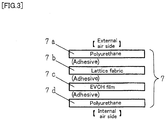
Figure 3 is a sectional view of a sheet fabric piece forming foot portions of a chemical protective suit in accordance with a preferred embodiment of the present invention. -
Figure 4 is a set of views showing the procedure for making the foot portion of a chemical protective suit in accordance with a preferred embodiment of the present invention. -
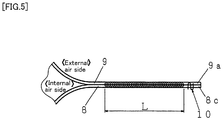
Figure 5 is a sectional view of the integrated portion of sheet fabric pieces forming the foot portion of a chemical protective suit in accordance with a preferred embodiment of the present invention. - A chemical protective suit in accordance with a preferred embodiment of the present invention will be described.
- As shown in
Figures 1 and 2 , a chemicalprotective suit 1 comprises ahead portion 2 for covering the part of a human body extending from the top of the head to the neck, abody portion 3 for covering the part of a human body extending from the chest to the abdomen, a pair of arm portions 4 for covering the parts of a human body extending from the shoulders to the wrists, a pair ofleg portions 5 for covering the parts of a human body extending from the abdomen to the calves, and a pair offoot portions 6 for covering the parts of a human body extending from the calves to the toes. The aforementioned portions are integrated into a unitary body by integrating a plurality of sheet fabric pieces. - A pair of gloves α for covering the portions of a human body extending from the wrists to the fingers are connected to the chemical
protective suit 1 beforehand. - A pair of boots β are fitted on the foot portions as indicated by alternate long and short dash lines in
Figures 1 and 2 when the chemicalprotective suit 1 is used. - The
leg portions 5 comprise flaps 5a for annularly covering the top outer circumferences of theboots 8 fitted on thefoot portions 6. - In the chemical
protective suit 1, theleg portions 5 and thefoot portions 6 are integrated into a unitary body. Therefore, irrespective of the level of the chemical permeability resistance of the boots β fitted on thefoot portions 6, the safety of operations in a working environment with chemical contaminated floors is ensured. - The flaps 5a provided on the
leg portions 5 prevent chemicals rebounding from the floor, flowing down along the upper portion of the chemical protective suit, or the like from entering into the spaces between the boots β and thefoot portions 6. - As shown in
Figure 3 , asheet fabric 7 used in the chemicalprotective suit 1 has a multi-layer structure comprising a front surface layer 7a made of polyurethane resin film to be exposed to the external air when thesheet fabric 7 forms the chemicalprotective suit 1, a rear surface layer 7d made of polyurethane resin film to be exposed to the internal air when thesheet fabric 7 forms the chemicalprotective suit 1, a lattice fabric middle layer 7b disposed between the front surface layer 7a and the rear surface layer 7d and located close to the front surface layer 7a, an EVOH (ethylene vinyl alcohol copolymer) film middle layer 7c, which is a chemical permeability resistant resin film, disposed between the front surface layer 7a and the rear surface layer 7d and located close to the rear surface layer 7d, and adhesives disposed between the layers to bond them to one another. - The
sheet fabric 7 is cut into a plurality of pieces of predetermined shapes. The plurality of sheet fabric pieces are integrated into a unitary body to form a chemicalprotective suit 1. - As shown in
Figure 4 , thefoot portion 6 is produced by integrating asheet fabric piece 8 for forming a sole and a heel and asheet fabric piece 9 for forming an instep. At first, thesheet fabric piece 8 is folded along a symmetry axis X as indicated by arrows inFigure 4(a) , then portions of thesheet fabric piece 8 close to peripheral edges 8a and 8b of the heel are stacked on each other, with the peripheral edges 8a and 8b opposed to each other, and then the portions stacked on each other are integrated as shown inFigure 4(b) . Thereafter, a portion of thesheet fabric piece 9 close to a peripheral edge 9a of the instep is stacked on a portion of thesheet fabric piece 8 close to aperipheral edge 8c of the sole, with the peripheral edge 9a and theperipheral edge 8c opposed to each other as shown inFigure 4(b) , and then the portions stacked on each other are integrated as shown inFigure 4(c) . The integrated portions are directed to the outside of thefoot portion 6 so as to be exposed to external air. - As shown in
Figure 5 , thesheet fabric piece 8 is integrated with thesheet fabric piece 9 so as to form the instep by a method comprising the steps of (a) making the peripheral edge 9a of thesheet fabric piece 9, whose front surface layer 7a is directed upward, oppose theperipheral edge 8c of thesheet fabric piece 8, whose front surface layer 7a is directed downward, (b) stacking the peripheral portion of thesheet fabric piece 9 including the peripheral edge 9a on the peripheral portion of thesheet fabric piece 8 including theperipheral edge 8c, (c) seaming the stackedsheet fabric pieces peripheral edges 9a and 8c along theperipheral edges 9a and 8c so as to make aseam line 10, (d) high frequency dielectric heating the stackedsheet fabric pieces seam line 10 along theseam line 10, with theperipheral edges 9a and 8c and the band portion disposed to face opposite sides of theseam line 10, thereby welding and integrating the stackedsheet fabric pieces - The
sheet fabric pieces seam line 10 so as to drive out spaces between the stackedsheet fabric pieces sheet fabric pieces seam line 10. Thus, air tightness and chemical permeability resistance of the integrated portion between thesheet fabric pieces - The portions of the
sheet fabric piece 8 for forming the heel are integrated with each other by the same method as aforementioned. - Stacked sheet fabric pieces can be welded and integrated with each other by high frequency dielectric heating because the
sheet fabric 7 for forming thefoot portion 6 comprises the front surface layer made of thermoplastic polyurethane resin film and the rear surface layer made of thermoplastic polyurethane resin film. - The integrated portion of the two adjacent sheet fabric pieces forming the
foot portion 6 does not have a folded portion of the sheet fabric piece. Therefore, thefoot portion 6 of the chemical protective suit of the present invention is easier to produce than that of the conventional chemical protective suit. - The integrated portion of the two adjacent sheet fabric pieces forming the
foot portion 6 is exposed to the external air and does not project into the internal space of thefoot portion 6. Therefore, thefoot portion 6 of the chemicalprotective suit 1 is more comfortable to wear than that of the conventional chemical protective suit, wherein a part of the integrated portion is exposed to the internal air of the foot portion so as to form a projection in the internal space of the foot portion. Theboots 6 are fitted on thefoot portions 6. Therefore, the integrated portions of the two adjacent sheet fabric pieces exposed to the external air are concealed from the eyes of others so as not to degrade the appearance of the chemicalprotective suit 1 worse during use. - The lattice fabric middle layer 7b is located closer to the external air than the EVOH film middle layer 7c. Thus, the EVOH film middle layer 7c is prevented from damage due to external force.
- Polyurethane resin film is used for the front surface layer and the rear surface layer of the sheet fabric in the aforementioned preferred embodiment. However, not only polyurethane resin film but also any other type of thermal plastic resin film which can be welded by high frequency dielectric heating can be used for the front surface layer and the rear surface layer of the sheet fabric. Polyvinyl chloride resin film can preferably be used for the front surface layer and the rear surface layer of the sheet fabric.
- The breadth L of the welded and integrated band portion is suitably decided for the particular type of resin film used.
- The present invention can be widely used for production of a chemical protective suit.
-
- 1
- Chemical protective suit
- 2
- Head portion
- 3
- Body portion
- 4
- Arm portion
- 5
- Leg portion
- 6
- Foot portion
- 7
- Sheet fabric for use in chemical protective suit
- 8
- Sheet fabric piece for use in sole
- 9
- Sheet fabric piece for use in instep
- 10
- Seam line
- α
- Glove
- β
- Boot
Claims (6)
- A chemical protective suit comprising:a head portion (2) for covering the part of a human body extending from the top of the head to the neck,a body portion (3) for covering the part of a human body extending from the chest to the abdomen,a pair of arm portions (4) for covering the parts of a human body extending from the shoulders to the wrists,a pair of leg portions (5) for covering the parts of a human body extending from the abdomen to the calves, anda pair of foot portions (6) for covering the parts of a human body extending from the calves to the toes,the aforementioned portions being integrated into a unitary body by integrating a plurality of sheet fabric pieces (7, 8, 9),characterized in thateach of the foot portions (6) comprises a sheet fabric piece (8) forming a sole and a heel and a sheet fabric piece (9) forming an instep which are adjacent and integrated with each other, andthe integrated portion of each pair of adjacent sheet fabric pieces (8, 9) in each of the foot portions (6) comprises a seam line (10) extending along peripheral edges (8a, 8b, 8c, 9a) of two adjacent sheet fabric pieces (8, 9) stacked on each other, with the peripheral edges (8a, 8b, 8c, 9a) opposed to each other, and a welded portion of the stacked sheet fabric pieces (8, 9) of a predetermined breadth extending along the seam line (10), with the peripheral edges (8a, 8b, 8c, 9a) and the welded portion disposed to face opposite sides of the seam line (10),wherein the integrated portion of each pair of adjacent sheet fabric pieces (8, 9) in each of the foot portions (6) is exposed to the external air, andwherein the sheet fabric piece (8) forming a sole and a heel is folded along a single symmetry axis (X) and the portions of the sheet fabric piece (8) forming a sole and a heel close to the peripheral edges (8a and 8b) of the heel are stacked on each other, with the peripheral edges (8a and 8b) of the heel opposed to each other, a portion of the sheet fabric piece (9) forming an instep close to peripheral edge (9a) of the instep is stacked on a portion of the sheet fabric piece (8) forming a sole and a heel close to the peripheral edge (8c) of the sole, with the peripheral edge (9a) of the instep and the peripheral edge (8c) of the sole opposed to each other, and the portions stacked on each other are integrated.
- The chemical protective suit of claim 1, wherein each of the sheet fabric pieces (8, 9) forming the foot portions (6) is a multi-layer sheet fabric piece comprising a front surface layer (7a) of thermoplastic resin film, a rear surface layer (7d) of thermoplastic resin film, and at least one middle layer (7c) of chemical permeability resistant resin film, and wherein the welded portion is formed using high frequency dielectric heating.
- The chemical protective suit of claim 2, wherein the thermoplastic resin film forming the front surface layer (7a) and the rear surface layer (7d) of the sheet fabric piece (8, 9) is polyurethane resin film.
- The chemical protective suit of claim 2, wherein the thermoplastic resin film forming the front surface layer (7a) and the rear surface layer (7d) of the sheet fabric piece (8, 9) is polyvinyl chloride resin film.
- The chemical protective suit of any one of claims 1 to 4, wherein each of the sheet fabric pieces (8, 9) forming the foot portions (6) further comprises a middle layer (7b) of lattice fabric.
- The chemical protective suit of any one of claims 1 to 5, wherein the leg portions (5) comprise flaps (5a) for annularly covering the top outer circumferences of boots (β) fitted on the foot portions (6).
Applications Claiming Priority (1)
| Application Number | Priority Date | Filing Date | Title |
|---|---|---|---|
| PCT/JP2010/064530 WO2012026030A1 (en) | 2010-08-26 | 2010-08-26 | Clothing for protection against chemicals |
Publications (3)
| Publication Number | Publication Date |
|---|---|
| EP2609965A1 EP2609965A1 (en) | 2013-07-03 |
| EP2609965A4 EP2609965A4 (en) | 2015-12-09 |
| EP2609965B1 true EP2609965B1 (en) | 2018-04-25 |
Family
ID=45723057
Family Applications (1)
| Application Number | Title | Priority Date | Filing Date |
|---|---|---|---|
| EP10856434.5A Not-in-force EP2609965B1 (en) | 2010-08-26 | 2010-08-26 | Clothing for protection against chemicals |
Country Status (4)
| Country | Link |
|---|---|
| US (1) | US9155921B2 (en) |
| EP (1) | EP2609965B1 (en) |
| CN (1) | CN103079647B (en) |
| WO (1) | WO2012026030A1 (en) |
Families Citing this family (3)
| Publication number | Priority date | Publication date | Assignee | Title |
|---|---|---|---|---|
| US11219785B1 (en) | 2017-05-30 | 2022-01-11 | U.S. Government As Represented By The Secretary Of The Army | Chemical and biological thermal ensemble and composite fabric |
| US20220287395A1 (en) * | 2019-09-11 | 2022-09-15 | Toray Industries, Inc. | Protective garment |
| USD939147S1 (en) * | 2020-02-14 | 2021-12-21 | Med-Eng, Llc | Bomb disposal suit |
Citations (3)
| Publication number | Priority date | Publication date | Assignee | Title |
|---|---|---|---|---|
| US2436458A (en) * | 1944-12-21 | 1948-02-24 | Stile Robert | Shoe construction |
| US2994089A (en) * | 1954-04-12 | 1961-08-01 | Jr Benjamin E Ferguson | Protective garment |
| US4753182A (en) * | 1987-06-05 | 1988-06-28 | Disposables, Inc. | Seam for protective garment |
Family Cites Families (39)
| Publication number | Priority date | Publication date | Assignee | Title |
|---|---|---|---|---|
| US2655663A (en) * | 1950-09-29 | 1953-10-20 | Standard Safety Equipment Co | Detachable hermetic sealing joint for garments |
| US3496572A (en) * | 1964-06-24 | 1970-02-24 | Benno Herzig | Dust-proof garment |
| US3431133A (en) * | 1966-10-12 | 1969-03-04 | Grace W R & Co | Fabric coated with binder and pulverulent molecular sieve and process of making same |
| US3911913A (en) * | 1973-10-05 | 1975-10-14 | Ethel L June | Survival apparatus |
| JPS5095107U (en) * | 1973-12-27 | 1975-08-09 | ||
| GB1500423A (en) * | 1975-04-02 | 1978-02-08 | Cosalt Ltd | Protective clothing |
| US4272851A (en) | 1979-02-16 | 1981-06-16 | Durafab Division Of Texel Industries, Inc. | Hazardous environment suit |
| JPS5959322U (en) * | 1982-10-12 | 1984-04-18 | 株式会社久保製作所 | Joint structure of waterproof fabric |
| US4924525A (en) * | 1986-10-20 | 1990-05-15 | Bodigard Technologies, Inc. | Multilayer film for chemical protective clothing |
| US4920575A (en) * | 1986-10-20 | 1990-05-01 | Bodigard Technologies, Inc. | Protective garment material and construction |
| US4831664A (en) * | 1987-05-14 | 1989-05-23 | Redi-Corp Protective Materials, Inc. | Garment for protecting against environmental contamination |
| US4847914A (en) * | 1987-05-14 | 1989-07-18 | Redi-Corp Protective Materials, Inc. | Garment for protecting against environmental contamination |
| CA1309008C (en) | 1987-05-21 | 1992-10-20 | Brian Farnworth | Skin tight chemical/biological protective suit |
| US4901370A (en) * | 1988-08-12 | 1990-02-20 | Redi-Corp Protective Materials, Inc. | Garment for protecting against environmental contamination |
| DE3900846A1 (en) * | 1989-01-13 | 1990-07-19 | Happich Gmbh Gebr | HARDENING MATERIAL FOR VEHICLES |
| DE8913473U1 (en) * | 1989-11-15 | 1990-01-04 | Tesimax-Altinger GmbH, 7530 Pforzheim | Protective clothing, especially chemical protective suit |
| US5005216A (en) * | 1990-07-30 | 1991-04-09 | Abandaco, Inc. | Self-ventilating protective garment |
| JP3547138B2 (en) | 1994-11-18 | 2004-07-28 | 旭化成せんい株式会社 | Improved joint structure of waterproof fabric |
| JP3689820B2 (en) * | 1995-06-16 | 2005-08-31 | 株式会社重松製作所 | Chemical protective clothing |
| JP3732257B2 (en) * | 1995-06-21 | 2006-01-05 | 沖縄県 | Deodorant and deodorizing method |
| GB9713014D0 (en) * | 1997-06-20 | 1997-08-27 | Minnesota Mining & Mfg | Protective garments |
| US5918314A (en) * | 1998-07-27 | 1999-07-06 | Moses; Melodie A. | Waterproof insulative garment |
| JP2000051553A (en) | 1998-08-13 | 2000-02-22 | Asahi Chem Ind Co Ltd | Method for joining waterproof cloth |
| GB0126361D0 (en) | 2001-11-02 | 2002-01-02 | Secr Defence | Protective apparel |
| JP2004208824A (en) | 2002-12-27 | 2004-07-29 | Nisshinbo Ind Inc | Waterproof sewing product and manufacturing method thereof |
| US6748609B1 (en) * | 2003-04-28 | 2004-06-15 | The United States Of America As Represented By The Secretary Of The Navy | Closure device for a protective suit |
| US7073203B2 (en) * | 2003-08-08 | 2006-07-11 | Simms Fishing Products Corporation | Foot-covering component of a stocking foot wader including gravel guard and method for manufacturing |
| JP2005060869A (en) * | 2003-08-11 | 2005-03-10 | Kuraray Co Ltd | Chemical resistant protective clothing |
| JP3897023B2 (en) | 2004-01-14 | 2007-03-22 | イザワ工業株式会社 | Sewing part joint structure and work method in water work clothes |
| JP2006149602A (en) * | 2004-11-29 | 2006-06-15 | Teijin Fibers Ltd | Medical and sanitary material |
| JP2006249602A (en) | 2005-03-09 | 2006-09-21 | Yamaki Co Ltd | Fabric binding portion, apparel, and apparel manufacturing method |
| DE102005045820B3 (en) * | 2005-09-24 | 2006-09-14 | Dräger Safety AG & Co. KGaA | Gas- and liquid-tight cuff for gloves or Wellington boots fits inside their rim, flexible sleeve fitting over their outside and cuff and sleeve being held in place by clip which fits over them |
| JP5154045B2 (en) | 2006-09-14 | 2013-02-27 | 日本ゴア株式会社 | Fabrics, composite fabrics, textile products having excellent wear resistance, and methods for producing the same |
| JP2008212162A (en) * | 2007-02-08 | 2008-09-18 | Toyobo Co Ltd | Foot part protective socks |
| US8247077B2 (en) | 2008-04-10 | 2012-08-21 | Ansell Protective Solutions Ab | Chemical protective garment with added flash fire protection |
| US7770235B2 (en) * | 2008-05-19 | 2010-08-10 | The Orvis Company, Inc. | Waterproof breathable fishing wader |
| US8028351B2 (en) * | 2009-03-05 | 2011-10-04 | Honeywell International, Inc. | Protective garments and gasket system for firefighter's and other emergency personnel |
| EP2609964B1 (en) * | 2010-08-26 | 2016-10-05 | Shigematsu Works Co., Ltd. | Method for joining cloth pieces for chemical protective clothing |
| US20130239301A1 (en) * | 2012-03-16 | 2013-09-19 | Meredith Broderick | Headgear Apparatus |
-
2010
- 2010-08-26 EP EP10856434.5A patent/EP2609965B1/en not_active Not-in-force
- 2010-08-26 CN CN201080068775.2A patent/CN103079647B/en not_active Expired - Fee Related
- 2010-08-26 US US13/819,266 patent/US9155921B2/en not_active Expired - Fee Related
- 2010-08-26 WO PCT/JP2010/064530 patent/WO2012026030A1/en not_active Ceased
Patent Citations (3)
| Publication number | Priority date | Publication date | Assignee | Title |
|---|---|---|---|---|
| US2436458A (en) * | 1944-12-21 | 1948-02-24 | Stile Robert | Shoe construction |
| US2994089A (en) * | 1954-04-12 | 1961-08-01 | Jr Benjamin E Ferguson | Protective garment |
| US4753182A (en) * | 1987-06-05 | 1988-06-28 | Disposables, Inc. | Seam for protective garment |
Also Published As
| Publication number | Publication date |
|---|---|
| EP2609965A1 (en) | 2013-07-03 |
| US9155921B2 (en) | 2015-10-13 |
| US20130239307A1 (en) | 2013-09-19 |
| WO2012026030A1 (en) | 2012-03-01 |
| EP2609965A4 (en) | 2015-12-09 |
| CN103079647A (en) | 2013-05-01 |
| CN103079647B (en) | 2015-01-14 |
Similar Documents
| Publication | Publication Date | Title |
|---|---|---|
| EP2445718B1 (en) | A method of manufacturing a flexible, impact-resistant material | |
| KR20170029587A (en) | Adhesive fabrication process for garments and other fabric products | |
| CA2843301C (en) | Waterproof taped glove and mitten with laminated leather | |
| US6171431B1 (en) | Welded fabric seams with inner and outer tabs | |
| KR100960362B1 (en) | Safety gloves and preparing method thereof | |
| KR101589573B1 (en) | Intermediate membranes for putting toghter moisture permeable and waterproof membrane directly onto outer shell and inner lining, gloves using it and manufacturing method thereof | |
| CN110497658A (en) | The manufacturing method of clothes and other fabric products | |
| US20120073164A1 (en) | Waterproof footwear and method of making the same | |
| CA2263525A1 (en) | Method of producing prefabricated multi-layered flexible products and products having improved sealing profiles resulting therefrom | |
| US10870778B2 (en) | Elastomeric tape with enhanced stretch characteristics | |
| US9155921B2 (en) | Chemical protective suit | |
| EP2609964B1 (en) | Method for joining cloth pieces for chemical protective clothing | |
| KR102048501B1 (en) | Manufacturing method of non-sewing outer socks | |
| US10231504B2 (en) | Articles of apparel including encapsulated insulation panels and methods of making the same | |
| EP3768102B1 (en) | A water sport article joint and a method for manufacturing a water sport article joint | |
| JP5377446B2 (en) | Chemical protective clothing | |
| WO2013181316A2 (en) | Articles of apparel incorporating cushioning elements | |
| US20240227343A1 (en) | Composite material with elongate openings | |
| JP5747292B1 (en) | Non-sewn garment, non-sewn garment manufacturing apparatus, and non-sewn garment manufacturing method | |
| JP5435736B2 (en) | Bonding method for chemical protective clothing | |
| JP5959004B2 (en) | Bonding method for chemical protective clothing | |
| KR20220016007A (en) | Method for manufacturing upper and lower integrated protective clothing by ultrasonic processing | |
| AU2017100214A4 (en) | Garment | |
| JP3182785U (en) | Cold protection clothing |
Legal Events
| Date | Code | Title | Description |
|---|---|---|---|
| PUAI | Public reference made under article 153(3) epc to a published international application that has entered the european phase |
Free format text: ORIGINAL CODE: 0009012 |
|
| 17P | Request for examination filed |
Effective date: 20130311 |
|
| AK | Designated contracting states |
Kind code of ref document: A1 Designated state(s): AL AT BE BG CH CY CZ DE DK EE ES FI FR GB GR HR HU IE IS IT LI LT LU LV MC MK MT NL NO PL PT RO SE SI SK SM TR |
|
| RA4 | Supplementary search report drawn up and despatched (corrected) |
Effective date: 20151106 |
|
| RIC1 | Information provided on ipc code assigned before grant |
Ipc: A62B 17/00 20060101AFI20151102BHEP Ipc: A41H 43/04 20060101ALI20151102BHEP |
|
| 17Q | First examination report despatched |
Effective date: 20160621 |
|
| GRAP | Despatch of communication of intention to grant a patent |
Free format text: ORIGINAL CODE: EPIDOSNIGR1 |
|
| INTG | Intention to grant announced |
Effective date: 20170705 |
|
| RIN1 | Information on inventor provided before grant (corrected) |
Inventor name: TANINO KAZUTAKA Inventor name: OZAWA TAKASHI Inventor name: NITTA SEIKO |
|
| GRAJ | Information related to disapproval of communication of intention to grant by the applicant or resumption of examination proceedings by the epo deleted |
Free format text: ORIGINAL CODE: EPIDOSDIGR1 |
|
| GRAP | Despatch of communication of intention to grant a patent |
Free format text: ORIGINAL CODE: EPIDOSNIGR1 |
|
| INTC | Intention to grant announced (deleted) | ||
| INTG | Intention to grant announced |
Effective date: 20170929 |
|
| RIN1 | Information on inventor provided before grant (corrected) |
Inventor name: TANINO, KAZUTAKA Inventor name: NITTA, SEIKO Inventor name: OZAWA, TAKASHI |
|
| GRAS | Grant fee paid |
Free format text: ORIGINAL CODE: EPIDOSNIGR3 |
|
| GRAA | (expected) grant |
Free format text: ORIGINAL CODE: 0009210 |
|
| AK | Designated contracting states |
Kind code of ref document: B1 Designated state(s): AL AT BE BG CH CY CZ DE DK EE ES FI FR GB GR HR HU IE IS IT LI LT LU LV MC MK MT NL NO PL PT RO SE SI SK SM TR |
|
| REG | Reference to a national code |
Ref country code: GB Ref legal event code: FG4D |
|
| REG | Reference to a national code |
Ref country code: CH Ref legal event code: EP |
|
| REG | Reference to a national code |
Ref country code: AT Ref legal event code: REF Ref document number: 992259 Country of ref document: AT Kind code of ref document: T Effective date: 20180515 |
|
| REG | Reference to a national code |
Ref country code: IE Ref legal event code: FG4D |
|
| REG | Reference to a national code |
Ref country code: DE Ref legal event code: R096 Ref document number: 602010050285 Country of ref document: DE |
|
| REG | Reference to a national code |
Ref country code: NL Ref legal event code: MP Effective date: 20180425 |
|
| REG | Reference to a national code |
Ref country code: LT Ref legal event code: MG4D |
|
| PG25 | Lapsed in a contracting state [announced via postgrant information from national office to epo] |
Ref country code: NL Free format text: LAPSE BECAUSE OF FAILURE TO SUBMIT A TRANSLATION OF THE DESCRIPTION OR TO PAY THE FEE WITHIN THE PRESCRIBED TIME-LIMIT Effective date: 20180425 |
|
| PG25 | Lapsed in a contracting state [announced via postgrant information from national office to epo] |
Ref country code: FI Free format text: LAPSE BECAUSE OF FAILURE TO SUBMIT A TRANSLATION OF THE DESCRIPTION OR TO PAY THE FEE WITHIN THE PRESCRIBED TIME-LIMIT Effective date: 20180425 Ref country code: LT Free format text: LAPSE BECAUSE OF FAILURE TO SUBMIT A TRANSLATION OF THE DESCRIPTION OR TO PAY THE FEE WITHIN THE PRESCRIBED TIME-LIMIT Effective date: 20180425 Ref country code: BG Free format text: LAPSE BECAUSE OF FAILURE TO SUBMIT A TRANSLATION OF THE DESCRIPTION OR TO PAY THE FEE WITHIN THE PRESCRIBED TIME-LIMIT Effective date: 20180725 Ref country code: ES Free format text: LAPSE BECAUSE OF FAILURE TO SUBMIT A TRANSLATION OF THE DESCRIPTION OR TO PAY THE FEE WITHIN THE PRESCRIBED TIME-LIMIT Effective date: 20180425 Ref country code: PL Free format text: LAPSE BECAUSE OF FAILURE TO SUBMIT A TRANSLATION OF THE DESCRIPTION OR TO PAY THE FEE WITHIN THE PRESCRIBED TIME-LIMIT Effective date: 20180425 Ref country code: SE Free format text: LAPSE BECAUSE OF FAILURE TO SUBMIT A TRANSLATION OF THE DESCRIPTION OR TO PAY THE FEE WITHIN THE PRESCRIBED TIME-LIMIT Effective date: 20180425 Ref country code: NO Free format text: LAPSE BECAUSE OF FAILURE TO SUBMIT A TRANSLATION OF THE DESCRIPTION OR TO PAY THE FEE WITHIN THE PRESCRIBED TIME-LIMIT Effective date: 20180725 |
|
| PG25 | Lapsed in a contracting state [announced via postgrant information from national office to epo] |
Ref country code: HR Free format text: LAPSE BECAUSE OF FAILURE TO SUBMIT A TRANSLATION OF THE DESCRIPTION OR TO PAY THE FEE WITHIN THE PRESCRIBED TIME-LIMIT Effective date: 20180425 Ref country code: LV Free format text: LAPSE BECAUSE OF FAILURE TO SUBMIT A TRANSLATION OF THE DESCRIPTION OR TO PAY THE FEE WITHIN THE PRESCRIBED TIME-LIMIT Effective date: 20180425 Ref country code: GR Free format text: LAPSE BECAUSE OF FAILURE TO SUBMIT A TRANSLATION OF THE DESCRIPTION OR TO PAY THE FEE WITHIN THE PRESCRIBED TIME-LIMIT Effective date: 20180726 |
|
| REG | Reference to a national code |
Ref country code: AT Ref legal event code: MK05 Ref document number: 992259 Country of ref document: AT Kind code of ref document: T Effective date: 20180425 |
|
| PG25 | Lapsed in a contracting state [announced via postgrant information from national office to epo] |
Ref country code: PT Free format text: LAPSE BECAUSE OF FAILURE TO SUBMIT A TRANSLATION OF THE DESCRIPTION OR TO PAY THE FEE WITHIN THE PRESCRIBED TIME-LIMIT Effective date: 20180827 |
|
| REG | Reference to a national code |
Ref country code: DE Ref legal event code: R097 Ref document number: 602010050285 Country of ref document: DE |
|
| PG25 | Lapsed in a contracting state [announced via postgrant information from national office to epo] |
Ref country code: DK Free format text: LAPSE BECAUSE OF FAILURE TO SUBMIT A TRANSLATION OF THE DESCRIPTION OR TO PAY THE FEE WITHIN THE PRESCRIBED TIME-LIMIT Effective date: 20180425 Ref country code: AT Free format text: LAPSE BECAUSE OF FAILURE TO SUBMIT A TRANSLATION OF THE DESCRIPTION OR TO PAY THE FEE WITHIN THE PRESCRIBED TIME-LIMIT Effective date: 20180425 Ref country code: CZ Free format text: LAPSE BECAUSE OF FAILURE TO SUBMIT A TRANSLATION OF THE DESCRIPTION OR TO PAY THE FEE WITHIN THE PRESCRIBED TIME-LIMIT Effective date: 20180425 Ref country code: SK Free format text: LAPSE BECAUSE OF FAILURE TO SUBMIT A TRANSLATION OF THE DESCRIPTION OR TO PAY THE FEE WITHIN THE PRESCRIBED TIME-LIMIT Effective date: 20180425 Ref country code: RO Free format text: LAPSE BECAUSE OF FAILURE TO SUBMIT A TRANSLATION OF THE DESCRIPTION OR TO PAY THE FEE WITHIN THE PRESCRIBED TIME-LIMIT Effective date: 20180425 Ref country code: EE Free format text: LAPSE BECAUSE OF FAILURE TO SUBMIT A TRANSLATION OF THE DESCRIPTION OR TO PAY THE FEE WITHIN THE PRESCRIBED TIME-LIMIT Effective date: 20180425 |
|
| PG25 | Lapsed in a contracting state [announced via postgrant information from national office to epo] |
Ref country code: SM Free format text: LAPSE BECAUSE OF FAILURE TO SUBMIT A TRANSLATION OF THE DESCRIPTION OR TO PAY THE FEE WITHIN THE PRESCRIBED TIME-LIMIT Effective date: 20180425 Ref country code: IT Free format text: LAPSE BECAUSE OF FAILURE TO SUBMIT A TRANSLATION OF THE DESCRIPTION OR TO PAY THE FEE WITHIN THE PRESCRIBED TIME-LIMIT Effective date: 20180425 |
|
| PLBE | No opposition filed within time limit |
Free format text: ORIGINAL CODE: 0009261 |
|
| REG | Reference to a national code |
Ref country code: DE Ref legal event code: R119 Ref document number: 602010050285 Country of ref document: DE |
|
| STAA | Information on the status of an ep patent application or granted ep patent |
Free format text: STATUS: NO OPPOSITION FILED WITHIN TIME LIMIT |
|
| PG25 | Lapsed in a contracting state [announced via postgrant information from national office to epo] |
Ref country code: MC Free format text: LAPSE BECAUSE OF FAILURE TO SUBMIT A TRANSLATION OF THE DESCRIPTION OR TO PAY THE FEE WITHIN THE PRESCRIBED TIME-LIMIT Effective date: 20180425 |
|
| REG | Reference to a national code |
Ref country code: CH Ref legal event code: PL |
|
| 26N | No opposition filed |
Effective date: 20190128 |
|
| GBPC | Gb: european patent ceased through non-payment of renewal fee |
Effective date: 20180826 |
|
| PG25 | Lapsed in a contracting state [announced via postgrant information from national office to epo] |
Ref country code: LU Free format text: LAPSE BECAUSE OF NON-PAYMENT OF DUE FEES Effective date: 20180826 Ref country code: LI Free format text: LAPSE BECAUSE OF NON-PAYMENT OF DUE FEES Effective date: 20180831 Ref country code: CH Free format text: LAPSE BECAUSE OF NON-PAYMENT OF DUE FEES Effective date: 20180831 |
|
| REG | Reference to a national code |
Ref country code: BE Ref legal event code: MM Effective date: 20180831 |
|
| PG25 | Lapsed in a contracting state [announced via postgrant information from national office to epo] |
Ref country code: SI Free format text: LAPSE BECAUSE OF FAILURE TO SUBMIT A TRANSLATION OF THE DESCRIPTION OR TO PAY THE FEE WITHIN THE PRESCRIBED TIME-LIMIT Effective date: 20180425 |
|
| PG25 | Lapsed in a contracting state [announced via postgrant information from national office to epo] |
Ref country code: DE Free format text: LAPSE BECAUSE OF NON-PAYMENT OF DUE FEES Effective date: 20190301 |
|
| PG25 | Lapsed in a contracting state [announced via postgrant information from national office to epo] |
Ref country code: FR Free format text: LAPSE BECAUSE OF NON-PAYMENT OF DUE FEES Effective date: 20180831 Ref country code: BE Free format text: LAPSE BECAUSE OF NON-PAYMENT OF DUE FEES Effective date: 20180831 |
|
| PG25 | Lapsed in a contracting state [announced via postgrant information from national office to epo] |
Ref country code: GB Free format text: LAPSE BECAUSE OF NON-PAYMENT OF DUE FEES Effective date: 20180826 |
|
| PG25 | Lapsed in a contracting state [announced via postgrant information from national office to epo] |
Ref country code: AL Free format text: LAPSE BECAUSE OF FAILURE TO SUBMIT A TRANSLATION OF THE DESCRIPTION OR TO PAY THE FEE WITHIN THE PRESCRIBED TIME-LIMIT Effective date: 20180425 |
|
| PG25 | Lapsed in a contracting state [announced via postgrant information from national office to epo] |
Ref country code: MT Free format text: LAPSE BECAUSE OF NON-PAYMENT OF DUE FEES Effective date: 20180826 |
|
| PG25 | Lapsed in a contracting state [announced via postgrant information from national office to epo] |
Ref country code: TR Free format text: LAPSE BECAUSE OF FAILURE TO SUBMIT A TRANSLATION OF THE DESCRIPTION OR TO PAY THE FEE WITHIN THE PRESCRIBED TIME-LIMIT Effective date: 20180425 |
|
| PG25 | Lapsed in a contracting state [announced via postgrant information from national office to epo] |
Ref country code: HU Free format text: LAPSE BECAUSE OF FAILURE TO SUBMIT A TRANSLATION OF THE DESCRIPTION OR TO PAY THE FEE WITHIN THE PRESCRIBED TIME-LIMIT; INVALID AB INITIO Effective date: 20100826 |
|
| PG25 | Lapsed in a contracting state [announced via postgrant information from national office to epo] |
Ref country code: IE Free format text: LAPSE BECAUSE OF NON-PAYMENT OF DUE FEES Effective date: 20180826 Ref country code: CY Free format text: LAPSE BECAUSE OF FAILURE TO SUBMIT A TRANSLATION OF THE DESCRIPTION OR TO PAY THE FEE WITHIN THE PRESCRIBED TIME-LIMIT Effective date: 20180425 Ref country code: MK Free format text: LAPSE BECAUSE OF NON-PAYMENT OF DUE FEES Effective date: 20180425 |
|
| PG25 | Lapsed in a contracting state [announced via postgrant information from national office to epo] |
Ref country code: IS Free format text: LAPSE BECAUSE OF FAILURE TO SUBMIT A TRANSLATION OF THE DESCRIPTION OR TO PAY THE FEE WITHIN THE PRESCRIBED TIME-LIMIT Effective date: 20180825 |