EP2608792B1 - Methods of administering an egfr inhibitor - Google Patents
Methods of administering an egfr inhibitor Download PDFInfo
- Publication number
- EP2608792B1 EP2608792B1 EP11752700.2A EP11752700A EP2608792B1 EP 2608792 B1 EP2608792 B1 EP 2608792B1 EP 11752700 A EP11752700 A EP 11752700A EP 2608792 B1 EP2608792 B1 EP 2608792B1
- Authority
- EP
- European Patent Office
- Prior art keywords
- bibw
- pharmaceutically acceptable
- acceptable salt
- inhibitor
- patient
- Prior art date
- Legal status (The legal status is an assumption and is not a legal conclusion. Google has not performed a legal analysis and makes no representation as to the accuracy of the status listed.)
- Revoked
Links
Classifications
-
- A—HUMAN NECESSITIES
- A61—MEDICAL OR VETERINARY SCIENCE; HYGIENE
- A61K—PREPARATIONS FOR MEDICAL, DENTAL OR TOILETRY PURPOSES
- A61K31/00—Medicinal preparations containing organic active ingredients
- A61K31/33—Heterocyclic compounds
- A61K31/395—Heterocyclic compounds having nitrogen as a ring hetero atom, e.g. guanethidine or rifamycins
- A61K31/495—Heterocyclic compounds having nitrogen as a ring hetero atom, e.g. guanethidine or rifamycins having six-membered rings with two or more nitrogen atoms as the only ring heteroatoms, e.g. piperazine or tetrazines
- A61K31/505—Pyrimidines; Hydrogenated pyrimidines, e.g. trimethoprim
- A61K31/517—Pyrimidines; Hydrogenated pyrimidines, e.g. trimethoprim ortho- or peri-condensed with carbocyclic ring systems, e.g. quinazoline, perimidine
-
- A—HUMAN NECESSITIES
- A61—MEDICAL OR VETERINARY SCIENCE; HYGIENE
- A61K—PREPARATIONS FOR MEDICAL, DENTAL OR TOILETRY PURPOSES
- A61K31/00—Medicinal preparations containing organic active ingredients
- A61K31/33—Heterocyclic compounds
- A61K31/395—Heterocyclic compounds having nitrogen as a ring hetero atom, e.g. guanethidine or rifamycins
- A61K31/41—Heterocyclic compounds having nitrogen as a ring hetero atom, e.g. guanethidine or rifamycins having five-membered rings with two or more ring hetero atoms, at least one of which being nitrogen, e.g. tetrazole
- A61K31/425—Thiazoles
- A61K31/426—1,3-Thiazoles
-
- A—HUMAN NECESSITIES
- A61—MEDICAL OR VETERINARY SCIENCE; HYGIENE
- A61K—PREPARATIONS FOR MEDICAL, DENTAL OR TOILETRY PURPOSES
- A61K31/00—Medicinal preparations containing organic active ingredients
- A61K31/33—Heterocyclic compounds
- A61K31/395—Heterocyclic compounds having nitrogen as a ring hetero atom, e.g. guanethidine or rifamycins
- A61K31/535—Heterocyclic compounds having nitrogen as a ring hetero atom, e.g. guanethidine or rifamycins having six-membered rings with at least one nitrogen and one oxygen as the ring hetero atoms, e.g. 1,2-oxazines
- A61K31/5375—1,4-Oxazines, e.g. morpholine
- A61K31/5377—1,4-Oxazines, e.g. morpholine not condensed and containing further heterocyclic rings, e.g. timolol
-
- A—HUMAN NECESSITIES
- A61—MEDICAL OR VETERINARY SCIENCE; HYGIENE
- A61K—PREPARATIONS FOR MEDICAL, DENTAL OR TOILETRY PURPOSES
- A61K9/00—Medicinal preparations characterised by special physical form
- A61K9/0012—Galenical forms characterised by the site of application
- A61K9/0053—Mouth and digestive tract, i.e. intraoral and peroral administration
-
- A—HUMAN NECESSITIES
- A61—MEDICAL OR VETERINARY SCIENCE; HYGIENE
- A61P—SPECIFIC THERAPEUTIC ACTIVITY OF CHEMICAL COMPOUNDS OR MEDICINAL PREPARATIONS
- A61P11/00—Drugs for disorders of the respiratory system
-
- A—HUMAN NECESSITIES
- A61—MEDICAL OR VETERINARY SCIENCE; HYGIENE
- A61P—SPECIFIC THERAPEUTIC ACTIVITY OF CHEMICAL COMPOUNDS OR MEDICINAL PREPARATIONS
- A61P35/00—Antineoplastic agents
-
- A—HUMAN NECESSITIES
- A61—MEDICAL OR VETERINARY SCIENCE; HYGIENE
- A61P—SPECIFIC THERAPEUTIC ACTIVITY OF CHEMICAL COMPOUNDS OR MEDICINAL PREPARATIONS
- A61P43/00—Drugs for specific purposes, not provided for in groups A61P1/00-A61P41/00
-
- C—CHEMISTRY; METALLURGY
- C12—BIOCHEMISTRY; BEER; SPIRITS; WINE; VINEGAR; MICROBIOLOGY; ENZYMOLOGY; MUTATION OR GENETIC ENGINEERING
- C12Q—MEASURING OR TESTING PROCESSES INVOLVING ENZYMES, NUCLEIC ACIDS OR MICROORGANISMS; COMPOSITIONS OR TEST PAPERS THEREFOR; PROCESSES OF PREPARING SUCH COMPOSITIONS; CONDITION-RESPONSIVE CONTROL IN MICROBIOLOGICAL OR ENZYMOLOGICAL PROCESSES
- C12Q1/00—Measuring or testing processes involving enzymes, nucleic acids or microorganisms; Compositions therefor; Processes of preparing such compositions
- C12Q1/68—Measuring or testing processes involving enzymes, nucleic acids or microorganisms; Compositions therefor; Processes of preparing such compositions involving nucleic acids
- C12Q1/6876—Nucleic acid products used in the analysis of nucleic acids, e.g. primers or probes
- C12Q1/6883—Nucleic acid products used in the analysis of nucleic acids, e.g. primers or probes for diseases caused by alterations of genetic material
- C12Q1/6886—Nucleic acid products used in the analysis of nucleic acids, e.g. primers or probes for diseases caused by alterations of genetic material for cancer
-
- G—PHYSICS
- G01—MEASURING; TESTING
- G01N—INVESTIGATING OR ANALYSING MATERIALS BY DETERMINING THEIR CHEMICAL OR PHYSICAL PROPERTIES
- G01N33/00—Investigating or analysing materials by specific methods not covered by groups G01N1/00 - G01N31/00
- G01N33/48—Biological material, e.g. blood, urine; Haemocytometers
- G01N33/50—Chemical analysis of biological material, e.g. blood, urine; Testing involving biospecific ligand binding methods; Immunological testing
- G01N33/53—Immunoassay; Biospecific binding assay; Materials therefor
- G01N33/575—Immunoassay; Biospecific binding assay; Materials therefor for cancer
- G01N33/5758—Immunoassay; Biospecific binding assay; Materials therefor for cancer involving compounds serving as markers for tumours, cancers or neoplasias, e.g. cellular determinants, receptors, heat shock/stress proteins, A-protein, oligosaccharides or metabolites
-
- G—PHYSICS
- G01—MEASURING; TESTING
- G01N—INVESTIGATING OR ANALYSING MATERIALS BY DETERMINING THEIR CHEMICAL OR PHYSICAL PROPERTIES
- G01N33/00—Investigating or analysing materials by specific methods not covered by groups G01N1/00 - G01N31/00
- G01N33/48—Biological material, e.g. blood, urine; Haemocytometers
- G01N33/50—Chemical analysis of biological material, e.g. blood, urine; Testing involving biospecific ligand binding methods; Immunological testing
- G01N33/74—Chemical analysis of biological material, e.g. blood, urine; Testing involving biospecific ligand binding methods; Immunological testing involving hormones or other non-cytokine intercellular protein regulatory factors such as growth factors, including receptors to hormones and growth factors
-
- G—PHYSICS
- G01—MEASURING; TESTING
- G01N—INVESTIGATING OR ANALYSING MATERIALS BY DETERMINING THEIR CHEMICAL OR PHYSICAL PROPERTIES
- G01N2333/00—Assays involving biological materials from specific organisms or of a specific nature
- G01N2333/435—Assays involving biological materials from specific organisms or of a specific nature from animals; from humans
- G01N2333/475—Assays involving growth factors
- G01N2333/485—Epidermal growth factor [EGF] (urogastrone)
-
- G—PHYSICS
- G01—MEASURING; TESTING
- G01N—INVESTIGATING OR ANALYSING MATERIALS BY DETERMINING THEIR CHEMICAL OR PHYSICAL PROPERTIES
- G01N2800/00—Detection or diagnosis of diseases
- G01N2800/52—Predicting or monitoring the response to treatment, e.g. for selection of therapy based on assay results in personalised medicine; Prognosis
Definitions
- This invention relates to pharmaceutical compositions comprising BIBW 2992 or a pharmaceutically acceptable salt thereof for use in a method for treatment of a patient having non-small cell lung cancer in which there is a step of avoiding or modifying co-administration of BIBW 2992 with P-glycoprotein (P-gp) inhibitors.
- P-gp P-glycoprotein
- the invention relates to BIBW 2992 or a pharmaceutically acceptable salt thereof for use in a method for optimizing therapeutic efficacy of treatment of NSCLC in a human patient in which there is a step of reducing the dosage or dose frequency of a P-gp inhibitor or avoiding completely the administering of a P-gp inhibitor before starting of administering BIBW 2992 or a pharmaceutically acceptable salt thereof
- Epidermal growth factor receptor (EGFR) tyrosine kinase inhibitors have been studied clinically to demonstrate efficacy in treating certain cancers.
- Compounds which inhibit signal transduction by tyrosine kinases for example of the human EGF receptor, have been shown to be useful for treating pathophysiological processes caused by hyperfunction of tyrosine kinases.
- David W. Fry, Pharmacol. Ther. Vol. 82, Nos. 2-3, pp. 207-218, 1999 1999 .
- Several irreversible inhibitors have been shown to have therapeutic advantages such as prolonged tumor suppression compared to reversible inhibitors such as gefitinib. DeBono & Rowinsky, Br. Med. Bull. 64:227-254 (2002 ).
- BIBW 2992 is a highly selective, potent, irreversible tyrosine kinase inhibitor of EGFR and HER2 with promising effects having been seen in non-small cell lung cancer (NSCLC) patients.
- BIBW 2992 was also reported to be effective in solid tumors besides NSCLC. Minkovsky, N. et al., Current Opinion in Investigational Drugs 2008, 9(12), 1336-1346 . BIBW 2992 pharmacokinetic characteristics (PK) after single and multiple doses revealed moderately fast absorption. British Journal of Cancer (2008) 98, 80-85 . BIBW 2992 exhibited more than dose-proportional increase in exposure in healthy volunteers and in cancer patients.
- P-gp is a transmembrane efflux pump protein and appears to be an important component of the barrier which protects tissues from potentially harmful substances by pumping them out of cells.
- Standard chemotherapy treatment regimens for cancer typically involve highly toxic compounds designed to kill tumor cells.
- MDR multi-drug resistance
- tumor cells will use P-gp to pump out therapeutic medication before it can penetrate the tumor and effectively eliminate the cancer.
- Juranka PF et al., FASEB J. 1989 Dec; 3(14): 2583-92 While this has led to the development of agents that inhibit the action of P-gp, this approach has been unpredictable since many randomized controlled trials evaluating P-gp substrate drugs used in combination with or without P-gp modulators, have not shown significant improvements in outcome.
- NSCLC non-small cell lung cancer
- a P-gp inhibitor and an EGFR inhibitor results in an increased drug exposure of said EGFR inhibitor.
- the simultaneous administration of a P-gp inhibitor together with a EGFR inhibitor should be avoided and/or modified or the dose of the EGFR inhibitor should be modified.
- administration of a potent P-gp inhibitor at least 6 hours after an EGFR inhibitor administration may minimize the DDI (drug drug interaction) which was seen during concomitant intake of EGFR inhibitor together with a P-gp inhibitor.
- the invention therefore provides a pharmaceutical composition comprising BIBW 2992 or a pharmaceutically acceptable salt thereof, for use in a method of treatment of a NSCLC patient, the method comprising
- the invention further provides a pharmaceutical composition comprising BIBW 2992 or a pharmaceutically acceptable salt thereof, for use in treating a NSCLC patient by a method comprising
- BIBW 2992 or a pharmaceutically acceptable salt thereof for use in a method of optimizing therapeutic efficacy of treatment of NSCLC in a human patient, comprising:
- BIBW 2992 or a pharmaceutically acceptable salt thereof according to any of the embodiments above, wherein BIBW 2992 or a pharmaceutically acceptable salt thereof is to be administered with a dosage of about 10 to 50 mg/day, preferably about 20 to 50 mg/day, more preferably 40 mg/day, preferably in the form of a tablet, taken once daily.
- BIBW 2992 or a pharmaceutically acceptable salt thereof according to any of the embodiments above, wherein BIBW 2992 or a pharmaceutically acceptable salt thereof is to be administered without food which shall be understood to mean at least one hour before a meal until at least 3 hours after a meal.
- BIBW 2992 or a pharmaceutically acceptable salt thereof according to any of the embodiments above, wherein BIBW 2992 or a pharmaceutically acceptable salt thereof is formulated as a dispersible tablet/granules/pellets/powder.
- BIBW 2992 or a pharmaceutically acceptable salt thereof according to any of the embodiments above, wherein the dispersible tablet/granules/pellets/powder is dispersible in an aqueous solvent, preferably water.
- BIBW 2992 or a pharmaceutically acceptable salt thereof according to any of the embodiments above, wherein BIBW 2992 or a pharmaceutically acceptable salt thereof is formulated for administration orally after dispersing or dissolving said inhibitor, preferably with stirring, for at least 5, preferably at least 10, even more preferred at least 5 min in an aqueous solvent, preferably water.
- BIBW 2992 or a pharmaceutically acceptable salt thereof according to any of the embodiments above, wherein BIBW 2992 or a pharmaceutically acceptable salt thereof is formulated for administration through a naso-gastric tube.
- BIBW 2992 or a pharmaceutically acceptable salt thereof for use in the treatment of NSCLC with a dosage regime which is adjusted according to adverse events of said EGFR inhibitor treatment, concomitant with P-gp inhibitor treatment, wherein said adverse events is monitored at a time point after the patient has initiated EGFR inhibitor treatment by measuring the amount and severity of adverse events as determined by, for example, with CTCAE version 3.0 grading ( http://ctep.cancer.gov/protocoldevelopment/electronic_applications/docs/ctcaev3.pdf ).
- BIBW 2992 or a pharmaceutically acceptable salt thereof for use in the treatment of NSCLC wherein BIBW 2992 or a pharmaceutically acceptable salt thereof is the sole active anti-cancer ingredient.
- EGFR inhibitor includes reversible or irreversible EGFR inhibitors.
- Reversible EGFR inhibitors include: structural classes 4-anilinoquinazolines, 4-[aralkylamino] pyridopyrimidines, and 4-phenylaminopyrrolo-pyrimidines. See David W. Fry, Pharmacol. Ther. Vol. 82, Nos. 2-3, pp. 209-211, 1999 . Specific examples include Gefitinib (compound ZD1839 "IRESSA”), Erlotinib (compound OSI-774, "TARCEVA”), Lapatinib, conventional cancer treatment with both IRESSA and TARCEVA involves the daily, oral administration of no more than 500 mg of the respective compounds.
- IRESSA compound ZD1839
- TARCEVA Erlotinib
- Lapatinib conventional cancer treatment with both IRESSA and TARCEVA involves the daily, oral administration of no more than 500 mg of the respective compounds.
- Irreversible EGFR inhibitor includes any compound which binds irreversibly to EGFR, preferably to cysteine 773 of EGFR.
- Nonlimiting examples include compounds disclosed in U.S. Pat. No. 6,002,008 , US 7,019,012 , US 6,251,912 , WO 02/50043 , WO 2004/074263 , WO 2005/037824 , BIBW2992, EKB-569, HKI-272, HKI-357, C1-1033, Icotinib or PF-00299804, including pharmaceutical acceptable salts thereof.
- BIBW 2992 dimaleate 2-Butenamide, N-[4-[(3-chloro-4-fluorophenyl)amino]-7-[[(3S)-tetrahydro-3-furanyl]oxy]-6-quinazolinyl]-4-(dimethylamino)-, (2E)-, (2Z)-2-butendioate (1:2)
- P-gp is P-glycoprotein is encoded by the ABCB1 gene ( Ueda K, Clark DP, Chen CJ, Roninson IB, Gottesman MM, Pastan I (January 1987). "The human multidrug resistance (mdr1) gene. cDNA cloning and transcription initiation ". J. Biol. Chem. 262 (2): 505-8 . PMID 3027054).
- P-gp modulators include inhibitors as defined herein, preferably such compounds that are potent inhibitors of P-gp.
- Potent P-gp inhibitors include any agent capable of preferably potently inhibiting P-gp.
- Nonlimiting examples include alfentanil, amiloride, amiodarone, amitriptyline, astemizole, atovaquone, atorvastatin, azelastine, azidopine, azithromycin, bepridil, biricodar, bromocriptine, carbamazepine, carvedilol, chloroquine, chlorpromazine, clarithromycin, cyclosporin, cyproheptadine, darunavir, desethylamiodarone, desipramine, dexniguldipine, dexrazoxane, diltiazem, dipyridamole, disulfiram, doxazosin, elacridar, emetine, erythromycin, felodipine, fenofibrate, fentanyl, flavonoids, fluoxetine, fluphenazin
- Modifying the administering of said P-gp modulators shall be understood to mean reducing the dosage or dose frequency of said P-gp modulators.
- "Avoiding" completely the administering of said P-gp modulators shall be understood to mean either a) not starting the administration of said P-gp modulators or b) stopping the administration of said P-gp modulator and then not re-starting the administration of said P-gp modulator.
- the treatment may also involve a combination of treatments, including, but not limited to a tyrosine kinase inhibitor in combination with other tyrosine kinase inhibitors, chemotherapy, radiation, etc.
- a tyrosine kinase inhibitor in combination with other tyrosine kinase inhibitors, chemotherapy, radiation, etc.
- Reference in this regard may be made to EP 09160202.9 , PCT/EP/2010050338 , WO 2008/121467 , US 2009-0306101 , US 2006-0058311 , US 2005-0043233 , US 2003-0225079 and US 2009-0318480 .
- Concomitant use of a P-gp modulator in treatment of a patient with a first medication such as an EGFR inhibitor means that the P-gp modulator is administered to the patient according to a treatment regimen characterized by repeated administration of a dosage unit in defined time intervals, e.g. once, twice or thrice daily, in addition to a parallel but independent treatment regimen characterized by repeated administration of a dosage unit of the first medication.
- a treatment regimen characterized by repeated administration of a dosage unit in defined time intervals, e.g. once, twice or thrice daily
- the concomitant use of a P-gp modulator together with an EGFR inhibitor means that both drugs would be adminsitered in parallel (simultaneously) or at maximum within a time frame of 1 hour between both drug administrations.
- WO 02/50043 WO 2004/074263 and WO 2005/037824 includes preparation as well as pharmaceutical formulations of the compounds.
- the compounds may be used in monotherapy or in conjunction with other anti-tumour therapeutic agents, for example in combination with topoisomerase inhibitors (e.g. etoposide), mitosis inhibitors (e.g. vinblastine), compounds which interact with nucleic acids (e.g. cisplatin, cyclophosphamide, adriamycin), hormone antagonists (e.g. tamoxifen), inhibitors of metabolic processes (e.g. 5-FU etc.), cytokines (e.g. interferons) or antibodies.
- topoisomerase inhibitors e.g. etoposide
- mitosis inhibitors e.g. vinblastine
- nucleic acids e.g. cisplatin, cyclophosphamide, adriamycin
- hormone antagonists e.g
- the expression "patient” relates to a human patient suffering from cancer and thus in need of such treatment.
- the expression “patient” should be understood to include such cancer patients carrying tumors with wild-type EGF receptor as well as pre-selected cancer patients with tumors harboring activating EGFR mutations. These can be located in the tyrosine kinase domain of the EGF receptor such as for instance the L858R or L861 point mutations in the activation loop (exon 21), or in-frame deletion/insertion mutations in the ELREA sequence (exon 19), or substitutions in G719 situated in the nucleotide binding loop (exon 18). Additional activating mutations have been reported in the extracellular domain of the EGF receptor in various indications (e.g.
- EGFR vIII displaying exon 2-7 deletions Other mutations such as the T790M point mutation in exon 20 as well as certain exon 20 insertions (e.g. D770_N771insNPG) which confer resistance to particular drugs should also be included, as well as double mutants such as the combined L858R / T790M mutation or the exon-19-del/T790M.
- exon 20 insertions e.g. D770_N771insNPG
- double mutants such as the combined L858R / T790M mutation or the exon-19-del/T790M.
- patient should be understood to include also such cancer patients carrying tumors with wild-type HER2 receptor as well as pre-selected cancer patients with tumors harboring activating HER2 mutations, e.g. M774_A775insAYVM.
- the highest dose of BIBW 2992 is 160 mg once daily for 3 days or, alternatively 100 mg once daily for 2 weeks.
- the presence of specific gain-of-function mutations within the tyrosine kinase domain of the EGF receptor in a subgroup of NSCLC patients has been associated with increased sensitivity to treatment with gefitinib and erlotinib ( Lynch, New England Journal Medicine 350, 2129 (2004 ); Paez, Science 304, 1497 (2004 ); Pao, Proceedings of the National Academy of Science of the United States 101, 13306 (2004 )).
- the treatment with EGFR inhibitors may be a first line treatment, or subsequent line treatments such as cancers initially be diagnosed as gefitinib/erlotinib sensitive or predicted to be gefitinib/erlotinib sensitive by means of these methods.
- L858R point mutation (exon 21) as well as deletion/insertion mutations in the ELREA sequence (exon 19) account for the majority of gefitinib responders.
- Methods for detecting mutations in the tyrosine kinase domain of the EGF receptor are kown in the art, several corresponding diagnostic tools are approved by the FDA and commercially available, e.g.
- Irreversible inhibitors in contrast to reversible inhibitors (e.g., gefitinib), are able to inhibit proliferation and EGF-induced EGFR phosphorylation in cell lines expressing double mutant EGF receptors ( Kwak, Proceedings of the National Academy of Science of the United States 102, 7665 (2005 ) and Kobayashi, New England Journal Medicine 352, 786 (2005 )).
- any aspect of the present invention therefore includes optional pre-selection of NSCLC patients for an EGFR mutation in the tyrosine kinase domain of the EGF receptor as well as pre-selection of NSCLC patients for an HER2 mutation.
- the EGFR mutations preferably relevant in in this context are selected from the group consisting of the L858R and L861 point mutations in the activation loop (exon 21), in-frame deletion/insertion mutations in the ELREA sequence (exon 19), substitutions in G719 situated in the nucleotide binding loop (exon 18), activating mutations in the extracellular domain of the EGF receptor such as EGFR vIII displaying exon 2-7 deletions, the T790M point mutation in exon 20, exon 20 insertions such as D770_N771insNPG, and double mutants such as the combined L858R / T790M mutation and the exon-19-del/T790M.
- the HER2 mutation preferably relevant in in
- a method of treating NSCLC would include pre-selection of NSCLC patients for EGFR and/or HER2 mutations and administering a therapeutically effective amount of BIBW 2992 to a pre-selected NSCLC patient shown to carry an EGFR mutation in the tyrosine kinase domain of the EGF receptor and/or with a tumor harboring an activating HER2 mutation, optionally in combination with chemotherapy, biological therapy including therapeutic antibodies, targeted therapy including mTOR inhibitors, radiotherapy, radio-immunotherapy and/or tumour resection by surgery.
- the method further comprises modifying or avoiding completely the administering of said P-gp inhibitors before starting of administering BIBW 2992 or a pharmaceutically acceptable salt thereof.
- the method further comprises modifying or avoiding completely the administering of said P-gp inhibitors before starting of administering BIBW 2992 or a pharmaceutically acceptable salt thereof.
- BIBW 2992 can be optionally in form of its tautomers, racemates, enantiomers, diastereomers and the mixtures thereof and optionally in form of the pharmacologically acceptable acid addition salts, solvates, hydrates, polymorphs or physiologically functional derivatives thereof.
- BIBW 2992 is administered orally, enterically, transdermally, intravenously, peritoneally or by injection, preferably orally. In either case, the P-gp inhibitor should be avoided and/or modified.
- BIBW 2992 may be administered to the human patient in a daily dose of 0.01-4 mg/kg of body weight (bw), preferably 0.1-2 mg/kg, particularly preferred in a dose of 0.2-1.3 mg/kg bw.
- BIBW 2992 may be administered daily in a total dose of 10, 20, 30, 40, 50, 60, 70, 100, 200, or 300 mg, optionally divided into multiple doses, e.g. 1 to 3 doses to be administered through the day.
- the oral daily dose is administered only once a day.
- the starting dose for BIBW 2992 is 40 mg , preferably in form of a tablet, once daily. For patients, who tolerate a 40 mg starting dose, a dose of 50 mg may be considered.
- the starting dose is 50 mg, preferably in form of a tablet, once daily.
- periods of treatment should alternate with periods of recovery, without administering BIBW 2992.
- treatment could follow a "7 day on - 7 day off", a "14 day on - 14 day off", a "21 day on 7 day off” or a continuous dosing schedule.
- "On-off" time periods can be chosen shorter, especially if higher doses are administered, or individually adapted to the needs of the patient.
- Preferable dosage of BIBW 2992 is 20, 30, 40, 50mg, most preferably 40mg once daily.
- the dosage for intravenous use e.g. of BIBW2992MA2 may be 1 - 1000 mg, preferably 5 - 300 mg, particularly preferred 10 - 100 mg (dosages refer to the base form BIBW2992), either given as a bolus or, especially if higher doses are applied, as a slow intravenous infusion over several hours, e.g. over about 1, 2, 4, 6, 10, 12 or 24 hours.
- the invention relates to the use in a method of treatment described above, characterised in that BIBW 2992, or its polymorph, metabolite, hydrate, solvate, an individual optical isomer, mixtures of the individual enantiomers or racemates thereof, or a pharmaceutically acceptable salt thereof, is administered intermittent or in a daily dosage such that the plasma level of the active substance preferably lies between 10 and 5000 nM for at least 12 hours of the dosing interval.
- the recommended intake for BIBW 2992 is without food and at least one hour before a meal or at least 3 hours after a meal.
- BIBW 2992 its tautomers, the racemates, the enantiomers, the diastereomers and the mixtures thereof, and optionally the pharmacologically acceptable acid addition salts, solvates, hydrates, polymorphs, physiologically functional derivatives or prodrugs thereof, may be used in monotherapy or combined with other active substances, optionally also in conjunction with other pharmacologically active substances.
- Suitable pharmaceutical preparations for the use in accordance with the invention include, for example, tablets, capsules, suppositories, solutions, and particularly solutions for injection (s.c., i.v., i.m.) and infusion, syrups, emulsions or dispersible powders.
- the amount of pharmaceutically active compound in each case should be in the range from 0.1 - 90 wt.%, preferably 0.5 - 50 wt.% of the total composition, i.e. in amounts which are sufficient to achieve the dosage range given below.
- the doses specified may, if necessary, be given several times a day.
- Suitable tablets may be obtained, for example, by mixing the active substance(s) with known excipients, for example inert diluents such as calcium carbonate, calcium phosphate or lactose, disintegrants such as corn starch or alginic acid, binders such as starch or gelatine, lubricants such as magnesium stearate or talc and/or agents for delaying release, such as carboxymethyl cellulose, cellulose acetate phthalate, or polyvinyl acetate.
- excipients for example inert diluents such as calcium carbonate, calcium phosphate or lactose, disintegrants such as corn starch or alginic acid, binders such as starch or gelatine, lubricants such as magnesium stearate or talc and/or agents for delaying release, such as carboxymethyl cellulose, cellulose acetate phthalate, or polyvinyl acetate.
- excipients for example inert dilu
- Coated tablets may be prepared accordingly by coating cores produced analogously to the tablets with substances normally used for tablet coatings, for example collidone or shellac, gum arabic, talc, titanium dioxide or sugar.
- the core may also consist of a number of layers.
- the tablet coating may consist of a number of layers to achieve delayed release, possibly using the excipients mentioned above for the tablets.
- Syrups or elixirs containing the active substances or combinations thereof may additionally contain a sweetener such as saccharin, cyclamate, glycerol or sugar and a flavour enhancer, e.g. a flavouring such as vanillin or orange extract. They may also contain suspension adjuvants or thickeners such as sodium carboxymethyl cellulose, wetting agents such as, for example, condensation products of fatty alcohols with ethylene oxide, or preservatives such as p hydroxybenzoates. Solutions for injection and infusion are prepared in the usual way, e.g.
- diluent organic solvents may optionally be used as solubilisers or auxiliary solvents, and transferred into injection vials or ampoules or infusion bottles.
- Capsules containing one or more active substances or combinations of active substances may for example be prepared by mixing the active substances with inert carriers such as lactose or sorbitol and packing them into gelatine capsules.
- Suitable suppositories may be made for example by mixing with carriers provided for this purpose, such as neutral fats or polyethyleneglycol or the derivatives thereof.
- Suitable excipients may be, for example, water, pharmaceutically acceptable organic solvents, such as paraffins (e.g. petroleum fractions), oils of vegetable origin (e.g. groundnut or sesame oil), mono- or polyfunctional alcohols (e.g. ethanol or glycerol), carriers such as e.g. natural mineral powders (e.g. kaolin, clays, talc, chalk), synthetic mineral powders (e.g. highly dispersed silica and silicates), sugar (e.g. glucose, lactose and dextrose), emulsifiers (e.g.
- lignin e.g. lignin, spent sulphite liquors, methylcellulose, starch and polyvinylpyrrolidone
- lubricants e.g. magnesium stearate, talc, stearic acid and sodium lauryl sulphate.
- the preparations are administered in the usual way, preferably by oral or transdermal route, particularly preferably by oral route.
- the tablets may, of course, contain additives, such as e.g. sodium citrate, calcium carbonate and dicalcium phosphate together with various additives, such as starch, preferably potato starch, gelatine and the like, in addition to the abovementioned carriers.
- Lubricants such as magnesium stearate, sodium laurylsulphate and talc may also be used to form tablets.
- the active substances may be combined with various flavour enhancers or colourings in addition to the abovementioned excipients.
- solutions of the active substances may be prepared using suitable liquid carrier materials.
- Example 2 Preclinical data indicated that BIBW2992 is a substrate of P-glycoprotein (P-gp)
- B1BW 2992 exhibited high passive permeability and was a substrate of P-gp (estimated Km 10-30 uM) as well as an inhibitor of P-gp with an estimated K i of 3.4 ⁇ M (mean of two independent experiments).
- BIBW 2992 was found to be a P-gp substrate in vitro (see above), investigators performed a phase I trial in healthy volunteers to assess the effects of the potent P-gp inhibitor ritonavir on the pharmacokinetics (PK) of BIBW 2992 (a P-gp substrate).
- PK pharmacokinetics
- Example 4 Treatment of lung cancer patients using BIBW 2992 following failure with a reversible EGFR inhibitor
- a reversible EGFR inhibitor e.g., gefitinib or erlotinib
- BIBW 2992 Patients with adenocarcinoma of the lung who had previously failed a reversible EGFR inhibitor (e.g., gefitinib or erlotinib) and who had had at least 12 weeks of therapy with said reversible inhibitor are identified as being candidates for treatment with BIBW 2992.
- certain patients Prior to treatment with BIBW 2992, certain patients are found to be taking a potent P-gp inhibitor. Prior to starting BIBW 2992 treatment, treatment with the potent P-gp inhibitor is stopped. Following this cessation of P-gp inhibitor therapy, BIBW 2992 treatment is then started at a dose of 50 mg daily.
- Example 5 BIBW 2992 treatment of lung cancer patients having tumors with EGFR mutations.
- BIBW 2992 Patients with adenocarcinoma of the lung who have EGFR mutations (including, but not limited to deletion-19 mutations, other mutations in exon 19, L858R mutations, other mutations in exon 21, mutations in exon 18 and mutations in exon 20) are identified as being candidates for treatment with BIBW 2992. However, prior to treatment with BIBW 2992, certain patients are found to be taking a potent P-gp inhibitor. Prior to starting BIBW 2992 treatment, treatment with the potent P-gp inhibitor is stopped. Following this cessation of P-gp inhibitor therapy, BIBW 2992 treatment is then started at a dose of 50 mg daily.
Landscapes
- Health & Medical Sciences (AREA)
- Life Sciences & Earth Sciences (AREA)
- Chemical & Material Sciences (AREA)
- General Health & Medical Sciences (AREA)
- Medicinal Chemistry (AREA)
- Engineering & Computer Science (AREA)
- Public Health (AREA)
- Immunology (AREA)
- Veterinary Medicine (AREA)
- Pharmacology & Pharmacy (AREA)
- Animal Behavior & Ethology (AREA)
- Molecular Biology (AREA)
- Epidemiology (AREA)
- Organic Chemistry (AREA)
- Biomedical Technology (AREA)
- Hematology (AREA)
- Urology & Nephrology (AREA)
- Pathology (AREA)
- Analytical Chemistry (AREA)
- Physics & Mathematics (AREA)
- Biotechnology (AREA)
- Biochemistry (AREA)
- Microbiology (AREA)
- Proteomics, Peptides & Aminoacids (AREA)
- General Physics & Mathematics (AREA)
- Bioinformatics & Cheminformatics (AREA)
- Food Science & Technology (AREA)
- Cell Biology (AREA)
- Nuclear Medicine, Radiotherapy & Molecular Imaging (AREA)
- General Chemical & Material Sciences (AREA)
- Chemical Kinetics & Catalysis (AREA)
- Genetics & Genomics (AREA)
- Zoology (AREA)
- Wood Science & Technology (AREA)
- Oncology (AREA)
- Biophysics (AREA)
- Hospice & Palliative Care (AREA)
- Endocrinology (AREA)
- General Engineering & Computer Science (AREA)
- Nutrition Science (AREA)
Description
- This invention relates to pharmaceutical compositions comprising BIBW 2992 or a pharmaceutically acceptable salt thereof for use in a method for treatment of a patient having non-small cell lung cancer in which there is a step of avoiding or modifying co-administration of BIBW 2992 with P-glycoprotein (P-gp) inhibitors.
- Also, the invention relates to BIBW 2992 or a pharmaceutically acceptable salt thereof for use in a method for optimizing therapeutic efficacy of treatment of NSCLC in a human patient in which there is a step of reducing the dosage or dose frequency of a P-gp inhibitor or avoiding completely the administering of a P-gp inhibitor before starting of administering BIBW 2992 or a pharmaceutically acceptable salt thereof
- Epidermal growth factor receptor (EGFR) tyrosine kinase inhibitors have been studied clinically to demonstrate efficacy in treating certain cancers. Compounds which inhibit signal transduction by tyrosine kinases, for example of the human EGF receptor, have been shown to be useful for treating pathophysiological processes caused by hyperfunction of tyrosine kinases. David W. Fry, Pharmacol. Ther. Vol. 82, Nos. 2-3, pp. 207-218, 1999 . Several irreversible inhibitors have been shown to have therapeutic advantages such as prolonged tumor suppression compared to reversible inhibitors such as gefitinib. DeBono & Rowinsky, Br. Med. Bull. 64:227-254 (2002 ). Compounds have been disclosed in
WO 02/50043 WO 2004/074263 andWO 2005/037824 as dual inhibitors of erbb1 receptor (EGFR) and erbB2 (Her2/neu) receptor tyrosine kinases, suitable for the treatment of e.g. benign or malignant tumours, particularly tumours of epithelial and neuroepithelial origin, metastasis and the abnormal proliferation of vascular endothelial cells (neoangiogenesis), for treating diseases of the airways and lungs which are accompanied by increased or altered production of mucus caused by stimulation by tyrosine kinases, as well as for treating diseases of the gastrointestinal tract and bile duct and gall bladder which are associated with disrupted activity of the tyrosine kinases.
BIBW 2992 is a highly selective, potent, irreversible tyrosine kinase inhibitor of EGFR and HER2 with promising effects having been seen in non-small cell lung cancer (NSCLC) patients. Drugs of the Future 2008, 33(8): 649-654; Li, D. et al, Oncogene (2008) 27, 4702-4711. BIBW 2992 was also reported to be effective in solid tumors besides NSCLC. Minkovsky, N. et al., Current Opinion in Investigational Drugs 2008, 9(12), 1336-1346. BIBW 2992 pharmacokinetic characteristics (PK) after single and multiple doses revealed moderately fast absorption. British Journal of Cancer (2008) 98, 80-85. BIBW 2992 exhibited more than dose-proportional increase in exposure in healthy volunteers and in cancer patients. - Skin toxicity and diarrhea were the most common adverse events in the preliminary results of a Phase II clinical trial in patients with adenocarcinoma of the lung and activating EGFR mutations. Mukherji, D., et al, Expert Opin. Investig. Drugs (2009) 18(3), 293-300.
- P-gp is a transmembrane efflux pump protein and appears to be an important component of the barrier which protects tissues from potentially harmful substances by pumping them out of cells. Standard chemotherapy treatment regimens for cancer typically involve highly toxic compounds designed to kill tumor cells. In multi-drug resistance (MDR), tumor cells will use P-gp to pump out therapeutic medication before it can penetrate the tumor and effectively eliminate the cancer. Juranka PF et al., FASEB J. 1989 Dec; 3(14): 2583-92 . While this has led to the development of agents that inhibit the action of P-gp, this approach has been unpredictable since many randomized controlled trials evaluating P-gp substrate drugs used in combination with or without P-gp modulators, have not shown significant improvements in outcome. Ferry DR et al., Eur J Cancer. 1996 Jun; 32A(6):1070-81 . Therefore there may be other factors limiting the effectiveness of P-gp inhibitors in vivo. One study has shown that P-gp inhibitors effectiveness varied according to cell distances from blood vessels: P-gp overexpressing tumors had increased uptake of doxorubicin in proximal cells, minimal or no effect on drug uptake at intermediate distances from blood vessels but decreased drug uptake in more distal cells. Patel, Krupa J. et al., BMC Cancer 2009; 9: 356. Work done until now on P-gp modulators being used to increase effectiveness of chemotherapeutic drugs has shown limitations and unpredictability of such of P-gp modulators and suggest the importance of considering drug distribution in the design and development of novel treatment strategies.
- The work cited above supports the principle that treating a patient having non-small cell lung cancer (NSCLC) with the EGFR inhibitor BIBW 2992 requires an active step of avoiding or modifying the co-administration of such drugs with P-gp inhibitors.
- The present inventors have discovered for the first time that taking both drugs together, a P-gp inhibitor and an EGFR inhibitor results in an increased drug exposure of said EGFR inhibitor. The simultaneous administration of a P-gp inhibitor together with a EGFR inhibitor should be avoided and/or modified or the dose of the EGFR inhibitor should be modified.
Alternatively, administration of a potent P-gp inhibitor at least 6 hours after an EGFR inhibitor administration may minimize the DDI (drug drug interaction) which was seen during concomitant intake of EGFR inhibitor together with a P-gp inhibitor. - The invention therefore provides a pharmaceutical composition comprising BIBW 2992 or a pharmaceutically acceptable salt thereof, for use in a method of treatment of a NSCLC patient, the method comprising
- (a) identifying a patient in need of treatment with BIBW 2992 or a pharmaceutically acceptable salt thereof;
- (b) determining that the patient is receiving therapy with a P-gp inhibitor selected from alfentanil, amiloride, amiodarone, amitriptyline, astemizole, atovaquone, atorvastatin, azelastine, azidopine, azithromycin, bepridil, biricodar, bromocriptine, carbamazepine, carvedilol, chloroquine, chlorpromazine, clarithromycin, cyclosporin, cyproheptadine, darunavir, desethylamiodarone, desipramine, dexniguldipine, dexrazoxane, diltiazem, dipyridamole, disulfiram, doxazosin, elacridar, emetine, erythromycin, felodipine, fenofibrate, fentanyl, flavonoids, fluoxetine, fluphenazine, fluvoxamine, fucidin, gallopamil, glyburide, gramicidin D, grapefruit juice, garlic, green tea, haloperidol, hydrocortisone, hyroxyzine, josamycin, ketoconazole, imipramine, itraconazole, ivermectin, ketoconazole, laniquidar, lansoprazole, levothyroxin, lidocaine, loperamide, lopinavir, loratadine, lovastatin, maprotiline, mefloquine, methadone, mibefradil, midazolam, mitomycin C, nefazodone, nelfinavir, nicardipine, nitrendipine, nobiletin, norverapamil, omeprazole, orange juice, ofloxacin, paroxetine, pantoprazole, phenothiazines, phenobarbital, piperine, pimozide, probenecid, progesterone, promethazine, propafenone, propranolol, quercetin, quinacrine, quinidine, quinine, reserpine, ritonavir, saquinavir, sertraline, simvastatin, spironolactone, sufentanil, tacrolimus, tamoxifen, tariquidar, telithromycin, terfenadine, testosterone, tetrabenazine, thioridazine, trifluoperazine, trifluopromazine, trimipramine, valinomycin, vanadate, venlafaxine, verapamil, vinblastine, FK506, RU486(mifepristone), valspodar PSC 833, zosuquidar and 2n-propylquinoline or combinations thereof;
- (c) causing the patient's therapy with the P-gp inhibitor to cease prior to treatment with BIBW 2992 or a pharmaceutically acceptable salt thereof;
- (d) administering BIBW 2992 or a pharmaceutically acceptable salt thereof to the patient;
- (e) resuming therapy with a P-gp inhibitor not earlier than 6 hours after the administration of BIBW 2992 or a pharmaceutically acceptable salt thereof.
- The invention further provides a pharmaceutical composition comprising BIBW 2992 or a pharmaceutically acceptable salt thereof, for use in treating a NSCLC patient by a method comprising
- (a) determining that the patient is receiving therapy with a P-gp inhibitor selected from alfentanil, amiloride, amiodarone, amitriptyline, astemizole, atovaquone, atorvastatin, azelastine, azidopine, azithromycin, bepridil, biricodar, bromocriptine, carbamazepine, carvedilol, chloroquine, chlorpromazine, clarithromycin, cyclosporin, cyproheptadine, darunavir, desethylamiodarone, desipramine, dexniguldipine, dexrazoxane, diltiazem, dipyridamole, disulfiram, doxazosin, elacridar, emetine, erythromycin, felodipine, fenofibrate, fentanyl, flavonoids, fluoxetine, fluphenazine, fluvoxamine, fucidin, gallopamil, glyburide, gramicidin D, grapefruit juice, garlic, green tea, haloperidol, hydrocortisone, hyroxyzine, josamycin, ketoconazole, imipramine, itraconazole, ivermectin, ketoconazole, laniquidar, lansoprazole, levothyroxin, lidocaine, loperamide, lopinavir, loratadine, lovastatin, maprotiline, mefloquine, methadone, mibefradil, midazolam, mitomycin C, nefazodone, nelfinavir, nicardipine, nitrendipine, nobiletin, norverapamil, omeprazole, orange juice, ofloxacin, paroxetine, pantoprazole, phenothiazines, phenobarbital, piperine, pimozide, probenecid, progesterone, promethazine, propafenone, propranolol, quercetin, quinacrine, quinidine, quinine, reserpine, ritonavir, saquinavir, sertraline, simvastatin, spironolactone, sufentanil, tacrolimus, tamoxifen, tariquidar, telithromycin, terfenadine, testosterone, tetrabenazine, thioridazine, trifluoperazine, trifluopromazine, trimipramine, valinomycin, vanadate, venlafaxine, verapamil, vinblastine, FK506, RU486(mifepristone), valspodar PSC 833, zosuquidar and 2n-propylquinoline or combinations thereof;
- (b) reducing the dosage or dose frequency of said P-gp inhibitor before starting of administering BIBW 2992 or a pharmaceutically acceptable salt thereof; and
- (c) administering BIBW 2992 or a pharmaceutically acceptable salt thereof to the patient.
- In another aspect of the invention there is provided BIBW 2992 or a pharmaceutically acceptable salt thereof for use in a method of optimizing therapeutic efficacy of treatment of NSCLC in a human patient, comprising:
- (a) determining that the patient is being administered an inhibitor of P-glycoprotein (P-gp) selected from alfentanil, amiloride, amiodarone, amitriptyline, astemizole, atovaquone, atorvastatin, azelastine, azidopine, azithromycin, bepridil, biricodar, bromocriptine, carbamazepine, carvedilol, chloroquine, chlorpromazine, clarithromycin, cyclosporin, cyproheptadine, darunavir, desethylamiodarone, desipramine, dexniguldipine, dexrazoxane, diltiazem, dipyridamole, disulfiram, doxazosin, elacridar, emetine, erythromycin, felodipine, fenofibrate, fentanyl, flavonoids, fluoxetine, fluphenazine, fluvoxamine, fucidin, gallopamil, glyburide, gramicidin D, grapefruit juice, garlic, green tea, haloperidol, hydrocortisone, hyroxyzine, josamycin, ketoconazole, imipramine, itraconazole, ivermectin, ketoconazole, laniquidar, lansoprazole, levothyroxin, lidocaine, loperamide, lopinavir, loratadine, lovastatin, maprotiline, mefloquine, methadone, mibefradil, midazolam, mitomycin C, nefazodone, nelfinavir, nicardipine, nitrendipine, nobiletin, norverapamil, omeprazole, orange juice, ofloxacin, paroxetine, pantoprazole, phenothiazines, phenobarbital, piperine, pimozide, probenecid, progesterone, promethazine, propafenone, propranolol, quercetin, quinacrine, quinidine, quinine, reserpine, ritonavir, saquinavir, sertraline, simvastatin, spironolactone, sufentanil, tacrolimus, tamoxifen, tariquidar, telithromycin, terfenadine, testosterone, tetrabenazine, thioridazine, trifluoperazine, trifluopromazine, trimipramine, valinomycin, vanadate, venlafaxine, verapamil, vinblastine, FK506, RU486(mifepristone), valspodar PSC 833, zosuquidar and 2n-propylquinoline or combinations thereof;
- (b) reducing the dosage or dose frequency of said P-gp inhibitor or avoiding completely the administering of said P-gp inhibitor before starting of administering BIBW 2992 or a pharmaceutically acceptable salt thereof; and
- (c) administering BIBW 2992 or a pharmaceutically acceptable salt thereof to a subject having NSCLC.
- In another embodiment there is provided BIBW 2992 or a pharmaceutically acceptable salt thereof according to any of the embodiments above, wherein BIBW 2992 or a pharmaceutically acceptable salt thereof is to be administered with a dosage of about 10 to 50 mg/day, preferably about 20 to 50 mg/day, more preferably 40 mg/day, preferably in the form of a tablet, taken once daily.
- In another embodiment there is provided BIBW 2992 or a pharmaceutically acceptable salt thereof according to any of the embodiments above, wherein BIBW 2992 or a pharmaceutically acceptable salt thereof is to be administered without food which shall be understood to mean at least one hour before a meal until at least 3 hours after a meal.
- In another embodiment there is provided BIBW 2992 or a pharmaceutically acceptable salt thereof according to any of the embodiments above, wherein BIBW 2992 or a pharmaceutically acceptable salt thereof is formulated as a dispersible tablet/granules/pellets/powder.
- In another embodiment there is provided BIBW 2992 or a pharmaceutically acceptable salt thereof according to any of the embodiments above, wherein the dispersible tablet/granules/pellets/powder is dispersible in an aqueous solvent, preferably water.
- In another embodiment there is provided BIBW 2992 or a pharmaceutically acceptable salt thereof according to any of the embodiments above, wherein BIBW 2992 or a pharmaceutically acceptable salt thereof is formulated for administration orally after dispersing or dissolving said inhibitor, preferably with stirring, for at least 5, preferably at least 10, even more preferred at least 5 min in an aqueous solvent, preferably water.
- In another embodiment there is provided BIBW 2992 or a pharmaceutically acceptable salt thereof according to any of the embodiments above, wherein BIBW 2992 or a pharmaceutically acceptable salt thereof is formulated for administration through a naso-gastric tube.
- In another aspect of the invention there is provided BIBW 2992 or a pharmaceutically acceptable salt thereof for use in the treatment of NSCLC with a dosage regime which is adjusted according to adverse events of said EGFR inhibitor treatment, concomitant with P-gp inhibitor treatment, wherein said adverse events is monitored at a time point after the patient has initiated EGFR inhibitor treatment by measuring the amount and severity of adverse events as determined by, for example, with CTCAE version 3.0 grading (http://ctep.cancer.gov/protocoldevelopment/electronic_applications/docs/ctcaev3.pdf).
- In another aspect of the invention there is provided BIBW 2992 or a pharmaceutically acceptable salt thereof according to any of the embodiments above, for use in the treatment of NSCLC wherein BIBW 2992 or a pharmaceutically acceptable salt thereof is the sole active anti-cancer ingredient.
- All terms as used herein in this specification, unless otherwise stated, shall be understood in their ordinary meaning as known in the art. Other more specific definitions are as follows:
- The terms "ErbB1", "epidermal growth factor receptor" and "EGFR" are used interchangeably herein and refer to native sequence EGFR as disclosed, for example, in Carpenter et al. Ann. Rev. Biochem. 56:881-914 (1987), including variants thereof (e.g. a deletion mutant EGFR as in Humphrey et al. PNAS (USA) 87:4207-4211 (1990)). erbB 1 refers to the gene encoding the EGFR protein product. As used herein, the EGFR protein is disclosed as GenBank accession no. NP.sub.--005219 which is encoded by the erbB1 gene, GenBank accession no. NM.sub.-005228. See also W. J. Gullick et al., 1986, Cancer Res., 46:285-292;S. Cohen et al., 1980, J. Biol. Chem., 255:4834-4842; A. B. Schreiber et al., 1983, J. Biol. Chem., 258:846-853).
- EGFR inhibitor includes reversible or irreversible EGFR inhibitors.
- "Reversible EGFR" inhibitors include: structural classes 4-anilinoquinazolines, 4-[aralkylamino] pyridopyrimidines, and 4-phenylaminopyrrolo-pyrimidines. See David W. Fry, Pharmacol. Ther. Vol. 82, Nos. 2-3, pp. 209-211, 1999 . Specific examples include Gefitinib (compound ZD1839 "IRESSA"), Erlotinib (compound OSI-774, "TARCEVA"), Lapatinib, conventional cancer treatment with both IRESSA and TARCEVA involves the daily, oral administration of no more than 500 mg of the respective compounds.
- "Irreversible EGFR inhibitor" includes any compound which binds irreversibly to EGFR, preferably to cysteine 773 of EGFR. Nonlimiting examples include compounds disclosed in
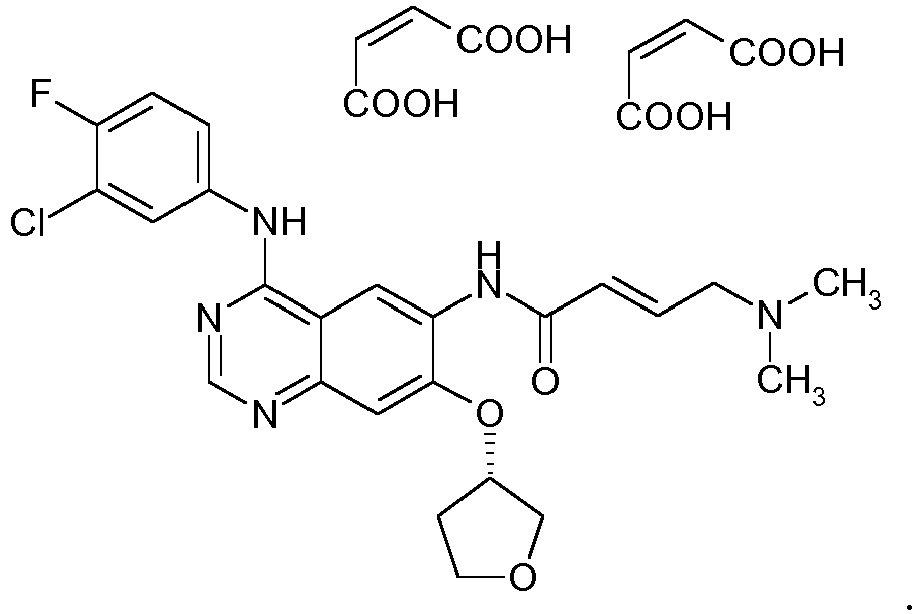
U.S. Pat. No. 6,002,008 ,US 7,019,012 ,US 6,251,912 ,WO 02/50043 WO 2004/074263 ,WO 2005/037824 , BIBW2992, EKB-569, HKI-272, HKI-357, C1-1033, Icotinib or PF-00299804, including pharmaceutical acceptable salts thereof. - Preferably BIBW 2992 dimaleate: 2-Butenamide, N-[4-[(3-chloro-4-fluorophenyl)amino]-7-[[(3S)-tetrahydro-3-furanyl]oxy]-6-quinazolinyl]-4-(dimethylamino)-, (2E)-, (2Z)-2-butendioate (1:2)
- P-gp, is P-glycoprotein is encoded by the ABCB1 gene (Ueda K, Clark DP, Chen CJ, Roninson IB, Gottesman MM, Pastan I (January 1987). "The human multidrug resistance (mdr1) gene. cDNA cloning and transcription initiation". J. Biol. Chem. 262 (2): 505-8. PMID 3027054).
- P-gp modulators include inhibitors as defined herein, preferably such compounds that are potent inhibitors of P-gp.
- Potent P-gp inhibitors include any agent capable of preferably potently inhibiting P-gp. Nonlimiting examples include alfentanil, amiloride, amiodarone, amitriptyline, astemizole, atovaquone, atorvastatin, azelastine, azidopine, azithromycin, bepridil, biricodar, bromocriptine, carbamazepine, carvedilol, chloroquine, chlorpromazine, clarithromycin, cyclosporin, cyproheptadine, darunavir, desethylamiodarone, desipramine, dexniguldipine, dexrazoxane, diltiazem, dipyridamole, disulfiram, doxazosin, elacridar, emetine, erythromycin, felodipine, fenofibrate, fentanyl, flavonoids, fluoxetine, fluphenazine, fluvoxamine, fucidin, gallopamil, glyburide, gramicidin D, grapefruit juice, garlic, green tea, haloperidol, hydrocortisone, hyroxyzine, josamycin, ketoconazole, imipramine, itraconazole, ivermectin, ketoconazole, laniquidar, lansoprazole, levothyroxin, lidocaine, loperamide, lopinavir, loratadine, lovastatin, maprotiline, mefloquine, methadone, mibefradil, midazolam, mitomycin C, nefazodone, nelfinavir, nicardipine, nitrendipine, nobiletin, norverapamil, omeprazole, orange juice, ofloxacin, paroxetine, pantoprazole, phenothiazines, phenobarbital, piperine, pimozide, probenecid, progesterone, promethazine, propafenone, propranolol, quercetin, quinacrine, quinidine, quinine, reserpine, ritonavir, saquinavir, sertraline, simvastatin, spironolactone, sufentanil, tacrolimus, tamoxifen, tariquidar, telithromycin, terfenadine, testosterone, tetrabenazine, thioridazine, trifluoperazine, trifluopromazine, trimipramine, valinomycin, vanadate, venlafaxine, verapamil, vinblastine, FK506, RU486(mifepristone), valspodar PSC 833, zosuquidar and 2n-propylquinoline and combinations thereof, Preferably Cyclosporin, Erythromycin, Ketoconazole, Itraconazole, Quinidine, Phenobarbital salt with Quinidine, Ritonavir, Valspodar or Verapamil.
- "Modifying" the administering of said P-gp modulators shall be understood to mean reducing the dosage or dose frequency of said P-gp modulators.
- "Avoiding" completely the administering of said P-gp modulators shall be understood to mean either a) not starting the administration of said P-gp modulators or b) stopping the administration of said P-gp modulator and then not re-starting the administration of said P-gp modulator.
- The treatment may also involve a combination of treatments, including, but not limited to a tyrosine kinase inhibitor in combination with other tyrosine kinase inhibitors, chemotherapy, radiation, etc. Reference in this regard may be made to
EP 09160202.9 PCT/EP/2010050338 WO 2008/121467 ,US 2009-0306101 ,US 2006-0058311 ,US 2005-0043233 ,US 2003-0225079 andUS 2009-0318480 . - Concomitant use of a P-gp modulator in treatment of a patient with a first medication such as an EGFR inhibitor means that the P-gp modulator is administered to the patient according to a treatment regimen characterized by repeated administration of a dosage unit in defined time intervals, e.g. once, twice or thrice daily, in addition to a parallel but independent treatment regimen characterized by repeated administration of a dosage unit of the first medication. Additionally the concomitant use of a P-gp modulator together with an EGFR inhibitor means that both drugs would be adminsitered in parallel (simultaneously) or at maximum within a time frame of 1 hour between both drug administrations.
- The disclosure of
WO 02/50043 WO 2004/074263 andWO 2005/037824 includes preparation as well as pharmaceutical formulations of the compounds. Furthermore, it is known for treatment of tumour diseases that the compounds may be used in monotherapy or in conjunction with other anti-tumour therapeutic agents, for example in combination with topoisomerase inhibitors (e.g. etoposide), mitosis inhibitors (e.g. vinblastine), compounds which interact with nucleic acids (e.g. cisplatin, cyclophosphamide, adriamycin), hormone antagonists (e.g. tamoxifen), inhibitors of metabolic processes (e.g. 5-FU etc.), cytokines (e.g. interferons) or antibodies. - The expression "patient" relates to a human patient suffering from cancer and thus in need of such treatment. Furthermore, the expression "patient" should be understood to include such cancer patients carrying tumors with wild-type EGF receptor as well as pre-selected cancer patients with tumors harboring activating EGFR mutations. These can be located in the tyrosine kinase domain of the EGF receptor such as for instance the L858R or L861 point mutations in the activation loop (exon 21), or in-frame deletion/insertion mutations in the ELREA sequence (exon 19), or substitutions in G719 situated in the nucleotide binding loop (exon 18). Additional activating mutations have been reported in the extracellular domain of the EGF receptor in various indications (e.g. EGFR vIII displaying exon 2-7 deletions). Other mutations such as the T790M point mutation in exon 20 as well as certain exon 20 insertions (e.g. D770_N771insNPG) which confer resistance to particular drugs should also be included, as well as double mutants such as the combined L858R / T790M mutation or the exon-19-del/T790M.
- The expression "patient" should be understood to include also such cancer patients carrying tumors with wild-type HER2 receptor as well as pre-selected cancer patients with tumors harboring activating HER2 mutations, e.g. M774_A775insAYVM.
- The highest dose of BIBW 2992 is 160 mg once daily for 3 days or, alternatively 100 mg once daily for 2 weeks.
- The presence of specific gain-of-function mutations within the tyrosine kinase domain of the EGF receptor in a subgroup of NSCLC patients has been associated with increased sensitivity to treatment with gefitinib and erlotinib (Lynch, New England Journal Medicine 350, 2129 (2004); Paez, Science 304, 1497 (2004); Pao, Proceedings of the National Academy of Science of the United States 101, 13306 (2004)). The treatment with EGFR inhibitors may be a first line treatment, or subsequent line treatments such as cancers initially be diagnosed as gefitinib/erlotinib sensitive or predicted to be gefitinib/erlotinib sensitive by means of these methods. In particular, the L858R point mutation (exon 21) as well as deletion/insertion mutations in the ELREA sequence (exon 19) account for the majority of gefitinib responders. A secondary point mutation in exon 20, T790M, is associated with acquired resistance to gefitinib or erlotinib. This mutation is analogous to the T315I mutation identified in CML patients who relapse under imatinib treatment (imatinib resistant patients). Methods for detecting mutations in the tyrosine kinase domain of the EGF receptor are kown in the art, several corresponding diagnostic tools are approved by the FDA and commercially available, e.g. an assay for the detection of epidermal growth factor receptor mutations in patients with non-small cell lung cancer (Genzyme Corp.; see also Journal of Clinical Oncology, 2006 ASCO Annual Meeting Proceedings (Post-Meeting Edition). Vol 24, No 18S (June 20 Supplement), 2006: Abstract 10060).
- Irreversible inhibitors in contrast to reversible inhibitors (e.g., gefitinib), are able to inhibit proliferation and EGF-induced EGFR phosphorylation in cell lines expressing double mutant EGF receptors (Kwak, Proceedings of the National Academy of Science of the United States 102, 7665 (2005) and Kobayashi, New England Journal Medicine 352, 786 (2005)).
- Any aspect of the present invention therefore includes optional pre-selection of NSCLC patients for an EGFR mutation in the tyrosine kinase domain of the EGF receptor as well as pre-selection of NSCLC patients for an HER2 mutation. The EGFR mutations preferably relevant in in this context are selected from the group consisting of the L858R and L861 point mutations in the activation loop (exon 21), in-frame deletion/insertion mutations in the ELREA sequence (exon 19), substitutions in G719 situated in the nucleotide binding loop (exon 18), activating mutations in the extracellular domain of the EGF receptor such as EGFR vIII displaying exon 2-7 deletions, the T790M point mutation in exon 20, exon 20 insertions such as D770_N771insNPG, and double mutants such as the combined L858R / T790M mutation and the exon-19-del/T790M. The HER2 mutation preferably relevant in in this context is the M774_A775insAYVM mutation.
- A method of treating NSCLC would include pre-selection of NSCLC patients for EGFR and/or HER2 mutations and administering a therapeutically effective amount of BIBW 2992 to a pre-selected NSCLC patient shown to carry an EGFR mutation in the tyrosine kinase domain of the EGF receptor and/or with a tumor harboring an activating HER2 mutation, optionally in combination with chemotherapy, biological therapy including therapeutic antibodies, targeted therapy including mTOR inhibitors, radiotherapy, radio-immunotherapy and/or tumour resection by surgery. The method further comprises modifying or avoiding completely the administering of said P-gp inhibitors before starting of administering BIBW 2992 or a pharmaceutically acceptable salt thereof.
- Another method of treating NSCLC in a NSCLC patient by administering a therapeutically effective amount of BIBW 2992 to said NSCLC patient, optionally in combination with chemotherapy, biological therapy including therapeutic antibodies, targeted therapy including mTOR inhibitors, radiotherapy, radio-immunotherapy and/or tumour resection by surgery, wherein said NSCLC patient would was pre-selected based on a) having had at least 12 weeks of treatment with a reversible EGFR inhibitor and b) having failed treatment with said reversible EGFR inhibitor. The method further comprises modifying or avoiding completely the administering of said P-gp inhibitors before starting of administering BIBW 2992 or a pharmaceutically acceptable salt thereof.
- BIBW 2992 can be optionally in form of its tautomers, racemates, enantiomers, diastereomers and the mixtures thereof and optionally in form of the pharmacologically acceptable acid addition salts, solvates, hydrates, polymorphs or physiologically functional derivatives thereof. BIBW 2992 is administered orally, enterically, transdermally, intravenously, peritoneally or by injection, preferably orally. In either case, the P-gp inhibitor should be avoided and/or modified.
- BIBW 2992 may be administered to the human patient in a daily dose of 0.01-4 mg/kg of body weight (bw), preferably 0.1-2 mg/kg, particularly preferred in a dose of 0.2-1.3 mg/kg bw. For oral treatment BIBW 2992 may be administered daily in a total dose of 10, 20, 30, 40, 50, 60, 70, 100, 200, or 300 mg, optionally divided into multiple doses, e.g. 1 to 3 doses to be administered through the day. Preferably the oral daily dose is administered only once a day. More preferably, the starting dose for BIBW 2992 is 40 mg , preferably in form of a tablet, once daily. For patients, who tolerate a 40 mg starting dose, a dose of 50 mg may be considered. For patients, who already had TKI (tyrosine kinase inhibitor) treatment, the starting dose is 50 mg, preferably in form of a tablet, once daily. Especially for higher doses periods of treatment should alternate with periods of recovery, without administering BIBW 2992. For instance, treatment could follow a "7 day on - 7 day off", a "14 day on - 14 day off", a "21 day on 7 day off" or a continuous dosing schedule. "On-off" time periods can be chosen shorter, especially if higher doses are administered, or individually adapted to the needs of the patient. Preferable dosage of BIBW 2992 is 20, 30, 40, 50mg, most preferably 40mg once daily.
- The dosage for intravenous use e.g. of BIBW2992MA2 may be 1 - 1000 mg, preferably 5 - 300 mg, particularly preferred 10 - 100 mg (dosages refer to the base form BIBW2992), either given as a bolus or, especially if higher doses are applied, as a slow intravenous infusion over several hours, e.g. over about 1, 2, 4, 6, 10, 12 or 24 hours.
- In one embodiment the invention relates to the use in a method of treatment described above, characterised in that BIBW 2992, or its polymorph, metabolite, hydrate, solvate, an individual optical isomer, mixtures of the individual enantiomers or racemates thereof, or a pharmaceutically acceptable salt thereof, is administered intermittent or in a daily dosage such that the plasma level of the active substance preferably lies between 10 and 5000 nM for at least 12 hours of the dosing interval.
- However, it may optionally be necessary to deviate from the amounts specified, depending on the body weight or method of administration, the individual response to the medication, the nature of the formulation used and the time or interval over which it is administered. Thus, in some cases, it may be sufficient to use less than the minimum quantity specified above, while in other cases the upper limit specified will have to be exceeded. When large amounts are administered it may be advisable to spread them over the day in a number of single doses.
- Moreover, the recommended intake for BIBW 2992 is without food and at least one hour before a meal or at least 3 hours after a meal.
- BIBW 2992, its tautomers, the racemates, the enantiomers, the diastereomers and the mixtures thereof, and optionally the pharmacologically acceptable acid addition salts, solvates, hydrates, polymorphs, physiologically functional derivatives or prodrugs thereof, may be used in monotherapy or combined with other active substances, optionally also in conjunction with other pharmacologically active substances.
- Suitable pharmaceutical preparations for the use in accordance with the invention include, for example, tablets, capsules, suppositories, solutions, and particularly solutions for injection (s.c., i.v., i.m.) and infusion, syrups, emulsions or dispersible powders. The amount of pharmaceutically active compound in each case should be in the range from 0.1 - 90 wt.%, preferably 0.5 - 50 wt.% of the total composition, i.e. in amounts which are sufficient to achieve the dosage range given below. The doses specified may, if necessary, be given several times a day.
- Suitable tablets may be obtained, for example, by mixing the active substance(s) with known excipients, for example inert diluents such as calcium carbonate, calcium phosphate or lactose, disintegrants such as corn starch or alginic acid, binders such as starch or gelatine, lubricants such as magnesium stearate or talc and/or agents for delaying release, such as carboxymethyl cellulose, cellulose acetate phthalate, or polyvinyl acetate. The tablets may also comprise several layers.
- Coated tablets may be prepared accordingly by coating cores produced analogously to the tablets with substances normally used for tablet coatings, for example collidone or shellac, gum arabic, talc, titanium dioxide or sugar. To achieve delayed release or prevent incompatibilities the core may also consist of a number of layers. Similarly the tablet coating may consist of a number of layers to achieve delayed release, possibly using the excipients mentioned above for the tablets.
- Syrups or elixirs containing the active substances or combinations thereof may additionally contain a sweetener such as saccharin, cyclamate, glycerol or sugar and a flavour enhancer, e.g. a flavouring such as vanillin or orange extract. They may also contain suspension adjuvants or thickeners such as sodium carboxymethyl cellulose, wetting agents such as, for example, condensation products of fatty alcohols with ethylene oxide, or preservatives such as p hydroxybenzoates. Solutions for injection and infusion are prepared in the usual way, e.g. with the addition of preservatives such as p hydroxybenzoates, or stabilisers such as alkali metal salts of ethylenediamine tetraacetic acid, optionally using emulsifiers and/or dispersants, while if water is used as the diluent organic solvents may optionally be used as solubilisers or auxiliary solvents, and transferred into injection vials or ampoules or infusion bottles.
Capsules containing one or more active substances or combinations of active substances may for example be prepared by mixing the active substances with inert carriers such as lactose or sorbitol and packing them into gelatine capsules.
Suitable suppositories may be made for example by mixing with carriers provided for this purpose, such as neutral fats or polyethyleneglycol or the derivatives thereof. Suitable excipients may be, for example, water, pharmaceutically acceptable organic solvents, such as paraffins (e.g. petroleum fractions), oils of vegetable origin (e.g. groundnut or sesame oil), mono- or polyfunctional alcohols (e.g. ethanol or glycerol), carriers such as e.g. natural mineral powders (e.g. kaolin, clays, talc, chalk), synthetic mineral powders (e.g. highly dispersed silica and silicates), sugar (e.g. glucose, lactose and dextrose), emulsifiers (e.g. lignin, spent sulphite liquors, methylcellulose, starch and polyvinylpyrrolidone) and lubricants (e.g. magnesium stearate, talc, stearic acid and sodium lauryl sulphate). - The preparations are administered in the usual way, preferably by oral or transdermal route, particularly preferably by oral route. When administered orally the tablets may, of course, contain additives, such as e.g. sodium citrate, calcium carbonate and dicalcium phosphate together with various additives, such as starch, preferably potato starch, gelatine and the like, in addition to the abovementioned carriers. Lubricants such as magnesium stearate, sodium laurylsulphate and talc may also be used to form tablets. In the case of aqueous suspensions the active substances may be combined with various flavour enhancers or colourings in addition to the abovementioned excipients.
For parenteral use, solutions of the active substances may be prepared using suitable liquid carrier materials. - Preferred formulations and drug forms for BIBW 2992 are disclosed in
WO2005/037824 WO2009147238 andWO2011003853 . - The following examples are not intended, nor are they to be construed, as limiting the invention.
-
- Experiments were performed to assess its passive permeability and potential transport by P-glycoprotein (a.k.a. MDR1, ABC1) and the potential inhibition of P-gp by BIBW 2992.
- B1BW 2992 exhibited high passive permeability and was a substrate of P-gp (estimated Km 10-30 uM) as well as an inhibitor of P-gp with an estimated Ki of 3.4 µM (mean of two independent experiments).
- Since BIBW 2992 was found to be a P-gp substrate in vitro (see above), investigators performed a phase I trial in healthy volunteers to assess the effects of the potent P-gp inhibitor ritonavir on the pharmacokinetics (PK) of BIBW 2992 (a P-gp substrate). In this open-label, randomised, two-way crossover study the relative exposure after a single oral dose of B1BW 2992 (20 mg), co-administered with multiple oral doses of ritonavir (200 mg bid for 3 days), was compared to the exposure after a single oral dose of BIBW 2992 (20 mg) alone in healthy male volunteers. The study was designed to determine the maximum effect of P-gp inhibition on the PK of BIBW 2992.
- When BIBW 2992 20 mg once daily was given in combination with ritonavir 200 mg twice daily, AUC0-∞ of BIBW 2992 increased by 47.6% (90% CI 133.7%, 162.9%),AUC0-tz increased by 49.0% (90% CI 134.5%, 165.1 %), and Cmax increased by38.5% (90% CI 120.6%, 158.9%) compared with BIBW 2992 given alone. This was a surprising result. Due to this relatively high concentration in the micromolar range in correlation to the average maximum BlBW 2992 plasma concentrations at steady state (I/Ki <0.1), drug-drug interactions based on inhibition of P-gp by BIBW 2992 had been considered as less likely to occur.Median tmax of BIBW 2992 was 4.00 hours with and without ritonavir. The distribution and elimination phases of BIBW 2992 appeared to be unaffected by ritonavir cotreatment. Also, the terminal half-life of BIBW 2992 was unchanged.
- Since previous studies revealed that CYP3A4 enzyme-catalysed metabolic reactions play a subordinate role for the metabolism of BIBW 2992 in vivo and CYP3A4-dependent N-demethylation of BIBW 2992 was too low to be quantitatively detected in healthy volunteers, the increase in BIBW 2992 exposure in the presence of ritonavir is most likely attributed to the inhibition of P-gp-mediated transport processes during the absorption phase of BIBW 2992.
- Because of these results, the following measures were implemented for clinical trials of BIBW 2992 as a protocol amendment which indicted that:
- The use of potent P-gp inhibitors (including preferably Cyclosporin, Erythromycin, Ketoconazole, Itraconazole, Quinidine, Phenobarbital salt with Quinidine, Ritonavir, Valspodar, Verapamil) has to be avoided during treatment with BIBW 2992.
- Patients with adenocarcinoma of the lung who had previously failed a reversible EGFR inhibitor (e.g., gefitinib or erlotinib) and who had had at least 12 weeks of therapy with said reversible inhibitor are identified as being candidates for treatment with BIBW 2992. However, prior to treatment with BIBW 2992, certain patients are found to be taking a potent P-gp inhibitor. Prior to starting BIBW 2992 treatment, treatment with the potent P-gp inhibitor is stopped. Following this cessation of P-gp inhibitor therapy, BIBW 2992 treatment is then started at a dose of 50 mg daily.
- Patients with adenocarcinoma of the lung who have EGFR mutations (including, but not limited to deletion-19 mutations, other mutations in exon 19, L858R mutations, other mutations in exon 21, mutations in exon 18 and mutations in exon 20) are identified as being candidates for treatment with BIBW 2992. However, prior to treatment with BIBW 2992, certain patients are found to be taking a potent P-gp inhibitor. Prior to starting BIBW 2992 treatment, treatment with the potent P-gp inhibitor is stopped. Following this cessation of P-gp inhibitor therapy, BIBW 2992 treatment is then started at a dose of 50 mg daily.
Claims (7)
- A pharmaceutical composition comprising BIBW 2992 or a pharmaceutically acceptable salt thereof, for use in a method for treatment of a non-small cell lung cancer (NSCLC) patient by a method comprising(a) identifying a patient in need of treatment with BIBW 2992 or a pharmaceutically acceptable salt thereof;(b) determining that the patient is receiving therapy with a P-gp inhibitor selected from alfentanil, amiloride, amiodarone, amitriptyline, astemizole, atovaquone, atorvastatin, azelastine, azidopine, azithromycin, bepridil, biricodar, bromocriptine, carbamazepine, carvedilol, chloroquine, chlorpromazine, clarithromycin, cyclosporin, cyproheptadine, darunavir, desethylamiodarone, desipramine, dexniguldipine, dexrazoxane, diltiazem, dipyridamole, disulfiram, doxazosin, elacridar, emetine, erythromycin, felodipine, fenofibrate, fentanyl, flavonoids, fluoxetine, fluphenazine, fluvoxamine, fucidin, gallopamil, glyburide, gramicidin D, grapefruit juice, garlic, green tea, haloperidol, hydrocortisone, hyroxyzine, josamycin, ketoconazole, imipramine, itraconazole, ivermectin, ketoconazole, laniquidar, lansoprazole, levothyroxin, lidocaine, loperamide, lopinavir, loratadine, lovastatin, maprotiline, mefloquine, methadone, mibefradil, midazolam, mitomycin C, nefazodone, nelfinavir, nicardipine, nitrendipine, nobiletin, norverapamil, omeprazole, orange juice, ofloxacin, paroxetine, pantoprazole, phenothiazines, phenobarbital, piperine, pimozide, probenecid, progesterone, promethazine, propafenone, propranolol, quercetin, quinacrine, quinidine, quinine, reserpine, ritonavir, saquinavir, sertraline, simvastatin, spironolactone, sufentanil, tacrolimus, tamoxifen, tariquidar, telithromycin, terfenadine, testosterone, tetrabenazine, thioridazine, trifluoperazine, trifluopromazine, trimipramine, valinomycin, vanadate, venlafaxine, verapamil, vinblastine, FK506, RU486(mifepristone), valspodar PSC 833, zosuquidar and 2n-propylquinoline or combinations thereof;(c) causing the patient's therapy with the P-gp inhibitor to cease prior to treatment with BIBW 2992 or a pharmaceutically acceptable salt thereof;(d) administering BIBW 2992 or a pharmaceutically acceptable salt thereof to the patient;(e) resuming therapy with a P-gp inhibitor not earlier than 6 hours after the administration of BIBW 2992 or a pharmaceutically acceptable salt thereof
- A pharmaceutical composition comprising BIBW 2992 or a pharmaceutically acceptable salt thereof, for use in a method for treatment of a non-small cell lung cancer (NSCLC) patient by a method comprising(a) determining that the patient is receiving therapy with a P-gp inhibitor selected from alfentanil, amiloride, amiodarone, amitriptyline, astemizole, atovaquone, atorvastatin, azelastine, azidopine, azithromycin, bepridil, biricodar, bromocriptine, carbamazepine, carvedilol, chloroquine, chlorpromazine, clarithromycin, cyclosporin, cyproheptadine, darunavir, desethylamiodarone, desipramine, dexniguldipine, dexrazoxane, diltiazem, dipyridamole, disulfiram, doxazosin, elacridar, emetine, erythromycin, felodipine, fenofibrate, fentanyl, flavonoids, fluoxetine, fluphenazine, fluvoxamine, fucidin, gallopamil, glyburide, gramicidin D, grapefruit juice, garlic, green tea, haloperidol, hydrocortisone, hyroxyzine, josamycin, ketoconazole, imipramine, itraconazole, ivermectin, ketoconazole, laniquidar, lansoprazole, levothyroxin, lidocaine, loperamide, lopinavir, loratadine, lovastatin, maprotiline, mefloquine, methadone, mibefradil, midazolam, mitomycin C, nefazodone, nelfinavir, nicardipine, nitrendipine, nobiletin, norverapamil, omeprazole, orange juice, ofloxacin, paroxetine, pantoprazole, phenothiazines, phenobarbital, piperine, pimozide, probenecid, progesterone, promethazine, propafenone, propranolol, quercetin, quinacrine, quinidine, quinine, reserpine, ritonavir, saquinavir, sertraline, simvastatin, spironolactone, sufentanil, tacrolimus, tamoxifen, tariquidar, telithromycin, terfenadine, testosterone, tetrabenazine, thioridazine, trifluoperazine, trifluopromazine, trimipramine, valinomycin, vanadate, venlafaxine, verapamil, vinblastine, FK506, RU486(mifepristone), valspodar PSC 833, zosuquidar and 2n-propylquinoline or combinations thereof;(b) reducing the dosage or dose frequency of said P-gp inhibitor before starting of administering BIBW 2992 or a pharmaceutically acceptable salt thereof; and(c) administering BIBW 2992 or a pharmaceutically acceptable salt thereof to the patient.
- The pharmaceutical composition for use in the method according to claim 1 or 2, wherein the P-gp inhibitor is selected from cyclosporin, erythromycin, ketoconazole, itraconazole, quinidine, phenobarbital salt with quinidine, ritonavir, valspodar and verapamil.
- The pharmaceutical composition for use in the method according to claim 1, 2 or 3, wherein BIBW 2992 or a pharmaceutically acceptable salt thereof is to be administered without food which is understood to mean at least one hour before a meal until at least 3 hours after a meal.
- BIBW 2992 or a pharmaceutically acceptable salt thereof, for use in a method for optimizing therapeutic efficacy of treatment of NSCLC in a human patient, comprising:(a) determining that the patient is being administered an inhibitor of P-glycoprotein (P-gp) selected from alfentanil, amiloride, amiodarone, amitriptyline, astemizole, atovaquone, atorvastatin, azelastine, azidopine, azithromycin, bepridil, biricodar, bromocriptine, carbamazepine, carvedilol, chloroquine, chlorpromazine, clarithromycin, cyclosporin, cyproheptadine, darunavir, desethylamiodarone, desipramine, dexniguldipine, dexrazoxane, diltiazem, dipyridamole, disulfiram, doxazosin, elacridar, emetine, erythromycin, felodipine, fenofibrate, fentanyl, flavonoids, fluoxetine, fluphenazine, fluvoxamine, fucidin, gallopamil, glyburide, gramicidin D, grapefruit juice, garlic, green tea, haloperidol, hydrocortisone, hyroxyzine, josamycin, ketoconazole, imipramine, itraconazole, ivermectin, ketoconazole, laniquidar, lansoprazole, levothyroxin, lidocaine, loperamide, lopinavir, loratadine, lovastatin, maprotiline, mefloquine, methadone, mibefradil, midazolam, mitomycin C, nefazodone, nelfinavir, nicardipine, nitrendipine, nobiletin, norverapamil, omeprazole, orange juice, ofloxacin, paroxetine, pantoprazole, phenothiazines, phenobarbital, piperine, pimozide, probenecid, progesterone, promethazine, propafenone, propranolol, quercetin, quinacrine, quinidine, quinine, reserpine, ritonavir, saquinavir, sertraline, simvastatin, spironolactone, sufentanil, tacrolimus, tamoxifen, tariquidar, telithromycin, terfenadine, testosterone, tetrabenazine, thioridazine, trifluoperazine, trifluopromazine, trimipramine, valinomycin, vanadate, venlafaxine, verapamil, vinblastine, FK506, RU486(mifepristone), valspodar PSC 833, zosuquidar and 2n-propylquinoline or combinations thereof;(b) reducing the dosage or dose frequency of said P-gp inhibitor or avoiding completely the administering of said P-gp inhibitor before starting of administering BIBW 2992 or a pharmaceutically acceptable salt thereof, and(c) administering BIBW 2992 or a pharmaceutically acceptable salt thereof, to a subject having said cancer.
- BIBW 2992 or a pharmaceutically acceptable salt thereof for use in the method according to claim 5, wherein the P-gp inhibitor is selected from cyclosporin, erythromycin, ketoconazole, itraconazole, quinidine, phenobarbital salt with quinidine, ritonavir, valspodar and verapamil.
- BIBW 2992 or a pharmaceutically acceptable salt thereof for use in the method according to claim 5 or 6, wherein BIBW 2992 or a pharmaceutically acceptable salt thereof is to be administered without food which is understood to mean at least one hour before a meal until at least 3 hours after a meal.
Priority Applications (4)
| Application Number | Priority Date | Filing Date | Title |
|---|---|---|---|
| SI201131382T SI2608792T1 (en) | 2010-08-26 | 2011-08-24 | Methods for the administration of an EGFR inhibitor |
| HRP20180016TT HRP20180016T1 (en) | 2010-08-26 | 2011-08-24 | Methods of administering an egfr inhibitor |
| RS20171343A RS56682B1 (en) | 2010-08-26 | 2011-08-24 | Methods of administering an egfr inhibitor |
| PL11752700T PL2608792T3 (en) | 2010-08-26 | 2011-08-24 | Methods of administering an egfr inhibitor |
Applications Claiming Priority (2)
| Application Number | Priority Date | Filing Date | Title |
|---|---|---|---|
| US37717710P | 2010-08-26 | 2010-08-26 | |
| PCT/US2011/048922 WO2012027445A1 (en) | 2010-08-26 | 2011-08-24 | Methods of administering an egfr inhibitor |
Publications (2)
| Publication Number | Publication Date |
|---|---|
| EP2608792A1 EP2608792A1 (en) | 2013-07-03 |
| EP2608792B1 true EP2608792B1 (en) | 2017-10-11 |
Family
ID=44583460
Family Applications (1)
| Application Number | Title | Priority Date | Filing Date |
|---|---|---|---|
| EP11752700.2A Revoked EP2608792B1 (en) | 2010-08-26 | 2011-08-24 | Methods of administering an egfr inhibitor |
Country Status (16)
| Country | Link |
|---|---|
| US (2) | US20130289056A1 (en) |
| EP (1) | EP2608792B1 (en) |
| JP (3) | JP2013536244A (en) |
| CY (1) | CY1119898T1 (en) |
| DK (1) | DK2608792T3 (en) |
| EC (1) | ECSP13012523A (en) |
| ES (1) | ES2655115T3 (en) |
| HR (1) | HRP20180016T1 (en) |
| HU (1) | HUE038049T2 (en) |
| LT (1) | LT2608792T (en) |
| NO (1) | NO2608792T3 (en) |
| PL (1) | PL2608792T3 (en) |
| PT (1) | PT2608792T (en) |
| RS (1) | RS56682B1 (en) |
| SI (1) | SI2608792T1 (en) |
| WO (1) | WO2012027445A1 (en) |
Families Citing this family (5)
| Publication number | Priority date | Publication date | Assignee | Title |
|---|---|---|---|---|
| EP2350096B1 (en) | 2008-10-02 | 2019-12-11 | Salix Pharmaceuticals, Ltd. | Methods of treating hepatic encephalopathy |
| PT2608792T (en) | 2010-08-26 | 2018-01-15 | Boehringer Ingelheim Int | METHODS OF ADMINISTRATION OF AN EGFR INHIBITOR |
| WO2020112828A1 (en) * | 2018-11-30 | 2020-06-04 | Zwicker Jeffrey I | Compositions and methods for reducing major thrombotic events in cancer patients |
| WO2022243942A1 (en) | 2021-05-19 | 2022-11-24 | Quercis Pharma AG | Quercetin-containing compositions for use in treating amyotrophic lateral sclerosis |
| US12403123B2 (en) | 2021-07-16 | 2025-09-02 | Beth Israel Deaconess Medical Center, Inc. | Method for treating sickle cell disease using quercetin-containing compositions |
Citations (3)
| Publication number | Priority date | Publication date | Assignee | Title |
|---|---|---|---|---|
| WO2008034776A1 (en) | 2006-09-18 | 2008-03-27 | Boehringer Ingelheim International Gmbh | Method for treating cancer harboring egfr mutations |
| US20090306101A1 (en) | 2005-11-11 | 2009-12-10 | Flavio Solca | Combination treatment of cancer comprising egfr/her2 inhibitors |
| WO2012027445A1 (en) | 2010-08-26 | 2012-03-01 | Boehringer Ingelheim International Gmbh | Methods of administering an egfr inhibitor |
Family Cites Families (16)
| Publication number | Priority date | Publication date | Assignee | Title |
|---|---|---|---|---|
| US6002008A (en) | 1997-04-03 | 1999-12-14 | American Cyanamid Company | Substituted 3-cyano quinolines |
| US6251912B1 (en) | 1997-08-01 | 2001-06-26 | American Cyanamid Company | Substituted quinazoline derivatives |
| DE10063435A1 (en) | 2000-12-20 | 2002-07-04 | Boehringer Ingelheim Pharma | Chinazoline derivatives, pharmaceuticals containing these compounds, their use and process for their preparation |
| US7019012B2 (en) | 2000-12-20 | 2006-03-28 | Boehringer Ingelheim International Pharma Gmbh & Co. Kg | Quinazoline derivatives and pharmaceutical compositions containing them |
| CA2445967A1 (en) * | 2001-05-01 | 2002-11-07 | Abbott Laboratories | Compositions comprising lopinavir and methods for enhancing the bioavailability of pharmaceutical agents |
| US20030225079A1 (en) | 2002-05-11 | 2003-12-04 | Boehringer Ingelheim Pharma Gmbh & Co. Kg | Use of inhibitors of the EGFR-mediated signal transduction for the treatment of benign prostatic hyperplasia (BPH)/prostatic hypertrophy |
| DE10307165A1 (en) | 2003-02-20 | 2004-09-02 | Boehringer Ingelheim Pharma Gmbh & Co. Kg | Bicyclic heterocycles, medicaments containing these compounds, their use and processes for their preparation |
| US20050043233A1 (en) | 2003-04-29 | 2005-02-24 | Boehringer Ingelheim International Gmbh | Combinations for the treatment of diseases involving cell proliferation, migration or apoptosis of myeloma cells or angiogenesis |
| DE10349113A1 (en) | 2003-10-17 | 2005-05-12 | Boehringer Ingelheim Pharma | Process for the preparation of aminocrotonyl compounds |
| US20060058311A1 (en) | 2004-08-14 | 2006-03-16 | Boehringer Ingelheim International Gmbh | Combinations for the treatment of diseases involving cell proliferation |
| US20070009533A1 (en) * | 2005-07-06 | 2007-01-11 | Branimir Sikic | Treatment of cancer patients exhibiting activation of the P-glycoprotein efflux pump mechanism |
| JP5688877B2 (en) * | 2005-11-11 | 2015-03-25 | ベーリンガー インゲルハイム インターナショナル ゲゼルシャフト ミット ベシュレンクテル ハフツング | Quinazoline derivatives for the treatment of cancer diseases |
| EP1981863B1 (en) | 2006-01-26 | 2012-10-10 | Boehringer Ingelheim International GmbH | Process for preparing aminocrotonylamino-substituted quinazoline derivatives |
| WO2008121467A2 (en) | 2007-02-28 | 2008-10-09 | Dana-Farber Cancer Institute, Inc. | Combination therapy for treating cancer |
| UY31867A (en) | 2008-06-06 | 2010-01-29 | Boehringer Ingelheim Int | NEW SOLID PHARMACEUTICAL FORMULATIONS THAT INCLUDE BIBW 2992 |
| HUE044629T2 (en) | 2009-07-06 | 2019-11-28 | Boehringer Ingelheim Int | Process for drying of bibw2992, of its salts and of solid pharmaceutical formulations comprising this active ingredient |
-
2011
- 2011-08-24 PT PT117527002T patent/PT2608792T/en unknown
- 2011-08-24 ES ES11752700.2T patent/ES2655115T3/en active Active
- 2011-08-24 US US13/817,571 patent/US20130289056A1/en not_active Abandoned
- 2011-08-24 NO NO11752700A patent/NO2608792T3/no unknown
- 2011-08-24 PL PL11752700T patent/PL2608792T3/en unknown
- 2011-08-24 DK DK11752700.2T patent/DK2608792T3/en active
- 2011-08-24 RS RS20171343A patent/RS56682B1/en unknown
- 2011-08-24 EP EP11752700.2A patent/EP2608792B1/en not_active Revoked
- 2011-08-24 WO PCT/US2011/048922 patent/WO2012027445A1/en not_active Ceased
- 2011-08-24 JP JP2013526123A patent/JP2013536244A/en active Pending
- 2011-08-24 LT LTEP11752700.2T patent/LT2608792T/en unknown
- 2011-08-24 HU HUE11752700A patent/HUE038049T2/en unknown
- 2011-08-24 SI SI201131382T patent/SI2608792T1/en unknown
- 2011-08-24 HR HRP20180016TT patent/HRP20180016T1/en unknown
-
2013
- 2013-03-25 EC ECSP13012523 patent/ECSP13012523A/en unknown
-
2016
- 2016-06-09 US US15/177,612 patent/US20160287591A1/en not_active Abandoned
- 2016-12-27 JP JP2016252456A patent/JP6541637B2/en active Active
-
2018
- 2018-01-09 CY CY20181100024T patent/CY1119898T1/en unknown
-
2019
- 2019-04-19 JP JP2019079787A patent/JP2019147814A/en active Pending
Patent Citations (3)
| Publication number | Priority date | Publication date | Assignee | Title |
|---|---|---|---|---|
| US20090306101A1 (en) | 2005-11-11 | 2009-12-10 | Flavio Solca | Combination treatment of cancer comprising egfr/her2 inhibitors |
| WO2008034776A1 (en) | 2006-09-18 | 2008-03-27 | Boehringer Ingelheim International Gmbh | Method for treating cancer harboring egfr mutations |
| WO2012027445A1 (en) | 2010-08-26 | 2012-03-01 | Boehringer Ingelheim International Gmbh | Methods of administering an egfr inhibitor |
Non-Patent Citations (24)
| Title |
|---|
| A. SRIRANGAM ET AL.: "Abstract 5503: Small interfering RNA targeting survivin specifically sensitizes non- small cell lung cancer cells to the HIV protease inhibitor ritonavir", PROC. AMER. ASSOC. CANCER RES, vol. 47, April 2006 (2006-04-01), XP055510359 |
| BALAYSSAC ET AL.: "Does inhibition of P-glycoprotein lead to drug–drug interactions?", TOXICOL LETT., vol. 156, no. 3, 28 April 2005 (2005-04-28), pages 319 - 329, XP027622211 |
| CHEN ET AL.: "Epidermal Growth Factor Receptor Inhibitors: Current Status and Future Directions", CURRENT PROBLEMS IN CANCER, vol. 33, no. 4, 1 July 2009 (2009-07-01), St Louis, MO, US, pages 245 - 294, XP026803866, ISSN: 0147-0272 |
| CHHUN ET AL.: "Gefitinib-phenytoin interaction is not correlated with the C-erythromycin breath test in healthy male volunteers", BRITISH JOURNAL OF CLINICAL PHARMACOLOGY, vol. 68, no. 2, August 2009 (2009-08-01), pages 226 - 237, XP002666080, ISSN: 1365-2125 |
| COLLINS ET AL.: "Tyrosine kinase inhibitors potentiate the cytotoxicity of MDR-substrate anticancer agents independent of growth factor receptor status in lung cancer cell lines", INVESTIGATIONAL NEW DRUGS, vol. 28, no. 4, August 2010 (2010-08-01), pages 433 - 444, XP019816878, ISSN: 0167-6997 |
| D. BALAYSSAC ET AL.: "Does inhibition of P-glycoprotein lead to drug-drug interactions?", TOXICOLOGY LETTERS, vol. 156, no. 3, 28 April 2005 (2005-04-28), pages 319 - 329, XP027622211 |
| EMA: "EPAR summary for the public on Norvir (ritonavir)", EMA, July 2015 (2015-07-01), pages 1 - 3, XP055510367 |
| EMEA: "Note for Guidance on the Investigation of Drug Interactions", EMEA CPMP/EWP/560/95, 17 December 1997 (1997-12-17), pages 1 - 13, XP055510360 |
| EMEA: "Note for Guidance on the Investigation of Drug Interactions", EMEA CPMP/EWP/560/95, 17 December 1997 (1997-12-17), pages 1 - 13, XP055510495 |
| EUROPEAN MEDICINES AGENCY: "Guideline on the Investigation of Drug Interactions", CPMP/EWP/560/95/REV. 1 – CORR., 22 April 2010 (2010-04-22), pages 1 - 38, XP055509801, Retrieved from the Internet <URL:http://www.ema.europa.eu/docs/en_GB/document_library/Scientific_guideline/2010/05/WC500090112.pdf> |
| GLAESER H.: "Drug transporters. Handbook of Experimental Pharmacology", vol. 201, 26 October 2010, SPRINGER-VERLAG, article "Importance of P-glycoprotein for Drug-Drug Interactions", pages: 285 - 297, XP055510447 |
| HIRSH: "Afatinib (BIBW 2992) development in non-small-cell lung cancer", FUTURE ONCOLOGY, vol. 7, no. 7, 6 July 2011 (2011-07-06), pages 817 - 825, XP055510431, Retrieved from the Internet <URL:https://doi.orq/10.2217/fon.11.62> |
| J. CADRANEL ET AL.: "Lung cancer in HIV infected patients: facts, questions and challenges", THORAX, vol. 61, no. 11, November 2006 (2006-11-01), pages 1000 - 1008, XP055510355 |
| J. H. LIN ET AL.: "Role of P-Glycoprotein in Pharmacokinetics", CLINICAL PHARMACOKINET, vol. 42, no. 1, January 2003 (2003-01-01), pages 59 - 98, XP009154531 |
| LIN ET AL.: "Drug-drug interaction mediated by inhibition and induction of P- glycoprotein", ADVANCED DRUG DELIVERY REVIEWS, vol. 55, no. 1, 21 January 2003 (2003-01-21), Amsterdam, NL, pages 53 - 81, XP027110081, ISSN: 0169-409X |
| MEDINA ET AL.: "Lapatinib: A dual inhibitor of human epidermal growth factor receptor tyrosine kinases", CLINICAL THERAPEUTICS, vol. 30, no. 8, 1 August 2008 (2008-08-01), Princeton, Nj, US, pages 1426 - 1447, XP025430103, ISSN: 0149-2918 |
| MINKOVSKY ET AL.: "BIBW-2992, a dual receptor tyrosine kinase inhibitor for the treatment of solid tumors", CURRENT OPINION IN INVESTIGATIONAL DRUGS, vol. 9, no. 12, 1 December 2008 (2008-12-01), US, pages 1336 - 1346, XP009129910, ISSN: 1472-4472 |
| N. MINKOVSKY ET AL.: "BIBW-2992, a dual receptor tyrosine kinase inhibitor for the treatment of solid tumors", CURR. OPIN. INVESTIG. DRUGS, vol. 9, no. 12, December 2008 (2008-12-01), pages 1336 - 1346, XP009129910 |
| PETRA ZAGERMANN-MUNCKE: "Wenn Arzneistoffe Transportprotein beeinflussen", PHARMAZEUTISCHE ZEITUNG, 2006, pages 1 - 5, XP055510380, Retrieved from the Internet <URL:https://www.pharmazeutische-zeitung.de/index.php?id=2381> |
| SWAISLAND ET AL.: "Pharmacokinetic drug interactions of gefitinib with rifampicin, itraconazole and metoprolol", CLINICAL PHARMACOKINETICS, vol. 44, no. 10, 1 January 2005 (2005-01-01), Auckland, NZ, pages 1067 - 1081, XP009056412, ISSN: 0312-5963 |
| T. A. YAP ET AL.: "Phase I Trial of the Irreversible EGFR and HER2 Kinase Inhibitor BIBW 2992 in Patients with Advanced Solid Tumors", JOURNAL OF CLINICAL ONCOLOGY, vol. 28, 1 September 2010 (2010-09-01), pages 3965 - 3972, XP05510356 |
| TANIGAWARA Y.: "Role of P-glycoprotein in drug disposition", THERAPEUTIC DRUG MONITORING, vol. 22, no. 1, February 2000 (2000-02-01), pages 137 - 140, XP002436825 |
| VAN ERP ET AL.: "Clinical pharmacokinetics of tyrosine kinase inhibitors", CANCER TREATMENT REVIEW S, vol. 35, no. 8, 1 December 2009 (2009-12-01), US, pages 692 - 706, XP026774941, ISSN: 0305-7372 |
| YAP ET AL.: "Phase I Trial of the Irreversible EGFR and HER2 Kinase Inhibitor in Patients With Advanced Solid Tumors", JOURNAL OF CLINICAL ONCOLOGY, vol. 28, no. 25, 1 September 2010 (2010-09-01), pages 3965 - 3972, XP055510491 |
Also Published As
| Publication number | Publication date |
|---|---|
| ECSP13012523A (en) | 2013-05-31 |
| JP2017081966A (en) | 2017-05-18 |
| PL2608792T3 (en) | 2018-03-30 |
| US20130289056A1 (en) | 2013-10-31 |
| PT2608792T (en) | 2018-01-15 |
| US20160287591A1 (en) | 2016-10-06 |
| NO2608792T3 (en) | 2018-03-10 |
| ES2655115T3 (en) | 2018-02-16 |
| EP2608792A1 (en) | 2013-07-03 |
| DK2608792T3 (en) | 2018-01-15 |
| HRP20180016T1 (en) | 2018-02-09 |
| JP2013536244A (en) | 2013-09-19 |
| SI2608792T1 (en) | 2018-02-28 |
| JP2019147814A (en) | 2019-09-05 |
| JP6541637B2 (en) | 2019-07-10 |
| LT2608792T (en) | 2018-01-10 |
| CY1119898T1 (en) | 2018-06-27 |
| HUE038049T2 (en) | 2018-09-28 |
| RS56682B1 (en) | 2018-03-30 |
| WO2012027445A1 (en) | 2012-03-01 |
Similar Documents
| Publication | Publication Date | Title |
|---|---|---|
| EP1948180B1 (en) | Combination treatment of cancer comprising egfr/her2 inhibitors | |
| EP2068880B1 (en) | Method for treating cancer harboring egfr mutations | |
| CN113750091B (en) | Methods for treating cancer | |
| US20220031678A1 (en) | Use of 1-[4-bromo-5-[1-ethyl-7-(methylamino)-2-oxo-1,2-dihydro-1,6-naphthyridin-3-yl]-2-fluorophenyl]-3-phenylurea and analogs for the treatment of cancers associated with genetic abnormalities in platelet derived growth factor receptor alpha | |
| US8404697B2 (en) | Quinazoline derivatives for the treatment of cancer diseases | |
| AU2019215081B2 (en) | Combination therapy for the treatment of gastrointestinal stromal tumors | |
| JP2019147814A (en) | Methods of administering egfr inhibitor | |
| US20250041303A1 (en) | Combination therapy for cancer treatment | |
| CN112533610B (en) | Compositions containing bisfluoroalkyl-1,4-benzodiazepine compounds for treating adenoid cystic carcinoma | |
| CA3124316A1 (en) | Cancer treatment using docetaxel by controlling peak plasma levels | |
| US20240269136A1 (en) | Egfr inhibitor and perk activator in combination therapy and their use for treating cancer | |
| EA045102B1 (en) | APPLICATION OF 1-[4-BROMO-5-[1-ETHYL-7-(METHYLAMINO)-2-OXO-1,2-DIHYDRO-1,6-NAPHYRIDIN-3-YL]-2-FLUOROPHENYL]-3-PHENYLUREA AND ANALOGUES FOR THE TREATMENT OF CANCER ASSOCIATED WITH GENETIC DISORDERS IN THE PLATELET GROWTH FACTOR ALPHA RECEPTOR |
Legal Events
| Date | Code | Title | Description |
|---|---|---|---|
| PUAI | Public reference made under article 153(3) epc to a published international application that has entered the european phase |
Free format text: ORIGINAL CODE: 0009012 |
|
| 17P | Request for examination filed |
Effective date: 20130326 |
|
| AK | Designated contracting states |
Kind code of ref document: A1 Designated state(s): AL AT BE BG CH CY CZ DE DK EE ES FI FR GB GR HR HU IE IS IT LI LT LU LV MC MK MT NL NO PL PT RO RS SE SI SK SM TR |
|
| DAX | Request for extension of the european patent (deleted) | ||
| 17Q | First examination report despatched |
Effective date: 20150528 |
|
| STAA | Information on the status of an ep patent application or granted ep patent |
Free format text: STATUS: EXAMINATION IS IN PROGRESS |
|
| GRAP | Despatch of communication of intention to grant a patent |
Free format text: ORIGINAL CODE: EPIDOSNIGR1 |
|
| STAA | Information on the status of an ep patent application or granted ep patent |
Free format text: STATUS: GRANT OF PATENT IS INTENDED |
|
| INTG | Intention to grant announced |
Effective date: 20170510 |
|
| GRAS | Grant fee paid |
Free format text: ORIGINAL CODE: EPIDOSNIGR3 |
|
| GRAA | (expected) grant |
Free format text: ORIGINAL CODE: 0009210 |
|
| STAA | Information on the status of an ep patent application or granted ep patent |
Free format text: STATUS: THE PATENT HAS BEEN GRANTED |
|
| AK | Designated contracting states |
Kind code of ref document: B1 Designated state(s): AL AT BE BG CH CY CZ DE DK EE ES FI FR GB GR HR HU IE IS IT LI LT LU LV MC MK MT NL NO PL PT RO RS SE SI SK SM TR |
|
| REG | Reference to a national code |
Ref country code: GB Ref legal event code: FG4D |
|
| REG | Reference to a national code |
Ref country code: CH Ref legal event code: EP |
|
| REG | Reference to a national code |
Ref country code: IE Ref legal event code: FG4D |
|
| REG | Reference to a national code |
Ref country code: AT Ref legal event code: REF Ref document number: 935419 Country of ref document: AT Kind code of ref document: T Effective date: 20171115 |
|
| REG | Reference to a national code |
Ref country code: DE Ref legal event code: R096 Ref document number: 602011042320 Country of ref document: DE |
|
| REG | Reference to a national code |
Ref country code: HR Ref legal event code: TUEP Ref document number: P20180016 Country of ref document: HR |
|
| REG | Reference to a national code |
Ref country code: RO Ref legal event code: EPE |
|
| REG | Reference to a national code |
Ref country code: NL Ref legal event code: FP |
|
| REG | Reference to a national code |
Ref country code: DK Ref legal event code: T3 Effective date: 20180109 Ref country code: PT Ref legal event code: SC4A Ref document number: 2608792 Country of ref document: PT Date of ref document: 20180115 Kind code of ref document: T Free format text: AVAILABILITY OF NATIONAL TRANSLATION Effective date: 20180108 |
|
| REG | Reference to a national code |
Ref country code: SE Ref legal event code: TRGR |
|
| REG | Reference to a national code |
Ref country code: HR Ref legal event code: T1PR Ref document number: P20180016 Country of ref document: HR |
|
| REG | Reference to a national code |
Ref country code: ES Ref legal event code: FG2A Ref document number: 2655115 Country of ref document: ES Kind code of ref document: T3 Effective date: 20180216 |
|
| REG | Reference to a national code |
Ref country code: NO Ref legal event code: T2 Effective date: 20171011 |
|
| REG | Reference to a national code |
Ref country code: EE Ref legal event code: FG4A Ref document number: E014850 Country of ref document: EE Effective date: 20180109 |
|
| REG | Reference to a national code |
Ref country code: SK Ref legal event code: T3 Ref document number: E 26257 Country of ref document: SK |
|
| REG | Reference to a national code |
Ref country code: GR Ref legal event code: EP Ref document number: 20180400043 Country of ref document: GR Effective date: 20180518 |
|
| REG | Reference to a national code |
Ref country code: DE Ref legal event code: R026 Ref document number: 602011042320 Country of ref document: DE |
|
| PLBI | Opposition filed |
Free format text: ORIGINAL CODE: 0009260 |
|
| PLBI | Opposition filed |
Free format text: ORIGINAL CODE: 0009260 |
|
| PLAX | Notice of opposition and request to file observation + time limit sent |
Free format text: ORIGINAL CODE: EPIDOSNOBS2 |
|
| 26 | Opposition filed |
Opponent name: TEVA PHARMACEUTICAL INDUSTRIES LTD. Effective date: 20180703 |
|
| 26 | Opposition filed |
Opponent name: ALFRED E. TIEFENBACHER (GMBH & CO. KG) Effective date: 20180711 Opponent name: FRESENIUS KABI DEUTSCHLAND GMBH Effective date: 20180709 Opponent name: GENERICS (U.K.) LIMITED Effective date: 20180711 |
|
| REG | Reference to a national code |
Ref country code: FR Ref legal event code: PLFP Year of fee payment: 8 |
|
| PG25 | Lapsed in a contracting state [announced via postgrant information from national office to epo] |
Ref country code: SM Free format text: LAPSE BECAUSE OF FAILURE TO SUBMIT A TRANSLATION OF THE DESCRIPTION OR TO PAY THE FEE WITHIN THE PRESCRIBED TIME-LIMIT Effective date: 20171011 |
|
| REG | Reference to a national code |
Ref country code: HU Ref legal event code: AG4A Ref document number: E038049 Country of ref document: HU |
|
| PLAF | Information modified related to communication of a notice of opposition and request to file observations + time limit |
Free format text: ORIGINAL CODE: EPIDOSCOBS2 |
|
| PLBB | Reply of patent proprietor to notice(s) of opposition received |
Free format text: ORIGINAL CODE: EPIDOSNOBS3 |
|
| REG | Reference to a national code |
Ref country code: HR Ref legal event code: ODRP Ref document number: P20180016 Country of ref document: HR Payment date: 20190807 Year of fee payment: 9 |
|
| REG | Reference to a national code |
Ref country code: HR Ref legal event code: ODRP Ref document number: P20180016 Country of ref document: HR Payment date: 20200817 Year of fee payment: 10 |
|
| PLAB | Opposition data, opponent's data or that of the opponent's representative modified |
Free format text: ORIGINAL CODE: 0009299OPPO |
|
| R26 | Opposition filed (corrected) |
Opponent name: TEVA PHARMACEUTICAL INDUSTRIES LTD. Effective date: 20180703 |
|
| REG | Reference to a national code |
Ref country code: HR Ref legal event code: ODRP Ref document number: P20180016 Country of ref document: HR Payment date: 20210817 Year of fee payment: 11 |
|
| PLAB | Opposition data, opponent's data or that of the opponent's representative modified |
Free format text: ORIGINAL CODE: 0009299OPPO |
|
| R26 | Opposition filed (corrected) |
Opponent name: TEVA PHARMACEUTICAL INDUSTRIES LTD. Effective date: 20180703 |
|
| REG | Reference to a national code |
Ref country code: AT Ref legal event code: UEP Ref document number: 935419 Country of ref document: AT Kind code of ref document: T Effective date: 20171011 |
|
| RDAF | Communication despatched that patent is revoked |
Free format text: ORIGINAL CODE: EPIDOSNREV1 |
|
| APBM | Appeal reference recorded |
Free format text: ORIGINAL CODE: EPIDOSNREFNO |
|
| APBP | Date of receipt of notice of appeal recorded |
Free format text: ORIGINAL CODE: EPIDOSNNOA2O |
|
| APAH | Appeal reference modified |
Free format text: ORIGINAL CODE: EPIDOSCREFNO |
|
| APAH | Appeal reference modified |
Free format text: ORIGINAL CODE: EPIDOSCREFNO |
|
| APBQ | Date of receipt of statement of grounds of appeal recorded |
Free format text: ORIGINAL CODE: EPIDOSNNOA3O |
|
| REG | Reference to a national code |
Ref country code: HR Ref legal event code: ODRP Ref document number: P20180016 Country of ref document: HR Payment date: 20220817 Year of fee payment: 12 |
|
| P01 | Opt-out of the competence of the unified patent court (upc) registered |
Effective date: 20230509 |
|
| PGFP | Annual fee paid to national office [announced via postgrant information from national office to epo] |
Ref country code: IS Payment date: 20230628 Year of fee payment: 13 |
|
| REG | Reference to a national code |
Ref country code: HR Ref legal event code: ODRP Ref document number: P20180016 Country of ref document: HR Payment date: 20230817 Year of fee payment: 13 |
|
| PGFP | Annual fee paid to national office [announced via postgrant information from national office to epo] |
Ref country code: NL Payment date: 20230821 Year of fee payment: 13 Ref country code: LU Payment date: 20230821 Year of fee payment: 13 |
|
| PGFP | Annual fee paid to national office [announced via postgrant information from national office to epo] |
Ref country code: TR Payment date: 20230821 Year of fee payment: 13 Ref country code: RO Payment date: 20230810 Year of fee payment: 13 Ref country code: NO Payment date: 20230824 Year of fee payment: 13 Ref country code: MC Payment date: 20230823 Year of fee payment: 13 Ref country code: IT Payment date: 20230825 Year of fee payment: 13 Ref country code: IE Payment date: 20230822 Year of fee payment: 13 Ref country code: GB Payment date: 20230822 Year of fee payment: 13 Ref country code: FI Payment date: 20230821 Year of fee payment: 13 Ref country code: EE Payment date: 20230814 Year of fee payment: 13 Ref country code: CZ Payment date: 20230815 Year of fee payment: 13 Ref country code: CH Payment date: 20230902 Year of fee payment: 13 Ref country code: BG Payment date: 20230823 Year of fee payment: 13 Ref country code: AT Payment date: 20230822 Year of fee payment: 13 |
|
| PGFP | Annual fee paid to national office [announced via postgrant information from national office to epo] |
Ref country code: SK Payment date: 20230814 Year of fee payment: 13 Ref country code: SI Payment date: 20230810 Year of fee payment: 13 Ref country code: SE Payment date: 20230821 Year of fee payment: 13 Ref country code: RS Payment date: 20230810 Year of fee payment: 13 Ref country code: PT Payment date: 20230810 Year of fee payment: 13 Ref country code: PL Payment date: 20230814 Year of fee payment: 13 Ref country code: HU Payment date: 20230823 Year of fee payment: 13 Ref country code: HR Payment date: 20230817 Year of fee payment: 13 Ref country code: GR Payment date: 20230822 Year of fee payment: 13 Ref country code: FR Payment date: 20230824 Year of fee payment: 13 Ref country code: DK Payment date: 20230823 Year of fee payment: 13 Ref country code: DE Payment date: 20230821 Year of fee payment: 13 Ref country code: BE Payment date: 20230821 Year of fee payment: 13 |
|
| PLAB | Opposition data, opponent's data or that of the opponent's representative modified |
Free format text: ORIGINAL CODE: 0009299OPPO |
|
| PGFP | Annual fee paid to national office [announced via postgrant information from national office to epo] |
Ref country code: MT Payment date: 20230720 Year of fee payment: 13 Ref country code: LV Payment date: 20230816 Year of fee payment: 13 Ref country code: LT Payment date: 20230721 Year of fee payment: 13 |
|
| PGFP | Annual fee paid to national office [announced via postgrant information from national office to epo] |
Ref country code: ES Payment date: 20231027 Year of fee payment: 13 |
|
| R26 | Opposition filed (corrected) |
Opponent name: TEVA PHARMACEUTICAL INDUSTRIES LTD. Effective date: 20180703 |
|
| REG | Reference to a national code |
Ref country code: DE Ref legal event code: R103 Ref document number: 602011042320 Country of ref document: DE Ref country code: DE Ref legal event code: R064 Ref document number: 602011042320 Country of ref document: DE |
|
| APBU | Appeal procedure closed |
Free format text: ORIGINAL CODE: EPIDOSNNOA9O |
|
| RDAG | Patent revoked |
Free format text: ORIGINAL CODE: 0009271 |
|
| STAA | Information on the status of an ep patent application or granted ep patent |
Free format text: STATUS: PATENT REVOKED |
|
| REG | Reference to a national code |
Ref country code: CH Ref legal event code: PL |
|
| REG | Reference to a national code |
Ref country code: LT Ref legal event code: MM9A Effective date: 20310824 |
|
| 27W | Patent revoked |
Effective date: 20240603 |
|
| GBPR | Gb: patent revoked under art. 102 of the ep convention designating the uk as contracting state |
Effective date: 20240603 |
|
| REG | Reference to a national code |
Ref country code: SK Ref legal event code: MC4A Ref document number: E 26257 Country of ref document: SK Effective date: 20240603 |
|
| REG | Reference to a national code |
Ref country code: EE Ref legal event code: MF4A Ref document number: E014850 Country of ref document: EE Effective date: 20240723 |
|
| REG | Reference to a national code |
Ref country code: HR Ref legal event code: PNEV Ref document number: P20180016 Country of ref document: HR |
|
| REG | Reference to a national code |
Ref country code: GR Ref legal event code: NF Ref document number: 20180400043 Country of ref document: GR Effective date: 20240819 |
|
| PG25 | Lapsed in a contracting state [announced via postgrant information from national office to epo] |
Ref country code: GR Free format text: THE PATENT HAS BEEN ANNULLED BY A DECISION OF A NATIONAL AUTHORITY Effective date: 20240717 |
|
| PG25 | Lapsed in a contracting state [announced via postgrant information from national office to epo] |
Ref country code: GR Free format text: THE PATENT HAS BEEN ANNULLED BY A DECISION OF A NATIONAL AUTHORITY Effective date: 20240717 |
|
| REG | Reference to a national code |
Ref country code: AT Ref legal event code: MA03 Ref document number: 935419 Country of ref document: AT Kind code of ref document: T Effective date: 20240603 |
|
| REG | Reference to a national code |
Ref country code: SE Ref legal event code: ECNC |
|
| PGFP | Annual fee paid to national office [announced via postgrant information from national office to epo] |
Ref country code: AL Payment date: 20240827 Year of fee payment: 14 |
|
| PGFP | Annual fee paid to national office [announced via postgrant information from national office to epo] |
Ref country code: CY Payment date: 20240723 Year of fee payment: 14 |
|
| PG25 | Lapsed in a contracting state [announced via postgrant information from national office to epo] |
Ref country code: LV Free format text: LAPSE BECAUSE OF NON-PAYMENT OF DUE FEES Effective date: 20240824 |
|
| REG | Reference to a national code |
Ref country code: SI Ref legal event code: KO00 Effective date: 20240825 |
|
| PGFP | Annual fee paid to national office [announced via postgrant information from national office to epo] |
Ref country code: MK Payment date: 20240722 Year of fee payment: 14 |
|
| PG25 | Lapsed in a contracting state [announced via postgrant information from national office to epo] |
Ref country code: GR Free format text: LAPSE BECAUSE OF NON-PAYMENT OF DUE FEES Effective date: 20230831 |