EP2608419A2 - Apparatus for detecting signal and wireless power transmitting apparatus having the same - Google Patents
Apparatus for detecting signal and wireless power transmitting apparatus having the same Download PDFInfo
- Publication number
- EP2608419A2 EP2608419A2 EP12198951.1A EP12198951A EP2608419A2 EP 2608419 A2 EP2608419 A2 EP 2608419A2 EP 12198951 A EP12198951 A EP 12198951A EP 2608419 A2 EP2608419 A2 EP 2608419A2
- Authority
- EP
- European Patent Office
- Prior art keywords
- signal
- power transmitting
- power
- magnetic field
- field change
- Prior art date
- Legal status (The legal status is an assumption and is not a legal conclusion. Google has not performed a legal analysis and makes no representation as to the accuracy of the status listed.)
- Granted
Links
Images


Classifications
-
- H—ELECTRICITY
- H04—ELECTRIC COMMUNICATION TECHNIQUE
- H04B—TRANSMISSION
- H04B5/00—Near-field transmission systems, e.g. inductive or capacitive transmission systems
- H04B5/20—Near-field transmission systems, e.g. inductive or capacitive transmission systems characterised by the transmission technique; characterised by the transmission medium
- H04B5/24—Inductive coupling
- H04B5/26—Inductive coupling using coils
- H04B5/266—One coil at each side, e.g. with primary and secondary coils
-
- H—ELECTRICITY
- H02—GENERATION; CONVERSION OR DISTRIBUTION OF ELECTRIC POWER
- H02J—ELECTRIC POWER NETWORKS; CIRCUIT ARRANGEMENTS OR SYSTEMS FOR SUPPLYING OR DISTRIBUTING ELECTRIC POWER; SYSTEMS FOR STORING ELECTRIC ENERGY
- H02J50/00—Circuit arrangements or systems for wireless supply or distribution of electric power
- H02J50/10—Circuit arrangements or systems for wireless supply or distribution of electric power using inductive coupling
- H02J50/12—Circuit arrangements or systems for wireless supply or distribution of electric power using inductive coupling of the resonant type
-
- H—ELECTRICITY
- H02—GENERATION; CONVERSION OR DISTRIBUTION OF ELECTRIC POWER
- H02J—ELECTRIC POWER NETWORKS; CIRCUIT ARRANGEMENTS OR SYSTEMS FOR SUPPLYING OR DISTRIBUTING ELECTRIC POWER; SYSTEMS FOR STORING ELECTRIC ENERGY
- H02J50/00—Circuit arrangements or systems for wireless supply or distribution of electric power
- H02J50/80—Circuit arrangements or systems for wireless supply or distribution of electric power involving the exchange of data, concerning supply or distribution of electric power, between transmitting devices and receiving devices
-
- H—ELECTRICITY
- H04—ELECTRIC COMMUNICATION TECHNIQUE
- H04B—TRANSMISSION
- H04B5/00—Near-field transmission systems, e.g. inductive or capacitive transmission systems
- H04B5/70—Near-field transmission systems, e.g. inductive or capacitive transmission systems specially adapted for specific purposes
- H04B5/72—Near-field transmission systems, e.g. inductive or capacitive transmission systems specially adapted for specific purposes for local intradevice communication
-
- H—ELECTRICITY
- H04—ELECTRIC COMMUNICATION TECHNIQUE
- H04B—TRANSMISSION
- H04B5/00—Near-field transmission systems, e.g. inductive or capacitive transmission systems
- H04B5/70—Near-field transmission systems, e.g. inductive or capacitive transmission systems specially adapted for specific purposes
- H04B5/77—Near-field transmission systems, e.g. inductive or capacitive transmission systems specially adapted for specific purposes for interrogation
-
- H—ELECTRICITY
- H04—ELECTRIC COMMUNICATION TECHNIQUE
- H04B—TRANSMISSION
- H04B5/00—Near-field transmission systems, e.g. inductive or capacitive transmission systems
- H04B5/70—Near-field transmission systems, e.g. inductive or capacitive transmission systems specially adapted for specific purposes
- H04B5/79—Near-field transmission systems, e.g. inductive or capacitive transmission systems specially adapted for specific purposes for data transfer in combination with power transfer
-
- H—ELECTRICITY
- H02—GENERATION; CONVERSION OR DISTRIBUTION OF ELECTRIC POWER
- H02J—ELECTRIC POWER NETWORKS; CIRCUIT ARRANGEMENTS OR SYSTEMS FOR SUPPLYING OR DISTRIBUTING ELECTRIC POWER; SYSTEMS FOR STORING ELECTRIC ENERGY
- H02J7/00—Circuit arrangements for charging or discharging batteries or for supplying loads from batteries
- H02J7/40—Circuit arrangements for charging or discharging batteries or for supplying loads from batteries characterised by the exchange of charge or discharge related data
- H02J7/42—Circuit arrangements for charging or discharging batteries or for supplying loads from batteries characterised by the exchange of charge or discharge related data with electronic devices having internal batteries, e.g. mobile phones
Definitions
- the present invention relates to a signal detecting apparatus for detecting transmission signals transmitted by a power receiving apparatus in a wireless power transmitting system and a wireless power transmitting apparatus having the signal detecting apparatus for detecting transmission signals.
- various portable terminals such as a cellular phone, a smart phone, a personal digital assistant (PDA), and the like, has been mounted with a power receiving apparatus for supplying an operation power thereto.
- PDA personal digital assistant
- the power receiving apparatus which is charged with a power supplied from an external charging apparatus and supplies the charged power as an operation power to the portable terminal to operate the portable terminal, may include a battery cell module charged with the power, a charging and discharging circuit inputting the power supplied from the external charging apparatus to charge the power in the battery cell module and discharging the power charged in the battery cell module to supply the discharged power as the operation power to the portable terminal, and the like.
- the terminal of the charging apparatus and the terminal of the power receiving apparatus have different potential differences.
- This instantaneous discharging phenomenon causes abrasion of the terminal of the charging apparatus and the terminal of the power receiving apparatus.
- heat occurs in the foreign materials due to the instantaneous discharging phenomenon, such that there is a risk that an accident such as a fire, or the like, will occur.
- the power charged in the battery cell module in the power receiving apparatus is naturally discharged to the outside through the terminal of the power receiving apparatus due to moisture, or the like, such that a lifespan of the power receiving apparatus may be decreased and performance of the power receiving apparatus may be deteriorated.
- a wireless power transmitting apparatus wirelessly transmits the power in an electromagnetic induction scheme.
- a power receiving apparatus receives the power wirelessly transmitted by the wireless power transmitting apparatus and charges the received power in the battery cell module.
- the power receiving apparatus generates a transmission signal including a unique ID signal and a power charging information signal indicating the power charged in the battery cell module and transmits the transmission signal to the wireless power transmitting apparatus through a power receiving coil, and the wireless power transmitting apparatus receives the transmission signal through a power transmitting coil.
- the wireless power transmitting apparatus Since a voltage and a current of the power transmitting coil of the wireless power transmitting apparatus are changed according to the transmission signal transmitted by the power receiving apparatus through the power receiving coil, the wireless power transmitting apparatus has detected the voltage and the current of the power transmitting coil using a voltage sensor, a current sensor, a current transducer, and the like, and has detected the detected voltage and current by a detecting circuit, or the like, to detect the transmission signal transmitted by the power receiving apparatus.
- a configuration of a circuit for detecting the transmission signal transmitted by the power receiving apparatus is significantly complicated, such that a manufacturing cost of the wireless power transmitting apparatus increases and there is a limitation in precisely detecting the transmission signal.
- An object of the present invention is to provide a signal detecting apparatus capable of simply detecting a transmission signal transmitted by a power receiving apparatus without using a voltage sensor, a current sensor, and a current transducer, and a wireless power transmitting apparatus having the same.
- Another object of the present invention is to provide a signal detecting apparatus capable of simply detecting a transmission signal using a radio frequency identification (RFID) transponder, and a wireless power transmitting apparatus having the same.
- RFID radio frequency identification
- Still another object of the present invention is to provide a signal detecting apparatus capable of precisely detecting a transmission signal transmitted by a power receiving apparatus using a magnetic field change signal of a power transmitting coil generated according to the transmission signal, and a wireless power transmitting apparatus having the same.
- a signal detecting apparatus including: a magnetic field change signal detecting unit configured to detect a magnetic field change signal of a power transmitting coil generated according to a transmission signal transmitted by a power receiving apparatus; and a signal extracting unit configured to extract the transmission signal transmitted by the power receiving apparatus from the magnetic field change signal detected by the magnetic field change signal detecting unit.
- the magnetic field change signal detecting unit may be a resonance tank circuit resonated by the magnetic field change signal of the power transmitting coil to generate a resonance signal.
- the resonance tank circuit may include: a radio frequency identification (RFID) transponder configured to detect the magnetic field change signal of the power transmitting coil; and a capacitor connected in parallel with the RFID transponder to allow resonance to be generated by the magnetic field change signal of the power transmitting coil.
- RFID radio frequency identification
- the signal extracting unit may include: an envelope detecting unit configured to detect an envelope of the magnetic field change signal; a low pass filter configured to low-pass-filter the envelope detected by the envelope detecting unit; and a comparator configured to compare an output signal of the low pass filter with a preset reference voltage to extract the transmission signal.
- the signal extracting unit may further include an amplifier disposed between the low pass filter and the comparator and configured to amplify the output signal of the low pass filter and output the amplified signal to the comparator.
- the transmission signal may include a unique ID signal of the power receiving apparatus and a power charging information signal of the battery cell module.
- a wireless power transmitting apparatus including: a power transmitting coil configured to wirelessly transmit a power to a power receiving apparatus; a signal detecting apparatus configured to detect a transmission signal transmitted by the power receiving apparatus by using a magnetic field change signal of the power transmitting coil according to the transmission signal; a power transmitting controlling unit configured to control that the power is wirelessly transmitted to the power receiving apparatus and judges a charged state of the power receiving apparatus using the transmission signal detected by the signal detecting apparatus; a driving driver configured to generate a driving signal under the control of the power transmitting controlling unit; and a series resonant converter configured to switch a direct current (DC) power according to the driving signal and output the switched power to the power transmitting coil.
- DC direct current
- the number of power transmitting coils may be one or two or more.
- the wireless power transmitting apparatus may further include an alternate current (AC) to DC converter configured to convert an AC power into a DC power and supply the DC power as an operation power to the wireless power transmitting apparatus.
- AC alternate current
- the AC to DC converter may be provided integrally with the wireless power transmitting apparatus in the wireless power transmitting apparatus.
- the signal detecting apparatus may include: a magnetic field change signal detecting unit configured to detect the magnetic field change signal of the power transmitting coil generated according to the transmission signal; and a signal extracting unit configured to extract the transmission signal transmitted by the power receiving apparatus from the magnetic field change signal detected by the magnetic field change signal detecting unit.
- the magnetic field change signal detecting unit may be a resonance tank circuit resonated by the magnetic field change signal of the power transmitting coil to generate a resonance signal.
- the resonance tank circuit may include: an RFID transponder configured to detect the magnetic field change signal of the power transmitting coil; and a capacitor connected in parallel with the RFID transponder to allow resonance to be generated by the magnetic field change signal of the power transmitting coil.
- the signal extracting unit may include: an envelope detecting unit configured to detect an envelope of the magnetic field change signal; a low pass filter configured to low-pass-filter the envelope detected by the envelope detecting unit; and a comparator configured to compare an output signal of the low pass filter with a preset reference voltage to extract the transmission signal.
- the signal extracting unit may further include an amplifier disposed between the low pass filter and the comparator and configured to amplify the output signal of the low pass filter and output the amplified signal to the comparator.
- the transmission signal may include a unique ID signal of the power receiving apparatus and a power charging information signal of the battery cell module.
- FIG. 1 is a block diagram showing a configuration of a wireless power transmitting system according to an exemplary embodiment of the present invention.
- reference number 100 indicates an alternate current (AC) to direct current (DC) converter.
- the AC to DC converter 100 converts an AC power input from the outside into a DC power.
- Reference numeral 200 indicates a wireless power transmitting apparatus.
- the wireless power transmitting apparatus 200 switches the DC power converted by the AC to DC converter 100 and wirelessly transmits the switched power in, for example, an electromagnetic induction scheme.
- the AC to DC converter 100 may also be integrated in the wireless power transmitting apparatus 200 in implementing the present invention.
- Reference numeral 300 indicates a power receiving apparatus.
- the power receiving apparatus 300 receives and charges the power wirelessly transmitted by the wireless power transmitting apparatus 200, generates a transmission signal including a unique ID signal and a power charging information signal, and transmits the transmission signal to the wireless power transmitting apparatus 200.
- the wireless power transmitting apparatus 200 may include a power transmitting controlling unit 210, a driving driver 220, a series resonant converter 230, a power transmitting coil 240, and a signal detecting apparatus 250 according to the exemplary embodiment of the present invention.
- the power transmitting controlling unit 210 controls that the power is wirelessly transmitted to the power receiving apparatus 300.
- the driving driver 220 generates a driving signal for wirelessly transmitting the power, and the like, under a control of the power transmitting controlling unit 210.
- the series resonant converter 230 switches a DC power supplied from the AC to DC converter 100 according to the driving signal generated by the driving driver 220 to generate an AC power.
- the power transmitting coil 240 wirelessly transmits the power while being resonated by the AC power generated by the series resonant converter 230.
- the signal detecting apparatus 250 detects the transmission signal transmitted by the power receiving apparatus 300 from a magnetic field change of the power transmitting coil 240 and provides the detected transmission signal to the power transmitting controlling unit 210.
- the power receiving apparatus 300 may include a power charging controlling unit 310, a power receiving coil 320, a rectifying unit 330, a charging unit 340, a battery cell module 350, a signal transmitting unit 360, and the like.
- the power charging controlling unit 310 controls that the power wirelessly transmitted by the wireless power transmitting apparatus 200 is received and charged and controls that the transmission signal including the unique ID signal and the power charging information signal is generated and transmitted to the wireless power transmitting apparatus 200.
- the power receiving coil 320 is coupled to the power transmitting coil 240 of the power transmitting apparatus 200 in an electromagnetic induction scheme to receive the power wirelessly transmitted by the power transmitting coil 240.
- the rectifying unit 330 rectifies the power received by the power receiving coil 320 to convert the power into a DC power.
- the charging unit 340 charges the DC power rectified by the rectifying unit 530 in the battery cell module 350 under the control of the power charging controlling unit 310 and provides the power charging information to the power charging controlling unit 310.
- the signal transmitting unit 360 generates the transmission signal including the unique ID signal and the power charging information under the control of the power receiving controlling unit 310 and transmits the generated transmission signal to the wireless power transmitting apparatus 200 through the power receiving coil 320.
- the AC to DC converter 100 converts the AC power input from the outside into the DC power and supplies the converted DC power as an operation power to the wireless power transmitting apparatus 200, such that the wireless power transmitting apparatus 200 is normally operated.
- the power transmitting controlling unit 210 controls the driving driver 220 to generate the driving signal for transmitting the power, and the series resonant converter 230 switches the DC power output by the AC to DC converter 100 according to the driving signal for transmitting the generated power to convert the DC power into the AC power and applies the converted AC power to the power transmitting coil 240 to generate resonance.
- the power transmitting coil 240 is designed to resonate at a frequency of 100 kHz
- the series resonant converter 230 switches the DC power according to the driving signal for transmitting the power to generate the AC power having the frequency of 100 kHz
- the AC power having the frequency of 100 kHz is applied to the power transmitting coil 240 to generate the resonance.
- the power transmitting coil 240 When the resonance is generated in the power transmitting coil 240, the power is wirelessly transmitted while a large amount of current flows to the power transmitting coil 240.
- the power receiving coil 320 of the power receiving apparatus 300 receives the power transmitted by the power transmitting coil 240, the rectifying unit 330 converts the received power into the DC power, and the charging unit 340 charges the converted DC power in the battery cell module 350 under the control of the power charging controlling unit 310.
- the power charging controlling unit 310 judges an amount of power charged in the battery cell module 350 through the charging unit 340 and controls the signal transmitting unit 360 according to the judged amount of power to generate the transmission signal including the unique ID signal and the power charging information signal, and the transmission signal generated by the signal transmitting unit 360 is output to the power receiving coil 320.
- a magnetic field change according to the transmission signal generated by the signal transmitting unit 360 is generated, and a magnetic field of the power transmitting coil 240 is changed according to the generated magnetic field change.
- the signal detecting circuit 250 detects the magnetic field change of the power transmitting coil 240, detects the transmission signal generated by the signal transmitting unit 360 from the detected magnetic field change, and outputs the detected transmission signal to the power transmitting controlling unit 210.
- the power transmitting controlling unit 210 judges whether or not the power charging of the power receiving apparatus 300 has been completed using the transmission signal detected by the signal detecting circuit 250.
- the power transmitting controlling unit 210 continuously performs the operation as described above to continuously the power wirelessly to the power receiving apparatus 300.
- the power receiving apparatus 300 controls the driving driver 220 not to generate the driving signal, thereby stopping the operation of wirelessly transmitting the power.
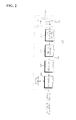
- FIG. 2 is a block diagram showing a configuration of a signal detecting apparatus 220 according to the exemplary embodiment of the present invention.
- reference numeral 400 indicates a resonance tank circuit.
- the resonance tank circuit 400 may include a radio frequency identification (RFID) transponder 402 and a capacitor 404.
- RFID radio frequency identification
- the RFID transponder 402 which is installed to be close to the power transmitting coil 240, detects the magnetic field change signal according to the magnetic field change generated in the power transmitting coil 240.
- the capacitor 404 is connected in parallel with the RFID transponder 402 and is resonated by the magnetic field change signal detected by the RFID transponder 402 to generate a resonance signal.
- Reference numeral 410 indicates a signal extracting unit extracting the transmission signal transmitted by the power receiving apparatus 300 from the resonance signal of the resonance tank circuit 400 and outputs the extracted transmission signal to the power transmitting controlling unit 210.
- the signal extracting unit 410 may include an envelope detecting unit 412, a low pass filter 414, an amplifier 416, and a comparator 418.
- the envelope detecting unit 412 detects an envelope signal from the resonance signal of the resonance tank circuit 400.
- the low pass filter 414 filters and detects a low frequency signal from the envelope signal detected by the envelope detecting unit 412.
- the amplifier 416 amplifies the signal low-pass-filtered by the low pass filter 414.
- the comparator 418 compares the signal amplified by the amplifier 416 with a preset reference voltage to extract the signal transmitted by the power receiving apparatus 300 and outputs the extracted signal to the power transmitting controlling unit 210.
- the RFID transponder 402 of the resonance tank circuit 400 detects the magnetic field change of the power transmitting coil 240 generated according to the transmission signal transmitted by the power receiving apparatus 300.
- the capacitor 404 is connected in parallel with the RFID transponder 402, and the RFID transponder 402 and the capacitor 404 are resonated in parallel with each other according to the magnetic field change signal detected by the RIFD transponder 402 to generate the resonance signal.
- the transmission signal transmitted by the power receiving apparatus 300 is transmitted at a predetermined frequency
- the magnetic field change is generated in the power transmitting coil 240 according to the predetermined frequency of the transmission signal
- the RFID transponder 402 and the capacitor 404 are resonated in parallel with each other at the frequency according to the magnetic field change to generate the resonance signal.
- the envelope detecting unit 412 of the signal extracting unit 410 detects the envelope signal from the resonance signal. Then the detected envelope signal is low-pass-filtered by the low pass filter 414, amplified by the amplifier 416, and then input to the comparator 418.
- the comparator 418 compares the output signal of the amplifier 416 with a preset reference voltage to extract the transmission signal transmitted by the power receiving apparatus 300 and outputs the extracted transmission signal to the power transmitting controlling unit 210.
- the power transmitting controlling unit 210 judges whether or not the power charging of the power receiving apparatus 300 has been completed using the transmission signal extracted by the comparator 418.
- FIG. 3 is a block diagram showing a configuration of a wireless power transmitting system according to another exemplary embodiment of the present invention.
- the wireless power transmitting apparatus 200 may include two power transmitting coils 240a and 240b.
- the series resonant converter 230 generates two AC powers and outputs the two AC powers to the two power transmitting coils 240a and 240b, respectively, and the two power receiving coils 240a and 240b wirelessly transmits the powers while being resonated.
- the wireless power transmitting apparatus 200 includes one power transmitting coil 240 or two power transmitting coils 240a and 240b has been described above by way of example, the present invention is not limited thereto. That is, the wireless power transmitting apparatus 300 may also include three or more power transmitting coils, that is, a plurality of power transmitting coils.
- the resonance tank circuit is configured of the RFID transponder detecting the magnetic field change of the power transmitting coil and the capacitor to generate the resonance signal, and the transmission signal transmitted by the power receiving apparatus is extracted from the generated resonance signal.
- a configuration of the circuit extracting the signal transmitted by the power receiving apparatus is significantly simple, thereby making it possible to decrease a manufacturing cost of the wireless power transmitting apparatus and precisely detect the transmission signal
Landscapes
- Engineering & Computer Science (AREA)
- Computer Networks & Wireless Communication (AREA)
- Signal Processing (AREA)
- Power Engineering (AREA)
- Charge And Discharge Circuits For Batteries Or The Like (AREA)
- Near-Field Transmission Systems (AREA)
Abstract
Description
- The present invention relates to a signal detecting apparatus for detecting transmission signals transmitted by a power receiving apparatus in a wireless power transmitting system and a wireless power transmitting apparatus having the signal detecting apparatus for detecting transmission signals.
- Generally, various portable terminals such as a cellular phone, a smart phone, a personal digital assistant (PDA), and the like, has been mounted with a power receiving apparatus for supplying an operation power thereto.
- The power receiving apparatus, which is charged with a power supplied from an external charging apparatus and supplies the charged power as an operation power to the portable terminal to operate the portable terminal, may include a battery cell module charged with the power, a charging and discharging circuit inputting the power supplied from the external charging apparatus to charge the power in the battery cell module and discharging the power charged in the battery cell module to supply the discharged power as the operation power to the portable terminal, and the like.
- As a scheme of electrically connecting the charging apparatus to the power receiving apparatus, a terminal connection scheme of directly connecting a terminal through which the power is output in the charging apparatus to a terminal to which the power is input in the power receiving apparatus through a cable, a connector, and the like, has been known.
- In the terminal connection scheme, the terminal of the charging apparatus and the terminal of the power receiving apparatus have different potential differences.
- Therefore, in the case in which the terminal of the charging apparatus and the terminal of the power receiving apparatus are connected to each other or disconnected from each other, an instantaneous discharging phenomenon occurs.
- This instantaneous discharging phenomenon causes abrasion of the terminal of the charging apparatus and the terminal of the power receiving apparatus. In addition, in the case in which foreign materials are accumulated in the terminal of the charging apparatus and the terminal of the power receiving apparatus, heat occurs in the foreign materials due to the instantaneous discharging phenomenon, such that there is a risk that an accident such as a fire, or the like, will occur.
- Further, the power charged in the battery cell module in the power receiving apparatus is naturally discharged to the outside through the terminal of the power receiving apparatus due to moisture, or the like, such that a lifespan of the power receiving apparatus may be decreased and performance of the power receiving apparatus may be deteriorated.
- Recently, a wireless power transmitting system wirelessly transmitting the power has been suggested in order to solve several problems of the terminal connection scheme as described above.
- In the wireless power transmitting system, for example, a wireless power transmitting apparatus wirelessly transmits the power in an electromagnetic induction scheme. In addition, a power receiving apparatus receives the power wirelessly transmitted by the wireless power transmitting apparatus and charges the received power in the battery cell module.
- A number of efforts have been conducted in the wireless power transmitting system in order for the wireless power transmitting apparatus to wirelessly transmit the power stably at high efficiency and in order for the power receiving apparatus to receive the power transmitted by the wireless power transmitting apparatus as much as possible to charge the power in the battery cell module.
- In the wireless power transmitting system as described above, the power receiving apparatus generates a transmission signal including a unique ID signal and a power charging information signal indicating the power charged in the battery cell module and transmits the transmission signal to the wireless power transmitting apparatus through a power receiving coil, and the wireless power transmitting apparatus receives the transmission signal through a power transmitting coil.
- Since a voltage and a current of the power transmitting coil of the wireless power transmitting apparatus are changed according to the transmission signal transmitted by the power receiving apparatus through the power receiving coil, the wireless power transmitting apparatus has detected the voltage and the current of the power transmitting coil using a voltage sensor, a current sensor, a current transducer, and the like, and has detected the detected voltage and current by a detecting circuit, or the like, to detect the transmission signal transmitted by the power receiving apparatus.
- Therefore, a configuration of a circuit for detecting the transmission signal transmitted by the power receiving apparatus is significantly complicated, such that a manufacturing cost of the wireless power transmitting apparatus increases and there is a limitation in precisely detecting the transmission signal.
- An object of the present invention is to provide a signal detecting apparatus capable of simply detecting a transmission signal transmitted by a power receiving apparatus without using a voltage sensor, a current sensor, and a current transducer, and a wireless power transmitting apparatus having the same.
- Another object of the present invention is to provide a signal detecting apparatus capable of simply detecting a transmission signal using a radio frequency identification (RFID) transponder, and a wireless power transmitting apparatus having the same.
- Still another object of the present invention is to provide a signal detecting apparatus capable of precisely detecting a transmission signal transmitted by a power receiving apparatus using a magnetic field change signal of a power transmitting coil generated according to the transmission signal, and a wireless power transmitting apparatus having the same.
- Objects of the present invention are not limited to the above-mentioned objects. That is, other objects that are not mentioned may be obviously understood by those skilled in the art to which the present invention pertains from the following description.
- According to an exemplary embodiment of the present invention, there is provided a signal detecting apparatus including: a magnetic field change signal detecting unit configured to detect a magnetic field change signal of a power transmitting coil generated according to a transmission signal transmitted by a power receiving apparatus; and a signal extracting unit configured to extract the transmission signal transmitted by the power receiving apparatus from the magnetic field change signal detected by the magnetic field change signal detecting unit.
- The magnetic field change signal detecting unit may be a resonance tank circuit resonated by the magnetic field change signal of the power transmitting coil to generate a resonance signal.
- The resonance tank circuit may include: a radio frequency identification (RFID) transponder configured to detect the magnetic field change signal of the power transmitting coil; and a capacitor connected in parallel with the RFID transponder to allow resonance to be generated by the magnetic field change signal of the power transmitting coil.
- The signal extracting unit may include: an envelope detecting unit configured to detect an envelope of the magnetic field change signal; a low pass filter configured to low-pass-filter the envelope detected by the envelope detecting unit; and a comparator configured to compare an output signal of the low pass filter with a preset reference voltage to extract the transmission signal.
- The signal extracting unit may further include an amplifier disposed between the low pass filter and the comparator and configured to amplify the output signal of the low pass filter and output the amplified signal to the comparator.
- The transmission signal may include a unique ID signal of the power receiving apparatus and a power charging information signal of the battery cell module.
- According to another exemplary embodiment of the present invention, there is provided a wireless power transmitting apparatus including: a power transmitting coil configured to wirelessly transmit a power to a power receiving apparatus; a signal detecting apparatus configured to detect a transmission signal transmitted by the power receiving apparatus by using a magnetic field change signal of the power transmitting coil according to the transmission signal; a power transmitting controlling unit configured to control that the power is wirelessly transmitted to the power receiving apparatus and judges a charged state of the power receiving apparatus using the transmission signal detected by the signal detecting apparatus; a driving driver configured to generate a driving signal under the control of the power transmitting controlling unit; and a series resonant converter configured to switch a direct current (DC) power according to the driving signal and output the switched power to the power transmitting coil.
- The number of power transmitting coils may be one or two or more.
- The wireless power transmitting apparatus may further include an alternate current (AC) to DC converter configured to convert an AC power into a DC power and supply the DC power as an operation power to the wireless power transmitting apparatus.
- The AC to DC converter may be provided integrally with the wireless power transmitting apparatus in the wireless power transmitting apparatus.
- The signal detecting apparatus may include: a magnetic field change signal detecting unit configured to detect the magnetic field change signal of the power transmitting coil generated according to the transmission signal; and a signal extracting unit configured to extract the transmission signal transmitted by the power receiving apparatus from the magnetic field change signal detected by the magnetic field change signal detecting unit.
- The magnetic field change signal detecting unit may be a resonance tank circuit resonated by the magnetic field change signal of the power transmitting coil to generate a resonance signal.
- The resonance tank circuit may include: an RFID transponder configured to detect the magnetic field change signal of the power transmitting coil; and a capacitor connected in parallel with the RFID transponder to allow resonance to be generated by the magnetic field change signal of the power transmitting coil.
- The signal extracting unit may include: an envelope detecting unit configured to detect an envelope of the magnetic field change signal; a low pass filter configured to low-pass-filter the envelope detected by the envelope detecting unit; and a comparator configured to compare an output signal of the low pass filter with a preset reference voltage to extract the transmission signal.
- The signal extracting unit may further include an amplifier disposed between the low pass filter and the comparator and configured to amplify the output signal of the low pass filter and output the amplified signal to the comparator.
- The transmission signal may include a unique ID signal of the power receiving apparatus and a power charging information signal of the battery cell module.
- Hereinafter, the present invention will be described in detailed through exemplary embodiments thereof with reference to the accompanying drawings, in some of which the same reference numeral will be used to describe the same component.
-
FIG. 1 is a block diagram showing a configuration of a wireless power transmitting system according to an exemplary embodiment of the present invention; -
FIG. 2 is a block diagram showing a configuration of a signal detecting apparatus according to the exemplary embodiment of the present invention; and -
FIG. 3 is a block diagram showing a configuration of a wireless power transmitting system according to another exemplary embodiment of the present invention. - The following detailed description is only an example and only illustrates exemplary embodiments of the present invention. In addition, a principle and a concept of the present invention are provided in order to most usefully and easily describe the present invention.
- Therefore, for basic understanding of the present invention, a more detailed structure than necessary will not be provided, and several forms of the present invention that may be executed by those skilled in the art will be illustrated in the accompanying drawings.
-
FIG. 1 is a block diagram showing a configuration of a wireless power transmitting system according to an exemplary embodiment of the present invention. InFIG. 1 ,reference number 100 indicates an alternate current (AC) to direct current (DC) converter. The AC toDC converter 100 converts an AC power input from the outside into a DC power. -
Reference numeral 200 indicates a wireless power transmitting apparatus. The wirelesspower transmitting apparatus 200 switches the DC power converted by the AC toDC converter 100 and wirelessly transmits the switched power in, for example, an electromagnetic induction scheme. - Although the case in which the AC to
DC converter 100 is provided separately from the wirelesspower transmitting apparatus 200 has been described herein by way of example, the AC toDC converter 100 may also be integrated in the wirelesspower transmitting apparatus 200 in implementing the present invention. -
Reference numeral 300 indicates a power receiving apparatus. The power receivingapparatus 300 receives and charges the power wirelessly transmitted by the wirelesspower transmitting apparatus 200, generates a transmission signal including a unique ID signal and a power charging information signal, and transmits the transmission signal to the wirelesspower transmitting apparatus 200. - The wireless
power transmitting apparatus 200 may include a power transmitting controllingunit 210, adriving driver 220, a seriesresonant converter 230, a power transmittingcoil 240, and asignal detecting apparatus 250 according to the exemplary embodiment of the present invention. - The power transmitting controlling
unit 210 controls that the power is wirelessly transmitted to thepower receiving apparatus 300. - The
driving driver 220 generates a driving signal for wirelessly transmitting the power, and the like, under a control of the power transmitting controllingunit 210. - The
series resonant converter 230 switches a DC power supplied from the AC toDC converter 100 according to the driving signal generated by thedriving driver 220 to generate an AC power. - The power transmitting
coil 240 wirelessly transmits the power while being resonated by the AC power generated by the seriesresonant converter 230. - The
signal detecting apparatus 250 detects the transmission signal transmitted by thepower receiving apparatus 300 from a magnetic field change of thepower transmitting coil 240 and provides the detected transmission signal to the power transmitting controllingunit 210. - The
power receiving apparatus 300 may include a powercharging controlling unit 310, apower receiving coil 320, a rectifyingunit 330, acharging unit 340, abattery cell module 350, asignal transmitting unit 360, and the like. - The power
charging controlling unit 310 controls that the power wirelessly transmitted by the wirelesspower transmitting apparatus 200 is received and charged and controls that the transmission signal including the unique ID signal and the power charging information signal is generated and transmitted to the wirelesspower transmitting apparatus 200. - The
power receiving coil 320 is coupled to thepower transmitting coil 240 of thepower transmitting apparatus 200 in an electromagnetic induction scheme to receive the power wirelessly transmitted by thepower transmitting coil 240. - The rectifying
unit 330 rectifies the power received by thepower receiving coil 320 to convert the power into a DC power. - The charging
unit 340 charges the DC power rectified by the rectifying unit 530 in thebattery cell module 350 under the control of the powercharging controlling unit 310 and provides the power charging information to the powercharging controlling unit 310. - The
signal transmitting unit 360 generates the transmission signal including the unique ID signal and the power charging information under the control of the powerreceiving controlling unit 310 and transmits the generated transmission signal to the wirelesspower transmitting apparatus 200 through thepower receiving coil 320. - In the wireless power transmitting system having the above-mentioned configuration, the AC to
DC converter 100 converts the AC power input from the outside into the DC power and supplies the converted DC power as an operation power to the wirelesspower transmitting apparatus 200, such that the wirelesspower transmitting apparatus 200 is normally operated. - In this state, in the case in which the wireless
power transmitting apparatus 200 transmits the power to thepower receiving apparatus 300, the powertransmitting controlling unit 210 controls the drivingdriver 220 to generate the driving signal for transmitting the power, and the seriesresonant converter 230 switches the DC power output by the AC toDC converter 100 according to the driving signal for transmitting the generated power to convert the DC power into the AC power and applies the converted AC power to thepower transmitting coil 240 to generate resonance. - For example, the
power transmitting coil 240 is designed to resonate at a frequency of 100 kHz, the seriesresonant converter 230 switches the DC power according to the driving signal for transmitting the power to generate the AC power having the frequency of 100 kHz, and the AC power having the frequency of 100 kHz is applied to thepower transmitting coil 240 to generate the resonance. - When the resonance is generated in the
power transmitting coil 240, the power is wirelessly transmitted while a large amount of current flows to thepower transmitting coil 240. - The
power receiving coil 320 of thepower receiving apparatus 300 receives the power transmitted by thepower transmitting coil 240, the rectifyingunit 330 converts the received power into the DC power, and thecharging unit 340 charges the converted DC power in thebattery cell module 350 under the control of the powercharging controlling unit 310. - In addition, the power
charging controlling unit 310 judges an amount of power charged in thebattery cell module 350 through the chargingunit 340 and controls thesignal transmitting unit 360 according to the judged amount of power to generate the transmission signal including the unique ID signal and the power charging information signal, and the transmission signal generated by thesignal transmitting unit 360 is output to thepower receiving coil 320. - In this case, in the
power receiving coil 320, a magnetic field change according to the transmission signal generated by thesignal transmitting unit 360 is generated, and a magnetic field of thepower transmitting coil 240 is changed according to the generated magnetic field change. - The
signal detecting circuit 250 detects the magnetic field change of thepower transmitting coil 240, detects the transmission signal generated by thesignal transmitting unit 360 from the detected magnetic field change, and outputs the detected transmission signal to the powertransmitting controlling unit 210. - The power
transmitting controlling unit 210 judges whether or not the power charging of thepower receiving apparatus 300 has been completed using the transmission signal detected by thesignal detecting circuit 250. - In the case in which it is judged that the power charging of the
power receiving apparatus 300 has not been completed, the powertransmitting controlling unit 210 continuously performs the operation as described above to continuously the power wirelessly to thepower receiving apparatus 300. - On the other hand, in the case in which it is judged that the power charging of the
power receiving apparatus 300 has been completed, thepower receiving apparatus 300 controls the drivingdriver 220 not to generate the driving signal, thereby stopping the operation of wirelessly transmitting the power. -
FIG. 2 is a block diagram showing a configuration of asignal detecting apparatus 220 according to the exemplary embodiment of the present invention. InFIG. 2 ,reference numeral 400 indicates a resonance tank circuit. Theresonance tank circuit 400 may include a radio frequency identification (RFID)transponder 402 and acapacitor 404. TheRFID transponder 402, which is installed to be close to thepower transmitting coil 240, detects the magnetic field change signal according to the magnetic field change generated in thepower transmitting coil 240. In addition, thecapacitor 404 is connected in parallel with theRFID transponder 402 and is resonated by the magnetic field change signal detected by theRFID transponder 402 to generate a resonance signal. -
Reference numeral 410 indicates a signal extracting unit extracting the transmission signal transmitted by thepower receiving apparatus 300 from the resonance signal of theresonance tank circuit 400 and outputs the extracted transmission signal to the powertransmitting controlling unit 210. Thesignal extracting unit 410 may include anenvelope detecting unit 412, alow pass filter 414, anamplifier 416, and acomparator 418. - The
envelope detecting unit 412 detects an envelope signal from the resonance signal of theresonance tank circuit 400. - The
low pass filter 414 filters and detects a low frequency signal from the envelope signal detected by theenvelope detecting unit 412. - The
amplifier 416 amplifies the signal low-pass-filtered by thelow pass filter 414. - The
comparator 418 compares the signal amplified by theamplifier 416 with a preset reference voltage to extract the signal transmitted by thepower receiving apparatus 300 and outputs the extracted signal to the powertransmitting controlling unit 210. - In the
signal detecting apparatus 250 according to the exemplary embodiment of the present invention having the above-mentioned configuration, theRFID transponder 402 of theresonance tank circuit 400 detects the magnetic field change of thepower transmitting coil 240 generated according to the transmission signal transmitted by thepower receiving apparatus 300. - The
capacitor 404 is connected in parallel with theRFID transponder 402, and theRFID transponder 402 and thecapacitor 404 are resonated in parallel with each other according to the magnetic field change signal detected by theRIFD transponder 402 to generate the resonance signal. - That is, the transmission signal transmitted by the
power receiving apparatus 300 is transmitted at a predetermined frequency, the magnetic field change is generated in thepower transmitting coil 240 according to the predetermined frequency of the transmission signal, and theRFID transponder 402 and thecapacitor 404 are resonated in parallel with each other at the frequency according to the magnetic field change to generate the resonance signal. - The
envelope detecting unit 412 of thesignal extracting unit 410 detects the envelope signal from the resonance signal. Then the detected envelope signal is low-pass-filtered by thelow pass filter 414, amplified by theamplifier 416, and then input to thecomparator 418. - Then, the
comparator 418 compares the output signal of theamplifier 416 with a preset reference voltage to extract the transmission signal transmitted by thepower receiving apparatus 300 and outputs the extracted transmission signal to the powertransmitting controlling unit 210. Next, the powertransmitting controlling unit 210 judges whether or not the power charging of thepower receiving apparatus 300 has been completed using the transmission signal extracted by thecomparator 418. -
FIG. 3 is a block diagram showing a configuration of a wireless power transmitting system according to another exemplary embodiment of the present invention. Referring toFIG. 3 , the wirelesspower transmitting apparatus 200 according to another exemplary embodiment of the present invention may include two power transmitting coils 240a and 240b. - In another exemplary embodiment of the present invention, the series
resonant converter 230 generates two AC powers and outputs the two AC powers to the two power transmitting coils 240a and 240b, respectively, and the two power receiving coils 240a and 240b wirelessly transmits the powers while being resonated. - Since an operation of the wireless
power transmitting apparatus 200 including the two power transmitting coils 240a and 240b is the same as that of the wireless power transmitting apparatus according to the exemplary embodiment of the present invention described above, a detailed description thereof will be omitted. - Meanwhile, although the case in which the wireless
power transmitting apparatus 200 according to the present invention includes onepower transmitting coil 240 or two power transmitting coils 240a and 240b has been described above by way of example, the present invention is not limited thereto. That is, the wirelesspower transmitting apparatus 300 may also include three or more power transmitting coils, that is, a plurality of power transmitting coils. - With the signal detecting apparatus and the wireless power transmitting apparatus having the same according to the exemplary embodiments of the present invention, the resonance tank circuit is configured of the RFID transponder detecting the magnetic field change of the power transmitting coil and the capacitor to generate the resonance signal, and the transmission signal transmitted by the power receiving apparatus is extracted from the generated resonance signal.
- Therefore, a configuration of the circuit extracting the signal transmitted by the power receiving apparatus is significantly simple, thereby making it possible to decrease a manufacturing cost of the wireless power transmitting apparatus and precisely detect the transmission signal
- Although the exemplary embodiments of the present invention have been disclosed for illustrative purposes, those skilled in the art will appreciate that various modifications, additions and substitutions are possible, without departing from the scope and spirit of the invention as disclosed in the accompanying claims.
- Accordingly, the scope of the present invention is not construed as being limited to the described embodiments but is defined by the appended claims as well as equivalents thereto.
Claims (16)
- A signal detecting apparatus (250) comprising:a magnetic field change signal detecting unit (400) configured to detect a magnetic field change signal of a power transmitting coil (240) generated according to a transmission signal transmitted by a power receiving apparatus (300) ; anda signal extracting unit (410) configured to extract the transmission signal transmitted by the power receiving apparatus from the magnetic field change signal detected by the magnetic field change signal detecting unit.
- The signal detecting apparatus (250) of claim 1, wherein the magnetic field change signal detecting unit is a resonance tank circuit (400) resonated by the magnetic field change signal of the power transmitting coil to generate a resonance signal.
- The signal detecting apparatus of claim 2, wherein the resonance tank circuit includes:a radio frequency identification (RFID) transponder (402) configured to detect the magnetic field change signal of the power transmitting coil; anda capacitor (404) connected in parallel with the RFID transponder to allow resonance to be generated by the magnetic field change signal of the power transmitting coil.
- The signal detecting apparatus of claim 1, wherein the signal extracting unit (410) includes:an envelope detecting unit (412) configured to detect an envelope of the magnetic field change signal;a low pass filter (414) configured to low-pass-filter the envelope detected by the envelope detecting unit; anda comparator (418) configured to compare an output signal of the low pass filter with a preset reference voltage to extract the transmission signal.
- The signal detecting apparatus of claim 4, wherein the signal extracting unit further includes an amplifier (416) disposed between the low pass filter and the comparator and configured to amplify the output signal of the low pass filter and output the amplified signal to the comparator.
- The signal detecting apparatus of claim 1, wherein the transmission signal includes a unique ID signal of the power receiving apparatus and a power charging information signal of the battery cell module.
- A wireless power transmitting apparatus (200) comprising:at least one power transmitting coil (240) configured to wirelessly transmit a power to a power receiving apparatus (300)a signal detecting apparatus (250) configured to detect a transmission signal transmitted by the power receiving apparatus by using a magnetic field change signal of the power transmitting coil according to the transmission signal.a power transmitting controlling unit (210) configured to control that the power is wirelessly transmitted to the power receiving apparatus and judges a charged state of the power receiving apparatus using the transmission signal detected by the signal detecting apparatus;a driving driver (220) configured to generate a driving signal under the control of the power transmitting controlling unit; anda series resonant converter (230) configured to switch a direct current (DC) power according to the driving signal and output the switched power to the power transmitting coil.
- The wireless power transmitting apparatus of claim 7, wherein the number of power transmitting coils is one or two or more.
- The wireless power transmitting apparatus of claim 7, further comprising an AC/DC converter (100) configured to convert an AC power into a DC power and supply the DC power as an operation power to the wireless power transmitting apparatus.
- The wireless power transmitting apparatus of claim 9, wherein the AC/DC converter is provided integrally with the wireless power transmitting apparatus in the wireless power transmitting apparatus.
- The wireless power transmitting apparatus of claim 7, wherein the signal detecting apparatus (250) includes:a magnetic field change signal detecting unit configured to detect the magnetic field change signal of the power transmitting coil generated according to the transmission signal; anda signal extracting unit configured to extract the transmission signal transmitted by the power receiving apparatus from the magnetic field change signal detected by the magnetic field change signal detecting unit.
- The wireless power transmitting apparatus of claim 11, wherein the magnetic field change signal detecting unit is a resonance tank circuit resonated by the magnetic field change signal of the power transmitting coil to generate a resonance signal.
- The wireless power transmitting apparatus of claim 12, wherein the resonance tank circuit includes:an RFID transponder configured to detect the magnetic field change signal of the power transmitting coil; anda capacitor connected in parallel with the RFID transponder to allow resonance to be generated by the magnetic field change signal of the power transmitting coil.
- The wireless power transmitting apparatus of claim 11, wherein the signal extracting unit includes:an envelope detecting unit configured to detect an envelope of the magnetic field change signal;a low pass filter configured to low-pass-filter the envelope detected by the envelope detecting unit; anda comparator configured to compare an output signal of the low pass filter with a preset reference voltage to extract the transmission signal.
- The wireless power transmitting apparatus of claim 14, wherein the signal extracting unit further includes an amplifier disposed between the low pass filter and the comparator and configured to amplify the output signal of the low pass filter and output the amplified signal to the comparator.
- The wireless power transmitting apparatus of claim 7 wherein the transmission signal includes a unique ID signal of the power receiving apparatus and a power charging information signal of the battery cell module.
Applications Claiming Priority (1)
| Application Number | Priority Date | Filing Date | Title |
|---|---|---|---|
| KR1020110138971A KR101254092B1 (en) | 2011-12-21 | 2011-12-21 | Apparatus for detecting signals and wireless power transmission apparatus having the same |
Publications (3)
| Publication Number | Publication Date |
|---|---|
| EP2608419A2 true EP2608419A2 (en) | 2013-06-26 |
| EP2608419A3 EP2608419A3 (en) | 2013-07-24 |
| EP2608419B1 EP2608419B1 (en) | 2024-10-09 |
Family
ID=47631214
Family Applications (1)
| Application Number | Title | Priority Date | Filing Date |
|---|---|---|---|
| EP12198951.1A Active EP2608419B1 (en) | 2011-12-21 | 2012-12-21 | Apparatus for detecting signal and wireless power transmitting apparatus having the same |
Country Status (4)
| Country | Link |
|---|---|
| US (1) | US9246358B2 (en) |
| EP (1) | EP2608419B1 (en) |
| KR (1) | KR101254092B1 (en) |
| CN (1) | CN103178622B (en) |
Cited By (11)
| Publication number | Priority date | Publication date | Assignee | Title |
|---|---|---|---|---|
| US9413197B2 (en) | 2010-05-31 | 2016-08-09 | Fu Da Tong Technology Co., Ltd. | Inductive power supply system and intruding metal detection method thereof |
| US9600021B2 (en) | 2011-02-01 | 2017-03-21 | Fu Da Tong Technology Co., Ltd. | Operating clock synchronization adjusting method for induction type power supply system |
| US9628147B2 (en) | 2011-02-01 | 2017-04-18 | Fu Da Tong Technology Co., Ltd. | Method of automatically adjusting determination voltage and voltage adjusting device thereof |
| US9671444B2 (en) | 2011-02-01 | 2017-06-06 | Fu Da Tong Technology Co., Ltd. | Current signal sensing method for supplying-end module of induction type power supply system |
| US9831687B2 (en) | 2011-02-01 | 2017-11-28 | Fu Da Tong Technology Co., Ltd. | Supplying-end module for induction-type power supply system and signal analysis circuit therein |
| US10038338B2 (en) | 2011-02-01 | 2018-07-31 | Fu Da Tong Technology Co., Ltd. | Signal modulation method and signal rectification and modulation device |
| US10056944B2 (en) | 2011-02-01 | 2018-08-21 | Fu Da Tong Technology Co., Ltd. | Data determination method for supplying-end module of induction type power supply system and related supplying-end module |
| US10114396B2 (en) | 2015-10-28 | 2018-10-30 | Fu Da Tong Technology Co., Ltd. | Induction type power supply system and intruding metal detection method thereof |
| US10289142B2 (en) | 2011-02-01 | 2019-05-14 | Fu Da Tong Technology Co., Ltd. | Induction type power supply system and intruding metal detection method thereof |
| US10615645B2 (en) | 2011-02-01 | 2020-04-07 | Fu Da Tong Technology Co., Ltd | Power supply device of induction type power supply system and NFC device identification method of the same |
| US10630113B2 (en) | 2011-02-01 | 2020-04-21 | Fu Da Tong Technology Co., Ltd | Power supply device of induction type power supply system and RF magnetic card identification method of the same |
Families Citing this family (21)
| Publication number | Priority date | Publication date | Assignee | Title |
|---|---|---|---|---|
| US10574095B2 (en) | 2011-02-01 | 2020-02-25 | Fu Da Tong Technology Co., Ltd. | Decoding method for signal processing circuit and signal processing circuit using the same |
| US10673287B2 (en) | 2011-02-01 | 2020-06-02 | Fu Da Tong Technology Co., Ltd. | Method and supplying-end module for detecting receiving-end module |
| US10312748B2 (en) | 2011-02-01 | 2019-06-04 | Fu Da Tong Techology Co., Ltd. | Signal analysis method and circuit |
| US10630116B2 (en) * | 2011-02-01 | 2020-04-21 | Fu Da Tong Technology Co., Ltd. | Intruding metal detection method for induction type power supply system and related supplying-end module |
| TWI536698B (en) * | 2015-06-30 | 2016-06-01 | 富達通科技股份有限公司 | Power supply module and signal analysis circuit in inductive power supply |
| TWI568125B (en) | 2015-01-14 | 2017-01-21 | 富達通科技股份有限公司 | Power supply module of inductive power supply and voltage measuring method thereof |
| TWI472897B (en) * | 2013-05-03 | 2015-02-11 | 富達通科技股份有限公司 | Method and device for automatically adjusting voltage level and inductive power supply thereof |
| JP5808355B2 (en) * | 2013-03-22 | 2015-11-10 | 株式会社東芝 | Wireless power feeding system, power reception control device, and power transmission control device |
| KR101949954B1 (en) | 2013-06-07 | 2019-02-19 | 삼성전자주식회사 | Wireless power transmission apparatus for high efficient energy charging |
| CN104021414A (en) * | 2014-06-17 | 2014-09-03 | 南宁山风信息科技有限公司 | RFID electronic tag |
| US10148096B2 (en) * | 2014-07-07 | 2018-12-04 | Mediatek Singapore Pte. Ltd. | Wireless or wired power delivery using a controllable power adapter |
| KR102056404B1 (en) * | 2014-09-11 | 2019-12-16 | 주식회사 위츠 | Wireless power transmitting device and Controlling method thereof |
| US10068465B2 (en) | 2014-10-22 | 2018-09-04 | Mitutoyo Corporation | Battery-less data transmission module accessory for portable and handheld metrology devices |
| US10153665B2 (en) | 2015-01-14 | 2018-12-11 | Fu Da Tong Technology Co., Ltd. | Method for adjusting output power for induction type power supply system and related supplying-end module |
| US10222270B2 (en) * | 2015-04-24 | 2019-03-05 | United Arab Emirates University | Temperature monitoring of subject bodies using wireless energy transfer |
| KR20160143044A (en) * | 2015-06-04 | 2016-12-14 | 엘지이노텍 주식회사 | Wireless Power Transfer System and Operating method thereof |
| WO2018070640A1 (en) * | 2016-10-11 | 2018-04-19 | 강동연 | Personal communication terminal in which wireless power charging application is stored, and charging system comprising same |
| JP7083632B2 (en) | 2016-12-29 | 2022-06-13 | 株式会社ミツトヨ | Data transmission module, wireless transmission method and wireless transmission system |
| CN110460357B (en) * | 2019-08-15 | 2021-06-22 | 四川长虹电器股份有限公司 | Near field communication device, communication method and communication equipment based on magnetic field coding |
| US12588901B2 (en) | 2020-06-11 | 2026-03-31 | Kohler Co. | Health care mirror |
| US12042043B2 (en) | 2020-06-11 | 2024-07-23 | Kohler Co. | Temperature tracking mirror |
Family Cites Families (49)
| Publication number | Priority date | Publication date | Assignee | Title |
|---|---|---|---|---|
| US6486615B2 (en) * | 1998-10-13 | 2002-11-26 | City University Of Hong Kong | Dimming control of electronic ballasts |
| US7385357B2 (en) * | 1999-06-21 | 2008-06-10 | Access Business Group International Llc | Inductively coupled ballast circuit |
| US8989870B2 (en) * | 2001-04-13 | 2015-03-24 | Greatbatch Ltd. | Tuned energy balanced system for minimizing heating and/or to provide EMI protection of implanted leads in a high power electromagnetic field environment |
| DE10135067A1 (en) * | 2001-07-18 | 2003-02-06 | Vb Autobatterie Gmbh | Electrical accumulator with electronic circuit integrated in the accumulator container |
| JP3906722B2 (en) | 2002-03-26 | 2007-04-18 | 松下電工株式会社 | Contactless power supply system |
| US7271677B2 (en) * | 2003-09-22 | 2007-09-18 | Philip Richard Troyk | Inductive data and power link suitable for integration |
| US8411476B2 (en) * | 2003-11-06 | 2013-04-02 | Bang & Olufsen A/S | Charge mode control |
| JP2005242989A (en) * | 2004-01-28 | 2005-09-08 | Toshiba Microelectronics Corp | Non-contact IC card reader / writer terminal device, communication system, and non-contact data carrier |
| US7215251B2 (en) * | 2004-04-13 | 2007-05-08 | Impinj, Inc. | Method and apparatus for controlled persistent ID flag for RFID applications |
| US7917088B2 (en) * | 2004-04-13 | 2011-03-29 | Impinj, Inc. | Adaptable detection threshold for RFID tags and chips |
| GB2414120B (en) * | 2004-05-11 | 2008-04-02 | Splashpower Ltd | Controlling inductive power transfer systems |
| US8594567B2 (en) * | 2004-08-16 | 2013-11-26 | Giesecke & Devrient Gmbh | Controlled wireless charging of an accumulator in a chipcard |
| WO2006023674A1 (en) * | 2004-08-16 | 2006-03-02 | Abr, Llc | Rfid transducer alignment system |
| US7579906B2 (en) * | 2004-11-12 | 2009-08-25 | National Semiconductor Corporation | System and method for providing a low power low voltage data detection circuit for RF AM signals in EPC0 compliant RFID tags |
| US7659892B2 (en) * | 2005-03-17 | 2010-02-09 | Semiconductor Energy Laboratory Co., Ltd. | Display device and portable terminal |
| US20060255943A1 (en) * | 2005-05-16 | 2006-11-16 | Psc Scanning, Inc. | Induction charging machine, methods, and system for a data reader |
| US7521890B2 (en) * | 2005-12-27 | 2009-04-21 | Power Science Inc. | System and method for selective transfer of radio frequency power |
| US8330594B2 (en) * | 2006-01-30 | 2012-12-11 | Sanyo Electric Co., Ltd. | Tire pressure measuring system and tire pressure measuring device |
| US8169185B2 (en) * | 2006-01-31 | 2012-05-01 | Mojo Mobility, Inc. | System and method for inductive charging of portable devices |
| US7952322B2 (en) * | 2006-01-31 | 2011-05-31 | Mojo Mobility, Inc. | Inductive power source and charging system |
| US20070247084A1 (en) * | 2006-02-11 | 2007-10-25 | Wei Zhao | Power supply based on resonant converter for lamp |
| US7989986B2 (en) * | 2006-03-23 | 2011-08-02 | Access Business Group International Llc | Inductive power supply with device identification |
| US20100328044A1 (en) * | 2006-10-26 | 2010-12-30 | Koninklijke Philips Electronics N.V. | Inductive power system and method of operation |
| EP1936541B1 (en) * | 2006-12-22 | 2017-08-30 | EM Microelectronic-Marin SA | On/off battery charger with power supply protection for monolithic integrated circuits using the energy from the antenna |
| JP5121307B2 (en) * | 2007-05-28 | 2013-01-16 | ソニーモバイルコミュニケーションズ株式会社 | Non-contact power transmission coil unit, portable terminal, power transmission device, and non-contact power transmission system |
| CN101330229A (en) * | 2007-06-21 | 2008-12-24 | 北京市北邮信息科技发展有限责任公司 | Non-contact type apparatus for transmitting electric energy |
| US20090157145A1 (en) * | 2007-11-26 | 2009-06-18 | Lawrence Cauller | Transfer Coil Architecture |
| US8855554B2 (en) * | 2008-03-05 | 2014-10-07 | Qualcomm Incorporated | Packaging and details of a wireless power device |
| JP4544338B2 (en) * | 2008-04-28 | 2010-09-15 | ソニー株式会社 | Power transmission device, power reception device, power transmission method, program, and power transmission system |
| EP2313957B1 (en) * | 2008-08-18 | 2020-05-20 | Nxp B.V. | A mobile device to control a charge pad system |
| US8901880B2 (en) * | 2008-08-19 | 2014-12-02 | Qualcomm Incorporated | Wireless power transmission for portable wireless power charging |
| US8643326B2 (en) * | 2008-09-27 | 2014-02-04 | Witricity Corporation | Tunable wireless energy transfer systems |
| US8692412B2 (en) * | 2008-09-27 | 2014-04-08 | Witricity Corporation | Temperature compensation in a wireless transfer system |
| PL2347494T3 (en) * | 2008-10-03 | 2019-08-30 | Philips Ip Ventures B.V. | Power system |
| US9130395B2 (en) * | 2008-12-12 | 2015-09-08 | Hanrim Postech Co., Ltd. | Non-contact charging station with planar spiral power transmission coil and method for controlling the same |
| CN101828320B (en) * | 2008-12-12 | 2013-04-10 | 郑春吉 | Non-contact charging station, non-contact power receiving device and control method thereof |
| DE102009000328A1 (en) * | 2009-01-20 | 2010-07-22 | Semikron Elektronik Gmbh & Co. Kg | Battery charger and method of operation |
| US8497658B2 (en) * | 2009-01-22 | 2013-07-30 | Qualcomm Incorporated | Adaptive power control for wireless charging of devices |
| CN101789921B (en) * | 2009-01-23 | 2013-03-06 | 中芯国际集成电路制造(上海)有限公司 | Amplitude shift keying demodulator and method |
| US8682261B2 (en) * | 2009-02-13 | 2014-03-25 | Qualcomm Incorporated | Antenna sharing for wirelessly powered devices |
| US8338991B2 (en) * | 2009-03-20 | 2012-12-25 | Qualcomm Incorporated | Adaptive impedance tuning in wireless power transmission |
| KR100976154B1 (en) | 2009-09-29 | 2010-08-17 | 주식회사 한림포스텍 | Non-contact charging system with charging current control function by input power |
| CN201656503U (en) * | 2009-11-19 | 2010-11-24 | 深圳市三子科技有限公司 | Portable wireless chargeable electronic device combination capable of charging |
| US20110127953A1 (en) * | 2009-11-30 | 2011-06-02 | Broadcom Corporation | Wireless power system |
| US8390433B2 (en) * | 2010-04-09 | 2013-03-05 | Eigent Technologies Inc. | Method and system for low cost, power efficient, wireless transponder devices with enhanced functionality |
| US8462734B2 (en) * | 2010-10-20 | 2013-06-11 | Nokia Corporation | Wireless docking with out-of-band initiation |
| KR101055448B1 (en) * | 2011-03-04 | 2011-08-08 | 삼성전기주식회사 | The wireless power transmission apparatus having communication function And Method thereof |
| KR101267076B1 (en) * | 2011-03-24 | 2013-05-24 | 주식회사 한림포스텍 | Power control method and wireless power transfer assembly in wireless power transfer assembly |
| US9912201B2 (en) * | 2011-04-11 | 2018-03-06 | Texas Instruments Incorporated | Systems and methods of detecting a change in object presence in a magnetic field |
-
2011
- 2011-12-21 KR KR1020110138971A patent/KR101254092B1/en active Active
-
2012
- 2012-12-19 CN CN201210553739.6A patent/CN103178622B/en active Active
- 2012-12-21 US US13/723,980 patent/US9246358B2/en active Active
- 2012-12-21 EP EP12198951.1A patent/EP2608419B1/en active Active
Non-Patent Citations (1)
| Title |
|---|
| None |
Cited By (11)
| Publication number | Priority date | Publication date | Assignee | Title |
|---|---|---|---|---|
| US9413197B2 (en) | 2010-05-31 | 2016-08-09 | Fu Da Tong Technology Co., Ltd. | Inductive power supply system and intruding metal detection method thereof |
| US9600021B2 (en) | 2011-02-01 | 2017-03-21 | Fu Da Tong Technology Co., Ltd. | Operating clock synchronization adjusting method for induction type power supply system |
| US9628147B2 (en) | 2011-02-01 | 2017-04-18 | Fu Da Tong Technology Co., Ltd. | Method of automatically adjusting determination voltage and voltage adjusting device thereof |
| US9671444B2 (en) | 2011-02-01 | 2017-06-06 | Fu Da Tong Technology Co., Ltd. | Current signal sensing method for supplying-end module of induction type power supply system |
| US9831687B2 (en) | 2011-02-01 | 2017-11-28 | Fu Da Tong Technology Co., Ltd. | Supplying-end module for induction-type power supply system and signal analysis circuit therein |
| US10038338B2 (en) | 2011-02-01 | 2018-07-31 | Fu Da Tong Technology Co., Ltd. | Signal modulation method and signal rectification and modulation device |
| US10056944B2 (en) | 2011-02-01 | 2018-08-21 | Fu Da Tong Technology Co., Ltd. | Data determination method for supplying-end module of induction type power supply system and related supplying-end module |
| US10289142B2 (en) | 2011-02-01 | 2019-05-14 | Fu Da Tong Technology Co., Ltd. | Induction type power supply system and intruding metal detection method thereof |
| US10615645B2 (en) | 2011-02-01 | 2020-04-07 | Fu Da Tong Technology Co., Ltd | Power supply device of induction type power supply system and NFC device identification method of the same |
| US10630113B2 (en) | 2011-02-01 | 2020-04-21 | Fu Da Tong Technology Co., Ltd | Power supply device of induction type power supply system and RF magnetic card identification method of the same |
| US10114396B2 (en) | 2015-10-28 | 2018-10-30 | Fu Da Tong Technology Co., Ltd. | Induction type power supply system and intruding metal detection method thereof |
Also Published As
| Publication number | Publication date |
|---|---|
| US20130162204A1 (en) | 2013-06-27 |
| EP2608419A3 (en) | 2013-07-24 |
| EP2608419B1 (en) | 2024-10-09 |
| US9246358B2 (en) | 2016-01-26 |
| CN103178622B (en) | 2018-05-04 |
| KR101254092B1 (en) | 2013-04-12 |
| CN103178622A (en) | 2013-06-26 |
Similar Documents
| Publication | Publication Date | Title |
|---|---|---|
| EP2608419A2 (en) | Apparatus for detecting signal and wireless power transmitting apparatus having the same | |
| EP2579421B1 (en) | Wireless power transmitting apparatus and method thereof | |
| US9191075B2 (en) | Wireless power control method, system, and apparatus utilizing a wakeup signal to prevent standby power consumption | |
| US9130380B2 (en) | Contactless power transmitting system having overheat protection function and method thereof | |
| EP2963766B1 (en) | Over-voltage protection device for resonant wireless power transmission device and method for controlling the over-voltage protection device | |
| KR101246693B1 (en) | Wireless power receiving device and power control method thereof | |
| JP6772190B2 (en) | Contactless power transmission | |
| EP2784908B1 (en) | Non-contact power supply apparatus and non-contact power supply system | |
| JP6279452B2 (en) | Non-contact power transmission device | |
| US9660479B2 (en) | Device and method for wirelessly transmitting power | |
| JP6977654B2 (en) | Wireless power receiving device and wireless power transmission system | |
| JP2014516243A (en) | Method for performing bidirectional communication between transmitter and receiver in wireless power transmission and reception system, transmitter and receiver thereof | |
| KR20150106274A (en) | Wireless Power Transfer System including Wireless Power Transfer System-Charger | |
| KR100992480B1 (en) | Non-contact charging system having function for detecting foreign material using feedback signal | |
| US11641134B2 (en) | Wireless charging device and a method for detecting a receiver device | |
| JP6406955B2 (en) | Electronics | |
| CN114303300B (en) | Battery systems, power transmission devices, and battery management methods | |
| KR20130036747A (en) | Wireless power transfer apparatus and method the same | |
| US20130082649A1 (en) | Wireless charging system | |
| KR101254258B1 (en) | Method for controlling wireles power transmission in wireless power transmission device and wireless power transmission device using the same | |
| KR101261338B1 (en) | Charger non-contact and contact charger and controlling method thereof | |
| EP4583363A1 (en) | Wireless power receiving device and operation method therefor |
Legal Events
| Date | Code | Title | Description |
|---|---|---|---|
| PUAL | Search report despatched |
Free format text: ORIGINAL CODE: 0009013 |
|
| AK | Designated contracting states |
Kind code of ref document: A2 Designated state(s): AL AT BE BG CH CY CZ DE DK EE ES FI FR GB GR HR HU IE IS IT LI LT LU LV MC MK MT NL NO PL PT RO RS SE SI SK SM TR |
|
| AX | Request for extension of the european patent |
Extension state: BA ME |
|
| PUAI | Public reference made under article 153(3) epc to a published international application that has entered the european phase |
Free format text: ORIGINAL CODE: 0009012 |
|
| AK | Designated contracting states |
Kind code of ref document: A3 Designated state(s): AL AT BE BG CH CY CZ DE DK EE ES FI FR GB GR HR HU IE IS IT LI LT LU LV MC MK MT NL NO PL PT RO RS SE SI SK SM TR |
|
| AX | Request for extension of the european patent |
Extension state: BA ME |
|
| RIC1 | Information provided on ipc code assigned before grant |
Ipc: H04B 5/00 20060101AFI20130619BHEP Ipc: H02J 7/02 20060101ALI20130619BHEP |
|
| 17P | Request for examination filed |
Effective date: 20140124 |
|
| RBV | Designated contracting states (corrected) |
Designated state(s): AL AT BE BG CH CY CZ DE DK EE ES FI FR GB GR HR HU IE IS IT LI LT LU LV MC MK MT NL NO PL PT RO RS SE SI SK SM TR |
|
| RAP1 | Party data changed (applicant data changed or rights of an application transferred) |
Owner name: GE HYBRID TECHNOLOGIES, LLC |
|
| STAA | Information on the status of an ep patent application or granted ep patent |
Free format text: STATUS: EXAMINATION IS IN PROGRESS |
|
| 17Q | First examination report despatched |
Effective date: 20181015 |
|
| GRAP | Despatch of communication of intention to grant a patent |
Free format text: ORIGINAL CODE: EPIDOSNIGR1 |
|
| STAA | Information on the status of an ep patent application or granted ep patent |
Free format text: STATUS: GRANT OF PATENT IS INTENDED |
|
| INTG | Intention to grant announced |
Effective date: 20240429 |
|
| GRAS | Grant fee paid |
Free format text: ORIGINAL CODE: EPIDOSNIGR3 |
|
| GRAA | (expected) grant |
Free format text: ORIGINAL CODE: 0009210 |
|
| STAA | Information on the status of an ep patent application or granted ep patent |
Free format text: STATUS: THE PATENT HAS BEEN GRANTED |
|
| AK | Designated contracting states |
Kind code of ref document: B1 Designated state(s): AL AT BE BG CH CY CZ DE DK EE ES FI FR GB GR HR HU IE IS IT LI LT LU LV MC MK MT NL NO PL PT RO RS SE SI SK SM TR |
|
| REG | Reference to a national code |
Ref country code: GB Ref legal event code: FG4D |
|
| REG | Reference to a national code |
Ref country code: CH Ref legal event code: EP |
|
| REG | Reference to a national code |
Ref country code: DE Ref legal event code: R096 Ref document number: 602012081113 Country of ref document: DE |
|
| REG | Reference to a national code |
Ref country code: IE Ref legal event code: FG4D |
|
| REG | Reference to a national code |
Ref country code: LT Ref legal event code: MG9D |
|
| REG | Reference to a national code |
Ref country code: NL Ref legal event code: MP Effective date: 20241009 |
|
| REG | Reference to a national code |
Ref country code: AT Ref legal event code: MK05 Ref document number: 1731706 Country of ref document: AT Kind code of ref document: T Effective date: 20241009 |
|
| PG25 | Lapsed in a contracting state [announced via postgrant information from national office to epo] |
Ref country code: NL Free format text: LAPSE BECAUSE OF FAILURE TO SUBMIT A TRANSLATION OF THE DESCRIPTION OR TO PAY THE FEE WITHIN THE PRESCRIBED TIME-LIMIT Effective date: 20241009 |
|
| PG25 | Lapsed in a contracting state [announced via postgrant information from national office to epo] |
Ref country code: NL Free format text: LAPSE BECAUSE OF FAILURE TO SUBMIT A TRANSLATION OF THE DESCRIPTION OR TO PAY THE FEE WITHIN THE PRESCRIBED TIME-LIMIT Effective date: 20241009 |
|
| PG25 | Lapsed in a contracting state [announced via postgrant information from national office to epo] |
Ref country code: HR Free format text: LAPSE BECAUSE OF FAILURE TO SUBMIT A TRANSLATION OF THE DESCRIPTION OR TO PAY THE FEE WITHIN THE PRESCRIBED TIME-LIMIT Effective date: 20241009 Ref country code: PT Free format text: LAPSE BECAUSE OF FAILURE TO SUBMIT A TRANSLATION OF THE DESCRIPTION OR TO PAY THE FEE WITHIN THE PRESCRIBED TIME-LIMIT Effective date: 20250210 Ref country code: IS Free format text: LAPSE BECAUSE OF FAILURE TO SUBMIT A TRANSLATION OF THE DESCRIPTION OR TO PAY THE FEE WITHIN THE PRESCRIBED TIME-LIMIT Effective date: 20250209 |
|
| PG25 | Lapsed in a contracting state [announced via postgrant information from national office to epo] |
Ref country code: FI Free format text: LAPSE BECAUSE OF FAILURE TO SUBMIT A TRANSLATION OF THE DESCRIPTION OR TO PAY THE FEE WITHIN THE PRESCRIBED TIME-LIMIT Effective date: 20241009 |
|
| PG25 | Lapsed in a contracting state [announced via postgrant information from national office to epo] |
Ref country code: BG Free format text: LAPSE BECAUSE OF FAILURE TO SUBMIT A TRANSLATION OF THE DESCRIPTION OR TO PAY THE FEE WITHIN THE PRESCRIBED TIME-LIMIT Effective date: 20241009 |
|
| PG25 | Lapsed in a contracting state [announced via postgrant information from national office to epo] |
Ref country code: ES Free format text: LAPSE BECAUSE OF FAILURE TO SUBMIT A TRANSLATION OF THE DESCRIPTION OR TO PAY THE FEE WITHIN THE PRESCRIBED TIME-LIMIT Effective date: 20241009 |
|
| PG25 | Lapsed in a contracting state [announced via postgrant information from national office to epo] |
Ref country code: NO Free format text: LAPSE BECAUSE OF FAILURE TO SUBMIT A TRANSLATION OF THE DESCRIPTION OR TO PAY THE FEE WITHIN THE PRESCRIBED TIME-LIMIT Effective date: 20250109 |
|
| PG25 | Lapsed in a contracting state [announced via postgrant information from national office to epo] |
Ref country code: LV Free format text: LAPSE BECAUSE OF FAILURE TO SUBMIT A TRANSLATION OF THE DESCRIPTION OR TO PAY THE FEE WITHIN THE PRESCRIBED TIME-LIMIT Effective date: 20241009 Ref country code: AT Free format text: LAPSE BECAUSE OF FAILURE TO SUBMIT A TRANSLATION OF THE DESCRIPTION OR TO PAY THE FEE WITHIN THE PRESCRIBED TIME-LIMIT Effective date: 20241009 Ref country code: GR Free format text: LAPSE BECAUSE OF FAILURE TO SUBMIT A TRANSLATION OF THE DESCRIPTION OR TO PAY THE FEE WITHIN THE PRESCRIBED TIME-LIMIT Effective date: 20250110 |
|
| PG25 | Lapsed in a contracting state [announced via postgrant information from national office to epo] |
Ref country code: PL Free format text: LAPSE BECAUSE OF FAILURE TO SUBMIT A TRANSLATION OF THE DESCRIPTION OR TO PAY THE FEE WITHIN THE PRESCRIBED TIME-LIMIT Effective date: 20241009 |
|
| PG25 | Lapsed in a contracting state [announced via postgrant information from national office to epo] |
Ref country code: RS Free format text: LAPSE BECAUSE OF FAILURE TO SUBMIT A TRANSLATION OF THE DESCRIPTION OR TO PAY THE FEE WITHIN THE PRESCRIBED TIME-LIMIT Effective date: 20250109 |
|
| PG25 | Lapsed in a contracting state [announced via postgrant information from national office to epo] |
Ref country code: SM Free format text: LAPSE BECAUSE OF FAILURE TO SUBMIT A TRANSLATION OF THE DESCRIPTION OR TO PAY THE FEE WITHIN THE PRESCRIBED TIME-LIMIT Effective date: 20241009 |
|
| PG25 | Lapsed in a contracting state [announced via postgrant information from national office to epo] |
Ref country code: MC Free format text: LAPSE BECAUSE OF FAILURE TO SUBMIT A TRANSLATION OF THE DESCRIPTION OR TO PAY THE FEE WITHIN THE PRESCRIBED TIME-LIMIT Effective date: 20241009 |
|
| PG25 | Lapsed in a contracting state [announced via postgrant information from national office to epo] |
Ref country code: DK Free format text: LAPSE BECAUSE OF FAILURE TO SUBMIT A TRANSLATION OF THE DESCRIPTION OR TO PAY THE FEE WITHIN THE PRESCRIBED TIME-LIMIT Effective date: 20241009 |
|
| REG | Reference to a national code |
Ref country code: DE Ref legal event code: R097 Ref document number: 602012081113 Country of ref document: DE |
|
| PG25 | Lapsed in a contracting state [announced via postgrant information from national office to epo] |
Ref country code: EE Free format text: LAPSE BECAUSE OF FAILURE TO SUBMIT A TRANSLATION OF THE DESCRIPTION OR TO PAY THE FEE WITHIN THE PRESCRIBED TIME-LIMIT Effective date: 20241009 |
|
| PG25 | Lapsed in a contracting state [announced via postgrant information from national office to epo] |
Ref country code: RO Free format text: LAPSE BECAUSE OF FAILURE TO SUBMIT A TRANSLATION OF THE DESCRIPTION OR TO PAY THE FEE WITHIN THE PRESCRIBED TIME-LIMIT Effective date: 20241009 |
|
| PG25 | Lapsed in a contracting state [announced via postgrant information from national office to epo] |
Ref country code: SK Free format text: LAPSE BECAUSE OF FAILURE TO SUBMIT A TRANSLATION OF THE DESCRIPTION OR TO PAY THE FEE WITHIN THE PRESCRIBED TIME-LIMIT Effective date: 20241009 |
|
| PG25 | Lapsed in a contracting state [announced via postgrant information from national office to epo] |
Ref country code: CZ Free format text: LAPSE BECAUSE OF FAILURE TO SUBMIT A TRANSLATION OF THE DESCRIPTION OR TO PAY THE FEE WITHIN THE PRESCRIBED TIME-LIMIT Effective date: 20241009 |
|
| PG25 | Lapsed in a contracting state [announced via postgrant information from national office to epo] |
Ref country code: IT Free format text: LAPSE BECAUSE OF FAILURE TO SUBMIT A TRANSLATION OF THE DESCRIPTION OR TO PAY THE FEE WITHIN THE PRESCRIBED TIME-LIMIT Effective date: 20241009 |
|
| REG | Reference to a national code |
Ref country code: CH Ref legal event code: PL |
|
| PLBE | No opposition filed within time limit |
Free format text: ORIGINAL CODE: 0009261 |
|
| STAA | Information on the status of an ep patent application or granted ep patent |
Free format text: STATUS: NO OPPOSITION FILED WITHIN TIME LIMIT |
|
| PG25 | Lapsed in a contracting state [announced via postgrant information from national office to epo] |
Ref country code: LU Free format text: LAPSE BECAUSE OF NON-PAYMENT OF DUE FEES Effective date: 20241221 |
|
| PG25 | Lapsed in a contracting state [announced via postgrant information from national office to epo] |
Ref country code: SE Free format text: LAPSE BECAUSE OF FAILURE TO SUBMIT A TRANSLATION OF THE DESCRIPTION OR TO PAY THE FEE WITHIN THE PRESCRIBED TIME-LIMIT Effective date: 20241009 |
|
| 26N | No opposition filed |
Effective date: 20250710 |
|
| REG | Reference to a national code |
Ref country code: BE Ref legal event code: MM Effective date: 20241231 |
|
| PG25 | Lapsed in a contracting state [announced via postgrant information from national office to epo] |
Ref country code: BE Free format text: LAPSE BECAUSE OF NON-PAYMENT OF DUE FEES Effective date: 20241231 |
|
| PG25 | Lapsed in a contracting state [announced via postgrant information from national office to epo] |
Ref country code: CH Free format text: LAPSE BECAUSE OF NON-PAYMENT OF DUE FEES Effective date: 20241231 |
|
| PG25 | Lapsed in a contracting state [announced via postgrant information from national office to epo] |
Ref country code: IE Free format text: LAPSE BECAUSE OF NON-PAYMENT OF DUE FEES Effective date: 20241221 |
|
| PGFP | Annual fee paid to national office [announced via postgrant information from national office to epo] |
Ref country code: GB Payment date: 20251229 Year of fee payment: 14 |
|
| PGFP | Annual fee paid to national office [announced via postgrant information from national office to epo] |
Ref country code: FR Payment date: 20251226 Year of fee payment: 14 |
|
| PGFP | Annual fee paid to national office [announced via postgrant information from national office to epo] |
Ref country code: DE Payment date: 20251229 Year of fee payment: 14 |