EP2607377A1 - Expression cassettes for seed-specific expression in plants - Google Patents
Expression cassettes for seed-specific expression in plants Download PDFInfo
- Publication number
- EP2607377A1 EP2607377A1 EP20130159737 EP13159737A EP2607377A1 EP 2607377 A1 EP2607377 A1 EP 2607377A1 EP 20130159737 EP20130159737 EP 20130159737 EP 13159737 A EP13159737 A EP 13159737A EP 2607377 A1 EP2607377 A1 EP 2607377A1
- Authority
- EP
- European Patent Office
- Prior art keywords
- seq
- expression
- seed
- promoter
- plant
- Prior art date
- Legal status (The legal status is an assumption and is not a legal conclusion. Google has not performed a legal analysis and makes no representation as to the accuracy of the status listed.)
- Granted
Links
Images

Classifications
-
- C—CHEMISTRY; METALLURGY
- C12—BIOCHEMISTRY; BEER; SPIRITS; WINE; VINEGAR; MICROBIOLOGY; ENZYMOLOGY; MUTATION OR GENETIC ENGINEERING
- C12N—MICROORGANISMS OR ENZYMES; COMPOSITIONS THEREOF; PROPAGATING, PRESERVING, OR MAINTAINING MICROORGANISMS; MUTATION OR GENETIC ENGINEERING; CULTURE MEDIA
- C12N15/00—Mutation or genetic engineering; DNA or RNA concerning genetic engineering, vectors, e.g. plasmids, or their isolation, preparation or purification; Use of hosts therefor
- C12N15/09—Recombinant DNA-technology
- C12N15/63—Introduction of foreign genetic material using vectors; Vectors; Use of hosts therefor; Regulation of expression
- C12N15/79—Vectors or expression systems specially adapted for eukaryotic hosts
- C12N15/82—Vectors or expression systems specially adapted for eukaryotic hosts for plant cells, e.g. plant artificial chromosomes (PACs)
- C12N15/8216—Methods for controlling, regulating or enhancing expression of transgenes in plant cells
- C12N15/8222—Developmentally regulated expression systems, tissue, organ specific, temporal or spatial regulation
- C12N15/823—Reproductive tissue-specific promoters
- C12N15/8234—Seed-specific, e.g. embryo, endosperm
-
- C—CHEMISTRY; METALLURGY
- C07—ORGANIC CHEMISTRY
- C07K—PEPTIDES
- C07K14/00—Peptides having more than 20 amino acids; Gastrins; Somatostatins; Melanotropins; Derivatives thereof
- C07K14/415—Peptides having more than 20 amino acids; Gastrins; Somatostatins; Melanotropins; Derivatives thereof from plants
-
- Y—GENERAL TAGGING OF NEW TECHNOLOGICAL DEVELOPMENTS; GENERAL TAGGING OF CROSS-SECTIONAL TECHNOLOGIES SPANNING OVER SEVERAL SECTIONS OF THE IPC; TECHNICAL SUBJECTS COVERED BY FORMER USPC CROSS-REFERENCE ART COLLECTIONS [XRACs] AND DIGESTS
- Y02—TECHNOLOGIES OR APPLICATIONS FOR MITIGATION OR ADAPTATION AGAINST CLIMATE CHANGE
- Y02E—REDUCTION OF GREENHOUSE GAS [GHG] EMISSIONS, RELATED TO ENERGY GENERATION, TRANSMISSION OR DISTRIBUTION
- Y02E50/00—Technologies for the production of fuel of non-fossil origin
- Y02E50/10—Biofuels, e.g. bio-diesel
Definitions
- the present invention relates to materials and methods for the expression of a gene of interest specifically in seeds of plants, even more specifically in oilseed plants.
- the invention provides an expression cassette for regulating seed-specific expression in plants.
- Plants use photosynthetically fixed carbon to support growth and to build up reserve products, such as starch or lipids.
- Storage oil (triacylglycerol) is a major plant product with great economical importance in human nutrition and as a renewable feedstock for various industrial products and bio-fuels.
- the world-wide production of vegetable oil is approximately 100 million metric tons in total per year, which mainly consists of soybean, oil palm, rapeseed and sunflower oil. Rapeseed production is increasing world-wide. The crop is mainly used for feed and food, but, increasingly, is being used in bio-diesel production.
- As a result of the great economic importance of vegetable oils and their expanded use as a renewable feedstock there is considerable interest in the metabolic engineering of increased and/or modified seed oil content.
- sucrose is unloaded from the phloem and metabolized to glycolytic intermediates, such as hexose-phosphates, phosphoenolpyruvate and pyruvate, which are subsequently imported into the plastid and used for fatty acid synthesis.
- glycolytic intermediates such as hexose-phosphates, phosphoenolpyruvate and pyruvate
- Free fatty acids are activated to coenzyme A (CoA) esters, exported from the plastid and used for the stepwise acylation of the glycerol backbone to synthesize triacylglycerol in the endoplasmic reticulum.
- CoA coenzyme A
- Gly3P glycerol-3-phosphate
- GPAT Gly3P acyltransferase
- LPAT lysophosphatidic acid acyltransferase
- DAG diacylglycerol
- DAG DAG acyltransferase
- Modification of oil-producing plants to alter and/or improve phenotypic characteristics requires the overexpression or down-regulation of endogenous genes or the expression of heterologous genes in plant tissues.
- Such genetic modification relies on the availability of a means to drive and to control gene expression as required.
- genetic modification relies on the availability and use of suitable promoters which are effective in plants and which regulate gene expression so as to give the desired effect(s) in the transgenic plant.
- tissue-specific expression profile is advantageous, since beneficial effects of expression in one tissue may have disadvantages in others.
- Seed-preferential or seed-specific promoters are useful for expressing or down-regulating genes as well as for producing large quantities of protein, and for producing oils or proteins of interest.
- Cytochrome P450 mono-oxygenases which catalyze substrate-, regio- and stereo-specific oxygenation steps in plant metabolism, have evolved to a huge superfamily of enzymes. Plant genome sequencing initiatives recently revealed more than 280 full length genes in Arabidopsis thaliana, 356 in rice and 312 in Populus trichocarpa. However, less than 20% of the coding sequences of the cytochrome P450 mono-oxygenases in the A. thaliana genome have been associated with a specific biochemical function.
- cytochrome P450 mono-oxygenase CYP704 family
- CYP704A2 promoter - nucleic acid fusion an expression cassette comprising a chimeric CYP704A2 promoter - nucleic acid fusion
- the invention described herein in the different embodiments, examples, figures and claims provides seed-specific promoters and promoter regions comprised in expression cassettes which can be used to direct heterologous gene expression in seeds.
- the invention provides an expression cassette for regulating seed-specific expression in plants comprising a promoter linked to a nucleic acid which is heterologous in relation to said promoter and wherein said promoter is selected from the group consisting of (a) SEQ ID NO: 1, SEQ ID NO: 2, SEQ ID NO: 13 or SEQ ID NO: 14 or a variant thereof, (b) a fragment of at least 50 consecutive bases of SEQ ID NO: 1, SEQ ID NO: 2, SEQ ID NO: 13 or SEQ ID NO: 14 having promoter activity, (c) a nucleotide sequence with at least 40% identity with SEQ ID NO: 1, SEQ ID NO: 2, SEQ ID NO: 13 or SEQ ID NO: 14 or the complement thereof and (d) a nucleotide sequence hybridizing under conditions equivalent to hybridization in 7% sodium dodecy
- SEQ ID NO: 1 depicts the nucleotide sequence of the promoter of the cytochrome P450 704A1 gene from A. thaliana.
- SEQ ID NO: 2 depicts the nucleotide sequence of the promoter of the cytochrome P450 704A2 gene from A. thaliana.
- SEQ ID NO: 13 depicts the Brassica napus promoter (CYP704Bn promoter-3) of a B. napus cytochrome P450 704A2 homologous gene.
- SEQ ID NO: 14 depicts the Brassica napus promoter (CYP704Bn promoter-5) of a B. napus cytochrome P450 704A2 homologous gene.
- the expression cassette can direct the expression of a protein, a polypeptide, a peptide, an antisense RNA, a sense RNA or a double-stranded RNA.
- the invention provides a recombinant vector comprising an expression cassette as herein described before.
- the invention provides a transformed plant comprising an expression cassette of the invention or a recombinant vector of the invention.
- the invention further provides transformed plants with the expression cassette or the recombinant vector of the invention.
- the transformed plant is a plant used for oil production.
- Particular plants are canola, maize, mustard, castor bean, sesame, cotton, linseed, soybean, Arabidopsis, Phaseolus, peanut, alfalfa, wheat, rice, oat, sorghum, rapeseed, rye, sugarcane, safflower, oil palms, flax, sunflower, Brassica campestris , Brassica napus , Brassica juncea, Crambe abyssinica.
- plant cells comprising an expression cassette of the invention and plant cells comprising a recombinant vector of the invention.
- microspores are provided comprising an expression cassette of the invention and microspores comprising a recombinant vector of the invention.
- the invention also provides for a seed generated from the transformed plants wherein the seed comprises an expression cassette of the invention or a vector according to the invention.
- the invention further provides a method for producing a seed enhanced in product of a nucleic acid comprising (a) growing a transformed plant containing the expression vector of the invention, wherein said transformed plant produces said seed and said nucleic acid is transcribed in said seed, and (b) isolating said seed from said transformed plant.
- said nucleic acid encodes for a protein, a polypeptide, a peptide, the expression of an antisense RNA, a sense RNA or a double-stranded RNA.
- the invention provides the use of SEQ ID NO: 3 or a variant or a functional fragment or a functional homologue with a least 85%, at least 90%, at least 95% identity with SEQ ID NO: 3 for the production of hydroxylated alkanes and hydroxylated fatty alcohols in a host cell.
- the invention provides a process (or method) for the production of hydroxylated alkanes and hydroxylated fatty alcohols in a host cell comprising a) transforming said host cell with a chimeric construct comprising SEQ ID NO: 3 or a variant or a functional fragment or a functional homologue with at least 85%, at least 90%, at least 95% identity with SEQ ID NO: 3 operably linked to at least one suitable regulatory sequence, b) growing the transformed host cells of step a) and c) determining the presence or the absence of hydroxylated alkanes and hydroxylated fatty alcohols in the transformed cells of step b).
- said host cell is a plant or plant cell.
- said host cell is a yeast cell such as Yarrowia lipolytica, Pichia pastoris, Saccharomyces cerevisiae, a Candida species, a Kluyveromyces species or a Hansenula species.
- the invention provides a chimeric construct comprising SEQ ID NO: 3 or a variant or a functional fragment or a functional homologue with a least 85%, at least 90%, at least 95% identity with SEQ ID NO: 3, operably linked to at least one suitable regulatory sequence.
- the invention provides an isolated host cell comprising a chimeric construct of the present invention.
- the present invention provides expression cassettes capable of transcribing a heterologous nucleic acid sequence in a seed, and methods of modifying, producing, and using the same in plants.
- the present invention also provides compositions, transformed host cells, such as plants, containing an expression cassette with seed-specific promoters.
- the nucleotide sequence depicted in SEQ ID NO: 1 represents the nucleotide sequence of the promoter of the cytochrome P450 mono-oxgenase 704A1 gene (herein further designated as CYP704A1) of Arabidopsis thaliana. This gene is located on chromosome II and is described by the GenBank A. thaliana locus At2g44890.
- the nucleotide sequence depicted in SEQ ID NO: 2 represents the nucleotide sequence of the promoter of the cytochrome P450 mono-oxgenase 704A2 gene (herein further designated as CYP704A2) of Arabidopsis thaliana. This gene is located on chromosome II and is described by the GenBank A. thaliana locus At2g45510.
- the invention provides an expression cassette for regulating seed-specific expression in plants comprising at least one transcription regulating nucleotide sequence derived from the Arabidopsis thaliana gene described by the GenBank genome locus At5g44890 or Atg45510 or its orthologous genes and operably (or “functionally") linked thereto at least one nucleic acid sequence which is heterologous in relation to said transcription regulating nucleotide sequence.
- the invention provides a seed-specific promoter having the nucleotide sequence of SEQ ID NO: 1 from nucleotide position 1 to nucleotide position 1210 for use in an expression cassette.
- said seed-specific promoter has the nucleotide sequence of SEQ ID NO: 1 from nucleotide position 600 to nucleotide position 1210.
- said seed-specific promoter has the nucleotide sequence of SEQ ID NO: 1 from nucleotide position 800 to nucleotide position 1210.
- SEQ ID NO: 1 depicts the region upstream (i.e. located 5' upstream of) from the codon coding for the first amino acid of the CYP704A1 protein.
- Such a promoter region may be at least about 300 to about 400 to about 500 bp, at least about 1000 bp, at least about 1100 bp, at least about 1200 bp upstream of the start codon of the CYP704A1 gene.
- the invention provides a seed-specific promoter having the nucleotide sequence of SEQ ID NO: 2 from nucleotide position 1 to nucleotide position 920 for use in an expression cassette.
- said seed-specific promoter has the nucleotide sequence of SEQ ID NO: 2 from nucleotide position 450 to nucleotide position 920.
- said seed-specific promoter has the nucleotide sequence of SEQ ID NO: 2 from nucleotide position 700 to nucleotide position 920.
- SEQ ID NO: 2 depicts the region upstream (i.e. located 5' upstream of) from the codon coding for the first amino acid of the CYP704A2 protein.
- Such a promoter region may be at least about 300 to about 400 to about 500 bp, at least about 600 bp, at least about 700 bp, at least about 800 bp, at least about 900 bp upstream of the start codon of the CYP704A2 gene.
- the invention provides a Brassica napus seed-specific promoter having the nucleotide sequence of SEQ ID NO: 13 from nucleotide position 1 to nucleotide position 1953 for use in an expression cassette.
- said seed-specific promoter has the nucleotide sequence of SEQ ID NO: 13 from nucleotide position 1000 to nucleotide position 1953.
- said seed-specific promoter has the nucleotide sequence of SEQ ID NO: 13 from nucleotide position 1500 to nucleotide position 1953.
- SEQ ID NO: 13 depicts the region upstream (i.e. located 5' upstream of) from the codon coding for the first amino acid of the homologous B.
- the invention provides a Brassica napus seed-specific promoter having the nucleotide sequence of SEQ ID NO: 14 from nucleotide position 1 to nucleotide position 3135 for use in an expression cassette.
- said seed-specific promoter has the nucleotide sequence of SEQ ID NO: 14 from nucleotide position 1000 to nucleotide position 3135.
- said seed-specific promoter has the nucleotide sequence of SEQ ID NO: 14 from nucleotide position 2000 to nucleotide position 3135.
- SEQ ID NO: 14 depicts the region upstream (i.e.
- Such a promoter region may be at least about 300 to about 400 to about 500 bp, at least about 600 bp, at least about 700 bp, at least about 800 bp, at least about 900 bp upstream of the start codon of the CYP704A2 gene or the B. napus homologous CYP704A2 genes.
- DNA sequence refers to a physical structure comprising an orderly arrangement of nucleotides.
- the DNA sequence or nucleotide sequence may be contained within a larger nucleotide molecule, vector, or the like.
- orderly arrangement of nucleic acids in these sequences may be depicted in the form of a sequence listing, figure, table, electronic medium, or the like.
- expression refers to the transcription of a gene to produce the corresponding RNA.
- said RNA is mRNA and translation of this mRNA produces the corresponding gene product (i.e., a peptide, polypeptide, or protein).
- heterologous nucleic acid may also code for antisense RNA, sense RNA, double stranded RNA or synthetic microRNA molecules, according to rules well known in the art, to downregulate the expression of other genes comprised within the seed or even of genes present within a pathogen or pest that feeds upon the seeds of the transgenic plant.
- heterologous refers to the relationship between two or more nucleic acid or protein sequences that are derived from different sources. For example, a promoter is heterologous with respect to a coding sequence if such a combination is not normally found in nature. In addition, a particular sequence may be “heterologous” with respect to a cell or organism into which it is inserted (i.e. does not naturally occur in that particular cell or organism).
- chimeric gene refers to any gene that contains: a) DNA sequences, including regulatory and coding sequences that are not found together in nature, or b) sequences encoding parts of proteins not naturally adjoined, or c) parts of promoters that are not naturally adjoined. Accordingly, a chimeric gene may comprise regulatory sequences and coding sequences that are derived from different sources, or comprise regulatory sequences, and coding sequences derived from the same source, but arranged in a manner different from that found in nature.
- a "homologous" gene or polynucleotide or polypeptide refers to a gene or polynucleotide or polypeptide that shares sequence similarity with the gene or polynucleotide or polypeptide of interest.
- Seed-specific expression in the context of this invention means the transcription of a nucleic acid sequence by a promoter (or a transcription regulating element) in a way that transcription of said nucleic acid sequence in seeds contributes to more than 90%, preferably more than 95%, more preferably more than 99% of the entire quantity of the RNA transcribed from said nucleic acid sequence in the entire plant during any of its developmental stage.
- “Seed-preferential” expression in the context of this invention means the transcription of a nucleic acid sequence by a transcription regulating element in a way that transcription of said nucleic acid sequence in seeds contributes to more than 50%, preferably more than 60%, more preferably more than 70%, even more preferably more than 80% of the entire quantity of the RNA transcribed from said nucleic acid sequence in the entire plant during any of its developmental stages.
- seed-enhanced is equivalent to the term “seed-preferential”.
- An expression cassette comprising SEQ ID NO: 1 and fragments thereof direct the expression specifically in siliques during seed development and in mature dry seeds.
- An expression cassette comprising SEQ ID NO: 2 and fragments thereof direct the expression specifically at the end of the seed development. More specifically, an expression cassette comprising SEQ ID NO: 2 and fragments thereof direct the expression specifically to begin between 7-11 days after fertilisation (DAF), with a maximum of expression at the end of maturation (>15 DAF), decrease in dry seed and increase again after 2 hours imbibition in mature seed and decreasing again upon germination.
- a seed is representing an embryo in its shell, or the embryo is a part of the seed. In the context of this invention, the term seed-specific therefore also means embryo-specific.
- seed-specific and embryo-specific can be used interchangeable herein.
- “Seed” means a seed of a plant in any stage of its development i.e. starting from the fusion of pollen and oocyte, continuing over the embryo stage and the stage of the dormant seed, until the germinating seed, ending with early seedling organs, as e.g. cotyledons and hypocotyls.
- "Microspore” - in seed plants - corresponds to the developing pollen grain at the uninucleate stage.
- operably linked refers to the functional spatial arrangement of two or more nucleic acid regions or nucleic acid sequences.
- a promoter region may be positioned relative to a nucleic acid sequence such that transcription of a nucleic acid sequence is directed by the promoter region.
- a promoter region is “operably linked” to the nucleic acid sequence.
- “Functionally linked” is an equivalent term.
- promoter means a region of DNA sequence that is essential for the initiation of transcription of DNA, resulting in the generation of an RNA molecule that is complimentary to the transcribed DNA; this region may also be referred to as a "5' regulatory region.” Promoters are usually located upstream of the coding sequence to be transcribed and have regions that act as binding sites for RNA polymerase II and other proteins such as transcription factors (transacting protein factors that regulate transcription) to initiate transcription of an operably linked gene. Promoters may themselves contain sub-elements (i.e. promoter motifs) such as cis-elements or enhancer domains that regulate the transcription of operably linked genes.
- the promoters of this invention may be altered to contain "enhancer DNA” to assist in elevating gene expression.
- certain DNA elements can be used to enhance the transcription of DNA. These enhancers often are found 5' to the start of transcription in a promoter that functions in eukaryotic cells, but can often be inserted upstream (5') or downstream (3') to the coding sequence. In some instances, these 5' enhancer DNA elements are introns.
- a promoter or promoter region includes variations of promoters derived by inserting or deleting regulatory regions, subjecting the promoter to random or site-directed mutagenesis, etc.
- the activity or strength of a promoter may be measured in terms of the amounts of RNA it produces, or the amount of protein accumulation in a cell or tissue, relative to a promoter whose transcriptional activity has been previously assessed.
- Confirmation of promoter activity for a functional promoter fragment in seed may be determined by those skilled in the art, for example using a promoter-reporter construct comprising the genomic sequence operably linked to a beta-glucuronidase (GUS) reporter gene as herein further explained.
- GUS beta-glucuronidase
- the seed-preferential expression capacity of the identified or generated fragments of the promoters of the invention can be conveniently tested by operably linking such DNA molecules to a nucleotide sequence encoding an easy scorable marker, e.g. a beta-glucuronidase gene, introducing such a chimeric gene into a plant and analyzing the expression pattern of the marker in seeds as compared with the expression pattern of the marker in other parts of the plant.
- a marker or a reporter gene
- chloramphenicol acetyl transferase CAT
- proteins with fluorescent properties such as green fluorescent protein (GFP) from Aequora victoria.
- GFP green fluorescent protein
- CAT chloramphenicol acetyl transferase
- GFP green fluorescent protein
- the reporter gene is operably linked downstream of the promoter, so that transcripts initiating at the promoter proceed through the reporter gene.
- Reporter genes generally encode proteins, which are easily measured, including, but not limited to, chloramphenicol acetyl transferase (CAT), beta-glucuronidase (GUS), green fluorescent protein (GFP), beta-galactosidase (beta-GAL), and luciferase.
- CAT chloramphenicol acetyl transferase
- GUS beta-glucuronidase
- GFP green fluorescent protein
- beta-GAL beta-galactosidase
- luciferase luciferase.
- the expression cassette containing the reporter gene under the control of the promoter can be introduced into an appropriate cell type by transfection techniques well known to the art.
- To assay for the reporter protein cell lysates are prepared and appropriate assays, which are well known in the art, for the reporter protein are performed.
- CAT were the reporter gene of choice
- the lysates from cells transfected with constructs containing CAT under the control of a promoter under study are mixed with isotopically labeled chloramphenicol and acetyl-coenzyme A (acetyl-CoA).
- the CAT enzyme transfers the acetyl group from acetyl-CoA to the 2- or 3-position of chloramphenicol.
- the reaction is monitored by thin-layer chromatography, which separates acetylated chloramphenicol from unreacted material.
- the reaction products are then visualized by autoradiography.
- the level of enzyme activity corresponds to the amount of enzyme that was made, which in turn reveals the level of expression and the seed-specific functionality from the promoter or promoter fragment of interest. This level of expression can also be compared to other promoters to determine the relative strength of the promoter under study.
- additional mutational and/or deletion analyses may be employed to determine the minimal region and/or sequences required to initiate transcription. Thus, sequences can be deleted at the 5' end of the promoter region and/or at the 3' end of the promoter region, and nucleotide substitutions introduced. These constructs are then again introduced in cells and their activity and/or functionality determined.
- the transcriptional promoter activity can also be determined by measuring the level of RNA that is produced.
- This level of RNA such as mRNA
- mRNA can be measured either at a single time point or at multiple time points and as such the fold increase can be average fold increase or an extrapolated value derived from experimentally measured values.
- any method that measures mRNA levels can be used.
- the tissue or organs compared are a seed or seed tissue with a leaf or leaf tissue. In another preferred aspect, multiple tissues or organs are compared.
- a preferred multiple comparison is a seed or seed tissue compared with 2, 3, 4, or more tissues or organs selected from the group consisting of floral tissue, floral apex, pollen, leaf, embryo, shoot, leaf primordia, shoot apex, root, root tip, vascular tissue and cotyledon.
- examples of plant organs are seed, leaf, root, etc. and example of tissues are leaf primordia, shoot apex, vascular tissue, etc.
- the activity or strength of a promoter may be measured in terms of the amount of mRNA or protein accumulation it specifically produces, relative to the total amount of mRNA or protein.
- the promoter preferably expresses an operably linked nucleic acid sequence at a level greater than about 1%, about 2%, more preferably greater than about 5, 6, 7, 8, or about 9%, even more preferably greater than about 10, 11, 12, 13, 14, 15, 16, 17, 18, or about 19%, and most preferably greater than about 20% of the total mRNA.
- the activity or strength of a promoter may be expressed relative to a well-characterized promoter (for which transcriptional activity was previously assessed).
- CYP704A1 and CYP704A2 promoters can be isolated from other plants.
- orthologous promoter fragments may be isolated from other plants using SEQ ID NO: 1 or SEQ ID NO: 2 or a functional fragment having at least 50 consecutive nucleotides thereof as a probe and identifying nucleotide sequences from these other plants which hybridize under the herein described hybridization conditions.
- a promoter of the invention may be used to screen a genomic library of a crop or plant of interest to isolate corresponding promoter sequences according to techniques well known in the art.
- a promoter sequence of the invention may be used as a probe for hybridization with a genomic library under medium to high stringency conditions.
- promoters can be isolated using the coding sequences of CYP704A1 and/or CYP704A2 to screen a genomic library (e.g. by hybridization or in silico ) of a crop of interest.
- a genomic library e.g. by hybridization or in silico
- promoter regions can be isolated upstream of the orthologous CYP704A1 and/or orthologous CYP704A2 genes.
- the present invention provides an example to clone orthologous promoters from Brassica napus in example 4.
- hybridization refers to the ability of a first strand of nucleic acid to join with a second strand via hydrogen bond base pairing when the two nucleic acid strands have sufficient sequence identity. Hybridization occurs when the two nucleic acid molecules anneal to one another under appropriate conditions. Nucleic acid hybridization is a technique well known to those of skill in the art of DNA manipulation. The hybridization property of a given pair of nucleic acids is an indication of their similarity or identity. Another indication that two nucleic acid sequences are substantially identical is that the two molecules hybridize to each other under stringent conditions.
- hybridizing specifically to refers to the binding, duplexing, or hybridizing of a molecule only to a particular nucleotide sequence under stringent conditions when that sequence is present in a complex mixture (e.g., total cellular) DNA or RNA.
- Bod(s) substantially refers to complementary hybridization between a probe nucleic acid and a target nucleic acid and embraces minor mismatches that can be accommodated by reducing the stringency of the hybridization media to achieve the desired detection of the target nucleic acid sequence.
- Stringent hybridization conditions and “stringent hybridization wash conditions” in the context of nucleic acid hybridization experiments such as Southern and Northern hybridization are sequence dependent, and are different under different environmental parameters.
- An example of highly stringent wash conditions is 0.15 M NaCl at 72°C for about 15 minutes.
- An example of stringent wash conditions is a 0.2 X SSC wash at 65°C for 15 minutes.
- a high stringency wash is preceded by a low stringency wash to remove background probe signal.
- An example medium stringency wash for a duplex of, e.g., more than 100 nucleotides, is 1 X SSC at 45°C for 15 minutes.
- An example low stringency wash for a duplex of, e.g., more than 100 nucleotides is 4 to 6 X SSC at 40°C for 15 minutes.
- stringent conditions typically involve salt concentrations of less than about 1.5 M, more preferably about 0.01 to 1.0 M, Na ion concentration (or other salts) at pH 7.0 to 8.3, and the temperature is typically at least about 30° and at least about 60°C for lon probes (e.g., >50 nucleotides).
- Stringent conditions may also be achieved with the addition of destabilizing agents such as formamide.
- destabilizing agents such as formamide.
- a signal to noise ratio of 2 X (or higher) than that observed for an unrelated probe in the particular hybridization assay indicates detection of a specific hybridization.
- Nucleic acids that do not hybridize to each other under stringent conditions are still substantially identical if the proteins that they encode are substantially identical. This occurs, e.g., when a copy of a nucleic acid is created using the maximum codon degeneracy permitted by the genetic code.
- Very stringent conditions are selected to be equal to the T m for a particular probe.
- An example of stringent conditions for hybridization of complementary nucleic acids which have more than 100 complementary residues on a filter in a Southern or Northern blot is 50% formamide, e.g., hybridization in 50% formamide, 1 M NaCl, 1% SDS at 37°C, and a wash in 0.1 x SSC at 60 to 65°C.
- Exemplary moderate stringency conditions include hybridization in 40 to 45% formamide, 1.0 M NaCl, 1 % SDS at 37°C, and a wash in 0.5 X to 1 X SSC at 55 to 60°C.
- a reference nucleotide sequence preferably hybridizes to the reference nucleotide sequence in 7% sodium dodecyl sulfate (SDS), 0.5 M NaPO 4 , 1 mM EDTA at 50°C with washing in 2 X SSC, 0.1 % SDS at 50°C, more desirably in 7% sodium dodecyl sulfate (SDS), 0.5 M NaPO 4 , 1 mM EDTA at 50°C with washing in 1 X SSC, 0.1 % SDS at 50°C, more desirably still in 7% sodium dodecyl sulfate (SDS), 0.5 M NaPO 4 , 1 mM EDTA at 50°C with washing in 0.5 X SSC, 0.
- seed-specific promoters comprise a nucleotide sequence having at least 40%, at least 50%, or at least 60%, or at least 70%, or at least 80%, or at least 90%, or at least 95% sequence identity to the herein described promoters and promoter regions.
- variant with respect to the transcription regulating nucleotide sequences SEQ ID NO: 1, 2, 13 and 14 of the invention is intended to mean substantially similar sequences.
- Naturally occurring allelic variants such as these can be identified with the use of well-known molecular biology techniques, as, for example, with polymerase chain reaction (PCR) and hybridization techniques as herein outlined before.
- nucleotide sequence variants of the invention will have at least 40%, 50%, 60%, to 70%, e.g., preferably 71%, 72%, 73%, 74%, 75%, 76%, 77%, 78%, to 79%, generally at least 80%, e.g., 81 % to 84%, at least 85%, e.g., 86%, 87%, 88%, 89%, 90%, 91%, 92%, 93%, 94%, 95%, 96%, 97%, to 98% and 99% nucleotide sequence identity to the native (wild type or endogenous) nucleotide sequence.
- Derivatives of the DNA molecules disclosed herein may include, but are not limited to, deletions of sequence, single or multiple point mutations, alterations at a particular restriction enzyme site, addition of functional elements, or other means of molecular modification which may enhance, or otherwise alter promoter expression. Techniques for obtaining such derivatives are well-known in the art (see, for example, J. F. Sambrook, D. W. Russell, and N. Irwin (2000) Molecular Cloning: A Laboratory Manual, 3rd edition Volumes 1, 2, and 3. Cold Spring Harbor Laboratory Press ). For example, one of ordinary skill in the art may delimit the functional elements within the promoters disclosed herein and delete any non-essential elements.
- Functional elements may be modified or combined to increase the utility or expression of the sequences of the invention for any particular application.
- Those of skill in the art are familiar with the standard resource materials that describe specific conditions and procedures for the construction, manipulation, and isolation of macromolecules (e.g., DNA molecules, plasmids, etc.), as well as the generation of recombinant organisms and the screening and isolation of DNA molecules.
- the term "percent sequence identity” refers to the percentage of identical nucleotides between two segments of a window of optimally aligned DNA. Optimal alignment of sequences for aligning a comparison window are well-known to those skilled in the art and may be conducted by tools such as the local homology algorithm of Smith and Waterman ( Waterman, S.
- identity fraction for aligned segments of a test sequence and a reference sequence is the number of identical components that are shared by the two aligned sequences divided by the total number of components in the reference sequence segment, i.e., the entire reference sequence or a smaller defined part of the reference sequence. Percent sequence identity is represented as the identity fraction times 100.
- the comparison of one or more DNA sequences may be to a full-length DNA sequence or a portion thereof, or to a longer DNA sequence.
- the promoters of the present invention may be operably linked to a nucleic acid sequence that is heterologous with respect to the promoter.
- the nucleic acid sequence may generally be any nucleic acid sequence for which an increased level or altered level (e.g. in a different organ) of transcription is desired.
- the nucleic acid sequence can for example encode a polypeptide that is suitable for incorporation into the diet of a human or an animal or can provide some other agricultural or industrial important feature.
- Suitable heterologous nucleic acid sequences include, without limitation, those encoding seed storage proteins, fatty acid pathway enzymes, epoxidases, hydroxylases, cytochrome P450 mono-oxygenases, desaturases, tocopherol biosynthetic enzymes, carotenoid biosynthesis enzymes, amino acid biosynthetic enzymes, steroid pathway enzymes, and starch branching enzymes.
- the invention provides a vector, in particular a recombinant vector comprising an expression cassette of the invention.
- a "recombinant vector” refers to any agent such as a plasmid, cosmid, virus, autonomously replicating sequence, phage, or linear single-stranded, circular single-stranded, linear double-stranded, or circular double-stranded DNA or RNA nucleotide sequence.
- the recombinant vector may be derived from any source and is capable of genomic integration or autonomous replication. Thus, any of the promoters and heterologous nucleic acid sequences described above may be provided in a recombinant vector.
- a recombinant vector typically comprises, in a 5' to 3' orientation: a promoter to direct the transcription of a nucleic acid sequence and a nucleic acid sequence.
- the recombinant vector may further comprise a 3' transcriptional terminator, a 3' polyadenylation signal, other untranslated nucleic acid sequences, transit and targeting nucleic acid sequences, selectable markers, enhancers, and operators, as desired.
- the wording "5' UTR” refers to the untranslated region of DNA upstream, or 5' of the coding region of a gene and "3' UTR” refers to the untranslated region of DNA downstream, or 3' of the coding region of a gene.
- Means for preparing recombinant vectors are well known in the art. Methods for making recombinant vectors particularly suited to plant transformation are described in US4971908 , US4940835 , US4769061 and US4757011 .
- Typical vectors useful for expression of nucleic acids in higher plants are well known in the art and include vectors derived from the tumor-inducing (Ti) plasmid of Agrobacterium tumefaciens.
- Ti tumor-inducing
- One or more additional promoters may also be provided in the recombinant vector. These promoters may be operably linked, for example, without limitation, to any of the nucleic acid sequences described above.
- the promoters may be operably linked to other nucleic acid sequences, such as those encoding transit peptides, selectable marker proteins, or antisense sequences.
- additional promoters may be selected on the basis of the cell type into which the vector will be inserted.
- promoters which function in bacteria, yeast, and plants are all well taught in the art.
- the additional promoters may also be selected on the basis of their regulatory features. Examples of such features include enhancement of transcriptional activity, inducibility, tissue specificity, and developmental stage-specificity.
- Plant functional promoters useful for specific expression in seed include those from plant storage proteins and from proteins involved in fatty acid biosynthesis in oilseeds.
- promoters include the 5' regulatory regions from such structural nucleic acid sequences as napin, phaseolin, zein, soybean trypsin inhibitor, ACP, stearoyl-ACP desaturase, and oleosin. Seed-specific regulation is further discussed in EP0255378 .
- Particularly preferred additional promoters in the recombinant vector include the nopaline synthase (nos), mannopine synthase (mas), and octopine synthase (ocs) promoters, which are carried on tumor-inducing plasmids of Agrobacterium tumefaciens; the cauliflower mosaic virus (CaMV) 19S and 35S promoters; the enhanced CaMV 35S promoter; the Figwort Mosaic Virus (FMV) 35S promoter; the light-inducible promoter from the small subunit of ribulose-1,5-bisphosphate carboxylase (ssRUBISCO); the EIF-4A promoter from tobacco.
- An additional promoter is preferably seed selective, tissue selective, constitutive, or inducible.
- the recombinant vector may also contain one or more additional nucleic acid sequences.
- additional nucleic acid sequences may generally be any sequences suitable for use in a recombinant vector. Such nucleic acid sequences include, without limitation, any of the nucleic acid sequences, and modified forms thereof, described above.
- the additional structural nucleic acid sequences may also be operably linked to any of the above described promoters.
- the one or more structural nucleic acid sequences may each be operably linked to separate promoters. Alternatively, the structural nucleic acid sequences may be operably linked to a single promoter (i.e., a single operon).
- the present invention is also directed to transgenic plants and transformed host cells which comprise a promoter operably linked to a heterologous nucleic acid sequence.
- Other nucleic acid sequences may also be introduced into the plant or host cell along with the promoter and structural nucleic acid sequence. These other sequences may include 3' transcriptional terminators, 3' polyadenylation signals, other untranslated nucleic acid sequences, transit or targeting sequences, selectable markers, enhancers, and operators.
- Preferred nucleic acid sequences of the present invention including recombinant vectors, structural nucleic acid sequences, promoters, and other regulatory elements, are described above.
- transformation herein refers to the introduction (or transfer) of nucleic acid into a recipient host such as a plant or any plant parts or tissues including plant cells, protoplasts, calli, roots, tubers, seeds, stems, leaves, seedlings, embryos, pollen and microspores. Plants containing the transformed nucleic acid sequence are referred to as "transgenic plants”. Transformed, transgenic and recombinant refer to a host organism such as a plant into which a heterologous nucleic acid molecule (e.g. an expression cassette or a recombinant vector) has been introduced. The nucleic acid can be stably integrated into the genome of the plant.
- a heterologous nucleic acid molecule e.g. an expression cassette or a recombinant vector
- transgenic plant refers to a plant having an introduced nucleic acid stably introduced into a genome of the plant, for example, the nuclear or plastid genomes.
- one or more components of a plant, cell, or organism are compared to a plant, cell, or organism having a "similar genetic background.”
- a "similar genetic background” is a background where the organisms being compared share about 50% or greater of their nuclear genetic material.
- a similar genetic background is a background where the organisms being compared share about 75% or greater, even more preferably about 90% or greater of their nuclear genetic material.
- a similar genetic background is a background where the organisms being compared are plants, and the plants are isogenic except for any genetic material originally introduced using plant transformation techniques.
- a transformed host cell may generally be any cell that is compatible with the present invention.
- a transformed host plant or cell can be or derived from a monocotyledonous plant or a dicotyledonous plant including, but not limited to canola, maize, mustard, castor bean, sesame, cotton, linseed, soybean, Arabidopsis, Phaseolus, peanut, alfalfa, wheat, rice, oat, sorghum, rapeseed, rye, sugarcane, safflower, oil palms, flax, sunflower, Brassica campestris, Brassica napus, Brassica juncea, Crambe abyssinica.
- the plant or cell is or derived from canola.
- the plant or cell is or derived from Brassica napus.
- a second part of the invention deals with the properties of CYP704A2 for the modification of fatty acids, alkanols and alkanes.
- the most abundant fatty acids in agronomically important plant seeds are fatty acids with a chain length of C16 and C18 possessing between 0 and 3 double bonds in cis configuration.
- One industrially important modification is the oxygenation of the fatty acid, in particular the end hydroxylation (omega-hydroxylation) of the fatty acid is often desired.
- the extra addition of an oxygen atom renders the fatty acid more polar but most importantly the extra oxygen atom creates the possibility of forming a covalent linkage with a carboxylic group or with another hydroxyl group of a neighboring fatty acid.
- alkane oxidation is desired because it offers the possibility of many applications based on fossil resources and can be a useful tool for bioremediation purposes.
- this enzyme can convert alkanes into alkane alcohols (i.e. alkanols), alkane diols and hydroxyl fatty acids (i.e. fatty acids comprising at least one hydroxyl group).
- the invention provides the use of SEQ ID NO: 3 or a variant or a functional fragment or a functional homologue with a least 85%, at least 90%, at least 95% identity with SEQ ID NO: 3 for the production of alkanols, alkane diols and hydroxyl fatty acids in a host cell.
- the invention provides a process (or method) for the production of alkanols, alkane diols and/or hydroxyl fatty acids in a host cell comprising a) transforming said host cell with a chimeric construct comprising SEQ ID NO: 3 or a variant or a functional fragment or a functional homologue with at least 85%, at least 90%, at least 95% identity with SEQ ID NO: 3 operably linked to at least one suitable regulatory sequence, b) growing the transformed host cells of step a) and c) determining the presence or the absence of alkanols, alkane diols and/or hydroxyl fatty acids in the transformed cells of step b).
- said host cell is a plant or plant cell.
- said host cell is a yeast cell such as Yarrowia lipolytica, Pichia pastoris, Saccharomyces cerevisiae, a Candida species, a Kluyveromyces species, a Hansenula species, and the like.
- the invention provides a method for the production of alkanols, alkan-diols and hydroxyl fatty acids said method comprising contacting alkanes with CYP704A2.
- said production of alkanols, alkan-diols and hydroxyl fatty acids occurs in vivo in plant seeds that comprise alkanes.
- said production of alkanols, alkan-diols and hydroxyl fatty acids occurs in vitro through incubation with a source of the CYP704A2 enzyme which can be a purified source or a recombinant source.
- the amino acid sequence of the CYP704A2 enzyme is depicted in SEQ ID NO: 4.
- the invention provides a chimeric construct comprising SEQ ID NO: 3 or a variant or a functional fragment or a functional homologue with at least 85%, at least 90%, at least 95% identity with SEQ ID NO: 3, operably linked to at least one suitable regulatory sequence.
- the invention provides an isolated host cell comprising a chimeric gene of the present invention.
- the sequencing of recombinant DNA molecules is carried out using ABI laser fluorescence DNA sequencer following the method of Sanger. Any number of methods well known to those skilled in the art can be used to isolate fragments of a DNA molecule disclosed herein. For example, PCR (polymerase chain reaction) technology can be used to amplify flanking regions from a genomic library of a plant using publicly available sequence information. A number of methods are known to those of skill in the art to amplify unknown DNA sequences adjacent to a core region of known sequence. Methods include but are not limited to inverse PCR, vectorette PCR, Y-shaped PCR, and genome walking approaches.
- DNA molecule fragments can also be obtained by other techniques such as by directly synthesizing the fragment by chemical means, as is commonly practiced by using an automated oligonucleotide synthesizer.
- the DNA molecules were isolated by designing PCR primers based on available sequence information. Standard materials and methods for plant molecular work are described in Plant Molecular Biology Labfax (1993) by R.D.D. Croy, jointly published by BIOS Scientific Publications Ltd (UK) and Blackwell Scientific Publications .
- CYP704A2 Heterologous expression of CYP704A2 in Yeast -
- yeast expression system specifically developed for the expression of P450 enzymes and consisting of plasmid pYeDP60 and Saccharomyces cerevisiae WAT11 strain ( Pompon D. et al (1996) Methods Enzymol 272, 51-64 ).
- Yeast cultures were grown and CYP704A2 expression was induced as described in Pompon et al. (1996) see above from one isolated transformed colony.
- the volume of resuspension buffer is proportional to the weight of yeast pellet: microsomes extracted from 6 g of yeast are resuspended in 3 ml of buffer. All procedures for microsomal preparation were carried out at 0-4°C.
- the cytochrome P450 content was measured by the method of Omura and Sato (1964) J Biol Chem 239, 2370-2378 .
- Arabidopsis ecotype Col-0 seeds were grown on Murashige and Skoog medium (MS medium 4.2 g/l, sucrose 10 g/l, pastagar B 8 g/l, myoinositol 100 mg/l, thiamine 10 mg/l, nicotinic acid 1 mg/l and pyridoxine 1 mg/l - final pH 5.7) during five weeks.
- Murashige and Skoog medium MS medium 4.2 g/l, sucrose 10 g/l, pastagar B 8 g/l, myoinositol 100 mg/l, thiamine 10 mg/l, nicotinic acid 1 mg/l and pyridoxine 1 mg/l - final pH 5.7
- Arabidopsis plants (approximately 10g) were homogenized with mortar and pestle in 50 ml of extraction buffer (250 mM tricine, 50 mM NaHSO 3 , 5 g/l bovine serum albumin, 2 mM EDTA, 100 mM ascorbic acid and 2 mM dithiothreitol - final pH 8.2).
- extraction buffer 250 mM tricine, 50 mM NaHSO 3 , 5 g/l bovine serum albumin, 2 mM EDTA, 100 mM ascorbic acid and 2 mM dithiothreitol - final pH 8.2
- the homogenate was filtered through 50 ⁇ m nylon filtration cloth and centrifuged for 10 min at 10,000 g.
- the resulting supernatant was centrifuged for 1 h at 100,000 g.
- the supernatant (cytosol) was directly stored at -30°C and the microsomal pellet was resuspended in the buffer at pH 8.2 (50 mM NaCl, 100 mM tricine, 250 mM sucrose, 2 mM EDTA and 2 mM dithiothreitol), with a Potter-Elvehjem homogenizer and stored at -30°C. All procedures for microsomal preparation were carried out at 0-4°C.
- Enzyme activities - radiolabeled substrates were dissolved in ethanol that was evaporated before the addition of microsomes into the glass tube. Resolubilization of the substrates was confirmed by measuring the radioactivity of the incubation media. Enzymatic activities of CYP704A2 from transformed yeast or Arabidopsis microsomes were determined by following the formation rate of metabolites.
- the standard assay (0.1 ml) contained 20 mM sodium phosphate (pH 7.4), 1 mM NADPH, and radiolabeled substrate (100 ⁇ M). The reaction was initiated by the addition of NADPH and was stopped by the addition of 20 ⁇ l acetonitrile (containing 0.2% acetic acid). The reaction products were resolved by TLC or HPLC as described below.
- TLC Thin layer chromatographic
- GC/MS analysis - GC-MS analysis were carried out on a gas chromatograph (Agilent 6890 Series) equipped with a 30-m capillary column with an internal diameter of 0.25 mm and a film thickness of 0.25 ⁇ m (HP-5MS).
- the gas chromatograph was combined with a quadrupole mass selective detector (Agilent 5973N). Mass spectra were recorded at 70 eV and analysed as in Eglinton et al. (1968) Org. Mass. Spectrom 1, 593-611 .
- Total RNA was extracted from stems, siliques, leave, roots, dry seeds, mature flowers, petals flower buds, immature seed and seed during germination of A. thaliana wild type Col-0 plants were purified using "Total RNA" kit from Macherey-Nagel products. Synthesis of cDNA by RT-PCR was carried out using the SuperScript TM III Reverse Transcriptase kit from Invitrogen TM following the Invitrogen protocol. Briefly, 13 ⁇ l of water containing 2 ⁇ g of total extracted mRNA, 500 ⁇ M of dNTP mix were heated at 65°C for 5 min.
- Nucleotide sequences of the primers are for CYP704A1: Forward 5'-GGTATACTCCTGTACACGCCACAA-3' (SEQ ID NO: 5, 29% mismatch with the nucleotide sequence of CYP704A2 ) and Reverse 5'-CCTGAAAGTAGGCTTTGTCCTC-3' (SEQ ID NO: 6, 27% mismatch with the nucleotide sequence of CYP704A2 ).
- CYP704A2 two sets of probes were selected.
- the second set of probes, used as a control, is more selective since the forward primer hybridizes on the first 18 nucleotides of CYP704A2. Those first nucleotides have no nucleotide identity in the two genes.
- Forward primer of the set 2 is 5'-ATGGAGATTTTGACGAGCATAGC-3' (SEQ ID NO: 9, 78% mismatch with the nucleotide sequence of CYP704A1 ) and reverse sequence 5'-CATAAGATAGATAGTGAAACACAAAACG-3' (SEQ ID NO: 10, 25% mismatch with the nucleotide sequence of CYP704A1 ).
- the software used to design the oligonucleotide sequences was Primer Express.
- the q-PCR program used for these experiments was 2min at 50°C, 10min at 95°C, and 40 cycles of 15 sec at 95°C and 1 min at 60°C.
- q-PCR probes were designed so as to maximize the specificity of hybridization.
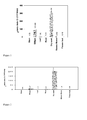
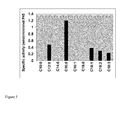
- a strong expression of both CYP704A1 and CYP704A2 was detected in seeds (respectively Fig. 1 and Fig. 2 ). Comparing the levels of the transcripts in the different organs, CYP704A1 appeared specifically expressed in the siliques during seed development and in the mature dry seeds. Expression in the other organs tested was very low.
- CYP704A2 is seed specific and highest CYP704A2 expression is rather at the end of the seed development. To confirm these data, the experiment was repeated with the second set of primers, more specific to CYP704A2. Similar results were obtained as can be seen in Figure 3 . It thus appears that the probe-sets are specific to the CYP704A1 and CYP704A2 genes. CYP704A2 shows the most restricted expression in mature seeds. A more detailed analysis of the RNA expression of CYP704A2 ( Fig. 5 ) revealed an increase of the expression beginning from 7-11 DAF, with a maximum of expression at the end of maturation (15+). Transcripts decrease in dry seed and increase again after 2 hours of imbibition of mature seed. Transcripts decrease after longer imbibition and upon germination.
- cassette comprising a seed specific promoter of Arabidopsis thaliana
- genomic DNA was isolated from Arabidopsis thaliana (ecotype Columbia), as described ( Galbiati M et al (2000) Funct. Integr. Genomics 1(1):25-34 ).
- the isolated genomic DNA was employed as matrix DNA for a polymerase chain reaction (PCR) mediated amplification using the oligonucleotide primers and protocols indicated below.
- the primers used for amplification comprised respectively BamHI and HindIII restriction sites.
- Amplification is carried out as follows:
- the resulting PCR-product was digested with BamHI and HindIII and inserted into the pBi101 vector (Clontech) which was also digested with the same restriction enzymes (which recognition sites are present in the multi-cloning site of the vector).
- the vector pBi101 contains a promoter-less GUS gene downstream of a multi-cloning site.
- the GUS gene was brought under transcriptional control of a CYP704A2 promoter fragment.
- the CYP704A2-promoter fragment (909 base pairs (bp) situated upstream of the startcodon of the CYP704A2 sequence, i.e. SEQ ID NO: 3)
- - GUS a gene encoding beta-glucuronidase construct is an expression cassette which was cloned in the plant transformation vector pBi101.
- the recombinant vector comprising the expression cassette of example 2 was used to stably transform Arabidopsis thaliana.
- the protocol for Agrobacterium mediated transformation of A. thaliana was according to the floral dip method described by Clough SJ and Bent AF (1998) Plant J 16(6): 735-43 .
- ⁇ -glucuronidase activity was monitored in planta with the chromogenic substrate X-Gluc (5-bromo-4-Chloro-3-indolyl- ⁇ -D-glucuronic acid) during corresponding activity assays ( Jefferson RA et al (1987) EMBO J. 20;6(13):3901-7 ).
- ORF1, -2, -3, -4 and -5 Five open reading frames (ORF1, -2, -3, -4 and -5) were identified, in our proprietary Brassica napus gene sequence databank, which possess a high degree of identity with the A. thaliana CYP704A2 mRNA sequence depicted in SEQ ID NO: 3.
- SEQ ID NO: 13 CYP704Bn-3 promoter
- SEQ ID NO: 14 CYP704Bn-5 promoter
- a next step B napus is genetically transformed with plant transformation vectors comprising the above chimeric genes using methods known in the art.
- the seed-specific expression of the chimeric genes is observed in seeds of stably transformed B . napus plants.
- DoOP ( http://doop.abc.hu , databases of Orthologous Promoters, Barta E. et al (2005) Nucleic Acids Research Vol. 33, D86-D90 ) is a bioinformatics tool to identify the conserved sequence blocks (consensus sequences or consensus motifs) between orthologous eukaryotic promoter sequences.
- the two A. thaliana promoters (CYP704A1, CYP704A2) and the five B . napus promoters (CYP704Bn-1,-2,-3,-4 and -5) were analyzed for the presence of promoter consensus sequences (i.e. sequence motifs). The analysis shows that the B .
- napus promoters CYP704Bn-3 (SEQ ID NO: 13) and CYP704Bn-5 (SEQ ID NO: 14) share the highest number of sequence motifs with the A. thaliana promoter CYP704A2 (SEQ ID NO: 2).
- B . napus promoters CYP704Bn-3 and CYP704Bn-5 represent the orthologous promoters of the A. thaliana CYP70A2 promoter.
- Table 1 The table shows the presence of DOOP motifs on CYP704 promoter sequences.
- CYP704A1 (SEQ ID NO: 1) and CYP704A2 (SEQ ID NO: 2) are A. thaliana promoters.
- CYP704Bn-1, CYP704Bn-2, CYP704Bn-3, CYP704Bn-4 and CYP704Bn-5 are B . napus promoter sequences. The analysis shows that the CYP704Bn-3 and CYP704Bn-5 promoters of B . napus share a significant number of sequence consensus motifs with the CYP704A2 promoter from A. thaliana.
- Vectors used for expression of full-length "candidate nucleic acids" of interest in plants are designed to (over)express the protein of interest in a seed-preferred way and are of two general types, biolistic and binary, depending on the plant transformation method to be used.
- biolistic transformation with so called biolistic vectors, the requirements are as follows.
- Vectors designed for transformation by Agrobacterium tumefaciens consist of a backbone with a bacterial selectable marker functional in both E. coli and A. tumefaciens (e.g. spectinomycin resistance mediated by the aadA gene) and two origins of replication, functional in each of aforementioned bacterial hosts, plus the A. tumefaciens virG gene, (2) a plant-specific portion as described for biolistic vectors above, except in this instance this portion is flanked by A. tumefaciens right and left border sequences which mediate transfer of the DNA flanked by these two sequences to the plant.
- Vectors designed for reducing or abolishing expression of a single gene or of a family or related genes are also of two general types corresponding to the methodology used to downregulate gene expression: antisense or double- stranded RNA interference (dsRNAi).
- dsRNAi double- stranded RNA interference
- a full-length or partial ene fragment typically, a portion of the cDNA
- a full-length or partial ene fragment can be used in the same vectors described for full-length expression, as part of the gene expression cassette.
- the coding region of the gene or gene fragment will be in the opposite orientation relative to the promoter whereby mRNA will be made from the non-coding (antisense) strand in a seed-preferred way in planta.
- dsRNAi vectors For dsRNAi vectors, a partial gene fragment is used in the gene expression cassette, and is expressed in both the sense and antisense orientations, separated by a spacer region (typically a plant intron or a selectable marker). Vectors of this type are designed to form a double-stranded mRNA stem, resulting from the base pairing of the two complementary gene fragments in a seed-preferred way in planta. Biolistic or binary vectors designed for overexpression or knockout can vary in a number of different ways, including e.g.
- the selectable markers used in plant and bacteria typically, the transcriptional terminators used in the gene expression and plant selectable marker cassettes, and the methodologies used for cloning in gene or gene fragments of interest (typically, conventional restriction enzyme-mediated or GatewayTM recombinase- based cloning).
- CYP704A2 (GenBank locus At2g45510, depicted in SEQ ID NO 3) was isolated by PCR carried out on Arabidopsis thaliana Col0 genomic DNA. After sequence verification, a cloning of this PCR-fragment was carried out into the S. cerevisiae expression vector pYeDP60.
- SEQ ID No 3 is under transcriptional control of the inducible yeast chimeric GAL10-CYC1 hybrid promoter ( Pompon, D et al (1996) Methods Enzymol 272: 51-64 ).
- the yeast strain WAT11 (Pompon, D et al (1996) as above) was subsequently transformed with this recombinant pYeDP60 vector.
- SEQ ID NO: 3 Expression of SEQ ID NO: 3 was induced by the addition of 2% galactose to the culture medium of a recombinant yeast comprising pYeDP60:CYP704A2 and after the induction phase microsomes were prepared according to Bak et al (2000) Plant Physiology 123(4):1437-48 .
- the estimated expression of CYP704A2 was measured in a solution of microsomes and estimated at 0.13 nmol of cytochrome P450/mg microsomal protein.
- CYP704A2 The enzyme activity and substrate specificity of CYP704A2 was subsequently evaluated. Thereto 20 ⁇ l of microsomal membranes overexpressing CYP704A2 (i.e. 80 nmoles of the enzyme) were incubated 20 min at 27°C with 100 ⁇ M of different 14 C radiolabelled fatty acids, alkanols or alkanes (purchased with American Radiolabeled Chemicals) together with 0.1 mM of NADPH, 0.4 Units of glucose-6-phosphate dehydrogenase, 3 mM glucose-6-phosphate in buffer NaPi 20mM, pH 7.4 in a final reaction volume of 100 ⁇ l.
- the reaction was quenched by the addition of 20 ⁇ l of 20% of acetonitrile in water, and the incubation mix was spotted on silicagel 60F 254 plates (Merck) for analysis. Plates were developed with a mix of ether/petroleum ether/formic acid 50/50/1 until the migration front reached the top of the plate. Dried plates were then scanned with a Raytest radioisotope thin-layer analyzer and radioactivity in the spots of interest was quantified in order to evaluate the substrate conversion.
- Substrate specificity was evaluated with different fatty acids: capric acid (C10:0), lauric acid (C12:0), myristic acid (C14:0), palmitic acid (C16:0), stearic acid (C18:0), oleic acid (C18:1), linoleic acid (C18:2), linolenic acid (C18:3) ( Fig. 5 ), the incubations products were analyzed by TLC. A single radioactive polar product was formed in the presence of NADPH, except for capric, myristic, palmitoleic and stearic acids which were not substrates. Comparison of the relative rates of metabolism of the different fatty acids indicated that palmitic acid was the best substrate (Table 2).
- the rate of palmitic acid metabolism was 18.3 nmol/min/nmole of P450 for a concentration of palmitic acid of 100 ⁇ M.
- stearic acid was not metabolized, even after adding ⁇ -cyclodextrin at different concentrations to increase solubility, and oleic acid was more efficiently metabolized than linoleic acid.
- GC/MS analysis was carried out on a gas chromatograph (Agilent 6890 Series) equipped with a 30 cm capillary column with an internal diameter of 0.25mm and a film thickness of 0.25 ⁇ m(HP-5MS). The gas chromatograph was combined with a quadrupole mass selective detector (Agilent 5973N).
- Mass spectra were recorded at 70eV.
- GC/MS analysis was carried out to identify the oxygenated products after partial purification by scrapping the radiolabeled products of interest on the TLC plate.
- carboxyl groups were derivatized towards the methylic ester with the aid of diazomethane to make them more volatile.
- Hydroxylated groups of the fatty acids were modified with MSTFA (Thermo-scientific) before mass spectrometric analysis, MSTA adds a trimethylsilyl group on an existing hydroxyl-group and makes the derivatized fatty acid more "fragile" under mass spectrometric conditions.
- Methylation of the carboxylate group and silylation of the hydroxyl group were done by addition of 100 ⁇ l of freshly prepared diazomethane and MSTFA, respectively, and incubation for 30min at room temperature. The reaction products for each fatty acid fragmented as an ⁇ -hydroxy fatty acid. It was demonstrated that C16:0 was preferentially metabolized.
- Table 2 Compared enzyme activity of CYP704A2 with fatty acids, alkanols and alkanes. Microsomes prepared from yeast expressing CYP704A2 were incubated with 100 ⁇ M of radiolabeled substrates. Incubations were carried out for 20 min at 27°C and contained 78 pmoles of CYP704A2.
- CYP704A2 catalyzes hydroxylation of alkanes and fatty alcohols (alkanols)
- CYP704A2 Incubation of CYP704A2 with hexadecane lead to the formation of three more polar compounds. Their purification by TLC and subsequent analysis by GC/MS showed that one of them is hexadecanol, the second is hexadecane diol and the third is ⁇ -hydroxy palmitic acid.
- the activity of CYP704A2 compares to the activities reported for the fungal enzymes (Scheller U et al. (1996) as above). Contrary to the fungal enzymess, it converts alkanes into alcohols, diols and hydroxy fatty acids, but not into dicarboxylic acids.
Landscapes
- Health & Medical Sciences (AREA)
- Life Sciences & Earth Sciences (AREA)
- Genetics & Genomics (AREA)
- Engineering & Computer Science (AREA)
- Chemical & Material Sciences (AREA)
- Biomedical Technology (AREA)
- Organic Chemistry (AREA)
- General Health & Medical Sciences (AREA)
- Biotechnology (AREA)
- Zoology (AREA)
- Molecular Biology (AREA)
- Wood Science & Technology (AREA)
- Biochemistry (AREA)
- Biophysics (AREA)
- Bioinformatics & Cheminformatics (AREA)
- General Engineering & Computer Science (AREA)
- Developmental Biology & Embryology (AREA)
- Reproductive Health (AREA)
- Cell Biology (AREA)
- Physics & Mathematics (AREA)
- Pregnancy & Childbirth (AREA)
- Botany (AREA)
- Plant Pathology (AREA)
- Gastroenterology & Hepatology (AREA)
- Microbiology (AREA)
- Proteomics, Peptides & Aminoacids (AREA)
- Medicinal Chemistry (AREA)
- Breeding Of Plants And Reproduction By Means Of Culturing (AREA)
- Micro-Organisms Or Cultivation Processes Thereof (AREA)
Abstract
Description
- The present invention relates to materials and methods for the expression of a gene of interest specifically in seeds of plants, even more specifically in oilseed plants. In particular, the invention provides an expression cassette for regulating seed-specific expression in plants.
- Plants use photosynthetically fixed carbon to support growth and to build up reserve products, such as starch or lipids. Storage oil (triacylglycerol) is a major plant product with great economical importance in human nutrition and as a renewable feedstock for various industrial products and bio-fuels. The world-wide production of vegetable oil is approximately 100 million metric tons in total per year, which mainly consists of soybean, oil palm, rapeseed and sunflower oil. Rapeseed production is increasing world-wide. The crop is mainly used for feed and food, but, increasingly, is being used in bio-diesel production. As a result of the great economic importance of vegetable oils and their expanded use as a renewable feedstock, there is considerable interest in the metabolic engineering of increased and/or modified seed oil content. In seeds of developing oil-seed rape (Brassica napus L.), sucrose is unloaded from the phloem and metabolized to glycolytic intermediates, such as hexose-phosphates, phosphoenolpyruvate and pyruvate, which are subsequently imported into the plastid and used for fatty acid synthesis. Free fatty acids are activated to coenzyme A (CoA) esters, exported from the plastid and used for the stepwise acylation of the glycerol backbone to synthesize triacylglycerol in the endoplasmic reticulum. In the first two steps of triacylglycerol (TAG) assembly, glycerol-3-phosphate (Gly3P) is acylated by Gly3P acyltransferase (GPAT) to lysophosphatidic acid, which is then acylated further by lysophosphatidic acid acyltransferase (LPAT) to phosphatidic acid. This is followed by dephosphorylation of phosphatidic acid by phosphatidic acid phosphohydrolase to release diacylglycerol (DAG), and the final acylation of diacylglycerol by DAG acyltransferase (DAGAT). Final storage of triacylglycerol occurs in endoplasmic reticulum-derived oil bodies.
- Modification of oil-producing plants to alter and/or improve phenotypic characteristics (such as productivity or quality) requires the overexpression or down-regulation of endogenous genes or the expression of heterologous genes in plant tissues. Such genetic modification relies on the availability of a means to drive and to control gene expression as required. Indeed, genetic modification relies on the availability and use of suitable promoters which are effective in plants and which regulate gene expression so as to give the desired effect(s) in the transgenic plant. For numerous applications in plant biotechnology a tissue-specific expression profile is advantageous, since beneficial effects of expression in one tissue may have disadvantages in others. Seed-preferential or seed-specific promoters are useful for expressing or down-regulating genes as well as for producing large quantities of protein, and for producing oils or proteins of interest. It is advantageous to have the choice of a variety of different promoters so that the most suitable promoter may be selected for a particular gene, construct, cell, tissue, plant or environment. Moreover, the increasing interest in co-transforming plants with multiple transcription cassettes and the potential problems associated with using common regulatory sequences for these purposes require a variety of promoter sequences. There is, therefore, a great need in the art for the identification of novel sequences that can be used for expression of selected trans transgenes in economically important plants such as oil-producing plants. It is thus an objective of the present invention to provide new and alternative expression cassettes for seed-specific expression of transgenes in plants. This objective is solved by the present invention as herein further explained.
- Cytochrome P450 mono-oxygenases, which catalyze substrate-, regio- and stereo-specific oxygenation steps in plant metabolism, have evolved to a huge superfamily of enzymes. Plant genome sequencing initiatives recently revealed more than 280 full length genes in Arabidopsis thaliana, 356 in rice and 312 in Populus trichocarpa. However, less than 20% of the coding sequences of the cytochrome P450 mono-oxygenases in the A. thaliana genome have been associated with a specific biochemical function.
- During our investigation we were interested in the function of "orphan" cytochrome P450 enzymes. One particular enzyme family we characterized was the cytochrome P450 mono-oxygenase, CYP704 family, which consists of the two members CYP704A1 and CYP704A2. Remarkably an expression cassette comprising a chimeric CYP704A1 promoter - nucleic acid fusion and an expression cassette comprising a chimeric CYP704A2 promoter - nucleic acid fusion proved to be expressed specifically during the late stages of seed development. The invention described herein in the different embodiments, examples, figures and claims provides seed-specific promoters and promoter regions comprised in expression cassettes which can be used to direct heterologous gene expression in seeds. In one embodiment the invention provides an expression cassette for regulating seed-specific expression in plants comprising a promoter linked to a nucleic acid which is heterologous in relation to said promoter and wherein said promoter is selected from the group consisting of (a) SEQ ID NO: 1, SEQ ID NO: 2, SEQ ID NO: 13 or SEQ ID NO: 14 or a variant thereof, (b) a fragment of at least 50 consecutive bases of SEQ ID NO: 1, SEQ ID NO: 2, SEQ ID NO: 13 or SEQ ID NO: 14 having promoter activity, (c) a nucleotide sequence with at least 40% identity with SEQ ID NO: 1, SEQ ID NO: 2, SEQ ID NO: 13 or SEQ ID NO: 14 or the complement thereof and (d) a nucleotide sequence hybridizing under conditions equivalent to hybridization in 7% sodium dodecyl sulfate, 0.5 M NaPO4, 1 mM EDTA at 50°C with washing in 2XSSC, 0.1 % SDS at 50°C to a nucleotide sequence depicted in SEQ ID NO: 1, SEQ ID NO: 2, SEQ ID NO: 13 or SEQ ID NO: 14 or a fragment of at least 50 consecutive bases of SEQ ID NO: 1, SEQ ID NO: 2, SEQ ID NO: 13 or SEQ ID NO: 14 or the complement thereof. SEQ ID NO: 1 depicts the nucleotide sequence of the promoter of the cytochrome P450 704A1 gene from A. thaliana. SEQ ID NO: 2 depicts the nucleotide sequence of the promoter of the cytochrome P450 704A2 gene from A. thaliana. SEQ ID NO: 13 depicts the Brassica napus promoter (CYP704Bn promoter-3) of a B. napus cytochrome P450 704A2 homologous gene. SEQ ID NO: 14 depicts the Brassica napus promoter (CYP704Bn promoter-5) of a B. napus cytochrome P450 704A2 homologous gene.
- The expression cassette can direct the expression of a protein, a polypeptide, a peptide, an antisense RNA, a sense RNA or a double-stranded RNA.
- In another embodiment the invention provides a recombinant vector comprising an expression cassette as herein described before.
- In a further embodiment the invention provides a transformed plant comprising an expression cassette of the invention or a recombinant vector of the invention. The invention further provides transformed plants with the expression cassette or the recombinant vector of the invention. In a particular embodiment the transformed plant is a plant used for oil production. Particular plants are canola, maize, mustard, castor bean, sesame, cotton, linseed, soybean, Arabidopsis, Phaseolus, peanut, alfalfa, wheat, rice, oat, sorghum, rapeseed, rye, sugarcane, safflower, oil palms, flax, sunflower, Brassica campestris, Brassica napus, Brassica juncea, Crambe abyssinica.
- Also provided are plant cells comprising an expression cassette of the invention and plant cells comprising a recombinant vector of the invention. In a particular embodiment microspores are provided comprising an expression cassette of the invention and microspores comprising a recombinant vector of the invention. The invention also provides for a seed generated from the transformed plants wherein the seed comprises an expression cassette of the invention or a vector according to the invention.
- Also provided is a method of producing a transformed plant with an expression cassette or a recombinant vector according to the invention, the method comprising providing an expression cassette or a vector of the invention transforming a plant with said expression cassette.
- The invention further provides a method for producing a seed enhanced in product of a nucleic acid comprising (a) growing a transformed plant containing the expression vector of the invention, wherein said transformed plant produces said seed and said nucleic acid is transcribed in said seed, and (b) isolating said seed from said transformed plant. In a particular embodiment said nucleic acid encodes for a protein, a polypeptide, a peptide, the expression of an antisense RNA, a sense RNA or a double-stranded RNA.
- In yet another embodiment the invention provides the use of SEQ ID NO: 3 or a variant or a functional fragment or a functional homologue with a least 85%, at least 90%, at least 95% identity with SEQ ID NO: 3 for the production of hydroxylated alkanes and hydroxylated fatty alcohols in a host cell. In other words the invention provides a process (or method) for the production of hydroxylated alkanes and hydroxylated fatty alcohols in a host cell comprising a) transforming said host cell with a chimeric construct comprising SEQ ID NO: 3 or a variant or a functional fragment or a functional homologue with at least 85%, at least 90%, at least 95% identity with SEQ ID NO: 3 operably linked to at least one suitable regulatory sequence, b) growing the transformed host cells of step a) and c) determining the presence or the absence of hydroxylated alkanes and hydroxylated fatty alcohols in the transformed cells of step b).
- In a particular embodiment said host cell is a plant or plant cell.
- In yet another particular embodiment said host cell is a yeast cell such as Yarrowia lipolytica, Pichia pastoris, Saccharomyces cerevisiae, a Candida species, a Kluyveromyces species or a Hansenula species.
- In yet another embodiment the invention provides a chimeric construct comprising SEQ ID NO: 3 or a variant or a functional fragment or a functional homologue with a least 85%, at least 90%, at least 95% identity with SEQ ID NO: 3, operably linked to at least one suitable regulatory sequence. In yet another embodiment the invention provides an isolated host cell comprising a chimeric construct of the present invention.
- Different embodiments of the invention can thus be summarized as in the following paragraphs:
-
Paragraph 1 - An expression cassette for regulating seed-specific expression in plants comprising a promoter operably linked to a nucleic acid which is heterologous in relation to said promoter and wherein said promoter is selected from the group consisting of (a) SEQ ID NO: 1, SEQ ID NO: 2, SEQ ID NO: 13 or SEQ ID NO: 14 or a variant thereof, (b) a functional fragment of at least 50 consecutive bases of SEQ ID NO: 1, SEQ ID NO: 2, SEQ ID NO: 13 or SEQ ID NO: 14 having promoter activity, (c) a nucleotide sequence with at least 40% identity with SEQ ID NO: 1, SEQ ID NO: 2, SEQ ID NO: 13 or SEQ ID NO: 14 or the complement thereof and (d) a nucleotide sequence hybridizing under conditions equivalent to hybridization in 7% sodium dodecyl sulfate, 0.5 M NaPO4, 1mM EDTA at 50°C with washing in 2XSSC, 0.1 % SDS at 50°C to a nucleotide sequence depicted in SEQ ID NO: 1 or SEQ ID NO: 2 or a fragment of at least 50 consecutive bases of SEQ ID NO: 1, SEQ ID NO: 2, SEQ ID NO: 13 or SEQ ID NO: 14 or the complement thereof.
-
Paragraph 2 - The expression cassette of
Paragraph 1 wherein the expression of the nucleic acid results in expression of a protein, or expression of an antisense RNA, sense or double-stranded RNA. -
Paragraph 3 - A recombinant vector comprising an expression cassette according to paragraphs 1-2.
- Paragraph 4
- A transformed plant containing the expression cassette of paragraphs 1-2 or a recombinant vector according to
paragraph 3. -
Paragraph 5 - The transformed plant of paragraph 4 wherein said transformed plant is from a plant used for oil production.
- Paragraph 6
- The transformed plant according to
paragraph 5 wherein the plant is selected from the group consisting of canola, maize, mustard, castor bean, sesame, cotton, linseed, soybean, Arabidopsis, Phaseolus, peanut, alfalfa, wheat, rice, oat, sorghum, rapeseed, rye, sugarcane, safflower, oil palms, flax, sunflower, Brassica campestris, Brassica napus, Brassica juncea and Crambe abyssinica. - Paragraph 7
- A plant cell comprising an expression cassette of paragraph 1-2 or a recombinant vector according to
paragraph 3. - Paragraph 8
- A microspore comprising an expression cassette of paragraphs 1-2 or a recombinant vector according to
paragraph 3. - Paragraph 9
- A seed generated from a transformed plant according to paragraphs 4-6 wherein the seed comprises an expression cassette according to paragraphs 1-2 or a recombinant vector according to
paragraph 3. - Paragraph 10
- A method of producing a transformed plant according to paragraphs 4-6 comprising (a) providing an expression cassette of paragraphs 1-2 and (b) transforming a plant with said expression cassette.
- Paragraph 11
- A method of producing a seed comprising a nucleic acid of paragraphs 1-2 comprising (a) growing a transformed plant containing the expression vector of paragraphs 1-2, wherein said transformed plant produces said seed and said nucleic acid is transcribed in said seed, and (b) isolating said seed from said transformed plant.
-
-
Figure 1 : Quantitative RT-PCR analysis of the expression of the CYP704A1 gene in different organs of Arabidopsis thaliana. The amounts of CYP704A1 transcripts (2-ΔΔCt) are normalized to the endogenous reference ACTIN2. Data represent the mean of 3 samples with standard deviation. The experiment was repeated twice with similar results. Vertical bar chart representation of quantitative RT-PCR evaluation of the expression of CYP704A1 transcripts in different organs of Arabidopsis thaliana. The (data 2-ΔΔCt) were deduced by the Ct method. -
Figure 2 : Quantitative RT-PCR of the expression of CYP704A2 gene in different organs of Arabidopsis thaliana. The amounts of CYP704A2 transcripts (2-ΔΔCt) are normalized to the endogenous reference ACTIN2. Data represent mean of 3 samples with standard deviation. The experiment was repeated twice with similar results. Vertical bar chart representation of qRT-PCR evaluation of the expression of CYP704A2 transcripts in different organs of Arabidopsis thaliana. The (data 2-ΔΔCt) were deduced by the Ct method. -
Figure 3 : Quantitative RT-PCR of the expression of CYP704A2 gene in different organs of Arabidopsis thaliana with a 5'-terminal specific probe. The amounts of CYP704A2 transcripts (2-ΔΔCt) are normalized to the endogenous reference ACTIN2. Data represent mean of 3 samples with standard deviation. The experiment was repeated twice with similar results. Vertical bar chart representation of qRT-PCR evaluation of the expression of CYP704A2 transcripts in different organs of Arabidopsis thaliana with a 5'-terminal specific primer. The (data 2-ΔΔCt) were deduced by the Ct method. -
Figure 4 : Quantitative RT-PCR of the expression of CYP704A2 gene during seed development from floral bud to dry seed, and during seed germination of Arabidopsis thaliana. The amounts of CYP704A2 transcripts (2-ΔΔCt) are normalized to the endogenous reference ACTIN2. Data represent mean of 3 samples with standard deviation. The experiment was repeated twice with similar results. Vertical bar chart representation of qRT-PCR evaluation of the evolution of the expression of CYP704A2 transcripts during seed development from floral bud to dry seed, and during seed germination after imbibition with the CYP704A2 primer. The (data 2-ΔΔCt) were deduced by the Ct method. -
Figure 5 : Fatty acid hydroxylase activity of CYP704A2. Microsomes prepared from yeast expressing CYP704A2 were incubated with 100 µM of radiolabeled substrates. Incubations were carried out for 20 min at 27°C and contained 78 pmoles of CYP704A2. Activities were determined as described in the examples by monitoring on TLC the formation of the metabolites. - The present invention provides expression cassettes capable of transcribing a heterologous nucleic acid sequence in a seed, and methods of modifying, producing, and using the same in plants. The present invention also provides compositions, transformed host cells, such as plants, containing an expression cassette with seed-specific promoters. The nucleotide sequence depicted in SEQ ID NO: 1 represents the nucleotide sequence of the promoter of the cytochrome P450 mono-oxgenase 704A1 gene (herein further designated as CYP704A1) of Arabidopsis thaliana. This gene is located on chromosome II and is described by the GenBank A. thaliana locus At2g44890. The nucleotide sequence depicted in SEQ ID NO: 2 represents the nucleotide sequence of the promoter of the cytochrome P450 mono-oxgenase 704A2 gene (herein further designated as CYP704A2) of Arabidopsis thaliana. This gene is located on chromosome II and is described by the GenBank A. thaliana locus At2g45510. Thus the invention provides an expression cassette for regulating seed-specific expression in plants comprising at least one transcription regulating nucleotide sequence derived from the Arabidopsis thaliana gene described by the GenBank genome locus At5g44890 or Atg45510 or its orthologous genes and operably (or "functionally") linked thereto at least one nucleic acid sequence which is heterologous in relation to said transcription regulating nucleotide sequence.
- In one embodiment the invention provides a seed-specific promoter having the nucleotide sequence of SEQ ID NO: 1 from
nucleotide position 1 to nucleotide position 1210 for use in an expression cassette. In a particular embodiment said seed-specific promoter has the nucleotide sequence of SEQ ID NO: 1 fromnucleotide position 600 to nucleotide position 1210. In yet another particular embodiment said seed-specific promoter has the nucleotide sequence of SEQ ID NO: 1 fromnucleotide position 800 to nucleotide position 1210. SEQ ID NO: 1 depicts the region upstream (i.e. located 5' upstream of) from the codon coding for the first amino acid of the CYP704A1 protein. Such a promoter region may be at least about 300 to about 400 to about 500 bp, at least about 1000 bp, at least about 1100 bp, at least about 1200 bp upstream of the start codon of the CYP704A1 gene. In another embodiment the invention provides a seed-specific promoter having the nucleotide sequence of SEQ ID NO: 2 fromnucleotide position 1 to nucleotide position 920 for use in an expression cassette. In a particular embodiment said seed-specific promoter has the nucleotide sequence of SEQ ID NO: 2 from nucleotide position 450 to nucleotide position 920. In yet another particular embodiment said seed-specific promoter has the nucleotide sequence of SEQ ID NO: 2 from nucleotide position 700 to nucleotide position 920. SEQ ID NO: 2 depicts the region upstream (i.e. located 5' upstream of) from the codon coding for the first amino acid of the CYP704A2 protein. Such a promoter region may be at least about 300 to about 400 to about 500 bp, at least about 600 bp, at least about 700 bp, at least about 800 bp, at least about 900 bp upstream of the start codon of the CYP704A2 gene. - In yet another embodiment the invention provides a Brassica napus seed-specific promoter having the nucleotide sequence of SEQ ID NO: 13 from
nucleotide position 1 to nucleotide position 1953 for use in an expression cassette. In a particular embodiment said seed-specific promoter has the nucleotide sequence of SEQ ID NO: 13 from nucleotide position 1000 to nucleotide position 1953. In yet another particular embodiment said seed-specific promoter has the nucleotide sequence of SEQ ID NO: 13 from nucleotide position 1500 to nucleotide position 1953. SEQ ID NO: 13 depicts the region upstream (i.e. located 5' upstream of) from the codon coding for the first amino acid of the homologous B. napus CYP704A2 protein (Open Reading Frame 3, see Example 4). In yet another embodiment the invention provides a Brassica napus seed-specific promoter having the nucleotide sequence of SEQ ID NO: 14 fromnucleotide position 1 to nucleotide position 3135 for use in an expression cassette. In a particular embodiment said seed-specific promoter has the nucleotide sequence of SEQ ID NO: 14 from nucleotide position 1000 to nucleotide position 3135. In yet another particular embodiment said seed-specific promoter has the nucleotide sequence of SEQ ID NO: 14 from nucleotide position 2000 to nucleotide position 3135. SEQ ID NO: 14 depicts the region upstream (i.e. located 5' upstream of) from the codon coding for the first amino acid of the homologous B. napus CYP704A2 protein (Open Reading Frame 5, see Example 4). Such a promoter region may be at least about 300 to about 400 to about 500 bp, at least about 600 bp, at least about 700 bp, at least about 800 bp, at least about 900 bp upstream of the start codon of the CYP704A2 gene or the B. napus homologous CYP704A2 genes. - The phrases "DNA sequence," "nucleic acid sequence," and "nucleic acid molecule" refer to a physical structure comprising an orderly arrangement of nucleotides. The DNA sequence or nucleotide sequence may be contained within a larger nucleotide molecule, vector, or the like. In addition, the orderly arrangement of nucleic acids in these sequences may be depicted in the form of a sequence listing, figure, table, electronic medium, or the like. The term "expression" refers to the transcription of a gene to produce the corresponding RNA. In a particular embodiment said RNA is mRNA and translation of this mRNA produces the corresponding gene product (i.e., a peptide, polypeptide, or protein). In another particular embodiment the heterologous nucleic acid, operably linked to the promoters of the invention, may also code for antisense RNA, sense RNA, double stranded RNA or synthetic microRNA molecules, according to rules well known in the art, to downregulate the expression of other genes comprised within the seed or even of genes present within a pathogen or pest that feeds upon the seeds of the transgenic plant.
- The term "heterologous" refers to the relationship between two or more nucleic acid or protein sequences that are derived from different sources. For example, a promoter is heterologous with respect to a coding sequence if such a combination is not normally found in nature. In addition, a particular sequence may be "heterologous" with respect to a cell or organism into which it is inserted (i.e. does not naturally occur in that particular cell or organism).
- The term "chimeric gene" refers to any gene that contains: a) DNA sequences, including regulatory and coding sequences that are not found together in nature, or b) sequences encoding parts of proteins not naturally adjoined, or c) parts of promoters that are not naturally adjoined. Accordingly, a chimeric gene may comprise regulatory sequences and coding sequences that are derived from different sources, or comprise regulatory sequences, and coding sequences derived from the same source, but arranged in a manner different from that found in nature. In the current invention a "homologous" gene or polynucleotide or polypeptide refers to a gene or polynucleotide or polypeptide that shares sequence similarity with the gene or polynucleotide or polypeptide of interest.
- "Seed-specific" expression (or "transcription" which is equivalent) in the context of this invention means the transcription of a nucleic acid sequence by a promoter (or a transcription regulating element) in a way that transcription of said nucleic acid sequence in seeds contributes to more than 90%, preferably more than 95%, more preferably more than 99% of the entire quantity of the RNA transcribed from said nucleic acid sequence in the entire plant during any of its developmental stage.
- "Seed-preferential" expression (or "transcription" which is equivalent) in the context of this invention means the transcription of a nucleic acid sequence by a transcription regulating element in a way that transcription of said nucleic acid sequence in seeds contributes to more than 50%, preferably more than 60%, more preferably more than 70%, even more preferably more than 80% of the entire quantity of the RNA transcribed from said nucleic acid sequence in the entire plant during any of its developmental stages. The term "seed-enhanced" is equivalent to the term "seed-preferential".
- The transcription sequences identified herein are found to mediate a strong expression specifically in seed. An expression cassette comprising SEQ ID NO: 1 and fragments thereof direct the expression specifically in siliques during seed development and in mature dry seeds. An expression cassette comprising SEQ ID NO: 2 and fragments thereof direct the expression specifically at the end of the seed development. More specifically, an expression cassette comprising SEQ ID NO: 2 and fragments thereof direct the expression specifically to begin between 7-11 days after fertilisation (DAF), with a maximum of expression at the end of maturation (>15 DAF), decrease in dry seed and increase again after 2 hours imbibition in mature seed and decreasing again upon germination. A seed is representing an embryo in its shell, or the embryo is a part of the seed. In the context of this invention, the term seed-specific therefore also means embryo-specific. The terms seed-specific and embryo-specific can be used interchangeable herein.
- "Seed" means a seed of a plant in any stage of its development i.e. starting from the fusion of pollen and oocyte, continuing over the embryo stage and the stage of the dormant seed, until the germinating seed, ending with early seedling organs, as e.g. cotyledons and hypocotyls. "Microspore" - in seed plants - corresponds to the developing pollen grain at the uninucleate stage.
- The phrase "operably linked" refers to the functional spatial arrangement of two or more nucleic acid regions or nucleic acid sequences. For example, a promoter region may be positioned relative to a nucleic acid sequence such that transcription of a nucleic acid sequence is directed by the promoter region. Thus, a promoter region is "operably linked" to the nucleic acid sequence. "Functionally linked" is an equivalent term.
- As used herein, "promoter" means a region of DNA sequence that is essential for the initiation of transcription of DNA, resulting in the generation of an RNA molecule that is complimentary to the transcribed DNA; this region may also be referred to as a "5' regulatory region." Promoters are usually located upstream of the coding sequence to be transcribed and have regions that act as binding sites for RNA polymerase II and other proteins such as transcription factors (transacting protein factors that regulate transcription) to initiate transcription of an operably linked gene. Promoters may themselves contain sub-elements (i.e. promoter motifs) such as cis-elements or enhancer domains that regulate the transcription of operably linked genes. The promoters of this invention may be altered to contain "enhancer DNA" to assist in elevating gene expression. As is known in the art, certain DNA elements can be used to enhance the transcription of DNA. These enhancers often are found 5' to the start of transcription in a promoter that functions in eukaryotic cells, but can often be inserted upstream (5') or downstream (3') to the coding sequence. In some instances, these 5' enhancer DNA elements are introns. Among the introns that are useful as enhancer DNA are the 5' introns from the
rice actin 1 gene (seeUS5641876 ), therice actin 2 gene, the maize alcohol dehydrogenase gene, the maize heat shock protein 70 gene (seeUS5593874 ), the maize shrunken 1 gene, the light sensitive 1 gene of Solanum tuberosum, and the heat shock protein 70 gene of Petunia hybrida (seeUS5659122 ). Thus, as contemplated herein, a promoter or promoter region includes variations of promoters derived by inserting or deleting regulatory regions, subjecting the promoter to random or site-directed mutagenesis, etc. The activity or strength of a promoter may be measured in terms of the amounts of RNA it produces, or the amount of protein accumulation in a cell or tissue, relative to a promoter whose transcriptional activity has been previously assessed. - Confirmation of promoter activity for a functional promoter fragment in seed may be determined by those skilled in the art, for example using a promoter-reporter construct comprising the genomic sequence operably linked to a beta-glucuronidase (GUS) reporter gene as herein further explained. The seed-preferential expression capacity of the identified or generated fragments of the promoters of the invention can be conveniently tested by operably linking such DNA molecules to a nucleotide sequence encoding an easy scorable marker, e.g. a beta-glucuronidase gene, introducing such a chimeric gene into a plant and analyzing the expression pattern of the marker in seeds as compared with the expression pattern of the marker in other parts of the plant. Other candidates for a marker (or a reporter gene) are chloramphenicol acetyl transferase (CAT) and proteins with fluorescent properties, such as green fluorescent protein (GFP) from Aequora victoria. To define a minimal promoter region, a DNA segment representing the promoter region is removed from the 5' region of the gene of interest and operably linked to the coding sequence of a marker (reporter) gene by recombinant DNA techniques well known to the art. The reporter gene is operably linked downstream of the promoter, so that transcripts initiating at the promoter proceed through the reporter gene. Reporter genes generally encode proteins, which are easily measured, including, but not limited to, chloramphenicol acetyl transferase (CAT), beta-glucuronidase (GUS), green fluorescent protein (GFP), beta-galactosidase (beta-GAL), and luciferase. The expression cassette containing the reporter gene under the control of the promoter can be introduced into an appropriate cell type by transfection techniques well known to the art. To assay for the reporter protein, cell lysates are prepared and appropriate assays, which are well known in the art, for the reporter protein are performed. For example, if CAT were the reporter gene of choice, the lysates from cells transfected with constructs containing CAT under the control of a promoter under study are mixed with isotopically labeled chloramphenicol and acetyl-coenzyme A (acetyl-CoA). The CAT enzyme transfers the acetyl group from acetyl-CoA to the 2- or 3-position of chloramphenicol. The reaction is monitored by thin-layer chromatography, which separates acetylated chloramphenicol from unreacted material. The reaction products are then visualized by autoradiography. The level of enzyme activity corresponds to the amount of enzyme that was made, which in turn reveals the level of expression and the seed-specific functionality from the promoter or promoter fragment of interest. This level of expression can also be compared to other promoters to determine the relative strength of the promoter under study. Once activity and functionality is confirmed, additional mutational and/or deletion analyses may be employed to determine the minimal region and/or sequences required to initiate transcription. Thus, sequences can be deleted at the 5' end of the promoter region and/or at the 3' end of the promoter region, and nucleotide substitutions introduced. These constructs are then again introduced in cells and their activity and/or functionality determined.
- Instead of measuring the activity of a reporter enzyme, the transcriptional promoter activity (and functionality) can also be determined by measuring the level of RNA that is produced. This level of RNA, such as mRNA, can be measured either at a single time point or at multiple time points and as such the fold increase can be average fold increase or an extrapolated value derived from experimentally measured values. As it is a comparison of levels, any method that measures mRNA levels can be used. In a preferred aspect, the tissue or organs compared are a seed or seed tissue with a leaf or leaf tissue. In another preferred aspect, multiple tissues or organs are compared. A preferred multiple comparison is a seed or seed tissue compared with 2, 3, 4, or more tissues or organs selected from the group consisting of floral tissue, floral apex, pollen, leaf, embryo, shoot, leaf primordia, shoot apex, root, root tip, vascular tissue and cotyledon. As used herein, examples of plant organs are seed, leaf, root, etc. and example of tissues are leaf primordia, shoot apex, vascular tissue, etc. The activity or strength of a promoter may be measured in terms of the amount of mRNA or protein accumulation it specifically produces, relative to the total amount of mRNA or protein. The promoter preferably expresses an operably linked nucleic acid sequence at a level greater than about 1%, about 2%, more preferably greater than about 5, 6, 7, 8, or about 9%, even more preferably greater than about 10, 11, 12, 13, 14, 15, 16, 17, 18, or about 19%, and most preferably greater than about 20% of the total mRNA. Alternatively, the activity or strength of a promoter may be expressed relative to a well-characterized promoter (for which transcriptional activity was previously assessed).
- It will herein further be clear that equivalent CYP704A1 and CYP704A2 promoters can be isolated from other plants. To this end, orthologous promoter fragments may be isolated from other plants using SEQ ID NO: 1 or SEQ ID NO: 2 or a functional fragment having at least 50 consecutive nucleotides thereof as a probe and identifying nucleotide sequences from these other plants which hybridize under the herein described hybridization conditions. By way of example, a promoter of the invention may be used to screen a genomic library of a crop or plant of interest to isolate corresponding promoter sequences according to techniques well known in the art. Thus, a promoter sequence of the invention may be used as a probe for hybridization with a genomic library under medium to high stringency conditions. As an alternative equivalent promoters can be isolated using the coding sequences of CYP704A1 and/or CYP704A2 to screen a genomic library (e.g. by hybridization or in silico) of a crop of interest. When sufficient identity between the coding sequences is obtained (as a rule higher than 85% identity) then promoter regions can be isolated upstream of the orthologous CYP704A1 and/or orthologous CYP704A2 genes. The present invention provides an example to clone orthologous promoters from Brassica napus in example 4.
- The term "hybridization" refers to the ability of a first strand of nucleic acid to join with a second strand via hydrogen bond base pairing when the two nucleic acid strands have sufficient sequence identity. Hybridization occurs when the two nucleic acid molecules anneal to one another under appropriate conditions. Nucleic acid hybridization is a technique well known to those of skill in the art of DNA manipulation. The hybridization property of a given pair of nucleic acids is an indication of their similarity or identity. Another indication that two nucleic acid sequences are substantially identical is that the two molecules hybridize to each other under stringent conditions. The phrase "hybridizing specifically to" refers to the binding, duplexing, or hybridizing of a molecule only to a particular nucleotide sequence under stringent conditions when that sequence is present in a complex mixture (e.g., total cellular) DNA or RNA. "Bind(s) substantially" refers to complementary hybridization between a probe nucleic acid and a target nucleic acid and embraces minor mismatches that can be accommodated by reducing the stringency of the hybridization media to achieve the desired detection of the target nucleic acid sequence. "Stringent hybridization conditions" and "stringent hybridization wash conditions" in the context of nucleic acid hybridization experiments such as Southern and Northern hybridization are sequence dependent, and are different under different environmental parameters. An example of highly stringent wash conditions is 0.15 M NaCl at 72°C for about 15 minutes. An example of stringent wash conditions is a 0.2 X SSC wash at 65°C for 15 minutes. Often, a high stringency wash is preceded by a low stringency wash to remove background probe signal. An example medium stringency wash for a duplex of, e.g., more than 100 nucleotides, is 1 X SSC at 45°C for 15 minutes. An example low stringency wash for a duplex of, e.g., more than 100 nucleotides, is 4 to 6 X SSC at 40°C for 15 minutes. For short probes (e.g., about 10 to 50 nucleotides), stringent conditions typically involve salt concentrations of less than about 1.5 M, more preferably about 0.01 to 1.0 M, Na ion concentration (or other salts) at pH 7.0 to 8.3, and the temperature is typically at least about 30° and at least about 60°C for lon probes (e.g., >50 nucleotides). Stringent conditions may also be achieved with the addition of destabilizing agents such as formamide. In general, a signal to noise ratio of 2 X (or higher) than that observed for an unrelated probe in the particular hybridization assay indicates detection of a specific hybridization. Nucleic acids that do not hybridize to each other under stringent conditions are still substantially identical if the proteins that they encode are substantially identical. This occurs, e.g., when a copy of a nucleic acid is created using the maximum codon degeneracy permitted by the genetic code. Very stringent conditions are selected to be equal to the Tm for a particular probe. An example of stringent conditions for hybridization of complementary nucleic acids which have more than 100 complementary residues on a filter in a Southern or Northern blot is 50% formamide, e.g., hybridization in 50% formamide, 1 M NaCl, 1% SDS at 37°C, and a wash in 0.1 x SSC at 60 to 65°C. Exemplary low stringency conditions include hybridization with a buffer solution of 30 to 35% formamide, 1 M NaCl, 1% SDS (sodium dodecyl sulphate) at 37°C, and a wash in 1 X to 2 X SSC (20 X SSC=3.0 M NaCl/0.3 M trisodium citrate) at 50 to 55°C. Exemplary moderate stringency conditions include hybridization in 40 to 45% formamide, 1.0 M NaCl, 1 % SDS at 37°C, and a wash in 0.5 X to 1 X SSC at 55 to 60°C. The following are examples of sets of hybridization/wash conditions that may be used to clone orthologous nucleotide sequences that are substantially identical to reference nucleotide sequences of the present invention: a reference nucleotide sequence preferably hybridizes to the reference nucleotide sequence in 7% sodium dodecyl sulfate (SDS), 0.5 M NaPO4, 1 mM EDTA at 50°C with washing in 2 X SSC, 0.1 % SDS at 50°C, more desirably in 7% sodium dodecyl sulfate (SDS), 0.5 M NaPO4, 1 mM EDTA at 50°C with washing in 1 X SSC, 0.1 % SDS at 50°C, more desirably still in 7% sodium dodecyl sulfate (SDS), 0.5 M NaPO4, 1 mM EDTA at 50°C with washing in 0.5 X SSC, 0. 1% SDS at 50°C, even more desirably still in 7% sodium dodecyl sulfate (SDS), 0.5 M NaPO4, 1 mM EDTA at 50°C with washing in 0.1 X SSC, 0.1% SDS at 50°C.
- In another embodiment of the present invention seed-specific promoters are provided which comprise a nucleotide sequence having at least 40%, at least 50%, or at least 60%, or at least 70%, or at least 80%, or at least 90%, or at least 95% sequence identity to the herein described promoters and promoter regions. The term "variant" with respect to the transcription regulating nucleotide sequences SEQ ID NO: 1, 2, 13 and 14 of the invention is intended to mean substantially similar sequences. Naturally occurring allelic variants such as these can be identified with the use of well-known molecular biology techniques, as, for example, with polymerase chain reaction (PCR) and hybridization techniques as herein outlined before. Variant nucleotide sequences also include synthetically derived nucleotide sequences, such as those generated, for example, by using site-directed mutagenesis of SEQ ID NO: 1, 2, 13 or 14. Generally, nucleotide sequence variants of the invention will have at least 40%, 50%, 60%, to 70%, e.g., preferably 71%, 72%, 73%, 74%, 75%, 76%, 77%, 78%, to 79%, generally at least 80%, e.g., 81 % to 84%, at least 85%, e.g., 86%, 87%, 88%, 89%, 90%, 91%, 92%, 93%, 94%, 95%, 96%, 97%, to 98% and 99% nucleotide sequence identity to the native (wild type or endogenous) nucleotide sequence. Derivatives of the DNA molecules disclosed herein may include, but are not limited to, deletions of sequence, single or multiple point mutations, alterations at a particular restriction enzyme site, addition of functional elements, or other means of molecular modification which may enhance, or otherwise alter promoter expression. Techniques for obtaining such derivatives are well-known in the art (see, for example, J. F. Sambrook, D. W. Russell, and N. Irwin (2000) Molecular Cloning: A Laboratory Manual, ). For example, one of ordinary skill in the art may delimit the functional elements within the promoters disclosed herein and delete any non-essential elements. Functional elements may be modified or combined to increase the utility or expression of the sequences of the invention for any particular application. Those of skill in the art are familiar with the standard resource materials that describe specific conditions and procedures for the construction, manipulation, and isolation of macromolecules (e.g., DNA molecules, plasmids, etc.), as well as the generation of recombinant organisms and the screening and isolation of DNA molecules. As used herein, the term "percent sequence identity" refers to the percentage of identical nucleotides between two segments of a window of optimally aligned DNA. Optimal alignment of sequences for aligning a comparison window are well-known to those skilled in the art and may be conducted by tools such as the local homology algorithm of Smith and Waterman (Waterman, S. Introduction to Computational Biology: Maps, sequences and genomes. Chapman & Hall. London (1995), the homology alignment algorithm of Needleman and Wunsch (J. Mol. Biol., 48:443-453 (1970), the search for similarity method of Pearson and Lipman (Proc. Natl. Acad. Sci., 85:2444 (1988), and preferably by computerized implementations of these algorithms such as GAP, BESTFIT, FASTA, and TFASTA available as part of the GCG (Registered Trade Mark), Wisconsin Package (Registered Trade Mark from Accelrys Inc., San Diego, Calif.). An "identity fraction" for aligned segments of a test sequence and a reference sequence is the number of identical components that are shared by the two aligned sequences divided by the total number of components in the reference sequence segment, i.e., the entire reference sequence or a smaller defined part of the reference sequence. Percent sequence identity is represented as the
identity fraction times 100. The comparison of one or more DNA sequences may be to a full-length DNA sequence or a portion thereof, or to a longer DNA sequence. - The promoters of the present invention may be operably linked to a nucleic acid sequence that is heterologous with respect to the promoter. The nucleic acid sequence may generally be any nucleic acid sequence for which an increased level or altered level (e.g. in a different organ) of transcription is desired. The nucleic acid sequence can for example encode a polypeptide that is suitable for incorporation into the diet of a human or an animal or can provide some other agricultural or industrial important feature. Suitable heterologous nucleic acid sequences include, without limitation, those encoding seed storage proteins, fatty acid pathway enzymes, epoxidases, hydroxylases, cytochrome P450 mono-oxygenases, desaturases, tocopherol biosynthetic enzymes, carotenoid biosynthesis enzymes, amino acid biosynthetic enzymes, steroid pathway enzymes, and starch branching enzymes.
- In another embodiment the invention provides a vector, in particular a recombinant vector comprising an expression cassette of the invention. A "recombinant vector" refers to any agent such as a plasmid, cosmid, virus, autonomously replicating sequence, phage, or linear single-stranded, circular single-stranded, linear double-stranded, or circular double-stranded DNA or RNA nucleotide sequence. The recombinant vector may be derived from any source and is capable of genomic integration or autonomous replication. Thus, any of the promoters and heterologous nucleic acid sequences described above may be provided in a recombinant vector. A recombinant vector typically comprises, in a 5' to 3' orientation: a promoter to direct the transcription of a nucleic acid sequence and a nucleic acid sequence. The recombinant vector may further comprise a 3' transcriptional terminator, a 3' polyadenylation signal, other untranslated nucleic acid sequences, transit and targeting nucleic acid sequences, selectable markers, enhancers, and operators, as desired. The wording "5' UTR" refers to the untranslated region of DNA upstream, or 5' of the coding region of a gene and "3' UTR" refers to the untranslated region of DNA downstream, or 3' of the coding region of a gene. Means for preparing recombinant vectors are well known in the art. Methods for making recombinant vectors particularly suited to plant transformation are described in
US4971908 ,US4940835 ,US4769061 andUS4757011 . Typical vectors useful for expression of nucleic acids in higher plants are well known in the art and include vectors derived from the tumor-inducing (Ti) plasmid of Agrobacterium tumefaciens. One or more additional promoters may also be provided in the recombinant vector. These promoters may be operably linked, for example, without limitation, to any of the nucleic acid sequences described above. Alternatively, the promoters may be operably linked to other nucleic acid sequences, such as those encoding transit peptides, selectable marker proteins, or antisense sequences. These additional promoters may be selected on the basis of the cell type into which the vector will be inserted. Also, promoters which function in bacteria, yeast, and plants are all well taught in the art. The additional promoters may also be selected on the basis of their regulatory features. Examples of such features include enhancement of transcriptional activity, inducibility, tissue specificity, and developmental stage-specificity. Plant functional promoters useful for specific expression in seed include those from plant storage proteins and from proteins involved in fatty acid biosynthesis in oilseeds. Examples of such promoters include the 5' regulatory regions from such structural nucleic acid sequences as napin, phaseolin, zein, soybean trypsin inhibitor, ACP, stearoyl-ACP desaturase, and oleosin. Seed-specific regulation is further discussed inEP0255378 . Particularly preferred additional promoters in the recombinant vector include the nopaline synthase (nos), mannopine synthase (mas), and octopine synthase (ocs) promoters, which are carried on tumor-inducing plasmids of Agrobacterium tumefaciens; the cauliflower mosaic virus (CaMV) 19S and 35S promoters; the enhanced CaMV 35S promoter; the Figwort Mosaic Virus (FMV) 35S promoter; the light-inducible promoter from the small subunit of ribulose-1,5-bisphosphate carboxylase (ssRUBISCO); the EIF-4A promoter from tobacco. An additional promoter is preferably seed selective, tissue selective, constitutive, or inducible. - The recombinant vector may also contain one or more additional nucleic acid sequences. These additional nucleic acid sequences may generally be any sequences suitable for use in a recombinant vector. Such nucleic acid sequences include, without limitation, any of the nucleic acid sequences, and modified forms thereof, described above. The additional structural nucleic acid sequences may also be operably linked to any of the above described promoters. The one or more structural nucleic acid sequences may each be operably linked to separate promoters. Alternatively, the structural nucleic acid sequences may be operably linked to a single promoter (i.e., a single operon).
- The present invention is also directed to transgenic plants and transformed host cells which comprise a promoter operably linked to a heterologous nucleic acid sequence. Other nucleic acid sequences may also be introduced into the plant or host cell along with the promoter and structural nucleic acid sequence. These other sequences may include 3' transcriptional terminators, 3' polyadenylation signals, other untranslated nucleic acid sequences, transit or targeting sequences, selectable markers, enhancers, and operators. Preferred nucleic acid sequences of the present invention, including recombinant vectors, structural nucleic acid sequences, promoters, and other regulatory elements, are described above.
- The term "transformation" herein refers to the introduction (or transfer) of nucleic acid into a recipient host such as a plant or any plant parts or tissues including plant cells, protoplasts, calli, roots, tubers, seeds, stems, leaves, seedlings, embryos, pollen and microspores. Plants containing the transformed nucleic acid sequence are referred to as "transgenic plants". Transformed, transgenic and recombinant refer to a host organism such as a plant into which a heterologous nucleic acid molecule (e.g. an expression cassette or a recombinant vector) has been introduced. The nucleic acid can be stably integrated into the genome of the plant.
- As used herein, the phrase "transgenic plant" refers to a plant having an introduced nucleic acid stably introduced into a genome of the plant, for example, the nuclear or plastid genomes.
- In some embodiments of the present invention, one or more components of a plant, cell, or organism are compared to a plant, cell, or organism having a "similar genetic background." In a preferred aspect, a "similar genetic background" is a background where the organisms being compared share about 50% or greater of their nuclear genetic material. In a more preferred aspect a similar genetic background is a background where the organisms being compared share about 75% or greater, even more preferably about 90% or greater of their nuclear genetic material. In another even more preferable aspect, a similar genetic background is a background where the organisms being compared are plants, and the plants are isogenic except for any genetic material originally introduced using plant transformation techniques.
- A transformed host cell may generally be any cell that is compatible with the present invention. A transformed host plant or cell can be or derived from a monocotyledonous plant or a dicotyledonous plant including, but not limited to canola, maize, mustard, castor bean, sesame, cotton, linseed, soybean, Arabidopsis, Phaseolus, peanut, alfalfa, wheat, rice, oat, sorghum, rapeseed, rye, sugarcane, safflower, oil palms, flax, sunflower, Brassica campestris, Brassica napus, Brassica juncea, Crambe abyssinica. In a particularly preferred embodiment, the plant or cell is or derived from canola. In another particularly preferred embodiment, the plant or cell is or derived from Brassica napus.
- A second part of the invention deals with the properties of CYP704A2 for the modification of fatty acids, alkanols and alkanes. The most abundant fatty acids in agronomically important plant seeds are fatty acids with a chain length of C16 and C18 possessing between 0 and 3 double bonds in cis configuration. One industrially important modification is the oxygenation of the fatty acid, in particular the end hydroxylation (omega-hydroxylation) of the fatty acid is often desired. The extra addition of an oxygen atom renders the fatty acid more polar but most importantly the extra oxygen atom creates the possibility of forming a covalent linkage with a carboxylic group or with another hydroxyl group of a neighboring fatty acid. In addition to the potential engineering of the biosynthesis of plant biopolymers and waxes, alkane oxidation is desired because it offers the possibility of many applications based on fossil resources and can be a useful tool for bioremediation purposes. During the characterization of the enzymatic function of cytochrome CYP704A2 of Arabidopsis thaliana we have identified that this enzyme can convert alkanes into alkane alcohols (i.e. alkanols), alkane diols and hydroxyl fatty acids (i.e. fatty acids comprising at least one hydroxyl group).
- In yet another embodiment the invention provides the use of SEQ ID NO: 3 or a variant or a functional fragment or a functional homologue with a least 85%, at least 90%, at least 95% identity with SEQ ID NO: 3 for the production of alkanols, alkane diols and hydroxyl fatty acids in a host cell. In other words the invention provides a process (or method) for the production of alkanols, alkane diols and/or hydroxyl fatty acids in a host cell comprising a) transforming said host cell with a chimeric construct comprising SEQ ID NO: 3 or a variant or a functional fragment or a functional homologue with at least 85%, at least 90%, at least 95% identity with SEQ ID NO: 3 operably linked to at least one suitable regulatory sequence, b) growing the transformed host cells of step a) and c) determining the presence or the absence of alkanols, alkane diols and/or hydroxyl fatty acids in the transformed cells of step b).
- In a particular embodiment said host cell is a plant or plant cell.
- In yet another particular embodiment said host cell is a yeast cell such as Yarrowia lipolytica, Pichia pastoris, Saccharomyces cerevisiae, a Candida species, a Kluyveromyces species, a Hansenula species, and the like.
- In yet another embodiment the invention provides a method for the production of alkanols, alkan-diols and hydroxyl fatty acids said method comprising contacting alkanes with CYP704A2. In a particular embodiment said production of alkanols, alkan-diols and hydroxyl fatty acids occurs in vivo in plant seeds that comprise alkanes. In another particular embodiment said production of alkanols, alkan-diols and hydroxyl fatty acids occurs in vitro through incubation with a source of the CYP704A2 enzyme which can be a purified source or a recombinant source. The amino acid sequence of the CYP704A2 enzyme is depicted in SEQ ID NO: 4. In yet another embodiment the invention provides a chimeric construct comprising SEQ ID NO: 3 or a variant or a functional fragment or a functional homologue with at least 85%, at least 90%, at least 95% identity with SEQ ID NO: 3, operably linked to at least one suitable regulatory sequence. In yet another embodiment the invention provides an isolated host cell comprising a chimeric gene of the present invention.
- Throughout the description and examples, reference is made to the following sequences represented in the sequence listing:
- SEQ ID NO: 1: nucleotide sequence of the promoter of the CYP704A1 gene of Arabidopsis thaliana
- SEQ ID NO: 2: nucleotide sequence of the promoter of the CYP704A2 gene of Arabidopsis thaliana
- SEQ ID NO: 3: mRNA sequence of the CYP704A2 gene of Arabidopsis thaliana
- SEQ ID NO: 4: amino acid sequence of the CYP704A2 gene of Arabidopsis thaliana
- SEQ ID NO: 5: forward primer for amplification of SEQ ID NO: 1
- SEQ ID NO: 6: reverse primer for amplification of SEQ ID NO: 1
- SEQ ID NO: 7: first forward primer for amplification of SEQ ID NO: 3
- SEQ ID NO: 8: first reverse primer for amplification of SEQ ID NO: 3
- SEQ ID NO: 9: second forward primer for amplification of SEQ ID NO: 3
- SEQ ID NO: 10: second reverse primer for amplification of SEQ ID NO: 3
- SEQ ID NO: 11: forward primer for amplification of SEQ ID NO: 2
- SEQ ID NO: 12: reverse primer for amplification of SEQ ID NO: 2
- SEQ ID NO: 13: Brassica napus promoter-3 (CYP704Bn-3)
- SEQ ID NO: 14: Brassica napus promoter-5 (CYP704Bn-5)
- Unless indicated otherwise, chemicals and reagents in the examples were obtained from Sigma Chemical Company, restriction endonucleases were from Fermentas or Roche-Boehringer, and other modifying enzymes or kits regarding biochemicals and molecular biological assays were from Qiagen, Invitrogen and Q-BIOgene. Bacterial strains were from Invitrogen. The cloning steps carried out for the purposes of the present invention, such as, for example, restriction cleavages, agarose gel electrophoresis, purification of DNA fragments, linking DNA fragments, transformation of E. coli cells, growing bacteria, multiplying phages and sequence analysis of recombinant DNA, are carried out as described by Sambrook (1989). The sequencing of recombinant DNA molecules is carried out using ABI laser fluorescence DNA sequencer following the method of Sanger. Any number of methods well known to those skilled in the art can be used to isolate fragments of a DNA molecule disclosed herein. For example, PCR (polymerase chain reaction) technology can be used to amplify flanking regions from a genomic library of a plant using publicly available sequence information. A number of methods are known to those of skill in the art to amplify unknown DNA sequences adjacent to a core region of known sequence. Methods include but are not limited to inverse PCR, vectorette PCR, Y-shaped PCR, and genome walking approaches. DNA molecule fragments can also be obtained by other techniques such as by directly synthesizing the fragment by chemical means, as is commonly practiced by using an automated oligonucleotide synthesizer. For the present invention, the DNA molecules were isolated by designing PCR primers based on available sequence information. Standard materials and methods for plant molecular work are described in Plant Molecular Biology Labfax (1993) by R.D.D. Croy, jointly published by BIOS Scientific Publications Ltd (UK) and Blackwell Scientific Publications.
- Chemicals -The silylating reagent N,O-bistrimethylsilyltrifluoroacetamide containing 1% of trimethylchlorosilane was from Pierce (Rockfold, IL). NADPH was from Sigma (Saint Louis, MO). Thin layer plates (Silica Gel G60 F254; 0.25mm) were from Merck (Darmstadt, Germany).
- Heterologous expression of CYP704A2 in Yeast - For functional expression of the full length CYP704A2 clone, we used a yeast expression system specifically developed for the expression of P450 enzymes and consisting of plasmid pYeDP60 and Saccharomyces cerevisiae WAT11 strain (Pompon D. et al (1996) Methods Enzymol 272, 51-64). Yeast cultures were grown and CYP704A2 expression was induced as described in Pompon et al. (1996) see above from one isolated transformed colony. After growth, cells were harvested by centrifugation and manually broken with glass beads (0.45 mm diameter) in 50 mM Tris-HCl buffer (pH 7.5) containing 1 mM EDTA and 600 mM sorbitol. The homogenate was centrifuged for 10 min at 10,000 g. The resulting supernatant was centrifuged for 1 h at 100,000 g. The pellet consisting of microsomal membranes was resuspended in 50 mM Tris-HCl (pH 7.4), 1 mM EDTA and 30% (v/v) glycerol with a Potter-Elvehjem homogenizer and stored at -30°C. The volume of resuspension buffer is proportional to the weight of yeast pellet: microsomes extracted from 6 g of yeast are resuspended in 3 ml of buffer. All procedures for microsomal preparation were carried out at 0-4°C. The cytochrome P450 content was measured by the method of Omura and Sato (1964) J Biol Chem 239, 2370-2378.
- Plant material and microsomal preparation - After sterilization, Arabidopsis (ecotype Col-0) seeds were grown on Murashige and Skoog medium (MS medium 4.2 g/l, sucrose 10 g/l, pastagar B 8 g/l, myoinositol 100 mg/l, thiamine 10 mg/l,
nicotinic acid 1 mg/l andpyridoxine 1 mg/l - final pH 5.7) during five weeks. Arabidopsis plants (approximately 10g) were homogenized with mortar and pestle in 50 ml of extraction buffer (250 mM tricine, 50 mM NaHSO3, 5 g/l bovine serum albumin, 2 mM EDTA, 100 mM ascorbic acid and 2 mM dithiothreitol - final pH 8.2). The homogenate was filtered through 50 µm nylon filtration cloth and centrifuged for 10 min at 10,000 g. The resulting supernatant was centrifuged for 1 h at 100,000 g. The supernatant (cytosol) was directly stored at -30°C and the microsomal pellet was resuspended in the buffer at pH 8.2 (50 mM NaCl, 100 mM tricine, 250 mM sucrose, 2 mM EDTA and 2 mM dithiothreitol), with a Potter-Elvehjem homogenizer and stored at -30°C. All procedures for microsomal preparation were carried out at 0-4°C. - Enzyme activities - radiolabeled substrates were dissolved in ethanol that was evaporated before the addition of microsomes into the glass tube. Resolubilization of the substrates was confirmed by measuring the radioactivity of the incubation media. Enzymatic activities of CYP704A2 from transformed yeast or Arabidopsis microsomes were determined by following the formation rate of metabolites. The standard assay (0.1 ml) contained 20 mM sodium phosphate (pH 7.4), 1 mM NADPH, and radiolabeled substrate (100 µM). The reaction was initiated by the addition of NADPH and was stopped by the addition of 20 µl acetonitrile (containing 0.2% acetic acid). The reaction products were resolved by TLC or HPLC as described below.
- Thin layer chromatographic (TLC) methods - Incubation media were directly spotted on TLC plates. For separation of metabolites from residual substrate, TLC were developed with a mixture of diethyl ether/light petroleum (boiling point, 40-60°C)/formic acid (50:50:1, v/v/v). The plates were scanned with a radioactivity detector (Raytest Rita Star). The area corresponding to the metabolites were scraped into counting vials and quantified by liquid scintillation, or they were eluted from the silica with 10 ml of diethyl ether, which was removed by evaporation. They were then subjected to GC/MS analysis.
- GC/MS analysis - GC-MS analysis were carried out on a gas chromatograph (Agilent 6890 Series) equipped with a 30-m capillary column with an internal diameter of 0.25 mm and a film thickness of 0.25 µm (HP-5MS). The gas chromatograph was combined with a quadrupole mass selective detector (Agilent 5973N). Mass spectra were recorded at 70 eV and analysed as in Eglinton et al. (1968) Org. Mass. Spectrom 1, 593-611.
- Total RNA was extracted from stems, siliques, leave, roots, dry seeds, mature flowers, petals flower buds, immature seed and seed during germination of A. thaliana wild type Col-0 plants were purified using "Total RNA" kit from Macherey-Nagel products. Synthesis of cDNA by RT-PCR was carried out using the SuperScript™ III Reverse Transcriptase kit from Invitrogen™ following the Invitrogen protocol. Briefly, 13µl of water containing 2µg of total extracted mRNA, 500µM of dNTP mix were heated at 65°C for 5 min. Then, 200ng of random primers, 50µM of DTT, 40 U of RNase OUT™ recombinant RNase inhibitor, 200 U of Superscript™ III RT, 1x First Strand Buffer final concentration were added in a final volume of 20µl. The mixture was then incubated during 30-60 min at 50°C. Q-PCR was performed using specific primers pairs allowing for specific hybridization to the cDNAs of CYP704A1 and CYP704A2. Nucleotide sequences of the primers are for CYP704A1: Forward 5'-GGTATACTCCTGTACACGCCACAA-3' (SEQ ID NO: 5, 29% mismatch with the nucleotide sequence of CYP704A2) and Reverse 5'-CCTGAAAGTAGGCTTTGTCCTC-3' (SEQ ID NO: 6, 27% mismatch with the nucleotide sequence of CYP704A2). For CYP704A2, two sets of probes were selected. The first hybridizes a region with homology to CYP704A1: forward 5'-CAGTAGTAGAGAGAATATGGC-3' (SEQ ID NO: 7, 28% mismatch with the nucleotide sequence of CYP704A1) and reverse 5'-CTCTAGTAGAGAACTCAAAGC-3' 3' (SEQ ID NO: 8, 7% mismatch with the nucleotide sequence of CYP704A1). The second set of probes, used as a control, is more selective since the forward primer hybridizes on the first 18 nucleotides of CYP704A2. Those first nucleotides have no nucleotide identity in the two genes. Forward primer of the
set 2 is 5'-ATGGAGATTTTGACGAGCATAGC-3' (SEQ ID NO: 9, 78% mismatch with the nucleotide sequence of CYP704A1) and reverse sequence 5'-CATAAGATAGATAGTGAAACACAAAACG-3' (SEQ ID NO: 10, 25% mismatch with the nucleotide sequence of CYP704A1). The software used to design the oligonucleotide sequences was Primer Express. The q-PCR program used for these experiments was 2min at 50°C, 10min at 95°C, and 40 cycles of 15 sec at 95°C and 1 min at 60°C. Q-PCR reactions were carried out at least in triplicate with 1µl of cDNA for each organ sample and with CyberGreen as fluorescent probe.ACTIN 2 of Arabidopsis thaliana (GenBank locus At5g09810) was used as an internal control for data normalization. The relative transcript levels for each gene were expressed as ratios to ACTIN2 normalized transcript levels in each organ. - Because of the strong identity of sequence between CYP704A1 and CYP704A2, q-PCR probes were designed so as to maximize the specificity of hybridization. The analysis of the melting curves obtained for the selected couples of primers indicated a strong specificity of hybridization, as indicated by a single melting point. A strong expression of both CYP704A1 and CYP704A2 was detected in seeds (respectively
Fig. 1 and Fig. 2 ). Comparing the levels of the transcripts in the different organs, CYP704A1 appeared specifically expressed in the siliques during seed development and in the mature dry seeds. Expression in the other organs tested was very low. CYP704A2 is seed specific and highest CYP704A2 expression is rather at the end of the seed development. To confirm these data, the experiment was repeated with the second set of primers, more specific to CYP704A2. Similar results were obtained as can be seen inFigure 3 . It thus appears that the probe-sets are specific to the CYP704A1 and CYP704A2 genes. CYP704A2 shows the most restricted expression in mature seeds. A more detailed analysis of the RNA expression of CYP704A2 (Fig. 5 ) revealed an increase of the expression beginning from 7-11 DAF, with a maximum of expression at the end of maturation (15+). Transcripts decrease in dry seed and increase again after 2 hours of imbibition of mature seed. Transcripts decrease after longer imbibition and upon germination. - To isolate a promoter fragment of CYP704A2 (depicted in SEQ ID NO: 2), genomic DNA was isolated from Arabidopsis thaliana (ecotype Columbia), as described (Galbiati M et al (2000) Funct. Integr. Genomics 1(1):25-34). The isolated genomic DNA was employed as matrix DNA for a polymerase chain reaction (PCR) mediated amplification using the oligonucleotide primers and protocols indicated below. The primers used for amplification comprised respectively BamHI and HindIII restriction sites.
- Amplification is carried out as follows:
- 10 ng genomic DNA of Arabidopsis thaliana
- 1X PCR buffer
- 1,5 mM MgCl2,
- 200 µM each of dATP, dCTP, dGTP und dTTP
- 10 pmol of each oligonucleotide primers:
- ■ Forward:
5'- CGAAGCTTAAGCTTGCAATCTCTCAGATACTTG-3' (SEQ ID No: 11) - ■ Reverse:
5'- GGGATCCACTTCGAAGTCAACGATAGTATC-3' (SEQ ID No: 12)
- ■ Forward:
- 3,5 Units Isis DNA polymerase (Invitrogen) in a final volume of 50 µl
- The following temperature program was employed for the various amplifications (BIORAD Thermocycler).
- 1. 96°C for 10 min.
- 2. 58°C for 2 min, followed by 72°C for 3 min and 96°C for 3 min. Repeated 30 times.
- 3. 58°C for 1 min, followed by 72°C for 10min.
- 4. Storage at 4°C.
- Sequence verification of the PCR product resulted in the nucleotide sequence as depicted in SEQ ID NO: 2.
- The resulting PCR-product was digested with BamHI and HindIII and inserted into the pBi101 vector (Clontech) which was also digested with the same restriction enzymes (which recognition sites are present in the multi-cloning site of the vector). The vector pBi101 contains a promoter-less GUS gene downstream of a multi-cloning site. In the resulting recombinant pBi101 vector the GUS gene was brought under transcriptional control of a CYP704A2 promoter fragment. Thus, the CYP704A2-promoter fragment (909 base pairs (bp) situated upstream of the startcodon of the CYP704A2 sequence, i.e. SEQ ID NO: 3) - GUS (a gene encoding beta-glucuronidase) construct is an expression cassette which was cloned in the plant transformation vector pBi101.
- In a next step the recombinant vector comprising the expression cassette of example 2 was used to stably transform Arabidopsis thaliana. The protocol for Agrobacterium mediated transformation of A. thaliana was according to the floral dip method described by Clough SJ and Bent AF (1998) Plant J 16(6): 735-43. β-glucuronidase activity was monitored in planta with the chromogenic substrate X-Gluc (5-bromo-4-Chloro-3-indolyl-β-D-glucuronic acid) during corresponding activity assays (Jefferson RA et al (1987) EMBO J. 20;6(13):3901-7). For determination of promoter activity and tissue specificity plant tissue is dissected, embedded, stained and analyzed as described (e.g., Bäumlein H et al (1991) Mol. Gen. Genetics 225(3):459-67). Thus, the activity of beta-glucuronidase in the transformed plants was witnessed by the presence of the blue color due to the enzymatic metabolism of the substrate X-Gluc.
- GUS staining was carried out on dissected mature seed after 2 hours of imbibition of the seed. It was observed that the expression was essentially located in the cotyledons and also in the apical root meristem. The profile of expression confirms the q-PCR experiments of example 1.
- Five open reading frames (ORF1, -2, -3, -4 and -5) were identified, in our proprietary Brassica napus gene sequence databank, which possess a high degree of identity with the A. thaliana CYP704A2 mRNA sequence depicted in SEQ ID NO: 3. Corresponding promoters, which direct the expression of ORF1, - 2, -3, -4 and -5, were identified based on in silico genome walking in the genomic sequence of B. napus, followed by isolation of these five promoters with PCR cloning. Promoter sequences of approximately 2-3 kb (i.e. about 2000-3000 base pairs before the start codon) were obtained resulting in CYP704Bn-
promoter 1, - 2, -3, -4 and -5. Promoters CYP704Bn-3 (depicted in SEQ ID NO: 13) and CYP704Bn-5 (depicted in SEQ ID NO: 14) were withheld based on the specific activation of these promoters in seeds as witnessed by the embryo-specific occurrence of the ORF-3 and ORF-5. Indeed, from a BLAST search on the B. napus embryo transcriptome databases it was concluded that only ORF-3 and ORF-5 are expressed in the B. napus PPS02 (Bayer tester line) embryo. We therefore considered the corresponding promoter fragments for directing a seed-specific expression. - Four different chimeric genes were constructed wherein SEQ ID NO: 13 (CYP704Bn-3 promoter) and SEQ ID NO: 14 (CYP704Bn-5 promoter) are genetically fused to respectively the GUS (beta-glucuronidase) open reading frame, in the vector pTOF13, and respectively the EGFP (enhanced green fluorescent protein) open reading frame, in the vector pCO274.
- In a next step B. napus is genetically transformed with plant transformation vectors comprising the above chimeric genes using methods known in the art. The seed-specific expression of the chimeric genes is observed in seeds of stably transformed B. napus plants.
- DoOP (http://doop.abc.hu, databases of Orthologous Promoters, Barta E. et al (2005) Nucleic Acids Research Vol. 33, D86-D90) is a bioinformatics tool to identify the conserved sequence blocks (consensus sequences or consensus motifs) between orthologous eukaryotic promoter sequences. The two A. thaliana promoters (CYP704A1, CYP704A2) and the five B. napus promoters (CYP704Bn-1,-2,-3,-4 and -5) were analyzed for the presence of promoter consensus sequences (i.e. sequence motifs). The analysis shows that the B. napus promoters CYP704Bn-3 (SEQ ID NO: 13) and CYP704Bn-5 (SEQ ID NO: 14) share the highest number of sequence motifs with the A. thaliana promoter CYP704A2 (SEQ ID NO: 2). We conclude that the B. napus promoters CYP704Bn-3 and CYP704Bn-5 represent the orthologous promoters of the A. thaliana CYP70A2 promoter.
Table 1: The table shows the presence of DOOP motifs on CYP704 promoter sequences. CYP704A1 (SEQ ID NO: 1) and CYP704A2 (SEQ ID NO: 2) are A. thaliana promoters. CYP704Bn-1, CYP704Bn-2, CYP704Bn-3, CYP704Bn-4 and CYP704Bn-5 are B. napus promoter sequences. The analysis shows that the CYP704Bn-3 and CYP704Bn-5 promoters of B. napus share a significant number of sequence consensus motifs with the CYP704A2 promoter from A. thaliana. Motif ID Motif length Consensus CY704Bn-3 CYP704Bn-5 CYP704A1 CYP704A2 CYP704Bn-1 CYP704Bn-2 CYP704Bn-4 m1 15 CTCTCAGATACTTGA (SEQ ID NO: 15) m1 m1 m1 m2 7 TTTGCCA m2 m2 m2 m2 m2 m2 m3 13 GAAATCTTCTCTC (SEQ ID NO: 16) m3 m3 m3 m4 17 GATCTCACCTTCTCCTT (SEQ ID NO: 17) m4 m4 m4 m6 9 GTAGCTTCA m6 m6 m7 10 TCATGATCCT (SEQ ID NO: 18) m7 m7 m7 m9 11 TAATGAAGAAG (SEQ ID NO: 19) m9 m9 m9 m10 29 TCATGTAAACCCCACTCTTCTGCTCTAAC (SEQ ID NO: 20) m10 m10 m13 11 TCCTCTTTCGC (SEQ ID NO: 21) m13 m13 m13 m14 17 AAATCGAAGTATCCTTT (SEQ ID NO: 22) m14 m14 m14 m15 11 AGCTTATACGC (SEQ ID NO: 23) m15 m15 m15 m16 9 CGTTCGTTA m16 m16 m16 m17 8 TAACCGGA m17 m17 m17 m17 m18 11 CTCCATCGATA (SEQ ID NO: 24) m18 m18 m18 m19 8 TTCATGGA m19 m19 m19 m19 m21 7 TAGGATC m21 m21 m21 m22 9 TTAGATTCT m22 m22 m22 m23 28 GAGCTAAACGAATCAATTATACCTCTGA (SEQ ID NO: 25) m23 m24 14 GAAACTCATATCTA (SEQ ID NO: 26) m24 m24 m25 10 AAAAAACAAA (SEQ ID NO: 27) m25 m25 m25 m26 18 GGTTTCACGCACCATGTT (SEQ ID NO: 28) m26 m26 m27 13 AGAAAGAAGGTTC (SEQ ID NO: 29) m27 m27 m28 10 TATACATATA (SEQ ID NO: 30) m28 m28 m29 10 GATCATCTTC (SEQ ID NO: 31) m29 m29 m29 m29 m29 m29 - Vectors used for expression of full-length "candidate nucleic acids" of interest in plants are designed to (over)express the protein of interest in a seed-preferred way and are of two general types, biolistic and binary, depending on the plant transformation method to be used. For biolistic transformation (with so called biolistic vectors), the requirements are as follows.
- A backbone with a bacterial selectable marker (typically an antibiotic resistance gene) and origin of replication functional in Escherichia coli (e.g. ColEI), and (2) a plant-specific portion consisting of: a. a gene expression cassette consisting of the promoter depicted in SEQ ID NO: 1, SEQ ID NO: 2, SEQ ID NO: 13 or SEQ ID NO: 14 or a functional fragment of at least 50 consecutive bases of SEQ ID NO: 1, SEQ ID NO: 2, SEQ ID NO: 13 or SEQ ID NO: 14 or a nucleotide sequence havin at least 40% identity with SEQ ID NO: 1, SEQ ID NO: 2, SEQ ID NO: 13 or SEQ ID NO: 14 or a functional fragment of at least 40% identity to a fragment of at least 50 consecutive bases of SEQ ID NO: 1, SEQ ID NO: 2, SEQ ID NO: 13 or SEQ ID NO: 14 - the gene of interest (typically a full-length cDNA) and a transcriptional terminator (e.g. the Agrobacterium tumefaciens nos terminator); b. a plant selectable marker cassette, consisting of a suitable promoter, a selectable marker gene and transcriptional terminator (e.g. the nos terminator).
- Vectors designed for transformation by Agrobacterium tumefaciens (so called binary vectors) consist of a backbone with a bacterial selectable marker functional in both E. coli and A. tumefaciens (e.g. spectinomycin resistance mediated by the aadA gene) and two origins of replication, functional in each of aforementioned bacterial hosts, plus the A. tumefaciens virG gene, (2) a plant-specific portion as described for biolistic vectors above, except in this instance this portion is flanked by A. tumefaciens right and left border sequences which mediate transfer of the DNA flanked by these two sequences to the plant. Vectors designed for reducing or abolishing expression of a single gene or of a family or related genes (such as gene silencing vectors) specifically in seeds are also of two general types corresponding to the methodology used to downregulate gene expression: antisense or double- stranded RNA interference (dsRNAi). For antisense vectors, a full-length or partial ene fragment (typically, a portion of the cDNA) can be used in the same vectors described for full-length expression, as part of the gene expression cassette. For antisense-mediated down-regulation of gene expression, the coding region of the gene or gene fragment will be in the opposite orientation relative to the promoter whereby mRNA will be made from the non-coding (antisense) strand in a seed-preferred way in planta.
- For dsRNAi vectors, a partial gene fragment is used in the gene expression cassette, and is expressed in both the sense and antisense orientations, separated by a spacer region (typically a plant intron or a selectable marker). Vectors of this type are designed to form a double-stranded mRNA stem, resulting from the base pairing of the two complementary gene fragments in a seed-preferred way in planta. Biolistic or binary vectors designed for overexpression or knockout can vary in a number of different ways, including e.g. the selectable markers used in plant and bacteria, the transcriptional terminators used in the gene expression and plant selectable marker cassettes, and the methodologies used for cloning in gene or gene fragments of interest (typically, conventional restriction enzyme-mediated or Gateway™ recombinase- based cloning).
- The coding sequence of CYP704A2 (GenBank locus At2g45510, depicted in SEQ ID NO 3) was isolated by PCR carried out on Arabidopsis thaliana Col0 genomic DNA. After sequence verification, a cloning of this PCR-fragment was carried out into the S. cerevisiae expression vector pYeDP60. In the latter vector,
SEQ ID No 3 is under transcriptional control of the inducible yeast chimeric GAL10-CYC1 hybrid promoter (Pompon, D et al (1996) Methods Enzymol 272: 51-64). The yeast strain WAT11 (Pompon, D et al (1996) as above) was subsequently transformed with this recombinant pYeDP60 vector. Expression of SEQ ID NO: 3 was induced by the addition of 2% galactose to the culture medium of a recombinant yeast comprising pYeDP60:CYP704A2 and after the induction phase microsomes were prepared according to Bak et al (2000) Plant Physiology 123(4):1437-48. The estimated expression of CYP704A2 was measured in a solution of microsomes and estimated at 0.13 nmol of cytochrome P450/mg microsomal protein. - The enzyme activity and substrate specificity of CYP704A2 was subsequently evaluated. Thereto 20µl of microsomal membranes overexpressing CYP704A2 (i.e. 80 nmoles of the enzyme) were incubated 20 min at 27°C with 100µM of different 14C radiolabelled fatty acids, alkanols or alkanes (purchased with American Radiolabeled Chemicals) together with 0.1 mM of NADPH, 0.4 Units of glucose-6-phosphate dehydrogenase, 3 mM glucose-6-phosphate in buffer NaPi 20mM, pH 7.4 in a final reaction volume of 100 µl. The reaction was quenched by the addition of 20µl of 20% of acetonitrile in water, and the incubation mix was spotted on silicagel 60F254 plates (Merck) for analysis. Plates were developed with a mix of ether/petroleum ether/formic acid 50/50/1 until the migration front reached the top of the plate. Dried plates were then scanned with a Raytest radioisotope thin-layer analyzer and radioactivity in the spots of interest was quantified in order to evaluate the substrate conversion. Substrate specificity was evaluated with different fatty acids: capric acid (C10:0), lauric acid (C12:0), myristic acid (C14:0), palmitic acid (C16:0), stearic acid (C18:0), oleic acid (C18:1), linoleic acid (C18:2), linolenic acid (C18:3) (
Fig. 5 ), the incubations products were analyzed by TLC. A single radioactive polar product was formed in the presence of NADPH, except for capric, myristic, palmitoleic and stearic acids which were not substrates. Comparison of the relative rates of metabolism of the different fatty acids indicated that palmitic acid was the best substrate (Table 2). The rate of palmitic acid metabolism was 18.3 nmol/min/nmole of P450 for a concentration of palmitic acid of 100µM. Among C18 fatty acids, stearic acid was not metabolized, even after adding α-cyclodextrin at different concentrations to increase solubility, and oleic acid was more efficiently metabolized than linoleic acid. GC/MS analysis was carried out on a gas chromatograph (Agilent 6890 Series) equipped with a 30 cm capillary column with an internal diameter of 0.25mm and a film thickness of 0.25µm(HP-5MS). The gas chromatograph was combined with a quadrupole mass selective detector (Agilent 5973N). Mass spectra were recorded at 70eV. GC/MS analysis was carried out to identify the oxygenated products after partial purification by scrapping the radiolabeled products of interest on the TLC plate. For GC-analysis the carboxyl groups were derivatized towards the methylic ester with the aid of diazomethane to make them more volatile. Hydroxylated groups of the fatty acids were modified with MSTFA (Thermo-scientific) before mass spectrometric analysis, MSTA adds a trimethylsilyl group on an existing hydroxyl-group and makes the derivatized fatty acid more "fragile" under mass spectrometric conditions. Methylation of the carboxylate group and silylation of the hydroxyl group were done by addition of 100µl of freshly prepared diazomethane and MSTFA, respectively, and incubation for 30min at room temperature. The reaction products for each fatty acid fragmented as an ω-hydroxy fatty acid. It was demonstrated that C16:0 was preferentially metabolized.Table 2: Compared enzyme activity of CYP704A2 with fatty acids, alkanols and alkanes. Microsomes prepared from yeast expressing CYP704A2 were incubated with 100 µM of radiolabeled substrates. Incubations were carried out for 20 min at 27°C and contained 78 pmoles of CYP704A2. Activities were determined as described in 'Experimental procedures' by monitoring by TLC the formation of the metabolites. C12:0 C12-OH:O C16:0 C16-OH:0 C16 alkane % of metabolisation 5.7 9.8 14.3 5.3 7.1 Product (nmole/min/nmole P450 7.3 12.6 18.3 6.5 22.4 - A few P450 enzymes from microorganisms and animal source have been reported to ω-hydroxylate alkanes such as for example cytochromes P450 belonging to the CYP52 family isolated from fungi such as Candida tropicalis (Seghezzi W. et al. (1992) DNA Cell Biol. 11(10):767-780 and C. maltosa (Scheller U. et al. (1996) Arch. Biochem. Biophys. 328(2):245-254, from bacteria such as P450 from Rhodococcus rhodochrous (Cardini G. and Jurtshuk P. (1970) J. Biol. Chem. 245:2789-2796) and CYP153 from Acetinobacter calcoacetinus EB104 (Funhoff EG et al. (2006) J. Bacteriol. 188:5220-5227), or also rabbit CYP4B1 (Fischer MB et al. (1998) Biochem. Biophys. Res. Commun. 248:352-355). C12 and C16 fatty alcohols and alkanes were tested as substrates of CYP704A2. Incubation of CYP704A2 with dodecanol leads to the formation of two more polar compounds. Their purification on TLC and subsequent analysis by GC/MS confirmed the hypothesis that one of the products was dodecanediol and the second product was ω-hydroxy lauric acid. To the best of our knowledge this is the first time that a plant P450 is capable of metabolizing a fatty alcohol (id est an alkanol).
- Incubation of CYP704A2 with hexadecane lead to the formation of three more polar compounds. Their purification by TLC and subsequent analysis by GC/MS showed that one of them is hexadecanol, the second is hexadecane diol and the third is ω-hydroxy palmitic acid. The activity of CYP704A2 compares to the activities reported for the fungal enzymes (Scheller U et al. (1996) as above). Contrary to the fungal enzymess, it converts alkanes into alcohols, diols and hydroxy fatty acids, but not into dicarboxylic acids.

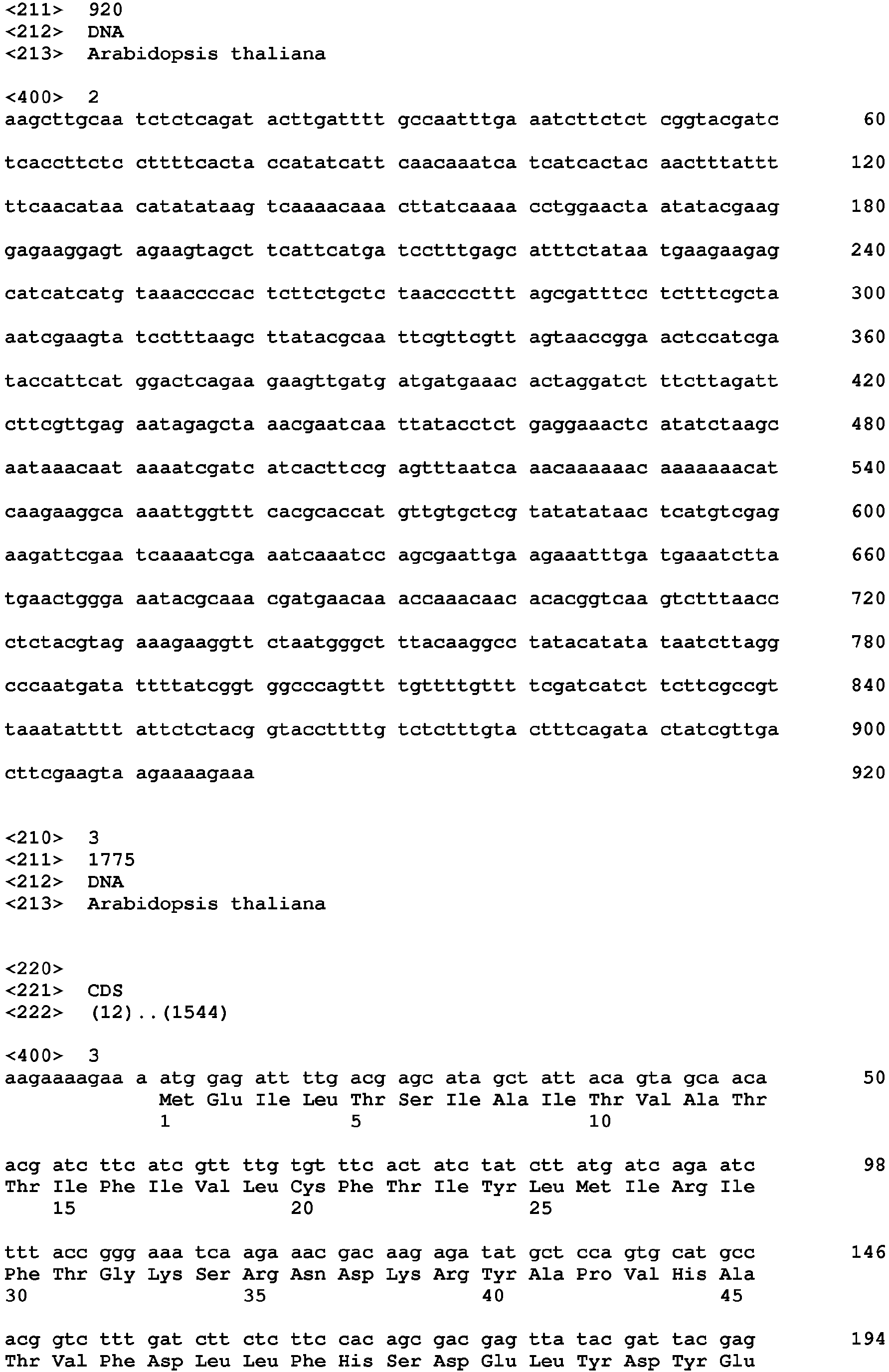


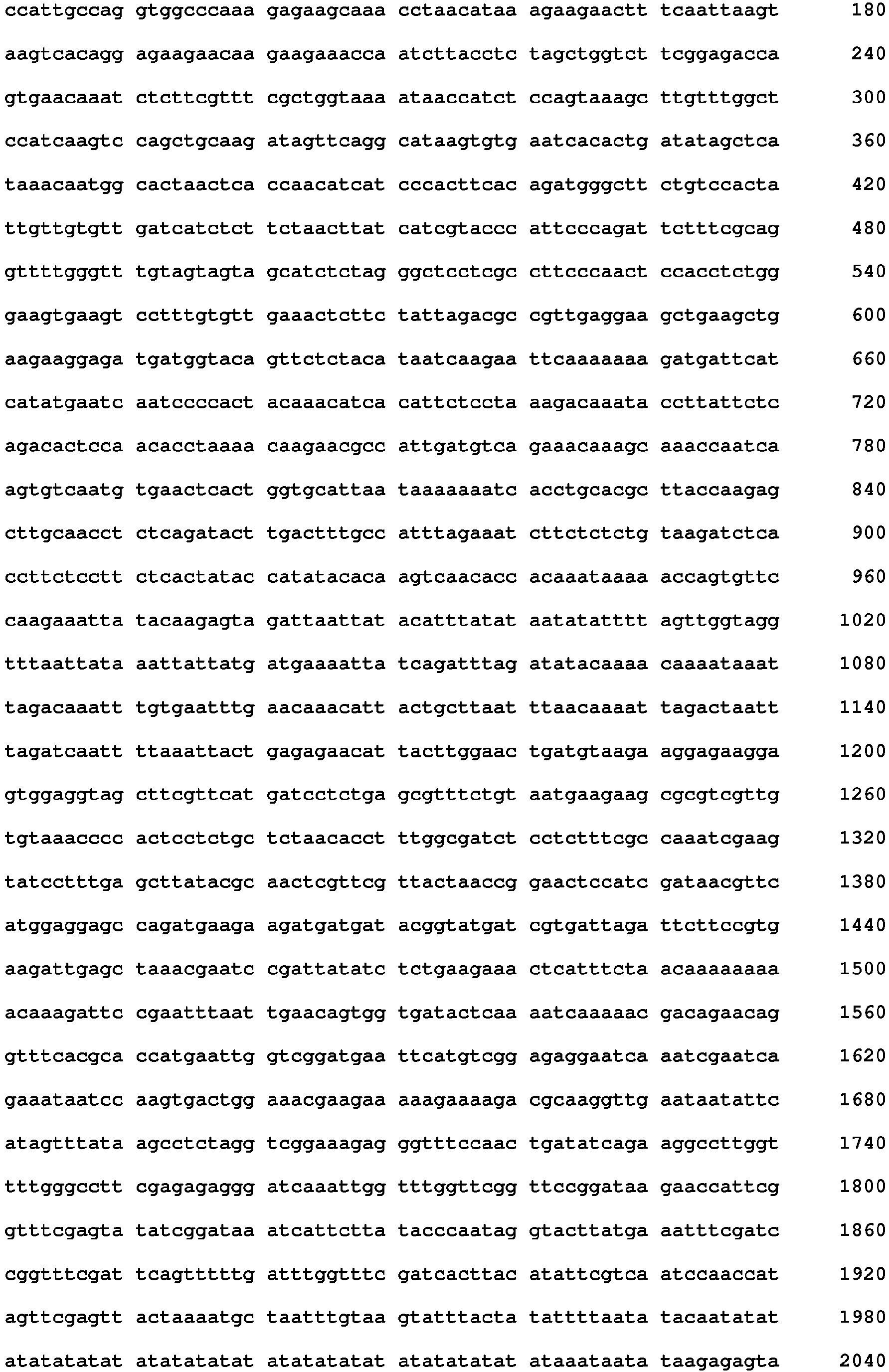


Claims (11)
- An expression cassette for regulating seed-specific expression in plants comprising a promoter operably linked to a nucleic acid which is heterologous in relation to said promoter and wherein said promoter is selected from the group consisting of (a) SEQ ID NO: 13, SEQ ID NO: 14, or SEQ ID NO: 2 or a variant thereof, (b) a functional fragment of at least 50 consecutive bases of SEQ ID NO: 13, SEQ ID NO: 14, or SEQ ID NO: 2, having promoter activity, (c) a nucleotide sequence with at least 40% identity with SEQ ID NO: 13, SEQ ID NO: 14, or SEQ ID NO: 2 or the complement thereof and (d) a nucleotide sequence hybridizing under conditions equivalent to hybridization in 7% sodium dodecyl sulfate, 0.5 M NaPO4, 1mM EDTA at 50°C with washing in 2XSSC, 0.1 % SDS at 50° or a fragment of at least 50 consecutive bases of SEQ ID NO: 13, SEQ ID NO: 14, or SEQ ID NO: 2 or the complement thereof.
- The expression cassette of claim 1 wherein the expression of the nucleic acid results in expression of a protein, or expression of an antisense RNA, sense or double-stranded RNA.
- A recombinant vector comprising an expression cassette according to claims 1-2.
- A transformed plant containing the expression cassette of claims 1-2 or a recombinant vector according to claim 3.
- The transformed plant of claim 4 wherein said transformed plant is from a plant used for oil production.
- The transformed plant according to claim 5 wherein the plant is selected from the group consisting of canola, maize, mustard, castor bean, sesame, cotton, linseed, soybean, Arabidopsis, Phaseolus, peanut, alfalfa, wheat, rice, oat, sorghum, rapeseed, rye, sugarcane, safflower, oil palms, flax, sunflower, Brassica campestris, Brassica napus, Brassica juncea and Crambe abyssinica.
- A plant cell comprising an expression cassette of claims 1-2 or a recombinant vector according to claim 3.
- A microspore comprising an expression cassette of claims 1-2 or a recombinant vector according to claim 3.
- A seed generated from a transformed plant according to claims 4-6 wherein the seed comprises an expression cassette according to claims 1-2 or a recombinant vector according to claim 3.
- A method of producing a transformed plant according to claims 4-6 comprising (a) providing an expression cassette of claims 1-2 and (b) transforming a plant with said expression cassette.
- A method of producing a seed comprising a nucleic acid of claims 1-2 comprising (a) growing a transformed plant containing the expression vector of claims 1-2, wherein said transformed plant produces said seed and said nucleic acid is transcribed in said seed, and (b) isolating said seed from said transformed plant.
Priority Applications (1)
| Application Number | Priority Date | Filing Date | Title |
|---|---|---|---|
| EP13159737.9A EP2607377B1 (en) | 2008-11-26 | 2009-11-25 | Expression cassettes for seed-specific expression in plants |
Applications Claiming Priority (4)
| Application Number | Priority Date | Filing Date | Title |
|---|---|---|---|
| EP08356145 | 2008-11-26 | ||
| US20164808P | 2008-12-12 | 2008-12-12 | |
| EP13159737.9A EP2607377B1 (en) | 2008-11-26 | 2009-11-25 | Expression cassettes for seed-specific expression in plants |
| EP09759899.9A EP2370456B1 (en) | 2008-11-26 | 2009-11-25 | Expression cassettes for seed-specific expression in plants |
Related Parent Applications (2)
| Application Number | Title | Priority Date | Filing Date |
|---|---|---|---|
| EP09759899.9 Division | 2009-11-25 | ||
| EP09759899.9A Division EP2370456B1 (en) | 2008-11-26 | 2009-11-25 | Expression cassettes for seed-specific expression in plants |
Publications (2)
| Publication Number | Publication Date |
|---|---|
| EP2607377A1 true EP2607377A1 (en) | 2013-06-26 |
| EP2607377B1 EP2607377B1 (en) | 2016-09-14 |
Family
ID=41532728
Family Applications (2)
| Application Number | Title | Priority Date | Filing Date |
|---|---|---|---|
| EP13159737.9A Active EP2607377B1 (en) | 2008-11-26 | 2009-11-25 | Expression cassettes for seed-specific expression in plants |
| EP09759899.9A Active EP2370456B1 (en) | 2008-11-26 | 2009-11-25 | Expression cassettes for seed-specific expression in plants |
Family Applications After (1)
| Application Number | Title | Priority Date | Filing Date |
|---|---|---|---|
| EP09759899.9A Active EP2370456B1 (en) | 2008-11-26 | 2009-11-25 | Expression cassettes for seed-specific expression in plants |
Country Status (10)
| Country | Link |
|---|---|
| US (1) | US8835622B2 (en) |
| EP (2) | EP2607377B1 (en) |
| AU (1) | AU2009319313B2 (en) |
| CA (1) | CA2744379C (en) |
| DK (1) | DK2370456T3 (en) |
| ES (1) | ES2415761T3 (en) |
| PL (1) | PL2370456T3 (en) |
| PT (1) | PT2370456E (en) |
| SI (1) | SI2370456T1 (en) |
| WO (1) | WO2010060609A1 (en) |
Families Citing this family (6)
| Publication number | Priority date | Publication date | Assignee | Title |
|---|---|---|---|---|
| WO2015067538A1 (en) * | 2013-11-05 | 2015-05-14 | Bayer Cropscience Nv | Endosperm-preferential promoters and uses thereof |
| KR101719776B1 (en) * | 2014-11-13 | 2017-04-10 | 대한민국 | A promoter for high-expression of gene involved in fatty acid metabolisms and its uses |
| WO2017060235A1 (en) * | 2015-10-08 | 2017-04-13 | Bayer Cropscience Nv | Seed-preferential promoters and uses thereof |
| WO2017060237A1 (en) * | 2015-10-08 | 2017-04-13 | Bayer Cropscience Nv | Seed-preferential promoters and uses thereof |
| CN107142262B (en) * | 2017-06-27 | 2020-08-11 | 安徽省农业科学院水稻研究所 | Rice seed specific promoter Posseed and application thereof |
| CA3175998A1 (en) * | 2020-04-23 | 2021-10-28 | Zhongying Chen | Soybean promoters and uses thereof |
Citations (9)
| Publication number | Priority date | Publication date | Assignee | Title |
|---|---|---|---|---|
| EP0255378A2 (en) | 1986-07-31 | 1988-02-03 | Calgene, Inc. | Seed specific transcriptional regulation |
| US4757011A (en) | 1983-09-30 | 1988-07-12 | E. I. Du Pont De Nemours And Company | Herbicide resistant tobacco |
| US4769061A (en) | 1983-01-05 | 1988-09-06 | Calgene Inc. | Inhibition resistant 5-enolpyruvyl-3-phosphoshikimate synthase, production and use |
| US4940835A (en) | 1985-10-29 | 1990-07-10 | Monsanto Company | Glyphosate-resistant plants |
| US4971908A (en) | 1987-05-26 | 1990-11-20 | Monsanto Company | Glyphosate-tolerant 5-enolpyruvyl-3-phosphoshikimate synthase |
| US5593874A (en) | 1992-03-19 | 1997-01-14 | Monsanto Company | Enhanced expression in plants |
| US5641876A (en) | 1990-01-05 | 1997-06-24 | Cornell Research Foundation, Inc. | Rice actin gene and promoter |
| US5659122A (en) | 1993-09-02 | 1997-08-19 | Monsanto Company | Enhanced expression in plants using non-translated leader sequences |
| WO2002016655A2 (en) * | 2000-08-24 | 2002-02-28 | The Scripps Research Institute | Stress-regulated genes of plants, transgenic plants containing same, and methods of use |
Family Cites Families (7)
| Publication number | Priority date | Publication date | Assignee | Title |
|---|---|---|---|---|
| US20080113342A1 (en) * | 1998-11-16 | 2008-05-15 | Monsanto Technology Llc | Plant Genome Sequence and Uses Thereof |
| US20100293669A2 (en) * | 1999-05-06 | 2010-11-18 | Jingdong Liu | Nucleic Acid Molecules and Other Molecules Associated with Plants and Uses Thereof for Plant Improvement |
| US7365185B2 (en) * | 2000-07-19 | 2008-04-29 | Monsanto Technology Llc | Genomic plant sequences and uses thereof |
| US7642346B2 (en) * | 1999-08-27 | 2010-01-05 | Sembiosys Genetics Inc. | Flax seed specific promoters |
| US7214786B2 (en) * | 2000-12-14 | 2007-05-08 | Kovalic David K | Nucleic acid molecules and other molecules associated with plants and uses thereof for plant improvement |
| US20060150283A1 (en) * | 2004-02-13 | 2006-07-06 | Nickolai Alexandrov | Sequence-determined DNA fragments and corresponding polypeptides encoded thereby |
| US20060075522A1 (en) * | 2004-07-31 | 2006-04-06 | Jaclyn Cleveland | Genes and uses for plant improvement |
-
2009
- 2009-11-25 SI SI200930646T patent/SI2370456T1/en unknown
- 2009-11-25 ES ES09759899T patent/ES2415761T3/en active Active
- 2009-11-25 PL PL09759899T patent/PL2370456T3/en unknown
- 2009-11-25 EP EP13159737.9A patent/EP2607377B1/en active Active
- 2009-11-25 CA CA2744379A patent/CA2744379C/en active Active
- 2009-11-25 AU AU2009319313A patent/AU2009319313B2/en not_active Ceased
- 2009-11-25 PT PT97598999T patent/PT2370456E/en unknown
- 2009-11-25 US US13/131,307 patent/US8835622B2/en not_active Expired - Fee Related
- 2009-11-25 EP EP09759899.9A patent/EP2370456B1/en active Active
- 2009-11-25 WO PCT/EP2009/008387 patent/WO2010060609A1/en not_active Ceased
- 2009-11-25 DK DK09759899.9T patent/DK2370456T3/en active
Patent Citations (9)
| Publication number | Priority date | Publication date | Assignee | Title |
|---|---|---|---|---|
| US4769061A (en) | 1983-01-05 | 1988-09-06 | Calgene Inc. | Inhibition resistant 5-enolpyruvyl-3-phosphoshikimate synthase, production and use |
| US4757011A (en) | 1983-09-30 | 1988-07-12 | E. I. Du Pont De Nemours And Company | Herbicide resistant tobacco |
| US4940835A (en) | 1985-10-29 | 1990-07-10 | Monsanto Company | Glyphosate-resistant plants |
| EP0255378A2 (en) | 1986-07-31 | 1988-02-03 | Calgene, Inc. | Seed specific transcriptional regulation |
| US4971908A (en) | 1987-05-26 | 1990-11-20 | Monsanto Company | Glyphosate-tolerant 5-enolpyruvyl-3-phosphoshikimate synthase |
| US5641876A (en) | 1990-01-05 | 1997-06-24 | Cornell Research Foundation, Inc. | Rice actin gene and promoter |
| US5593874A (en) | 1992-03-19 | 1997-01-14 | Monsanto Company | Enhanced expression in plants |
| US5659122A (en) | 1993-09-02 | 1997-08-19 | Monsanto Company | Enhanced expression in plants using non-translated leader sequences |
| WO2002016655A2 (en) * | 2000-08-24 | 2002-02-28 | The Scripps Research Institute | Stress-regulated genes of plants, transgenic plants containing same, and methods of use |
Non-Patent Citations (23)
| Title |
|---|
| BAK ET AL., PLANT PHYSIOLOGY, vol. 123, no. 4, 2000, pages 1437 - 48 |
| BARTA E. ET AL., NUCLEIC ACIDS RESEARCH, vol. 33, 2005, pages D86 - D90 |
| BÄUMLEIN H ET AL., MOL. GEN. GENETICS, vol. 225, no. 3, 1991, pages 459 - 67 |
| CARDINI G.; JURTSHUK P., J. BIOL. CHEM., vol. 245, 1970, pages 2789 - 2796 |
| CLOUGH SJ; BENT AF, PLANT J, vol. 16, no. 6, 1998, pages 735 - 43 |
| EGLINTON ET AL., ORG. MASS. SPECTROM, vol. 1, 1968, pages 593 - 611 |
| EHLTING JÃ 1/4 RGEN ET AL: "An extensive (co-)expression analysis tool for the cytochrome P450 superfamily in Arabidopsis thaliana", BMC PLANT BIOLOGY, BIOMED CENTRAL, LONDON, GB, vol. 8, no. 1, 23 April 2008 (2008-04-23), pages 47, XP021033869, ISSN: 1471-2229 * |
| FISCHER MB ET AL., BIOCHEM. BIOPHYS. RES. COMMUN., vol. 248, 1998, pages 352 - 355 |
| FUNHOFF EG ET AL., J. BACTERIOL., vol. 188, 2006, pages 5220 - 5227 |
| GALBIATI M ET AL., FUNCT. INTEGR. GENOMICS, vol. 1, no. 1, 2000, pages 25 - 34 |
| HÖFER RENÉ: "Untersuchung zur Suberinentwicklung und der Bedeutung con Cytochrom P-450 Monooxygenasen bei der Suberinbiosynthese in Arabidopsis thaliana", 13 November 2008, MATHEMATISCH-NATURWISSENSCHFTLISCHE FAKULTÄT DER REINISCHEN FRIEDRICH-WILHEM- UNIVERSITÄT BONN, Bonn, XP002565289 * |
| J. F. SAMBROOK; D. W. RUSSELL; N. IRWIN: "Molecular Cloning: A Laboratory Manual", vol. 1, 2, 3, 2000, COLD SPRING HARBOR LABORATORY PRESS |
| JEFFERSON RA ET AL., EMBO J. 20, vol. 6, no. 13, 1987, pages 3901 - 7 |
| K. VISSENBERG: "Differential Expression of AtXTH17, AtXTH18, AtXTH19 and AtXTH20 Genes in Arabidopsis Roots. Physiological Roles in Specification in Cell Wall Construction", PLANT AND CELL PHYSIOLOGY, vol. 46, no. 1, 1 January 2005 (2005-01-01), pages 192 - 200, XP055061319, ISSN: 0032-0781, DOI: 10.1093/pcp/pci013 * |
| NEEDLEMAN; WUNSCH, J. MOL. BIOL., vol. 48, 1970, pages 443 - 453 |
| OMURA; SATO, J BIOL CHEM, vol. 239, 1964, pages 2370 - 2378 |
| PEARSON; LIPMAN, PROC. NATL. ACAD. SCI., vol. 85, 1988, pages 2444 |
| POMPON D. ET AL., METHODS ENZYMOL, vol. 272, 1996, pages 51 - 64 |
| POMPON, D ET AL., METHODS ENZYMOL, vol. 272, 1996, pages 51 - 64 |
| R.D.D. CROY: "Plant Molecular Biology Labfax", 1993, BIOS SCIENTIFIC PUBLICATIONS LTD (UK |
| SCHELLER U. ET AL., ARCH. BIOCHEM. BIOPHYS., vol. 328, no. 2, 1996, pages 245 - 254 |
| SCHULER M A ET AL: "FUNCTIONAL GENOMICS OF P450S", ANNUAL REVIEW OF PLANT PHYSIOLOGY AND PLANT MOLECULAR BIOLOGY, ANNUAL REVIEWS INC, XX, vol. 54, 1 January 2003 (2003-01-01), pages 629 - 644,01, XP001182252 * |
| SEGHEZZI W. ET AL., DNA CELL BIOL., vol. 11, no. 10, 1992, pages 767 - 780 |
Also Published As
| Publication number | Publication date |
|---|---|
| PL2370456T3 (en) | 2013-09-30 |
| WO2010060609A1 (en) | 2010-06-03 |
| AU2009319313B2 (en) | 2015-08-20 |
| SI2370456T1 (en) | 2013-08-30 |
| US8835622B2 (en) | 2014-09-16 |
| CA2744379A1 (en) | 2010-06-03 |
| AU2009319313A1 (en) | 2010-06-03 |
| PT2370456E (en) | 2013-06-28 |
| ES2415761T3 (en) | 2013-07-26 |
| CA2744379C (en) | 2019-01-15 |
| EP2370456A1 (en) | 2011-10-05 |
| EP2607377B1 (en) | 2016-09-14 |
| EP2370456B1 (en) | 2013-04-24 |
| DK2370456T3 (en) | 2013-07-01 |
| US20110296552A1 (en) | 2011-12-01 |
Similar Documents
| Publication | Publication Date | Title |
|---|---|---|
| EP1967589B1 (en) | An oleosin 5' regulatory region for the modification of plant seed lipid composition | |
| US6096950A (en) | Cotton fiber-specific promoters | |
| US8030539B2 (en) | Method for the stable expression of nucleic acids in transgenic plants, controlled by a parsley-ubiquitin promoter | |
| WO1998045461A9 (en) | An oleosin 5' regulatory region for the modification of plant seed lipid composition | |
| WO2000007430A2 (en) | Plant fatty acid desaturase promoters | |
| CN107567499A (en) | Soybean U6 small nuclear RNAs gene promoter and its purposes in the constitutive expression of plant MicroRNA gene | |
| US8835622B2 (en) | Expression cassettes for seed-specific expression in plants | |
| JP2004513623A (en) | Cytochrome P450 enzymes involved in the synthesis of Δ12-epoxy groups in plant fatty acids | |
| EP1141355B1 (en) | S-adenosyl-l-methionine synthetase promoter and its use in expression of transgenic genes in plants | |
| US6177613B1 (en) | Seed-preferred promoter | |
| WO2004044205A1 (en) | Plant seed-specific expression promoter derived from sesame and seed-specific expression vector comprising the promoter | |
| CA2880151A1 (en) | Soybean ccp1 promoter and its use in constitutive expression of transgenic genes in plants | |
| EP1346046B1 (en) | Elongase promoters | |
| CN112969792A (en) | Improved methods for producing high levels of PUFAs in plants | |
| CN113717264B (en) | Soybean RNA binding protein GmTSN990 related to lipid metabolism regulation and encoding gene and application thereof | |
| US20150184174A1 (en) | Soybean adf1 promoter and its use in constitutive expression of transgenic genes in plants | |
| CN106032390A (en) | Applications of grease metabolism related protein GmNF307 in plant grease metabolism regulation | |
| US20110283416A1 (en) | Methods for plant fiber characterization and identification | |
| US6784342B1 (en) | Regulation of embryonic transcription in plants | |
| CN116768991B (en) | Soybean tetraspanin GmTET270 related to lipid metabolism regulation and its encoding gene and application | |
| CN110997704A (en) | Plants with modified lipid metabolism and methods for their preparation |
Legal Events
| Date | Code | Title | Description |
|---|---|---|---|
| AC | Divisional application: reference to earlier application |
Ref document number: 2370456 Country of ref document: EP Kind code of ref document: P |
|
| AK | Designated contracting states |
Kind code of ref document: A1 Designated state(s): AT BE BG CH CY CZ DE DK EE ES FI FR GB GR HR HU IE IS IT LI LT LU LV MC MK MT NL NO PL PT RO SE SI SK SM TR |
|
| AX | Request for extension of the european patent |
Extension state: AL BA RS |
|
| PUAI | Public reference made under article 153(3) epc to a published international application that has entered the european phase |
Free format text: ORIGINAL CODE: 0009012 |
|
| 17P | Request for examination filed |
Effective date: 20140102 |
|
| RAX | Requested extension states of the european patent have changed |
Extension state: RS Payment date: 20140102 Extension state: BA Payment date: 20140102 Extension state: AL Payment date: 20140102 |
|
| RBV | Designated contracting states (corrected) |
Designated state(s): AT BE BG CH CY CZ DE DK EE ES FI FR GB GR HR HU IE IS IT LI LT LU LV MC MK MT NL NO PL PT RO SE SI SK SM TR |
|
| 17Q | First examination report despatched |
Effective date: 20140225 |
|
| GRAP | Despatch of communication of intention to grant a patent |
Free format text: ORIGINAL CODE: EPIDOSNIGR1 |
|
| INTG | Intention to grant announced |
Effective date: 20160321 |
|
| RAP1 | Party data changed (applicant data changed or rights of an application transferred) |
Owner name: LE CENTRE NATIONAL DE LA RECHERCHE SCIENTIFIQUE Owner name: BAYER CROPSCIENCE NV |
|
| GRAS | Grant fee paid |
Free format text: ORIGINAL CODE: EPIDOSNIGR3 |
|
| GRAA | (expected) grant |
Free format text: ORIGINAL CODE: 0009210 |
|
| AC | Divisional application: reference to earlier application |
Ref document number: 2370456 Country of ref document: EP Kind code of ref document: P |
|
| AK | Designated contracting states |
Kind code of ref document: B1 Designated state(s): AT BE BG CH CY CZ DE DK EE ES FI FR GB GR HR HU IE IS IT LI LT LU LV MC MK MT NL NO PL PT RO SE SI SK SM TR |
|
| AX | Request for extension of the european patent |
Extension state: AL BA RS |
|
| REG | Reference to a national code |
Ref country code: GB Ref legal event code: FG4D |
|
| REG | Reference to a national code |
Ref country code: CH Ref legal event code: EP |
|
| REG | Reference to a national code |
Ref country code: IE Ref legal event code: FG4D |
|
| REG | Reference to a national code |
Ref country code: AT Ref legal event code: REF Ref document number: 828882 Country of ref document: AT Kind code of ref document: T Effective date: 20161015 |
|
| REG | Reference to a national code |
Ref country code: DE Ref legal event code: R096 Ref document number: 602009041216 Country of ref document: DE |
|
| REG | Reference to a national code |
Ref country code: FR Ref legal event code: PLFP Year of fee payment: 8 |
|
| REG | Reference to a national code |
Ref country code: LT Ref legal event code: MG4D |
|
| REG | Reference to a national code |
Ref country code: NL Ref legal event code: MP Effective date: 20160914 |
|
| PG25 | Lapsed in a contracting state [announced via postgrant information from national office to epo] |
Ref country code: LT Free format text: LAPSE BECAUSE OF FAILURE TO SUBMIT A TRANSLATION OF THE DESCRIPTION OR TO PAY THE FEE WITHIN THE PRESCRIBED TIME-LIMIT Effective date: 20160914 Ref country code: FI Free format text: LAPSE BECAUSE OF FAILURE TO SUBMIT A TRANSLATION OF THE DESCRIPTION OR TO PAY THE FEE WITHIN THE PRESCRIBED TIME-LIMIT Effective date: 20160914 Ref country code: HR Free format text: LAPSE BECAUSE OF FAILURE TO SUBMIT A TRANSLATION OF THE DESCRIPTION OR TO PAY THE FEE WITHIN THE PRESCRIBED TIME-LIMIT Effective date: 20160914 Ref country code: NO Free format text: LAPSE BECAUSE OF FAILURE TO SUBMIT A TRANSLATION OF THE DESCRIPTION OR TO PAY THE FEE WITHIN THE PRESCRIBED TIME-LIMIT Effective date: 20161214 |
|
| REG | Reference to a national code |
Ref country code: AT Ref legal event code: MK05 Ref document number: 828882 Country of ref document: AT Kind code of ref document: T Effective date: 20160914 |
|
| PG25 | Lapsed in a contracting state [announced via postgrant information from national office to epo] |
Ref country code: GR Free format text: LAPSE BECAUSE OF FAILURE TO SUBMIT A TRANSLATION OF THE DESCRIPTION OR TO PAY THE FEE WITHIN THE PRESCRIBED TIME-LIMIT Effective date: 20161215 Ref country code: LV Free format text: LAPSE BECAUSE OF FAILURE TO SUBMIT A TRANSLATION OF THE DESCRIPTION OR TO PAY THE FEE WITHIN THE PRESCRIBED TIME-LIMIT Effective date: 20160914 Ref country code: BE Free format text: LAPSE BECAUSE OF NON-PAYMENT OF DUE FEES Effective date: 20161130 Ref country code: SE Free format text: LAPSE BECAUSE OF FAILURE TO SUBMIT A TRANSLATION OF THE DESCRIPTION OR TO PAY THE FEE WITHIN THE PRESCRIBED TIME-LIMIT Effective date: 20160914 Ref country code: NL Free format text: LAPSE BECAUSE OF FAILURE TO SUBMIT A TRANSLATION OF THE DESCRIPTION OR TO PAY THE FEE WITHIN THE PRESCRIBED TIME-LIMIT Effective date: 20160914 |
|
| PG25 | Lapsed in a contracting state [announced via postgrant information from national office to epo] |
Ref country code: EE Free format text: LAPSE BECAUSE OF FAILURE TO SUBMIT A TRANSLATION OF THE DESCRIPTION OR TO PAY THE FEE WITHIN THE PRESCRIBED TIME-LIMIT Effective date: 20160914 Ref country code: RO Free format text: LAPSE BECAUSE OF FAILURE TO SUBMIT A TRANSLATION OF THE DESCRIPTION OR TO PAY THE FEE WITHIN THE PRESCRIBED TIME-LIMIT Effective date: 20160914 |
|
| PG25 | Lapsed in a contracting state [announced via postgrant information from national office to epo] |
Ref country code: BG Free format text: LAPSE BECAUSE OF FAILURE TO SUBMIT A TRANSLATION OF THE DESCRIPTION OR TO PAY THE FEE WITHIN THE PRESCRIBED TIME-LIMIT Effective date: 20161214 Ref country code: CZ Free format text: LAPSE BECAUSE OF FAILURE TO SUBMIT A TRANSLATION OF THE DESCRIPTION OR TO PAY THE FEE WITHIN THE PRESCRIBED TIME-LIMIT Effective date: 20160914 Ref country code: PT Free format text: LAPSE BECAUSE OF FAILURE TO SUBMIT A TRANSLATION OF THE DESCRIPTION OR TO PAY THE FEE WITHIN THE PRESCRIBED TIME-LIMIT Effective date: 20170116 Ref country code: BE Free format text: LAPSE BECAUSE OF FAILURE TO SUBMIT A TRANSLATION OF THE DESCRIPTION OR TO PAY THE FEE WITHIN THE PRESCRIBED TIME-LIMIT Effective date: 20160914 Ref country code: SM Free format text: LAPSE BECAUSE OF FAILURE TO SUBMIT A TRANSLATION OF THE DESCRIPTION OR TO PAY THE FEE WITHIN THE PRESCRIBED TIME-LIMIT Effective date: 20160914 Ref country code: AT Free format text: LAPSE BECAUSE OF FAILURE TO SUBMIT A TRANSLATION OF THE DESCRIPTION OR TO PAY THE FEE WITHIN THE PRESCRIBED TIME-LIMIT Effective date: 20160914 Ref country code: ES Free format text: LAPSE BECAUSE OF FAILURE TO SUBMIT A TRANSLATION OF THE DESCRIPTION OR TO PAY THE FEE WITHIN THE PRESCRIBED TIME-LIMIT Effective date: 20160914 Ref country code: IS Free format text: LAPSE BECAUSE OF FAILURE TO SUBMIT A TRANSLATION OF THE DESCRIPTION OR TO PAY THE FEE WITHIN THE PRESCRIBED TIME-LIMIT Effective date: 20170114 Ref country code: PL Free format text: LAPSE BECAUSE OF FAILURE TO SUBMIT A TRANSLATION OF THE DESCRIPTION OR TO PAY THE FEE WITHIN THE PRESCRIBED TIME-LIMIT Effective date: 20160914 Ref country code: SK Free format text: LAPSE BECAUSE OF FAILURE TO SUBMIT A TRANSLATION OF THE DESCRIPTION OR TO PAY THE FEE WITHIN THE PRESCRIBED TIME-LIMIT Effective date: 20160914 |
|
| REG | Reference to a national code |
Ref country code: DE Ref legal event code: R097 Ref document number: 602009041216 Country of ref document: DE |
|
| PG25 | Lapsed in a contracting state [announced via postgrant information from national office to epo] |
Ref country code: IT Free format text: LAPSE BECAUSE OF FAILURE TO SUBMIT A TRANSLATION OF THE DESCRIPTION OR TO PAY THE FEE WITHIN THE PRESCRIBED TIME-LIMIT Effective date: 20160914 |
|
| REG | Reference to a national code |
Ref country code: CH Ref legal event code: PL |
|
| PLBE | No opposition filed within time limit |
Free format text: ORIGINAL CODE: 0009261 |
|
| STAA | Information on the status of an ep patent application or granted ep patent |
Free format text: STATUS: NO OPPOSITION FILED WITHIN TIME LIMIT |
|
| PG25 | Lapsed in a contracting state [announced via postgrant information from national office to epo] |
Ref country code: CH Free format text: LAPSE BECAUSE OF NON-PAYMENT OF DUE FEES Effective date: 20161130 Ref country code: DK Free format text: LAPSE BECAUSE OF FAILURE TO SUBMIT A TRANSLATION OF THE DESCRIPTION OR TO PAY THE FEE WITHIN THE PRESCRIBED TIME-LIMIT Effective date: 20160914 Ref country code: LI Free format text: LAPSE BECAUSE OF NON-PAYMENT OF DUE FEES Effective date: 20161130 |
|
| 26N | No opposition filed |
Effective date: 20170615 |
|
| REG | Reference to a national code |
Ref country code: IE Ref legal event code: MM4A |
|
| PG25 | Lapsed in a contracting state [announced via postgrant information from national office to epo] |
Ref country code: LU Free format text: LAPSE BECAUSE OF NON-PAYMENT OF DUE FEES Effective date: 20161130 |
|
| REG | Reference to a national code |
Ref country code: FR Ref legal event code: PLFP Year of fee payment: 9 |
|
| PG25 | Lapsed in a contracting state [announced via postgrant information from national office to epo] |
Ref country code: SI Free format text: LAPSE BECAUSE OF FAILURE TO SUBMIT A TRANSLATION OF THE DESCRIPTION OR TO PAY THE FEE WITHIN THE PRESCRIBED TIME-LIMIT Effective date: 20160914 Ref country code: IE Free format text: LAPSE BECAUSE OF NON-PAYMENT OF DUE FEES Effective date: 20161125 |
|
| PG25 | Lapsed in a contracting state [announced via postgrant information from national office to epo] |
Ref country code: CY Free format text: LAPSE BECAUSE OF FAILURE TO SUBMIT A TRANSLATION OF THE DESCRIPTION OR TO PAY THE FEE WITHIN THE PRESCRIBED TIME-LIMIT Effective date: 20160914 Ref country code: HU Free format text: LAPSE BECAUSE OF FAILURE TO SUBMIT A TRANSLATION OF THE DESCRIPTION OR TO PAY THE FEE WITHIN THE PRESCRIBED TIME-LIMIT; INVALID AB INITIO Effective date: 20091125 |
|
| PG25 | Lapsed in a contracting state [announced via postgrant information from national office to epo] |
Ref country code: MK Free format text: LAPSE BECAUSE OF FAILURE TO SUBMIT A TRANSLATION OF THE DESCRIPTION OR TO PAY THE FEE WITHIN THE PRESCRIBED TIME-LIMIT Effective date: 20160914 Ref country code: TR Free format text: LAPSE BECAUSE OF FAILURE TO SUBMIT A TRANSLATION OF THE DESCRIPTION OR TO PAY THE FEE WITHIN THE PRESCRIBED TIME-LIMIT Effective date: 20160914 Ref country code: MC Free format text: LAPSE BECAUSE OF FAILURE TO SUBMIT A TRANSLATION OF THE DESCRIPTION OR TO PAY THE FEE WITHIN THE PRESCRIBED TIME-LIMIT Effective date: 20160914 |
|
| PG25 | Lapsed in a contracting state [announced via postgrant information from national office to epo] |
Ref country code: MT Free format text: LAPSE BECAUSE OF NON-PAYMENT OF DUE FEES Effective date: 20161125 |
|
| REG | Reference to a national code |
Ref country code: FR Ref legal event code: PLFP Year of fee payment: 10 |
|
| REG | Reference to a national code |
Ref country code: DE Ref legal event code: R081 Ref document number: 602009041216 Country of ref document: DE Owner name: BASF AGRICULTURAL SOLUTIONS SEED US LLC, FLORH, US Free format text: FORMER OWNERS: BAYER CROPSCIENCE NV, DIEGEM, BE; LE CENTRE NATIONAL DE LA RECHERCHE SCIENTIFIQUE, PARIS, FR Ref country code: DE Ref legal event code: R081 Ref document number: 602009041216 Country of ref document: DE Owner name: LE CENTRE NATIONAL DE LA RECHERCHE SCIENTIFIQU, FR Free format text: FORMER OWNERS: BAYER CROPSCIENCE NV, DIEGEM, BE; LE CENTRE NATIONAL DE LA RECHERCHE SCIENTIFIQUE, PARIS, FR |
|
| PGFP | Annual fee paid to national office [announced via postgrant information from national office to epo] |
Ref country code: FR Payment date: 20191126 Year of fee payment: 11 |
|
| PGFP | Annual fee paid to national office [announced via postgrant information from national office to epo] |
Ref country code: DE Payment date: 20200130 Year of fee payment: 11 Ref country code: GB Payment date: 20191128 Year of fee payment: 11 |
|
| REG | Reference to a national code |
Ref country code: DE Ref legal event code: R119 Ref document number: 602009041216 Country of ref document: DE |
|
| GBPC | Gb: european patent ceased through non-payment of renewal fee |
Effective date: 20201125 |
|
| PG25 | Lapsed in a contracting state [announced via postgrant information from national office to epo] |
Ref country code: FR Free format text: LAPSE BECAUSE OF NON-PAYMENT OF DUE FEES Effective date: 20201130 |
|
| PG25 | Lapsed in a contracting state [announced via postgrant information from national office to epo] |
Ref country code: DE Free format text: LAPSE BECAUSE OF NON-PAYMENT OF DUE FEES Effective date: 20210601 Ref country code: GB Free format text: LAPSE BECAUSE OF NON-PAYMENT OF DUE FEES Effective date: 20201125 |