EP2604595B1 - Triazine derivative and pharmaceutical compound that contains same and exhibits analgesic activity - Google Patents
Triazine derivative and pharmaceutical compound that contains same and exhibits analgesic activity Download PDFInfo
- Publication number
- EP2604595B1 EP2604595B1 EP11816413.6A EP11816413A EP2604595B1 EP 2604595 B1 EP2604595 B1 EP 2604595B1 EP 11816413 A EP11816413 A EP 11816413A EP 2604595 B1 EP2604595 B1 EP 2604595B1
- Authority
- EP
- European Patent Office
- Prior art keywords
- substituted
- unsubstituted
- ring
- alkyl
- mmol
- Prior art date
- Legal status (The legal status is an assumption and is not a legal conclusion. Google has not performed a legal analysis and makes no representation as to the accuracy of the status listed.)
- Active
Links
- 0 CCCCC(CC(C)(CC1CC(C)C1)CC1CC(C)CC1)** Chemical compound CCCCC(CC(C)(CC1CC(C)C1)CC1CC(C)CC1)** 0.000 description 92
- GXAFLNJRFCAUCP-UHFFFAOYSA-N CC(C)Oc(c(F)c1)ccc1/N=C(\NC(N1CCc2ncn[nH]2)=O)/N(Cc(cc2)ccc2Cl)C1=O Chemical compound CC(C)Oc(c(F)c1)ccc1/N=C(\NC(N1CCc2ncn[nH]2)=O)/N(Cc(cc2)ccc2Cl)C1=O GXAFLNJRFCAUCP-UHFFFAOYSA-N 0.000 description 2
- FNEQNRABWQZISD-UHFFFAOYSA-N B=C(C(C)C(O)=O)N(C(N/C(/N1Cc(cc2)ccc2Cl)=N\c2ccc3[nH]c(C)c(C)c3c2)=O)C1=O Chemical compound B=C(C(C)C(O)=O)N(C(N/C(/N1Cc(cc2)ccc2Cl)=N\c2ccc3[nH]c(C)c(C)c3c2)=O)C1=O FNEQNRABWQZISD-UHFFFAOYSA-N 0.000 description 1
- YZUYJGRRQXSYBZ-UHFFFAOYSA-N B=C(CN(C(N/C(/N1Cc(cc2)ccc2Cl)=N\c(cc2)cc3c2OCOC3)=O)C1=O)C(OC)=O Chemical compound B=C(CN(C(N/C(/N1Cc(cc2)ccc2Cl)=N\c(cc2)cc3c2OCOC3)=O)C1=O)C(OC)=O YZUYJGRRQXSYBZ-UHFFFAOYSA-N 0.000 description 1
- HKISGGAJFGBLCJ-UHFFFAOYSA-N BC(CC(O)=O)N(C(N/C(/N1Cc(cc2)ccc2Cl)=N\c(cc2)cc(C)c2OC(C)C)=O)C1=O Chemical compound BC(CC(O)=O)N(C(N/C(/N1Cc(cc2)ccc2Cl)=N\c(cc2)cc(C)c2OC(C)C)=O)C1=O HKISGGAJFGBLCJ-UHFFFAOYSA-N 0.000 description 1
- ZMCBNNAPLDLMLZ-UHFFFAOYSA-N BC(CN(C(N/C(/N1Cc(cc2)ccc2Cl)=N\c2cc(OC)c(CC(C)C)cc2)=O)C1=O)C(OC)=O Chemical compound BC(CN(C(N/C(/N1Cc(cc2)ccc2Cl)=N\c2cc(OC)c(CC(C)C)cc2)=O)C1=O)C(OC)=O ZMCBNNAPLDLMLZ-UHFFFAOYSA-N 0.000 description 1
- DLAFIMPHHYWCSH-DCCUJTHKSA-N B[C@@H](CN(C(N(Cc1ccc(C)cc1)/C(/N1)=N/c(cc2)ccc2Oc2cc(C)nc(C)c2)O)C1=O)C(N=O)=O Chemical compound B[C@@H](CN(C(N(Cc1ccc(C)cc1)/C(/N1)=N/c(cc2)ccc2Oc2cc(C)nc(C)c2)O)C1=O)C(N=O)=O DLAFIMPHHYWCSH-DCCUJTHKSA-N 0.000 description 1
- MFMCFCZLIDCZHL-UHFFFAOYSA-O CBC(CN(C(N/C(/N1Cc(cc2)ccc2Cl)=N\c(cc2)ccc2OCCC)=O)C1=[OH+])C(O)=O Chemical compound CBC(CN(C(N/C(/N1Cc(cc2)ccc2Cl)=N\c(cc2)ccc2OCCC)=O)C1=[OH+])C(O)=O MFMCFCZLIDCZHL-UHFFFAOYSA-O 0.000 description 1
- RXIPVWIOBSVMAX-SFHVURJKSA-N CC(C)COc(cc1)c(C)cc1/N=C(\NC(N1C[C@H](C)C(OC)=O)=O)/N(Cc(cc2)ccc2Cl)C1=O Chemical compound CC(C)COc(cc1)c(C)cc1/N=C(\NC(N1C[C@H](C)C(OC)=O)=O)/N(Cc(cc2)ccc2Cl)C1=O RXIPVWIOBSVMAX-SFHVURJKSA-N 0.000 description 1
- OSXBPEBPFWIUEF-AAFJCEBUSA-N CC(C)Cc(ccc(/N=C(\NC(N1C(C)[C@@H](C)C(O)=O)=O)/N(Cc(cc2)ccc2Cl)C1=O)c1)c1Cl Chemical compound CC(C)Cc(ccc(/N=C(\NC(N1C(C)[C@@H](C)C(O)=O)=O)/N(Cc(cc2)ccc2Cl)C1=O)c1)c1Cl OSXBPEBPFWIUEF-AAFJCEBUSA-N 0.000 description 1
- NSINDJNWBWMDRL-UHFFFAOYSA-N CC(C)Cc(ccc(/N=C(\NC(N1CC(C)(C)C(OC)=O)=O)/N(Cc2c(C)cc(C)cc2)C1=O)c1)c1Cl Chemical compound CC(C)Cc(ccc(/N=C(\NC(N1CC(C)(C)C(OC)=O)=O)/N(Cc2c(C)cc(C)cc2)C1=O)c1)c1Cl NSINDJNWBWMDRL-UHFFFAOYSA-N 0.000 description 1
- BVVQRBARBINEHC-UHFFFAOYSA-N CC(C)N(C(N(CC1CC1)C(Nc(cc1F)ccc1OC(C)C)=N1)=O)C1=O Chemical compound CC(C)N(C(N(CC1CC1)C(Nc(cc1F)ccc1OC(C)C)=N1)=O)C1=O BVVQRBARBINEHC-UHFFFAOYSA-N 0.000 description 1
- MOCLUEIBJVFEID-UHFFFAOYSA-N CC(C)N(C(N(Cc(cc1)ccc1Cl)C(Nc(cc1)cc(Cl)c1OC)=N1)=O)C1=O Chemical compound CC(C)N(C(N(Cc(cc1)ccc1Cl)C(Nc(cc1)cc(Cl)c1OC)=N1)=O)C1=O MOCLUEIBJVFEID-UHFFFAOYSA-N 0.000 description 1
- JXGRLOYZWSIKOK-UHFFFAOYSA-N CC(C)N(C(N(Cc(cc1)ccc1F)C(NC1CCN(Cc2ccccc2)CC1)=N1)=O)C1=[U] Chemical compound CC(C)N(C(N(Cc(cc1)ccc1F)C(NC1CCN(Cc2ccccc2)CC1)=N1)=O)C1=[U] JXGRLOYZWSIKOK-UHFFFAOYSA-N 0.000 description 1
- ZJNKQZSIZZKDOA-UHFFFAOYSA-N CC(C)N(C(N(Cc(cc1)ccc1F)C(Nc(cc1)ccc1N(C)C)=N1)=O)C1=O Chemical compound CC(C)N(C(N(Cc(cc1)ccc1F)C(Nc(cc1)ccc1N(C)C)=N1)=O)C1=O ZJNKQZSIZZKDOA-UHFFFAOYSA-N 0.000 description 1
- ZZFIKJPTYKDRGK-UHFFFAOYSA-N CC(C)N(C(N(Cc(cc1)ccc1F)C(Nc1cccc(C(OC)=O)c1)=N1)=O)C1=O Chemical compound CC(C)N(C(N(Cc(cc1)ccc1F)C(Nc1cccc(C(OC)=O)c1)=N1)=O)C1=O ZZFIKJPTYKDRGK-UHFFFAOYSA-N 0.000 description 1
- SFWAMQNYTXTDLP-UHFFFAOYSA-N CC(C)N(C(N(Cc(cc1)cnc1Cl)C(Nc1cc(C(C)(C)C)ccc1)=N1)=O)C1=O Chemical compound CC(C)N(C(N(Cc(cc1)cnc1Cl)C(Nc1cc(C(C)(C)C)ccc1)=N1)=O)C1=O SFWAMQNYTXTDLP-UHFFFAOYSA-N 0.000 description 1
- WOYPMXSTGICJLP-UHFFFAOYSA-N CC(C)N(C(N(Cc(cc1Cl)ccc1Cl)C(Nc1cccc(C(F)(F)F)c1)=N1)=O)C1=O Chemical compound CC(C)N(C(N(Cc(cc1Cl)ccc1Cl)C(Nc1cccc(C(F)(F)F)c1)=N1)=O)C1=O WOYPMXSTGICJLP-UHFFFAOYSA-N 0.000 description 1
- SFHXKQUAZHFZDZ-UHFFFAOYSA-N CC(C)N(C(N(Cc1ccc(C)cc1)C(Nc(cc1)ccc1OC(C)C)=N1)=O)C1=O Chemical compound CC(C)N(C(N(Cc1ccc(C)cc1)C(Nc(cc1)ccc1OC(C)C)=N1)=O)C1=O SFHXKQUAZHFZDZ-UHFFFAOYSA-N 0.000 description 1
- ZKQSHWVYXHVPBM-UHFFFAOYSA-N CC(C)N(C(N(Cc1ccc(C)cc1)C(Nc1cc(Oc2ccccc2)ccc1)=N1)O)C1=O Chemical compound CC(C)N(C(N(Cc1ccc(C)cc1)C(Nc1cc(Oc2ccccc2)ccc1)=N1)O)C1=O ZKQSHWVYXHVPBM-UHFFFAOYSA-N 0.000 description 1
- LZICHARFCMLETH-UHFFFAOYSA-N CC(C)N(C(N)=N/C(/N1Cc(cc2)ccc2Cl)=N\c(cc2)ccc2OC(C)C)C1=O Chemical compound CC(C)N(C(N)=N/C(/N1Cc(cc2)ccc2Cl)=N\c(cc2)ccc2OC(C)C)C1=O LZICHARFCMLETH-UHFFFAOYSA-N 0.000 description 1
- SYCWLIBKVJZFSD-UHFFFAOYSA-N CC(C)N(C(N/C(/N1Cc(cc2)ccc2Cl)=N\c(cc2)ccc2OC(C)C)=S)C1=S Chemical compound CC(C)N(C(N/C(/N1Cc(cc2)ccc2Cl)=N\c(cc2)ccc2OC(C)C)=S)C1=S SYCWLIBKVJZFSD-UHFFFAOYSA-N 0.000 description 1
- ZQADMGLMEQLGJG-UHFFFAOYSA-N CC(C)N(C(N/C(/N1Cc(cc2)ccc2Cl)=N\c(cc2C)ccc2OC(C)C)=S)C1=O Chemical compound CC(C)N(C(N/C(/N1Cc(cc2)ccc2Cl)=N\c(cc2C)ccc2OC(C)C)=S)C1=O ZQADMGLMEQLGJG-UHFFFAOYSA-N 0.000 description 1
- MQQIKDMRZKMJFD-UHFFFAOYSA-N CC(C)N(C(NC)=N/C(/N1Cc(cc2)ccc2Cl)=N\c(cc2)ccc2OC(C)C)C1=O Chemical compound CC(C)N(C(NC)=N/C(/N1Cc(cc2)ccc2Cl)=N\c(cc2)ccc2OC(C)C)C1=O MQQIKDMRZKMJFD-UHFFFAOYSA-N 0.000 description 1
- MYAVORALWFXGNB-UHFFFAOYSA-O CC(C)NC(c(cccc1)c1/N=C(\NC(N1CCC(O)=[OH+])O)/N(Cc2ccc(C)cc2)C1=O)=O Chemical compound CC(C)NC(c(cccc1)c1/N=C(\NC(N1CCC(O)=[OH+])O)/N(Cc2ccc(C)cc2)C1=O)=O MYAVORALWFXGNB-UHFFFAOYSA-O 0.000 description 1
- VQYNQXLEYIJXHN-UHFFFAOYSA-N CC(C)N[NH+](/N=C(\NCc(cc1)ccc1Cl)/Nc(cc1)ccc1OC(C)C)[S-] Chemical compound CC(C)N[NH+](/N=C(\NCc(cc1)ccc1Cl)/Nc(cc1)ccc1OC(C)C)[S-] VQYNQXLEYIJXHN-UHFFFAOYSA-N 0.000 description 1
- OTWPWDTURZYAOL-UHFFFAOYSA-N CC(C)Oc(c(C)c1)ccc1/N=C(\NC(N1CC(C(O)=O)=O)=O)/N(Cc(cc2)ccc2Cl)C1=O Chemical compound CC(C)Oc(c(C)c1)ccc1/N=C(\NC(N1CC(C(O)=O)=O)=O)/N(Cc(cc2)ccc2Cl)C1=O OTWPWDTURZYAOL-UHFFFAOYSA-N 0.000 description 1
- WKQQSDPWQYSPSK-INIZCTEOSA-N CC(C)Oc(c(C)c1)ccc1/N=C(\NC(N1CC(C(OC)=O)=O)=O)/N([C@@H](C)c(cc2)ccc2Cl)C1=O Chemical compound CC(C)Oc(c(C)c1)ccc1/N=C(\NC(N1CC(C(OC)=O)=O)=O)/N([C@@H](C)c(cc2)ccc2Cl)C1=O WKQQSDPWQYSPSK-INIZCTEOSA-N 0.000 description 1
- INFCVXVOGZBBJU-UHFFFAOYSA-N CC(C)Oc(c(Cl)c1)ccc1/N=C(\NC(N1C(C)(C)C(O)=O)=O)/N(Cc(cc2)ccc2Cl)C1=O Chemical compound CC(C)Oc(c(Cl)c1)ccc1/N=C(\NC(N1C(C)(C)C(O)=O)=O)/N(Cc(cc2)ccc2Cl)C1=O INFCVXVOGZBBJU-UHFFFAOYSA-N 0.000 description 1
- PQMFIJXUFKJXPJ-UHFFFAOYSA-N CC(C)Oc(c(Cl)c1)ccc1/N=C(\NC(N1CC(C)(C)C(OC)=[U])=O)/N(Cc(cc2)ccc2Cl)C1=O Chemical compound CC(C)Oc(c(Cl)c1)ccc1/N=C(\NC(N1CC(C)(C)C(OC)=[U])=O)/N(Cc(cc2)ccc2Cl)C1=O PQMFIJXUFKJXPJ-UHFFFAOYSA-N 0.000 description 1
- QKIBFGFDLISDQM-UHFFFAOYSA-N CC(C)Oc(c(Cl)c1)ccc1NC(N(CC1CCCCC1)C(N1CCC(O)=O)=O)=NC1=O Chemical compound CC(C)Oc(c(Cl)c1)ccc1NC(N(CC1CCCCC1)C(N1CCC(O)=O)=O)=NC1=O QKIBFGFDLISDQM-UHFFFAOYSA-N 0.000 description 1
- MRSBPJQMAXBIJN-UHFFFAOYSA-N CC(C)Oc(c(F)c1)ccc1/N=C(\NC(N1CC(C)(C)C(OC)=O)=O)/N(Cc2ccc(C)cc2)C1=O Chemical compound CC(C)Oc(c(F)c1)ccc1/N=C(\NC(N1CC(C)(C)C(OC)=O)=O)/N(Cc2ccc(C)cc2)C1=O MRSBPJQMAXBIJN-UHFFFAOYSA-N 0.000 description 1
- UTJLWFYQRDUGFC-UHFFFAOYSA-N CC(C)Oc(c(F)c1)ccc1NC(N(Cc(cc1)ccc1Cl)C(N1CC(C)(CO)CO)=O)=NC1=O Chemical compound CC(C)Oc(c(F)c1)ccc1NC(N(Cc(cc1)ccc1Cl)C(N1CC(C)(CO)CO)=O)=NC1=O UTJLWFYQRDUGFC-UHFFFAOYSA-N 0.000 description 1
- TXIJTLRNAPPKSV-UHFFFAOYSA-N CC(C)Oc(cc1)c(C)cc1/N=C(\N)/NCc(cc1)ccc1C(C)=C Chemical compound CC(C)Oc(cc1)c(C)cc1/N=C(\N)/NCc(cc1)ccc1C(C)=C TXIJTLRNAPPKSV-UHFFFAOYSA-N 0.000 description 1
- AAYATLXJNSCQGI-FIWHBWSRSA-N CC(C)Oc(cc1)c(C)cc1/N=C(\NC(N1C(C)[C@@H](C)C(OC)=O)=O)/N(Cc2ccc(C)cc2)C1=O Chemical compound CC(C)Oc(cc1)c(C)cc1/N=C(\NC(N1C(C)[C@@H](C)C(OC)=O)=O)/N(Cc2ccc(C)cc2)C1=O AAYATLXJNSCQGI-FIWHBWSRSA-N 0.000 description 1
- XYBBIXKZMJRTCT-UHFFFAOYSA-N CC(C)Oc(cc1)c(C)cc1/N=C(\NC(N1C(CCO2)C2=O)=O)/N(Cc(cc2)ccc2Cl)C1=O Chemical compound CC(C)Oc(cc1)c(C)cc1/N=C(\NC(N1C(CCO2)C2=O)=O)/N(Cc(cc2)ccc2Cl)C1=O XYBBIXKZMJRTCT-UHFFFAOYSA-N 0.000 description 1
- JWFTXQDFKUTBIO-UHFFFAOYSA-N CC(C)Oc(cc1)c(C)cc1/N=C(\NC(N1CC2(CC(O)=O)CC2)=O)/N(Cc(cc2)ccc2Cl)C1=O Chemical compound CC(C)Oc(cc1)c(C)cc1/N=C(\NC(N1CC2(CC(O)=O)CC2)=O)/N(Cc(cc2)ccc2Cl)C1=O JWFTXQDFKUTBIO-UHFFFAOYSA-N 0.000 description 1
- VRVPUPXRBKHIRB-UHFFFAOYSA-N CC(C)Oc(cc1)c(C)cc1/N=C(\NC(N1CCCC(NC)=O)=O)/N(Cc(cc2)ccc2Cl)C1=O Chemical compound CC(C)Oc(cc1)c(C)cc1/N=C(\NC(N1CCCC(NC)=O)=O)/N(Cc(cc2)ccc2Cl)C1=O VRVPUPXRBKHIRB-UHFFFAOYSA-N 0.000 description 1
- HBNBVHCTJBUFKD-UHFFFAOYSA-N CC(C)Oc(cc1)c(C)cc1NC(N(Cc(cc1)ccc1Cl)C(N1CC(C(OC)=O)=C)=O)=NC1=O Chemical compound CC(C)Oc(cc1)c(C)cc1NC(N(Cc(cc1)ccc1Cl)C(N1CC(C(OC)=O)=C)=O)=NC1=O HBNBVHCTJBUFKD-UHFFFAOYSA-N 0.000 description 1
- LRXHIOXPQSQXAE-SFHVURJKSA-N CC(C)Oc(cc1)c(C=C)cc1/N=C(\NC(N1C[C@H](C)C(O)=O)=O)/N(Cc2ccc(C)cc2)C1=O Chemical compound CC(C)Oc(cc1)c(C=C)cc1/N=C(\NC(N1C[C@H](C)C(O)=O)=O)/N(Cc2ccc(C)cc2)C1=O LRXHIOXPQSQXAE-SFHVURJKSA-N 0.000 description 1
- UJDHVPLLSGJJFN-JDEXWRGDSA-N CC(C)Oc(cc1)c(C=C)cc1/N=C(\NC(N1C[C@H](C)C(OC)=O)=O)/N(Cc2ccc(C)cc2)C1O Chemical compound CC(C)Oc(cc1)c(C=C)cc1/N=C(\NC(N1C[C@H](C)C(OC)=O)=O)/N(Cc2ccc(C)cc2)C1O UJDHVPLLSGJJFN-JDEXWRGDSA-N 0.000 description 1
- FLOULOZMRRTZLD-UHFFFAOYSA-N CC(C)Oc(cc1)ccc1C(C)=C Chemical compound CC(C)Oc(cc1)ccc1C(C)=C FLOULOZMRRTZLD-UHFFFAOYSA-N 0.000 description 1
- OWFHSHTXGKJHDF-UHFFFAOYSA-N CC(C)Oc(cc1)ccc1NC(NCc(cc1)ccc1Cl)=N Chemical compound CC(C)Oc(cc1)ccc1NC(NCc(cc1)ccc1Cl)=N OWFHSHTXGKJHDF-UHFFFAOYSA-N 0.000 description 1
- MNLAKLTYPGCKHK-INIZCTEOSA-N CC(C)Oc(cc1)ccc1NNNC(N(C[C@H](C)C(OC)=O)C(NCc(cc1)ccc1I)=O)=O Chemical compound CC(C)Oc(cc1)ccc1NNNC(N(C[C@H](C)C(OC)=O)C(NCc(cc1)ccc1I)=O)=O MNLAKLTYPGCKHK-INIZCTEOSA-N 0.000 description 1
- AOLUSZBJZYEEQY-UHFFFAOYSA-M CC(C)Oc(cc1)ccc1[N-]C(N(Cc(cc1)ccc1Cl)C(N1CC(C(OC)=O)=C)=O)=NC1=O Chemical compound CC(C)Oc(cc1)ccc1[N-]C(N(Cc(cc1)ccc1Cl)C(N1CC(C(OC)=O)=C)=O)=NC1=O AOLUSZBJZYEEQY-UHFFFAOYSA-M 0.000 description 1
- MECLRPZHYAVFCN-UHFFFAOYSA-N CC(C)Oc(ccc(/N=C(\NC(N1CC(NC)=O)=O)/N(Cc(cc2)ccc2Cl)C1=O)c1)c1Cl Chemical compound CC(C)Oc(ccc(/N=C(\NC(N1CC(NC)=O)=O)/N(Cc(cc2)ccc2Cl)C1=O)c1)c1Cl MECLRPZHYAVFCN-UHFFFAOYSA-N 0.000 description 1
- UFFMZHJMYPBKRN-UHFFFAOYSA-N CC(C)Oc(ccc(/N=C(\NC(N1CCC(N)=O)=O)/N(Cc(cc2)ccc2Cl)C1=O)c1)c1F Chemical compound CC(C)Oc(ccc(/N=C(\NC(N1CCC(N)=O)=O)/N(Cc(cc2)ccc2Cl)C1=O)c1)c1F UFFMZHJMYPBKRN-UHFFFAOYSA-N 0.000 description 1
- VCVCNSSCEWXQPC-UHFFFAOYSA-N CC(C)Oc(ccc(/N=C(\NC(N1CCC(O)=O)=O)/N(CC2(C)CCCCC2)C1=O)c1)c1F Chemical compound CC(C)Oc(ccc(/N=C(\NC(N1CCC(O)=O)=O)/N(CC2(C)CCCCC2)C1=O)c1)c1F VCVCNSSCEWXQPC-UHFFFAOYSA-N 0.000 description 1
- KJZAHKDHKSYWDO-UHFFFAOYSA-N CC(C)Oc(ccc(/N=C(\NC(N1CCC(O)=O)=O)/N(CC2CCOCC2)C1=O)c1)c1F Chemical compound CC(C)Oc(ccc(/N=C(\NC(N1CCC(O)=O)=O)/N(CC2CCOCC2)C1=O)c1)c1F KJZAHKDHKSYWDO-UHFFFAOYSA-N 0.000 description 1
- KRHNDEFYSFIWAD-UHFFFAOYSA-N CC(C)Oc(ccc(/N=C(\NC(N1CCC(O)=O)=O)/N(Cc2ccc(C)cc2)C1=O)c1)c1Cl Chemical compound CC(C)Oc(ccc(/N=C(\NC(N1CCC(O)=O)=O)/N(Cc2ccc(C)cc2)C1=O)c1)c1Cl KRHNDEFYSFIWAD-UHFFFAOYSA-N 0.000 description 1
- IQAWTERUVVRROA-UHFFFAOYSA-O CC(C)Oc(ccc(/N=C(\NC(N1CCC([OH2+])=O)=O)/N(CC2CCCCCCC2)C1=O)c1)c1F Chemical compound CC(C)Oc(ccc(/N=C(\NC(N1CCC([OH2+])=O)=O)/N(CC2CCCCCCC2)C1=O)c1)c1F IQAWTERUVVRROA-UHFFFAOYSA-O 0.000 description 1
- KISQJMHKVUSQPK-UHFFFAOYSA-N CC(C)Oc(ccc(/N=C(\NC(N1CCCCC(OC)=O)=O)/N(Cc(cc2)ccc2Cl)C1=O)c1)c1Cl Chemical compound CC(C)Oc(ccc(/N=C(\NC(N1CCCCC(OC)=O)=O)/N(Cc(cc2)ccc2Cl)C1=O)c1)c1Cl KISQJMHKVUSQPK-UHFFFAOYSA-N 0.000 description 1
- CTOHROGIDLDFKZ-GMAHTHKFSA-N CC(C)Oc(ccc(/N=C(\NC(N1C[C@@H](C2)CN([C@@H](C)c3ccccc3)C2=O)=O)/N(Cc(cc2)ccc2Cl)C1=O)c1)c1F Chemical compound CC(C)Oc(ccc(/N=C(\NC(N1C[C@@H](C2)CN([C@@H](C)c3ccccc3)C2=O)=O)/N(Cc(cc2)ccc2Cl)C1=O)c1)c1F CTOHROGIDLDFKZ-GMAHTHKFSA-N 0.000 description 1
- GXKMZKGFCCOXPC-LJQANCHMSA-N CC(C)Oc(ccc(/N=C(\NC(N1C[C@H]2OC(C)(C)OC2)=O)/N(Cc(cc2)ccc2Cl)C1=O)c1)c1Cl Chemical compound CC(C)Oc(ccc(/N=C(\NC(N1C[C@H]2OC(C)(C)OC2)=O)/N(Cc(cc2)ccc2Cl)C1=O)c1)c1Cl GXKMZKGFCCOXPC-LJQANCHMSA-N 0.000 description 1
- JSHFFHVRIQTJJK-UHFFFAOYSA-N CC(C)Oc(ccc(/N=C(\NC(OCC(O)=O)=N1)/N(Cc(cc2)ccc2Cl)C1=O)c1)c1F Chemical compound CC(C)Oc(ccc(/N=C(\NC(OCC(O)=O)=N1)/N(Cc(cc2)ccc2Cl)C1=O)c1)c1F JSHFFHVRIQTJJK-UHFFFAOYSA-N 0.000 description 1
- JRTPUZRZAUPXOS-UHFFFAOYSA-O CC(C)Oc(ccc(N=C([NH2+]C(N1C(C)C(C(OC)=O)O)=O)N(Cc(cc2)ccc2Cl)C1=O)c1)c1F Chemical compound CC(C)Oc(ccc(N=C([NH2+]C(N1C(C)C(C(OC)=O)O)=O)N(Cc(cc2)ccc2Cl)C1=O)c1)c1F JRTPUZRZAUPXOS-UHFFFAOYSA-O 0.000 description 1
- MPWJLLJEUJOLSS-UHFFFAOYSA-N CC(C)Oc(ccc(NC(N1Cc(cc2)ccc2Cl)=NC(Cl)=NC1=O)c1)c1F Chemical compound CC(C)Oc(ccc(NC(N1Cc(cc2)ccc2Cl)=NC(Cl)=NC1=O)c1)c1F MPWJLLJEUJOLSS-UHFFFAOYSA-N 0.000 description 1
- PHCRNZGGIOWYGF-UHFFFAOYSA-N CC(C)Oc(ccc(NC(N1Cc(cc2)ccc2Cl)=NC(OCCO)=NC1=O)c1)c1F Chemical compound CC(C)Oc(ccc(NC(N1Cc(cc2)ccc2Cl)=NC(OCCO)=NC1=O)c1)c1F PHCRNZGGIOWYGF-UHFFFAOYSA-N 0.000 description 1
- SMUJGXRNLMFLIF-UHFFFAOYSA-N CC(C)Oc(ccc(NC(N1Cc(cc2)ccc2Cl)=NC(OCCOC2OCCCC2)=NC1=O)c1)c1F Chemical compound CC(C)Oc(ccc(NC(N1Cc(cc2)ccc2Cl)=NC(OCCOC2OCCCC2)=NC1=O)c1)c1F SMUJGXRNLMFLIF-UHFFFAOYSA-N 0.000 description 1
- KHBVFOXXHANCGG-UHFFFAOYSA-N CC(C)Oc(ccc(NC(N=C(N1C(C)(C)C)OCc(cc2)ccc2Cl)=NC1=O)c1)c1F Chemical compound CC(C)Oc(ccc(NC(N=C(N1C(C)(C)C)OCc(cc2)ccc2Cl)=NC1=O)c1)c1F KHBVFOXXHANCGG-UHFFFAOYSA-N 0.000 description 1
- FOVVGFBRVZMNFK-UHFFFAOYSA-N CC(C)c(c(Cl)c1)ccc1/N=C(\NC(N1CC(C)C(OC)=O)=O)/N(Cc2ccc(C)cc2)C1=O Chemical compound CC(C)c(c(Cl)c1)ccc1/N=C(\NC(N1CC(C)C(OC)=O)=O)/N(Cc2ccc(C)cc2)C1=O FOVVGFBRVZMNFK-UHFFFAOYSA-N 0.000 description 1
- VMEKZVQWIPEBJR-UHFFFAOYSA-O CC(CN(C(N/C(/N1Cc(cc2)ccc2Cl)=N\c(cc2)ccc2N2CCCCC2)=O)C1=O)C(O)=[OH+] Chemical compound CC(CN(C(N/C(/N1Cc(cc2)ccc2Cl)=N\c(cc2)ccc2N2CCCCC2)=O)C1=O)C(O)=[OH+] VMEKZVQWIPEBJR-UHFFFAOYSA-O 0.000 description 1
- LQHTUKJIDHFODA-UHFFFAOYSA-N CC(CN(C(N/C(/N1Cc(cc2)ccc2Cl)=N\c(cc2)ccc2OCCO)=O)C1=O)C(O)=O Chemical compound CC(CN(C(N/C(/N1Cc(cc2)ccc2Cl)=N\c(cc2)ccc2OCCO)=O)C1=O)C(O)=O LQHTUKJIDHFODA-UHFFFAOYSA-N 0.000 description 1
- RYUKKVZGSQIQLG-UHFFFAOYSA-N CC(Cc(cc1)ccc1N)C(C#[I])=C Chemical compound CC(Cc(cc1)ccc1N)C(C#[I])=C RYUKKVZGSQIQLG-UHFFFAOYSA-N 0.000 description 1
- DPXVPKBFXFBWLL-UHFFFAOYSA-N CC(Nc1ccccc1/N=C(\NC(N1CCC(O)=O)=O)/N(Cc2ccc(C)cc2)C1=O)=O Chemical compound CC(Nc1ccccc1/N=C(\NC(N1CCC(O)=O)=O)/N(Cc2ccc(C)cc2)C1=O)=O DPXVPKBFXFBWLL-UHFFFAOYSA-N 0.000 description 1
- FUDRPNDEIUCNRU-UHFFFAOYSA-N CC(SC1=C2)=NC1=CCC2/N=C(\NC(N1CC(O)=O)=O)/N(Cc(cc2)ccc2Cl)C1=O Chemical compound CC(SC1=C2)=NC1=CCC2/N=C(\NC(N1CC(O)=O)=O)/N(Cc(cc2)ccc2Cl)C1=O FUDRPNDEIUCNRU-UHFFFAOYSA-N 0.000 description 1
- BLTOSLCTFJMEEX-RJKNMLKHSA-N CC/C(/NC(N(Cc(cc1)ccc1Cl)C(N1CC(CO)CO)=O)=NC1=O)=C\C(\C(F)(F)I)=C/C Chemical compound CC/C(/NC(N(Cc(cc1)ccc1Cl)C(N1CC(CO)CO)=O)=NC1=O)=C\C(\C(F)(F)I)=C/C BLTOSLCTFJMEEX-RJKNMLKHSA-N 0.000 description 1
- KNCWIPNJVCPCGZ-UHFFFAOYSA-N CC1(C)OCC(C)(CN(C(N/C(/N2Cc(cc3)ccc3Cl)=N\c(cc3)cc4c3nc(C)[s]4)=O)C2=O)CO1 Chemical compound CC1(C)OCC(C)(CN(C(N/C(/N2Cc(cc3)ccc3Cl)=N\c(cc3)cc4c3nc(C)[s]4)=O)C2=O)CO1 KNCWIPNJVCPCGZ-UHFFFAOYSA-N 0.000 description 1
- RRDWHPSAWKNMHU-UHFFFAOYSA-N CC1(C)OCC(C)(CN(C(N/C(/N2Cc(cc3)ccc3Cl)=N\c(cc3)ccc3Oc3n[o]cc3)=O)C2=O)CO1 Chemical compound CC1(C)OCC(C)(CN(C(N/C(/N2Cc(cc3)ccc3Cl)=N\c(cc3)ccc3Oc3n[o]cc3)=O)C2=O)CO1 RRDWHPSAWKNMHU-UHFFFAOYSA-N 0.000 description 1
- WVRLHUZFVOTXSY-UHFFFAOYSA-N CC1(C)OCC(CN(C(N/C(/N2Cc(cc3)ccc3Cl)=N\c(cc3)cc4c3nc(C3CC3)[s]4)=O)C2=O)CO1 Chemical compound CC1(C)OCC(CN(C(N/C(/N2Cc(cc3)ccc3Cl)=N\c(cc3)cc4c3nc(C3CC3)[s]4)=O)C2=O)CO1 WVRLHUZFVOTXSY-UHFFFAOYSA-N 0.000 description 1
- MZPNRQJASQACQE-UHFFFAOYSA-N CC1CCC(CN(/C(/NC(N2CCO)=O)=N/c(cc3)ccc3Oc3ccnc(O)c3)C2=O)CC1 Chemical compound CC1CCC(CN(/C(/NC(N2CCO)=O)=N/c(cc3)ccc3Oc3ccnc(O)c3)C2=O)CC1 MZPNRQJASQACQE-UHFFFAOYSA-N 0.000 description 1
- ZEEOWIOFIYKUII-UHFFFAOYSA-N CCC(c1cc(NC(N(Cc(cc2)ccc2Cl)C(N2Cc3ccc(C)c(Cl)c3)=O)=NC2=O)ccc1)(F)F Chemical compound CCC(c1cc(NC(N(Cc(cc2)ccc2Cl)C(N2Cc3ccc(C)c(Cl)c3)=O)=NC2=O)ccc1)(F)F ZEEOWIOFIYKUII-UHFFFAOYSA-N 0.000 description 1
- CTWDSBNUAPGHBZ-UHFFFAOYSA-O CCC1Sc2cc(N=C(NC(N3CCCC(O)=O)=O)[NH+](Cc4ccc(C)cc4)C3O)ccc2N1C Chemical compound CCC1Sc2cc(N=C(NC(N3CCCC(O)=O)=O)[NH+](Cc4ccc(C)cc4)C3O)ccc2N1C CTWDSBNUAPGHBZ-UHFFFAOYSA-O 0.000 description 1
- ZVTDKKZEGVOQAI-UHFFFAOYSA-N CCCCN(C(N(Cc(cc1)ccc1Cl)C(Nc1cc(C(F)(F)F)ccc1)=N1)=O)C1=O Chemical compound CCCCN(C(N(Cc(cc1)ccc1Cl)C(Nc1cc(C(F)(F)F)ccc1)=N1)=O)C1=O ZVTDKKZEGVOQAI-UHFFFAOYSA-N 0.000 description 1
- XWPQUAUILOMTKS-UHFFFAOYSA-N CCCOc(cc1)ccc1/N=C(\NC(N1CC2(CC2)C(O)=O)=O)/N(Cc2ccc(C)cc2)C1=O Chemical compound CCCOc(cc1)ccc1/N=C(\NC(N1CC2(CC2)C(O)=O)=O)/N(Cc2ccc(C)cc2)C1=O XWPQUAUILOMTKS-UHFFFAOYSA-N 0.000 description 1
- ZFPFMDSXXWXZCX-INIZCTEOSA-N CCCc(ccc(/N=C(\NC(N1C[C@H](C)C(OC)=O)=O)/N(Cc(cc2)ccc2Cl)C1=O)c1)c1OC Chemical compound CCCc(ccc(/N=C(\NC(N1C[C@H](C)C(OC)=O)=O)/N(Cc(cc2)ccc2Cl)C1=O)c1)c1OC ZFPFMDSXXWXZCX-INIZCTEOSA-N 0.000 description 1
- ISSCQMDGWOJRBY-UHFFFAOYSA-N CCN(C(N(Cc(cc1)ccc1Cl)/C(/N1)=N/c(cc2)ccc2Oc2nc(CO)ccc2)O)C1=O Chemical compound CCN(C(N(Cc(cc1)ccc1Cl)/C(/N1)=N/c(cc2)ccc2Oc2nc(CO)ccc2)O)C1=O ISSCQMDGWOJRBY-UHFFFAOYSA-N 0.000 description 1
- CGNBBTPECGDEHZ-UHFFFAOYSA-N CCN(C(N(Cc(cc1)ccc1F)C(NC1=CC(C(C)(C)C)=CCC1)=N1)=O)C1=O Chemical compound CCN(C(N(Cc(cc1)ccc1F)C(NC1=CC(C(C)(C)C)=CCC1)=N1)=O)C1=O CGNBBTPECGDEHZ-UHFFFAOYSA-N 0.000 description 1
- KBTHLRVBFCBZHZ-UHFFFAOYSA-N CCN(C(N(Cc(cc1)ccc1F)C(Nc(cc1)ccc1OC1=CCC(C(O)=O)NN1)=N1)=O)C1=O Chemical compound CCN(C(N(Cc(cc1)ccc1F)C(Nc(cc1)ccc1OC1=CCC(C(O)=O)NN1)=N1)=O)C1=O KBTHLRVBFCBZHZ-UHFFFAOYSA-N 0.000 description 1
- DQHGYKATSWKFTF-UHFFFAOYSA-N CCN(C(N/C(/N1CC2CCC(C)(C)CC2)=N\c(cc2)ccc2Oc2cncc(C(OC)=O)c2)=O)C1=O Chemical compound CCN(C(N/C(/N1CC2CCC(C)(C)CC2)=N\c(cc2)ccc2Oc2cncc(C(OC)=O)c2)=O)C1=O DQHGYKATSWKFTF-UHFFFAOYSA-N 0.000 description 1
- UJCGXMDTRAPEGV-UHFFFAOYSA-N CCN(C(N/C(/N1Cc(cc-23)cc-2c3Cl)=N\c(cc2)ccc2Oc2cncc(C(O)=O)n2)=O)C1=O Chemical compound CCN(C(N/C(/N1Cc(cc-23)cc-2c3Cl)=N\c(cc2)ccc2Oc2cncc(C(O)=O)n2)=O)C1=O UJCGXMDTRAPEGV-UHFFFAOYSA-N 0.000 description 1
- LPJUNIZWFILOEL-IYARVYRRSA-N CCN(C(N/C(/N1Cc(cc2)ccc2Cl)=N\[C@H](CC2)CC[C@@H]2Oc2ccnc(C(O)=O)c2)=O)C1=O Chemical compound CCN(C(N/C(/N1Cc(cc2)ccc2Cl)=N\[C@H](CC2)CC[C@@H]2Oc2ccnc(C(O)=O)c2)=O)C1=O LPJUNIZWFILOEL-IYARVYRRSA-N 0.000 description 1
- GKPQIZXWTFGMNN-UHFFFAOYSA-O CCN(C(N/C(/N1Cc(cc2)ccc2Cl)=N\c(cc2)[nH+]cc2Oc(cc2)ccc2C#N)=O)C1=O Chemical compound CCN(C(N/C(/N1Cc(cc2)ccc2Cl)=N\c(cc2)[nH+]cc2Oc(cc2)ccc2C#N)=O)C1=O GKPQIZXWTFGMNN-UHFFFAOYSA-O 0.000 description 1
- HERVZUUVQPXDRE-UHFFFAOYSA-N CCN(C(N/C(/N1Cc(cc2)ccc2Cl)=N\c(cc2)cc(Cl)c2Oc2c3nc[o]c3ccc2)=O)C1=O Chemical compound CCN(C(N/C(/N1Cc(cc2)ccc2Cl)=N\c(cc2)cc(Cl)c2Oc2c3nc[o]c3ccc2)=O)C1=O HERVZUUVQPXDRE-UHFFFAOYSA-N 0.000 description 1
- DPAAVDGYNACEPM-AXQOQZTESA-N CCN(C(N/C(/N1Cc(cc2)ccc2Cl)=N\c(cc2)ccc2O/C(/N)=C/C=C\N)=O)C1=O Chemical compound CCN(C(N/C(/N1Cc(cc2)ccc2Cl)=N\c(cc2)ccc2O/C(/N)=C/C=C\N)=O)C1=O DPAAVDGYNACEPM-AXQOQZTESA-N 0.000 description 1
- PTQIRNZBYRCUNF-UHFFFAOYSA-O CCN(C(N/C(/N1Cc(cc2)ccc2Cl)=N\c(cc2)ccc2OCc2nnc(C)[o]2)=[OH+])C1=O Chemical compound CCN(C(N/C(/N1Cc(cc2)ccc2Cl)=N\c(cc2)ccc2OCc2nnc(C)[o]2)=[OH+])C1=O PTQIRNZBYRCUNF-UHFFFAOYSA-O 0.000 description 1
- MZJZRNGTIDECND-UHFFFAOYSA-O CCN(C(N/C(/N1Cc(cc2)ccc2Cl)=N\c(cc2)ccc2Oc([nH+]ccc2)c2C(N)=O)=O)C1=O Chemical compound CCN(C(N/C(/N1Cc(cc2)ccc2Cl)=N\c(cc2)ccc2Oc([nH+]ccc2)c2C(N)=O)=O)C1=O MZJZRNGTIDECND-UHFFFAOYSA-O 0.000 description 1
- JVZRQQKMHKTTLH-UHFFFAOYSA-N CCN(C(N/C(/N1Cc(cc2)ccc2Cl)=N\c(cc2)ccc2Oc(cc2)ccc2C(N)=O)=O)C1=O Chemical compound CCN(C(N/C(/N1Cc(cc2)ccc2Cl)=N\c(cc2)ccc2Oc(cc2)ccc2C(N)=O)=O)C1=O JVZRQQKMHKTTLH-UHFFFAOYSA-N 0.000 description 1
- IMGZUMNOQYGZAY-UHFFFAOYSA-N CCN(C(N/C(/N1Cc(cc2)ccc2Cl)=N\c(cc2)ccc2Oc(cc2)cnc2NC(C)=O)=O)C1=O Chemical compound CCN(C(N/C(/N1Cc(cc2)ccc2Cl)=N\c(cc2)ccc2Oc(cc2)cnc2NC(C)=O)=O)C1=O IMGZUMNOQYGZAY-UHFFFAOYSA-N 0.000 description 1
- ZADDUFAVRKXAPP-UHFFFAOYSA-N CCN(C(N/C(/N1Cc(cc2)ccc2Cl)=N\c(cc2)ccc2Oc(cc2)ncc2C#N)=O)C1=O Chemical compound CCN(C(N/C(/N1Cc(cc2)ccc2Cl)=N\c(cc2)ccc2Oc(cc2)ncc2C#N)=O)C1=O ZADDUFAVRKXAPP-UHFFFAOYSA-N 0.000 description 1
- AQEDSZDKUMKRLP-UHFFFAOYSA-N CCN(C(N/C(/N1Cc(cc2)ccc2Cl)=N\c(cc2)ccc2Oc(nc2)cnc2N)=O)C1=O Chemical compound CCN(C(N/C(/N1Cc(cc2)ccc2Cl)=N\c(cc2)ccc2Oc(nc2)cnc2N)=O)C1=O AQEDSZDKUMKRLP-UHFFFAOYSA-N 0.000 description 1
- KUOFAFWNEPTBIS-UHFFFAOYSA-N CCN(C(N/C(/N1Cc(cc2)ccc2Cl)=N\c(cc2)ccc2Oc2cc(C#N)ccn2)=O)C1=O Chemical compound CCN(C(N/C(/N1Cc(cc2)ccc2Cl)=N\c(cc2)ccc2Oc2cc(C#N)ccn2)=O)C1=O KUOFAFWNEPTBIS-UHFFFAOYSA-N 0.000 description 1
- APVVRWAEUAQEMP-UHFFFAOYSA-N CCN(C(N/C(/N1Cc(cc2)ccc2Cl)=N\c(cc2)ccc2Oc2ccnc(N(CC(OCC)=O)C(OC(C)(C)C)=O)c2)=O)C1=O Chemical compound CCN(C(N/C(/N1Cc(cc2)ccc2Cl)=N\c(cc2)ccc2Oc2ccnc(N(CC(OCC)=O)C(OC(C)(C)C)=O)c2)=O)C1=O APVVRWAEUAQEMP-UHFFFAOYSA-N 0.000 description 1
- MTUJOGFMMAREKK-UHFFFAOYSA-N CCN(C(N/C(/N1Cc(cc2)ccc2Cl)=N\c(cc2)ccc2Oc2ccnc(O)c2)=O)/C1=[O]\C Chemical compound CCN(C(N/C(/N1Cc(cc2)ccc2Cl)=N\c(cc2)ccc2Oc2ccnc(O)c2)=O)/C1=[O]\C MTUJOGFMMAREKK-UHFFFAOYSA-N 0.000 description 1
- KGBYCFCKZMFMSL-UHFFFAOYSA-N CCN(C(N/C(/N1Cc(cc2)ccc2Cl)=N\c(cc2)ccc2Oc2ccnc(O)c2)=S)C1=O Chemical compound CCN(C(N/C(/N1Cc(cc2)ccc2Cl)=N\c(cc2)ccc2Oc2ccnc(O)c2)=S)C1=O KGBYCFCKZMFMSL-UHFFFAOYSA-N 0.000 description 1
- UJUUSHGGXWBORQ-UHFFFAOYSA-N CCN(C(N/C(/N1Cc(cc2)ccc2Cl)=N\c(cc2)ccc2Oc2n[n](C)c(C(O)=O)c2)=O)C1=O Chemical compound CCN(C(N/C(/N1Cc(cc2)ccc2Cl)=N\c(cc2)ccc2Oc2n[n](C)c(C(O)=O)c2)=O)C1=O UJUUSHGGXWBORQ-UHFFFAOYSA-N 0.000 description 1
- FCPREDGIJLIBCN-UHFFFAOYSA-N CCN(C(N/C(/N1Cc(cc2)ccc2Cl)=N\c(cc2)ccc2Oc2n[o]c(C3CC3)n2)=O)C1=O Chemical compound CCN(C(N/C(/N1Cc(cc2)ccc2Cl)=N\c(cc2)ccc2Oc2n[o]c(C3CC3)n2)=O)C1=O FCPREDGIJLIBCN-UHFFFAOYSA-N 0.000 description 1
- GQINPRPXWMMEMT-UHFFFAOYSA-N CCN(C(N/C(/N1Cc(cc2)ccc2Cl)=N\c(cc2)ccc2[O-]c(cc2)ncc2C(O)=O)=O)C1=O Chemical compound CCN(C(N/C(/N1Cc(cc2)ccc2Cl)=N\c(cc2)ccc2[O-]c(cc2)ncc2C(O)=O)=O)C1=O GQINPRPXWMMEMT-UHFFFAOYSA-N 0.000 description 1
- ZTRAPPJVRVQCSK-UHFFFAOYSA-N CCN(C(N/C(/N1Cc(cc2)ccc2Cl)=N\c2ccc3nc(C#N)[s]c3c2)=O)C1=O Chemical compound CCN(C(N/C(/N1Cc(cc2)ccc2Cl)=N\c2ccc3nc(C#N)[s]c3c2)=O)C1=O ZTRAPPJVRVQCSK-UHFFFAOYSA-N 0.000 description 1
- CAMFOUUMGYNPNA-UHFFFAOYSA-N CCN(C(N/C(/N1Cc(cc2)ccc2Cl)=N\c2ccc3nc(N4CCC4)[s]c3c2)=O)C1=O Chemical compound CCN(C(N/C(/N1Cc(cc2)ccc2Cl)=N\c2ccc3nc(N4CCC4)[s]c3c2)=O)C1=O CAMFOUUMGYNPNA-UHFFFAOYSA-N 0.000 description 1
- GGLXUJNBRLBHMF-UHFFFAOYSA-N CCN(C(N/C(/N1Cc2ccc(C)cc2)=N\c(cc2)ccc2Oc2nc(C(OC)=O)ccc2)=O)C1=O Chemical compound CCN(C(N/C(/N1Cc2ccc(C)cc2)=N\c(cc2)ccc2Oc2nc(C(OC)=O)ccc2)=O)C1=O GGLXUJNBRLBHMF-UHFFFAOYSA-N 0.000 description 1
- FBVFLCFYLMTUHB-UHFFFAOYSA-N CCN(CN/C(/N1CC2CCC(C)(C)CC2)=N\c(cc2)ccc2Oc2ccnc(C(O)=O)c2)C1=O Chemical compound CCN(CN/C(/N1CC2CCC(C)(C)CC2)=N\c(cc2)ccc2Oc2ccnc(C(O)=O)c2)C1=O FBVFLCFYLMTUHB-UHFFFAOYSA-N 0.000 description 1
- NLMUESHFNYWFOG-UHFFFAOYSA-N CCNC(CCN(C(N/C(/N1Cc(cc2)ccc2Cl)=N\c(cc2)cc(F)c2OC(C)C)=O)C1=O)=O Chemical compound CCNC(CCN(C(N/C(/N1Cc(cc2)ccc2Cl)=N\c(cc2)cc(F)c2OC(C)C)=O)C1=O)=O NLMUESHFNYWFOG-UHFFFAOYSA-N 0.000 description 1
- XAHOBTUEJSKEDS-UHFFFAOYSA-N CCOC(C(CN(C(N/C(/N1Cc(cc2)ccc2Cl)=N\c(cc2)cc(C)c2OC(C)C)=O)C1=O)=N)=O Chemical compound CCOC(C(CN(C(N/C(/N1Cc(cc2)ccc2Cl)=N\c(cc2)cc(C)c2OC(C)C)=O)C1=O)=N)=O XAHOBTUEJSKEDS-UHFFFAOYSA-N 0.000 description 1
- CGFSDHCCJMHIBC-UHFFFAOYSA-N CCOC(C1(CN(C(N(Cc2ccc(C)cc2)/C(/N2)=N/c3ccc4nc(C)[s]c4c3)O)C2=O)CC1)=O Chemical compound CCOC(C1(CN(C(N(Cc2ccc(C)cc2)/C(/N2)=N/c3ccc4nc(C)[s]c4c3)O)C2=O)CC1)=O CGFSDHCCJMHIBC-UHFFFAOYSA-N 0.000 description 1
- VVNPJWRRGVMVFV-UHFFFAOYSA-N CCOC(C1(CN(C(N/C(/N2Cc(cc3)ccc3Cl)=N\c(cc3Cl)ccc3OC(C)C)=O)C2=O)CC1)=[U] Chemical compound CCOC(C1(CN(C(N/C(/N2Cc(cc3)ccc3Cl)=N\c(cc3Cl)ccc3OC(C)C)=O)C2=O)CC1)=[U] VVNPJWRRGVMVFV-UHFFFAOYSA-N 0.000 description 1
- VHGWQSUSWLECNQ-UHFFFAOYSA-N CCOC(CCN(C(N(Cc(cc1)ccc1Cl)C(Nc(cc1)cc(Cl)c1OC(C)C)=N1)=O)C1=O)=O Chemical compound CCOC(CCN(C(N(Cc(cc1)ccc1Cl)C(Nc(cc1)cc(Cl)c1OC(C)C)=N1)=O)C1=O)=O VHGWQSUSWLECNQ-UHFFFAOYSA-N 0.000 description 1
- LHLGIDDFFNTMJQ-UHFFFAOYSA-N CCOC(CCN(C(N/C(/N1CC(CC2)=CC=C2Cl)=N\c2cc(C)c(CC(C)C)cc2)=O)C1=O)=O Chemical compound CCOC(CCN(C(N/C(/N1CC(CC2)=CC=C2Cl)=N\c2cc(C)c(CC(C)C)cc2)=O)C1=O)=O LHLGIDDFFNTMJQ-UHFFFAOYSA-N 0.000 description 1
- BJFZMCPQPTWRQM-UHFFFAOYSA-N CCOC(CCN(C(N/C(/N1Cc(cc2)ccc2Cl)=N\c(cc2)cc(C)c2OC2CCC2)=O)C1=O)=O Chemical compound CCOC(CCN(C(N/C(/N1Cc(cc2)ccc2Cl)=N\c(cc2)cc(C)c2OC2CCC2)=O)C1=O)=O BJFZMCPQPTWRQM-UHFFFAOYSA-N 0.000 description 1
- XCOXPRRHOANODN-UHFFFAOYSA-N CCOC(CCN(C(N/C(/N1Cc(cc2)ccc2Cl)=N\c(cc2)ccc2Oc(cn2)ccc2OC)=O)C1=O)=O Chemical compound CCOC(CCN(C(N/C(/N1Cc(cc2)ccc2Cl)=N\c(cc2)ccc2Oc(cn2)ccc2OC)=O)C1=O)=O XCOXPRRHOANODN-UHFFFAOYSA-N 0.000 description 1
- BPYCHXNIKIGXPN-UHFFFAOYSA-O CCOC(CCN(C(N/C(/N1Cc2ccc(C)cc2)=N\c(cc2)cc(C3CC3)c2[OH+]C(C)C)=O)C1=O)=O Chemical compound CCOC(CCN(C(N/C(/N1Cc2ccc(C)cc2)=N\c(cc2)cc(C3CC3)c2[OH+]C(C)C)=O)C1=O)=O BPYCHXNIKIGXPN-UHFFFAOYSA-O 0.000 description 1
- FWIWSFNFTZKNDJ-UHFFFAOYSA-N CCOC(CCN(C(N/C(/N1Cc2ccc(C)cc2)=N\c(cc2)cc(C=C)c2OC(C)C)=O)C1=O)=O Chemical compound CCOC(CCN(C(N/C(/N1Cc2ccc(C)cc2)=N\c(cc2)cc(C=C)c2OC(C)C)=O)C1=O)=O FWIWSFNFTZKNDJ-UHFFFAOYSA-N 0.000 description 1
- LMUXCBIYRWBGIA-UHFFFAOYSA-N CCOC(CCN(C(N/C(/N1Cc2ccc(C)cc2)=N\c(cc2)cc(Cl)c2OC(C)C)=O)C1=O)=O Chemical compound CCOC(CCN(C(N/C(/N1Cc2ccc(C)cc2)=N\c(cc2)cc(Cl)c2OC(C)C)=O)C1=O)=O LMUXCBIYRWBGIA-UHFFFAOYSA-N 0.000 description 1
- LUNJDQUASKZWDO-UHFFFAOYSA-N CCOC(CCN(C(N/C(/N1Cc2ccc(C)cc2)=N\c(cc2SCC3CC3)ccc2NC)=O)C1=O)=O Chemical compound CCOC(CCN(C(N/C(/N1Cc2ccc(C)cc2)=N\c(cc2SCC3CC3)ccc2NC)=O)C1=O)=O LUNJDQUASKZWDO-UHFFFAOYSA-N 0.000 description 1
- BHAMRTOSLKQBME-UHFFFAOYSA-N CCOC(CCN(C(N/C(/N1Cc2ccc(C)cc2)=N\c2ccc(CC(C)C)c(OC)c2)=O)C1=O)=O Chemical compound CCOC(CCN(C(N/C(/N1Cc2ccc(C)cc2)=N\c2ccc(CC(C)C)c(OC)c2)=O)C1=O)=O BHAMRTOSLKQBME-UHFFFAOYSA-N 0.000 description 1
- HSHFSDFLVIXPSP-UHFFFAOYSA-N CCOC(CN(C(N/C(/N1Cc(cc2)ccc2Cl)=N\c(cc2F)ccc2Oc2n[o]cc2)=O)C1=O)=O Chemical compound CCOC(CN(C(N/C(/N1Cc(cc2)ccc2Cl)=N\c(cc2F)ccc2Oc2n[o]cc2)=O)C1=O)=O HSHFSDFLVIXPSP-UHFFFAOYSA-N 0.000 description 1
- JLMICVIYTQUTAT-UHFFFAOYSA-N CCOC(CN(C(NC([n]1nccc1)=N1)=O)C1=O)=O Chemical compound CCOC(CN(C(NC([n]1nccc1)=N1)=O)C1=O)=O JLMICVIYTQUTAT-UHFFFAOYSA-N 0.000 description 1
- SPYONRIVRFZQEF-UHFFFAOYSA-N CCOc(c(F)c1F)ccc1/N=C(\NC(N1CCC(O)=O)=O)/N(Cc2ccc(C)cc2)C1=O Chemical compound CCOc(c(F)c1F)ccc1/N=C(\NC(N1CCC(O)=O)=O)/N(Cc2ccc(C)cc2)C1=O SPYONRIVRFZQEF-UHFFFAOYSA-N 0.000 description 1
- ZAJUQALCVAZJJM-UHFFFAOYSA-N CCOc(cc1)ccc1NC(N(Cc(cc1)ccc1Cl)C(N1CCC(OC)=O)=O)=NC1=O Chemical compound CCOc(cc1)ccc1NC(N(Cc(cc1)ccc1Cl)C(N1CCC(OC)=O)=O)=NC1=O ZAJUQALCVAZJJM-UHFFFAOYSA-N 0.000 description 1
- MCBAIEHOIWAFIL-UHFFFAOYSA-N CCOc(ccc(/N=C(\NC(N1CC(C(O)=O)(F)F)=O)/N(Cc2ccc(C)cc2)C1=O)c1)c1Cl Chemical compound CCOc(ccc(/N=C(\NC(N1CC(C(O)=O)(F)F)=O)/N(Cc2ccc(C)cc2)C1=O)c1)c1Cl MCBAIEHOIWAFIL-UHFFFAOYSA-N 0.000 description 1
- PHAMLNIIZDDTOH-OAHLLOKOSA-N CCOc(ccc(/N=C(\NC(N1[C@H](C)CC(O)=O)=O)/N(Cc2ccc(C)cc2)C1=O)c1)c1Cl Chemical compound CCOc(ccc(/N=C(\NC(N1[C@H](C)CC(O)=O)=O)/N(Cc2ccc(C)cc2)C1=O)c1)c1Cl PHAMLNIIZDDTOH-OAHLLOKOSA-N 0.000 description 1
- KXOLFXBXRKQSBI-MRXNPFEDSA-N CCOc(ccc(/N=C(\NC(N1[C@H](C)CC(OC)=O)=O)/N(Cc2ccc(C)cc2)C1=O)c1)c1Cl Chemical compound CCOc(ccc(/N=C(\NC(N1[C@H](C)CC(OC)=O)=O)/N(Cc2ccc(C)cc2)C1=O)c1)c1Cl KXOLFXBXRKQSBI-MRXNPFEDSA-N 0.000 description 1
- VZNXRDFFVBPUQL-UHFFFAOYSA-N CCSC(N(Cc(cc1)ccc1Cl)C(N1CC(OC)=O)=O)=NC1=O Chemical compound CCSC(N(Cc(cc1)ccc1Cl)C(N1CC(OC)=O)=O)=NC1=O VZNXRDFFVBPUQL-UHFFFAOYSA-N 0.000 description 1
- OXBYKNKZLVZEOU-MRXNPFEDSA-N CC[C@@H](C)N(C(N/C(/N1Cc(cc2)ccc2Cl)=N\c(cc2)ccc2Oc2ccnc(C(O)=O)c2)=O)C1=O Chemical compound CC[C@@H](C)N(C(N/C(/N1Cc(cc2)ccc2Cl)=N\c(cc2)ccc2Oc2ccnc(C(O)=O)c2)=O)C1=O OXBYKNKZLVZEOU-MRXNPFEDSA-N 0.000 description 1
- XTWWVXHIZKQNTP-ZWKOTPCHSA-N CC[C@@H](C)Oc(cc1)ccc1/N=C(\NC(N1C[C@H](C)C(O)=O)=O)/N(Cc2ccc(C)cc2)C1=O Chemical compound CC[C@@H](C)Oc(cc1)ccc1/N=C(\NC(N1C[C@H](C)C(O)=O)=O)/N(Cc2ccc(C)cc2)C1=O XTWWVXHIZKQNTP-ZWKOTPCHSA-N 0.000 description 1
- JOBNQHGVFFAIKQ-UHFFFAOYSA-N CC[n](ccc1c2)c1ccc2/N=C(\NC(N1CC(C)(C)C(O)=O)=O)/N(Cc(cc2)ccc2Cl)C1=O Chemical compound CC[n](ccc1c2)c1ccc2/N=C(\NC(N1CC(C)(C)C(O)=O)=O)/N(Cc(cc2)ccc2Cl)C1=O JOBNQHGVFFAIKQ-UHFFFAOYSA-N 0.000 description 1
- FYRLRDGENBRIFH-UHFFFAOYSA-N CCc([O-]c1c2)nc1ccc2/N=C(\NC(N1CC(C)C(O)=O)=O)/N(Cc(cc2)ccc2Cl)C1=O Chemical compound CCc([O-]c1c2)nc1ccc2/N=C(\NC(N1CC(C)C(O)=O)=O)/N(Cc(cc2)ccc2Cl)C1=O FYRLRDGENBRIFH-UHFFFAOYSA-N 0.000 description 1
- JTTVMVKMWHIYII-IBGZPJMESA-N CCc(cc(cc1)/N=C(\NC(N2C[C@H](C)C(OC)=O)=O)/N(Cc3ccc(C)cc3)C2=O)c1OC(C)C Chemical compound CCc(cc(cc1)/N=C(\NC(N2C[C@H](C)C(OC)=O)=O)/N(Cc3ccc(C)cc3)C2=O)c1OC(C)C JTTVMVKMWHIYII-IBGZPJMESA-N 0.000 description 1
- DYHGCCSQLNNMDB-UHFFFAOYSA-N CCc1c(C)c(cc(cc2)/N=C(\NC(N3CCCC(N)=O)=O)/N(Cc(cc4)ccc4Cl)C3=O)c2[o]1 Chemical compound CCc1c(C)c(cc(cc2)/N=C(\NC(N3CCCC(N)=O)=O)/N(Cc(cc4)ccc4Cl)C3=O)c2[o]1 DYHGCCSQLNNMDB-UHFFFAOYSA-N 0.000 description 1
- FJSHZKHRROIWFA-UHFFFAOYSA-N CCc1c(C)c2cc(/N=C(\NC(N3C4)=O)/N(Cc(cc5)ccc5Cl)C3=[O]C4(C)C(O)=O)ccc2[o]1 Chemical compound CCc1c(C)c2cc(/N=C(\NC(N3C4)=O)/N(Cc(cc5)ccc5Cl)C3=[O]C4(C)C(O)=O)ccc2[o]1 FJSHZKHRROIWFA-UHFFFAOYSA-N 0.000 description 1
- ZQVKAHDEZAYEKK-UHFFFAOYSA-N CCc1c(C)c2cc(/N=C(\NC(N3CC4(CC4)C(OCC)=O)=O)/N(Cc4ccc(C)cc4)C3=O)ccc2[o]1 Chemical compound CCc1c(C)c2cc(/N=C(\NC(N3CC4(CC4)C(OCC)=O)=O)/N(Cc4ccc(C)cc4)C3=O)ccc2[o]1 ZQVKAHDEZAYEKK-UHFFFAOYSA-N 0.000 description 1
- SOPQEYXZRBKWJQ-UHFFFAOYSA-N CCc1c(C)c2cc(/N=C(\NC(N3C[NH+](O)[OH3+2])=O)/N(Cc(cc4)ccc4Cl)C3=O)ccc2[o]1 Chemical compound CCc1c(C)c2cc(/N=C(\NC(N3C[NH+](O)[OH3+2])=O)/N(Cc(cc4)ccc4Cl)C3=O)ccc2[o]1 SOPQEYXZRBKWJQ-UHFFFAOYSA-N 0.000 description 1
- PTKMTIDPGLQINN-UHFFFAOYSA-N CCc1ccc(CN(C(N(CC(C(O)=O)O)C(N2)=O)O)/C2=N/c(cc2)cc(C)c2OC(C)C)cc1 Chemical compound CCc1ccc(CN(C(N(CC(C(O)=O)O)C(N2)=O)O)/C2=N/c(cc2)cc(C)c2OC(C)C)cc1 PTKMTIDPGLQINN-UHFFFAOYSA-N 0.000 description 1
- JSRGNAQMNGJCEY-UHFFFAOYSA-O CCc1nc(ccc(N=C(NC([NH+]2CCCC#N)=O)N(Cc(cc3)ccc3Cl)C2=O)c2)c2[s]1 Chemical compound CCc1nc(ccc(N=C(NC([NH+]2CCCC#N)=O)N(Cc(cc3)ccc3Cl)C2=O)c2)c2[s]1 JSRGNAQMNGJCEY-UHFFFAOYSA-O 0.000 description 1
- UXDYKUJJQOVWLD-UHFFFAOYSA-N CN(C(N(CCO)C([N]1(C)Cc(cc2)ccc2Cl)=O)=O)/C1=N\c(cc1)ccc1[O-]c1ncc[s]1 Chemical compound CN(C(N(CCO)C([N]1(C)Cc(cc2)ccc2Cl)=O)=O)/C1=N\c(cc1)ccc1[O-]c1ncc[s]1 UXDYKUJJQOVWLD-UHFFFAOYSA-N 0.000 description 1
- FDLJQDKKUIOQAF-UHFFFAOYSA-N CN(C(N(Cc(cc1)ccc1Cl)/C(/N1)=N/c(cc2)ccc2Oc(cc2)ncc2C(O)=O)=O)[NH+]1[O-] Chemical compound CN(C(N(Cc(cc1)ccc1Cl)/C(/N1)=N/c(cc2)ccc2Oc(cc2)ncc2C(O)=O)=O)[NH+]1[O-] FDLJQDKKUIOQAF-UHFFFAOYSA-N 0.000 description 1
- JFMGMYXFDCOUBD-UHFFFAOYSA-N CN(C(N/C(/N1Cc(cc2)ccc2Cl)=N\c(cc2)ccc2Oc(cc2)ncc2C#N)=O)C1=O Chemical compound CN(C(N/C(/N1Cc(cc2)ccc2Cl)=N\c(cc2)ccc2Oc(cc2)ncc2C#N)=O)C1=O JFMGMYXFDCOUBD-UHFFFAOYSA-N 0.000 description 1
- FUIDZQPAQJZGLW-UHFFFAOYSA-N CN(C(N/C(/N1Cc(cc2)ccc2Cl)=N\c(cc2)ccc2Oc(nc2)cnc2C(N)=O)=O)C1=O Chemical compound CN(C(N/C(/N1Cc(cc2)ccc2Cl)=N\c(cc2)ccc2Oc(nc2)cnc2C(N)=O)=O)C1=O FUIDZQPAQJZGLW-UHFFFAOYSA-N 0.000 description 1
- ITHRPHUPGJJDIZ-UHFFFAOYSA-N CN(C(N/C(/N1Cc(cc2)ccc2Cl)=N\c(cc2)ccc2Oc2cc(C(N)=O)n[nH]2)=O)C1=O Chemical compound CN(C(N/C(/N1Cc(cc2)ccc2Cl)=N\c(cc2)ccc2Oc2cc(C(N)=O)n[nH]2)=O)C1=O ITHRPHUPGJJDIZ-UHFFFAOYSA-N 0.000 description 1
- IGCHCVQBWPCHLS-UHFFFAOYSA-N CN(C(N/C(/N1Cc(cc2)ccc2Cl)=N\c(cc2)ccc2Oc2ccc(C(N=C)=O)nn2)=O)C1=O Chemical compound CN(C(N/C(/N1Cc(cc2)ccc2Cl)=N\c(cc2)ccc2Oc2ccc(C(N=C)=O)nn2)=O)C1=O IGCHCVQBWPCHLS-UHFFFAOYSA-N 0.000 description 1
- MIMSBWBFTRSHNC-UHFFFAOYSA-N CN(C)c1ccc(CN(C(Nc2cc(C(F)(F)F)ccc2)=NC(N2CCc3ccccc3)=O)C2=O)cc1 Chemical compound CN(C)c1ccc(CN(C(Nc2cc(C(F)(F)F)ccc2)=NC(N2CCc3ccccc3)=O)C2=O)cc1 MIMSBWBFTRSHNC-UHFFFAOYSA-N 0.000 description 1
- DHJQPQUTFCHZDO-UHFFFAOYSA-N CNC(c1cc(Oc(cc2)ccc2/N=C(\NC(N2)=O)/N(Cc(cc3)ccc3Cl)C2=O)ccn1)=O Chemical compound CNC(c1cc(Oc(cc2)ccc2/N=C(\NC(N2)=O)/N(Cc(cc3)ccc3Cl)C2=O)ccn1)=O DHJQPQUTFCHZDO-UHFFFAOYSA-N 0.000 description 1
- RHCBIKYFCCVCNL-UHFFFAOYSA-N CNC(c1cc(Oc(cc2)ccc2/N=C(\NC(N2C)=O)/N(Cc(cc3)ccc3Cl)C2=O)ccn1)=O Chemical compound CNC(c1cc(Oc(cc2)ccc2/N=C(\NC(N2C)=O)/N(Cc(cc3)ccc3Cl)C2=O)ccn1)=O RHCBIKYFCCVCNL-UHFFFAOYSA-N 0.000 description 1
- MNMYZARIHCVPMJ-UHFFFAOYSA-N CNC(c1cc(Oc(cc2)ccc2/N=C(\NC(N2C3CC3)=O)/N(CC(CC3)=CC=C3Cl)C2=O)ccn1)=O Chemical compound CNC(c1cc(Oc(cc2)ccc2/N=C(\NC(N2C3CC3)=O)/N(CC(CC3)=CC=C3Cl)C2=O)ccn1)=O MNMYZARIHCVPMJ-UHFFFAOYSA-N 0.000 description 1
- QVCFNWUHRXKNPE-UHFFFAOYSA-N CNC(c1cc(Oc(cc2)ccc2/N=C(\NC(N2C3CC3)=O)/N(Cc(cc3)ccc3Cl)C2=O)ccn1)=O Chemical compound CNC(c1cc(Oc(cc2)ccc2/N=C(\NC(N2C3CC3)=O)/N(Cc(cc3)ccc3Cl)C2=O)ccn1)=O QVCFNWUHRXKNPE-UHFFFAOYSA-N 0.000 description 1
- VQTSMUAJWZOMBK-UHFFFAOYSA-N COc1ccc(CN(C(Nc(cc2OC)ccc2OC)=NC(N2Cc3ccccc3)=O)C2=O)cc1 Chemical compound COc1ccc(CN(C(Nc(cc2OC)ccc2OC)=NC(N2Cc3ccccc3)=O)C2=O)cc1 VQTSMUAJWZOMBK-UHFFFAOYSA-N 0.000 description 1
- JACSAWGBLJOFNH-UHFFFAOYSA-N COc1ccc(CN(C(Nc2ccccc2)=NC(N2Cc3ccccc3)=O)C2=O)cc1 Chemical compound COc1ccc(CN(C(Nc2ccccc2)=NC(N2Cc3ccccc3)=O)C2=O)cc1 JACSAWGBLJOFNH-UHFFFAOYSA-N 0.000 description 1
- BHBBRMGVXYYPRW-UHFFFAOYSA-N COc1ccc(CNC(N(Cc(cc2)ccc2Cl)C(N2CCO)=O)=NC2=O)cc1 Chemical compound COc1ccc(CNC(N(Cc(cc2)ccc2Cl)C(N2CCO)=O)=NC2=O)cc1 BHBBRMGVXYYPRW-UHFFFAOYSA-N 0.000 description 1
- QYLYCSDVPRQMDZ-ZDUSSCGKSA-N C[C@@H](CN(C(N/C(/N1Cc(cc2)ccc2Cl)=N\c2cc(SC)ccc2)=O)C1=O)C(O)=O Chemical compound C[C@@H](CN(C(N/C(/N1Cc(cc2)ccc2Cl)=N\c2cc(SC)ccc2)=O)C1=O)C(O)=O QYLYCSDVPRQMDZ-ZDUSSCGKSA-N 0.000 description 1
- YGQBMJKORQPCPH-SFHVURJKSA-N C[C@@H](CN(C(N/C(/N1Cc2ccc(C)cc2)=N\c(cc2)ccc2Oc2ccc(C)nc2)=O)C1=O)C(O)=O Chemical compound C[C@@H](CN(C(N/C(/N1Cc2ccc(C)cc2)=N\c(cc2)ccc2Oc2ccc(C)nc2)=O)C1=O)C(O)=O YGQBMJKORQPCPH-SFHVURJKSA-N 0.000 description 1
- BXGDNKQFNQZCLG-BYPYZUCNSA-N C[C@@H](CN)C(OC)=O Chemical compound C[C@@H](CN)C(OC)=O BXGDNKQFNQZCLG-BYPYZUCNSA-N 0.000 description 1
- LEYGFKHIZPWXFZ-MRXNPFEDSA-N C[C@H](C(C(O)=O)=C)N(C(N/C(/N1Cc(cc2)ccc2Cl)=N\c(cc2)ccc2OC2CCC2)=O)C1=O Chemical compound C[C@H](C(C(O)=O)=C)N(C(N/C(/N1Cc(cc2)ccc2Cl)=N\c(cc2)ccc2OC2CCC2)=O)C1=O LEYGFKHIZPWXFZ-MRXNPFEDSA-N 0.000 description 1
- PTEVRHZZHPLVDC-CYBMUJFWSA-N C[C@H](C(C(O)=O)=O)N(C(N/C(/N1Cc2ccc(C)cc2)=N\c2ccc3nc(C)[s]c3c2)=O)C1=O Chemical compound C[C@H](C(C(O)=O)=O)N(C(N/C(/N1Cc2ccc(C)cc2)=N\c2ccc3nc(C)[s]c3c2)=O)C1=O PTEVRHZZHPLVDC-CYBMUJFWSA-N 0.000 description 1
- WNRFOMCSGDARJT-LLVKDONJSA-N C[C@H](C(OC)=O)N(C(N(Cc(cc1)ccc1Cl)C(N1N=CCC1)=N1)=O)C1=O Chemical compound C[C@H](C(OC)=O)N(C(N(Cc(cc1)ccc1Cl)C(N1N=CCC1)=N1)=O)C1=O WNRFOMCSGDARJT-LLVKDONJSA-N 0.000 description 1
- OKIQHIQQSLTVOW-APGDDKHSSA-O C[C@H]([C@@H](N(C(N(Cc(cc1)ccc1Cl)/C(/N1)=N/c(cc2)cc3c2nc(N)[s]3)O)C1=O)O)C(O)=[OH+] Chemical compound C[C@H]([C@@H](N(C(N(Cc(cc1)ccc1Cl)/C(/N1)=N/c(cc2)cc3c2nc(N)[s]3)O)C1=O)O)C(O)=[OH+] OKIQHIQQSLTVOW-APGDDKHSSA-O 0.000 description 1
- CQFWIIDYIBLOBO-KGLIPLIRSA-N C[C@H]([C@H](C)N(C(N/C(/N1Cc(cc2)ccc2Cl)=N\c(cc2)cc3c2[nH]cc3C(N)=O)=O)C1=O)C(OC)=O Chemical compound C[C@H]([C@H](C)N(C(N/C(/N1Cc(cc2)ccc2Cl)=N\c(cc2)cc3c2[nH]cc3C(N)=O)=O)C1=O)C(OC)=O CQFWIIDYIBLOBO-KGLIPLIRSA-N 0.000 description 1
- HQKMIOQZALSIGS-UHFFFAOYSA-O C[O]=C(C[NH+](C(NC(N1C[o](cc2)ccc2Cl)=Nc(cc2)cc(F)c2Oc2n[o]cc2)=O)C1=O)N Chemical compound C[O]=C(C[NH+](C(NC(N1C[o](cc2)ccc2Cl)=Nc(cc2)cc(F)c2Oc2n[o]cc2)=O)C1=O)N HQKMIOQZALSIGS-UHFFFAOYSA-O 0.000 description 1
- MVVIZBCRVAURJG-UHFFFAOYSA-N Cc([s]c1c2)nc1ccc2/N=C(\NC(N1CC2(CC2)C(O)=O)=O)/N(Cc(cc2)ccc2Cl)C1=O Chemical compound Cc([s]c1c2)nc1ccc2/N=C(\NC(N1CC2(CC2)C(O)=O)=O)/N(Cc(cc2)ccc2Cl)C1=O MVVIZBCRVAURJG-UHFFFAOYSA-N 0.000 description 1
- FIVOZZKRKPPYGH-UHFFFAOYSA-N Cc(c1c2)c(C)[nH]c1ccc2/N=C(\NC(N1CCOC2OCCCC2)=O)/N(Cc(cc2)ccc2Cl)C1=O Chemical compound Cc(c1c2)c(C)[nH]c1ccc2/N=C(\NC(N1CCOC2OCCCC2)=O)/N(Cc(cc2)ccc2Cl)C1=O FIVOZZKRKPPYGH-UHFFFAOYSA-N 0.000 description 1
- KYWJWVVMRDVXPM-UHFFFAOYSA-O Cc1[nH+][s]c(Oc(cc2)ccc2/N=C(\NC(N2CCO)=O)/N(Cc(cc3)ccc3Cl)C2=O)n1 Chemical compound Cc1[nH+][s]c(Oc(cc2)ccc2/N=C(\NC(N2CCO)=O)/N(Cc(cc3)ccc3Cl)C2=O)n1 KYWJWVVMRDVXPM-UHFFFAOYSA-O 0.000 description 1
- CFRYCBKZTLRNKP-UHFFFAOYSA-N Cc1cc(CN(C(Nc2cccc(C(F)(F)F)c2)=NC(N2C3CCCCC3)=O)C2=O)ccc1Cl Chemical compound Cc1cc(CN(C(Nc2cccc(C(F)(F)F)c2)=NC(N2C3CCCCC3)=O)C2=O)ccc1Cl CFRYCBKZTLRNKP-UHFFFAOYSA-N 0.000 description 1
- QSHZCZLJQSMGIC-UHFFFAOYSA-N Cc1ccc(CN(/C(/NC(N2)=O)=N/c(cc3)ccc3Oc3cncc([NH+]([O-])O)c3)C2=O)cc1 Chemical compound Cc1ccc(CN(/C(/NC(N2)=O)=N/c(cc3)ccc3Oc3cncc([NH+]([O-])O)c3)C2=O)cc1 QSHZCZLJQSMGIC-UHFFFAOYSA-N 0.000 description 1
- YJKJTVGTUIZRIY-UHFFFAOYSA-N Cc1ccc(CN(/C(/NC(N2C)=O)=N/c(cc3)ccc3Oc3nccc(C(O)=O)n3)C2=O)cc1 Chemical compound Cc1ccc(CN(/C(/NC(N2C)=O)=N/c(cc3)ccc3Oc3nccc(C(O)=O)n3)C2=O)cc1 YJKJTVGTUIZRIY-UHFFFAOYSA-N 0.000 description 1
- WCUUTJSKXJCCBP-UHFFFAOYSA-O Cc1ccc(CN(/C(/NC(N2C)=O)=N/c(cc3)ccc3[OH+]c3cccc(C(O)=O)c3)C2=O)cc1 Chemical compound Cc1ccc(CN(/C(/NC(N2C)=O)=N/c(cc3)ccc3[OH+]c3cccc(C(O)=O)c3)C2=O)cc1 WCUUTJSKXJCCBP-UHFFFAOYSA-O 0.000 description 1
- BRZHLCMVVUAFOI-UHFFFAOYSA-N Cc1ccc(CN(/C(/NC(N2CC(C(OC)=O)O)=O)=N/C(C3)C=CC(Cl)=C3Cl)C2=O)cc1 Chemical compound Cc1ccc(CN(/C(/NC(N2CC(C(OC)=O)O)=O)=N/C(C3)C=CC(Cl)=C3Cl)C2=O)cc1 BRZHLCMVVUAFOI-UHFFFAOYSA-N 0.000 description 1
- VBNJCTKKCJVNOS-UHFFFAOYSA-N Cc1ccc(CN(/C(/NC(N2CC(C(OC)=O)S)=O)=N/c3cc(Cl)c(CN(C)C)cc3)C2=O)cc1 Chemical compound Cc1ccc(CN(/C(/NC(N2CC(C(OC)=O)S)=O)=N/c3cc(Cl)c(CN(C)C)cc3)C2=O)cc1 VBNJCTKKCJVNOS-UHFFFAOYSA-N 0.000 description 1
- KADJKLKSQBWWMB-UHFFFAOYSA-N Cc1ccc(CN(/C(/NC(N2CCC(O)=O)=O)=N/c(cc3)c(C)cc3OCCCN(C)C)C2=O)cc1 Chemical compound Cc1ccc(CN(/C(/NC(N2CCC(O)=O)=O)=N/c(cc3)c(C)cc3OCCCN(C)C)C2=O)cc1 KADJKLKSQBWWMB-UHFFFAOYSA-N 0.000 description 1
- MJQUREYMPPMGOS-UHFFFAOYSA-N Cc1ccc(CN(/C(/NC(N2CCC(O)=O)=O)=N/c(cc3)ccc3Cl)C2=O)cc1 Chemical compound Cc1ccc(CN(/C(/NC(N2CCC(O)=O)=O)=N/c(cc3)ccc3Cl)C2=O)cc1 MJQUREYMPPMGOS-UHFFFAOYSA-N 0.000 description 1
- GFUGNDKOXMDSFU-UHFFFAOYSA-N Cc1ccc(CN(/C(/NC(N2CCC(O)=O)=O)=N/c(cc3S4)ccc3NC4=O)C2=O)cc1 Chemical compound Cc1ccc(CN(/C(/NC(N2CCC(O)=O)=O)=N/c(cc3S4)ccc3NC4=O)C2=O)cc1 GFUGNDKOXMDSFU-UHFFFAOYSA-N 0.000 description 1
- DQORHAFSEXLCQB-UHFFFAOYSA-N Cc1ccc(CN(/C(/NC(N2CCC(O)=O)=O)=N/c3nc(-c4ccncc4)c[s]3)C2=O)cc1 Chemical compound Cc1ccc(CN(/C(/NC(N2CCC(O)=O)=O)=N/c3nc(-c4ccncc4)c[s]3)C2=O)cc1 DQORHAFSEXLCQB-UHFFFAOYSA-N 0.000 description 1
- MTYUXQBCTCHRAM-UHFFFAOYSA-N Cc1ccc(CN(/C(/NC(N2CCC(O)=O)=O)=N/c3nc4ccccc4[s]3)C2=O)cc1 Chemical compound Cc1ccc(CN(/C(/NC(N2CCC(O)=O)=O)=N/c3nc4ccccc4[s]3)C2=O)cc1 MTYUXQBCTCHRAM-UHFFFAOYSA-N 0.000 description 1
- IKBWTPRONTWAQN-UHFFFAOYSA-N Cc1ccc(CN(/C(/NC(N2CCC(O)=O)=O)=N/c3ncc(-c4ccccc4)[s]3)C2=O)cc1 Chemical compound Cc1ccc(CN(/C(/NC(N2CCC(O)=O)=O)=N/c3ncc(-c4ccccc4)[s]3)C2=O)cc1 IKBWTPRONTWAQN-UHFFFAOYSA-N 0.000 description 1
- UHHDDRHAASSAHL-UHFFFAOYSA-N Cc1ccc(CN(/C(/NC(N2CCC(OC)=O)=O)=N/c3c[n](C)c(C(OC)=O)c3)C2=O)cc1 Chemical compound Cc1ccc(CN(/C(/NC(N2CCC(OC)=O)=O)=N/c3c[n](C)c(C(OC)=O)c3)C2=O)cc1 UHHDDRHAASSAHL-UHFFFAOYSA-N 0.000 description 1
- RIZMYDWQFGIITH-UHFFFAOYSA-N Cc1ccc(CN(/C(/NC(N2CCC(OC)=O)=O)=N/c3nc(-c(cc4)ccc4Cl)c[s]3)C2=O)cc1 Chemical compound Cc1ccc(CN(/C(/NC(N2CCC(OC)=O)=O)=N/c3nc(-c(cc4)ccc4Cl)c[s]3)C2=O)cc1 RIZMYDWQFGIITH-UHFFFAOYSA-N 0.000 description 1
- ICCLFVXZAHLBIZ-UHFFFAOYSA-N Cc1ccc(CN(/C(/NC(N2CCC(OC)=O)=O)=N/c3nc(-c4ccncc4)c[s]3)C2=O)cc1 Chemical compound Cc1ccc(CN(/C(/NC(N2CCC(OC)=O)=O)=N/c3nc(-c4ccncc4)c[s]3)C2=O)cc1 ICCLFVXZAHLBIZ-UHFFFAOYSA-N 0.000 description 1
- FNLOOVDJGIAJDQ-UHFFFAOYSA-N Cc1ccc(CN(/C(/NC(N2CCC(OC)=O)=O)=N/c3ncc(-c4ccccc4)[s]3)C2=O)cc1 Chemical compound Cc1ccc(CN(/C(/NC(N2CCC(OC)=O)=O)=N/c3ncc(-c4ccccc4)[s]3)C2=O)cc1 FNLOOVDJGIAJDQ-UHFFFAOYSA-N 0.000 description 1
- VOPWWIMLUDBTTD-UHFFFAOYSA-N Cc1ccc(CN(C(N(Cc2ccccc2)C(Nc2cc(C(F)(F)F)ccc2)=N2)=O)C2=O)cc1 Chemical compound Cc1ccc(CN(C(N(Cc2ccccc2)C(Nc2cc(C(F)(F)F)ccc2)=N2)=O)C2=O)cc1 VOPWWIMLUDBTTD-UHFFFAOYSA-N 0.000 description 1
- DYQDUADZZQTWSS-UHFFFAOYSA-P Cc1ccc(CN(C([NH2+]C([NH+]2CCC(O)=O)=O)=Nc(cc3)ccc3Oc3ccncc3)C2=O)cc1 Chemical compound Cc1ccc(CN(C([NH2+]C([NH+]2CCC(O)=O)=O)=Nc(cc3)ccc3Oc3ccncc3)C2=O)cc1 DYQDUADZZQTWSS-UHFFFAOYSA-P 0.000 description 1
- UTDNDJZISFAMDE-SFHVURJKSA-O Cc1n[s]c(Oc(ccc(/N=C(\N2)/N(CC(CC3)=CC=C3Cl)COCN(C[C@@H](CO)O)C2=O)c2)c2[FH+])n1 Chemical compound Cc1n[s]c(Oc(ccc(/N=C(\N2)/N(CC(CC3)=CC=C3Cl)COCN(C[C@@H](CO)O)C2=O)c2)c2[FH+])n1 UTDNDJZISFAMDE-SFHVURJKSA-O 0.000 description 1
- LNJYBJJQCQPDJT-UHFFFAOYSA-O Cc1nc(ccc(N=C([NH2+]C(N2CCCCC(O)=O)=O)N(Cc3ccc(C)cc3)C2=O)c2)c2[s]1 Chemical compound Cc1nc(ccc(N=C([NH2+]C(N2CCCCC(O)=O)=O)N(Cc3ccc(C)cc3)C2=O)c2)c2[s]1 LNJYBJJQCQPDJT-UHFFFAOYSA-O 0.000 description 1
- HJZIAGAYCAIBBH-UHFFFAOYSA-N N#Cc(cc1)ccc1Oc(cc1)ccc1/N=C(\NC(N1CCO)=O)/N(Cc(cc2)ccc2Cl)C1=O Chemical compound N#Cc(cc1)ccc1Oc(cc1)ccc1/N=C(\NC(N1CCO)=O)/N(Cc(cc2)ccc2Cl)C1=O HJZIAGAYCAIBBH-UHFFFAOYSA-N 0.000 description 1
- NGIXPUOOJQQZME-UHFFFAOYSA-N O=C(N(CCc1ccccc1)C(Nc1cccc(C(F)(F)F)c1)=N1)N(C2CCCCC2)C1=O Chemical compound O=C(N(CCc1ccccc1)C(Nc1cccc(C(F)(F)F)c1)=N1)N(C2CCCCC2)C1=O NGIXPUOOJQQZME-UHFFFAOYSA-N 0.000 description 1
- RDNDRNSVBAQSGL-UHFFFAOYSA-N O=C(N(CCc1ccccc1)C(Nc1cccc(C(F)(F)F)c1)=N1)N(Cc(cc2)ccc2Cl)C1=O Chemical compound O=C(N(CCc1ccccc1)C(Nc1cccc(C(F)(F)F)c1)=N1)N(Cc(cc2)ccc2Cl)C1=O RDNDRNSVBAQSGL-UHFFFAOYSA-N 0.000 description 1
- UQRQMCXYFQFUBP-UHFFFAOYSA-O O=C(N/C(/N1Cc(cc2)ccc2Cl)=N\c(cc2)ccc2Oc2nccc[nH+]2)N(CCCOC2OCCCC2)C1=O Chemical compound O=C(N/C(/N1Cc(cc2)ccc2Cl)=N\c(cc2)ccc2Oc2nccc[nH+]2)N(CCCOC2OCCCC2)C1=O UQRQMCXYFQFUBP-UHFFFAOYSA-O 0.000 description 1
- TWPXLPYCNOFWKL-UHFFFAOYSA-N OC(CN(C(N/C(/N1Cc(cc2)ccc2Cl)=N\c(cc2)ccc2Oc2ccnc(O)c2)=O)C1=O)=O Chemical compound OC(CN(C(N/C(/N1Cc(cc2)ccc2Cl)=N\c(cc2)ccc2Oc2ccnc(O)c2)=O)C1=O)=O TWPXLPYCNOFWKL-UHFFFAOYSA-N 0.000 description 1
- BDSNHRLYMKCBOZ-UHFFFAOYSA-N OCC(CN(C(N/C(/N1Cc(cc2)ccc2Cl)=N\c(cc2)ccc2Oc2n[o]c(C3CC3)n2)=O)C1=O)CO Chemical compound OCC(CN(C(N/C(/N1Cc(cc2)ccc2Cl)=N\c(cc2)ccc2Oc2n[o]c(C3CC3)n2)=O)C1=O)CO BDSNHRLYMKCBOZ-UHFFFAOYSA-N 0.000 description 1
- PZRKMRIWIVOXDQ-UHFFFAOYSA-N OCC(CN(C(N/C(/N1Cc(cc2)ccc2Cl)=N\c(cc2)ccc2Oc2ncc[s]2)=O)C1=O)O Chemical compound OCC(CN(C(N/C(/N1Cc(cc2)ccc2Cl)=N\c(cc2)ccc2Oc2ncc[s]2)=O)C1=O)O PZRKMRIWIVOXDQ-UHFFFAOYSA-N 0.000 description 1
- XOVGHRVUQVUXGP-UHFFFAOYSA-N OCCN(C(N/C(/N1Cc(cc2)ccc2Cl)=N\c(cc2)ccc2OC2CCC2)=O)C1=O Chemical compound OCCN(C(N/C(/N1Cc(cc2)ccc2Cl)=N\c(cc2)ccc2OC2CCC2)=O)C1=O XOVGHRVUQVUXGP-UHFFFAOYSA-N 0.000 description 1
- VXQIYBFBSQLZHN-UHFFFAOYSA-N OCCN(C(N/C(/N1Cc(cc2)ccc2Cl)=N\c(cc2)ccc2Oc(cc2)cc3c2[nH]cn3)=O)C1=O Chemical compound OCCN(C(N/C(/N1Cc(cc2)ccc2Cl)=N\c(cc2)ccc2Oc(cc2)cc3c2[nH]cn3)=O)C1=O VXQIYBFBSQLZHN-UHFFFAOYSA-N 0.000 description 1
- JLCCGIBVRDLYSF-ZYMOGRSISA-N OC[C@@H](CN(C(N/C(/N1Cc(cc2)ccc2Cl)=N\C2C=CC(Oc3ncc[s]3)=CC2)=O)C1=O)O Chemical compound OC[C@@H](CN(C(N/C(/N1Cc(cc2)ccc2Cl)=N\C2C=CC(Oc3ncc[s]3)=CC2)=O)C1=O)O JLCCGIBVRDLYSF-ZYMOGRSISA-N 0.000 description 1
- OOJQCIHDDDLFCA-UHFFFAOYSA-O [CH2+]c1ccc(CN(/C(/NC(N2CC(CN=O)CO)=O)=N/c(cc3)ccc3Oc3n[s]nc3)C2=O)cc1 Chemical compound [CH2+]c1ccc(CN(/C(/NC(N2CC(CN=O)CO)=O)=N/c(cc3)ccc3Oc3n[s]nc3)C2=O)cc1 OOJQCIHDDDLFCA-UHFFFAOYSA-O 0.000 description 1
Classifications
-
- C—CHEMISTRY; METALLURGY
- C07—ORGANIC CHEMISTRY
- C07D—HETEROCYCLIC COMPOUNDS
- C07D251/00—Heterocyclic compounds containing 1,3,5-triazine rings
- C07D251/02—Heterocyclic compounds containing 1,3,5-triazine rings not condensed with other rings
- C07D251/12—Heterocyclic compounds containing 1,3,5-triazine rings not condensed with other rings having three double bonds between ring members or between ring members and non-ring members
- C07D251/26—Heterocyclic compounds containing 1,3,5-triazine rings not condensed with other rings having three double bonds between ring members or between ring members and non-ring members with only hetero atoms directly attached to ring carbon atoms
- C07D251/40—Nitrogen atoms
- C07D251/42—One nitrogen atom
- C07D251/46—One nitrogen atom with oxygen or sulfur atoms attached to the two other ring carbon atoms
-
- A—HUMAN NECESSITIES
- A61—MEDICAL OR VETERINARY SCIENCE; HYGIENE
- A61K—PREPARATIONS FOR MEDICAL, DENTAL OR TOILETRY PURPOSES
- A61K31/00—Medicinal preparations containing organic active ingredients
- A61K31/33—Heterocyclic compounds
- A61K31/395—Heterocyclic compounds having nitrogen as a ring hetero atom, e.g. guanethidine or rifamycins
- A61K31/53—Heterocyclic compounds having nitrogen as a ring hetero atom, e.g. guanethidine or rifamycins having six-membered rings with three nitrogens as the only ring hetero atoms, e.g. chlorazanil, melamine
-
- A—HUMAN NECESSITIES
- A61—MEDICAL OR VETERINARY SCIENCE; HYGIENE
- A61P—SPECIFIC THERAPEUTIC ACTIVITY OF CHEMICAL COMPOUNDS OR MEDICINAL PREPARATIONS
- A61P13/00—Drugs for disorders of the urinary system
-
- A—HUMAN NECESSITIES
- A61—MEDICAL OR VETERINARY SCIENCE; HYGIENE
- A61P—SPECIFIC THERAPEUTIC ACTIVITY OF CHEMICAL COMPOUNDS OR MEDICINAL PREPARATIONS
- A61P13/00—Drugs for disorders of the urinary system
- A61P13/10—Drugs for disorders of the urinary system of the bladder
-
- A—HUMAN NECESSITIES
- A61—MEDICAL OR VETERINARY SCIENCE; HYGIENE
- A61P—SPECIFIC THERAPEUTIC ACTIVITY OF CHEMICAL COMPOUNDS OR MEDICINAL PREPARATIONS
- A61P25/00—Drugs for disorders of the nervous system
- A61P25/02—Drugs for disorders of the nervous system for peripheral neuropathies
-
- A—HUMAN NECESSITIES
- A61—MEDICAL OR VETERINARY SCIENCE; HYGIENE
- A61P—SPECIFIC THERAPEUTIC ACTIVITY OF CHEMICAL COMPOUNDS OR MEDICINAL PREPARATIONS
- A61P25/00—Drugs for disorders of the nervous system
- A61P25/04—Centrally acting analgesics, e.g. opioids
-
- A—HUMAN NECESSITIES
- A61—MEDICAL OR VETERINARY SCIENCE; HYGIENE
- A61P—SPECIFIC THERAPEUTIC ACTIVITY OF CHEMICAL COMPOUNDS OR MEDICINAL PREPARATIONS
- A61P29/00—Non-central analgesic, antipyretic or antiinflammatory agents, e.g. antirheumatic agents; Non-steroidal antiinflammatory drugs [NSAID]
-
- A—HUMAN NECESSITIES
- A61—MEDICAL OR VETERINARY SCIENCE; HYGIENE
- A61P—SPECIFIC THERAPEUTIC ACTIVITY OF CHEMICAL COMPOUNDS OR MEDICINAL PREPARATIONS
- A61P43/00—Drugs for specific purposes, not provided for in groups A61P1/00-A61P41/00
-
- C—CHEMISTRY; METALLURGY
- C07—ORGANIC CHEMISTRY
- C07D—HETEROCYCLIC COMPOUNDS
- C07D251/00—Heterocyclic compounds containing 1,3,5-triazine rings
- C07D251/02—Heterocyclic compounds containing 1,3,5-triazine rings not condensed with other rings
- C07D251/12—Heterocyclic compounds containing 1,3,5-triazine rings not condensed with other rings having three double bonds between ring members or between ring members and non-ring members
- C07D251/26—Heterocyclic compounds containing 1,3,5-triazine rings not condensed with other rings having three double bonds between ring members or between ring members and non-ring members with only hetero atoms directly attached to ring carbon atoms
- C07D251/40—Nitrogen atoms
- C07D251/48—Two nitrogen atoms
- C07D251/52—Two nitrogen atoms with an oxygen or sulfur atom attached to the third ring carbon atom
-
- C—CHEMISTRY; METALLURGY
- C07—ORGANIC CHEMISTRY
- C07D—HETEROCYCLIC COMPOUNDS
- C07D401/00—Heterocyclic compounds containing two or more hetero rings, having nitrogen atoms as the only ring hetero atoms, at least one ring being a six-membered ring with only one nitrogen atom
- C07D401/02—Heterocyclic compounds containing two or more hetero rings, having nitrogen atoms as the only ring hetero atoms, at least one ring being a six-membered ring with only one nitrogen atom containing two hetero rings
- C07D401/06—Heterocyclic compounds containing two or more hetero rings, having nitrogen atoms as the only ring hetero atoms, at least one ring being a six-membered ring with only one nitrogen atom containing two hetero rings linked by a carbon chain containing only aliphatic carbon atoms
-
- C—CHEMISTRY; METALLURGY
- C07—ORGANIC CHEMISTRY
- C07D—HETEROCYCLIC COMPOUNDS
- C07D401/00—Heterocyclic compounds containing two or more hetero rings, having nitrogen atoms as the only ring hetero atoms, at least one ring being a six-membered ring with only one nitrogen atom
- C07D401/02—Heterocyclic compounds containing two or more hetero rings, having nitrogen atoms as the only ring hetero atoms, at least one ring being a six-membered ring with only one nitrogen atom containing two hetero rings
- C07D401/12—Heterocyclic compounds containing two or more hetero rings, having nitrogen atoms as the only ring hetero atoms, at least one ring being a six-membered ring with only one nitrogen atom containing two hetero rings linked by a chain containing hetero atoms as chain links
-
- C—CHEMISTRY; METALLURGY
- C07—ORGANIC CHEMISTRY
- C07D—HETEROCYCLIC COMPOUNDS
- C07D401/00—Heterocyclic compounds containing two or more hetero rings, having nitrogen atoms as the only ring hetero atoms, at least one ring being a six-membered ring with only one nitrogen atom
- C07D401/14—Heterocyclic compounds containing two or more hetero rings, having nitrogen atoms as the only ring hetero atoms, at least one ring being a six-membered ring with only one nitrogen atom containing three or more hetero rings
-
- C—CHEMISTRY; METALLURGY
- C07—ORGANIC CHEMISTRY
- C07D—HETEROCYCLIC COMPOUNDS
- C07D403/00—Heterocyclic compounds containing two or more hetero rings, having nitrogen atoms as the only ring hetero atoms, not provided for by group C07D401/00
- C07D403/02—Heterocyclic compounds containing two or more hetero rings, having nitrogen atoms as the only ring hetero atoms, not provided for by group C07D401/00 containing two hetero rings
- C07D403/04—Heterocyclic compounds containing two or more hetero rings, having nitrogen atoms as the only ring hetero atoms, not provided for by group C07D401/00 containing two hetero rings directly linked by a ring-member-to-ring-member bond
-
- C—CHEMISTRY; METALLURGY
- C07—ORGANIC CHEMISTRY
- C07D—HETEROCYCLIC COMPOUNDS
- C07D403/00—Heterocyclic compounds containing two or more hetero rings, having nitrogen atoms as the only ring hetero atoms, not provided for by group C07D401/00
- C07D403/02—Heterocyclic compounds containing two or more hetero rings, having nitrogen atoms as the only ring hetero atoms, not provided for by group C07D401/00 containing two hetero rings
- C07D403/06—Heterocyclic compounds containing two or more hetero rings, having nitrogen atoms as the only ring hetero atoms, not provided for by group C07D401/00 containing two hetero rings linked by a carbon chain containing only aliphatic carbon atoms
-
- C—CHEMISTRY; METALLURGY
- C07—ORGANIC CHEMISTRY
- C07D—HETEROCYCLIC COMPOUNDS
- C07D403/00—Heterocyclic compounds containing two or more hetero rings, having nitrogen atoms as the only ring hetero atoms, not provided for by group C07D401/00
- C07D403/02—Heterocyclic compounds containing two or more hetero rings, having nitrogen atoms as the only ring hetero atoms, not provided for by group C07D401/00 containing two hetero rings
- C07D403/12—Heterocyclic compounds containing two or more hetero rings, having nitrogen atoms as the only ring hetero atoms, not provided for by group C07D401/00 containing two hetero rings linked by a chain containing hetero atoms as chain links
-
- C—CHEMISTRY; METALLURGY
- C07—ORGANIC CHEMISTRY
- C07D—HETEROCYCLIC COMPOUNDS
- C07D405/00—Heterocyclic compounds containing both one or more hetero rings having oxygen atoms as the only ring hetero atoms, and one or more rings having nitrogen as the only ring hetero atom
- C07D405/02—Heterocyclic compounds containing both one or more hetero rings having oxygen atoms as the only ring hetero atoms, and one or more rings having nitrogen as the only ring hetero atom containing two hetero rings
- C07D405/06—Heterocyclic compounds containing both one or more hetero rings having oxygen atoms as the only ring hetero atoms, and one or more rings having nitrogen as the only ring hetero atom containing two hetero rings linked by a carbon chain containing only aliphatic carbon atoms
-
- C—CHEMISTRY; METALLURGY
- C07—ORGANIC CHEMISTRY
- C07D—HETEROCYCLIC COMPOUNDS
- C07D405/00—Heterocyclic compounds containing both one or more hetero rings having oxygen atoms as the only ring hetero atoms, and one or more rings having nitrogen as the only ring hetero atom
- C07D405/02—Heterocyclic compounds containing both one or more hetero rings having oxygen atoms as the only ring hetero atoms, and one or more rings having nitrogen as the only ring hetero atom containing two hetero rings
- C07D405/12—Heterocyclic compounds containing both one or more hetero rings having oxygen atoms as the only ring hetero atoms, and one or more rings having nitrogen as the only ring hetero atom containing two hetero rings linked by a chain containing hetero atoms as chain links
-
- C—CHEMISTRY; METALLURGY
- C07—ORGANIC CHEMISTRY
- C07D—HETEROCYCLIC COMPOUNDS
- C07D405/00—Heterocyclic compounds containing both one or more hetero rings having oxygen atoms as the only ring hetero atoms, and one or more rings having nitrogen as the only ring hetero atom
- C07D405/14—Heterocyclic compounds containing both one or more hetero rings having oxygen atoms as the only ring hetero atoms, and one or more rings having nitrogen as the only ring hetero atom containing three or more hetero rings
-
- C—CHEMISTRY; METALLURGY
- C07—ORGANIC CHEMISTRY
- C07D—HETEROCYCLIC COMPOUNDS
- C07D409/00—Heterocyclic compounds containing two or more hetero rings, at least one ring having sulfur atoms as the only ring hetero atoms
- C07D409/02—Heterocyclic compounds containing two or more hetero rings, at least one ring having sulfur atoms as the only ring hetero atoms containing two hetero rings
- C07D409/06—Heterocyclic compounds containing two or more hetero rings, at least one ring having sulfur atoms as the only ring hetero atoms containing two hetero rings linked by a carbon chain containing only aliphatic carbon atoms
-
- C—CHEMISTRY; METALLURGY
- C07—ORGANIC CHEMISTRY
- C07D—HETEROCYCLIC COMPOUNDS
- C07D413/00—Heterocyclic compounds containing two or more hetero rings, at least one ring having nitrogen and oxygen atoms as the only ring hetero atoms
- C07D413/02—Heterocyclic compounds containing two or more hetero rings, at least one ring having nitrogen and oxygen atoms as the only ring hetero atoms containing two hetero rings
- C07D413/06—Heterocyclic compounds containing two or more hetero rings, at least one ring having nitrogen and oxygen atoms as the only ring hetero atoms containing two hetero rings linked by a carbon chain containing only aliphatic carbon atoms
-
- C—CHEMISTRY; METALLURGY
- C07—ORGANIC CHEMISTRY
- C07D—HETEROCYCLIC COMPOUNDS
- C07D413/00—Heterocyclic compounds containing two or more hetero rings, at least one ring having nitrogen and oxygen atoms as the only ring hetero atoms
- C07D413/02—Heterocyclic compounds containing two or more hetero rings, at least one ring having nitrogen and oxygen atoms as the only ring hetero atoms containing two hetero rings
- C07D413/12—Heterocyclic compounds containing two or more hetero rings, at least one ring having nitrogen and oxygen atoms as the only ring hetero atoms containing two hetero rings linked by a chain containing hetero atoms as chain links
-
- C—CHEMISTRY; METALLURGY
- C07—ORGANIC CHEMISTRY
- C07D—HETEROCYCLIC COMPOUNDS
- C07D413/00—Heterocyclic compounds containing two or more hetero rings, at least one ring having nitrogen and oxygen atoms as the only ring hetero atoms
- C07D413/14—Heterocyclic compounds containing two or more hetero rings, at least one ring having nitrogen and oxygen atoms as the only ring hetero atoms containing three or more hetero rings
-
- C—CHEMISTRY; METALLURGY
- C07—ORGANIC CHEMISTRY
- C07D—HETEROCYCLIC COMPOUNDS
- C07D417/00—Heterocyclic compounds containing two or more hetero rings, at least one ring having nitrogen and sulfur atoms as the only ring hetero atoms, not provided for by group C07D415/00
- C07D417/02—Heterocyclic compounds containing two or more hetero rings, at least one ring having nitrogen and sulfur atoms as the only ring hetero atoms, not provided for by group C07D415/00 containing two hetero rings
- C07D417/06—Heterocyclic compounds containing two or more hetero rings, at least one ring having nitrogen and sulfur atoms as the only ring hetero atoms, not provided for by group C07D415/00 containing two hetero rings linked by a carbon chain containing only aliphatic carbon atoms
-
- C—CHEMISTRY; METALLURGY
- C07—ORGANIC CHEMISTRY
- C07D—HETEROCYCLIC COMPOUNDS
- C07D417/00—Heterocyclic compounds containing two or more hetero rings, at least one ring having nitrogen and sulfur atoms as the only ring hetero atoms, not provided for by group C07D415/00
- C07D417/02—Heterocyclic compounds containing two or more hetero rings, at least one ring having nitrogen and sulfur atoms as the only ring hetero atoms, not provided for by group C07D415/00 containing two hetero rings
- C07D417/12—Heterocyclic compounds containing two or more hetero rings, at least one ring having nitrogen and sulfur atoms as the only ring hetero atoms, not provided for by group C07D415/00 containing two hetero rings linked by a chain containing hetero atoms as chain links
-
- C—CHEMISTRY; METALLURGY
- C07—ORGANIC CHEMISTRY
- C07D—HETEROCYCLIC COMPOUNDS
- C07D417/00—Heterocyclic compounds containing two or more hetero rings, at least one ring having nitrogen and sulfur atoms as the only ring hetero atoms, not provided for by group C07D415/00
- C07D417/14—Heterocyclic compounds containing two or more hetero rings, at least one ring having nitrogen and sulfur atoms as the only ring hetero atoms, not provided for by group C07D415/00 containing three or more hetero rings
Definitions
- the invention relates to a compound useful for the treatment of diseases or conditions associated with P2X receptor, specifically to P2X 3 and/or P2X 2 / 3 receptor, and a pharmaceutical composition having an analgesic effect, an improving effect of urination disorder comprising such compound.
- Adenosine triphosphate is known to serve as a source of energy in cells and a substrate of phosphorylation, as well as an extracellular messenger. It is known that ATP is released from a cell by various stimulation such as cellular injury, inflammation, nociceptive stimulus, reduced blood oxygen level, and also known to be released together with another messenger from a primary sensory nerve terminal. ATP thus released mediates various extracellular signal transductions through an ATP receptor (Non-Patent Document 4, Non-Patent Document 5).
- ATP receptor is categorized into ionotropic P2X family and G protein-coupled P2Y family.
- P2X family seven subtypes have been reported, and a member of this family forms a homo-trimeric structure or a hetero-trimeric structure together with another member of this subtype and functions as a non-specific cation channel (Non-Patent Document 6).
- P2X 3 receptors are expressed in a specific manner on peripheral sensory nerve to form a homo-complex or hetero-complex with P2X 2 (P2X 2 / 3 ) (Non-Patent Document 1).
- A-317491 was reported as a specific antagonist to P2X 3 and P2X 2 / 3 receptors.
- A-317491 is tri-substituted-N-[(1S)-1,2,3,4-tetrahydro-1-naphthalenyl]benzamide derivative represented by the formula: (Patent Document 1). It was reported to exhibit an antagonist activity to P2X 3 and P2X 2 / 3 receptors and analgesic action in neuropathic pain model and inflammatory pain model (Non-Patent Document 7). This indicates that pain sensation is transmitted via P2X 3 or P2X 2 / 3 receptor and that a compound having a P2X 3 or P2X 2 / 3 receptor antagonistic effect is useful as an analgesic. Also, compounds that exhibit P2X 3 or P2X 2 / 3 receptor antagonistic effect are described in Patent Documents 2-7.
- Non-Patent Document 2 a compound having P2X 3 antagonistic effect is useful in the treatment of diseases caused by overactive bladder.
- Patent Documents 8, 9, 10 and 11 disclose compounds having similar structure to the compounds of the present invention but they do not disclose analgesic effect and P2X 3 or P2X 2 / 3 receptor antagonistic effect.
- Non-Patent Document 8 discloses compounds having similar structure to the compounds of the present invention and having analgesic effect, but it does not discloses P2X 3 or P2X 2/3 receptor antagonistic effect.
- Patent Document 12 discloses compounds having P2X 3 receptor antagonistic effect but the structures are different with those of the compounds of the present invention.
- Patent Document 13 discloses compounds having P2X 3 or P2X 2 / 3 receptor antagonistic effect with a triazine structure but in case that a ring corresponding to ring B of the present application is a cyclopentane ring, a benzene ring, a tetrahydropyrane ring or a piperizine ring, then the ring is unsubstituted, and therefore, the structures are different with those of the present invention.
- Patent Document 14 discloses compounds having a pyrazolyl-substituted triazine ring but the structures are different with those of the compound of the formula (XII) of the present invention. Patent Document 14 does not disclose a process for converting a pyrazolyl group on a triazine ring into an anilino group by using a pyrazolyl group as a leaving group.
- Non-Patent Documents 9, 10, 11 and 12 disclose a process for converting a pyrazolyl group to an anilino group by using a pyrazolyl group as a leaving group, but do not disclose a process for converting a pyrazolyl group on a triazine ring into an anilino group.
- JP 05-310715 A relates to substituted heterocyclyltriazinedi ones of the general formula (I) in which R 1 represents hydro gen or a radical from the series consisting of alkyl, alkenyl, alkynyl or cycloalkyl, each of which is optionally substitute d, R 2 represents a radical from the series consisting of alky l, alkenyl, alkynyl or cycloalkyl, each of which is optionally substituted, and Het represents an N-linked, unsaturated, nitrogen-containing heterocycle which is optionally substitut ed and can optionally contain further hetero atoms, to a pl urality of processes for their preparation, and to their use as herbicides and insecticides.
- R 1 represents hydro gen or a radical from the series consisting of alkyl, alkenyl, alkynyl or cycloalkyl, each of which is optionally substitute d
- R 2 represents a radical from the series consisting of alky
- the present invention provides a novel compound having a P2X 3 and/or P2X 2 / 3 receptor antagonistic effect. It also provides a pharmaceutical composition having a P2X 3 and/or P2X 2 / 3 receptor antagonistic effect and having an analgesic effect or an improving effect of urination disorder. Furthermore, it provides methods of producing the above-mentioned compound or pharmaceutical composition and important intermediates for the producing methods.
- novel compounds that bind specifically to P2X 3 and/or P2X 2 / 3 receptor and exhibit an antagonistic effect novel compounds that bind specifically to P2X 3 and/or P2X 2 / 3 receptor.
- pharmaceutical compositions that have P2X 3 and/or P2X 2 / 3 antagonistic effect and having an analgesic effect or an improving effect of urination disorder.
- methods for producing the above-mentioned compound or pharmaceutical composition and important intermediates for the producing methods.
- the compounds and pharmaceutical compositions encompassed by the present invention produced excellent results of P2X 3 receptor inhibitory effect, P2X 3 receptor inhibitory effect in the presence of rat serum albumin (hereinafter referred to as RSA).
- the compounds encompassed by the present invention or the pharmaceutical compositions encompassed by the present invention also produced excellent results in CYP enzyme inhibition assay, FAT assay, solubility assay, metabolic stability assay, hERG inhibitory activity assay, bioavailability assay and/or protein binding assay.
- the compounds encompassed by the present invention or the pharmaceutical composition encompassed by the present invention showed potent analgesic effect or improving effect of urination disorder.
- This invention relates to
- the compound of the invention has an antagonistic effect on P2X 3 and/or P2X 2 / 3 receptor and is useful in the treatment of diseases or conditions associated with a P2X 3 and/or P2X 2 / 3 receptor, especially chronic pain, overactive bladder.
- halogen means fluoro, chloro, bromo and iodo.
- haloalkyl haloalkylcarbamoyl
- haloalkyloxy haloalkyloxy
- alkyl includes a straight or branched chain monovalent hydrocarbon group of a carbon number of 1 to 15, as one embodiment a carbon number of 1 to 10, and as another embodiment a carbon number of 1 to 6.
- Examples include methyl, ethyl, n-propyl, isopropyl, n-butyl, isobutyl, sec-butyl, tert-butyl, n-pentyl, isopentyl, neo-pentyl, n-hexyl, isohexyl, n-heptyl, isoheptyl, n-octyl, isooctyl, n-nonyl, n-decyl, n-undecanyl, dodecanyl, tridecanyl.
- alkyl moiety in said "haloalkyl", “hydroxyalkyl”, “aminoalkyl”, “alkylaminoalkyl”, “alkylamino”, “alkylimino", “alkylsulfonyl", “alkylsulfamoyl", “alkylcarbamoyl", “arylalkyl", “alkylsilylalkynyl", “alkylsulfonyl", "alkylsulfinyl", “alkylcarbamoyl", “alkylcarbamoylalkyl", “alkylsulfamoyl", “alkylsulfamoylalkyl", “haloalkylcarbamoyl", "hydroxyalkylcarbamoyl", “alkyloxycarbonylalkyl” and "arylalkylamino” is as defined above for “alkyl”.
- alkyloxy includes an alkyloxy group of which alkyl moiety is as defined above for "alkyl”. For example, methoxy, ethoxy, propoxy, isopropoxy, butoxy, isobutoxy, sec-butoxy, tert-butoxy, pentyloxy, isopentyloxy, neopentyloxy, hexyloxy are exemplified as alkyloxy.
- alkyloxy moiety in said "haloalkyloxy", “arylalkyloxy”, “alkyloxycarbonyl”, “alkyloxycarbonylalkyl", and “alkyloxyimino” is as defined above for “alkyloxy”.
- alkylthio methylthio, ethylthio, propylthio, isopropylthio, butylthio, isobutylthio, sec-butylthio, tert-butylthio, pentylthio, isopentylthio, neopentylthio, hexylthio.
- alkyloxycarbonyl For example, inethyloxycarbonyl, ethyloxycarbonyl, n-propyloxycarbonyl, isopropyloxycarbonyl, n-butyloxycarbonyl, tert-butyloxycarbonyl, n-pentyloxycarbonyl, are exemplified as "alkyloxycarbonyl”.
- mono or di- alkylcarbamoyl such as methylcarbamoyl, ethylcarbamoyl, n-propylcarbamoyl, isopropylcarbamoyl, cyclopropylcarbamoyl, n-butylcarbamoyl, dimethylcarbamoyl, diethylcarbamoyl, dipropylcarbamoyl, are exemplified as "alkylcarbamoyl”.
- alkenyl includes linear or branched alkenyl of a carbon number of 2 to 15, as one embodiment a carbon number of 2 to 10, and as another embodiment a carbon number of 2 to 6 having one or more double bonds at any available position.
- Examples include vinyl, propenyl, isopropenyl, butenyl, isobutenyl, prenyl, butadienyl, pentenyl, isopentenyl, pentadienyl, hexenyl, isohexenyl, hexadienyl, heptenyl, octenyl, nonenyl, decenyl, undecenyl, dodecenyl, tridecenyl.
- alkenyl moiety in said "alkenyloxy”, “alkenylthio”, “alkenylcarbamoyl”, “alkenylsulfamoyl” and “alkenyloxycarbonyl” is as defined above for “alkenyl”.
- alkynyl includes a linear or branched alkynyl of a carbon number of 2 to 15, as one embodiment a carbon number of 2 to 10, as another embodiment a carbon number 2 to 6. Examples include ethynyl, propynyl, butynyl, pentynyl, hexynyl, heptynyl, octynyl, nonynyl and decynyl. These have one or more triple bonds at any available position and may further a double bond.
- alkynyl moiety in said "alkynyloxy”, “alkynylthio” and “alkynyloxycarbonyl" is as defined above for “alkynyl”.
- cycloalkane includes a monocyclic or polycyclic saturated cyclic carbocyclic ring containing from 3 to 10 carbons.
- Monocyclic cycloalkane includes, for example, cyclopropane, cyclobutane, cyclopentane, cyclohexane, cycloheptane, cyclooctane, cyclononane, cyclodecane.
- Polycyclic cycloalkane includes norbornanane, tetrahydronaphthalene.
- cycloalkyl includes a monovalent group derived from “cycloalkane” as defined above.
- Monocyclic cycloalkyl includes, for example, cyclopropyl, cyclobutyl, cyclopentyl, cyclohexyl, cycloheptyl, cyclooctyl, cyclononyl, cyclodecyl.
- C3 to C8 cycloalkane is exemplified.
- C3 to C7 cycloalkane is exemplified.
- Polycyclic cycloalkyl includes norbornyl, tetrahydronaphthalene-5-yl, tetrahydronaphthalene-6-yl.
- cycloalkyl examples include cyclopentyl, cyclohexyl, cycloheptyl, cyclooctyl.
- cycloalkyl examples include cyclopentyl, cyclohexyl, cycloheptyl, cyclooctyl.
- cycloalkyl moiety in said "cycloalkyloxycarbonyl" and “cycloalkyloxy” is as defined above for “cycloalkyl”.
- cycloalkene includes a non-aromatic monocyclic or polycyclic ring of 3 to 10 carbons containing at least one carbon-carbon double bond.
- C3 to C8 cycloalkene is exemplified.
- C3 to C7 cycloalkene is exemplified.
- Monocyclic cycloalkene includes, for example, cyclopentene, cyclohexane.
- Polycyclic cycloalkene includes norbornene, indene.
- cycloalkenyl includes a monovalent group derived from “cycloalkene” as defined above.
- Monocyclic cycloalkenyl includes cyclopentenyl, cyclohexenyl.
- C3 to C8 cycloalkane is exemplified.
- C3 to C7 cycloalkane is exemplified.
- Polycyclic cycloalkenyl includes norbornenyl, indene-1-yl, indene-2-yl, indene-3-yl.
- cycloalkenyl moiety in said "cycloalkenyloxycarbonyl" and “cyclolalkenyloxy” is as defined above for “cycloalkenyl ".
- aromatic carbocyclic ring includes an aromatic hydrocarbocyclic ring which is monocyclic or fused-cyclic, such as benzene ring, naphthalene ring, anthracene ring, phenanthrene ring.
- aryl includes a monovalent group derived from “aromatic carbocyclic ring” as defined above.
- aromatic carbocyclic ring as defined above.
- phenyl, 1-naphthyl, 2-naphthyl, anthryl, phenanthryl are exemplified.
- aryl for R 3 is phenyl
- aryl moiety in said "aryloxy”, “arylthio” and “aryloxycarbonyl” is as defined above for “aryl”.
- heterocyclic ring includes an aromatic or a non-aromatic monocyclic or fused-cyclic ring, which includes a five- to seven-membered ring having at least one nitrogen atom, oxygen atom, and/or sulfur atom in the ring; a fused ring consisting of two or more said five- to seven-membered rings; or a fused ring consisting of said five- to seven-membered ring having at least one nitrogen atom, oxygen atom, and/or sulfur atom in the ring fused to one or more "aromatic carbocyclic ring", "cycloalkane” or "cycloalkene” as defined above.
- a monocyclic non-aromatic heterocyclic ring such as pyrroline, pyrrolidine, piperidine, piperazine, morpholine, thiomorpholine, tetrahydropyrane, dihydropyridine, dihydropyridazine, dioxane, oxathiolane, thiane, tetrahydrofuran, tetrahydropyran, tetrahydrothiazole, tetrahydroisothiazole ;
- a monocyclic aromatic heterocyclic ring such as pyrrole, pyrazine, pyrazole, tetrazole, furan, thiophene, pyridine, imidazole, triazole, tetrazole, triazine, pyridazine, pyrimidine, isoxazole, thiazole, isothiazole, thiadiazole, oxazole, oxadiazole;
- heterocyclic group includes a monovalent group derived from “heterocyclic ring” as defined above.
- monocyclic non-aromatic heterocyclic groups such as pyrrolinyl, pyrrolidino, pyrrolidinyl, imidazolinyl, imidazolidinyl, pyrazolinyl, pyrazolidinyl, piperidino, piperidyl, piperazino, piperazinyl, morpholinyl, morpholino, thiomorpholinyl, thiomorpholino, tetrahydropyranyl, dihydropyridyl, dihydropyridazinyl, dihydropyrazinyl, dioxanyl, oxathiolanyl, thianyl, tetrahydrofuryl, tetrahydropyranyl, tetrahydrothiazolinyl, tetrahydroisothiazolinyl; monocyclic aromatic heterocyclic groups such as pyrrolyl, pyrazinyl, pyrazolyl,
- non-aromatic carbocyclic ring includes “cycloalkane” as defined above, “cycloalkene” as defined above, a fused ring consisting of “aromatic carbocyclic ring” as defined above fused to "cycloalkane” or “cycloalkene” as defined above.
- cycloalkane as defined above
- cycloalkene as defined above
- fused ring consisting of "aromatic carbocyclic ring” as defined above fused to "cycloalkane” or "cycloalkene” as defined above.
- indene are exemplified as a fused ring.
- non-aromatic carbocyclic group includes a monovalent group derived from “non-aromatic carbocyclic ring” as defined above.
- cyclopropyl, cyclobutyl, cyclopentyl, cyclohexyl, cycloheptyl, cyclooctyl, cyclononyl, cyclodecyl, cyclopentenyl, cyclohexenyl, norbornyl, tetrahydronaphthalene-5-yl, tetrahydronaphthalene-6-yl, norbornenyl, inden-1-yl, inden-2-yl, inden-3-yl are exemplified.
- non-aromatic carbocyclyl moiety in said "non-aromatic carbocyclyloxy" and “non-aromatic carbocyclylalkyloxy" is as defined above for "non-aromatic carbocyclic ring”.
- aromatic heterocyclic ring includes aromatic rings of "heterocyclic ring” as defined above.
- Aromatic heterocyclic ring includes a five- to seven-membered aromatic ring having at least one nitrogen atom, oxygen atom, and/or sulfur atom in the ring; a fused aromatic ring consisting of two or more said rings; and a fused ring consisting of a five- to seven-membered aromatic ring having at least one nitrogen atom, oxygen atom, and/or sulfur atom in the ring fused to one or more "aromatic carbocyclic ring" as defined above.
- a monocyclic aromatic heterocyclic ring such as pyrazine, pyrazole, tetrazole, furan, thiophene, pyridine, imidazole, triazole, triazine, pyridazine, pyrimidine, pyrazine, isoxazole, thiazole, isothiazole, thiadiazole, oxazole, oxadiazole; and a fused aromatic heterocyclic ring such as indole, isoindole, indazole, indolizine, quinoline, isoquinoline, cinnoline, phthalazine, quinazoline, naphthyridine, quinoxaline, purine, pteridine, benzimidazole, benzisoxazole, benzoxazole, benzoxadiazole, benzisothiazole, benzothiazole, benzothiadiazole, benzofuran, iso
- “Five- or six-membered aromatic heterocyclic ring” includes five or six-membered rings of "aromatic heterocyclic ring” as defined above. Examples are thiazole, isothiazole, oxazole, isoxazole, thiadiazole, oxadiazole, pyrazole, furan, thiophene, imidazole, triazole, tetrazole, pyridine, pyrimidine, pyrazine, pyridazine, triazine.
- “Five membered-aromatic heterocyclic ring” includes 6-membered rings of "aromatic heterocyclic ring” as defined above. Examples are thiazole, isothiazole, oxazole, isoxazole, thiadiazole, oxadiazole, pyrazole, furan, thiophen, imidazole, triazole, tetrazole.
- “Six-membered aromatic heterocyclic ring” includes six-membered rings of "aromatic heterocyclic ring” as defined above. Examples are pyridine, pyrimidine, pyrazine, pyridazine, triazine.
- heteroaryl includes a monovalent group derived from “aromatic heterocyclic ring” as defined above.
- Heteroaryl includes a five- to seven-membered aromatic group having at least one nitrogen atom, oxygen atom, and/or sulfur atom in the ring; a fused aromatic group consisting of two or more said rings; and a fused ring consisting of a five- to seven-membered aromatic group having at least one nitrogen atom, oxygen atom, and/or sulfur atom in the ring fused to one or more "aromatic carbocyclic ring” as defined above.
- monocyclic heteroaryl such as pyrrolyl, pyrazinyl, pyrazolyl, indolyl, tetrazolyl, furyl, thienyl, pyridyl, imidazolyl, triazolyl, tetrazolyl, triazinyl, pyridazinyl, pyrimidinyl, pyrazinyl, isoxazolyl, thiazolyl, isothiazolyl, thiadiazolyl, oxazolyl, oxadiazolyl; and fused heteroaryl such as isoindolyl, indazolyl, indolizinyl, isoindolinyl, quinolyl, isoquinolyl, cinnolinyl, phthalazinyl, quinazolinyl, naphthyridinyl, quinoxalinyl, purinyl, pteridinyl, benzimidazo
- heteroaryl for R 2 is pyridyl.
- heteroaryl examples include pyridyl, pyrimidyl, benzofuryl, benzothienyl, indolyl, benzisoxazolyl.
- heteroaryl for R 3 is pyridyl.
- heteroaryl moiety in said "heteroaryloxy” and “heteroaryloxycarbonyl” is as defined above for “heteroaryl ".
- non-aromatic heterocyclic ring includes non-aromatic rings of "heterocyclic ring” as defined above.
- Non-aromatic heterocyclic ring includes, a four- to seven-membered non-aromatic ring having at least one nitrogen atom, oxygen atom, and/or sulfur atom in the ring; a fused non-aromatic ring consisting of two or more said rings; a fused ring consisting of a five- to seven-membered aromatic ring having at least one nitrogen atom, oxygen atom, and/or sulfur atom in the ring fused to one or more "cycloalkane” or "cycloalkene” as defined above; and a fused ring consisting of a five- to seven-membered non-aromatic heterocyclic ring having at least one nitrogen atom, oxygen atom, and/or sulfur atom in the ring fused to one or more "aromatic carbocyclic ring” or “non-aromatic carbocyclic ring” as defined above.
- monocyclic non-aromatic heterocyclic ring such as oxetane, thietane, azetidine, pyrroline, pyrrolidine, imidazoline, imidazolidine, pyrazoline, pyrazolidine, piperidine, piperazine, morpholine, thiomorpholine, thiomorpholine, tetrahydropyran, dihydropyridine, dihydropyridazine, dihydropyrazine, dioxane, oxathiolane, thiane, tetrahydrofuran, tetrahydropyran, tetrahydrothiazoline, tetrahydroisothiazoline; a fused non-aromatic heterocyclic ring such as indoline, isoindoline, benzopyrane, benzodioxane, tetrahydroquinoline, benzo[d]oxazole-2(3H
- Non-aromatic heterocyclic group includes a monovalent group derived from “non-aromatic heterocyclic ring” as defined above.
- Examples are monocyclic non-aromatic heterocyclic group such as pyrrolinyl, pyrrolidine, pyrrolidinyl, imidazolinyl, imidazolidinyl, pyrazolinyl, pyrazolidinyl, piperidino, piperidyl, piperazine, piperazinyl, morpholinyl, morpholino, thiomorpholinyl, thiomorpholino, tetrahydropyranyl, dihydropyridyl, dihydropyridazinyl, dihydropyrazinyl, dioxanyl, oxathiolanyl, thianyl, tetrahydrofuryl, tetrahydropyranyl, tetrahydrothiazolinyl, tetrahydrlisothiazolinyl and a fused heterocyclic group such as benzodioxane, tetrahydroquinoline, benzo[d]
- non-aromatic heterocyclyl moiety in said "non-aromatic heterocyclyloxy" and “non-aromatic heterocyclyloxycarbonyl” is as defined above for "non-aromatic heterocyclic ring”.
- nitrogen-containing non-aromatic heterocyclic group includes a group derived from a four- to seven-membered non-aromatic ring which contains at least one nitrogen atom in the ring and may contain one or more atoms arbitrarily selected from an oxygen atom and an sulfur atom in the ring and a fused ring consisting of two or more said rings.
- Examples are pyrrolinyl, pyrrolidino, pyrrolidinyl, piperidino, piperidyl, piperazino, piperazinyl, morpholinyl, morpholino, thiomorpholino.
- non-aromatic heterocyclyl moiety in said "non-aromatic heterocyclyloxycarbonyl" is as defined above for “non-aromatic heterocyclic ring ".
- Substituents for "substituted alkyl”, “substituted alkenyl”, “substituted alkynyl ", “substituted alkyloxy”, “substituted alkenyloxy”, “substituted alkynyloxy”, “substituted alkylthio”, “substituted alkenylthio", “substituted alkynylthio", “substituted alkyloxycarbonyl”, “substituted alkenyloxycarbonyl” and “substituted alkynyloxycarbonyl” include but are not limited to one or more same or different substituents selected from the group consisting of:
- substituted alkyl As a substituent for "substituted alkyl”, “substituted alkenyl”, and “substituted alkynyl” for R c and R c1 , the followings are exemplified, carboxy; hydroxy; oxo; thioxo; halogen; alkyloxy; alkenyloxy; alkynyloxy; alkyloxyalkyloxy; carbamoyl optionally substituted with hydroxy, cyano, alkyl, alkenyl, alkynyl, hydroxyalkyl, hydroxyalkenyl, hydroxyalkynyl, haloalkyl, haloalkenyl, haloalkynyl, cycloalkylalkyl, cycloalkenylalkyl, non-aromatic heterocyclylalkyl, a non-aromatic heterocyclic group, aryl or heteroaryl; sulfamoyl optional
- substituted alkyl As a substituent for "substituted alkyl”, “substituted alkenyl”, and “substituted alkynyl” for R c and R c1 , the followings are exemplified. halogen; hydroxy; carboxy; alkyloxy; alkyloxyalkyloxy; sulfo; cycloalkyl optionally substituted with carboxy, alkyl, hydroxyalkyl, carboxyalkyl, alkyloxycarbonyl, arylalkyl, alkyloxyarylmethyl, non-aromatic heterocyclyloxyalkyl, or oxo; a non-aromatic heterocyclic group optionally substituted with carboxy, alkyl, hydroxyalkyl, carboxyalkyl, alkyloxycarbonyl, arylalkyl, alkyloxyarylmethyl, non-aromatic heterocyclyloxyalkyl, or oxo; aryl optionally substituted
- substituents for "substituted alkyl”, “substituted alkenyl”, and “substituted alkynyl” for R c and R c1 the followings are exemplified. halogen; hydroxy; carboxy; alkyloxy; alkyloxyalkyloxy; sulfo; cycloalkyl; a non-aromatic heterocyclic group optionally substituted with carboxy, alkyl, hydroxyalkyl, carboxyalkyl, alkyloxycarbonyl, arylalkyl, alkyloxyarylmethyl, non-aromatic heterocyclyloxyalkyl, or oxo; aryl optionally substituted with halogen, or alkyloxycarbonyl; heteroaryl optionally substituted with carboxy, alkyloxy, alkyloxycarbonyl, or non-aromatic heterocyclyloxyalkyloxy; alkyloxycarbonyl; alkenyloxycarbonyl; alkyloxy
- Substituents for "substituted carbamoyl”, “substituted thiocarbamoyl” and “substituted sulfamoyl” are one or more same or different groups selected from, but are not limited to, the group consisting of:
- Substituents for "substituted sulfonyl” or “substituted sulfinyl” are selected from the above “substituted or unsubstituted alkyl", the above “substituted or unsubstituted alkenyl", the above “substituted or unsubstituted alkynyl", the after-mentioned “substituted or unsubstituted cycloalkyl", the after-mentioned "substituted or unsubstituted cycloalkenyl", the after-mentioned "a substituted or unsubstituted non-aromatic heterocyclic group", the after-mentioned "substituted or unsubstituted aryl", and the after-mentioned "substituted or unsubstituted heteroaryl".
- each ring may be substituted with alkyl (e.g., methyl, ethyl, isopropyl, tert-butyl), haloalkyl (e.g., CF 3 , CH 2 CF 3 , CH 2 CCl 3 ), alkenyl, alkynyl (e.g., ethynyl), alkyloxy (e.g., methoxy, ethoxy, isopropyloxy), halogen (e.g., fluoro, chloro-) or the like.
- alkyl e.g., methyl, ethyl, isopropyl, tert-butyl
- haloalkyl e.g.
- Substituents for "substituted amino”, “substituted imino” and “substituted guanidyl” are one or more same or different groups selected from, but are not limited to, the group consisting of:
- a substituent Group Y includes hydroxy alkyl (e.g., hydroxyethyl, -C(CH 3 ) 2 CH 2 OH ), alkyloxycarbonyl (methoxycarbonyl, tert-butyloxycarbonyl), alkyloxycarbonylalkyl, alkylsulfonyl (e.g., methanesulfonyl), alkylsulfinyl (e.g., methanesulfinyl), carbamoyl, alkylcarbamoyl (e.g., methylcarbamoyl), alkylcarbamoylalkyl (e.g., methylcarbamoylmethyl), carbamoylalkyl (e.g., carbamoylmethyl), carboxyalkyl (e.g., carboxymethyl), sulfamoyl, alkylsulfamoyl (e.g., methylsulfamo
- a substituent Group Z includes halogen, hydroxy, carboxy, cyano, nitro, alkyl, hydroxyalkyl, aminoalkyl, alkylaminoalkyl, alkenyl, alkynyl, alkyloxy, alkenyloxy, alkynyloxy, alkylthio, alkenylthio, alkynylthio, acyl, alkyloxycarbonyl, alkenyloxycarbonyl, alkynyloxycarbonyl, carbamoyl, alkylcarbamoyl, haloalkylcarbamoyl, hydroxyalkylcarbamoyl, cyanocarbamoyl, amino, acylamino, amino substituted with one or two same or different substituent selected from the above substituent Group Y, sulfamoyl, methylsulfonyl, methylsulfinyl, cycloalkyl, cycloalkenyl, a non
- substituted aryl and “substituted heteroaryl” for R 2 ; fluoro, chloro, bromo, iodo, methyl, ethyl, propyl, isopropyl, propenyl, vinyl, ethynyl, methyl oxy, cyclopropyl, trimethylsilylethynyl are exemplified.
- substituents for "substituted aryl" and “substituted heteroaryl” for R 3 halogen, hydroxy; alkyl optionally substituted with halogen, hydroxy, cyano, alkyloxyimino, alkenyloxyimino, alkynyloxyimino, dialkylamino, alkyloxy, alkenyloxy, alkynyloxy, cycloalkyl, cycloalkenyl, aryl, heteroaryl, arylalkyl or heteroarylalkyl; alkenyl optionally substituted with cycloalkyl, cycloalkenyl or a non-aromatic heterocyclic group; alkynyl optionally substituted with cycloalkyl, cycloalkenyl or a non-aromatic heterocyclic group; unsubstituted alkyloxy; alkyloxy substituted with a non-aromatic heterocyclic group optionally substituted with halogen
- substituents for "substituted aryl" and “substituted heteroaryl” for R 3 are halogen; hydroxy; alkyl optionally substituted with halogen, hydroxy, cyano, alkyloxyimino, dialkylamino, alkyloxy, cycloalkyl, or heteroarylalkyl; alkenyl optionally substituted with cycloalkyl,” alkynyl optionally substituted with cycloalkyl; alkyloxy optionally substituted with a non-aromatic heterocyclic group optionally substituted with halogen, alkyloxy, aryl, or alkyl; alkylthio; cycloalkyl; cycloalkenyl; a non-aromatic heterocyclic group; alkylamino are exemplified.
- substituents for "substituted aryl" and “substituted heteroaryl” for R 3 chloro, bromo, fluoro, hydroxy, methyl, trifluoromethyl, methyloxymethyl, cyanomethyl, difluoroethyl, methyloxyiminomethyl, isopropyl, propyl, trifluoroisopropyl, dimethylaminomethyl, butyl, isobutyl, isopropyloxymethyl, pentyl, cyclopropylethyl, cyclopentylmethyl, pyridylmethyl, methylisopropenyl, vinyl, cyclopropylvinyl, methyl propenyl, cyclopentylidenemethyl, cyclopropylethynyl, hydroxyethyl, methyloxy, difluoromethyloxy, trifluoromethyloxy, ethyloxy, propyloxy, methyloxy ethyloxy, o
- heteroaryloxy as substituents for "substituted aryl” and “substituted heteroaryl” for R 3 include pyrrolyloxy, pyrazinyloxy, pyrazolyloxy, indolyloxy, tetrazolyloxy, furyloxy, thienyloxy, pyridyloxy, imidazolyloxy, triazolyloxy, tetrazolyloxy, triazinyloxy, pyridazinyloxy, pyrimidinyloxy, pyrazinyloxy, isooxazolyloxy, thiazolyloxy, isothiazolyloxy, thiadiazolyloxy, oxazolyloxy, oxadiazolyloxy.
- substituted aryl substituted with one or more same or different substituents selected from the above Substituent Group Z
- substituents for "substituted aryl” and “substituted heteroaryl” for R 3 unsubstituted heteroaryloxyl, heteroaryloxyl substituted with one or more same or different substituents selected from the above Substituent Group Z are exemplified. Further, halogen, hydroxy, carboxy, cyano, nitro, alkyl, haloalkyl, haloalkyloxy, alkyloxy, amino are exemplified.
- the above heteroaryloxyl includes the following groups which are unsubstituted or substituted with one or more same or different substituents selected from the above Substituent Group Z:
- substituted heteroaryl for R 3 , halogen; alkyl; alkenyl; alkynyl; alkyloxy; alkenyloxy; alkynyloxy; cycloalkyloxy, cycloalkenyloxy; aryloxy; heteroaryloxyl are exemplified.
- substituted amino for R 9' , carbamoyl, alkylcarbamoyl (e.g., methylcarbamoyl), alkylcarbamoylalkyl (e.g., methylcarbamoylmethyl), carbamoylalkyl (e.g., carbamoylmethyl), carboxyalkyl (e.g., carboxymethyl) are exemplified.
- alkylcarbamoyl e.g., methylcarbamoyl
- alkylcarbamoylalkyl e.g., methylcarbamoylmethyl
- carbamoylalkyl e.g., carbamoylmethyl
- carboxyalkyl e.g., carboxymethyl
- R 30 and R 31 examples are methyl, monofluoromethyl, difluoromethyl, trifluoromethyl, ethyl.
- R 9' are halogen, hydroxy, carboxy, cyano, nitro, alkyl, hydroxyalkyl, aminoalkyl, alkylaminoalkyl, alkenyl, alkynyl, alkyloxy, alkenyloxy, alkynyloxy, alkylthio, alkenylthio, alkynylthio, acyl, alkyloxycarbonyl, alkenyloxycarbonyl, alkynyloxycarbonyl, carbamoyl, alkylcarbamoyl, haloalkylcarbamoyl, hydroxyalkylcarbamoyl, cyanocarbamoyl, amino, acylamino, amino substituted with one or two same or different substituents selected from the above Substituent Group Y, sulfamoyl, methylsulfonyl, methylsulfinyl.
- R 4a and R 4b attached to the same carbon atom are taken together to form oxo or thioxo
- n, R 4a , R 4b and R 2 are as defined in the above (1).
- the positions of carbon atom a, Q a atom, Q b atom, carbon atom b, Q c atom and Q d atom which constitute a benzene ring, a pyridine ring, a pyrimidine ring, a pyrazine ring or a pyridazine ring as ring D is defined as 1-position, 2-position, 3-position, 4-position, 5-position and 6-position, respectively.
- Each of the position numbers of these atoms is different from position number based on IUPAC nomenclature.
- carbon atom a is positioned on ring D in a 1,4 relationship with respect to carbon atom b
- the positions of carbon atom a, Q a atom, Q b atom, carbon atom b, Q c atom and Q d atom which constitute a benzene ring, a pyridine ring, a pyrimidine ring, a pyrazine ring or a pyridazine ring as ring D is defined as 1-position, 2-position, 3-position, 4-position, 5-position and 6-position, respectively.
- Each of the position numbers of these atoms is different from position number based on IUPAC nomenclature.
- carbon atom a is positioned on ring D in a 1,3 relationship with respect to carbon atom b
- R 11a and R 11b together with the carbon atom to which they are attached form a substituted or unsubstituted cycloalkane ring, a substituted or unsubstituted cycloalkene ring, or a substituted or unsubstituted non-aromatic heterocyclic ring includes the followings:
- R 14a and R 14b together with the carbon atom to which they are attached form a substituted or unsubstituted cycloalkane ring, a substituted or unsubstituted cycloalkene ring, or a substituted or unsubstituted non-aromatic heterocyclic ring includes the followings:
- R 14a and R 14b together with the carbon atom to which they are attached form a substituted or unsubstituted cycloalkane ring, a substituted or unsubstituted cycloalkene ring, or a substituted or unsubstituted non-aromatic heterocyclic ring includes the followings:
- R c is selected from the following (a1) to (a32):
- the compound of the formula (VIII-a) of the present invention includes the compounds comprising the combination of some or all of options of the above (a1) to (a32), (b1) and (b2), (c1) to (c3), (d1) and (d2), and (e2), (f1) and (f2), (g1) to (g12), (h1) and (h2), and (i1) to (i14).
- the compound of the formula (VIII-b) of the present invention includes the compounds comprising the combination of some or all of options of the above (ba1) to (ba16), (bc1) and (bc2), (bd1) and (bd2), (be1) to (be4), (bf1) to (bf3), (bg1) to (bg9), (bh1) to (bh3) and (bi1) to (bi7).
- the compound of the formula (VIII-b) of the present invention includes the compounds comprising the combination of some or all of options of the above (ca1) to (ca5), (cc1) and (cc2), (cd1) and (cd2), (ce1) to (ce4), (cf1) to (cf3), (cg1) to (cg3), (ch1) to (ch3) and (ci1) to (ci4).
- the compound of the formula (VIII-c) of the present invention includes the compounds comprising the combination of some or all of options of the above. Specifically, the following combinations are included, (da1, dg3, di3), (da1, dg3, di4), (da1, dg3, di5), (da1, dg3, di6), (da1, dg3, di7), (da1, dg3, di8), (da1, dg4, di1), (da1, dg4, di2), (da1, dg4, di3), (da1, dg4, di4), (da1, dg4, di5), (da1, dg4, di6), (da1, dg4, di7), (da1, dg4, di8), (da1, dg5, di1), (da1, dg5, di2), (da1, dg5, di3), (da1, dg5, di4), (da1, dg5, di5), (da1,
- the following is a general method for synthesizing the compounds of this invention.
- the starting materials and reagents used for synthesizing these compounds are commercially available or can be manufactured in accordance with a widely known method in this field using commercially available compounds.
- the compounds of the general formula (VIII) described in this invention can be manufactured by the following synthesis route:
- Lg is a leaving group of the formula: R 10 is alkyl, R 27 is alkyl, n' is an integer from 0 to 3, Lg 1 is a leaving group and other symbols are as defined above.
- the compound (i) or its hydrochloride or bromate is reacted with isocyanate (ii) or 1-carbamoyl imidazole (ii)' in a solvent, such as N,N-dimethylformamide, N,N-dimethylacetamide, N,N'-dimethyl imidazolidinone and dimethylsulfoxide, in the presence of a base, such as DBU, triethylamine and pyridine (preferably DBU) at a temperature between -20 and 50 °C, preferably at a temperature between -10°C and below zero.
- a solvent such as N,N-dimethylformamide, N,N-dimethylacetamide, N,N'-dimethyl imidazolidinone and dimethylsulfoxide
- a base such as DBU, triethylamine and pyridine (preferably DBU) at a temperature between -20 and 50 °C, preferably at a temperature between -10°C and below zero.
- the compound (iii) can be manufactured by reacting the reactive mixture with a carbonylating or thiocarbonylating agent, such as 1,1'-carbonyldiimidazole, 1,1'-thiocarbonyldiimidazole, phosgene, thiophosgene and triphosgene, and a base, such as DBU, triethylamine or pyridine (preferably DBU) at a temperature between -20 and 50°C ,preferably at a temperature between -10°C and below zero.
- a carbonylating or thiocarbonylating agent such as 1,1'-carbonyldiimidazole, 1,1'-thiocarbonyldiimidazole, phosgene, thiophosgene and triphosgene
- a base such as DBU, triethylamine or pyridine (preferably DBU) at a temperature between -20 and 50°C ,preferably at a temperature between -10°C and below zero
- the compound (v) can be manufactured by reacting the compound (iii) with the compound (iv) in a solvent, such as acetonitrile, acetone, DMF and DMSO, in the presence of a base, such as potassium carbonate and sodium carbonate, at a temperature between 50 °C to reflux, preferably at reflux.
- a solvent such as acetonitrile, acetone, DMF and DMSO
- a base such as potassium carbonate and sodium carbonate
- the examples of leaving group include halogen and -OSO 2 (C t F 2t+1 ) wherein t is an integer from 1 to 4.
- halogen chloro, iodo and bromo are preferred.
- -OSO 2 (C t F 2t+1 ) group -OTf group (trifluoromethanesulfonate) is preferred.
- This leaving group can also be used in the aforementioned (60').
- the base and/or carbonylating agent or thiocarbonylating agent in (Step 1) and (Step 2) can also be used in the aforementioned (60').
- the compound indicated by the general formula (II) can be manufactured by reacting the compound (v) with the compound (vii) in a solvent, such as NMP, DMF and DMSO, or under solvent-free conditions under microwave irradiation at a temperature between 150°C and 250°C, preferably at a temperature between 200°C and 230°C, or in a solvent, such as t-butanol, in the presence of an acid, such as acetic acid, at a temperature between 60°C and 150°C, preferably at a temperature between 80°C and 120°C.
- a solvent such as NMP, DMF and DMSO
- optically active isocyanate (ii) enables to synthesize optically active compound (II).
- Hal 2 and Hal 3 are halogen and other symbols are as defined above.
- the compound (ix) can be manufactured by reacting the compound (vii) with alkylating agent (viii), such as methyl iodide and ethyl iodide, in a solvent, such as methanol and ethanol, at a temperature between - 40 and 30°C, preferably below zero.
- alkylating agent (viii) such as methyl iodide and ethyl iodide
- the compound (x) can be manufactured by reacting the compound (ix) with isocyanate, such as N-(chlorocarbonyl) isocyanate, in a solvent, such as dichloromethane, chloroform, 1,2-dichloroethane, in the presence of a base, such as triethylamine and N,N-diisopropylethylamine, at a temperature between - 20 and 30°C, preferably below zero.
- isocyanate such as N-(chlorocarbonyl) isocyanate
- a solvent such as dichloromethane, chloroform, 1,2-dichloroethane
- a base such as triethylamine and N,N-diisopropylethylamine
- the compound (xi) can be manufactured by reacting the compound (x) with the compound (vi) in a solvent, such as t-butanol, isopropanol, ethanol and acetonitrile, in the presence of an acid, such as acetic acid, formic acid and methanesulfonic acid, at reflux.
- a solvent such as t-butanol, isopropanol, ethanol and acetonitrile
- the compound indicated by the general formula (II) can be manufactured by reacting the compound (xi) with the compound (xii) in a solvent, such as DMF and-NMP, in the presence of a base, such as potassium t-butoxide and sodium hydride, at a temperature between 40 and 100°C, preferably at a temperature between 50 and 70°C.
- a solvent such as DMF and-NMP
- a base such as potassium t-butoxide and sodium hydride
- optically-active compound (xii) enables to synthesize optically-active compound (II).
- Pg 1 is an appropriate hydroxy protecting group
- s is an integer from 1 to 4 and other symbols are as defined above.
- the compound (xiii) can be manufactured by reacting a mixture of the compound (x) obtained by the method B, the alcohol (xii) whose one hydroxyl group is protected, such as 2-(tetrahydro-2H-pyran-2-yloxy) ethanol and a solvent, such as THF and dioxane with triphenylphosphine, and diethyl azodicarboxylate.
- a solvent such as THF and dioxane with triphenylphosphine, and diethyl azodicarboxylate.
- the compound (xiv) can be manufactured by reacting the compound (xiii) with the compound (vi) in the presence of an acid, such as formic acid and acetic acid, at reflux.
- an acid such as formic acid and acetic acid
- R 11 is substituted or unsubstituted alkyl, substituted or unsubstituted arylalkyl, substituted or unsubstituted heteroarylalkyl, substituted or unsubstituted alkenyl, substituted or unsubstituted alkynyl, substituted or unsubstituted cycloalkyl, substituted or unsubstituted cycloalkenyl, substituted or unsubstituted acyl, a substituted or unsubstituted non-aromatic heterocyclic group, substituted or unsubstituted aryl or substituted or unsubstituted heteroaryl, R 12 is hydroxy or halogen, t is an integer from 1 to 4 and other symbols are as defined above.)
- the compound (xvi) can be manufactured by reacting the compound (xv) obtained by the method A or B with acid, such as hydrochloric acid-dioxane solution, hydrochloric acid-methanol, hydrochloric acid-ethyl acetate solution and trifluoroacetic acid.
- acid such as hydrochloric acid-dioxane solution, hydrochloric acid-methanol, hydrochloric acid-ethyl acetate solution and trifluoroacetic acid.
- the compound (xviii) can be manufactured by reacting the compound (xvi) with the acid halide (xvii) (R 12 is halogen) in a solvent, such as THF and dioxane, in the presence of a base, such as triethylamine and diisopropylethylamine. If necessary, dimethylaminopyridine can be added.
- a solvent such as THF and dioxane
- a base such as triethylamine and diisopropylethylamine. If necessary, dimethylaminopyridine can be added.
- the compound (xviii) can be manufactured by reacting the compound (xvi) with the carboxylic acid (xvii, R 12 is hydroxy) in a solvent, such as THF and DMF, in the presence of a condensing agent, such as 1-hydroxybenzotriazole and 1-ethyl-3-(3-dimethylaminopropyl) carbodiimide hydrochloride, and a base, such as triethylamine and diisipropylethylamine.
- a condensing agent such as 1-hydroxybenzotriazole and 1-ethyl-3-(3-dimethylaminopropyl) carbodiimide hydrochloride
- a base such as triethylamine and diisipropylethylamine.
- R 13 is substituted or unsubstituted alkyl
- R 20a and R 20b are hydrogen, halogen, cyano, hydroxy, carboxy, sulfo, substituted or unsubstituted alkyloxy, substituted or unsubstituted alkenyloxy, substituted or unsubstituted alkynyloxy, substituted or unsubstituted cycloalkyl, substituted or unsubstituted cycloalkenyl, a substituted or unsubstituted non-aromatic heterocyclic group, substituted or unsubstituted aryl, substituted or unsubstituted heteroaryl, substituted or unsubstituted alkyloxycarbonyl, substituted or unsubstituted alkenyloxycarbonyl, substituted or unsubstituted alkynyloxycarbonyl, substituted or unsubstituted carbamoyl, substituted or unsubstituted sulf
- the compound (xx) can be manufactured by reacting the compound (x) obtained by the method B with the compound (xix) in a solvent, such as DMF, NMP and THF, in the presence of a base, such as DBU, potassium t-butoxide and sodium hydride, at a temperature between 0 and 80°C, preferably at a temperature between 30 and 50°C.
- a solvent such as DMF, NMP and THF
- a base such as DBU, potassium t-butoxide and sodium hydride
- the compound (xxi) can be manufactured by reacting the compound (xx) with the compound (vi) in a solvent, such as t-butanol, isopropanol, ethanol and acetonitrile, in the presence of an acid such as formic acid, acetic acid and methanesulfonic acid at reflux.
- a solvent such as t-butanol, isopropanol, ethanol and acetonitrile
- the compound (xxii) can be manufactured by reacting the compound (xxi) with a solution, such as lithium hydroxide aqueous solution, sodium hydroxide aqueous solution and potassium hydroxide aqueous solution, in a solvent, such as methanol and ethanol, or in a mixture of such solvent and a solvent, such as THF and dioxane.
- a solution such as lithium hydroxide aqueous solution, sodium hydroxide aqueous solution and potassium hydroxide aqueous solution
- a solvent such as methanol and ethanol
- a solvent such as THF and dioxane
- R 14 is substituted or unsubstituted alkyl
- R 16 and R 16 are each independently substituted or unsubstituted alkyl, substituted or unsubstituted arylalkyl, substituted or unsubstituted heteroarylalkyl, substituted or unsubstituted alkenyl, substituted or unsubstituted alkynyl, substituted or unsubstituted cycloalkyl, substituted or unsubstituted cycloalkenyl, substituted or unsubstituted acyl, a substituted or unsubstituted non-aromatic heterocyclic group, substituted or unsubstituted aryl or substituted or unsubstituted heteroaryl, u is an integer from 1 to 4 and other symbols are as defined above.
- the compound (xxiv) can be manufactured by reacting the compound (xxiii) obtained by the method A or B with a solution, such as lithium hydroxide aqueous solution, sodium hydroxide aqueous solution and potassium hydroxide aqueous solution, in a solvent, such as methanol and ethanol, or in a mixture of such solvent and a solvent, such as dioxane and THF.
- a solution such as lithium hydroxide aqueous solution, sodium hydroxide aqueous solution and potassium hydroxide aqueous solution
- a solvent such as methanol and ethanol
- a solvent such as dioxane and THF.
- the compound (xxvi) can be manufactured by reacting the compound (xxiv) with the compound (xxv) in a solvent, such as THF, DMF and NMP, in the presence of a condensing agent, such as 1-hydroxybenzotriazole, HOAt, 1-ethyl-3-(3-dimethylaminopropyl) carbodiimide hydrochloride, HATU and PyBOP, and a base, such as triethylamine and diisipropylethylamine.
- a solvent such as THF, DMF and NMP
- a condensing agent such as 1-hydroxybenzotriazole, HOAt, 1-ethyl-3-(3-dimethylaminopropyl) carbodiimide hydrochloride, HATU and PyBOP
- a base such as triethylamine and diisipropylethylamine.
- Pg 1 is an appropriate hydroxy protecting group and other symbols are as defined above.
- the compound (xxvii) can be manufactured by reacting the compound (xi) obtained by the method B with a halogenating agent, such as phosphorous oxychloride and phosphorous oxybromide, under solvent-free conditions or in a solvent, such as toluene and tetrahydrofuran, at a temperature between 0 and 100°C, preferably at a temperature between 40 and 60°C.
- a halogenating agent such as phosphorous oxychloride and phosphorous oxybromide
- the compound (xxviii) can be manufactured by reacting a mixture of the alcohol (xv) whose one hydroxyl group is protected, such as 2-(tetrahydro-2H-pyran-2-yloxy) ethanol, and a solvent, such as THF, dioxane and DMF, with the compound (xv) after adding a base, such as sodium hydride and potassium t-butoxide.
- a mixture of the alcohol (xv) whose one hydroxyl group is protected such as 2-(tetrahydro-2H-pyran-2-yloxy) ethanol
- a solvent such as THF, dioxane and DMF
- the compound (xxix) can be manufactured by reacting the compound (xxviii) with an acid, such as hydrochloric acid, p-toluenesulfonic acid or its hydrate and pyridine p-toluenesulfonate, in a solvent, such as methanol.
- an acid such as hydrochloric acid, p-toluenesulfonic acid or its hydrate and pyridine p-toluenesulfonate
- R 21 is substituted or unsubstituted alkyl, substituted or unsubstituted arylalkyl, substituted or unsubstituted heteroarylalkyl, substituted or unsubstituted alkenyl, substituted or unsubstituted alkynyl, substituted or unsubstituted cycloalkyl, substituted or unsubstituted cycloalkenyl, substituted or unsubstituted acyl, a substituted or unsubstituted non-aromatic heterocyclic group, substituted or unsubstituted aryl or substituted or unsubstituted heteroaryl, R 22 is hydrogen, substituted or unsubstituted alkyl or substituted or unsubstituted acyl, and other symbols are as defined above.
- the compound (xxxi) can be manufactured by reacting the compound (xxvii) obtained by the method G with the compound (xxx) in a solvent, such as THF and dioxane.
- the compound (xxxiii) can be manufactured by reacting the compound (xxvii) obtained by the method G with the compound (xxxii) in a solvent, such as THF and dioxane, after adding a base, such as sodium hydride.
- a solvent such as THF and dioxane
- R 18 is substituted or unsubstituted alkyl, substituted or unsubstituted alkenyl or substituted or unsubstituted alkynyl, Q is dihydroxyboran, dialkoxyboran or dialkylboran, and other symbols are as defined above.
- the compound (xxxiv) can be manufactured by reacting the compound (xxvii) obtained by the method G with the compound (xxxiii) in a solvent, such as THF and dioxane, in the presence of a palladium catalyst; and a solution, such as potassium carbonate, cesium carbonate and sodium carbonate aqueous solution, at a temperature between 50°C and reflux, preferably at reflux, or under microwave irradiation at a temperature of 120 and 200°C, preferably at a temperature between 130 and 150°C.
- a solvent such as THF and dioxane
- a solution such as potassium carbonate, cesium carbonate and sodium carbonate aqueous solution
- R 19 is substituted or unsubstituted alkyl
- v is an integer from 0 to 4 and other symbols are as defined above.
- the compound (xxxvi) can be manufactured by hydrolyzing the compound (xxxv) using a mixture of an ethers solvent, such as dioxane, THF and DME, an alcohols solvent, such as ethanol and methanol, or a solvent, such as DMF, DMA, DMSO and NMP, and water, as well as using a base, such as sodium hydroxide and lithium hydroxide.
- an ethers solvent such as dioxane, THF and DME
- an alcohols solvent such as ethanol and methanol
- a solvent such as DMF, DMA, DMSO and NMP
- a base such as sodium hydroxide and lithium hydroxide.
- an alcohols solvent such as methanol and ethanol
- a metallic catalyst such as palladium-carbon, platinum oxide and chlorotris (triphenylphosphine) rodiumu (I).
- the compound (ix1) can be manufactured by reacting a mixture of the compound (x) obtained by the method B, the alcohol (xxxviii) and a solvent, such as THF and dioxane, with triphenylphosphine, and diethyl azodicarboxylate.
- a solvent such as THF and dioxane
- the compound (II) can be manufactured by reacting the compound (ixl) with the compound (vi) in the presence of an acid, such as formic acid and acetic acid, at reflux.
- an acid such as formic acid and acetic acid
- optically active alcohol (xxxviii) enables to synthesize the optically-active compound (II).
- R 21 is hydrogen, substituted or unsubstituted alkyl or substituted or unsubstituted alkoxy
- R 22 is bromo or iodo
- R 23 and R 24 are each independently substituted or unsubstituted alkyl, substituted or unsubstituted arylalkyl, substituted or unsubstituted heteroarylalkyl, substituted or unsubstituted cycloalkyl, a substituted or unsubstituted non-aromatic heterocyclic group, substituted or unsubstituted aryl or substituted or unsubstituted heteroaryl, and other symbols are as defined above.
- the compound (xxxix) can be manufactured by reacting the compound (xxxvii) obtained by the method from A to F or L with the compound (xxxviii) in a solvent, such as THF and dioxane, in the presence of a palladium catalyst and a solution, such as potassium carbonate, cesium carbonate and sodium carbonate aqueous solution, at a temperature between 50°C and reflux, preferably at reflux, or under microwave irradiation at a temperature between 120 and 200°C, preferably at a temperature between 130 and 150°C.
- a solvent such as THF and dioxane
- a solution such as potassium carbonate, cesium carbonate and sodium carbonate aqueous solution
- a metallic catalyst such as palladium-carbon, platinum oxide, chlorotris (triphenylphosphine) rhodium (I).
- the compound (xlii) can be manufactured by reacting the compound (xli) obtained by the method from A to F or L with the compound (xxxviii) in a solvent, such as THF and dioxane, in the presence of a palladium catalyst and a solution, such as potassium carbonate, cesium carbonate and sodium carbonate aqueous solution, at a temperature between 50°C and reflux, preferably at reflux, or under microwave irradiation at a temperature between 120 and 200°C, preferably at a temperature between 130 and 150°C.
- a solvent such as THF and dioxane
- a solution such as potassium carbonate, cesium carbonate and sodium carbonate aqueous solution
- a metallic catalyst such as palladium-carbon, platinum oxide and chlorotris (triphenylphosphine) rhodium (I).
- R 25 is substituted or unsubstituted alkyl or substituted or unsubstituted alkoxy
- R 26 is bromo or iodo, and other symbols are as defined above.
- the compound (xlvi) can be obtained from the compound (xlvi) in the presence of Lewis acid or trifluoroacetic acid, under solvent-free conditions or in an appropriate solvent at a temperature between 0°C and reflux.
- the compound (xlviii) can be manufactured by reacting the compound (xlvi) with the compound (xlvii) in a solvent; such as THF and dioxane, in the presence of a palladium catalyst and a solution, such as potassium carbonate, cesium carbonate and sodium carbonate aqueous solution, at a temperature between 50°C and reflux, preferably at reflux, or under microwave irradiation at a temperature of 120 and 200°C, preferably at a temperature between 130 and 150°C.
- a solvent such as THF and dioxane
- the compound (xli) can be manufactured by reacting a mixture of the compound (iii) obtained by the method A, the alcohol (xl) and a solvent, such as THF and dioxane, with triphenylphosphine, and diethyl azodicarboxylate.
- a solvent such as THF and dioxane
- the compound (xlii) can be manufactured by reacting the compound (xli) with the compound (vi) in the presence of formic acid and acetic acid, at reflux.
- the compound (xliii) can be manufactured by reacting the compound (v) obtained by the method A in a solvent, such as water, acetic acid and methanol, in the presence of an oxidation agent, such as hydrogen peroxide water and MCPBA, at a temperature between -20 and 100°C, preferably at room temperature.
- a solvent such as water, acetic acid and methanol
- an oxidation agent such as hydrogen peroxide water and MCPBA
- the compound (xlv) can be manufactured by reacting the compound (xliii) with the compound (xliv) in a solvent, such as acetonitrile, acetone, DMF and DMSO, in the presence of a base, such as potassium carbonate and sodium carbonate, at a temperature between 50 °C and reflux, preferably at reflux.
- a solvent such as acetonitrile, acetone, DMF and DMSO
- a base such as potassium carbonate and sodium carbonate
- the compounds of this invention (I) are not limited to a specific isomer but include all possible isomers and racemates. For example, they include a tautomer as shown below.
- the compounds indicated by the formula (VIII) also include similar tautomers.
- one or more hydrogen atoms, carbon atoms or other atoms of the compound of the formula (VIII) can be replaced by an isotope of the hydrogen atom, carbon atom or other atoms.
- Compounds of the formula (VIII) include all radiolabeled forms of compounds of the formula (VIII).
- the "radiolabeled,” “radiolabeled form” of the compound of the formula (VIII) are encompassed by the present invention and useful as a research and/or diagnostic tool in metabolism pharmacokinetic studies and in binding assays. It is also useful for a medicament.
- isotopes that can be incorporated into the compound of the formula (VIII) of the invention include isotopes of hydrogen, carbon, nitrogen, oxygen, phosphorous, sulfur, fluorine, iodine and chlorine, such as 2 H, 3 H, 11 C, 13 C, 14 C, 15 N, 18 O, 17 O, 31 P, 32 P, 35 S, 18 F, 123 I and 36 Cl, respectively.
- Radiolabeled compounds of the present invention can be prepared by methods known in the art. This method may include reacting a suitably halogen-substituted precursor of a compound of formula (VIII) with tritium gas in the presence of a suitable catalyst such as Pd/C, in the presence or absence of a base.
- 14 C-labeled compounds can be prepared by employing starting materials having a 14 C carbon.
- the compounds of the above formula (VIII) or its salt can be converted into hydrate or solvate thereof by known methods.
- suitable solvates are solvate with acetone, 2-butanol, 2-propanol, ethanol, ethyl acetate, tetrahydrofuran, diethyl ether or the like.
- it includes a non-toxic and water-soluble hydrate or solvate such as a solvate with ethanol.
- examples include salts with alkaline metals (e.g. lithium, sodium and potassium), alkaline earth metals (e.g. calcium and barium), magnesium, transition metal (e.g. zinc and iron), ammonia, organic bases (e.g. trimethylamine, triethylamine, dicyclohexylamine, ethanolamine, diethanolamine, triethanolamine, meglumine, diethanolamine, ethylenediamine, pyridine, picoline, quinoline), and amino acids, and salts with inorganic acids (e.g.
- hydrochloric acid sulfuric acid, nitric acid, carbonic acid, hydrobromic acid, phosphoric acid and hydroiodic acid
- organic acids e.g. formic acid, acetic acid, propionic acid, trifluoroacetic acid, citric acid, lactic acid, tartaric acid, oxalic acid, maleic acid, fumaric acid, mandelic acid, glutaric acid, malic acid, benzoic acid, phthalic acid, ascorbic acid, benzenesulfonic acid, p-toluenesulfonic acid, methanesulfonic acid and ethanesulfonic acid).
- salts with hydrochloric acid, sulfuric acid, phosphoric acid, tartaric acid, or methanesulfonic acid may be formed by usual methods.
- the compound of the formula (VIII) or its pharmaceutically acceptable salt may form solvate such as hydrate, and/or crystalline polymorphism, and the present invention also includes such various kinds of solvate and crystalline polymorphism.
- the "solvate” includes a compound of the formula (VIII) which coordinate arbitrary number of solvent molecules such as water molecules.
- the compound of the formula (VIII) or its pharmaceutically acceptable salt can adhere water or form hydrate by absorbing water molecules after leaving in the atmosphere Moreover, the compound of the formula (VIII) or its pharmaceutically acceptable salt can form the crystalline polymorphism by recrystallization.
- the compound of the formula (VIII) of the present invention or its pharmaceutically acceptable salt may form prodrug, and the present invention also includes such various kinds of prodrug.
- Prodrug is a derivative of the compound of the present invention having a group which can be chemically or metabolically decomposed and the one which becomes a pharmaceutically active compound of the present invention by solvolysis or physiological conditions in vivo.
- Prodrug includes a compound which converts into the compound of the formula (VIII) by enzymatical oxidation, reduction, hydrolysis or the like under physiological conditions in a living body, and a compound which converts into the compound of the formula (VIII) by hydrolyzing by stomach acid or the like.
- the method of selecting suitable prodrug derivatives and the method of manufacturing them are disclosed in Design of Prodrugs, Elsevier, and Amsterdam 1985 . Prodrug itself may possess the activity.
- examples of the prodrug includes acyloxy derivatives and sulfonyloxy derivatives which can be manufactured by reacting a compound having a hydroxy group with a suitable acid halide, suitable acid anhydride, suitable sulfonyl chloride, suitable sulfonylanhydride and mixed anhydride.
- CH 3 COO-, C 2 H 5 COO-, t-BuCOO-, C 15 H 31 COO-, PhCOO-, (m-NaOOCPh)COO-, NaOOCCH 2 CH 2 COO-, CH 3 CH(NH 2 ) COO-, CH 2 N(CH 3 ) 2 COO-, CH 3 SO 3 -, CH 3 CH 2 SO 3 -, CF 3 SO 3 -, CH 2 FSO 3 -, CF 3 CH 2 SO 3 -, p-CH 3 -O-PhSO 3 -, PhSO 3 -, and p-CH 3 PhSO 3 - are exemplified.
- the compound of the general formula (VIII) has an antagonistic effect on P2X 3 and/or P2X 2 / 3 receptor, and therefore, is useful as a therapeutic agent for diseases associated with a P2X 3 and/or P2X 2 / 3 receptor.
- Non-Patent Document 1 Non-Patent Document 2
- the compound of the invention is useful in the treatment, alleviation of symptoms or prevention of diseases, such as for example, pain associated with rheumatoid arthritis, pain associated with osteoarthritis, headache, migraine, orofacial pain, toothache, glossagra, pain associated with temporomandibular arthrosis, trigeminal neuralgia, shoulder pain, pain associated with hernia of intervertebral disk, pain associated with cervical spondylosis deformans, pain associated with spinal canal stenosis, pain associated with thoracic outlet syndrome, pain associated with traumatic brachial plexus injury syndrome, pain associated with shoulder-hand syndrome, pain associated with whiplash injury, chest pain, abdominal pain, colic pain
- diseases such as for example, pain associated with rheumatoid arthritis, pain associated with osteoarthritis, headache, migraine, orofacial pain, toothache, glossagra, pain associated with temporomandibular arthros
- a pharmaceutical composition having an improving effect of urination disorder includes “a pharmaceutical composition for treating overactive bladder”, “a pharmaceutical composition for treating interstitial bladder cystitis”.
- the compound of the present invention or the pharmaceutical composition of the present invention can be a drug with reduced side-effect such as effect on motor function because it has a high affinity for ATP receptor, especially P2X 3 receptor, and also has high subtype selectivity and high selectivity for other receptors.
- the compound encompassed by the present invention or the pharmaceutical composition encompassed by the present invention is advantageous because of its high P2X3 receptor inhibitor activity in the presence of RSA, high metabolic stability, high oral absorption, good bioavailability, low clearance, long half-life, prolonged duration of action, low activity of hepatic enzyme inhibition, high unbound fraction in serum and/or high safety.
- the present invention provides a pharmaceutical composition comprising an effective amount of the compound of the present invention, in combination with a pharmaceutically acceptable carrier.
- a pharmaceutical composition can be prepared according to conventional methods, using pharmaceutically acceptable carriers well-known in the art, such as excipients, binders, disintegrants, lubricants, colourants, flavors, surfactants.
- an appropriate unit dosage form may be selected depending on the purpose of the treatment and the route of administration.
- unit dosage form includes oral formulations such as tablet, coated tablet, powder, granule, capsule, liquid, pill, suspension, emulsion, and parenteral formulations such as injectable solution, suppository, ointment, patch, aerosol.
- Such unit dosage form can be formulated according to methods well-known in the art.
- the amount of the present compound in a formulation can vary depending on its dosage form, route for administration, dosing regimen.
- Means for administration of the present pharmaceutical composition may be selected depending on dosage form, patient's age, sex, body weight, severity of the disease, and other factors, and route for administration can be selected from various routes such as oral, subcutaneous, transdermal, rectal, intranasal, buccal.
- Dose of the present compound in the present pharmaceutical composition can be determined depending on the choice of route for administration, patient's age, sex, body weight, severity of the disease, the compound to be administered, and other factors, and can be generally from 0.05 to 1000 mg/kg/day, preferably from 0.1 to 10 mg/kg/day, for oral administration to adults.
- dose can vary widely depending on its route but generally from 0.005 to 100 mg/kg/day, preferably from 0.01 to 1 mg/kg/day.
- Such pharmaceutical composition of the present invention may be administered once a day or in several times at a divided dosage in a day.
- Phosphorus oxychloride (2.24 mL, 24 mmol) was added to 1-(4-chlorobenzyl)-6-(3-fluoro-4-isopropoxyphenylamino)-1,3,5-triazine-2,4(1H,3H)-dion (0.486 g, 1.2 mmol), and the mixture was stirred at 50°C for 2 hours. The resulting mixture was concentrated in vacuo. The resulting residue was dissolved in ethyl acetate (30 mL), and the mixture was washed by saturated aqueous sodium bicarbonate (10 mL) and brine (10 mL).
- the reaction mixture was purified by high speed liquid chromatography (0.3% HCO 2 H H 2 O/MeCN 40-70%) to give 1-(4-chlorobenzyl)-6-(3-chloro-4-isopropoxyphenylamino)-4-hydroxycarbonylethenyl-1,3,5-triazine-2(1H)-one (27 mg, Yield: 57%) as pale orange oil.
- the reaction mixture was poured into water (250 mL) and the resulting mixture was extracted with ethyl acetate (250 mL). The extract was washed by brine (250 mL), dried over anhydrous magnesium sulfate, and concentrated in vacuo. The resulting residue was purified by silica gel column chromatography (ethyl acetate/hexane).
- reaction mixture was poured into water (200 mL), and the resulting mixture was extracted with ethyl acetate (300 mL). The extract was washed by brine (200 mL), dried over anhydrous magnesium sulfate, and concentrated in vacuo.
Landscapes
- Chemical & Material Sciences (AREA)
- Organic Chemistry (AREA)
- Health & Medical Sciences (AREA)
- General Health & Medical Sciences (AREA)
- Veterinary Medicine (AREA)
- Public Health (AREA)
- Medicinal Chemistry (AREA)
- Animal Behavior & Ethology (AREA)
- Life Sciences & Earth Sciences (AREA)
- Pharmacology & Pharmacy (AREA)
- Nuclear Medicine, Radiotherapy & Molecular Imaging (AREA)
- General Chemical & Material Sciences (AREA)
- Chemical Kinetics & Catalysis (AREA)
- Bioinformatics & Cheminformatics (AREA)
- Engineering & Computer Science (AREA)
- Neurology (AREA)
- Biomedical Technology (AREA)
- Neurosurgery (AREA)
- Pain & Pain Management (AREA)
- Urology & Nephrology (AREA)
- Rheumatology (AREA)
- Epidemiology (AREA)
- Pharmaceuticals Containing Other Organic And Inorganic Compounds (AREA)
- Plural Heterocyclic Compounds (AREA)
Description
- The invention relates to a compound useful for the treatment of diseases or conditions associated with P2X receptor, specifically to P2X3 and/or P2X2/3 receptor, and a pharmaceutical composition having an analgesic effect, an improving effect of urination disorder comprising such compound.
- Adenosine triphosphate (ATP) is known to serve as a source of energy in cells and a substrate of phosphorylation, as well as an extracellular messenger. It is known that ATP is released from a cell by various stimulation such as cellular injury, inflammation, nociceptive stimulus, reduced blood oxygen level, and also known to be released together with another messenger from a primary sensory nerve terminal. ATP thus released mediates various extracellular signal transductions through an ATP receptor (Non-Patent Document 4, Non-Patent Document 5).
- ATP receptor is categorized into ionotropic P2X family and G protein-coupled P2Y family. For P2X family, seven subtypes have been reported, and a member of this family forms a homo-trimeric structure or a hetero-trimeric structure together with another member of this subtype and functions as a non-specific cation channel (Non-Patent Document 6).
- ATP is known to cause pain, and studies with P2X3 knockout and knockdown methodologies have shown that P2X3 receptor mediates transmission of chronic pain. P2X3 receptors are expressed in a specific manner on peripheral sensory nerve to form a homo-complex or hetero-complex with P2X2 (P2X2/3) (Non-Patent Document 1).
- Later, the compound A-317491 was reported as a specific antagonist to P2X3 and P2X2/3 receptors. A-317491 is tri-substituted-N-[(1S)-1,2,3,4-tetrahydro-1-naphthalenyl]benzamide derivative represented by the formula:

- Additionally, it was recently reported that vesical reflex was strongly reduced in P2X3 knockout mouse (Non-Patent Document 2), suggesting that a compound having P2X3 antagonistic effect is useful in the treatment of diseases caused by overactive bladder.
- Patent Documents 8, 9, 10 and 11 disclose compounds having similar structure to the compounds of the present invention but they do not disclose analgesic effect and P2X3 or P2X2/3 receptor antagonistic effect. Non-Patent Document 8 discloses compounds having similar structure to the compounds of the present invention and having analgesic effect, but it does not discloses P2X3 or P2X2/3 receptor antagonistic effect. Patent Document 12 discloses compounds having P2X3 receptor antagonistic effect but the structures are different with those of the compounds of the present invention. Patent Document 13 discloses compounds having P2X3 or P2X2/3 receptor antagonistic effect with a triazine structure but in case that a ring corresponding to ring B of the present application is a cyclopentane ring, a benzene ring, a tetrahydropyrane ring or a piperizine ring, then the ring is unsubstituted, and therefore, the structures are different with those of the present invention.
- Patent Document 14 discloses compounds having a pyrazolyl-substituted triazine ring but the structures are different with those of the compound of the formula (XII) of the present invention. Patent Document 14 does not disclose a process for converting a pyrazolyl group on a triazine ring into an anilino group by using a pyrazolyl group as a leaving group.
- Non-Patent Documents 9, 10, 11 and 12 disclose a process for converting a pyrazolyl group to an anilino group by using a pyrazolyl group as a leaving group, but do not disclose a process for converting a pyrazolyl group on a triazine ring into an anilino group.
JP 05-310715 A 

-
- [Patent Document 1]
WO02/094767 - [Patent Document 2]
WO2005/095359 - [Patent Document 3]
US20070037974 - [Patent Document 4]
US20070049758 - [Patent Document 5]
US20070049610 - [Patent Document 6]
US20070049609 - [Patent Document 7]
US20070049534 - [Patent Document 8]
JP12-072757A - [Patent Document 9]
WO2006/104713 - [Patent Document 10]
WO2006/104715 - [Patent Document 11]
WO2006/102112 - [Patent Document 12]
WO2010/051188 - [Patent Document 13]
WO2010/092966 - [Patent Document 14]
EP547461A -
- [Non-Patent Document 1] Neuroscientist 11 (2005) pp.345-356
- [Non-Patent Document 2] J. Physiol. 567.2 (2005) pp.621-639
- [Non-Patent Document 3] Expert Opin. Ther. Patens (2006) 16(8), p.113-1127
- [Non-Patent Document 4] J. Physiology (2003), 554(2), p.301-308
- [Non-Patent Document 5] J. Physiology (2003), 553(3), p.683-694
- [Non-Patent Document 6] Pflungers Arch Eur J physiol (2006), p.452, 513-537
- [Non-Patent Document 7] PNAS (2002), 99(26), p.17179-17184
- [Non-Patent Document 8] Journal of Medicinal Chemistry (2008), 51(23), p.7635-7639
- [Non-Patent Document 9] J. Org. Chem. (1992), 57, p.2497-2502
- [Non-Patent Document 10] Tetrahedron Lett. (2007), 48, p.2357-2359
- [Non-Patent Document 11] Tetrahedron Lett. (2002), 43, p.1401-1403
- [Non-Patent Document 12] Bioorganic & Medicinal Chemistry Letters (2010), 20(23), p.6895-6898
- The present invention provides a novel compound having a P2X3 and/or P2X2/3 receptor antagonistic effect. It also provides a pharmaceutical composition having a P2X3 and/or P2X2/3 receptor antagonistic effect and having an analgesic effect or an improving effect of urination disorder. Furthermore, it provides methods of producing the above-mentioned compound or pharmaceutical composition and important intermediates for the producing methods.
- Through their extensive research to solve the aforementioned problems, the inventors have found novel compounds that bind specifically to P2X3 and/or P2X2/3 receptor and exhibit an antagonistic effect, and novel compounds that bind specifically to P2X3 and/or P2X2/3 receptor. Additionally, they have discovered, pharmaceutical compositions that have P2X3 and/or P2X2/3 antagonistic effect and having an analgesic effect or an improving effect of urination disorder.
Furthermore, they have found methods for producing the above-mentioned compound or pharmaceutical composition and important intermediates for the producing methods. - The compounds and pharmaceutical compositions encompassed by the present invention produced excellent results of P2X3 receptor inhibitory effect, P2X3 receptor inhibitory effect in the presence of rat serum albumin (hereinafter referred to as RSA). The compounds encompassed by the present invention or the pharmaceutical compositions encompassed by the present invention also produced excellent results in CYP enzyme inhibition assay, FAT assay, solubility assay, metabolic stability assay, hERG inhibitory activity assay, bioavailability assay and/or protein binding assay. The compounds encompassed by the present invention or the pharmaceutical composition encompassed by the present invention showed potent analgesic effect or improving effect of urination disorder.
- This invention relates to
-
- (1) A compound of the formula (VIII):

- Z1 and Z2 are each independently an oxygen atom, a sulfur atom or =N-Rx;
- Rx is a hydrogen atom, substituted or unsubstituted alkyl, substituted or unsubstituted alkenyl, substituted or unsubstituted alkynyl, substituted or unsubstituted cycloalkyl, substituted or unsubstituted cycloalkenyl, a substituted or unsubstituted non-aromatic heterocyclic group, substituted or unsubstituted aryl or substituted or unsubstituted heteroaryl;
- Rc is a hydrogen atom, substituted or unsubstituted alkyl, substituted or unsubstituted alkenyl, substituted or unsubstituted alkynyl, substituted or unsubstituted acyl, substituted or unsubstituted cycloalkyl, substituted or unsubstituted cycloalkenyl, a substituted or unsubstituted non-aromatic heterocyclic group, substituted or unsubstituted aryl or substituted or unsubstituted heteroaryl; R4a and R4b are each independently a hydrogen atom or substituted or unsubstituted alkyl, or R4a and R4b attached to the same carbon atom are taken together to form oxo or thioxo;
- n is an integer of 1 to 4;
- R2 is substituted or unsubstituted cycloalkyl, substituted or unsubstituted cycloalkenyl, a substituted or unsubstituted non-aromatic heterocyclic group, substituted or unsubstituted aryl, or substituted or unsubstituted heteroaryl;
- -X- is -O- -S-, -N(R5)- or -(CR5aR5b)-;
- -L- is -O-, -S-, -N(R5')- or -(CR5a'R5b')-;
- R6 and R5' are each independently a hydrogen atom, substituted or unsubstituted alkyl, substituted or unsubstituted alkenyl, substituted or unsubstituted alkynyl, or substituted or unsubstituted acyl;
- R5a, R5b, R5a' and R5b' are each independently a hydrogen atom, halogen, hydroxy, substituted or unsubstituted alkyl, substituted or unsubstituted alkenyl, substituted or unsubstituted alkynyl, substituted or unsubstituted alkyloxy, substituted or unsubstituted alkynyloxy or substituted or unsubstituted alkenyloxy;
- ring D is a benzene ring, a pyridine ring, a pyrimidine ring, a pyrazine ring or a pyridazine ring;
- carbon atom a and carbon atom b are carbon atoms which constitute ring D;
- ring B is an aromatic heterocyclic ring;
- s and s' are each independently an integer of 0 to 3; and
- R9 and R9' are each independently halogen, hydroxy, carboxy, cyano, nitro, substituted or unsubstituted alkyl, substituted or unsubstituted alkenyl, substituted or unsubstituted alkynyl, substituted or unsubstituted alkyloxy, substituted or unsubstituted alkenyloxy, substituted or unsubstituted alkynyloxy, substituted or unsubstituted alkylthio, substituted or unsubstituted alkenylthio, substituted or unsubstituted alkynylthio, substituted or unsubstituted acyl, substituted or unsubstituted alkyloxycarbonyl, substituted or unsubstituted alkenyloxycarbonyl, substituted or unsubstituted alkynyloxycarbonyl, substituted or unsubstituted carbamoyl, substituted or unsubstituted amino, substituted or unsubstituted sulfamoyl, substituted sulfonyl, substituted sulfinyl, substituted or unsubstituted cycloalkyl, substituted or unsubstituted cycloalkenyl, a substituted or unsubstituted non-aromatic heterocyclic group, substituted or unsubstituted aryl, substituted or unsubstituted heteroaryl, substituted or unsubstituted cycloalkyloxy, substituted or unsubstituted cycloalkenyloxy, substituted or unsubstituted non-aromatic heterocyclyloxy, substituted or unsubstituted aryloxy or substituted or unsubstituted heteroaryloxy;
- or its pharmaceutically acceptable salt or a solvate thereof.
- (2) The compound according to the above (1), wherein -L- is -O-, or its pharmaceutically acceptable salt or a solvate thereof.
- (3) The compound according to any one of the above (1) to (2), wherein ring B is a thiazole ring, an isothiazole ring, an oxazole ring, an isoxazole ring, a pyrazole ring, an imidazole ring, a triazole ring, a furan ring, a thiophene ring, a thiadiazole ring, an oxadiazole ring, a pyridine ring, a pyrimidine ring, a pyrazine ring, a pyridazine ring, a triazine ring or a benzoxazole ring, or its pharmaceutically acceptable salt or a solvate thereof.
- (4) The compound according to any one of the above (1) to (34), wherein ring B is a thiazole ring, an isothiazole ring, an oxazole ring, an isoxazole ring, a thiadiazole ring, an oxadiazole ring, a pyridine ring, a pyrimidine ring, a pyrazine ring or a pyridazine ring, or its pharmaceutically acceptable salt or a solvate thereof.
- (5) The compound according to any one of the above (1) to (4), wherein s' is an integer of 1 to 2, and at least one of R9' is hydroxy, carboxy, cyano, substituted alkyl, substituted or unsubstituted carbamoyl, substituted or unsubstituted amino, substituted or unsubstituted sulfamoyl, substituted sulfonyl or substituted sulfinyl, or its pharmaceutically acceptable salt or a solvate thereof.
- (6) The compound according to any one of the above (1) to (5), wherein s' is 1, and R9' is carboxy or substituted or unsubstituted carbamoyl, or its pharmaceutically acceptable salt or a solvate thereof.
- (7) The compound according to any one of the above (1) to (6), wherein ring D is a benzene ring, or its pharmaceutically acceptable salt or a solvate thereof.
- (8) The compound according to any one of the above (1) to (7), wherein carbon atom a is positioned on ring D in a 1,4 relationship with respect to carbon atom b, or its pharmaceutically acceptable salt or a solvate thereof.
- (9) The compound according to any one of the above (1) to (8), wherein s and s' are each independently an integer of 0 to 2; and R9 and R9' are each independently halogen, hydroxy, carboxy, cyano, nitro, substituted or unsubstituted alkyl, substituted or unsubstituted alkenyl, substituted or unsubstituted alkynyl, substituted or unsubstituted alkyloxy, substituted or unsubstituted alkenyloxy, substituted or unsubstituted alkynyloxy, substituted or unsubstituted alkylthio, substituted or unsubstituted alkenylthio, substituted or unsubstituted alkynylthio, substituted or unsubstituted acyl, substituted or unsubstituted alkyloxycarbonyl, substituted or unsubstituted alkenyloxycarbonyl, substituted or unsubstituted alkynyloxycarbonyl, substituted or unsubstituted carbamoyl, substituted or unsubstituted amino, substituted or unsubstituted sulfamoyl, substituted sulfonyl or substituted sulfinyl, or its pharmaceutically acceptable salt or a solvate thereof.
- (10) The compound according to any one of the above (1) to (9), wherein Z1 and Z2 are both oxygen atoms or both sulfur atoms, or its pharmaceutically acceptable salt or a solvate thereof.
- (11) The compound according to any one of the above (1) to (10), wherein Z1 and Z2 are both oxygen atoms, or its pharmaceutically acceptable salt or a solvate thereof.
- (12) The compound according to any one of the above (1) to (11), wherein Rc is unsubstituted alkyl, alkyl substituted with one or more substituents selected from Substituent Group A (Substituent Group A: halogen, cyano, hydroxy, carboxy, sulfo, substituted or unsubstituted alkyloxy, substituted or unsubstituted alkenyloxy, substituted or unsubstituted alkynyloxy, substituted or unsubstituted cycloalkyl, substituted or unsubstituted cycloalkenyl, a substituted or unsubstituted non-aromatic heterocyclic group, substituted or unsubstituted aryl, substituted or unsubstituted heteroaryl, substituted or unsubstituted alkyloxycarbonyl, substituted or unsubstituted alkenyloxycarbonyl, substituted or unsubstituted alkynyloxycarbonyl, substituted or unsubstituted carbamoyl, substituted or unsubstituted sulfamoyl, substituted or unsubstituted amino, substituted or unsubstituted imino, substituted or unsubstituted guanidyl, substituted or unsubstituted alkylthio, substituted or unsubstituted alkenylthio, substituted or unsubstituted alkynylthio, substituted or unsubstituted acyl, substituted or unsubstituted cycloalkyloxycarbonyl, substituted or unsubstituted cycloalkenyloxycarbonyl, substituted or unsubstituted non-aromatic heterocyclyloxycarbonyl, substituted or unsubstituted aryloxycarbonyl, substituted or unsubstituted heteroaryloxycarbonyl, nitro, oxo, and thioxo), unsubstituted alkenyl, alkenyl substituted with one or more substituents selected from Substituent Group A, unsubstituted alkynyl or alkynyl substituted with one or more substituents selected from Substituent Group A, or its pharmaceutically acceptable salt or a solvate thereof.
- (13) The compound according to any one of the above (1) to (12), wherein Rc is unsubstituted alkyl, alkyl substituted with one or more substituents selected from Substituent Group B" (Substituent Group B": hydroxy, carboxy, sulfo, a substituted or unsubstituted non-aromatic heterocyclic group, tetrazolyl, substituted or unsubstituted alkyloxycarbonyl, substituted or unsubstituted alkenyloxycarbonyl, substituted or unsubstituted alkynyloxycarbonyl, substituted or unsubstituted carbamoyl, substituted or unsubstituted sulfamoyl, substituted or unsubstituted amino, substituted or unsubstituted imino, and substituted or unsubstituted guanidyl), unsubstituted alkenyl, alkenyl substituted with one or more substituents selected from Substituent Group B", unsubstituted alkynyl or alkynyl substituted with one or more substituents selected from Substituent Group B", or its pharmaceutically acceptable salt or a solvate thereof.
- (14) The compound according to any one of the above (1) to (13), wherein Rc is unsubstituted alkyl, or its pharmaceutically acceptable salt or a solvate thereof.
- (15) The compound according to any one of the above (1) to (14), wherein Rc is -(CR11aR11b)m-OH; R11a and R11b are each independently a hydrogen atom, substituted or unsubstituted alkyl, substituted or unsubstituted alkenyl, or substituted or unsubstituted alkynyl, or R11a and R11b together with the carbon atom to which they are attached form a substituted or unsubstituted cycloalkane ring, a substituted or unsubstituted cycloalkene ring, or a substituted or unsubstituted non-aromatic heterocyclic ring; and m is an integer of 2 to 4, or its pharmaceutically acceptable salt or a solvate thereof.
- (16) The compound according to any one of the above (1) to (13) and (15), wherein Rc is a group of the formula:

- (17) The compound according to any one of the above (1) to (13), wherein Rc is -(CR14aR14b)t-N(R15a)(R15b); R14a and R14b are each independently a hydrogen atom, substituted or unsubstituted alkyl, substituted or unsubstituted alkenyl, or substituted or unsubstituted alkynyl, or R14a and R14b together with the carbon atom to which they are attached form a substituted or unsubstituted cycloalkane ring, a substituted or unsubstituted cycloalkene ring, or a substituted or unsubstituted non-aromatic heterocyclic ring; t is an integer of 2 to 4; and R15a and R15b are each independently a hydrogen atom, substituted or unsubstituted alkyl, substituted or unsubstituted alkenyl, substituted or unsubstituted alkynyl, substituted or unsubstituted carbamoyl, substituted or unsubstituted sulfamoyl, substituted or unsubstituted acyl, substituted sulfonyl or substituted sulfinyl; or -(CR14a'R14b')t'-C(=O)N(R15a')(R15b'); R14a'and R14b' are each independently a hydrogen atom, substituted or unsubstituted alkyl, substituted or unsubstituted alkenyl, or substituted or unsubstituted alkynyl or R14a' and R14b' together with the carbon atom to which they are attached form a substituted or unsubstituted cycloalkane ring, a substituted or unsubstituted cycloalkene ring, or a substituted or unsubstituted non-aromatic heterocyclic ring; t' is an integer of 1 to 4; and R15a' and R15b' are each independently a hydrogen atom, cyano, substituted or unsubstituted alkyl, substituted or unsubstituted alkenyl, substituted or unsubstituted alkynyl, substituted or unsubstituted carbamoyl, substituted or unsubstituted sulfamoyl, substituted or unsubstituted acyl, substituted sulfonyl or substituted sulfinyl, or its pharmaceutically acceptable salt or a solvate thereof.
- (18) The compound according to any one of the above (1) to (13), and (17), wherein Rc is a group of the formula:

- (19) The compound according to any one of the above (1) to (18), wherein n is 1, or its pharmaceutically acceptable salt or a solvate thereof.
- (20) The compound according to any one of the above (1) to (19), wherein R4a and R4b are both hydrogen atoms, or R4a and R4b attached to the same carbon atom are taken together to form oxo, or its pharmaceutically acceptable salt or a solvate thereof.
- (21) The compound according to any one of the above (1) to (20), wherein n is 1, and R4a and R4b are both hydrogen atoms, or its pharmaceutically acceptable salt or a solvate thereof.
- (22) The compound according to any one of the above (1) to (21), wherein R2 is substituted or unsubstituted cycloalkyl, substituted or unsubstituted aryl, or substituted or unsubstituted heteroaryl, or its pharmaceutically acceptable salt or a solvate thereof.
- (23) The compound according to any one of the above (1) to (22), wherein R2 is cycloalkyl optionally substituted with one or more substituents selected from Substituent Group C (Substituent Group C: halogen, alkyl, alkenyl, alkynyl, alkyloxy, alkenyloxy, alkynyloxy, cycloalkyl, cycloalkenyl, cycloalkynyl, and alkylsilylalkynyl), aryl optionally substituted with one or more substituents selected from Substituent Group C, or heteroaryl optionally substituted with one or more substituents selected from Substituent Group C, or its pharmaceutically acceptable salt or a solvate thereof.
- (24) The compound according to any one of the above (1) to (23), wherein -X- is -N(R5)-, and R5 is as defined in the above (1), or its pharmaceutically acceptable salt or a solvate thereof.
- (25) The compound according to any one of the above (1) to (24), wherein -X- is -NH-, or its pharmaceutically acceptable salt or a solvate thereof.
- (27) A pharmaceutical composition comprising the compound according to any one of the above (1) to (26), or its pharmaceutically acceptable salt, or a solvate thereof.
- (28) The pharmaceutical composition according to the above (27), wherein the composition has a P2X3 and/or P2X2/3 receptor antagonistic effect.
- (29) A compound according to any one of the above (1) to (26), or its pharmaceutically acceptable salt, or a solvate thereof for use in a method for treating and/or preventing a disease related to P2X3 and/or P2X2/3 receptor.
- The compound of the invention has an antagonistic effect on P2X3 and/or P2X2/3 receptor and is useful in the treatment of diseases or conditions associated with a P2X3 and/or P2X2/3 receptor, especially chronic pain, overactive bladder.
- As used throughout the specification, the following terms have the following meaning unless specifically indicated.
- The term "halogen" means fluoro, chloro, bromo and iodo.
- The halogen moiety in said "haloalkyl", "haloalkylcarbamoyl" and "haloalkyloxy" is as defined above for "halogen".
- The term "alkyl" includes a straight or branched chain monovalent hydrocarbon group of a carbon number of 1 to 15, as one embodiment a carbon number of 1 to 10, and as another embodiment a carbon number of 1 to 6. Examples include methyl, ethyl, n-propyl, isopropyl, n-butyl, isobutyl, sec-butyl, tert-butyl, n-pentyl, isopentyl, neo-pentyl, n-hexyl, isohexyl, n-heptyl, isoheptyl, n-octyl, isooctyl, n-nonyl, n-decyl, n-undecanyl, dodecanyl, tridecanyl.
- The alkyl moiety in said "haloalkyl", "hydroxyalkyl", "aminoalkyl", "alkylaminoalkyl", "alkylamino", "alkylimino", "alkylsulfonyl", "alkylsulfamoyl", "alkylcarbamoyl", "arylalkyl", "alkylsilylalkynyl", "alkylsulfonyl", "alkylsulfinyl", "alkylcarbamoyl", "alkylcarbamoylalkyl", "alkylsulfamoyl", "alkylsulfamoylalkyl", "haloalkylcarbamoyl", "hydroxyalkylcarbamoyl", "alkyloxycarbonylalkyl" and "arylalkylamino" is as defined above for "alkyl".
- The term "alkyloxy" includes an alkyloxy group of which alkyl moiety is as defined above for "alkyl". For example, methoxy, ethoxy, propoxy, isopropoxy, butoxy, isobutoxy, sec-butoxy, tert-butoxy, pentyloxy, isopentyloxy, neopentyloxy, hexyloxy are exemplified as alkyloxy.
- The alkyloxy moiety in said "haloalkyloxy", "arylalkyloxy", "alkyloxycarbonyl", "alkyloxycarbonylalkyl", and "alkyloxyimino" is as defined above for "alkyloxy".
- For example, methylthio, ethylthio, propylthio, isopropylthio, butylthio, isobutylthio, sec-butylthio, tert-butylthio, pentylthio, isopentylthio, neopentylthio, hexylthio, are exemplified as "alkylthio".
- For example, inethyloxycarbonyl, ethyloxycarbonyl, n-propyloxycarbonyl, isopropyloxycarbonyl, n-butyloxycarbonyl, tert-butyloxycarbonyl, n-pentyloxycarbonyl, are exemplified as "alkyloxycarbonyl".
- For example, mono or di- alkylcarbamoyl, such as methylcarbamoyl, ethylcarbamoyl, n-propylcarbamoyl, isopropylcarbamoyl, cyclopropylcarbamoyl, n-butylcarbamoyl, dimethylcarbamoyl, diethylcarbamoyl, dipropylcarbamoyl, are exemplified as "alkylcarbamoyl".
- The term "alkenyl" includes linear or branched alkenyl of a carbon number of 2 to 15, as one embodiment a carbon number of 2 to 10, and as another embodiment a carbon number of 2 to 6 having one or more double bonds at any available position. Examples include vinyl, propenyl, isopropenyl, butenyl, isobutenyl, prenyl, butadienyl, pentenyl, isopentenyl, pentadienyl, hexenyl, isohexenyl, hexadienyl, heptenyl, octenyl, nonenyl, decenyl, undecenyl, dodecenyl, tridecenyl.
- The alkenyl moiety in said "alkenyloxy", "alkenylthio", "alkenylcarbamoyl", "alkenylsulfamoyl" and "alkenyloxycarbonyl" is as defined above for "alkenyl".
- The term "alkynyl" includes a linear or branched alkynyl of a carbon number of 2 to 15, as one embodiment a carbon number of 2 to 10, as another embodiment a carbon number 2 to 6. Examples include ethynyl, propynyl, butynyl, pentynyl, hexynyl, heptynyl, octynyl, nonynyl and decynyl. These have one or more triple bonds at any available position and may further a double bond.
- The alkynyl moiety in said "alkynyloxy", "alkynylthio" and "alkynyloxycarbonyl " is as defined above for "alkynyl".
- The term "acyl" includes a group of the formula R-C(=O)-, wherein R is, for example, "hydrogen", "alkyl", "alkenyl" or "alkynyl" as defined above and "cycloalkyl", "cycloalkenyl", "non-aromatic heterocyclic group", "aryl" or "heteroaryl" as defined below.
- The acyl moiety in "acylamino" and "acylimino" is as defined above for "acyl "
- The term "cycloalkane" includes a monocyclic or polycyclic saturated cyclic carbocyclic ring containing from 3 to 10 carbons. Monocyclic cycloalkane includes, for example, cyclopropane, cyclobutane, cyclopentane, cyclohexane, cycloheptane, cyclooctane, cyclononane, cyclodecane. Polycyclic cycloalkane includes norbornanane, tetrahydronaphthalene.
- The term "cycloalkyl" includes a monovalent group derived from "cycloalkane" as defined above. Monocyclic cycloalkyl includes, for example, cyclopropyl, cyclobutyl, cyclopentyl, cyclohexyl, cycloheptyl, cyclooctyl, cyclononyl, cyclodecyl. As one embodiment, C3 to C8 cycloalkane is exemplified. As another embodiment, C3 to C7 cycloalkane is exemplified. Polycyclic cycloalkyl includes norbornyl, tetrahydronaphthalene-5-yl, tetrahydronaphthalene-6-yl.
- Examples of "cycloalkyl" for R2 are cyclopentyl, cyclohexyl, cycloheptyl, cyclooctyl.
- Examples of "cycloalkyl" for R3 are cyclopentyl, cyclohexyl, cycloheptyl, cyclooctyl.
- The cycloalkyl moiety in said "cycloalkyloxycarbonyl" and "cycloalkyloxy" is as defined above for "cycloalkyl".
- The term "cycloalkene" includes a non-aromatic monocyclic or polycyclic ring of 3 to 10 carbons containing at least one carbon-carbon double bond. As one embodiment C3 to C8 cycloalkene is exemplified. As another embodiment C3 to C7 cycloalkene is exemplified. Monocyclic cycloalkene includes, for example, cyclopentene, cyclohexane. Polycyclic cycloalkene includes norbornene, indene.
- The term "cycloalkenyl" includes a monovalent group derived from "cycloalkene" as defined above. Monocyclic cycloalkenyl includes cyclopentenyl, cyclohexenyl. As one embodiment, C3 to C8 cycloalkane is exemplified. As another embodiment, C3 to C7 cycloalkane is exemplified. Polycyclic cycloalkenyl includes norbornenyl, indene-1-yl, indene-2-yl, indene-3-yl.
- The cycloalkenyl moiety in said "cycloalkenyloxycarbonyl" and "cyclolalkenyloxy" is as defined above for "cycloalkenyl ".
- The term "aromatic carbocyclic ring" includes an aromatic hydrocarbocyclic ring which is monocyclic or fused-cyclic, such as benzene ring, naphthalene ring, anthracene ring, phenanthrene ring.
- The term "aryl" includes a monovalent group derived from "aromatic carbocyclic ring" as defined above. For example, phenyl, 1-naphthyl, 2-naphthyl, anthryl, phenanthryl are exemplified.
- Preferable "aryl" for R3 is phenyl.
- The aryl moiety in said "aryloxy", "arylthio" and "aryloxycarbonyl" is as defined above for "aryl".
- The term "heterocyclic ring" includes an aromatic or a non-aromatic monocyclic or fused-cyclic ring, which includes a five- to seven-membered ring having at least one nitrogen atom, oxygen atom, and/or sulfur atom in the ring;
a fused ring consisting of two or more said five- to seven-membered rings; or a fused ring consisting of said five- to seven-membered ring having at least one nitrogen atom, oxygen atom, and/or sulfur atom in the ring fused to one or more "aromatic carbocyclic ring", "cycloalkane" or "cycloalkene" as defined above. - For example, a monocyclic non-aromatic heterocyclic ring such as pyrroline, pyrrolidine, piperidine, piperazine, morpholine, thiomorpholine, tetrahydropyrane, dihydropyridine, dihydropyridazine, dioxane, oxathiolane, thiane, tetrahydrofuran, tetrahydropyran, tetrahydrothiazole, tetrahydroisothiazole ;
a monocyclic aromatic heterocyclic ring such as pyrrole, pyrazine, pyrazole, tetrazole, furan, thiophene, pyridine, imidazole, triazole, tetrazole, triazine, pyridazine, pyrimidine, isoxazole, thiazole, isothiazole, thiadiazole, oxazole, oxadiazole; and
a fused heterocyclic ring such as indole, isoindole, indazole, indolizine, indoline, isoindoline, quinoline, isoquinoline, cinnoline, phthalazine, quinazoline, naphthyridine, quinoxaline, purine, pteridine, benzopyrane, benzimidazole, benzisoxazole, benzoxazole, benzoxadiazole, benzisothiazole, benzothiazole, benzothiadiazole, benzofuran, isobenzofuran, benzothiophene, benzotriazole, imidazopyridine, triazolopyridine, imidazothiazole, pyrazinopyridazine, benzimidazole, benzodioxane, tetrahydroquinoline, tetrahydrobenzothiophene are exemplified. - The term "heterocyclic group" includes a monovalent group derived from "heterocyclic ring" as defined above.
- For example, monocyclic non-aromatic heterocyclic groups such as pyrrolinyl, pyrrolidino, pyrrolidinyl, imidazolinyl, imidazolidinyl, pyrazolinyl, pyrazolidinyl, piperidino, piperidyl, piperazino, piperazinyl, morpholinyl, morpholino, thiomorpholinyl, thiomorpholino, tetrahydropyranyl, dihydropyridyl, dihydropyridazinyl, dihydropyrazinyl, dioxanyl, oxathiolanyl, thianyl, tetrahydrofuryl, tetrahydropyranyl, tetrahydrothiazolinyl, tetrahydroisothiazolinyl;
monocyclic aromatic heterocyclic groups such as pyrrolyl, pyrazinyl, pyrazolyl, tetrazolyl, furyl, thienyl, pyridyl, imidazolyl, triazolyl, tetrazolyl, triazinyl, pyridazinyl, pyrimidinyl, pyrazinyl, isoxazolyl, thiazolyl, isothiazolyl, thiadiazolyl, oxazolyl, oxadiazolyl; and
fused heterocyclic groups such as indolyl, isoindolyl, indazolyl, indolizinyl, indolinyl, isoindolinyl, quinolyl, isoquinolyl, cinnolinyl, phthalazinyl, quinazolinyl, naphthyridinyl, quinoxalinyl, purinyl, pteridinyl, benzopyranyl, benzimidazolyl, benzisoxazolyl, benzoxazolyl, benzoxadiazolyl, benzisothiazolyl, benzothiazolyl, benzothiadiazolyl, benzofuryl, isobenzofuryl, benzothienyl, benzotriazolyl, imidazopyridyl, triazolopyridyl, imidazothiazolyl, pyrazinopyridazinyl, benzimidazolinyl, benzodioxanyl, tetrahydroquinoline, tetrahydrobenzothienyl are exemplified. - The term "non-aromatic carbocyclic ring" includes "cycloalkane" as defined above, "cycloalkene" as defined above, a fused ring consisting of "aromatic carbocyclic ring" as defined above fused to "cycloalkane" or "cycloalkene" as defined above. As a fused ring, indene are exemplified.
- The term "non-aromatic carbocyclic group" includes a monovalent group derived from "non-aromatic carbocyclic ring" as defined above. For example, cyclopropyl, cyclobutyl, cyclopentyl, cyclohexyl, cycloheptyl, cyclooctyl, cyclononyl, cyclodecyl, cyclopentenyl, cyclohexenyl, norbornyl, tetrahydronaphthalene-5-yl, tetrahydronaphthalene-6-yl, norbornenyl, inden-1-yl, inden-2-yl, inden-3-yl are exemplified.
- The non-aromatic carbocyclyl moiety in said "non-aromatic carbocyclyloxy" and "non-aromatic carbocyclylalkyloxy" is as defined above for "non-aromatic carbocyclic ring".
- The term "aromatic heterocyclic ring" includes aromatic rings of "heterocyclic ring" as defined above.
- "Aromatic heterocyclic ring" includes a five- to seven-membered aromatic ring having at least one nitrogen atom, oxygen atom, and/or sulfur atom in the ring; a fused aromatic ring consisting of two or more said rings; and
a fused ring consisting of a five- to seven-membered aromatic ring having at least one nitrogen atom, oxygen atom, and/or sulfur atom in the ring fused to one or more "aromatic carbocyclic ring" as defined above. - For example, a monocyclic aromatic heterocyclic ring such as pyrazine, pyrazole, tetrazole, furan, thiophene, pyridine, imidazole, triazole, triazine, pyridazine, pyrimidine, pyrazine, isoxazole, thiazole, isothiazole, thiadiazole, oxazole, oxadiazole; and
a fused aromatic heterocyclic ring such as indole, isoindole, indazole, indolizine, quinoline, isoquinoline, cinnoline, phthalazine, quinazoline, naphthyridine, quinoxaline, purine, pteridine, benzimidazole, benzisoxazole, benzoxazole, benzoxadiazole, benzisothiazole, benzothiazole, benzothiadiazole, benzofuran, isobenzofuran, benzothiophene, benzotriazole, imidazopyridine, triazolopyridine, imidazothiazole, pyrazinopyridazine, benzimidazoline are exemplified. - "Five- or six-membered aromatic heterocyclic ring" includes five or six-membered rings of "aromatic heterocyclic ring" as defined above. Examples are thiazole, isothiazole, oxazole, isoxazole, thiadiazole, oxadiazole, pyrazole, furan, thiophene, imidazole, triazole, tetrazole, pyridine, pyrimidine, pyrazine, pyridazine, triazine.
- "Five membered-aromatic heterocyclic ring" includes 6-membered rings of "aromatic heterocyclic ring" as defined above. Examples are thiazole, isothiazole, oxazole, isoxazole, thiadiazole, oxadiazole, pyrazole, furan, thiophen, imidazole, triazole, tetrazole.
- "Six-membered aromatic heterocyclic ring" includes six-membered rings of "aromatic heterocyclic ring" as defined above. Examples are pyridine, pyrimidine, pyrazine, pyridazine, triazine.
- The term "heteroaryl" includes a monovalent group derived from "aromatic heterocyclic ring" as defined above. "Heteroaryl" includes a five- to seven-membered aromatic group having at least one nitrogen atom, oxygen atom, and/or sulfur atom in the ring;
a fused aromatic group consisting of two or more said rings; and
a fused ring consisting of a five- to seven-membered aromatic group having at least one nitrogen atom, oxygen atom, and/or sulfur atom in the ring fused to one or more "aromatic carbocyclic ring" as defined above. - For example, monocyclic heteroaryl such as pyrrolyl, pyrazinyl, pyrazolyl, indolyl, tetrazolyl, furyl, thienyl, pyridyl, imidazolyl, triazolyl, tetrazolyl, triazinyl, pyridazinyl, pyrimidinyl, pyrazinyl, isoxazolyl, thiazolyl, isothiazolyl, thiadiazolyl, oxazolyl, oxadiazolyl; and
fused heteroaryl such as isoindolyl, indazolyl, indolizinyl, isoindolinyl, quinolyl, isoquinolyl, cinnolinyl, phthalazinyl, quinazolinyl, naphthyridinyl, quinoxalinyl, purinyl, pteridinyl, benzimidazolyl, benzisoxazolyl, benzoxazolyl, benzoxadiazolyl, benzisothiazolyl, benzothiazolyl, benzothiadiazolyl, benzofuryl, isobenzofuryl, benzothienyl, benzotriazolyl, imidazopyridyl, triazolopyridyl, imidazothiazolyl, pyrazinopyridazinyl, benzimidazolinyl are exemplified. - One of examples of "heteroaryl" for R2 is pyridyl.
- Examples of "heteroaryl" for R3 are pyridyl, pyrimidyl, benzofuryl, benzothienyl, indolyl, benzisoxazolyl.
- One of examples of "heteroaryl" for R3 is pyridyl.
- The heteroaryl moiety in said "heteroaryloxy" and "heteroaryloxycarbonyl" is as defined above for "heteroaryl ".
- The term "non-aromatic heterocyclic ring" includes non-aromatic rings of "heterocyclic ring" as defined above.
- "Non-aromatic heterocyclic ring" includes, a four- to seven-membered non-aromatic ring having at least one nitrogen atom, oxygen atom, and/or sulfur atom in the ring;
a fused non-aromatic ring consisting of two or more said rings;
a fused ring consisting of a five- to seven-membered aromatic ring having at least one nitrogen atom, oxygen atom, and/or sulfur atom in the ring fused to one or more "cycloalkane" or "cycloalkene" as defined above; and
a fused ring consisting of a five- to seven-membered non-aromatic heterocyclic ring having at least one nitrogen atom, oxygen atom, and/or sulfur atom in the ring fused to one or more "aromatic carbocyclic ring" or "non-aromatic carbocyclic ring" as defined above. - For example, monocyclic non-aromatic heterocyclic ring such as oxetane, thietane, azetidine, pyrroline, pyrrolidine, imidazoline, imidazolidine, pyrazoline, pyrazolidine, piperidine, piperazine, morpholine, thiomorpholine, thiomorpholine, tetrahydropyran, dihydropyridine, dihydropyridazine, dihydropyrazine, dioxane, oxathiolane, thiane, tetrahydrofuran, tetrahydropyran, tetrahydrothiazoline, tetrahydroisothiazoline;
a fused non-aromatic heterocyclic ring such as indoline, isoindoline, benzopyrane, benzodioxane, tetrahydroquinoline, benzo[d]oxazole-2(3H) -one, tetrahydrobenzothiophene are exemplified. - "Non-aromatic heterocyclic group" includes a monovalent group derived from "non-aromatic heterocyclic ring" as defined above.
- Examples are monocyclic non-aromatic heterocyclic group such as pyrrolinyl, pyrrolidine, pyrrolidinyl, imidazolinyl, imidazolidinyl, pyrazolinyl, pyrazolidinyl, piperidino, piperidyl, piperazine, piperazinyl, morpholinyl, morpholino, thiomorpholinyl, thiomorpholino, tetrahydropyranyl, dihydropyridyl, dihydropyridazinyl, dihydropyrazinyl, dioxanyl, oxathiolanyl, thianyl, tetrahydrofuryl, tetrahydropyranyl, tetrahydrothiazolinyl, tetrahydrlisothiazolinyl and
a fused heterocyclic group such as benzodioxane, tetrahydroquinoline, benzo[d]oxazole-2(3H) -one, tetrahydfobenzothiophene. - The non-aromatic heterocyclyl moiety in said "non-aromatic heterocyclyloxy" and "non-aromatic heterocyclyloxycarbonyl" is as defined above for "non-aromatic heterocyclic ring".
- The term "nitrogen-containing non-aromatic heterocyclic group" includes a group derived from a four- to seven-membered non-aromatic ring which contains at least one nitrogen atom in the ring and may contain one or more atoms arbitrarily selected from an oxygen atom and an sulfur atom in the ring and a fused ring consisting of two or more said rings. Examples are pyrrolinyl, pyrrolidino, pyrrolidinyl, piperidino, piperidyl, piperazino, piperazinyl, morpholinyl, morpholino, thiomorpholino.
- The non-aromatic heterocyclyl moiety in said "non-aromatic heterocyclyloxycarbonyl" is as defined above for "non-aromatic heterocyclic ring ".
- Substituents for "substituted alkyl", "substituted alkenyl", "substituted alkynyl ", "substituted alkyloxy", "substituted alkenyloxy", "substituted alkynyloxy", "substituted alkylthio", "substituted alkenylthio", "substituted alkynylthio", "substituted alkyloxycarbonyl", "substituted alkenyloxycarbonyl" and "substituted alkynyloxycarbonyl" include but are not limited to one or more same or different substituents selected from the group consisting of:
- hydroxy, carboxy, halogen (F, Cl, Br, I), haloalkyloxy (e.g., CF3O), cycloalkyl (e.g., cyclopropyl), cycloalkenyl (e.g., cyclopropenyl), lower alkyloxy (e.g., methoxy, ethoxy, propoxy, butoxy), alkenyloxy (e.g., vinyloxy, allyloxy), alkyloxycarbonyl (e.g., methoxycarbonyl, ethoxycarbonyl, tert-butoxycarbonyl), nitro, nitroso, amino, alkylamino (e.g., methylamino, ethylamino, dimethylamino), acylamino (e.g., acetylamino, benzoylamino), arylalkylamino (e.g., benzylamino, tritylamino), hydroxyamino, alkylsulfonylamino (e.g., methanesulfonylamino), alkylsulfinylamino (e.g., methanesulfinylamino), imino, hydroxyimino, alkylimino (e.g., methylimino, ethylimino, dimethylimino), alkyloxyimino (e.g., methoxyimino, ethoxyimino), acylimino (e.g., acetylimino, benzoylimino), azido, aryl (e.g., phenyl), arylalkyl (e.g., benzyl, phenylethyl), arylalkyloxy (e.g., benzyloxy), a non-aromatic heterocyclic group(e.g., pyrrolinyl, piperidyl, piperazinopyrrolidino, pyrrolidinyl, morpholinyl, morpholino), heteroaryl (e.g., furyl, thienyl, pyridyl, isoxazolyl, thiazolyl, thiadiazolyl, oxazolyl, oxadiazolyl, tetrazolyl, indolyl, benzofuryl) heteroarylalkyl (e.g., pyridylmethyl, pyridylethyl), cyano, isocyano, isocyanato, thiocyanato, isothiocyanato, mercapto, alkylthio (e.g., methylthio), alkylsulfonyl (e.g., methanesulfonyl, ethanesulfonyl), carbamoyl, alkylcarbamoyl (e.g., methylcarbamoyl, ethylcarbamoyl, dimethylcarbamoyl), sulfamoyl, alkylsulfamoyl, acyl (e.g., formyl, acetyl), formyloxy, thioformyl, thiocarboxy, dithiocarboxy, thiocarbamoyl, sulfino, sulfo, hydrazino, azido, ureido, amidino, guanidino, phthalimido, tri-alkylsilyl (e.g., trimethylsilyl), and oxo.
- As a substituent for "substituted alkyl", "substituted alkenyl", and "substituted alkynyl" for Rc and Rc1, the followings are exemplified,
carboxy; hydroxy; oxo; thioxo; halogen; alkyloxy; alkenyloxy; alkynyloxy; alkyloxyalkyloxy; carbamoyl optionally substituted with hydroxy, cyano, alkyl, alkenyl, alkynyl, hydroxyalkyl, hydroxyalkenyl, hydroxyalkynyl, haloalkyl, haloalkenyl, haloalkynyl, cycloalkylalkyl, cycloalkenylalkyl, non-aromatic heterocyclylalkyl, a non-aromatic heterocyclic group, aryl or heteroaryl; sulfamoyl optionally substituted with hydroxy, cyano, alkyl, alkenyl, alkynyl, hydroxyalkyl, haloalkyl, haloalkenyl, haloalkynyl, cycloalkylalkyl, cycloalkenylalkyl, non-aromatic heterocyclylalkyl, arylalkyl, heteroarylalkyl, cycloalkyl, cycloalkenyl, heteroaryl, aryl, or heteroaryl; amino optionally substituted with hydroxy, alkyloxycarbonyl, alkenyloxycarbonyl, alkynyloxycarbonyl; imino optionally substituted with hydroxy, alkyloxy, alkenyloxy, or alkynyloxy; guanidyl optionally substituted with cyanoalkyl;
cycloalkyl optionally substituted with carboxy, alkyl, hydroxyalkyl, carboxyalkyl, arylalkyl, heteroarylalkyl, alkyloxyarylmethyl, alkyloxycarbonyl, alkenyloxycarbonyl, alkynyloxycarbonyl, cycloalkyloxyalkyl, cycloalkenyloxyalkyl, non-aromatic heterocyclyloxyalkyl, aryloxyalkyl, heteroaryloxyalkyl, oxo or thioxo;
a non-aromatic heterocyclic group optionally substituted with carboxy, alkyl, hydroxyalkyl, carboxyalkyl, alkyloxycarbonyl, arylalkyl, alkyloxyarylmethyl, non-aromatic heterocyclyloxyalkyl, or oxo;
aryl optionally substituted with halogen or alkyloxycarbonyl;
heteroaryl optionally substituted with carboxy, alkyloxy, alkyloxycarbonyl, non-aromatic heterocyclyloxyalkyloxy;
alkyloxycarbonyl; alkenyloxycarbonyl; alkynyloxycarbonyl; cycloalkyloxycarbonyl; cycloalkenyloxycarbonyl; non-aromatic heterocyclyloxycarbonyl; aryloxycarbonyl; or heteroaryloxycarbonyl. - As a substituent for "substituted alkyl", "substituted alkenyl", and "substituted alkynyl" for Rc and Rc1, the followings are exemplified.
halogen; hydroxy; carboxy; alkyloxy; alkyloxyalkyloxy; sulfo;
cycloalkyl optionally substituted with carboxy, alkyl, hydroxyalkyl, carboxyalkyl, alkyloxycarbonyl, arylalkyl, alkyloxyarylmethyl, non-aromatic heterocyclyloxyalkyl, or oxo;
a non-aromatic heterocyclic group optionally substituted with carboxy, alkyl, hydroxyalkyl, carboxyalkyl, alkyloxycarbonyl, arylalkyl, alkyloxyarylmethyl, non-aromatic heterocyclyloxyalkyl, or oxo;
aryl optionally substituted with halogen or alkyloxycarbonyl;
heteroaryl optionally substituted with carboxy, alkyloxy, alkyloxycarbonyl, or non-aromatic heterocyclyloxyalkyloxy;
alkyloxycarbonyl; alkenyloxycarbonyl; alkynyloxycarbonyl; cycloalkyloxycarbonyl; cycloalkenyloxycarbonyl; non-aromatic heterocyclyloxycarbonyl; aryloxycarbonyl; heteroaryloxycarbonyl;
carbamoyl optionally substituted with hydroxy, cyano, alkyl, hydroxyalkyl, haloalkyl, non-aromatic heterocyclylalkyl or a non-aromatic heterocyclic group;
sulfamoyl optionally substituted with hydroxy, cyano, alkyl, hydroxyalkyl, haloalkyl, non-aromatic heterocyclylalkyl or a non-aromatic heterocyclic group;
amino optionally substituted with hydroxy, alkyloxycarbonyl, alkenyloxycarbonyl, or alkynyloxycarbonyl;
imino optionally substituted with hydroxy, alkyloxy, alkenyloxy, or alkynyloxy; guanidyl optionally substituted with cyanoalkyl; oxo; thioxo. - As a substituent for "substituted alkyl", "substituted alkenyl", and "substituted alkynyl" for Rc and Rc1, the followings are exemplified.
halogen; hydroxy; carboxy; alkyloxy; alkyloxyalkyloxy; sulfo; cycloalkyl;
a non-aromatic heterocyclic group optionally substituted with carboxy, alkyl, hydroxyalkyl, carboxyalkyl, alkyloxycarbonyl, arylalkyl, alkyloxyarylmethyl, non-aromatic heterocyclyloxyalkyl, or oxo;
aryl optionally substituted with halogen, or alkyloxycarbonyl;
heteroaryl optionally substituted with carboxy, alkyloxy, alkyloxycarbonyl, or non-aromatic heterocyclyloxyalkyloxy;
alkyloxycarbonyl; alkenyloxycarbonyl; alkynyloxycarbonyl; cycloalkyloxycarbonyl; cycloalkenyloxycarbonyl; non-aromatic heterocyclyloxycarbonyl; aryloxycarbonyl; heteroaryloxycarbonyl;
carbamoyl optionally substituted with hydroxy, cyano, alkyl, hydroxyalkyl, haloalkyl, non-aromatic heterocyclylalkyl or a non-aromatic heterocyclic group;
sulfamoyl;
amino optionally substituted with hydroxy, or alkyloxycarbonyl;
imino optionally substituted with hydroxy, or alkyloxy;
guanidyl optionally substituted with cyanoalkyl;
oxo; thioxo. - As a substituent for "substituted alkyl", "substituted alkenyl", and "substituted alkynyl" for Rc and Rc1, the followings are exemplified:
- fluoro, hydroxy, carboxy, methyloxy, methyloxymethyloxy, sulfo, methyloxycarbonyl, ethyloxycarbonyl, t-butyloxycarbonyl, tetrahydropyranylmethyloxycarbonyl, methylcarbamoyl, hydroxycarbamoyl, dihydroxyisopropylcarbamoyl, aminocarbamoyl, cyanocarbamoyl, trifluoromethylcarbamoyl, hydroxyethylcarbamoyl,
- tetrahydropyranylcarbamoyl, tetrahydropyranylethylcarbamoyl, sulfamoyl, hydroxyamino, methyloxycarbonylamino, t-butyloxycarbonylamino, hydroxyimino, methyloxyimino, guanidyl, cyanomethylguanidyl, cyclopropyl, carboxypyrrolidinyl, oxetanyl, oxodihydrooxadiazolyl, dimethyldioxaranyl, oxopyrrolidinyl, methyloxopyrrolidinyl, hydroxyethyloxopyrrolidinyl, carboxymethyloxopyrrolidinyl, oxodihydropyrrolidinyl, methyloxycarbonylmethyloxopyrrolidinyl, morpholinyl, piperazinyl, t-butyloxycarbonylpiperazinyl, oxo(phenylmethyl) (methyl) piperazinyl, oxo(methyloxyphenylmethyl) (methyl) piperazinyl,
- tetrahydropyranyloxyethyloxopiperazinyl, phenyl, chlorophenyl, ethyloxycarbonylphenyl, triazolyl, tetrazolyl, carboxyisoxazolyl, methyloxycarbonylisoxazolyl, ethyloxycarbonylisoxazolyl, oxazolyl, carboxyfuranyl, methyloxycarbonylfuryl, methyloxypyridyl, carboxypyridyl, methyloxycarbonylpyridyl, hydroxyethyloxypyridyl, ethyloxycarbonylthiazolyl, tetrahydropyranyloxyethyloxypyridinyl, oxo.
- Substituents for "substituted acyl" are selected from the substituents as defined above for "substituted alkyl", the above "alkyl", the above "alkenyl" and the above "alkynyl". If R in acyl (R-C(=O)-) is "cycloalkyl", "cycloalkenyl", "non-aromatic heterocyclic group", "aryl", or "heteroaryl", then each ring may be substituted with alkyl (e.g., methyl, ethyl, isopropyl, tert-butyl), haloalkyl (e.g., CF3, CH2CF3, CH2CCl3-), alkenyl, alkynyl (e.g., ethynyl), alkyloxy (e.g., methoxy, ethoxy, isopropyloxy), halogen (e.g., fluoro, chloro) or the like.
- Substituents for "substituted carbamoyl", "substituted thiocarbamoyl" and "substituted sulfamoyl" are one or more same or different groups selected from, but are not limited to, the group consisting of:
- hydroxy, carboxy, halogen (F, Cl, Br, I), alkyl (e.g., methyl, ethyl), alkenyl (e.g., vinyl), alkynyl (e.g., ethynyl), cycloalkyl (e.g., cyclopropyl), cycloalkenyl (e.g., cyclopropenyl), alkyloxycarbonyl (e.g., methoxycarbonyl, ethoxycarbonyl, tert-butoxycarbonyl), amino, alkylamino (e.g., methylamino, ethylamino, dimethylamino), acylamino (e.g., acetylamino, benzoylamino), arylalkylamino (e.g., benzylamino, tritylamino), hydroxyamino, aryl (e.g., phenyl), cyano, isocyano, isocyanato, thiocyanato, isothiocyanato and acyl (e.g., formyl, acetyl).
- Substituents for "substituted sulfonyl" or "substituted sulfinyl" are selected from the above "substituted or unsubstituted alkyl", the above "substituted or unsubstituted alkenyl", the above "substituted or unsubstituted alkynyl", the after-mentioned "substituted or unsubstituted cycloalkyl", the after-mentioned "substituted or unsubstituted cycloalkenyl", the after-mentioned "a substituted or unsubstituted non-aromatic heterocyclic group", the after-mentioned "substituted or unsubstituted aryl", and the after-mentioned "substituted or unsubstituted heteroaryl". If R in R-S(=O)2- or R-S(=O)- is "cycloalkyl", "cycloalkenyl", "non-aromatic heterocyclic group", "aryl", "heteroaryl" or the like, then each ring may be substituted with alkyl (e.g., methyl, ethyl, isopropyl, tert-butyl), haloalkyl (e.g., CF3, CH2CF3, CH2CCl3), alkenyl, alkynyl (e.g., ethynyl), alkyloxy (e.g., methoxy, ethoxy, isopropyloxy), halogen (e.g., fluoro, chloro-) or the like.
- Substituents for "substituted amino", "substituted imino" and "substituted guanidyl" are one or more same or different groups selected from, but are not limited to, the group consisting of:
- alkyl (e.g., methyl, ethyl, isopropyl, tert-butyl), haloalkyl (e.g., CF3, CH2CF3, CH2CCl3), hydroxyalkyl (e.g., hydroxyethyl, -C(CH3)2CH2OH), alkenyl (e.g., vinyl), alkynyl (e.g., ethynyl), cycloalkyl (e.g., cyclopropyl), cycloalkenyl (e.g., cyclopropenyl), alkyloxy (e.g., methoxy, ethoxy, propoxy, butoxy), haloalkyloxy (e.g., CF3O), alkenyloxy (e.g., vinyloxy, allyloxy), alkyloxycarbonyl (methoxycarbonyl, tert-butyloxycarbonyl), alkyloxycarbonylalkyl, amino, alkylamino (e.g., methylamino, ethylamino, dimethylamino), acylamino (e.g., acetylamino, benzoylamino), arylalkylamino (e.g., benzylamino, tritylamino), hydroxyamino, imino, hydroxyimino, alkylimino (e.g., methylimino, ethylimino, dimethylimino), alkyloxyimino (e.g., methoxyimino, ethoxyimino), acylimino (e.g., acetylimino, benzoylimino), aryl (e.g., phenyl), arylalkyl (e.g., benzyl), aryloxy (e.g., phenoxy), a non-aromatic heterocyclic group (e.g., pyrrolinyl, pyrrolidino, piperidino, piperidyl, piperazino, piperazinyl, morpholinyl, morpholino), heteroaryl (e.g., pyridyl, thienyl, thiazolyl, furyl), heteroarylalkyl (e.g., pyridylmethyl, thienylmethyl, thiazolylmethyl, furylmethyl), non-aromatic heterocyclyloxy (pipierazinooxy, piperidinooxy), heteroaryloxy (pyridyloxy), hydroxy, halogen,(F, Cl, Br, I), cyano, acyl (e.g., formyl, acetyl), alkylsulfonyl (e.g., methanesulfonyl), alkylsulfinyl (e.g., methansulfinyl), carbamoyl, alkylcarbamoyl (e.g., methylcarbamoyl), alkylcarbamoylalkyl (e.g., methylcarbamoylmethyl), carbamoylalkyl (e.g., carbamoylmethyl), carboxyalkyl (e.g., carboxymethyl), sulfamoyl, alkylsulfamoyl (e.g., methylsulfamoyl), alkylsulfamoylalkyl (e.g., methylsulfamoylmethyl), and sulfamoylalkyl (e.g, sulfamoylmethyl).
- Substituents for "substituted cycloalkyl", "substituted cycloalkenyl", "substituted aryl", "substituted phenyl", "substituted heterocyclic group", "substituted heteroaryl", "a substituted non-aromatic carbocyclic group", "a substituted non-aromatic heterocyclic group", "a substituted nitrogen-containing non-aromatic heterocyclic group", "substituted cycloalkyloxycarbonyl", "substituted cycloalkyenyloxycarbonyl", "substituted non-aromatic heterocyclyloxycarbonyl", "substituted aryloxycarbonyl", "substituted heteroaryloxycarbonyl", "a substituted cyclopropane ring", "a substituted cyclopropene ring", "a substituted oxetane ring", "a substituted thietane ring" and "a substituted azetizine ring" are one or more same or different groups selected from, but are not limited to, the group consisting of:
- alkyl (e.g., methyl, ethyl, isopropyl, tert-butyl), haloalkyl (e.g., CF3, CH2CF3, CH2CCl3), haloalkyloxy (e.g., CF3O, CHCF2O), alkenyl (e.g., vinyl), alkynyl (e.g., ethynyl), cycloalkyl (e.g., cyclopropyl), cycloalkenyl (e.g., cyclopropenyl), alkyloxy (e.g., methoxy, ethoxy, propoxy, butoxy), alkenyloxy (e.g., vinyloxy, allyloxy), alkyloxycarbonyl (e.g., methoxycarbonyl, ethoxycarbonyl, tert-butoxycarbonyl), nitro, nitroso, amino, alkylamino (e.g., methylamino, ethylamino, dimethylamino), acylamino (e.g., acetylamino, benzoylamino), arylalkylamino (e.g., benzylamino, tritylamino), hydroxyamino, amino substituted with one or two same or different substituent selected from the after-mentioned substituent Group Y, imino, hydroxy imino, alkylimino (e.g., methylimino, ethylimino, dimethylimino), alkyloxyimino (e.g., methoxyimino, ethoxyimino), acylimino (e.g., acetylimino, benzoylimino), azido, aryl (e.g., phenyl), arylalkyl (e.g., benzyl), unsubstituted non-aromatic carbocyclyloxy (e.g., cyclopropyloxy), non-aromatic carbocyclyloxy substituted with one or more same or different substituents selected from the after-mentioned Substituent Group Z, unsubstituted non-aromatic carbocyclylalkyloxy (e.g., cyclopropylmethyloxy), non-aromatic carbocyclylalkyloxy substituted with one or more same or different substituents selected from the after-mentioned Substituent Group Z, unsubstituted aryloxy (e.g., phenoxy), aryloxy substituted with one or more same or different substituents selected from the after-mentioned Substituent Group Z, unsubstituted arylalkyloxy (e.g., benzyloxy), arylalkyloxy substituted with one or more same or different substituents selected from the after-mentioned Substituent Group Z, a non-aromatic heterocyclic group (e.g., pyrrolinyl, pyrrolidino, piperidino, piperidyl, piperazino, piperazinyl, morpholinyl, morpholino), heteroaryl (e.g., pyridyl, thienyl, thiazolyl, furyl), heteroarylalkyl (e.g., pyridylmethyl, thienylmethyl, thiazolylmethyl, furylmethyl), unsubstituted non-aromatic heterocyclyloxy (e.g., piperazinooxy, piperizinooxy), non-aromatic heterocyclyloxy substituted with one or more same or different substituents selected from the after-mentioned Substituent Group Z, unsubstituted heteroaryloxy (e.g., pyridyloxy), heteroaryloxy substituted with one or more same or different substituents selected from the after-mentioned Substituent Group Z, cyano, isocyano, isocyanato, thiocyanato, isothiocyanato, mercapto, alkylthio (e.g., methylthio), alkylsulfonyl (e.g., methanesulfonyl, ethanesulfonyl), substituted or unsubstituted carbamoyl (e.g., carbamoyl, N-methyl -N-methoxycarbamoyl), substituted or unsubstituted alkylcarbamoyl (e.g., methylcarbamoyl, ethylcarbamoyl, dimethylcarbamoyl, hydroxyethylcarbamoyl, trifluoromethylcarbamoyl, trifluoroethylcarbamoyl), sulfamoyl, alkylsulfamoyl, hydroxy, carboxy, halogen (F, Cl, Br, I), acyl (e.g., formyl, acetyl), formyloxy, thioformyl, thiocarboxy, dithiocarboxy, thiocarbamoyl, sulfino, sulfo, hydrazino, azido, ureido, amidino, guanidino, phthalimido and oxo.
- A substituent Group Y includes hydroxy alkyl (e.g., hydroxyethyl, -C(CH3)2CH2OH ), alkyloxycarbonyl (methoxycarbonyl, tert-butyloxycarbonyl), alkyloxycarbonylalkyl, alkylsulfonyl (e.g., methanesulfonyl), alkylsulfinyl (e.g., methanesulfinyl), carbamoyl, alkylcarbamoyl (e.g., methylcarbamoyl), alkylcarbamoylalkyl (e.g., methylcarbamoylmethyl), carbamoylalkyl (e.g., carbamoylmethyl), carboxyalkyl (e.g., carboxymethyl), sulfamoyl, alkylsulfamoyl (e.g., methylsulfamoyl), alkylsulfamoylalkyl (e.g., methylsulfamoylmethyl) and sulfamoylalkyl (e.g., sulfamoylmethyl).
- A substituent Group Z includes halogen, hydroxy, carboxy, cyano, nitro, alkyl, hydroxyalkyl, aminoalkyl, alkylaminoalkyl, alkenyl, alkynyl, alkyloxy, alkenyloxy, alkynyloxy, alkylthio, alkenylthio, alkynylthio, acyl, alkyloxycarbonyl, alkenyloxycarbonyl, alkynyloxycarbonyl, carbamoyl, alkylcarbamoyl, haloalkylcarbamoyl, hydroxyalkylcarbamoyl, cyanocarbamoyl, amino, acylamino, amino substituted with one or two same or different substituent selected from the above substituent Group Y, sulfamoyl, methylsulfonyl, methylsulfinyl, cycloalkyl, cycloalkenyl, a non-aromatic heterocyclic group, aryl, heteroaryl, cycloalkyloxy, cycloalkenyloxy, non-aromatic heterocyclyloxy, aryloxy and heteroaryloxy.
- As substituents for "substituted aryl" and "substituted heteroaryl" for R2, halogen, alkyl, alkenyl, alkynyl, alkyloxy, alkenyloxy, alkynyloxy, cycloalkyl, cycloalkenyl, a non-aromatic heterocyclic group, alkylsilylalkynyl are exemplified.
- As substituents for "substituted aryl" and "substituted heteroaryl" for R2, halogen, alkyl, alkenyl, alkynyl, alkyloxy, cycloalkyl, alkylsilylalkynyl are exemplified.
- As substituents for "substituted aryl" and "substituted heteroaryl" for R2; fluoro, chloro, bromo, iodo, methyl, ethyl, propyl, isopropyl, propenyl, vinyl, ethynyl, methyl oxy, cyclopropyl, trimethylsilylethynyl are exemplified.
- As substituents for "substituted aryl" and "substituted heteroaryl" for R3, halogen, hydroxy;
alkyl optionally substituted with halogen, hydroxy, cyano, alkyloxyimino, alkenyloxyimino, alkynyloxyimino, dialkylamino, alkyloxy, alkenyloxy, alkynyloxy, cycloalkyl, cycloalkenyl, aryl, heteroaryl, arylalkyl or heteroarylalkyl;
alkenyl optionally substituted with cycloalkyl, cycloalkenyl or a non-aromatic heterocyclic group;
alkynyl optionally substituted with cycloalkyl, cycloalkenyl or a non-aromatic heterocyclic group;
unsubstituted alkyloxy;
alkyloxy substituted with a non-aromatic heterocyclic group optionally substituted with halogen, alkyloxy, alkenyloxy, alkynyloxy, aryl, alkyl, alkenyl or alkynyl;
alkylthio, alkenylthio, alkynylthio; cycloalkyl; cycloalkenyl a non-aromatic heterocyclic group; alkylamino; alkenyl amino; alkynylamino are exemplified. - As substituents for "substituted aryl" and "substituted heteroaryl" for R3 are halogen; hydroxy;
alkyl optionally substituted with halogen, hydroxy, cyano, alkyloxyimino, dialkylamino, alkyloxy, cycloalkyl, or heteroarylalkyl;
alkenyl optionally substituted with cycloalkyl,"
alkynyl optionally substituted with cycloalkyl;
alkyloxy optionally substituted with a non-aromatic heterocyclic group optionally substituted with halogen, alkyloxy, aryl, or alkyl;
alkylthio; cycloalkyl; cycloalkenyl; a non-aromatic heterocyclic group; alkylamino are exemplified. - As substituents for "substituted aryl" and "substituted heteroaryl" for R3, chloro, bromo, fluoro, hydroxy, methyl, trifluoromethyl, methyloxymethyl, cyanomethyl, difluoroethyl, methyloxyiminomethyl, isopropyl, propyl, trifluoroisopropyl, dimethylaminomethyl, butyl, isobutyl, isopropyloxymethyl, pentyl, cyclopropylethyl, cyclopentylmethyl, pyridylmethyl, methylisopropenyl, vinyl, cyclopropylvinyl, methyl propenyl, cyclopentylidenemethyl, cyclopropylethynyl, hydroxyethyl, methyloxy, difluoromethyloxy, trifluoromethyloxy, ethyloxy, propyloxy, methyloxy ethyloxy, oxetanyloxy, cyclobutyloxy, cyclopentyloxy, s-butyloxy, isobutyloxy, cyclopropylmethyloxy, tetrahydropyranyloxy, 2-methylbutyloxy, dimethylbutyloxy, pentanyloxy, pentane-3-yloxy, dimethylpyridyloxy, methyl pyridyloxy, pyridyloxy, phenyloxy, methylthio, ethylthio, cyclopentyl, cyclopentenyl, cyclohexyl, piperazinyl, piperidinyl, azepanyl are exemplified.
- Examples of "heteroaryloxy" as substituents for "substituted aryl" and "substituted heteroaryl" for R3 include pyrrolyloxy, pyrazinyloxy, pyrazolyloxy, indolyloxy, tetrazolyloxy, furyloxy, thienyloxy, pyridyloxy, imidazolyloxy, triazolyloxy, tetrazolyloxy, triazinyloxy, pyridazinyloxy, pyrimidinyloxy, pyrazinyloxy, isooxazolyloxy, thiazolyloxy, isothiazolyloxy, thiadiazolyloxy, oxazolyloxy, oxadiazolyloxy.
- As substituents for "substituted aryl" and "substituted heteroaryl" for R3, unsubstituted heteroaryloxyl, heteroaryloxyl substituted with one or more same or different substituents selected from the above Substituent Group Z are exemplified. Further, halogen, hydroxy, carboxy, cyano, nitro, alkyl, haloalkyl, haloalkyloxy, alkyloxy, amino are exemplified. The above heteroaryloxyl includes the following groups which are unsubstituted or substituted with one or more same or different substituents selected from the above Substituent Group Z:
- pyrrolyloxy, pyrazinyloxy, pyrazolyloxy, indolyloxy, tetrazolyloxy, furyloxy, thienyloxy, pyridyloxy, imidazolyloxy, triazolyloxy, tetrazolyloxy, triazinyloxy, pyridazinyloxy, pyrimidinyloxy, pyrazinyloxy, isooxazolyloxy, thiazolyloxy, isothiazolyloxy, thiadiazolyloxy, oxazolyloxy, and oxadiazolyloxy.
- As substituents for "substituted heteroaryl" for R3, halogen; alkyl; alkenyl; alkynyl; alkyloxy; alkenyloxy; alkynyloxy; cycloalkyloxy, cycloalkenyloxy; aryloxy; heteroaryloxyl are exemplified.
- As substituents for "substituted heteroaryl" for R3, halogen; alkyl; alkyloxy; cycloalkyloxy are exemplified.
- As substituents for "substituted non-aromatic heterocyclic group" for R3, arylalkyl, heteroarylalkyl, aryl, heteroaryl are exemplified.
- As substituents for "substituted non-aromatic heterocyclic group" for R3, arylalkyl, aryl are exemplified.
- As substituents for "substituted non-aromatic heterocyclic group" for R3, phenylmethyl, phenyl are exemplified.
- As substituents for "substituted amino" for R9', carbamoyl, alkylcarbamoyl (e.g., methylcarbamoyl), alkylcarbamoylalkyl (e.g., methylcarbamoylmethyl), carbamoylalkyl (e.g., carbamoylmethyl), carboxyalkyl (e.g., carboxymethyl) are exemplified.
- Examples of "substituted or unsubstituted alkyl" for R30 and R31 are methyl, monofluoromethyl, difluoromethyl, trifluoromethyl, ethyl.
- Examples of R9' are halogen, hydroxy, carboxy, cyano, nitro, alkyl, hydroxyalkyl, aminoalkyl, alkylaminoalkyl, alkenyl, alkynyl, alkyloxy, alkenyloxy, alkynyloxy, alkylthio, alkenylthio, alkynylthio, acyl, alkyloxycarbonyl, alkenyloxycarbonyl, alkynyloxycarbonyl, carbamoyl, alkylcarbamoyl, haloalkylcarbamoyl, hydroxyalkylcarbamoyl, cyanocarbamoyl, amino, acylamino, amino substituted with one or two same or different substituents selected from the above Substituent Group Y, sulfamoyl, methylsulfonyl, methylsulfinyl.
- In general formula (VIII) "R4a and R4b attached to the same carbon atom are taken together to form oxo or thioxo" includes the followings:

- In general formula (VIII), the positions of carbon atom a, Qa atom, Qb atom, carbon atom b, Qc atom and Qd atom which constitute a benzene ring, a pyridine ring, a pyrimidine ring, a pyrazine ring or a pyridazine ring as ring D is defined as 1-position, 2-position, 3-position, 4-position, 5-position and 6-position, respectively. Each of the position numbers of these atoms is different from position number based on IUPAC nomenclature. That is, "carbon atom a is positioned on ring D in a 1,4 relationship with respect to carbon atom b" includes the followings:

- In general formula (VIII), the positions of carbon atom a, Qa atom, Qb atom, carbon atom b, Qc atom and Qd atom which constitute a benzene ring, a pyridine ring, a pyrimidine ring, a pyrazine ring or a pyridazine ring as ring D is defined as 1-position, 2-position, 3-position, 4-position, 5-position and 6-position, respectively. Each of the position numbers of these atoms is different from position number based on IUPAC nomenclature. That is, "carbon atom a is positioned on ring D in a 1,3 relationship with respect to carbon atom b" includes the followings:

- In general formula (VIII) "R11a and R11b together with the carbon atom to which they are attached form a substituted or unsubstituted cycloalkane ring, a substituted or unsubstituted cycloalkene ring, or a substituted or unsubstituted non-aromatic heterocyclic ring" includes the followings:

- wherein m, R118 and R11b are as defined in the above (21);
- v is an integer of 0 to 3 (e.g., 0 or 1, and e.g., 0);
- -W- is -O-, -S- or -N(R17)- (e.g., -O-);
- R17 is a hydrogen atom, substituted or unsubstituted alkyl, substituted or unsubstituted alkenyl, substituted or unsubstituted alkynyl, substituted or unsubstituted acyl.
- In general formula (VIII) "R14a and R14b together with the carbon atom to which they are attached form a substituted or unsubstituted cycloalkane ring, a substituted or unsubstituted cycloalkene ring, or a substituted or unsubstituted non-aromatic heterocyclic ring" includes the followings:

- wherein t, R14a and R14b are as defined in the above (24);
- va is an integer of 0 to 3 (e.g., 0 or 1, and e.g., 0) ;
- -Wa- is -O-, -S- or -N(R17a) -(e.g., -O-) ;
- R17a is a hydrogen atom, substituted or unsubstituted alkyl, substituted or unsubstituted alkenyl, substituted or unsubstituted alkynyl, substituted or unsubstituted acyl.
- In general formula (VIII) "R14a and R14b together with the carbon atom to which they are attached form a substituted or unsubstituted cycloalkane ring, a substituted or unsubstituted cycloalkene ring, or a substituted or unsubstituted non-aromatic heterocyclic ring" includes the followings:


- wherein t, R14a and R14b are as defined in the above (24);
- va is an integer of 0 to 3 (e.g., 0 or 1, and e.g., 0);
- -Wa- is -O-, -S- or -N(R17a) -(e.g., -O-);
- R17a is a hydrogen atom, substituted or unsubstituted alkyl, substituted or unsubstituted alkenyl, substituted or unsubstituted alkynyl, substituted or unsubstituted acyl.
- One embodiment of the compound of the present invention is mentioned below. A compound of the formula (VIII'):

- Rc1 is unsubstituted alkyl, alkyl substituted with one or more substituents selected from Substituent Group A (Substituent Group A: halogen, cyano, hydroxy, carboxy, sulfo, substituted or unsubstituted alkyloxy, substituted or unsubstituted alkenyloxy, substituted or unsubstituted alkynyloxy, substituted or unsubstituted cycloalkyl, substituted or unsubstituted cycloalkenyl, a substituted or unsubstituted non-aromatic heterocyclic group, substituted or unsubstituted aryl, substituted or unsubstituted heteroaryl, substituted or unsubstituted alkyloxycarbonyl, substituted or unsubstituted alkenyloxycarbonyl, substituted or unsubstituted alkynyloxycarbonyl, substituted or unsubstituted carbamoyl, substituted or unsubstituted sulfamoyl, substituted or unsubstituted amino, substituted or unsubstituted imino, and substituted or unsubstituted guanidyl), unsubstituted alkenyl, alkenyl substituted with one or more substituents selected from Substituent Group A, unsubstituted alkynyl or alkynyl substituted with one or more substituents selected from Substituent Group A;
- R4a and R4b are both hydrogen;
- R2 is aryl optionally substituted with one or more substituents selected from Substituent Group C (Substituent Group C: halogen, alkyl, alkenyl, alkynyl, alkyloxy, alkenyloxy, alkynyloxy, cycloalkyl, cycloalkenyl, cycloalkynyl, and alkylsilylalkynyl), heteroaryl optionally substituted with one or more substituents selected from Substituent Group C, or cycloalkyl optionally substituted with one or more substituents selected from Substituent Group C;
- R5 is hydrogen;
- R9 is halogen, hydroxy, carboxy, cyano, nitro, substituted or unsubstituted alkyl, substituted or unsubstituted alkenyl, substituted or unsubstituted alkynyl, substituted or unsubstituted alkyloxy, substituted or unsubstituted alkenyloxy, substituted or unsubstituted alkynyloxy, substituted or unsubstituted alkylthio, substituted or unsubstituted alkenylthio, substituted or unsubstituted alkynylthio, substituted or unsubstituted acyl, carboxy, substituted or unsubstituted alkyloxycarbonyl, substituted or unsubstituted alkenyloxycarbonyl, substituted or unsubstituted alkynyloxycarbonyl, substituted or unsubstituted carbamoyl, substituted or unsubstituted amino, substituted or unsubstituted sulfamoyl, substituted or unsubstituted cycloalkyl, substituted or unsubstituted cycloalkenyl, a substituted or unsubstituted non-aromatic heterocyclic group, substituted or unsubstituted aryl, or substituted or unsubstituted heteroaryl;
- s is an integer of 0 to 2;
- ring B is thiazole, isothiazole, oxazole, isoxazole, pyrazole, imidazole, triazole, furan, thiophen, oxadiazole, thiadiazole, pyridine, pyrimidine, pyrazine, pyridazine, triazine or benzoxazole;
- R9' is halogen, hydroxy, carboxy, cyano, nitro, substituted or unsubstituted alkyl, substituted or unsubstituted alkenyl, substituted or unsubstituted alkynyl, substituted or unsubstituted alkyloxy, substituted or unsubstituted alkenyloxy, substituted or unsubstituted alkynyloxy, substituted or unsubstituted alkylthio, substituted or unsubstituted alkenylthio, substituted or unsubstituted alkynylthio, substituted or unsubstituted acyl, carboxy, substituted or unsubstituted alkyloxycarbonyl, substituted or unsubstituted alkenyloxycarbonyl, substituted or unsubstituted alkynyloxy carbonyl, substituted or unsubstituted carbamoyl, substituted or unsubstituted amino, substituted or unsubstituted sulfamoyl, substituted or unsubstituted cycloalkyl, substituted or unsubstituted cycloalkenyl, a substituted or unsubstituted non-aromatic heterocyclic group, substituted or unsubstituted aryl, or substituted or unsubstituted heteroaryl;
- s' is an integer of 0 to 2;
- or its pharmaceutically acceptable salt or a solvate thereof.
- The following embodiments are examples of the compound (VIII) of the present invention.
- A compound of the formula (VIII-a):

Rc is selected from the following (a1) to (a32):

- wherein R15a, R16b, R16a' and R15b' are each independently selected from the following (b1) and (b2):
- (b1) a hydrogen atom, cyano, substituted or unsubstituted alkyl, substituted or unsubstituted alkenyl, substituted or unsubstituted alkynyl, substituted or unsubstituted carbamoyl, substituted or unsubstituted sulfamoyl, substituted or unsubstituted acyl, substituted sulfonyl or substituted sulfinyl, and
- (b2) a hydrogen atom, methyl, ethyl, acetyl or trifluoroacetyl,
- (a31) ethyl; and
- (a32) methyl;
- ring F is selected from the following (c1) to (c3)
- (c1) a benzene ring;
- (c2) a pyridine ring; and
- (c3) a cyclohexane ring;
- R30 is selected from the following (d1) and (d2):
- (d1) halogen, substituted or unsubstituted alkyl, substituted or unsubstituted alkenyl or substituted or unsubstituted alkynyl; and
- (d2) fluoro, chloro, methyl, monofluoromethyl, difluoromethyl, trifluoromethyl or ethyl;
- R31 is halogen, substituted or unsubstituted alkyl, substituted or unsubstituted alkenyl or substituted or unsubstituted alkynyl;
- n" is 0 or 1;
- ring D is selected from the following (e1) and (e2):
- (e1) a benzene ring; and
- (e2) a pyridine ring;
- relationship of carbon atom a and carbon atom b on the ring D are selected from the following (f1) and (f2):
- (f1) 1,4 relationship; and
- (f2) 1,3 relationship;
- ring B is selected from the following (g1) to (g12):
- (g1) a thiazole ring;
- (g2) an isothiazole ring;
- (g3) an oxazole ring;
- (g4) an isoxazole ring;
- (g5) a thiadiazole ring;
- (g6) an oxadiazole ring;
- (g7) a pyridine ring;
- (g8) a pyrimidine ring;
- (g9) a pyrazine ring;
- (g10) a pyridazine ring;
- (g11) a triazine ring; and
- (g12) a pyrazole ring;
- s' is selected from the following (h1) and (h2):
- (h1) 0; and
- (h2) 1;
- when s' is 1, then R9' is selected from the following (i1) to (i14):
- (i1) hydroxy;
- (i2) carboxy;
- (i3) cyano;
- (i4) alkyl substituted with hydroxy, carboxy, cyano, carbamoyl, amino, sulfamoyl, methanesulfonyl or methanesulfinyl;
- (i5) substituted or unsubstituted carbamoyl;
- (i6) alkylcarbamoyl or alkenylcarbamoyl;
- (i7) substituted or unsubstituted amino;
- (i8) amino substituted with carbamoyl, alkylcarbamoyl, alkylcarbamoylalkyl, carbamoylalkyl or carboxyalkyl;
- (i9) substituted or unsubstituted sulfamoyl;
- (i10) alkylsulfamoyl or alkenylsulfamoyl;
- (i11) substituted sulfonyl;
- (i12) substituted sulfinyl;
- (i13) unsubstituted alkyl, or alkyl substituted with halogen, haloalkyloxy, cycloalkyl, cycloalkenyl, alkyloxy or alkenyloxy; and (i14) unsubstituted alkyl.
- The compound of the formula (VIII-a) of the present invention includes the compounds comprising the combination of some or all of options of the above (a1) to (a32), (b1) and (b2), (c1) to (c3), (d1) and (d2), and (e2), (f1) and (f2), (g1) to (g12), (h1) and (h2), and (i1) to (i14).
- The following embodiments are examples of the compound (VIII) of the present invention.
- A compound of the formula (VIII-b):

- Rc is a group selected from the following (ba1) to (ba16):
- (ba1) a group of the formula: -(CR11aR11b)m-OH
- wherein "R11a and R11b are each independently, a hydrogen atom, substituted or unsubstituted alkyl, substituted or unsubstituted alkenyl, or substituted or unsubstituted alkynyl, or R11a and R11b together with the carbon atom to which they are attached form a substituted or unsubstituted cyclopropane ring, a substituted or unsubstituted cyclopropene ring, a substituted or unsubstituted oxetane ring, a substituted or unsubstituted thietane ring, or a substituted or unsubstituted azetizine ring; m is an integer of 2 to 4;
- (ba2) a group of the formula: -(CR11aR11b)m-OH]
- wherein R11a is a hydrogen atom, substituted or unsubstituted alkyl, substituted or unsubstituted alkenyl, or substituted or unsubstituted alkynyl;
- R11b is a group of the formula: -(CR12aR12b)u-OH
- wherein R12a and R12b are each independently a hydrogen atom, substituted or unsubstituted alkyl, substituted or unsubstituted alkenyl, or substituted or unsubstituted alkynyl, u is an integer of 0 to 2;
- m is an integer of 2 to 4;
- (ba3) a group of the formula:

- (ba4) a group of the formula:

- (ba5) a group of the formula:

- (ba6) a group of the formula: -(CR14aR14b)t-N(R15a)(R15b)
- wherein R14a and R14b are each independently hydrogen atom, substituted or unsubstituted alkyl, substituted or unsubstituted alkenyl, or substituted or unsubstituted alkynyl, or R14a and R14b together with the carbon atom to which they are attached form a substituted or unsubstituted cyclopropane ring, a substituted or unsubstituted cyclopropene ring, a substituted or unsubstituted oxetane ring, a substituted or unsubstituted thietane ring, or a substituted or unsubstituted azetizine ring; t is an integer of 2 to 4; R15a and R15b are each independently a hydrogen atom, substituted or unsubstituted alkyl, substituted or unsubstituted alkenyl, substituted or unsubstituted alkynyl, substituted or unsubstituted carbamoyl, substituted or unsubstituted sulfamoyl, substituted or unsubstituted acyl, substituted sulfonyl or substituted sulfinyl,
- (ba7) a group of the formula:

- wherein R15a and R15b are as defined in the above (ba6);
- (ba8) a group of the formula:

- wherein R15a and R15b are as defined in the above (ba6);
- (ba9) a group of the formula: -(CR14a'R14b')t'-C(=O) N(R15a') (R15b')
- wherein R14a' and R14b' are each independently a hydrogen atom, substituted or unsubstituted alkyl, substituted or unsubstituted alkenyl, or substituted or unsubstituted alkynyl, or R14a' and R14b' together with the carbon atom to which they are attached form a substituted or unsubstituted cyclopropane ring, a substituted or unsubstituted cyclopropene ring, a substituted or unsubstituted oxetane ring, a substituted or unsubstituted thietane ring, or a substituted or unsubstituted azetizine ring; t' is an integer of 1 to 4; R15a' and R15b' are each independently a hydrogen atom, cyano, substituted or unsubstituted alkyl, substituted or unsubstituted alkenyl, substituted or unsubstituted alkynyl, substituted or unsubstituted carbamoyl, substituted or unsubstituted sulfamoyl, substituted or unsubstituted acyl, substituted sulfonyl or substituted sulfinyl;
- (ba10) a group of the formula:

- wherein R15a' and R15b' are as defined in the above (ba9);
- (ba11) a group of the formula:

- wherein R15a' and R15b' are as defined in the above (ba9);
- (ba12) a group of the formula:

- wherein R15a' and R15b' are as defined in the above (ba9); (ba13) unsubstituted alkyl; or alkyl substituted with halogen, haloalkyloxy, cycloalkyl, cycloalkenyl, alkyloxy or alkenyloxy; (ba14) unsubstituted alkyl; (ba15) methyl; ethyl; methyl substituted with halogen, haloalkyloxy, cycloalkyl, cycloalkenyl, alkyloxy or alkenyloxy; or ethyl substituted with halogen, haloalkyloxy, cycloalkyl, cycloalkenyl, alkyloxy or alkenyloxy; and (ba16) methyl or ethyl;
- ring F is a group selected from the following (bc1) and (bc2):
- (bc1) a benzene ring, a pyridine ring or a cyclohexane ring; and
- (bc2) a benzene ring;
- R30 is a group selected from the following (bd1) and (bd2):
- (bd1) halogen, substituted or unsubstituted alkyl, substituted or unsubstituted alkenyl or substituted or unsubstituted alkynyl; and
- (bd2) fluoro, chloro, methyl, monofluoromethyl, difluoromethyl, trifluoromethyl or ethyl; R31 is halogen, substituted or unsubstituted alkyl, substituted or unsubstituted alkenyl or substituted or unsubstituted alkynyl;
- n" is 0 or 1;
- ring D a group selected from the following (be1) to (be4):
- (be1) a benzene ring, a pyridine ring, a pyrimidine ring, a pyrazine ring or a pyridazine ring;
- (be2) a benzene ring or a pyridine ring;
- (be3) a benzene ring; and
- (be4) a pyridine ring;
- relationship of carbon atom a and carbon atom b on ring D is selected from the following (bf1) to (bf3):
- (bf1) 1, 4 relationship or 1, 3 relationship;
- (bf2) 1, 4 relationship; and
- (bf3) 1, 3 relationship;
- ring B is a group selected from the following (bg1) to (bg9):
- (bg1) an aromatic heterocyclic ring;
- (bg2) a five- or six-membered aromatic heterocyclic ring;
- (bg3) a thiazole ring, an isothiazole ring, an oxazole ring, an isoxazole ring, a thiadiazole ring, an oxadiazole ring, a pyridine ring, a pyrimidine ring, a pyrazine ring, a pyridazine ring, a triazine ring, or a pyrazole ring;
- (bg4) a thiazole ring, an isoxazole ring, a thiadiazole ring, a pyridine ring, a pyrimidine ring, a pyrazine ring or a pyridazine ring;
- (bg5) a six-membered aromatic heterocyclic ring;
- (bg6) a pyridine ring, a pyrimidine ring, a pyrazine ring, a pyridazine ring or a triazine ring;
- (bg7) a five-membered aromatic heterocyclic ring;
- (bg8) a thiazole ring, an isothiazole ring, an oxazole ring, an isoxazole ring, a thiadiazole ring, an oxadiazole ring or a pyrazole ring; and
- (bg9) a thiazole ring, an isoxazole ring or a thiadiazole ring;
- s' is a group selected from the following (bh1) to (bh3):
- (bh1) 0 or 1;
- (bh2) 0; and
- (bh3) 1;
- when s' is 1, then R9' is a group selected from the following (bi1) to (bi7):
- (bi1) hydroxy; carboxy; cyano; alkyl substituted with hydroxy, carboxy, cyano, carbamoyl, amino, sulfamoyl, methanesulfonyl or methanesulfinyl; substituted or unsubstituted carbamoyl; substituted or unsubstituted amino; substituted or unsubstituted sulfamoyl; substituted sulfonyl; or substituted sulfinyl;
- (bi2) hydroxy; carboxy; cyano; alkyl substituted with hydroxy, carboxy, cyano, carbamoyl, amino, sulfamoyl, methanesulfonyl or methansulfinyl; carbamoyl; alkylcarbamoyl; amino substituted with alkyl, haloalkyl, hydroxy alkyl, alkyloxy, haloalkyloxy, carbamoyl, alkylcarbamoyl, alkylcarbamoylalkyl, carbamoylalkyl or carboxyalkyl, sulfamoyl; alkylsulfamoyl; alkylsulfonyl; or alkylsulfinyl;
- (bi3) carboxy; carbamoyl; alkylcarbamoyl; sulfamoyl; alkylsulfamoyl or alkylsulfonyl;
- (bi4) alkyl substituted with halogen, haloalkyloxy, cycloalkyl, cycloalkenyl, alkyloxy or alkenyloxy; or unsubstituted alkyl;
- (bi5) unsubstituted alkyl;
- (bi6) methyl; ethyl; methyl substituted with halogen, haloalkyloxy, cycloalkyl, cycloalkenyl, alkyloxy or alkenyloxy; or ethyl substituted with halogen, haloalkyloxy, cycloalkyl, cycloalkenyl, alkyloxy or alkenyloxy; and
- (bi7) methyl or ethyl,
- or its pharmaceutically acceptable salt or a solvate thereof.
- The compound of the formula (VIII-b) of the present invention includes the compounds comprising the combination of some or all of options of the above (ba1) to (ba16), (bc1) and (bc2), (bd1) and (bd2), (be1) to (be4), (bf1) to (bf3), (bg1) to (bg9), (bh1) to (bh3) and (bi1) to (bi7).
- The compound of the formula (VIII-b) of the present invention includes the compounds comprising the combination of some or all of options of the above (ca1) to (ca5), (cc1) and (cc2), (cd1) and (cd2), (ce1) to (ce4), (cf1) to (cf3), (cg1) to (cg3), (ch1) to (ch3) and (ci1) to (ci4).
- The following embodiments are examples of the compound (VIII) of the present invention.
- A compound of the formula (VIII-c):

- Hal is halogen;
- Rc is
- (da1) a group of the formula:

- (da2) a group of the formula:

- (da3) a group of the formula :

- ring B is:
- (dg1) an aromatic heterocyclic ring;
- (dg2) a five-or six-membered aromatic heterocyclic ring;
- (dg3) a thiazole ring, an isothiazole ring, an oxazole ring, an isoxazole ring, a thiadiazole ring, an oxadiazole ring, a pyridine ring, a pyrimidine ring, a pyrazine ring, a pyridazine ring, a triazine ring, or a pyrazole ring;
- (dg4) a thiazole ring, an isoxazole ring, a thiadiazole ring, a pyridine ring, a pyrimidine ring, a pyrazine ring or a pyridazine ring;
- (dg5) a six-membered aromatic heterocyclic ring;
- (dg6) a pyridine ring, a pyrimidine ring, a pyrazine ring, a pyridazine ring or a triazine ring;
- (dg7) a five-membered aromatic heterocyclic ring;
- (dg8) a thiazole ring, an isothiazole ring, an oxazole ring, an isoxazole ring, a thiadiazole ring, an oxadiazole ring, or a pyrazole ring; or
- (dg9) a thiazole ring, an isoxazole ring or a thiadiazole ring;
- a group of the formula (R9)s'- is:
- (dj1) s' is 0;
- (dj2) s' is 1, and R9' is hydroxy; carboxy; cyano; alkyl substituted with hydroxy, carboxy, cyano, carbamoyl, amino, sulfamoyl, methansulfonyl or methansulfinyl; substituted or unsubstituted carbamoyl; substituted or unsubstituted amino; substituted or unsubstituted sulfamoyl; substituted sulfonyl; or substituted sulfinyl;
- (dj3) s' is 1, and R9' is hydroxy; carboxy; cyano; alkyl substituted with hydroxy, carboxy, cyano, carbamoyl, amino, sulfamoyl, methansulfonyl or methansulfinyl; carbamoyl; alkylcarbamoyl; amino substituted with alkyl, haloalkyl, hydroxyalkyl, alkyloxy, haloalkyloxy, carbamoyl, alkylcarbamoyl, alkylcarbamoylalkyl, carbamoylalkyl or carboxyalkyl; sulfamoyl; alkylsulfamoyl; alkylsulfonyl; or alkylsulfinyl;
- (dj4) s' is 1, and R9' is carboxy; carbamoyl, alkylcarbamoyl; sulfamoyl; alkylsulfamoyl or alkylsulfonyl;
- (dj5) s' is 1, and R9' is alkyl substituted with halogen, haloalkyloxy, cycloalkyl, cycloalkenyl, alkyloxy or alkenyloxy, or unsubstituted alkyl;
- (bj6) s' is 1, and R9' is unsubstituted alkyl;
- (dj7) s' is 1, and R9' is methyl; ethyl; methyl substituted with halogen, haloalkyloxy, cycloalkyl, cycloalkenyl, alkyloxy or alkenyloxy, or ethyl substituted with halogen, haloalkyloxy, cycloalkyl, cycloalkenyl, alkyloxy or alkenyloxy; and
- (dj8) s' is 1, and R9' is methyl or ethyl,
- or its pharmaceutically acceptable salt or a solvate thereof.
- The compound of the formula (VIII-c) of the present invention includes the compounds comprising the combination of some or all of options of the above. Specifically, the following combinations are included,
(da1, dg3, di3), (da1, dg3, di4), (da1, dg3, di5), (da1, dg3, di6), (da1, dg3, di7), (da1, dg3, di8), (da1, dg4, di1), (da1, dg4, di2), (da1, dg4, di3), (da1, dg4, di4), (da1, dg4, di5), (da1, dg4, di6), (da1, dg4, di7), (da1, dg4, di8), (da1, dg5, di1), (da1, dg5, di2), (da1, dg5, di3), (da1, dg5, di4), (da1, dg5, di5), (da1, dg5, di6), (da1, dg5, di7), (da1, dg5, di8), (da1, dg6, di1), (da1, dg6, di2), (da1, dg6, di3), (da1, dg6, di4), (da1, dg6, di5), (da1, dg6, di6), (da1, dg6, di7), (da1, dg6, di8), (da1, dg7, di1), (da1, dg7, di2), (da1, dg7, di3), (da1, dg7, di4), (da1, dg7, di5), (da1, dg7, di6), (da1, dg7, di7), (da1, dg7, di8), (da1, dg8, di1), (da1, dg8, di2), (da1, dg8, di3), (da1, dg8, di4), (da1, dg8, di5), (da1, dg8, di6), (da1, dg8, di7), (da1, dg8, di8), (da1, dg9, di1), (da1, dg9, di2), (da1, dg9, di3), (da1, dg9, di4), (da1, dg9, di5), (da1, dg9, di6), (da1, dg9, di7), (da1, dg9, di8), (da2, dg1, di1), (da2, dg1, di2), (da2, dg1, di3), (da2, dg1, di4), (da2, dg1, di5), (da2, dg1, di6), (da2, dg1, di7), (da2, dg1, di8), (da2, dg2, di1), (da2, dg2, di2), (da2, dg2, di3), (da2, dg2, di4), (da2, dg2, di5), (da2, dg2, di6), (da2, dg2, di7), (da2, dg2, di8), (da2, dg3, di1), (da2, dg3, di2), (da2, dg3, di3), (da2, dg3, di4), (da2, dg3, di5), (da2, dg3, di6), (da2, dg3, di7), (da2, dg3, di8), (da2, dg4, di1), (da2, dg4, di2), (da2, dg4, di3), (da2, dg4, di4), (da2, dg4, di5), (da2, dg4, di6), (da2, dg4, di7), (da2, dg4, di8), (da2, dg5, di1), (da2, dg5, di2), (da2, dg5, di3), (da2, dg5, di4), (da2, dg5, di5), (da2, dg5, di6), (da2, dg5, di7), (da2, dg5, di8), (da2, dg6, di1), (da2, dg6, di2), (da2, dg6, di3), (da2, dg6, di4), (da2, dg6, di5), (da2, dg6, di6), (da2, dg6, di7), (da2, dg6, di8), (da2, dg7, di1), (da2, dg7, di2), (da2, dg7, di3), (da2, dg7, di4), (da2, dg7, di5), (da2, dg7, di6), (da2, dg7, di7), (da2, dg7, di8), (da2, dg8, di1), (da2, dg8, di2), (da2, dg8, di3), (da2, dg8, di4), (da2, dg8, di5), (da2, dg8, di6), (da2, dg8, di7), (da2, dg8, di8), (da2, dg9, di1), (da2, dg9, di2), (da2, dg9, di3), (da2, dg9, di4), (da2, dg9, di5), (da2, dg9, di6), (da2, dg9, di7), (da2, dg9, di8), (da3, dg1, di1), (da3, dg1, di2), (da3, dg1, di3), (da3, dg1, di4), (da3, dg1, di5), (da3, dg1, di6), (da3, dg1, di7), (da3, dg1, di8), (da3, dg2, di1), (da3, dg2, di2), (da3, dg2, di3), (da3, dg2, di4), (da3, dg2, di5), (da3, dg2, di6), (da3, dg2, di7), (da3, dg2, di8), (da3, dg3, di1), (da3, dg3, di2), (da3, dg3, di3), (da3, dg3, di4), (da3, dg3, di5), (da3, dg3, di6), (da3, dg3, di7), (da3, dg3, di8), (da3, dg4, di1), (da3, dg4, di2), (da3, dg4, di3), (da3, dg4, di4), (da3, dg4, di5), (da3, dg4, di6), (da3, dg4, di7), (da3, dg4, di8), (da3, dg5, di1), (da3, dg5, di2), (da3, dg5, di3), (da3, dg5, di4), (da3, dg5, di5), (da3, dg5, di6), (da3, dg5, di7), (da3, dg5, di8), (da3, dg6, di1), (da3, dg6, di2), (da3, dg6, di3), (da3, dg6, di4), (da3, dg6, di5), (da3, dg6, di6), (da3, dg6, di7), (da3, dg6, di8), (da3, dg7, di1), (da3, dg7, di2), (da3, dg7, di3), (da3, dg7, di4), (da3, dg7, di5), (da3, dg7, di6), (da3, dg7, di7), (da3, dg7, di8), (da3, dg8, di1), (da3, dg8, di2), (da3, dg8, di3), (da3, dg8, di4), (da3, dg8, di5), (da3, dg8, di6), (da3, dg8, di7), (da3, dg8, di8), (da3, dg9, di1), (da3, dg9, di2), (da3, dg9, di3), (da3, dg9, di4), (da3, dg9, di5), (da3, dg9, di6), (da3, dg9, di7), (da3, dg9, di8)


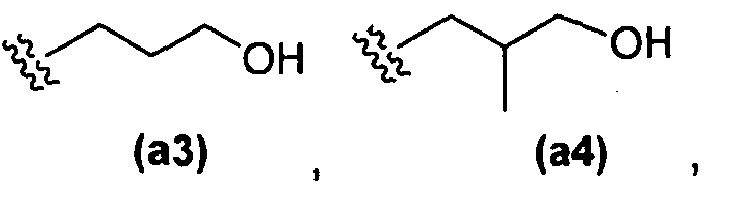

- The following is a general method for synthesizing the compounds of this invention. The starting materials and reagents used for synthesizing these compounds are commercially available or can be manufactured in accordance with a widely known method in this field using commercially available compounds.
- For example, the compounds of the general formula (VIII) described in this invention can be manufactured by the following synthesis route:
-
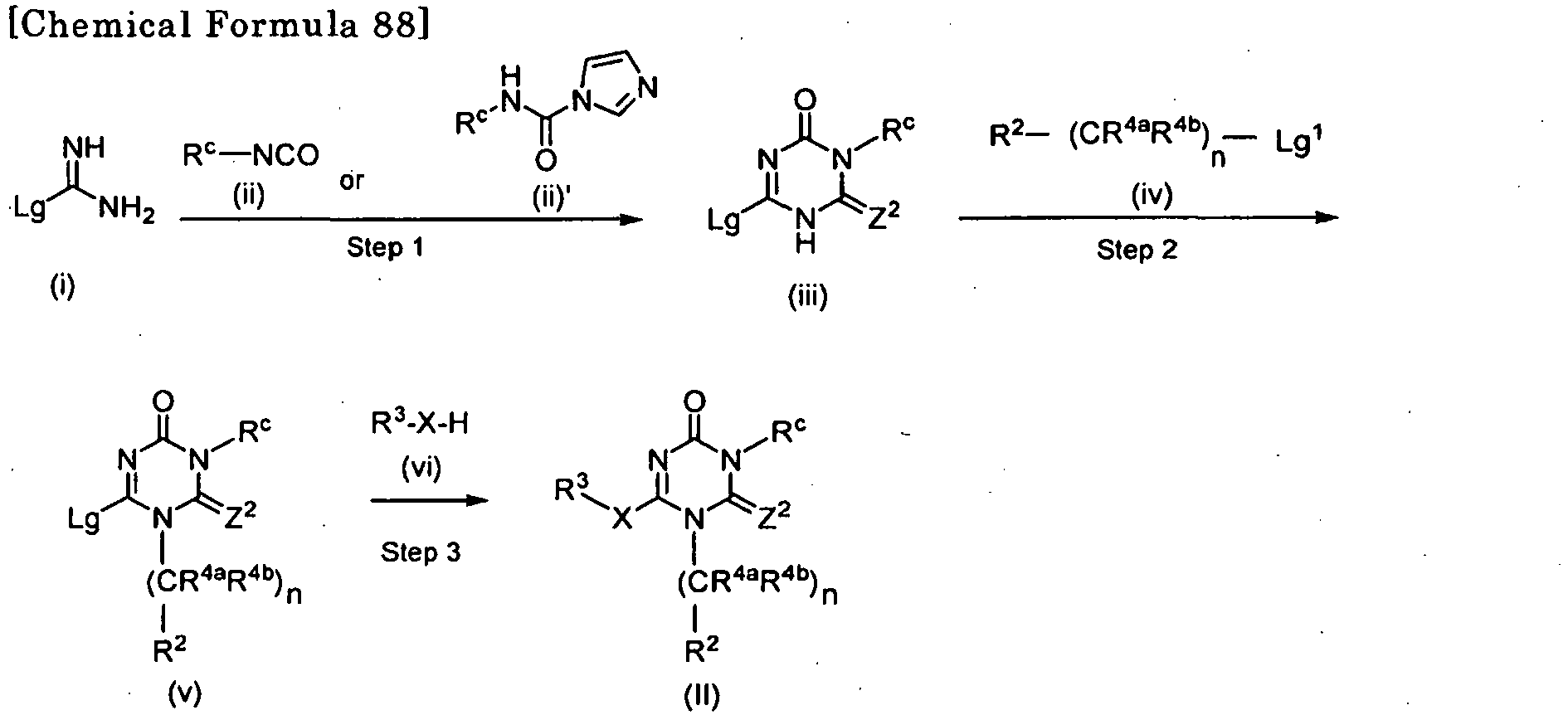

- The compound (i) or its hydrochloride or bromate is reacted with isocyanate (ii) or 1-carbamoyl imidazole (ii)' in a solvent, such as N,N-dimethylformamide, N,N-dimethylacetamide, N,N'-dimethyl imidazolidinone and dimethylsulfoxide, in the presence of a base, such as DBU, triethylamine and pyridine (preferably DBU) at a temperature between -20 and 50 °C, preferably at a temperature between -10°C and below zero. After that, the compound (iii) can be manufactured by reacting the reactive mixture with a carbonylating or thiocarbonylating agent, such as 1,1'-carbonyldiimidazole, 1,1'-thiocarbonyldiimidazole, phosgene, thiophosgene and triphosgene, and a base, such as DBU, triethylamine or pyridine (preferably DBU) at a temperature between -20 and 50°C ,preferably at a temperature between -10°C and below zero.
- The compound (v) can be manufactured by reacting the compound (iii) with the compound (iv) in a solvent, such as acetonitrile, acetone, DMF and DMSO, in the presence of a base, such as potassium carbonate and sodium carbonate, at a temperature between 50 °C to reflux, preferably at reflux.
- The examples of leaving group include halogen and -OSO2 (CtF2t+1) wherein t is an integer from 1 to 4. As halogen, chloro, iodo and bromo are preferred. As -OSO2 (CtF2t+1) group, -OTf group (trifluoromethanesulfonate) is preferred. This leaving group can also be used in the aforementioned (60').
- The base and/or carbonylating agent or thiocarbonylating agent in (Step 1) and (Step 2) can also be used in the aforementioned (60').
- The "carbonylating agent" and "thiocarbonylating agent" include a reagent that is used in a reaction where -C (=O) or -C (=S) - is inserted.
- The compound indicated by the general formula (II) can be manufactured by reacting the compound (v) with the compound (vii) in a solvent, such as NMP, DMF and DMSO, or under solvent-free conditions under microwave irradiation at a temperature between 150°C and 250°C, preferably at a temperature between 200°C and 230°C, or in a solvent, such as t-butanol, in the presence of an acid, such as acetic acid, at a temperature between 60°C and 150°C, preferably at a temperature between 80°C and 120°C.
- Using optically active isocyanate (ii) enables to synthesize optically active compound (II).
-

- The compound (ix) can be manufactured by reacting the compound (vii) with alkylating agent (viii), such as methyl iodide and ethyl iodide, in a solvent, such as methanol and ethanol, at a temperature between - 40 and 30°C, preferably below zero.
- The compound (x) can be manufactured by reacting the compound (ix) with isocyanate, such as N-(chlorocarbonyl) isocyanate, in a solvent, such as dichloromethane, chloroform, 1,2-dichloroethane, in the presence of a base, such as triethylamine and N,N-diisopropylethylamine, at a temperature between - 20 and 30°C, preferably below zero.
- The compound (xi) can be manufactured by reacting the compound (x) with the compound (vi) in a solvent, such as t-butanol, isopropanol, ethanol and acetonitrile, in the presence of an acid, such as acetic acid, formic acid and methanesulfonic acid, at reflux.
- The compound indicated by the general formula (II) can be manufactured by reacting the compound (xi) with the compound (xii) in a solvent, such as DMF and-NMP, in the presence of a base, such as potassium t-butoxide and sodium hydride, at a temperature between 40 and 100°C, preferably at a temperature between 50 and 70°C.
- Using optically-active compound (xii) enables to synthesize optically-active compound (II).
-

- The compound (xiii) can be manufactured by reacting a mixture of the compound (x) obtained by the method B, the alcohol (xii) whose one hydroxyl group is protected, such as 2-(tetrahydro-2H-pyran-2-yloxy) ethanol and a solvent, such as THF and dioxane with triphenylphosphine, and diethyl azodicarboxylate.
- The compound (xiv) can be manufactured by reacting the compound (xiii) with the compound (vi) in the presence of an acid, such as formic acid and acetic acid, at reflux.
-

- The compound (xvi) can be manufactured by reacting the compound (xv) obtained by the method A or B with acid, such as hydrochloric acid-dioxane solution, hydrochloric acid-methanol, hydrochloric acid-ethyl acetate solution and trifluoroacetic acid.
- The compound (xviii) can be manufactured by reacting the compound (xvi) with the acid halide (xvii) (R12 is halogen) in a solvent, such as THF and dioxane, in the presence of a base, such as triethylamine and diisopropylethylamine. If necessary, dimethylaminopyridine can be added.
- Alternatively, the compound (xviii) can be manufactured by reacting the compound (xvi) with the carboxylic acid (xvii, R12 is hydroxy) in a solvent, such as THF and DMF, in the presence of a condensing agent, such as 1-hydroxybenzotriazole and 1-ethyl-3-(3-dimethylaminopropyl) carbodiimide hydrochloride, and a base, such as triethylamine and diisipropylethylamine.
-

- The compound (xx) can be manufactured by reacting the compound (x) obtained by the method B with the compound (xix) in a solvent, such as DMF, NMP and THF, in the presence of a base, such as DBU, potassium t-butoxide and sodium hydride, at a temperature between 0 and 80°C, preferably at a temperature between 30 and 50°C.
- The compound (xxi) can be manufactured by reacting the compound (xx) with the compound (vi) in a solvent, such as t-butanol, isopropanol, ethanol and acetonitrile, in the presence of an acid such as formic acid, acetic acid and methanesulfonic acid at reflux.
- The compound (xxii) can be manufactured by reacting the compound (xxi) with a solution, such as lithium hydroxide aqueous solution, sodium hydroxide aqueous solution and potassium hydroxide aqueous solution, in a solvent, such as methanol and ethanol, or in a mixture of such solvent and a solvent, such as THF and dioxane.
-

- The compound (xxiv) can be manufactured by reacting the compound (xxiii) obtained by the method A or B with a solution, such as lithium hydroxide aqueous solution, sodium hydroxide aqueous solution and potassium hydroxide aqueous solution, in a solvent, such as methanol and ethanol, or in a mixture of such solvent and a solvent, such as dioxane and THF.
- The compound (xxvi) can be manufactured by reacting the compound (xxiv) with the compound (xxv) in a solvent, such as THF, DMF and NMP, in the presence of a condensing agent, such as 1-hydroxybenzotriazole, HOAt, 1-ethyl-3-(3-dimethylaminopropyl) carbodiimide hydrochloride, HATU and PyBOP, and a base, such as triethylamine and diisipropylethylamine.
-

- The compound (xxvii) can be manufactured by reacting the compound (xi) obtained by the method B with a halogenating agent, such as phosphorous oxychloride and phosphorous oxybromide, under solvent-free conditions or in a solvent, such as toluene and tetrahydrofuran, at a temperature between 0 and 100°C, preferably at a temperature between 40 and 60°C.
- The compound (xxviii) can be manufactured by reacting a mixture of the alcohol (xv) whose one hydroxyl group is protected, such as 2-(tetrahydro-2H-pyran-2-yloxy) ethanol, and a solvent, such as THF, dioxane and DMF, with the compound (xv) after adding a base, such as sodium hydride and potassium t-butoxide.
- The compound (xxix) can be manufactured by reacting the compound (xxviii) with an acid, such as hydrochloric acid, p-toluenesulfonic acid or its hydrate and pyridine p-toluenesulfonate, in a solvent, such as methanol.
-

- The compound (xxxi) can be manufactured by reacting the compound (xxvii) obtained by the method G with the compound (xxx) in a solvent, such as THF and dioxane.
-

- The compound (xxxiii) can be manufactured by reacting the compound (xxvii) obtained by the method G with the compound (xxxii) in a solvent, such as THF and dioxane, after adding a base, such as sodium hydride.
-


- The compound (xxxiv) can be manufactured by reacting the compound (xxvii) obtained by the method G with the compound (xxxiii) in a solvent, such as THF and dioxane, in the presence of a palladium catalyst; and a solution, such as potassium carbonate, cesium carbonate and sodium carbonate aqueous solution, at a temperature between 50°C and reflux, preferably at reflux, or under microwave irradiation at a temperature of 120 and 200°C, preferably at a temperature between 130 and 150°C.
-

- The compound (xxxvi) can be manufactured by hydrolyzing the compound (xxxv) using a mixture of an ethers solvent, such as dioxane, THF and DME, an alcohols solvent, such as ethanol and methanol, or a solvent, such as DMF, DMA, DMSO and NMP, and water, as well as using a base, such as sodium hydroxide and lithium hydroxide. Although the preferable reaction temperature is room temperature, it can be increased if the reaction proceeds slowly.
- The compound (xxxvii) can be obtained by dissolving the compound (xxxvi) in an alcohols solvent, such as methanol and ethanol, and performing catalytic reduction using a hydrogenation reactor (such as H-Cube [10%Pt-C, H2 = 1 atm]) or a metallic catalyst, such as palladium-carbon, platinum oxide and chlorotris (triphenylphosphine) rodiumu (I).
-

- The compound (ix1) can be manufactured by reacting a mixture of the compound (x) obtained by the method B, the alcohol (xxxviii) and a solvent, such as THF and dioxane, with triphenylphosphine, and diethyl azodicarboxylate.
- The compound (II) can be manufactured by reacting the compound (ixl) with the compound (vi) in the presence of an acid, such as formic acid and acetic acid, at reflux.
- Using the optically active alcohol (xxxviii) enables to synthesize the optically-active compound (II).
- The alcohol used as an intermediate (xxxviii) is commercially available or can be manufactured according to a method specified in the following documents:
- Tetrahedron (1993), 49(11), 2325-44.
- Chemical Communications (2008), (47), 6408-6410.
- Tetrahedron (1990), 46(24), 8207-28.
- Synlett (1994), (3), 199-200.
- Bulletin of the Chemical Society of Japan (1994), 67(8), 2244-7
- Canadian Journal of Chemistry (1996), 74, 1731-1737
- Chemistry--A European Journal (2010), 16(2), 577-587
- Bioorganic & Medicinal Chemistry Letters (2009), 19(21), 6196-6199.
- Chemische Berichte (1985), 118(10), 3966-79.
- Tetrahedron: Asymmetry (1992), 3(4), 515-16.
- Organic Letters (1999), 1(6), 957-959.
- Chimia (1986), 40(5), 172-3.
-

- The compound (xxxix) can be manufactured by reacting the compound (xxxvii) obtained by the method from A to F or L with the compound (xxxviii) in a solvent, such as THF and dioxane, in the presence of a palladium catalyst and a solution, such as potassium carbonate, cesium carbonate and sodium carbonate aqueous solution, at a temperature between 50°C and reflux, preferably at reflux, or under microwave irradiation at a temperature between 120 and 200°C, preferably at a temperature between 130 and 150°C.
- The compound (xl) can be obtained by dissolving the compound (xxxix) in an alcohols solvent, such as methanol and ethanol, and performing catalytic reduction using a hydrogenation reactor (such as H-Cube (10%Pt-C, H2=1 atm)) or a metallic catalyst, such as palladium-carbon, platinum oxide, chlorotris (triphenylphosphine) rhodium (I).
-

- The compound (xlii) can be manufactured by reacting the compound (xli) obtained by the method from A to F or L with the compound (xxxviii) in a solvent, such as THF and dioxane, in the presence of a palladium catalyst and a solution, such as potassium carbonate, cesium carbonate and sodium carbonate aqueous solution, at a temperature between 50°C and reflux, preferably at reflux, or under microwave irradiation at a temperature between 120 and 200°C, preferably at a temperature between 130 and 150°C.
- The compound (xliii) can be obtained by dissolving the compound (xlii) in an alcohols solvent, such as methanol and ethanol, and performing catalytic reduction using a hydrogenation reactor (such as H-Cube (10%Pt-C, H2=1 atm)) or a metallic catalyst, such as palladium-carbon, platinum oxide and chlorotris (triphenylphosphine) rhodium (I).
-

- The compound (xlvi) can be obtained from the compound (xlvi) in the presence of Lewis acid or trifluoroacetic acid, under solvent-free conditions or in an appropriate solvent at a temperature between 0°C and reflux.
- The compound (xlviii) can be manufactured by reacting the compound (xlvi) with the compound (xlvii) in a solvent; such as THF and dioxane, in the presence of a palladium catalyst and a solution, such as potassium carbonate, cesium carbonate and sodium carbonate aqueous solution, at a temperature between 50°C and reflux, preferably at reflux, or under microwave irradiation at a temperature of 120 and 200°C, preferably at a temperature between 130 and 150°C.
-

- The compound (xli) can be manufactured by reacting a mixture of the compound (iii) obtained by the method A, the alcohol (xl) and a solvent, such as THF and dioxane, with triphenylphosphine, and diethyl azodicarboxylate.
- The compound (xlii) can be manufactured by reacting the compound (xli) with the compound (vi) in the presence of formic acid and acetic acid, at reflux.
-

- The compound (xliii) can be manufactured by reacting the compound (v) obtained by the method A in a solvent, such as water, acetic acid and methanol, in the presence of an oxidation agent, such as hydrogen peroxide water and MCPBA, at a temperature between -20 and 100°C, preferably at room temperature.
- The compound (xlv) can be manufactured by reacting the compound (xliii) with the compound (xliv) in a solvent, such as acetonitrile, acetone, DMF and DMSO, in the presence of a base, such as potassium carbonate and sodium carbonate, at a temperature between 50 °C and reflux, preferably at reflux.
- The compounds of this invention (I) are not limited to a specific isomer but include all possible isomers and racemates. For example, they include a tautomer as shown below. The compounds indicated by the formula (VIII) also include similar tautomers.

- In addition, one or more hydrogen atoms, carbon atoms or other atoms of the compound of the formula (VIII) can be replaced by an isotope of the hydrogen atom, carbon atom or other atoms. Compounds of the formula (VIII) include all radiolabeled forms of compounds of the formula (VIII). The "radiolabeled," "radiolabeled form" of the compound of the formula (VIII) are encompassed by the present invention and useful as a research and/or diagnostic tool in metabolism pharmacokinetic studies and in binding assays. It is also useful for a medicament.
- Examples of isotopes that can be incorporated into the compound of the formula (VIII) of the invention include isotopes of hydrogen, carbon, nitrogen, oxygen, phosphorous, sulfur, fluorine, iodine and chlorine, such as 2H, 3H, 11C, 13C, 14C, 15N, 18O, 17O, 31P, 32P, 35S, 18F, 123I and 36Cl, respectively. Radiolabeled compounds of the present invention can be prepared by methods known in the art. This method may include reacting a suitably halogen-substituted precursor of a compound of formula (VIII) with tritium gas in the presence of a suitable catalyst such as Pd/C, in the presence or absence of a base. Other suitable methods for preparing tritiated compounds can be found in Isotopes in the Physical and Biomedical Sciences, Vol. 1, Labeled Compounds (Part A) Chapter 6, (1987). 14C-labeled compounds can be prepared by employing starting materials having a 14C carbon.
- The compounds of the above formula (VIII) or its salt can be converted into hydrate or solvate thereof by known methods. Examples of suitable solvates are solvate with acetone, 2-butanol, 2-propanol, ethanol, ethyl acetate, tetrahydrofuran, diethyl ether or the like. For example, it includes a non-toxic and water-soluble hydrate or solvate such as a solvate with ethanol.
- As pharmaceutically acceptable salt of the compound of the formula (VIII), examples include salts with alkaline metals (e.g. lithium, sodium and potassium), alkaline earth metals (e.g. calcium and barium), magnesium, transition metal (e.g. zinc and iron), ammonia, organic bases (e.g. trimethylamine, triethylamine, dicyclohexylamine, ethanolamine, diethanolamine, triethanolamine, meglumine, diethanolamine, ethylenediamine, pyridine, picoline, quinoline), and amino acids, and salts with inorganic acids (e.g. hydrochloric acid, sulfuric acid, nitric acid, carbonic acid, hydrobromic acid, phosphoric acid and hydroiodic acid) and organic acids (e.g. formic acid, acetic acid, propionic acid, trifluoroacetic acid, citric acid, lactic acid, tartaric acid, oxalic acid, maleic acid, fumaric acid, mandelic acid, glutaric acid, malic acid, benzoic acid, phthalic acid, ascorbic acid, benzenesulfonic acid, p-toluenesulfonic acid, methanesulfonic acid and ethanesulfonic acid). Especially preferable are salts with hydrochloric acid, sulfuric acid, phosphoric acid, tartaric acid, or methanesulfonic acid. These salts may be formed by usual methods.
- The compound of the formula (VIII) or its pharmaceutically acceptable salt may form solvate such as hydrate, and/or crystalline polymorphism, and the present invention also includes such various kinds of solvate and crystalline polymorphism. The "solvate" includes a compound of the formula (VIII) which coordinate arbitrary number of solvent molecules such as water molecules. The compound of the formula (VIII) or its pharmaceutically acceptable salt can adhere water or form hydrate by absorbing water molecules after leaving in the atmosphere Moreover, the compound of the formula (VIII) or its pharmaceutically acceptable salt can form the crystalline polymorphism by recrystallization.
- The compound of the formula (VIII) of the present invention or its pharmaceutically acceptable salt may form prodrug, and the present invention also includes such various kinds of prodrug. Prodrug is a derivative of the compound of the present invention having a group which can be chemically or metabolically decomposed and the one which becomes a pharmaceutically active compound of the present invention by solvolysis or physiological conditions in vivo. Prodrug includes a compound which converts into the compound of the formula (VIII) by enzymatical oxidation, reduction, hydrolysis or the like under physiological conditions in a living body, and a compound which converts into the compound of the formula (VIII) by hydrolyzing by stomach acid or the like. The method of selecting suitable prodrug derivatives and the method of manufacturing them are disclosed in Design of Prodrugs, Elsevier, and Amsterdam 1985. Prodrug itself may possess the activity.
- When the compound of the formula (VIII) or its pharmaceutically acceptable salt has a hydroxy group, examples of the prodrug includes acyloxy derivatives and sulfonyloxy derivatives which can be manufactured by reacting a compound having a hydroxy group with a suitable acid halide, suitable acid anhydride, suitable sulfonyl chloride, suitable sulfonylanhydride and mixed anhydride. For example, CH3COO-, C2H5COO-, t-BuCOO-, C15H31COO-, PhCOO-, (m-NaOOCPh)COO-, NaOOCCH2CH2COO-, CH3CH(NH2) COO-, CH2N(CH3) 2COO-, CH3SO3-, CH3CH2SO3-, CF3SO3-, CH2FSO3-, CF3CH2SO3-, p-CH3-O-PhSO3-, PhSO3-, and p-CH3PhSO3- are exemplified.
- The compound of the general formula (VIII) has an antagonistic effect on P2X3 and/or P2X2/3 receptor, and therefore, is useful as a therapeutic agent for diseases associated with a P2X3 and/or P2X2/3 receptor. Since P2X3 and/or P2X2/3 receptor is believed to associate with pain and diseases in urinary system (Nature 407, 26, 1011-1015 (2000), Nature, Vol.407, No.26, 1015-1017 (2000), Non-Patent Document 1, Non-Patent Document 2), the compound of the invention is useful in the treatment, alleviation of symptoms or prevention of diseases, such as for example, pain associated with rheumatoid arthritis, pain associated with osteoarthritis, headache, migraine, orofacial pain, toothache, glossagra, pain associated with temporomandibular arthrosis, trigeminal neuralgia, shoulder pain, pain associated with hernia of intervertebral disk, pain associated with cervical spondylosis deformans, pain associated with spinal canal stenosis, pain associated with thoracic outlet syndrome, pain associated with traumatic brachial plexus injury syndrome, pain associated with shoulder-hand syndrome, pain associated with whiplash injury, chest pain, abdominal pain, colic pain, pain associated with cholelithiasis, pain associated with pancreatitis, pain associated with urinary calculosis, pain associated with irritable bowel syndrome, lumbar backache, sciatica, pain associated with bone fracture, pain associated with osteoporosis, joint pain, pain associated with gout, pain associated with cauda equina syndrome, pain associated with ankylosing spondylitis, sore muscle, pain associated with painful spasm, pain associated with myofascial pain syndrome, pain associated with fibromyalgia syndrome, complex regional pain syndrome, pain associated with arteriosclerosis obliterans, pain associated with Buerger's disease, pain associated with Raynaud's phenomenon, pain associated with zoster, causalgic pain, pain associated with entrapment neuropathy, pain associated with carpal canal syndrome, pain associated with diabetes, pain associated with Guillain-Barre syndrome, pain associated with Hansen's disease, pain associated with drug therapy, pain associated with radiation therapy, pain associated with cord injury, pain associated with syringomyelia, pain associated with stroke, thalamic pain, pain associated with deafferentation, sympathetically-maintained pain, ABC syndrome, multiple sclerosis, pain associated with skin disease, cancer pain, postoperative pain, pain associated with injury, pain associated with gangrene, pain associated with somatoform disorder, pain associated with somatization disorder, pain associated with depression, pain associated with Parkinson's disease, knee joint pain, pain associated with arthritis, neuropathic pain such as menstrual pain, intermenstrual pain, labor pains, inflammatory pain, nociceptive pain, psychogenic pain, pain of bladder such as overactive bladder, blader inflammation, incontinence, pollakiuria, urinary urgency, cystatrophia, prostatic hypertrophy, prostatitis, prostate pain, detrusor hyperreflesxia, urination disorder, nervous pollakiuria, chronic prostatitis, chronic cystitis.
- "A pharmaceutical composition having an improving effect of urination disorder" includes "a pharmaceutical composition for treating overactive bladder", "a pharmaceutical composition for treating interstitial bladder cystitis".
- The compound of the present invention or the pharmaceutical composition of the present invention can be a drug with reduced side-effect such as effect on motor function because it has a high affinity for ATP receptor, especially P2X3 receptor, and also has high subtype selectivity and high selectivity for other receptors. Also, the compound encompassed by the present invention or the pharmaceutical composition encompassed by the present invention is advantageous because of its high P2X3 receptor inhibitor activity in the presence of RSA, high metabolic stability, high oral absorption, good bioavailability, low clearance, long half-life, prolonged duration of action, low activity of hepatic enzyme inhibition, high unbound fraction in serum and/or high safety.
- In another embodiment, the present invention provides a pharmaceutical composition comprising an effective amount of the compound of the present invention, in combination with a pharmaceutically acceptable carrier.
- For use of the compound of the present invention as a medicament, a pharmaceutical composition can be prepared according to conventional methods, using pharmaceutically acceptable carriers well-known in the art, such as excipients, binders, disintegrants, lubricants, colourants, flavors, surfactants.
- For the pharmaceutical composition of the present invention to be administered in the treatment of mammals including human, an appropriate unit dosage form may be selected depending on the purpose of the treatment and the route of administration. Specifically, such unit dosage form includes oral formulations such as tablet, coated tablet, powder, granule, capsule, liquid, pill, suspension, emulsion, and parenteral formulations such as injectable solution, suppository, ointment, patch, aerosol. Such unit dosage form can be formulated according to methods well-known in the art.
- The amount of the present compound in a formulation can vary depending on its dosage form, route for administration, dosing regimen.
- Means for administration of the present pharmaceutical composition may be selected depending on dosage form, patient's age, sex, body weight, severity of the disease, and other factors, and route for administration can be selected from various routes such as oral, subcutaneous, transdermal, rectal, intranasal, buccal.
- Dose of the present compound in the present pharmaceutical composition can be determined depending on the choice of route for administration, patient's age, sex, body weight, severity of the disease, the compound to be administered, and other factors, and can be generally from 0.05 to 1000 mg/kg/day, preferably from 0.1 to 10 mg/kg/day, for oral administration to adults. For parenteral administration, dose can vary widely depending on its route but generally from 0.005 to 100 mg/kg/day, preferably from 0.01 to 1 mg/kg/day. Such pharmaceutical composition of the present invention may be administered once a day or in several times at a divided dosage in a day.
- Following examples illustrate the present invention in more detail, but the present invention is not limited by these examples. Those examples not failing withint the scope of the invention as claimed are marked with an asterisk (*). The meaning of each abbreviation is as folllows:
- Me: methyl
- Et: ethyl
- Bu: butyl
- Ac: acetyl
- TMS: tetramethylsilane
- TMS-Cl: trimethylsilyl chloride
- DMSO: dimethyl sulfoxide
- DMF: dimethylformamide
- THF: tetrahydrofuran
- DBU: 1,8-diazabicyclo [5.4.0]undeca-7-ene
- NMP: N-methyl-2-pyrrolidone
- HOAt:1-hydroxy-7-azabenzotriazole
- HATU: 2-(7-azabenzotriazole-1-yl)-1,1,3,3-tetramethyluronium hexafluorophosphate
- PyBOP: benzotriazole-1-yl-oxytrispyrrolidinophosphonium hexafluorophosphate
- rt: room temperature
- M: mol/L
-

- To a mixture of S-ethylisothiourea hydrobromide (14.8 g, 80 mmol) and DMF (75 mL) were added isopropyl isocyanate (8.2 mL, 84 mmol) and DBU (12.6 mL, 84 mmol) under ice-cooling, and the resulting mixture was stirred for 6 hours under ice-cooling. To the reaction mixture were added 1,1'-carbonyldiimidazole (15.57 g, 96 mmol) and DBU (18.0 mL, 120 mmol) under ice-cooling, and the resulting mixture was stirred for additional 2 hours. To the reaction mixture was added 2mol/L hydrochloric acid (240 mL) under ice-cooling over 50 minutes, and the precipitated solid was filtered off. The resulting solid was dissolved in ethyl acetate, and the mixture was dried over anhydrous magnesium sulfate and concentrated in vacuo to give 6-(ethylthio)-3-isopropyl-1,3,5-triazine-2,4(1H,3H)-dion (12.29 g, Yield: 71%) as pale brown solid.
- 1H-NMR (δ ppm TMS/DMSO-d6): 1.27 (6H, t, J=7.2 Hz)), 1.33 (6H, d, J=6.9 Hz), 3.05 (2H, q, J=7.2 Hz), 4.81 (1H, sept, J=6.9 Hz).
- To a mixture of 6-(ethylthio)-3-isopropyl-1,3,5-triazine-2,4(1H,3H)-dion (4.09 g, 19 mmol), potassium carbonate (7.88 g, 57 mmol) and acetonitrile (80 mL), 4-fluorbenzyl bromide (3.55 mL, 28.5 mmol) was added, and the resulting mixture was heated under reflux for 1.5 hours. To the mixture was added iced water (200 mL), and the mixture was extracted with ethyl acetate (100 mL). The extract was dried over anhydrous sodium sulphate, and concentrated in vacuo. The resulting residue was purified by silica gel column chromatography (ethyl acetate/hexane). The obtained residue was precipitated by ethyl acetate and hexane to give 6-(ethylthio)-1-(4-fluorbenzyl)-3-isopropyl-1,3,5-triazine-2,4(1H,3H)-dion (5.96 g, Yield: 97%) as colorless solid.
- 1H-NMR (δ ppm TMS/CDCl3): 1.37 (3H, t, J=7.5 Hz), 1.47 (6H, d, J=6.9 Hz), 3.21 (2H, q, J=7.5 Hz), 5.02 (1H, sept, J=6.9), 5.06 (2H, s), 7.01-7.07 (2H, m), 7.31-7.36 (2H, m).
-

- A mixture of 6-(ethylthio)-1-(4-fluorbenzyl)-3-isopropyl-1,3,5-triazine-2,4(1H,3H)-dion (0.323 g, 1 mmol), 4-isopropoxyaniline (0.907 g, 6 mmol) and 1-methyl-2-pyrrolidone (1 mL) was stirred at 230°C for 30 minutes under microwave irradiation. To the mixture was added water (100 mL), and the resulting mixture was extracted with ethyl acetate (100 mL). The extract was dried over anhydrous sodium sulphate, and concentrated in vacuo. The resulting residue was purified by silica gel column chromatography (ethyl acetate/hexane). The obtained residue was precipitated by ethyl acetate and hexane to give 1-(4-fluorbenzyl)-6-(4-isopropoxyphenylamino)-3-isopropyl-1,3,5-triazine-2,4(1H,3H)-dion (0.21 g, Yield: 51%) as colorless solid.
- 1H-NMR (δ ppm TMS/CDCl3): 1.34 (6H, d, J=6.0 Hz), 1.44 (6H, d, J=6.9 Hz), 4.49 (1H, sept, J=6.0 Hz),4.96 (1H, sept, J=6.9 Hz), 5.18 (2H, s), 6.75-7.06 (6H, m), 7.53-7.57 (2H, m).
-

- A mixture of 1-(4-chlorobenzyl)-6-(ethylthio)-3-isopropyl-1,3,5-triazine-2,4(1H,3H)-dion (0.60 g, 1.78 mmol), 3-chloro-4-isopropoxyaniline (0.99 g, 5.3 mmol) and acetic acid (10 mL) was stirred at 90°C for 6 hours. The reaction mixture was poured into saturated aqueous sodium bicarbonate (100 mL), and extracted with ethyl acetate (100 mL). The extract was washed by saturated aqueous sodium bicarbonate (100 mL) and brine (100 mL), dried over anhydrous sodium sulphate, and concentrated in vacuo. The resulting residue was purified by silica gel column chromatography (ethyl acetate/hexane). The obtained residue was precipitated by diethyl ether and hexane to give 6-(3-chloro-4-isopropoxyphenylamino)-1-(4-chlorobenzyl)-3-isopropyl-1,3,5-triazine-2,4(1H ,3H)-dion (0.605 g, Yield: 73%)as colorless solid.
- 1H-NMR (δ ppm TMS/DMSO-d6): 1.28 (6H, d, J=6.0 Hz), 1.34 (6H, d, J=6.9 Hz), 4.62 (1H, m), 4.83 (1H, sept, J=6.9 Hz), 5.18 (2H, brs), 7.12-7.15 (2H, m), 7.34-7.37 (3H, m), 7.43 (2H, d, J=8.7 Hz), 9.23 (1H, brs).
-

- To a mixture of 1-(4-chlorobenzyl)thiourea (11.19 g, 55.8 mmol) and methanol (50 mL) was added methyl iodide (4.18 ml, 66.9 mmol) under ice-cooling, and the resulting mixture was stirred at room temperature for 5 hours. The mixture was concentrated in vacuo. To the resulting residue were added dichloromethane (60 ml) and N,N-diisopropylethylamine (29.2 ml, 167 mmol), and then a solution of N-chlorocarbonyl isocyanate (4.94 ml, 61.4. mmol) in dichloromethane (20 ml) was added gradually under ice-cooling. The resulting mixture was stirred at room temperature for 1 hour. The precipitated solid was filtered off and the resulting solid was washed by small amount on dichloromethane. The mixture was dried under reduced pressure to give 1-(4-chlorobenzyl)-6-(methylthio)-1,3,5-triazine-2,4(1H,3H)-dion (9.19 g, Yield: 58%) as colorless solid.
- 1H-NMR (δ ppm TMS/DMSO-d6): 2.46 (3H, s), 5.04 (2H, s), 7.31-7.43 (4H, m), 11.60 (1H, brs).
-

- A mixture of 1-(4-chlorobenzyl)-6-(methylthio)-1,3,5-triazine-2,4(1H,3H)-dion (4.21 g, 14.8 mmol), 3-fluoro-4-isopropoxyaniline (3.77 g, 22.3 mmol), t-butanol (84 ml) and acetic acid (17 mL) was heated under reflux for 8 hours. The reaction mixture was poured into saturated aqueous sodium bicarbonate (300 mL), and the resulting mixture was extracted with ethyl acetate (100 mL). The extract was washed by saturated aqueous sodium bicarbonate (100 mL) and brine (100 mL), dried over anhydrous sodium sulphate, and concentrated in vacuo. The resulting residue was purified by silica gel column chromatography (ethyl acetate/hexane). The obtained residue is precipitated by diisopropyl ether to give 1-(4-chlorobenzyl)-6-(3-fluoro-4-isopropoxyphenylamino)-1,3,5-triazine-2,4(1H,3H)-dion (4.54 g, Yield: 76%) as colorless solid.
- 1H-NMR (δ ppm TMS/CDCl3): 1.36 (6H, d, J=6.1 Hz), 4.49 (1H, sept, J=6.1 Hz), 5.14 (2H, s), 6.47 (1H, m), 6.59 (1H, m), 6.97 (1H, m), 7.30 (2H, d, J=8.5 Hz), 7.47 (2H, d, J=8.5 Hz), 8.06 (1H, brs).
-

- To a mixture of 1-(4-chlorobenzyl)-6-(3-fluoro-4-isopropoxyphenylamino)-1,3,5-triazine-2,4(1H,3H)-dion (0.15 g, 0.37 mmol) and DMF (3 mL) was added potassium tert-butoxide (0.09 mg, 0.82 mmol) at room temperature and stirred for 5 minutes. To the mixture was added 2-(bromomethyl)pyridine hydrobromide (0.103 g, 0.41 mmol) and the resulting mixture was stirred at 60°C for 2 hours. To the reaction mixture was added water (20 mL), and the mixture was extracted with ethyl acetate (20 mLx2). The extract was washed by brine (20 mL), dried over anhydrous sodium sulphate, and concentrated in vacuo. The resulting residue was purified by silica gel column chromatography (ethyl acetate/hexane). The obtained residue was precipitated by hexane to give 1-(4-chlorobenzyl)-6-(3-fluoro-4-isopropoxyphenylamino)-3-(2-pyridylmethyl)-1,3,5-triazin e-2,4(1H,3H)-dion (0.069 g, Yield: 37%) as colorless solid.
- 1H-NMR (δ ppm TMS/CDCl3): 1.36 (2H, d, J=6.2 Hz), 4.47 (1H, sept, J=6.2 Hz), 5.15 (2H, s), 5.19 (2H, s), 6.51 (1H, m), 6.62 (1H, m), 6.97 (1H, m), 7.17-7.48 (7H, m), 7.65 (1H, m), 8.53 (1H, m).
-

- To a mixture of 1-(4-chlorobenzyl)-6-(methylthio)-1,3,5-triazine-2,4(1H,3H)-dion (0.28 g, 1 mmol), 2-(tetrahydro-2H-pyrane-2-yloxy)ethanol (0.15 g, 1.000 mmol), triphenylphosphine (0.53 g, 2 mmol) and THF (5 mL) was gradually added diisopropyl azodicarboxylate (0.23 ml, 1.2 mmol) under ice-cooling, and then the mixture was stirred at room temperature for 3 hours. To the reaction mixture was added water (20 mL), and the resulting mixture was extracted with ethyl acetate (20 mL×2). The extract was washed by brine (20 mL), dried over anhydrous sodium sulphate, and concentrated in vacuo. The resulting residue was purified by silica gel column chromatography (ethyl acetate/hexane) to give 1-(4-chlorobenzyl)-6-(methylthio)-3-[2-(tetrahydro-2H-pyrane-2-yloxy)ethyl]-1,3,5-triazine -2,4(1H,3H)-dion (0.32 g, Yield: 78%) as colorless amorphous.
- 1H-NMR (δ ppm TMS/CDCl3): 1.42-1.83 (6H, m), 2.58 (3H, s), 3.47 (1H, m), 3.74-4.32 (5H, m), 4.63 (1H, m), 5.10 (2H, s), 7.28-7.33 (4H, m).
- A mixture of 1-(4-chlorobenzyl)-6-(methylthio)-3-[2-(tetrahydro-2H-pyrane-2-yloxy)ethyl]-1,3,5-triazine -2,4(1H,3H)-dion (0.32 g, 0.78 mmol), 3-fluoro-4-isopropoxyaniline (0.40 g, 2.4 mmol) and acetic acid(3 mL) was stirred at 100°C for 3 hours. - The reaction mixture was poured into saturated aqueous sodium bicarbonate (100 mL), and extracted with chloroform (100 mLx2). The extract was dried over anhydrous sodium sulphate and concentrated in vacuo. The resulting residue was purified by silica gel column chromatography (methanol/chloroform), and The obtained residue was precipitated by diisopropyl ether and hexane to give 1-(4-chlorobenzyl)-6-(3-fluoro-4-isopropoxyphenylamino)-3-(2-hydroxyethyl)-1,3,5-triazine -2,4(1H,3H)-dion (0.12 g, Yield: 33%) as colorless solid.
- 1H-NMR (δ ppm TMS/CDCl3): 1.37 (6H, d, J=5.9 Hz), 1.96 (1H, t, J=5.9 Hz), 3.83 (2H, m), 4.05 (2H, m), 4.47 (1H, sept, J=5.9 Hz), 5.17 (2H, s), 6.48 (1H, m), 6.58 (1H, m), 6.97 (1H, m), 7.30 (2H, d, J=8.5), 7.47 (2H, d, J=8.5), 7.56 (1H, brs).
-

- To 3-(2-t-butoxycarbonylaminoethyl)-1-(4-chlorobenzyl)-6-(3-fluoro-4-isopropoxyphenylamino )-1,3,5-triazine-2,4(1H,3H)-dion (0.44 g, 0.8 mmol) was added 4mol/L hydrogen chloride in dioxane (5 mL) under ice-cooling, and the mixture was stirred at room temperature for 1 hour. The resulting precipitated solid was filtered off. The resulting solid was washed by diethyl ether and dried under reduced pressure to give 3-(2-aminoethyl)-1-(4-chlorobenzyl)-6-(3-fluoro-4-isopropoxyphenylamino)-1,3,5-triazine-2 ,4(1H,3H)-dion hydrochloride (0.31 g, Yield: 81%) as colorless solid.
- 1H-NMR (δ ppm TMS/DMSO-d6): 1.27 (6H, d, J=5.9 Hz), 3.01 (2H, m), 3.98 (2H, m), 4.57 (1H, sept, J=5.9 Hz), 5.27 (2H, brs), 6.98-7.17 (3H, m), 7.42 (3H, s), 7.87 (2H, brs).
-

- To a mixture of 3-(2-aminoethyl)-1-(4-chlorobenzyl)-6-(3-fluoro-4-isopropoxyphenylamino)-1,3,5-triazine-2 ,4(1H,3H)-dion hydrochloride (0.104 g, 0.22 mmol), triethylamine (0.074 mL, 0.54 mmol), dimethylaminopyridine (0.026 g, 0.22 mmol) and THF (2 mL) was added dropwise acetyl chloride (0.023 mL, 0.32 mmol) under ice-cooling, and the resulting mixture was stirred at room temperature for 30 minutes. To the reaction mixture was added water (20 mL), and the mixture was extracted with ethyl acetate (10 mL×2). The extract was washed by brine (10 mL), dried over anhydrous sodium sulphate, and concentrated in vacuo. The resulting residue was purified by silica gel column chromatography (ethyl acetate/hexane). The obtained residue was precipitated by diisopropyl ether and hexane to give 3-(2-acetylaminoethyl)-1-(4-chlorobenzyl)-6-(3-fluoro-4-isopropoxyphenylamino)-1,3,5-tria zine-2,4(1H,3H)-dion (0.104 g, Yield: 99%) as colorless solid.
- 1H-NMR (δ ppm TMS/CDCl3): 1.37 (6H, d, J=6.1 Hz), 1.86 (3H, s), 3.51 (2H, m), 4.00 (2H, m), 4.47 (1H, sept, J=6.1 Hz), 5.16 (2H, s), 5.83 (1H, m), 6.51 (1H, m), 6.60 (1H, m), 6.97 (1H, m), 7.27-7.51 (5H, m).
-

- To a mixture of 1-(4-chlorobenzyl)-6-(methylthio)-1,3,5-triazine-2,4(1H,3H)-dion (0.28 g, 1 mmol) and THF (3 mL) was added DBU (0.166 mL, 1.1 mmol), and the mixture was stirred at room temperature for 5 minutes. Further, methyl bromoacetate (0.104 mL, 1.1 mmol) was added to the mixture, and the resulting mixture was stirred at room temperature for 3 hours. To the reaction mixture was added water (20 mL). The precipitated solid was filtered off, dried, and purified by silica gel column chromatography (ethyl acetate/hexane) to give 1-(4-chlorobenzyl)-3-(methoxycarbonylmethyl)-6-(methylthio)-1,3,5-triazine-2,4(1H,3H)-di on (0.25 g, Yield: 69%) as colorless solid.
- 1H-NMR (δ ppm TMS/CDCl3): 2.59 (3H, s), 3.78 (3H, s), 4.69 (2H, s), 5.13 (2H, s), 7.27-7.35 (4H, m).
- A mixture of 1-(4-chlorobenzyl)-3-(methoxycarbonylmethyl)-6-(methylthio)-1,3,5-triazine-2,4(1H,3H)-di on (0.24 g, 0.68 mmol), 3-fluoro-4-isopropoxyaniline (0.17 mg, 1.03 mmol), t-butanol (4.8 mL) and acetic acid (0.4 mL) was heated at reflux for 32 hours. The reaction mixture was poured into saturated aqueous sodium bicarbonate (20 mL), and the resulting mixture was extracted with ethyl acetate (10 mL). The extract was washed by brine (10 mL), dried over anhydrous sodium sulphate, and concentrated in vacuo. The resulting residue was purified by silica gel column chromatography (ethyl acetate/hexane), and The obtained residue was precipitated by diisopropyl ether to give 1-(4-chlorobenzyl)-6-(3-fluoro-4-isopropoxyphenylamino)-3-(methoxycarbonylmethyl)-1,3,5 -triazine-2,4(1H,3H)-dion (0.31 g, Yield: 95%) as colorless amorphous.
- 1H-NMR (δ ppm TMS/CDCl3): 1.37 (6H, d, J=5.9 Hz), 3.78 (3H, s), 4.47 (1H, sept, J=5.9 Hz), 4.58 (2H, s), 5.17 (2H, s), 6.50 (1H, m), 6.60 (1H, m), 6.97 (1H, m), 7.28-7.47 (5H, m).
-

- To a mixture of 1-(4-chlorobenzyl)-6-(3-fluoro-4-isopropoxyphenylamino)-3-(methoxycarbonylmethyl)-1,3,5 -triazine-2,4(1H,3H)-dion (0.30 g, 0.63 mmol), methanol (3 mL), and THF (3 mL) was added 1mol/L lithium hydroxide (3.8 mL) under ice-cooling, and the mixture was stirred at room temperature for 1hour. The pH of the mixture was adjusted with 2mol/L hydrochloric acid to a pH of less than 2. To the mixture was added brine (20 mL), and the resulting mixture was extracted by chloroform (10 mLx3). The extract was dried over anhydrous sodium sulphate and concentrated in vacuo. The obtained residue was precipitated by diethyl ether and hexane to give 1-(4-chlorobenzyl)-6-(3-fluoro-4-isopropoxyphenylamino)-3-(hydroxycarbonylmethyl)-1,3,5 -triazine-2,4(1H,3H)-dion (0.28 g, Yield: 97%) as colorless solid.
- 1H-NMR (δ ppm TMS/CDCl3): 1.36 (6H, d, J=6.1 Hz), 4.47 (1H, sept, J=6.1 Hz), 4.62 (2H, s), 5.18 (2H, s), 6.51 (1H, m), 6.60 (1H, m), 6.96 (1H, m), 7.30 (2H, d, J=8.7 Hz), 7.45 (2H, d, J=8.7 Hz), 7.64 (1H, brs).
-

- To a mixture of 1-(4-chlorobenzyl)-6-(3-fluoro-4-isopropoxyphenylamino)-3-(hydroxycarbonylmethyl)-1,3,5 -triazine-2,4(1H,3H)-dion (0.083 g, 0.19 mmol) and DMF (2 mL) were added methylamine hydrochloride (0.015 g, 0.21 mmol), 1-hydroxybenzotriazole hydrate (0.03 g, 0.2 mmol), 4-dimethylaminopyridine (0.002 g, 0.02 mmol), 1-(3-dimethylaminopropyl)-3-ethylcarbodiimide hydrochloride (0.038 g, 0.2 mmol) and triethylamine (0.03 mL, 0.21 mmol), and the resulting mixture was stirred at 60°C for 4 hours. The reaction mixture was poured into water (20 mL), and extracted with ethyl acetate (20 mL). The extract was washed by brine (10 mL), dried over anhydrous sodium sulphate, and concentrated in vacuo. The resulting residue was purified by silica gel column chromatography (ethyl acetate/hexane). The obtained residue was precipitated by diisopropyl ether to give 1-(4-chlorobenzyl)-6-(3-fluoro-4-isopropoxyphenylamino)-3-(methylcarbamoylmethyl)-1,3, 5-triazine-2,4(1H,3H)-dion (0.076 g, Yield: 89%) as colorless solid.
- 1H-NMR (δ ppm TMS/CDCl3): 1.37 (6H, d, J=6.1 Hz), 2.85 (3H, d, J=4.9 Hz), 4.37 (2H, s), 4.46 (1H, sept, J=6.1 Hz), 5.15 (2H, s), 5.78 (1H, d, J=4.7 Hz), 6.46 (1H, m), 6.57 (1H, m), 6.95 (1H, m), 7.27-7.46 (4H, m), 7.99 (1H, ms).
-

- Phosphorus oxychloride (2.24 mL, 24 mmol) was added to 1-(4-chlorobenzyl)-6-(3-fluoro-4-isopropoxyphenylamino)-1,3,5-triazine-2,4(1H,3H)-dion (0.486 g, 1.2 mmol), and the mixture was stirred at 50°C for 2 hours. The resulting mixture was concentrated in vacuo. The resulting residue was dissolved in ethyl acetate (30 mL), and the mixture was washed by saturated aqueous sodium bicarbonate (10 mL) and brine (10 mL). The extract was dried over anhydrous sodium sulphate and concentrated in vacuo to give 4-chloro-1-(4-chlorobenzyl)-6-(3-fluoro-4-isopropoxyphenylamino)-1,3,5-triazine-2(1H)-one (0.57 g) as crude product.
- 1H-NMR (δ ppm TMS/CDCl3): 1.35 (6H, d, J=6.3 Hz), 4.51 (1H, sept, J=6.3 Hz), 5,28 (2H, s), 6.72 (1H, brs), 6.80 (1H, m), 6.91 (1H, m), 7.08 (1H, m), 7.30 (2H, d, J=8.4 Hz), 7.44 (2H, d, J=8.4 Hz).
-

- To a mixture of 2-(tetrahydro-2H-pyrane-2-yloxy)ethanol (0.17 mL, corresponding to 1.25 mmol) and THF (5.6 mL) was added 60% sodium hydride (0.05 g, 1.25 mmol), and the mixture was stirred at room temperature for 10 minutes. To the mixture was added a solution of crude 4-chloro-1-(4-chlorobenzyl)-6-(3-fluoro-4-isopropoxyphenylamino)-1,3,5-triazine-2(1H)-one (0.224 g, corresponding to 0.5 mmol) in THF (2 mL) under ice-cooling, and the resulting mixture was stirred at room temperature for 5 hours. To the reaction mixture was added half-saturated aqueous ammonium chloride (50 mL), and the mixture was extracted with ethyl acetate (50 mL). The extract was washed by brine (10 mL), dried over anhydrous sodium sulphate, and concentrated in vacuo. The resulting residue was purified by silica gel column chromatography (ethyl acetate/hexane). The obtained residue was precipitated by hexane to give 1-(4-chlorobenzyl)-6-(3-fluoro-4-isopropoxyphenylamino)-4-(2-(tetrahydro-2H-pyrane-2-ylo xy)ethoxy)-1,3,5-triazine-2(1H)-one (0.166 g, Yield: 62%) as colorless as oil.
- To a mixture of 1-(4-chlorobenzyl)-6-(3-fluoro-4-isopropoxyphenylamino)-4-(2-(tetrahydro-2H-pyrane-2-ylo xy)ethoxy)-1,3,5-triazine-2(1H)-one (0.15 g, 0.28 mmol) and methanol (1.5 mL) was added p-toluenesulfonic acid hydrate (0.08 g, 0.4 mmol), and the resulting mixture was stirred at room temperature for 2 hours. The reaction mixture was poured into half-saturated aqueous sodium bicarbonate (10 mL), and the mixture was extracted with ethyl acetate (20 mL). The extract was washed by brine (10 mL), dried over anhydrous sodium sulphate, and concentrated in vacuo. The resulting residue was purified by silica gel column chromatography (methanol/chloroform). The obtained residue was precipitated by hexane to give 1-(4-chlorobenzyl)-6-(3-fluoro-4-isopropoxyphenylamino)-4-(2-hydroxyethoxy)-1,3,5-triazi ne-2(1H)-one (0.104 g, Yield: 83%) as colorless solid.
- 1H-NMR (δ ppm TMS/CDCl3): 1.34 (6H, d, J=6.1 Hz), 2.53 (1H, brs), 3.91 (2H, brs), 4.44-4.52 (3H, m), 5.30 (2H, s), 6.60 (1H, brs), 6.75-7.10 (3H, m), 7.27-7.43 (4H, m).
-

- To a mixture of crude 4-chloro-1-(4-chlorobenzyl)-6-(3-fluoro-4-isopropoxyphenylamino)-1,3,5-triazine-2(1H)-one (0.19 g, corresponding to 0.4 mmol) and THF (4.7 mL) was added benzylamine (0.108 mL, 1 mmol), and the mixture was stirred at room temperature for 6 hours. To the reaction mixture were added water (10 mL) and ethyl acetate (10 mL), and the precipitated solid was filtered off. The resulting solid was washed by ethyl acetate, dried under reduced pressure to give 4-benzylamino-1-(4-chlorobenzyl)-6-(3-fluoro-4-isopropoxyphenylamino)-1,3,5-triazine-2(1 H)-one (0.102 g, Yield: 52%) as colorless solid.
- 1H-NMR (δ ppm TMS/DMSO-d6): 1.25 (6H, d, J=5.7 Hz), 4.28 (1H, m), 4.41 (1H, m), 4.54 (1H, sept, J=5.7 Hz), 5.22 (2H ,m), 7.08-7.52 (8H, m), 7.90 (1H, brs), 8.94 (1H, brs).
-

- To a mixture of 1-dodecanthiol (0.24 mL, 1.0 mmol) and THF (4.8 mL) was added 60% sodium hydride (0.045 g, 1.0 mmol), and the mixture was stirred at room temperature for 10 minutes. To the resulting mixture was added a solution of crude 4-chloro-1-(4-chlorobenzyl)-6-(3-fluoro-4-isopropoxyphenylamino)-1,3,5-triazine-2(1H)-one (0.19 g, corresponding to 0.4 mmol) in THF (2 mL) under ice-cooling, and the mixture was stirred at 50°C for 5 hours. To the reaction mixture was added half-saturated aqueous ammonium chloride (50 mL), and the mixture was extracted with ethyl acetate (50 mL). The extract was washed by brine (10 mL), dried over anhydrous sodium sulphate, and concentrated in vacuo. The resulting residue was purified by silica gel column chromatography (ethyl acetate/hexane). The obtained residue was precipitated by hexane to give l-(4-chlorobenzyl)-4-(dodecylthio)-6-(3-fluoro-4-isopropoxyphenylamino)-1,3,5-triazine-2(1 H)-one (0.092 g, Yield: 39%) as colorless oil.
- 1H-NMR (δ ppm TMS/CDCl3): 0.89 (3H, t, J=6.9 Hz), 1.27 (14H, s), 1.34 (6H, d, J=6 Hz), 1.50-1.70 (6H, m), 3.02 (2H, t, J=7.5 Hz), 4.48 (1H, sept, J=6 Hz), 5.26 (2H, s), 6.52 (1H, brs), 6.75 (1H, m), 6.88 (1H, m), 7.10 (1H, m), 7.28-7.50 (4H, m).
-

- To a mixture of 1-(4-chlorobenzyl)-6-(4-methoxycarbonylphenylamino)-3-isopropyl-1,3,5-triazine-2,4(1H,3 H)-dion (0.70 g, 1.63 mmol), methanol (4 mL) and THF (4 mL) was added 2mol/L lithium hydroxide (4.9 mL) under ice-cooling, and the mixture was stirred at room temperature for 8 hours. The reaction mixture was poured into water (50 mL), adjusted with 2mol/L hydrochloric acid to a pH of less than 3, and extracted with ethyl acetate (50 mL×2). The extract was washed by brine (50 mL), dried over anhydrous sodium sulphate, and concentrated in vacuo. The resulting solid was washed by diethyl ether to give 1-(4-chlorobenzyl)-6-(4-hydroxycarbonylphenylamino)-3-isopropyl-1,3,5-triazine-2,4(1H,3 H)-dion (0.60 g, Yield: 89%) as colorless solid.
- 1H-NMR (δ ppm TMS/CDCl3): 1.46 (6H, d, J=6.9 Hz), 4.98 (1H, sept, J=6.9 Hz), 5.19 (2H, s), 6.90 (2H, d, J=8.1 Hz), 7.31 (2H, d, J=8.7 Hz), 7.50 (2H, d, J=8.7 Hz), 7.90 (2H, d, J=8.1 Hz).
-

- To a mixture of 1-(4-chlorobenzyl)-6-(4-hydroxycarbonylphenylamino)-3-isopropyl-1,3,5-triazine-2,4(1H,3 H)-dion (0.08 g, 0.19 mmol) and THF (2 mL) were added benzylamine (0.023 mL, 0.21 mmol), 1-hydroxybenzotriazole (0.03 g, 0.21 mmol), 1-(3-dimethylaminopropyl)-3-ethylcarbodiimide hydrochloride (0.041 g, 0.2 mmol) and triethylamine (0.03 mL, 0.21 mmol) under ice-cooling, and the resulting mixture was stirred at room temperature for 4 hours. The reaction mixture was poured into water (30 mL), and the mixture was extracted with ethyl acetate (30 mL). The extract was washed by brine (30 mL), dried over anhydrous sodium sulphate, concentrated in vacuo. The resulting residue was purified by silica gel column chromatography (ethyl acetate/hexane). The obtained residue was precipitated by diethyl ether to give 1-(4-chlorobenzyl)-6-[4-(N-benzylcarbamoyl)phenylamino]-3-isopropyl-1,3,5-triazine-2,4(1 H,3H)-dion (0.07 g, Yield: 72%) as colorless solid.
- 1H-NMR (δ ppm TMS/CDCl3): 1.43 (6H, d, J=6.9 Hz), 4.67 (2H, d, J=4.0 Hz), 4.96 (1H, sept, J=6.9 Hz), 5.18 (2H, s), 6.34 (1H, m), 6.88 (2H, d, J=8.4 Hz), 7.17 (1H, brs), 7.29-7.34 (6H, m), 7.50 (2H, d, J=8.4 Hz), 7.80 (2H, d, J=8.4 Hz).
-

- To a mixture of 4-chloro-1-(4-chlorobenzyl)-6-(3-fluoro-4-isopropoxyphenylamino)-1,3,5-triazine-2(1H)-one (0.15 g, 0.34 mmol), [1,1'-bis(di-tert-butylphosphino)ferrocene]dichloropalladium (II) (22.23 mg, 0.034 mmol) and THF (3 mL) were added (E)-ethyl-3-(4,4,5,5-tetramethyl-1,3,2-dioxaborolane-2-yl)acrylate (0.063.g, 0.49 mmol) and 2mol/L potassium carbonate (0.682 ml, 1.364 mmol) under nitrogen atmosphere, and the resulting mixture was heated at reflux for 7 hours. To the mixture was added water (30 mL), and the resulting mixture was extracted with chloroform (30 mL). The extract was dried over anhydrous sodium sulphate and concentrated in vacuo. The resulting residue was purified by high speed liquid chromatography (0.3% HCO2H H2O/MeC 50-80%) to give 1-(4-chlorobenzyl)6-(3-chloro-4-isopropoxyphenylamino)-ethoxycarbonylethenyl1,3,5-triaz ine-2(1H)-one (0.05 g, Yield: 30%) as pale orange oil.
- 1H-NMR (δ ppm TMS/DMSO-d6): 1.20-1.28 (9H, m), 4.17-4.22 (2H, m), 4.54 (1H, brs), 5.10 (2H, brs), 7.40 (8H, brs), 8.14 (1H, s), 9.77 s).

- To a mixture of 1-(4-chlorobenzyl)6-(3-chloro-4-isopropoxyphenylamino)-ethoxycarbonylethenyl1,3,5-triaz ine-2(1H)-one (0.05 g, 0.1 mmol), THF (1 ml), EtOH (1 ml) and water (0.3 ml) was added lithium hydroxide hydrate (12.5 mg, 0.3 mmol), and the resulting mixture was stirred at room temperature for 3 days. The reaction mixture was purified by high speed liquid chromatography (0.3% HCO2H H2O/MeCN 40-70%) to give 1-(4-chlorobenzyl)-6-(3-chloro-4-isopropoxyphenylamino)-4-hydroxycarbonylethenyl-1,3,5-triazine-2(1H)-one (27 mg, Yield: 57%) as pale orange oil.
The obtained intermediate was dissolved in methanol (3 mL) and conducted by catalytic reduction by using H-Cube (10% Pt-C, H2 = latm). Then, the mixture was purified by high speed liquid chromatography (0.3% HCO2H H2O/MeCN 50-80%) to give 1-(4-chlorobenzyl)6-(3-chloro-4-isopropoxyphenylamino)-4-hydroxycarbonylethyl-1,3,5-tri azine-2(1H)-one (2.3 mg, Yield: 8.5%) as colorless oil. - 1H-NMR (δ ppm TMS/CDCl3): 1.36 (6H, d, J=5.7 Hz), 2.22 (1H, t, J=7.8 Hz), 2.74 (3H, brs), 4.48 (1H, sept, J=5.7 Hz), 5.18 (2H, s), 6.88 (2H, s), 7.13 (1H, s), 7.30 (2H, d, J=8.4 Hz), 7.45 (2H, d, J=8.4 Hz).
-

- To a mixture of 1-(4-chlorobenzyl)-6-(ethylthio)-1,3,5-triazine-2,4(1H,3H)-dion (1.00 g, 3.4 mmol), di-2-methoxyethylazodicarboxylate (1.02 g, 4.4 mmol), triphenylphosphine (1.15 g, 4.4 mmol) and dioxane (8 mL) was gradually added (R)-(-)-3-methyl 2-hydroxyisobutyrate (0.52 g, 4.4 mmol), and the mixture was stirred at room temperature for 1hour. To the reaction mixture was added water (40 mL), and the resulting mixture was extracted with ethyl acetate (20 mLx2). The extract was washed by brine (20 mL), dried over anhydrous magnesium sulfate, and concentrated in vacuo. The resulting residue was purified by silica gel column chromatography (ethyl acetate/hexane) to give (R)-1-(4-chlorobenzyl)-6-(ethylthio)-3-(2-methoxycarbonylpropyl)-1,3,5-triazine-2,4(1H,3H )-dion (0.98 g, Yield: 74%) as colorless amorphous.
- 1H-NMR (δ ppm TMS/CDCl3): 1.19 (3H, d, J=5.7 Hz), 1.37 (3H, t, J=7.1 Hz), 2.96 (1H, m), 3.12 (2H, q, J=7.1 Hz), 3.60 (3H, s), 3,98 (1H, m), 4.21 (1H, m), 5.08 (2H, s), 7.29-7.34 (4H, m).
- A mixture of (R)-1-(4-chlorobenzyl)-6-(ethylthio)-3-(2-methoxycarbonylpropyl)-1,3,5-triazine-2,4(1H,3H )-dion (0.32 g, 0.8 mmol), 3-fluoro-4-isopropoxyaniline (0.20 g, 1.2 mmol), acetic acid (0.72 g, 12 mmol) and t-butanol (6) was heated at reflux over night. The reaction mixture was poured into saturated aqueous sodium bicarbonate (40 mL), and the mixture was extracted with ethyl acetate (40 mL×2). The extract was washed by 2mol/L aqueous hydrochloric acid (20 mLx2), dried over anhydrous sodium sulphate, and concentrated in vacuo. The resulting residue was purified by silica gel column chromatography (ethyl acetate/hexane). The obtained residue was precipitated by diethyl ether to give (R)-1-(4-chlorobenzyl)-6-(3-fluoro-4-isopropoxyphenylamino)-3-(2-methoxycarbonylpropyl) -1,3,5-triazinane-2,4-dion (0.29 g, Yield: 71%) as pale purple powder.
- 1H-NMR (δ ppm TMS/CDCl3): 1.19 (3H, d, J=5.7 Hz), 1.37 (6H, d, J=5.7 Hz), 2.90 (1H, m), 3.60 (3H, s), 3.91 (1H, m), 4.10 (1H, m), 4.47 (1H, sept, J=5.7 Hz), 5.16 (2H, m), 6.49-6.62 (2H, m), 6.96 m), 7.29-7.47 (5H, m).
-
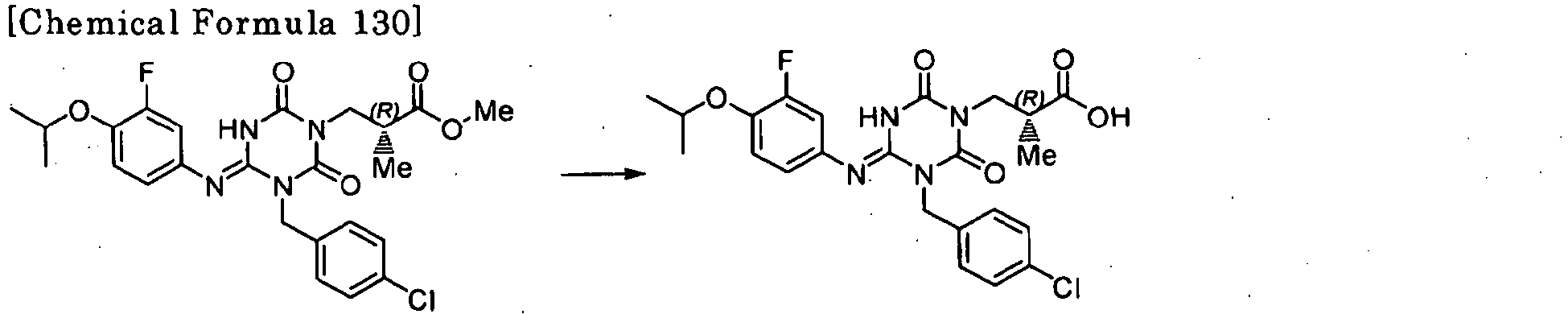
- To a mixture of (R)-1-(4-chlorobenzyl)-6-(3-fluoro-4-isopropoxyphenylamino)-3-(2-methoxycarbonylpropyl) -1,3,5-triazinane-2,4-dion (0.26 g, 0.5 mmol) and dioxane (4 mL) was added 1mol/L lithium hydroxide (1.6 mL), and the mixture was stirred at 50°C for 6 hours. To the mixture was added water (50 mL), adjusted with 2mol/L hydrochloric acid to a pH of about 3, and the precipitated solid was filtered off. The solid was dried at 40°C to give (R)-1-(4-chlorobenzyl)-6-(3-fluoro-4-isopropoxy-phenylamino)-3-(2-hydroxycarbonylpropyl)-1,3,5-triazine-2,4(1H,3H)-dion (0.21 g, Yield: 84%) as colorless solid.
- 1H-NMR (δ ppm TMS/CDCl3): 1.19 (3H, d, J=5.7 Hz), 1.34 (6H, d, J=5.7 Hz), 2.91 (1H, m), 3.89 (1H, m), 4.11 (1H, m), 4.44 (1H, sept, J=5.7 Hz), 5.16 (2H, s), 6.47-6.60 (2H, m), 6.93 (1H, m), 7.28-7.44 (4H, m), 7.94 (1H, brs).
-

- To a mixture of 1-(4-chlorobenzyl)-6-(3-fluoro-4-isopropoxyphenylamino)-3-(2,2,5-trimethyl-1,3-dioxane5-yl)methyl-1,3,5-triazine-2,4(1H,3H)-dion (7.9 g, 14.44 mmol) and methanol (160 mL) was added p-toluenesulfonic acid monohydrate (5.49 g, 28.9 mmol) and the mixture was stirred at room temperature for 1 hour. The reaction mixture was poured into saturated aqueous sodium bicarbonate (200 mL), and extracted with ethyl acetate (300 mLx2). The extract was washed by brine (300 mL), dried over anhydrous sodium sulphate, and concentrated in vacuo. The resulting residue was purified by silica gel column chromatography (ethyl acetate/hexane). The obtained residue was precipitated by water and the filtered off. The residue was dried at 70°C for 6 hours to give 1-(4-chlorobenzyl)-6-(3-fluoro-4-isopropoxyphenylamino)-3-[2,2-di(hydroxymethyl)propyl]-1,3,5-triazine-2,4(1H,3H)-dion (5.12 g, Yield: 70%) as a white powder.
- 1H-NMR (δ ppm TMS/CDCl3): 1.37 (6H, d, J=6.0 Hz), 3.26-3.46 (6H, m), 3.99 (2H, s), 4.48 (1H, sept, J=6.0 Hz), 5.19 (2H, s), 6.49-6.64 (2H, m), 6.99 (1H, m), 7.30-7.51 (5H, m).
-
- Calculated value C24H28ClFN4O5·1/3H2O,
C: 56.19, H: 5.63, Cl: 6.91, F: 3.70, N: 10.92
water:1.18% - Measured value C: 56.33, H: 5.60, Cl: 6.79, F: 3.58, N: 11.06
Karl Fischer water determination: 1.02% -

- To a mixture of S-ethylisothiourea hydrobromide (1.85 g, 10 mmol) and DMF (9.3 mL) were added t-butylisocyanide (1.2 mL, 10.5 mmol) and DBU (1.9 mL, 12.8 mmol) under ice-cooling, and the mixture was stirred under ice-cooling for 6 hours. To the reaction mixture were added 1,1'-carbonyldiimidazole (1.95 g, 12 mmol) and DBU (1.9 mL, 12.8 mmol) under ice-cooling, and the resulting mixture was stirred for additional 2 hours. To the mixture was added 2mol/L hydrochloric acid (80 mL) under ice-cooling over about 50 minutes, and the precipitated solid was filtered off. The resulting solid was dissolved in ethyl acetate, and the mixture was dried over anhydrous magnesium sulfate and concentrated in vacuo to give 6-(ethylthio)-3-t-butyl-1,3,5-triazine-2,4(1H,3H)-dion (1.15g, Yield: 50%) as pale brown solid.
- 1H-NMR (δ ppm TMS/DMSO-d6): 1.27 (3H, t, J=7.3 Hz), 1.55 (9H, s), 3.03 (2H, q, J=7.3), 12.30 (1H, brs)
- To a mixture of 6-(ethylthio)-3-t-butyl-1,3,5-triazine-2,4(1H,3H)-dion (22.93 g, 100 mmol), 4-chlorobenzylbromide (22.60 g, 110 mmol) and acetonitrile (200 mL) was added potassium carbonate (17.97 g, 130 mmol), and the mixture was heated at reflux for 3 hours. The reaction mixture was filtered to remove the insoluble. The filtrate was concentrated in vacuo to give 39.9g of crude 3-t-butyl-1-(4-chlorobenzyl)-6-(ethylthio)-1,3,5-triazine-2,4(1H,3H)-dion as pale brown oil. To the obtained crude product was added trifluoroacetic acid (100 mL) under ice-cooling, and the mixture was stirred at room temperature for 17 hours. The reaction mixture was concentrated in vacuo to give crude residue. The residue was precipitated to give 1-(4-chlorobenzyl)-6-(ethylthio)-1,3,5-triazine-2,4(1H,3H)-dion (29.03 g, Yield: 97%) as pale brown solid.
- 1H-NMR (δ ppm TMS/d6-DMSO): 1.25 (3H, t, J=7.3 Hz), 3.08 (2H, q, J=7.3 Hz), 5.02 (2H, s), 7.30-7.33 (2H, m), 7.39-7.42 (2H, m), 11.61 (1H, s).
-

- To a mixture of 1-(4-chlorobenzyl)-6-(3-fluoro-4-isopropoxyphenylimino)-1,3,5-triazine-2,4(1H,3H)-dion (100 mg, 0.247 mmol) and DMF (2 mL) was added cesium carbonate (105 mg, 0.321 mmol), and the mixture was stirred at room temperature for 5 minutes. Further, 2-bromoethanesulfonic acid sodium (62.5 mg, 0.296 mmol) was added to the mixture, and the resulting mixture was stirred at 120°C for 1 hour. To the reaction mixture was added 1mol/L aqueous hydrochloric acid to be acidic. The resulting mixture was extracted with chloroform. The extract was dried over anhydrous magnesium sulfate and concentrated in vacuo. The resulting residue was purified by high speed liquid chromatography (0.3% HCO2H H2O/MeCN 40-70%) to give 1-(4-chlorobenzyl)-6-(3-fluoro-4-isopropoxyphenylimino)-3-(2-sulfoethyl)-1,3,5-triazinane-2,4-dion (22 mg, Yield: 17%) as pale brown solid.
- 1H-NMR (δ ppm TMS/DMSO-d6): 1.26 (6H, d, J=6.1 Hz), 2.62-2.67 (2H, m), 3.93-3.99 (2H, m), 4.54 (1H, sept, J=6.1 Hz), 5.17 (2H, s), 6.90 (1H, m), 7.07-7.12 (2H, m), 7.35-7.42 (4H, m).
-

- To a mixture of 1-(4-chlorobenzyl)-6-(3-fluoro-4-isopropoxyphenylimino)-1,3,5-triazine-(1H, 3H)-2,4-dion (200 mg, 0.494 mmol) and DMF (4 mL) was added potassium tert-butoxide (83 mg, 0.741 mmol), and the mixture was stirred at room temperature for 10 minutes. Further, 1,3-propanesultone (91 mg, 0.741 mmol) was added and the resulting mixture was stirred at 90°C for 2 hours. To the reaction mixture was added 4mol/L hydrogen chloride in dioxane (20 mL) to be acidic. The mixture was concentrated in vacuo and the resulting residue was purified by high speed liquid chromatography (0.3% HCO2H H2O/MeCN 40-70%). The resulting residue was precipitated by ethyl acetate to give 1-(4-chlorobenzyl)-6-(3-fluoro-4-isopropoxyphenylimino)-3-(3-sulfopropyl)-1,3, 5-triazinane -2,4-dion (96 mg, Yield: 37%) as colorless solid.
- 1H-NMR (δ ppm TMS/DMSO-d6): 1.26 (6H, d, J=6.1 Hz), 1.81 (2H, m), 2.35-2.40 (2H, m), 3.70-3.74 (2H, m), 4.54 (1H, sept, J=6.1 Hz), 5.19 (2H, s), 6.90 (1H, m), 7.07-7.13 (2H, m), 7.34-7.42 (4H, m).
-

- To a mixture of 1-(4-chlorobenzyl)-6-(3-fluoro-4-isopropoxyphenylimino)-1,3,5-triazinane-2,4(1H,3H)-dion (1.214 g, 3 mmol), 2-bromoacetonitrile (0.4 g, 3.3 mmol) and DMF (6 mL) was added potassium carbonate (0.54 g, 3.9 mmol), and the mixture was stirred at 60°C for 1 hour. To the reaction mixture was added water (150 mL), and the mixture was extracted with ethyl acetate (150 mL). The extract was washed by brine (150 mL), dried over anhydrous magnesium sulfate, and concentrated in vacuo. The resulting residue was purified by silica gel column chromatography (ethyl acetate/hexane). The obtained residue was precipitated by ethyl acetate and hexane to give 1-(4-chlorobenzyl)-6-(3-fluoro-4-isopropoxyphenylimino)-3-cyanomethyl-1,3,5-triazinane-2 ,4-dion (0.78 g, Yield: 59%) as colorless solid.
- 1H-NMR (δ ppm TMS/CDCl3): 1.37 (6H, d, J=6.1 Hz), 4.47 (1H, sept, J=6.1 Hz), 4.69 (2H, s), 5.18 (2H, s), 6.49 (1H, m), 6.59 (1H, m), 6.99 (1H, m), 7.32 (2H, d, J=6.6 Hz), 7.49 (2H, d, J=6.6 Hz), 7.74 (1H, s).
- To a mixture of 1-(4-chlorobenzyl)-6-(3-fluoro-4-isopropoxyphenylimino)-3-cyanomethyl-1,3,5-triazinane-2 ,4-dion (0.10g, 0.23 mmol), ammonium chloride (84 mg, 1.58 mmol) and DMF (2 mL) was added sodium azide (73.2 mg, 1.13 mmol), and the mixture was stirred at 95°C for 2 hours. To the reaction mixture was added water (150 mL), and the mixture was extracted with ethyl acetate (150 mL). The extract was washed by brine (150 mL), dried over anhydrous magnesium sulfate, and concentrated in vacuo. The resulting residue was purified by HPLC and the obtained residue was precipitated by ethyl ether to give 1-(4-chlorobenzyl)-6-(3-fluoro-4-isopropoxyphenylimino)-3-(5-tetrazolylmethyl)-1,3,5-triaz inane-2,4-dion (60 mg, Yield: 55%) as colorless powder.
- 1H-NMR (δ ppm TMS/DMSO-d6): 1.27 (6H, d, J=5.9 Hz), 4.59 m), 5.15-5.27 (4H, m), 6.60 (1H, brs), 7.00-7.45 (7H, m), 9.44 (1H, mbrs).
-

- To a mixture of sodium methoxide (34.1 mg, 0.63 mmol) and methanol (2 mL) was added hydroxylamine hydrochloride (43.8 mg, 0.631 mmol) under ice-cooling. After the mixture was neutralized, 1-(4-chlorobenzyl)-6-(3-fluoro-4-isopropoxyphenylimino)-3-cyanomethyl-1,3,5-triazinane-2 ,4-dion (0.14 g, 0.315 mmol) was added and the resulting mixture was heated at reflux for 2 hours. To the mixture was added water (150 mL), and the mixture was extracted with ethyl acetate (150 mL). The extract was washed by brine (150 mL), dried over anhydrous magnesium sulfate, and concentrated in vacuo. The resulting residue was precipitated by ethyl ether to give 1-(4-chlorobenzyl)-6-(3-fluoro-4-isopropoxyphenylimino)-3-(2-amino-2-hydroxyiminoethyl) -1,3,5-triazinane-2,4-dion (91 mg, Yield: 61%) as colorless solid.
- 1H-NMR (δ ppm TMS/DMSO-d6): 1.27 (6H, d, J=5.9 Hz), 4.34 (2H, brs), 4.58 (1H, m), 5.25 (2H, brs), 5.43 (2H, brs), 7.00-7.45 (7H, m), 8.99 (1H, brs), 9.28 (1H, brs).
-

- To a mixture of 1-(4-chlorobenzyl)-6-(3-fluoro-4-isopropoxyphenylimino)-3-(2-amino-2-hydroxyiminoethyl) -1,3,5-triazinane-2,4-dion (80 mg, 0.17 mmol) and pyridine (2 mL) was added ethyl chlorocarbonate (20 mg, 0.19 mmol), and the mixture was stirred at room temperature overnight. Further, the reaction mixture was heated at reflux for 7 hours. The resulting reaction mixture was purified by high speed liquid chromatography (0.3% HCO2H H2O/MeCN 40-70%) to give 1-(4-chlorobenzyl)-6-(3-fluoro-4-isopropoxyphenylimino)-3-(5-oxo-4,5-dihydro-1,2,4-oxadia zol-3-ylmethyl)-1,3,5-triazinane-2,4-dion (20 mg, Yield: 24%) as colorless amorphous.
- 1H-NMR (δ ppm TMS/DMSO-d6): 1,27 (6H, d, J=5.9 Hz), 4.60 (1H, sept, J=5.9 Hz), 4.86 (2H, s), 5.27 (2H, s), 7.00-7.50 (7H, m), 9.44 (1H, brs), 12.48 (1H, brs).
-

- A mixture of 1-(4-chlorobenzyl)-6-(3-chloro-4-isopropoxyphenylimino)-1,3,5-triazinane-2,4-dion (300 mg, 0.712 mmol), (S)-4-(bromomethyl)-2,2-dimethyl-1,3-dioxolane (222 mg, 1.14 mmol), potassium tert-butoxide (176 mg, 1.57 mmol) and DMF (6 mL) was stirred at 60°C for 16 hours. To the reaction mixture was added water, and the mixture was extracted with ethyl acetate. The extract was washed by water, dried over anhydrous sodium sulphate, and concentrated in vacuo. The resulting residue was purified by silica gel column chromatography (ethyl acetate/hexane) to give (R)-1-(4-chlorobenzyl)-6-(3-chloro-4-isopropoxyphenylimino)-3-[(2,2-dimethyl-1,3-dioxolan e4-yl)methyl]-1,3,5-triazinane-2,4-dion (116 mg, Yield: 30%) as colorless solid. 1H-NMR (δ ppm TMS/DMSO-d6): 1.23-1.32 (12H, m), 3.73-3.76 (2H, m), 3.94-3.98 (2H, m), 4.24-4.26. (1H, m), 4.64 brs), 5.25 (2H, s), 7.16-7.25 (2H, m), 7.38-7.47 (5H, m), 9.30 (1H, s).
- To a solution of (R)-1-(4-chlorobenzyl)-6-(3-chloro-4-isopropoxyphenylimino)-3-[(2,2-dimethyl-1,3-dioxolan e4-yl)methyl]-1,3,5-triazinane-2,4-dion (110 mg, 0.205 mmol) in methanol (4 mL) was added p-toluenesulfonic acid monohydrate (59 mg, 0.31 mmol), and the mixture was stirred at room temperature for 5 hours. The reaction mixture was concentrated, and the residue was extracted with ethyl acetate. The extract was washed by water, dried over anhydrous sodium sulphate, and concentrated in vacuo. The resulting residue was precipitated by dichloromethane and hexane to give (R)-1-(4-chlorobenzyl)-6-(3-chloro-4-isopropoxyphenylimino)-3-(2, 3-dihydroxypropyl)-1,3,5 -triazinane-2,4-dion (88 mg, Yield: 86%) as colorless solid.
- 1H-NMR (δ ppm TMS/DMSO-d6): 1.28 (6H, d, J=5.6 Hz), 3.68-3.84 (4H, m), 4.54 (1H, brs), 4.73 (1H, brs), 5.25 (2H, s), 7.16-7.25 (2H, m), 7.38-7.46 (5H, m), 9.23 (1H, s).
-

- To a mixture of S-ethylisothiourea hydrobromide (6.00 g, 32.4 mmol) and DMF (30 mL) were added ethyl 6-isocyanatocaproate (4.48 mL, 34.0 mmol) and DBU (5.13 mL, 34.0 mmol) under ice-cooling, and the mixture was stirred under ice-cooling for 5 hours. To the reaction mixture were added 1,1'-carbonyldiimidazole (6.31 g, 38.9 mmol) and DBU (7.33 mL, 49.0 mmol) under ice-cooling, and the mixture was stirred at room temperature for 1 hour. To the reaction mixture was added 2mol/L hydrochloric acid (96 mL) under ice-cooling over 15 minutes, and the mixture was extracted with ethyl acetate. The extract was washed by water and brine, dried over anhydrous sodium sulphate. The extract was concentrated in vacuo to give 6-(ethylthio)-3-(2-ethoxycarbonylethyl)-1,3,5-triazine-2,4(1H,3H)-dion (7.86 g, Yield: 89%) as colorless solid.
- 1H-NMR (δ ppm TMS/CDCl3): 1.22 (3H, t, J = 7.1 Hz), 1.33 (3H, t, J = 7.3 Hz), 2.67 (2H, t, J = 7.2 Hz), 3.16 (2H, q, J = 7.3 Hz), 4.07-4.17 (4H, m).
- To the mixture of 6-(ethylthio)-3-(2-ethoxycarbonylethyl)-1,3,5-triazine-2,4(1H,3H)-dion (4.00 g, 14.6 mmol), 4-methylbenzylbromide (3.25 g, 17.6 mmol) and acetonitrile (80 mL) was added potassium carbonate (3.03 g, 22.0 mmol), and the mixture was heated at reflux for 2 hours. The reaction mixture was filtered off to remove insoluble, and concentrated in vacuo. The resulting residue was purified by silica gel column chromatography (ethyl acetate/hexane) to give 6-(ethylthio)-3-(2-ethoxycarbonylethyl)-1-(4-methylbenzyl)-1,3,5-triazine-2,4(1H,3H)-dion (5.10 g, Yield: 92%) as pale yellow solid.
- 1H-NMR (δ ppm TMS/CDC13): 1.25 (3H, t, J = 7.1 Hz), 1.37 (3H, t, J = 7.4 Hz), 2.35 (3H, s), 2.71 (2H, t, J = 7.3 Hz), 3.21 (2H, q, J = 7.4 Hz), 4.12 (2H, q, J = 7.1 Hz), 4.24 (2H, t, J = 7.3 Hz), 5.09 (2H, s), 7.16 (4H, d, J = 8.2 Hz), 7.23 (4H, d, J = 8.2 Hz).
- A mixture of 6-(ethylthio)-3-(2-ethoxycarbonylethyl)-1-(4-methylbenzyl)-1,3,5-triazine-2,4(1H,3H)-dion (398 mg, 1.05 mmol), 3-chloro-4-isopropoxyaniline (294 mg, 1.58 mmol), acetic acid (0.905 mL) and t-butanol (4 mL) was heated at reflux for 5 hours. To the reaction mixture was added saturated aqueous sodium bicarbonate, and the mixture was extracted with ethyl acetate. The extract was washed by brine, dried over anhydrous sodium sulphate, and concentrated in vacuo. The resulting residue was purified by silica gel column chromatography (ethyl acetate/hexane) to give 6-(3-chloro-4-isopropoxyphenylimino)-3-(2-ethoxycarbonylethyl)-1-(4-methylbenzyl)-1,3,5-triazinane-2,4-dion (393 mg, Yield: 74%) as pale pink solid. 1H-NMR (δ ppm TMS/DMSO-d6): 1.13-1.20 (3H, m), 1.28 (6H, d, J = 6.1 Hz), 2.28 (3H, s), 2.55 (2H, t, J = 6.9 Hz), 3.33-3.39 (2H, m), 3.98-4.06 (2H, m), 4.60-4.62 (1H, m), 5.21 (2H, s), 7.12-7.23 (6H, m), 7.41-7.46 (1H, m), 9.26 (1H, brs).
-

- To a mixture of 6-(3-chloro-4-isopropoxyphenylimino)-3-(2-ethoxycarbonylethyl)-1-(4-methylbenzyl)-1,3,5-triazinane-2,4-dion (371 mg, 0.741 mmol), methanol (2 mL) and THF (2 mL) was added 1mol/L lithium hydroxide (2.4 mL, and the mixture was stirred at room temperature for 15 hours. The reaction mixture was concentrated. To the reaction mixture was added 2mol/L hydrochloric acid (1.3 mL). The precipitated crystalline was filtered off, and the residue was precipitated by ethyl acetate/hexane to give 6-(3-chloro-4-isopropoxyphenylimino)-3-(2-hydroxycarbonylethyl)-1-(4-methylbenzyl)-1,3, 5-triazinane-2,4-dion (247 mg, Yield: 71%) as colorless solid.
- 1H-NMR (δ ppm TMS/DMSO-d6): 1.28 (6H, d, J = 5.8 Hz), 2.28 (3H, s), 2.49-2.52 (2H, m), 3.93-3.95 (2H, m), 4.59-4.62 (1H, m), 5.19 (2H, s), 7.12-7.23 (7H, m).
-

- To a mixture of 1-(4-chlorobenzyl)-6-(3-fluoro-4-isopropoxyphenylimino)-1,3,5-triazine-2,4(1H,3H)-dion (2 g, 4.94 mmol) and DMF (30 mL) was added potassium tert-butoxide (1.331 g, 11.86 mmol) at room temperature and the resulting mixture was stirred for 5 minutes. Further, to the reaction mixture was added methylacrylate (1.074 mL, 11.86 mmol), and the resulting mixture was stirred at 60°C for 1.5 hours. To the reaction mixture were added potassium tert-butoxide (0.554 g, 4.94 mmol) and methylacrylate (0.448 mL, 4.94 mmol), and the resulting mixture was stirred at 60°C for 2 hours. Water (0.5 mL) was added to the mixture and the resulting mixture was stirred at 80°C for 2 hours. The reaction mixture was concentrated in vacuo and 2mol/L aqueous hydrochloric acid (80 mL) was added to the resulting residue. The mixture was extracted with ethyl acetate (50 mLx3). The extract was washed by brine (100 mL), dried over anhydrous sodium sulphate, and concentrated in vacuo. The resulting residue was purified by silica gel column chromatography (methanol/chloroform). The resulting residue was precipitated by ethyl acetate and hexane to give 1-(4-chlorobenzyl)-6-(3-fluoro-4-isopropoxyphenylimino)-3-(2-hydroxycarbonylethyl)-1,3,5-triazinane-2,4-dion (1.64 g, Yield: 70%) as colorless solid.
- 1H-NMR (δ ppm TMS / CDCl3): 1.37 (6H, d, J=6.1 Hz), 2.71 (2H, t, J=7.2 Hz), 4.16 (2H, t, J=7.2 Hz), 4.47 (1H, sept, J=6.1 Hz), 5.17 (2H, s), 6.50 (1H, br. d, J=8.8 Hz), 6.60 (1H, br. d, 11.1 Hz), 6.97 (1H, t, J=8.8Hz), 7.31 (2H, d, J=8.2 Hz), 7.48 (2H, d, J=8.2 Hz), 7.57 (1H, br. s).
- To a mixture of 1-(4-chlorobenzyl)-6-(3-fluoro-4-isopropoxyphenylimino)-3-(2-hydroxycarbonylethyl)-1,3,5-triazinane-2,4-dion (300 mg, 0.629 mmol), O-(7-azabenzotriazol1-yl)-N,N,N',N'-tetramethyluronium hexafluorophosphate (287 mg, 0.755 mmol), triethylamine(0.13 mL, 0.94 mmol) and DMF (6 mL) was added hydrazine monohydrate (0.015 g, 0.21 mmol), and the mixture was stirred at room temperature overnight. The mixture was added to water (200 mL), and the resulting mixture was extracted with ethyl acetate (300 mL). The extract was washed by brine (200 mL), dried over anhydrous magnesium sulfate, and concentrated in vacuo. The resulting residue was purified by high speed liquid chromatography (0.3% HCO2H H2O/MeC 40-70%). The resulting residue was precipitated by ethyl acetate and hexane to give 1-(4-chlorobenzyl)-6-(3-fluoro-4-isopropoxyphenylimino)-3-(2-hydrazinecarbonylethyl)-1,3, 5-triazinane-2,4-dion (184 mg, Yield: 60%) as colorless solid.
- 1H-NMR (δ ppm TMS / CDCl3): 1.31 (6H, m), 2.55 (4H, m), 4.08 (2H, m), 4.42 (1H, m), 5.16 (1H, m), 6.48 (2H, m), 6.90 (2H, m), 7.28 (2H, m), 7.40 (1H, m).
-

- To a mixture of 1-(4-chlorobenzyl)-6-(3-fluoro-4-isopropoxyphenylimino)-3-(2-hydrazinecarbonylethyl)-1,3, 5-triazinane-2,4-dion (134.6 mg, 0.274 mmol) and DMF (2 mL) was added 1,1'-carbonyldiimidazole (53.3 mg, 0.329 mmol), and the mixture was stirred at room temperature overnight. The mixture was added to water (200 mL), and extracted with ethyl acetate (300 mL). The extract was washed by brine (200 mL), dried over anhydrous magnesium sulfate, and concentrated in vacuo. The resulting residue was precipitated by hexane to give 1-(4-chlorobenzyl)-6-(3-fluoro-4-isopropoxyphenylimino)-3-(5-oxo-4,5-dihydro-1,3,4-oxadia zol-2-yl)methyl-1,3,5-triazinane-2,4-dion (113 mg, Yield: 80%) as colorless powder.
- 1H-NMR (δ ppm TMS/CDCl3): 1.37 (6H, d, J=6.1 Hz), 2.89 (2H, m), 4.16 (2H, m), 4.48 (1H, sept, J=6.0 Hz), 5.16 (2H, s), 6.49-6.62 (2H, m), 6.98 (1H, t, J=9.0 Hz), 7.31-7.48 (4H, m), 8.00-8.40 (1H, m).
-

- To a mixture of 1-(4-chlorobenzyl)-6-(3-fluoro-4-isopropoxyphenylimino)-3-(2-hydroxycarbonylethyl)-1,3,5-triazinane-2,4-dion (2.86 g, 6 mmol) and DMF (20 mL) were added ammonium chloride (0.385 g, 7.20 mmol), 1-hydroxybenzotriazole hydrate (1.011 g, 6.60 mmol), 4-dimethylaminopyridine (0.073 g, 0.600 mmol), 1-(3-dimethylaminopropyl)-3-ethylcarbodiimide hydrochloride (1.265 g, 6.60 mmol) and triethylamine (0.998 mL, 7.20 mmol), and the mixture was stirred at room temperature for 3 hours. The reaction mixture was poured into water (200 mL), and the mixture was extracted with ethyl acetate (200 mL). The extract was washed by saturated aqueous sodium bicarbonate (200 mL) and brine (200 mL), dried over anhydrous sodium sulphate, and concentrated in vacuo. The resulting residue was precipitated by ethyl acetate and hexane to give 1-(4-chlorobenzyl)-6-(3-fluoro-4-isopropoxyphenylimino)-3-(2-carbamoylethyl)-1,3,5-triazi nane-2,4-dion (2.29 g, Yield: 84%) as colorless solid.
- 1H-NMR (δ ppm TMS/DMSO-d6): 1.28 (6H, d, J=6.1 Hz), 2.34 (2H, t, J=7.6 Hz), 3.90 (2H, t, J=7.6 Hz), 4.55 (1H, m), 5.22 (2H, brs), 6.50 (1H, brs), 6.84 (brs), 7.00-7.40 (7H, m), 9.25 (1H, brs)
- A mixture of 1-(4-chlorobenzyl)-6-(3-fluoro-4-isopropoxyphenylimino)-3-(2-carbamoylethyl)-1,3,5-triazi nane-2,4-dion (150 mg, 0.315 mmol) and N,N-dimethylformamide dimethyl acetal (2 mL) was stirred at 80°C for 1.5 hours. The reaction mixture was concentrated in vacuo. To the residue were added acetic acid (1 mL) and hydrazine monohydrate (0.046 mL, 0.944 mmol), and the mixture was strirred at 90°C for 0.5 hour. The reaction mixture was poured into water (200 mL), and the resulting mixture was extracted with chloroform (200 mL×2). The extract was dried over anhydrous sodium sulphate, and concentrated in vacuo. The resulting residue was precipitated by ethyl acetate and hexane to give 1-(4-chlorobenzyl)-6-(3-fluoro-4-isopropoxyphenylimino)-3-[2-(1,2,4-triazol-5-yl)ethyl]-1,3, 5-triazinane-2,4-dion (75.3 mg, Yield: 48%) as colorless powder.
- 1H-NMR (δ ppm TMS/CDCl3): 1.37 (6H, d, J=6.3 Hz), 3.20 (2H, t, J=6.4 Hz), 4.24 (2H, t, J=6.4 Hz), 4.47 (1H, sept, J=5.9 Hz), 5.14 (2H, s), 6.48-6.52 (1H, m), 6.59 (1H, dd, J=11.7, 2.6 Hz), 6.97 (1H, t, 8.5 Hz), 7.30 (2H, d, J=8.2 Hz), 7.46 (2H, d, J=8.2 Hz), 7.78-7.89 m), 11.2 brs).
-

- To a mixture of 1-(4-chlorobenzyl)-6-(3-fluoro-4-isopropoxyphenylimino)-3-(2-hydroxycarbonylethyl)-1,3,5-triazinane-2,4-dion (300 mg, 0.629 mmol), triethylamine (0.105 mL, 0.755 mmol) and DMF (3 mL), methyl chlorocarbonate (0.063 mL, 0.755 mmol) was added under ice-cooling, and the resulting mixture was stirred at 0°C for 2 hours. To the mixture were added cyanamide monosodium salt (121 mg, 1.89 mmol) and 4-dimethylaminopyridine (23 mg, 0.19 mmol), and the resulting mixture was stirred at room temperature for 3 hours. The reaction mixture was poured into water (200 mL), and the resulting mixture was extracted with ethyl acetate (200 mL). The extract was washed by brine (200 mL), dried over anhydrous sodium sulphate, and concentrated in vacuo. The resulting residue was purified by high speed liquid chromatography (0.3% HCO2H H2O/MeCN 40-70%) to give 1-(4-chlorobenzyl)-6-(3-fluoro-4-isopropoxyphenylimino)-3-[2-(cyanocarbamoyl)ethyl]-1,3, 5-triazinane-2,4-dion (20 mg, Yield: 6%) as colorless solid.
- 1H-NMR (δ ppm TMS/DMSO-d6): 1.26 (6H, d, J=5.8 Hz), 2.50 (2H, m), 3.93-3.97 (2H, m), 4.42-4.64 (1H, m), 5.06, 5.23 (2H, s), 6.43-6.60 (1H, m), 7.01-7.10 (2H, m), 7.28-7.43 (4H, m), 9.26 (1H, s).
-

- To a mixture of 1-(4-chlorobenzyl)-6-(ethylthio)-1,3,5-triazine-2,4(1H,3H)-dion (300 mg, 1.01 mmol) and DMF (3 mL) were added potassium carbonate (167 mg, 1.21 mmol) and methyl 2-(chloromethyl)-1,3-oxazole-4-carboxylate (212 mg, 1.21 mmol), and the resulting mixture was strirred at 70°C for 2 hours. The reaction mixture was poured into water (200 mL), and the resulting mixture was extracted with ethyl acetate (200 mL). The extract was washed by brine (200 mL), dried over anhydrous magnesium sulfate, and concentrated in vacuo to give 1-(4-chlorobenzyl)-6-(ethylthio)-3-(4-methoxycarbonyl-2-oxazolyl)-1,3,5-triazinane-2,4-dio n (520 mg) as crude product as yellow amorphous.
- To the obtained crude 1-(4-chlorobenzyl)-6-(ethylthio)-3-(4-methoxycarbonyl-2-oxazolyl)-1,3,5-triazinane-2,4-dio n were added 3-methyl-4-isopropoxyaniline (248 mg, 1.5 mmol), t-butyl alcohol (8 mL) and acetic acid (0.86 mL), and the resulting mixture was heated under reflux for 5 hours. The reaction mixture was poured into saturated aqueous sodium bicarbonate (100 mL), and extracted with ethyl acetate (100 mL). The extract was washed by saturated aqueous sodium bicarbonate (100 mL) and brine (100 mL), dried over anhydrous magnesium sulfate, and concentrated in vacuo. The resulting residue was purified by silica gel column chromatography (ethyl acetate/hexane) to give 1-(4-chlorobenzyl)-6-(3-methyl-4-isopropoxyphenylimino)-3-(4-methoxycarbonyl-2-oxazolyl )-1,3,5-triazinane-2,4-dion (535 mg, Yield: 99%) as colorless amorphous.
- 1H-NMR (δ ppm TMS/CDCl3): 1.31, 1.35 (6H, d, J=6.1 Hz), 2.15, 2.20 (3H, s), 3.91 (3H, s), 4.47 (1H, sept, J=6.1 Hz), 5.17, 5.19, 5.23, 5.32 (4H, m), 6.57-6.63 (2H, m), 6.82-6.88 (1H, m), 7.28-7.34 (2H, m), 7.45-7.53 (2H, m), 8.17 (1H, s).
-

- To a mixture of 1-(4-chlorobenzyl)-6-(3-mehyl-4-isopropoxyphenylimino)-3-(4-methoxycarbonyl-2-oxazolyl) -1,3,5-triazinane-2,4-dion (520 mg, 0.963 mmol), methanol (5 mL), and water (2.5 mL) was added 4mol/L lithium hydroxide (0.722 mL), and the resulting mixture was stirred at room temperature for 2 hours. To the mixture were added water (100 mL) and 2mol/L hydrochloric acid (10 mL), and the resulting mixture was extracted with ethyl acetate (300 mL). The extract was washed by brine (100 mL), dried over anhydrous magnesium sulfate, and concentrated in vacuo. The resulting residue was precipitated by ethyl acetate and hexane to give 1-(4-chlorobenzyl)-6-(3-mehyl-4-isopropoxyphenylimino)-3-(4-hydroxycarbonyl-2-oxazolyl) -1,3,5-triazinane-2,4-dion (370 mg, Yield: 73%) as colorless solid.
- 1H-NMR (δ ppm TMS/CDCl3): 1.35 (6H, d, J=5.9 Hz), 2.19 (3H, s), 4.47 (1H, sept, J=5.9 Hz), 5.20 (2H, s), 5.20 (2H, s), 6.64-6.81 (3H, m), 7.31-7.59 (4H, in), 8.26 (1H, s).
-

- To a mixture of 3-(2-aminoethyl)-1-(4-chlorobenzyl)-6-(3-fluoro-4-isopropoxyphenylimino)-1,3,5-triazinane -2,4-dion hydrochloride (200 mg, 0.413 mmol) and ethyl ether (8 mL) were added triethylamine (0.126 mL, 0.908 mmol) and diphenyl-N-cyanocarbonimidate (216 mg, 0.908 mmol), and the resulting mixture was stirred at room temperature for 1 hour. The reaction mixture was concentrated in vacuo. The resulting residue was purified by silica gel column chromatography (ethyl acetate/hexane) to give 1-(4-chlorobenzyl)-6-(3-fluoro-4-isopropoxyphenylimino)-3-(4-cyanoimino-4-phenoxy-3-aza butyl)-1,3,5-triazinane-2,4-dion (170 mg, Yield: 70%) as colorless solid.
- 1H-NMR (δ ppm TMS/CDCl3): 1.40 (6H, d, J=6.0 Hz), 3.70 (2H, m), 4.07 (2H, m), 4.49 (1H, sept, J=6.0 Hz), 5.17 (2H, s), 6.47-6.61 (1H, m), 6.94 (1H, t, J=8.7 Hz), 7.16-7.20 (4H, m), 7.30-7.46 (4H, m), 7.79 (1H, m), 8.25 (1H, s).
-

- To a mixture of 1-(4-chlorobenzyl)-6-(3-fluoro-4-isopropoxyphenylimino)-3-(4-cyanoimino-4-phenoxy-3-aza butyl)-1,3,5-triazinane-2,4-dion (155 mg, 0.262 mmol), 2-propanol (2 mL) and ethyl acetate (1 mL) was added 2mol/L methylamine in THF (1.964 mL, 3.93 mmol), and the resulting mixture was stirred at room temperature overnight. The reaction mixture was concentrated in vacuo. The resulting residue was purified by silica gel column chromatography (ethyl acetate/hexane). The resulting residue was precipitated by ethyl acetate and hexane to give 1-(4-chlorobenzyl)-6-(3-fluoro-4-isopropoxyphenylimino)-3-(4-cyanoimino-4-methylamino-3-azabutyl)-1,3,5-triazinane-2,4-dion (135 mg, Yield: 98%) as colorless solid.
- 1H-NMR (δ ppm TMS/CDCl3): 1.37 (6H, d, J=5.9 Hz), 2.71-2.84 (3H, m), 3.47-3.56 (2H, m), 4.01-4.16 (2H, m), 4.48 (1H, sept, J=5.9 Hz), 5.18-5.27 (2H, m), 5.40-5.46 (1H, m), 6.57-6.68 (1H, m), 6.80-7.02 (2H, m), 7.32 (2H, d, J=8.4 Hz), 7.49 (2H, d, J=8.4 Hz), 7.73 (1H, br. s).
-

- To a mixture of 3-(2-aminoethyl)-1-(4-chlorobenzyl)-6-(3-fluoro-4-isopropoxyphenylimino)-1,3,5-triazinane -2,4-dion hydrochloride (150 mg, 0.31 mmol) and DMF (3 mL) were added diisopropylethylamine(0.270 mL, 1.548 mmol) and 1H-pyrazole-1-carboxyimidate hydrochloride (136 mg, 0.929 mmol), and the resulting mixture was stirred at room temperature for 1 hour. The reaction mixture was poured into water (200 mL) and extracted with ethyl acetate (300 mL). The extract was washed by brine (200 mL), dried over anhydrous magnesium sulfate, and concentrated in vacuo. The resulting residue was purified by high speed liquid chromatography (0.3% HCO2H H2O/MeCN 40-70%). The resulting residue was precipitated by ethyl acetate to give 1-(4-chlorobenzyl)-6-(3-fluoro-4-isopropoxyphenylimino)-3-(4-imino-4-amino-3-azabutyl)-1 ,3,5-triazinane-2,4-dion (96 mg, Yield: 63%)flesh color solid.

- 1H-NMR (δ ppm TMS/DMSO-d6): 1.22 (6H, d, J=6.1 Hz), 3.19 (2H, m), 3.70 (2H, t, J=6.25 Hz), 4.35 (1H, sept, J=5.9 Hz), 5.09 (2H, s), 6.65-6.68 (1H, m), 6.84 (1H, t, J=9.0 Hz), 7.07 (1H, dd, J=14.3, 2.4 Hz), 7.17 (2H, brs), 7.30-7.38 (4H, m), 7.59 (1H, m).
-

- To a mixture of 1-(4-chlorobenzyl)-6-(Ethylthio)-1,3,5-triazine-2,4(1H,3H)-dion(0.5 g, 1.68 mmol), (6-methoxy-3-pyridyl)methanol (0.3 g, 2.18 mmol), triphenylphosphine (0.57 g, 2.18 mmol) and dioxane (10 mL) was gradually added di-2-methoxyethylazodicarboxylate (0.57 g, 2.18 mmol), and the mixture was stirred at room temperature overnight. To the reaction mixture was added water (200 mL), and the resulting mixture was extracted with ethyl acetate (200 mL). The extract was washed by brine (100 mL), dried over anhydrous magnesium sulfate, and concentrated in vacuo. The resulting residue was purified by silica gel column chromatography (ethyl acetate/hexane) to give 1-(4-chlorobenzyl)-6-(ethylthio)-3-(6-methoxy-3-pyridyl)methyl-1,3,5-triazinane-2,4-dion (0.64 g, Yield: 91%) as colorless amorphous.
- 1H-NMR (8 ppm TMS/CDCl3): 1.40 (3H, t, J=7.2 Hz), 3.25 (2H, q, J=7.4 Hz), 3.96 (3H, s), 5.06 (2H, s), 5.11 (2H, s), 6.73 (1H, d, J=8.66 Hz), 7.29-7.38 (4H, m), 7.82 (1H, dd, J=8.4, 2.4 Hz), 8.39 (1H, m).
- The mixture of 1-(4-chlorobenzyl)-6-(ethylthio)-3-(6-methoxy-3-pyridyl)methyl-1,3,5-triazine-2,4(1H,3H)-dion (0.32 g, 0.76 mmol), 3-fluoro-4-isopropoxyaniline (0.19 g, 1.15 mmol), t-butanol (6.4 mL) and acetic acid (0.66 mL) was heated at reflux for 24 hours. The reaction mixture was poured into saturated aqueous sodium bicarbonate (100 mL), and extracted with ethyl acetate (100 mL). The extract was washed by saturated aqueous sodium bicarbonate (100 mL) and brine (100 mL), dried over anhydrous magnesium sulfate. The extract was concentrated in vacuo. The resulting residue was purified by silica gel column chromatography (ethyl acetate/hexane). The resulting residue was precipitated by hexane to give 1-(4-chlorobenzyl)-6-(3-fluoro-4-isopropoxyphenylimino)-3-(6-methoxy-3-pyridyl)methyl-1, 3,5-triazinane-2,4-dion (0.33 g, Yield: 82%) as colorless powder.
- 1H-NMR (δ ppm TMS/CDCl3): 1.37 (6H, d, J=6.1 Hz), 3.93 (3H, s), 4.74(1H, sept, J=6.1 Hz), 4.93 (2H, s), 5.16 (2H, s), 6.47 (1H, m), 6.58 (1H, m), 6.70 (1H, d, J=8.8 Hz), 6.96 (1H, t, J=8.8 Hz), 7.29-7.49 (4H, m), 7.71 (1H, m), 8.30 (1H, m).
-

- A mixture of 1-(4-chlorobenzyl)-6-(3-fluoro-4-isopropoxyphenylimino)-3-(6-methoxy-3-pyridyl)methyl-1, 3,5-triazinane-2,4-dion (245 mg, 0.466 mmol), sodium iodide (209 mg, 1.397 mmol), acetonitrile (5 mL) and chlorotrimethylsilane (0.179 mL, 1.397 mmol) was heated at reflux for 1 hour. The reaction mixture was poured into water (200 mL) and extracted with ethyl acetate (300 mL). The extract was washed by brine (200 mL), dried over anhydrous magnesium sulfate, and concentrated in vacuo. The resulting residue was precipitated by ethyl acetate to give 1-(4-chlorobenzyl)-6-(3-fluoro-4-isopropoxyphenylimino)-3-(6-oxo-1,6-dihydro-3-pyridyl)m ethyl-1,3,5-triazinane-2,4-dion (237 mg, Yield: 99%) as colorless solid.
- 1H-NMR (δ ppm TMS/DMSO-d6): 1.26 (6H, d, J=6.0 Hz), 4.62 (3H, m), 5.22 (2H, m), 6.26 (1H, d, J=9.3 Hz), 7.05-7.15 (2H, m), 7.31-7.42 (5H, m), 9.31 (1H, m), 11.5 (1H, m).
-

- A mixture of 1-(4-chlorobenzyl)-6-(ethylthio)-3-(2-mehtyl-2-oxo-1,2-dihydro-3-pyridyl)methyl-1,3,5-tria zine-2,4(1H,3H)-dion (340 mg, 0.812 mmol), sodium iodide (365 mg, 2.44 mmol), chlorotrimethylsilane (0.311 mL, 2.44 mmol) and acetonitrile (14 mL) was stirred at 100°C for 1 hour. To the reaction mixture was added 10% aqueous sodium hydrogensulfate, and the resulting mixture was extracted with ethyl acetate and THF. The extract was washed by water, dried over anhydrous sodium sulphate, and concentrated in vacuo. The resulting residue was precipitated by ethyl acetate and hexane to give 1-(4-chlorobenzyl)-6-(ethylthio)-3-(2-oxo-1,2-dihydro-3-pyridyl)methyl-1,3,5-triazine-2,4(1 H,3H)-dion(260 mg, Yield: 79%) as colorless solid.
- 1H-NMR (δ ppm TMS/DMSO-d6): 1.28 (3H, t, J=7.6 Hz), 3.13 (2H, q, J=7.6 Hz), 4.70 (2H, s), 5.09 (2H, s), 6.14 (1H, t, J=6.8 Hz), 7.20 (1H, d, J=6.0 Hz), 7.31 (1H, d, J=6.0 Hz), 7.37-7.43 (4H, m), 11.71 (1H, s).
- A mixture of 1-(4-chlorobenzyl)-6-(ethylthio)-3-(2-oxo-1,2-dihydro-3-pyridyl)methyl-1,3,5-triazine-2,4(1 H,3H)-dion (150 mg, 0.370 mmol), 60% sodium hydride (21 mg, 0.52 mmol), trifluoromethanesulfonic acid methyl ester (0.049 mL, 0.45 mmol) and DMF (3 mL) was stirred at room temperature for 3 hours. To the mixture was added 10% aqueous citric acid and the resulting mixture was extracted with ethyl acetate. The extract was washed by water, dried over anhydrous sodium sulphate, and concentrated in vacuo. The resulting residue was purified by silica gel column chromatography (ethyl acetate/hexane) to give 1-(4-chlorobenzyl)-6-(ethylthio)-3-(1-methyl-2-oxo-1,2-dihydro-3-pyridyl)mehtyl-1,3,5-tria zine-2,4(1H,3H)-dion (130 mg, Yield: 84%) as colorless solid.
- 1H-NMR (δ ppm TMS/DMSO-d6): 1.28 (3H, t, J=7.6 Hz), 3.13 (2H, q, J=7.6 Hz), 3.46 (3H, s), 4.72 (2H, s), 5.09 (2H, s), 6.17 (1H, t, J=6.8 Hz), 7.20 (1H, d, J=6.0 Hz), 7.37-7.43 (4H, m), 7.63 (1H, d, J=6.0 Hz).
- A mixture of 1-(4-chlorobenzyl)-6-(ethylthio)-3-(1-methyl-2-oxo-1,2-dihydro-3-pyridyl)methyl-1,3,5-tria zine-2,4(1H,3H)-dion (125 mg, 0.298 mmol), 3-fluoro-4-isopropoxyaniline (76 mg, 0.45 mmol),acetic acid (0.256 mL) and t-butanol (2.4 mL) was heated at reflux for 9 hours. The reaction mixture was concentrated in vacuo. The resulting residue was purified by high speed liquid chromatography (0.3% HCO2H H2O/MeCN 40-70%) to give 1-(4-chlorobenzyl)-6-(3-fluoro-4-isopropoxyphenylimino)-3-(1-methyl-2-oxo-1,2-dihydro-3-pyridyl)methyl-1,3,5-triazinane-2,4-dion (50 mg, Yield: 32%) as colorless solid.
- 1H-NMR (δ ppm TMS/DMSO-d6): 1.27 (6H, d, J=5.6 Hz), 3.45 (3H, s), 4.57 (1H, brs), 4.68 (2H, s), 5.24 (2H, brs), 5.09 (2H, s), 6.17 (1H, t, J=6.8 Hz), 7.11-7.14 (3H, m), 7.42 (4H, brs), 7.62 (1H, d, J=6.0 Hz).
-

- To a mixture of 1-(4-chlorobenzyl)-6-(ethylthio)-1,3,5-triazine-2,4(1H,3H)-dion (500 mg, 1.679 mmol) and N-methyl-2-pyrrolidone (2.5 mL) were added cesium carbonate (1094 mg, 3.36 mmol) and 2-bromoethanesulfonic acid sodium (709 mg, 3.36 mmol), and the resulting mixture was stirred at 140°C under microwave irradiation for 1 hour. To the reaction mixture was added 2mol/L aqueous hydrochloric acid (2.5 mL) and purified by high speed liquid chromatography (0.3% HCO2H H2O/MeCN 40-70%) to give 1-(4-chlorobenzyl)-6-(ethylthio)-3-(2-sulfoethyl)-1,3,5-triazine-2,4(1H,3H)-dion (120 mg, Yield: 18%) as pale yellow amorphous.
- 1H-NMR (δ ppm TMS/DMSO-d6): 1.04, 1.24 (3H, t, J=7.0 Hz), 2.63-2.72 (2H, m), 3.09, 3.42 (2H, q, J=7.0 Hz), 3.91-4.03 (2H, m), 4.83 (2H, s), 7.35-7.38 (4H, m), 11.7 (1H, s).
- To 1-(4-chlorobenzyl)-6-(ethylthio)-3-(2-sulfoethyl)-1,3,5-triazine-2,4(1H,3H)-dion (120 mg, 0.296 mmol) was added phosphorus oxychloride (2.5 mL), and the mixture was heated at reflux for 2 hours. The reaction mixture was concentrated in vacuo and the resulting residue was dissolved in dioxane (5 mL). The dioxane solution of the residue was gradually added to 0.5mol/L ammonia in dioxane (5.9 mL) under ice-cooling, and the resulting mixture was stirred at room temperature overnight. The precipitated insoluble were filtered off and the filtrate was concentrated in vacuo. The resulting residue was purified by HPLC to give 1-(4-chlorobenzyl)-6-(ethylthio)-3-(2-sulfamoylethyl)-1,3,5-triazine-2,4(1H,3H)-dion (7.4 mg, Yield: 6%) as colorless solid.
- 1H-NMR (δ ppm TMS/CDCl3): 1.37 (3H, t, J=7.5 Hz), 3.22 (2H, q, J=7.5 Hz), 3.48-3.51 (2H, m), 4.43-4.49 (2H, m), 5.12 (1H, s), 5.20 (2H, s), 7.25-7.35 (4H, m).
- A mixture of 1-(4-chlorobenzyl)-6-(ethylthio)-3-(2-sulfamoylethyl)-1,3,5-triazine-2,4(1H,3H)-dion (6.9 mg, 0.017 mmol), 3-fluoro-4-isopropoxyaniline (4.33 mg, 0.026 mmol), t-butanol (1 mL) and acetic acid (0.015 mL) was heated at reflux for 24 hours. The reaction was purified by high speed liquid chromatography (0.3% HCO2H H2O/MeCN 40-70%) to give 1-(4-chlorobenzyl)-6-(3-fluoro-4-isopropoxyphenylimino)-3-(2-sulfamoylethyl)-1,3,5-triazin ane-2,4-dion (5 mg, Yield: 57%) as colorless solid.
- 1H-NMR (δ ppm TMS/DMSO-d6): 1.25 (6H, d, J=5.8 Hz), 3.19-3.26 (2H, m), 4.06-4.12 (2H, m), 4.50 (1H, sept, J=5.8 Hz), 5.17 (2H, s), 6.83-7.38 (9H, m).
-

- To a mixture of 1-(4-chlorobenzyl)-6-(ethylthio)-1,3,5-triazine-2,4(1H,3H)-dion (5.96 g, 20 mmol), triphenylphosphine (6.29 g, 24 mmol), (S)-3-methyl 2-hydroxyisobutyrate (2.84 g, 24 mmol) and dioxane (40 mL) was added di-2-methoxyethylazodicarboxylate (5.62 g, 24 mmol) over 10 minutes, and the resulting mixture was stirred at room temperature for 3 hours. The reaction mixture was poured into water (250 mL) and the resulting mixture was extracted with ethyl acetate (250 mL). The extract was washed by brine (250 mL), dried over anhydrous magnesium sulfate, and concentrated in vacuo. The resulting residue was purified by silica gel column chromatography (ethyl acetate/hexane). The resulting residue was precipitated by ethyl acetate and hexane to give (S)-1-(4-chlorobenzyl)-6-(ethylthio)-3-(2-methoxycarbonylpropyl)-1,3,5-triazine-2,4(1H,3H )-dion (6.0 g, Yield: 75%) as colorless solid.
- 1H-NMR (δ ppm TMS/CDCl3): 1.19 (3H, d, J=5.7 Hz), 1.37 (3H, t, J=7.1 Hz), 2.96 (1H, m), 3.12 (2H, q, J=7.1 Hz), 3.60 (3H, s), 3,98 (1H, m), 4.21 (1H, m), 5.08 (2H, s), 7.29-7.34 (4H, m).
- A mixture of (S)-1-(4-chlorobenzyl)-6-(ethylthio)-3-(2-methoxycarbonylpropyl)-1,3,5-triazine-2,4(1H, 3H )-dion (0.279 g, 0.7 mmol), 4-phenoxyaniline (0.194 g, 1.05 mmol), acetic acid(0.6 mL) and t-butanol(6 mL) was heated at reflux for 5 hours. The reaction mixture was poured into saturated aqueous sodium bicarbonate (150 mL), and the resulting mixture was extracted with ethyl acetate (150 mL). The extract was washed by brine (150 mL), dried over anhydrous magnesium sulfate, and concentrated in vacuo. The resulting residue was purified by silica gel column chromatography (ethyl acetate/hexane) to give (S)-1-(4-chlorobenzyl)-3-(2-methoxycarbonylpropyl)-6-(4-phenoxyphenylimino)-1,3,5-triazi nane-2,4-dion (0.34 g, Yield: 93%) as pale brown amorphous.
- 1H-NMR (δ ppm TMS/CDCl3): 1.19 (3H, d, J=7.1 Hz), 2.90 (1H, m), 3.61 (3H, s), 3.90 (1H, m), 4.12 (1H, m), 5.15 (1H, d, J=14.3 Hz), 5.23 (1H, d, J=14.3 Hz), 6.80 (2H, d, J=8.5 Hz), 7.01-7.40 (10H, m), 7.50 (2H, d, J=8.5 Hz).
-

- To a mixture of (S)-1-(4-chlorobenzyl)-3-(2-methoxycarbonylpropyl)-6-(4-phenoxyphenylimino)-1,3,5-triazi nane-2,4-dion (0.313 g, 0.6 mmol), methanol (1 mL) and THF (1 mL) was added 4mol/L lithium hydroxide (0.75 mL), and the resulting mixture was stirred at 60°C for 1 hour. To the reaction mixture were added water (100 mL) and 2mol/L hydrochloric acid (2 mL) and the resulting mixture was extracted with ethyl acetate (100 mL). The extract was washed by brine (100 mL), dried over anhydrous magnesium sulfate, and concentrated in vacuo. The resulting residue was precipitated by ethyl acetate and hexane to give (S)-1-(4-chlorobenzyl)-3-(2-hydroxycarbonylpropyl)-6-(4-phenoxyphenylimino)-1,3,5-triazi nane-2,4-dion (0.29 g, Yield: 95%) as pale brown powder.
- 1H-NMR (δ ppm TMS/CDCl3): 1.20 (3H, d, J=6.6 Hz), 2.95 (1H, m), 3.90 (1H, m), 4.10 (1H, m), 5.19 (2H, s), 6.79 (2H, d, J=8.5 Hz), 6.98-7.36 (9H, m), 7.47 (2H, d, J=8.0 Hz), 7.80 (1H, s).
-

- To a mixture of ethyl 3-bromo-2-oxo-propionate (5.85 g, 30 mmol) and ethanol (30 mL) was added O-methoxyamine hydrochloride (5.01 g, 60.0 mmol), and the resulting mixture was stirred at room temperature for 3 hours. To the reaction mixture was added water (200 mL), and the resulting mixture was extracted with ethyl acetate (200 mL). The extract was washed by brine (200 mL), dried over anhydrous magnesium sulfate, and concentrated in vacuo to give crude ethyl 3-bromo-2-methoxyiminopropionate 6.02g as colorless oil.
- To a mixture of 1-(4-chlorobenzyl)-6-(ethylthio)-1,3,5-triazine-2,4(1H,3H)-dion (1.49 g, 5 mmol), ethyl 3-bromo-2-methoxyiminopropionate (1.34 g, 6.00 mmol), and DMF (10 mL) was added potassium carbonate (0.898 g, 6.50 mmol), and the resulting mixture was stirred at 60°C for 2 hours. To the reaction mixture was added water (200 mL), and the resulting mixture was extracted with ethyl acetate (200 mL). The extract was washed by brine (200 mL), dried over anhydrous magnesium sulfate, and concentrated in vacuo. The resulting residue was purified by silica gel column chromatography (ethyl acetate/hexane) to give 1-(4-chlorobenzyl)-6-(ethylthio)-3-(2-ethoxycarbonyl-2-methoxyiminoethyl)-1,3,5-triazine-2,4(1H,3H)-dion (2.10 g, Yield: 95%) as colorless oil.
- 1H-NMR (δ ppm TMS/CDCl3): 1.28-1.38 (6H, m), 3.21 (2H, q, J=7.4 Hz), 4.03 (3H, s), 4.28 (2H, q, J=7.1 Hz), 4.97 (2H, s). 5.11 (2H, s), 7.26-7.34 (4H, m).
- A mixture of 1-(4-chlorobenzyl)-6-(ethylthio)-3-(2-ethoxycarbonyl-2-methoxyiminoethyl)-1,3,5-triazine-2,4(1H,3H)-dion (0.35 g, 0.8 mmol), 3-fluoro-4-isopropoxyaniline (0.20 g, 1.2 mmol), acetic acid(0.72 g, 12 mmol) and t-butanol(7 mL) was heated at reflux overnight. The reaction mixture was poured into saturated aqueous sodium bicarbonate (100 mL), and the resulting mixture was extracted with ethyl acetate (200 mL). The extract was washed by brine (200 mL), dried over anhydrous magnesium sulfate, and concentrated in vacuo. The resulting residue was purified by silica gel column chromatography (ethyl acetate/hexane) to give 1-(4-chlorobenzyl)-6-(3-fluoro-4-isopropoxyphenylimino)-3-(2-ethoxycarbonyl-2-methoxyim inoethyl)-1,3,5-triazinane-2,4-dion (0.31 g, Yield: 70%) as colorless amorphous.
- 1H-NMR (δ ppm TMS/CDCl3): 1.30 (3H, t, J=7.3 Hz), 1.37 (6H, d, J=6.1 Hz), 4.04 (3H, s), 4.27 (2H, q, J=7.3 Hz), 4.48 (1H, sept, J=6.1 Hz), 4.89 (2H, s), 5.17 (2H, s), 6.48-6.52 (1H, m), 6.60 (1H, dd, J=11.7, 2.6 Hz), 6.97 (1H, t, J=8.5 Hz), 7.28-7.47 (5H, m).
-

- To a mixture of 1-(4-chlorobenzyl)-6-(3-fluoro-4-isopropoxyphenylimino)-3-(2-ethoxycarbonyl-2-methoxyim inoethyl)-1,3,5-triazinane-2,4-dion (0.29 g, 0.53 mmol), methanol (3 mL) and water (1.5 mL) was added 4mol/L lithium hydroxide (0.4 mL), and the resulting mixture was stirred at room temperature overnight. To the reaction mixture was added water (100 mL). The pH of the mixture was adjusted with 2mol/L hydrochloric acid to a pH of about 3, and the resulting mixture was extracted with ethyl acetate (200 mL). The extract was washed by brine (200 mL), dried over anhydrous magnesium sulfate, and concentrated in vacuo. The resulting residue was precipitated by ethyl acetate and hexane to give 1-(4-chlorobenzyl)-6-(3-fluoro-4-isopropoxyphenylimino)-3-(2-hydroxycarbonyl-2-methoxyl minoethyl)-1,3,5-triazinane-2,4-dion (0.27 g, Yield: 99%) as colorless powder.
- 1H-NMR (δ ppm TMS/DMSO-d6): 1.28 (6H, d, J=6.0 Hz), 3.81 (3H, s), 4.53 (1H, sept, J=6.0 Hz), 4.68 (2H, s), 5.21 (2H, s), 7.05 (3H, m), 7.41 (4H, m).
-

- To a mixture of 1-(4-chlorobenzy1)-6-(ethylthio)-1,3,5-triazine-2,4(1H,3H)-dion (1.2 g, 4.03 mmol), (S)-4-hydroxy-2-t-butoxycarbonylamino-ethyl butyrate (1.034 g, 4.18 mmol), triphenylphosphine (1.268 g, 4.84 mmol) and dioxane (12 mL) was gradually added di-2-methoxyethylazodicarboxylate (1.133 g, 4.84 mmol), and the resulting mixture was stirred at room temperature for 1 hour. The reaction mixture was poured into water (200 mL), and the resulting mixture was extracted with ethyl acetate (300 mL). The extract was washed by brine (200 mL), dried over anhydrous magnesium sulfate, and concentrated in vacuo. The resulting residue was purified by silica gel column chromatography (ethyl acetate/hexane) to give (S)-1-(4-chlorobenzyl)-3-(3-t-butoxycarbonylamino-3-ethoxycarbonylpropyl)-6-(ethylthio)-1,3,5-triazine-2,4(1H,3H)-dion (2.15 g, Yield: 100%) as colorless amorphous.
- 1H-NMR (δ ppm TMS/CDCl3): 1.23 (3H, t, J=7.1 Hz), 1.33 (3H, t, J=7.4 Hz), 1.42 (9H, s), 2.10-2.16 (2H, m), 3.17 (2H, q, J=7.4 Hz), 3.97-4.02 (2H, m), 4.05-4.14 (2H, m), 4.34 (1H, m), 5.06 (2H, m), 5.49 (1H, m), 7.28-7.35 (4H, m).
- A mixture of (S)-1-(4-chlorobenzyl)-3-(3-t-butoxycarbonylamino-3-ethoxycarbonylpropyl)-6-(ethylthio)-1,3,5-triazine-2,4(1H,3H)-dion (500 mg, 0.949 mmol), 3-methyl-4-isopropoxyaniline (235 mg, 1.423 mmol), acetic acid(0.814 mL) and t-butanol (10 mL) was heated at reflux overnight. The reaction mixture was added to saturated aqueous sodium bicarbonate (100 mL), and the resulting mixture was extracted with ethyl acetate (300 mL). The extract was washed by brine (200 mL), dried over anhydrous sodium sulphate, and concentrated in vacuo. The resulting residue was purified by silica gel column chromatography (ethyl acetate/hexane). The resulting residue was precipitated by methanol to give (S)-1-(4-chlorobenzyl)-3-(3-t-butoxycarbonylamino-3-ethoxycarbonylpropyl)-6-(3-mehyl-4-i sopropoxyphenylimino)-1,3,5-triazinane-2,4-dion (550 mg, Yield: 92%) as pale purple powder.
- 1H-NMR (δ ppm TMS/CDCl3): 1.24-1.32 (3H, m), 1.35 (6H, d, J=6.1 Hz), 1.45 (9H, s), 2.05-2.14 (2H, m), 2.19 (3H, s), 3.94 (2H, t, J=7.2 Hz), 4.09-4.18 (2H, m), 4.33-4.40 (1H, m), 4.46 (1H, sept, J=6.1 Hz), 5.17 (2H, s), 5.31 (1H, m), 6.54-6.60 (2H, m), 6.82 (1H, d, J=8.4 Hz), 7.29-7.53 (5H, m).
-

- To a mixture of (S)-1-(4-chlorobenzyl)-3-(3-t-butoxycarbonylamino-3-ethoxycarbonylpropyl)-6-(3-mehyl-4-i sopropoxyphenylimino)-1,3,5-triazinane-2,4-dion (530 mg, 0.841 mmol), methanol (5 mL) and water (2.5 mL) was added 4mol/L lithium hydroxide (0.63 mL), and the resulting mixture was stirred at room temperature for 2 hours. To the reaction mixture were added water (100 mL) and saturated aqueous ammonium chloride (10 mL), and the resulting mixture was extracted with ethyl acetate (300 mL). The extract was dried over anhydrous magnesium sulfate and concentrated in vacuo to give (S)-1-(4-chlorobenzyl)-3-(3-t-butoxycarbonylamino-3-hydroxycarbonylpropyl)-6-(3-mehyl-4 -isopropoxyphenylimino)-1,3,5-triazinane-2,4-dion (474 mg, Yield: 94%) as pale purple amorphous.
- 1H-NMR (δ ppm TMS/CDCl3): 1.33 (6H, d, J=5.8 Hz), 1.44 (9H, s), 2.17 (5H, m), 3.97 (2H, m), 4.32 (1H, m), 4.45 (1H, sept, J=5.8 Hz), 5.17 (2H, s), 5.40 (1H, m), 6.60-6.81 (3H, m), 7.33-7.46 (4H, m).
-

- To a mixture of (S)-1-(4-chlorobenzyl)-3-(3-t-butoxycarbonylamino-3-hydroxycarbonylpropyl)-6-(3-mehyl-4 -isopropoxyphenylimino)-1,3,5-triazinane-2,4-dion (460 mg, 0.764 mmol) and dioxane (2.3 mL) was added 4mol/L hydrogen chloride in dioxane (3.82 mL)) under ice-cooling, and the resulting mixture was stirred at room temperature for 2 hours. To the reaction mixture were added ethyl acetate (2 mL) and hexane (10 mL). The precipitated solid was filtered off and obtained solid was washed by hexane. The obtained solid was dried under reduced pressure to give (S)-1-(4-chlorobenzyl)-3-(3-amino-3-hydroxycarbonylpropyl)-6-(3-mehyl-4-isopropoxyphen ylimino)-1,3,5-triazinane-2,4-dion hydrochloride (403 mg, Yield: 98%) as colorless solid.
- 1H-NMR (δ ppm TMS/DMSO-d6): 1.26 (6H, d, J=6.1 Hz), 1.94-2.14 (2H, m), 2.10 (3H, s), 3.86-3.96 (3H, m), 4.54 (1H, sept, J=6.1 Hz), 5.25 (2H, s), 6.90-7.03 (3H, m), 7.36 (2H, d, J=8.7 Hz), 7.43 (2H, d, J=8.7 Hz), 8.30 (3H, brs), 9.28 (1H, brs).
-

- To a mixture of 1-(4-chlorobenzyl)-6-(ethylthio)-1,3,5-triazine-2,4(1H,3H)-dion (550 mg, 1.85 mmol), di-2-methoxyethylazodicarboxylate (606 mg, 2.59 mmol), triphenylphosphine (969 mg, 3.69 mmol) and dioxane (11 mL) was gradually added (S)-3-hydroxy-2-methoxy-methyl propionate (297 mg, 2.22 mmol), and the resulting mixture was stirred at room temperature for 1 hour. To the reaction mixture was added water, the resulting mixture was extracted with ethyl acetate. The extract was washed by brine, dried over anhydrous sodium sulphate, and concentrated in vacuo. The resulting residue was purified by silica gel column chromatography (ethyl acetate/hexane) to give (S)-1-(4-chlorobenzyl)-6-(ethylthio)-3-(2-methoxycarbonyl-2-methoxy-ethyl)-1,3,5-triazine-2,4(1H,3H)-dion (559 mg, Yield: 73%) as colorless oil.
- 1H-NMR (δ ppm TMS/DMSO-d6): 1.26 (3H, t, J=7.6 Hz), 3.12 (2H, q, J=7.6 Hz), 3.27 (3H, s), 3.61 (3H, s), 3.99-4.10 (3H, m), 5.08 (2H, s), 7.32 (2H, d, J=8.0 Hz), 7.44 (2H, d, J=8.0 Hz).
- A mixture of (S)-1-(4-chlorobenzyl)-6-(ethylthio)-3-(2-methoxycarbonyl-2-methoxy-ethyl)-1,3,5-triazine-2,4(1H,3H)-dion (300 mg, 0.725 mmol), 3-methyl-4-isopropoxyaniline (180 mg, 1.09 mmol), acetic acid (0.622 mL) and t-butanol (6 mL) was heated at reflux for 8 hours. The reaction mixture was added to saturated aqueous sodium bicarbonate, and the resulting mixture was extracted with ethyl acetate. The extract was washed by brine, dried over anhydrous sodium sulphate, and concentrated in vacuo. The resulting residue was purified by silica gel column chromatography (ethyl acetate/hexane) to give (S)-1-(4-chlorobenzyl)-6-(3-mehyl-4-isopropoxyphenylimino)-3-(2-methoxycarbonyl-2-meth oxyethyl)-1,3,5-triazinane-2,4-dion(365 mg, Yield: 97%) as colorless solid.
- 1H-NMR (δ ppm TMS/DMSO-d6): 1.27 (6H, d, J=5.6 Hz), 2.11 (3H, s), 3.26 (3H, s), 3.57 (3H, s), 3.98-4.05 (3H, m), 4.56 (1H, sept, J=5.9 Hz), 5.26 (2H, s), 6.94 (1H, d, J=8.0 Hz), 7.04-7.07 (2H, m), 7.33 (2H, d, J=8.0 Hz), 7.46 (2H, d, J=8.0 Hz), 9.25 (1H, s).
-
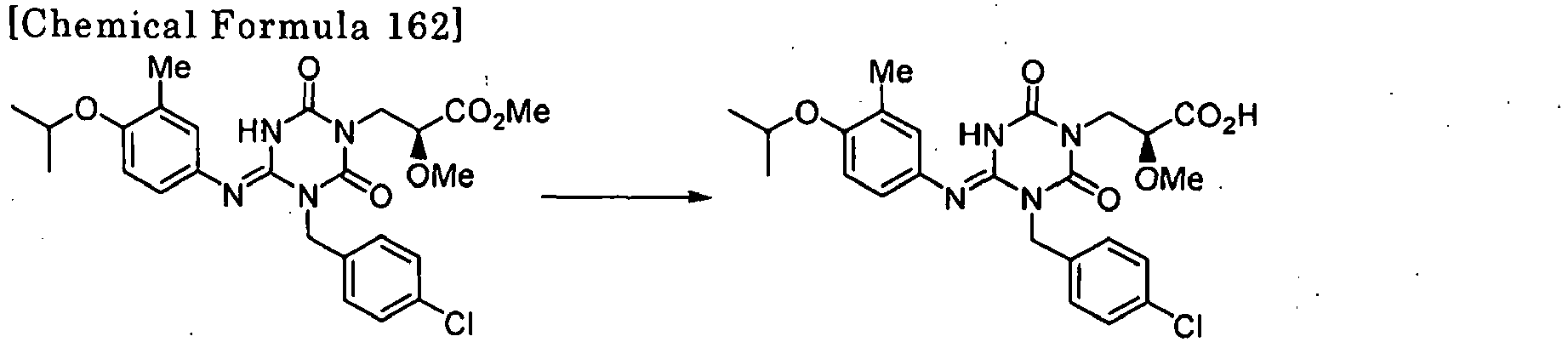
- To a mixture of (S)-1-(4-chlorobenzyl)-6-(3-mehyl-4-isopropoxyphenylimino)-3-(2-methoxycarbonyl-2-meth oxyethyl)-1,3,5-triazinane-2,4-dion (340 mg, 0.658 mmol), methanol (2 mL) and THF (2 mL) was added 1mol/L lithium hydroxide (2 mL), and the resulting mixture was stirred at 60°C for 30 minutes. To the reaction mixture was added 10% aqueous citric acid, extracted with ethyl acetate. The extract was washed, dried over anhydrous sodium sulphate, and concentrated in vacuo. The resulting residue was precipitated by dichloromethane and hexane to give (S)-1-(4-chlorobenzyl)-6-(3-mehyl-4-isopropoxyphenylimino)-3-(2-hydroxycarbonyl-2-meth oxyethyl)-1,3,5-triazinane-2,4-dion (243 mg, Yield: 74%) as colorless solid.
- 1H-NMR (δ ppm TMS/DMSO-d6): 1.26 (6H, d, J=5.6 Hz), 2.11 (3H, s), 3.25 (3H, s), 3.94-4.05 (3H, m), 4.55 (1H, sept, J=5.9 Hz), 5.27 (2H, s), 6.93 (1H, d, J=8.0 Hz), 7.04-7.07 (2H, m), 7.33 (2H, d, J=8.0 Hz), 7.45 (2H, d, J=8.0 Hz), 9.20 (1H, s), 12.89 (1H, brs).
-

- To a solution of sodium iodide (119 mg, 0.795 mmol) in acetonitrile (3.2 mL) were added chlorotrimethylsilane (0.102 mL, 0.795 mmol) and (S)-1-(4-chlorobenzyl)-6-(3-mehyl-4-isopropoxyphenylimino)-3-(2-hydroxycarbonyl-2-meth oxyethyl)-1,3,5-triazinane-2,4-dion (80 mg, 0.16 mmol), and the resulting mixture was heated at reflux for 4 hours. The reaction mixture was added to 10% aqueous sodium hydrogensulfate, and the resulting mixture was extracted with ethyl acetate. The extract was washed by brine, dried over anhydrous sodium sulphate, and concentrated in vacuo. The resulting residue was purified by high speed liquid chromatography (0.3% HCO2H H2O/MeCN 40-70%) to give (S)-1-(4-chlorobenzyl)-6-(3-mehyl-4-isopropoxyphenylimino)-3-(2-hydroxycarbony1-2-hydro xyethyl)-1,3,5-triazinane-2,4-dion (23 mg, Yield: 30%) as colorless solid.
- 1H-NMR (δ ppm TMS/DMSO-d6): 1.26 (6H, d, J=5.6 Hz), 2.11 (3H, s), 3.93-3.95 (2H, m), 4.24-4.28 (1H, m), 4.55 (1H, sept, J=5.9 Hz), 5.27 (2H, s), 6.93 (1H, d, J=8.0 Hz), 7.04-7.07 (2H, m), 7.34 (2H, d, J=8.0 Hz), 7.45 (2H, d, J=8.0 Hz), 9.15 (1H, s), 12.57 (1H, brs).
-

- To a mixture of 1-(4-chlorobenzyl)-6-(ethylthio)-1,3,5-triazine-2,4(1H,3H)-dion(440 mg, 1.48 mmol), di-2-methoxyethylazodicarboxylate (485 mg, 2.07 mmol), triphenylphosphine (775 mg, 2.96 mmol) and dioxane (9 mL) was gradually added (S)-3-hydroxy-2-methoxy-methyloxypropanoic acid methyl (291 mg, 1.77 mmol), and the resulting mixture was stirred at room temperature for 1 hour. To the reaction mixture was added water, and the resulting mixture was extracted with ethyl acetate. The extract was washed by brine, dried over anhydrous sodium sulphate, and concentrated in vacuo. The resulting residue was purified by silica gel column chromatography (ethyl acetate/hexane) to give (S)-1-(4-chlorobenzyl)-6-(ethylthio)-3-[2-methoxycarbonyl-2-(methoxymethyloxy)ethyl]-1,3 ,5-triazine-2,4(1H,3H)-dion (650 mg, Yield: 99%) as colorless oil.
- 1H-NMR (δ ppm TMS/DMSO-d6): 1.26 (3H, t, J=7.6 Hz), 3.07-3.15 (5H, m), 3.63 (3H, s), 4.01-4.21 (2H, m), 4.38-4.4.42 (1H, m), 4.58 (2H, s), 5.09 (2H, s), 7.33 (2H, d, J=8.0 Hz), 7.44 (2H, d, J=8.0 Hz).
- A mixture of (S)-1-(4-chlorobenzyl)-6-(ethylthio)-3-[2-methoxycarbonyl-2-(methoxymethyloxy)ethyl]-1,3 ,5-triazine-2,4(1H,3H)-dion (650 mg, 1.46 mmol), 3-methyl-4-isopropoxyaniline (363 mg, 2.20 mmol), acetic acid(1.26 mL) and t-butanol (6.5 mL) was heated at reflux for 6 hours. The reaction mixture was added to saturated aqueous sodium bicarbonate, and the resulting mixture was extracted with ethyl acetate. The extract was washed by brine, dried over anhydrous sodium sulphate, and concentrated in vacuo. The resulting residue was purified by silica gel column chromatography (ethyl acetate/hexane) to give (S)-1-(4-chlorobenzyl)-6-(3-mehyl-4-isopropoxyphenylimino)-3-[2-methoxycarbonyl-2-(met hoxymethyloxy)ethyl]-1,3,5-triazinane-2,4-dion (590 mg, Yield: 74%) as colorless solid.
- 1H-NMR (δ ppm TMS/DMSO-d6): 1.27 (6H, d, J=5.6 Hz), 2.11 (3H, s), 3.17 (3H, s), 3.59 (3H, s), 3.97-4.12 (2H, m), 4.34-4.40 (1H, m), 4.56 (3H, s), 5.26 (2H, s), 6.95 (1H, d, J=8.0 Hz), 7.04 (2H, brs), 7.35 (2H, d, J=8.0 Hz), 7.46 (2H, d, J=8.0 Hz), 9.25 (1H, s).
-

- A mixture of (S)-1-(4-chlorobenzyl)-6-(3-mehyl-4-isopropoxyphenylimino)-3-[2-methoxycarbonyl-2-(met hoxymethyloxy)ethyl]-1,3,5-triazinane-2,4-dion (585 mg, 1.07 mmol) and 4mol/L hydrogen chloride in dioxane (6 mL), and the resulting mixture was stirred at room temperature for 15 minutes. The reaction mixture was added to saturated aqueous sodium bicarbonate, and the resulting mixture was extracted with ethyl acetate. The extract was washed by brine, dried over anhydrous sodium sulphate, and concentrated in vacuo to give (S)-1-(4-chlorobenzyl)-6-(3-mehyl-4-isopropoxyphenylimino)-3-(2-methoxycarbonyl-2-hydr oxyethyl)-1,3,5-triazinane-2,4-dion (537 mg, Yield: 100%) as pale purple solid.
- 1H-NMR (δ ppm TMS/DMSO-d6): 1.27 (6H, d, J=5.6 Hz), 2.11 (3H, s), 3.53 (3H, s), 3.94-3.96 (2H, m), 4.27-4.30 (1H, m), 4.54-4.57 (1H, m), 5.26 (2H, s), 5.72-5.79 (1H, m), 6.94 (1H, d, J=8.0 Hz), 7.04-7.07 (2H, m), 7.35 (2H, d, J=8.0 Hz), 7.46 (2H, d, J=8.0 Hz), 9.20 (1H, s).
-

- To a solution of (S)-1-(4-chlorobenzyl)-6-(3-mehyl-4-isopropoxyphenylimino)-3-(2-methoxycarbonyl-2-hydr oxyethyl)-1,3,5-triazinane-2,4-dion (150 mg, 0.298 mmol) in dichloromethane (6 mL) was added 0.3mol/L Dess-Martin reagent in dichloromethane (1.19 mL, 0.358 mmol) under ice-cooling, and the resulting mixture was stirred at room temperature for 1 hour. To the reaction mixture were added 10% aqueous sodium hydrogensulfate and saturated aqueous sodium bicarbonate, and the resulting mixture was extracted with ethyl acetate. The extract was washed by brine, dried over anhydrous sodium sulphate, and concentrated in vacuo. The resulting residue was purified by high speed liquid chromatography (0.3% HCO2H H2O/MeCN 50-80%), to give 1-(4-chlorobenzyl)-6-(3-mehyl-4-isopropoxyphenylimino)-3-(2-methoxycarbonyl-2-oxoethyl )-1,3,5-triazinane-2,4-dion (17 mg, Yield: 11%) as colorless solid.
- 1H-NMR- (δ ppm TMS/DMSO-d6): 1.27 (6H, d, J=5.6 Hz), 2.12 (3H, s), 3.81 (3H, s), 4.54-4.57 (1H, m), 5.03 (2H, s), 5.28 (2H, s), 6.94 (1H, d, J=8.0 Hz), 7.05 (2H, brs), 7.35 (2H, d, J=8.0 Hz), 7.47 (2H, d, J=8.0 Hz), 9.37 (1H, s).
-

- To a mixture of 1-(4-chlorobenzyl)-6-(3-mehyl-4-isopropoxyphenylimino)-3-(2-methoxycarbonyl-2-oxoethyl )-1,3,5-triazinane-2,4-dion (15 mg, 0.030 mmol), methanol (0.3 mL) and THF (0.3 mL) was added 1mol/L lithium hydroxide (0.09 mL), and the resulting mixture was stirred at 50°C for 3 hours. To the reaction mixture was added 10% aqueous citric acid, and the resulting mixture was extracted with ethyl acetate. The extract was washed by water, dried over anhydrous sodium sulphate, and concentrated in vacuo. The resulting residue was precipitated by dichloromethane and hexane to give 1-(4-chlorobenzyl)-6-(3-mehyl-4-isopropoxyphenylimino)-3-(2-hydroxycarbonyl-2-oxoethyl) -1,3,5-triazinane-2,4-dion (5 mg, Yield: 34%) as colorless solid.
- 1H-NMR (δ ppm TMS/DMSO-d6): 1.27 (6H, d, J=5.6 Hz), 2.11 (3H, s), 4.53-4.57 (1H, m), 4.98 (2H, s), 5.28 (2H, s), 6.94 (1H, d, J=8.0 Hz), 7.05 (2H, brs), 7.35 (2H, d, J=8.0 Hz), 7.47 (2H, d, J=8.0 Hz), 9.35 (1H, s).
-

- A mixture of (S)-1-(4-methylbenzyl)-6-(3-bromo-4-isopropoxyphenylimino)-3-(2-methoxycarbonylpropyl) -1,3,5-triazinane-2,4-dion (350 mg, 0.642 mmol), vinyl boronic acid pinacol ester (0.163 mL, 0.963 mmol), dichloro[1,1'-bis(di-tert-butylphosphino)ferrocene]palladium(II) (42 mg, 0.064 mmol), THF (7 mL), and 2mol/L aqueous potassium carbonate (1.28 mL) was heated at reflux for 40 minutes. To the reaction mixture was added water and the resulting mixture was extracted with ethyl acetate. The extract was washed by brine, dried over anhydrous sodium sulphate, and concentrated in vacuo. The resulting residue was purified by silica gel column chromatography (ethyl acetate/hexane) to give (S)-1-(4-methylbenzyl)-6-(3-vinyl-4-isopropoxyphenylimino)-3-(2-methoxycarbonylpropyl)-1,3,5-triazinane-2,4-dion (302 mg, Yield: 96%) as colorless solid.
- 1H-NMR (δ ppm TMS/DMSO-d6): 1.04-1.07 (3H, m), 1.27 (6H, d, J=5.6 Hz), 2.28 (3H, s), 2.80-2.83 (1H, m), 3.49 (3H, s), 3.78-3.97 (2H, m), 4.58-4.61 (1H, m), 5.24-5.28 (3H, m), 5.70 (1H, d, J=16.0 Hz), 6.90-7.04 (2H, m), 7.20 (5H, s), 7.39 (1H, s), 9.24 (1H, s).
-

- To a mixture of (S)-1-(4-methylbenzyl)-6-(3-vinyl-4-isopropoxyphenylimino)-3-(2-methoxycarbonylpropyl)-1,3,5-triazinane-2,4-dion (85 mg, 0.17 mmol), methanol (0.6 mL) and THF (0.6 mL) was added 1mol/L lithium hydroxide (0.52 mL), and the resulting mixture was stirred at room temperature for 3 days. To the reaction mixture was added 10% aqueous citric acid, and the resulting mixture was extracted with ethyl acetate. The extract was washed by water, dried over anhydrous sodium sulphate, and concentrated in vacuo. The resulting residue was precipitated by ethyl acetate and hexane to give (S)-1-(4-methylbenzyl)-6-(3-vinyl-4-isopropoxyphenylimino)-3-(2-hydroxycarbonylpropyl)-1,3,5-triazinane-2,4-dion (59 mg, Yield: 71%) as colorless solid.
- 1H-NMR (δ ppm TMS/DMSO-d6): 1.04-1.07 (3H, m), 1.27 (6H, d, J=5.6 Hz), 2.28 (3H, s), 2.80-2.83 (1H, m), 3.78-3.97 (2H, m), 4.58-4.61 (1H, m), 5.24-5.28 (3H, m), 5.70 (1H, d, J=16.0 Hz), 6.90-7.04 (2H, m), 7.20-7.38 (5H, m), 7.47 (1H, s), 9.24 (1H, brs).
-

- A solution of (S)-1-(4-methylbenzyl)-6-(3-vinyl-4-isopropoxyphenylimino)-3-(2-methoxycarbonylpropyl)-1,3,5-triazinane-2,4-dion (200 mg, 0.406 mmol) in methanol (20 mL) was hydrogenated under 5% Pt/C. The reaction mixture was concentrated in vacuo. The resulting residue was precipitated by ethyl acetate and hexane to give (S)-1-(4-methylbenzyl)-6-(3-ethyl-4-isopropoxyphenylimino)-3-(2-methoxycarbonylpropyl)-1,3,5-triazinane-2,4-dion (188 mg, Yield: 94%) as colorless solid.
- 1H-NMR (δ ppm TMS/DMSO-d6): 1.03-1.12 (6H, m), 1.27 (6H, d, J=5.6 Hz), 2.28 (3H, s), 2.50-2.53 (2H, m), 2.80-.2.83 (1H, m), 3.56 (3H, s), 3.78-3.96 (2H, m), 4.56-4.58 (1H, m), 5.20 (2H, m), 6.93-7.11 (3H, m), 7.20 (4H, s), 9.16 (1H, s).
-

- To a mixture of (S)-1-(4-inethylbenzyl)-6-(3-ethyl-4-isopropoxyphenylimino)-3-(2-methoxycarbonylpropyl)-1,3,5-triazinane-2,4-dion (160 mg, 0.324 mmol), methanol (1 mL) and THF(1 mL) was added 1mol/L lithium hydroxide (1 mL), and the resulting mixture was stirred at 60°C for 1 hour. To the reaction mixture was added 10% aqueous citric acid, and the resulting mixture was extracted with ethyl acetate. The extract was washed by water, dried over anhydrous sodium sulphate, and concentrated in vacuo. The resulting residue was precipitated by ethyl acetate and hexane to give (S)-1-(4-methylbenzyl)-6-(3-ethyl-4-isopropoxyphenylimino)-3-(2-hydroxycarbonylpropyl)-1,3,5-triazinane-2,4-dion (122 mg, Yield: 79%) as colorless solid.
- 1H-NMR (δ ppm TMS/DMSO-d6): 1.01 (3H, d, J=6.8 Hz), 1.10 (3H, t, J=7.6 Hz), 1.27 (6H, d, J=5.6 Hz), 2.28 (3H, s), 2.50-2.53 (2H, m), 2.80-2.83 (1H, m), 3.78-3.96 (2H, m), 4.56-4.58 (1H, m), 5.24 (2H, m), 6.81-7.19 (3H, m), 7.28 (4H, s), 9.11 (1H, s), 12.30 (1H, brs).
-

- To a mixture of (S)-1-(4-bromobenzyl)-6-(3-mehyl-4-isopropoxyphenylimino)-3-(2-methoxycarbonylpropyl)-1,3,5-triazinane-2,4-dion (300 mg, 0.550 mmol), vinyl boronic acid pinacol ester (0.140 mL, 0.825 mmol), dichloro[1,1'-bis(di-tert-butylphosphino)ferrocene]palladium(II) (36 mg, 0.055 mmol), THF (6 mL) and 2mol/L aqueous potassium carbonate (1.10 mL) was heated at reflux for 1 hour. To the reaction mixture was added water and the resulting mixture was extracted with ethyl acetate. The extract was washed by brine, dried over anhydrous sodium sulphate, and concentrated in vacuo. The resulting residue was purified by silica gel column chromatography (ethyl acetate/hexane) to give (S)-1-(4-vinylbenzyl)-6-(3-mehyl-4-isopropoxyphenylimino)-3-(2-methoxycarbonylpropyl)-1 ,3,5-triazinane-2,4-dion (256 mg, Yield: 95%) as colorless solid.
- 1H-NMR (δ ppm TMS/DMSO-d6): 1.04 (3H, d, J=6.8 Hz), 1.27 (6H, d, J=5.6 Hz), 2.11 (3H, s), 2.80-2.83 (1H, m), 3.49 (3H, s), 3.79-3.96 (2H, m), 4.53-4.56 (1H, m), 5.24-5.27 (3H, m), 5.83 (1H, d, J=16.0 Hz), 6.69-6.76 (1H, m), 6.93 (1H, d, J=8.0 Hz), 7.05-7.07 (2H, m), 7.28 (2H, d, J=8.0 Hz), 7.49 (2H, d, J=8.0 Hz), 9.19 (1H, s).
-

- A mixture of (S)-1-(4-vinylbenzyl)-6-(3-mehyl-4-isopropoxyphenylimino)-3-(2-methoxycarbonylpropyl)-1 ,3,5-triazinane-2,4-dion (50 mg, 0.10 mmol), methanol (0.4 mL) and THF(0.4 mL) was added 1mol/L lithium hydroxide (0.3 mL), and the resulting mixture was stirred at room temperature 6 hours. To the reaction mixture was added 10% aqueous citric acid, and the resulting mixture was extracted with ethyl acetate. The extract was washed by water, dried over anhydrous sodium sulphate, and concentrated in vacuo. The resulting residue was precipitated by ethyl acetate and hexane to give (S)-1-(4-vinylbenzyl)-6-(3-mehyl-4-isopropoxyphenylimino)-3-(2-hydroxycarbonylpropyl)-1 ,3,5-triazinane-2,4-dion (36 mg, Yield: 74%) as colorless solid.
- 1H-NMR (δ ppm TMS/DMSO-d6): 1.01 (3H, d, J=6.8 Hz), 1.26 (6H, d, J=5.6 Hz), 2.10 (3H, s), 2.76-2.80 (1H, m), 3.78-3.97 (2H, m), 4.50-4.55 (1H, m), 5.24-5.27 (3H, m), 5.83 (1H, d, J=16.0 Hz), 6.69-6.76 (1H, m), 6.93 (1H, d, J=8.0 Hz), 7.04-7.07 (2H, m), 7.28 (2H, d, J=8.0 Hz), 7.49 (2H, d, J=8.0 Hz), 9.14 (1H, s), 12.29 (1H, brs).
-

- A solution of (S)-1-(4-vinylbenzyl)-6-(3-mehyl-4-isopropoxyphenylimino)-3-(2-hydroxycarbonylpropyl)-1 ,3,5-triazinane-2,4-dion (190 mg, 0.386 mmol) in methanol (19 mL) was hydrogenated under 5% Pt/C. The reaction mixture was concentrated in vacuo. The resulting residue was purified by silica gel column chromatography (ethyl acetate/hexane) to give (S)-1-(4-ethylbenzyl)-6-(3-mehyl-4-isopropoxyphenylimino)-3-(2-methoxycarbonylpropyl)-1 ,3,5-triazinane-2,4-dion (99 mg, Yield: 52%) as colorless solid.
- 1H-NMR (δ ppm TMS/DMSO-d6): 1.04 (3H, d, J=6.8 Hz), 1.15 (3H, t, J=7.6 Hz), 1.27 (6H, d, J=5.6 Hz), 2.11 (3H, s), 2.58 (2H, q, J=7.6 Hz), 2.79-2.84 (1H, m), 3.47 (3H, s), 3.78-3.96 (2H, m), 4.53-4.57 (1H, m), 5.23 (2H, s), 6.93 (1H, d, J=8.0 Hz), 7.05-7.08 (2H, m), 7.22 (4H, s), 9.18 (1H, s).
-

- To a mixture of (S)-1-(4-ethylbenzyl)-6-(3-mehyl-4-isopropoxyphenylimino)-3-(2-methoxycarbonylpropyl)-1 ,3,5-triazinane-2,4-dion (94 mg, 0.19 mmol), methanol (1 mL) and THF(1 mL) was added 1mol/L lithium hydroxide (0.57 mL), and the resulting mixture was stirred at 60°C for 3 hours. To the reaction mixture was added 10% aqueous citric acid, and the resulting mixture was extracted with ethyl acetate. The extract was washed by water, dried over anhydrous sodium sulphate, and concentrated in vacuo. The resulting residue was precipitated by ethyl acetate and hexane to give (S)-1-(4-ethylbenzyl)-6-(3-mehyl-4-isopropoxyphenylimino)-3-(2-hydroxycarbonylpropyl)-1 ,3,5-triazinane-2,4-dion (78 mg, Yield: 85%) as colorless solid.
- 1H-NMR (δ ppm TMS/DMSO-d6): 1.01 (3H, d, J=6.8 Hz), 1.16 (3H, t, J=7.6 Hz), 1.26 (6H, d, J=5.6 Hz), 2.10 (3H, s), 2.58 (2H, q, J=7.6 Hz), 2.79-2.84 (1H, m), 3.74-3.97 (2H, m), 4.53-4.57 (1H, m), 5.24 (2H, s), 6.92 (1H, d, J=8.0 Hz), 7.05-7.08 (2H, m), 7.22 (4H, s), 9.12 (1H, s), 12.31 (1H, brs).
-

- To a solution of 2-(t-butyl-diphenylsilyloxymethyl)-2-hydroxymethyl-propane-1,3-diol (441 mg, 1.18 mmol) in THF (9 mL) were added 1.67 mol/L n-butyllithium/n-hexane solution (1.55 mL, 2.59 mmol) and p-toluenesulfonyl chloride (247 mg, 1.30 mmol) under ice-cooling, and the resulting mixture was stirred at room temperature for 20 hours. To the reaction mixture was added water, and the resulting mixture was extracted with diethyl ether. The extract was washed by water, dried over anhydrous sodium sulphate, and concentrated in vacuo. The resulting residue was purified by silica gel column chromatography (ethyl acetate/hexane) to give 1-(t-butyl-diphenylsilyloxymethyl)-1-hydroxymethyl-3-oxacylcobutane (148 mg, Yield: 35%) as colorless oil.
- 1H-NMR (δ ppm TMS/DMSO-d6): 1.01 (9H, s), 3.67 (2H, d, J = 4.8 Hz), 3.80 (2H, s), 4.33-4.36 (4H, m), 4.90-4.93 (1H, m), 7.42-7.47 (6H, m), 7.63 (4H, d, J = 6.8 Hz).
- To a mixture of 1-(4-chlorobenzyl)-6-(ethylthio)-1,3,5-triazine-2,4(1H,3H)-dion (150 mg, 0.504 mmol), 1-(t-butyl-diphenylsilylocxymethyl)-1-hydroxymethyl-3-oxacyclobutane (198 mg, 0.554 mmol), triphenylphosphine (198 mg, 0.756 mmol) and dioxane (2 mL) was added di-2-methoxyethylazodicarboxylate (165 mg, 0.705 mmol), and the resulting mixture was stirred at room temperature for 1 hour. To the reaction mixture was added water, extracted with ethyl acetate. The extract was washed by brine, dried over anhydrous sodium sulphate, and concentrated in vacuo. The resulting residue was purified by silica gel column chromatography (ethyl acetate/hexane) to give 1-(4-chlorobenzyl)-6-(ethylthio)-3-[1-(t-butyly-diphenylsilyloxymethyl)-3-oxacyclobutyl]me thyl-1,3,5-triazine-2,4(1H,3H)-dion (273 mg, Yield: 85%) as colorless solid.
- 1H-NMR (δ ppm TMS/DMSO-d6): 0.99 (9.0H, s), 1.26 (3.0H, t, J = 7.2 Hz), 3.11 (2.0H, q, J = 7.2 Hz), 3.86 (2.0H, s), 4.11 (2.0H, s), 4.20 (2.0H, d, J = 6.1 Hz), 4.47 (2.0H, d, J = 6.1 Hz), 5.06 (2.0H, s), 7.32-7.37 (4.0H, m), 7.41-7.47 (6.0H, m), 7.61 (4.0H, d, J = 7.3 Hz).
- A mixture of 1-(4-chlorobenzyl)-6-(ethylthio)-3-[1-(t-butyl-diphenylsilyloxymethyl)-3-oxacylobutyl]met hyl-1,3,5-triazine-2,4(1H,3H)-dion (273 mg, 0.429 mmol), 3-chloro-4-isopropoxyaniline (119 mg, 0.644 mmol), acetic acid (0.368 mL) and t-butanol (3 mL) was heated at reflux for 7 hours. The reaction mixture was added to saturated aqueous sodium bicarbonate, and the resulting mixture was extracted with ethyl acetate. The extract was washed by brine, dried over anhydrous sodium sulphate, and concentrated in vacuo. The resulting residue was purified by silica gel column chromatography (ethyl acetate/hexane) to give 1-(4-chlorobenzyl)-6-(3-chloro-4-isopropoxyphenylimino)-3-[1-(t-butyl-diplienylsilyloxymethyl)-3-oxacylobutyl]methyl-1,3,5-triazinane-2,4-dion (248 mg, Yield: 76%) as colorless solid.
- 1H-NMR (8 ppm TMS/DMSO-d6): 1.00 (9H, s), 1.29 (6H, d, J = 5.8 Hz), 3.83 (2H, s), 4.05 (2H, s), 4.19 (2H, d, J = 6.1 Hz), 4.44 (2H, d, J = 6.1 Hz), 4.57-4.66 (1H, m), 5.22 (2H, s), 7.10-7.50 (13H, m), 7.61 (4H, d, J = 7.1 Hz), 9.35 (1H, brs).
- To a solution of 1-(4-chlorobenzyl)-6-(3-chloro-4-isopropoxyphenylimino)-3-[1-(t-butyl-diphenylsilyloxymethyl)-3-oxacylobutyl]methyl-1,3,5-triazinane-2,4-dion (240 mg, 0.316 mmol) in THF (3 mL) was added a solution of 1mol/L tetra-n-butylammonium fluoride in THF (0.88 mL, 0.88 mmol), and the resulting mixture was stirred at 45°C for 3 hours. The reaction mixture was added to aqueous ammonium chloride, and the resulting mixture was extracted with ethyl acetate. The extract was washed by brine, dried over anhydrous sodium sulphate, and concentrated in vacuo. The resulting residue was purified by silica gel column chromatography (ethyl acetate/hexane) to give 1-(4'chlorobenzyl)-6-(3-chloro-4-isopropoxyphenylimino)-3-(1-hydroxymethyl-3-oxacyclobu tyl)methyl-1,3,5-triazinane-2,4-dion (120 mg, Yield: 73%) as colorless solid.
- 1H-NMR (δ ppm TMS/DMSO-d6): 1.29 (6H, d, J = 5.8 Hz), 3.61 (2H, d, J = 4.5 Hz), 3.95 (2H, s), 4.18 (2H, d, J = 6.1 Hz), 4.40 (2H, d, J = 6.1 Hz), 4.60-4.62 (1H, m), 4.93-4.95 (1H, m), 5.22 (2H, s), 7.12-7.44 (7H, m).
-

- To a solution of 1-(4-chlorobenzyl)-6-(3-chloro-4-isopropoxyphenylimino)-3-(1-hydroxymethyl-3-oxacyclobu tyl)methyl-1,3,5-triazinane-2,4-dion (50 mg, 0.096 mmol)in acetone (0.8 mL) was added 2.67mol/L Jones reagent (0.079 mL, 0.21 mmol), and the resulting mixture was stirred at room temperature for 1 hour. To the reaction mixture were added isopropanol and water, and the resulting mixture was extracted with ethyl acetate. The extract was washed by brine, dried over anhydrous sodium sulphate, and concentrated in vacuo. The resulting residue was purified by high speed liquid chromatography (0.3% HCO2H H2O/MeCN 40-70%) to give 1-(4-chlorobenzyl)-6-(3-chloro-4-isopropoxyphenylimino)-3-(1-hydroxycarbonyl-3-oxacyclo butyl)methyl-1,3,5-triazinane-2,4-dion (8 mg, Yield: 16%) as colorless solid.
- 1H-NMR (δ ppm TMS/CDCl3): 1.36 (6H, d, J = 6.0 Hz), 4.43 (2H, s), 4.44-4.52 (1H, m), 4.67 (2H, d, J = 6.7 Hz), 4.76 (2H, d, J = 6.7 Hz), 5.16 (2H, s), 6.65-6.67 (1H, m), 6.86-6.90 (2H, m), 7.31 (2H, d, J = 8.4 Hz), 7.41 (2H, d, J = 8.4 Hz).
-

- A mixture of (S)-1-(4-chlorobenzyl)-6-(4-iodo-3-methylphenylimino)-3-(2-methoxycarbonylpropyl)-1,3,5-triazinane-2,4-dion (268 mg, 0.471 mmol), ethynylcyclopropane (0.080 mL, 0.94 mmol), bis(triphenylphosphine)palladium (II) dichloride (8.3 mg, 0.012 mmol), cuprous iodide (I) (4.5 mg, 0.024 mmol), triethylamine (0.131 mL, 0.942 mmol) and DMF (3 mL) was stirred at 60°C for 2 hours. To the reaction mixture was added 5% aqueous citric acid, and the resulting mixture was extracted with ethyl acetate. The extract was washed by saturated aqueous sodium bicarbonate and brine, dried over anhydrous sodium sulphate, and concentrated in vacuo. The resulting residue was purified by silica gel column chromatography (ethyl acetate/hexane) to give (S)-1-(4-chlorobenzyl)-6-(3-mehyl-4-cyclopropylethynylphenylimino)-3-(2-methoxycarbony lpropyl)-1,3,5-triazinane-2,4-dion (200 mg, Yield: 84%) as brown solid.
- 1H-NMR (δ ppm TMS/CDCl3): 0.75-0.95 (4H, m), 1.18 (3H, d, J=6.9 Hz), 1.49 (1H, m), 2.37 (3H, s), 2.89 (1H, m), 3.60 (3H, s), 3.87 (1H, dd, J=6.0, 13.8 Hz), 4.09 (1H, m), 5.10-5.24 (2H, m), 6.57 (1H, m), 6.63 (1H, m), 7.26-7.36 (4H, m), 7.48 (2H, d, J=8.4 Hz).
-

- To a mixture of (S)-1-(4-chlorobenzyl)-6-(3-mehyl-4-cyclopropylethynylphenylimino)-3-(2-methoxycarbony lpropyl)-1,3,5-triazinane-2,4-dion (180 mg, 0.355 mmol), methanol (1 mL) and THF (1 mL) was added 1mol/L sodium hydroxide (1.1 mL), and the resulting mixture was stirred at room temperature for 2.5 hours. To the reaction mixture was added 2mol/L hydrochloric acid, and the resulting mixture was extracted with ethyl acetate. The extract was washed by water, dried over anhydrous sodium sulphate, and concentrated in vacuo. The resulting residue was precipitated by ethyl acetate and hexane to give (S)-1-(4-chlorobenzyl)-6-(3-mehyl-4-cyclopropylethynylphenylimino)-3-(2-hydroxycarbonyl propyl)-1,3,5-triazinane-2,4-dion (78 mg, Yield: 85%) as pale brown solid.
- 1H-NMR (δ ppm TMS/CDCl3): 0.75-0.95 (4H, m), 1.19 (3H, d, J=6.9 Hz), 1.48 (1H, m), 2.35 (3H, s), 2.92 (1H, m), 3.87 (1H, dd, J=6.3, 13.5 Hz), 4.10 (1H, dd, J=7.2, 13.2 Hz), 5.16 (2H, s), 6.55 (1H, m), 6.61 (1H, s), 7.24-7.34 (3H, m), 7.44 (2H, d, J=8.4 Hz), 7.66 (1H, s).
-
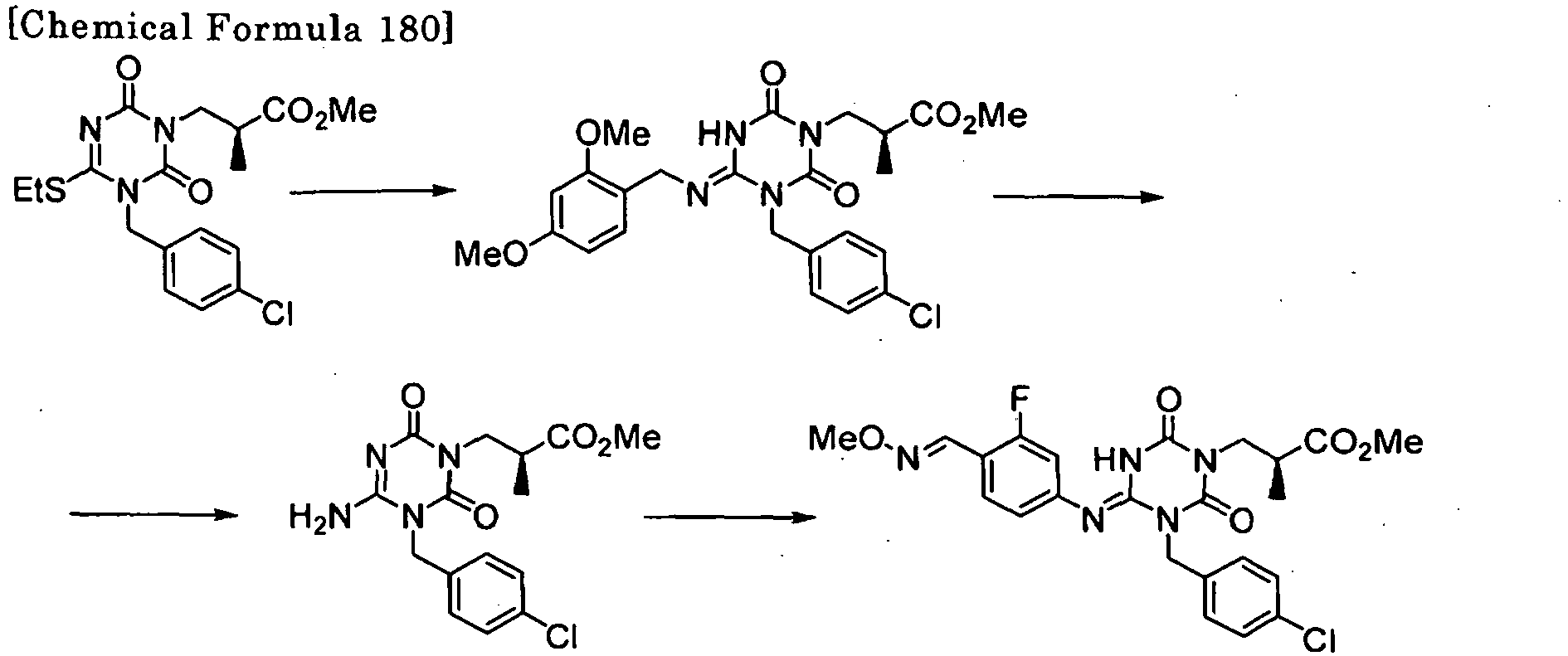
- A mixture of (S)-1-(4-chlorobenzyl)-6-(ethylthio)-3-(2-methoxycarbonylpropyl)methyl-1,3,5-triazine-2,4(1H,3H)-dion (1.00 g, 2.51 mmol), 2,4-dimethoxybenzylamine (630 mg, 3.77 mmol), acetic acid (2.16 mL) and t-butanol (20 mL) was heated at reflux for 15 hours. The reaction mixture was added to saturated aqueous sodium bicarbonate, and the resulting mixture was extracted with ethyl acetate. The extract was washed by 2mol/L hydrochloric acid and brine, dried over anhydrous sodium sulphate, and concentrated in vacuo. The resulting residue was purified by silica gel column chromatography (ethyl acetate/hexane) to give (S)-1-(4-chlorobenzyl)-6-(2,4-dimethoxybenzylimino)-3-(2-methoxycarbonylpropyl)methyl-1,3,5-triazinane-2,4-dion (1.19 g, Yield: 94%) as colorless solid.
- 1H-NMR (δ ppm TMS/DMSO-d6): 1.04 (3H, d, J=6.8 Hz), 2.82 (1H, q, J=6.8 Hz), 3.48 (3H, s), 3.72 (6H, s), 3.77-3.82 (1H, m), 3.90-3.95 (1H, m), 4.37 (2H, s), 5.15 (2H, s), 6.35 (1H, d, J=8.4 Hz), 6.51 (1H, s), 6.73 (1H, d, J=8.4 Hz), 7.27 (2H, d, J=7.6 Hz), 7.44 (2H, d, J=7.6 Hz), 7.94 (1H, brs).
- A solution of (S)-1-(4-chlorobenzyl)-6-(2,4-dimethoxy-benzylimino)-3-(2-methoxycarbonylpropyl)methyl-1,3,5-triazinane-2,4-dion (1.15 g, 2.29 mmol) in trifluoro acetic acid (11 mL) was stirred at room temperature for 1 hour. The reaction mixture was concentrated in vacuo, and the residue was extracted with chloroform. The extract was washed by saturated aqueous sodium bicarbonate and brine, dried over anhydrous sodium sulphate, and concentrated in vacuo. The resulting residue was precipitated by ethyl acetate and hexane to give (S)-6-amino-1-(4-chlorobenzyl)-3-(2-methoxycarbonylpropyl)methyl-1,3,5-triazine-2,4(1H,3H)-dion (0.80 g, Yield: 99%) as colorless solid.
- 1H-NMR (δ ppm TMS/DMSO-d6): 1.04 (3H, d, J=6.8 Hz), 2.81 (1H, q, J=6.8 Hz), 3.49 (3H, s), 3.74-3.81 (1H, m), 3.89-3.94 (1H, m), 5.03 (2H, s), 7.27 (2H, d, J=7.6 Hz), 7.43 (2H, d, J=7.6 Hz), 7.86 (2H, brs).
- A mixture of (S)-6-amino-1-(4-chlorobenzyl)-3-(2-methoxycarbonylpropyl)methyl-1,3,5-triazine-2,4(1H,3H)-dion (80 mg, 0.35 mmol), 3-fluoro-4-methoxyiminomethylaniline (146 mg, 0.414 mmol), acetic acid palladium (7.7 mg, 0.034 mmol), 4,5-bis(diphenylphosphino)-9,9-dimethyl-xanthene (30 mg, 0.052 mmol), cesium carbonate (157 mg, 0.483 mmol) and dioxane (2.4 mL) was heated at reflux for 24 hours. To the reaction mixture was added water, and the resulting mixture was extracted with ethyl acetate and THF. The extract was washed by brine, dried over anhydrous sodium sulphate, and concentrated in vacuo. The resulting residue was purified by silica gel column chromatography (ethyl acetate/hexane) to give (S)-1-(4-chlorobenzyl)-6-(3-fluoro-4-methoxyiminomethylphenylirnino)-3-(2-methoxycarbo nylpropyl)methyl-1,3,5-triazinane-2,4-dion (53 mg, Yield: 31%) as colorless solid.
- 1H-NMR (δ ppm TMS/DMSO-d6): 1:07 (3H, d, J=6.8 Hz), 2.81 (1H, q, J=6.8 Hz), 3.50 (3H, s), 3.83 (1H, brs), 3.90 (4H, brs), 5.09 (2H, s), 6.65-6.69 (1H, m), 7.41 (5H, brs), 7.63 (1H, brs), 8.25 (1H, s), 10.97 (1H, brs).
-

- To a mixture of (S)-1-(4-chlorobenzyl)-6-(3-fluoro-4-methoxyiminomethylphenylimino)-3-(2-methoxycarbo nylpropyl)methyl-1,3,5-triazinane-2,4-dion (50 mg, 0.099 mmol), methanol (1 mL) and THF (1 mL) was added 1mol/L lithium hydroxide (0.3 mL), and the resulting mixture was stirred at 60°C for 2 hours. To the reaction mixture was added 10% aqueous citric acid, and the resulting mixture was extracted with ethyl acetate. The extract was washed by water, dried over anhydrous sodium sulphate, and concentrated in vacuo. The resulting residue was precipitated by ethyl acetate and hexane to give (S)-1-(4-chlorobenzyl)-6-(3-fluoro-4-methoxyiminomethylphenylimino)-3-(2-hydroxycarbon ylpropyl)methyl-1,3,5-triazinane-2,4-dion (44 mg, Yield: 91%) as colorless solid.
- 1H-NMR (δ ppm TMS/DMSO-d6): 1.04 (3H, d, J=6.8 Hz), 2.76 (1H, q, J=6.8 Hz), 3.81 (1H, brs), 3.90 (4H, brs), 5.12 (2H, s), 6.67 (1H, brs), 7.40 (5H, s), 7.65 (1H, brs), 8.24 (1H, s), 10.92 (1H, brs), 12.36 (1H, brs).
-

- A mixture of (S)-6-(3-chloro-4-isopropoxyphenylimino)-1-(4-chlorobenzyl)-3-(2-methoxycarbonylpropyl) methyl-1,3,5-triazinane-2,4-dion (800 mg, 1.53 mmol) in methanol (75 mL) and DMF (5 mL) was hydrogenated under 10% Pd/C. The reaction mixture was concentrated in vacuo. The resulting residue was purified by high speed liquid chromatography (0.3% HCO2H H2O/MeCN 40-70%) to give (S)-6-(3-chloro-4-isopropoxyphenylimino)-3-(2-methoxycarbonylpropyl)methyl-1,3,5-triazi nane-2,4-dion (498 mg, Yield: 82%) as colorless solid.
- 1H-NMR (δ ppm TMS/DMSO-d6): 1.05 (3H, d, J=6.8 Hz), 1.29 (6H, d, J=5.6 Hz), 2.81 (1H, q, J=6.8 Hz), 3.56 (3H, s), 3.77-3.82 (1H, m), 3.87-3.92 (1H, m), 4.62 (1H, sept, J=5.6 Hz), 7.16 (1H, d, J=8.4 Hz), 7.34 (1H, d, J=8.4 Hz), 7.69 (1H, s), 8.14 (1H, s).
- To a mixture of (S)-6-(3-chloro-4-isopropoxyphenylimino)-3-(2-methoxycarbonylpropyl)methyl-1,3,5-triazi nane-2,4-dion (480 mg, 1.21 mmol), 4-methoxybenzyl chloride (341 mg, 2.18 mmol) and DMF (10 mL) was added potassium carbonate (301 mg, 2.18 mmol), and the resulting mixture was stirred at room temperature 12 hours. To the reaction mixture was added water, extracted with ethyl acetate. The extract was washed by water, dried over anhydrous sodium sulphate, and concentrated in vacuo. The resulting residue was purified by silica gel column chromatography (ethyl acetate/hexane) to give (S)-6-(3-chloro-4-isopropoxyphenylimino)-1-(4-methoxybenzyl)-3-(2-methoxycarbonylpropy 1)methyl-1,3,5-triazinane-2,4-dion (190 mg, Yield: 30%) as colorless solid.
- 1H-NMR (δ ppm TMS/DMSO-d6): 1.05 (3H, d, J=6.8 Hz), 1.29 (6H, d, J=5.6 Hz), 2.81 (1H, q, J=6.8 Hz), 3.49 (3H, s), 3.73 (3H, s), 3.77-3.82 (1H, m), 3.87-3.92 (1H, m), 4.64 (1H, sept, J=5.6 Hz), 5.20 (2H, s), 6.94 (2H, d, J=7.2 Hz), 7.16-7.28 (4H, m), 7.47 (1H, s), 9.28 (1H, s).
-

- To a mixture of (S)-6-(3-chloro-4-isopropoxyphenylimino)-1-(4-methoxybenzyl)-3-(2-methoxycarbonylpropy l)methyl-1,3,5-triazinane-2,4-dion (180 mg, 0.348 mmol), methanol (2 mL) and THF (2 mL) was added 1mol/L lithium hydroxide (1 mL), and the resulting mixture was stirred at 50°C for 5 hours. To the reaction mixture was added 10% aqueous citric acid, and the resulting mixture was extracted with ethyl acetate. The extract was washed by water, dried over anhydrous sodium sulphate, and concentrated in vacuo. The resulting residue was precipitated by ethyl acetate and hexane to give (S)-6-(3-chloro-4-isopropoxyphenylimino)-1-(4-methoxybenzyl)-3-(2-hydroxycarbonylpropy l)methyl-1,3,5-triazinane-2,4-dion (160 mg, Yield: 91%) as colorless solid. 1H-NMR (δ ppm TMS/DMSO-d6): 1.02 (3H, d, J=6.8 Hz), 1.29 (6H, d, J=5.6 Hz), 2.76 (1H, q, J=6.8 Hz), 3.73 (3H, s), 3.77-3.82 (1H, m), 3.87-3.92 (1H, m), 4.63 (1H, sept, J=5.6 Hz), 5.21 (2H, s), 6.93 (2H, d, J=7.2 Hz), 7.15-7.28 (4H, m), 7.47 (1H, s), 9.23 (1H, s), 12.33 (1H, brs).
-

- To a mixture of 6-(ethylthio)-3-t-butyl-1,3,5-triazine-2,4(1H,3H)-dion (1.0 g, 4.4 mmol), 4-chlorobenzyl alcohol (1.02 g, 4.4 mmol), triphenylphosphine (1.49 g, 5.7 mmol) and THF (10 mL) was gradually added di-2-methoxyethylazodicarboxylate (1.33 g, 5.7 mmol) under ice-cooling, and the resulting mixture was stirred at room temperature for 1 hour. To the reaction mixture was water (200 mL), and the resulting mixture was extracted with ethyl acetate (200 mL). The extract was washed by brine (200 mL), dried over anhydrous magnesium sulfate, and concentrated in vacuo. The resulting residue was purified by silica gel column chromatography (ethyl acetate/hexane) to give crude 6-(4-chlorobenzyloxy)-4-ethylthio-1-t-butyl-1,3,5-triazine-2(1H)-one. To the obtained crude product were added 3-fluoro-4-isopropoxyaniline (0.18 g, 1.09 mmol) and acetic acid (10 mL), and the resulting mixture was stirred at room temperature for 2.5 hours. To the reaction mixture was added saturated aqueous sodium bicarbonate (200 mL), and the resulting mixture was extracted with ethyl acetate (300 mL). The extract was washed by brine (200 mL), dried over anhydrous magnesium sulfate, and concentrated in vacuo. The resulting residue was purified by silica gel column chromatography (ethyl acetate/hexane). The resulting residue was precipitated by ethyl acetate and hexane to give 6-(4-chlorobenzyloxy)-4-(3-fluoro-4-isopropoxyphenylimino)-1-t-butyl-1,3,5-triazine-2(1H)-one (0.12 g, Yield: 6%) as a white powder.
- 1H-NMR (δ ppm TMS/CDCl3): 1.35(6H, d, J=6.1 Hz), 1.66 (9H, s), 4.48 (1H, sept, J=6.1 Hz), 5.37 (2H, s), 6.93 (1H, m), 7.26-7.43 (7H, m).
-

- To a mixture of 1-(4-chlorobenzyl)-6-(methylthio)-3-isopropyl-1,3,5-triazine-2,4(1H,3H)-dion (0.2 g, 0.6 mmol) and acetic acid (10 mL) was added 30% hydrogen peroxide solution (0.7 g, 6 mmol) under ice-cooling, and the resulting mixture was stirred at room temperature for 18 hours. To the reaction mixture was added brine (30 mL), and the resulting mixture was extracted with dichloromethane (30 mLx2). The extract was washed by brine (30 mL), dried over anhydrous sodium sulphate, and concentrated in vacuo. The resulting residue was precipitated by hexane to give 1-(4-chlorobenzyl)-3-isopropyl-1,3,5-triazine-2,4,6-trione (0.2 g) as a white powder.
- 1H-NMR (δ ppm TMS/DMSO-d6): 1.35 (6H, d, J = 6.9 Hz), 4.81 (1H, q, J = 6.9 Hz), 4.84 (2H,s), 7.36 (4H, d, J = 8.7 Hz), 11.66 (1H, s).
- To a mixture of 1-(4-chlorobenzyl),3-isopropyl-1,3,5-triazine-2,4,6-trione (80 mg, 0.27 mmol), 4-trifluorbenzyl alcohol (52.4 mg, 0.3 mmol), triphenylphosphine (92 mg, 0.35 mmol) and THF (2 mL) was gradually added di-2-methoxyethylazodicarboxylate (82 mg, 0.35 mmol) under ice-cooling, and the resulting mixture was stirred at room temperature for 2 hours. The reaction mixture was concentrated in vacuo. The resulting residue was purified by silica gel column chromatography (ethyl acetate/hexane). The resulting residue was precipitated by hexane to give 1-(4-chlorobenzyl)-3-isopropyl-5-(4-trifluoromethylbenzyl)-1,3,5-triazine-2,4,6-trione (65 mg, Yield: 53%) as a white powder.
- 1H-NMR (δ ppm TMS/CDCl3): 1.45 (6H, d, J = 6.9 Hz), 4.96 (1H, m), 4.98 (2H, s), 5.05 (2H, s), 7.26-7.32 (2H, m), 7.36-7.44 (2H, m), 7.52-7.62 (4H, m).
-

- To a suspension of 1-(4-chlorobenzyl)-3-(4-isopropoxyphenyl)guanidine (500 mg, 1.57 mmol) in toluene (5.0 mL) was added 2-isocyanatepropane (0.187 mL, 1.89 mmol) under ice-cooling, and the resulting mixture was stirred at room temperature for 17 hours. The resulting pale yellow solution was concentrated in vacuo, and the residue was purified by silica gel column chromatography (ethyl acetate/hexane) to give 1-((4-chlorobenzylamino)(4-isopropoxyphenylamino)methylene)-3-isopropylurea (629 mg, Yield:99%) as colorless gum.
The isopropylurea derivative (201 mg, 0.500 mmol) was dissolved in THF (2.2 mL). To the mixture was added thiophosgene (0.042 mL, 0.550 mmol), and the resulting mixture was heated at reflux for 16 hours. Further, potassium carbonate (152 mg, 1.10 mmol) was added to the mixture, and the resulting mixture was heated at reflux for 2.5 hours. To the resulting solution was added ethyl acetate (50 mL), and the resulting mixture was washed by water (20 mLx2) and brine (10 mL). The organic layer was dried over anhydrous sodium sulphate, and concentrated in vacuo. The resulting residue was purified by reversed-phase HPLC (0.1% formic acid in acetonitrile/water) and silica gel column chromatography (ethyl acetate/hexane) to give 1-(4-chlorobenzyl)-3-isopropyl-6-(4-isopropoxyphenylimino)-2-thioxo-1,3,5-triazinane-4-on e (0.32 mg, Yield: 0.1%) as colorless oil. - 1H-NMR (δ ppm TMS/CDCl3): 1.34 & 1.37 (d x 2, 6H), 1.53 (d, 6H), 4.52-4.64 (m, 1H), 5.17 (s, 2H), 5.86-5.97 (m, 1H), 6.85 & 7.39 (s x 2, 1H), 6.98 (d, 2H), 7.08 (d, 2H), 7.28 (d, 2H), 7.45 (d, 2H).
-

- To a suspension of 1-(4-chlorobenzyl)-3-(4-isopropoxyphenyl)guanidine (654 mg, 2.06 mmol) in toluene (6.5 mL) was added isopropyl isocyanate (0.307 mL, 2.88 mmol) under ice-cooling, and the resulting mixture was stirred at room temperature for 18 hours, 60°C for 2 hours, and 70°C for 2.5 hours. The resulting mixture was concentrated in vacuo, and the residue was purified by silica gel column chromatography (ethyl acetate/hexane) to give 1-((4-chlorobenzylamino)(4-isopropoxyphenylamino)methylene)-3-isopropyl-thiourea (619 mg, Yield:72%) as white solid.
The thiourea derivative (200 mg, 0.477mmol) was dissolved in THF (2.0 mL), and carbonyldiimidazole (77 mg, 0.477 mmol) was added to the solution under ice-cooling. The resulting mixture was heated at reflux for 22 hours under nitrogen atmosphere. Further, carbonyldiimidazole (77mg, 0.477 mmol) and triethylamine (0.066 mL, 0.477 mmol) were added to the mixture, and the resulting mixture was heated at reflux for 3.5 hours. To the mixture was added ethyl acetate (50 mL), and the resulting mixture was washed by water (20 mL×2) and brine (10 mL). The organic layer was dried over anhydrous sodium sulphate and concentrated in vacuo. The resulting residue was purified by silica gel column chromatography (ethyl acetate/hexane), and the resulting residue was precipitated by ethyl acetate/hexane to give aimed 1-(4-chlorobenzyl)-3-isopropyl-6-(4-isopropoxyphenylimino)-4-thioxo-1,3,5-triazinane-2-on e (8.3 mg, Yield: 3.9%) as a white powder. - 1H-NMR (δ ppm TMS/CDCl3): 1.35 (d, 6H), 1.49 (d, 6H), 4.45-4.55 (m, 1H), 5.14 (s, 2H), 5.65-5.80 (m, 1H), 6.74 (d, 2H), 6.89 (d, 2H), 7.30 (d, 2H), 7.48 (d, 2H), 8.48 (br, s, 1H).
-

- In the similar manner as described the above, 1-((4-chlorobenzylamino)(4-isopropoxyphenylamino)methylene)-3-isopropylthiourea was synthesized. The thiourea derivative (199 mg, 0.475 mmol) was dissolved in THF (2.0 mL). To the colorless solution was added thiophosgene (0.040 mL, 0.522 mmol) under ice-cooling, and the resulting mixture was stirred for 2 hours in an ice-bath. To the resulting yellow solution was added ethyl acetate (50 mL), and washed by saturated aqueous sodium bicarbonate (20 mLx2), 5% aqueous citric acid (20 mLx2), and brine (10 mL). The organic layer was dried over anhydrous sodium sulphate and concentrated in vacuo. The resulting residue was purified by silica gel column chromatography (ethyl acetate/hexane). The resulting residue was crystallized by ethyl acetate/hexane to give 1-(4-chlorobenzyl)-3-isopropyl-6-(4-isopropoxyphenylimino)-1,3,5-triazinane-2,4-dithione (14.8 mg; Yield6.8%) as yellow crystalline.
- 1H-NMR (δ ppm TMS/CDCl3): 1.16 (d, 6H), 1.32 (d, 6H), 4.00 & 4.61 (br, s x 2, 1H), 4.44-4.54 (m, 1H), 6.08 (s, 2H), 6.82 (d, 2H), 6.99 (d, 2H), 7.26 (d, 2H), 7.46 (d, 2H).
-

- To a suspension of 6-(3-chloro-4-isopropoxyphenylamino)-1-(4-chlorobenzyl)-3-1,3,5-triazine-2,4-dion (95.4 mg, 0.206 mmol) in toluene (2.0 mL) was added Lawesson's reagent (666 mg, 1.65 mmol). The resulting mixture was heated at reflux for 10 hours. To the resulting yellow suspension was added ethyl acetate, and the insoluble are filtered off by using Celite. The filtrate (about 100 mL) was washed by saturated aqueous sodium bicarbonate (30 mL×2) and brine (15 mL), dried over anhydrous sodium sulphate, and concentrated in vacuo. The resulting residue was purified by silica gel column chromatography (ethyl acetate/hexane). The residue was crystallized by hot hexane to give 1-(4-chlorobenzyl)-3-isopropyl-6-(3-chloro-4-isopropoxyphenylimino)-4-thioxo-1,3,5-triazin ane-2-one (73.7 mg, Yield:75%) as white solid.
- 1H-NMR (δ ppm TMS/CDCl3): 1.39 (d, 6H), 1.50 (d, 6H), 4.43-4.57 (m, 1H), 5.12 (s, 2H), 5.65-5.81 (m, 1H), 6.66 (dd, 1H), 6.89 (d, 1H), 6.95 (d, 1H), 7.31 (d, 1H), 7.47 (d, 1H), 8.41 (br, s, 1H).
-

- To a solution of 4-thiocarbonyl derivative (37.5 mg, 0.078 mmol) in acetone (0.8 mL) was added methyl iodide (0.0073 mL, 0.117 mmol), and resulting mixture was heated at reflux for 15 hours. Methyl iodide and solvate were removed under reduced pressure, and methanol (0.36 mL) and 40% methylaminemethanol solution (0.04 mL, 0.391 mmol) were added to the residue. The resulting mixture was heated at reflux for 8.5 hours, and concentrated in vacuo. The residue was purified by silica gel column chromatography (ethyl acetate/hexane) to give aimed 1-(4-chlorobenzyl)-3-isopropyl-6-(3-chloro-4-isopropoxyphenylimino)-4-methylimino-1,3,5-triazinane-2-one (23.6 mg, Yield: 63%) as pale yellow oil.
- 1H-NMR (δ ppm TMS/CDCl3): 1.35 (d, 6H), 1.47 (d, 6H), 2.90 (d, 3H), 4.45 (sept. 1H), 4.70 (br, s, 1H), 4.82 (sept. 1H), 5.20 (s, 2H), 6.88 (d, 1H), 7.00 (dd, 1H), 7.26 (d, 2H), 7.40 (d, 1H), 7.50 (d, 2H).
-

- To a solution of 1-(4-chlorobenzyl)-3-ethyl-6-(ethylthio)-1,3,5-triazine-2,4-(1H,3H)-dion (1.02g, 3.13 mmol) in toluene (10 mL) was added Lawesson's reagent (2.53 g, 6.26 mmol), and the resulting mixture was stirred at reflux for 3 hours. To the resulting yellow suspension was added ethyl acetate(200 mL), and the resulting mixture was washed by water (100 mL) and brine(50 mL). The organic layer was dried over anhydrous sodium sulphate, and concentrated in vacuo. The resulting residue was purified by silica gel column chromatography (ethyl acetate/hexane) to give 1-(4-chlorobenzyl)-3-ethyl-6-(ethylthio)-4-thioxo-3,4-dihydro-1,3,5-triazine-2 (1H)-one (939 mg, Yield: 88%) as yellow solid.
4-Thioxo derivative (257 mg, 0.752 mmol) and 5-(-4-aminophenoxy)nicotinic acid methyl ester (257 mg, 1.05 mmol) were suspended in t-butanol (2.5 mL), and the suspension was heated at reflux for 5 hours. To the resulting reaction mixture was added ethyl acetate (60 mL), and the mixture was washed by saturated aqueous sodium bicarbonate (25 mL×2) and brine (15 mL). The organic layer was dried over anhydrous sodium sulphate, and concentrated in vacuo. The resulting residue was purified by silica gel column chromatography (ethyl acetate/hexane) to give 1-(4-chlorobenzyl)-3-ethyl-6-[4-(5-methoxycarbonyl-3-pyridyloxy)phenylimino]-4-thioxo-1, 3,5-triazinane-2-one (258 mg, Yield: 66%) as white solid. - 1H-NMR (δ ppm TMS/CDCl3): 1.30 (t, 3H), 3.94 (s, 3H), 4.35 (q, 2H), 5.19 (s, 2H), 6.87 (dt, 2H), 7.07 (dt, 2H), 7.32 (dt, 2H), 7.51 (dt, 2H), 7.85 (dd, 1H), 8.40 (br, s, 1H), 8.60 (d, 1H), 8.96 (d, 1H).
-

- Thiocarbonyl derivative (50 mg, 0.095 mmol) was suspended in acetone (1.0 mL), and methyl iodide (0.009 mL, 0.143 mmol) was added to the suspension. The mixture was stirred at room temperature for 15 hours and at 40°C for 15 hours. To the reaction mixture was added ethyl acetate (30 mL). The organic layer was washed by saturated aqueous sodium bicarbonate (10 mLx2) and brine (10 mL), dried over anhydrous sodium sulphate, and concentrated in vacuo. The resulting residue was purified by silica gel column chromatography (ethyl acetate/hexane), 1-(4-chlorobenzyl)-3-ethyl-4-methylthio-6-[4-(5-methoxycarbonyl-3-pyridyloxy)phenylimin o]-1,3,5-triazine-2-(1H)-one (40.5 mg, Yield:79%) as white solid.
- 1H-NMR (δ ppm TMS/CDCl3): 1.30 (t, 3H), 2.32 (s, 3H), 3.92 (s, 3H), 3.93 (q, 2H), 5.22 (s, 2H), 6.97 (d, 2H), 7.08 (d, 2H), 7.29 (d, 2H), 7.54 (d, 2H), 7.73-7.79 (m ,1H), 8.54 (d, 1H), 8.89 (s, 1H).
-
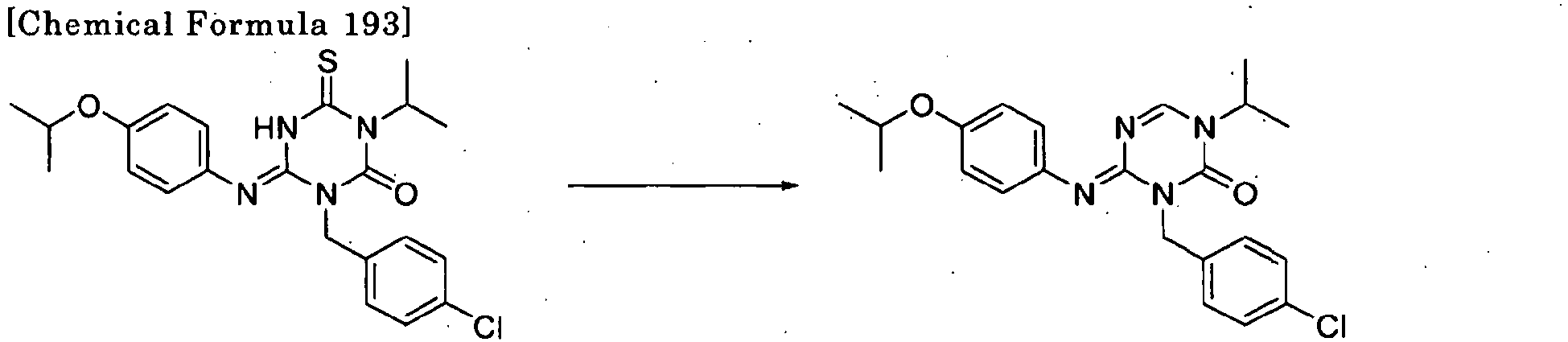
- To a solution of thiocarbonyl derivative (49.3 mg, 0.111 mmol) in methanol (1.0 mL) was added hydrogen peroxide urea (52.1 mg, 0.554 mmol), and the resulting mixture was stirred at room temperature for 5.5 hours. To the reaction mixture was added ethyl acetate (30 mL), and the mixture was washed by 5% aqueous citric acid (15 mL×2), saturated aqueous sodium bicarbonate (15 mLx2) and brine (10 mL). The organic layer was dried over anhydrous sodium sulphate, and concentrated in vacuo. The resulting residue was purified by silica gel column chromatography (ethyl acetate/hexane) to give (E)-3-(4-chlorobenzyl)-4-(4-isopropoxyphenylimino)-1-isopropyl-3,4-dihydro-1,3,5-triazine-2(1H)-one (31.6 mg, Yield: 69%) as brown solid.
- 1H-NMR (δ ppm TMS/CDCl3): 1.32 (d, 6H, J = 6.1 Hz), 1.37 (d, 6H, J = 6.6 Hz), 4.44-4.50 (m, 1H), 4.66-4.72 (m, 1H), 5.21 (s, 2H), 6.84 (d, 2H, J = 11.7 Hz), 6.91 (d, 2H, J = 6.6 Hz), 7.28 (d, 2H, J = 8.1 Hz), 7.55 (d, 2H, J = 8.1 Hz), 7.61 (s, 1H).
-

- To a mixture of methylamine hydrochloride (276 g, 4.09 mol) and DMA (2 L) was added DBU (679 mL, 4.50 mol) at 10°C over 4 minutes. Then, 1,1'-carbonyldiimidazole (730 g, 4.50 mol) was added to the mixture at 20°C, and the resulting mixture was stirred at 0°C for 2 hours. To the reaction mixture was added 1-amidinopyrazole-hydrochloride (500 g, 3.41 mol) at -5°C over 3 minutes. Then, DBU (540 mL, 3.58 mol) was added to the mixture at 10°C over 25 minutes, and the resulting mixture was stirred at 45°C for 7.5 hours. Further, to the reaction mixture was added 1,1'-carbonyldiimidazole (830 g, 5.11 mol), and DBU (771 mL, 5.11 mol) was added to the mixture at 6°C over 2 hours. The resulting mixture was stirred at 0°C for 40 minutes. To the reaction mixture was added 2.8 mol/L hydrochloric acid (10 L) at 20°C over 1 hour. The precipitated solid was filtered off to give 2-methyl-6-(1-pyrazolyl)-1,3,5-triazine-2,4(1H,3H)-dion (421 g, Yield: 64%) as pale brown powder.
- 1H-NMR (δ ppm TMS/DMSO-d6): 3.16 (3H, s), 6.71 (1H, dd, J= 3.0, 1.5 Hz), 8.04 (1H, d, J= 1.0 Hz), 8.57 (1H, d, = 3.0 Hz).
- Preparation of 2-ethyl-6-(1-pyrazolyl)-1,3,5-triazine-2,4(1H,3H)-dion

- To the mixture of 1-amidinopyrazole- hydrochloride (58.6 g, 400 mmol), ethyl isocyanate (33.2 mL, 420 mmol) and DMA (240 mL) was added DBU (63.3 mL, 420 mmol) dropwise at -10°C over 15 minutes, and the resulting mixture was stirred under ice-cooling for 30 minutes. To the reaction mixture was added 1,1'-carbonyldiimidazole (30 g, 600 mmol) under ice-cooling, and DBU (93 mL, 620 mmol) was added -5°C over 30 minutes to the mixture. The resulting mixture was stirred under ice-cooling for 1 hour. Further, the mixture was stirred at room temperature for 1 hour. To the mixture was added 2mol/L hydrochloric acid (1.16 L) at 20°C over 1 hour. The precipitated solid was filtered off to give 2-ethyl-6-(1-pyrazolyl)-1,3,5-triazine-2,4(1H,3H)-dion (73.0 g, Yield: 88%)as pale brown powder.
- 1H-NMR (δ ppm TMS/CDCl3): 1.30 (6H, t, J=7.0 Hz), 4.02 (2H, q, J=7.0 Hz), 6.59 (1H, m), 7.34 (1H, m), 8.48 (1H, m), 9.79 (1H, brs).
-
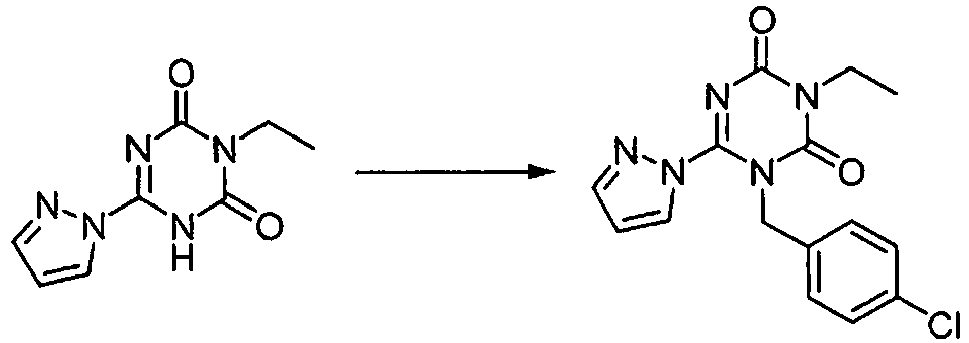
- To a mixture of 2-ethyl-6-(1-pyrazolyl)-1,3,5-triazine-2,4(1H,3H)-dion (89 g, 480 mmol), 4-chlorobenzylbromide (108 g, 528 mmol) and DMA (400 mL) was added diisopropylethylamine (92 mL, 528 mmol) dropwise at room temperature over 10 minutes, and the mixture was stirred at 60°C for 2 hours. To the reaction mixture was added water (800 mL) dropwise under ice-cooling for 40 minutes, and hexane (200 mL) was added to the mixture. The precipitated solid was filtered off to give 1-(4-chlorobenzyl)-2-ehtyl-6-(1-pyrazolyl)-1,3,5-triazine-2,4(1H,3H)-dion (II-3,156 g, Yield: 97.6%) as pale brown powder. 1H-NMR (δ ppm TMS/CDCl3): 1.30 (3H, t, J=7.1 Hz), 4.04 (2H, q, J=7.1 Hz), 5.86 (2H, s), 6.48 (1H, m), 7.02 (2H, d, J=8.6 Hz), 7.20-7.25 (2H, m), 7.84 (1H, m), 8.33 (1H, m).
-

- A mixture of 1-(4-chlorobenzyl)-2-ethyl-6-(1-pyrazolyl)-1,3,5-triazine-2,4(1H,3H)-dion (0.30 g, 0.9 mmol), 4-(3-cyanophenoxy)aniline (0.209 g, 1 mmol) and t-butanol (6 mL) was stirred at 90°C for 15 hours. To the reaction mixture was added 50% ethyl acetate/hexane (6 mL), and the precipitated solid was filtered off to give 1-(4-chlorobenzyl)-6-[4-(3-cyanophenoxy)phenylimino]-3-ethyl-1, 3,5-triazinane-2,4-dion (I-2305, 0,385 g, Yield: 89.8%) as pale brown powder.
- 1H-NMR (δ ppm TMS/CDC13): 1.24 (3H, t, J=7.2 Hz), 3.91 (2H, q, J=7. 2Hz), 5.20 (2H, s), 6.84 (2H, d, J=8.7 Hz), 7.04 (2H, d, J=8.4 Hz), 7.2-7.46 (6H, m), 7.51 (2H, d, J=8.4 Hz).
- The following compound of the invention and intermediate thereof were synthesized in a manner similar to those described in the above general procedures for the synthesis of the compound of the invention and Examples. The chemical structure of the compounds and the physical properties of them are described below.
- LC/MS data of compound of the present invention were measured under any one of the following 2 conditions (Method 1 and 2), and a retention time and [M+H]+ are shown.
-
- Column: Luna C18(2) (5µm, i.d.4.6x50mm) (Phenomenex)
- Flow rate: 3 mL/min
- UV detection wavelength: 254nm
- Mobile phase: [A] is 0.1% formic acid-containing aqueous solution, and [B] is 0.1% formic acid-containing acetonitrile solution
- Gradient: Linear gradient of 10% to 100% solvent [B] for 3 minutes was performed, and 100% solvent [B] was maintained for 1 minute.
-
- Column: Xbridge C18 (5µm, i.d.4.6x50mm) (Waters)
- Flow rate: 3 mL/min
- UV detection wavelength: 254nm
- Mobile phase: [A] is 0.1% formic acid-containing aqueous solution, and [B] is 0.1% formic acid-containing acetonitrile solution
- Gradient: Linear gradient of 10% to 100% solvent [B] for 3 minutes was performed, and 100% solvent [B] was maintained for 1 minute.
-
- Column: Shim-pack XR-ODS (2.2pm, i.d.50x3.0mm) (Shimadzu)
- Flow rate: 1.6 mL/min
- UV detection wavelength: 254nm
- Mobile phase: [A] is 0.1% formic acid-containing aqueous solution, and [B] is 0.1% formic acid-containing acetonitrile solution
- Gradient: Linear gradient of 10% to 100% solvent [B] for 3 minutes was performed, and 100% solvent [B] was maintained for 1 minute.
-
- Column: Develo sil RPAq, (50x4.6mm)
- Flow rate: 1.5 mL/min
- UV detection wavelength: 254nm
- Mobile phase: [A] is 0.1% formic acid-containing aqueous solution, and [B] is 0.1% formic acid-containing acetonitrile solution
- Gradient: 60% solvent [B] was maintained for 0.5 minute, linear gradient of 60% to 100% solvent [B] for 4.5 minutes was performed, and 100% solvent [B] was maintained for 10 minutes.
-
Column: ACQUITY UPLC (registered trademark) BEH C18 (1.7µm, i.d.2. 1x3.0mm) Flow rate: 0.8 mL/min
UV detection wavelength: 254nm
Mobile phase: [A] is 0.1% formic acid-containing aqueous solution, and [B] is 0.1% formic acid-containing acetonitrile solution
Gradient: Linear gradient of 10% to 100% solvent [B] for 3.5 minutes was performed, and 100% solvent [B] was maintained for 0.5 minute.[Table 4] Structure Compound No. Retention Time (min) [M+H] Method 
I-0001 2.46 469 3 
I-0002 2.49 493 3 
I-0003 2.31 399 3 
I-0004 2.47 473 3 
I-0005 2.37 461 3 [Table 5] Structure Compound No. Retention Time (min) [M+H] Method 
I-0006 2.48 457 3 
I-0007 2.34 415 3 
I-0008 2.22 475 3 
I-0009 2.23 423 3 
I-0010 2.48 457 3 [Table 6] Structure Compound No. Retention Time (min) [M+H] Method 
I-0011 2.47 433 3 
I-0012 2.51 478 3 
I-0013 2.23 383 3 
I-0014 2.65 483 3 
I-0015 2.29 428 3 [Table 7] Structure Compound No. Retention Time (min) [M+H] Method 
I-0016 2.29 445 3 
I-0017 2.45 433 3 
I-0018 2.09 494 3 
I-0019 2.16 405 4 
I-0020 3.88 439 4 [Table 8] Structure Compound No. Retention Time (min) [M+H] Method 
I-0021 3.63 419 4 
I-0022 4.43 474 4 
I-0023 3.91 473 4 
I-0024 3.93 473 4 
I-0025 3.33 419 4 [Table 9] Structure Compound No. Retention Time (min) [M+H] Method 
I-0026 3.16 449 4 
I-0027 2.46 419 4 
I-0028 3.27 453 4 
I-0029 2.95 433 4 
I-0030 3.94 488 4 [Table 10] Structure Compound No. Retention Time (min) [M+H] Method 
I-0031 2.61 433 4 
I-0032 2.39 463 4 
I-0033 4.31 447 4 
I-0034 4.86 481 4 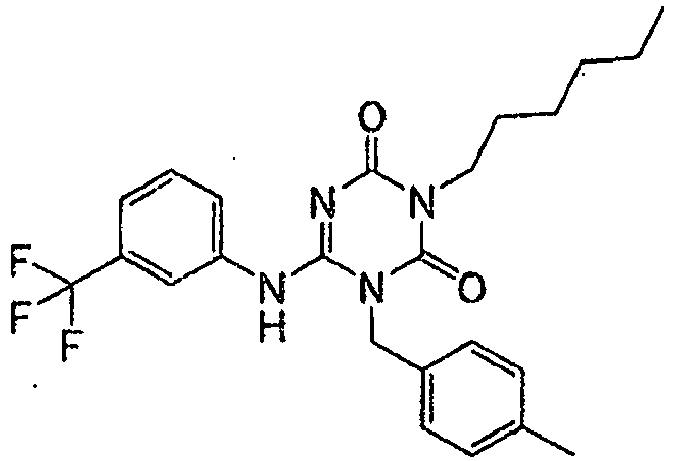
I-0035 4.68 461 4 [Table 11] Structure Compound No. Retention Time (min) [M+H] Method 
I-0036 3.73 516 4 
I-0037 4.80 515 4 
I-0038 4.83 515 4 
I-0039 3.67 461 4 
I-0040 3.47 491 4 [Table 12] Structure Compound No. Retention Time (min) [M+H] Method 
I-0041 4.09 445 4 
I-0042 4.45 459 4 
I-0043 3.51 514 4 
I-0044 4.62 513 4 
I-0045 4.65 513 4 [Table 13] Structure Compound No. Retention Time (min) [M+H] Method 
I-0046 3.17 489 4 
I-0047 3.46 453 4 
I-0048 4.09 487 4 
I-0049 3.83 467 4 
I-0050 4.56 522 4 [Table 14] Structure Compound No. Retention Time (min) [M+H] Method 
I-0051 4.09 521 4 
I-0052 4.12 521 4 
I-0053 3.57 467 4 
I-0054 3.42 497 4 
I-0055 3.90 487 4 [Table 15] Structure Compound No. Retention Time (min) [M+H] Method 
I-0056 4.49 522 4 
I-0057 4.26 501 4 
I-0058 4.94 556 4 
I-0059 4.45 555 4 
I-0060 4.50 555 4 [Table 16] Structure Compound No. Retention Time (min) [M+H] Method 
I-0061 3.99 501 4 
I-0062 3.86 531 4 
I-0063 2.81 467 4 
I-0064 2.40 501 4 
I-0065 3.32 481 4 [Table 17] Structure Compound No. Retention Time (min) [M+H] Method 
I-0066 4.30 534 4 
I-0067 3.60 535 4 
I-0068 3.60 535 4 
I-0069 3.91 481 4 
I-0070 2.76 511 4 [Table 18] Structure Compound No. Retention Time (min) [M+H] Method 
I-0071 3.43 522 4 
I-0072 4.12 556 4 
I-0073 3.86 536 4 
I-0074 4.68 591 4 
I-0075 4.07 590 4 [Table 19] Structure Compound No. Retention Time (min) [M+H] Method 
I-0076 4.11 590 4 
I-0077 3.55 536 4 
I-0078 3.49 566 4 
I-0079 2.38 483 4 
I-0080 3.21 517 4 [Table 20] Structure Compound No. Retention Time (min) [M+H] Method 
I-0081 2.85 497 4 
I-0082 3.85 552 4 
I-0083 3.22 551 4 
I-0084 3.23 551 4 
I-0085 2.48 497 4 [Table 21] Structure Compound No. Retention Time (min) [M+H] Method 
I-0086 2.29 527 4 
I-0087 2.75 467 4 
I-0088 3.54 501 4 
I-0089 3.19 481 4 
I-0090 4.15 536 4 [Table 22] Structure Compound No. Retention Time (min) [M+H] Method 
I-0091 3.49 535 4 
I-0092 3.57 535 4 
I-0093 3.03 481 4 
I-0094 2.79 511 4 
I-0095 3.58 419 4 [Table 23] Structure Compound No. Retention Time (min) [M+H] Method 
I-0096 4.22 453 4 
I-0097 4.21 433 4 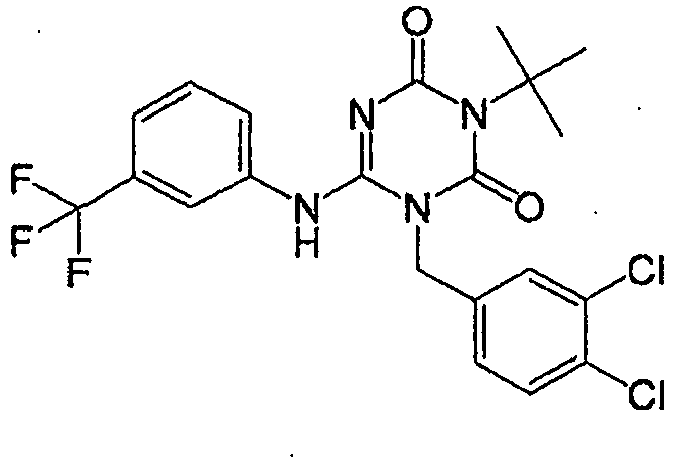
I-0098 4.03 488 4 
I-0099 3.38 487 4 
I-0100 4.24 487 4 [Table 24] Structure Compound No. Retention Time (min) [M+H] Method 
I-0101 3.38 459 4 
I-0102 4.16 487 4 
I-0103 4.18 487 4 
I-0104 4.69 479 4 
I-0105 3.38 448 4 [Table 25] Structure Compound No. Retention Time (min) [M+H] Method 
I-0106 3.59 462 4 
I-0107 4.05 490 4 
I-0108 3.85 488 4 
I-0109 3.66 496 4 
I-0110 3.97 530 4 [Table 26] Structure Compound No. Retention Time (min) [M+H] Method 
I-0111 3.84 510 4 
I-0112 3.67 526 4 
I-0113 3.77 510 4 
I-0114 2.44 417 1 
I-0115 2.67 443 1 [Table 27] Structure Compound No. Retention Time (min) [M+H] Method 
I-0116 2.59 443 1 
I-0117 2.52 385 1 
I-0118 2.44 397 1 
I-0119 2.52 409 1 
I-0120 2.70 407 1 [Table 28] Structure Compound No. Retention Time (min) [M+H] Method 
I-0121 2.40 409 1 
I-0122 2.68 407 1 
I-0123 2.05 390 1 
I-0124 2.04 436 1 
I-0125 2.31 433 1 [Table 29] Structure Compound No. Retention Time (min) [M+H] Method 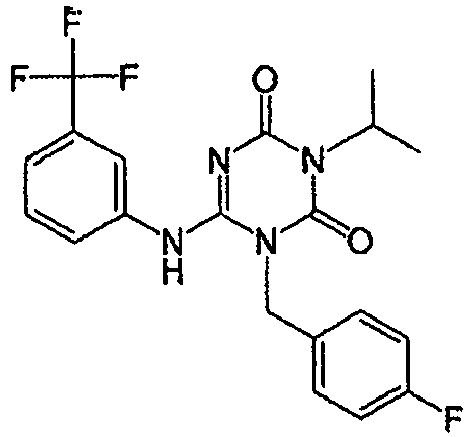
I-0126 2.51 423 1 
I-0127 2.60 447 1 
I-0128 2.52 447 1 
I-0129 2.44 389 1 
I-0130 2.36 401 1 [Table 30] Structure Compound No. Retention Time (min) [M+H] Method 
I-0131 2.44 413 1 
I-0132 2.60 411 1 
I-0133 2.31 413 1 
I-0134 2.58 411 1 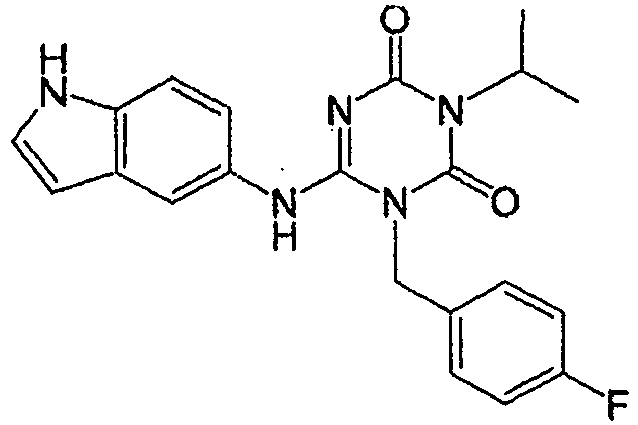
I-0135 1.96 394 1 [Table 31] Structure Compound No. Retention Time (min) [M+H] Method 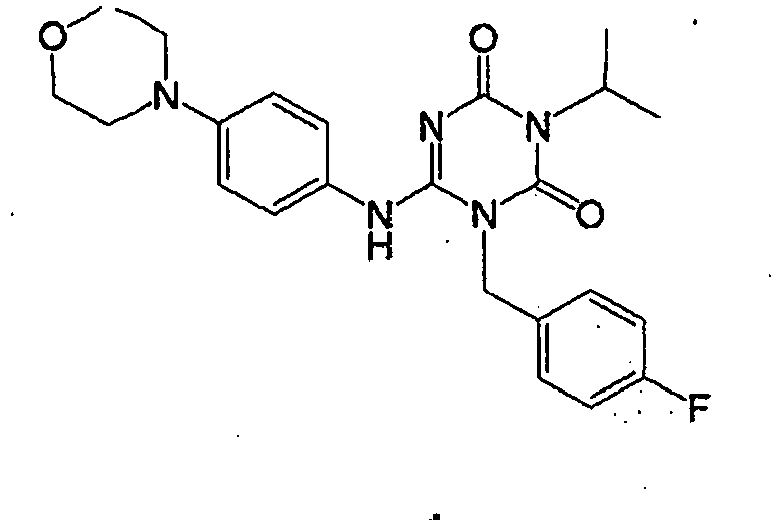
I-0136 1.93 440 1 
I-0137 2.18 437 1 
I-0138 2.35 409 1 
I-0139 2.18 407 1 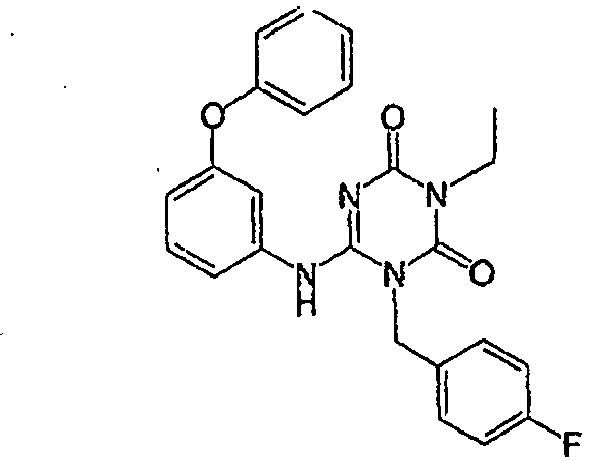
I-0140 2.44 433 1 [Table 32] Structure Compound No. Retention Time (min) [M+H] Method 
I-0141 2.37 433 1 
I-0142 2.26 374 1 
I-0143 2.17 387 1 
I-0144 2.27 399 1 
I-0145 2.45 397 1 [Table 33] Structure Compound No. Retention Time (min) [M+H] Method 
I-0146 2.13 399 1 
I-0147 2.42 397 1 
I-0148 1.78 380 1 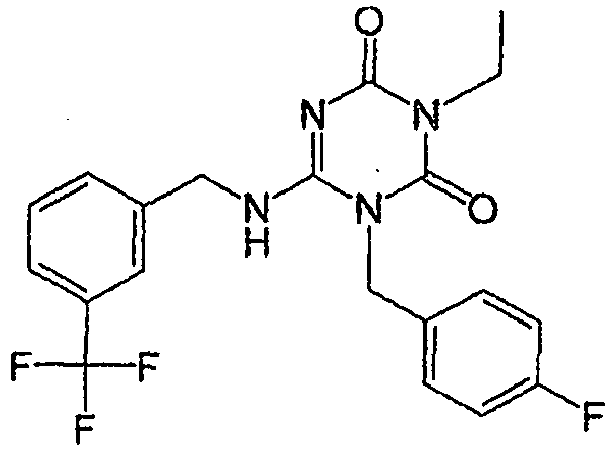
I-0149 2.04 423 1 
I-0150 2.40 440 1 [Table 34] Structure Compound No. Retention Time (min) [M+H] Method 
I-0151 2.24 438 1 
I-0152 2.44 464 1 
I-0153 2.30 407 1 
I-0154 2.25 418 1 
I-0155 2.34 430 1 [Table 35] Structure Compound No. Retention Time (min) [M+H] Method 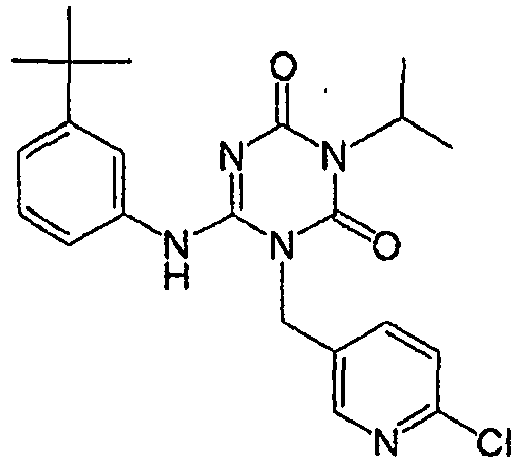
I-0156 2.53 428 1 
I-0157 2.21 430 1 
I-0158 2.51 428 1 
I-0159 1.83 411 1 
I-0160 1.77 457 1 [Table 36] Structure Compound No. Retention Time (min) [M+H] Method 
I-0161 2.04 454 1 
I-0162 2.40 440 1 
I-0163 2.24 438 1 
I-0164 2.48 464 1 
I-0165 2.31 407 1 [Table 37] Structure Compound No. Retention Time (min) [M+H] Method 
I-0166 2.38 430 1 
I-0167 2.58 428 1 
I-0168 2.31 430 1 
I-0169 2.60 430 1 
I-0170 1.94 411 1 [Table 38] Structure Compound No. Retention Time (min) [M+H] Method 
I-0171 1.92 457 1 
I-0172 2.20 454 1 
I-0173 2.30 438 3 
I-0174 2.38 421 3 
I-0175 2.20 385 3 [Table 39] Structure Compound No. Retention Time (min) [M+H] Method 
I-0176 2.70 423 3 
I-0177 2.70 439 3 
I-0178 2.30 373 3 
I-0179 2.50 389 3 
I-0180 2.40 385 3 [Table 40] Structure Compound No. Retention Time (min) [M+H] Method 
I-0181 2.70 439 3 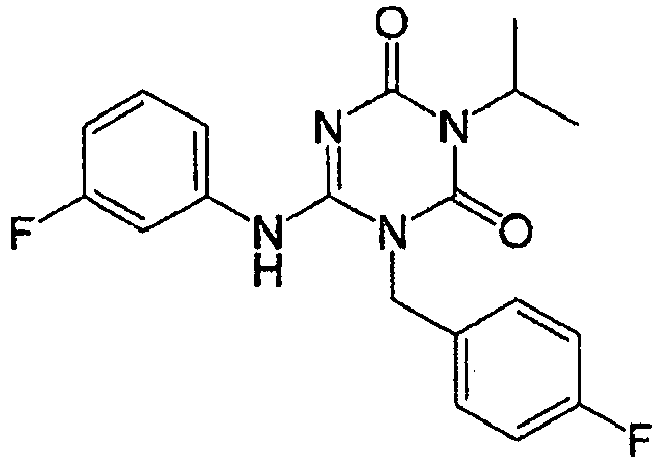
I-0182 2.40 373 3 
I-0183 2.30 385 3 
I-0184 2.60 389 3 
I-0185 2.90 411 3 [Table 41] Structure Compound No. Retention Time (min) [M+H] Method 
I-0186 2.40 373 3 
I-0187 2.70 439 3 
I-0188 1.20 403 3 
I-0189 1.20 399 3 
I-0190 2.10 437 3 [Table 42] Structure Compound No. Retention Time (min) [M+H] Method 
I-0191 1.90 399 3 
I-0192 1.90 399 3 
I-0193 2.20 403 3 
I-0194 2.20 403 3 
I-0195 2.30 437 3 [Table 43] Structure Compound No. Retention Time (min) [M+H] Method 
I-0196 1.70 337 3 
I-0197 2.80 424 3 
I-0198 2.80 457 3 
I-0199 1.40 452 3 
I-0200 2.60 429 3 [Table 44] Structure Compound No. Retention Time (min) [M+H] Method 
I-0201 2.70 463 3 
I-0202 2.40 425 3 
I-0203 2.70 447 3 
I-0204 2.80 481 3 
I-0205 1.20 376 3 [Table 45] Structure Compound No. Retention Time (min) [M+H] Method 
I-0206 1.80 398 3 
I-0207 2.20 413 3 
I-0208 2.30 420 3 
I-0209 2.60 429 3 
I-0210 2.40 425 3 [Table 46] Structure Compound No. Retention Time (min) [M+H] Method 
I-0211 2.40 420 3 
I-0212 2.70 463 3 
I-0213 2.40 425 3 
I-0214 2.60 429 3 
I-0215 2.40 420 3 [Table 47] Structure Compound No. Retention Time (min) [M+H] Method 
I-0216 2.70 463 3 
I-0217 2.60 427 3 
I-0218 2.50 454 3 
I-0219 2.40 413 3 
I-0220 2.90 451 3 [Table 48] Structure Compound No. Retention Time (min) [M+H] Method 
I-0221 2.40 413 3 
I-0222 2.40 427 3 
I-0223 2.40 417 3 
I-0224 2.70 487 3 
I-0225 2.30 421 3 [Table 49] Structure Compound No. Retention Time (min) [M+H] Method 
I-0226 2.60 414 3 
I-0227 2.50 438 3 
I-0228 2.90 463 3 
I-0229 2.40 437 3 
I-0230 2.60 475 3 [Table 50] Structure Compound No. Retention Time (min) [M+H] Method 
I-0231 2.40 417 3 
I-0232 2.40 447 3 
I-0233 2.40 417 3 
I-0234 2.60 465 3 
I-0235 2.60 464 3 [Table 51] Structure Compound No. Retention Time (min) [M+H] Method 
I-0236 2.40 417 3 
I-0237 2.60 479 3 
I-0238 2.70 447 3 
I-0239 2.70 505 3 
I-0240 3.10 497 3 [Table 52] Structure Compound No. Retention Time (min) [M+H] Method 
I-0241 2.70 507 3 
I-0242 1.60 505 3 
I-0243 2.60 435 3 
I-0244 2.80 447 3 
I-0245 2.70 454 3 [Table 53] Structure Compound No. Retention Time (min) [M+H] Method 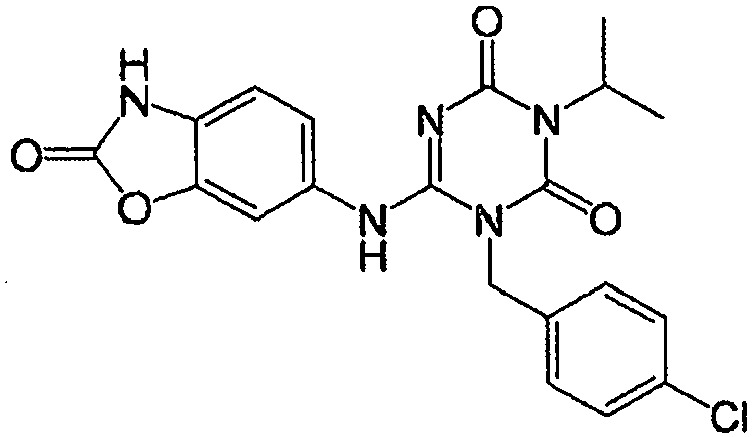
I-0246 2.20 428 3 
I-0247 2.50 470 3 
I-0248 2.60 429 3 
I-0249 2.20 428 3 
I-0250 2.60 470 3 [Table 54] Structure Compound No. Retention Time (min) [M+H] Method 
I-0251 2.40 377 3 
I-0252 2.30 415 3 
I-0253 2.30 375 3 
I-0254 2.90 453 3 
I-0255 2.40 456 3 [Table 55] Structure Compound No. Retention Time (min) [M+H] Method 
I-0256 2.50 470 3 
I-0257 2.20 454 3 
I-0258 2.40 468 3 
I-0259 2.50 504 3 
I-0260 1.50 528 3 [Table 56] Structure Compound No. Retention Time (min) [M+H] Method 
I-0261 2.60 482 3 
I-0262 2.20 484 3 
I-0263 2.10 428 3 
I-0264 2.50 482 3 
I-0265 2.30 442 3 [Table 57] Structure Compound No. Retention Time (min) [M+H] Method 
I-0266 2.60 490 3 
I-0267 2.00 458 3 
I-0268 2.60 484 3 
I-0269 2.03 405 1 
I-0270 2.42 477 1 [Table 58] Structure Compound No. Retention Time (min) [M+H] Method 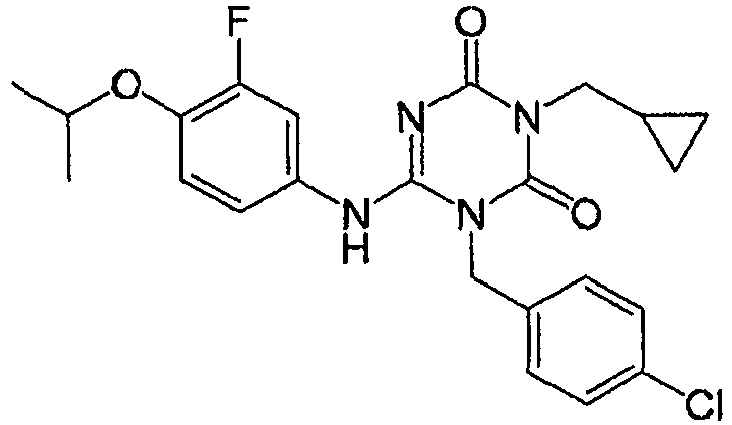
I-0271 2.49 459 1 
I-0272 1.44 476 1 
I-0273 1.96 449 1 
I-0274 1.98 507 1 
I-0275 2.27 503 1 [Table 59] Structure Compound No. Retention Time (min) [M+H] Method 
I-0276 1.85 493 1 
I-0277 2.34 433 1 
I-0278 1.70 440 1 
I-0279 1.90 439 1 
I-0280 2.21 463 1 [Table 60] Structure Compound No. Retention Time (min) [M+H] Method 
I-0281 1.47 518 1 
I-0282 1.50 516 1 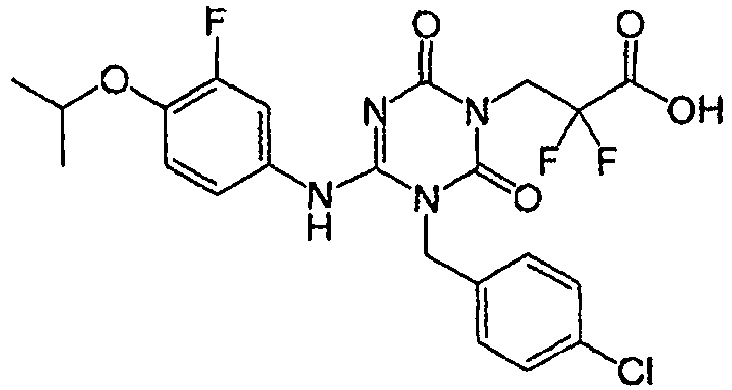
I-0283 1.82 513 1 
I-0284 1.96 463 1 
I-0285 2.00 463 1 [Table 61] Structure Compound No. Retention Time (min) [M+H] Method 
I-0286 1.80 479 1 
I-0287 1.30 509 1 
I-0288 2.15 444 1 
I-0289 2.00 477 1 
I-0290 1.40 448 1 [Table 62] Structure Compound No. Retention Time (min) [M+H] Method 
I-0291 2.15 458 1 
I-0292 1.90 489 1 
I-0293 2.00 490 1 
I-0294 1.91 476 1 
I-0295 1.85 462 1 [Table 63] Structure Compound No. Retention Time (min) [M+H] Method 
I-0296 2.18 447 1 
I-0297 2.04 504 1 
I-0298 1.90 490 1 
I-0299 1.86 476 1 
I-0300 2.06 496 1 [Table 64] Structure Compound No. Retention Time (min) [M+H] Method 
I-0301 2.53 495 1 
I-0302 1.50 417 1 
I-0303 1.60 417 1 
I-0304 1.50 434 1 
I-0305 1.69 421 1 [Table 65] Structure Compound No. Retention Time (min) [M+H] Method 
I-0306 1.11 444 1 
I-0307 1.72 417 1 
I-0308 1.80 391 1 
I-0309 2.09 457 1 
I-0310 2.21 455 1 [Table 66] Structure Compound No. Retention Time (min) [M+H] Method 
I-0311 1.14 456 1 
I-0312 1.83 435 1 
I-0313 2.00 441 2 
I-0314 1.70 440 2 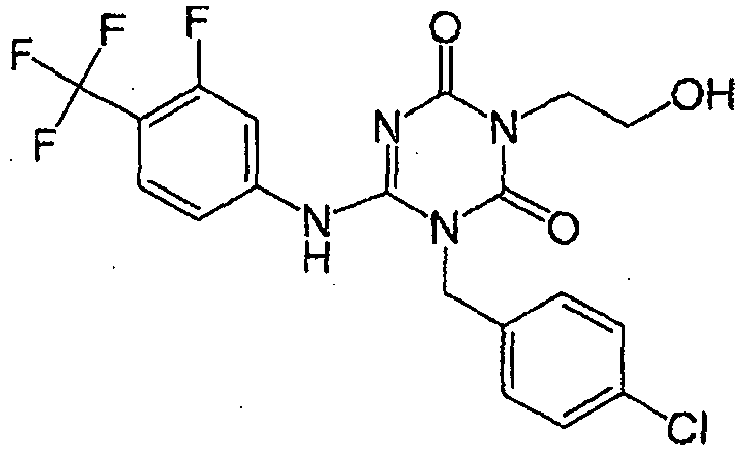
I-0315 2.09 459 2 [Table 67] Structure Compound No. Retention Time (min) [M+H] Method 
I-0316 1.84 409 2 
I-0317 1.40 462 2 
I-0318 2.01 415 2 
I-0319 1.68 379 2 
I-0320 1.83 431 2 [Table 68] Structure Compound No. Retention Time (min) [M+H] Method 
I-0321 1.99 449 2 
I-0322 2.03 457 2 
I-0323 2.16 463 2 
I-0324 1.61 473 2 
I-0325 1.10 325 2 [Table 69] Structure Compound No. Retention Time (min) [M+H] Method 
I-0326 1.93 504 2 
I-0327 1.03 472 2 
I-0328 2.15 429 2 
I-0329 1.80 439 2 
I-0330 1.56 428 2 [Table 70] Structure Compound No. Retention Time (min) [M+H] Method 
I-0331 1.49 490 2 
I-0332 2.26 491 2 
I-0333 1.80 433 2 
I-0334 2.35 465 3 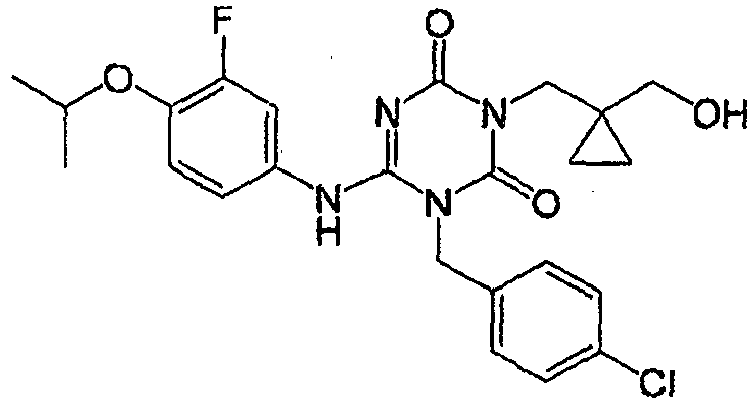
I-0335 2.19 489 2 [Table 71] Structure Compound No. Retention Time (min) [M+H] Method 
I-0336 1.61 373 2 
I-0337 2.39 362 2 
I-0338 2.45 477 3 
I-0339 1.88 451 2 
I-0340 1.84 451 2 [Table 72] Structure Compound No. Retention Time (min) [M+H] Method 
I-0341 2.01 467 2 
I-0342 2.81 548 3 
I-0343 2.50 525 2 
I-0344 2.48 429 3 
I-0345 2.74 412 2 [Table 73] Structure Compound No. Retention Time (min) [M+H] Method 
I-0346 2.34 445 2 
I-0347 1.78 460 2 
I-0348 2.45 447 2 
I-0349 2.20 413 2 
I-0350 2.55 549 2 [Table 74] Structure Compound No. Retention Time (min) [M+H] Method 
I-0351 2.06 465 2 
I-0352 1.78 520 2 
I-0353 1.77 506 2 
I-0354 2.47 521 2 
I-0355 2.10 493 2 [Table 75] Structure Compound No. Retention Time (min) [M+H] Method 
I-0356 2.33 505 2 
I-0357 2.07 455 2 
I-0358 2.23 442 2 
I-0359 1.85 445 2 
I-0360 1.84 453 2 [Table 76] Structure Compound No. Retention Time (min) [M+H] Method 
I-0361 1.77 431 2 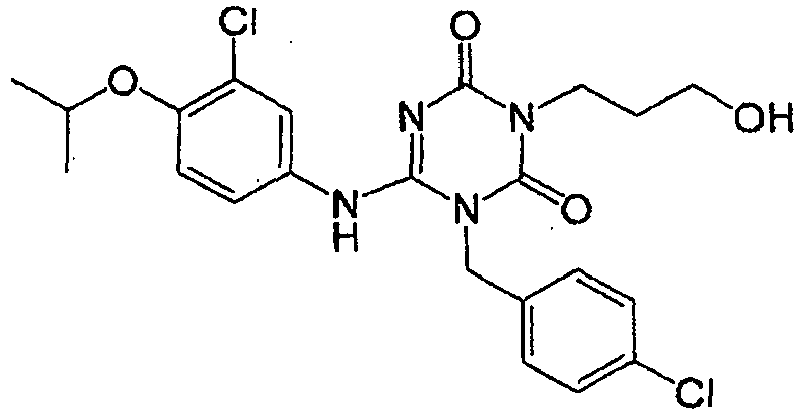
I-0362 2.12 479 2 
I-0363 2.05 491 2 
I-0364 2.12 505 2 
I-0365 2.03 477 2 [Table 77] Structure Compound No. Retention Time (min) [M+H] Method 
I-0366 2.33 473 3 
I-0367 2.17 485 3 
I-0368 2.00 475 3 
I-0369 2.24 510 3 
I-0370 1.98 483 3 [Table 78] Structure Compound No. Retention Time (min) [M+H] Method 
I-0371 1.88 461 3 
I-0372 2.27 396 2 
I-0373 2.17 443 2 
I-0374 2.28 491 2 
I-0375 2.32 473 3 [Table 79] Structure Compound No. Retention Time (min) [M+H] Method 
I-0376 2.30 453 3 
I-0377 1.41 446 2 
I-0378 2.02 415 2 
I-0379 2.11 447 2 
I-0380 2.49 493 2 [Table 80] Structure Compound No. Retention Time (min) [M+H] Method 
I-0381 3.04 440 3 
I-0382 2.09 465 2 
I-0383 2.32 457 3 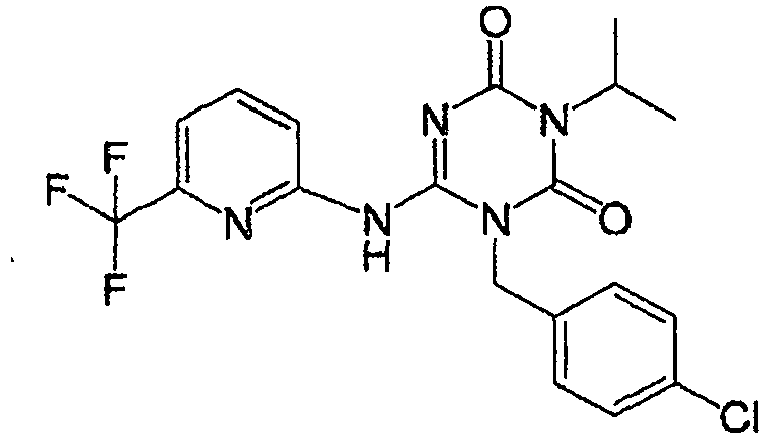
I-0384 2.77 440 2 
I-0385 1.56 463 2 [Table 81] Structure Compound No. Retention Time (min) [M+H] Method 
I-0386 1.81 491 2 
I-0387 1.86 505 2 
I-0388 1.98 519 2 
I-0389 1.94 519 2 
I-0390 1.77 535 2 [Table 82] Structure Compound No. Retention Time (min) [M+H] Method 
I-0391 1.89 531 2 
I-0392 1.77 549 2 
I-0393 2.28 406 2 
I-0394 2.30 430 2 
I-0395 2.77 549 3 [Table 83] Structure Compound No. Retention Time (min) [M+H] Method 
I-0396 1.94 534 2 
I-0397 1.69 536 2 
I-0398 2.51 535 2 
I-0399 1.81 520 2 
I-0400 2.24 521 2 [Table 84] Structure Compound No. Retention Time (min) [M+H] Method 
I-0401 2.49 527 2 
I-0402 2.40 519 2 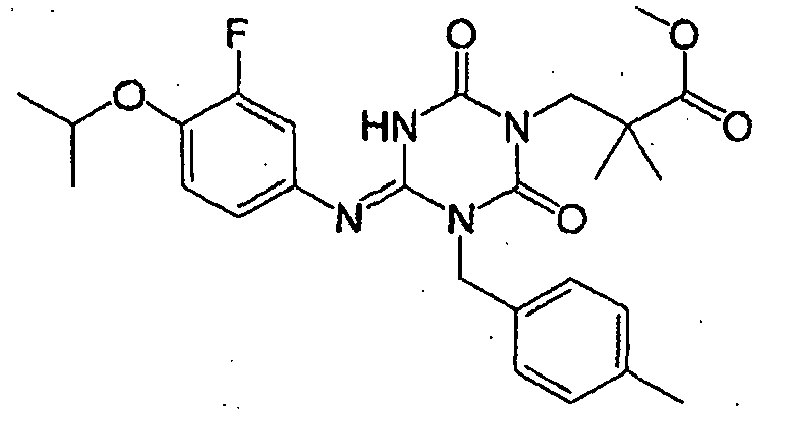
I-0403 2.32 499 2 
I-0404 2.04 485 2 
I-0405 2.74 609 2 [Table 85] Structure Compound No. Retention Time (min) [M+H] Method 
I-0406 2.84 625 2 
I-0407 2.16 501 2 
I-0408 2.13 471 2 
I-0409 2.09 457 2 
I-0410 1.92 457 2 [Table 86] Structure Compound No. Retention Time (min) [M+H] Method 
I-0411 1.87 443 2 
I-0412 2.10 503 2 
I-0413 1.63 516 2 
I-0414 1.84 528 2 
I-0415 1.74 500 2 [Table 87] Structure Compound No. Retention Time (min) [M+H] Method 
I-0416 1.78 514 2 
I-0417 1.79 514 2 
I-0418 1.78 526 2 
I-0419 2.21 519 2 
I-0420 2.32 535 2 [Table 88] Structure Compound No. Retention Time (min) [M+H] Method 
I-0421 2.45 531 2 
I-0422 2.53 547 2 
I-0423 2.09 503 2 
I-0424 2.20 519 2 
I-0425 1.99 493 2 [Table 89] Structure Compound No. Retention Time (min) [M+H] Method 
I-0426 2.12 496 2 
I-0427 1.25 500 2 
I-0428 1.72 479 2 
I-0429 1.85 482 2 
I-0430 2.44 515 2 [Table 90] Structure Compound No. Retention Time (min) [M+H] Method 
I-0431 2.15 501 2 
I-0432 2.10 435 1 
I-0433 1.79 462 1 
I-0434 1.80 449 1 
I-0435 1.90 494 1 [Table 91] Structure Compound No. Retention Time (min) [M+H] Method 
I-0436 3.40 590 1 
I-0437 1.50 448 2 
I-0438 1.80 464 2 
I-0439 1.50 462 2 
I-0440 1.70 493 2 [Table 92] Structure Compound No. Retention Time (min) [M+H] Method 
I-0441 1.88 479 1 
I-0442 2.09 521 1 
I-0443 2.06 479 2 
I-0444 2.21 517 3 
I-0445 2.16 492 3 [Table 93] Structure Compound No. Retention Time (min) [M+H] Method 
I-0446 2.03 522 3 
I-0447 1.98 535 3 
I-0448 2.11 515 3 
I-0449 1.87 533 3 
I-0450 2.43 521 2 [Table 94] Structure Compound No. Retention Time (min) [M+H] Method 
I-0451 2.23 487 2 
I-0452 2.50 509 3 
I-0453 2.61 553 3 
I-0454 2.33 539 3 
I-0455 2.31 507 2 [Table 95] Structure Compound No. Retention Time (min) [M+H] Method 
I-0456 2.10 473 2 
I-0457 2.22 495 2 
I-0458 2.67 511 2 
I-0459 2.63 553 3 
I-0460 2.36 539 3 [Table 96] Structure Compound No. Retention Time (min) [M+H] Method 
I-0461 2.29 505 2 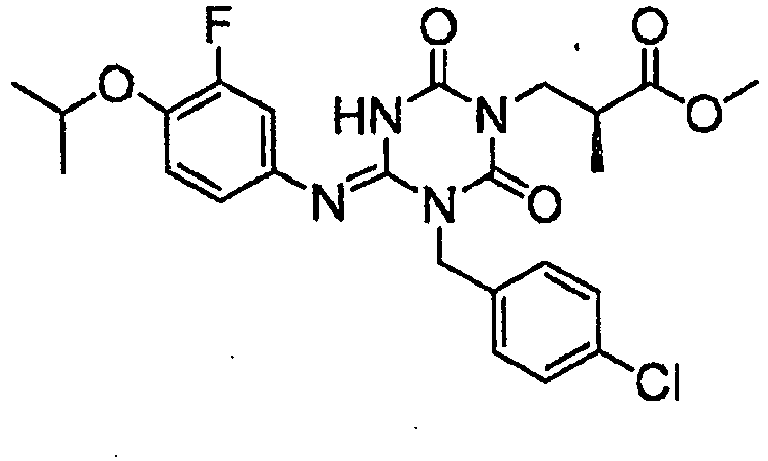
I-0462 2.30 505 2 
I-0463 2.74 567 3 
I-0464 2.22 491 3 
I-0465 2.22 491 3 [Table 97] Structure Compound No. Retention Time (min) [M+H] Method 
I-0466 2.41 521 2 
I-0467 2.41 521 2 
I-0468 2.38 539 3 
I-0469 2.34 507 3 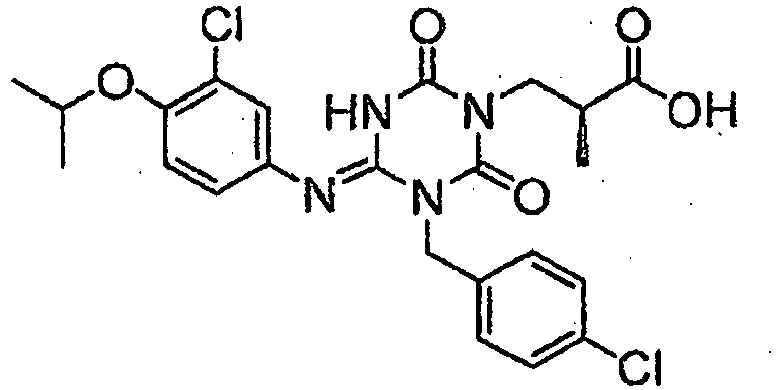
I-0470 2.33 507 3 [Table 98] Structure Compound No. Retention Time (min) [M+H] Method 
I-0471 2.33 501 2 
I-0472 2.31 471 2 
I-0473 2.02 457 2 
I-0474 2.06 487 2 
I-0475 2.41 477 2 [Table 99] Structure Compound No Retention Time (min) [M+H] Method 
I-0476 2.50 527 2 
I-0477 2.29 463 3 
I-0478 2.41 513 3 
I-0479 2.15 482 3 
I-0480 2.63 511 3 [Table 100] Structure Compound No. Retention Time (min) [M+H] Method 
I-0481 2.75 512 3 
I-0482 1.78 502 2 
I-0483 2.42 491 3 
I-0484 2.18 477 3 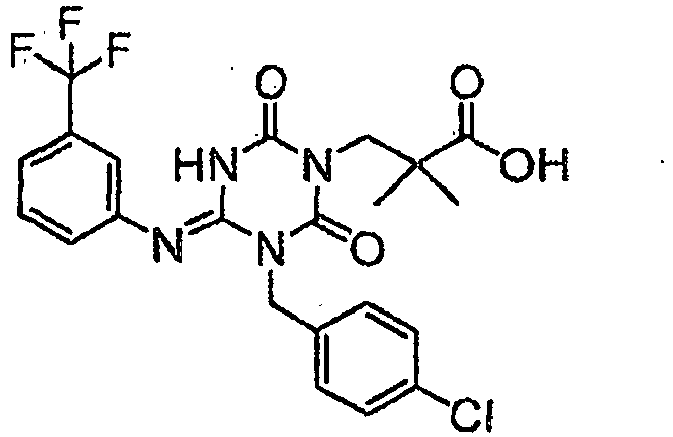
I-0485 2.20 497 2 [Table 101] Structure Compound No. Retention Time (min) [M+H] Method 
I-0486 2.31 499 2 
I-0487 1.71 468 2 
I-0488 2.17 487 2 
I-0489 2.06 473 2 
I-0490 2.22 487 2 [Table 102] Structure Compound No. Retention Time (min) [M+H] Method 
I-0491 1.53 488 2 
I-0492 1.93 473 2 
I-0493 1.82 459 2 
I-0494 1.98 473 2 
I-0495 2.08 487 2 [Table 103] Structure Compound No. Retention Time (min) [M+H] Method 
I-0496 2.03 493 2 
I-0497 1.98 498 2 
I-0498 2.28 497 2 
I-0499 1.62 534 2 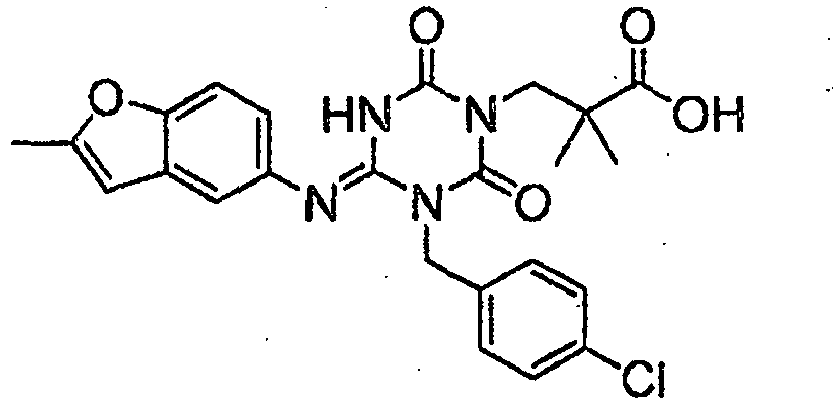
I-0500 2.00 483 2 [Table 104] Structure Compound No. Retention Time (min) [M+H] Method 
I-0501 2.23 510 2 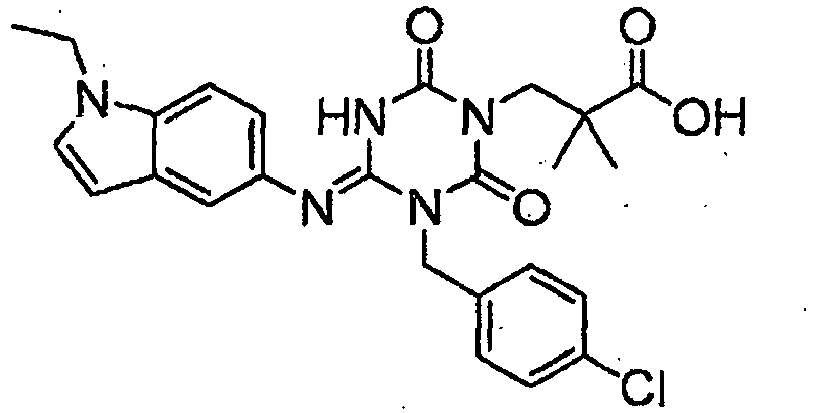
I-0502 1.96 496 2 
I-0503 2.04 498 2 
I-0504 1.43 520 2 
I-0505 1.75 484 2 [Table 105] Structure Compound No. Retention Time (min) [M+H] Method 
I-0506 1.74 484 2 
I-0507 2.50 535 2 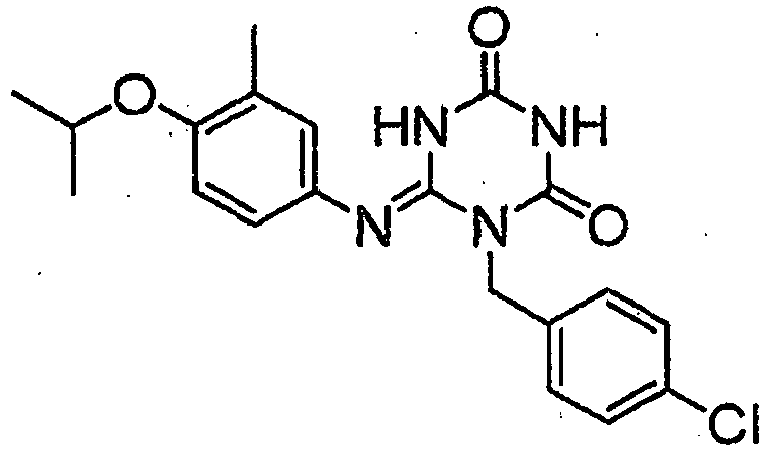
I-0508 2.03 401 2 
I-0509 2.13 507 2 
I-0510 1.85 383 2 [Table 106] Structure Compound No. Retention Time (min) [M+H] Method 
I-0511 2.41 515 2 
I-0512 2.06 487 2 
I-0513 2.25 497 2 
I-0514 1.89 469 2 
I-0515 2.44 538 2 [Table 107] Structure Compound No. Retention Time (min) [M+H] Method 
I-0516 2.34 524 2 
I-0517 2.17 524 2 
I-0518 2.07 510 2 
I-0519 2.23 475 3 
I-0520 2.67 441 3 [Table 108] Structure Compound No. Retention Time (min) [M+H] Method 
I-0521 2.75 533 3 
I-0522 2.75 533 3 
I-0523 2.50 519 3 
I-0524 2.40 485 3 
I-0525 2.62 516 3 [Table 109] Structure Compound No. Retention Time (min) [M+H] Method 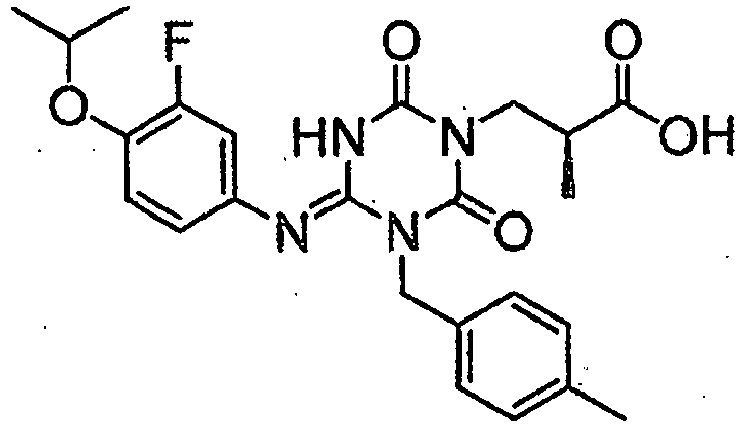
I-0526 2.18 471 3 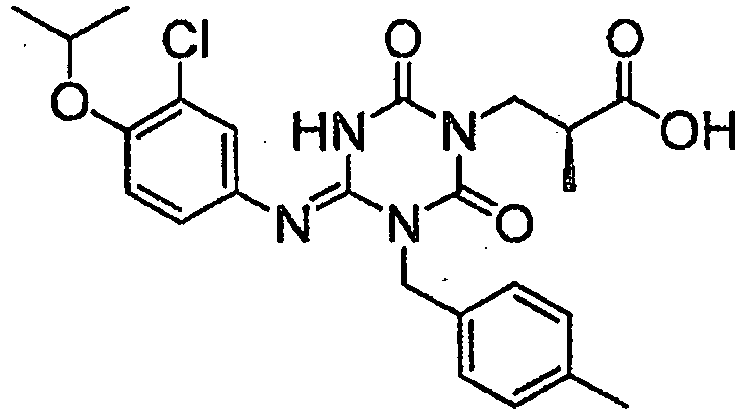
I-0527 2.28 487 3 
I-0528 2.25 487 3 
I-0529 2.00 449 3 
I-0530 2.55 495 3 [Table 110] Structure Compound No. Retention Time (min) [M+H] Method 
I-0531 2.64 521 3 
I-0532 2.53 505 3 
I-0533 2.57 501 3 
I-0534 2.20 467 3 
I-0535 2.38 507 3 [Table 111] Structure Compound No. Retention Time (min) [M+H] Method 
I-0536 2.26 491 3 
I-0537 2.30 487 3 
I-0538 2.18 487 2 
I-0539 2.07 473 2 
I-0540 2.33 501 2 [Table 112] Structure Compound No. Retention Time (min) [M+H] Method 
I-0541 2.23 487 2 
I-0542 2.29 507 2 
I-0543 2.16 483 2 
I-0544 1.82 459 2 
I-0545 1.98 473 2 [Table 113] Structure Compound No. Retention Time (min) [M+H] Method 
I-0546 1.91 473 2 
I-0547 2.09 487 2 
I-0548 2.03 493 2 
I-0549 1.91 469 2 
I-0550 1.99 487 2 [Table 114] Structure Compound No. Retention Time (min) [M+H] Method 
I-0551 1.90 473 2 
I-0552 1.97 495 2 
I-0553 1.99 475 2 
I-0554 2.41 533 2 
I-0555 2.76 547 2 [Table 115] Structure Compound No. Retention Time (min) [M+H] Method 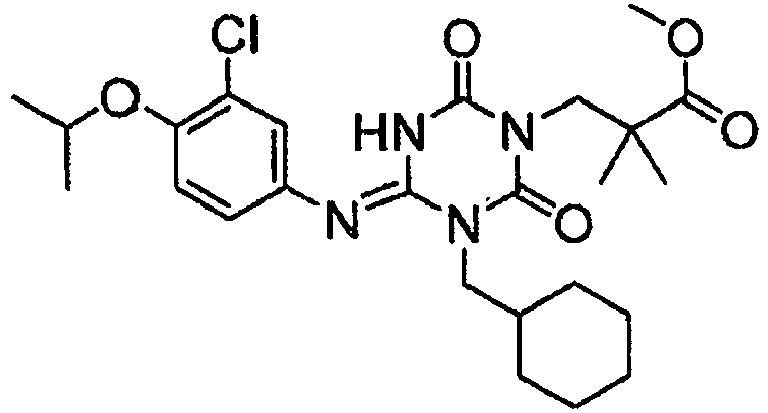
I-0556 2.53 507 2 
I-0557 2.42 493 2 
I-0558 2.65 521 2 
I-0559 2.43 493 2 
I-0560 2.23 493 2 [Table 116] Structure Compound No. Retention Time (min) [M+H] Method 
I-0561 2.16 479 2 
I-0562 2.35 507 2 
I-0563 2.12 479 2 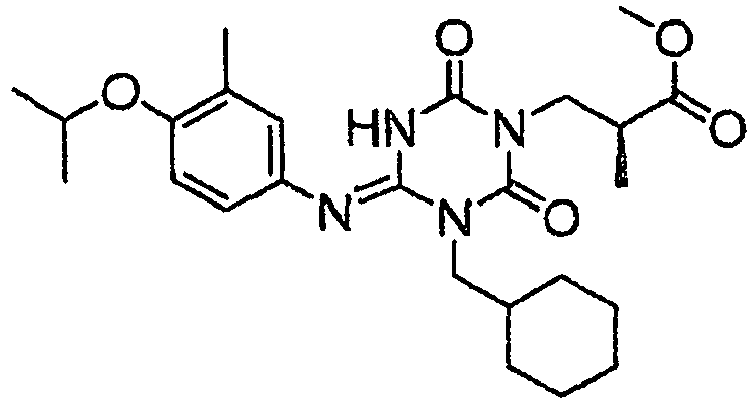
I-0564 2.37 473 2 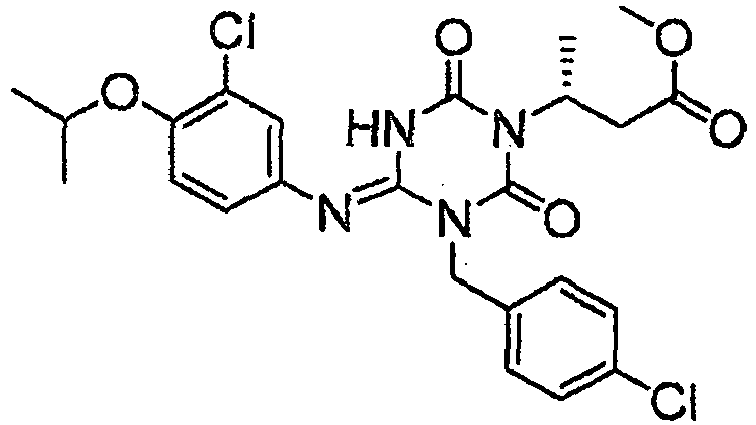
I-0565 2.44 521 2 [Table 117] Structure Compound No. Retention Time (min) [M+H] Method 
I-0566 2.37 501 2 
I-0567 2.16 483 2 
I-0568 2.09 459 2 
I-0569 2.34 505 2 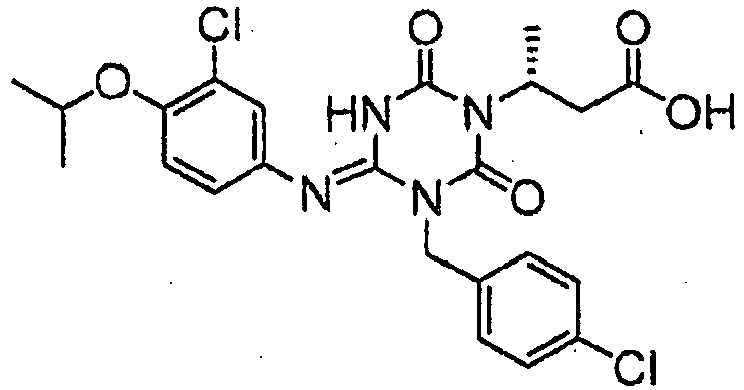
I-0570 2.18 507 2 [Table 118] Structure Compound No. Retention Time (min) [M+H] Method 
I-0571 2.28 491 3 
I-0572 2.32 487 3 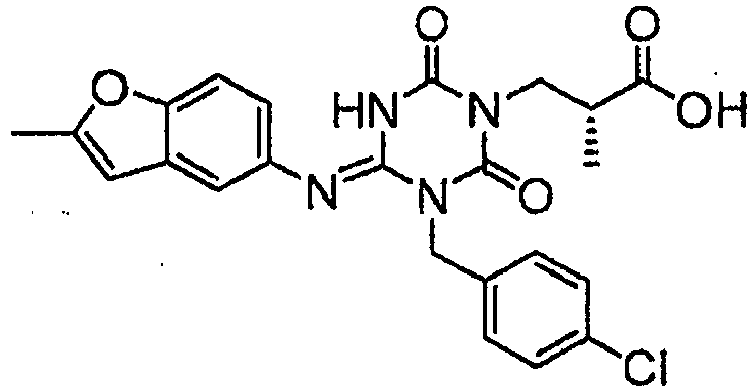
I-0573 2.11 469 3 
I-0574 2.41 477 3 
I-0575 1.74 478 2 [Table 119] Structure Compound No. Retention Time (min) [M+H] Method 
I-0576 2.44 488 2 
I-0577 2.04 476 2 
I-0578 2.21 449 2 
I-0579 2.07 477 2 
I-0580 2.28 419 2 [Table 120] Structure Compound No. Retention Time (min) [M+H] Method 
I-0581 1.78 463 2 
I-0582 1.62 506 2 
I-0583 1.72 505 2 
I-0584 1.56 536 2 
I-0585 1.40 533 2 [Table 121] Structure Compound No. Retention Time (min) [M+H] Method 
I-0586 1.65 520 2 
I-0587 1.66 462 2 
I-0588 2.24 491 3 
I-0589 2.53 501 3 
I-0590 2.50 507 3 [Table 122] Structure Compound No. Retention Time (min) [M+H] Method 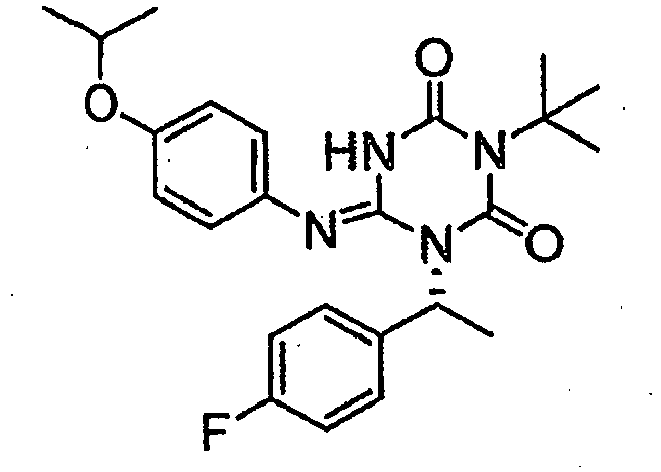
I-0591 2.67 441 3 
I-0592 2.50 519 3 
I-0593 2.56 501 3 
I-0594 2.40 497 2 
I-0595 1.49 502 3 [Table 123] Structure Compound No. Retention Time (min) [M+H] Method 
I-0596 2.08 501 3 
I-0597 2.19 510 2 
I-0598 1.93 496 2 
I-0599 1.69 477 3 
I-0600 1.67 507 3 [Table 124] Structure Compound No. Retention Time (min) [M+H] Method 
I-0601 2.14 503 3 
I-0602 2.17 491 2 
I-0603 1.74 492 2 
I-0604 2.73 545 3 
I-0605 2.32 471 3 [Table 125] Structure Compound No. Retention Time (min) [M+H] Method 
I-0606 2.33 467 3 
I-0607 2.05 506 2 
I-0608 2.11 520 2 
I-0609 1.92 477 2 
I-0610 1.84 457 2 [Table 126] Structure Compound No. Retention Time (min) [M+H] Method 
I-0611 1.86 454 2 
I-0612 1.96 489 2 
I-0613 2.30 606 2 
I-0614 2.43 535 2 
I-0615 1.96 543 2 [Table 127] Structure Compound No. Retention Time (min) [M+H] Method 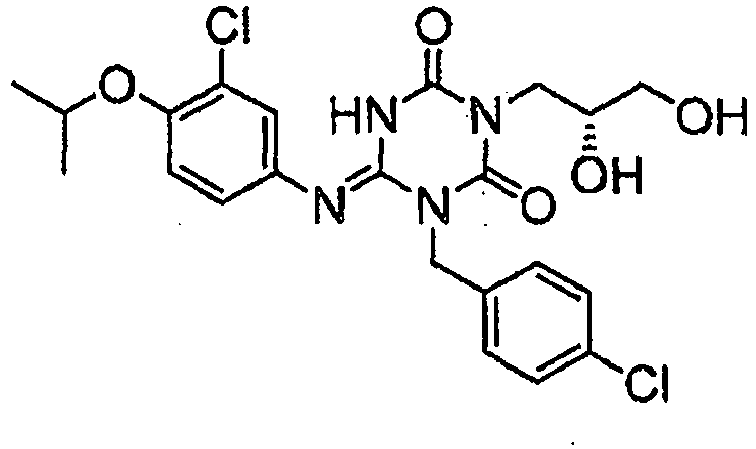
I-0616 1.91 495 2 
I-0617 2.14 489 2 
I-0618 2.26 471 3 
I-0619 2.43 487 3 
I-0620 2.71 485 3 [Table 128] Structure Compound No. Retention Time (min) [M+H] Method 
I-0621 2.57 471 3 
I-0622 2.56 497 3 
I-0623 2.16 473 3 
I-0624 2.54 471 3 
I-0625 2.40 485 3 [Table 129] Structure Compound No. Retention Time (min) [M+H] Method 
I-0626 2.46 505 3 
I-0627 2.31 457 3 
I-0628 2.29 483 3 
I-0629 2.14 471 3 
I-0630 2.21 491 3 [Table 130] Structure Compound No. Retention Time (min) [M+H] Method 
I-0631 2.36 473 2 
I-0632 2.29 479 2 
I-0633 2.43 535 2 
I-0634 1.60 504 2 
I-0635 1.70 477 2 [Table 131] Structure Compound No. Retention Time (min) [M+H] Method 
I-0636 1.75 478 2 
I-0637 1.90 475 2 
I-0638 1.91 495 2 
I-0639 2.00 457 3 
I-0640 2.43 521 2 [Table 132] Structure Compound No. Retention Time (min) [M+H] Method 
I-0641 2.34 526 2 
I-0642 2.29 526 2 
I-0643 1.94 503 2 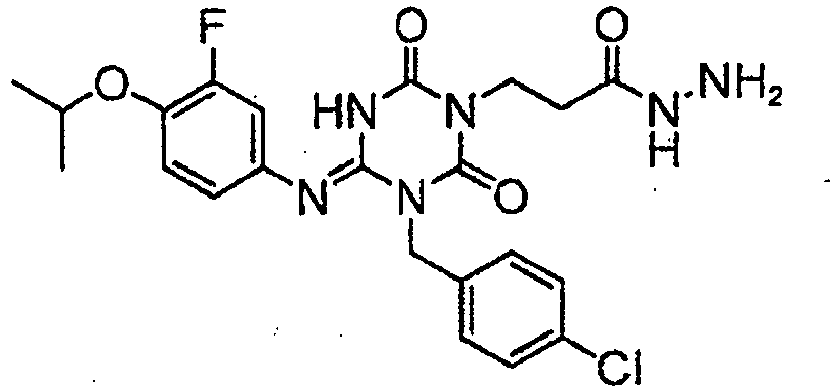
I-0644 1.69 491 2 
I-0645 1.72 527 2 [Table 133] Structure Compound No. Retention Time (min) [M+H] Method 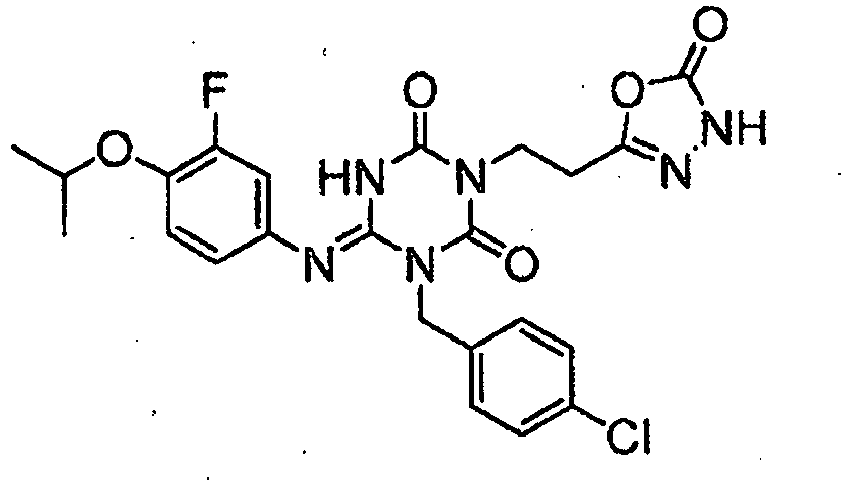
I-0646 1.97 517 2 
I-0647 2.09 459 2 
I-0648 2.01 465 2 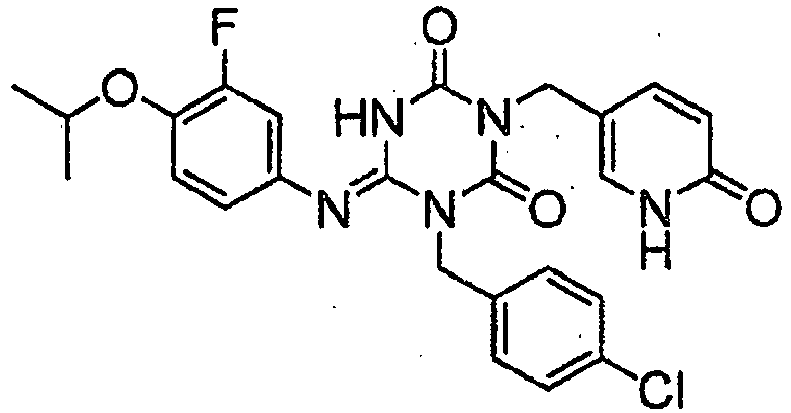
I-0649 1.85 512 2 
I-0650 1.83 512 2 [Table 134] Structure Compound No. Retention Time (min) [M+H] Method 
I-0651 2.14 507 2 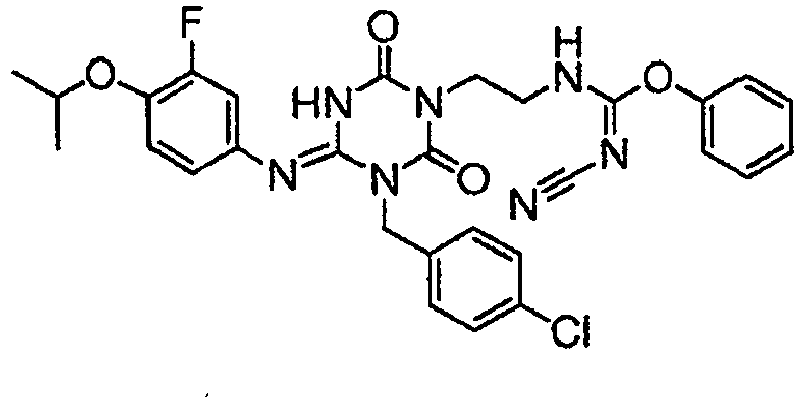
I-0652 2.24 592 2 
I-0653 1.90 529 2 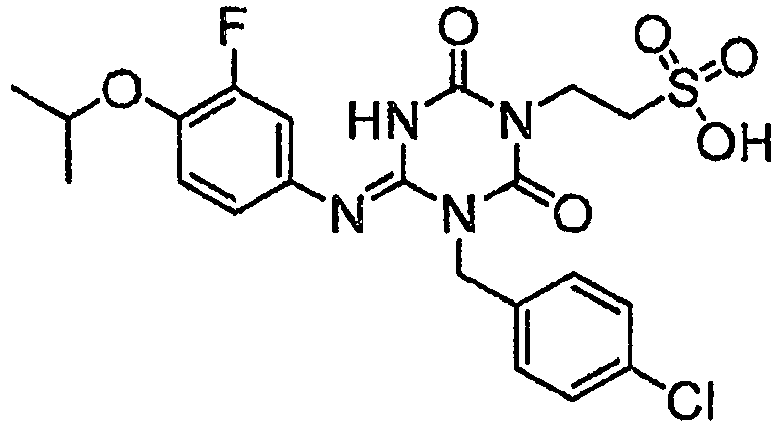
I-0654 1.64 513 2 
I-0655 2.47 513 3 [Table 135] Structure Compound No. Retention Time (min) [M+H] Method 
I-0656 2.44 501 3 
I-0657 1.93 473 3 
I-0658 2.21 499 3 
I-0659 1.49 490 2 
I-0660 2.28 493 2 [Table 136] Structure Compound No. Retention Time (min) [M+H] Method 
I-0661 2.35 606 2 
I-0662 2.35 606 2 
I-0663 2.04 562 2 
I-0664 2.06 576 2 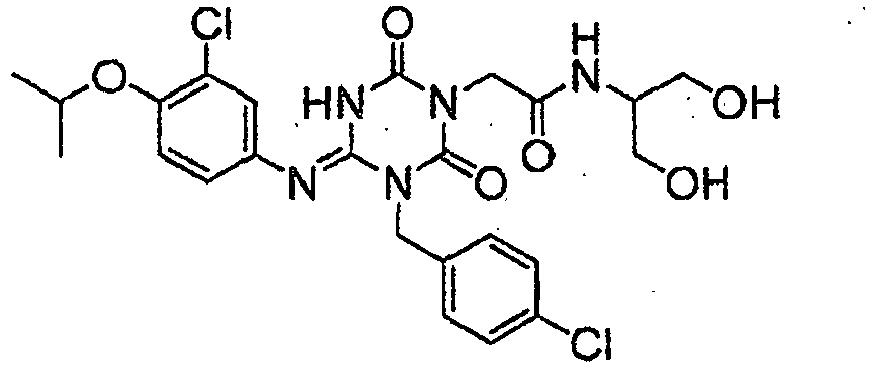
I-0665 1.79 552 2 [Table 137] Structure Compound No. Retention Time (min) [M+H] Method 
I-0666 2.13 590 2 
I-0667 2.34 577 2 
I-0668 1.67 459 3 
I-0669 1.98 487 2 
I-0670 2.28 481 2 [Table 138] Structure Compound No. Retention Time (min) [M+H] Method 
I-0671 2.09 463 2 
I-0672 1.81 500 2 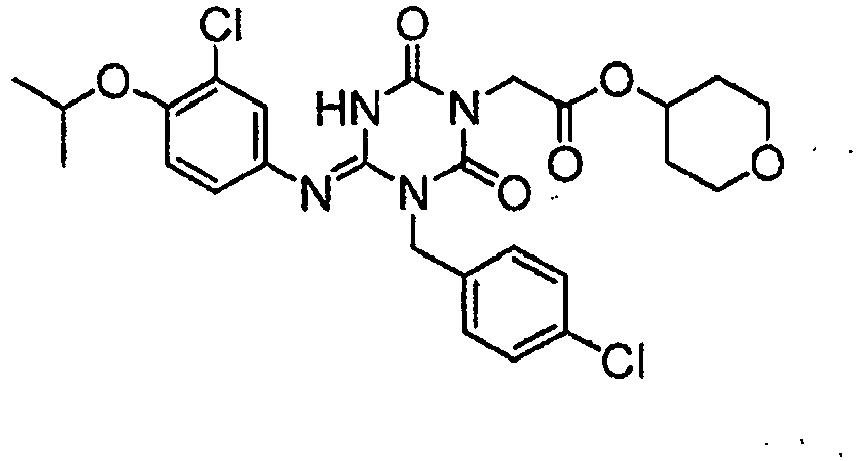
I-0673 2.29 563 2 
I-0674 1.96 489 2 
I-0675 1.96 489 2 [Table 139] Structure Compound No. Retention Time (min) [M+H] Method 
I-0676 1.94 479 2 
I-0677 2.19 472 3 
I-0678 2.23 487 2 
I-0679 1.81 486 2 
I-0680 2.04 467 2 [Table 140] Structure Compound No. Retention Time (min) [M+H] Method 
I-0681 1.87 449 2 
I-0682 1.99 473 2 
I-0683 2.35 526 2 
I-0684 2.51 622 3 
I-0685 1.90 512 2 [Table 141] Structure Compound No. Retention Time (min) [M+H] Method 
I-0686 1.91 459 3 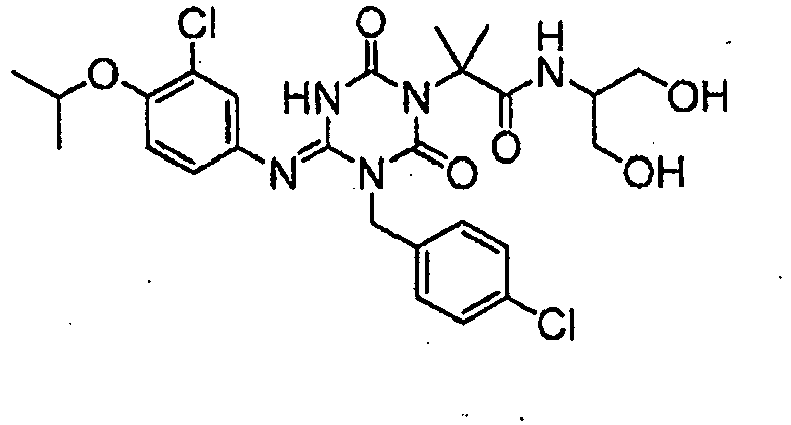
I-0687 1.86 580 2 
I-0688 2.51 622 3 
I-0689 1.97 526 2 
I-0690 2.31 487 2 [Table 142] Structure Compound No. Retention Time (min) [M+H] Method 
I-0691 2.39 477 2 
I-0692 1.96 482 2 
I-0693 1.92 512 2 
I-0694 2.48 527 2 
I-0695 2.05 473 2 [Table 143] Structure Compound No. Retention Time (min) [M+H] Method 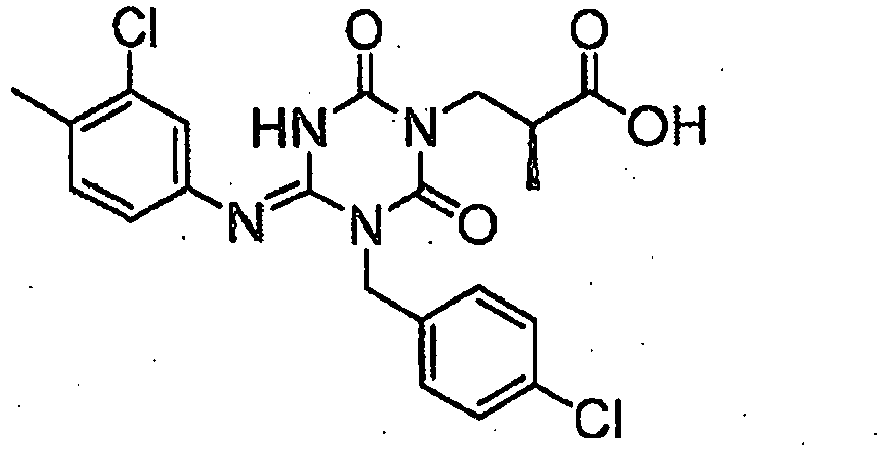
I-0696 2.12 463 2 
I-0697 1.73 468 2 
I-0698 2.12 499 2 
I-0699 2.51 628 2 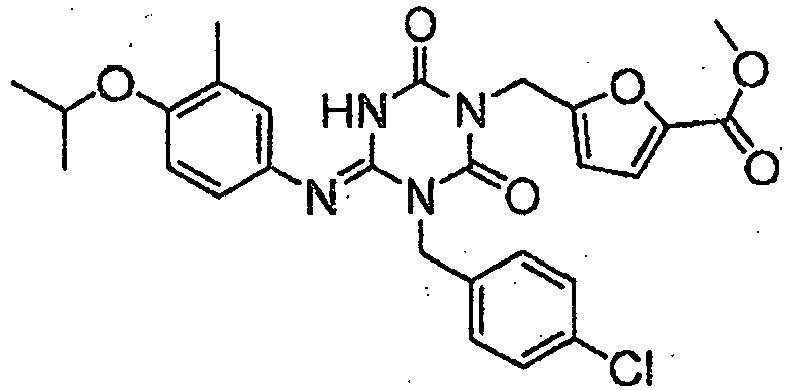
I-0700 2.34 539 2 [Table 144] Structure Compound No. Retention Time (min) [M+H] Method 
I-0701 2.94 557 3 
I-0702 2.16 493 2 
I-0703 2.10 512 2 
I-0704 1.94 542 2 
I-0705 1.94 550 2 [Table 145] Structure Compound No. Retention Time (min) [M+H] Method 
I-0706 2.16 499 3 
I-0707 2.59 501 3 
I-0708 2.28 614 2 
I-0709 2.37 515 2 
I-0710 2.09 525 2 [Table 146] Structure Compound No. Retention Time (min) [M+H] Method 
I-0711 2.34 487 3 
I-0712 2.28 636 2 
I-0713 1.93 552 2 
I-0714 2.56 636 2 
I-0715 2.16 552 2 [Table 147] Structure Compound No. Retention Time (min) [M+H] Method 
I-0716 1.58 514 2 
I-0717 2.56 630 2 
I-0718 2.64 555 2 
I-0719 1.68 489 2 
I-0720 2.24 487 2 [Table 148] Structure Compound No. Retention Time (min) [M+H] Method 
I-0721 1.98 500 2 
I-0722 1.86 475 2 
I-0723 1.86 530 2 
I-0724 1.91 479 2 
I-0725 1.98 508 2 [Table 149] Structure Compound No. Retention Time (min) [M+H] Method 
I-0726 2.24 568 2 
I-0727 2.53 501 3 
I-0728 2.53 501 3 
I-0729 2.57 545 3 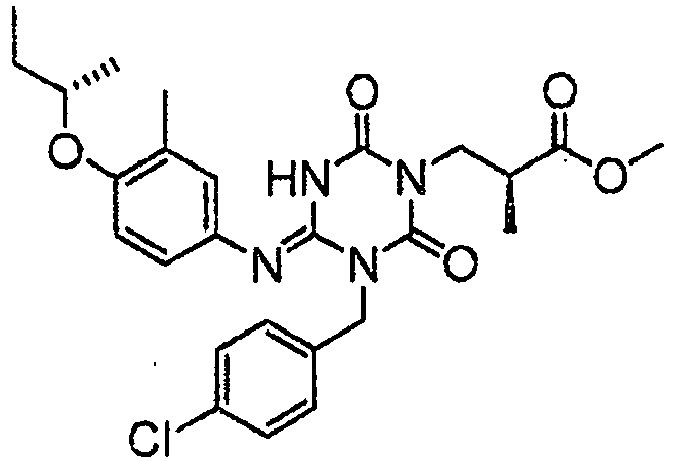
I-0730 2.69 516 3 [Table 150] Structure Compound No. Retention Time (min) [M+H] Method 
I-0731 2.68 516 3 
I-0732 2.26 602 2 
I-0733 1.45 475 2 
I-0734 1.95 473 2 
I-0735 2.30 548 2 [Table 151] Structure Compound No. Retention Time (min) [M+H] Method 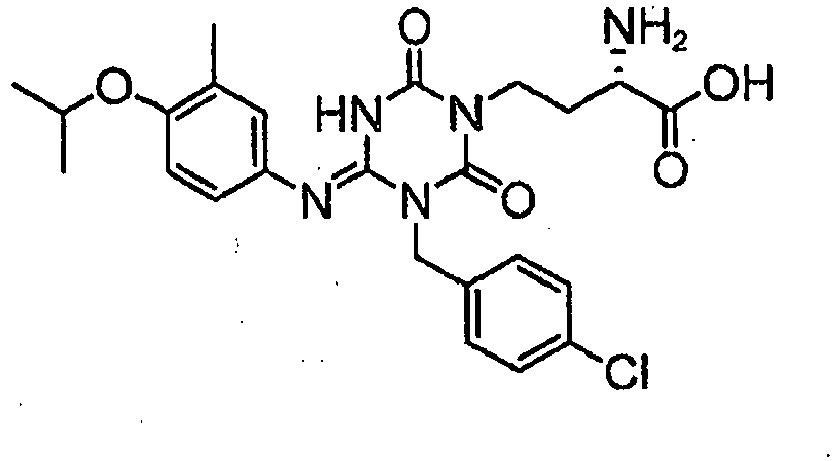
I-0736 1.56 502 2 
I-0737 1.97 520 2 
I-0738 2.19 523 2 
I-0739 2.07 548 2 
I-0740 2.39 647 2 [Table 152] Structure Compound No. Retention Time (min) [M+H] Method 
I-0741 1.95 509 2 
I-0742 1.56 547 2 
I-0743 2.66 521 3 
I-0744 2.13 487 3 
I-0745 2.13 503 3 [Table 153] Structure Compound No. Retention Time (min) [M+H] Method 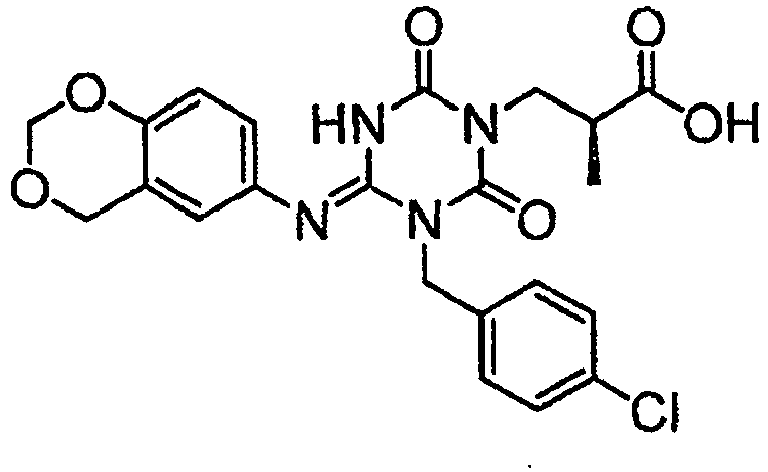
I-0746 1.86 473 3 
I-0747 2.40 507 3 
I-0748 1.86 489 3 
I-0749 2.57 501 3 
I-0750 2.32 487 3 [Table 154] Structure Compound No. Retention Time (min) [M+H] Method 
I-0751 2.17 499 3 
I-0752 2.43 502 3 
I-0753 2.43 502 3 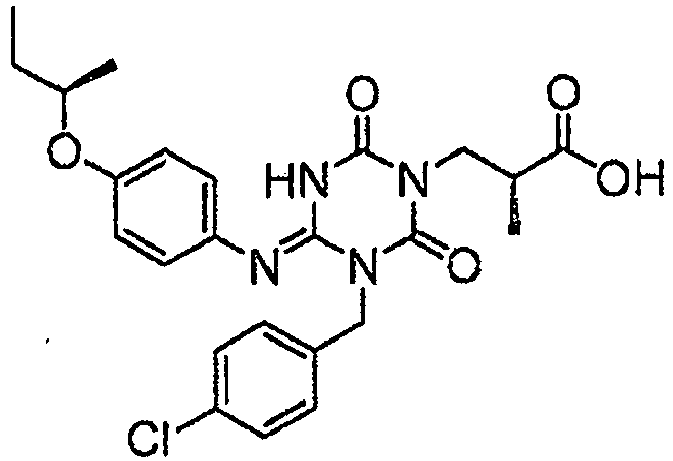
I-0754 2.07 487 2 
I-0755 2.07 487 2 [Table 155] Structure Compound No. Retention Time (min) [M+H] Method 
I-0756 2.03 516 2 
I-0757 2.09 580 2 
I-0758 2.00 501 2 
I-0759 2.45 549 2 
I-0760 1.96 566 2 [Table 156] Structure Compound No. Retention Time (min) [M+H] Method 
I-0761 2.40 515 2 
I-0762 2.12 521 2 
I-0763 2.23 487 2 
I-0764 2.13 467 2 
I-0765 2.13 501 2 [Table 157] Structure Compound No. Retention Time (min) [M+H] Method 
I-0766 2.39 502 3 
I-0767 2.38 537 3 
I-0768 2.49 457 3 
I-0769 2.48 469 3 
I-0770 2.13 471 3 [Table 158] Structure Compound No. Retention Time (min) [M+H] Method 
I-0771 2.20 443 3 
I-0772 2.20 455 3 
I-0773 1.86 457 3 
I-0774 2.02 513 2 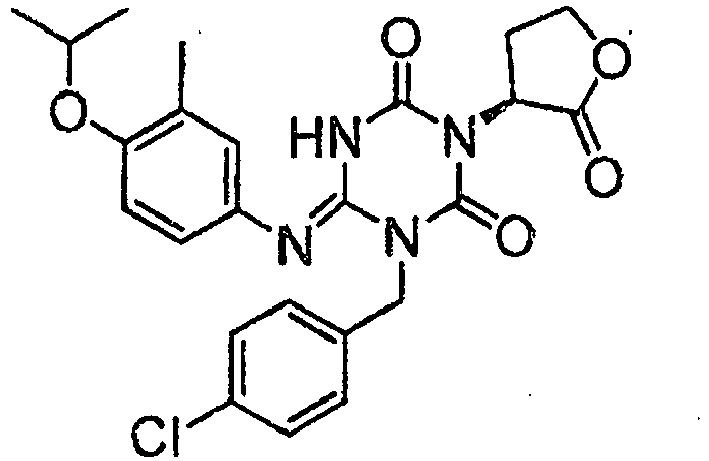
I-0775 2.14 485 2 [Table 159] Structure Compound No. Retention Time (min) [M+H] Method 
I-0776 1.84 503 2 
I-0777 2.56 471 3 
I-0778 2.75 678 2 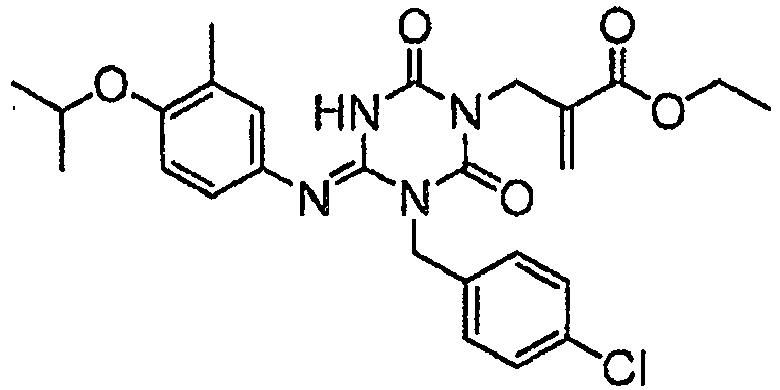
I-0779 2.42 513 2 
I-0780 2.18 540 2 [Table 160] Structure Compound No. Retention Time (min) [M+H] Method 
I-0781 2.24 550 2 
I-0782 2.45 515 2 
I-0783 2.45 515 2 
I-0784 2.38 554 2 
I-0785 2.37 570 2 [Table 161] Structure Compound No. Retention Time (min) [M+H] Method 
I-0786 1.99 500 2 
I-0787 2.05 556 2 
I-0788 1.86 530 2 
I-0789 2.11 523 3 
I-0790 1.53 494 3 [Table 162] Structure Compound No. Retention Time (min) [M+H] Method 
I-0791 2.57 483 3 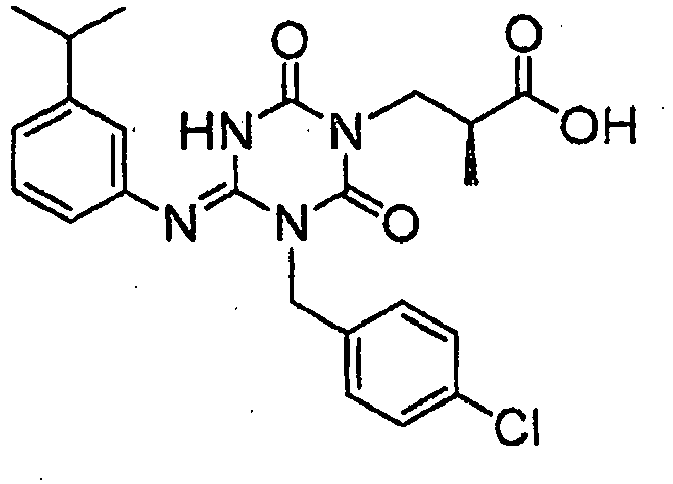
I-0792 2.31 457 3 
I-0793 2.30 469 3 
I-0794 1.97 473 2 
I-0795 1.92 453 2 [Table 163] Structure Compound No. Retention Time (min) [M+H] Method 
I-0796 2.28 527 2 
I-0797 2.04 513 2 
I-0798 2.19 501 2 
I-0799 2.19 501 2 
I-0800 1.98 526 2 [Table 164] Structure Compound No. Retention Time (min) [M+H] Method 
I-0801 2.04 536 2 
I-0802 2.03 526 2 
I-0803 2.04 503 3 
I-0804 2.17 501 2 
I-0805 2.54 529 2 [Table 165] Structure Compound No. Retention Time (min) [M+H] Method 
I-0806 2.22 517 2 
I-0807 2.00 503 2 
I-0808 2.33 485 3 
I-0809 2.47 515 2 
I-0810 2.85 549 3 [Table 166] Structure Compound No. Retention Time (min) [M+H] Method 
I-0811 2.69 515 3 
I-0812 2.53 481 3 
I-0813 2.38 467 3 
I-0814 2.58 501 3 
I-0815 2.55 471 3 [Table 167] Structure Compound No. Retention Time (min) [M+H] Method 
I-0816 2.52 481 3 
I-0817 2.45 521 3 
I-0818 2.27 457 3 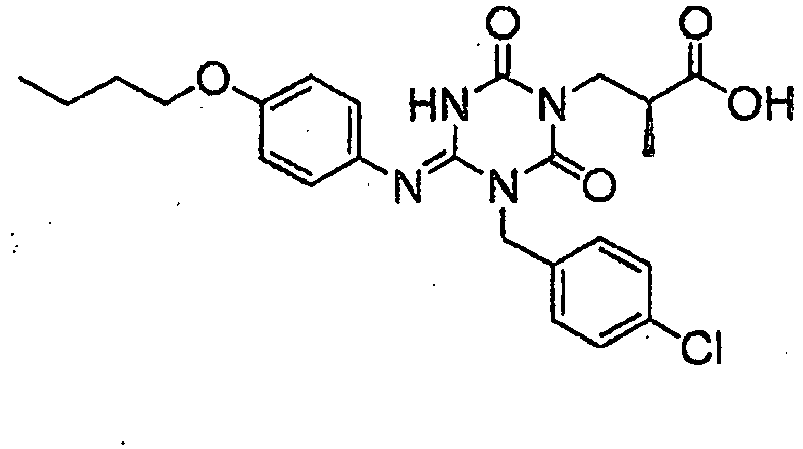
I-0819 2.32 487 3 
I-0820 2.27 467 3 [Table 168] Structure Compound No. Retention Time (min) [M+H] Method 
I-0821 2.69 515 3 
I-0822 2.75 533 3 
I-0823 2.61 495 3 
I-0824 2.47 481 3 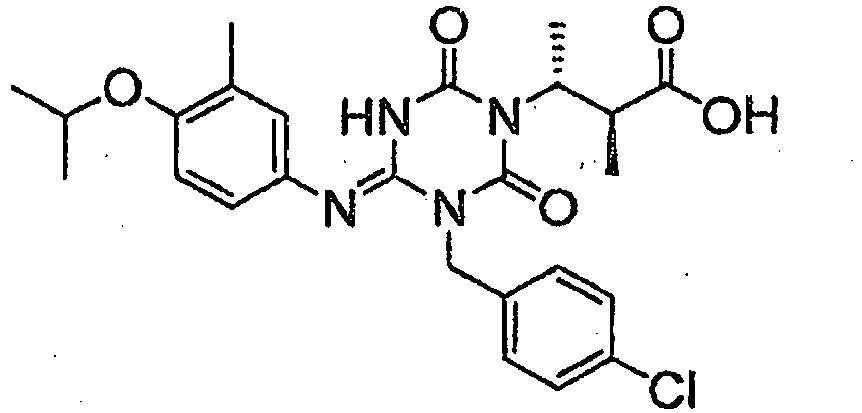
I-0825 2.20 501 2 [Table 169] Structure Compound No. Retention Time (min) [M+H] Method 
I-0826 2.19 501 2 
I-0827 2.07 467 2 
I-0828 1.92 453 2 
I-0829 2.29 487 3 
I-0830 2.35 505 3 [Table 170] Structure Compound No. Retention Time (min) [M+H] Method 
I-0831 2.51 515 2 
I-0832 2.45 495 2 
I-0833 2.17 499 2 
I-0834 2.12 479 2 
I-0835 2.28 501 2 [Table 171] Structure Compound No. Retention Time (min) [M+H] Method 
I-0836 2.22 481 2 
I-0837 1.94 485 2 
I-0838 1.89 465 2 
I-0839 2.56 501 3 
I-0840 2.33 487 3 [Table 172] Structure Compound No. Retention Time (min) [M+H] Method 
I-0841 2.44 511 2 
I-0842 1.96 485 3 
I-0843 2.20 497 3 
I-0844 1.70 471 3 
I-0845 2.39 519 3 [Table 173] Structure Compound No. Retention Time (min) [M+H] Method 
I-0846 2.28 509 3 
I-0847 2.20 489 3 
I-0848 1.83 495 2 
I-0849 1.77 475 2 
I-0850 2.24 527 2 [Table 174] Structure Compound No. Retention Time (min) [M+H] Method 
I-0851 2.25 527 2 
I-0852 1.87 489 2 
I-0853 2.37 481 3 
I-0854 2.21 467 3 
I-0855 2.39 517 2 [Table 175] Structure Compound No. Retention Time (min) [M+H] Method 
I-0856 2.32 523 2 
I-0857 1.84 489 2 
I-0858 1.70 495 2 
I-0859 2.30 503 2 
I-0860 2.42 465 2 [Table 176] Structure Compound No. Retention Time (min) [M+H] Method 
I-0861 2.44 515 2 
I-0862 2.29 501 2 
I-0863 1.95 503 2 
I-0864 1.35 480 3 
I-0865 2.37 545 2 [Table 177] Structure Compound No. Retention Time (min) [M+H] Method 
I-0866 2.35 501 2 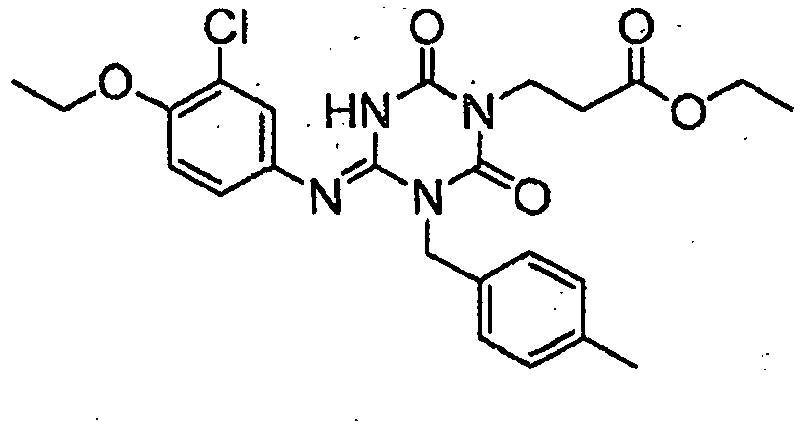
I-0867 2.22 487 2 
I-0868 2.11 531 2 
I-0869 1.83 516 2 
I-0870 1.83 516 2 [Table 178] Structure Compound No. Retention Time (min) [M+H] Method 
I-0871 1.73 475 2 
I-0872 2.17 451 2 
I-0873 2.09 487 2 
I-0874 2.14 473 3 
I-0875 2.36 501 2 [Table 179] Structure Compound No. Retention Time (min) [M+H] Method 
I-0876 2.24 487 2 
I-0877 2.39 501 2 
I-0878 2.32 487 3 
I-0879 2.20 473 3 
I-0880 2.15 487 2 [Table 180] Structure Compound No. Retention Time (min) [M+H] Method 
I-0881 2.37 504 2 
I-0882 1.89 459 2 
I-0883 2.27 481 2 
I-0884 2.37 495 2 
I-0885 1.99 467 2 [Table 181] Structure Compound No. Retention Time (min) [M+H] Method 
I-0886 2.10 481 2 
I-0887 2.64 515 3 
I-0888 2.53 501 3 
I-0889 2.36 501 3 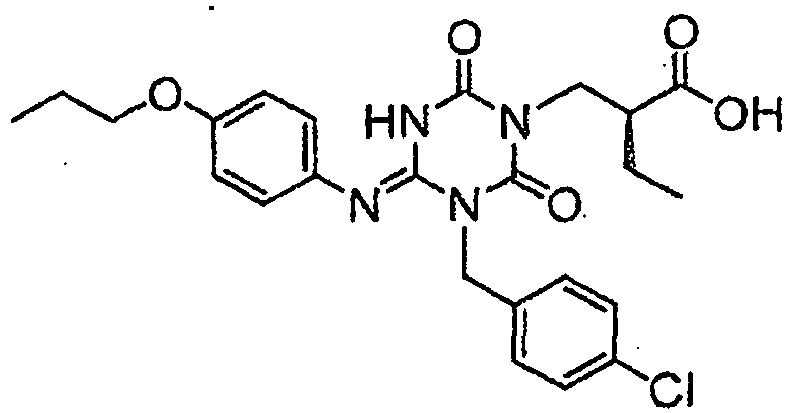
I-0890 2.25 487 3 [Table 182] Structure Compound No. Retention Time (min) [M+H] Method 
I-0891 2.61 501 3 
I-0892 2.31 493 2 
I-0893 2.11 490 2 
I-0894 2.39 495 2 
I-0895 2.27 473 3 [Table 183] Structure Compound No. Retention Time (min) [M+H] Method 
I-0896 2.02 473 2 
I-0897 2.07 479 2 
I-0898 2.14 481 2 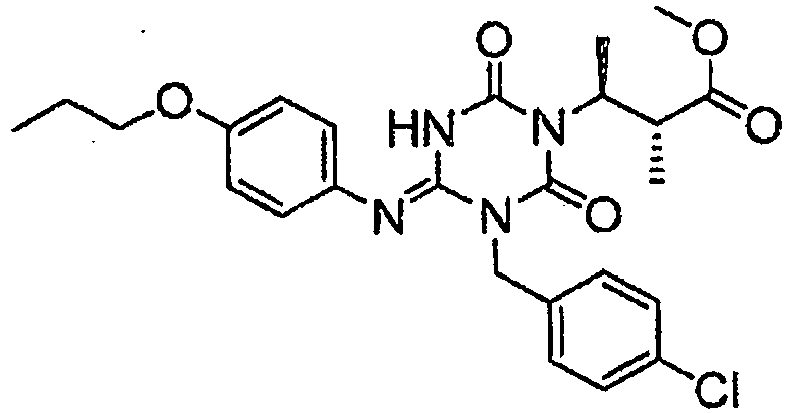
I-0899 2.36 501 2 
I-0900 2.33 513 2 [Table 184] Structure Compound No. Retention Time (min) [M+H] Method 
I-0901 2.37 545 2 
I-0902 2.48 527 2 
I-0903 2.38 513 2 
I-0904 2.34 499 3 
I-0905 2.22 485 3 [Table 185] Structure Compound No. Retention Time (min) [M+H] Method 
I-0906 1.99 501 2 
I-0907 2.33 493 2 
I-0908 2.39 495 2 
I-0909 2.11 531 2 
I-0910 2.09 479 2 [Table 186] Structure Compound No. Retention Time (min) [M+H] Method 
I-0911 2.15 481 2 
I-0912 2.52 493 3 
I-0913 2.49 505 3 
I-0914 2.16 265 3 
I-0915 2.13 477 3 [Table 187] Structure Compound No. Retention Time (min) [M+H] Method 
I-0916 2.43 521 2 
I-0917 2.54 535 2 
I-0918 2.44 533 2 
I-0919 2.37 513 2 
I-0920 2.09 487 2 [Table 188] Structure Compound No. Retention Time (min) [M+H] Method 
I-0921 2.06 499 2 
I-0922 2.15 507 2 
I-0923 2.26 521 2 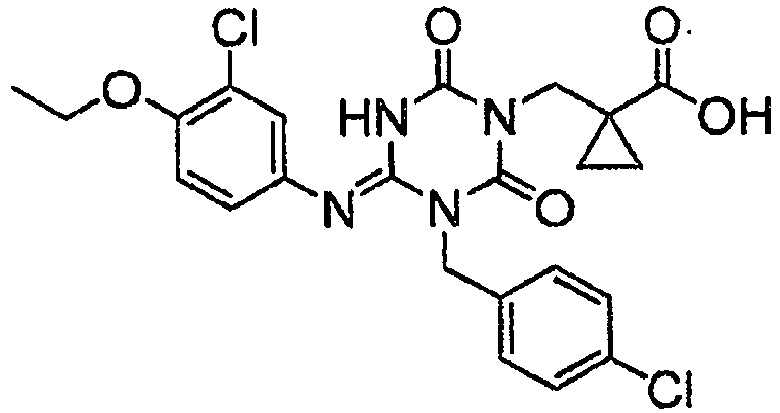
I-0924 2.07 505 2 
I-0925 2.01 485 2 [Table 189] Structure Compound No. Retention Time (min) [M+H] Method 
I-0926 2.29 481 2 
I-0927 2.40 495 2 
I-0928 2.46 515 2 
I-0929 2.24 467 3 
I-0930 2.34 481 3 [Table 190] Structure Compound No. Retention Time (min) [M+H] Method 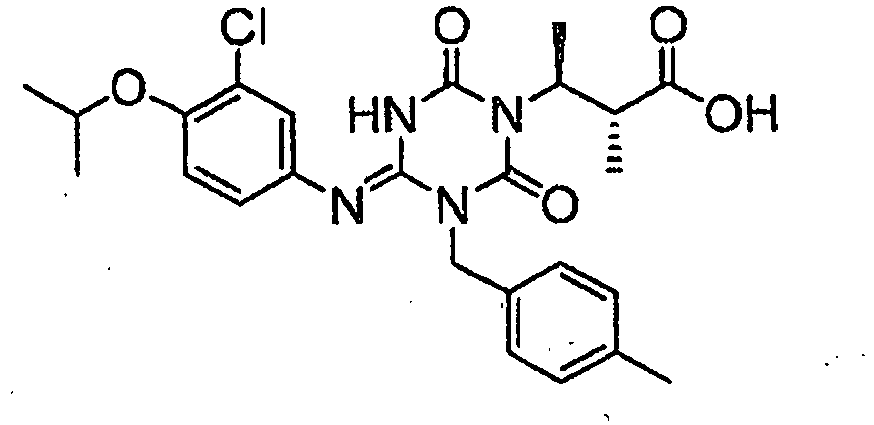
I-0931 2.41 501 3 
I-0932 2.05 527 2 
I-0833 2.05 527 2 
I-0934 1.97 497 2 
I-0935 2.08 479 2 [Table 191] Structure Compound No. Retention Time (min) [M+H] Method 
I-0936 2.23 467 3 
I-0937 2.42 481 3 
I-0938 2.66 495 3 
I-0939 2.51 481 3 
I-0940 2.56 525 3 [Table 192] Structure Compound No. Retention Time (min) [M+H] Method 
I-0941 2.64 507 3 
I-0942 2.30 541 2 
I-0943 2.29 541 2 
I-0944 2.75 563 2 
I-0945 2.19 491 2 [Table 193] Structure Compound No. Retention Time (min) [M+H] Method 
I-0946 1.97 477 2 
I-0947 2.78 499 3 
I-0948 2.74 497 3 
I-0949 2.54 485 3 
I-0950 2.50 483 3 [Table 194] Structure Compound No. Retention Time (min) [M+H] Method 
I-0951 2.13 492 2 
I-0952 1.49 514 2 
I-0953 2.21 512 2 
I-0954 1.52 512 2 
I-0955 2.86 517 3 [Table 195] Structure Compound No. Retention Time (min) [M+H] Method 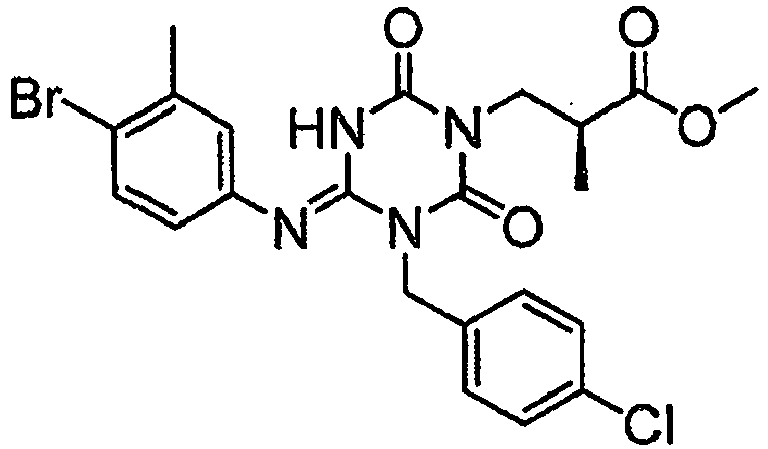
I-0956 2.63 522 3 
I-0957 2.57 513 3 
I-0958 2.55 513 3 
I-0959 2.62 503 3 
I-0960 1.98 498 2 [Table 196] Structure Compound No. Retention Time (min) [M+H] Method 
I-0961 1.90 478 2 
I-0962 1.34 498 2 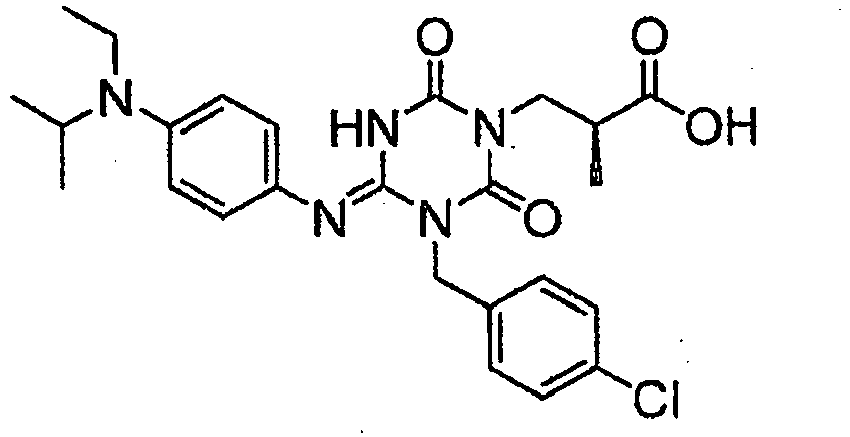
I-0963 1.34 500 2 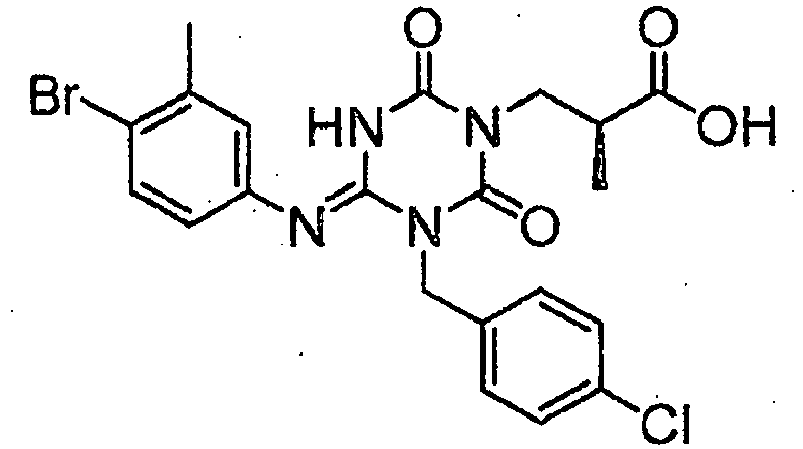
I-0964 2.36 508 3 
I-0965 2.27 493 2 [Table 197] Structure Compound No. Retention Time (min) [M+H] Method 
I-0966 2.35 501 2 
I-0967 2.35 499 2 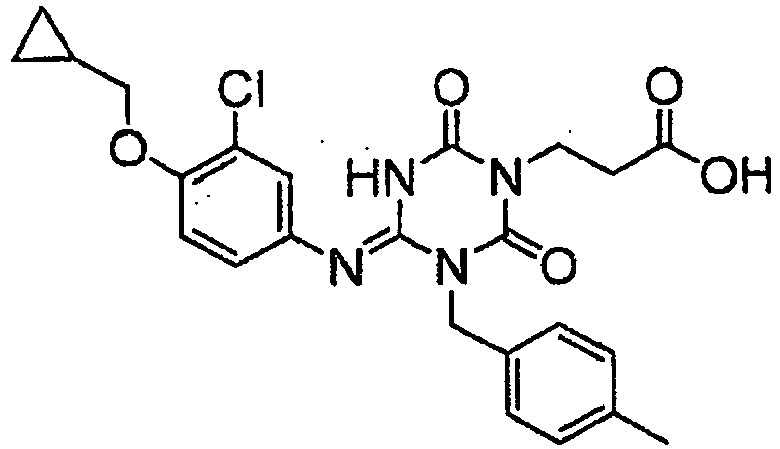
I-0968 2.23 485 3 
I-0969 2.45 527 2 
I-0970 2.47 539 2 [Table 198] Structure Compound No. Retention Time (min) [M+H] Method 
I-0971 2.30 499 3 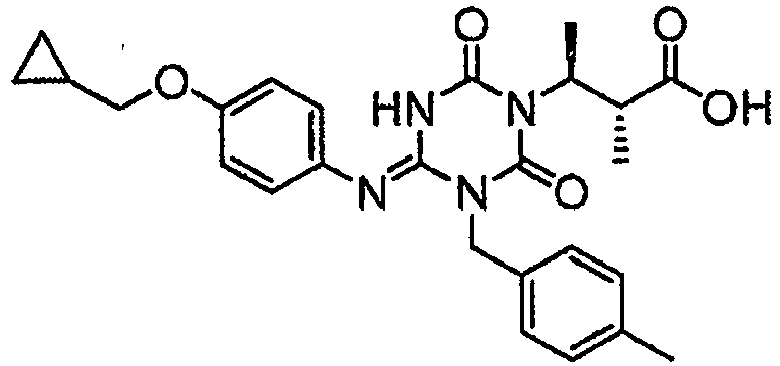
I-0972 2.19 479 3 
I-0973 2.27 487 3 
I-0974 2.28 485 3 
I-0975 2.40 513 3 [Table 199] Structure Compound No. Retention Time (min) [M+H] Method 
I-0976 2.34 511 3 
I-0977 2.52 547 2 
I-0978 2.43 527 2 
I-0979 2.43 527 2 
I-0980 2.37 507 2 [Table 200] Structure Compound No. Retention Time (min) [M+H] Method 
I-0981 2.25 533 2 
I-0982 2.17 513 2 
I-0983 2.17 513 2 
I-0984 2.11 493 2 
I-0985 2.81 548 3 [Table 201] Structure Compound No. Retention Time (min) [M+H] Method 
I-0986 2.45 519 3 
I-0987 2.56 5 3 
I-0988 2.18 5 3 
I-0989 2.56 521 3 
I-0990 2.50 501 3 [Table 202] Structure Compound No. Retention Time (min) [M+H] Method 
I-0991 2.32 507 3 
I-0992 2.25 487 3 
I-0993 2.25 547 2 
I-0994 2.03 503 2 
I-0995 2.41 507 2 [Table 203] Structure Compound No. Retention Time (min) [M+H] Method 
I-0996 2.21 501 2 
I-4997 2.49 509 2 
I-0998 2.39 477 2 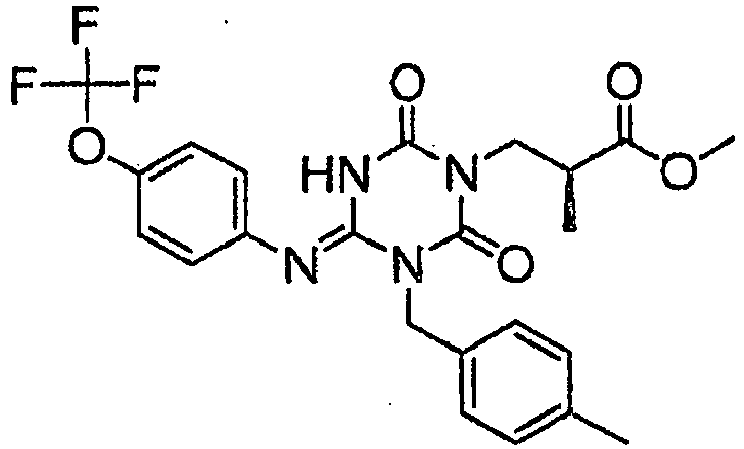
I-0999 2.29 493 2 
I-1000 2.47 511 2 [Table 204] Structure Compound No. Retention Time (min) [M+H] Method 
I-1001 2.17 493 2 
I-1002 2.03 479 2 
I-1003 2.23 497 2 
I-1004 2.15 463 2 
I-1005 2.72 527 3 [Table 205] Structure Compound No. Retention Time (min) [M+H] Method 
I-1006 2.37 498 3 
I-1007 2.73 527 3 
I-1008 2.38 498 3 
I-1009 1.89 487 2 
I-1010 2.05 521 2 [Table 206] Structure Compound No. Retention Time (min) [M+H] Method 
I-1011 2.01 535 2 
I-1012 1.90 553 2 
I-1013 2.20 501 2 
I-1014 2.21 501 2 
I-1015 2.44 515 2 [Table 207] Structure Compound No. Retention Time (min) [M+H] Method 
I-1016 2.45 515 2 
I-1017 2.24 495 2 
I-1018 2.51 481 3 
I-1019 2.65 495 3 
I-1020 2.70 515 3 [Table 208] Structure Compound No. Retention Time (min) [M+H] Method 
I-1021 2.24 521 2 
I-1022 2.27 509 2 
I-1023 2.80 511 3 
I-1024 2.56 497 3 
I-1025 2.40 515 2 [Table 209] Structure Compound No. Retention Time (min) [M+H] Method 
I-1026 2.13 501 2 
I-1027 2.52 527 2 
I-1028 2.17 453 3 
I-1029 2.32 467 3 
I-1030 2.37 487 3 [Table 210] Structure Compound No. Retention Time (min) [M+H] Method 
I-1031 1.93 493 2 
I-1032 2.04 495 2 
I-1033 2.29 513 2 
I-1034 2.45 487 3 
I-1035 2.19 473 3 [Table 211] Structure Compound No. Retention Time (min) [M+H] Method 
I-1036 2.42 499 3 
I-1037 2.16 485 3 
I-1038 2.55 501 3 
I-1039 2.27 487 3 
I-1040 2.64 503 3 [Table 212] Structure Compound No. Retention Time (min) [M+H] Method 
I-1041 2.74 507 3 
I-1042 2.49 493 3 
I-1043 2.79 479 3 
I-1044 2.48 465 3 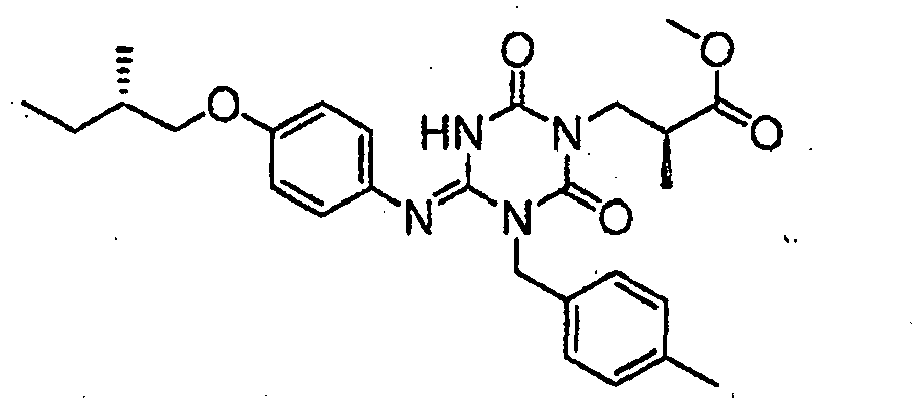
I-1045 2.41 495 2 [Table 213] Structure Compound No. Retention Time (min) [M+H] Method 
I-1046 2.38 495 2 
I-1047 2.37 495 2 
I-1048 2.38 495 2 
I-1049 2.40 495 2 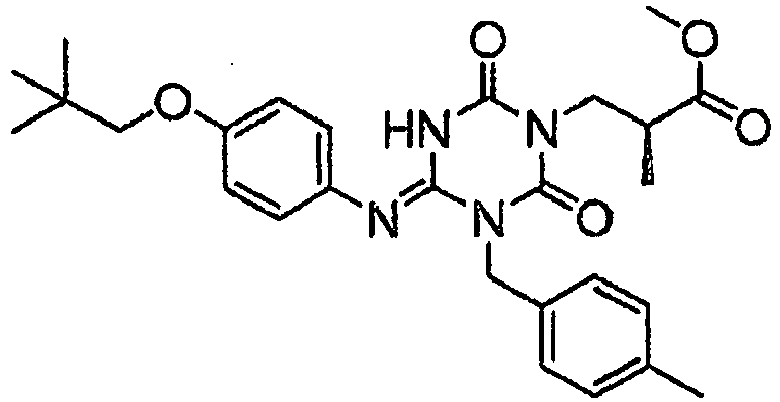
I-1050 2.43 495 2 [Table 214] Structure Compound No. Retention Time (min) [M+H] Method 
I-1051 2.45 495 2 
I-1052 2.39 495 2 
I-1053 2.40 495 2 
I-1054 2.38 495 2 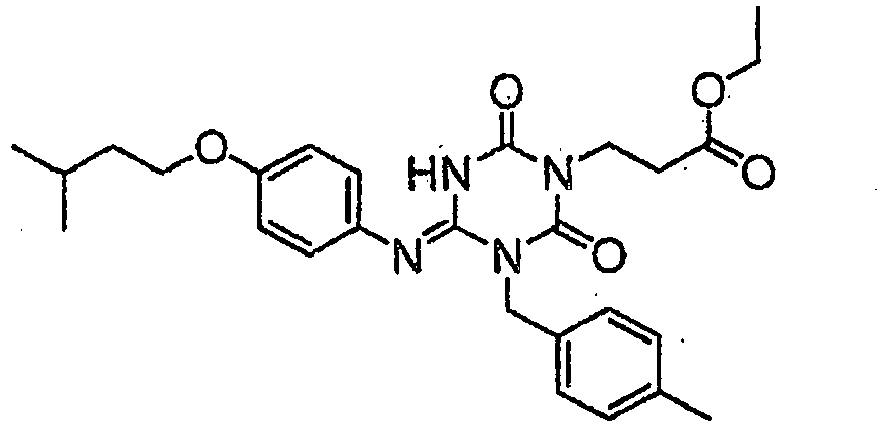
I-1055 2.43 495 2 [Table 215] Structure Compound No. Retention Time (min) [M+H] Method 
I-1056 2.46 495 2 
I-1057 2.42 495 2 
I-1058 2.45 495 2 
I-1059 2.19 481 2 
I-1060 2.15 481 2 [Table 216] Structure Compound No. Retention Time (min) [M+H] Method 
I-1061 2.14 481 2 
I-1062 2.14 481 2 
I-1063 2.16 481 2 
I-1064 2.21 481 2 
I-1065 2.19 481 2 [Table 217] Structure Compound No. Retention Time (min) [M+H] Method 
I-1066 2.13 467 2 
I-1067 2.08 467 2 
I-1068 2.09 467 2 
I-1069 2.07 467 2 
I-1070 2.13 467 2 [Table 218] Structure Compound No. Retention Time (min) [M+H] Method 
I-1071 2.15 467 2 
I-1072 2.15 467 2 
I-1073 1.90 509 2 
I-1074 1.65 495 2 
I-1075 1.36 454 2 [Table 219] Structure Compound No. Retention Time (min) [M+H] Method 
I-1076 2.18 487 2 
I-1077 2.23 487 2 
I-1078 2.49 489 2 
I-1079 2.49 489 2 
I-1080 2.26 579 2 [Table 220] Structure Compound No. Retention Time (min) [M+H] Method 
I-1081 2.23 481 2 
I-1082 1.97 467 2 
I-1083 2.42 475 2 
I-1084 2.39 475 2 
I-1085 1.79 492 2 [Table 221] Structure Compound No. Retention Time (min) [M+H] Method 
I-1086 2.06 478 2 
I-1087 2.56 491 2 
I-1088 2.55 491 2 
I-1089 2.45 477 2 
I-1090 2.44 477 2 [Table 222] Structure Compound No. Retention Time (min) [M+H] Method 
I-1091 1.79 464 2 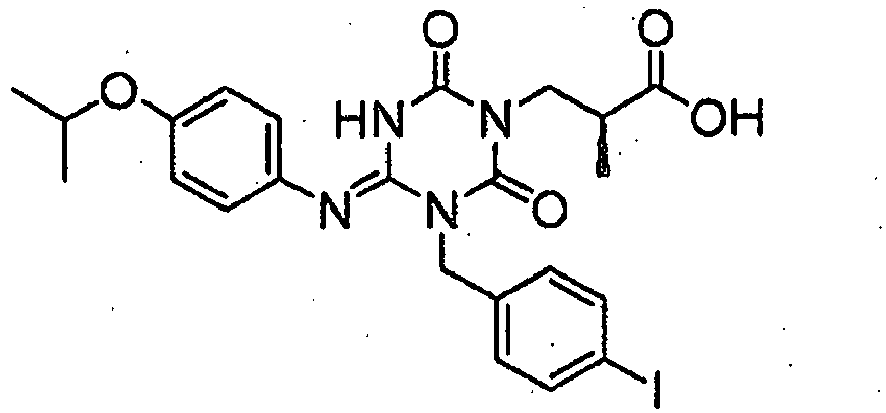
I-1092 2.01 565 2 
I-1093 1.47 478 2 
I-1094 2.74 489 3 
I-1095 2.72 479 3 [Table 223] Structure Compound No. Retention Time (min) [M+H] Method 
I-1096 2.80 491 3 
I-1097 2.87 511 3 
I-1098 2.49 475 3 
I-1099 2.56 495 3 
I-1100 2.56 477 3 [Table 224] Structure Compound No. Retention Time (min) [M+H] Method 
I-1101 2.62 497 3 
I-1102 2.24 485 3 
I-1103 1.96 471 3 
I-1104 2.33 467 3 
I-1105 2.07 453 3 [Table 225] Structure Compound No. Retention Time (min) [M+H] Method 
I-1106 2.43 487 3 
I-1107 2.15 473 3 
I-1108 2.31 477 2 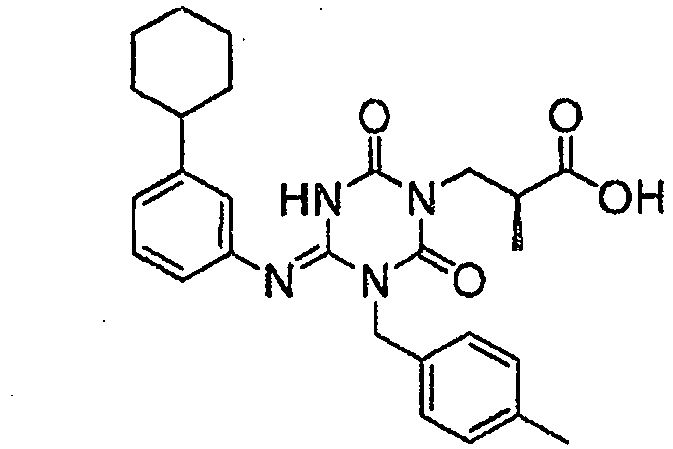
I-1109 2.32 477 2 
I-1110 2.20 463 2 [Table 226] Structure Compound No. Retention Time (min) [M+H] Method 
I-1111 2.25 475 2 
I-1112 2.25 475 2 
I-1113 2.21 463 2 
I-1114 2.15 461 2 
I-1115 2.15 461 2 [Table 227] Structure Compound No. Retention Time (min) [M+H] Method 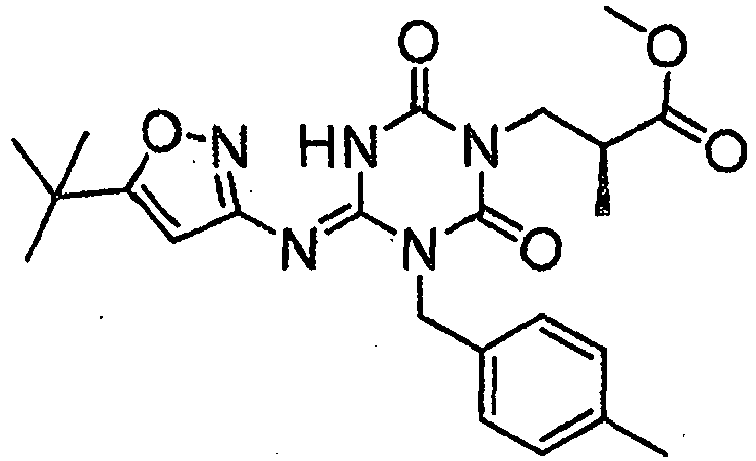
I-1116 2.64 456 2 
I-1117 2.24 465 2 
I-1118 1.84 510 2 
I-1119 2.35 442 2 
I-1120 1.59 496 2 [Table 228] Structure Compound No. Retention Time (min) [M+H] Method 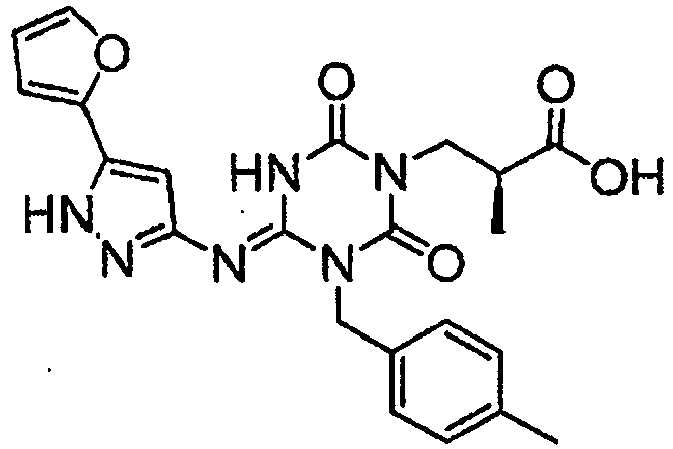
I-1121 1.98 451 2 
I-1122 1.26 488 2 
I-1123 1.52 488 2 
I-1124 1.52 488 2 
I-1125 1.73 502 2 [Table 229] Structure Compound No. Retention Time (min) [M+H] Method 
I-1126 1.72 502 2 
I-1127 1.58 502 2 
I-1128 2.13 483 3 
I-1129 2.02 497 2 
I-1130 2.27 525 3 [Table 230] Structure Compound No. Retention Time (min) [M+H] Method 
I-1131 2.13 479 2 
I-1132 2.42 465 2 
I-1133 2.23 481 2 
I-1134 1.68 469 2 
I-1135 1.78 483 2 [Table 231] Structure Compound No. Retention Time (min) [M+H] Method 
I-1136 2.06 511 2 
I-1137 2.18 451 2 
I-1138 2.20 493 2 
I-1139 1.92 465 2 
I-1140 1.99 467 2 [Table 232] Structure Compound No. Retention Time (min) [M+H] Method 
I-1141 2.25 493 2 
I-1142 2.26 493 2 
I-1143 2.16 517 2 
I-1144 2.36 495 2 
I-1145 1.98 479 2 [Table 233] Structure Compound No. Retention Time (min) [M+H] Method 
I-1146 2.37 479 3 
I-1147 2.43 499 3 
I-1148 2.30 451 3 
I-1149 2.08 471 3 
I-1150 2.03 479 2 [Table 234] Structure Compound No. Retention Time (min) [M+H] Method 
I-1151 2.19 475 2 
I-1152 2.15 461 3 
I-1153 2.11 455 2 
I-1154 2.07 441 3 
I-1155 2.55 501 3 [Table 235] Structure Compound No. Retention Time (min) [M+H] Method 
I-1156 2.49 481 3 
I-1157 2.22 473 3 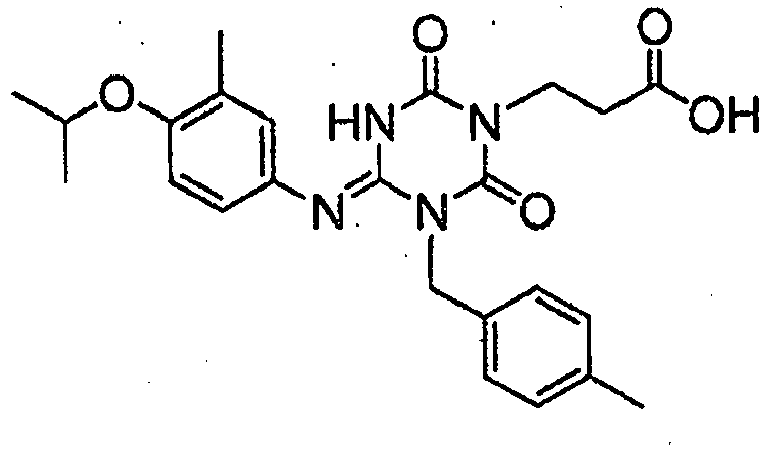
I-1158 2.14 453 3 
I-1159 1.92 503 2 
I-1160 2.03 479 2 [Table 236] Structure Compound No. Retention Time (min) [M+H] Method 
I-1161 1.82 461 2 
I-1162 1.89 481 2 
I-1163 2.36 634 2 
I-1164 2.13 501 2 
I-1165 2.66 660 2 [Table 237] Structure Compound No. Retention Time (min) [M+H] Method 
I-1166 2.14 495 2 
I-1167 2.13 481 2 
I-1168 2.37 545 2 
I-1169 1.91 492 2 
I-1170 1.53 506 2 [Table 238] Structure Compound No. Retention Time (min) [M+H] Method 
I-1171 2.68 481 3 
I-1172 1.63 500 2 
I-1173 2.23 531 2 
I-1174 2.42 467 3 
I-1175 1.66 474 3 [Table 239] Structure Compound No. Retention Time (min) [M+H] Method 
I-1176 1.75 494 3 
I-1177 1.40 486 2 
I-1178 2.04 517 2 
I-1179 1.98 517 2 
I-1180 1.58 478 2 [Table 240] Structure Compound No. Retention Time (min) [M+H] Method 
I-1181 1.43 492 2 
I-1182 1.76 502 2 
I-1183 1.86 522 2 
I-1184 2.34 508 2 
I-1185 2.19 494 2 [Table 241] Structure Compound No. Retention Time (min) [M+H] Method 
I-1186 2.28 493 2 
I-1187 2.32 480 3 
I-1188 2.09 494 2 
I-1189 2.05 479 2 
I-1190 2.34 493 2 [Table 242] Structure Compound No. Retention Time (min) [M+H] Method 
I-1191 2.21 479 2 
I-1192 2.02 465 2 
I-1193 2.32 475 2 
I-1194 1.98 465 2 
I-1195 2.22 517 2 [Table 243] Structure Compound No. Retention Time (min) [M+H] Method 
I-1196 1.97 444 2 
I-1197 2.44 495 2 
I-1198 2.30 481 2 
I-1199 2.11 467 2 
I-1200 2.12 461 2 [Table 244] Structure Compound No. Retention Time (min) [M+H] Method 
I-1201 1.99 439 2 
I-1202 2.44 477 2 
I-1203 2.59 479 2 
I-1204 2.04 522 3 
I-1205 1.50 522 3 [Table 245] Structure Compound No. Retention Time (min) [M+H] Method 
I-1206 1.67 494 3 
I-1207 1.22 494 3 
I-1208 1.75 516 3 
I-1209 1.80 516 3 
I-1210 2.61 465 3 [Table 246] Structure Compound No. Retention Time (min) [M+H] Method 
I-1211 2.67 485 3 
I-1212 2.35 451 3 
I-1213 2.42 471 3 
I-1214 2.20 463 2 
I-1215 2.63 465 3 [Table 247] Structure Compound No. Retention Time (min) [M+H] Method 
I-1216 2.74 479 3 
I-1217 2.41 479 3 
I-1218 1.77 481 2 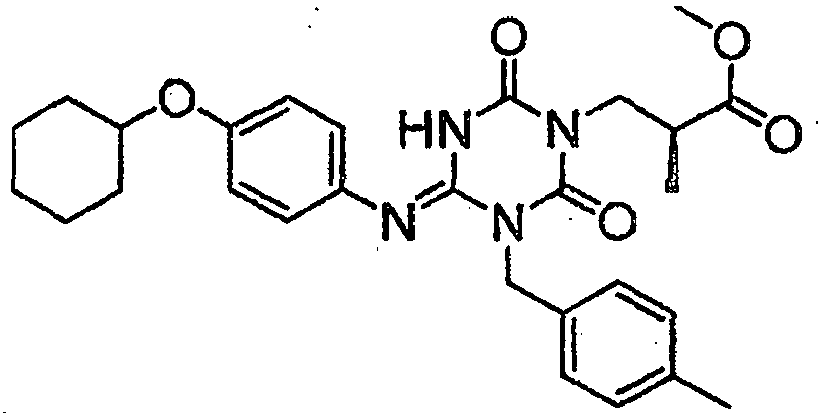
I-1219 2.63 507 3 
I-1220 1.96 465 2 [Table 248] Structure Compound No. Retention Time (min) [M+H] Method 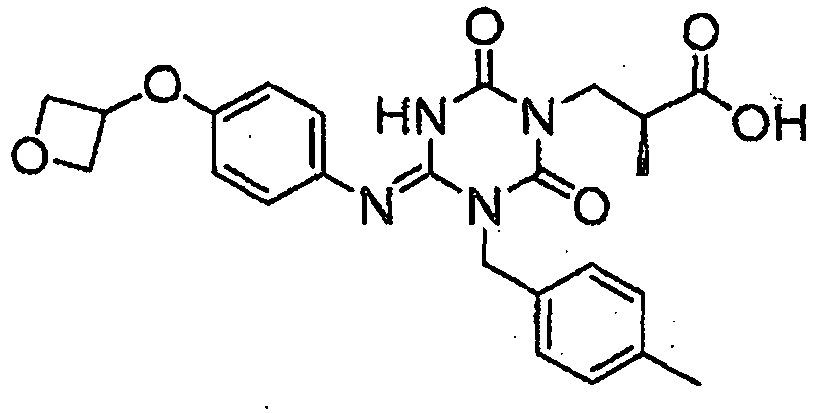
I-1221 1.54 467 2 
I-1222 2.17 493 2 
I-1223 2,28 437 3 
I-1224 2.41 451 3 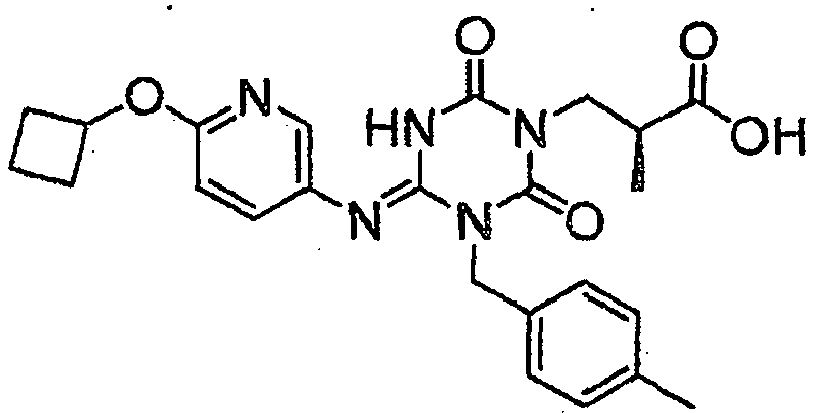
I-1225 1.86 466 2 [Table 249] Structure Compound No. Retention Time (min) [M+H] Method 
I-1226 1.96 480 2 
I-1227 1.40 474 2 
I-1228 1.17 474 2 
I-1229 1.76 502 2 
I-1230 1.35 502 2 [Table 250] Structure Compound No. Retention Time (min) [M+H] Method 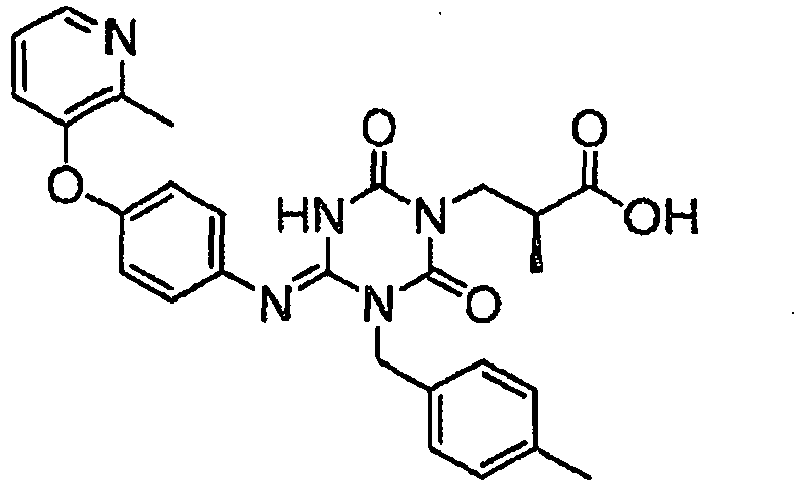
I-1231 1.34 502 2 
I-1232 1.37 502 2 
I-1233 2.29 526 2 
I-1234 2.25 506 2 
I-1235 2.02 512 2 [Table 251] Structure Compound No. Retention Time (min) [M+H] Method 
I-1236 2.30 513 2 
I-1237 1.98 492 2 
I-1238 1.50 516 2 
I-1239 1.72 439 2 
I-1240 1.35 530 2 [Table 252] Structure Compound No. Retention Time (min) [M+H] Method 
I-1241 1.29 500 2 
I-1242 2.24 493 2 
I-1243 1.23 488 2 
I-1244 1.98 503 2 
I-1245 1.47 522 2 [Table 253] Structure Compound No. Retention Time (min) [M+H] Method 
I-1246 2.30 497 3 
I-1247 2.58 515 2 
I-1248 2.37 517 3 
I-1249 2.52 495 2 
I-1250 2.69 485 3 [Table 254] Structure Compound No. Retention Time (min) [M+H] Method 
I-1251 2.80 499 3 
I-1252 2.74 483 3 
I-1253 2.35 457 3 
I-1254 2.81 503 3 
I-1255 2.47 471 3 [Table 255] Structure Compound No. Retention Time (min) [M+H] Method 
I-1256 2.50 469 3 
I-1257 2.57 489 3 
I-1258 2.40 491 2 
I-1259 1.28 508 2 
I-1260 1.25 516 3 [Table 256] Structure Compound No. Retention Time (min) [M+H] Method 
I-1261 2.28 481 2 
I-1262 1.23 486 3 
I-1263 2.02 499 2 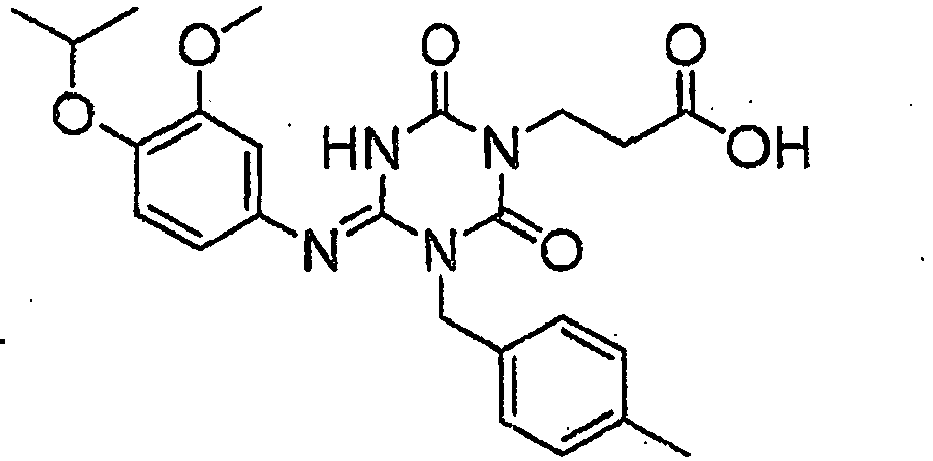
I-1264 1.95 469 3 
I-1265 1.96 517 2 [Table 257] Structure Compound No. Retention Time (min) [M+H] Method 
I-1266 1.81 489 2 
I-1267 2.52 471 3 
I-1268 1.97 479 2 
I-1269 1.22 502 3 
I-1270 2.34 501 2 [Table 258] Structure Compound No. Retention Time (min) [M+H] Method 
I-1271 2.13 477 2 
I-1272 2.17 511 2 
I-1273 2.25 531 2 
I-1274 1.34 516 2 
I-1275 1.33 474 2 [Table 259] Structure Compound No. Retention Time (min) [M+H] Method 
I-1276 1.84 464 2 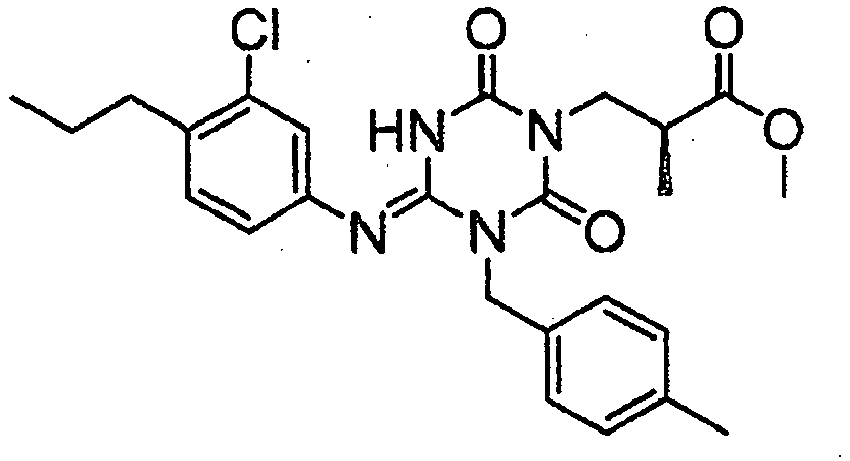
I-1277 2.55 485 2 
I-1278 1.19 460 2 
I-1279 1.57 450 2 
I-1280 1.87 497 2 [Table 260] Structure Compound No. Retention Time (min) [M+H] Method 
I-1281 2.26 499 2 
I-1282 2.21 479 2 
I-1283 2.28 499 2 
I-1284 2.01 485 2 
I-1285 1.89 451 2 [Table 261] Structure Compound No. Retention Time (min) [M+H] Method 
I-1286 1.95 471 2 
I-1287 2.82 453 3 
I-1288 2.83 454 3 
I-1289 2.85 454 3 
I-1290 2.67 526 2 [Table 262] Structure Compound No. Retention Time (min) [M+H] Method 
I-1291 2.07 443 3 
I-1292 2.05 444 3 
I-1293 2.54 419 2 
I-1294 2.77 447 2 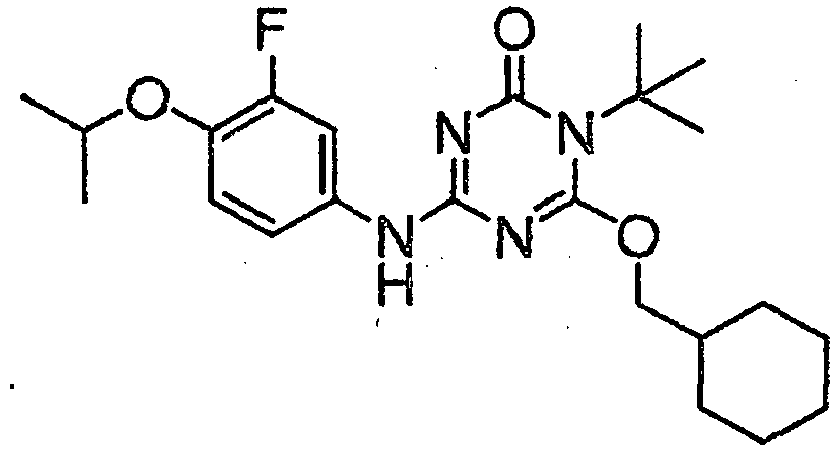
I-1295 2.65 433 2 [Table 263] Structure Compound No. Retention Time (min) [M+H] Method 
I-1296 2.45 462 2 
I-1297 1.89 487 2 
I-1298 2.76 483 3 
I-1299 2.44 455 3 
I-1300 2.40 507 2 [Table 264] Structure Compound No. Retention Time (min) [M+H] Method 
I-1301 1.63 464 2 
I-1302 2.10 477 2 
I-1303 2.08 479 2 
I-1304 1.43 450 2 
I-1305 1.87 463 2 [Table 265] Structure Compound No. Retention Time (min) [M+H] Method 
I-1306 2.46 501 2 
I-1307 2.52 561 2 
I-1308 2.60 515 2 
I-1309 2.44 491 2 
I-1310 2.27 481 2 [Table 266] Structure Compound No. Retention Time (min) [M+H] Method 
I-1311 2.37 499 2 
I-1312 2.43 495 2 
I-1313 2.32 481 2 
I-1314 2.28 493 2 
I-1315 2.45 519 2 [Table 267] Structure Compound No. Retention Time (min) [M+H] Method 
I-1316 2.34 513 2 
I-1317 2.52 511 2 
I-1318 1.57 480 2 
I-1319 1.88 481 2 
I-1320 1.95 509 2 [Table 268] Structure Compound No. Retention Time (min) [M+H] Method 
I-1321 2.02 500 2 
I-1322 1.59 508 2 
I-1323 2.33 497 2 
I-1324 1.50 488 2 
I-1325 2.25 477 2 [Table 269] Structure Compound No. Retention Time (min) [M+H] Method 
I-1326 2.01 498 2 
I-1327 2.20 512 2 
I-1328 2.42 513 2 
I-1329 2.51 515 2 
I-1330 2.49 533 2 [Table 270] Structure Compound No. Retention Time (min) [M+H] Method 
I-1331 2.46 495 2 
I-1332 2.09 485 2 
I-1333 2.16 505 2 
I-1334 2.23 547 2 
I-1335 2.15 477 2 [Table 271] Structure Compound No. Retention Time (min) [M+H] Method 
I-1336 1.98 467 2 
I-1337 2.20 501 2 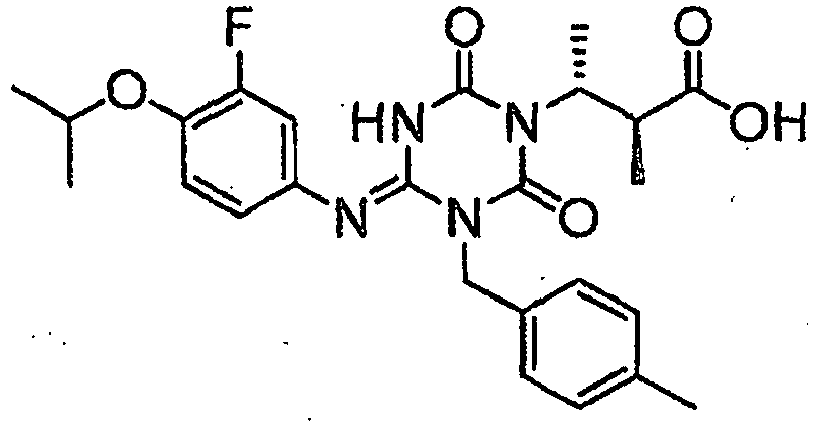
I-1338 2.08 485 2 
I-1339 2.13 481 2 
I-1340 2.03 467 2 [Table 272] Structure Compound No. Retention Time (min) [M+H] Method 
I-1341 1.99 479 2 
I-1342 2.28 521 2 
I-1343 2.17 505 2 
I-1344 2.06 499 2 
I-1345 2.25 497 2 [Table 273] Structure Compound No. Retention Time (min) [M+H] Method 
I-1346 1.35 466 2 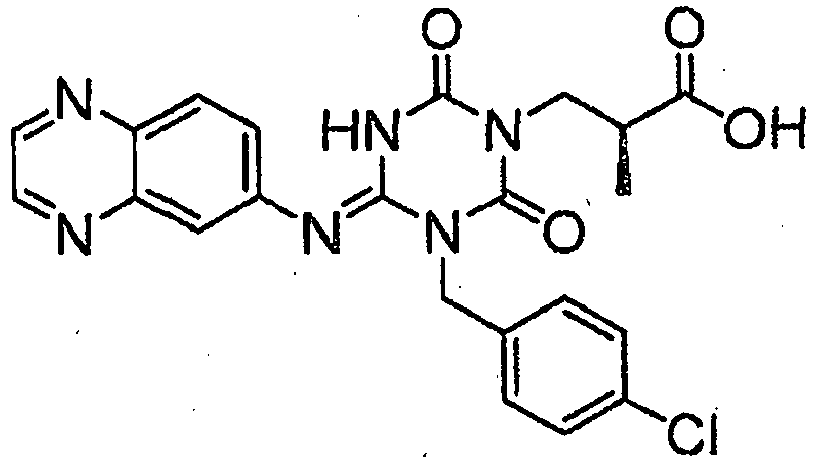
I-1347 1.62 467 2 
I-1348 1.71 495 2 
I-1349 1.75 486 2 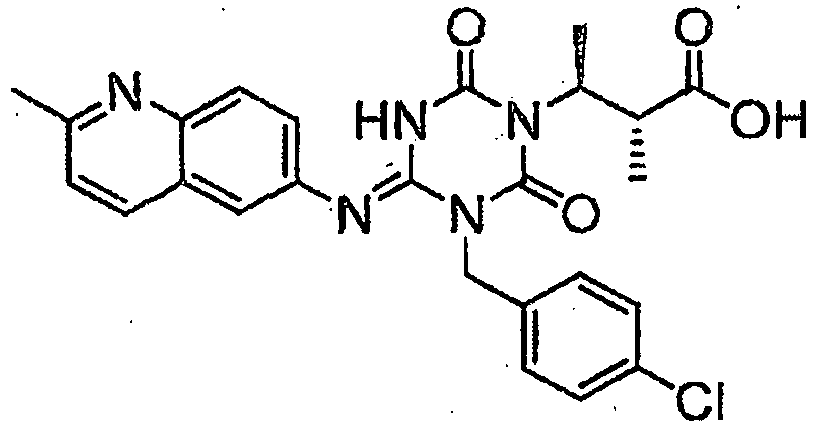
I-1350 1.37 494 2 [Table 274] Structure Compound No. Retention Time (min) [M+H] Method 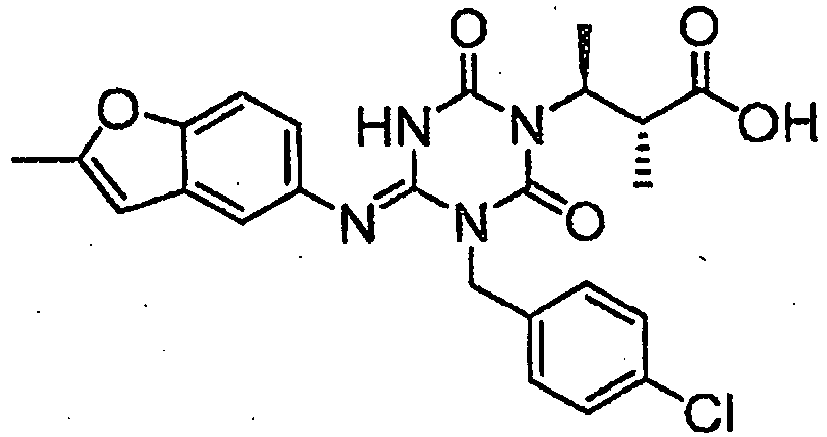
I-1351 2.04 483 2 
I-1352 1.28 474 2 
I-1353 1.96 463 2 
I-1354 2.22 487 2 
I-1355 2.29 487 2 [Table 275] Structure Compound No. Retention Time (min) [M+H] Method 
I-1356 1.43 488 3 
I-1357 1.52 508 3 
I-1358 1.70 536 3 
I-1359 1.44 452 2 
I-1360 2.39 481 2 [Table 276] Structure Compound No. Retention Time (min) [M+H] Method 
I-1361 2.53 495 2 
I-1362 2.22 467 2 
I-1363 2.71 529 2 
I-1364 2.65 509 2 
I-1365 2.14 467 2 [Table 277] Structure Compound No. Retention Time (min) [M+H] Method 
I-1366 2.46 515 2 
I-1367 2.40 495 2 
I-1368 1.65 536 2 
I-1369 1.69 530 2 
I-1370 2.93 519 3 [Table 278] Structure Compound No. Retention Time (min) [M+H] Method 
I-1371 2.86 499 3 
I-1372 2.69 505 3 
I-1373 2.62 485 3 
I-1374 1.43 522 2 
I-1375 1.84 550 2 [Table 279] Structure Compound No. Retention Time (min) [M+H] Method 
I-1376 1.84 550 2 
I-1377 1.98 536 2 
I-1378 2.40 513 2 
I-1379 2.34 493 2 
I-1380 1.65 526 2 [Table 280] Structure Compound No. Retention Time (min) [M+H] Method 
I-1381 1.58 506 2 
I-1382 1.77 484 2 
I-1383 1.51 502 2 
I-1384 1.94 498 2 
I-1385 1.65 516 2 [Table 281] Structure Compound No. Retention Time (min) [M+H] Method 
I-1386 2.24 501 2 
I-1387 2.18 481 2 
I-1388 1.55 536 2 
I-1389 1.56 536 2 
I-1390 1.67 522 2 [Table 282] Structure Compound No. Retention Time (min) [M+H] Method 
I-1391 2.12 499 2 
I-1392 2.06 479 2 
I-1393 1.40 512 2 
I-1394 1.31 492 2 
I-1395 1.34 502 2 [Table 283] Structure Compound No. Retention Time (min) [M+H] Method 
I-1396 1.51 536 2 
I-1397 1.55 530 2 
I-1398 2.46 514 2 
I-1399 2.54 534 2 
I-1400 2.58 493 3 [Table 284] Structure Compound No. Retention Time (min) [M+H] Method 
I-1401 2.63 513 3 
I-1402 2.69 507 3 
I-1403 2.74 527 3 
I-1404 1.30 522 2 
I-1405 1.24 502 2 [Table 285] Structure Compound No. Retention Time (min) [M+H] Method 
I-1406 2.06 465 2 
I-1407 2.11 485 2 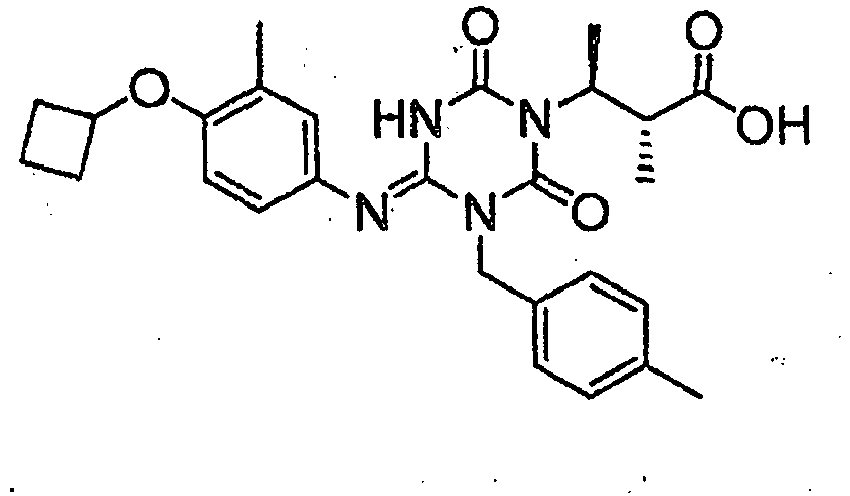
I-1408 2.22 493 2 
I-1409 2.28 513 2 
I-1410 2.21 500 2 [Table 286] Structure Compound No. Retention Time (min) [M+H] Method 
I-1411 2.29 520 2 
I-1412 1.82 512 2 
I-1413 1.33 522 2 
I-1414 2.01 534 3 
I-1415 1.79 466 3 [Table 287] Structure Compound No. Retention Time (min) [M+H] Method 
I-1416 1.87 502 3 
I-1417 1.63 488 3 
I-1418 1.55 452 3 
I-1419 2.26 528 3 
I-1420 2.01 514 3 [Table 288] Structure Compound No. Retention Time (min) [M+H] Method 
I-1421 2.19 511 2 
I-1422 2.34 545 2 
I-1423 2.05 531 2 
I-1424 1.91 497 2 
I-1425 2.17 539 2 [Table 289] Structure Compound No. Retention Time (min) [M+H] Method 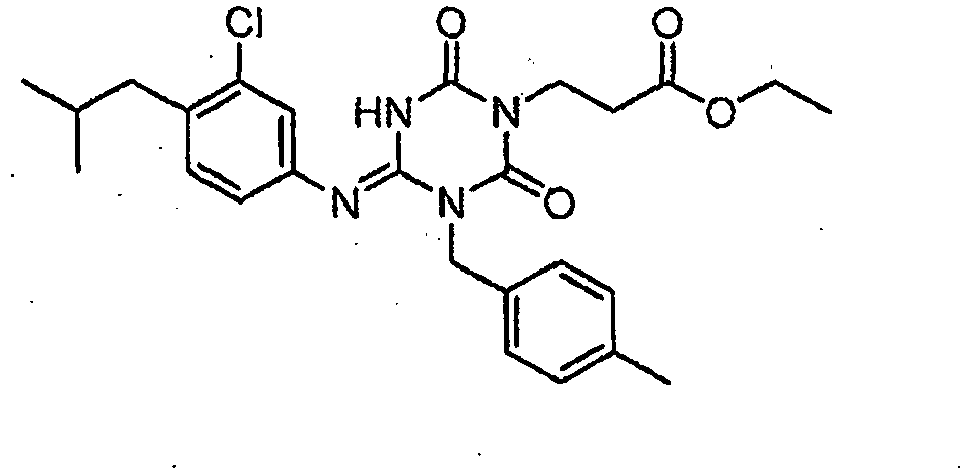
I-1426 2.87 499 3 
I-1427 2.55 471 3 
I-1428 1.86 483 2 
I-1429 1.59 469 2 
I-1430 2.06 531 2 [Table 290] Structure Compound No. Retention Time (min) [M+H] Method 
I-1431 1.80 517 2 
I-1432 1.66 518 2 
I-1433 1.94 483 2 
I-1434 1.76 538 2 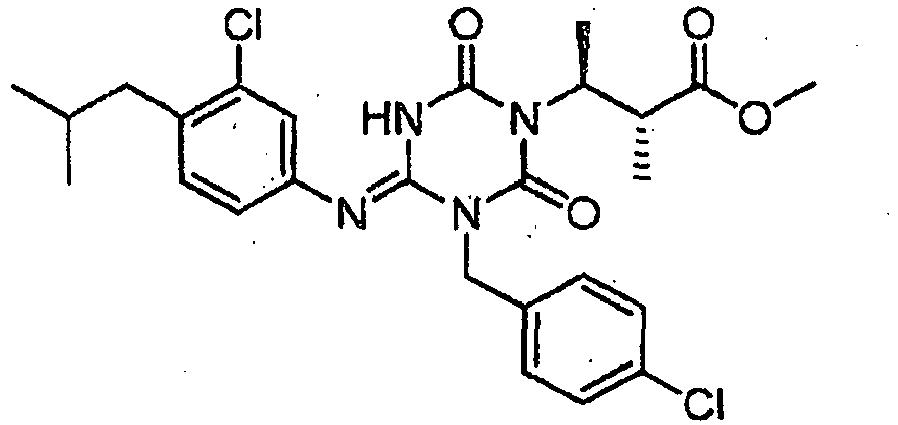
I-1435 2.86 533 2 [Table 291] Structure Compound No. Retention Time (min) [M+H] Method 
I-1436 2.77 513 2 
I-1437 1.39 333 2 
I-1438 2.84 533 2 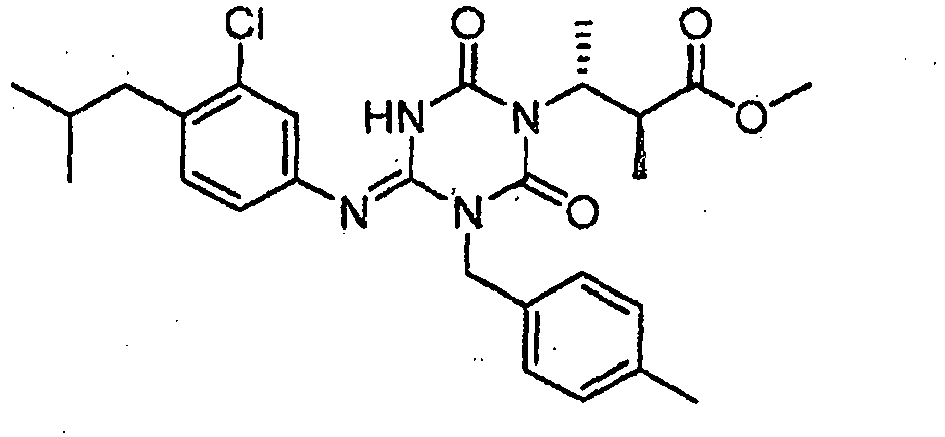
I-1439 2.78 513 2 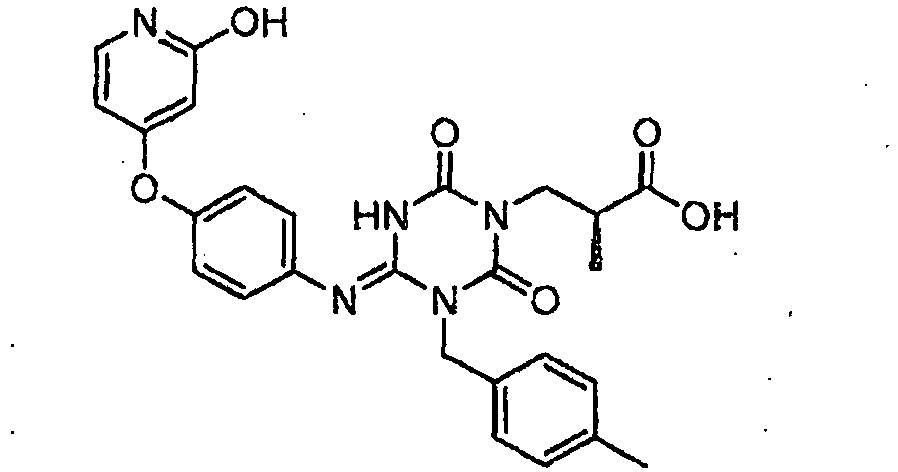
I-1440 1.47 504 2 [Table 292] Structure Compound No. Retention Time (min) [M+H] Method 
I-1441 1.45 510 2 
I-1442 2.58 519 2 
I-1443 2.51 499 2 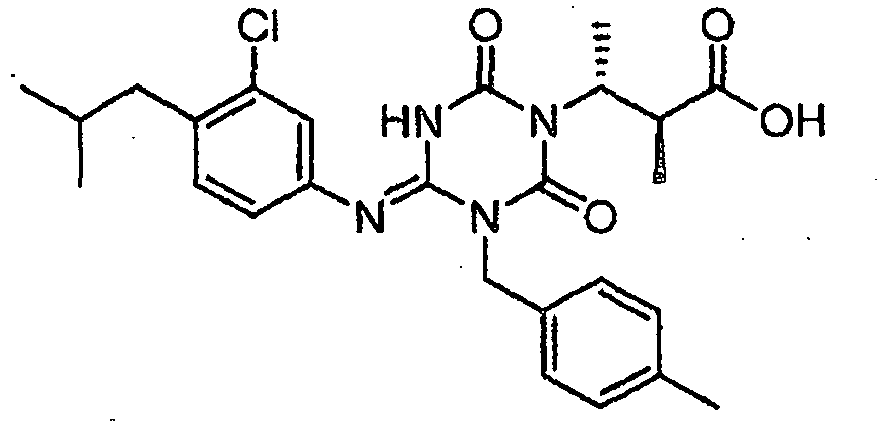
I-1444 2.51 499 2 
I-1445 2.62 519 2 [Table 293] Structure Compound No. Retention Time (min) [M+H] Method 
I-1446 2.23 382 2 
I-1447 2.74 513 2 
I-1448 2.75 525 2 
I-1449 2.55 519 2 
I-1450 2.64 658 2 [Table 294] Structure Compound No. Retention Time (min) [M+H] Method 
I-1451 2.45 497 2 
I-1452 2.36 513 2 
I-1453 2.32 493 2 
I-1454 1.66 526 2 
I-1455 1.58 506 2 [Table 295] Structure Compound No. Retention Time (min) [M+H] Method 
I-1456 2.11 499 2 
I-1457 2.03 479 2 
I-1458 1.39 512 2 
I-1459 1.32 492 2 
I-1460 2.15 449 2 [Table 296] Structure Compound No. Retention Time (min) [M+H] Method 
I-1461 2.18 491 2 
I-1462 2.48 499 2 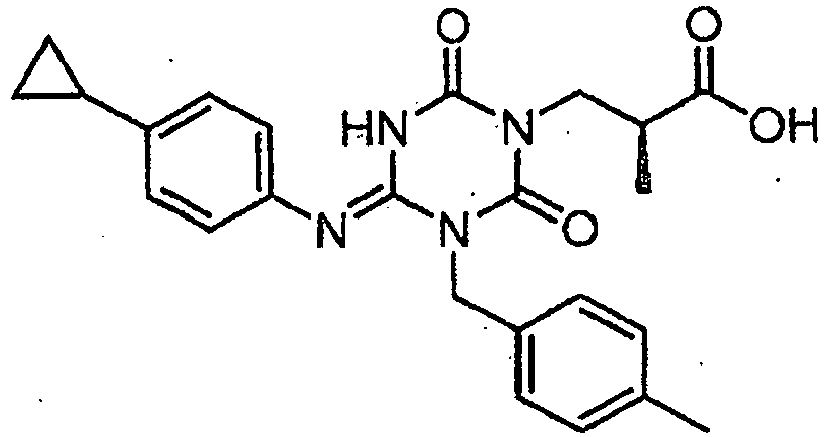
I-1463 1.88 435 2 
I-1464 1.67 500 2 
I-1465 2.15 497 2 [Table 297] Structure Compound No. Retention Time (min) [M+H] Method 
I-1466 1.76 471 2 
I-1467 1.85 500 2 
I-1468 1.76 480 2 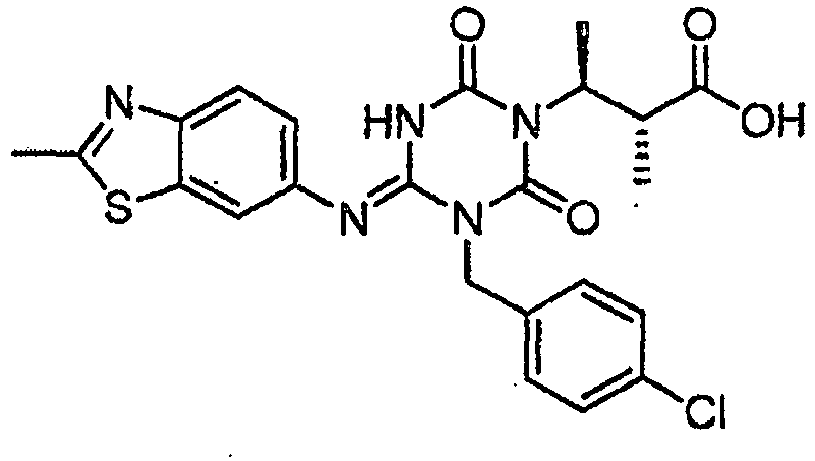
I-1469 1.84 500 2 
I-1470 1.75 480 2 [Table 298] Structure Compound No. Retention Time (min) [M+H] Method 
I-1471 1.99 514 2 
I-1472 1.86 500 2 
I-1473 1.63 466 2 
I-1474 2.39 536 2 
I-1475 2.56 528 2 [Table 299] Structure Compound No. Retention Time (min) [M+H] Method 
I-1476 2.15 522 2 
I-1477 2.31 514 2 
I-1478 2.28 494 2 
I-1479 2.33 514 2 
I-1480 2.18 529 2 [Table 300] Structure Compound No. Retention Time (min) [M+H] Method 
I-1481 1.94 515 2 
I-1482 2.03 480 2 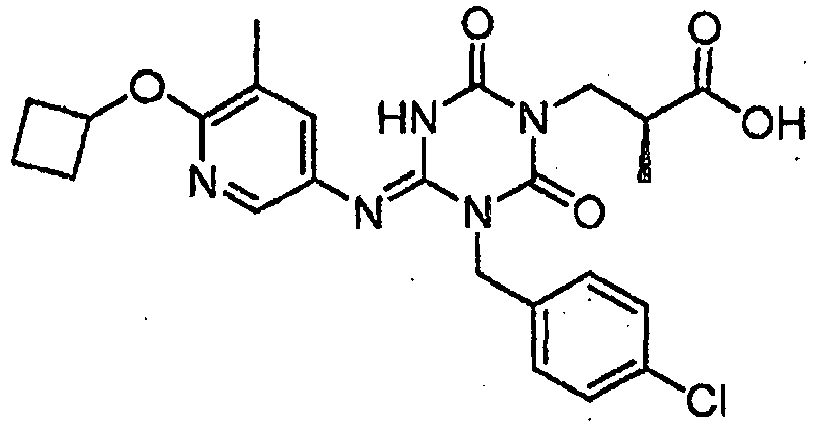
I-1483 2.08 500 2 
I-1484 1.50 512 2 
I-1485 1.49 486 2 [Table 301] Structure Compound No. Retention Time (min) [M+H] Method 
I-1486 1.31 498 2 
I-1487 2.40 483 2 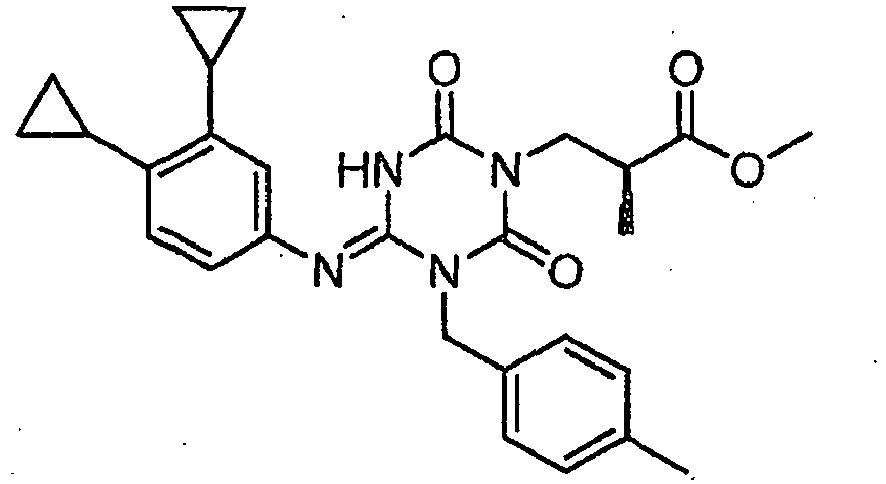
I-1488 2.36 489 2 
I-1489 2.13 469 2 
I-1490 2.14 475 2 [Table 302] Structure Compound No. Retention Time (min) [M+H] Method 
I-1491 2.44 483 2 
I-1492 2.19 469 2 
I-1493 2.48 485 2 
I-1494 2.25 471 2 
I-1495 1.91 515 2 [Table 303] Structure Compound No. Retention Time (min) [M+H] Method 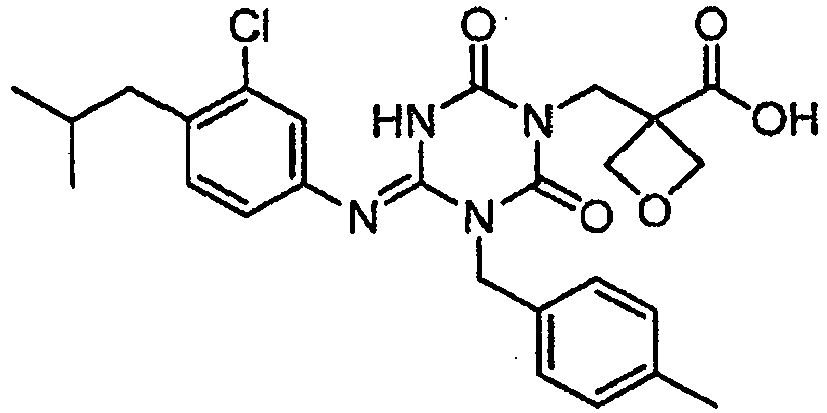
I-1496 2.26 513 2 
I-1497 2.50 477 2 
I-1498 2.28 501 2 
I-1499 2.51 521 2 
I-1500 2.24 463 2 [Table 304] Structure Compound No. Retention Time (min) [M+H] Method 
I-1501 2.29 507 2 
I-1502 2.02 487 2 
I-1503 2.63 511 3 
I-1504 2.56 491 3 
I-1505 2.41 514 3 [Table 305] Structure Compound No. Retention Time (min) [M+H] Method 
I-1506 2.32 494 3 
I-1507 2.30 483 3 
I-1508 2.22 463 3 
I-1509 2.03 486 3 
I-1510 1.94 466 3 [Table 306] Structure Compound No. Retention Time (min) [M+H] Method 
I-1511 2.49 497 2 
I-1512 1.78 524 2 
I-1513 2.24 483 2 
I-1514 2.00 465 2 
I-1515 2.06 502 2 [Table 307] Structure Compound No. Retention Time (min) [M+H] Method 
I-1516 1.76 451 2 
I-1517 1.84 488 2 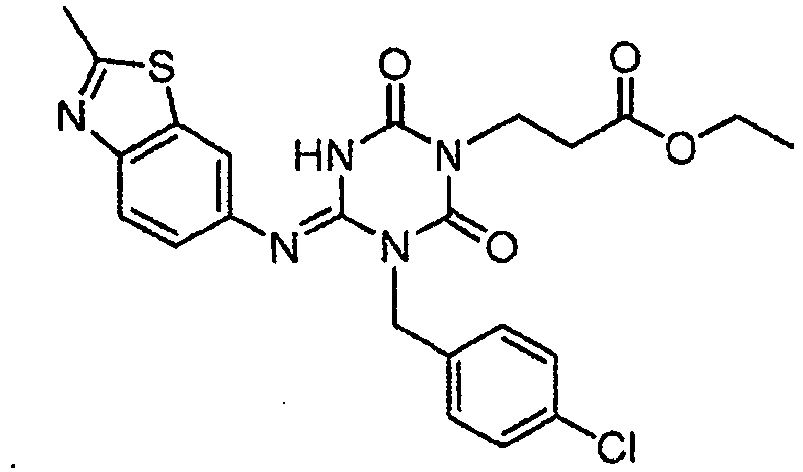
I-1518 2.27 500 3 
I-1519 2.17 480 3 
I-1520 1.92 472 3 [Table 308] Structure Compound No. Retention Time (min) [M+H] Method 
I-1521 1.84 452 3 
I-1522 2.42 532 3 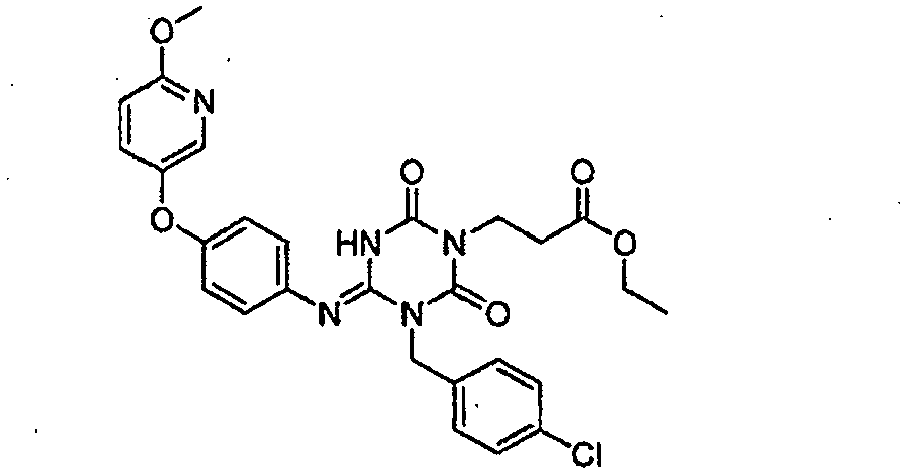
I-1523 2.51 552 3 
I-1524 1.67 308 2 
I-1525 2.05 428 2 [Table 309] Structure Compound No. Retention Time (min) [M+H] Method 
I-1526 2.20 496 2 
I-1527 2.32 515 3 
I-1528 2.67 517 3 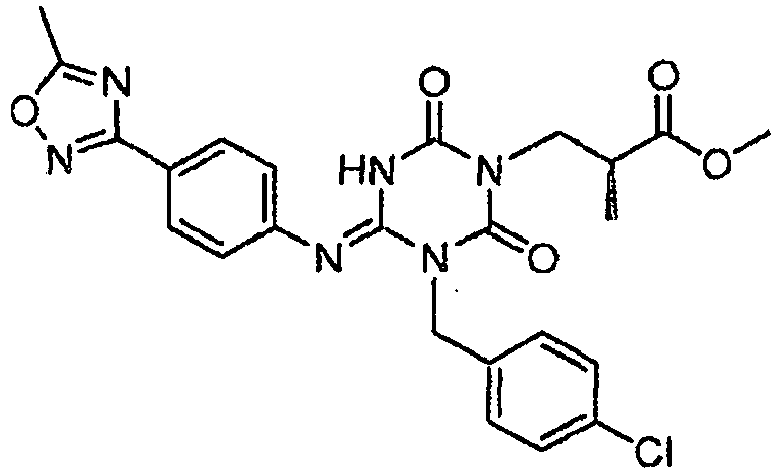
I-1529 2.35 511 3 
I-1530 2.07 497 3 [Table 310] Structure Compound No. Retention Time (min) [M+H] Method 
I-1531 2.41 503 3 
I-1532 2.05 501 3 
I-1533 1.84 524 2 
I-1534 1.85 518 2 
I-1535 1.38 510 2 [Table 311] Structure Compound No. Retention Time (min) [M+H] Method 
I-1536 1.36 504 2 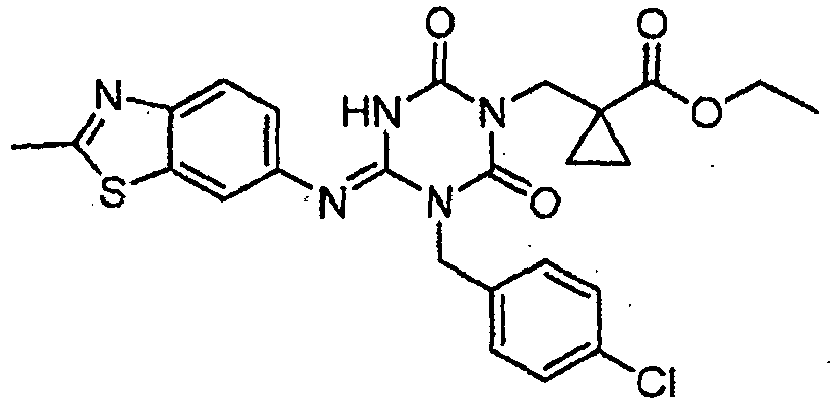
I-1537 2.44 526 3 
I-1538 2.78 537 3 
I-1539 2.58 540 3 
I-1540 2.11 506 2 [Table 312] Structure Compound No. Retention Time (min) [M+H] Method 
I-1541 1.84 426 2 
I-1542 1.81 528 2 
I-1543 1.80 485 3 
I-1544 1.75 488 3 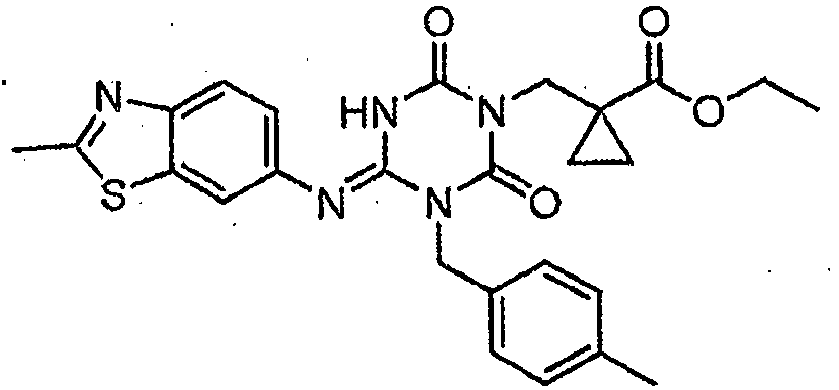
I-1545 2.34 506 3 [Table 313] Structure Compound No. Retention Time (min) [M+H] Method 
I-1546 2.71 517 3 
I-1547 2.49 520 3 
I-1548 2.07 485 2 
I-1549 1.86 471 2 
I-1550 2.02 499 2 [Table 314] Structure Compound No. Retention Time (min) [M+H] Method 
I-1551 1.99 509 2 
I-1552 1.63 498 2 
I-1553 1.76 512 2 
I-1554 1.57 478 2 
I-1555 1.92 489 2 [Table 315] Structure Compound No. Retention Time (min) [M+H] Method 
I-1556 1.68 492 2 
I-1557 2.14 370 3 
I-1558 2.42 508 3 
I-1559 2.38 506 3 
I-1560 2.10 480 3 [Table 316] Structure Compound No. Retention Time (min) [M+H] Method 
I-1561 2.00 478 3 
I-1562 2.49 508 3 
I-1563 2.10 480 3 
I-1564 2.49 483 3 
I-1565 2.54 550 3 [Table 317] Structure Compound No. Retention Time (min) [M+H] Method 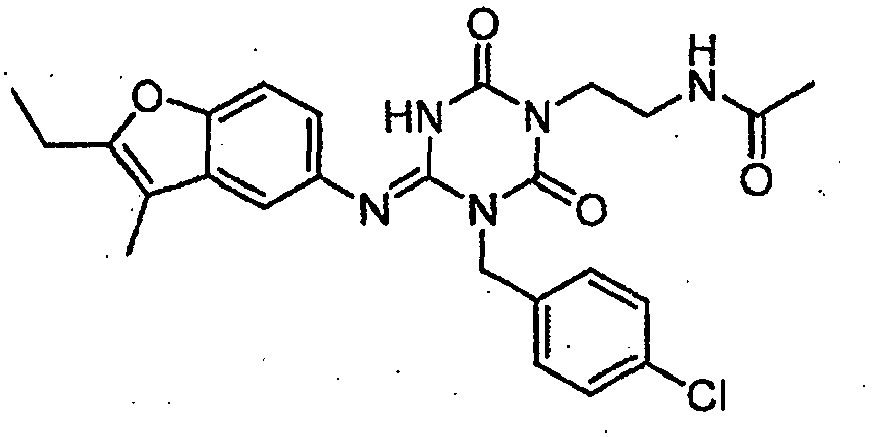
I-1566 2.22 496 3 
I-1567 2.59 564 3 
I-1568 2.25 510 3 
I-1569 2.37 514 3 
I-1570 1.71 465 3 [Table 318] Structure Compound No. Retention Time (min) [M+H] Method 
I-1571 2.28 494 3 
I-1572 2.52 528 3 
I-1573 2.43 508 3 
I-1574 2.73 525 3 
I-1575 2.66 505 3 [Table 319] Structure Compound No. Retention Time (min) [M+H] Method 
I-1576 2.06 500 3 
I1577 1.98 480 3 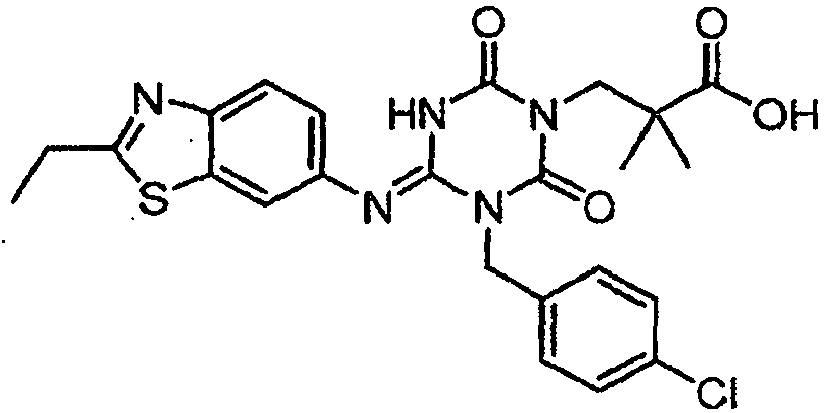
I-1578 2.21 514 3 
I-1579 2.70 471 3 
I-1580 2.21 494 3 [Table 320] Structure Compound No. Retention Time (min) [M+H] Method 
I-1581 2.45 511 3 
I-1582 2.38 491 3 
I-1583 1.24 511 2 
I-1584 1.15 483 2 
I-1585 1.99 528 2 [Table 321] Structure Compound No. Retention Time (min) [M+H] Method 
I-1586 1.89 526 2 
I-1587 1.87 510 2 
I-1588 2.09 517 2 
I-1589 1.66 486 2 
I-1590 1.90 485 2 [Table 322] Structure Compound No. Retention Time (min) [M+H] Method 
I-1591 1.53 469 2 
I-1592 1.64 483 2 
I-1593 1.20 483 2 
I-1594 0.99 455 2 
I-1595 2.02 518 3 [Table 323] Structure Compound No. Retention Time (min) [M+H] Method 
I-1596 2.04 498 3 
I-1597 1.54 494 3 
I-1598 1.27 464 2 
I-1599 1.16 494 2 
I-1600 1.49 523 3 [Table 324] Structure Compound No. Retention Time (min) [M+H] Method 
I-1601 1.48 517 3 
I-1602 2.09 472 3 
I-1603 2.29 514 3 
I-1604 2.67 525 3 
I-1605 2.07 499 2 [Table 325] Structure Compound No. Retention Time (min) [M+H] Method 
I-1606 2.09 499 2 
I-1607 1.85 485 2 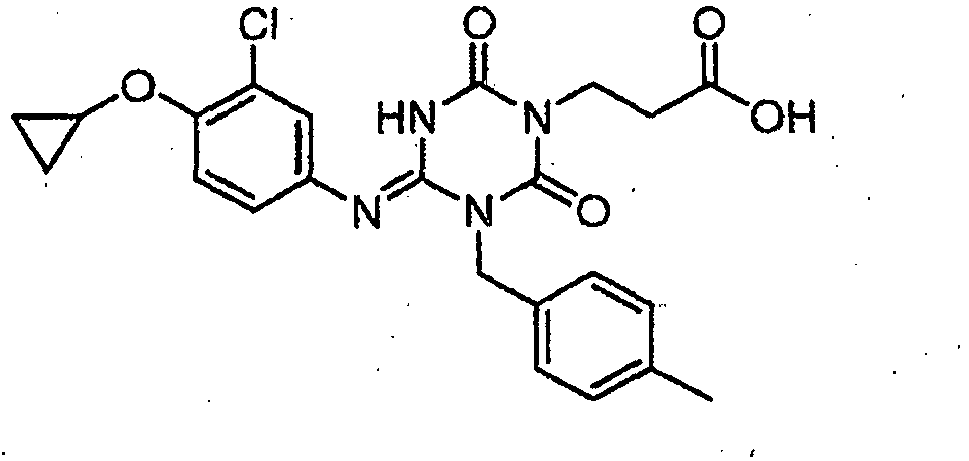
I-1608 1.80 471 2 
I-1609 2.27 469 3 
I-1610 1.84 458 3 [Table 326] Structure Compound No. Retention Time (min) [M+H] Method 
I-1611 2.56 504 3 
I-1612 1.94 499 3 
I-1613 2.00 513 3 
I-1614 2.61 518 3 
I-1615 2.15 540 3 [Table 327] Structure Compound No. Retention Time (min) [M+H] Method 
I-1616 2.47 484 3 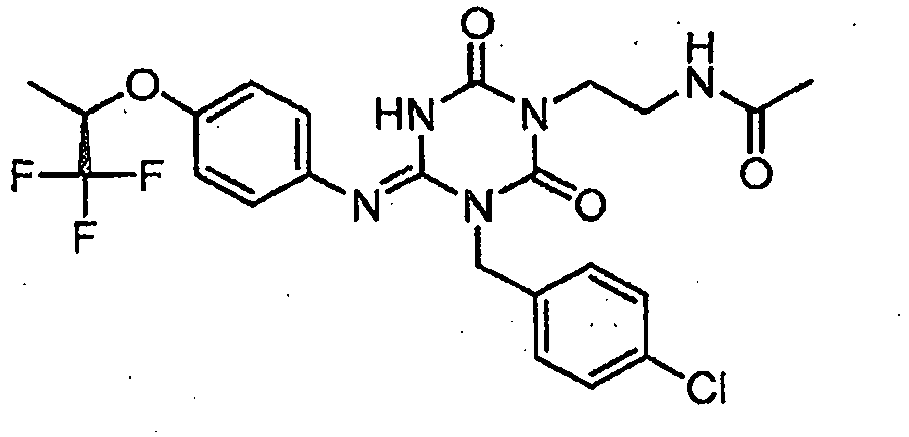
I-1617 2.11 526 3 
I-1618 1.72 474 3 
I-1619 1.56 458 2 
I-1620 1.83 499 2 [Table 328] Structure Compound No. Retention Time (min) [M+H] Method 
I-1621 1.90 466 3 
I-1622 1.67 472 2 
I-1623 2.06 493 2 
I-1624 2.15 485 3 
I-1625 1.91 469 2 [Table 329] Structure Compound No. Retention Time (min) [M+H] Method 
I-1626 1.96 522 2 
I-1627 2.65 505 3 
I-1628 1.37 508 2 
I-1629 2.42 508 3 
I-1630 2.28 477 3 [Table 330] Structure Compound No. Retention Time (min) [M+H] Method 
I-1631 2.01 480 3 
I-1632 1.18 508 2 
I-1633 1.89 455 2 
I-1634 1.34 260 2 
I-1635 2.00 542 2 [Table 331] Structure Compound No. Retention Time (min) [M+H] Method 
I-1636 2.35 553 2 
I-1637 2.24 521 2 
I-1638 1.51 570 2 
I-1639 1.49 556 2 
I-1640 2.35 570 2 [Table 332] Structure Compound No. Retention Time (min) [M+H] Method 
I-1641 2.33 556 2 
I-1642 2.10 524 2 
I-1643 1.56 502 2 
I-1644 1.94 513 2 
I-1645 1.68 484 2 [Table 333] Structure Compound No. Retention Time (min) [M+H] Method 
I-1646 2.34 555 2 
I-1647 2.37 555 2 
I-1648 1.57 556 2 
I-1649 1.56 542 2 
I-1650 2.12 497 2 [Table 334] Structure Compound No. Retention Time (min) [M+H] Method 
I-1651 2.02 527 2 
I-1652 2.07 527 2 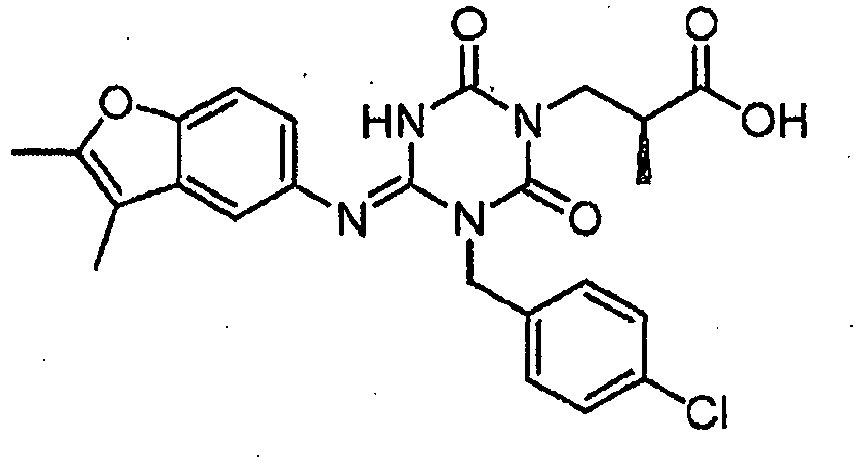
I-1653 1.90 483 2 
I-1654 1.39 470 2 
I-1655 2.46 422 3 [Table 335] Structure Compound No. Retention Time (min) [M+H] Method 
I-1656 2.15 468 3 
I-1657 2.22 482 3 
I-1658 2.10 512 3 
I-1659 1.72 457 3 
I-1660 1.79 471 3 [Table 336] Structure Compound No. Retention Time (min) [M+H] Method 
I-1661 1.68 501 3 
I-1662 2.10 512 3 
I-1663 1.63 458 2 
I-1664 2.13 485 3 
I-1665 2.01 513 3 [Table 337] Structure Compound No. Retention Time (min) [M+H] Method 
I-1666 2.28 510 3 
I-1667 2.33 441 3 
I-1668 2.11 401 3 
I-1669 1.86 387 3 
I-1670 1.73 471 3 [Table 338] Structure Compound No. Retention Time (min) [M+H] Method 
I-1671 1.65 451 3 
I-1672 2.36 452 3 
I-1673 2.28 510 3 
I-1674 2.07 438 3 
I-1675 2.31 488 2 [Table 339] Structure Compound No. Retention Time (min) [M+H] Method 
I-1676 1.95 388 2 
I-1677 1.78 457 3 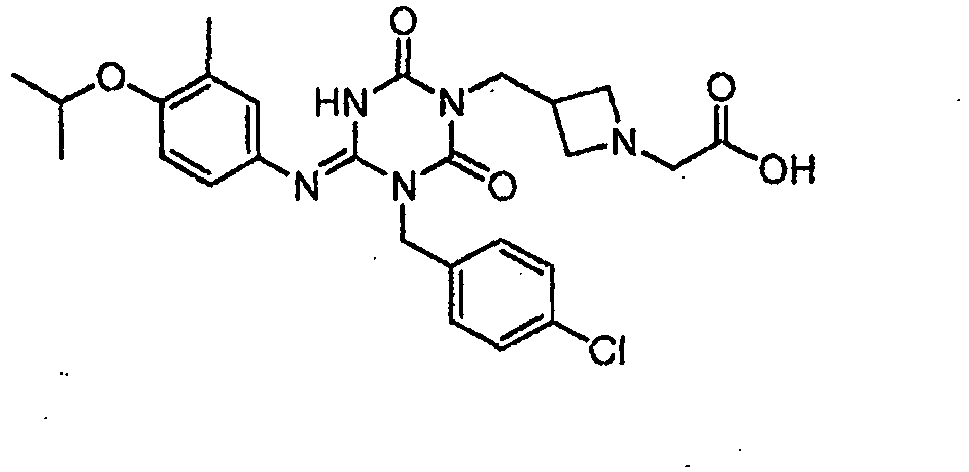
I-1678 1.95 413 3 
I-1679 1.61 386 2 
I-1680 1.95 414 2 [Table 340] Structure Compound No. Retention Time (min) [M+H] Method 
I-1681 2.51 476 3 
I-1682 1.13 508 2 
I-1683 1.46 497 5 
I-1684 1.52 501 5 
I-1685 2.63 545 5 [Table 341] Structure Compound No. Retention Time (min) [M+H] Method 
I-1686 1.49 509 5 
I-1687 1.56 496 5 
I-1688 2.46 548 5 
I-1689 1.57 494 5 
I-1690 1.43 523 5 [Table 342] Structure Compound No. Retention Time (min) [M+H] Method 
I-1691 1.48 480 5 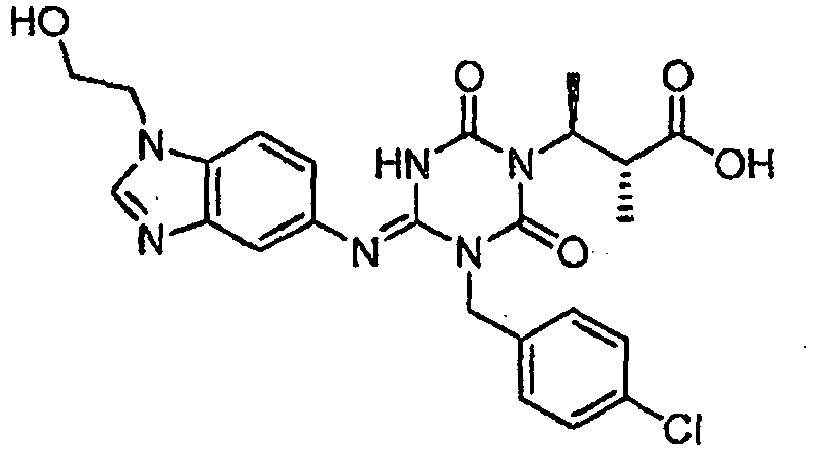
I-1692 1.34 480 5 
I-1693 2.44 482 3 
I-1694 1.93 402 3 
I-1695 2.14 468 3 [Table 343] Structure Compound No. Retention Time (min) [M+H] Method 
I-1696 1.64 388 3 
I-1697 2.55 466 3 
I-1698 2.41 475 3 
I-1699 2.26 452 3 
I-1700 2.62 511 3 [Table 344] Structure Compound No. Retention Time (min) [M+H] Method 
I-1701 2.39 515 3 
I-1702 2.25 428 3 
I-1703 2.41 442 3 
I-1704 2.37 497 3 
I-1705 2.12 500 3 [Table 345] Structure Compound No. Retention Time (min) [M+H] Method 
I-1706 1.77 479 3 
I-1707 1.55 465 3 
I-1708 2.37 524 3 
I-1709 1.51 456 2 
I-1710 2.23 496 3 [Table 346] Structure Compound No. Retention Time (min) [M+H] Method 
I-1711 1.96 499 3 
I-1712 1.62 482 3 
I-1713 1.68 496 3 
I-1714 1.26 526 2 
I-1715 1.34 437 2 [Table 347] Structure Compound No. Retention Time (min) [M+H] Method 
I-1716 2.01 479 3 
I-1717 2.23 507 3 
I-1718 2.77 478 3 
I-1719 2.94 512 3 
I-1720 2.56 478 3 [Table 348] Structure Compound No. Retention Time (min) [M+H] Method 
I-1721 2.83 470 3 
I-1722 2.52 472 3 
I-1723 2.47 464 3 
I-1724 2.67 498 3 
I-1725 2.27 464 3 [Table 349] Structure Compound No. Retention Time (min) [M+H] Method 
I-1726 2.57 456 3 
I-1727 1.66 451 3 
I-1728 2.48 501 3 
I-1729 2.39 475 3 
I-1730 1.20 464 3 [Table 350] Structure Compound No. Retention Time (min) [M+H] Method 
I-1731 1.26 512 2 
I-1732 1.86 496 2 
I-1733 1.90 510 2 
I-1734 1.72 526 2 
I-1735 1.64 523 2 [Table 351] Structure Compound No. Retention Time (min) [M+H] Method 
I-1736 1.57 452 2 
I-1737 1.81 414 2 
I-1738 1.97 499 3 
I-1739 1.86 529 3 
I-1740 2.42 504 2 [Table 352] Structure Compound No. Retention Time (min) [M+H] Method 
I-1741 1.58 542 2 
I-1742 1.61 514 2 
I-1743 1.70 469 5 
I-1744 2.10 511 5 
I-1745 1.30 469 5 [Table 353] Structure Compound No. Retention Time (min) [M+H] Method 
I-1746 2.28 500 5 
I-1747 2.67 537 5 
I-1748 2.55 523 5 
I-1749 2.26 522 5 
I-1750 2.33 463 3 [Table 354] Structure Compound No. Retention Time (min) [M+H] Method 
I-1751 1.95 474 3 
I-1752 2.26 486 3 
I-1753 2.32 524 3 
I-1754 1.40 508 3 
I-1755 1.46 460 3 [Table 355] Structure Compound No. Retention Time (min) [M+H] Method 
I-1756 2.10 470 3 
I-1757 1.88 500 3 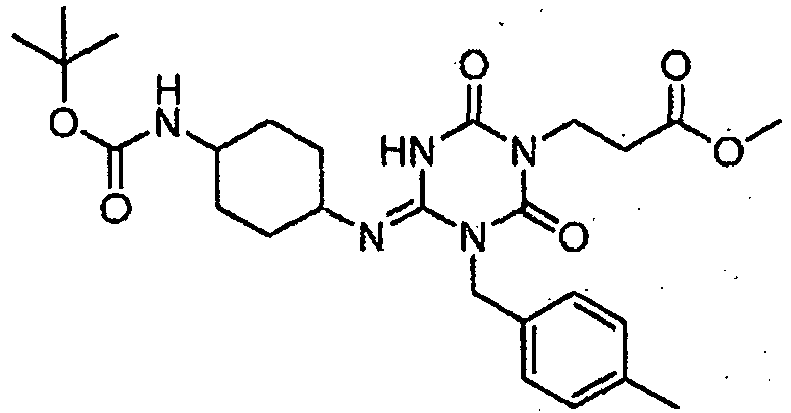
I-1758 2.16 516 3 
I-1759 2.28 415 3 
I-1760 1.95 452 3 [Table 356] Structure Compound No. Retention Time (min) [M+H] Method 
I-1761 2.42 478 3 
I-1762 1.73 438 3 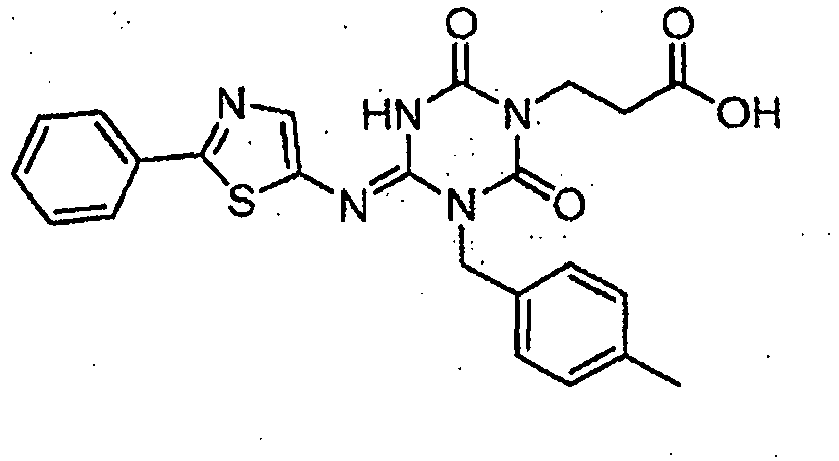
I-1763 2.16 464 3 
I-1764 2.20 622 2 
I-1765 2.30 497 2 [Table 357] Structure Compound No. Retention Time (min) [M+H] Method 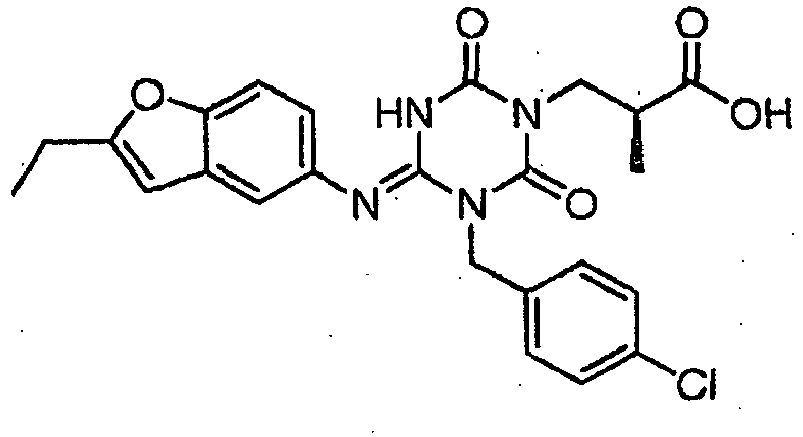
I-1766 2.05 483 2 
I-1767 2.00 502 2 
I-1768 1.91 485 3 
I-1769 2.21 467 3 
I-1770 2.63 564 5 [Table 358] Structure Compound No. Retention Time (min) [M+H] Method 
I-1771 2.05 496 5 
I-1772 2.05 511 5 
I-1773 2.28 509 5 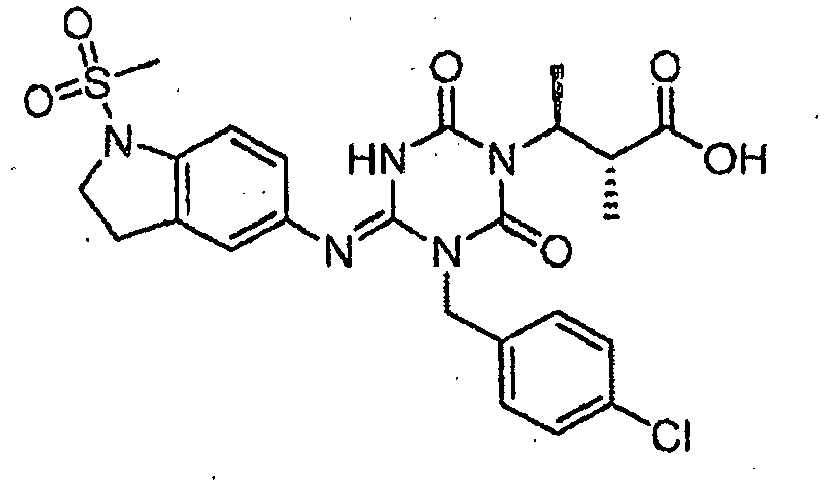
I-1774 1.92 548 5 
I-1775 1.56 484 5 [Table 359] Structure Compound No. Retention Time (min) [M+H] Method 
I-1776 2.09 569 5 
I-1777 1.87 498 5 
I-1778 1.81 512 5 
I-1779 2.22 526 5 
I-1780 2.24 584 5 [Table 360] Structure Compound No. Retention Time (min) [M+H] Method 
I-1781 1.85 468 5 
I-1782 1.66 513 5 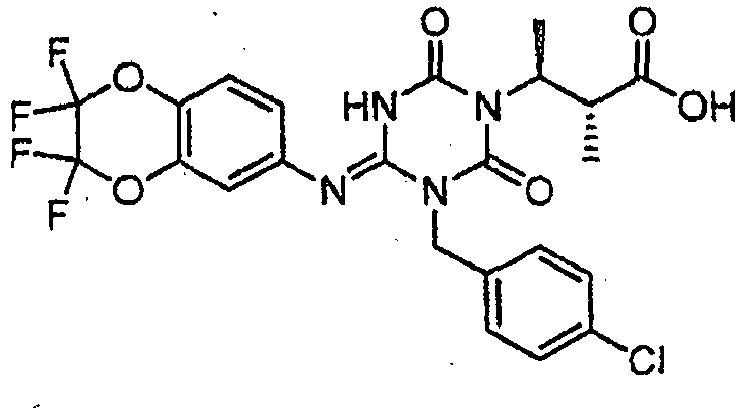
I-1783 2.68 559 5 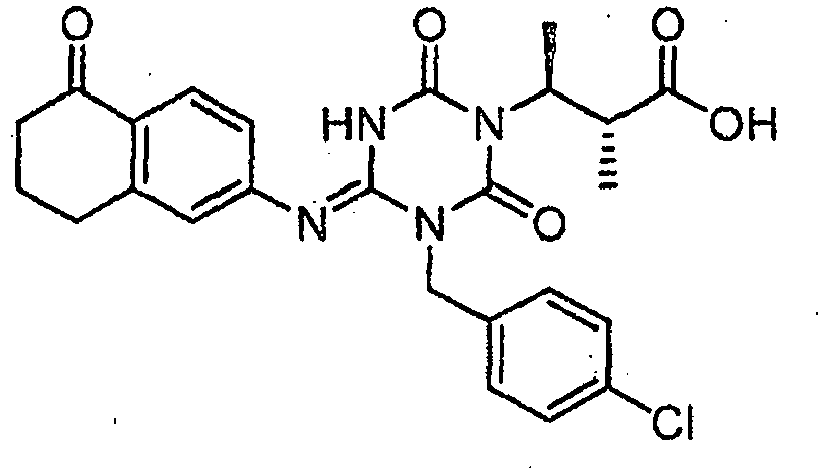
I-1784 2.13 497 5 
I-1785 2.82 539 5 [Table 361] Structure Compound No. Retention Time (min) [M+H] Method 
I-1786 1.69 500 5 
I-1787 2.41 584 5 
I-1788 1.51 494 2 
I-1789 1.34 482 2 
I-1790 1.53 480 5 [Table 362] Structure Compound No. Retention Time (min) [M+H] Method 
I-1791 1.41 511 5 
I-1792 2.35 528 5 
I-1793 1.82 543 5 
I-1794 1.89 537 5 
I-1795 1.52 497 5 [Table 363] Structure Compound No. Retention Time (min) [M+H] Method 
I-1796 2.41 483 5 
I-1797 1.25 510 2 
I-1798 2.03 472 3 
I-1799 2.11 510 3 
I-1800 1.29 494 3 [Table 364] Structure Compound No. Retention Time (min) [M+H] Method 
I-1801 2.11 440 3 
I-1802 2.50 436 3 
I-1803 1.95 452 3 
I-1804 2.19 484 3 
I-1805 1.87 471 3 [Table 365] Structure Compound No. Retention Time (min) [M+H] Method 
I-1806 2.17 440 3 
I-1807 1.95 485 3 
I-1808 1.83 515 3 
I-1809 2.33 463 3 
I-1810 1.94 485 5 [Table 366] Structure Compound No. Retention Time (min) [M+H] Method 
I-1811 1.81 525 5 
I-1812 1.57 559 5 
I-1813 1.49 485 5 
I-1814 2.40 546 5 
I-1815 2.44 546 5 [Table 367] Structure Compound No. Retention Time (min) [M+H] Method 
I-1816 1.90 547 5 
I-1817 2.81 525 5 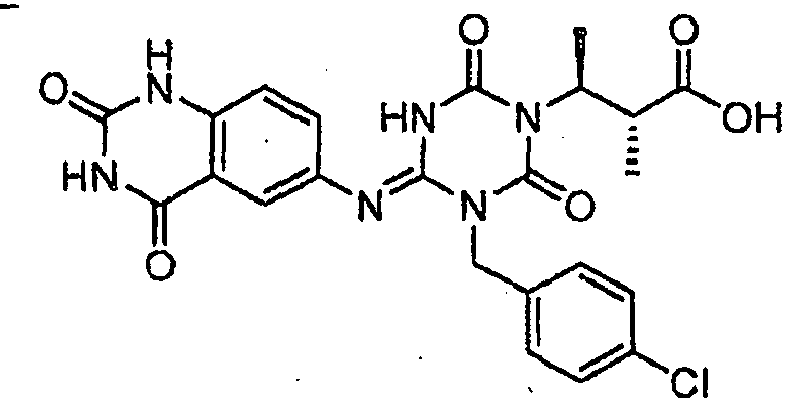
I-1818 1.53 513 5 
I-1819 1.63 498 5 
I-1820 2.03 485 5 [Table 368] Structure Compound No. Retention Time (min) [M+H] Method 
I-1821 2.41 509 5 
I-1822 1.60 501 5 
I-1823 1.82 510 5 
I-1824 1.81 519 5 
I-1825 2.28 567 5 [Table 369] Structure Compound No. Retention Time (min) [M+H] Method 
I-1826 2.03 495 5 
I-1827 2.86 533 5 
I-1828 1.77 512 5 
I-1829 2.59 562 5 
I-1830 2.00 483 5 [Table 370] Structure Compound No. Retention Time (min) [M+H] Method 
I-1831 1.92 483 5 
I-1832 2.63 559 5 
I-1833 1.91 471 5 
I-1834 1.57 480 5 
I-1835 2.05 484 3 [Table 371] Structure Compound No. Retention Time (min) [M+H] Method 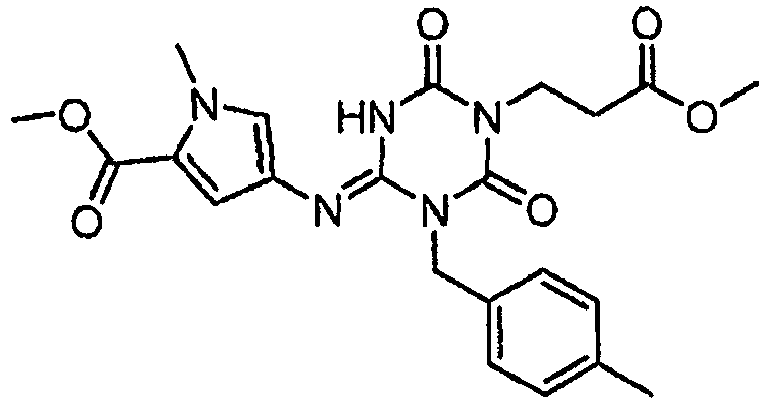
I-1836 1.93 456 3 
I-1837 2.22 422 3 
I-1838 2.17 397 3 
I-1839 1.92 470 3 
I-1840 2.66 539 3 [Table 372] Structure Compound No. Retention Time (min) [M+H] Method 
I-1841 2.43 527 3 
I-1842 2.19 499 3 
I-1843 1.77 540 2 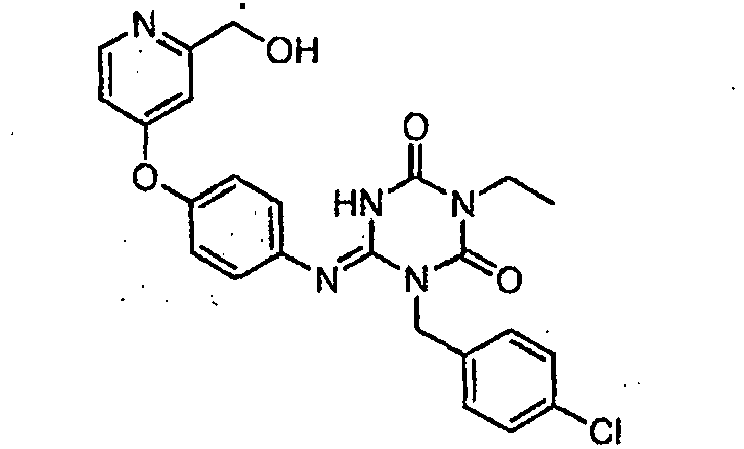
I-1844 1.41 480 2 
I-1845 1.85 515 2 [Table 373] Structure Compound No. Retention Time (min) [M+H] Method 
I-1846 1.71 479 2 
I-1847 2.18 480 2 
I-1848 1.61 466 2 
I-1849 1.98 487 2 
I-1850 2.10 440 2 [Table 374] Structure Compound No. Retention Time (min) [M+H] Method 
I-1851 1.79 544 2 
I-1852 2.06 542 2 
I-1853 1.55 502 2 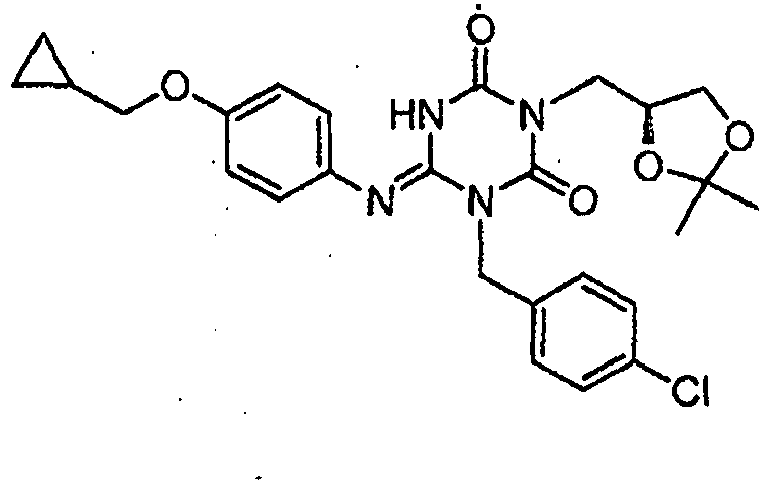
I-1854 2.46 513 3 
I-1855 1.93 473 3 [Table 375] Structure Compound No. Retention Time (min) [M+H] Method 
I-1856 1.96 509 3 
I-1857 2.03 523 3 
I-1858 1.92 553 3 
I-1859 2.39 481 3 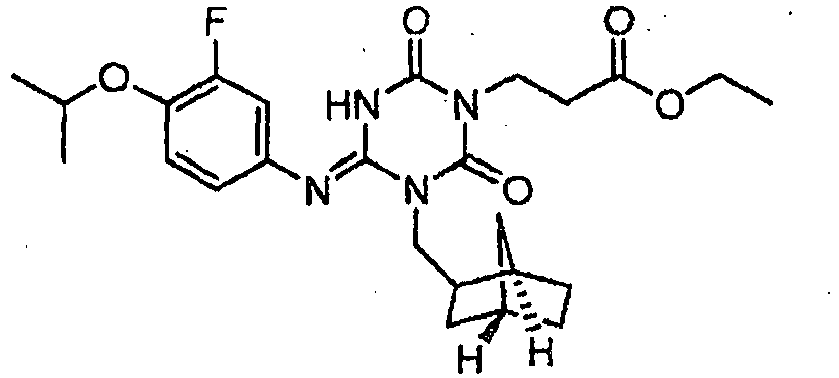
I-1860 2.64 489 3 [Table 376] Structure Compound No. Retention Time (min) [M+H] Method 
I-1861 2.04 451 3 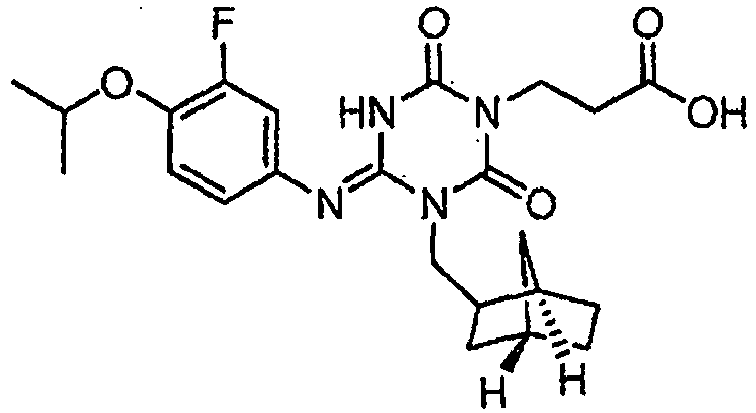
I-1862 2.25 461 3 
I-1863 2.07 508 2 
I-1864 2.26 472 5 
I-1865 2.28 442 5 [Table 377] Structure Compound No. Retention Time (min) [M+H] Method 
I-1866 2.31 442 5 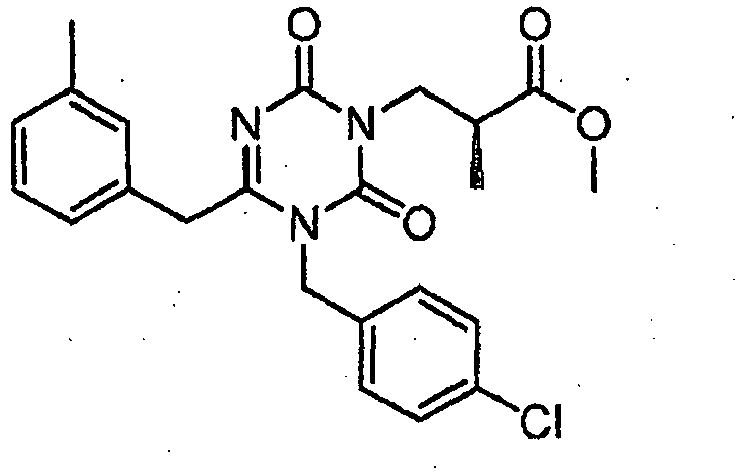
I-1867 2.29 442 5 
I-1868 2.31 442 5 
I-1869 2.12 476 5 
I-1870 2.06 492 3 [Table 378] Structure Compound No. Retention Time (min) [M+H] Method 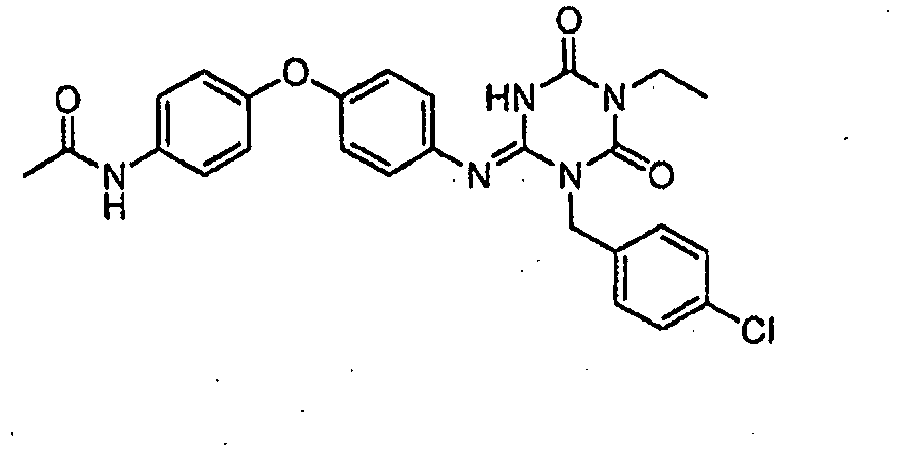
I-1871 2.16 506 3 
I-1872 2.42 539 2 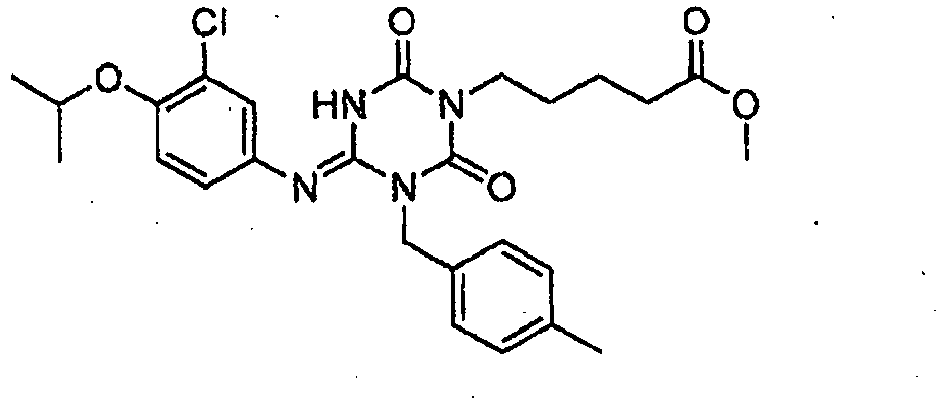
I-1873 2.38 515 2 
I-1874 2.23 550 3 
I-1875 2.05 563 3 [Table 379] Structure Compound No. Retention Time (min) [M+H] Method 
I-1876 2.07 556 2 
I-1877 2.10 511 2 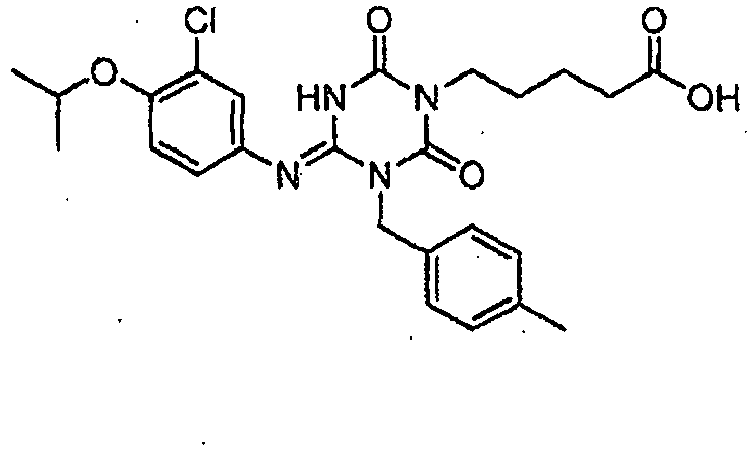
I-1878 2.11 501 2 
I-1879 1.69 442 3 
I-1880 2.57 507 3 [Table 380] Structure Compound No. Retention Time (min) [M+H] Method 
I-1881 2.25 493 3 
I-1882 1.88 529 2 
I-1883 1.26 466 2 
I-1884 2.23 513 3 
I-1885 1.80 494 2 [Table 381] Structure Compound No. Retention Time (min) [M+H] Method 
I-1886 2.54 535 3 
I-1887 2.56 521 3 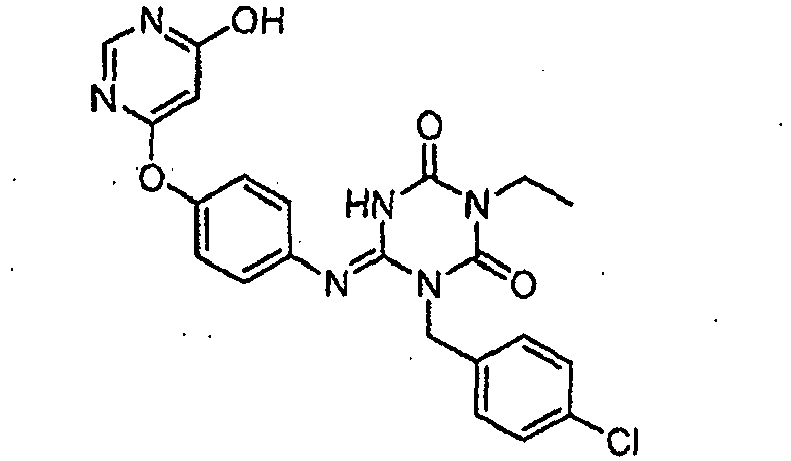
I-1888 1.86 467 3 
I-1889 2.50 521 3 
I-1890 2.22 480 3 [Table 382] Structure Compound No. Retention Time (min) [M+H] Method 
I-1891 1.81 438 3 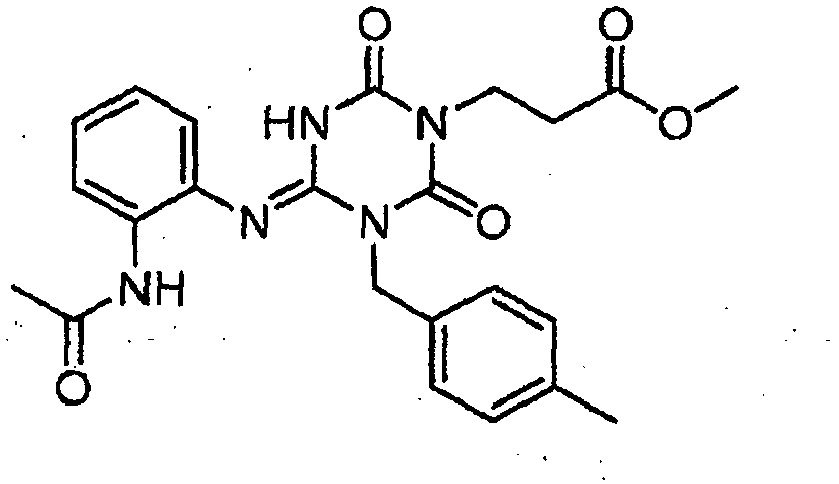
I-1892 1.86 452 3 
I-1893 1.21 489 3 
I-1894 2.22 507 3 
I-1895 1.95 466 3 [Table 383] Structure Compound No. Retention Time (min) [M+H] Method 
I-1896 1.60 465 2 
I-1897 1.54 509 2 
I-1898 2.02 547 2 
I-1899 2.58 529 3 
I-1900 1.43 495 3 [Table 384] Structure Compound No. Retention Time (min) [M+H] Method 
I-1901 1.49 509 3 
I-1902 1.40 539 3 
I-1903 1.81 510 3 
I-1904 1.71 508 3 
I-1905 2.11 489 3 [Table 385] Structure Compound No. Retention Time (min) [M+H] Method 
I-1906 2.04 495 3 
I-1907 2.01 481 3 
I-1908 2.00 513 2 
I-1909 1.98 497 2 
I-1910 2.04 485 3 [Table 386] Structure Compound No. Retention Time (min) [M+H] Method 
I-1911 2.76 505 3 
I-1912 2.00 484 3 
I-1913 2.06 484 3 
I-1914 1.94 470 3 
I-1915 2.00 470 3 [Table 387] Structure Compound No. Retention Time (min) [M+H] Method 
I-1916 2.41 477 3 
I-1917 2.08 457 3 
I-1918 2.14 457 3 
I-1919 2.29 479 3 
I-1920 1.61 438 3 [Table 388] Structure Compound No. Retention Time (min) [M+H] Method 
I-1921 1.03 475 3 
I-1922 2.57 509 3 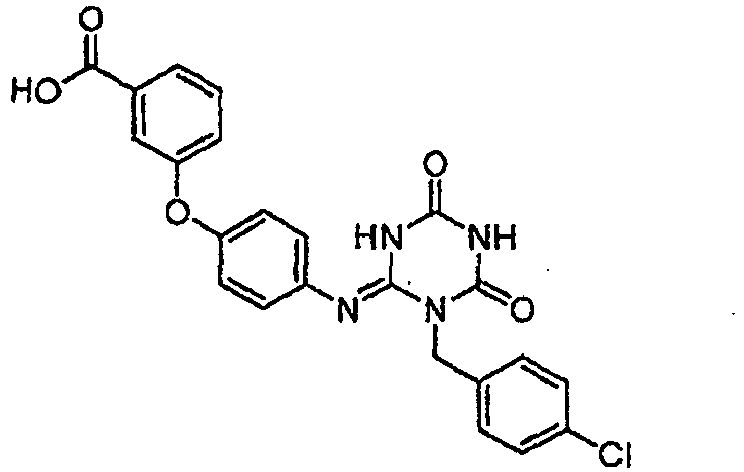
I-1923 1.96 465 3 
I-1924 2.71 501 3 
I-1925 2.05 492 3 [Table 389] Structure Compound No. Retention Time (min) [M+H] Method 
I-1926 1.18 493 3 
I-1927 1.21 507 3 
I-1928 1.16 537 3 
I-1929 2.23 437 3 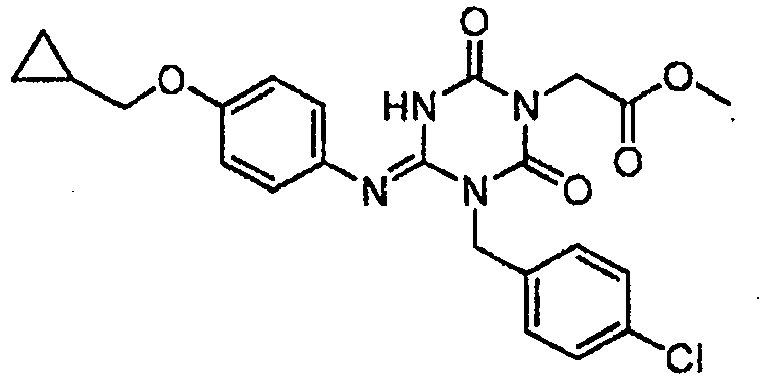
I-1930 2.29 471 3 [Table 390] Structure Compound No. Retention Time (min) [M+H] Method 
I-1931 2.07 496 2 
I-1932 1.62 496 3 
I-1933 2.32 495 3 
I-1934 1.49 494 3 
I-1935 1.61 484 2 [Table 391] Structure Compound No. Retention Time (min) [M+H] Method 
I-1936 2.07 457 3 
I-1937 2.46 539 2 
I-1938 2.21 541 2 
I-1939 2.35 471 3 
I-1940 1.93 456 3 [Table 392] Structure Compound No. Retention Time (min) [M+H] Method 
I-1941 2.17 498 2 
I-1942 1.99 470 3 
I-1943 2.12 457 3 
I-1944 1.37 493 3 
I-1945 1.42 507 3 [Table 393] Structure Compound No. Retention Time (min) [M+H] Method 
I-1946 1.98 456 3 
I-1947 2.47 513 2 
I-1948 2.06 470 3 
I-1949 1.73 454 2 
I-1950 1.74 468 2 [Table 394] Structure Compound No. Retention Time (min) [M+H] Method 
I-1951 2.12 511 2 
I-1952 1.54 499 2 
I-1953 1.92 479 2 
I-1954 1.10 524 2 
I-1955 1.18 436 2 [Table 395] Structure Compound No. Retention Time (min) [M+H] Method 
I-1956 1.87 512 2 
I-1957 1.91 526 2 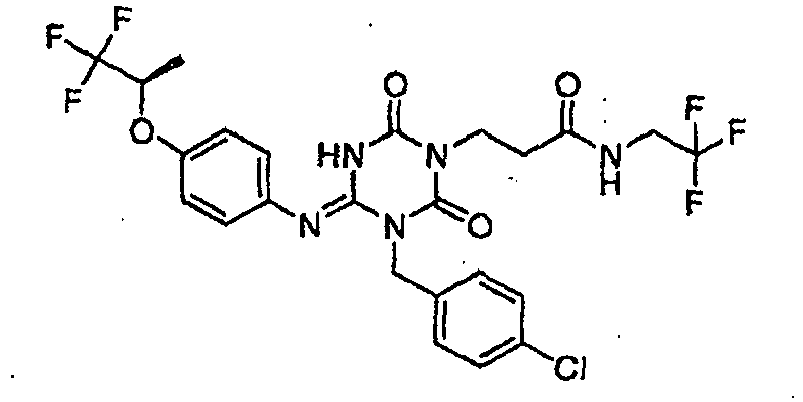
I-1958 2.15 594 2 
I-1959 1.86 498 2 
I-1960 1.89 512 2 [Table 396] Structure Compound No. Retention Time (min) [M+H] Method 
I-1961 2.14 582 2 
I-1962 1.11 452 2 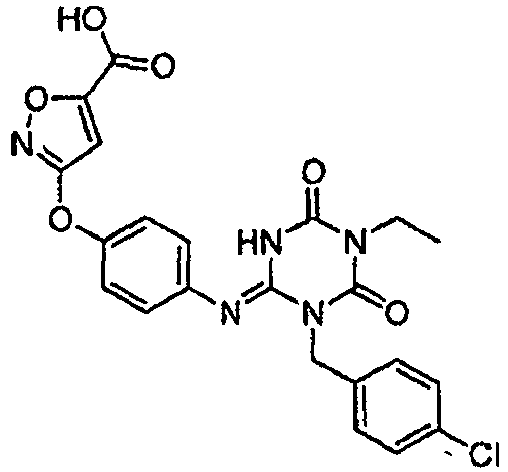
I-1963 1.74 484 2 
I-1964 2.22 499 2 
I-1965 2.25 527 2 [Table 397] Structure Compound No. Retention Time (min) [M+H] Method 
I-1966 1.61 467 2 
I-1967 1.65 481 2 
I-1968 1.84 470 2 
I-1969 2.02 493 2 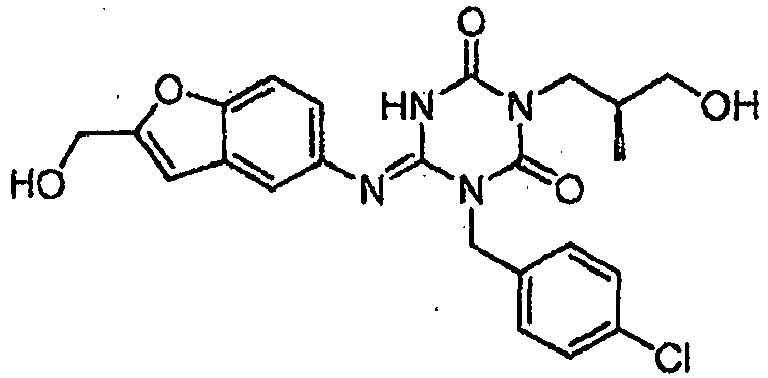
I-1970 1.57 471 2 [Table 398] Structure Compound No. Retention Time (min) [M+H] Method 
I-1971 1.90 513 2 
I-1972 2.00 513 2 
I-1973 1.86 516 2 
I-1974 1.81 487 2 
I-1975 1.63 448 3 [Table 399] Structure Compound No. Retention Time (min) [M+H] Method 
I-1976 1.38 494 3 
I-1977 1.50 495 3 
I-1978 1.56 509 3 
I-1979 1.46 539 3 
I-1980 1.32 537 3 [Table 400] Structure Compound No. Retention Time (min) [M+H] Method 
I-1981 2.05 387 3 
I-1982 2.20 554 2 
I-1983 1.94 514 3 
I-1984 2.12 545 2 
I-1985 1.88 505 3 [Table 401] Structure Compound No. Retention Time (min) [M+H] Method 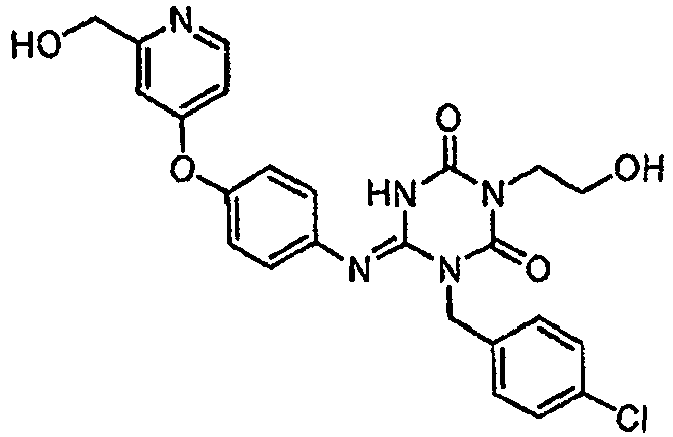
I-1986 1.05 496 2 
I-1987 1.08 510 2 
I-1988 2.45 507 3 
I-1989 2.20 459 3 
I-1990 2.43 486 3 [Table 402] Structure Compound No. Retention Time (min) [M+H] Method 
I-1991 2.82 508 3 
I-1992 2.18 493 3 
I-1993 2.10 528 3 
I-1994 2.01 458 3 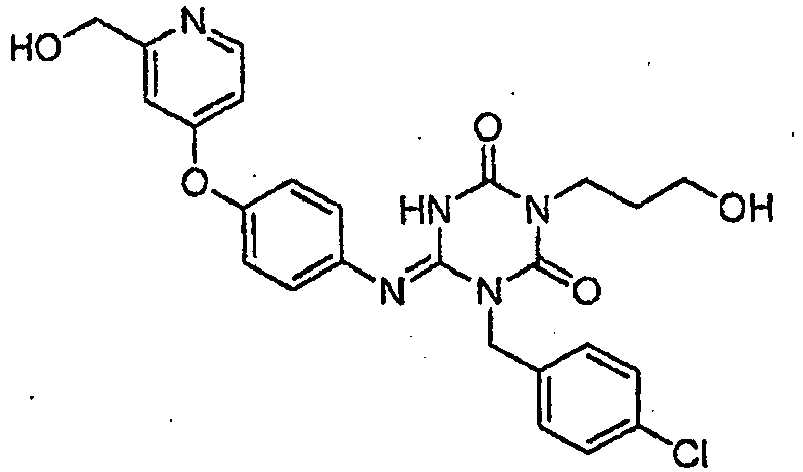
I-1995 1.10 510 2 [Table 403] Structure Compound No. Retention Time (min) [M+H] Method 
I-1996 1.67 493 2 
I-1997 1.47 494 2 
I-1998 2.01 556 3 
I-1999 1.99 542 3 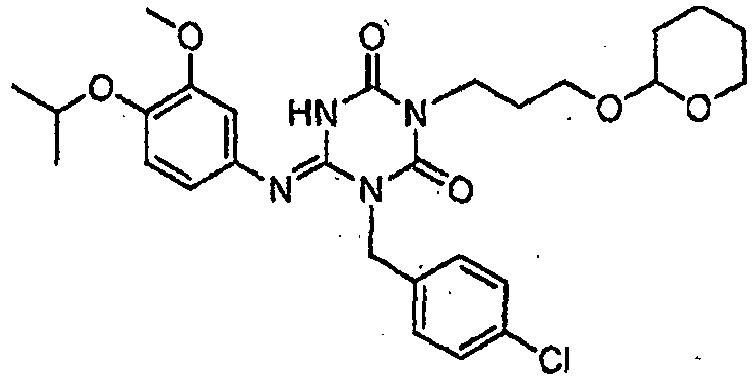
I-2000 2.29 559 2 [Table 404] Structure Compound No. Retention Time (min) [M+H] Method 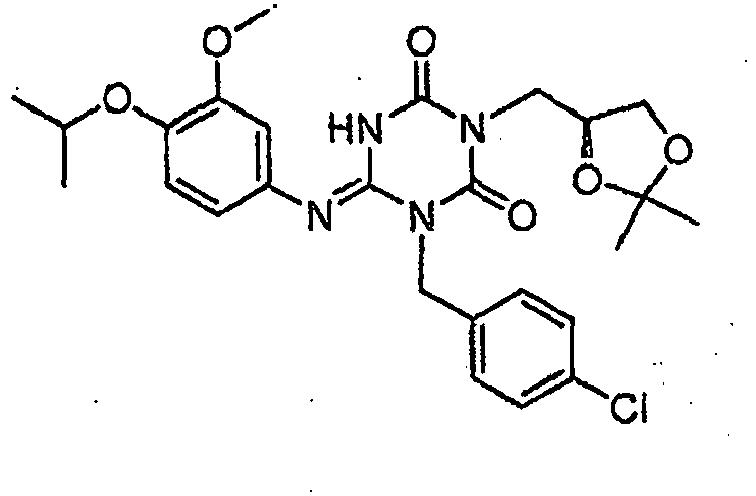
I-2001 2.15 531 2 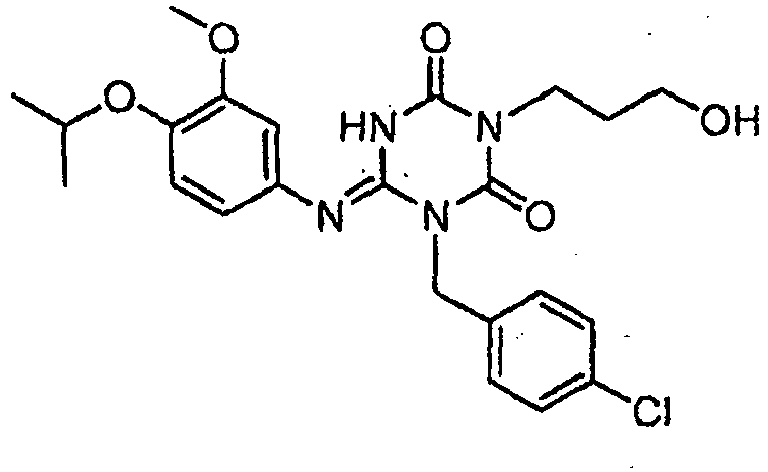
I-2002 2.02 475 3 
I-2003 1.84 431 3 
I-2004 1.84 491 3 
I-2005 2.22 545 2 [Table 405] Structure Compound No. Retention Time (min) [M+H] Method 
I-2006 1.97 461 3 
I-2007 2.46 479 3 
I-2008 2.29 481 3 
I-2009 2.07 492 3 
I-2010 2.10 443 3 [Table 406] Structure Compound No. Retention Time (min) [M+H] Method 
I-2011 1.83 493 2 
I-2012 1.74 473 2 
I-2013 1.88 487 2 
I-2014 2.42 499 3 
I-2015 2.46 521 2 [Table 407] Structure Compound No. Retention Time (min) [M+H] Method 
I-2016 1.92 467 3 
I-2017 2.11 507 2 
I-2018 1.34 466 3 
I-2019 2.37 492 3 
I-2020 2.30 478 3 [Table 408] Structure Compound No. Retention Time (min) [M+H] Method 
I-2021 2.02 471 3 
I-2022 1.71 468 3 
I-2023 2.26 487 3 
I-2024 2.31 554 2 
I-2025 2.33 525 2 [Table 409] Structure Compound No. Retention Time (min) [M+H] Method 
I-2026 2.04 470 3 
I-2027 2.05 441 3 
I-2028 2.48 487 3 
I-2029 2.48 487 3 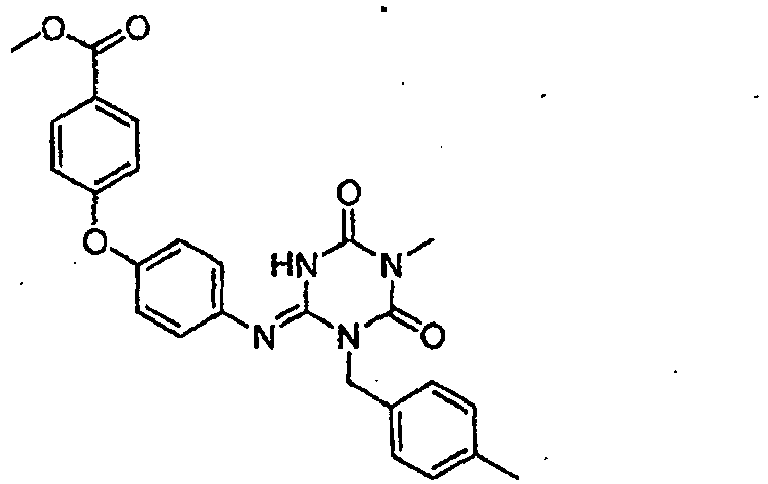
I-2030 2.35 473 3 [Table 410] Structure Compound No. Retention Time (min) [M+H] Method 
I-2031 2.35 473 3 
I-2032 2.02 508 3 
I-2033 2.15 508 3 
I-2034 2.14 473 3 
I-2035 2.13 473 3 [Table 411] Structure Compound No. Retention Time (min) [M+H] Method 
I-2036 1.42 473 2 
I-2037 2.20 513 2 
I-2038 2.13 524 2 
I-2039 2.08 510 2 
I-2040 1.93 550 2 [Table 412] Structure Compound No. Retention Time (min) [M+H] Method 
I-2041 1.93 499 2 
I-2042 1.69 440 2 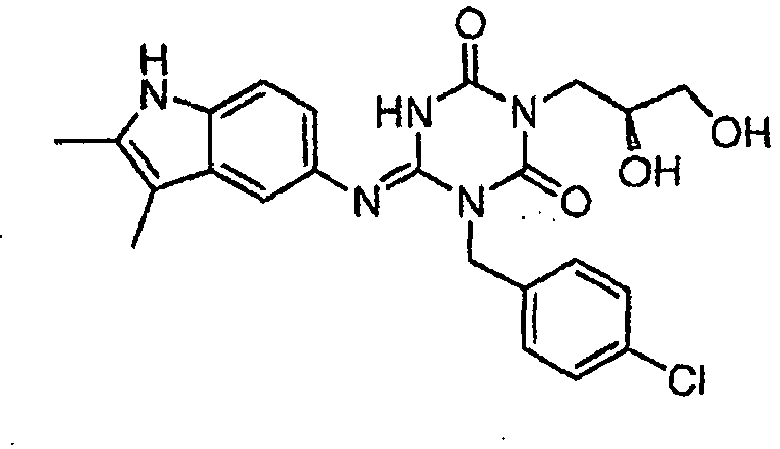
I-2043 1.58 470 2 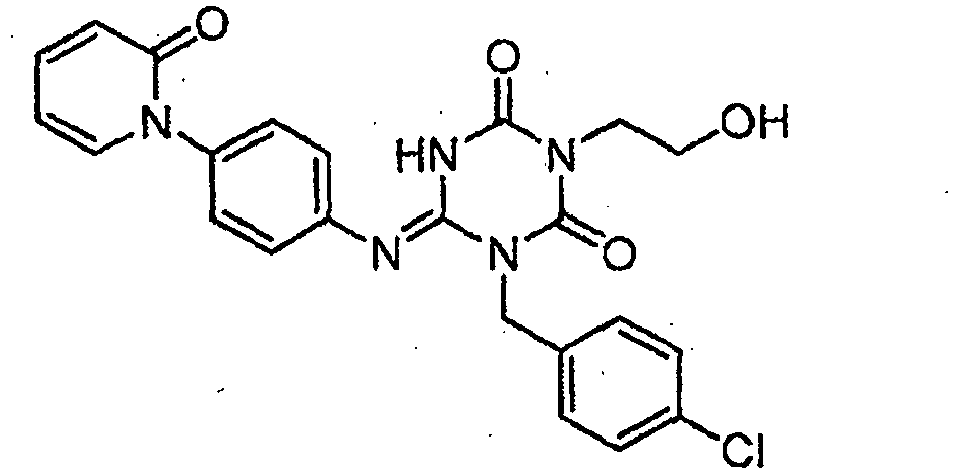
I-2044 1.49 466 2 
I-2045 1.97 415 5 [Table 413] Structure Compound No. Retention Time (min) [M+H] Method 
I-2046 2.00 415 5 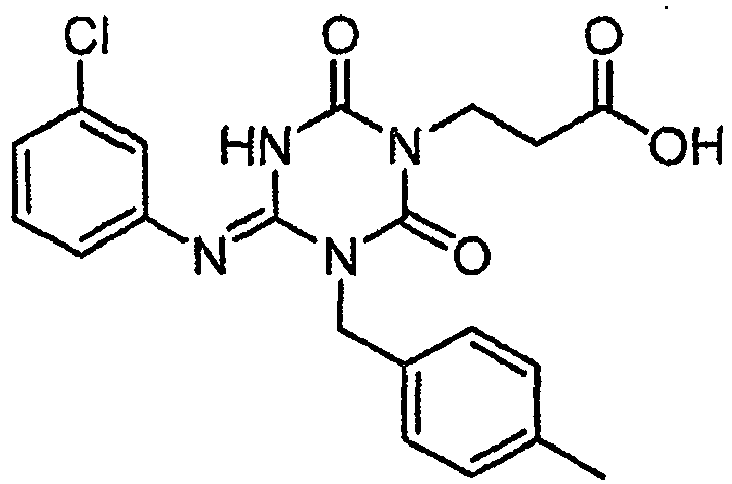
I-2047 2.02 415 5 
I-2048 2.02 453 5 
I-2049 2.06 457 5 
I-2050 2.30 449 5 [Table 414] Structure Compound No. Retention Time (min) [M+H] Method 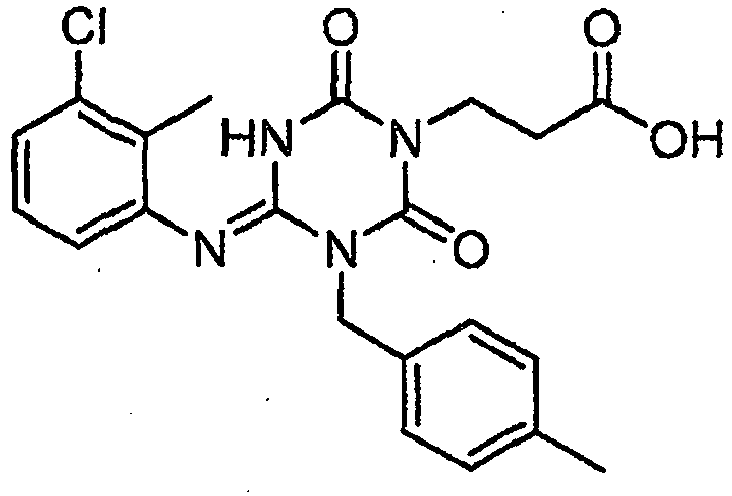
I-2051 2.19 429 5 
I-2052 2.09 461 5 
I-2053 2.10 461 5 
I-2054 2.15 433 5 
I-2055 2.45 507 5 [Table 415] Structure Compound No. Retention Time (min) [M+H] Method 
I-2056 1.26 446 3 
I-2057 2.32 525 2 
I-2058 2.42 493 3 
I-2059 2.42 493 3 
I-2060 2.01 459 3 [Table 416] Structure Compound No. Retention Time (min) [M+H] Method 
I-2061 1.99 459 3 
I-2062 1.84 494 3 
I-2063 2.08 479 3 
I-2064 2.09 479 3 
I-2065 2.19 479 3 [Table 417] Structure Compound No. Retention Time (min) [M+H] Method 
I-2066 2.02 511 2 
I-2067 2.38 508 3 
I-2068 2.61 545 3 
I-2069 2.16 511 2 
I-2070 1.72 471 2 [Table 418] Structure Compound No. Retention Time (min) [M+H] Method 
I-2071 2.27 525 2 
I-2072 1.80 485 2 
I-2073 2.45 539 2 
I-2074 2.17 455 3 
I-2075 1.60 480 2 [Table 419] Structure Compound No. Retention Time (min) [M+H] Method 
I-2076 1.99 488 2 
I-2077 1.69 580 2 
I-2078 1.71 474 2 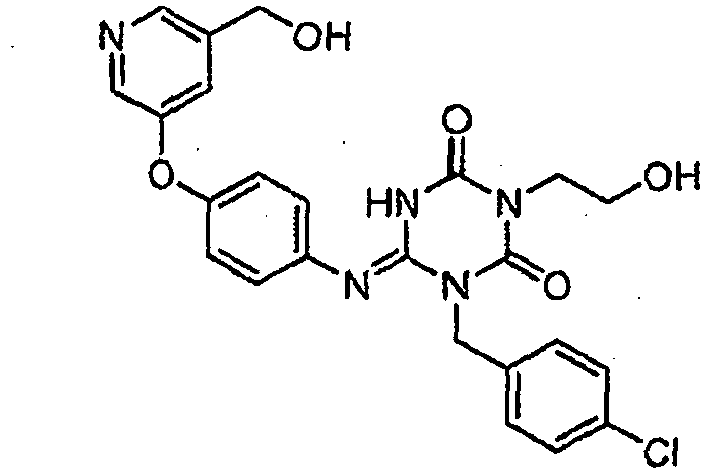
I-2079 1.26 496 2 
I-2080 2.48 527 5 [Table 420] Structure Compound No. Retention Time (min) [M+H] Method 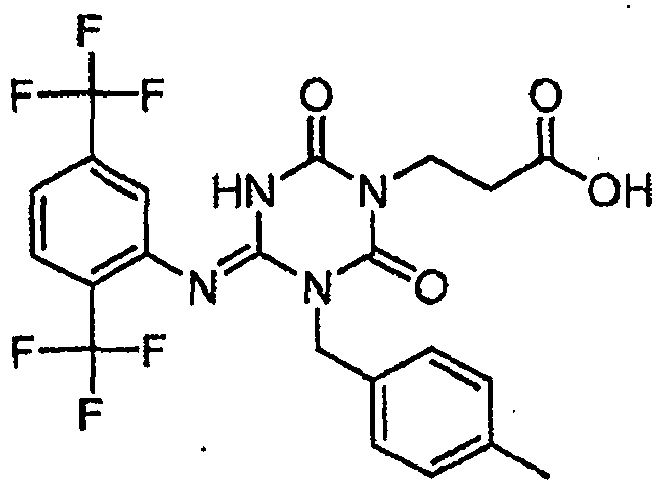
I-2081 2.54 517 5 
I-2082 2.28 463 5 
I-2083 2.29 467 5 
I-2084 2.44 483 5 
I-2085 2.30 463 5 [Table 421] Structure Compound No. Retention Time (min) [M+H] Method 
I-2086 2.26 467 5 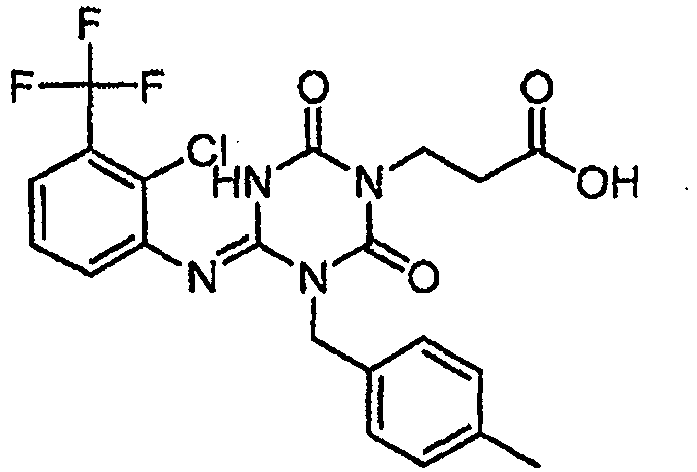
I-2087 2.39 483 5 
I-2088 2.42 529 5 
I-2089 2.48 497 3 
I-2090 2.57 497 5 [Table 422] Structure Compound No. Retention Time (min) [M+H] Method 
I-2091 1.21 482 5 
I-2092 1.25 496 5 
I-2093 1.19 508 5 
I-2094 1.26 500 5 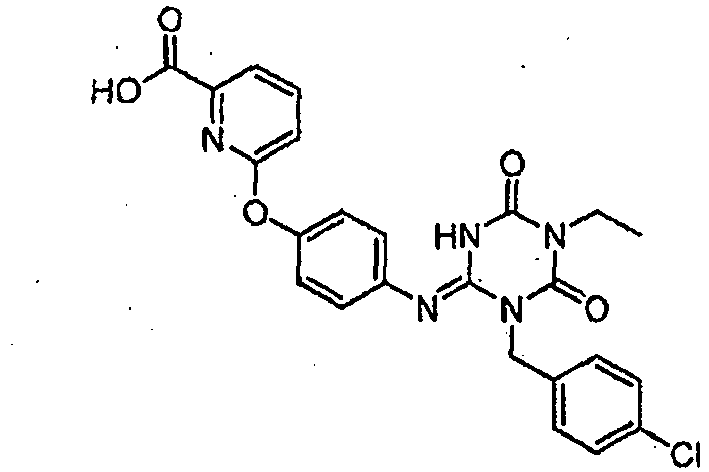
I-2095 2.17 494 3 [Table 423] Structure Compound No. Detention Time (min) [M+H] Method 
I-2096 2.30 481 3 
I-2097 1.82 460 3 
I-2098 1.97 430 3 
I-2099 1.38 480 2 
I-2100 1.29 460 2 [Table 424] Structure Compound No. Retention Time (min) [M+H] Method 
I-2101 1.86 497 2 
I-2102 1.44 446 2 
I-2103 1.65 480 2 
I-2104 1.64 457 2 
I-2105 2.00 508 2 [Table 425] Structure Compound No. Retention Time (min) [M+H] Method 
I-2106 1.90 488 2 
I-2107 1.79 483 2 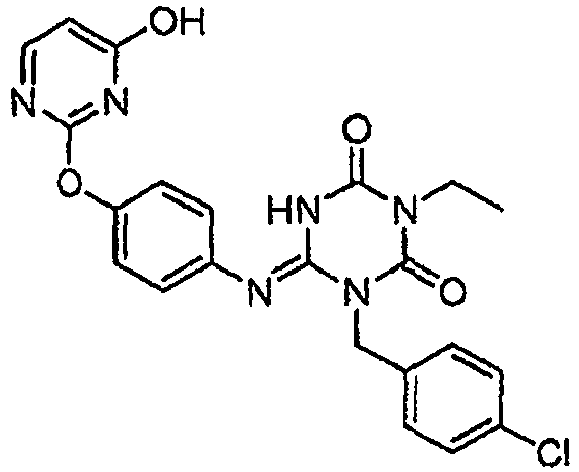
I-2108 1.84 467 3 
I-2109 2.47 592 3 
I-2110 2.05 491 3 [Table 426] Structure Compound No. Retention Time (min) [M+H] Method 
I-2111 2.16 492 3 
I-2112 1.85 478 3 
I-2113 2.27 598 2 
I-2114 1.62 480 2 
I-2115 1.78 494 2 [Table 427] Structure Compound No. Retention Time (min) [M+H] Method 
I-2116 1.70 474 2 
I-2117 1.38 500 2 
I-2118 1.52 486 2 
I-2119 1.84 493 2 
I-2120 1.73 477 3 [Table 428] Structure Compound No. Retention Time (min) [M+H] Method 
I-2121 1.57 460 2 
I-2122 1.49 492 3 
I-2123 2.25 494 3 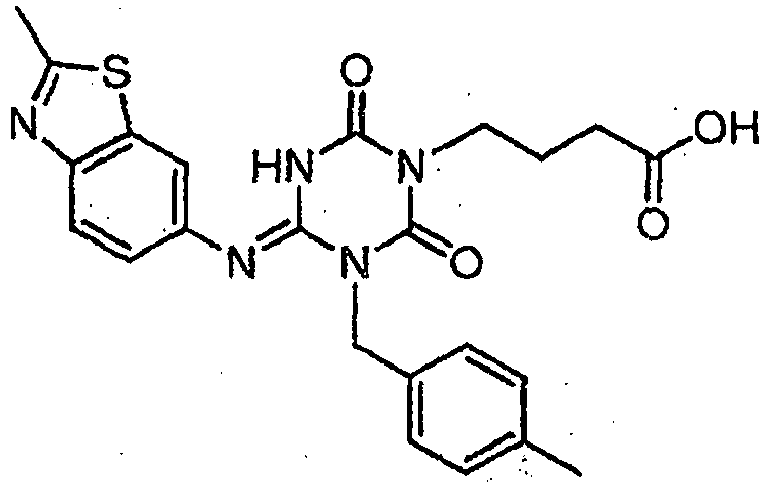
I-2124 1.84 466 3 
I-2125 2.34 481 3 [Table 429] Structure Compound No. Retention Time (min) [M+H] Method 
I-2126 1.40 397 5 
I-2127 1.37 478 2 
I-2128 1.56 462 3 
I-2129 1.35 448 5 
I-2130 2.17 475 5 [Table 430] Structure Compound No. Retention Time (min) [M+H] Method 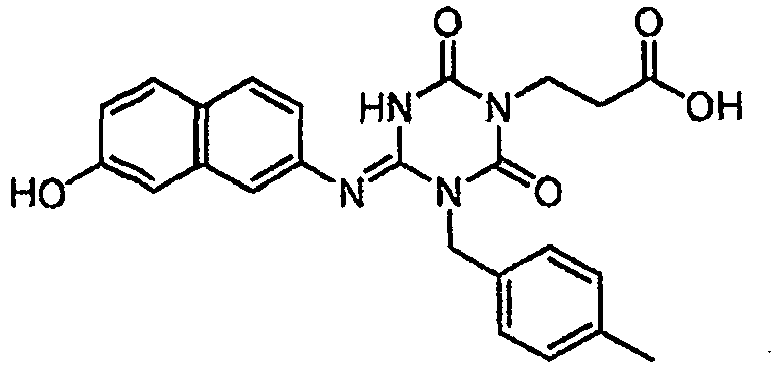
I-2131 1.74 447 5 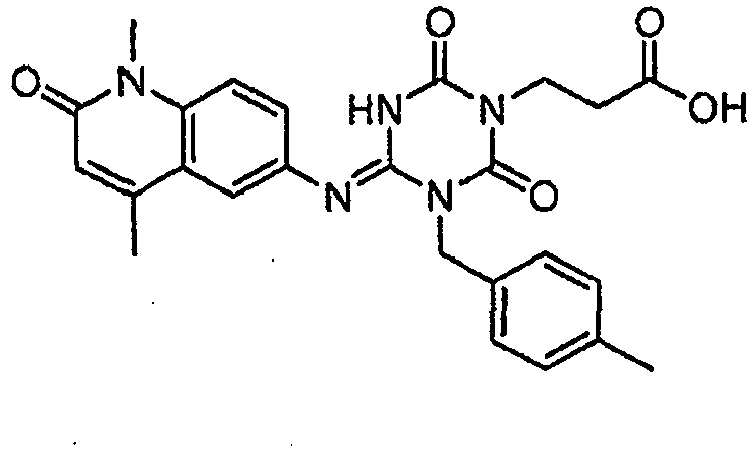
I-2132 1.54 476 5 
I-2133 1.52 454 5 
I-2134 1.81 434 5 
I-2135 1.62 432 5 [Table 431] Structure Compound No. Retention Time (min) [M+H] Method 
I-2136 2.11 432 5 
I-2137 1.96 462 3 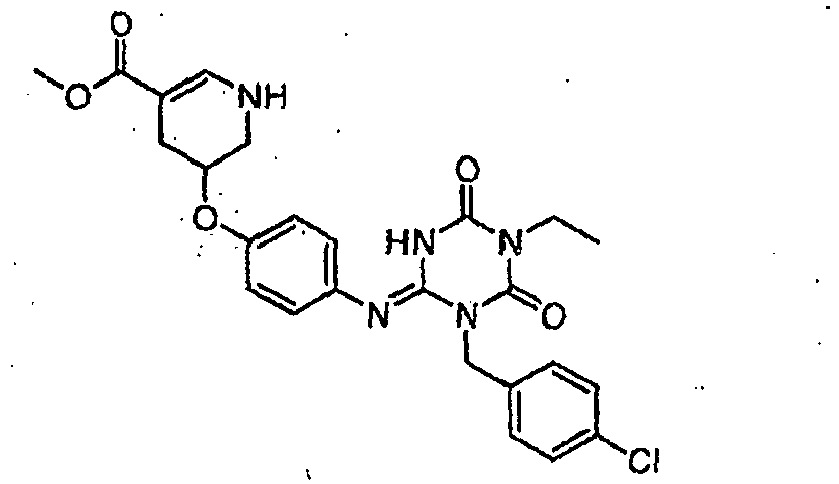
I-2138 2.04 512 3 
I-2139 2.19 506 3 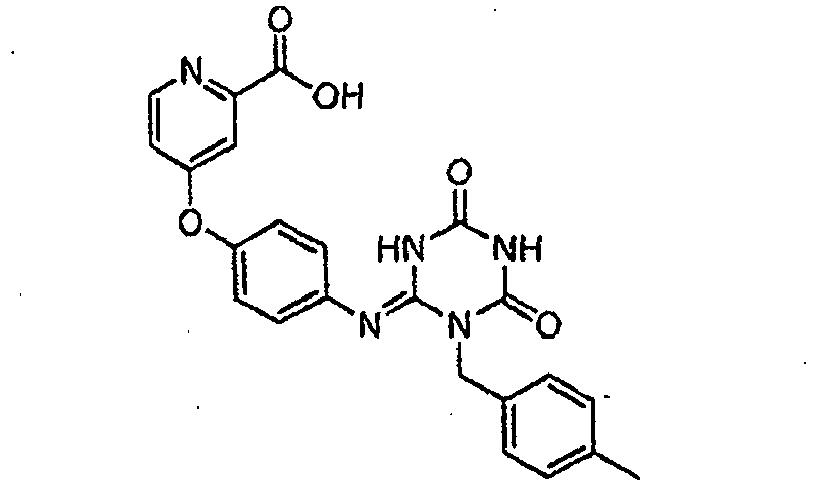
I-2140 1.19 446 2 [Table 432] Structure Compound No. Retention Time (min) [M+H] Method 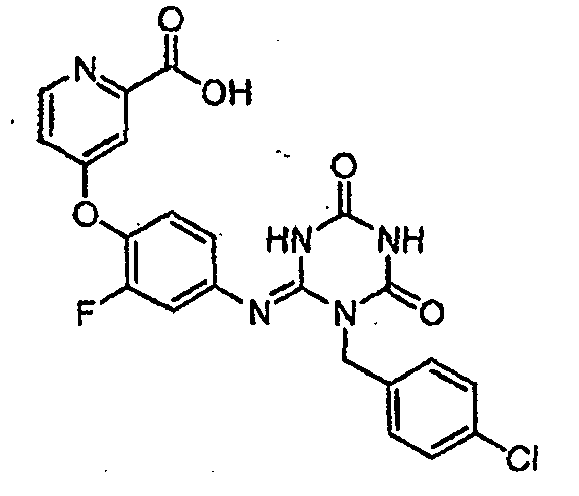
I-2141 1.41 484 2 
I-2142 2.20 500 3 
I-2143 1.92 486 3 
I-2144 2.14 508 3 
I-2145 2.05 493 3 [Table 433] Structure Compound No. Retention Time (min) [M+H] Method 
I-2146 1.93 494 3 
I-2147 2.53 542 2 
I-2148 2.41 528 2 
I-2149 2.25 497 3 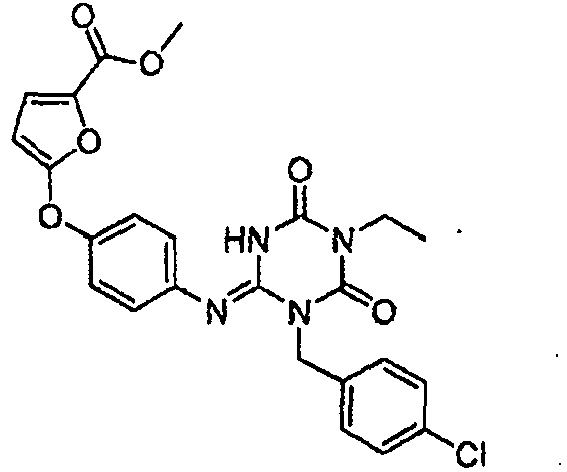
I-2150 2.23 497 2 [Table 434] Structure Compound No. Retention Time (min) [M+H] Method 
I-2151 2.04 514 2 
I-2152 1.94 483 2 
I-2153 1.96 500 2 
I-2154 2.07 509 3 
I-2155 1.99 494 2 [Table 435] Structure Compound No. Retention Time (min) [M+H] Method 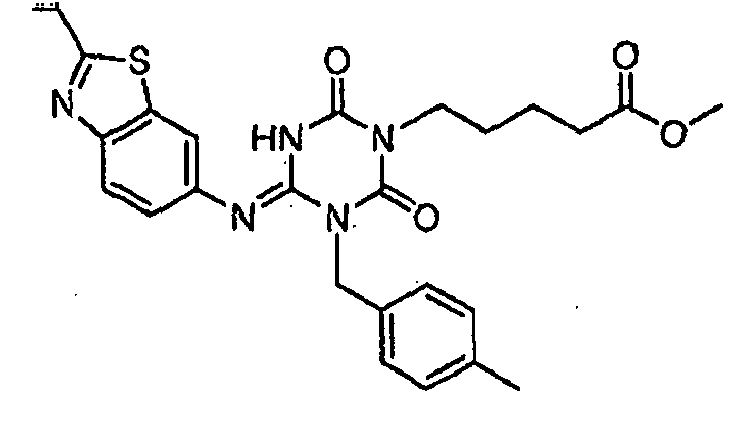
I-2156 2.13 508 2 
I-2157 2.15 522 2 
I-2158 1.90 480 3 
I-2159 2.06 494 3 
I-2160 2.32 522 3 [Table 436] Structure Compound No. Retention Time (min) [M+H] Method 
I-2161 2.15 508 3 
I-2162 1.93 508 3 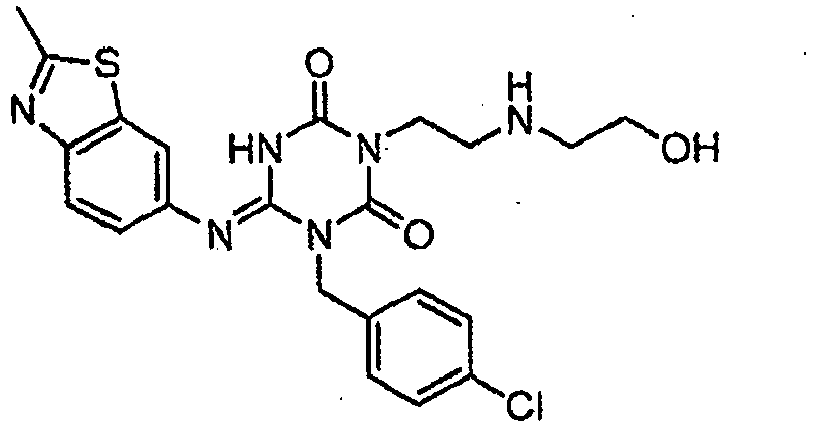
I-2163 1.28 487 3 
I-2164 1.75 495 3 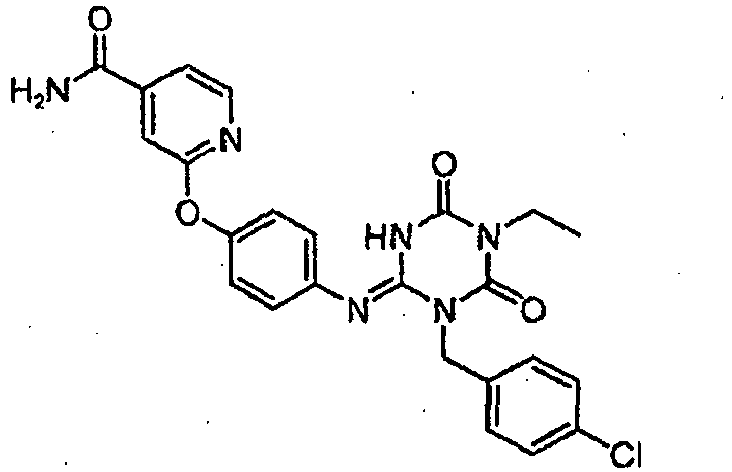
I-2165 1.75 493 3 [Table 437] Structure Compound No. Retention Time (min) [M+H] Method 
I-2166 1.45 465 2 
I-2167 2.16 498 2 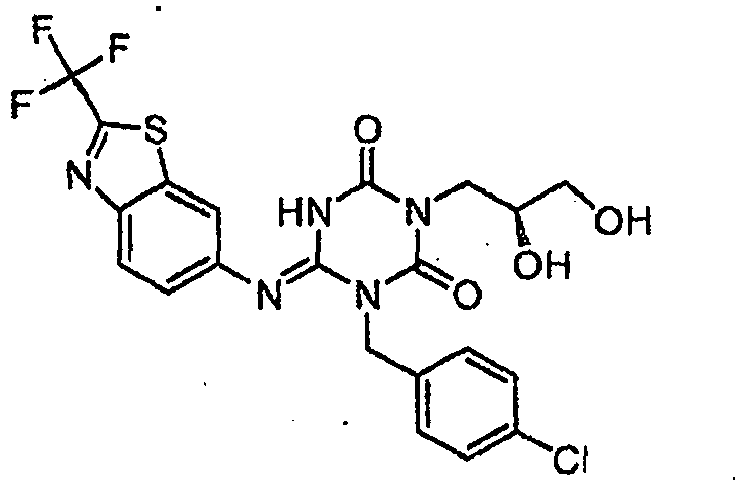
I-2168 1.99 528 2 
I-2169 2.02 542 2 
I-2170 2.06 469 3 [Table 438] Structure Compound No. Retention Time (min) [M+H] Method 
I-2171 2.09 455 3 
I-2172 2.16 495 2 
I-2173 2.25 506 2 
I-2174 2.11 506 2 
I-2175 1.95 492 2 [Table 439] Structure Compound No. Retention Time (min) [M+H] Method 
I-2176 2.02 491 2 
I-2177 1.64 492 2 
I-2178 1.84 491 2 
I-2179 2.24 473 2 
I-2180 2.28 488 3 [Table 440] Structure Compound No. Retention Time (min) [M+H] Method 
I-2181 2.06 474 3 
I-2182 2.66 535 3 
I-2183 2.45 528 3 
I-2184 2.39 521 3 
I-2185 2.15 514 3 [Table 441] Structure Compound No. Retention Time (min) [M+H] Method 
I-2186 1.93 509 3 
I-2187 2.27 512 2 
I-2188 2.25 512 2 
I-2189 1.84 484 2 
I-2190 1.92 484 2 [Table 442] Structure Compound No. Retention Time (min) [M+H] Method 
I-2191 2.32 528 2 
I-2192 2.09 511 2 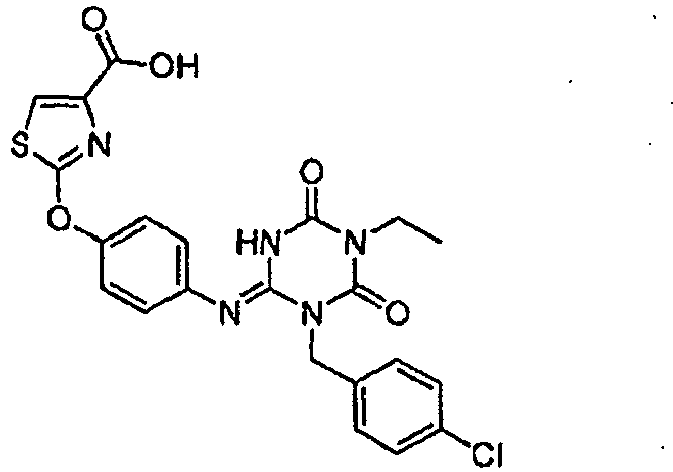
I-2193 1.97 500 2 
I-2194 1.74 483 2 
I-2195 2.64 524 5 [Table 443] Structure Compound No. Retention Time (min) [M+H] Method 
I-2196 2.41 523 5 
I-2197 1.81 472 5 
I-2198 1.58 441 2 
I-2199 1.89 469 5 
I-2200 2.04 469 5 [Table 444] Structure Compound No. Retention Time (min) [M+H] Method 
I-2201 1.54 478 5 
I-2202 1.98 483 5 
I-2203 2.19 507 3 
I-2204 2.56 508 3 
I-2205 2.44 508 3 [Table 445] Structure Compound No. Retention Time (min) [M+H] Method 
I-2206 2.22 509 3 
I-2207 2.27 494 3 
I-2208 1.94 494 3 
I-2209 2.03 495 3 
I-2210 2.40 543 3 [Table 446] Structure Compound No. Retention Time (min) [M+H] Method 
I-2211 1.43 495 3 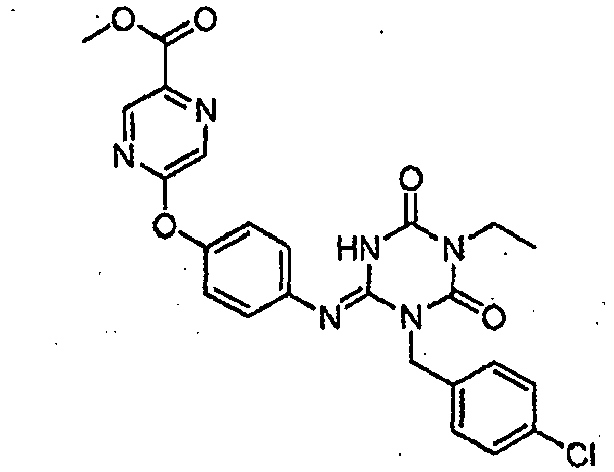
I-2212 2.03 509 2 
I-2213 1.68 548 2 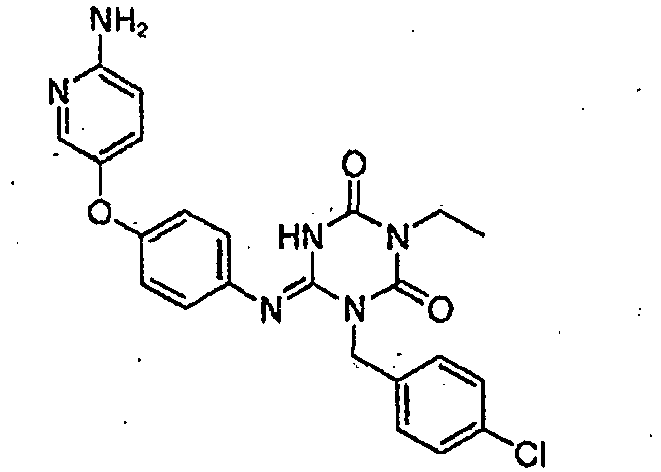
I-2214 1.45 465 2 
I-2215 1.87 530 2 [Table 447] Structure Compound No. Retention Time (min) [M+H] Method 
I-2216 1.66 507 2 
I-2217 1.74 521 2 
I-2218 2.40 525 2 
I-2219 2.47 525 2 
I-2220 2.09 512 2 [Table 448] Structure Compound No. Retention Time (min) [M+H] Method 
I-2221 1.62 373 2 
I-2222 1.61 484 2 
I-2223 2.15 511 2 
I-2224 2.62 533 3 
I-2225 2.57 535 3 [Table 449] Structure Compound No. Retention Time (min) [M+H] Method 
I-22266 2.07 511 2 
I-2227 2.37 475 3 
I-2228 2.20 540 3 
I-2229 1.86 500 3 
I-2230 2.48 489 3 [Table 450] Structure Compound No. Retention Time (min) [M+H] Method 
I-2231 2.30 519 3 
I-2232 2.28 521 3 
I-2233 2.12 510 2 
I-2234 2.07 510 2 
I-2235 2.07 510 2 [Table 451] Structure Compound No. Retention Time (min) [M+H] Method 
I-2236 1.64 494 3 
I-2237 1.81 494 3 
I-2238 2.11 509 3 
I-2239 1.90 495 3 
I-2240 1.84 494 3 [Table 452] Structure Compound No. Retention Time (min) [M+H] Method 
I-2241 1.87 507 2 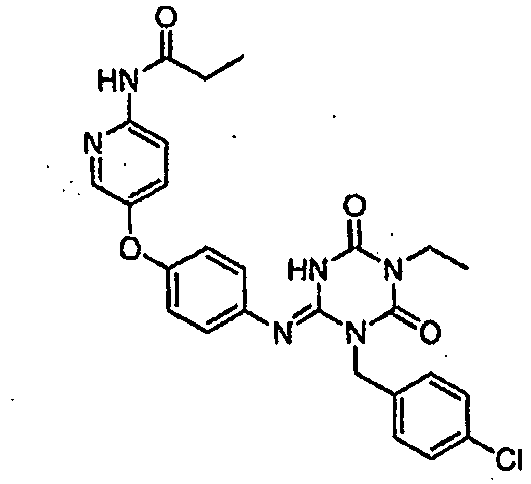
I-2242 1.97 521 2 
I-2243 1.95 548 2 
I-2244 1.34 507 2 
I-2245 1.35 493 2 [Table 453] Structure Compound No. Retention Time (min) [M+H] Method 
I-2246 1.92 513 3 
I-2247 2.48 514 5 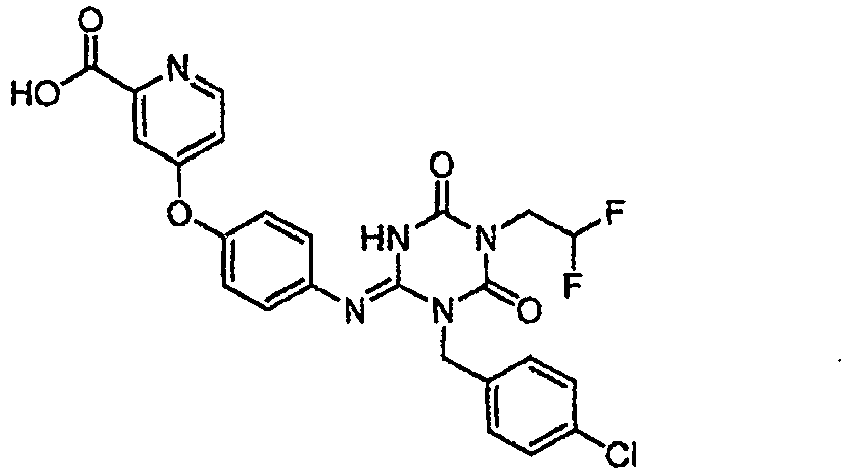
I-2248 1.57 530 2 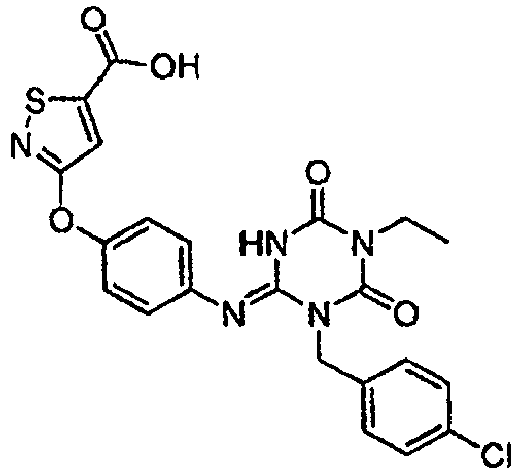
I-2249 2.21 500 3 
I-2250 2.11 494 3 [Table 454] Structure Compound No. Retention Time (min) [M+H] Method 
I-2251 2.26 537 3 
I-2252 1.92 536 3 
I-2253 2.92 445 3 
I-2254 2.84 445 3 
I-2255 2.58 445 3 [Table 455] Structure Compound No. Retention Time (min) [M+H] Method 
I-2256 3.08 461 3 
I-2257 3.00 479 3 
I-2258 2.15 482 3 
I-2259 1.80 476 3 
I-2260 1.73 442 3 [Table 456] Structure Compound No. Retention Time (min) [M+H] Method 
I-2261 1.65 428 3 
I-2262 2.59 524 3 
I-2263 2.28 510 3 
I-2264 2.79 538 3 
I-2265 2.46 600 3 [Table 457] Structure Compound No. Retention Time (min) [M+H] Method 
I-2266 2.13 474 3 
I-2267 1.80 457 2 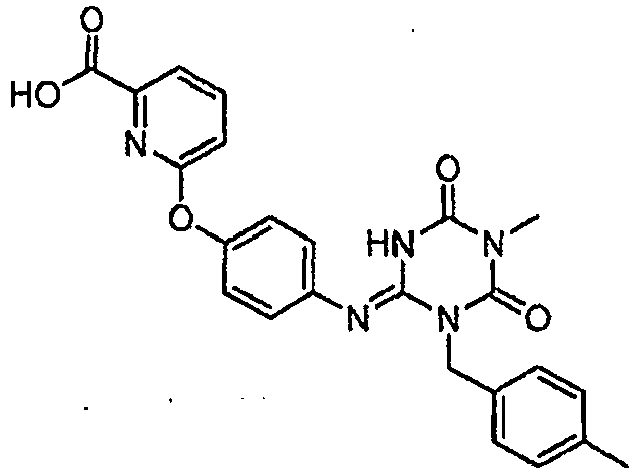
I-2268 1.92 460 3 
I-2269 2.18 509 3 
I-2270 2.30 509 3 [Table 458] Structure Compound No. Retention Time (min) [M+H] Method 
I-2271 2.25 494 3 
I-2272 2.03 480 3 
I-2273 2.02 495 3 
I-2274 1.93 479 3 
I-2275 1.98 509 3 [Table 459] Structure Compound No. Retention Time (min) [M+H] Method 
I-2276 2.65 413 3 
I-2277 1.38 500 3 
I-2278 1.75 495 3 
I-2279 1.81 494 3 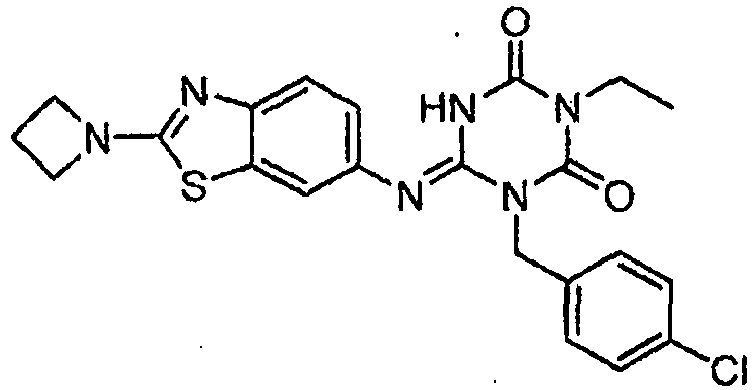
I-2280 1.86 469 2 [Table 460] Structure Compound No. Retention Time (min) [M+H] Method 
I-2281 2.35 476 3 
I-2282 2.09 495 3 
I-2283 1.99 494 3 
I-2284 1.96 494 3 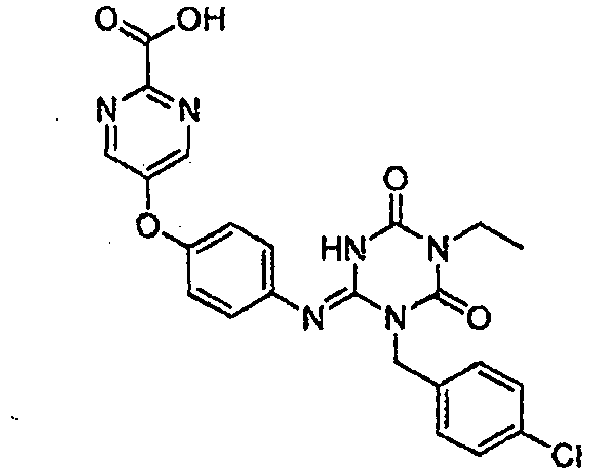
I-2285 1.90 495 3 [Table 461] Structure Compound No. Retention Time (min) [M+H] Method 
I-2286 2.24 456 2 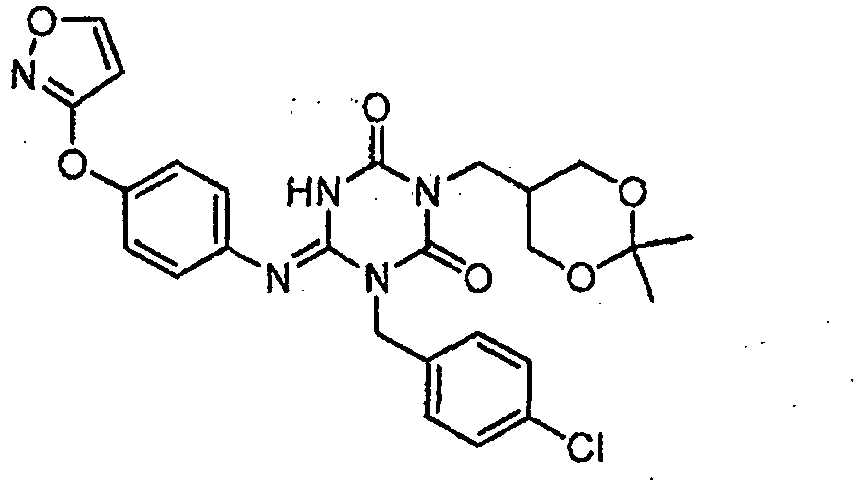
I-2287 2.16 540 2 
I-2288 2.24 540 2 
I-2289 2.19 526 2 
I-2290 2.27 542 2 [Table 462] Structure Compound No. Retention Time (min) [M+H] Method 
I-2291 1.71 500 2 
I-2292 1.80 456 2 
I-2293 1.68 486 2 
I-2294 1.77 502 2 
I-2295 1.68 524 2 [Table 463] Structure Compound No. Retention Time (min) [M+H] Method 
I-2296 1.97 495 2 
I-2297 1.42 500 2 
I-2298 1.34 472 3 
I-2299 1.42 486 2 [Table 464] Structure Compound No. Retention Time (min) [M+H] Method 
I-2300 2.28 455 3 
I-2301 2.54 459 3 
I-2302 2.35 475 3 
I-2303 2.02 474 3 [Table 465] Structure Compound No. Retention Time (min) [M+H] Method 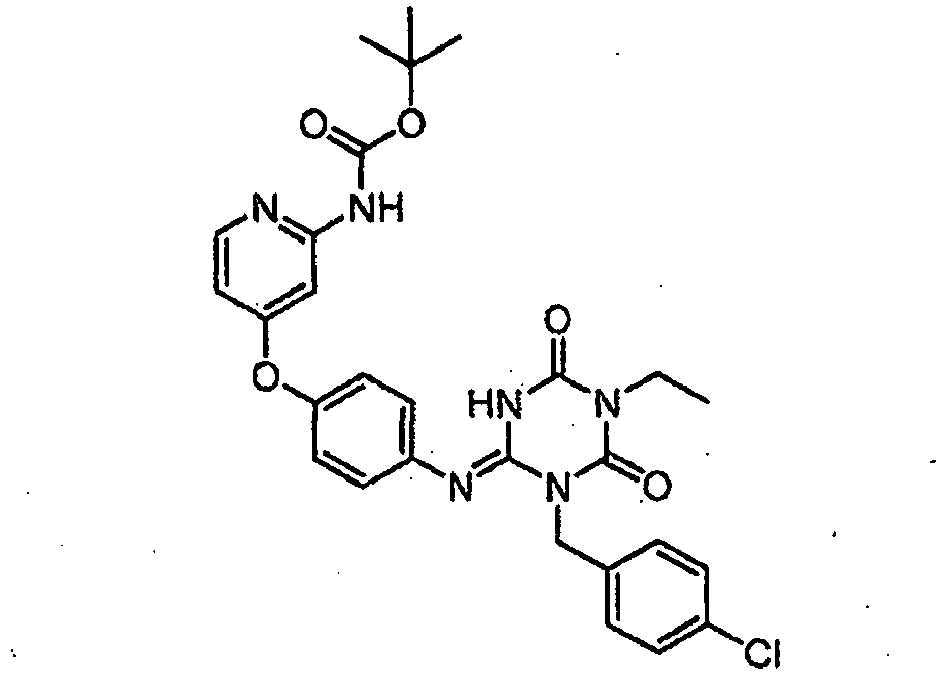
I-2304 2.17 565 2 
I-2305 2.49 474 3 
I-2306 2.34 475 3 
I-2307 2.2 509 3 [Table 466] Structure Compound No. Retention Time (min) [M+H] Method 
I-2308 2.09 520 2 
I-2309 1.99 519 2 
I-2310 2.28 476 3 
I-2311 1.94 494 3 [Table 467] Structure Compound No. Retention Time (min) [M+H] Method 
I-2312 2.38 525 2 
I-2313 1.95 485 2 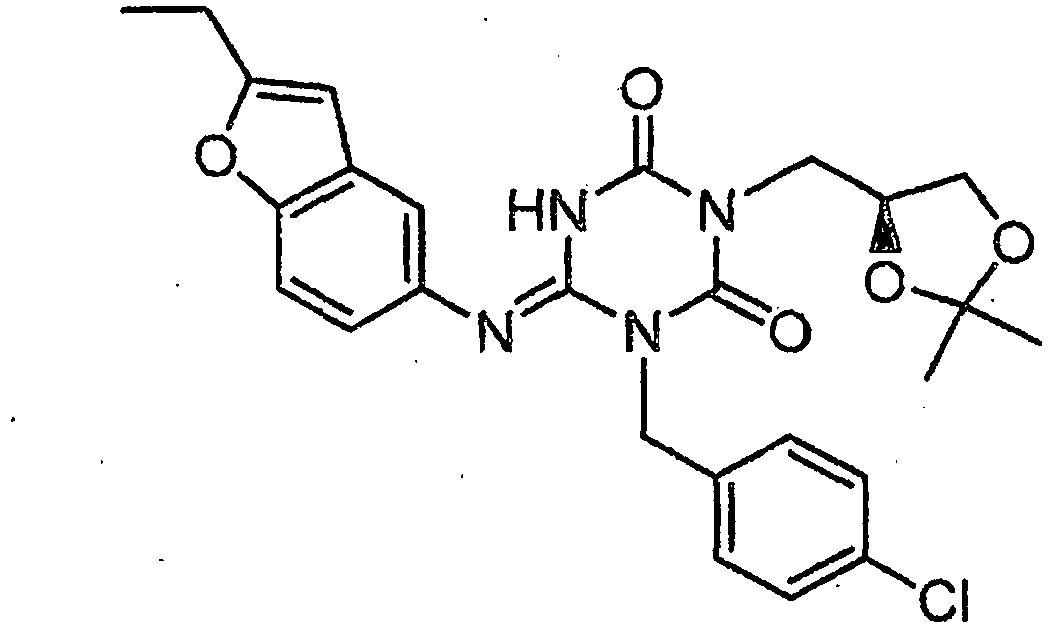
I-2314 2.42 511 2 
I-2315 2.01 471 3 [Table 468] Structure Compound No. Retention Time (min) [M+H] Method 
I-2316 1.59 476 3 
I-2317 2.21 518 3 
I-2318 2.04 476 3 
I-2319 2.01 495 3 [Table 469] Structure Compound No. Retention Time (min) [M+H] Method 
I-2320 2.16 494 3 
I-2321 2.40 448 2 
I-2322 2.25 509 3 
I-2323 2.03 495 3 [Table 470] Structure Compound No. Retention Time (min) [M+H] Method 
I-2324 2.25 502 2 
I-2325 1.90 430 2 
I-2326 1.96 488 2 
I-2327 2.52 513 3 [Table 471] Structure Compound No. Retention Time (min) [M+H] Method 
I-2328 2.40 499 3 
I-2329 2.49 519 3 
I-2330 1.52 506 2 
I-2331 1.82 506 2 [Table 472] Structure Compound No. Retention Time (min) [M+H] Method 
I-2332 2.04 536 2 
I-2333 2.26 554 2 
I-2334 1.84 514 3 
I-2335 2.56 539 2 [Table 473] Structure Compound No. Retention Time (min) [M+H] Method 
I-2336 2.09 455 2 
I-2337 2.40 471 2 
I-2338 2.35 471 2 
I-2339 2.35 439 2 [Table 474] Structure Compound No. Retention Time (min) [M+H] Method 
I-2340 2.13 441 3 
I-2341 2.22 461 3 
I-2342 1.70 459 3 
I-2343 1.86 460 3 [Table 475] Structure Compound No. Retention Time (min) [M+H] Method 
I-2344 2.20 499 3 
I-2345 2.30 475 3 
I-2346 2.25 500 2 
I-2347 2.17 486 2 [Table 476] Structure Compound No. Retention Time (min) [M+H] Method 
I-2348 2.17 486 2 
I-2349 2.40 486 3 
I-2350 2.48 442 3 
I-2351 2.15 480 3 [Table 477] Structure Compound No. Retention Time (min) [M+H] Method 
I-2352 2.05 480 2 
I-2353 1.80 514 2 
I-2354 2.28 479 2 
I-2355 1.87 441 2 [Table 478] Structure Compound No. Retention Time (min) [M+H] Method 
I-2356 2.00 426 2 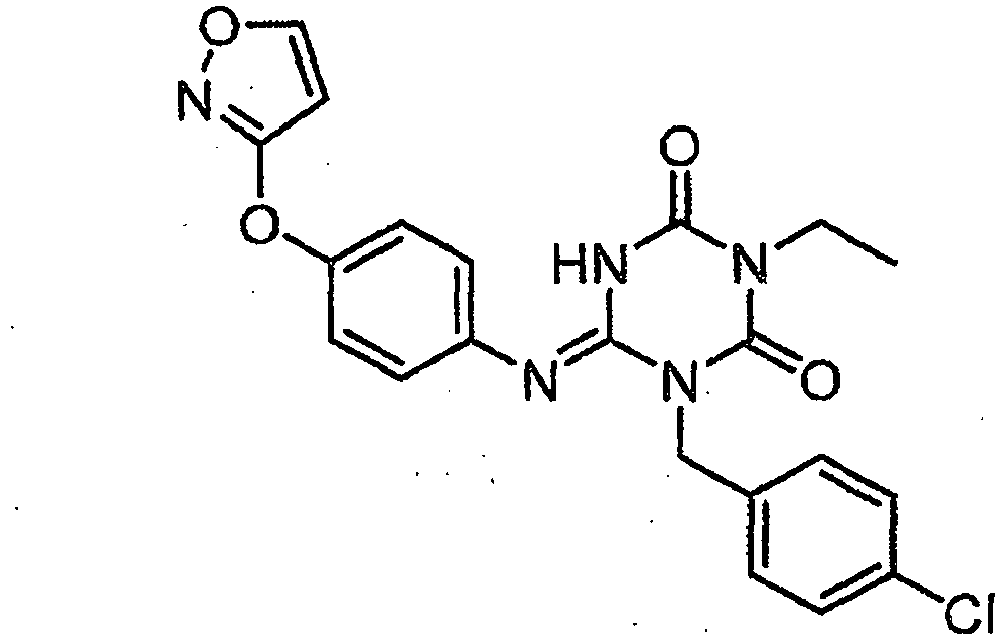
I-2357 2.22 440 3 
I-2358 1.91 470 3 
I-2359 2.02 492 3 [Table 479] Structure Compound No. Retention Time (min) [M+H] Method 
I-2360 1.54 478 3 
I-2361 1.91 477 3 
I-2362 2.08 451 3 
I-2363 2.08 485 3 [Table 480] Structure Compound No. Retention Time (min) [M+H] Method 
I-2364 2.15 505 3 
I-2365 1.93 493 3 
I-2366 1.98 494 3 
I-2367 2.18 467 3 [Table 481] Structure Compound No. Retention Time (min) [M+H] Method 
I-2368 2.24 553 3 
I-2369 1.92 514 3 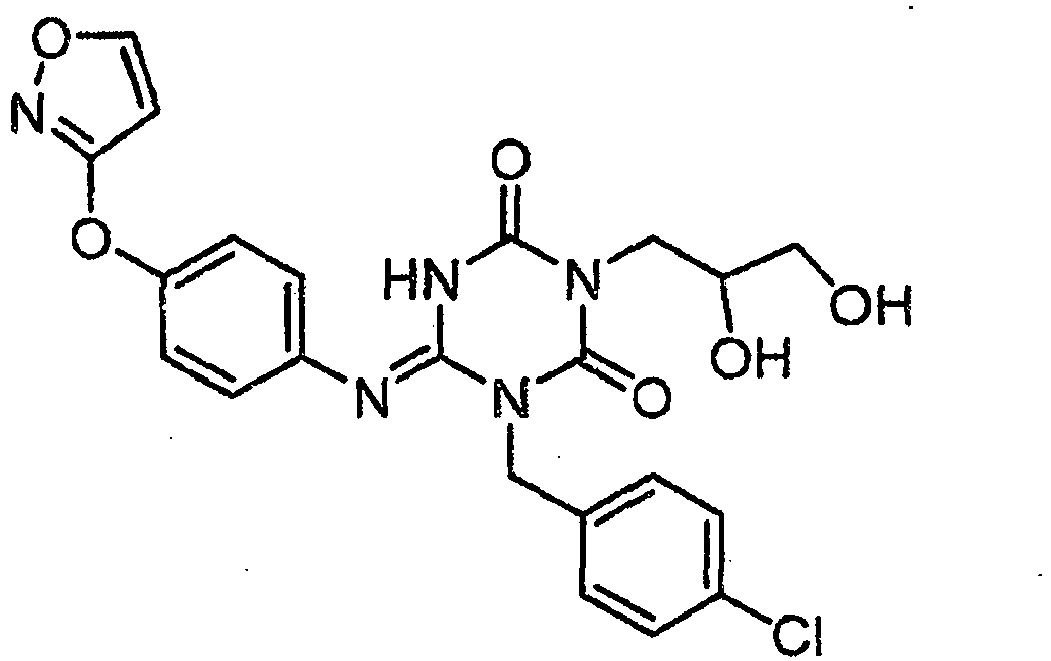
I-2370 1.75 486 3 
I-2371 1.72 513 3 [Table 482] Structure Compound No. Retention Time (min) [M+H] Method 
I-2372 2.07 476 3 
I-2373 2.12 476 3 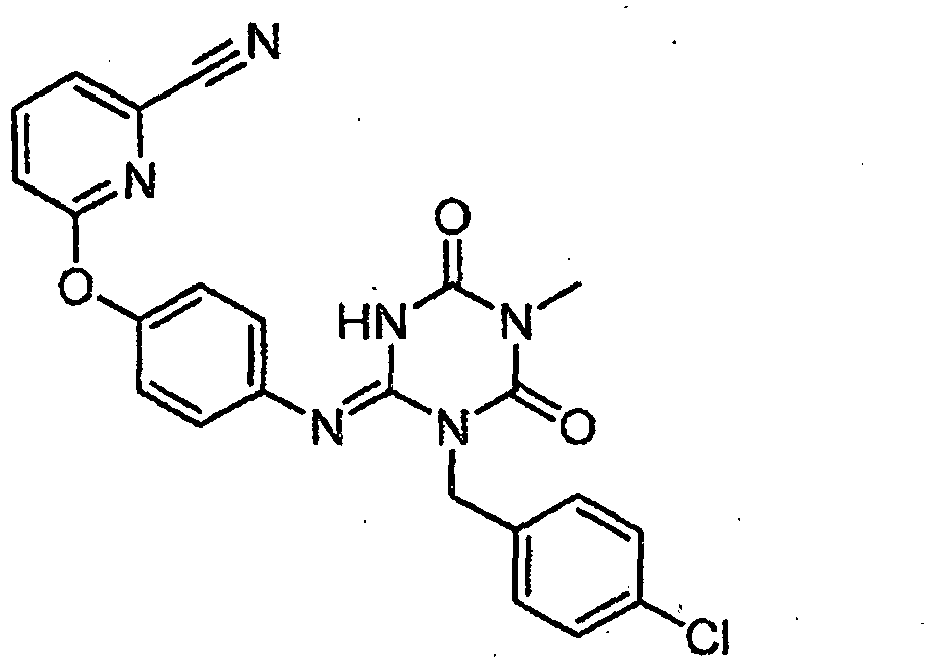
I-2374 2.21 461 3 
I-2375 2.09 476 3 [Table 483] Structure Compound No. Retention Time (min) [M+H] Method 
I-2376 1.80 479 3 
I-2377 2.03 494 3 
I-2378 1.92 479 3 
I-2379 1.84 480 3 [Table 484] Structure Compound No. Retention Time (min) [M+H] Method 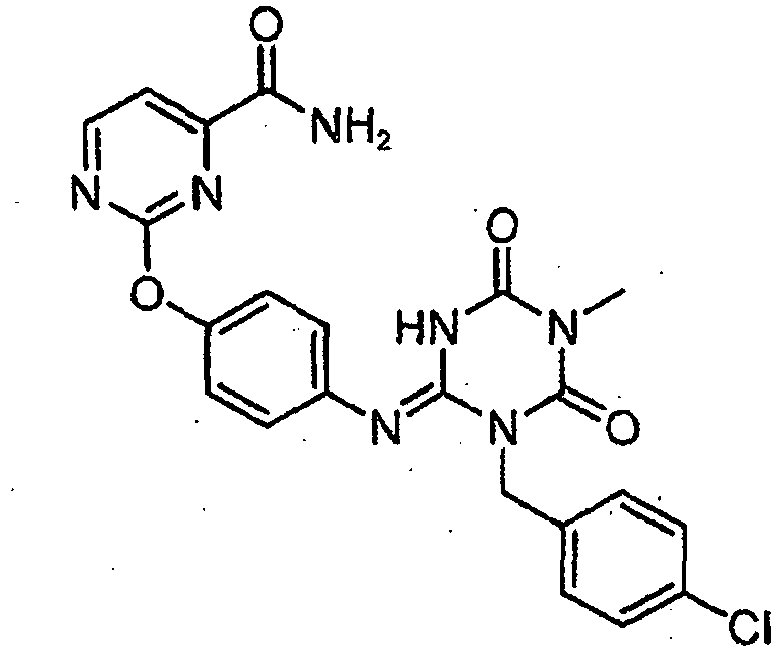
I-2380 1.8 480 3 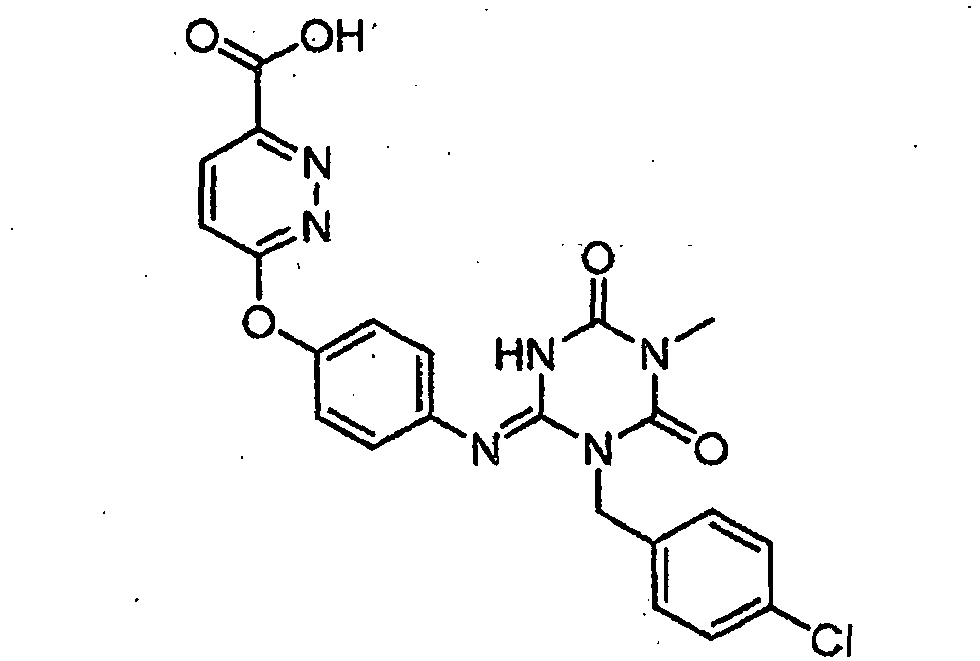
I-2381 1.88 481 3 
I-2382 1.78 461 3 
I-2383 1.92 475 3 [Table 485] Structure Compound No. Retention Time (min) [M+H] Method 
I-2384 1.82 475 2 
I-2385 1.69 461 2 
I-2386 1.79 481 2 
I-2387 2.26 505 2 [Table 486] Structure Compound No. Retention Time (min) [M+H] Method 
I-2388 1.95 494 2 
I-2389 1.82 480 2 
I-2390 2.15 491 2 
I-2391 1.96 480 3 [Table 487] Structure Compound No. Retention Time (min) [M+H] Method 
I-2392 2.19 461 3 
I-2393 2.10 441 3 
I-2394 2.17 538 2 
I-2395 2.24 455 3 [Table 488] Structure Compound No. Retention Time (min) [M+H] Method 
I-2396 2.14 538 2 
I-2397 1.78 454 3 
I-2398 1.87 473 3 
I-2399 1.78 498 3 [Table 489] Structure Compound No. Retention Time (min) [M+H] Method 
I-2400 2.06 474 3 
I-2401 1.92 460 3 
I-2402 2.06 494 3 
I-2403 1.75 461 3 [Table 490] Structure Compound No. Retention Time (min) [M+H] Method 
I-2404 1.89 475 3 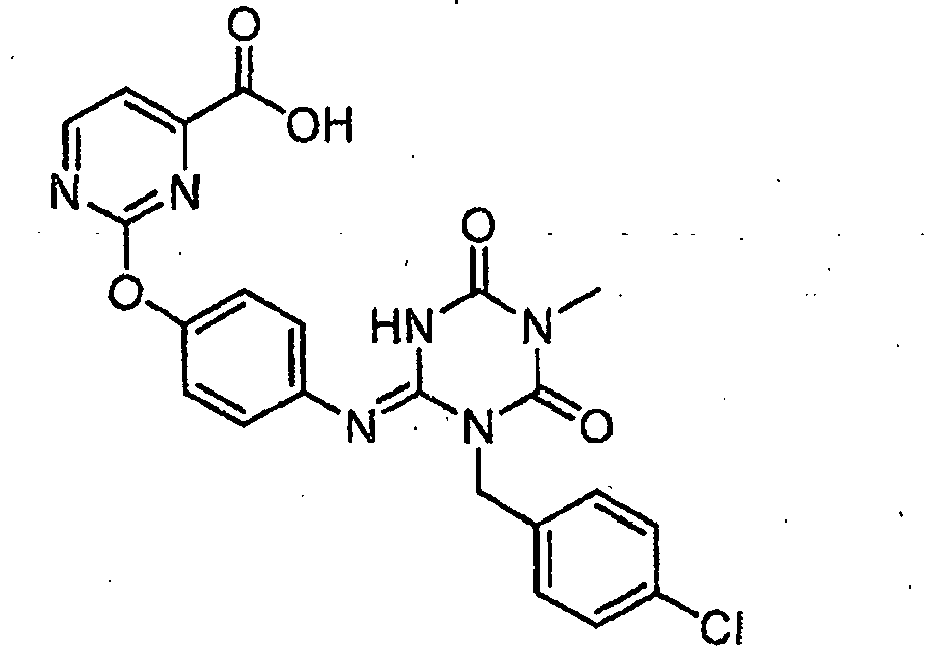
I-2405 1.84 481 3 
I-2406 1.88 479 3 
I-2407 1.83 479 3 [Table 491] Structure Compound No. Retention Time (min) [M+H] Method 
I-2408 1.71 486 2 
I-2409 1.92 486 2 
I-2410 1.93 486 2 
I-2411 1.73 469 2 [Table 492] Structure Compound No. Retention Time (min) [M+H] Method 
I-2412 1.61 499 2 
I-2413 1.76 483 2 
I-2414 1.80 485 2 
I-2415 1.82 485 2 [Table 493] Structure Compound No. Retention Time (min) [M+H] Method 
I-2416 1.64 468 2 
I-2417 1.77 482 2 
I-2418 1.62 497 3 
I-2419 2.22 467 3 [Table 494] Structure Compound No. Retention Time (min) [M+H] Method 
I-2420 1.90 484 3 
I-2421 2.32 481 3 
I-2422 1.83 480 3 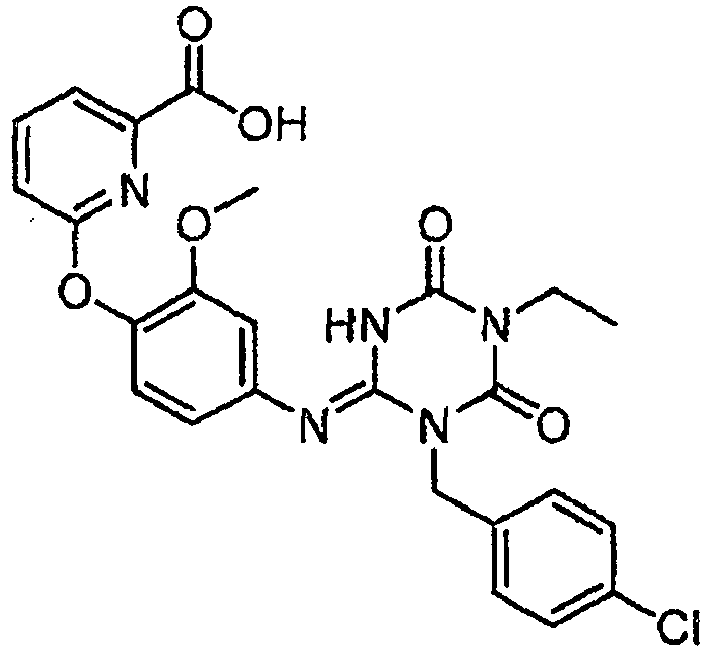
I-2423 2.09 524 2 [Table 495] Structure Compound No. Retention Time (min) [M+H] Method 
I-2424 1.97 510 2 
I-2425 1.70 522 2 
I-2426 1.96 522 2 
I-2427 2.22 476 2 [Table 496] Structure Compound No. Retention Time (min) [M+H] Method 
I-2428 2.09 462 2 
I-2429 1.82 493 2 
I-2430 1.49 479 2 
I-2431 1.60 493 2 [Table 497] Structure Compound No. Retention Time (min) [M+H] Method 
I-2432 2.34 525 3 
I-2433 2.19 511 3 
I-2434 2.28 512 3 
I-2435 1.91 484 3 [Table 498] Structure Compound No. Retention Time (min) [M+H] Method 
I-2436 514 3 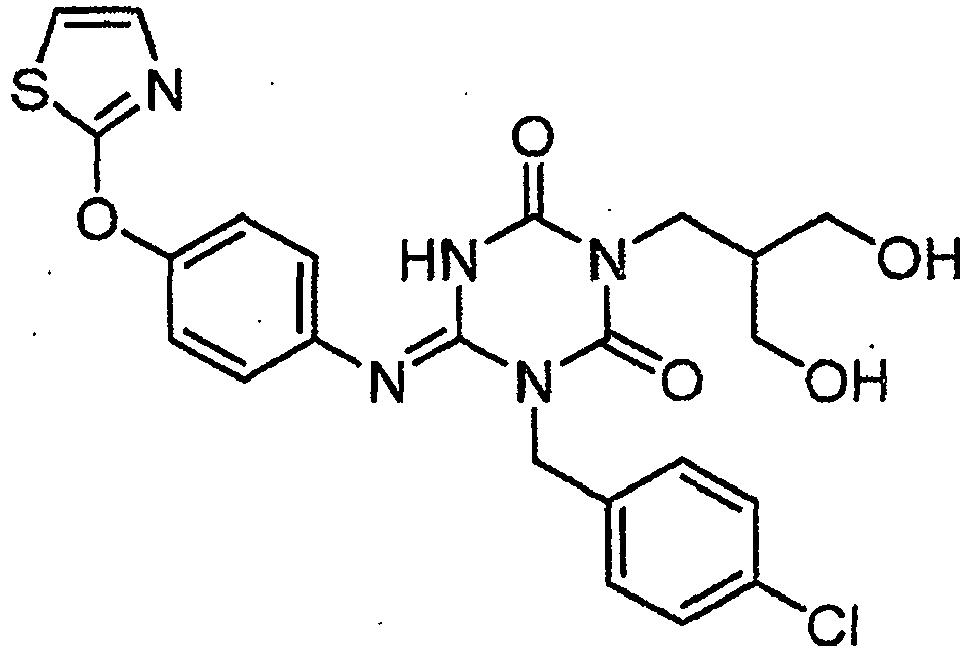
I-2437 1.89 516 3 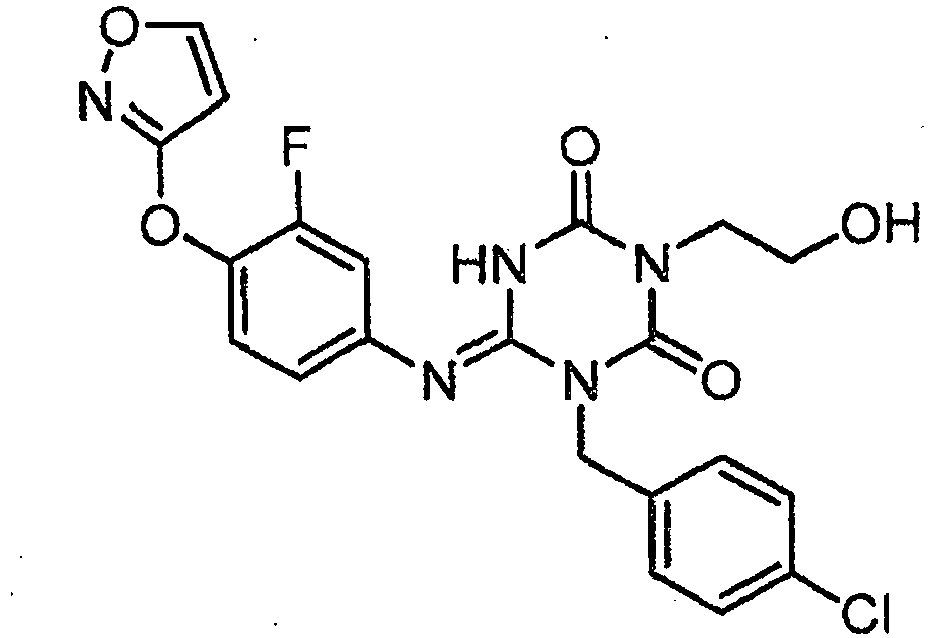
I-2438 1.94 474 2 
I-2439 1.84 518 2 [Table 499] Structure Compound No. Retention Time (min) [M+H] Method 
I-2440 1.80 504 2 
I-2441 2:50 484 3 
I-2442 2.01 480 3 
I-2443 1.77 483 3 [Table 500] Structure Compound No. Retention Time (min) [M+H] Method 
I-2444 1.9 475 3 
I-2445 1.75 461 3 
I-2446 2.35 447 3 
I-2447 1.83 481 3 [Table 501] Structure Compound No. Retention Time (min) [M+H] Method 
I-2448 1.78 502 2 
I-2449 1.39 505 2 
I-2450 2.16 514 2 
I-2451 2.12 500 3 [Table 502] Structure Compound No. Retention Time (min) [M+H] Method 
I-2452 1.74 469 3 
I-2453 1.59 485 3 
I-2454 1.57 499 2 
I-2455 1.94 439 2 [Table 503] Structure Compound No. Retention Time (min) [M+H] Method 
I-2456 1.91 516 2 
I-2457 2.13 486 3 
I-2458 2.03 530 3 
I-2459 2.11 498 2 [Table 504] Structure Compound No. Retention Time (min) [M+H] Method 
I-2460 2.10 498 2 
I-2461 1.69 498 3 
I-2462 1.83 512 3 
I-2463 2.05 465 3 [Table 505] Structure Compound No. Retention Time (min) [M+H] Method 
I-2464 1.74 459 3 
I-2465 2.14 466 3 
I-2466 2.18 459 3 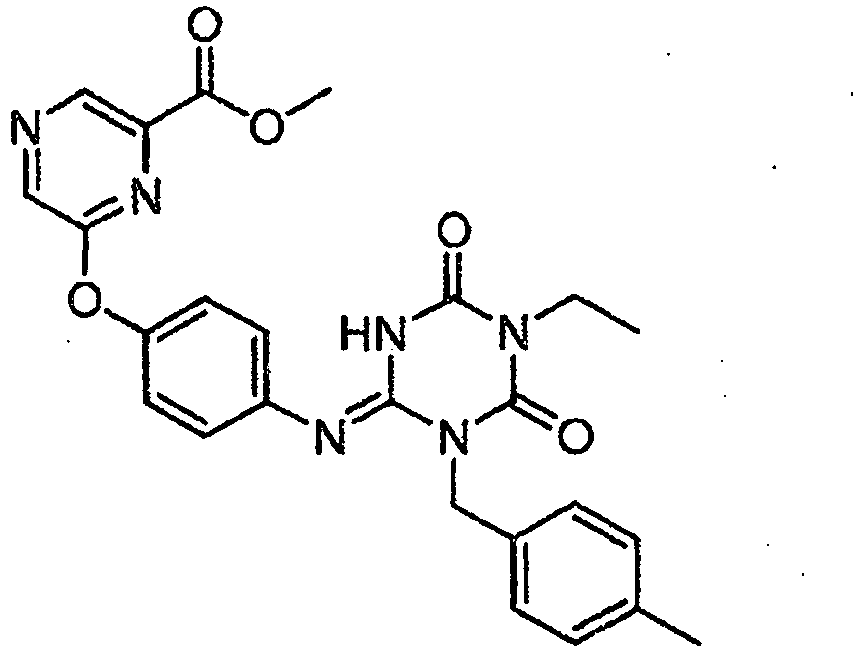
I-2467 2.2 489 3 [Table 506] Structure Compound No. Retention Time (min) [M+H] Method 
I-2468 2.05 475 3 
I-2469 2.14 495 3 
I-2470 2.48 472 3 
I-2471 1.81 480 3 [Table 507] Structure Compound No. Retention Time (min) [M+H] Method 
I-2472 1.87 474 3 
I-2473 1.74 460 3 
I-2474 1.98 475 3 
I-2475 1.84 461 3 [Table 508] Structure Compound No. Retention Time (min) [M+H] Method 
I-2476 1.94 481 3 
I-2477 1.92 473 2 
I-2478 1.82 517 2 
I-2479 1.79 503 2 [Table 509] Structure Compound No. Retention Time (min) [M+H] Method 
I-2480 1.98 522 3 
I-2481 2.29 522 3 
I-2482 1.96 522 3 
I-2483 2.27 522 3 [Table 510] Structure Compound No. Retention Time (min) [M+H] Method 
I-2484 1.90 520 3 
I-2485 2.23 520 3 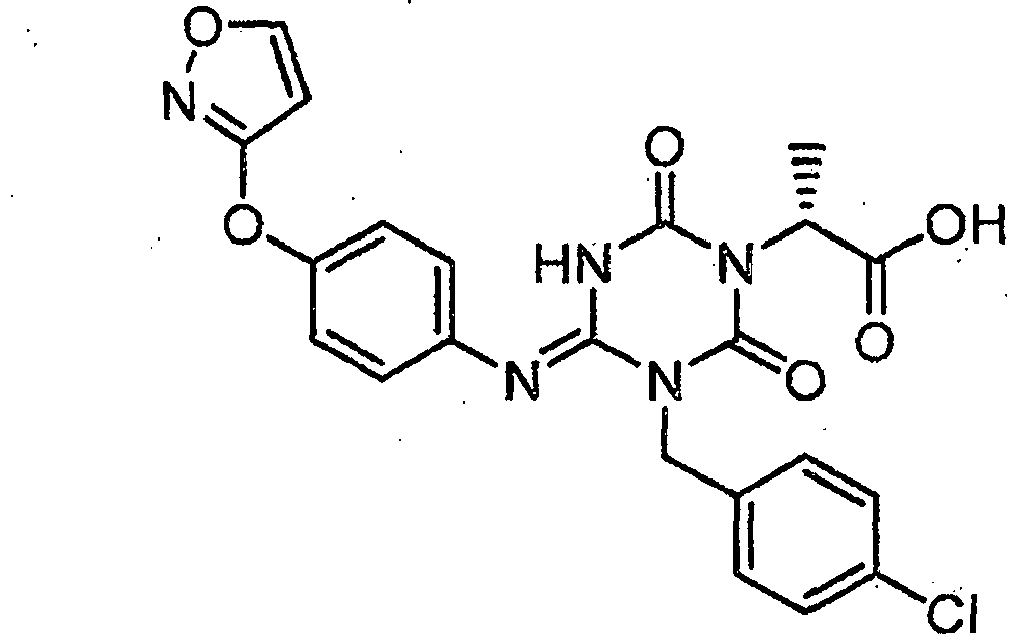
I-2486 1.94 484 3 
I-2487 1.94 484 3 [Table 511] Structure Compound No. Retention Time (min) [M+H] Method 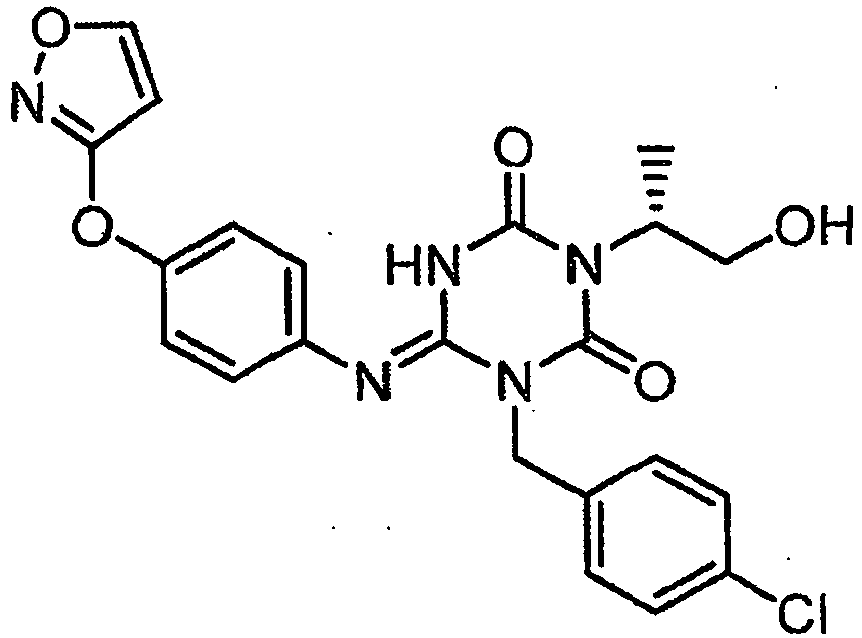
I-2488 1.99 470 3 
I-2489 1.99 470 3 
I-2490 1.89 500 3 
I-2491 1.96 497 3 [Table 512] Structure Compound No. Retention Time (min) [M+H] Method 
I-2492 2.47 493 3 
I-2493 2.34 479 3 
I-2494 2.49 461 3 
I-2495 1.89 477 3 [Table 513] Structure Compound No. Retention Time (min) [M+H] Method 
I-2496 1.99 478 3 
I-2497 2.20 479 3 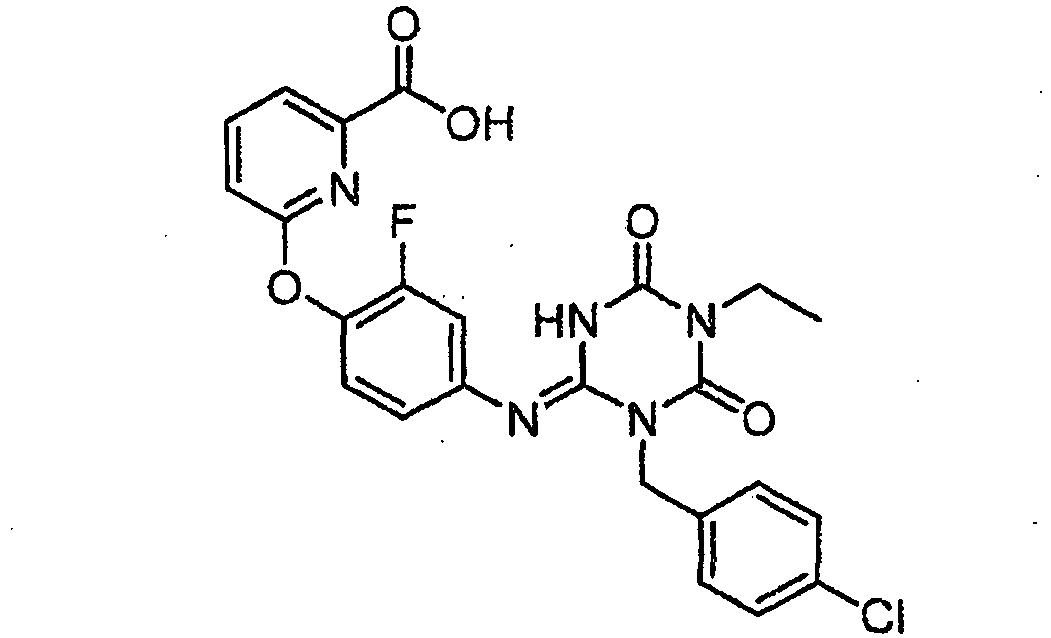
I-2498 2.34 512 3 
I-2499 2.29 480 3 [Table 514] Structure Compound No. Retention Time (min) [M+H] Method 
I-2500 1.77 483 2 
I-2501 1.77 483 2 
I-2502 2.21 498 3 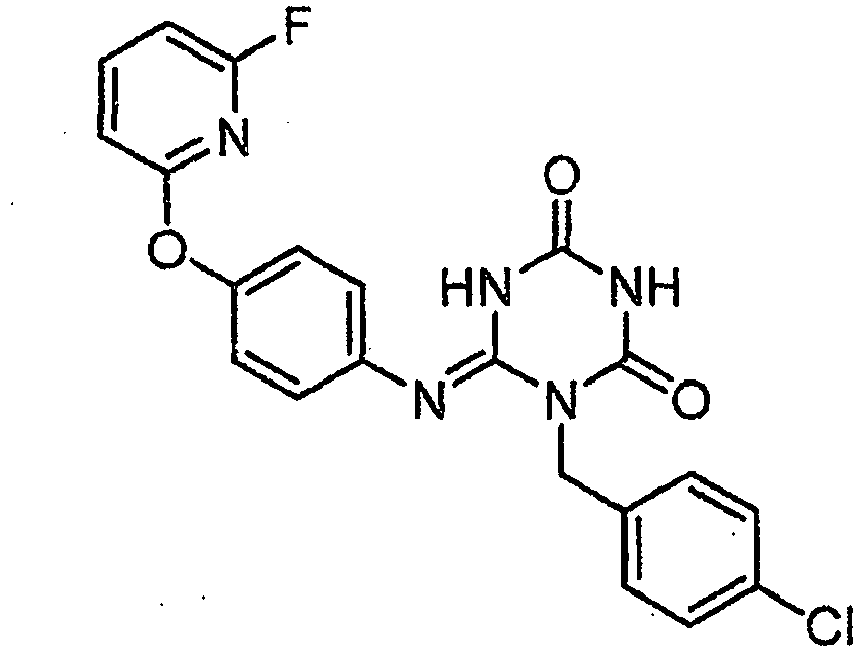
I-2503 2.13 440 3 [Table 515] Structure Compound No. Retention Time (min) [M+H] Method 
I-2504 1.83 470 2 
I-2505 1.89 472 2 
I-2506 1.77 502 2 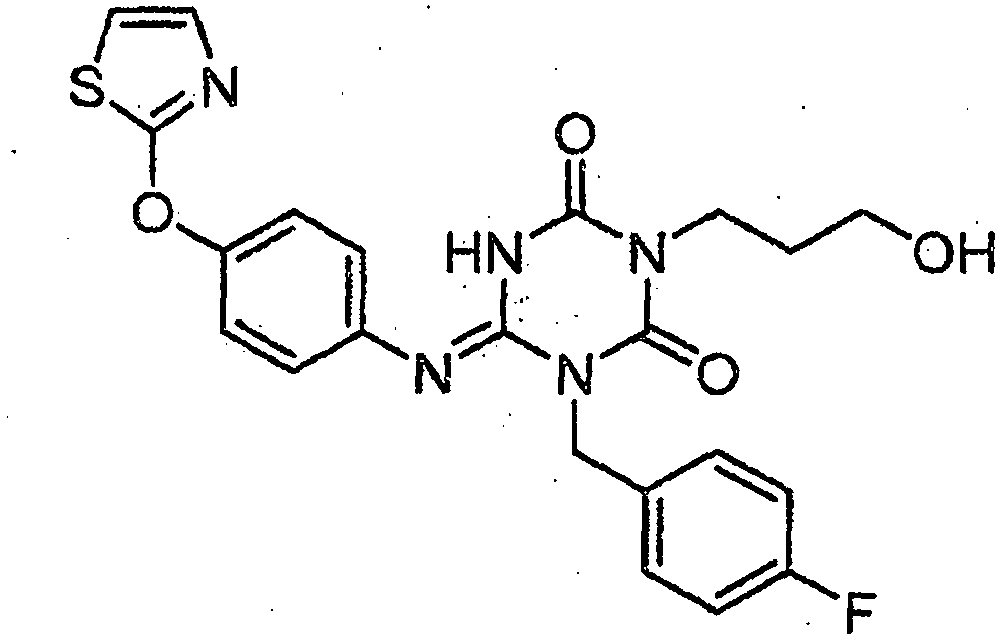
I-2507 1.80 470 2 [Table 516] Structure Compound No. Retention Time (min) [M+H] Method 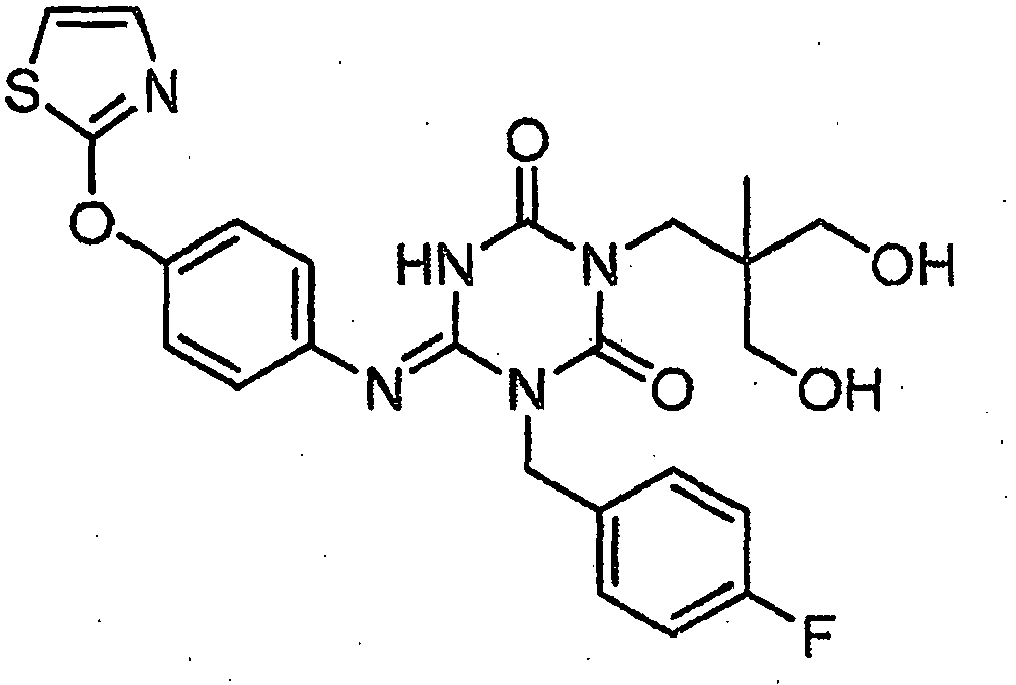
I-2508 1.79 514 2 
I-2509 1.80 502 2 
I-2510 1.62 466 2 
I-2511 1.73 517 2 [Table 517] Structure Compound No. Retention Time (min) [M+H] Method 
I-2512 1.70 469 2 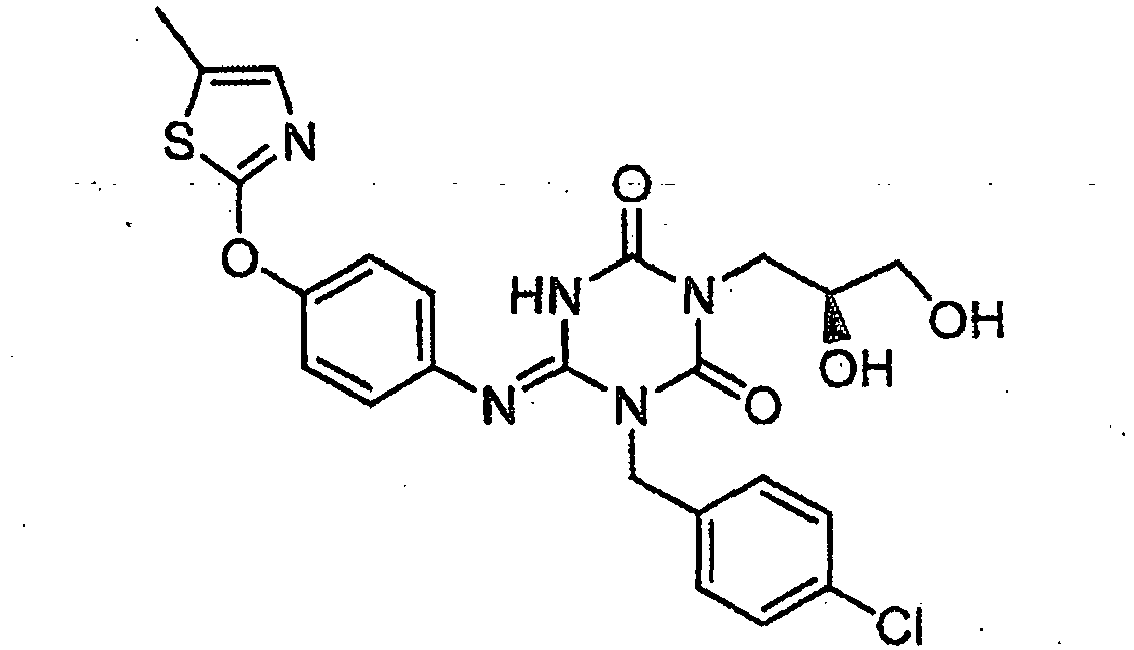
I-2513 1.90 516 2 
I-2514 1.78 502 2 
I-2515 1.84 441 2 [Table 518] Structure Compound No. Retention Time (min) [M+H] Method 
I-2516 2.09 484 3 
I-2517 1.76 531 2 
I-2518 1.75 517 2 
I-2519 1.70 503 2 [Table 519] Structure Compound No. Retention Time (min) [M+H] Method 
I-2520 1.89 531 3 
I-2521 1.81 517 3 
I-2522 2.24 555 2 
I-2523 1.37 455 2 [Table 520] Structure Compound No. Retention Time (min) [M+H] Method 
I-2524 1.75 497 2 
I-2525 1.96 514 3 
I-2526 1.98 526 3 
I-2527 1.83 497 3 [Table 521] Structure Compound No. Retention Time (min) [M+H] Method 
I-2528 2.19 486 3 
I-2529 1.88 504 3 
I-2530 1.86 502 3 
I-2531 2.02 530 3 [Table 522] Structure Compound No. Retention Time (min) [M+H] Method 
I-2532 1.94 494 3 
I-2533 1.97 508 2 
I-2534 1.80 497 2 
I-2535 1.81 497 2 [Table 523] Structure Compound No. Retention Time (min) [M+H] Method 
I-2536 1.96 538 2 
I-2537 2.07 538 2 
I-2538 2.13 505 2 
I-2539 1.82 477 2 [Table 524] Structure Compound No. Retention Time (min) [M+H] Method 
I-2540 2.68 651 2 
I-2541 1.84 502 3 
I-2542 1.74 486 3 
I-2543 1.79 481 3 [Table 525] Structure Compound No. Retention Time (min) [M+H] Method 
I-2544 1.66 511 3 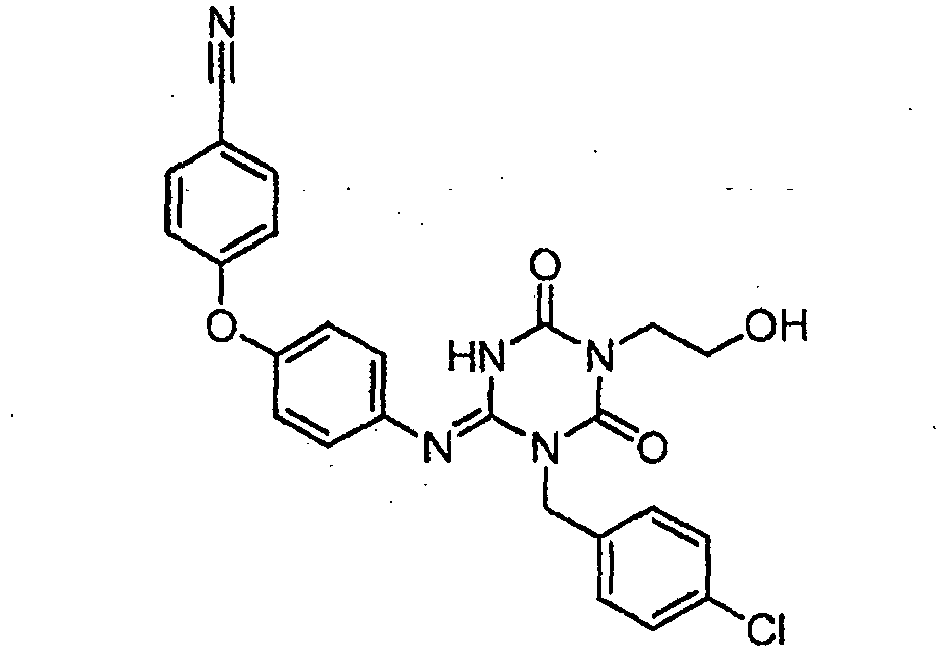
I-2545 2.13 490 3 
I-2546 1.60 538 3 
I-2547 1.82 524 2 [Table 526] Structure Compound No. Retention Time (min) [M+H] Method 
I-2548 1.98 524 2 
I-2549 1.60 551 3 
I-2550 2.16 523 3 
I-2551 1.95 489 3 [Table 527] Structure Compound No. Retention Time (min) [M+H] Method 
I-2552 1.55 524 2 
I-2553 1.62 496 2 
I-2554 1.39 522 2 
I-2555 1.40 536 2 [Table 528] Structure Compound No. Retention Time (min) [M+H] Method 
I-2556 1.50 523 2 
I-2557 1.79 495 3 
I-2558 1.71 475 3 
I-2559 1.72 508 3 [Table 529] Structure Compound No. Retention Time (min) [M+H] Method 
I-2560 2.03 520 3 
I-2561 1.62 510 3 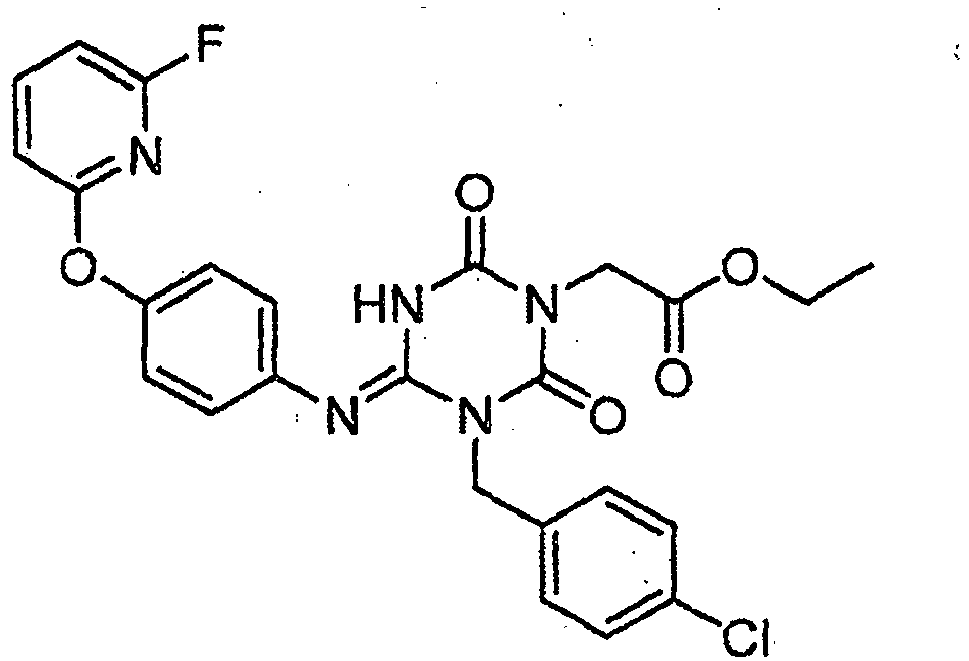
I-2562 2.43 526 3 
I-2563 2 472 3 [Table 530] Structure Compound No. Retention Time (min) [M+H] Method 
I-2564 2.11 498 3 
I-2565 1.66 494 3 
I-2566 1.57 474 3 
I-2567 2.02 484 3 [Table 531] Structure Compound No. Retention Time (min) [M+H] Method 
I-2568 2.01 484 3 
I-2569 1.26 429 3 
I-2570 2.24 529 2 
I-2571 1.78 529 2 [Table 532] Structure Compound No. Retention Time (min) [M+H] Method 
I-2572 1.45 443 2 
I-2573 1.42 430 2 
I-2574 1.94 516 3 
I-2575 2.01 487 3 [Table 533] Structure Compound No. Retention Time (min) [M+H] Method 
I-2576 1.92 545 2 
I-2577 1.77 517 2 
I-2578 2.29 516 2 
I-2579 1.91 501 2 [Table 534] Structure Compound No. Retention Time (min) [M+H] Method 
I-2580 1.97 488 2 
I-2581 1.83 514 2 
I-2582 2.01 528 3 
I-2583 1.88 512 3 [Table 535] Structure Compound No. Retention Time (min) [M+H] Method 
I-2584 1.97 497 3 
I-2585 2.04 511 3 
I-2586 1.84 487 2 
I-2587 1.90 501 2 [Table 536] Structure Compound No. Retention Time (min) [M+H] Method 
I-2588 1.43 509 2 
I-2589 1.77 500 2 
I-2590 1.75 483 2 
I-2591 2.41 475 3 [Table 537] Structure Compound No. Retention Time (min) [M+H] Method 
I-2592 2.24 494 3 
I-2593 2.18 518 2 
I-2594 2.27 481 2 
I-2595 1.88 541 2 [Table 538] Structure Compound No. Retention Time (min) [M+H] Method 
I-2596 1.85 527 2 
I-2597 2.78 523 3 
I-2598 2.04 456 3 
I-2599 1.84 431 3 [Table 539] Structure Compound No. Retention Time (min) [M+H] Method 
I-2600 1.93 451 3 
I-2601 2.13 476 2 
I-2602 2.09 518 2 
I-2603 2.43 509 3 [Table 540] Structure Compound No. Retention Time (min) [M+H] Method 
I-2604 1.80 494 2 
I-2605 1.67 515 2 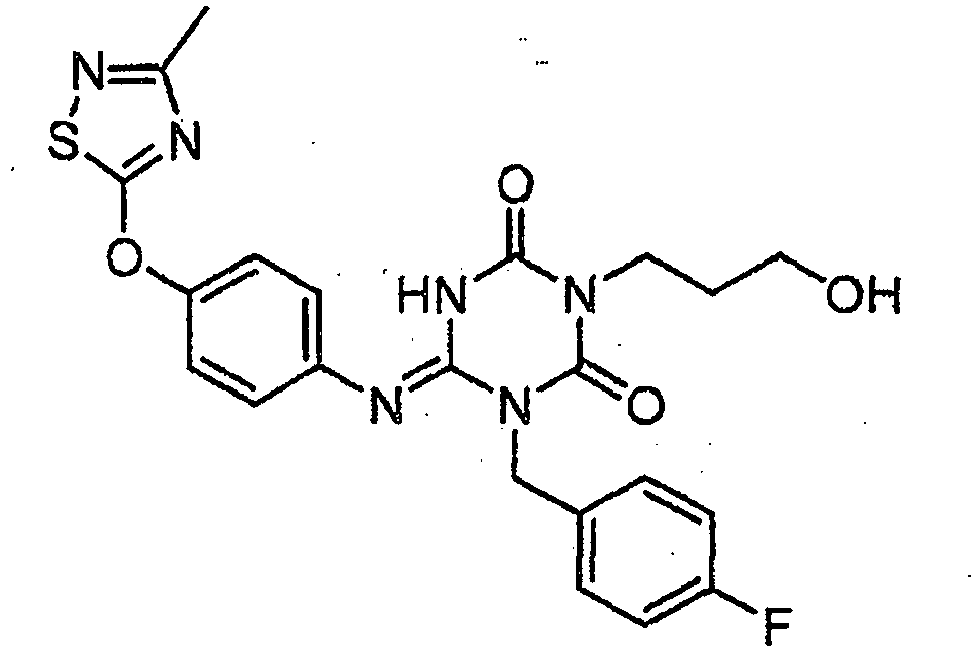
I-2606 1.80 485 2 
I-2607 1.74 501 3 [Table 541] Structure Compound No. Retention Time (min) [M+H] Method 
I-2608 2.05 499 3 
I-2609 2.01 499 3 
I-2610 1.99 524 3 
I-2611 2.07 451 3 [Table 542] Structure Compound No. Retention Time (min) [M+H] Method 
I-2612 1.79 525 3 
I-2613 2.36 475 3 
I-2614 1.93 551 2 
I-2615 2.39 541 2 [Table 543] Structure Compound No. Retention Time (min) [M+H] Method 
I-2616 2.10 501 3 
I-2617 1.96 485 3 
I-2618 2.28 514 5 
I-2619 2.42 528 5 [Table 544] Structure Compound No. Retention Time (min) [M+H] Method 
I-2620 1.92 493 3 
I-2621 2.11 494 3 
I-2622 1.61 523 2 
I-2623 1.93 486 5 [Table 545] Structure Compound No. Retention Time (min) [M+H] Method 
I-2624 2.07 500 5 
I-2625 1.53 522 2 
I-2626 1.59 536 2 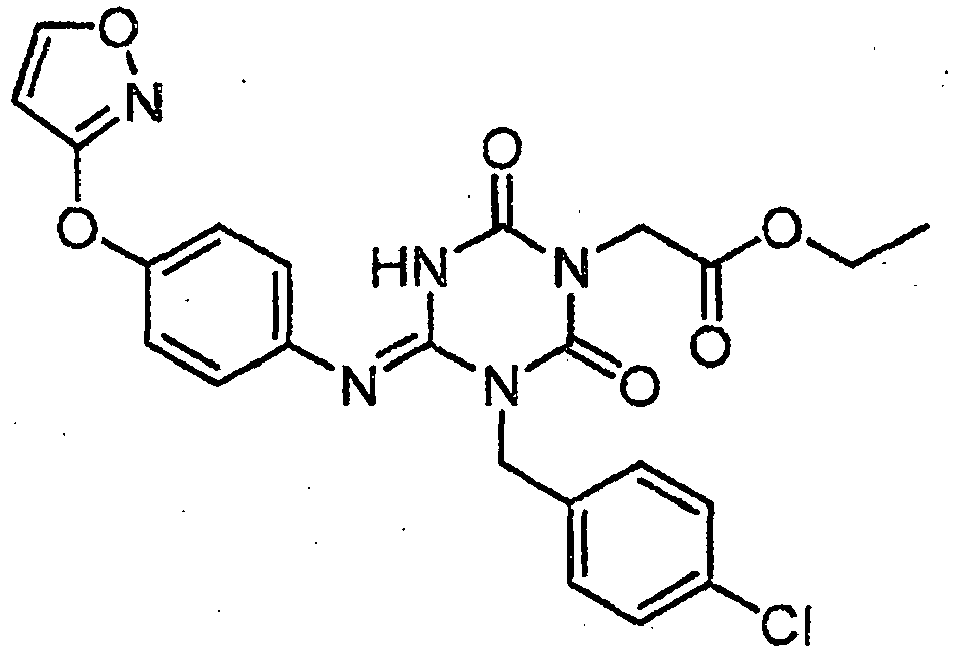
I-2627 2.19 498 5 [Table 546] Structure Compound No. Retention Time (min) [M+H] Method 
I-2628 2.22 515 5 
I-2629 2.32 515 5 
I-2630 2.28 554 2 
I-2631 2.00 525 3 [Table 547] Structure Compound No. Retention Time (min) [M+H] Method 
I-2632 2.21 541 3 
I-2633 2.21 513 3 
I-2634 1.97 499 3 
I-2635 1.96 499 3 [Table 548] Structure Compound No. Retention Time (min) [M+H] Method 
I-2636 2.20 513 3 
I-2637 2.45 456 3 
I-2638 2.29 465 3 
I-2639 2.13 480 3 [Table 549] Structure Compound No. Retention Time (min) [M+H] Method 
I-2640 1.98 485 3 
I-2641 2.08 540 3 
I-2642 2.08 451 2 
I-2643 1.96 487 5 [Table 550] Structure Compound No. Retention Time (min) [M+H] Method 
I-2644 1.80 485 5 
I-2645 1.87 499 5 
I-2646 1.75 529 5 
I-2647 1.95 499 5 [Table 551] Structure Compound No. Retention Time (min) [M+H] Method 
I-2648 2.01 513 5 
I-2649 1.90 543 5 
I-2650 2.37 526 5 
I-2651 2.27 529 5 [Table 552] Structure Compound No. Retention Time (min) [M+H] Method 
I-2652 2.20 515 5 
I-2653 2.14 512 5 
I-2654 1.98 511 5 
I-2655 2.03 525 5 [Table 553] Structure Compound No. Retention Time (min) [M+H] Method 
I-2656 1.51 508 2 
I-2657 2.05 509 5 
I-2658 2.03 509 5 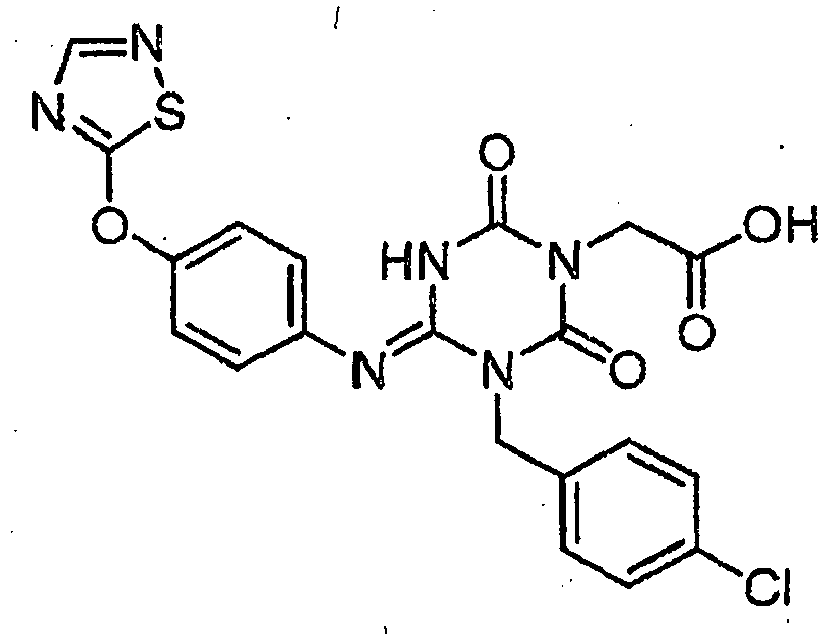
I-2659 1.85 487 5 [Table 554] Structure Compound No. Retention Time (min) [M+H] Method 
I-2660 2.23 513 3 
I-2661 1.99 499 3 
I-2662 1.68 481 5 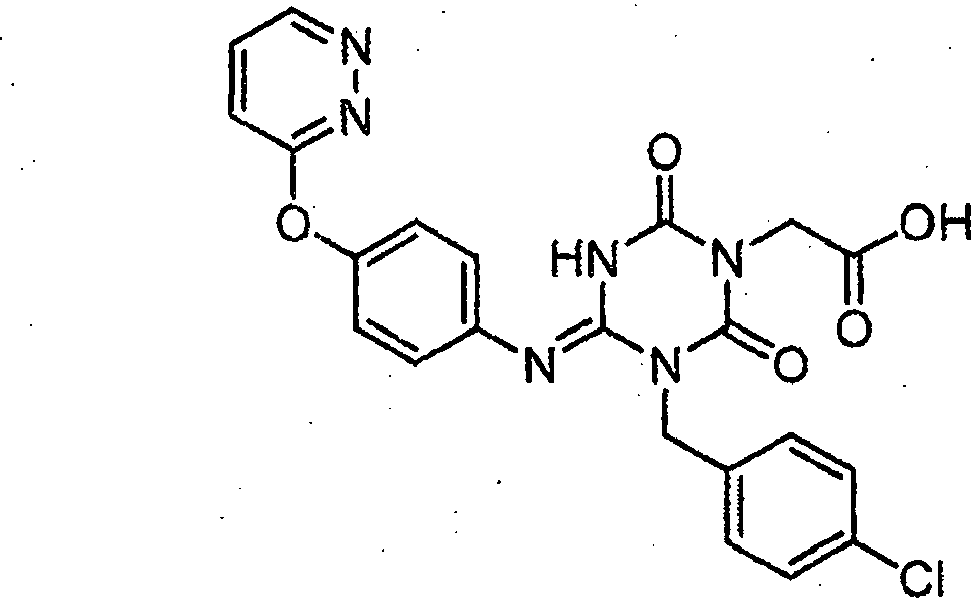
I-2663 1.68 481 5 [Table 555] Structure Compound No. Retention Time (min) [M+H] Method 
I-2664 1.88 509 5 
I-2665 1.52 481 5 
I-2666 2.29 533 3 
I-2667 2.04 519 3 [Table 556] Structure Compound No. Retention Time (min) [M+H] Method 
I-2671 1.74 518 3 
I-2672 2.04 484 5 
I-2673 1.79 500 5 
I-2674 1.68 530 5 [Table 557] Structure Compound No. Retention Time (min) [M+H] Method 
I-2675 1.82 486 5 
I-2676 1.89 500 5 
I-2677 1.79 530 5 
I-2678 1.75 544 5 [Table 558] Structure Compound No. Retention Time (min) [M+H] Method 
I-2671 1.86 541 5 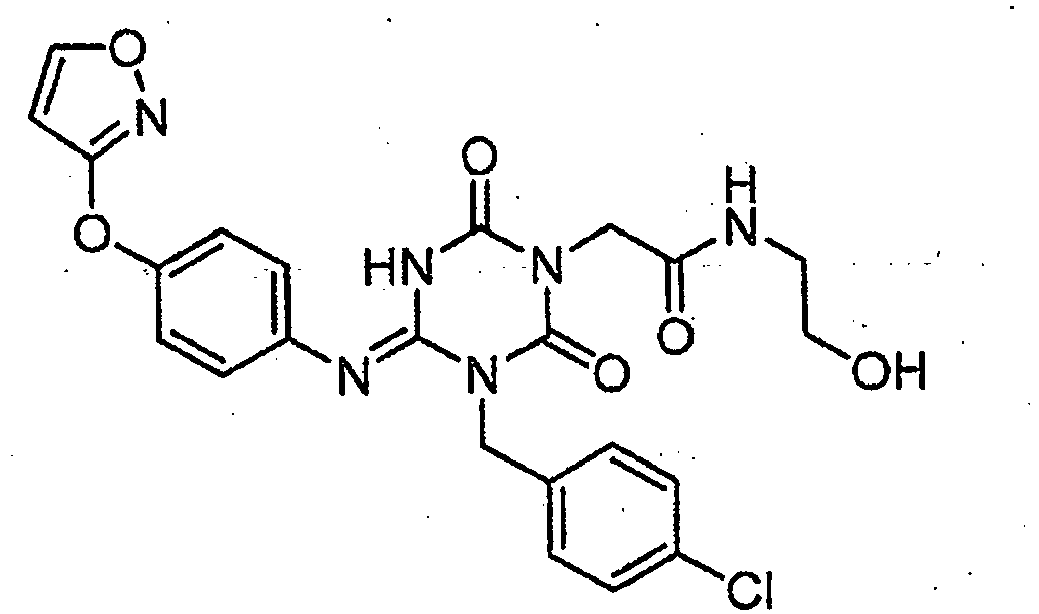
I-2680 1.66 513 5 
I-2681 2.06 551 5 
I-2682 1.93 531 3 [Table 559] Structure Compound No. Retention Time (min) [M+H] Method 
I-2683 1.72 517 3 
I-2684 2 551 3 
I-2685 1.65 526 3 
I-2686 1.55 480 5 [Table 560] Structure Compound No. Retention Time (min) [M+H] Method 
I-2687 1.61 494 5 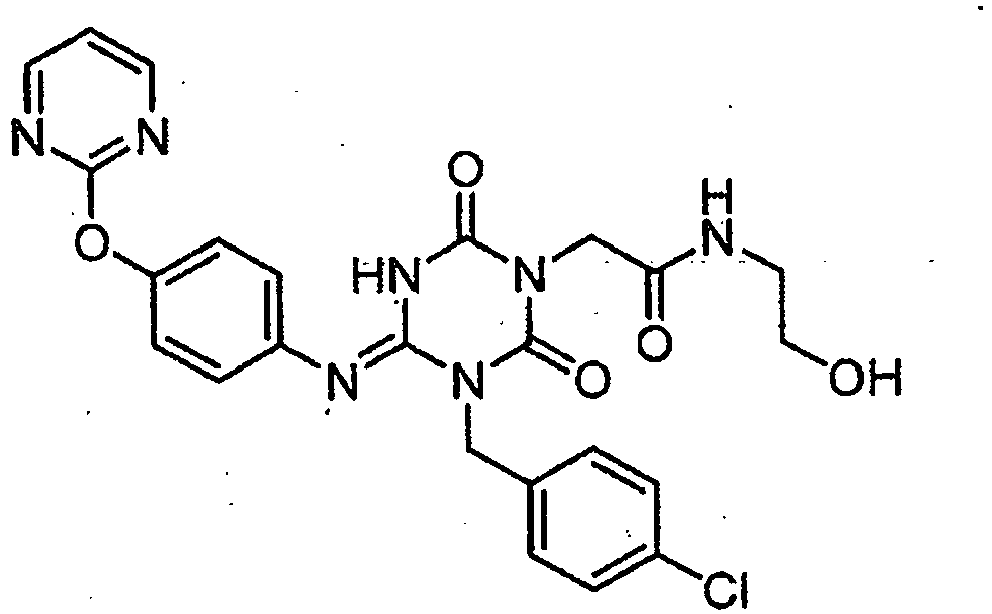
I-2688 1.52 524 5 
I-2689 1.56 480 5 
I-2690 1.62 494 5 [Table 561] Structure Compound No. Retention Time (min) [M+H] Method 
I-2691 1.53 524 5 
I-2692 1.67 511 3 
I-2693 1.79 537 3 
I-2694 1.76 512 5 [Table 562] Structure Compound No. Retention Time (min) [M+H] Method 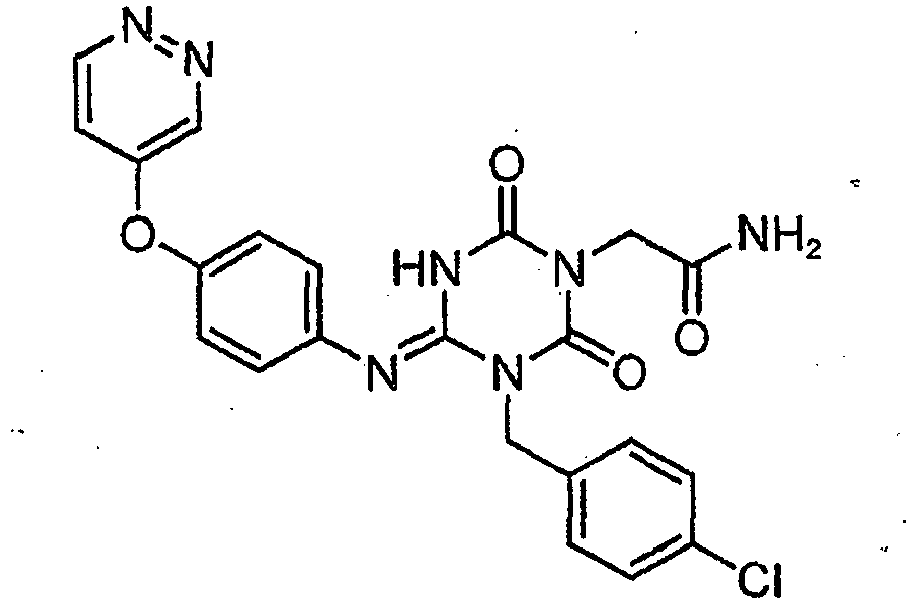
I-2695 1.41 480 5 
I-2696 1.47 494 5 
I-2697 2.03 515 5 
I-2698 1.96 501 5 [Table 563] Structure Compound No. Retention Time (min) [M+H] Method 
I-2699 1.79 479 5 
I-2700 2.25 494 5 
I-2701 2.26 495 5 
I-2702 2.5 461 5 [Table 564] Structure Compound No. Retention Time (min) [M+H] Method 
I-2703 2.79 475 3 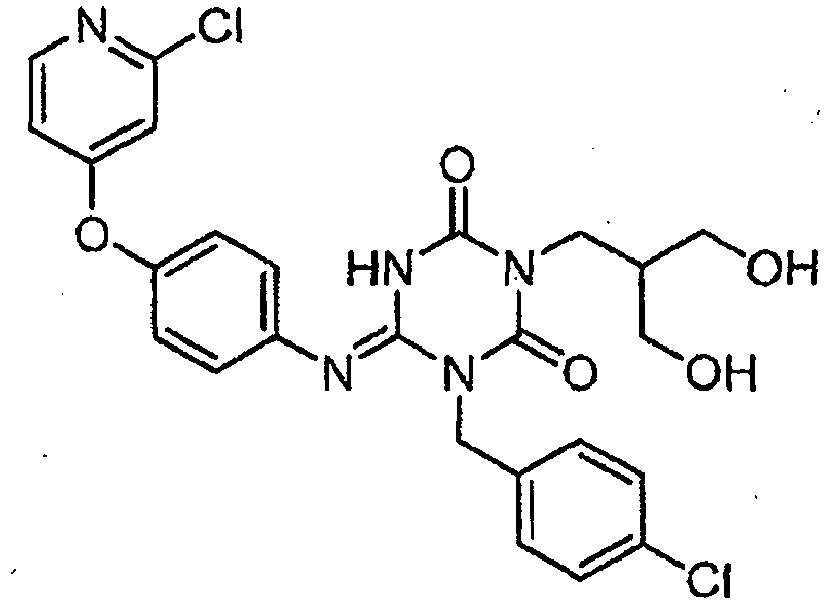
I-2704 1.87 544 2 
I-2705 1.8 528 2 
I-2706 1.88 528 2 [Table 565] Structure Compound No. Retention Time (min) [M+H] Method 
I-2707 1.8 519 2 
I-2708 2.06 535 3 
I-2709 1.83 525 3 
I-2710 1.76 511 3 [Table 566] Structure (intermediate) Compound No. Retention Time (min) [M+H] Method 
II-1 2.04 312 3 
II-2 1.73 333 3 
II-3 2.1 332 3 
II-4 1.93 317 3 
II-5 1.88 297 3 ( * compounds not falling within the scope of the invention as claimed) [Table 567] Structure (intermediate) Compound No. Retention Time (min) [M+H] Method 
II-11 2.06 390 2 
II-12 1.88 316 3 
II-13 1.01 266 2 
II-14 2.07 390 2 
II-15 1.92 370 2 ( * compounds not falling within the scope of the invention as claimed) [Table 568] Structure (intermediate) Compound No. Retention Time (min) [M+H] Method 
II-16 0.86 266 3 ( * compounds not falling within the scope of the invention as claimed) - Stably expressing cell line (C6BU-1 cell transfected with human P2X3 receptor gene (GenBank accession number Y07683) was used. The cells were seeded in a 96-well microtiter plate at a concentration of 8000 cells/well and cultured in the medium (8.3% fetal bovine serum, 8.3% horse serum, 1% antibiotic and antifungal in DMEM) for one day at 37 °C under 5 % carbon dioxide atmosphere. The medium was replaced with 4 µM Fluo-3-AM solution (20 mM HEPES, 137 mM NaCl, 2.7 mM KCl, 0.9 mM MgCl2, 5.0 mM CaCl2, 5.6 mM D-glucose, 2.5 mM probenecid, 10% BSA, and 0.08% Pluronic F-127, pH 7.5) and incubated at 37°C under 5% dioxide carbon atmosphere for one hour. The plate was washed with washing buffer (20 mM HEPES, 137 mM NaCl, 2.7 mM KCl, 0.9 mM MgCl2, 5.0 mM CaCl2, 5.6 mM D-glucose, 2.5mM probenecid, pH7.5), and each well was added with 40 µL of this buffer. The plate was placed in High-Throughput Screening System FDSS 3000 (Hamamatsu Photonics K.K.). Measurement of fluorescence intensity by FDSS 3000 was started, and 40 µL of DMSO solutions containing different concentrations of the test compound as prepared by dilution with dilution buffer (20 mM HEPES, 137 mM NaCl, 2.7 mM KCl, 0.9 mM MgCl2, 5.0 mM CaCl2, 5.6 mM D-glucose, 2.5 mM probenecid, 0.1% Pluronic F-127, pH7.5) were dispensed to each well through the built-in automatic dispenser. Five minutes after, 50 nM ATP solution (50 µL) prepared by dilution with the dilution buffer was dispensed through the built-in automatic dispenser, and the measurement of fluorescence intensity was continued for 3 min. For each well, the specific maximum fluorescence intensity was calculated as the ratio of the maximum fluorescence intensity after addition of the ATP solution to the fluorescence intensity at the starting of the measurement. The 50% inhibitory concentration (IC50) was calculated under the assumption that the specific maximum fluorescence intensity without test compound is 0% inhibition and that the specific maximum fluorescence intensity when the dilution buffer was added in place of ATP solution is 100% inhibition, to evaluate the inhibitory activity of the test compound. FDSS software (Hamamatsu Photonics K.K.) was used for calculation of the specific maximum fluorescence intensity. IC50 was calculated using Microsoft Excel (Microsoft Corporation) and XLfit (idbs Ltd.)
- The data of the compounds of the present invention are as shown in the following Tables.
[Table 569] Compound No. P2X3 IC50(µM) Compound No. P2X3 IC50(µM) Compound No. P2X3 IC50(µM) I-0020 * 0.389 I-0897 * 0.025 I-1555 * 0.016 I-0021 * 0.197 I-0898 * 0.020 I-1556 * 0.011 I-0029 * 0.595 I-0899 * 0.023 I-1558 * 0.008 I-0097 * 0.505 I-0900 * 0.018 I-1559 * 0.005 I-0116 * 0.484 I-0901 * 0.007 I-1560 * 0.051 I-0117 * 0.387 I-0902 * 0.010 I-1561 * 0.032 I-0118 * 0.231 I-0903 * 0.004 I-1562 * 0.006 1-0121 * 0.246 I-0904 * 0.011 I-1563 * 0.031 I-0123 * 0.815 I-0905 * 0.022 I-1564 * 0.013 I-0126 * 0.689 I-0906 * 0.008 I-1565 * 0.008 I-0128 * 0.840 I-0907 * 0.007 I-1566 * 0.008 I-0130 * 0.953 I-0908 * 0.013 I-1567 * 0.012 I-0133 * 0.339 I-0909 * 0.007 I-1568 * 0.010 I-0138 * 0.619 I-0910 * 0.008 I-1569 * 0.004 I-0141 * 0.685 I-0911 * 0.015 I-1570 * 0.008 I-0162 * 0.379 I-0912 * 0.010 1-1571 * 0.004 I-0164 * 0.860 I-0913 * 0.009 I-1572 * 0.005 I-0181 * 0.985 I-0914 * 0.074 I-1573 * 0.004 I-0182 * 0.714 I-0915 * 0.075 I-1574 * 0.018 I-0200 * 0.128 I-0916 * 0.019 I-1575 * 0.009 I-0203 * 0.110 I-0917 * 0.019 I-1576 * 0.008 I-0204 * 0.558 I-0918 * 0014 I-1577 * 0.007 I-0217 * 0.268 I-0919 * 0.014 I-1578 * 0.006 I-0218 * 0.505 I-0920 * 0.037 I-1579 * 0.007 I-0221 * 0.276 I-0921 * 0.030 I-1580 * 0.006 I-0223 * 0.909 I-0922 * 0.029 I-1581 * 0.007 I-0227 * 0.970 I-0923 * 0.015 I-1582 * 0.007 I-0228 * 0.031 I-0924 * 0.030 I-1583 * 0.332 I-0234 * 0.298 I-0925 * 0.059 I-1585 * 0.014 I-0235 * 0.985 I-0926 * 0.031 I-1586 * 0.013 I-0237 * 0.230 I-0927 * 0.021 I-1587 * 0.038 I-0238 * 0.658 I-0928 * 0.014 I-1588 * 0.067 I-0239 * 0.116 I-0929 * 0.045 I-1589 * 0.158 I-0240 * 0.953 I-0930 * 0.030 I-1590 * 0.998 I-0241 * 0.447 I-0931 * 0.012 I-1595 0.006 I-0242 * 0.787 I-0932 * 0.021 I-1596 0.004 I-0243 * 0.450 I-0933 * 0.082 I-1597 0.004 I-0244 * 0.045 I-0934 * 0.057 I-1598 0.005 I-0245 * 0.168 I-0935 * 0.038 I-1599 0.005 I-0246 * 0.996 I-0936 * 0.065 I-1600 0.011 I-0248 * 0.420 I-0937 * 0.022 I-1601 0.024 I-0254* 0.144 I-0938 * 0.035 I-1602 * 0.005 I-0255 * 0.520 I-0939 * 0.034 I-1603 * 0.005 I-0256 * 0.867 I-0940 * 0.008 I-1604 * 0.008 I-0257 * 0.682 I-0941 * 0.005 I-1605 * 0.018 I-0258 * 0.683 I-0942 * 0.022 I-1606 * 0.015 I-0266 * 0.861 I-0943 * 0.061 I-1607* 0.035 I-0269 * 0.415 I-0945 * 0.173 I-1608 * 0.100 I-0270 * 0.271 I-0946 * 0.239 I-1609 * 0.187 I-0271 * 0.032 I-0947 * 0.024 I-1610 * 0.251 I-0272 * 0.180 I-0948 * 0.019 I-1611 * 0.008 I-0273 * 0.038 I-0949 * 0.021 I-1612 * 0.005 I-0274 * 0.009 I-0950 * 0.020 I-1613 * 0.006 I-0275 * 0.021 I-0951 * 0.033 I-1614* 0.009 I-0276 * 0.012 I-0952 * 0.741 I-1615 * 0.012 [Table 570] Compound No. P2X3 IC50 (µM) Compound No. P2X3 IC50 (µM) Compound No. P2X3 IC50 (µM) I-0277 * 0.038 I-0953 * 0.042 I-1616 * 0.007 I-0278 * 0.931 I-0954 * 0.023 I-1617 * 0.027 I-0280 * 0.030 I-0955 * 0.028 I-1618 * 0.008 I-0281 * 0.012 I-0956 * 0.139 I-1619* 0.006 I-0282 * 0.027 I-0957 * 0.025 I-1620 0.014 I-0283 * 0.019 I-0958 * 0.030 I-1621 0.004 I-0284 * 0.629 I-0959 * 0.007 I-1622 * 0.004 I-0285 * 0.014 I-0960 * 0.070 I-1623 * 0.007 I-0286 * 0.277 I-0961 * 0.074 I-1624 * 0.008 I-0287 * 0.222 I-0962 * 0.031 I-1625 * 0.006 I-0288 * 0.093 I-0963 * 0.662 I-1626 * 0.018 I-0289 * 0.066 I-0964 * 0.344 I-1627 * 0.009 I-0290 * 0.266 I-0965 * 0.021 I-1628 * 0.683 I-0291 * 0.009 I-0966 * 0.017 I-1629 * 0.004 I-0292 * 0.034 I-0967 * 0.019 I-1630 * 0.015 I-0293 * 0.351 I-0968 * 0.107 I-1631 * 0.008 I-0294 * 0.040 1-0969 * 0.047 I-1632 * 0.389 I-0295 * 0.046 I-0970 * 0.020 I-1633 * 0.016 I-0296 * 0.176 I-0971 * 0.030 I-1635 * 0.005 I-0297 * 0.045 I-0972 * 0.038 I-1636 * 0.009 I-0298 * 0.027 I-0973 * 0.019 I-1637 * 0.012 I-0299 * 0.046 I-0974 * 0.029 I-1638 * 0.013 I-0300 * 0.025 I-0975 * 0.043 I-1639 * 0.014 I-0301 * 0.048 I-0976 * 0.069 I-1640 * 0.013 I-0305 * 0.946 I-0977 * 0.015 I-1641 * 0.020 I-0307 * 0.250 I-0978 * 0.013 I-1642 * 0.551 I-0309 * 0.357 I-0979 * 0.006 I-1643 * 0.005 I-0310 * 0.389 I-0980 * 0.011 I-1644 * 0.005 I-0311 * 0.142 I-0981 * 0.010 I-1646 * 0.043 I-0312 * 0.104 I-0982 * 0.017 I-1647 * 0.677 I-0313 * 0.178 I-0983 * 0.007 I-1648 * 0.160 I-0314 * 0.555 I-0984 * 0.021 I-1649 * 0.285 I-0315 * 0.183 I-0985 * 0.026 I-1650 * 0.009 I-0316 * 0.712 I-0986 * 0.031 I-1651 * 0.054 I-0317 * 0.137 I-0987 * 0.015 I-1653 * 0.014 I-0320 * 0.083 I-0988 * 0.093 I-1654 * 0.066 I-0321 * 0.033 I-0989 * 0.068 I-1655 * 0.667 I-0322 * 0.112 I-0990 * 0.051 I-1656 * 0.007 I-0323 * 0.148 I-0991 * 0.022 I-1657 * 0.009 I-0324 * 0.309 I-0992 * 0.024 I-1658 * 0.006 I-0325 * 0.665 I-0993 * 0.020 I-1659 * 0.006 I-0326 * 0.011 I-0994 * 0.020 I-1660 * 0.005 I-0328 * 0.124 I-0995 * 0.276 I-1661 * 0.006 I-0329 * 0.266 I-0996 * 0.032 I-1662 * 0.011 I-0330 * 0.594 I-0997 * 0.680 I-1663 * 0.008 I-0331 * 0.066 I-0998 * 0.024 I-1665 * 0.007 I-0332 * 0.008 I-0999 * 0.174 I-1666 * 0.010 I-0333 * 0.192 I-1000 * 0.116 I-1668 * 0.309 I-0334 * 0.099 I-1001 * 0.292 I-1670 * 0.007 I-0335 * 0.007 I-1002 * 0.298 I-1671 * 0.006 I-0338 * 0.053 I-1003 * 0.229 I-1673 * 0.014 I-0339 * 0.775 I-1004 * 0.085 I-1674 * 0.971 I-0340 * 0.336 I-1005 * 0.031 I-1676 * 0.854 I-0341 * 0.149 I-1006 * 0.118 I-1677 * 0.017 I-0342 * 0.005 I-1007 * 0.015 I-1678 * 0.111 [Table 571] Compound No. P2X3 IC50(µM) Compound No. P2X3 IC50(µM) Compound No. P2X3 IC50(µM) I-0343 * 0.021 I-1008 * 0.108 I-1679 * 0.007 I-0344 * 0.128 I-1009 * 0.069 I-1680 * 0.730 I-0346 * 0.016 I-1010 * 0.004 I-1682 * 0.140 I-0347 * 0.251 I-1011 * 0.021 I-1683 * 0.310 I-0348 * 0.013 I-1012 * 0.051 I-1686 * 0.115 I-0349 * 0.113 I-1013 * 0.005 I-1689 * 0.882 I-0350 * 0.010 I-1014 * 0.017 I-1691 * 0.022 I-0351 * 0.015 I-1015 * 0.007 I-1692 * 0.582 I-0352 * 0.036 I-1016 * 0.017 I-1700 * 0.012 I-0353 * 0.018 I-1017 * 0.550 I-1701 * 0.003 I-0354 * 0.008 I-1018 * 0.008 I-1702 * 0.004 I-0355 * 0.020 I-1019 * 0.007 I-1703 * 0.004 I-0356 * 0.012 I-1020 * 0.006 I-1704 * 0.015 I-0357 * 0.047 I-1021 * 0.007 I-1705 * 0.014 I-0358 * 0.055 I-1022 * 0.014 I-1708 * 0.017 I-0359 * 0.040 I-1023 * 0.300 I-1709 * 0.167 I-0360 * 0.148 I-1024 * 0.161 I-1710 * 0.006 I-0361 * 0.076 I-1025 * 0.134 I-1711 * 0.005 I-0362 * 0.007 I-1026 * 0.182 I-1712 0.004 I-0363 * 0.078 I-1027 * 0.041 I-1713 0.003 I-0364 * 0.030 I-1028 * 0.078 I-1714 0.003 I-0365 * 0.018 I-1029 * 0.035 I-1715 0.021 I-0366 * 0.046 I-1030 * 0.014 I-1717 0.002 I-0367 * 0.040 I-1031 * 0.064 I-1725 * 0.953 I-0368 * 0.041 I-1032 * 0.033 I-1729 * 0.669 I-0369 * 0.007 I-1033 * 0.067 I-1731 0.005 I-0370 * 0.154 I-1034 * 0.005 I-1732 0.011 I-0371 * 0.063 I-1035 * 0.065 I-1733 0.003 I-0372 * 0.964 I-1036 * 0.005 I-1734 0.005 I-0373 * 0.185 I-1037 * 0.093 I-1735 0.003 I-0374 * 0.080 I-1038 * 0.006 I-1736 0.009 I-0375 * 0.152 I-1039 * 0.083 I-1737* 0.019 I-0377 * 0.755 I-1040 * 0.128 I-1738 * 0.005 I-0378 * 0.347 I-1041 * 0.101 I-1739 * 0.007 I-0379 * 0.330 I-1042 * 0.148 I-1741 * 0.055 I-0380 * 0.034 I-1043 * 0.010 I-1742 * 0.135 I-0382 * 0.096 I-1044 * 0.019 I-1743 * 0.861 I-0383 * 0.532 I-1045 * 0.159 I-1744 * 0.242 I-0385 * 0.908 I-1046 * 0.028 I-1746 * 0.129 I-0386 * 0.041 I-1047 * 0.154 I-1747 * 0.201 I-0387 * 0.037 I-1048 * 0.038 I-1748 * 0.236 I-0388 * 0.036 I-1049 * 0.177 I-1750 * 0.021 I-0389 * 0.064 I-1050 * 0.389 I-1752 * 0.004 I-0390 * 0.067 I-1051 * 0.100 I-1753 0.009 I-0391 * 0.133 I-1052 * 0.019 I-1754 0.005 I-0392 * 0.038 I-1053 * 0.079 I-1756 0.030 I-0394 * 0.435 I-1054 * 0.018 I-1757 0.012 I-0396 * 0.019 I-1055 * 0.091 I-1759 * 0.408 I-0397 * 0.007 I-1056 * 0.177 I-1764 * 0.035 I-0398 * 0.008 I-1057 * 0.089 I-1765 * 0.009 I-0399 * 0.044 I-1058 * 0.043 I-1766 * 0.018 I-0400 * 0.007 I-1059 * 0.123 I-1767 * 0.055 I-0401 * 0.443 I-1060 * 0.029 I-1768 * 0.006 I-0402 * 0.015 I-1061 * 0.174 I-1769 * 0.003 I-0403 * 0.012 I-1062 * 0.037 I-1770 * 0.788 [Table 572] Compound No. P2X3 IC50(µM) Compound No. P2X3 IC50(µM) Compound No. P2X3 IC50(µM) I-0404* 0.032 I-1063* 0.152 I-1771* 0.014 I-0405* 0.030 I-1064* 0.257 I-1772* 0.297 I-0406* 0.027 I-1065* 0.085 I-1773* 0.029 I-0407* 0.010 I-1066* 0.425 I-1774* 0.255 I-0408* 0.012 I-1067* 0.093 I-1777* 0.636 I-0409* 0.044 I-1068* 0.541 I-1779* 0.203 I-0410* 0.061 I-1069* 0.111 I-1780* 0.932 I-0412* 0.099 I-1070* 0.471 I-1781* 0.518 I-0413* 0.007 I-1071* 0.998 I-1783* 0.170 I-0414* 0.314 I-1072* 0.252 I-1784* 0.950 I-0415* 0.035 I-1073* 0.092 I-1786* 0.621 I-0416* 0.035 I-1074* 0.086 I-1788 0.005 I-0417* 0.200 I-1076* 0.177 I-1789 0.030 I-0418* 0.071 I-1077* 0.064 I-1792* 0.020 I-0419* 0.053 I-1078* 0.218 I-1793* 0.984 I-0420* 0.019 I-1080* 0.066 I-1794* 0.380 I-0421* 0.006 I-1081* 0.030 I-1795* 0.795 I-0422* 0.004 I-1082* 0.063 I-1796* 0.587 I-0423* 0.049 I-1083* 0.125 I-1797 0.006 I-0424* 0.016 I-1084* 0.392 I-1798* 0.150 I-0425* 0.211 I-1085* 0.034 I-1799 0.382 I-0426* 0.678 I-1086* 0.291 I-1800 0.510 I-0428* 0.779 I-1087* 0.071 I-1801* 0.687 I-0430* 0.004 I-1088* 0.548 I-1804* 0.162 I-0431* 0.026 I-1089* 0.487 I-1805* 0.005 I-0432* 0.199 I-1090* 0.135 I-1807* 0.006 I-0434* 0.079 I-1091* 0.179 I-1808* 0.004 I-0438* 0.398 I-1092* 0.069 I-1809* 0.339 I-0440* 0.943 I-1093* 0.038 I-1810* 0.682 I-0441* 0.034 I-1094* 0.103 I-1812* 0.630 I-0442* 0.349 I-1095* 0.144 I-1814* 0.299 I-0443* 0.407 I-1096* 0.094 I-1815* 0.367 I-0444* 0.006 I-1097* 0.141 I-1816* 0.300 I-0445* 0.008 I-1098* 0.074 I-1817* 0.052 I-0446* 0.006 I-1099* 0.070 I-1818* 0.829 I-0447* 0.005 I-1100* 0.043 I-1819* 0.873 I-0448* 0.018 I-1101* 0.053 I-1820* 0.204 I-0449 * 0.055 I-1102* 0.148 I-1821* 0.429 I-0450* 0.011 I-1103* 0.423 I-1822* 0.332 I-0451* 0.117 I-1104* 0.011 I-1826* 0.751 I-0452* 0.207 I-1105* 0.152 I-1827* 0.913 I-0453* 0.017 I-1106* 0.007 I-1829* 0.092 I-0454* 0.008 I-1107* 0.043 I-1830* 0.869 I-0455* 0.020 I-1108* 0.050 I-1831* 0.739 I-0456* 0.279 I-1109* 0.430 I-1832* 0.032 I-0457* 0.388 I-1110* 0.397 I-1833* 0.580 I-0459* 0.036 I-1111* 0.161 I-1834* 0.325 I-0460* 0.016 I-1112* 0.872 1-1835 0.008 I-0461* 0.003 I-1113* 0.123 I-1836* 0.787 I-0462* 0.005 I-1114* 0.214 I-1839* 0.107 I-0463* 0.024 I-1115* 0.516 I-1840* 0.007 I-0464* 0.030 I-1118* 0.387 I-1841* 0.006 I-0465* 0.008 I-1120* 0.534 I-1842* 0.005 I-0466* 0.003 I-1122 0.008 I-1843 0.004 I-0467* 0.004 I-1123 0.014 I-1844 0.004 [Table 573] Compound No. P2X3 IC50(µM) Compound No. P2X3 IC50(µM) Compound No. P2X3 IC50(µM) I-0468* 0.039 I-1124 0.532 I-1845* 0.033 I-0469* 0.016 I-1125 0.004 I-1846 0.015 I-0470* 0.009 I-1126 0.008 I-1847 0.006 I-0471* 0.004 I-1127 0.068 I-1848 0.014 I-0472* 0.074 I-1128* 0.021 I-1849* 0.007 I-0473* 0.564 I-1129* 0.011 I-1851* 0.004 I-0474* 0.057 I-1130* 0.133 I-1852* 0.005 I-0475* 0.037 I-1131* 0.105 I-1853* 0.004 I-0476* 0.037 I-1132* 0.586 I-1854* 0.004 I-0477* 0.137 I-1133* 0.051 I-1855* 0.021 I-0478* 0.101 I-1134* 0.035 I-1856 0.008 I-0479* 0.080 I-1135* 0.018 I-1857 0.007 I-0480* 0.024 I-1136* 0.204 I-1858 0.005 I-0481* 0.047 I-1137* 0.678 I-1859 0.005 I-0482* 0.583 I-1139* 0.052 I-1860* 0.150 I-0483* 0.014 I-1140* 0.044 I-1862* 0.552 I-0484* 0.571 I-1141* 0.911 I-1863* 0.005 I-0485* 0.035 I-1142* 0.802 I-1864* 0.186 I-0486* 0.056 I-1143* 0.024 I-1865* 0.357 I-0487* 0.629 I-1144* 0.764 I-1869* 0.328 I-0488* 0.007 I-1146* 0.009 I-1870* 0.004 I-0489* 0.012 I-1147* 0.010 I-1871* 0.006 I-0490* 0.012 I-1148* 0.086 I-1872* 0.015 I-0492* 0.100 I-1149* 0.065 I-1873* 0.002 I-0493* 0.290 I-1150* 0.551 I-1874* 0.013 I-0494* 0.198 I-1151* 0.046 I-1875* 0.013 I-0495* 0.042 I-1152* 0.110 I-1876* 0.035 I-0496* 0.027 I-1153* 0.071 I-1877* 0.036 I-0497* 0.124 I-1154* 0.131 I-1878* 0.010 I-0498* 0.010 I-1155* 0.009 I-1879* 0.128 I-0499* 0.046 I-1156* 0.006 I-1880* 0.015 I-0500* 0.027 I-1157* 0.052 I-1881* 0.006 I-0501* 0.102 I-1158* 0.063 I-1882* 0.016 I-0502* 0.952 I-1159* 0.043 I-1883 0.007 I-0503* 0.034 I-1160* 0.973 I-1884* 0.296 I-0504* 0.125 I-1161* 0.148 I-1885 0.007 I-0505* 0.125 I-1162* 0.179 I-1886* 0.003 I-0506* 0.458 I-1163* 0.823 I-1887* 0.003 I-0507* 0.009 I-1166* 0.126 I-1888 0.010 I-0508* 0.137 I-1168* 0.004 I-1889* 0.023 I-0509* 0.013 I-1171* 0.025 I-1892* 0.113 I-0510* 0.191 I-1172* 0.097 I-1893* 0.178 I-0511* 0.020 I-1173* 0.009 I-1894* 0.023 I-0512* 0.050 I-1174* 0.027 I-1896 0.014 I-0513* 0.015 1-1175 0.883 I-1897 0.024 I-0514* 0.120 I-1176 0.834 I-1898 0.011 I-0515* 0.279 I-1177* 0.273 I-1899* 0.004 I-0516* 0.301 I-1178* 0.017 I-1900 0.016 I-0517* 0.511 I-1179* 0.033 I-1901 0.015 I-0518* 0.652 I-1182 0.056 I-1902 0.008 I-0519* 0.098 I-1183 0.047 I-1903 0.004 I-0524* 0.006 I-1184* 0.138 I-1904 0.008 I-0525* 0.005 I-1185* 0.116 I-1905* 0.005 I-0526* 0.015 I-1186* 0.033 I-1906* 0.006 I-0527* 0.007 I-1187* 0.058 I-1907* 0.008 [Table 574] Compound No. P2X3 IC50(µM) Compound No. P2X3 IC50(µM) Compound No. P2X3 IC50(µM) I-0528* 0.012 I-1188* 0.131 I-1908* 0.070 I-0529* 0.080 I-1189* 0.033 I-1911* 0.253 I-0530* 0.004 I-1190* 0.005 I-1912* 0.029 I-0531* 0.029 I-1191* 0.022 I-1913* 0.019 I-0532* 0.072 I-1192* 0.020 I-1914* 0.046 I-0533* 0.060 I-1193* 0.040 I-1915* 0.023 I-0534* 0.054 I-1194* 0.031 I-1916* 0.995 I-0535* 0.024 I-1195* 0.221 I-1917* 0.023 I-0536* 0.033 I-1197* 0.008 I-1918* 0.012 I-0537* 0.053 I-1198* 0.035 I-1919* 0.214 I-0538* 0.022 I-1199* 0.036 I-1923* 0.084 I-0539* 0.034 I-1200* 0.045 I-1925* 0.006 I-0540* 0.010 I-1201* 0.788 I-1926 0.010 I-0541* 0.029 I-1202* 0.093 I-1927 0.007 I-0542* 0.010 I-1203* 0:532 I-1928 0.005 I-0543* 0.018 I-1204 0.005 I-1930* 0.029 I-0544* 0.052 I-1205 0.002 I-1931* 0.009 I-0545* 0.046 I-1206 0.043 I-1932* 0.095 I-0546* 0.019 I-1207 0.015 I-1934 0.198 I-0547* 0.016 I-1208 0.021 I-1935* 0.009 I-0548* 0.007 I-1209 0.006 I-1937* 0.022 I-0549* 0.027 I-1210* 0.037 I-1938* 0.312 I-0550* 0.058 I-1211* 0.030 I-1939* 0.030 I-0551* 0.096 I-1212* 0.090 I-1940* 0.055 I-0552* 0.172 I-1213* 0.104 I-1941 0.005 I-0553* 0.601 I-1214* 0.070 I-1942* 0.049 I-0554* 0.006 I-1215* 0.027 I-1943* 0.258 I-0555* 0.459 I-1216* 0.013 I-1944 0.011 I-0556* 0.011 I-1217* 0.005 I-1945 0.008 I-0557* 0.012 I-1218* 0.061 I-1946* 0.025 I-0558* 0.019 I-1219* 0.029 I-1947* 0.353 I-0559* 0.033 I-1220* 0.013 I-1948* 0.022 I-0560* 0.034 I-1221* 0.117 I-1949* 0.005 I-0561* 0.023 I-1222* 0.017 I-1950* 0.029 I-0562* 0.034 I-1223* 0.297 I-1951* 0.025 I-0563* 0.139 I-1224* 0.054 I-1952* 0.781 I-0564* 0.013 I-1225* 0.082 I-1953* 0.016 I-0565* 0.005 I-1226* 0.122 I-1954 0.005 I-0566* 0.019 I-1227 0.030 I-1955 0.097 I-0567* 0.005 I-1228 0.009 I-1956* 0.034 I-0568* 0.097 I-1229 0.004 I-1957* 0.022 I-0569* 0.007 I-1230 0.004 I-1958* 0.016 I-0570* 0.008 I-1231 0.036 I-1959* 0.065 I-0571* 0.027 I-1232 0.005 I-1960* 0.054 I-0572* 0.040 I-1233* 0.325 I-1961* 0.013 I-0573* 0.048 I-1234* 0.230 I-1962 0.065 I-0574* 0.015 I-1235* 0.214 I-1963 0.013 I-0576* 0.568 I-1236* 0.013 I-1964* 0.277 I-0577* 0.430 I-1237* 0.183 I-1965* 0.003 I-0578* 0.254 I-1238 0.002 I-1966* 0.011 I-0579* 0.614 I-1239 0.732 I-1967* 0.008 I-0581* 0.145 I-1240 0.018 I-1968 0.015 I-0582* 0.365 I-1241 0.108 I-1969* 0.021 I-0583* 0.038 I-1242* 0.015 I-1970* 0.082 I-0584* 0.248 I-1243 0.012 I-1971* 0.061 [Table 575] Compound No. P2X3 IC50(µM) Compound No. P2X3 IC50(µM) Compound No. P2X3 IC50(µM) I-0586* 0.611 I-1244* 0.473 I-1972* 0.243 I-0587* 0.299 I-1245 0.003 I-1973* 0.002 I-0589* 0.006 I-1246* 0.006 I-1974* 0.007 I-0590* 0.004 I-1247* 0.028 I-1976 0.017 I-0593* 0.004 I-1248* 0.006 I-1977 0.005 I-0596* 0.010 I-1249* 0.021 I-1978 0.005 I-0597* 0.507 I-1250* 0.054 I-1979 0.004 I-0599* 0.038 I-1251* 0.017 I-1980 0.007 I-0600* 0.013 I-1252* 0.023 I-1981* 0.354 I-0601* 0.031 I-1253* 0.281 I-1982* 0.009 I-0602* 0.020 I-1254* 0.045 I-1983* 0.010 I-0603* 0.012 I-1255* 0.048 I-1984* 0.009 I-0604* 0.013 I-1256* 0.018 I-1985* 0.011 I-0605* 0.025 I-1257* 0.009 I-1986 0.016 I-0606* 0.021 I-1258* 0.008 I-1987 0.007 I-0607* 0.012 I-1259 0.011 I-1988* 0.391 I-0608* 0.006 I-1260 0.031 I-1989* 0.619 I-0609* 0.031 I-1261* 0.018 I-1990* 0.002 I-0610* 0.035 I-1262* 0.163 I-1991* 0.006 I-0611* 0.037 I-1263* 0.025 I-1992* 0.240 I-0612* 0.038 I-1264* 0.031 I-1993* 0.006 I-0613* 0.011 I-1265* 0.022 I-1994* 0.010 I-0614* 0.010 I-1266* 0.049 I-1995 0.005 I-0615* 0.005 I-1267* 0.009 I-1996 0.004 I-0616* 0.010 I-1268* 0.052 I-1997 0.004 I-0617* 0.067 I-1269 0.008 I-1998* 0.034 I-0618* 0.121 I-1270* 0.012 I-1999* 0.028 I-0619* 0.014 I-1271* 0.032 I-2000* 0.003 I-0620* 0.044 I-1272* 0.007 I-2001* 0.005 I-0621* 0.058 I-1273* 0.007 I-2002* 0.008 I-0622* 0.030 I-1274 0.006 I-2004* 0.013 I-0623* 0.020 I-1275* 0.006 I-2005* 0.003 I-0624* 0.042 I-1276* 0.078 I-2006* 0.036 I-0625* 0.066 I-1277* 0.015 I-2007* 0.017 I-0626* 0.022 I-1278* 0.033 I-2008 0.007 I-0627* 0.091 I-1279* 0.158 I-2009* 0.472 I-0628* 0.061 I-1280* 0.027 I-2010* 0.054 I-0629* 0.127 I-1281* 0.006 I-2011 0.010 I-0630* 0.030 I-1282* 0.004 I-2012 0.009 I-0631* 0.010 I-1283* 0.004 I-2013 0.003 I-0632* 0.011 I-1284* 0.015 I-2014* 0.360 I-0633* 0.004 I-1285* 0.051 I-2015* 0.032 I-0634* 0.011 I-1286* 0.034 I-2016 0.005 I-0635* 0.019 I-1289* 0.510 I-2017* 0.041 I-0636* 0.010 I-1291* 0.683 I-2018 0.022 I-0637* 0.069 I-1292* 0.445 I-2019* 0.005 I-0638* 0.006 I-1296* 0.918 I-2020* 0.006 I-0639* 0.216 I-1297* 0.026 1-2021* 0.230 I-0640* 0.005 I-1298* 0.026 I-2022 0.007 I-0641* 0.026 I-1299* 0.051 I-2023* 0.004 I-0642* 0.005 I-1300* 0.018 I-2024* 0.005 I-0643* 0.054 I-1301* 0.514 I-2025* 0.005 I-0644* 0.040 I-1302* 0.169 I-2026* 0.022 I-0645* 0.102 I-1303* 0.066 I-2027* 0.017 I-0646* 0.028 I-1304* 0.574 I-2028* 0.013 [Table 576] Compound No. P2X3 IC50(µM) Compound No. P2X3 IC50(µM) Compound No. P2X3 IC50(µM) I-0647 * 0.316 I-1305 * 0.227 I-2029 * 0.004 I-0648 * 0.336 I-1306 * 0.080 I-2030 * 0.006 I-0649 * 0.021 I-1307 * 0.007 I-2031 * 0.052 I-0650 * 0.020 I-1308 * 0.029 I-2032 * 0.004 I-0651 * 0.097 I-1309 * 0.021 I-2033 * 0.622 1-0652 * 0.102 I-1310 * 0.066 I-2034 * 0.009 I-0653 * 0.037 I-1311 * 0.023 I-2035 * 0.022 I-0654 * 0.026 I-1312 * 0.045 I-2036 0.006 I-0655 * 0.067 I-1313 * 0.062 I-2037 0.340 I-0656 * 0.100 I-1314 * 0.059 I-2038 * 0.013 I-0657 * 0.471 I-1315 * 0.040 I-2039 * 0.009 I-0658 * 0.109 I-1316 * 0.054 I-2040 * 0.023 I-0659 * 0.134 I-1317 * 0.105 I-2041 0.109 I-0660 * 0.011 I-1318 * 0.544 I-2042 * 0.023 I-0661 * 0.007 I-1320 * 0.365 I-2043 * 0.009 I-0662 * 0.022 I-1321 * 0.007 I-2044 * 0.125 I-0663 * 0.005 I-1322 * 0.020 I-2045 * 0.975 I-0664 * 0.006 I-1323 * 0.033 I-2047 * 0.384 I-0665 * 0.004 I-1324 * 0.009 I-2048 * 0.491 I-0666 * 0.008 I-1325 * 0.028 I-2049 * 0.085 I-0667 * 0.020 I-1326 * 0.217 I-2052 * 0.068 I-0669 * 0.193 I-1327 * 0.073 I-2053 * 0.952 I-0670 * 0.008 I-1328 * 0.012 I-2054 * 0.611 I-0671 * 0.015 I-1329 * 0.049 I-2056 * 0.026 I-0672 * 0.008 I-1330 * 0.009 I-2057 * 0.021 I-0673 * 0.008 I-1331 * 0.056 I-2058 * 0.007 I-0674 * 0.126 I-1332 * 0.054 I-2059 * 0.056 I-0675 * 0.037 I-1333 * 0.052 I-2060 * 0.022 I-0676 * 0.030 I-1334 * 0.011 I-2061 * 0.148 I-0677 * 0.173 I-1335* I 0.030 I-2063 * 0.120 I-0678 * 0.008 I-1336 * 0.071 I-2064 * 0.040 I-0679 0.032 I-1337 * 0.014 I-2065 * 0.054 I-0680 * 0.026 I-1338 * 0.036 I-2066 * 0.023 I-0681 * 0.049 I-1339 * 0.030 I-2067 0.021 I-0682 * 0.023 I-1340 * 0.057 I-2068 * 0.016 I-0683 * 0.009 I-1341 * 0.036 I-2069 * 0.007 I-0684 * 0.030 I-1342 * 0.010 I-2070 * 0.019 I-0685 * 0.008 I-1343 * 0.035 I-2071 * 0.008 I-0686 * 0.605 I-1344 * 0.033 I-2072 * 0.008 I-0687 * 0.012 I-1345 * 0.069 I-2073 * 0.010 I-0688 * 0.005 I-1346 * 0.812 I-2074 * 0.007 I-0689 * 0.005 I-1348 * 0.918 I-2075 0.021 I-0691 * 0.048 I-1349 * 0.015 I-2076 0.007 I-0692 * 0.029 I-1350 * 0.028 I-2077 0.003 I-0693 * 0.013 I-1351 * 0.041 I-2078 0.008 I-0694 * 0.013 I-1352 * 0.026 I-2079 0.038 I-0696 * 0.129 I-1353 * 0.041 I-2082 * 0.833 I-0697 * 0.057 I-1354 * 0.139 I-2085 * 0.852 I-0698 * 0.026 I-1355 * 0.177 I-2086 * 0.234 I-0699* 0.037 I-1356 0.048 I-2095 0.005 I-0700* 0.006 I-1357 0.025 I-2096 0.035 I-0701 * 0.035 I-1358 0.009 I-2097 * 0.005 I-0702 * 0.107 I-1359 * 0.724 I-2098 * 0.004 I-0703 * 0.015 I-1360 * 0.032 I-2099 0.008 I-0704 * 0.023 I-1361 * 0.015 I-2100 0.007 [Table 577] Compound No. P2X3 IC50 (µM) Compound No. P2X3 IC50(µM) Compound No. P2X3 IC50 (µM) I-0705 * 0.011 I-1362 * 0.054 I-2101 0.026 I-0706 * 0.014 I-1363 * 0.056 I-2102 0.034 I-0707 * 0.021 I-1364 * 0.043 I-2103 0.020 I-0708 * 0.966 I-1365 * 0.094 I-2104 0.040 I-0709 * 0.007 I-1366 * 0.020 I-2105 0.001 I-0710 * 0.019 I-1367 * 0.014 I-2106 0.002 I-0711 * 0.040 I-1368 0.005 I-2107 0.007 I-0712 * 0.025 I-1369 0.003 I-2108 0.026 I-0713 * 0.016 I-1370 * 0.019 I-2109 * 0.011 I-0714 * 0.030 I-1371 * 0.009 I-2110 0.012 I-0715 * 0.013 I-1372 * 0.005 I-2111 0.044 I-0716 * 0.102 I-1373 * 0.004 I-2112 0.047 I-0717 * 0.021 I-1374 0.017 I-2113 0.001 I-0718 * 0.093 I-1375 0.005 I-2114 0.007 I-0719 * 0.115 I-1376 0.015 I-2115 0.018 I-0721 * 0.013 I-1377 0.007 I-2116 0.015 I-0722 * 0.014 I-1378 * 0.012 I-2117 0.023 I-0723 * 0.024 I-1379 * 0.010 I-2118 0.035 I-0724 * 0.250 I-1380 * 0.026 I-2119 0.001 I-0725 * 0.014 I-1381 * 0.020 I-2120 0.033 I-0726 * 0.016 I-1382 * 0.257 I-2121 0.021 I-0727 * 0.012 I-1384 * 0.050 I-2122 * 0.093 1-0728 * 0.014 I-1386 * 0.028 I-2123 * 0.004 I-0729 * 0.007 I-1387 * 0.044 I-2124 * 0.027 I-0730 * 0.023 I-1388 0.009 I-2125 0.007 I-0731 * 0.012 I-1389 0.012 I-2128 * 0.287 I-0732 * 0.041 I-1390 0.015 I-2130 * 0.790 I-0733* 0.287 I-1391 * 0.016 I-2133 * 0.182 I-0735 * 0.007 I-1392 * 0.018 I-2137 * 0.134 I-0736 * 0.131 I-1393 * 0.035 I-2138 * 0.173 I-0737 * 0.140 I-1394 * 0.044 I-2139 * 0.022 I-0738 * 0.019 I-1395 0.023 I-2140 0.007 I-0739 * 0.029 I-1396 0.004 I-2141 0.007 I-0740 * 0.221 I-1397 0.003 I-2142 * 0.006 I-0741 * 0.050 I-1398 * 0.025 I-2143 * 0.023 I-0742 * 0.038 I-1399 * 0.050 I-2145 0.008 I-0743 * 0.013 I-1400 * 0.013 I-2147 0.014 I-0744 * 0.053 I-1401 * 0.022 I-2148 0.002 I-0745 * 0.125 I-1402 * 0.033 I-2149 * 0.791 I-0746 * 0.140 I-1403 * 0.050 I-2150 0.044 I-0747 * 0.012 I-1404 0.024 I-2151 0.012 I-0748 * 0.295 I-1405 0.026 I-2152 0.041 I-0749 * 0.027 I-1406 * 0.064 I-2153 0.006 I-0750 * 0.022 I-1407 * 0.036 I-2154 0.133 I-0751 * 0.021 I-1408 * 0.016 I-2155 * 0.004 I-0752 * 0.034 I-1409 * 0.017 I-2156 * 0.002 I-0753 * 0.011 I-1410 * 0.056 I-2157 0.001 I-0754 * 0.016 I-1411 * 0.058 I-2158 * 0.029 I-0755 * 0.024 I-1412 0.011 I-2159 * 0.047 I-0756 * 0.131 I-1413 0.072 I-2160 0.003 I-0757 * 0.035 I-1414 * 0.986 I-2161 0.014 I-0758 * 0.019 I-1415 * 0.532 I-2162 0.006 I-0760 * 0.037 I-1416 * 0.141 I-2163 * 0.054 I-0761 * 0.015 I-1417 * 0.207 I-2164 0.125 I-0762 * 0.082 I-1419 * 0.304 I-2165 0.979 [Table 578] Compound No. P2X3 IC50(µM) Compound No. P2X3 IC50(µM) Compound No. P2X3 IC50(µM) I-0763 * 0.080 I-1420 * 0.607 I-2166 0.010 I-0764 * 0.254 I-1421 * 0.883 I-2167 0.054 I-0765 * 0.040 I-1422 * 0.529 I-2168 * 0.057 I-0766 * 0.438 I-1423 * 0.041 I-2169 * 0.051 I-0767 * 0.088 I-1424 * 0.035 I-2170 * 0.819 I-0769 * 0.207 I-1425 * 0.050 I-2171 * 0.296 I-0770 * 0.405 I-1426 * 0.050 I-2172 0.001 I-0772 * 0.477 I-1427 * 0.008 I-2173 0.012 I-0773 * 0.790 I-1428 * 0.926 I-2174 0.006 I-0774 * 0.054 I-1429 * 0.232 I-2175 0.013 I-0775 * 0.041 I-1430 * 0.709 I-2176 0.004 I-0777* 0.116 I-1431 * 0.242 I-2177 0.014 I-0778 * 0.084 I-1432 0.002 I-2178 0.005 I-0779 * 0.016 I-1434 0.002 I-2179 0.003 I-0780 * 0.015 I-1435 * 0.061 I-2180 0.011 I-0781 * 0.009 I-1436 * 0.054 I-2181 0.004 I-0782 * 0.192 I-1438 * 0.063 I-2182 * 0.003 I-0783 * 0.065 I-1439 * 0.039 I-2183 * 0.001 I-0784 * 0.022 I-1440 0.006 I-2184 * 0.010 I-0785* 0.011 I-1441 0.009 I-2185 * 0.015 I-0786 * 0.015 I-1442 * 0.008 I-2186 0.104 I-0787 * 0.024 I-1443 * 0.006 I-2187 0.044 I-0788 * 0.032 I-1444 * 0.004 I-2188 0.009 I-0789 * 0.181 I-1445 * 0.004 1-2189 0.047 I-0790 * 0.013 I-1447 * 0.006 I-2190 0.033 I-0791 * 0.266 I-1448 * 0.012 I-2191 0.005 I-0792 * 0.170 I-1449 * 0.004 I-2192 0.008 I-0794 * 0.168 I-1450 * 0.448 I-2193 0.006 I-0795 * 0.724 I-1451 * 0.005 I-2194 0.052 I-0796 * 0.386 I-1452 * 0.014 I-2195 0.014 I-0797 * 0.701 I-1453 * 0.013 I-2196 0.446 I-0798 * 0.465 I-1454 * 0.023 I-2197 * 0.215 I-0799* 0.281 I-1455 * 0.032 I-2199 * 0.515 I-0800 * 0.021 I-1456 * 0.014 I-2200 * 0.545 I-0801 * 0.010 I-1457 * 0.014 I-2201 * 0.092 I-0802 * 0.021 I-1458 * 0.025 I-2203 0.001 I-0804 * 0.132 I-1459 * 0.034 I-2204 0.028 I-0805 * 0.029 I-1460 * 0.272 I-2205 0.009 I-0806 * 0.012 I-1461 * 0.025 I-2206 0.012 1-0807 * 0.013 I-1462 * 0.003 I-2207 0.069 I-0808 * 0.203 I-1463 * 0.632 I-2208 0.012 I-0809 * 0.034 I-1464 * 0.070 I-2209 0.008 I-0810 * 0.016 I-1465 * 0.006 I-2210 0.014 I-0811 * 0.040 I-1466 * 0.121 I-2211 0.014 I-0812 * 0.033 I-1467 * 0.012 I-2212 0.002 I-0813 * 0.018 I-1468 * 0.010 I-2213 0.002 I-0814 * 0.017 I-1469 * 0.009 I-2214 0.022 I-0815 * 0.189 I-1470 * 0.010 I-2215 0.006 I-0816 * 0.037 I-1471 * 0.007 I-2216 0.005 I-0817 * 0.027 I-1473 * 0.012 I-2217 0.006 I-0818 * 0.529 I-1474 * 0.138 I-2218 * 0.003 I-0819 * 0.022 I-1475 * 0.039 I-2219 * 0.014 I-0820 * 0.035 I-1476 * 0.262 I-2220 0.037 I-0821 * 0.050 I-1477 * 0.068 I-2222 * 0.005 I-0822 * 0.026 I-1478 * 0.019 I-2223 * 0.006 [Table 579] Compound No. P2X3 IC50(µM) Compound No. P2X3 IC50(µM) Compound No. P2X3 IC50(µM) I-0823 * 0.011 I-1479 * 0.020 I-2224 * 0.033 I-0824 * 0.018 I-1480 * 0.002 I-2225 * 0.061 I-0825 * 0.025 I-1481 * 0.039 I-2226 * 0.012 I-0826 * 0.019 I-1482 * 0.098 I-2227 0.004 I-0827 * 0.026 I-1483 * 0.087 I-2228 0.005 I-0828 * 0.025 I-1484 * 0.006 I-2229 0.023 I-0829 * 0.216 I-1485 * 0.235 I-2230 0.002 I-0830 * 0.089 I-1486 * 0.043 I-2231 * 0.003 I-0831 * 0.077 I-1487 * 0.106 I-2232 * 0.013 I-0832 * 0.103 I-1488 * 0.652 I-2233 * 0.002 I-0833 * 0.015 I-1489 * 0.254 I-2234 * 0.002 I-0834 * 0.018 I-1491 * 0.284 I-2235 * 0.004 I-0835 * 0.078 I-1492 * 0.461 I-2236 0.062 I-0836 * 0.095 I-1493 * 0.444 I-2237 0.020 I-0837 * 0.017 I-1494 * 0.571 I-2238 0.148 I-0838 * 0.033 I-1495 * 0.026 I-2239 0.049 I-0839 * 0.012 I-1496 * 0.009 I-2240 0.021 I-0840 * 0.017 I-1497 * 0.619 I-2241 0.001 I-0841 * 0.150 I-1498 * 0.022 I-2242 <0.004 I-0843 * 0.183 I-1499 * 0.019 I-2243 0.006 I-0845 * 0.024 I-1500 * 0.897 I-2244 0.059 I-0846 * 0.035 I-1501 * 0.011 I-2245 0.108 I-0847 * 0.031 I-1502 * 0.107 I-2246 0.790 I-0848 * 0.060 I-1503 * 0.012 I-2247 0.003 I-0849 * 0.078 I-1504 * 0.005 I-2248 0.007 I-0850 * 0.062 I-1505 * 0.004 I-2249 0.006 I-0851 * 0.024 I-1506 * 0.002 I-2250 0.008 I-0852 * 0.038 I-1507 * 0.015 I-2251 0.005 I-0853 * 0.013 I-1508 * 0.018 I-2252 * 0.769 I-0854 * 0.032 I-1509 * 0.014 I-2254 * 0.078 I-0855 * 0.010 I-1510 * 0.013 I-2255 * 0.543 I-0856 * 0.012 I-1511 * 0.029 I-2257 * 0.151 I-0857 * 0.019 I-1512 0.013 I-2258 0.003 I-0858 * 0.022 I-1513 * 0.010 I-2262 0.017 I-0859 * 0.017 I-1514 * 0.024 I-2263 0.004 I-0860 * 0.062 I-1515 * 0.157 I-2264 0.558 I-0861 * 0.019 I-1516 * 0.049 I-2265 * 0.299 I-0862 * 0.010 I-1517 * 0.240 I-2266 0.044 I-0864 * 0.035 I-1518 * 0.002 I-2267 * 0.331 I-0865 * 0.017 I-1519 * 0.002 I-2268 0.006 I-0866 * 0.002 I-1520 * 0.032 I-2269 0.002 I-0867 * 0.006 I-1521 * 0.022 I-2270 <0.004 I-0868 * 0.023 I-1522 0.005 I-2271 0.036 I-0869 * 0.574 I-1523 0.003 I-2272 0.008 I-0870 * 0.530 I-1527 * 0.005 I-2273 0.012 I-0871 * 0.040 I-1528 * 0.032 I-2274 0.005 I-0872 * 0.081 I-1529 * 0.026 I-2275 0.010 I-0873 * 0.047 I-1530 * 0.093 I-2276 * 0.778 I-0874 * 0.086 I-1531 * 0.025 I-2277 * 0.107 I-0875 * 0.014 I-1532 * 0.025 I-2278 0.136 I-0876 * 0.023 I-1533 0.016 I-2279 0.033 I-0877 * 0.028 I-1534 0.005 I-2280 * 0.127 I-0878 * 0.022 I-1535 0.028 I-2281 0.002 I-0879 * 0.058 I-1536 0.024 I-2282 <0.004 I-0880 * 0.049 I-1537 * 0.003 I-2283 <0.004 [Table 580] Compound No. P2X3 IC50(µM) Compound No. P2X3 IC50(µM) Compound No. P2X3 IC50(µM) I-0881 * 0.127 I-1538 * 0.017 I-2284 <0.004 I-0882 * 0.100 I-1539 * 0.004 I-2285 0.015 I-0883 * 0.024 I-1540 * 0.052 I-2286 0.005 I-0884 * 0.016 I-1542 * 0.004 I-2287 <0.004 I-0885 * 0.087 I-1543 * 0.006 I-2288 0.001 I-0886 * 0.076 I-1544 * 0.004 I-2289 <0.004 I-0887 * 0.023 I-1545 * 0.003 I-2290 <0.004 I-0888 * 0.030 I-1546 * 0.007 I-2291 0.004 I-0889 * 0.053 I-1547 * 0.003 I-2292 0.012 I-0890 * 0.032 I-1548 * 0.005 I-2293 0.006 I-0891 * 0.013 I-1549 * 0.008 I-2294 0.005 I-0892 * 0.018 I-1550 * 0.833 I-2295 <0.004 I-0893 * 0.202 I-1551 * 0.009 I-2296 0.005 I-0894 * 0.028 I-1552 * 0.015 I-2297 0.065 I-0895 * 0.047 I-1553 * 0.011 I-0896 * 0.016 I-1554 * 0.014 [Table 581] Compound No. P2X3 IC50 (µM) Compound No. P2X3 IC50 (µM) Compound No. P2X3 IC50 (µM) I-2300 0.003 I-2351 0.009 I-2401 0.018 I-2301 * 0.437 I-2352 0.006 I-2402 0.003 I-2302 0.002 I-2353 0.008 I-2403 0.061 I-2303 0.007 I-2354 * 0.003 I-2404 0.016 I-2304 0.029 I-2355 0.071 I-2405 0.062 I-2305 * 0.004 I-2356 0.024 I-2406 0.010 I-2306 0.002 I-2357 0.012 I-2407 0.009 I-2307 0.015 I-2358 0.006 I-2408 0.014 I-2308 0.003 I-2359 0.026 I-2409 0.014 I-2309 0.002 I-2360 0.011 I-2410 0.036 I-2310 0.005 I-2361 0.015 I-2411 0.166 I-2311 0.008 I-2362 0.010 I-2412 0.084 I-2312 * 0.005 I-2363 * 0.009 I-2413 0.036 I-2313 * 0.008 I-2364 * 0.008 I-2414 0.003 I-2314 * 0.007 I-2365 0.211 I-2415 0.009 I-2315 * 0.017 I-2366 0.090 I-2416 0.054 I-2316 * 0.051 I-2367 0.128 I-2417 0.041 I-2317 * 0.003 I-2368 0.013 I-2418 0.012 I-2318 0.018 I-2369 0.003 I-2419 0.003 I-2319 0.017 I-2370 0.011 I-2420 0.009 I-2320 0.006 I-2371 0.102 I-2421 0.003 I-2321 * 0.011 I-2372 0.032 I-2422 0.007 I-2322 0.006 I-2373 0.033 I-2423 0.007 I-2323 0.016 I-2374 0.008 I-2424 0.020 I-2324 * 0.115 I-2375 0.022 I-2425 0.002 I-2325 * 0.047 I-2376 0.020 I-2426 0.011 I-2326 * 0.108 I-2377 0.015 I-2427 0.002 I-2327 * 0.008 I-2378 0.006 I-2428 0.005 I-2328 * 0.034 I-2379 0.009 I-2429 0.005 I-2329 * 0.070 I-2380 0.029 I-2430 0.048 I-2330 0.007 I-2381 0.054 I-2431 0.018 I-2331 0.007 I-2382 0.054 I-2432 0.002 I-2332 0.218 I-2383 0.015 I-2433 0.005 I-2333 0.003 I-2384 0.005 I-2434 0.004 I-2334 0.005 I-2385 0.013 I-2435 0.037 I-2335 * 0.006 I-2386 0.013 I-2436 0.004 I-2336 * 0.010 I-2387 0.002 I-2437 0.006 I-2338 * 0.260 I-2388 0.003 I-2438 0.007 I-2339 * 0.043 I-2389 0.010 I-2439 0.004 I-2340 0.013 I-2390 0.007 I-2440 0.005 I-2341 0.010 I-2391 0.029 I-2441 0.010 I-2342 0.016 I-2392 0.011 I-2442 0.018 I-2343 0.019 I-2393 0.010 I-2443 0.024 I-2344 * 0.003 I-2394 0.021 I-2444 0.008 I-2345 0.020 I-2395 0.004 I-2445 0.013 I-2346 0.004 I-2396 0.006 I-2446 0.001 I-2347 0.005 I-2397 0.039 I-2447 0.010 I-2348 0.004 I-2398 0.003 I-2448 0.011 I-2349 0.004 I-2399 0.020 I-2449 0.009 I-2350 0.002 I-2400 0.006 I-2450 0.008 [Table 582] Compound No. P2X3 IC 50 (µM) Compound No. P2X3 IC 50 (µM) Compound No. P2X3 IC 50 (µM) I-2451 0.025 I-2501 0.057 I-2552 0.005 I-2452 0.036 I-2502 0.007 I-2553 0.216 I-2453 0.064 I-2503 0.039 I-2554 0.007 I-2454 0.035 I-2504 0.370 I-2555 0.016 I-2455 0.063 I-2505 0.017 I-2556 0.005 I-2456 0.008 I-2506 0.014 I-2557 0.019 I-2457 0.013 I-2507 0.035 I-2558 0.022 I-2458 0.003 I-2508 0.013 I-2559 0.008 I-2459 0.007 I-2509 0.009 I-2560 0.005 I-2460 0.035 I-2510 0.010 I-2561 0.065 I-2461 0.007 I-2511 0.235 I-2562 0.004 I-2462 0.007 I-2512 0.011 I-2563 0.015 I-2463 0.003 I-2513 0.006 I-2564 0.269 I-2464 0.010 I-2514 0.011 I-2565 0.017 I-2465 0.004 I-2515 0.346 I-2566 0.017 I-2466 0.016 I-2516 0.009 I-2567 0.038 I-2467 0.007 I-2517 0.167 I-2568 0.087 I-2468 0.020 I-2518 0.004 I-2569 0.162 I-2469 0.019 I-2519 0.004 I-2570 0.005 I-2470 0.000 I-2520 0.002 I-2571 0.007 I-2471 0.005 I-2521 0.005 I-2573 0.006 I-2472 0.003 I-2522 0.011 I-2574 0.011 I-2473 0.008 I-2523 0.169 I-2575 0.006 I-2474 0.007 I-2524 0.034 I-2576 0.003 I-2475 0.012 I-2525 0.010 I-2577 0.008 I-2476 0.013 I-2526 0.008 I-2578 0.006 I-2477 0.015 I-2527 0.026 I-2579 0.071 I-2478 0.005 I-2529 0.073 I-2580 0.204 I-2479 0.008 I-2530 0.016 I-2581 0.005 I-2480 0.006 I-2531 0.004 I-2582 0.003 I-2481 0.008 I-2532 0.005 1-2583 0.015 I-2482 0.011 I-2533 0.004 I-2584 0.008 I-2483 0.008 I-2534 0.105 I-2585 0.008 I-2484 0.008 I-2535 0.044 I-2586 0.007 I-2485 0.008 I-2536 0.005 I-2587 0.007 I-2486 0.381 I-2537 0.005 I-2588 0.011 I-2488 0.037 I-2538 0.003 I-2589 0.006 I-2489 0.050 I-2539 0.076 I-2590 0.017 I-2490 0.010 I-2540 0.104 I-2591 0.051 I-2491 0.074 I-2541 0.118 I-2592 0.350 I-2492 0.004 I-2542 0.186 I-2593 0.001 I-2493 0.005 I-2543 0.010 I-2594 0.075 I-2494 0.001 I-2544 0.011 I-2595 0.027 I-2495 0.021 I-2545 0.007 I-2596 0.051 I-2496 0.030 I2546 0.006 I-2597 0.215 I-2497 0.001 I-2547 0.008 I-2598 0.341 I-2498 0.003 I-2548 0.006 I-2599 0.004 I-2499 0.005 I-2549 0.012 I-2600 0.004 I-2500 0.067 I-2550 0.004 I-2601 0.012 I-2551 0.004 I-2602 0.002 [Table 583] Compound No. P2X3 IC50 (µM) Compound No. P2X3 IC50 (µM) Compound No. P2X3 IC50 (µM) I-2603 0.125 I-2654 0.009 I-2709 0.006 I-2604 0.021 I-2655 0.005 I-2710 0.006 I-2605 0.014 I-2656 0.006 I-2606 0.014 I-2657 0.007 I-2607 0.020 I-2658 0.005 I-2608 0.006 I-2659 0.277 I-2609 0.002 I-2660 0.003 I-2610 0.012 I-2661 0.015 I-2611 0.014 I-2663 0.330 I-2612 0.004 I-2664 0.003 I-2613 0.137 I-2665 0.085 I-2614 0.027 I-2666 0.002 I-2615 * 0.007 I-2667 0.010 I-2616 * 0.012 I-2671 0.036 I-2617 * 0.042 I-2672 0.011 I-2618 0.007 I-2673 0.007 I-2619 0.006 I-2674 0.005 I-2620 * 0.110 I-2675 0.013 I-2621 * 0.265 I-2676 0.013 I-2622 0.005 I-2677 0.007 I-2623 0.506 I-2678 0.003 I-2624 0.368 I-2679 0.005 I-2625 0.003 I-2680 0.012 I-2626 0.005 I-2681 0.004 I-2627 0.007 I-2682 0.002 I-2628 0.004 I-2683 0.012 I-2629 0.006 I-2684 0.002 I-2630 0.003 I-2685 0.012 I-2631 * 0.475 I-2686 0.036 I-2633 0.002 I-2687 0.035 I-2634 0.011 I-2688 0.018 I-2635 0.008 I-2689 0.020 I-2636 0.002 I-2690 0.018 I-2637 0.177 I-2691 0.008 I-2638 0.015 I-2692 0.008 I-2639 0.026 I-2693 0.012 I-2640 0.002 I-2694 0.003 I-2641 0.012 I-2695 0.010 I-2642 0.011 I-2696 0.008 I-2643 0.491 I-2697 0.019 I-2644 0.017 I-2698 0.025 I-2645 0.018 I-2699 0.134 I-2646 0.008 I-2700 0.353 I-2647 0.016 I-2701 0.001 I-2648 0.014 I-2702 0.003 I-2649 0.006 I-2704 0.004 I-2650 0.003 I-2705 0.003 I-2651 0.002 I-2706 0.006 I-2652 0.003 I-2707 0.007 I-2653 0.009 I-2708 0.002 - Rat P2X3 receptor gene (GenBank accession number NM_031075) was expressed in C6BU-1 cell. The cells stably expressing rat P2X3 were seeded in a 96-well microtiter plate at a concentration of 8000 cells/well and cultured in the medium (8.3% fetal bovine serum, 8.3% horse serum, 1% antibiotic and antifungal in DMEM) for one day at 37 °C under 5 % carbon dioxide atmosphere. In transiently expressing system, the C6BU-1 cells were seeded in a 96-well microtiter plate at a concentration of 2500 cells/well and cultured in the medium for one day at 37 °C under 5 % carbon dioxide atmosphere. The plasmid was transfected into the cells using transfection reagent FuGENE6 (Roche). The transfected cells were cultured in the medium for one day at 37 °C under 5 % carbon dioxide atmosphere. The medium was replaced with 4 µM Fluo-3-AM solution (pH7.5) containing 20 mM HEPES, 137 mM NaCl, 2.7 mM KCl, 0.9 mM MgCl2, 5.0 mM CaCl2, 5.6 mM D-glucose, 2.5 mM probenecid, 10% BSA, and 0.08% Pluronic F-127, and incubated at 37°C under 5% dioxide carbon atmosphere for one hour. The plate was washed with washing buffer (20 mM HEPES, 137 mM NaCl, 2.7 mM KCl, 0.9 mM MgCl2, 5.0 mM CaCl2, 5.6 mM D-glucose, 2.5mM probenecid, pH7.5), and each well was added with 40 µL of this buffer. The plate was placed in High-Throughput Screening System FDSS 3000 (Hamamatsu Photonics K.K.). Measurement of fluorescence intensity by FDSS 3000 was started, and 40 µL of DMSO solutions containing different concentrations of the test compound as prepared by dilution with dilution buffer (20 mM HEPES, 137 mM NaCl, 2.7 mM KCl, 0.9 mM MgCl2, 5.0 mM CaCl2, 5.6 mM D-glucose, 2.5 mM probenecid, 0.1% Pluronic F-127, pH7.5) were dispensed to each well through the built-in automatic dispenser. Five minutes after, 50 nM ATP solution (50 µL) prepared by dilution with the dilution buffer was dispensed through the built-in automatic dispenser, and the measurement of fluorescence intensity was continued for 3 min. For each well, the specific maximum fluorescence intensity was calculated as the ratio of the maximum fluorescence intensity after addition of the ATP solution to the fluorescence intensity at the starting of the measurement. The 50% inhibitory concentration (IC60) was calculated under the assumption that the specific maximum fluorescence intensity without test compound is 0% inhibition and that the specific maximum fluorescence intensity when the dilution buffer was added in place of ATP solution is 100% inhibition, to evaluate the inhibitory activity of the test compound. FDSS software (Hamamatsu Photonics K.K.) was used for calculation of the specific maximum fluorescence intensity. IC50 was calculated using Microsoft Excel (Microsoft Corporation) and XLfit (idbs Ltd.).
- The data of the compounds of the present invention are as shown in the following Table.
[Table 584] Compound No. rat P2X3 IC50 (µM) I-0837 * 0.019 I-2291 0.003 I-1788 0.005 I-1679 * 0.006 - Rat P2X3 receptor gene (GenBank accession number NM_031075) was expressed in C6BU-1 cell. The cells stably expressing rat P2X3 were seeded in a 96-well 771 microtiter plate at a concentration of 8000 cells/well and cultured in the medium (8.3% fetal bovine serum, 8.3% horse serum, 1% antibiotic and antifungal in DMEM) for one day at 37 °C under 5 % carbon dioxide atmosphere. In transiently expressing system, the C6BU-1 cells were seeded in a 96-well microtiter plate at a concentration of 2500 cells/well and cultured in the medium for one day at 37 °C under 5 % carbon dioxide atmosphere. The plasmid was transfected into the cells using transfection reagent FuGENE6 (Roche). The transfected cells were cultured in the medium for one day at 37 °C under 5 % carbon dioxide atmosphere. The medium was replaced with 4 µM Fluo-3-AM solution (pH7.5) containing 20 mM HEPES, 137 mM NaCl, 2.7 mM KCl, 0.9 mM MgCl2, 5.0 mM CaCl2, 5.6 mM D-glucose, 2.5 mM probenecid, 10% BSA, and 0.08% Pluronic F-127, and incubated at 37°C under 5% carbon dioxide atmosphere for one hour. The plate was washed with washing buffer (20 mM HEPES, 137 mM NaCl, 2.7 mM KCl, 0.9 mM MgCl2, 5.0 mM CaCl2, 5.6 mM D-glucose, 2.5mM probenecid, pH7.5), and each well was added with 40 µL of this buffer. The plate was placed in High-Throughput Screening System FDSS 3000 (Hamamatsu Photonics K.K.). Measurement of fluorescence intensity by FDSS 3000 was started, and 40 µL of DMSO solutions containing 1% RSA (final concentrations) and different concentrations of the test compound as prepared by dilution with dilution buffer (20 mM HEPES, 137 mM NaCl, 2.7 mM KCl, 0.9 mM MgCl2, 5.0 mM CaCl2, 5.6 mM D-glucose, 2.5 mM probenecid, 0.1% Pluronic F-127, pH7.5) were dispensed to each well through the built-in automatic dispenser. Five minutes after, 50 nM ATP solution (50 µL) prepared by dilution with the dilution buffer was dispensed through the built-in automatic dispenser, and the measurement of fluorescence intensity was continued for 3 min. For each well, the specific maximum fluorescence intensity was calculated as the ratio of the maximum fluorescence intensity after addition of the ATP solution to the fluorescence intensity at the starting of the measurement. The 50% inhibitory concentration (IC50) was calculated under the assumption that the specific maximum fluorescence intensity without test compound is 0% inhibition and that the specific maximum fluorescence intensity when the dilution buffer was added in place of ATP solution is 100% inhibition, to evaluate the inhibitory activity of the test compound. FDSS software (Hamamatsu Photonics K.K.) was used for calculation of the specific maximum fluorescence intensity. IC50 was calculated using Microsoft Excel (Microsoft Corporation) and XLfit (idbs Ltd.).
- The data of the compounds of the present invention are as shown in the following Table.
[Table 585] Compound No. rat P2X3 (+RSA) IC50 (µM) I-0837 * 0.044 I-2291 0.020 I-1788 0.059 I-1679 * 0.023 - A rat was fixed in the supine position after being given anesthesia through the inhalation of 2% isoflurane (Anesthetic background; Nitrous oxide: Oxygen = 7:3). A midline incision was made in its abdomen to expose the bladder. A cannula (made by processing a polyethylene tube (PE-50: Becton Dickinson)) was inserted through a small incision on top of the bladder and fixed to create a bladder fistula. The other end of the cannula was led through the hypodermal tissue to the back, and the muscular coat and skin were sutured. The cannula, which was led to the back, was protected with a stainless spring in the middle and connected to the cannula swivel.
- Two days after the surgery, 0.3% acetic acid was infused into the bladder through the indwelled cannula at a rate of 4 mL/hr for 30 minutes to induce cystitis. The animals, where acetic acid was not infused, were used as normal animals.
- Three days after the acetic acid infusion, the other end of the cannula inserted into the bladder was connected to a T shape stopcock and then the intravesical pressure was recorded continuously using a pressure amplifier while infusing warmed normal saline solution at a rate of 3.0 mL/hr from one side and through a pressure transducer on the other side. The baseline of the intravesical pressure was measured (for approximately 40 minutes) after a measurement for stable duration (for approximately 20 minutes). After that, a vehicle, positive control compound or test compound were administered, and the value after administration was measured for approximately 120 minutes. At the same time, the voided urine was received on scales under the cage to measure the variation in weight simultaneously.
- Based on the voiding interval, normal animals whose voiding interval was 10 minutes or longer were adopted and those whose voiding interval was shorter than that were excluded. In the case of the animals into which acetic acid was infused, those whose voiding interval was less than half the average value of the normal animals were adopted as animals with cystitis and those whose voiding interval was longer than that were excluded.
- After the completion of the measurement, the infusion of normal saline solution was stopped immediately after urination to collect the residual urine under pentobarbital sodium anesthesia. The collected residual urine was transferred to the voided urine receiver and recorded on the chart.
- Intravesical pressure one to two hours after the start of the measurement (pressure during rest and pressure during urination), voiding interval, voided volume per urination, and residual urine volume
The following value was used as an indicator of the effect on the voiding interval:

- In the above-mentioned test, the compound I-0364 showed improvements in the urinary function in the voiding interval of 74.8% and in the voided volume per urination of 88% after oral administration of 30 mg/kg.
- Rats were anaesthetized using isoflurane/O2 inhalation anaesthesia. After induction of anesthesia, the left thigh was shaved. An incision was made in the skin just below the hip bone. The muscle was bluntly dissected to expose the sciatic nerve. One third (1/3) to one half (1/2) of the sciatic nerve thickness was tightly ligated and the wound was closed. The right thigh is used as a sham-operated control. The right thigh undergoes an identical procedure with the left hind limb, however, the sciatic nerve is not manipulated or ligated.
- Two weeks after nerve ligation, the effect on mechanical allodynia was assessed using a series of von Frey filaments. For habituation, the rats were placed into a plastic cage on a wire mesh bottom. The mechanical sensitivity (mechanical threshold) of the hind paws was estimated with a series of von Frey filaments (0.4 - 26 g). The measurement of mechanical sensitivity of the right and left hind paws was performed to obtain predose mechanical sensitivity. The rats showing the threshold change from 0.6 to 2 g (in nerve ligated side) and 8 to 15 g (in sham operated side) were used in the experiments. On the day before the experiment, the rats were evaluated with a series of von Frey filaments to familiarize them with the test procedure. The adopted animal was administrated with the test compounds. The test compounds were homogenized with mortar and pestle and suspended or diluted in 0.5% Methyl Cellulose to prepare 0.1 - 2.0 mg/mL/kg suspension and orally administered to rat using a syringe attached with a sonde. Post-dose mechanical sensitivities of the right and left hind paws were measured at approximately 1 to 5 hours after drug administration. Percent reversal of mechanical allodynia for each rat was calculated using the following formula. The analgesic effects of the compounds were compared.

- In the above examination, the analgesic effect of the oral administration of compound I-0364 at dose of 10 mg/kg was 41.2% reversal at 3 hours.
- The analgesic effects of the compounds of the present invention after single administration of 3 mg/kg at 3 hours are as shown in the following Table.
[Table 586] Compound No. analgesic effects (% reversal) I-0837 * 23.7 I-1788 29.8 I-1679 * 40.6 - Oral administration of I-0826, I-0931, I-1373, I-1849, I-2291, I-2292, I-2293, I-17 57, I-2153, I-2272, I-2283, I-2369 and I-2428 at dose of 3mg/kg produced analges ic effect more than 30%reversal.
- Mechanical hyperalgesia was eavaluated using an analgesy meter. Two weeks after nerve ligation, the paw pressure test was performed using an analgesy meter (stimulus pressure increased 16g per second) to obtain paw withdrawal thresholds (PWT). Measurements were made on both sides of the hind paw and to obtain pre-dose PWT. The rats showing the threshold change from 60 to 90 g (in nerve ligated side) and 100 to 175 g (in sham operated side) were used in the experiments. On the day before the experiment, the rats have their hind paws set on the apparatus to familiarize them with the test procedure. The adopted animal was administrated with the test compounds. The test compounds were homogenized with mortar and pestle and suspended or diluted in 0.5% Methyl Cellulose to prepare 0.03 - 100 mg/2mL/kg suspension and orally administered to rat using a syringe attached with a sonde. Post-dose PWT of the right and left hind paws were measured at approximately 1. to 5 hours after drug administration. Percent reversal of mechanical hyperalgesia for each rat was calculated using the following formula. The analgesic effects of the compounds were compared.

- In the above examination, the analgesic effect of the oral administration of compound I-0364 at dose of 10 mg/kg was 56.7% reversal at 3 hours.
- The CYP3A4 fluorescent MBI test is a test of investigating enhancement of CYP3A4 inhibition of a compound by a metabolism reaction, and the test was performed using, as CYP3A4 enzyme expressed in Escherichia coli and employing, as an index, a reaction in which 7-benzyloxytrifluoromethylchmarin (BFC) is debenzylated by the CYP3A4 enzyme to produce a metabolite, 7-hydroxytrifluoromethylchmarin (HFC) emitting fluorescent light.
- The reaction conditions were as follows: substrate, 5.6 µmol/L 7-BFC; pre-reaction time, 0 or 30 minutes; reaction time, 15 minutes; reaction temperature, 25°C (room temperature); CYP3A4 content (expressed in Escherichia coli), at pre-reaction 62.5 pmol/mL, at reaction 6.25 pmol/mL (at 10-fold dilution); test drug concentration, 1.5625, 3.125, 6.25, 12.5, 25, 50 µmol/L (six points).
- An enzyme in a K-Pi buffer (pH 7.4) and a test drug solution as a pre-reaction solution were added to a 96-well plate at the composition of the pre-reaction, a part of it was transferred to another 96-well plate so that it was 1/10 diluted by a substrate in a K-Pi buffer, NADPH as a co-factor was added to initiate a reaction as an index (without preincubation) and, after a predetermined time of a reaction, acetonitrile:0.5 mol/L Tris (trishydroxyaminomethane) = 4:1 was added to stop the reaction. In addition, NADPH was added to a remaining preincubation solution to initiate a preincubation (with preincubation) and, after a predetermined time of a preincubation, a part was transferred to another plate so that it was 1/10 diluted with a substrate and a K-Pi buffer to initiate a reaction as an index. After a predetermined time of a reaction, acetonitrile:0.5 mol/L Tris (trishydroxyaminomethane) = 4:1 was added to stop the reaction. For the plate on which each index reaction had been performed, a fluorescent value of 7-HFC which is a metabolite was measured with a fluorescent plate reader. (Ex = 420 nm, Em = 535 nm).
- Addition of only DMSO which is a solvent dissolving a drug to a reaction system was adopted as a control (100%), remaining activity (%) was calculated at each concentration of a test drug added as the solution, and IC50 was calculated by reverse-presumption by a logistic model using a concentration and an inhibition rate. When a difference between IC50 values is 5 µM or more, this was defined as (+) and, when the difference is 3 µM or less, this was defined as (-).
- Using commercially available pooled human hepatic microsome, and employing, as markers, 7-ethoxyresorufin O-deethylation (CYP1A2), tolbutamide methyl-hydroxylation (CYP2C9), mephenytoin 4'-hydroxylation (CYP2C19), dextromethorphan O-demethylation (CYP2D6), and terfenedine hydroxylation as typical substrate metabolism reactions of human main five CYP enzyme forms (CYP1A2, 2C9, 2C19, 2D6, 3A4), an inhibitory degree of each metabolite production amount by a test compound was assessed.
- The reaction conditions were as follows: substrate, 0.5 µmol/L ethoxyresorufin (CYP1A2), 100 µmol/L tolbutamide (CYP2C9), 50 µmol/L S-mephenitoin (CYP2C19), 5 µmol/L dextromethorphan (CYP2D6), 1 µmol/L terfenedine (CYP3A4); reaction time, 15 minutes; reaction temperature, 37°C; enzyme, pooled human hepatic microsome 0.2 mg protein/mL; test drug concentration, 1.0, 5.0, 10, 20 µmol/L (four points).
- Each five kinds of substrates, human hepatic microsome, or a test drug in 50 mmol/L Hepes buffer as a reaction solution was added to a 96-well plate at the composition as described above, NADPH, as a cofactor was added to initiate metabolism reactions as markers and, after the incubation at 37°C for 15 minutes, a methanol/acetonitrile = 1/1 (v/v) solution was added to stop the reaction. After the centrifugation at 3000 rpm for 15 minutes, resorufin (CYP1A2 metabolite) in the supernatant was quantified by a fluorescent multilabel counter and tributamide hydroxide (CYP2CP metabolite), mephenytoin 4' hydroxide (CYP2C19 metabolite), dextromethorphan (CYP2D6 metabolite), and terfenadine alcohol (CYP3A4 metabolite) were quantified by LC/MS/MS.
- Addition of only DMSO being a solvent dissolving a drug to a reaction system was adopted as a control (100%), remaining activity (%) was calculated at each concentration of a test drug added as the solution and IC50 was calculated by reverse presumption by a logistic model using a concentration and an inhibition rate.
-
- Compound No. I-0837: five kinds>20 µmol/L
- Compound No.I-2291: five kinds>20 µmol/L
- Compound No.I-1788: five kinds>20 µmol/L
- Compound No.I-1679: five kinds>20 µmol/L
- 20 µL of freezing-stored rat typhoid bacillus (Salmonella typhimurium TA98 strain, TA100 strain) is inoculated on 10 mL of a liquid nutrient medium (2.5% Oxoid nutrient broth No.2), and this is cultured before shaking at 37°C for 10 hours. 9 mL of a bacterial solution of the TA98 strain is centrifuged (2000 × g, 10 minutes) to remove a culturing solution, the bacteria is suspended in 9 mL of a Micro F buffer (K2HPO4: 3.5 g/L, KH2PO4: 1 g/L, (NH4)2SO4: 1 g/L, trisodium citrate dihydrate: 0.25 g/L, MgSO4 • 7H2O: 0.1 g/L), the suspension is added to 110 mL of an Exposure medium (Micro F buffer containing Biotin: 8 µg/mL, histidine: 0.2 µg/mL, glucose: 8 mg/mL), and the TA100 strain is added to 120 mL of the Exposure medium relative to 3.16 mL of the bacterial solution to prepare a test bacterial solution. Each 12 µL of a test substance DMSO solution (8 stage dilution from maximum dose 50 mg/mL at 2-fold ratio), DMSO as a negative control, 50 µg/mL of 4-nitroquinoline-1-oxide DMSO solution for the TA98 strain, 0.25 µg/mL of 2-(furyl)-3-(5-nitro-2-furyl)acrylamide DMSO solution for the TA100 strain under the non-metabolism activating condition, 40 µg/mL of 2-aminoanthracene DMSO solution for the TA98 strain, 20 µg/mL of 2-aminoanthracene DMSO solution for the TA100 strain under the metabolism activating condition as a positive control, and 588 µL of the test bacterial solution (a mixed solution of 498 µl of the test bacterial solution and 90 µL of S9 mix under the metabolism activating condition) are mixed, and this is shaking-cultured at 37°C for 90 minutes. 460 µL of the bacterial solution exposed to the test substance is mixed with 2300 µL of an Indicator medium (Micro F buffer containing biotin: 8 µg/mL, histidine: 0.2 µg/mL, glucose: 8 mg/mL, Bromo Cresol Purple: 37.5 µg/mL), each 50 µL is dispensed into microplate 48 wells/dose, and this is subjected to stationary culturing at 37°C for 3 days. Since a well containing a bacterium which has obtained the proliferation ability by mutation of an amino acid (histidine) synthesizing enzyme gene turns from purple to yellow due to a pH change, the bacterium proliferation well which has turned to yellow in 48 wells per dose is counted, and is assessed by comparing with a negative control group. (-) means that mutagenicity is negative and (+) is positive.
- The solubility of a compound was determined under a condition in which 1% DMSO was added. 10 mmol/L compound solution was prepared using DMSO, and then 6 µL of the compound solution was added to 594 µL of artificial intestinal juice in pH 6.8 (to 250 mL of 0.2 mol/L potassium dihydrogen phosphate reagent solution was added 118 mL of 0.2 mol/L NaOH reagent solution and water to provide a final volume of 1000 mL). After standing at 25 degrees Celsius for 16 hours, the mixed solution was filtrated with suction. The filtrate was diluted twice with methanol/water (1/1), and then a concentration in the filtration was measured with HPLC or LC/MS/MS by the absolute calibration method.
-
- Compound No. I-0837:>50 µmol/L
- Compound No. I-2291:>50 µmol/L
- Compound No. I-1788:>50 µmol/L
- Compound No. I-1679:>50 µmol/L
- Using commercially available pooled human hepatic microsomes, a test compound is reacted for a constant time, a remaining rate is calculated by comparing a reacted sample and an unreacted sample, thereby, a degree of metabolism in liver is assessed.
- A reaction was performed (oxidative reaction) at 37°C for 0 minute or 30 minutes in the presence of 1 mmol/L NADPH in 0.2 mL of a buffer (50 mmol/L tris-HCl pH 7.4, 150 mmol/L potassium chloride, 10 mmol/L magnesium chloride) containing 0.5 mg protein/mL of human liver microsomes. After the reaction, 50 µL of the reaction solution was added to 100 µL of a methanol/acetonitrile = 1/1 (v/v), mixed and centrifuged at 3000 rpm for 15 minutes. The test compound in the supernatant was quantified by LC/MS/MS, and a remaining amount of the test compound after the reaction was calculated, letting a compound amount at 0 minute reaction time to be 100%.
- (Results) The remaining rate at the compound concentration 0.5 µmol/L are shown below.
- Compound No. I-0837: 99%
- Compound No. I-2291: 94%
- Compound No. I-1788: >99.9%
- For the purpose of assessing risk of an electrocardiogram QT interval prolongation, effects on delayed rectifier K+ current (IKr), which plays an important role in the ventricular repolarization process, is studied using HEK293 cells expressing human ether-a-go-go related gene (hERG) channel.
- After a cell was retained at a membrane potential of -80 mV by whole cell patch clamp method using an automated patch clamp system (PatchXpress 7000A, Axon Instruments Inc.), IKr induced by depolarization pulse stimulation at +50 mV for 2 seconds and, further, repolarization pulse stimulation at -50 mV for 2 seconds is recorded. After the generated current is stabilized, extracellular solution (NaCl: 137 mmol/L, KCl: 4 mmol/L, CaCl2 · 2H2O: 1.8 mmol/L, MgCl2 · 6H2O: 1 mmol/L, glucose: 10 mmol/L, HEPES (4-(2-hydroxyethyl)-1-piperazineethanesulfonic acid): 10 mmol/L, pH=7.4) in which the test compound had been dissolved at an objective concentration (1.0 µmol/L) is applied to the cell under the room temperature condition for 10 minutes. From the recording IKr, an absolute value of the tail peak current is measured based on the current value at the resting membrane potential using an analysis software (DataXpress ver.1, Molecular Devices Corporation). Further, the % inhibition relative to the tail peak current before application of the test substance is calculated, and compared with the vehicle-applied group (0.1% dimethyl sulfoxide solution) to assess influence of the test substance on IKr.
- The test compound is reacted for a given period of time using cryopreserved rat hepatocytes that are prepared and the residual ratio is calculated based on the comparison between reacted and unreacted samples to evaluate the degree of hepatic metabolism.
- The compound is reacted in the Williams E medium containing 1.0 x 10⁶ cells/mL of cryopreserved rat hepatocytes at a temperature of 37°C for 0, 1 or 2 hours. After reaction, 50 µL of reaction solution is added to and mixed with 100 µL of a solution containing methanol and acetonitrile in the proportion of one to one (v/v) and the mixture is centrifuged at 3000 rpm for 15 minutes. The test compound contained in the centrifugal supernatant is quantitated using a LC/MS/MS system and the residual ratio of the test compound after reaction is calculated regarding the amount of compound after the reaction for 0 minute as 100%.
- The unbound fraction of the present compound in serum was measured using serum of various species.
- The reactive conditions are as follows: Evaluation method, Equilibrium dialysis; Reaction time, 24 hours; Reaction temperature, 37°C; Concentration of the present compound, 2 µg/mL
- The test solution was added to each serum and the mixture was agitated to prepare the serum samples at the concentration mentioned above. Each serum sample was added into one side of the cell and phosphate buffered saline (PBS) was added into the other side to perform equilibrium dialysis at 37°C for 24 hours. Then, the concentration of the compounds in the samples that were obtained from both sides was measured by LC/MS/MS.
(Result) The ratio of PBS concentration to serum concentration is expressed as unbound fraction. - Compound No. I-0837: 2.1%
- Compound No. I-2291: 4.5%
- Compound No. I-1679: 1.8%
- Compound No. I-2011: 0.5%
-
- (1) Animals: Mice or SD rats were used
- (2) Breeding conditions: Mice or SD rats were allowed to freely take solid food and sterilized tap water.
- (3) Dose and grouping: orally or intravenously administered at a predetermined dose; grouping was as follows (Dose depends on the compound)
- Oral administration: 0.3 to 30 mg/kg (n=2 to 3)
- Intravenous administration: 0.5 to 10 mg/kg (n=2 to 3)
- (4) Preparation of dosing solution: for oral administration, in a solution or a suspension state; for intravenous administration, in a solubilized state
- (5) Administration method: in oral administration, forcedly administer into ventriculus with oral probe; in intravenous administration, administer from caudal vein with a needle-equipped syringe
- (6) Evaluation items: blood was collected over time, and the plasma concentration of drug was measured by LC/MS/MS
- (7) Statistical analysis: regarding the transition of the plasma concentration of the present compound, the area under the plasma concentration-time curve (AUC) was calculated by non-linear least squares program WinNonlin (Registered trade name), and the bioavailability (BA) was calculated from the AUCs of the oral administration group and intravenous administration group
-
- Compound No. I-0837: 46%
- Compound No. I-2291: 83%
- Compound No. I-1788: 31%
- Compound No. I-1679: >99.9%
- A granule containing the following ingredient is prepared.
Ingredient Compound of the formula (I) 10 mg Lactose 700 mg Corn starch 274 mg HPC-L 16 mg - The compound of the formula (I) and lactose are passed through a 60 mesh sieve. Corn starch is passed through a 120 mesh sieve. These are mixed with a V-type mixing machine. An aqueous solution of HPC-L (low viscosity hydroxypropylcellulose) is added to a mixture powder, and this is kneaded, granulated (extrusion granulation, pore diameter 0.5 to 1 mm), and dried. The resulting dry granule is sieved with a vibration sieve (12/60 mesh) to obtain a granule.
- A powder for filling into a capsule containing the following ingredients is prepared.
Ingredient Compound of the formula (I) 15 mg Lactose 90 mg Corn starch 42 mg HPC-L 3 mg - The compound of the formula (I), and lactose are passed through a 60 mesh sieve. Corn starch is passed through a 120 mesh sieve. These are mixed, a HPC-L solution is added to the mixed powder, this is kneaded, granulated, and dried. The resulting dry granule is adjusted in a size, and 150 mg of it is filled into a No.4 hard gelatin capsule.
- A tablet containing the following ingredients is prepared.
Ingredient Compound of the formula (I) 10 mg Lactose 90 mg Microcrystaline cellulose 30 mg CMC-Na 15 mg Magnesium stearate 5 mg - The compound of the formula (Ia), lactose, microcrystalline cellulose, CMC-Na (carboxymethylcellulose sodium salt) are passed through a 60 mesh sieve, and mixed. Magnesium stearate is mixed into a mixture powder to obtain a mixture powder for tabletting. The present mixed powder is directly compressed to obtain a 150 mg tablet.
- The following ingredients are warmed, mixed, and sterilized to obtain an injectable.
Ingredient Compound of the formula (I) 3 mg Nonionic surfactant 15 mg Purified water for injection 1 ml - A cataplasm containing the following ingredients is prepared.
Ingredient Compound of the formula (I) 50 mg aqueous-based (5% ethanol/5% butylene glycol/90% purified water) 950 mg glycerin kaoline aqueous polyvinyl alcohol - The compound of the formula (I) is added to aqueous-based. The mixture is irradiated by ultrasonic for 15 minutes and then is sufficiently stirred to obtain a solution. 5 part of glycerin, 1 part of kaoline and 5 part of aqueous polyvinyl alcohol are homogeneously mixed and 1 part of the resulting solution is added to the above solution including the compound of the formula (I). The obtained solution is mixed and to give a paste form and the resulting paste is applied to an non-woven fabric. The resulting composition is covered by polyester film to give a cataplasm.
- As shown, the compounds described in the present specification showed inhibiting activity on P2X3 receptor and analgesic activity and treating effect on overactive bladder. Furthermore, as the compounds of the invention are effective on P2X3 subtype, the compounds are also considered to have inhibiting activity on P2X2/3 receptor, which comprises P2X3 subtype.
- The compounds of the general formula (I), the general formula (II), the general formula (III), the general formula (IV), the general formula (VII), the general formula (VIII) and the general formula (IX) have an antagonistic effect on P2X3 and/or P2X2/3 receptor and are useful in the treatment of diseases or conditions associated with a P2X3 and/or P2X2/3 receptor, such as chronic pain, urination disorder, etc.
Claims (29)
- A compound of the formula (VIII):
 Z1 and Z2 are each independently an oxygen atom, a sulfur atom or =N-Rx;Rx is a hydrogen atom, substituted or unsubstituted alkyl, substituted or unsubstituted alkenyl, substituted or unsubstituted alkynyl, substituted or unsubstituted cycloalkyl, substituted or unsubstituted cycloalkenyl, a substituted or unsubstituted non-aromatic heterocyclic group, substituted or unsubstituted aryl or substituted or unsubstituted heteroaryl;Rc is a hydrogen atom, substituted or unsubstituted alkyl, substituted or unsubstituted alkenyl, substituted or unsubstituted alkynyl, substituted or unsubstituted acyl, substituted or unsubstituted cycloalkyl, substituted or unsubstituted cycloalkenyl, a substituted or unsubstituted non-aromatic heterocyclic group, substituted or unsubstituted aryl or substituted or unsubstituted heteroaryl;R4a and R4b are each independently a hydrogen atom or substituted or unsubstituted alkyl, or R4a and R4b attached to the same carbon atom are taken together to form oxo or thioxo;n is an integer of 1 to 4;R2 is substituted or unsubstituted cycloalkyl, substituted or unsubstituted cycloalkenyl, a substituted or unsubstituted non-aromatic heterocyclic group, substituted or unsubstituted aryl, or substituted or unsubstituted heteroaryl;-X- is -O-, -S-, -N(R5)- or (CR5aR5b)-;-L- is -O-, -S-, -N(R5')- or -(CR5a'-R5b')-;R5 and R5' are each independently a hydrogen atom, substituted or unsubstituted alkyl, substituted or unsubstituted alkenyl, substituted or unsubstituted alkynyl, orsubstituted or unsubstituted acyl;R5a, R5b, R6a' and R5b' are each independently a hydrogen atom, halogen, hydroxy, substituted or unsubstituted alkyl, substituted or unsubstituted alkenyl, substituted or unsubstituted alkynyl, substituted or unsubstituted alkyloxy, substituted or unsubstituted alkynyloxy or substituted or unsubstituted alkenyloxy;ring D is a benzene ring, a pyridine ring, a pyrimidine ring, a pyrazine ring or a pyridazine ring;carbon atom a and carbon atom b are carbon atoms which constitute ring D;ring B is an an aromatic heterocyclic ring;s and s' are each independently an integer of 0 to 3; andR9 and R9' are each independently halogen, hydroxy, carboxy, cyano, nitro,substituted or unsubstituted alkyl, substituted or unsubstituted alkenyl, substituted or unsubstituted alkynyl, substituted or unsubstituted alkyloxy, substituted or unsubstituted alkenyloxy, substituted or unsubstituted alkynyloxy, substituted or unsubstituted alkylthio, substituted or unsubstituted alkenylthio, substituted or unsubstituted alkynylthio, substituted or unsubstituted acyl, substituted or unsubstituted alkyloxycarbonyl, substituted or unsubstituted alkenyloxycarbonyl, substituted or unsubstituted alkynyloxycarbonyl, substituted or unsubstituted carbamoyl, substituted or unsubstituted amino, substituted or unsubstituted sulfamoyl, substituted sulfonyl, substituted sulfinyl, substituted or unsubstituted cycloalkyl, substituted or unsubstituted cycloalkenyl, a substituted or unsubstituted non-aromatic heterocyclic group, substituted or unsubstituted aryl, substituted or unsubstituted heteroaryl, substituted or unsubstituted cycloalkyloxy, substituted or unsubstituted cycloalkenyloxy, substituted or unsubstituted non-aromatic heterocyclyloxy, substituted or unsubstituted aryloxy or substituted or unsubstituted heteroaryloxy;or its pharmaceutically acceptable salt or a solvate thereof, whereinallowable substituents for "substituted alkyl", "substituted alkenyl", "substituted alkynyl", "substituted alkyloxy", "substituted alkenyloxy", "substituted alkynyloxy", "substituted alkylthio", "substituted alkenylthio", "substituted alkynylthio", "substituted alkyloxycarbonyl", "substituted alkenyloxycarbonyl" and "substituted alkynyloxycarbonyl" include one or more same or different substituents selected from the group consisting of:hydroxy, carboxy, halogen, haloalkyloxy, cycloalkyl, cycloalkenyl, methoxy, ethoxy, propoxy, butoxy, alkenyloxy, alkyloxycarbonyl, nitro, nitroso, amino, alkylamino, acylamino, arylalkylamino, hydroxyamino, alkylsulfonylamino, alkylsulfinylamino, imino, hydroxyimino, alkylimino, alkyloxyimino, acylimino, azido, aryl, arylalkyl, arylalkyloxy, a non-aromatic heterocyclic group, heteroaryl, heteroarylalkyl, cyano, isocyano, isocyanato, thiocyanato, isothiocyanato, mercapto, alkylthio, alkylsulfonyl, carbamoyl, alkylcarbamoyl, sulfamoyl, alkylsulfamoyl, acyl, formyloxy, thioformyl, thiocarboxy, dithiocarboxy, thiocarbamoyl, sulfino, sulfo, hydrazino, azido, ureido, amidino, guanidino, phthalimido, tri-alkylsilyl, and oxo,substituents for "substituted acyl" are selected from the substituents as defined above for "substituted alkyl", a straight or branched chain monovalent hydrocarbon group of a carbon number of 1 to 15, a linear or branched alkenyl of a carbon number of 2 to 15 and a linear or branched alkynyl of a carbon number of 2 to 15,if R in acyl (R-C(=O)-) is cycloalkyl, cycloalkenyl, a non-aromatic heterocyclic group, aryl, or heteroaryl, then each ring may be substituted with alkyl, haloalkyl, alkenyl, alkynyl, alkyloxy, halogen,substituents for "substituted carbamoyl" and "substituted sulfamoyl" are one or more same or different groups selected from the group consisting of:hydroxy, carboxy, halogen, alkyl, alkenyl, alkynyl, cycloalkyl, cycloalkenyl, alkyloxycarbonyl, amino, alkylamino, acylamino, arylalkylamino, hydroxyamino, aryl, cyano, isocyano, isocyanato, thiocyanato, isothiocyanato and acyl,substituents for "substituted amino" are one or more same or different groups selected from the group consisting of:alkyl, haloalkyl, hydroxyalkyl, alkenyl, alkynyl, cycloalkyl, cycloalkenyl, alkyloxy, haloalkyloxy, alkenyloxy, alkyloxycarbonyl, alkyloxycarbonylalkyl, amino, alkylamino, acylamino, arylalkylamino, hydroxyamino, imino, hydroxyimino, alkylimino, alkyloxyimino, acylimino, aryl, arylalkyl, aryloxy, a non-aromatic heterocyclic group, heteroaryl, heteroarylalkyl, non-aromatic heterocyclyloxy, heteroaryloxy, hydroxy, halogen, cyano, acyl (, alkylsulfonyl, alkylsulfinyl, carbamoyl, alkylcarbamoyl, alkylcarbamoylalkyl, carbamoylalkyl, carboxyalkyl, sulfamoyl, alkylsulfamoyl, alkylsulfamoylalkyl, and sulfamoylalkyl.substituents for "substituted cycloalkyl", "substituted cycloalkenyl", "substituted aryl", "substituted heteroaryl" and "a substituted non-aromatic heterocyclic group" are one or more same or different groups selected from the group consisting of:alkyl, haloalkyl, haloalkyloxy, alkenyl, alkynyl, cycloalkyl, cycloalkenyl, alkyloxy, alkenyloxy, alkyloxycarbonyl, nitro, nitroso, amino, alkylamino, acylamino, arylalkylamino, hydroxyamino, amino substituted with one or two same or different substituent selected from the after-mentioned substituent Group Y, imino, hydroxy imino, alkylimino, alkyloxyimino, acylimino, azido, aryl, arylalkyl, unsubstituted non-aromatic carbocyclyloxy, non-aromatic carbocyclyloxy substituted with one or more same or different substituents selected from the after-mentioned Substituent Group Z, unsubstituted non-aromatic carbocyclylalkyloxy, non-aromatic carbocyclylalkyloxy substituted with one or more same or different substituents selected from the after-mentioned Substituent Group Z, unsubstituted aryloxy, aryloxy substituted with one or more same or different substituents selected from the after-mentioned Substituent Group Z, unsubstituted arylalkyloxy, arylalkyloxy substituted with one or more same or different substituents selected from the after-mentioned Substituent Group Z, a non-aromatic heterocyclic group, heteroaryl, heteroarylalkyl, unsubstituted non-aromatic heterocyclyloxy, non-aromatic heterocyclyloxy substituted with one or more same or different substituents selected from the after-mentioned Substituent Group Z, unsubstituted heteroaryloxy, heteroaryloxy substituted with one or more same or different substituents selected from the after-mentioned Substituent Group Z, cyano, isocyano, isocyanato, thiocyanato, isothiocyanato, mercapto, alkylthio, alkylsulfonyl, substituted or unsubstituted carbamoyl, substituted or unsubstituted alkylcarbamoyl, sulfamoyl, alkylsulfamoyl, hydroxy, carboxy, halogen, acyl, formyloxy, thioformyl, thiocarboxy, dithiocarboxy, thiocarbamoyl, sulfino, sulfo, hydrazino, azido, ureido, amidino, guanidino, phthalimido and oxo,a substituent Group Y includes hydroxy alkyl, alkyloxycarbonyl, alkyloxycarbonylalkyl, alkylsulfonyl, alkylsulfinyl, carbamoyl, alkylcarbamoyl, alkylcarbamoylalkyl, carbamoylalkyl, carboxyalkyl, sulfamoyl, alkylsulfamoyl, alkylsulfamoylalkyl and sulfamoylalkyl,a substituent Group Z includes halogen, hydroxy, carboxy, cyano, nitro, alkyl, hydroxyalkyl, aminoalkyl, alkylaminoalkyl, alkenyl, alkynyl, alkyloxy, alkenyloxy, alkynyloxy, alkylthio, alkenylthio, alkynylthio, acyl, alkyloxycarbonyl, alkenyloxycarbonyl, alkynyloxycarbonyl, carbamoyl, alkylcarbamoyl, haloalkylcarbamoyl, hydroxyalkylcarbamoyl, cyanocarbamoyl, amino, acylamino, amino substituted with one or two same or different substituent selected from the above substituent Group Y, sulfamoyl, methylsulfonyl, methylsulfinyl, cycloalkyl, cycloalkenyl, a non-aromatic heterocyclic group, aryl, heteroaryl, cycloalkyloxy, cycloalkenyloxy, non-aromatic heterocyclyloxy, aryloxy and heteroaryloxy.
 - The compound according to claim 1, wherein -L- is -O-, or its pharmaceutically acceptable salt or a solvate thereof.
- The compound according to any one of claims 1 to 2, wherein ring B is a thiazole ring, an isothiazole ring, an oxazole ring, an isoxazole ring, a pyrazole ring, an imidazole ring, a triazole ring, a furan ring, a thiophene ring, a thiadiazole ring, an oxadiazole ring, a pyridine ring, a pyrimidine ring, a pyrazine ring, a pyridazine ring, a triazine ring or a benzoxazole ring, or its pharmaceutically acceptable salt or a solvate thereof.
- The compound according to any one of claims 1 to 3, wherein ring B is a thiazole ring, an isothiazole ring, an oxazole ring, an isoxazole ring, a thiadiazole ring, an oxadiazole ring, a pyridine ring, a pyrimidine ring, a pyrazine ring or a pyridazine ring, or its pharmaceutically acceptable salt or a solvate thereof.
- The compound according to any one of claims 1 to 4, wherein s' is an integer of 1 to 2, and at least one of R9' is hydroxy, carboxy, cyano, substituted alkyl, substituted or unsubstituted carbamoyl, substituted or unsubstituted amino, substituted or unsubstituted sulfamoyl, substituted sulfonyl or substituted sulfinyl, or its pharmaceutically acceptable salt or a solvate thereof, wherein
substituents for "substituted sulfonyl" or "substituted sulfinyl" are selected from the "substituted or unsubstituted alkyl" as defined in claim 1, the "substituted or unsubstituted alkenyl" as defined in claim 1, the "substituted or unsubstituted alkynyl" as defined in claim 1, the "substituted or unsubstituted cycloalkyl" as defined in claim 1, the "substituted or unsubstituted cycloalkenyl" as defined in claim 1, the "a substituted or unsubstituted non-aromatic heterocyclic group" as defined in claim 1, the "substituted or unsubstituted aryl" as defined in claim 1, and the "substituted or unsubstituted heteroaryl" as defined in claim 1,
if R in R-S(=O)2- or R-S(=O)- is cycloalkyl, cycloalkenyl, non-aromatic heterocyclic group, aryl, heteroaryl, then each ring may be substituted with alkyl, haloalkyl, alkenyl, alkynyl, alkyloxy, halogen. - The compound according to any one of claims 1 to 5, wherein s' is 1, and R9' is carboxy or substituted or unsubstituted carbamoyl, or its pharmaceutically acceptable salt or a solvate thereof.
- The compound according to any one of claims 1 to 6, wherein ring D is a benzene ring, or its pharmaceutically acceptable salt or a solvate thereof.
- The compound according to any one of claims 1 to 7, wherein carbon atom a is positioned on ring D in a 1,4 relationship with respect to carbon atom b, or its pharmaceutically acceptable salt or a solvate thereof.
- The compound according to any one of claims 1 to 8, wherein s and s' are each independently an integer of 0 to 2; and R9 and R9' are each independently halogen, hydroxy, carboxy, cyano, nitro, substituted or unsubstituted alkyl, substituted or unsubstituted alkenyl, substituted or unsubstituted alkynyl, substituted or unsubstituted alkyloxy, substituted or unsubstituted alkenyloxy, substituted or unsubstituted alkynyloxy, substituted or unsubstituted alkylthio, substituted or unsubstituted alkenylthio, substituted or unsubstituted alkynylthio, substituted or unsubstituted acyl, substituted or unsubstituted alkyloxycarbonyl, substituted or unsubstituted alkenyloxycarbonyl, substituted or unsubstituted alkynyloxycarbonyl, substituted or unsubstituted carbamoyl, substituted or unsubstituted amino, substituted or unsubstituted sulfamoyl, substituted sulfonyl or substituted sulfinyl, or its pharmaceutically acceptable salt or a solvate thereof.
- The compound according to any one of claims 1 to 9, wherein Z1 and Z2 are both oxygen atoms or both sulfur atoms, or its pharmaceutically acceptable salt or a solvate thereof.
- The compound according to any one of claims 1 to 10, wherein Z1 and Z2 are both oxygen atoms, or its pharmaceutically acceptable salt or a solvate thereof.
- The compound according to any one of claims 1 to 11, wherein Rc is unsubstituted alkyl, alkyl substituted with one or more substituents selected from Substituent Group A (Substituent Group A: halogen, cyano, hydroxy, carboxy, sulfo, substituted or unsubstituted alkyloxy, substituted or unsubstituted alkenyloxy, substituted or unsubstituted alkynyloxy, substituted or unsubstituted cycloalkyl, substituted or unsubstituted cycloalkenyl, a substituted or unsubstituted non-aromatic heterocyclic group, substituted or unsubstituted aryl, substituted or unsubstituted heteroaryl, substituted or unsubstituted alkyloxycarbonyl, substituted or unsubstituted alkenyloxycarbonyl, substituted or unsubstituted alkynyloxycarbonyl, substituted or unsubstituted carbamoyl, substituted or unsubstituted sulfamoyl, substituted or unsubstituted amino, substituted or unsubstituted imino, substituted or unsubstituted guanidyl, substituted or unsubstituted alkylthio, substituted or unsubstituted alkenylthio, substituted or unsubstituted alkynylthio, substituted or unsubstituted acyl, substituted or unsubstituted cycloalkyloxycarbonyl, substituted or unsubstituted cycloalkenyloxycarbonyl, substituted or unsubstituted non-aromatic heterocyclyloxycarbonyl, substituted or unsubstituted aryloxycarbonyl, substituted or unsubstituted heteroaryloxycarbonyl, nitro, oxo, and thioxo), unsubstituted alkenyl, alkenyl substituted with one or more substituents selected from Substituent Group A, unsubstituted alkynyl or alkynyl substituted with one or more substituents selected from Substituent Group A, or its pharmaceutically acceptable salt or a solvate thereof, wherein
substituents for "substituted imino" are one or more same or different groups selected from the group consisting of:alkyl, haloalkyl, hydroxyalkyl, alkenyl, alkynyl, cycloalkyl, cycloalkenyl, alkyloxy, haloalkyloxy, alkenyloxy, alkyloxycarbonyl, alkyloxycarbonylalkyl, amino, alkylamino, acylamino, arylalkylamino, hydroxyamino, imino, hydroxyimino, alkylimino, alkyloxyimino, acylimino, aryl, arylalkyl, aryloxy, a non-aromatic heterocyclic group, heteroaryl, heteroarylalkyl, non-aromatic heterocyclyloxy, heteroaryloxy, hydroxy, halogen, cyano, acyl (, alkylsulfonyl, alkylsulfinyl, carbamoyl, alkylcarbamoyl, alkylcarbamoylalkyl, carbamoylalkyl, carboxyalkyl, sulfamoyl, alkylsulfamoyl, alkylsulfamoylalkyl, and sulfamoylalkyl,substituents for "substituted cycloalkyloxycarbonyl", "substituted cycloalkyenyloxycarbonyl", "substituted non-aromatic heterocyclyloxycarbonyl", "substituted aryloxycarbonyl" and "substituted heteroaryloxycarbonyl" are one or more same or different groups selected from the group consisting of:alkyl, haloalkyl, haloalkyloxy, alkenyl, alkynyl, cycloalkyl, cycloalkenyl, alkyloxy, alkenyloxy, alkyloxycarbonyl, nitro, nitroso, amino, alkylamino, acylamino, arylalkylamino, hydroxyamino, amino substituted with one or two same or different substituent selected from the after-mentioned substituent Group Y, imino, hydroxy imino, alkylimino, alkyloxyimino, acylimino, azido, aryl, arylalkyl, unsubstituted non-aromatic carbocyclyloxy, non-aromatic carbocyclyloxy substituted with one or more same or different substituents selected from the after-mentioned Substituent Group Z, unsubstituted non-aromatic carbocyclylalkyloxy, non-aromatic carbocyclylalkyloxy substituted with one or more same or different substituents selected from the after-mentioned Substituent Group Z, unsubstituted aryloxy, aryloxy substituted with one or more same or different substituents selected from the after-mentioned Substituent Group Z, unsubstituted arylalkyloxy, arylalkyloxy substituted with one or more same or different substituents selected from the after-mentioned Substituent Group Z, a non-aromatic heterocyclic group, heteroaryl, heteroarylalkyl, unsubstituted non-aromatic heterocyclyloxy, non-aromatic heterocyclyloxy substituted with one or more same or different substituents selected from the after-mentioned Substituent Group Z, unsubstituted heteroaryloxy, heteroaryloxy substituted with one or more same or different substituents selected from the after-mentioned Substituent Group Z, cyano, isocyano, isocyanato, thiocyanato, isothiocyanato, mercapto, alkylthio, alkylsulfonyl, substituted or unsubstituted carbamoyl, substituted or unsubstituted alkylcarbamoyl, sulfamoyl, alkylsulfamoyl, hydroxy, carboxy, halogen, acyl, formyloxy, thioformyl, thiocarboxy, dithiocarboxy, thiocarbamoyl, sulfino, sulfo, hydrazino, azido, ureido, amidino, guanidino, phthalimido and oxo,a substituent Group Y includes hydroxy alkyl, alkyloxycarbonyl, alkyloxycarbonylalkyl, alkylsulfonyl, alkylsulfinyl, carbamoyl, alkylcarbamoyl, alkylcarbamoylalkyl, carbamoylalkyl, carboxyalkyl, sulfamoyl, alkylsulfamoyl, alkylsulfamoylalkyl and sulfamoylalkyl,a substituent Group Z includes halogen, hydroxy, carboxy, cyano, nitro, alkyl, hydroxyalkyl, aminoalkyl, alkylaminoalkyl, alkenyl, alkynyl, alkyloxy, alkenyloxy, alkynyloxy, alkylthio, alkenylthio, alkynylthio, acyl, alkyloxycarbonyl, alkenyloxycarbonyl, alkynyloxycarbonyl, carbamoyl, alkylcarbamoyl, haloalkylcarbamoyl, hydroxyalkylcarbamoyl, cyanocarbamoyl, amino, acylamino, amino substituted with one or two same or different substituent selected from the above substituent Group Y, sulfamoyl, methylsulfonyl, methylsulfinyl, cycloalkyl, cycloalkenyl, a non-aromatic heterocyclic group, aryl, heteroaryl, cycloalkyloxy, cycloalkenyloxy, non-aromatic heterocyclyloxy, aryloxy and heteroaryloxy. - The compound according to any one of claims 1 to 12, wherein Rc is unsubstituted alkyl, alkyl substituted with one or more substituents selected from Substituent Group B" (Substituent Group B": hydroxy, carboxy, sulfo, a substituted or unsubstituted non-aromatic heterocyclic group, tetrazolyl, substituted or unsubstituted alkyloxycarbonyl, substituted or unsubstituted alkenyloxycarbonyl, substituted or unsubstituted alkynyloxycarbonyl, substituted or unsubstituted carbamoyl, substituted or unsubstituted sulfamoyl, substituted or unsubstituted amino, substituted or unsubstituted imino, and substituted or unsubstituted guanidyl), unsubstituted alkenyl, alkenyl substituted with one or more substituents selected from Substituent Group B", unsubstituted alkynyl or alkynyl substituted with one or more substituents selected from Substituent Group B", or its pharmaceutically acceptable salt or a solvate thereof, wherein
substituents for "substituted guanidyl" are one or more same or different groups selected from the group consisting of:alkyl, haloalkyl, hydroxyalkyl, alkenyl, alkynyl, cycloalkyl, cycloalkenyl, alkyloxy, haloalkyloxy, alkenyloxy, alkyloxycarbonyl, alkyloxycarbonylalkyl, amino, alkylamino, acylamino, arylalkylamino, hydroxyamino, imino, hydroxyimino, alkylimino, alkyloxyimino, acylimino, aryl, arylalkyl, aryloxy, a non-aromatic heterocyclic group, heteroaryl, heteroarylalkyl, non-aromatic heterocyclyloxy, heteroaryloxy, hydroxy, halogen, cyano, acyl (, alkylsulfonyl, alkylsulfinyl, carbamoyl, alkylcarbamoyl, alkylcarbamoylalkyl, carbamoylalkyl, carboxyalkyl, sulfamoyl, alkylsulfamoyl, alkylsulfamoylalkyl, and sulfamoylalkyl. - The compound according to any one of claims 1 to 13, wherein Rc is unsubstituted alkyl, or its pharmaceutically acceptable salt or a solvate thereof.
- The compound according to any one of claims 1 to 14, wherein Rc is - (CR11aR11b)m-OH; R11a and R11b are each independently a hydrogen atom, substituted or unsubstituted alkyl, substituted or unsubstituted alkenyl, or substituted or unsubstituted alkynyl, or R11a and R11b together with the carbon atom to which they are attached form a substituted or unsubstituted cycloalkane ring, a substituted or unsubstituted cycloalkene ring, or a substituted or unsubstituted non-aromatic heterocyclic ring; and m is an integer of 2 to 4, or its pharmaceutically acceptable salt or a solvate thereof.
- The compound according to any one of claims 1 to 13 and 15, wherein Rc is a group of the formula:

- The compound according to any one of claims 1 to 13, wherein Rc is - (CR14aR14b)t-N(R15a)(R15b); R14a and R14b are each independently a hydrogen atom, substituted or unsubstituted alkyl, substituted or unsubstituted alkenyl, or substituted or unsubstituted alkynyl, or R14a and R14b together with the carbon atom to which they are attached form a substituted or unsubstituted cycloalkane ring, a substituted or unsubstituted cycloalkene ring, or a substituted or unsubstituted non-aromatic heterocyclic ring; t is an integer of 2 to 4; and R15a and R15b are each independently a hydrogen atom, substituted or unsubstituted alkyl, substituted or unsubstituted alkenyl, substituted or unsubstituted alkynyl, substituted or unsubstituted carbamoyl, substituted or unsubstituted sulfamoyl, substituted or unsubstituted acyl, substituted sulfonyl or substituted sulfinyl; or -(CR14a'R14b')t'-C(=O)N(R15a')(R15b'); R14a' and R14b' are each independently a hydrogen atom, substituted or unsubstituted alkyl, substituted or unsubstituted alkenyl, or substituted or unsubstituted alkynyl or R14a' and R14b' together with the carbon atom to which they are attached form a substituted or unsubstituted cycloalkane ring, a substituted or unsubstituted cycloalkene ring, or a substituted or unsubstituted non-aromatic heterocyclic ring; t' is an integer of 1 to 4; and R15a' and R15b' are each independently a hydrogen atom, cyano, substituted or unsubstituted alkyl, substituted or unsubstituted alkenyl, substituted or unsubstituted alkynyl, substituted or unsubstituted carbamoyl, substituted or unsubstituted sulfamoyl, substituted or unsubstituted acyl, substituted sulfonyl or substituted sulfinyl, or its pharmaceutically acceptable salt or a solvate thereof.
- The compound according to any one of claims 1 to 13, and 17, wherein Rc is a group of the formula:

- The compound according to any one of claims 1 to 18, wherein n is 1, or its pharmaceutically acceptable salt or a solvate thereof.
- The compound according to any one of claims 1 to 19, wherein R4a and R4b are both hydrogen atoms, or R4a and R4b attached to the same carbon atom are taken together to form oxo, or its pharmaceutically acceptable salt or a solvate thereof.
- The compound according to any one of claims 1 to 20, wherein n is 1, and R4a and R4b are both hydrogen atoms, or its pharmaceutically acceptable salt or a solvate thereof.
- The compound according to any one of claims 1 to 21, wherein R2 is substituted or unsubstituted cycloalkyl, substituted or unsubstituted aryl, or substituted or unsubstituted heteroaryl, or its pharmaceutically acceptable salt or a solvate thereof.
- The compound according to any one of claims 1 to 22, wherein R2 is cycloalkyl optionally substituted with one or more substituents selected from Substituent Group C (Substituent Group C: halogen, alkyl, alkenyl, alkynyl, alkyloxy, alkenyloxy, alkynyloxy, cycloalkyl, cycloalkenyl, cycloalkynyl, and alkylsilylalkynyl), aryl optionally substituted with one or more substituents selected from Substituent Group C, or heteroaryl optionally substituted with one or more substituents selected from Substituent Group C, or its pharmaceutically acceptable salt or a solvate thereof.
- The compound according to any one of claims 1 to 23, wherein -X- is -N(R5)-, and R5 is as defined in claim 1, or its pharmaceutically acceptable salt or a solvate thereof.
- The compound according to any one of claims 1 to 24, wherein -X- is -NH-, or its pharmaceutically acceptable salt or a solvate thereof.
- The compound according claim 1, which is one of the following:


- A pharmaceutical composition comprising the compound according to any one of claims 1 to 26, or its pharmaceutically acceptable salt, or a solvate thereof.
- The pharmaceutical composition according to claim 27, wherein the composition has a P2X3 and/or P2X2/3 receptor antagonistic effect.
- A compound according to any one of claims 1 to 26, or its pharmaceutically acceptable salt, or a solvate thereof for use in a method for treating and/or preventing a disease related to P2X3 and/or P2X2/3 receptor.
Applications Claiming Priority (4)
| Application Number | Priority Date | Filing Date | Title |
|---|---|---|---|
| JP2010179350 | 2010-08-10 | ||
| JP2010182803 | 2010-08-18 | ||
| JP2011074763 | 2011-03-30 | ||
| PCT/JP2011/068113 WO2012020749A1 (en) | 2010-08-10 | 2011-08-09 | Triazine derivative and pharmaceutical compound that contains same and exhibits analgesic activity |
Related Child Applications (1)
| Application Number | Title | Priority Date | Filing Date |
|---|---|---|---|
| EP16150414 Division-Into | 2016-01-07 |
Publications (3)
| Publication Number | Publication Date |
|---|---|
| EP2604595A1 EP2604595A1 (en) | 2013-06-19 |
| EP2604595A4 EP2604595A4 (en) | 2014-04-23 |
| EP2604595B1 true EP2604595B1 (en) | 2016-03-16 |
Family
ID=45567712
Family Applications (1)
| Application Number | Title | Priority Date | Filing Date |
|---|---|---|---|
| EP11816413.6A Active EP2604595B1 (en) | 2010-08-10 | 2011-08-09 | Triazine derivative and pharmaceutical compound that contains same and exhibits analgesic activity |
Country Status (16)
| Country | Link |
|---|---|
| US (1) | US9718790B2 (en) |
| EP (1) | EP2604595B1 (en) |
| JP (2) | JP5594706B2 (en) |
| KR (1) | KR101867110B1 (en) |
| CN (1) | CN103153968B (en) |
| AU (1) | AU2011290261B2 (en) |
| BR (1) | BR112013002984B1 (en) |
| CA (1) | CA2807947C (en) |
| DK (1) | DK2604595T3 (en) |
| ES (1) | ES2572481T3 (en) |
| MX (1) | MX346367B (en) |
| PL (1) | PL2604595T3 (en) |
| RU (1) | RU2565073C2 (en) |
| TW (2) | TWI505829B (en) |
| WO (1) | WO2012020749A1 (en) |
| ZA (1) | ZA201300920B (en) |
Families Citing this family (46)
| Publication number | Priority date | Publication date | Assignee | Title |
|---|---|---|---|---|
| CN102395571B (en) | 2009-02-13 | 2015-12-16 | 盐野义制药株式会社 | Pyrrolotriazine derivatives and the pharmaceutical composition containing this pyrrolotriazine derivatives |
| EP2585069A1 (en) * | 2010-06-28 | 2013-05-01 | Janssen Pharmaceutica, N.V. | Prokineticin 1 receptor antagonists for the treatment of pain |
| PL2604595T3 (en) | 2010-08-10 | 2016-09-30 | Triazine derivative and pharmaceutical compound that contains same and exhibits analgesic activity | |
| US9212130B2 (en) | 2010-08-10 | 2015-12-15 | Shionogi & Co., Ltd. | Heterocyclic derivative and pharmaceutical composition comprising the same |
| TW201331188A (en) * | 2011-12-15 | 2013-08-01 | Shionogi & Co | Substituted triazine derivative and pharmaceutical composition comprising the same |
| US9550763B2 (en) | 2012-02-09 | 2017-01-24 | Shionogi & Co., Ltd. | Heterocyclic ring and carbocyclic derivative |
| TWI597271B (en) * | 2012-03-30 | 2017-09-01 | 日產化學工業股份有限公司 | Triazinone compound and t-type calcium channel inhibitor |
| TWI637949B (en) * | 2013-06-14 | 2018-10-11 | 塩野義製藥股份有限公司 | Aminotriazine derivative and pharmaceutical composition comprising the same |
| JPWO2015056782A1 (en) * | 2013-10-17 | 2017-03-09 | 塩野義製薬株式会社 | New alkylene derivatives |
| US9988373B2 (en) | 2013-12-26 | 2018-06-05 | Shionogi & Co., Ltd. | Nitrogen-containing six-membered cyclic derivatives and pharmaceutical composition comprising the same |
| WO2016084922A1 (en) * | 2014-11-28 | 2016-06-02 | 塩野義製薬株式会社 | 1,2,4-triazine derivative and pharmaceutical composition thereof |
| EP3287443B1 (en) | 2015-04-24 | 2021-10-27 | Shionogi & Co., Ltd | 6-membered heterocyclic derivative and pharmaceutical composition comprising same |
| WO2018074390A1 (en) | 2016-10-17 | 2018-04-26 | 塩野義製薬株式会社 | Bicyclic nitrogenated heterocyclic derivative and pharmaceutical composition containing same |
| GB201810669D0 (en) * | 2018-06-28 | 2018-08-15 | Stiftelsen Alzecure | New compounds |
| PL3862000T3 (en) | 2018-10-05 | 2024-03-18 | Shionogi & Co., Ltd | Medicine for treating chronic cough |
| US12312327B2 (en) | 2019-09-19 | 2025-05-27 | Shionogi & Co., Ltd. | Crystal of 1,3,5-triazine derivative or solvate thereof and method for producing same |
| MX2022003983A (en) | 2019-10-02 | 2022-04-26 | Aska Pharm Co Ltd | IMPROVING AGENT OF MICTION DISORDERS. |
| WO2021065027A1 (en) | 2019-10-02 | 2021-04-08 | あすか製薬株式会社 | Dysuria-alleviating agent |
| TW202203929A (en) | 2020-04-03 | 2022-02-01 | 日商塩野義製藥股份有限公司 | Medicament for the treatment of pain |
| CN116323598B (en) * | 2020-11-20 | 2024-11-15 | 江苏恒瑞医药股份有限公司 | Triazinedione derivatives, preparation method thereof and medical application thereof |
| EP4265258A4 (en) | 2020-12-18 | 2024-11-13 | ASKA Pharmaceutical Co., Ltd. | Solid formulation |
| DK4122926T3 (en) * | 2021-04-14 | 2025-06-30 | Shionogi & Co | TRIAZINE DERIVATIVES WITH VIRUS REPLICATION INHIBITOR ACTIVITY AND PHARMACEUTICAL COMPOSITION COMPRISING THESE |
| CN117425643A (en) * | 2021-06-04 | 2024-01-19 | 上海海雁医药科技有限公司 | Triazinylmethylcycloalkylcarboxylic acid derivatives and pharmaceutical compositions and uses thereof |
| CN113773300B (en) * | 2021-09-27 | 2022-10-11 | 成都施贝康生物医药科技有限公司 | Sulfonamide compound, preparation method and application thereof |
| CN113801097B (en) * | 2021-09-27 | 2022-11-22 | 成都施贝康生物医药科技有限公司 | Dihydropyrimidine compound, preparation method and application thereof |
| CN113620888B (en) * | 2021-09-27 | 2023-06-06 | 成都施贝康生物医药科技有限公司 | Dihydropyrimidine compound and preparation method and application thereof |
| TW202320793A (en) | 2021-09-28 | 2023-06-01 | 日商塩野義製藥股份有限公司 | Pharmaceutical composition comprising triazine derivative |
| CA3233206A1 (en) | 2021-09-28 | 2023-04-06 | Yuki Tachibana | Pharmaceutical composition containing triazine derivative |
| JP7261529B1 (en) | 2021-11-24 | 2023-04-20 | 塩野義製薬株式会社 | Method for producing triazine derivative having virus growth inhibitory action |
| CN116514734A (en) * | 2021-11-24 | 2023-08-01 | 盐野义制药株式会社 | Process for producing triazine derivative and orally administered preparation containing triazine derivative |
| EP4289432A4 (en) | 2021-11-24 | 2025-01-15 | Shionogi & Co., Ltd | Preparation for oral administration containing triazine derivative |
| US20250025459A1 (en) * | 2021-11-26 | 2025-01-23 | Shionogi & Co., Ltd. | Covid-19 treatment medicine characterized by combining 3cl protease inhibitor and covid-19 treatment drug |
| WO2023054732A2 (en) | 2022-01-19 | 2023-04-06 | 塩野義製薬株式会社 | Pharmaceutical for treating novel coronavirus infection |
| CN116730988A (en) * | 2022-03-10 | 2023-09-12 | 湖北九康通生物医药有限公司 | Triazine compound, intermediate thereof, preparation method and application thereof |
| CN116284133B (en) * | 2022-03-24 | 2024-03-29 | 南京知和医药科技有限公司 | Novel six-membered heterocyclic derivative, and pharmaceutical composition and application thereof |
| US11655240B1 (en) * | 2022-05-10 | 2023-05-23 | Beijing Grand Johamu Pharmaceutical Company, Ltd. | Crystal form of compound and fumaric acid, pharmaceutical composition and method for treating coronavirus-induced diseases |
| WO2023184482A1 (en) * | 2022-04-01 | 2023-10-05 | 湖南南新制药股份有限公司 | Aminotriazinone compound, preparation method therefor and pharmaceutical use thereof |
| CN116891459A (en) * | 2022-04-08 | 2023-10-17 | 湖北九康通生物医药有限公司 | A kind of synthesis method of multi-substituted triazine compounds |
| CN114805314B (en) * | 2022-04-20 | 2023-12-15 | 杭州国瑞生物科技有限公司 | Synthesis method of Entecavir |
| CN114751894A (en) * | 2022-04-29 | 2022-07-15 | 苏州立新制药有限公司 | Preparation method of oral medicine for treating neocoronary pneumonia |
| CN115650959B (en) * | 2022-05-20 | 2023-10-20 | 南京济群医药科技股份有限公司 | Process for the preparation or purification of compounds |
| CN114773282B (en) * | 2022-05-27 | 2024-07-02 | 杭州布朗生物医药科技有限公司 | Preparation method of 3-tert-butyl-6-ethylthio-1, 3, 5-triazine-2, 4 (1H, 3H) -dione |
| CN116514783A (en) | 2022-11-21 | 2023-08-01 | 歌礼生物科技(杭州)有限公司 | Triazine derivatives |
| WO2024114663A1 (en) * | 2022-11-30 | 2024-06-06 | 上海海雁医药科技有限公司 | Crystal form of triazinyl methyl cycloalkyl carboxylic acid derivative and use thereof |
| WO2024114665A1 (en) * | 2022-11-30 | 2024-06-06 | 上海海雁医药科技有限公司 | Substituted triazine-2,4-dione derivative intermediate and preparation method therefor |
| WO2024169781A1 (en) * | 2023-02-15 | 2024-08-22 | 南京明德新药研发有限公司 | Pyrimidinone derivative and pharmaceutical application thereof |
Family Cites Families (62)
| Publication number | Priority date | Publication date | Assignee | Title |
|---|---|---|---|---|
| US3598815A (en) * | 1968-10-25 | 1971-08-10 | Goodrich Co B F | Bis-(hydroxyphenylalkylene) alkyl isocyanurates |
| JPS5132324A (en) * | 1974-09-12 | 1976-03-18 | Fuji Photo Film Co Ltd | Netsugenzokankozairyo |
| CH622536A5 (en) * | 1976-07-08 | 1981-04-15 | Ciba Geigy Ag | |
| US4158724A (en) | 1976-10-18 | 1979-06-19 | Ciba-Geigy Corporation | Tris-tetrazoles as chemical blowing agents |
| CH623840A5 (en) * | 1976-10-18 | 1981-06-30 | Ciba Geigy Ag | |
| GB1599518A (en) | 1977-02-21 | 1981-10-07 | Ici Ltd | 1,3,5-triazine-2,6-diones and pharmaceutical compositions thereof |
| DE2962124D1 (en) | 1978-05-26 | 1982-03-25 | Ici Plc | Analgesic 6-acylaminotetrahydro-1,3,5-triazine-2,4-dione derivatives, pharmaceutical compositions thereof, and process for their manufacture |
| JPS57144269A (en) | 1981-03-03 | 1982-09-06 | Taiho Yakuhin Kogyo Kk | Triazine derivative and its preparation |
| EP0110828B1 (en) * | 1982-11-26 | 1988-01-20 | Ciba-Geigy Ag | Colour-photographic recording material |
| JPS62156110A (en) * | 1985-12-27 | 1987-07-11 | Res Inst For Prod Dev | Polymer containing isocyanurate structure in side chain and having adsorption capability |
| EP0401707B1 (en) | 1989-06-05 | 1994-09-21 | Daiichi Pharmaceutical Co., Ltd. | Heterocyclic triazin or triazolo compounds having serotonin 2-receptor antagonistic activity |
| RU2057754C1 (en) | 1989-06-05 | 1996-04-10 | Дайити Фармасьютикал Ко., Лтд. | Heterocyclic compounds or their acid-additive salts |
| DE4141721A1 (en) | 1991-12-18 | 1993-06-24 | Bayer Ag | SUBSTITUTED HETEROCYCLYLTRIAZINDIONE |
| JP3542482B2 (en) | 1997-12-25 | 2004-07-14 | 日研化学株式会社 | 3-anilino-2-cycloalkenone derivatives |
| JP4478854B2 (en) | 1998-04-15 | 2010-06-09 | 財団法人相模中央化学研究所 | 2-anilinopyrimidinone derivatives and production intermediates, production methods thereof, and agricultural chemicals containing them as active ingredients |
| JP2995293B1 (en) | 1998-08-25 | 1999-12-27 | 工業技術院長 | Method for producing 1,6-disubstituted-1,3,5-triazine-2,4 (1H, 3H) -dione compound |
| US6177437B1 (en) | 1998-09-04 | 2001-01-23 | University Of Massachusetts Medical Center | Inhibitors of Herpes Simplex virus uracil-DNA glycosylase |
| GB9828511D0 (en) | 1998-12-24 | 1999-02-17 | Zeneca Ltd | Chemical compounds |
| ATE274500T1 (en) | 1999-03-04 | 2004-09-15 | Korea Res Inst Chem Tech | ANIVIRAL 2,4-PYRIMIDINDIONE DERIVATIVES AND A METHOD FOR THE PRODUCTION THEREOF |
| DE10027514A1 (en) * | 2000-06-06 | 2002-01-03 | Basf Ag | Ligands of integrin receptors |
| JP4674676B2 (en) | 1999-11-08 | 2011-04-20 | 公益財団法人相模中央化学研究所 | 2-Substituted aminopyrimidinone derivatives, methods for producing them, and insecticides and acaricides containing them as active ingredients |
| WO2001055093A1 (en) | 2000-01-25 | 2001-08-02 | Japan Tobacco Inc. | N-arylhydrazide compounds and use thereof as drugs |
| US20020049320A1 (en) | 2000-04-27 | 2002-04-25 | American Cyanamid Company | 6-amino-2,4-dioxo-3,4-dihydro-1,3,5-triazine derivatives and methods for the solid phase synthesis thereof |
| EP1392643B1 (en) | 2001-05-18 | 2005-09-14 | Abbott Laboratories | Trisubstituted-n- (1s)-1,2,3,4-tetrahydro-1-naphthalenyl] benzamides which inhibit p2x3 and p2x2/3 containing receptors |
| WO2004054617A1 (en) | 2002-12-13 | 2004-07-01 | Kyowa Hakko Kogyo Co., Ltd. | Preventives and/or remedies for central diseases |
| US20070161637A1 (en) | 2003-07-22 | 2007-07-12 | Neurogen Corporation | Substituted pyridin-2-ylamine analogues |
| ES2391636T3 (en) | 2004-03-05 | 2012-11-28 | F. Hoffmann-La Roche Ag | Diaminopyrimidines as antagonists of P2X3 and P2X2 / 3 |
| EP1773405A4 (en) | 2004-07-22 | 2011-10-05 | Duska Scient Co | METHOD OF DIAGNOSING, CONTROLLING AND TREATING PULMONARY DISEASES |
| CA2590110C (en) | 2004-12-30 | 2014-06-03 | Exelixis, Inc. | Kinase modulators and method of use |
| JP2008534499A (en) * | 2005-03-24 | 2008-08-28 | ジヤンセン・フアーマシユーチカ・ナームローゼ・フエンノートシヤツプ | Pyrimidinedione derivatives as prokineticin 2 receptor antagonists |
| WO2006102112A2 (en) | 2005-03-24 | 2006-09-28 | Janssen Pharmaceutica N.V. | Prokineticin 1 receptor |
| CN101326168A (en) | 2005-03-24 | 2008-12-17 | 詹森药业有限公司 | Kininogen 1 receptor antagonist |
| US8507415B2 (en) | 2005-05-03 | 2013-08-13 | Southwest Research Institute | Lubricant oils and greases containing nanoparticle additives |
| WO2006119504A2 (en) | 2005-05-04 | 2006-11-09 | Renovis, Inc. | Fused heterocyclic compounds, and compositions and uses thereof |
| ATE537169T1 (en) | 2005-08-15 | 2011-12-15 | Hoffmann La Roche | PIPERIDINE AND PIPERAZINE DERIVATIVES AS P2X3 ANTAGONISTS |
| ES2612890T3 (en) | 2005-09-01 | 2017-05-19 | F. Hoffmann-La Roche Ag | Diaminopyrimidines as modulators of P2X3 and P2X2 / 3 |
| WO2007025901A1 (en) | 2005-09-01 | 2007-03-08 | F. Hoffmann-La Roche Ag | Diaminopyrimidines as p2x3 and p2x2/3 modulators |
| KR101012926B1 (en) | 2005-09-01 | 2011-02-09 | 에프. 호프만-라 로슈 아게 | Diaminopyrimidines as P2x3 and P2x2 / 3 Modulators |
| JP4850912B2 (en) | 2005-09-01 | 2012-01-11 | エフ.ホフマン−ラ ロシュ アーゲー | Diaminopyrimidines as P2X3 and P3X2 / 3 modulators |
| EP1973886B1 (en) | 2005-12-29 | 2013-02-27 | Janssen Pharmaceutica N.V. | Prokineticin 1 receptor antagonists |
| CA2635845A1 (en) | 2005-12-29 | 2007-07-12 | Janssen Pharmaceutica N.V. | Prokineticin 2 receptor antagonists |
| EP2043651A2 (en) | 2006-07-05 | 2009-04-08 | Exelixis, Inc. | Methods of using igf1r and abl kinase modulators |
| SG174016A1 (en) | 2006-07-24 | 2011-09-29 | Korea Res Inst Chem Tech | Hiv reverse transcriptase inhibitors |
| TW200845994A (en) | 2007-01-12 | 2008-12-01 | Smithkline Beecham Corp | N-substituted glycine derivatives: prolyl hydroxylase inhibitors |
| PE20090695A1 (en) | 2007-04-13 | 2009-06-27 | Schering Corp | PYRIMIDINDIONE DERIVATIVES AS AGONISTS OF THE NICOTINIC ACID RECEPTOR |
| US20090099195A1 (en) | 2007-05-08 | 2009-04-16 | Astrazeneca Ab | Therapeutic Compounds 570 |
| JP2009007258A (en) | 2007-06-26 | 2009-01-15 | Kowa Pharmaceutical Co Ltd | 3-anilino-2-cycloalkenone derivative having PAI-1 production inhibitory action |
| JP2011502154A (en) * | 2007-10-30 | 2011-01-20 | ジヤンセン・フアーマシユーチカ・ナームローゼ・フエンノートシヤツプ | The research and development of the present invention described under the statement on federal-sponsored research or development of prokineticin 1 receptor antagonists containing aminoheteroaryls is not with federal support. |
| KR20100124262A (en) | 2008-02-13 | 2010-11-26 | 에자이 알앤드디 매니지먼트 가부시키가이샤 | Bicycloamine derivative |
| JP5608655B2 (en) | 2008-09-18 | 2014-10-15 | エヴォテック アーゲー | Modulator of P2X3 receptor activity |
| US8598209B2 (en) * | 2008-10-31 | 2013-12-03 | Merck Sharp & Dohme Corp. | P2X3, receptor antagonists for treatment of pain |
| CN102395571B (en) | 2009-02-13 | 2015-12-16 | 盐野义制药株式会社 | Pyrrolotriazine derivatives and the pharmaceutical composition containing this pyrrolotriazine derivatives |
| SG177308A1 (en) | 2009-06-22 | 2012-02-28 | Hoffmann La Roche | Novel biphenyl and phenyl-pyridine amides |
| KR20120047996A (en) | 2009-08-05 | 2012-05-14 | 이 아이 듀폰 디 네모아 앤드 캄파니 | Mesoionic pesticides |
| CA2806572C (en) | 2010-07-30 | 2018-10-30 | Expression Pathology, Inc. | C-src selected reaction monitoring assay |
| US9212130B2 (en) | 2010-08-10 | 2015-12-15 | Shionogi & Co., Ltd. | Heterocyclic derivative and pharmaceutical composition comprising the same |
| PL2604595T3 (en) | 2010-08-10 | 2016-09-30 | Triazine derivative and pharmaceutical compound that contains same and exhibits analgesic activity | |
| JP5849246B2 (en) | 2010-09-03 | 2016-01-27 | パナソニックIpマネジメント株式会社 | Scroll compressor |
| EP3628665B1 (en) | 2011-04-01 | 2022-11-02 | University of Utah Research Foundation | Substituted n-phenylpyrimidin-2-amine analogs as inhibitors of the axl kinase |
| TW201331188A (en) | 2011-12-15 | 2013-08-01 | Shionogi & Co | Substituted triazine derivative and pharmaceutical composition comprising the same |
| US9550763B2 (en) | 2012-02-09 | 2017-01-24 | Shionogi & Co., Ltd. | Heterocyclic ring and carbocyclic derivative |
| TWI637949B (en) | 2013-06-14 | 2018-10-11 | 塩野義製藥股份有限公司 | Aminotriazine derivative and pharmaceutical composition comprising the same |
-
2011
- 2011-08-09 PL PL11816413.6T patent/PL2604595T3/en unknown
- 2011-08-09 MX MX2013001542A patent/MX346367B/en active IP Right Grant
- 2011-08-09 KR KR1020137005919A patent/KR101867110B1/en not_active Expired - Fee Related
- 2011-08-09 CN CN201180049081.9A patent/CN103153968B/en active Active
- 2011-08-09 EP EP11816413.6A patent/EP2604595B1/en active Active
- 2011-08-09 JP JP2012528681A patent/JP5594706B2/en active Active
- 2011-08-09 CA CA2807947A patent/CA2807947C/en active Active
- 2011-08-09 RU RU2013110068/04A patent/RU2565073C2/en active
- 2011-08-09 AU AU2011290261A patent/AU2011290261B2/en not_active Ceased
- 2011-08-09 DK DK11816413.6T patent/DK2604595T3/en active
- 2011-08-09 WO PCT/JP2011/068113 patent/WO2012020749A1/en not_active Ceased
- 2011-08-09 BR BR112013002984-6A patent/BR112013002984B1/en not_active IP Right Cessation
- 2011-08-09 ES ES11816413T patent/ES2572481T3/en active Active
- 2011-08-09 US US13/814,346 patent/US9718790B2/en not_active Expired - Fee Related
- 2011-08-10 TW TW100128458A patent/TWI505829B/en not_active IP Right Cessation
- 2011-08-10 TW TW104126031A patent/TW201542210A/en unknown
-
2013
- 2013-02-04 ZA ZA2013/00920A patent/ZA201300920B/en unknown
-
2014
- 2014-07-29 JP JP2014153414A patent/JP5765753B2/en active Active
Also Published As
| Publication number | Publication date |
|---|---|
| AU2011290261A1 (en) | 2013-03-07 |
| RU2565073C2 (en) | 2015-10-20 |
| EP2604595A4 (en) | 2014-04-23 |
| DK2604595T3 (en) | 2016-05-23 |
| TWI505829B (en) | 2015-11-01 |
| ES2572481T3 (en) | 2016-05-31 |
| JP5594706B2 (en) | 2014-09-24 |
| JP5765753B2 (en) | 2015-08-19 |
| MX346367B (en) | 2017-03-16 |
| JPWO2012020749A1 (en) | 2013-10-28 |
| EP2604595A1 (en) | 2013-06-19 |
| RU2013110068A (en) | 2014-09-20 |
| KR101867110B1 (en) | 2018-06-12 |
| WO2012020749A1 (en) | 2012-02-16 |
| AU2011290261B2 (en) | 2014-11-06 |
| ZA201300920B (en) | 2014-04-30 |
| TW201542210A (en) | 2015-11-16 |
| MX2013001542A (en) | 2013-03-18 |
| US9718790B2 (en) | 2017-08-01 |
| CA2807947C (en) | 2018-06-19 |
| KR20130138734A (en) | 2013-12-19 |
| PL2604595T3 (en) | 2016-09-30 |
| TW201210600A (en) | 2012-03-16 |
| BR112013002984A2 (en) | 2016-06-07 |
| CA2807947A1 (en) | 2012-02-16 |
| CN103153968B (en) | 2016-02-03 |
| BR112013002984B1 (en) | 2021-10-26 |
| CN103153968A (en) | 2013-06-12 |
| US20130172317A1 (en) | 2013-07-04 |
| JP2014198738A (en) | 2014-10-23 |
Similar Documents
| Publication | Publication Date | Title |
|---|---|---|
| DK2604595T3 (en) | TRIAZINE DERIVATIVES AND PHARMACEUTICAL RELATIONSHIP CONTAINING THIS AND PROVIDING ANALGETIC ACTIVITY | |
| AU2014279116B2 (en) | Amino-triazine derivatives and pharmaceutical composition containing said derivatives | |
| JP6124351B2 (en) | Heterocyclic and carbocyclic derivatives | |
| KR101422901B1 (en) | Novel triazine derivative and pharmaceutical composition comprising the same | |
| WO2013089212A1 (en) | Substituted triazine derivative and pharmaceutical composition containing same | |
| US11339150B2 (en) | Benzimidazole compounds as HDAC6 inhibitors | |
| WO2012020742A1 (en) | Novel heterocyclic derivatives and pharmaceutical composition containing same | |
| WO2015002150A1 (en) | Novel compound, organic cation transporter 3 detection agent, and organic cation transporter 3 activity inhibitor | |
| EA037264B1 (en) | Heterocyclic sulfonamide derivative and medicament containing same | |
| EA031114B1 (en) | DIHYDROPYRIMIDO[5,4-f]OXAZEPINE DERIVATIVES AS DIACYLGLYCEROL ACYLTRANSFERASE INHIBITORS | |
| US7064144B2 (en) | Imidazole derivatives as adenosine deaminase inhibitors | |
| AU2023322448A1 (en) | Difluoro- and trifluoro-acetyl hydrazides as selective hdac6 inhibitors |
Legal Events
| Date | Code | Title | Description |
|---|---|---|---|
| PUAI | Public reference made under article 153(3) epc to a published international application that has entered the european phase |
Free format text: ORIGINAL CODE: 0009012 |
|
| 17P | Request for examination filed |
Effective date: 20130306 |
|
| AK | Designated contracting states |
Kind code of ref document: A1 Designated state(s): AL AT BE BG CH CY CZ DE DK EE ES FI FR GB GR HR HU IE IS IT LI LT LU LV MC MK MT NL NO PL PT RO RS SE SI SK SM TR |
|
| DAX | Request for extension of the european patent (deleted) | ||
| A4 | Supplementary search report drawn up and despatched |
Effective date: 20140325 |
|
| RIC1 | Information provided on ipc code assigned before grant |
Ipc: C07D 417/12 20060101ALI20140319BHEP Ipc: C07D 413/12 20060101ALI20140319BHEP Ipc: C07D 401/14 20060101ALI20140319BHEP Ipc: A61K 31/5377 20060101ALI20140319BHEP Ipc: C07D 403/12 20060101ALI20140319BHEP Ipc: C07D 405/12 20060101ALI20140319BHEP Ipc: A61P 43/00 20060101ALI20140319BHEP Ipc: C07D 413/06 20060101ALI20140319BHEP Ipc: C07D 405/06 20060101ALI20140319BHEP Ipc: C07D 417/06 20060101ALI20140319BHEP Ipc: C07D 409/06 20060101ALI20140319BHEP Ipc: C07D 417/14 20060101ALI20140319BHEP Ipc: A61P 25/04 20060101ALI20140319BHEP Ipc: A61P 13/10 20060101ALI20140319BHEP Ipc: C07D 401/06 20060101ALI20140319BHEP Ipc: C07D 251/46 20060101AFI20140319BHEP Ipc: C07D 401/12 20060101ALI20140319BHEP Ipc: A61K 31/53 20060101ALI20140319BHEP Ipc: C07D 413/14 20060101ALI20140319BHEP Ipc: A61K 31/55 20060101ALI20140319BHEP Ipc: C07D 403/06 20060101ALI20140319BHEP |
|
| 17Q | First examination report despatched |
Effective date: 20150316 |
|
| GRAP | Despatch of communication of intention to grant a patent |
Free format text: ORIGINAL CODE: EPIDOSNIGR1 |
|
| INTG | Intention to grant announced |
Effective date: 20150911 |
|
| GRAS | Grant fee paid |
Free format text: ORIGINAL CODE: EPIDOSNIGR3 |
|
| GRAA | (expected) grant |
Free format text: ORIGINAL CODE: 0009210 |
|
| AK | Designated contracting states |
Kind code of ref document: B1 Designated state(s): AL AT BE BG CH CY CZ DE DK EE ES FI FR GB GR HR HU IE IS IT LI LT LU LV MC MK MT NL NO PL PT RO RS SE SI SK SM TR |
|
| REG | Reference to a national code |
Ref country code: GB Ref legal event code: FG4D |
|
| REG | Reference to a national code |
Ref country code: CH Ref legal event code: EP |
|
| REG | Reference to a national code |
Ref country code: IE Ref legal event code: FG4D |
|
| REG | Reference to a national code |
Ref country code: AT Ref legal event code: REF Ref document number: 781095 Country of ref document: AT Kind code of ref document: T Effective date: 20160415 |
|
| REG | Reference to a national code |
Ref country code: DE Ref legal event code: R096 Ref document number: 602011024156 Country of ref document: DE |
|
| REG | Reference to a national code |
Ref country code: PT Ref legal event code: SC4A Free format text: AVAILABILITY OF NATIONAL TRANSLATION Effective date: 20160513 |
|
| REG | Reference to a national code |
Ref country code: DK Ref legal event code: T3 Effective date: 20160519 |
|
| REG | Reference to a national code |
Ref country code: ES Ref legal event code: FG2A Ref document number: 2572481 Country of ref document: ES Kind code of ref document: T3 Effective date: 20160531 |
|
| REG | Reference to a national code |
Ref country code: NL Ref legal event code: FP |
|
| REG | Reference to a national code |
Ref country code: SE Ref legal event code: TRGR |
|
| REG | Reference to a national code |
Ref country code: FR Ref legal event code: PLFP Year of fee payment: 6 |
|
| REG | Reference to a national code |
Ref country code: NO Ref legal event code: T2 Effective date: 20160316 |
|
| REG | Reference to a national code |
Ref country code: LT Ref legal event code: MG4D |
|
| PG25 | Lapsed in a contracting state [announced via postgrant information from national office to epo] |
Ref country code: HR Free format text: LAPSE BECAUSE OF FAILURE TO SUBMIT A TRANSLATION OF THE DESCRIPTION OR TO PAY THE FEE WITHIN THE PRESCRIBED TIME-LIMIT Effective date: 20160316 Ref country code: GR Free format text: LAPSE BECAUSE OF FAILURE TO SUBMIT A TRANSLATION OF THE DESCRIPTION OR TO PAY THE FEE WITHIN THE PRESCRIBED TIME-LIMIT Effective date: 20160617 |
|
| PG25 | Lapsed in a contracting state [announced via postgrant information from national office to epo] |
Ref country code: LV Free format text: LAPSE BECAUSE OF FAILURE TO SUBMIT A TRANSLATION OF THE DESCRIPTION OR TO PAY THE FEE WITHIN THE PRESCRIBED TIME-LIMIT Effective date: 20160316 Ref country code: RS Free format text: LAPSE BECAUSE OF FAILURE TO SUBMIT A TRANSLATION OF THE DESCRIPTION OR TO PAY THE FEE WITHIN THE PRESCRIBED TIME-LIMIT Effective date: 20160316 Ref country code: LT Free format text: LAPSE BECAUSE OF FAILURE TO SUBMIT A TRANSLATION OF THE DESCRIPTION OR TO PAY THE FEE WITHIN THE PRESCRIBED TIME-LIMIT Effective date: 20160316 |
|
| PG25 | Lapsed in a contracting state [announced via postgrant information from national office to epo] |
Ref country code: EE Free format text: LAPSE BECAUSE OF FAILURE TO SUBMIT A TRANSLATION OF THE DESCRIPTION OR TO PAY THE FEE WITHIN THE PRESCRIBED TIME-LIMIT Effective date: 20160316 Ref country code: IS Free format text: LAPSE BECAUSE OF FAILURE TO SUBMIT A TRANSLATION OF THE DESCRIPTION OR TO PAY THE FEE WITHIN THE PRESCRIBED TIME-LIMIT Effective date: 20160716 |
|
| PG25 | Lapsed in a contracting state [announced via postgrant information from national office to epo] |
Ref country code: SM Free format text: LAPSE BECAUSE OF FAILURE TO SUBMIT A TRANSLATION OF THE DESCRIPTION OR TO PAY THE FEE WITHIN THE PRESCRIBED TIME-LIMIT Effective date: 20160316 Ref country code: CZ Free format text: LAPSE BECAUSE OF FAILURE TO SUBMIT A TRANSLATION OF THE DESCRIPTION OR TO PAY THE FEE WITHIN THE PRESCRIBED TIME-LIMIT Effective date: 20160316 Ref country code: SK Free format text: LAPSE BECAUSE OF FAILURE TO SUBMIT A TRANSLATION OF THE DESCRIPTION OR TO PAY THE FEE WITHIN THE PRESCRIBED TIME-LIMIT Effective date: 20160316 Ref country code: RO Free format text: LAPSE BECAUSE OF FAILURE TO SUBMIT A TRANSLATION OF THE DESCRIPTION OR TO PAY THE FEE WITHIN THE PRESCRIBED TIME-LIMIT Effective date: 20160316 |
|
| REG | Reference to a national code |
Ref country code: DE Ref legal event code: R097 Ref document number: 602011024156 Country of ref document: DE |
|
| PLBE | No opposition filed within time limit |
Free format text: ORIGINAL CODE: 0009261 |
|
| STAA | Information on the status of an ep patent application or granted ep patent |
Free format text: STATUS: NO OPPOSITION FILED WITHIN TIME LIMIT |
|
| 26N | No opposition filed |
Effective date: 20161219 |
|
| PG25 | Lapsed in a contracting state [announced via postgrant information from national office to epo] |
Ref country code: BG Free format text: LAPSE BECAUSE OF FAILURE TO SUBMIT A TRANSLATION OF THE DESCRIPTION OR TO PAY THE FEE WITHIN THE PRESCRIBED TIME-LIMIT Effective date: 20160616 |
|
| PG25 | Lapsed in a contracting state [announced via postgrant information from national office to epo] |
Ref country code: MC Free format text: LAPSE BECAUSE OF FAILURE TO SUBMIT A TRANSLATION OF THE DESCRIPTION OR TO PAY THE FEE WITHIN THE PRESCRIBED TIME-LIMIT Effective date: 20160316 |
|
| REG | Reference to a national code |
Ref country code: FR Ref legal event code: RU Effective date: 20170329 |
|
| PG25 | Lapsed in a contracting state [announced via postgrant information from national office to epo] |
Ref country code: SI Free format text: LAPSE BECAUSE OF FAILURE TO SUBMIT A TRANSLATION OF THE DESCRIPTION OR TO PAY THE FEE WITHIN THE PRESCRIBED TIME-LIMIT Effective date: 20160316 |
|
| REG | Reference to a national code |
Ref country code: FR Ref legal event code: PLFP Year of fee payment: 7 |
|
| PG25 | Lapsed in a contracting state [announced via postgrant information from national office to epo] |
Ref country code: LU Free format text: LAPSE BECAUSE OF NON-PAYMENT OF DUE FEES Effective date: 20160809 |
|
| REG | Reference to a national code |
Ref country code: FR Ref legal event code: D7 Effective date: 20170828 |
|
| PGFP | Annual fee paid to national office [announced via postgrant information from national office to epo] |
Ref country code: NO Payment date: 20170810 Year of fee payment: 7 |
|
| PGFP | Annual fee paid to national office [announced via postgrant information from national office to epo] |
Ref country code: PT Payment date: 20170804 Year of fee payment: 7 Ref country code: AT Payment date: 20170725 Year of fee payment: 7 |
|
| PG25 | Lapsed in a contracting state [announced via postgrant information from national office to epo] |
Ref country code: HU Free format text: LAPSE BECAUSE OF FAILURE TO SUBMIT A TRANSLATION OF THE DESCRIPTION OR TO PAY THE FEE WITHIN THE PRESCRIBED TIME-LIMIT; INVALID AB INITIO Effective date: 20110809 Ref country code: CY Free format text: LAPSE BECAUSE OF FAILURE TO SUBMIT A TRANSLATION OF THE DESCRIPTION OR TO PAY THE FEE WITHIN THE PRESCRIBED TIME-LIMIT Effective date: 20160316 |
|
| PG25 | Lapsed in a contracting state [announced via postgrant information from national office to epo] |
Ref country code: MT Free format text: LAPSE BECAUSE OF NON-PAYMENT OF DUE FEES Effective date: 20160831 Ref country code: MK Free format text: LAPSE BECAUSE OF FAILURE TO SUBMIT A TRANSLATION OF THE DESCRIPTION OR TO PAY THE FEE WITHIN THE PRESCRIBED TIME-LIMIT Effective date: 20160316 |
|
| REG | Reference to a national code |
Ref country code: FR Ref legal event code: PLFP Year of fee payment: 8 |
|
| PG25 | Lapsed in a contracting state [announced via postgrant information from national office to epo] |
Ref country code: AL Free format text: LAPSE BECAUSE OF FAILURE TO SUBMIT A TRANSLATION OF THE DESCRIPTION OR TO PAY THE FEE WITHIN THE PRESCRIBED TIME-LIMIT Effective date: 20160316 |
|
| REG | Reference to a national code |
Ref country code: NO Ref legal event code: MMEP |
|
| REG | Reference to a national code |
Ref country code: AT Ref legal event code: MM01 Ref document number: 781095 Country of ref document: AT Kind code of ref document: T Effective date: 20180809 |
|
| PG25 | Lapsed in a contracting state [announced via postgrant information from national office to epo] |
Ref country code: NO Free format text: LAPSE BECAUSE OF NON-PAYMENT OF DUE FEES Effective date: 20180831 Ref country code: AT Free format text: LAPSE BECAUSE OF NON-PAYMENT OF DUE FEES Effective date: 20180809 |
|
| PG25 | Lapsed in a contracting state [announced via postgrant information from national office to epo] |
Ref country code: PT Free format text: LAPSE BECAUSE OF NON-PAYMENT OF DUE FEES Effective date: 20190211 |
|
| REG | Reference to a national code |
Ref country code: AT Ref legal event code: UEP Ref document number: 781095 Country of ref document: AT Kind code of ref document: T Effective date: 20160316 |
|
| PGFP | Annual fee paid to national office [announced via postgrant information from national office to epo] |
Ref country code: SE Payment date: 20220627 Year of fee payment: 12 |
|
| PGFP | Annual fee paid to national office [announced via postgrant information from national office to epo] |
Ref country code: PL Payment date: 20220628 Year of fee payment: 12 |
|
| PGFP | Annual fee paid to national office [announced via postgrant information from national office to epo] |
Ref country code: NL Payment date: 20220715 Year of fee payment: 12 |
|
| PGFP | Annual fee paid to national office [announced via postgrant information from national office to epo] |
Ref country code: TR Payment date: 20220808 Year of fee payment: 12 Ref country code: IT Payment date: 20220712 Year of fee payment: 12 Ref country code: IE Payment date: 20220712 Year of fee payment: 12 Ref country code: FI Payment date: 20220809 Year of fee payment: 12 Ref country code: ES Payment date: 20220901 Year of fee payment: 12 Ref country code: DK Payment date: 20220809 Year of fee payment: 12 |
|
| PGFP | Annual fee paid to national office [announced via postgrant information from national office to epo] |
Ref country code: BE Payment date: 20220718 Year of fee payment: 12 |
|
| PGFP | Annual fee paid to national office [announced via postgrant information from national office to epo] |
Ref country code: CH Payment date: 20220803 Year of fee payment: 12 |
|
| REG | Reference to a national code |
Ref country code: DK Ref legal event code: EBP Effective date: 20230831 |
|
| REG | Reference to a national code |
Ref country code: CH Ref legal event code: PL |
|
| REG | Reference to a national code |
Ref country code: NL Ref legal event code: MM Effective date: 20230901 |
|
| PG25 | Lapsed in a contracting state [announced via postgrant information from national office to epo] |
Ref country code: FI Free format text: LAPSE BECAUSE OF NON-PAYMENT OF DUE FEES Effective date: 20230809 Ref country code: CH Free format text: LAPSE BECAUSE OF NON-PAYMENT OF DUE FEES Effective date: 20230831 |
|
| REG | Reference to a national code |
Ref country code: BE Ref legal event code: MM Effective date: 20230831 |
|
| PG25 | Lapsed in a contracting state [announced via postgrant information from national office to epo] |
Ref country code: NL Free format text: LAPSE BECAUSE OF NON-PAYMENT OF DUE FEES Effective date: 20230901 |
|
| REG | Reference to a national code |
Ref country code: IE Ref legal event code: MM4A |
|
| PG25 | Lapsed in a contracting state [announced via postgrant information from national office to epo] |
Ref country code: SE Free format text: LAPSE BECAUSE OF NON-PAYMENT OF DUE FEES Effective date: 20230810 Ref country code: NL Free format text: LAPSE BECAUSE OF NON-PAYMENT OF DUE FEES Effective date: 20230901 |
|
| PG25 | Lapsed in a contracting state [announced via postgrant information from national office to epo] |
Ref country code: IE Free format text: LAPSE BECAUSE OF NON-PAYMENT OF DUE FEES Effective date: 20230809 |
|
| PG25 | Lapsed in a contracting state [announced via postgrant information from national office to epo] |
Ref country code: DK Free format text: LAPSE BECAUSE OF NON-PAYMENT OF DUE FEES Effective date: 20230831 |
|
| PG25 | Lapsed in a contracting state [announced via postgrant information from national office to epo] |
Ref country code: IT Free format text: LAPSE BECAUSE OF NON-PAYMENT OF DUE FEES Effective date: 20230809 Ref country code: IE Free format text: LAPSE BECAUSE OF NON-PAYMENT OF DUE FEES Effective date: 20230809 Ref country code: DK Free format text: LAPSE BECAUSE OF NON-PAYMENT OF DUE FEES Effective date: 20230831 |
|
| PG25 | Lapsed in a contracting state [announced via postgrant information from national office to epo] |
Ref country code: BE Free format text: LAPSE BECAUSE OF NON-PAYMENT OF DUE FEES Effective date: 20230831 |
|
| REG | Reference to a national code |
Ref country code: ES Ref legal event code: FD2A Effective date: 20240927 |
|
| PG25 | Lapsed in a contracting state [announced via postgrant information from national office to epo] |
Ref country code: ES Free format text: LAPSE BECAUSE OF NON-PAYMENT OF DUE FEES Effective date: 20230810 |
|
| PG25 | Lapsed in a contracting state [announced via postgrant information from national office to epo] |
Ref country code: PL Free format text: LAPSE BECAUSE OF NON-PAYMENT OF DUE FEES Effective date: 20230809 |
|
| PG25 | Lapsed in a contracting state [announced via postgrant information from national office to epo] |
Ref country code: PL Free format text: LAPSE BECAUSE OF NON-PAYMENT OF DUE FEES Effective date: 20230809 Ref country code: ES Free format text: LAPSE BECAUSE OF NON-PAYMENT OF DUE FEES Effective date: 20230810 |
|
| PGFP | Annual fee paid to national office [announced via postgrant information from national office to epo] |
Ref country code: DE Payment date: 20250702 Year of fee payment: 15 |
|
| PGFP | Annual fee paid to national office [announced via postgrant information from national office to epo] |
Ref country code: GB Payment date: 20250703 Year of fee payment: 15 |
|
| PGFP | Annual fee paid to national office [announced via postgrant information from national office to epo] |
Ref country code: FR Payment date: 20250703 Year of fee payment: 15 |