EP2600552A2 - Leistungseffiziente Paging-Kanaldecodierung - Google Patents
Leistungseffiziente Paging-Kanaldecodierung Download PDFInfo
- Publication number
- EP2600552A2 EP2600552A2 EP12006164.3A EP12006164A EP2600552A2 EP 2600552 A2 EP2600552 A2 EP 2600552A2 EP 12006164 A EP12006164 A EP 12006164A EP 2600552 A2 EP2600552 A2 EP 2600552A2
- Authority
- EP
- European Patent Office
- Prior art keywords
- encoded
- signal
- paging burst
- error checking
- burst
- Prior art date
- Legal status (The legal status is an assumption and is not a legal conclusion. Google has not performed a legal analysis and makes no representation as to the accuracy of the status listed.)
- Withdrawn
Links
- 238000004891 communication Methods 0.000 claims abstract description 41
- 238000012545 processing Methods 0.000 claims description 29
- 238000000034 method Methods 0.000 claims description 11
- 230000000977 initiatory effect Effects 0.000 claims description 9
- 125000004122 cyclic group Chemical group 0.000 claims description 6
- 230000001413 cellular effect Effects 0.000 description 19
- 230000005540 biological transmission Effects 0.000 description 11
- 238000010586 diagram Methods 0.000 description 5
- 238000000605 extraction Methods 0.000 description 5
- 238000009472 formulation Methods 0.000 description 4
- 239000000203 mixture Substances 0.000 description 4
- 238000001514 detection method Methods 0.000 description 3
- 101100365539 Drosophila melanogaster Sesn gene Proteins 0.000 description 2
- 238000012986 modification Methods 0.000 description 2
- 230000004048 modification Effects 0.000 description 2
- 230000015572 biosynthetic process Effects 0.000 description 1
- 238000006243 chemical reaction Methods 0.000 description 1
- 238000012937 correction Methods 0.000 description 1
- 230000000694 effects Effects 0.000 description 1
- 238000013508 migration Methods 0.000 description 1
- 230000005012 migration Effects 0.000 description 1
- 238000010295 mobile communication Methods 0.000 description 1
Images


Classifications
-
- H—ELECTRICITY
- H04—ELECTRIC COMMUNICATION TECHNIQUE
- H04L—TRANSMISSION OF DIGITAL INFORMATION, e.g. TELEGRAPHIC COMMUNICATION
- H04L1/00—Arrangements for detecting or preventing errors in the information received
- H04L1/004—Arrangements for detecting or preventing errors in the information received by using forward error control
- H04L1/0045—Arrangements at the receiver end
- H04L1/0054—Maximum-likelihood or sequential decoding, e.g. Viterbi, Fano, ZJ algorithms
-
- H—ELECTRICITY
- H04—ELECTRIC COMMUNICATION TECHNIQUE
- H04L—TRANSMISSION OF DIGITAL INFORMATION, e.g. TELEGRAPHIC COMMUNICATION
- H04L1/00—Arrangements for detecting or preventing errors in the information received
-
- H—ELECTRICITY
- H03—ELECTRONIC CIRCUITRY
- H03M—CODING; DECODING; CODE CONVERSION IN GENERAL
- H03M13/00—Coding, decoding or code conversion, for error detection or error correction; Coding theory basic assumptions; Coding bounds; Error probability evaluation methods; Channel models; Simulation or testing of codes
Definitions
- Cellular wireless communication systems support wireless communication services in many populated areas of the world. While cellular wireless communication systems were initially constructed to service voice communications, they are now called upon to support data communications as well. The demand for data communication services has exploded with the acceptance and widespread use of the Internet. While data communications have historically been serviced via wired connections, cellular wireless users now demand that their wireless units also support data communications. Many wireless subscribers now expect to be able to "surf" the Internet, access their email, and perform other data communication activities using their cellular phones, wireless personal data assistants, wirelessly linked notebook computers, and/or other wireless devices. The demand for wireless communication system data communications will only increase with time. Thus, cellular wireless communication systems are currently being created/modified to service these burgeoning data communication demands.
- Cellular wireless networks include a "network infrastructure" that wirelessly communicates with wireless terminals and/or mobile devices within a respective service coverage area.
- the network infrastructure typically includes a plurality of base stations dispersed throughout the service coverage area, each of which supports wireless communications within a respective cell (or set of sectors).
- the base stations couple to base station controllers (BSCs), with each BSC serving a plurality of base stations.
- BSC base station controllers
- Each BSC couples to a mobile switching center (MSC).
- MSC mobile switching center
- Each BSC also typically directly or indirectly couples to the Internet.
- each base station communicates with a plurality of wireless terminals operating in its cell/sectors.
- a BSC coupled to the base station routes voice communications between the MSC and a serving base station.
- the MSC routes voice communications to another MSC or to the PSTN.
- BSCs route data communications between a servicing base station and a packet data network that may include and/or couple to the Internet.
- Transmissions from base stations to wireless terminals are referred to as "forward link" transmissions while transmissions from wireless terminals to base stations are referred to as "reverse link” transmissions.
- the volume of data transmitted on the forward link typically exceeds the volume of data transmitted on the reverse link. Such is the case because data users typically issue commands to request data from data sources, e.g., web servers, and the web servers provide the data to the wireless terminals.
- Wireless links between base stations and their serviced wireless terminals typically operate according to one (or more) of a plurality of operating standards. These operating standards define the manner in which the wireless link may be allocated, setup, serviced and torn down.
- GSM Global System for Mobile telecommunications
- the GSM standard, or simply GSM, is predominant in Europe and is in use around the globe. While GSM originally serviced only voice communications, it has been modified to also service data communications. In GSM, wireless terminals are informed of the need to service incoming communications via pages from base stations to the wireless terminals.
- GSM General Packet Radio Service (GPRS) operations and the Enhanced Data rates for GSM (or Global) Evolution (EDGE) operations coexist with GSM by sharing the channel bandwidth, slot structure, and slot timing of the GSM standard.
- GPRS operations and EDGE operations may also serve as migration paths for other standards as well, e.g., IS-136 and Pacific Digital Cellular (PDC).
- PDC Pacific Digital Cellular
- the wireless terminal may sleep when not actively communicating with a servicing base station. However, to ensure no communications are missed, the wireless terminal awakens periodically to receive a page burst that indicates if the wireless terminal must service a communication from the servicing base station processing operations are often scheduled to follow the receipt of a page. Since the operations are scheduled prior to the actual knowledge of the information contained within the page, these processing operations are often divided to be performed following multiple pages. To make this determination, the wireless terminal typically expends significant battery power and processing resources to decode the page burst to determine whether the wireless terminal was paged and perform scheduled processing operations. Thus, there exists a need for wireless terminals that can efficiently decode page bursts so as to limit power consumption.
- a wireless communication device comprises:
- the baseband processor is configured to extract the first encoded signal from the first encoded paging burst and the second encoded paging burst by executing a Viterbi decoder.
- the baseband processor is further configured to:
- the baseband processor is further configured to:
- the baseband processor is configured to extract the second encoded signal from the first encoded paging burst, the second encoded paging burst, and the third encoded paging burst by executing a Viterbi decoder.
- the encoded signal is encoded using a 1 ⁇ 2 rate convolutional code.
- the first paging burst and the second paging burst are received in a Group System Mobile (GSM) paging channel.
- GSM Group System Mobile
- the threshold is based at least in part upon a probability that the embedded error checking value decoded from the first encoded signal matches the error checking value.
- the embedded error checking value decoded from the first encoded signal further comprises a cyclic redundancy check code based upon the first encoded signal.
- a method executed in a wireless terminal for extracting an encoded signal from a wireless signal, comprising the steps of:
- the step of extracting the first encoded signal from the first encoded paging burst and the second encoded paging further comprises executing a Viterbi decoder on a designated slot of the first encoded paging burst and a corresponding designated slot of the second encoded paging burst.
- the method further comprises the steps of:
- the method further comprises the steps of:
- the method further comprises the step of extracting the second encoded signal from the first encoded paging burst, the second encoded paging burst, and the third encoded paging burst by executing a Viterbi decoder.
- the encoded signal is encoded using a 1 ⁇ 2 rate convolutional code.
- the first paging burst and the second paging burst are received in a Group System Mobile (GSM) paging channel.
- GSM Group System Mobile
- the threshold is based at least in part upon a probability that the embedded error checking value decoded from the first encoded signal matches the error checking value.
- the embedded error checking value decoded from the first encoded signal further comprises a cyclic redundancy check code based upon the first encoded signal.
- a system comprises:
- system further comprises:
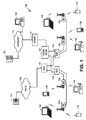
- FIG. 1 is a system diagram illustrating a portion of a wireless communication system that supports mobile devices and/or wireless terminals operating according to the present invention.
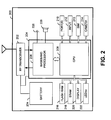
- FIG. 2 is a block diagram functionally illustrating a mobile device according to an embodiment of the disclosure.
- FIG. 3 is a block diagram illustrating the formation of paging channel downlink transmissions.
- FIG. 4 is a flow chart illustrating operation of a mobile in receiving and processing paging bursts according to an embodiment of the disclosure.
- Embodiments of the present disclosure are directed to reducing power consumption of a GSM (Group System for Mobile Communications) mobile device and/or wireless terminal. More specifically, the embodiments described herein can reduce power consumption of a device that is associated with decoding paging channel (PCH) downlink transmissions from a base station in a GSM environment.
- PCH downlink transmissions typically comprise four paging bursts that are received from a base station.
- a mobile device or each subscriber identification module (SIM) within a mobile device supporting multiple SIM's
- SIM subscriber identification module
- PCH downlink transmissions can be encoded using a 1 ⁇ 2 rate convolutional encoding scheme where the data intended for a specific device is encoded across the four paging bursts along with a cyclic redundancy check (CRC) value for error checking purposes.
- CRC cyclic redundancy check
- embodiments of the present disclosure allow for extraction of paging information encoded in PCH downlink transmissions by processing less than the four paging bursts, thereby reducing power consumption of a mobile device when it receives PCH downlink transmissions.
- FIG. 1 is a system diagram illustrating a portion of a cellular wireless communication system 100 that supports wireless terminals operating according to the present invention.
- the cellular wireless communication system 100 includes a Mobile Switching Center (MSC) 101, Serving GPRS Support Node/Serving EDGE Support Node (SGSN/SESN) 102, base station controllers (BSCs) 152 and 154, and base stations 103, 104, 105, and 106.
- the SGSN/SESN 102 couples to the Internet 114 via a GPRS Gateway Support Node (GGSN) 112.
- a conventional voice terminal 121 couples to the PSTN 110.
- a Voice over Internet Protocol (VoIP) terminal 123 and a personal computer 125 couple to the Internet 114.
- the MSC 101 couples to the Public Switched Telephone Network (PSTN) 110.
- PSTN Public Switched Telephone Network
- Each of the base stations 103-106 services a cell/set of sectors within which it supports wireless communications.
- Wireless links that include both forward link components and reverse link components support wireless communications between the base stations and their serviced wireless terminals. These wireless links support digital data communications, VolP communications, and other digital multimedia communications.
- the cellular wireless communication system 100 may also be backward compatible in supporting analog operations as well.
- the cellular wireless communication system 100 supports the Global System for Mobile telecommunications (GSM) standard and also the Enhanced Data rates for GSM (or Global) Evolution (EDGE) extension thereof.
- the cellular wireless communication system 100 may also support the GSM General Packet Radio Service (GPRS) extension to GSM.
- GSM Global System for Mobile telecommunications
- EDGE Enhanced Data rates for GSM
- GPRS General Packet Radio Service
- the present invention is also applicable to other standards as well, e.g., TDMA standards, CDMA standards, etc.
- the teachings of the present invention apply to digital communications that combine Automatic Repeat ReQu
- Wireless terminals 116, 118, 120, 122, 124, 126, 128, and 130 couple to the cellular wireless communication system 100 via wireless links with the base stations 103-106.
- wireless terminals may include cellular telephones 116 and 118, laptop computers 120 and 122, desktop computers 124 and 126, and data terminals 128 and 130.
- the cellular wireless communication system 100 supports communications with other types of wireless terminals as well.
- devices such as laptop computers 120 and 122, desktop computers 124 and 126, data terminals 128 and 130, and cellular telephones 116 and 118, are enabled to "surf' the Internet 114, transmit and receive data communications such as email, transmit and receive files, and to perform other data operations.
- Some or all of the wireless terminals 116-130 are therefore enabled to support the GPRS and/or EDGE operating standard as well as supporting the voice servicing portions the GSM standard.
- FIG. 2 is a block diagram functionally illustrating a mobile device 200 constructed according to the present invention.
- the mobile device 200 of FIG. 2 includes an RF transceiver 202, a baseband processor 206, a central processing unit (CPU) 208, and various other components contained within a housing.
- the baseband processor 206 can perform physical layer processing, include a speech COder/DECoder, and other baseband functions that interact with the RF transceiver 202.
- the baseband processor 206 can comprise a Digital Signal Processor (DSP).
- DSP Digital Signal Processor
- the CPU 208 can interact with data provided by the baseband processor 206, which represents decoded information received via the RF transceiver 202 as well as interact with the various other systems and components in the mobile device 200, such as a display 220, microphone 226, speaker 228, user input device 212, camera 214, LED's 222 and other components as can be appreciated that might be incorporated into a mobile device.
- the user input device 212 can include a capacitive touchscreen that is integrated within the display 220, a keypad, other buttons or switches integrated into the mobile device 200, or any other user input device as can be appreciated.
- the mobile device 200 can also include a battery 224 or other power source that can provide power to the various components in the terminal.
- the terminal can also include one or more Subscriber Identification Module (SIM) port 213, a flash RAM 216, an SRAM 218, or other system resources.
- SIM Subscriber Identification Module
- the mobile device 200 can also include one or more ports 210, which can comprise a universal serial bus (USB) port and its variants ( e.g. , micro-USB, mini-USB, etc.), a proprietary port, or any other input/output ports that can provide for data operations as well as power supply that can facilitate charging of the battery 224.
- USB universal serial bus
- FIG. 3 depicts the various stages associated with forming and interpreting paging channel (PCH) downlink transmissions.
- the original pages for the individual wireless terminals or mobile stations are initially divided into a series of pages to be transmitted according to a predetermined schedule to the wireless terminals.
- This predetermined schedule allows the individual wireless terminals, when not actively transmitting, to enter a sleep mode and merely awaken when it is necessary to receive their respective page bursts.
- a wireless terminal is designated a particular slot from a page bursts, which is extracted and processed to retrieve a paging message associated with the device.
- the original page undergoes two stages of encoding. First, the original pages undergo a block coding operation that is typically referred to as outer encoding.
- the block coding stage allows for the detection of errors within the data block.
- the Data blocks may be supplemented with tail bits or block code sequence.
- Block Coding is the first or external stage of channel coding, the block code is also known as an external or outer encoding scheme.
- a cyclic redundancy check (CRC) or a Fire Code are two kinds of codes.
- the Fire Codes allow for either error correction or error detection. Error detection with the Fire Code, verifies connectivity.
- the pages undergo a second level of encoding that typically is a convolutional coding referred to as inner encoding.
- the pages may be optionally interleaved to form paging bursts. These paging bursts are what the wireless terminal receives according to the predetermined schedule. Typically, four paging bursts make up every paging message and in many prior art embodiments, all four or three paging bursts must be received before decoding begins.
- the baseband processor of a mobile device 200 can attempt to extract a page, or an encoded signal, by processing less than the four paging bursts.
- a paging message can be extracted from a signal encoded using a convolutional coding scheme (e.g. , 1 ⁇ 2 rate convolutional code) in the paging bursts by employing a Viterbi decoder. Accordingly, as the signal to noise ratio (SNR) of the received paging bursts increase, the probability of successfully extracting the encoded signal also increases.
- SNR signal to noise ratio
- the baseband processor 206 of the mobile terminal can execute a Viterbi decoder and attempt to extract the paging message from the first and second received paging bursts.
- the baseband processor 206 can forego receiving the third and/or fourth paging bursts if the paging message is successfully extracted from the first and second paging bursts.
- the baseband processor 206 avoids the power consumption implications and penalty associated with receiving and/or processing the third and/or fourth paging bursts because the paging message has been extracted without the third and fourth paging bursts.
- These power consumption implications include the power required for the RF transceiver 202 to activate and receive the third and/or fourth paging bursts as well as potentially perform an analog to digital conversion of the signal as well as any other potentially power consuming RF operations
- the correctness of the extracted paging message can be verified by calculating a cyclic redundancy check (CRC) code or other error checking code for the extracted paging message and comparing the calculated value with one that is embedded in the paging message itself. If there is a mismatch, the baseband processor 206 can then direct the RF transceiver 202 to receive the third paging burst. The baseband processor 206 can then execute a Viterbi decoder on the first, second, and third paging bursts in an attempt to extract the paging message. The baseband processor 206 can then perform error checking (e.g. , compare a calculated error checking value with one embedded in one that is extracted from the decoded paging message) to determine whether the paging message has been correctly extracted.
- CRC cyclic redundancy check
- the power consumption associated with an embodiment of the disclosure that attempts to first extract a paging message using only the first and second paging message before receiving the third paging burst can be related to the following formulation, which expresses the significant power consuming operations involved in receiving and decoding a paging message.
- P v is the power consumption associated with execution of the Viterbi decoder
- P b is the power consumption associated with receiving a paging burst using the RF transceiver in the mobile device 200
- ⁇ is the probability that, for a given SNR, extraction of the paging message using only two paging bursts will fail: 2 ⁇ P b + P v ⁇ 1 - ⁇ + ⁇ ⁇ 3 ⁇ P b + 2 ⁇ P v
- the expression (2 P b + P v )(1 - ⁇ ) is related to the power consumption associated with receiving and processing two paging bursts to extract a paging message.
- the expression ⁇ (3 P b + 2 P v ) is related to the power consumption associated with receiving and processing three paging bursts to extract the paging message when the error checking code calculated by the baseband processor 206 does not match the embedded error checking code from the extracted paging message.
- the Viterbi decoder is executed twice because it must be executed a second time in order to extract the paging message using the first paging burst, the second paging burst, and the third paging after a failure associated with using only the first two paging bursts.
- the power consumption associated with many prior art embodiments, where three paging bursts are received and used to extract the paging message can be related to the following formulation: 3 ⁇ P b + P v
- embodiments of the disclosure can also assess a SNR of the first and second paging bursts to avoid the power consumption penalty associated with executing a Viterbi decoder a second time with the third paging burst after a failure of properly extracting the paging message using only the first and second bursts.
- a SNR threshold can be employed, and when the SNR of the first and second bursts exceed this threshold, the baseband processor 206 can attempt to extract a paging message using only the first and second bursts, which probabilistically yields lower power consumption even when this extraction fails, particularly when the probability of failure is very low.
- FIG. 4 shown is a flowchart that provides one example of the operation of the mobile device 200 according to various embodiments.
- the flowchart of FIG. 4 may be viewed as implementing various steps of a method to process a paging bursts associated with a paging channel by an RF transceiver, baseband processor, and/or other components in a mobile device 200.
- the mobile device 200 can receive first and second burst from a paging channel.
- the baseband processor 206 can determine whether the SNR of the first paging burst and second paging burst exceed a threshold. In other words, the baseband processor 206 can determine whether the first and second bursts are received with low noise levels.
- the threshold can be associated with a probability that extraction of a paging message using the first and second bursts with a Viterbi decoder fails given a SNR value.
- the baseband processor 206 can initiate receipt of the third paging bursts by the RF transceiver 202 of the mobile device 200.
- the baseband processor 206 can execute a Viterbi decoder to extract a paging message, or encoded signal, using the first paging burst, the second paging burst, and the third paging burst.
- the baseband processor 206 executes a Viterbi decode to attempt to extract a paging message from the first paging burst and second paging burst.
- the baseband processor 206 determines whether an error checking code embedded in the extracted data matches an error checking code calculated by the baseband processor 206.
- Such an error checking code can comprise a CRC code.
- the mobile device 200 may then re-enter a sleep mode for a predetermined period of time until a next paging message is received.
Landscapes
- Engineering & Computer Science (AREA)
- Computer Networks & Wireless Communication (AREA)
- Signal Processing (AREA)
- Artificial Intelligence (AREA)
- Physics & Mathematics (AREA)
- Probability & Statistics with Applications (AREA)
- Theoretical Computer Science (AREA)
- Mobile Radio Communication Systems (AREA)
Applications Claiming Priority (3)
| Application Number | Priority Date | Filing Date | Title |
|---|---|---|---|
| US201161565864P | 2011-12-01 | 2011-12-01 | |
| US201161568868P | 2011-12-09 | 2011-12-09 | |
| US13/404,147 US9048990B2 (en) | 2011-12-01 | 2012-02-24 | Power efficient paging channel decoding |
Publications (1)
| Publication Number | Publication Date |
|---|---|
| EP2600552A2 true EP2600552A2 (de) | 2013-06-05 |
Family
ID=46940185
Family Applications (1)
| Application Number | Title | Priority Date | Filing Date |
|---|---|---|---|
| EP12006164.3A Withdrawn EP2600552A2 (de) | 2011-12-01 | 2012-08-30 | Leistungseffiziente Paging-Kanaldecodierung |
Country Status (5)
| Country | Link |
|---|---|
| US (1) | US9048990B2 (de) |
| EP (1) | EP2600552A2 (de) |
| KR (1) | KR20130061626A (de) |
| CN (1) | CN103139908A (de) |
| TW (1) | TWI466512B (de) |
Families Citing this family (6)
| Publication number | Priority date | Publication date | Assignee | Title |
|---|---|---|---|---|
| US8873420B2 (en) | 2011-12-01 | 2014-10-28 | Broadcom Corporation | Detecting extended acquisition indicators |
| US20130142057A1 (en) | 2011-12-01 | 2013-06-06 | Broadcom Corporation | Control Channel Acquisition |
| US9762075B1 (en) * | 2014-02-25 | 2017-09-12 | James G. Gill | USB connector for walkie talkie batteries |
| US9344930B2 (en) * | 2014-04-01 | 2016-05-17 | Qualcomm Incorporated | Efficient WCDMA to GSM tune away pattern |
| US11411593B2 (en) * | 2020-04-29 | 2022-08-09 | Eagle Technology, Llc | Radio frequency (RF) system including programmable processing circuit performing butterfly computations and related methods |
| US11502715B2 (en) * | 2020-04-29 | 2022-11-15 | Eagle Technology, Llc | Radio frequency (RF) system including programmable processing circuit performing block coding computations and related methods |
Family Cites Families (26)
| Publication number | Priority date | Publication date | Assignee | Title |
|---|---|---|---|---|
| US6172972B1 (en) * | 1996-05-28 | 2001-01-09 | Microsoft Corporation | Multi-packet transport structure and method for sending network data over satellite network |
| US6643318B1 (en) | 1999-10-26 | 2003-11-04 | Golden Bridge Technology Incorporated | Hybrid DSMA/CDMA (digital sense multiple access/code division multiple access) method with collision resolution for packet communications |
| JP3438778B2 (ja) | 2000-05-09 | 2003-08-18 | 日本電気株式会社 | W−cdma伝送速度推定方法および装置 |
| US7013146B2 (en) | 2001-06-27 | 2006-03-14 | Nokia Corporation | Method for adaptively setting transmission parameters for a random access channel transmission uplink procedure in a wireless communication system |
| EP2079265A3 (de) * | 2002-08-13 | 2009-08-05 | Motorola, Inc. | Eingangsnachrichtdekodierung in drahtlosen Kommunikationsvorrichtungen und Verfahren |
| US8179946B2 (en) | 2003-09-23 | 2012-05-15 | Rambus Inc. | Systems and methods for control of advanced receivers |
| US7233774B2 (en) | 2003-01-30 | 2007-06-19 | Broadcom Corporation | RF transceiver with compact stacked mixer design for multiple frequency conversion |
| DE10310812B4 (de) | 2003-03-12 | 2007-11-22 | Infineon Technologies Ag | Dekodiervorrichtung, Trellis-Prozessor und Verfahren |
| US7107080B2 (en) | 2003-06-16 | 2006-09-12 | Broadcom Corporation | System and method to conduct idle mode paging channel monitoring within a cellular wireless network |
| US7257760B2 (en) * | 2003-11-25 | 2007-08-14 | Roland Reinhard Rick | Early decoding of a control channel in a wireless communication system |
| US20070064665A1 (en) | 2005-08-23 | 2007-03-22 | Interdigital Technology Corporation | Method and apparatus for accessing an uplink random access channel in a single carrier frequency division multiple access system |
| KR100932051B1 (ko) | 2005-09-08 | 2009-12-15 | 엘지전자 주식회사 | 통신 시스템의 접근시도 처리를 위한 방법 및 프로토콜 |
| USRE44283E1 (en) | 2005-12-23 | 2013-06-11 | Lg Electronics Inc. | Method and procedures for unsynchronized, synchronized, and synchronization stand by communications in E-UTRA systems |
| US8000305B2 (en) | 2006-01-17 | 2011-08-16 | Motorola Mobility, Inc. | Preamble sequencing for random access channel in a communication system |
| KR101205847B1 (ko) * | 2006-01-17 | 2012-12-03 | 삼성전자주식회사 | 무선 통신 시스템에서 컨트롤 채널의 디코딩 방법과 그장치 |
| US8050641B2 (en) | 2007-01-25 | 2011-11-01 | Texas Instruments Incorporated | Limiting the power consumption of a wireless electronic system |
| US7957758B2 (en) | 2007-06-13 | 2011-06-07 | Mediatek Inc. | Method of and apparatus for reducing power consumption in a mobile telephony system |
| ATE510434T1 (de) | 2007-11-01 | 2011-06-15 | Koninkl Philips Electronics Nv | Verbesserte leistungserhöhung für rach |
| US8149702B2 (en) | 2007-12-21 | 2012-04-03 | Mediatek Inc. | Multi-mode bit rate processor |
| US8264975B2 (en) | 2008-02-20 | 2012-09-11 | Qualcomm Incorporated | FFT-based estimation of thermal noise and rise over thermal in a wireless communication system |
| US8077820B2 (en) | 2008-03-05 | 2011-12-13 | Agere Systems Inc. | Detection of frequency correction bursts and the like |
| WO2010095005A1 (en) | 2009-02-23 | 2010-08-26 | Freescale Semiconductor, Inc. | Processing data flows |
| US8369384B2 (en) | 2009-09-15 | 2013-02-05 | Broadcom Corporation | Method and system for processing signals utilizing a programmable interference suppression module |
| CN103299697A (zh) | 2010-10-29 | 2013-09-11 | 瑞典爱立信有限公司 | 通信网络中的方法和装置 |
| US8873420B2 (en) | 2011-12-01 | 2014-10-28 | Broadcom Corporation | Detecting extended acquisition indicators |
| US20130142057A1 (en) | 2011-12-01 | 2013-06-06 | Broadcom Corporation | Control Channel Acquisition |
-
2012
- 2012-02-24 US US13/404,147 patent/US9048990B2/en not_active Expired - Fee Related
- 2012-08-30 EP EP12006164.3A patent/EP2600552A2/de not_active Withdrawn
- 2012-09-17 TW TW101134002A patent/TWI466512B/zh not_active IP Right Cessation
- 2012-09-21 KR KR1020120105014A patent/KR20130061626A/ko not_active Ceased
- 2012-09-25 CN CN2012103624046A patent/CN103139908A/zh active Pending
Non-Patent Citations (1)
| Title |
|---|
| None |
Also Published As
| Publication number | Publication date |
|---|---|
| CN103139908A (zh) | 2013-06-05 |
| TWI466512B (zh) | 2014-12-21 |
| US20130143605A1 (en) | 2013-06-06 |
| TW201325152A (zh) | 2013-06-16 |
| KR20130061626A (ko) | 2013-06-11 |
| US9048990B2 (en) | 2015-06-02 |
Similar Documents
| Publication | Publication Date | Title |
|---|---|---|
| US8014834B2 (en) | System and method to conduct idle mode paging channel monitoring within a cellular wireless network | |
| US7953385B2 (en) | System and method to manage processing operations within a wireless terminal following receipt of a null page | |
| US8861652B2 (en) | Detecting format of a transport channel | |
| US9048990B2 (en) | Power efficient paging channel decoding | |
| EP2200392B1 (de) | Semipersistente Ressourcenfreigabe von einer drahtlosen Kommunikationsvorrichtung | |
| US8797933B2 (en) | Apparatuses and methods for saving power in paging operations | |
| US8107489B2 (en) | Turbo decoding module supporting state n metric value normalization operations | |
| JP2021184638A (ja) | 方法及び装置 | |
| US7532638B2 (en) | Wireless terminal baseband processor high speed turbo decoding module supporting MAC header splitting | |
| CN102340870B (zh) | 通信终端设备、用于接收数据的方法和计算机程序产品 | |
| CN1882188B (zh) | 一种射频收发器的基带处理模块及执行turbo解码操作的方法 | |
| EP3444984B1 (de) | Datenübertragungsverfahren, datenempfangsverfahren, übertragungsvorrichtung und empfangsvorrichtung | |
| US8208584B2 (en) | Supply independent Schmitt trigger RC oscillator | |
| CN102790997B (zh) | 一种自适应多速率amr语音数据的传输方法及装置 | |
| EP2600665A2 (de) | Erkennung erweiterter Erfassungsanzeiger | |
| CN111543098B (zh) | 一种传输系统信息的方法、装置及系统 | |
| CN102711249B (zh) | 一种接收寻呼消息的方法及终端 | |
| US10020825B1 (en) | Method and apparatus for turbo decoder dynamic iteration control | |
| HK1182874A (en) | Power efficient paging channel decoding | |
| US8306031B2 (en) | Adaptive block sequence ARQ protocol for wireless communications | |
| RU2344572C2 (ru) | Управление мощностью во внешнем контуре для систем беспроводной связи |
Legal Events
| Date | Code | Title | Description |
|---|---|---|---|
| PUAI | Public reference made under article 153(3) epc to a published international application that has entered the european phase |
Free format text: ORIGINAL CODE: 0009012 |
|
| 17P | Request for examination filed |
Effective date: 20120830 |
|
| AK | Designated contracting states |
Kind code of ref document: A2 Designated state(s): AL AT BE BG CH CY CZ DE DK EE ES FI FR GB GR HR HU IE IS IT LI LT LU LV MC MK MT NL NO PL PT RO RS SE SI SK SM TR |
|
| AX | Request for extension of the european patent |
Extension state: BA ME |
|
| STAA | Information on the status of an ep patent application or granted ep patent |
Free format text: STATUS: THE APPLICATION IS DEEMED TO BE WITHDRAWN |
|
| 18D | Application deemed to be withdrawn |
Effective date: 20170301 |