EP2592145A1 - Medicament for the treatment of cardiac disease - Google Patents
Medicament for the treatment of cardiac disease Download PDFInfo
- Publication number
- EP2592145A1 EP2592145A1 EP11188914.3A EP11188914A EP2592145A1 EP 2592145 A1 EP2592145 A1 EP 2592145A1 EP 11188914 A EP11188914 A EP 11188914A EP 2592145 A1 EP2592145 A1 EP 2592145A1
- Authority
- EP
- European Patent Office
- Prior art keywords
- cardiac
- inhibitor
- seq
- mir
- micrornas
- Prior art date
- Legal status (The legal status is an assumption and is not a legal conclusion. Google has not performed a legal analysis and makes no representation as to the accuracy of the status listed.)
- Withdrawn
Links
- 208000019622 heart disease Diseases 0.000 title claims abstract description 17
- 208000020446 Cardiac disease Diseases 0.000 title claims abstract description 16
- 239000003814 drug Substances 0.000 title claims abstract description 13
- 108700011259 MicroRNAs Proteins 0.000 claims abstract description 78
- 210000001808 exosome Anatomy 0.000 claims abstract description 76
- 239000003112 inhibitor Substances 0.000 claims abstract description 56
- 210000001054 cardiac fibroblast Anatomy 0.000 claims abstract description 42
- 210000002950 fibroblast Anatomy 0.000 claims abstract description 30
- 208000006029 Cardiomegaly Diseases 0.000 claims abstract description 13
- 206010020880 Hypertrophy Diseases 0.000 claims abstract description 13
- 208000031229 Cardiomyopathies Diseases 0.000 claims abstract description 10
- 206010007572 Cardiac hypertrophy Diseases 0.000 claims abstract description 8
- 201000010099 disease Diseases 0.000 claims abstract description 8
- 208000037265 diseases, disorders, signs and symptoms Diseases 0.000 claims abstract description 8
- 230000000747 cardiac effect Effects 0.000 claims abstract description 7
- 206010019280 Heart failures Diseases 0.000 claims abstract description 6
- 206010003658 Atrial Fibrillation Diseases 0.000 claims abstract description 5
- 208000024172 Cardiovascular disease Diseases 0.000 claims abstract description 5
- 206010016654 Fibrosis Diseases 0.000 claims abstract description 5
- 208000021908 Myocardial disease Diseases 0.000 claims abstract description 5
- 208000009982 Ventricular Dysfunction Diseases 0.000 claims abstract description 5
- 206010002906 aortic stenosis Diseases 0.000 claims abstract description 5
- 230000003205 diastolic effect Effects 0.000 claims abstract description 5
- 230000004761 fibrosis Effects 0.000 claims abstract description 5
- 230000002068 genetic effect Effects 0.000 claims abstract description 5
- 238000003860 storage Methods 0.000 claims abstract description 5
- 230000006815 ventricular dysfunction Effects 0.000 claims abstract description 5
- 210000000107 myocyte Anatomy 0.000 claims abstract description 4
- 108091062762 miR-21 stem-loop Proteins 0.000 claims description 42
- 108091041631 miR-21-1 stem-loop Proteins 0.000 claims description 42
- 108091044442 miR-21-2 stem-loop Proteins 0.000 claims description 42
- 239000002679 microRNA Substances 0.000 claims description 32
- 210000004027 cell Anatomy 0.000 claims description 18
- 108091034117 Oligonucleotide Proteins 0.000 claims description 16
- 150000001875 compounds Chemical class 0.000 claims description 15
- 230000029142 excretion Effects 0.000 claims description 11
- 238000004458 analytical method Methods 0.000 claims description 8
- 239000002773 nucleotide Substances 0.000 claims description 8
- 125000003729 nucleotide group Chemical group 0.000 claims description 8
- HVYWMOMLDIMFJA-DPAQBDIFSA-N cholesterol Chemical compound C1C=C2C[C@@H](O)CC[C@]2(C)[C@@H]2[C@@H]1[C@@H]1CC[C@H]([C@H](C)CCCC(C)C)[C@@]1(C)CC2 HVYWMOMLDIMFJA-DPAQBDIFSA-N 0.000 claims description 6
- 238000012986 modification Methods 0.000 claims description 6
- 238000000034 method Methods 0.000 claims description 5
- 230000002265 prevention Effects 0.000 claims description 5
- RXMUPNVSYKGKMY-UHFFFAOYSA-N 3-amino-6-chloro-n-(diaminomethylidene)-5-(dimethylamino)pyrazine-2-carboxamide Chemical compound CN(C)C1=NC(N)=C(C(=O)N=C(N)N)N=C1Cl RXMUPNVSYKGKMY-UHFFFAOYSA-N 0.000 claims description 4
- 208000024720 Fabry Disease Diseases 0.000 claims description 4
- -1 brefeldin Chemical compound 0.000 claims description 4
- 230000008569 process Effects 0.000 claims description 4
- 102100021461 Sphingomyelin phosphodiesterase 3 Human genes 0.000 claims description 3
- 101710201918 Sphingomyelin phosphodiesterase 3 Proteins 0.000 claims description 3
- 235000012000 cholesterol Nutrition 0.000 claims description 3
- 238000004519 manufacturing process Methods 0.000 claims description 3
- 238000001514 detection method Methods 0.000 claims description 2
- TWWQHCKLTXDWBD-UHFFFAOYSA-N manumycin A Natural products C12OC2C(=O)C(NC(=O)C(C)=CC(C)=CC(C)CCCC)=CC1(O)C=CC=CC=CC(=O)NC1=C(O)CCC1=O TWWQHCKLTXDWBD-UHFFFAOYSA-N 0.000 claims description 2
- TWWQHCKLTXDWBD-MVTGTTCWSA-N manumycin A Chemical compound C(/[C@@]1(C=C(C([C@H]2O[C@H]21)=O)NC(=O)C(/C)=C/C(/C)=C/[C@H](C)CCCC)O)=C\C=C\C=C\C(=O)NC1=C(O)CCC1=O TWWQHCKLTXDWBD-MVTGTTCWSA-N 0.000 claims description 2
- 229910052760 oxygen Inorganic materials 0.000 claims description 2
- 239000001301 oxygen Substances 0.000 claims description 2
- 230000004962 physiological condition Effects 0.000 claims description 2
- 239000002502 liposome Substances 0.000 claims 1
- 210000004413 cardiac myocyte Anatomy 0.000 description 51
- 241000700159 Rattus Species 0.000 description 14
- 230000002401 inhibitory effect Effects 0.000 description 12
- 230000000694 effects Effects 0.000 description 9
- 238000001000 micrograph Methods 0.000 description 9
- LOKCTEFSRHRXRJ-UHFFFAOYSA-I dipotassium trisodium dihydrogen phosphate hydrogen phosphate dichloride Chemical compound P(=O)(O)(O)[O-].[K+].P(=O)(O)([O-])[O-].[Na+].[Na+].[Cl-].[K+].[Cl-].[Na+] LOKCTEFSRHRXRJ-UHFFFAOYSA-I 0.000 description 8
- 108091070501 miRNA Proteins 0.000 description 8
- 239000002953 phosphate buffered saline Substances 0.000 description 8
- 238000011529 RT qPCR Methods 0.000 description 7
- 230000009467 reduction Effects 0.000 description 6
- 230000006698 induction Effects 0.000 description 5
- 239000002609 medium Substances 0.000 description 5
- 239000000203 mixture Substances 0.000 description 5
- 230000032258 transport Effects 0.000 description 5
- FWBHETKCLVMNFS-UHFFFAOYSA-N 4',6-Diamino-2-phenylindol Chemical compound C1=CC(C(=N)N)=CC=C1C1=CC2=CC=C(C(N)=N)C=C2N1 FWBHETKCLVMNFS-UHFFFAOYSA-N 0.000 description 4
- 108091003079 Bovine Serum Albumin Proteins 0.000 description 4
- 239000003795 chemical substances by application Substances 0.000 description 4
- 230000000052 comparative effect Effects 0.000 description 4
- 230000000295 complement effect Effects 0.000 description 4
- 239000002299 complementary DNA Substances 0.000 description 4
- 239000012228 culture supernatant Substances 0.000 description 4
- 239000012894 fetal calf serum Substances 0.000 description 4
- 238000011534 incubation Methods 0.000 description 4
- 230000005764 inhibitory process Effects 0.000 description 4
- 238000010186 staining Methods 0.000 description 4
- 239000006228 supernatant Substances 0.000 description 4
- 238000001890 transfection Methods 0.000 description 4
- 102000005862 Angiotensin II Human genes 0.000 description 3
- 101800000733 Angiotensin-2 Proteins 0.000 description 3
- 239000006144 Dulbecco’s modified Eagle's medium Substances 0.000 description 3
- CZGUSIXMZVURDU-JZXHSEFVSA-N Ile(5)-angiotensin II Chemical compound C([C@@H](C(=O)N[C@@H]([C@@H](C)CC)C(=O)N[C@@H](CC=1NC=NC=1)C(=O)N1[C@@H](CCC1)C(=O)N[C@@H](CC=1C=CC=CC=1)C([O-])=O)NC(=O)[C@@H](NC(=O)[C@H](CCCNC(N)=[NH2+])NC(=O)[C@@H]([NH3+])CC([O-])=O)C(C)C)C1=CC=C(O)C=C1 CZGUSIXMZVURDU-JZXHSEFVSA-N 0.000 description 3
- 108091007780 MiR-122 Proteins 0.000 description 3
- 229930040373 Paraformaldehyde Natural products 0.000 description 3
- 229950006323 angiotensin ii Drugs 0.000 description 3
- 230000015572 biosynthetic process Effects 0.000 description 3
- 230000014509 gene expression Effects 0.000 description 3
- 229920002866 paraformaldehyde Polymers 0.000 description 3
- 239000008188 pellet Substances 0.000 description 3
- 239000002243 precursor Substances 0.000 description 3
- 102000004169 proteins and genes Human genes 0.000 description 3
- 108090000623 proteins and genes Proteins 0.000 description 3
- 230000028327 secretion Effects 0.000 description 3
- 108091032973 (ribonucleotides)n+m Proteins 0.000 description 2
- 102000040650 (ribonucleotides)n+m Human genes 0.000 description 2
- 108020004635 Complementary DNA Proteins 0.000 description 2
- 108020004414 DNA Proteins 0.000 description 2
- 108091070493 Homo sapiens miR-21 stem-loop Proteins 0.000 description 2
- 108091008065 MIR21 Proteins 0.000 description 2
- KPKZJLCSROULON-QKGLWVMZSA-N Phalloidin Chemical compound N1C(=O)[C@@H]([C@@H](O)C)NC(=O)[C@H](C)NC(=O)[C@H](C[C@@](C)(O)CO)NC(=O)[C@H](C2)NC(=O)[C@H](C)NC(=O)[C@@H]3C[C@H](O)CN3C(=O)[C@@H]1CSC1=C2C2=CC=CC=C2N1 KPKZJLCSROULON-QKGLWVMZSA-N 0.000 description 2
- 108091027967 Small hairpin RNA Proteins 0.000 description 2
- UIIMBOGNXHQVGW-UHFFFAOYSA-M Sodium bicarbonate Chemical compound [Na+].OC([O-])=O UIIMBOGNXHQVGW-UHFFFAOYSA-M 0.000 description 2
- JLCPHMBAVCMARE-UHFFFAOYSA-N [3-[[3-[[3-[[3-[[3-[[3-[[3-[[3-[[3-[[3-[[3-[[5-(2-amino-6-oxo-1H-purin-9-yl)-3-[[3-[[3-[[3-[[3-[[3-[[5-(2-amino-6-oxo-1H-purin-9-yl)-3-[[5-(2-amino-6-oxo-1H-purin-9-yl)-3-hydroxyoxolan-2-yl]methoxy-hydroxyphosphoryl]oxyoxolan-2-yl]methoxy-hydroxyphosphoryl]oxy-5-(5-methyl-2,4-dioxopyrimidin-1-yl)oxolan-2-yl]methoxy-hydroxyphosphoryl]oxy-5-(6-aminopurin-9-yl)oxolan-2-yl]methoxy-hydroxyphosphoryl]oxy-5-(6-aminopurin-9-yl)oxolan-2-yl]methoxy-hydroxyphosphoryl]oxy-5-(6-aminopurin-9-yl)oxolan-2-yl]methoxy-hydroxyphosphoryl]oxy-5-(6-aminopurin-9-yl)oxolan-2-yl]methoxy-hydroxyphosphoryl]oxyoxolan-2-yl]methoxy-hydroxyphosphoryl]oxy-5-(5-methyl-2,4-dioxopyrimidin-1-yl)oxolan-2-yl]methoxy-hydroxyphosphoryl]oxy-5-(4-amino-2-oxopyrimidin-1-yl)oxolan-2-yl]methoxy-hydroxyphosphoryl]oxy-5-(5-methyl-2,4-dioxopyrimidin-1-yl)oxolan-2-yl]methoxy-hydroxyphosphoryl]oxy-5-(5-methyl-2,4-dioxopyrimidin-1-yl)oxolan-2-yl]methoxy-hydroxyphosphoryl]oxy-5-(6-aminopurin-9-yl)oxolan-2-yl]methoxy-hydroxyphosphoryl]oxy-5-(6-aminopurin-9-yl)oxolan-2-yl]methoxy-hydroxyphosphoryl]oxy-5-(4-amino-2-oxopyrimidin-1-yl)oxolan-2-yl]methoxy-hydroxyphosphoryl]oxy-5-(4-amino-2-oxopyrimidin-1-yl)oxolan-2-yl]methoxy-hydroxyphosphoryl]oxy-5-(4-amino-2-oxopyrimidin-1-yl)oxolan-2-yl]methoxy-hydroxyphosphoryl]oxy-5-(6-aminopurin-9-yl)oxolan-2-yl]methoxy-hydroxyphosphoryl]oxy-5-(4-amino-2-oxopyrimidin-1-yl)oxolan-2-yl]methyl [5-(6-aminopurin-9-yl)-2-(hydroxymethyl)oxolan-3-yl] hydrogen phosphate Polymers Cc1cn(C2CC(OP(O)(=O)OCC3OC(CC3OP(O)(=O)OCC3OC(CC3O)n3cnc4c3nc(N)[nH]c4=O)n3cnc4c3nc(N)[nH]c4=O)C(COP(O)(=O)OC3CC(OC3COP(O)(=O)OC3CC(OC3COP(O)(=O)OC3CC(OC3COP(O)(=O)OC3CC(OC3COP(O)(=O)OC3CC(OC3COP(O)(=O)OC3CC(OC3COP(O)(=O)OC3CC(OC3COP(O)(=O)OC3CC(OC3COP(O)(=O)OC3CC(OC3COP(O)(=O)OC3CC(OC3COP(O)(=O)OC3CC(OC3COP(O)(=O)OC3CC(OC3COP(O)(=O)OC3CC(OC3COP(O)(=O)OC3CC(OC3COP(O)(=O)OC3CC(OC3COP(O)(=O)OC3CC(OC3COP(O)(=O)OC3CC(OC3CO)n3cnc4c(N)ncnc34)n3ccc(N)nc3=O)n3cnc4c(N)ncnc34)n3ccc(N)nc3=O)n3ccc(N)nc3=O)n3ccc(N)nc3=O)n3cnc4c(N)ncnc34)n3cnc4c(N)ncnc34)n3cc(C)c(=O)[nH]c3=O)n3cc(C)c(=O)[nH]c3=O)n3ccc(N)nc3=O)n3cc(C)c(=O)[nH]c3=O)n3cnc4c3nc(N)[nH]c4=O)n3cnc4c(N)ncnc34)n3cnc4c(N)ncnc34)n3cnc4c(N)ncnc34)n3cnc4c(N)ncnc34)O2)c(=O)[nH]c1=O JLCPHMBAVCMARE-UHFFFAOYSA-N 0.000 description 2
- 238000009825 accumulation Methods 0.000 description 2
- 238000004113 cell culture Methods 0.000 description 2
- 238000007385 chemical modification Methods 0.000 description 2
- 238000000942 confocal micrograph Methods 0.000 description 2
- 238000004624 confocal microscopy Methods 0.000 description 2
- 239000003085 diluting agent Substances 0.000 description 2
- 238000009472 formulation Methods 0.000 description 2
- 230000030279 gene silencing Effects 0.000 description 2
- 210000003630 histaminocyte Anatomy 0.000 description 2
- 238000001990 intravenous administration Methods 0.000 description 2
- 238000002372 labelling Methods 0.000 description 2
- 238000005259 measurement Methods 0.000 description 2
- 108020004999 messenger RNA Proteins 0.000 description 2
- 108091051828 miR-122 stem-loop Proteins 0.000 description 2
- 238000003253 miRNA assay Methods 0.000 description 2
- 230000004048 modification Effects 0.000 description 2
- 238000012758 nuclear staining Methods 0.000 description 2
- 230000002018 overexpression Effects 0.000 description 2
- 239000008194 pharmaceutical composition Substances 0.000 description 2
- 239000000546 pharmaceutical excipient Substances 0.000 description 2
- 230000004044 response Effects 0.000 description 2
- 238000010839 reverse transcription Methods 0.000 description 2
- 238000003757 reverse transcription PCR Methods 0.000 description 2
- 230000002441 reversible effect Effects 0.000 description 2
- 239000004055 small Interfering RNA Substances 0.000 description 2
- 239000007787 solid Substances 0.000 description 2
- 239000000243 solution Substances 0.000 description 2
- UCSJYZPVAKXKNQ-HZYVHMACSA-N streptomycin Chemical compound CN[C@H]1[C@H](O)[C@@H](O)[C@H](CO)O[C@H]1O[C@@H]1[C@](C=O)(O)[C@H](C)O[C@H]1O[C@@H]1[C@@H](NC(N)=N)[C@H](O)[C@@H](NC(N)=N)[C@H](O)[C@H]1O UCSJYZPVAKXKNQ-HZYVHMACSA-N 0.000 description 2
- 238000005199 ultracentrifugation Methods 0.000 description 2
- 238000005406 washing Methods 0.000 description 2
- LOGFVTREOLYCPF-KXNHARMFSA-N (2s,3r)-2-[[(2r)-1-[(2s)-2,6-diaminohexanoyl]pyrrolidine-2-carbonyl]amino]-3-hydroxybutanoic acid Chemical compound C[C@@H](O)[C@@H](C(O)=O)NC(=O)[C@H]1CCCN1C(=O)[C@@H](N)CCCCN LOGFVTREOLYCPF-KXNHARMFSA-N 0.000 description 1
- FWMNVWWHGCHHJJ-SKKKGAJSSA-N 4-amino-1-[(2r)-6-amino-2-[[(2r)-2-[[(2r)-2-[[(2r)-2-amino-3-phenylpropanoyl]amino]-3-phenylpropanoyl]amino]-4-methylpentanoyl]amino]hexanoyl]piperidine-4-carboxylic acid Chemical compound C([C@H](C(=O)N[C@H](CC(C)C)C(=O)N[C@H](CCCCN)C(=O)N1CCC(N)(CC1)C(O)=O)NC(=O)[C@H](N)CC=1C=CC=CC=1)C1=CC=CC=C1 FWMNVWWHGCHHJJ-SKKKGAJSSA-N 0.000 description 1
- 102000010825 Actinin Human genes 0.000 description 1
- 108010063503 Actinin Proteins 0.000 description 1
- 102000007469 Actins Human genes 0.000 description 1
- 108010085238 Actins Proteins 0.000 description 1
- 101800000737 Angiotensin-4 Proteins 0.000 description 1
- 102400000349 Angiotensin-4 Human genes 0.000 description 1
- 238000000035 BCA protein assay Methods 0.000 description 1
- 102100025222 CD63 antigen Human genes 0.000 description 1
- OKTJSMMVPCPJKN-UHFFFAOYSA-N Carbon Chemical compound [C] OKTJSMMVPCPJKN-UHFFFAOYSA-N 0.000 description 1
- 102000007665 Extracellular Signal-Regulated MAP Kinases Human genes 0.000 description 1
- SXRSQZLOMIGNAQ-UHFFFAOYSA-N Glutaraldehyde Chemical compound O=CCCCC=O SXRSQZLOMIGNAQ-UHFFFAOYSA-N 0.000 description 1
- 102100031181 Glyceraldehyde-3-phosphate dehydrogenase Human genes 0.000 description 1
- 208000013875 Heart injury Diseases 0.000 description 1
- 101000934368 Homo sapiens CD63 antigen Proteins 0.000 description 1
- 108091069024 Homo sapiens miR-132 stem-loop Proteins 0.000 description 1
- 108091070489 Homo sapiens miR-17 stem-loop Proteins 0.000 description 1
- 108091069021 Homo sapiens miR-30b stem-loop Proteins 0.000 description 1
- 108091067535 Homo sapiens miR-375 stem-loop Proteins 0.000 description 1
- 108091063810 Homo sapiens miR-539 stem-loop Proteins 0.000 description 1
- 108091061592 Homo sapiens miR-592 stem-loop Proteins 0.000 description 1
- 108091060481 Homo sapiens miR-758 stem-loop Proteins 0.000 description 1
- 102000003777 Interleukin-1 beta Human genes 0.000 description 1
- 108090000193 Interleukin-1 beta Proteins 0.000 description 1
- 102000043136 MAP kinase family Human genes 0.000 description 1
- 108091054455 MAP kinase family Proteins 0.000 description 1
- 108091093189 Mir-375 Proteins 0.000 description 1
- 108091080995 Mir-9/mir-79 microRNA precursor family Proteins 0.000 description 1
- 206010028980 Neoplasm Diseases 0.000 description 1
- 108091028043 Nucleic acid sequence Proteins 0.000 description 1
- 229930182555 Penicillin Natural products 0.000 description 1
- JGSARLDLIJGVTE-MBNYWOFBSA-N Penicillin G Chemical compound N([C@H]1[C@H]2SC([C@@H](N2C1=O)C(O)=O)(C)C)C(=O)CC1=CC=CC=C1 JGSARLDLIJGVTE-MBNYWOFBSA-N 0.000 description 1
- 108010009711 Phalloidine Proteins 0.000 description 1
- 108091027568 Single-stranded nucleotide Proteins 0.000 description 1
- 102100024550 Sphingomyelin phosphodiesterase 2 Human genes 0.000 description 1
- RYYWUUFWQRZTIU-UHFFFAOYSA-N Thiophosphoric acid Chemical class OP(O)(S)=O RYYWUUFWQRZTIU-UHFFFAOYSA-N 0.000 description 1
- COQLPRJCUIATTQ-UHFFFAOYSA-N Uranyl acetate Chemical compound O.O.O=[U]=O.CC(O)=O.CC(O)=O COQLPRJCUIATTQ-UHFFFAOYSA-N 0.000 description 1
- 229930003779 Vitamin B12 Natural products 0.000 description 1
- 230000033115 angiogenesis Effects 0.000 description 1
- 238000003556 assay Methods 0.000 description 1
- 230000002238 attenuated effect Effects 0.000 description 1
- 238000000339 bright-field microscopy Methods 0.000 description 1
- 229910052799 carbon Inorganic materials 0.000 description 1
- 230000009787 cardiac fibrosis Effects 0.000 description 1
- 230000015556 catabolic process Effects 0.000 description 1
- 210000000170 cell membrane Anatomy 0.000 description 1
- 239000006285 cell suspension Substances 0.000 description 1
- 230000001413 cellular effect Effects 0.000 description 1
- 230000004700 cellular uptake Effects 0.000 description 1
- 238000005119 centrifugation Methods 0.000 description 1
- 239000003153 chemical reaction reagent Substances 0.000 description 1
- FDJOLVPMNUYSCM-WZHZPDAFSA-L cobalt(3+);[(2r,3s,4r,5s)-5-(5,6-dimethylbenzimidazol-1-yl)-4-hydroxy-2-(hydroxymethyl)oxolan-3-yl] [(2r)-1-[3-[(1r,2r,3r,4z,7s,9z,12s,13s,14z,17s,18s,19r)-2,13,18-tris(2-amino-2-oxoethyl)-7,12,17-tris(3-amino-3-oxopropyl)-3,5,8,8,13,15,18,19-octamethyl-2 Chemical compound [Co+3].N#[C-].N([C@@H]([C@]1(C)[N-]\C([C@H]([C@@]1(CC(N)=O)C)CCC(N)=O)=C(\C)/C1=N/C([C@H]([C@@]1(CC(N)=O)C)CCC(N)=O)=C\C1=N\C([C@H](C1(C)C)CCC(N)=O)=C/1C)[C@@H]2CC(N)=O)=C\1[C@]2(C)CCC(=O)NC[C@@H](C)OP([O-])(=O)O[C@H]1[C@@H](O)[C@@H](N2C3=CC(C)=C(C)C=C3N=C2)O[C@@H]1CO FDJOLVPMNUYSCM-WZHZPDAFSA-L 0.000 description 1
- 210000004292 cytoskeleton Anatomy 0.000 description 1
- 230000007423 decrease Effects 0.000 description 1
- 238000006731 degradation reaction Methods 0.000 description 1
- 238000011161 development Methods 0.000 description 1
- 230000018109 developmental process Effects 0.000 description 1
- 238000001085 differential centrifugation Methods 0.000 description 1
- 238000010790 dilution Methods 0.000 description 1
- 239000012895 dilution Substances 0.000 description 1
- 230000004064 dysfunction Effects 0.000 description 1
- 238000001493 electron microscopy Methods 0.000 description 1
- 230000008030 elimination Effects 0.000 description 1
- 238000003379 elimination reaction Methods 0.000 description 1
- 230000012202 endocytosis Effects 0.000 description 1
- 238000001914 filtration Methods 0.000 description 1
- 239000012737 fresh medium Substances 0.000 description 1
- 230000004927 fusion Effects 0.000 description 1
- 239000011521 glass Substances 0.000 description 1
- 108020004445 glyceraldehyde-3-phosphate dehydrogenase Proteins 0.000 description 1
- 210000002064 heart cell Anatomy 0.000 description 1
- 230000011132 hemopoiesis Effects 0.000 description 1
- 230000003301 hydrolyzing effect Effects 0.000 description 1
- 238000003125 immunofluorescent labeling Methods 0.000 description 1
- 238000001727 in vivo Methods 0.000 description 1
- 230000002779 inactivation Effects 0.000 description 1
- 238000002347 injection Methods 0.000 description 1
- 239000007924 injection Substances 0.000 description 1
- 230000002452 interceptive effect Effects 0.000 description 1
- 238000001361 intraarterial administration Methods 0.000 description 1
- 238000002955 isolation Methods 0.000 description 1
- 125000005647 linker group Chemical group 0.000 description 1
- 239000007788 liquid Substances 0.000 description 1
- 239000003550 marker Substances 0.000 description 1
- 230000001404 mediated effect Effects 0.000 description 1
- 239000012528 membrane Substances 0.000 description 1
- 229920000609 methyl cellulose Polymers 0.000 description 1
- 239000001923 methylcellulose Substances 0.000 description 1
- 108091028606 miR-1 stem-loop Proteins 0.000 description 1
- 108091040501 miR-129 stem-loop Proteins 0.000 description 1
- 108091045757 miR-129-3 stem-loop Proteins 0.000 description 1
- 108091090758 miR-129-4 stem-loop Proteins 0.000 description 1
- 108091065139 miR-129-5 stem-loop Proteins 0.000 description 1
- 108091091751 miR-17 stem-loop Proteins 0.000 description 1
- 108091069239 miR-17-2 stem-loop Proteins 0.000 description 1
- 108091027698 miR-18-1 stem-loop Proteins 0.000 description 1
- 108091090961 miR-18-2 stem-loop Proteins 0.000 description 1
- 108091055042 miR-181 stem-loop Proteins 0.000 description 1
- 108091043222 miR-181b stem-loop Proteins 0.000 description 1
- 108091035591 miR-23a stem-loop Proteins 0.000 description 1
- 108091065201 miR-341 stem-loop Proteins 0.000 description 1
- 108091031110 miR-539 stem-loop Proteins 0.000 description 1
- 108091047084 miR-9 stem-loop Proteins 0.000 description 1
- 238000007431 microscopic evaluation Methods 0.000 description 1
- 239000012120 mounting media Substances 0.000 description 1
- 108040005466 neutral sphingomyelin phosphodiesterase activity proteins Proteins 0.000 description 1
- 108091027963 non-coding RNA Proteins 0.000 description 1
- 102000042567 non-coding RNA Human genes 0.000 description 1
- 108020004707 nucleic acids Proteins 0.000 description 1
- 102000039446 nucleic acids Human genes 0.000 description 1
- 150000007523 nucleic acids Chemical class 0.000 description 1
- 230000004963 pathophysiological condition Effects 0.000 description 1
- 229940049954 penicillin Drugs 0.000 description 1
- 238000001556 precipitation Methods 0.000 description 1
- 108090000765 processed proteins & peptides Proteins 0.000 description 1
- 238000000746 purification Methods 0.000 description 1
- 230000002829 reductive effect Effects 0.000 description 1
- 230000011664 signaling Effects 0.000 description 1
- 238000005549 size reduction Methods 0.000 description 1
- 229910000030 sodium bicarbonate Inorganic materials 0.000 description 1
- 230000006641 stabilisation Effects 0.000 description 1
- 238000011105 stabilization Methods 0.000 description 1
- 230000004936 stimulating effect Effects 0.000 description 1
- 229960005322 streptomycin Drugs 0.000 description 1
- 230000004960 subcellular localization Effects 0.000 description 1
- 238000003786 synthesis reaction Methods 0.000 description 1
- RYYWUUFWQRZTIU-UHFFFAOYSA-K thiophosphate Chemical compound [O-]P([O-])([O-])=S RYYWUUFWQRZTIU-UHFFFAOYSA-K 0.000 description 1
- 238000013518 transcription Methods 0.000 description 1
- 230000035897 transcription Effects 0.000 description 1
- 239000011715 vitamin B12 Substances 0.000 description 1
- 235000019163 vitamin B12 Nutrition 0.000 description 1
- XLYOFNOQVPJJNP-UHFFFAOYSA-N water Substances O XLYOFNOQVPJJNP-UHFFFAOYSA-N 0.000 description 1
- 238000001262 western blot Methods 0.000 description 1
Images




Classifications
-
- C—CHEMISTRY; METALLURGY
- C12—BIOCHEMISTRY; BEER; SPIRITS; WINE; VINEGAR; MICROBIOLOGY; ENZYMOLOGY; MUTATION OR GENETIC ENGINEERING
- C12N—MICROORGANISMS OR ENZYMES; COMPOSITIONS THEREOF; PROPAGATING, PRESERVING, OR MAINTAINING MICROORGANISMS; MUTATION OR GENETIC ENGINEERING; CULTURE MEDIA
- C12N15/00—Mutation or genetic engineering; DNA or RNA concerning genetic engineering, vectors, e.g. plasmids, or their isolation, preparation or purification; Use of hosts therefor
- C12N15/09—Recombinant DNA-technology
- C12N15/11—DNA or RNA fragments; Modified forms thereof; Non-coding nucleic acids having a biological activity
- C12N15/113—Non-coding nucleic acids modulating the expression of genes, e.g. antisense oligonucleotides; Antisense DNA or RNA; Triplex- forming oligonucleotides; Catalytic nucleic acids, e.g. ribozymes; Nucleic acids used in co-suppression or gene silencing
-
- A—HUMAN NECESSITIES
- A61—MEDICAL OR VETERINARY SCIENCE; HYGIENE
- A61K—PREPARATIONS FOR MEDICAL, DENTAL OR TOILETRY PURPOSES
- A61K31/00—Medicinal preparations containing organic active ingredients
- A61K31/70—Carbohydrates; Sugars; Derivatives thereof
- A61K31/7088—Compounds having three or more nucleosides or nucleotides
- A61K31/7125—Nucleic acids or oligonucleotides having modified internucleoside linkage, i.e. other than 3'-5' phosphodiesters
-
- A—HUMAN NECESSITIES
- A61—MEDICAL OR VETERINARY SCIENCE; HYGIENE
- A61P—SPECIFIC THERAPEUTIC ACTIVITY OF CHEMICAL COMPOUNDS OR MEDICINAL PREPARATIONS
- A61P9/00—Drugs for disorders of the cardiovascular system
-
- C—CHEMISTRY; METALLURGY
- C12—BIOCHEMISTRY; BEER; SPIRITS; WINE; VINEGAR; MICROBIOLOGY; ENZYMOLOGY; MUTATION OR GENETIC ENGINEERING
- C12Q—MEASURING OR TESTING PROCESSES INVOLVING ENZYMES, NUCLEIC ACIDS OR MICROORGANISMS; COMPOSITIONS OR TEST PAPERS THEREFOR; PROCESSES OF PREPARING SUCH COMPOSITIONS; CONDITION-RESPONSIVE CONTROL IN MICROBIOLOGICAL OR ENZYMOLOGICAL PROCESSES
- C12Q1/00—Measuring or testing processes involving enzymes, nucleic acids or microorganisms; Compositions therefor; Processes of preparing such compositions
- C12Q1/68—Measuring or testing processes involving enzymes, nucleic acids or microorganisms; Compositions therefor; Processes of preparing such compositions involving nucleic acids
- C12Q1/6876—Nucleic acid products used in the analysis of nucleic acids, e.g. primers or probes
- C12Q1/6883—Nucleic acid products used in the analysis of nucleic acids, e.g. primers or probes for diseases caused by alterations of genetic material
-
- C—CHEMISTRY; METALLURGY
- C12—BIOCHEMISTRY; BEER; SPIRITS; WINE; VINEGAR; MICROBIOLOGY; ENZYMOLOGY; MUTATION OR GENETIC ENGINEERING
- C12N—MICROORGANISMS OR ENZYMES; COMPOSITIONS THEREOF; PROPAGATING, PRESERVING, OR MAINTAINING MICROORGANISMS; MUTATION OR GENETIC ENGINEERING; CULTURE MEDIA
- C12N2310/00—Structure or type of the nucleic acid
- C12N2310/10—Type of nucleic acid
- C12N2310/11—Antisense
- C12N2310/113—Antisense targeting other non-coding nucleic acids, e.g. antagomirs
-
- C—CHEMISTRY; METALLURGY
- C12—BIOCHEMISTRY; BEER; SPIRITS; WINE; VINEGAR; MICROBIOLOGY; ENZYMOLOGY; MUTATION OR GENETIC ENGINEERING
- C12N—MICROORGANISMS OR ENZYMES; COMPOSITIONS THEREOF; PROPAGATING, PRESERVING, OR MAINTAINING MICROORGANISMS; MUTATION OR GENETIC ENGINEERING; CULTURE MEDIA
- C12N2310/00—Structure or type of the nucleic acid
- C12N2310/10—Type of nucleic acid
- C12N2310/14—Type of nucleic acid interfering nucleic acids [NA]
- C12N2310/141—MicroRNAs, miRNAs
-
- C—CHEMISTRY; METALLURGY
- C12—BIOCHEMISTRY; BEER; SPIRITS; WINE; VINEGAR; MICROBIOLOGY; ENZYMOLOGY; MUTATION OR GENETIC ENGINEERING
- C12Q—MEASURING OR TESTING PROCESSES INVOLVING ENZYMES, NUCLEIC ACIDS OR MICROORGANISMS; COMPOSITIONS OR TEST PAPERS THEREFOR; PROCESSES OF PREPARING SUCH COMPOSITIONS; CONDITION-RESPONSIVE CONTROL IN MICROBIOLOGICAL OR ENZYMOLOGICAL PROCESSES
- C12Q2600/00—Oligonucleotides characterized by their use
- C12Q2600/178—Oligonucleotides characterized by their use miRNA, siRNA or ncRNA
Definitions
- miR-21 contributes to myocardial disease by stimulating MAP kinase signalling in fibroblasts.
- the miRNA inhibitor specific for miR-21 reduced cardiac ERK kinase activity, inhibited cardiac fibrosis and attenuated cardiac dysfunction, validating miR-21 as a disease target in heart failure.
- the inhibitor preferably is an inhibitor of at least one microRNA from the set of 22 microRNAs given below, especially an inhibitor of miR-21* and/or is an inhibitor of exosomal transport, wherein the exosome in the case of cardiac disease contains at least one microRNA from this set of 22 microRNAs, especially miR-21*.
- the at least one inhibitor is for use as a medicament in the prevention of treatment of a cardiac disease, especially of cardiac hypertrophy, especially of fibroblast derived cardiac hypertrophy, and/or of cardiac failure, heart hypertrophy, diastolic and/or systolic ventricular dysfunction and/or other cardiovascular diseases, in which fibrosis is involved, especially aortic stenosis, atrial fibrillation, genetic forms of cardiomyopathy, cardiac storage diseases (e.g. fabry disease).
- the invention also relates to an analytical process for determining the onset or presence of the cardiac disease, especially of cardiac hypertrophy, by determining the concentration of at least one of the molecules of the set of microRNAs, especially of one of SEQ ID NO: 1 to SEQ NO: 22, preferably of SEQ ID NO: 1.
- An inhibitor of at least one of this set of microRNAs, especially of miR-21* can comprise or consist of an oligonucleotide having specificity for one microRNA of this set of microRNAs, especially for miR-21*, e.g. having a reverse complementary nucleotide sequence hybridizing to the microRNA under physiological or pathophysiological conditions.
- an agent reducing or inhibiting the generation and/or excretion of exosomes containing at least one microRNA of this set of microRNAs by cardiac fibroblasts, and/or an agent reducing or eliminating the transport of exosomes comprising at least one of these microRNAs to cardiomyocytes.
- Inhibitors of microRNAs preferably have a sequence hybridizing to the microRNA, e.g. a sequence having at least 90%, preferably 95%, more preferably 99% identity to a reverse complementary nucleotide sequence of the microRNA, which inhibitory nucleotide sequence is e.g. comprised in a short hairpin RNA (shRNA) or in a pre-microRNA.
- a sequence hybridizing to the microRNA e.g. a sequence having at least 90%, preferably 95%, more preferably 99% identity to a reverse complementary nucleotide sequence of the microRNA, which inhibitory nucleotide sequence is e.g. comprised in a short hairpin RNA (shRNA) or in a pre-microRNA.
- shRNA short hairpin RNA
- the nucleotide sequences inhibitory to the set of microRNAs are DNA, RNA, peptide linkage oligonucleotides (PNA), preferably single-stranded.
- the inhibitory sequence can be produced by de novo synthesis, e.g. on a solid support followed by hydrolysing the bond to the solid support, or by copying a nucleotide template, e.g. using PCR, or by transcription from a DNA template encoding the inhibitory compound, e.g. a nucleotide sequence corresponding to one of the set of microRNAs.
- fibroblasts Cardiac fibroblasts have been found to express neutral sphingomyelinase 2 (nSmase2), e.g. using Western blotting on isolated fibroblasts (15 - 20 ⁇ g protein) with a primary antibody against nSmase (Santa Cruz, sc-67305) and antibody directed against GAPDH (Abcam, ab8245) as a control, followed by a secondary detection antibody.
- nSmase2 neutral sphingomyelinase 2
- Western blotting on isolated fibroblasts (15 - 20 ⁇ g protein) with a primary antibody against nSmase (Santa Cruz, sc-67305) and antibody directed against GAPDH (Abcam, ab8245) as a control, followed by a secondary detection antibody.
- QuantiMirTM RT kit available from SystemBiosciences (SBI) was used. Total RNA was isolated, and all small non-coding RNAs were converted into cDNA after addition of a polyA tail to the 3'-end in the presence of polyA polymerase, using an oligo-dT primer to initiate reverse transcription into cDNA.
- This cDNA was analysed in quantitative real-time PCR (qRT-PCR) with a 3' universal reverse-primer labelled 2x with SybrGreen, and a specific microRNA assay primer.
- primers specific for endogenous RNA were included in each assay, namely for rno-U6 (CGCAAAUUCGUGAAGCGUUC SEQ ID NO: 45), for RNU43 (CUUAUUGACGGGCGGACAGAAAC SEQ ID NO: 46) and for U1 (CGACUGCAUAAUUUGUGGUAGUGG SEQ ID NO: 47).
- a total of 30 - 100 ng RNA was used.
- CT values used for microRNAs were obtained from excreted exosomes were normalized to the endogenous controls of the cardiac fibroblasts.
Landscapes
- Health & Medical Sciences (AREA)
- Life Sciences & Earth Sciences (AREA)
- Chemical & Material Sciences (AREA)
- Engineering & Computer Science (AREA)
- Organic Chemistry (AREA)
- Genetics & Genomics (AREA)
- Bioinformatics & Cheminformatics (AREA)
- Molecular Biology (AREA)
- General Health & Medical Sciences (AREA)
- Zoology (AREA)
- Wood Science & Technology (AREA)
- Biochemistry (AREA)
- Biomedical Technology (AREA)
- Proteomics, Peptides & Aminoacids (AREA)
- General Engineering & Computer Science (AREA)
- Biotechnology (AREA)
- Public Health (AREA)
- Pharmacology & Pharmacy (AREA)
- Biophysics (AREA)
- Analytical Chemistry (AREA)
- Veterinary Medicine (AREA)
- Physics & Mathematics (AREA)
- Microbiology (AREA)
- Medicinal Chemistry (AREA)
- Animal Behavior & Ethology (AREA)
- Chemical Kinetics & Catalysis (AREA)
- Nuclear Medicine, Radiotherapy & Molecular Imaging (AREA)
- General Chemical & Material Sciences (AREA)
- Heart & Thoracic Surgery (AREA)
- Pathology (AREA)
- Cardiology (AREA)
- Plant Pathology (AREA)
- Immunology (AREA)
- Epidemiology (AREA)
- Pharmaceuticals Containing Other Organic And Inorganic Compounds (AREA)
Abstract
The present invention relates to a medicament for the treatment of cardiac disease, especially to a medicament suitable for the treatment of myocardial disease involving myocyte hypertrophy, especially fibroblast-derived cardiac hypertrophy, e.g. heart failure, heart hypertrophy, diastolic and/or systolic ventricular dysfunction and/or other cardiovascular diseases, where fibrosis is involved, especially aortic stenosis, atrial fibrillation, genetic forms of cardiomyopathy, cardiac storage diseases by providing an inhibitor specific for at least one of a set of microRNAs found in exosomes originating from cardiac fibroblasts for use as a medicament for human patients
Description
- The present invention relates to a medicament for the treatment of cardiac disease, especially to a medicament suitable for the treatment of myocardial disease involving myocyte hypertrophy, especially fibroblast-derived cardiac hypertrophy, e.g. heart failure, heart hypertrophy, diastolic and/or systolic ventricular dysfunction and/or other cardiovascular diseases, where fibrosis is involved, especially aortic stenosis, atrial fibrillation, genetic forms of cardiomyopathy, cardiac storage diseases (e.g. fabry disease).
- Krutzfeldt et al, Nature 685 - 689 (2005) describe the specific inactivation of the microRNA miR-122 using intravenous administration of small interfering double-stranded RNA molecules (siRNA) hybridizing to miR-122. These siRNA molecules complementary to miR-122 could be derivatized by linkage to a cholesterol moiety.
- Thum et al, Nature 980 - 984 (2008) describe that miR-21 contributes to myocardial disease by stimulating MAP kinase signalling in fibroblasts. The miRNA inhibitor specific for miR-21 reduced cardiac ERK kinase activity, inhibited cardiac fibrosis and attenuated cardiac dysfunction, validating miR-21 as a disease target in heart failure.
- Validi et al, Nature Cell Biology 654 - 659 (2007) describe that mRNA and microRNA molecules are transported from one mast cell to a recipient mast cell in exosomes, involving specificity of the exosome for the recipient cell. In the exosome, miR-1, miR-17, miR-18, miR-181 and miR-375 have been identified and suggested to influence angiogenesis, hematopoiesis, endocytosis, and tumour development.
- It is an object of the present invention to provide a compound suitable for use as a medicament in the treatment of cardiac disease, and to provide a method for analyzing cardiac disease.
- The invention achieves the objects by the features of the claims, especially by providing an inhibitor specific for at least one of a set of microRNAs found in exosomes originating from cardiac fibroblasts, the set of microRNAs comprising or consisting of the 22 microRNAs given in table 1 below, esp. for use as a medicament for human patients. Further, the invention provides a pharmaceutical composition for the prevention or treatment of the cardiac disease, the composition comprising e.g. excipients and formulation agents suitable for medical use, preferably the composition is a liquid, e.g. formulated for intravenous or intraarterial injection. Further, the invention relates to the use of the inhibitors for use in the manufacture of such a pharmaceutical composition. A process for manufacture can e.g. comprise the steps of providing the inhibitor and formulating the composition by incorporating the inhibitor into excipients and/or formulation agents.
- The inhibitor preferably is an inhibitor of at least one microRNA from the set of 22 microRNAs given below, especially an inhibitor of miR-21* and/or is an inhibitor of exosomal transport, wherein the exosome in the case of cardiac disease contains at least one microRNA from this set of 22 microRNAs, especially miR-21*. The at least one inhibitor is for use as a medicament in the prevention of treatment of a cardiac disease, especially of cardiac hypertrophy, especially of fibroblast derived cardiac hypertrophy, and/or of cardiac failure, heart hypertrophy, diastolic and/or systolic ventricular dysfunction and/or other cardiovascular diseases, in which fibrosis is involved, especially aortic stenosis, atrial fibrillation, genetic forms of cardiomyopathy, cardiac storage diseases (e.g. fabry disease).
- The invention is based on the finding that at least one of this set of microRNAs, especially miR-21*, contributes to this disease when present in cardiomyocytes, whereas the inhibition, elimination or reduction of at least one of these microRNAs in cardiomyocytes by use of the inhibitor according to the invention reduces the disease. A medicament containing the inhibitor of the invention, e.g. when administered to a patient, especially reduces the hypertrophy of cardiomyocytes. This activity of * (star)-microRNA molecules, especially of miR-21 *, is surprising, because it is hitherto generally accepted that the microRNA molecules which are complementary to those microRNAs having an activity (nomenclature without a star) are normally degraded without having an activity; these complementary molecules are generally designated as a * (star)-microRNA.
- Based on the finding that the microRNAs comprised in the set of 22 microRNAs as given herein are indicative of cardiac disease, the invention also relates to an analytical process for determining the onset or presence of the cardiac disease, especially of cardiac hypertrophy, by determining the concentration of at least one of the molecules of the set of microRNAs, especially of one of SEQ ID NO: 1 to SEQ NO: 22, preferably of SEQ ID NO: 1.
- An inhibitor of at least one of this set of microRNAs, especially of miR-21*, can comprise or consist of an oligonucleotide having specificity for one microRNA of this set of microRNAs, especially for miR-21*, e.g. having a reverse complementary nucleotide sequence hybridizing to the microRNA under physiological or pathophysiological conditions. As it has been found that these microRNAs, especially miR-21*, originate from cardiac fibroblasts and are transported to cardiomyocytes by exosomes originating from cardiac fibroblasts, an inhibitor against one of these microRNAs for the purposes of the invention also comprises an inhibitor of exosome generation, of exosome secretion and/or of exosome transport to cardiomyocytes, especially an inhibitor specific for exosome generation, exosome excretion by cardiac fibroblasts, e.g. an agent reducing or inhibiting the generation and/or excretion of exosomes containing at least one microRNA of this set of microRNAs by cardiac fibroblasts, and/or an agent reducing or eliminating the transport of exosomes comprising at least one of these microRNAs to cardiomyocytes.
- Inhibitors of microRNAs preferably have a sequence hybridizing to the microRNA, e.g. a sequence having at least 90%, preferably 95%, more preferably 99% identity to a reverse complementary nucleotide sequence of the microRNA, which inhibitory nucleotide sequence is e.g. comprised in a short hairpin RNA (shRNA) or in a pre-microRNA.
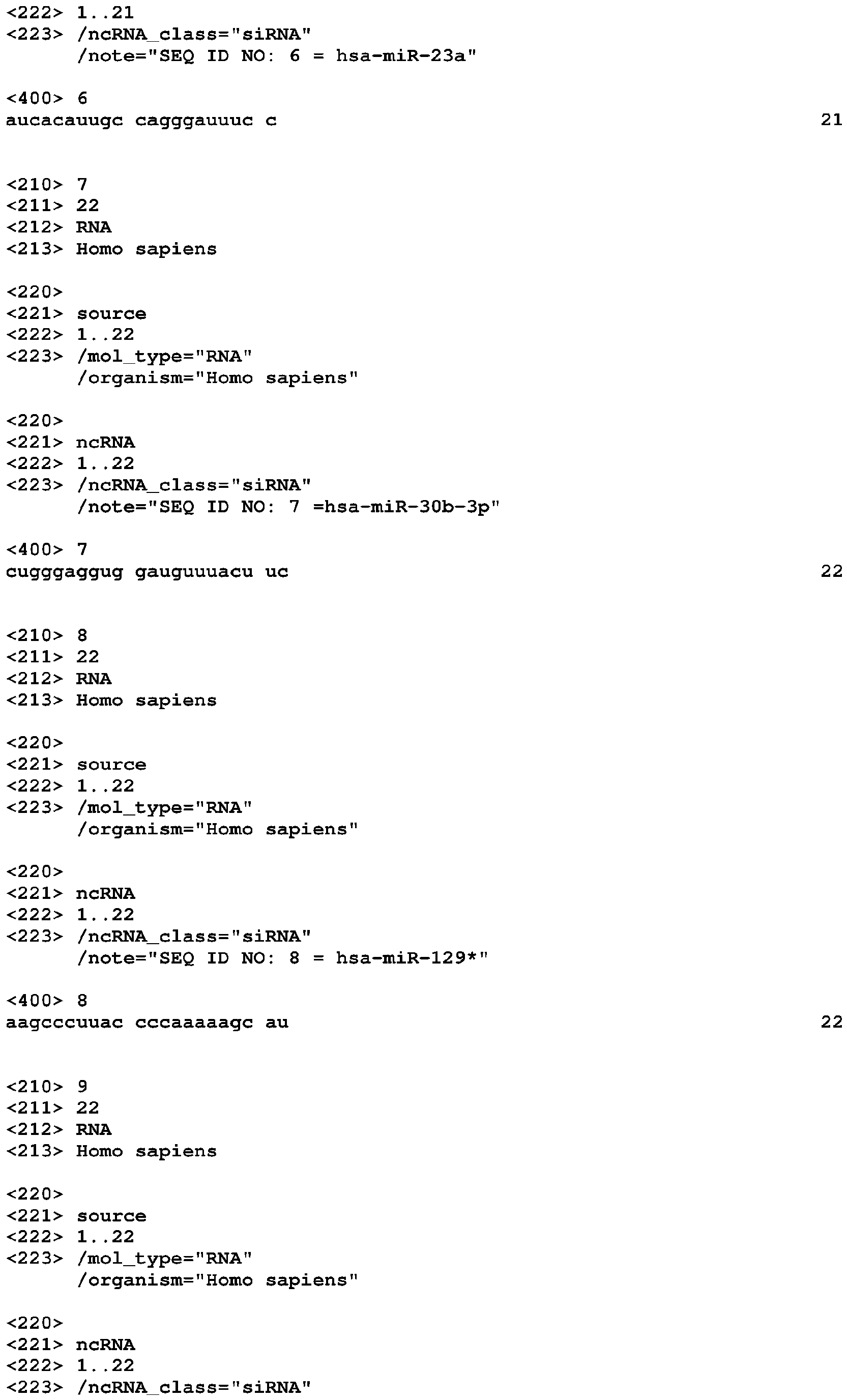
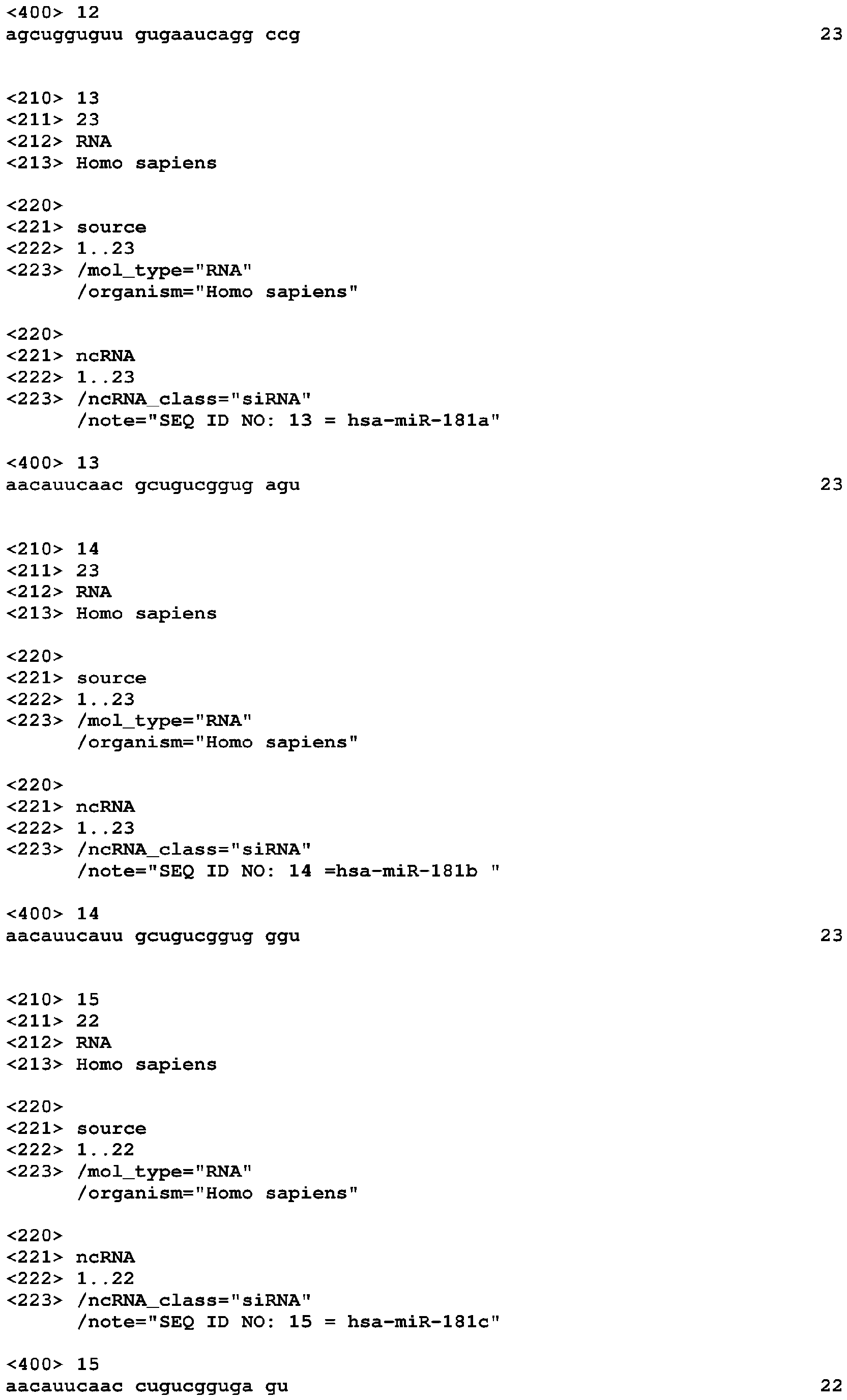
Table 1: set of microRNAs and preferred specific inhibitory oligonucleotide sequences microRNA SEQ ID NO:
sequenceInhibitory oligonucleotide
SEQ ID NO and sequencehsa-miR-21 * SEQ ID NO: 1 SEQ ID NO: 23 
ACAGCCCAUCGACUGGUGUUG hsa-let-7a SEQ ID NO: 2 SEQ ID NO: 24 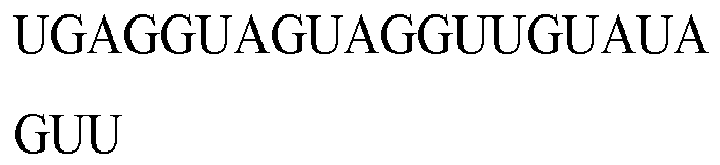

hsa-miR-9* SEQ ID NO: 3 SEQ ID NO: 25 

hsa-miR-17-5p SEQ ID NO: 4 SEQ ID NO: 26 

hsa-miR-21 SEQ ID NO: 5 SEQ ID NO: 27 

hsa-miR-23a SEQ ID NO: 6 SEQ ID NO: 28 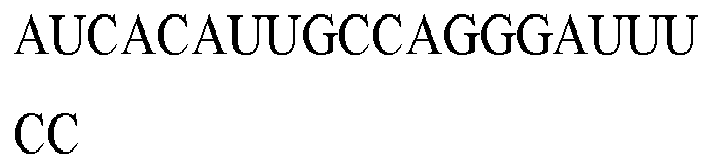
GGAAAUCCCUGGCAAUGUGAU hsa-miR-30b-3p SEQ ID NO: 7 SEQ ID NO: 29 

hsa-miR-129* SEQ ID NO: 8 SEQ NO: 30 

hsa-miR-132 SEQ ID NO: 9 SEQ ID NO: 31 

hsa-miR-135a SEQ ID NO: 10 SEQ ID NO: 32 

hsa-miR-135b SEQ ID NO: 11 SEQ ID NO: 33 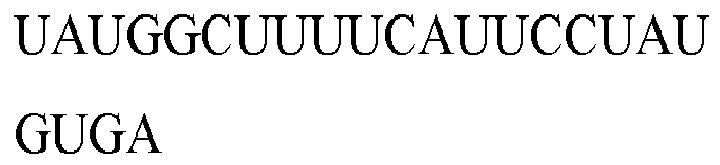

hsa-miR-138 SEQ ID NO: 12 SEQ ID NO: 34 

hsa-miR-181a SEQ ID NO: 13 SEQ ID NO: 3 5 

hsa-miR-181b SEQ ID NO: 14 SEQ ID NO: 36 

hsa-miR-181c SEQ ID NO: 15 SEQ ID NO: 37 

hsa-miR-181d SEQ ID NO: 16 SEQ ID NO: 3 8 

rno/mmu-miR- SEQ ID NO: 17 SEQ ID NO: 39 341 
ACCGACCGACCGAUCGACCGA hsa-miR-374 SEQ ID NO: 18 SEQ ID NO: 40 

hsa-miR-375 SEQ ID NO: SEQ ID NO: 41 

hsa-miR-539 SEQ ID NO: 20 SEQ ID NO: 42 

hsa-miR-758 SEQ ID NO: 21 SEQ ID NO: 43 

hsa-miR-592 SEQ ID NO: 22 SEQ ID NO: 44 

- Sequences are given from 5'to 3'. The inhibitory sequences are specific for the microRNA given in the same row of the left column.
- Preferably, the nucleotide sequences inhibitory to the set of microRNAs are DNA, RNA, peptide linkage oligonucleotides (PNA), preferably single-stranded. For producing inhibitors to one of the microRNAs of the set of microRNAs, the inhibitory sequence can be produced by de novo synthesis, e.g. on a solid support followed by hydrolysing the bond to the solid support, or by copying a nucleotide template, e.g. using PCR, or by transcription from a DNA template encoding the inhibitory compound, e.g. a nucleotide sequence corresponding to one of the set of microRNAs.
- The inhibitory oligonucleotide preferably is comprised in or consists of a single-stranded nucleotide sequence in order to exclude undesired effects of the nucleotide sequence that is complementary to the inhibitory oligonucleotide.
- Optionally, the inhibitory oligonucleotide specific for one of the set of microRNAs can be provided with a chemical modification resulting e.g. in a stabilization such as 2-O-methyl-modification of the oligonucleotide, LNA-modification wherein the 2-O-oxygen is connected to the 4-position by a methylene linker, resulting in a tight bicycle and locking into a C3-endo (RNA) sugar conformation, preferably as described by Elmen et al (LNA-mediated microRNA silencing in non-human primates. Nature 452: 896-899 (2008a)), Krutzfeldt et al, (Silencing of microRNAs in vivo with 'antagomirs'. Nature 438: 685-689 (2005)) and/or by Krutzfeldt et al, (Specificity, duplex degradation and subcellular localization of antagomirs. Nucleic Acids Res 35: 2885-2892 (2007)). In these modified oligonucleotides it is preferred that additionally the balance between phosphodiester- and phosphorothioate linkages between the nucleotides is obtained for the oligonucleotide stability as phosphorothioates show improved stability as described e.g. by (Faria & Ulrich, Curr Opin Mol Ther 10: 168-175 (2008)). The 2-O-methyl modification is preferred as it results in high oligonucleotide stability and efficacy. As another chemical modification, a cholesterol moiety can be linked to the oligonucleotide to improve cellular uptake as described by (Krutzfeldt et al, 2005), and by Thum et al (Nature 456: 980-984(2008b)).
- In a second embodiment, the inhibitor of one of the microRNAs of the set of 22 microRNAs, especially against miR-21*, is an inhibitor of exosome generation, of exosome excretion, or of exosome transport to cardiomyocytes. Preferred inhibitors of exosome generation and/or of exosome transport to cardiomyocytes are specific for exosomes originating from fibroblasts. Preferred inhibitors of exosome formation and/or exosome secretion are selected from the group comprising or consisting of the neutral sphingomyelinase 2-inhibitor GW4869, brefeldin, dimethylamiloride (DMA), manumycin A, spiroepoxide, gluthathione, and combinations thereof.
- The invention is now described in greater detail by way of examples with reference to the figures, wherein
-
Figure 1 shows an electron-microscopic picture of exosomes isolated by ultracentrifugation from fibroblast culture supernatant, -
Figure 2 shows micrographs of cardiomyocytes contacted with labelled exosomes isolated from rat cardiac fibroblast culture in confocal microscopy, in A) following cultivation for 30 min, and in B) following cultivation for 2 h, -
Figure 3 shows the analysis of cardiomyocytes after overexpressing miR-21 * for 72h, in A) relative levels of expression of miR-21* (mir-21*), in B) measurements of cardiomyocyte size, and in C) light micrographs of cardiomyocytes after over-expression of pre - miR-21* and of a comparative non-specific microRNA (neg pre - miR). -
Figure 3D shows cell sizes of cardiomyocytes after incubation with exosomes generated by rat cardiac fibroblasts overexpressing pre - mir-21* or overexpressing a comparative non-specific microRNA (neg pre-miR), -
Figure 3E shows light micrographs of cardiomyocytes after incubation with exosomes generated by rat cardiac fibroblasts overexpressing pre - mir-21* or overexpressing a comparative non-specific microRNA (neg pre-miR), -
Figure 4 shows the increase of excretion of exosomes containing microRNAs as indicated from cardiac fibroblasts upon induction of hypertrophy, -
Figure 5 shows the analysis of cardiomyocytes after incubation with exosomes generated by rat cardiac fibroblasts transfected with anti - miR-21* in comparison cardiomyocytes incubated with exosomes generated by fibroblasts transfected with a non-specific anti - microRNA (neg anti - miR), in A) the cardiomyocyte area, and in B) micrographs, -
Figure 6 shows the analysis of the effect of inhibiting exosome excretion from cardiac fibroblasts after 48 hours, in A) a micrograph of rat cardiac fibroblasts treated with control compound, and B) a micrograph of rat cardiac fibroblasts cultivated in the presence of an nSmase2 inhibitor, -
Figure 7 shows micrographs of rat cardiac fibroblasts treated with nSmase2 inhibitor in comparison to a control, in phalloidin - actin staining, in staining for CD63 - positive microvesicles and in an overlay, in A), B) and C) for control - treated fibroblasts, and in D), E) and F) in fibroblasts treated with nSmase2 inhibitor, respectively, and -
Figure 8 shows graphical presentations of the reduction of representative microRNA secreted from cardiac fibroblasts after treatment with nSmase2 inhibitor for 48 h. - Cardiac cells were represented by cardiac fibroblasts and cardiomyocytes isolated from newborn rats. Primary cardiac fibroblasts were cultured in Dulbecco's modified Eagle's medium (DMEM), supplemented with 10% fetal calf serum (FCS) and 1% penicillin / streptomycin at 37 °C in a 5% CO2 atmosphere under cell culture conditions. Primary cardiomyocytes were cultivated in minimal essential medium (MEM) containing vitamin B12, NaHCO3 and 5% FCS at 37°C in a 1% CO2 atmosphere under cell culture conditions. For exosome isolation from supernatant, the medium was changed to DMEM supplemented with 0.1% exosome - depleted FCS. Supernatant from fibroblasts was collected for 3 days, and exosomes were isolated by differential centrifugation, comprising centrifugation at 300 x g for 10 min, 2000 x g for 10 min and 10,000 x g for 30 min, followed by filtration through a 0.22 µm filter for eliminating cells, dead cells and cellular debris. The supernatant was ultracentrifuged for exosome purification at 100,000 x g for 90 min followed by an additional washing step of the exosome pellet in phosphate buffered saline (PBS) at 100,000 x g for 90 min. The exosome pellet was resuspended in 100 - 130 µL PBS and stored at -80°C. In the alternative, exosomes were isolated using the Exoquick exosome precipitation solution (obtainable from SBI). The protein content of exosomes was measured using the micro-BCA protein assay (obtainable from ThermoScientific).
- It was found that exosomes isolated from a fibroblast culture supernatant (n=2) using ultracentrifugation had following protein content:
protein/cell (µg/106 cells) 1.52 (SD=0.52) protein/vol. cell suspension (µg/µL) 0.81(SD=0.23) -
Figure 1 shows an electron microscopic picture of cardiac fibroblast - derived exosomes (arrow), having a diameter in the range of 30 - 50 nm. - For electron microscopy, exosomes (e.g. 10 µg) were loaded onto carbon - coated grids (Formvar), fixed in 2% paraformaldehyde and washed, followed by 1% glutaraldehyde, washing and contrasting in uranyl oxalate solution, then embedded in 4% uranyl acetate and 2% methylcellulose. Examination was in an electron microscope (Carl Zeiss NTS).
- Exosomes isolated from cardiac fibroblasts were labelled with the lipophilic dye PKH26. Labelled fibroblast - derived exosomes were added to cultivated cardiomyocytes and incubated for 30 min or 2 hours.
Figure 2A in a confocal micrograph shows labelled exosomes (V) that were taken up by cardiomyocytes after 30 min (grid approx. 4µm).Figure 2B (grid approx. 2µm) in a confocal micrograph shows that 2 h after incubation of the cardiomyocytes with the labelled fibroblast - derived exosomes an increased number of exosomes is taken up by cardiomyocytes, with fusion or cluster formation between exosomes within cardiomyocytes. Membrane staining was by agglutinin-Alexa488 (green, M) the nucleus was stained with DAPI (blue, N). - Labelling of exosomes was done using the PKH26 red fluorescence linker kit (obtainable from Sigma) according to the manufacturer's protocol with minor modifications. Briefly, exosomes diluted in PBS were added to 1 mL diluent C. 4 µL of the PKH26 dye was added to 1 mL diluent C and mixed with the exosome dilution, followed by adding 2 mL 0.5% BSA to allow binding of excess dye. Samples were washed at 100,000 x g for 1 h. The pellet was suspended in 100 µL PBS. For confocal microscopy, cardiomyocytes were grown on glass cover slips by cultivation in cardiomyocyte medium. 7.5 µg labelled exosomes were added to 100,000 cardiomyocytes and incubated at 37°C for 30 min or 2 h. Cells were then washed twice with PBS, fixed in 4% paraformaldehyde for 15 min, washed twice with PBS and stained with agglutinin-Alexa488 for 30 min for labelling of the cell membrane, washed twice with PBS, and embedded with Vector shield mounting medium with DAPI for nuclear staining.
- The effect of the set of microRNAs on the size of cardiomyocytes is shown on the example of miR-21* by over-expression miR-21* in cardiomyocytes. In short, cardiomyocytes were grown in 6-well plates to 80% confluence and were transfected using lipofectamine with 100 nM pre - miR-21* oligo-nucleotide or with a non-specific precursor microRNA (negative precursor used as control). 4 h after transfection, the medium was discarded and replaced by fresh medium. After 48 hours RNA was isolated by TRIfast reagent, analysis of RNA was performed by quantitative real-time polymerase chain reaction (qRT-PCR) using TaqMan primers specific for miR-21*. The TaqMan miRNA assay from AppliedBiosystems was used according to the manufacturer's protocol, using a total of 15 ng total RNA for reverse transcription of each microRNA (miR-21* and the internal control RNAs). For qRT-PCR analysis, samples were pre-diluted 1:3 with nuclease-free water, generating an mRNA standard curve at 1:5, 1:25, 1:125 using 2 µL cDNA template for qRT-PCR. For cell size measurement, cells were fixed in 4% paraformaldehyde and stained with alpha-actinin and DAPI.
- The effect of the transfection with the miR-21* in comparison to the control (neg pre miR) on the expression of miR-21* is shown in
Figure 3A . As expected, the transfection with pre - miR-21* gave an increase of miR-21* concentration (miR-21* expression) in comparison to the control (neg-pre-miR). -
Figure 3B shows the cell size of cardiomyocytes for the control transfected and for the pre - miR-21* transfected cardiomyocytes, showing an increase in cells size in response to the increased concentration of miR-21*. The micrographs ofFigure 3C confirm the increase in cardiomyocyte size is due to the presence ofmiR-21* over the control transfected cardiomyocytes (neg precursor). InFigure 3D , the cell size of cardiomyocytes in response to exosomes that were isolated from rat cardiac fibroblast-derived overexpressing pre-miR-21* is shown to lead to an increase in cell size.Figure 3E shows micrographs confirming that the microRNA leading to an increase in cardiomyocyte cell size is transferred from cardiac fibroblasts by way of exosomes to the cardiomyocyte. - These analytical data show that miR-21* as an exemplary microRNA of the set of microRNAs is generated in cardiac fibroblasts, which are taken up by cardiomyocytes, resulting in an increase in cell size of cardiomyocytes.
-
Figure 4 shows graphical representations of concentrations of the microRNAs that were identified in exosomes isolated from the supernatant of cultivated cardiac fibroblasts without induction (left hand columns) and after imparting a hypertrophy stimulus using angiotensin II plus interleukin-1β. Induction of hypertrophy using 1 nM Angiotensin II and 4 ng/mL IL-1β for 24 h in cardiac fibroblasts stimulated an increase of microRNAs of the set of 22 microRNAs, exemplified by miR-21*, miR-341, and miR-539. Results of qRT-PCR on total RNA of exosomes isolated from the fibroblast culture supernatant are shown inFigure 4 , left col. for the non-induced control culture, right column for the culture induced by Angiotensin II plus IL-1β. The increase of these microRNAs in exosomes generated from fibroblasts upon a stimulus of cardiac injury provides a basis that these microRNAs participate in the induction of cardiomyocyte hypertrophy, and hence an inhibitor of one of these microRNAs is suitable as a medicament in the treatment of cardiac diseases involving cardiomyocyte hypertrophy. - Cardiomyocytes were incubated with rat cardiac fibroblast-derived exosomes, wherein the fibroblasts were transfected with an oligonucleotide inhibitor specific for miR-21* (anti- miR-21*, having SEQ ID NO: 23), or with a non-specific anti-miR (Applied Biosystems, AM17010) for comparison.
- Cardiomyocytes were incubated with exosomes obtained from rat cardiac fibroblasts which had been transfected with anti-miR-21* for 72 h prior to analysis.
Figure 5A shows the reduction of the cell size of cardiomyocytes upon presence of an inhibitor of miR-21* in comparison to control-transfected rat cardiac fibroblast-derived exosomes.Figure 5B shows the microscopic analysis of cardiomyocytes incubated with the exosomes isolated from control-transfected rat cardiac fibroblasts (neg anti miR) or with exosomes isolated from fibroblasts isolated from anti-miR-21 *-transfected rat cardiac fibroblast-derived exosomes for 72 hours. Staining of the cytoskeleton was with anti-actinin, and nuclear staining was with DAPI. - On the example of an inhibitor of miR-21*, these data show that an inhibitor directed against one of the microRNAs of the set of 22 microRNAs results in a comparative size reduction of cardiomyocytes, e.g. in a reduction of the cardiomyocyte hypertrophy induced by cardiac fibroblast-derived exosomes. This shows that presence of an inhibitor against at least one microRNA of the set of microRNAs leads to the inhibition of fibroblast-derived microRNAs and is effective against cardiac disease, especially against cardiac hypertrophy.
- Further, this example shows that the inhibitor can be provided by providing the inhibitor to cardiac fibroblasts, e.g. by contacting these fibroblasts with the inhibitor, e.g. by transfection, as the inhibitor is transported to the cardiomyocytes by exosomes excreted by the fibroblasts.
- The activity of an inhibitor against generation and/or against excretion of exosomes by cardiac fibroblasts is shown by an exemplary inhibitor of exosome excretion, resulting in the reduction or prevention of induction of cardiomyocyte hypertrophy.
- Cardiac fibroblasts have been found to express neutral sphingomyelinase 2 (nSmase2), e.g. using Western blotting on isolated fibroblasts (15 - 20 µg protein) with a primary antibody against nSmase (Santa Cruz, sc-67305) and antibody directed against GAPDH (Abcam, ab8245) as a control, followed by a secondary detection antibody.
- Cultivated cardiac fibroblasts were treated for 48 h with 10 µM GW4869, which is an nSmase2 inhibitor. Analysis of cells using brightfield microscopy is shown in
Figure 6A for control without nSmase2 inhibitor, and inFigure 6B for the fibroblasts treated with nSmase2 inhibitor. The bright field image shown inFigure 6B demonstrates the accumulation of vesicles/exosomes (V) within fibroblasts in the presence of the nSmase2 inhibitor (N = nucleus). Immunofluorescent staining against CD 63, which is an exosome - specific marker reveals the accumulation of CD 63 - positive vesicles in cardiac fibroblasts as shown inFigure 7 . - From the fibroblast cultures without and with the nSmase2 inhibitor, the microRNAs was analysed in exosomes isolated from the culture supernatant. For the quantitative RT-PCR, the QuantiMirTM RT kit available from SystemBiosciences (SBI) was used. Total RNA was isolated, and all small non-coding RNAs were converted into cDNA after addition of a polyA tail to the 3'-end in the presence of polyA polymerase, using an oligo-dT primer to initiate reverse transcription into cDNA. This cDNA was analysed in quantitative real-time PCR (qRT-PCR) with a 3' universal reverse-primer labelled 2x with SybrGreen, and a specific microRNA assay primer. For control, primers specific for endogenous RNA were included in each assay, namely for rno-U6 (CGCAAAUUCGUGAAGCGUUC SEQ ID NO: 45), for RNU43 (CUUAUUGACGGGCGGACAGAAAC SEQ ID NO: 46) and for U1 (CGACUGCAUAAUUUGUGGUAGUGG SEQ ID NO: 47). A total of 30 - 100 ng RNA was used. CT values used for microRNAs were obtained from excreted exosomes were normalized to the endogenous controls of the cardiac fibroblasts.
- Using quantitative RT-PCR it was found that the inhibition of exosome excretion lead to a significant reduction of secretion of fibroblast derived microRNAs, especially of miR-21*, of miR-129*, of miR-9*, of miR-23a and of miR-181b. These results are graphically shown in
Figure 8 .




Claims (13)
- Compound for use as a medicament in the prevention or treatment of a cardiac disease, characterized in that the compound is an inhibitor of a cardiac fibroblast - derived microRNA or an inhibitor of the generation and/or excretion of exosomes from cardiac fibroblasts.
- Compound according to claim 1, characterized in that the inhibitor of a fibroblast - derived microRNA comprises a nucleotide sequence specifically hybridizing to at least one of the microRNAs selected from the set of microRNAs consisting of SEQ ID NO: 1 (miR-21*) to SEQ ID NO: 22.
- Compound according to claim 2, characterized in that the inhibitor is a single-stranded oligonucleotide comprising a nucleotide sequence having a sequence identity of at least 90% to at least one of SEQ ID NO: 23 to SEQ ID NO: 44.
- Compound according to one of the preceding claims, characterized in that the compound is derivatized by at least one moiety selected from cholesterol, by the 2-O-methyl-modification of the oligonucleotide, and/or by the LNA-modification of the oligonucleotide, wherein the 2-O-oxygen is connected to the 4-position by a methylene linker.
- Compound according to claim 1, characterized in that the inhibitor is specific for neutral sphingomyelinase 2 is selected from the group GW4869, brefeldin, dimethylamiloride (DMA), manumycin A, spiroepoxide, gluthathione, and combinations thereof.
- Compound according to one of the preceding claims, characterized in that the compound is formulated as a liposome or as an exosome excreted from a fibroblast provided with the inhibitor.
- Compound according to one of the preceding claims, characterized in that the cardiac disease is a myocardial disease involving myocyte hypertrophy, fibroblast-derived cardiac hypertrophy, heart failure, heart hypertrophy, diastolic and/or systolic ventricular dysfunction and/or a cardiovascular disease involving fibrosis, aortic stenosis, atrial fibrillation, genetic forms of cardiomyopathy, cardiac storage diseases and/or fabry disease.
- Use of a compound for the production of a medicament for the prevention or treatment of a cardiac disease, characterized in that the compound is an inhibitor of a cardiac fibroblasts - derived microRNA or an inhibitor of the generation and/or of the excretion of exosomes from cardiac fibroblasts.
- Use according to claim 7, characterized in that the inhibitor of a fibroblast - derived microRNA comprises a nucleotide sequence specifically hybridizing under cell physiological conditions to at least one of the microRNAs selected from the set of microRNAs consisting of SEQ ID NO: 1 (miR-21*) to SEQ ID NO: 22.
- Use according to one of claims 8 to 9, characterized in that the inhibitor is specific for neutral sphingomyelinase 2.
- Use according to one of claims 7 to 9, characterized in that the cardiac disease is a myocardial disease involving myocyte hypertrophy, fibroblast-derived cardiac hypertrophy, heart failure, heart hypertrophy, diastolic and/or systolic ventricular dysfunction and/or a cardiovascular disease involving fibrosis, aortic stenosis, atrial fibrillation, genetic forms of cardiomyopathy, cardiac storage diseases and/or fabry disease.
- Process for analysis of the onset or presence of cardiac disease, characterized by detection of at least one microRNA from the set of microRNAs consisting of SEQ ID NO: 1 (miR-21*) to SEQ ID NO: 22.
- Process according to claim 8, characterized in that the microRNA is detected in a cell-free sample fraction obtained from a patient.
Priority Applications (2)
| Application Number | Priority Date | Filing Date | Title |
|---|---|---|---|
| EP11188914.3A EP2592145A1 (en) | 2011-11-11 | 2011-11-11 | Medicament for the treatment of cardiac disease |
| PCT/EP2012/072427 WO2013068600A1 (en) | 2011-11-11 | 2012-11-12 | Medicament for the treatment of cardiac disease |
Applications Claiming Priority (1)
| Application Number | Priority Date | Filing Date | Title |
|---|---|---|---|
| EP11188914.3A EP2592145A1 (en) | 2011-11-11 | 2011-11-11 | Medicament for the treatment of cardiac disease |
Publications (1)
| Publication Number | Publication Date |
|---|---|
| EP2592145A1 true EP2592145A1 (en) | 2013-05-15 |
Family
ID=47226130
Family Applications (1)
| Application Number | Title | Priority Date | Filing Date |
|---|---|---|---|
| EP11188914.3A Withdrawn EP2592145A1 (en) | 2011-11-11 | 2011-11-11 | Medicament for the treatment of cardiac disease |
Country Status (2)
| Country | Link |
|---|---|
| EP (1) | EP2592145A1 (en) |
| WO (1) | WO2013068600A1 (en) |
Cited By (2)
| Publication number | Priority date | Publication date | Assignee | Title |
|---|---|---|---|---|
| WO2014195693A1 (en) * | 2013-06-03 | 2014-12-11 | Isis Innovation Limited | Prevention and treatment of atrial fibrillation |
| EP2907874A1 (en) * | 2014-02-14 | 2015-08-19 | Université de Lausanne | MiR-21-3p inhibitors in skin disorders |
Families Citing this family (2)
| Publication number | Priority date | Publication date | Assignee | Title |
|---|---|---|---|---|
| WO2019165279A1 (en) * | 2018-02-23 | 2019-08-29 | EMULATE, Inc. | Organs-on-chips as a platform for epigenetics discovery |
| CN116509887B (en) * | 2023-04-12 | 2024-09-03 | 河北中医学院 | Application of gentianella acuta-derived Gen-miR-5 in preparation of medicament for preventing and treating myocardial hypertrophy |
Citations (3)
| Publication number | Priority date | Publication date | Assignee | Title |
|---|---|---|---|---|
| WO2009058818A2 (en) * | 2007-10-29 | 2009-05-07 | The Board Of Regents Of The University Of Texas System | Compositions comprising a micro-rna and methods of their use in regulating cardiac remodeling |
| WO2009106477A1 (en) * | 2008-02-27 | 2009-09-03 | Julius-Maximilians-Universität Würzburg | Microrna (mirna) and down-stream targets for diagnostic and therapeutic purposes |
| WO2011126842A2 (en) * | 2010-03-30 | 2011-10-13 | Regulus Therapeutics Inc. | Targeting micrornas for the treatment of cardiac disorders |
-
2011
- 2011-11-11 EP EP11188914.3A patent/EP2592145A1/en not_active Withdrawn
-
2012
- 2012-11-12 WO PCT/EP2012/072427 patent/WO2013068600A1/en not_active Ceased
Patent Citations (3)
| Publication number | Priority date | Publication date | Assignee | Title |
|---|---|---|---|---|
| WO2009058818A2 (en) * | 2007-10-29 | 2009-05-07 | The Board Of Regents Of The University Of Texas System | Compositions comprising a micro-rna and methods of their use in regulating cardiac remodeling |
| WO2009106477A1 (en) * | 2008-02-27 | 2009-09-03 | Julius-Maximilians-Universität Würzburg | Microrna (mirna) and down-stream targets for diagnostic and therapeutic purposes |
| WO2011126842A2 (en) * | 2010-03-30 | 2011-10-13 | Regulus Therapeutics Inc. | Targeting micrornas for the treatment of cardiac disorders |
Non-Patent Citations (8)
| Title |
|---|
| ELMEN ET AL.: "LNA-mediated microRNA silencing in non-human primates", NATURE, vol. 452, 2008, pages 896 - 899 |
| FARIA, ULRICH, CURR OPIN MOL THER, vol. 10, 2008, pages 168 - 175 |
| KRUTZFELDT ET AL., NATURE, 2005, pages 685 - 689 |
| KRUTZFELDT ET AL.: "Silencing of microRNAs in vivo with 'antagomirs", NATURE, vol. 438, 2005, pages 685 - 689 |
| KRUTZFELDT ET AL.: "Specificity, duplex degradation and subcellular localization of antagomirs", NUCLEIC ACIDS RES, vol. 35, 2007, pages 2885 - 2892, XP002532650, DOI: doi:10.1093/NAR/GKM024 |
| THUM ET AL., NATURE, 2008, pages 980 - 984 |
| THUM ET AL., NATURE, vol. 456, 2008, pages 980 - 984 |
| VALIDI ET AL., NATURE CELL BIOLOGY, 2007, pages 654 - 659 |
Cited By (3)
| Publication number | Priority date | Publication date | Assignee | Title |
|---|---|---|---|---|
| WO2014195693A1 (en) * | 2013-06-03 | 2014-12-11 | Isis Innovation Limited | Prevention and treatment of atrial fibrillation |
| EP2907874A1 (en) * | 2014-02-14 | 2015-08-19 | Université de Lausanne | MiR-21-3p inhibitors in skin disorders |
| WO2015121395A1 (en) * | 2014-02-14 | 2015-08-20 | Universite De Lausanne | MiR-21-3p INHIBITORS IN SKIN DISORDERS |
Also Published As
| Publication number | Publication date |
|---|---|
| WO2013068600A1 (en) | 2013-05-16 |
Similar Documents
| Publication | Publication Date | Title |
|---|---|---|
| Meloni et al. | Local inhibition of microRNA-24 improves reparative angiogenesis and left ventricle remodeling and function in mice with myocardial infarction | |
| EP3512567B1 (en) | Cell-specific expression of modrna | |
| EP2684956B1 (en) | Methods for promoting angiogenesis, vascularisation or vessel repair or for inhibiting tumour angiogenesis | |
| US8871731B2 (en) | Micro-RNA for the regulation of cardiac apoptosis and contractile function | |
| WO2008029790A1 (en) | Novel nucleic acid | |
| JP6919098B2 (en) | Modulation of microRNAs for myotonic dystrophy type 1 and microRNA antagonists for that purpose | |
| KR20100049079A (en) | Differential expression of micrornas in nonfailing versus failing human hearts | |
| EP2638912A1 (en) | Compositions containing antisense oligonucleotide to micro rna | |
| US20120178791A1 (en) | MODULATION OF HUMAN CYTOMEGALOVIRUS REPLICATION BY MICRO-RNA 132 (miR132), MICRO-RNA 145 (miR145) AND MICRO-RNA 212 (miR212) | |
| US20140187603A1 (en) | Microrna inhibitors comprising locked nucleotides | |
| KR102467150B1 (en) | Pharmaceutical carrier containing miRNA for use in the treatment of fibrotic diseases caused by hyperglycemia | |
| JP2013511964A (en) | Pharmaceutical composition comprising miRNA-100 and use thereof for modulating vascular proliferation and endothelial inflammation | |
| Li et al. | Knockdown of microRNA-181 by lentivirus mediated siRNA expression vector decreases the arrhythmogenic effect of skeletal myoblast transplantation in rat with myocardial infarction | |
| WO2013068600A1 (en) | Medicament for the treatment of cardiac disease | |
| US11149274B2 (en) | Methods and compositions for managing vascular conditions | |
| US8673875B2 (en) | Method for treating atherosclerosis | |
| CN104031987B (en) | MiRNA application in myocardial fibrosis disease treatment | |
| KR102240833B1 (en) | Methods for inhibiting bone marrow differentiation using exosomes transfected let-7 inhibitors | |
| CN104940230A (en) | Method for attacking miRNAs through free radicals to cause oxidative damage to RNAs | |
| CN122060740A (en) | SiRNA of gene related to pyrosis regulation and application thereof | |
| Caetano | MicroRNA Modulation in Combination with Chemotherapeutic Drugs as a Novel Therapeutic Strategy for Pancreatic Cancer | |
| AU2016314698A2 (en) | MicroRNAs for the treatment of heart diseases |
Legal Events
| Date | Code | Title | Description |
|---|---|---|---|
| PUAI | Public reference made under article 153(3) epc to a published international application that has entered the european phase |
Free format text: ORIGINAL CODE: 0009012 |
|
| AK | Designated contracting states |
Kind code of ref document: A1 Designated state(s): AL AT BE BG CH CY CZ DE DK EE ES FI FR GB GR HR HU IE IS IT LI LT LU LV MC MK MT NL NO PL PT RO RS SE SI SK SM TR |
|
| AX | Request for extension of the european patent |
Extension state: BA ME |
|
| STAA | Information on the status of an ep patent application or granted ep patent |
Free format text: STATUS: THE APPLICATION IS DEEMED TO BE WITHDRAWN |
|
| 18D | Application deemed to be withdrawn |
Effective date: 20131116 |