EP2591099B1 - Chimeric clotting factors - Google Patents
Chimeric clotting factors Download PDFInfo
- Publication number
- EP2591099B1 EP2591099B1 EP11738538.5A EP11738538A EP2591099B1 EP 2591099 B1 EP2591099 B1 EP 2591099B1 EP 11738538 A EP11738538 A EP 11738538A EP 2591099 B1 EP2591099 B1 EP 2591099B1
- Authority
- EP
- European Patent Office
- Prior art keywords
- fvii
- polypeptide
- moiety
- linker
- factor
- Prior art date
- Legal status (The legal status is an assumption and is not a legal conclusion. Google has not performed a legal analysis and makes no representation as to the accuracy of the status listed.)
- Active
Links
Images


Classifications
-
- C—CHEMISTRY; METALLURGY
- C07—ORGANIC CHEMISTRY
- C07K—PEPTIDES
- C07K14/00—Peptides having more than 20 amino acids; Gastrins; Somatostatins; Melanotropins; Derivatives thereof
- C07K14/435—Peptides having more than 20 amino acids; Gastrins; Somatostatins; Melanotropins; Derivatives thereof from animals; from humans
- C07K14/745—Blood coagulation or fibrinolysis factors
-
- C—CHEMISTRY; METALLURGY
- C12—BIOCHEMISTRY; BEER; SPIRITS; WINE; VINEGAR; MICROBIOLOGY; ENZYMOLOGY; MUTATION OR GENETIC ENGINEERING
- C12N—MICROORGANISMS OR ENZYMES; COMPOSITIONS THEREOF; PROPAGATING, PRESERVING, OR MAINTAINING MICROORGANISMS; MUTATION OR GENETIC ENGINEERING; CULTURE MEDIA
- C12N9/00—Enzymes; Proenzymes; Compositions thereof; Processes for preparing, activating, inhibiting, separating or purifying enzymes
- C12N9/14—Hydrolases (3)
- C12N9/48—Hydrolases (3) acting on peptide bonds (3.4)
- C12N9/50—Proteinases, e.g. Endopeptidases (3.4.21-3.4.25)
- C12N9/64—Proteinases, e.g. Endopeptidases (3.4.21-3.4.25) derived from animal tissue
- C12N9/6421—Proteinases, e.g. Endopeptidases (3.4.21-3.4.25) derived from animal tissue from mammals
- C12N9/6424—Serine endopeptidases (3.4.21)
- C12N9/644—Coagulation factor IXa (3.4.21.22)
-
- A—HUMAN NECESSITIES
- A61—MEDICAL OR VETERINARY SCIENCE; HYGIENE
- A61K—PREPARATIONS FOR MEDICAL, DENTAL OR TOILETRY PURPOSES
- A61K38/00—Medicinal preparations containing peptides
- A61K38/16—Peptides having more than 20 amino acids; Gastrins; Somatostatins; Melanotropins; Derivatives thereof
- A61K38/17—Peptides having more than 20 amino acids; Gastrins; Somatostatins; Melanotropins; Derivatives thereof from animals; from humans
- A61K38/36—Blood coagulation or fibrinolysis factors
-
- A—HUMAN NECESSITIES
- A61—MEDICAL OR VETERINARY SCIENCE; HYGIENE
- A61P—SPECIFIC THERAPEUTIC ACTIVITY OF CHEMICAL COMPOUNDS OR MEDICINAL PREPARATIONS
- A61P7/00—Drugs for disorders of the blood or the extracellular fluid
- A61P7/04—Antihaemorrhagics; Procoagulants; Haemostatic agents; Antifibrinolytic agents
-
- C—CHEMISTRY; METALLURGY
- C07—ORGANIC CHEMISTRY
- C07K—PEPTIDES
- C07K14/00—Peptides having more than 20 amino acids; Gastrins; Somatostatins; Melanotropins; Derivatives thereof
- C07K14/435—Peptides having more than 20 amino acids; Gastrins; Somatostatins; Melanotropins; Derivatives thereof from animals; from humans
- C07K14/745—Blood coagulation or fibrinolysis factors
- C07K14/755—Factors VIII, e.g. factor VIII C (AHF), factor VIII Ag (VWF)
-
- C—CHEMISTRY; METALLURGY
- C07—ORGANIC CHEMISTRY
- C07K—PEPTIDES
- C07K16/00—Immunoglobulins [IG], e.g. monoclonal or polyclonal antibodies
- C07K16/18—Immunoglobulins [IG], e.g. monoclonal or polyclonal antibodies against material from animals or humans
-
- C—CHEMISTRY; METALLURGY
- C07—ORGANIC CHEMISTRY
- C07K—PEPTIDES
- C07K16/00—Immunoglobulins [IG], e.g. monoclonal or polyclonal antibodies
- C07K16/18—Immunoglobulins [IG], e.g. monoclonal or polyclonal antibodies against material from animals or humans
- C07K16/28—Immunoglobulins [IG], e.g. monoclonal or polyclonal antibodies against material from animals or humans against receptors, cell surface antigens or cell surface determinants
-
- C—CHEMISTRY; METALLURGY
- C07—ORGANIC CHEMISTRY
- C07K—PEPTIDES
- C07K16/00—Immunoglobulins [IG], e.g. monoclonal or polyclonal antibodies
- C07K16/18—Immunoglobulins [IG], e.g. monoclonal or polyclonal antibodies against material from animals or humans
- C07K16/28—Immunoglobulins [IG], e.g. monoclonal or polyclonal antibodies against material from animals or humans against receptors, cell surface antigens or cell surface determinants
- C07K16/2839—Immunoglobulins [IG], e.g. monoclonal or polyclonal antibodies against material from animals or humans against receptors, cell surface antigens or cell surface determinants against the integrin superfamily
- C07K16/2848—Immunoglobulins [IG], e.g. monoclonal or polyclonal antibodies against material from animals or humans against receptors, cell surface antigens or cell surface determinants against the integrin superfamily against integrin beta3-subunit-containing molecules, e.g. CD41, CD51, CD61
-
- C—CHEMISTRY; METALLURGY
- C07—ORGANIC CHEMISTRY
- C07K—PEPTIDES
- C07K19/00—Hybrid peptides, i.e. peptides covalently bound to nucleic acids, or non-covalently bound protein-protein complexes
-
- C—CHEMISTRY; METALLURGY
- C12—BIOCHEMISTRY; BEER; SPIRITS; WINE; VINEGAR; MICROBIOLOGY; ENZYMOLOGY; MUTATION OR GENETIC ENGINEERING
- C12N—MICROORGANISMS OR ENZYMES; COMPOSITIONS THEREOF; PROPAGATING, PRESERVING, OR MAINTAINING MICROORGANISMS; MUTATION OR GENETIC ENGINEERING; CULTURE MEDIA
- C12N9/00—Enzymes; Proenzymes; Compositions thereof; Processes for preparing, activating, inhibiting, separating or purifying enzymes
- C12N9/14—Hydrolases (3)
- C12N9/48—Hydrolases (3) acting on peptide bonds (3.4)
- C12N9/50—Proteinases, e.g. Endopeptidases (3.4.21-3.4.25)
- C12N9/64—Proteinases, e.g. Endopeptidases (3.4.21-3.4.25) derived from animal tissue
- C12N9/6421—Proteinases, e.g. Endopeptidases (3.4.21-3.4.25) derived from animal tissue from mammals
- C12N9/6424—Serine endopeptidases (3.4.21)
- C12N9/6432—Coagulation factor Xa (3.4.21.6)
-
- C—CHEMISTRY; METALLURGY
- C12—BIOCHEMISTRY; BEER; SPIRITS; WINE; VINEGAR; MICROBIOLOGY; ENZYMOLOGY; MUTATION OR GENETIC ENGINEERING
- C12N—MICROORGANISMS OR ENZYMES; COMPOSITIONS THEREOF; PROPAGATING, PRESERVING, OR MAINTAINING MICROORGANISMS; MUTATION OR GENETIC ENGINEERING; CULTURE MEDIA
- C12N9/00—Enzymes; Proenzymes; Compositions thereof; Processes for preparing, activating, inhibiting, separating or purifying enzymes
- C12N9/14—Hydrolases (3)
- C12N9/48—Hydrolases (3) acting on peptide bonds (3.4)
- C12N9/50—Proteinases, e.g. Endopeptidases (3.4.21-3.4.25)
- C12N9/64—Proteinases, e.g. Endopeptidases (3.4.21-3.4.25) derived from animal tissue
- C12N9/6421—Proteinases, e.g. Endopeptidases (3.4.21-3.4.25) derived from animal tissue from mammals
- C12N9/6424—Serine endopeptidases (3.4.21)
- C12N9/6437—Coagulation factor VIIa (3.4.21.21)
-
- C—CHEMISTRY; METALLURGY
- C12—BIOCHEMISTRY; BEER; SPIRITS; WINE; VINEGAR; MICROBIOLOGY; ENZYMOLOGY; MUTATION OR GENETIC ENGINEERING
- C12N—MICROORGANISMS OR ENZYMES; COMPOSITIONS THEREOF; PROPAGATING, PRESERVING, OR MAINTAINING MICROORGANISMS; MUTATION OR GENETIC ENGINEERING; CULTURE MEDIA
- C12N9/00—Enzymes; Proenzymes; Compositions thereof; Processes for preparing, activating, inhibiting, separating or purifying enzymes
- C12N9/14—Hydrolases (3)
- C12N9/48—Hydrolases (3) acting on peptide bonds (3.4)
- C12N9/50—Proteinases, e.g. Endopeptidases (3.4.21-3.4.25)
- C12N9/64—Proteinases, e.g. Endopeptidases (3.4.21-3.4.25) derived from animal tissue
- C12N9/6421—Proteinases, e.g. Endopeptidases (3.4.21-3.4.25) derived from animal tissue from mammals
- C12N9/6424—Serine endopeptidases (3.4.21)
- C12N9/647—Blood coagulation factors not provided for in a preceding group or according to more than one of the proceeding groups
-
- C—CHEMISTRY; METALLURGY
- C12—BIOCHEMISTRY; BEER; SPIRITS; WINE; VINEGAR; MICROBIOLOGY; ENZYMOLOGY; MUTATION OR GENETIC ENGINEERING
- C12N—MICROORGANISMS OR ENZYMES; COMPOSITIONS THEREOF; PROPAGATING, PRESERVING, OR MAINTAINING MICROORGANISMS; MUTATION OR GENETIC ENGINEERING; CULTURE MEDIA
- C12N9/00—Enzymes; Proenzymes; Compositions thereof; Processes for preparing, activating, inhibiting, separating or purifying enzymes
- C12N9/96—Stabilising an enzyme by forming an adduct or a composition; Forming enzyme conjugates
-
- C—CHEMISTRY; METALLURGY
- C12—BIOCHEMISTRY; BEER; SPIRITS; WINE; VINEGAR; MICROBIOLOGY; ENZYMOLOGY; MUTATION OR GENETIC ENGINEERING
- C12Y—ENZYMES
- C12Y304/00—Hydrolases acting on peptide bonds, i.e. peptidases (3.4)
- C12Y304/21—Serine endopeptidases (3.4.21)
- C12Y304/21021—Coagulation factor VIIa (3.4.21.21)
-
- C—CHEMISTRY; METALLURGY
- C12—BIOCHEMISTRY; BEER; SPIRITS; WINE; VINEGAR; MICROBIOLOGY; ENZYMOLOGY; MUTATION OR GENETIC ENGINEERING
- C12Y—ENZYMES
- C12Y304/00—Hydrolases acting on peptide bonds, i.e. peptidases (3.4)
- C12Y304/21—Serine endopeptidases (3.4.21)
- C12Y304/21022—Coagulation factor IXa (3.4.21.22)
-
- A—HUMAN NECESSITIES
- A61—MEDICAL OR VETERINARY SCIENCE; HYGIENE
- A61K—PREPARATIONS FOR MEDICAL, DENTAL OR TOILETRY PURPOSES
- A61K39/00—Medicinal preparations containing antigens or antibodies
- A61K2039/505—Medicinal preparations containing antigens or antibodies comprising antibodies
-
- A—HUMAN NECESSITIES
- A61—MEDICAL OR VETERINARY SCIENCE; HYGIENE
- A61K—PREPARATIONS FOR MEDICAL, DENTAL OR TOILETRY PURPOSES
- A61K38/00—Medicinal preparations containing peptides
-
- C—CHEMISTRY; METALLURGY
- C07—ORGANIC CHEMISTRY
- C07K—PEPTIDES
- C07K2317/00—Immunoglobulins specific features
- C07K2317/60—Immunoglobulins specific features characterized by non-natural combinations of immunoglobulin fragments
- C07K2317/62—Immunoglobulins specific features characterized by non-natural combinations of immunoglobulin fragments comprising only variable region components
- C07K2317/622—Single chain antibody (scFv)
-
- C—CHEMISTRY; METALLURGY
- C07—ORGANIC CHEMISTRY
- C07K—PEPTIDES
- C07K2319/00—Fusion polypeptide
-
- C—CHEMISTRY; METALLURGY
- C07—ORGANIC CHEMISTRY
- C07K—PEPTIDES
- C07K2319/00—Fusion polypeptide
- C07K2319/30—Non-immunoglobulin-derived peptide or protein having an immunoglobulin constant or Fc region, or a fragment thereof, attached thereto
-
- C—CHEMISTRY; METALLURGY
- C07—ORGANIC CHEMISTRY
- C07K—PEPTIDES
- C07K2319/00—Fusion polypeptide
- C07K2319/33—Fusion polypeptide fusions for targeting to specific cell types, e.g. tissue specific targeting, targeting of a bacterial subspecies
Definitions
- Initiation of the extrinsic clotting pathway is mediated by the formation of a complex between tissue factor, which is exposed as a result of injury to a vessel wall, and Factor VIIa.
- This complex then converts Factors IX and X to their active forms.
- Factor Xa converts limited amounts of prothrombin to thrombin on the tissue factor-bearing cell. This resulting thrombin is then able to diffuse away from the tissue-factor bearing cell and activate platelets, and Factors V and VIII, making Factors Va and VIIIa.
- Factor Xa is generated by Factor IXa (in complex with factor VIIIa) on the surface of activated platelets.
- Factor Xa in complex with the cofactor Factor Va, activates prothrombin into thrombin, generating a thrombin burst.
- the cascade culminates in the conversion of fibrinogen to fibrin by thrombin, which results in the formation of a fibrin clot.
- Factor VII and tissue factor are key players in the initiation of blood coagulation.
- Factor VII is a plasma glycoprotein that circulates in blood as a single-chain zymogen.
- the zymogen is catalytically inactive.
- single-chain Factor VII may be converted to two-chain Factor VIIa by a variety of factors in vitro, Factor Xa is an important physiological activator of Factor VII.
- the conversion of zymogen Factor VII into the activated two-chain molecule occurs by cleavage of the peptide bond linking the Arginine residue at amino acid position 152 and the Ile residue at amino acid position 153.
- tissue factor, phospholipids and calcium ions the two-chain Factor VIIa activates Factor X or Factor IX.
- Factor VIIa is thought to be the physiologic initiator of the clotting cascade by acting at the surface of a TF-bearing cell, typically a damaged endothelial cell, and generating the initial amount of thrombin that then diffuses to platelets to activate them and prime them for the propagation phase of thrombin generation.
- recombinant FVIIa acts by activating Factor X on the surface of activated platelets, bypassing the need for FIXa or FVIIIa to generate a thrombin burst during the propagation phase of coagulation. Since FVIIa has relatively low affinity for platelets, recombinant FVIIa is dosed at supra-physiological levels. This process is thought be tissue factor-independent
- Human factor IX circulates as a single-chain glycoprotein (mol wt 57,000). It is present in plasma as a zymogen and is converted to a serine protease, Factor IXa ⁇ (more commonly referred to as FIXa), by Factor XIa (activated plasma thromboplastin antecedent) in the presence of calcium ions. In the activation reaction, two internal peptide bonds are hydrolyzed in Factor IX. These cleavages occur at a specific arginyl-alanine peptide bond and a specific arginyl-valine peptide bond.
- Factor IXa ⁇ is composed of a light chain (mol wt approximately equal to 18,000) and a heavy chain (mol wt approximately equal to 28,000), and these chains are held together by a disulfide bond.
- Factor X is also synthesized as a single-chain polypeptide containing the light and heavy chains connected by an Arg-Lys-Arg tripeptide. The single-chain molecule is then converted to the light and heavy chains by cleavage of two (or more) internal peptide bonds. In plasma, these two chains are linked together by a disulfide bond, forming Factor X.
- Activated Factor X, Factor Xa participates in the final common pathway whereby prothrombin is converted to thrombin, which in turn converts fibrinogen to fibrin.
- Clotting factors have been administered to patients to improve hemostasis for some time.
- the advent of recombinant DNA technology has significantly improved treatment for patients with clotting disorders, allowing for the development of safe and consistent protein therapeutics.
- recombinant activated factor VII has become widely used for the treatment of major bleeding, such as that which occurs in patients having haemophilia A or B, deficiency of coagulation Factors XI or VII, defective platelet function, thrombocytopenia, or von Willebrand's disease.
- Recombinant factor IX is therapeutically useful as well.
- WO2009/140598 A1 discloses targeted coagulation factors comprising a coagulation factor linked with at least one domain that specifically binds to a membrane protein on a blood cell.
- the disclosed targeted coagulation factors are suggested to increase the efficiency of coagulation factors and prolong their duration of action and thus, are taught to be an improvement for the treatment of hematological diseases such as hemophilia A.
- the instant invention relates to chimeric clotting factors comprising a clotting factor comprising a FVII polypeptide, a targeting moiety which binds to platelets, and a scaffold moiety comprising an FcRn binding moiety, wherein the clotting factor is linked to the scaffold moiety directly or by a first linker, and wherein the targeting moiety is linked to the scaffold moiety directly or by a second linker , and wherein the scaffold moiety is a dimeric Fc region comprising a first Fc moiety, F1, and a second Fc moiety, F2.
- the present invention features inter alia methods for making chimeric clotting factors, the chimeric clotting factors made using these methods, and methods for improving hemostasis using these clotting factors.
- the chimeric clotting factors of the invention possess enhanced pharmacokinetic properties, have reduced clearance rates, have improved manufacturability, have reduced thrombogenicity, have enhanced activity, or more than one of these characteristics.
- improved clotting factors of the invention have increased activity where needed, e.g., by targeting the clotting factor to platelets or by being present in a subject in an activatable form (a non-naturally occurring activatable form) that is activated at the site of clot formation.
- the clotting factor exhibits increased generation of thrombin in the presence of platelets as compared to an appropriate control lacking the at least one targeting moiety.
- the clotting factor comprises a scaffold moiety and, optionally, a second spacer moiety.
- the clotting factor comprises a clotting factor A, a spacer moiety B, a targeting moiety C, D and E, wherein D is a spacer moiety; and E is a scaffold moiety and wherein the chimeric clotting factor comprises a structure from amino terminus to carboxy terminus represented by a formula selected from the group consisting of: A B C D E; A D E B C; E D A B C; C B A D E; E D C B A; and C B E D A.
- E is a dimeric Fc region comprising a first Fc moiety, F1 and a second Fc moiety, F2.
- the clotting factor is expressed as a polypeptide comprising a cleavable scFc (cscFc) linker interposed between two Fc moieties, wherein the cscFc linker is adjacent to at least one enzymatic cleavage site which results in cleavage of the cscFc polypeptide linker.
- cscFc cleavable scFc
- the cscFc linker is adjacent to at least one enzymatic cleavage site which results in cleavage of the cscFc linker.
- the at least one enzymatic cleavage site is an intracellular processing site.
- the polypeptide linker is flanked by two enzymatic cleavage sites which are recognized by the same or by different enzymes.
- the polypeptide linker has a length of about 10 to about 50 amino acids.
- the polypeptide linker has a length of about 20 to about 30 amino acids.
- the polypeptide linker comprises a gly/ser peptide.
- the gly/ser peptide is of the formula (Gly 4 Ser)n, or Ser(Gly 4 Ser)n wherein n is a positive integer selected from the group consisting of 1, 2, 3, 4, 5, 6, 7, 8, 9 and 10.
- the (Gly 4 Ser)n linker is selected from the group consisting of (Gly 4 Ser)6, Ser(Gly 4 Ser)6, (Gly 4 Ser)4 and Ser(Gly 4 Ser)4.
- the clotting factor comprises two polypeptide chains.
- the chimeric clotting factor has a struture selected from the group consisting of: A linked to F1 via a spacer moiety and C linked to F2; A linked to F1 via a spacer moiety and C linked to F2 via a spacer moiety; A linked to F1 and C is linked to F2 via a spacer moiety; A linked to F1 via a spacer moiety and C is linked to F2 via a spacer moiety.
- a chimeric clotttig factor comprises two polypeptides wherein the first polypeptide comprises the moieties A B F1; A B F1; A B F1; or A B F1 D C and the second polypeptide comprises the moieties C F2; C D F2; F2 D C; or F2 D C, wherein the two polypeptide chains form an Fc region.
- the targeting moiety is fused to at least one of the polypeptide chains of the Fc region. In one embodiment, the targeting moiety is fused to at least one of F1 and F2 directly. In one embodiment, the targeting moiety is fused to at least one of F1 and F2 via a spacer moiety. In one embodiment, the targeting moiety is fused to at least one of F1 and F2 via a cleavable linker. In one embodiment, the targeting moiety is selected from the group consisting of: an antibody molecule, an antigen binding fragment of an antibody molecule, an scFv molecule, a receptor binding portion of a receptor, a peptide. In one embodiment, wherein the targeting moiety binds to resting platelets.
- the targeting moiety selectively binds to activated platelets. In one embodiment, the targeting moiety selectively binds to a target selected from the group consisting of: GPIba, GPVI, and the nonactive form of GPIIb/IIIa. In one embodiment, the targeting moiety selectively binds to a target selected from the group consisting of: the active form of GPIIb/IIIa, P selectin, GMP-33, LAMP-1, LAMP-2, CD40L, and LOX-1. In one embodiment, the targeting moiety binds to the GPIb complex In one embodiment, the targeting moiety is a peptide selected from the group consisting of: PS4, OS1, and OS2. In one embodiment, the targeting moiety comprises an antibody variable regions from an antibody selected from the group consisting of: SCE5, MB9, and AP3.
- the clotting factor is Factor VII.
- the clotting factor is secreted by a cell in active form. In one embodiment, the clotting factor is activated in vivo.
- the chimeric clotting factor comprises a heterologous enzymatic cleavage site not naturally present in the clotting factor.
- the enzymatic cleavage site is genetically fused to the amino terminus of the heavy chain moiety of the clotting factor.
- the clotting factor comprises a scaffold moiety that is a protein molecule which increases the hydrodynamic radius of the chimeric clotting factor.
- the scaffold moiety if present, is selected from the group consisting of albumin and XTEN®
- the invention pertains to a polypeptide comprising FVII, which FVII comprises a heterologous enzymatic cleavage site activatable by a component of the clotting cascade.
- the polypeptide comprises a scaffold moiety and, optionally, a spacer moiety.
- the scaffold moiety is a dimeric Fc region comprising a first Fc moiety, F1 and a second Fc moiety, F2.
- the clotting factor comprises two polypeptide chains.
- the chimeric clotting factor has a struture selected from the group consisting of: the clotting factor linked to the first Fc moiety via a spacer moiety; the clotting factor linked to the second Fc moiety via a spacer moiety; the clotting factor is directly linked to F1; and the clotting factor is directly linked to F2.
- the chimeric clotting factor further comprises a targeting moiety.
- the chimeric clotting factor is synthesized as a single polypeptide chain comprising a cscFc linker.
- the cscFc linker is linked to (e.g., directly linked or adjacent to) at least one enzymatic cleavage site which results in cleavage of the linker.
- the at least one enzymatic cleavage site is an intracellular processing site.
- the cscFc linker is flanked by two enzymatic cleavage sites which are recognized by the same or by different enzymes.
- the cscFc linker has a length of about 10 to about 50 amino acids. In one embodiment, the cscFc linker has a length of about 20 to about 30 amino acids.
- the cscFc linker comprises a gly/ser peptide.
- the gly/ser peptide is of the formula (Gly 4 Ser)n, or Ser(Gly 4 Ser)n wherein n is a positive integer selected from the group consisting of 1, 2, 3, 4, 5, 6, 7, 8, 9 and 10.
- the (Gly 4 Ser)n linker is selected from the group consisting of (Gly 4 Ser)6, Ser(Gly 4 Ser)6, (Gly 4 Ser)4 and Ser(Gly 4 Ser)4.
- the clotting factor is a high specific activity variant of Factor VII.
- the heterologous enzymatic cleavage site present in the chimeric clotting factor is cleaved at the site of clot formation.
- the cleavage site is selected from the group consisting of: a factor XIa cleaveage site, a factor Xa cleavage site, and a thrombin cleavage site.
- the enzymatic cleavage site is genetically fused to the amino terminus of the heavy chain moiety of the clotting factor.
- the targeting moiety binds to resting platelets. In one embodiment, the targeting moiety selectively binds to activated platelets.
- the targeting moiety selectively binds to a target selected from the group consisting of: GPIba, GPVI, and the nonactive form of GPIIb/IIIa. In one embodiment, the targeting moiety selectively binds to a target selected from the group consisting of: the active form of GPIIb/IIIa, P selectin, GMP-33, LAMP-1, LAMP-2, CD40L, and LOX-1.
- the scaffold moiety is a protein molecule which increases the hydrodynamic radius of the chimeric clotting factor. In one embodiment, the scaffold moiety, if present, is selected from the group consisting of albumin and XTEN®
- the invention pertains to a linear sequence of moieties from amino terminus to carboxy terminus selected from the group consisting of: A B C; C B A; A B C D E; A D E B C, E D A B C, C B A D E, E D C B A, C B E D A, wherein A an activatable clotting factor, B is absent or is a linker, C is a targeting moiety, D is absent or is a linker, and E is a scaffold moiety.
- the clotting factor comprises a light and heavy chain of a clotting factor and each of the light and heavy chains are expressed as separate polypeptide chains.
- the invention pertains to a nucleic acid molecule encoding a chimeric clotting factor of the invention.
- the nucleic acid molecule is present in a vector.
- the vector further comprises a nucleotide sequence encoding an enzyme which cleaves at least one of the enzymatic cleavage sites.
- the invention pertains to a host cell comprising the expression vector of the invention.
- the host cell expresses an enzyme capable of intracellular processing.
- the enzyme is endogenous to the cell.
- the enzyme is heterologous to the cell.
- the invention in another embodiment, pertains to a method for producing a chimeric clotting factor comprising culturing the host cell in culture and recovering the chimeric clotting factor from the medium.
- the invention pertains to a processed, heterodimeric polypeptide comprising two polypeptide chains, wherein said processed, heterodimeric polypeptide is made by expressing the vector in a cell cultured in cell culture medium and isolating the mature, heterodimeric polypeptide from the culture medium.
- the invention pertains to a composition comprising a chimeric clotting factor and a pharmaceutically acceptable carrier.
- the invention in another embodiment, pertains to a composition comprising the nucleic acid molecule of the invention and a pharmaceutically acceptable carrier.
- the invention in another embodiment, pertains to a method for improving hemostasis in a subject, comprising administering the composition of the invention.
- a chimeric clotting factor which comprises a light chain moiety and a heavy chain moiety of a clotting factor, and at least one targeting moiety, wherein said targeting moiety (i) specifically binds to platelets, (ii) is not interposed between the light and heavy chains of the clotting factor, and wherein said chimeric clotting factor exhibits increased generation of thrombin in the presence of platelets as compared to an appropriate control lacking the at least one targeting moiety.
- the invention pertains to an chimeric clotting factor, which comprises the moieties A-B-C-D-E in linear sequence wherein A is a clotting factor, an activatable clotting factor, or an activated clotting factor; B is absent or is a linker; C is a targeting moiety; D is absent or is a linker; and E is absent or is a scaffold moiety.
- the invention pertains to an chimeric clotting factor, which comprises a linear sequence of moieties from amino terminus to carboxy terminus selected from the group consisting of: ABC; ABCDE; ADEBC, EDABC, CBADE, EDCBA, CBEDA, wherein A is a clotting factor, an activatable clotting factor or an activated clotting factor, B is absent or is a linker, C is a targeting moiety, D is absent or is a linker, and E is a scaffold moiety.
- A is a clotting factor, an activatable clotting factor or an activated clotting factor
- B is absent or is a linker
- C is a targeting moiety
- D is absent or is a linker
- E is a scaffold moiety.
- the invention pertains to an chimeric clotting factor, which comprises a linear sequence of moieties from amino terminus to carboxy terminus selected from the group consisting of: ABF1:F2; ABF1:CDF2; ABF1:F2DC, ABF1DC:F2DC, wherein A is a clotting factor, an activatable clotting factor or an activated clotting factor, B is absent or is a linker, C is a targeting moiety, D is absent or is a linker, and F1 and F2 are each an Fc moiety, and : represents dimerization mediated by the F1 and F2 chains of two polypeptide chains.
- a chimeric clotting factor which comprises a light chain moiety and a heavy chain moiety of a clotting factor, and at least one targeting moiety, wherein said targeting moiety specifically binds to platelets, wherein the chimeric clotting factor comprises a disulfide linked Fc region which comprises two polypeptide chains.
- the present invention relates to chimeric clotting factors comprising a clotting factor comprising a FVII polypeptide, a targeting moiety which binds to platelets, and a scaffold moiety comprising an FcRn binding moiety, wherein the clotting factor is linked to the scaffold moiety directly or by a first linker, and wherein the targeting moiety is linked to the scaffold moiety directly or by a second linker , and wherein the scaffold moiety is a dimeric Fc region comprising a first Fc moiety, F1, and a second Fc moiety, F2.
- the present invention is based, at least in part, on the development of novel ways to enhance the efficacy, pharmacokinetic properties, and/or manufacturability of clotting factors.
- improved clotting factors of the invention have increased activity where needed, e.g., by targeting the clotting factor to platelets or by being present in a subject in an activatable form (a non-naturally occurring activatable form) that is activated at the site of clot formation. This can be accomplished, e.g., by targeting the clotting factors or by making them in an activatable form.
- an activatable form a non-naturally occurring activatable form
- the subject clotting factors are targeted to the site of coagulation.
- a targeting moiety which targets the clotting factor to resting or activated platelets By incorporating a targeting moiety which targets the clotting factor to resting or activated platelets, the activity of a clotting factor can be enhanced.
- exogenous FVIIa in the case of factor VII, unlike endogenous FVII that is likely activated by tissue factor (TF) at endothelial cell surfaces to generate activated factor X (FXa), exogenous FVIIa likely generates FXa/FIXa in a TF independent manner, most effective at the surface of activated platelets where other clotting factors are localized.
- physiologically FVIIa acts at the surface of a TF-bearing cell, such as an endothelial cell, and has low affinity for platelets.
- FVIIa acts by converting Factor X into Factor Xa on the surface of activated platelets.
- recombinant FVIIa is dosed at supra-physiological levels. Therefore, in the case of FVIIa, targeting to platelet surfaces could significantly increase the efficacy of this molecule.
- other clotting factors e.g. FIX, FVIII, FX
- FVIIa has a relatively short half-life ( ⁇ 2.3 hours) in humans. This short half-life likely contributes to the need to dose recombinant FVIIa multiple times to control a bleed.
- targeting clotting factors, and in particular FVIIa to platelets improves efficiency.
- the targeting moiety can be positioned at a number of places in a chimeric clotting factor.
- Exemplary structures of targeted chimeric clotting factors are set forth, e.g., in Figures 1-4 , 7 , 8 , 17 , 19 , 21 , 44 , 46 , 49 , 51 , and 53 .
- a chimeric clotting factor of the invention is made in a form that is activatable at the site of coagulation.
- exogenous clotting factors are only efficacious when given in the activated form.
- activated clotting factors are rapidly inactivated by endogenous pathways (e.g. antithrombin III, TFPI), leading to clearance of the active form and a short effective half life. Giving higher doses does not solve this problem as it can result in thrombogenic effects.
- the invention pertains to an "activatable" chimeric clotting factor constructs which comprise a heterologous enzymatic cleavage site not normally present in the clotting factor.
- heterologous enzymatic cleavage site is one for an enzyme produced during the clotting cascade.
- the heterologous cleavage site of an activatable construct comprises a Factor XIa, Xa, or thrombin cleavage site.
- Exemplary FXIa cleavage sites include, e.g.,: TQSFNDFTR and SVSQTSKLTR.
- Exemplary thrombin cleavage sites include, e.g.,: DFLAEGGGVR, TTKIKPR, and ALRPR.
- a heterologous cleavage site is interposed between the light and heavy chains of the clotting factor.
- a heterologous cleavage site is not interposed between the two chains of the clotting factor.
- the heterologous cleavage site is amino terminal to the heavy chain of the clotting factor.
- the heterologous cleavage site is present in a cleavable linker can be positioned at a number of places in a chimeric cloting factor.
- exemplary structures of activatable chimeric clotting factors are set forth, e.g., in Figures 5 , 6 , 9 , 29 , 27 , 31 , and 41 . Exemplary such constructs are activated in the presence of clot formation and are described in more detail below.
- the chimeric clotting factor comprises a scaffold, e.g., to enhance the hydrodynamic radius of the molecule.
- a chimeric clotting factor of the invention may be a fusion protein.
- the scaffold is an FcRn binding moieties (i.e. complete Fc regions or portions thereof which bind to FcRn.
- the chimeric clotting factor of the invention employs an FcRn binding portion as a scaffold moiety.
- the Fc moiety to which the chimeric clotting factor is fused is a naturally occurring (or wild type (WT)) Fc moiety.
- the Fc moiety comprises one or more variations in sequence.
- the Fc moiety is a scFc moiety (e.g., comprising a non-cleavable or a cscFc linker).
- a scFc moiety e.g., comprising a non-cleavable or a cscFc linker.
- an unprocessed molecule comprises a cleavable single chain Fc region in which the component Fc moieties are genetically-fused in a single polypeptide chain forming a functional, single chain, dimeric Fc region.
- the cscFc linker can link the Fc moieties that will comprise the dimeric Fc region of the polypeptide in tandem or may link one Fc moiety to a non-Fc moiety of the construct, e.g., a clotting factor or targeting moiety, which is, in turn, linked to a second Fc moiety.
- the cscFc linker is interposed between the Fc moieties that comprise the scFc region and is flanked by at least one enzymatic cleavage site, e.g., an intracellular enzymatic processing sites.
- the scFc linker is flanked by two enzymatic cleavage sites resulting in the excision of the linker (e.g., all or substantially all of the linker) when the protein encoded by the nucleic acid molecule is processed in a cell
- the scFc linker is adjacent to at least one enzymatic cleaveage site that allows for excision of the linker in vitro after the polypeptide has been secreted by a cell or comprises at least one enzymatic cleaveage site that allows for cleavage of the linker in vivo after the construct is administered to a subject.
- the such a polypeptide comprises scFc region(s) encoded in a single open reading frame (ORF) as part of one contiguous nucleotide sequence in unprocessed form
- the cscFc linker is enzymatically cleaved (e.g., prior to administration or in vivo after administration), resulting in a polypeptide which is a heterodimeric molecule comprising an Fc region which is not fused in a single amino acid chain, i.e., the resulting processed construct has a Fc region which comprises two polypeptide chains.
- all or substantially all of the linker is excised, while in some embodiments, a portion of the cleavage site may remain, e.g., four arginines of the RRRR cleavage site.
- the scFc linker is flanked by two processing sites for cleavage.
- the two processing sites can be the same or different.
- at least one processing site is a cluster of basic amino acid residues as recognized by arginine kex2/furin enzymes. Such enzymes cleave immediately C-terminal to an arginine residue.
- at least one cleavage site is one that may be cleaved in vivo, for example a cleavage site recognized by thrombin.
- a chimeric clotting factor of the invention is manufactured in an activated form in the context of an scFc molecule comprising a csFc linker.
- Factor VII is generally produced recombinantly as a zymogen, and requires activation during manufacturing to produce the active form for administration.
- a chimeric clotting factor of the invention is secreted from the cell in which it is expressed in active form to improve manufacturability.
- such clotting factors can be produced by incorporating a single chain Fc region into the molecule. Single chain Fc regions are formed by dimerization of Fc moieties which are present in a single polypeptide chain.
- such a construct comprises an scFc polypeptide linker linking the two Fc moieties of the scFc which is adjacent to at least one intracellular processing site. Cleavage of such a construct is delayed until late in the secretory pathway, e.g., when the protein colocalizes with active processing enzymes in the trans-Golgi apparatus.
- a cell expressing a construct encoding a polypeptide of the invention endogenously expresses an enzyme which cleaves the scFc linker at one or more processing sites resulting in a dimeric molecule comprising two polypeptide chains.
- a cell expressing a construct encoding a polypeptide of the invention exogenously expresses an enzyme which cleaves the scFc linker at one or more processing sites.
- a chimeric clotting factor of the invention can combine two or more of these features to create an optimized construct e.g. targeting an activatable fusion protein construct to resting platelets, such that it can be activated efficiently as well as at a higher local concentration at the site of active coagulation.
- exemplary such combination constructs include chimeric clotting factors that are both targeted and comprise an scFc linker for enhanced processing.
- a construct of the invention is targeted and activatable.
- the invention pertains to a polypeptide having the structure as set forth in the Figures.
- the invention pertains to a polypeptide having the sequence set forth in the accompanying sequence listing or the the nucleic acid molecule encoding such polypeptides.
- the invention pertains to a mature form of a polypeptide having the sequence set forth in the accompanying sequence listing. It will be understood that these constructs and nucleic acid molecules encoding them can be used to improve hemostasis in a subject.
- protein or “polypeptide” refers to a polymer of two or more of the natural amino acids or non-natural amino acids.
- amino acid includes alanine (Ala or A); arginine (Arg or R); asparagine (Asn or N); aspartic acid (Asp or D); cysteine (Cys or C); glutamine (Gln or Q); glutamic acid (Glu or E); glycine (Gly or G); histidine (His or H); isoleucine (Ile or I): leucine (Leu or L); lysine (Lys or K); methionine (Met or M); phenylalanine (Phe or F); proline (Pro or P); serine (Ser or S); threonine (Thr or T); tryptophan (Trp or W); tyrosine (Tyr or Y); and valine (Val or V).
- Non-traditional amino acids are also within the scope of the invention and include norleucine, omithine, norvaline, homoserine, and other amino acid residue analogues such as those described in Ellman et al. Meth. Enzym. 202:301-336 (1991 ).
- norleucine, omithine, norvaline, homoserine, and other amino acid residue analogues such as those described in Ellman et al. Meth. Enzym. 202:301-336 (1991 ).
- the procedures of Noren et al. Science 244:182 (1989 ) and Ellman et al., supra can be used. Briefly, these procedures involve chemically activating a suppressor tRNA with a non-naturally occurring amino acid residue followed by in vitro transcription and translation of the RNA.
- Introduction of the non-traditional amino acid can also be achieved using peptide chemistries known in the art.
- polar amino acid includes amino acids that have net zero charge, but have non-zero partial charges in different portions of their side chains (e.g. M, F, W, S, Y, N, Q, C). These amino acids can participate in hydrophobic interactions and electrostatic interactions.
- charged amino acid include amino acids that can have non-zero net charge on their side chains (e.g. R, K, H, E, D). These amino acids can participate in hydrophobic interactions and electrostatic interactions.
- amino acid substitution refers to the replacement of at least one existing amino acid residue in a predetermined amino acid sequence (an amino acid sequence of a starting polypeptide) with a second, different “replacement” amino acid residue.
- amino acid insertion refers to the incorporation of at least one additional amino acid into a predetermined amino acid sequence. While the insertion will usually consist of the insertion of one or two amino acid residues, the present larger “peptide insertions", can be made, e.g. insertion of about three to about five or even up to about ten, fifteen, or twenty amino acid residues. The inserted residue(s) may be naturally occurring or non-naturally occurring as disclosed above.
- amino acid deletion refers to the removal of at least one amino acid residue from a predetermined amino acid sequence.
- Polypeptides may be either monomers or multimers.
- a protein of the invention is a dimer.
- a dimeric polypeptide of the invention may comprise two polypeptide chains or may consist of one polypeptide chain (e.g., in the case of an scFc molecule).
- the dimers of the invention are homodimers, comprising two identical monomeric subunits or polypeptides (e.g., two identical Fc moieties or two identical biologically active moieties).
- the dimers of the invention are heterodimers, comprising two non-identical monomeric subunits or polypeptides (e.g., comprising two different clotting factors or portions thereof or one clotting factor only). See, e.g., U.S. patent 7404956
- polypeptide linkers refers to a peptide or polypeptide sequence (e.g., a synthetic peptide or polypeptide sequence) which connects two domains in a linear amino acid sequence of a polypeptide chain.
- the polypeptides of invention are encoded by nucleic acid molecules that encode polypeptide linkers which either directly or indirectly connect the two Fc moieties which make up the construct. These linkers are referred to herein as “scFc linkers” and the scFc linker is interposed between the two Fc moieties of a polypeptide which comprises it.
- the scFc linker connects two Fc moieties contiguously in the linear polypeptide sequence, it is a "direct" linkage.
- the scFc linkers may link the first Fc moiety to a binding moiety which is, in turn, linked to the second Fc moiety, thereby forming an indirect linkage.
- These scFc linkers permit the formation of a single chain genetic construct.
- the polypeptides also comprise enzymatic cleavage sites which result in the scFc linker being cleavable (a cscFc linker) and, in one embodiment, substantially excised (e.g., during processing by a cell).
- the resulting processed polypeptide is a dimeric molecule comprising at least two amino acid chains and substantially lacking extraneous linker amino acid sequences.
- all or substantially all of the linker is excised, while in some embodiments, a portion of the cleavage site may remain, e.g., four arginines of the RRRR cleavage site.
- a spacer may be used to connect different moieties, e.g., a clotting factor or targeting moiety to an Fc moiety on the polypeptide.
- This type of linker may provide flexibility to the polypeptide molecule. Spacers are not typically cleaved; however in certain embodiments, such cleavage may be desirable. Exemplary positions of spacers are shown in the accompanying drawings. Spacers can be located between the clotting factors, targeting moieties, and/or scaffolds, e.g., at the N or C terminus of these moieties. In one embodiment, these linkers are not removed during processing.
- a third type of linker which may be present in a chimeric clotting factor of the invention is herein referred to as a "cleavable linker" which comprises a heterologous cleavage site (e.g., a factor XIa, Xa, or thrombin cleavage site) and which may include additional spacer linkers on either the N terminal of C terminal or both sides of the cleavage site. Exemplary locations for such sites are shown in the accompanying drawings and include, e.g., placement adjacent to targeting moieties. In another embodiment, such linkers may be adjacent to a clotting factor or portion thereof.
- a heterologous cleavage site e.g., a factor XIa, Xa, or thrombin cleavage site
- additional spacer linkers on either the N terminal of C terminal or both sides of the cleavage site. Exemplary locations for such sites are shown in the accompanying drawings and include, e.g., placement adjacent to targeting moie
- a cleavable linker may be fused to the N terminus of the heavy chain of a clotting factor to make an activatable form of the clotting factor.
- the cleavable linker may include additional spacer linkers at the N terminus of the cleavage site, but requires direct fusion at the C-terminus of the cleavage site to the amino terminus of the heavy chain of the clotting factor.
- gly-ser polypeptide linker refers to a peptide that consists of glycine and serine residues.
- An exemplary gly/ser polypeptide linker comprises the amino acid sequence (Gly 4 Ser) n .
- SEQ ID NO:4 Another exemplary gly/ser polypeptide linker comprises the amino acid sequence S(Gly 4 Ser) n .
- a polypeptide or amino acid sequence "derived from” a designated polypeptide or protein refers to the origin of the polypeptide.
- the polypeptide or amino acid sequence which is derived from a particular sequence has an amino acid sequence that is essentially identical to that sequence or a portion thereof, wherein the portion consists of at least 10-20 amino acids, preferably at least 20-30 amino acids, more preferably at least 30-50 amino acids, or which is otherwise identifiable to one of ordinary skill in the art as having its origin in the sequence.
- Polypeptides derived from another peptide may have one or more mutations relative to the starting polypeptide, e.g., one or more amino acid residues which have been substituted with another amino acid residue or which has one or more amino acid residue insertions or deletions.
- the polypeptide comprises an amino acid sequence which is not naturally occurring. Such variants necessarily have less than 100% sequence identity or similarity with the starting antibody.
- the variant will have an amino acid sequence from about 75% to less than 100% amino acid sequence identity or similarity with the amino acid sequence of the starting polypeptide, more preferably from about 80% to less than 100%, more preferably from about 85% to less than 100%, more preferably from about 90% to less than 100% (e.g., 91%, 92%, 93%, 94%, 95%, 96%, 97%, 98%, 99%) and most preferably from about 95% to less than 100%, e.g., over the length of the variant molecule.
- Identity or similarity with respect to this sequence is defined herein as the percentage of amino acid residues in the candidate sequence that are identical ( i.e. same residue) with the starting amino acid residues, after aligning the sequences and introducing gaps, if necessary, to achieve the maximum percent sequence identity.
- polypeptides of the invention comprise an amino acid sequence (e.g., at least one clotting factor or Fc moiety or domain) derived from a human protein sequence.
- polypeptides may comprise one or more amino acids from another mammalian species.
- a clotting factor, Fc domain, or targeting moiety may be derived from a non-human species and included in the subject polypeptides.
- one or more amino acids may be present in a polypeptide which are derived from a non-human species.
- Preferred polypeptides of the invention are not immunogenic.
- polypeptides of the invention may be altered such that they vary in amino acid sequence from the naturally occurring or native polypeptides from which they were derived, while retaining the desirable activity of the native polypeptides.
- nucleotide or amino acid substitutions leading to conservative substitutions or changes at "non-essential" amino acid residues may be made.
- An isolated nucleic acid molecule encoding a non-natural variant of a polypeptide derived from an immunoglobulin can be created by introducing one or more nucleotide substitutions, additions or deletions into the nucleotide sequence of the immunoglobulin such that one or more amino acid substitutions, additions or deletions are introduced into the encoded protein. Mutations may be introduced by standard techniques, such as site-directed mutagenesis and PCR-mediated mutagenesis.
- polypeptides of the invention may comprise conservative amino acid substitutions at one or more amino acid residues, e.g., at essential or non-essential amino acid residues.
- conservative amino acid substitution is one in which the amino acid residue is replaced with an amino acid residue having a similar side chain.
- Families of amino acid residues having similar side chains have been defined in the art, including basic side chains (e.g., lysine, arginine, histidine), acidic side chains (e.g., aspartic acid, glutamic acid), uncharged polar side chains (e.g ., glycine, asparagine, glutamine, serine, threonine, tyrosine, cysteine), nonpolar side chains ( e.g ., alanine, valine, leucine, isoleucine, proline, phenylalanine, methionine, tryptophan), beta-branched side chains ( e.g ., threonine, valine, isoleucine) and aromatic side chains (e.g.
- basic side chains e.g., lysine, arginine, histidine
- acidic side chains e.g., aspartic acid, glutamic acid
- uncharged polar side chains e.g
- a nonessential amino acid residue in a polypeptide may be replaced with another amino acid residue from the same side chain family.
- a string of amino acids can be replaced with a structurally similar string that differs in order and/or composition of side chain family members.
- mutations may be introduced randomly along all or part of a coding sequence, such as by saturation mutagenesis, and the resultant mutants can be incorporated into polypeptides of the invention and screened for their ability to bind to the desired target.
- a “linear sequence” or a “sequence” is the order of amino acids in a polypeptide in an amino to carboxyl terminal direction in which residues that neighbor each other in the sequence are contiguous in the primary structure of the polypeptide.
- the terms “linked,” “fused”, or “fusion” refer to linkage via a peptide bonds (e.g., genetic fusion), chemical conjugation or other means.
- a peptide bonds e.g., genetic fusion
- polypeptide linkers which link the molecules or moieties via peptide bonds.
- the terms “genetically fused,” “genetically linked” or “genetic fusion” are used interchangeably and refer to the co-linear, covalent linkage or attachment of two or more proteins, polypeptides, or fragments thereof via their individual peptide backbones, through genetic expression of a single polynucleotide molecule encoding those proteins, polypeptides, or fragments.
- Such genetic fusion results in the expression of a single contiguous genetic sequence.
- Preferred genetic fusions are in frame, i.e., two or more open reading frames (ORFs) are fused to form a continuous longer ORF, in a manner that maintains the correct reading frame of the original ORFs.
- ORFs open reading frames
- the resulting recombinant fusion protein is a single polypeptide containing two or more protein segments that correspond to polypeptides encoded by the original ORFs (which segments are not normally so joined in nature).
- the single polypeptide is cleaved during processing to yield dimeric molecules comprising two polypeptide chains.
- Fc region is defined as the portion of a polypeptide which corresponds to the Fc region of native immunoglobulin, i.e., as formed by the dimeric association of the respective Fc domains of its two heavy chains.
- a native Fc region is homodimeric and comprises two polypeptide chains.
- scFc region single-chain Fc region
- scFc region refers to a synthetic dimeric Fc region comprised of Fc domains genetically linked within a single polypeptide chain (i.e., encoded in a single contiguous genetic sequence).
- Fc domain refers to the portion of a single immunoglobulin heavy chain beginning in the hinge region just upstream of the papain cleavage site (i.e. residue 216 in IgG, taking the first residue of heavy chain constant region to be 114) and ending at the C-terminus of the antibody. Accordingly, a complete Fc domain comprises at least a hinge domain, a CH2 domain, and a CH3 domain.
- an Fc domain portion includes an amino acid sequence of an Fc domain or derived from an Fc domain.
- an Fc moiety comprises at least one of: a hinge (e.g., upper, middle, and/or lower hinge region) domain, a CH2 domain, a CH3 domain, a CH4 domain, or a variant, portion, or fragment thereof.
- an Fc moiety comprises a complete Fc domain (i.e., a hinge domain, a CH2 domain, and a CH3 domain).
- a Fc moiety comprises a hinge domain (or portion thereof) fused to a CH3 domain (or portion thereof).
- an Fc moiety comprises a CH2 domain (or portion thereof) fused to a CH3 domain (or portion thereof). In another embodiment, an Fc moiety consists of a CH3 domain or portion thereof. In another embodiment, an Fc moiety consists of a hinge domain (or portion thereof) and a CH3 domain (or portion thereof). In another embodiment, a Fc moiety consists of a CH2 domain (or portion thereof) and a CH3 domain. In another embodiment, a Fc moiety consists of a hinge domain (or portion thereof) and a CH2 domain (or portion thereof). In one embodiment, an Fc moiety lacks at least a portion of a CH2 domain (e.g., all or part of a CH2 domain).
- half-life refers to a biological half-life of a particular polypeptide in vivo.
- Half-life may be represented by the time required for half the quantity administered to a subject to be cleared from the circulation and/or other tissues in the animal.
- the curve is usually biphasic with a rapid ⁇ -phase and longer ⁇ -phase.
- the ⁇ -phase typically represents an equilibration of the administered Fc polypeptide between the intra-and extra-vascular space and is, in part, determined by the size of the polypeptide.
- the ⁇ -phase typically represents the catabolism of the polypeptide in the intravascular space. Therefore, in a preferred embodiment, the term half-life as used herein refers to the half-life of the polypeptide in the ⁇ -phase.
- the typical ⁇ phase half-life of a human antibody in humans is 21 days.
- moiety refers to a component part or constituent of a chimeric polypeptide.
- targeting moiety refers to a molecule, fragment thereof or a component of a polypeptide which localizes or directs the polypeptides of the invention to a desired site or cell.
- a construct of the invention comprises a "targeting moiety" which enhances the activity of the polypeptide, e.g., by localizing the molecule to a desired site.
- a moiety may be, e.g., an antibody or variant thereof (e.g., and scFv) or a peptide.
- such a targeting moiety may be a polypeptide, a receptor binding portion of a ligand, or a ligand binding portion of a receptor which is linked to a polypeptide of the invention and binds to the desired target, e.g., on a cell or tissue.
- the targeting moiety may be genetically fused to a construct, chemically conjugated to the construct or linked to the construct via a spacer.
- targeting moieties may be attached to a construct of the invention by formation of a bond between the targeting moiety and an Fc moiety of a construct, where the targeting moiety comprises a first functional group and the Fc moiety comprises a second functional group, and where the first and second functional groups are capable of reacting with each other to form a chemical bond (see, e.g., U.S. patent 7381408 ).
- a targeting moiety binds to platelets. Exemplary targeting moieties are described in more detail below.
- a targeting moiety for use in a construct of the invention comprises an antibody variant.
- antibody variant or “modified antibody” includes an antibody which does not occur in nature and which has an amino acid sequence or amino acid side chain chemistry which differs from that of a naturally-derived antibody by at least one amino acid or amino acid modification as described herein.
- antibody variant includes synthetic forms of antibodies which are altered such that they are not naturally occurring, e.g., antibodies that comprise at least two heavy chain portions but not two complete heavy chains (such as, domain deleted antibodies or minibodies); multispecific forms of antibodies (e.g., bispecific, trispecific, etc.) altered to bind to two or more different antigens or to different epitopes on a single antigen); heavy chain molecules joined to scFv molecules; single-chain antibodies; diabodies; triabodies; and antibodies with altered effector function and the like.
- scFv molecule includes binding molecules which consist of one light chain variable domain (VL) or portion thereof, and one heavy chain variable domain (VH) or portion thereof, wherein each variable domain (or portion thereof) is derived from the same or different antibodies.
- scFv molecules preferably comprise an scFv linker interposed between the VH domain and the VL domain.
- ScFv molecules are known in the art and are described, e.g., in US patent 5,892,019 , Ho et al. 1989. Gene 77:51 ; Bird et al. 1988 Science 242:423 ; Pantoliano et al. 1991. Biochemistry 30:10117 ; Milenic et al. 1991. Cancer Research 51:6363 ; Takkinen et al. 1991. Protein Engineering 4:837 .
- a "scFv linker” as used herein refers to a moiety interposed between the VL and VH domains of the scFv. scFv linkers preferably maintain the scFv molecule in a antigen binding conformation.
- a scFv linker comprises or consists of an scFv linker peptide.
- a scFv linker peptide comprises or consists of a gly-ser polypeptide linker.
- a scFv linker comprises a disulfide bond.
- glycosylation refers to the covalent linking of one or more carbohydrates to a polypeptide.
- glycosylation is a posttranslational event which can occur within the intracellular milieu of a cell or extract therefrom.
- glycosylation includes, for example, N-linked glycosylation (where one or more sugars are linked to an asparagine residue) and/or O-linked glycosylation (where one or more sugars are linked to an amino acid residue having a hydroxyl group (e.g ., serine or threonine).
- a molecule of the invention is glycosylated.
- a molecule of the invention is aglycosylated.
- a molecule of the invention has reduced glycosylation as compared to that in a wild type Fc region.
- disulfide bond includes the covalent bond formed between two sulfur atoms.
- the amino acid cysteine comprises a thiol group that can form a disulfide bond or bridge with a second thiol group.
- the CH1 and CL regions are linked by native disulfide bonds and the two heavy chains are linked by two native disulfide bonds at positions corresponding to 239 and 242 using the Kabat numbering system (position 226 or 229, EU numbering system).
- vectors used in accordance with the present invention as a vehicle for introducing into and expressing a desired polynucleotide in a cell.
- vectors may easily be selected from the group consisting of plasmids, phages, viruses and retroviruses.
- vectors compatible with the instant invention will comprise a selection marker, appropriate restriction sites to facilitate cloning of the desired gene and the ability to enter and/or replicate in eukaryotic or prokaryotic cells.
- one class of vector utilizes DNA elements which are derived from animal viruses such as bovine papilloma virus, polyoma virus, adenovirus, vaccinia virus, baculovirus, retroviruses (RSV, MMTV or MOMLV) or SV40 virus.
- cells which have integrated the DNA into their chromosomes may be selected by introducing one or more markers which allow selection of transfected host cells.
- the marker may provide for prototrophy to an auxotrophic host, biocide resistance (e.g., antibiotics) or resistance to heavy metals such as copper.
- the selectable marker gene can either be directly linked to the DNA sequences to be expressed, or introduced into the same cell by cotransformation.
- an inducible expression system can be employed. Additional elements may also be needed for optimal synthesis of mRNA. These elements may include signal sequences, splice signals, as well as transcriptional promoters, enhancers, and termination signals.
- a secretion signal e.g., any one of several well characterized bacterial leader peptides (e.g., pelB, phoA, or ompA), can be fused in-frame to the N terminus of a polypeptide of the invention to obtain optimal secretion of the polypeptide.
- the term "host cell” refers to a cell that has been transformed with a vector constructed using recombinant DNA techniques and encoding at least one heterologous gene.
- the terms "cell” and “cell culture” are used interchangeably to denote the source of protein unless it is clearly specified otherwise. In other words, recovery of protein from the “cells” may mean either from spun down whole cells, or from the cell culture containing both the medium and the suspended cells.
- the host cell line used for protein expression is most preferably of mammalian origin; those skilled in the art are credited with ability to preferentially determine particular host cell lines which are best suited for the desired gene product to be expressed therein.
- Exemplary host cell lines include, but are not limited to, DG44 and DUXB11 (Chinese Hamster Ovary lines, DHFR minus), HELA (human cervical carcinoma), CVI (monkey kidney line), COS (a derivative of CVI with SV40 T antigen), R1610 (Chinese hamster fibroblast) BALBC/3T3 (mouse fibroblast), PerC6 cells), HAK (hamster kidney line), SP2/O (mouse myeloma), P3x63-Ag3.653 (mouse myeloma), BFA-1c1BPT (bovine endothelial cells), RAJI (human lymphocyte) and 293 (human kidney).
- DG44 and DUXB11 Choinese Hamster Ovary lines, DHFR minus
- HELA human cervical carcinoma
- CVI monkey kidney line
- COS a derivative of CVI with SV40 T antigen
- R1610 Choinese hamster fibroblast
- the polypeptides of the invention can also be expressed in non-mammalian cells such as bacteria or yeast or plant cells.
- non-mammalian cells such as bacteria or yeast or plant cells.
- various unicellular non-mammalian microorganisms such as bacteria can also be transformed; i.e. those capable of being grown in cultures or fermentation.
- Bacteria which are susceptible to transformation, include members of the enterobacteriaceae, such as strains of Escherichia coli or Salmonella; Bacillaceae, such as Bacillus subtilis; Pneumococcus; Streptococcus, and Haemophilus influenzae.
- the polypeptides when expressed in bacteria, the polypeptides typically become part of inclusion bodies. The polypeptides must be isolated, purified and then assembled into functional molecules.
- Saccharomyces cerevisiae or common baker's yeast, is the most commonly used among eukaryotic microorganisms although a number of other strains are commonly available including Pichia pastoris.
- the plasmid YRp7 for example, ( Stinchcomb et al, (1979), Nature, 282:39 ; Kingsman et al, (1979), Gene, 7:141 ; Tschemper et al, (1980), Gene, 10:157 ) is commonly used.
- This plasmid already contains the TRP1 gene which provides a selection marker for a mutant strain of yeast lacking the ability to grow in tryptophan, for example ATCC No. 44076 or PEP4-1 ( Jones, (1977), Genetics, 85:12 ).
- the presence of the trpl lesion as a characteristic of the yeast host cell genome then provides an effective environment for detecting transformation by growth in the absence of tryptophan.
- endogenous refers to molecules (e.g. nucleic acid and/or protein molecules) that are naturally present in a cell.
- exogenous or heterologous refers to such molecules that are not normally found in a given context, e.g., in a cell or in a polypeptide.
- an exogenous or heterologous molecule may be introduced into a cell and are only present after manipulation of the cell, e.g., by transfection or other forms of genetic engineering or a heterologous amino acid sequence may be present in a protein in which it is not naturally found.
- cleavage site refers to a site recognized by an enzyme. Certain enzymatic cleavage sites comprise an intracellular processing site.
- a polypeptide has an enzymatic cleavage site cleaved by an enzyme that is activated during the clotting cascade, such that cleavage of such sites occurs at the site of clot formation.
- Exemplary such sites include e.g., those recognized by thrombin, Factor XIa or Factor Xa.
- Exemplary FXIa cleavage sites include, e.g, TQSFNDFTR and SVSQTSKLTR.
- Exemplary thrombin cleavage sites include, e.g, DFLAEGGGVR, TTKIKPR, LVPRG SEQ ID NO:35) and ALRPR.
- Other enzymatic cleavage sites are known in the art.
- processing site refers to a type of enzymatic cleavage site in a polypeptide which is the target for enzymes that function after translation of the polypeptide. In one embodiment, such enzymes function during transport from the Golgi lumen to the trans-Golgi compartment. Intracellular processing enzymes cleave polypeptides prior to secretion of the protein from the cell. Examples of such processing sites include, e.g., those targeted by the PACE/furin (where PACE is an acronym for Paired basic Amino acid Cleaving Enzyme) family of endopeptidases.
- Arg-[any residue]-(Lys or Arg)-Arg As used herein the "furin" family of enzymes includes, e.g., furin, PC2, PC1/Pc3, PC4, PACE4, PC5/PC6, and LPC/PC7/PC8/SPC7. Other processing sites are known in the art.
- the phrase "subject that would benefit from administration of a polypeptide” includes subjects, such as mammalian subjects, that would benefit from administration of polypeptides of the invention, e.g., to improve hemostasis.
- a “chimeric protein” or “fusion protein”, as used herein, refers to any protein comprised of a first amino acid sequence derived from a first source, bonded, covalently or non-covalently, to a second amino acid sequence derived from a second source, wherein the first and second source are not the same.
- a first source and a second source that are not the same can include two different biological entities, or two different proteins from the same biological entity, or a biological entity and a non-biological entity.
- a chimeric protein can include for example, a protein derived from at least 2 different biological sources.
- a biological source can include any non-synthetically produced nucleic acid or amino acid sequence (e.g.
- a synthetic source can include a protein or nucleic acid sequence produced chemically and not by a biological system (e.g. solid phase synthesis of amino acid sequences).
- a chimeric protein can also include a protein derived from at least 2 different synthetic sources or a protein derived from at least one biological source and at least one synthetic source.
- a chimeric protein may also comprise a first amino acid sequence derived from a first source, covalently or non-covalently linked to a nucleic acid, derived from any source or a small organic or inorganic molecule derived from any source.
- the chimeric protein may comprise a linker molecule between the first and second amino acid sequence or between the first amino acid sequence and the nucleic acid, or between the first amino acid sequence and the small organic or inorganic molecule.
- clotting factor refers to molecules, or analogs thereof, naturally occurring or recombinantly produced which prevent or decrease the duration of a bleeding episode in a subject. In other words, it means molecules having pro-clotting activity, i.e., are responsible for the conversion of fibrinogen into a mesh of insoluble fibrin causing the blood to coagulate or clot.
- Clotting activity means the ability to participate in a cascade of biochemical reactions that culminates in the formation of a fibrin clot and/or reduces the severity, duration or frequency of hemorrhage or bleeding episode.
- Hemostasis means the stopping or slowing of bleeding or hemorrhage; or the stopping or slowing of blood flow through a blood vessel or body part.
- Hemostatic disorder means a genetically inherited or acquired condition characterized by a tendency to hemorrhage, either spontaneously or as a result of trauma, due to an impaired ability or inability to form a fibrin clot. Examples of such disorders include the hemophilias.
- hemophilia A factor VIII deficiency
- hemophilia B factor IX deficiency or "Christmas disease”
- hemophilia C factor XI deficiency, mild bleeding tendency
- Von Willebrand disease factor Xi deficiency (PTA deficiency)
- Factor XII deficiency deficiencies or structural abnormalities in fibrinogen, prothrombin, Factor V, Factor VII, Factor X or factor XIII, Bernard-Soulier syndrome is a defect or deficiency in GPIb.
- GPIb the receptor for vWF
- GPIb the receptor for vWF
- primary hemostasis primary hemostasis
- Naegeli Glanzman and Naegeli
- the chimeric molecules of the invention can be used prophylacticly.
- prophylactic treatment refers to the administration of a molecule prior to a bleeding episode.
- the subject in need of a general hemostatic agent is undergoing, or is about to undergo, surgery.
- the chimeric protein of the invention can be administered prior to or after surgery as a prophylactic.
- the chimeric protein of the invention can be administered during or after surgery to control an acute bleeding episode.
- the surgery can include, but is not limited to, liver transplantation, liver resection, or stem cell transplantation
- On-demand treatment includes treatment for a bleeding episode, hemarthrosis, muscle bleed, oral bleed, hemorrhage, hemorrhage into muscles, oral hemorrhage, trauma, trauma capitis (head trauma), gastrointestinal bleeding, intracranial hemorrhage, intra-abdominal hemorrhage, intrathoracic hemorrhage, bone fracture, central nervous system bleeding, bleeding in the retropharyngeal space, bleeding in the retroperitoneal space, or bleeding in the illiopsoas sheath.
- the subject may be in need of surgical prophylaxis, peri-operative management, or treatment for surgery.
- Such surgeries include, e.g., minor surgery, major surgery, tooth extraction, tonsillectomy, inguinal herniotomy, synovectomy, total knee replacement, craniotomy, osteosynthesis, trauma surgery, intracranial surgery, intra-abdominal surgery, intrathoracic surgery, or joint replacement surgery.
- acute bleeding refers to a bleeding episode regardless of the underlying cause.
- a subject may have trauma, uremia, a hereditary bleeding disorder (e.g., factor VII deficiency) a platelet disorder, or resistance owing to the development of antibodies to clotting factors.
- Treat, treatment, treating refers to, e.g., the reduction in severity of a disease or condition; the reduction in the duration of a disease course; the amelioration of one or more symptoms associated with a disease or condition; the provision of beneficial effects to a subject with a disease or condition, without necessarily curing the disease or condition, the prophylaxis of one or more symptoms associated with a disease or condition.
- the invention pertains to improved versions of factors VII.
- Exemplary chimeric clotting factor constructs of the invention are set forth in the accompanying Figures. Although the Figures generally illustrate the clotting Factor as a single chain (in its zymogen form) it will be understood that the clotting factor may also be present in its active form in a construct of the invention, e.g. as a two chain, disulfide bonded form.
- a chimeric clotting factor of the invention is expressed by a cell in active form.
- a chimeric clotting factor is expressed in inactive form and is subsequently activated under appropriate conditions in vitro such that the active form of the clotting factor is present in the construct.
- a chimeric clotting factor of the invention comprises a clotting factor in inactive form and the clotting factor is activated in vivo after administration.
- an scFc scaffold can be used to produce an active form of a molecule.
- Certain clotting factors are produced recombinantly as zymogens and, therefore, require activation during manufacturing.
- Active forms of Factors VII, IX, and X are comprised of dimeric molecules in which the heavy and light chain are linked only by a disulfide bond.
- a chimeric clotting factor is activated prior to administration to a subject to improve hemostasis.
- Methods for activating clotting factors are known in the art.
- a chimeric clotting factor of the invention is contacted with media containing CaCl 2 at a concentration of approximately 5 mM.
- a chimeric clotting factor of the invention is secreted in active form by a cell in which it is expressed.
- an active chimeric clotting factor is made by expressing the heavy and light chain of a clotting factor as separate polypeptides.
- the N-terminus of the heavy chain of the clotting factor is modified to comprise an intracellular processing site which delays the activation of the clotting factor during synthesis until later in the secretory pathway, (i.e. until protein colocalizes with active processing enzymes in the trans-Golgi network), leading to greater productivity.
- intracellular processing sites include those recognized by furin.
- cleavage sites for this family of enzymes include an amino acid sequence comprising the motif Arg-Xaa-Lys/Arg-Arg.
- an active construct of the invention is made in the context of an Fc fusion protein, e.g., using an scFc linker (e.g., a cscfc linker).
- an scFc linker e.g., a cscfc linker
- the invention pertains to processed (e.g., mature) polypeptides in which the at least one cleavage site adjacent to an scFc polypeptide linker has been cleaved such that the molecule is no longer a single polypeptide chain such that the polypeptide is comprised of at least two polypeptide chains (owing to cleavage at the enzymatic cleavage site(s) P1 and/or P2).
- such processed polypeptides comprise a clotting factor or portion thereof linked to the second Fc moiety (i.e., the second Fc moiety when counting from the amino terminus to the carboxy terminus prior to cleavage of the polypeptide linker) which has a free amino terminus after cleavage of the polypeptide linker.
- a clotting factor attached to the N-terminus of the second Fc moiety is catalytically active, e.g., has enzymatic activity.
- a clotting factor attached to the N-terminus of the second Fc moiety is secreted by a cell as a zymogen requiring further enzymatic processing of the clotting factor in order to be fully activated.
- the invention pertains to clotting factors which are secreted from cells in active or activated form without the need for further activation during processing.
- Factor VII is generally produced recombinantly as a zymogen and requires activation during manufacturing to produce the active form for administration.
- a polypeptide of the invention is secreted from the cell in which it is expressed in active form to improve manufacturability.
- such clotting factors can be produced by expressing the light chain of a clotting factor and the heavy chain of a clotting factor separately in the context of an scFc molecule comprising a cscFc linker. Activation of such a construct is delayed until late in the secretory pathway during processing, e.g., when the protein colocalizes with active processing enzymes in the trans-Golgi apparatus.
- the clotting factor of the invention is a mature form of Factor VII.
- Factor VII FVII, F7; also referred to as Factor 7, coagulation factor VII, serum factor VII, serum prothrombin conversion accelerator, SPCA, proconvertin and eptacog alpha
- FVII includes a Gla domain, two EGF domains (EGF-1 and EGF-2), and a serine protease domain (or peptidase S1 domain) that is highly conserved among all members of the peptidase S1 family of serine proteases, such as for example with chymotrypsin.
- FVII occurs as a single chain zymogen, an activated zymogen-like two-chain polypeptide and a fully activated two-chain form.
- a "zymogen-like" protein or polypeptide refers to a protein that has been activated by proteolytic cleavage, but still exhibits properties that are associated with a zymogen, such as, for example, low or no activity, or a conformation that resembles the conformation of the zymogen form of the protein.
- the two-chain activated form of FVII when it is not bound to tissue factor, the two-chain activated form of FVII is a zymogen-like protein; it retains a conformation similar to the uncleaved FVII zymogen, and, thus, exhibits very low activity.
- the two-chain activated form of FVII Upon binding to tissue factor, the two-chain activated form of FVII undergoes conformational change and acquires its full activity as a coagulation factor.
- Exemplary FVII variants include those with increased specific activity, e.g., mutations that increase the activity of FVII by increasing its enzymatic activity (Kcat or Km).
- Such variants have been described in the art and include, e.g., mutant forms of the molecule as described for example in Persson et al. 2001. PNAS 98:13583 ; Petrovan and Ruf. 2001. J. Biol. Chem. 276:6616 ; Persson et al. 2001 J. Biol. Chem. 276:29195 ; Soejima et al. 2001. J. Biol. Chem. 276:17229 ; Soejima et al. 2002. J. Biol. Chem.
- a variant form of FVII that includes the mutations.
- Exemplary mutations include V158D-E296V-M298Q. It is disclosed that a variant form of FVII includes a replacement of amino acids 608-619 (LQQSRKVGDSPN, corresponding to the 170- loop) from the FVII mature sequence with amino acids EASYPGK from the 170-loop of trypsin.
- High specific activity variants of FIX are also known in the art. Fir example, Simioni et al. (2009 N.E. Journal of Medicine 361:1671 ) describe an R338L mutation. Chang et al. (1988 JBC 273:12089 ) and Pierri et al.
- FVIIa Full activation, which occurs upon conformational change from a zymogen-like form, occurs upon binding to is co-factor tissue factor. Also, mutations can be introduced that result in the conformation change in the absence of tissue factor. Hence, reference to FVIIa includes both two-chain forms thereof, the zymogen-like form and the fully activated two-chain form.
- the present invention may also employ precursor truncated forms thereof that have activity, allelic variants and species variants, variants encoded by splice variants, and other variants, including polypeptides that have at least 40%, 45%, 50%, 55%, 65%, 70%, 75%, 80%, 85%, 90%, 95%, 96%, 97%, 98%, 99% or more sequence identity to the mature form of the clotting factor and which retain the ability to promote clot formation.
- modified FVII polypeptides and variants thereof which retain at least one activity of a FVII, such as TF binding, factor X binding, phospholipid binding, and/or coagulant activity of a FVII may be employed.
- the activity can be altered, such as reduced or increased, as compared to a wild-type clotting factor so long as the level of activity retained is sufficient to yield a detectable effect.
- Exemplary sequences of clotting factors that can be used in the constructs of the invention are found in the accompanying sequence listing.
- modified polypeptides include, but are not limited to, tissue-specific isoforms and allelic variants thereof, synthetic molecules prepared by translation of nucleic acids, proteins generated by chemical synthesis, such as syntheses that include ligation of shorter polypeptides, through recombinant methods, proteins isolated from human and non-human tissue and cells, chimeric polypeptides and modified forms thereof.
- the instant clotting factors may also consist of fragments or portions of WT molecules that are of sufficient length or include appropriate regions to retain at least one activity (upon activation if needed) of a full-length mature polypeptide.
- Exemplary clotting factor variants are known in the art.
- Gla domain refers to the conserved membrane binding motif which is pesent In vitamin K-dependent proteins, such as as prothrombin, coagulation factors VII, IX and X, proteins C, S, and Z. These proteins require vitamin K for the posttranslational synthesis of g-carboxyglutamic acid, an amino acid clustered in the N-terminal Gla domain of these proteins. All glutamic residues present in the domain are potential carboxylation sites and many of them are therefore modified by carboxylation. In the presence of calcium ions, the Gla domain interacts with phospholipid membranes that include phosphatidylserine. The Gla domain also plays a role in binding to the FVIIa cofactor, tissue factor (TF).
- TF tissue factor
- the Gla domain of FVIIa is loaded with seven Ca2+ ions, projects three hydrophobic side chains in the direction of the cell membrane for interaction with phospholipids on the cell surface, and has significant contact with the C-terminal domain of TF.
- Gla domain of factor VII comprises the uncommon amino acid-carboxyglutamic acid (Gla), which plays a vital role in the binding of clotting factors to negatively charged phospholipid surfaces.
- Ga uncommon amino acid-carboxyglutamic acid
- the GLA domain is responsible for the high-affinity binding of calcium ions. It starts at the N-terminal extremity of the mature form of proteins and ends with a conserved aromatic residue. A conserved Gla-x(3)-Gla-x-Cys motif is found in the middle of the domain which seems to be important for substrate recognition by the carboxylase.
- Gla domain has been found to be important in the sequence of events whereby the protease domain of FVIIa initiates contact with sTF ( Biochemical and Biophysical Research Communications. 2005. 337:1276 ).
- clearance of clotting factors may be significantly mediated through Gla interactions, e.g., on liver cells and clearance receptors, e.g., EPCR.
- targeted clotting factors are modified to lack a Gla domain.
- the Gla domain is responsible for mediating clearance of clotting factors via multiple pathways, such as binding to liver cells, clearance receptors such as EPCR, etc. Thus, eliminating the Gla domain has beneficial effects on half life of clotting factors.
- Gla domain is also generally required for activity by localizing clotting factors to sites of coagulation, the inclusion of a platelet targeting domain moiety targets the Gla deleted clotting factor to platelets.
- a clotting factor of the invention comprises a targeting moiety and lacks a Gla domain.
- the Gla domain is present at the amino terminus of the light chain and consists of amino acids 1-35.
- Gla domains of exemplary clotting factors are indicated in the accompanying sequence listing. This domain can be removed using standard molecular biology techniques, replaced with a targeting domain, and the modified light chain incorporated into a construct of the invention.
- a cleavage site may be introduced into constructs lacking a Gla domain to facilitate activation of the molecule.
- such a cleavage site may be introduced between the amino acids that are cleaved when the clotting factor is activated (e.g., between amino acids 152 and 153 in the case of Factor VII).
- Exemplary clotting factors lacking a Gla domain are shown in the accompanying figures
- a cleavage site may be introduced into constructs lacking a Gla domain to facilitate activation of the molecule.
- such a cleavage site may be introduced between the amino acids that are cleaved when the clotting factor is activated (e.g., between amino acids 152 and 153 in the case of Factor VII).
- Exemplary clotting factors lacking a Gla domain are shown in the accompanying figures.
- Exemplary clotting factors are those of mammalian, e.g., human, origin.
- sequences of exemplary clotting factors are presented in the accompanying sequence listing, e.g., alone or in the context of a chimeric clotting factor construct.
- the clotting factor of the invention is targeted to platelets to enhance its efficacy by localizing the clotting factor to the site of coagulation using a "targeting moiety" which binds to a target molecule expressed on platelets.
- the targeted molecules are not expressed on cells or tissues other than platelets, i.e., the targeting moieties specifically bind to platelets.
- receptors/conformations found on resting platelets are targeted. By doing so, sites for coagulation could be primed for enhanced efficacy. Targeting such molecule may also extend half life of the clotting factor and/or prevent clearance. Examples of such targets include Gplb of the GpIb/V/IX complex, and GpVI and nonactive form of GPIIb/IIIa.
- receptors/conformations only found on activated platelets are targeted in order to localize the clotting factor to site of active coagulation.
- targets include, e.g., the active form of GpIIb/IIIa as well as CD62P.
- the polypeptide of the invention comprises a "targeting moiety" which has affinity for and binds to platelets.
- a targeting moiety binds to the GPIb complex, e.g, GPIb-alpha.
- GPIb-alpha examples include the peptides PS4, OS1, and OS2 which bind to both active and nonactive platelets ( Benard et al. 2008 Biochemistry 47:4674 );
- a targeting moiety binds to the active conformation of GPIIbIIIa. Examples of such targeting moieties inlcude SCE5 and MB9 variable regions which bind active platelets only ( Schwarz et al.
- a targeting moiety binds to both the active/nonactive conformation of GPIIbIIIa.
- An example of such a targeting moiety is the variable region of the AP3 antibody ( Peterson et al. 2003. Hemostasis, Thrombosis, and Vascular Biology 101:937 ; WO 2010115866 ).
- Other targets and targeting moieties are known in the art.
- the chimeric clotting factors of the invention can comprise one or more than one targeting moiety. Exemplary configurations are set forth in the accompanying Figures. Additionally, two or more targeting moieties may be linked to each other (e.g., via a spacer) in series, and the tandem array operably linked to a construct of the invention. When two or more targeting moieties are present in a chimeric clotting factor of the invention, the moieties may be the same or different.
- a targeting moiety is fused to a chimeric clotting factor of the invention by a cleaveable linker which may be cleaved to remove the targeting moiety at the site of a clot.
- a targeting moiety is not attached via a cleaveable linker and, therefore, is not cleaved at the site of a clot.
- the targeting moiety is located on the N- or C- terminus of factor VIII. In another embodiment, a targeting moiety is located on the C-terminus of FVII, FIX, FX, or the C-terminus of either or both chains of FVIIa, FIXa, of FXa. In embodiments in which an Fc region or portion thereof is employed, the targeting moiety may be positioned at the N or C terminus of the second Fc chain, or the C-terminus of either or both Fc chains.
- a targeting moiety is not genetically fused directly to a construct, but rather is linked via a spacer or a chemical bond to the construct.
- targeting moieties may be attached to a construct of the invention by formation of a bond between the targeting moiety and an Fc moiety of a construct, where the targeting moiety comprises a first functional group and the Fc moiety comprises a second functional group, and where the first and second functional groups are capable of reacting with each other to form a chemical bond (see, e.g., U.S. patent 7381408 ).
- a polypeptide of the invention comprises at least one of an antigen binding site (e.g., an antigen binding site of an antibody, antibody variant, or antibody fragment), a polypeptide, a receptor binding portion of ligand, or a ligand binding portion of a receptor which specifically binds to platelets, e.g., resting or activated platelets.
- an antigen binding site e.g., an antigen binding site of an antibody, antibody variant, or antibody fragment
- a polypeptide e.g., a receptor binding portion of ligand, or a ligand binding portion of a receptor which specifically binds to platelets, e.g., resting or activated platelets.
- exemplary targeting moieties include scFv molecules or peptides which bind to molecules to be targeted. Examples of targeting moieties are found in the instant examples and Figures. Other molecules useful as targeting moieties can readily be selected by one of skill in the art based upon the teaching herein.
- a polypeptide of the invention comprises at least one antigen binding portion (e.g., binding site) of an antibody.
- the antigen binding portion targets the polypeptide to platelets
- a a polypeptide of the invention may comprise an antigen binding portion.
- antigen-binding portion refers to a polypeptide fragment of an immunoglobulin, antibody, or antibody variant which binds antigen or competes with intact antibody ( i.e., with the intact antibody from which they were derived) for antigen binding ( i.e., specific binding).
- said antigen binding portions can be derived from any of the antibodies or antibody variants described supra.
- Antigen binding portions can be produced by recombinant or biochemical methods that are well known in the art. Exemplary antigen-binding portions include Fv, Fab, Fab', and (Fab') 2 as well as scFv molecules.
- a chimeric clotting factor of the invention may comprise a binding site from single chain binding molecule (e.g., a single chain variable region or scFv).
- single chain binding molecule e.g., a single chain variable region or scFv.
- Techniques described for the production of single chain antibodies ( U.S. Pat. No. 4,694,778 ; Bird, Science 242:423-442 (1988 ); Huston et al., Proc. Natl. Acad. Sci. USA 85:5879-5883 (1988 ); and Ward et al., Nature 334:544-554 (1989 )) can be adapted to produce single chain binding molecules.
- Single chain antibodies are formed by linking the heavy and light chain fragments of the Fv region via an amino acid bridge, resulting in a single chain antibody. Techniques for the assembly of functional Fv fragments in E coli may also be used ( Skerra et al., Science 242:1038-1041 (1988 )).
- a polypeptide of the invention comprises one or more binding sites or regions comprising or consisting of a single chain variable region sequence (scFv).
- Single chain variable region sequences comprise a single polypeptide having one or more antigen binding sites, e.g., a V L domain linked by a flexible linker to a V H domain.
- the VL and/or VH domains may be derived from any of the antibodies or antibody variants described supra.
- ScFv molecules can be constructed in a V H -linker-V L orientation or V L -linker-V H orientation.
- the flexible linker that links the V L and V H domains that make up the antigen binding site preferably comprises from about 10 to about 50 amino acid residues.
- the polypeptide linker is a gly-ser polypeptide linker.
- An exemplary gly/ser polypeptide linker is of the formula (Gly4Ser)n, wherein n is a positive integer ( e.g., 1, 2, 3, 4, 5, or 6).
- Other polypeptide linkers are known in the art.
- Antibodies having single chain variable region sequences e.g. single chain Fv antibodies
- methods of making said single chain antibodies are well-known in the art (see e.g., Ho et al. 1989. Gene 77:51 ; Bird et al. 1988 Science 242:423 ; Pantoliano et al. 1991. Biochemistry 30:10117 ; Milenic et al. 1991. Cancer Research 51:6363 ; Takkinen et al. 1991. Protein Engineering 4:837 ).
- a scFv molecule employed in a polypeptide of the invention is a stabilized scFv molecule.
- the stabilized cFv molecule may comprise a scFv linker interposed between a V H domain and a V L domain, wherein the V H and V L domains are linked by a disulfide bond between an amino acid in the V H and an amino acid in the V L domain.
- the stabilized scFv molecule may comprise a scFv linker having an optimized length or composition.
- the stabilized scFv molecule may comprise a V H or V L domain having at least one stabilizing amino acid substitution(s).
- a stabilized scFv molecule may have at least two of the above listed stabilizing features.
- Stabilized scFv molecules have improved protein stability or impart improved protein stability to the polypeptide to which it is operably linked.
- Preferred scFv linkers of the invention improve the thermal stability of a polypeptide of the invention by at least about 2°C or 3°C as compared to a conventional polypeptide Comparisons can be made, for example, between the scFv molecules of the invention.
- the stabilized scFv molecule comprises a (Gly 4 Ser) 4 scFv linker and a disulfide bond which links V H amino acid 44 and V L amino acid 100.
- Other exemplary stabilized scFv molecules which may be employed in the polypeptides of the invention are described in US Provisional Patent Application No. 60/873,996, filed on December 8, 2006 or US Patent Application No. 11/725,970, filed on March 19, 2007 .
- Polypeptides of the invention may comprise a variable region or portion thereof (e.g. a VL and/or VH domain) derived from an antibody using art recognized protocols.
- the variable domain may be derived from antibody produced in a non-human mammal, e.g., murine, guinea pig, primate, rabbit or rat, by immunizing the mammal with the antigen or a fragment thereof. See Harlow & Lane.
- the immunoglobulin may be generated by multiple subcutaneous or intraperitoneal injections of the relevant antigen (e.g., purified tumor associated antigens or cells or cellular extracts comprising such antigens) and an adjuvant. This immunization typically elicits an immune response that comprises production of antigen-reactive antibodies from activated splenocytes or lymphocytes.
- variable region may be derived from polyclonal antibodies harvested from the serum of an immunized mammal, it is often desirable to isolate individual lymphocytes from the spleen, lymph nodes or peripheral blood to provide homogenous preparations of monoclonal antibodies (MAbs) from which the desired variable region is derived.
- MAbs monoclonal antibodies
- Rabbits or guinea pigs are typically used for making polyclonal antibodies.
- Mice are typically used for making monoclonal antibodies.
- Monoclonal antibodies can be prepared against a fragment by injecting an antigen fragment into a mouse, preparing "hybridomas" and screening the hybridomas for an antibody that specifically binds to the antigen.
- lymphocytes from the mouse which has been injected with the antigen are fused with an immortal tumor cell line (e.g. a myeloma cell line), thus, producing hybrid cells or "hybridomas" which are both immortal and capable of producing the antibody genetically encoded by the B cell.
- an immortal tumor cell line e.g. a myeloma cell line
- hybrid cells or "hybridomas" which are both immortal and capable of producing the antibody genetically encoded by the B cell.
- the resulting hybrids are segregated into single genetic strains by selection, dilution, and regrowth with each individual strain comprising specific genes for the formation of a single antibody. They produce antibodies which are homogeneous against a desired antigen and, in reference to their pure genetic parentage, are termed "monoclonal".
- Hybridoma cells thus prepared are seeded and grown in a suitable culture medium that preferably contains one or more substances that inhibit the growth or survival of the unfused, parental myeloma cells.
- suitable culture medium that preferably contains one or more substances that inhibit the growth or survival of the unfused, parental myeloma cells.
- reagents, cell lines and media for the formation, selection and growth of hybridomas are commercially available from a number of sources and standardized protocols are well established.
- culture medium in which the hybridoma cells are growing is assayed for production of monoclonal antibodies against the desired antigen.
- the binding specificity of the monoclonal antibodies produced by hybridoma cells is determined by immunoprecipitation or by an in vitro assay, such as a radioimmunoassay (RIA) or enzyme-linked immunosorbent assay (ELISA).
- RIA radioimmunoassay
- ELISA enzyme-linked immunosorbent assay
- the clones may be subcloned by limiting dilution procedures and grown by standard methods ( Goding, Monoclonal Antibodies: Principles and Practice, pp 59-103 (Academic Press, 1986 )).
- the monoclonal antibodies secreted by the subclones may be separated from culture medium, ascites fluid or serum by conventional purification procedures such as, for example, affinity chromatography (e.g., protein-A, protein-G, or protein-L affinity chromatography), hydroxylapatite chromatography, gel electrophoresis, or dialysis.
- affinity chromatography e.g., protein-A, protein-G, or protein-L affinity chromatography
- hydroxylapatite chromatography e.g., hydroxylapatite chromatography
- gel electrophoresis e.g., electrophoresis, or dialysis.
- antibodies may be screened for binding to platelets of a specific activation state or to a specific region or desired fragment of the antigen without binding to other nonoverlapping fragments of the antigen.
- the latter screening can be accomplished by determining binding of an antibody to a collection of deletion mutants of the antigen and determining which deletion mutants bind to the antibody. Binding can be assessed, for example, by Western blot or ELISA. The smallest fragment to show specific binding to the antibody defines the epitope of the antibody.
- epitope specificity can be determined by a competition assay is which a test and reference antibody compete for binding to the antigen. If the test and reference antibodies compete, then they bind to the same epitope or epitopes sufficiently proximal such that binding of one antibody interferes with binding of the other.
- DNA encoding the desired monoclonal antibodyor binding site thereof may be readily isolated and sequenced using any of the conventional procedures described supra for the isolation of constant region domain sequences (e.g., by using oligonucleotide probes that are capable of binding specifically to genes encoding the heavy and light chains of murine antibodies).
- the isolated and subcloned hybridoma cells serve as a preferred source of such DNA. More particularly, the isolated DNA (which may be synthetic as described herein) may be used to clone the desired variable region sequences for incorporation in the polypeptides of the invention.
- the binding site is derived from a fully human antibody.
- Human or substantially human antibodies may be generated in transgenic animals (e.g., mice) that are incapable of endogenous immunoglobulin production (see e.g., U.S. Pat. Nos. 6,075,181 , 5,939,598 , 5,591,669 and 5,589,369e ).
- transgenic animals e.g., mice
- the homozygous deletion of the antibody heavy-chain joining region in chimeric and germ-line mutant mice results in complete inhibition of endogenous antibody production. Transfer of a human immunoglobulin gene array to such germ line mutant mice will result in the production of human antibodies upon antigen challenge.
- SCID mice Another preferred means of generating human antibodies using SCID mice is disclosed in U.S. Pat. No. 5,811,524 . It will be appreciated that the genetic material associated with these human antibodies may also be isolated and manipulated as described herein.
- the polypeptides of the invention may comprise antigen binding sites, or portions thereof, derived from modified forms of antibodies.
- modified forms include, e.g., minibodies, diabodies, triabodies, nanobodies, camelids, Dabs, tetravalent antibodies, intradiabodies (e.g., Jendreyko et al. 2003. J. Biol. Chem. 278:47813 ), fusion proteins (e.g., antibody cytokine fusion proteins, proteins fused to at least a portion of an Fc receptor), and bispecific antibodies.
- Other modified antibodies are described, for example in U.S. Pat. No.
- a chimeric clotting factor of the invention comprises an antigen binding site or region which is a diabody or an antigen binding site derived therefrom.
- Diabodies are dimeric, tetravalent molecules each having a polypeptide similar to scFv molecules, but usually having a short (e.g., less than 10 and preferably 1-5) amino acid residue linker connecting both variable domains, such that the V L and V H domains on the same polypeptide chain cannot interact. Instead, the V L and V H domain of one polypeptide chain interact with the V H and V L domain (respectively) on a second polypeptide chain (see, for example, WO 02/02781 ).
- a polypeptide of the invention comprises a diabody which is operably linked to the N-terminus and/or C-terminus of at least one genetically-fused Fc region (i.e., scFc region).
- a polypeptide of the invention comprises a single domain binding molecule (e.g. a single domain antibody) as a targeting moiety.
- exemplary single domain molecules include an isolated heavy chain variable domain (V H ) of an antibody, i.e., a heavy chain variable domain, without a light chain variable domain, and an isolated light chain variable domain (V L ) of an antibody, i.e., a light chain variable domain, without a heavy chain variable domain,.
- Exemplary single-domain antibodies employed in the binding molecules of the invention include, for example, the Camelid heavy chain variable domain (about 118 to 136 amino acid residues) as described in Hamers-Casterman, et al., Nature 363:446-448 (1993 ), and Dumoulin, et al., Protein Science 11:500-515 (2002 ).
- Other exemplary single domain antibodies include single VH or VL domains, also known as Dabs® (Domantis Ltd., Cambridge, UK).
- Yet other single domain antibodies include shark antibodies (e.g., shark Ig-NARs).
- V-NARs comprise a homodimer of one variable domain (V-NAR) and five C-like constant domains (C-NAR), wherein diversity is concentrated in an elongated CDR3 region varying from 5 to 23 residues in length.
- C-NAR C-like constant domains
- VHH the heavy chain variable region
- VHH variable regions The main differences between camelid VHH variable regions and those derived from conventional antibodies (VH) include (a) more hydrophobic amino acids in the light chain contact surface of VH as compared to the corresponding region in VHH, (b) a longer CDR3 in VHH, and (c) the frequent occurrence of a disulfide bond between CDR1 and CDR3 in VHH.
- Methods for making single domain binding molecules are described in US Patent Nos 6.005,079 and 6,765,087 .
- Exemplary single domain antibodies comprising VHH domains include Nanobodies® (Ablynx NV, Ghent, Belgium).
- Exemplary antibodies from which binding sites can be derived for use in the binding molecules of the invention are known in the art.
- Examples of such targeting moieties inlcude SCE5 and MB9 variable regions which bind active platelets only ( Schwarz et al. 2004 FASEB Journal express article 10.1096/fj.04-1513fje ; Schwarz et al. 2006 Circulation Research. 99:25-33 ; U.S. Patent publication 20070218067 ).
- a targeting moiety binds to both the active/nonactive conformation of GPIIbIIIa.
- An example of such a targeting moiety is the variable region of the AP3 antibody ( Peterson et al. 2003. Hemostasis, Thrombosis, and Vascular Biology 101:937 ; WO 2010115866 ).
- the polypeptides of the invention comprise one or more platelet binding sites derived from a non-immunoglobulin binding molecule.
- non-immunoglobulin binding molecules are binding molecules whose binding sites comprise a portion (e.g., a scaffold or framework) which is derived from a polypeptide other than an immunoglobulin, but which may be engineered (e.g., mutagenized) to confer a desired binding specificity to a platelet target
- binding molecules comprising binding sites not derived from antibody molecules include receptor binding sites and ligand binding sites which bind to platelets.
- Non-immunoglobulin binding molecules may be identified by selection or isolation of a target-binding variant from a library of binding molecules having artificially diversified binding sites. Diversified libraries can be generated using completely random approaches (e.g., error-prone PCR, exon shuffling, or directed evolution) or aided by art-recognized design strategies. For example, amino acid positions that are usually involved when the binding site interacts with its cognate target molecule can be randomized by insertion of degenerate codons, trinucleotides, random peptides, or entire loops at corresponding positions within the nucleic acid which encodes the binding site (see e.g., U.S. Pub. No. 20040132028 ).
- the location of the amino acid positions can be identified by investigation of the crystal structure of the binding site in complex with the target molecule.
- Candidate positions for randomization include loops, flat surfaces, helices, and binding cavities of the binding site.
- amino acids within the binding site that are likely candidates for diversification can be identified using techniques known in the art.
- the diversified library may then be subjected to a selection or screening procedure to obtain binding molecules with the desired binding characteristics, e.g. specific binding platelets using methods known in the art. Selection can be achieved by art-recognized methods such as phage display, yeast display, or ribosome display.
- molecules known in the art to bind to platelets may be employed in the constructs of the invention. For example, peptides which bind to GPIba as described in the art (e.g., PS4, 0S1, or 0S2) may be used ( Benard et al. 2008. Biochemistry 47:4674-4682 ).
- Clotting factors given for bypass therapy are efficacious when given in the activated form, since exogenous clotting factors are often not activated with sufficient kinetics to be effective. However, they are also rapidly inactivated by endogenous pathways (e.g., by antithrombin III or TFPI), leading to clearance of the active form and a short effective half life.
- a chimeric clotting factor of the invention is "activatable.” Such activatable constructs circulate as an enhanced zymogen with a longer half life, but can be readily cleaved at the site of clotting when necessary.
- an activatable construct of the invention comprises a cleavable linker comprising, e.g., a factor XIa, Xa, or thrombin cleavage site (which is cleaved by factor XIa, Xa, or thrombin, respectively) leading to formation of the active form of the clotting factor at the site of a clot.
- a factor FXIa cleavage sites include, e.g., TQSFNDFTR and SVSQTSKLTR.
- Exemplary thrombin cleavage sites include, e.g., DFLAEGGGVR, TTKIKPR, and a sequence comprising or consisting of ALRPR (e.g. ALRPRVVGGA)).
- the cleavable linker may be flanked on one or more sides (upstream, downstream or both) by a spacer moiety.
- the cleavable linker is interposed between the light chain and heavy chain of the clotting factor. In another embodiment, the cleavable linker is not interposed between the light chain and heavy chain of the clotting factor. In one embodiment, the cleavable linker is located amino terminal to the heavy chain.
- the chimeric clotting factor of the invention comprise a scaffold moiety, which is a dimeric Fc moiety.
- the invention provides for polypeptides comprising at least one genetically fused Fc region or portion thereof within a single polypeptide chain (i.e., polypeptides comprising a single-chain Fc (scFc) region) in one embodiment, comprising a cscFc.
- polypeptides comprising at least one genetically fused Fc region or portion thereof within a single polypeptide chain (i.e., polypeptides comprising a single-chain Fc (scFc) region) in one embodiment, comprising a cscFc.
- the invention provides unprocessed polypeptides in which at least two Fc moieties or domains (e.g ., 2, 3, 4, 5, 6, or more Fc moieties or domains) within the same linear polypeptide chain that are capable of folding ( e.g., intramolecularly or intermolecularly folding) to form one functional scFc region which is linked by an Fc polypeptide linker.
- a polypeptide of the invention is capable of binding, via its scFc region, to at least one Fc receptor (e.g. an FcRn, an Fc ⁇ R receptor ( e.g ., Fc ⁇ RIII), or a complement protein (e.g. C1q)) in order to improve half life or trigger an immune effector function (e.g., antibody-dependent cytotoxicity (ADCC), phagocytosis, or complement-dependent cytotoxicity (CDCC) and/or to improve manufacturability).
- ADCC antibody-dependent cytotoxicity
- a polypeptide comprises the moieties: A-F1-P1-L-P2-B-F2 (I) in linear sequence from the amino to carboxy terminus wherein A, if present, is a clotting factor or portion thereof, F1 is a first Fc moiety or domain, P1 is an enzymatic cleavage site, L is an ScFc linker, P2 is an enzymatic cleavage site B, if present, is a clotting factor or portion thereof, F2 is a second Fc moiety or domain and "-" represents a peptide bond.
- Formula (I) comprises at least an A or B and optionally both.
- a and B if both present, can be the corresponding heavy and light chains of a clotting factor.
- Formula (I) comprises at least a P1 or P2 and optionally both. P1 and P2, if both present, can be the same or different.
- Formula (I) comprises at least a F1 and F2. F1 and F2, if both present, can be the same or different.
- Exemplary polypeptides according to formula I include: A-F1-P1-L-P2-F2; F1-P1-L-P2-B-F2; A-F1-P1-L-F2; F1-P1- L-B-F2; A-Fl- L-P2-F2; and F1-L-P2-B-F2.
- F1 and F2 each comprise a CH2 and CH3 moiety.
- a polypeptide of the invention comprises two polypeptide chains where the first polypeptide chain comprises A linked to a first Fc moiety and where the second polypeptide chain comprises B linked to a second Fc moiety, where F1 and F2 dimerize to form an Fc region.
- a and B are optionally present and are clotting factors or portions thereof.
- A is the light chain of a clotting factor and B is the heavy chain of a clotting factor.
- B is the light chain of a clotting factor and A is the heavy chain of a clotting factor.
- the polypeptide when A and B associate in the polypeptide, the polypeptide then forms a functional clotting factor, e.g., FVII, FIX or FX.. In one embodiment, such a polypeptide is enzymatically active upon secretion from a cell.
- Fc moieties useful as F1 and F2 for producing the polypeptides of the present invention may be obtained from a number of different sources.
- an Fc moiety of the polypeptide is derived from a human immunoglobulin. It is understood, however, that the Fc moiety may be derived from an immunoglobulin of another mammalian species, including for example, a rodent (e.g. a mouse, rat, rabbit, guinea pig) or non-human primate ( e.g . chimpanzee, macaque) species.
- rodent e.g. a mouse, rat, rabbit, guinea pig
- non-human primate e.g . chimpanzee, macaque
- polypeptide Fc domain or portion thereof may be derived from any immunoglobulin class, including IgM, IgG, IgD, IgA and IgE, and any immunoglobulin isotype, including IgGl, IgG2, IgG3 and IgG4.
- immunoglobulin class including IgM, IgG, IgD, IgA and IgE
- immunoglobulin isotype including IgGl, IgG2, IgG3 and IgG4.
- the human isotype IgG1 is used.
- Fc moiety gene sequences e.g. human constant region gene sequences
- Constant region domains comprising an Fc moiety sequence can be selected having a particular effector function (or lacking a particular effector function) or with a particular modification to reduce immunogenicity.
- Many sequences of antibodies and antibody-encoding genes have been published and suitable Fc moiety sequences (e.g. hinge, CH2, and/or CH3 sequences, or portions thereof) can be derived from these sequences using art recognized techniques.
- the genetic material obtained using any of the foregoing methods may then be altered or synthesized to obtain polypeptides of the present invention. It will further be appreciated that the scope of this invention encompasses alleles, variants and mutations of constant region DNA sequences.
- Fc moiety sequences can be cloned, e.g., using the polymerase chain reaction and primers which are selected to amplify the domain of interest.
- mRNA can be isolated from hybridoma, spleen, or lymph cells, reverse transcribed into DNA, and antibody genes amplified by PCR.
- PCR amplification methods are described in detail in U.S. Pat. Nos. 4,683,195 ; 4,683,202 ; 4,800,159 ; 4,965,188 ; and in, e.g., " PCR Protocols: A Guide to Methods and Applications" Innis et al.
- PCR may be initiated by consensus constant region primers or by more specific primers based on the published heavy and light chain DNA and amino acid sequences. As discussed above, PCR also may be used to isolate DNA clones encoding the antibody light and heavy chains. In this case the libraries may be screened by consensus primers or larger homologous probes, such as mouse constant region probes. Numerous primer sets suitable for amplification of antibody genes are known in the art (e.g., 5' primers based on the N-terminal sequence of purified antibodies ( Benhar and Pastan. 1994.
- the polypeptides of the invention may comprise two or more Fc moieties (e.g., 2, 3, 4, 5, 6, 7, 8, 9, 10, or more Fc moieties). These two or more Fc moieties can form a Fc region. In one embodiment, the Fc moieties may be of different types. In one embodiment, at least one Fc moiety present in the polypeptide comprises a hinge domain or portion thereof. In another embodiment, the polypeptide of the invention comprises at least one Fc moiety which comprises at least one CH2 domain or portion thereof. In another embodiment, the polypeptide of the invention comprises at least one Fc moiety which comprises at least one CH3 domain or portion thereof.
- polypeptide of the invention comprises at least one Fc moiety which comprises at least one CH4 domain or portion thereof. In another embodiment, the polypeptide of the invention comprises at least one Fc moiety which comprises at least one hinge domain or portion thereof and at least one CH2 domain or portion thereof (e.g, in the hinge-CH2 orientation). In another embodiment, the polypeptide of the invention comprises at least one Fc moiety which comprises at least one CH2 domain or portion thereof and at least one CH3 domain or portion thereof (e.g, in the CH2-CH3 orientation).
- polypeptide of the invention comprises at least one Fc moiety comprising at least one hinge domain or portion thereof, at least one CH2 domain or portion thereof, and least one CH3 domain or portion thereof, for example in the orientation hinge-CH2-CH3, hinge-CH3-CH2, or CH2-CH3-hinge.
- the polypeptide comprises at least one complete Fc region derived from one or more immunoglobulin heavy chains (e.g., an Fc domain including hinge, CH2, and CH3 domains, although these need not be derived from the same antibody). In other embodiments, the polypeptide comprises at least two complete Fc regions derived from one or more immunoglobulin heavy chains. In preferred embodiments, the complete Fc moiety is derived from a human IgG immunoglobulin heavy chain (e.g., human IgG1).
- a polypeptide of the invention comprises at least one Fc moiety comprising a complete CH3 domain (about amino acids 341-438 of an antibody Fc region according to EU numbering). In another embodiment, a polypeptide of the invention comprises at least one Fc moiety comprising a complete CH2 domain (about amino acids 231-340 of an antibody Fc region according to EU numbering). In another embodiment, a polypeptide of the invention comprises at least one Fc moiety comprising at least a CH3 domain, and at least one of a hinge region (about amino acids 216-230 of an antibody Fc region according to EU numbering), and a CH2 domain. In one embodiment, a polypeptide of the invention comprises at least one Fc moiety comprising a hinge and a CH3 domain.
- a polypeptide of the invention comprises at least one Fc moiety comprising a hinge, a CH 2 , and a CH 3 domain.
- the Fc moiety is derived from a human IgG immunoglobulin heavy chain (e.g., human IgG1).
- an Fc moiety comprises or consists of amino acids corresponding to EU numbers 221 to 447.
- an FcRn binding partner is a molecule or portion thereof that can be specifically bound by the FcRn receptor with consequent active transport by the FcRn receptor of the FcRn binding partner.
- Specifically bound refers to two molecules forming a complex that is relatively stable under physiologic conditions. Specific binding is characterized by a high affinity and a low to moderate capacity as distinguished from nonspecific binding which usually has a low affinity with a moderate to high capacity. Typically, binding is considered specific when the affinity constant KA is higher than 10 6 M -1 , or more preferably higher than 10 8 M -1 .
- non-specific binding can be reduced without substantially affecting specific binding by varying the binding conditions.
- the appropriate binding conditions such as concentration of the molecules, ionic strength of the solution, temperature, time allowed for binding, concentration of a blocking agent (e.g. serum albumin, milk casein), etc., may be optimized by a skilled artisan using routine techniques.
- the FcRn receptor has been isolated from several mammalian species including humans. The sequences of the human FcRn, monkey FcRn rat FcRn, and mouse FcRn are known ( Story et al. 1994, J. Exp. Med. 180:2377 ).
- the FcRn receptor binds IgG (but not other immunoglobulin classes such as IgA, IgM, IgD, and IgE) at relatively low pH, actively transports the IgG transcellularly in a luminal to serosal direction, and then releases the IgG at relatively higher pH found in the interstitial fluids. It is expressed in adult epithelial tissue ( U.S. Pat. Nos.
- FcRn binding partners of the present invention encompass molecules that can be specifically bound by the FcRn receptor including whole IgG, the Fc fragment of IgG, and other fragments that include the complete binding region of the FcRn receptor.
- the region of the Fc portion of IgG that binds to the FcRn receptor has been described based on X-ray crystallography ( Burffle et al. 1994, Nature 372:379 ).
- the major contact area of the Fc with the FcRn is near the junction of the CH2 and CH3 domains. Fc-FcRn contacts are all within a single Ig heavy chain.
- the FcRn binding partners include whole IgG, the Fc fragment of IgG, and other fragments of IgG that include the complete binding region of FcRn.
- the major contact sites include amino acid residues 248, 250-257, 272, 285, 288, 290-291, 308-311, and 314 of the CH2 domain and amino acid residues 385-387, 428, and 433-436 of the CH3 domain.
- References made to amino acid numbering of immunoglobulins or immunoglobulin fragments, or regions, are all based on Kabat et al. 1991, Sequences of Proteins of Immunological Interest, U.S. Department of Public Health, Bethesda, Md .
- the Fc region of IgG can be modified according to well recognized procedures such as site directed mutagenesis and the like to yield modified IgG or Fc fragments or portions thereof that will be bound by FcRn.
- modifications include modifications remote from the FcRn contact sites as well as modifications within the contact sites that preserve or even enhance binding to the FcRn.
- the following single amino acid residues in human IgG1 Fc can be substituted without significant loss of Fc binding affinity for FcRn: P238A, S239A, K246A, K248A, D249A, M252A, T256A, E258A, T260A, D265A, S267A, H268A, E269A, D270A, E272A, L274A, N276A, Y278A, D280A, V282A, E283A, H285A, N286A, T289A, K290A, R292A, E293A, E294A, Q295A, Y296F, N297A, S298A, Y300F, R301A, V303A, V305A, T307A, L309A, Q311A, D312A, N315A, K317A, E318A, K320A,
- one specific embodiment incorporates the N297A mutation, removing a highly conserved N-glycosylation site.
- N297A may be used to modify Fc, regardless of the biologically active molecule (e.g., EPO, IFN, Factor VII, Factor IX, T20).
- one embodiment incorporates N297A, removing a highly conserved N-glycosylation site.
- the effect of this mutation is to reduce immunogenicity, thereby enhancing circulating half life of the FcRn binding partner, and to render the FcRn binding partner incapable of binding to FcyRI, FcyRIIA, FcyRIIB, and FcyRIIIA, without compromising affinity for FcRn ( Routledge et al. 1995, Transplantation 60:847 ; Friend et al. 1999, Transplantation 68:1632 ; Shields et al. 1995, J. Biol. Chem. 276:6591 ).
- affinity for FcRn may be increased beyond that of wild type in some instances. This increased affinity may reflect an increased "on” rate, a decreased “off” rate or both an increased “on” rate and a decreased “off” rate. Mutations believed to impart an increased affinity for FcRn include T256A, T307A, E380A, and N434A ( Shields et al. 2001, J. Biol. Chem. 276:6591 ).
- At least three human Fc gamma receptors appear to recognize a binding site on IgG within the lower hinge region, generally amino acids 234-237. Therefore, another example of new functionality and potential decreased immunogenicity may arise from mutations of this region, as for example by replacing amino acids 233-236 of human IgG1 "ELLG” to the corresponding sequence from IgG2 "PVA" (with one amino acid deletion). It has been shown that Fc ⁇ RI, Fc ⁇ RII, and Fc ⁇ RIII, which mediate various effector functions will not bind to IgG1 when such mutations have been introduced. Ward and Ghetie 1995, Therapeutic Immunology 2:77 and Armour et al. 1999, Eur. J. Immunol. 29:2613 .
- linking the FcRn binding partner, e.g., an Fc fragment of an IgG, to a biologically active molecule provides a means of delivering the biologically active molecule orally, buccally, sublingually, rectally, vaginally, as an aerosol administered nasally or via a pulmonary route, or via an ocular route.
- the chimeric protein can be administered invasively, e.g., subcutaneously, intravenously.
- the constant region domains or portions thereof making up an Fc moiety of a polypeptide of the invention may be derived from different immunoglobulin molecules.
- a polypeptide of the invention may comprise a CH2 domain or portion thereof derived from an IgG1 molecule and a CH3 region or portion thereof derived from an IgG3 molecule.
- a polypeptide can comprise an Fc moiety comprising a hinge domain derived, in part, from an IgG1 molecule and, in part, from an IgG3 molecule.
- an Fc moiety may be altered such that it varies in amino acid sequence from a naturally occurring antibody molecule.
- a polypeptide of the invention comprises an scFc region comprising one or more truncated Fc moieties that are nonetheless sufficient to confer Fc receptor (FcR) binding properties to the Fc region.
- the portion of an Fc domain that binds to FcRn comprises from about amino acids 282-438 of IgG1, EU numbering (with the primary contact sites being amino acids 248, 250-257, 272, 285, 288, 290-291, 308-311, and 314 of the CH2 domain and amino acid residues 385-387, 428, and 433-436 of the CH3 domain.
- an Fc moiety of a polypeptide of the invention may comprise or consist of an FcRn binding portion.
- FcRn binding portions may be derived from heavy chains of any isotype, including IgG1, IgG2, IgG3 and IgG4.
- an FcRn binding portion from an antibody of the human isotype IgG1 is used.
- an FcRn binding portion from an antibody of the human isotype IgG4 is used.
- a polypeptide of the invention lacks one or more constant region domains of a complete Fc region, i.e., they are partially or entirely deleted.
- polypeptides of the invention will lack an entire CH2 domain ( ⁇ CH2 constructs). Those skilled in the art will appreciate that such constructs may be preferred due to the regulatory properties of the CH2 domain on the catabolic rate of the antibody.
- polypeptides of the invention comprise CH2 domain-deleted Fc regions derived from a vector (e.g., from IDEC Pharmaceuticals, San Diego) encoding an IgG 1 human constant region domain (see, e.g., WO 02/060955A2 and WO02/096948A2 ).
- This exemplary vector is engineered to delete the CH2 domain and provide a synthetic vector expressing a domain-deleted IgG1 constant region. It will be noted that these exemplary constructs are preferably engineered to fuse a binding CH3 domain directly to a hinge region of the respective Fc domain.
- a spacer moiety may be placed between a hinge region and a CH2 domain and/or between a CH2 and a CH3 domains.
- compatible constructs could be expressed wherein the CH2 domain has been deleted and the remaining CH3 domain (synthetic or unsynthetic) is joined to the hinge region with a 5 - 20 amino acid spacer moiety.
- Such a spacer moiety may be added, for instance, to ensure that the regulatory elements of the constant region domain remain free and accessible or that the hinge region remains flexible.
- any linker peptide compatible with the instant invention will be relatively non-immunogenic and not prevent proper folding of the scFc region.
- the polypeptides of the invention comprise a dimeric Fc region comprising Fc moieties of the same, or substantially the same, sequence composition (herein termed a "homodimeric Fc region").
- the polypeptides of the invention may comprise a dimeric Fc region comprising at least two Fc moieties which are of different sequence composition (i.e., herein termed a "heterodimeric Fc region").
- the heterodimeric Fc region comprises an amino acid substitution in a first Fc moiety (e.g ., an amino acid substitution of Asparagine at EU position 297), but not in a second Fc moiety.
- the Fc region is hemi-glycosylated.
- the heteromeric scFc region may comprise a first, glycosylated, Fc moiety (e.g., a glycosylated CH2 region) and a second, aglycosylated, Fc moiety (e.g., an aglycosylated CH2 region), wherein a linker is interposed between the glycosylated and aglycosylated Fc moieties.
- the Fc region is fully glycosylated, i.e., all of the Fc moieties are glycosylated.
- the Fc region may be aglycosylated, i.e., none of the Fc moieties are glycosylated.
- an Fc moiety employed in a polypeptide of the invention is altered, e.g., by amino acid mutation (e.g., addition, deletion, or substitution).
- an Fc moiety has at least one amino acid substitution as compared to the wild-type Fc from which the Fc moiety is derived.
- a variant comprises at least one amino acid mutation (e.g., substitution) as compared to a wild type amino acid at the corresponding position of the human IgG1 Fc region.
- the amino acid substitution(s) of an Fc variant may be located at a position within the Fc moiety referred to as corresponding to the position number that that residue would be given in an Fc region in an antibody (as set forth using the EU numbering convention).
- corresponding to the position number that that residue would be given in an Fc region in an antibody as set forth using the EU numbering convention.
- One of skill in the art can readily generate alignments to determine what the EU number corresponding to a position in an Fc moiety would be.
- the Fc variant comprises a substitution at an amino acid position located in a hinge domain or portion thereof. In another embodiment, the Fc variant comprises a substitution at an amino acid position located in a CH2 domain or portion thereof. In another embodiment, the Fc variant comprises a substitution at an amino acid position located in a CH3 domain or portion thereof. In another embodiment, the Fc variant comprises a substitution at an amino acid position located in a CH4 domain or portion thereof.
- the polypeptides of the invention comprise an Fc variant comprising more than one amino acid substitution.
- the polypeptides of the invention may comprise, for example, 2, 3, 4, 5, 6, 7, 8, 9, 10 or more amino acid substitutions.
- the amino acid substitutions are spatially positioned from each other by an interval of at least 1 amino acid position or more, for example, at least 2, 3, 4, 5, 6, 7, 8, 9, or 10 amino acid positions or more.
- the engineered amino acids are spatially positioned apart from each other by an interval of at least 5, 10, 15, 20, or 25 amino acid positions or more.
- the Fc variant confers a change in at least one effector function imparted by an Fc region comprising said wild-type Fc domain (e.g. , an improvement or reduction in the ability of the Fc region to bind to Fc receptors (e.g. Fc ⁇ RI, Fc ⁇ RII, or Fc ⁇ RIII) or complement proteins (e.g. C1q), or to trigger antibody-dependent cytotoxicity (ADCC), phagocytosis, or complement-dependent cytotoxicity (CDCC)).
- Fc receptors e.g. Fc ⁇ RI, Fc ⁇ RII, or Fc ⁇ RIII
- complement proteins e.g. C1q
- ADCC antibody-dependent cytotoxicity
- phagocytosis phagocytosis
- CDC complement-dependent cytotoxicity
- the Fc variant provides an engineered cysteine residue
- the polypeptides of the invention may employ art-recognized Fc variants which is known to impart a change (e.g., an enhancement or reduction) in effector function and/or FcR or FcRn binding.
- a binding molecule of the invention may include, for example, a change (e.g., a substitution) at one or more of the amino acid positions disclosed in International PCT Publications WO88/07089A1 , WO96/14339A1 , WO98/05787A1 , WO98/23289A1 , WO99/51642A1 , WO99/58572A1 , WO00/09560A2 , WO00/32767A1 , WO00/42072A2 , WO02/44215A2 , WO02/060919A2 , WO03/074569A2 , WO04/016750A2 , WO04/029207A2 , WO04/03
- the specific change (e.g., the specific substitution of one or more amino acids disclosed in the art) may be made at one or more of the disclosed amino acid positions.
- a different change at one or more of the disclosed amino acid positions (e.g., the different substitution of one or more amino acid position disclosed in the art) may be made.
- a polypeptide of the invention comprises an amino acid substitution to an Fc moiety which alters the antigen-independent effector functions of the antibody, in particular the circulating half-life of the antibody.
- Such polypeptides exhibit either increased or decreased binding to FcRn when compared to polypeptides lacking these substitutions and, therefore, have an increased or decreased half-life in serum, respectively.
- Fc variants with improved affinity for FcRn are anticipated to have longer serum half-lives, and such molecules have useful applications in methods of treating mammals where long half-life of the administered polypeptide is desired, e.g., to treat a chronic disease or disorder (see,e.g, US Patents 7,348,004 , 7,404,956 , and 7,862,820 ).
- Fc variants with decreased FcRn binding affinity are expected to have shorter half-lives, and such molecules are also useful, for example, for administration to a mammal where a shortened circulation time may be advantageous, e.g. for in vivo diagnostic imaging or in situations where the starting polypeptide has toxic side effects when present in the circulation for prolonged periods.
- Fc variants with decreased FcRn binding affinity are also less likely to cross the placenta and, thus, are also useful in the treatment of diseases or disorders in pregnant women.
- other applications in which reduced FcRn binding affinity may be desired include those applications in which localization the brain, kidney, and/or liver is desired.
- polypeptides of the invention exhibit reduced transport across the epithelium of kidney glomeruli from the vasculature. In another embodiment, the polypeptides of the invention exhibit reduced transport across the blood brain barrier (BBB) from the brain, into the vascular space.
- a polypeptide with altered FcRn binding comprises at least one Fc moiety (e.g, one or two Fc moieties) having one or more amino acid substitutions within the "FcRn binding loop" of an Fc moiety.
- the FcRn binding loop is comprised of amino acid residues 280-299 (according to EU numbering) of a wild-type, full-length, Fc moiety.
- a polypeptide of the invention having altered FcRn binding affinity comprises at least one Fc moiety (e.g, one or two Fc moieties) having one or more amino acid substitutions within the 15 ⁇ FcRn "contact zone.”
- Fc moiety e.g, one or two Fc moieties
- 15 ⁇ FcRn "contact zone” includes residues at the following positions of a wild-type, full-length Fc moiety: 243-261, 275-280, 282-293, 302-319, 336- 348, 367, 369, 372-389, 391, 393, 408, 424, 425-440 (EU numbering).
- a polypeptide of the invention having altered FcRn binding affinity comprises at least one Fc moiety (e.g, one or two Fc moieties) having one or more amino acid substitutions at an amino acid position corresponding to any one of the following EU positions: 256, 277-281, 283-288, 303-309, 313, 338, 342, 376, 381, 384, 385, 387, 434 (e.g., N434A or N434K), and 438.
- Exemplary amino acid substitutions which altered FcRn binding activity are disclosed in International PCT Publication No. WO05/047327 .
- a polypeptide of the invention may also comprise an art recognized amino acid substitution which alters the glycosylation of the polypeptide.
- the scFc region of the binding polypeptide may comprise an Fc moiety having a mutation leading to reduced glycosylation (e.g ., N- or O-linked glycosylation) or may comprise an altered glycoform of the wild-type Fc moiety ( e.g. , a low fucose or fucose-free glycan).
- a polypeptide that comprises at least one Fc moiety having engineered cysteine residue or analog thereof which is located at the solvent-exposed surface.
- the engineered cysteine residue or analog thereof does not interfere with an effector function conferred by the scFc region. More preferably, the alteration does not interfere with the ability of the scFc region to bind to Fc receptors (e.g. Fc ⁇ RI, Fc ⁇ RII, or Fc ⁇ RIII) or complement proteins (e.g. C1q), or to trigger immune effector function (e.g., antibody-dependent cytotoxicity (ADCC), phagocytosis, or complement-dependent cytotoxicity (CDCC)).
- Fc receptors e.g. Fc ⁇ RI, Fc ⁇ RII, or Fc ⁇ RIII
- complement proteins e.g. C1q
- an unprocessed polypeptide of the invention may comprise a genetically fused Fc region (i.e., scFc region) having two or more of its constituent Fc moieties independently selected from the Fc moieties described herein.
- the Fc moieties of a dimeric Fc region are the same. In another embodiment, at least two of the Fc moieties are different.
- the Fc moieties of the polypeptides of the invention comprise the same number of amino acid residues or they may differ in length by one or more amino acid residues (e.g., by about 5 amino acid residues (e.g., 1, 2, 3, 4, or 5 amino acid residues), about 10 residues, about 15 residues, about 20 residues, about 30 residues, about 40 residues, or about 50 residues).
- the Fc moieties of the polypeptides of the invention may differ in sequence at one or more amino acid positions.
- at least two of the Fc moieties may differ at about 5 amino acid positions (e.g., 1, 2, 3, 4, or 5 amino acid positions), about 10 positions, about 15 positions, about 20 positions, about 30 positions, about 40 positions, or about 50 positions).
- polypeptide linkers refers to a peptide or polypeptide sequence (e.g., a synthetic peptide or polypeptide sequence) which connects two domains in a linear amino acid sequence of a polypeptide chain.
- the polypeptides of invention are encoded by nucleic acid molecules that encode polypeptide linkers which either directly or indirectly connect the two Fc moieties which make up the construct,. These linkers are referred to herein as "scFc linkers”. If the scFc linker connects two Fc moieties contiguously in the linear polypeptide sequence, it is a "direct" linkage.
- the scFc linkers may link the first Fc moiety to a binding moiety which is, in turn, linked to the second Fc moiety, thereby forming an indirect linkage.
- These scFc linkers (L) result in the formation of a single chain genetic construct.
- the scFc polypeptides also comprise enzymatic cleavage sites which result in the scFc linker being cleavable (an cscFc linker) and, in one embodiment, substantially excised (e.g., during processing by a cell).
- the processed molecule is a dimeric molecule comprising at least two amino acid chains and substantially lacking extraneous linker amino acid sequences.
- all or substantially all of the linker is excised, while in some embodiments, a portion of the cleavage site may remain, e.g., four arginines of the RRRR cleavage site.
- another type of polypeptide linker herein referred to as a "spacer” may be used to connect different moieties, e.g., a clotting factor or a targeting moiety to an Fc moiety.
- This type of polypeptide linker may provide flexibility to the polypeptide molecule. Spacers are not typically cleaved, however such cleavage may be desirable. Exemplary positions of spacers are shown in the accompanying drawings. Spacers can be located between the clotting factors, targeting moieties, and/or scaffolds, e.g., at the N or C terminus of these moieties. In one embodiment, these linkers are not removed during processing.
- a third type of linker which may be present in a chimeric clotting factor of the invention is a cleavable linker which comprises a cleavage site (e.g., a factor XIa, Xa, or thrombin cleavage site) and which may include additional spacer linkers on either the N terminal of C terminal or both sides of the cleavage site.
- cleavable linkers when incorporated into a clotting factor result in a chimeric molecule having a heterologous cleavage site. Exemplary locations for such sites are shown in the accompanying drawings and include, e.g., adjacent to targeting moieties, In another embodiment, such linkers may be adjacent to a clotting factor or portion thereof.
- a cleavable linker may be fused to the N terminus of the heavy chain of a clotting factor to make an activatable form of the clotting factor.
- the cleavable linker may include additional spacer linkers at the N terminus of the cleavage site, but require direct fusion at the C-terminus of the cleavage site to the amino terminus of the heavy chain of the clotting factor.
- an unprocessed polypeptide of the instant invention comprises two or more Fc domains or moieties linked via a cscFc linker to form an Fc region comprised in a single polypeptide chain.
- the cscFc linker is flanked by at least one enzymatic cleavage site , e.g., a site for processing by an intracellular enzyme. Cleavage of the polypeptide at the at least one enzymatic cleavage site results in a polypeptide which comprises at least two polypeptide chains.
- an cscFc linker links F1 or F2 to , e.g., a clotting factor, optionally via a cleavage site.
- polypeptide linkers may optionally be used in a construct of the invention, e.g., to connect a clotting factor or targeting moiety to an Fc moiety.
- One type of pollypeptide linker is referred to here as spacers.
- Some exemplary locations of spacers that can be used in connection with the invention include, e.g., polypeptides comprising GlySer amino acids such as those set forth in the accompanying figures and described in more detail below.
- a spacer may be adjacent to one or more moieties each independently selected from clotting factor, scaffold moiety, e.g., Fc, cleavage site, and a targeting moiety.
- the polypeptide linker is synthetic, i.e., non-naturally occurring.
- a polypeptide linker includes peptides (or polypeptides) (which may or may not be naturally occurring) which comprise an amino acid sequence that links or genetically fuses a first linear sequence of amino acids to a second linear sequence of amino acids to which it is not naturally linked or genetically fused in nature.
- the polypeptide linker may comprise non-naturally occurring polypeptides which are modified forms of naturally occurring polypeptides (e.g., comprising a mutation such as an addition, substitution or deletion).
- the polypeptide linker may comprise non-naturally occurring amino acids.
- the polypeptide linker may comprise naturally occurring amino acids occurring in a linear sequence that does not occur in nature.
- the polypeptide linker may comprise a naturally occurring polypeptide sequence.
- a polypeptide linker can be used to fuse identical Fc moieties, thereby forming a homomeric scFc region.
- a polypeptide linker can be used to fuse different Fc moieties (e.g. a wild-type Fc moiety and an Fc moiety variant), thereby forming a heteromeric scFc region.
- a polypeptide linker comprises or consists of a glyser linker.
- an scFc or cscFc linker comprises at least a portion of an immunoglobulin hinge and a gly-ser linker.
- the term "gly-ser linker” refers to a peptide that consists of glycine and serine residues.
- An exemplary gly/ser linker comprises an amino acid sequence of the formula (Gly 4 Ser)n (SEQ ID NO: 4), wherein is a positive integer ( e.g., 1, 2, 3, 4, 5, 6, 7, 8, 9, or 10).
- a preferred gly/ser linker is (Gly 4 Ser) 2 (SEQ ID NO:29), (Gly 4 Ser) 4 (SEQ ID NO:6), or (Gly 4 Ser) 6 .
- SEQ ID NO: 5 Another exemplary gly-ser linker is GGGSSGGGSG (SEQ ID NO: 30).
- said gly-ser linker may be inserted between two other sequences of the polypeptide linker (e.g. , any of the polypeptide linker sequences described herein).
- a gly-ser linker is attached at one or both ends of another sequence of the polypeptide linker (e.g. , any of the polypeptide linker sequences described herein).
- a polypeptide linker of the invention comprises at least a portion of an upper hinge region (e.g., derived from an IgG1, IgG2, IgG3, or IgG4 molecule), at least a portion of a middle hinge region (e.g., derived from an IgG1, IgG2, IgG3, or IgG4 molecule) and a series of gly/ser amino acid residues (e.g., a gly/ser linker such as (Gly 4 Ser)n) (SEQ ID NO:4)).
- an upper hinge region e.g., derived from an IgG1, IgG2, IgG3, or IgG4 molecule
- a middle hinge region e.g., derived from an IgG1, IgG2, IgG3, or IgG4 molecule
- gly/ser amino acid residues e.g., a gly/ser linker such as (Gly 4 Ser)n
- Polypeptide linkers of the invention are at least one amino acid in length and can be of varying lengths.
- a polypeptide linker of the invention is from about 1 to about 50 amino acids in length.
- the term "about” indicates +/- two amino acid residues. Since linker length must be a positive interger, the length of from about 1 to about 50 amino acids in length, means a length of from 1-3 to 48-52 amino acids in length.
- a polypeptide linker of the invention is from about 10-20 amino acids in length.
- a polypeptide linker of the invention is from about 15 to about 50 amino acids in length.
- a polypeptide linker of the invention is from about 20 to about 45 amino acids in length.
- a polypeptide linker of the invention is from about 15 to about 35 or about 20 to about 30 amino acids in length. In another embodiment, a polypeptide linker of the invention is from about 1, 2, 3, 4, 5, 6, 7, 8, 9, 10, 11, 12, 13, 14, 15, 16, 17, 18, 19, 20, 21, 22, 23, 24, 25, 26, 27, 28, 29, 30, 40, 50, or 60 amino acids in length. In one embodiment, a peptide linker of the invention is 20 or 30 amino acids in length.
- Polypeptide linkers can be introduced into polypeptide sequences using techniques known in the art. Modifications can be confirmed by DNA sequence analysis. Plasmid DNA can be used to transform host cells for stable production of the polypeptides produced.
- one or more enzymatic cleavage site(s) is linked to e.g., flanks or is adjacent to, a cscFc linker (L) of an unprocessed polypeptide of the invention.
- Such cleavage sites can be upstream or downstream of the cscFc liner or both.
- a cleavage site is linked (e.g., directly or indirectly) to one or both ends of a cscFc linker (L).
- a nucleic acid molecule of the invention specifies a polypeptide represented by the formula: A-F1-P1-L-P2-B-F2 (I) in linear sequence from the amino to carboxy terminus wherein A, if present, is a clotting factor or portion thereof, F1 is a first Fc moiety or domain, P1 is an enzymatic cleavage site, L is a cscFc linker, P2 is an enzymatic cleavage site B, if present, is a clotting factor or portion thereof, F2 is a second Fc moiety or domain and "-" represents a peptide bond.
- Formula (I) comprises at least an A or B and optionally both.
- a and B if both present, can be the corresponding heavy and light chains of a clotting factor.
- Formula (I) comprises at least a P1 or P2 and optionally both. P1 and P2, if both present, can be the same or different.
- Formula (I) comprises at least a F1 and F2. F1 and F2, if both present, can be the same or different.
- a Factor XIa or Xa cleavage site may be incorporated into a construct of the invention, e.g., in a cleavable linker.
- Exemplary FXIa cleavage sites include, e.g, TQSFNDFTR and SVSQTSKLTR.
- Exemplary thrombin cleavage sites include, e.g, DFLAEGGGVR, TTKIKPR, LVPRG SEQ ID NO:35) and ALRPRVVGGA Other useful cleavage sites are known in the art.
- some portion of the linker may remain after cleavage at the at least one enzymatic cleavage site.
- two cleavage sites may be included in a polypeptide of the invention.
- all or substantially all of the linker is excised, while in some embodiments, a portion of the cleavage site may remain, e.g., four arginines of the RRRR cleavage site.
- the invention relates to a nucleic acid construct comprising a nucleic acid sequence encoding the chimeric proteins of the invention. It will be understood that because of the degeneracy of the code, a variety of nucleic acid sequences will encode the amino acid sequence of the polypeptide.
- the desired polynucleotide can be produced by de novo solid-phase DNA synthesis or by PCR mutagenesis of an earlier prepared polynucleotide.
- Oligonucleotide-mediated mutagenesis is one method for preparing a substitution, in-frame insertion, or alteration (e.g. , altered codon) to introduce a codon encoding an amino acid substitution (e.g ., into an Fc variant moiety).
- the starting polypeptide DNA is altered by hybridizing an oligonucleotide encoding the desired mutation to a single-stranded DNA template. After hybridization, a DNA polymerase is used to synthesize an entire second complementary strand of the template that incorporates the oligonucleotide primer.
- genetic engineering e.g. , primer-based PCR mutagenesis, is sufficient to incorporate an alteration, as defined herein, for producing a polynucleotide encoding a polypeptide of the invention.
- a polynucleotide sequence encoding the chimeric protein is inserted into an appropriate expression vehicle, i. e. , a vector which contains the necessary elements for the transcription and translation of the inserted coding sequence, or in the case of an RNA viral vector, the necessary elements for replication and translation.
- an appropriate expression vehicle i. e. , a vector which contains the necessary elements for the transcription and translation of the inserted coding sequence, or in the case of an RNA viral vector, the necessary elements for replication and translation.
- the nucleic acid encoding the chimeric protein is inserted into the vector in proper reading frame.
- the expression vector is then transfected into a suitable target cell which will express the polypeptide.
- Transfection techniques known in the art include, but are not limited to, calcium phosphate precipitation ( Wigler et al. 1978, Cell 14 : 725 ) and electroporation ( Neumann et al. 1982, EMBO, J. 1 : 841 ).
- a variety of host-expression vector systems may be utilized to express the chimeric proteins described herein in eukaryotic cells.
- the eukaryotic cell is an animal cell, including mammalian cells (e. g. 293 cells, PerC6, CHO, BHK, Cos, HeLa cells).
- the DNA encoding the chimeric protein may also code for a signal sequence that will permit the chimeric protein to be secreted.
- a signal sequence that will permit the chimeric protein to be secreted.
- the signal sequence is cleaved by the cell to form the mature chimeric protein.
- Various signal sequences are known in the art e. g., native factor Vll signal sequence, native factor IX signal sequence and the mouse IgK light chain signal sequence.
- the chimeric protein can be recovered by lysing the cells.
- transgenic animals refer to non-human animals that have incorporated a foreign gene into their genome. Because this gene is present in germline tissues, it is passed from parent to offspring. Exogenous genes are introduced into single-celled embryos ( Brinster et al. 1985, Proc. Natl. Acad.Sci. USA 82 : 4438 ). Methods of producing transgenic animals are known in the art. including transgenics that produce immunoglobulin molecules ( Wagner et al. 1981, Proc. Natl. Acad. Sci. USA 78: 6376 ; McKnight et al.
- the expression vectors can encode for tags that permit for easy purification or identification of the recombinantly produced protein.
- tags include, but are not limited to, vector pUR278 ( Ruther et al. 1983, EMBO J. 2: 1791 ) in which the chimeric protein described herein coding sequence may be ligated into the vector in frame with the lac z coding region so that a hybrid protein is produced;
- pGEX vectors may be used to express proteins with a glutathione S-transferase (GST) tag. These proteins are usually soluble and can easily be purified from cells by adsorption to glutathione-agarose beads followed by elution in the presence of free glutathione.
- the vectors include cleavage sites (e. g. PreCission Protease (Pharmacia, Peapack, N. J.)) for easy removal of the tag after purification.
- expression vector systems may be employed. These expression vectors are typically replicable in the host organisms either as episomes or as an integral part of the host chromosomal DNA.
- Expression vectors may include expression control sequences including, but not limited to, promoters (e.g ., naturally-associated or heterologous promoters), enhancers, signal sequences, splice signals, enhancer elements, and transcription termination sequences.
- promoters e.g ., naturally-associated or heterologous promoters
- enhancers e.g ., signal sequences, splice signals, enhancer elements, and transcription termination sequences.
- the expression control sequences are eukaryotic promoter systems in vectors capable of transforming or transfecting eukaryotic host cells.
- Expression vectors may also utilize DNA elements which are derived from animal viruses such as bovine papilloma virus, polyoma virus, adenovirus, vaccinia virus, baculovirus, retroviruses (RSV, MMTV or MOMLV), cytomegalovirus (CMV), or SV40 virus. Others involve the use of polycistronic systems with internal ribosome binding sites.
- expression vectors contain selection markers (e.g. , ampicillin-resistance, hygromycin-resistance, tetracycline resistance or neomycin resistance) to permit detection of those cells transformed with the desired DNA sequences (see, e.g. , Itakura et al., US Patent 4,704,362 ).
- Cells which have integrated the DNA into their chromosomes may be selected by introducing one or more markers which allow selection of transfected host cells.
- the marker may provide for prototrophy to an auxotrophic host, biocide resistance (e.g., antibiotics) or resistance to heavy metals such as copper.
- the selectable marker gene can either be directly linked to the DNA sequences to be expressed, or introduced into the same cell by cotransformation.
- a preferred expression vector is NEOSPLA ( U.S. Patent No. 6,159,730 ).
- This vector contains the cytomegalovirus promoter/enhancer, the mouse beta globin major promoter, the SV40 origin of replication, the bovine growth hormone polyadenylation sequence, neomycin phosphotransferase exon 1 and exon 2, the dihydrofolate reductase gene and leader sequence.
- This vector has been found to result in very high level expression of antibodies upon incorporation of variable and constant region genes, transfection in cells, followed by selection in G418 containing medium and methotrexate amplification.
- Vector systems are also taught in U.S. Pat. Nos. 5,736,137 and 5,658,570 , This system provides for high expression levels, e.g., > 30 pg/cell/day.
- Other exemplary vector systems are disclosed e.g., in U.S. Patent No. 6,413,777 .
- polypeptides of the invention of the instant invention may be expressed using polycistronic constructs.
- multiple gene products of interest such as multiple polypeptides of multimer binding protein may be produced from a single polycistronic construct.
- IRES internal ribosome entry site
- Compatible IRES sequences are disclosed in U.S. Pat. No. 6,193,980 . Those skilled in the art will appreciate that such expression systems may be used to effectively produce the full range of polypeptides disclosed in the instant application.
- the expression vector may be introduced into an appropriate host cell. That is, the host cells may be transformed.
- Introduction of the plasmid into the host cell can be accomplished by various techniques well known to those of skill in the art. These include, but are not limited to, transfection (including electrophoresis and electroporation), protoplast fusion, calcium phosphate precipitation, cell fusion with enveloped DNA, microinjection, and infection with intact virus. See, Ridgway, A. A. G. "Mammalian Expression Vectors" Chapter 24.2, pp. 470-472 Vectors, Rodriguez and Denhardt, Eds. (Butterworths, Boston, Mass. 1988 ).
- plasmid introduction into the host is via electroporation.
- the transformed cells are grown under conditions appropriate to the production of the light chains and heavy chains, and assayed for heavy and/or light chain protein synthesis.
- exemplary assay techniques include enzyme-linked immunosorbent assay (ELISA), radioimmunoassay (RIA), or flourescence-activated cell sorter analysis (FACS), immunohistochemistry and the like.
- transformation shall be used in a broad sense to refer to the introduction of DNA into a recipient host cell that changes the genotype and consequently results in a change in the recipient cell.
- host cells refers to cells that have been transformed with vectors constructed using recombinant DNA techniques and encoding at least one heterologous gene.
- the terms “cell” and “cell culture” are used interchangeably to denote the source of polypeptide unless it is clearly specified otherwise.
- recovery of polypeptide from the “cells” may mean either from spun down whole cells, or from the cell culture containing both the medium and the suspended cells.
- the host cell line used for protein expression is most preferably of mammalian origin; those skilled in the art are credited with ability to preferentially determine particular host cell lines which are best suited for the desired gene product to be expressed therein.
- Exemplary host cell lines include, but are not limited to, DG44 and DUXB11 (Chinese Hamster Ovary lines, DHFR minus), HELA (human cervical carcinoma), CVI (monkey kidney line), COS (a derivative of CVI with SV40 T antigen), R1610 (Chinese hamster fibroblast) BALBC/3T3 (mouse fibroblast), HAK (hamster kidney line), SP2/O (mouse myeloma), P3.times.63-Ag3.653 (mouse myeloma), BFA-1c1BPT (bovine endothelial cells), RAJI (human lymphocyte), PerC6, and 293 (human kidney). Host cell lines are typically available from commercial services, the American Tissue Culture Collection or
- a host cell endogenously expresses an enzyme (or the enzymes) necessary to cleave an scFc linker (e.g., if such a linker is present and contains intracellular processing site(s)) during processing to form the mature polyptide. During this processing, the scFc linker may be substantially removed to reduce the presence of extraneous amino acids.
- a host cell is transformed to express one or more enzymes which are exogenous to the cell such that processing of an scFc linker occurs or is improved.
- an enzyme which may be endogenously or exogenously expressed by a cell is a member of the furin family of enzymes.
- Complete cDNA and amino acid sequences of human furin i.e., PACE
- PACE Proliferative Reduction Agent
- U.S. Pat. No. 5,935,815, issued to van de Ven et al. likewise describes recombinant human furin (i.e., PACE) and the coexpression of furin with a substrate precursor polypeptide of a heterologous protein to improve expression of active, mature heterologous protein.
- PACE recombinant human furin
- Possible substrate precursors disclosed in this patent include a precursor of Factor IX.
- Other family members in the mammalian furin/ subtilisin/Kex2p-like proprotein convertase (PC) family in addition to PACE are reported to include PC1/PC3, PC2, PC4, PC5/6 (hereinafter referred to simply as PC5), PACE4, and LPC/PC7/PC8/SPC7.
- proprotein convertases generally include, beginning from the amino terminus, a signal peptide, a propeptide (that may be autocatalytically cleaved), a subtilisin-like catalytic domain characterized by Asp, His, Ser, and Asn/Asp residues, and a Homo B domain that is also essential for catalytic activity and characterized by an Arg-Gly-Asp (RGD) sequence.
- PACE, PACE4, and PC5 also include a Cys-rich domain, the function of which is unknown.
- PC5 has isoforms with and without a transmembrane domain; these different isoforms are known as PC5B and PC5A, respectively.
- Comparison between the amino acid sequence of the catalytic domain of PACE and the amino acid sequences of the catalytic domains of other members of this family of proprotein convertases reveals the following degrees of identity: 70 percent for PC4; 65 percent for PACE4 and PC5; 61 percent for PC1/PC3; 54 percent for PC2; and 51 percent for LPC/PC7/PC8/SPC7. Nakayama K (1997) Biochem J. 327:625-35 .
- PACE and PACE4 have been reported to have partially overlapping but distinct substrates.
- PACE4 in striking contrast to PACE, has been reported to be incapable of processing the precursor polypeptide of FIX.
- U.S. Pat. No. 5,840,529 issued to Seidah et al. , discloses nucleotide and amino acid sequences for human PC7 and the notable ability of PC7, as compared to other PC family members, to cleave HIV gp160 to gp120 and gp41.
- Nucleotide and amino acid sequences of rodent PC5 were first described as PC5 by Lusson J et al. (1993) Proc Natl Acad Sci USA 90:6691-5 and as PC6 by Nakagawa T et al. (1993) J Biochem (Tokyo) 113:132-5 .
- U.S. Pat. No. 6,380,171, issued to Day et al. discloses nucleotide and amino acid sequences for human PC5A, the isoform without the transmembrane domain. The sequences of these enzymes and method of cloning them are known in the art.
- Genes encoding the polypeptides of the invention can also be expressed in non-mammalian cells such as bacteria or yeast or plant cells.
- non-mammalian microorganisms such as bacteria can also be transformed; i.e., those capable of being grown in cultures or fermentation.
- Bacteria which are susceptible to transformation, include members of the enterobacteriaceae, such as strains of Escherichia coli or Salmonella; Bacillaceae, such as Bacillus subtilis; Pneumococcus; Streptococcus, and Haemophilus influenzae.
- the polypeptides when expressed in bacteria, the polypeptides typically become part of inclusion bodies. The polypeptides must be isolated, purified and then assembled into functional molecules.
- eukaryotic microbes may also be used. Saccharomyces cerevisiae , or common baker's yeast, is the most commonly used among eukaryotic microorganisms although a number of other strains are commonly available.
- Saccharomyces cerevisiae or common baker's yeast
- the plasmid YRp7 for example, ( Stinchcomb et al., Nature, 282:39 (1979 ); Kingsman et al., Gene, 7:141 (1979 ); Tschemper et al., Gene, 10:157 (1980 )) is commonly used.
- This plasmid already contains the TRP1 gene which provides a selection marker for a mutant strain of yeast lacking the ability to grow in tryptophan, for example ATCC No. 44076 or PEP4-1 ( Jones, Genetics, 85:12 (1977 )).
- the presence of the trpl lesion as a characteristic of the yeast host cell genome then provides an effective environment for detecting transformation by growth in the absence of tryptophan.
- Other yeast hosts such Pichia may also be employed.
- Yeast expression vectors having expression control sequences (e.g. , promoters), an origin of replication, termination sequences and the like as desired. Typical promoters include 3-phosphoglycerate kinase and other glycolytic enzymes.
- Inducible yeast promoters include, among others, promoters from alcohol dehydrogenase, isocytochrome C, and enzymes responsible for methanol, maltose, and galactose utilization.
- polypeptide-coding nucleotide sequences can be incorporated in transgenes for introduction into the genome of a transgenic animal and subsequent expression in the milk of the transgenic animal (see, e.g ., Deboer et al., US 5,741,957 , Rosen, US 5,304,489 , and Meade et al., US 5,849,992 ).
- Suitable transgenes include coding sequences for polypeptides in operable linkage with a promoter and enhancer from a mammary gland specific gene, such as casein or beta lactoglobulin.
- tissue culture conditions include homogeneous suspension culture, e.g. in an airlift reactor or in a continuous stirrer reactor, or immobilized or entrapped cell culture, e.g. in hollow fibers, microcapsules, on agarose microbeads or ceramic cartridges.
- the solutions of polypeptides can be purified by the customary chromatography methods, for example gel filtration, ion-exchange chromatography, chromatography over DEAE-cellulose or (immuno-)affinity chromatography, e.g., after preferential biosynthesis of a synthetic hinge region polypeptide or prior to or subsequent to the HIC chromatography step described herein.
- An affinity tag sequence e.g. a His(6) tag
- a host cell of the invention comprises a genetic construct encoding a polypeptide comprising an scFc scaffold and one or more enzymes that can process a cscFc linker.
- the construct and the enzyme(s) can be expressed using a single vector or two vectors.
- the invention pertains to nucleic acid molecules which encode a polypeptide of the invention.
- the nucleic acid molecule encodes a chimeric clotting factor .comprising a clotting factor comprising a FVII polypeptide, a targeting moiety which binds to platelets, and a scaffold moiety comprising an FcRn binding moiety, wherein the clotting factor is linked to the scaffold moiety directly or by a first linker, and wherein the targeting moiety is linked to the scaffold moiety directly or by a second linker and wherein the scaffold moiety is a dimeric Fc region comprising a first Fc moiety, F1, and a second Fc moiety, F2.
- the invention pertains to a nucleic acid molecule encoding a polypeptide comprising FVII, which FVII which comprises a heterologous enzymatic cleavage site activatable by a component of the clotting cascade.
- the chimeric clotting factor can be purified according to standard procedures of the art, including ammonium sulfate precipitation, affinity column chromatography, HPLC purification, gel electrophoresis and the like (see generally Scopes, Protein Purification (Springer-Verlag, N.Y., (1982 )) and see specifically the methods used in the instant Examples. Substantially pure proteins of at least about 90 to 95% homogeneity are preferred, and 98 to 99% or more homogeneity most preferred, for pharmaceutical uses.
- the invention in another embodiment, relates to a method of treating a subject with a hemostatic disorder comprising administering a therapeutically effective amount of an enhanced clottng factor of the Invention.
- compositions for administration to a subject include nucleic acid molecules which comprise a nucleotide sequence encoding a chimeric clotting factor of the invention (for gene therapy applications) as well as polypeptide molecules.
- an enhanced cloting factor composition of the invention is administered in combination with at least one other agent that promotes hemostasis.
- Said other agent that promotes hemostasis is a therapeutic with demonstrated clotting activity.
- hemostatic agent include Factor V, Factor VII, Factor VIII, Factor IX, Factor X, Factor XI, Factor XII, Factor XIII, prothrombin, or fibrinogen or activated forms of any of the preceding.
- the clotting factor of hemostatic agent can also include anti-fibrinolytic drugs, e.g., epsilon-amino-caproic acid, tranexamic acid.
- the composition e.g., the polypeptide or nucleic acid molecule encoding the polypeptide
- the clotting factor is present in active form when administered to a subject.
- Such an activated molecule may be expressed by a cell in active form or may be activated in vitro prior to administration to a subject.
- the composition is one in which the clotting factor is present in activatable form and the clotting factor is activated in vivo at the site of clotting after administration to a subject.
- the chimeric clotting factor of the invention can be administered intravenously, subcutaneously, intramuscularly, or via any mucosal surface, e.g., orally, sublingually, buccally, sublingually, nasally, rectally, vaginally or via pulmonary route.
- the chimeric protein can be implanted within or linked to a biopolymer solid support that allows for the slow release of the chimeric protein to the desired site.
- the pharmaceutical composition can take the form of tablets or capsules prepared by conventional means.
- the composition can also be prepared as a liquid for example a syrup or a suspension.
- the liquid can include suspending agents (e.g. sorbitol syrup, cellulose derivatives or hydrogenated edible fats), emulsifying agents (lecithin or acacia), non-aqueous vehicles (e.g. almond oil, oily esters, ethyl alcohol, or fractionated vegetable oils), and preservatives (e.g. methyl or propyl-p-hydroxybenzoates or sorbic acid).
- the preparations can also include flavoring, coloring and sweetening agents.
- the composition can be presented as a dry product for constitution with water or another suitable vehicle.
- composition may take the form of tablets, lozenges or fast dissolving films according to conventional protocols.
- the compounds for use according to the present invention are conveniently delivered in the form of an aerosol spray from a pressurized pack or nebulizer (e.g. in PBS), with a suitable propellant, e.g., dichlorodifluoromethane, trichlorofluoromethane, dichlorotetrafluoromethane, carbon dioxide or other suitable gas.
- a suitable propellant e.g., dichlorodifluoromethane, trichlorofluoromethane, dichlorotetrafluoromethane, carbon dioxide or other suitable gas.
- a pressurized aerosol the dosage unit can be determined by providing a valve to deliver a metered amount.
- Capsules and cartridges of, e.g., gelatin for use in an inhaler or insufflator can be formulated containing a powder mix of the compound and a suitable powder base such as lactose or starch.
- the route of administration of the polypeptides of the invention is parenteral.
- parenteral as used herein includes intravenous, intraarterial, intraperitoneal, intramuscular, subcutaneous, rectal or vaginal administration.
- the intravenous form of parenteral administration is preferred. While all these forms of administration are clearly contemplated as being within the scope of the invention, a form for administration would be a solution for injection, in particular for intravenous or intraarterial injection or drip.
- a suitable pharmaceutical composition for injection may comprise a buffer (e.g. acetate, phosphate or citrate buffer), a surfactant (e.g. polysorbate), optionally a stabilizer agent (e.g. human albumin), etc.
- the polypeptides can be delivered directly to the site of the adverse cellular population thereby increasing the exposure of the diseased tissue to the therapeutic agent.
- Preparations for parenteral administration include sterile aqueous or non-aqueous solutions, suspensions, and emulsions.
- non-aqueous solvents are propylene glycol, polyethylene glycol, vegetable oils such as olive oil, and injectable organic esters such as ethyl oleate.
- Aqueous carriers include water, alcoholic/aqueous solutions, emulsions or suspensions, including saline and buffered media.
- pharmaceutically acceptable carriers include, but are not limited to, 0.01-0.1M and preferably 0.05M phosphate buffer or 0.8% saline.
- Intravenous vehicles include sodium phosphate solutions, Ringer's dextrose, dextrose and sodium chloride, lactated Ringer's, or fixed oils.
- Intravenous vehicles include fluid and nutrient replenishers, electrolyte replenishers, such as those based on Ringer's dextrose, and the like. Preservatives and other additives may also be present such as for example, antimicrobials, antioxidants, chelating agents, and inert gases and the like.
- compositions suitable for injectable use include sterile aqueous solutions (where water soluble) or dispersions and sterile powders for the extemporaneous preparation of sterile injectable solutions or dispersions.
- the composition must be sterile and should be fluid to the extent that easy syringability exists. It should be stable under the conditions of manufacture and storage and will preferably be preserved against the contaminating action of microorganisms, such as bacteria and fungi.
- the carrier can be a solvent or dispersion medium containing, for example, water, ethanol, polyol ( e.g. , glycerol, propylene glycol, and liquid polyethylene glycol, and the like), and suitable mixtures thereof.
- the proper fluidity can be maintained, for example, by the use of a coating such as lecithin, by the maintenance of the required particle size in the case of dispersion and by the use of surfactants.
- Prevention of the action of microorganisms can be achieved by various antibacterial and antifungal agents, for example, parabens, chlorobutanol, phenol, ascorbic acid, thimerosal and the like.
- isotonic agents for example, sugars, polyalcohols, such as mannitol, sorbitol, or sodium chloride in the composition.
- Prolonged absorption of the injectable compositions can be brought about by including in the composition an agent which delays absorption, for example, aluminum monostearate and gelatin.
- sterile injectable solutions can be prepared by incorporating an active compound (e.g ., a polypeptide by itself or in combination with other active agents) in the required amount in an appropriate solvent with one or a combination of ingredients enumerated herein, as required, followed by filtered sterilization.
- an active compound e.g ., a polypeptide by itself or in combination with other active agents
- dispersions are prepared by incorporating the active compound into a sterile vehicle, which contains a basic dispersion medium and the required other ingredients from those enumerated above.
- the preferred methods of preparation are vacuum drying and freeze-drying, which yields a powder of an active ingredient plus any additional desired ingredient from a previously sterile-filtered solution thereof.
- the preparations for injections are processed, filled into containers such as ampoules, bags, bottles, syringes or vials, and sealed under aseptic conditions according to methods known in the art. Further, the preparations may be packaged and sold in the form of a kit. Such articles of manufacture will preferably have labels or package inserts indicating that the associated compositions are useful for treating a subject suffering from, or predisposed to clotting disorders.
- the pharmaceutical composition can also be formulated for rectal administration as a suppository or retention enema, e.g., containing conventional suppository bases such as cocoa butter or other glycerides.
- Effective doses of the compositions of the present invention, for the treatment of conditions vary depending upon many different factors, including means of administration, target site, physiological state of the patient, whether the patient is human or an animal, other medications administered, and whether treatment is prophylactic or therapeutic.
- the patient is a human but non-human mammals including transgenic mammals can also be treated.
- Treatment dosages may be titrated using routine methods known to those of skill in the art to optimize safety and efficacy.
- the dose of a biologically active moiety can range from about 25 to 100 IU/kg, e.g., 0.417 mg/kg to 1.67 mg/kg.
- the dose of a biologically active moiety e.g., comprising FVIII
- the dose of a biologically active moiety can range from about 25 to 65 IU/kg, e.g., 0.003125 mg/kg to 0.008125 mg/kg.
- the dose of a biologically active moiety e.g., comprising FVII
- Dosages can range from 1000 ug/kg to 0.1 ng/kg body weight. In one embodiment, the dosing range is 1ug/kg to 100 ug/kg.
- the protein can be administered continuously or at specific timed intervals.
- In vitro assays may be employed to determine optimal dose ranges and/or schedules for administration.
- In vitro assays that measure clotting factor activity are known in the art, e. g. , STA-CLOT Vlla-rTF clotting assay. Additionally, effective doses may be extrapolated from dose-response curves obtained from animal models, e. g. , a hemophiliac dog ( Mount et al. 2002, Blood 99 (8): 2670 ).
- Doses intermediate in the above ranges are also intended to be within the scope of the invention.
- Subjects can be administered such doses daily, on alternative days, weekly or according to any other schedule determined by empirical analysis.
- An exemplary treatment entails administration in multiple dosages over a prolonged period, for example, of at least six months.
- two or more polypeptides may be administered simultaneously, in which case the dosage of each polypeptide administered falls within the ranges indicated.
- Polypeptides of the invention can be administered on multiple occasions. Intervals between single dosages can be daily, weekly, monthly or yearly. Intervals can also be irregular as indicated by measuring blood levels of modified polypeptide or antigen in the patient. Alternatively, polypeptides can be administered as a sustained release formulation, in which case less frequent administration is required. Dosage and frequency vary depending on the half-life of the polypeptide in the patient.
- compositions containing the polypeptides of the invention or a cocktail thereof are administered to a patient not already in the disease state to enhance the patient's resistance or minimize effects of disease. Such an amount is defined to be a "prophylactic effective dose.”
- a relatively low dosage is administered at relatively infrequent intervals over a long period of time. Some patients continue to receive treatment for the rest of their lives.
- Polypeptides of the invention can optionally be administered in combination with other agents that are effective in treating the disorder or condition in need of treatment (e.g., prophylactic or therapeutic).
- the administration of polypeptides of the invention in conjunction or combination with an adjunct therapy means the sequential, simultaneous, coextensive, concurrent, concomitant or contemporaneous administration or application of the therapy and the disclosed polypeptides.
- Those skilled in the art will appreciate that the administration or application of the various components of the combined therapeutic regimen may be timed to enhance the overall effectiveness of the treatment. A skilled artisan (e.g. a physician) would be readily be able to discern effective combined therapeutic regimens without undue experimentation based on the selected adjunct therapy and the teachings of the instant specification.
- polypeptides of the instant invention may be used in conjunction or combination with an agent or agents (e.g. to provide a combined therapeutic regimen).
- agents with which a polypeptide of the invention may be combined include agents that represent the current standard of care for a particular disorder being treated. Such agents may be chemical or biologic in nature.
- biological or “biologic agent” refers to any pharmaceutically active agent made from living organisms and/or their products which is intended for use as a therapeutic.
- the amount of agent to be used in combination with the polypeptides of the instant invention may vary by subject or may be administered according to what is known in the art. See for example, Bruce A Chabner et al., Antineoplastic Agents, in GOODMAN & GILMAN'S THE PHARMACOLOGICAL BASIS OF THERAPEUTICS 1233-1287 ((Joel G. Hardman et al., eds., 9th ed. 1996 ). In another embodiment, an amount of such an agent consistent with the standard of care is administered.
- the polypeptides of the present invention may be administered in a pharmaceutically effective amount for the in vivo treatment of clotting disorders.
- the polypeptides of the invention can be formulated to facilitate administration and promote stability of the active agent.
- pharmaceutical compositions in accordance with the present invention comprise a pharmaceutically acceptable, non-toxic, sterile carrier such as physiological saline, non-toxic buffers, preservatives and the like.
- the pharmaceutical compositions of the present invention may be administered in single or multiple doses to provide for a pharmaceutically effective amount of the polypeptide.
- a chimeric clotting factor of the invention can be administered as a nucleic acid molecule.
- Nucleic acid molecules can be administered using techniques known in the art, including via vector, plasmid, liposome, DNA injection, electroporation, gene gun, intravenously injection or hepatic artery infusion. Vectors for use in gene therapy embodiments are known in the art.
- the chimeric clotting factors of the invention may be administered to a human or other animal in accordance with the aforementioned methods of treatment in an amount sufficient to produce a therapeutic or prophylactic effect.
- the chimeric proteins of the invention have many uses as will be recognized by one skilled in the art, including, but not limited to methods of treating a subject with a disease or condition.
- the disease or condition can include, but is are not limited to, hemostatic disorders.
- the invention relates to a method of treating a subject having a hemostatic disorder comprising administering a therapeutically effective amount of at least one chimeric clotting factor of the invention.
- the chimeric clotting factors of the invention treat or prevent a hemostatic disorder by promoting the formation of a fibrin clot.
- the chimeric clotting factor of the invention can activate any member of a coagulation cascade.
- the clotting factor can be a participant in the extrinsic pathway, the intrinsic pathway or both.
- a chimeric clotting factor of the invention can be used to treat hemostatic disorders, e.g., those known to be treatable with the particular clotting factor present in the chimeric clotting factor.
- hemostatic disorders that may be treated by administration of the chimeric protein of the invention include, but are not limited to, hemophilia A, hemophilia B, von Willebrand's disease, Factor XI deficiency (PTA deficiency), Factor XII deficiency, as well as deficiencies or structural abnormalities in fibrinogen, prothrombin, Factor V, Factor VII, Factor X, or Factor XIII.
- the hemostatic disorder is an inherited disorder.
- the subject has hemophilia A, and the chimeric protein comprises Factor VII or Factor VIIIa.
- the subject has hemophilia A and the chimeric clotting factor comprises Factor VII or Factor VIIa.
- the subject has hemophilia B and the chimeric clotting factor comprises Factor IX or Factor IXa.
- the subject has hemophilia B and the chimeric protein comprises Factor VII or Factor VIIa.
- the subject has inhibitory antibodies to Factor VII or Factor VIIIa and the chimeric clotting factor comprises Factor VII or Factor VIIa.
- the subject has inhibitory antibodies against Factor IX or Factor IXa and the chimeric protein comprises Factor VII or Factor VIIa.
- the chimeric clotting factor of the invention can be used to prophylactically treat a subject with a hemostatic disorder.
- the chimeric clotting factor of the invention can be used to treat an acute bleeding episode in a subject with a hemostatic disorder.
- the hemostatic disorder is the result of a deficiency in a clotting factor, e.g., Factor IX, Factor VIII.
- a clotting factor e.g., Factor IX, Factor VIII.
- the hemostatic disorder can be the result of a defective clotting factor.
- the hemostatic disorder can be an acquired disorder.
- the acquired disorder can result from an underlying secondary disease or condition.
- the unrelated condition can be, as an example, but not as a limitation, cancer, an autoimmune disease, or pregnancy.
- the acquired disorder can result from old age or from medication to treat an underlying secondary disorder (e.g. cancer chemotherapy).
- the invention also relates to methods of treating a subject that does not have a hemostatic disorder or a secondary disease or condition resulting in acquisition of a hemostatic disorder.
- the invention thus relates to a method of treating a subject in need of a general hemostatic agent comprising administering a therapeutically effective amount of at least one chimeric clotting factor of the invention.
- the subject in need of a general hemostatic agent is undergoing, or is about to undergo, surgery.
- the chimeric clotting factor of the invention can be administered prior to or after surgery as a prophylactic.
- the chimeric clotting factor of the invention can be administered during or after surgery to control an acute bleeding episode.
- the surgery can include, but is not limited to, liver transplantation, liver resection, or stem cell transplantation.
- the chimeric clotting factor of the invention can be used to treat a subject having an acute bleeding episode who does not have a hemostatic disorder.
- the acute bleeding episode can result from severe trauma, e.g., surgery, an automobile accident, wound, laceration gun shot, or any other traumatic event resulting in uncontrolled bleeding.
- the practice of the present invention employs, unless otherwise indicated, conventional techniques of chemistry, biophysics, molecular biology, recombinant DNA technology, immunology (especially, e.g ., antibody technology), and standard techniques in electrophoresis.
- conventional techniques of chemistry, biophysics, molecular biology, recombinant DNA technology, immunology (especially, e.g ., antibody technology), and standard techniques in electrophoresis See, e.g ., Sambrook, Fritsch and Maniatis, Molecular Cloning: Cold Spring Harbor Laboratory Press (1989 ); Antibody Engineering Protocols (Methods in Molecular Biology), 510, Paul, S., Humana Pr (1996 ); Antibody Engineering: A Practical Approach (Practical Approach Series, 169), McCafferty, Ed., Irl Pr (1996 ); Antibodies: A Laboratory Manual, Harlow et al., CS.H.L. Press, Pub. (1999 ); and Current Protocols in Molecular Biology, eds. Aus
- Example 1 Heterodimeric Constructs comprising FVII-Fc and MB9-Fc at the amino terminus of the second Fc chain
- the FVII-027 construct comprises cscFc for cleavage when processed during manufacture in a cell.
- the construct comprises a targeting moiety, a scFv moiety that binds to GPIIbIIIa, MB9.
- Plasmid (pSYN-FVII-027) was generated for the expression FVII-Fc and MB9-Fc heterodimer, where MB9 is a scFv previously shown to bind to receptor GPIIb/IIIa on activated platelets.
- Protein from pSYN-FVII-027 is expressed in the cell as a single polypeptide where the C-terminus of the FVII-Fc subunit is linked to the N-terminus of the MB9-Fc subunit by a (GGGGS) 6x polypeptide linker.
- RRRRS and RKRRKR sequences were inserted at the 5' and 3' end of the polypeptide linker, respectively, for intracellular cleavage by proprotein convertases following the last Arg at each sequence. Consequently, cells will express a 2 chain FVII-Fc/MB9-Fc heterodimer where the FVII-Fc chain has a RRRRS sequence at the C-terminus, but the remainder of the linker and the RKRRKR sequence have otherwise been removed.
- Genescript-FVII-027-1 consists of a DNA fragment encoding a portion of the Fc region (starting at nucleotide 1306, EU numbering) followed by the sequence RRRRS-(GGGGS) 6x -RKRRKR followed by a portion of the MB9 scFv (residues 1-142).
- An EcoRI site was introduced in the coding sequence of MB9 using the degeneracy of the genetic code to preserve the proper amino acid sequence and overlaps the last 6 bases of Genescript-FVII-027-1.
- Genscript-FVII-026-2 consists of a DNA fragment encoding a portion of the MB9 (residues 143-273) followed by a (GGGGS) 6x polypeptide linker followed by the Fc region and an EcoRI site.
- An EcoRI site was introduced in the coding sequence of MB9 using the degeneracy of the genetic code to preserve the proper amino acid sequence and overlaps the first 6 bases of Genescript-FVII-026-2.
- Genescript-FVII-027-1 was cloned into the SapI and EcoRI sites of pSYN-FVII-011 to generate pSYN-FVII-036.
- Genscript-FVII-026-2 was cloned into the EcoRI site of pSYN-FVII-036 to generate pSYN-FVII-027. Correct orientation of the last cloning step was confirmed by restriction enzyme analysis and DNA sequencing.
- the FVII-037 construct is made using an scFc scaffold which is not cleaved during processing.
- the targeting moiety again the MB9 scFv which binds to GPIIbIIIa is attached to the c-terminus of the second Fc moiety.
- Genscript-FVII-037 was outsourced (Genscript) This fragment comprises a portion of the Fc region (residues 434 to 447, EU numbering) followed by a (GGGGS)4x polypeptide linker and the MB9 scFv.
- a SapI/EcoRI fragment of Genscript-FVII-037 was subcloned into the SapI/EcoRI of pSYN-FVII-011 (refer to P0830) to generate and intermediate construct.
- a SapI fragment from pSYN-FVII-011 was subcloned into the SapI sites of the intermediate construct to generate pSYNFVII-037.
- the FVII-041 construct was first made as an intermediate. Synthesis of DNA molecule Genscript-FVII-041 was outsourced (Genscript). This fragment was digested with SapI and cloned into SapI sites of pSYN-FVII-011 to generate pSYN-FVII-041. This process introduces a unique SalI site (residues 412-413 EU numbering, GTG GAC to GTC GAC) in the second Fc.
- the FVII-041 construct was used as the starting material to generate several constructs that comprise targeting moieties which are peptides that bind to GPIb.
- the PS4 peptide is used in the -044 construct, the OS1 peptide in the -045 construct, ad the OS2 peptide in the -046 construct.
- an scFc scaffold is used and the peptides are attached via a linker to the C-terminus of the second Fc moiety.
- Genscript-FVII-044, -045 and -046 was outsourced (Genscript). These DNA fragments were cleaved with SalI/EcoRI and subcloned into the SalI/EcoRI sites of pSYN-FVII-041 to generate pSYN-FVII-044, -045 and -046.
- the FVII-043 construct was first made as an intermediate. Synthesis of DNA fragment Genscript-FVII-043 was outsourced (Genscript). This fragment comprises a DNA molecule encoding a portion of the Fc region (residues 232 to 447, EU numbering) followed by a (GGGGS)4x polypeptide linker and another portion of the Fc region (residues 221 to 238, EU numbering). This DNA fragment was digested with BspEI and RsrII and subcloned into the BspEI/RsrII sites of pSYN-FVII-042 to generate pSYN-FVII-050.
- This process introduces a unique SalI site (residues 412-413 EU numbering, GTG GAC to GTC GAC) in the first Fc.
- a HindIII/EcoRI fragment of pSYNFVII-050 was subcloned into the HindIII/EcoRI sites of pSYN-FVII-011 to generate pSYN-FVII-043.
- the FVII-043 construct was used as the starting material to generate several constructs that comprise targeting moieties which are peptides that bind to GPIb.
- the PS4 peptide is used in the -047 construct, the OS1 peptide in the -048 construct, and the OS2 peptide in the -049 construct.
- an scFc scaffold is used and the peptides are interposed between the scFc linker and a linker which is attached to to the N-terminus of the second Fc moiety.
- Genscript-FVII-047, -048 and -049 was outsourced (Genscript).
- a Sal/RsrII fragment from Genscript-FVII-047, -048 and -049 was subcloned into SalI/RsrII sites of pSYN-FVII-043 to generate pSYN-FVII-047, -048 and 049, respectively.
- Example 5 Heterodimeric Constructs comprising a Gla-deleted FVII-Fc and a targeting molecule
- the FVII-028 construct was first made as an intermediate. Synthesis of DNA fragment Genscript-FVII-028 was outsourced (Genscript). This fragment was cut with HindIII/XbaI and subcloned into pSYN-FVII-011 to generate pSYN-FVII-028.
- the FVII-028 construct was used as the starting material to generate a construct that comprises a targeting moiety and employs a clotting factor that lacks a Gla domain.
- amino acids 1-35 were removed from FVII and an RKRRKR insertion was added after residue R152 (WT FVII numbering) to facilitate intracellular activation.
- the MB9 scFv served as the targeting moiety.
- Genscript-FVII-025 was outsourced and an XbaI/BsiWI fragment from this molecule was subcloned into XbaI/BsiWI sites of pSYN-FVII-028 to generate pSYN-FVII-053
- Example 6 Heterodimeric Constructs comprising a Factor VII heavy and light chains as two separate polypeptides.
- the FVII-024 construct is one in which the heavy and light chains of factor FVII are not contiguous in a single chain molecule.
- the construct employs cscFc such that the cscFc linker is cleaved by proteases in the trans-Golgi network This cleavage results in linker removal as well as activation of FVII, resulting in the expression of activated FVIIaFc.
- the coding sequence of FVII was obtained by reverse transcription coupled to polymerase chain reaction from a human liver mRNA library (Ambion, Austin, Texas) using the following primers:
- a 50 ⁇ l reaction was carried out with 10 pmol of each primer using the Superscript One-step RT-PCR with Platinum Taq system (Invitrogen, Carlsbad, Calif.) according to the manufacturer's standard protocol in a MJ thermocycler.
- the cycle used was 50° C for 30 minutes for the reverse transcription followed by denaturing at 94° C for 2 minutes and 30 cycles of (94° C 30 seconds, 53° C 30 seconds, 72° C 90 seconds) followed by 10 minutes at 72° C
- the expected sized band ( ⁇ 1400 bp) was gel-purified with a Gel Extraction kit (Qiagen, Valencia, Calif.) and cloned in pCR2.1 TOPO using the TOPO TA Cloning kit (Invitrogen, Carlsbad, Calif.) to produce the intermediate plasmid pSYN-FVII-001.
- the FVII coding sequence was PCR-
- the forward primer HindIII-Kozak-FVII-F adds a HindIII restriction site followed by a Kozak sequence immediately upstream of the FVII coding region.
- the reverse primer BspeI-Fc-FVII-R adds a fragment of the constant region of IgG1 (the Fc region) comprising amino acids 221-233 (EU numbering). This process also incorporates a BspEI restriction site at amino acids 231-233 using the degeneracy of the genetic code to preserve the correct amino acid sequence (EU numbering).
- a 50 ul reaction was carried out with 15 pmol of each primer and template pSYN-FVII-001 using Platinum Pfx DNA Polymerase system according to manufacturer's protocol in a MJ Thermocycler using the following cycles: 95° C 2 minutes; 30 cycles of (95° C 15 seconds, 49° C 30 seconds, 68° C 90 seconds); 68° C 10 minutes.
- Plasmid pSYN-FIX-027 (pBUD FIXFc/Fc) was digested with HindIII and BspEI and the expected sized band for the vector (approximately 5800 bp) was purified away from the FIX insert (expected size band approximately 1480 bp) with a Gel Extraction kit (Qiagen, Valencia, Calif.).
- the PCR-amplified FVII sequence was subcloned into HindIII and EcoRI sites of the vector derived from pSYN-FIX-027 after removing the FIX insert. This generated pSYN-FVII-002 (pBUD FVIIFc/Fc).
- a (GGGGS) 6x polypeptide linker was added between FVII and the Fc region coding sequences in pSYN-FVII-002 using the following primers:
- Two 12 ⁇ l PCR reactions were carried out with either 12 pmol of FVII-linker-F and FVII-Linker-R (reaction 1) or Fc-linker-F and Fc-linker-R (reaction 2) using Expand High Fidelity System (Boehringer Mannheim, Indianapolis, Ind.) according to manufacturer's standard protocol in a MJ Thermocycler.
- the first and second reactions were carried out with 1 ⁇ g of pSYN-FVII-002 as template using the following cycle: 94 °C. 2 minutes; 14 cycles of (94°C. 30 seconds, 55°C. 30 seconds, 72°C. 2 minutes); 72°C. 10 minutes.
- the expected sized bands (532 bp for reaction 1 and 670 bp for reaction 2) were gel purified with a Gel Extraction kit (Qiagen, Valencia, Calif.), then combined in a PCR reaction with 25 pmol of FVII-linker-F and Fc-linker-R as before, but with 30 rounds of amplification.
- the expected sized band (1200 bp) was gel purified with a Gel Extraction kit (Qiagen, Valencia, Calif.) and digested with restriction enzymes KpnI and EcoRI.
- the expected sized band (920 bp) was gel purified as before and cloned into the KpnI/EcoRI sites of pSYN-FVII-002 to generate pSYN-FVII-003 (pBUD FVIIFc/6x(GGGGS)/Fc).
- Plasmid (pSYN-FVII-024) was generated for the expression of a two-chain heterodimer where one chain consists of the FVII light chain (residues 1-152) followed by a (GGGGS) 6x linker followed by the Fc region, while the other chain contains a FVII heavy chain (residues 153 to 406) followed by a (GGGGS) 6x linker followed by the Fc region.
- the plasmid is designed to express the heterodimer as a single polypeptide where the C-terminus of the FVII heavy chain-linker-Fc chain is connected to the N-terminus of the heavy chain-linker-Fc chain by the following polypeptide sequence: RRRRS-(GGGGS) 6x -RKRRKR, where the RRRRS and RKRRKR sequences are proprotein convertase cleavage sites. Intracellular cleavage by proprotein convertases following the last Arg at each cleavage site can result in removal of the polypeptide linker.
- a PCR reaction was performed with 25 pmol of primers HindIII-SalI-BpEI-Fc-F and BamHI-linker(PACE1)-Fc-R and template pSYN-Fc-001 using Expand High Fidelity System (Boehringer Mannheim, Indianapolis, Ind.) according to manufacturer's standard protocol in a MJ Thermocycler. The following cycles were used: 95° C 2 minutes; 30 cycles of (95° C 30 seconds, 58° C 30 seconds, and 72° C 1 minute); 72° C 10 minutes.
- the correct sized band (approximately 730 bp) was gel purified as above and cloned into the HindIII/BamHI sites of pBUDCE4 vector (Invitrogen, Carlsbad, Calif.), generating pSYN-FVII-014.
- PCR amplification with primers HindIII-SalI-BpEI-Fc-F and BamHI-linker(PACE1)-Fc-R generated a DNA fragment encoding a portion of the Fc region (Amino A X-Y) followed by an RRRRS sequence and (GGGGS) 2x polypeptide linker.
- Primer HindIII-SalI-BpEI-Fc-F introduces a HindIII and SalI restriction site at the 5' end of the molecule, while primer BamHI-linker(PACE1)-Fc-R introduces a BamHI at the 3' end that overlaps the codons encoding the last 2 residues of the GGGGS linker (residues GS with codons GGA TCC) .
- Primers HindIII-Kozak-FVII-F and BspEI-Fc-linker-FVIILC-R amplified a DNA fragment encoding the FVII light chain followed by a (GGGGS) 6x polypeptide linker and a portion of the Fc region up to amino acid 232 (EU numbering).
- Primer HindIII-Kozak-FVII-F introduces a HindIII restriction site at the 5' end of the molecule followed by a Kozak sequence while primer BspEI-Fc-linker-FVIILC-R adds a BspeI site at the 3' end of the molecule.
- a PCR reaction was carried out as above with primers BamHI-2xlink-pace-HC-F and Fc-EcoRI-R and template pSYN-FVII-003 with the following cycles: 95° C 2 minutes; 30 cycles of (95° C 30 seconds, 55° C 30 seconds, and 72° C 2 minute); 72 ° C 7 minutes.
- This PCR reaction generated a DNA molecule encoding a (GGGGS) 2x polypeptide linker followed by a RKRRKR sequence followed by the FVII heavy chain.
- Primers BamHI-2xlink-pace-HC-F and Fc-EcoRI-R introduce a BamHI site and an EcoRI site at the 5' and 3'end of the molecule, respectively.
- the expected sized band (approximately 1600 bp) was cloned into the BamHI and EcoRI sites of pSYN-FVII-023 to generate pSYN-FVII-024.
- a triple point mutation (V158D, E296V and M298Q; mature FVII sequence numbering) was introduced into the FVII coding region of pSYN-FVII-090 by PCR-based site-directed mutagenesis to generate pSYN-FVII-115
- a DNA fragment comprising the 170 loop of trypsin was generated by PCR using pSYN-FVII-100 as template. This PCR reaction generated BsiWI and BspEI restriction sites at the 5' and 3', respectively. The DNA fragment was subcloned into the BsiWI/BspEI sites of pSYN-FVII-118 to generate pSYN-FVII-127.
- a DNA fragment comprising the FIX coding region from the Xbal site to the C-terminus of the protein followed by a 6x(GGGGGS) linker, the SCE5 coding sequence and an EcoRI site was outsourced for synthesis and subcloned into the XbaI/EcoRI sites of pSYN-FIX-053 to generate pSYN-FIX-090.
- the SCE5 sequence is set forth below:
- a DNA fragment comprising a sequence encoding a 6x(GGGGS) linker followed by the SCE5 coding sequence was synthesized (outsourced) and cloned into the EcoRV/EcoRI sites of a pSYN-FVII-011 variant that had been previously modified to generate an EcoRV site at the C-terminus of the FVII coding region
- a DNA fragment was PCR amplified from pSYN-FVII-088, comprising the AP3 region and part of the linker. This PCR reaction generated BamHI and EcoRI sites at the 5' and 3' of the DNA fragment, respectively. This DNA fragment was subcloned into the BamHI/EcoRI sites of pSYN-FVII-011 to generate pSYN-FVII-125
- the coding sequence of human recombinant B-domain deleted FVIII was obtained by reverse transcription-polymerase chain reaction (RT-PCR) from human liver poly A RNA (Clontech) using FVIII-specific primers.
- the FVIII sequence includes the native signal sequence for FVIII.
- the B-domain deletion starts after serine 743 (S743; 2287 bp) and ends before glutamine 1638 (Q1638; 4969 bp) for a total deletion of 2682 bp (SQ version).
- the coding sequence for human recombinant Fc was obtained by RT-PCR from a human leukocyte cDNA library (Clontech) using Fc specific primers. Primers were designed such that the B-domain deleted FVIII sequence was fused directly to the N-terminus of the Fc sequence with no intervening linker.
- the FVIIIFc DNA sequence was cloned into the mammalian dual expression vector pBUDCE4.1 (Invitrogen) under control of the CMV promoter.
- a second identical Fc sequence including the mouse Igk signal sequence was obtained by RT-PCR and cloned downstream of the second promoter, EF1 ⁇ , in the expression vector pBUDCE4.1. This final construct was designated pSYN-FVIII-013.
- a second plasmid was created from similar constructs using PCR and standard molecular biology techniques, in order to express rFVIIIBDD-Fc-Fc in which the rFVIIIBDDFc coding sequence was fused to the second Fc sequence with a (GGGGS)4 linker, allowing for production of only the rFVIIIBDD-Fc monomer-dimer hybrid in transient transfection.
- This construct was designated pSYN-FVIII-041.
- the FVII-010 construct is one in which the heavy chain of factor VII was expressed in the context of an scFc scaffold and the light chain was expressed separately.
- the FVII-013 construct is one in which the light chain was expressed in the context of an scFc scaffold and the heavy chain was expressed separately.
- the heavy chain of FVII was epressed as an Fc fusion protein and the light chain of FVII was separately expressed as a separate Fc fusion protein.
- the 039 construct was made in the context of an scFc scaffold.
- the construct included the FVII light chain, the FXIa cleavage site, and the FVII heavy chain with a I153V mutation in linear sequence attached to the N-terminus of the first Fc moiety.
- the 040 construct was also made in the context of an scFc scaffold.
- the construct included the FVII light chain with an R152 deletion, the FXIa cleavage site, and the FVII heavy chain with an I153V mutation in linear sequence attached to the N-terminus of the first Fc moiety.
- the DFTR cleavage sequence is a natural FXIa sequence found in FIX. In FIX, the DFTR sequence is followed by a valine, so an I152V mutation was introduced in pSYN-FVII-039, -040 to increase FXIa cleavage efficiency
- Genscript-FVII-039 and -040 was outsourced (Genscript).
- Genscript-FVII-039 and -040 was subcloned into XbaI/BsiWI sites of pSYN-FVII-011 to generate pSYN-FVII-039 and -040, respectively
- HEK-293-F cells were grown in suspension in Freestyle media (Invitrogen) supplemented with vitamin K3 (For FVII and FIX transfections only) (Sigma Aldrich, St. Louis, MO) to 2 ⁇ g/liter (growth media) as suspension cells at 37° C/10% CO 2 . Cells we subcultured every three to four days by seeding at cell density of 5x10 5 cells/ml.
- transfection media Twenty-four hours prior to transfection cells were seeded at a density of 7x10 5 cells/ml in growth media supplemented with LONGTMR3IGF-1 (Sigma Aldrich, St. Louis, MO) to 20 ⁇ g/liter (transfection media). On the day of transfection, a transfection solution was made with a volume equal to 5% of the total volume of the cell culture to be transfected. In the transfection solution DNA was added (final concentration 20 mg/L) to a freshly made solution of PEI (60 mg/L) in transfection media. The solution was swirled for 30 seconds and incubated for five minutes at room temperature before adding directly to the cell culture.
- LONGTMR3IGF-1 Sigma Aldrich, St. Louis, MO
- FVIIFc molecules were purified from conditioned media using the following columns: 1) Anion exchange chromatography with pseudo-affinity elution (e.g. Q sepharose 4FF (GE Healthcare) followed by elution with varying levels of CaCl 2 to selectively elute the most active species), followed by 2) shFcRn (soluble human FcRn) affinity (NHS- coupled shFcRn with sepharose 4FF beads) chromatography, binding Fc-containing proteins at low pH (e.g. pH 6.2) and eluting at neutral pH (e.g. pH 8.0). In some cases, an additional step was included utilizing cation exchange chromatography with NaCl elution. These purification steps utilized standard methods known to those in the art to generate purified proteins of >95% purity by SEC analysis and SDS-PAGE. FIXFc proteins were purified as previously described in US Patent 7,566,565 .
- pseudo-affinity elution e.g. Q sepharose 4FF (
- FVII-028 and -053 were purified from conditioned media using the following columns: 1) Hydrophobic interaction chromatography (e.g. Phenyl FF (high sub) (GE Healthcare)), followed by 2) Anion/cation exchange chromatography with salt elution. These purification steps utilized standard methods known to those in the art to generate purified proteins of >95% purity by SEC analysis and SDS-PAGE.
- FIX-090 was purified through a 2-step chromatography process, first using an immunoaffinity chromatography step with an anti-GLA domain antibody, followed by anion exchange chromatography using pseudoaffinity elution similar to FIXFc proteins described above. These purification steps utilized standard methods known to those in the art to generate purified proteins of >95% purity by SEC analysis and SDS-PAGE.
- FVIIIFc proteins were purified from clarified and chemically defined harvest media using a two or three column purification process, including a FVIII-specific affinity purification step (McCue 2009) followed by a combination of anion exchange with standard NaCl elution and/or shFcRn (soluble human FcRn) affinity (NHS- coupled shFcRn with sepharose 4FF beads) chromatography, binding Fc-containing proteins at low pH (e.g. pH 6.2) and eluting at neutral pH (e.g. pH 8.0).
- FVIII-specific affinity purification step McCue 2009
- shFcRn soluble human FcRn affinity
- NHS- coupled shFcRn with sepharose 4FF beads binding Fc-containing proteins at low pH (e.g. pH 6.2) and eluting at neutral pH (e.g. pH 8.0).
- These purification steps utilized standard methods known to those in the art to generate purified proteins of >95% purity by SEC analysis and S
- FVIIaFc variants Specific activity of the FVIIaFc variants was determined by the soluble tissue factor method. Unlike lipidated full length tissue factor, soluble tissue factor (extracellular portion of tissue factor) can't activate FVII into FVIIa, but it acts as an activator of the conversion of factor X into factor Xa by FVIIa. To determine the specific activity of FVIIaFc variants, A STACLOT® FVII-rTF kit (Diagnostica Stago, Asnieres, France) was used following manufacturer's recommendations. Table 1 summarizes the data and shows comparable specific activity for all variants. Table 1.
- FVIIaFc variants based on the soluble tissue factor method FVIIaFc variant IU/nM FVII-011 991 FVII-024 929 FVII-027 790 FVII-037 1131 FVII-044 1300 FVII-045 906 FVII-046 1145 FVII-047 924 FVII-048 973 FVII-049 1130 FVII-053 929
- FV HTI, cat#HCV-0100, lot#Z0413, 5.1 mg/ml
- Prothrombin HTI, cat#HCP-0010, lot# Z0128, 4.8 mg/ml
- FX HTI, cat# HCX-0050, lot#X0401, 5.4 mg/ml
- ATIII HTI, cat# HCATIII-0120, lot#Y0401, 8.2 mg/ml
- TFPI American Diagnostica, cat# 4900PC, lot# 081031, 100 ug/ml Reader: Fluorskan
- Thermo Electron Fluorometer Thrombin Calibrator Thrombinoscope, cat# TS20.00 Fluca: Thrombinoscope, cat# TS50.00
- Platelet buffer 15 mM Hepes pH 7.4, 138 mM NaCl, 2.7 mM KCl, 1 mM MgCl2, 5.5 mM Dextrose, supplemented with 1 mg/ml BSA before using A
- conditioned media from transfections ofpSYN-FVII-010, 011, -013, -018, -003, -019 -020 and-024 were subjected to protein A immunoprecipitation. Briefly, cell culture supernatant was mixed with approximately 50 ul of protein A-Sepharose 50% slurry and incubated at 4°C with rocking for 1 hour, then centrifuged to pellet the protein A beads. Beads were washed twice by resuspending in 1 ml of PBS, spinning and aspirating.
- the beads were resuspended with sodium dodecylsulfate-polyacrylamide gel electrophoresis (SDS-PAGE) under reducing or nonreducing conditions, heated for 5 minutes at 100°C, spun down and loaded on SDS-PAGE gels and run according to standard protocols. Gels were transferred to nitrocellulose membranes and Western blots were performed to detect the Fc region or the FVII light chain.
- the antibody used was a goat anti-human IgG (Fc specific)-horseradish peroxidase conjugate (Pierce ImmunoPure antibody, catalog #31413).
- FVII light chain detection an anti light chain monoclonal antibody was used (Green Mountain, clone 6MA-219).
- the antibodies were diluted 1:15,000 (for Fc detection) or 1:200 (for light chain detection) in PBST (PBS with 0.1% Tween-20) with 5% nonfat dry milk and incubated with the membrane for 1 hour at room temperature. The membrane was then washed in PBST 3 times for 10 minutes and signal was detected by a chemiluminescent method for Fc detection.
- FVII light chain detection the membrane was further incubated for one hour in a solution containing HRP-labeled goat anti-mouse antibody (Southern Biotech, # 1010-05) diluted 1:5000 in PBST. The membrane was also washed in PBST 3 times for 10 minutes and the signal was detected by a chemiluminescent method. Chemiluminescent detection was performed using ECL Plus Western Blotting Detection System (Amersham Biosciences catalog #RPN2132) according to manufacturer's protocol. Signal was visualized in a Storm 840 Phosphorimager (Molecular Devices).
- FVII-039 and FVII-040 by FXIa were characterized in vitro.
- a 1.5 ⁇ M solution of FVII-039, FVII-040 or FVII-011 (non activated) containing 15 nM FXIa in 50 mM Tris-HCl, 100 mM NaCl, 10 mM CaCl 2 , pH 7.4 was incubated for 5 or 20 minutes, and cleavage of FVIIFc was determined by SDS PAGE under reducing conditions, followed by SYPRO Ruby staining (Invitrogen).
- FXIa failed to cleave FVII-039, FVII-040 and nonactivated FVII-011, as shown in Figure 28 .
- FXIa Failure of FXIa to cleave FVII-039 and FVII-040 may have been caused by inaccessibility of the protease to the cleavage site by steric hindrance.
- the sites will be placed upstream of the heavy chain in a structure where the heavy chain is not preceded by the light chain (Light chain-linker-Fc-scFclinker-FXIa/thrombin cleavage site-heavy chain-linker-Fc).
- the heavy chain will comprise the I152V mutation.
- a cscFc will be introduced so that the cell secretes a heterodimeric protein with the following structure: light chain-linker-Fc which is disulfide bonded to a second chain: FXIa/thrombin cleavage site-heavy chain-linker Fc.
- a second generation of activatable variants illustrated in Figure 31 was used to increase accessibility of the cleavage site.
- FXIa and thrombin cleavage sites were used for these constructs (See Figure 31 ).
- Constructs were transiently transfected as previously described. FVIIFc was captured from media with protein A. FVIIFc bound to the beads was put in buffer and FXIa or thrombin was added and incubated. FVIIFc was eluted from beads with SDS PAGE loading buffer at 100 C for 5 minutes.
- Example 21 A Factor VII Activatable Construct
- the constructs depicted in Figure 33 were (FVII-090, FVII-089 and FVII-062) were cloned, expressed and purificatied as previously described (these proteins do not require activation) . Due to a cloning error a "VVGGA" sequence was inserted after the ALRPR thrombin cleavage sequence of FVII-060 and FVII-061, but while this insertion would be expected to affect the activity, it would not be predicted to affect the assessment of cleavage by thrombin in SDS-PAGE based assays. This sequence was removed in FVII-089 and FVII-090.
- FVII-090, FVII-089, FVII-062, or plasma-derived FVII (FVII) increasing concentrations of thrombin were added and incubated for 10 minutes at 37°C. The mixture was run on SDS-PAGE gel to determine cleavage by thrombin ( Figure 33 ). Generation of FVII light chain-Fc and FVII heavy chain-Fc was observed for FVII-089 and FVII-090 after incubation with thrombin. The fact that there was no cleavage of plasma-derived FVII or the FVII-062 negative control by thrombin shows specificity. No significant difference in cleavage efficiency was observed for FVII-089 and FVII-090.
- Thrombin generation assays were used to measure activity of activatable variant FVII-090.
- a thrombin generation assays in FVIII-deficient platelet-rich plasma was performed as previously described, but replacing clotting factors and platelets with FVIII-deficient platelet-rich plasma.
- the results depicted in Figure 34 are from an assay in which thrombin generation was activated with 50 nM of FVIIaFc. As shown in Figure 34 , thrombin is generated by 50 nM of FVIIaFc.
- FVII-090 (not FVII-062, the negative control) to 50 nM of FVIIaFc results in a significant increase in thrombin generation, suggesting that FVI-090 becomes activated by thrombin generated by FVIIaFc.
- FVII-115 An additional high specific activity version of Factor VII, FVII-115, was constructed.
- the 170 loop is wild type, but there are three point mutations in the heavy chain of FVII, V158D, E296V and M298Q.
- FVII-100 and FVII-115 are illustrated in Figure 41
- FVII-011(wild type FVIIaFc) is 10,000 IU/mg.
- FVII-090 has a specific activity of 0.32 IU/mg,
- FVII-100 has a specific activity of 0.25 IU/mg, and
- FVII-115 has a specific activity of 14 IU/mg.
- each of the activatable forms is essentially inactive in this assay.
- such high specific activity variants have the potential to be more efficacious, but also to be more susceptible to inhibition by proteins such as antithrombin. This inhibition depends on FVIIa being active; therefore, high specific activity variants which are activatable (dosed as nonactive proteins) should be more resistant to antithrombin inhibition while having the potential to have high specific activity once activated at the site of injury.
- Thrombin generation assays were used to measure activity of activatable variant FVII-090 and high specific activity variant FVII-100. As set forth previously herein, thrombin generation was tested in a reconstituted system with human platelets, Factor X, Factor V, prothrombin, antithrombin and tissue-factor pathway inhibitor. Activity was measured with or without 5 nM thrombin activation.
- chromogenic assays were used to measure FVII activity.
- One of the assays used measures the amidolytic activity of FVIIaFc by measuring the cleavage of a chromogenic substrate by FVIIa.
- Another of these measures the FX activation activity by measuring the ability of FVIIa to activate FX, as determined by measuring levels of a chromogenic substrate that is cleaved by activated FX (FXa).
- the chromogenic substrate Chromozyme t-PA was used. FVIIa cleaves this substrate in a dose dependent manner. The substrate is also cleaved by thrombin, but the cleavage by thrombin can be inhibited by hirudin (data not shown).
- amidolytic activity of the activatable variants can be measured following thrombin activation and there is increased amidolytic activity for the high specific activity variants as compared to FVII-090.
- hirudin is added to inhibit thrombin cleavage of the chromogenic substrate. In this manner, the thrombin does not interfere with the ability to detect FVIIa activity.
- FVIIa The activation of FX by FVIIa is also enhanced in the high specific activity FVII activatable variants.
- substrate S2765 was used to measure activation of FX by FVIIa. This chromogenic substrate is also recognized by FX.
- 10 uM of FX was incubated with FVIIaFc for 15 minutes and the reaction was quenched with EDTA.
- Figure 39 shows the results of the control experiment which demonstrates that FX activation by FVIIaFc can be detected.
- FIG. 40 shows that there is an increase in FX activation activity for the high specific activity activatable variant FVII-100.
- FVIIFc 100 nM
- thrombin 100 nM
- Hirudin was added to inhibit the thrombin.
- FX (10uM) was added and incubated for 15 minutes at 37C, followed by EDTA to inhibit the reaction.
- S2765 substrate was added and FXa generation was detected by monitoring substrate cleavage
- Example 24 Monomeric Fc molecules can also be synthesized in activatable form
- FVII-118 an ALRPR cleavage site was inserted between the light chain and heavy chain.
- FVII-119 the sequence GGGGS-ALRPR was inserted between the light chain and heavy chain.
- FVII-127 the construct was made like FVII-118, but with the same high specific activity mutation used in FVII-100. The specific activity of the non-activated purified forms of these constructs was tested in a soluble tissue factor assay and compared to FVII-011 (wild type FVIIaFc which had an activity of 10,000 IU/mg).
- FVII-118 had an activity of 4.5 IU/mg and FVII-127 had an activity of 1.8 IU/mg, demonstrating that these molecules had essentially no activity in their activatable form.
- Thrombin cleavage reactions of FVII-118, FVII-119 and FVII-090 followed by SDS PAGE analysis were performed as previously described.
- the cleavage site in an activatable construct can be cleaved in the context of both the monomer and heterodimer Fc molecules.
- the decrease in the intensity of the nonactivated FVIIFc band with increasing thrombin concentration is similar for the FVII-118, FVII-119, and FVII-090 constructs.
- FVII-127 Another activatable monomeric construct,FVII-127, was made and tested.
- FVII-127 has the backbone of FVII-118, but the same 170 loop substitution used in FVII-100 to confer high specific activity.
- the activity of FVII-127 is significantly increased as compared to FVII-118 lacking the high specific activity amino acid substitution.
- High activity with longer initiation time for FVII-127 in the absence of thrombin suggests that residual levels of tissue factor, thrombin or contact pathway activation can generate enough thrombin to activate FVII-127 without exogenous addition of thrombin.
- FVII-127 activity is accelerated by thrombin.
- FVII-066 was cotrasfected with PC5 to fully process the cscFc linker, described in the protein sequence, connecting the first Fc moiety to the platelet targeting moiety.
- These constructs employed the targeting moiety SCE5, a scFv against the active conformation of GPIIbIIIa. SCE5 has been shown to crossreact with mouse and human receptor. The SCE5 targeting moiety was placed at the N-terminus (FVII-066) or C terminus (FVII-067) of the second Fc moiety of FVIIaFc.
- FVIIaFc FVII-011
- Novoseven were used as controls.
- these proteins were tested by thrombin generation assays in FVIII-deficient human plasma as previously described. These experiments revealed increased rates of thrombin generation for all the proteins containing the SCE5 targeting moiety relative to the controls. The highest rates of thrombin generation were observed for FVII-066, followed by FVII-094 and FVII-067, suggesting that the placement of the SCE5 targeting moiety can have a significant effect on the activity of the protein.
- construct FVII-027 illustrated in Figure 12A was cloned, expressed (with PC5 cotransfection to fully process the cscFc linker, described in the protein sequence, connecting the first Fc moiety to the platelet targeting moiety), purified and activated as previously described.
- This construct employs the targeting moiety MB9, a scFv that has been shown to bind to the active conformation of GPIIbIIIa.
- FACS assays were performed as previously described to assess binding to activated platelets, and FVII-027 was shown to bind to activated platelets with higher affinity than the FVII-011 control ( Figure 12B ).
- Thrombin generation assays were performed with reconstituted purified human proteins and platelets as previously decribed ( Figures 13A, 13B and 13C ).
- FVII-027 showed increased rates of thrombin generation relative to the controls.
- Figure 13D illustrates that FVII-027 has four times more activity than FVII-011 or Novoseven, based on thrombin generation assays.
- Figure 14 illustrates that the enhanced platelet binding and thrombin generation activity of FVII-027 were abrogated by PAC1, an antibody that competes with MB9 for binding to the activated form of GPIIbIIIa, demonstrating the effects are mediated by the interaction of MB9 with the activated form of GPIIbIIIa.
- the MB9 targeting moiety was also placed at the C-terminus of the second Fc moiety of FVIIaFc to generate FVII-037 illustrated in Figure 15 .
- Thombin generation assays in a FVIII-deficient reconstituted system with platelets revealaed increased rates of thrombin generation for FVII-037 relative to the Novoseven control ( Figure 16 )
- Example 27 Factor VII constructs targeted to both activated and nonactivated platelets
- FVII-088 was cotransfected with PC5 to fully process the cscFc linker, described in the protein sequence, connecting the first Fc moiety to the platelet targeting moiety.
- FVII-088 and FVII-125 employed the AP3 targeting moiety, a scFv that binds to both active and nonactive conformations of human GPIIbIIIa.
- Rotation Thromboelastometry is another method to evaluate platelet-targeted FVIIa constructs, since it allows for the characterization of several coagulation parameters in whole blood (in the presence of platelets).
- the ability of FVII-088 and wild type recombinant FVIIaFc (rFVIIaFc) to form firm and stable clots was evaluated by ROTEM with Calcium Chloride as activator (NATEM) following manufacturer's recommendations. Hemophilia A blood from a human donor was spiked with FVIIFc to a final concentration of 100, 30 or 10 nM. The NATEM reaction was initiated by the addition of CaCl 2 .
- Coagulation parameters including Clotting Time (relates to coagulation initiation time), Clot Formation Time (relates to rates of coagulation) and Alpha Angle (relates to rates of coagulation) were assessed as shown in Figure 30 .
- FVII-088 showed a significant reduction in the Clotting Time and Clot Forming Time and an increase in the alpha angle relative to wild type rFVIIaFc, consistent with enhanced coagulation kinetics for FVII-088.
- Example 28 Use of peptides for targeting FVIIa to platelets
- FIG. 46A The constructs illustrated in Figure 46A were cloned, expressed, purified and activated as previously described. These proteins were made using peptides that bind to platelet receptor GPIb-alpha (found in both activated and nonactivated platelets), specifically PS4, OS1, and OS2 as platelet targeting moieties. In making these molecules the peptide was attached to either the N or the C terminus of the second Fc moiety of the construct.
- the FVII-044 construct employed the PS4 peptide attached to the C terminus of the second Fc moiety of the construct;
- FVII-045 employed the OS1 peptide attached to the C terminus of the second Fc moiety of the construct;
- the FVII-046 construct employed the OS2 molecule attached to the C terminus of the second Fc moiety of the construct.
- the FVII-047 construct employed the PS4 peptide attached to the N terminus of the second Fc moiety of the construct;
- the FVII-048 molecule employed the OS1 peptide attached to the N-terminus of the second Fc moiety of the construct;
- the FVII-049 molecule employed the OS2 peptide attached to the N-terminus of the second Fc moiety of the construct.
- Thrombin generation assays were performed using FVIII-deficient platelet rich plasma as previously described. As shown in Figure 46B , when the assay was performed with limiting concentrations of FVIIa, each of the FVII-044, FVII-045, and FVII-046 C-terminal fusion constructs exhibited enhanced thrombin generation as compared to the Novoseven control. A similar result is shown in Figure 47A for the N-terminal fusion constructs.
- Figure 47B shows that the FVII-045 construct may be marginally better than the FVII-048 construct in this assay, but that again both the N and C terminal fusions are better than the Novoseven control.
- Figure 48 shows the binding of FVII-049, FVII-048 and wild type FVIIaFc (FVII-011 control) to activated platelets as determined by FACS as well as the affinity for the targeting peptides reported in Bernard et al. Biochemistry 2008.47:4674-4682 .
- FACS data revealed increased affinity of FVII-045 and FVII-048 for platelets relative to the FVII-011 control
- Example 29 An FVIIIFc variant targeted to the active form of GPIIbIIIa
- FVIII-041 is wild type FVIIIFc
- FVIII-108 has a SCE5 platelet targeting moiety at the N-terminus of the second Fc moiety.
- FVIII-108 was cotransfected with PC5 to fully process the cscFc linker, described in the protein sequence, connecting the first Fc moiety to the platelet targeting moiety.
- These proteins were tested in thrombin generation assays using FVIII deficient platelet rich plasma as previously described, but in addition the thrombin generation assay was also activated with tissue factor As shown in Figure 49B , no significant improvement was seen using the targeted version of FVIIIFc. It is noteworthy that the thrombin generation assays described herein measure thrombin generation on the surface of platelets and, therefore, are an accurate measure of activity.
- Example 30 Making and testing a version of FVII targeted to platelets that lacks a Gla domain
- FVIIaFc illustrated in Figure 21 was generated.
- This protein has the MB9 scFv at the N-terminus and a deletion that removes the Gla domain.
- FVII-053 contains an RKRRKR sequence inserted between the light and heavy chain for intracellular activation.
- FVII-053 was transiently expressed (cotrasnfected with PC5 for processing of the RKRRKR sequence which results in activation of the protein) and purified as previously described.
- Thrombin generation assays with purified components and platelets reveal that FVII-053 has some activity ( Figure 22 ), even though this activity is compromised relative to the FVII-011 control ( Figure 22D ).
- FIX-068 was cotransfected with PC5 to fully process the cscFc linker, described in the protein sequence, connecting the first Fc moiety to the platelet targeting moiety.
- FIX-068 has the SCE5 platelet targeting moiety at the N-terminus of the second Fc moiety, while FIX-088 has SCE5 at the C-terminus of the second Fc moiety.
- FIX-090 is a FIX construct without an Fc domain and has the SCE5 moiety attached at the C-terminus of the FIX protein.
- FIX-042 is a FIXFc as a single chain Fc without a targeting moiety and was made as a control. BeneFIX (Pfizer) was also used as a control. To remove trace amounts of activated FIX (FIXa) from the BeneFIX sample that cause misleading results in thrombin generation assays, the BeneFIX sample was treated with the irreversible active site inhibitor glutamyl-glycyl-arginyl-chloromethylketone (Hematologic Technologies). BeneFIX was incubated with an excess amount of the inhibitor for 180 minutes at room temperature. The sample was then dialyzed to remove unbound inhibitor. The treated BeneFIX is hereafter referred to as BeneFIX.
- FIX-090 (which lacks an Fc) also shows increased activity relative to BeneFIX, suggesting that targeting FIX to platelets in the absence of Fc also increases activity.
- Figure 52B shows that the activity of FIX-090 is at least 4 times that of BeneFIX. Since both FIX-090 and BeneFIX have similar specific activities, the 4-fold increase in activity in thrombin generations assays must be caused by the platelet targeting effect
- the FIX-089 construct illustrated in Figure 53A was cloned, transiently expressed and purified as previously described.
- the molecule comprises the OS 1 peptide, which binds to GPIb-alpha receptor, attached to the N-terminus of the second Fc moiety of the construct.
- the specific activity of the FIX-089 construct was 2.4 IU/nmol as compared to 6 IU/nmol for the control FIX-042 molecule.
- the FIX-089 molecule is more active than the FIX-042 control in thrombin generation assays with FIX-platelet rich plasma; this is particularly evident at limiting concentrations of FIX.
- Figure 53C demonstrates that FIX-089 is roughly 4-times stronger than FIX-042 as measured by thrombin generation, while having a lower specific activity. This further suggests that targeting to GPIb increases the activity of FIXF
Landscapes
- Health & Medical Sciences (AREA)
- Chemical & Material Sciences (AREA)
- Life Sciences & Earth Sciences (AREA)
- Organic Chemistry (AREA)
- Engineering & Computer Science (AREA)
- Genetics & Genomics (AREA)
- Zoology (AREA)
- Bioinformatics & Cheminformatics (AREA)
- General Health & Medical Sciences (AREA)
- Wood Science & Technology (AREA)
- Biochemistry (AREA)
- Medicinal Chemistry (AREA)
- Molecular Biology (AREA)
- Biomedical Technology (AREA)
- General Engineering & Computer Science (AREA)
- Biotechnology (AREA)
- Microbiology (AREA)
- Proteomics, Peptides & Aminoacids (AREA)
- Biophysics (AREA)
- Immunology (AREA)
- Hematology (AREA)
- Gastroenterology & Hepatology (AREA)
- Toxicology (AREA)
- Pharmacology & Pharmacy (AREA)
- Veterinary Medicine (AREA)
- Public Health (AREA)
- Animal Behavior & Ethology (AREA)
- General Chemical & Material Sciences (AREA)
- Diabetes (AREA)
- Chemical Kinetics & Catalysis (AREA)
- Nuclear Medicine, Radiotherapy & Molecular Imaging (AREA)
- Epidemiology (AREA)
- Peptides Or Proteins (AREA)
- Micro-Organisms Or Cultivation Processes Thereof (AREA)
- Medicines That Contain Protein Lipid Enzymes And Other Medicines (AREA)
- Preparation Of Compounds By Using Micro-Organisms (AREA)
- Medicines Containing Antibodies Or Antigens For Use As Internal Diagnostic Agents (AREA)
- Medicines Containing Material From Animals Or Micro-Organisms (AREA)
- Medicinal Preparation (AREA)
- Materials For Medical Uses (AREA)
Description
- Initiation of the extrinsic clotting pathway is mediated by the formation of a complex between tissue factor, which is exposed as a result of injury to a vessel wall, and Factor VIIa. This complex then converts Factors IX and X to their active forms. Factor Xa converts limited amounts of prothrombin to thrombin on the tissue factor-bearing cell. This resulting thrombin is then able to diffuse away from the tissue-factor bearing cell and activate platelets, and Factors V and VIII, making Factors Va and VIIIa. During the propagation phase of coagulation, Factor Xa is generated by Factor IXa (in complex with factor VIIIa) on the surface of activated platelets. Factor Xa, in complex with the cofactor Factor Va, activates prothrombin into thrombin, generating a thrombin burst. The cascade culminates in the conversion of fibrinogen to fibrin by thrombin, which results in the formation of a fibrin clot. Factor VII and tissue factor are key players in the initiation of blood coagulation.
- Factor VII is a plasma glycoprotein that circulates in blood as a single-chain zymogen. The zymogen is catalytically inactive. Although single-chain Factor VII may be converted to two-chain Factor VIIa by a variety of factors in vitro, Factor Xa is an important physiological activator of Factor VII. The conversion of zymogen Factor VII into the activated two-chain molecule occurs by cleavage of the peptide bond linking the Arginine residue at amino acid position 152 and the Ile residue at amino acid position 153. In the presence of tissue factor, phospholipids and calcium ions, the two-chain Factor VIIa activates Factor X or Factor IX. Factor VIIa is thought to be the physiologic initiator of the clotting cascade by acting at the surface of a TF-bearing cell, typically a damaged endothelial cell, and generating the initial amount of thrombin that then diffuses to platelets to activate them and prime them for the propagation phase of thrombin generation. Therapeutically, recombinant FVIIa acts by activating Factor X on the surface of activated platelets, bypassing the need for FIXa or FVIIIa to generate a thrombin burst during the propagation phase of coagulation. Since FVIIa has relatively low affinity for platelets, recombinant FVIIa is dosed at supra-physiological levels. This process is thought be tissue factor-independent
- Human factor IX circulates as a single-chain glycoprotein (mol wt 57,000). It is present in plasma as a zymogen and is converted to a serine protease, Factor IXaβ (more commonly referred to as FIXa), by Factor XIa (activated plasma thromboplastin antecedent) in the presence of calcium ions. In the activation reaction, two internal peptide bonds are hydrolyzed in Factor IX. These cleavages occur at a specific arginyl-alanine peptide bond and a specific arginyl-valine peptide bond. This results in the release of an activation peptide (mol wt approximately equal to 11,000) from the internal region of the precursor molecule and the generation of Factor IXaβ (mol wt approximately equal to 46,000). Factor IXaβ is composed of a light chain (mol wt approximately equal to 18,000) and a heavy chain (mol wt approximately equal to 28,000), and these chains are held together by a disulfide bond.
- Factor X is also synthesized as a single-chain polypeptide containing the light and heavy chains connected by an Arg-Lys-Arg tripeptide. The single-chain molecule is then converted to the light and heavy chains by cleavage of two (or more) internal peptide bonds. In plasma, these two chains are linked together by a disulfide bond, forming Factor X. Activated Factor X, Factor Xa, participates in the final common pathway whereby prothrombin is converted to thrombin, which in turn converts fibrinogen to fibrin.
- Clotting factors have been administered to patients to improve hemostasis for some time. The advent of recombinant DNA technology has significantly improved treatment for patients with clotting disorders, allowing for the development of safe and consistent protein therapeutics. For example, recombinant activated factor VII has become widely used for the treatment of major bleeding, such as that which occurs in patients having haemophilia A or B, deficiency of coagulation Factors XI or VII, defective platelet function, thrombocytopenia, or von Willebrand's disease. Recombinant factor IX is therapeutically useful as well.
WO2009/140598 A1 discloses targeted coagulation factors comprising a coagulation factor linked with at least one domain that specifically binds to a membrane protein on a blood cell. The disclosed targeted coagulation factors are suggested to increase the efficiency of coagulation factors and prolong their duration of action and thus, are taught to be an improvement for the treatment of hematological diseases such as hemophilia A. The contributation of the Ω-loop of the Gla (y-carboxyglutamic acid) domain and the EGF2 (second epidermal growth factor) domain of FIXa (Factor IXa) in the assembly of the FX-activating complex on activated platelets and phospholipid membranes, was assessed in Yang X. et al., "An ordered sequential mechanism for Factor IX and Factor IXa binding to platelet receptors in the assembly of the Factor X-activating complex", Biochemical Journal, The Biochemical Society, London, GB, vol. 390, no. 1, doi:10.1042/BJ20050029, ISSN 0264-6021, (20050815), pages 157 - 167. - Although such recombinant molecules are effective, there is a need for improved versions which localize the therapeutic to sites of coagulation, have improved pharmacokinetic properties, have reduced clearance rates, have improved manufacturability, have reduced thrombogenicity, or have enhanced activity, or more than one of these characteristics.
- The instant invention relates to chimeric clotting factors comprising a clotting factor comprising a FVII polypeptide, a targeting moiety which binds to platelets, and a scaffold moiety comprising an FcRn binding moiety, wherein the clotting factor is linked to the scaffold moiety directly or by a first linker, and wherein the targeting moiety is linked to the scaffold moiety directly or by a second linker, and wherein the scaffold moiety is a dimeric Fc region comprising a first Fc moiety, F1, and a second Fc moiety, F2. The present invention features inter alia methods for making chimeric clotting factors, the chimeric clotting factors made using these methods, and methods for improving hemostasis using these clotting factors. The chimeric clotting factors of the invention possess enhanced pharmacokinetic properties, have reduced clearance rates, have improved manufacturability, have reduced thrombogenicity, have enhanced activity, or more than one of these characteristics. In one embodiment, improved clotting factors of the invention have increased activity where needed, e.g., by targeting the clotting factor to platelets or by being present in a subject in an activatable form (a non-naturally occurring activatable form) that is activated at the site of clot formation.
- In one embodiment, the clotting factor exhibits increased generation of thrombin in the presence of platelets as compared to an appropriate control lacking the at least one targeting moiety.
- In one embodiment, the clotting factor comprises a scaffold moiety and, optionally, a second spacer moiety.
- In one embodiment, the clotting factor comprises a clotting factor A, a spacer moiety B, a targeting moiety C, D and E, wherein D is a spacer moiety; and E is a scaffold moiety and wherein the chimeric clotting factor comprises a structure from amino terminus to carboxy terminus represented by a formula selected from the group consisting of: A B C D E; A D E B C; E D A B C; C B A D E; E D C B A; and C B E D A.
- In one embodiment, E is a dimeric Fc region comprising a first Fc moiety, F1 and a second Fc moiety, F2.
- In one embodiment, the clotting factor is expressed as a polypeptide comprising a cleavable scFc (cscFc) linker interposed between two Fc moieties, wherein the cscFc linker is adjacent to at least one enzymatic cleavage site which results in cleavage of the cscFc polypeptide linker.
- In one embodiment, the cscFc linker is adjacent to at least one enzymatic cleavage site which results in cleavage of the cscFc linker.
- In one embodiment the at least one enzymatic cleavage site is an intracellular processing site.
- In one embodiment, the polypeptide linker is flanked by two enzymatic cleavage sites which are recognized by the same or by different enzymes.
- In one embodiment, the polypeptide linker has a length of about 10 to about 50 amino acids.
- In one embodiment, the polypeptide linker has a length of about 20 to about 30 amino acids.
- In one embodiment, the polypeptide linker comprises a gly/ser peptide.
- In one embodiment, the gly/ser peptide is of the formula (Gly4Ser)n, or Ser(Gly4Ser)n wherein n is a positive integer selected from the group consisting of 1, 2, 3, 4, 5, 6, 7, 8, 9 and 10. In one embodiment, the (Gly4 Ser)n linker is selected from the group consisting of (Gly4 Ser)6, Ser(Gly4 Ser)6, (Gly4 Ser)4 and Ser(Gly4 Ser)4.
- In one embodiment, the clotting factor comprises two polypeptide chains.
- In one embodiment, the chimeric clotting factor has a struture selected from the group consisting of: A linked to F1 via a spacer moiety and C linked to F2; A linked to F1 via a spacer moiety and C linked to F2 via a spacer moiety; A linked to F1 and C is linked to F2 via a spacer moiety; A linked to F1 via a spacer moiety and C is linked to F2 via a spacer moiety.
- In one embodiment, a chimeric clotttig factor comprises two polypeptides wherein the first polypeptide comprises the moieties A B F1; A B F1; A B F1; or A B F1 D C and the second polypeptide comprises the moieties C F2; C D F2; F2 D C; or F2 D C, wherein the two polypeptide chains form an Fc region.
- The targeting moiety is fused to at least one of the polypeptide chains of the Fc region. In one embodiment, the targeting moiety is fused to at least one of F1 and F2 directly. In one embodiment, the targeting moiety is fused to at least one of F1 and F2 via a spacer moiety. In one embodiment, the targeting moiety is fused to at least one of F1 and F2 via a cleavable linker. In one embodiment, the targeting moiety is selected from the group consisting of: an antibody molecule, an antigen binding fragment of an antibody molecule, an scFv molecule, a receptor binding portion of a receptor, a peptide. In one embodiment, wherein the targeting moiety binds to resting platelets. In one embodiment, the targeting moiety selectively binds to activated platelets. In one embodiment, the targeting moiety selectively binds to a target selected from the group consisting of: GPIba, GPVI, and the nonactive form of GPIIb/IIIa. In one embodiment, the targeting moiety selectively binds to a target selected from the group consisting of: the active form of GPIIb/IIIa, P selectin, GMP-33, LAMP-1, LAMP-2, CD40L, and LOX-1. In one embodiment, the targeting moiety binds to the GPIb complex In one embodiment, the targeting moiety is a peptide selected from the group consisting of: PS4, OS1, and OS2. In one embodiment, the targeting moiety comprises an antibody variable regions from an antibody selected from the group consisting of: SCE5, MB9, and AP3.
- The clotting factor is Factor VII.
- In one embodiment, the clotting factor is secreted by a cell in active form. In one embodiment, the clotting factor is activated in vivo.
- In one embodiment, the chimeric clotting factor comprises a heterologous enzymatic cleavage site not naturally present in the clotting factor.
- In one embodiment, the enzymatic cleavage site is genetically fused to the amino terminus of the heavy chain moiety of the clotting factor.
- In one embodiment, the clotting factor comprises a scaffold moiety that is a protein molecule which increases the hydrodynamic radius of the chimeric clotting factor. In one embodiment, the scaffold moiety, if present, is selected from the group consisting of albumin and XTEN®
- In another aspect, the invention pertains to a polypeptide comprising FVII, which FVII comprises a heterologous enzymatic cleavage site activatable by a component of the clotting cascade.
- In one embodiment, the polypeptide comprises a scaffold moiety and, optionally, a spacer moiety.
- The scaffold moiety is a dimeric Fc region comprising a first Fc moiety, F1 and a second Fc moiety, F2.
- In one embodiment, the clotting factor comprises two polypeptide chains.
- In one embodiment, the chimeric clotting factor has a struture selected from the group consisting of: the clotting factor linked to the first Fc moiety via a spacer moiety; the clotting factor linked to the second Fc moiety via a spacer moiety; the clotting factor is directly linked to F1; and the clotting factor is directly linked to F2.
- The chimeric clotting factor further comprises a targeting moiety.
- In one embodiment, the chimeric clotting factor is synthesized as a single polypeptide chain comprising a cscFc linker. In one embodiment, the cscFc linker is linked to (e.g., directly linked or adjacent to) at least one enzymatic cleavage site which results in cleavage of the linker.
- In one embodiment, the at least one enzymatic cleavage site is an intracellular processing site. In one embodiment, the cscFc linker is flanked by two enzymatic cleavage sites which are recognized by the same or by different enzymes. In one embodiment, the cscFc linker has a length of about 10 to about 50 amino acids. In one embodiment, the cscFc linker has a length of about 20 to about 30 amino acids.
- In one embodiment, the cscFc linker comprises a gly/ser peptide.
- In one embodiment, wherein the gly/ser peptide is of the formula (Gly4Ser)n, or Ser(Gly4Ser)n wherein n is a positive integer selected from the group consisting of 1, 2, 3, 4, 5, 6, 7, 8, 9 and 10. In one embodiment, the (Gly4 Ser)n linker is selected from the group consisting of (Gly4 Ser)6, Ser(Gly4 Ser)6, (Gly4 Ser)4 and Ser(Gly4 Ser)4.
- It is disclosed that the clotting factor is a high specific activity variant of Factor VII. In one embodiment, the heterologous enzymatic cleavage site present in the chimeric clotting factor is cleaved at the site of clot formation. In one embodiment, the cleavage site is selected from the group consisting of: a factor XIa cleaveage site, a factor Xa cleavage site, and a thrombin cleavage site. In one embodiment, the enzymatic cleavage site is genetically fused to the amino terminus of the heavy chain moiety of the clotting factor.
- In one embodiment, the targeting moiety binds to resting platelets. In one embodiment, the targeting moiety selectively binds to activated platelets.
- In one embodiment, wherein the targeting moiety selectively binds to a target selected from the group consisting of: GPIba, GPVI, and the nonactive form of GPIIb/IIIa. In one embodiment, the targeting moiety selectively binds to a target selected from the group consisting of: the active form of GPIIb/IIIa, P selectin, GMP-33, LAMP-1, LAMP-2, CD40L, and LOX-1.
- In one embodiment, the scaffold moiety is a protein molecule which increases the hydrodynamic radius of the chimeric clotting factor. In one embodiment, the scaffold moiety, if present, is selected from the group consisting of albumin and XTEN®
- In one aspect the invention pertains to a linear sequence of moieties from amino terminus to carboxy terminus selected from the group consisting of: A B C; C B A; A B C D E; A D E B C, E D A B C, C B A D E, E D C B A, C B E D A, wherein A an activatable clotting factor, B is absent or is a linker, C is a targeting moiety, D is absent or is a linker, and E is a scaffold moiety.
- In one embodiment, the clotting factor comprises a light and heavy chain of a clotting factor and each of the light and heavy chains are expressed as separate polypeptide chains.
- In one embodiment, the invention pertains to a nucleic acid molecule encoding a chimeric clotting factor of the invention. In one embodiment, the nucleic acid molecule is present in a vector. In one embodiment, the vector further comprises a nucleotide sequence encoding an enzyme which cleaves at least one of the enzymatic cleavage sites.
- In one embodiment, the invention pertains to a host cell comprising the expression vector of the invention. In one embodiment, the host cell expresses an enzyme capable of intracellular processing. In one embodiment, the enzyme is endogenous to the cell. In one embodiment, the enzyme is heterologous to the cell.
- In another embodiment, the invention pertains to a method for producing a chimeric clotting factor comprising culturing the host cell in culture and recovering the chimeric clotting factor from the medium.
- In another embodiment, the invention pertains to a processed, heterodimeric polypeptide comprising two polypeptide chains, wherein said processed, heterodimeric polypeptide is made by expressing the vector in a cell cultured in cell culture medium and isolating the mature, heterodimeric polypeptide from the culture medium.
- In one embodiment, the invention pertains to a composition comprising a chimeric clotting factor and a pharmaceutically acceptable carrier.
- In another embodiment, the invention pertains to a composition comprising the nucleic acid molecule of the invention and a pharmaceutically acceptable carrier.
- In another embodiment, the invention pertains to a method for improving hemostasis in a subject, comprising administering the composition of the invention.
- Disclosed is a chimeric clotting factor which comprises a light chain moiety and a heavy chain moiety of a clotting factor, and at least one targeting moiety, wherein said targeting moiety (i) specifically binds to platelets, (ii) is not interposed between the light and heavy chains of the clotting factor, and wherein said chimeric clotting factor exhibits increased generation of thrombin in the presence of platelets as compared to an appropriate control lacking the at least one targeting moiety.
- In another aspect, the invention pertains to an chimeric clotting factor, which comprises the moieties A-B-C-D-E in linear sequence wherein A is a clotting factor, an activatable clotting factor, or an activated clotting factor; B is absent or is a linker; C is a targeting moiety; D is absent or is a linker; and E is absent or is a scaffold moiety.
- In still another aspect, the invention pertains to an chimeric clotting factor, which comprises a linear sequence of moieties from amino terminus to carboxy terminus selected from the group consisting of: ABC; ABCDE; ADEBC, EDABC, CBADE, EDCBA, CBEDA, wherein A is a clotting factor, an activatable clotting factor or an activated clotting factor, B is absent or is a linker, C is a targeting moiety, D is absent or is a linker, and E is a scaffold moiety.
- In yet another aspect, the invention pertains to an chimeric clotting factor, which comprises a linear sequence of moieties from amino terminus to carboxy terminus selected from the group consisting of: ABF1:F2; ABF1:CDF2; ABF1:F2DC, ABF1DC:F2DC, wherein A is a clotting factor, an activatable clotting factor or an activated clotting factor, B is absent or is a linker, C is a targeting moiety, D is absent or is a linker, and F1 and F2 are each an Fc moiety, and : represents dimerization mediated by the F1 and F2 chains of two polypeptide chains.
- Disclosed is a chimeric clotting factor which comprises a light chain moiety and a heavy chain moiety of a clotting factor, and at least one targeting moiety, wherein said targeting moiety specifically binds to platelets, wherein the chimeric clotting factor comprises a disulfide linked Fc region which comprises two polypeptide chains.
-
-
Figure 1 illustrates exemplary chimeric clotting factor constructs comprising a targeting domain. These exemplary constructs comprise an Fc region. -
Figure 2 illustrates exemplary chimeric clotting factor constructs comprising a targeting domain. These exemplary constructs comprise a cleavable single chain Fc (cscFc) in which the scFc linker is processed by a cell in which it is expressed to form a two chain Fc region. -
Figure 3 illustrates exemplary chimeric clotting factor constructs which comprise a targeting domain and wherein the clotting factor moiety lacks a Gla domain. These exemplary constructs comprise an Fc region. -
Figure 4 illustrates exemplary chimeric clotting factor constructs which comprise a targeting domain and wherein the clotting factor moiety lacks a Gla domain. These exemplary constructs comprise a cleavable single chain Fc (cscFc) in which the scFc linker is processed by a cell in which it is expressed to form a two chain Fc region. -
Figure 5 illustrates exemplary chimeric clotting factor constructs which are activated (e.g., after activation in vitro or by separate expression of the light and heavy chains of the clotting factor) or which are activatable, i.e., comprise a moiety which is cleavable in vivo at the site of a clot (see panels D and E). These exemplary constructs comprise an Fc region. Constructs A, B, and C did not express well in early experiments. -
Figure 6 illustrates exemplary chimeric clotting factor constructs which are activated (e.g., after activation in vitro or by separate expression of the light and heavy chains of the clotting factor) or which are activatable, i.e., comprise a moiety which is cleavable in vivo at the site of a clot. These exemplary constructs comprise a cleavable single chain Fc (cscFc) in which the scFc linker is processed by a cell in which it is expressed to form a two chain Fc region. -
Figure 7 illustrates exemplary chimeric clotting factor constructs comprising a targeting domain. -
Figure 8 illustrates exemplary chimeric clotting factor constructs which comprise a targeting domain and wherein the clotting factor moiety lacks a Gla domain. -
Figure 9 illustrates exemplary chimeric clotting factor constructs which are activated (e.g., after activation in vitro or by separate expression of the light and heavy chains of the clotting factor) or which are activatable, i.e., comprise a moiety which is cleavable in vivo at the site of a clot. -
Figure 10 shows SDS PAGE for purification and activation of FVII-011. -
Figure 11 shows SDS PAGE for purification of active FVII-053. -
Figure 12 shows schematics of FVII-011 and FVII-102 and shows binding of FVIII-011 and FVII-027 to activated platelets determined by FACS. -
Figure 13 shows thrombin generation assay to measure activity of FVII-027, FVII-011 and Novoseven in the presence of activated platelets. -
Figure 14 shows that PAC-1 eliminates increased binding to platelets and increased rates of thrombin generation associated with FVII-027. -
Figure 15 shows constructs used in a thrombin generation assay to measure activity of FVII-037 and Novoseven in the presence of activated platelets. -
Figure 16 shows a thrombin generation assay to measure activity of FVII-037 and Novoseven in the presence of activated platelets. -
Figure 17 shows the constructs used in the thrombin generation assay to measure activity of FVII-044, FVII-045, FVII-046, FVII-011 and Novoseven in the presence of activated platelets shown inFigure 18 . -
Figure 18 shows a thrombin generation assay to measure activity of FVII-044, FVII-045, FVII-046, FVII-011 and Novoseven in the presence of activated platelets. -
Figure 19 shows the constructs used in the thrombin generation assay to measure activity of FVII-047, FVII-048, FVII-049, FVII-011 and Novoseven in the presence of activated platelets shown inFigure 20 . -
Figure 20 shows a thrombin generation assay to measure activity of FVII-047, FVII-048, FVII-049, FVII-011 and Novoseven in the presence of activated platelets. -
Figure 21 shows the construct used in the thrombin generation assay to measure activity of FVII-053 and FVII-011 in the presence of activated platelets shown inFigure 22 . -
Figure 22 shows a thrombin generation assay to measure activity of FVII-053 and FVII-011 in the presence of activated platelets -
Figure 23 shows that PAC-1 eliminates increased rate of thrombin generation associated with FVII-053 -
Figure 24 shows the constructs used in the Western blot analysis of FVIIFc species following transient transfection ofHEK 293 cells and protein A pulldown shown inFigure 25 . -
Figure 25 shows Western blot analysis of FVIIFc species following transient transfection ofHEK 293 cells and protein A pulldown. -
Figure 26 shows Western blot of protein A immunoprecipitation following transient transfection of pSYN-FVII-024 with or without pSYN-PC5-003.Lane 1, pSYN-FVII-024, non reducing;lane 2, pSYN-FVII-024, non reducing;lane 3, pSYN-FVII-024, reducing;lane 4, pSYN-FVII-024, reducing. -
Figure 27 shows Western blot analysis (Fc western) of FVIIFc species following transient transfection ofHEK 293 cells and protein A pulldown. -
Figure 28 shows FVII-039 and FVII-040 treatment by FXIa. -
Figure 29 shows that an FVIIaFc variant targeted to active form of GPIIbIIIa shows an increased rate of thrombin generation. -
Figure 30 shows a Rotation Thromoboelastometry (ROTEM) assay to measure the activity of FVII-088 and wild type recombinant FVIIaFc in hemophilia A human blood. Clotting Time, Clot Forming Time and Alpha Angle parameters are shown. -
Figure 31 shows exemplary cleavage sites and illustrative positions of such cleavage sites in activatable clotting factor constructs. In this Figure FVII is used as an example. -
Figure 32 shows cleavage of the constructs illustrated inFigure 31 . -
Figure 33 shows additional activatable constructs and a Western blot illustrating their cleavage. -
Figure 34 shows the results of a thrombin generation assay using the FVII-062 and -090 constructs. FVII-062 is a negative control which lacks a thrombin cleavage site, so the contstruct cannot be activated. FVII-090 contains the ALRPR cleavage site and so is activatable by thrombin. -
Figure 35 illustrates the cleavage of high specific activity FVII variants. FVII heavy chain-Fc and light chain Fc collapse in 1 band because the heavy chain loses a glycosylation site after insertion of thetrypsin 170 loop and becomes smaller. -
Figure 36 illustrates the results of a thrombin generation assay using FVII-090 and FVII-100. -
Figure 37 illustrates the results of a thrombin generation assay using FVII-090 and FVII-115. -
Figure 38 illustrates amidolytic activity of activatable FVIIFC activated with thrombin. Amidolytic activity of the activatable variants can be measured following thrombin activation and there is increased amidolytic activity for the high specific activity variants as compared to FVII-090. In these assays, after activation of the activatable molecule by thrombin, hirudin is added to inhibit thrombin cleavage of the chromogenic substrate. In this manner, the thrombin does not interfere with the ability to detect FVIIa activity. -
Figure 39 illustrates the results of an assay measuring activation of FX by FVIIa using substrate S2765, which is not cleaved by FVIIa. In this assay, 10 uM of FX was incubated with FVIIaFc for 15 minutes at 37°C. The reaction was quenched with EDTA and substrate was added.Figure 39 shows the results of the control experiment which demonstrates that FX activation by FVIIaFc can be detected. -
Figure 40 shows FXa generation activity by "activatable FVIIFc." The experiment shown inFigure 40 shows that there is an increase in FX activation activity for the high specific activity variants. In this experiment, FVIIFc (100 nM) was activated with thrombin (100 nM) Hirudin was added to inhibit the thrombin. FX (10uM) was added, followed by EDTA to inhibit the reaction. The activity of FX was measured by detecting the FXa substrate. -
Figure 41 illustrates exemplary activatable construct formats, including an activatable monomer structure used in FVII-118, FVII-119, and FVII-127. -
Figure 42 illustrates the efficiency of thrombin cleavage of activatable constructs, specifically monomeric (FVII-118 and -119) as compared to the heterodimeric (FVII-090). -
Figure 43 illustrates the results of a thrombin generation assay to compare wild type activatable FVIIFc (FVII-118) to the high specific activity variant (FVII-127). -
Figure 44A illustrates several targeted constructs. In this instance, an SCE5 scFv which binds to the active conformation of GPIIbIIIa was included at various sites in the contruct.Figure 44B illustrates the results of thrombin generation assays in platelet-rich FVIII-deficient plasma using these constructs. N7 is the Novoseven control.Figure 44C illustrates the binding of recombinant FVIIaFc variants to platelets by FACs. -
Figure 45A illustrates several targeted FVIIa constructs which include AP3, an scFv against GPIIbIIIa present on resting and activated platelets.Figure 45B shows the results of thrombin generation assays in platelet-rich FVIII-deficient plasma.Figure 45C shows the results of binding of rFVIIaFc variants to platelets by FACS. -
Figure 46A shows several targeted FVIIa constructs that target GPIb-alpha using peptides that bind to that molecule, specifically, the PS4, OS1, and OS2 peptides.Figure 46B shows the results of thrombin generation assays in platelet-rich FVIII-deficient plasma using the C terminal peptide constructs shown inFigure 46A . -
Figure 47A shows the results of thrombin generation assays in platelet-rich FVIII-deficient plasma using the N terminal peptide constructs shown inFigure 46A .Figure 47B shows a direct comparison of FVII-045 and FVII-048. -
Figure 48 shows the binding of FVII-045 and FVII-048 and wild type FVIIaFc to platelets as determined by FACS. The figure also shows the affinity of the targeting peptides as reported in Bernard et al. Biochemistry 2008, 47:4674-4682. -
Figure 49A shows an exemplary targeted FVIII construct.Figure 49B shows the results of a thrombin generation assay in FVIII deficient platelet-rich plasma. In this experiment, the assay was activated with tissue factor (top panel) or by platelet activation (bottom panel). -
Figure 50 shows results of an experiment measuring half life of a targeted FVII construct comprising a gla domain (FVII-011) and lacking a gla domain (FVII-028). -
Figure 51A shows several FIX construct comprising targeting moieties, in this case SCE5 scFv.Figure 51B shows the results of thrombin generation assays in platelet-rich FIX-deficient plasma using the constructs ofFigure 51A .Figure 51C illustrates that both FIX-068 and FIX-088 have at least 4 times more activity than FIX-042 as measured by Thrombin generation. -
Figure 52A shows the results of a thrombin generation assay comparing FIX-090 and Benefix.Figure 52B shows that the activity of FIX-090 is almost 4 times that of Benefix. -
Figure 53A shows a targeted FIX construct comprising a peptide that binds to GPIb, present on resting and activated platelets.Figure 53B shows the results of thrombin generation assays in platelet-rich FIX deficient plasma.Figure 53C demonstrates that FIX-089 is roughly 4-times stronger than FIX-042 as measured by thrombin generation, while having a lower specific activity. - The present invention relates to chimeric clotting factors comprising a clotting factor comprising a FVII polypeptide, a targeting moiety which binds to platelets, and a scaffold moiety comprising an FcRn binding moiety, wherein the clotting factor is linked to the scaffold moiety directly or by a first linker, and wherein the targeting moiety is linked to the scaffold moiety directly or by a second linker, and wherein the scaffold moiety is a dimeric Fc region comprising a first Fc moiety, F1, and a second Fc moiety, F2. The present invention is based, at least in part, on the development of novel ways to enhance the efficacy, pharmacokinetic properties, and/or manufacturability of clotting factors. In one embodiment, improved clotting factors of the invention have increased activity where needed, e.g., by targeting the clotting factor to platelets or by being present in a subject in an activatable form (a non-naturally occurring activatable form) that is activated at the site of clot formation. This can be accomplished, e.g., by targeting the clotting factors or by making them in an activatable form.
- In one embodiment, the subject clotting factors are targeted to the site of coagulation. By incorporating a targeting moiety which targets the clotting factor to resting or activated platelets, the activity of a clotting factor can be enhanced. For example, in the case of factor VII, unlike endogenous FVII that is likely activated by tissue factor (TF) at endothelial cell surfaces to generate activated factor X (FXa), exogenous FVIIa likely generates FXa/FIXa in a TF independent manner, most effective at the surface of activated platelets where other clotting factors are localized. However, physiologically FVIIa acts at the surface of a TF-bearing cell, such as an endothelial cell, and has low affinity for platelets. It has been hypothesized that therapeutic recombinant FVIIa acts by converting Factor X into Factor Xa on the surface of activated platelets. To overcome low platelet affinity and be effective at treating bleeds, recombinant FVIIa is dosed at supra-physiological levels. Therefore, in the case of FVIIa, targeting to platelet surfaces could significantly increase the efficacy of this molecule. Although other clotting factors (e.g. FIX, FVIII, FX) have higher affinity to platelets, these too may exhibit enhanced activity by incorporating platelet targeting moieties. In addition, FVIIa has a relatively short half-life (∼2.3 hours) in humans. This short half-life likely contributes to the need to dose recombinant FVIIa multiple times to control a bleed. Thus, targeting clotting factors, and in particular FVIIa, to platelets improves efficiency.
- The targeting moiety can be positioned at a number of places in a chimeric clotting factor. Exemplary structures of targeted chimeric clotting factors are set forth, e.g., in
Figures 1-4 ,7 ,8 ,17 ,19 ,21 ,44 ,46 ,49 ,51 , and53 . - In another embodiment, a chimeric clotting factor of the invention is made in a form that is activatable at the site of coagulation. For use in bypass therapy exogenous clotting factors are only efficacious when given in the activated form. However, such activated clotting factors are rapidly inactivated by endogenous pathways (e.g. antithrombin III, TFPI), leading to clearance of the active form and a short effective half life. Giving higher doses does not solve this problem as it can result in thrombogenic effects. Thus, in one embodiment, the invention pertains to an "activatable" chimeric clotting factor constructs which comprise a heterologous enzymatic cleavage site not normally present in the clotting factor. These molecules circulate as enhanced zymogens and have a longer half life due to the lack of inactivation upon dosing, but can readily be activated at the site of clotting by cleavage by an enzyme. In one embodiment, such a heterologous enzymatic cleavage site is one for an enzyme produced during the clotting cascade. For example, in one embodiment, the heterologous cleavage site of an activatable construct comprises a Factor XIa, Xa, or thrombin cleavage site. Exemplary FXIa cleavage sites include, e.g.,: TQSFNDFTR and SVSQTSKLTR. Exemplary thrombin cleavage sites include, e.g.,: DFLAEGGGVR, TTKIKPR, and ALRPR. In one embodiment, a heterologous cleavage site is interposed between the light and heavy chains of the clotting factor. In another embodiment, a heterologous cleavage site is not interposed between the two chains of the clotting factor. In one embodiment, the heterologous cleavage site is amino terminal to the heavy chain of the clotting factor.
- The heterologous cleavage site is present in a cleavable linker can be positioned at a number of places in a chimeric cloting factor. Exemplary structures of activatable chimeric clotting factors are set forth, e.g., in
Figures 5 ,6 ,9 ,29 ,27 ,31 , and41 . Exemplary such constructs are activated in the presence of clot formation and are described in more detail below. - The chimeric clotting factor comprises a scaffold, e.g., to enhance the hydrodynamic radius of the molecule. For example, a chimeric clotting factor of the invention may be a fusion protein. The scaffold is an FcRn binding moieties (i.e. complete Fc regions or portions thereof which bind to FcRn.
- The chimeric clotting factor of the invention employs an FcRn binding portion as a scaffold moiety. In one embodiment, the Fc moiety to which the chimeric clotting factor is fused is a naturally occurring (or wild type (WT)) Fc moiety. In another embodiment, the Fc moiety comprises one or more variations in sequence.
- In another embodiment, the Fc moiety is a scFc moiety (e.g., comprising a non-cleavable or a cscFc linker). In a construct comprising a cscFc linker an unprocessed molecule comprises a cleavable single chain Fc region in which the component Fc moieties are genetically-fused in a single polypeptide chain forming a functional, single chain, dimeric Fc region. The cscFc linker can link the Fc moieties that will comprise the dimeric Fc region of the polypeptide in tandem or may link one Fc moiety to a non-Fc moiety of the construct, e.g., a clotting factor or targeting moiety, which is, in turn, linked to a second Fc moiety. The cscFc linker is interposed between the Fc moieties that comprise the scFc region and is flanked by at least one enzymatic cleavage site, e.g., an intracellular enzymatic processing sites. In one embodiment, the scFc linker is flanked by two enzymatic cleavage sites resulting in the excision of the linker (e.g., all or substantially all of the linker) when the protein encoded by the nucleic acid molecule is processed in a cell, In another embodiment, the scFc linker is adjacent to at least one enzymatic cleaveage site that allows for excision of the linker in vitro after the polypeptide has been secreted by a cell or comprises at least one enzymatic cleaveage site that allows for cleavage of the linker in vivo after the construct is administered to a subject. Thus, in one embodiment, although the such a polypeptide comprises scFc region(s) encoded in a single open reading frame (ORF) as part of one contiguous nucleotide sequence in unprocessed form, the cscFc linker is enzymatically cleaved (e.g., prior to administration or in vivo after administration), resulting in a polypeptide which is a heterodimeric molecule comprising an Fc region which is not fused in a single amino acid chain, i.e., the resulting processed construct has a Fc region which comprises two polypeptide chains. In such embodiments, all or substantially all of the linker is excised, while in some embodiments, a portion of the cleavage site may remain, e.g., four arginines of the RRRR cleavage site.
- In one embodiment, the scFc linker is flanked by two processing sites for cleavage. The two processing sites can be the same or different. In one embodiment, at least one processing site is a cluster of basic amino acid residues as recognized by arginine kex2/furin enzymes. Such enzymes cleave immediately C-terminal to an arginine residue. In another embodiment, at least one cleavage site is one that may be cleaved in vivo, for example a cleavage site recognized by thrombin.
- In one embodiment, a chimeric clotting factor of the invention is manufactured in an activated form in the context of an scFc molecule comprising a csFc linker. For example, Factor VII, is generally produced recombinantly as a zymogen, and requires activation during manufacturing to produce the active form for administration. In one embodiment, a chimeric clotting factor of the invention is secreted from the cell in which it is expressed in active form to improve manufacturability. As is set forth in more detail below, such clotting factors can be produced by incorporating a single chain Fc region into the molecule. Single chain Fc regions are formed by dimerization of Fc moieties which are present in a single polypeptide chain. In one embodiment, such a construct comprises an scFc polypeptide linker linking the two Fc moieties of the scFc which is adjacent to at least one intracellular processing site. Cleavage of such a construct is delayed until late in the secretory pathway, e.g., when the protein colocalizes with active processing enzymes in the trans-Golgi apparatus.
- In one embodiment, a cell expressing a construct encoding a polypeptide of the invention endogenously expresses an enzyme which cleaves the scFc linker at one or more processing sites resulting in a dimeric molecule comprising two polypeptide chains. In another embodiment, a cell expressing a construct encoding a polypeptide of the invention exogenously expresses an enzyme which cleaves the scFc linker at one or more processing sites.
- In one embodiment, a chimeric clotting factor of the invention can combine two or more of these features to create an optimized construct e.g. targeting an activatable fusion protein construct to resting platelets, such that it can be activated efficiently as well as at a higher local concentration at the site of active coagulation. Exemplary such combination constructs include chimeric clotting factors that are both targeted and comprise an scFc linker for enhanced processing. In another embodiment, a construct of the invention is targeted and activatable.
- Exemplary constructs of the invention are illustrated in the accompanying Figures and sequence listing. In one embodiment, the invention pertains to a polypeptide having the structure as set forth in the Figures. In another embodiment, the invention pertains to a polypeptide having the sequence set forth in the accompanying sequence listing or the the nucleic acid molecule encoding such polypeptides. In one embodiment, the invention pertains to a mature form of a polypeptide having the sequence set forth in the accompanying sequence listing. It will be understood that these constructs and nucleic acid molecules encoding them can be used to improve hemostasis in a subject.
- In order to provide a clear understanding of the specification and claims, the following definitions are provided below.
- As used herein, the term "protein" or "polypeptide" refers to a polymer of two or more of the natural amino acids or non-natural amino acids.
- The term "amino acid" includes alanine (Ala or A); arginine (Arg or R); asparagine (Asn or N); aspartic acid (Asp or D); cysteine (Cys or C); glutamine (Gln or Q); glutamic acid (Glu or E); glycine (Gly or G); histidine (His or H); isoleucine (Ile or I): leucine (Leu or L); lysine (Lys or K); methionine (Met or M); phenylalanine (Phe or F); proline (Pro or P); serine (Ser or S); threonine (Thr or T); tryptophan (Trp or W); tyrosine (Tyr or Y); and valine (Val or V). Non-traditional amino acids are also within the scope of the invention and include norleucine, omithine, norvaline, homoserine, and other amino acid residue analogues such as those described in Ellman et al. Meth. Enzym. 202:301-336 (1991). To generate such non-naturally occurring amino acid residues, the procedures of Noren et al. Science 244:182 (1989) and Ellman et al., supra, can be used. Briefly, these procedures involve chemically activating a suppressor tRNA with a non-naturally occurring amino acid residue followed by in vitro transcription and translation of the RNA. Introduction of the non-traditional amino acid can also be achieved using peptide chemistries known in the art. As used herein, the term "polar amino acid" includes amino acids that have net zero charge, but have non-zero partial charges in different portions of their side chains (e.g. M, F, W, S, Y, N, Q, C). These amino acids can participate in hydrophobic interactions and electrostatic interactions. As used herein, the term "charged amino acid" include amino acids that can have non-zero net charge on their side chains (e.g. R, K, H, E, D). These amino acids can participate in hydrophobic interactions and electrostatic interactions.
- An "amino acid substitution" refers to the replacement of at least one existing amino acid residue in a predetermined amino acid sequence (an amino acid sequence of a starting polypeptide) with a second, different "replacement" amino acid residue. An "amino acid insertion" refers to the incorporation of at least one additional amino acid into a predetermined amino acid sequence. While the insertion will usually consist of the insertion of one or two amino acid residues, the present larger "peptide insertions", can be made, e.g. insertion of about three to about five or even up to about ten, fifteen, or twenty amino acid residues. The inserted residue(s) may be naturally occurring or non-naturally occurring as disclosed above. An "amino acid deletion" refers to the removal of at least one amino acid residue from a predetermined amino acid sequence.
- Polypeptides may be either monomers or multimers. For example, in one embodiment, a protein of the invention is a dimer. A dimeric polypeptide of the invention may comprise two polypeptide chains or may consist of one polypeptide chain (e.g., in the case of an scFc molecule). In one embodiment, the dimers of the invention are homodimers, comprising two identical monomeric subunits or polypeptides (e.g., two identical Fc moieties or two identical biologically active moieties). In another embodiment, the dimers of the invention are heterodimers, comprising two non-identical monomeric subunits or polypeptides (e.g., comprising two different clotting factors or portions thereof or one clotting factor only). See, e.g.,
U.S. patent 7404956 - As used herein, the term "polypeptide linkers" refers to a peptide or polypeptide sequence (e.g., a synthetic peptide or polypeptide sequence) which connects two domains in a linear amino acid sequence of a polypeptide chain. In one embodiment, the the polypeptides of invention are encoded by nucleic acid molecules that encode polypeptide linkers which either directly or indirectly connect the two Fc moieties which make up the construct. These linkers are referred to herein as "scFc linkers" and the scFc linker is interposed between the two Fc moieties of a polypeptide which comprises it. If the scFc linker connects two Fc moieties contiguously in the linear polypeptide sequence, it is a "direct" linkage. In contract, the scFc linkers may link the first Fc moiety to a binding moiety which is, in turn, linked to the second Fc moiety, thereby forming an indirect linkage. These scFc linkers permit the formation of a single chain genetic construct. In one embodiment, the polypeptides also comprise enzymatic cleavage sites which result in the scFc linker being cleavable (a cscFc linker) and, in one embodiment, substantially excised (e.g., during processing by a cell). Thus, the resulting processed polypeptide is a dimeric molecule comprising at least two amino acid chains and substantially lacking extraneous linker amino acid sequences. In some embodiments, all or substantially all of the linker is excised, while in some embodiments, a portion of the cleavage site may remain, e.g., four arginines of the RRRR cleavage site.
- In another embodiment, another type of polypeptide linker, herein referred to as a "spacer" may be used to connect different moieties, e.g., a clotting factor or targeting moiety to an Fc moiety on the polypeptide. This type of linker may provide flexibility to the polypeptide molecule. Spacers are not typically cleaved; however in certain embodiments, such cleavage may be desirable. Exemplary positions of spacers are shown in the accompanying drawings. Spacers can be located between the clotting factors, targeting moieties, and/or scaffolds, e.g., at the N or C terminus of these moieties. In one embodiment, these linkers are not removed during processing.
- A third type of linker which may be present in a chimeric clotting factor of the invention is herein referred to as a "cleavable linker" which comprises a heterologous cleavage site (e.g., a factor XIa, Xa, or thrombin cleavage site) and which may include additional spacer linkers on either the N terminal of C terminal or both sides of the cleavage site. Exemplary locations for such sites are shown in the accompanying drawings and include, e.g., placement adjacent to targeting moieties. In another embodiment, such linkers may be adjacent to a clotting factor or portion thereof. For example, in one embodiment, a cleavable linker may be fused to the N terminus of the heavy chain of a clotting factor to make an activatable form of the clotting factor. In such cases, the cleavable linker may include additional spacer linkers at the N terminus of the cleavage site, but requires direct fusion at the C-terminus of the cleavage site to the amino terminus of the heavy chain of the clotting factor.
- As used herein, the term "gly-ser polypeptide linker" refers to a peptide that consists of glycine and serine residues. An exemplary gly/ser polypeptide linker comprises the amino acid sequence (Gly4 Ser)n. (SEQ ID NO:4) Another exemplary gly/ser polypeptide linker comprises the amino acid sequence S(Gly4 Ser)n.
- In one embodiment, n=1. In one embodiment, n=2. In another embodiment, n=3, i.e., (Gly4 Ser)3. In another embodiment, n=4, i.e., (Gly4 Ser)4 (SEQ ID NO:6). In another embodiment, n=5. In yet another embodiment, n=6. In another embodiment, n=7. In yet another embodiment, n=8. In another embodiment, n=9. In yet another embodiment, n=10. Another exemplary gly/ser polypeptide linker comprises the amino acid sequence Ser(Gly4Ser)n (SEQ ID NO:26). In one embodiment, n=1. In one embodiment, n=2. In a preferred embodiment, n=3. In another embodiment, n=4. In another embodiment, n=5. In yet another embodiment, n=6.
- A polypeptide or amino acid sequence "derived from" a designated polypeptide or protein refers to the origin of the polypeptide. Preferably, the polypeptide or amino acid sequence which is derived from a particular sequence has an amino acid sequence that is essentially identical to that sequence or a portion thereof, wherein the portion consists of at least 10-20 amino acids, preferably at least 20-30 amino acids, more preferably at least 30-50 amino acids, or which is otherwise identifiable to one of ordinary skill in the art as having its origin in the sequence.
- Polypeptides derived from another peptide may have one or more mutations relative to the starting polypeptide, e.g., one or more amino acid residues which have been substituted with another amino acid residue or which has one or more amino acid residue insertions or deletions. Preferably, the polypeptide comprises an amino acid sequence which is not naturally occurring. Such variants necessarily have less than 100% sequence identity or similarity with the starting antibody. In a preferred embodiment, the variant will have an amino acid sequence from about 75% to less than 100% amino acid sequence identity or similarity with the amino acid sequence of the starting polypeptide, more preferably from about 80% to less than 100%, more preferably from about 85% to less than 100%, more preferably from about 90% to less than 100% (e.g., 91%, 92%, 93%, 94%, 95%, 96%, 97%, 98%, 99%) and most preferably from about 95% to less than 100%, e.g., over the length of the variant molecule. In one embodiment, there is one amino acid difference between a starting polypeptide sequence and the sequence derived therefrom. Identity or similarity with respect to this sequence is defined herein as the percentage of amino acid residues in the candidate sequence that are identical (i.e. same residue) with the starting amino acid residues, after aligning the sequences and introducing gaps, if necessary, to achieve the maximum percent sequence identity.
- Preferred polypeptides of the invention comprise an amino acid sequence (e.g., at least one clotting factor or Fc moiety or domain) derived from a human protein sequence. However, polypeptides may comprise one or more amino acids from another mammalian species. For example, a clotting factor, Fc domain, or targeting moiety may be derived from a non-human species and included in the subject polypeptides. Alternatively, one or more amino acids may be present in a polypeptide which are derived from a non-human species. Preferred polypeptides of the invention are not immunogenic.
- It will also be understood by one of ordinary skill in the art that the polypeptides of the invention may be altered such that they vary in amino acid sequence from the naturally occurring or native polypeptides from which they were derived, while retaining the desirable activity of the native polypeptides. For example, nucleotide or amino acid substitutions leading to conservative substitutions or changes at "non-essential" amino acid residues may be made. An isolated nucleic acid molecule encoding a non-natural variant of a polypeptide derived from an immunoglobulin (e.g., an Fc domain, moiety, or antigen binding site) can be created by introducing one or more nucleotide substitutions, additions or deletions into the nucleotide sequence of the immunoglobulin such that one or more amino acid substitutions, additions or deletions are introduced into the encoded protein. Mutations may be introduced by standard techniques, such as site-directed mutagenesis and PCR-mediated mutagenesis.
- The polypeptides of the invention may comprise conservative amino acid substitutions at one or more amino acid residues, e.g., at essential or non-essential amino acid residues. A "conservative amino acid substitution" is one in which the amino acid residue is replaced with an amino acid residue having a similar side chain. Families of amino acid residues having similar side chains have been defined in the art, including basic side chains (e.g., lysine, arginine, histidine), acidic side chains (e.g., aspartic acid, glutamic acid), uncharged polar side chains (e.g., glycine, asparagine, glutamine, serine, threonine, tyrosine, cysteine), nonpolar side chains (e.g., alanine, valine, leucine, isoleucine, proline, phenylalanine, methionine, tryptophan), beta-branched side chains (e.g., threonine, valine, isoleucine) and aromatic side chains (e.g., tyrosine, phenylalanine, tryptophan, histidine). Thus, a nonessential amino acid residue in a polypeptide may be replaced with another amino acid residue from the same side chain family. In another embodiment, a string of amino acids can be replaced with a structurally similar string that differs in order and/or composition of side chain family members. Alternatively, in another embodiment, mutations may be introduced randomly along all or part of a coding sequence, such as by saturation mutagenesis, and the resultant mutants can be incorporated into polypeptides of the invention and screened for their ability to bind to the desired target.
- In the context of polypeptides, a "linear sequence" or a "sequence" is the order of amino acids in a polypeptide in an amino to carboxyl terminal direction in which residues that neighbor each other in the sequence are contiguous in the primary structure of the polypeptide.
- As used herein, the terms "linked," "fused", or "fusion" refer to linkage via a peptide bonds (e.g., genetic fusion), chemical conjugation or other means. For example, one way in which molecules or moieties can be linked employs polypeptide linkers which link the molecules or moieties via peptide bonds. The terms "genetically fused," "genetically linked" or "genetic fusion" are used interchangeably and refer to the co-linear, covalent linkage or attachment of two or more proteins, polypeptides, or fragments thereof via their individual peptide backbones, through genetic expression of a single polynucleotide molecule encoding those proteins, polypeptides, or fragments. Such genetic fusion results in the expression of a single contiguous genetic sequence. Preferred genetic fusions are in frame, i.e., two or more open reading frames (ORFs) are fused to form a continuous longer ORF, in a manner that maintains the correct reading frame of the original ORFs. Thus, the resulting recombinant fusion protein is a single polypeptide containing two or more protein segments that correspond to polypeptides encoded by the original ORFs (which segments are not normally so joined in nature). In this case, the single polypeptide is cleaved during processing to yield dimeric molecules comprising two polypeptide chains.
- As used herein, the term "Fc region" is defined as the portion of a polypeptide which corresponds to the Fc region of native immunoglobulin, i.e., as formed by the dimeric association of the respective Fc domains of its two heavy chains. A native Fc region is homodimeric and comprises two polypeptide chains. In contrast, the term "genetically-fused Fc region" or "single-chain Fc region" (scFc region), as used herein, refers to a synthetic dimeric Fc region comprised of Fc domains genetically linked within a single polypeptide chain (i.e., encoded in a single contiguous genetic sequence).
- As used herein, the term "Fc domain" refers to the portion of a single immunoglobulin heavy chain beginning in the hinge region just upstream of the papain cleavage site (i.e. residue 216 in IgG, taking the first residue of heavy chain constant region to be 114) and ending at the C-terminus of the antibody. Accordingly, a complete Fc domain comprises at least a hinge domain, a CH2 domain, and a CH3 domain.
- As used herein, the term "Fc domain portion" or "Fc moiety" includes an amino acid sequence of an Fc domain or derived from an Fc domain. In certain embodiments, an Fc moiety comprises at least one of: a hinge (e.g., upper, middle, and/or lower hinge region) domain, a CH2 domain, a CH3 domain, a CH4 domain, or a variant, portion, or fragment thereof. In other embodiments, an Fc moiety comprises a complete Fc domain (i.e., a hinge domain, a CH2 domain, and a CH3 domain). In one embodiment, a Fc moiety comprises a hinge domain (or portion thereof) fused to a CH3 domain (or portion thereof). In another embodiment, an Fc moiety comprises a CH2 domain (or portion thereof) fused to a CH3 domain (or portion thereof). In another embodiment, an Fc moiety consists of a CH3 domain or portion thereof. In another embodiment, an Fc moiety consists of a hinge domain (or portion thereof) and a CH3 domain (or portion thereof). In another embodiment, a Fc moiety consists of a CH2 domain (or portion thereof) and a CH3 domain. In another embodiment, a Fc moiety consists of a hinge domain (or portion thereof) and a CH2 domain (or portion thereof). In one embodiment, an Fc moiety lacks at least a portion of a CH2 domain (e.g., all or part of a CH2 domain).
- As used herein, the term "half-life" refers to a biological half-life of a particular polypeptide in vivo. Half-life may be represented by the time required for half the quantity administered to a subject to be cleared from the circulation and/or other tissues in the animal. When a clearance curve of a given polypeptide is constructed as a function of time, the curve is usually biphasic with a rapid α-phase and longer β-phase. The α-phase typically represents an equilibration of the administered Fc polypeptide between the intra-and extra-vascular space and is, in part, determined by the size of the polypeptide. The β-phase typically represents the catabolism of the polypeptide in the intravascular space. Therefore, in a preferred embodiment, the term half-life as used herein refers to the half-life of the polypeptide in the β-phase. The typical β phase half-life of a human antibody in humans is 21 days.
- As used herein the term "moiety" refers to a component part or constituent of a chimeric polypeptide.
- As used herein, the term "targeting moiety" refers to a molecule, fragment thereof or a component of a polypeptide which localizes or directs the polypeptides of the invention to a desired site or cell. In one embodiment, a construct of the invention comprises a "targeting moiety" which enhances the activity of the polypeptide, e.g., by localizing the molecule to a desired site. Such a moiety may be, e.g., an antibody or variant thereof (e.g., and scFv) or a peptide. In another embodiment, such a targeting moiety may be a polypeptide, a receptor binding portion of a ligand, or a ligand binding portion of a receptor which is linked to a polypeptide of the invention and binds to the desired target, e.g., on a cell or tissue. The targeting moiety may be genetically fused to a construct, chemically conjugated to the construct or linked to the construct via a spacer. For example, targeting moieties may be attached to a construct of the invention by formation of a bond between the targeting moiety and an Fc moiety of a construct, where the targeting moiety comprises a first functional group and the Fc moiety comprises a second functional group, and where the first and second functional groups are capable of reacting with each other to form a chemical bond (see, e.g.,
U.S. patent 7381408 ). In one embodiment, a targeting moiety binds to platelets. Exemplary targeting moieties are described in more detail below. - In one embodiment a targeting moiety for use in a construct of the invention comprises an antibody variant. The term "antibody variant" or "modified antibody" includes an antibody which does not occur in nature and which has an amino acid sequence or amino acid side chain chemistry which differs from that of a naturally-derived antibody by at least one amino acid or amino acid modification as described herein. As used herein, the term "antibody variant" includes synthetic forms of antibodies which are altered such that they are not naturally occurring, e.g., antibodies that comprise at least two heavy chain portions but not two complete heavy chains (such as, domain deleted antibodies or minibodies); multispecific forms of antibodies (e.g., bispecific, trispecific, etc.) altered to bind to two or more different antigens or to different epitopes on a single antigen); heavy chain molecules joined to scFv molecules; single-chain antibodies; diabodies; triabodies; and antibodies with altered effector function and the like.
- As used herein the term "scFv molecule" includes binding molecules which consist of one light chain variable domain (VL) or portion thereof, and one heavy chain variable domain (VH) or portion thereof, wherein each variable domain (or portion thereof) is derived from the same or different antibodies. scFv molecules preferably comprise an scFv linker interposed between the VH domain and the VL domain. ScFv molecules are known in the art and are described, e.g., in
US patent 5,892,019 , Ho et al. 1989. Gene 77:51; Bird et al. 1988 Science 242:423; Pantoliano et al. 1991. Biochemistry 30:10117; Milenic et al. 1991. Cancer Research 51:6363; Takkinen et al. 1991. Protein Engineering 4:837. - A "scFv linker" as used herein refers to a moiety interposed between the VL and VH domains of the scFv. scFv linkers preferably maintain the scFv molecule in a antigen binding conformation. In one embodiment, a scFv linker comprises or consists of an scFv linker peptide. In certain embodiments, a scFv linker peptide comprises or consists of a gly-ser polypeptide linker. In other embodiments, a scFv linker comprises a disulfide bond.
- The term "glycosylation" refers to the covalent linking of one or more carbohydrates to a polypeptide. Typically, glycosylation is a posttranslational event which can occur within the intracellular milieu of a cell or extract therefrom. The term glycosylation includes, for example, N-linked glycosylation (where one or more sugars are linked to an asparagine residue) and/or O-linked glycosylation (where one or more sugars are linked to an amino acid residue having a hydroxyl group (e.g., serine or threonine). In one embodiment, a molecule of the invention is glycosylated. In another embodiment, a molecule of the invention is aglycosylated. In yet another embodiment, a molecule of the invention has reduced glycosylation as compared to that in a wild type Fc region.
- As used herein the term "disulfide bond" includes the covalent bond formed between two sulfur atoms. The amino acid cysteine comprises a thiol group that can form a disulfide bond or bridge with a second thiol group. In most naturally occurring IgG molecules, the CH1 and CL regions are linked by native disulfide bonds and the two heavy chains are linked by two native disulfide bonds at positions corresponding to 239 and 242 using the Kabat numbering system (position 226 or 229, EU numbering system).
- The term "vector" or "expression vector" is used herein to mean vectors used in accordance with the present invention as a vehicle for introducing into and expressing a desired polynucleotide in a cell. As known to those skilled in the art, such vectors may easily be selected from the group consisting of plasmids, phages, viruses and retroviruses. In general, vectors compatible with the instant invention will comprise a selection marker, appropriate restriction sites to facilitate cloning of the desired gene and the ability to enter and/or replicate in eukaryotic or prokaryotic cells.
- Numerous expression vector systems may be employed to produce the chimeric clotting factors of the invention. For example, one class of vector utilizes DNA elements which are derived from animal viruses such as bovine papilloma virus, polyoma virus, adenovirus, vaccinia virus, baculovirus, retroviruses (RSV, MMTV or MOMLV) or SV40 virus. Additionally, cells which have integrated the DNA into their chromosomes may be selected by introducing one or more markers which allow selection of transfected host cells. The marker may provide for prototrophy to an auxotrophic host, biocide resistance (e.g., antibiotics) or resistance to heavy metals such as copper. The selectable marker gene can either be directly linked to the DNA sequences to be expressed, or introduced into the same cell by cotransformation. In one embodiment, an inducible expression system can be employed. Additional elements may also be needed for optimal synthesis of mRNA. These elements may include signal sequences, splice signals, as well as transcriptional promoters, enhancers, and termination signals. In one embodiment, a secretion signal, e.g., any one of several well characterized bacterial leader peptides (e.g., pelB, phoA, or ompA), can be fused in-frame to the N terminus of a polypeptide of the invention to obtain optimal secretion of the polypeptide. (Lei et al. (1988), Nature, 331:543; Better et al. (1988) Science, 240:1041; Mullinax et al., (1990). PNAS, 87:8095).
- The term "host cell" refers to a cell that has been transformed with a vector constructed using recombinant DNA techniques and encoding at least one heterologous gene. In descriptions of processes for isolation of proteins from recombinant hosts, the terms "cell" and "cell culture" are used interchangeably to denote the source of protein unless it is clearly specified otherwise. In other words, recovery of protein from the "cells" may mean either from spun down whole cells, or from the cell culture containing both the medium and the suspended cells. The host cell line used for protein expression is most preferably of mammalian origin; those skilled in the art are credited with ability to preferentially determine particular host cell lines which are best suited for the desired gene product to be expressed therein. Exemplary host cell lines include, but are not limited to, DG44 and DUXB11 (Chinese Hamster Ovary lines, DHFR minus), HELA (human cervical carcinoma), CVI (monkey kidney line), COS (a derivative of CVI with SV40 T antigen), R1610 (Chinese hamster fibroblast) BALBC/3T3 (mouse fibroblast), PerC6 cells), HAK (hamster kidney line), SP2/O (mouse myeloma), P3x63-Ag3.653 (mouse myeloma), BFA-1c1BPT (bovine endothelial cells), RAJI (human lymphocyte) and 293 (human kidney). Host cell lines are typically available from commercial services, the American Tissue Culture Collection or from published literature. The polypeptides of the invention can also be expressed in non-mammalian cells such as bacteria or yeast or plant cells. In this regard it will be appreciated that various unicellular non-mammalian microorganisms such as bacteria can also be transformed; i.e. those capable of being grown in cultures or fermentation. Bacteria, which are susceptible to transformation, include members of the enterobacteriaceae, such as strains of Escherichia coli or Salmonella; Bacillaceae, such as Bacillus subtilis; Pneumococcus; Streptococcus, and Haemophilus influenzae. It will further be appreciated that, when expressed in bacteria, the polypeptides typically become part of inclusion bodies. The polypeptides must be isolated, purified and then assembled into functional molecules.
- In addition to prokaryotes, eukaryotic microbes may also be used. Saccharomyces cerevisiae, or common baker's yeast, is the most commonly used among eukaryotic microorganisms although a number of other strains are commonly available including Pichia pastoris. For expression in Saccharomyces, the plasmid YRp7, for example, (Stinchcomb et al, (1979), Nature, 282:39; Kingsman et al, (1979), Gene, 7:141; Tschemper et al, (1980), Gene, 10:157) is commonly used. This plasmid already contains the TRP1 gene which provides a selection marker for a mutant strain of yeast lacking the ability to grow in tryptophan, for example ATCC No. 44076 or PEP4-1 (Jones, (1977), Genetics, 85:12). The presence of the trpl lesion as a characteristic of the yeast host cell genome then provides an effective environment for detecting transformation by growth in the absence of tryptophan.
- As used herein the term "endogenous" refers to molecules (e.g. nucleic acid and/or protein molecules) that are naturally present in a cell. In contrast, the term "exogenous"or "heterologous" refers to such molecules that are not normally found in a given context, e.g., in a cell or in a polypeptide. For example, an exogenous or heterologous molecule may be introduced into a cell and are only present after manipulation of the cell, e.g., by transfection or other forms of genetic engineering or a heterologous amino acid sequence may be present in a protein in which it is not naturally found.
- As used herein, the term "cleavage site" or "enzymatic cleavage site" refers to a site recognized by an enzyme. Certain enzymatic cleavage sites comprise an intracellular processing site. In one embodiment, a polypeptide has an enzymatic cleavage site cleaved by an enzyme that is activated during the clotting cascade, such that cleavage of such sites occurs at the site of clot formation. Exemplary such sites include e.g., those recognized by thrombin, Factor XIa or Factor Xa. Exemplary FXIa cleavage sites include, e.g, TQSFNDFTR and SVSQTSKLTR. Exemplary thrombin cleavage sites include, e.g, DFLAEGGGVR, TTKIKPR, LVPRG SEQ ID NO:35) and ALRPR. Other enzymatic cleavage sites are known in the art.
- As used herein, the term "processing site" or "intracellular processing site" refers to a type of enzymatic cleavage site in a polypeptide which is the target for enzymes that function after translation of the polypeptide. In one embodiment, such enzymes function during transport from the Golgi lumen to the trans-Golgi compartment. Intracellular processing enzymes cleave polypeptides prior to secretion of the protein from the cell. Examples of such processing sites include, e.g., those targeted by the PACE/furin (where PACE is an acronym for Paired basic Amino acid Cleaving Enzyme) family of endopeptidases. These enzymes are localized to the Golgi membrane and cleave proteins on the carboxyterminal side of the sequence motif Arg-[any residue]-(Lys or Arg)-Arg. As used herein the "furin" family of enzymes includes, e.g., furin, PC2, PC1/Pc3, PC4, PACE4, PC5/PC6, and LPC/PC7/PC8/SPC7. Other processing sites are known in the art.
- In constructs that include more than one processing or cleavage site, it will be understood that such sites may be the same or different.
- In vitro production allows scale-up to give large amounts of the desired altered polypeptides of the invention. Techniques for mammalian cell cultivation under tissue culture conditions are known in the art and include homogeneous suspension culture, e.g. in an airlift reactor or in a continuous stirrer reactor, or immobilized or entrapped cell culture, e.g. in hollow fibers, microcapsules, on agarose microbeads or ceramic cartridges. If necessary and/or desired, the solutions of polypeptides can be purified by the customary chromatography methods, for example gel filtration, ion-exchange chromatography, hydrophobic interaction chromatography (HIC, chromatography over DEAE-cellulose or affinity chromatography.
- As used herein, the phrase "subject that would benefit from administration of a polypeptide" includes subjects, such as mammalian subjects, that would benefit from administration of polypeptides of the invention, e.g., to improve hemostasis.
- A "chimeric protein" or "fusion protein", as used herein, refers to any protein comprised of a first amino acid sequence derived from a first source, bonded, covalently or non-covalently, to a second amino acid sequence derived from a second source, wherein the first and second source are not the same. A first source and a second source that are not the same can include two different biological entities, or two different proteins from the same biological entity, or a biological entity and a non-biological entity. A chimeric protein can include for example, a protein derived from at least 2 different biological sources. A biological source can include any non-synthetically produced nucleic acid or amino acid sequence (e.g. a genomic or cDNA sequence, a plasmid or viral vector, a native virion or a mutant or analog, as further described herein, of any of the above). A synthetic source can include a protein or nucleic acid sequence produced chemically and not by a biological system (e.g. solid phase synthesis of amino acid sequences). A chimeric protein can also include a protein derived from at least 2 different synthetic sources or a protein derived from at least one biological source and at least one synthetic source. A chimeric protein may also comprise a first amino acid sequence derived from a first source, covalently or non-covalently linked to a nucleic acid, derived from any source or a small organic or inorganic molecule derived from any source. The chimeric protein may comprise a linker molecule between the first and second amino acid sequence or between the first amino acid sequence and the nucleic acid, or between the first amino acid sequence and the small organic or inorganic molecule.
- As used herein, the term "clotting factor," refers to molecules, or analogs thereof, naturally occurring or recombinantly produced which prevent or decrease the duration of a bleeding episode in a subject. In other words, it means molecules having pro-clotting activity, i.e., are responsible for the conversion of fibrinogen into a mesh of insoluble fibrin causing the blood to coagulate or clot.
- Clotting activity, as used herein, means the ability to participate in a cascade of biochemical reactions that culminates in the formation of a fibrin clot and/or reduces the severity, duration or frequency of hemorrhage or bleeding episode.
- Hemostasis, as used herein, means the stopping or slowing of bleeding or hemorrhage; or the stopping or slowing of blood flow through a blood vessel or body part.
- Hemostatic disorder, as used herein, means a genetically inherited or acquired condition characterized by a tendency to hemorrhage, either spontaneously or as a result of trauma, due to an impaired ability or inability to form a fibrin clot.
Examples of such disorders include the hemophilias. The three main forms are hemophilia A (factor VIII deficiency), hemophilia B (factor IX deficiency or "Christmas disease") and hemophilia C (factor XI deficiency, mild bleeding tendency), Von Willebrand disease, factor Xi deficiency (PTA deficiency), Factor XII deficiency, deficiencies or structural abnormalities in fibrinogen, prothrombin, Factor V, Factor VII, Factor X or factor XIII, Bernard-Soulier syndrome is a defect or deficiency in GPIb. GPIb, the receptor for vWF, can be defective and lead to lack of primary clot formation (primary hemostasis) and increased bleeding tendency), and thrombasthenia of Glanzman and Naegeli (Glanzmann thrombasthenia). In liver failure (acute and chronic forms), there is insufficient production of coagulation factors by the liver; this may increase bleeding risk. - The chimeric molecules of the invention can be used prophylacticly. As used herein the term "prophylactic treatment" refers to the administration of a molecule prior to a bleeding episode. In one embodiment, the subject in need of a general hemostatic agent is undergoing, or is about to undergo, surgery. The chimeric protein of the invention can be administered prior to or after surgery as a prophylactic. The chimeric protein of the invention can be administered during or after surgery to control an acute bleeding episode. The surgery can include, but is not limited to, liver transplantation, liver resection, or stem cell transplantation
- On-demand treatment includes treatment for a bleeding episode, hemarthrosis, muscle bleed, oral bleed, hemorrhage, hemorrhage into muscles, oral hemorrhage, trauma, trauma capitis (head trauma), gastrointestinal bleeding, intracranial hemorrhage, intra-abdominal hemorrhage, intrathoracic hemorrhage, bone fracture, central nervous system bleeding, bleeding in the retropharyngeal space, bleeding in the retroperitoneal space, or bleeding in the illiopsoas sheath. The subject may be in need of surgical prophylaxis, peri-operative management, or treatment for surgery. Such surgeries include, e.g., minor surgery, major surgery, tooth extraction, tonsillectomy, inguinal herniotomy, synovectomy, total knee replacement, craniotomy, osteosynthesis, trauma surgery, intracranial surgery, intra-abdominal surgery, intrathoracic surgery, or joint replacement surgery.
- As used herein the term "acute bleeding " refers to a bleeding episode regardless of the underlying cause. For exmaple, a subject may have trauma, uremia, a hereditary bleeding disorder (e.g., factor VII deficiency) a platelet disorder, or resistance owing to the development of antibodies to clotting factors.
- Treat, treatment, treating, as used herein refers to, e.g., the reduction in severity of a disease or condition; the reduction in the duration of a disease course; the amelioration of one or more symptoms associated with a disease or condition; the provision of beneficial effects to a subject with a disease or condition, without necessarily curing the disease or condition, the prophylaxis of one or more symptoms associated with a disease or condition.
- The invention pertains to improved versions of factors VII.
- Exemplary chimeric clotting factor constructs of the invention are set forth in the accompanying Figures. Although the Figures generally illustrate the clotting Factor as a single chain (in its zymogen form) it will be understood that the clotting factor may also be present in its active form in a construct of the invention, e.g. as a two chain, disulfide bonded form.
- In one embodiment, a chimeric clotting factor of the invention is expressed by a cell in active form. In another embodiment, a chimeric clotting factor is expressed in inactive form and is subsequently activated under appropriate conditions in vitro such that the active form of the clotting factor is present in the construct. In another embodiment, a chimeric clotting factor of the invention comprises a clotting factor in inactive form and the clotting factor is activated in vivo after administration.
- In one embodiment, an scFc scaffold can be used to produce an active form of a molecule. Certain clotting factors are produced recombinantly as zymogens and, therefore, require activation during manufacturing. Active forms of Factors VII, IX, and X are comprised of dimeric molecules in which the heavy and light chain are linked only by a disulfide bond.
- In one embodiment, a chimeric clotting factor is activated prior to administration to a subject to improve hemostasis. Methods for activating clotting factors are known in the art. For example, in one embodiment, a chimeric clotting factor of the invention is contacted with media containing CaCl2 at a concentration of approximately 5 mM.
- In another embodiment, a chimeric clotting factor of the invention is secreted in active form by a cell in which it is expressed. In one embodiment, an active chimeric clotting factor is made by expressing the heavy and light chain of a clotting factor as separate polypeptides.
- In another embodiment, the N-terminus of the heavy chain of the clotting factor is modified to comprise an intracellular processing site which delays the activation of the clotting factor during synthesis until later in the secretory pathway, (i.e. until protein colocalizes with active processing enzymes in the trans-Golgi network), leading to greater productivity. Exemplary such intracellular processing sites include those recognized by furin. Exemplary cleavage sites for this family of enzymes include an amino acid sequence comprising the motif Arg-Xaa-Lys/Arg-Arg.
- In a preferred embodiment, an active construct of the invention is made in the context of an Fc fusion protein, e.g., using an scFc linker (e.g., a cscfc linker).
- Exemplary constructs are shown in the accompanying figures.
- In one embodiment, the invention pertains to processed (e.g., mature) polypeptides in which the at least one cleavage site adjacent to an scFc polypeptide linker has been cleaved such that the molecule is no longer a single polypeptide chain such that the polypeptide is comprised of at least two polypeptide chains (owing to cleavage at the enzymatic cleavage site(s) P1 and/or P2).
- In one embodiment, such processed polypeptides comprise a clotting factor or portion thereof linked to the second Fc moiety (i.e., the second Fc moiety when counting from the amino terminus to the carboxy terminus prior to cleavage of the polypeptide linker) which has a free amino terminus after cleavage of the polypeptide linker.
- In one embodiment, a clotting factor attached to the N-terminus of the second Fc moiety is catalytically active, e.g., has enzymatic activity. In another embodiment, a clotting factor attached to the N-terminus of the second Fc moiety is secreted by a cell as a zymogen requiring further enzymatic processing of the clotting factor in order to be fully activated.
- In one embodiment, the invention pertains to clotting factors which are secreted from cells in active or activated form without the need for further activation during processing. Factor VII is generally produced recombinantly as a zymogen and requires activation during manufacturing to produce the active form for administration. In one embodiment, a polypeptide of the invention is secreted from the cell in which it is expressed in active form to improve manufacturability. As is set forth in more detail below, such clotting factors can be produced by expressing the light chain of a clotting factor and the heavy chain of a clotting factor separately in the context of an scFc molecule comprising a cscFc linker. Activation of such a construct is delayed until late in the secretory pathway during processing, e.g., when the protein colocalizes with active processing enzymes in the trans-Golgi apparatus.
- The clotting factor of the invention is a mature form of Factor VII. Factor VII (FVII, F7; also referred to as
Factor 7, coagulation factor VII, serum factor VII, serum prothrombin conversion accelerator, SPCA, proconvertin and eptacog alpha) is a serine protease that is part of the coagulation cascade. FVII includes a Gla domain, two EGF domains (EGF-1 and EGF-2), and a serine protease domain (or peptidase S1 domain) that is highly conserved among all members of the peptidase S1 family of serine proteases, such as for example with chymotrypsin. FVII occurs as a single chain zymogen, an activated zymogen-like two-chain polypeptide and a fully activated two-chain form. As used herein, a "zymogen-like" protein or polypeptide refers to a protein that has been activated by proteolytic cleavage, but still exhibits properties that are associated with a zymogen, such as, for example, low or no activity, or a conformation that resembles the conformation of the zymogen form of the protein. For example, when it is not bound to tissue factor, the two-chain activated form of FVII is a zymogen-like protein; it retains a conformation similar to the uncleaved FVII zymogen, and, thus, exhibits very low activity. Upon binding to tissue factor, the two-chain activated form of FVII undergoes conformational change and acquires its full activity as a coagulation factor. - Exemplary FVII variants include those with increased specific activity, e.g., mutations that increase the activity of FVII by increasing its enzymatic activity (Kcat or Km). Such variants have been described in the art and include, e.g., mutant forms of the molecule as described for example in Persson et al. 2001. PNAS 98:13583; Petrovan and Ruf. 2001. J. Biol. Chem. 276:6616; Persson et al. 2001 J. Biol. Chem. 276:29195; Soejima et al. 2001. J. Biol. Chem. 276:17229; Soejima et al. 2002. J. Biol. Chem. 247:49027. Disclosed is a variant form of FVII that includes the mutations. Exemplary mutations include V158D-E296V-M298Q. It is disclosed that a variant form of FVII includes a replacement of amino acids 608-619 (LQQSRKVGDSPN, corresponding to the 170- loop) from the FVII mature sequence with amino acids EASYPGK from the 170-loop of trypsin. High specific activity variants of FIX are also known in the art. Fir example, Simioni et al. (2009 N.E. Journal of Medicine 361:1671) describe an R338L mutation. Chang et al. (1988 JBC 273:12089) and Pierri et al. (2009 Human Gene Therapy 20:479) describe an R338A mutation. Other mutations are known in the art and include those described, e.g., in Zogg and Brandstetter. 2009 Structure 17:1669; Sichler etl al. 2003. J. Biol. Chem. 278:4121; and Sturzebecher et al. 1997. FEBS Lett 412:295.
- Full activation, which occurs upon conformational change from a zymogen-like form, occurs upon binding to is co-factor tissue factor. Also, mutations can be introduced that result in the conformation change in the absence of tissue factor. Hence, reference to FVIIa includes both two-chain forms thereof, the zymogen-like form and the fully activated two-chain form.
- It will be understood that in addition to wild type (WT) versions of clotting factors or biologically active portions thereof, the present invention may also employ precursor truncated forms thereof that have activity, allelic variants and species variants, variants encoded by splice variants, and other variants, including polypeptides that have at least 40%, 45%, 50%, 55%, 65%, 70%, 75%, 80%, 85%, 90%, 95%, 96%, 97%, 98%, 99% or more sequence identity to the mature form of the clotting factor and which retain the ability to promote clot formation. For example, modified FVII polypeptides and variants thereof which retain at least one activity of a FVII, such as TF binding, factor X binding, phospholipid binding, and/or coagulant activity of a FVII may be employed. By retaining activity, the activity can be altered, such as reduced or increased, as compared to a wild-type clotting factor so long as the level of activity retained is sufficient to yield a detectable effect. Exemplary sequences of clotting factors that can be used in the constructs of the invention are found in the accompanying sequence listing.
- Exemplary modified polypeptides include, but are not limited to, tissue-specific isoforms and allelic variants thereof, synthetic molecules prepared by translation of nucleic acids, proteins generated by chemical synthesis, such as syntheses that include ligation of shorter polypeptides, through recombinant methods, proteins isolated from human and non-human tissue and cells, chimeric polypeptides and modified forms thereof. The instant clotting factors may also consist of fragments or portions of WT molecules that are of sufficient length or include appropriate regions to retain at least one activity (upon activation if needed) of a full-length mature polypeptide. Exemplary clotting factor variants are known in the art.
- As used herein, the term "Gla domain" refers to the conserved membrane binding motif which is pesent In vitamin K-dependent proteins, such as as prothrombin, coagulation factors VII, IX and X, proteins C, S, and Z. These proteins require vitamin K for the posttranslational synthesis of g-carboxyglutamic acid, an amino acid clustered in the N-terminal Gla domain of these proteins. All glutamic residues present in the domain are potential carboxylation sites and many of them are therefore modified by carboxylation. In the presence of calcium ions, the Gla domain interacts with phospholipid membranes that include phosphatidylserine. The Gla domain also plays a role in binding to the FVIIa cofactor, tissue factor (TF). Complexed with TF, the Gla domain of FVIIa is loaded with seven Ca2+ ions, projects three hydrophobic side chains in the direction of the cell membrane for interaction with phospholipids on the cell surface, and has significant contact with the C-terminal domain of TF.
- The Gla domain of factor VII comprises the uncommon amino acid-carboxyglutamic acid (Gla), which plays a vital role in the binding of clotting factors to negatively charged phospholipid surfaces.
- The GLA domain is responsible for the high-affinity binding of calcium ions. It starts at the N-terminal extremity of the mature form of proteins and ends with a conserved aromatic residue. A conserved Gla-x(3)-Gla-x-Cys motif is found in the middle of the domain which seems to be important for substrate recognition by the carboxylase.
- Using stopped-flow fluorescence kinetic measurements in combination with surface plasmon resonance analysis, the Gla domain has been found to be important in the sequence of events whereby the protease domain of FVIIa initiates contact with sTF (Biochemical and Biophysical Research Communications. 2005. 337:1276). In addition, clearance of clotting factors may be significantly mediated through Gla interactions, e.g., on liver cells and clearance receptors, e.g., EPCR.
- In one embodiment, targeted clotting factors are modified to lack a Gla domain. The Gla domain is responsible for mediating clearance of clotting factors via multiple pathways, such as binding to liver cells, clearance receptors such as EPCR, etc. Thus, eliminating the Gla domain has beneficial effects on half life of clotting factors. Though Gla domain is also generally required for activity by localizing clotting factors to sites of coagulation, the inclusion of a platelet targeting domain moiety targets the Gla deleted clotting factor to platelets. In one embodiment, a clotting factor of the invention comprises a targeting moiety and lacks a Gla domain. For example, in the case of Factor VII, the Gla domain is present at the amino terminus of the light chain and consists of amino acids 1-35. The Gla domains of exemplary clotting factors are indicated in the accompanying sequence listing. This domain can be removed using standard molecular biology techniques, replaced with a targeting domain, and the modified light chain incorporated into a construct of the invention. In one embodiment, a cleavage site may be introduced into constructs lacking a Gla domain to facilitate activation of the molecule. For example, in one embodiment, such a cleavage site may be introduced between the amino acids that are cleaved when the clotting factor is activated (e.g., between amino acids 152 and 153 in the case of Factor VII). Exemplary clotting factors lacking a Gla domain are shown in the accompanying figures
- In one embodiment, a cleavage site may be introduced into constructs lacking a Gla domain to facilitate activation of the molecule. For example, in one embodiment, such a cleavage site may be introduced between the amino acids that are cleaved when the clotting factor is activated (e.g., between amino acids 152 and 153 in the case of Factor VII). Exemplary clotting factors lacking a Gla domain are shown in the accompanying figures.
- Exemplary clotting factors are those of mammalian, e.g., human, origin. The sequences of exemplary clotting factors are presented in the accompanying sequence listing, e.g., alone or in the context of a chimeric clotting factor construct.
- The clotting factor of the invention is targeted to platelets to enhance its efficacy by localizing the clotting factor to the site of coagulation using a "targeting moiety" which binds to a target molecule expressed on platelets. The targeted molecules are not expressed on cells or tissues other than platelets, i.e., the targeting moieties specifically bind to platelets.
- In one embodiment, receptors/conformations found on resting platelets are targeted. By doing so, sites for coagulation could be primed for enhanced efficacy. Targeting such molecule may also extend half life of the clotting factor and/or prevent clearance. Examples of such targets include Gplb of the GpIb/V/IX complex, and GpVI and nonactive form of GPIIb/IIIa.
- In one embodiment, receptors/conformations only found on activated platelets are targeted in order to localize the clotting factor to site of active coagulation. Examples of such targets include, e.g., the active form of GpIIb/IIIa as well as CD62P.
- The polypeptide of the invention comprises a "targeting moiety" which has affinity for and binds to platelets. For example, in one embodiment, a targeting moiety binds to the GPIb complex, e.g, GPIb-alpha. Examples of such targeting moieties include the peptides PS4, OS1, and OS2 which bind to both active and nonactive platelets (Benard et al. 2008 Biochemistry 47:4674); In another embodiment, a targeting moiety binds to the active conformation of GPIIbIIIa. Examples of such targeting moieties inlcude SCE5 and MB9 variable regions which bind active platelets only (Schwarz et al. 2004 FASEB Journal express article 10.1096/fj.04-1513fje; Schwarz et al. 2006 Circulation Research. 99:25-33;
U.S. Patent publication 20070218067 ). In another embodiment, a targeting moiety binds to both the active/nonactive conformation of GPIIbIIIa. An example of such a targeting moiety is the variable region of the AP3 antibody (Peterson et al. 2003. Hemostasis, Thrombosis, and Vascular Biology 101:937;WO 2010115866 ). Other targets and targeting moieties are known in the art. Another version of factor IX (the triple mutatnt V86A/E277A/R338A) with augmented clotting activities has been described by Lin et al. 2010. Journal of Thrombosis and Haemostasis 8: 1773). - The chimeric clotting factors of the invention can comprise one or more than one targeting moiety. Exemplary configurations are set forth in the accompanying Figures. Additionally, two or more targeting moieties may be linked to each other (e.g., via a spacer) in series, and the tandem array operably linked to a construct of the invention. When two or more targeting moieties are present in a chimeric clotting factor of the invention, the moieties may be the same or different.
- In one embodiment, a targeting moiety is fused to a chimeric clotting factor of the invention by a cleaveable linker which may be cleaved to remove the targeting moiety at the site of a clot. In another embodiment, a targeting moiety is not attached via a cleaveable linker and, therefore, is not cleaved at the site of a clot.
- In one embodiment, the targeting moiety is located on the N- or C- terminus of factor VIII. In another embodiment, a targeting moiety is located on the C-terminus of FVII, FIX, FX, or the C-terminus of either or both chains of FVIIa, FIXa, of FXa. In embodiments in which an Fc region or portion thereof is employed, the targeting moiety may be positioned at the N or C terminus of the second Fc chain, or the C-terminus of either or both Fc chains.
- In one embodiment, a targeting moiety is not genetically fused directly to a construct, but rather is linked via a spacer or a chemical bond to the construct. For example, targeting moieties may be attached to a construct of the invention by formation of a bond between the targeting moiety and an Fc moiety of a construct, where the targeting moiety comprises a first functional group and the Fc moiety comprises a second functional group, and where the first and second functional groups are capable of reacting with each other to form a chemical bond (see, e.g.,
U.S. patent 7381408 ). - In one embodiment, a polypeptide of the invention comprises at least one of an antigen binding site (e.g., an antigen binding site of an antibody, antibody variant, or antibody fragment), a polypeptide, a receptor binding portion of ligand, or a ligand binding portion of a receptor which specifically binds to platelets, e.g., resting or activated platelets. Exemplary targeting moieties include scFv molecules or peptides which bind to molecules to be targeted. Examples of targeting moieties are found in the instant examples and Figures. Other molecules useful as targeting moieties can readily be selected by one of skill in the art based upon the teaching herein.
- In certain embodiments, a polypeptide of the invention comprises at least one antigen binding portion (e.g., binding site) of an antibody. The antigen binding portion targets the polypeptide to platelets
- In other embodiments, a a polypeptide of the invention may comprise an antigen binding portion. The term "antigen-binding portion" refers to a polypeptide fragment of an immunoglobulin, antibody, or antibody variant which binds antigen or competes with intact antibody (i.e., with the intact antibody from which they were derived) for antigen binding (i.e., specific binding). For example, said antigen binding portions can be derived from any of the antibodies or antibody variants described supra. Antigen binding portions can be produced by recombinant or biochemical methods that are well known in the art. Exemplary antigen-binding portions include Fv, Fab, Fab', and (Fab')2 as well as scFv molecules.
- In other embodiments, a chimeric clotting factor of the invention may comprise a binding site from single chain binding molecule (e.g., a single chain variable region or scFv). Techniques described for the production of single chain antibodies (
U.S. Pat. No. 4,694,778 ; Bird, Science 242:423-442 (1988); Huston et al., Proc. Natl. Acad. Sci. USA 85:5879-5883 (1988); and Ward et al., Nature 334:544-554 (1989)) can be adapted to produce single chain binding molecules. Single chain antibodies are formed by linking the heavy and light chain fragments of the Fv region via an amino acid bridge, resulting in a single chain antibody. Techniques for the assembly of functional Fv fragments in E coli may also be used (Skerra et al., Science 242:1038-1041 (1988)). - In certain embodiments, a polypeptide of the invention comprises one or more binding sites or regions comprising or consisting of a single chain variable region sequence (scFv). Single chain variable region sequences comprise a single polypeptide having one or more antigen binding sites, e.g., a VL domain linked by a flexible linker to a VH domain. The VL and/or VH domains may be derived from any of the antibodies or antibody variants described supra. ScFv molecules can be constructed in a VH-linker-VL orientation or VL-linker-VH orientation. The flexible linker that links the VL and VH domains that make up the antigen binding site preferably comprises from about 10 to about 50 amino acid residues. In one embodiment, the polypeptide linker is a gly-ser polypeptide linker. An exemplary gly/ser polypeptide linker is of the formula (Gly4Ser)n, wherein n is a positive integer (e.g., 1, 2, 3, 4, 5, or 6). Other polypeptide linkers are known in the art. Antibodies having single chain variable region sequences (e.g. single chain Fv antibodies) and methods of making said single chain antibodies are well-known in the art (see e.g., Ho et al. 1989. Gene 77:51; Bird et al. 1988 Science 242:423; Pantoliano et al. 1991. Biochemistry 30:10117; Milenic et al. 1991. Cancer Research 51:6363; Takkinen et al. 1991. Protein Engineering 4:837).
- In certain embodiments, a scFv molecule employed in a polypeptide of the invention is a stabilized scFv molecule. In one embodiment, the stabilized cFv molecule may comprise a scFv linker interposed between a VH domain and a VL domain, wherein the VH and VL domains are linked by a disulfide bond between an amino acid in the VH and an amino acid in the VL domain. In other embodiments, the stabilized scFv molecule may comprise a scFv linker having an optimized length or composition. In yet other embodiments, the stabilized scFv molecule may comprise a VH or VL domain having at least one stabilizing amino acid substitution(s). In yet another embodiment, a stabilized scFv molecule may have at least two of the above listed stabilizing features.
- Stabilized scFv molecules have improved protein stability or impart improved protein stability to the polypeptide to which it is operably linked. Preferred scFv linkers of the invention improve the thermal stability of a polypeptide of the invention by at least about 2°C or 3°C as compared to a conventional polypeptide Comparisons can be made, for example, between the scFv molecules of the invention. In certain preferred embodiments, the stabilized scFv molecule comprises a (Gly4Ser)4 scFv linker and a disulfide bond which links VH amino acid 44 and VL amino acid 100. Other exemplary stabilized scFv molecules which may be employed in the polypeptides of the invention are described in
US Provisional Patent Application No. 60/873,996, filed on December 8, 2006 US Patent Application No. 11/725,970, filed on March 19, 2007 - Polypeptides of the invention may comprise a variable region or portion thereof (e.g. a VL and/or VH domain) derived from an antibody using art recognized protocols. For example, the variable domain may be derived from antibody produced in a non-human mammal, e.g., murine, guinea pig, primate, rabbit or rat, by immunizing the mammal with the antigen or a fragment thereof. See Harlow & Lane. The immunoglobulin may be generated by multiple subcutaneous or intraperitoneal injections of the relevant antigen (e.g., purified tumor associated antigens or cells or cellular extracts comprising such antigens) and an adjuvant. This immunization typically elicits an immune response that comprises production of antigen-reactive antibodies from activated splenocytes or lymphocytes.
- While the variable region may be derived from polyclonal antibodies harvested from the serum of an immunized mammal, it is often desirable to isolate individual lymphocytes from the spleen, lymph nodes or peripheral blood to provide homogenous preparations of monoclonal antibodies (MAbs) from which the desired variable region is derived. Rabbits or guinea pigs are typically used for making polyclonal antibodies. Mice are typically used for making monoclonal antibodies. Monoclonal antibodies can be prepared against a fragment by injecting an antigen fragment into a mouse, preparing "hybridomas" and screening the hybridomas for an antibody that specifically binds to the antigen. In this well known process (Kohler et al., (1975), Nature, 256:495) the relatively short-lived, or mortal, lymphocytes from the mouse which has been injected with the antigen are fused with an immortal tumor cell line (e.g. a myeloma cell line), thus, producing hybrid cells or "hybridomas" which are both immortal and capable of producing the antibody genetically encoded by the B cell. The resulting hybrids are segregated into single genetic strains by selection, dilution, and regrowth with each individual strain comprising specific genes for the formation of a single antibody. They produce antibodies which are homogeneous against a desired antigen and, in reference to their pure genetic parentage, are termed "monoclonal".
- Hybridoma cells thus prepared are seeded and grown in a suitable culture medium that preferably contains one or more substances that inhibit the growth or survival of the unfused, parental myeloma cells. Those skilled in the art will appreciate that reagents, cell lines and media for the formation, selection and growth of hybridomas are commercially available from a number of sources and standardized protocols are well established. Generally, culture medium in which the hybridoma cells are growing is assayed for production of monoclonal antibodies against the desired antigen. Preferably, the binding specificity of the monoclonal antibodies produced by hybridoma cells is determined by immunoprecipitation or by an in vitro assay, such as a radioimmunoassay (RIA) or enzyme-linked immunosorbent assay (ELISA). After hybridoma cells are identified that produce antibodies of the desired specificity, affinity and/or activity, the clones may be subcloned by limiting dilution procedures and grown by standard methods (Goding, Monoclonal Antibodies: Principles and Practice, pp 59-103 (Academic Press, 1986)). It will further be appreciated that the monoclonal antibodies secreted by the subclones may be separated from culture medium, ascites fluid or serum by conventional purification procedures such as, for example, affinity chromatography (e.g., protein-A, protein-G, or protein-L affinity chromatography), hydroxylapatite chromatography, gel electrophoresis, or dialysis.
- Optionally, antibodies may be screened for binding to platelets of a specific activation state or to a specific region or desired fragment of the antigen without binding to other nonoverlapping fragments of the antigen. The latter screening can be accomplished by determining binding of an antibody to a collection of deletion mutants of the antigen and determining which deletion mutants bind to the antibody. Binding can be assessed, for example, by Western blot or ELISA. The smallest fragment to show specific binding to the antibody defines the epitope of the antibody. Alternatively, epitope specificity can be determined by a competition assay is which a test and reference antibody compete for binding to the antigen. If the test and reference antibodies compete, then they bind to the same epitope or epitopes sufficiently proximal such that binding of one antibody interferes with binding of the other.
- DNA encoding the desired monoclonal antibodyor binding site thereof may be readily isolated and sequenced using any of the conventional procedures described supra for the isolation of constant region domain sequences (e.g., by using oligonucleotide probes that are capable of binding specifically to genes encoding the heavy and light chains of murine antibodies). The isolated and subcloned hybridoma cells serve as a preferred source of such DNA. More particularly, the isolated DNA (which may be synthetic as described herein) may be used to clone the desired variable region sequences for incorporation in the polypeptides of the invention.
- In other embodiments, the binding site is derived from a fully human antibody. Human or substantially human antibodies may be generated in transgenic animals (e.g., mice) that are incapable of endogenous immunoglobulin production (see e.g.,
U.S. Pat. Nos. 6,075,181 ,5,939,598 ,5,591,669 and5,589,369e U.S. Pat. No. 5,811,524 . It will be appreciated that the genetic material associated with these human antibodies may also be isolated and manipulated as described herein. - In other aspects, the polypeptides of the invention may comprise antigen binding sites, or portions thereof, derived from modified forms of antibodies. Exemplary such forms include, e.g., minibodies, diabodies, triabodies, nanobodies, camelids, Dabs, tetravalent antibodies, intradiabodies (e.g., Jendreyko et al. 2003. J. Biol. Chem. 278:47813), fusion proteins (e.g., antibody cytokine fusion proteins, proteins fused to at least a portion of an Fc receptor), and bispecific antibodies. Other modified antibodies are described, for example in
U.S. Pat. No. 4,745,055 ;EP 256,654 EP 120,694 EP 125,023 EP 255,694 EP 266,663 WO 88/03559 U.S. Pat. No. 4,444,878 ;WO 88/03565 EP 68,763 - In another embodiment, a chimeric clotting factor of the invention comprises an antigen binding site or region which is a diabody or an antigen binding site derived therefrom. Diabodies are dimeric, tetravalent molecules each having a polypeptide similar to scFv molecules, but usually having a short (e.g., less than 10 and preferably 1-5) amino acid residue linker connecting both variable domains, such that the VL and VH domains on the same polypeptide chain cannot interact. Instead, the VL and VH domain of one polypeptide chain interact with the VH and VL domain (respectively) on a second polypeptide chain (see, for example,
WO 02/02781 - In certain embodiments, a polypeptide of the invention comprises a single domain binding molecule (e.g. a single domain antibody) as a targeting moiety. Exemplary single domain molecules include an isolated heavy chain variable domain (VH) of an antibody, i.e., a heavy chain variable domain, without a light chain variable domain, and an isolated light chain variable domain (VL) of an antibody, i.e., a light chain variable domain, without a heavy chain variable domain,. Exemplary single-domain antibodies employed in the binding molecules of the invention include, for example, the Camelid heavy chain variable domain (about 118 to 136 amino acid residues) as described in Hamers-Casterman, et al., Nature 363:446-448 (1993), and Dumoulin, et al., Protein Science 11:500-515 (2002). Other exemplary single domain antibodies include single VH or VL domains, also known as Dabs® (Domantis Ltd., Cambridge, UK). Yet other single domain antibodies include shark antibodies (e.g., shark Ig-NARs). Shark Ig-NARs comprise a homodimer of one variable domain (V-NAR) and five C-like constant domains (C-NAR), wherein diversity is concentrated in an elongated CDR3 region varying from 5 to 23 residues in length. In camelid species (e.g., llamas), the heavy chain variable region, referred to as VHH, forms the entire antigen-binding domain. The main differences between camelid VHH variable regions and those derived from conventional antibodies (VH) include (a) more hydrophobic amino acids in the light chain contact surface of VH as compared to the corresponding region in VHH, (b) a longer CDR3 in VHH, and (c) the frequent occurrence of a disulfide bond between CDR1 and CDR3 in VHH. Methods for making single domain binding molecules are described in
US Patent Nos 6.005,079 and6,765,087 . Exemplary single domain antibodies comprising VHH domains include Nanobodies® (Ablynx NV, Ghent, Belgium). - Exemplary antibodies from which binding sites can be derived for use in the binding molecules of the invention are known in the art. Examples of such targeting moieties inlcude SCE5 and MB9 variable regions which bind active platelets only (Schwarz et al. 2004 FASEB Journal express article 10.1096/fj.04-1513fje; Schwarz et al. 2006 Circulation Research. 99:25-33;
U.S. Patent publication 20070218067 ). In another embodiment, a targeting moiety binds to both the active/nonactive conformation of GPIIbIIIa. An example of such a targeting moiety is the variable region of the AP3 antibody (Peterson et al. 2003. Hemostasis, Thrombosis, and Vascular Biology 101:937;WO 2010115866 ). - In certain other embodiments, the polypeptides of the invention comprise one or more platelet binding sites derived from a non-immunoglobulin binding molecule. As used herein, the term "non-immunoglobulin binding molecules" are binding molecules whose binding sites comprise a portion (e.g., a scaffold or framework) which is derived from a polypeptide other than an immunoglobulin, but which may be engineered (e.g., mutagenized) to confer a desired binding specificity to a platelet target Other examples of binding molecules comprising binding sites not derived from antibody molecules include receptor binding sites and ligand binding sites which bind to platelets.
- Non-immunoglobulin binding molecules may be identified by selection or isolation of a target-binding variant from a library of binding molecules having artificially diversified binding sites. Diversified libraries can be generated using completely random approaches (e.g., error-prone PCR, exon shuffling, or directed evolution) or aided by art-recognized design strategies. For example, amino acid positions that are usually involved when the binding site interacts with its cognate target molecule can be randomized by insertion of degenerate codons, trinucleotides, random peptides, or entire loops at corresponding positions within the nucleic acid which encodes the binding site (see e.g.,
U.S. Pub. No. 20040132028 ). The location of the amino acid positions can be identified by investigation of the crystal structure of the binding site in complex with the target molecule. Candidate positions for randomization include loops, flat surfaces, helices, and binding cavities of the binding site. In certain embodiments, amino acids within the binding site that are likely candidates for diversification can be identified using techniques known in the art. Following randomization, the diversified library may then be subjected to a selection or screening procedure to obtain binding molecules with the desired binding characteristics, e.g. specific binding platelets using methods known in the art. Selection can be achieved by art-recognized methods such as phage display, yeast display, or ribosome display. In one embodiment, molecules known in the art to bind to platelets may be employed in the constructs of the invention. For example, peptides which bind to GPIba as described in the art (e.g., PS4, 0S1, or 0S2) may be used (Benard et al. 2008. Biochemistry 47:4674-4682). - Clotting factors given for bypass therapy are efficacious when given in the activated form, since exogenous clotting factors are often not activated with sufficient kinetics to be effective. However, they are also rapidly inactivated by endogenous pathways (e.g., by antithrombin III or TFPI), leading to clearance of the active form and a short effective half life. In one embodiment, a chimeric clotting factor of the invention is "activatable." Such activatable constructs circulate as an enhanced zymogen with a longer half life, but can be readily cleaved at the site of clotting when necessary.
- In one embodiment, an activatable construct of the invention comprises a cleavable linker comprising, e.g., a factor XIa, Xa, or thrombin cleavage site (which is cleaved by factor XIa, Xa, or thrombin, respectively) leading to formation of the active form of the clotting factor at the site of a clot. Exemplary factor FXIa cleavage sites include, e.g., TQSFNDFTR and SVSQTSKLTR. Exemplary thrombin cleavage sites include, e.g., DFLAEGGGVR, TTKIKPR, and a sequence comprising or consisting of ALRPR (e.g. ALRPRVVGGA)).
- In one embodiment, the cleavable linker may be flanked on one or more sides (upstream, downstream or both) by a spacer moiety.
- In one embodiment, the cleavable linker is interposed between the light chain and heavy chain of the clotting factor. In another embodiment, the cleavable linker is not interposed between the light chain and heavy chain of the clotting factor. In one embodiment, the cleavable linker is located amino terminal to the heavy chain.
- Exemplary activatable constructs are shown in the accompanying Figures and following Examples.
- The chimeric clotting factor of the invention comprise a scaffold moiety, which is a dimeric Fc moiety.
- In one embodiment, the invention provides for polypeptides comprising at least one genetically fused Fc region or portion thereof within a single polypeptide chain (i.e., polypeptides comprising a single-chain Fc (scFc) region) in one embodiment, comprising a cscFc.
- In one embodiment, the invention provides unprocessed polypeptides in which at least two Fc moieties or domains (e.g., 2, 3, 4, 5, 6, or more Fc moieties or domains) within the same linear polypeptide chain that are capable of folding (e.g., intramolecularly or intermolecularly folding) to form one functional scFc region which is linked by an Fc polypeptide linker. For example, in one preferred embodiment, a polypeptide of the invention is capable of binding, via its scFc region, to at least one Fc receptor (e.g. an FcRn, an FcγR receptor (e.g., FcγRIII), or a complement protein (e.g. C1q)) in order to improve half life or trigger an immune effector function (e.g., antibody-dependent cytotoxicity (ADCC), phagocytosis, or complement-dependent cytotoxicity (CDCC) and/or to improve manufacturability).
- A variety of polypeptides of alternative designs are within the scope of the invention. For example, in one embodiment, a polypeptide comprises the moieties:
A-F1-P1-L-P2-B-F2 (I)
in linear sequence from the amino to carboxy terminus wherein A, if present, is a clotting factor or portion thereof, F1 is a first Fc moiety or domain, P1 is an enzymatic cleavage site, L is an ScFc linker, P2 is an enzymatic cleavage site B, if present, is a clotting factor or portion thereof, F2 is a second Fc moiety or domain and "-" represents a peptide bond. Formula (I) comprises at least an A or B and optionally both. A and B, if both present, can be the corresponding heavy and light chains of a clotting factor. Formula (I) comprises at least a P1 or P2 and optionally both. P1 and P2, if both present, can be the same or different. Formula (I) comprises at least a F1 and F2. F1 and F2, if both present, can be the same or different. - Exemplary polypeptides according to formula I include: A-F1-P1-L-P2-F2; F1-P1-L-P2-B-F2; A-F1-P1-L-F2; F1-P1- L-B-F2; A-Fl- L-P2-F2; and F1-L-P2-B-F2.
- In one embodiment, F1 and F2 each comprise a CH2 and CH3 moiety.
- In one embodiment, after cleavage and substantial excision of the cscFc linker (L), a polypeptide of the invention comprises two polypeptide chains where the first polypeptide chain comprises A linked to a first Fc moiety and where the second polypeptide chain comprises B linked to a second Fc moiety, where F1 and F2 dimerize to form an Fc region. In one embodiment, A and B are optionally present and are clotting factors or portions thereof.
- In one embodiment, A is the light chain of a clotting factor and B is the heavy chain of a clotting factor. In one embodiment, B is the light chain of a clotting factor and A is the heavy chain of a clotting factor. In one embodiment, when A and B associate in the polypeptide, the polypeptide then forms a functional clotting factor, e.g., FVII, FIX or FX.. In one embodiment, such a polypeptide is enzymatically active upon secretion from a cell.
- Fc moieties useful as F1 and F2 for producing the polypeptides of the present invention may be obtained from a number of different sources. In preferred embodiments, an Fc moiety of the polypeptide is derived from a human immunoglobulin. It is understood, however, that the Fc moiety may be derived from an immunoglobulin of another mammalian species, including for example, a rodent (e.g. a mouse, rat, rabbit, guinea pig) or non-human primate (e.g. chimpanzee, macaque) species. Moreover, the polypeptide Fc domain or portion thereof may be derived from any immunoglobulin class, including IgM, IgG, IgD, IgA and IgE, and any immunoglobulin isotype, including IgGl, IgG2, IgG3 and IgG4. In a preferred embodiment, the human isotype IgG1 is used.
- A variety of Fc moiety gene sequences (e.g. human constant region gene sequences) are available in the form of publicly accessible deposits. Constant region domains comprising an Fc moiety sequence can be selected having a particular effector function (or lacking a particular effector function) or with a particular modification to reduce immunogenicity. Many sequences of antibodies and antibody-encoding genes have been published and suitable Fc moiety sequences (e.g. hinge, CH2, and/or CH3 sequences, or portions thereof) can be derived from these sequences using art recognized techniques. The genetic material obtained using any of the foregoing methods may then be altered or synthesized to obtain polypeptides of the present invention. It will further be appreciated that the scope of this invention encompasses alleles, variants and mutations of constant region DNA sequences.
- Fc moiety sequences can be cloned, e.g., using the polymerase chain reaction and primers which are selected to amplify the domain of interest. To clone an Fc moiety sequence from an antibody, mRNA can be isolated from hybridoma, spleen, or lymph cells, reverse transcribed into DNA, and antibody genes amplified by PCR. PCR amplification methods are described in detail in
U.S. Pat. Nos. 4,683,195 ;4,683,202 ;4,800,159 ;4,965,188 ; and in, e.g., "PCR Protocols: A Guide to Methods and Applications" Innis et al. eds., Academic Press, San Diego, CA (1990); Ho et al. 1989. Gene 77:51; Horton et al. 1993. Methods Enzymol. 217:270). PCR may be initiated by consensus constant region primers or by more specific primers based on the published heavy and light chain DNA and amino acid sequences. As discussed above, PCR also may be used to isolate DNA clones encoding the antibody light and heavy chains. In this case the libraries may be screened by consensus primers or larger homologous probes, such as mouse constant region probes. Numerous primer sets suitable for amplification of antibody genes are known in the art (e.g., 5' primers based on the N-terminal sequence of purified antibodies (Benhar and Pastan. 1994. Protein Engineering 7:1509); rapid amplification of cDNA ends (Ruberti, F. et al. 1994. J. Immunol. Methods 173:33); antibody leader sequences (Larrick et al. 1989 Biochem. Biophys. Res. Commun. 160:1250). The cloning of antibody sequences is further described inNewman et al, U.S. Pat. No. 5,658,570, filed January 25, 1995 . - The polypeptides of the invention may comprise two or more Fc moieties (e.g., 2, 3, 4, 5, 6, 7, 8, 9, 10, or more Fc moieties). These two or more Fc moieties can form a Fc region. In one embodiment, the Fc moieties may be of different types. In one embodiment, at least one Fc moiety present in the polypeptide comprises a hinge domain or portion thereof. In another embodiment, the polypeptide of the invention comprises at least one Fc moiety which comprises at least one CH2 domain or portion thereof. In another embodiment, the polypeptide of the invention comprises at least one Fc moiety which comprises at least one CH3 domain or portion thereof. In another embodiment, the polypeptide of the invention comprises at least one Fc moiety which comprises at least one CH4 domain or portion thereof. In another embodiment, the polypeptide of the invention comprises at least one Fc moiety which comprises at least one hinge domain or portion thereof and at least one CH2 domain or portion thereof (e.g, in the hinge-CH2 orientation). In another embodiment, the polypeptide of the invention comprises at least one Fc moiety which comprises at least one CH2 domain or portion thereof and at least one CH3 domain or portion thereof (e.g, in the CH2-CH3 orientation). In another embodiment, the polypeptide of the invention comprises at least one Fc moiety comprising at least one hinge domain or portion thereof, at least one CH2 domain or portion thereof, and least one CH3 domain or portion thereof, for example in the orientation hinge-CH2-CH3, hinge-CH3-CH2, or CH2-CH3-hinge.
- In certain embodiments, the polypeptide comprises at least one complete Fc region derived from one or more immunoglobulin heavy chains (e.g., an Fc domain including hinge, CH2, and CH3 domains, although these need not be derived from the same antibody). In other embodiments, the polypeptide comprises at least two complete Fc regions derived from one or more immunoglobulin heavy chains. In preferred embodiments, the complete Fc moiety is derived from a human IgG immunoglobulin heavy chain (e.g., human IgG1).
- In another embodiment, a polypeptide of the invention comprises at least one Fc moiety comprising a complete CH3 domain (about amino acids 341-438 of an antibody Fc region according to EU numbering). In another embodiment, a polypeptide of the invention comprises at least one Fc moiety comprising a complete CH2 domain (about amino acids 231-340 of an antibody Fc region according to EU numbering). In another embodiment, a polypeptide of the invention comprises at least one Fc moiety comprising at least a CH3 domain, and at least one of a hinge region (about amino acids 216-230 of an antibody Fc region according to EU numbering), and a CH2 domain. In one embodiment, a polypeptide of the invention comprises at least one Fc moiety comprising a hinge and a CH3 domain. In another embodiment, a polypeptide of the invention comprises at least one Fc moiety comprising a hinge, a CH2, and a CH3 domain. In preferred embodiments, the Fc moiety is derived from a human IgG immunoglobulin heavy chain (e.g., human IgG1). In one embodiment, an Fc moiety comprises or consists of amino acids corresponding to EU numbers 221 to 447.
- Disclosed is a polypeptide that comprises at least one Fc moiety comprising an FcRn binding partner. An FcRn binding partner is a molecule or portion thereof that can be specifically bound by the FcRn receptor with consequent active transport by the FcRn receptor of the FcRn binding partner. Specifically bound refers to two molecules forming a complex that is relatively stable under physiologic conditions. Specific binding is characterized by a high affinity and a low to moderate capacity as distinguished from nonspecific binding which usually has a low affinity with a moderate to high capacity. Typically, binding is considered specific when the affinity constant KA is higher than 106 M-1, or more preferably higher than 108 M-1. If necessary, non-specific binding can be reduced without substantially affecting specific binding by varying the binding conditions. The appropriate binding conditions such as concentration of the molecules, ionic strength of the solution, temperature, time allowed for binding, concentration of a blocking agent (e.g. serum albumin, milk casein), etc., may be optimized by a skilled artisan using routine techniques.
- The FcRn receptor has been isolated from several mammalian species including humans. The sequences of the human FcRn, monkey FcRn rat FcRn, and mouse FcRn are known (Story et al. 1994, J. Exp. Med. 180:2377). The FcRn receptor binds IgG (but not other immunoglobulin classes such as IgA, IgM, IgD, and IgE) at relatively low pH, actively transports the IgG transcellularly in a luminal to serosal direction, and then releases the IgG at relatively higher pH found in the interstitial fluids. It is expressed in adult epithelial tissue (
U.S. Pat. Nos. 6,485,726 ,6,030,613 ,6,086,875 ;WO 03/077834 US2003-0235536A1 ) including lung and intestinal epithelium (Israel et al. 1997, Immunology 92:69) renal proximal tubular epithelium (Kobayashi et al. 2002, Am. J. Physiol. Renal Physiol. 282:F358) as well as nasal epithelium, vaginal surfaces, and biliary tree surfaces. - FcRn binding partners of the present invention encompass molecules that can be specifically bound by the FcRn receptor including whole IgG, the Fc fragment of IgG, and other fragments that include the complete binding region of the FcRn receptor. The region of the Fc portion of IgG that binds to the FcRn receptor has been described based on X-ray crystallography (Burmeister et al. 1994, Nature 372:379). The major contact area of the Fc with the FcRn is near the junction of the CH2 and CH3 domains. Fc-FcRn contacts are all within a single Ig heavy chain. The FcRn binding partners include whole IgG, the Fc fragment of IgG, and other fragments of IgG that include the complete binding region of FcRn. The major contact sites include amino acid residues 248, 250-257, 272, 285, 288, 290-291, 308-311, and 314 of the CH2 domain and amino acid residues 385-387, 428, and 433-436 of the CH3 domain. References made to amino acid numbering of immunoglobulins or immunoglobulin fragments, or regions, are all based on Kabat et al. 1991, Sequences of Proteins of Immunological Interest, U.S. Department of Public Health, Bethesda, Md.
- The Fc region of IgG can be modified according to well recognized procedures such as site directed mutagenesis and the like to yield modified IgG or Fc fragments or portions thereof that will be bound by FcRn. Such modifications include modifications remote from the FcRn contact sites as well as modifications within the contact sites that preserve or even enhance binding to the FcRn. For example, the following single amino acid residues in human IgG1 Fc (Fc γ1) can be substituted without significant loss of Fc binding affinity for FcRn: P238A, S239A, K246A, K248A, D249A, M252A, T256A, E258A, T260A, D265A, S267A, H268A, E269A, D270A, E272A, L274A, N276A, Y278A, D280A, V282A, E283A, H285A, N286A, T289A, K290A, R292A, E293A, E294A, Q295A, Y296F, N297A, S298A, Y300F, R301A, V303A, V305A, T307A, L309A, Q311A, D312A, N315A, K317A, E318A, K320A, K322A, S324A, K326A, A327Q, P329A, A330Q, P331A, E333A, K334A, T335A, S337A, K338A, K340A, Q342A, R344A, E345A, Q347A, R355A, E356A, M358A, T359A, K360A, N361A, Q362A, Y373A, S375A, D376A, A378Q, E380A, E382A, S383A, N384A, Q386A, E388A, N389A, N390A, Y391F, K392A, L398A, S400A, D401A, D413A, K414A, R416A, Q418A, Q419A, N421A, V422A, S424A, E430A, N434A, T437A, Q438A, K439A, S440A, S444A, and K447A, where for example P238A represents wildtype proline substituted by alanine at position number 238. As an example, one specific embodiment, incorporates the N297A mutation, removing a highly conserved N-glycosylation site. In addition to alanine other amino acids may be substituted for the wildtype amino acids at the positions specified above. Mutations may be introduced singly into Fc giving rise to more than one hundred FcRn binding partners distinct from native Fc. Additionally, combinations of two, three, or more of these individual mutations may be introduced together, giving rise to hundreds more FcRn binding partners. Moreover, one of the FcRn binding partners of a construct of the invention may be mutated and the other FcRn binding partner not mutated at all, or they both may be mutated but with different mutations. Any of the mutations described herein, including N297A, may be used to modify Fc, regardless of the biologically active molecule (e.g., EPO, IFN, Factor VII, Factor IX, T20).
- Certain of the above mutations may confer new functionality upon the FcRn binding partner. For example, one embodiment incorporates N297A, removing a highly conserved N-glycosylation site. The effect of this mutation is to reduce immunogenicity, thereby enhancing circulating half life of the FcRn binding partner, and to render the FcRn binding partner incapable of binding to FcyRI, FcyRIIA, FcyRIIB, and FcyRIIIA, without compromising affinity for FcRn (Routledge et al. 1995, Transplantation 60:847; Friend et al. 1999, Transplantation 68:1632; Shields et al. 1995, J. Biol. Chem. 276:6591). As a further example of new functionality arising from mutations described above affinity for FcRn may be increased beyond that of wild type in some instances. This increased affinity may reflect an increased "on" rate, a decreased "off" rate or both an increased "on" rate and a decreased "off" rate. Mutations believed to impart an increased affinity for FcRn include T256A, T307A, E380A, and N434A (Shields et al. 2001, J. Biol. Chem. 276:6591).
- Additionally, at least three human Fc gamma receptors appear to recognize a binding site on IgG within the lower hinge region, generally amino acids 234-237. Therefore, another example of new functionality and potential decreased immunogenicity may arise from mutations of this region, as for example by replacing amino acids 233-236 of human IgG1 "ELLG" to the corresponding sequence from IgG2 "PVA" (with one amino acid deletion). It has been shown that FcγRI, FcγRII, and FcγRIII, which mediate various effector functions will not bind to IgG1 when such mutations have been introduced. Ward and Ghetie 1995, Therapeutic Immunology 2:77 and Armour et al. 1999, Eur. J. Immunol. 29:2613.
- Two FcRn receptors can bind a single Fc molecule. Crystallographic data suggest that each FcRn molecule binds a single polypeptide of the Fc homodimer. In one embodiment, linking the FcRn binding partner, e.g., an Fc fragment of an IgG, to a biologically active molecule provides a means of delivering the biologically active molecule orally, buccally, sublingually, rectally, vaginally, as an aerosol administered nasally or via a pulmonary route, or via an ocular route. In another embodiment, the chimeric protein can be administered invasively, e.g., subcutaneously, intravenously.
- The constant region domains or portions thereof making up an Fc moiety of a polypeptide of the invention may be derived from different immunoglobulin molecules. For example, a polypeptide of the invention may comprise a CH2 domain or portion thereof derived from an IgG1 molecule and a CH3 region or portion thereof derived from an IgG3 molecule. In another example, a polypeptide can comprise an Fc moiety comprising a hinge domain derived, in part, from an IgG1 molecule and, in part, from an IgG3 molecule. As set forth herein, it will be understood by one of ordinary skill in the art that an Fc moiety may be altered such that it varies in amino acid sequence from a naturally occurring antibody molecule.
- In another embodiment, a polypeptide of the invention comprises an scFc region comprising one or more truncated Fc moieties that are nonetheless sufficient to confer Fc receptor (FcR) binding properties to the Fc region. For example, the portion of an Fc domain that binds to FcRn (i.e., the FcRn binding portion) comprises from about amino acids 282-438 of IgG1, EU numbering (with the primary contact sites being amino acids 248, 250-257, 272, 285, 288, 290-291, 308-311, and 314 of the CH2 domain and amino acid residues 385-387, 428, and 433-436 of the CH3 domain. Thus, an Fc moiety of a polypeptide of the invention may comprise or consist of an FcRn binding portion. FcRn binding portions may be derived from heavy chains of any isotype, including IgG1, IgG2, IgG3 and IgG4. In one embodiment, an FcRn binding portion from an antibody of the human isotype IgG1 is used. In another embodiment, an FcRn binding portion from an antibody of the human isotype IgG4 is used.
- In one embodiment, a polypeptide of the invention lacks one or more constant region domains of a complete Fc region, i.e., they are partially or entirely deleted. In a certain embodiments polypeptides of the invention will lack an entire CH2 domain (ΔCH2 constructs). Those skilled in the art will appreciate that such constructs may be preferred due to the regulatory properties of the CH2 domain on the catabolic rate of the antibody. In certain embodiments, polypeptides of the invention comprise CH2 domain-deleted Fc regions derived from a vector (e.g., from IDEC Pharmaceuticals, San Diego) encoding an IgG1 human constant region domain (see, e.g.,
WO 02/060955A2 WO02/096948A2 - In other constructs it may be desirable to provide a spacer moiety between one or more constituent Fc moieties. For example, a spacer moiety may be placed between a hinge region and a CH2 domain and/or between a CH2 and a CH3 domains. For example, compatible constructs could be expressed wherein the CH2 domain has been deleted and the remaining CH3 domain (synthetic or unsynthetic) is joined to the hinge region with a 5 - 20 amino acid spacer moiety. Such a spacer moiety may be added, for instance, to ensure that the regulatory elements of the constant region domain remain free and accessible or that the hinge region remains flexible. Preferably, any linker peptide compatible with the instant invention will be relatively non-immunogenic and not prevent proper folding of the scFc region.
- The polypeptides of the invention comprise a dimeric Fc region comprising Fc moieties of the same, or substantially the same, sequence composition (herein termed a "homodimeric Fc region"). In other embodiments, the polypeptides of the invention may comprise a dimeric Fc region comprising at least two Fc moieties which are of different sequence composition (i.e., herein termed a "heterodimeric Fc region"). In one exemplary embodiment, the heterodimeric Fc region comprises an amino acid substitution in a first Fc moiety (e.g., an amino acid substitution of Asparagine at EU position 297), but not in a second Fc moiety.
- In certain embodiments, the Fc region is hemi-glycosylated. For example, the heteromeric scFc region may comprise a first, glycosylated, Fc moiety (e.g., a glycosylated CH2 region) and a second, aglycosylated, Fc moiety (e.g., an aglycosylated CH2 region), wherein a linker is interposed between the glycosylated and aglycosylated Fc moieties. In other embodiments, the Fc region is fully glycosylated, i.e., all of the Fc moieties are glycosylated. In still further embodiments, the Fc region may be aglycosylated, i.e., none of the Fc moieties are glycosylated.
- In certain embodiments, an Fc moiety employed in a polypeptide of the invention is altered, e.g., by amino acid mutation (e.g., addition, deletion, or substitution). For example, in one embodiment, an Fc moiety has at least one amino acid substitution as compared to the wild-type Fc from which the Fc moiety is derived. For example, wherein the Fc moiety is derived from a human IgG1 antibody, a variant comprises at least one amino acid mutation (e.g., substitution) as compared to a wild type amino acid at the corresponding position of the human IgG1 Fc region.
- The amino acid substitution(s) of an Fc variant may be located at a position within the Fc moiety referred to as corresponding to the position number that that residue would be given in an Fc region in an antibody (as set forth using the EU numbering convention). One of skill in the art can readily generate alignments to determine what the EU number corresponding to a position in an Fc moiety would be.
- In one embodiment, the Fc variant comprises a substitution at an amino acid position located in a hinge domain or portion thereof. In another embodiment, the Fc variant comprises a substitution at an amino acid position located in a CH2 domain or portion thereof. In another embodiment, the Fc variant comprises a substitution at an amino acid position located in a CH3 domain or portion thereof. In another embodiment, the Fc variant comprises a substitution at an amino acid position located in a CH4 domain or portion thereof.
- In certain embodiments, the polypeptides of the invention comprise an Fc variant comprising more than one amino acid substitution. The polypeptides of the invention may comprise, for example, 2, 3, 4, 5, 6, 7, 8, 9, 10 or more amino acid substitutions. Preferably, the amino acid substitutions are spatially positioned from each other by an interval of at least 1 amino acid position or more, for example, at least 2, 3, 4, 5, 6, 7, 8, 9, or 10 amino acid positions or more. More preferably, the engineered amino acids are spatially positioned apart from each other by an interval of at least 5, 10, 15, 20, or 25 amino acid positions or more.
- In certain embodiments, the Fc variant confers a change in at least one effector function imparted by an Fc region comprising said wild-type Fc domain (e.g., an improvement or reduction in the ability of the Fc region to bind to Fc receptors (e.g. FcγRI, FcγRII, or FcγRIII) or complement proteins (e.g. C1q), or to trigger antibody-dependent cytotoxicity (ADCC), phagocytosis, or complement-dependent cytotoxicity (CDCC)). In other embodiments, the Fc variant provides an engineered cysteine residue
- The polypeptides of the invention may employ art-recognized Fc variants which is known to impart a change (e.g., an enhancement or reduction) in effector function and/or FcR or FcRn binding. Specifically, a binding molecule of the invention may include, for example, a change (e.g., a substitution) at one or more of the amino acid positions disclosed in International
PCT Publications WO88/07089A1 WO96/14339A1 WO98/05787A1 WO98/23289A1 WO99/51642A1 WO99/58572A1 WO00/09560A2 WO00/32767A1 WO00/42072A2 WO02/44215A2 WO02/060919A2 WO03/074569A2 WO04/016750A2 WO04/029207A2 WO04/035752A2 WO04/063351A2 WO04/074455A2 WO04/099249A2 WO05/040217A2 WO04/044859 WO05/070963A1 WO05/077981A2 WO05/092925A2 WO05/123780A2 WO06/019447A1 WO06/047350A2 WO06/085967A2 US2007/0231329 ,US2007/0231329 ,US2007/0237765 ,US2007/0237766 ,US2007/0237767 ,US2007/0243188 ,US20070248603 ,US20070286859 ,US20080057056 ; orUS Patents 5,648,260 ;5,739,277 ;5,834,250 ;5,869,046 ;6,096,871 ;6,121,022 ;6,194,551 ;6,242,195 ;6,277,375 ;6,528,624 ;6,538,124 ;6,737,056 ;6,821,505 ;6,998,253 ;7,083,784 ; and7,317,091 . In one embodiment, the specific change (e.g., the specific substitution of one or more amino acids disclosed in the art) may be made at one or more of the disclosed amino acid positions. In another embodiment, a different change at one or more of the disclosed amino acid positions (e.g., the different substitution of one or more amino acid position disclosed in the art) may be made. - In certain embodiments, a polypeptide of the invention comprises an amino acid substitution to an Fc moiety which alters the antigen-independent effector functions of the antibody, in particular the circulating half-life of the antibody.
- Such polypeptides exhibit either increased or decreased binding to FcRn when compared to polypeptides lacking these substitutions and, therefore, have an increased or decreased half-life in serum, respectively. Fc variants with improved affinity for FcRn are anticipated to have longer serum half-lives, and such molecules have useful applications in methods of treating mammals where long half-life of the administered polypeptide is desired, e.g., to treat a chronic disease or disorder (see,e.g,
US Patents 7,348,004 ,7,404,956 , and7,862,820 ). In contrast, Fc variants with decreased FcRn binding affinity are expected to have shorter half-lives, and such molecules are also useful, for example, for administration to a mammal where a shortened circulation time may be advantageous, e.g. for in vivo diagnostic imaging or in situations where the starting polypeptide has toxic side effects when present in the circulation for prolonged periods. Fc variants with decreased FcRn binding affinity are also less likely to cross the placenta and, thus, are also useful in the treatment of diseases or disorders in pregnant women. In addition, other applications in which reduced FcRn binding affinity may be desired include those applications in which localization the brain, kidney, and/or liver is desired. In one exemplary embodiment, the polypeptides of the invention exhibit reduced transport across the epithelium of kidney glomeruli from the vasculature. In another embodiment, the polypeptides of the invention exhibit reduced transport across the blood brain barrier (BBB) from the brain, into the vascular space. In one embodiment, a polypeptide with altered FcRn binding comprises at least one Fc moiety (e.g, one or two Fc moieties) having one or more amino acid substitutions within the "FcRn binding loop" of an Fc moiety. The FcRn binding loop is comprised of amino acid residues 280-299 (according to EU numbering) of a wild-type, full-length, Fc moiety. In other embodiments, a polypeptide of the invention having altered FcRn binding affinity comprises at least one Fc moiety (e.g, one or two Fc moieties) having one or more amino acid substitutions within the 15 Ǻ FcRn "contact zone." As used herein, theterm 15 Ǻ FcRn "contact zone" includes residues at the following positions of a wild-type, full-length Fc moiety: 243-261, 275-280, 282-293, 302-319, 336- 348, 367, 369, 372-389, 391, 393, 408, 424, 425-440 (EU numbering). In preferred embodiments, a polypeptide of the invention having altered FcRn binding affinity comprises at least one Fc moiety (e.g, one or two Fc moieties) having one or more amino acid substitutions at an amino acid position corresponding to any one of the following EU positions: 256, 277-281, 283-288, 303-309, 313, 338, 342, 376, 381, 384, 385, 387, 434 (e.g., N434A or N434K), and 438. Exemplary amino acid substitutions which altered FcRn binding activity are disclosed in InternationalPCT Publication No. WO05/047327 - A polypeptide of the invention may also comprise an art recognized amino acid substitution which alters the glycosylation of the polypeptide. For example, the scFc region of the binding polypeptide may comprise an Fc moiety having a mutation leading to reduced glycosylation (e.g., N- or O-linked glycosylation) or may comprise an altered glycoform of the wild-type Fc moiety (e.g., a low fucose or fucose-free glycan).
- Disclosed is a polypeptide that comprises at least one Fc moiety having engineered cysteine residue or analog thereof which is located at the solvent-exposed surface. Preferably the engineered cysteine residue or analog thereof does not interfere with an effector function conferred by the scFc region. More preferably, the alteration does not interfere with the ability of the scFc region to bind to Fc receptors (e.g. FcγRI, FcγRII, or FcγRIII) or complement proteins (e.g. C1q), or to trigger immune effector function (e.g., antibody-dependent cytotoxicity (ADCC), phagocytosis, or complement-dependent cytotoxicity (CDCC)).
- In one embodiment, an unprocessed polypeptide of the invention may comprise a genetically fused Fc region (i.e., scFc region) having two or more of its constituent Fc moieties independently selected from the Fc moieties described herein. In one embodiment, the Fc moieties of a dimeric Fc region are the same. In another embodiment, at least two of the Fc moieties are different. For example, the Fc moieties of the polypeptides of the invention comprise the same number of amino acid residues or they may differ in length by one or more amino acid residues (e.g., by about 5 amino acid residues (e.g., 1, 2, 3, 4, or 5 amino acid residues), about 10 residues, about 15 residues, about 20 residues, about 30 residues, about 40 residues, or about 50 residues). In yet other embodiments, the Fc moieties of the polypeptides of the invention may differ in sequence at one or more amino acid positions. For example, at least two of the Fc moieties may differ at about 5 amino acid positions (e.g., 1, 2, 3, 4, or 5 amino acid positions), about 10 positions, about 15 positions, about 20 positions, about 30 positions, about 40 positions, or about 50 positions).
- As used herein, the term "polypeptide linkers" refers to a peptide or polypeptide sequence (e.g., a synthetic peptide or polypeptide sequence) which connects two domains in a linear amino acid sequence of a polypeptide chain. The polypeptides of invention are encoded by nucleic acid molecules that encode polypeptide linkers which either directly or indirectly connect the two Fc moieties which make up the construct,. These linkers are referred to herein as "scFc linkers". If the scFc linker connects two Fc moieties contiguously in the linear polypeptide sequence, it is a "direct" linkage. In contract, the scFc linkers may link the first Fc moiety to a binding moiety which is, in turn, linked to the second Fc moiety, thereby forming an indirect linkage. These scFc linkers (L) result in the formation of a single chain genetic construct. However, in one embodiment, the scFc polypeptides also comprise enzymatic cleavage sites which result in the scFc linker being cleavable (an cscFc linker) and, in one embodiment, substantially excised (e.g., during processing by a cell). Thus, the processed molecule is a dimeric molecule comprising at least two amino acid chains and substantially lacking extraneous linker amino acid sequences. In some embodiments, all or substantially all of the linker is excised, while in some embodiments, a portion of the cleavage site may remain, e.g., four arginines of the RRRR cleavage site.
- In another embodiment, another type of polypeptide linker, herein referred to as a "spacer" may be used to connect different moieties, e.g., a clotting factor or a targeting moiety to an Fc moiety. This type of polypeptide linker may provide flexibility to the polypeptide molecule. Spacers are not typically cleaved, however such cleavage may be desirable. Exemplary positions of spacers are shown in the accompanying drawings. Spacers can be located between the clotting factors, targeting moieties, and/or scaffolds, e.g., at the N or C terminus of these moieties. In one embodiment, these linkers are not removed during processing.
- A third type of linker which may be present in a chimeric clotting factor of the invention is a cleavable linker which comprises a cleavage site (e.g., a factor XIa, Xa, or thrombin cleavage site) and which may include additional spacer linkers on either the N terminal of C terminal or both sides of the cleavage site. These cleavable linkers when incorporated into a clotting factor result in a chimeric molecule having a heterologous cleavage site. Exemplary locations for such sites are shown in the accompanying drawings and include, e.g., adjacent to targeting moieties, In another embodiment, such linkers may be adjacent to a clotting factor or portion thereof. For example, in one embodiment, a cleavable linker may be fused to the N terminus of the heavy chain of a clotting factor to make an activatable form of the clotting factor. In such cases, the cleavable linker may include additional spacer linkers at the N terminus of the cleavage site, but require direct fusion at the C-terminus of the cleavage site to the amino terminus of the heavy chain of the clotting factor.
- In one embodiment, an unprocessed polypeptide of the instant invention comprises two or more Fc domains or moieties linked via a cscFc linker to form an Fc region comprised in a single polypeptide chain. The cscFc linker is flanked by at least one enzymatic cleavage site , e.g., a site for processing by an intracellular enzyme. Cleavage of the polypeptide at the at least one enzymatic cleavage site results in a polypeptide which comprises at least two polypeptide chains. In one embodiment, an cscFc linker links F1 or F2 to , e.g., a clotting factor, optionally via a cleavage site.
- As is set forth above, other polypeptide linkers may optionally be used in a construct of the invention, e.g., to connect a clotting factor or targeting moiety to an Fc moiety. One type of pollypeptide linker is referred to here as spacers. Some exemplary locations of spacers that can be used in connection with the invention include, e.g., polypeptides comprising GlySer amino acids such as those set forth in the accompanying figures and described in more detail below. In one embodiment, a spacer may be adjacent to one or more moieties each independently selected from clotting factor, scaffold moiety, e.g., Fc, cleavage site, and a targeting moiety.
- In one embodiment, the polypeptide linker is synthetic, i.e., non-naturally occurring. In one embodiment, a polypeptide linker includes peptides (or polypeptides) (which may or may not be naturally occurring) which comprise an amino acid sequence that links or genetically fuses a first linear sequence of amino acids to a second linear sequence of amino acids to which it is not naturally linked or genetically fused in nature. For example, in one embodiment the polypeptide linker may comprise non-naturally occurring polypeptides which are modified forms of naturally occurring polypeptides (e.g., comprising a mutation such as an addition, substitution or deletion). In another embodiment, the polypeptide linker may comprise non-naturally occurring amino acids. In another embodiment, the polypeptide linker may comprise naturally occurring amino acids occurring in a linear sequence that does not occur in nature. In still another embodiment, the polypeptide linker may comprise a naturally occurring polypeptide sequence.
- For example, in certain embodiments, a polypeptide linker can be used to fuse identical Fc moieties, thereby forming a homomeric scFc region. In other embodiments, a polypeptide linker can be used to fuse different Fc moieties (e.g. a wild-type Fc moiety and an Fc moiety variant), thereby forming a heteromeric scFc region.
- In another embodiment, a polypeptide linker comprises or consists of a glyser linker. In one embodiment, an scFc or cscFc linker comprises at least a portion of an immunoglobulin hinge and a gly-ser linker. As used herein, the term "gly-ser linker" refers to a peptide that consists of glycine and serine residues. An exemplary gly/ser linker comprises an amino acid sequence of the formula (Gly4Ser)n (SEQ ID NO: 4), wherein is a positive integer (e.g., 1, 2, 3, 4, 5, 6, 7, 8, 9, or 10). A preferred gly/ser linker is (Gly4Ser) 2(SEQ ID NO:29), (Gly4Ser) 4 (SEQ ID NO:6), or (Gly4Ser) 6. (SEQ ID NO: 5) Another exemplary gly-ser linker is GGGSSGGGSG (SEQ ID NO: 30). In certain embodiments, said gly-ser linker may be inserted between two other sequences of the polypeptide linker (e.g., any of the polypeptide linker sequences described herein). In other embodiments, a gly-ser linker is attached at one or both ends of another sequence of the polypeptide linker (e.g., any of the polypeptide linker sequences described herein). In yet other embodiments, two or more gly-ser linker are incorporated in series in a polypeptide linker. In one embodiment, a polypeptide linker of the invention comprises at least a portion of an upper hinge region (e.g., derived from an IgG1, IgG2, IgG3, or IgG4 molecule), at least a portion of a middle hinge region (e.g., derived from an IgG1, IgG2, IgG3, or IgG4 molecule) and a series of gly/ser amino acid residues (e.g., a gly/ser linker such as (Gly4Ser)n) (SEQ ID NO:4)).
- Polypeptide linkers of the invention are at least one amino acid in length and can be of varying lengths. In one embodiment, a polypeptide linker of the invention is from about 1 to about 50 amino acids in length. As used in this context, the term "about" indicates +/- two amino acid residues. Since linker length must be a positive interger, the length of from about 1 to about 50 amino acids in length, means a length of from 1-3 to 48-52 amino acids in length. In another embodiment, a polypeptide linker of the invention is from about 10-20 amino acids in length. In another embodiment, a polypeptide linker of the invention is from about 15 to about 50 amino acids in length. In another embodiment, a polypeptide linker of the invention is from about 20 to about 45 amino acids in length. In another embodiment, a polypeptide linker of the invention is from about 15 to about 35 or about 20 to about 30 amino acids in length. In another embodiment, a polypeptide linker of the invention is from about 1, 2, 3, 4, 5, 6, 7, 8, 9, 10, 11, 12, 13, 14, 15, 16, 17, 18, 19, 20, 21, 22, 23, 24, 25, 26, 27, 28, 29, 30, 40, 50, or 60 amino acids in length. In one embodiment, a peptide linker of the invention is 20 or 30 amino acids in length.
- Polypeptide linkers can be introduced into polypeptide sequences using techniques known in the art. Modifications can be confirmed by DNA sequence analysis. Plasmid DNA can be used to transform host cells for stable production of the polypeptides produced.
- In one embodiment, one or more enzymatic cleavage site(s) is linked to e.g., flanks or is adjacent to, a cscFc linker (L) of an unprocessed polypeptide of the invention. Such cleavage sites can be upstream or downstream of the cscFc liner or both. For example, in one embodiment of a construct encoding a polypeptide of the invention, a cleavage site is linked (e.g., directly or indirectly) to one or both ends of a cscFc linker (L).
- For example, in one embodiment, a nucleic acid molecule of the invention specifies a polypeptide represented by the formula:
A-F1-P1-L-P2-B-F2 (I)
in linear sequence from the amino to carboxy terminus wherein A, if present, is a clotting factor or portion thereof, F1 is a first Fc moiety or domain, P1 is an enzymatic cleavage site, L is a cscFc linker, P2 is an enzymatic cleavage site B, if present, is a clotting factor or portion thereof, F2 is a second Fc moiety or domain and "-" represents a peptide bond. Formula (I) comprises at least an A or B and optionally both. A and B, if both present, can be the corresponding heavy and light chains of a clotting factor. Formula (I) comprises at least a P1 or P2 and optionally both. P1 and P2, if both present, can be the same or different. Formula (I) comprises at least a F1 and F2. F1 and F2, if both present, can be the same or different. - In another embodiment, a Factor XIa or Xa cleavage site may be incorporated into a construct of the invention, e.g., in a cleavable linker. Exemplary FXIa cleavage sites include, e.g, TQSFNDFTR and SVSQTSKLTR. Exemplary thrombin cleavage sites include, e.g, DFLAEGGGVR, TTKIKPR, LVPRG SEQ ID NO:35) and ALRPRVVGGA Other useful cleavage sites are known in the art.
- In one embodiment, some portion of the linker may remain after cleavage at the at least one enzymatic cleavage site. In order to minimize the presence of extraneous amino acid sequences, two cleavage sites may be included in a polypeptide of the invention. In some embodiments, all or substantially all of the linker is excised, while in some embodiments, a portion of the cleavage site may remain, e.g., four arginines of the RRRR cleavage site.
- A variety of methods are available for recombinantly producing a chimeric clotting factor of the invention. In one embodiment, the invention relates to a nucleic acid construct comprising a nucleic acid sequence encoding the chimeric proteins of the invention. It will be understood that because of the degeneracy of the code, a variety of nucleic acid sequences will encode the amino acid sequence of the polypeptide. The desired polynucleotide can be produced by de novo solid-phase DNA synthesis or by PCR mutagenesis of an earlier prepared polynucleotide.
- Oligonucleotide-mediated mutagenesis is one method for preparing a substitution, in-frame insertion, or alteration (e.g., altered codon) to introduce a codon encoding an amino acid substitution (e.g., into an Fc variant moiety). For example, the starting polypeptide DNA is altered by hybridizing an oligonucleotide encoding the desired mutation to a single-stranded DNA template. After hybridization, a DNA polymerase is used to synthesize an entire second complementary strand of the template that incorporates the oligonucleotide primer. In one embodiment, genetic engineering, e.g., primer-based PCR mutagenesis, is sufficient to incorporate an alteration, as defined herein, for producing a polynucleotide encoding a polypeptide of the invention.
- For recombinant production, a polynucleotide sequence encoding the chimeric protein is inserted into an appropriate expression vehicle, i. e. , a vector which contains the necessary elements for the transcription and translation of the inserted coding sequence, or in the case of an RNA viral vector, the necessary elements for replication and translation.
- The nucleic acid encoding the chimeric protein is inserted into the vector in proper reading frame. The expression vector is then transfected into a suitable target cell which will express the polypeptide. Transfection techniques known in the art include, but are not limited to, calcium phosphate precipitation (Wigler et al. 1978, Cell 14 : 725) and electroporation (Neumann et al. 1982, EMBO, J. 1 : 841). A variety of host-expression vector systems may be utilized to express the chimeric proteins described herein in eukaryotic cells. In one embodiment, the eukaryotic cell is an animal cell, including mammalian cells (e. g. 293 cells, PerC6, CHO, BHK, Cos, HeLa cells). When the chimeric protein is expressed in a eukaryotic cell the DNA encoding the chimeric protein may also code for a signal sequence that will permit the chimeric protein to be secreted. One skilled in the art will understand that while the protein is translated the signal sequence is cleaved by the cell to form the mature chimeric protein. Various signal sequences are known in the art e. g., native factor Vll signal sequence, native factor IX signal sequence and the mouse IgK light chain signal sequence. Alternatively, where a signal sequence is not included the chimeric protein can be recovered by lysing the cells.
- The chimeric protein of the invention can be synthesized in a transgenic animal, such as a rodent, goat, sheep, pig, or cow. The term "transgenic animals"refers to non-human animals that have incorporated a foreign gene into their genome. Because this gene is present in germline tissues, it is passed from parent to offspring. Exogenous genes are introduced into single-celled embryos (Brinster et al. 1985, Proc. Natl. Acad.Sci. USA 82 : 4438). Methods of producing transgenic animals are known in the art. including transgenics that produce immunoglobulin molecules (Wagner et al. 1981, Proc. Natl. Acad. Sci. USA 78: 6376; McKnight et al. 1983, Cell 34 : 335; Brinster et al. 1983, Nature 306: 332; Ritchie et al. 1984, Nature 312: 517; Baldassarre et al. 2003, Theriogenology 59 : 831 ; Robl et al. 2003, Theriogenology 59: 107; Malassagne et al. 2003, Xenotransplantation 10 (3): 267).
- The expression vectors can encode for tags that permit for easy purification or identification of the recombinantly produced protein. Examples include, but are not limited to, vector pUR278 (Ruther et al. 1983, EMBO J. 2: 1791) in which the chimeric protein described herein coding sequence may be ligated into the vector in frame with the lac z coding region so that a hybrid protein is produced; pGEX vectors may be used to express proteins with a glutathione S-transferase (GST) tag. These proteins are usually soluble and can easily be purified from cells by adsorption to glutathione-agarose beads followed by elution in the presence of free glutathione. The vectors include cleavage sites (e. g. PreCission Protease (Pharmacia, Peapack, N. J.)) for easy removal of the tag after purification.
- For the purposes of this invention, numerous expression vector systems may be employed. These expression vectors are typically replicable in the host organisms either as episomes or as an integral part of the host chromosomal DNA. Expression vectors may include expression control sequences including, but not limited to, promoters (e.g., naturally-associated or heterologous promoters), enhancers, signal sequences, splice signals, enhancer elements, and transcription termination sequences. Preferably, the expression control sequences are eukaryotic promoter systems in vectors capable of transforming or transfecting eukaryotic host cells. Expression vectors may also utilize DNA elements which are derived from animal viruses such as bovine papilloma virus, polyoma virus, adenovirus, vaccinia virus, baculovirus, retroviruses (RSV, MMTV or MOMLV), cytomegalovirus (CMV), or SV40 virus. Others involve the use of polycistronic systems with internal ribosome binding sites.
- Commonly, expression vectors contain selection markers (e.g., ampicillin-resistance, hygromycin-resistance, tetracycline resistance or neomycin resistance) to permit detection of those cells transformed with the desired DNA sequences (see, e.g.,
Itakura et al., US Patent 4,704,362 ). Cells which have integrated the DNA into their chromosomes may be selected by introducing one or more markers which allow selection of transfected host cells. The marker may provide for prototrophy to an auxotrophic host, biocide resistance (e.g., antibiotics) or resistance to heavy metals such as copper. The selectable marker gene can either be directly linked to the DNA sequences to be expressed, or introduced into the same cell by cotransformation. - A preferred expression vector is NEOSPLA (
U.S. Patent No. 6,159,730 ). This vector contains the cytomegalovirus promoter/enhancer, the mouse beta globin major promoter, the SV40 origin of replication, the bovine growth hormone polyadenylation sequence,neomycin phosphotransferase exon 1 andexon 2, the dihydrofolate reductase gene and leader sequence. This vector has been found to result in very high level expression of antibodies upon incorporation of variable and constant region genes, transfection in cells, followed by selection in G418 containing medium and methotrexate amplification. Vector systems are also taught inU.S. Pat. Nos. 5,736,137 and5,658,570 , This system provides for high expression levels, e.g., > 30 pg/cell/day. Other exemplary vector systems are disclosed e.g., inU.S. Patent No. 6,413,777 . - In other embodiments the polypeptides of the invention of the instant invention may be expressed using polycistronic constructs. In these expression systems, multiple gene products of interest such as multiple polypeptides of multimer binding protein may be produced from a single polycistronic construct. These systems advantageously use an internal ribosome entry site (IRES) to provide relatively high levels of polypeptides of the invention in eukaryotic host cells. Compatible IRES sequences are disclosed in
U.S. Pat. No. 6,193,980 . Those skilled in the art will appreciate that such expression systems may be used to effectively produce the full range of polypeptides disclosed in the instant application. - More generally, once the vector or DNA sequence encoding a polypeptide has been prepared, the expression vector may be introduced into an appropriate host cell. That is, the host cells may be transformed. Introduction of the plasmid into the host cell can be accomplished by various techniques well known to those of skill in the art. These include, but are not limited to, transfection (including electrophoresis and electroporation), protoplast fusion, calcium phosphate precipitation, cell fusion with enveloped DNA, microinjection, and infection with intact virus. See, Ridgway, A. A. G. "Mammalian Expression Vectors" Chapter 24.2, pp. 470-472 Vectors, Rodriguez and Denhardt, Eds. (Butterworths, Boston, Mass. 1988). Most preferably, plasmid introduction into the host is via electroporation. The transformed cells are grown under conditions appropriate to the production of the light chains and heavy chains, and assayed for heavy and/or light chain protein synthesis. Exemplary assay techniques include enzyme-linked immunosorbent assay (ELISA), radioimmunoassay (RIA), or flourescence-activated cell sorter analysis (FACS), immunohistochemistry and the like.
- As used herein, the term "transformation" shall be used in a broad sense to refer to the introduction of DNA into a recipient host cell that changes the genotype and consequently results in a change in the recipient cell.
- Along those same lines, "host cells" refers to cells that have been transformed with vectors constructed using recombinant DNA techniques and encoding at least one heterologous gene. In descriptions of processes for isolation of polypeptides from recombinant hosts, the terms "cell" and "cell culture" are used interchangeably to denote the source of polypeptide unless it is clearly specified otherwise. In other words, recovery of polypeptide from the "cells" may mean either from spun down whole cells, or from the cell culture containing both the medium and the suspended cells.
- The host cell line used for protein expression is most preferably of mammalian origin; those skilled in the art are credited with ability to preferentially determine particular host cell lines which are best suited for the desired gene product to be expressed therein. Exemplary host cell lines include, but are not limited to, DG44 and DUXB11 (Chinese Hamster Ovary lines, DHFR minus), HELA (human cervical carcinoma), CVI (monkey kidney line), COS (a derivative of CVI with SV40 T antigen), R1610 (Chinese hamster fibroblast) BALBC/3T3 (mouse fibroblast), HAK (hamster kidney line), SP2/O (mouse myeloma), P3.times.63-Ag3.653 (mouse myeloma), BFA-1c1BPT (bovine endothelial cells), RAJI (human lymphocyte), PerC6, and 293 (human kidney). Host cell lines are typically available from commercial services, the American Tissue Culture Collection or from published literature.
- In one embodiment, a host cell endogenously expresses an enzyme (or the enzymes) necessary to cleave an scFc linker (e.g., if such a linker is present and contains intracellular processing site(s)) during processing to form the mature polyptide. During this processing, the scFc linker may be substantially removed to reduce the presence of extraneous amino acids. In another embodiment of the invention, a host cell is transformed to express one or more enzymes which are exogenous to the cell such that processing of an scFc linker occurs or is improved.
- In one embodiment an enzyme which may be endogenously or exogenously expressed by a cell is a member of the furin family of enzymes. Complete cDNA and amino acid sequences of human furin (i.e., PACE) were published in 1990. Van den Ouweland A M et al. (1990) Nucleic Acids Res. 18:664; Erratum in: Nucleic Acids Res. 18:1332 (1990).
-
U.S. Pat. No. 5,460,950, issued to Barr et al. , describes recombinant PACE and the coexpression of PACE with a substrate precursor polypeptide of a heterologous protein to improve expression of active, mature heterologous protein. -
U.S. Pat. No. 5,935,815, issued to van de Ven et al. , likewise describes recombinant human furin (i.e., PACE) and the coexpression of furin with a substrate precursor polypeptide of a heterologous protein to improve expression of active, mature heterologous protein. Possible substrate precursors disclosed in this patent include a precursor of Factor IX. Other family members in the mammalian furin/ subtilisin/Kex2p-like proprotein convertase (PC) family in addition to PACE are reported to include PC1/PC3, PC2, PC4, PC5/6 (hereinafter referred to simply as PC5), PACE4, and LPC/PC7/PC8/SPC7. While these various members share certain conserved overall structural features, they differ in their tissue distribution, subcellular localization, cleavage specificities, and preferred substrates. For a review, see Nakayama K (1997) Biochem J. 327:625-35. Similar to PACE, these proprotein convertases generally include, beginning from the amino terminus, a signal peptide, a propeptide (that may be autocatalytically cleaved), a subtilisin-like catalytic domain characterized by Asp, His, Ser, and Asn/Asp residues, and a Homo B domain that is also essential for catalytic activity and characterized by an Arg-Gly-Asp (RGD) sequence. PACE, PACE4, and PC5 also include a Cys-rich domain, the function of which is unknown. In addition, PC5 has isoforms with and without a transmembrane domain; these different isoforms are known as PC5B and PC5A, respectively. Comparison between the amino acid sequence of the catalytic domain of PACE and the amino acid sequences of the catalytic domains of other members of this family of proprotein convertases reveals the following degrees of identity: 70 percent for PC4; 65 percent for PACE4 and PC5; 61 percent for PC1/PC3; 54 percent for PC2; and 51 percent for LPC/PC7/PC8/SPC7. Nakayama K (1997) Biochem J. 327:625-35. - PACE and PACE4 have been reported to have partially overlapping but distinct substrates. In particular, PACE4, in striking contrast to PACE, has been reported to be incapable of processing the precursor polypeptide of FIX. Wasley L C et al. (1993) J Biol Chem. 268:8458-65; Rehemtulla A et al. (1993) Biochemistry. 32:11586-90.
-
U.S. Pat. No. 5,840,529, issued to Seidah et al. , discloses nucleotide and amino acid sequences for human PC7 and the notable ability of PC7, as compared to other PC family members, to cleave HIV gp160 to gp120 and gp41. - Nucleotide and amino acid sequences of rodent PC5 were first described as PC5 by Lusson J et al. (1993) Proc Natl Acad Sci USA 90:6691-5 and as PC6 by Nakagawa T et al. (1993) J Biochem (Tokyo) 113:132-5.
U.S. Pat. No. 6,380,171, issued to Day et al. , discloses nucleotide and amino acid sequences for human PC5A, the isoform without the transmembrane domain. The sequences of these enzymes and method of cloning them are known in the art. - Genes encoding the polypeptides of the invention can also be expressed in non-mammalian cells such as bacteria or yeast or plant cells. In this regard it will be appreciated that various unicellular non-mammalian microorganisms such as bacteria can also be transformed; i.e., those capable of being grown in cultures or fermentation. Bacteria, which are susceptible to transformation, include members of the enterobacteriaceae, such as strains of Escherichia coli or Salmonella; Bacillaceae, such as Bacillus subtilis; Pneumococcus; Streptococcus, and Haemophilus influenzae. It will further be appreciated that, when expressed in bacteria, the polypeptides typically become part of inclusion bodies. The polypeptides must be isolated, purified and then assembled into functional molecules.
- In addition to prokaryates, eukaryotic microbes may also be used. Saccharomyces cerevisiae, or common baker's yeast, is the most commonly used among eukaryotic microorganisms although a number of other strains are commonly available. For expression in Saccharomyces, the plasmid YRp7, for example, (Stinchcomb et al., Nature, 282:39 (1979); Kingsman et al., Gene, 7:141 (1979); Tschemper et al., Gene, 10:157 (1980)) is commonly used. This plasmid already contains the TRP1 gene which provides a selection marker for a mutant strain of yeast lacking the ability to grow in tryptophan, for example ATCC No. 44076 or PEP4-1 (Jones, Genetics, 85:12 (1977)). The presence of the trpl lesion as a characteristic of the yeast host cell genome then provides an effective environment for detecting transformation by growth in the absence of tryptophan.
Other yeast hosts such Pichia may also be employed. Yeast expression vectors having expression control sequences (e.g., promoters), an origin of replication, termination sequences and the like as desired. Typical promoters include 3-phosphoglycerate kinase and other glycolytic enzymes. Inducible yeast promoters include, among others, promoters from alcohol dehydrogenase, isocytochrome C, and enzymes responsible for methanol, maltose, and galactose utilization. - Alternatively, polypeptide-coding nucleotide sequences can be incorporated in transgenes for introduction into the genome of a transgenic animal and subsequent expression in the milk of the transgenic animal (see, e.g.,
Deboer et al., US 5,741,957 ,Rosen, US 5,304,489 , andMeade et al., US 5,849,992 ). Suitable transgenes include coding sequences for polypeptides in operable linkage with a promoter and enhancer from a mammary gland specific gene, such as casein or beta lactoglobulin. - In vitro production allows scale-up to give large amounts of the desired polypeptides. Techniques for mammalian cell cultivation under tissue culture conditions are known in the art and include homogeneous suspension culture, e.g. in an airlift reactor or in a continuous stirrer reactor, or immobilized or entrapped cell culture, e.g. in hollow fibers, microcapsules, on agarose microbeads or ceramic cartridges. If necessary and/or desired, the solutions of polypeptides can be purified by the customary chromatography methods, for example gel filtration, ion-exchange chromatography, chromatography over DEAE-cellulose or (immuno-)affinity chromatography, e.g., after preferential biosynthesis of a synthetic hinge region polypeptide or prior to or subsequent to the HIC chromatography step described herein. An affinity tag sequence (e.g. a His(6) tag) may optionally be attached or included within the polypeptide sequence to facilitate downstream purification.
- In one embodiment, a host cell of the invention comprises a genetic construct encoding a polypeptide comprising an scFc scaffold and one or more enzymes that can process a cscFc linker. The construct and the enzyme(s) can be expressed using a single vector or two vectors.
- In one embodiment, the invention pertains to nucleic acid molecules which encode a polypeptide of the invention. In one embodiment, the nucleic acid molecule encodes a chimeric clotting factor .comprising a clotting factor comprising a FVII polypeptide, a targeting moiety which binds to platelets, and a scaffold moiety comprising an FcRn binding moiety, wherein the clotting factor is linked to the scaffold moiety directly or by a first linker, and wherein the targeting moiety is linked to the scaffold moiety directly or by a second linker and wherein the scaffold moiety is a dimeric Fc region comprising a first Fc moiety, F1, and a second Fc moiety, F2. In another embodiment, the invention pertains to a nucleic acid molecule encoding a polypeptide comprising FVII, which FVII which comprises a heterologous enzymatic cleavage site activatable by a component of the clotting cascade.
- Once expressed, the chimeric clotting factor can be purified according to standard procedures of the art, including ammonium sulfate precipitation, affinity column chromatography, HPLC purification, gel electrophoresis and the like (see generally Scopes, Protein Purification (Springer-Verlag, N.Y., (1982)) and see specifically the methods used in the instant Examples. Substantially pure proteins of at least about 90 to 95% homogeneity are preferred, and 98 to 99% or more homogeneity most preferred, for pharmaceutical uses.
- In another embodiment, the invention relates to a method of treating a subject with a hemostatic disorder comprising administering a therapeutically effective amount of an enhanced clottng factor of the Invention.
- Compositions for administration to a subject include nucleic acid molecules which comprise a nucleotide sequence encoding a chimeric clotting factor of the invention (for gene therapy applications) as well as polypeptide molecules.
- In one embodiment, an enhanced cloting factor composition of the invention is administered in combination with at least one other agent that promotes hemostasis. Said other agent that promotes hemostasis is a therapeutic with demonstrated clotting activity. As an example, but not as a limitation, hemostatic agent include Factor V, Factor VII, Factor VIII, Factor IX, Factor X, Factor XI, Factor XII, Factor XIII, prothrombin, or fibrinogen or activated forms of any of the preceding. The clotting factor of hemostatic agent can also include anti-fibrinolytic drugs, e.g., epsilon-amino-caproic acid, tranexamic acid.
- In one embodiment of the invention, the composition (e.g., the polypeptide or nucleic acid molecule encoding the polypeptide) is one in which the clotting factor is present in active form when administered to a subject. Such an activated molecule may be expressed by a cell in active form or may be activated in vitro prior to administration to a subject. In another embodiment, the composition is one in which the clotting factor is present in activatable form and the clotting factor is activated in vivo at the site of clotting after administration to a subject.
- The chimeric clotting factor of the invention can be administered intravenously, subcutaneously, intramuscularly, or via any mucosal surface, e.g., orally, sublingually, buccally, sublingually, nasally, rectally, vaginally or via pulmonary route. The chimeric protein can be implanted within or linked to a biopolymer solid support that allows for the slow release of the chimeric protein to the desired site.
- For oral administration, the pharmaceutical composition can take the form of tablets or capsules prepared by conventional means. The composition can also be prepared as a liquid for example a syrup or a suspension. The liquid can include suspending agents (e.g. sorbitol syrup, cellulose derivatives or hydrogenated edible fats), emulsifying agents (lecithin or acacia), non-aqueous vehicles (e.g. almond oil, oily esters, ethyl alcohol, or fractionated vegetable oils), and preservatives (e.g. methyl or propyl-p-hydroxybenzoates or sorbic acid). The preparations can also include flavoring, coloring and sweetening agents. Alternatively, the composition can be presented as a dry product for constitution with water or another suitable vehicle.
- For buccal and sublingual administration the composition may take the form of tablets, lozenges or fast dissolving films according to conventional protocols.
- For administration by inhalation, the compounds for use according to the present invention are conveniently delivered in the form of an aerosol spray from a pressurized pack or nebulizer (e.g. in PBS), with a suitable propellant, e.g., dichlorodifluoromethane, trichlorofluoromethane, dichlorotetrafluoromethane, carbon dioxide or other suitable gas. In the case of a pressurized aerosol the dosage unit can be determined by providing a valve to deliver a metered amount. Capsules and cartridges of, e.g., gelatin for use in an inhaler or insufflator can be formulated containing a powder mix of the compound and a suitable powder base such as lactose or starch.
- In one embodiment, the route of administration of the polypeptides of the invention is parenteral. The term parenteral as used herein includes intravenous, intraarterial, intraperitoneal, intramuscular, subcutaneous, rectal or vaginal administration. The intravenous form of parenteral administration is preferred. While all these forms of administration are clearly contemplated as being within the scope of the invention, a form for administration would be a solution for injection, in particular for intravenous or intraarterial injection or drip. Usually, a suitable pharmaceutical composition for injection may comprise a buffer (e.g. acetate, phosphate or citrate buffer), a surfactant (e.g. polysorbate), optionally a stabilizer agent (e.g. human albumin), etc. However, in other methods compatible with the teachings herein, the polypeptides can be delivered directly to the site of the adverse cellular population thereby increasing the exposure of the diseased tissue to the therapeutic agent.
- Preparations for parenteral administration include sterile aqueous or non-aqueous solutions, suspensions, and emulsions. Examples of non-aqueous solvents are propylene glycol, polyethylene glycol, vegetable oils such as olive oil, and injectable organic esters such as ethyl oleate. Aqueous carriers include water, alcoholic/aqueous solutions, emulsions or suspensions, including saline and buffered media. In the subject invention, pharmaceutically acceptable carriers include, but are not limited to, 0.01-0.1M and preferably 0.05M phosphate buffer or 0.8% saline. Other common parenteral vehicles include sodium phosphate solutions, Ringer's dextrose, dextrose and sodium chloride, lactated Ringer's, or fixed oils. Intravenous vehicles include fluid and nutrient replenishers, electrolyte replenishers, such as those based on Ringer's dextrose, and the like. Preservatives and other additives may also be present such as for example, antimicrobials, antioxidants, chelating agents, and inert gases and the like.
- More particularly, pharmaceutical compositions suitable for injectable use include sterile aqueous solutions (where water soluble) or dispersions and sterile powders for the extemporaneous preparation of sterile injectable solutions or dispersions. In such cases, the composition must be sterile and should be fluid to the extent that easy syringability exists. It should be stable under the conditions of manufacture and storage and will preferably be preserved against the contaminating action of microorganisms, such as bacteria and fungi. The carrier can be a solvent or dispersion medium containing, for example, water, ethanol, polyol (e.g., glycerol, propylene glycol, and liquid polyethylene glycol, and the like), and suitable mixtures thereof. The proper fluidity can be maintained, for example, by the use of a coating such as lecithin, by the maintenance of the required particle size in the case of dispersion and by the use of surfactants.
- Prevention of the action of microorganisms can be achieved by various antibacterial and antifungal agents, for example, parabens, chlorobutanol, phenol, ascorbic acid, thimerosal and the like. In many cases, it will be preferable to include isotonic agents, for example, sugars, polyalcohols, such as mannitol, sorbitol, or sodium chloride in the composition. Prolonged absorption of the injectable compositions can be brought about by including in the composition an agent which delays absorption, for example, aluminum monostearate and gelatin.
- In any case, sterile injectable solutions can be prepared by incorporating an active compound (e.g., a polypeptide by itself or in combination with other active agents) in the required amount in an appropriate solvent with one or a combination of ingredients enumerated herein, as required, followed by filtered sterilization. Generally, dispersions are prepared by incorporating the active compound into a sterile vehicle, which contains a basic dispersion medium and the required other ingredients from those enumerated above. In the case of sterile powders for the preparation of sterile injectable solutions, the preferred methods of preparation are vacuum drying and freeze-drying, which yields a powder of an active ingredient plus any additional desired ingredient from a previously sterile-filtered solution thereof. The preparations for injections are processed, filled into containers such as ampoules, bags, bottles, syringes or vials, and sealed under aseptic conditions according to methods known in the art. Further, the preparations may be packaged and sold in the form of a kit. Such articles of manufacture will preferably have labels or package inserts indicating that the associated compositions are useful for treating a subject suffering from, or predisposed to clotting disorders.
- The pharmaceutical composition can also be formulated for rectal administration as a suppository or retention enema, e.g., containing conventional suppository bases such as cocoa butter or other glycerides.
- Effective doses of the compositions of the present invention, for the treatment of conditions vary depending upon many different factors, including means of administration, target site, physiological state of the patient, whether the patient is human or an animal, other medications administered, and whether treatment is prophylactic or therapeutic. Usually, the patient is a human but non-human mammals including transgenic mammals can also be treated. Treatment dosages may be titrated using routine methods known to those of skill in the art to optimize safety and efficacy.
- In one embodiment, the dose of a biologically active moiety (e.g., comprising FIX) can range from about 25 to 100 IU/kg, e.g., 0.417 mg/kg to 1.67 mg/kg. In another embodiment, the dose of a biologically active moiety (e.g., comprising FVIII) can range from about 25 to 65 IU/kg, e.g., 0.003125 mg/kg to 0.008125 mg/kg. In another embodiment, the dose of a biologically active moiety (e.g., comprising FVII), can range from about 90 to 270 ug/kg or 0.090 to 0.270 mg/kg.
- Dosages can range from 1000 ug/kg to 0.1 ng/kg body weight. In one embodiment, the dosing range is 1ug/kg to 100 ug/kg. The protein can be administered continuously or at specific timed intervals. In vitro assays may be employed to determine optimal dose ranges and/or schedules for administration. In vitro assays that measure clotting factor activity are known in the art, e. g. , STA-CLOT Vlla-rTF clotting assay. Additionally, effective doses may be extrapolated from dose-response curves obtained from animal models, e. g. , a hemophiliac dog (Mount et al. 2002, Blood 99 (8): 2670).
- Doses intermediate in the above ranges are also intended to be within the scope of the invention. Subjects can be administered such doses daily, on alternative days, weekly or according to any other schedule determined by empirical analysis. An exemplary treatment entails administration in multiple dosages over a prolonged period, for example, of at least six months. In some methods, two or more polypeptides may be administered simultaneously, in which case the dosage of each polypeptide administered falls within the ranges indicated.
- Polypeptides of the invention can be administered on multiple occasions. Intervals between single dosages can be daily, weekly, monthly or yearly. Intervals can also be irregular as indicated by measuring blood levels of modified polypeptide or antigen in the patient. Alternatively, polypeptides can be administered as a sustained release formulation, in which case less frequent administration is required. Dosage and frequency vary depending on the half-life of the polypeptide in the patient.
- The dosage and frequency of administration can vary depending on whether the treatment is prophylactic or therapeutic. In prophylactic applications, compositions containing the polypeptides of the invention or a cocktail thereof are administered to a patient not already in the disease state to enhance the patient's resistance or minimize effects of disease. Such an amount is defined to be a "prophylactic effective dose." A relatively low dosage is administered at relatively infrequent intervals over a long period of time. Some patients continue to receive treatment for the rest of their lives.
- Polypeptides of the invention can optionally be administered in combination with other agents that are effective in treating the disorder or condition in need of treatment (e.g., prophylactic or therapeutic).
- As used herein, the administration of polypeptides of the invention in conjunction or combination with an adjunct therapy means the sequential, simultaneous, coextensive, concurrent, concomitant or contemporaneous administration or application of the therapy and the disclosed polypeptides. Those skilled in the art will appreciate that the administration or application of the various components of the combined therapeutic regimen may be timed to enhance the overall effectiveness of the treatment. A skilled artisan (e.g. a physician) would be readily be able to discern effective combined therapeutic regimens without undue experimentation based on the selected adjunct therapy and the teachings of the instant specification.
- It will further be appreciated that the polypeptides of the instant invention may be used in conjunction or combination with an agent or agents (e.g. to provide a combined therapeutic regimen). Exemplary agents with which a polypeptide of the invention may be combined include agents that represent the current standard of care for a particular disorder being treated. Such agents may be chemical or biologic in nature. The term "biologic" or "biologic agent" refers to any pharmaceutically active agent made from living organisms and/or their products which is intended for use as a therapeutic.
- The amount of agent to be used in combination with the polypeptides of the instant invention may vary by subject or may be administered according to what is known in the art. See for example, Bruce A Chabner et al., Antineoplastic Agents, in GOODMAN & GILMAN'S THE PHARMACOLOGICAL BASIS OF THERAPEUTICS 1233-1287 ((Joel G. Hardman et al., eds., 9th ed. 1996). In another embodiment, an amount of such an agent consistent with the standard of care is administered.
- As previously discussed, the polypeptides of the present invention, may be administered in a pharmaceutically effective amount for the in vivo treatment of clotting disorders. In this regard, it will be appreciated that the polypeptides of the invention can be formulated to facilitate administration and promote stability of the active agent. Preferably, pharmaceutical compositions in accordance with the present invention comprise a pharmaceutically acceptable, non-toxic, sterile carrier such as physiological saline, non-toxic buffers, preservatives and the like. Of course, the pharmaceutical compositions of the present invention may be administered in single or multiple doses to provide for a pharmaceutically effective amount of the polypeptide.
- In one embodiment, a chimeric clotting factor of the invention can be administered as a nucleic acid molecule. Nucleic acid molecules can be administered using techniques known in the art, including via vector, plasmid, liposome, DNA injection, electroporation, gene gun, intravenously injection or hepatic artery infusion. Vectors for use in gene therapy embodiments are known in the art.
- The chimeric clotting factors of the invention may be administered to a human or other animal in accordance with the aforementioned methods of treatment in an amount sufficient to produce a therapeutic or prophylactic effect.
- The chimeric proteins of the invention have many uses as will be recognized by one skilled in the art, including, but not limited to methods of treating a subject with a disease or condition. The disease or condition can include, but is are not limited to, hemostatic disorders.
- In one embodiment, the invention relates to a method of treating a subject having a hemostatic disorder comprising administering a therapeutically effective amount of at least one chimeric clotting factor of the invention.
- The chimeric clotting factors of the invention treat or prevent a hemostatic disorder by promoting the formation of a fibrin clot. The chimeric clotting factor of the invention can activate any member of a coagulation cascade. The clotting factor can be a participant in the extrinsic pathway, the intrinsic pathway or both.
- A chimeric clotting factor of the invention can be used to treat hemostatic disorders, e.g., those known to be treatable with the particular clotting factor present in the chimeric clotting factor. The hemostatic disorders that may be treated by administration of the chimeric protein of the invention include, but are not limited to, hemophilia A, hemophilia B, von Willebrand's disease, Factor XI deficiency (PTA deficiency), Factor XII deficiency, as well as deficiencies or structural abnormalities in fibrinogen, prothrombin, Factor V, Factor VII, Factor X, or Factor XIII.
- In one embodiment, the hemostatic disorder is an inherited disorder. In one embodiment, the subject has hemophilia A, and the chimeric protein comprises Factor VII or Factor VIIIa. In another embodiment, the subject has hemophilia A and the chimeric clotting factor comprises Factor VII or Factor VIIa. In another embodiment, the subject has hemophilia B and the chimeric clotting factor comprises Factor IX or Factor IXa. In another embodiment, the subject has hemophilia B and the chimeric protein comprises Factor VII or Factor VIIa. In another embodiment, the subject has inhibitory antibodies to Factor VII or Factor VIIIa and the chimeric clotting factor comprises Factor VII or Factor VIIa. In yet another embodiment, the subject has inhibitory antibodies against Factor IX or Factor IXa and the chimeric protein comprises Factor VII or Factor VIIa.
- The chimeric clotting factor of the invention can be used to prophylactically treat a subject with a hemostatic disorder. The chimeric clotting factor of the invention can be used to treat an acute bleeding episode in a subject with a hemostatic disorder.
- In one embodiment, the hemostatic disorder is the result of a deficiency in a clotting factor, e.g., Factor IX, Factor VIII. In another embodiment, the hemostatic disorder can be the result of a defective clotting factor.
- In another embodiment, the hemostatic disorder can be an acquired disorder. The acquired disorder can result from an underlying secondary disease or condition. The unrelated condition can be, as an example, but not as a limitation, cancer, an autoimmune disease, or pregnancy. The acquired disorder can result from old age or from medication to treat an underlying secondary disorder (e.g. cancer chemotherapy).
- The invention also relates to methods of treating a subject that does not have a hemostatic disorder or a secondary disease or condition resulting in acquisition of a hemostatic disorder. The invention thus relates to a method of treating a subject in need of a general hemostatic agent comprising administering a therapeutically effective amount of at least one chimeric clotting factor of the invention. For example, in one embodiment, the subject in need of a general hemostatic agent is undergoing, or is about to undergo, surgery. The chimeric clotting factor of the invention can be administered prior to or after surgery as a prophylactic. The chimeric clotting factor of the invention can be administered during or after surgery to control an acute bleeding episode. The surgery can include, but is not limited to, liver transplantation, liver resection, or stem cell transplantation.
- In another embodiment, the chimeric clotting factor of the invention can be used to treat a subject having an acute bleeding episode who does not have a hemostatic disorder. The acute bleeding episode can result from severe trauma, e.g., surgery, an automobile accident, wound, laceration gun shot, or any other traumatic event resulting in uncontrolled bleeding.
- This invention is further illustrated by the following examples which should not be construed as limiting..
- Throughout the examples, the following materials and methods were used unless otherwise stated.
- In general, the practice of the present invention employs, unless otherwise indicated, conventional techniques of chemistry, biophysics, molecular biology, recombinant DNA technology, immunology (especially, e.g., antibody technology), and standard techniques in electrophoresis. See, e.g., Sambrook, Fritsch and Maniatis, Molecular Cloning: Cold Spring Harbor Laboratory Press (1989); Antibody Engineering Protocols (Methods in Molecular Biology), 510, Paul, S., Humana Pr (1996); Antibody Engineering: A Practical Approach (Practical Approach Series, 169), McCafferty, Ed., Irl Pr (1996); Antibodies: A Laboratory Manual, Harlow et al., CS.H.L. Press, Pub. (1999); and Current Protocols in Molecular Biology, eds. Ausubel et al., John Wiley & Sons (1992).
- The FVII-027 construct comprises cscFc for cleavage when processed during manufacture in a cell. The construct comprises a targeting moiety, a scFv moiety that binds to GPIIbIIIa, MB9.
- Plasmid (pSYN-FVII-027) was generated for the expression FVII-Fc and MB9-Fc heterodimer, where MB9 is a scFv previously shown to bind to receptor GPIIb/IIIa on activated platelets. Protein from pSYN-FVII-027 is expressed in the cell as a single polypeptide where the C-terminus of the FVII-Fc subunit is linked to the N-terminus of the MB9-Fc subunit by a (GGGGS)6x polypeptide linker. Furthermore, RRRRS and RKRRKR sequences were inserted at the 5' and 3' end of the polypeptide linker, respectively, for intracellular cleavage by proprotein convertases following the last Arg at each sequence. Consequently, cells will express a 2 chain FVII-Fc/MB9-Fc heterodimer where the FVII-Fc chain has a RRRRS sequence at the C-terminus, but the remainder of the linker and the RKRRKR sequence have otherwise been removed.
- As a first step a series of intermediate plasmid were generated using the following primers:
- HindIII-SalI-BpsEI-Fc-F
- AGTCAAGCTTGTCGACTCCGGAACTCCTGGGCGGACC
- BamHI-linker-Fc-R

- BclI-Fc-F
- CAGTCTTGATCAGACAAAACTCACACATGCCCACC
- scFc-EcoRI-R
- ACTGACGAATTCTCATTTACCCGGAGACAGGGAG
- HindIII-Kozak-FVII-F:
- CGACAAGCTTGCCGCCACCATGGTCTCCCAGGCCCTCAGG
- FVII-HC-BspEI-R:

- Next, 2 DNA fragments were synthesized: Genescript-FVII-027-1 and Genscript-FVII-026-2. Genescript-FVII-027-1 consists of a DNA fragment encoding a portion of the Fc region (starting at nucleotide 1306, EU numbering) followed by the sequence RRRRS-(GGGGS)6x-RKRRKR followed by a portion of the MB9 scFv (residues 1-142). An EcoRI site was introduced in the coding sequence of MB9 using the degeneracy of the genetic code to preserve the proper amino acid sequence and overlaps the last 6 bases of Genescript-FVII-027-1. In addition, the first 6 bases at the 5' include a SapI site found within the Fc region. Genscript-FVII-026-2 consists of a DNA fragment encoding a portion of the MB9 (residues 143-273) followed by a (GGGGS)6x polypeptide linker followed by the Fc region and an EcoRI site. An EcoRI site was introduced in the coding sequence of MB9 using the degeneracy of the genetic code to preserve the proper amino acid sequence and overlaps the first 6 bases of Genescript-FVII-026-2.
- Genescript-FVII-027-1 was cloned into the SapI and EcoRI sites of pSYN-FVII-011 to generate pSYN-FVII-036. Next, Genscript-FVII-026-2 was cloned into the EcoRI site of pSYN-FVII-036 to generate pSYN-FVII-027. Correct orientation of the last cloning step was confirmed by restriction enzyme analysis and DNA sequencing.
- The FVII-037 construct is made using an scFc scaffold which is not cleaved during processing. In this construct the targeting moiety, again the MB9 scFv which binds to GPIIbIIIa is attached to the c-terminus of the second Fc moiety.
- Synthesis of DNA fragment Genscript-FVII-037 was outsourced (Genscript) This fragment comprises a portion of the Fc region (residues 434 to 447, EU numbering) followed by a (GGGGS)4x polypeptide linker and the MB9 scFv. A SapI/EcoRI fragment of Genscript-FVII-037 was subcloned into the SapI/EcoRI of pSYN-FVII-011 (refer to P0830) to generate and intermediate construct. A SapI fragment from pSYN-FVII-011 was subcloned into the SapI sites of the intermediate construct to generate pSYNFVII-037.
- In order to make this construct, the FVII-041 construct was first made as an intermediate. Synthesis of DNA molecule Genscript-FVII-041 was outsourced (Genscript). This fragment was digested with SapI and cloned into SapI sites of pSYN-FVII-011 to generate pSYN-FVII-041. This process introduces a unique SalI site (residues 412-413 EU numbering, GTG GAC to GTC GAC) in the second Fc.
- The FVII-041 construct was used as the starting material to generate several constructs that comprise targeting moieties which are peptides that bind to GPIb. The PS4 peptide is used in the -044 construct, the OS1 peptide in the -045 construct, ad the OS2 peptide in the -046 construct. In these constructs an scFc scaffold is used and the peptides are attached via a linker to the C-terminus of the second Fc moiety.
- Synthesis of Genscript-FVII-044, -045 and -046 was outsourced (Genscript). These DNA fragments were cleaved with SalI/EcoRI and subcloned into the SalI/EcoRI sites of pSYN-FVII-041 to generate pSYN-FVII-044, -045 and -046.
- In order to make this construct, the FVII-043 construct was first made as an intermediate. Synthesis of DNA fragment Genscript-FVII-043 was outsourced (Genscript). This fragment comprises a DNA molecule encoding a portion of the Fc region (residues 232 to 447, EU numbering) followed by a (GGGGS)4x polypeptide linker and another portion of the Fc region (residues 221 to 238, EU numbering). This DNA fragment was digested with BspEI and RsrII and subcloned into the BspEI/RsrII sites of pSYN-FVII-042 to generate pSYN-FVII-050. This process introduces a unique SalI site (residues 412-413 EU numbering, GTG GAC to GTC GAC) in the first Fc. A HindIII/EcoRI fragment of pSYNFVII-050 was subcloned into the HindIII/EcoRI sites of pSYN-FVII-011 to generate pSYN-FVII-043.
- The FVII-043 construct was used as the starting material to generate several constructs that comprise targeting moieties which are peptides that bind to GPIb. The PS4 peptide is used in the -047 construct, the OS1 peptide in the -048 construct, and the OS2 peptide in the -049 construct. In these constructs an scFc scaffold is used and the peptides are interposed between the scFc linker and a linker which is attached to to the N-terminus of the second Fc moiety.
- Synthesis of DNA molecules Genscript-FVII-047, -048 and -049 was outsourced (Genscript). A Sal/RsrII fragment from Genscript-FVII-047, -048 and -049 was subcloned into SalI/RsrII sites of pSYN-FVII-043 to generate pSYN-FVII-047, -048 and 049, respectively.
- In order to make this construct, the FVII-028 construct was first made as an intermediate. Synthesis of DNA fragment Genscript-FVII-028 was outsourced (Genscript). This fragment was cut with HindIII/XbaI and subcloned into pSYN-FVII-011 to generate pSYN-FVII-028.
- The FVII-028 construct was used as the starting material to generate a construct that comprises a targeting moiety and employs a clotting factor that lacks a Gla domain. For this construct, amino acids 1-35 were removed from FVII and an RKRRKR insertion was added after residue R152 (WT FVII numbering) to facilitate intracellular activation. The MB9 scFv served as the targeting moiety.
- DNA molecule Genscript-FVII-025 was outsourced and an XbaI/BsiWI fragment from this molecule was subcloned into XbaI/BsiWI sites of pSYN-FVII-028 to generate pSYN-FVII-053
- The FVII-024 construct is one in which the heavy and light chains of factor FVII are not contiguous in a single chain molecule. The construct employs cscFc such that the cscFc linker is cleaved by proteases in the trans-Golgi network This cleavage results in linker removal as well as activation of FVII, resulting in the expression of activated FVIIaFc.
- The coding sequence of FVII was obtained by reverse transcription coupled to polymerase chain reaction from a human liver mRNA library (Ambion, Austin, Texas) using the following primers:
- FVII-F1
GGGAATGTCAACAGGCAGGG - FVII-R1
CTTGGCTTTCTCTCCACAGGC - A 50 µl reaction was carried out with 10 pmol of each primer using the Superscript One-step RT-PCR with Platinum Taq system (Invitrogen, Carlsbad, Calif.) according to the manufacturer's standard protocol in a MJ thermocycler. The cycle used was 50° C for 30 minutes for the reverse transcription followed by denaturing at 94° C for 2 minutes and 30 cycles of (94°
C 30 seconds, 53°C 30 seconds, 72°C 90 seconds) followed by 10 minutes at 72° C The expected sized band (∼1400 bp) was gel-purified with a Gel Extraction kit (Qiagen, Valencia, Calif.) and cloned in pCR2.1 TOPO using the TOPO TA Cloning kit (Invitrogen, Carlsbad, Calif.) to produce the intermediate plasmid pSYN-FVII-001. To construct a plasmid for the expression of a two-chain FVII-Fc and Fc heterodimer, the FVII coding sequence was PCR-amplified using the following primers: - HindIII-Kozak-FVII-F
CGACAAGCTTGCCGCCACCATGGTCTCCCAGGCCCTCAGG - BspeI-Fc-FVII-R
CGACTCCGGAGCTGGGCACGGTGGGCATGTGTGAGTTTTGTCGGGAAATGGGGCTCGCAGG - The forward primer HindIII-Kozak-FVII-F adds a HindIII restriction site followed by a Kozak sequence immediately upstream of the FVII coding region. The reverse primer BspeI-Fc-FVII-R adds a fragment of the constant region of IgG1 (the Fc region) comprising amino acids 221-233 (EU numbering). This process also incorporates a BspEI restriction site at amino acids 231-233 using the degeneracy of the genetic code to preserve the correct amino acid sequence (EU numbering). A 50 ul reaction was carried out with 15 pmol of each primer and template pSYN-FVII-001 using Platinum Pfx DNA Polymerase system according to manufacturer's protocol in a MJ Thermocycler using the following cycles: 95°
C 2 minutes; 30 cycles of (95°C 15 seconds, 49°C 30 seconds, 68°C 90 seconds); 68°C 10 minutes. Plasmid pSYN-FIX-027 (pBUD FIXFc/Fc) was digested with HindIII and BspEI and the expected sized band for the vector (approximately 5800 bp) was purified away from the FIX insert (expected size band approximately 1480 bp) with a Gel Extraction kit (Qiagen, Valencia, Calif.). Next, the PCR-amplified FVII sequence was subcloned into HindIII and EcoRI sites of the vector derived from pSYN-FIX-027 after removing the FIX insert. This generated pSYN-FVII-002 (pBUD FVIIFc/Fc). Next, A (GGGGS)6x polypeptide linker was added between FVII and the Fc region coding sequences in pSYN-FVII-002 using the following primers: - FVII-linker-F:
CATCCCCAGCACGTACGTCC - FVII-Linker-R:

- Fc-linker-F:
GACAAAACTCACACATGCCCACC - Fc-linker-R:
GCAGAATTCTCATTTACCCGGAG - Two 12 µl PCR reactions were carried out with either 12 pmol of FVII-linker-F and FVII-Linker-R (reaction 1) or Fc-linker-F and Fc-linker-R (reaction 2) using Expand High Fidelity System (Boehringer Mannheim, Indianapolis, Ind.) according to manufacturer's standard protocol in a MJ Thermocycler. The first and second reactions were carried out with 1 µg of pSYN-FVII-002 as template using the following cycle: 94 °C. 2 minutes; 14 cycles of (94°C. 30 seconds, 55°C. 30 seconds, 72°C. 2 minutes); 72°C. 10 minutes. The expected sized bands (532 bp for
reaction 1 and 670 bp for reaction 2) were gel purified with a Gel Extraction kit (Qiagen, Valencia, Calif.), then combined in a PCR reaction with 25 pmol of FVII-linker-F and Fc-linker-R as before, but with 30 rounds of amplification. The expected sized band (1200 bp) was gel purified with a Gel Extraction kit (Qiagen, Valencia, Calif.) and digested with restriction enzymes KpnI and EcoRI. The expected sized band (920 bp) was gel purified as before and cloned into the KpnI/EcoRI sites of pSYN-FVII-002 to generate pSYN-FVII-003 (pBUD FVIIFc/6x(GGGGS)/Fc). - Plasmid (pSYN-FVII-024) was generated for the expression of a two-chain heterodimer where one chain consists of the FVII light chain (residues 1-152) followed by a (GGGGS)6x linker followed by the Fc region, while the other chain contains a FVII heavy chain (residues 153 to 406) followed by a (GGGGS)6x linker followed by the Fc region. The plasmid is designed to express the heterodimer as a single polypeptide where the C-terminus of the FVII heavy chain-linker-Fc chain is connected to the N-terminus of the heavy chain-linker-Fc chain by the following polypeptide sequence: RRRRS-(GGGGS)6x-RKRRKR, where the RRRRS and RKRRKR sequences are proprotein convertase cleavage sites. Intracellular cleavage by proprotein convertases following the last Arg at each cleavage site can result in removal of the polypeptide linker. Consequently, cells will express a 2 chain heterodimer where the FVII light chain-linker-Fc chain has a RRRRS sequence at the C-terminus, but the remainder of the linker and the RKRRKR sequence have otherwise been removed. Construction of the pSYN-FVII-024 and several intermediate plasmids required the use of the following primers:
- HindIII-SalI-BpEI-Fc-F
AGTCAAGCTTGTCGACTCCGGAACTCCTGGGCGGACC - BamHI-linker(PACE1)-Fc-R

- HindIII-Kozak-FVII-F
CGACAAGCTTGCCGCCACCATGGTCTCCCAGGCCCTCAGG - BspEI-Fc-linker-FVIILC-R

- BamHI-2xlink-pace-HC-F

- Fc-EcoRI-R
ATGTCTGAATTCTCATTTACCCGGAGACAGGGAGAGG - To generate the first intermediate plasmid, a PCR reaction was performed with 25 pmol of primers HindIII-SalI-BpEI-Fc-F and BamHI-linker(PACE1)-Fc-R and template pSYN-Fc-001 using Expand High Fidelity System (Boehringer Mannheim, Indianapolis, Ind.) according to manufacturer's standard protocol in a MJ Thermocycler. The following cycles were used: 95°
C 2 minutes; 30 cycles of (95°C 30 seconds, 58°C 30 seconds, and 72°C 1 minute); 72°C 10 minutes. The correct sized band (approximately 730 bp) was gel purified as above and cloned into the HindIII/BamHI sites of pBUDCE4 vector (Invitrogen, Carlsbad, Calif.), generating pSYN-FVII-014. PCR amplification with primers HindIII-SalI-BpEI-Fc-F and BamHI-linker(PACE1)-Fc-R generated a DNA fragment encoding a portion of the Fc region (Amino A X-Y) followed by an RRRRS sequence and (GGGGS)2x polypeptide linker. Primer HindIII-SalI-BpEI-Fc-F introduces a HindIII and SalI restriction site at the 5' end of the molecule, while primer BamHI-linker(PACE1)-Fc-R introduces a BamHI at the 3' end that overlaps the codons encoding the last 2 residues of the GGGGS linker (residues GS with codons GGA TCC) . Next, another PCR reaction was performed as above with primers HindIII-Kozak-FVII-F and BspEI-Fc-linker-FVIILC-R and template pSYN-FVII-002 using the same conditions described for cloning of pSYN-FVII-014, but with an annealing temperature of 57° C The expected sized band (approximately 700 bp) was gel purified and cloned into the HindIII and BspEI sites of pSYN-FVII-014 to generate pSYN-FVII-023. Primers HindIII-Kozak-FVII-F and BspEI-Fc-linker-FVIILC-R amplified a DNA fragment encoding the FVII light chain followed by a (GGGGS)6x polypeptide linker and a portion of the Fc region up to amino acid 232 (EU numbering). Primer HindIII-Kozak-FVII-F introduces a HindIII restriction site at the 5' end of the molecule followed by a Kozak sequence while primer BspEI-Fc-linker-FVIILC-R adds a BspeI site at the 3' end of the molecule. - In the final step a PCR reaction was carried out as above with primers BamHI-2xlink-pace-HC-F and Fc-EcoRI-R and template pSYN-FVII-003 with the following cycles: 95°
C 2 minutes; 30 cycles of (95°C 30 seconds, 55°C 30 seconds, and 72°C 2 minute); 72 °C 7 minutes. This PCR reaction generated a DNA molecule encoding a (GGGGS)2x polypeptide linker followed by a RKRRKR sequence followed by the FVII heavy chain. Primers BamHI-2xlink-pace-HC-F and Fc-EcoRI-R introduce a BamHI site and an EcoRI site at the 5' and 3'end of the molecule, respectively. The expected sized band (approximately 1600 bp) was cloned into the BamHI and EcoRI sites of pSYN-FVII-023 to generate pSYN-FVII-024. - A silent mutation was introduced in the first Fc moiety of FVII-024 by PCR-based site-directed mutagenesis methods, resulting in the generation of a SalI site at DNA region encoding amino acids in position 412 and 413 (EU numbering). This generated the intermediate construct FVII-073
- The synthesis of the DNA sequence comprising nucleotides from the SalI to BsiWI sites of pSYN-FVII-057 was outsourced. This DNA was subcloned into the SalI/BsiWI sites of pSYN-FVII-073 to generate pSYN-FVII-057
- These constructs were cloned as described for pSYN-FVII-057 (outsourced synthesis of DNA from SalI to BsiWI and subcloned into pSYN-FVII-073)
- The synthesis of the DNA sequence comprising nucleotides from the SalI to RsrII sites of pSYN-FVII-066 was outsourced. This DNA was subcloned into the SalI/RsrII sites of pSYN-FVII-043 to generate pSYN-FVII-066
- The synthesis of the DNA sequence comprising nucleotides from the SalI to EcoRI sites of pSYN-FVII-067 was outsourced. This DNA was subcloned into the SalI/EcoRI sites of pSYN-FVII-041 to generate pSYN-FVII-067
- The synthesis of the DNA sequence comprising nucleotides from the BamHI to BsiWI sites of pSYN-FVII-090 was outsourced. This DNA was subcloned into pSYN-FVII-061 by 3-way ligation (where the outsourced DNA was cut with BamHI/BsiWI and pSYN-FVII-061 with BamHI/BsiWI/NotI) to generate pSYN-FVII-090
- A portion (amino acids 311 to 322 of the FVII mature sequence) of the 170 loop of FVII was replaced with the 170 loop of trypsin (amino acids EASYPGK). This mutation was introduced by standard overlapping PCR methods using the pSYN-FVII-090 as template and backbone structure to generate pSYN-FVII-100
- A triple point mutation (V158D, E296V and M298Q; mature FVII sequence numbering) was introduced into the FVII coding region of pSYN-FVII-090 by PCR-based site-directed mutagenesis to generate pSYN-FVII-115
- The synthesis of the DNA sequence comprising nucleotides from the Xbal to BsiWI sites of pSYN-FVII-118 was outsourced. This DNA was subcloned into the XbaI/BsiWI sites of pSYN-FVII-011 to generate pSYN-FVII-118
- The synthesis of the DNA sequence comprising nucleotides from the Xbal to BsiWI sites of pSYN-FVII-119 was outsourced. This DNA was subcloned into the XbaI/BsiWI sites of pSYN-FVII-011 to generate pSYN-FVII-119
- A DNA fragment comprising the 170 loop of trypsin was generated by PCR using pSYN-FVII-100 as template. This PCR reaction generated BsiWI and BspEI restriction sites at the 5' and 3', respectively. The DNA fragment was subcloned into the BsiWI/BspEI sites of pSYN-FVII-118 to generate pSYN-FVII-127.
- A HindIII/BspEI fragment from pSYN-FIX-030 (as described in
US Patent 7566565 ) was subcloned into the HindIII/BspEI sites of pSYN-FVII-011 to generate pSYN-FIX-042 - A HindIII/BspEI fragment from pSYN-FIX-030 (plasmid described in full in
US7566565 ) was subcloned into the HindIII/BspEI sites of pSYN-FVII-066 to generate pSYN-FIX-068 - A BspEI-EcoRI fragment from pSYN-FIX-067 was subcloned into BspEI-EcoRI sites of pSYN-FIX-053 to generate pSYN-FIX-088
- A BspEI-EcoRI fragment from pSYN-FIX-048 was subcloned into BspEI-EcoRI sites of pSYN-FIX-053 to generate pSYN-FIX-089
- A DNA fragment comprising the FIX coding region from the Xbal site to the C-terminus of the protein followed by a 6x(GGGGGS) linker, the SCE5 coding sequence and an EcoRI site was outsourced for synthesis and subcloned into the XbaI/EcoRI sites of pSYN-FIX-053 to generate pSYN-FIX-090. The SCE5 sequence is set forth below:

- A DNA fragment comprising a sequence encoding a 6x(GGGGS) linker followed by the SCE5 coding sequence was synthesized (outsourced) and cloned into the EcoRV/EcoRI sites of a pSYN-FVII-011 variant that had been previously modified to generate an EcoRV site at the C-terminus of the FVII coding region
- The synthesis of the DNA sequence comprising nucleotides from the SalI to RsrII sites of pSYN-FVII-088 was outsourced. This DNA was subcloned into the SalI/RsrII sites of pSYN-FVII-066 to generate pSYN-FVII-088
- A DNA fragment was PCR amplified from pSYN-FVII-088, comprising the AP3 region and part of the linker. This PCR reaction generated BamHI and EcoRI sites at the 5' and 3' of the DNA fragment, respectively. This DNA fragment was subcloned into the BamHI/EcoRI sites of pSYN-FVII-011 to generate pSYN-FVII-125
- The coding sequence of human recombinant B-domain deleted FVIII was obtained by reverse transcription-polymerase chain reaction (RT-PCR) from human liver poly A RNA (Clontech) using FVIII-specific primers. The FVIII sequence includes the native signal sequence for FVIII. The B-domain deletion starts after serine 743 (S743; 2287 bp) and ends before glutamine 1638 (Q1638; 4969 bp) for a total deletion of 2682 bp (SQ version).
- The coding sequence for human recombinant Fc was obtained by RT-PCR from a human leukocyte cDNA library (Clontech) using Fc specific primers. Primers were designed such that the B-domain deleted FVIII sequence was fused directly to the N-terminus of the Fc sequence with no intervening linker. The FVIIIFc DNA sequence was cloned into the mammalian dual expression vector pBUDCE4.1 (Invitrogen) under control of the CMV promoter.
- A second identical Fc sequence including the mouse Igk signal sequence was obtained by RT-PCR and cloned downstream of the second promoter, EF1α, in the expression vector pBUDCE4.1. This final construct was designated pSYN-FVIII-013.
- A second plasmid was created from similar constructs using PCR and standard molecular biology techniques, in order to express rFVIIIBDD-Fc-Fc in which the rFVIIIBDDFc coding sequence was fused to the second Fc sequence with a (GGGGS)4 linker, allowing for production of only the rFVIIIBDD-Fc monomer-dimer hybrid in transient transfection. This construct was designated pSYN-FVIII-041.
- Generated intermediate pSYN-FVIII-048 by cloning NheI/XhoI fragment from pBUDCE4.1 into pSYN-FVIII-013. The synthesis of a DNA fragment comprising the region from RsrII to Xbal sites of pSYN-FVIII-049 was outsourced. This fragment was subcloned into the RsrII/XbaI sites of pSYN-FVIII-048 to generate pSYN-FVIII-049
- A SalI/RsrII fragment from pSYN-FVII-066 was subcloned into pSYN-FVIII-049 to generate pSYN-FVIII-108
- Several other constructs were made with the goal of expressing activated FVII. However, these constructs did not successfully express activated molecules. By Western blot it was demonstrated that that the FVII heavy chain cannot be expressed with a free N terminus using a common method of fusing a heterologous signal peptide to the N-terminus of the heavy chain.
- The FVII-010 construct is one in which the heavy chain of factor VII was expressed in the context of an scFc scaffold and the light chain was expressed separately.
- PCR-amplify with primer pairs FVII-HC-Hind3-IggKss-F/FVII-HC-BspEI-R, using pSYN-FVII-001 (see supra.). Clone in BspEI/HindIII sites of pSYN-FVII-008 (see supra), generating pSYN-FVII-009.
- PCR amplify FVII light chain from pSYN-FVII-003 (refer to P0830) with primers FVII-LC-NotI-F/ FVII-LC-XhoI-R and clone in pSYN-FVII-009 to generate pSYN-FVII-010
-
- FVII-HC-BspEI-R

- FVII-HC-Hind3-IggKss-f

- FVII-LC-NotI-F
ACTGACGCGGCCGCGCCGCCACCATGGTCTCCCAGG - FVII-LC-XhoI-R
ACTGACCTCGAGTTATCGGCCTTGGGGTTTGCTGG - The FVII-013 construct is one in which the light chain was expressed in the context of an scFc scaffold and the heavy chain was expressed separately.
- PCR-amplify with primer pair FVII-LC-linker-BamHI-R/ HindIII-Kozak-FVII-F from pSYN-FVII-001 (refer to P0830) and clone in BamHI/HindIII sites of pSYN-FVII-011, generating pSYN-FVII-012. PCR-amplify FVII-HC from pSYN-FVII-009 using primer pair FVII-HC-NotI-F/FVII-HC-XhoI-R ad subclone in pSYN-FVII-012 to generate pSYN-FVII-013
-
- FVII-LC-6xlinker-BamHI-

- HindIII-Kozak-FVII-F
CGACAAGCTTGCCGCCACCATGGTCTCCCAGGCCCTCAGG - FVII-HC-NotI-F
ACTGACGCGGCCGCGCCGCCACCATGGAGACAGAC - FVII-HC-XhoI-R
ACTGACCTCGAGTTAGGGAAATGGGGCTCGCAGGAG - For the FVII-018 construct, the heavy chain of FVII was epressed as an Fc fusion protein and the light chain of FVII was separately expressed as a separate Fc fusion protein.
- Primers FVII-HC-Hind3-IggKss-F/scFc-EcoRI-R were used to PCR amplify HCFVII-linker-Fc, using pSYN-FVII-010 as template. Subclone in HindIII/EcoRI sites of pBUDCE4. This makes pSYN-FVII-017. Next, PCR-amplify from pSYN-FVII-013 with primers FVII-LC-NotI-F/FC-XHOI-R and subclone in XhoI/NotI sites of FVII-017. This makes PSYN-FVII-018
-
- scFc-EcoRI-R
ACTGACGAATTCTCATTTACCCGGAGACAGGGAG - Fc-XhoI-R
AGCTCTCGAGTCATTTACCCGGAGACAGGG - Several constructs were made in an attempt to generate constructs in which Factor VII can be activated in vivo at the site of clotting using an appropriate cleavage site, in this case the DFTR Factor XIa cleavage site.
- The 039 construct was made in the context of an scFc scaffold. The construct included the FVII light chain, the FXIa cleavage site, and the FVII heavy chain with a I153V mutation in linear sequence attached to the N-terminus of the first Fc moiety. The 040 construct was also made in the context of an scFc scaffold. The construct included the FVII light chain with an R152 deletion, the FXIa cleavage site, and the FVII heavy chain with an I153V mutation in linear sequence attached to the N-terminus of the first Fc moiety. The DFTR cleavage sequence is a natural FXIa sequence found in FIX. In FIX, the DFTR sequence is followed by a valine, so an I152V mutation was introduced in pSYN-FVII-039, -040 to increase FXIa cleavage efficiency
- Synthesis of DNA molecule Genscript-FVII-039 and -040 was outsourced (Genscript). An XbaI/BsiWI fragment from Genscript-FVII-039 and -040 was subcloned into XbaI/BsiWI sites of pSYN-FVII-011 to generate pSYN-FVII-039 and -040, respectively
- For expression of constructs, HEK-293-F cells were grown in suspension in Freestyle media (Invitrogen) supplemented with vitamin K3 (For FVII and FIX transfections only) (Sigma Aldrich, St. Louis, MO) to 2 µg/liter (growth media) as suspension cells at 37° C/10% CO2. Cells we subcultured every three to four days by seeding at cell density of 5x10⁵ cells/ml.
- Twenty-four hours prior to transfection cells were seeded at a density of 7x10⁵ cells/ml in growth media supplemented with LONG™R3IGF-1 (Sigma Aldrich, St. Louis, MO) to 20 µg/liter (transfection media). On the day of transfection, a transfection solution was made with a volume equal to 5% of the total volume of the cell culture to be transfected. In the transfection solution DNA was added (
final concentration 20 mg/L) to a freshly made solution of PEI (60 mg/L) in transfection media. The solution was swirled for 30 seconds and incubated for five minutes at room temperature before adding directly to the cell culture. Four hours later a volume equal to the cell culture volume of OptiCHO (Invitrogen) supplemented with vitamin K3, LONG™R3IGF-1 and 200 mM L-glutamine was added to the cells. The cell culture was allowed to grow as shown above and daily media samples were taken to assess protein expression. On the day of harvest, the cells were spun down and the media filtered in preparation for protein purification or protein analysis by protein A pulldown/western blot. - FVIIFc molecules were purified from conditioned media using the following columns: 1) Anion exchange chromatography with pseudo-affinity elution (e.g. Q sepharose 4FF (GE Healthcare) followed by elution with varying levels of CaCl2 to selectively elute the most active species), followed by 2) shFcRn (soluble human FcRn) affinity (NHS- coupled shFcRn with sepharose 4FF beads) chromatography, binding Fc-containing proteins at low pH (e.g. pH 6.2) and eluting at neutral pH (e.g. pH 8.0). In some cases, an additional step was included utilizing cation exchange chromatography with NaCl elution. These purification steps utilized standard methods known to those in the art to generate purified proteins of >95% purity by SEC analysis and SDS-PAGE. FIXFc proteins were purified as previously described in
US Patent 7,566,565 . - FVII-028 and -053 were purified from conditioned media using the following columns: 1) Hydrophobic interaction chromatography (e.g. Phenyl FF (high sub) (GE Healthcare)), followed by 2) Anion/cation exchange chromatography with salt elution. These purification steps utilized standard methods known to those in the art to generate purified proteins of >95% purity by SEC analysis and SDS-PAGE.
- FIX-090 was purified through a 2-step chromatography process, first using an immunoaffinity chromatography step with an anti-GLA domain antibody, followed by anion exchange chromatography using pseudoaffinity elution similar to FIXFc proteins described above. These purification steps utilized standard methods known to those in the art to generate purified proteins of >95% purity by SEC analysis and SDS-PAGE..
- FVIIIFc proteins were purified from clarified and chemically defined harvest media using a two or three column purification process, including a FVIII-specific affinity purification step (McCue 2009) followed by a combination of anion exchange with standard NaCl elution and/or shFcRn (soluble human FcRn) affinity (NHS- coupled shFcRn with sepharose 4FF beads) chromatography, binding Fc-containing proteins at low pH (e.g. pH 6.2) and eluting at neutral pH (e.g. pH 8.0). These purification steps utilized standard methods known to those in the art to generate purified proteins of >95% purity by SEC analysis and SDS-PAGE.
- Fractions eluted from the FcRn column containing FVIIFc were pooled, and total protein was concentrated to 4 mg/ml. The CaCl2 concentration was raised to 5 mM and the sample was incubated at 4°C for 24 to 48 hours until at least 80% of FVIIFc was activated. The extent of activation was assessed by SDS PAGE (
Figure 10 ) - Specific activity of the FVIIaFc variants was determined by the soluble tissue factor method. Unlike lipidated full length tissue factor, soluble tissue factor (extracellular portion of tissue factor) can't activate FVII into FVIIa, but it acts as an activator of the conversion of factor X into factor Xa by FVIIa. To determine the specific activity of FVIIaFc variants, A STACLOT® FVII-rTF kit (Diagnostica Stago, Asnieres, France) was used following manufacturer's recommendations. Table 1 summarizes the data and shows comparable specific activity for all variants.
Table 1. Specific activity of FVIIaFc variants based on the soluble tissue factor method FVIIaFc variant IU/nM FVII-011 991 FVII-024 929 FVII-027 790 FVII-037 1131 FVII-044 1300 FVII-045 906 FVII-046 1145 FVII-047 924 FVII-048 973 FVII-049 1130 FVII-053 929 - In this example, the following reagents and methods were used:
-
- ADP: Sigma Aldrich, cat# A2754,
stock 1 mM, workingconcentration 10 uM - SFLLRN peptide: in-house synthesis,
stock concentration 5 mg/ml (6.7 mM), workingconcentration 50 ug/ml (67 uM) - FVII antibody-FITC-labeled: Affinity Biologicals SAFVII-APFTC
- Platelet buffer: 15 mM HEPES, 138 mM NaCl, 2.7 mM KCl, 1 mM MgCl2, 5 mM CaCl2, 5.5 mM dextrose and mg/ml BSA, pH 7.4
-
- Count platelets
- Add 20 ul of ∼2-4x10⁸ cells/ml gel-purified platelets to 1 ml of platelet buffer
- Make 100 ul aliquot for each sample
- Add agonist and FVIIaFc (to desired concentration) as needed Incubate at 37C for 15 minutes
- Add equal volume of HBS/5 mM CaCl2/1.5% formaldehyde, incubate 20' at RT
- Spin 15' at 3000g
- Wash in HBS/5mM CaCl2/1 mg/ml BSA, spin again and resuspend in 100 ul of platelet buffer.
- Add 2.5 ul of FVII antibody-FITC-labeled and incubate for 30 ' at room temperature.
- Analyze by FACs
- In this example, the following reagents and methods were used:
-
FV: HTI, cat#HCV-0100, lot#Z0413, 5.1 mg/ml
Prothrombin: HTI, cat#HCP-0010, lot# Z0128, 4.8 mg/ml
FX: HTI, cat# HCX-0050, lot#X0401, 5.4 mg/ml
ATIII: HTI, cat# HCATIII-0120, lot#Y0401, 8.2 mg/ml
TFPI: American Diagnostica, cat# 4900PC,lot# 081031, 100 ug/ml
Reader: Fluorskan, Thermo Electron Fluorometer
Thrombin Calibrator: Thrombinoscope, cat# TS20.00
Fluca: Thrombinoscope, cat# TS50.00
Platelet buffer: 15 mM Hepes pH 7.4, 138 mM NaCl, 2.7 mM KCl, 1 mM MgCl2, 5.5 mM Dextrose, supplemented with 1 mg/ml BSA before using
ADP: Sigma Aldrich, cat# A2754,stock 1 mM, workingconcentration 10 uM
SFLLRN peptide: in-house synthesis,stock concentration 5 mg/ml (6.7 mM), workingconcentration 50 ug/ml (67 uM)Primary stock (mg/ml) Working solution (ug/ml) [final] ug/ml FV 5.1 105.6 4.4 FII 4.8 1200 54 FX 5.4 120 5 ATIII 8.2 1800 75 TFPI 0.1 1.44 0.06 Platelet 2-10E8 1.74E8 0.6 E8 FVIIaFc 1 mg/ml (10 uM) 1200 nM 200 nM FVIIaFc 1 mg/ml (10 uM) 200 nM 62.5 nM FVIIaFc 1 mg/ml (10 uM) 62.5 nM 12.5 nM -
- Set up software according to manufacturer's recommendations
- Prewarm water and Fluca buffer
- Make clotting factor mix. Dilute stock concentration of FV, FII, FX, ATIII and TFPI to make working solution. Need 5 ul/well, so for a 30 well assay prepare 180 ul of each Mix all the clotting factor solutions in a single bulk solution
- Premake FVIIaFc dilutions. Make 1200 nM solution (12 ul into 88 ul of buffer) in 100 ul and dilute 4-fold twice (25 ul into 75 ul of buffer) to obtain 200 nM and 62.5 nM solutions
- Make calibrator solution (1 ml of warm water in calibrator vial)
- Add 20 ul of buffer or calibrator to the wells
- Add 25 ul of clotting factor mix to the wells (or 25 ul of buffer to calibrator wells)
- Add 20 ul of FVIIaFc to the wells (or buffer to calibrator wells)
- Add 35 ul of platelets (previously add ADP and SFLLRN). Add platelets to calibrator well
- Put plate in instrument, prepare Fluca buffer and start reaction (add 20 ul Fluca/well) 5 minutes after putting plate into instrument.
- For analysis of protein from transient transfections, conditioned media from transfections ofpSYN-FVII-010, 011, -013, -018, -003, -019 -020 and-024 were subjected to protein A immunoprecipitation. Briefly, cell culture supernatant was mixed with approximately 50 ul of protein A-Sepharose 50% slurry and incubated at 4°C with rocking for 1 hour, then centrifuged to pellet the protein A beads. Beads were washed twice by resuspending in 1 ml of PBS, spinning and aspirating. The beads were resuspended with sodium dodecylsulfate-polyacrylamide gel electrophoresis (SDS-PAGE) under reducing or nonreducing conditions, heated for 5 minutes at 100°C, spun down and loaded on SDS-PAGE gels and run according to standard protocols. Gels were transferred to nitrocellulose membranes and Western blots were performed to detect the Fc region or the FVII light chain. For Fc detection, the antibody used was a goat anti-human IgG (Fc specific)-horseradish peroxidase conjugate (Pierce ImmunoPure antibody, catalog #31413). For FVII light chain detection an anti light chain monoclonal antibody was used (Green Mountain, clone 6MA-219). The antibodies were diluted 1:15,000 (for Fc detection) or 1:200 (for light chain detection) in PBST (PBS with 0.1% Tween-20) with 5% nonfat dry milk and incubated with the membrane for 1 hour at room temperature. The membrane was then washed in
PBST 3 times for 10 minutes and signal was detected by a chemiluminescent method for Fc detection. For FVII light chain detection, the membrane was further incubated for one hour in a solution containing HRP-labeled goat anti-mouse antibody (Southern Biotech, # 1010-05) diluted 1:5000 in PBST. The membrane was also washed inPBST 3 times for 10 minutes and the signal was detected by a chemiluminescent method. Chemiluminescent detection was performed using ECL Plus Western Blotting Detection System (Amersham Biosciences catalog #RPN2132) according to manufacturer's protocol. Signal was visualized in a Storm 840 Phosphorimager (Molecular Devices). - The effect of PC5 on the processing of the proprotein convertase cleavage sites in the FVII-024 linker was tested as shown in
Figure 26 . Under nonreducing conditions the effect of PC5 on cleavage site processing can not be detected because the FVII light chain-Fc and FVII heavy chain-Fc subunits remain linked via 2 disulfide bonds in the Fc region (lanes 2 and 3). Under reducing conditions we observed partial processing of FVII-024 generated from cells not cotransfected with PC5 (lane 4), but full processing when the cells were cotransfected with PC5 (lane 5). Full processing of the linker results in secretion of activated FVII (FVIIa), since a free N-terminus of the heavy chain is required and sufficient to activate the protein - The activation FVII-039 and FVII-040 by FXIa, as a result of the FXIa cleavage site inserted immediately upstream of the FVII light chain in these proteins, was characterized in vitro. A 1.5 µM solution of FVII-039, FVII-040 or FVII-011 (non activated) containing 15 nM FXIa in 50 mM Tris-HCl, 100 mM NaCl, 10 mM CaCl2, pH 7.4 was incubated for 5 or 20 minutes, and cleavage of FVIIFc was determined by SDS PAGE under reducing conditions, followed by SYPRO Ruby staining (Invitrogen). FXIa failed to cleave FVII-039, FVII-040 and nonactivated FVII-011, as shown in
Figure 28 . - Failure of FXIa to cleave FVII-039 and FVII-040 may have been caused by inaccessibility of the protease to the cleavage site by steric hindrance. To improve FXIa or thrombin cleavage site accessibility, the sites will be placed upstream of the heavy chain in a structure where the heavy chain is not preceded by the light chain (Light chain-linker-Fc-scFclinker-FXIa/thrombin cleavage site-heavy chain-linker-Fc). In some embodiment, the heavy chain will comprise the I152V mutation. Once the best cleavage site is determined, a cscFc will be introduced so that the cell secretes a heterodimeric protein with the following structure: light chain-linker-Fc which is disulfide bonded to a second chain: FXIa/thrombin cleavage site-heavy chain-linker Fc.
- In order to improve the level of activation observed with the constructs shown in
Figure 28 , a second generation of activatable variants illustrated inFigure 31 (similar in structure to those shown inFigure 6E ) was used to increase accessibility of the cleavage site. In this example, FXIa and thrombin cleavage sites were used for these constructs (SeeFigure 31 ). Constructs were transiently transfected as previously described. FVIIFc was captured from media with protein A. FVIIFc bound to the beads was put in buffer and FXIa or thrombin was added and incubated. FVIIFc was eluted from beads with SDS PAGE loading buffer at 100 C for 5 minutes. The gel was loaded and western blot performed to detect Fc as previously described and the results are shown inFigure 32 . As shown inFigure 32 , both the thrombin and factor XIa cleavage sites could be cleaved to yield FVII heavy and light chain molecules in the presence of the appropriate enzyme. Best cleavage was observed for constructs FVII-060 and FVII-061, while no cleavage was observed for the negative control (FVII-062) in the presence of thrombin. - The constructs depicted in
Figure 33 were (FVII-090, FVII-089 and FVII-062) were cloned, expressed and purificatied as previously described (these proteins do not require activation) . Due to a cloning error a "VVGGA" sequence was inserted after the ALRPR thrombin cleavage sequence of FVII-060 and FVII-061, but while this insertion would be expected to affect the activity, it would not be predicted to affect the assessment of cleavage by thrombin in SDS-PAGE based assays. This sequence was removed in FVII-089 and FVII-090. To 125 nM of FVII-090, FVII-089, FVII-062, or plasma-derived FVII (FVII) increasing concentrations of thrombin were added and incubated for 10 minutes at 37°C. The mixture was run on SDS-PAGE gel to determine cleavage by thrombin (Figure 33 ). Generation of FVII light chain-Fc and FVII heavy chain-Fc was observed for FVII-089 and FVII-090 after incubation with thrombin. The fact that there was no cleavage of plasma-derived FVII or the FVII-062 negative control by thrombin shows specificity. No significant difference in cleavage efficiency was observed for FVII-089 and FVII-090. - Thrombin generation assays were used to measure activity of activatable variant FVII-090. A thrombin generation assays in FVIII-deficient platelet-rich plasma was performed as previously described, but replacing clotting factors and platelets with FVIII-deficient platelet-rich plasma. The results depicted in
Figure 34 are from an assay in which thrombin generation was activated with 50 nM of FVIIaFc. As shown inFigure 34 , thrombin is generated by 50 nM of FVIIaFc. The addition of 200 nM FVII-090 (not FVII-062, the negative control) to 50 nM of FVIIaFc results in a significant increase in thrombin generation, suggesting that FVI-090 becomes activated by thrombin generated by FVIIaFc. FVII-090 in the absence of any FVIIaFc activation also shows increased thrombin generation relative to FVII-062 in the absence of activation. This could be caused by activation of FVII-090 from small amounts of thrombin generated by residual levels of tissue factor or contact pathway activation - To make the high specific activity version of Factor VII, FVII-100, amino acids 311 to 322 of the FVII mature sequence (LQQSRKVGDSPN, corresponding to the 170- loop) from FVII-090 , were replaced with amino acids EASYPGK from the 170-loop of trypsin. This substitution has been shown to confer high specific activity.
- An additional high specific activity version of Factor VII, FVII-115, was constructed. In this version, the 170 loop is wild type, but there are three point mutations in the heavy chain of FVII, V158D, E296V and M298Q. FVII-100 and FVII-115 are illustrated in
Figure 41 - In a soluble tissue factor assay, the specific activity of FVII-011(wild type FVIIaFc) is 10,000 IU/mg. FVII-090 has a specific activity of 0.32 IU/mg, FVII-100 has a specific activity of 0.25 IU/mg, and FVII-115 has a specific activity of 14 IU/mg. Thus, each of the activatable forms (prior to activation by the appropriate enzyme) is essentially inactive in this assay.
- In the context of activated FVII, such high specific activity variants have the potential to be more efficacious, but also to be more susceptible to inhibition by proteins such as antithrombin. This inhibition depends on FVIIa being active; therefore, high specific activity variants which are activatable (dosed as nonactive proteins) should be more resistant to antithrombin inhibition while having the potential to have high specific activity once activated at the site of injury.
- The cleavage of purified FVII-090 and FVII-100 and 115 (high specific activity variants) by thrombin was tested as previously described. The results are shown in
Figure 35 . SDS PAGE analysis showed how the 3 proteins were cleaved by thrombin with comparable efficiency. For FVII-100, FVII heavy chain-Fc and light chain Fc collapse in 1 band because a glycosylation site is removed from the heavy chain after insertion of thetrypsin 170 loop, reducing the mass of the FVII HC-Fc band which therefore migrates faster on the gel and comigrates with the FVII LC-Fc band.. Thrombin generation assays were used to measure activity of activatable variant FVII-090 and high specific activity variant FVII-100. As set forth previously herein, thrombin generation was tested in a reconstituted system with human platelets, Factor X, Factor V, prothrombin, antithrombin and tissue-factor pathway inhibitor. Activity was measured with or without 5 nM thrombin activation. - As shown in
Figure 36 , activity of FVII-090 is enhanced in the presence of thrombin, suggesting activation of FVII-090 by thrombin. However, activity is significantly increased in the context of the high specific activity variant FVII-100 with thrombin activation. High activity with longer initiation time for FVII-100 in the absence of thrombin, suggests that residual levels of tissue factor, thrombin or contact pathway activation can generate enough thrombin to activate FVII-100 without exogenous addition of thrombin.Figure 37 shows that similar results were obtained for the other high specific activity variant, FVII-115. - In this example, chromogenic assays were used to measure FVII activity. One of the assays used measures the amidolytic activity of FVIIaFc by measuring the cleavage of a chromogenic substrate by FVIIa. Another of these measures the FX activation activity by measuring the ability of FVIIa to activate FX, as determined by measuring levels of a chromogenic substrate that is cleaved by activated FX (FXa).
- In amidolytic assays, the chromogenic substrate Chromozyme t-PA was used. FVIIa cleaves this substrate in a dose dependent manner. The substrate is also cleaved by thrombin, but the cleavage by thrombin can be inhibited by hirudin (data not shown).
- As shown in
Figure 38 , amidolytic activity of the activatable variants can be measured following thrombin activation and there is increased amidolytic activity for the high specific activity variants as compared to FVII-090. In these assays, after activation of the activatable molecule by thrombin, hirudin is added to inhibit thrombin cleavage of the chromogenic substrate. In this manner, the thrombin does not interfere with the ability to detect FVIIa activity. - The activation of FX by FVIIa is also enhanced in the high specific activity FVII activatable variants. To measure activation of FX by FVIIa, substrate S2765 was used. This chromogenic substrate is also recognized by FX. In the assay, 10 uM of FX was incubated with FVIIaFc for 15 minutes and the reaction was quenched with EDTA.
Figure 39 shows the results of the control experiment which demonstrates that FX activation by FVIIaFc can be detected. - The experiment shown in
Figure 40 shows that there is an increase in FX activation activity for the high specific activity activatable variant FVII-100. In this experiment, FVIIFc (100 nM) was activated with thrombin (100 nM) for 20 minutes at 37C. Hirudin was added to inhibit the thrombin. FX (10uM) was added and incubated for 15 minutes at 37C, followed by EDTA to inhibit the reaction. S2765 substrate was added and FXa generation was detected by monitoring substrate cleavage - Three monomeric constructs were made as shown in
Figure 41 . In FVII-118, an ALRPR cleavage site was inserted between the light chain and heavy chain. In FVII-119, the sequence GGGGS-ALRPR was inserted between the light chain and heavy chain. For FVII-127, the construct was made like FVII-118, but with the same high specific activity mutation used in FVII-100. The specific activity of the non-activated purified forms of these constructs was tested in a soluble tissue factor assay and compared to FVII-011 (wild type FVIIaFc which had an activity of 10,000 IU/mg). FVII-118 had an activity of 4.5 IU/mg and FVII-127 had an activity of 1.8 IU/mg, demonstrating that these molecules had essentially no activity in their activatable form. - Thrombin cleavage reactions of FVII-118, FVII-119 and FVII-090 followed by SDS PAGE analysis were performed as previously described. As shown in
Figure 42 , the cleavage site in an activatable construct can be cleaved in the context of both the monomer and heterodimer Fc molecules. In the figure, the decrease in the intensity of the nonactivated FVIIFc band with increasing thrombin concentration is similar for the FVII-118, FVII-119, and FVII-090 constructs. - Another activatable monomeric construct,FVII-127, was made and tested. FVII-127 has the backbone of FVII-118, but the same 170 loop substitution used in FVII-100 to confer high specific activity. As shown in
Figure 43 , the activity of FVII-127 is significantly increased as compared to FVII-118 lacking the high specific activity amino acid substitution. High activity with longer initiation time for FVII-127 in the absence of thrombin, suggests that residual levels of tissue factor, thrombin or contact pathway activation can generate enough thrombin to activate FVII-127 without exogenous addition of thrombin. FVII-127 activity is accelerated by thrombin. - In this example the constructs illustrated in
Figure 44A were cloned, transiently expressed, purified and activated as previously described. FVII-066 was cotrasfected with PC5 to fully process the cscFc linker, described in the protein sequence, connecting the first Fc moiety to the platelet targeting moiety. These constructs employed the targeting moiety SCE5, a scFv against the active conformation of GPIIbIIIa. SCE5 has been shown to crossreact with mouse and human receptor. The SCE5 targeting moiety was placed at the N-terminus (FVII-066) or C terminus (FVII-067) of the second Fc moiety of FVIIaFc. In addition, the SCE5 was placed at the C-terminus of FVIIa (FVII-094). FVIIaFc (FVII-011) and Novoseven were used as controls. As shown inFigure 44B , these proteins were tested by thrombin generation assays in FVIII-deficient human plasma as previously described. These experiments revealed increased rates of thrombin generation for all the proteins containing the SCE5 targeting moiety relative to the controls. The highest rates of thrombin generation were observed for FVII-066, followed by FVII-094 and FVII-067, suggesting that the placement of the SCE5 targeting moiety can have a significant effect on the activity of the protein. Binding of these proteins to activated human platelets was determined by FACS assays as previously described (Figure 44C ). All the FVIIa proteins containing the SCE5 targeting moiety showed increased binding to platelets relative to the FVIIaFc control. This shows that attaching the SCE5 targeting moiety to FVIIa can increase its affininity from platelets. Since the SCE5 targeting moiety has been shown to interact with the mouse GPIIbIIIa receptor, FVII-066 was tested in thrombin generation assays using mouse FVIII-deficient platelet rich pasma, as well as in a reconstituted system using human purified components and platelets, as previously described (Figure 29 ). We observed increased rates of thrombin generation for FVII-066 relative to the controls in both systems. - In this example, construct FVII-027 illustrated in
Figure 12A was cloned, expressed (with PC5 cotransfection to fully process the cscFc linker, described in the protein sequence, connecting the first Fc moiety to the platelet targeting moiety), purified and activated as previously described. This construct employs the targeting moiety MB9, a scFv that has been shown to bind to the active conformation of GPIIbIIIa. FACS assays were performed as previously described to assess binding to activated platelets, and FVII-027 was shown to bind to activated platelets with higher affinity than the FVII-011 control (Figure 12B ). Thrombin generation assays were performed with reconstituted purified human proteins and platelets as previously decribed (Figures 13A, 13B and13C ). FVII-027 showed increased rates of thrombin generation relative to the controls.Figure 13D illustrates that FVII-027 has four times more activity than FVII-011 or Novoseven, based on thrombin generation assays.Figure 14 illustrates that the enhanced platelet binding and thrombin generation activity of FVII-027 were abrogated by PAC1, an antibody that competes with MB9 for binding to the activated form of GPIIbIIIa, demonstrating the effects are mediated by the interaction of MB9 with the activated form of GPIIbIIIa. The MB9 targeting moiety was also placed at the C-terminus of the second Fc moiety of FVIIaFc to generate FVII-037 illustrated inFigure 15 . Thombin generation assays in a FVIII-deficient reconstituted system with platelets revelaed increased rates of thrombin generation for FVII-037 relative to the Novoseven control (Figure 16 ) - In this example, the constructs illustrated in
Figure 45A were cloned, expressed, purified and activated as previously described. FVII-088 was cotransfected with PC5 to fully process the cscFc linker, described in the protein sequence, connecting the first Fc moiety to the platelet targeting moiety. FVII-088 and FVII-125 employed the AP3 targeting moiety, a scFv that binds to both active and nonactive conformations of human GPIIbIIIa. The results inFigure 45B show thrombin generation assays in FVIII-deficient platelet-rich plasma, and both FVII-088 and FVII-125 showed increased rates of thrombin generation relative to the controls, demonstrating that targeting FVIIaFc or FVIIa to the active and nonactive conformation of GPIIbIIIa results in increased activity. Binding of FVII-088 and FVIIaFc to activated human platelets was tested by FACS (Figure 45C ). These data reveal that FVII-088 binds to platelets with higher affinity than FVIIaFc (FVII-011), showing that the AP3 targeting moiety can increase the affinity of FVIIaFc for platelets. - Rotation Thromboelastometry (ROTEM®, Pentapharm GmbH, Munich, Germany) is another method to evaluate platelet-targeted FVIIa constructs, since it allows for the characterization of several coagulation parameters in whole blood (in the presence of platelets). The ability of FVII-088 and wild type recombinant FVIIaFc (rFVIIaFc) to form firm and stable clots was evaluated by ROTEM with Calcium Chloride as activator (NATEM) following manufacturer's recommendations. Hemophilia A blood from a human donor was spiked with FVIIFc to a final concentration of 100, 30 or 10 nM. The NATEM reaction was initiated by the addition of CaCl2. Coagulation parameters, including Clotting Time (relates to coagulation initiation time), Clot Formation Time (relates to rates of coagulation) and Alpha Angle (relates to rates of coagulation) were assessed as shown in
Figure 30 . FVII-088 showed a significant reduction in the Clotting Time and Clot Forming Time and an increase in the alpha angle relative to wild type rFVIIaFc, consistent with enhanced coagulation kinetics for FVII-088. These data demonstrate that FVII-088 has enhanced activity relative to wild type FVIIaFc in agreement with the thrombin generation assay data - The constructs illustrated in
Figure 46A were cloned, expressed, purified and activated as previously described. These proteins were made using peptides that bind to platelet receptor GPIb-alpha (found in both activated and nonactivated platelets), specifically PS4, OS1, and OS2 as platelet targeting moieties. In making these molecules the peptide was attached to either the N or the C terminus of the second Fc moiety of the construct. The FVII-044 construct employed the PS4 peptide attached to the C terminus of the second Fc moiety of the construct; FVII-045 employed the OS1 peptide attached to the C terminus of the second Fc moiety of the construct; and the FVII-046 construct employed the OS2 molecule attached to the C terminus of the second Fc moiety of the construct. In contrast, the FVII-047 construct employed the PS4 peptide attached to the N terminus of the second Fc moiety of the construct; the FVII-048 molecule employed the OS1 peptide attached to the N-terminus of the second Fc moiety of the construct; and the FVII-049 molecule employed the OS2 peptide attached to the N-terminus of the second Fc moiety of the construct. Thrombin generation assays were performed using FVIII-deficient platelet rich plasma as previously described. As shown inFigure 46B , when the assay was performed with limiting concentrations of FVIIa, each of the FVII-044, FVII-045, and FVII-046 C-terminal fusion constructs exhibited enhanced thrombin generation as compared to the Novoseven control. A similar result is shown inFigure 47A for the N-terminal fusion constructs.Figure 47B shows that the FVII-045 construct may be marginally better than the FVII-048 construct in this assay, but that again both the N and C terminal fusions are better than the Novoseven control.In addition, there is a correlation between the published GPIb-alpha affinity for each peptide (Figure 48 ) and the increase in the activity associated with that peptide when recombinantly fused to FVIIaFc.Figure 48 shows the binding of FVII-049, FVII-048 and wild type FVIIaFc (FVII-011 control) to activated platelets as determined by FACS as well as the affinity for the targeting peptides reported in Bernard et al. Biochemistry 2008.47:4674-4682. FACS data revealed increased affinity of FVII-045 and FVII-048 for platelets relative to the FVII-011 control - The constructs illustrated in
Figure 49A were made as previously described. FVIII-041 is wild type FVIIIFc, while FVIII-108 has a SCE5 platelet targeting moiety at the N-terminus of the second Fc moiety. For expression, FVIII-108 was cotransfected with PC5 to fully process the cscFc linker, described in the protein sequence, connecting the first Fc moiety to the platelet targeting moiety. These proteins were tested in thrombin generation assays using FVIII deficient platelet rich plasma as previously described, but in addition the thrombin generation assay was also activated with tissue factor As shown inFigure 49B , no significant improvement was seen using the targeted version of FVIIIFc. It is noteworthy that the thrombin generation assays described herein measure thrombin generation on the surface of platelets and, therefore, are an accurate measure of activity. - In this example a version of FVIIaFc illustrated in
Figure 21 was generated. This protein has the MB9 scFv at the N-terminus and a deletion that removes the Gla domain. FVII-053 contains an RKRRKR sequence inserted between the light and heavy chain for intracellular activation. FVII-053 was transiently expressed (cotrasnfected with PC5 for processing of the RKRRKR sequence which results in activation of the protein) and purified as previously described. Thrombin generation assays with purified components and platelets reveal that FVII-053 has some activity (Figure 22 ), even though this activity is compromised relative to the FVII-011 control (Figure 22D ). Data inFigure 23 show how the PAC1 antibody, which competes with MB9 for GPIIbIIIa binding, inhibits thrombin generation activity associated with FVII-053, suggesting that platelet targeting is important for activity. Another construct identical to FVII-053, but without the RKRRKR insertion was generated (FVII-028) and tested in a Pk study in the nonactivated together with nonactivated FVII-011. As shown inFigure 50 , the terminal half-life of the targeted, Gla-less FVII-028 molecule was nearly three times longer (20.3 hours) than that of the FVII-011 control (7.1 hours), suggesting that removing the Gla domain increases the terminal half-life of FVIIFc - In this example, the FIX constructs illustrated in
Figure 51A were made and tested. FIX-068 was cotransfected with PC5 to fully process the cscFc linker, described in the protein sequence, connecting the first Fc moiety to the platelet targeting moiety. FIX-068 has the SCE5 platelet targeting moiety at the N-terminus of the second Fc moiety, while FIX-088 has SCE5 at the C-terminus of the second Fc moiety. FIX-090 is a FIX construct without an Fc domain and has the SCE5 moiety attached at the C-terminus of the FIX protein. FIX-042 is a FIXFc as a single chain Fc without a targeting moiety and was made as a control. BeneFIX (Pfizer) was also used as a control. To remove trace amounts of activated FIX (FIXa) from the BeneFIX sample that cause misleading results in thrombin generation assays, the BeneFIX sample was treated with the irreversible active site inhibitor glutamyl-glycyl-arginyl-chloromethylketone (Hematologic Technologies). BeneFIX was incubated with an excess amount of the inhibitor for 180 minutes at room temperature. The sample was then dialyzed to remove unbound inhibitor. The treated BeneFIX is hereafter referred to as BeneFIX. The specific activities of the molecules made were FIX-042, 6 IU/nmol; FIX068, 5.1 IU/nmol; FIX-088, 3.5 IU/nmol; FIX-090, 13.8 IU/nmol, and BeneFIX, 12 IU/nmol. When these constructs (FIX-068, FIX-088 and FIX-042) were tested in a thrombin generation assay in platelet-rich FIX-deficient plasma as shown inFigure 51B , each of the targeted molecules had a higher activity than the FIX-042 control.Figure 51C illustrates that both FIX-068 and FIX-088 have at least 4 times more activity than FIX-042 as measured by thrombin generation. Since the specific activity of FIX-042 is higher than FIX-068 and FIX-088, the increased activity observed in the thrombin generation assays may be underestimated, and therefore the increased activity by platelet targeting may be greater than 4-fold. - As shown in
Figure 52A , FIX-090 (which lacks an Fc) also shows increased activity relative to BeneFIX, suggesting that targeting FIX to platelets in the absence of Fc also increases activity.Figure 52B shows that the activity of FIX-090 is at least 4 times that of BeneFIX. Since both FIX-090 and BeneFIX have similar specific activities, the 4-fold increase in activity in thrombin generations assays must be caused by the platelet targeting effect - In this example, the FIX-089 construct illustrated in
Figure 53A was cloned, transiently expressed and purified as previously described. The molecule comprises theOS 1 peptide, which binds to GPIb-alpha receptor, attached to the N-terminus of the second Fc moiety of the construct. The specific activity of the FIX-089 construct was 2.4 IU/nmol as compared to 6 IU/nmol for the control FIX-042 molecule. - As shown in
Figure 53B , the FIX-089 molecule is more active than the FIX-042 control in thrombin generation assays with FIX-platelet rich plasma; this is particularly evident at limiting concentrations of FIX.Figure 53C demonstrates that FIX-089 is roughly 4-times stronger than FIX-042 as measured by thrombin generation, while having a lower specific activity. This further suggests that targeting to GPIb increases the activity of FIXF -
- FVII-027 amino acid sequence. Signal sequence is shown in dotted underline, propeptide is double underlined, linker region connecting FVII or MB9 to Fc region is underlined, and linker with proprotein convertase processing sites is shown in bold

- DNA sequence of FVII-027


- Genscript-FVII-027-1 DNA sequence

- Genscript--FVII-026-2 DNA sequence


- FVII-037 amino acid sequence. Signal sequence is shown in dotted underline, propeptide is double underlined, linker region connecting FVII or MB9 to Fc region is underlined, and linker connecting both Fcs sites is shown in bold

- FIX-037 DNA sequence
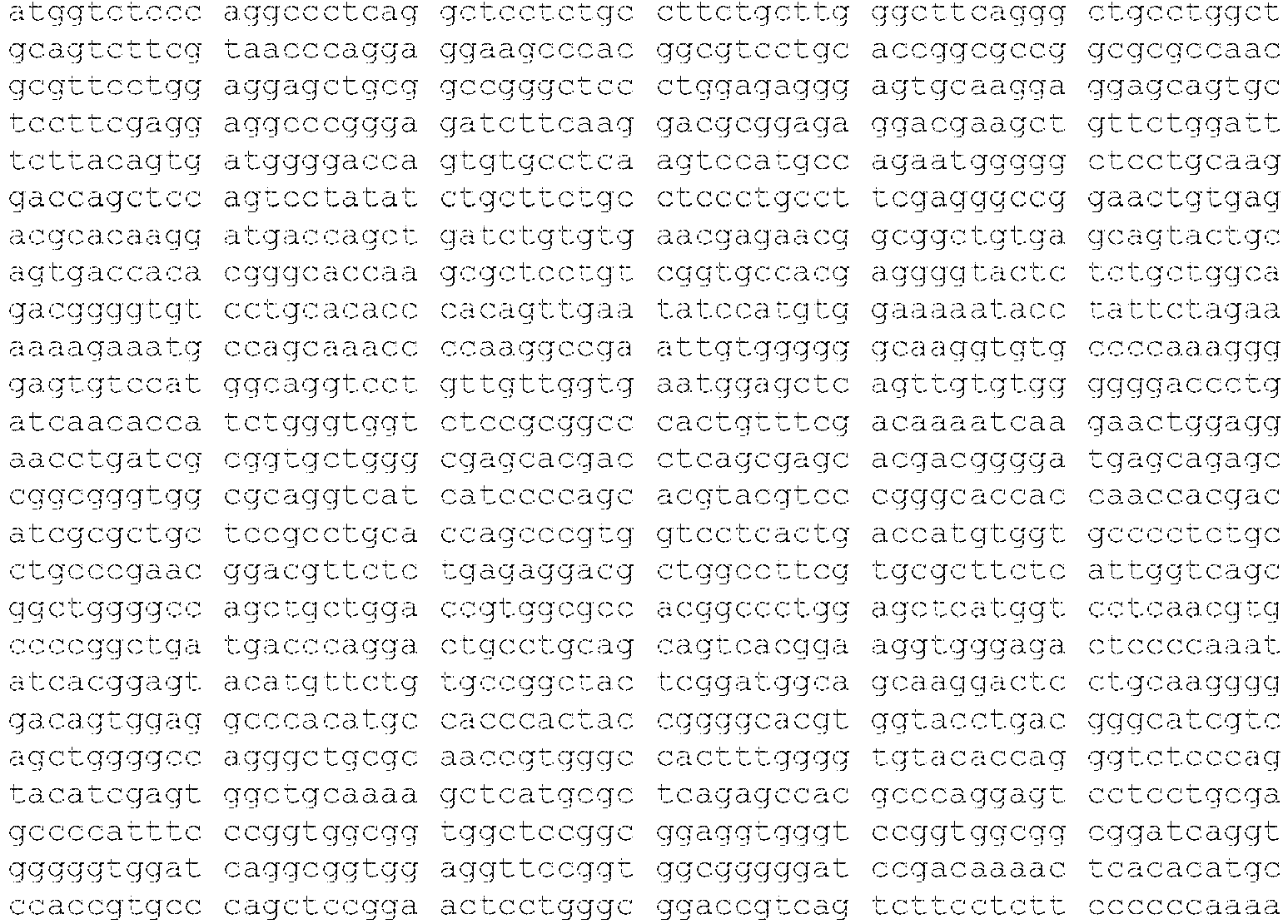

- FVII-053 amino acid sequence. Signal sequence is shown in dotted underline, linker region connecting FVII to Fc region is underlined, linker connecting both Fcs sites is shown in bold, and MB9 is italicized


- FVII-053 DNA sequence


- FVII-044 amino acid sequence. Signal sequence is shown in dotted underline, propeptide is double underlined, linker region connecting FVII or PS4 to Fc region is underlined, linker connecting both Fcs sites is shown in bold, and PS4 peptide is italicized
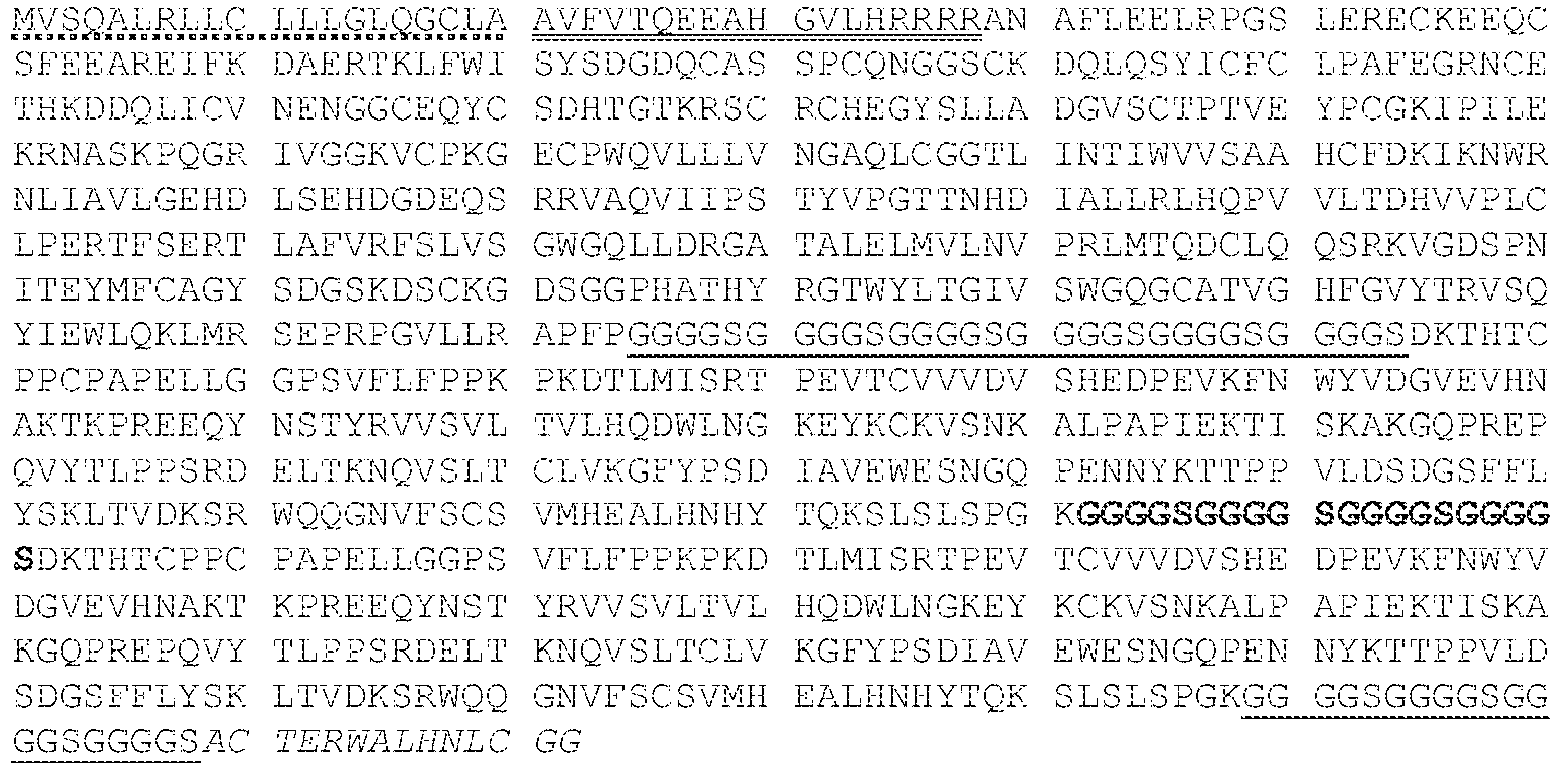
- FVII-044 DNA sequence


- FVII-045 amino acid sequence. Signal sequence is shown in dotted underline, propeptide is double underlined, linker region connecting FVII or OS1 to Fc region is underlined, linker connecting both Fcs sites is shown in bold, and OS1 peptide is italicized

- FVII-045 DNA sequence


- FVII-046 amino acid sequence. Signal sequence is shown in dotted underline, propeptide is double underlined, linker region connecting FVII or OS2 to Fc region is underlined, linker connecting both Fcs sites is shown in bold, and OS2 peptide is italicized

- FVII-046 DNA sequence


- FVII-047 amino acid sequence. Signal sequence is shown in dotted underline, propeptide is double underlined, linker region connecting FVII or PS4 to Fc regions is underlined, and PS4 peptide is italicized


- FVII-047 DNA sequence

- FVII-048 amino acid sequence. Signal sequence is shown in dotted underline, propeptide is double underlined, linker region connecting FVII or
OS 1 to Fc regions is underlined, and OS1 peptide is italicized
- DNA sequence of FVII-048


- FVII-049 amino acid sequence. Signal sequence is shown in dotted underline, propeptide is double underlined, linker region connecting FVII or OS2 to Fc regions is underlined, and OS2 peptide is italicized

- DNA sequence of FVII-049


- FVII-011 amino acid sequence. Signal sequence is shown in dotted underline, propeptide is double underlined, Gla domain is italicized, linker region connecting FVII to Fc region is underlined, and linker connecting both Fcs sites is shown in bold

- FVII-011 DNA sequence


- B domain deleted FVIII amino acid sequence: Signal peptide underlined; 14 amino acid linker (containing the remaining B domain) between the HC and LC sequence is double underlined, with the S743/Q1638 fusion site indicated in bold.

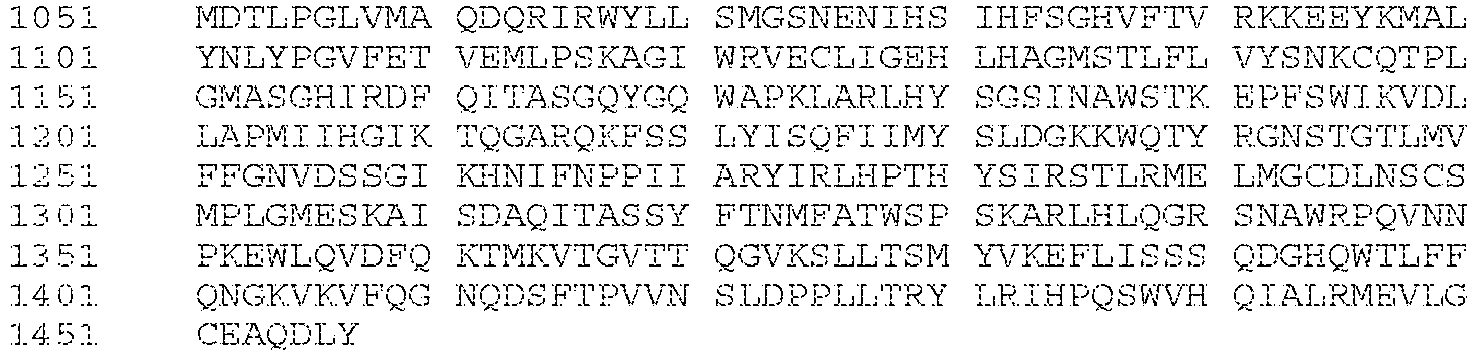
- Full length FVIII amino acid sequence: Signal peptide underlined

- FIX amino acid sequence. Signal sequence is shown in dotted underline, propeptide is double underlined


- FIX DNA sequence

- FX amino acid sequence. Signal sequence is shown in dotted underline, propeptide is double underlined

- FX DNA sequence


- DNA sequence of FVII--066


- FVII-066 amino acid sequence. Signal sequence is shown in dotted underline, propeptide is double underlined, linker region connecting FVII or SCE5 to Fc region is underlined, and linker with proprotein convertase processing sites is shown in bold

- DNA sequence for FVII-057

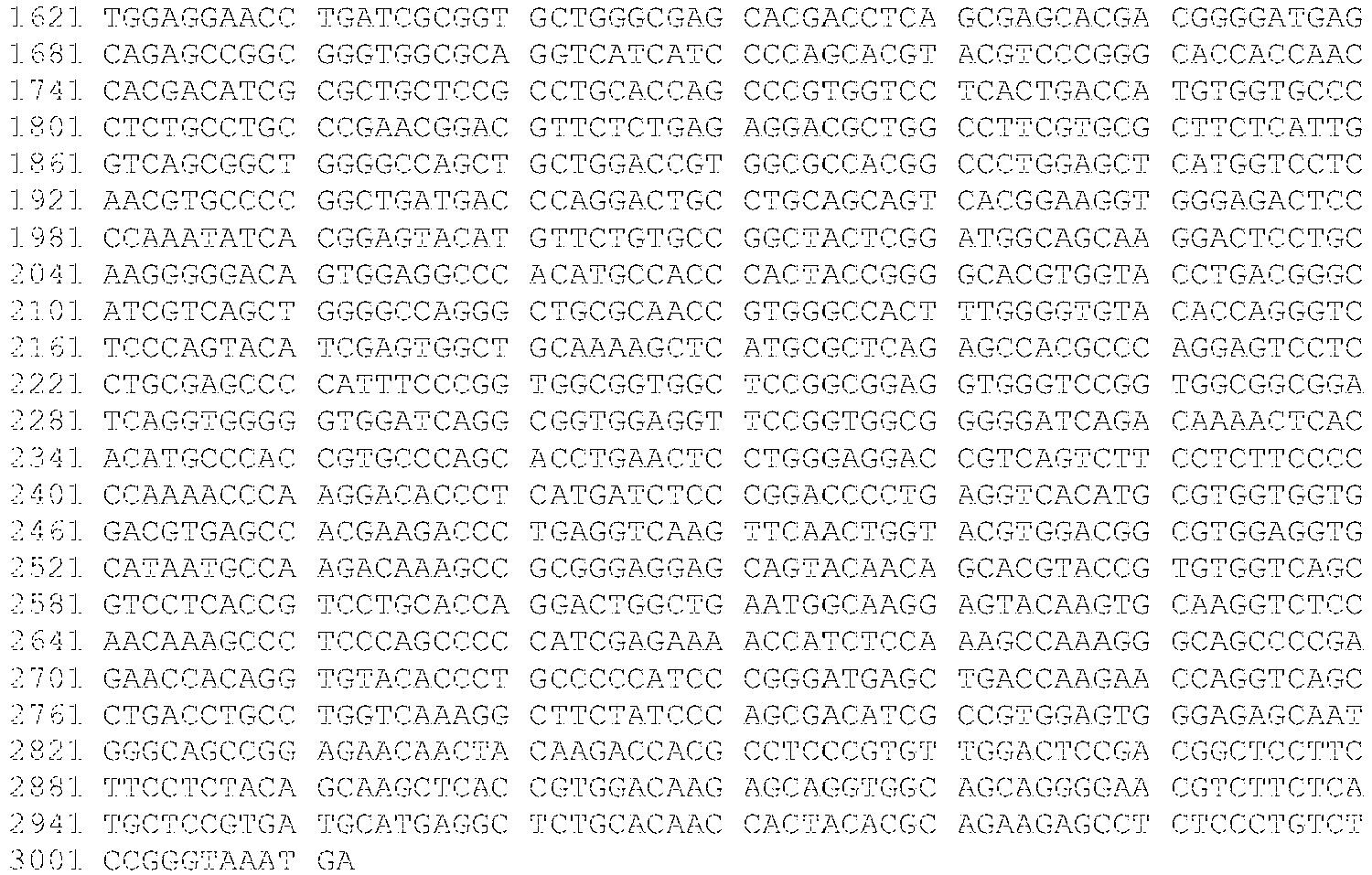
- FVII-057 amino acid sequence Signal sequence is shown in dotted underline, propeptide is double underlined, linker region connecting FVII light chain or heavy chain to Fc region is underlined, linker region connecting the Fc and the Factor XIa cleavage site is shown in bold, and the Factor XIa cleavage site is shown in dashed underline

- DNA sequence for FVII-058


- FVII-058 amino acid sequence. Signal sequence is shown in dotted underline, propeptide is double underlined, linker region connecting FVII light chain or heavy chain to Fc region is underlined, linker region connecting the Fc and the thrombin cleavage site is shown in bold, and the thrombin cleavage site is shown in dashed underline

- DNA sequence for FVII-059


- FVII-059 amino acid sequence. Signal sequence is shown in dotted underline, propeptide is double underlined, linker region connecting FVII light chain or heavy chain to Fc region is underlined, linker region connecting the Fc and the thrombin cleavage site is shown in bold, and the thrombin cleavage site is shown in dashed underline

- DNA sequence for FVII-060


- FVII-060 amino acid sequence. Signal sequence is shown in dotted underline, propeptide is double underlined, linker region connecting FVII light chain or heavy chain to Fc region is underlined, linker region connecting the Fc and the thrombin cleavage site is shown in bold, and the thrombin cleavage site is shown in dashed underline

- DNA sequence for FVII-061

- FVII-061 amino acid sequence. Signal sequence is shown in dotted underline, propeptide is double underlined, linker region connecting FVII light chain or heavy chain to Fc region is underlined, linker region connecting the Fc and the thrombin cleavage site is shown in bold, and the thrombin cleavage site is shown in dashed underline


- DNA sequence for FVII-062

- FVII-062 amino acid sequence. Signal sequence is shown in dotted underline, propeptide is double underlined, linker region connecting FVIIa light chain or heavy chain to Fc region is underlined, and linker region connecting the Fc and the FVIIa heavy chain is shown in bold


- DNA sequence for FVII-090

- FVII-090 amino acid sequence. Signal sequence is shown in dotted underline, propeptide is double underlined, linker region connecting FVII light chain or heavy chain to Fc region is underlined, linker region connecting the Fc and the thrombin cleavage site is shown in bold, and the thrombin cleavage site is shown in dashed underline

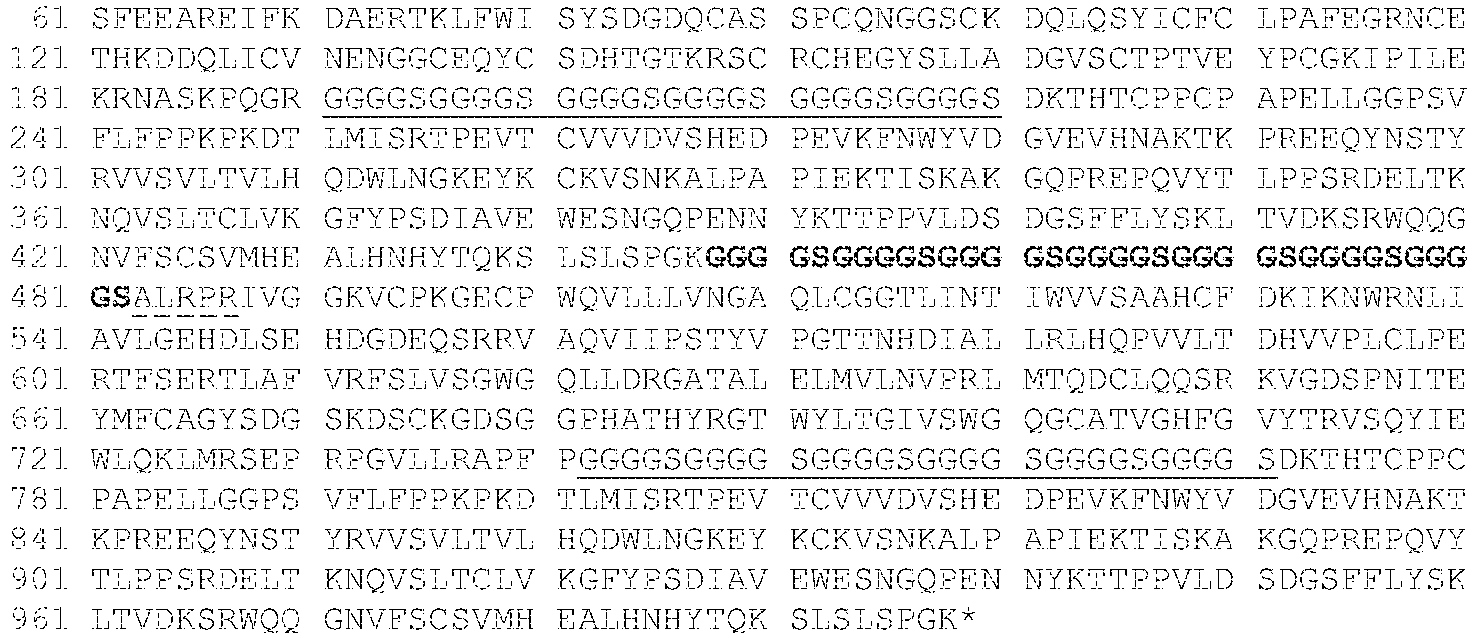
- DNA sequence for FVII-100

- FVII-100 amino acid sequence. Signal sequence is shown in dotted underline, propeptide is double underlined, linker region connecting FVII light chain or heavy chain to Fc region is underlined, linker region connecting the Fc and the thrombin cleavage site is shown in bold, the thrombin cleavage site is shown in dashed underline, and the
trypsin 170 loop region is wave underlined
- DNA sequence for FVII-115


- FVII-115 amino acid sequence. Signal sequence is shown in dotted underline, propeptide is double underlined, linker region connecting FVII light chain or heavy chain to Fc region is underlined, linker region connecting the Fc and the thrombin cleavage site is shown in bold, the thrombin cleavage site is shown in dashed underline, and the three point mutations in FVIIa (V158D, E296V and M298Q) are in bold and underlined

- DNA sequence for FVII-118


- FVII-118 amino acid sequence. Signal sequence is shown in dotted underline, propeptide is double underlined, the thrombin cleavage site is shown in dashed underline, the linker region connecting FVII heavy chain to Fc region is underlined, and the linker region connecting the Fc regions is shown in bold
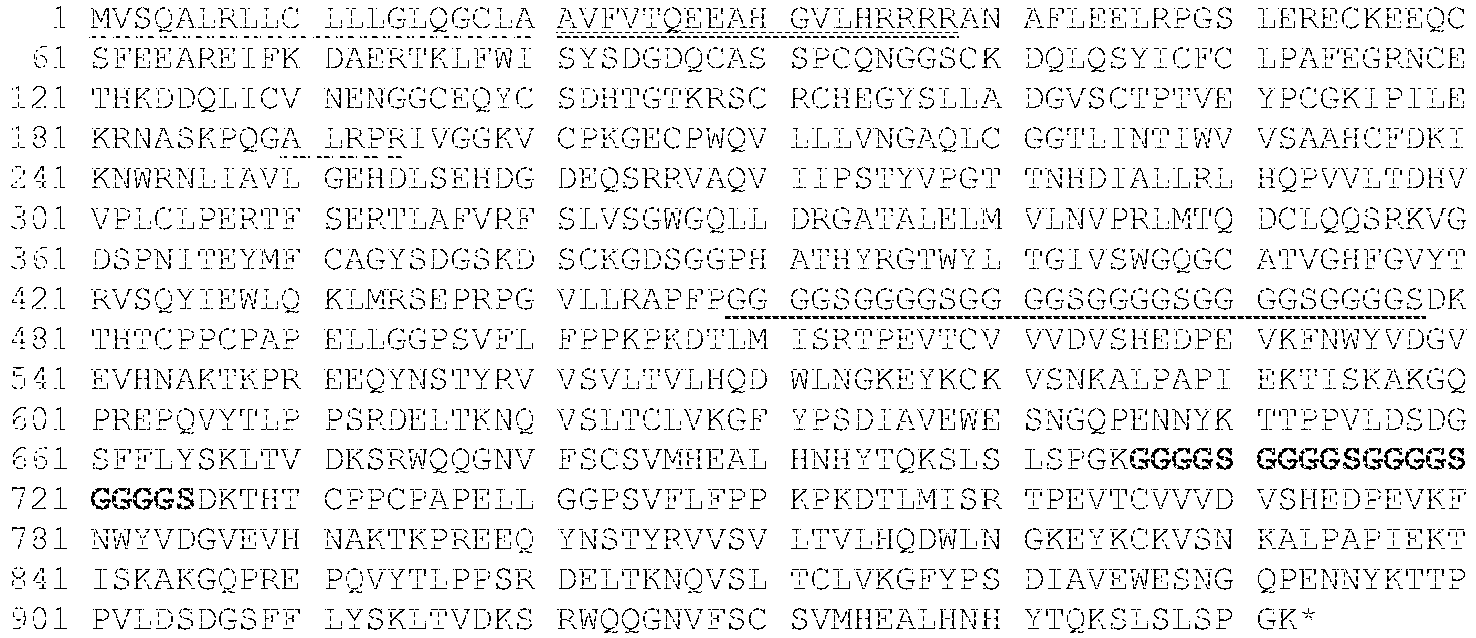
- DNA sequence for FVII-119


- FVII-119 amino acid sequence. Signal sequence is shown in dotted underline, propeptide is double underlined, the thrombin cleavage site with GGGS linker is shown in dashed underline, the linker region connecting FVII heavy chain to Fc region is underlined, and the linker region connecting the Fc regions is shown in bold

- DNA sequence for FVII-127


- FVII-127 amino acid sequence. Signal sequence is shown in dotted underline, propeptide is double underlined, the thrombin cleavage site is shown in dashed underline, the
trypsin 170 loop region is wave underlined, the linker region connecting FVII heavy chain to Fc region is underlined, and the linker region connecting the Fc regions is shown in bold
- DNA sequence for FVII-125


- FVII-125 amino acid sequence. Signal sequence is shown in dotted underline, propeptide is double underlined, and linker region connecting FVII to AP3 is bold, and AP3 scFv is italicized

- DNA sequence for FVII-067


- FVII-067 amino acid sequence. Signal sequence is shown in dotted underline, propeptide is double underlined, linker region connecting FVIIa to Fc region is underlined, linker connecting both Fc regions is dashed underlined and linker connecting the Fc region to SCES is in bold

- DNA sequence for FVII-094


- FVII-094 amino acid sequence. Signal sequence is shown in dotted underline, propeptide is double underlined, and linker region connecting FVII to SCE5 is underlined
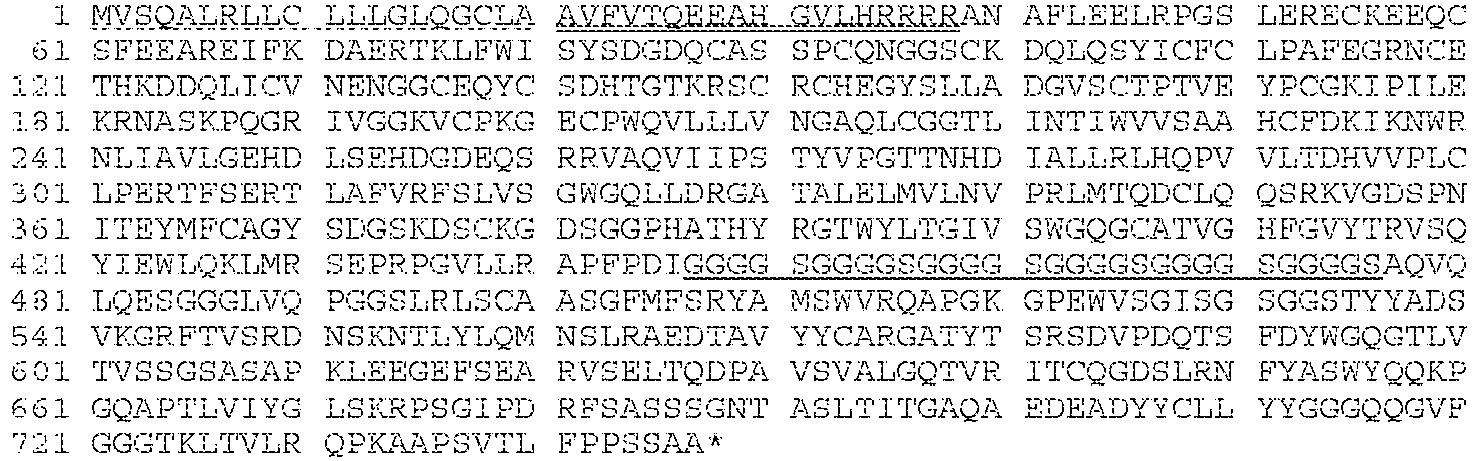
- DNA sequence for FVII-028


- FVII-028 amino acid sequence. Signal sequence is shown in dotted underline, linker region connecting FVII to Fc region is underlined, linker connecting both Fcs sites is shown in bold, and MB9 is italicized

- DNA sequence FVII-039


- FVII-039 amino acid sequence. Signal sequence is shown in dotted underline, propeptide is double underlined, the FXIa cleavage site is shown in dashed underline, the linker region connecting FVII heavy chain to Fc region is underlined, and the linker region connecting the Fc regions is shown in bold

- DNA sequence for FVII-040

- FVII-040 amino acid sequence. Signal sequence is shown in dotted underline, propeptide is double underlined, the FXIa cleavage site is shown in dashed underline, the linker region connecting FVII heavy chain to Fc region is underlined, and the linker region connecting the Fc regions is shown in bold

- DNA sequence for FIX-042

- FIX-042 amino acid sequence. Signal sequence is shown in dotted underline, propeptide is double underlined, and linker region connecting the Fc regions is underlined


- DNA sequence for FIX-068


- FIX-068 amino acid sequence. Signal sequence is shown in dotted underline, propeptide is double underlined, linker region connecting SCE5 to Fc region is underlined, and linker with proprotein convertase processing sites is shown in bold

- DNA sequence for FIX-088


- FIX--088 amino acid sequence. Signal sequence is shown in dotted underline, propeptide is double underlined, linker connecting both Fc regions is underlined, and linker connecting the Fc region to SCE5 is in bold

- DNA sequence for FIX-089


- FIX-089 amino acid sequence. Signal sequence is shown in dotted underline, propeptide is double underlined, linker regions connecting OS1 to Fc regions are underlined, and OS1 peptide is italicized

- DNA sequence for FIX-090


- FIX-90 amino acid sequence. Signal sequence is shown in dotted underline, propeptide is double underlined, and linker regions connecting FIX to SCE5 is underlined.
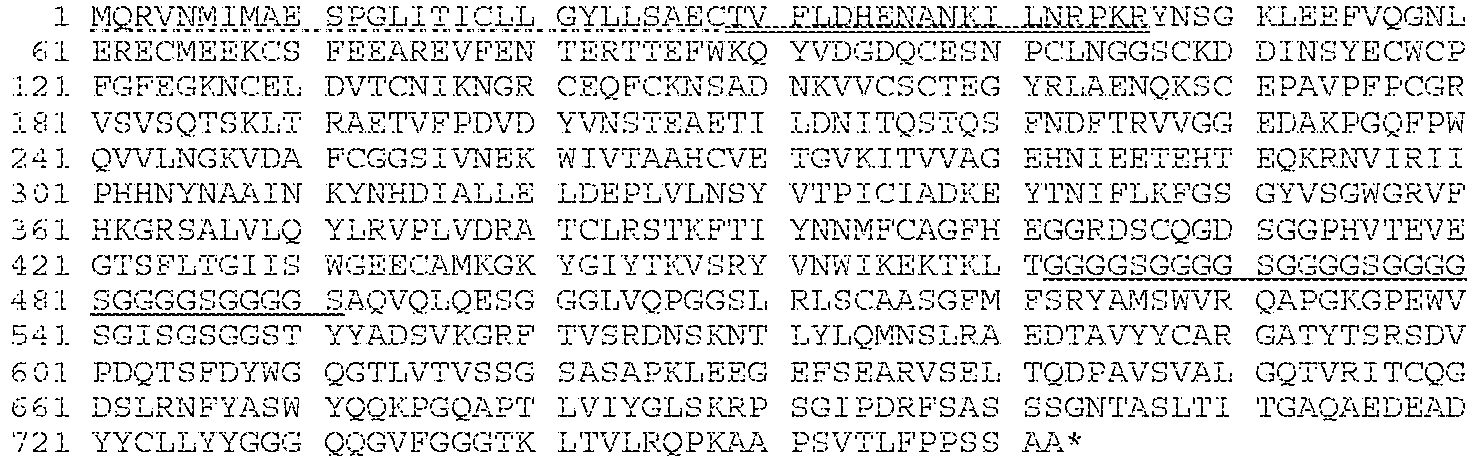
- DNA sequence for FVII-088


- FVII-038 amino acid sequence. Signal sequence is shown in dotted underline, propeptide is double underlined, linker region connecting FVII or AP3 to Fc region is underlined, the AP3 scFv italicized, and linker with proprotein convertase processing sites is shown in bold

- DNA sequence for FVIII-041


- FVIII-041. amino acid sequence. Signal sequence is shown in dotted underline, and linker region connecting the Fc regions is underlined

- DNA sequence for FVIII-108


- FVIII-108 amino acid sequence. Signal sequence is shown in dotted underline, linker region connecting SCE5 to Fc region is underlined, and linker with proprotein convertase processing sites is shown in bold

- DNA sequence for pSYN-FVIII-049


- FVIII-049 amino acid sequence. Signal sequence is shown in dotted underline, and linker with proprotein convertase processing sites is shown in bold

Claims (14)
- A chimeric clotting factor which comprisesi) a clotting factor comprising a FVII polypeptideii) a targeting moiety which binds to platelets, andiii) a scaffold moiety comprising an FcRn binding moiety,wherein the clotting factor is linked to the scaffold moiety directly or by a first linker, and wherein the targeting moiety is linked to the scaffold moiety directly or by a second linker, and wherein the scaffold moiety is a dimeric Fc region comprising a first Fc moiety, F1, and a second Fc moiety, F2.
- The chimeric clotting factor of claim 1, wherein the FVII polypeptide comprises a heterologous enzymatic cleavage site, which is activatable by a component of the clotting cascade.
- The chimeric clotting factor of claim 2, wherein the clotting factor is linked to the scaffold moiety by the first linker.
- The chimeric clotting factor of any one of claims 1 to 3, which comprises a cleavable scFc (cscFc) linker interposed between the two Fc moieties, wherein the cscFc linker is adjacent to at least one enzymatic cleavage site which results in cleavage of the cscFc polypeptide linker.
- The chimeric clotting factor of claim 4, wherein the at least one enzymatic cleavage site is an intracellular processing site.
- The chimeric clotting factor of any one of claims 1 to 5, wherein the targeting moiety binds to resting platelets or activated platelets.
- The chimeric clotting factor of any one of claims 1 to 6, wherein the targeting moiety is selected from the group consisting of: an antibody molecule, an antigen binding fragment of an antibody molecule, an scFv molecule, a receptor binding portion of a receptor, and a peptide.
- The chimeric clotting factor of claim 2, wherein the heterologous enzymatic cleavage site is selected from the group consisting of: a factor XIa cleavage site, a factor Xa cleavage site, and a thrombin cleavage site.
- The chimeric clotting factor of any one of claims 1 to 8, wherein the clotting factor comprises two polypeptide chains.
- A nucleic acid molecule encoding the chimeric clotting factor of any one of claims 1 to 9.
- An expression vector comprising the nucleic acid molecule of claim 10.
- A host cell comprising the expression vector of claim 11.
- A method for producing a chimeric clotting factor comprising culturing the host cell of claim 12 in culture medium and recovering the chimeric clotting factor from the medium.
- A pharmaceutical composition comprising the chimeric clotting factor of any one of claims 1 to 9 and a pharmaceutically acceptable carrier, for use in improving hemostasis in a subject.
Applications Claiming Priority (8)
| Application Number | Priority Date | Filing Date | Title |
|---|---|---|---|
| US36318610P | 2010-07-09 | 2010-07-09 | |
| US36318310P | 2010-07-09 | 2010-07-09 | |
| US201161442150P | 2011-02-11 | 2011-02-11 | |
| US201161442055P | 2011-02-11 | 2011-02-11 | |
| US201161442029P | 2011-02-11 | 2011-02-11 | |
| US201161467880P | 2011-03-25 | 2011-03-25 | |
| US201161491762P | 2011-05-31 | 2011-05-31 | |
| PCT/US2011/043597 WO2012006633A1 (en) | 2010-07-09 | 2011-07-11 | Chimeric clotting factors |
Publications (2)
| Publication Number | Publication Date |
|---|---|
| EP2591099A1 EP2591099A1 (en) | 2013-05-15 |
| EP2591099B1 true EP2591099B1 (en) | 2020-11-18 |
Family
ID=44629302
Family Applications (3)
| Application Number | Title | Priority Date | Filing Date |
|---|---|---|---|
| EP19165598.4A Pending EP3560962A1 (en) | 2010-07-09 | 2011-07-11 | Processable single chain molecules and polypeptides made using same |
| EP11738538.5A Active EP2591099B1 (en) | 2010-07-09 | 2011-07-11 | Chimeric clotting factors |
| EP11738539.3A Active EP2591006B1 (en) | 2010-07-09 | 2011-07-11 | Processable single chain molecules and polypeptides made using same |
Family Applications Before (1)
| Application Number | Title | Priority Date | Filing Date |
|---|---|---|---|
| EP19165598.4A Pending EP3560962A1 (en) | 2010-07-09 | 2011-07-11 | Processable single chain molecules and polypeptides made using same |
Family Applications After (1)
| Application Number | Title | Priority Date | Filing Date |
|---|---|---|---|
| EP11738539.3A Active EP2591006B1 (en) | 2010-07-09 | 2011-07-11 | Processable single chain molecules and polypeptides made using same |
Country Status (22)
| Country | Link |
|---|---|
| US (6) | US20130216513A1 (en) |
| EP (3) | EP3560962A1 (en) |
| JP (1) | JP2013534427A (en) |
| KR (1) | KR20140002601A (en) |
| CN (1) | CN103180439A (en) |
| AU (1) | AU2011274423B2 (en) |
| CA (1) | CA2804280A1 (en) |
| CY (1) | CY1122044T1 (en) |
| DK (2) | DK2591006T3 (en) |
| EA (1) | EA201291482A1 (en) |
| ES (1) | ES2739503T3 (en) |
| HR (1) | HRP20191305T1 (en) |
| HU (1) | HUE044419T2 (en) |
| LT (1) | LT2591006T (en) |
| MX (1) | MX2013000301A (en) |
| NZ (1) | NZ605400A (en) |
| PL (1) | PL2591006T3 (en) |
| PT (1) | PT2591006T (en) |
| SG (2) | SG186875A1 (en) |
| SI (1) | SI2591006T1 (en) |
| TW (2) | TW201217526A (en) |
| WO (2) | WO2012006633A1 (en) |
Families Citing this family (112)
| Publication number | Priority date | Publication date | Assignee | Title |
|---|---|---|---|---|
| TWI353991B (en) | 2003-05-06 | 2011-12-11 | Syntonix Pharmaceuticals Inc | Immunoglobulin chimeric monomer-dimer hybrids |
| US7855279B2 (en) | 2005-09-27 | 2010-12-21 | Amunix Operating, Inc. | Unstructured recombinant polymers and uses thereof |
| CN108530543B (en) | 2009-02-03 | 2023-06-23 | 阿穆尼克斯制药公司 | Extended recombinant polypeptides and compositions comprising the extended recombinant polypeptides |
| CN102741275B (en) | 2009-08-24 | 2016-08-03 | 阿穆尼克斯运营公司 | Plasma thromboplastin component compositions and preparation and application thereof |
| MX2012003396A (en) | 2009-09-16 | 2012-04-10 | Genentech Inc | Coiled coil and/or tether containing protein complexes and uses thereof. |
| TW201138821A (en) | 2010-03-26 | 2011-11-16 | Roche Glycart Ag | Bispecific antibodies |
| HRP20191305T1 (en) | 2010-07-09 | 2019-10-18 | Bioverativ Therapeutics Inc. | Processable single chain molecules and polypeptides made using same |
| PL2635607T3 (en) | 2010-11-05 | 2020-05-18 | Zymeworks Inc. | Stable heterodimeric antibody design with mutations in the fc domain |
| ES2676878T3 (en) | 2011-03-03 | 2018-07-25 | Zymeworks Inc. | Multivalent heteromultimer frame design and constructs |
| CA2838833A1 (en) | 2011-06-10 | 2012-12-13 | Biogen Idec Ma Inc. | Pro-coagulant compounds and methods of use thereof |
| AU2012282875B2 (en) | 2011-07-08 | 2016-04-21 | Bioverativ Therapeutics Inc. | Factor VIII chimeric and hybrid polypeptides, and methods of use thereof |
| PL2773671T3 (en) | 2011-11-04 | 2022-01-24 | Zymeworks Inc. | Stable heterodimeric antibody design with mutations in the fc domain |
| EP2794007A4 (en) * | 2011-12-23 | 2015-11-18 | Vasculogics Inc | Compositions and methods for treatment of thrombosis and prolonging survival of stored platelets |
| KR101963230B1 (en) * | 2011-12-26 | 2019-03-29 | 삼성전자주식회사 | Protein complex comprising multi-specific monoclonal antibodies |
| EP2804623B1 (en) | 2012-01-12 | 2019-08-07 | Bioverativ Therapeutics Inc. | Chimeric factor viii polypeptides and uses thereof |
| CN104105711B (en) * | 2012-02-10 | 2018-11-30 | 弗·哈夫曼-拉罗切有限公司 | Single-chain antibody and other heteromultimerics |
| LT3564260T (en) | 2012-02-15 | 2023-01-10 | Bioverativ Therapeutics Inc. | Factor viii compositions and methods of making and using same |
| EP2822577B1 (en) * | 2012-02-15 | 2019-02-06 | Bioverativ Therapeutics Inc. | Recombinant factor viii proteins |
| CN104520327B (en) * | 2012-05-10 | 2019-01-18 | 酵活有限公司 | Single-arm monovalent antibody constructs and uses thereof |
| AU2013270682A1 (en) | 2012-06-08 | 2014-12-11 | Biogen Ma Inc. | Procoagulant compounds |
| EP2863940A4 (en) * | 2012-06-08 | 2016-08-10 | Biogen Ma Inc | CHIMERIC COAGULATION FACTORS |
| US9499634B2 (en) | 2012-06-25 | 2016-11-22 | Zymeworks Inc. | Process and methods for efficient manufacturing of highly pure asymmetric antibodies in mammalian cells |
| EP2867253B1 (en) | 2012-06-27 | 2016-09-14 | F. Hoffmann-La Roche AG | Method for selection and production of tailor-made highly selective and multi-specific targeting entities containing at least two different binding entities and uses thereof |
| MX2014014804A (en) | 2012-06-27 | 2015-02-12 | Hoffmann La Roche | Method for making antibody fc-region conjugates comprising at least one binding entity that specifically binds to a target and uses thereof. |
| CN110054699A (en) | 2012-07-11 | 2019-07-26 | 比奥贝拉蒂治疗公司 | Factor IX compound with XTEN and vWF ELISA albumen, and application thereof |
| AU2013289881B2 (en) | 2012-07-13 | 2018-01-18 | Zymeworks Bc Inc. | Multivalent heteromultimer scaffold design and constructs |
| KR101974583B1 (en) * | 2012-08-29 | 2019-05-02 | 삼성전자주식회사 | Linker polypeptides and metod for analyzing target material using the same |
| US10391152B2 (en) | 2012-10-18 | 2019-08-27 | Bioverativ Therapeutics Inc. | Methods of using a fixed dose of a clotting factor |
| KR101911438B1 (en) | 2012-10-31 | 2018-10-24 | 삼성전자주식회사 | Bispecific antigen binding protein complex and preparation methods of bispecific antibodies |
| US9914785B2 (en) | 2012-11-28 | 2018-03-13 | Zymeworks Inc. | Engineered immunoglobulin heavy chain-light chain pairs and uses thereof |
| US10717965B2 (en) | 2013-01-10 | 2020-07-21 | Gloriana Therapeutics, Inc. | Mammalian cell culture-produced neublastin antibodies |
| US10081678B2 (en) | 2013-02-04 | 2018-09-25 | Emory University | Specific binding antibodies of glycoprotein IB alpha as selective ectodomain shedding inhibitors |
| FI3889173T3 (en) | 2013-02-15 | 2023-10-02 | Bioverativ Therapeutics Inc | Optimized factor viii gene |
| CA2902505A1 (en) | 2013-03-06 | 2014-09-12 | Merrimack Pharmaceuticals, Inc. | Anti-c-met tandem fc bispecific antibodies |
| TWI828269B (en) | 2013-03-15 | 2024-01-01 | 美商百歐維拉提夫治療公司 | Factor ix polypeptide formulations |
| WO2014190305A2 (en) | 2013-05-24 | 2014-11-27 | Biogen Idec Ma Inc. | Anti-gpiib/iiia antibodies or uses thereof |
| CN104211799B (en) * | 2013-05-29 | 2017-12-26 | 成都渊源生物科技有限公司 | Human Epidermal growth factor domain protein and its application |
| TW201536811A (en) * | 2013-05-31 | 2015-10-01 | Biogen Idec Inc | Chimeric FVII-XTEN molecules and uses thereof |
| MX2015016567A (en) | 2013-06-28 | 2016-03-31 | Biogen Ma Inc | Thrombin cleavable linker with xten and its uses thereof. |
| WO2015021423A2 (en) * | 2013-08-08 | 2015-02-12 | Biogen Idec Ma Inc. | Purification of chimeric fviii molecules |
| TWI667255B (en) | 2013-08-14 | 2019-08-01 | 美商生物化學醫療公司 | Factor viii-xten fusions and uses thereof |
| US20160311885A1 (en) | 2013-08-14 | 2016-10-27 | Biogen Ma Inc. | Recombinant factor viii proteins |
| CN103599527A (en) * | 2013-08-16 | 2014-02-26 | 安源生物科技(上海)有限公司 | Pharmaceutical composition containing modified type human coagulation factor FVII-Fc fusion protein |
| CN103397009B (en) * | 2013-08-16 | 2015-06-03 | 安源生物科技(上海)有限公司 | Improved human blood coagulation factor FVII-Fc fusion protein and its preparation method and application |
| SG11201601221XA (en) * | 2013-09-24 | 2016-04-28 | Pfizer | Compositions comprising heterogeneous populations of recombinant human clotting factor xa proteins |
| EP3048899B1 (en) | 2013-09-25 | 2021-09-08 | Bioverativ Therapeutics Inc. | On-column viral inactivation methods |
| WO2015070014A1 (en) | 2013-11-08 | 2015-05-14 | Biogen Idec Ma Inc. | Procoagulant fusion compound |
| EP4570318A3 (en) | 2013-11-27 | 2025-10-15 | Zymeworks BC Inc. | Bispecific antigen-binding constructs targeting her2 |
| JP2017500017A (en) | 2013-12-20 | 2017-01-05 | バイオジェン・エムエイ・インコーポレイテッドBiogen MA Inc. | Use of perfusion seed cultures to improve biopharmaceutical fed-batch production capacity and product quality |
| SG11201605242YA (en) | 2014-01-10 | 2016-07-28 | Biogen Ma Inc | Factor viii chimeric proteins and uses thereof |
| SG10201913507SA (en) | 2014-05-02 | 2020-02-27 | Momenta Pharmaceuticals Inc | Compositions and methods related to engineered fc constructs |
| BR112016027888A2 (en) | 2014-05-28 | 2017-10-24 | Zymeworks Inc | isolated antigen binding polypeptide construct, isolated polynucleotide or set of isolated polynucleotides, vector or set of vectors, isolated cell, pharmaceutical composition, use of the construct, method of treating a subject with a disease or disorder, method of obtaining a construct , method for preparing a construct, computer readable storage medium, method for producing a bispecific antigen binding polypeptide construct, and method for preparing an isolated antigen binding polypeptide construct |
| CN105294857B (en) * | 2014-06-18 | 2019-02-19 | 上海交通大学 | FIX-based epitope and application thereof |
| WO2016004113A1 (en) | 2014-06-30 | 2016-01-07 | Biogen Ma Inc. | Optimized factor ix gene |
| ES2914099T3 (en) | 2014-08-25 | 2022-06-07 | Salk Inst For Biological Studi | Novel ULK1 inhibitors and methods of using the same |
| TWI700300B (en) * | 2014-09-26 | 2020-08-01 | 日商中外製藥股份有限公司 | Antibodies that neutralize substances with the function of FVIII coagulation factor (FVIII) |
| BR112017007765B1 (en) | 2014-10-14 | 2023-10-03 | Halozyme, Inc | COMPOSITIONS OF ADENOSINE DEAMINASE-2 (ADA2), VARIANTS THEREOF AND METHODS OF USING THE SAME |
| MA40835A (en) | 2014-10-23 | 2017-08-29 | Biogen Ma Inc | ANTI-GPIIB / IIIA ANTIBODIES AND THEIR USES |
| MA40861A (en) | 2014-10-31 | 2017-09-05 | Biogen Ma Inc | ANTI-GLYCOPROTEIN IIB / IIIA ANTIBODIES |
| CN107001482B (en) | 2014-12-03 | 2021-06-15 | 豪夫迈·罗氏有限公司 | multispecific antibody |
| WO2016118577A1 (en) * | 2015-01-22 | 2016-07-28 | Medimmune, Llc | Thymosin-beta-four fusion proteins |
| ES2983120T3 (en) * | 2015-06-12 | 2024-10-21 | Ubi Pharma Inc | Immunoglobulin fusion proteins and their uses |
| IL257231B (en) | 2015-08-03 | 2022-09-01 | Bioverativ Therapeutics Inc | Factor ix fusion proteins and methods for their preparation and use |
| WO2017059551A1 (en) | 2015-10-08 | 2017-04-13 | Zymeworks Inc. | Antigen-binding polypeptide constructs comprising kappa and lambda light chains and uses thereof |
| CN108602884B (en) * | 2015-11-08 | 2024-06-25 | 豪夫迈·罗氏有限公司 | Methods for screening multispecific antibodies |
| CN116479001A (en) | 2015-11-13 | 2023-07-25 | 武田药品工业株式会社 | Viral vectors encoding recombinant FVIII variants with increased expression for gene therapy of hemophilia a |
| KR20180118659A (en) | 2016-02-01 | 2018-10-31 | 바이오버라티브 테라퓨틱스 인크. | Optimized Factor VIII Factor |
| WO2017151971A2 (en) | 2016-03-02 | 2017-09-08 | Momenta Pharmaceuticals, Inc. | METHODS RELATED TO ENGINEERED Fc CONSTRUCTS |
| CA3025310A1 (en) | 2016-05-23 | 2017-11-30 | Momenta Pharmaceuticals, Inc. | Compositions and methods related to engineered fc constructs |
| KR102590454B1 (en) | 2016-07-07 | 2023-10-17 | 더 보드 어브 트러스티스 어브 더 리랜드 스탠포드 주니어 유니버시티 | Antibody-Adjuvant Conjugate |
| AU2017306709A1 (en) | 2016-08-05 | 2019-03-14 | Humabs, BioMed SA | Anti-o2 antibodies and uses thereof |
| CN107759696A (en) | 2016-08-19 | 2018-03-06 | 安源医药科技(上海)有限公司 | Fusion protein of human interleukin 7 and preparation method thereof |
| CN106279437B (en) * | 2016-08-19 | 2017-10-31 | 安源医药科技(上海)有限公司 | Hyperglycosylated human coagulation factor VIII fusion proteins and preparation method thereof and purposes |
| AU2017331739A1 (en) * | 2016-09-23 | 2019-03-07 | Csl Limited | Coagulation factor binding proteins and uses thereof |
| SG11201903063UA (en) | 2016-10-19 | 2019-05-30 | Medimmune Llc | Anti-o1 antibodies and uses thereof |
| DK3541833T5 (en) * | 2016-11-17 | 2024-09-02 | 2Seventy Bio Inc | TGFß signal converter |
| MX2019006444A (en) | 2016-12-02 | 2019-10-30 | Bioverativ Therapeutics Inc | HEMOPHILIC ARTHROPATHY TREATMENT METHODS USING CHEMERIC COAGULATION FACTORS. |
| KR102624254B1 (en) | 2017-01-06 | 2024-01-12 | 모멘타 파머슈티컬스 인코포레이티드 | Compositions and methods for genetically engineered Fc constructs |
| EP3573641A4 (en) * | 2017-01-25 | 2020-11-11 | Iconic Therapeutics, Inc. | Methods for treating disorders associated with angiogenesis and neovascularization |
| WO2018144623A1 (en) | 2017-01-31 | 2018-08-09 | Bioverativ Therapeutics Inc. | Factor ix fusion proteins and methods of making and using same |
| CN110520152A (en) * | 2017-03-14 | 2019-11-29 | 俄亥俄州创新基金会 | Method and composition related with the IGG3 immunoconjugates of the target tissue factor |
| BR112020002394A2 (en) | 2017-08-09 | 2020-07-28 | Bioverativ Therapeutics Inc. | nucleic acid molecules and uses thereof |
| CA3076817A1 (en) * | 2017-09-27 | 2019-04-04 | Ohio State Innovation Foundation | Tissue factor-targeting car-nk and car-t cell therapy |
| KR101952102B1 (en) * | 2017-12-07 | 2019-02-26 | 주식회사 지앤피바이오사이언스 | Factor Ⅷ mutant expression vector with inhanced protein expression |
| AU2019215063B2 (en) | 2018-02-01 | 2025-10-16 | Bioverativ Therapeutics, Inc. | Use of lentiviral vectors expressing Factor VIII |
| TW202003555A (en) | 2018-03-07 | 2020-01-16 | 英商葛蘭素史克智慧財產發展有限公司 | Methods for purifying recombinant polypeptides |
| SI3793588T1 (en) | 2018-05-18 | 2025-07-31 | Bioverativ Therapeutics Inc. | Methods of treating hemophilia a |
| AU2019282264A1 (en) | 2018-06-05 | 2020-11-26 | Amgen Inc. | Modulating antibody dependent cellular phagocytosis |
| WO2019241847A1 (en) * | 2018-06-22 | 2019-12-26 | Baker Heart and Diabetes Institute | A therapeutic gpiib/iiia binding-protein drug conjugate and use thereof |
| KR20210034013A (en) | 2018-07-16 | 2021-03-29 | 박스알타 인코퍼레이티드 | Genetic treatment of hemophilia using viral vectors encoding recombinant FVIII variants with increased expression |
| KR102925832B1 (en) | 2018-08-09 | 2026-02-11 | 바이오버라티브 테라퓨틱스 인크. | Nucleic acid molecules and their use in non-viral gene therapy |
| GB201813528D0 (en) * | 2018-08-20 | 2018-10-03 | Ucl Business Plc | Factor IX encoding nucleotides |
| CA3109999A1 (en) * | 2018-08-21 | 2020-02-27 | Abl Bio Inc. | Anti-pd-l1/anti-lag3 bispecific antibodies and uses thereof |
| AU2019339895A1 (en) | 2018-09-11 | 2021-03-11 | Amgen Inc. | Methods of modulating antibody-dependent cell-mediated cytotoxicity |
| WO2020086408A1 (en) | 2018-10-26 | 2020-04-30 | The United States Of America, As Represented By The Secretary, Department Of Health And Human Services | A high-yield perfusion-based transient gene expression bioprocess |
| BR112021010047A2 (en) | 2018-12-06 | 2021-08-24 | Bioverativ Therapeutics Inc. | Use of lentiviral vectors expressing factor ix |
| TWI851647B (en) | 2019-01-16 | 2024-08-11 | 日商武田藥品工業股份有限公司 | Viral vectors encoding recombinant fviii variants with increased expression for gene therapy of hemophilia a |
| US11471497B1 (en) | 2019-03-13 | 2022-10-18 | David Gordon Bermudes | Copper chelation therapeutics |
| JP2022525594A (en) | 2019-03-15 | 2022-05-18 | ボルト バイオセラピューティクス、インコーポレーテッド | Immune conjugates targeting HER2 |
| PE20212262A1 (en) | 2019-04-17 | 2021-11-29 | Novo Nordisk As | BISPECIFIC ANTIBODIES |
| MX2021013588A (en) | 2019-05-08 | 2022-02-11 | Medigene Immunotherapies Gmbh | GENOMODIFIED T CELLS. |
| CN112175088B (en) * | 2019-07-02 | 2023-03-28 | 江苏晟斯生物制药有限公司 | FIX fusion proteins, conjugates and uses thereof |
| CN114364796B (en) * | 2019-09-02 | 2023-07-11 | 甘李药业股份有限公司 | Chimeric proteins |
| US12403164B2 (en) | 2019-09-30 | 2025-09-02 | Bioverativ Therapeutics Inc. | Lentiviral vector formulations |
| CN113005176A (en) * | 2019-12-20 | 2021-06-22 | 深圳市帝迈生物技术有限公司 | Stabilizer, prothrombin time detection reagent, preparation method and kit thereof |
| CN115515588A (en) | 2020-02-14 | 2022-12-23 | 萨克生物研究学院 | Macrocyclic ULK1/2 Inhibitors |
| KR20230074703A (en) | 2020-06-24 | 2023-05-31 | 바이오버라티브 테라퓨틱스 인크. | Method for removing free factor VIII from preparations of lentiviral vectors modified to express the protein |
| AU2021329330A1 (en) * | 2020-08-18 | 2023-02-02 | Onchilles Pharma, Inc. | Modified serine protease proproteins |
| CN116157513A (en) | 2020-08-18 | 2023-05-23 | 昂希莱斯制药公司 | Modified porcine pancreatic elastase protein |
| US20230035308A1 (en) * | 2021-07-02 | 2023-02-02 | Aetio Biotherapy, Inc. | Activatable monomeric cytokine-single chain (sc) fc fusion proteins and uses thereof |
| US20230340073A1 (en) * | 2022-01-07 | 2023-10-26 | Codexis, Inc. | Recombinant factor viii variants |
| CN119176867A (en) * | 2024-10-17 | 2024-12-24 | 北京田园奥瑞生物科技有限公司 | Porcine pseudorabies virus antibody detection kit and application thereof |
Family Cites Families (202)
| Publication number | Priority date | Publication date | Assignee | Title |
|---|---|---|---|---|
| US659684A (en) | 1899-10-14 | 1900-10-16 | John A W Lundborg | Dental rubber-dam holder. |
| US4704362A (en) | 1977-11-08 | 1987-11-03 | Genentech, Inc. | Recombinant cloning vehicle microbial polypeptide expression |
| US4474893A (en) | 1981-07-01 | 1984-10-02 | The University of Texas System Cancer Center | Recombinant monoclonal antibodies |
| AU561343B2 (en) | 1981-10-19 | 1987-05-07 | Genentech Inc. | Human immune interferon by recombinant dna |
| US4444878A (en) | 1981-12-21 | 1984-04-24 | Boston Biomedical Research Institute, Inc. | Bispecific antibody determinants |
| GB8308235D0 (en) | 1983-03-25 | 1983-05-05 | Celltech Ltd | Polypeptides |
| US4816567A (en) | 1983-04-08 | 1989-03-28 | Genentech, Inc. | Recombinant immunoglobin preparations |
| US4694778A (en) | 1984-05-04 | 1987-09-22 | Anicon, Inc. | Chemical vapor deposition wafer boat |
| US4766073A (en) | 1985-02-25 | 1988-08-23 | Zymogenetics Inc. | Expression of biologically active PDGF analogs in eucaryotic cells |
| US4889919A (en) | 1986-08-13 | 1989-12-26 | Zymogenetics, Inc. | Biologically active PDGF derived A-chain homodimers |
| US5157021A (en) | 1985-03-15 | 1992-10-20 | Novo Nordisk A/S | Insulin derivatives and pharmaceutical preparations containing these derivatives |
| US4965188A (en) | 1986-08-22 | 1990-10-23 | Cetus Corporation | Process for amplifying, detecting, and/or cloning nucleic acid sequences using a thermostable enzyme |
| US4683195A (en) | 1986-01-30 | 1987-07-28 | Cetus Corporation | Process for amplifying, detecting, and/or-cloning nucleic acid sequences |
| US4683202A (en) | 1985-03-28 | 1987-07-28 | Cetus Corporation | Process for amplifying nucleic acid sequences |
| AU5772886A (en) | 1985-04-12 | 1986-11-05 | Genetics Institute Inc. | Novel procoagulant proteins |
| US4745055A (en) | 1985-05-07 | 1988-05-17 | California Biotechnology Inc. | Fused protein for enzyme immunoassay system |
| KR910006424B1 (en) | 1985-08-21 | 1991-08-24 | 인코텍스 비.브이 | Manufacturing method of knitted briefs |
| JP2525022B2 (en) | 1986-01-03 | 1996-08-14 | ジェネティックス・インスチチュ−ト・インコ−ポレ−テッド | VIII: Improved production method for c-factor protein |
| US5595886A (en) | 1986-01-27 | 1997-01-21 | Chiron Corporation | Protein complexes having Factor VIII:C activity and production thereof |
| US4800159A (en) | 1986-02-07 | 1989-01-24 | Cetus Corporation | Process for amplifying, detecting, and/or cloning nucleic acid sequences |
| IL78444A (en) | 1986-04-08 | 1992-05-25 | Yeda Res & Dev | Human gamma interferon-specific receptor protein,antibody against said protein,and compositions containing said protein and antibody |
| US5543502A (en) | 1986-06-24 | 1996-08-06 | Novo Nordisk A/S | Process for producing a coagulation active complex of factor VIII fragments |
| CA1340456C (en) | 1986-07-07 | 1999-03-23 | Hubert J.P. Schoemaker | Chimeric rodent/human immunoglobulins specific for tumor-associated antigens |
| NO873164L (en) | 1986-07-30 | 1988-02-01 | Teijin Ltd | MUSEUM-HUMAN CHEMICAL ANTIBODIES. |
| IL84285A (en) | 1986-10-27 | 1993-03-15 | Int Genetic Engineering | Chimeric antibody with specificity to human tumor antigen |
| GB8626412D0 (en) | 1986-11-05 | 1986-12-03 | Clark M R | Antibodies |
| CA1339445C (en) | 1986-11-12 | 1997-09-09 | The General Hospital Corporation | Recombinant hybrid immunoglobulin molecules and method of use |
| EP0279582A3 (en) | 1987-02-17 | 1989-10-18 | Pharming B.V. | Dna sequences to target proteins to the mammary gland for efficient secretion |
| EP0307434B2 (en) | 1987-03-18 | 1998-07-29 | Scotgen Biopharmaceuticals, Inc. | Altered antibodies |
| US6060447A (en) | 1987-05-19 | 2000-05-09 | Chiron Corporation | Protein complexes having Factor VIII:C activity and production thereof |
| US6346513B1 (en) | 1987-06-12 | 2002-02-12 | Baxter Trading Gmbh | Proteins with factor VIII activity: process for their preparation using genetically-engineered cells and pharmaceutical compositions containing them |
| IE69026B1 (en) | 1987-06-12 | 1996-08-07 | Immuno Ag | Novel proteins with factor VIII activity process for their preparation using genetically-engineered cells and pharmaceutical compositions containing them |
| DE3720246A1 (en) | 1987-06-19 | 1988-12-29 | Behringwerke Ag | FACTOR VIII: C-LIKE MOLECULE WITH COAGULATION ACTIVITY |
| US5892019A (en) | 1987-07-15 | 1999-04-06 | The United States Of America, As Represented By The Department Of Health And Human Services | Production of a single-gene-encoded immunoglobulin |
| FR2619314B1 (en) | 1987-08-11 | 1990-06-15 | Transgene Sa | FACTOR VIII ANALOG, PREPARATION METHOD AND PHARMACEUTICAL COMPOSITION CONTAINING THE SAME |
| US6780613B1 (en) | 1988-10-28 | 2004-08-24 | Genentech, Inc. | Growth hormone variants |
| WO1990005183A1 (en) | 1988-10-31 | 1990-05-17 | Immunex Corporation | Interleukin-4 receptors |
| ES2052027T5 (en) | 1988-11-11 | 2005-04-16 | Medical Research Council | IMMUNOGLOBULINE VARIABLE DOMAIN SEQUENCE CLONING. |
| US5175384A (en) | 1988-12-05 | 1992-12-29 | Genpharm International | Transgenic mice depleted in mature t-cells and methods for making transgenic mice |
| JPH04505260A (en) | 1989-05-22 | 1992-09-17 | ザイモジェネティクス,インコーポレイティド | PDGFα-receptor |
| US5061786A (en) | 1989-05-25 | 1991-10-29 | Genentech, Inc. | Biologically active polypeptides based on transforming growth factor-β |
| US5194596A (en) | 1989-07-27 | 1993-03-16 | California Biotechnology Inc. | Production of vascular endothelial cell growth factor |
| US5395760A (en) | 1989-09-05 | 1995-03-07 | Immunex Corporation | DNA encoding tumor necrosis factor-α and -β receptors |
| JPH0396383A (en) | 1989-09-08 | 1991-04-22 | Riso Kagaku Corp | Image forming device |
| DE59010908D1 (en) | 1989-09-12 | 2000-08-10 | Hoffmann La Roche | TNF-binding proteins |
| US5935815A (en) | 1989-10-25 | 1999-08-10 | Katholieke Universiteit Leuven | Process for micro biological production of proteins |
| US5633076A (en) | 1989-12-01 | 1997-05-27 | Pharming Bv | Method of producing a transgenic bovine or transgenic bovine embryo |
| SE465222C5 (en) | 1989-12-15 | 1998-02-10 | Pharmacia & Upjohn Ab | A recombinant human factor VIII derivative and process for its preparation |
| US5648273A (en) | 1989-12-27 | 1997-07-15 | The United States Of America, As Represented By The Department Of Health And Human Services | Hepatic growth factor receptor is the MET proto-oncogene |
| ES2284161T3 (en) | 1990-01-12 | 2007-11-01 | Amgen Fremont Inc. | GENERATION OF XENOGENIC ANTIBODIES. |
| US6075181A (en) | 1990-01-12 | 2000-06-13 | Abgenix, Inc. | Human antibodies derived from immunized xenomice |
| CA2040099A1 (en) | 1990-05-01 | 1991-11-02 | Mariano Barbacid | Tyrosine kinase negative trkb |
| GB9015198D0 (en) | 1990-07-10 | 1990-08-29 | Brien Caroline J O | Binding substance |
| US5453491A (en) | 1990-09-11 | 1995-09-26 | Kiyoshi Takatsu | Murine interleukin-5 receptor |
| EP0785273A1 (en) | 1990-11-26 | 1997-07-23 | Genetics Institute, Inc. | Paired basic amino acid converting enzyme and DNA sequence encoding it |
| ES2113940T3 (en) | 1990-12-03 | 1998-05-16 | Genentech Inc | ENRICHMENT METHOD FOR PROTEIN VARIANTS WITH ALTERED UNION PROPERTIES. |
| JPH06506600A (en) | 1991-04-19 | 1994-07-28 | シェリング・コーポレーション | Human interleukin 3 receptor subunit |
| US5227158A (en) | 1991-06-10 | 1993-07-13 | Genentech, Inc. | Method of stimulating hepatocyte proliferation by administration of hepatocyte growth factor and gamma-interferon |
| US5346991A (en) | 1991-06-13 | 1994-09-13 | Genentech, Inc. | Tissue factor mutants useful for the treatment of myocardial infarction and coagulopathic disorders |
| US5348856A (en) | 1991-07-08 | 1994-09-20 | E. R. Squibb & Sons, Inc. | DNA encoding TRKC protein |
| MX9204374A (en) | 1991-07-25 | 1993-03-01 | Idec Pharma Corp | RECOMBINANT ANTIBODY AND METHOD FOR ITS PRODUCTION. |
| FR2686899B1 (en) | 1992-01-31 | 1995-09-01 | Rhone Poulenc Rorer Sa | NOVEL BIOLOGICALLY ACTIVE POLYPEPTIDES, THEIR PREPARATION AND PHARMACEUTICAL COMPOSITIONS CONTAINING THEM. |
| ATE244763T1 (en) | 1992-02-11 | 2003-07-15 | Cell Genesys Inc | ACHIEVEMENT OF HOMOZYGOTE THROUGH TARGETED GENETIC EVENTS |
| JP2559093Y2 (en) | 1992-05-08 | 1998-01-14 | ワイケイケイ株式会社 | Hook-and-loop fastener |
| US6765087B1 (en) | 1992-08-21 | 2004-07-20 | Vrije Universiteit Brussel | Immunoglobulins devoid of light chains |
| US6005079A (en) | 1992-08-21 | 1999-12-21 | Vrije Universiteit Brussels | Immunoglobulins devoid of light chains |
| ES2088838T3 (en) | 1992-11-13 | 2004-01-01 | Idec Pharmaceuticals Corporation | FULLY ALTERED KOZAK CONSENSUS SEQUENCES INTENDED FOR EXPRESSION IN THE MAMMALS. |
| US5736137A (en) | 1992-11-13 | 1998-04-07 | Idec Pharmaceuticals Corporation | Therapeutic application of chimeric and radiolabeled antibodies to human B lymphocyte restricted differentiation antigen for treatment of B cell lymphoma |
| US5726147A (en) | 1993-06-01 | 1998-03-10 | The Scripps Research Institute | Human mutant tissue factor compositions useful as tissue factor antagonists |
| SE504074C2 (en) | 1993-07-05 | 1996-11-04 | Pharmacia Ab | Protein preparation for subcutaneous, intramuscular or intradermal administration |
| US5827690A (en) | 1993-12-20 | 1998-10-27 | Genzyme Transgenics Corporatiion | Transgenic production of antibodies in milk |
| US6740734B1 (en) | 1994-01-14 | 2004-05-25 | Biovitrum Ab | Bacterial receptor structures |
| US5877016A (en) | 1994-03-18 | 1999-03-02 | Genentech, Inc. | Human trk receptors and neurotrophic factor inhibitors |
| EP0771216B9 (en) | 1994-07-11 | 2003-01-02 | The Board Of Regents, The University Of Texas System | Methods and compositions for the specific coagulation of tumoral vasculature |
| GB9422383D0 (en) | 1994-11-05 | 1995-01-04 | Wellcome Found | Antibodies |
| US6030613A (en) | 1995-01-17 | 2000-02-29 | The Brigham And Women's Hospital, Inc. | Receptor specific transepithelial transport of therapeutics |
| US6485726B1 (en) | 1995-01-17 | 2002-11-26 | The Brigham And Women's Hospital, Inc. | Receptor specific transepithelial transport of therapeutics |
| US6086875A (en) | 1995-01-17 | 2000-07-11 | The Brigham And Women's Hospital, Inc. | Receptor specific transepithelial transport of immunogens |
| US6096871A (en) | 1995-04-14 | 2000-08-01 | Genentech, Inc. | Polypeptides altered to contain an epitope from the Fc region of an IgG molecule for increased half-life |
| US6121022A (en) | 1995-04-14 | 2000-09-19 | Genentech, Inc. | Altered polypeptides with increased half-life |
| US5869046A (en) | 1995-04-14 | 1999-02-09 | Genentech, Inc. | Altered polypeptides with increased half-life |
| US5739277A (en) | 1995-04-14 | 1998-04-14 | Genentech Inc. | Altered polypeptides with increased half-life |
| US5686292A (en) | 1995-06-02 | 1997-11-11 | Genentech, Inc. | Hepatocyte growth factor receptor antagonist antibodies and uses thereof |
| US5811524A (en) | 1995-06-07 | 1998-09-22 | Idec Pharmaceuticals Corporation | Neutralizing high affinity human monoclonal antibodies specific to RSV F-protein and methods for their manufacture and therapeutic use thereof |
| US5840529A (en) | 1995-08-02 | 1998-11-24 | Clinical Research Institute Of Montreal | Mammalian pro-hormone convertase |
| ES2202469T5 (en) | 1995-09-08 | 2011-06-06 | Genentech, Inc. | PROTEIN RELATED TO VEGF. |
| SE9503380D0 (en) | 1995-09-29 | 1995-09-29 | Pharmacia Ab | Protein derivatives |
| GB9524973D0 (en) | 1995-12-06 | 1996-02-07 | Lynxvale Ltd | Viral vectors |
| US5723125A (en) * | 1995-12-28 | 1998-03-03 | Tanox Biosystems, Inc. | Hybrid with interferon-alpha and an immunoglobulin Fc linked through a non-immunogenic peptide |
| US6458563B1 (en) | 1996-06-26 | 2002-10-01 | Emory University | Modified factor VIII |
| JP2000515735A (en) | 1996-07-03 | 2000-11-28 | ジェネンテック インコーポレーテッド | Hepatocyte growth factor receptor agonist |
| CA2203745A1 (en) | 1996-07-26 | 1998-01-26 | Robert Day | Pro-protein converting enzyme |
| WO1998005787A1 (en) | 1996-08-02 | 1998-02-12 | Bristol-Myers Squibb Company | A method for inhibiting immunoglobulin-induced toxicity resulting from the use of immunoglobulins in therapy and in vivo diagnosis |
| US6159462A (en) | 1996-08-16 | 2000-12-12 | Genentech, Inc. | Uses of Wnt polypeptides |
| US5994104A (en) * | 1996-11-08 | 1999-11-30 | Royal Free Hospital School Of Medicine | Interleukin-12 fusion protein |
| WO1998023289A1 (en) | 1996-11-27 | 1998-06-04 | The General Hospital Corporation | MODULATION OF IgG BINDING TO FcRn |
| PT951551E (en) | 1996-12-23 | 2008-10-28 | Immunex Corp | Ligand for receptor activator of nf-kappa b, ligand is member of tnf superfamily |
| US6271349B1 (en) | 1996-12-23 | 2001-08-07 | Immunex Corporation | Receptor activator of NF-κB |
| US6277375B1 (en) | 1997-03-03 | 2001-08-21 | Board Of Regents, The University Of Texas System | Immunoglobulin-like domains with increased half-lives |
| BR9808584A (en) | 1997-03-14 | 2000-05-23 | Idec Pharma Corp | Process for integrating genes at specific sites in mammalian cells via homologous recombination and vectors to obtain the same |
| JP3614866B2 (en) | 1997-06-12 | 2005-01-26 | リサーチ コーポレイション テクノロジーズ,インコーポレイティド | Artificial antibody polypeptide |
| DE19742706B4 (en) | 1997-09-26 | 2013-07-25 | Pieris Proteolab Ag | lipocalin muteins |
| ATE272114T1 (en) * | 1998-01-23 | 2004-08-15 | Immunex Corp | RECEPTORS FOR IL-18 |
| AUPP221098A0 (en) | 1998-03-06 | 1998-04-02 | Diatech Pty Ltd | V-like domain binding molecules |
| US6281331B1 (en) | 1998-03-23 | 2001-08-28 | Trimeris, Inc. | Methods and compositions for peptide synthesis |
| IL138608A0 (en) | 1998-04-02 | 2001-10-31 | Genentech Inc | Antibody variants and fragments thereof |
| US6194551B1 (en) | 1998-04-02 | 2001-02-27 | Genentech, Inc. | Polypeptide variants |
| US6242195B1 (en) | 1998-04-02 | 2001-06-05 | Genentech, Inc. | Methods for determining binding of an analyte to a receptor |
| US6528624B1 (en) | 1998-04-02 | 2003-03-04 | Genentech, Inc. | Polypeptide variants |
| GB9809951D0 (en) | 1998-05-08 | 1998-07-08 | Univ Cambridge Tech | Binding molecules |
| US6355782B1 (en) | 1998-07-09 | 2002-03-12 | Baylor College Of Medicine | Hypohidrotic ectodermal dyplasia genes and proteins |
| WO2000004148A1 (en) | 1998-07-15 | 2000-01-27 | Genentech, Inc. | Tissue factor protein variants with increased affinity for coagulation factor fvii/fviia |
| EP1105427A2 (en) | 1998-08-17 | 2001-06-13 | Abgenix, Inc. | Generation of modified molecules with increased serum half-lives |
| US6927044B2 (en) | 1998-09-25 | 2005-08-09 | Regeneron Pharmaceuticals, Inc. | IL-1 receptor based cytokine traps |
| EP1006183A1 (en) | 1998-12-03 | 2000-06-07 | Max-Planck-Gesellschaft zur Förderung der Wissenschaften e.V. | Recombinant soluble Fc receptors |
| US6818418B1 (en) | 1998-12-10 | 2004-11-16 | Compound Therapeutics, Inc. | Protein scaffolds for antibody mimics and other binding proteins |
| CA2356109C (en) | 1999-01-06 | 2008-04-22 | Genentech, Inc. | Insulin-like growth factor (igf) i mutant variants |
| DE60042550D1 (en) | 1999-01-06 | 2009-08-27 | Genentech Inc | MUTED VARIANTS OF THE INSULIN-SIMILAR GROWTH FACTOR I (IGF-I) |
| KR100940380B1 (en) | 1999-01-15 | 2010-02-02 | 제넨테크, 인크. | Polypeptide Variants with Altered Effector Function |
| US6737056B1 (en) | 1999-01-15 | 2004-05-18 | Genentech, Inc. | Polypeptide variants with altered effector function |
| US20020102208A1 (en) | 1999-03-01 | 2002-08-01 | Paul Chinn | Radiolabeling kit and binding assay |
| US6602977B1 (en) | 1999-04-19 | 2003-08-05 | Biovitrum Ab | Receptor structures |
| SE9901379D0 (en) | 1999-04-19 | 1999-04-19 | Pharmacia & Upjohn Ab | Receptor structures |
| EP1198479B1 (en) * | 1999-07-01 | 2008-06-18 | Yale University | Neovascular-targeted immunoconjugates |
| IL147270A0 (en) * | 1999-07-02 | 2002-08-14 | Genentech Inc | Fusion peptides comprising a peptide ligand domain and a multimerization domain |
| US6469136B1 (en) | 1999-07-07 | 2002-10-22 | Trimeris, Inc. | Methods and composition for peptide synthesis |
| US20040102388A1 (en) | 2000-03-22 | 2004-05-27 | High Katherine A. | Modified blood clotting factors and methods of use |
| WO2002002781A1 (en) | 2000-06-30 | 2002-01-10 | Vlaams Interuniversitair Instituut Voor Biotechnologie Vzw | Heterodimeric fusion proteins |
| JP5291279B2 (en) | 2000-09-08 | 2013-09-18 | ウニヴェルジテート・チューリッヒ | A collection of repetitive proteins containing repetitive modules |
| US7208151B2 (en) | 2001-09-12 | 2007-04-24 | Biogen Idec Ma Inc. | Tweak receptor agonists as anti-angiogenic agents |
| AU2002245204A1 (en) | 2000-10-25 | 2002-07-24 | Genzyme Corporation | Methods for treating blood coagulation disorders |
| GB0029407D0 (en) | 2000-12-01 | 2001-01-17 | Affitech As | Product |
| JP4336498B2 (en) | 2000-12-12 | 2009-09-30 | メディミューン,エルエルシー | Molecules with extended half-life and compositions and uses thereof |
| WO2002096948A2 (en) | 2001-01-29 | 2002-12-05 | Idec Pharmaceuticals Corporation | Engineered tetravalent antibodies and methods of use |
| KR20030091978A (en) | 2001-01-29 | 2003-12-03 | 아이덱 파마슈티칼즈 코포레이션 | Modified antibodies and methods of use |
| US7235638B2 (en) * | 2001-03-22 | 2007-06-26 | Novo Nordisk Healthcare A/G | Coagulation factor VII derivatives |
| US20030157561A1 (en) | 2001-11-19 | 2003-08-21 | Kolkman Joost A. | Combinatorial libraries of monomer domains |
| JP4369662B2 (en) | 2001-04-26 | 2009-11-25 | アビディア インコーポレイテッド | Combinatorial library of monomer domains |
| ATE364632T1 (en) | 2001-10-05 | 2007-07-15 | Affimed Therapeutics Ag | ANTIBODIES OF HUMAN ORIGIN FOR INHIBITING THROMBOCYTE AGGREGATION |
| FR2831170B1 (en) | 2001-10-19 | 2004-03-19 | Inst Nat Sante Rech Med | MODIFIED PROTEINS C DIRECTLY ACTIVABLE WITH THROMBIN |
| PT1463751E (en) | 2001-12-21 | 2013-08-26 | Human Genome Sciences Inc | ALBUMINE FUSION PROTEINS |
| US20040102440A1 (en) | 2002-07-01 | 2004-05-27 | Wong Erik Ho Fong | Method of promoting smoking cessation |
| US20040002587A1 (en) | 2002-02-20 | 2004-01-01 | Watkins Jeffry D. | Fc region variants |
| AU2003209446B2 (en) | 2002-03-01 | 2008-09-25 | Immunomedics, Inc. | Bispecific antibody point mutations for enhancing rate of clearance |
| US20040132101A1 (en) | 2002-09-27 | 2004-07-08 | Xencor | Optimized Fc variants and methods for their generation |
| US7317091B2 (en) | 2002-03-01 | 2008-01-08 | Xencor, Inc. | Optimized Fc variants |
| WO2003077834A2 (en) | 2002-03-15 | 2003-09-25 | The Brigham And Women's Hospital, Inc. | Central airway administration for systemic delivery of therapeutics |
| US7211558B2 (en) * | 2002-05-22 | 2007-05-01 | The Children's Hospital Of Philadelphia | Compositions and methods for the treatment of hemophilia A |
| WO2004016750A2 (en) | 2002-08-14 | 2004-02-26 | Macrogenics, Inc. | FcϜRIIB-SPECIFIC ANTIBODIES AND METHODS OF USE THEREOF |
| WO2004029207A2 (en) | 2002-09-27 | 2004-04-08 | Xencor Inc. | Optimized fc variants and methods for their generation |
| WO2004035752A2 (en) | 2002-10-15 | 2004-04-29 | Protein Design Labs, Inc. | ALTERATION OF FcRn BINDING AFFINITIES OR SERUM HALF-LIVES OF ANTIBODIES BY MUTAGENESIS |
| GB2395337B (en) | 2002-11-14 | 2005-12-28 | Gary Michael Wilson | Warning Unit |
| EP2368578A1 (en) | 2003-01-09 | 2011-09-28 | Macrogenics, Inc. | Identification and engineering of antibodies with variant Fc regions and methods of using same |
| US7041635B2 (en) | 2003-01-28 | 2006-05-09 | In2Gen Co., Ltd. | Factor VIII polypeptide |
| US8388955B2 (en) | 2003-03-03 | 2013-03-05 | Xencor, Inc. | Fc variants |
| US20090010920A1 (en) | 2003-03-03 | 2009-01-08 | Xencor, Inc. | Fc Variants Having Decreased Affinity for FcyRIIb |
| US7348004B2 (en) | 2003-05-06 | 2008-03-25 | Syntonix Pharmaceuticals, Inc. | Immunoglobulin chimeric monomer-dimer hybrids |
| ES2333598T5 (en) * | 2003-05-06 | 2013-09-04 | Biogen Idec Hemophilia Inc | CHEMICAL PROTEINS OF FC COAGULATION FACTOR TO TREAT HEMOPHILIA. |
| TWI353991B (en) * | 2003-05-06 | 2011-12-11 | Syntonix Pharmaceuticals Inc | Immunoglobulin chimeric monomer-dimer hybrids |
| PT1641483E (en) | 2003-06-12 | 2008-04-29 | Lilly Co Eli | Fusion proteins |
| MXPA06000487A (en) | 2003-07-25 | 2006-04-05 | Basf Ag | Aqueous dispersions of hydrosoluble polymerisates of ethylenically unsaturated anionic monomers, method for the production and use thereof. |
| US7691970B2 (en) | 2003-08-25 | 2010-04-06 | Pieris Ag | Muteins of a bilin-binding protein with affinity for a given target |
| GB0324368D0 (en) | 2003-10-17 | 2003-11-19 | Univ Cambridge Tech | Polypeptides including modified constant regions |
| PT1692182E (en) | 2003-11-05 | 2010-05-13 | Roche Glycart Ag | Cd20 antibodies with increased fc receptor binding affinity and effector function |
| EP2385069A3 (en) | 2003-11-12 | 2012-05-30 | Biogen Idec MA Inc. | Neonatal Fc rReceptor (FcRn)- binding polypeptide variants, dimeric Fc binding proteins and methods related thereto |
| JP2007511604A (en) * | 2003-11-18 | 2007-05-10 | アイコニック セラピューティクス インコーポレイティッド | Homogeneous preparation of chimeric protein |
| WO2005077981A2 (en) | 2003-12-22 | 2005-08-25 | Xencor, Inc. | Fc POLYPEPTIDES WITH NOVEL Fc LIGAND BINDING SITES |
| PT1699822E (en) * | 2003-12-30 | 2008-07-30 | Merck Patent Gmbh | Il-7 fusion proteins with antibody portions, their preparation and their use |
| EP1706424B1 (en) | 2004-01-12 | 2009-07-22 | Applied Molecular Evolution, Inc. | Fc region variants |
| WO2005092925A2 (en) | 2004-03-24 | 2005-10-06 | Xencor, Inc. | Immunoglobulin variants outside the fc region |
| WO2005123780A2 (en) | 2004-04-09 | 2005-12-29 | Protein Design Labs, Inc. | Alteration of fcrn binding affinities or serum half-lives of antibodies by mutagenesis |
| DK1773872T3 (en) | 2004-05-21 | 2017-05-08 | Uab Res Found | VARIABLE Lymphocyte Receptors, Associated Polypeptides and Nucleic Acids, and Uses thereof |
| WO2006085967A2 (en) | 2004-07-09 | 2006-08-17 | Xencor, Inc. | OPTIMIZED ANTI-CD20 MONOCONAL ANTIBODIES HAVING Fc VARIANTS |
| EP3342782B1 (en) | 2004-07-15 | 2022-08-17 | Xencor, Inc. | Optimized fc variants |
| WO2006047350A2 (en) | 2004-10-21 | 2006-05-04 | Xencor, Inc. | IgG IMMUNOGLOBULIN VARIANTS WITH OPTIMIZED EFFECTOR FUNCTION |
| EP1824796A4 (en) | 2004-11-16 | 2010-02-17 | Avidia Res Inst | Protein scaffolds and uses thereof |
| ES2707152T3 (en) * | 2005-04-15 | 2019-04-02 | Macrogenics Inc | Covalent diabodies and uses thereof |
| US7427787B2 (en) | 2005-07-08 | 2008-09-23 | Texas Instruments Incorporated | Guardringed SCR ESD protection |
| US7666622B2 (en) * | 2005-10-19 | 2010-02-23 | Regeneron Pharmaceuticals, Inc. | Monomeric self-associating fusion polypeptides and therapeutic uses thereof |
| EP1816201A1 (en) * | 2006-02-06 | 2007-08-08 | CSL Behring GmbH | Modified coagulation factor VIIa with extended half-life |
| EP1820508A1 (en) | 2006-02-21 | 2007-08-22 | CSL Behring GmbH | Coagulation factor X polypeptides with modified activation properties |
| CN103073639A (en) | 2006-03-17 | 2013-05-01 | 比奥根艾迪克Ma公司 | Stabilized polypeptide compositions |
| HRP20160990T1 (en) | 2006-03-24 | 2016-10-07 | Biogen Hemophilia Inc. | Pc5 as a factor ix propeptide processing enzyme |
| DK3896090T3 (en) * | 2006-06-14 | 2022-03-21 | Csl Behring Gmbh | PROTEOLYTIC SPLIT FUSION PROTEIN INCLUDING A BLOOD COAGAGATION FACTOR |
| US7939632B2 (en) * | 2006-06-14 | 2011-05-10 | Csl Behring Gmbh | Proteolytically cleavable fusion proteins with high molar specific activity |
| US7833260B2 (en) | 2006-07-20 | 2010-11-16 | Orbusneich Medical, Inc. | Bioabsorbable polymeric medical device |
| GB0614780D0 (en) * | 2006-07-25 | 2006-09-06 | Ucb Sa | Biological products |
| EP1952822A1 (en) | 2007-01-26 | 2008-08-06 | Novo Nordisk A/S | Factor VII polypeptides with increased affinity to platelets |
| CA2682605A1 (en) | 2007-04-18 | 2008-10-30 | Zymogenetics, Inc. | Single chain fc, methods of making and methods of treatment |
| EP2158318A2 (en) | 2007-05-14 | 2010-03-03 | Biogen Idec MA, Inc. | Single-chain fc (scfc) regions, binding polypeptides comprising same, and methods related thereto |
| AU2008314697B2 (en) * | 2007-10-22 | 2013-08-29 | Merck Serono S.A. | Single IFN-beta fused to a mutated lgG Fc fragment |
| TWI465247B (en) * | 2008-04-11 | 2014-12-21 | Catalyst Biosciences Inc | Modified Factor VII polypeptide and use thereof |
| JP5997443B2 (en) | 2008-05-16 | 2016-09-28 | バイエル・ヘルスケア・エルエルシーBayer HealthCare LLC | Targeted coagulation factors and methods of using the same |
| US8800831B2 (en) | 2009-08-19 | 2014-08-12 | Larry A. Gray | Multi-purpose rack and method thereof |
| US20120093840A1 (en) | 2009-04-06 | 2012-04-19 | Novo Nordisk A/S | Targeted delivery of factor viii proteins to platelets |
| RU2563231C2 (en) | 2009-06-25 | 2015-09-20 | Дзе Юниверсити Оф Норт Каролина Эт Чепел Хилл | Factor vii chimeric molecules |
| JP2013503140A (en) | 2009-08-27 | 2013-01-31 | ノヴォ ノルディスク アー/エス | Targeting tissue factor to activated platelets |
| WO2011069164A2 (en) | 2009-12-06 | 2011-06-09 | Biogen Idec Ma Inc. | Factor viii-fc chimeric and hybrid polypeptides, and methods of use thereof |
| CA2933659C (en) | 2010-04-21 | 2020-01-07 | Optosecurity Inc. | Method and system for use in performing security screening |
| HRP20191305T1 (en) | 2010-07-09 | 2019-10-18 | Bioverativ Therapeutics Inc. | Processable single chain molecules and polypeptides made using same |
| PT3552619T (en) | 2010-07-09 | 2025-10-23 | Bioverativ Therapeutics Inc | Factor ix polypeptides and methods of use thereof |
| RU2013142015A (en) | 2011-03-02 | 2015-04-10 | Ново Нордиск А/С | TARGETING THE BLOOD COAGING FACTORS TO THE TLT-1 RECEPTOR ON THE SURFACE OF ACTIVATED Platelets |
-
2011
- 2011-07-11 HR HRP20191305TT patent/HRP20191305T1/en unknown
- 2011-07-11 WO PCT/US2011/043597 patent/WO2012006633A1/en not_active Ceased
- 2011-07-11 HU HUE11738539 patent/HUE044419T2/en unknown
- 2011-07-11 TW TW100124535A patent/TW201217526A/en unknown
- 2011-07-11 KR KR1020137003461A patent/KR20140002601A/en not_active Withdrawn
- 2011-07-11 CN CN2011800424499A patent/CN103180439A/en active Pending
- 2011-07-11 EA EA201291482A patent/EA201291482A1/en unknown
- 2011-07-11 PT PT11738539T patent/PT2591006T/en unknown
- 2011-07-11 EP EP19165598.4A patent/EP3560962A1/en active Pending
- 2011-07-11 EP EP11738538.5A patent/EP2591099B1/en active Active
- 2011-07-11 SG SG2012096608A patent/SG186875A1/en unknown
- 2011-07-11 SG SG10201505217WA patent/SG10201505217WA/en unknown
- 2011-07-11 US US13/809,289 patent/US20130216513A1/en not_active Abandoned
- 2011-07-11 CA CA2804280A patent/CA2804280A1/en not_active Abandoned
- 2011-07-11 LT LTEP11738539.3T patent/LT2591006T/en unknown
- 2011-07-11 NZ NZ605400A patent/NZ605400A/en not_active IP Right Cessation
- 2011-07-11 SI SI201131758T patent/SI2591006T1/en unknown
- 2011-07-11 PL PL11738539T patent/PL2591006T3/en unknown
- 2011-07-11 WO PCT/US2011/043599 patent/WO2012006635A1/en not_active Ceased
- 2011-07-11 JP JP2013518877A patent/JP2013534427A/en active Pending
- 2011-07-11 ES ES11738539T patent/ES2739503T3/en active Active
- 2011-07-11 DK DK11738539.3T patent/DK2591006T3/en active
- 2011-07-11 EP EP11738539.3A patent/EP2591006B1/en active Active
- 2011-07-11 AU AU2011274423A patent/AU2011274423B2/en active Active
- 2011-07-11 US US13/809,287 patent/US9856468B2/en active Active
- 2011-07-11 DK DK11738538.5T patent/DK2591099T3/en active
- 2011-07-11 MX MX2013000301A patent/MX2013000301A/en unknown
- 2011-07-11 TW TW100124536A patent/TW201217527A/en unknown
-
2016
- 2016-07-27 US US15/221,420 patent/US10968442B2/en active Active
-
2017
- 2017-11-21 US US15/820,172 patent/US10927362B2/en active Active
-
2019
- 2019-07-24 CY CY20191100782T patent/CY1122044T1/en unknown
-
2021
- 2021-01-19 US US17/152,470 patent/US20210292729A1/en active Pending
- 2021-04-05 US US17/222,636 patent/US20210355473A1/en not_active Abandoned
Non-Patent Citations (1)
| Title |
|---|
| None * |
Also Published As
Similar Documents
| Publication | Publication Date | Title |
|---|---|---|
| JP2013534427A (en) | Chimeric coagulation factor | |
| US20210348150A1 (en) | Clotting factor-fc chimeric proteins to treat hemophilia | |
| TWI428448B (en) | Pc5 as a factor ix propeptide processing enzyme | |
| JP2015525222A (en) | Chimeric coagulation factor | |
| CN103429256A (en) | Coagulation factor-targeting to tlt-1 on activated platelets | |
| HK1185917A (en) | Chimeric clotting factors | |
| HK40016814A (en) | Processable single chain molecules and polypeptides made using same | |
| HK40015592A (en) | Clotting factor-fc chimeric proteins to treat hemophilia | |
| HK1153947B (en) | Clotting factor chimeric proteins for treatment of a hemostatic disorder | |
| HK1134432B (en) | Clotting factor vii-fc chimeric proteins for treatment of a hemostatic disorder | |
| HK1189897A (en) | Pc5 as a factor ix propeptide processing enzyme | |
| AU2012203896A1 (en) | Clotting Factor-Fc Chimeric Proteins to Treat Hemophilia | |
| HK1125656B (en) | Pc5 as a factor ix propeptide processing enzyme |
Legal Events
| Date | Code | Title | Description |
|---|---|---|---|
| PUAI | Public reference made under article 153(3) epc to a published international application that has entered the european phase |
Free format text: ORIGINAL CODE: 0009012 |
|
| 17P | Request for examination filed |
Effective date: 20130124 |
|
| AK | Designated contracting states |
Kind code of ref document: A1 Designated state(s): AL AT BE BG CH CY CZ DE DK EE ES FI FR GB GR HR HU IE IS IT LI LT LU LV MC MK MT NL NO PL PT RO RS SE SI SK SM TR |
|
| AX | Request for extension of the european patent |
Extension state: BA ME |
|
| REG | Reference to a national code |
Ref country code: HK Ref legal event code: DE Ref document number: 1185378 Country of ref document: HK |
|
| 17Q | First examination report despatched |
Effective date: 20150608 |
|
| RAP1 | Party data changed (applicant data changed or rights of an application transferred) |
Owner name: BIOGEN HEMOPHILIA INC. |
|
| STAA | Information on the status of an ep patent application or granted ep patent |
Free format text: STATUS: EXAMINATION IS IN PROGRESS |
|
| RAP1 | Party data changed (applicant data changed or rights of an application transferred) |
Owner name: BIOVERATIV THERAPEUTICS INC. |
|
| REG | Reference to a national code |
Ref country code: HK Ref legal event code: WD Ref document number: 1185378 Country of ref document: HK |
|
| GRAP | Despatch of communication of intention to grant a patent |
Free format text: ORIGINAL CODE: EPIDOSNIGR1 |
|
| STAA | Information on the status of an ep patent application or granted ep patent |
Free format text: STATUS: GRANT OF PATENT IS INTENDED |
|
| INTG | Intention to grant announced |
Effective date: 20200605 |
|
| GRAS | Grant fee paid |
Free format text: ORIGINAL CODE: EPIDOSNIGR3 |
|
| GRAA | (expected) grant |
Free format text: ORIGINAL CODE: 0009210 |
|
| STAA | Information on the status of an ep patent application or granted ep patent |
Free format text: STATUS: THE PATENT HAS BEEN GRANTED |
|
| AK | Designated contracting states |
Kind code of ref document: B1 Designated state(s): AL AT BE BG CH CY CZ DE DK EE ES FI FR GB GR HR HU IE IS IT LI LT LU LV MC MK MT NL NO PL PT RO RS SE SI SK SM TR |
|
| AX | Request for extension of the european patent |
Extension state: BA ME |
|
| REG | Reference to a national code |
Ref country code: GB Ref legal event code: FG4D |
|
| REG | Reference to a national code |
Ref country code: CH Ref legal event code: EP |
|
| REG | Reference to a national code |
Ref country code: DE Ref legal event code: R096 Ref document number: 602011069348 Country of ref document: DE |
|
| REG | Reference to a national code |
Ref country code: IE Ref legal event code: FG4D |
|
| REG | Reference to a national code |
Ref country code: AT Ref legal event code: REF Ref document number: 1335818 Country of ref document: AT Kind code of ref document: T Effective date: 20201215 |
|
| REG | Reference to a national code |
Ref country code: DK Ref legal event code: T3 Effective date: 20210209 |
|
| REG | Reference to a national code |
Ref country code: AT Ref legal event code: MK05 Ref document number: 1335818 Country of ref document: AT Kind code of ref document: T Effective date: 20201118 |
|
| REG | Reference to a national code |
Ref country code: NL Ref legal event code: MP Effective date: 20201118 |
|
| PG25 | Lapsed in a contracting state [announced via postgrant information from national office to epo] |
Ref country code: GR Free format text: LAPSE BECAUSE OF FAILURE TO SUBMIT A TRANSLATION OF THE DESCRIPTION OR TO PAY THE FEE WITHIN THE PRESCRIBED TIME-LIMIT Effective date: 20210219 Ref country code: RS Free format text: LAPSE BECAUSE OF FAILURE TO SUBMIT A TRANSLATION OF THE DESCRIPTION OR TO PAY THE FEE WITHIN THE PRESCRIBED TIME-LIMIT Effective date: 20201118 Ref country code: FI Free format text: LAPSE BECAUSE OF FAILURE TO SUBMIT A TRANSLATION OF THE DESCRIPTION OR TO PAY THE FEE WITHIN THE PRESCRIBED TIME-LIMIT Effective date: 20201118 Ref country code: NO Free format text: LAPSE BECAUSE OF FAILURE TO SUBMIT A TRANSLATION OF THE DESCRIPTION OR TO PAY THE FEE WITHIN THE PRESCRIBED TIME-LIMIT Effective date: 20210218 Ref country code: PT Free format text: LAPSE BECAUSE OF FAILURE TO SUBMIT A TRANSLATION OF THE DESCRIPTION OR TO PAY THE FEE WITHIN THE PRESCRIBED TIME-LIMIT Effective date: 20210318 |
|
| PG25 | Lapsed in a contracting state [announced via postgrant information from national office to epo] |
Ref country code: LV Free format text: LAPSE BECAUSE OF FAILURE TO SUBMIT A TRANSLATION OF THE DESCRIPTION OR TO PAY THE FEE WITHIN THE PRESCRIBED TIME-LIMIT Effective date: 20201118 Ref country code: PL Free format text: LAPSE BECAUSE OF FAILURE TO SUBMIT A TRANSLATION OF THE DESCRIPTION OR TO PAY THE FEE WITHIN THE PRESCRIBED TIME-LIMIT Effective date: 20201118 Ref country code: SE Free format text: LAPSE BECAUSE OF FAILURE TO SUBMIT A TRANSLATION OF THE DESCRIPTION OR TO PAY THE FEE WITHIN THE PRESCRIBED TIME-LIMIT Effective date: 20201118 Ref country code: IS Free format text: LAPSE BECAUSE OF FAILURE TO SUBMIT A TRANSLATION OF THE DESCRIPTION OR TO PAY THE FEE WITHIN THE PRESCRIBED TIME-LIMIT Effective date: 20210318 Ref country code: BG Free format text: LAPSE BECAUSE OF FAILURE TO SUBMIT A TRANSLATION OF THE DESCRIPTION OR TO PAY THE FEE WITHIN THE PRESCRIBED TIME-LIMIT Effective date: 20210218 Ref country code: AT Free format text: LAPSE BECAUSE OF FAILURE TO SUBMIT A TRANSLATION OF THE DESCRIPTION OR TO PAY THE FEE WITHIN THE PRESCRIBED TIME-LIMIT Effective date: 20201118 |
|
| REG | Reference to a national code |
Ref country code: LT Ref legal event code: MG9D |
|
| PG25 | Lapsed in a contracting state [announced via postgrant information from national office to epo] |
Ref country code: HR Free format text: LAPSE BECAUSE OF FAILURE TO SUBMIT A TRANSLATION OF THE DESCRIPTION OR TO PAY THE FEE WITHIN THE PRESCRIBED TIME-LIMIT Effective date: 20201118 |
|
| PG25 | Lapsed in a contracting state [announced via postgrant information from national office to epo] |
Ref country code: SK Free format text: LAPSE BECAUSE OF FAILURE TO SUBMIT A TRANSLATION OF THE DESCRIPTION OR TO PAY THE FEE WITHIN THE PRESCRIBED TIME-LIMIT Effective date: 20201118 Ref country code: RO Free format text: LAPSE BECAUSE OF FAILURE TO SUBMIT A TRANSLATION OF THE DESCRIPTION OR TO PAY THE FEE WITHIN THE PRESCRIBED TIME-LIMIT Effective date: 20201118 Ref country code: LT Free format text: LAPSE BECAUSE OF FAILURE TO SUBMIT A TRANSLATION OF THE DESCRIPTION OR TO PAY THE FEE WITHIN THE PRESCRIBED TIME-LIMIT Effective date: 20201118 Ref country code: SM Free format text: LAPSE BECAUSE OF FAILURE TO SUBMIT A TRANSLATION OF THE DESCRIPTION OR TO PAY THE FEE WITHIN THE PRESCRIBED TIME-LIMIT Effective date: 20201118 Ref country code: EE Free format text: LAPSE BECAUSE OF FAILURE TO SUBMIT A TRANSLATION OF THE DESCRIPTION OR TO PAY THE FEE WITHIN THE PRESCRIBED TIME-LIMIT Effective date: 20201118 Ref country code: CZ Free format text: LAPSE BECAUSE OF FAILURE TO SUBMIT A TRANSLATION OF THE DESCRIPTION OR TO PAY THE FEE WITHIN THE PRESCRIBED TIME-LIMIT Effective date: 20201118 |
|
| REG | Reference to a national code |
Ref country code: DE Ref legal event code: R097 Ref document number: 602011069348 Country of ref document: DE |
|
| PLBE | No opposition filed within time limit |
Free format text: ORIGINAL CODE: 0009261 |
|
| STAA | Information on the status of an ep patent application or granted ep patent |
Free format text: STATUS: NO OPPOSITION FILED WITHIN TIME LIMIT |
|
| 26N | No opposition filed |
Effective date: 20210819 |
|
| PG25 | Lapsed in a contracting state [announced via postgrant information from national office to epo] |
Ref country code: AL Free format text: LAPSE BECAUSE OF FAILURE TO SUBMIT A TRANSLATION OF THE DESCRIPTION OR TO PAY THE FEE WITHIN THE PRESCRIBED TIME-LIMIT Effective date: 20201118 Ref country code: IT Free format text: LAPSE BECAUSE OF FAILURE TO SUBMIT A TRANSLATION OF THE DESCRIPTION OR TO PAY THE FEE WITHIN THE PRESCRIBED TIME-LIMIT Effective date: 20201118 Ref country code: NL Free format text: LAPSE BECAUSE OF FAILURE TO SUBMIT A TRANSLATION OF THE DESCRIPTION OR TO PAY THE FEE WITHIN THE PRESCRIBED TIME-LIMIT Effective date: 20201118 |
|
| PG25 | Lapsed in a contracting state [announced via postgrant information from national office to epo] |
Ref country code: SI Free format text: LAPSE BECAUSE OF FAILURE TO SUBMIT A TRANSLATION OF THE DESCRIPTION OR TO PAY THE FEE WITHIN THE PRESCRIBED TIME-LIMIT Effective date: 20201118 Ref country code: ES Free format text: LAPSE BECAUSE OF FAILURE TO SUBMIT A TRANSLATION OF THE DESCRIPTION OR TO PAY THE FEE WITHIN THE PRESCRIBED TIME-LIMIT Effective date: 20201118 |
|
| REG | Reference to a national code |
Ref country code: CH Ref legal event code: PL |
|
| PG25 | Lapsed in a contracting state [announced via postgrant information from national office to epo] |
Ref country code: MC Free format text: LAPSE BECAUSE OF FAILURE TO SUBMIT A TRANSLATION OF THE DESCRIPTION OR TO PAY THE FEE WITHIN THE PRESCRIBED TIME-LIMIT Effective date: 20201118 |
|
| REG | Reference to a national code |
Ref country code: BE Ref legal event code: MM Effective date: 20210731 |
|
| PG25 | Lapsed in a contracting state [announced via postgrant information from national office to epo] |
Ref country code: LI Free format text: LAPSE BECAUSE OF NON-PAYMENT OF DUE FEES Effective date: 20210731 Ref country code: CH Free format text: LAPSE BECAUSE OF NON-PAYMENT OF DUE FEES Effective date: 20210731 |
|
| PG25 | Lapsed in a contracting state [announced via postgrant information from national office to epo] |
Ref country code: IS Free format text: LAPSE BECAUSE OF FAILURE TO SUBMIT A TRANSLATION OF THE DESCRIPTION OR TO PAY THE FEE WITHIN THE PRESCRIBED TIME-LIMIT Effective date: 20210318 Ref country code: LU Free format text: LAPSE BECAUSE OF NON-PAYMENT OF DUE FEES Effective date: 20210711 |
|
| PG25 | Lapsed in a contracting state [announced via postgrant information from national office to epo] |
Ref country code: IE Free format text: LAPSE BECAUSE OF NON-PAYMENT OF DUE FEES Effective date: 20210711 Ref country code: BE Free format text: LAPSE BECAUSE OF NON-PAYMENT OF DUE FEES Effective date: 20210731 |
|
| PG25 | Lapsed in a contracting state [announced via postgrant information from national office to epo] |
Ref country code: HU Free format text: LAPSE BECAUSE OF FAILURE TO SUBMIT A TRANSLATION OF THE DESCRIPTION OR TO PAY THE FEE WITHIN THE PRESCRIBED TIME-LIMIT; INVALID AB INITIO Effective date: 20110711 Ref country code: CY Free format text: LAPSE BECAUSE OF FAILURE TO SUBMIT A TRANSLATION OF THE DESCRIPTION OR TO PAY THE FEE WITHIN THE PRESCRIBED TIME-LIMIT Effective date: 20201118 |
|
| PG25 | Lapsed in a contracting state [announced via postgrant information from national office to epo] |
Ref country code: MK Free format text: LAPSE BECAUSE OF FAILURE TO SUBMIT A TRANSLATION OF THE DESCRIPTION OR TO PAY THE FEE WITHIN THE PRESCRIBED TIME-LIMIT Effective date: 20201118 |
|
| PG25 | Lapsed in a contracting state [announced via postgrant information from national office to epo] |
Ref country code: MT Free format text: LAPSE BECAUSE OF FAILURE TO SUBMIT A TRANSLATION OF THE DESCRIPTION OR TO PAY THE FEE WITHIN THE PRESCRIBED TIME-LIMIT Effective date: 20201118 |
|
| PGFP | Annual fee paid to national office [announced via postgrant information from national office to epo] |
Ref country code: GB Payment date: 20250529 Year of fee payment: 15 |
|
| PGFP | Annual fee paid to national office [announced via postgrant information from national office to epo] |
Ref country code: FR Payment date: 20250610 Year of fee payment: 15 |
|
| PGFP | Annual fee paid to national office [announced via postgrant information from national office to epo] |
Ref country code: DK Payment date: 20250714 Year of fee payment: 15 Ref country code: DE Payment date: 20250604 Year of fee payment: 15 |
|
| PG25 | Lapsed in a contracting state [announced via postgrant information from national office to epo] |
Ref country code: TR Free format text: LAPSE BECAUSE OF FAILURE TO SUBMIT A TRANSLATION OF THE DESCRIPTION OR TO PAY THE FEE WITHIN THE PRESCRIBED TIME-LIMIT Effective date: 20201118 |