EP2587380B1 - Laufzeitumgebung und verfahren zur nichtinvasiven überwachung von softwareanwendungen - Google Patents
Laufzeitumgebung und verfahren zur nichtinvasiven überwachung von softwareanwendungen Download PDFInfo
- Publication number
- EP2587380B1 EP2587380B1 EP11187125.7A EP11187125A EP2587380B1 EP 2587380 B1 EP2587380 B1 EP 2587380B1 EP 11187125 A EP11187125 A EP 11187125A EP 2587380 B1 EP2587380 B1 EP 2587380B1
- Authority
- EP
- European Patent Office
- Prior art keywords
- function
- function call
- runtime environment
- call
- software application
- Prior art date
- Legal status (The legal status is an assumption and is not a legal conclusion. Google has not performed a legal analysis and makes no representation as to the accuracy of the status listed.)
- Active
Links
Images


Classifications
-
- G—PHYSICS
- G06—COMPUTING OR CALCULATING; COUNTING
- G06F—ELECTRIC DIGITAL DATA PROCESSING
- G06F11/00—Error detection; Error correction; Monitoring
- G06F11/36—Prevention of errors by analysis, debugging or testing of software
- G06F11/3604—Analysis of software for verifying properties of programs
- G06F11/3612—Analysis of software for verifying properties of programs by runtime analysis
Definitions
- the present invention relates to a runtime environment and a method for non-invasive monitoring of software applications.
- Modern enterprises typically rely on complex software applications to run their mission-critical processes, such as controlling and steering manufacturing machinery, operating network or web-based computing environments, or driving business processes with the help of an underlying IT infrastructure.
- Monitoring such complex software applications is an important and difficult technical task in order to assure that the applications operate as desired. To this end, it may be desirable to collect monitoring data concerning the operation of the software application, so that the collected data can then be used to analyse, evaluate and control e.g. performance aspects, network bandwidth usage, or even exceptional runtime situations.
- typical software applications in place in many enterprises were not originally designed to provide monitorable data to monitoring products.
- US 2007/0283331 As relates to arbitrary runtime function call tracing.
- An Instrumentation Manager inserts instrumentation code into the target function to be traced.
- instrumentations are applied on the target functions, which includes changing code in the target functions, e.g. in that the Instrumentation Manager replaces the first few instructions of the target function.
- US 2010/0211933 A1 proposes a system for real-time capture and replay of function calls between a graphical application and an API.
- the system comprises and interception layer between the graphics application and the graphics API.
- Function calls e.g. draw call
- the interception layer observes and writes captured function calls and function parameters to a frame capture database.
- US 2008/0127109 A1 relates to a method and system for generating and displaying function call tracker charts.
- a common performance trace architecture comprises a central administration system which is coupled to monitored systems via various application programming interfaces (APIs), wherein trace data is received from the remote system using these APIs.
- APIs application programming interfaces
- the monitored systems are equipped with various modules and components to facilitate tracing and for collection, processing and exporting of trace data.
- a runtime environment for non-invasive monitoring of software applications is adapted for:
- a runtime environment to execute (e.g. an ABAP execution engine, a COBOL runtime, a Java virtual machine or a Natural runtime).
- a runtime environment can be understood as a "virtual processor" (CPU) on which a software application can be executed, wherein the runtime environment may provide additional libraries in order to emulate a physical computing system underlying the application.
- vendors of programming languages also provide suitable runtime environments to execute applications written in the respective language.
- the C and C++ programming languages are typically designed to run on a physical processor (CPU), while the programming languages Java, C#, ABAP, COBOL and Natural are designed to run on a virtual processor, i.e. a runtime environment.
- the present invention provides an enhanced runtime environment which allows for extracting relevant data for monitoring purposes in a non-invasive manner, i.e. without the need to change or otherwise adapt the software application under investigation. More precisely, when the software application is executed by the runtime environment, the software application typically executes a series of commands or function calls. The runtime environment of the invention identifies such function calls and generates monitoring data relating to the identified function call. Importantly, since the monitoring data is generated by the runtime environment itself, i.e. without the cooperation of the software application under investigation, the software application does not even have to be aware of the additional monitoring data generation. In particular, the software application does not have to be adapted in order to be monitored ("non-invasive monitoring").
- the generating of monitoring data by the runtime environment may comprise generating runtime information from the group comprising: an identifier of the entity calling the at least one function call, an address of the entity calling the at least one function call, a timestamp and / or an identifier of the function call (e.g. the name of the function call).
- the generated monitoring data may be enriched with additional information such as runtime information, e.g. but not limited to: current date and time of the call and/or the user id of the caller.
- the additional information about the current state of the execution environment will allow a better detailed analysis later on.
- This aspect relates to a scenario where the identified function call does not comprise any function parameters (as opposed to the scenarios described further below). In this case, only the generated additional runtime information relating to the function call (which is preferably generated by an analytic engine; see further below) maybe comprised in the monitoring data.
- the function call may comprise at least one function parameter.
- the generating of monitoring data by the runtime environment may comprise generating a copy of the at least one function parameter, wherein the function parameter copy is usable for monitoring the at least one software application. Since the parameters of a function call are typically used to pass data between the individual functions of a software application (so-called data flow), this data, i.e. the respective copy thereof, can be used for monitoring the behavior and state of the software application.
- the function parameters are copied by the runtime environment during execution of the software application, the software application is not aware of this data extraction and in particular, the existing application does not need to be changed.
- the monitoring data comprising the function parameter copy may be enriched with additional runtime information (see the scenario further above).
- the runtime environment is adapted for generating the function parameter copy before executing the function call. Accordingly, before the actual function call is executed, the relating function parameters (whose values are provided by the caller of the function) are copied in order to provide an unbiased copy of the function parameters for monitoring purposes.
- the runtime environment is adapted for generating a second copy of the at least one function parameter after the function call has been executed, wherein the second function parameter copy is usable for identifying at least one function parameter that was changed and / or added during the execution of the function call.
- the runtime environment may copy the function parameters twice, i.e. a first time before the execution of the function call, and a second time thereafter. This way, any parameters / parameter values changed during the execution of the function call may be identified and made subject to monitoring.
- the monitoring data generated by the runtime environment may comprise runtime information (as explained further above), the function parameter copy generated before execution of the function call, the second function parameter copy generated after execution of the function call, or any combination thereof.
- the runtime environment may be adapted for forwarding the generated monitoring data to an analytic engine for monitoring the at least one software application.
- the runtime environment is further adapted for generating the monitoring data only if at least one predefined filter property is satisfied, wherein the at least one predefined filter property defines: an identifier of the function call, whether a specific function parameter is present in the function call and / or whether a specific function parameter has a predefined value.
- the generating of runtime information and / or the duplication of function parameter data can be controlled in the runtime environment by means of filter properties, in order to keep the overhead that may be introduced by the additional copy operations at a reasonable limit.
- the above-described filtering is controlled by an analytic engine of the invention (see further below for a more detailed explanation of the analytic engine).
- the analytic engine may also be in charge of generating the additional runtime information described further above, of removing unneeded function parameters from the output according to a predefined configuration, of concatenating function parameters (if needed) and/or of applying mathematical functions (such as add, sub, mul, div, ...) to the parameter values.
- it is preferably also a decision of the analytic engine whether the parameter(s) is/are useful according the filter criteria.
- the analytic engine may be considered as the control unit of the present invention.
- the tasks of the analytic engine may be, among others, filtering function parameters, generating additional useful static parameters as well as dynamic parameters according the configuration, deleting unneeded parameters from the output, applying mathematical operations to the parameter values, concatenating string parameters, adding constant values, manipulating parameters according the configuration and / or changing parameter types for the output (e.g. "integer” may be cased to "double").
- a function call may have a string parameter "A” and a string parameter "B".
- the analytic engine will concatenate the parameters "A” and “B” to “C” and forward "C” to the output.
- the parameters "A” and “B” are according to the configuration unneeded and will not be forwarded to the output.
- the runtime environment may be further adapted for copying at least one entry of a memory of an underlying computer system in which the at least one software application has written the at least one function parameter.
- the software application stores its function parameters in the memory, which is required for the target, and the execution jumps to a new location in the same application or into a different application.
- the data from the memory will be read and used for further processing.
- the application typically stores new data in the memory as return value(s). Afterwards, the call instruction returns to the original location where it came from. At the next step the new data can be used for the further execution of the application.
- the runtime environment reads the memory in order to obtain the copy/copies of the function parameter(s).
- the present invention is also directed to a method for non-invasive monitoring of software applications as defined in independent claim 8. Further advantageous modifications of embodiments of the method of the invention are defined in further dependent claims.
- the present invention also provides a computer program as defined in claim 13 comprising instructions for implementing any of the above described methods.
- the present invention provides an enhanced runtime environment that allows for extracting data relevant for monitoring purposes from a software application executing within the runtime environment.
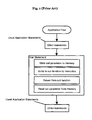
- Fig. 1 shows the conventional flow of execution of a software application within a runtime environment.
- a software application when executed in a runtime environment, typically jumps from one execution instruction to another execution instruction within the same application or to another application.
- These jump instructions are typically called "call”, “callnat”, “perform”, “invokespecial”, “invokeinterface”, or the like (cf. the box “Call Statement” in Fig. 1 ) and will be commonly referred to as “function call” hereinafter.
- a function call conventionally stores data which is required for the target in the memory of the underlying system (cf. the box "Write call parameter to memory” in Fig.
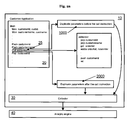
- the runtime environment 10 executes a software application 20, wherein the software application 20 comprises any number of operations.
- a function call 25 (cf. "Call addorder" in Fig. 2a ) will be the next operation of the application 20 to be executed.
- the runtime environment 10 duplicates, i.e. generates a copy of at least part of, preferably all, function parameters involved in the function call 25 (of step 1000 in Fig. 2a ).
- the runtime environment 10 also generates a second copy of the function parameters after the function call 25 has been executed (cf. step 2000 in Fig. 2a ).
- the duplicated function parameters are then forwarded, preferably with the information of the call target, via a collector 30 to an analytic engine 40.
- the collector 30 may be generally understood as an interface to the analytic engine 40, which can be an internal component 40' of the runtime environment 10 (as shown in Fig. 2b ), or an external analytic engine 40, as shown in Fig. 2a .
- the runtime environment 10 after extracting the parameter values and possibly other information (see below), the runtime environment 10 raises events to the analytic engine 40, 40', which may then act accordingly and perform the desired monitoring tasks based on the provided function parameter copies.
- the analytic engine as internal component 40' (cf. Fig. 2b ) is preferably a build-in engine with basic functionalities as described further above.
- the external analytic engine 40 can be enhanced with customer-specific extensions, e.g. plug-ins.
- the internal and external analytic engine may also be combined in other embodiments.
- Fig. 3 shows an embodiment in which the function call 25 of the software application 20 adds a new parameter (labeled "ordervalue, 1954" in Fig. 3 ). Although this parameter was not present before the function call 25 (and thus not comprised in the first function parameter copy), it is comprised in the second function parameter copy and can thus be made subject of further monitoring tasks.
- the duplication of the function parameters may be controlled in the runtime environment 10 by means of certain filter properties, such as:
- the data (i.e. function parameters) extracted from the function call 25 may be enriched with various additional information available in the runtime system 19, for example:
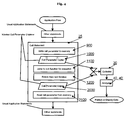
- Fig. 4 illustrates the application flow within a runtime environment 10 of the present invention, as compared to the prior art approach shown in Fig. 1 .
- the function parameters are written into memory in step 900.
- the function parameters are copied in step 1000 and preferably immediately forwarded to collector 30.
- the execution jumps in step 1100 to the (sub)function indicated by the function call 25.
- the execution flow returns in step 1200 from the (sub)function.
- a second copy of the function parameters is generated and also forwarded to collector 30.
- collector 30 may forward the collected data to the analytic engine 40 for further processing and / or monitoring purposes.
- the concept of the invention involves duplicating and forwarding data in the execution runtime of a programming language.
- the advantage for the user is to extract data from existing applications 20 without any changes of the application's source code or a recompiling of the application.
- the desired data extraction is performed by the execution runtime 10 while executing certain instructions 25.
- the existing application 20 does not need to be changed at all and is ideally not even aware of the additional data collection.
- business process data is extracted by the execution runtime environment 10 (e.g. an enhanced ABAP execution engine, COBOL runtime, Java virtual machine and / or Natural runtime) during the runtime of a customer application 25.
- the desired business process data extraction will be done by the programming language runtime environment instruction "call" (or a comparable instruction in different programming languages).
- the "call" instruction will jump in the user application from the current instruction pointer to a different instruction pointer in the same application or to a different module outside of the current application.
- the call instruction transports application data as call parameters.
- Each call parameter will be duplicated by the execution runtime environment 10 and forwarded to a receiver instance 30, 40, 40'.
- the parameter duplication step is handled by the execution runtime environment 10 only and the running user application 20 does not need any support for it.
- each parameter data of the call 25 will be duplicated while entering the "call” instruction.
- the data will be duplicated again.
- the reason for duplicating twice is because during the execution of the call instruction 25 it might be that the user application 20 (the origin receiver of the call) has changed the contents of the parameters.
- the content of the function parameter(s) of the "call" instruction contains business process data and the runtime environment 10 of the invention is enhanced to extract such business process data while the application 20 executes. The extracted business process data can then be forwarded to a process monitoring product as a second step.
Landscapes
- Engineering & Computer Science (AREA)
- Theoretical Computer Science (AREA)
- Software Systems (AREA)
- Computer Hardware Design (AREA)
- Quality & Reliability (AREA)
- Physics & Mathematics (AREA)
- General Engineering & Computer Science (AREA)
- General Physics & Mathematics (AREA)
- Debugging And Monitoring (AREA)
Claims (13)
- Ein System, das eine Laufzeitumgebung (10) zur nichtinvasiven Überwachung von Softwareanwendungen bereitstellt, wobei das System ausgebildet ist zum:a. während der Ausführung zumindest einer Softwareanwendung (20) innerhalb der Laufzeitumgebung (10), Identifizieren eines von der zumindest einen Softwareanwendung (20) auszuführenden Funktionsaufrufs (25); undb. Erzeugen von sich auf den identifizierten Funktionsaufruf (25) beziehenden Überwachungsdaten;c. wobei das Identifizieren eines Funktionsaufrufs (25) und das Erzeugen von Überwachungsdaten von der Laufzeitumgebung (10) ohne die Kooperation der zumindest einen Softwareanwendung (20) durchgeführt wird, wobei die Softwareanwendung (20) nicht angepasst wurde, um überwacht zu werden;d. wobei der Funktionsaufruf (25) zumindest einen Funktionsparameter umfasst und wobei das Erzeugen von Überwachungsdaten ein Erzeugen (1000) einer Kopie des zumindest einen Funktionsparameters durch die Laufzeitumgebung (10) umfasst, wobei die Funktionsparameterkopie zum Überwachen der zumindest einen Softwareanwendung (20) verwendbar ist.
- Das System nach Anspruch 1, wobei das Erzeugen von Überwachungsdaten umfasst:Erzeugen von Laufzeitinformation aus der Gruppe, aufweisend: ein Identifizierer der Entität, welche den zumindest einen Funktionsaufruf (25) aufruft, eine Adresse der Entität, welche den zumindest einen Funktionsaufruf (25) aufruft, ein Zeitstempel und / oder ein Identifizierer des Funktionsaufrufs (25).
- Das System nach irgendeinem der vorstehenden Ansprüche, wobei die Laufzeitumgebung (10) ausgebildet ist zum Erzeugen (1000) der Funktionsparameterkopie vor der Ausführung des Funktionsaufrufs (25).
- Das System nach dem vorstehenden Anspruch 3, wobei die Laufzeitumgebung (10) ausgebildet ist zum Erzeugen (2000) einer zweiten Kopie des zumindest einen Funktionsparameters nachdem der Funktionsaufruf (25) ausgeführt worden ist; wobei
die zweite Funktionsparameterkopie zum Identifizieren zumindest eines Funktionsparameters, welcher während der Ausführung des Funktionsaufrufs (25) geändert und / oder hinzugefügt wurde, verwendbar ist. - Das System nach irgendeinem der vorstehenden Ansprüche, wobei die Laufzeitumgebung (10) ferner ausgebildet ist zum:Weiterleiten der erzeugten Überwachungsdaten an eine analytische Engine (40, 40') zum Überwachen der zumindest einen Softwareanwendung (20).
- Das System nach irgendeinem der vorstehenden Ansprüche, wobei die Laufzeitumgebung (10) ferner ausgebildet ist zum:Erzeugen der Überwachungsdaten nur dann, wenn zumindest eine vordefinierte Filtereigenschaft erfüllt ist;wobei die zumindest eine vordefinierte Filtereigenschaft definiert: einen Identifizierer des Funktionsaufrufs (25), ob ein bestimmter Funktionsparameter in dem Funktionsaufruf (25) vorhanden ist und / oder ob ein bestimmter Funktionsparameter einen vordefinierten Wert hat.
- Das System nach irgendeinem der vorstehenden Ansprüche, wobei die Laufzeitumgebung (10) ferner ausgebildet ist zum:Kopieren zumindest eines Eintrags eines Speichers eines darunterliegenden Computersystems, in welchen die zumindest eine Softwareanwendung (20) den zumindest einen Funktionsparameter geschrieben hat.
- Ein Verfahren zur nichtinvasiven Überwachung von Softwareanwendungen, wobei das Verfahren die folgenden von einer Laufzeitumgebung (10) ausgeführten Schritte umfasst:a. während der Ausführung zumindest einer Softwareanwendung (20) innerhalb der Laufzeitumgebung (10), Identifizieren eines von der zumindest einen Softwareanwendung (20) auszuführenden Funktionsaufrufs (25); undb. Erzeugen von sich auf den identifizierten Funktionsaufruf (25) beziehenden Überwachungsdaten;c. wobei die Schritte a. und b. von der Laufzeitumgebung (10) ohne die Kooperation der zumindest einen Softwareanwendung (20) durchgeführt werden, wobei die Softwareanwendung (20) nicht angepasst wurde, um überwacht zu werden;d. wobei der Funktionsaufruf (25) zumindest einen Funktionsparameter umfasst und wobei Schritt b. ein Erzeugen (1000) einer Kopie des zumindest einen Funktionsparameters durch die Laufzeitumgebung (10) umfasst, wobei die Funktionsparameterkopie zum Überwachen der zumindest einen Softwareanwendung (20) verwendbar ist.
- Das Verfahren nach Anspruch 8, wobei Schritt b. umfasst:Erzeugen von Laufzeitinformation aus der Gruppe, aufweisend: ein Identifizierer der Entität, welche den zumindest einen Funktionsaufruf (25) aufruft, eine Adresse der Entität, welche den zumindest einen Funktionsaufruf (25) aufruft, ein Zeitstempel und / oder ein Identifizierer des Funktionsaufrufs (25).
- Das Verfahren nach irgendeinem der vorstehenden Ansprüche 8 oder 9, wobei die Funktionsparameterkopie vor der Ausführung des Funktionsaufrufs (25) erzeugt (1000) wird.
- Das Verfahren nach dem vorstehenden Anspruch 10, umfassend den weiteren Schritt des Erzeugens (2000) einer zweiten Kopie des zumindest einen Funktionsparameters nachdem der Funktionsaufruf (25) ausgeführt worden ist; wobei
die zweite Funktionsparameterkopie zum Identifizieren zumindest eines Funktionsparameters, welcher während der Ausführung des Funktionsaufrufs (25) geändert und / oder hinzugefügt wurde, verwendbar ist. - Das Verfahren nach irgendeinem der vorstehenden Ansprüche 8-11, wobei die Überwachungsdaten nur dann erzeugt werden, wenn zumindest eine vordefinierte Filtereigenschaft erfüllt ist;
wobei die zumindest eine vordefinierte Filtereigenschaft definiert: einen Identifizierer des Funktionsaufrufs (25), ob ein bestimmter Funktionsparameter in dem Funktionsaufruf (25) vorhanden ist und / oder ob ein bestimmter Funktionsparameter einen vordefinierten Wert hat. - Ein Computerprogramm, aufweisend Anweisungen zum Implementieren eines Verfahrens gemäß irgendeinem der vorstehenden Ansprüche 8-12.
Priority Applications (2)
| Application Number | Priority Date | Filing Date | Title |
|---|---|---|---|
| EP11187125.7A EP2587380B1 (de) | 2011-10-28 | 2011-10-28 | Laufzeitumgebung und verfahren zur nichtinvasiven überwachung von softwareanwendungen |
| US13/591,760 US9032372B2 (en) | 2011-10-28 | 2012-08-22 | Runtime environment and method for non-invasive monitoring of software applications |
Applications Claiming Priority (1)
| Application Number | Priority Date | Filing Date | Title |
|---|---|---|---|
| EP11187125.7A EP2587380B1 (de) | 2011-10-28 | 2011-10-28 | Laufzeitumgebung und verfahren zur nichtinvasiven überwachung von softwareanwendungen |
Publications (2)
| Publication Number | Publication Date |
|---|---|
| EP2587380A1 EP2587380A1 (de) | 2013-05-01 |
| EP2587380B1 true EP2587380B1 (de) | 2016-01-27 |
Family
ID=44925360
Family Applications (1)
| Application Number | Title | Priority Date | Filing Date |
|---|---|---|---|
| EP11187125.7A Active EP2587380B1 (de) | 2011-10-28 | 2011-10-28 | Laufzeitumgebung und verfahren zur nichtinvasiven überwachung von softwareanwendungen |
Country Status (2)
| Country | Link |
|---|---|
| US (1) | US9032372B2 (de) |
| EP (1) | EP2587380B1 (de) |
Families Citing this family (3)
| Publication number | Priority date | Publication date | Assignee | Title |
|---|---|---|---|---|
| EP2587380B1 (de) * | 2011-10-28 | 2016-01-27 | Software AG | Laufzeitumgebung und verfahren zur nichtinvasiven überwachung von softwareanwendungen |
| CN109428861A (zh) * | 2017-08-29 | 2019-03-05 | 阿里巴巴集团控股有限公司 | 网络通信方法及设备 |
| US20240160518A1 (en) * | 2022-11-15 | 2024-05-16 | International Business Machines Corporation | Dynamic registration of software components for diagnosis of root cause of failure |
Citations (1)
| Publication number | Priority date | Publication date | Assignee | Title |
|---|---|---|---|---|
| US20080127109A1 (en) * | 2006-09-29 | 2008-05-29 | Sap Ag | Method and system for generating and displaying function call tracker charts |
Family Cites Families (24)
| Publication number | Priority date | Publication date | Assignee | Title |
|---|---|---|---|---|
| US6836780B1 (en) | 1999-09-01 | 2004-12-28 | Jacada, Ltd. | Method and system for accessing data in legacy applications |
| US6598181B1 (en) | 2000-07-11 | 2003-07-22 | Microsoft Corporation | Method and system for debugging multiple function calls |
| US20020103658A1 (en) | 2001-01-31 | 2002-08-01 | Vaishali Angal | Process for compiling and centralizing business data |
| US7047521B2 (en) * | 2001-06-07 | 2006-05-16 | Lynoxworks, Inc. | Dynamic instrumentation event trace system and methods |
| US8473922B2 (en) * | 2001-09-19 | 2013-06-25 | Hewlett-Packard Development Company, L.P. | Runtime monitoring in component-based systems |
| US20030204588A1 (en) | 2002-04-30 | 2003-10-30 | International Business Machines Corporation | System for monitoring process performance and generating diagnostic recommendations |
| GB0418306D0 (en) | 2004-08-17 | 2004-09-15 | Ibm | Debugging an application process at runtime |
| US20060111960A1 (en) | 2004-11-22 | 2006-05-25 | International Business Machines Corporation | Performance prediction service using business-process information |
| US20060111950A1 (en) | 2004-11-23 | 2006-05-25 | Katircioglu Kaan K | Method for business process mapping, design, analysis and performance monitoring |
| US20070124465A1 (en) | 2005-08-19 | 2007-05-31 | Malloy Patrick J | Synchronized network and process performance overview |
| US7672957B2 (en) | 2006-02-10 | 2010-03-02 | Make Technologies, Inc. | User interface configured to display mechanical fabric and semantic model of a legacy computer application generated, graphical view navigating links between mechanical nodes and semantic nodes based on relevant business rules |
| US8261244B2 (en) * | 2006-06-02 | 2012-09-04 | Microsoft Corporation | Arbitrary runtime function call tracing |
| US9606772B2 (en) | 2006-11-21 | 2017-03-28 | International Business Machines Corporation | Business process diagram data collection |
| US7417569B2 (en) | 2006-11-30 | 2008-08-26 | Broadcom Corporation | Sampling rate converter with no timing drift and bounded amplitude error |
| US8055104B2 (en) | 2007-03-02 | 2011-11-08 | Adi, Llc | Process performance evaluation for Enterprise data systems |
| AU2008203105A1 (en) | 2008-07-14 | 2010-01-28 | Adi, Llc | Process Performance Evaluation for Enterprise Data Systems |
| US9256514B2 (en) * | 2009-02-19 | 2016-02-09 | Nvidia Corporation | Debugging and perfomance analysis of applications |
| US8359592B2 (en) * | 2009-03-19 | 2013-01-22 | Microsoft Corporation | Identifying groups and subgroups |
| US8302210B2 (en) * | 2009-08-24 | 2012-10-30 | Apple Inc. | System and method for call path enforcement |
| WO2011064616A1 (en) * | 2009-11-25 | 2011-06-03 | Freescale Semiconductor, Inc. | Method and system for enabling access to functionality provided by resources outside of an operating system environment |
| JP5583514B2 (ja) * | 2010-08-11 | 2014-09-03 | インターナショナル・ビジネス・マシーンズ・コーポレーション | バイナリコードを最適化するコンパイル方法、及びそのコンパイラシステム、並びにコンピュータ・プログラム |
| EP2587380B1 (de) * | 2011-10-28 | 2016-01-27 | Software AG | Laufzeitumgebung und verfahren zur nichtinvasiven überwachung von softwareanwendungen |
| US8752021B2 (en) * | 2012-11-08 | 2014-06-10 | Concurix Corporation | Input vector analysis for memoization estimation |
| US8826254B2 (en) * | 2012-11-08 | 2014-09-02 | Concurix Corporation | Memoizing with read only side effects |
-
2011
- 2011-10-28 EP EP11187125.7A patent/EP2587380B1/de active Active
-
2012
- 2012-08-22 US US13/591,760 patent/US9032372B2/en active Active
Patent Citations (1)
| Publication number | Priority date | Publication date | Assignee | Title |
|---|---|---|---|---|
| US20080127109A1 (en) * | 2006-09-29 | 2008-05-29 | Sap Ag | Method and system for generating and displaying function call tracker charts |
Also Published As
| Publication number | Publication date |
|---|---|
| EP2587380A1 (de) | 2013-05-01 |
| US9032372B2 (en) | 2015-05-12 |
| US20130111450A1 (en) | 2013-05-02 |
Similar Documents
| Publication | Publication Date | Title |
|---|---|---|
| US10996947B2 (en) | Diagnosing production applications | |
| US6282701B1 (en) | System and method for monitoring and analyzing the execution of computer programs | |
| US6202199B1 (en) | System and method for remotely analyzing the execution of computer programs | |
| EP3660684B1 (de) | Effizientes und umfassendes quellcode-fuzzing | |
| US8504994B2 (en) | System and method for software diagnostics using a combination of visual and dynamic tracing | |
| US7996853B2 (en) | Method and apparatus for correlation of events in a distributed multi-system computing environment | |
| US7058928B2 (en) | System and method for conditional tracing of computer programs | |
| CN101553769B (zh) | 用于跟踪并监控计算机应用的系统和方法 | |
| US9355003B2 (en) | Capturing trace information using annotated trace output | |
| US9442822B2 (en) | Providing a visual representation of a sub-set of a visual program | |
| EP2972881B1 (de) | Diagnose von zustandsübergängen | |
| CN110347954B (zh) | 面向复杂Web应用的服务化方法 | |
| WO2015118454A1 (en) | System and method for providing runtime diagnostics of executing applications | |
| US10534700B2 (en) | Separating test verifications from test executions | |
| WO2000007100A1 (en) | System and method for remotely analyzing the execution of computer programs | |
| US10528456B2 (en) | Determining idle testing periods | |
| WO2017044069A1 (en) | Automatic regression identification | |
| CN109542444B (zh) | Java应用的监控方法、装置、服务器和存储介质 | |
| CN110334302B (zh) | 复杂Web应用前端运行时分析方法 | |
| Bao et al. | Tracking and Analyzing Cross-Cutting Activities in Developers' Daily Work (N) | |
| US10824532B2 (en) | Dump analysis generation | |
| US11119899B2 (en) | Determining potential test actions | |
| EP2587380B1 (de) | Laufzeitumgebung und verfahren zur nichtinvasiven überwachung von softwareanwendungen | |
| Vera et al. | Event-based execution architectures for dynamic software systems | |
| US10997057B2 (en) | Debugging asynchronous functions |
Legal Events
| Date | Code | Title | Description |
|---|---|---|---|
| PUAI | Public reference made under article 153(3) epc to a published international application that has entered the european phase |
Free format text: ORIGINAL CODE: 0009012 |
|
| 17P | Request for examination filed |
Effective date: 20111028 |
|
| AK | Designated contracting states |
Kind code of ref document: A1 Designated state(s): AL AT BE BG CH CY CZ DE DK EE ES FI FR GB GR HR HU IE IS IT LI LT LU LV MC MK MT NL NO PL PT RO RS SE SI SK SM TR |
|
| AX | Request for extension of the european patent |
Extension state: BA ME |
|
| 17Q | First examination report despatched |
Effective date: 20150430 |
|
| GRAP | Despatch of communication of intention to grant a patent |
Free format text: ORIGINAL CODE: EPIDOSNIGR1 |
|
| INTG | Intention to grant announced |
Effective date: 20150724 |
|
| GRAS | Grant fee paid |
Free format text: ORIGINAL CODE: EPIDOSNIGR3 |
|
| GRAA | (expected) grant |
Free format text: ORIGINAL CODE: 0009210 |
|
| AK | Designated contracting states |
Kind code of ref document: B1 Designated state(s): AL AT BE BG CH CY CZ DE DK EE ES FI FR GB GR HR HU IE IS IT LI LT LU LV MC MK MT NL NO PL PT RO RS SE SI SK SM TR |
|
| REG | Reference to a national code |
Ref country code: GB Ref legal event code: FG4D |
|
| REG | Reference to a national code |
Ref country code: CH Ref legal event code: EP |
|
| REG | Reference to a national code |
Ref country code: AT Ref legal event code: REF Ref document number: 772995 Country of ref document: AT Kind code of ref document: T Effective date: 20160215 |
|
| REG | Reference to a national code |
Ref country code: IE Ref legal event code: FG4D |
|
| REG | Reference to a national code |
Ref country code: DE Ref legal event code: R096 Ref document number: 602011022960 Country of ref document: DE |
|
| REG | Reference to a national code |
Ref country code: LT Ref legal event code: MG4D |
|
| REG | Reference to a national code |
Ref country code: NL Ref legal event code: MP Effective date: 20160127 |
|
| REG | Reference to a national code |
Ref country code: AT Ref legal event code: MK05 Ref document number: 772995 Country of ref document: AT Kind code of ref document: T Effective date: 20160127 |
|
| PG25 | Lapsed in a contracting state [announced via postgrant information from national office to epo] |
Ref country code: NL Free format text: LAPSE BECAUSE OF FAILURE TO SUBMIT A TRANSLATION OF THE DESCRIPTION OR TO PAY THE FEE WITHIN THE PRESCRIBED TIME-LIMIT Effective date: 20160127 |
|
| PG25 | Lapsed in a contracting state [announced via postgrant information from national office to epo] |
Ref country code: HR Free format text: LAPSE BECAUSE OF FAILURE TO SUBMIT A TRANSLATION OF THE DESCRIPTION OR TO PAY THE FEE WITHIN THE PRESCRIBED TIME-LIMIT Effective date: 20160127 Ref country code: GR Free format text: LAPSE BECAUSE OF FAILURE TO SUBMIT A TRANSLATION OF THE DESCRIPTION OR TO PAY THE FEE WITHIN THE PRESCRIBED TIME-LIMIT Effective date: 20160428 Ref country code: IT Free format text: LAPSE BECAUSE OF FAILURE TO SUBMIT A TRANSLATION OF THE DESCRIPTION OR TO PAY THE FEE WITHIN THE PRESCRIBED TIME-LIMIT Effective date: 20160127 Ref country code: ES Free format text: LAPSE BECAUSE OF FAILURE TO SUBMIT A TRANSLATION OF THE DESCRIPTION OR TO PAY THE FEE WITHIN THE PRESCRIBED TIME-LIMIT Effective date: 20160127 Ref country code: FI Free format text: LAPSE BECAUSE OF FAILURE TO SUBMIT A TRANSLATION OF THE DESCRIPTION OR TO PAY THE FEE WITHIN THE PRESCRIBED TIME-LIMIT Effective date: 20160127 Ref country code: NO Free format text: LAPSE BECAUSE OF FAILURE TO SUBMIT A TRANSLATION OF THE DESCRIPTION OR TO PAY THE FEE WITHIN THE PRESCRIBED TIME-LIMIT Effective date: 20160427 |
|
| PG25 | Lapsed in a contracting state [announced via postgrant information from national office to epo] |
Ref country code: AT Free format text: LAPSE BECAUSE OF FAILURE TO SUBMIT A TRANSLATION OF THE DESCRIPTION OR TO PAY THE FEE WITHIN THE PRESCRIBED TIME-LIMIT Effective date: 20160127 Ref country code: SE Free format text: LAPSE BECAUSE OF FAILURE TO SUBMIT A TRANSLATION OF THE DESCRIPTION OR TO PAY THE FEE WITHIN THE PRESCRIBED TIME-LIMIT Effective date: 20160127 Ref country code: RS Free format text: LAPSE BECAUSE OF FAILURE TO SUBMIT A TRANSLATION OF THE DESCRIPTION OR TO PAY THE FEE WITHIN THE PRESCRIBED TIME-LIMIT Effective date: 20160127 Ref country code: LV Free format text: LAPSE BECAUSE OF FAILURE TO SUBMIT A TRANSLATION OF THE DESCRIPTION OR TO PAY THE FEE WITHIN THE PRESCRIBED TIME-LIMIT Effective date: 20160127 Ref country code: IS Free format text: LAPSE BECAUSE OF FAILURE TO SUBMIT A TRANSLATION OF THE DESCRIPTION OR TO PAY THE FEE WITHIN THE PRESCRIBED TIME-LIMIT Effective date: 20160527 Ref country code: LT Free format text: LAPSE BECAUSE OF FAILURE TO SUBMIT A TRANSLATION OF THE DESCRIPTION OR TO PAY THE FEE WITHIN THE PRESCRIBED TIME-LIMIT Effective date: 20160127 Ref country code: PL Free format text: LAPSE BECAUSE OF FAILURE TO SUBMIT A TRANSLATION OF THE DESCRIPTION OR TO PAY THE FEE WITHIN THE PRESCRIBED TIME-LIMIT Effective date: 20160127 Ref country code: PT Free format text: LAPSE BECAUSE OF FAILURE TO SUBMIT A TRANSLATION OF THE DESCRIPTION OR TO PAY THE FEE WITHIN THE PRESCRIBED TIME-LIMIT Effective date: 20160527 |
|
| REG | Reference to a national code |
Ref country code: DE Ref legal event code: R097 Ref document number: 602011022960 Country of ref document: DE |
|
| PG25 | Lapsed in a contracting state [announced via postgrant information from national office to epo] |
Ref country code: DK Free format text: LAPSE BECAUSE OF FAILURE TO SUBMIT A TRANSLATION OF THE DESCRIPTION OR TO PAY THE FEE WITHIN THE PRESCRIBED TIME-LIMIT Effective date: 20160127 Ref country code: EE Free format text: LAPSE BECAUSE OF FAILURE TO SUBMIT A TRANSLATION OF THE DESCRIPTION OR TO PAY THE FEE WITHIN THE PRESCRIBED TIME-LIMIT Effective date: 20160127 |
|
| PG25 | Lapsed in a contracting state [announced via postgrant information from national office to epo] |
Ref country code: CZ Free format text: LAPSE BECAUSE OF FAILURE TO SUBMIT A TRANSLATION OF THE DESCRIPTION OR TO PAY THE FEE WITHIN THE PRESCRIBED TIME-LIMIT Effective date: 20160127 Ref country code: RO Free format text: LAPSE BECAUSE OF FAILURE TO SUBMIT A TRANSLATION OF THE DESCRIPTION OR TO PAY THE FEE WITHIN THE PRESCRIBED TIME-LIMIT Effective date: 20160127 Ref country code: SM Free format text: LAPSE BECAUSE OF FAILURE TO SUBMIT A TRANSLATION OF THE DESCRIPTION OR TO PAY THE FEE WITHIN THE PRESCRIBED TIME-LIMIT Effective date: 20160127 Ref country code: SK Free format text: LAPSE BECAUSE OF FAILURE TO SUBMIT A TRANSLATION OF THE DESCRIPTION OR TO PAY THE FEE WITHIN THE PRESCRIBED TIME-LIMIT Effective date: 20160127 |
|
| PLBE | No opposition filed within time limit |
Free format text: ORIGINAL CODE: 0009261 |
|
| STAA | Information on the status of an ep patent application or granted ep patent |
Free format text: STATUS: NO OPPOSITION FILED WITHIN TIME LIMIT |
|
| PG25 | Lapsed in a contracting state [announced via postgrant information from national office to epo] |
Ref country code: BE Free format text: LAPSE BECAUSE OF FAILURE TO SUBMIT A TRANSLATION OF THE DESCRIPTION OR TO PAY THE FEE WITHIN THE PRESCRIBED TIME-LIMIT Effective date: 20160127 |
|
| 26N | No opposition filed |
Effective date: 20161028 |
|
| PG25 | Lapsed in a contracting state [announced via postgrant information from national office to epo] |
Ref country code: BG Free format text: LAPSE BECAUSE OF FAILURE TO SUBMIT A TRANSLATION OF THE DESCRIPTION OR TO PAY THE FEE WITHIN THE PRESCRIBED TIME-LIMIT Effective date: 20160427 Ref country code: SI Free format text: LAPSE BECAUSE OF FAILURE TO SUBMIT A TRANSLATION OF THE DESCRIPTION OR TO PAY THE FEE WITHIN THE PRESCRIBED TIME-LIMIT Effective date: 20160127 |
|
| REG | Reference to a national code |
Ref country code: CH Ref legal event code: PL |
|
| REG | Reference to a national code |
Ref country code: IE Ref legal event code: MM4A |
|
| REG | Reference to a national code |
Ref country code: FR Ref legal event code: ST Effective date: 20170630 |
|
| PG25 | Lapsed in a contracting state [announced via postgrant information from national office to epo] |
Ref country code: CH Free format text: LAPSE BECAUSE OF NON-PAYMENT OF DUE FEES Effective date: 20161031 Ref country code: FR Free format text: LAPSE BECAUSE OF NON-PAYMENT OF DUE FEES Effective date: 20161102 Ref country code: LI Free format text: LAPSE BECAUSE OF NON-PAYMENT OF DUE FEES Effective date: 20161031 |
|
| PG25 | Lapsed in a contracting state [announced via postgrant information from national office to epo] |
Ref country code: LU Free format text: LAPSE BECAUSE OF NON-PAYMENT OF DUE FEES Effective date: 20161028 |
|
| PG25 | Lapsed in a contracting state [announced via postgrant information from national office to epo] |
Ref country code: IE Free format text: LAPSE BECAUSE OF NON-PAYMENT OF DUE FEES Effective date: 20161028 |
|
| PG25 | Lapsed in a contracting state [announced via postgrant information from national office to epo] |
Ref country code: CY Free format text: LAPSE BECAUSE OF FAILURE TO SUBMIT A TRANSLATION OF THE DESCRIPTION OR TO PAY THE FEE WITHIN THE PRESCRIBED TIME-LIMIT Effective date: 20160127 Ref country code: HU Free format text: LAPSE BECAUSE OF FAILURE TO SUBMIT A TRANSLATION OF THE DESCRIPTION OR TO PAY THE FEE WITHIN THE PRESCRIBED TIME-LIMIT; INVALID AB INITIO Effective date: 20111028 |
|
| PG25 | Lapsed in a contracting state [announced via postgrant information from national office to epo] |
Ref country code: MC Free format text: LAPSE BECAUSE OF FAILURE TO SUBMIT A TRANSLATION OF THE DESCRIPTION OR TO PAY THE FEE WITHIN THE PRESCRIBED TIME-LIMIT Effective date: 20160127 Ref country code: TR Free format text: LAPSE BECAUSE OF FAILURE TO SUBMIT A TRANSLATION OF THE DESCRIPTION OR TO PAY THE FEE WITHIN THE PRESCRIBED TIME-LIMIT Effective date: 20160127 Ref country code: MT Free format text: LAPSE BECAUSE OF NON-PAYMENT OF DUE FEES Effective date: 20161031 Ref country code: MK Free format text: LAPSE BECAUSE OF FAILURE TO SUBMIT A TRANSLATION OF THE DESCRIPTION OR TO PAY THE FEE WITHIN THE PRESCRIBED TIME-LIMIT Effective date: 20160127 |
|
| PG25 | Lapsed in a contracting state [announced via postgrant information from national office to epo] |
Ref country code: AL Free format text: LAPSE BECAUSE OF FAILURE TO SUBMIT A TRANSLATION OF THE DESCRIPTION OR TO PAY THE FEE WITHIN THE PRESCRIBED TIME-LIMIT Effective date: 20160127 |
|
| PGFP | Annual fee paid to national office [announced via postgrant information from national office to epo] |
Ref country code: DE Payment date: 20241021 Year of fee payment: 14 |
|
| PGFP | Annual fee paid to national office [announced via postgrant information from national office to epo] |
Ref country code: GB Payment date: 20241022 Year of fee payment: 14 |
|
| REG | Reference to a national code |
Ref country code: DE Ref legal event code: R081 Ref document number: 602011022960 Country of ref document: DE Owner name: SOFTWARE GMBH, DE Free format text: FORMER OWNER: SOFTWARE AG, 64297 DARMSTADT, DE |
|
| REG | Reference to a national code |
Ref country code: GB Ref legal event code: 732E Free format text: REGISTERED BETWEEN 20250410 AND 20250416 |