EP2584549A1 - Automatic monitoring of flight related radio communications - Google Patents
Automatic monitoring of flight related radio communications Download PDFInfo
- Publication number
- EP2584549A1 EP2584549A1 EP12181958.5A EP12181958A EP2584549A1 EP 2584549 A1 EP2584549 A1 EP 2584549A1 EP 12181958 A EP12181958 A EP 12181958A EP 2584549 A1 EP2584549 A1 EP 2584549A1
- Authority
- EP
- European Patent Office
- Prior art keywords
- aircraft
- flight information
- atc
- display
- displaying
- Prior art date
- Legal status (The legal status is an assumption and is not a legal conclusion. Google has not performed a legal analysis and makes no representation as to the accuracy of the status listed.)
- Granted
Links
Images



Classifications
-
- G—PHYSICS
- G01—MEASURING; TESTING
- G01S—RADIO DIRECTION-FINDING; RADIO NAVIGATION; DETERMINING DISTANCE OR VELOCITY BY USE OF RADIO WAVES; LOCATING OR PRESENCE-DETECTING BY USE OF THE REFLECTION OR RERADIATION OF RADIO WAVES; ANALOGOUS ARRANGEMENTS USING OTHER WAVES
- G01S13/00—Systems using the reflection or reradiation of radio waves, e.g. radar systems; Analogous systems using reflection or reradiation of waves whose nature or wavelength is irrelevant or unspecified
- G01S13/88—Radar or analogous systems specially adapted for specific applications
- G01S13/93—Radar or analogous systems specially adapted for specific applications for anti-collision purposes
- G01S13/933—Radar or analogous systems specially adapted for specific applications for anti-collision purposes of aircraft or spacecraft
-
- G—PHYSICS
- G01—MEASURING; TESTING
- G01S—RADIO DIRECTION-FINDING; RADIO NAVIGATION; DETERMINING DISTANCE OR VELOCITY BY USE OF RADIO WAVES; LOCATING OR PRESENCE-DETECTING BY USE OF THE REFLECTION OR RERADIATION OF RADIO WAVES; ANALOGOUS ARRANGEMENTS USING OTHER WAVES
- G01S7/00—Details of systems according to groups G01S13/00, G01S15/00, G01S17/00
- G01S7/02—Details of systems according to groups G01S13/00, G01S15/00, G01S17/00 of systems according to group G01S13/00
- G01S7/04—Display arrangements
- G01S7/06—Cathode-ray tube displays or other two dimensional or three-dimensional displays
- G01S7/22—Producing cursor lines and indicia by electronic means
-
- G—PHYSICS
- G08—SIGNALLING
- G08G—TRAFFIC CONTROL SYSTEMS
- G08G5/00—Traffic control systems for aircraft
- G08G5/20—Arrangements for acquiring, generating, sharing or displaying traffic information
- G08G5/21—Arrangements for acquiring, generating, sharing or displaying traffic information located onboard the aircraft
-
- G—PHYSICS
- G08—SIGNALLING
- G08G—TRAFFIC CONTROL SYSTEMS
- G08G5/00—Traffic control systems for aircraft
- G08G5/20—Arrangements for acquiring, generating, sharing or displaying traffic information
- G08G5/25—Transmission of traffic-related information between aircraft
-
- G—PHYSICS
- G08—SIGNALLING
- G08G—TRAFFIC CONTROL SYSTEMS
- G08G5/00—Traffic control systems for aircraft
- G08G5/20—Arrangements for acquiring, generating, sharing or displaying traffic information
- G08G5/26—Transmission of traffic-related information between aircraft and ground stations
Definitions
- ATC air traffic control
- the radio channel offers a "party-line” effect in that each pilot can monitor communications between ATC and pilots of surrounding aircraft.
- a method for displaying augmented flight information on a display includes receiving air traffic controller ("ATC") communication at a first aircraft regarding a second aircraft, the ATC communication including augmented flight information that includes a change to a vector of the second aircraft.
- the method also includes ascertaining the augmented flight information in the ATC communication for the second aircraft, and determining the second aircraft is not the first aircraft receiving the ATC communication.
- the method also includes displaying in response to determining the second aircraft is not the first aircraft at least a part of the augmented flight information on the display along with a visual indication identifying the second aircraft is a target aircraft of the ATC communication.
- a system for displaying augmented flight information includes a radio receiver configured to receive wirelessly communicated air traffic control communication in an aircraft, the radio receiver providing voice-based ATC communication signals.
- the system also includes a speech processing module configured to receive the voice-based ATC communication signals and providing call sign data indicating a call sign for another aircraft and augmented flight information data representing augmented flight information for the another aircraft.
- the system also includes a processor configured to receive the call sign data and the augmented flight information data, generate signals for displaying a visual indication identifying the another aircraft as a target of the ATC communication, and generate signals for displaying the augmented flight information in alphanumeric form for the another aircraft associated with a displayed aircraft icon.
- ATC communications are voice based, it is not possible for the pilot to review the communications after they have occurred.
- ATC communications directed to a pilot usually follows a structured syntax comprising the call sign followed by instructions.
- the call sign consists of a designator of the flight operator ("designator") and a number, which may be the flight number.
- the communication may comprise "Speedbird 123, descend to FL320.” This means that the aircraft identified by the call sign Speedbird 123 should descend to a flight level of 32,000 feet.
- Other examples of instructional phrases following a call sign include:
- FIGURE 1 also depicts information regarding surrounding aircraft.
- FIGURE 1 illustrates a neighboring aircraft using an aircraft icon 140, but which does not having the same distinctive fill pattern.
- This aircraft icon 140 is referred to a conventional aircraft icon since it is generally used to represent other aircraft than the current aircraft. This allows the pilot to readily discern that the aircraft icon 140 refers to another aircraft, and not the current aircraft. It is not unusual for several aircraft icons 140 to be present on the display.
- Adjacent to the aircraft icon 150 is augmented flight information 152.
- This information is augmented relative to the previously discussed flight information 142.
- the augmented flight information 152 indicates the flight number, which in this embodiment is BAW123.
- the next line states “ ⁇ -26” and this indicates the plane is descending and is currently 2,600 feet below the current aircraft.
- the next line states "B77L” and that indicates the specific make and model of the other aircraft, which is a Boeing 777 long range aircraft.
- the last line of the augmented flight information states the designator, which is "Speedbird.”
- the augmented flight information reinforces the association of the aural call sign designator ("Speedbird") and the visual airline flight designation ("British Airways").
- Adjacent to the augmented aircraft information 152 is an insignia 155 representing the logo of the airline operator, as shown on the aircraft tail. This may also be presented in color, which is represented in FIGURE 1 using horizontal lines. It is well known that human memory is reinforced by presenting two forms of input, such as text and graphics, and the augmented flight information is more easily recognized and remembered by the pilot when it is indicated using both text and graphics.
- the pilot may select a particular flight to review the augmented flight information.
- the pilot could be presented with a text based log of the ATC communications history for the last three ATC communication instructions.
- Other information than just vertical and ground speed can be provided, either when the display is initially presented or when the pilot requests to review the ATC communications by selecting an aircraft icon.
- the ATC Monitoring System may provide the augmented flight information to the CDTI System 220 for display.
- the CDTI System may have its own processor and may receive data from another processor in the ATC Monitoring System 210.
- the CDTI may receive location of other aircraft by a MODE-S transponder 227.
- the CDTI System 220 and the ATC Monitoring System 210 may be integrated, so that the display of information is directly controlled and accomplished by the ATC Monitoring System 210. This embodiment in shown in FIGURE 2B , where the functionality of the CDTI System is integrated in the ATC Monitoring System 210b.
- the local network interface unit may be based on using a wireless access protocol (e.g., Wi-Fi) for receiving status indication data.
- the computer 400 may also include an input/output controller 412 for receiving and processing input from a number of other devices, including a keyboard, mouse, or electronic stylus (not shown in FIGURE 4 ).
- an input/output controller may provide output to a display screen, a printer, or other type of output device (also not shown in FIGURE 4 ).
Landscapes
- Engineering & Computer Science (AREA)
- Physics & Mathematics (AREA)
- General Physics & Mathematics (AREA)
- Aviation & Aerospace Engineering (AREA)
- Radar, Positioning & Navigation (AREA)
- Remote Sensing (AREA)
- Computer Networks & Wireless Communication (AREA)
- Electromagnetism (AREA)
- Traffic Control Systems (AREA)
Abstract
Description
- Radio communications between air traffic control ("ATC") and a commercial pilot frequently occur on a radio channel allowing a number of pilots operating in the area to hear the communications. Thus, the radio channel offers a "party-line" effect in that each pilot can monitor communications between ATC and pilots of surrounding aircraft.
- Because all the pilots in a receiving area receive all communications, a mechanism has been defined to uniquely identify an aircraft. ATC communication is often directed to an aircraft by using a call sign. For commercial aircraft, the call sign may consist of a designator, which is the name of the aircraft operating agency, followed by a number, which is often the flight identification number. Thus, for example, a British Airways aircraft may be designated by the name "Speedbird." If the flight number were, e.g., 123, then the call sign could be "Speedbird 123." In other embodiments, the number may be different from the flight number. Commercial pilots are attuned to recognizing the call sign for their aircraft. The call sign for an aircraft may change from one flight to another because the flight number may change.
- The flight number of the aircraft typically has a different designation, and the alphanumeric indication for the same flight may be represented as "BAW23" for British Airways Flight Number 23. Because the name of an airline may change or may sound confusingly similar to another airline in the context of voice based communications, the designation of the aircraft operator and the call sign may not be the same.
- Pilots monitor ATC communication for flight instructions for not only their aircraft, but for instructions directed to surrounding aircraft. This allows pilots to maintain a situational awareness of surrounding aircraft and increase system safety. For example, by monitoring ATC communication a pilot may be aware of instructions directed to nearby aircraft instructing that aircraft to change heading. This allows the pilot to maintain awareness of where surrounding aircraft are, or on which heading they are on.
- Pilots may be presented with a computer generated display of surrounding aircraft using equipment. Once such system is the cockpit display of traffic information ("CDTI") display. This display shows where aircraft are currently positioned and their respective headings. Monitoring ATC communication provides the pilot with further information that is not displayed by the CDTI. However, monitoring ATC communication can be distracting to the pilot, and can interrupt or delay a mental activity that may be critical. If the pilot instead focuses on the current task, then the ATC instructions directing another aircraft to change course may be missed by the pilot. Another system representing surrounding is the traffic collision avoidance system ("TCAS") that receives positioned information of aircraft and provides warnings of potential collisions.
- It is with respect to these and other considerations that the disclosure herein is presented.
- It should be appreciated that this Summary is provided to introduce a selection of concepts in a simplified form that are further described below in the Detailed Description. This Summary is not intended to be used to limit the scope of the claimed subject matter.
- In one embodiment disclosed herein, a method for displaying augmented flight information on a display includes receiving air traffic controller ("ATC") communication at a first aircraft regarding a second aircraft, the ATC communication including augmented flight information that includes a change to a vector of the second aircraft. The method also includes ascertaining the augmented flight information in the ATC communication for the second aircraft, and determining the second aircraft is not the first aircraft receiving the ATC communication. The method also includes displaying in response to determining the second aircraft is not the first aircraft at least a part of the augmented flight information on the display along with a visual indication identifying the second aircraft is a target aircraft of the ATC communication.
- In another embodiment disclosed herein, a system for displaying augmented flight information includes a radio receiver configured to receive wirelessly communicated air traffic control communication in an aircraft, the radio receiver providing voice-based ATC communication signals. The system also includes a speech processing module configured to receive the voice-based ATC communication signals and providing call sign data indicating a call sign for another aircraft and augmented flight information data representing augmented flight information for the another aircraft. The system also includes a processor configured to receive the call sign data and the augmented flight information data, generate signals for displaying a visual indication identifying the another aircraft as a target of the ATC communication, and generate signals for displaying the augmented flight information in alphanumeric form for the another aircraft associated with a displayed aircraft icon.
- In another embodiment disclosed herein, a computer storage medium has computer executable instructions stored thereon which, when executed by a processor, cause the processor in a first aircraft to receive a call sign data and an augmented flight information data regarding a second aircraft, generate signals for displaying an aircraft icon associated with the second aircraft indicating the second aircraft is a target of an ATC communication, and generate signals for displaying the augmented flight information in alphanumeric form for the second aircraft associated with the aircraft icon.
- The features, functions, and advantages that have been discussed can be achieved independently in various embodiments of the present disclosure or may be combined in yet other embodiments, further details of which can be seen with reference to the following description and drawings.
-
-
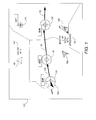
FIGURE 1 illustrates one embodiment of a display presenting augmented flight information involving other aircraft according to at least one embodiment disclosed herein, -
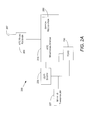
FIGURES 2A-2B illustrate two embodiments of a system providing a display of augmented flight information as disclosed herein, -
FIGURES 3A-3B illustrate one embodiment of a process flow for providing augmented flight information according to at least one embodiment disclosed herein, and -
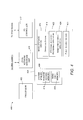
FIGURE 4 illustrates an embodiment of a computer architecture for a system for providing augmented flight information according to at least one embodiment disclosed herein. -
FIGURE 5 illustrates an embodiment of a flight course vector depicted for an aircraft according to at least one embodiment disclosed herein. - The following detailed description is directed to a flight information system providing augmented flight information of other surrounding aircraft based on processing voice-based air traffic control ("ATC") communications. ATC communications refers to voice-based communication between a pilot of an aircraft and air traffic control. For purposes of this disclosure, the focus is on ATC-to- aircraft communications for commercial aircraft, although the technology disclosed herein could be adapted for other similar types of communications, including marine communications, private aircraft, aircraft-to ATC, etc. ATC communications are typically broadcasted on a radio frequency received and monitored by several aircraft in the receiving area if the wirelessly broadcasted ATC signal. Consequently, ATC communications is monitored by various aircraft pilots.
- To assist commercial pilots in monitoring the location of surrounding aircraft, commercial aircraft may be equipped with a cockpit display of traffic information ("CDTI") that receives broadcast data pertaining to surrounding aircraft and displays this in graphical form on a display to the pilot. The information displayed typically indicates a location of the pilot's aircraft (referred to herein as the "current aircraft") and the location of surrounding aircraft (referred to herein as the "other aircraft" or "another aircraft").
- The CDTI does not reflect instructions given to the other aircraft by ATC regarding any change of heading, descent, ascent, etc. for the other aircraft. Thus, pilots generally monitor ATC communications directed to other aircraft to obtain an understanding of where surrounding aircraft is expected to be positioned based on ATC flight instructions. By maintaining a greater situational awareness, pilots can achieve a greater level of safety.
- However, constantly monitoring ATC communications can distract or delay the pilot from performing necessary operations in the current aircraft. If the pilot ignores, or does not focus on the ATC communications for the other aircraft, then the pilot may not be cognizant of an instruction provided to another aircraft. Further, because the ATC communications are voice based, it is not possible for the pilot to review the communications after they have occurred.
- ATC communications directed to a pilot usually follows a structured syntax comprising the call sign followed by instructions. The call sign consists of a designator of the flight operator ("designator") and a number, which may be the flight number. For example, the communication may comprise "Speedbird 123, descend to FL320." This means that the aircraft identified by the call sign Speedbird 123 should descend to a flight level of 32,000 feet. Other examples of instructional phrases following a call sign include:
- "Speedbird 123, climb and maintain FL350,"
- "Speedbird 123, cleared direct [XX]" (Where XX Can Be Any Waypoint Or Navigational Aid),
- "Speedbird 123, heading 180" (Degrees),
- "Speedbird 123, turn left 10 degrees," and
- "
Speedbird 123, maintain mach 82 or greater." - The various instructional phrases typically alter the vector of the aircraft in some manner, including changing the horizontal or vertical speed, heading, rate of ascent, or rate of descent. In some embodiments, the instructional information may not alter the vector.
- The above examples represent augmented flight information, which is information derived from the voice-based ATC communications directed to the other aircraft. Although conveyed by voice, it is possible to integrate this information with the digital flight information received and processed by the CDTI.
- One embodiment of providing augmented flight information is shown in
FIGURE 1. FIGURE 1 depicts adisplay 100 showing a map of the path of the current aircraft that is designated by anaircraft icon 105. Theaircraft icon 105 for the current aircraft is unique and in this embodiment is denoted by a half-white/half-black fill-in. Because this icon represents the current aircraft, there is only one such aircraft icon on the display. - According to the illustration in
FIGURE 1 , the current aircraft is approaching a first wayport ornavigational aid 110, which is Buffalo, New York ("BUF"). Further,flight path 130 indicates the route to be followed.Flight path 130 leads the current aircraft to thenext wayport 115, which is Rochester ("ROC"). After this segment, theflight path 133 leads to anotherwayport 120, which is Syracuse ("SYR"). From there, theflight path 135 continues. Other wayports may be indicated which are not on the flight path, such as Watertown 125 ("ART"). -
FIGURE 1 also depicts information regarding surrounding aircraft. In this embodiment,FIGURE 1 illustrates a neighboring aircraft using anaircraft icon 140, but which does not having the same distinctive fill pattern. Thisaircraft icon 140 is referred to a conventional aircraft icon since it is generally used to represent other aircraft than the current aircraft. This allows the pilot to readily discern that theaircraft icon 140 refers to another aircraft, and not the current aircraft. It is not unusual forseveral aircraft icons 140 to be present on the display. - The
aircraft icon 140 is accompanied withflight information 142. This flight information is provided adjacent to the aircraft icon in alphanumeric form and indicates the aircraft's call sign and aircraft type. In this case, the call sign is UAL123, which corresponds to UnitedAir Lines Flight 123. Thus, a pilot can readily associated an ATC communication directed to a call sign by visually looking at the display. -
FIGURE 1 also depicts a second aircraft depicted by anotheraircraft icon 150, referred to herein as an emphasized aircraft icon. Thisaircraft icon 150 is indicated in this embodiment with a double line, and may be indicated with a fill-in color that is different from other arrows. A gray fill-in of theaircraft icon 150 inFIGURE 1 represents a fill-in color on the display. Those skilled in the art will recognize that different fill-in colors can be assigned to a displayed graphics object on the display. In many embodiments, the displays present color information. - Adjacent to the
aircraft icon 150 is augmentedflight information 152. This information is augmented relative to the previously discussedflight information 142. Theaugmented flight information 152 indicates the flight number, which in this embodiment is BAW123. The next line states "↓-26" and this indicates the plane is descending and is currently 2,600 feet below the current aircraft. The next line states "GS450" and indicates the ground speed is 450 knots. The next line states "B77L" and that indicates the specific make and model of the other aircraft, which is a Boeing 777 long range aircraft. The last line of the augmented flight information states the designator, which is "Speedbird." The augmented flight information reinforces the association of the aural call sign designator ("Speedbird") and the visual airline flight designation ("British Airways"). - Adjacent to the
augmented aircraft information 152 is aninsignia 155 representing the logo of the airline operator, as shown on the aircraft tail. This may also be presented in color, which is represented inFIGURE 1 using horizontal lines. It is well known that human memory is reinforced by presenting two forms of input, such as text and graphics, and the augmented flight information is more easily recognized and remembered by the pilot when it is indicated using both text and graphics. - The emphasized
aircraft icon 150 along with theaugmented flight information 152 andcarrier insignia 155 is only temporarily displayed after an ATC communication directed to that other aircraft. In the absence of any ATC communications directed to another aircraft, the conventional aircraft icon and the regular flight information would be normally displayed. Upon detecting ATC communications directed to a particular surrounding aircraft, the corresponding aircraft on thedisplay 100 changes from a conventional aircraft icon (see, e.g., 140) to the emphasized aircraft icon (e.g., 150). Further, the flight information is augmented and theinsignia 155 is displayed for a short period of time. This duration may be, in one embodiment, in a range of 3-5 seconds, although other time values or ranges can be used. - This arrangement allows the pilot to review the
display 100 upon aurally detecting an ATC communication, or shortly thereafter. If the pilot desires to aurally disregard the ATC communication, the ATC communication can be instead visually reviewed shortly by examining thedisplay 100. After the defined duration, theaugmented flight information 152, the emphasizedaircraft icon 150, and theinsignia 155 may fade out on thedisplay 100, or otherwise change to the conventional shaped display elements. - In one embodiment, the
display 100 may incorporate a touch-screen or other type of pointing/selecting device. After the emphasizedaircraft icon 150 reverts back to the conventional shaped aircraft icon, the pilot can select an aircraft icon. This may be accomplished on a touch-screen display by touching the aircraft icon. Doing so will restore the augmented flight information of the last ATC communication with that aircraft, or a limited history of ATC communication with that aircraft. This allows the pilot to review the ATC communication not only after it was verbally transmitted, but also after the system has temporarily augmented the display. - The indication of which aircraft is the target of an ATC communication ("target aircraft") can be accomplished in various ways. In addition to, or lieu of emphasizing the
aircraft icon 150, a variety of other approaches could be used. Various visual indications could be provided to indicate which aircraft is the target of the ATC communication, e.g., theaircraft icon 150 that is the target aircraft could flash, or temporarily change in size. Alternatively, the augmented flight information displayed for the target aircraft could be bolded, increased in size, or changed in color. The insignia or logo of the target aircraft could be displayed. Thus, it is not required in all embodiments that the aircraft icon itself visually change to identify the target aircraft. The above elements may be used individually or in combination. - In other embodiments, the duration for displaying the augmented flight information may vary. The duration could be determined on a system wide parameter, or dynamically determined by other parameters, such as the type and proximity of the other aircraft. In one embodiment, the closer the other aircraft is to the current aircraft, the longer the augmented flight information could be displayed. In other embodiments, other information that what is described above could be provided as augmented flight information.
- In other embodiments, the pilot may select a particular flight to review the augmented flight information. The pilot could be presented with a text based log of the ATC communications history for the last three ATC communication instructions. Other information than just vertical and ground speed can be provided, either when the display is initially presented or when the pilot requests to review the ATC communications by selecting an aircraft icon.
- Embodiments of components involved in presenting augmented display information are shown in
FIGURES 2A-2B . InFIGURE 2A , the wireless transmitted ATC communication is first received using anantenna 207 that provides signals to anATC radio receiver 205. The output of the ATC radio receiver comprises voice signals, which may be encoded in various forms known to those skilled in the art. - The voice signals are received by the
ATC Monitoring System 210, which may incorporate aspeech recognition unit 250. In other embodiments, thespeech recognition unit 250 may be a distinct module of programming instructions executing on a processor coupled with theATC Monitoring System 210. Thespeech recognition system 250 receives the voice signals, and applies the syntax used for ATC communications. Thespeech recognition system 250 incorporates well known speech recognition algorithms, and is able to return digital message-based data indicating the call sign comprising the designator and flight number, as well as the instructions. - The ATC Monitoring System may provide the augmented flight information to the
CDTI System 220 for display. In this embodiment, the CDTI System may have its own processor and may receive data from another processor in theATC Monitoring System 210. Specifically, the CDTI may receive location of other aircraft by a MODE-S transponder 227. In other embodiment, theCDTI System 220 and theATC Monitoring System 210 may be integrated, so that the display of information is directly controlled and accomplished by theATC Monitoring System 210. This embodiment in shown inFIGURE 2B , where the functionality of the CDTI System is integrated in theATC Monitoring System 210b. - In another embodiment, the augmented flight information are also provided to a traffic collision avoidance system ("TCAS")
System 230. TheTCAS system 230 may also receive location information of other aircraft by data provided by the aforementioned MODE-S transponder 227. Currently, TCAS performs a linear interpolation of aircraft flight vectors, and does not evaluate the impact of flight instructions which only have been aurally conveyed. Thus, the augmented flight information can be analyzed and applied to future aircraft flight vectors that have not yet occurred, but are expected to occur based on the ATC instructions. In other embodiments, the ATC Monitoring System and theTCAS System 230 may be integrated. The ATC Monitoring System could also facilitate the mapping of information between ATC communication using a call sign, and TCAS transponders which use a 24 bit aircraft identifier. The provision of augmented flight information to theTCAS System 230 is not required in every embodiment. - To summarize the operation, in one embodiment the
ATC Monitoring System 210 receives voice signals from theATC Radio Receiver 205 and ascertains the instructions provided to another aircraft using a speech recognition module. This information is integrated with flight information of surrounding aircraft and displayed to the pilot on a display on a temporal basis. Further, upon request, the pilot can review the ATC communications with a selected aircraft, and theATC Monitoring System 210 can retrieve the information and provide the flight information to the CDTI System. - A process flow describing the operations performed to provide the augmented display is illustrated in
FIGURES 3A-3B . Turning toFIGURE 3A , an ATCCommunication Monitoring Process 300 is shown. The process receives ATC communication voice signals inoperation 305. These are typically provided from the ATC communications radio receiver, which had wirelessly received the communication. Inoperation 310, speech recognition is performed on the voice based ATC communication. The speech recognition processing parses and identifies the call sign and the flight information, including the augmented flight information. - In
operation 315, a determination is made whether the call sign is for the current flight or for another aircraft. This can be accomplishing by comparing the call sign received in the ATC communication with the call sign of the current aircraft, which is stored in a memory accessed by a processor. If the call sign in the ATC communication is for the current aircraft, then the "yes" branch is followed tooperation 340 where the processing is completed. The ATC Monitoring System monitors ATC communications involving other aircraft, not the current aircraft. - Assuming the call sign is not that of the current aircraft, the processing continues to
operation 320. There, the system logs the flight information, which in this embodiment includes recording the augmented flight information. The augmented flight information can vary in different embodiments, and may include information such as the ground speed, vertical speed, separation distance, heading change, etc. The augmented flight information is stored so that augmented flight information for a selected flight may be presented to the pilot upon request. - In some embodiments, the flight information derived by the speech recognition processing may be transmitted in
operation 325 in parallel to another system or module within the system. For example, the augmented flight information may be transmitted to the TCAS system for avoiding collision. Other systems may receive the information in parallel for other purposes. Transmitting the augmented flight information to other systems is not required in every embodiment. - In operation 330 a determination is made whether the other aircraft corresponds to a currently displayed aircraft on the CDTI screen. If the ATC communication is for another flight that is "off scale" of the CDTI (e.g., it appears off of the screen based on the current scale of the display), then there is no existing flight information to augment on the CDTI screen. In other words, since the aircraft is not shown on the CDTI screen, no enhancement of the image can occur. In one embodiment, an aircraft icon may appear with an arrow pointing to the edge of the display of the aircraft is within a certain limit from being off-scale. Controls can be provided to the pilot allowing the scale or display to be altered. For the remainder of the discussion, it is presumed that if the target aircraft is off-screen, then no enhancement of the image occurs.
- In this case, the processing completes in
operation 340. Assuming that the augmented information pertains to an aircraft that the CDTI is aware of, then the operation of Display Augmented Flight Information occurs inoperation 335. - The Display Augmented
Flight Information process 350 is shown inFIGURE 3B and begins withoperation 355 starting a timer. This timer is the value for which the augmented flight information will be displayed. This value may be a system parameter, or may be determined by the flight information, including the augmented flight information. Thus, the timer for a distant aircraft and a farther aircraft may be different. - In
operation 360, the aircraft icon for the other aircraft is altered from the conventional aircraft arrow to the emphasized aircraft arrow. The emphasized aircraft arrow on the display draws attention to the pilot of which aircraft is involved with the ATC communication. The altering of the aircraft icon may occur in different ways and be accompanied by sounds, flashing display elements, etc. - In
operation 365 the augmented flight information is displayed. This may comprise different types of information, and in one embodiment includes the ground speed of the other aircraft and/or the vertical speed. In other embodiments, the augmented flight information may comprise other types of information. - In
operation 370, an insignia icon is retrieved corresponding to the aircraft operator. This maybe a tail logo, or just the logo without the backdrop of the rudder. Various types of icons may be configured. The insignia is typically displayed adjacent to the augmented flight information. - In
operation 375, the display may also show a vector corresponding to an instructed heading change. This can be indicated by a line emanating from the aircraft icon in the appropriate direction. The line does not necessarily have to be a straight line, but can reflect vector changes over time. For example,FIGURE 5 illustrates adisplay 100 where acourse vector 500 is shown for the target aircraft identified by thearrow icon 150. Thiscourse vector 500 could be indicated by a dashed line, a different color, flashing line, etc. The course vector could be limited to a certain distance from the target aircraft or distance associated with travel for a time period. Other types of vectors can be illustrated corresponding to other instructions. - The augmented flight information is displayed until the timer expires. Thus, in
operation 385, the timer is checked. If the timer has not expired, then it is rechecked by looping back tooperation 385. If the timer has expired, then inoperation 385 the augmented display reverts back to the conventional flight information display based on the conventional aircraft icon and the conventional flight information. The process completes inoperation 390. - There is another manner in which the routine 350 can be entered. In this embodiment, the pilot selects an aircraft icon for another aircraft indication on the
display 100 inoperation 352. In response, the augmented flight information stored in the ATC System is retrieved inoperation 353. Then the process continues inoperation 355 with the starting of the timer. The remaining aspects of theprocess 350 are unchanged. This alternative entry into the display augmented flight information process allows a pilot to review the augmented flight information for a selected aircraft in cases where the pilot needs to review ATC communications for the other aircraft. - In another embodiment, the system could print, instead of displaying, a list of the previous ATC communication instructions for the selected aircraft. This would allow potentially providing a detailed history of the augmented information that could not be presented on the display.
- One embodiment for a computing architecture for a device capable of executing the operations and software components described herein is shown in
FIGURE 4 . The computer architecture shown inFIGURE 4 illustrates a conventional desktop, laptop, or server computer that may be utilized to execute any aspect of the methods presented herein. Thecomputer 400 may be a part of existing flight information processing system such as the CDTI or an electronic flight bag ("EFB") or a dedicated system for providing augmented flight information. - The computer architecture shown in
FIGURE 4 may include a central processing unit 402 ("CPU", a.k.a. a processor), asystem memory 408 including a random access memory 414 ("RAM") and a read-only memory ("ROM") 416, and asystem bus 404 that couples the memory to theCPU 402. A basic input/output system containing the basic routines for transferring information between elements within thecomputer 400, such as during startup, is stored in theROM 416. Thecomputer 400 further includes amass storage device 410 for storing anoperating system 418, and the ATCcommunication processing application 422, and other related data, such as the flight information log 426. Other applications may be stored, such as thevoice recognition application 424. - The
mass storage device 410 is connected to theCPU 402 through a mass storage controller (not shown) connected to thebus 404. Themass storage device 410 and its associated computer-readable media provide non-volatile storage for thecentral processing unit 402. Although the description of computer-readable media contained herein refers to a mass storage device, such as a hard disk or CD-ROM drive, it should be appreciated by those skilled in the art that computer-readable media can be any available computer storage media that can be utilized by thecomputer 400. - By way of example, and not limitation, computer-storage media may include volatile and non-volatile, removable and non-removable media implemented in any method or technology for non-transient storage of information such as computer-readable instructions, data structures, program modules or other data. For example, computer-storage media includes, but is not limited to, RAM, ROM, EPROM, EEPROM, flash memory or other solid state memory technology, CD-ROM, digital versatile disks (DVD), HD-DVD, BLU-RAY, or other optical storage, magnetic cassettes, magnetic tape, magnetic disk storage or other magnetic storage devices, or any other medium which can be used to store the desired information and which can be utilized by the
computer 400 that does not encompass transitory signals. - According to various embodiments, the
computer 400 may operate in a local networked environment using logical connections to other aircraft system computers in the aircraft through a local areanetwork controller unit 406. This may allow data to be sent to or received from other components, such as theATC radio receiver 205 orTCAS system 230. In addition, the input/output controller 412 can be used in addition with, or in lieu of, the localnetwork interface unit 406. - For example, if the
system 400 is a mobile tablet computing device, the local network interface unit may be based on using a wireless access protocol (e.g., Wi-Fi) for receiving status indication data. Thecomputer 400 may also include an input/output controller 412 for receiving and processing input from a number of other devices, including a keyboard, mouse, or electronic stylus (not shown inFIGURE 4 ). Similarly, an input/output controller may provide output to a display screen, a printer, or other type of output device (also not shown inFIGURE 4 ). - Finally, the
computer 400 also comprises in one embodiment a display/touch screen 415. This is used to present information to the user, as well as to receive touch input signals associated with a function key or other input presented to the user as part of the graphical user interface. - A number of program modules and data files may be stored in the
mass storage device 410 andRAM 414 of thecomputer 400, including anoperating system 418 suitable for controlling the operation of a networked desktop, laptop, or server computer. Themass storage device 410 andRAM 414 may also store one or more program modules. In particular, themass storage device 410 and theRAM 414 may store the ATCcommunication processing application 422 that is operative to perform the operations described above. Themass storage device 410 and theRAM 414 may also store other types of program modules. For example, themass storage device 410 may also store a flight information data log 426 comprising the augmented flight information for various other aircraft. This could be indexed by call sign and time of receipt to allow easy retrieval of the flight information for an indicated aircraft. - According to an aspect of the present invention there is provided method for displaying augmented flight information on a display comprising: receiving air traffic controller ("ATC") communication at a first aircraft regarding a second aircraft, the ATC communication including augmented flight information comprising a change to a vector of the second aircraft; ascertaining the augmented flight information in the ATC communication for the second aircraft; determining the second aircraft is not the first aircraft receiving the ATC communication; and in response to determining the second aircraft is not the first aircraft, displaying at least a part of the augmented flight information on the display along with a visual indication identifying the second aircraft is a target aircraft of the ATC communication.
- According to yet another aspect of the present invention there is provided system for displaying augmented flight information comprising: a radio receiver configured to receive wirelessly communicated air traffic control ("ATC") communication in an aircraft, the radio receiver providing voice-based ATC communication signals; a speech processing module configured to receive the voice-based ATC communication signals and to providing call sign data indicating a call sign for another aircraft and augmented flight information data representing augmented flight information for the another aircraft; and a processor configured to receive the call sign data and the augmented flight information data, generate signals for displaying a visual indication identifying the another aircraft as a target of the ATC communication, and generate signals for displaying the augmented flight information in alphanumeric form for the another aircraft associated with a displayed aircraft icon.
- Advantageously the augmented flight information in alphanumeric form further comprise indicating a ground speed of an another aircraft. Preferably the system for displaying augmented flight information further comprising: a display controlled by a second processor configured to receive the signals for displaying the augmented information in alphanumeric form. Preferably the second processor is further configured to display the augmented flight information in alphanumeric form for a duration. Preferably the call sign comprises a designator and a flight number, and the processor is further configured to compare the designator and the flight number with a second designator and second flight number stored in a memory.
- According to yet another aspect of the present invention there is provided a computer readable medium storing instructions which when executed cause a processor in a first aircraft to: receive a call sign data and an augmented flight information data regarding a second aircraft; generate signals for displaying an aircraft icon associated with the second aircraft indicating the second aircraft is a target of an ATC communication; and generate signals for displaying the augmented flight information in alphanumeric form for the second aircraft associated with the aircraft icon.
- Advantageously the computer readable medium further stores instructions which when executed cause the processor in the first aircraft to generate a signal for displaying an insignia associated with the call sign of the second aircraft.
- Advantageously the computer readable medium further stores instructions which when executed cause the processor in the first aircraft to display the augmented flight information for a limited duration. Preferably the computer readable medium further stores instructions which when executed cause the processor in the first aircraft to receive input indication a selection of the aircraft icon; and generate a second signal for displaying the augmented flight information in alphanumeric form for the second aircraft associated with the aircraft icon.
- The subject matter described above is provided by way of illustration only and should not be construed as limiting. Various modifications and changes may be made to the subject matter described herein without following the example embodiments and applications illustrated and described, and without departing from the true spirit and scope of the present disclosure, which is set forth in the following claims.
- In summary, the invention relates to processing air traffic controller ("ATC") communication directed to
aircraft 150 other than thecurrent aircraft 105. ATC communication is processed using speech recognition and the call sign andaugmented flight information 152 forother aircraft 150 is identified. Thecorresponding aircraft icon 155 on thedisplay 100 representing theaircraft 150 on thedisplay 100 may be augmented by emphasizing the icon and displayingaugmented flight information 152, along with an insignia. This information is displayed for a configurable time duration, after which thedisplay 100 reverts to displaying a conventional aircraft icon and associated flight information on thedisplay 100. The pilot can subsequently select the aircraft icon and may be presented with a log of past ATC communications for the aircraft.
Claims (15)
- A method (300) for displaying augmented flight information (152) on a display (100) comprising:receiving (305) air traffic controller ("ATC") communication at a first aircraft (105) regarding a second aircraft (150), the ATC communication including augmented flight information (152) comprising a change to a vector of the second aircraft (150);ascertaining (310) the augmented flight information (152) in the ATC communication for the second aircraft (150);determining (315) the second aircraft (150) is not the first aircraft (105) receiving the ATC communication; andin response to determining the second aircraft (150) is not the first aircraft (105), displaying (335, 350) at least a part of the augmented flight information (152) on the display (100) along with a visual indication identifying the second aircraft (150) is a target aircraft of the ATC communication.
- The method of claim 1, wherein providing a visual indication identifying the second aircraft (150) as a target aircraft of the ATC communication comprises altering (360) on the display (100) a line, a line color, or a fill-in color of an emphasized aircraft icon (155) representing the second aircraft (150).
- The method of claim 1 or 2, further comprising:displaying an emphasized aircraft icon (155) associated with the second aircraft (150) on the display (100) for a duration; anddisplaying the augmented flight information (152) for the duration.
- The method of any of claims 1-3, wherein determining (315) the second aircraft (150) is not the first aircraft (105) receiving the ATC communication is accomplished by comparing a first call sign associated with the first aircraft (105) stored in a memory (408) of a processing system (400) with a second call sign of a second aircraft indicated in the ATC communication.
- The method of any of claims 1-4, wherein the augmented flight (152) information includes one from the group of: a change in heading of the second aircraft, a ground speed indication of the second aircraft (150), a relative flight level of the second aircraft (150), and a relative airspeed of the second aircraft (150).
- The method of any of claims 1-5, wherein ascertaining (310) the augmented flight information (152) in the ATC communication involves processing the ATC communication indicating speech with a speech recognition module (424) to ascertain the augmented flight information (152).
- The method of any of claims 1-6, further comprising the operation of:providing the augmented flight information (152) to a TCAS system (230).
- The method of any of claims 1-7, wherein the second aircraft (150) is identified by a call sign comprising a designator and a flight number.
- The method of any of claims 1-8, further comprising:displaying a conventional aircraft icon representing the second aircraft (150) on the display (100);receiving an input selecting the conventional aircraft icon;displaying an emphasized aircraft icon representing the second aircraft (150) on the display (100) to a pilot of the first aircraft (105) after or for a duration; anddisplaying the augmented flight information (152) for a second duration.
- The method of any of claims 1-9, further comprising:displaying an insignia on the display (100) associated with the second aircraft (105).
- A computer readable medium (400) storing instructions which when executed cause a processor (402) in a first aircraft (105) to:receive a call sign data and an augmented flight information data (152) regarding a second aircraft (150);generate signals for displaying an aircraft icon (155) associated with the second aircraft (150) indicating the second aircraft (150) is a target of an ATC communication; andgenerate signals for displaying the augmented flight information (152) in alphanumeric form for the second aircraft (150) associated with the aircraft icon (155).
- The computer readable medium of claim 11, further storing instructions which when executed cause the processor (402) in the first aircraft (105) to:generate a signal for displaying an insignia associated with the call sign of the second aircraft (150).
- The computer readable medium of claim 11 or 12, further storing instructions which when executed cause the processor (402) in the first aircraft (105) to:display the augmented flight information (152) for a limited duration.
- The computer readable medium of any of claims 11-13, further storing instructions which when executed cause the processor (402) in the first aircraft (105) to:receive input indication a selection of the aircraft icon (155); andgenerate a second signal for displaying the augmented flight information (152) in alphanumeric form for the second aircraft (150) associated with the aircraft icon (155).
- A system (400) for displaying augmented flight information (152) on a display (100), including
a processor (402) adapted to conduct the displaying method of any of claims 1-14.
Applications Claiming Priority (1)
| Application Number | Priority Date | Filing Date | Title |
|---|---|---|---|
| US13/275,774 US8704701B2 (en) | 2011-10-18 | 2011-10-18 | Automatic monitoring of flight related radio communications |
Publications (2)
| Publication Number | Publication Date |
|---|---|
| EP2584549A1 true EP2584549A1 (en) | 2013-04-24 |
| EP2584549B1 EP2584549B1 (en) | 2015-02-11 |
Family
ID=47115231
Family Applications (1)
| Application Number | Title | Priority Date | Filing Date |
|---|---|---|---|
| EP12181958.5A Not-in-force EP2584549B1 (en) | 2011-10-18 | 2012-08-28 | Automatic monitoring of flight related radio communications |
Country Status (2)
| Country | Link |
|---|---|
| US (1) | US8704701B2 (en) |
| EP (1) | EP2584549B1 (en) |
Cited By (2)
| Publication number | Priority date | Publication date | Assignee | Title |
|---|---|---|---|---|
| EP3203458A3 (en) * | 2016-02-03 | 2017-10-11 | Honeywell International Inc. | System and method for monitoring a communication channel and displaying information |
| CN108460995A (en) * | 2017-02-15 | 2018-08-28 | 霍尼韦尔国际公司 | Display system and method for preventing runway from invading |
Families Citing this family (30)
| Publication number | Priority date | Publication date | Assignee | Title |
|---|---|---|---|---|
| US8704701B2 (en) * | 2011-10-18 | 2014-04-22 | The Boeing Company | Automatic monitoring of flight related radio communications |
| US9437112B1 (en) | 2012-05-18 | 2016-09-06 | Garmin International, Inc. | Depiction of relative motion of air traffic via an air traffic display |
| FR2991805B1 (en) * | 2012-06-11 | 2016-12-09 | Airbus | DEVICE FOR AIDING COMMUNICATION IN THE AERONAUTICAL FIELD. |
| US20140122070A1 (en) * | 2012-10-30 | 2014-05-01 | Robert S. Prus | Graphic display system for assisting vehicle operators |
| US9105183B2 (en) * | 2013-06-17 | 2015-08-11 | Honeywell International Inc. | System and method for graphically displaying aircraft traffic information using aircraft symbology |
| FR3010809B1 (en) * | 2013-09-18 | 2017-05-19 | Airbus Operations Sas | METHOD AND DEVICE FOR AUTOMATIC MANAGEMENT ON BOARD AN AIRCRAFT AUDIO MESSAGE AIRCRAFT. |
| US20150162001A1 (en) * | 2013-12-10 | 2015-06-11 | Honeywell International Inc. | System and method for textually and graphically presenting air traffic control voice information |
| US9719800B2 (en) | 2014-04-14 | 2017-08-01 | Sikorsky Aircraft Corporation | Screen symbology |
| USD764546S1 (en) * | 2014-04-14 | 2016-08-23 | Sikorsky Aircraft Corporation | Display screen with an icon |
| US20160027310A1 (en) * | 2014-07-28 | 2016-01-28 | Honeywell International Inc. | System and method for automatically identifying displayed atc mentioned traffic |
| CN106716523A (en) * | 2014-08-27 | 2017-05-24 | 湾流航空航天公司 | Aircraft and instrumentation system for voice transcription of radio communications |
| FR3049753B1 (en) * | 2016-04-01 | 2019-04-05 | Thales | SYSTEM FOR SEGREGATING AUDIO MESSAGES IN A COCKPIT |
| US10275427B2 (en) | 2016-11-09 | 2019-04-30 | Honeywell International Inc. | Systems and methods for contextual tagging of data on vehicle display |
| CN106875948B (en) * | 2017-02-22 | 2019-10-29 | 中国电子科技集团公司第二十八研究所 | A kind of collision alert method based on control voice |
| US10297159B2 (en) * | 2017-03-17 | 2019-05-21 | Honeywell International Inc. | Systems and methods for graphical visualization of communication transmissions received onboard an aircraft |
| US10890657B2 (en) | 2017-08-10 | 2021-01-12 | Appareo Systems, Llc | ADS-B transponder system and method |
| US10102760B1 (en) | 2017-08-23 | 2018-10-16 | Honeywell International Inc. | Maneuver prediction based on audio data |
| US10902732B2 (en) | 2018-01-18 | 2021-01-26 | Honeywell International Inc. | Method and system for monitoring execution of conditional air traffic control clearances for an aircraft |
| US11238742B2 (en) | 2018-02-08 | 2022-02-01 | Honeywell International Inc. | Methods and systems for mitigating clearance ambiguities |
| US10971155B2 (en) | 2018-04-12 | 2021-04-06 | Honeywell International Inc. | Aircraft systems and methods for monitoring onboard communications |
| FR3080941B1 (en) * | 2018-05-04 | 2020-04-17 | Thales | VOICE RECOGNITION SYSTEM AND METHOD FOR AIRCRAFT |
| US11250847B2 (en) | 2018-07-17 | 2022-02-15 | Appareo Systems, Llc | Wireless communications system and method |
| US11018754B2 (en) * | 2018-08-07 | 2021-05-25 | Appareo Systems, Llc | RF communications system and method |
| US12190861B2 (en) | 2021-04-22 | 2025-01-07 | Honeywell International Inc. | Adaptive speech recognition methods and systems |
| US12431025B2 (en) | 2021-06-16 | 2025-09-30 | Honeywell International Inc. | Contextual transcription augmentation methods and systems |
| EP4125074A1 (en) * | 2021-07-28 | 2023-02-01 | Honeywell International Inc. | Systems and methods for presenting messages to flight crew |
| US11941993B2 (en) | 2021-07-28 | 2024-03-26 | Honeywell International Inc. | Systems and methods for presenting messages to flight crew |
| US11908330B2 (en) * | 2021-09-16 | 2024-02-20 | Honeywell International Inc. | Systems and methods for analyzing air traffic control messages and generating associated flight performance parameters |
| US12505751B2 (en) | 2022-05-12 | 2025-12-23 | Honeywell International Inc. | Transcription systems and related supplementation methods |
| US12437156B2 (en) | 2022-10-28 | 2025-10-07 | Honeywell International Inc. | Transcription systems and methods for challenging clearances |
Citations (4)
| Publication number | Priority date | Publication date | Assignee | Title |
|---|---|---|---|---|
| US6160497A (en) * | 1998-12-29 | 2000-12-12 | Honeywell International Inc. | Visual display of aircraft data link information |
| US20080045198A1 (en) * | 2006-08-04 | 2008-02-21 | Kulvir Singh Bhogal | Text transcriptions for voice communications |
| EP2299422A1 (en) * | 2009-09-17 | 2011-03-23 | Honeywell International Inc. | Method and system displaying aircraft in-trail traffic |
| US20110291861A1 (en) * | 2010-06-01 | 2011-12-01 | Thales | Device for Communication with an Aircraft |
Family Cites Families (4)
| Publication number | Priority date | Publication date | Assignee | Title |
|---|---|---|---|---|
| US7881832B2 (en) * | 2006-06-09 | 2011-02-01 | Garmin International, Inc. | Automatic speech recognition system and method for aircraft |
| US7912592B2 (en) * | 2006-06-09 | 2011-03-22 | Garmin International, Inc. | Automatic speech recognition system and method for aircraft |
| US8687056B2 (en) * | 2007-07-18 | 2014-04-01 | Elbit Systems Ltd. | Aircraft landing assistance |
| US8704701B2 (en) * | 2011-10-18 | 2014-04-22 | The Boeing Company | Automatic monitoring of flight related radio communications |
-
2011
- 2011-10-18 US US13/275,774 patent/US8704701B2/en not_active Expired - Fee Related
-
2012
- 2012-08-28 EP EP12181958.5A patent/EP2584549B1/en not_active Not-in-force
Patent Citations (4)
| Publication number | Priority date | Publication date | Assignee | Title |
|---|---|---|---|---|
| US6160497A (en) * | 1998-12-29 | 2000-12-12 | Honeywell International Inc. | Visual display of aircraft data link information |
| US20080045198A1 (en) * | 2006-08-04 | 2008-02-21 | Kulvir Singh Bhogal | Text transcriptions for voice communications |
| EP2299422A1 (en) * | 2009-09-17 | 2011-03-23 | Honeywell International Inc. | Method and system displaying aircraft in-trail traffic |
| US20110291861A1 (en) * | 2010-06-01 | 2011-12-01 | Thales | Device for Communication with an Aircraft |
Cited By (4)
| Publication number | Priority date | Publication date | Assignee | Title |
|---|---|---|---|---|
| EP3203458A3 (en) * | 2016-02-03 | 2017-10-11 | Honeywell International Inc. | System and method for monitoring a communication channel and displaying information |
| US9922569B2 (en) | 2016-02-03 | 2018-03-20 | Honeywell International Inc. | System and method for monitoring a communication channel and displaying information |
| CN108460995A (en) * | 2017-02-15 | 2018-08-28 | 霍尼韦尔国际公司 | Display system and method for preventing runway from invading |
| CN108460995B (en) * | 2017-02-15 | 2022-03-01 | 霍尼韦尔国际公司 | Display system and method for runway intrusion prevention |
Also Published As
| Publication number | Publication date |
|---|---|
| US8704701B2 (en) | 2014-04-22 |
| EP2584549B1 (en) | 2015-02-11 |
| US20130093612A1 (en) | 2013-04-18 |
Similar Documents
| Publication | Publication Date | Title |
|---|---|---|
| US8704701B2 (en) | Automatic monitoring of flight related radio communications | |
| US8315787B2 (en) | Method and system for display of guidance reference for traffic situational awareness | |
| US7337043B2 (en) | Terrain maneuver advisory envelope system and method | |
| EP3509052B1 (en) | Safe speed advisories for flight deck interval management (fim) paired approach (pa) systems | |
| CN104249813B (en) | Aerocraft system for showing runway light information and method | |
| US9205931B1 (en) | System and method for increasing pilot awareness during non-normal flight situations | |
| US9171472B2 (en) | System and method for displaying symbology on an in-trail procedure display graphically and textually representative of a vertical traffic scenario and air-traffic-control negotiation | |
| EP2784764A2 (en) | Predicted position and heading/track indicators for navigation display | |
| EP2884478A1 (en) | System and method for textually and graphically presenting air traffic control voice information | |
| EP3503073B1 (en) | Tcas coupled fms | |
| CN108630019A (en) | The system and method shown for rendering the aircraft cockpit used for ATC condition grant instructions | |
| EP2693417A2 (en) | Systems and methods for presentation of probable wake turbulence | |
| US12260765B2 (en) | Systems and methods for alerting when an intruder trend vector is predicted to intercept with an aircraft taxi path | |
| EP3133574B1 (en) | Systems and methods for destination selection for vehicle indications and alerts | |
| EP2849168A1 (en) | System and method for displaying in-trail procedure (ITP) allocations on an aircraft cockpit display | |
| US10515554B1 (en) | Systems and methods for time-based viewing of predicted clearance requests | |
| EP3009800B1 (en) | System and method for graphically displaying neighboring rotocraft | |
| EP2808857A1 (en) | Methods for increasing situational awareness by displaying altitude filter limit lines on a vertical situation display | |
| CN112185172B (en) | Aircraft flight information system and method | |
| US10565886B2 (en) | Systems and methods for predicting loss of separation events | |
| EP4160572A1 (en) | Systems and methods for alerting when an intruder trend vector is predicted to intercept with an aircraft taxi path | |
| EP3933806B1 (en) | Systems and methods for alerting for an instrument landing system (ils) | |
| US9829341B1 (en) | System and method for providing flight cues for the navigation function required time of arrival (RTA) | |
| EP4053823A1 (en) | System amd method of producing relative active flight voice tags on a graphical display unit |
Legal Events
| Date | Code | Title | Description |
|---|---|---|---|
| PUAI | Public reference made under article 153(3) epc to a published international application that has entered the european phase |
Free format text: ORIGINAL CODE: 0009012 |
|
| AK | Designated contracting states |
Kind code of ref document: A1 Designated state(s): AL AT BE BG CH CY CZ DE DK EE ES FI FR GB GR HR HU IE IS IT LI LT LU LV MC MK MT NL NO PL PT RO RS SE SI SK SM TR |
|
| AX | Request for extension of the european patent |
Extension state: BA ME |
|
| 17P | Request for examination filed |
Effective date: 20131009 |
|
| RBV | Designated contracting states (corrected) |
Designated state(s): AL AT BE BG CH CY CZ DE DK EE ES FI FR GB GR HR HU IE IS IT LI LT LU LV MC MK MT NL NO PL PT RO RS SE SI SK SM TR |
|
| 17Q | First examination report despatched |
Effective date: 20140321 |
|
| GRAP | Despatch of communication of intention to grant a patent |
Free format text: ORIGINAL CODE: EPIDOSNIGR1 |
|
| INTG | Intention to grant announced |
Effective date: 20140827 |
|
| GRAS | Grant fee paid |
Free format text: ORIGINAL CODE: EPIDOSNIGR3 |
|
| GRAA | (expected) grant |
Free format text: ORIGINAL CODE: 0009210 |
|
| AK | Designated contracting states |
Kind code of ref document: B1 Designated state(s): AL AT BE BG CH CY CZ DE DK EE ES FI FR GB GR HR HU IE IS IT LI LT LU LV MC MK MT NL NO PL PT RO RS SE SI SK SM TR |
|
| REG | Reference to a national code |
Ref country code: GB Ref legal event code: FG4D |
|
| REG | Reference to a national code |
Ref country code: CH Ref legal event code: EP |
|
| REG | Reference to a national code |
Ref country code: IE Ref legal event code: FG4D |
|
| REG | Reference to a national code |
Ref country code: AT Ref legal event code: REF Ref document number: 710138 Country of ref document: AT Kind code of ref document: T Effective date: 20150315 |
|
| REG | Reference to a national code |
Ref country code: DE Ref legal event code: R096 Ref document number: 602012005211 Country of ref document: DE Effective date: 20150326 |
|
| REG | Reference to a national code |
Ref country code: NL Ref legal event code: VDEP Effective date: 20150211 |
|
| REG | Reference to a national code |
Ref country code: AT Ref legal event code: MK05 Ref document number: 710138 Country of ref document: AT Kind code of ref document: T Effective date: 20150211 |
|
| REG | Reference to a national code |
Ref country code: LT Ref legal event code: MG4D |
|
| PG25 | Lapsed in a contracting state [announced via postgrant information from national office to epo] |
Ref country code: ES Free format text: LAPSE BECAUSE OF FAILURE TO SUBMIT A TRANSLATION OF THE DESCRIPTION OR TO PAY THE FEE WITHIN THE PRESCRIBED TIME-LIMIT Effective date: 20150211 Ref country code: LT Free format text: LAPSE BECAUSE OF FAILURE TO SUBMIT A TRANSLATION OF THE DESCRIPTION OR TO PAY THE FEE WITHIN THE PRESCRIBED TIME-LIMIT Effective date: 20150211 Ref country code: SE Free format text: LAPSE BECAUSE OF FAILURE TO SUBMIT A TRANSLATION OF THE DESCRIPTION OR TO PAY THE FEE WITHIN THE PRESCRIBED TIME-LIMIT Effective date: 20150211 Ref country code: HR Free format text: LAPSE BECAUSE OF FAILURE TO SUBMIT A TRANSLATION OF THE DESCRIPTION OR TO PAY THE FEE WITHIN THE PRESCRIBED TIME-LIMIT Effective date: 20150211 Ref country code: NO Free format text: LAPSE BECAUSE OF FAILURE TO SUBMIT A TRANSLATION OF THE DESCRIPTION OR TO PAY THE FEE WITHIN THE PRESCRIBED TIME-LIMIT Effective date: 20150511 Ref country code: FI Free format text: LAPSE BECAUSE OF FAILURE TO SUBMIT A TRANSLATION OF THE DESCRIPTION OR TO PAY THE FEE WITHIN THE PRESCRIBED TIME-LIMIT Effective date: 20150211 |
|
| PG25 | Lapsed in a contracting state [announced via postgrant information from national office to epo] |
Ref country code: LV Free format text: LAPSE BECAUSE OF FAILURE TO SUBMIT A TRANSLATION OF THE DESCRIPTION OR TO PAY THE FEE WITHIN THE PRESCRIBED TIME-LIMIT Effective date: 20150211 Ref country code: AT Free format text: LAPSE BECAUSE OF FAILURE TO SUBMIT A TRANSLATION OF THE DESCRIPTION OR TO PAY THE FEE WITHIN THE PRESCRIBED TIME-LIMIT Effective date: 20150211 Ref country code: GR Free format text: LAPSE BECAUSE OF FAILURE TO SUBMIT A TRANSLATION OF THE DESCRIPTION OR TO PAY THE FEE WITHIN THE PRESCRIBED TIME-LIMIT Effective date: 20150512 Ref country code: RS Free format text: LAPSE BECAUSE OF FAILURE TO SUBMIT A TRANSLATION OF THE DESCRIPTION OR TO PAY THE FEE WITHIN THE PRESCRIBED TIME-LIMIT Effective date: 20150211 Ref country code: IS Free format text: LAPSE BECAUSE OF FAILURE TO SUBMIT A TRANSLATION OF THE DESCRIPTION OR TO PAY THE FEE WITHIN THE PRESCRIBED TIME-LIMIT Effective date: 20150611 Ref country code: NL Free format text: LAPSE BECAUSE OF FAILURE TO SUBMIT A TRANSLATION OF THE DESCRIPTION OR TO PAY THE FEE WITHIN THE PRESCRIBED TIME-LIMIT Effective date: 20150211 |
|
| PG25 | Lapsed in a contracting state [announced via postgrant information from national office to epo] |
Ref country code: SK Free format text: LAPSE BECAUSE OF FAILURE TO SUBMIT A TRANSLATION OF THE DESCRIPTION OR TO PAY THE FEE WITHIN THE PRESCRIBED TIME-LIMIT Effective date: 20150211 Ref country code: DK Free format text: LAPSE BECAUSE OF FAILURE TO SUBMIT A TRANSLATION OF THE DESCRIPTION OR TO PAY THE FEE WITHIN THE PRESCRIBED TIME-LIMIT Effective date: 20150211 Ref country code: EE Free format text: LAPSE BECAUSE OF FAILURE TO SUBMIT A TRANSLATION OF THE DESCRIPTION OR TO PAY THE FEE WITHIN THE PRESCRIBED TIME-LIMIT Effective date: 20150211 Ref country code: CZ Free format text: LAPSE BECAUSE OF FAILURE TO SUBMIT A TRANSLATION OF THE DESCRIPTION OR TO PAY THE FEE WITHIN THE PRESCRIBED TIME-LIMIT Effective date: 20150211 Ref country code: RO Free format text: LAPSE BECAUSE OF FAILURE TO SUBMIT A TRANSLATION OF THE DESCRIPTION OR TO PAY THE FEE WITHIN THE PRESCRIBED TIME-LIMIT Effective date: 20150211 |
|
| REG | Reference to a national code |
Ref country code: DE Ref legal event code: R097 Ref document number: 602012005211 Country of ref document: DE |
|
| PG25 | Lapsed in a contracting state [announced via postgrant information from national office to epo] |
Ref country code: PL Free format text: LAPSE BECAUSE OF FAILURE TO SUBMIT A TRANSLATION OF THE DESCRIPTION OR TO PAY THE FEE WITHIN THE PRESCRIBED TIME-LIMIT Effective date: 20150211 |
|
| PLBE | No opposition filed within time limit |
Free format text: ORIGINAL CODE: 0009261 |
|
| STAA | Information on the status of an ep patent application or granted ep patent |
Free format text: STATUS: NO OPPOSITION FILED WITHIN TIME LIMIT |
|
| PG25 | Lapsed in a contracting state [announced via postgrant information from national office to epo] |
Ref country code: IT Free format text: LAPSE BECAUSE OF FAILURE TO SUBMIT A TRANSLATION OF THE DESCRIPTION OR TO PAY THE FEE WITHIN THE PRESCRIBED TIME-LIMIT Effective date: 20150211 |
|
| 26N | No opposition filed |
Effective date: 20151112 |
|
| PG25 | Lapsed in a contracting state [announced via postgrant information from national office to epo] |
Ref country code: SI Free format text: LAPSE BECAUSE OF FAILURE TO SUBMIT A TRANSLATION OF THE DESCRIPTION OR TO PAY THE FEE WITHIN THE PRESCRIBED TIME-LIMIT Effective date: 20150211 |
|
| PG25 | Lapsed in a contracting state [announced via postgrant information from national office to epo] |
Ref country code: MC Free format text: LAPSE BECAUSE OF FAILURE TO SUBMIT A TRANSLATION OF THE DESCRIPTION OR TO PAY THE FEE WITHIN THE PRESCRIBED TIME-LIMIT Effective date: 20150211 Ref country code: LU Free format text: LAPSE BECAUSE OF FAILURE TO SUBMIT A TRANSLATION OF THE DESCRIPTION OR TO PAY THE FEE WITHIN THE PRESCRIBED TIME-LIMIT Effective date: 20150828 |
|
| REG | Reference to a national code |
Ref country code: CH Ref legal event code: PL |
|
| PG25 | Lapsed in a contracting state [announced via postgrant information from national office to epo] |
Ref country code: CH Free format text: LAPSE BECAUSE OF NON-PAYMENT OF DUE FEES Effective date: 20150831 Ref country code: LI Free format text: LAPSE BECAUSE OF NON-PAYMENT OF DUE FEES Effective date: 20150831 |
|
| PG25 | Lapsed in a contracting state [announced via postgrant information from national office to epo] |
Ref country code: BE Free format text: LAPSE BECAUSE OF FAILURE TO SUBMIT A TRANSLATION OF THE DESCRIPTION OR TO PAY THE FEE WITHIN THE PRESCRIBED TIME-LIMIT Effective date: 20150211 |
|
| REG | Reference to a national code |
Ref country code: IE Ref legal event code: MM4A |
|
| PG25 | Lapsed in a contracting state [announced via postgrant information from national office to epo] |
Ref country code: IE Free format text: LAPSE BECAUSE OF NON-PAYMENT OF DUE FEES Effective date: 20150828 |
|
| REG | Reference to a national code |
Ref country code: FR Ref legal event code: PLFP Year of fee payment: 5 |
|
| PG25 | Lapsed in a contracting state [announced via postgrant information from national office to epo] |
Ref country code: MT Free format text: LAPSE BECAUSE OF FAILURE TO SUBMIT A TRANSLATION OF THE DESCRIPTION OR TO PAY THE FEE WITHIN THE PRESCRIBED TIME-LIMIT Effective date: 20150211 |
|
| PG25 | Lapsed in a contracting state [announced via postgrant information from national office to epo] |
Ref country code: BG Free format text: LAPSE BECAUSE OF FAILURE TO SUBMIT A TRANSLATION OF THE DESCRIPTION OR TO PAY THE FEE WITHIN THE PRESCRIBED TIME-LIMIT Effective date: 20150211 Ref country code: HU Free format text: LAPSE BECAUSE OF FAILURE TO SUBMIT A TRANSLATION OF THE DESCRIPTION OR TO PAY THE FEE WITHIN THE PRESCRIBED TIME-LIMIT; INVALID AB INITIO Effective date: 20120828 Ref country code: SM Free format text: LAPSE BECAUSE OF FAILURE TO SUBMIT A TRANSLATION OF THE DESCRIPTION OR TO PAY THE FEE WITHIN THE PRESCRIBED TIME-LIMIT Effective date: 20150211 |
|
| PG25 | Lapsed in a contracting state [announced via postgrant information from national office to epo] |
Ref country code: CY Free format text: LAPSE BECAUSE OF FAILURE TO SUBMIT A TRANSLATION OF THE DESCRIPTION OR TO PAY THE FEE WITHIN THE PRESCRIBED TIME-LIMIT Effective date: 20150211 |
|
| REG | Reference to a national code |
Ref country code: FR Ref legal event code: PLFP Year of fee payment: 6 |
|
| PG25 | Lapsed in a contracting state [announced via postgrant information from national office to epo] |
Ref country code: TR Free format text: LAPSE BECAUSE OF FAILURE TO SUBMIT A TRANSLATION OF THE DESCRIPTION OR TO PAY THE FEE WITHIN THE PRESCRIBED TIME-LIMIT Effective date: 20150211 |
|
| PG25 | Lapsed in a contracting state [announced via postgrant information from national office to epo] |
Ref country code: MK Free format text: LAPSE BECAUSE OF FAILURE TO SUBMIT A TRANSLATION OF THE DESCRIPTION OR TO PAY THE FEE WITHIN THE PRESCRIBED TIME-LIMIT Effective date: 20150211 Ref country code: PT Free format text: LAPSE BECAUSE OF FAILURE TO SUBMIT A TRANSLATION OF THE DESCRIPTION OR TO PAY THE FEE WITHIN THE PRESCRIBED TIME-LIMIT Effective date: 20150211 |
|
| REG | Reference to a national code |
Ref country code: FR Ref legal event code: PLFP Year of fee payment: 7 |
|
| PG25 | Lapsed in a contracting state [announced via postgrant information from national office to epo] |
Ref country code: AL Free format text: LAPSE BECAUSE OF FAILURE TO SUBMIT A TRANSLATION OF THE DESCRIPTION OR TO PAY THE FEE WITHIN THE PRESCRIBED TIME-LIMIT Effective date: 20150211 |
|
| P01 | Opt-out of the competence of the unified patent court (upc) registered |
Effective date: 20230516 |
|
| PGFP | Annual fee paid to national office [announced via postgrant information from national office to epo] |
Ref country code: DE Payment date: 20240828 Year of fee payment: 13 |
|
| PGFP | Annual fee paid to national office [announced via postgrant information from national office to epo] |
Ref country code: GB Payment date: 20240827 Year of fee payment: 13 |
|
| PGFP | Annual fee paid to national office [announced via postgrant information from national office to epo] |
Ref country code: FR Payment date: 20240826 Year of fee payment: 13 |
|
| REG | Reference to a national code |
Ref country code: DE Ref legal event code: R119 Ref document number: 602012005211 Country of ref document: DE |
|
| GBPC | Gb: european patent ceased through non-payment of renewal fee |
Effective date: 20250828 |
|
| PG25 | Lapsed in a contracting state [announced via postgrant information from national office to epo] |
Ref country code: GB Free format text: LAPSE BECAUSE OF NON-PAYMENT OF DUE FEES Effective date: 20250828 |
|
| PG25 | Lapsed in a contracting state [announced via postgrant information from national office to epo] |
Ref country code: DE Free format text: LAPSE BECAUSE OF NON-PAYMENT OF DUE FEES Effective date: 20260303 |
|
| PG25 | Lapsed in a contracting state [announced via postgrant information from national office to epo] |
Ref country code: FR Free format text: LAPSE BECAUSE OF NON-PAYMENT OF DUE FEES Effective date: 20250831 |