EP2583696A2 - Low valatile reactive malodor counteractives and methods of use thereof - Google Patents
Low valatile reactive malodor counteractives and methods of use thereof Download PDFInfo
- Publication number
- EP2583696A2 EP2583696A2 EP20120189143 EP12189143A EP2583696A2 EP 2583696 A2 EP2583696 A2 EP 2583696A2 EP 20120189143 EP20120189143 EP 20120189143 EP 12189143 A EP12189143 A EP 12189143A EP 2583696 A2 EP2583696 A2 EP 2583696A2
- Authority
- EP
- European Patent Office
- Prior art keywords
- malodor
- polymer
- acid
- malodor counteractant
- surfactant
- Prior art date
- Legal status (The legal status is an assumption and is not a legal conclusion. Google has not performed a legal analysis and makes no representation as to the accuracy of the status listed.)
- Granted
Links
- 238000000034 method Methods 0.000 title claims description 15
- 150000001875 compounds Chemical class 0.000 claims abstract description 83
- 229920000642 polymer Polymers 0.000 claims abstract description 53
- HUMNYLRZRPPJDN-UHFFFAOYSA-N benzaldehyde Chemical compound O=CC1=CC=CC=C1 HUMNYLRZRPPJDN-UHFFFAOYSA-N 0.000 claims abstract description 52
- 239000004094 surface-active agent Substances 0.000 claims abstract description 36
- 239000007787 solid Substances 0.000 claims abstract description 32
- QNGNSVIICDLXHT-UHFFFAOYSA-N para-ethylbenzaldehyde Natural products CCC1=CC=C(C=O)C=C1 QNGNSVIICDLXHT-UHFFFAOYSA-N 0.000 claims abstract description 26
- 150000001412 amines Chemical class 0.000 claims abstract description 23
- 239000004753 textile Substances 0.000 claims abstract description 16
- 150000002576 ketones Chemical class 0.000 claims abstract description 5
- VYPSYNLAJGMNEJ-UHFFFAOYSA-N Silicium dioxide Chemical compound O=[Si]=O VYPSYNLAJGMNEJ-UHFFFAOYSA-N 0.000 claims description 14
- JOOXCMJARBKPKM-UHFFFAOYSA-N 4-oxopentanoic acid Chemical compound CC(=O)CCC(O)=O JOOXCMJARBKPKM-UHFFFAOYSA-N 0.000 claims description 12
- KPGXRSRHYNQIFN-UHFFFAOYSA-N 2-oxoglutaric acid Chemical compound OC(=O)CCC(=O)C(O)=O KPGXRSRHYNQIFN-UHFFFAOYSA-N 0.000 claims description 8
- LCTONWCANYUPML-UHFFFAOYSA-N Pyruvic acid Chemical compound CC(=O)C(O)=O LCTONWCANYUPML-UHFFFAOYSA-N 0.000 claims description 8
- 229920001400 block copolymer Polymers 0.000 claims description 8
- 150000004676 glycans Chemical class 0.000 claims description 7
- 229920001282 polysaccharide Polymers 0.000 claims description 7
- 239000005017 polysaccharide Substances 0.000 claims description 7
- 150000001335 aliphatic alkanes Chemical class 0.000 claims description 6
- 229940040102 levulinic acid Drugs 0.000 claims description 6
- 229920005604 random copolymer Polymers 0.000 claims description 6
- 150000001336 alkenes Chemical class 0.000 claims description 5
- 239000004927 clay Substances 0.000 claims description 5
- 239000000377 silicon dioxide Substances 0.000 claims description 5
- TYEYBOSBBBHJIV-UHFFFAOYSA-N 2-oxobutanoic acid Chemical compound CCC(=O)C(O)=O TYEYBOSBBBHJIV-UHFFFAOYSA-N 0.000 claims description 4
- KDVFRMMRZOCFLS-UHFFFAOYSA-N 2-oxopentanoic acid Chemical compound CCCC(=O)C(O)=O KDVFRMMRZOCFLS-UHFFFAOYSA-N 0.000 claims description 4
- QUKRTJQSGPLQKQ-UHFFFAOYSA-N 5-methylsulfonyl-3h-1,3-benzoxazol-2-one Chemical compound CS(=O)(=O)C1=CC=C2OC(=O)NC2=C1 QUKRTJQSGPLQKQ-UHFFFAOYSA-N 0.000 claims description 4
- WDJHALXBUFZDSR-UHFFFAOYSA-N Acetoacetic acid Natural products CC(=O)CC(O)=O WDJHALXBUFZDSR-UHFFFAOYSA-N 0.000 claims description 4
- 239000004435 Oxo alcohol Substances 0.000 claims description 4
- HWXBTNAVRSUOJR-UHFFFAOYSA-N alpha-hydroxyglutaric acid Natural products OC(=O)C(O)CCC(O)=O HWXBTNAVRSUOJR-UHFFFAOYSA-N 0.000 claims description 4
- 229940009533 alpha-ketoglutaric acid Drugs 0.000 claims description 4
- WOWBFOBYOAGEEA-UHFFFAOYSA-N diafenthiuron Chemical compound CC(C)C1=C(NC(=S)NC(C)(C)C)C(C(C)C)=CC(OC=2C=CC=CC=2)=C1 WOWBFOBYOAGEEA-UHFFFAOYSA-N 0.000 claims description 4
- 229920001542 oligosaccharide Polymers 0.000 claims description 4
- 150000002482 oligosaccharides Chemical class 0.000 claims description 4
- 229920001987 poloxamine Polymers 0.000 claims description 4
- 229920000058 polyacrylate Polymers 0.000 claims description 4
- 229920000768 polyamine Polymers 0.000 claims description 4
- 229920005862 polyol Polymers 0.000 claims description 4
- 150000003077 polyols Chemical class 0.000 claims description 4
- 229940107700 pyruvic acid Drugs 0.000 claims description 4
- JSPLKZUTYZBBKA-UHFFFAOYSA-N trioxidane Chemical compound OOO JSPLKZUTYZBBKA-UHFFFAOYSA-N 0.000 claims description 4
- HUMNYLRZRPPJDN-KWCOIAHCSA-N benzaldehyde Chemical group O=[11CH]C1=CC=CC=C1 HUMNYLRZRPPJDN-KWCOIAHCSA-N 0.000 claims 1
- 238000004519 manufacturing process Methods 0.000 claims 1
- 239000000047 product Substances 0.000 description 24
- 239000000203 mixture Substances 0.000 description 21
- ZMXDDKWLCZADIW-UHFFFAOYSA-N N,N-Dimethylformamide Chemical compound CN(C)C=O ZMXDDKWLCZADIW-UHFFFAOYSA-N 0.000 description 17
- YMWUJEATGCHHMB-UHFFFAOYSA-N Dichloromethane Chemical compound ClCCl YMWUJEATGCHHMB-UHFFFAOYSA-N 0.000 description 15
- ZMANZCXQSJIPKH-UHFFFAOYSA-N Triethylamine Chemical compound CCN(CC)CC ZMANZCXQSJIPKH-UHFFFAOYSA-N 0.000 description 15
- HQABUPZFAYXKJW-UHFFFAOYSA-N butan-1-amine Chemical compound CCCCN HQABUPZFAYXKJW-UHFFFAOYSA-N 0.000 description 15
- WYURNTSHIVDZCO-UHFFFAOYSA-N Tetrahydrofuran Chemical compound C1CCOC1 WYURNTSHIVDZCO-UHFFFAOYSA-N 0.000 description 12
- YXFVVABEGXRONW-UHFFFAOYSA-N Toluene Chemical compound CC1=CC=CC=C1 YXFVVABEGXRONW-UHFFFAOYSA-N 0.000 description 12
- 239000003205 fragrance Substances 0.000 description 11
- 230000009467 reduction Effects 0.000 description 11
- 229920002359 Tetronic® Polymers 0.000 description 10
- 235000019645 odor Nutrition 0.000 description 10
- 238000003756 stirring Methods 0.000 description 9
- KFZMGEQAYNKOFK-UHFFFAOYSA-N Isopropanol Chemical compound CC(C)O KFZMGEQAYNKOFK-UHFFFAOYSA-N 0.000 description 8
- BWHMMNNQKKPAPP-UHFFFAOYSA-L potassium carbonate Chemical compound [K+].[K+].[O-]C([O-])=O BWHMMNNQKKPAPP-UHFFFAOYSA-L 0.000 description 8
- RGHHSNMVTDWUBI-UHFFFAOYSA-N 4-hydroxybenzaldehyde Chemical compound OC1=CC=C(C=O)C=C1 RGHHSNMVTDWUBI-UHFFFAOYSA-N 0.000 description 7
- 150000003935 benzaldehydes Chemical class 0.000 description 7
- 229940058352 levulinate Drugs 0.000 description 7
- VLKZOEOYAKHREP-UHFFFAOYSA-N n-Hexane Chemical compound CCCCCC VLKZOEOYAKHREP-UHFFFAOYSA-N 0.000 description 7
- 238000002360 preparation method Methods 0.000 description 7
- 239000002904 solvent Substances 0.000 description 7
- XLYOFNOQVPJJNP-UHFFFAOYSA-N water Substances O XLYOFNOQVPJJNP-UHFFFAOYSA-N 0.000 description 7
- QGZKDVFQNNGYKY-UHFFFAOYSA-N Ammonia Chemical compound N QGZKDVFQNNGYKY-UHFFFAOYSA-N 0.000 description 6
- 229920002774 Maltodextrin Polymers 0.000 description 6
- 239000005913 Maltodextrin Substances 0.000 description 6
- 238000006243 chemical reaction Methods 0.000 description 6
- FLKPEMZONWLCSK-UHFFFAOYSA-N diethyl phthalate Chemical compound CCOC(=O)C1=CC=CC=C1C(=O)OCC FLKPEMZONWLCSK-UHFFFAOYSA-N 0.000 description 6
- -1 e.g. Chemical class 0.000 description 6
- 229940035034 maltodextrin Drugs 0.000 description 6
- NYHJFEFGDGGWSE-UHFFFAOYSA-N octyl 4-oxopentanoate Chemical compound CCCCCCCCOC(=O)CCC(C)=O NYHJFEFGDGGWSE-UHFFFAOYSA-N 0.000 description 6
- 239000012044 organic layer Substances 0.000 description 6
- 239000000243 solution Substances 0.000 description 6
- YLQBMQCUIZJEEH-UHFFFAOYSA-N tetrahydrofuran Natural products C=1C=COC=1 YLQBMQCUIZJEEH-UHFFFAOYSA-N 0.000 description 6
- JOOXCMJARBKPKM-UHFFFAOYSA-M 4-oxopentanoate Chemical compound CC(=O)CCC([O-])=O JOOXCMJARBKPKM-UHFFFAOYSA-M 0.000 description 5
- 230000015572 biosynthetic process Effects 0.000 description 5
- 238000007306 functionalization reaction Methods 0.000 description 5
- 239000007788 liquid Substances 0.000 description 5
- 239000000178 monomer Substances 0.000 description 5
- 229920001983 poloxamer Polymers 0.000 description 5
- 229940086542 triethylamine Drugs 0.000 description 5
- WTFAGPBUAGFMQX-UHFFFAOYSA-N 1-[2-[2-(2-aminopropoxy)propoxy]propoxy]propan-2-amine Chemical compound CC(N)COCC(C)OCC(C)OCC(C)N WTFAGPBUAGFMQX-UHFFFAOYSA-N 0.000 description 4
- NGNBDVOYPDDBFK-UHFFFAOYSA-N 2-[2,4-di(pentan-2-yl)phenoxy]acetyl chloride Chemical compound CCCC(C)C1=CC=C(OCC(Cl)=O)C(C(C)CCC)=C1 NGNBDVOYPDDBFK-UHFFFAOYSA-N 0.000 description 4
- KVOWZHASDIKNFK-UHFFFAOYSA-N 4-octoxybenzaldehyde Chemical compound CCCCCCCCOC1=CC=C(C=O)C=C1 KVOWZHASDIKNFK-UHFFFAOYSA-N 0.000 description 4
- KXMMTHCAUCFZDI-UHFFFAOYSA-N 4-oxopentanoyl chloride Chemical compound CC(=O)CCC(Cl)=O KXMMTHCAUCFZDI-UHFFFAOYSA-N 0.000 description 4
- QOSSAOTZNIDXMA-UHFFFAOYSA-N Dicylcohexylcarbodiimide Chemical compound C1CCCCC1N=C=NC1CCCCC1 QOSSAOTZNIDXMA-UHFFFAOYSA-N 0.000 description 4
- VEXZGXHMUGYJMC-UHFFFAOYSA-N Hydrochloric acid Chemical compound Cl VEXZGXHMUGYJMC-UHFFFAOYSA-N 0.000 description 4
- 238000005481 NMR spectroscopy Methods 0.000 description 4
- 229920003171 Poly (ethylene oxide) Polymers 0.000 description 4
- 238000004458 analytical method Methods 0.000 description 4
- 239000012267 brine Substances 0.000 description 4
- 229920001577 copolymer Polymers 0.000 description 4
- IXCSERBJSXMMFS-UHFFFAOYSA-N hydrogen chloride Substances Cl.Cl IXCSERBJSXMMFS-UHFFFAOYSA-N 0.000 description 4
- 239000000463 material Substances 0.000 description 4
- 239000012299 nitrogen atmosphere Substances 0.000 description 4
- 229910000027 potassium carbonate Inorganic materials 0.000 description 4
- SUVIGLJNEAMWEG-UHFFFAOYSA-N propane-1-thiol Chemical group CCCS SUVIGLJNEAMWEG-UHFFFAOYSA-N 0.000 description 4
- 239000011541 reaction mixture Substances 0.000 description 4
- SMQUZDBALVYZAC-UHFFFAOYSA-N salicylaldehyde Chemical group OC1=CC=CC=C1C=O SMQUZDBALVYZAC-UHFFFAOYSA-N 0.000 description 4
- HPALAKNZSZLMCH-UHFFFAOYSA-M sodium;chloride;hydrate Chemical compound O.[Na+].[Cl-] HPALAKNZSZLMCH-UHFFFAOYSA-M 0.000 description 4
- 238000003786 synthesis reaction Methods 0.000 description 4
- ILWRPSCZWQJDMK-UHFFFAOYSA-N triethylazanium;chloride Chemical compound Cl.CCN(CC)CC ILWRPSCZWQJDMK-UHFFFAOYSA-N 0.000 description 4
- YKNFBGRYAKVNNI-UHFFFAOYSA-N 2-[1-[2-[bis[2-(2-hydroxyethoxy)propyl]amino]ethyl-[2-(2-hydroxyethoxy)propyl]amino]propan-2-yloxy]ethanol Chemical compound OCCOC(C)CN(CC(C)OCCO)CCN(CC(C)OCCO)CC(C)OCCO YKNFBGRYAKVNNI-UHFFFAOYSA-N 0.000 description 3
- IAYPIBMASNFSPL-UHFFFAOYSA-N Ethylene oxide Chemical compound C1CO1 IAYPIBMASNFSPL-UHFFFAOYSA-N 0.000 description 3
- OKKJLVBELUTLKV-UHFFFAOYSA-N Methanol Chemical compound OC OKKJLVBELUTLKV-UHFFFAOYSA-N 0.000 description 3
- 239000002253 acid Substances 0.000 description 3
- 229910021529 ammonia Inorganic materials 0.000 description 3
- 230000032050 esterification Effects 0.000 description 3
- 238000005886 esterification reaction Methods 0.000 description 3
- 239000004744 fabric Substances 0.000 description 3
- 239000004615 ingredient Substances 0.000 description 3
- ZRSNZINYAWTAHE-UHFFFAOYSA-N p-methoxybenzaldehyde Chemical compound COC1=CC=C(C=O)C=C1 ZRSNZINYAWTAHE-UHFFFAOYSA-N 0.000 description 3
- 229920000233 poly(alkylene oxides) Polymers 0.000 description 3
- 229920001451 polypropylene glycol Polymers 0.000 description 3
- 229920000909 polytetrahydrofuran Polymers 0.000 description 3
- 230000009257 reactivity Effects 0.000 description 3
- 238000010992 reflux Methods 0.000 description 3
- 229910002027 silica gel Inorganic materials 0.000 description 3
- 239000000741 silica gel Substances 0.000 description 3
- 238000012956 testing procedure Methods 0.000 description 3
- VMKOFRJSULQZRM-UHFFFAOYSA-N 1-bromooctane Chemical compound CCCCCCCCBr VMKOFRJSULQZRM-UHFFFAOYSA-N 0.000 description 2
- NZQMQVJXSRMTCJ-UHFFFAOYSA-N 3-Methyl-hexanoic acid Chemical compound CCCC(C)CC(O)=O NZQMQVJXSRMTCJ-UHFFFAOYSA-N 0.000 description 2
- VGSOCYWCRMXQAB-UHFFFAOYSA-N 3-chloro-4-hydroxybenzaldehyde Chemical compound OC1=CC=C(C=O)C=C1Cl VGSOCYWCRMXQAB-UHFFFAOYSA-N 0.000 description 2
- GTDGCEDSCTVLHB-UHFFFAOYSA-N 3-nitro-4-octoxybenzaldehyde Chemical compound CCCCCCCCOC1=CC=C(C=O)C=C1[N+]([O-])=O GTDGCEDSCTVLHB-UHFFFAOYSA-N 0.000 description 2
- GOUHYARYYWKXHS-UHFFFAOYSA-N 4-formylbenzoic acid Chemical compound OC(=O)C1=CC=C(C=O)C=C1 GOUHYARYYWKXHS-UHFFFAOYSA-N 0.000 description 2
- GJCOSYZMQJWQCA-UHFFFAOYSA-N 9H-xanthene Chemical compound C1=CC=C2CC3=CC=CC=C3OC2=C1 GJCOSYZMQJWQCA-UHFFFAOYSA-N 0.000 description 2
- CSCPPACGZOOCGX-UHFFFAOYSA-N Acetone Chemical compound CC(C)=O CSCPPACGZOOCGX-UHFFFAOYSA-N 0.000 description 2
- NIXOWILDQLNWCW-UHFFFAOYSA-M Acrylate Chemical compound [O-]C(=O)C=C NIXOWILDQLNWCW-UHFFFAOYSA-M 0.000 description 2
- 229920002134 Carboxymethyl cellulose Polymers 0.000 description 2
- 244000007835 Cyamopsis tetragonoloba Species 0.000 description 2
- VGGSQFUCUMXWEO-UHFFFAOYSA-N Ethene Chemical compound C=C VGGSQFUCUMXWEO-UHFFFAOYSA-N 0.000 description 2
- 239000005977 Ethylene Substances 0.000 description 2
- 229920000663 Hydroxyethyl cellulose Polymers 0.000 description 2
- 239000004354 Hydroxyethyl cellulose Substances 0.000 description 2
- SIKJAQJRHWYJAI-UHFFFAOYSA-N Indole Chemical compound C1=CC=C2NC=CC2=C1 SIKJAQJRHWYJAI-UHFFFAOYSA-N 0.000 description 2
- LSDPWZHWYPCBBB-UHFFFAOYSA-N Methanethiol Chemical compound SC LSDPWZHWYPCBBB-UHFFFAOYSA-N 0.000 description 2
- YNAVUWVOSKDBBP-UHFFFAOYSA-N Morpholine Chemical compound C1COCCN1 YNAVUWVOSKDBBP-UHFFFAOYSA-N 0.000 description 2
- NQRYJNQNLNOLGT-UHFFFAOYSA-N Piperidine Chemical compound C1CCNCC1 NQRYJNQNLNOLGT-UHFFFAOYSA-N 0.000 description 2
- 239000002202 Polyethylene glycol Substances 0.000 description 2
- 239000004372 Polyvinyl alcohol Substances 0.000 description 2
- GOOHAUXETOMSMM-UHFFFAOYSA-N Propylene oxide Chemical compound CC1CO1 GOOHAUXETOMSMM-UHFFFAOYSA-N 0.000 description 2
- JUJWROOIHBZHMG-UHFFFAOYSA-N Pyridine Chemical compound C1=CC=NC=C1 JUJWROOIHBZHMG-UHFFFAOYSA-N 0.000 description 2
- CDBYLPFSWZWCQE-UHFFFAOYSA-L Sodium Carbonate Chemical class [Na+].[Na+].[O-]C([O-])=O CDBYLPFSWZWCQE-UHFFFAOYSA-L 0.000 description 2
- 229920002472 Starch Polymers 0.000 description 2
- XTXRWKRVRITETP-UHFFFAOYSA-N Vinyl acetate Chemical compound CC(=O)OC=C XTXRWKRVRITETP-UHFFFAOYSA-N 0.000 description 2
- 239000000853 adhesive Substances 0.000 description 2
- 230000001070 adhesive effect Effects 0.000 description 2
- 238000005804 alkylation reaction Methods 0.000 description 2
- 230000009435 amidation Effects 0.000 description 2
- 238000007112 amidation reaction Methods 0.000 description 2
- 210000001099 axilla Anatomy 0.000 description 2
- 229920001222 biopolymer Polymers 0.000 description 2
- 229920005605 branched copolymer Polymers 0.000 description 2
- 239000001768 carboxy methyl cellulose Substances 0.000 description 2
- 235000010948 carboxy methyl cellulose Nutrition 0.000 description 2
- 239000008112 carboxymethyl-cellulose Substances 0.000 description 2
- 239000000679 carrageenan Substances 0.000 description 2
- 229920001525 carrageenan Polymers 0.000 description 2
- 235000010418 carrageenan Nutrition 0.000 description 2
- 229940113118 carrageenan Drugs 0.000 description 2
- 125000002091 cationic group Chemical group 0.000 description 2
- 239000003153 chemical reaction reagent Substances 0.000 description 2
- 239000003795 chemical substances by application Substances 0.000 description 2
- 238000001816 cooling Methods 0.000 description 2
- KSMVZQYAVGTKIV-UHFFFAOYSA-N decanal Chemical compound CCCCCCCCCC=O KSMVZQYAVGTKIV-UHFFFAOYSA-N 0.000 description 2
- 239000003599 detergent Substances 0.000 description 2
- 238000011067 equilibration Methods 0.000 description 2
- 238000011156 evaluation Methods 0.000 description 2
- 239000000796 flavoring agent Substances 0.000 description 2
- 235000019634 flavors Nutrition 0.000 description 2
- 235000013305 food Nutrition 0.000 description 2
- 125000000524 functional group Chemical group 0.000 description 2
- JARKCYVAAOWBJS-UHFFFAOYSA-N hexanal Chemical compound CCCCCC=O JARKCYVAAOWBJS-UHFFFAOYSA-N 0.000 description 2
- 235000019447 hydroxyethyl cellulose Nutrition 0.000 description 2
- JVTZFYYHCGSXJV-UHFFFAOYSA-N isovanillin Chemical compound COC1=CC=C(C=O)C=C1O JVTZFYYHCGSXJV-UHFFFAOYSA-N 0.000 description 2
- 230000000873 masking effect Effects 0.000 description 2
- 238000002156 mixing Methods 0.000 description 2
- 230000004048 modification Effects 0.000 description 2
- 238000012986 modification Methods 0.000 description 2
- RQAKESSLMFZVMC-UHFFFAOYSA-N n-ethenylacetamide Chemical compound CC(=O)NC=C RQAKESSLMFZVMC-UHFFFAOYSA-N 0.000 description 2
- ZQXSMRAEXCEDJD-UHFFFAOYSA-N n-ethenylformamide Chemical compound C=CNC=O ZQXSMRAEXCEDJD-UHFFFAOYSA-N 0.000 description 2
- NUJGJRNETVAIRJ-UHFFFAOYSA-N octanal Chemical compound CCCCCCCC=O NUJGJRNETVAIRJ-UHFFFAOYSA-N 0.000 description 2
- JRZJOMJEPLMPRA-UHFFFAOYSA-N olefin Natural products CCCCCCCC=C JRZJOMJEPLMPRA-UHFFFAOYSA-N 0.000 description 2
- CTSLXHKWHWQRSH-UHFFFAOYSA-N oxalyl chloride Chemical compound ClC(=O)C(Cl)=O CTSLXHKWHWQRSH-UHFFFAOYSA-N 0.000 description 2
- 239000003973 paint Substances 0.000 description 2
- 229920001223 polyethylene glycol Polymers 0.000 description 2
- 229920002451 polyvinyl alcohol Polymers 0.000 description 2
- 229940068984 polyvinyl alcohol Drugs 0.000 description 2
- 235000019422 polyvinyl alcohol Nutrition 0.000 description 2
- QQONPFPTGQHPMA-UHFFFAOYSA-N propylene Natural products CC=C QQONPFPTGQHPMA-UHFFFAOYSA-N 0.000 description 2
- 125000004805 propylene group Chemical group [H]C([H])([H])C([H])([*:1])C([H])([H])[*:2] 0.000 description 2
- ZFRKQXVRDFCRJG-UHFFFAOYSA-N skatole Chemical compound C1=CC=C2C(C)=CNC2=C1 ZFRKQXVRDFCRJG-UHFFFAOYSA-N 0.000 description 2
- 239000008107 starch Substances 0.000 description 2
- 235000019698 starch Nutrition 0.000 description 2
- 239000000758 substrate Substances 0.000 description 2
- 210000004243 sweat Anatomy 0.000 description 2
- FYSNRJHAOHDILO-UHFFFAOYSA-N thionyl chloride Chemical compound ClS(Cl)=O FYSNRJHAOHDILO-UHFFFAOYSA-N 0.000 description 2
- 229920002554 vinyl polymer Polymers 0.000 description 2
- 229920001285 xanthan gum Polymers 0.000 description 2
- UHVMMEOXYDMDKI-JKYCWFKZSA-L zinc;1-(5-cyanopyridin-2-yl)-3-[(1s,2s)-2-(6-fluoro-2-hydroxy-3-propanoylphenyl)cyclopropyl]urea;diacetate Chemical compound [Zn+2].CC([O-])=O.CC([O-])=O.CCC(=O)C1=CC=C(F)C([C@H]2[C@H](C2)NC(=O)NC=2N=CC(=CC=2)C#N)=C1O UHVMMEOXYDMDKI-JKYCWFKZSA-L 0.000 description 2
- VHYRHFNOWKMCHQ-UHFFFAOYSA-N (2,5-dioxopyrrolidin-1-yl) 4-formylbenzoate Chemical compound C1=CC(C=O)=CC=C1C(=O)ON1C(=O)CCC1=O VHYRHFNOWKMCHQ-UHFFFAOYSA-N 0.000 description 1
- NTWSIWWJPQHFTO-AATRIKPKSA-N (2E)-3-methylhex-2-enoic acid Chemical compound CCC\C(C)=C\C(O)=O NTWSIWWJPQHFTO-AATRIKPKSA-N 0.000 description 1
- GHYOCDFICYLMRF-UTIIJYGPSA-N (2S,3R)-N-[(2S)-3-(cyclopenten-1-yl)-1-[(2R)-2-methyloxiran-2-yl]-1-oxopropan-2-yl]-3-hydroxy-3-(4-methoxyphenyl)-2-[[(2S)-2-[(2-morpholin-4-ylacetyl)amino]propanoyl]amino]propanamide Chemical compound C1(=CCCC1)C[C@@H](C(=O)[C@@]1(OC1)C)NC([C@H]([C@@H](C1=CC=C(C=C1)OC)O)NC([C@H](C)NC(CN1CCOCC1)=O)=O)=O GHYOCDFICYLMRF-UTIIJYGPSA-N 0.000 description 1
- UFLHIIWVXFIJGU-ARJAWSKDSA-N (Z)-hex-3-en-1-ol Chemical compound CC\C=C/CCO UFLHIIWVXFIJGU-ARJAWSKDSA-N 0.000 description 1
- UNILWMWFPHPYOR-KXEYIPSPSA-M 1-[6-[2-[3-[3-[3-[2-[2-[3-[[2-[2-[[(2r)-1-[[2-[[(2r)-1-[3-[2-[2-[3-[[2-(2-amino-2-oxoethoxy)acetyl]amino]propoxy]ethoxy]ethoxy]propylamino]-3-hydroxy-1-oxopropan-2-yl]amino]-2-oxoethyl]amino]-3-[(2r)-2,3-di(hexadecanoyloxy)propyl]sulfanyl-1-oxopropan-2-yl Chemical compound O=C1C(SCCC(=O)NCCCOCCOCCOCCCNC(=O)COCC(=O)N[C@@H](CSC[C@@H](COC(=O)CCCCCCCCCCCCCCC)OC(=O)CCCCCCCCCCCCCCC)C(=O)NCC(=O)N[C@H](CO)C(=O)NCCCOCCOCCOCCCNC(=O)COCC(N)=O)CC(=O)N1CCNC(=O)CCCCCN\1C2=CC=C(S([O-])(=O)=O)C=C2CC/1=C/C=C/C=C/C1=[N+](CC)C2=CC=C(S([O-])(=O)=O)C=C2C1 UNILWMWFPHPYOR-KXEYIPSPSA-M 0.000 description 1
- FXWFZIRWWNPPOV-UHFFFAOYSA-N 2-aminobenzaldehyde Chemical compound NC1=CC=CC=C1C=O FXWFZIRWWNPPOV-UHFFFAOYSA-N 0.000 description 1
- RSFQOQOSOMBPEJ-UHFFFAOYSA-N 3-Methyl-2-hexenoic acid Natural products CCC(C)=CC(O)=O RSFQOQOSOMBPEJ-UHFFFAOYSA-N 0.000 description 1
- QSBHJTCAPWOIIE-UHFFFAOYSA-N 3-fluoro-4-hydroxybenzaldehyde Chemical compound OC1=CC=C(C=O)C=C1F QSBHJTCAPWOIIE-UHFFFAOYSA-N 0.000 description 1
- NXZBZWZORYEIJL-UHFFFAOYSA-N 3-formyl-4-hydroxybenzoic acid Chemical compound OC(=O)C1=CC=C(O)C(C=O)=C1 NXZBZWZORYEIJL-UHFFFAOYSA-N 0.000 description 1
- RGRNSTGIHROKJB-UHFFFAOYSA-N 3-hydroxy-3-methylhexanoic acid Chemical compound CCCC(C)(O)CC(O)=O RGRNSTGIHROKJB-UHFFFAOYSA-N 0.000 description 1
- XACWSBWCLJXKGI-UHFFFAOYSA-N 4-[tert-butyl(dimethyl)silyl]oxybenzaldehyde Chemical compound CC(C)(C)[Si](C)(C)OC1=CC=C(C=O)C=C1 XACWSBWCLJXKGI-UHFFFAOYSA-N 0.000 description 1
- WZWIQYMTQZCSKI-UHFFFAOYSA-N 4-cyanobenzaldehyde Chemical compound O=CC1=CC=C(C#N)C=C1 WZWIQYMTQZCSKI-UHFFFAOYSA-N 0.000 description 1
- PQNRTCSIGGYXNB-UHFFFAOYSA-N 4-ethyl-3-nitrobenzaldehyde Chemical compound CCC1=CC=C(C=O)C=C1[N+]([O-])=O PQNRTCSIGGYXNB-UHFFFAOYSA-N 0.000 description 1
- YTHJCZRFJGXPTL-UHFFFAOYSA-N 4-hydroxy-3-nitrobenzaldehyde Chemical compound OC1=CC=C(C=O)C=C1[N+]([O-])=O YTHJCZRFJGXPTL-UHFFFAOYSA-N 0.000 description 1
- ISBWNEKJSSLXOD-UHFFFAOYSA-N Butyl levulinate Chemical compound CCCCOC(=O)CCC(C)=O ISBWNEKJSSLXOD-UHFFFAOYSA-N 0.000 description 1
- 0 CC(C)(CC(*)(*)C(**)=O)C(C)=N* Chemical compound CC(C)(CC(*)(*)C(**)=O)C(C)=N* 0.000 description 1
- VEXZGXHMUGYJMC-UHFFFAOYSA-M Chloride anion Chemical group [Cl-] VEXZGXHMUGYJMC-UHFFFAOYSA-M 0.000 description 1
- 235000014493 Crataegus Nutrition 0.000 description 1
- 241001092040 Crataegus Species 0.000 description 1
- 239000004971 Cross linker Substances 0.000 description 1
- GMEONFUTDYJSNV-UHFFFAOYSA-N Ethyl levulinate Chemical compound CCOC(=O)CCC(C)=O GMEONFUTDYJSNV-UHFFFAOYSA-N 0.000 description 1
- GHAZCVNUKKZTLG-UHFFFAOYSA-N N-ethyl-succinimide Natural products CCN1C(=O)CCC1=O GHAZCVNUKKZTLG-UHFFFAOYSA-N 0.000 description 1
- HDFGOPSGAURCEO-UHFFFAOYSA-N N-ethylmaleimide Chemical compound CCN1C(=O)C=CC1=O HDFGOPSGAURCEO-UHFFFAOYSA-N 0.000 description 1
- OFBQJSOFQDEBGM-UHFFFAOYSA-N Pentane Chemical class CCCCC OFBQJSOFQDEBGM-UHFFFAOYSA-N 0.000 description 1
- ZLMJMSJWJFRBEC-UHFFFAOYSA-N Potassium Chemical compound [K] ZLMJMSJWJFRBEC-UHFFFAOYSA-N 0.000 description 1
- BGKAKRUFBSTALK-UHFFFAOYSA-N Vanillin isobutyrate Chemical compound COC1=CC(C=O)=CC=C1OC(=O)C(C)C BGKAKRUFBSTALK-UHFFFAOYSA-N 0.000 description 1
- 150000007513 acids Chemical class 0.000 description 1
- 239000000654 additive Substances 0.000 description 1
- 125000003158 alcohol group Chemical group 0.000 description 1
- 125000003172 aldehyde group Chemical group 0.000 description 1
- 150000001299 aldehydes Chemical class 0.000 description 1
- 125000001931 aliphatic group Chemical group 0.000 description 1
- 150000005215 alkyl ethers Chemical class 0.000 description 1
- 150000001350 alkyl halides Chemical class 0.000 description 1
- 230000029936 alkylation Effects 0.000 description 1
- 125000003368 amide group Chemical group 0.000 description 1
- 238000004873 anchoring Methods 0.000 description 1
- 230000001166 anti-perspirative effect Effects 0.000 description 1
- 239000003213 antiperspirant Substances 0.000 description 1
- 125000003118 aryl group Chemical group 0.000 description 1
- 239000007844 bleaching agent Substances 0.000 description 1
- 230000031709 bromination Effects 0.000 description 1
- 238000005893 bromination reaction Methods 0.000 description 1
- 150000001649 bromium compounds Chemical group 0.000 description 1
- 235000013844 butane Nutrition 0.000 description 1
- 229940005460 butyl levulinate Drugs 0.000 description 1
- 150000001732 carboxylic acid derivatives Chemical group 0.000 description 1
- 150000001733 carboxylic acid esters Chemical class 0.000 description 1
- 230000003197 catalytic effect Effects 0.000 description 1
- 238000005660 chlorination reaction Methods 0.000 description 1
- 238000000576 coating method Methods 0.000 description 1
- 229940125797 compound 12 Drugs 0.000 description 1
- 229940125782 compound 2 Drugs 0.000 description 1
- 230000021615 conjugation Effects 0.000 description 1
- 238000007796 conventional method Methods 0.000 description 1
- 238000007334 copolymerization reaction Methods 0.000 description 1
- 239000002537 cosmetic Substances 0.000 description 1
- 230000008878 coupling Effects 0.000 description 1
- 238000010168 coupling process Methods 0.000 description 1
- 238000005859 coupling reaction Methods 0.000 description 1
- 125000004122 cyclic group Chemical group 0.000 description 1
- 239000002781 deodorant agent Substances 0.000 description 1
- 239000000645 desinfectant Substances 0.000 description 1
- 238000001514 detection method Methods 0.000 description 1
- JBSLOWBPDRZSMB-FPLPWBNLSA-N dibutyl (z)-but-2-enedioate Chemical compound CCCCOC(=O)\C=C/C(=O)OCCCC JBSLOWBPDRZSMB-FPLPWBNLSA-N 0.000 description 1
- 235000014113 dietary fatty acids Nutrition 0.000 description 1
- IEPRKVQEAMIZSS-AATRIKPKSA-N diethyl fumarate Chemical compound CCOC(=O)\C=C\C(=O)OCC IEPRKVQEAMIZSS-AATRIKPKSA-N 0.000 description 1
- 239000000539 dimer Substances 0.000 description 1
- 239000002270 dispersing agent Substances 0.000 description 1
- 239000006185 dispersion Substances 0.000 description 1
- 238000006073 displacement reaction Methods 0.000 description 1
- 230000000694 effects Effects 0.000 description 1
- 239000003995 emulsifying agent Substances 0.000 description 1
- 230000007613 environmental effect Effects 0.000 description 1
- 150000002148 esters Chemical class 0.000 description 1
- 239000000194 fatty acid Substances 0.000 description 1
- 229930195729 fatty acid Natural products 0.000 description 1
- 150000004665 fatty acids Chemical class 0.000 description 1
- 239000012467 final product Substances 0.000 description 1
- 239000004088 foaming agent Substances 0.000 description 1
- 239000007789 gas Substances 0.000 description 1
- 239000000499 gel Substances 0.000 description 1
- 229910052736 halogen Inorganic materials 0.000 description 1
- 125000005843 halogen group Chemical group 0.000 description 1
- 150000002367 halogens Chemical class 0.000 description 1
- UFLHIIWVXFIJGU-UHFFFAOYSA-N hex-3-en-1-ol Natural products CCC=CCCO UFLHIIWVXFIJGU-UHFFFAOYSA-N 0.000 description 1
- 229910052739 hydrogen Inorganic materials 0.000 description 1
- 239000001257 hydrogen Substances 0.000 description 1
- XMBWDFGMSWQBCA-UHFFFAOYSA-N hydrogen iodide Chemical group I XMBWDFGMSWQBCA-UHFFFAOYSA-N 0.000 description 1
- 230000007062 hydrolysis Effects 0.000 description 1
- 238000006460 hydrolysis reaction Methods 0.000 description 1
- 230000003116 impacting effect Effects 0.000 description 1
- 238000011065 in-situ storage Methods 0.000 description 1
- 238000010348 incorporation Methods 0.000 description 1
- PZOUSPYUWWUPPK-UHFFFAOYSA-N indole Natural products CC1=CC=CC2=C1C=CN2 PZOUSPYUWWUPPK-UHFFFAOYSA-N 0.000 description 1
- RKJUIXBNRJVNHR-UHFFFAOYSA-N indolenine Natural products C1=CC=C2CC=NC2=C1 RKJUIXBNRJVNHR-UHFFFAOYSA-N 0.000 description 1
- 229910052500 inorganic mineral Inorganic materials 0.000 description 1
- 230000003993 interaction Effects 0.000 description 1
- 125000005647 linker group Chemical group 0.000 description 1
- 239000003094 microcapsule Substances 0.000 description 1
- 239000011859 microparticle Substances 0.000 description 1
- 239000011707 mineral Substances 0.000 description 1
- 125000000896 monocarboxylic acid group Chemical group 0.000 description 1
- IJDNQMDRQITEOD-UHFFFAOYSA-N n-butane Chemical class CCCC IJDNQMDRQITEOD-UHFFFAOYSA-N 0.000 description 1
- 239000002088 nanocapsule Substances 0.000 description 1
- 239000002105 nanoparticle Substances 0.000 description 1
- 230000003472 neutralizing effect Effects 0.000 description 1
- 239000002736 nonionic surfactant Substances 0.000 description 1
- 150000002894 organic compounds Chemical class 0.000 description 1
- XNLICIUVMPYHGG-UHFFFAOYSA-N pentan-2-one Chemical compound CCCC(C)=O XNLICIUVMPYHGG-UHFFFAOYSA-N 0.000 description 1
- 239000002304 perfume Substances 0.000 description 1
- 125000001997 phenyl group Chemical group [H]C1=C([H])C([H])=C(*)C([H])=C1[H] 0.000 description 1
- KNEXRQWDSVGRMS-UHFFFAOYSA-N phthalic acid;hydrate Chemical compound O.OC(=O)C1=CC=CC=C1C(O)=O KNEXRQWDSVGRMS-UHFFFAOYSA-N 0.000 description 1
- 238000006116 polymerization reaction Methods 0.000 description 1
- 239000011591 potassium Substances 0.000 description 1
- 229910052700 potassium Inorganic materials 0.000 description 1
- 230000003389 potentiating effect Effects 0.000 description 1
- 239000002244 precipitate Substances 0.000 description 1
- UMJSCPRVCHMLSP-UHFFFAOYSA-N pyridine Natural products COC1=CC=CN=C1 UMJSCPRVCHMLSP-UHFFFAOYSA-N 0.000 description 1
- 239000000376 reactant Substances 0.000 description 1
- 229920013730 reactive polymer Polymers 0.000 description 1
- 238000000926 separation method Methods 0.000 description 1
- 239000002453 shampoo Substances 0.000 description 1
- 150000004666 short chain fatty acids Chemical class 0.000 description 1
- 235000021391 short chain fatty acids Nutrition 0.000 description 1
- 229940074386 skatole Drugs 0.000 description 1
- 150000003384 small molecules Chemical class 0.000 description 1
- 239000000344 soap Substances 0.000 description 1
- 239000007858 starting material Substances 0.000 description 1
- 239000000126 substance Substances 0.000 description 1
- 229910002029 synthetic silica gel Inorganic materials 0.000 description 1
- KCDXJAYRVLXPFO-UHFFFAOYSA-N syringaldehyde Chemical compound COC1=CC(C=O)=CC(OC)=C1O KCDXJAYRVLXPFO-UHFFFAOYSA-N 0.000 description 1
- COBXDAOIDYGHGK-UHFFFAOYSA-N syringaldehyde Natural products COC1=CC=C(C=O)C(OC)=C1O COBXDAOIDYGHGK-UHFFFAOYSA-N 0.000 description 1
- KUCOHFSKRZZVRO-UHFFFAOYSA-N terephthalaldehyde Chemical compound O=CC1=CC=C(C=O)C=C1 KUCOHFSKRZZVRO-UHFFFAOYSA-N 0.000 description 1
- 238000012360 testing method Methods 0.000 description 1
- JRMUNVKIHCOMHV-UHFFFAOYSA-M tetrabutylammonium bromide Chemical compound [Br-].CCCC[N+](CCCC)(CCCC)CCCC JRMUNVKIHCOMHV-UHFFFAOYSA-M 0.000 description 1
- 125000000383 tetramethylene group Chemical group [H]C([H])([*:1])C([H])([H])C([H])([H])C([H])([H])[*:2] 0.000 description 1
- 150000003568 thioethers Chemical class 0.000 description 1
- 125000003396 thiol group Chemical group [H]S* 0.000 description 1
- 150000003573 thiols Chemical class 0.000 description 1
- 239000013638 trimer Substances 0.000 description 1
- 210000002700 urine Anatomy 0.000 description 1
- 238000005292 vacuum distillation Methods 0.000 description 1
- MWOOGOJBHIARFG-UHFFFAOYSA-N vanillin Chemical compound COC1=CC(C=O)=CC=C1O MWOOGOJBHIARFG-UHFFFAOYSA-N 0.000 description 1
- FGQOOHJZONJGDT-UHFFFAOYSA-N vanillin Natural products COC1=CC(O)=CC(C=O)=C1 FGQOOHJZONJGDT-UHFFFAOYSA-N 0.000 description 1
- 235000012141 vanillin Nutrition 0.000 description 1
- WJUFSDZVCOTFON-UHFFFAOYSA-N veratraldehyde Chemical compound COC1=CC=C(C=O)C=C1OC WJUFSDZVCOTFON-UHFFFAOYSA-N 0.000 description 1
- 239000000080 wetting agent Substances 0.000 description 1
Classifications
-
- A—HUMAN NECESSITIES
- A61—MEDICAL OR VETERINARY SCIENCE; HYGIENE
- A61L—METHODS OR APPARATUS FOR STERILISING MATERIALS OR OBJECTS IN GENERAL; DISINFECTION, STERILISATION OR DEODORISATION OF AIR; CHEMICAL ASPECTS OF BANDAGES, DRESSINGS, ABSORBENT PADS OR SURGICAL ARTICLES; MATERIALS FOR BANDAGES, DRESSINGS, ABSORBENT PADS OR SURGICAL ARTICLES
- A61L9/00—Disinfection, sterilisation or deodorisation of air
- A61L9/01—Deodorant compositions
-
- C—CHEMISTRY; METALLURGY
- C07—ORGANIC CHEMISTRY
- C07C—ACYCLIC OR CARBOCYCLIC COMPOUNDS
- C07C229/00—Compounds containing amino and carboxyl groups bound to the same carbon skeleton
- C07C229/02—Compounds containing amino and carboxyl groups bound to the same carbon skeleton having amino and carboxyl groups bound to acyclic carbon atoms of the same carbon skeleton
- C07C229/04—Compounds containing amino and carboxyl groups bound to the same carbon skeleton having amino and carboxyl groups bound to acyclic carbon atoms of the same carbon skeleton the carbon skeleton being acyclic and saturated
- C07C229/06—Compounds containing amino and carboxyl groups bound to the same carbon skeleton having amino and carboxyl groups bound to acyclic carbon atoms of the same carbon skeleton the carbon skeleton being acyclic and saturated having only one amino and one carboxyl group bound to the carbon skeleton
- C07C229/08—Compounds containing amino and carboxyl groups bound to the same carbon skeleton having amino and carboxyl groups bound to acyclic carbon atoms of the same carbon skeleton the carbon skeleton being acyclic and saturated having only one amino and one carboxyl group bound to the carbon skeleton the nitrogen atom of the amino group being further bound to hydrogen atoms
-
- A—HUMAN NECESSITIES
- A61—MEDICAL OR VETERINARY SCIENCE; HYGIENE
- A61L—METHODS OR APPARATUS FOR STERILISING MATERIALS OR OBJECTS IN GENERAL; DISINFECTION, STERILISATION OR DEODORISATION OF AIR; CHEMICAL ASPECTS OF BANDAGES, DRESSINGS, ABSORBENT PADS OR SURGICAL ARTICLES; MATERIALS FOR BANDAGES, DRESSINGS, ABSORBENT PADS OR SURGICAL ARTICLES
- A61L9/00—Disinfection, sterilisation or deodorisation of air
-
- C—CHEMISTRY; METALLURGY
- C07—ORGANIC CHEMISTRY
- C07C—ACYCLIC OR CARBOCYCLIC COMPOUNDS
- C07C205/00—Compounds containing nitro groups bound to a carbon skeleton
- C07C205/44—Compounds containing nitro groups bound to a carbon skeleton the carbon skeleton being further substituted by —CHO groups
-
- C—CHEMISTRY; METALLURGY
- C07—ORGANIC CHEMISTRY
- C07C—ACYCLIC OR CARBOCYCLIC COMPOUNDS
- C07C223/00—Compounds containing amino and —CHO groups bound to the same carbon skeleton
- C07C223/06—Compounds containing amino and —CHO groups bound to the same carbon skeleton having amino groups bound to carbon atoms of six-membered aromatic rings of the carbon skeleton
-
- C—CHEMISTRY; METALLURGY
- C07—ORGANIC CHEMISTRY
- C07C—ACYCLIC OR CARBOCYCLIC COMPOUNDS
- C07C323/00—Thiols, sulfides, hydropolysulfides or polysulfides substituted by halogen, oxygen or nitrogen atoms, or by sulfur atoms not being part of thio groups
- C07C323/22—Thiols, sulfides, hydropolysulfides or polysulfides substituted by halogen, oxygen or nitrogen atoms, or by sulfur atoms not being part of thio groups containing thio groups and doubly-bound oxygen atoms bound to the same carbon skeleton
-
- C—CHEMISTRY; METALLURGY
- C07—ORGANIC CHEMISTRY
- C07C—ACYCLIC OR CARBOCYCLIC COMPOUNDS
- C07C69/00—Esters of carboxylic acids; Esters of carbonic or haloformic acids
- C07C69/66—Esters of carboxylic acids having esterified carboxylic groups bound to acyclic carbon atoms and having any of the groups OH, O—metal, —CHO, keto, ether, acyloxy, groups, groups, or in the acid moiety
- C07C69/67—Esters of carboxylic acids having esterified carboxylic groups bound to acyclic carbon atoms and having any of the groups OH, O—metal, —CHO, keto, ether, acyloxy, groups, groups, or in the acid moiety of saturated acids
- C07C69/675—Esters of carboxylic acids having esterified carboxylic groups bound to acyclic carbon atoms and having any of the groups OH, O—metal, —CHO, keto, ether, acyloxy, groups, groups, or in the acid moiety of saturated acids of saturated hydroxy-carboxylic acids
-
- C—CHEMISTRY; METALLURGY
- C08—ORGANIC MACROMOLECULAR COMPOUNDS; THEIR PREPARATION OR CHEMICAL WORKING-UP; COMPOSITIONS BASED THEREON
- C08B—POLYSACCHARIDES; DERIVATIVES THEREOF
- C08B30/00—Preparation of starch, degraded or non-chemically modified starch, amylose, or amylopectin
-
- A—HUMAN NECESSITIES
- A61—MEDICAL OR VETERINARY SCIENCE; HYGIENE
- A61L—METHODS OR APPARATUS FOR STERILISING MATERIALS OR OBJECTS IN GENERAL; DISINFECTION, STERILISATION OR DEODORISATION OF AIR; CHEMICAL ASPECTS OF BANDAGES, DRESSINGS, ABSORBENT PADS OR SURGICAL ARTICLES; MATERIALS FOR BANDAGES, DRESSINGS, ABSORBENT PADS OR SURGICAL ARTICLES
- A61L2209/00—Aspects relating to disinfection, sterilisation or deodorisation of air
- A61L2209/20—Method-related aspects
- A61L2209/21—Use of chemical compounds for treating air or the like
-
- C—CHEMISTRY; METALLURGY
- C07—ORGANIC CHEMISTRY
- C07B—GENERAL METHODS OF ORGANIC CHEMISTRY; APPARATUS THEREFOR
- C07B2200/00—Indexing scheme relating to specific properties of organic compounds
- C07B2200/11—Compounds covalently bound to a solid support
Definitions
- Malodors are offensive odors, which are encountered in the air and on many substrates such as fabrics, hard surfaces, skin, and hair.
- Amines, thiols, sulfides, short chain aliphatic and olefinic acids, e.g., fatty acids, are typical of the chemicals found in and contributed to sweat, household, and environmental malodors.
- malodors typically include indole, skatole, and methanethiol found in toilet and animal odors; piperidine and morpholine found in urine; pyridine and triethyl amine found in kitchen and garbage odors; and short chain fatty acids, such as 3-methyl-3-hydroxyhexanoic acid, 3-methylhexanoic acid or 3-methyl-2-hexenoic acid, found in axilla malodors.
- short chain fatty acids such as 3-methyl-3-hydroxyhexanoic acid, 3-methylhexanoic acid or 3-methyl-2-hexenoic acid
- sulfhydryl reactants such as diethyl fumarate, di-n-butyl maleate and N-ethylmaleimide are disclosed in US 5,601,809 as compounds that are effective against axillary malodor.
- the use of certain aromatic unsaturated carboxylic acid esters in combination with alkyl fumarates as malodor counteractants is disclosed in US 6,610,648 .
- US 6,403,075 addresses fragrance materials with a phenyl ring moiety as ammonia masking agents.
- US 2002/0058017 describes cis-3-hexenol to mask ammonia.
- US 7,585,833 describes methods for formulating fragrances to mask malodor present in products containing ammonia and substituted amines (See, US 6,379,658 , US 6,376,741 , US 5,769,832 , and US 5,037,412 ).
- compositions and methods for neutralizing certain malodors there still remains a need for additional compounds that are more efficient against malodors.
- these new materials possess very low volatility such that the overall olfactory character of the fragrance is not impacted or only to a small extent.
- the present invention features a malodor counteractant compound composed of an ⁇ -keto moiety or benzaldehyde covalently attached to a polymer, an oligomer, a surfactant, or a solid surface.
- the ⁇ -keto moiety of the malodor counteractant compound is, for example, levulinic acid, acetoacetic acid, pyruvic acid, ⁇ -ketoglutaric acid, ⁇ -ketobutyric acid, ⁇ -ketoisocaproic acid, or ⁇ -ketovaleric acid.
- the malodor counteractant compound has the structure: wherein X represents O, NH, or CH 2 ; n represents an integer of 0 or greater; and R is a polymer, an oligomer, a surfactant or a solid surface.
- the malodor counteractant compound has the structure: wherein R 1 is a polymer, an oligomer, a surfactant, or a solid surface; and R 2 is H, OH, NO 2 NH 2 , SH or CH 3 .
- the polymer is, for example, a polyol, polysaccharide, polyamine, polyacrylate, alkene oxide polymer, or block or random copolymer thereof;
- the oligomer is, for example, an oligosaccharide or oligomeric alkane;
- the surfactant is, for example, a poloxamine or an unbranched C 13 -C 15 oxo alcohol;
- the solid surface is, for example, a silica or clay surface.
- the polymer is (a) polyalkylene oxide with OH or NH 2 end groups such as polyethyleneoxide, polypropyleneoxide, polytetrahydrofuran, polyetheramine, a block or random copolymer variant thereof such as PLURONICS or SYNPERONICS, or a branched copolymer such as a TETRONIC polymer; (b) polyvinyl amine or a copolymer with vinyl formamide or vinyl acetamide; (c) poly vinyl alcohol or a copolymer with vinyl acetate, olefin such as ethylene and propylene, or acrylate; or (d) biopolymer such as polysaccharide (i.e., maltodextrin, starch, guar, xanthan, carboxymethyl cellulose, hydroxyethyl cellulose, carrageenan, or cationic/amphoteric/hydrophobically substituted polysaccharide). Consumer, industrial and textile
- the present invention provides compounds composed of an ⁇ -keto moiety or benzaldehyde covalently attached to a polymer, an oligomer, a surfactant (nonionic with OH, NH 2 or COOH groups), or a solid surface (silica or clay) for use as malodor counteractants.
- the ⁇ -keto moiety or benzaldehyde of the malodor counteractant compounds of the present invention respectively contain at least one ketone or aldehyde group, which is capable of binding or reacting with amine-based malodors thereby effectively reducing the concentration of these malodors in consumer, industrial or textile products.
- the compounds of the present invention have a low vapor pressure such that the compounds can be added in significant quantities to products without impacting the olfactory character of the products.
- the compounds of the present invention find use as additives to consumer products to reduce the concentration of malodors in the headspace of the product.
- the compounds of the present invention can be used to form a fragrance or flavor encapsulate or other delivery system such that while the delivery system is delivering its payload, malodors are removed from the air.
- the compounds of the present invention can be formulated into a product, such as a fragrance, which can be optionally formulated into a delivery system.
- Vapor pressure is the pressure of a vapor of a compound in equilibrium with its pure condensed phase (solid or liquid). Vapor pressure is measured in the standard units of pressure.
- the International System of Units (SI) recognizes pressure as a derived unit with the dimension of force per area and designates the pascal (Pa) as its standard unit.
- One pascal is one Newton per square meter (N ⁇ m-2 or kg ⁇ m-1•s-2 ). Vapor pressures depend on the temperature and vary with different compounds due to differences in molecule-molecule interactions.
- vapor pressure at 25°C of n-alkanes is a function of chain length, wherein larger n-alkane molecules have lower P O due to greater polarizability and increased strength of London Dispersion intermolecular forces.
- the vapor pressure of a compound can be determined by conventional methods known to those of skill in the art.
- compounds of the present invention have a vapor pressure of less than 200 Pa (1.5 mmHg), less than 100 Pa (0.75 mmHg), less than 50 Pa (0.375 mmHg), less than 20 Pa (0.15 mmHg), or less than 10 Pa (0.075 mmHg), at 25°C.
- the ⁇ -keto moiety of the malodor counteractant compound of the present invention is, in particular embodiments, levulinic acid, acetoacetic acid, pyruvic acid, ⁇ -ketoglutaric acid, ⁇ -ketobutyric acid, ⁇ -ketoisocaproic acid, or ⁇ -ketovaleric acid.
- the ⁇ -keto moiety is covalently attached to a polymer, an oligomer, a surfactant, or a solid surface. Accordingly, in certain embodiments, the malodor counteractant compound of the present invention has the structure: wherein
- the benzaldehyde of the malodor counteractant compound of the present invention is, in particular embodiments a functionalized benzaldehyde.
- the benzaldehyde counteractant compound of the present invention has the structure: wherein
- Formula II is intended to include any p-, m-, or o - functionalized benzaldehyde, wherein R 1 is a functionalization point for modulating log p and hydrogen bonding, as well as a linker to polymers, etc.
- R 1 is a functionalization point for modulating log p and hydrogen bonding, as well as a linker to polymers, etc.
- the -R 1 group can have multiple sites. These multiple attachment points can also be connected to each other in small ring systems or anchoring points on a polymer or a substrate.
- a polymer in accordance with the present invention is a molecule composed of repeating monomer units.
- an oligomer is a molecule that is composed of a few monomer units.
- oligomers include dimers, trimers, tetramers, and the like.
- a polymer includes, but is not limited to, a polyol (e.g., polyvinyl alcohol or a copolymer with vinyl acetate, olefin such as ethylene and propylene, or acrylate); biopolymer such as polysaccharide (e.g., maltodextrin, starch, guar, xanthan, carboxymethyl cellulose, hydroxyethyl cellulose, carrageenan, or cationic/amphoteric/hydrophobically substituted polysaccharide); polyamine (e.g., polyvinyl amine or a copolymer with vinyl formamide or vinyl acetamide); polyacrylate with alcohol groups; and polyalkylene oxides with OH or NH 2 end groups, including, e.g., polyetheramine (JEFFAMINES) or block or random copolymer variant of poly
- the polyalkylene oxide of the present invention is an alkyl ether having from 4 to 25, preferably 4 to 16, moles of ethylene oxide per mole of alkyl phenol (e.g., polyethylene glycol (PEG), polyethyleneoxide (PEO), polypropyleneoxide, and polytetrahydrofuran) and a block or random copolymer variant thereof or a branched copolymer such as a TETRONIC polymer.
- PEG polyethylene glycol
- PEO polyethyleneoxide
- Ppropyleneoxide polypropyleneoxide
- polytetrahydrofuran e.g., polytetrahydrofuran
- An oligomer includes, but not limited to, e.g., oligosaccharides and oligomeric alkanes (e.g., pentanes, butanes, or hexane).
- a surfactant of the present invention is a compound that lowers the surface tension of a liquid or the interfacial tension between two liquids or between a liquid and a solid.
- a surfactant may act as a detergent, wetting agent, emulsifier, foaming agent, or dispersant.
- a surfactant is usually an organic compound that is amphiphilic.
- Surfactants include molecules such as PLURONIC surfactants (based on ethylene oxide, propylene oxide and/or butylenes oxide as di- and tri-block copolymers) and TETRONIC surfactants (poloxamine or block copolymers based on ethylene oxide and propylene oxide with a vapor pressure of ⁇ 0.1 mmHg at 25°C) including TETRONIC 901, TETRONIC 701, TETRONIC 90R4, and TETRONIC 904, and LUTENSOL AO nonionic surfactants (unbranched C 13 -C 15 oxo alcohol) including LUTENSOL AO3, LUTENSOL AO4, LUTENSOL AO5, and LUTENSOL AO7.
- PLURONIC surfactants based on ethylene oxide, propylene oxide and/or butylenes oxide as di- and tri-block copolymers
- TETRONIC surfactants polyxamine or block copolymers based on ethylene oxide and propylene oxide with a vapor
- a solid surface of the present invention includes, but is not limited to, a silica surface (e.g., a synthetic amorphous silica surface such as SYLOID), clay or other solid mineral materials with an appropriate functional group to attach the ⁇ -keto moiety.
- the solid surface is the surface of a delivery system such as a nanoparticle, microparticle, nanocapsule or microcapsule, which attaches to one or more ⁇ -keto moieties.
- the malodor counteractant compound of this invention is a small molecule with no-to-low vapor pressure attached to one or more ⁇ -keto groups or benzaldehydes.
- the malodor counteractant compound of this invention is a polymer attached to one or more ⁇ -keto groups or benzaldehydes.
- the malodor counteractant compound of this invention is an oligomer with one or more ⁇ -keto groups or benzaldehydes attached thereto.
- the malodor counteractant compound of this invention is a surfactant attached to one or more ⁇ -keto groups or benzaldehydes.
- the malodor counteractant compound of this invention is a solid surface attached to one or more ⁇ -keto groups or benzaldehydes.
- the malodor counteractant compound of this invention has at least one aldehyde or at least one ketone reactive group for reacting or binding amine-based malodors.
- the malodor counteractant compound of this invention has multiple hydrogen-bonding (acceptor) sites for reacting or binding amine-based malodors.
- malodor counteractant compounds containing a ⁇ -keto moiety of Formula I include, but are not limited to, the following examples:
- malodor counteractant compounds containing a benzaldehyde of Formula II include, but are not limited to, the following examples:
- Malodor counteractant compounds of the present invention are produced by covalently attaching a ⁇ -keto moiety or benzaldehyde as described herein to a polymer, an oligomer, a surfactant, or a solid surface, Given that the ⁇ -keto moiety or benzaldehyde is covalently attached, this moiety is not released before or during use in a consumer, industrial or textile product, e.g., the compounds of the present invention are not pro-fragrances. Specific examples of reagents and reactions conditions for preparing the compounds of the present invention are provided in Examples.
- the malodor counteractant compounds of the present invention can be used in a variety of forms and in a variety of products.
- the compounds of the present invention are reactive against potent malodor ingredients while not affecting the odor of a fragrance or final product.
- these compounds and the methods herein can be pursued in any situation where malodor is present.
- the present invention also features a method for counteracting amine-based malodor of consumer, industrial and textile products, as well as the surrounding environment, by introducing or adding one or more malodor counteractant compounds of the present invention to a consumer, industrial or textile product so that the amine-based malodor of the product is counteracted.
- the ⁇ -keto containing malodor counteractant compounds of the present invention may react with amine-based malodor molecules, for example, but not limited to, according to the following schemes: wherein X represents O, NH, or CH 2 ; n represents an integer of 0 or greater; R is a polymer, an oligomer, a surfactant, or a solid surface and Y-NH 2 represents an amine-based malodor molecule; and wherein X represents O, NH, or CH 2 ; n represents an integer of 0 or greater; R is a polymer, an oligomer, a surfactant, or a solid surface and Y-NH 2 represents an amine-based malodor molecule.
- the benzaldehyde malodor counteractant compounds of the present invention may react with amine-based malodor molecules, for example, but not limited to, according to the following schemes: wherein R 1 is a polymer, an oligomer, a surfactant, or a solid surface; R 2 is H, OH, NO 2 , NH 2 , SH or CH 3 ; and X-NH 2 represents an amine-based malodor molecule; wherein R 1 is a polymer, an oligomer, a surfactant, or a solid surface; R 2 is H, OH, NO 2 NH 2 , SH or CH 3 ; and X-NH 2 represents an amine-based malodor molecule; and wherein R 1 is a polymer, an oligomer, a surfactant, or a solid surface; R 2 is H, OH, NO 2 , NH 2 , SH or CH 3 ; and X-NH 2 represents an amine-based malodor molecule.
- a compound counteracts a malodor if it measurably (either qualitatively or quantitatively) reduces the presence of a malodor.
- the malodor counteractant compounds of the present invention reduce the presence of amine-based malodor of a product by 50-100% as compared to a product that does not have the malodor counteractant compounds.
- Malodors particularly targeted by the compounds of the present invention include amine-based malodor such as bathroom odors, sweat, food odors, textile odors, home care and personal care product base odors, adhesive odors, and paint odors.
- the compounds of the present invention can be used in air refresheners, fabric refresheners, bar soaps, perfumes, fragrances, cologne, bath or shower gels, shampoos or other hair care products, cosmetic preparations, body odorants, deodorants, antiperspirants, liquid or solid fabric detergents or softeners, bleach products, disinfectants or all-purpose household or industrial cleaners, food, or industrial or textile products such as adhesives, paints, coatings, or textiles.
- one or more of the compounds of the present invention are used as part of a delivery system or polymer system to deliver a fragrance or compound of interest (e.g., a pharmaceutical).
- Oxalyl chloride in dichloromethane (2 M, 450 mL, 0.9 mol) was added drop-wise to a stirring mixture of levulinic acid (100 g, 0.857 mol) and dimethylformamide (DMF, 2 mL) for about 1.5 to 2 hours at room temperature. After the addition was completed, the resulting mixture was stirred for an additional 0.5 hours. Solvents were removed in vacuo and the crude mixture was used in subsequent reactions.
- Triethylamine (6.91 mL, 49.50 mmol) was added to a stirring mixture of TETRONIC 901 (23.5 g, 24.77 mmol) dissolved in dichloromethane (150 mL) under nitrogen atmosphere at 0-5°C.
- Levulinic acid chloride (prepared as in Example 1) was then added drop-wise. The resulting mixture was warmed to room temperature and stirred overnight.
- Triethylammonium chloride salt was subsequently filtered off. The organic layer was washed with saturated Na 2 CO 3 and concentrated in vacuo to afford the product levulinate TETRONIC with greater than 90% functionalization as determined by NMR spectroscopy.
- Triethylamine (12.5 g, 0.124 mmol) was added to a stirring mixture of MALTRIN QD M585 maltodextrin (16.2 g, 0.100 mol) dissolved in DMF (60 mL) under nitrogen atmosphere at 0-5°C.
- the mole ratios of maltodextrin herein were based on monomer molecular structure of the entire polymeric chain.
- Levulinic acid chloride (prepared as in Example 1) was then added drop-wise. The resulting mixture was warmed to room temperature and stirred overnight. The triethylammonium chloride salt was subsequently filtered off.
- Precipitate was collected with a mixture of tetrahydrofuran (THF)/isopropanol (IPA) at a volume ratio of 1:9 (THF:IPA).
- THF tetrahydrofuran
- IPA isopropanol
- the solid was filtered, washed several times with the THF:IPA mixture, and dried under vacuum to afford the product levulinate MALTRIN QD M585 maltodextrin with about 15-20% functionalization as determined by NMR spectroscopy.
- Triethylamine (11.7 g, 0.115 mol) was added to a stirring mixture of LUTENSOL AO7 (20.0 g, 57.5 mmol) dissolved in acetone (150 mL) under nitrogen atmosphere at 0-5°C.
- Levulinic acid chloride (prepared as in Example 1) was then added drop-wise. The resulting mixture was warmed to room temperature and stirred for overnight.
- the triethylammonium chloride salt was filtered off. The solvent was concentrated in vacuo to afford the product levulinate LUTENSOL AO7 with greater than 85% functionalization as determined by NMR spectroscopy.
- Benzaldehyde malodor counteractant compounds can be prepared from a variety of benzaldehydes which are mono-, di-, or tri-substituted with functional groups in the p- , m -, and/or o - positions.
- Exemplary benzaldehyde starting materials include, but are not limited to, 4-hydroxybenzaldehyde, 4-methoxybenzaldehyde, 4-bromobenzalehyde, 4-formylbenzonitrile, 3-methoxy- p -anisaldehyde, Vanillin, Isovanillin, Syringaldehyde, potassium 3-formylphenyltrifluroroborate, 3-chloro-4-hydroxybenzaldehyde, 3-formyl-4-hydroxybenzoic acid, 4-formylbenzoic acid, 3-fluoro-4-formylphenyboronic acid, 3-allysalicyladehyde, 4-ethyl-3-nitrobenzaldehyde, p -formylbenzoic acid N -hydroxysuccinimide ester, 4-[(tertbutyldimethylsilyl)oxy]benzaldehyde.
- a halogenated benzaldehyde can have any halogen group substituted at the same positions(s).
- 3-chloro-4-hydroxybenzaldehyde can readily be used as can 3-fluoro-4-hydroxybenzaldehyde.
- Benzaldehyde malodor counteractant compounds can be prepared using one or more of the following methods.
- Step 1 involves mono -alkylation of hydroxybenzaldehyde with di-halogenated alkane, where X is bromide, chloride, iodide.
- Step 2 involves conjugation of the polymer via the other halogen of the di-halogenated alkane and a hydroxy-terminated or primary amine-terminated polymer (Y-Polymer).
- Method 2 involves incorporation of a hydroxy-terminated or primary amine-terminated polymer (Y-Polymer) via double esterification/amidation of hydroxyl- or amino-benzaldehyde with di-acid chloride crosslinker.
- Step 1 involves acid chloride formation with the carboxylic acid moiety of the benzaldehyde.
- Step 2 involves esterification or amidation with a hydroxy-terminated or primary amine-terminated polymer/material.
- Step 1 involves bromination or chlorination of a primary alcohol-terminated polymer.
- Step 2 includes alkylation of hydroxyl-benzaldehyde with the halogenated polymer.
- This method involves polymerization or copolymerization of benzaldehyde functionalized monomer.
- polymer/surface/surfactant can employ amide groups as their linkage.
- amide groups as their linkages.
- DCC N,N'-dicyclohexylcarbodiimide
- esterification can be performed using any suitable acid with alkyl halides.
- the testing procedure described herein was applicable to malodor counteractant compounds containing water-soluble, modified polymers, oligomers, or surfactants.
- a solution of n-butyl amine (nBA) in methanol (0.05% by weight, 500 ppm) was prepared and stored at 0°C in a refrigerator prior to use.
- a solution of a malodor counteractant compound to be tested was prepared (50 to 100 mL) with distilled (DI) water and thoroughly mixed with a magnetic stir bar. The nBA solution was added to the solution of the malodor counteractant compound and the molar ratio of the malodor counteractant compound and nBA was adjusted to 1:1.
- the aqueous polymer/surfactant (1 mL) was placed into a 20 mL headspace vial using a positive displacement pipette.
- n BA solution (0.05%, 250 ⁇ L) was subsequently added into the vial.
- the vial was then capped immediately.
- the vial was placed in a holder and set on an orbital incubator for a pre-selected mixing/equilibration time. An aliquot of headspace above the reaction solution was then sampled and injected into the gas chromatograph for separation and detection.
- Example 12 Evaluation of Malodor Counteractant Compounds with ⁇ -Keto Moiety
Landscapes
- Chemical & Material Sciences (AREA)
- Organic Chemistry (AREA)
- Health & Medical Sciences (AREA)
- Life Sciences & Earth Sciences (AREA)
- Epidemiology (AREA)
- Veterinary Medicine (AREA)
- Public Health (AREA)
- General Health & Medical Sciences (AREA)
- Animal Behavior & Ethology (AREA)
- Biochemistry (AREA)
- Polymers & Plastics (AREA)
- Medicinal Chemistry (AREA)
- Chemical Kinetics & Catalysis (AREA)
- Materials Engineering (AREA)
- Engineering & Computer Science (AREA)
- Organic Low-Molecular-Weight Compounds And Preparation Thereof (AREA)
- Disinfection, Sterilisation Or Deodorisation Of Air (AREA)
- Detergent Compositions (AREA)
Abstract
Description
- Malodors are offensive odors, which are encountered in the air and on many substrates such as fabrics, hard surfaces, skin, and hair. Amines, thiols, sulfides, short chain aliphatic and olefinic acids, e.g., fatty acids, are typical of the chemicals found in and contributed to sweat, household, and environmental malodors. These types of malodors typically include indole, skatole, and methanethiol found in toilet and animal odors; piperidine and morpholine found in urine; pyridine and triethyl amine found in kitchen and garbage odors; and short chain fatty acids, such as 3-methyl-3-hydroxyhexanoic acid, 3-methylhexanoic acid or 3-methyl-2-hexenoic acid, found in axilla malodors. Compounds which have been found in the axilla are described for example by Zeng, et al. ((1991) J. Chem. Ecol. 17:1469-1492).
- Malodor counteractants or masking agents have been described in the art. For example, sulfhydryl reactants, such as diethyl fumarate, di-n-butyl maleate and N-ethylmaleimide are disclosed in
US 5,601,809 as compounds that are effective against axillary malodor. Further, the use of certain aromatic unsaturated carboxylic acid esters in combination with alkyl fumarates as malodor counteractants is disclosed inUS 6,610,648 .US 6,403,075 addresses fragrance materials with a phenyl ring moiety as ammonia masking agents. Similarly,US 2002/0058017 describes cis-3-hexenol to mask ammonia. Moreover,US 7,585,833 describes methods for formulating fragrances to mask malodor present in products containing ammonia and substituted amines (See,US 6,379,658 ,US 6,376,741 ,US 5,769,832 , andUS 5,037,412 ). - Although the art describes compositions and methods for neutralizing certain malodors, there still remains a need for additional compounds that are more efficient against malodors. In addition, these new materials possess very low volatility such that the overall olfactory character of the fragrance is not impacted or only to a small extent.
- The present invention features a malodor counteractant compound composed of an α-keto moiety or benzaldehyde covalently attached to a polymer, an oligomer, a surfactant, or a solid surface. In one embodiment, the α-keto moiety of the malodor counteractant compound is, for example, levulinic acid, acetoacetic acid, pyruvic acid, α-ketoglutaric acid, α-ketobutyric acid, α-ketoisocaproic acid, or α-ketovaleric acid. In some embodiments, the malodor counteractant compound has the structure:

- In other embodiments, the malodor counteractant compound has the structure:

- In some embodiments, the polymer is, for example, a polyol, polysaccharide, polyamine, polyacrylate, alkene oxide polymer, or block or random copolymer thereof; the oligomer is, for example, an oligosaccharide or oligomeric alkane; the surfactant is, for example, a poloxamine or an unbranched C13-C15 oxo alcohol; and the solid surface is, for example, a silica or clay surface.
- In specific embodiments of this invention, the polymer is (a) polyalkylene oxide with OH or NH2 end groups such as polyethyleneoxide, polypropyleneoxide, polytetrahydrofuran, polyetheramine, a block or random copolymer variant thereof such as PLURONICS or SYNPERONICS, or a branched copolymer such as a TETRONIC polymer; (b) polyvinyl amine or a copolymer with vinyl formamide or vinyl acetamide; (c) poly vinyl alcohol or a copolymer with vinyl acetate, olefin such as ethylene and propylene, or acrylate; or (d) biopolymer such as polysaccharide (i.e., maltodextrin, starch, guar, xanthan, carboxymethyl cellulose, hydroxyethyl cellulose, carrageenan, or cationic/amphoteric/hydrophobically substituted polysaccharide). Consumer, industrial and textile products containing the above malodor counteractant are also provided as are methods for producing the above malodor counteractant and using the above malodor counteractant to counteract amine-based malodor.
- The present invention provides compounds composed of an α-keto moiety or benzaldehyde covalently attached to a polymer, an oligomer, a surfactant (nonionic with OH, NH2 or COOH groups), or a solid surface (silica or clay) for use as malodor counteractants. Advantageously, the α-keto moiety or benzaldehyde of the malodor counteractant compounds of the present invention respectively contain at least one ketone or aldehyde group, which is capable of binding or reacting with amine-based malodors thereby effectively reducing the concentration of these malodors in consumer, industrial or textile products. Moreover, the compounds of the present invention have a low vapor pressure such that the compounds can be added in significant quantities to products without impacting the olfactory character of the products. Given these features, the compounds of the present invention find use as additives to consumer products to reduce the concentration of malodors in the headspace of the product. Furthermore, the compounds of the present invention can be used to form a fragrance or flavor encapsulate or other delivery system such that while the delivery system is delivering its payload, malodors are removed from the air. Alternatively, the compounds of the present invention can be formulated into a product, such as a fragrance, which can be optionally formulated into a delivery system.
- As indicated, particular embodiments feature compounds with low-to-no vapor pressure. Vapor pressure (PO) is the pressure of a vapor of a compound in equilibrium with its pure condensed phase (solid or liquid). Vapor pressure is measured in the standard units of pressure. The International System of Units (SI) recognizes pressure as a derived unit with the dimension of force per area and designates the pascal (Pa) as its standard unit. One pascal is one Newton per square meter (N·m-2 or kg·m-1•s-2). Vapor pressures depend on the temperature and vary with different compounds due to differences in molecule-molecule interactions. For example, vapor pressure at 25°C of n-alkanes is a function of chain length, wherein larger n-alkane molecules have lower PO due to greater polarizability and increased strength of London Dispersion intermolecular forces. The vapor pressure of a compound can be determined by conventional methods known to those of skill in the art. In particular embodiments, compounds of the present invention have a vapor pressure of less than 200 Pa (1.5 mmHg), less than 100 Pa (0.75 mmHg), less than 50 Pa (0.375 mmHg), less than 20 Pa (0.15 mmHg), or less than 10 Pa (0.075 mmHg), at 25°C.
- The α-keto moiety of the malodor counteractant compound of the present invention is, in particular embodiments, levulinic acid, acetoacetic acid, pyruvic acid, α-ketoglutaric acid, α-ketobutyric acid, α-ketoisocaproic acid, or α-ketovaleric acid. The α-keto moiety is covalently attached to a polymer, an oligomer, a surfactant, or a solid surface. Accordingly, in certain embodiments, the malodor counteractant compound of the present invention has the structure:

- X represents O, NH, or CH2;
- n represents an integer of 0 or greater; and
- R is a polymer, an oligomer, a surfactant, or a solid surface.
- The benzaldehyde of the malodor counteractant compound of the present invention is, in particular embodiments a functionalized benzaldehyde. In more particular embodiments, the benzaldehyde counteractant compound of the present invention, has the structure:

- R1 is a polymer, an oligomer, a surfactant, or a solid surface; and
- R2 is H, OH, NO2 NH2, SH or CH3.
- Formula II is intended to include any p-, m-, or o- functionalized benzaldehyde, wherein R1 is a functionalization point for modulating log p and hydrogen bonding, as well as a linker to polymers, etc. In addition to a single attachment point, the -R1 group can have multiple sites. These multiple attachment points can also be connected to each other in small ring systems or anchoring points on a polymer or a substrate.
A polymer in accordance with the present invention is a molecule composed of repeating monomer units. In contrast to a polymer, which can contain numerous monomers, an oligomer is a molecule that is composed of a few monomer units. In this respect, oligomers include dimers, trimers, tetramers, and the like. According to the present invention, a polymer includes, but is not limited to, a polyol (e.g., polyvinyl alcohol or a copolymer with vinyl acetate, olefin such as ethylene and propylene, or acrylate); biopolymer such as polysaccharide (e.g., maltodextrin, starch, guar, xanthan, carboxymethyl cellulose, hydroxyethyl cellulose, carrageenan, or cationic/amphoteric/hydrophobically substituted polysaccharide); polyamine (e.g., polyvinyl amine or a copolymer with vinyl formamide or vinyl acetamide); polyacrylate with alcohol groups; and polyalkylene oxides with OH or NH2 end groups, including, e.g., polyetheramine (JEFFAMINES) or block or random copolymer variant of polyethyleneoxide, polypropyleneoxide, polytetrahydrofuran (e.g., PLURONICS/SYNPERONICS). The polyalkylene oxide of the present invention is an alkyl ether having from 4 to 25, preferably 4 to 16, moles of ethylene oxide per mole of alkyl phenol (e.g., polyethylene glycol (PEG), polyethyleneoxide (PEO), polypropyleneoxide, and polytetrahydrofuran) and a block or random copolymer variant thereof or a branched copolymer such as a TETRONIC polymer. - An oligomer includes, but not limited to, e.g., oligosaccharides and oligomeric alkanes (e.g., pentanes, butanes, or hexane).
- A surfactant of the present invention is a compound that lowers the surface tension of a liquid or the interfacial tension between two liquids or between a liquid and a solid. A surfactant may act as a detergent, wetting agent, emulsifier, foaming agent, or dispersant. A surfactant is usually an organic compound that is amphiphilic. Surfactants include molecules such as PLURONIC surfactants (based on ethylene oxide, propylene oxide and/or butylenes oxide as di- and tri-block copolymers) and TETRONIC surfactants (poloxamine or block copolymers based on ethylene oxide and propylene oxide with a vapor pressure of <0.1 mmHg at 25°C) including TETRONIC 901, TETRONIC 701, TETRONIC 90R4, and TETRONIC 904, and LUTENSOL AO nonionic surfactants (unbranched C13-C15 oxo alcohol) including LUTENSOL AO3, LUTENSOL AO4, LUTENSOL AO5, and LUTENSOL AO7.
- A solid surface of the present invention includes, but is not limited to, a silica surface (e.g., a synthetic amorphous silica surface such as SYLOID), clay or other solid mineral materials with an appropriate functional group to attach the α-keto moiety. In another embodiment, the solid surface is the surface of a delivery system such as a nanoparticle, microparticle, nanocapsule or microcapsule, which attaches to one or more α-keto moieties.
- In particular embodiments, the malodor counteractant compound of this invention is a small molecule with no-to-low vapor pressure attached to one or more α-keto groups or benzaldehydes. In another embodiment, the malodor counteractant compound of this invention is a polymer attached to one or more α-keto groups or benzaldehydes. In a further embodiment, the malodor counteractant compound of this invention is an oligomer with one or more α-keto groups or benzaldehydes attached thereto. In another further embodiment, the malodor counteractant compound of this invention is a surfactant attached to one or more α-keto groups or benzaldehydes. In still a further embodiment, the malodor counteractant compound of this invention is a solid surface attached to one or more α-keto groups or benzaldehydes. In particular embodiments, the malodor counteractant compound of this invention has at least one aldehyde or at least one ketone reactive group for reacting or binding amine-based malodors. In other embodiments, the malodor counteractant compound of this invention has multiple hydrogen-bonding (acceptor) sites for reacting or binding amine-based malodors.
- Specific examples of malodor counteractant compounds containing a α-keto moiety of Formula I include, but are not limited to, the following examples:


- Specific examples of malodor counteractant compounds containing a benzaldehyde of Formula II include, but are not limited to, the following examples:


- Malodor counteractant compounds of the present invention are produced by covalently attaching a α-keto moiety or benzaldehyde as described herein to a polymer, an oligomer, a surfactant, or a solid surface, Given that the α-keto moiety or benzaldehyde is covalently attached, this moiety is not released before or during use in a consumer, industrial or textile product, e.g., the compounds of the present invention are not pro-fragrances. Specific examples of reagents and reactions conditions for preparing the compounds of the present invention are provided in Examples.
- The malodor counteractant compounds of the present invention can be used in a variety of forms and in a variety of products. Advantageously, the compounds of the present invention are reactive against potent malodor ingredients while not affecting the odor of a fragrance or final product. Furthermore, these compounds and the methods herein can be pursued in any situation where malodor is present. In this respect, the present invention also features a method for counteracting amine-based malodor of consumer, industrial and textile products, as well as the surrounding environment, by introducing or adding one or more malodor counteractant compounds of the present invention to a consumer, industrial or textile product so that the amine-based malodor of the product is counteracted.
- The α-keto containing malodor counteractant compounds of the present invention may react with amine-based malodor molecules, for example, but not limited to, according to the following schemes:


- Likewise, the benzaldehyde malodor counteractant compounds of the present invention may react with amine-based malodor molecules, for example, but not limited to, according to the following schemes:


For the purposes of the present invention, a compound counteracts a malodor if it measurably (either qualitatively or quantitatively) reduces the presence of a malodor. In particular embodiments, the malodor counteractant compounds of the present invention reduce the presence of amine-based malodor of a product by 50-100% as compared to a product that does not have the malodor counteractant compounds. Malodors particularly targeted by the compounds of the present invention include amine-based malodor such as bathroom odors, sweat, food odors, textile odors, home care and personal care product base odors, adhesive odors, and paint odors. In this respect, the compounds of the present invention can be used in air refresheners, fabric refresheners, bar soaps, perfumes, fragrances, cologne, bath or shower gels, shampoos or other hair care products, cosmetic preparations, body odorants, deodorants, antiperspirants, liquid or solid fabric detergents or softeners, bleach products, disinfectants or all-purpose household or industrial cleaners, food, or industrial or textile products such as adhesives, paints, coatings, or textiles. In yet another embodiment, one or more of the compounds of the present invention are used as part of a delivery system or polymer system to deliver a fragrance or compound of interest (e.g., a pharmaceutical). - The following are provided as specific embodiments of the present invention. Other modifications of this invention will be readily apparent to those skilled in the art. Such modifications are understood to be within the scope of this invention. All reagents were purchased from Sigma-Aldrich, Inc. unless otherwise noted. Further, as used herein all percentages are weight percent unless otherwise noted, ppm is understood to be parts per million, L is understood to be liter, mL is understood to be milliliter, µL is understood to be microliter, mol is understood be mole, mmol is understood be millimole, and M is understood to be moles per L. IFF as used in the examples is understood to mean International Flavors & Fragrances Inc., New York, NY, USA.
- The invention will be further described in the following examples, which do not limit the scope of the invention described in the claims.
-

- Oxalyl chloride in dichloromethane (2 M, 450 mL, 0.9 mol) was added drop-wise to a stirring mixture of levulinic acid (100 g, 0.857 mol) and dimethylformamide (DMF, 2 mL) for about 1.5 to 2 hours at room temperature. After the addition was completed, the resulting mixture was stirred for an additional 0.5 hours. Solvents were removed in vacuo and the crude mixture was used in subsequent reactions.
- Triethylamine (6.91 mL, 49.50 mmol) was added to a stirring mixture of TETRONIC 901 (23.5 g, 24.77 mmol) dissolved in dichloromethane (150 mL) under nitrogen atmosphere at 0-5°C. Levulinic acid chloride (prepared as in Example 1) was then added drop-wise. The resulting mixture was warmed to room temperature and stirred overnight. Triethylammonium chloride salt was subsequently filtered off. The organic layer was washed with saturated Na2CO3 and concentrated in vacuo to afford the product levulinate TETRONIC with greater than 90% functionalization as determined by NMR spectroscopy.
- Triethylamine (12.5 g, 0.124 mmol) was added to a stirring mixture of MALTRIN QD M585 maltodextrin (16.2 g, 0.100 mol) dissolved in DMF (60 mL) under nitrogen atmosphere at 0-5°C. The mole ratios of maltodextrin herein were based on monomer molecular structure of the entire polymeric chain. Levulinic acid chloride (prepared as in Example 1) was then added drop-wise. The resulting mixture was warmed to room temperature and stirred overnight. The triethylammonium chloride salt was subsequently filtered off. Precipitate was collected with a mixture of tetrahydrofuran (THF)/isopropanol (IPA) at a volume ratio of 1:9 (THF:IPA). The solid was filtered, washed several times with the THF:IPA mixture, and dried under vacuum to afford the product levulinate MALTRIN QD M585 maltodextrin with about 15-20% functionalization as determined by NMR spectroscopy.
- Triethylamine (11.7 g, 0.115 mol) was added to a stirring mixture of LUTENSOL AO7 (20.0 g, 57.5 mmol) dissolved in acetone (150 mL) under nitrogen atmosphere at 0-5°C. Levulinic acid chloride (prepared as in Example 1) was then added drop-wise. The resulting mixture was warmed to room temperature and stirred for overnight. The triethylammonium chloride salt was filtered off. The solvent was concentrated in vacuo to afford the product levulinate LUTENSOL AO7 with greater than 85% functionalization as determined by NMR spectroscopy.
- I-Bromooctane (332 g, 1.72 mol) was added to a stirring mixture of levulinic acid (200 g, 1.72 mol), tetrabutylammonium bromide (55.1 g, 0.17 mol), and K2CO3 (357 g, 2.58 mol) in DMF (500 mL) drop-wise and stirred at room temperature for overnight. The resulting mixture was diluted in toluene and the organic layer was washed with HCl (10%), brine, and water. The solvent was concentrated in vacuo and the oil was purified by vacuum distillation to afford the product octyl levulinate as a clear oil.
- A mixture of 4-hydroxybenzaldehyde (10.0 g, 81.8 mmol), I-bromooctane (15.8 g, 81.8 mmol), and K2CO3 (34.0 g, 0.25 mol) in DMF (150 mL) was heated to reflux for 8 hours and then cooled to room temperature. The reaction mixture was subsequently diluted in toluene. The organic layer was washed with HCl (10%), brine, and water. The solvent was concentrated in vacuo and the oil was purified by short silica gel plug (dichloromethane (DCM) in n-hexane, 10%). Solvent was dried in vacuo to afford the product 4-octyloxy benzaldehyde as a slightly colored oil.
- Benzaldehyde malodor counteractant compounds can be prepared from a variety of benzaldehydes which are mono-, di-, or tri-substituted with functional groups in the p-, m-, and/or o- positions. Exemplary benzaldehyde starting materials include, but are not limited to, 4-hydroxybenzaldehyde, 4-methoxybenzaldehyde, 4-bromobenzalehyde, 4-formylbenzonitrile, 3-methoxy-p-anisaldehyde, Vanillin, Isovanillin, Syringaldehyde, potassium 3-formylphenyltrifluroroborate, 3-chloro-4-hydroxybenzaldehyde, 3-formyl-4-hydroxybenzoic acid, 4-formylbenzoic acid, 3-fluoro-4-formylphenyboronic acid, 3-allysalicyladehyde, 4-ethyl-3-nitrobenzaldehyde, p-formylbenzoic acid N-hydroxysuccinimide ester, 4-[(tertbutyldimethylsilyl)oxy]benzaldehyde.
- As will be readily appreciated by of one of skill in the art, a halogenated benzaldehyde can have any halogen group substituted at the same positions(s). For example, 3-chloro-4-hydroxybenzaldehyde can readily be used as can 3-fluoro-4-hydroxybenzaldehyde.
- Benzaldehyde malodor counteractant compounds can be prepared using one or more of the following methods.

- Method 1. Step 1 involves mono-alkylation of hydroxybenzaldehyde with di-halogenated alkane, where X is bromide, chloride, iodide. Step 2 involves conjugation of the polymer via the other halogen of the di-halogenated alkane and a hydroxy-terminated or primary amine-terminated polymer (Y-Polymer).

- Method 2. This method involves incorporation of a hydroxy-terminated or primary amine-terminated polymer (Y-Polymer) via double esterification/amidation of hydroxyl- or amino-benzaldehyde with di-acid chloride crosslinker.

- Method 3. Step 1 involves acid chloride formation with the carboxylic acid moiety of the benzaldehyde. Step 2 involves esterification or amidation with a hydroxy-terminated or primary amine-terminated polymer/material.

- Method 4. Step 1 involves bromination or chlorination of a primary alcohol-terminated polymer. Step 2 includes alkylation of hydroxyl-benzaldehyde with the halogenated polymer.

- Method 5. This method involves polymerization or copolymerization of benzaldehyde functionalized monomer.
- When hydrolysis stable reactive polymers, surfaces or surfactants are required, polymer/surface/surfactant can employ amide groups as their linkage. Besides using the acid chloride to create ester or amide bonds, N,N'-dicyclohexylcarbodiimide (DCC) coupling can be used to create these linkages. Moreover, esterification can be performed using any suitable acid with alkyl halides.
- To a stirring mixture of 4-formyl benzaldehyde (10.0 g, 0.130 mol) in THF (250 mL) with catalytic amount of DMF (12 mL) was added drop-wise, thionyl chloride (7.93g, 0.130 mol) at 0°C. After the complete addition, the mixture was stirred for an additional 0.5 hour. The synthesized acid chloride was then used in-situ for the following reaction. To a stirring mixture of JEFFAMINE ED-900 (27.3 g, 30.3 mmol) dissolved in THF (200 mL) was added triethylamine (6.74 g, 66.6 mmol) under nitrogen atmosphere at 0-5°C. Acid chloride was added drop-wise to the stirring mixture. After addition, the reaction mixture was warmed to room temperature and was stirred overnight. The triethylammonium chloride salt was filtered off. The organic layer was washed with saturated Na2CO3 and concentrated in vacuo to afford the dibenzaldehyde JEFFAMINE ED-900 with greater than 85% functionalization as determined by NMR spectroscopy.
- A mixture of 4-hydroxybenzaldehyde (10.0 g, 81.8 mmol), 1-bromooctane (15.8 mmol, 81.8 mmol), and K2CO3 (34.0 g, 0.25 mol) in DMF (150 mL) was heated to reflux for 8 hours. After cooling the reaction back down to room temperature, the reaction mixture was diluted in toluene and the organic layer was washed with 10% HCl, brine, and water. After concentrating in vacuo, the oil was purified by short silica gel plug (10% DCM in n-hexanes). Solvent was dried in vacuo to afford the 4-octyloxy benzaldehyde as a slightly colored oil.
- A mixture of 4-hydroxy-3-nitrobenzaldehyde (10.0 g, 81.8 mmol), 1-bromooctane (15.8 mmol, 81.8 mmol), and K2CO3 (34.0 g, 0.25 mol) in DMF (150 mL) was heated to reflux for 8 hours. After cooling the reaction back down to room temperature, the reaction mixture was diluted in toluene and the organic layer was washed with 10% HCl, brine, and water. After concentrating in vacuo, the oil was purified by short silica gel plug (10% DCM in n-hexanes). Solvent was dried in vacuo to afford the 4-octyloxy-3-nitrobenzaldehyde as a slightly colored oil.
- The testing procedure described herein was applicable to malodor counteractant compounds containing water-soluble, modified polymers, oligomers, or surfactants.
A solution of n-butyl amine (nBA) in methanol (0.05% by weight, 500 ppm) was prepared and stored at 0°C in a refrigerator prior to use. A solution of a malodor counteractant compound to be tested was prepared (50 to 100 mL) with distilled (DI) water and thoroughly mixed with a magnetic stir bar. The nBA solution was added to the solution of the malodor counteractant compound and the molar ratio of the malodor counteractant compound and nBA was adjusted to 1:1. For a polymer-containing malodor counteractant compound, the averaged molecular weight of the polymer was used for this calculation. Water or diethyl phthalate (DEP) containing the same amount of nBA as the test group was used as a control. - For analysis, the aqueous polymer/surfactant (1 mL) was placed into a 20 mL headspace vial using a positive displacement pipette. nBA solution (0.05%, 250 µL) was subsequently added into the vial. The vial was then capped immediately. The vial was placed in a holder and set on an orbital incubator for a pre-selected mixing/equilibration time. An aliquot of headspace above the reaction solution was then sampled and injected into the gas chromatograph for separation and detection.
- The ability of α-keto-containing molecules to reduce the amount of amine-based malodor was determined. Water was used as the control. The results are presented in Table 1.
TABLE 1 α-Keto-Containing Molecules Malodor Reduction 2-Pentanon 75% at 1 hour and 83% at 12 hours Ethyl levulinate 41 % at 1 hour and 69% at 12 hours Butyl levulinate 39% at 1 hour and 62% at 12 hours Octyl levulinate (Compound 6) 75% at 1 hour and 78% at 12 hours - The malodor counteracting effect of malodor counteractant compounds containing an α-keto moiety covalently attached to a polymer including PEG-dilevulinate, TETRONIC 701 tetra-levulinate, and TETRONIC 901 tetraluvulinate were evaluated following the testing procedure described as above. The mixing/equilibration time was an hour. DEP was used as the Control. The results are presented in Table 2.
TABLE 2 Malodor Counteractant Compounds Malodor Reduction PEG-dilevulinate 4% TETRONIC 701 tetra-levulinate 97% TETRONIC 901 tetraluvulinate 75% - The selective reactivity of nBA with certain small molecule benzaldehydes was determined to demonstrate benzaldehyde reactivity. The results of this analysis are presented in Table 3.
TABLE 3 Ingredient nBA reduction (T=I) nPT reduction (T=I) nBA reduction (T=+12) nPT reduction (T=+12) Acalea 100.00 46.67 100.00 93.70 Aubepine 100.00 4.47 Benzaldehyde 100.00 12.22 100.00 11.09 Isobutavan 100.00 0.31 100.00 0.00 Salicylaldehyde 100.00 0.00 100.00 15.53 nBA = n-butylamine, nPT = 1-propanethiol. - The reactivity of surfactant containing benzaldehyde malodor counteractant compounds, Compounds 12 and 13, was analyzed. The results of this analysis are presented in Table 4.
TABLE 4 Benzaldehyde nBA reduction (T=I) nPT reduction (T=I) nBA reduction (T=+12) nPT reduction (T=+12) Compound 12 100.00 7.63 100.00 10.85 Compound 13 100.00 7.85 100.00 20.25 nBA = n-butylamine, nPT = 1-propanethiol. - The absorptivity of malodor components by a polymer containing benzaldehyde malodor counteractant compound, dibenzaldehyde functionalized JEFFAMINE ED-900 (compound 8), was analyzed. The results of this analysis are presented in Table 5.
TABLE 5 Malodor Ingredient Percent Reduction Hexanal -48% IVA -91% Octanal -66% Decanal -79%
Claims (15)
- A malodor counteractant compound comprising a α-keto moiety or benzaldehyde covalently attached to a polymer, an oligomer; a surfactant or a solid surface, wherein the α-keto moiety comprises a ketone which is capable of reacting with malodors.
- The malodor counteractant compound of claim 1, wherein the α-keto moiety comprises levulinic acid, acetoacetic acid, pyruvic acid, α-ketoglutaric acid, α-ketobutyric acid, α-ketoisocaproic acid, or α-ketovaleric acid.
- The malodor counteractant compound of claim 1 or claim 2, wherein the polymer comprises a polyol, polysaccharide, polyamine, polyacrylate, alkene oxide polymer with OH or NH2 end groups, or block or random copolymer thereof.
- The malodor counteractant compound of claim 1 or claim 2 or claim 3, wherein the oligomer comprises an oligosaccharide or oligomeric alkane.
- The malodor counteractant compound of any previous claim, wherein the surfactant comprises a poloxamine or an unbranched C13-C15 oxo alcohol.
- The malodor counteractant compound of any previous claim, wherein the solid surface comprises a silica or clay surface.
- The malodor counteractant compound of claim 1, wherein the malodor counteractant compound has the structure:
 X represents O, NH, or CH2;n represents an integer of 0 or greater; andR is a polymer, an oligomer, a surfactant or a solid surface.
 - The malodor counteractant compound of claim 1, wherein the malodor counteractant compound has the structure:
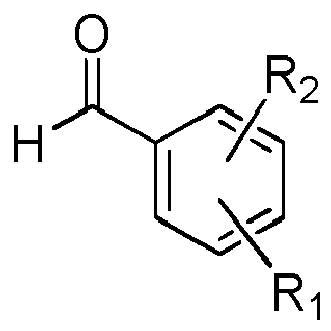 R1 is a polymer, an oligomer, a surfactant, or a solid surface; andR2 is H, OH, NO2 NH2, SH or CH3.
 - A consumer, industrial or textile product comprising a malodor counteractant compound comprising a α-keto moiety or benzaldehyde covalently attached to polymer, an oligomer; a surfactant or a solid surface, wherein the α-keto moiety comprises a ketone which is capable of reacting with malodors.
- The consumer, industrial or textile product of claim 9, wherein the α-keto moiety comprises levulinic acid, acetoacetic acid, pyruvic acid, α-ketoglutaric acid, α-ketobutyric acid, α-ketoisocaproic acid, or α-ketovaleric acid.
- The consumer, industrial or textile product of claim 9 or claim 10, wherein the polymer comprises a polyol, polysaccharide, polyamine, polyacrylate, alkene oxide polymer with OH or NH2 end groups, or block or random copolymer thereof, and/or
wherein the oligomer comprises an oligosaccharide or oligomeric alkane, and/or
wherein the surfactant comprises a poloxamine or an unbranched C13-C15 oxo alcohol, and/or
wherein the solid surface comprises a silica or clay surface. - The consumer, industrial or textile product of claim 9, wherein the malodor counteractant compound has the structure:
 X represents O, NH, or CH2;n represents an integer of 0 or greater; andR is a polymer, an oligomer, a surfactant or a solid surface.
 - The consumer, industrial or textile product of claim 9, wherein the malodor counteractant compound has the structure:
 R1 is a polymer, an oligomer, a surfactant, or a solid surface; andR2 is H, OH, NO2 NH2, SH or CH3.
 - A method for producing a malodor counteractant compound comprising covalently attaching an α-keto moiety or benzaldehyde moiety or to a polymer, an oligomer, a surfactant, or a solid surface.
- A method for counteracting an amine-based malodor of a consumer, industrial or textile product or the surrounding environment thereof comprising the step of adding the malodor counteractant compound of any one of claims 1 to 8 to the product so that the amine-based malodor of a consumer, industrial or textile product or the surrounding environment thereof is counteracted.
Applications Claiming Priority (1)
| Application Number | Priority Date | Filing Date | Title |
|---|---|---|---|
| US13/277,288 US9126890B2 (en) | 2011-10-20 | 2011-10-20 | Low volatile reactive malodor counteractives and methods of use thereof |
Publications (3)
| Publication Number | Publication Date |
|---|---|
| EP2583696A2 true EP2583696A2 (en) | 2013-04-24 |
| EP2583696A3 EP2583696A3 (en) | 2013-06-12 |
| EP2583696B1 EP2583696B1 (en) | 2018-02-21 |
Family
ID=47046437
Family Applications (1)
| Application Number | Title | Priority Date | Filing Date |
|---|---|---|---|
| EP12189143.6A Not-in-force EP2583696B1 (en) | 2011-10-20 | 2012-10-18 | Low volatile reactive malodor counteractives and methods of use thereof |
Country Status (5)
| Country | Link |
|---|---|
| US (2) | US9126890B2 (en) |
| EP (1) | EP2583696B1 (en) |
| CN (2) | CN103110971B (en) |
| BR (1) | BR102012026812A2 (en) |
| MX (1) | MX2012012230A (en) |
Cited By (1)
| Publication number | Priority date | Publication date | Assignee | Title |
|---|---|---|---|---|
| WO2023179870A1 (en) * | 2022-03-25 | 2023-09-28 | Symrise Ag | Ethyl 4-oxopentanoate for reducing odors |
Families Citing this family (10)
| Publication number | Priority date | Publication date | Assignee | Title |
|---|---|---|---|---|
| BR112016003137B1 (en) | 2013-08-15 | 2020-10-27 | International Flavors & Fragrances Inc | polyurea capsule composition, method for preparing a polyurea capsule composition and, consumer product |
| CN104784728B (en) * | 2015-04-09 | 2017-09-05 | 北京建筑材料科学研究总院有限公司 | A kind of deodorant handled suitable for organic solid castoff and its application |
| CN104800876B (en) * | 2015-04-09 | 2017-12-05 | 北京建筑材料科学研究总院有限公司 | A kind of deodorant of organic solid castoff for being applied to heat treatment and its application |
| ES2869275T3 (en) | 2015-04-24 | 2021-10-25 | Int Flavors & Fragrances Inc | Supply systems and preparation procedures |
| US10226544B2 (en) | 2015-06-05 | 2019-03-12 | International Flavors & Fragrances Inc. | Malodor counteracting compositions |
| US20170204223A1 (en) | 2016-01-15 | 2017-07-20 | International Flavors & Fragrances Inc. | Polyalkoxy-polyimine adducts for use in delayed release of fragrance ingredients |
| WO2018085021A1 (en) * | 2016-11-02 | 2018-05-11 | Dow Global Technologies Llc | Solid non-aqueous gel air odorizer |
| CN109125775B (en) * | 2018-09-25 | 2021-02-09 | 广东爱车小屋电子商务科技有限公司 | Air freshener with lasting fragrance and preparation method thereof |
| CN120752017A (en) | 2023-02-16 | 2025-10-03 | 国际香料和香精公司 | Transparent alcohol-free base for perfume compositions |
| CN120857924A (en) | 2023-03-15 | 2025-10-28 | 国际香料和香精公司 | High performance fragrance compositions for rinse-off conditioners |
Citations (9)
| Publication number | Priority date | Publication date | Assignee | Title |
|---|---|---|---|---|
| US5037412A (en) | 1989-10-27 | 1991-08-06 | Kimberly-Clark Corporation | Absorbent article containing an anhydrous deodorant |
| US5601809A (en) | 1986-09-26 | 1997-02-11 | The Gillette Company | Axillary malodor neutralization |
| US5769832A (en) | 1996-04-17 | 1998-06-23 | Hasse; Margaret Henderson | Absorbent article with odor masking agents released by the fastening system |
| US6376741B1 (en) | 1996-06-07 | 2002-04-23 | The Procter & Gamble Company | Activated carbon free absorbent articles having a silica and zeolite odor control system |
| US6379658B1 (en) | 1999-12-21 | 2002-04-30 | International Flavors & Fragrances Inc. | Human sweat malodor counteractant composition and process for using same |
| US20020058017A1 (en) | 2000-09-21 | 2002-05-16 | Kao Corporation | Hair cosmetic compositions |
| US6403075B1 (en) | 2000-03-15 | 2002-06-11 | Dragoco Gerberding & Co. Ag | Odor suppression in ammonia-containing cosmetic products |
| US6610648B2 (en) | 2000-12-22 | 2003-08-26 | Givaudan Sa | Malodor counteractant compositions |
| US7585833B2 (en) | 2005-02-17 | 2009-09-08 | Givaudan Fragrances Corporation | Malodor covering perfumery |
Family Cites Families (32)
| Publication number | Priority date | Publication date | Assignee | Title |
|---|---|---|---|---|
| US2475273A (en) * | 1946-06-03 | 1949-07-05 | Shell Dev | Polyallyl levulinate |
| GB735693A (en) * | 1951-07-31 | 1955-08-24 | Howards Ilford Ltd | Process for the manufacture of laevulinic acid esters |
| US2962478A (en) * | 1954-10-13 | 1960-11-29 | Heyden Newport Chemical Corp | Plasticized vinyl levulinate composition and method of making the same |
| US3580906A (en) * | 1968-09-25 | 1971-05-25 | Reynolds Tobacco Co R | Starch levulinates |
| BE795775A (en) * | 1972-02-23 | 1973-08-22 | Hoffmann La Roche | LIQUID CRYSTALLINE SCHIFF BASES |
| US5288802A (en) * | 1993-01-25 | 1994-02-22 | Ppg Industries, Inc. | Automotive refinish primer surfacer containing acetoacetate functional polyesterpolyol, a polyacrylate, and an amine functional epoxy resin |
| CN1161002A (en) * | 1994-08-12 | 1997-10-01 | 普罗格特-甘布尔公司 | Composition for reducing odor perception on inanimate surfaces |
| US5719231A (en) * | 1996-05-21 | 1998-02-17 | Air Products And Chemicals, Inc. | Process for manufacturing polyvinyl alcohol polymers containing acetoacetic ester groups |
| WO1999000114A2 (en) * | 1997-06-26 | 1999-01-07 | Statens Serum Institut | Biologically active 1,3-bis-aromatic-prop-2-en-1-ones, 1,3-bis-aromatic-propan-1-ones, and 1,3-bis-aromatic-prop-2-yn-1-ones |
| US6133228A (en) * | 1998-05-28 | 2000-10-17 | Firmenich Sa | Slow release of fragrant compounds in perfumery using 2-benzoyl benzoates, 2-alkanoyl benzoates or α-keto esters |
| AU765509B2 (en) * | 1998-08-28 | 2003-09-18 | Destiny Pharma Limited | Porphyrin derivatives, their use in photodynamic therapy and medical devices containing them |
| AU1572001A (en) * | 1999-11-12 | 2001-05-30 | Eli Lilly And Company | Solid support mediated method for the synthesis of ketone oxime linkers and method of producing libraries of ketones therefrom |
| FR2826957B1 (en) * | 2001-07-09 | 2005-09-30 | Centre Nat Rech Scient | METHOD FOR FUNCTIONALIZING SOLID SUBSTRATES, FUNCTIONALIZED SOLID SUBSTRATES AND USES THEREOF |
| US8246969B2 (en) * | 2001-11-16 | 2012-08-21 | Skinmedica, Inc. | Compositions containing aromatic aldehydes and their use in treatments |
| US7238792B2 (en) * | 2003-03-18 | 2007-07-03 | Washington State University Research Foundation | Foldable polymers as probes |
| US20040223943A1 (en) * | 2003-05-05 | 2004-11-11 | The Procter & Gamble Company | Air freshener |
| GB0320441D0 (en) * | 2003-09-02 | 2003-10-01 | Givaudan Sa | Organic compounds |
| JP4541126B2 (en) * | 2004-12-22 | 2010-09-08 | 花王株式会社 | Pyruvate amides |
| GB0501237D0 (en) * | 2005-01-21 | 2005-03-02 | Givaudan Sa | Organic compounds |
| US20060228250A1 (en) * | 2005-03-17 | 2006-10-12 | Brown Robert C | Method and composition for neutralizing odors |
| WO2007012586A1 (en) * | 2005-07-25 | 2007-02-01 | Shell Internationale Research Maatschappij B.V. | Fuel compositions |
| BRPI0618901A2 (en) * | 2005-11-22 | 2011-09-13 | Aromagen Corp | glycerol levulinates ketals and their uses |
| WO2007094922A2 (en) * | 2006-01-20 | 2007-08-23 | Archer-Daniels-Midland Company | Levulinic acid ester derivatives as reactive plasticizers and coalescent solvents |
| EP1886698B1 (en) * | 2006-08-09 | 2011-02-16 | The Procter & Gamble Company | Absorbent articles including an improved odour control system |
| WO2010053891A1 (en) * | 2008-11-04 | 2010-05-14 | The Procter & Gamble Company | Malodor control system |
| EP2412677A4 (en) * | 2009-03-27 | 2013-01-16 | Univ Okayama Nat Univ Corp | ORGANIC-INORGANIC COMPOSITE MATERIAL AND PROCESS FOR PRODUCING THE SAME |
| EP2272491A1 (en) * | 2009-06-18 | 2011-01-12 | Robertet S.A. | New deodorising compositions and deodorant products containing them |
| CA2808582A1 (en) * | 2009-08-14 | 2011-02-17 | University Of Virginia Patent Foundation | Imidamide sphingosine kinase inhibitors |
| US9260817B2 (en) * | 2009-09-18 | 2016-02-16 | The Procter & Gamble Company | Freshening compositions comprising malodor binding polymers and malodor counteractants |
| JP5658502B2 (en) * | 2010-07-27 | 2015-01-28 | 株式会社ダイセル | Unsaturated aldehyde deodorant containing enzyme and deodorizing method |
| US8383710B2 (en) * | 2010-10-21 | 2013-02-26 | Eastman Chemical Company | Waterborne coating compositions containing low-VOC coalescents |
| US20120183489A1 (en) * | 2011-01-14 | 2012-07-19 | Ricky Ah-Man Woo | Compositions comprising metallated malodor control polymers |
-
2011
- 2011-10-20 US US13/277,288 patent/US9126890B2/en not_active Expired - Fee Related
-
2012
- 2012-10-18 EP EP12189143.6A patent/EP2583696B1/en not_active Not-in-force
- 2012-10-19 CN CN201210535747.8A patent/CN103110971B/en not_active Expired - Fee Related
- 2012-10-19 CN CN201710825966.2A patent/CN107510858A/en active Pending
- 2012-10-19 BR BR102012026812A patent/BR102012026812A2/en not_active Application Discontinuation
- 2012-10-19 MX MX2012012230A patent/MX2012012230A/en not_active Application Discontinuation
-
2015
- 2015-07-31 US US14/814,823 patent/US20150336877A1/en not_active Abandoned
Patent Citations (9)
| Publication number | Priority date | Publication date | Assignee | Title |
|---|---|---|---|---|
| US5601809A (en) | 1986-09-26 | 1997-02-11 | The Gillette Company | Axillary malodor neutralization |
| US5037412A (en) | 1989-10-27 | 1991-08-06 | Kimberly-Clark Corporation | Absorbent article containing an anhydrous deodorant |
| US5769832A (en) | 1996-04-17 | 1998-06-23 | Hasse; Margaret Henderson | Absorbent article with odor masking agents released by the fastening system |
| US6376741B1 (en) | 1996-06-07 | 2002-04-23 | The Procter & Gamble Company | Activated carbon free absorbent articles having a silica and zeolite odor control system |
| US6379658B1 (en) | 1999-12-21 | 2002-04-30 | International Flavors & Fragrances Inc. | Human sweat malodor counteractant composition and process for using same |
| US6403075B1 (en) | 2000-03-15 | 2002-06-11 | Dragoco Gerberding & Co. Ag | Odor suppression in ammonia-containing cosmetic products |
| US20020058017A1 (en) | 2000-09-21 | 2002-05-16 | Kao Corporation | Hair cosmetic compositions |
| US6610648B2 (en) | 2000-12-22 | 2003-08-26 | Givaudan Sa | Malodor counteractant compositions |
| US7585833B2 (en) | 2005-02-17 | 2009-09-08 | Givaudan Fragrances Corporation | Malodor covering perfumery |
Non-Patent Citations (1)
| Title |
|---|
| ZENG ET AL., J. CHEM. ECOL., vol. 17, 1991, pages 1469 - 1492 |
Cited By (1)
| Publication number | Priority date | Publication date | Assignee | Title |
|---|---|---|---|---|
| WO2023179870A1 (en) * | 2022-03-25 | 2023-09-28 | Symrise Ag | Ethyl 4-oxopentanoate for reducing odors |
Also Published As
| Publication number | Publication date |
|---|---|
| CN103110971A (en) | 2013-05-22 |
| EP2583696A3 (en) | 2013-06-12 |
| CN103110971B (en) | 2017-10-13 |
| US9126890B2 (en) | 2015-09-08 |
| MX2012012230A (en) | 2013-04-19 |
| CN107510858A (en) | 2017-12-26 |
| US20150336877A1 (en) | 2015-11-26 |
| EP2583696B1 (en) | 2018-02-21 |
| BR102012026812A2 (en) | 2014-06-10 |
| US20130101544A1 (en) | 2013-04-25 |
Similar Documents
| Publication | Publication Date | Title |
|---|---|---|
| EP2583696B1 (en) | Low volatile reactive malodor counteractives and methods of use thereof | |
| US9061965B2 (en) | Low volatile reactive malodor counteractives and methods of use thereof | |
| US20120294821A1 (en) | Low Volatile Reactive Malodor Counteractives and Methods of Use Thereof | |
| JP3297059B2 (en) | Polyvalent cationic silicone polymer | |
| JP2011504534A5 (en) | ||
| EP2414456B1 (en) | Degradable polymer compositions and uses thereof | |
| KR20140001980A (en) | Hydrogels based on polyisobutene succinic acid esters | |
| WO2022013821A1 (en) | Biodegradable microcapsules. process for preparing the same and method of use thereof | |
| CN107250339B (en) | Poly (aspartic acid) -derived copolymers for the controlled release of perfuming ingredients | |
| KR20110077002A (en) | Fluorinated Polyoxyalkylene Glycol Diamide Surfactants | |
| EP2997123A1 (en) | Latex additives | |
| CN116917451A (en) | fabric care compositions | |
| JP2002069178A (en) | Polymer and its production method | |
| CN118302474A (en) | Novel cationic polymers, method for producing the same from polyureadiamine condensates and ether derivatives and use thereof | |
| JP2007528431A (en) | Mixture containing surfactant and cosurfactant | |
| US5300690A (en) | Polyoxime derived from carbon monoxide-propylene polyketone | |
| US20150147287A1 (en) | Low volatile reactive malodor counteractives and methods of use thereof | |
| WO2023110523A1 (en) | New cationic polymers, process for producing the same from monourea diamine condensates and ether derivatives, and uses thereof | |
| CN118451122A (en) | Novel cationic polymers, method for producing said polymers from urea diamine condensates and polyepoxide derivatives and use thereof | |
| JP4485653B2 (en) | Polymer and production method thereof | |
| EP4496876A1 (en) | Fabric care composition | |
| JPH09157362A (en) | Method for stabilizing poly (2-oxetanone) | |
| CN117677688A (en) | Fabric conditioner compositions | |
| US20030220527A1 (en) | Process for preparing perfluoropolyoxyalkylenes with -OCF2H, -OCF2CF2H and -OCF(CF3)H end groups | |
| JPH07157558A (en) | Novel oligomer, method for producing the same, and surfactant comprising the same |
Legal Events
| Date | Code | Title | Description |
|---|---|---|---|
| PUAI | Public reference made under article 153(3) epc to a published international application that has entered the european phase |
Free format text: ORIGINAL CODE: 0009012 |
|
| AK | Designated contracting states |
Kind code of ref document: A2 Designated state(s): AL AT BE BG CH CY CZ DE DK EE ES FI FR GB GR HR HU IE IS IT LI LT LU LV MC MK MT NL NO PL PT RO RS SE SI SK SM TR |
|
| AX | Request for extension of the european patent |
Extension state: BA ME |
|
| PUAL | Search report despatched |
Free format text: ORIGINAL CODE: 0009013 |
|
| AK | Designated contracting states |
Kind code of ref document: A3 Designated state(s): AL AT BE BG CH CY CZ DE DK EE ES FI FR GB GR HR HU IE IS IT LI LT LU LV MC MK MT NL NO PL PT RO RS SE SI SK SM TR |
|
| AX | Request for extension of the european patent |
Extension state: BA ME |
|
| RIC1 | Information provided on ipc code assigned before grant |
Ipc: A61L 9/01 20060101AFI20130508BHEP |
|
| 17P | Request for examination filed |
Effective date: 20131122 |
|
| RBV | Designated contracting states (corrected) |
Designated state(s): AL AT BE BG CH CY CZ DE DK EE ES FI FR GB GR HR HU IE IS IT LI LT LU LV MC MK MT NL NO PL PT RO RS SE SI SK SM TR |
|
| 17Q | First examination report despatched |
Effective date: 20160418 |
|
| RIN1 | Information on inventor provided before grant (corrected) |
Inventor name: SASAKI, TAKASHI Inventor name: PLUYTER, JOHAN GERWIN LODEWIJK Inventor name: HUANG, XIAO |
|
| RIC1 | Information provided on ipc code assigned before grant |
Ipc: A61L 9/01 20060101AFI20170206BHEP Ipc: C07C 205/44 20060101ALI20170206BHEP Ipc: C08B 30/00 20060101ALI20170206BHEP Ipc: C07C 323/22 20060101ALI20170206BHEP Ipc: C07C 223/06 20060101ALI20170206BHEP Ipc: C07C 229/08 20060101ALI20170206BHEP Ipc: C07C 69/675 20060101ALI20170206BHEP |
|
| GRAP | Despatch of communication of intention to grant a patent |
Free format text: ORIGINAL CODE: EPIDOSNIGR1 |
|
| INTG | Intention to grant announced |
Effective date: 20171009 |
|
| GRAS | Grant fee paid |
Free format text: ORIGINAL CODE: EPIDOSNIGR3 |
|
| GRAA | (expected) grant |
Free format text: ORIGINAL CODE: 0009210 |
|
| AK | Designated contracting states |
Kind code of ref document: B1 Designated state(s): AL AT BE BG CH CY CZ DE DK EE ES FI FR GB GR HR HU IE IS IT LI LT LU LV MC MK MT NL NO PL PT RO RS SE SI SK SM TR |
|
| REG | Reference to a national code |
Ref country code: GB Ref legal event code: FG4D |
|
| RIN1 | Information on inventor provided before grant (corrected) |
Inventor name: HUANG, XIAO Inventor name: SASAKI, TAKASHI Inventor name: PLUYTER, JOHAN GERWIN LODEWIJK |
|
| REG | Reference to a national code |
Ref country code: CH Ref legal event code: EP |
|
| REG | Reference to a national code |
Ref country code: AT Ref legal event code: REF Ref document number: 971007 Country of ref document: AT Kind code of ref document: T Effective date: 20180315 |
|
| REG | Reference to a national code |
Ref country code: IE Ref legal event code: FG4D |
|
| REG | Reference to a national code |
Ref country code: DE Ref legal event code: R096 Ref document number: 602012042977 Country of ref document: DE |
|
| REG | Reference to a national code |
Ref country code: NL Ref legal event code: MP Effective date: 20180221 |
|
| REG | Reference to a national code |
Ref country code: LT Ref legal event code: MG4D |
|
| REG | Reference to a national code |
Ref country code: AT Ref legal event code: MK05 Ref document number: 971007 Country of ref document: AT Kind code of ref document: T Effective date: 20180221 |
|
| PG25 | Lapsed in a contracting state [announced via postgrant information from national office to epo] |
Ref country code: NO Free format text: LAPSE BECAUSE OF FAILURE TO SUBMIT A TRANSLATION OF THE DESCRIPTION OR TO PAY THE FEE WITHIN THE PRESCRIBED TIME-LIMIT Effective date: 20180521 Ref country code: FI Free format text: LAPSE BECAUSE OF FAILURE TO SUBMIT A TRANSLATION OF THE DESCRIPTION OR TO PAY THE FEE WITHIN THE PRESCRIBED TIME-LIMIT Effective date: 20180221 Ref country code: HR Free format text: LAPSE BECAUSE OF FAILURE TO SUBMIT A TRANSLATION OF THE DESCRIPTION OR TO PAY THE FEE WITHIN THE PRESCRIBED TIME-LIMIT Effective date: 20180221 Ref country code: NL Free format text: LAPSE BECAUSE OF FAILURE TO SUBMIT A TRANSLATION OF THE DESCRIPTION OR TO PAY THE FEE WITHIN THE PRESCRIBED TIME-LIMIT Effective date: 20180221 Ref country code: LT Free format text: LAPSE BECAUSE OF FAILURE TO SUBMIT A TRANSLATION OF THE DESCRIPTION OR TO PAY THE FEE WITHIN THE PRESCRIBED TIME-LIMIT Effective date: 20180221 Ref country code: CY Free format text: LAPSE BECAUSE OF FAILURE TO SUBMIT A TRANSLATION OF THE DESCRIPTION OR TO PAY THE FEE WITHIN THE PRESCRIBED TIME-LIMIT Effective date: 20180221 Ref country code: ES Free format text: LAPSE BECAUSE OF FAILURE TO SUBMIT A TRANSLATION OF THE DESCRIPTION OR TO PAY THE FEE WITHIN THE PRESCRIBED TIME-LIMIT Effective date: 20180221 |
|
| PG25 | Lapsed in a contracting state [announced via postgrant information from national office to epo] |
Ref country code: GR Free format text: LAPSE BECAUSE OF FAILURE TO SUBMIT A TRANSLATION OF THE DESCRIPTION OR TO PAY THE FEE WITHIN THE PRESCRIBED TIME-LIMIT Effective date: 20180522 Ref country code: RS Free format text: LAPSE BECAUSE OF FAILURE TO SUBMIT A TRANSLATION OF THE DESCRIPTION OR TO PAY THE FEE WITHIN THE PRESCRIBED TIME-LIMIT Effective date: 20180221 Ref country code: AT Free format text: LAPSE BECAUSE OF FAILURE TO SUBMIT A TRANSLATION OF THE DESCRIPTION OR TO PAY THE FEE WITHIN THE PRESCRIBED TIME-LIMIT Effective date: 20180221 Ref country code: LV Free format text: LAPSE BECAUSE OF FAILURE TO SUBMIT A TRANSLATION OF THE DESCRIPTION OR TO PAY THE FEE WITHIN THE PRESCRIBED TIME-LIMIT Effective date: 20180221 Ref country code: BG Free format text: LAPSE BECAUSE OF FAILURE TO SUBMIT A TRANSLATION OF THE DESCRIPTION OR TO PAY THE FEE WITHIN THE PRESCRIBED TIME-LIMIT Effective date: 20180521 Ref country code: SE Free format text: LAPSE BECAUSE OF FAILURE TO SUBMIT A TRANSLATION OF THE DESCRIPTION OR TO PAY THE FEE WITHIN THE PRESCRIBED TIME-LIMIT Effective date: 20180221 |
|
| REG | Reference to a national code |
Ref country code: FR Ref legal event code: PLFP Year of fee payment: 7 |
|
| PG25 | Lapsed in a contracting state [announced via postgrant information from national office to epo] |
Ref country code: AL Free format text: LAPSE BECAUSE OF FAILURE TO SUBMIT A TRANSLATION OF THE DESCRIPTION OR TO PAY THE FEE WITHIN THE PRESCRIBED TIME-LIMIT Effective date: 20180221 Ref country code: PL Free format text: LAPSE BECAUSE OF FAILURE TO SUBMIT A TRANSLATION OF THE DESCRIPTION OR TO PAY THE FEE WITHIN THE PRESCRIBED TIME-LIMIT Effective date: 20180221 Ref country code: RO Free format text: LAPSE BECAUSE OF FAILURE TO SUBMIT A TRANSLATION OF THE DESCRIPTION OR TO PAY THE FEE WITHIN THE PRESCRIBED TIME-LIMIT Effective date: 20180221 Ref country code: EE Free format text: LAPSE BECAUSE OF FAILURE TO SUBMIT A TRANSLATION OF THE DESCRIPTION OR TO PAY THE FEE WITHIN THE PRESCRIBED TIME-LIMIT Effective date: 20180221 Ref country code: IT Free format text: LAPSE BECAUSE OF FAILURE TO SUBMIT A TRANSLATION OF THE DESCRIPTION OR TO PAY THE FEE WITHIN THE PRESCRIBED TIME-LIMIT Effective date: 20180221 |
|
| REG | Reference to a national code |
Ref country code: DE Ref legal event code: R097 Ref document number: 602012042977 Country of ref document: DE |
|
| PG25 | Lapsed in a contracting state [announced via postgrant information from national office to epo] |
Ref country code: SK Free format text: LAPSE BECAUSE OF FAILURE TO SUBMIT A TRANSLATION OF THE DESCRIPTION OR TO PAY THE FEE WITHIN THE PRESCRIBED TIME-LIMIT Effective date: 20180221 Ref country code: CZ Free format text: LAPSE BECAUSE OF FAILURE TO SUBMIT A TRANSLATION OF THE DESCRIPTION OR TO PAY THE FEE WITHIN THE PRESCRIBED TIME-LIMIT Effective date: 20180221 Ref country code: SM Free format text: LAPSE BECAUSE OF FAILURE TO SUBMIT A TRANSLATION OF THE DESCRIPTION OR TO PAY THE FEE WITHIN THE PRESCRIBED TIME-LIMIT Effective date: 20180221 Ref country code: DK Free format text: LAPSE BECAUSE OF FAILURE TO SUBMIT A TRANSLATION OF THE DESCRIPTION OR TO PAY THE FEE WITHIN THE PRESCRIBED TIME-LIMIT Effective date: 20180221 |
|
| PLBE | No opposition filed within time limit |
Free format text: ORIGINAL CODE: 0009261 |
|
| STAA | Information on the status of an ep patent application or granted ep patent |
Free format text: STATUS: NO OPPOSITION FILED WITHIN TIME LIMIT |
|
| 26N | No opposition filed |
Effective date: 20181122 |
|
| PGFP | Annual fee paid to national office [announced via postgrant information from national office to epo] |
Ref country code: DE Payment date: 20181029 Year of fee payment: 7 |
|
| PG25 | Lapsed in a contracting state [announced via postgrant information from national office to epo] |
Ref country code: SI Free format text: LAPSE BECAUSE OF FAILURE TO SUBMIT A TRANSLATION OF THE DESCRIPTION OR TO PAY THE FEE WITHIN THE PRESCRIBED TIME-LIMIT Effective date: 20180221 |
|
| PGFP | Annual fee paid to national office [announced via postgrant information from national office to epo] |
Ref country code: FR Payment date: 20181025 Year of fee payment: 7 Ref country code: GB Payment date: 20181029 Year of fee payment: 7 |
|
| REG | Reference to a national code |
Ref country code: CH Ref legal event code: PL |
|
| REG | Reference to a national code |
Ref country code: BE Ref legal event code: MM Effective date: 20181031 |
|
| PG25 | Lapsed in a contracting state [announced via postgrant information from national office to epo] |
Ref country code: MC Free format text: LAPSE BECAUSE OF FAILURE TO SUBMIT A TRANSLATION OF THE DESCRIPTION OR TO PAY THE FEE WITHIN THE PRESCRIBED TIME-LIMIT Effective date: 20180221 Ref country code: LU Free format text: LAPSE BECAUSE OF NON-PAYMENT OF DUE FEES Effective date: 20181018 |
|
| REG | Reference to a national code |
Ref country code: IE Ref legal event code: MM4A |
|
| PG25 | Lapsed in a contracting state [announced via postgrant information from national office to epo] |
Ref country code: BE Free format text: LAPSE BECAUSE OF NON-PAYMENT OF DUE FEES Effective date: 20181031 Ref country code: LI Free format text: LAPSE BECAUSE OF NON-PAYMENT OF DUE FEES Effective date: 20181031 Ref country code: CH Free format text: LAPSE BECAUSE OF NON-PAYMENT OF DUE FEES Effective date: 20181031 |
|
| PG25 | Lapsed in a contracting state [announced via postgrant information from national office to epo] |
Ref country code: IE Free format text: LAPSE BECAUSE OF NON-PAYMENT OF DUE FEES Effective date: 20181018 |
|
| PG25 | Lapsed in a contracting state [announced via postgrant information from national office to epo] |
Ref country code: MT Free format text: LAPSE BECAUSE OF NON-PAYMENT OF DUE FEES Effective date: 20181018 |
|
| PG25 | Lapsed in a contracting state [announced via postgrant information from national office to epo] |
Ref country code: TR Free format text: LAPSE BECAUSE OF FAILURE TO SUBMIT A TRANSLATION OF THE DESCRIPTION OR TO PAY THE FEE WITHIN THE PRESCRIBED TIME-LIMIT Effective date: 20180221 |
|
| REG | Reference to a national code |
Ref country code: DE Ref legal event code: R119 Ref document number: 602012042977 Country of ref document: DE |
|
| PG25 | Lapsed in a contracting state [announced via postgrant information from national office to epo] |
Ref country code: PT Free format text: LAPSE BECAUSE OF FAILURE TO SUBMIT A TRANSLATION OF THE DESCRIPTION OR TO PAY THE FEE WITHIN THE PRESCRIBED TIME-LIMIT Effective date: 20180221 |
|
| PG25 | Lapsed in a contracting state [announced via postgrant information from national office to epo] |
Ref country code: HU Free format text: LAPSE BECAUSE OF FAILURE TO SUBMIT A TRANSLATION OF THE DESCRIPTION OR TO PAY THE FEE WITHIN THE PRESCRIBED TIME-LIMIT; INVALID AB INITIO Effective date: 20121018 Ref country code: MK Free format text: LAPSE BECAUSE OF NON-PAYMENT OF DUE FEES Effective date: 20180221 |
|
| PG25 | Lapsed in a contracting state [announced via postgrant information from national office to epo] |
Ref country code: DE Free format text: LAPSE BECAUSE OF NON-PAYMENT OF DUE FEES Effective date: 20200501 Ref country code: IS Free format text: LAPSE BECAUSE OF FAILURE TO SUBMIT A TRANSLATION OF THE DESCRIPTION OR TO PAY THE FEE WITHIN THE PRESCRIBED TIME-LIMIT Effective date: 20180621 |
|
| GBPC | Gb: european patent ceased through non-payment of renewal fee |
Effective date: 20191018 |
|
| PG25 | Lapsed in a contracting state [announced via postgrant information from national office to epo] |
Ref country code: FR Free format text: LAPSE BECAUSE OF NON-PAYMENT OF DUE FEES Effective date: 20191031 Ref country code: GB Free format text: LAPSE BECAUSE OF NON-PAYMENT OF DUE FEES Effective date: 20191018 |