EP2581968A1 - Rechargeable battery - Google Patents
Rechargeable battery Download PDFInfo
- Publication number
- EP2581968A1 EP2581968A1 EP12186853.3A EP12186853A EP2581968A1 EP 2581968 A1 EP2581968 A1 EP 2581968A1 EP 12186853 A EP12186853 A EP 12186853A EP 2581968 A1 EP2581968 A1 EP 2581968A1
- Authority
- EP
- European Patent Office
- Prior art keywords
- cover
- terminal
- rechargeable battery
- current collecting
- collecting tap
- Prior art date
- Legal status (The legal status is an assumption and is not a legal conclusion. Google has not performed a legal analysis and makes no representation as to the accuracy of the status listed.)
- Granted
Links
Images




Classifications
-
- H—ELECTRICITY
- H01—ELECTRIC ELEMENTS
- H01M—PROCESSES OR MEANS, e.g. BATTERIES, FOR THE DIRECT CONVERSION OF CHEMICAL ENERGY INTO ELECTRICAL ENERGY
- H01M50/00—Constructional details or processes of manufacture of the non-active parts of electrochemical cells other than fuel cells, e.g. hybrid cells
- H01M50/50—Current conducting connections for cells or batteries
- H01M50/531—Electrode connections inside a battery casing
-
- H—ELECTRICITY
- H01—ELECTRIC ELEMENTS
- H01M—PROCESSES OR MEANS, e.g. BATTERIES, FOR THE DIRECT CONVERSION OF CHEMICAL ENERGY INTO ELECTRICAL ENERGY
- H01M50/00—Constructional details or processes of manufacture of the non-active parts of electrochemical cells other than fuel cells, e.g. hybrid cells
- H01M50/50—Current conducting connections for cells or batteries
- H01M50/543—Terminals
- H01M50/552—Terminals characterised by their shape
- H01M50/553—Terminals adapted for prismatic, pouch or rectangular cells
-
- H—ELECTRICITY
- H01—ELECTRIC ELEMENTS
- H01M—PROCESSES OR MEANS, e.g. BATTERIES, FOR THE DIRECT CONVERSION OF CHEMICAL ENERGY INTO ELECTRICAL ENERGY
- H01M50/00—Constructional details or processes of manufacture of the non-active parts of electrochemical cells other than fuel cells, e.g. hybrid cells
- H01M50/10—Primary casings; Jackets or wrappings
- H01M50/102—Primary casings; Jackets or wrappings characterised by their shape or physical structure
- H01M50/103—Primary casings; Jackets or wrappings characterised by their shape or physical structure prismatic or rectangular
-
- H—ELECTRICITY
- H01—ELECTRIC ELEMENTS
- H01M—PROCESSES OR MEANS, e.g. BATTERIES, FOR THE DIRECT CONVERSION OF CHEMICAL ENERGY INTO ELECTRICAL ENERGY
- H01M50/00—Constructional details or processes of manufacture of the non-active parts of electrochemical cells other than fuel cells, e.g. hybrid cells
- H01M50/10—Primary casings; Jackets or wrappings
- H01M50/147—Lids or covers
- H01M50/148—Lids or covers characterised by their shape
- H01M50/15—Lids or covers characterised by their shape for prismatic or rectangular cells
-
- H—ELECTRICITY
- H01—ELECTRIC ELEMENTS
- H01M—PROCESSES OR MEANS, e.g. BATTERIES, FOR THE DIRECT CONVERSION OF CHEMICAL ENERGY INTO ELECTRICAL ENERGY
- H01M50/00—Constructional details or processes of manufacture of the non-active parts of electrochemical cells other than fuel cells, e.g. hybrid cells
- H01M50/50—Current conducting connections for cells or batteries
- H01M50/543—Terminals
- H01M50/547—Terminals characterised by the disposition of the terminals on the cells
- H01M50/55—Terminals characterised by the disposition of the terminals on the cells on the same side of the cell
-
- H—ELECTRICITY
- H01—ELECTRIC ELEMENTS
- H01M—PROCESSES OR MEANS, e.g. BATTERIES, FOR THE DIRECT CONVERSION OF CHEMICAL ENERGY INTO ELECTRICAL ENERGY
- H01M2200/00—Safety devices for primary or secondary batteries
- H01M2200/10—Temperature sensitive devices
- H01M2200/103—Fuse
-
- H—ELECTRICITY
- H01—ELECTRIC ELEMENTS
- H01M—PROCESSES OR MEANS, e.g. BATTERIES, FOR THE DIRECT CONVERSION OF CHEMICAL ENERGY INTO ELECTRICAL ENERGY
- H01M50/00—Constructional details or processes of manufacture of the non-active parts of electrochemical cells other than fuel cells, e.g. hybrid cells
- H01M50/50—Current conducting connections for cells or batteries
- H01M50/531—Electrode connections inside a battery casing
- H01M50/536—Electrode connections inside a battery casing characterised by the method of fixing the leads to the electrodes, e.g. by welding
-
- H—ELECTRICITY
- H01—ELECTRIC ELEMENTS
- H01M—PROCESSES OR MEANS, e.g. BATTERIES, FOR THE DIRECT CONVERSION OF CHEMICAL ENERGY INTO ELECTRICAL ENERGY
- H01M50/00—Constructional details or processes of manufacture of the non-active parts of electrochemical cells other than fuel cells, e.g. hybrid cells
- H01M50/50—Current conducting connections for cells or batteries
- H01M50/543—Terminals
- H01M50/564—Terminals characterised by their manufacturing process
- H01M50/567—Terminals characterised by their manufacturing process by fixing means, e.g. screws, rivets or bolts
-
- Y—GENERAL TAGGING OF NEW TECHNOLOGICAL DEVELOPMENTS; GENERAL TAGGING OF CROSS-SECTIONAL TECHNOLOGIES SPANNING OVER SEVERAL SECTIONS OF THE IPC; TECHNICAL SUBJECTS COVERED BY FORMER USPC CROSS-REFERENCE ART COLLECTIONS [XRACs] AND DIGESTS
- Y02—TECHNOLOGIES OR APPLICATIONS FOR MITIGATION OR ADAPTATION AGAINST CLIMATE CHANGE
- Y02E—REDUCTION OF GREENHOUSE GAS [GHG] EMISSIONS, RELATED TO ENERGY GENERATION, TRANSMISSION OR DISTRIBUTION
- Y02E60/00—Enabling technologies; Technologies with a potential or indirect contribution to GHG emissions mitigation
- Y02E60/10—Energy storage using batteries
Definitions
- the first cover may surround sidewalls of the second cover.
- a sealant may be between the first cover and the second cover.
- a rechargeable battery 102 according to the second exemplary embodiment may include the same (or substantially the same) structure as the rechargeable battery 101, according to the first exemplary embodiment, except for the structure of a first cover 160 and a second cover 170, descriptions of certain aspects of the rechargeable battery 102 are given by way of reference to the rechargeable battery 101 and will be omitted herein.
- the first cover 160 and the second cover 170 may be coupled together by inserting the second cover 170 into the first cover 160.
- a sealant e.g., a sealing material
- a second gasket 128 into which the terminal flange 121 a is inserted is installed on the upper portion of the terminal flange 121 a, and a current collecting tap 141 that is electrically coupled to the positive electrode 11 is installed on the lower portion of the terminal flange 121 a.
- the current collecting tap 141 may include an upper connection portion 141 a that is coupled, e.g., welded, to the terminal flange 121 a and a lower connection portion 141 b that continues downwardly at the upper connection portion 141 a and is coupled, e.g., fixed, to the positive electrode uncoated region 111 a.
Landscapes
- Chemical & Material Sciences (AREA)
- Chemical Kinetics & Catalysis (AREA)
- Electrochemistry (AREA)
- General Chemical & Material Sciences (AREA)
- Engineering & Computer Science (AREA)
- Manufacturing & Machinery (AREA)
- Connection Of Batteries Or Terminals (AREA)
Abstract
Description
- The invention relates generally to a rechargeable battery, and more particularly, to a terminal connection portion of a rechargeable battery.
- A rechargeable battery is a battery that can be charged and discharged, unlike a primary battery that is not designed to be recharged. A rechargeable battery having a relatively low capacity may be used in a portable electronic device, such as, a mobile phone, a laptop computer, or a camcorder, and a rechargeable battery having a relatively large capacity may be used as, for example, a power supply for driving a motor in an electric vehicle, a hybrid electric vehicle, and the like.
- A rechargeable battery that uses a non-aqueous electrolyte (electrolytic solution) having a relatively high energy density may be configured in a large capacity battery module, in which a plurality of rechargeable batteries are coupled in series in order to be used to drive devices requiring a relatively large level of power, for example, electric vehicle motors.
- Further, one battery module may include a plurality of rechargeable batteries that are coupled in series. The rechargeable battery may be formed in cylindrical or angular shapes.
- A terminal of a rechargeable battery may have a relatively complicated lower structure that is coupled to an electrode assembly; a relatively complicated work process may accompany the installation of the terminal. In addition, if the electrolytic solution infiltrates into gaps of lower structures of the terminal, an external short-circuit may occur by coupling the terminal and the cap plate.
- The above information disclosed in this Background section is only for enhancement of understanding of the background of the described technology and therefore it may contain information that does not form the prior art that is already known to a person of ordinary skill in the art.
- The invention is directed to the assembly and/or safety of a rechargeable battery.
- An exemplary embodiment of the present invention provides a rechargeable battery including an electrode assembly including a first electrode and a second electrode; a case housing the electrode assembly; a cap plate coupled with the case; a terminal electrically coupled to the electrode assembly through a current collecting tap, and protruding through the cap plate to an outside of the case; a first cover in which a lower portion of the terminal is located; and a second cover in which an upper portion of the current collecting tap is located, the second cover being coupled with the first cover to secure the terminal and the current collecting tap.
- The first cover may be coupled with the second cover by being inserted thereinto.
- The rechargeable battery may further include a gasket, and the terminal may include a terminal flange and a terminal pillar protruding from the terminal flange to the outside of the case. The gasket may include a lower insulating portion in which the terminal flange is located and an upper insulating portion that surrounds the terminal pillar and protrudes upwardly.
- The first cover may have a hole, and a portion of the gasket may be located in the first cover. The upper insulating portion of the gasket may protrude through the hole. The terminal may further include a terminal protrusion protruding from the terminal flange along a periphery of the terminal pillar. The gasket may further include a groove in which the terminal protrusion is disposed, and a step portion on an opposite side of the groove. The step portion may protrude through the hole of the first cover and may contact a lower surface of the cap plate.
- The current collecting tap may include a fuse portion having a smaller cross-section than its surroundings. At least one of the first cover or the second cover may include a fuse protrusion protruding into the fuse portion.
- The second cover may include protection protrusions protruding to an outside of the current collecting tap, the current collecting tap being located between the protection protrusions.
- The second cover may surround the upper portion of the current collecting tap and sidewalls of the first cover.
- The first cover may surround sidewalls of the second cover.
- A sealant may be between the first cover and the second cover.
- The first cover may include a protrusion inserted into a groove on the cap plate. Assembly and safety of a rechargeable battery may be improved by integrating a terminal and a current collector according to the invention.
-
-
FIG. 1 is a perspective view that illustrates a rechargeable battery according to a first exemplary embodiment of the present invention. -
FIG. 2 is a cross-sectional view that is taken along the line II-II ofFIG. 1 . -
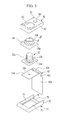
FIG. 3 is an exploded perspective view in which a negative electrode terminal and a current collecting tap according to the first exemplary embodiment of the present invention are observed from above. -
FIG. 4 is an exploded perspective view in which a terminal module according to the first exemplary embodiment of the present invention is observed from below. -
FIG. 5 is a perspective view that illustrates a state in which members illustrated inFIG. 3 andFIG. 4 are combined. -
FIG. 6 is a cross-sectional view that illustrates a portion of a rechargeable battery according to a second exemplary embodiment of the present invention. - Hereinafter, aspects of the present invention will be described more fully with reference to the accompanying schematic drawings, in which exemplary embodiments of the invention are shown. As those skilled in the art would realize, the described embodiments may be modified in various different ways, all without departing from the spirit or scope of the present invention. In the drawings and description, like reference numerals designate like elements throughout the specification. Throughout the specification, when a first element is referred to as being "on" or "coupled to" a second element, the first element may be directly "on" or "coupled to" the second element, or indirectly "on" or "coupled to" the second element via one or more intervening elements.
FIG. 1 is a perspective view that illustrates a rechargeable battery according to a first exemplary embodiment of the present invention, andFIG. 2 is a cross-sectional view that is taken along the line II-II ofFIG. 1 . - Referring to
FIGS. 1 and2 , therechargeable battery 101 according to the first exemplary embodiment of the present invention includes anelectrode assembly 10 that is wound with aseparator 13 interposed between a first, e.g. positive,electrode 11 and a second, e.g. negative,electrode 12, acase 26 housing (e.g., enclosing) theelectrode assembly 10, and acap assembly 30 that is coupled (e.g., combined) with an opening of thecase 26. - The
rechargeable battery 101 according to the first exemplary embodiment of the present invention will be described with reference to an example of an angular shaped (e.g., rectangular-shaped or hexahedral-shaped), lithium ion rechargeable battery. However, the present invention is not limited thereto, and may be applied to various types and/or shapes of batteries, such as, a lithium polymer battery or a cylindrical battery. - The
positive electrode 11 and thenegative electrode 12 each may include a coated region, on which an active material is coated on a current collector that is formed, for example, by a metal foil of a thin plate, and an uncoated region, on which the active material is not coated. - In one embodiment of the present invention, the positive electrode
uncoated region 11 a is formed at one side at one end of thepositive electrode 11 along a length direction of thepositive electrode 11, and the negative electrodeuncoated region 12a is formed at another side at one end of thenegative electrode 12 along a length direction of thenegative electrode 12. - Further, the
positive electrode 11 andnegative electrode 12 may be arranged, e.g., wound, with theseparator 13 that is an insulator interposed therebetween. However, aspects of the present invention are not limited thereto, and theelectrode assembly 10 may have a structure in which the positive electrode and the negative electrode include a plurality of sheets (or plates) laminated with an insulator interposed therebetween. Thecase 26 may have a substantially cuboid shape, and an opening may be formed at one side thereof. Thecap assembly 30 includes acap plate 31 that covers the opening of thecase 26, apositive electrode terminal 21 that protrudes outside thecap plate 31 and is electrically coupled to thepositive electrode 11, anegative electrode terminal 22 that protrudes outside thecap plate 31 and is electrically coupled to thenegative electrode 12, and avent 39 in which anotch 39a is formed so that the vent may be broken according to a suitable internal pressure, e.g., a predetermined internal pressure. In one embodiment of the present invention, thecap plate 31 is formed of, for example, a thin metal plate, and includes an electrolyte injection opening 27 for injecting an electrolytic solution at one side, and asealing stopper 38 that seals the electrolyte injection opening 27 secured (e.g., fixed) to thecap plate 31. - The
positive electrode terminal 21 and thenegative electrode terminal 22 each may be disposed (e.g., installed) with a portion thereof penetrating through thecap plate 31, with afirst gasket 25 at an upper portion thereof, and with asecond gasket 28 at a lower portion thereof. A corresponding one of thefirst gasket 25 and a corresponding one of thesecond gasket 28 are further located between thecap plate 31 and a corresponding one of thepositive electrode terminal 21 or thenegative electrode terminal 22 to insulate the cap plate from thepositive electrode terminal 21 and/or thenegative electrode terminal 22. - In one embodiment of the present invention, the
terminals terminals terminals terminals nuts 29 may be coupled. Acurrent collecting tap 41 that is electrically coupled to thepositive electrode 11 may be at (e.g., installed on) thepositive electrode terminal 21, and acurrent collecting tap 42 that is electrically coupled to thenegative electrode 12 may be at (e.g., installed on) thenegative electrode terminal 22. - Additionally, at a lower portion of the
terminals terminal flanges nuts 29 are fastened onto theterminals cap plate 31 and theterminals first gaskets 25 and thesecond gaskets 28 with theterminal flanges nuts 29. - In one embodiment of the present invention, a
first cover 60 for insulation is located (e.g., installed) between theterminal flange 21 a and thecap plate 31, and anotherfirst cover 60 for insulation is located (e.g., installed) between theterminal flange 22a and thecap plate 31. Thefirst cover 60 that is at thepositive electrode terminal 21 may couple (e.g., combine) with asecond cover 80 by being inserted thereinto, and thefirst cover 60 that is at thenegative electrode terminal 22 may couple (e.g., combine) with thesecond cover 70 by being inserted thereinto. -
FIG. 3 is an exploded perspective view in which a negative electrode terminal and a current collecting tap according to the first exemplary embodiment of the present invention are observed from above.FIG. 4 is an exploded perspective view in which a terminal module according to the first exemplary embodiment of the present invention is observed from below. - With reference to
FIGS. 3 and4 , since thepositive electrode terminal 21 and thenegative electrode terminal 22 have the same (or substantially the same) structure, a detailed description with respect to thepositive electrode terminal 21 is given by way of reference to thenegative terminal 22 and is omitted herein. - The
negative electrode terminal 22 may include theterminal flange 22a and aterminal pillar 22c protruding toward the upper portion of thecase 26 on theterminal flange 22a. Theterminal flange 22a supports theterminal pillar 22c under thecap plate 31 by protruding in a lateral direction of theterminal pillar 22c. On theterminal flange 22a, a terminal protrusion (e.g., a protrusion spot) 22b protruding along a periphery (e.g., a circumference) of a lower end of theterminal pillar 22c is formed. - In one embodiment of the present invention, the current collecting
tap 42 that is electrically coupled to the negative electrodeuncoated region 12a is coupled (e.g., fixed) to thenegative electrode terminal 22, for example, by welding. The current collectingtap 42 may include anupper connection portion 42a coupled (e.g., welded) to theterminal flange 22a, and alower connection portion 42d that is bent at the upper connection portion 41 a so that it continues downwardly, and is coupled (e.g., fixed) to the negativeuncoated region 12a. A fixinghole 42b (e.g., a welding hole) configured to receive asupport protrusion 22d formed on the lower portion of theterminal flange 22a is located at theupper connection portion 42a. In a state in which thesupport protrusion 22d is inserted into the fixinghole 42b, thesupport protrusion 22d is secured (e.g., fixed) to theupper connection portion 42a, for example, by welding. - Additionally, a
fuse portion 42c having a smaller cross-section than its surroundings may be formed on theupper connection portion 42a. Afuse hole 42e may be formed at the center of thefuse portion 42c, thefuse portion 42c having a smaller cross-section than its surroundings. However, the present invention is not limited thereto, and, alternatively, a groove may be formed at thefuse portion 42c. The current collectingtap 41 coupled to thepositive electrode terminal 21 may have the same, or substantially the same, structure as the current collectingtap 42 coupled to thenegative electrode terminal 22, except as to whether or not the fuse portion is formed. In one embodiment of the present invention, thefuse portion 42c is on the current collectingtap 42 coupled to thenegative electrode terminal 22, but the present invention is not limited thereto, and the fuse portion may be on the current collectingtap 41 coupled to thepositive electrode terminal 21. - If the
fuse portion 42c is on the current collectingtap 42, when an overcurrent flows, thefuse portion 42c melts, which opens a current path. If thefuse portion 42c is on the current collectingtap 42, when a relatively large current flows because of an occurrence of a short-circuit, the fuse is operated, such that safety may be improved. - In one embodiment of the present invention, the
second gasket 28 includes a lower insulatingportion 28a configured to receive theterminal flange 22a and an upper insulatingportion 28c that covers theterminal pillar 22c and protrudes upwardly. Thesecond gasket 28 may be formed of, for example, a synthetic resin, e.g., a synthetic resin having elasticity. - The lower insulating
portion 28a may be formed to cover the upper surface and lateral surface of theterminal flange 22a, and theterminal flange 22a may be inserted thereinto. Agroove 28d into which theterminal protrusion 22b may be inserted is formed on the lower insulatingportion 28a, and because of the formation of thegroove 28d, a step portion 28b protruding along the periphery (e.g., the circumference) of the upper insulatingportion 28c is formed on thesecond gasket 28. - In one embodiment of the present invention, the step portion 28b penetrates through a
hole 63 on thefirst cover 60, and contacts the lower surface of thecap plate 31. The step portion 28b may make contact with thecap plate 31 by being pressed by theterminal protrusion 22b. As described above, since the step portion 28b of thesecond gasket 28 having elasticity is contacted (e.g., closely contacted) with thecap plate 31, a space between thecap plate 31 andnegative electrode terminal 22 may be sealed (or substantially sealed). Additionally, the upper insulatingportion 28c may have a cylindrical shape, and may be inserted into the terminal hole on thecap plate 31, and theterminal pillar 22c may be inserted thereinto. - In one embodiment of the present invention, the
first cover 60 is installed on the upper portion of thesecond gasket 28, in which thefirst cover 60 is disposed between thecap plate 31 and thesecond gasket 28. Thehole 63 into which thesecond gasket 28 is inserted is formed on thefirst cover 60, and the step portion 28b and the upper insulatingportion 28c are inserted into thehole 63. - The
first cover 60 may be around (e.g., surround or cover) the upper surface and lateral surface of thesecond gasket 28. Asupport protrusion 64 inserted into a groove formed on thecap plate 31 may be formed on the top surface of thefirst cover 60. Since thesupport protrusion 64 may be installed by being inserted into the groove, thefirst cover 60 may be installed at a relatively accurate position with respect to thecap plate 31, and by installing thenut 29 on thenegative electrode terminal 22, it is possible to prevent rotation of thefirst cover 60. - The
first cover 60 may couple with thesecond cover 70 by being inserted thereinto, and thesecond cover 70 may be installed so that thesecond cover 70 and theupper connection portion 42a of the current collectingtap 42 covers thefirst cover 60. Acover plate 61 that may have, for example, a rectangular shape and aside wall 62 that protrudes downwardly at a side end of thecover plate 61 may be formed on thefirst cover 60. - The
second cover 70 may include acover plate 71 that has, for example, a rectangular shape, and aside wall 72 that protrudes upwardly at a side end of thecover plate 71. In one embodiment of the present invention, theside wall 72 protrudes at three side ends of thecover plate 71 and opens in a direction such that thelower connection portion 42d formed on the current collectingtap 42 may continue downwardly.Protection protrusions 75 that protrude to an outside of the current collectingtap 42 may be formed at both side ends of thesecond cover 70, and thelower connection portion 42d may be disposed between theprotection protrusions 75. If theprotection protrusions 75 are formed, theprotection protrusions 75 may assist the current collectingtap 42 to be relatively stably coupled with thenegative electrode terminal 22 by preventing collision of thecase 26 and the current collectingtap 42 when an impact is transmitted from the outside, such that short-circuiting between thecase 26 and the current collectingtap 42 may be prevented. - A
fuse protrusion 73 that is configured to protrude into thefuse hole 42e may be formed on thecover plate 71 of thesecond cover 70. If thefuse protrusion 73 is formed, thefuse protrusion 73 acts as a support for separating theupper connection portion 42a from thelower connection portion 42d after thefuse portion 42c has melted. Without support for separation, if vibration or impact is transferred from the outside after thefuse portion 42c has melted, theupper connection portion 42a may be coupled again to thelower connection portion 42d, and an overcurrent might flow, which may cause therechargeable battery 101 to ignite or explode. However, if thefuse protrusion 73 is inserted into thefuse hole 42e, the melted portion may be prevented from being coupled again. - A corner of the
cover plate 71 that faces an inside of thecase 26 on thesecond cover 70 and theside wall 72 may be rounded. When the external impact is transferred to therechargeable battery 101, if theelectrode assembly 10 is raised and collides with thesecond cover 70, theelectrode assembly 10 may be torn, such that a short-circuit may occur. However, if a round portion is formed on thesecond cover 70, it is possible to prevent theelectrode assembly 10 from being damaged due to a collision of theelectrode assembly 10 and thesecond cover 70. - The
first cover 60 and thesecond cover 70 may be formed of, for example, a polymer having electric insulating property, e.g., a polymer having elasticity, so that the first cover and the second cover will not, or substantially will not, react with the electrolytic solution. Theside wall 62 of thefirst cover 60 may be inserted into the inside of theside wall 72 of thesecond cover 70, such insertion couples together thesecond cover 70 and thefirst cover 60. However, the present invention is not limited thereto, and thesidewall 72 of thesecond cover 70 may be inserted into the inside of theside wall 62 of thefirst cover 60. - As shown in
FIGS. 2 and5 , thesecond gasket 28, theterminal flange 22a, and theupper connection portion 42a of the current collectingtap 42 are between thesecond cover 70 and thefirst cover 60, such that, in a state in which thefirst cover 60 and thesecond cover 70 are being assembled together, the first cover and the second cover form a modular element including thenegative electrode terminal 22 and the current collectingtap 42. - When the
negative electrode terminal 22 and the current collectingtap 42 are pre-assembled into a module, an assembly process of therechargeable battery 101 may be relatively simplified by securing (e.g., fixing) the previously assemblednegative electrode terminal 22 and current collectingtap 42 to thecap plate 31. Therefore, since thenegative electrode terminal 22, thesecond gasket 28, and the current collectingtap 42 may not be required to be separately installed on thecap plate 31, an installation process may be simplified and/or shortened. Further, since thesecond cover 70 surrounds thenegative electrode terminal 22, thesecond gasket 28, and the current collectingtap 42, it is possible to prevent, or substantially prevent, a short-circuit from occurring due to, for example, the electrolytic solution infiltrating into the gap. -
FIG. 6 is a cross-sectional view that illustrates a portion of a rechargeable battery according to a second exemplary embodiment of the present invention. - Referring to
FIG. 6 , since arechargeable battery 102 according to the second exemplary embodiment may include the same (or substantially the same) structure as therechargeable battery 101, according to the first exemplary embodiment, except for the structure of afirst cover 160 and asecond cover 170, descriptions of certain aspects of therechargeable battery 102 are given by way of reference to therechargeable battery 101 and will be omitted herein. - The
first cover 160 and thesecond cover 170 may be coupled together by inserting thesecond cover 170 into thefirst cover 160. A sealant (e.g., a sealing material) (not shown) may be installed in a gap between thefirst cover 160 and thesecond cover 170 in order to prevent (or substantially prevent) intrusion of foreign materials. - A
positive electrode terminal 121 may include aterminal flange 121 a and aterminal pillar 121 c protruding toward the upper portion of the case on theterminal flange 121 a. Theterminal flange 121 a supports theterminal pillar 121 c under acap plate 131 by protruding in a side direction of theterminal pillar 121 c. On theterminal flange 121 a, a terminal protrusion (e.g., a protrusion spot) 121 b protruding along a periphery (e.g., a circumference) of a lower end of theterminal pillar 121 c may be formed. - In one embodiment of the present invention, a
second gasket 128 into which theterminal flange 121 a is inserted is installed on the upper portion of theterminal flange 121 a, and a current collecting tap 141 that is electrically coupled to thepositive electrode 11 is installed on the lower portion of theterminal flange 121 a. The current collecting tap 141 may include anupper connection portion 141 a that is coupled, e.g., welded, to theterminal flange 121 a and alower connection portion 141 b that continues downwardly at theupper connection portion 141 a and is coupled, e.g., fixed, to the positive electrode uncoated region 111 a. - The
second gasket 128, theterminal flange 121 a, and theupper connection portion 141 a of the current collecting tap 141 may be installed by being inserted between thefirst cover 160 and thesecond cover 170, and thepositive electrode terminal 121 and the current collecting tap 141 may be integrally secured, e.g., fixed. -
Protection protrusions 171 that further protrude to an outside of the current collecting tap 141 may be formed at an edge in a width direction of thesecond cover 170, and thelower connection portion 141 b may be disposed between theprotection protrusions 171. Asupport spot 161 that supports theprotection protrusion 171 at a lower portion thereof may be formed on thefirst cover 160. When thesupport spot 161 is formed, thefirst cover 160 and thesecond cover 170 may be stably coupled. - Similar to what was previously described in connection with
rechargeable battery 101, thepositive electrode terminal 121 and current collecting tap 141 may assembled into a module including thefirst cover 160 and thesecond cover 170, thereby aiding assembly.Reference Numerals 101, 102: Rechargeable battery 10: Electrode assembly 11 : 1st, Positive electrode 11a: Positive electrode uncoated region 12: 2nd, Negative electrode 12a: Negative electrode uncoated region 13: Separator 21, 121: Positive electrode terminal 22: Negative electrode terminal 21a, 22a, 121a: Terminal flange 22b,121b: Terminal protrusion 21c, 22c, 121c: Terminal pillar 25: First gasket 26: Case 27: Electrolyte injection opening 28, 128: Second gasket 28a: Lower insulating portion 28b: Step portion 28c: Upper insulating portion 28d: Groove 29, 129: Nut 30: Cap assembly 31, 131: Cap plate 38, 138: Sealing stopper 39: Vent 39a: Notch 41, 42, 141: Current collecting tap 41a, 42a, 141 a: Upper connection portion 41b, 42d, 141b: Lower connection portion 42b: Fixing hole 42c: Fuse portion 42e: Fuse hole 60, 160: First cover 61, 71: Cover plate 62, 72: Side wall 63: Hole 64: Support protrusion 70, 80, 170: Second cover 73: Fuse protrusion 75, 171: Protection protrusion 161: Support spot
Claims (12)
- A rechargeable battery (101) comprising:an electrode assembly (10) comprising a first electrode (11) and a second electrode (12);a case (26) housing the electrode assembly (10);a cap plate (31) coupled with the case (26);a terminal (21, 22) electrically coupled to the electrode assembly (10) through a current collecting tap (41, 42) and protruding through the cap plate (31) to an outside of the case (26);a first cover (60) in which a lower portion of the terminal (21, 22) is located; anda second cover (70) in which an upper portion of the current collecting tap (41, 42) is located, the second cover (70) being coupled with the first cover (60) to secure the terminal (21, 22) and the current collecting tap (41, 42).
- The rechargeable battery (101) of claim 1, wherein:the first cover (60) is coupled with the second cover (70) by being inserted thereinto.
- The rechargeable battery (101) of claim 1 or 2, further comprising a gasket (28), wherein:the terminal (21, 22) comprises a terminal flange (21 a, 22a) and a terminal pillar (21 c, 22c) protruding from the terminal flange (21 a, 22a) to the outside of the case (26); andthe gasket (28) comprises a lower insulating portion (28a) in which the terminal flange (21 a, 22a) is located and an upper insulating portion (28c) that surrounds the terminal pillar (21 c, 22c) and protrudes upwardly.
- The rechargeable battery (101) of claim 3, wherein:the first cover (60) has a hole (63);a portion of the gasket (28) is located in the first cover (60); andthe upper insulating portion (28c) of the gasket (28) protrudes through the hole (63).
- The rechargeable battery (101) of claim 3 or 4, wherein:the terminal (21, 22) further comprises a terminal protrusion (22b, 121b) protruding from the terminal flange (21 a, 22a) along a periphery of the terminal pillar (21 c, 22c); andthe gasket (28) further comprises:a groove (28d) in which the terminal protrusion (22b, 121 b) is disposed;
anda step portion (28b) on an opposite side of the groove (28d), the step portion (28b) protruding through the hole (63) of the first cover (60) and contacting a lower surface of the cap plate (31). - The rechargeable battery (101) of any of the preceding claims, wherein:the current collecting tap (41, 42) comprises a fuse portion (42c) having a smaller cross-section than its surroundings.
- The rechargeable battery (101) of claim 6, wherein:at least one of the first cover (60) or the second cover (70) comprises a fuse protrusion (73) protruding into the fuse portion (42c).
- The rechargeable battery (101) of any of the preceding claims, wherein:the second cover (70) comprises protection protrusions (75) protruding to an outside of the current collecting tap (41, 42), the current collecting tap (41, 42) being located between the protection protrusions (75).
- The rechargeable battery (101) of any of the preceding claims, wherein:the second cover (70) surrounds the upper portion of the current collecting tap (41, 42) and sidewalls of the first cover (60).
- The rechargeable battery (101) of any of the preceding claims, wherein:the first cover (60) surrounds sidewalls of the second cover (70).
- The rechargeable battery (101) of any of the preceding claims, wherein:a sealant is between the first cover (60) and the second cover (70).
- The rechargeable battery (102) of any of the preceding claims, wherein:the first cover (60) comprises a protrusion inserted into a groove on the cap plate (31).
Applications Claiming Priority (1)
| Application Number | Priority Date | Filing Date | Title |
|---|---|---|---|
| KR1020110105432A KR101287087B1 (en) | 2011-10-14 | 2011-10-14 | Rechargeable battery |
Publications (2)
| Publication Number | Publication Date |
|---|---|
| EP2581968A1 true EP2581968A1 (en) | 2013-04-17 |
| EP2581968B1 EP2581968B1 (en) | 2014-12-17 |
Family
ID=47018846
Family Applications (1)
| Application Number | Title | Priority Date | Filing Date |
|---|---|---|---|
| EP12186853.3A Active EP2581968B1 (en) | 2011-10-14 | 2012-10-01 | Rechargeable battery |
Country Status (3)
| Country | Link |
|---|---|
| US (1) | US9065129B2 (en) |
| EP (1) | EP2581968B1 (en) |
| KR (1) | KR101287087B1 (en) |
Cited By (2)
| Publication number | Priority date | Publication date | Assignee | Title |
|---|---|---|---|---|
| EP2846380A1 (en) * | 2013-09-06 | 2015-03-11 | Samsung SDI Co., Ltd. | Rechargeable battery having short-circuit member |
| EP3386004A1 (en) * | 2017-04-07 | 2018-10-10 | Contemporary Amperex Technology Co., Limited | Secondary battery |
Families Citing this family (14)
| Publication number | Priority date | Publication date | Assignee | Title |
|---|---|---|---|---|
| KR20140066929A (en) * | 2012-11-23 | 2014-06-03 | 삼성에스디아이 주식회사 | Rechargeable battery and module of the same |
| KR101711993B1 (en) * | 2013-09-10 | 2017-03-03 | 삼성에스디아이 주식회사 | Rechargeable battery having fuse |
| CN104681770B (en) * | 2013-11-26 | 2018-08-03 | 中国电子科技集团公司第十八研究所 | The preparation method of battery current-collecting device |
| KR102221802B1 (en) | 2014-02-07 | 2021-03-02 | 삼성에스디아이 주식회사 | Secondary battery |
| KR102226513B1 (en) * | 2014-06-02 | 2021-03-11 | 삼성에스디아이 주식회사 | Secondary battery |
| US10673050B2 (en) * | 2015-01-05 | 2020-06-02 | Cps Technology Holdings Llc | Battery module terminal system and method |
| KR102530350B1 (en) * | 2015-09-17 | 2023-05-09 | 삼성에스디아이 주식회사 | Rechargeable battery |
| CN105304845B (en) * | 2015-09-25 | 2018-10-02 | 胜蓝科技股份有限公司 | Integrated explosion-proof cover and processing method thereof |
| KR102588638B1 (en) * | 2016-04-26 | 2023-10-11 | 삼성에스디아이 주식회사 | Rechargeable battery having protection member |
| KR102520913B1 (en) * | 2016-05-23 | 2023-04-13 | 한국단자공업 주식회사 | Busbar assembly |
| KR102284570B1 (en) * | 2016-09-06 | 2021-08-02 | 삼성에스디아이 주식회사 | Rechargeable battery |
| KR102541798B1 (en) * | 2020-05-14 | 2023-06-13 | 컨템포러리 엠퍼렉스 테크놀로지 씨오., 리미티드 | End cover assembly, secondary battery, battery pack and device using battery |
| JP7791118B2 (en) * | 2020-06-19 | 2025-12-23 | ヴァルタ マイクロバッテリー ゲゼルシャフト ミット ベシュレンクテル ハフツング | Lithium-ion batteries with high specific energy density |
| KR20230083644A (en) * | 2021-12-03 | 2023-06-12 | 삼성에스디아이 주식회사 | Secondary Battery |
Citations (2)
| Publication number | Priority date | Publication date | Assignee | Title |
|---|---|---|---|---|
| EP2541650A1 (en) * | 2011-06-30 | 2013-01-02 | SB LiMotive Co., Ltd. | Rechargeable battery having improved gasket and terminal structure |
| EP2544265A1 (en) * | 2011-07-06 | 2013-01-09 | SB LiMotive Co., Ltd. | Rechargeable battery |
Family Cites Families (8)
| Publication number | Priority date | Publication date | Assignee | Title |
|---|---|---|---|---|
| JP3787873B2 (en) | 1995-11-24 | 2006-06-21 | 株式会社ジーエス・ユアサコーポレーション | battery |
| JP5084205B2 (en) | 2006-08-11 | 2012-11-28 | 三洋電機株式会社 | Nonaqueous electrolyte secondary battery |
| KR100965274B1 (en) | 2007-10-13 | 2010-06-22 | 주식회사 엘지화학 | Secondary battery connection member |
| KR101041153B1 (en) | 2009-03-04 | 2011-06-13 | 에스비리모티브 주식회사 | Secondary Battery and Its Module |
| KR101023105B1 (en) | 2009-03-11 | 2011-03-24 | 에스비리모티브 주식회사 | Secondary battery |
| KR20110053836A (en) * | 2009-11-16 | 2011-05-24 | 삼성에스디아이 주식회사 | Lithium polymer secondary battery |
| US8828586B2 (en) | 2010-05-03 | 2014-09-09 | Samsung Sdi Co., Ltd. | Rechargeable battery pack and connection tab used for the same |
| US8501341B2 (en) * | 2010-06-30 | 2013-08-06 | Samsung Sdi Co., Ltd. | Rechargeable battery |
-
2011
- 2011-10-14 KR KR1020110105432A patent/KR101287087B1/en active Active
-
2012
- 2012-07-30 US US13/561,910 patent/US9065129B2/en active Active
- 2012-10-01 EP EP12186853.3A patent/EP2581968B1/en active Active
Patent Citations (2)
| Publication number | Priority date | Publication date | Assignee | Title |
|---|---|---|---|---|
| EP2541650A1 (en) * | 2011-06-30 | 2013-01-02 | SB LiMotive Co., Ltd. | Rechargeable battery having improved gasket and terminal structure |
| EP2544265A1 (en) * | 2011-07-06 | 2013-01-09 | SB LiMotive Co., Ltd. | Rechargeable battery |
Cited By (5)
| Publication number | Priority date | Publication date | Assignee | Title |
|---|---|---|---|---|
| EP2846380A1 (en) * | 2013-09-06 | 2015-03-11 | Samsung SDI Co., Ltd. | Rechargeable battery having short-circuit member |
| US10084177B2 (en) | 2013-09-06 | 2018-09-25 | Samsung Sdi Co., Ltd. | Rechargeable battery having short-circuit member |
| EP3386004A1 (en) * | 2017-04-07 | 2018-10-10 | Contemporary Amperex Technology Co., Limited | Secondary battery |
| US10573872B2 (en) | 2017-04-07 | 2020-02-25 | Contemporary Amperex Technology Co., Limited | Secondary battery |
| US11335979B2 (en) | 2017-04-07 | 2022-05-17 | Contemporary Amperex Technology Co., Limited | Secondary battery |
Also Published As
| Publication number | Publication date |
|---|---|
| US9065129B2 (en) | 2015-06-23 |
| US20130095374A1 (en) | 2013-04-18 |
| KR20130040577A (en) | 2013-04-24 |
| EP2581968B1 (en) | 2014-12-17 |
| KR101287087B1 (en) | 2013-07-17 |
Similar Documents
| Publication | Publication Date | Title |
|---|---|---|
| EP2581968B1 (en) | Rechargeable battery | |
| US9023498B2 (en) | Rechargeable battery | |
| US8367242B2 (en) | Rechargeable battery | |
| US8440336B2 (en) | Rechargeable battery with short circuit member | |
| EP2395576B1 (en) | Rechargeable battery comprising a fuse | |
| US9634299B2 (en) | Rechargeable battery | |
| US9287550B2 (en) | Rechargeable battery | |
| US10050241B2 (en) | Rechargeable battery | |
| US8642197B2 (en) | Rechargeable battery | |
| US9159984B2 (en) | Rechargeable battery | |
| US9136523B2 (en) | Rechargeable battery | |
| US20120214053A1 (en) | Rechargeable battery and method of manufacturing the same | |
| EP2410594A1 (en) | Rechargeable battery | |
| KR102397857B1 (en) | Rechargeable battery and rechargeable battery module using the same | |
| CN106486624B (en) | Rechargeable battery pack | |
| KR20110041872A (en) | Secondary battery | |
| CN102738522A (en) | Secondary battery | |
| US9553340B2 (en) | Rechargeable battery module | |
| US9246143B2 (en) | Rechargeable battery module | |
| US20150017496A1 (en) | Rechargeable battery pack | |
| US20190288269A1 (en) | Rechargeable battery | |
| KR20140124247A (en) | Rechargeable battery | |
| KR20160119518A (en) | Rechargeable battery | |
| JP6334893B2 (en) | Secondary battery | |
| US9065102B2 (en) | Rechargeable battery |
Legal Events
| Date | Code | Title | Description |
|---|---|---|---|
| PUAI | Public reference made under article 153(3) epc to a published international application that has entered the european phase |
Free format text: ORIGINAL CODE: 0009012 |
|
| AK | Designated contracting states |
Kind code of ref document: A1 Designated state(s): AL AT BE BG CH CY CZ DE DK EE ES FI FR GB GR HR HU IE IS IT LI LT LU LV MC MK MT NL NO PL PT RO RS SE SI SK SM TR |
|
| AX | Request for extension of the european patent |
Extension state: BA ME |
|
| 17P | Request for examination filed |
Effective date: 20131016 |
|
| RBV | Designated contracting states (corrected) |
Designated state(s): AL AT BE BG CH CY CZ DE DK EE ES FI FR GB GR HR HU IE IS IT LI LT LU LV MC MK MT NL NO PL PT RO RS SE SI SK SM TR |
|
| GRAP | Despatch of communication of intention to grant a patent |
Free format text: ORIGINAL CODE: EPIDOSNIGR1 |
|
| RIC1 | Information provided on ipc code assigned before grant |
Ipc: H01M 2/30 20060101AFI20140710BHEP Ipc: H01M 2/26 20060101ALN20140710BHEP Ipc: H01M 2/04 20060101ALN20140710BHEP Ipc: H01M 2/02 20060101ALN20140710BHEP |
|
| INTG | Intention to grant announced |
Effective date: 20140724 |
|
| GRAS | Grant fee paid |
Free format text: ORIGINAL CODE: EPIDOSNIGR3 |
|
| GRAA | (expected) grant |
Free format text: ORIGINAL CODE: 0009210 |
|
| AK | Designated contracting states |
Kind code of ref document: B1 Designated state(s): AL AT BE BG CH CY CZ DE DK EE ES FI FR GB GR HR HU IE IS IT LI LT LU LV MC MK MT NL NO PL PT RO RS SE SI SK SM TR |
|
| REG | Reference to a national code |
Ref country code: GB Ref legal event code: FG4D |
|
| REG | Reference to a national code |
Ref country code: CH Ref legal event code: EP |
|
| REG | Reference to a national code |
Ref country code: IE Ref legal event code: FG4D |
|
| REG | Reference to a national code |
Ref country code: AT Ref legal event code: REF Ref document number: 702443 Country of ref document: AT Kind code of ref document: T Effective date: 20150115 |
|
| REG | Reference to a national code |
Ref country code: DE Ref legal event code: R096 Ref document number: 602012004329 Country of ref document: DE Effective date: 20150212 |
|
| PG25 | Lapsed in a contracting state [announced via postgrant information from national office to epo] |
Ref country code: FI Free format text: LAPSE BECAUSE OF FAILURE TO SUBMIT A TRANSLATION OF THE DESCRIPTION OR TO PAY THE FEE WITHIN THE PRESCRIBED TIME-LIMIT Effective date: 20141217 Ref country code: LT Free format text: LAPSE BECAUSE OF FAILURE TO SUBMIT A TRANSLATION OF THE DESCRIPTION OR TO PAY THE FEE WITHIN THE PRESCRIBED TIME-LIMIT Effective date: 20141217 Ref country code: NO Free format text: LAPSE BECAUSE OF FAILURE TO SUBMIT A TRANSLATION OF THE DESCRIPTION OR TO PAY THE FEE WITHIN THE PRESCRIBED TIME-LIMIT Effective date: 20150317 |
|
| REG | Reference to a national code |
Ref country code: LT Ref legal event code: MG4D |
|
| PG25 | Lapsed in a contracting state [announced via postgrant information from national office to epo] |
Ref country code: GR Free format text: LAPSE BECAUSE OF FAILURE TO SUBMIT A TRANSLATION OF THE DESCRIPTION OR TO PAY THE FEE WITHIN THE PRESCRIBED TIME-LIMIT Effective date: 20150318 Ref country code: SE Free format text: LAPSE BECAUSE OF FAILURE TO SUBMIT A TRANSLATION OF THE DESCRIPTION OR TO PAY THE FEE WITHIN THE PRESCRIBED TIME-LIMIT Effective date: 20141217 Ref country code: RS Free format text: LAPSE BECAUSE OF FAILURE TO SUBMIT A TRANSLATION OF THE DESCRIPTION OR TO PAY THE FEE WITHIN THE PRESCRIBED TIME-LIMIT Effective date: 20141217 Ref country code: LV Free format text: LAPSE BECAUSE OF FAILURE TO SUBMIT A TRANSLATION OF THE DESCRIPTION OR TO PAY THE FEE WITHIN THE PRESCRIBED TIME-LIMIT Effective date: 20141217 Ref country code: HR Free format text: LAPSE BECAUSE OF FAILURE TO SUBMIT A TRANSLATION OF THE DESCRIPTION OR TO PAY THE FEE WITHIN THE PRESCRIBED TIME-LIMIT Effective date: 20141217 |
|
| REG | Reference to a national code |
Ref country code: AT Ref legal event code: MK05 Ref document number: 702443 Country of ref document: AT Kind code of ref document: T Effective date: 20141217 |
|
| PG25 | Lapsed in a contracting state [announced via postgrant information from national office to epo] |
Ref country code: NL Free format text: LAPSE BECAUSE OF FAILURE TO SUBMIT A TRANSLATION OF THE DESCRIPTION OR TO PAY THE FEE WITHIN THE PRESCRIBED TIME-LIMIT Effective date: 20141217 |
|
| PG25 | Lapsed in a contracting state [announced via postgrant information from national office to epo] |
Ref country code: RO Free format text: LAPSE BECAUSE OF FAILURE TO SUBMIT A TRANSLATION OF THE DESCRIPTION OR TO PAY THE FEE WITHIN THE PRESCRIBED TIME-LIMIT Effective date: 20141217 Ref country code: ES Free format text: LAPSE BECAUSE OF FAILURE TO SUBMIT A TRANSLATION OF THE DESCRIPTION OR TO PAY THE FEE WITHIN THE PRESCRIBED TIME-LIMIT Effective date: 20141217 Ref country code: CZ Free format text: LAPSE BECAUSE OF FAILURE TO SUBMIT A TRANSLATION OF THE DESCRIPTION OR TO PAY THE FEE WITHIN THE PRESCRIBED TIME-LIMIT Effective date: 20141217 Ref country code: SK Free format text: LAPSE BECAUSE OF FAILURE TO SUBMIT A TRANSLATION OF THE DESCRIPTION OR TO PAY THE FEE WITHIN THE PRESCRIBED TIME-LIMIT Effective date: 20141217 Ref country code: EE Free format text: LAPSE BECAUSE OF FAILURE TO SUBMIT A TRANSLATION OF THE DESCRIPTION OR TO PAY THE FEE WITHIN THE PRESCRIBED TIME-LIMIT Effective date: 20141217 |
|
| PG25 | Lapsed in a contracting state [announced via postgrant information from national office to epo] |
Ref country code: IS Free format text: LAPSE BECAUSE OF FAILURE TO SUBMIT A TRANSLATION OF THE DESCRIPTION OR TO PAY THE FEE WITHIN THE PRESCRIBED TIME-LIMIT Effective date: 20150417 Ref country code: PL Free format text: LAPSE BECAUSE OF FAILURE TO SUBMIT A TRANSLATION OF THE DESCRIPTION OR TO PAY THE FEE WITHIN THE PRESCRIBED TIME-LIMIT Effective date: 20141217 Ref country code: AT Free format text: LAPSE BECAUSE OF FAILURE TO SUBMIT A TRANSLATION OF THE DESCRIPTION OR TO PAY THE FEE WITHIN THE PRESCRIBED TIME-LIMIT Effective date: 20141217 |
|
| REG | Reference to a national code |
Ref country code: DE Ref legal event code: R097 Ref document number: 602012004329 Country of ref document: DE |
|
| PLBE | No opposition filed within time limit |
Free format text: ORIGINAL CODE: 0009261 |
|
| STAA | Information on the status of an ep patent application or granted ep patent |
Free format text: STATUS: NO OPPOSITION FILED WITHIN TIME LIMIT |
|
| PG25 | Lapsed in a contracting state [announced via postgrant information from national office to epo] |
Ref country code: DK Free format text: LAPSE BECAUSE OF FAILURE TO SUBMIT A TRANSLATION OF THE DESCRIPTION OR TO PAY THE FEE WITHIN THE PRESCRIBED TIME-LIMIT Effective date: 20141217 |
|
| 26N | No opposition filed |
Effective date: 20150918 |
|
| PG25 | Lapsed in a contracting state [announced via postgrant information from national office to epo] |
Ref country code: IT Free format text: LAPSE BECAUSE OF FAILURE TO SUBMIT A TRANSLATION OF THE DESCRIPTION OR TO PAY THE FEE WITHIN THE PRESCRIBED TIME-LIMIT Effective date: 20141217 |
|
| PG25 | Lapsed in a contracting state [announced via postgrant information from national office to epo] |
Ref country code: SI Free format text: LAPSE BECAUSE OF FAILURE TO SUBMIT A TRANSLATION OF THE DESCRIPTION OR TO PAY THE FEE WITHIN THE PRESCRIBED TIME-LIMIT Effective date: 20141217 |
|
| PG25 | Lapsed in a contracting state [announced via postgrant information from national office to epo] |
Ref country code: BE Free format text: LAPSE BECAUSE OF FAILURE TO SUBMIT A TRANSLATION OF THE DESCRIPTION OR TO PAY THE FEE WITHIN THE PRESCRIBED TIME-LIMIT Effective date: 20141217 Ref country code: LU Free format text: LAPSE BECAUSE OF FAILURE TO SUBMIT A TRANSLATION OF THE DESCRIPTION OR TO PAY THE FEE WITHIN THE PRESCRIBED TIME-LIMIT Effective date: 20151001 |
|
| REG | Reference to a national code |
Ref country code: CH Ref legal event code: PL |
|
| PG25 | Lapsed in a contracting state [announced via postgrant information from national office to epo] |
Ref country code: MC Free format text: LAPSE BECAUSE OF FAILURE TO SUBMIT A TRANSLATION OF THE DESCRIPTION OR TO PAY THE FEE WITHIN THE PRESCRIBED TIME-LIMIT Effective date: 20141217 |
|
| REG | Reference to a national code |
Ref country code: IE Ref legal event code: MM4A |
|
| PG25 | Lapsed in a contracting state [announced via postgrant information from national office to epo] |
Ref country code: CH Free format text: LAPSE BECAUSE OF NON-PAYMENT OF DUE FEES Effective date: 20151031 Ref country code: LI Free format text: LAPSE BECAUSE OF NON-PAYMENT OF DUE FEES Effective date: 20151031 |
|
| REG | Reference to a national code |
Ref country code: FR Ref legal event code: PLFP Year of fee payment: 5 |
|
| PG25 | Lapsed in a contracting state [announced via postgrant information from national office to epo] |
Ref country code: IE Free format text: LAPSE BECAUSE OF NON-PAYMENT OF DUE FEES Effective date: 20151001 |
|
| PG25 | Lapsed in a contracting state [announced via postgrant information from national office to epo] |
Ref country code: HU Free format text: LAPSE BECAUSE OF FAILURE TO SUBMIT A TRANSLATION OF THE DESCRIPTION OR TO PAY THE FEE WITHIN THE PRESCRIBED TIME-LIMIT; INVALID AB INITIO Effective date: 20121001 Ref country code: BG Free format text: LAPSE BECAUSE OF FAILURE TO SUBMIT A TRANSLATION OF THE DESCRIPTION OR TO PAY THE FEE WITHIN THE PRESCRIBED TIME-LIMIT Effective date: 20141217 Ref country code: SM Free format text: LAPSE BECAUSE OF FAILURE TO SUBMIT A TRANSLATION OF THE DESCRIPTION OR TO PAY THE FEE WITHIN THE PRESCRIBED TIME-LIMIT Effective date: 20141217 |
|
| PG25 | Lapsed in a contracting state [announced via postgrant information from national office to epo] |
Ref country code: CY Free format text: LAPSE BECAUSE OF FAILURE TO SUBMIT A TRANSLATION OF THE DESCRIPTION OR TO PAY THE FEE WITHIN THE PRESCRIBED TIME-LIMIT Effective date: 20141217 |
|
| PG25 | Lapsed in a contracting state [announced via postgrant information from national office to epo] |
Ref country code: MT Free format text: LAPSE BECAUSE OF FAILURE TO SUBMIT A TRANSLATION OF THE DESCRIPTION OR TO PAY THE FEE WITHIN THE PRESCRIBED TIME-LIMIT Effective date: 20141217 |
|
| REG | Reference to a national code |
Ref country code: FR Ref legal event code: PLFP Year of fee payment: 6 |
|
| PG25 | Lapsed in a contracting state [announced via postgrant information from national office to epo] |
Ref country code: MK Free format text: LAPSE BECAUSE OF FAILURE TO SUBMIT A TRANSLATION OF THE DESCRIPTION OR TO PAY THE FEE WITHIN THE PRESCRIBED TIME-LIMIT Effective date: 20141217 Ref country code: TR Free format text: LAPSE BECAUSE OF FAILURE TO SUBMIT A TRANSLATION OF THE DESCRIPTION OR TO PAY THE FEE WITHIN THE PRESCRIBED TIME-LIMIT Effective date: 20141217 |
|
| PG25 | Lapsed in a contracting state [announced via postgrant information from national office to epo] |
Ref country code: PT Free format text: LAPSE BECAUSE OF FAILURE TO SUBMIT A TRANSLATION OF THE DESCRIPTION OR TO PAY THE FEE WITHIN THE PRESCRIBED TIME-LIMIT Effective date: 20141217 |
|
| REG | Reference to a national code |
Ref country code: FR Ref legal event code: PLFP Year of fee payment: 7 |
|
| PG25 | Lapsed in a contracting state [announced via postgrant information from national office to epo] |
Ref country code: AL Free format text: LAPSE BECAUSE OF FAILURE TO SUBMIT A TRANSLATION OF THE DESCRIPTION OR TO PAY THE FEE WITHIN THE PRESCRIBED TIME-LIMIT Effective date: 20141217 |
|
| REG | Reference to a national code |
Ref country code: DE Ref legal event code: R079 Ref document number: 602012004329 Country of ref document: DE Free format text: PREVIOUS MAIN CLASS: H01M0002300000 Ipc: H01M0050543000 |
|
| P01 | Opt-out of the competence of the unified patent court (upc) registered |
Effective date: 20230530 |
|
| PGFP | Annual fee paid to national office [announced via postgrant information from national office to epo] |
Ref country code: FR Payment date: 20250930 Year of fee payment: 14 |
|
| PGFP | Annual fee paid to national office [announced via postgrant information from national office to epo] |
Ref country code: DE Payment date: 20250930 Year of fee payment: 14 |
|
| PGFP | Annual fee paid to national office [announced via postgrant information from national office to epo] |
Ref country code: GB Payment date: 20251001 Year of fee payment: 14 |