EP2579201A1 - Verfahren zur Verwaltung eines Nutzerprofils in einem sozialen Netzwerk - Google Patents
Verfahren zur Verwaltung eines Nutzerprofils in einem sozialen Netzwerk Download PDFInfo
- Publication number
- EP2579201A1 EP2579201A1 EP11183731.6A EP11183731A EP2579201A1 EP 2579201 A1 EP2579201 A1 EP 2579201A1 EP 11183731 A EP11183731 A EP 11183731A EP 2579201 A1 EP2579201 A1 EP 2579201A1
- Authority
- EP
- European Patent Office
- Prior art keywords
- semantic
- entity
- user profile
- graph
- nod
- Prior art date
- Legal status (The legal status is an assumption and is not a legal conclusion. Google has not performed a legal analysis and makes no representation as to the accuracy of the status listed.)
- Ceased
Links
Images


Classifications
-
- G—PHYSICS
- G06—COMPUTING OR CALCULATING; COUNTING
- G06Q—INFORMATION AND COMMUNICATION TECHNOLOGY [ICT] SPECIALLY ADAPTED FOR ADMINISTRATIVE, COMMERCIAL, FINANCIAL, MANAGERIAL OR SUPERVISORY PURPOSES; SYSTEMS OR METHODS SPECIALLY ADAPTED FOR ADMINISTRATIVE, COMMERCIAL, FINANCIAL, MANAGERIAL OR SUPERVISORY PURPOSES, NOT OTHERWISE PROVIDED FOR
- G06Q30/00—Commerce
- G06Q30/02—Marketing; Price estimation or determination; Fundraising
Definitions
- the present invention relates to a method for managing a user profile within a social network.
- Such a method may be used in any social network sites, applications or services using social networks.
- users being part of a social network are managing their user profile comprising attributes by declaring their attributes user profile as private or public.
- CRM services More and more customer relationship manager called CRM services are based on internet crawlers gathering all the data available on internet about their customers in order to provide personalized services to their customers. These CRM often use the user profile, and more particularly the public attributes, of their customers without their permission.
- the customers may not give their authorization to any unpermitted use of gathered information by the CRM or may declare all their attributes as private without declaring the CRM as "a friend" with the risk of losing the opportunity to access to personalized interesting services.
- This user profile management is based on a mechanism for all or nothing.
- these CRM have to deal with a lot of information to identify what could be pertinent information on customers.
- a method for managing a user profile within a social network said user profile being used in one subset of said social network wherein interactions about a specific topic take place and comprising a plurality of user profile attributes, said method comprising:
- the method provides blurred user profile attributes according to in particular a specific topic of a social network subset via database widely spread though the Web.
- said building of said first directed graph comprises:
- said building of said second directed graph comprises:
- said linked data graph is based on DBpediaTM. This is the biggest online available ontology today.
- a blurring criterion is computed according to:
- the building of the directed graph of semantic entities is performed according to at least one propriety, a semantic entity pointed by said propriety being more general or equal to said starting node. It permits to construct different branches for the directed graph of semantic entities.
- the building of the directed graph of semantic entities comprises a sub-step of calculating semantic distances between the starting node and the other nodes. It permits to apply a blurring level on the user profile attributes.
- the display of said second semantic entity is performed by means of a human interface and the method further comprises modifying at least one blurring criterion computed for said subset of said social network by means of first components of said human interface.
- the method further comprises manually modifying said second semantic entity by means of second components of said human interface by navigating in said second directed graph of entities.
- the social network is a network of customers and/or suppliers managed by a customer relationship management system.
- a profile management system for managing a user profile within a social network, said user profile being used in one subset of said social network wherein interactions about a specific topic take place and comprising a plurality of user profile attributes, said profile management system comprising a processor unit adapted to:
- the processor unit is further adapted to:
- the processor unit is further adapted to:
- said profile management system further comprises a human interface comprising first components corresponding to the at least one blurring criterion enabling a user of said user profile to modify said blurring criterion computed for said subset of said social network.
- said human interface further comprises second components to modify manually said second semantic entity to be displayed by navigating in said second directed graph of entities.
- a computer program product comprising a set of instructions, which when loaded into said computer, causes the computer to carry out the method for managing a user profile, according to any one of the previous characteristic.
- the method for managing a user profile Upf within a social network SNTW will help a user to blur attributes of his user profile Upf depending on several parameters such as the purpose or the subject of a subset SUSNTW of said social network SNTW he wants to be connected to, his activity in the subset, his relationship with other people in the subset etc.
- Blurred profile attributes will therefore be provided to the members of said subset SUSNTW who have access to the public attributes or to any other third party having access to the public attributes, a third party being a physical person such as a member of the forum, an application, a service etc.
- said social network is a network of customers and/or suppliers managed by a customer relationship management system called CRM, such as the management of clients of a bank or an internet service provider (non-limitative embodiments)
- CRM customer relationship management system
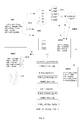
- the method MTH is carried out by a profile management system SRV, said profile management system SRV being illustrated in Fig. 1 .
- said profile management system is a server.
- Said profile manager system SRV comprises a human interface IHM which permits:
- the method for managing a user profile Upf is carried out in step 3 and is triggered by step 2.
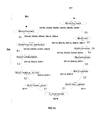
- the method for managing a user profile Upf within a social network SNTW, said user profile Upf being used in one subset SUSNTW of said social network SNTW wherein interactions about a specific topic Tp take place and comprising a plurality of user profile attributes Att, is described in detail in a non-limitative embodiment as illustrated in Fig. 2 .
- Said method comprises:
- said building of the first direct graph DgTp comprises:
- said building of the second direct graph Dgc comprises:
- a subset SUSNTW of social network is a medium which allows people to engage in interactions and exchange information on a specific topic, centered around a well-defined physical or multimedia object (e.g. a forum about soccer (virtual world) or a discussion in a train station about the delay of the TGV (physical world) ) etc.
- a subset is composed generally from people from different social spheres (friends, family, coworkers and strangers) and therefore it is important to consider the question of what information to show to a third party (given person, application etc.) at a given time (and in a given conversation for example).
- each member of a subset will be represented in virtual worlds by their user profile, i.e. a set of items that represent their identity and interests or a business card or a badge etc. in the physical world.
- user profile attributes comprise in non-limitative examples declared civil status, centers of interest, photography, audio, video or any other multimedia content attached to the user full profile information. Therefore, the blurring method MTH is able to blur textual or media (image, video etc.) attributes.
- a user of a social network comprises the user profile with the following self-defined full profile information (attributes Att):
- the managing method MTH is described in details below with the non-limitative embodiments above-mentioned.
- a specific topic Tp is extracted from interactions inside said subset SUSNTW of said social network SNTW.
- a subset SUSNTW is composed of interactions between users.
- An interaction is generally composed of entities (which are the proper nouns) and keywords (which represent the context of said entities) or other linguistic articulations, such as smileys.
- the subset SUSNTW is the forum about soccer.
- Specific topics can be extracted from the subjects on said forum. For example, if an interaction comprises the sentence: "I love to watch live sport every Sunday night", a named entity will be “sports” and the associated keywords will be "love, watch”.
- a first specific topic Tp1 will be for example: "sports”.
- a specific topic Tp is set up in the form of an URI "Uniform Resource Identifier”. Said URI will be used to perform a query in a linked data graph. It is to be noted that there will be as many queries as named entities found.
- a second step 2 for said specific topic Tp, the most relevant matching semantic entity C1 is found in a linked data graph Ldg.
- a linked data graph comprises links between different concepts (semantic entities), a semantic entity linked with another being more general than the other semantic entity. Therefore, a linked data graph Ldg comprises different concepts from the specialized concepts to generalized concepts.
- Linked Data appeared as a need to have a structured dataset representing concepts and connections between said concepts from the world and different domains.
- data can include information about organizations, governments, public people and from many other fields. More and more individuals and public/private organizations contribute to this deluge by choosing to share their data with others.
- third parties consume this data to build new business opportunities and enhance recommendation strategies, such as online marketing and user re-targeting.
- structured data is required so that they can be most easily reused.
- the structured published data are called linked data or web semantic.
- said linked data graph Ldg is based on DBPediaTM which is the most complete dataset in the frame of linked data with more than 4 million concepts (semantic entities) and relations between them. Therefore it has a very large topic-coverage and serves as a hub in linked data, as almost every item in other datasets are assigned an external link to DBPediaTM. It is the biggest ontology today. Further datasets include that of FreebaseTM, UmberTM, YagoTMand OpenCycTM. Almost each of them is linked to DBPediaTM. Other datasets target a specific domain to publish data. This includes geographic data (information about places, countries and locations) with GeoNamesTM.
- GeonameTM Almost each location item in GeonameTM is linked to the corresponding concept in DBPediaTM, which allows retrieving additional information about the place (such as nearby locations or people related to the place or its category).
- Fields that are also well covered by such datasets include government data (e.g. data.gov.uk, data.gov), libraries and more generally, education (e.g. OpenLibraryTM, Semantic Web Dogfood ServerTM). Less significant datasets are also available for life sciences, such as biology (e.g.Bio2RDFTM) and commerce (e.g. RDF Book MashupTM).
- the linked data graph Ldg may contain the semantic entities "soccer, outdoor_activity, team_sport, collaboration, human_behaviour ball_games, games, hobbies, personal_life, self, humans, sports, exercise, health_effectors, health, recreation, hobbies"
- a first directed graph of semantic entities DgTp is built.
- Said step comprises the sub-steps of:
- a starting node S-Nod is created, said starting node S-Nod being a semantic entity from the linked data graph Ldg and corresponding to said most relevant semantic entity C1.
- the starting node S-Nod as illustrated in Fig. 3a , will be "sports" which is a semantic entity of the linked data graph Ldg used.
- a second sub-step 3b other nodes Nod representing semantic entities from said linked data graph Ldg are created, each pointed node being a semantic generalization entity of a source node, a pointed node and a source node being linked by an edge E, each edge E being directed and being of a unique type.
- an edge of unique type means that only a unique edge linked two nodes together.
- This step permits to associate different semantic entities to the most relevant semantic entity, said entities being more or less specific or general.
- the semantic neighborhood of the starting semantic entity S-Nod is collected.
- the building of the first directed graph of semantic entities DgTp is performed according to at least one propriety Pr, a semantic entity pointed by said propriety Pr being more general or equal to a source semantic entity, here the starting node S_Nod. This permits to obtain a directed graph DgTp comprising a plurality of branches Br.
- the propriety permits to consider the links that connect a semantic entity (here the starting node S_Nod) to a semantic entity that expresses a more general information or the same information.
- a propriety Pr is associated to each semantic entity.
- the following SPARQL queries are used. It allows retrieving all semantic entities connected to a given semantic entity C, say C1 "Sports" via the starting node S_Nod.
- This first query permits to find the corresponding categories for the entity sports.
- This second query permits to find the upper categories (the more general categories, which are therefore more abstract) for the entity sports.
- the first directed graph DgTp comprises the three following branches which represent the possible granular blurring schema for the most relevant semantic entity C1:
- the other nodes Nod will be, as illustrated in Fig. 3a , exercise, health_effectors, health and the edges will be:
- the other nodes Nod will be, as illustrated in Fig. 3a , recreation, hobbies, and personal_life and the edges will be:
- a first directed graph DgTp associated to the most relevant semantic entity C1 is therefore created, said graph comprising three branches in the example illustrated in Fig. 3a .
- these sub-steps permit to retrieve from a knowledge base different levels of granularity of a given concept C1.
- the building of the first directed graph of semantic entities DgTp comprises a sub-step of calculating semantic distances D between the starting node S_Nod and the other nodes Nod.
- a semantic distance D indicates how far a semantic entity is from another entity (i.e. from how many edges E a semantic entity is separated from another one).
- a Dijkstra algorithm well-known by the man skilled in the art may be used.
- DBPediaTM already comprises such semantic distances D. Therefore, when the directed graph of entities DgTp is created from this knowledge base, it comprises such semantic distances D, and this sub-step does not need to be executed.
- the nodes N of said directed graph DgTp comprise the following distances D.
- a second directed graph of semantic entities Dgc is built for each said user profile attributes Att.
- Said step comprises the sub-steps of:
- a starting node S-Nod is created, said starting node S-Nod being a semantic entity from the linked data graph Ldg and corresponding to said user profile attribute Att.
- a second sub-step 4b other nodes Nod representing semantic entities from said linked data graph Ldg are created, each pointed node being a semantic generalization entity of a source node, a pointed node and a source node being linked by an edge E, each edge E being directed and being of a unique type.
- an edge of unique type means that only a unique edge linked two nodes together.
- This step permits to associate different semantic entities to an attribute Att, said entities being more or less specific or general.
- the semantic neighborhood of the starting semantic entity S-Nod is collected.
- the building of the directed graph of semantic entities Dgc is performed according to at least one propriety Pr, a semantic entity pointed by said propriety Pr being more general or equal to a source semantic entity, here the starting node S_Nod. This permits to obtain a directed graph Dgc comprising a plurality of branches Br.
- the following SPARQL queries is used. It allows retrieving all semantic entities connected to a given specific topic, say Tp1 "soccer" via the starting node S_Nod.
- This first query permits to find the corresponding categories for the entity Soccer.
- This second query permits to find the upper categories (the more general categories, which are therefore more abstract) for the entity Soccer.
- the directed graph Dgc comprises the two following branches which represent the possible granular blurring schema for a specific topic Tp1:
- the other nodes Nod will be, as illustrated in Fig. 3b , ball_games, games, hobbies, personal_life, self, humans and the edges will be:
- the other nodes Nod will be, as illustrated in Fig. 3b , team sport, outdoor activity, collaboration, human behavior, human and the edges will be:
- a directed graph Dgc associated to each attribute Att is therefore created, said graph comprising two branches in the example illustrated in Fig. 3b .
- these sub-steps permit to retrieve from a knowledge base different levels of granularity of a given concept Tp.
- the building of the directed graph of semantic entities Dgc comprises a sub-step of calculating semantic distances D between the starting node S_Nod and the other nodes Nod.
- the nodes N of said directed graph Dgc comprise the following distances D.
- a first semantic entity LAC is found inside said second directed graph of entity Dgc that matches a semantic entity inside said first directed graph DgTp.
- the first semantic entity LAC is the less abstract concept which distance with the starting node of the second direct graph Dgc is the lowest.
- the first semantic entity LAC "ball_ games" is found matching the most relevant semantic entity of said first directed graph DgTp in said second directed graph Dgc.
- said entity ball_games is found within both direct graphs DgTp (corresponding to the attribute soccer) and Dgc (corresponding to the concept sports) and which is the nearest from the starting node of the second direct graph Dgc.
- the first semantic entity LAC is the less abstract concept which distance with the starting node of the second direct graph Dgc is the lowest.
- LAC the less abstract concept which distance with the starting node of the first direct graph DgTp is the lowest. If there is still a plurality of choices of LAC, one is chosen among this plurality.
- a second semantic entity AC is displayed from said second directed graph of entities Dgc according to said first semantic entity LAC and at least one blurring criterion c.
- a level of blur LB is defined, said level of blur being equal to the semantic distance D.
- the second semantic entity AC is chosen from the first semantic entity LAC and displayed in place of the corresponding user profile attribute Att.
- the blurring of an attribute Att is performed according to the link found between the entity linked data C1 and the entity LAC of the attribute graph Dgc and according to a blurring criterion.
- a level of blur LB for the value of attribute Att will be chosen.
- the level of blur LB is low, the closest second semantic entity AC from the first semantic entity LAC is disclosed, and if the of blur LB is high, the farthest second semantic entity AC from the first semantic entity LAC is disclosed. It is to be noted that according to the level of blur LB, the semantic distance D previously described is used to disclose the second semantic entity AC.
- a blurring criterion (ca, cb, cc, cd, ce) is computed according to:
- different public user profiles Upfd2, Upfd2', Upfd2", Upfd2"' may be displayed to the members (or different members) of the subset SUSNTW from the full profile information Upf (a member being a physical person of an application accessing said user profile), said different public user profiles comprising more or less blurred attributes Att.
- Upfd2' will be displayed to user "Bob” (directly or after being displayed to the owner "John Glenn”, whereas Upfd2 will be displayed to the other members of the forum SUSNTW (eventually after being modified by the owner and transformed into user profile Upfd2" or Upfd2''').
- the display of the second semantic entity AC is performed via a human interface IHM (described below) accessible by the owner of the user profile Upf, or directly to the members of the subset (automatic display).
- IHM human interface
- the method further comprises modifying at least one blurring criterion c computed for said subset of said social network SNTW by means of first components Cp1 of said human interface IHM.
- the method further comprises manually modifying said second semantic entity AC by means of second components Cp2 of said human interface IHM by navigating in said second directed graph of entities Dgc.
- a profile management server SRV permits to implement said managing method MTH.
- said server is a social network server which manages also the social network, or is a third party server which is situated in between the social network and the user computer.
- said profile management system SRV for managing a user profile Upf within a social network SNTW, said user profile Upf being used in one subset SUSNTW of said social network SNTW wherein interactions about a specific topic Tp take place and comprising a plurality of user profile attributes Att comprises a processor unit UC adapted to:
- the processor unit UC is further adapted to:
- the processor unit UC is further adapted to:
- Said profile management system SRV further comprises a human interface IHM comprising:
- the said human interface IHM comprises components Cp1 corresponding to the at least one blurring criterion c enabling a user of said user profile Upf to modify said blurring criterion computed for said subset SUSNTW of said social network SNTW.
- the owner of the user profile may:
- the user of the user profile Upf is able to modify the blurring level value of his user profile attributes, for example by clicking minus or plus button, or even the second semantic entity displayed.
- any block diagrams herein represent conceptual views of illustrative circuitry embodying the principles of the invention.
- any flow charts, flow diagrams, state transition diagrams, pseudo code, and the like represent various processes which may be substantially represented in computer readable medium and so executed by a computer or processor, whether or not such computer or processor is explicitly shown.
- the invention may be applied in any social network sites, applications or services using social networks, such as call centers using CRM or for electronic card exchange information in non-limitative examples.
- program storage devices e.g., digital data storage media, which are machine or computer readable and encode machine-executable or computer-executable programs of instructions, wherein said instructions perform some or all of the steps of said above-described methods.
- the program storage devices may be, e.g., digital memories, magnetic storage media such as a magnetic disks and magnetic tapes, hard drives, or optically readable digital data storage media.
- the embodiments are also intended to cover computers programmed to perform said steps of the above-described method.
- the computer program products comprise a set of instructions.
- said set of instructions contained, for example, in a computer programming memory or in a server memory, may cause the computer or the server SV to carry out the different steps of the method MTH.
- the set of instructions may be loaded into the programming memory by reading a data carrier such as, for example, a disk.
- a service provider can also make the set of instructions available via a communication network such as, for example, the Internet.
- some embodiments of the invention may comprise one or a plurality of the following advantages:
Landscapes
- Business, Economics & Management (AREA)
- Engineering & Computer Science (AREA)
- Accounting & Taxation (AREA)
- Development Economics (AREA)
- Strategic Management (AREA)
- Finance (AREA)
- Game Theory and Decision Science (AREA)
- Entrepreneurship & Innovation (AREA)
- Economics (AREA)
- Marketing (AREA)
- Physics & Mathematics (AREA)
- General Business, Economics & Management (AREA)
- General Physics & Mathematics (AREA)
- Theoretical Computer Science (AREA)
- Information Retrieval, Db Structures And Fs Structures Therefor (AREA)
Priority Applications (1)
| Application Number | Priority Date | Filing Date | Title |
|---|---|---|---|
| EP11183731.6A EP2579201A1 (de) | 2011-10-03 | 2011-10-03 | Verfahren zur Verwaltung eines Nutzerprofils in einem sozialen Netzwerk |
Applications Claiming Priority (1)
| Application Number | Priority Date | Filing Date | Title |
|---|---|---|---|
| EP11183731.6A EP2579201A1 (de) | 2011-10-03 | 2011-10-03 | Verfahren zur Verwaltung eines Nutzerprofils in einem sozialen Netzwerk |
Publications (1)
| Publication Number | Publication Date |
|---|---|
| EP2579201A1 true EP2579201A1 (de) | 2013-04-10 |
Family
ID=44785537
Family Applications (1)
| Application Number | Title | Priority Date | Filing Date |
|---|---|---|---|
| EP11183731.6A Ceased EP2579201A1 (de) | 2011-10-03 | 2011-10-03 | Verfahren zur Verwaltung eines Nutzerprofils in einem sozialen Netzwerk |
Country Status (1)
| Country | Link |
|---|---|
| EP (1) | EP2579201A1 (de) |
Cited By (3)
| Publication number | Priority date | Publication date | Assignee | Title |
|---|---|---|---|---|
| US9525753B2 (en) | 2012-12-12 | 2016-12-20 | Netspective Communications Llc | Integration of devices through a social networking platform |
| US10122805B2 (en) | 2015-06-30 | 2018-11-06 | International Business Machines Corporation | Identification of collaborating and gathering entities |
| CN110990878A (zh) * | 2019-12-13 | 2020-04-10 | 支付宝(杭州)信息技术有限公司 | 一种隐私数据衍生图的构建方法 |
Citations (2)
| Publication number | Priority date | Publication date | Assignee | Title |
|---|---|---|---|---|
| US20050267766A1 (en) * | 2004-05-26 | 2005-12-01 | Nicholas Galbreath | System and method for managing information flow between members of an online social network |
| US20100268719A1 (en) * | 2009-04-21 | 2010-10-21 | Graham Cormode | Method and apparatus for providing anonymization of data |
-
2011
- 2011-10-03 EP EP11183731.6A patent/EP2579201A1/de not_active Ceased
Patent Citations (2)
| Publication number | Priority date | Publication date | Assignee | Title |
|---|---|---|---|---|
| US20050267766A1 (en) * | 2004-05-26 | 2005-12-01 | Nicholas Galbreath | System and method for managing information flow between members of an online social network |
| US20100268719A1 (en) * | 2009-04-21 | 2010-10-21 | Graham Cormode | Method and apparatus for providing anonymization of data |
Non-Patent Citations (2)
| Title |
|---|
| BIZER C ET AL: "DBpedia - A crystallization point for the Web of Data", WEB SEMANTICS: SCIENCE, SERVICES AND AGENTS ON THE WORLD WIDE WEB, ELSEVIER, AMSTERDAM, NL, vol. 7, no. 3, 1 September 2009 (2009-09-01), pages 154 - 165, XP026698922, ISSN: 1570-8268, [retrieved on 20090715], DOI: 10.1016/J.WEBSEM.2009.07.002 * |
| EPO: "Mitteilung des Europäischen Patentamts vom 1. Oktober 2007 über Geschäftsmethoden = Notice from the European Patent Office dated 1 October 2007 concerning business methods = Communiqué de l'Office européen des brevets,en date du 1er octobre 2007, concernant les méthodes dans le domaine des activités", JOURNAL OFFICIEL DE L'OFFICE EUROPEEN DES BREVETS.OFFICIAL JOURNAL OF THE EUROPEAN PATENT OFFICE.AMTSBLATTT DES EUROPAEISCHEN PATENTAMTS, OEB, MUNCHEN, DE, vol. 30, no. 11, 1 November 2007 (2007-11-01), pages 592 - 593, XP007905525, ISSN: 0170-9291 * |
Cited By (8)
| Publication number | Priority date | Publication date | Assignee | Title |
|---|---|---|---|---|
| US9525753B2 (en) | 2012-12-12 | 2016-12-20 | Netspective Communications Llc | Integration of devices through a social networking platform |
| US10320735B2 (en) | 2012-12-12 | 2019-06-11 | Netspective Communications Llc | Integration of devices through a social networking platform |
| US11044221B2 (en) | 2012-12-12 | 2021-06-22 | Netspective Communications Llc | Integration of devices through a social networking platform |
| US11777894B2 (en) | 2012-12-12 | 2023-10-03 | Netspective Communications Llc | Integration of devices through a social networking platform |
| US12401615B2 (en) | 2012-12-12 | 2025-08-26 | Intellectual Frontiers Llc | Integration of devices through a social networking platform |
| US10122805B2 (en) | 2015-06-30 | 2018-11-06 | International Business Machines Corporation | Identification of collaborating and gathering entities |
| CN110990878A (zh) * | 2019-12-13 | 2020-04-10 | 支付宝(杭州)信息技术有限公司 | 一种隐私数据衍生图的构建方法 |
| CN110990878B (zh) * | 2019-12-13 | 2021-09-28 | 支付宝(杭州)信息技术有限公司 | 一种隐私数据衍生图的构建方法 |
Similar Documents
| Publication | Publication Date | Title |
|---|---|---|
| Thompson et al. | Determinants of news sharing behavior on social media | |
| US11888607B2 (en) | Systems and methods for facilitating discovery of users who share common characteristics within a social networking system | |
| Renser et al. | Witches on Facebook: Mediatization of neo-paganism | |
| Ellis et al. | The end of symbiosis? Australia police–media relations in the digital age | |
| US20160255082A1 (en) | Identifying & storing followers, following users, viewers, users and connections for user | |
| US20150334198A1 (en) | Method for providing a set of services of a first subset of a social network to a user of a second subset of said social network | |
| Blanke | Digital asset ecosystems: Rethinking crowds and clouds | |
| US9141707B2 (en) | Context-based object retrieval in a social networking system | |
| Khazraee et al. | Evolving repertoires: Digital media use in contentious politics | |
| Nouri et al. | Impacts of radical right groups’ movements across social media platforms–A case study of changes to Britain first’s visual strategy in its removal from Facebook to Gab | |
| Song et al. | Detecting popular topics in micro-blogging based on a user interest-based model | |
| Velez | “Why Take the Photo if You Didn’t Want It Online?”: Agency, Transformation, and Nonconsensual Pornography | |
| US8935299B2 (en) | Identifying relevant data for pages in a social networking system | |
| Sun et al. | Chinese collective trolling | |
| Swartz et al. | Philosophy of Technology: Who is in the Saddle? | |
| EP2579201A1 (de) | Verfahren zur Verwaltung eines Nutzerprofils in einem sozialen Netzwerk | |
| Oxley | Security risks in social media technologies: Safe practices in public service applications | |
| Helmond | Identity 2.0: Constructing identity with cultural software | |
| Springer | Publics and counterpublics on the front page of the internet: The cultural practices, technological affordances, hybrid economics and politics of Reddit's public sphere | |
| Chutikulrungsee | A phenomenological study of other-generated disclosure in online social networks | |
| Eagar et al. | The nomadic consumption community: the recursive role of space in community mobility | |
| Gillen et al. | Human behavior in online social networks | |
| Warren | Ipurangi: Māori, the internet and implications for tikanga Māori: a thesis presented in partial fulfilment of the requirements for the degree of Doctor of Philosophy at Massey University, Turitea, Manawatū, New Zealand | |
| Steytler | The Social Media Use, Online Risk Experiences and Digital Literacy of Adolescents Living in Low-Income Households in a Semi-Rural Western Cape Village in South Africa | |
| US20150112991A1 (en) | Inline hierarchy method and software, and business methods therefore |
Legal Events
| Date | Code | Title | Description |
|---|---|---|---|
| PUAI | Public reference made under article 153(3) epc to a published international application that has entered the european phase |
Free format text: ORIGINAL CODE: 0009012 |
|
| AK | Designated contracting states |
Kind code of ref document: A1 Designated state(s): AL AT BE BG CH CY CZ DE DK EE ES FI FR GB GR HR HU IE IS IT LI LT LU LV MC MK MT NL NO PL PT RO RS SE SI SK SM TR |
|
| AX | Request for extension of the european patent |
Extension state: BA ME |
|
| 111Z | Information provided on other rights and legal means of execution |
Free format text: AL AT BE BG CH CY CZ DE DK EE ES FI FR GB GR HR HU IE IS IT LI LT LU LV MC MK MT NL NO PL PT RO RS SE SI SK SM TR Effective date: 20130410 |
|
| 17P | Request for examination filed |
Effective date: 20131010 |
|
| RBV | Designated contracting states (corrected) |
Designated state(s): AL AT BE BG CH CY CZ DE DK EE ES FI FR GB GR HR HU IE IS IT LI LT LU LV MC MK MT NL NO PL PT RO RS SE SI SK SM TR |
|
| 17Q | First examination report despatched |
Effective date: 20140624 |
|
| RAP1 | Party data changed (applicant data changed or rights of an application transferred) |
Owner name: ALCATEL LUCENT |
|
| D11X | Information provided on other rights and legal means of execution (deleted) | ||
| STAA | Information on the status of an ep patent application or granted ep patent |
Free format text: STATUS: THE APPLICATION HAS BEEN REFUSED |
|
| 18R | Application refused |
Effective date: 20170813 |