EP2575402A1 - Verfahren zum Ausrufen eines Benutzergeräts in einem drahtlosen Kommunikationsnetzwerk, zugehöriges Benutzergerät und Netzwerkknoten - Google Patents
Verfahren zum Ausrufen eines Benutzergeräts in einem drahtlosen Kommunikationsnetzwerk, zugehöriges Benutzergerät und Netzwerkknoten Download PDFInfo
- Publication number
- EP2575402A1 EP2575402A1 EP11306258A EP11306258A EP2575402A1 EP 2575402 A1 EP2575402 A1 EP 2575402A1 EP 11306258 A EP11306258 A EP 11306258A EP 11306258 A EP11306258 A EP 11306258A EP 2575402 A1 EP2575402 A1 EP 2575402A1
- Authority
- EP
- European Patent Office
- Prior art keywords
- user equipment
- paging
- cell
- subframe
- blank
- Prior art date
- Legal status (The legal status is an assumption and is not a legal conclusion. Google has not performed a legal analysis and makes no representation as to the accuracy of the status listed.)
- Withdrawn
Links
- 238000000034 method Methods 0.000 title claims abstract description 17
- 230000007246 mechanism Effects 0.000 claims abstract description 12
- 230000006870 function Effects 0.000 description 3
- 230000011664 signaling Effects 0.000 description 3
- 238000001514 detection method Methods 0.000 description 2
- 230000000694 effects Effects 0.000 description 2
- 230000005540 biological transmission Effects 0.000 description 1
- 238000000280 densification Methods 0.000 description 1
- 230000001419 dependent effect Effects 0.000 description 1
- 230000003993 interaction Effects 0.000 description 1
- 230000007774 longterm Effects 0.000 description 1
- 230000007727 signaling mechanism Effects 0.000 description 1
- 230000001960 triggered effect Effects 0.000 description 1
Images

Classifications
-
- H—ELECTRICITY
- H04—ELECTRIC COMMUNICATION TECHNIQUE
- H04W—WIRELESS COMMUNICATION NETWORKS
- H04W68/00—User notification, e.g. alerting and paging, for incoming communication, change of service or the like
- H04W68/02—Arrangements for increasing efficiency of notification or paging channel
-
- H—ELECTRICITY
- H04—ELECTRIC COMMUNICATION TECHNIQUE
- H04W—WIRELESS COMMUNICATION NETWORKS
- H04W72/00—Local resource management
- H04W72/50—Allocation or scheduling criteria for wireless resources
- H04W72/54—Allocation or scheduling criteria for wireless resources based on quality criteria
- H04W72/541—Allocation or scheduling criteria for wireless resources based on quality criteria using the level of interference
-
- H—ELECTRICITY
- H04—ELECTRIC COMMUNICATION TECHNIQUE
- H04W—WIRELESS COMMUNICATION NETWORKS
- H04W76/00—Connection management
- H04W76/20—Manipulation of established connections
- H04W76/28—Discontinuous transmission [DTX]; Discontinuous reception [DRX]
Definitions
- the present invention relates in particular to a method for paging user equipment in a wireless network.
- Modern communication networks as the 3G Long Term Evolution (LTE) defined as part of the 3GPP standardization foresees a densification of the network.
- LTE Long Term Evolution
- Especially Heterogeneous networks have been introduced where macro cells superpose with smaller cells as femto, pico cells or relays to better match the local needs in term of coverage and bandwidth while optimizing the power consumption.
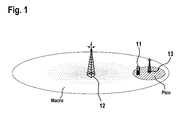
- Figure 1 shows a heterogeneous network environment with a pico cell and a macro cell.
- a user terminal 11 is located under the coverage of both a macro cell 12 and a pico cell 13.
- User equipment 11 is subject to received signal from macro cell 12 at a signal level well above noise floor.
- the signal received from macro cell 12 is experienced as high interference dramatically affecting the ability of user equipment 11 to communicate properly with pico cell 13.
- pico cell 13 is a "victim cell” victim of interference from macro cell 12 as "aggressor cell”.
- This interference situation affecting user equipments in a zone covered by several cells is endangering the availability of basic functionality of the network as paging.
- Paging has been implemented since the beginning in wireless communication networks.
- Some important services / functionality rely on paging as the update of system information on the one hand but also services as Earthquake and Tsunami Warning Services (ETWS), or Commercial Mobile Alerting Systems (CMAS) on the other hand.
- ETWS Earthquake and Tsunami Warning Services
- CMAS Commercial Mobile Alerting Systems
- Another object of the invention is to provide user equipments and network nodes adapted to resolve the issue addressed above in the context of heterogeneous networks.
- an almost blank subframe mechanism is put in place in order to coordinate the interference caused on a "victim cell" by an "aggressor” cell.
- a determination takes place to get information on the paging occasions in the "victim cell”.
- a subframe is determined where the user equipment can listen to paging requests without suffering from interference by the aggressor cell since the paging requests are timely corresponding to almost blank subframes.
- the user equipment is provided information by a network node on almost blank subframes as they are foreseen in the aggressor cell. In case the user equipment detects interference by the aggressor cell while listening for a paging occasion, the user equipment calculates the position of a subsequent paging occasion corresponding to one almost blank subframe as reported by the network node. The user equipment then listens to the paging request at the determined position.
- the user equipment while the user equipment is experiencing strong interference from an aggressor cell, the user equipment is automatically scheduled on almost blank subframes by the network.
- the user equipment can rely on the fact that the "on duration" part of the DRX cycle superposes with an almost blank subframe, in this embodiment the user equipment listens to the paging requests during the "on duration part of the DRX cycle.
- the network calculates if and when almost blank subframes correspond to paging occasions of the user equipment.
- the network node uses a signaling mechanism to indicate to the user equipment on which subframe it should read the paging request.
- the method according to the present invention presents the advantage to use the relationship between the almost blank subframe and the paging occasions to find an appropriate subframe corresponding both to an almost blank subframe and a paging occasion in the victim cell. Consequently, there is no need to modify the almost blank subframe or the paging occasion or the Discontinuous Reception mechanisms to be able to properly receive paging request even in the context of heterogeneous networks. According to the invention only the timepoint when the user equipment listens to the paging requests needs to be modified.
- any functional blocks labeled as 'processors' may be provided through the use of dedicated hardware as well as hardware capable of executing software in association with appropriate software.
- the functions may be provided by a single dedicated processor, by a single shared processor, or by a plurality of individual processors, some of which may be shared.
- DSP digital signal processor
- ASIC application specific integrated circuit
- FPGA field programmable gate array
- ROM read only memory
- RAM random access memory
- non volatile storage Other hardware, conventional and/or custom, may also be included.
- any boxes shown in the Figures are conceptual only. Their function may be carried out through the operation of program logic, through dedicated logic, through the interaction of program control and dedicated logic, or even manually, the particular technique being selectable by the implementer as more specifically understood from the context.
- figure 1 could be extended to any network configuration where cell coverage overlaps even also partly, whatever the size of the cells overlapping (macro, micro, pico, femto). Consequently, the teachings of this invention can be used in any configuration where an "aggressor" cell generates interference on a "victim" cell.
- the interference coordination mechanism based on almost blank subframes ensures a reliable reception of paging requests at the user equipment 11.
- Figure 2 shows an implementation of paging as well as an implementation of almost blank subframes.
- a time line is showing almost blank subframes and user equipment paging occasions as calculated by the network in a usual manner.
- Almost blank subframes in an aggressor cell are used to protect resources in subframes in the victim cell receiving strong inter-cell interference.
- Almost blank subframe are subframes with reduced transmit power (possibly including even no transmission at all) on some physical channels and/or reduced activity.
- the network e.g. eNB
- the network e.g. eNB
- it is up to the network (e.g. eNB) to decided how many subframes are allocated as almost blank subframe. This may depend on the cell load, the number of UEs in the overlapping area between aggressor and victim cell, etc...
- Some almost blank subframe configurations used for performance requirements may be but not limited to 1 almost blank subframe every 8 subframe, or 1 every 16 subframe. It will be understood by those skilled in the art that any other arrangement of almost blank subframe can be envisageable in the context of the present invention.
- the almost blank subframe pattern may be adaptable over time depending for example on the cell load.
- Paging requests are used by the network for informing user equipment while in connected mode about system information changes, or as support for Earthquake and Tsunami Warning Services, or Commercial Mobile Alerting Systems.
- paging occasions are determined for user equipment in a cell.
- the paging requests are then transmitted on the predefined paging occasion on a Physical Downlink Control Channel (PDCCH) identifiable by a Paging Radio Network Temporary Identifier (P-RNTI).
- PDCCH Physical Downlink Control Channel
- P-RNTI Paging Radio Network Temporary Identifier
- Figure 2 further illustrates further discontinuous reception (DRX) while the user equipment is in connected mode.
- DRX discontinuous reception
- the user equipment only checks for the control channel PDCCH during the "on duration" part of the DRX cycle. If there is a PDCCH signalized for the UE during "on duration", the UE listens to next few subframes for PDCCH. This extended PDCCH reading is called “active time”. Thus the active time may be equal or longer than "on duration" depending on the UE activity. Outside the active time, the user equipment doesn't read PDCCH until the next "on duration" defined by the DRX cycle.
- a "paging DRX cycle” is foreseen.
- Paging DE2X is applicable for both connected and idle UEs.
- "paging DRX” is used to wake the user equipment up for paging signal. The user equipment is required to listen to the paging channel once during the paging DRX cycle. When in connected mode, the user equipment obeys both connected DRX cycle and paging DRX cycle.
- PF and PO is determined by following formulae using the paging DRX parameters provided in System Information:
- System Information paging DRX parameters stored in the user equipment shall be updated locally in the UE whenever the paging DRX parameter values are changed in SI.
- the following Parameters are used for the calculation of the PF and i_s:
- IMSI is given as sequence of digits of type Integer (0..9), IMSI shall in the formulae above be interpreted as a decimal integer number, where the first digit given in the sequence represents the highest order digit.
- subframes representing paging occasions in a cell can determined for a cell (for example as shown above: subframes #9, #4, #5, #0 for FDD or #0, #1, #5, #6 for TDD can be paging occasions in a cell).
- each user equipment only listens to paging requests at one paging occasion per paging DRX cycle.
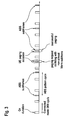
- Figure 3 shows a first implementation of paging according to the present invention.
- a collision between the paging request and a non almost blank subframe is detected. This collision is detected when the paging request is subject to too high interference to be decoded properly.
- the collision detection is performed using known methods not part of the present invention.
- the user equipment is informed by the network on the almost blank subframe periodicity enabling it to deduce which subframes corresponds to almost blank subframes.
- the user equipment determines at least one further paging occasions in the cell according to the present invention.
- the user equipment then listens during this determined subframe in order to get the paging request received properly.
- paging In connected mode, paging is used to signal changes of system information, Earthquake and Tsunami Warning Services, or Commercial Mobile Alerting Systems which are common to all user equipments located in the victim cell. Consequently, the paging requests are common for all user equipments. Hence the user equipment can listen to this information at a paging occasion foreseen for a different user equipment in the victim cell without creating collision. This is possible since the paging signal is transmitted with common P-RNTI on the PDCCH resulting in no collision between paging for different user equipments.
- the determination of at least one further paging occasion is performed according to the method of determination of paging occasions described in connection with Figure 2 .
- the determination of subframes corresponding to paging occasions in connected mode Discontinuous Reception depends on the Discontinuous Reception Cycle duration (T) used for the user equipment and on the User equipment IMSI.
- the user equipment does not need to use the connected mode Discontinuous reception in the framework of the invention.
- the present invention only requires that the paging occasions are coinciding with almost blank subframes regardless if connected mode Discontinuous reception is activated on not.
- the use of connected mode Discontinuous Reception only provides the advantage of further saving battery power at the user terminal.
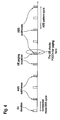
- Figure 4 shows a second implementation of paging.
- the user equipment since the user equipment is experiencing strong interference from the aggressor cell, the user equipment can only be scheduled in an almost blank subframe to guarantee reliable reception. This happens automatically at scheduler level. Consequently, user equipment's "on duration" period as defined previously for the connected mode DRX cycle are aligned with almost blank subframes, when the UE is configured for DRX operation.
- the user equipment listens to the paging requests during the "on duration" period of the connected mode DRX cycle. This enables to receive the reliable paging reception since at least one almost blank subframe aligns with a paging subframe of the cell.
- the user equipment does not need to be informed on the position of the almost blank subframes used in the cell.
- the user equipment redefines the "on duration" part of the connected mode DRX cycle as paging occasion.
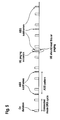
- Figure 5 shows a third implementation of paging according to the present invention.
- the user equipment in the victim cell is provided with information on the almost blank subframes to use for paging by the network.
- a dedicated signalling message (e.g. RRC signalling) is preferably used to tell the user equipment to which subframe it should be listening for getting paging requests.
- This subframe has been determined in advance by the network as an almost blank subframe corresponding also to a paging opportunity for the user equipment.
- the entity in the network making this determination could possibly be a scheduler which would communicate the determination to the base station of the victim cell. It will be understood by those skilled in the art that other network entity could be used for performing the determination.
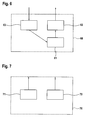
- Figure 6 shows a user equipment 60 according to the present invention.
- User equipment 60 is part of a wireless communication network located under the coverage of a cell, called victim cell, which is subject to interference from another cell, called aggressor cell.
- An almost blank subframe mechanism is available in the network for minimising interference caused by the aggressor cell on user equipment 60.
- user equipment 60 comprises means 61 for selecting a subframe being both an almost blank subframe and a paging occasion and means 62 for listening to paging request in the selected subframe .
- user equipment 60 comprises means 63 for receiving from the network an indication on almost blank subframes as available in the victim cell, user equipment 60 calculating itself inside means 61 which paging occasion correspond to an almost blank subframe as reported by means 63.
- means 61 selects a subframe part of the "on duration" part of the connected mode DRX cycle.
- means 61 are passively receiving an instruction from the network indicating which subframe has to be used for listening to paging requests, knowing that the network will have determined this subframe to be both a almost blank subframe and a paging occasion for user equipment 60.
- Figure 7 shows a network node according to the present invention.
- Network node 70 is part of a wireless communication network serving a cell, called victim cell, subject to interference from another cell, called aggressor cell.
- An almost blank subframe mechanism is available in the network for minimising interference caused by the aggressor cell in the victim cell.
- Network node 70 comprises means 71 for informing user equipment under the coverage of the victim cell on available almost blank subframes and /or means 72 for informing the user equipment on almost blank subframes to use for listening to paging requests.
Landscapes
- Engineering & Computer Science (AREA)
- Computer Networks & Wireless Communication (AREA)
- Signal Processing (AREA)
- Mobile Radio Communication Systems (AREA)
Priority Applications (2)
| Application Number | Priority Date | Filing Date | Title |
|---|---|---|---|
| EP11306258A EP2575402A1 (de) | 2011-09-30 | 2011-09-30 | Verfahren zum Ausrufen eines Benutzergeräts in einem drahtlosen Kommunikationsnetzwerk, zugehöriges Benutzergerät und Netzwerkknoten |
| PCT/EP2012/065355 WO2013045151A1 (en) | 2011-09-30 | 2012-08-06 | Method for paging user equipment in a wireless communication network, corresponding user equipment and network node |
Applications Claiming Priority (1)
| Application Number | Priority Date | Filing Date | Title |
|---|---|---|---|
| EP11306258A EP2575402A1 (de) | 2011-09-30 | 2011-09-30 | Verfahren zum Ausrufen eines Benutzergeräts in einem drahtlosen Kommunikationsnetzwerk, zugehöriges Benutzergerät und Netzwerkknoten |
Publications (1)
| Publication Number | Publication Date |
|---|---|
| EP2575402A1 true EP2575402A1 (de) | 2013-04-03 |
Family
ID=46650532
Family Applications (1)
| Application Number | Title | Priority Date | Filing Date |
|---|---|---|---|
| EP11306258A Withdrawn EP2575402A1 (de) | 2011-09-30 | 2011-09-30 | Verfahren zum Ausrufen eines Benutzergeräts in einem drahtlosen Kommunikationsnetzwerk, zugehöriges Benutzergerät und Netzwerkknoten |
Country Status (2)
| Country | Link |
|---|---|
| EP (1) | EP2575402A1 (de) |
| WO (1) | WO2013045151A1 (de) |
Cited By (3)
| Publication number | Priority date | Publication date | Assignee | Title |
|---|---|---|---|---|
| CN108124245A (zh) * | 2016-11-25 | 2018-06-05 | 北京小米移动软件有限公司 | 寻呼信令消息的处理方法、生成方法及装置 |
| CN110536285A (zh) * | 2018-09-26 | 2019-12-03 | 中兴通讯股份有限公司 | 干扰控制、消息发送、转发方法、装置、通信设备及系统 |
| US20240267882A1 (en) * | 2018-06-05 | 2024-08-08 | Samsung Electronics Co., Ltd. | System and method of determining paging occasions for transmitting and receiving paging |
Families Citing this family (1)
| Publication number | Priority date | Publication date | Assignee | Title |
|---|---|---|---|---|
| US11265700B2 (en) * | 2018-11-30 | 2022-03-01 | Qualcomm Incorporated | Methods and systems for detecting and responding to paging channel attacks |
-
2011
- 2011-09-30 EP EP11306258A patent/EP2575402A1/de not_active Withdrawn
-
2012
- 2012-08-06 WO PCT/EP2012/065355 patent/WO2013045151A1/en not_active Ceased
Non-Patent Citations (5)
| Title |
|---|
| ALCATEL-LUCENT: "Connected mode paging enhancement", 3GPP TSG-RAN WG2 #75BIS, R2-115347, 3 October 2011 (2011-10-03), pages 1 - 2, XP002664065, Retrieved from the Internet <URL:http://www.3gpp.org/ftp/tsg_ran/WG2_RL2/TSGR2_75bis/Docs/> [retrieved on 20111121] * |
| HUAWEI ET AL: "Consideration on DRX in eICIC scenario", 3GPP DRAFT RAN WG2; R2-111021, 14 February 2011 (2011-02-14), Taipei, Taiwan, XP050493546 * |
| ITRI: "Paging consideration for eICIC", 3GPP TSG-RAN WG2 #75, R2-114218, 16 August 2011 (2011-08-16), pages 1 - 3, XP002664063, Retrieved from the Internet <URL:http://www.3gpp.org/ftp/tsg_ran/WG2_RL2/TSGR2_75/Docs/> [retrieved on 20111121] * |
| QUALCOMM INCORPORATED: "eICIC: Idle Mode discussion", 3GPP DRAFT RAN WG2; R2-106344, 9 November 2010 (2010-11-09), XP050492241 * |
| RENESAS MOBILE EUROPE LTD.: "eICIC on Idle Mode considerations", 3GPP TSG-RAN WG2 #75, R2-114050, 16 August 2011 (2011-08-16), pages 1 - 4, XP002664064, Retrieved from the Internet <URL:http://www.3gpp.org/ftp/tsg_ran/WG2_RL2/TSGR2_75/Docs/> [retrieved on 20111121] * |
Cited By (5)
| Publication number | Priority date | Publication date | Assignee | Title |
|---|---|---|---|---|
| CN108124245A (zh) * | 2016-11-25 | 2018-06-05 | 北京小米移动软件有限公司 | 寻呼信令消息的处理方法、生成方法及装置 |
| US20240267882A1 (en) * | 2018-06-05 | 2024-08-08 | Samsung Electronics Co., Ltd. | System and method of determining paging occasions for transmitting and receiving paging |
| US12245189B2 (en) * | 2018-06-05 | 2025-03-04 | Samsung Electronics Co., Ltd. | System and method of determining paging occasions for transmitting and receiving paging |
| CN110536285A (zh) * | 2018-09-26 | 2019-12-03 | 中兴通讯股份有限公司 | 干扰控制、消息发送、转发方法、装置、通信设备及系统 |
| US11963017B2 (en) | 2018-09-26 | 2024-04-16 | Zte Corporation | Interference control method and apparatus, response message sending method and apparatus, response message forwarding method and apparatus, communication device, and communication system |
Also Published As
| Publication number | Publication date |
|---|---|
| WO2013045151A1 (en) | 2013-04-04 |
Similar Documents
| Publication | Publication Date | Title |
|---|---|---|
| EP3866526B1 (de) | Funkrufverfahren, endgerät und netzwerkvorrichtung | |
| EP3420762B1 (de) | Funkruf in unlizenziertem spektrum | |
| KR102202893B1 (ko) | Nb-iot 디바이스의 페이징을 위한 공통 서치 공간(css) | |
| EP3203793A1 (de) | Funkruf in heterogenen netzwerken mit diskontinuierlichem empfang | |
| EP2953409A1 (de) | Paging-optimierungsverfahren, -vorrichtung und -system | |
| US11129052B2 (en) | Radio network node, wireless device and methods performed therein | |
| EP3449658B1 (de) | Eine schnittstelle zur konfiguration von kommunikation in unlizenzierten frequenzbänder | |
| EP3494679B1 (de) | Verfahren und vorrichtungen zum betrieb eines benutzergeräts in c-drx-modus mit zugang auf basis von token-bucket | |
| CN111405648A (zh) | 用于扩展的不连续接收(drx)的ran过程 | |
| EP2910068B1 (de) | Verfahren zum übergang in einen ruhemodus | |
| EP2946621A1 (de) | Auf zellclusterung basierende konfiguration von flexibler in tdd-kommunikation | |
| EP2352334A1 (de) | Mobile telekommunikationsstation und mobiles telekommunikationsverfahren | |
| US20230397198A1 (en) | Small data transmission procedure to random access procedure fallback | |
| EP4184990A1 (de) | Kommunikationsverfahren und -vorrichtung | |
| EP4108023B1 (de) | Systeme und verfahren zur reduzierung des stromverbrauchs eines benutzergeräts | |
| EP3524032B1 (de) | Verfahren und vorrichtung zur zelldetektion in unlizenzierten kommunikationssystemen | |
| EP3567753B1 (de) | Verfahren und vorrichtung für funkruf und computerlesbares speichermedium | |
| WO2014179921A1 (en) | Dormant mode - active mode switch | |
| US20180176977A1 (en) | Mobile terminal communication control method, control device and mobile communicaction system | |
| WO2013045151A1 (en) | Method for paging user equipment in a wireless communication network, corresponding user equipment and network node | |
| CA3249914A1 (en) | METHOD, DEVICE AND COMPUTER PRODUCT-PROGRAM FOR WIRELESS COMMUNICATION | |
| WO2014121518A1 (en) | Enhanced paging operation for power saving mode | |
| EP4557831A1 (de) | Kommunikationsverfahren und -vorrichtung | |
| EP2651169B1 (de) | Endgerät und verfahren zur reduzierung geräteinterner interferenzen | |
| WO2015065271A1 (en) | Providing access control parameters to a user equipment |
Legal Events
| Date | Code | Title | Description |
|---|---|---|---|
| PUAI | Public reference made under article 153(3) epc to a published international application that has entered the european phase |
Free format text: ORIGINAL CODE: 0009012 |
|
| 17P | Request for examination filed |
Effective date: 20120806 |
|
| AK | Designated contracting states |
Kind code of ref document: A1 Designated state(s): AL AT BE BG CH CY CZ DE DK EE ES FI FR GB GR HR HU IE IS IT LI LT LU LV MC MK MT NL NO PL PT RO RS SE SI SK SM TR |
|
| AX | Request for extension of the european patent |
Extension state: BA ME |
|
| 111Z | Information provided on other rights and legal means of execution |
Free format text: AL AT BE BG CH CY CZ DE DK EE ES FI FR GB GR HR HU IE IS IT LI LT LU LV MC MK MT NL NO PL PT RO RS SE SI SK SM TR Effective date: 20130410 |
|
| RBV | Designated contracting states (corrected) |
Designated state(s): AL AT BE BG CH CY CZ DE DK EE ES FI FR GB GR HR HU IE IS IT LI LT LU LV MC MK MT NL NO PL PT RO RS SE SI SK SM TR |
|
| RAP1 | Party data changed (applicant data changed or rights of an application transferred) |
Owner name: ALCATEL LUCENT |
|
| D11X | Information provided on other rights and legal means of execution (deleted) | ||
| STAA | Information on the status of an ep patent application or granted ep patent |
Free format text: STATUS: EXAMINATION IS IN PROGRESS |
|
| 17Q | First examination report despatched |
Effective date: 20170113 |
|
| STAA | Information on the status of an ep patent application or granted ep patent |
Free format text: STATUS: THE APPLICATION IS DEEMED TO BE WITHDRAWN |
|
| 18D | Application deemed to be withdrawn |
Effective date: 20170524 |