EP2575385A1 - Verfahren zur Initialisierung und/oder Aktivierung wenigstens eines Nutzerkontos, zum Durchführen einer Transaktion, sowie Endgerät - Google Patents
Verfahren zur Initialisierung und/oder Aktivierung wenigstens eines Nutzerkontos, zum Durchführen einer Transaktion, sowie Endgerät Download PDFInfo
- Publication number
- EP2575385A1 EP2575385A1 EP12184946A EP12184946A EP2575385A1 EP 2575385 A1 EP2575385 A1 EP 2575385A1 EP 12184946 A EP12184946 A EP 12184946A EP 12184946 A EP12184946 A EP 12184946A EP 2575385 A1 EP2575385 A1 EP 2575385A1
- Authority
- EP
- European Patent Office
- Prior art keywords
- user
- provider
- terminal
- communication network
- request
- Prior art date
- Legal status (The legal status is an assumption and is not a legal conclusion. Google has not performed a legal analysis and makes no representation as to the accuracy of the status listed.)
- Granted
Links
Images


Classifications
-
- G—PHYSICS
- G06—COMPUTING OR CALCULATING; COUNTING
- G06Q—INFORMATION AND COMMUNICATION TECHNOLOGY [ICT] SPECIALLY ADAPTED FOR ADMINISTRATIVE, COMMERCIAL, FINANCIAL, MANAGERIAL OR SUPERVISORY PURPOSES; SYSTEMS OR METHODS SPECIALLY ADAPTED FOR ADMINISTRATIVE, COMMERCIAL, FINANCIAL, MANAGERIAL OR SUPERVISORY PURPOSES, NOT OTHERWISE PROVIDED FOR
- G06Q30/00—Commerce
- G06Q30/06—Buying, selling or leasing transactions
-
- H—ELECTRICITY
- H04—ELECTRIC COMMUNICATION TECHNIQUE
- H04L—TRANSMISSION OF DIGITAL INFORMATION, e.g. TELEGRAPHIC COMMUNICATION
- H04L9/00—Cryptographic mechanisms or cryptographic arrangements for secret or secure communications; Network security protocols
- H04L9/08—Key distribution or management, e.g. generation, sharing or updating, of cryptographic keys or passwords
- H04L9/0861—Generation of secret information including derivation or calculation of cryptographic keys or passwords
-
- H—ELECTRICITY
- H04—ELECTRIC COMMUNICATION TECHNIQUE
- H04W—WIRELESS COMMUNICATION NETWORKS
- H04W12/00—Security arrangements; Authentication; Protecting privacy or anonymity
- H04W12/08—Access security
-
- H—ELECTRICITY
- H04—ELECTRIC COMMUNICATION TECHNIQUE
- H04W—WIRELESS COMMUNICATION NETWORKS
- H04W8/00—Network data management
- H04W8/26—Network addressing or numbering for mobility support
- H04W8/265—Network addressing or numbering for mobility support for initial activation of new user
Definitions
- the present invention initially relates to a method for initializing and / or activating at least one user account and / or a user identification identifier in at least one provider according to the preamble of claim 1. Furthermore, the invention relates to a method for carrying out a transaction between a terminal assigned to a user and Finally, the invention also relates to a terminal which is assigned to a first communication network, in particular a mobile radio network, and can also set up a communication connection to a second communication network different from the first communication network.
- a solution is described in which a digital signature is stored in a mobile terminal.
- the digital signature is encrypted and transmitted to the provider.
- the provider transmits the encrypted signature to the operator of the communication network to which the mobile terminal is assigned.
- the network operator decrypts the signature and transmits the decrypted signature back to the provider, who can thus verify the user wishing to complete the transaction.
- this method is expensive since it always requires the involvement of the network operator for each transaction.
- the user of a terminal which is assigned to a mobile radio network, signs a transaction with a provider by means of a digital signature.
- This signature can be stored in the mobile terminal.
- the provider may verify the user requesting the transaction by comparing the signature with, for example, certificates.
- the data traffic is usually routed via computer devices, for example proxy computer devices, of the network operator.
- This allows the network operator to enrich transaction requests, which a user sends to a provider via his mobile terminal, which is assigned to the mobile radio network, with an identification identifier of the user and / or the mobile terminal, for example the MSISDN.
- the identification identifier is a unique identification means with which the provider can identify the user requesting the transaction and / or his terminal.
- the modern mobile devices such as smart phones and the like, are able to communicate in addition to a communication via the mobile network via a second, independent of the mobile network communication network, for example by means of WLAN / LAN via DSL.
- an identification identifier of the terminal from the mobile network such as the MSISDN
- the provider can the Users and / or the terminal of a user who / wants to make a transaction no longer identify.
- the present invention has the object, methods of the type mentioned and a terminal of the type mentioned in such a way that in a simple and inexpensive way mobile network based transaction systems even in situations outside the mobile sector, for example, in WLAN DSL situations or DSL Situations that can be used.
- the basic idea of the present invention is, in particular, that at least one of a provider uses a method running via a first communication network, for example a mobile radio network
- User identification preferably a user account
- This is transmitted to the terminal of a user for whom the user identification code is intended, transmitted and stored there.
- the user identification code which is a unique means of identification for the user, can also be used if the user wishes to communicate with a provider via a second communication network independent of the first communication network and to execute a transaction via his terminal.
- the user identification code is in particular communication network independent. This means, in particular, that one and the same user identification code can thus be used in different communication networks or for transactions that take place via different communication networks. That is, there exists a universal user identification identifier that is valid for different communication networks.
- At least one of the communication networks preferably both communication networks, may in particular be a telecommunications network.
- a transaction is in particular a transaction in business transactions.
- a transaction may be an electronic commerce deal.
- Electronic commerce can also be referred to as e-commerce or e-business.
- a user account is in particular a login at the provider, in which the profile of the user is also stored.
- a user identification code is, in particular, an identifier that enables the provider to identify the user, who in particular owns a user account with the provider.
- the present invention is not limited to specific applications. It is preferably provided that by the present invention, a SIM-based payments both in mobile networks and in WLAN / LAN / DSL situations, in particular WLAN / LAN DSL situations is possible. In particular, a way is created how MSISDN based payment systems can also be used in WLAN situations.
- Essential areas of application of the present invention are, for example, services that offer the end customer both the Internet access via mobile communications, such as GSM, UMTS, LTE and the like, as well as WLAN, LAN, DSL and the like, such as payment method, identity management and the like.
- a method for initializing and / or activating at least one user account and / or one user identification identifier for at least one provider.
- the user at the provider such as a service provider, a goods provider or the like, a user account, also called account, and / or a user identification code, for example, a so-called account key, gets or has.
- initialization means that such a user account and / or such a user identification code is newly created at the provider for the user.
- Activation means in particular that an already existing user account and / or an already existing user identification identifier is started. It can preferably be provided that a user account initialization and / or a user identification identifier initialization can be initialized at a payment provider.
- the method according to the first aspect of the invention is carried out by means of a first communication network.
- the present invention is not limited to specific types of communication network.
- the first communication network is a telecommunication network, in particular a mobile radio network, for example according to the GSM, UMTS, LTE standard and the like, so that in such a case it is a mobile network situation.
- the second communication network may also be a telecommunications network, such as the WLAN, for example. LAN, DSL standard, in particular to WLAN / LAN over DSL, and the like act.
- the user Via a terminal assigned to the first communication network, the user generates a request for the initialization and / or activation of the user account and / or the user identification identifier and, in particular, via a communication connection of the first communication network, in particular via a communication channel of the first communication network, from the user's terminal to the provider at least partially encrypted, transmitted.
- the terminal is, in particular, an electronic terminal which is assigned to the first communication network, but which also enables communication via the second communication network.
- it is a mobile terminal.
- the terminal may be formed, for example, as a mobile phone, a smartphone, a notebook, a tablet computer and the like.
- an identification identifier characterizing the user and / or the user's terminal is assigned to the request on the side of the first communication network.
- the invention is not limited to certain types of identification tags.
- the request generated in the user's terminal is transmitted to a computer device assigned to the first communication network, that the identification identifier characterizing the user and / or the user's terminal is assigned in the computer device to the request, and that the enriched request from the Computer device on is transmitted to the provider.
- the computer device may be a server device.
- the server device may be, for example, a PROXY, for example a type of intermediary in a computer network.
- At least one communication-network-independent user identification identifier is generated on the part of the provider.
- the characteristic of such a communication network-independent user identification code is described in detail above, so that reference is made at this point to the corresponding statements above in full content and reference is made.
- a user account is generated on the part of the provider, the user identification code in this case representing a component of the user account.
- the user identification code can be a kind of customer number, which is assigned by the provider for the requesting user and / or his terminal.
- the enriched request is transmitted to a computer device associated with the provider that a user identification code is generated in the computer device of the provider after receiving the enriched request and that the user identification code from the provider's computer device to the user's terminal, preferably via the computer device assigned to the first communication network is transmitted, in particular via a communication connection of the first communication network.
- the provider's computing device may be a server device.
- the generated user identification code is transmitted from the provider to the user's terminal, in particular at least partially encrypted, and stored therein. Different places are possible, where a storage in the Terminal can be done. Some preferred, but non-exclusive examples of which will become more apparent as the description proceeds.
- the first communication network is designed as a mobile network.
- the request is preferably assigned a MSISDN characterizing the user and / or the terminal of the user.
- the operator of the mobile network thus enriches the request with the MSISDN. It could also be said that the MSISDN is injected into the request.
- an identification tag can comprise any type of identifier that can be assigned by other locations.
- the identification code must be such that it allows a unique identification of the electronic device or user.
- the identifiers should be designed so that they can be encrypted and decrypted.
- the identifiers should also be designed so that they can be recognized and known by the provider.
- an identification code may preferably be an IMSI (International Mobile Subscriber Identity) and / or an MSISDN (Mobile Subscriber Integrated Services Digital Network Number).
- An IMSI consists in particular of 15 digits and represents the identification number of a mobile telephone.
- An MSISDN is in particular a one-time, assigned to a specific user number that dials a caller to reach a mobile subscriber.
- the user identification code is stored in a memory device associated with the terminal.
- vendor-specific data can in particular also be stored in the memory device.
- data may be, for example, a provider ID, the name of the provider, a URL of the provider, public keys of the provider and the like.
- private and public keys of the user can be stored at this point.
- the user identification code can be stored in a user module assigned to the terminal.
- a user module is, in particular, a module which serves to identify the user in the network.
- the user module is an area within the terminal which is designed for the interests of the method according to the invention.
- the invention is not limited to certain types of user modules. It is preferably provided that the user module is a SIM, a SIM application, a chip card application or a secure area in the terminal.
- the smart card application may be provided, for example, in the form of a chip card in the terminal.
- the chip card application is implemented in the form of a software application in the electronic terminal.
- Smart cards which are often referred to as Smart Card or Integrated Circuit Card (ICC), in particular have an integrated circuit, which may include a hardware logic, a memory device or a microprocessor.
- the user module is a SIM application.
- SIM Subscriber Identity Module
- a SIM Subscriber Identity Module
- a SIM Subscriber Identity Module
- a SIM Subscriber Identity Module
- an MSISDN Mobile Subscriber Integrated Services Digital Network Number assigned to the user of the terminal can be provided as identification identifier.
- the request transmitted by the terminal to the provider is then assigned the MSISDN as an identification code.
- the user module can have a corresponding memory device.
- a memory device may preferably be a memory device in which, as described above, the user identification code and optionally the provider-specific data are stored.
- the user module has an encryption engine for encrypting and / or decrypting data and / or for generating keys for encrypting and / or decrypting data, in which at least parts of the request are encrypted by means of the encryption engine and / / or at least parts of the received user identifier are decrypted and / or keys are generated. at least to encrypt parts of the request and / or at least to decrypt parts of the received user identifier, and / or in which the user module has a memory device in which data generated and / or received by the user module are at least temporarily stored.
- the memory device may preferably be the memory device described above.
- the user module for example in the form of a SIM application, also carries out the storage and encryption of data. It is preferably provided that the user module has an encryption machine, a memory device for storing data, an administration GUI (Graphical User Interface) and an interface to an application described in more detail below.
- GUI Graphic User Interface
- the service offered by the provider may be a payment service, then the aforementioned components are tailored or designed in particular to carry out payment transactions.
- the request for initialization and / or activation of the user account and / or the user identification code is preferably transmitted from an application assigned to the terminal to the provider, the user identification code generated by the provider being received by the application.
- the application communicates with the user module via an interface, data being read out of the user module via the interface and / or being stored on the latter.
- the initialization and / or activation of the user account, for example of the account, and / or the user identification identifier by the first communication network such as the mobile network realized.
- the use of the user account and / or the user identification identifier also works in a second communication network, for example in WLAN, DSL, LAN, in particular in WLAN / LAN via DSL situations, and the like.
- Each application implemented on the terminal can use the generated user identification code.
- the inventive method carrier (carrier) is independent.
- the provider can be a provider on the Internet who operates a website, the website being stored on a server device, a computer or the like and being able to be contacted via this.
- the user of an electronic device such as a smartphone, which is assigned to a mobile network, calls via its electronic device via the second communication network, such as the Internet, the website of the party on. Since the communication does not take place via the mobile radio network but via the Internet, the identification of the electronic terminal in the first communication network, for example the MSISDN, is missing in the communication.
- the user establishes a communication connection in the first communication network, for example a mobile radio connection, to the provider, whereby the request transmitted by the terminal to the provider from the operator of the mobile radio network MSISDN of the user is added.
- a communication connection in the first communication network for example a mobile radio connection
- the provider thus receives a unique identification of the user, based on this, can generate a user account and / or a user identification identifier and send it back to the user's terminal. There the user identification code is stored.
- the user now wants to carry out a transaction with the provider, which is described below in connection with the second aspect of the invention, he can also do so via the second communication network, for example WLAN, DSL, LAN, in particular in WLAN / LAN via DSL situations, and the like because the user identification code is also valid for this.
- the second communication network for example WLAN, DSL, LAN, in particular in WLAN / LAN via DSL situations, and the like because the user identification code is also valid for this.
- a method for performing a transaction between a user-assigned terminal and a provider, wherein an application for performing transactions is implemented on the terminal between the terminal and the provider, in particular one the provider associated computer device, via a communication link in a communication network, a communication with respect to the transaction takes place, wherein the application in the terminal generates a transaction request and transmitted to the provider.
- This method is inventively characterized in that the application for generating the transaction request to a terminal associated User module accesses; in that the application selects a provider for which a user identification code exists from a memory device assigned to the user module, which has providers available for the transaction and corresponding user-IDs of the user that are independent of communication network from these providers; that the application reads out the user identification code of the provider from the memory module associated with the user module, that the user identification code is added in the application to the transaction request; that the transaction request enriched with the user identification identifier is transmitted from the application of the terminal to the provider; that on the part of the provider the user identification code is verified; and that upon successful verification, the transaction is performed.
- a transaction may be performed between a user-assigned terminal and a provider.
- a transaction is, in particular, a financial statement as explained above.
- a transaction may be an electronic commerce deal.
- a transaction is, in particular, an exchange of services between the user and the provider.
- the transaction may include a transfer of goods and / or information between the user and the provider. It can also be provided that the transaction represents or comprises a payment process.
- an application for carrying out transactions, in particular between the user and the provider, is implemented on the user's terminal.
- a communication link in a communication network in particular the Internet via WLAN, LAN, DSL, especially in WLAN / LAN over DSL situations, and the like, a communication regarding the transaction instead ,
- a transaction request is generated by the application in the terminal and transmitted to the provider.
- the application accesses a user module assigned to the terminal in order to generate the transaction request; for example via a suitable interface between the application and the user module.
- the user module can preferably be a user module as described above in relation to the first aspect of the invention, in particular a SIM or a SIM application or a smart card application or a secure area in the terminal, so that the corresponding statements continue is fully incorporated by reference and referenced above.
- a provider for whom a user identification code is present is selected by the application or via the application.
- the user identification code is in particular a communication network-independent user identification code.
- One and the same user identification code can thus be used in different communication networks, or for transactions that take place via different communication networks. That is, there exists a common user identifier that is used for different communication networks Has validity.
- the application reads out the user identification code of the provider from the memory module assigned to the user module.
- the application implemented on the terminal reads out the user identification code, for example a user account key - a so-called account key - from a user module embodied as a SIM application.
- this user identifier is added to the transaction request. Furthermore, it can be provided that at least components of the transaction request and the user identification identifier are encrypted in a suitable manner, for which purpose an encryption engine, which is preferably implemented in the user module, is used.
- the transaction request enriched with the user identification identifier is then transmitted from the application of the terminal or from the terminal to the provider.
- the user identification code is verified. Upon successful verification, the transaction is executed.
- the provider for example a payment provider - a so-called payment provider - is requested with the user identification code.
- no enrichment such as with an identifier from a first communication network, such as a MSISDN, more necessary because the user identifier is a unique identifier, whether the transaction via a first communication network, such as a mobile network, or via a second communication network, for example WLAN, LAN, DSL, in particular in WLAN / LAN over DSL situations, or the like takes place.
- a service-specific user identification identifier for example in the form of a cookie, can be stored in the user module, for example on a SIM, which identifies the user at the service level, for example in connection with a payment service.
- a SIM which identifies the user at the service level, for example in connection with a payment service.
- a status report can be sent by the provider to the application of the terminal or the terminal.
- the user module may comprise an encryption engine for encrypting and / or decrypting data and / or for generating keys for encrypting and / or decrypting data, wherein at least parts of the transaction request are encrypted by means of the encryption engine and / or at least parts of the data received Be decrypted.
- the encryption engine may preferably be an encryption engine as described above in relation to the first aspect of the invention, so that reference is made and made to the full content of the corresponding statements above.
- a method is preferred in which the providers available for the transaction as well as corresponding user identification identifiers of the users are or are pre-set in the storage device of the terminal, and / or in the provider available for the transaction and corresponding user identification identifications of the user with these providers produced by means of a method according to the invention described above according to the first aspect of the invention and stored in the memory device.
- a terminal which is assigned to a first communication network, in particular a mobile radio network, and a communication connection to a second communication network, in particular WLAN / LAN / DSL network, in particular a WLAN / network, which is different from the first communication network.
- LAN via DSL network can build, comprising a user module with a storage device in which providers available for transactions and corresponding user-IDs of the user are stored with these providers, an application for initialization and / or activation of at least one user account at least one provider and / or for performing a transaction between the terminal and a provider, an interface for data exchange between the user module and the application and an interface for data exchange between the terminal , in particular the application and a provider, in particular a computer device associated with a provider.
- the terminal has means for carrying out the methods according to the first and second aspect of the invention, so that with respect to the configuration and functioning of the terminal, reference is made in full to the corresponding explanations regarding the two method aspects and reference is made.
- a basic feature of the present invention is that the user identification identifier of the user is stored at a provider in the user module, for example the SIM application, in the user's terminal.
- a provider in the user module for example the SIM application
- Another feature is an application that is implemented on the terminal and accesses the user module via an interface.
- At least one user identification code is set up on the part of the provider.
- the communication between the user takes place or the terminal of the user, and the provider via a first communication network, such as a mobile network.
- the request is enriched by the operator of the first communication network with an identification code of the user, for example its MSISDN.
- the user module can now store the various providers, the user identification codes, optionally also other providers specific information, and possibly also encrypt.
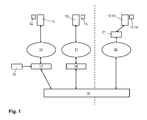
- FIG. 1 a situation is presented, as it is known from the prior art today, and serves as a starting point for the present invention.
- first communication networks 10, 11 are mobile networks.
- the traffic is usually routed through a proxy server of the network operator.
- Each first communication network 10, 11 are associated with terminals 12, 13, which are, for example, mobile phones.
- Each terminal 12, 13 has a user module 14, 15, for example in the form of a SIM application.
- a provider 16 such as a payment provider
- the data traffic via a computer device 17th , 18 of the network operation, such as a proxy server, routed.
- a computer device 17th , 18 of the network operation such as a proxy server
- the user communicates via his terminal 12, 13 via a second communication network 20 different from the first communication network, for example the Internet, wherein the communication can take place in particular via a router 21, for example a WLAN / DSL router.
- a router 21 for example a WLAN / DSL router.
- the proxy servers 17, 18 of the operators of the first communication networks 10, 11 are not involved.
- the identification code 19, for example the MSISDN can therefore not be injected into the request by the network operator. For this reason, the provider 16 can turn the user on do not identify this way. In particular, it is not possible in this way to use MSISDN based payment systems in WLAN over DSL situations.
- the present invention makes it possible, in particular, to be able to use mobile network-based payment functions even in situations outside the mobile radio network, for example in WLAN via DSL situations.
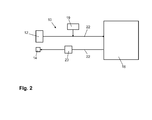
- FIG. 2 is generally shown schematically how an initialization and / or activation of a user account and / or a user identification identifier can be carried out at a provider 16.
- the initialization and / or activation takes place at the provider 16 by means of a first communication network 10, in particular a mobile network, wherein the user account and / or the user identification identifier in at least one further, independent of the first communication network second communication network should be valid. It is thus a situation in the first communication network.
- a his terminal 12 for example a mobile telephone, which has a user module 14, for example a SIM application
- the user transmits a corresponding request to the provider 16, which takes place via a communication channel 22 assigned to the first communication network 10.
- the operator of the first communication network 10 can enrich the request with an identification identifier 19 which uniquely identifies the user, for example the MSISDN, and thus inject the request accordingly.
- the provider 16 After receiving the request, the provider 16 generates a user identification code 23, for example a so-called account key, optionally also a user account, the user identification code 23 being part of the user account.
- the user identification code 23 is sent via a communication connection, for example the communication channel 22 of the first communication network 10, to the terminal 12 of the user and stored in the user module 14.
- information about the identification code 19 or the identification code 19 itself, for example to the MSISDN or the MSISDN can also be stored in the user module.
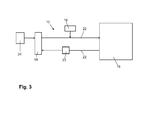
- FIG. 3 is one on FIG. 2 based view showing the flow of encryption keys.
- the user module 14 of the terminal which is a SIM application, receives "Over The Air (OTA)" 24 the URL, name and public key of the provider 16, which providers store specific data in the user module 14 become.
- OTA Over The Air
- a request is transmitted from the user module 14 to the provider 16, which takes place via a communication channel 22 assigned to the first communication network 10.
- the request may include registration data and the public key of the user, which data may be encrypted with the provider's public key.
- an application is implemented in the terminal of the user, which transmits the request.
- the application reads out the required data via an interface from the user module 14.
- the operator of the first communication network 10 can enrich the request with an identification identifier 19 which uniquely identifies the user, for example the MSISDN, and thus inject the request accordingly.
- the provider 16 After receiving the request, the provider 16 generates a user identification code 23, for example a so-called account key, optionally also a user account, the user identification code 23 being part of the user account.
- a user identification code 23 for example a so-called account key, optionally also a user account, the user identification code 23 being part of the user account.
- the received data is decrypted with the private key of the provider 16.
- a user account for the received identification code and the received registration data is created.
- the user's private key is stored and a user identification code 23 is generated.
- the User identification code 23 is encrypted with the public key of the user and sent via a communication channel, for example the communication channel 22 of the first communication network 10, to the terminal of the user.
- the information received from the provider 16 is decrypted with the private key of the user, and the user identification code is stored in the user module 14.
- FIG. 4 an embodiment is shown in which a new provider is implemented on the terminal of a user.
- an application 25 which is implemented in the terminal of the user, this can for example go to the Internet and query offers from different providers. If he finds the offer of a provider for whom the user still has no user account and no user identification code, the application 25 accesses a user module provided in the terminal in a method step S1 via an interface 26, which may be, for example, an API 14 to, which may be formed for example as a SIM application.
- the application 25 starts a provider administration GUI 29.
- a memory device 27 is accessed in which already some providers 16, 28 are stored with corresponding user identification codes for the user and further, provider-specific information. These are displayed on the provider administration GUI 29. Furthermore, an area for entering further providers 30 is provided on the provider administration GUI 29
- a method step S2 the area for inputting further providers 30 is activated, and registration data are generated. These include, for example, the name of the user, the user's login, the user's password and the user's bank details.
- the registration data and the public key of the user are transmitted by the user module 14 to a new provider 31, which takes place via a communication channel 22 assigned to the first communication network.
- the operator of the first communication network In this case, the data to be transmitted can be presented with an identification code 19 uniquely identifying the user, for example the MSISDN, and the data thus injected accordingly.
- the provider 31 After receiving the data, the provider 31 generates in a method step S4 a user identification code 23, for example a so-called account key, optionally also a user account, the user identification code 23 in this case being part of the user account.
- the received data is decrypted with the private key of the provider 31.
- a user account for the received identification code 19 and the received registration data is created. Furthermore, the user's public key is stored and a user identification code 23 is generated.
- the user identification code 23 is encrypted with the public key of the user and sent via a communication channel, for example the communication channel 22 of the first communication network 10, in a method step S5 to the user's terminal and stored in the user module 14, at the same time the public key of the provider 31 is transmitted with.
- the information received from the provider 31 is decrypted with the user's private key, validated, and the user identification code or the user account is stored in the user module 14. Now, the new provider 31 is activated, which is illustrated by the dashed line ..
- a method step S7 the user module 14 is closed and the application 25 is returned. Now, via the interface 26, in a method step S8, the desired, newly created provider 31 can be selected, since a user identification code of the user is now available for this user.
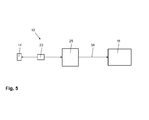
- FIG. 5 is shown in a general schematic representation of how a method for performing a transaction between a user and a provider 16 is performed.
- the user is assigned a terminal 12 which has a user module 14, for example a SIM application 14 and an application 25 for Carrying out transactions.
- the application 25 reads out the user identification code 23 from the user module. It is provided in particular that the user identification code is independent of communication network.
- the application transmits a request, for example a billing request with the user identification code to the provider 16, for example a billing provider. This happens, for example, via a communication channel 34 of a second communication network, for example a WLAN / LAN via DSL network.
- an identification identifier for example an MSISDN
- the user identification code is identified according to a method that is described in US Pat FIGS. 1 to 4 is shown and described previously generated and thus represents a unique means of identification. It does not matter whether the terminal 12 of the user with the provider 16 via a first communication network, such as a mobile network, or a different communication network to the first communication network, such as a WLAN, LAN or DSL situation, in particular a WLAN / LAN via DSL Situation, communicates.
- the user identification code which was created in connection with the first communication network, is also valid in the second communication network.
- FIG. 6 a method for carrying out a transaction between a user and a provider 16 is shown, the method being described from the point of view of an application 25 implemented in the terminal, the application 25 being provided via an interface 26 with a user module 14, for example a SIM, likewise provided in the terminal with SIM application, communicates
- the application 25 has a list 32 with different providers 16, 28.
- the application 25 matches the list 32 with a list 33 that includes preferred providers, for example, the provider 16 remains.
- the application 25 now communicates with the user module 14 in order to obtain the required data, for example the user identification code 23, which is designed as a communication-network-independent user identification code to read the user at vendor 16 and to encrypt various data.
- the application 25 Via a communication channel 34 of a second communication network, a request is sent by the application 25 to the provider 16, the request containing transaction data and the network identification code of the user at the provider 16, wherein at least individual parts of the data, in particular the user identification code, are encrypted.
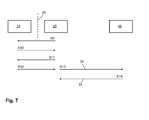
- FIG. 7 Finally, a schematic representation based on the Figures 5 and 6 showing the flow of encryption keys. Again, the communication between the application 25, the user module 14 and the provider 16 is shown.
- the application 25 accesses the user module 14 via the interface 26 in a method step S9.
- the user module sends back to the application 25 a list of user identification codes which are encrypted with the public key of the respective provider.
- the user selects a suitable provider via the application 25, in the present example the provider 16.
- the transaction data generated by the application 25 are then transmitted to the user module 14 and encrypted there in a method step S11.
- the encrypted transaction data which was encrypted with the public key of the provider 16 are transmitted back to the application 25 by the user module 14 in a method step S12. There, a transaction request is generated.
- the transaction request, the URL of the provider 16, and the transaction data are transmitted in a method step S13 to the provider 16, wherein all the data was encrypted with the public key of the provider 16.
- the data is decrypted with the private key of the provider 16.
- the transaction is carried out and the status of the transaction is sent in the form of a status report in a method step S14 via the communication channel 34 from the provider 16 back to the application 25.
Landscapes
- Engineering & Computer Science (AREA)
- Business, Economics & Management (AREA)
- Computer Security & Cryptography (AREA)
- Computer Networks & Wireless Communication (AREA)
- Signal Processing (AREA)
- Finance (AREA)
- Accounting & Taxation (AREA)
- Development Economics (AREA)
- Databases & Information Systems (AREA)
- Economics (AREA)
- Marketing (AREA)
- Strategic Management (AREA)
- Physics & Mathematics (AREA)
- General Business, Economics & Management (AREA)
- General Physics & Mathematics (AREA)
- Theoretical Computer Science (AREA)
- Mobile Radio Communication Systems (AREA)
Abstract
Description
- Die vorliegende Erfindung betrifft zunächst ein Verfahren zur Initialisierung und/oder Aktivierung wenigstens eines Nutzerkontos und/oder einer Nutzeridentifikationskennung bei wenigstens einem Anbieter gemäß dem Oberbegriff von Patentanspruch 1. Weiterhin betrifft die Erfindung ein Verfahren zum Durchführen einer Transaktion zwischen einem, einem Nutzer zugeordneten Endgerät und einem Anbieter gemäß dem Oberbegriff von Patentanspruch 10. Schließlich betrifft die Erfindung auch ein Endgerät, welches einem ersten Kommunikationsnetz, insbesondere einem Mobilfunknetz, zugeordnet ist und eine Kommunikationsverbindung auch zu einem zweiten, zum ersten Kommunikationsnetz unterschiedlichen Kommunikationsnetz aufbauen kann.
- Mit zunehmender Entwicklung mobiler Endgeräte, wie beispielsweise Mobiltelefonen, Smartphones und dergleichen steigt auch die Bandbreite für deren Einsatzmöglichkeiten. So ist es heutzutage bereits gang und gäbe, dass mittels Mobiltelefonen auch Transaktionen jeglicher Art zwischen dem Nutzer eines solchen Endgeräts und einem Anbieter durchgeführt werden können. Dabei ist es für den Anbieter unerlässlich, gesicherte Informationen über den Nutzer, der die Transaktion durchführen möchte, zu erhalten, da bei Transaktionen nicht selten auch Bezahlvorgänge mit eingebunden sind.
- In der
WO 2004/057547 A1 beispielsweise ist eine Lösung beschrieben, bei der in einem mobilen Endgerät eine digitale Signatur abgelegt wird. Die digitale Signatur wird verschlüsselt und an den Anbieter übertragen. Der Anbieter übertragt die verschlüsselte Signatur an den Betreiber des Kommunikationsnetzes, dem das mobile Endgerät zugeordnet ist. Der Netzwerkbetreiber entschlüsselt die Signatur und überträgt die entschlüsselte Signatur zurück an den Anbieter, der somit den Nutzer, der die Transaktion durchführen möchte, verifizieren kann. Dieses Verfahren ist jedoch aufwändig, da es bei jeder Transaktion stets die Einbeziehung des Netzbetreibers erfordert. - In der
GB 2 375 872 A - Im allgemeinen Stand der Technik ist es zudem bekannt, dass in Mobilfunknetzen der Datenverkehr üblicherweise über Rechnereinrichtungen, beispielsweise Proxy-Rechnereinrichtungen, des Netzbetreibers geroutet wird. Das ermöglicht es dem Netzbetreiber, Transaktionsanfragen, die ein Nutzer über sein mobiles Endgerät, welches dem Mobilfunknetz zugeordnet ist, an einen Anbieter richtet, mit einer Identifikationskennung des Nutzers und/oder des mobilen Endgeräts, beispielsweise der MSISDN, anzureichern. Die Identifikationskennung ist in diesem Fall ein eindeutiges Identifizierungsmittel, mit dem der Anbieter den die Transaktion anfragenden Nutzer und/oder dessen Endgerät identifizieren kann.
- Heutzutage sind die modernen mobilen Endgeräte, beispielsweise Smartphones und dergleichen, in der Lage, neben einer Kommunikation über das Mobilfunknetz auch über ein zweites, vom Mobilfunknetz unabhängiges Kommunikationsnetz, beispielsweise mittels WLAN / LAN über DSL, zu kommunizieren. In solchen Fällen kann eine Identifikationskennung des Endgeräts aus dem Mobilfunknetz, beispielsweise die MSISDN, nicht mehr vom Betreiber des Mobilfunknetzes an einer Transaktionsanfrage angereichert werden, da die oben genannten Rechnereinrichtungen des Mobilfunknetzbetreibers bei einer Kommunikation über WLAN, LAN über DSL nicht mehr involviert sind. Deshalb kann der Anbieter den Nutzer und/oder das Endgerät eines Nutzers, welcher/welches eine Transaktion durchführen möchte, nicht mehr identifizieren.
- Hiervon ausgehend liegt der vorliegenden Erfindung die Aufgabe zugrunde, Verfahren der eingangs genannten Art sowie ein Endgerät der eingangs genannten Art derart weiterzubilden, dass auf einfache und unaufwändige Weise Mobilfunknetz basierte Transaktionssysteme auch in Situationen außerhalb des Mobilfunksektors, beispielsweise in WLAN über DSL Situationen oder DSL-Situationen, genutzt werden können.
- Diese Aufgabe wird erfindungsgemäß gelöst durch das Verfahren zur Initialisierung und/oder Aktivierung wenigstens eines Nutzerkontos und/oder einer Nutzeridentifikationskennung bei wenigstens einem Anbieter mit den Merkmalen gemäß dem unabhängigen Patentanspruch 1, das Verfahren zum Durchführen einer Transaktion zwischen einem, einem Nutzer zugeordneten Endgerät und einem Anbieter mit den Merkmalen gemäß dem unabhängigen Patentanspruch 10 sowie durch das Endgerät mit den Merkmalen gemäß dem unabhängigen Patentanspruch 14. Weitere Merkmale und Details der Erfindung ergeben sich aus den Unteransprüchen, der Beschreibung sowie den Zeichnungen. Dabei gelten Merkmale und Details, die im Zusammenhang mit einem der beiden Verfahrensaspekte beschrieben sind, selbstverständlich vollumfänglich auch im Zusammenhang mit dem jeweils anderen Verfahrensaspekt, und umgekehrt, so dass wechselseitig auf die jeweiligen Ausführungen vollinhaltlich Bezug genommen und verwiesen wird. Ebenso gelten Merkmale und Details; die im Zusammenhang mit den beiden Verfahrensaspekten beschrieben sind, selbstverständlich vollumfänglich auch im Zusammenhang mit dem erfindungsgemäßen Endgerät, und umgekehrt, so dass auch hier wechselseitig auf die jeweiligen Ausführungen vollinhaltlich Bezug genommen und verwiesen wird.
- Der Grundgedanke der vorliegenden Erfindung besteht insbesondere darin, dass mittels eines über ein erstes Kommunikationsnetz, beispielsweise ein Mobilfunknetz, ablaufendes Verfahren auf Seiten eines Anbieters zumindest eine Nutzeridentifikationskennung, vorzugsweise auch ein Nutzerkonto, erzeugt wird. Diese wird auf das Endgerät eines Nutzers, für den die Nutzeridentifikationskennung bestimmt ist, übertragen und dort abgespeichert. Später kann die Nutzeridentifikationskennung, bei der es sich um ein eindeutiges Identifizierungsmittel für den Nutzer handelt, auch verwendet werden, wenn der Nutzer über sein Endgerät über ein zweites, vom ersten Kommunikationsnetz unabhängiges, Kommunikationsnetz mit einem Anbieter kommuniziert und eine Transaktion durchführen möchte. Die Nutzeridentifikationskennung ist insbesondere kommunikationsnetzunabhängig. Das bedeutet insbesondere, dass ein und dieselbe Nutzeridentifikationskennung somit in verschiedenen Kommunikationsnetzen, beziehungsweise für Transaktionen, die über verschiedene Kommunikationsnetze erfolgen, angewendet werden kann. Das heißt, es existiert eine allgemeingültige Nutzeridentifikationskennung, die für unterschiedliche Kommunikationsnetze Gültigkeit hat. Bei wenigstens einem der Kommunikationsnetze, vorzugsweise bei beiden Kommunikationsnetzen, kann es sich insbesondere um ein Telekommunikationsnetz handeln.
- Bei einer Transaktion handelt es sich insbesondere um einen Abschluss im Geschäftsverkehr. Beispielsweise kann es sich bei einer Transaktion um einen Abschluss im elektronischen Geschäftsverkehr handeln. Der elektronische Geschäftsverkehr kann insbesondere auch als E-Commerce oder E-Business bezeichnet werden.
- Bei einem Nutzerkonto handelt es sich insbesondere um einen Login beim Anbieter, in dem zudem das Profil des Nutzers abgelegt ist. Eine Nutzeridentifikationskennung ist insbesondere eine Kennung, die es dem Anbieter ermöglich, den Nutzer, dem insbesondere ein Nutzerkonto beim Anbieter gehört, zu identifizieren.
- Dabei ist die vorliegende Erfindung nicht auf bestimmte Anwendungen beschränkt. Bevorzugt ist vorgesehen, dass durch die vorliegende Erfindung ein SIM-Karten basiertes Bezahlen sowohl in Mobilfunknetzwerken als auch in WLAN/LAN/DSL-Situationen, insbesondere WLAN/LAN über DSL Situationen, ermöglicht wird. Insbesondere wird eine Möglichkeit geschaffen, wie MSISDN basierte Bezahlsysteme auch in WLAN-Situationen genutzt werden können.
- Wesentliche Anwendungsgebiete der vorliegenden Erfindung sind beispielsweise Services, die dem Endkunden sowohl beim Internetzugang über Mobilfunk, etwa GSM, UMTS, LTE und dergleichen, als auch über WLAN, LAN, DSL und dergleichen ihre Dienste anbieten, beispielsweise Bezahlverfahren, Identity-Management und dergleichen.
- Gemäß dem ersten Aspekt der vorliegenden Erfindung wird ein Verfahren zur Initialisierung und/oder Aktivierung wenigstens eines Nutzerkontos und/oder einer Nutzeridentifikationskennung bei wenigstens einem Anbieter mittels eines ersten Kommunikationsnetzes, insbesondere eines Mobilfunknetzes, wobei das Nutzerkonto in wenigstens einem weiteren, zum ersten Kommunikationsnetz unabhängigen zweiten Kommunikationsnetz Gültigkeit hat, bereitgestellt, das durch folgende Schritte gekennzeichnet ist:
- a) über ein dem ersten Kommunikationsnetz zugeordnetes Endgerät wird vom Nutzer eine Anfrage zur Initialisierung und/oder Aktivierung des Nutzerkontos und/oder der Nutzeridentifikationskennung erzeugt und über eine Kommunikationsverbindung, insbesondere einen Kommunikationskanal, des ersten Kommunikationsnetzes vom Endgerät des Nutzers zum Anbieter, insbesondere zumindest teilweise verschlüsselt, übertragen;
- b) während der Übertragung wird auf Seiten des ersten Kommunikationsnetzes der Anfrage eine den Nutzer und/oder das Endgerät des Nutzers charakterisierende Identifikationskennung zugeordnet;
- c) nach Empfang der mit der Identifikationskennung angereicherten Anfrage wird auf Seiten des Anbieters zumindest eine kommunikationsnetzunabhängige Nutzeridentifikationskennung erzeugt;
- d) die erzeugte Nutzeridentifikationskennung wird vom Anbieter an das Endgerät des Nutzers, insbesondere zumindest teilweise verschlüsselt, übertragen und in diesem abgespeichert.
- Gemäß diesem ersten Aspekt der Erfindung wird ein Verfahren zur Initialisierung und/oder Aktivierung wenigstens eines Nutzerkontos und/oder einer Nutzeridentifikationskennung bei wenigstens einem Anbieter bereitgestellt. Dabei ist insbesondere vorgesehen, dass der Nutzer bei dem Anbieter, beispielsweise einem Service-Anbieter, einem Warenanbieter oder dergleichen, ein Nutzerkonto, auch Account genannt, und/oder eine Nutzeridentifikationskennung, beispielsweise einen so genannten Account Key, bekommt oder hat. Initialisierung bedeutet insbesondere, dass ein solches Nutzerkonto und/oder eine solche Nutzeridentifikationskennung beim Anbieter für den Nutzer neu angelegt wird. Aktivierung bedeutet insbesondere, dass ein bereits vorhandenes Nutzerkonto und/oder eine bereits vorhandene Nutzeridentifikationskennung gestartet wird. Vorzugsweise kann vorgesehen sein, dass eine Nutzerkontoinitialisierung und/oder eine Nutzeridentifikationskennungs-Initialisierung bei einem Bezahlanbieter initialisiert werden kann.
- Dabei handelt es sich um eine Situation, die sich in einem ersten Kommunikationsnetz abspielt. Das Verfahren gemäß dem ersten Aspekt der Erfindung erfolgt mittels eines ersten Kommunikationsnetzes. Dabei ist die vorliegende Erfindung nicht auf bestimmte Kommunikationsnetztypen beschränkt. Bevorzugt handelt es sich bei dem ersten Kommunikationsnetz um ein Telekommunikationsnetz, insbesondere um ein Mobilfunknetz, etwa nach dem GSM, UMTS, LTE Standard und dergleichen, so dass es sich in einem solchen Fall um eine Mobilfunknetzsituation handelt.
- Erfindungsgemäß wird weiterhin gewährleistet, dass das Nutzerkonto und/oder die Nutzeridentifikationskennung, welche(s) in einer Situation, die sich in einem ersten Kommunikationsnetz abspielt, initialisiert und/oder aktiviert wird, in wenigstens einem weiteren, zum ersten Kommunikationsnetz unabhängigen zweiten Kommunikationsnetz Gültigkeit hat. Diesbezüglich wird auch auf die allgemeinen Erläuterungen zur Nutzeridentifikationskennung weiter oben vollinhaltlich Bezug genommen und verwiesen. Bei dem zweiten Kommunikationsnetz kann es sich beispielsweise ebenfalls um ein Telekommunikationsnetz, etwa nach dem WLAN, LAN, DSL Standard, insbesondere um WLAN/LAN über DSL, und dergleichen handeln.
- Zur Durchführung des erfindungsgemäßen Verfahrens sind folgende Schritte vorgesehen:
- Über ein dem ersten Kommunikationsnetz zugeordnetes Endgerät wird vom Nutzer eine Anfrage zur Initialisierung und/oder Aktivierung des Nutzerkontos und/oder der Nutzeridentifikationskennung erzeugt und über eine Kommunikationsverbindung des ersten Kommunikationsnetzes, insbesondere über einen Kommunikationskanal des ersten Kommunikationsnetzes, vom Endgerät des Nutzers zum Anbieter, insbesondere zumindest teilweise verschlüsselt, übertragen.
- Bei dem Endgerät handelt es sich insbesondere um ein elektronisches Endgerät, das dem ersten Kommunikationsnetz zugeordnet ist, das aber auch eine Kommunikation über das zweite Kommunikationsnetz ermöglicht. Vorzugsweise handelt es sich um ein mobiles Endgerät. Im Falle eines Mobilfunknetzes als erstem Kommunikationsnetz kann das Endgerät beispielsweise als Mobiltelefon, als Smartphone, als Notebook, als Tablet-Rechner und dergleichen ausgebildet sein.
- Während die Anfrage von dem Endgerät des Nutzers zum Anbieter übertragen wird, wird auf Seiten des ersten Kommunikationsnetzes der Anfrage eine den Nutzer und/oder das Endgerät des Nutzers charakterisierende Identifikationskennung zugeordnet. Dabei ist die Erfindung nicht auf bestimmte Typen von Identifikationskennungen beschränkt. Einige vorteilhafte, jedoch nicht ausschließliche Beispiele werden im weiteren Verlauf der Beschreibung näher erläutert.
- Vorzugsweise kann vorgesehen sein, dass die im Endgerät des Nutzers erzeugte Anfrage an eine dem ersten Kommunikationsnetz zugeordnete Rechnereinrichtung übertragen wird, dass in der Rechnereinrichtung der Anfrage die den Nutzer und/oder das Endgerät des Nutzers charakterisierende Identifikationskennung zugeordnet wird und dass die angereicherte Anfrage von der Rechnereinrichtung an den Anbieter übertragen wird. Beispielsweise kann es sich bei der Rechnereinrichtung um eine Servereinrichtung handeln. Bei der Servereinrichtung kann es sich beispielsweise um einen PROXY, beispielsweise eine Art Vermittler in einem Computernetzwerk, handeln.
- Nachdem die mit der Identifikationskennung angereicherte Anfrage zum Anbieter übertragen und von diesem empfangen worden ist wird auf Seiten des Anbieters zumindest eine kommunikationsnetzunabhängige Nutzeridentifikationskennung erzeugt. Die Charakteristik einer solchen kommunikationsnetzunabhängigen Nutzeridentifikationskennung ist weiter oben im Detail beschreiben, so dass an dieser Stelle auf die entsprechenden Ausführungen weiter oben vollinhaltlich Bezug genommen und verwiesen wird. In weiterer Ausgestaltung kann auch vorgesehen sein, dass auf Seiten des Anbieters ein Nutzerkonto erzeugt wird, wobei die Nutzeridentifikationskennung in diesem Fall einen Bestandteil des Nutzerkontos darstellt. Bei der Nutzeridentifikationskennung kann es sich insbesondere um eine Art Kundennummer handeln, die vom Anbieter für den anfragenden Nutzer und/oder dessen Endgerät vergeben wird.
- Vorzugsweise kann vorgesehen sein, dass die angereicherte Anfrage an eine dem Anbieter zugeordnete Rechnereinrichtung übertragen wird, dass in der Rechnereinrichtung des Anbieters nach Empfang der angereicherten Anfrage eine Nutzeridentifikationskennung erzeugt wird und dass die Nutzeridentifikationskennung von der Rechnereinrichtung des Anbieters an das Endgerät des Nutzers, vorzugsweise über die dem ersten Kommunikationsnetz zugeordnete Rechnereinrichtung, insbesondere über eine Kommunikationsverbindung des ersten Kommunikationsnetzes, übertragen wird. Beispielsweise kann es sich bei der Rechnereinrichtung des Anbieters um eine Servereinrichtung handeln.
- Die erzeugte Nutzeridentifikationskennung wird vom Anbieter an das Endgerät des Nutzers, insbesondere zumindest teilweise verschlüsselt, übertragen und in diesem abgespeichert. Dabei sind verschiedene Orte möglich, wo eine Abspeicherung im Endgerät erfolgen kann. Einige bevorzugte, jedoch nicht ausschließliche Beispiele hierzu werden im weiteren Verlauf der Beschreibung näher erläutert.
- Bevorzugt ist vorgesehen, dass das erste Kommunikationsnetz als Mobilfunknetz ausgebildet ist. In einem solchen Fall wird während der Übertragung auf Seiten des ersten Kommunikationsnetzes der Anfrage bevorzugt eine den Nutzer und/oder das Endgerät des Nutzers charakterisierende MSISDN zugeordnet. Der Betreiber des Mobilfunknetzes reichert die Anfrage somit mit der MSISDN an. Man könnte auch sagen, dass die MSISDN in die Anfrage injiziert wird.
- Die vorliegende Erfindung ist jedoch nicht auf bestimmte Typen von Identifikationskennungen beschränkt. Grundsätzlich kann eine Identifikationskennung jegliche Art von Kennung umfassen, die von anderen Stellen zugeordnet werden kann. Die Identifikationskennung muss so geartet sein, dass sie eine eindeutige Identifizierung des elektronischen Endgeräts oder Nutzers ermöglicht. Insbesondere sollen die Identifikationskennungen so gestaltet sein, dass sie verschlüsselt und entschlüsselt werden können. Insbesondere sollen die Identifikationskennungen auch so gestaltet sein, dass sie vom Anbieter erkannt und gekannt werden können. Im Zusammenhang mit einem Mobilfunknetz kann es sich bei einer solchen Identifikationskennung bevorzugt um eine IMSI (International Mobile Subscriber Identity) und/oder um eine MSISDN (Mobile Subscriber Integrated Services Digital Network Number) handeln. Eine IMSI besteht insbesondere aus 15 Ziffern und stellt die Identifikationsnummer eines Mobiltelefons dar. Eine MSISDN ist insbesondere eine einmalig vorhandene, einem bestimmten Nutzer zugeordnete Rufnummer, die ein Anrufer wählt, um einen Mobilfunkteilnehmer zu erreichen.
- Im Fall eines Mobilfunknetzes als erstem Kommunikationsnetz ist somit der Fortbestand der MSISDN zur Identifizierung der Endkunden gewährleistet. Dadurch können insbesondere alle bestehenden mobilen Services, unabhängig vom Zugang, weiterhin genutzt werden.
- Vorzugsweise wird die Nutzeridentifikationskennung in einer dem Endgerät zugeordneten Speichereinrichtung abgespeichert. Darüber hinaus können in der Speichereinrichtung insbesondere auch Anbieterspezifische Daten abgespeichert sein. Bei solchen Daten kann es sich beispielsweise eine Anbieter-ID, den Namen des Anbieters, eine URL-des Anbieters, öffentliche Schlüssel des Anbieters und dergleichen handeln. Daneben können auch private und öffentliche Schlüssel des Nutzers an dieser Stelle abgespeichert sein.
- Vorzugsweise kann die Nutzeridentifikationskennung in einem dem Endgerät zugeordneten Nutzermodul abgespeichert werden. Bei einem Nutzermodul handelt es sich insbesondere um ein Modul, das zur Identifikation des Nutzers im Netz dient. Bei dem Nutzermodul handelt es sich insbesondere um einen Bereich innerhalb des Endgeräts, der für die Belange des erfindungsgemäßen Verfahrens ausgebildet ist. Dabei ist die Erfindung nicht auf bestimmte Typen von Nutzermodulen beschränkt. Bevorzugt ist vorgesehen, dass es sich bei dem Nutzermodul um eine SIM, eine SIM-Applikation, eine Chipkarten-Applikation oder um einen gesicherten Bereich im Endgerät handeln.
- Dabei kann die Chipkarten-Applikation beispielsweise in Form einer Chipkarte im Endgerät vorgesehen sein. In anderer Ausgestaltung ist auch denkbar, dass die Chipkartenapplikation in Form einer Softwareapplikation im elektronischen Endgerät implementiert ist. Chipkarten, die oft auch als Smartcard oder Integrated Circuit Card (ICC) bezeichnet werden, weisen insbesondere einen integriertem Schaltkreis auf, der eine Hardware-Logik, eine Speichereinrichtung oder auch einen Mikroprozessor enthalten kann. Bevorzugt kann vorgesehen sein, dass es sich bei dem Nutzermodul um eine SIM-Applikation handelt. Bei einer SIM (Subscriber Identity Module) handelt es sich insbesondere um eine Chipkarte, die in ein Mobiltelefon eingesteckt wird und die zur Identifikation des Nutzers im Mobilfunknetz dient. Mit ihr stellen Mobilfunkanbieter Teilnehmern mobile Telefonanschlüsse und Datenanschlüsse zur Verfügung.
- Bevorzugt kann als Identifikationskennung eine dem Nutzer des Endgeräts zugeordnete MSISDN (Mobile Subscriber Integrated Services Digital Network Number) vorgesehen sein. Der vom Endgerät an den Anbieter übertragenen Anfrage wird dann die MSISDN als Identifikationskennung zugeordnet.
- Beispielsweise kann das Nutzermodul dabei eine entsprechende Speichereinrichtung aufweisen. Vorzugsweise kann es sich bei einer solchen Speichereinrichtung um eine Speichereinrichtung handeln, in der, wie weiter oben beschrieben ist, die Nutzeridentifikationskennung und optional die Anbieterspezifischen Daten abgespeichert sind.
- Bevorzugt ist weiterhin ein Verfahren, bei dem das Nutzermodul eine Verschlüsselungsmaschine zum Verschlüsseln und/oder Entschlüsseln von Daten und/oder zum Erzeugen von Schlüsseln zum Verschlüsseln und/oder Entschlüsseln von Daten aufweist, bei dem mittels der Verschlüsselungsmaschine zumindest Teile der Anfrage verschlüsselt werden und/oder zumindest Teile der empfangenen Nutzerkennung entschlüsselt werden und/oder Schlüssel erzeugt werden um. zumindest Teile der Anfrage zu verschlüsseln und/oder zumindest Teile der empfangenen Nutzerkennung zu entschlüsseln, und/oder bei dem das Nutzermodul eine Speichereinrichtung aufweist, in der vom Nutzermodul erzeugte und/oder empfangene Daten zumindest zeitweilig abgespeichert werden. Bei der Speichereinrichtung kann es sich bevorzugt um die weiter oben beschriebene Speichereinrichtung handeln.
- Sicherheit ist ein besonders wichtiger Aspekt bei der erfindungsgemäßen Implementierung. Bevorzugt ist vorgesehen, dass das Nutzermodul, beispielsweise in Form einer SIM-Applikation, auch die Speicherung und Verschlüsselung von Daten vornimmt. Bevorzugt ist vorgesehen, dass das Nutzermodul eine Verschlüsselungsmaschine, eine Speichereinrichtung zum Speichern von Daten, eine Administrations GUI (Graphical User Interface) und eine Schnittstelle zu einer weiter unten näher beschriebenen Applikation aufweist.
- Beispielsweise kann es sich bei dem vom Anbieter angebotenen Dienst um einen Bezahldienst handeln, dann sind die vorgenannten Komponenten insbesondere auf die Durchführung von Bezahlvorgängen zugeschnitten beziehungsweise ausgebildet.
- Bevorzugt wird die Anfrage zur Initialisierung und/oder Aktivierung des Nutzerkontos und/oder der Nutzeridentifikationskennung von einer dem Endgerät zugeordneten Applikation zum Anbieter übertragen, wobei die vom Anbieter erzeugte Nutzeridentifikationskennung von der Applikation empfangen wird.
- Vorzugsweise kommuniziert die Applikation über eine Schnittstelle mit dem Nutzermodul, wobei über die Schnittstelle von der Applikation Daten aus dem Nutzermodul ausgelesen und/oder auf diesem ablegt werden.
- Durch das Verfahren gemäß diesem ersten Aspekt der Erfindung wird die Initialisierung und/oder Aktivierung des Nutzerkontos, beispielsweise des Accounts, und/oder der Nutzeridentifikationskennung durch das erste Kommunikationsnetz, beispielsweise das Mobilfunknetz, realisiert. Aber die Verwendung des Nutzerkontos und/oder der Nutzeridentifikationskennung funktioniert auch in einem zweiten Kommunikationsnetz, beispielsweise in WLAN, DSL, LAN, insbesondere in WLAN/LAN über DSL Situationen, und dergleichen. Jede auf dem Endgerät implementierte Applikation kann die erzeugte Nutzeridentifikationskennung nutzen. Dabei ist das erfindungsgemäße Verfahren Träger (Carrier) unabhängig.
- Zur Verdeutlichung dieses ersten Erfindungsaspekts wird dieser nachfolgend anhand eines Beispiels exemplarisch beschrieben.
- Beispielsweise kann es sich bei dem Anbieter um einen Anbieter im Internet handeln, der eine Webseite betreibt, wobei die Webseite auf einer Servereinrichtung, einem Rechner oder dergleichen abgelegt ist und über diesen kontaktiert werden kann. Der Nutzer eines elektronischen Endgeräts, beispielsweise eines Smartphones, das einem Mobilfunknetz zugeordnet ist, ruft über sein elektronisches Endgerät über das zweite Kommunikationsnetz, beispielsweise das Internet, die Webseite der Partei auf. Da die Kommunikation nicht über das Mobilfunknetz, sondern über das Internet erfolgt, fehlt in der Kommunikation die Identifikationskennung des elektronischen Endgeräts im ersten Kommunikationsnetz, beispielsweise die MSISDN.
- Aus diesem Grund wird bei der Initialisierung/Aktivierung des Nutzerkontos und/oder der Nutzeridentifikationskennung vom Nutzer über sein elektronisches Endgerät eine Kommunikationsverbindung im ersten Kommunikationsnetz, beispielsweise eine Mobilfunkverbindung, zum Anbieter aufgebaut, wobei der vom Endgerät zum Anbieter übertragenen Anfrage vom Betreiber des Mobilfunknetzes die entsprechende MSISDN des Nutzers hinzugefügt wird.
- Der Anbieter erhält somit eine eindeutige Identifizierung des Nutzers, kann darauf basierend ein Nutzerkonto und/oder eine Nutzeridentifikationskennung erzeugen und diese an das Endgerät des Nutzers zurückschicken. Dort wird die Nutzeridentifikationskennung abgespeichert.
- Möchte der Nutzer nunmehr eine Transaktion mit dem Anbieter durchführen, was nachfolgend im Zusammenhang mit dem zweiten Erfindungsaspekt beschrieben wird, kann er dies auch über das zweite Kommunikationsnetz, beispielsweise WLAN, DSL, LAN, insbesondere in WLAN/LAN über DSL Situationen, und dergleichen tun, da die Nutzeridentifikationskennung auch hierfür Gültigkeit hat.
- Gemäß dem zweiten Aspekt der Erfindung wird ein Verfahren zum Durchführen einer Transaktion zwischen einem, einem Nutzer zugeordneten Endgerät und einem Anbieter, bereitgestellt, wobei auf dem Endgerät eine Applikation zum Durchführen von Transaktionen implementiert ist wobei zwischen dem Endgerät und dem Anbieter, insbesondere einer dem Anbieter zugeordneten Rechnereinrichtung, über eine Kommunikationsverbindung in einem Kommunikationsnetz eine Kommunikation bezüglich der Transaktion stattfindet, wobei von der Applikation in dem Endgerät eine Transaktionsanfrage erzeugt und an den Anbieter übertragen wird. Dieses Verfahren ist erfindungsgemäß dadurch gekennzeichnet, dass die Applikation zur Erzeugung der Transaktionsanfrage auf ein dem Endgerät zugeordnetes Nutzermodul zugreift; dass aus einer dem Nutzermodul zugeordneten Speichereinrichtung, die für die Transaktion verfügbaren Anbieter sowie entsprechende, kommunikationsnetzunabhängige Nutzeridentifikationskennungen des Nutzers bei diesen Anbietern aufweist, von der Applikation ein Anbieter, für den eine Nutzeridentifikationskennung vorhanden ist, ausgewählt wird; dass die Applikation die Nutzeridentifikationskennung des Anbieters aus der dem Nutzermodul zugeordneten Speichereinrichtung ausliest, dass die Nutzeridentifikationskennung in der Applikation der Transaktionsanfrage hinzugefügt wird; dass die mit der Nutzeridentifikationskennung angereicherte Transaktionsanfrage von der Applikation des Endgeräts an den Anbieter übertragen wird; dass auf Seiten des Anbieters die Nutzeridentifikationskennung verifiziert wird; und dass bei erfolgreicher Verifikation die Transaktion durchgeführt wird.
- Bezüglich der einzelnen Verfahrenskomponenten sowie deren Ausgestaltung und Funktionsweise wird ebenfalls auf die vorstehenden Ausführungen zum erfindungsgemäßen ersten Verfahrensaspekt vollinhaltlich Bezug genommen und verwiesen.
- Bei diesem Verfahren kann eine Transaktion zwischen einem, einem Nutzer zugeordneten Endgerät und einem Anbieter, durchgeführt werden. Bei einer Transaktion handelt es sich insbesondere um einen wie weiter oben erläuterten Abschluss im Geschäftsverkehr. Beispielsweise kann es sich bei einer Transaktion um einen Abschluss im elektronischen Geschäftsverkehr handeln. Bei einer Transaktion handelt es sich insbesondere um einen Leistungsaustausch zwischen dem Nutzer und dem Anbieter. Beispielsweise kann die Transaktion eine Übertragung von Gütern und/oder Informationen zwischen dem Nutzer und dem Anbieter beinhalten. Dabei kann auch vorgesehen sein, dass die Transaktion einen Bezahlvorgang darstellt oder umfasst.
- Um das Verfahren durchführen zu können, ist auf dem Endgerät des Nutzers eine Applikation zum Durchführen von Transaktionen, insbesondere zwischen dem Nutzer und dem Anbieter, implementiert.
- Zwischen dem Endgerät und dem Anbieter, insbesondere einer dem Anbieter zugeordneten Rechnereinrichtung, findet über eine Kommunikationsverbindung in einem Kommunikationsnetz, insbesondere dem Internet über WLAN, LAN, DSL, insbesondere in WLAN/LAN über DSL Situationen, und dergleichen, eine Kommunikation bezüglich der Transaktion statt.
- Dazu wird von der Applikation im Endgerät eine Transaktionsanfrage erzeugt und an den Anbieter übertragen.
- Erfindungsgemäß ist vorgesehen, dass die Applikation zur Erzeugung der Transaktionsanfrage auf ein dem Endgerät zugeordnetes Nutzermodul zugreift; beispielsweise über eine geeignete Schnittstelle zwischen Applikation und Nutzermodul.
- Bei dem Nutzermodul kann es sich bevorzugt um ein wie weiter oben in Bezug auf den ersten Erfindungsaspekt beschriebenes Nutzermodul, insbesondere um eine SIM oder eine SIM-Applikation oder eine Chipkarten-Applikation oder einen gesicherten Bereich im Endgerät handeln, so dass auf die entsprechenden Ausführungen weiter oben vollinhaltlich Bezug genommen und verwiesen wird.
- Aus einer dem Nutzermodul zugeordneten Speichereinrichtung, die für die Transaktion verfügbare Anbieter sowie entsprechende Nutzeridentifikationskennungen des Nutzers bei diesen Anbietern aufweist, wird von der Applikation oder über die Applikation ein Anbieter, für den eine Nutzeridentifikationskennung vorhanden ist, ausgewählt. Bei der Nutzeridentifikationskennung handelt es sich insbesondere um eine kommunikationsnetzunabhängige Nutzeridentifikationskennung. Ein und dieselbe Nutzeridentifikationskennung kann somit in verschiedenen Kommunikationsnetzen, beziehungsweise für Transaktionen, die über verschiedene Kommunikationsnetze erfolgen, angewendet werden. Das heißt, es existiert eine allgemeingültige Nutzeridentifikationskennung, die für unterschiedliche Kommunikationsnetze Gültigkeit hat. Diesbezüglich wird auch auf die allgemeinen Erläuterungen zur kommunikationsnetzunabhängigen Nutzeridentifikationskennung vollinhaltlich Bezug genommen und verwiesen.
- Die Applikation liest die Nutzeridentifikationskennung des Anbieters aus der dem Nutzermodul zugeordneten Speichereinrichtung aus. Beispielsweise kann vorgesehen sein, dass die auf dem Endgerät implementierte Applikation die Nutzeridentifikationskennung, beispielsweise einen Nutzerkonto-Schlüssel - einen so genannten Account Key - aus einem als SIM-Applikation ausgebildeten Nutzermodul ausliest.
- In der Applikation wird diese Nutzeridentifikationskennung der Transaktionsanfrage hinzugefügt. Weiterhin kann vorgesehen sein, dass zumindest Bestandteile der Transaktionsanfrage und der Nutzeridentifikationskennung in geeigneter Weise verschlüsselt werden, wozu eine Verschlüsselungsmaschine, die bevorzugt im Nutzermodul implementiert ist, verwendet wird.
- Die mit der Nutzeridentifikationskennung angereicherte Transaktionsanfrage wird anschließend von der Applikation des Endgeräts beziehungsweise vom Endgerät an den Anbieter übertragen.
- Auf Seiten des Anbieters wird die Nutzeridentifikationskennung verifiziert. Bei erfolgreicher Verifikation wird die Transaktion durchgeführt.
- Der Anbieter, beispielsweise ein Bezahlanbieter - ein so genannter Payment Provider -, wird mit der Nutzeridentifikationskennung angefragt. Dabei ist keine Anreicherung, etwa mit einer Identifikationskennung aus einem ersten Kommunikationsnetz, etwa einer MSISDN, mehr erforderlich, da die Nutzeridentifikationskennung ein eindeutiges Identifizierungsmittel ist, egal ob die Transaktion über eine erstes Kommunikationsnetz, beispielsweise ein Mobilfunknetz, oder aber über ein zweites Kommunikationsnetz, beispielsweise WLAN, LAN, DSL, insbesondere in WLAN/LAN über DSL Situationen, oder dergleichen erfolgt. Unabhängig vom genutzten Kommunikationsnetz kann im Nutzermodul, beispielsweise auf einer SIM, eine Service spezifische Nutzeridentifikationskennung, beispielsweise in Form eines Cookies, abgelegt werden, was den Nutzer auf Service-Level, beispielsweise im Zusammenhang mit einem Bezahldienst, identifiziert. Ganz gleich, wie sich der Nutzer mit seinem Endgerät ins Internet einwählt, ob über das Mobilfunknetz oder ein dazu unterschiedliches zweites Kommunikationsnetz wie WLAN, LAN. DSL oder dergleichen, Der Nutzer wird von der Gegenstelle, beispielsweise einem Bezahldienst, immer und vor allem sicher erkannt.
- Bevorzugt kann nach erfolgter Transaktion ein Statusbericht vom Anbieter an die Applikation des Endgeräts beziehungsweise das Endgerät geschickt werden.
- Vorzugsweise kann das Nutzermodul eine Verschlüsselungsmaschine zum Verschlüsseln und/oder Entschlüsseln von Daten und/oder zum Erzeugen von Schlüsseln zum Verschlüsseln und/oder Entschlüsseln von Daten aufweisen, wobei mittels der Verschlüsselungsmaschine zumindest Teile der Transaktionsanfrage verschlüsselt werden und/oder zumindest Teile der empfangenen Daten des Anbieters entschlüsselt werden. Bei der Verschlüsselungsmaschine kann es sich bevorzugt um ein wie weiter oben in Bezug auf den ersten Erfindungsaspekt beschriebene Verschlüsselungsmaschine handeln, so dass auf die entsprechenden Ausführungen weiter oben vollinhaltlich Bezug genommen und verwiesen wird.
- Bevorzugt ist weiterhin ein Verfahren, bei dem die für die Transaktion verfügbaren Anbieter sowie entsprechende Nutzeridentifikationskennungen des Nutzers bei diesen Anbietern in der Speichereinrichtung des Endgeräts voreingestellt werden oder sind, und/oder bei dem für die Transaktion verfügbare Anbieter sowie entsprechende Nutzeridentifikationskennungen des Nutzers bei diesen Anbietern mittels eines wie vorstehenden beschriebenen erfindungsgemäßen Verfahrens gemäß dem ersten Erfindungsaspekt erzeugt und in der Speichereinrichtung abgespeichert werden. Auf die vorstehenden Ausführungen zum ersten Erfindungsaspekt wird vollinhaltlich Bezug genommen und verwiesen.
- Gemäß einem dritten Aspekt der vorliegenden Erfindung wird ein Endgerät bereitgestellt, welches einem ersten Kommunikationsnetz, insbesondere einem Mobilfunknetz, zugeordnet ist und eine Kommunikationsverbindung auch zu einem zweiten, zum ersten Kommunikationsnetz unterschiedlichen Kommunikationsnetz, insbesondere WLAN/LAN/DSL-Netzwerk, insbesondere einem WLAN/LAN über DSL Netzwerk, aufbauen kann, aufweisend ein Nutzermodul mit einer Speichereinrichtung, in der für Transaktionen verfügbare Anbieter sowie entsprechende, kommunikationsnetzunabhängige Nutzeridentifikationskennungen des Nutzers bei diesen Anbietern abgespeichert sind, eine Applikation zur Initialisierung und/oder Aktivierung wenigstens eines Nutzerkontos bei wenigstens einem Anbieter und/oder zum Durchführen einer Transaktion zwischen dem Endgerät und einem Anbieter, eine Schnittstelle zum Datenaustausch zwischen dem Nutzermodul und der Applikation sowie eine Schnittstelle zum Datenaustausch zwischen dem Endgerät, insbesondere der Applikation und einem Anbieter, insbesondere einer einem Anbieter zugeordneten Rechnereinrichtung.
- Das Endgerät weist insbesondere Mittel zur Durchführung der Verfahren gemäß dem ersten und zweiten Erfindungsaspekt auf, so dass bezüglich der Ausgestaltung und Funktionsweise des Endgeräts auf die entsprechenden Ausführungen zu den beiden Verfahrensaspekten vollinhaltlich Bezug genommen und verwiesen wird.
- Ein grundlegendes Merkmal der vorliegenden Erfindung, wie sie anhand der drei Erfindungsaspekte beschrieben ist, besteht darin, dass die Nutzeridentifikationskennung des Nutzers bei einem Anbieter im Nutzermodul, beispielsweise der SIM-Applikation, im Endgerät des Nutzers abgespeichert wird. Ein weiteres Merkmal stellt eine Applikation dar, die auf dem Endgerät implementiert ist und die über eine Schnittstelle auf das Nutzermodul zugreift.
- Bei der ersten Kontaktaufnahme des Nutzers mit dem Anbieter wird auf Seiten des Anbieters zumindest eine Nutzeridentifikationskennung, optional auch ein Nutzerkonto, eingerichtet. Dazu erfolgt die Kommunikation zwischen dem Nutzer beziehungsweise dem Endgerät des Nutzers, und dem Anbieter über ein erstes Kommunikationsnetz, beispielsweise ein Mobilfunknetz. Dabei wird die Anfrage durch den Betreiber des ersten Kommunikationsnetzes mit einer Identifikationskennung des Nutzers, beispielsweise dessen MSISDN, angereichert.
- Das Nutzermodul kann nunmehr die verschiedenen Anbieter, die Nutzeridentifikationskennungen, optional auch weitere Anbieter spezifische Informationen, abspeichern und gegebenenfalls auch verschlüsseln.
- Die Erfindung wird nun anhand von Ausführungsbeispielen, unter Bezugnahme auf die beiliegenden Zeichnungen, näher erläutert. Es zeigen
- Figur 1
- in schematischer Ansicht die aus dem Stand der Technik bekannte Ausgangssituation der vorliegenden Erfindung;
- Figur 2
- in allgemein schematischer Darstellung, wie eine Initialisierung und/oder Aktivierung eines Nutzerkontos und/oder einer Nutzeridentifikationskennung bei einem Anbieter erfolgt;
- Figur 3
- die schematische Darstellung auf Basis von
Figur 2 , aus der der Fluss der Verschlüsselungs-Schlüssel ersichtlich wird; - Figur 4
- ein Ausführungsbeispiel, bei dem ein neuer Anbieter auf dem Endgerät eines Nutzers initialisiert wird;
- Figur 5
- in allgemein schematischer Darstellung, wie ein Verfahren zur Durchführung einer Transaktion zwischen einem Nutzer und einem Anbieter durchgeführt wird;
- Figur 6
- In schematischer Darstellung ein verfahren zur Durchführung einer Transaktion zwischen einem Nutzer und einem Anbieter aus Sicht einer in einem Endgerät implementierten Applikation; und
- Figur 7
- die schematische Darstellung auf Basis von den
Figuren 5 und6 , aus der der Fluss der Verschlüsselungs-Schlüssel ersichtlich wird. - In
Figur 1 ist eine Situation dargestellt, wie sie heutzutage aus dem Stand der Technik bekannt ist, und die als Ausgangssituation für die vorliegende Erfindung dient. - Im linken Teil von
Figur 1 sind zwei verschiedene erste Kommunikationsnetze 10, 11 dargestellt, bei denen es sich um Mobilfunknetze handelt. In Mobilfunknetzen wird der Datenverkehr in der Regel über einen Proxy-Server des Netzbetreibers geroutet. Jedem ersten Kommunikationsnetz 10, 11 sind Endgeräte 12, 13 zugeordnet, bei denen es sich beispielsweise um Mobiltelefone handelt. Jedes Endgerät 12, 13 verfügt über ein Nutzermodul 14, 15, beispielsweise in Form einer SIM-Applikation. - Wenn ein Nutzer mittels seines Endgeräts 12, 13 über das erste Kommunikationsnetz 10, 11 mit einem Anbieter 16, beispielsweise einem Bezahlanbieter, kommuniziert und eine Anfrage zu einer Transaktion, beispielsweise einem Bezahlvorgang, an den Anbieter 16 schickt, wird der Datenverkehr über eine Rechnereinrichtung 17, 18 des Netzbetriebes, beispielsweise einen Proxy-Server, geroutet. Dadurch wird es dem Betreiber des ersten Kommunikationsnetzes 10, 11 ermöglicht, vom Endgerät 12, 13 des Nutzers an den Anbieter 16 gerichtete Anfragen mit einer Identifikationskennung 19, beispielsweise einer MSISDN des Nutzers, anzureichern. Diese Identifikationskennung 19 ist in diesem Fall eine eindeutige Identifizierungsmöglichkeit des Nutzers beim Anbieter 16.
- In WLAN überDSL-Situationen, die im rechten Teil von
Figur 1 dargestellt sind, kommuniziert der Nutzer über sein Endgerät 12, 13 über ein zum ersten Kommunikationsnetz verschiedenes zweites Kommunikationsnetz 20, beispielsweise das Internet, wobei die Kommunikation insbesondere über einen Router 21, beispielsweise einen WLAN/DSL-Router, erfolgen kann. In solchen WLAN über DSL-Situationen sind die Proxy-Server 17, 18 der Betreiber der ersten Kommunikationsnetze 10, 11 nicht involviert. Die Identifikationskennung 19, beispielsweise die MSISDN kann durch den Netzbetreiber folglich nicht in die Anfrage injiziert werden. Aus diesem Grund kann der Anbieter 16 den Nutzer auf diese Weise nicht identifizieren. Insbesondere ist es auf diese Weise nicht möglich, MSISDN basierte Bezahlsysteme in WLAN über DSL-Situationen zu verwenden. - Dies kann nunmehr durch die vorliegende Erfindung erreicht werden. Mit der vorliegenden Erfindung wird es insbesondere möglich, Mobilfunknetz basierte Bezahlfunktionen auch in Situationen außerhalb des Mobilfunknetzes, beispielsweise in WLAN über DSL-Situationen, nutzen zu können.
- In
Figur 2 ist allgemein schematisch dargestellt, wie eine Initialisierung und/oder Aktivierung eines Nutzerkontos und/oder einer Nutzeridentifikationskennung bei einem Anbieter 16 erfolgen kann. Dabei erfolgt die Initialisierung und/oder Aktivierung bei dem Anbieter 16 mittels eines ersten Kommunikationsnetzes 10, insbesondere eines Mobilfunknetzes, wobei das Nutzerkonto und/oder die Nutzeridentifikationskennung in wenigstens einem weiteren, zum ersten Kommunikationsnetz unabhängigen zweiten Kommunikationsnetz Gültigkeit haben soll. Es handelt sich somit um eine Situation im ersten Kommunikationsnetz. Über sein Endgerät 12, beispielsweise ein Mobiltelefon, welches ein Nutzermodul 14, beispielsweise eine SIM-Applikation, aufweist, überträgt der Nutzer eine entsprechende Anfrage an den Anbieter 16, was über einen dem ersten Kommunikationsnetz 10 zugeordneten Kommunikationskanal 22 erfolgt. Der Betreiber des ersten Kommunikationsnetzes 10 kann dabei die Anfrage mit einer den Nutzer eindeutig identifizierenden Identifikationskennung 19, beispielsweise die MSISDN, anreichern und die Anfrage somit entsprechend injizieren. Nach Erhalt der Anfrage erzeugt der Anbieter 16 eine Nutzeridentifikationskennung 23, beispielsweise einen so genannten Account Key, optional auch ein Nutzerkonto, wobei die Nutzeridentifikationskennung 23 Bestandteil des Nutzerkontos ist. Die Nutzeridentifikationskennung 23 wird über eine Kommunikationsverbindung, beispielsweise den Kommunikationskanal 22 des ersten Kommunikationsnetzes 10, an das Endgerät 12 des Nutzers geschickt und im Nutzermodul 14 abgespeichert. Zusätzlich können im Nutzermodul auch Informationen zur Identifikationskennung 19 oder die Identifikationskennung 19 selbst, beispielsweise zur MSISDN oder die MSISDN, abgespeichert sein. - In
Figur 3 ist eine aufFigur 2 basierende Ansicht dargestellt, aus der der Fluss von Verschlüsselungs-Schlüsseln ersichtlich wird. Dabei erfolgt die Initialisierung und/oder Aktivierung des Nutzerkontos und/oder der Nutzeridentifikationskennung bei dem Anbieter 16 wiederum mittels eines ersten Kommunikationsnetzes 10, insbesondere eines Mobilfunknetzes, wobei das Nutzerkonto in wenigstens einem weiteren, zum ersten Kommunikationsnetz unabhängigen zweiten Kommunikationsnetz Gültigkeit haben soll. Es handelt sich somit um eine Situation im ersten Kommunikationsnetz. Das Nutzermodul 14 des Endgeräts, bei dem es sich um eine SIM-Applikation handelt, empfängt "Over The Air (OTA)" 24 die URL, den Namen und den öffentlichen Schlüssel des Anbieters 16, wobei diese Anbieter spezifischen Daten in dem Nutzermodul 14 gespeichert werden. Im Nutzermodul 14 werden zudem Schlüsselpaare für jeden Anbieter erzeugt, nämlich öffentliche und private Schlüssel des Nutzers. Eine Anfrage wird vom Nutzermodul 14 an den Anbieter 16 übertragen, was über einen dem ersten Kommunikationsnetz 10 zugeordneten Kommunikationskanal 22 erfolgt. Die Anfrage kann Registrierungsdaten und den öffentlichen Schlüssel des Nutzers umfassen, wobei diese Daten mit dem öffentlichen Schlüssel des Anbieters verschlüsselt sein können. Beispielsweise kann auch vorgesehen sein, dass im Endgerät des Nutzers eine Applikation implementiert ist, die die Anfrage überträgt. In diesem Fall liest die Applikation die erforderlichen Daten über eine Schnittstelle aus dem Nutzermodul 14 aus. Der Betreiber des ersten Kommunikationsnetzes 10 kann dabei die Anfrage mit einer den Nutzer eindeutig identifizierenden Identifikationskennung 19, beispielsweise die MSISDN, anreichern und die Anfrage somit entsprechend injizieren. Nach Erhalt der Anfrage erzeugt der Anbieter 16 eine Nutzeridentifikationskennung 23, beispielsweise einen so genannten Account Key, optional auch ein Nutzerkonto, wobei die Nutzeridentifikationskennung 23 Bestandteil des Nutzerkontos ist. Dazu werden auf Seite des Anbieters 16 die empfangenen Daten mit dem privaten Schlüssel des Anbieters 16 entschlüsselt. Es wird ein Nutzerkonto für die empfangene Identifikationskennung und die empfangenen Registrierungsdaten angelegt. Weiterhin wird der private Schlüssel des Nutzers abgespeichert und es wird eine Nutzeridentifikationskennung 23 erzeugt. Die Nutzeridentifikationskennung 23 wird mit dem öffentlichen Schlüssel des Nutzers verschlüsselt und über einen Kommunikationskanal, beispielsweise den Kommunikationskanal 22 des ersten Kommunikationsnetzes 10, an das Endgerät des Nutzers geschickt. Im Nutzermodul 14 werden die vom Anbieter 16 empfangenen Informationen mit dem privaten Schlüssel des Nutzers entschlüsselt, und die Nutzeridentifikationskennung wird im Nutzermodul 14 abgespeichert. - In
Figur 4 ist ein Ausführungsbeispiel dargestellt, bei dem ein neuer Anbieter auf dem Endgerät eines Nutzers implementiert wird. Über eine Applikation 25, die im Endgerät des Nutzers implementiert ist, kann dieser beispielsweise ins Internet gehen und Angebote verschiedener Anbieter abfragen. Findet er dabei das Angebot eines Anbieters, für den der Nutzer noch kein Nutzerkonto und keine Nutzeridentifikationskennung hat, greift die Applikation 25 in einem Verfahrensschritt S1 über eine Schnittstelle 26, bei der es sich beispielsweise um eine API handeln kann, auf ein im Endgerät vorgesehenes Nutzermodul 14 zu, das beispielsweise als SIM-Applikation ausgebildet sein kann. Dabei startet die Applikation 25 eine Anbieter-Administrations-GUI 29. Über das Nutzermodul 14 wird auf eine Speichereinrichtung 27 zugegriffen, in der bereits einige Anbieter 16, 28 mit entsprechenden Nutzeridentifikationskennungen für den Nutzer und weiteren, Anbieter spezifischen Informationen abgelegt sind. Diese werden auf der Anbieter-Administrations-GUI 29 angezeigt. Weiterhin ist auf der Anbieter-Administrations-GUI 29 ein Bereich zur Eingabe weiterer Anbieter 30 vorgesehen - In einem Verfahrensschritt S2 wird der Bereich zur Eingabe weiterer Anbieter 30 aktiviert, und es werden Registrierungsdaten erzeugt. Hierbei handelt es sich beispielsweise um den Namen des Nutzers, den Login des Nutzers, das Passwort des Nutzers und die Bankverbindungsdaten des Nutzers.
- In einem weiteren Verfahrensschritt S3 werden die Registrierungsdaten und der öffentliche Schlüssel des Nutzers vom Nutzermodul 14 an einen neuen Anbieter 31 übertragen, was über einen dem ersten Kommunikationsnetz zugeordneten Kommunikationskanal 22 erfolgt. Der Betreiber des ersten Kommunikationsnetzes kann dabei die zu übertragenden Daten mit einer den Nutzer eindeutig identifizierenden Identifikationskennung 19, beispielsweise die MSISDN, anreichen und die Daten somit entsprechend injizieren. Nach Erhalt der Daten erzeugt der Anbieter 31 in einem Verfahrensschritt S4 eine Nutzeridentifikationskennung 23, beispielsweise einen so genannten Account Key, optional auch ein Nutzerkonto, wobei die Nutzeridentifikationskennung 23 in diesem Fall Bestandteil des Nutzerkontos ist. Dazu werden auf Seite des Anbieters 31 die empfangenen Daten mit dem privaten Schlüssel des Anbieters 31 entschlüsselt. Es wird ein Nutzerkonto für die empfangene Identifikationskennung 19 und die empfangenen Registrierungsdaten angelegt. Weiterhin wird der öffentliche Schlüssel des Nutzers abgespeichert und es wird eine Nutzeridentifikationskennung 23 erzeugt. Die Nutzeridentifikationskennung 23 wird mit dem öffentlichen Schlüssel des Nutzers verschlüsselt und über einen Kommunikationskanal, beispielsweise den Kommunikationskanal 22 des ersten Kommunikationsnetzes 10, in einem Verfahrensschritt S5 an das Endgerät des Nutzers geschickt und im Nutzermodul 14 abgelegt, wobei gleichzeitig auch der öffentliche Schlüssel des Anbieters 31 mit übertragen wird. Im Nutzermodul 14 werden in einem Verfahrensschritt S6 die vom Anbieter 31 empfangenen Informationen mit dem privaten Schlüssel des Nutzers entschlüsselt, validiert und die Nutzeridentifikationskennung beziehungsweise das Nutzerkonto wird im Nutzermodul 14 abgespeichert. Nun ist der neue Anbieter 31 aktiviert, was durch die gestrichelte Darstellung verdeutlicht ist..
- In einem Verfahrensschritt S7 wird das Nutzermodul 14 geschlossen und es wird zur Applikation 25 zurückgekehrt. Nun kann über die Schnittstelle 26 in einem Verfahrensschritt S8 der gewünschte, neu angelegte Anbieter 31 ausgewählt werden, da für diesen nunmehr eine Nutzeridentifikationskennung des Nutzers zur Verfügung steht.
- In
Figur 5 ist in allgemein schematischer Darstellung dargestellt, wie ein Verfahren zur Durchführung einer Transaktion zwischen einem Nutzer und einem Anbieter 16 durchgeführt wird. Dem Nutzer ist ein Endgerät 12 zugeordnet, welches ein Nutzermodul 14, beispielsweise eine SIM-Applikation 14 und eine Applikation 25 zur Durchführung von Transaktionen aufweist. Die Applikation 25 liest die Nutzeridentifikationskennung 23 aus dem Nutzermodul aus. Dabei ist insbesondere vorgesehen, dass die Nutzeridentifikationskennung kommunikationsnetzunabhängig ist. Danach überträgt die Applikation eine Anfrage, beispielsweise eine Abrechnungsanfrage mit der Nutzeridentifikationskennung an den Anbieter 16, beispielsweise einen Abrechnungsanbieter. Dies geschieht beispielsweise über einen Kommunikationskanal 34 eines zweiten Kommunikationsnetzes, beispielsweise eines WLAN/LAN über DSL-Netzes. Dabei ist keine Anreicherung mit einer Identifikationskennung, beispielsweise einer MSISDN, mehr erforderlich, da die Nutzeridentifikationskennung gemäß einem Verfahren, das in denFiguren 1 bis 4 dargestellt und beschrieben ist, zuvor erzeugt worden ist und somit ein eindeutiges Identifizierungsmittel darstellt. Dabei ist es egal, ob das Endgerät 12 des Nutzers mit dem Anbieter 16 über ein erstes Kommunikationsnetz, beispielsweise ein Mobilfunknetz, oder ein zum ersten Kommunikationsnetz unterschiedliches zweites Kommunikationsnetz, beispielsweise eine WLAN, LAN oder DSL-Situation, insbesondere eine WLAN/LAN über DSL Situation, kommuniziert. Die Nutzeridentifikationskennung, die im Zusammenhang mit dem ersten Kommunikationsnetz erstellt wurde, hat auch Gültigkeit im zweiten Kommunikationsnetz. - In
Figur 6 ist ein Verfahren zur Durchführung einer Transaktion zwischen einem Nutzer und einem Anbieter 16 dargestellt, wobei das Verfahren aus Sicht einer im Endgerät implementierten Applikation 25 beschrieben ist, wobei die Applikation 25 über eine Schnittstelle 26 mit einem im Endgerät ebenfalls vorgesehenen Nutzermodul 14, beispielsweise einer SIM mit SIM-Applikation, kommuniziert - Die Applikation 25 weist eine Liste 32 mit verschiedenen Anbietern 16, 28 auf. Die Applikation 25 matcht die Liste 32 mit einer Liste 33, die bevorzugte Anbieter beinhaltet, wobei beispielsweise der Anbieter 16 übrig bleibt. Über die Schnittstelle 26 kommuniziert die Applikation 25 nun mit dem Nutzermodul 14, um die erforderlichen Daten, beispielsweise die Nutzeridentifikationskennung 23, die als kommunikationsnetzunabhängige Nutzeridentifikationskennung ausgebildet ist, für den Nutzer bei Anbieter 16 auszulesen und verschiedene Daten zu verschlüsseln. Über einen Kommunikationskanal 34 eines zweiten Kommunikationsnetzes wird eine Anfrage von der Applikation 25 an den Anbieter 16 geschickt, wobei die Anfrage Transaktionsdaten und die Netzwerkidentifikationskennung des Nutzers beim Anbieter 16 enthält, wobei zumindest einzelne Teile der Daten, insbesondere die Nutzeridentifikationskennung, verschlüsselt sind.
- In
Figur 7 schließlich ist eine schematische Darstellung auf Basis von denFiguren 5 und6 gezeigt, aus der der Fluss der Verschlüsselungs-Schlüssel ersichtlich wird. Wiederum ist die Kommunikation zwischen der Applikation 25, dem Nutzermodul 14 und dem Anbieter 16 gezeigt. - Die Applikation 25 greift in einem Verfahrensschritt S9 über die Schnittstelle 26 auf das Nutzermodul 14 zu. Das Nutzermodul schickt in einem Verfahrensschritt S10 eine Liste von Nutzeridentifikationskennungen, die mit den öffentlichen Schlüssel der jeweiligen Anbieter verschlüsselt sind, an die Applikation 25 zurück. Der Nutzer wählt über die Applikation 25 anschließend einen geeigneten Anbieter aus, im vorliegenden Beispiel den Anbieter 16. Über die Schnittstelle 26 werden in einem Verfahrensschritt S11 dann die von der Applikation 25 erzeugten Transaktionsdaten an das Nutzermodul 14 übertragen und dort verschlüsselt. Die verschlüsselten Transaktionsdaten, die mit dem öffentlichen Schlüssel des Anbieters 16 verschlüsselt wurden, werden in einem Verfahrensschritt S12 vom Nutzermodul 14 an die Applikation 25 zurück übertragen. Dort wird eine Transaktionsanfrage erzeugt. Über einen Kommunikationskanal 34 des zweiten Kommunikationsnetzes werden die Transaktionsanfrage, die URL des Anbieters 16, und die Transaktionsdaten in einem Verfahrensschritt S13 an den Anbieter 16 übertragen, wobei alle Daten mit dem öffentlichen Schlüssel des Anbieters 16 verschlüsselt wurden. Auf Seiten des Anbieters 16 werden die Daten mit dem privaten Schlüssel des Anbieters 16 entschlüsselt. Die Transaktion wird durchgeführt und der Status der Transaktion wird in Form eines Statusreports in einem Verfahrensschritt S14 über den Kommunikationskanal 34 vom Anbieter 16 zurück an die Applikation 25 geschickt.
-
- 10
- Erstes Kommunikationsnetz (Mobilfunknetz)
- 11
- Erstes Kommunikationsnetz (Mobilfunknetz)
- 12
- Endgerät (Mobiltelefon)
- 13
- Endgerät (Mobiltelefon)
- 14
- Nutzermodul (SIM-Applikation)
- 15
- Nutzermodul (SIM-Applikation)
- 16
- Anbieter
- 17
- Rechnereinrichtung (Proxy-Server)
- 18
- Rechnereinrichtung (Proxy-Server)
- 19
- Identifikationskennung
- 20
- Zweites Kommunikationsnetz (Internet)
- 21
- Router (WLAN/DSL-Router)
- 22
- Dem ersten Kommunikationsnetz zugeordneter Kommunikationskanal
- 23
- Nutzeridentifikationskennung
- 24
- "Over The Air (OTA)" - Empfang
- 25
- Applikation
- 26
- Schnittstelle
- 27
- Speichereinrichtung
- 28
- Anbieter
- 29
- Anbieter-Administrations-GUI
- 30
- Bereich zur Eingabe weiterer Anbieter
- 31
- Anbieter
- 32
- Liste mit Anbietern
- 33
- Liste mit bevorzugten Anbietern
- 34
- Kommunikationskanal des zweiten Kommunikationsnetzes
- S1
- Verfahrensschritt
- S2
- Verfahrensschritt
- S3
- Verfahrensschritt
- S4
- Verfahrensschritt
- S5
- Verfahrensschritt
- S6
- Verfahrensschritt
- S7
- Verfahrensschritt
- S8
- Verfahrensschritt
- S9
- Verfahrensschritt
- S10
- Verfahrensschritt
- S11
- Verfahrensschritt
- S12
- Verfahrensschritt
- S13
- Verfahrensschritt
- S14
- Verfahrensschritt
Claims (15)
- Verfahren zur Initialisierung und/oder Aktivierung wenigstens eines Nutzerkontos und/oder einer Nutzeridentifikationskennung bei wenigstens einem Anbieter (16) mittels eines ersten Kommunikationsnetzes (10), insbesondere eines Mobilfunknetzes, wobei das Nutzerkonto und/oder die Nutzeridentifikationskennung in wenigstens einem weiteren, zum ersten Kommunikationsnetz (10) unabhängigen zweiten Kommunikationsnetz (20) Gültigkeit hat,
gekennzeichnet durch folgende Schritte:a) über ein dem ersten Kommunikationsnetz (10) zugeordnetes Endgerät (12) wird vom Nutzer eine Anfrage zur Initialisierung und/oder Aktivierung des Nutzerkontos und/oder der Nutzeridentifikationskennung erzeugt und über einen Kommunikationskanal (22) des ersten Kommunikationsnetzes (10) vom Endgerät (12) des Nutzers zum Anbieter (16), insbesondere zumindest teilweise verschlüsselt, übertragen;b) während der Übertragung wird auf Seiten des ersten Kommunikationsnetzes (10) der Anfrage eine den Nutzer und/oder das Endgerät (12) des Nutzers charakterisierende Identifikationskennung (19) zugeordnet;c) nach Empfang der mit der Identifikationskennung (19) angereicherten Anfrage wird auf Seiten des Anbieters (16) zumindest eine kommunikationsnetzunabhängige Nutzeridentifikationskennung (23) erzeugt;d) die erzeugte Nutzeridentifikationskennung (23) wird vom Anbieter (16) an das Endgerät (12) des Nutzers, insbesondere zumindest teilweise verschlüsselt, übertragen und in diesem abgespeichert. - Verfahren nach Anspruch 1, dadurch gekennzeichnet, dass die im Endgerät (12) des Nutzers erzeugte Anfrage an eine dem ersten Kommunikationsnetz (10) zugeordnete Rechnereinrichtung übertragen wird, dass in der Rechnereinrichtung der Anfrage die den Nutzer und/oder das Endgerät (12) des Nutzers charakterisierende Identifikationskennung (19) zugeordnet wird und dass die angereicherte Anfrage von der Rechnereinrichtung an den Anbieter (16) übertragen wird.
- Verfahren nach Anspruch 1 oder 2, dadurch gekennzeichnet, dass die angereicherte Anfrage an eine dem Anbieter (16) zugeordnete Rechnereinrichtung übertragen wird, dass in der Rechnereinrichtung des Anbieters nach Empfang der angereicherten Anfrage eine Nutzeridentifikationskennung (23) erzeugt wird und dass die Nutzeridentifikationskennung (23) von der Rechnereinrichtung des Anbieters an das Endgerät (12) des Nutzers, vorzugsweise über die dem ersten Kommunikationsnetz (10) zugeordnete Rechnereinrichtung, insbesondere über einen Kommunikationskanal (22) des ersten Kommunikationsnetzes (10), übertragen wird.
- Verfahren nach einem der Ansprüche 1 bis 3, dadurch gekennzeichnet, dass das erste Kommunikationsnetz (10) als Mobilfunknetz ausgebildet ist und dass während der Übertragung auf Seiten des ersten Kommunikationsnetzes (10) der Anfrage eine den Nutzer und/oder das Endgerät (12) des Nutzers charakterisierende MSISDN zugeordnet wird.
- Verfahren nach einem der Ansprüche 1 bis 4, dadurch gekennzeichnet, dass die Nutzeridentifikationskennung (23) in einer dem Endgerät (12) zugeordneten Speichereinrichtung (27) abgespeichert wird und dass in der Speichereinrichtung (27) insbesondere auch Anbieterspezifische Daten abgespeichert sind.
- Verfahren nach einem der Ansprüche 1 bis 5, dadurch gekennzeichnet, dass die Nutzeridentifikationskennung (23) in einem dem Endgerät (10) zugeordneten Nutzermodul (14), insbesondere einer SIM oder einer SIM-Applikation oder einer Chipkarten-Applikation oder einem gesicherten Bereich im Endgerät (12) abgespeichert wird.
- Verfahren nach Anspruch 6, dadurch gekennzeichnet, dass das Nutzermodul (14) eine Verschlüsselungsmaschine zum Verschlüsseln und/oder Entschlüsseln von Daten und/oder zum Erzeugen von Schlüsseln zum Verschlüsseln und/oder Entschlüsseln von Daten aufweist, und dass mittels der Verschlüsselungsmaschine zumindest Teile der Anfrage verschlüsselt werden und/oder zumindest Teile der empfangenen Nutzeridentifikationskennung (23) entschlüsselt werden und/oder Schlüssel erzeugt werden um. zumindest Teile der Anfrage zu verschlüsseln und/oder zumindest Teile der empfangenen Nutzeridentifikationskennung (23) zu entschlüsseln, und/oder dass das Nutzermodul (14) eine Speichereinrichtung aufweist, in der vom Nutzermodul erzeugte und/oder empfangene Daten zumindest zeitweilig abgespeichert werden.
- Verfahren nach einem der Ansprüche 1 bis 7, dadurch gekennzeichnet, dass die Anfrage zur Initialisierung und/oder Aktivierung des Nutzerkontos und/oder der Nutzeridentifikationskennung von einer dem Endgerät (12) zugeordneten Applikation (25) zum Anbieter (16) übertragen wird und dass die vom Anbieter (16) erzeugte Nutzeridentifikationskennung (23) von der Applikation (25) empfangen wird.
- Verfahren nach Anspruch 8, soweit auf einen der Ansprüche 6 oder 7 rückbezogen, dadurch gekennzeichnet, dass die Applikation (25) über eine Schnittstelle (26) mit dem Nutzermodul (14) kommuniziert und Daten aus dem Nutzermodul (14) ausliest und/oder auf diesem ablegt.
- Verfahren zum Durchführen einer Transaktion zwischen einem, einem Nutzer zugeordneten Endgerät (12) und einem Anbieter (16), wobei auf dem Endgerät (12) eine Applikation (25) zum Durchführen von Transaktionen implementiert ist wobei zwischen dem Endgerät (12) und dem Anbieter (16), insbesondere einer dem Anbieter zugeordneten Rechnereinrichtung, über einen Kommunikationskanal (34) in einem Kommunikationsnetz (20) eine Kommunikation bezüglich der Transaktion stattfindet, wobei von der Applikation (25) in dem Endgerät (12) eine Transaktionsanfrage erzeugt und an den Anbieter (16) übertragen wird, dadurch gekennzeichnet,
dass die Applikation (25) zur Erzeugung der Transaktionsanfrage auf ein dem Endgerät (12) zugeordnetes Nutzermodul (14) zugreift;
dass aus einer dem Nutzermodul (14) zugeordneten Speichereinrichtung, die für die Transaktion verfügbare Anbieter (16, 28) sowie entsprechende, kommunikationsnetzunabhängige Nutzeridentifikationskennungen des Nutzers bei diesen Anbietern (16, 28) aufweist, von der Applikation (23) ein Anbieter (16), für den eine Nutzeridentifikationskennung /23) vorhanden ist, ausgewählt wird;
dass die Applikation (25) die Nutzeridentifikationskennung (23) des Anbieters (16) aus der dem Nutzermodul (14) zugeordneten Speichereinrichtung ausliest,
dass die Nutzeridentifikationskennung (23) in der Applikation (25) der Transaktionsanfrage hinzugefügt wird;
dass die mit der Nutzeridentifikationskennung (23) angereicherte Transaktionsanfrage von der Applikation (25) des Endgeräts (12) an den Anbieter (16) übertragen wird;
dass auf Seiten des Anbieters (16) die Nutzeridentifikationskennung (23) verifiziert wird; und
dass bei erfolgreicher Verifikation die Transaktion durchgeführt wird. - Verfahren nach Anspruch 10, dadurch gekennzeichnet, dass das Nutzermodul (14) eine SIM oder eine SIM-Applikation oder eine Chipkarten-Applikation oder eine gesicherte Speichereinrichtung im Endgerät (12) ist.
- Verfahren nach einem der Ansprüche 10 oder 11, dadurch gekennzeichnet,
dass das Nutzermodul (14) eine Verschlüsselungsmaschine zum Verschlüsseln und/oder Entschlüsseln von Daten und/oder zum Erzeugen von Schlüsseln zum Verschlüsseln und/oder Entschlüsseln von Daten aufweist, und dass mittels der Verschlüsselungsmaschine zumindest Teile der Transaktionsanfrage verschlüsselt werden und/oder zumindest Teile der empfangenen Daten des Anbieters (16) entschlüsselt werden. - Verfahren nach einem der Ansprüche 10 bis 12, dadurch gekennzeichnet,
dass die für die Transaktion verfügbaren Anbieter (16, 28) sowie entsprechende Nutzeridentifikationskennungen des Nutzers bei diesen Anbietern in der Speichereinrichtung (27) voreingestellt werden, und/oder dass für die Transaktion verfügbare Anbieter (16, 28) sowie entsprechende Nutzeridentifikationskennungen des Nutzers bei diesen Anbietern mittels eines Verfahrens nach einem der Ansprüche 1 bis 9 erzeugt und in der Speichereinrichtung (27) abgespeichert werden. - Endgerät (12), welches einem ersten Kommunikationsnetz (10), insbesondere einem Mobilfunknetz, zugeordnet ist und eine Kommunikationsverbindung auch zu einem zweiten, zum ersten Kommunikationsnetz (10) unterschiedlichen Kommunikationsnetz (20), aufbauen kann, aufweisend ein Nutzermodul (14) mit einer Speichereinrichtung, in der für Transaktionen verfügbare Anbieter (16, 28) sowie entsprechende, kommunikationsnetzunabhängige Nutzeridentifikationskennungen des Nutzers bei diesen Anbietern (16, 28) abgespeichert sind, eine Applikation (25) zur Initialisierung und/oder Aktivierung wenigstens eines Nutzerkontos bei wenigstens einem Anbieter (16) und/oder zum Durchführen einer Transaktion zwischen dem Endgerät (12) und einem Anbieter (16), eine Schnittstelle (26) zum Datenaustausch zwischen dem Nutzermodul (14) und der Applikation (25) sowie eine Schnittstelle zum Datenaustausch zwischen dem Endgerät (12), insbesondere der Applikation (25) und einem Anbieter (16), insbesondere einer einem Anbieter zugeordneten Rechnereinrichtung.
- Endgerät nach Anspruch 14, dadurch gekennzeichnet, dass dieses Mittel zur Durchführung des Verfahrens nach einem der Ansprüche 1 bis 13 aufweist.
Applications Claiming Priority (1)
| Application Number | Priority Date | Filing Date | Title |
|---|---|---|---|
| DE102011115154A DE102011115154B3 (de) | 2011-09-27 | 2011-09-27 | Verfahren zur Initialisierung und/oder Aktivierung wenigstens eines Nutzerkontos |
Publications (2)
| Publication Number | Publication Date |
|---|---|
| EP2575385A1 true EP2575385A1 (de) | 2013-04-03 |
| EP2575385B1 EP2575385B1 (de) | 2020-05-06 |
Family
ID=47074597
Family Applications (1)
| Application Number | Title | Priority Date | Filing Date |
|---|---|---|---|
| EP12184946.7A Active EP2575385B1 (de) | 2011-09-27 | 2012-09-19 | Verfahren zur Initialisierung und/oder Aktivierung wenigstens eines Nutzerkontos, zum Durchführen einer Transaktion, sowie Endgerät |
Country Status (3)
| Country | Link |
|---|---|
| US (1) | US20130183934A1 (de) |
| EP (1) | EP2575385B1 (de) |
| DE (1) | DE102011115154B3 (de) |
Families Citing this family (6)
| Publication number | Priority date | Publication date | Assignee | Title |
|---|---|---|---|---|
| DE102011102489A1 (de) | 2011-05-24 | 2012-11-29 | Vodafone Holding Gmbh | Verfahren und Vorrichtung zum Bereitstellen einer Indentifikationskennung eines elektronischen Endgeräts |
| US9253617B2 (en) * | 2013-09-30 | 2016-02-02 | Google Inc. | Methods and systems for carrier activation using information from an existing profile |
| DE102015011083A1 (de) | 2015-08-24 | 2017-03-02 | Giesecke & Devrient Gmbh | Datenträgerverwaltung |
| US9961416B2 (en) * | 2015-10-29 | 2018-05-01 | Thomson Licensing | Method and apparatus for set-top-box activation |
| US11564009B2 (en) * | 2018-06-25 | 2023-01-24 | Intraway R&D S.A. | System and method for interactive set top box setup |
| US12395329B1 (en) * | 2024-06-28 | 2025-08-19 | Ecosteer Srl | Record-level encryption scheme for data ownership platform |
Citations (6)
| Publication number | Priority date | Publication date | Assignee | Title |
|---|---|---|---|---|
| GB2375872A (en) | 2001-05-22 | 2002-11-27 | Vodafone Group Services Ltd | Electronic transaction systems and methods |
| US20040076128A1 (en) * | 2002-10-17 | 2004-04-22 | Far Eastone Telecommunications Co., Ltd. | Wireless LAN authentication, authorization, and accounting system and method utilizing a telecommunications network |
| WO2004057547A1 (en) | 2002-12-23 | 2004-07-08 | Telia Ab (Publ) | Method and system for transmission of data |
| WO2008141947A2 (en) * | 2007-05-24 | 2008-11-27 | International Business Machines Corporation | Method and apparatus for managing obfuscated mobile device user identities |
| US20090279682A1 (en) * | 2008-05-12 | 2009-11-12 | Toni Strandell | Method, system, and apparatus for access of network services using subsciber identities |
| US20100167734A1 (en) * | 2008-12-31 | 2010-07-01 | Nortel Networks Limited | Creating a globally unique identifier of a subscriber device |
Family Cites Families (4)
| Publication number | Priority date | Publication date | Assignee | Title |
|---|---|---|---|---|
| EP1978772A1 (de) * | 2007-04-02 | 2008-10-08 | British Telecommunications Public Limited Company | Authentifizierungsrichtlinien |
| US8811969B2 (en) * | 2009-06-08 | 2014-08-19 | Qualcomm Incorporated | Virtual SIM card for mobile handsets |
| US9735860B2 (en) * | 2011-03-18 | 2017-08-15 | Nokia Technologies Oy | Non-networked wireless communication |
| US9699158B2 (en) * | 2011-09-22 | 2017-07-04 | Russell S. Goodwin | Network user identification and authentication |
-
2011
- 2011-09-27 DE DE102011115154A patent/DE102011115154B3/de active Active
-
2012
- 2012-09-19 EP EP12184946.7A patent/EP2575385B1/de active Active
- 2012-09-27 US US13/628,453 patent/US20130183934A1/en not_active Abandoned
Patent Citations (6)
| Publication number | Priority date | Publication date | Assignee | Title |
|---|---|---|---|---|
| GB2375872A (en) | 2001-05-22 | 2002-11-27 | Vodafone Group Services Ltd | Electronic transaction systems and methods |
| US20040076128A1 (en) * | 2002-10-17 | 2004-04-22 | Far Eastone Telecommunications Co., Ltd. | Wireless LAN authentication, authorization, and accounting system and method utilizing a telecommunications network |
| WO2004057547A1 (en) | 2002-12-23 | 2004-07-08 | Telia Ab (Publ) | Method and system for transmission of data |
| WO2008141947A2 (en) * | 2007-05-24 | 2008-11-27 | International Business Machines Corporation | Method and apparatus for managing obfuscated mobile device user identities |
| US20090279682A1 (en) * | 2008-05-12 | 2009-11-12 | Toni Strandell | Method, system, and apparatus for access of network services using subsciber identities |
| US20100167734A1 (en) * | 2008-12-31 | 2010-07-01 | Nortel Networks Limited | Creating a globally unique identifier of a subscriber device |
Also Published As
| Publication number | Publication date |
|---|---|
| US20130183934A1 (en) | 2013-07-18 |
| EP2575385B1 (de) | 2020-05-06 |
| DE102011115154B3 (de) | 2013-03-28 |
Similar Documents
| Publication | Publication Date | Title |
|---|---|---|
| DE69904570T2 (de) | Verfahren, anordnung und einrichtung zur authentifizierung durch ein kommunikationsnetz | |
| EP2443853B1 (de) | Verfahren zum einbuchen eines mobilfunkgeräts in ein mobilfunknetz | |
| DE60220718T2 (de) | Verfahren und system zur sicheren behandlung von elektronischen geschäften im internet | |
| DE602005005131T2 (de) | Nutzungsberechtigung für Dienste in einem drahtlosen Kommunikationsnetzwerk | |
| EP3198903B1 (de) | Verfahren und vorrichtungen zum bereitstellen eines subskriptionsprofils auf einem mobilen endgerät | |
| DE102018214850A1 (de) | Verwaltung einer eingebetteten universellen integrierten Schaltkarten (EUICC)-Bereitstellung mit mehreren Zertifikatsausstellern (CIS) | |
| DE602004012233T2 (de) | Verfahren zur Bereitstellung eines Signierungsschlüssels zur digitalen Signierung, Überprüfung oder Verschlüsselung von Daten | |
| DE10392283T5 (de) | System, Verfahren und Vorrichtung für verbündete einzelne Dienstleistungen mit Anmeldeverfahren beziehungsweise Sign-On-Dienstleistungen | |
| EP2575385B1 (de) | Verfahren zur Initialisierung und/oder Aktivierung wenigstens eines Nutzerkontos, zum Durchführen einer Transaktion, sowie Endgerät | |
| DE102010055375B4 (de) | Automatisiertes Loginverfahren auf einer Fahrzeug-Internetseite durch ein mobiles Kommunikationsendgerät | |
| DE102011118367A1 (de) | Verfahren zur Authentisierung eines Telekommunikationsendgeräts umfassend ein Identitätsmodul an einer Servereinrichtung eines Telekommunikationsnetzes, Verwendung eines Identitätsmoduls, Identitätsmodul und Computerprogramm | |
| DE69925482T2 (de) | Verfahren, einrichtung und gerät zur authentifizierung | |
| DE112008002860T5 (de) | Verfahren und Vorrichtung für das Bereitstellen einer sicheren Verknüpfung mit einer Benutzeridentität in einem System für digitale Rechteverwaltung | |
| EP2835946A1 (de) | Verfahren zur Personalisierung von Cloud basierenden Web RCS-Clients | |
| EP2654365B1 (de) | Konfiguration eines Endgerätes für einen Zugriff auf ein leitungsloses Kommunikationsnetz | |
| EP1519603A1 (de) | Verfahren zur Authentisierung eines Teilnehmers für einen über ein Kommunikationssystem angebotenen Dienst | |
| DE102014204344B4 (de) | Authentifizierungsvorrichtung, Authentifizierungssystem und Authentifizierungsverfahren | |
| EP2528364B1 (de) | Verfahren und Vorrichtung zum Bereitstellen einer Identifikationskennung eines elektronischen Endgeräts | |
| DE102011122874B4 (de) | Verfahren zum Durchführen einer Transaktion, sowie Endgerät | |
| EP4203387B1 (de) | Verfahren und system zur authentifizierung eines endgeräts eines nutzers | |
| EP3451263A1 (de) | Sicherheitssystem zur ausführung einer elektronischen anwendung | |
| EP2723111B1 (de) | Mehrfaktor-Authentifikation für mobile Endgeräte | |
| EP4242890B1 (de) | Verfahren zur sicheren identifizierung einer person durch eine verifikationsinstanz | |
| DE102005062061B4 (de) | Verfahren und Vorrichtung zum mobilfunknetzbasierten Zugriff auf in einem öffentlichen Datennetz bereitgestellten und eine Freigabe erfordernden Inhalten | |
| DE102018005201A1 (de) | Verfahren zur authentifizierung eines benutzers, teilnehmer-identitäts modul, authentifizierungsserver und authentifizierungssystem |
Legal Events
| Date | Code | Title | Description |
|---|---|---|---|
| PUAI | Public reference made under article 153(3) epc to a published international application that has entered the european phase |
Free format text: ORIGINAL CODE: 0009012 |
|
| AK | Designated contracting states |
Kind code of ref document: A1 Designated state(s): AL AT BE BG CH CY CZ DE DK EE ES FI FR GB GR HR HU IE IS IT LI LT LU LV MC MK MT NL NO PL PT RO RS SE SI SK SM TR |
|
| AX | Request for extension of the european patent |
Extension state: BA ME |
|
| 17P | Request for examination filed |
Effective date: 20130926 |
|
| RBV | Designated contracting states (corrected) |
Designated state(s): AL AT BE BG CH CY CZ DE DK EE ES FI FR GB GR HR HU IE IS IT LI LT LU LV MC MK MT NL NO PL PT RO RS SE SI SK SM TR |
|
| RAP1 | Party data changed (applicant data changed or rights of an application transferred) |
Owner name: VODAFONE GMBH |
|
| STAA | Information on the status of an ep patent application or granted ep patent |
Free format text: STATUS: EXAMINATION IS IN PROGRESS |
|
| 17Q | First examination report despatched |
Effective date: 20190319 |
|
| REG | Reference to a national code |
Ref country code: DE Ref legal event code: R079 Ref document number: 502012016052 Country of ref document: DE Free format text: PREVIOUS MAIN CLASS: H04W0008260000 Ipc: G06Q0030060000 |
|
| GRAP | Despatch of communication of intention to grant a patent |
Free format text: ORIGINAL CODE: EPIDOSNIGR1 |
|
| STAA | Information on the status of an ep patent application or granted ep patent |
Free format text: STATUS: GRANT OF PATENT IS INTENDED |
|
| RIC1 | Information provided on ipc code assigned before grant |
Ipc: G06Q 30/06 20120101AFI20191128BHEP Ipc: H04W 8/26 20090101ALI20191128BHEP |
|
| INTG | Intention to grant announced |
Effective date: 20191217 |
|
| GRAS | Grant fee paid |
Free format text: ORIGINAL CODE: EPIDOSNIGR3 |
|
| GRAA | (expected) grant |
Free format text: ORIGINAL CODE: 0009210 |
|
| STAA | Information on the status of an ep patent application or granted ep patent |
Free format text: STATUS: THE PATENT HAS BEEN GRANTED |
|
| AK | Designated contracting states |
Kind code of ref document: B1 Designated state(s): AL AT BE BG CH CY CZ DE DK EE ES FI FR GB GR HR HU IE IS IT LI LT LU LV MC MK MT NL NO PL PT RO RS SE SI SK SM TR |
|
| REG | Reference to a national code |
Ref country code: GB Ref legal event code: FG4D Free format text: NOT ENGLISH |
|
| REG | Reference to a national code |
Ref country code: CH Ref legal event code: EP Ref country code: AT Ref legal event code: REF Ref document number: 1267984 Country of ref document: AT Kind code of ref document: T Effective date: 20200515 |
|
| REG | Reference to a national code |
Ref country code: DE Ref legal event code: R096 Ref document number: 502012016052 Country of ref document: DE |
|
| REG | Reference to a national code |
Ref country code: IE Ref legal event code: FG4D Free format text: LANGUAGE OF EP DOCUMENT: GERMAN |
|
| REG | Reference to a national code |
Ref country code: LT Ref legal event code: MG4D |
|
| REG | Reference to a national code |
Ref country code: NL Ref legal event code: MP Effective date: 20200506 |
|
| PG25 | Lapsed in a contracting state [announced via postgrant information from national office to epo] |
Ref country code: SE Free format text: LAPSE BECAUSE OF FAILURE TO SUBMIT A TRANSLATION OF THE DESCRIPTION OR TO PAY THE FEE WITHIN THE PRESCRIBED TIME-LIMIT Effective date: 20200506 Ref country code: IS Free format text: LAPSE BECAUSE OF FAILURE TO SUBMIT A TRANSLATION OF THE DESCRIPTION OR TO PAY THE FEE WITHIN THE PRESCRIBED TIME-LIMIT Effective date: 20200906 Ref country code: PT Free format text: LAPSE BECAUSE OF FAILURE TO SUBMIT A TRANSLATION OF THE DESCRIPTION OR TO PAY THE FEE WITHIN THE PRESCRIBED TIME-LIMIT Effective date: 20200907 Ref country code: GR Free format text: LAPSE BECAUSE OF FAILURE TO SUBMIT A TRANSLATION OF THE DESCRIPTION OR TO PAY THE FEE WITHIN THE PRESCRIBED TIME-LIMIT Effective date: 20200807 Ref country code: FI Free format text: LAPSE BECAUSE OF FAILURE TO SUBMIT A TRANSLATION OF THE DESCRIPTION OR TO PAY THE FEE WITHIN THE PRESCRIBED TIME-LIMIT Effective date: 20200506 Ref country code: NO Free format text: LAPSE BECAUSE OF FAILURE TO SUBMIT A TRANSLATION OF THE DESCRIPTION OR TO PAY THE FEE WITHIN THE PRESCRIBED TIME-LIMIT Effective date: 20200806 Ref country code: LT Free format text: LAPSE BECAUSE OF FAILURE TO SUBMIT A TRANSLATION OF THE DESCRIPTION OR TO PAY THE FEE WITHIN THE PRESCRIBED TIME-LIMIT Effective date: 20200506 |
|
| PG25 | Lapsed in a contracting state [announced via postgrant information from national office to epo] |
Ref country code: BG Free format text: LAPSE BECAUSE OF FAILURE TO SUBMIT A TRANSLATION OF THE DESCRIPTION OR TO PAY THE FEE WITHIN THE PRESCRIBED TIME-LIMIT Effective date: 20200806 Ref country code: RS Free format text: LAPSE BECAUSE OF FAILURE TO SUBMIT A TRANSLATION OF THE DESCRIPTION OR TO PAY THE FEE WITHIN THE PRESCRIBED TIME-LIMIT Effective date: 20200506 Ref country code: HR Free format text: LAPSE BECAUSE OF FAILURE TO SUBMIT A TRANSLATION OF THE DESCRIPTION OR TO PAY THE FEE WITHIN THE PRESCRIBED TIME-LIMIT Effective date: 20200506 Ref country code: LV Free format text: LAPSE BECAUSE OF FAILURE TO SUBMIT A TRANSLATION OF THE DESCRIPTION OR TO PAY THE FEE WITHIN THE PRESCRIBED TIME-LIMIT Effective date: 20200506 |
|
| PG25 | Lapsed in a contracting state [announced via postgrant information from national office to epo] |
Ref country code: NL Free format text: LAPSE BECAUSE OF FAILURE TO SUBMIT A TRANSLATION OF THE DESCRIPTION OR TO PAY THE FEE WITHIN THE PRESCRIBED TIME-LIMIT Effective date: 20200506 Ref country code: AL Free format text: LAPSE BECAUSE OF FAILURE TO SUBMIT A TRANSLATION OF THE DESCRIPTION OR TO PAY THE FEE WITHIN THE PRESCRIBED TIME-LIMIT Effective date: 20200506 |
|
| PG25 | Lapsed in a contracting state [announced via postgrant information from national office to epo] |
Ref country code: RO Free format text: LAPSE BECAUSE OF FAILURE TO SUBMIT A TRANSLATION OF THE DESCRIPTION OR TO PAY THE FEE WITHIN THE PRESCRIBED TIME-LIMIT Effective date: 20200506 Ref country code: DK Free format text: LAPSE BECAUSE OF FAILURE TO SUBMIT A TRANSLATION OF THE DESCRIPTION OR TO PAY THE FEE WITHIN THE PRESCRIBED TIME-LIMIT Effective date: 20200506 Ref country code: EE Free format text: LAPSE BECAUSE OF FAILURE TO SUBMIT A TRANSLATION OF THE DESCRIPTION OR TO PAY THE FEE WITHIN THE PRESCRIBED TIME-LIMIT Effective date: 20200506 Ref country code: SM Free format text: LAPSE BECAUSE OF FAILURE TO SUBMIT A TRANSLATION OF THE DESCRIPTION OR TO PAY THE FEE WITHIN THE PRESCRIBED TIME-LIMIT Effective date: 20200506 Ref country code: IT Free format text: LAPSE BECAUSE OF FAILURE TO SUBMIT A TRANSLATION OF THE DESCRIPTION OR TO PAY THE FEE WITHIN THE PRESCRIBED TIME-LIMIT Effective date: 20200506 Ref country code: ES Free format text: LAPSE BECAUSE OF FAILURE TO SUBMIT A TRANSLATION OF THE DESCRIPTION OR TO PAY THE FEE WITHIN THE PRESCRIBED TIME-LIMIT Effective date: 20200506 Ref country code: CZ Free format text: LAPSE BECAUSE OF FAILURE TO SUBMIT A TRANSLATION OF THE DESCRIPTION OR TO PAY THE FEE WITHIN THE PRESCRIBED TIME-LIMIT Effective date: 20200506 |
|
| REG | Reference to a national code |
Ref country code: DE Ref legal event code: R097 Ref document number: 502012016052 Country of ref document: DE |
|
| PG25 | Lapsed in a contracting state [announced via postgrant information from national office to epo] |
Ref country code: PL Free format text: LAPSE BECAUSE OF FAILURE TO SUBMIT A TRANSLATION OF THE DESCRIPTION OR TO PAY THE FEE WITHIN THE PRESCRIBED TIME-LIMIT Effective date: 20200506 Ref country code: SK Free format text: LAPSE BECAUSE OF FAILURE TO SUBMIT A TRANSLATION OF THE DESCRIPTION OR TO PAY THE FEE WITHIN THE PRESCRIBED TIME-LIMIT Effective date: 20200506 |
|
| PLBE | No opposition filed within time limit |
Free format text: ORIGINAL CODE: 0009261 |
|
| STAA | Information on the status of an ep patent application or granted ep patent |
Free format text: STATUS: NO OPPOSITION FILED WITHIN TIME LIMIT |
|
| 26N | No opposition filed |
Effective date: 20210209 |
|
| PG25 | Lapsed in a contracting state [announced via postgrant information from national office to epo] |
Ref country code: MC Free format text: LAPSE BECAUSE OF FAILURE TO SUBMIT A TRANSLATION OF THE DESCRIPTION OR TO PAY THE FEE WITHIN THE PRESCRIBED TIME-LIMIT Effective date: 20200506 |
|
| REG | Reference to a national code |
Ref country code: CH Ref legal event code: PL |
|
| PG25 | Lapsed in a contracting state [announced via postgrant information from national office to epo] |
Ref country code: SI Free format text: LAPSE BECAUSE OF FAILURE TO SUBMIT A TRANSLATION OF THE DESCRIPTION OR TO PAY THE FEE WITHIN THE PRESCRIBED TIME-LIMIT Effective date: 20200506 |
|
| REG | Reference to a national code |
Ref country code: BE Ref legal event code: MM Effective date: 20200930 |
|
| PG25 | Lapsed in a contracting state [announced via postgrant information from national office to epo] |
Ref country code: LU Free format text: LAPSE BECAUSE OF NON-PAYMENT OF DUE FEES Effective date: 20200919 |
|
| PG25 | Lapsed in a contracting state [announced via postgrant information from national office to epo] |
Ref country code: CH Free format text: LAPSE BECAUSE OF NON-PAYMENT OF DUE FEES Effective date: 20200930 Ref country code: BE Free format text: LAPSE BECAUSE OF NON-PAYMENT OF DUE FEES Effective date: 20200930 Ref country code: LI Free format text: LAPSE BECAUSE OF NON-PAYMENT OF DUE FEES Effective date: 20200930 Ref country code: IE Free format text: LAPSE BECAUSE OF NON-PAYMENT OF DUE FEES Effective date: 20200919 |
|
| REG | Reference to a national code |
Ref country code: AT Ref legal event code: MM01 Ref document number: 1267984 Country of ref document: AT Kind code of ref document: T Effective date: 20200919 |
|
| PG25 | Lapsed in a contracting state [announced via postgrant information from national office to epo] |
Ref country code: AT Free format text: LAPSE BECAUSE OF NON-PAYMENT OF DUE FEES Effective date: 20200919 |
|
| PG25 | Lapsed in a contracting state [announced via postgrant information from national office to epo] |
Ref country code: TR Free format text: LAPSE BECAUSE OF FAILURE TO SUBMIT A TRANSLATION OF THE DESCRIPTION OR TO PAY THE FEE WITHIN THE PRESCRIBED TIME-LIMIT Effective date: 20200506 Ref country code: MT Free format text: LAPSE BECAUSE OF FAILURE TO SUBMIT A TRANSLATION OF THE DESCRIPTION OR TO PAY THE FEE WITHIN THE PRESCRIBED TIME-LIMIT Effective date: 20200506 Ref country code: CY Free format text: LAPSE BECAUSE OF FAILURE TO SUBMIT A TRANSLATION OF THE DESCRIPTION OR TO PAY THE FEE WITHIN THE PRESCRIBED TIME-LIMIT Effective date: 20200506 |
|
| PG25 | Lapsed in a contracting state [announced via postgrant information from national office to epo] |
Ref country code: MK Free format text: LAPSE BECAUSE OF FAILURE TO SUBMIT A TRANSLATION OF THE DESCRIPTION OR TO PAY THE FEE WITHIN THE PRESCRIBED TIME-LIMIT Effective date: 20200506 |
|
| P01 | Opt-out of the competence of the unified patent court (upc) registered |
Effective date: 20230519 |
|
| PGFP | Annual fee paid to national office [announced via postgrant information from national office to epo] |
Ref country code: DE Payment date: 20250919 Year of fee payment: 14 |
|
| PGFP | Annual fee paid to national office [announced via postgrant information from national office to epo] |
Ref country code: GB Payment date: 20250918 Year of fee payment: 14 |
|
| PGFP | Annual fee paid to national office [announced via postgrant information from national office to epo] |
Ref country code: FR Payment date: 20250922 Year of fee payment: 14 |