EP2575305B1 - OSPF-NSR-Standbild-Standby - Google Patents
OSPF-NSR-Standbild-Standby Download PDFInfo
- Publication number
- EP2575305B1 EP2575305B1 EP12184030.0A EP12184030A EP2575305B1 EP 2575305 B1 EP2575305 B1 EP 2575305B1 EP 12184030 A EP12184030 A EP 12184030A EP 2575305 B1 EP2575305 B1 EP 2575305B1
- Authority
- EP
- European Patent Office
- Prior art keywords
- ospf instance
- lsas
- ospf
- lsa
- instance
- Prior art date
- Legal status (The legal status is an assumption and is not a legal conclusion. Google has not performed a legal analysis and makes no representation as to the accuracy of the status listed.)
- Not-in-force
Links
- 230000032683 aging Effects 0.000 claims description 45
- 238000000034 method Methods 0.000 claims description 27
- 230000008569 process Effects 0.000 claims description 17
- 238000010926 purge Methods 0.000 claims description 8
- 230000001360 synchronised effect Effects 0.000 claims description 2
- 238000004891 communication Methods 0.000 description 5
- 238000010586 diagram Methods 0.000 description 5
- 230000006855 networking Effects 0.000 description 3
- 230000008901 benefit Effects 0.000 description 2
- 230000002776 aggregation Effects 0.000 description 1
- 238000004220 aggregation Methods 0.000 description 1
- 230000000694 effects Effects 0.000 description 1
- 238000005516 engineering process Methods 0.000 description 1
Images




Classifications
-
- H—ELECTRICITY
- H04—ELECTRIC COMMUNICATION TECHNIQUE
- H04L—TRANSMISSION OF DIGITAL INFORMATION, e.g. TELEGRAPHIC COMMUNICATION
- H04L45/00—Routing or path finding of packets in data switching networks
- H04L45/28—Routing or path finding of packets in data switching networks using route fault recovery
-
- H—ELECTRICITY
- H04—ELECTRIC COMMUNICATION TECHNIQUE
- H04L—TRANSMISSION OF DIGITAL INFORMATION, e.g. TELEGRAPHIC COMMUNICATION
- H04L45/00—Routing or path finding of packets in data switching networks
- H04L45/02—Topology update or discovery
- H04L45/023—Delayed use of routing table updates
-
- H—ELECTRICITY
- H04—ELECTRIC COMMUNICATION TECHNIQUE
- H04L—TRANSMISSION OF DIGITAL INFORMATION, e.g. TELEGRAPHIC COMMUNICATION
- H04L45/00—Routing or path finding of packets in data switching networks
- H04L45/12—Shortest path evaluation
-
- H—ELECTRICITY
- H04—ELECTRIC COMMUNICATION TECHNIQUE
- H04L—TRANSMISSION OF DIGITAL INFORMATION, e.g. TELEGRAPHIC COMMUNICATION
- H04L45/00—Routing or path finding of packets in data switching networks
- H04L45/58—Association of routers
-
- H—ELECTRICITY
- H04—ELECTRIC COMMUNICATION TECHNIQUE
- H04L—TRANSMISSION OF DIGITAL INFORMATION, e.g. TELEGRAPHIC COMMUNICATION
- H04L45/00—Routing or path finding of packets in data switching networks
- H04L45/60—Router architectures
-
- H—ELECTRICITY
- H04—ELECTRIC COMMUNICATION TECHNIQUE
- H04L—TRANSMISSION OF DIGITAL INFORMATION, e.g. TELEGRAPHIC COMMUNICATION
- H04L45/00—Routing or path finding of packets in data switching networks
- H04L45/12—Shortest path evaluation
- H04L45/123—Evaluation of link metrics
-
- H—ELECTRICITY
- H04—ELECTRIC COMMUNICATION TECHNIQUE
- H04L—TRANSMISSION OF DIGITAL INFORMATION, e.g. TELEGRAPHIC COMMUNICATION
- H04L45/00—Routing or path finding of packets in data switching networks
- H04L45/22—Alternate routing
Definitions
- Embodiments of the invention relate to the field of computer networking; and more specifically, to Non-stop Routing (NSR) using the Open Shortest Path First (OSPF) protocol, as defined in RFC 2328.
- NSR Non-stop Routing
- OSPF Open Shortest Path First
- a computer network is a geographically distributed collection of interconnected communication links and subnetworks for transporting data between nodes, such as computers.
- Many types of computer networks are available, with the types ranging from local area networks (LANs) to wide area networks (WANs).
- LAN local area networks
- WANs wide area networks
- a LAN is an example of a subnetwork that provides relatively short distance communication among the interconnected stations, whereas a wide area network enables long distance communication over a larger geographic area using links provided by public or private telecommunications facilities.
- the nodes typically communicate by exchanging discrete frames or packets of data according to predefined protocols.
- a protocol consists of a set of rules defining how the nodes interact with each other.
- Computer networks may be further interconnected by an intermediate node, called a router, to extend the effective "size" of each network. Since management of a large system of interconnected computer networks can prove burdensome, smaller groups of computer networks may be maintained as routing domains or autonomous systems.
- the networks within an autonomous system are typically coupled together by conventional intradomain routers. These routers manage communication among local networks within their domains and communicate with each other using an intradomain routing (or an interior gateway) protocol.
- An example of such a protocol is the Open Shortest Path First (OSPF) routing protocol described in Request for Comments (RFC) 2328, OSPF Version 2, by J. Moy (1998 ).
- the OSPF protocol is based on link-state technology and, therefore, is hereinafter referred to as a link state routing protocol.
- a network element includes a first OSPF instance initially acting as an active OSPF instance and a second OSPF instance initially acting as a standby OSPF instance. The second
- OSPF instance receives LSAs from the first OSPF instance and installs the LSAs in its LSDB.
- the LSAs in the LSDB are only aged by the active OSPF instance. If and when the second OSPF instance becomes the active OSPF instance, the second OSPF instance then ages the LSAs in the LSDB and processes each of the LSAs according to the age of that LSA, where processing includes one of purging that LSA and refreshing that LSA. Since there is a master (the active OSPF instance) to determine the life (refresh) and death (purge) of LSAs, it eliminates race conditions.
- the standby OSPF instance can pick up from its frozen LSDB and ensures that all LSAs will be processed.
- references in the specification to "one embodiment,” “an embodiment,” “an example embodiment,” etc., indicate that the embodiment described may include a particular feature, structure, or characteristic, but every embodiment may not necessarily include the particular feature, structure, or characteristic. Moreover, such phrases are not necessarily referring to the same embodiment. Further, when a particular feature, structure, or characteristic is described in connection with an embodiment, it is submitted that it is within the knowledge of one skilled in the art to effect such feature, structure, or characteristic in connection with other embodiments whether or not explicitly described.
- Coupled is used to indicate that two or more elements, which may or may not be in direct physical or electrical contact with each other, co-operate or interact with each other.
- Connected is used to indicate the establishment of communication between two or more elements that are coupled with each other.
- a network element e.g., a router, switch, bridge
- a network element is a piece of networking equipment, including hardware and software, that communicatively interconnects other equipment on the network (e.g., other network elements, end stations).
- Some network elements are "multiple services network elements" that provide support for multiple networking functions (e.g., routing, bridging, switching, Layer 2 aggregation, session border control, Quality of Service, and/or subscriber management), and/or provide support for multiple application services (e.g., data, voice, and video).
- Subscriber end stations e.g., servers, workstations, laptops, netbooks, palm tops, mobile phones, smartphones, multimedia phones, Voice Over Internet Protocol (VOIP) phones, user equipment, terminals, portable media players, GPS units, gaming systems, set-top boxes access content/services provided over the Internet and/or content/services provided on virtual private networks (VPNs) overlaid on (e.g., tunneled through) the Internet.
- VOIP Voice Over Internet Protocol
- VPNs virtual private networks
- the content and/or services are typically provided by one or more end stations (e.g., server end stations) belonging to a service or content provider or end stations participating in a peer to peer service, and may include, for example, public webpages (e.g., free content, store fronts, search services), private webpages (e.g., username/password accessed webpages providing email services), and/or corporate networks over VPNs.
- end stations e.g., server end stations
- subscriber end stations are coupled (e.g., through customer premise equipment coupled to an access network (wired or wirelessly)) to edge network elements, which are coupled (e.g., through one or more core network elements) to other edge network elements, which are coupled to other end stations (e.g., server end stations).
- Network elements are commonly separated into a control plane and a data plane (sometimes referred to as a forwarding plane or a media plane).
- the control plane typically determines how data (e.g., packets) is to be routed (e.g., the next hop for the data and the outgoing port for that data), and the data plane is in charge of forwarding that data.
- control plane typically includes one or more routing protocols (e.g., Border Gateway Protocol (BGP), Interior Gateway Protocol(s) (IGP) (e.g., Open Shortest Path First (OSPF), Routing Information Protocol (RIP), Intermediate System to Intermediate System (IS-IS)), Label Distribution Protocol (LDP), Resource Reservation Protocol (RSVP)) that communicate with other network elements to exchange routes and select those routes based on one or more routing metrics.
- Border Gateway Protocol BGP
- IGP Interior Gateway Protocol
- OSPF Open Shortest Path First
- RIP Routing Information Protocol
- IS-IS Intermediate System to Intermediate System
- LDP Label Distribution Protocol
- RSVP Resource Reservation Protocol
- Each network element running the link state routing protocol maintains an identical link state database (LSDB) describing the topology of the autonomous system (AS).
- Each individual piece of the LSDB is a particular network element's local state, e.g., the network element's usable interfaces and reachable neighbors or adjacencies.
- neighboring network elements are two network elements that have interfaces to a common network, wherein an interface is a connection between a network element and one of its attached networks.
- an adjacency is a relationship formed between selected neighboring network elements for the purpose of exchanging routing information and abstracting the network topology.
- One or more network element adjacencies may be established over an interface.
- NSR Non-stop Routing
- FIG. 1 illustrates an exemplary network implementing OSPF Non-stop Routing (NSR) with a frozen standby LSDB according to one embodiment.
- the network includes the network elements 100 and 102A-102N.
- the network element 100 includes the OSPF instances 105A (the first OSPF instance) and 105B (the second OSPF instance), where the OSPF instance 105A is initially acting as the active OSPF instance and the OSPF instance 105B is initially acting as the standby OSPF instance in an NSR implementation.
- the OSPF instances 105A and 105B include aging modules 110A and 110B respectively, which in turn operate aging clocks 112A and 112B respectively.
- the aging modules 110A and 110B communicate with LSDBs 115A and 115B respectively, and with LSA timer structures 120A and 120B respectively, in a manner described in greater detail later herein.
- OSPF instance 105A acting as the active OSPF instance, receives new instances of LSAs from the network elements 102A-N and/or originates LSAs at operation 125. It then installs these LSAs in its LSDB 115A at operation 130, and lists them in its LSA timer structure 120A at operation 135.
- the OSPF instance 105A also ages LSAs in its LSDB 115A and processes LSA aging events 155 when acting as the active OSPF instance.
- Each LSA has a lifespan of a predetermined amount (e.g., 3600 seconds).
- a self-originated LSA typically needs to be refreshed and reliably flooded by the originating network element at age 1800 seconds, while an LSA originated by another network element needs to be purged from the LSDB and flooded at 3600 seconds.
- the OSPF instance 105A (in particular the aging module 110A of the OSPF instance 105A) refreshes self-originated LSAs at age 1800 seconds and purges LSAs received from another network element at 3600 seconds (age referring to the time elapsed since the LSA was created or updated).
- the aging module 110A ages LSAs based on a timer wheel structure (in such an embodiment, the LSA timer structure 120A is implemented as a timer wheel).
- the LSA timer structure 120A is implemented as a timer wheel.
- the aging module 110A places that LSA into a bucket based on the time the LSA is to be refreshed or purged (assuming that the lifespan of that LSA expires).
- the aging module 110A processes the buckets sequentially (e.g., one bucket every 5 seconds) according to the aging clock 112A.
- the LSAs listed in the bucket that is currently being processed are being refreshed or purged.
- the LSAs in the next bucket to be processed are LSAs whose age indicates that they need to be refreshed or purged in the next timing window (e.g., 5 seconds from now).
- the OSPF instance 105A synchronizes these LSAs to the standby OSPF instance 105B at operation 140.
- the OSPF instance 105B installs the LSAs it receives from the OSPF instance 105A in its LSDB 115B at operation 145, and lists them in its LSA timer structure 120B at operation 150 in one embodiment. In another embodiment, the LSAs are not listed in the LSA timer structure 120B.
- the OSPF instance 105B when acting as the standby OSPF instance, that unlike the OSPF instance 105A, it does not process LSA aging events; the OSPF instance 105B only processes LSA aging events if and when it becomes the active OSPF instance at operation 165. Thus, when acting as the standby OSPF instance, the aging clock 112B is not running. As a result, even though an LSA may need to be refreshed or purged, the OSPF instance 105B does not refresh or purge that LSA until and unless it is acting as the active OSPF instance.
- a switchover occurs, causing OSPF instance 105B to become the active OSPF instance.
- the switchover may be caused by the hardware that executes the OSPF instance 105A failing, the OSPF instance 105A crashing, or by a planned switchover.
- the second OSPF instance begins processing aging events at operation 175.
- the aging clock 112B is started and the LSAs listed in the LSA timer structure 120B are processed accordingly (e.g., the aging module 110B begins processing the LSAs listed in the first bucket (known as bucket zero) and sequentially processes the other LSAs as appropriate).
- the OSPF instance 105B when acting as a standby OSPF instance, lists each LSAs received from the active OSPF instance 105A in bucket zero of the LSA timer structure 120B.
- the aging module 110B reorders the LSAs in the LSA timer structure 120B so that they are processed in their appropriate timing windows.
- the aging module 110B moves those LSAs that are not due or overdue to be processed from bucket zero to an appropriate bucket. For example, if the buckets are sequentially processed in 5 second intervals and an LSA is due to be processed in 10 seconds, the aging module 110B moves that LSA into bucket two.
- An advantage provided by these embodiments is that it instruments a circumstance where there is a master (the active OSPF instance) to determine the life (refresh) and death (purge) of LSAs and as a result eliminates race conditions. For example, when the active OSPF instance begins to refresh an LSA but does not complete the reliable flooding, including synchronizing to the standby OSPF instance and stops operating shortly thereafter, the standby OSPF instance can pick up from its frozen LSDB and ensures that all LSAs will be processed.
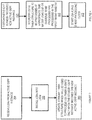
- Figure 2 describes exemplary operations for OSPF non-stop routing with a frozen standby LSDB according to one embodiment.
- the operations of this flow diagram and other flow diagrams will be described with reference to the exemplary embodiments of Figure 1 .
- the operations of the flow diagrams can be performed by embodiments of the invention other than those discussed with reference to Figure 1
- the embodiments of the invention discussed with reference to Figure 1 can perform operations different than those discussed with reference to the flow diagrams.
- the OSPF instance 105B (currently acting as the standby OSPF instance) receives new instances of LSAs from the OSPF instance 105A (currently acting as the active OSPF instance). These LSAs may reflect a new LSA to be installed in the LSDB 115B, an update to an LSA that exists in the LSDB 115B (e.g., the LSA has been refreshed), and/or that an LSA is to be removed from the LSDB 115B (e.g., the LSA is to be purged). Flow then moves to step 202.
- the OSPF instance 105B installs the LSAs in its LSDB 115B.
- the step of installing may include adding the LSA to the LSDB 115B or updating an existing LSA in the LSDB 115B.
- the OSPF instance 105B since it is currently acting as the standby OSPF instance, does not age the LSAs in the LSDB 115B (the OSPF instance 105A ages the LSAs in its LSDB 115A since it is currently acting as the active OSPF instance). Flow then moves to step 203.
- step 203 which only occurs if and when the OSPF instance 105B becomes the active OSPF instance, the OSPF instance 105B (now the new active OSPF instance) ages the LSAs in the LSDB 115B and processes each of them according to the aging of that LSA (the time elapsed since that LSA was created or updated). Processing may include either purging that LSA or refreshing that LSA.
- FIG. 3 describes exemplary operations performed by the standby OSPF instance prior to a switchover in one embodiment of the invention.
- the OSPF instance 105B which is currently acting as the standby OSPF instance, receives LSAs from the OSPF instance 105A, which is currently acting as the active OSPF instance.
- flow moves to step 302.
- the OSPF instance 105B installs the LSA into its LSDB 115B.
- the OSPF instance 105B lists all new instances of LSAs received from the OSPF instance 105A in bucket zero (the first timing window) of the LSA timer structure 120B.
- the LSA timer structure 120B will only be used to process LSA timer events when the OSPF instance 105B becomes the new active OSPF instance.
- FIG. 4 describes exemplary operations performed by the standby OSPF instance after a switchover event according to one embodiment of the invention.
- a switchover event occurs, and the OSPF instance 105B, which was the standby OSPF instance, becomes the new active OSPF instance.
- Flow then moves to step 402.
- the OSPF instance 105B reorders the LSA in its LSA timer structure 120B to be processed at the appropriate time. For example, LSAs that are currently due or overdue to be processed are processed in the first timing window (e.g., bucket zero) (that is, the timing window that will be processed immediately after the new active OSPF instance begins processing LSAs). The LSAs that are not currently due or overdue to be processed are moved to be processed in the appropriate timing window (e.g., moved from bucket zero to the appropriate bucket). Flow then moves to step 403, where the OSPF instance 105B starts the LSA aging event processing clock 122B, and begins processing LSAs as the active OSPF instance.
- the first timing window e.g., bucket zero
- the OSPF instance 105B starts the LSA aging event processing clock 122B, and begins processing LSAs as the active OSPF instance.
- FIG. 5 illustrates the operation of the LSA timer structures in an active OSPF instance and a standby OSPF instance according to one embodiment of the invention.
- the LSA timer structures 120A and 120B are implemented as timer wheels.
- the OSPF instance 105A (operating as the active OSPF instance) lists the LSAs 505A-505N in buckets 500A-500N respectively according to their lifespan expirations.
- LSAs 505A-505N which are new LSA instances
- the OSPF instance 105A uses the aging clock 112A to process the LSAs in buckets 500A-500N at the appropriate times.
- the OSPF instance 105A processes the LSAs listed in bucket 500A (which represents the first timing window (e.g., bucket zero)), which are LSAs that currently need to be purged or refreshed (their lifespan has expired).
- the LSAs listed in bucket 500B will need to be purged or refreshed in the next timing window (e.g., in 5 seconds), the LSAs listed in bucket 500C will need to be purged or refreshed in the following timing window, and so on.
- OSPF instance 105B (operating as the standby OSPF instance) lists the LSAs 505A-505N in bucket 510A, which represents the first timing window (e.g., bucket zero). Furthermore, aging clock 112B is stopped as indicated by the dashed markings in Figure 5 , or alternatively LSA timing structure 120B is not advanced. Since the standby LSDB is not aged (it is frozen), there is no advantage of placing the LSAs into different buckets. Thus, in one embodiment, the OSPF instance 105B does not distribute the LSAs among the various buckets 510B-510N of timer structure 120B. Aging clock 112B is stopped, and the LSAs in the LSDB 115B are not aged.
- FIG. 6 illustrates exemplary operations of the LSA timer structure after switchover according to one embodiment of the invention.
- the OSPF instance 105B which is now operating as the new active OSPF instance, distributes the LSAs 505B-505N, previously listed in bucket 510A, according to their age (the time elapsed since the LSA was created or updated) to the proper buckets 510B-510N in the timer structure.
- LSAs that are due or overdue to be purged or refreshed remain in bucket 510A (the first timing window) while the other LSAs are moved to the appropriate bucket to be processed (refreshed or purged) at the appropriate time.
- LSA 505A remains in bucket 510A (it is due or overdue to be processed) and LSAs 505B-N are moved to buckets 510B-N respectively.
- aging clock 112B remains stopped.
- FIG 7 illustrates the operation of the LSA timer structure after the LSAs are distributed as shown in Figure 6 according to one embodiment of the invention.
- Aging clock 112B is running and the OSPF instance 105B processes the LSAs according to their buckets in a similar way as the OSPF instance 105A processed LSAs.
Landscapes
- Engineering & Computer Science (AREA)
- Computer Networks & Wireless Communication (AREA)
- Signal Processing (AREA)
- Data Exchanges In Wide-Area Networks (AREA)
Claims (11)
- Verfahren in einem Netzwerkelement für Open Shortest Path First, OSPF, Non-Stop Routing, wobei das Netzwerkelement eine erste OSPF-Instanz (105A) beinhaltet, die anfangs als aktive OSPF-Instanz (105B) fungiert, und eine zweite OSPF-Instanz, die anfangs als OSPF-Standbyinstanz fungiert, wobei das Verfahren folgende Schritte umfasst:Empfangen an der zweiten OSPF-Instanz (105B) einer Vielzahl von Link State Advertisements, LSAs, von der ersten OSPF-Instanz (105A);wobei die zweite OSPF-Instanz (105B) die LSAs in ihrer Link State-Datenbank, LSDB, installiert, wobei die LSAs in der LSDB nur von der einen der ersten (105A) und der zweiten (105B) OSPF-Instanz gealtert werden, die derzeit als die aktive OSPF-Instanz fungiert,wobei, wenn die zweite OSPF-Instanz (105B) zur aktiven OSPF-Instanz (105B) wird, die zweite OSPF-Instanz die folgenden Schritte durchführt:Altern der LSAs in der LSDB undVerarbeiten jeder der LSAs gemäß der Alterung der betreffenden LSA, wobei das Verarbeiten das Beseitigen der betreffenden LSA oder das Aktualisieren der betreffenden LSA beinhaltet.
- Verfahren nach Anspruch 1, wobei der Schritt der Alterung der LSAs das Auflisten der LSAs in einer Timerstruktur beinhaltet, die eine Vielzahl von Behältern aufweist, die gemäß einer Alterungsuhr sequenziell verarbeitet werden, wobei jede LSA in einem der Vielzahl der Behälter gemäß einem Alter dieser LSA aufgelistet ist.
- Verfahren nach Anspruch 2, wobei die Alterungsuhr nicht läuft, wenn die zweite OSPF-Instanz (105B) als OSPF-Standbyinstanz fungiert.
- Verfahren nach Anspruch 2, wobei die zweite OSPF-Instanz (105B), wenn sie als OSPF-Standbyinstanz betrieben wird, jede LSA, die von der ersten OSPF-Instanz (105A) empfangen wurde, in einem der Behälter auflistet, der zuerst verarbeitet wird, wenn die zweite OSPF-Instanz (105B) zur aktiven OSPF-Instanz wird.
- Verfahren nach Anspruch 4, wobei die zweite OSPF-Instanz (105B), wenn sie zur aktiven OSPF-Instanz wird, Folgendes durchführt:Bewegen der empfangenen LSAs in geeignete Behälter, die zur geeigneten Zeit verarbeitet werden sollen.
- Verfahren nach Anspruch 5, wobei die zweite OSPF-Instanz (105B) in Reaktion darauf, dass sie zur aktiven OSPF-Instanz wird, jene in der Timerstruktur aufgelisteten LSAs verarbeitet, deren Verarbeitung in einem ersten Zeitsteuerungsfenster fällig oder überfällig ist.
- Vorrichtung, die Folgendes umfasst:ein Netzwerkelement, das Open Shortest Path First, OSPF, Non-Stop Routing unterstützt, mit einer ersten OSPF-Instanz (105A), die dazu ausgelegt ist, anfangs als aktive OSPF-Instanz zu fungieren, und einer zweiten OSPF-Instanz (105B), die dazu ausgelegt ist, anfangs als OSPF-Standbyinstanz zu fungieren, wobei das Netzwerkelement dazu ausgelegt ist, Folgendes zu implementieren:die erste OSPF-Instanz (105A) einschließlich eines ersten Alterungsmoduls, wobei die erste OSPF-Instanz (105A) dazu ausgelegt ist, Link State Advertisements, LSAs, in einer ersten Link State-Datenbank, LSDB, zu installieren, die mit der ersten OSPF-Instanz (105A) verknüpft ist, und die LSAs mit der zweiten OSPF-Instanz (105B) zu synchronisieren, und wobei das erste Alterungsmodul dazu ausgelegt ist, während die erste OSPF-Instanz (105A) als aktive OSPF-Instanz fungiert, LSAs in der ersten LSDB zu altern und jede dieser LSAs gemäß der Alterung zu verarbeiten, einschließlich Beseitigen dieser LSA oder Aktualisieren dieser LSA; unddie zweite OSPF-Instanz (105B), die an die erste OSPF-Instanz (105A) gekoppelt ist und ein zweites Alterungsmodul beinhaltet, wobei die zweite OSPF-Instanz (105B) dazu ausgelegt ist, die von der ersten OSPF-Instanz (105A) synchronisierten LSAs in einer zweiten LSDB zu installieren, die mit der zweiten OSPF-Instanz (105B) verknüpft ist, und wobei das zweite Alterungsmodul dazu ausgelegt ist, LSA-Alterungsereignisse für die LSAs in der zweiten LSDB erst zu verarbeiten, wenn die zweite OSPF-Instanz (105B) zur aktiven OSPF-Instanz wird.
- Netzwerkelement nach Anspruch 7, wobei die erste OSPF-Instanz (105A) ferner Folgendes beinhaltet:eine erste Timerstruktur mit einer Vielzahl von Behältern, wobei das erste Alterungsmodul (110A) dazu ausgelegt ist, auf Basis einer Zeit, zu der die betreffende LSA aktualisiert oder beseitigt werden soll, jede LSA, die es mit der zweiten OSPF-Instanz (105B) in der ersten Timerstruktur synchronisiert, in einem geeigneten der Vielzahl von Behältern aufzulisten; undeine erste Alterungsuhr (112A), die dazu ausgelegt ist, das erste Alterungsmodul (110A) zu veranlassen, die in der LSA-Timerstruktur aufgelisteten LSAs zu verarbeiten.
- Netzwerkelement nach Anspruch 8, wobei die zweite OSPF-Instanz (105B) ferner Folgendes umfasst:eine zweite Timerstruktur mit einer Vielzahl von Behältern, wobei das zweite Alterungsmodul (110B) dazu ausgelegt ist, wenn die zweite OSPF-Instanz (105B) als OSPF-Standbyinstanz fungiert, jede LSA, die es von der ersten OSPF-Instanz (105A) empfängt, in einem selben der Vielzahl von Behältern aufzulisten; undeine zweite Alterungsuhr (112B), die dazu ausgelegt ist, inaktiv zu sein, wenn die zweite OSPF-Instanz (105B) als OSPF-Standbyinstanz fungiert, sodass die in der zweiten Timerstruktur aufgelisteten LSAs von der OSPF-Standbyinstanz nicht verarbeitet werden; undwobei das zweite Alterungsmodul (110B) dazu ausgelegt ist, wenn die zweite OSPF-Instanz (105B) als OSPF-Standbyinstanz fungiert, die zweite Alterungsuhr (112B) zu aktivieren, um zu bewirken, dass das zweite Alterungsmodul (110B) die LSA-Alterungsereignisse verarbeitet.
- Netzwerkelement nach Anspruch 8, wobei die zweite OSPF-Instanz (105B) ferner dazu ausgelegt ist, nachdem sie zur aktiven OSPF-Instanz geworden ist, jede LSA, die in der Timerstruktur aufgelistet und die für die Verarbeitung nicht fällig oder überfällig ist, gemäß dem Alter der betreffenden spezifischen LSA in einen geeigneten der Behälter der Timerstruktur zu verteilen.
- Netzwerkelement nach Anspruch 10, wobei die zweite OSPF-Instanz (105B), in Reaktion darauf, dass sie zur aktiven OSPF-Instanz wird, jene in der zweiten Timerstruktur aufgelisteten LSAs verarbeitet, deren Verarbeitung in einem ersten Zeitsteuerungsfenster fällig oder überfällig ist.
Applications Claiming Priority (2)
| Application Number | Priority Date | Filing Date | Title |
|---|---|---|---|
| US201161541067P | 2011-09-29 | 2011-09-29 | |
| US13/349,530 US8958430B2 (en) | 2011-09-29 | 2012-01-12 | OSPF non-stop routing frozen standby |
Publications (2)
| Publication Number | Publication Date |
|---|---|
| EP2575305A1 EP2575305A1 (de) | 2013-04-03 |
| EP2575305B1 true EP2575305B1 (de) | 2017-07-19 |
Family
ID=46939566
Family Applications (1)
| Application Number | Title | Priority Date | Filing Date |
|---|---|---|---|
| EP12184030.0A Not-in-force EP2575305B1 (de) | 2011-09-29 | 2012-09-12 | OSPF-NSR-Standbild-Standby |
Country Status (2)
| Country | Link |
|---|---|
| US (1) | US8958430B2 (de) |
| EP (1) | EP2575305B1 (de) |
Families Citing this family (6)
| Publication number | Priority date | Publication date | Assignee | Title |
|---|---|---|---|---|
| US8913485B2 (en) | 2011-09-16 | 2014-12-16 | Telefonaktiebolaget L M Ericsson (Publ) | Open shortest path first (OSPF) nonstop routing (NSR) with link derivation |
| US8964758B2 (en) | 2011-09-29 | 2015-02-24 | Telefonaktiebolaget L M Ericsson (Publ) | OSPF nonstop routing (NSR) synchronization reduction |
| US8958430B2 (en) * | 2011-09-29 | 2015-02-17 | Telefonaktiebolaget L M Ericsson (Publ) | OSPF non-stop routing frozen standby |
| US8923312B2 (en) | 2011-09-29 | 2014-12-30 | Telefonaktiebolaget L M Ericsson (Publ) | OSPF nonstop routing synchronization nack |
| EP3031183B1 (de) * | 2013-08-05 | 2019-01-16 | Telefonaktiebolaget LM Ericsson (publ) | Verfahren und vorrichtung zum betreiben einer routingvorrichtung und entsprechende routingvorrichtung |
| CN104639436B (zh) * | 2013-11-07 | 2018-06-22 | 中兴通讯股份有限公司 | 剩余生存时间老化处理方法及装置 |
Family Cites Families (35)
| Publication number | Priority date | Publication date | Assignee | Title |
|---|---|---|---|---|
| US6856627B2 (en) | 1999-01-15 | 2005-02-15 | Cisco Technology, Inc. | Method for routing information over a network |
| US6980537B1 (en) | 1999-11-12 | 2005-12-27 | Itt Manufacturing Enterprises, Inc. | Method and apparatus for communication network cluster formation and transmission of node link status messages with reduced protocol overhead traffic |
| US8199646B1 (en) | 1999-12-07 | 2012-06-12 | Nortel Networks Limited | System, device, and method for distributing link state information in a communication network |
| US6985959B1 (en) * | 2000-11-01 | 2006-01-10 | Nortel Networks Limited | Constraint route dissemination using distributed route exchanges |
| US6820134B1 (en) | 2000-12-28 | 2004-11-16 | Cisco Technology, Inc. | Optimizing flooding of information in link-state routing protocol |
| US7095747B2 (en) * | 2001-03-28 | 2006-08-22 | Siemens Communications, Inc. | Method and apparatus for a messaging protocol within a distributed telecommunications architecture |
| US7117241B2 (en) * | 2001-03-28 | 2006-10-03 | Siemens Communications, Inc. | Method and apparatus for centralized maintenance system within a distributed telecommunications architecture |
| US6950427B1 (en) * | 2001-08-09 | 2005-09-27 | Cisco Technology, Inc. | Technique for resynchronizing LSDB in OSPF after a software reload in a non-stop forwarding intermediate node of a computer network |
| US7065059B1 (en) * | 2001-08-09 | 2006-06-20 | Cisco Technology, Inc. | Technique for restoring adjacencies in OSPF in a non-stop forwarding intermediate node of a computer network |
| US7490161B2 (en) | 2001-08-22 | 2009-02-10 | Nokia Inc. | Method and system for implementing OSPF redundancy |
| US7639680B1 (en) * | 2001-10-04 | 2009-12-29 | Cisco Technology, Inc. | Out of band data base synchronization for OSPF |
| US20040136371A1 (en) * | 2002-01-04 | 2004-07-15 | Muralidhar Rajeev D. | Distributed implementation of control protocols in routers and switches |
| US7292535B2 (en) | 2002-05-23 | 2007-11-06 | Chiaro Networks Ltd | Highly-available OSPF routing protocol |
| US7269133B2 (en) | 2002-09-03 | 2007-09-11 | Jeremy Benjamin | IS-IS high availability design |
| US7248579B1 (en) * | 2002-10-15 | 2007-07-24 | Cisco Technology, Inc. | System and method for providing a link state database (LSDB) snapshot for neighbor synchronization |
| US20050105524A1 (en) | 2003-11-17 | 2005-05-19 | Hughes Electronics Corporation | System and method for provisioning of route information in a meshed communications network |
| US7363387B1 (en) * | 2003-12-09 | 2008-04-22 | Cisco Technology, Inc. | System and method for reducing information being transmitted in a network environment |
| US7463654B2 (en) | 2003-12-22 | 2008-12-09 | 3Com Corporation | Stackable routers employing a routing protocol |
| US7391730B1 (en) * | 2004-07-21 | 2008-06-24 | Cisco Technology | System and method for synchronizing link state databases in a network environment |
| US7573811B2 (en) * | 2005-03-28 | 2009-08-11 | Alcatel-Lucent Usa Inc. | Network transparent OSPF-TE failover |
| US9043487B2 (en) | 2006-04-18 | 2015-05-26 | Cisco Technology, Inc. | Dynamically configuring and verifying routing information of broadcast networks using link state protocols in a computer network |
| JP2008060755A (ja) * | 2006-08-30 | 2008-03-13 | Fujitsu Ltd | 予備系ルートの制御方式 |
| US7804770B2 (en) * | 2007-09-28 | 2010-09-28 | General Instrument Corporation | Method and apparatus for performing a graceful restart in a NSF-capable router without enhancing link state routing protocols |
| CN101425961B (zh) | 2007-10-31 | 2012-04-04 | 华为技术有限公司 | 实现链路状态数据库同步方法、路由器及线路板、主控板 |
| EP2223500B1 (de) * | 2007-12-19 | 2012-12-12 | Telefonaktiebolaget LM Ericsson (publ) | Verfahren und vorrichtung zur verwendung in einem kommunikationsnetz |
| US9432213B2 (en) | 2007-12-31 | 2016-08-30 | Rpx Clearinghouse Llc | IP forwarding across a link state protocol controlled ethernet network |
| US20090288098A1 (en) | 2008-05-13 | 2009-11-19 | Google Inc. | Separate Plug-In Processes In Browsers and Applications Thereof |
| US8428003B1 (en) | 2008-06-27 | 2013-04-23 | Apple Inc. | Method and system for WiMAX R4 auto-discovery and configuration |
| US8446841B2 (en) | 2008-08-27 | 2013-05-21 | Fujitsu Limited | Communicating information between core and edge network elements |
| US7940650B1 (en) | 2008-11-03 | 2011-05-10 | Juniper Networks, Inc. | Peer-agnostic TCP socket replication between primary and secondary routing engines |
| US8248936B2 (en) | 2009-04-01 | 2012-08-21 | Lockheed Martin Corporation | Tuning congestion control in IP multicast to mitigate the impact of blockage |
| US8717935B2 (en) * | 2011-09-16 | 2014-05-06 | Telefonaktiebolaget L M Ericsson (Publ) | OSPF non-stop routing with reliable flooding |
| US8913485B2 (en) * | 2011-09-16 | 2014-12-16 | Telefonaktiebolaget L M Ericsson (Publ) | Open shortest path first (OSPF) nonstop routing (NSR) with link derivation |
| US20130073741A1 (en) * | 2011-09-16 | 2013-03-21 | Alfred C. Lindem, III | Ospf nsr with delayed neighbor synchronization |
| US8958430B2 (en) * | 2011-09-29 | 2015-02-17 | Telefonaktiebolaget L M Ericsson (Publ) | OSPF non-stop routing frozen standby |
-
2012
- 2012-01-12 US US13/349,530 patent/US8958430B2/en active Active
- 2012-09-12 EP EP12184030.0A patent/EP2575305B1/de not_active Not-in-force
Non-Patent Citations (1)
| Title |
|---|
| None * |
Also Published As
| Publication number | Publication date |
|---|---|
| US20130083802A1 (en) | 2013-04-04 |
| EP2575305A1 (de) | 2013-04-03 |
| US8958430B2 (en) | 2015-02-17 |
Similar Documents
| Publication | Publication Date | Title |
|---|---|---|
| US8717935B2 (en) | OSPF non-stop routing with reliable flooding | |
| US8885562B2 (en) | Inter-chassis redundancy with coordinated traffic direction | |
| EP2571208B1 (de) | OSPF-NSR mit Verknüpfungsableitung | |
| US9264302B2 (en) | Methods and systems with enhanced robustness for multi-chassis link aggregation group | |
| US8477795B2 (en) | LDP IGP synchronization for broadcast networks | |
| US9705782B2 (en) | Method and system for efficient graceful restart in an open shortest path first (OSPF) network | |
| US8614941B2 (en) | Hitless switchover from active TCP application to standby TCP application | |
| US20140146821A1 (en) | Method and apparatus for protocol data unit synchronization in an is-is system | |
| EP2575305B1 (de) | OSPF-NSR-Standbild-Standby | |
| EP2575306B1 (de) | Ospf-nsr-synchronisations-nack | |
| EP2575304B1 (de) | OSPF-NSR-Synchronisationsreduktion | |
| EP2571211A2 (de) | OSPF-NSR mit verzögerter Nachbarschaftssynchronisation | |
| HK1171582A (en) | Ldp igp synchronization for broadcast networks |
Legal Events
| Date | Code | Title | Description |
|---|---|---|---|
| PUAI | Public reference made under article 153(3) epc to a published international application that has entered the european phase |
Free format text: ORIGINAL CODE: 0009012 |
|
| AK | Designated contracting states |
Kind code of ref document: A1 Designated state(s): AL AT BE BG CH CY CZ DE DK EE ES FI FR GB GR HR HU IE IS IT LI LT LU LV MC MK MT NL NO PL PT RO RS SE SI SK SM TR |
|
| AX | Request for extension of the european patent |
Extension state: BA ME |
|
| RIN1 | Information on inventor provided before grant (corrected) |
Inventor name: CHEN, ING-WHER Inventor name: LINDEM III, ALFRED C. Inventor name: LU, WENHU |
|
| 17P | Request for examination filed |
Effective date: 20130502 |
|
| RIC1 | Information provided on ipc code assigned before grant |
Ipc: H04L 12/703 20130101ALI20140425BHEP Ipc: H04L 12/773 20130101ALI20140425BHEP Ipc: H04L 12/707 20130101ALI20140425BHEP Ipc: H04L 12/757 20130101AFI20140425BHEP Ipc: H04L 12/775 20130101ALI20140425BHEP |
|
| 17Q | First examination report despatched |
Effective date: 20140704 |
|
| REG | Reference to a national code |
Ref country code: DE Ref legal event code: R079 Ref document number: 602012034636 Country of ref document: DE Free format text: PREVIOUS MAIN CLASS: H04L0012700000 Ipc: H04L0012721000 |
|
| GRAP | Despatch of communication of intention to grant a patent |
Free format text: ORIGINAL CODE: EPIDOSNIGR1 |
|
| RIC1 | Information provided on ipc code assigned before grant |
Ipc: H04L 12/707 20130101ALI20170105BHEP Ipc: H04L 12/757 20130101ALI20170105BHEP Ipc: H04L 12/721 20130101AFI20170105BHEP Ipc: H04L 12/775 20130101ALI20170105BHEP Ipc: H04L 12/703 20130101ALI20170105BHEP Ipc: H04L 12/773 20130101ALI20170105BHEP |
|
| INTG | Intention to grant announced |
Effective date: 20170126 |
|
| GRAJ | Information related to disapproval of communication of intention to grant by the applicant or resumption of examination proceedings by the epo deleted |
Free format text: ORIGINAL CODE: EPIDOSDIGR1 |
|
| GRAP | Despatch of communication of intention to grant a patent |
Free format text: ORIGINAL CODE: EPIDOSNIGR1 |
|
| INTC | Intention to grant announced (deleted) | ||
| INTG | Intention to grant announced |
Effective date: 20170424 |
|
| GRAS | Grant fee paid |
Free format text: ORIGINAL CODE: EPIDOSNIGR3 |
|
| GRAA | (expected) grant |
Free format text: ORIGINAL CODE: 0009210 |
|
| AK | Designated contracting states |
Kind code of ref document: B1 Designated state(s): AL AT BE BG CH CY CZ DE DK EE ES FI FR GB GR HR HU IE IS IT LI LT LU LV MC MK MT NL NO PL PT RO RS SE SI SK SM TR |
|
| REG | Reference to a national code |
Ref country code: GB Ref legal event code: FG4D |
|
| REG | Reference to a national code |
Ref country code: CH Ref legal event code: EP |
|
| REG | Reference to a national code |
Ref country code: IE Ref legal event code: FG4D |
|
| REG | Reference to a national code |
Ref country code: AT Ref legal event code: REF Ref document number: 911390 Country of ref document: AT Kind code of ref document: T Effective date: 20170815 |
|
| REG | Reference to a national code |
Ref country code: DE Ref legal event code: R096 Ref document number: 602012034636 Country of ref document: DE |
|
| REG | Reference to a national code |
Ref country code: NL Ref legal event code: MP Effective date: 20170719 |
|
| REG | Reference to a national code |
Ref country code: LT Ref legal event code: MG4D |
|
| REG | Reference to a national code |
Ref country code: AT Ref legal event code: MK05 Ref document number: 911390 Country of ref document: AT Kind code of ref document: T Effective date: 20170719 |
|
| PG25 | Lapsed in a contracting state [announced via postgrant information from national office to epo] |
Ref country code: HR Free format text: LAPSE BECAUSE OF FAILURE TO SUBMIT A TRANSLATION OF THE DESCRIPTION OR TO PAY THE FEE WITHIN THE PRESCRIBED TIME-LIMIT Effective date: 20170719 Ref country code: LT Free format text: LAPSE BECAUSE OF FAILURE TO SUBMIT A TRANSLATION OF THE DESCRIPTION OR TO PAY THE FEE WITHIN THE PRESCRIBED TIME-LIMIT Effective date: 20170719 Ref country code: AT Free format text: LAPSE BECAUSE OF FAILURE TO SUBMIT A TRANSLATION OF THE DESCRIPTION OR TO PAY THE FEE WITHIN THE PRESCRIBED TIME-LIMIT Effective date: 20170719 Ref country code: NO Free format text: LAPSE BECAUSE OF FAILURE TO SUBMIT A TRANSLATION OF THE DESCRIPTION OR TO PAY THE FEE WITHIN THE PRESCRIBED TIME-LIMIT Effective date: 20171019 Ref country code: NL Free format text: LAPSE BECAUSE OF FAILURE TO SUBMIT A TRANSLATION OF THE DESCRIPTION OR TO PAY THE FEE WITHIN THE PRESCRIBED TIME-LIMIT Effective date: 20170719 Ref country code: FI Free format text: LAPSE BECAUSE OF FAILURE TO SUBMIT A TRANSLATION OF THE DESCRIPTION OR TO PAY THE FEE WITHIN THE PRESCRIBED TIME-LIMIT Effective date: 20170719 Ref country code: SE Free format text: LAPSE BECAUSE OF FAILURE TO SUBMIT A TRANSLATION OF THE DESCRIPTION OR TO PAY THE FEE WITHIN THE PRESCRIBED TIME-LIMIT Effective date: 20170719 |
|
| PG25 | Lapsed in a contracting state [announced via postgrant information from national office to epo] |
Ref country code: RS Free format text: LAPSE BECAUSE OF FAILURE TO SUBMIT A TRANSLATION OF THE DESCRIPTION OR TO PAY THE FEE WITHIN THE PRESCRIBED TIME-LIMIT Effective date: 20170719 Ref country code: GR Free format text: LAPSE BECAUSE OF FAILURE TO SUBMIT A TRANSLATION OF THE DESCRIPTION OR TO PAY THE FEE WITHIN THE PRESCRIBED TIME-LIMIT Effective date: 20171020 Ref country code: LV Free format text: LAPSE BECAUSE OF FAILURE TO SUBMIT A TRANSLATION OF THE DESCRIPTION OR TO PAY THE FEE WITHIN THE PRESCRIBED TIME-LIMIT Effective date: 20170719 Ref country code: IS Free format text: LAPSE BECAUSE OF FAILURE TO SUBMIT A TRANSLATION OF THE DESCRIPTION OR TO PAY THE FEE WITHIN THE PRESCRIBED TIME-LIMIT Effective date: 20171119 Ref country code: BG Free format text: LAPSE BECAUSE OF FAILURE TO SUBMIT A TRANSLATION OF THE DESCRIPTION OR TO PAY THE FEE WITHIN THE PRESCRIBED TIME-LIMIT Effective date: 20171019 Ref country code: ES Free format text: LAPSE BECAUSE OF FAILURE TO SUBMIT A TRANSLATION OF THE DESCRIPTION OR TO PAY THE FEE WITHIN THE PRESCRIBED TIME-LIMIT Effective date: 20170719 Ref country code: PL Free format text: LAPSE BECAUSE OF FAILURE TO SUBMIT A TRANSLATION OF THE DESCRIPTION OR TO PAY THE FEE WITHIN THE PRESCRIBED TIME-LIMIT Effective date: 20170719 |
|
| REG | Reference to a national code |
Ref country code: DE Ref legal event code: R097 Ref document number: 602012034636 Country of ref document: DE |
|
| PG25 | Lapsed in a contracting state [announced via postgrant information from national office to epo] |
Ref country code: RO Free format text: LAPSE BECAUSE OF FAILURE TO SUBMIT A TRANSLATION OF THE DESCRIPTION OR TO PAY THE FEE WITHIN THE PRESCRIBED TIME-LIMIT Effective date: 20170719 Ref country code: CZ Free format text: LAPSE BECAUSE OF FAILURE TO SUBMIT A TRANSLATION OF THE DESCRIPTION OR TO PAY THE FEE WITHIN THE PRESCRIBED TIME-LIMIT Effective date: 20170719 Ref country code: DK Free format text: LAPSE BECAUSE OF FAILURE TO SUBMIT A TRANSLATION OF THE DESCRIPTION OR TO PAY THE FEE WITHIN THE PRESCRIBED TIME-LIMIT Effective date: 20170719 |
|
| REG | Reference to a national code |
Ref country code: CH Ref legal event code: PL |
|
| PLBE | No opposition filed within time limit |
Free format text: ORIGINAL CODE: 0009261 |
|
| STAA | Information on the status of an ep patent application or granted ep patent |
Free format text: STATUS: NO OPPOSITION FILED WITHIN TIME LIMIT |
|
| PG25 | Lapsed in a contracting state [announced via postgrant information from national office to epo] |
Ref country code: MC Free format text: LAPSE BECAUSE OF FAILURE TO SUBMIT A TRANSLATION OF THE DESCRIPTION OR TO PAY THE FEE WITHIN THE PRESCRIBED TIME-LIMIT Effective date: 20170719 Ref country code: IT Free format text: LAPSE BECAUSE OF FAILURE TO SUBMIT A TRANSLATION OF THE DESCRIPTION OR TO PAY THE FEE WITHIN THE PRESCRIBED TIME-LIMIT Effective date: 20170719 Ref country code: EE Free format text: LAPSE BECAUSE OF FAILURE TO SUBMIT A TRANSLATION OF THE DESCRIPTION OR TO PAY THE FEE WITHIN THE PRESCRIBED TIME-LIMIT Effective date: 20170719 Ref country code: SM Free format text: LAPSE BECAUSE OF FAILURE TO SUBMIT A TRANSLATION OF THE DESCRIPTION OR TO PAY THE FEE WITHIN THE PRESCRIBED TIME-LIMIT Effective date: 20170719 Ref country code: SK Free format text: LAPSE BECAUSE OF FAILURE TO SUBMIT A TRANSLATION OF THE DESCRIPTION OR TO PAY THE FEE WITHIN THE PRESCRIBED TIME-LIMIT Effective date: 20170719 |
|
| 26N | No opposition filed |
Effective date: 20180420 |
|
| REG | Reference to a national code |
Ref country code: IE Ref legal event code: MM4A |
|
| REG | Reference to a national code |
Ref country code: BE Ref legal event code: MM Effective date: 20170930 |
|
| PG25 | Lapsed in a contracting state [announced via postgrant information from national office to epo] |
Ref country code: LU Free format text: LAPSE BECAUSE OF NON-PAYMENT OF DUE FEES Effective date: 20170912 |
|
| REG | Reference to a national code |
Ref country code: FR Ref legal event code: ST Effective date: 20180531 |
|
| PG25 | Lapsed in a contracting state [announced via postgrant information from national office to epo] |
Ref country code: IE Free format text: LAPSE BECAUSE OF NON-PAYMENT OF DUE FEES Effective date: 20170912 Ref country code: CH Free format text: LAPSE BECAUSE OF NON-PAYMENT OF DUE FEES Effective date: 20170930 Ref country code: LI Free format text: LAPSE BECAUSE OF NON-PAYMENT OF DUE FEES Effective date: 20170930 |
|
| PG25 | Lapsed in a contracting state [announced via postgrant information from national office to epo] |
Ref country code: FR Free format text: LAPSE BECAUSE OF NON-PAYMENT OF DUE FEES Effective date: 20171002 Ref country code: SI Free format text: LAPSE BECAUSE OF FAILURE TO SUBMIT A TRANSLATION OF THE DESCRIPTION OR TO PAY THE FEE WITHIN THE PRESCRIBED TIME-LIMIT Effective date: 20170719 Ref country code: BE Free format text: LAPSE BECAUSE OF NON-PAYMENT OF DUE FEES Effective date: 20170930 |
|
| PG25 | Lapsed in a contracting state [announced via postgrant information from national office to epo] |
Ref country code: MT Free format text: LAPSE BECAUSE OF NON-PAYMENT OF DUE FEES Effective date: 20170912 |
|
| PG25 | Lapsed in a contracting state [announced via postgrant information from national office to epo] |
Ref country code: HU Free format text: LAPSE BECAUSE OF FAILURE TO SUBMIT A TRANSLATION OF THE DESCRIPTION OR TO PAY THE FEE WITHIN THE PRESCRIBED TIME-LIMIT; INVALID AB INITIO Effective date: 20120912 |
|
| PG25 | Lapsed in a contracting state [announced via postgrant information from national office to epo] |
Ref country code: CY Free format text: LAPSE BECAUSE OF NON-PAYMENT OF DUE FEES Effective date: 20170719 |
|
| PG25 | Lapsed in a contracting state [announced via postgrant information from national office to epo] |
Ref country code: MK Free format text: LAPSE BECAUSE OF FAILURE TO SUBMIT A TRANSLATION OF THE DESCRIPTION OR TO PAY THE FEE WITHIN THE PRESCRIBED TIME-LIMIT Effective date: 20170719 |
|
| PG25 | Lapsed in a contracting state [announced via postgrant information from national office to epo] |
Ref country code: TR Free format text: LAPSE BECAUSE OF FAILURE TO SUBMIT A TRANSLATION OF THE DESCRIPTION OR TO PAY THE FEE WITHIN THE PRESCRIBED TIME-LIMIT Effective date: 20170719 |
|
| PG25 | Lapsed in a contracting state [announced via postgrant information from national office to epo] |
Ref country code: PT Free format text: LAPSE BECAUSE OF FAILURE TO SUBMIT A TRANSLATION OF THE DESCRIPTION OR TO PAY THE FEE WITHIN THE PRESCRIBED TIME-LIMIT Effective date: 20170719 |
|
| PG25 | Lapsed in a contracting state [announced via postgrant information from national office to epo] |
Ref country code: AL Free format text: LAPSE BECAUSE OF FAILURE TO SUBMIT A TRANSLATION OF THE DESCRIPTION OR TO PAY THE FEE WITHIN THE PRESCRIBED TIME-LIMIT Effective date: 20170719 |
|
| REG | Reference to a national code |
Ref country code: DE Ref legal event code: R079 Ref document number: 602012034636 Country of ref document: DE Free format text: PREVIOUS MAIN CLASS: H04L0012721000 Ipc: H04L0045000000 |
|
| PGFP | Annual fee paid to national office [announced via postgrant information from national office to epo] |
Ref country code: GB Payment date: 20220927 Year of fee payment: 11 Ref country code: DE Payment date: 20220629 Year of fee payment: 11 |
|
| P01 | Opt-out of the competence of the unified patent court (upc) registered |
Effective date: 20230523 |
|
| REG | Reference to a national code |
Ref country code: DE Ref legal event code: R119 Ref document number: 602012034636 Country of ref document: DE |
|
| GBPC | Gb: european patent ceased through non-payment of renewal fee |
Effective date: 20230912 |
|
| PG25 | Lapsed in a contracting state [announced via postgrant information from national office to epo] |
Ref country code: GB Free format text: LAPSE BECAUSE OF NON-PAYMENT OF DUE FEES Effective date: 20230912 |
|
| PG25 | Lapsed in a contracting state [announced via postgrant information from national office to epo] |
Ref country code: GB Free format text: LAPSE BECAUSE OF NON-PAYMENT OF DUE FEES Effective date: 20230912 Ref country code: DE Free format text: LAPSE BECAUSE OF NON-PAYMENT OF DUE FEES Effective date: 20240403 |