EP2575291A2 - Système de communication comprenant la reconnaissance optique et son procédé d'utilisation - Google Patents
Système de communication comprenant la reconnaissance optique et son procédé d'utilisation Download PDFInfo
- Publication number
- EP2575291A2 EP2575291A2 EP12177137A EP12177137A EP2575291A2 EP 2575291 A2 EP2575291 A2 EP 2575291A2 EP 12177137 A EP12177137 A EP 12177137A EP 12177137 A EP12177137 A EP 12177137A EP 2575291 A2 EP2575291 A2 EP 2575291A2
- Authority
- EP
- European Patent Office
- Prior art keywords
- image
- information
- server
- user
- client
- Prior art date
- Legal status (The legal status is an assumption and is not a legal conclusion. Google has not performed a legal analysis and makes no representation as to the accuracy of the status listed.)
- Withdrawn
Links
- 238000000034 method Methods 0.000 title claims abstract description 55
- 238000004891 communication Methods 0.000 title claims abstract description 24
- 230000003287 optical effect Effects 0.000 title description 6
- 238000005516 engineering process Methods 0.000 claims description 3
- 230000000977 initiatory effect Effects 0.000 claims description 3
- 239000011159 matrix material Substances 0.000 claims description 2
- 238000012546 transfer Methods 0.000 description 11
- 230000005540 biological transmission Effects 0.000 description 3
- 230000001960 triggered effect Effects 0.000 description 3
- 230000008859 change Effects 0.000 description 2
- 238000012986 modification Methods 0.000 description 2
- 230000004048 modification Effects 0.000 description 2
- 230000008520 organization Effects 0.000 description 2
- 230000004044 response Effects 0.000 description 2
- 238000013459 approach Methods 0.000 description 1
- 238000013475 authorization Methods 0.000 description 1
- 230000001419 dependent effect Effects 0.000 description 1
- 230000009977 dual effect Effects 0.000 description 1
- 230000003203 everyday effect Effects 0.000 description 1
- 238000009434 installation Methods 0.000 description 1
- 238000012544 monitoring process Methods 0.000 description 1
- 230000009466 transformation Effects 0.000 description 1
- 238000013024 troubleshooting Methods 0.000 description 1
- 238000012795 verification Methods 0.000 description 1
Images

Classifications
-
- H—ELECTRICITY
- H04—ELECTRIC COMMUNICATION TECHNIQUE
- H04L—TRANSMISSION OF DIGITAL INFORMATION, e.g. TELEGRAPHIC COMMUNICATION
- H04L63/00—Network architectures or network communication protocols for network security
- H04L63/04—Network architectures or network communication protocols for network security for providing a confidential data exchange among entities communicating through data packet networks
- H04L63/0428—Network architectures or network communication protocols for network security for providing a confidential data exchange among entities communicating through data packet networks wherein the data content is protected, e.g. by encrypting or encapsulating the payload
-
- H—ELECTRICITY
- H04—ELECTRIC COMMUNICATION TECHNIQUE
- H04L—TRANSMISSION OF DIGITAL INFORMATION, e.g. TELEGRAPHIC COMMUNICATION
- H04L63/00—Network architectures or network communication protocols for network security
- H04L63/16—Implementing security features at a particular protocol layer
- H04L63/162—Implementing security features at a particular protocol layer at the data link layer
-
- H—ELECTRICITY
- H04—ELECTRIC COMMUNICATION TECHNIQUE
- H04L—TRANSMISSION OF DIGITAL INFORMATION, e.g. TELEGRAPHIC COMMUNICATION
- H04L63/00—Network architectures or network communication protocols for network security
- H04L63/18—Network architectures or network communication protocols for network security using different networks or channels, e.g. using out of band channels
Definitions
- the present invention generally relates to electronic systems and methods. More particularly, although not exclusively, the invention relates to systems and methods that use optical recognition techniques to facilitate transfer of information in a secure manner.
- Connecting a mobile device, such as a mobile phone, personal computer, tablet, or the like, to a secure network generally requires several manual steps by a mobile device user to enable the mobile device user to securely connect to the network.
- the mobile device user may be required to find a required mobile program, manually load the program onto a mobile device, and manually install the program.
- the user is often further required to enter information, such as a server name (e.g., a Unified Communication Advanced (UCA) server name), a user name, and a corresponding password, before the user is allowed access to the network.
- a server name e.g., a Unified Communication Advanced (UCA) server name
- UCA Unified Communication Advanced
- the amount of information required to be entered by the user for such communications can be relatively small, oftentimes, the user doesn't know or may have forgotten some of the information required to gain access to the network. As a result, additional user time to look up the information and/or administrator time to assist with the setup is required to allow the user to connect to the network. Additionally, entering the required information on a mobile device may be challenging because of the relatively small keyboards on such devices.
- Similar challenges may be encountered when a mobile device user desires to transfer information to another device, which may be associated with the mobile device user or with another user. For example, a server name, username, and password may be required to set up another device that belongs to a user, and the user may not recall all of the requisite information for the setup and/or it may be difficult for a user to enter the requisite information using a mobile device.
- each device In addition, with many communications systems, such as typical UCA systems, including multiple devices in communication with a server, each device generally communicates directly with the server, and communicates to other mobile devices through the server. Although this technique works well for many applications, it may be inefficient in some regards.
- the communication system and method of the present disclosure may be used for a variety of applications, such as administrative provisioning of information to particular users/devices, allowing users to provision additional devices, handing off calls to or from another phone, for application deployment, to temporarily provide access to a secure network, and the like.
- applications such as administrative provisioning of information to particular users/devices, allowing users to provision additional devices, handing off calls to or from another phone, for application deployment, to temporarily provide access to a secure network, and the like.
- the exemplary system and method are generally easier to use, less time consuming, and require less manual input from users, compared to traditional systems and methods that provide similar functions.
- FIG. 1 illustrates an exemplary system 100 in accordance with various embodiments of the disclosure.
- System 100 may be used for a variety of applications, such as provisioning information to a mobile client.
- system 100 may be used to provision information to devices for new users, to new devices for existing users, to transfer information between a user's devices, to transfer information between devices associated with different users, to provide temporary access to a network for a device, and for application deployment to a device.
- System 100 includes a mobile device 102, a display device 104, and a network 106.
- System 100 is illustrated with a single mobile device 102, display device 104, and network 106; however, systems in accordance with the disclosure may include multiple mobile devices 102, display devices 104, and multiple networks 106.
- Mobile device 102 may be a smart phone, a tablet computer, a personal digital assistant, a personal computer, or any other mobile device that includes a camera 110 and associated scanning and/or client application software.
- mobile device 104 may be a smartphone running Android, iOS, Windows, Symbian, Blackberry OS, Linux operating systems, or similar operating systems, which is capable of running the client program described in more detail below.
- Display device 104 may include any device capable of receiving information from server 108 and, in response to receiving the information, displaying an image, which is recognizable using optical recognition techniques.
- device 104 may include a desk phone, a conference unit, a computer (with a display), a printer, or another mobile device, capable of communication with server 108.
- Exemplary images suitable for use with various embodiments of the invention include QR code, barcodes, Data Matrix technology, and similar images.
- Network 106 may include a local area network (LAN), a wide area network, a personal area network, a campus area network, a metropolitan area network, a global area network, or the like.
- Network 106 may be coupled to device 104 using an Ethernet connection, other wired connections, a WiFi interface, other wireless interfaces, or the like.
- Network 106 may be coupled to other networks and/or to other devices typically coupled to networks.
- information is transferred from device 104 to mobile device 102 using an image displayed on device 104, and device 102 uses the information displayed on device 104 to communicate with server 108.
- a user may activate scanning software on device 102 to enable camera 110, to activate optical recognition, and to perform one or more functions if and when the image displayed on device 104 is recognized.
- the user places the camera proximate display device 104, having an image, such as a QR code, displayed, and the user scans the image with camera no of device 102.
- the scanning software determines whether the image includes recognizable information, and if so, the software performs additional functions based on the recognized information.
- the software may cause device 102 to send an instruction to server 108 to send client application software and/or information (e.g., username, password, or the like) to mobile device 102 and for mobile device 102 to store the information in a desired location.
- client application software and/or information e.g., username, password, or the like
- the system and method of the disclosure may be used to transmit encrypted data with server and client certificates (e.g., data that is pseudo understandable by a device or devices and that is understandable to a server hosting the devices), such that only the server and a client within the solution domain can access the data.
- server and client certificates e.g., data that is pseudo understandable by a device or devices and that is understandable to a server hosting the devices
- Time-To-Live protocols wherein the data is understandable by the server for only a limited amount of time, may be employed to provide additional security.
- system and method of the present disclosure may be used for a variety of applications; various exemplary applications are illustrated below.
- the examples provided below are for illustration only and are not meant to limit the scope of the invention.
- system 100 provides a relatively easy way for mobile device users to be provisioned with a server 108 details and credentials, such as the server name and any requisite user name and/or passwords to, for example, setup the user's mobile device 102 for secure access to information on server 108.
- System 100 enables secure transfer of such information without requiring the user to manually enter the information.
- System 100 allows users to quickly and easily provision new or additional devices to allow access of the devices (e.g., device 102) to network 106 and server 108.
- system 100 may have several advantages over use of traditional systems, which require manual input of information to access a server/network. For example, system 100 does not require credentials, such as a username and password, to be communicated through other means, such as email or instant messaging. In addition, because system 100 uses image recognition technology, which requires a user to be relatively close to a displayed image, system 100 is relatively secure and is less susceptible to attacks, such as "middle-man attacks.” Moreover, less work is required to set up system 100 and transfer information to various users.
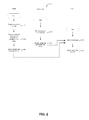
- Figure 2 illustrates an exemplary method 200 for provisioning data using a system, such as the system illustrated in Figure 1 .
- Method 200 includes the steps of creating a user account (step 202), generating a message and image(s) (step 204), sending the message and image(s) to a user (step 206), retrieving the image(s) and message at a user portal (step 208), displaying the image(s) (step 210), scanning an image to install an application (step 212), and scanning an image to setup an account (step 214).
- user information is stored on a server-e.g., server 108 that is part of or is connected to network 106.
- User information may include, for example, user account information, such as name, user name, password, position in an organization, server name, and the like. This information may be entered by an administrator of the server or network.
- a welcome message for the user and image(s) that contain client software information and account information for the user are generated.
- the embedded information may include, for example, a link to a server to access the software, user account information, name, user name, password, position in an organization, server name, and the like.
- the image(s) e.g., a QR code or barcode
- the image may be associated with a defined Time to Live (TTL), which is associated with a form of transmission and/or display.
- TTL Time to Live
- the TTL may be 3, 24 or 48 hours; once the image is displayed on a portal, the TTL may be shorter, e.g. 5 minutes if displayed on a user portal or 2 minutes if displayed on an admin portal, such that the generated image is valid only for the TTL.
- both the client software and the provisioned information may be transferred using a single image using either one or two scanning steps.
- the image(s) and message generated during step 204 are transmitted to a user, to be displayed on, for example, a computer, PDA, mobile device, or the like.
- the information may be sent from, for example, server 108, which may include a Unified Communications and Collaboration (UCC) server, and may be sent in the form of a text message, an email, or similar communication.
- the information may also include user client software to enable desired access of device 102 to network 106.
- the image may be displayed using an admin device, such as an admin computer, PDA, mobile device, or the like.
- a TTL associated with the image may be dependent on what device, where, or by whom the image is displayed, such that an admin device may display the image for a relatively short amount of time (e.g., 2-5 minutes), whereas the TTL for an image displayed by a user may have a longer TTL (e.g., 5-10 minutes), and an image sent via text or email may have an even longer TTL (e.g., 3 or 24-48 hours).
- the image and message are retrieved during step 208.
- the user may be prompted as to whether to install the software on the user's mobile device. If the user elects to install the software, the user may be instructed how to display the image containing the embedded account information-e.g., on the user's portal and the image is displayed-e.g., on device 104, during step 210. Alternatively, the image may be displayed at the same time the message is retrieved. As noted above, in accordance with additional exemplary embodiments, the image may be displayed by an administrator on an admin device.
- step 212 the user may bring device 102 proximate device 104 and scan the image. If the image is recognized by device 102, a token is embedded on the mobile device, which device communicates with a server and sends a token and instructions to the server to enable upload of the client software onto device 102. If the token is recognized by the server, the server may send an email, link, or the like for access and installation of the client software on the mobile device.
- user account information is provisioned (step 241).
- the server generates an image associated with the user's account and all information required to obtain desired access to network 106 is embedded in the image and securely transferred to the user client via device 104, such that the user can scan the image on device 104 and does not need to enter any username, password, or other information to access authorized portions of network 106.
- the client application software and the corresponding information may be sent simultaneously and information corresponding to both may be embedded in a single image.
- information transmitted between mobile device 102, server 108, and a user portal, such as device 103 is encrypted.
- the following illustrates an exemplary method of encrypting the data. The method below is for illustration only, and is not meant to limit the scope of the invention.
- a user may provision additional devices and/or change a device that has access to network 106.
- a user may provision additional devices and/or change a device that has access to network 106.
- specific data such as server, username, password, etc., as part of a UCC system or the like
- client application software described above, placing two devices proximate each other, and scanning an image displayed on a first device with a second device to upload the information from the first device to the second device.
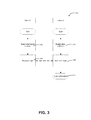
- Figure 3 illustrates a method 300 for sharing information between two or more devices.
- Method 300 can be used, for example, to set up a new client, synch data between clients, and/or enable services involving multiple clients.
- method 300 can be used to share local client information corresponding to Wi-Fi, Bluetooth, location-based status change settings and the like stored on one client with another client.
- client software When sharing data between two devices, client software (e.g., the same or similar client software transferred according to the same method as set forth in step 212) may already be loaded onto both the device provisioning the data and the device receiving the data. This provisioning of additional devices may be allowed by the client software or may need to be authorized, for example, during step 212. If authorized, information may be transferred from one mobile device to another device.
- all users will be authorized to provision other devices associated with or owned by the respective users.
- a user may specify information associated with a particular account (e.g., contacts information, username, password, server name for a particular location, and the like) to be provisioned from one device (e.g., a mobile phone) associated with the user to another device (e.g., another phone, computer, tablet, or the like) associated with the user. Allowing users to provision their own devices eliminates the requirement to know the server name, username, password and/or for an IT specialist or an administrator to be involved in transferring or copying the requisite information.
- Method 300 can also be used to allow users to sync their private data, such as Network, Location, and Bluetooth Connection, between devices, without using any unsecured transmission.
- Method 300 includes the steps of selecting information on a first device to share (step 302), displaying an image on the first device associated with the information to be shared (step 304), enabling client software on a second device (step 306), scanning the image on the first device using the second device to read the image (step 308), and storing information associated with the image on the second device (step 310).
- Step 302 may include, for example, a user selecting information, such as user setting for a particular UCA server to be published.
- a user selecting information such as user setting for a particular UCA server to be published.
- an image such as a QR code corresponding to the data to be shared, is displayed (step 304).
- the image may be previously generated and stored on the device or the image may be generated in response to the information selected by the user.
- step 306 client software (e.g., client software obtained during step 212, described above) is enabled, such that a camera on a second mobile device 102 is activated and recognition software is enabled.
- client software e.g., client software obtained during step 212, described above
- recognition software is enabled.
- the image displayed during step 304 on first device 102 is scanned using second mobile device 102. If the image displayed on the first device is recognized during step 308 by the second mobile device, the data or information associated with the displayed image is uploaded onto and stored (step 310) on the second device.
- the system and method described herein can also be used to facilitate communication directly between multiple clients and between clients and a server.
- a server such as a UCA server
- each client communicates directly with the server, such that the server is the only device that communicates directly with each client.
- the client sends a command to the server, and the server may then directly communicated with one or more clients connected to the server.
- systems in accordance with various exemplary embodiments of the present disclosure allow for direct communication between clients as well as between a server and clients. This allows easier and more efficient communication between clients.
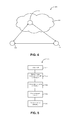
- FIG. 4 illustrates a system 400 configured for client-triggered services in accordance with exemplary embodiments of the disclosure.
- System 400 includes a server 402, which may be part of a network 404, and multiple clients 406, 408.
- Server 402 and network 404 may be the same or similar as server 108 and network 106, and client 406 may be the same or similar as mobile device 102 and/or display device 104, as describe above.
- System 400 may be used for a variety of applications, including audio telecommunications, telephone conferencing, web conferencing (AWC), and the like.
- system 400 can hand off calls between clients, without manually entering any information, but rather by automatically transferring information about the participant(s) using the optical recognition techniques as described herein.
- System 400 may also be used to facilitate dissemination of information to participants of a conference call regarding participants joining or leaving the conference call and may also allow for monitoring active participants in the conference by identifying participants as they join or leave the conference.
- the participant list information may be displayed on, for example, a screen of a client device.
- system 400 can use encrypted information that is transmitted between clients and between a client and a server.
- the clients use tokens that are secure and pseudo understandable by the client and that are understandable by the server-e.g., for a specified TTL.
- the client-triggered system and method described above can be used to transfer a call from one device associated with a user to another device associated with the same user.
- a call handoff is initiated by a user by instructing a server to handoff the call.
- the server then causes all clients associated with that particular user to ring or a user may specify to which client the call should be transferred.
- Figure 5 illustrates a method 500 of using system 400 to facilitate call handoffs directly between clients, which allows users to quickly and easily specify to where a call should be transferred.
- Method 500 includes the steps of initiating a call with a first device (step 502), displaying an image associated with the call on the first device (step 504), initiating client software on the second device (step 506), scanning the image on the first device with the second device (step 508), and continuing the call on the second device (step 510).
- a call is initiated and a first device (e.g., client 406) communicates directly with a server (e.g., server 402).
- a server e.g., server 402).
- step 506 the user initiates the client software on a second device to activate the camera on the second device.
- the user then brings the second device proximate the first device and scans the image displayed on the first device, step 508. Once the image is scanned, the user may be asked to confirm the call handoff using either device, and if confirmed, the call continues on the second device, step 510.
- calls may be transferred from one device associated with a first user (e.g., a mobile phone, a desk phone, a conference phone, a computer, or the like) to or from another device associated with a second user (e.g., a mobile phone), using system 400 and method 500.
- a first user e.g., a mobile phone, a desk phone, a conference phone, a computer, or the like
- a second user e.g., a mobile phone
- users can push calls from, for example, a mobile device to a particular desk phone by entering dual tone multi-frequency (DTMF) or by using another application to instruct a PBX (Private Branch Exchange) to move the call from one device to the other.
- DTMF dual tone multi-frequency
- PBX Primary Branch Exchange
- Such call transfers generally take place between a desk phone associated with a user and a mobile phone associated with that user, since the corresponding data is known to the system (e.g., a UCA/PBX).
- calls can be transferred to or from a first user to a second user by placing a call on hold and having the first user enter a phone number or other contact information associated with the second user.
- calls are transferred to or from different devices, which need not be associated with a particular user, using optical recognition techniques, in a manner such that no information (e.g., phone number, server name, user name, password) is required to be manually entered by any user to transfer the call.
- no information e.g., phone number, server name, user name, password
- a first device may include a display and a second device may be enabled with the client software as described above.
- the mobile client application is enabled on a second device, the second device is placed proximate the first device, and the first user may indicate the first user would like the call transferred.
- a second user scans an image on the first device. During this time, the call may be placed on hold.
- the client application software on the second device the requisite mobile device and/or phone information corresponding to the second device is communicated to a server (e.g., server 402) and the second device instructs the server to transfer the call from the first device to the second device.
- the call is then transferred by the server from the first device to the second device.
- a PBX routed mobile call can be transferred to a desk phone or vice versa or a call may be transferred between mobile phones, using these techniques.
- system 400 can be used to build a community group or participant list by accessing user information on device 406 as device 408 is placed proximate device 406.
- user information on device 406 For example, while running a client program, as a user places mobile device 408 proximate device 406, the user may be prompted as to whether the user would like to join a particular group or be added to a participant list-e.g., a group of people at a meeting or on a conference call or any other group. The user may respond "yes," in which case a corresponding participant list for that group is updated accordingly. Participants may similarly be deleted from groups using these techniques.
- the communication system (e.g., system 100 or system 400) can be used to provide temporary authorization to the user to, e.g., network 106 or a portion thereof, by passing requisite login and/or other information from, for example, device 104 to mobile device 102.
- Such access may be provided on a temporary basis using temporary login information, by providing a time-out, or the like.
- Such access may be to, for example, provide administrator access to a technician troubleshooting the system.
- the system and method can be used to pass control from, for example, person(s) or group(s) to another person(s) or group(s).
- a manager on duty can use system 100 to "log in” for a shift and another manager can "log out” by running the client program on device 102 and passing device 102 proximate device 104.
- the client program may ask for verification of the user's intent to log in or out of a particular shift.
Landscapes
- Engineering & Computer Science (AREA)
- Computer Security & Cryptography (AREA)
- Computer Hardware Design (AREA)
- Computing Systems (AREA)
- General Engineering & Computer Science (AREA)
- Computer Networks & Wireless Communication (AREA)
- Signal Processing (AREA)
- Telephonic Communication Services (AREA)
- Information Transfer Between Computers (AREA)
Applications Claiming Priority (1)
| Application Number | Priority Date | Filing Date | Title |
|---|---|---|---|
| US13/200,791 US20130086650A1 (en) | 2011-09-30 | 2011-09-30 | Communication system including optical recognition and method of using same |
Publications (2)
| Publication Number | Publication Date |
|---|---|
| EP2575291A2 true EP2575291A2 (fr) | 2013-04-03 |
| EP2575291A3 EP2575291A3 (fr) | 2013-08-28 |
Family
ID=46762855
Family Applications (1)
| Application Number | Title | Priority Date | Filing Date |
|---|---|---|---|
| EP12177137.2A Withdrawn EP2575291A3 (fr) | 2011-09-30 | 2012-07-19 | Système de communication comprenant la reconnaissance optique et son procédé d'utilisation |
Country Status (3)
| Country | Link |
|---|---|
| US (1) | US20130086650A1 (fr) |
| EP (1) | EP2575291A3 (fr) |
| CA (1) | CA2790223A1 (fr) |
Cited By (4)
| Publication number | Priority date | Publication date | Assignee | Title |
|---|---|---|---|---|
| EP2552089A3 (fr) * | 2011-07-26 | 2013-08-28 | Mitel Networks Corporation | Système et procédé pour communication électronique à courte distance |
| EP2975586A1 (fr) * | 2014-07-14 | 2016-01-20 | Honeywell International Inc. | Système et procédé d'installation d'un système d'alarme à réalité augmentée |
| EP3108377A4 (fr) * | 2014-02-19 | 2017-09-06 | Q-Core Medical Ltd. | Procédés et dispositifs d'exploitation d'un dispositif médical utilisant un chemin de communication hybride |
| US9843475B2 (en) | 2012-12-09 | 2017-12-12 | Connectwise, Inc. | Systems and methods for configuring a managed device using an image |
Families Citing this family (15)
| Publication number | Priority date | Publication date | Assignee | Title |
|---|---|---|---|---|
| US9438575B2 (en) | 2011-12-22 | 2016-09-06 | Paypal, Inc. | Smart phone login using QR code |
| US9681278B2 (en) * | 2012-07-27 | 2017-06-13 | Crexendo, Inc. | VOIP service with streamlined conferencing options |
| US9553901B2 (en) | 2012-07-27 | 2017-01-24 | Crexendo, Inc. | VOIP service with streamlined call transfer options |
| US9609457B2 (en) * | 2012-07-27 | 2017-03-28 | Crexendo, Inc. | Mobile application procurement and configuration options for VOIP service |
| US9507949B2 (en) * | 2012-09-28 | 2016-11-29 | Intel Corporation | Device and methods for management and access of distributed data sources |
| US9736617B2 (en) | 2013-09-13 | 2017-08-15 | Samsung Electronics Co., Ltd. | Apparatus, method, and system for activating a mobile terminal |
| US10169759B2 (en) | 2015-08-10 | 2019-01-01 | International Business Machines Corporation | Verifying online transaction integrity and authentication with QR codes |
| CN107609873B (zh) | 2017-09-08 | 2020-07-14 | 阿里巴巴集团控股有限公司 | 一种扫码安全校验方法和装置 |
| US10602099B2 (en) | 2018-07-10 | 2020-03-24 | Saudi Arabian Oil Company | Cogen-mom integration using tabulated information recognition |
| US11341830B2 (en) | 2020-08-06 | 2022-05-24 | Saudi Arabian Oil Company | Infrastructure construction digital integrated twin (ICDIT) |
| US12347296B2 (en) | 2020-08-06 | 2025-07-01 | Saudi Arabian Oil Company | Emulated facility safety with correlated sound frequency modeling |
| US12340670B2 (en) | 2020-08-06 | 2025-06-24 | Saudi Arabian Oil Company | Emulated facility safety with embedded enhanced interface management |
| US11687053B2 (en) | 2021-03-08 | 2023-06-27 | Saudi Arabian Oil Company | Intelligent safety motor control center (ISMCC) |
| US12024985B2 (en) | 2022-03-24 | 2024-07-02 | Saudi Arabian Oil Company | Selective inflow control device, system, and method |
| US12615275B2 (en) | 2023-06-21 | 2026-04-28 | Saudi Arabian Oil Company | Method and system for integrated cybersecurity operations |
Family Cites Families (9)
| Publication number | Priority date | Publication date | Assignee | Title |
|---|---|---|---|---|
| US7543748B2 (en) * | 2005-02-16 | 2009-06-09 | Pisafe, Inc. | Method and system for creating and using redundant and high capacity barcodes |
| JP4692766B2 (ja) * | 2006-06-29 | 2011-06-01 | 富士ゼロックス株式会社 | 画像処理装置と画像処理方法およびプログラム |
| WO2008021496A2 (fr) * | 2006-08-17 | 2008-02-21 | Philip Chidel | Cadre d'applications de télévision interactive utilisant des déclencheurs synchrones de programmes et des protocoles de messagerie standard et de détection de présence |
| US8407463B2 (en) * | 2007-10-30 | 2013-03-26 | Telecom Italia S.P.A. | Method of authentication of users in data processing systems |
| US8520978B2 (en) * | 2007-10-31 | 2013-08-27 | Mckesson Technologies Inc. | Methods, computer program products, apparatuses, and systems for facilitating viewing and manipulation of an image on a client device |
| EP2364043B1 (fr) * | 2010-02-26 | 2016-04-20 | BlackBerry Limited | Procédés et dispositifs pour transmettre et recevoir des données utilisées pour activer un dispositif pour fonctionner avec un serveur |
| NO332222B1 (no) * | 2010-07-26 | 2012-07-30 | Cisco Tech Inc | Fremgangsmate og samhandlingsserver for a overfore en samhandlingssesjon, samt et multimedieendepunkt |
| US9558481B2 (en) * | 2010-09-28 | 2017-01-31 | Barclays Bank Plc | Secure account provisioning |
| US20120274445A1 (en) * | 2011-04-27 | 2012-11-01 | Microsoft Corporation | Aggregating location with presence information |
-
2011
- 2011-09-30 US US13/200,791 patent/US20130086650A1/en not_active Abandoned
-
2012
- 2012-07-19 EP EP12177137.2A patent/EP2575291A3/fr not_active Withdrawn
- 2012-09-18 CA CA2790223A patent/CA2790223A1/fr not_active Abandoned
Non-Patent Citations (1)
| Title |
|---|
| None |
Cited By (8)
| Publication number | Priority date | Publication date | Assignee | Title |
|---|---|---|---|---|
| EP2552089A3 (fr) * | 2011-07-26 | 2013-08-28 | Mitel Networks Corporation | Système et procédé pour communication électronique à courte distance |
| US8958783B2 (en) | 2011-07-26 | 2015-02-17 | Mitel Networks Corporation | System and method for short-range electronic communication |
| US9843475B2 (en) | 2012-12-09 | 2017-12-12 | Connectwise, Inc. | Systems and methods for configuring a managed device using an image |
| US10361910B2 (en) | 2012-12-09 | 2019-07-23 | Connectwise, Llc | Systems and methods for configuring a managed device using an image |
| US11218362B2 (en) | 2012-12-09 | 2022-01-04 | Connectwise, Llc | Systems and methods for configuring a managed device using an image |
| EP3108377A4 (fr) * | 2014-02-19 | 2017-09-06 | Q-Core Medical Ltd. | Procédés et dispositifs d'exploitation d'un dispositif médical utilisant un chemin de communication hybride |
| EP2975586A1 (fr) * | 2014-07-14 | 2016-01-20 | Honeywell International Inc. | Système et procédé d'installation d'un système d'alarme à réalité augmentée |
| US10388068B2 (en) | 2014-07-14 | 2019-08-20 | Ademco Inc. | System and method of augmented reality alarm system installation |
Also Published As
| Publication number | Publication date |
|---|---|
| US20130086650A1 (en) | 2013-04-04 |
| EP2575291A3 (fr) | 2013-08-28 |
| CA2790223A1 (fr) | 2013-03-30 |
Similar Documents
| Publication | Publication Date | Title |
|---|---|---|
| US20130086650A1 (en) | Communication system including optical recognition and method of using same | |
| US12206515B2 (en) | Verifying user identities for admission to video conferences | |
| CN110832823B (zh) | 对多个接入点的基于云的wifi网络设置 | |
| CA2782260C (fr) | Systeme et methode de communication electronique de courte portee | |
| JP5018315B2 (ja) | 無線通信システム、無線通信装置、無線通信装置の認証方法、および、プログラム | |
| US8925042B2 (en) | Connecting devices to an existing secure wireless network | |
| JP5172624B2 (ja) | スイッチ装置、認証サーバ、認証システム、認証方法、及び、プログラム | |
| US11575506B2 (en) | System and method for electronic conference verification and management | |
| US20200099789A1 (en) | Device, system and method for communicating between devices using two protocols | |
| US20140380443A1 (en) | Network connection in a wireless communication device | |
| WO2015029945A1 (fr) | Procédé de transfert de profil de membre, système de transfert de profil de membre et dispositif d'utilisateur | |
| TW200833059A (en) | System and method for secure record protocol using shared knowledge of mobile user credentials | |
| US20140019757A1 (en) | Authentication method and system | |
| EP2355474B1 (fr) | Transfert de fonctions de téléphonie associées à un dispositif de téléphonie portable sans fil à un autre dispositif de téléphonie | |
| US20180109758A1 (en) | Transmission system, transmission terminal, method and program | |
| WO2017091987A1 (fr) | Procédé et appareil d'interaction sécurisée entre des terminaux | |
| EP3669564A1 (fr) | Procédés et appareil pour exécuter un contrôle d'accès et/ou de transmission dans des réseaux sans fil tels que des wlan | |
| CN115022068A (zh) | 一种基于用户钉钉的认证方法及系统 | |
| JP4762660B2 (ja) | 無線lanシステム、無線lan端末、及び無線lan端末の初期設定方法 | |
| JP2009193326A (ja) | 認証システム、認証方法及びサーバ | |
| KR20200010417A (ko) | 개선된 네트워크 통신 | |
| CN101568090A (zh) | 用于访问通信特征的方法、系统和装置 | |
| CN101146126A (zh) | 无线通信系统、无线通信装置及其认证方法、以及程序 | |
| JP2011077691A (ja) | 無線通信中継装置、無線通信中継方法および無線通信中継プログラム | |
| ES2424667T3 (es) | Procedimiento y sistema de telecomunicaciones para la protección de la esfera privada durante el anuncio de un usuario en un servicio seguro de la Web por medio de un aparato de telefonía móvil |
Legal Events
| Date | Code | Title | Description |
|---|---|---|---|
| PUAI | Public reference made under article 153(3) epc to a published international application that has entered the european phase |
Free format text: ORIGINAL CODE: 0009012 |
|
| AK | Designated contracting states |
Kind code of ref document: A2 Designated state(s): AL AT BE BG CH CY CZ DE DK EE ES FI FR GB GR HR HU IE IS IT LI LT LU LV MC MK MT NL NO PL PT RO RS SE SI SK SM TR |
|
| AX | Request for extension of the european patent |
Extension state: BA ME |
|
| PUAL | Search report despatched |
Free format text: ORIGINAL CODE: 0009013 |
|
| AK | Designated contracting states |
Kind code of ref document: A3 Designated state(s): AL AT BE BG CH CY CZ DE DK EE ES FI FR GB GR HR HU IE IS IT LI LT LU LV MC MK MT NL NO PL PT RO RS SE SI SK SM TR |
|
| AX | Request for extension of the european patent |
Extension state: BA ME |
|
| RIC1 | Information provided on ipc code assigned before grant |
Ipc: G06K 7/00 20060101ALI20130723BHEP Ipc: H04L 29/06 20060101ALI20130723BHEP Ipc: H04L 12/22 20060101AFI20130723BHEP |
|
| 17P | Request for examination filed |
Effective date: 20140220 |
|
| RBV | Designated contracting states (corrected) |
Designated state(s): AL AT BE BG CH CY CZ DE DK EE ES FI FR GB GR HR HU IE IS IT LI LT LU LV MC MK MT NL NO PL PT RO RS SE SI SK SM TR |
|
| STAA | Information on the status of an ep patent application or granted ep patent |
Free format text: STATUS: THE APPLICATION HAS BEEN WITHDRAWN |
|
| 18W | Application withdrawn |
Effective date: 20160527 |