EP2573376A1 - Ammonia-burning internal combustion engine - Google Patents
Ammonia-burning internal combustion engine Download PDFInfo
- Publication number
- EP2573376A1 EP2573376A1 EP11783371A EP11783371A EP2573376A1 EP 2573376 A1 EP2573376 A1 EP 2573376A1 EP 11783371 A EP11783371 A EP 11783371A EP 11783371 A EP11783371 A EP 11783371A EP 2573376 A1 EP2573376 A1 EP 2573376A1
- Authority
- EP
- European Patent Office
- Prior art keywords
- ammonia
- engine
- fed
- ratio
- reformer
- Prior art date
- Legal status (The legal status is an assumption and is not a legal conclusion. Google has not performed a legal analysis and makes no representation as to the accuracy of the status listed.)
- Withdrawn
Links
Images




Classifications
-
- F—MECHANICAL ENGINEERING; LIGHTING; HEATING; WEAPONS; BLASTING
- F02—COMBUSTION ENGINES; HOT-GAS OR COMBUSTION-PRODUCT ENGINE PLANTS
- F02M—SUPPLYING COMBUSTION ENGINES IN GENERAL WITH COMBUSTIBLE MIXTURES OR CONSTITUENTS THEREOF
- F02M31/00—Apparatus for thermally treating combustion-air, fuel, or fuel-air mixture
- F02M31/02—Apparatus for thermally treating combustion-air, fuel, or fuel-air mixture for heating
- F02M31/14—Apparatus for thermally treating combustion-air, fuel, or fuel-air mixture for heating by using heat from working cylinders or cylinder heads
-
- F—MECHANICAL ENGINEERING; LIGHTING; HEATING; WEAPONS; BLASTING
- F01—MACHINES OR ENGINES IN GENERAL; ENGINE PLANTS IN GENERAL; STEAM ENGINES
- F01N—GAS-FLOW SILENCERS OR EXHAUST APPARATUS FOR MACHINES OR ENGINES IN GENERAL; GAS-FLOW SILENCERS OR EXHAUST APPARATUS FOR INTERNAL-COMBUSTION ENGINES
- F01N3/00—Exhaust or silencing apparatus having means for purifying, rendering innocuous, or otherwise treating exhaust
- F01N3/08—Exhaust or silencing apparatus having means for purifying, rendering innocuous, or otherwise treating exhaust for rendering innocuous
- F01N3/10—Exhaust or silencing apparatus having means for purifying, rendering innocuous, or otherwise treating exhaust for rendering innocuous by thermal or catalytic conversion of noxious components of exhaust
- F01N3/24—Exhaust or silencing apparatus having means for purifying, rendering innocuous, or otherwise treating exhaust for rendering innocuous by thermal or catalytic conversion of noxious components of exhaust characterised by constructional aspects of converting apparatus
- F01N3/30—Arrangements for supply of additional air
-
- F—MECHANICAL ENGINEERING; LIGHTING; HEATING; WEAPONS; BLASTING
- F01—MACHINES OR ENGINES IN GENERAL; ENGINE PLANTS IN GENERAL; STEAM ENGINES
- F01N—GAS-FLOW SILENCERS OR EXHAUST APPARATUS FOR MACHINES OR ENGINES IN GENERAL; GAS-FLOW SILENCERS OR EXHAUST APPARATUS FOR INTERNAL-COMBUSTION ENGINES
- F01N9/00—Electrical control of exhaust gas treating apparatus
-
- F—MECHANICAL ENGINEERING; LIGHTING; HEATING; WEAPONS; BLASTING
- F02—COMBUSTION ENGINES; HOT-GAS OR COMBUSTION-PRODUCT ENGINE PLANTS
- F02D—CONTROLLING COMBUSTION ENGINES
- F02D19/00—Controlling engines characterised by their use of non-liquid fuels, pluralities of fuels, or non-fuel substances added to the combustible mixtures
- F02D19/06—Controlling engines characterised by their use of non-liquid fuels, pluralities of fuels, or non-fuel substances added to the combustible mixtures peculiar to engines working with pluralities of fuels, e.g. alternatively with light and heavy fuel oil, other than engines indifferent to the fuel consumed
- F02D19/0639—Controlling engines characterised by their use of non-liquid fuels, pluralities of fuels, or non-fuel substances added to the combustible mixtures peculiar to engines working with pluralities of fuels, e.g. alternatively with light and heavy fuel oil, other than engines indifferent to the fuel consumed characterised by the type of fuels
- F02D19/0642—Controlling engines characterised by their use of non-liquid fuels, pluralities of fuels, or non-fuel substances added to the combustible mixtures peculiar to engines working with pluralities of fuels, e.g. alternatively with light and heavy fuel oil, other than engines indifferent to the fuel consumed characterised by the type of fuels at least one fuel being gaseous, the other fuels being gaseous or liquid at standard conditions
- F02D19/0644—Controlling engines characterised by their use of non-liquid fuels, pluralities of fuels, or non-fuel substances added to the combustible mixtures peculiar to engines working with pluralities of fuels, e.g. alternatively with light and heavy fuel oil, other than engines indifferent to the fuel consumed characterised by the type of fuels at least one fuel being gaseous, the other fuels being gaseous or liquid at standard conditions the gaseous fuel being hydrogen, ammonia or carbon monoxide
-
- F—MECHANICAL ENGINEERING; LIGHTING; HEATING; WEAPONS; BLASTING
- F02—COMBUSTION ENGINES; HOT-GAS OR COMBUSTION-PRODUCT ENGINE PLANTS
- F02D—CONTROLLING COMBUSTION ENGINES
- F02D19/00—Controlling engines characterised by their use of non-liquid fuels, pluralities of fuels, or non-fuel substances added to the combustible mixtures
- F02D19/06—Controlling engines characterised by their use of non-liquid fuels, pluralities of fuels, or non-fuel substances added to the combustible mixtures peculiar to engines working with pluralities of fuels, e.g. alternatively with light and heavy fuel oil, other than engines indifferent to the fuel consumed
- F02D19/0663—Details on the fuel supply system, e.g. tanks, valves, pipes, pumps, rails, injectors or mixers
- F02D19/0668—Treating or cleaning means; Fuel filters
- F02D19/0671—Means to generate or modify a fuel, e.g. reformers, electrolytic cells or membranes
-
- F—MECHANICAL ENGINEERING; LIGHTING; HEATING; WEAPONS; BLASTING
- F02—COMBUSTION ENGINES; HOT-GAS OR COMBUSTION-PRODUCT ENGINE PLANTS
- F02D—CONTROLLING COMBUSTION ENGINES
- F02D19/00—Controlling engines characterised by their use of non-liquid fuels, pluralities of fuels, or non-fuel substances added to the combustible mixtures
- F02D19/06—Controlling engines characterised by their use of non-liquid fuels, pluralities of fuels, or non-fuel substances added to the combustible mixtures peculiar to engines working with pluralities of fuels, e.g. alternatively with light and heavy fuel oil, other than engines indifferent to the fuel consumed
- F02D19/08—Controlling engines characterised by their use of non-liquid fuels, pluralities of fuels, or non-fuel substances added to the combustible mixtures peculiar to engines working with pluralities of fuels, e.g. alternatively with light and heavy fuel oil, other than engines indifferent to the fuel consumed simultaneously using pluralities of fuels
- F02D19/081—Adjusting the fuel composition or mixing ratio; Transitioning from one fuel to the other
-
- F—MECHANICAL ENGINEERING; LIGHTING; HEATING; WEAPONS; BLASTING
- F02—COMBUSTION ENGINES; HOT-GAS OR COMBUSTION-PRODUCT ENGINE PLANTS
- F02D—CONTROLLING COMBUSTION ENGINES
- F02D41/00—Electrical control of supply of combustible mixture or its constituents
- F02D41/0025—Controlling engines characterised by use of non-liquid fuels, pluralities of fuels, or non-fuel substances added to the combustible mixtures
-
- F—MECHANICAL ENGINEERING; LIGHTING; HEATING; WEAPONS; BLASTING
- F02—COMBUSTION ENGINES; HOT-GAS OR COMBUSTION-PRODUCT ENGINE PLANTS
- F02D—CONTROLLING COMBUSTION ENGINES
- F02D41/00—Electrical control of supply of combustible mixture or its constituents
- F02D41/02—Circuit arrangements for generating control signals
- F02D41/021—Introducing corrections for particular conditions exterior to the engine
- F02D41/0235—Introducing corrections for particular conditions exterior to the engine in relation with the state of the exhaust gas treating apparatus
-
- F—MECHANICAL ENGINEERING; LIGHTING; HEATING; WEAPONS; BLASTING
- F02—COMBUSTION ENGINES; HOT-GAS OR COMBUSTION-PRODUCT ENGINE PLANTS
- F02M—SUPPLYING COMBUSTION ENGINES IN GENERAL WITH COMBUSTIBLE MIXTURES OR CONSTITUENTS THEREOF
- F02M23/00—Apparatus for adding secondary air to fuel-air mixture
- F02M23/04—Apparatus for adding secondary air to fuel-air mixture with automatic control
- F02M23/10—Apparatus for adding secondary air to fuel-air mixture with automatic control dependent on temperature, e.g. engine temperature
-
- F—MECHANICAL ENGINEERING; LIGHTING; HEATING; WEAPONS; BLASTING
- F02—COMBUSTION ENGINES; HOT-GAS OR COMBUSTION-PRODUCT ENGINE PLANTS
- F02M—SUPPLYING COMBUSTION ENGINES IN GENERAL WITH COMBUSTIBLE MIXTURES OR CONSTITUENTS THEREOF
- F02M31/00—Apparatus for thermally treating combustion-air, fuel, or fuel-air mixture
- F02M31/02—Apparatus for thermally treating combustion-air, fuel, or fuel-air mixture for heating
- F02M31/16—Other apparatus for heating fuel
- F02M31/18—Other apparatus for heating fuel to vaporise fuel
-
- F—MECHANICAL ENGINEERING; LIGHTING; HEATING; WEAPONS; BLASTING
- F01—MACHINES OR ENGINES IN GENERAL; ENGINE PLANTS IN GENERAL; STEAM ENGINES
- F01N—GAS-FLOW SILENCERS OR EXHAUST APPARATUS FOR MACHINES OR ENGINES IN GENERAL; GAS-FLOW SILENCERS OR EXHAUST APPARATUS FOR INTERNAL-COMBUSTION ENGINES
- F01N2240/00—Combination or association of two or more different exhaust treating devices, or of at least one such device with an auxiliary device, not covered by indexing codes F01N2230/00 or F01N2250/00, one of the devices being
- F01N2240/30—Combination or association of two or more different exhaust treating devices, or of at least one such device with an auxiliary device, not covered by indexing codes F01N2230/00 or F01N2250/00, one of the devices being a fuel reformer
-
- F—MECHANICAL ENGINEERING; LIGHTING; HEATING; WEAPONS; BLASTING
- F01—MACHINES OR ENGINES IN GENERAL; ENGINE PLANTS IN GENERAL; STEAM ENGINES
- F01N—GAS-FLOW SILENCERS OR EXHAUST APPARATUS FOR MACHINES OR ENGINES IN GENERAL; GAS-FLOW SILENCERS OR EXHAUST APPARATUS FOR INTERNAL-COMBUSTION ENGINES
- F01N2610/00—Adding substances to exhaust gases
- F01N2610/02—Adding substances to exhaust gases the substance being ammonia or urea
-
- F—MECHANICAL ENGINEERING; LIGHTING; HEATING; WEAPONS; BLASTING
- F01—MACHINES OR ENGINES IN GENERAL; ENGINE PLANTS IN GENERAL; STEAM ENGINES
- F01N—GAS-FLOW SILENCERS OR EXHAUST APPARATUS FOR MACHINES OR ENGINES IN GENERAL; GAS-FLOW SILENCERS OR EXHAUST APPARATUS FOR INTERNAL-COMBUSTION ENGINES
- F01N2610/00—Adding substances to exhaust gases
- F01N2610/03—Adding substances to exhaust gases the substance being hydrocarbons, e.g. engine fuel
-
- F—MECHANICAL ENGINEERING; LIGHTING; HEATING; WEAPONS; BLASTING
- F02—COMBUSTION ENGINES; HOT-GAS OR COMBUSTION-PRODUCT ENGINE PLANTS
- F02D—CONTROLLING COMBUSTION ENGINES
- F02D2200/00—Input parameters for engine control
- F02D2200/02—Input parameters for engine control the parameters being related to the engine
- F02D2200/08—Exhaust gas treatment apparatus parameters
- F02D2200/0802—Temperature of the exhaust gas treatment apparatus
-
- Y—GENERAL TAGGING OF NEW TECHNOLOGICAL DEVELOPMENTS; GENERAL TAGGING OF CROSS-SECTIONAL TECHNOLOGIES SPANNING OVER SEVERAL SECTIONS OF THE IPC; TECHNICAL SUBJECTS COVERED BY FORMER USPC CROSS-REFERENCE ART COLLECTIONS [XRACs] AND DIGESTS
- Y02—TECHNOLOGIES OR APPLICATIONS FOR MITIGATION OR ADAPTATION AGAINST CLIMATE CHANGE
- Y02T—CLIMATE CHANGE MITIGATION TECHNOLOGIES RELATED TO TRANSPORTATION
- Y02T10/00—Road transport of goods or passengers
- Y02T10/10—Internal combustion engine [ICE] based vehicles
- Y02T10/12—Improving ICE efficiencies
-
- Y—GENERAL TAGGING OF NEW TECHNOLOGICAL DEVELOPMENTS; GENERAL TAGGING OF CROSS-SECTIONAL TECHNOLOGIES SPANNING OVER SEVERAL SECTIONS OF THE IPC; TECHNICAL SUBJECTS COVERED BY FORMER USPC CROSS-REFERENCE ART COLLECTIONS [XRACs] AND DIGESTS
- Y02—TECHNOLOGIES OR APPLICATIONS FOR MITIGATION OR ADAPTATION AGAINST CLIMATE CHANGE
- Y02T—CLIMATE CHANGE MITIGATION TECHNOLOGIES RELATED TO TRANSPORTATION
- Y02T10/00—Road transport of goods or passengers
- Y02T10/10—Internal combustion engine [ICE] based vehicles
- Y02T10/30—Use of alternative fuels, e.g. biofuels
-
- Y—GENERAL TAGGING OF NEW TECHNOLOGICAL DEVELOPMENTS; GENERAL TAGGING OF CROSS-SECTIONAL TECHNOLOGIES SPANNING OVER SEVERAL SECTIONS OF THE IPC; TECHNICAL SUBJECTS COVERED BY FORMER USPC CROSS-REFERENCE ART COLLECTIONS [XRACs] AND DIGESTS
- Y02—TECHNOLOGIES OR APPLICATIONS FOR MITIGATION OR ADAPTATION AGAINST CLIMATE CHANGE
- Y02T—CLIMATE CHANGE MITIGATION TECHNOLOGIES RELATED TO TRANSPORTATION
- Y02T10/00—Road transport of goods or passengers
- Y02T10/10—Internal combustion engine [ICE] based vehicles
- Y02T10/40—Engine management systems
Definitions
- the present invention relates to an ammonia burning internal combustion engine.
- ammonia is harder to burn compared with fossil fuels. Therefore, when using ammonia as a fuel, some sort of measure is required for making the ammonia easier to burn. Therefore, in the above-mentioned internal combustion engine, the exhaust heat is utilized to reform the ammonia and thereby produce reformed gas from hydrogen and nitrogen, the hydrogen in the produced reformed gas is stored in a hydrogen storage alloy, and the combustion chamber is fed with not only ammonia, but also the hydrogen which is stored in the hydrogen storage alloy to thereby enable easy burning even when using ammonia as a fuel.
- an ammonia burning internal combustion engine which uses ammonia as fuel, wherein a reformer which reforms ammonia to produce reformed gas which contains hydrogen is provided, the reformed gas is fed to an inside of a combustion chamber in addition to ammonia, an exhaust purification catalyst is arranged in an engine exhaust passage, a secondary air feed device is arranged in the engine exhaust passage upstream of the exhaust purification catalyst, an ammonia ratio which shows a ratio of an amount of fed ammonia to a total amount of fed fuel after completion of warmup is preset in accordance with an operating state of the engine, and when a reforming ability of the reformer is less than a predetermined reforming ability, the ammonia ratio is made to increase to more than the ammonia ratio after completion of warmup which is preset in accordance with the operating state of the engine, and secondary air is fed from a secondary air feed device to inside the engine exhaust passage upstream of the exhaust purification catalyst.
- the ammonia ratio is made to increase over the ammonia ratio after completion of warmup, which is preset in accordance with the operating state of the engine, so as to give good combustion even if sufficient hydrogen is not produced at the reformer.
- the unburned ammonia which is exhausted from the combustion chamber increases, but this unburned ammonia is made to oxidize by the secondary air which is fed from the secondary air feed device.
- 1 indicates an internal combustion engine body, 2 a cylinder block, 3 a cylinder head, 4 a piston, 5 a combustion chamber, 6 a plasma jet ignition plug which is arranged at the center of the top surface of the combustion chamber 5 and emits a plasma jet, 7 an intake valve, 8 an intake port, 9 an exhaust valve, and 10 an exhaust port.
- the intake port 8 is connected through an intake branch pipe 11 to a surge tank 12.
- an ammonia injector 13 for injecting gaseous ammonia toward the interior of each corresponding intake port 8 is arranged.
- the surge tank 12 is connected through an intake duct 14 to an air cleaner 15.
- a throttle valve 16 which is driven by an actuator and an intake air amount detector 17 using for example a hot wire are arranged.
- the exhaust port 10 is connected through an exhaust manifold 18 to an exhaust purification catalyst 19 which has an oxidation function.
- a reformer 20 and an vaporizer 21 are arranged in the exhaust passage downstream of the exhaust purification catalyst 19.
- the vaporizer 21 is connected through an ammonia inflow pipe 22 to a fuel tank 23. Inside of this ammonia inflow pipe 22, a shutoff valve 24 which is opened at the time of engine operation and is closed when the engine stops and a pressure regulator 25 are arranged.
- the fuel tank 23 is filled inside it with 0.8 MPa to 1.0 MPa or so high pressure liquid ammonia.
- the liquid ammonia inside of the fuel tank 23 is fed through the ammonia inflow pipe 22 to the inside of the vaporizer 21.
- the vaporizer 21 is formed to be heated by the exhaust gas, therefore the liquid ammonia which is fed to the inside of the vaporizer 21 is made to vaporize inside of the vaporizer 21.
- the gaseous ammonia which is made to vaporize inside of the vaporizer 21 is fed through an ammonia outflow pipe 26 to an ammonia gas tank 27.
- the gaseous ammonia inside of the ammonia gas tank 27 is fed through a gaseous ammonia feed pipe 28 to the ammonia injector 13.
- the gaseous ammonia is injected from the ammonia injector 13 toward the corresponding intake port 8.
- the vaporizer 21 is connected through an ammonia outflow pipe 29 to the reformer 20.
- a reformer control valve 30 which opens when the reformer 20 performs a reforming action and a check valve 31 which allows flow only from the carburetor 21 to the reformer 20 are arranged in series. If the reformer control valve 30 opens and the pressure inside of the reformer 20 becomes lower than the pressure inside of the carburetor 21, the gaseous ammonia inside of the vaporizer 21 is fed through the ammonia outflow pipe 29 to the inside of the reformer 20.
- the reformer 20 is configured so as to be heated by the exhaust gas. Furthermore, this reformer 20 is provided with an electric heater 32. Further, inside of this reformer 20, a catalyst is arranged for promoting the reforming action of the ammonia. A temperature sensor 33 for detecting the temperature is arranged in the reformer 20.
- the temperature inside of the reformer 20 becomes the temperature at which the reforming action of ammonia is performed, for example, several hundred degrees, the ammonia which is fed from the vaporizer 21 to the inside of the reformer 20 is broken down into hydrogen and nitrogen (2NH 3 ⁇ N 2 +3H 2 ), that is, is reformed. As a result, inside the reformer 20, reformed gas which includes hydrogen is produced. If the ammonia is broken down into hydrogen and nitrogen, the mole number becomes double. Further, due also to the heat of expansion of the reformed gas due to the heating action, the pressure inside of the reformer 20 rises. This raised pressure reformed gas is fed through a reformed gas feed pipe 34 to the inside of a reformed gas storage tank 35.
- a reformed gas injector 36 is arranged for injecting reformed gas toward the inside of the corresponding intake port 8.
- the reformed gas which is stored inside of the reformed gas storage tank 35 is fed to the reformed gas injector 36. From each reformed gas injector 36, reformed gas is injected toward the inside of the corresponding intake port 8.
- a secondary air feed device 37 is arranged in the engine exhaust passage upstream of the exhaust purification catalyst 19, that is, inside of the exhaust manifold 18.
- This secondary air feed device 37 is comprised of a secondary air feed valve 38 for feeding secondary air to the inside of the exhaust manifold 18 and an air pump 39 for feeding secondary air to this secondary air feed valve 38.
- an auxiliary fuel feed valve 40 is arranged inside the exhaust manifold 18.
- the reformed gas inside of the reformed gas storage tank 35 is fed to the auxiliary fuel feed valve 40.
- an ammonia concentration sensor 41 is arranged for detecting the concentration of ammonia in the exhaust gas which is exhausted from the combustion chamber 5.
- a temperature sensor 42 is mounted for detecting the temperature of the exhaust purification catalyst 19.
- An electronic control unit 50 is comprised of a digital computer provided with a ROM (read only memory) 52, a RAM (random access memory) 53, a CPU (microprocessor) 54, an input port 55, and an output port 56, which are connected to each other by a bi-directional bus 51.
- An output signal of the intake air amount detector 17, an output signal of the ammonia concentration sensor 41, and output signals of the temperature sensors 33, 42 are input to the input port 55 through corresponding AD converters 57.
- an accelerator pedal 60 is connected to a load sensor 61 generating an output voltage proportional to the amount of depression L of the accelerator pedal 60. The output voltage of the load sensor 61 is input through a corresponding AD converter 57 to the input port 55.
- the input port 55 is connected to a crank angle sensor 62 generating an output pulse each time a crankshaft rotates by for example 30°.
- the output port 56 is connected to an ignition circuit 63 of the plasma jet ignition device 6. Furthermore, the output port 56 is connected through a corresponding drive circuit 58 to the ammonia injector 13, the drive actuator of the throttle valve 16, shut-off valve 24, pressure regulator 25, reformer control valve 31, electric heater 32, reformed gas injector 36, secondary air feed valve 38, air pump 39, and auxiliary fuel feed valve 40.
- FIG. 2 shows the ammonia ratio RA (%) which shows the ratio of the amount of fed ammonia to the total amount of fed fuel after warmup is completed.
- the solid lines RA 1 , RA 2 , ... RAi in FIG. 2 show the equivalent ammonia ratio lines. From RA 1 toward RAi, the ammonia ratio becomes larger. Note that in FIG. 2 , the ordinate L shows the engine load, while the abscissa N shows the engine speed.
- Ammonia is harder to burn than reformed gas. Therefore, to make the mixed gas of ammonia and reformed gas ignite well and burn in the combustion chamber 5, it is necessary to make the ammonia ratio smaller as the mixed gas temperature at the time of ignition, is low. Therefore, in this embodiment according to the present invention, as shown in FIG. 2 , the more the engine load L falls, the more the ammonia ratio RA is lowered and the higher the engine speed N becomes, the more the ammonia ratio RA can be lowered.
- the ammonia ratio RA is made to fall the more the engine load L falls.
- the ignition timing is advanced more the higher the engine speed N becomes. Therefore, the pressure inside of the combustion chamber 5 at the time when ignition is performed becomes lower the higher the engine speed N becomes. Therefore, the temperature of the mixed gas inside the combustion chamber 5 at the time when combustion is performed becomes lower the higher the engine speed N becomes and therefore, as shown in FIG. 2 , the ammonia ratio RA is made to fall the higher the engine speed N becomes.
- the ammonia ratio RA which is shown in FIG. 2 is stored in advance inside the ROM 52. After warmup is completed, the ammonia ratio RA which is stored is used as the ammonia ratio.
- FIG. 3 shows the changes in the catalyst temperature TC of the exhaust purification catalyst 19, the temperature TB of the reformer 20, the ammonia ratio RA of the fuel which is fed to the combustion chamber 5, the air-fuel ratio A/F in the combustion chamber 5, the amount of secondary air Q which is fed from the secondary air feed valve 38, and the auxiliary fuel which is fed from the auxiliary fuel feed valve 40, that is, the amount of feed M of the reformed gas, from the time right after engine startup.
- TCX shows the activation temperature of the exhaust purification catalyst 19.
- the reformer 20 it is judged if the reformer 20 has a predetermined reforming ability, for example, whether the reformer 20 has a reforming ability which enables production of a predetermined amount of hydrogen.
- a predetermined reforming ability for example, whether the reformer 20 has a reforming ability which enables production of a predetermined amount of hydrogen.
- the temperature TB of the reformer 20 exceeds the predetermined set temperature TBX which is shown in FIG. 3 , it is judged that the reformer 20 has the predetermined reforming ability.
- the catalyst temperature TC is low and the temperature TB of the reformer 20 is also low. That is, right after engine startup, the reforming ability of the reformer 20 is less than the predetermined reforming ability. Therefore, in the reformer 20, a sufficient amount of hydrogen cannot be produced.
- the reformed gas injector 36 injects from it reformed gas which is stored inside the reformed gas storage tank 35, but there are limits to the amount of reformed gas which can be stored inside the reformed gas storage tank 35. That is, right after engine startup, the reformed gas is insufficient.
- the ammonia ratio RA which gives good combustion is determined by the operating state of the engine, that is, the engine load L and the engine speed N.
- the ammonia ratio RA which is determined from the operating state of the engine the necessary amount of reformed gas cannot be secured, so good combustion becomes impossible.
- the ammonia ratio is made to increase over the ammonia ratio RA after completion of warmup, shown by the broken line in FIG. 3 , which is preset in accordance with the operating state of the engine, that is, is made to increase over the ammonia ratio RA which is shown by the map of FIG. 2 . If the ammonia ratio RA is increased, the required amount of reformed gas decreases and therefore the required amount of reformed gas can be sufficiently secured.
- the engine load L has to be raised. Therefore, in this embodiment according to the present invention, when the ammonia ratio RA is increased, the engine load L is increased. This increase of the engine load L is performed by increasing the opening degree of the throttle valve 16. Further, in this embodiment according to the present invention, if increasing the ammonia ratio RA in this way, as shown in FIG. 3 by the solid line, the air-fuel ratio A/F is made the stoichiometric air-fuel ratio.
- the air-fuel ratio can be made rich.
- the ammonia feed rate is made to increase.
- the engine load L is also made to increase.
- the ammonia ratio RA is made to increase in this way, the amount of unburned ammonia which is exhausted from the combustion chamber 5 increases. Therefore, in the present invention, when the ammonia ratio RA is made to increase, to make this unburned ammonia oxidize, secondary air is fed from the secondary air feed device 37 to inside the engine exhaust passage upstream of the exhaust purification catalyst 19. At this time, the exhaust purification catalyst 19 is not activated, but the unburned ammonia is oxidized relatively well if secondary air is fed even if the exhaust purification catalyst 19 is not activated.
- the air-fuel ratio A/F is made lean and auxiliary fuel is fed into the engine exhaust passage upstream of the exhaust purification catalyst 19 from the auxiliary fuel feed valve 40. That is, at this time, the exhaust gas contains excess oxygen, so the fed auxiliary fuel is made to oxidize on the exhaust purification catalyst 19. The heat of oxidizing reaction at this time causes the temperature of the exhaust purification catalyst 19 to rise.
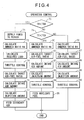
- FIG. 4 shows the operational control routine for working the first embodiment which is shown in FIG. 3 .
- step 70 it is judged if the temperature TB of the reformer 20 is lower than the predetermined set temperature TBX.
- the routine proceeds to step 71 where the electric heater 32 of the reformer 20 is energized, whereby the heating action of the reformer 20 is started.
- step 72 the ammonia ratio RA is calculated. This ammonia ratio RA is made a value which is larger than the ammonia ratio after completion of warmup which is shown in FIG. 2 .
- the calculated ammonia ratio RA is used to calculate the demanded load which gives good combustion.
- the opening degree of the throttle valve 16 is controlled so that the engine load satisfies this demanded load. At this time, the opening degree of the throttle valve 16 becomes larger and the engine load also becomes larger.
- the target air-fuel ratio is calculated. This target air-fuel ratio is the stoichiometric air-fuel ratio or the rich air-fuel ratio.
- the intake air amount is calculated from the output signal of the intake air amount detector 17.
- the calculated ammonia ratio RA, target air-fuel ratio, and intake air amount are used as the basis to calculate the amount of ammonia to be injected from the ammonia injector 13 and the amount of reformed gas to be injected from the reformed gas injector 36. Based on these calculated values, the ammonia and reformed gas are injected from the ammonia injector 13 and the reformed gas injector 36.
- secondary air is fed from the secondary air feed valve 38.
- step 70 when it is judged at step 70 that TB ⁇ TBX, that is, when the reformer 20 starts to produce hydrogen, the routine proceeds to step 79. At this time, the energizing of the electric heater 32 is stopped. At step 79, it is judged if the catalyst temperature TC is lower than the activation temperature TCX. When TC ⁇ TCX, the routine proceeds to step 80 where the ammonia ratio RA is calculated from the map which is shown in FIG. 2 . Next, at step 81, the target air-fuel ratio is calculated. At this time, the target air-fuel ratio is made the lean air-fuel ratio. Next, at step 82, the intake air amount is calculated from the output signal of the intake air amount detector 17.
- the calculated ammonia ratio RA, target air-fuel ratio, and intake air amount are used as the basis to calculate the amount of ammonia to be injected from the ammonia injector 13 and the amount of reformed gas to be injected from the reformed gas injector 36. Based on these calculated values, the ammonia and reformed gas are injected from the ammonia injector 13 and the reformed gas injector 36.
- the opening degree of the throttle valve 16 is controlled to the throttle valve opening degree in accordance with the engine load.
- auxiliary fuel is fed from the auxiliary fuel feed valve 40.
- step 79 TC ⁇ TCX
- the routine proceeds to step 86 where the ammonia ratio RA is calculated from the map which is shown in FIG. 2 .
- step 87 the target air-fuel ratio is calculated.
- the target air-fuel ratio is made the stoichiometric air-fuel ratio.
- step 88 the intake air amount is calculated from the output signal of the intake air amount detector 17.
- the calculated ammonia ratio RA, target air-fuel ratio, and intake air amount are used as the basis to calculate the amount of ammonia to be injected from the ammonia injector 13 and the amount of reformed gas to be injected from the reformed gas injector 36. Based on these calculated values, the ammonia and reformed gas are injected from the ammonia injector 13 and the reformed gas injector 36.
- the opening degree of the throttle valve 16 is controlled to the throttle valve opening degree in accordance with the engine load.
- FIG. 5 shows a second embodiment.
- the difference from the first embodiment which is shown in FIG. 3 is that in the period after TB ⁇ TBX to when TC ⁇ TCX, the air-fuel ratio A/F is made the stoichiometric air-fuel ratio and secondary air is fed. That is, in this second embodiment, when the reforming ability of the reformer 20 becomes more than the predetermined reforming ability, until the exhaust purification catalyst 19 is activated, secondary air and auxiliary fuel are fed into the engine exhaust passage upstream of the exhaust purification catalyst 19.
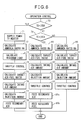
- FIG. 6 shows the operational control routine for working this second embodiment.
- the operational control routine which is shown in FIG. 6 and the operational control routine which is shown in FIG. 4 differ only in step 81 and step 85 which are shown in FIG. 4 . Therefore, only these different parts will be explained
- step 81 of FIG. 4 the target air-fuel ratio is made the lean air-fuel ratio
- step 81 of FIG. 6 the target air-fuel ratio is made the stoichiometric air-fuel ratio.
- step 85a secondary air is fed from the secondary air feed valve 38
- step 85b auxiliary fuel is fed from the auxiliary fuel feed valve 40.
- the concentration of ammonia in the exhaust gas which is exhausted from the combustion chamber 5 is detected by the ammonia concentration sensor 41 and, when this ammonia concentration exceeds a predetermined allowable concentration, secondary air is fed into the engine exhaust passage. That is, in this third embodiment, even after the exhaust purification catalyst 19 is activated, secondary air is fed to cause the unburned ammonia to oxidize.
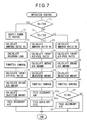
- FIG. 7 shows the operational control routine for working this third embodiment.
- Step 70 to step 90 in the operational control routine shown in FIG. 7 is exactly the same as step 70 to step 90 in the operational control routine shown in FIG. 6 .
- the routine shown in FIG. 7 and the routine shown in FIG. 6 differ only in that, in FIG. 7 , after step 90, the two steps 91 and 92 are added.
- step 91 it is judged if the concentration D of ammonia which is exhausted from the combustion chamber 5 is higher than a predetermined allowable concentration DX.
- D>DX the routine proceeds to step 91 where secondary air is fed from the secondary air feed valve 38.
- the air-fuel ratio is made rich to prevent the exhaust purification catalyst 19 from deteriorating due to heat. If the air-fuel ratio is made rich, the amount of unburned fuel inside of the combustion chamber 5 increases and the heat of combustion is consumed for raising the temperature of the unburned fuel, so the exhaust gas temperature falls. Therefore, the exhaust purification catalyst 19 can be prevented from deteriorating due to heat. However, if the air-fuel ratio is made rich, the amount of unburned ammonia which is exhausted from the inside of the combustion chamber 5 increases, so secondary air is fed into the engine exhaust passage to make this unburned ammonia oxidize.
- FIG. 8 shows an operational control routine for working this fourth embodiment.
- Step 70 to step 90 in the operational control routine shown in FIG. 8 is exactly the same as step 70 to step 90 in the operational control routine shown in FIG. 6 .
- the routine shown in FIG. 8 and the routine shown in FIG. 6 differs only in that after step 90 in FIG. 8 , three steps 93, 94, and 95 are added.
- step 93 it is judged if the temperature TC of the exhaust purification catalyst 19 exceeds the predetermined limit temperature Tmax.
- Tmax the routine proceeds to step 94 where the amount of ammonia which is injected from the ammonia injector 13 and the amount of reformed gas which is injected from the reformed gas injector 36 are increased and the air-fuel ratio is made rich.
- step 95 secondary air is fed from the secondary air feed valve 38.
Landscapes
- Engineering & Computer Science (AREA)
- Chemical & Material Sciences (AREA)
- Combustion & Propulsion (AREA)
- Mechanical Engineering (AREA)
- General Engineering & Computer Science (AREA)
- Oil, Petroleum & Natural Gas (AREA)
- Chemical Kinetics & Catalysis (AREA)
- Health & Medical Sciences (AREA)
- Toxicology (AREA)
- Exhaust Gas After Treatment (AREA)
Abstract
Description
- The present invention relates to an ammonia burning internal combustion engine.
- In the past, in internal combustion engines, mainly fossil fuels have been used as fuel. However, in this case, if burning the fuel, CO2 is produced, which causes the advance of global warming. As opposed to this, even if burning ammonia, no CO2 is produced at all. Therefore, to prevent CO2 from being produced, an internal combustion engine is known which uses ammonia as fuel (see Patent Literature 1).
- However, ammonia is harder to burn compared with fossil fuels. Therefore, when using ammonia as a fuel, some sort of measure is required for making the ammonia easier to burn. Therefore, in the above-mentioned internal combustion engine, the exhaust heat is utilized to reform the ammonia and thereby produce reformed gas from hydrogen and nitrogen, the hydrogen in the produced reformed gas is stored in a hydrogen storage alloy, and the combustion chamber is fed with not only ammonia, but also the hydrogen which is stored in the hydrogen storage alloy to thereby enable easy burning even when using ammonia as a fuel.
-
- Patent Literature 1: Japanese Patent
- Publication (A) No.
5-332152 - However, if using a hydrogen storage alloy, not only does the weight become heavier, but also control for making the hydrogen storage alloy store the hydrogen and control for making the hydrogen storage alloy release the stored hydrogen are necessary, so the system for treating the hydrogen becomes complicated. Therefore, the actual situation is that the industry does not want to use hydrogen storage alloys much at all. In this regard, if not using a hydrogen storage alloy, when, like at the time of engine startup, the reformer is low in temperature and therefore the reformer is low in reforming ability, the required sufficient hydrogen cannot be obtained and therefore some sort of measure becomes required.
- Therefore, in the present invention, there is provided an ammonia burning internal combustion engine which uses ammonia as fuel, wherein a reformer which reforms ammonia to produce reformed gas which contains hydrogen is provided, the reformed gas is fed to an inside of a combustion chamber in addition to ammonia, an exhaust purification catalyst is arranged in an engine exhaust passage, a secondary air feed device is arranged in the engine exhaust passage upstream of the exhaust purification catalyst, an ammonia ratio which shows a ratio of an amount of fed ammonia to a total amount of fed fuel after completion of warmup is preset in accordance with an operating state of the engine, and when a reforming ability of the reformer is less than a predetermined reforming ability, the ammonia ratio is made to increase to more than the ammonia ratio after completion of warmup which is preset in accordance with the operating state of the engine, and secondary air is fed from a secondary air feed device to inside the engine exhaust passage upstream of the exhaust purification catalyst.
- When the reforming ability of the reformer is a predetermined reforming ability or less, the ammonia ratio is made to increase over the ammonia ratio after completion of warmup, which is preset in accordance with the operating state of the engine, so as to give good combustion even if sufficient hydrogen is not produced at the reformer. At this time, the unburned ammonia which is exhausted from the combustion chamber increases, but this unburned ammonia is made to oxidize by the secondary air which is fed from the secondary air feed device.
-
-
FIG. 1 is an overview of an internal combustion engine. -
FIG. 2 is a view which shows an ammonia ratio RA. -
FIG. 3 is a time chart which shows changes in the ammonia ratio RA etc. -
FIG. 4 is a flow chart for operational control. -
FIG. 5 is a time chart which shows changes in the ammonia ratio RA etc. -
FIG. 6 is a flow chart for operational control. -
FIG. 7 is a flow chart for operational control. -
FIG. 8 is a flow chart for operational control. - Referring to
FIG. 1, 1 indicates an internal combustion engine body, 2 a cylinder block, 3 a cylinder head, 4 a piston, 5 a combustion chamber, 6 a plasma jet ignition plug which is arranged at the center of the top surface of thecombustion chamber 5 and emits a plasma jet, 7 an intake valve, 8 an intake port, 9 an exhaust valve, and 10 an exhaust port. The intake port 8 is connected through an intake branch pipe 11 to asurge tank 12. In each intake branch pipe 11, anammonia injector 13 for injecting gaseous ammonia toward the interior of each corresponding intake port 8 is arranged. - The
surge tank 12 is connected through anintake duct 14 to anair cleaner 15. In theintake duct 14, athrottle valve 16 which is driven by an actuator and an intakeair amount detector 17 using for example a hot wire are arranged. On the other hand, theexhaust port 10 is connected through anexhaust manifold 18 to anexhaust purification catalyst 19 which has an oxidation function. In the embodiment which is shown inFIG. 1 , areformer 20 and anvaporizer 21 are arranged in the exhaust passage downstream of theexhaust purification catalyst 19. - The
vaporizer 21 is connected through anammonia inflow pipe 22 to afuel tank 23. Inside of thisammonia inflow pipe 22, ashutoff valve 24 which is opened at the time of engine operation and is closed when the engine stops and apressure regulator 25 are arranged. Thefuel tank 23 is filled inside it with 0.8 MPa to 1.0 MPa or so high pressure liquid ammonia. The liquid ammonia inside of thefuel tank 23 is fed through theammonia inflow pipe 22 to the inside of thevaporizer 21. In the embodiment which is shown inFIG. 1 , thevaporizer 21 is formed to be heated by the exhaust gas, therefore the liquid ammonia which is fed to the inside of thevaporizer 21 is made to vaporize inside of thevaporizer 21. - The gaseous ammonia which is made to vaporize inside of the
vaporizer 21 is fed through anammonia outflow pipe 26 to anammonia gas tank 27. The gaseous ammonia inside of theammonia gas tank 27 is fed through a gaseousammonia feed pipe 28 to theammonia injector 13. The gaseous ammonia is injected from theammonia injector 13 toward the corresponding intake port 8. - On the other hand, the
vaporizer 21 is connected through anammonia outflow pipe 29 to thereformer 20. Inside thisammonia outflow pipe 29, areformer control valve 30 which opens when thereformer 20 performs a reforming action and acheck valve 31 which allows flow only from thecarburetor 21 to thereformer 20 are arranged in series. If thereformer control valve 30 opens and the pressure inside of thereformer 20 becomes lower than the pressure inside of thecarburetor 21, the gaseous ammonia inside of thevaporizer 21 is fed through theammonia outflow pipe 29 to the inside of thereformer 20. - In the embodiment which is shown in
FIG. 1 , thereformer 20 is configured so as to be heated by the exhaust gas. Furthermore, thisreformer 20 is provided with anelectric heater 32. Further, inside of thisreformer 20, a catalyst is arranged for promoting the reforming action of the ammonia. Atemperature sensor 33 for detecting the temperature is arranged in thereformer 20. - If the temperature inside of the
reformer 20 becomes the temperature at which the reforming action of ammonia is performed, for example, several hundred degrees, the ammonia which is fed from thevaporizer 21 to the inside of thereformer 20 is broken down into hydrogen and nitrogen (2NH3→N2+3H2), that is, is reformed. As a result, inside thereformer 20, reformed gas which includes hydrogen is produced. If the ammonia is broken down into hydrogen and nitrogen, the mole number becomes double. Further, due also to the heat of expansion of the reformed gas due to the heating action, the pressure inside of thereformer 20 rises. This raised pressure reformed gas is fed through a reformedgas feed pipe 34 to the inside of a reformedgas storage tank 35. - As shown in
FIG. 1 , at each intake branch pipe 11, a reformedgas injector 36 is arranged for injecting reformed gas toward the inside of the corresponding intake port 8. The reformed gas which is stored inside of the reformedgas storage tank 35 is fed to the reformedgas injector 36. From each reformedgas injector 36, reformed gas is injected toward the inside of the corresponding intake port 8. - As shown in
FIG. 1 , a secondaryair feed device 37 is arranged in the engine exhaust passage upstream of theexhaust purification catalyst 19, that is, inside of theexhaust manifold 18. This secondaryair feed device 37 is comprised of a secondaryair feed valve 38 for feeding secondary air to the inside of theexhaust manifold 18 and anair pump 39 for feeding secondary air to this secondaryair feed valve 38. Further, inside theexhaust manifold 18, an auxiliaryfuel feed valve 40 is arranged. In the embodiment which is shown inFIG. 1 , the reformed gas inside of the reformedgas storage tank 35 is fed to the auxiliaryfuel feed valve 40. Further, inside of theexhaust manifold 18, anammonia concentration sensor 41 is arranged for detecting the concentration of ammonia in the exhaust gas which is exhausted from thecombustion chamber 5. At theexhaust purification catalyst 19, atemperature sensor 42 is mounted for detecting the temperature of theexhaust purification catalyst 19. - An
electronic control unit 50 is comprised of a digital computer provided with a ROM (read only memory) 52, a RAM (random access memory) 53, a CPU (microprocessor) 54, aninput port 55, and anoutput port 56, which are connected to each other by abi-directional bus 51. An output signal of the intakeair amount detector 17, an output signal of theammonia concentration sensor 41, and output signals of thetemperature sensors input port 55 throughcorresponding AD converters 57. Further, anaccelerator pedal 60 is connected to aload sensor 61 generating an output voltage proportional to the amount of depression L of theaccelerator pedal 60. The output voltage of theload sensor 61 is input through acorresponding AD converter 57 to theinput port 55. Further, theinput port 55 is connected to acrank angle sensor 62 generating an output pulse each time a crankshaft rotates by for example 30°. On the other hand, theoutput port 56 is connected to anignition circuit 63 of the plasmajet ignition device 6. Furthermore, theoutput port 56 is connected through acorresponding drive circuit 58 to theammonia injector 13, the drive actuator of thethrottle valve 16, shut-offvalve 24,pressure regulator 25,reformer control valve 31,electric heater 32, reformedgas injector 36, secondaryair feed valve 38,air pump 39, and auxiliaryfuel feed valve 40. -
FIG. 2 shows the ammonia ratio RA (%) which shows the ratio of the amount of fed ammonia to the total amount of fed fuel after warmup is completed. The solid lines RA1, RA2, ... RAi inFIG. 2 show the equivalent ammonia ratio lines. From RA1 toward RAi, the ammonia ratio becomes larger. Note that inFIG. 2 , the ordinate L shows the engine load, while the abscissa N shows the engine speed. - Ammonia is harder to burn than reformed gas. Therefore, to make the mixed gas of ammonia and reformed gas ignite well and burn in the
combustion chamber 5, it is necessary to make the ammonia ratio smaller as the mixed gas temperature at the time of ignition, is low. Therefore, in this embodiment according to the present invention, as shown inFIG. 2 , the more the engine load L falls, the more the ammonia ratio RA is lowered and the higher the engine speed N becomes, the more the ammonia ratio RA can be lowered. - That is, the more the engine load L falls, the smaller the opening degree of the
throttle valve 16 is made, so the compression end pressure inside of thecombustion chamber 5 becomes lower the more the engine load L falls. Therefore, the temperature of the mixed gas inside thecombustion chamber 5 at the end of the compression stroke in which ignition is performed becomes lower the more the engine load L falls. Therefore, as shown inFIG. 2 , the ammonia ratio RA is made to fall the more the engine load L falls. - On the other hand, the ignition timing is advanced more the higher the engine speed N becomes. Therefore, the pressure inside of the
combustion chamber 5 at the time when ignition is performed becomes lower the higher the engine speed N becomes. Therefore, the temperature of the mixed gas inside thecombustion chamber 5 at the time when combustion is performed becomes lower the higher the engine speed N becomes and therefore, as shown inFIG. 2 , the ammonia ratio RA is made to fall the higher the engine speed N becomes. In this embodiment according to the present invention, the ammonia ratio RA which is shown inFIG. 2 is stored in advance inside theROM 52. After warmup is completed, the ammonia ratio RA which is stored is used as the ammonia ratio. - Next, while referring to the time chart which is shown in
FIG. 3 , a first embodiment of operational control according to the present invention will be explained. Note that,FIG. 3 shows the changes in the catalyst temperature TC of theexhaust purification catalyst 19, the temperature TB of thereformer 20, the ammonia ratio RA of the fuel which is fed to thecombustion chamber 5, the air-fuel ratio A/F in thecombustion chamber 5, the amount of secondary air Q which is fed from the secondaryair feed valve 38, and the auxiliary fuel which is fed from the auxiliaryfuel feed valve 40, that is, the amount of feed M of the reformed gas, from the time right after engine startup. Note that, inFIG. 3 , TCX shows the activation temperature of theexhaust purification catalyst 19. Further, in the present invention, it is judged if thereformer 20 has a predetermined reforming ability, for example, whether thereformer 20 has a reforming ability which enables production of a predetermined amount of hydrogen. In the embodiment of the present invention, when the temperature TB of thereformer 20 exceeds the predetermined set temperature TBX which is shown inFIG. 3 , it is judged that thereformer 20 has the predetermined reforming ability. - Now, at the time right after engine startup, as shown in
FIG. 3 , the catalyst temperature TC is low and the temperature TB of thereformer 20 is also low. That is, right after engine startup, the reforming ability of thereformer 20 is less than the predetermined reforming ability. Therefore, in thereformer 20, a sufficient amount of hydrogen cannot be produced. At this time, the reformedgas injector 36 injects from it reformed gas which is stored inside the reformedgas storage tank 35, but there are limits to the amount of reformed gas which can be stored inside the reformedgas storage tank 35. That is, right after engine startup, the reformed gas is insufficient. - On the other hand, as will be understood from
FIG. 2 , the ammonia ratio RA which gives good combustion is determined by the operating state of the engine, that is, the engine load L and the engine speed N. However, when the reformed gas is insufficient, even if the ammonia ratio is made the ammonia ratio RA which is determined from the operating state of the engine, the necessary amount of reformed gas cannot be secured, so good combustion becomes impossible. - Therefore, in the present invention, when the reforming ability of
reformer 20 is less than the predetermined reforming ability, the ammonia ratio is made to increase over the ammonia ratio RA after completion of warmup, shown by the broken line inFIG. 3 , which is preset in accordance with the operating state of the engine, that is, is made to increase over the ammonia ratio RA which is shown by the map ofFIG. 2 . If the ammonia ratio RA is increased, the required amount of reformed gas decreases and therefore the required amount of reformed gas can be sufficiently secured. - On the other hand, as will be understood from
FIG. 2 , to obtain good combustion when the ammonia ratio RA increases, the engine load L has to be raised. Therefore, in this embodiment according to the present invention, when the ammonia ratio RA is increased, the engine load L is increased. This increase of the engine load L is performed by increasing the opening degree of thethrottle valve 16. Further, in this embodiment according to the present invention, if increasing the ammonia ratio RA in this way, as shown inFIG. 3 by the solid line, the air-fuel ratio A/F is made the stoichiometric air-fuel ratio. - On the other hand, when the reforming ability of the
reformer 20 is less than the predetermined reforming ability, as shown inFIG. 3 by the broken line, the air-fuel ratio can be made rich. At this time, the ammonia feed rate is made to increase. Further, at this time, the engine load L is also made to increase. - On the other hand, if the ammonia ratio RA is made to increase in this way, the amount of unburned ammonia which is exhausted from the
combustion chamber 5 increases. Therefore, in the present invention, when the ammonia ratio RA is made to increase, to make this unburned ammonia oxidize, secondary air is fed from the secondaryair feed device 37 to inside the engine exhaust passage upstream of theexhaust purification catalyst 19. At this time, theexhaust purification catalyst 19 is not activated, but the unburned ammonia is oxidized relatively well if secondary air is fed even if theexhaust purification catalyst 19 is not activated. - On the other hand, in this first embodiment, when the reforming ability of the
reformer 20 becomes more than the predetermined reforming ability, until theexhaust purification catalyst 19 is activated, that is, until the temperature TC of theexhaust purification catalyst 19 exceeds the activation temperature TCX, the air-fuel ratio A/F is made lean and auxiliary fuel is fed into the engine exhaust passage upstream of theexhaust purification catalyst 19 from the auxiliaryfuel feed valve 40. That is, at this time, the exhaust gas contains excess oxygen, so the fed auxiliary fuel is made to oxidize on theexhaust purification catalyst 19. The heat of oxidizing reaction at this time causes the temperature of theexhaust purification catalyst 19 to rise. -
FIG. 4 shows the operational control routine for working the first embodiment which is shown inFIG. 3 .
Referring toFIG. 4 , first, atstep 70, it is judged if the temperature TB of thereformer 20 is lower than the predetermined set temperature TBX. When TB<TBX, the routine proceeds to step 71 where theelectric heater 32 of thereformer 20 is energized, whereby the heating action of thereformer 20 is started. Next, atstep 72, the ammonia ratio RA is calculated. This ammonia ratio RA is made a value which is larger than the ammonia ratio after completion of warmup which is shown inFIG. 2 . - Next, at
step 73, the calculated ammonia ratio RA is used to calculate the demanded load which gives good combustion. Next, atstep 74, the opening degree of thethrottle valve 16 is controlled so that the engine load satisfies this demanded load. At this time, the opening degree of thethrottle valve 16 becomes larger and the engine load also becomes larger. Next, atstep 75, the target air-fuel ratio is calculated. This target air-fuel ratio is the stoichiometric air-fuel ratio or the rich air-fuel ratio. Next, atstep 76, the intake air amount is calculated from the output signal of the intakeair amount detector 17. - Next, at
step 77, the calculated ammonia ratio RA, target air-fuel ratio, and intake air amount are used as the basis to calculate the amount of ammonia to be injected from theammonia injector 13 and the amount of reformed gas to be injected from the reformedgas injector 36. Based on these calculated values, the ammonia and reformed gas are injected from theammonia injector 13 and the reformedgas injector 36. Next, atstep 78, secondary air is fed from the secondaryair feed valve 38. - On the other hand, when it is judged at
step 70 that TB≥TBX, that is, when thereformer 20 starts to produce hydrogen, the routine proceeds to step 79. At this time, the energizing of theelectric heater 32 is stopped. Atstep 79, it is judged if the catalyst temperature TC is lower than the activation temperature TCX. When TC<TCX, the routine proceeds to step 80 where the ammonia ratio RA is calculated from the map which is shown inFIG. 2 . Next, atstep 81, the target air-fuel ratio is calculated. At this time, the target air-fuel ratio is made the lean air-fuel ratio. Next, atstep 82, the intake air amount is calculated from the output signal of the intakeair amount detector 17. - Next, at
step 83, the calculated ammonia ratio RA, target air-fuel ratio, and intake air amount are used as the basis to calculate the amount of ammonia to be injected from theammonia injector 13 and the amount of reformed gas to be injected from the reformedgas injector 36. Based on these calculated values, the ammonia and reformed gas are injected from theammonia injector 13 and the reformedgas injector 36. Next, atstep 84, the opening degree of thethrottle valve 16 is controlled to the throttle valve opening degree in accordance with the engine load. Next, atstep 85, auxiliary fuel is fed from the auxiliaryfuel feed valve 40. - On the other hand, if it is judged at
step 79 that TC≥TCX, that is, if theexhaust purification catalyst 19 is activated, the routine proceeds to step 86 where the ammonia ratio RA is calculated from the map which is shown inFIG. 2 . Next, atstep 87, the target air-fuel ratio is calculated. At this time, the target air-fuel ratio is made the stoichiometric air-fuel ratio. Next, atstep 88, the intake air amount is calculated from the output signal of the intakeair amount detector 17. - Next, at
step 89, the calculated ammonia ratio RA, target air-fuel ratio, and intake air amount are used as the basis to calculate the amount of ammonia to be injected from theammonia injector 13 and the amount of reformed gas to be injected from the reformedgas injector 36. Based on these calculated values, the ammonia and reformed gas are injected from theammonia injector 13 and the reformedgas injector 36. Next, atstep 90, the opening degree of thethrottle valve 16 is controlled to the throttle valve opening degree in accordance with the engine load. -
FIG. 5 shows a second embodiment. In this second embodiment, the difference from the first embodiment which is shown inFIG. 3 is that in the period after TB≥TBX to when TC≥TCX, the air-fuel ratio A/F is made the stoichiometric air-fuel ratio and secondary air is fed. That is, in this second embodiment, when the reforming ability of thereformer 20 becomes more than the predetermined reforming ability, until theexhaust purification catalyst 19 is activated, secondary air and auxiliary fuel are fed into the engine exhaust passage upstream of theexhaust purification catalyst 19. -
FIG. 6 shows the operational control routine for working this second embodiment. The operational control routine which is shown inFIG. 6 and the operational control routine which is shown inFIG. 4 differ only instep 81 and step 85 which are shown inFIG. 4 . Therefore, only these different parts will be explained - That is, at
step 81 ofFIG. 4 , the target air-fuel ratio is made the lean air-fuel ratio, while atstep 81 ofFIG. 6 , the target air-fuel ratio is made the stoichiometric air-fuel ratio. On the other hand, inFIG. 6 , instead ofstep 85 ofFIG. 4 , twosteps step 85a, secondary air is fed from the secondaryair feed valve 38, while atstep 85b, auxiliary fuel is fed from the auxiliaryfuel feed valve 40. - Next, a third embodiment will be explained. In this third embodiment, the concentration of ammonia in the exhaust gas which is exhausted from the
combustion chamber 5 is detected by theammonia concentration sensor 41 and, when this ammonia concentration exceeds a predetermined allowable concentration, secondary air is fed into the engine exhaust passage. That is, in this third embodiment, even after theexhaust purification catalyst 19 is activated, secondary air is fed to cause the unburned ammonia to oxidize. -
FIG. 7 shows the operational control routine for working this third embodiment.Step 70 to step 90 in the operational control routine shown inFIG. 7 is exactly the same asstep 70 to step 90 in the operational control routine shown inFIG. 6 . The routine shown inFIG. 7 and the routine shown inFIG. 6 differ only in that, inFIG. 7 , afterstep 90, the twosteps - That is, in the routine which is shown in
FIG. 7 , atstep 91, it is judged if the concentration D of ammonia which is exhausted from thecombustion chamber 5 is higher than a predetermined allowable concentration DX. When D>DX, the routine proceeds to step 91 where secondary air is fed from the secondaryair feed valve 38. - Next, a fourth embodiment will be explained. In this fourth embodiment, when the temperature TC of the
exhaust purification catalyst 19 exceeds a predetermined limit temperature Tmax, the air-fuel ratio is made rich to prevent theexhaust purification catalyst 19 from deteriorating due to heat. If the air-fuel ratio is made rich, the amount of unburned fuel inside of thecombustion chamber 5 increases and the heat of combustion is consumed for raising the temperature of the unburned fuel, so the exhaust gas temperature falls. Therefore, theexhaust purification catalyst 19 can be prevented from deteriorating due to heat. However, if the air-fuel ratio is made rich, the amount of unburned ammonia which is exhausted from the inside of thecombustion chamber 5 increases, so secondary air is fed into the engine exhaust passage to make this unburned ammonia oxidize. -
FIG. 8 shows an operational control routine for working this fourth embodiment.Step 70 to step 90 in the operational control routine shown inFIG. 8 is exactly the same asstep 70 to step 90 in the operational control routine shown inFIG. 6 . The routine shown inFIG. 8 and the routine shown inFIG. 6 differs only in that afterstep 90 inFIG. 8 , threesteps - That is, in the routine which is shown in
FIG. 8 , atstep 93, it is judged if the temperature TC of theexhaust purification catalyst 19 exceeds the predetermined limit temperature Tmax. When TC>Tmax, the routine proceeds to step 94 where the amount of ammonia which is injected from theammonia injector 13 and the amount of reformed gas which is injected from the reformedgas injector 36 are increased and the air-fuel ratio is made rich. Next, atstep 95, secondary air is fed from the secondaryair feed valve 38. -
- 5 combustion chamber
- 7 intake valve
- 8 intake port
- 13 ammonia injector
- 19 exhaust purification catalyst
- 20 reformer
- 21 vaporizer
- 23 fuel tank
- 27 ammonia gas tank
- 35 reformed gas storage tank
- 36 reformed gas injector
- 37 secondary air feed device
- 40 auxiliary fuel feed valve
Claims (8)
- An ammonia burning internal combustion engine which uses ammonia as fuel, wherein a reformer which reforms ammonia to produce reformed gas which contains hydrogen is provided, the reformed gas is fed to an inside of a combustion chamber in addition to ammonia, an exhaust purification catalyst is arranged in an engine exhaust passage, a secondary air feed device is arranged in the engine exhaust passage upstream of the exhaust purification catalyst, an ammonia ratio which shows a ratio of an amount of fed ammonia to a total amount of fed fuel after completion of warmup is preset in accordance with an operating state of the engine, and when a reforming ability of the reformer is less than a predetermined reforming ability, the ammonia ratio is made to increase to more than the ammonia ratio after completion of warmup which is preset in accordance with the operating state of the engine, and secondary air is fed from a secondary air feed device to inside the engine exhaust passage upstream of the exhaust purification catalyst.
- The ammonia burning internal combustion engine as claimed in claim 1, wherein the ammonia ratio after completion of warmup is preset as a function of engine load and engine speed.
- The ammonia burning internal combustion engine as claimed in claim 1, wherein when the reforming ability of the reformer is less than the predetermined reforming ability, engine load is made to increase and an ammonia feed amount is made to increase.
- The ammonia burning internal combustion engine as claimed in claim 1, wherein when the reforming ability of the reformer is less than the predetermined reforming ability, an air-fuel ratio is made rich.
- The ammonia burning internal combustion engine as claimed in claim 1, wherein when the reforming ability of the reformer becomes more than the predetermined reforming ability, an air-fuel ratio is made lean until the exhaust purification catalyst is activated and auxiliary fuel is fed into the engine exhaust passage upstream of the exhaust purification catalyst.
- The ammonia burning internal combustion engine as claimed in claim 1, wherein when the reforming ability of the reformer becomes more than the predetermined reforming ability, secondary air and auxiliary fuel are fed into the engine exhaust passage upstream of the exhaust purification catalyst until the exhaust purification catalyst is activated.
- The ammonia burning internal combustion engine as claimed in claim 1, which an ammonia concentration in the exhaust gas which is exhausted from the combustion chamber is detected, and when the ammonia concentration exceeds a predetermined allowable concentration, secondary air is fed into the engine exhaust passage.
- The ammonia burning internal combustion engine as claimed in claim 1, wherein when a temperature of the exhaust purification catalyst exceeds a predetermined limit temperature, an air-fuel ratio is made rich and secondary air is fed into the engine exhaust passage.
Applications Claiming Priority (2)
| Application Number | Priority Date | Filing Date | Title |
|---|---|---|---|
| US12/785,034 US8464515B2 (en) | 2010-05-21 | 2010-05-21 | Ammonia burning internal combustion engine |
| PCT/JP2011/059991 WO2011145434A1 (en) | 2010-05-21 | 2011-04-18 | Ammonia-burning internal combustion engine |
Publications (2)
| Publication Number | Publication Date |
|---|---|
| EP2573376A1 true EP2573376A1 (en) | 2013-03-27 |
| EP2573376A4 EP2573376A4 (en) | 2018-03-28 |
Family
ID=44971385
Family Applications (1)
| Application Number | Title | Priority Date | Filing Date |
|---|---|---|---|
| EP11783371.5A Withdrawn EP2573376A4 (en) | 2010-05-21 | 2011-04-18 | Ammonia-burning internal combustion engine |
Country Status (5)
| Country | Link |
|---|---|
| US (1) | US8464515B2 (en) |
| EP (1) | EP2573376A4 (en) |
| JP (1) | JP5310945B2 (en) |
| CN (1) | CN102906409B (en) |
| WO (1) | WO2011145434A1 (en) |
Cited By (2)
| Publication number | Priority date | Publication date | Assignee | Title |
|---|---|---|---|---|
| FR3133768A1 (en) * | 2022-03-28 | 2023-09-29 | Psa Automobiles Sa | HIGH CONCENTRATION AMMONIA OXIDATION CATALYST |
| GB2618146A (en) * | 2022-04-29 | 2023-11-01 | Perkins Engines Co Ltd | Ammonia fuelled engine |
Families Citing this family (40)
| Publication number | Priority date | Publication date | Assignee | Title |
|---|---|---|---|---|
| US8534237B2 (en) * | 2010-04-22 | 2013-09-17 | Toyota Jidosha Kabushiki Kaisha | Control system of internal combustion engine |
| US8904994B2 (en) * | 2010-04-26 | 2014-12-09 | Toyota Jidosha Kabushiki Kaisha | Ammonia burning internal combustion engine |
| US8370049B1 (en) * | 2010-05-21 | 2013-02-05 | Toyota Jidosha Kabushiki Kaisha | Control system of internal combustion engine |
| US8423265B2 (en) * | 2010-05-21 | 2013-04-16 | Toyota Jidosha Kabushiki Kaisha | Control system of internal combustion engine |
| US8961923B2 (en) | 2010-05-27 | 2015-02-24 | Shawn Grannell | Autothermal ammonia cracker |
| US8561578B2 (en) * | 2010-12-30 | 2013-10-22 | Kabushiki Kaisha Toyota Chuo Kenkyusho | Hydrogen generator and internal combustion engine provided with hydrogen generator |
| WO2012154617A1 (en) * | 2011-05-06 | 2012-11-15 | eRevolution Technologies, Inc. | Stable hydrogen- containing carbon free nitrogen based fuels and systems and methods for generating energy therefrom |
| JP5472203B2 (en) * | 2011-05-25 | 2014-04-16 | 株式会社デンソー | Cogeneration system |
| JP5862443B2 (en) * | 2012-05-10 | 2016-02-16 | 株式会社デンソー | Fuel vaporizer |
| US12359633B2 (en) | 2012-05-31 | 2025-07-15 | Transportation Ip Holdings, Llc | Method for operating an engine |
| US11578684B2 (en) * | 2012-05-31 | 2023-02-14 | Transportation Ip Holdings, Llc | Method for operating an engine |
| US9249720B2 (en) * | 2013-04-19 | 2016-02-02 | Kabushiki Kaisha Toyota Chuo Kenkyusho | Ammonia fueled internal combustion engine with exhaust purification |
| DE102014207641A1 (en) * | 2014-04-23 | 2015-10-29 | Siemens Aktiengesellschaft | Process for exhaust aftertreatment and combustion system |
| JP6518539B2 (en) * | 2015-07-17 | 2019-05-22 | 好朗 岩井 | Combustion system |
| CN106168172B (en) * | 2016-07-12 | 2019-06-21 | 大连理工大学 | On-line fuel reforming variable combustion mode engine and control method |
| NO343554B1 (en) * | 2017-08-14 | 2019-04-01 | Lars Harald Heggen | Zero discharge propulsion system and ammonia fuel generating system |
| JP7124776B2 (en) * | 2019-03-25 | 2022-08-24 | 株式会社豊田自動織機 | engine |
| WO2020241604A1 (en) * | 2019-05-29 | 2020-12-03 | 株式会社豊田自動織機 | Engine system |
| WO2023244279A1 (en) | 2022-06-17 | 2023-12-21 | Basf Corporation | Exhaust treatment system for ammonia-fueled vehicles |
| WO2021126935A1 (en) | 2019-12-19 | 2021-06-24 | Basf Corporation | Exhaust treatment system for ammonia-fueled vehicles |
| JP7331784B2 (en) * | 2020-06-01 | 2023-08-23 | Jfeエンジニアリング株式会社 | diesel engine |
| CN112012854B (en) * | 2020-08-31 | 2022-08-05 | 天津大学 | Engine combustion system for renewable hydrogen storage fuel |
| CN113446134A (en) * | 2021-06-16 | 2021-09-28 | 哈尔滨工程大学 | Gaseous ammonia fuel supply system with stable injection pressure |
| KR102513849B1 (en) * | 2021-09-06 | 2023-03-23 | 희성촉매 주식회사 | System and method for preventing corrosion at the fuel supply line for engine using ammonia as fuels |
| JP7722143B2 (en) * | 2021-11-01 | 2025-08-13 | 株式会社Ihi | Engine intake and exhaust systems |
| CN114183275B (en) * | 2021-11-09 | 2022-11-29 | 佛山仙湖实验室 | Ammonia-hydrogen mixed gas power system based on hydrogen ignition and operation control method |
| JP7160226B1 (en) | 2022-01-20 | 2022-10-25 | Jfeエンジニアリング株式会社 | diesel engine |
| CN114922748B (en) * | 2022-03-31 | 2024-09-24 | 武汉神动汽车电子电器股份有限公司 | Hydrogen generating and supplying system and method suitable for ignition starting of ammonia fuel internal combustion engine |
| CN114991971A (en) * | 2022-04-22 | 2022-09-02 | 宁波中策动力机电集团有限公司 | Ammonia gas hydrogen-doped combustion engine device and hydrogen doping amount control method |
| CN115306596A (en) * | 2022-07-27 | 2022-11-08 | 清华大学 | Hydrogen-ammonia fusion engine and combustion control method thereof |
| JP2025530401A (en) | 2022-09-16 | 2025-09-11 | ビーエーエスエフ ソシエタス・ヨーロピア | Reduced CO2 emissions method for carrying out endothermic reactions in a reactor |
| CN119894813A (en) | 2022-09-16 | 2025-04-25 | 巴斯夫欧洲公司 | High pressure and low temperature recycle NH3Reforming process |
| US12084992B2 (en) | 2022-11-04 | 2024-09-10 | Kantilal Khatri | Clean electricity generating system and method |
| CN116066246B (en) * | 2022-12-20 | 2025-08-26 | 清华大学 | On-board ammonia-hydrogen conversion device and online conversion system |
| WO2025024799A1 (en) * | 2023-07-26 | 2025-01-30 | Regents Of The University Of Minnesota | Methods and systems for start-up of ammonia burning systems |
| CN117386531A (en) * | 2023-09-06 | 2024-01-12 | 武汉理工大学 | Ammonia engine exhaust gas reforming treatment system and method |
| CN117345475A (en) * | 2023-09-25 | 2024-01-05 | 北京工业大学 | Ammonia catalytic cracking reforming device and engine control method based on exhaust gas waste heat utilization |
| US12552419B2 (en) * | 2023-10-31 | 2026-02-17 | Cummins Power Generation Inc. | Ammonia cracking for multi-fuel engines |
| WO2025252739A1 (en) * | 2024-06-03 | 2025-12-11 | Accelleron Switzerland Ltd. | Power generating system comprising an hydrogen supply system |
| CN119084139A (en) * | 2024-08-29 | 2024-12-06 | 广西玉柴机器股份有限公司 | Ammonia diesel engine anti-ammonia liquefaction device and control method |
Family Cites Families (10)
| Publication number | Priority date | Publication date | Assignee | Title |
|---|---|---|---|---|
| JPH05332152A (en) | 1991-06-25 | 1993-12-14 | Koji Korematsu | Ammonia combustion engine |
| DE10300298A1 (en) * | 2003-01-02 | 2004-07-15 | Daimlerchrysler Ag | Exhaust gas aftertreatment device and method |
| JP4779721B2 (en) * | 2006-03-10 | 2011-09-28 | 株式会社日立製作所 | Engine system |
| WO2008150901A1 (en) | 2007-05-29 | 2008-12-11 | Hydrogen Engine Center, Inc. | Hydrogen and ammonia fueled internal compustion engine |
| JP2009085169A (en) * | 2007-10-02 | 2009-04-23 | Toyota Motor Corp | Control device for internal combustion engine |
| JP4919922B2 (en) * | 2007-10-02 | 2012-04-18 | 株式会社豊田中央研究所 | Control device for internal combustion engine |
| JP2009097419A (en) * | 2007-10-16 | 2009-05-07 | Toyota Central R&D Labs Inc | Engine system |
| US7574993B2 (en) * | 2007-11-02 | 2009-08-18 | Gillespie Donald E | Apparatus, system and method for operating a dual fueled spark ignition engine |
| US8272353B2 (en) * | 2008-02-19 | 2012-09-25 | University Of Ontario Institute Of Technology | Apparatus for using ammonia as a sustainable fuel, refrigerant and NOx reduction agent |
| JP5365037B2 (en) * | 2008-03-18 | 2013-12-11 | トヨタ自動車株式会社 | Hydrogen generator, ammonia burning internal combustion engine, and fuel cell |
-
2010
- 2010-05-21 US US12/785,034 patent/US8464515B2/en not_active Expired - Fee Related
-
2011
- 2011-04-18 WO PCT/JP2011/059991 patent/WO2011145434A1/en not_active Ceased
- 2011-04-18 CN CN201180025205.XA patent/CN102906409B/en not_active Expired - Fee Related
- 2011-04-18 JP JP2012515801A patent/JP5310945B2/en not_active Expired - Fee Related
- 2011-04-18 EP EP11783371.5A patent/EP2573376A4/en not_active Withdrawn
Non-Patent Citations (1)
| Title |
|---|
| See references of WO2011145434A1 * |
Cited By (5)
| Publication number | Priority date | Publication date | Assignee | Title |
|---|---|---|---|---|
| FR3133768A1 (en) * | 2022-03-28 | 2023-09-29 | Psa Automobiles Sa | HIGH CONCENTRATION AMMONIA OXIDATION CATALYST |
| WO2023187269A1 (en) * | 2022-03-28 | 2023-10-05 | Psa Automobiles Sa | High-concentration ammonia oxidation catalyst |
| GB2618146A (en) * | 2022-04-29 | 2023-11-01 | Perkins Engines Co Ltd | Ammonia fuelled engine |
| US11982240B2 (en) | 2022-04-29 | 2024-05-14 | Perkins Engines Company Limited | Ammonia fuelled engine |
| GB2618146B (en) * | 2022-04-29 | 2024-08-07 | Perkins Engines Co Ltd | Ammonia fuelled engine |
Also Published As
| Publication number | Publication date |
|---|---|
| US20110283959A1 (en) | 2011-11-24 |
| EP2573376A4 (en) | 2018-03-28 |
| JP5310945B2 (en) | 2013-10-09 |
| JPWO2011145434A1 (en) | 2013-07-22 |
| CN102906409B (en) | 2015-02-04 |
| US8464515B2 (en) | 2013-06-18 |
| CN102906409A (en) | 2013-01-30 |
| WO2011145434A1 (en) | 2011-11-24 |
Similar Documents
| Publication | Publication Date | Title |
|---|---|---|
| EP2573376A1 (en) | Ammonia-burning internal combustion engine | |
| US8423265B2 (en) | Control system of internal combustion engine | |
| US8370049B1 (en) | Control system of internal combustion engine | |
| US8534237B2 (en) | Control system of internal combustion engine | |
| US8561578B2 (en) | Hydrogen generator and internal combustion engine provided with hydrogen generator | |
| US8151779B1 (en) | Control device of an internal combustion engine | |
| US8904765B2 (en) | Internal combustion engine | |
| US20100180838A1 (en) | Alternative fuel injection system and method for an internal combustion engine | |
| EP2565437A1 (en) | Ammonia-burning internal combustion engine | |
| US10626768B2 (en) | Exhaust purification system of internal combustion engine | |
| US7416572B2 (en) | Apparatus and method for determining reforming catalyst degradation | |
| EP3321482A1 (en) | Exhaust gas control apparatus for internal combustion engine and control method for exhaust gas control apparatus | |
| EP2447494A1 (en) | Exhaust emission control device for internal combustion engine | |
| JP2011231747A (en) | Method and device for detecting fuel cetane number | |
| JP2008045459A (en) | Control device for internal combustion engine | |
| JP7825923B2 (en) | Control device for internal combustion engine | |
| US10267192B2 (en) | Exhaust purification system of internal combustion engine | |
| JP7738970B2 (en) | internal combustion engine | |
| US12595772B2 (en) | Apparatus and method for regulating gaseous fuel pressure and mitigating emissions in an internal combustion engine system | |
| JP2023094805A (en) | internal combustion engine | |
| CN108457728A (en) | Fuel adding set |
Legal Events
| Date | Code | Title | Description |
|---|---|---|---|
| PUAI | Public reference made under article 153(3) epc to a published international application that has entered the european phase |
Free format text: ORIGINAL CODE: 0009012 |
|
| 17P | Request for examination filed |
Effective date: 20121210 |
|
| AK | Designated contracting states |
Kind code of ref document: A1 Designated state(s): AL AT BE BG CH CY CZ DE DK EE ES FI FR GB GR HR HU IE IS IT LI LT LU LV MC MK MT NL NO PL PT RO RS SE SI SK SM TR |
|
| DAX | Request for extension of the european patent (deleted) | ||
| RIN1 | Information on inventor provided before grant (corrected) |
Inventor name: ASO, KOJI Inventor name: FUJIWARA, TAKAHIKO Inventor name: TANAKA, HIROSHI |
|
| RIC1 | Information provided on ipc code assigned before grant |
Ipc: F02D 19/06 20060101ALI20180214BHEP Ipc: F02M 23/04 20060101ALI20180214BHEP Ipc: F02M 25/00 20060101AFI20180214BHEP Ipc: F02D 19/08 20060101ALI20180214BHEP Ipc: F02M 27/02 20060101ALI20180214BHEP Ipc: F02M 21/02 20060101ALI20180214BHEP Ipc: F02M 31/14 20060101ALI20180214BHEP Ipc: F02M 31/18 20060101ALI20180214BHEP Ipc: F02D 41/02 20060101ALI20180214BHEP Ipc: F02M 23/10 20060101ALI20180214BHEP |
|
| RA4 | Supplementary search report drawn up and despatched (corrected) |
Effective date: 20180222 |
|
| RIC1 | Information provided on ipc code assigned before grant |
Ipc: F02M 31/14 20060101ALI20200318BHEP Ipc: F01N 9/00 20060101ALI20200318BHEP Ipc: F02M 31/18 20060101ALI20200318BHEP Ipc: F02D 19/06 20060101AFI20200318BHEP Ipc: F01N 3/30 20060101ALI20200318BHEP Ipc: F02D 41/02 20060101ALI20200318BHEP |
|
| STAA | Information on the status of an ep patent application or granted ep patent |
Free format text: STATUS: EXAMINATION IS IN PROGRESS |
|
| 17Q | First examination report despatched |
Effective date: 20200720 |
|
| GRAP | Despatch of communication of intention to grant a patent |
Free format text: ORIGINAL CODE: EPIDOSNIGR1 |
|
| STAA | Information on the status of an ep patent application or granted ep patent |
Free format text: STATUS: GRANT OF PATENT IS INTENDED |
|
| INTG | Intention to grant announced |
Effective date: 20200909 |
|
| STAA | Information on the status of an ep patent application or granted ep patent |
Free format text: STATUS: THE APPLICATION IS DEEMED TO BE WITHDRAWN |
|
| 18D | Application deemed to be withdrawn |
Effective date: 20210120 |