EP2571319A1 - Methods, apparatuses, anc computer program products for wireless network discovery through passive and active scanning - Google Patents
Methods, apparatuses, anc computer program products for wireless network discovery through passive and active scanning Download PDFInfo
- Publication number
- EP2571319A1 EP2571319A1 EP12183646A EP12183646A EP2571319A1 EP 2571319 A1 EP2571319 A1 EP 2571319A1 EP 12183646 A EP12183646 A EP 12183646A EP 12183646 A EP12183646 A EP 12183646A EP 2571319 A1 EP2571319 A1 EP 2571319A1
- Authority
- EP
- European Patent Office
- Prior art keywords
- wireless
- advertisement service
- generic advertisement
- responses
- required characteristics
- Prior art date
- Legal status (The legal status is an assumption and is not a legal conclusion. Google has not performed a legal analysis and makes no representation as to the accuracy of the status listed.)
- Withdrawn
Links
- 238000000034 method Methods 0.000 title claims abstract description 41
- 238000004590 computer program Methods 0.000 title claims abstract description 22
- 230000004044 response Effects 0.000 claims abstract description 95
- 238000010586 diagram Methods 0.000 description 30
- 238000004891 communication Methods 0.000 description 22
- OVGWMUWIRHGGJP-WVDJAODQSA-N (z)-7-[(1s,3r,4r,5s)-3-[(e,3r)-3-hydroxyoct-1-enyl]-6-thiabicyclo[3.1.1]heptan-4-yl]hept-5-enoic acid Chemical compound OC(=O)CCC\C=C/C[C@@H]1[C@@H](/C=C/[C@H](O)CCCCC)C[C@@H]2S[C@H]1C2 OVGWMUWIRHGGJP-WVDJAODQSA-N 0.000 description 21
- 101000988961 Escherichia coli Heat-stable enterotoxin A2 Proteins 0.000 description 21
- 230000015654 memory Effects 0.000 description 15
- 101100161473 Arabidopsis thaliana ABCB25 gene Proteins 0.000 description 13
- 101100096893 Mus musculus Sult2a1 gene Proteins 0.000 description 13
- 101150081243 STA1 gene Proteins 0.000 description 13
- 101000752249 Homo sapiens Rho guanine nucleotide exchange factor 3 Proteins 0.000 description 11
- 102100021689 Rho guanine nucleotide exchange factor 3 Human genes 0.000 description 11
- 230000009471 action Effects 0.000 description 11
- 238000001514 detection method Methods 0.000 description 10
- 238000005516 engineering process Methods 0.000 description 7
- 230000001413 cellular effect Effects 0.000 description 5
- 230000005540 biological transmission Effects 0.000 description 3
- 230000006870 function Effects 0.000 description 3
- 238000004519 manufacturing process Methods 0.000 description 3
- 230000008569 process Effects 0.000 description 3
- 239000004065 semiconductor Substances 0.000 description 3
- 208000033748 Device issues Diseases 0.000 description 1
- 230000009977 dual effect Effects 0.000 description 1
- 230000000694 effects Effects 0.000 description 1
- 230000004907 flux Effects 0.000 description 1
- 238000003384 imaging method Methods 0.000 description 1
- 230000003287 optical effect Effects 0.000 description 1
- 230000002093 peripheral effect Effects 0.000 description 1
- 238000000060 site-specific infrared dichroism spectroscopy Methods 0.000 description 1
- 239000002699 waste material Substances 0.000 description 1
Images








Classifications
-
- H—ELECTRICITY
- H04—ELECTRIC COMMUNICATION TECHNIQUE
- H04W—WIRELESS COMMUNICATION NETWORKS
- H04W48/00—Access restriction; Network selection; Access point selection
- H04W48/08—Access restriction or access information delivery, e.g. discovery data delivery
- H04W48/14—Access restriction or access information delivery, e.g. discovery data delivery using user query or user detection
-
- H—ELECTRICITY
- H04—ELECTRIC COMMUNICATION TECHNIQUE
- H04W—WIRELESS COMMUNICATION NETWORKS
- H04W48/00—Access restriction; Network selection; Access point selection
- H04W48/16—Discovering, processing access restriction or access information
-
- H—ELECTRICITY
- H04—ELECTRIC COMMUNICATION TECHNIQUE
- H04W—WIRELESS COMMUNICATION NETWORKS
- H04W84/00—Network topologies
- H04W84/02—Hierarchically pre-organised networks, e.g. paging networks, cellular networks, WLAN [Wireless Local Area Network] or WLL [Wireless Local Loop]
- H04W84/10—Small scale networks; Flat hierarchical networks
- H04W84/12—WLAN [Wireless Local Area Networks]
Definitions
- the embodiments relate to wireless communication, and more particularly to improvements in discovering wireless networks having desired service offerings.
- Wireless communication devices can vary from battery powered handheld devices to stationary household and/or commercial devices utilizing an electrical network as a power source. Due to rapid development of the wireless communication devices, a number of areas capable of enabling entirely new types of communication applications have emerged.
- GSM Global System for Mobile communications
- Short-range communication technologies provide communication solutions that avoid some of the problems seen in large cellular networks.
- Bluetooth TM is an example of a short-range wireless technology quickly gaining acceptance in the marketplace.
- other popular short-range communication technologies include Bluetooth TM Low Energy, IEEE 802.11 wireless local area network (WLAN), Wireless USB (WUSB), Ultra Wide-band (UWB), ZigBee (IEEE 802.15.4, IEEE 802.15.4a), and ultra high frequency radio frequency identification (UHF RFID) technologies. All of these wireless communication technologies have features and advantages that make them appropriate for various applications.
- a method comprises: determining, at a wireless device, whether to perform passive or active scanning; transmitting a wireless generic advertisement service request specifying one or more required characteristics of a transmitting device, if the determination is to perform active scanning; passively listening for one or more wireless generic advertisement service responses sent to a broadcast address by one or more wireless devices, the responses including one or more required characteristics of a passive listening device, if the determination is to perform passive scanning; and receiving one or more wireless generic advertisement service responses sent to a broadcast address by one or more wireless devices having the characteristics specified in the transmitted request.
- An example embodiment of the invention further comprises a method wherein if the determination was to perform passive scanning and if the characteristics received in the responses do not match the required characteristics of a passive listening device; then transmitting a wireless generic advertisement service request specifying one or more required characteristics of the passive listening device.
- An example embodiment of the invention further comprises a method wherein some of the one or more wireless devices are access points having the specified characteristics.
- an apparatus comprises:
- An example embodiment of the invention further comprises a computer program product comprising computer executable program code recorded on a computer readable, non-transitory storage medium, the computer executable program code, when executed by a computer processor, comprising:
- a method comprises:
- an apparatus comprises:
- An example embodiment of the invention further comprises a computer program product comprising computer executable program code recorded on a computer readable, non-transitory storage medium, the computer executable program code, when executed by a computer processor, comprising:
- An example wireless network such as a Wireless Local Area Network (WLAN) may be organized as an independent basic service set (IBSS) or an infrastructure basic service set (BSS). Wireless devices in an independent basic service set (IBSS) communicate directly with one another and there is no access point in the IBSS.
- An infrastructure basic service set (BSS) includes a wireless access point (AP) that may be connected to one or more servers and peripheral devices by a wired backbone connection.
- the access point is a central hub to which mobile wireless devices are wirelessly connected.
- the mobile wireless devices typically do not communicate directly with one another, but communicate indirectly through the access point.
- An access point may be connected to other access points by a wired backbone connection in an extended service set (ESS).
- ESS extended service set
- Mobile wireless devices may roam from one wireless connection with one access point to a second wireless connection with a second access point in the ESS, and still be linked to the first access point in the ESS via the wired backbone connection.
- the user's mobile wireless device is typically authenticated to connect with any of the access points in the ESS, in what is referred to as the user's home realm.
- Home realm is the network where the user's WLAN subscription credentials are valid. There may be multiple subscriptions and the mobile device may consider multiple realms as home realms.
- the device can try to find a free WLAN network (which may be cumbersome, as free WLAN networks usually require the user to launch the browser and accept terms and conditions, a step which the device can not do automatically and seamlessly to the user), or use one of the existing credentials it has.
- a WLAN network with existing credentials the device has these two possibilities: [1] The wireless device may connect to an access point in a network belonging to the home realm to which the user has credentials; [2] The wireless device may connect to an access point in a WLAN belonging to a remote realm to which the user's home realm has a roaming agreement enabling the user to use the home realm's credentials.
- the mobile wireless device may attempt to buy a subscription from an access point in a WLAN belonging to a remote realm for which there is no roaming agreement with any of the home realms the credentials the user/device possesses belong to. From convenience and seamless operation point of view, it is desirable that the device attempts to use existing credentials to connect to one of the available access points.
- the mobile wireless device needs to discover whether any of the access points available at the current location belong to the (at least one of the) user possessed credential's home realm, or whether the remote realm to which an access point is connected has a roaming agreement with any of those home realm.
- the IEEE 802.11 standard specifies methods and techniques of wireless local area network (WLAN) operation. Examples include the IEEE 802.11b and 802.11g wireless local area network specifications, which have been a staple technology for traditional WLAN applications in the 2.4 GHz ISM band. The various amendments to the IEEE 802.11 standard were consolidated for IEEE 802.11a, b, d, e, g, h, i, j protocols, into the base standard IEEE 802.11-2007, Wireless Medium Access Control (MAC) and Physical Layer (PHY) Specifications, June 2007 (incorporated herein by reference).
- MAC Wireless Medium Access Control
- PHY Physical Layer
- IEEE 802.11n the IEEE 802.11n
- the planned IEEE 802.11ac the planned IEEE 802.11ad WLAN specifications
- applications of these IEEE 802.11 standards include products such as consumer electronics, telephones, personal computers, and access points for both for home and office.
- IEEE 802.11u-2011 is an amendment to the IEEE 802.11-2007 base standard published as IEEE 802.11u-2011, Wireless LAN Medium Access Control (MAC) and Physical Layer (PHY) Specifications, Amendment 9: Interworking with External Networks , February 25, 2011 (incorporated herein by reference).
- IEEE 802.11u-2011 adds features to improve interworking with external networks.
- IEEE 802.11u-2011 amendment establishes medium access control (MAC) and physical layer (PHY) protocols for an interworking service to permit a wireless mobile device to exchange information with an external network, to enable the selection of networks to connect to, and to enable access to emergency services.
- a Generic Advertisement Service (GAS) is specified in the IEEE 802.11u amendment to enable mobile wireless devices or STAs to discover the availability of information related to desired network services.
- Generic Advertisement Service enables discovery of information about services provided in an independent basic service set (IBSS), information about local access services, information from available Subscription Service Providers (SSP) and/or Subscription Service Provider Networks (SSPNs) or other external networks.
- Generic Advertisement Service enables a wireless mobile device to transmit a Generic Advertisement Service (GAS) initial request frame to request information about network services from access points and it enables an access point to use a generic container, a Generic Advertisement Service (GAS) initial response frame, to advertise information about network services over an IEEE 802.11 network.
- Public Action frames are used to transport the Generic Advertisement Service (GAS) initial request frame and the Generic Advertisement Service (GAS) initial response frame.
- the current procedures specified in the IEEE 802.11u amendment for the generic advertisement service (GAS) protocol require that the mobile device issue a unicast GAS request separately to each access point (AP). Where there are dense networks with many access points, the mobile device may transmit many GAS requests, which will consume power and time. Additionally, the current procedures require a GAS response from all of the access points receiving a GAS request. This unicast information exchange may create a lot of traffic, which may be considered as a waste of bandwidth, since there may be responses transmitted from many access points that are not relevant at all for the roaming mobile device.
- GAS generic advertisement service
- GAS may be considered a form of active scanning, and in some use cases, such as access points in an airport or train station where the flux and mobility of client devices is high, it may become burdensome for the access points to handle dozens of GAS requests e.g. every 20-30 seconds and there are client devices coming to and going out from the access point coverage as persons carrying client devices walk through the coverage of an access point.
- GAS response to GAS request access points provide GAS responses as broadcast transmissions, which enable any mobile wireless device within coverage area to listen to them during passive scanning.
- the mobile wireless device may do network detection using GAS, without making GAS request transmissions, and thereby overloading the network.
- the mobile wireless device relies on other mobile wireless devices to make the GAS request, in effect collaborating with the other mobile wireless devices for effective network detection.
- mobile wireless devices such as STAs may listen not only to beacons, but also to GAS responses sent to the broadcast address by the APs. From the listening (passive scanning) STAs' point of view, these responses may not have "specified characteristics", since the requests (which specify required characteristics of the APs) are placed by other STAs that are actively scanning. From the active scanning STA's point of view, the GAS responses will have the specified characteristics.
- STAs may randomly decide whether they will perform active or passive scanning. For best performance (fastest network selection), a STA would typically do active scan. But, if all STAs did active scan, the network may become overloaded and slow down and all STAs may suffer. In accordance with an example embodiment of the invention, to avoid this situation from happening, some STAs may rely on other STAs to do active scanning. In accordance with an example embodiment of the invention, all GAS responses may be sent in broadcast mode. Thus, all STAs will receive the responses that are generated by APs as per the request from the active scanning STAs.
- the STAs engage in a passive collaboration wherein since the STAs randomly decide whether to perform active or passive scanning, the ones doing passive scanning will rely on other STAs doing active scanning.
- the passive scanning STAs will go ahead and perform active scan after a time Ts, by generating GAS requests.
- a logic method is employed to determine when the mobile wireless device should perform active network detection by generating GAS requests, and when should it perform passive network detection by simply listening to broadcast GAS responses from the access points.
- the mobile wireless device When y is equal to 2, the mobile wireless device performs active network detection, otherwise it performs passive network detection (roughly 1/3 of the time doing active detection and 2/3 of the time doing passive network detection). With some of the mobile wireless devices deciding to do active scanning and others deciding to do passive scanning, all mobile wireless devices may be able to detect broadcast GAS responses sent from the access points.
- STAs decide to do active scanning by using a random number generator and feeding it with a random input value, for example the exact time of the device, and perform a modulo operation on the result.
- the divisor may be chosen by the STA based on the expected frequency of active scanning: If the expected frequency of active scanning is 1 in 4, then the divisor may be 4.
- the value of the divisor may be also chosen dynamically, based on the history of the operation at that specific location. For example, the more frequently the STA had to do active scan after passive scan, because the passive scan was not successful since a GAS response was not heard, the smaller will be the divisor.
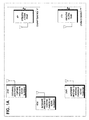
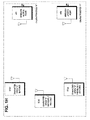
- Figure 1A illustrates an example wireless network diagram of three mobile wireless devices STA1, STA2, and STA3 in communication range of two access points AP1 and AP2, wherein each of the mobile wireless devices wishes to connect to one of the available access points and needs to discover whether any of the access points available at the current location have one or more required characteristics.
- the figure shows each of the three mobile wireless devices STA1, STA2, and STA3 determining whether to perform passive or active scanning for an access point by making a random choice of one or the other scanning mode, in accordance with an example embodiment of the invention.
- the access point AP1 has the characteristics "X" and the access point AP2 has the characteristics "Y".
- Figure 1B illustrates the example wireless network diagram of Figure 1A , showing the result each STA1, STA2, and STA3 device's determination, wherein one of the mobile wireless devices STA2 has randomly chosen the active scanning mode and the other two mobile wireless devices STA1 and STA3 have randomly chosen the passive scanning mode, in accordance with an example embodiment of the invention.
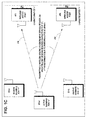
- FIG 1C illustrates the example wireless network diagram of Figure 1B , wherein the one of the mobile wireless devices STA2 that has randomly chosen the active scanning mode, is shown transmitting a wireless generic advertisement service (GAS) request 250 specifying the one or more required characteristics "X".
- GAS wireless generic advertisement service
- STA2 is shown transmitting a wireless generic advertisement service request 250 specifying one or more required characteristics "X" of itself as the transmitting device, since its determination is to perform active scanning.
- the figure shows the other two mobile wireless devices STA1 and STA3 that have randomly chosen the passive scanning mode, passively listening for one or more wireless generic advertisement service (GAS) responses 260 addressed to a broadcast address, from one or more of the access points AP1 and AP2, in accordance with an example embodiment of the invention.
- GAS wireless generic advertisement service
- STA1 and STA3 are shown passively listening for one or more wireless generic advertisement service responses sent to a broadcast address by one or more wireless devices AP1 and AP2.
- the responses they are listening for should include one or more required characteristics of the passive listening device.
- STA1 will be listening for characteristics "Y” and STA3 will be listening for characteristics "X”.
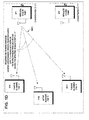
- FIG. 1D illustrates the example wireless network diagram of Figure 1C , wherein each of the three mobile wireless devices STA1, STA2, and STA3 is shown receiving one or more wireless generic advertisement service (GAS) responses 260(1) from one of the access points that has the one or more required characteristics "X", sent to a broadcast address, from the access point AP1, in accordance with an example embodiment of the invention.
- GAS wireless generic advertisement service
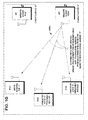
- Figure 1E illustrates the example wireless network diagram of Figure 1D , wherein the mobile wireless device STA2 in the active scanning mode is able to match the characteristics "X" received in the generic advertisement service responses 260(1), with its required characteristics that were specified in the transmitted request 250.
- One of the mobile wireless devices STA3 in the passive scanning mode is able to match the characteristics "X" received in the generic advertisement service responses 260(1), with its required characteristics "X”.
- the other of the mobile wireless device STA1 in the passive scanning mode is not able to match the characteristics "X” received in the generic advertisement service responses 260(1), with its required characteristics "Y” , in accordance with an example embodiment of the invention.
- Figure 1F illustrates the example wireless network diagram of Figure 1E , wherein the other of the mobile wireless device STA1 that was in the passive scanning mode and was not able to match the characteristics "X" received in the generic advertisement service responses, with its required characteristics "Y", performs active scanning by transmitting a wireless generic advertisement service request 250' specifying one or more required characteristics "Y" , in accordance with an example embodiment of the invention.
- FIG 1G illustrates the example wireless network diagram of Figure 1F , wherein each of the three mobile wireless devices STA1, STA2, and STA3 is shown receiving one or more wireless generic advertisement service (GAS) responses 260(2) sent to a broadcast address, from one of the access points AP2 that has the one or more required characteristics "Y", in accordance with an example embodiment of the invention.
- GAS wireless generic advertisement service
- Figure 1H illustrates the example wireless network diagram of Figure 1G , wherein the other of the mobile wireless device STA1 in the passive scanning mode is able to match the characteristics "Y" received in the generic advertisement service responses 260(2), with its required characteristics "Y", in accordance with an example embodiment of the invention.
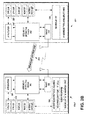
- FIG. 2A illustrates an example wireless network and functional block diagram of the mobile wireless device STA2 and the access point AP1, with the mobile wireless device transmitting a generic advertisement service (GAS) request frame 250, in accordance with an example embodiment of the invention.
- the mobile wireless device STA2 may broadcast a generic advertisement service (GAS) initial request frame 250, as shown in Figure 2A .
- the generic advertisement service (GAS) initial request frame 250 requests whether any access point within range as a required characteristic of possessing an NAI realm list, to enable determining whether the responding access point belongs to a network having a roaming agreement with STA2's home realm A.
- the request also requests whether any access point within range as a required characteristic of possessing IP address type availability information.
- the generic advertisement service (GAS) initial request frame 250 may also contain a response condition that all of the required characteristics that it requests must be possessed by an access point receiving the request 250, before that access point may respond to the request 250 by sending the requested information.
- Figure 2B illustrates the example wireless network and functional block diagram of Figure 2A , of the mobile wireless device and the access point, with the access point transmitting a generic advertisement service (GAS) response frame, sending it to a broadcast address, in accordance with an example embodiment of the invention.
- Figure 2B illustrates the example wireless network and functional block diagram of Figure 2A , of the mobile wireless device STA2 and the access point AP1, with the access point AP1 transmitting a generic advertisement service (GAS) initial response frame 260 sent to a broadcast address, in accordance with an example embodiment of the invention.
- GAS generic advertisement service
- the wireless access point AP1 may include a processor 222', which includes a single core CPU or multiple core central processing unit (CPU) 224' and 225', a random access memory (RAM) 226', a read only memory (ROM) 227', and interface circuits 228' to interface with one or more radio transceivers 208', battery or house power sources, keyboard, display, etc.
- the RAM and ROM may be removable memory devices such as smart cards, SIMs, WIMs, semiconductor memories such as RAM, ROM, PROMS, flash memory devices, etc.
- the mobile wireless device STA2 may include a processor 222, which includes a dual core central processing unit 224 and 225, a random access memory (RAM) 226, a read only memory (ROM) 227, and interface circuits 228 to interface with one or more radio transceivers 208, battery and other power sources, key pad, touch screen, display, microphone, speakers, ear pieces, camera or other imaging devices, etc. in the mobile wireless device STA2.
- the RAM and ROM may be removable memory devices such as smart cards, SIMs, WIMs, semiconductor memories such as RAM, ROM, PROMS, flash memory devices, etc.
- an example embodiment of the IEEE 802.11 protocol stack may include the IEEE 802.11u protocol 202 in the mobile wireless device STA2.
- An example embodiment of the IEEE 802.11 protocol stack may include the IEEE 802.11u protocol 202' in the access point device AP1.
- the protocol stacks 202 and 202' may be computer code instructions stored in the RAM and/or ROM memory of the respective processors 222 and 222', which when executed by the central processing units (CPU), carry out the functions of the example embodiments of the invention.
- a buffer 246 may contain the advertising protocol element field and the query response field.
- a buffer 248 may contain required characteristics, including the "NAI Realm List” and the "IP Address Type Availability Information”. If these required characteristics match the requirements in the advertising protocol element field and the query response field of the received GAS initial request 250, then the AP1 may transmit the GAS initial response 260 with the required characteristics, sent to a broadcast address.
- FIG 3A illustrates an example frame body format of the Generic Advertisement Service (GAS) Initial Request Frame, in accordance with an example embodiment of the invention.
- the IEEE 802.11 MAC management frame 302 shown in Figure 3A may have the frame control field indicate that this is a management frame, the frame type and subtype fields are set to indicate an action frame.
- the frame body the category field that may indicate a public action frame to allow communications between an access point and an unassociated STA.
- the public action field 304 may be set to one of several values indicated in the table 306.
- An action field value of 10 may indicate a GAS Initial Request, transmitted by a requesting STA to request information from another STA.
- ANQP access network query protocol
- the dialog token field is set by the requesting station with any value, such as "123", to identify the GAS initial request frame.
- the GAS initial request frame 250 includes a length value for the length of the following query request field.
- the Generic Advertisement Service (GAS) initial request frame 250 may be used for interworking between wireless networks in different realms.
- GAS Generic Advertisement Service
- FIG 3B illustrates an example frame body format of the Generic Advertisement Service (GAS) Initial Response Frame, sent to a broadcast address, in accordance with an example embodiment of the invention.
- the Generic Advertisement Service (GAS) initial response frame 260 may be used for interworking procedure in wireless local access network.
- the GAS initial response frame 260 shown in Figure 3B may include a category field that is set to a value of 4 indicating a public action frame.
- the GAS initial response frame 260 shown in Figure 3B may include an action field 304 that is set to a value of "Broadcast" indicating a GAS initial response action sent to a broadcast address.
- the GAS initial response frame 260 shown in Figure 3B may include a dialog token field which is set to a value, such as "123", identical to the corresponding value in the GAS initial request frame, to enable relating the response frame to the request frame.
- the GAS initial response frame 260 shown in Figure 3B may include a comeback delay value field.
- the Generic Advertisement Service (GAS) Initial Response Frame 260 may be sent to a broadcast address.
- the public action field 304 value may be set to value of "Broadcast” to indicate a GAS initial response 260 that is sent to a broadcast address.
- several ANQP information elements 308 may be sent in the query response field.
- the ANQP elements 308E and 308F may respectively contain the query response data "263" for the realm list data and "262" for the IP address type data, that is sent from the access point AP1 to the mobile wireless device STA2.
- the information field of the ANQP elements 308E and 308F may contain the requested data sent from the access point AP1, which may be in one or multiple ANQP info elements 308.
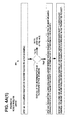
- Figures 4A(1) and 4A(2) illustrate an example flow diagram of operational steps of an example embodiment of the procedure performed in the mobile wireless device, according to an embodiment of the present invention.
- Figures 4A(1) and 4A(2) illustrate an example embodiment of a flow diagram 400 for the process in any of the mobile wireless devices STA1, STA2, or STA3.
- Figures 4A(1) and 4A(2) illustrate an example of steps in the procedure carried out by the device in executing-in-place program code stored in the memory of the device.
- the steps in the procedure of the flow diagram may be embodied as program logic stored in the memory of the wireless device in the form of sequences of programmed instructions which, when executed in the microprocessor control logic of the device, carry out the functions of an exemplary disclosed embodiment.
- the steps may be carried out in another order than shown and individual steps may be combined or separated into component steps. Additional steps may be inserted into this sequence.
- the steps in the procedure are as follows:
- Figure 4B is an example flow diagram of operational steps of an example embodiment of the procedure performed in the access point device, according to an embodiment of the present invention.
- Figure 4B illustrates an example embodiment of a flow diagram 450 for the process in the access point device AP1.
- Figure 4B is an example of steps in the procedure carried out by the device in executing-in-place program code stored in the memory of the device.
- the steps in the procedure of the flow diagram may be embodied as program logic stored in the memory of the wireless device in the form of sequences of programmed instructions which, when executed in the microprocessor control logic of the device, carry out the functions of an exemplary disclosed embodiment.
- the steps may be carried out in another order than shown and individual steps may be combined or separated into component steps. Additional steps may be inserted into this sequence.
- the steps in the procedure are as follows:
- the embodiments may be implemented as a machine, process, or article of manufacture by using standard programming and/or engineering techniques to produce programming software, firmware, hardware or any combination thereof.
- Any resulting program(s), having computer-readable program code, may be embodied on one or more computer-usable media such as resident memory devices, smart cards or other removable memory devices, or transmitting devices, thereby making a computer program product or article of manufacture according to the embodiments.
- the terms "article of manufacture” and “computer program product” as used herein are intended to encompass a computer program that exists permanently or temporarily on any computer-usable, non-transitory medium.
- memory/storage devices include, but are not limited to, disks, optical disks, removable memory devices such as smart cards, SIMs, WIMs, semiconductor memories such as RAM, ROM, PROMS, etc.
- Transmitting mediums include, but are not limited to, transmissions via wireless communication networks, the Internet, intranets, telephone/modem-based network communication, hard-wired/cabled communication network, satellite communication, and other stationary or mobile network systems/communication links.
Landscapes
- Engineering & Computer Science (AREA)
- Computer Security & Cryptography (AREA)
- Computer Networks & Wireless Communication (AREA)
- Signal Processing (AREA)
- Mobile Radio Communication Systems (AREA)
Abstract
Method, apparatus, and computer program product embodiments of the invention are disclosed to improve the discovery of wireless networks having desired service offerings. In example embodiments of the invention, a method comprises: determining whether to perform passive or active scanning; transmitting a wireless generic advertisement service request specifying one or more required characteristics of a transmitting device, if the determination is to perform active scanning; passively listening for one or more wireless generic advertisement service responses sent to a broadcast address by one or more wireless devices, the responses including one or more required characteristics of a passive listening device, if the determination is to perform passive scanning; and receiving one or more wireless generic advertisement service responses sent to a broadcast address by one or more wireless devices having the characteristics specified in the transmitted request.
Description
- The embodiments relate to wireless communication, and more particularly to improvements in discovering wireless networks having desired service offerings.
- Modem society has adopted, and is becoming reliant upon, wireless communication devices for various purposes, such as connecting users of the wireless communication devices with other users. Wireless communication devices can vary from battery powered handheld devices to stationary household and/or commercial devices utilizing an electrical network as a power source. Due to rapid development of the wireless communication devices, a number of areas capable of enabling entirely new types of communication applications have emerged.
- Cellular networks facilitate communication over large geographic areas. These network technologies have commonly been divided by generations, starting in the late 1970s to early 1980s with first generation (1 G) analog cellular telephones that provided baseline voice communications, to modem digital cellular telephones. GSM is an example of a widely employed 2G digital cellular network communicating in the 900 MHZ/1.8 GHZ bands in Europe and at 850 MHz and 1.9 GHZ in the United States. While long-range communication networks, like GSM, are a well-accepted means for transmitting and receiving data, due to cost, traffic and legislative concerns, these networks may not be appropriate for all data applications.
- Short-range communication technologies provide communication solutions that avoid some of the problems seen in large cellular networks. Bluetooth™ is an example of a short-range wireless technology quickly gaining acceptance in the marketplace. In addition to Bluetooth™ other popular short-range communication technologies include Bluetooth™ Low Energy, IEEE 802.11 wireless local area network (WLAN), Wireless USB (WUSB), Ultra Wide-band (UWB), ZigBee (IEEE 802.15.4, IEEE 802.15.4a), and ultra high frequency radio frequency identification (UHF RFID) technologies. All of these wireless communication technologies have features and advantages that make them appropriate for various applications.
- Method, apparatus, and computer program product embodiments of the invention are disclosed to improve the discovery of wireless networks having desired service offerings. In example embodiments of the invention, a method comprises: determining, at a wireless device, whether to perform passive or active scanning; transmitting a wireless generic advertisement service request specifying one or more required characteristics of a transmitting device, if the determination is to perform active scanning; passively listening for one or more wireless generic advertisement service responses sent to a broadcast address by one or more wireless devices, the responses including one or more required characteristics of a passive listening device, if the determination is to perform passive scanning; and receiving one or more wireless generic advertisement service responses sent to a broadcast address by one or more wireless devices having the characteristics specified in the transmitted request.
- An example embodiment of the invention further comprises a method wherein if the determination was to perform passive scanning and if the characteristics received in the responses do not match the required characteristics of a passive listening device;
then transmitting a wireless generic advertisement service request specifying one or more required characteristics of the passive listening device. - An example embodiment of the invention further comprises a method wherein some of the one or more wireless devices are access points having the specified characteristics.
- An example embodiment of the invention further comprises a method wherein the determining further comprises:
- creating a random value;
- comparing the random value with a selection value; and
- choosing whether to perform passive or active scanning based on the comparison of the random value with the selection value.
- An example embodiment of the invention further comprises a method wherein the determining further comprises:
- creating a random value with a random value a random number generator y=R(x)mod z, with R being the random number generator with a seed value input x , and z an integer;
- performing active scanning when the random number y compares with a selection value; and
- if the random number y is not equal to the selection value, then performing passive scanning for all other values of the random number.
- An example embodiment of the invention further comprises a method wherein the passively listening further comprises:
- collaborating with other wireless devices that randomly choose to actively scan for wireless devices having the specified characteristics.
- In example embodiments of the invention, an apparatus comprises:
- at least one processor;
- at least one memory including computer program code;
- the at least one memory and the computer program code configured to, with the at least one processor, cause the apparatus at least to:
- determine whether to perform passive or active scanning ;
- transmit a wireless generic advertisement service request specifying one or more required characteristics of a transmitting device, if the determination is to perform active scanning;
- passively listen for one or more wireless generic advertisement service responses sent to a broadcast address by one or more wireless devices, the responses including one or more required characteristics of a passive listening device, if the determination is to perform passive scanning; and
- receive one or more wireless generic advertisement service responses sent to a broadcast address by one or more wireless devices having the characteristics specified in the transmitted request.
- An example embodiment of the invention further comprises a computer program product comprising computer executable program code recorded on a computer readable, non-transitory storage medium, the computer executable program code, when executed by a computer processor, comprising:
- code for determining, at a wireless device, whether to perform passive or active scanning;
- code for transmitting a wireless generic advertisement service request specifying one or more required characteristics of a transmitting device, if the determination is to perform active scanning;
- code for passively listening for one or more wireless generic advertisement service responses sent to a broadcast address by one or more wireless devices, the responses including one or more required characteristics of a passive listening device, if the determination is to perform passive scanning; and
- code for receiving one or more wireless generic advertisement service responses sent to a broadcast address by one or more wireless devices having the characteristics specified in the transmitted request.
- In example embodiments of the invention, a method comprises:
- receiving a wireless generic advertisement service request specifying one or more required characteristics; and
- transmitting one or more wireless generic advertisement service responses to a broadcast address, based on having the specified characteristics.
- In example embodiments of the invention, an apparatus comprises:
- at least one processor;
- at least one memory including computer program code;
- the at least one memory and the computer program code configured to, with the at least one processor, cause the apparatus at least to:
- receive a wireless generic advertisement service request specifying one or more required characteristics; and
- transmit one or more wireless generic advertisement service responses to a broadcast address, based on having the specified characteristics.
- An example embodiment of the invention further comprises a computer program product comprising computer executable program code recorded on a computer readable, non-transitory storage medium, the computer executable program code, when executed by a computer processor, comprising:
- code for receiving a wireless generic advertisement service request specifying one or more required characteristics; and
- code for transmitting one or more wireless generic advertisement service responses to a broadcast address, based on having the specified characteristics.
- In this manner, embodiments of the invention improve the discovery of wireless networks having desired service offerings.
-
-
Figure 1A illustrates an example wireless network diagram of three mobile wireless devices in communication range of two access points, wherein each of the mobile wireless devices wishes to connect to one of the available access points and needs to discover whether any of the access points available at the current location have one or more required characteristics. The figure shows each of the three mobile wireless devices determining whether to perform passive or active scanning for an access point by making a random choice of one or the other scanning mode, in accordance with an example embodiment of the invention. -
Figure 1B illustrates the example wireless network diagram ofFigure 1A , showing the result each device's determination, wherein one of the mobile wireless devices has randomly chosen the active scanning mode and the other two mobile wireless devices have randomly chosen the passive scanning mode, in accordance with an example embodiment of the invention. -
Figure 1C illustrates the example wireless network diagram ofFigure 1B , wherein the one of the mobile wireless devices that has randomly chosen the active scanning mode, is shown transmitting a wireless generic advertisement service (GAS) request specifying the one or more required characteristics "X". The figure shows the other two mobile wireless devices that have randomly chosen the passive scanning mode, passively listening for one or more wireless generic advertisement service (GAS) responses addressed to a broadcast address, from one or more of the access points, in accordance with an example embodiment of the invention. -
Figure 1D illustrates the example wireless network diagram ofFigure 1C , wherein each of the three mobile wireless devices is shown receiving one or more wireless generic advertisement service (GAS) responses sent to a broadcast address, from one of the access points that has the one or more required characteristics "X", in accordance with an example embodiment of the invention. -
Figure 1E illustrates the example wireless network diagram ofFigure 1D , wherein the mobile wireless device in the active scanning mode is able to match the characteristics "X" received in the generic advertisement service responses, with its required characteristics that were specified in the transmitted request and one of the mobile wireless devices in the passive scanning mode is able to match the characteristics "X" received in the generic advertisement service responses, with its required characteristics "X", whereas the other of the mobile wireless device in the passive scanning mode is not able to match the characteristics "X" received in the generic advertisement service responses, with its required characteristics "Y" , in accordance with an example embodiment of the invention. -
Figure 1F illustrates the example wireless network diagram ofFigure 1E , wherein the other of the mobile wireless device that was in the passive scanning mode and was not able to match the characteristics "X" received in the generic advertisement service responses, with its required characteristics "Y", performs active scanning by transmitting a wireless generic advertisement service request specifying one or more required characteristics "Y" , in accordance with an example embodiment of the invention. -
Figure 1G illustrates the example wireless network diagram ofFigure 1F , wherein each of the three mobile wireless devices is shown receiving one or more wireless generic advertisement service (GAS) responses sent to a broadcast address, from one of the access points that has the one or more required characteristics "Y", in accordance with an example embodiment of the invention. -
Figure 1H illustrates the example wireless network diagram ofFigure 1G , wherein the mobile wireless device in the other of the mobile wireless devices in the passive scanning mode is able to match the characteristics "Y" received in the generic advertisement service responses, with its required characteristics "Y", in accordance with an example embodiment of the invention. -
Figure 2A illustrates an example wireless network and functional block diagram of the mobile wireless device and the access point, with the mobile wireless device transmitting a generic advertisement service (GAS) request frame, in accordance with an example embodiment of the invention. -
Figure 2B illustrates the example wireless network and functional block diagram ofFigure 2A , of the mobile wireless device and the access point, with the access point transmitting a generic advertisement service (GAS) response frame, sending it to a broadcast address, in accordance with an example embodiment of the invention. -
Figure 3A illustrates an example frame body format of the Generic Advertisement Service (GAS) Initial Request Frame, in accordance with an example embodiment of the invention. -
Figure 3B illustrates an example frame body format of the Generic Advertisement Service (GAS) Initial Response Frame, sent to a broadcast address, in accordance with an example embodiment of the invention. -
Figures 4A(1) and 4A(2) illustrate an example flow diagram of operational steps of an example embodiment of the procedure performed in the mobile wireless device, according to an embodiment of the present invention. -
Figure 4B is an example flow diagram of operational steps of an example embodiment of the procedure performed in the access point device, according to an embodiment of the present invention. - An example wireless network, such as a Wireless Local Area Network (WLAN) may be organized as an independent basic service set (IBSS) or an infrastructure basic service set (BSS). Wireless devices in an independent basic service set (IBSS) communicate directly with one another and there is no access point in the IBSS. An infrastructure basic service set (BSS) includes a wireless access point (AP) that may be connected to one or more servers and peripheral devices by a wired backbone connection. In an infrastructure BSS, the access point is a central hub to which mobile wireless devices are wirelessly connected. The mobile wireless devices typically do not communicate directly with one another, but communicate indirectly through the access point. An access point may be connected to other access points by a wired backbone connection in an extended service set (ESS). Mobile wireless devices may roam from one wireless connection with one access point to a second wireless connection with a second access point in the ESS, and still be linked to the first access point in the ESS via the wired backbone connection. The user's mobile wireless device is typically authenticated to connect with any of the access points in the ESS, in what is referred to as the user's home realm. "Home realm" is the network where the user's WLAN subscription credentials are valid. There may be multiple subscriptions and the mobile device may consider multiple realms as home realms.
- When the user of a mobile wireless device wants to connect to an access point, there are a few possibilities: The device can try to find a free WLAN network (which may be cumbersome, as free WLAN networks usually require the user to launch the browser and accept terms and conditions, a step which the device can not do automatically and seamlessly to the user), or use one of the existing credentials it has. To connect to a WLAN network with existing credentials, the device has these two possibilities: [1] The wireless device may connect to an access point in a network belonging to the home realm to which the user has credentials; [2] The wireless device may connect to an access point in a WLAN belonging to a remote realm to which the user's home realm has a roaming agreement enabling the user to use the home realm's credentials. If existing device credentials can not be used with any of the available networks, the mobile wireless device may attempt to buy a subscription from an access point in a WLAN belonging to a remote realm for which there is no roaming agreement with any of the home realms the credentials the user/device possesses belong to. From convenience and seamless operation point of view, it is desirable that the device attempts to use existing credentials to connect to one of the available access points. During the procedure for selecting an access point, the mobile wireless device needs to discover whether any of the access points available at the current location belong to the (at least one of the) user possessed credential's home realm, or whether the remote realm to which an access point is connected has a roaming agreement with any of those home realm.
- The IEEE 802.11 standard specifies methods and techniques of wireless local area network (WLAN) operation. Examples include the IEEE 802.11b and 802.11g wireless local area network specifications, which have been a staple technology for traditional WLAN applications in the 2.4 GHz ISM band. The various amendments to the IEEE 802.11 standard were consolidated for IEEE 802.11a, b, d, e, g, h, i, j protocols, into the base standard IEEE 802.11-2007, Wireless Medium Access Control (MAC) and Physical Layer (PHY) Specifications, June 2007 (incorporated herein by reference). Since then, emerging broadband applications have stimulated interest in developing very high-speed wireless networks for short range communication, for example, the IEEE 802.11n, the planned IEEE 802.11ac, and the planned IEEE 802.11ad WLAN specifications that are to provide a very high throughput in higher frequency bands. Applications of these IEEE 802.11 standards include products such as consumer electronics, telephones, personal computers, and access points for both for home and office.
- IEEE 802.11u-2011 is an amendment to the IEEE 802.11-2007 base standard published as IEEE 802.11u-2011, Wireless LAN Medium Access Control (MAC) and Physical Layer (PHY) Specifications, Amendment 9: Interworking with External Networks, February 25, 2011 (incorporated herein by reference). IEEE 802.11u-2011 adds features to improve interworking with external networks. IEEE 802.11u-2011 amendment establishes medium access control (MAC) and physical layer (PHY) protocols for an interworking service to permit a wireless mobile device to exchange information with an external network, to enable the selection of networks to connect to, and to enable access to emergency services. A Generic Advertisement Service (GAS) is specified in the IEEE 802.11u amendment to enable mobile wireless devices or STAs to discover the availability of information related to desired network services. For example, Generic Advertisement Service (GAS) enables discovery of information about services provided in an independent basic service set (IBSS), information about local access services, information from available Subscription Service Providers (SSP) and/or Subscription Service Provider Networks (SSPNs) or other external networks. Generic Advertisement Service (GAS) enables a wireless mobile device to transmit a Generic Advertisement Service (GAS) initial request frame to request information about network services from access points and it enables an access point to use a generic container, a Generic Advertisement Service (GAS) initial response frame, to advertise information about network services over an IEEE 802.11 network. Public Action frames are used to transport the Generic Advertisement Service (GAS) initial request frame and the Generic Advertisement Service (GAS) initial response frame.
- The current procedures specified in the IEEE 802.11u amendment for the generic advertisement service (GAS) protocol, require that the mobile device issue a unicast GAS request separately to each access point (AP). Where there are dense networks with many access points, the mobile device may transmit many GAS requests, which will consume power and time. Additionally, the current procedures require a GAS response from all of the access points receiving a GAS request. This unicast information exchange may create a lot of traffic, which may be considered as a waste of bandwidth, since there may be responses transmitted from many access points that are not relevant at all for the roaming mobile device. Moreover, GAS may be considered a form of active scanning, and in some use cases, such as access points in an airport or train station where the flux and mobility of client devices is high, it may become burdensome for the access points to handle dozens of GAS requests e.g. every 20-30 seconds and there are client devices coming to and going out from the access point coverage as persons carrying client devices walk through the coverage of an access point.
- In accordance with an example embodiment of the invention, as a response to GAS request access points provide GAS responses as broadcast transmissions, which enable any mobile wireless device within coverage area to listen to them during passive scanning. With this method, the scanning time may be reduced to the scan duration, itself, or T=Ts. The mobile wireless device may do network detection using GAS, without making GAS request transmissions, and thereby overloading the network. The mobile wireless device relies on other mobile wireless devices to make the GAS request, in effect collaborating with the other mobile wireless devices for effective network detection.
- In accordance with an example embodiment of the invention, during passive scanning, mobile wireless devices, such as STAs may listen not only to beacons, but also to GAS responses sent to the broadcast address by the APs. From the listening (passive scanning) STAs' point of view, these responses may not have "specified characteristics", since the requests (which specify required characteristics of the APs) are placed by other STAs that are actively scanning. From the active scanning STA's point of view, the GAS responses will have the specified characteristics.
- In accordance with an example embodiment of the invention, STAs may randomly decide whether they will perform active or passive scanning. For best performance (fastest network selection), a STA would typically do active scan. But, if all STAs did active scan, the network may become overloaded and slow down and all STAs may suffer. In accordance with an example embodiment of the invention, to avoid this situation from happening, some STAs may rely on other STAs to do active scanning. In accordance with an example embodiment of the invention, all GAS responses may be sent in broadcast mode. Thus, all STAs will receive the responses that are generated by APs as per the request from the active scanning STAs.
- In accordance with an example embodiment of the invention, the STAs engage in a passive collaboration wherein since the STAs randomly decide whether to perform active or passive scanning, the ones doing passive scanning will rely on other STAs doing active scanning.
- In accordance with an example embodiment of the invention, if no suitable GAS response was heard by the passive scanning STAs during the passive scanning period (Ts), for example because the characteristics in a GAS response do not match the required characteristics of the passively scanning STA or because no STA has performed active scanning, then the passive scanning STAs will go ahead and perform active scan after a time Ts, by generating GAS requests.
- In accordance with an example embodiment of the invention, in order to collaborate with the other mobile wireless devices for effective network detection, a logic method is employed to determine when the mobile wireless device should perform active network detection by generating GAS requests, and when should it perform passive network detection by simply listening to broadcast GAS responses from the access points.
- In accordance with an example embodiment of the invention, one example logic method is to use a random number generator: y=R(x)mod z, with R being the random number generator with a seed value input x (for example, device time), and z an integer (ranging from 1 to 10). Then, the mobile wireless device performs active scanning when the random number y compares with a selection value, for example y=2. If the random number y is not equal to the selection value of "2", then the mobile wireless device performs passive scanning for all other values of the random number. For example, if z is set to 3, then y has a value equal to 1 or 2 or 3. When y is equal to 2, the mobile wireless device performs active network detection, otherwise it performs passive network detection (roughly 1/3 of the time doing active detection and 2/3 of the time doing passive network detection). With some of the mobile wireless devices deciding to do active scanning and others deciding to do passive scanning, all mobile wireless devices may be able to detect broadcast GAS responses sent from the access points.
- If the mobile wireless device needs to perform this type of scanning through a quantity of "c" channels, then the time needed for discovery is: T=c*Ts, which is similar to conventional passive scanning, except that the mobile wireless devices not only detect the SSID of the access points , but a broadcast GAS response also provides network detection.
- In accordance with an example embodiment of the invention, STAs decide to do active scanning by using a random number generator and feeding it with a random input value, for example the exact time of the device, and perform a modulo operation on the result. The divisor may be chosen by the STA based on the expected frequency of active scanning: If the expected frequency of active scanning is 1 in 4, then the divisor may be 4. The value of the divisor may be also chosen dynamically, based on the history of the operation at that specific location. For example, the more frequently the STA had to do active scan after passive scan, because the passive scan was not successful since a GAS response was not heard, the smaller will be the divisor.
-
Figure 1A illustrates an example wireless network diagram of three mobile wireless devices STA1, STA2, and STA3 in communication range of two access points AP1 and AP2, wherein each of the mobile wireless devices wishes to connect to one of the available access points and needs to discover whether any of the access points available at the current location have one or more required characteristics. The figure shows each of the three mobile wireless devices STA1, STA2, and STA3 determining whether to perform passive or active scanning for an access point by making a random choice of one or the other scanning mode, in accordance with an example embodiment of the invention. The access point AP1 has the characteristics "X" and the access point AP2 has the characteristics "Y". -
Figure 1B illustrates the example wireless network diagram ofFigure 1A , showing the result each STA1, STA2, and STA3 device's determination, wherein one of the mobile wireless devices STA2 has randomly chosen the active scanning mode and the other two mobile wireless devices STA1 and STA3 have randomly chosen the passive scanning mode, in accordance with an example embodiment of the invention. -
Figure 1C illustrates the example wireless network diagram ofFigure 1B , wherein the one of the mobile wireless devices STA2 that has randomly chosen the active scanning mode, is shown transmitting a wireless generic advertisement service (GAS)request 250 specifying the one or more required characteristics "X". STA2 is shown transmitting a wireless genericadvertisement service request 250 specifying one or more required characteristics "X" of itself as the transmitting device, since its determination is to perform active scanning. The figure shows the other two mobile wireless devices STA1 and STA3 that have randomly chosen the passive scanning mode, passively listening for one or more wireless generic advertisement service (GAS)responses 260 addressed to a broadcast address, from one or more of the access points AP1 and AP2, in accordance with an example embodiment of the invention. STA1 and STA3 are shown passively listening for one or more wireless generic advertisement service responses sent to a broadcast address by one or more wireless devices AP1 and AP2. The responses they are listening for should include one or more required characteristics of the passive listening device. STA1 will be listening for characteristics "Y" and STA3 will be listening for characteristics "X". -
Figure 1D illustrates the example wireless network diagram ofFigure 1C , wherein each of the three mobile wireless devices STA1, STA2, and STA3 is shown receiving one or more wireless generic advertisement service (GAS) responses 260(1) from one of the access points that has the one or more required characteristics "X", sent to a broadcast address, from the access point AP1, in accordance with an example embodiment of the invention. -
Figure 1E illustrates the example wireless network diagram ofFigure 1D , wherein the mobile wireless device STA2 in the active scanning mode is able to match the characteristics "X" received in the generic advertisement service responses 260(1), with its required characteristics that were specified in the transmittedrequest 250. One of the mobile wireless devices STA3 in the passive scanning mode is able to match the characteristics "X" received in the generic advertisement service responses 260(1), with its required characteristics "X". The other of the mobile wireless device STA1 in the passive scanning mode is not able to match the characteristics "X" received in the generic advertisement service responses 260(1), with its required characteristics "Y" , in accordance with an example embodiment of the invention. -
Figure 1F illustrates the example wireless network diagram ofFigure 1E , wherein the other of the mobile wireless device STA1 that was in the passive scanning mode and was not able to match the characteristics "X" received in the generic advertisement service responses, with its required characteristics "Y", performs active scanning by transmitting a wireless generic advertisement service request 250' specifying one or more required characteristics "Y" , in accordance with an example embodiment of the invention. -
Figure 1G illustrates the example wireless network diagram ofFigure 1F , wherein each of the three mobile wireless devices STA1, STA2, and STA3 is shown receiving one or more wireless generic advertisement service (GAS) responses 260(2) sent to a broadcast address, from one of the access points AP2 that has the one or more required characteristics "Y", in accordance with an example embodiment of the invention. -
Figure 1H illustrates the example wireless network diagram ofFigure 1G , wherein the other of the mobile wireless device STA1 in the passive scanning mode is able to match the characteristics "Y" received in the generic advertisement service responses 260(2), with its required characteristics "Y", in accordance with an example embodiment of the invention. -
Figure 2A illustrates an example wireless network and functional block diagram of the mobile wireless device STA2 and the access point AP1, with the mobile wireless device transmitting a generic advertisement service (GAS)request frame 250, in accordance with an example embodiment of the invention. The mobile wireless device STA2 may broadcast a generic advertisement service (GAS)initial request frame 250, as shown inFigure 2A . The generic advertisement service (GAS)initial request frame 250 requests whether any access point within range as a required characteristic of possessing an NAI realm list, to enable determining whether the responding access point belongs to a network having a roaming agreement with STA2's home realm A. The request also requests whether any access point within range as a required characteristic of possessing IP address type availability information. The generic advertisement service (GAS)initial request frame 250 may also contain a response condition that all of the required characteristics that it requests must be possessed by an access point receiving therequest 250, before that access point may respond to therequest 250 by sending the requested information. -
Figure 2B illustrates the example wireless network and functional block diagram ofFigure 2A , of the mobile wireless device and the access point, with the access point transmitting a generic advertisement service (GAS) response frame, sending it to a broadcast address, in accordance with an example embodiment of the invention.Figure 2B illustrates the example wireless network and functional block diagram ofFigure 2A , of the mobile wireless device STA2 and the access point AP1, with the access point AP1 transmitting a generic advertisement service (GAS)initial response frame 260 sent to a broadcast address, in accordance with an example embodiment of the invention. - In accordance with an example embodiment of the invention, the mobile wireless device STA2 and the access point AP1 are shown in
Figures 2A and2B in functional block diagram form to illustrate an example embodiment of their components. The wireless access point AP1 may include a processor 222', which includes a single core CPU or multiple core central processing unit (CPU) 224' and 225', a random access memory (RAM) 226', a read only memory (ROM) 227', and interface circuits 228' to interface with one or more radio transceivers 208', battery or house power sources, keyboard, display, etc. The RAM and ROM may be removable memory devices such as smart cards, SIMs, WIMs, semiconductor memories such as RAM, ROM, PROMS, flash memory devices, etc. - In accordance with an example embodiment of the invention, the mobile wireless device STA2 may include a
processor 222, which includes a dual corecentral processing unit interface circuits 228 to interface with one ormore radio transceivers 208, battery and other power sources, key pad, touch screen, display, microphone, speakers, ear pieces, camera or other imaging devices, etc. in the mobile wireless device STA2. The RAM and ROM may be removable memory devices such as smart cards, SIMs, WIMs, semiconductor memories such as RAM, ROM, PROMS, flash memory devices, etc. - In accordance with an example embodiment of the invention, an example embodiment of the IEEE 802.11 protocol stack may include the IEEE 802.11
u protocol 202 in the mobile wireless device STA2. An example embodiment of the IEEE 802.11 protocol stack may include the IEEE 802.11u protocol 202' in the access point device AP1. The protocol stacks 202 and 202' may be computer code instructions stored in the RAM and/or ROM memory of therespective processors 222 and 222', which when executed by the central processing units (CPU), carry out the functions of the example embodiments of the invention. - In an example embodiment of the mobile wireless device STA2, a
buffer 246 may contain the advertising protocol element field and the query response field. The advertising protocol element field may have a response condition = "0", requiring that all required characteristics listed in the query response field, "REALM LIST" and "IP ADDRESS TYPE", must be returned in a GASinitial response 260 by any access point receiving the GASinitial request 250. - In an example embodiment of the wireless access point AP1, a
buffer 248 may contain required characteristics, including the "NAI Realm List" and the "IP Address Type Availability Information". If these required characteristics match the requirements in the advertising protocol element field and the query response field of the received GASinitial request 250, then the AP1 may transmit the GASinitial response 260 with the required characteristics, sent to a broadcast address. -
Figure 3A illustrates an example frame body format of the Generic Advertisement Service (GAS) Initial Request Frame, in accordance with an example embodiment of the invention. The IEEE 802.11MAC management frame 302 shown inFigure 3A may have the frame control field indicate that this is a management frame, the frame type and subtype fields are set to indicate an action frame. The frame body the category field that may indicate a public action frame to allow communications between an access point and an unassociated STA. Thepublic action field 304 may be set to one of several values indicated in the table 306. An action field value of 10 may indicate a GAS Initial Request, transmitted by a requesting STA to request information from another STA. - In accordance with an example embodiment of the invention, as shown in
Figure 3A , when thepublic action field 304 is set to value of 10 to indicate GASinitial request 250, several access network query protocol (ANQP)information elements 308 may be sent in the query request field. For example, the information field of the ANQP element 308A contains the response condition, such as "0" = "all to be met" or "1" = "one is enough". TheANQP elements initial request frame 250 includes a length value for the length of the following query request field. The Generic Advertisement Service (GAS)initial request frame 250 may be used for interworking between wireless networks in different realms. -
Figure 3B illustrates an example frame body format of the Generic Advertisement Service (GAS) Initial Response Frame, sent to a broadcast address, in accordance with an example embodiment of the invention. The Generic Advertisement Service (GAS)initial response frame 260 may be used for interworking procedure in wireless local access network. The GASinitial response frame 260 shown inFigure 3B , may include a category field that is set to a value of 4 indicating a public action frame. The GASinitial response frame 260 shown inFigure 3B , may include anaction field 304 that is set to a value of "Broadcast" indicating a GAS initial response action sent to a broadcast address. The GASinitial response frame 260 shown inFigure 3B , may include a dialog token field which is set to a value, such as "123", identical to the corresponding value in the GAS initial request frame, to enable relating the response frame to the request frame. The GASinitial response frame 260 shown inFigure 3B , may include a comeback delay value field. - In accordance with an example embodiment of the invention, the Generic Advertisement Service (GAS)
Initial Response Frame 260 may be sent to a broadcast address. Thepublic action field 304 value may be set to value of "Broadcast" to indicate a GASinitial response 260 that is sent to a broadcast address. As shown inFigure 3B , when thepublic action field 304 is set to value of "Broadcast" to indicate GASinitial response 260, severalANQP information elements 308 may be sent in the query response field. TheANQP elements ANQP elements ANQP info elements 308. -
Figures 4A(1) and 4A(2) illustrate an example flow diagram of operational steps of an example embodiment of the procedure performed in the mobile wireless device, according to an embodiment of the present invention.Figures 4A(1) and 4A(2) illustrate an example embodiment of a flow diagram 400 for the process in any of the mobile wireless devices STA1, STA2, or STA3.Figures 4A(1) and 4A(2) illustrate an example of steps in the procedure carried out by the device in executing-in-place program code stored in the memory of the device. The steps in the procedure of the flow diagram may be embodied as program logic stored in the memory of the wireless device in the form of sequences of programmed instructions which, when executed in the microprocessor control logic of the device, carry out the functions of an exemplary disclosed embodiment. The steps may be carried out in another order than shown and individual steps may be combined or separated into component steps. Additional steps may be inserted into this sequence. The steps in the procedure are as follows: - In
Figure 4A(1 ): - Step 402: determining, at a wireless device, whether to perform passive or active scanning ;
- Step 403: if the determination was to perform active scanning, then go to
Step 404 if TRUE or else go to Step 416 ofFigure 4A(2) if FALSE. - Step 404: transmitting a wireless generic advertisement service request specifying one or more required characteristics of a transmitting device, if the determination is to perform active scanning;
- Step 408: receiving one or more wireless generic advertisement service responses sent to a broadcast address, from one or more wireless devices having the characteristics specified in the transmitted request.
- In
Figure 4A(2) : - if the determination of
Step 403 was FALSE, then go toStep 416; - Step 416: passively listening for one or more wireless generic advertisement service responses sent to a broadcast address by one or more wireless devices, the responses including one or more required characteristics of a passive listening device, if the determination is to perform passive scanning;
- Step 418: receiving one or more wireless generic advertisement service responses sent to a broadcast address, from one or more wireless devices having the characteristics specified in the transmitted request.
- Step 420: transmitting a wireless generic advertisement service request specifying one or more required characteristics of a transmitting device, if no suitable GAS broadcast response was received during passive scanning;
- Step 422: receiving one or more wireless generic advertisement service responses sent to a broadcast address, from one or more wireless devices having the characteristics specified in the transmitted request.
-
Figure 4B is an example flow diagram of operational steps of an example embodiment of the procedure performed in the access point device, according to an embodiment of the present invention.Figure 4B illustrates an example embodiment of a flow diagram 450 for the process in the access point device AP1.Figure 4B is an example of steps in the procedure carried out by the device in executing-in-place program code stored in the memory of the device. The steps in the procedure of the flow diagram may be embodied as program logic stored in the memory of the wireless device in the form of sequences of programmed instructions which, when executed in the microprocessor control logic of the device, carry out the functions of an exemplary disclosed embodiment. The steps may be carried out in another order than shown and individual steps may be combined or separated into component steps. Additional steps may be inserted into this sequence. The steps in the procedure are as follows: - Step 452: receiving a wireless generic advertisement service request specifying one or more required characteristics; and
- Step 454: transmitting one or more wireless generic advertisement service responses to a broadcast address, based on having the specified characteristics.
- Using the description provided herein, the embodiments may be implemented as a machine, process, or article of manufacture by using standard programming and/or engineering techniques to produce programming software, firmware, hardware or any combination thereof.
- Any resulting program(s), having computer-readable program code, may be embodied on one or more computer-usable media such as resident memory devices, smart cards or other removable memory devices, or transmitting devices, thereby making a computer program product or article of manufacture according to the embodiments. As such, the terms "article of manufacture" and "computer program product" as used herein are intended to encompass a computer program that exists permanently or temporarily on any computer-usable, non-transitory medium.
- As indicated above, memory/storage devices include, but are not limited to, disks, optical disks, removable memory devices such as smart cards, SIMs, WIMs, semiconductor memories such as RAM, ROM, PROMS, etc. Transmitting mediums include, but are not limited to, transmissions via wireless communication networks, the Internet, intranets, telephone/modem-based network communication, hard-wired/cabled communication network, satellite communication, and other stationary or mobile network systems/communication links.
- Although specific example embodiments have been disclosed, a person skilled in the art will understand that changes can be made to the specific example embodiments without departing from the scope of the invention. For instance, the features described herein may be employed in networks other than Wireless LAN networks.
Claims (14)
- A method, comprising:determining, at an apparatus, whether to perform passive or active scanning;transmitting a wireless generic advertisement service request specifying one or more required characteristics for a responding device, and receiving one or more wireless generic advertisement service responses sent to a broadcast address by one or more wireless devices matching the characteristics specified in the transmitted request, if the determination is to perform active scanning; andpassively listening for receiving one or more wireless generic advertisement service responses sent to a broadcast address by one or more wireless devices, the responses including indication of one or more required characteristics matching characteristics specified by a requesting device, if the determination is to perform passive scanning.
- The method of claim 1, wherein if the determination was to perform passive scanning and if the characteristics received in the responses do not match with one or more required characteristics for a responding device in view of the apparatus;
transmitting a wireless generic advertisement service request specifying the one or more required characteristics for a responding device. - The method of claim 1 or claim 2, wherein said determining further comprises:creating a random value;comparing the random value with a selection value; andchoosing whether to perform passive or active scanning based on the comparison of the random value with the selection value.
- A computer program comprising computer readable program code configured to cause performing of the method of any of the preceding claims when said program is run on a computer.
- A computer program according to claim 4, wherein the computer program is a computer program product comprising a computer-readable medium bearing computer program code embodied therein for use with a computer.
- An apparatus, comprising:means for determining whether to perform passive or active scanning ;means for transmitting a wireless generic advertisement service request specifying one or more required characteristics for a responding device, and means for receiving one or more wireless generic advertisement service responses sent to a broadcast address by one or more wireless devices matching the characteristics specified in the transmitted request, if the determination is to perform active scanning; andmeans for passively listening for receiving one or more wireless generic advertisement service responses sent to a broadcast address by one or more wireless devices, the responses including indication of one or more required characteristics matching characteristics specified by a requesting device, if the determination is to perform passive scanning.
- The apparatus of claim 6, wherein if the determination was to perform passive scanning and if the characteristics received in the responses do not match with one or more required characteristics for a responding device in view of the apparatus;
means for transmitting a wireless generic advertisement service request specifying the one or more required characteristics for a responding device. - The apparatus of claim 6 or claim 7, further comprising:means for creating a random value;means for comparing the random value with a selection value; andmeans for choosing whether to perform passive or active scanning based on the comparison of the random value with the selection value.
- A method, comprising:receiving a wireless generic advertisement service request specifying one or more required characteristics; andtransmitting one or more wireless generic advertisement service responses to a broadcast address, based on having the specified characteristics.
- The method of claim 9, wherein the wireless generic advertisement service responses are broadcast by an access point to mobile wireless devices.
- A computer program comprising computer readable program code configured to cause performing of the method of claim 9 or claim 10 when said program is run on a computer.
- A computer program according to claim 11, wherein the computer program is a computer program product comprising a computer-readable medium bearing computer program code embodied therein for use with a computer.
- An apparatus, comprising:means for receiving a wireless generic advertisement service request specifying one or more required characteristics; andmeans for transmitting one or more wireless generic advertisement service responses to a broadcast address, based on having the specified characteristics.
- The apparatus of claim 13, wherein the wireless generic advertisement service responses are broadcast by an access point to mobile wireless devices.
Applications Claiming Priority (1)
| Application Number | Priority Date | Filing Date | Title |
|---|---|---|---|
| US13/234,463 US8463175B2 (en) | 2011-09-16 | 2011-09-16 | Method, apparatus, and computer program product for wireless network discovery through passive and active scanning |
Publications (1)
| Publication Number | Publication Date |
|---|---|
| EP2571319A1 true EP2571319A1 (en) | 2013-03-20 |
Family
ID=46800117
Family Applications (1)
| Application Number | Title | Priority Date | Filing Date |
|---|---|---|---|
| EP12183646A Withdrawn EP2571319A1 (en) | 2011-09-16 | 2012-09-10 | Methods, apparatuses, anc computer program products for wireless network discovery through passive and active scanning |
Country Status (3)
| Country | Link |
|---|---|
| US (1) | US8463175B2 (en) |
| EP (1) | EP2571319A1 (en) |
| CN (1) | CN103002545A (en) |
Cited By (2)
| Publication number | Priority date | Publication date | Assignee | Title |
|---|---|---|---|---|
| CN106488398A (en) * | 2015-08-25 | 2017-03-08 | 中兴通讯股份有限公司 | A kind of method and system realizing geography fence |
| WO2020263522A1 (en) * | 2019-06-24 | 2020-12-30 | Forescout Technologies, Inc. | Adaptive scanning |
Families Citing this family (28)
| Publication number | Priority date | Publication date | Assignee | Title |
|---|---|---|---|---|
| CA2696037A1 (en) | 2010-03-15 | 2011-09-15 | Research In Motion Limited | Advertisement and dynamic configuration of wlan prioritization states |
| US8750180B2 (en) | 2011-09-16 | 2014-06-10 | Blackberry Limited | Discovering network information available via wireless networks |
| US8879471B2 (en) | 2011-10-18 | 2014-11-04 | Nokia Corporation | Method, apparatus, and computer program product for filtering list in wireless request |
| US8879992B2 (en) * | 2011-10-27 | 2014-11-04 | Nokia Corporation | Method, apparatus, and computer program product for discovery of wireless networks |
| US9204473B2 (en) | 2012-01-11 | 2015-12-01 | Interdigital Patent Holdings, Inc. | Method and apparatus for accelerated link setup |
| US9204299B2 (en) | 2012-05-11 | 2015-12-01 | Blackberry Limited | Extended service set transitions in wireless networks |
| US10812964B2 (en) | 2012-07-12 | 2020-10-20 | Blackberry Limited | Address assignment for initial authentication |
| US9137621B2 (en) | 2012-07-13 | 2015-09-15 | Blackberry Limited | Wireless network service transaction protocol |
| US9137740B2 (en) * | 2012-09-10 | 2015-09-15 | Spectrum Bridge, Inc. | System and method for providing network access to electronic devices using bandwidth provisioning |
| US9480005B2 (en) * | 2012-11-06 | 2016-10-25 | Futurewei Technologies, Inc. | System and method for common attributes in HESSID and the associated queries |
| US9301127B2 (en) | 2013-02-06 | 2016-03-29 | Blackberry Limited | Persistent network negotiation for peer to peer devices |
| WO2014151436A1 (en) * | 2013-03-15 | 2014-09-25 | Interdigital Patent Holdings, Inc. | Enhanced common logical-a protocol for reconfigurable systems |
| US9763134B2 (en) * | 2013-03-27 | 2017-09-12 | Qualcomm, Incorporated | Mechanism to limit signaling storms over a network |
| US9204244B2 (en) * | 2013-04-08 | 2015-12-01 | Nokia Technologies Oy | Method, apparatus, and computer program product for synchronization packet transmitter selection in a wireless network |
| US20150019718A1 (en) * | 2013-07-12 | 2015-01-15 | Electronics And Telecommunications Research Institute | Method for service discovery in wireless personal area network |
| US9432925B2 (en) | 2013-08-05 | 2016-08-30 | Nokia Technologies Oy | Method, apparatus, and computer program product for hop count usage in cluster selection |
| EP3066871A1 (en) * | 2013-11-08 | 2016-09-14 | Interdigital Patent Holdings, Inc. | Wi-fi contention reduction |
| US9380119B2 (en) | 2013-12-16 | 2016-06-28 | Nokia Technologies Oy | Method, apparatus, and computer program product for network discovery |
| US9398437B2 (en) | 2013-12-16 | 2016-07-19 | Nokia Technologies Oy | Method, apparatus, and computer program product for service discovery in wireless short-range communication |
| CN105451184A (en) | 2014-09-30 | 2016-03-30 | 阿里巴巴集团控股有限公司 | Wireless communication method and device |
| US9456389B2 (en) * | 2014-10-14 | 2016-09-27 | Fortinet, Inc. | Dynamic generation of per-station realm lists for hot spot connections |
| WO2016151182A1 (en) | 2015-03-24 | 2016-09-29 | Nokia Technologies Oy | Method, apparatus, and computer program product for service anonymity |
| US9693217B2 (en) | 2015-05-26 | 2017-06-27 | Nokia Technologies Oy | Method, apparatus, and computer program product for service discovery proxy for wireless communication |
| CN105407473B (en) * | 2015-10-22 | 2019-07-05 | 小米科技有限责任公司 | WLAN finds method and device |
| CN110298703A (en) * | 2019-07-01 | 2019-10-01 | 西安邮电大学 | A kind of numerical medium art advertising platform |
| US11197114B2 (en) * | 2019-11-27 | 2021-12-07 | Kit S. Tam | Extended cognitive loudspeaker system (CLS) |
| CN114095913A (en) * | 2020-08-03 | 2022-02-25 | 青岛海信电子产业控股股份有限公司 | Network distribution method of electronic household equipment and electronic household equipment |
| CN118119040B (en) * | 2024-03-28 | 2024-11-08 | 北京小米机器人技术有限公司 | Connection method, device, computer equipment and storage medium |
Citations (2)
| Publication number | Priority date | Publication date | Assignee | Title |
|---|---|---|---|---|
| US20080151796A1 (en) * | 2006-12-22 | 2008-06-26 | Nokia Corporation | Apparatus, method, and computer program product providing improved network service information delivery |
| US20090245133A1 (en) * | 2008-03-31 | 2009-10-01 | Intel Corporation | Broadcast/multicast based network discovery |
Family Cites Families (12)
| Publication number | Priority date | Publication date | Assignee | Title |
|---|---|---|---|---|
| US6980535B2 (en) * | 2003-08-28 | 2005-12-27 | Motorola, Inc. | Passive probing for handover in a local area network |
| ATE360309T1 (en) * | 2005-03-24 | 2007-05-15 | Research In Motion Ltd | SENSING FOR WIRELESS LOCAL NETWORKS |
| EP1891572A2 (en) * | 2005-05-27 | 2008-02-27 | Koninklijke Philips Electronics N.V. | Playback device for playing digital content from devices in wireless communication |
| WO2007075958A2 (en) * | 2005-12-20 | 2007-07-05 | United States Postal Service | Method and system for interrogating and processing codes |
| KR101092822B1 (en) | 2007-07-04 | 2011-12-12 | 엘지전자 주식회사 | Interworking procedure with external network in wireless LAN and message format for the same |
| EP2274718A4 (en) * | 2008-03-27 | 2012-05-30 | Fortress Gb Ltd | A smart-card based fault resistant on-line/off-line loyalty point accumulation system for spectator event venues |
| US8085737B2 (en) * | 2008-05-06 | 2011-12-27 | Intel Corporation | Multi-transceiver mobile communication device and methods for negative scheduling |
| US8059622B2 (en) * | 2008-09-04 | 2011-11-15 | Intel Corporation | Multi-radio platform and method for coordinating activities between a broadband wireless access network transceiver and co-located transceiver |
| US8107956B2 (en) * | 2008-12-30 | 2012-01-31 | Motorola Mobility, Inc. | Providing over-the-top services on femto cells of an IP edge convergence server system |
| US8363586B2 (en) * | 2008-12-31 | 2013-01-29 | Intel Corporation | Social networking and advertisements in a mobile device on a local personal area network |
| US8326221B2 (en) * | 2009-02-09 | 2012-12-04 | Apple Inc. | Portable electronic device with proximity-based content synchronization |
| EP2421331B1 (en) * | 2010-08-19 | 2016-08-03 | BlackBerry Limited | Method of limiting use of a mobile wireless access point near a wireless local area network |
-
2011
- 2011-09-16 US US13/234,463 patent/US8463175B2/en not_active Expired - Fee Related
-
2012
- 2012-09-10 EP EP12183646A patent/EP2571319A1/en not_active Withdrawn
- 2012-09-14 CN CN2012103426454A patent/CN103002545A/en active Pending
Patent Citations (2)
| Publication number | Priority date | Publication date | Assignee | Title |
|---|---|---|---|---|
| US20080151796A1 (en) * | 2006-12-22 | 2008-06-26 | Nokia Corporation | Apparatus, method, and computer program product providing improved network service information delivery |
| US20090245133A1 (en) * | 2008-03-31 | 2009-10-01 | Intel Corporation | Broadcast/multicast based network discovery |
Non-Patent Citations (3)
| Title |
|---|
| DAVE STEPHENSON (CISCO SYSTEMS): "GAS LB107 comment resolution ; 11-07-2493-01-000u-gas-lb107-comment-resolution", IEEE DRAFT; 11-07-2493-01-000U-GAS-LB107-COMMENT-RESOLUTION, IEEE-SA MENTOR, PISCATAWAY, NJ USA, vol. 802.11u, no. 1, 12 November 2007 (2007-11-12), pages 1 - 37, XP017683043 * |
| GABOR BAJKO (NOKIA): "Optimised networks selection ; 11-11-1015-02-00ai-optimised-networks-selection", IEEE DRAFT; 11-11-1015-02-00AI-OPTIMISED-NETWORKS-SELECTION, IEEE-SA MENTOR, PISCATAWAY, NJ USA, vol. 802.11ai, no. 2, 19 September 2011 (2011-09-19), pages 1 - 6, XP017674022 * |
| MARC EMMELMANN (FRAUNHOFER FOKUS & ROOT INC): "Optimised networks selection ; 11-11-1015-01-00ai-optimised-networks-selection", IEEE DRAFT; 11-11-1015-01-00AI-OPTIMISED-NETWORKS-SELECTION, IEEE-SA MENTOR, PISCATAWAY, NJ USA, vol. 802.11ai, no. 1, 21 July 2011 (2011-07-21), pages 1 - 12, XP017674023 * |
Cited By (2)
| Publication number | Priority date | Publication date | Assignee | Title |
|---|---|---|---|---|
| CN106488398A (en) * | 2015-08-25 | 2017-03-08 | 中兴通讯股份有限公司 | A kind of method and system realizing geography fence |
| WO2020263522A1 (en) * | 2019-06-24 | 2020-12-30 | Forescout Technologies, Inc. | Adaptive scanning |
Also Published As
| Publication number | Publication date |
|---|---|
| US20130072248A1 (en) | 2013-03-21 |
| CN103002545A (en) | 2013-03-27 |
| US8463175B2 (en) | 2013-06-11 |
Similar Documents
| Publication | Publication Date | Title |
|---|---|---|
| US8463175B2 (en) | Method, apparatus, and computer program product for wireless network discovery through passive and active scanning | |
| US8520583B2 (en) | Method, apparatus, and computer program product for roaming partner discovery | |
| US9294883B2 (en) | Method, apparatus, and computer program product for probe request and response exchange | |
| US8879471B2 (en) | Method, apparatus, and computer program product for filtering list in wireless request | |
| RU2693592C1 (en) | Method, device and a computer program product for a service detection proxy session for wireless communication | |
| CN102273311B (en) | Ad hoc network initiation | |
| US9258193B2 (en) | Method, apparatus, and computer program product for wireless network cluster discovery and concurrency management | |
| EP2587848B1 (en) | Method, apparatus, and computer program product for discovery of wireless networks | |
| US20130316705A1 (en) | Method, apparatus, and computer program product for efficient network discovery | |
| CN103916163B (en) | For method, the device of wireless short range communication | |
| US20160323925A1 (en) | Method, apparatus, and computer program product for inter-ap communication in neighbor awareness networking environment | |
| US9877328B2 (en) | Method, apparatus, and computer program product for efficient use of frequency bands and channels in wireless environment | |
| CN108811079A (en) | The method, apparatus and computer program product used for the hop count in being selected in cluster | |
| US20160295350A1 (en) | Method, apparatus, and computer program product for channel usage information delivery within a peer-to-peer group | |
| CN105323826A (en) | Wireless local area network access method, access point and terminal | |
| Gupta et al. | Bit-stuffing in 802. 11 beacon frame: Embedding non-standard custom information | |
| US20150350382A1 (en) | Methods and systems for dual channel information | |
| EP3900439B1 (en) | Wireless access establishment |
Legal Events
| Date | Code | Title | Description |
|---|---|---|---|
| PUAI | Public reference made under article 153(3) epc to a published international application that has entered the european phase |
Free format text: ORIGINAL CODE: 0009012 |
|
| AK | Designated contracting states |
Kind code of ref document: A1 Designated state(s): AL AT BE BG CH CY CZ DE DK EE ES FI FR GB GR HR HU IE IS IT LI LT LU LV MC MK MT NL NO PL PT RO RS SE SI SK SM TR |
|
| AX | Request for extension of the european patent |
Extension state: BA ME |
|
| STAA | Information on the status of an ep patent application or granted ep patent |
Free format text: STATUS: THE APPLICATION HAS BEEN WITHDRAWN |
|
| 18W | Application withdrawn |
Effective date: 20130731 |