EP2564978A1 - Filler metal chemistry for improved weldability of super alloys - Google Patents
Filler metal chemistry for improved weldability of super alloys Download PDFInfo
- Publication number
- EP2564978A1 EP2564978A1 EP12181179A EP12181179A EP2564978A1 EP 2564978 A1 EP2564978 A1 EP 2564978A1 EP 12181179 A EP12181179 A EP 12181179A EP 12181179 A EP12181179 A EP 12181179A EP 2564978 A1 EP2564978 A1 EP 2564978A1
- Authority
- EP
- European Patent Office
- Prior art keywords
- weight
- amount
- filler metal
- metal chemistry
- titanium
- Prior art date
- Legal status (The legal status is an assumption and is not a legal conclusion. Google has not performed a legal analysis and makes no representation as to the accuracy of the status listed.)
- Granted
Links
Images

Classifications
-
- C—CHEMISTRY; METALLURGY
- C22—METALLURGY; FERROUS OR NON-FERROUS ALLOYS; TREATMENT OF ALLOYS OR NON-FERROUS METALS
- C22C—ALLOYS
- C22C19/00—Alloys based on nickel or cobalt
- C22C19/03—Alloys based on nickel or cobalt based on nickel
- C22C19/05—Alloys based on nickel or cobalt based on nickel with chromium
- C22C19/051—Alloys based on nickel or cobalt based on nickel with chromium and Mo or W
- C22C19/057—Alloys based on nickel or cobalt based on nickel with chromium and Mo or W with the maximum Cr content being less 10%
-
- B—PERFORMING OPERATIONS; TRANSPORTING
- B23—MACHINE TOOLS; METAL-WORKING NOT OTHERWISE PROVIDED FOR
- B23K—SOLDERING OR UNSOLDERING; WELDING; CLADDING OR PLATING BY SOLDERING OR WELDING; CUTTING BY APPLYING HEAT LOCALLY, e.g. FLAME CUTTING; WORKING BY LASER BEAM
- B23K35/00—Rods, electrodes, materials, or media, for use in soldering, welding, or cutting
- B23K35/22—Rods, electrodes, materials, or media, for use in soldering, welding, or cutting characterised by the composition or nature of the material
- B23K35/24—Selection of soldering or welding materials proper
- B23K35/30—Selection of soldering or welding materials proper with the principal constituent melting at less than 1550°C
- B23K35/3033—Ni as the principal constituent
-
- B—PERFORMING OPERATIONS; TRANSPORTING
- B23—MACHINE TOOLS; METAL-WORKING NOT OTHERWISE PROVIDED FOR
- B23K—SOLDERING OR UNSOLDERING; WELDING; CLADDING OR PLATING BY SOLDERING OR WELDING; CUTTING BY APPLYING HEAT LOCALLY, e.g. FLAME CUTTING; WORKING BY LASER BEAM
- B23K35/00—Rods, electrodes, materials, or media, for use in soldering, welding, or cutting
- B23K35/22—Rods, electrodes, materials, or media, for use in soldering, welding, or cutting characterised by the composition or nature of the material
- B23K35/24—Selection of soldering or welding materials proper
- B23K35/30—Selection of soldering or welding materials proper with the principal constituent melting at less than 1550°C
- B23K35/3033—Ni as the principal constituent
- B23K35/304—Ni as the principal constituent with Cr as the next major constituent
-
- C—CHEMISTRY; METALLURGY
- C22—METALLURGY; FERROUS OR NON-FERROUS ALLOYS; TREATMENT OF ALLOYS OR NON-FERROUS METALS
- C22C—ALLOYS
- C22C19/00—Alloys based on nickel or cobalt
- C22C19/03—Alloys based on nickel or cobalt based on nickel
- C22C19/05—Alloys based on nickel or cobalt based on nickel with chromium
- C22C19/051—Alloys based on nickel or cobalt based on nickel with chromium and Mo or W
- C22C19/056—Alloys based on nickel or cobalt based on nickel with chromium and Mo or W with the maximum Cr content being at least 10% but less than 20%
Definitions
- the subject matter disclosed herein relates to the art of metal joining and, more particularly, to a filler rod metal chemistry for joining components.
- High strength and oxidation resistant alloys such as nickel-based super alloys are widely used in the construction of turbomachines.
- Super alloys possess strength, weight, durability, and temperature properties desirable for use in many turbomachine components.
- super alloys have poor fusion weldability due to a tendency for liquation cracking and strain age cracking (SAC).
- SAC is closely related to gamma prime volume fraction, which is a function of Aluminum (Al) and titanium (Ti) content. An increase in the gamma prime fraction and, in particular Al content, increases the tendency for SAC.
- SAC generally occurs in a weld metal adjacent to a fusion boundary (WMATFB) region and/or propagates into a heat-affected zone (HAZ) of a base metal.
- Material in the WMATFB region includes base metal resulting from dilution and filler metal added during welding.
- the WMATFB region should include a chemistry that falls within a weldable material region to avoid, or at least lower, a tendency towards SAC.
- tungsten inert gas (TIG) welding process for example, a typical dilution ratio is about 30:70 which means 30% of the WMATFB region includes base metal and 70% of the WMATFB region includes filler metal. Accordingly, filler metal for welding a particular alloy should possess certain chemical composition and mechanical properties at elevated temperatures.
- a filler metal chemistry includes an amount of chromium weight of between about 9.0 % and about 16 % by weight, an amount of cobalt of between about 7.0 % and about 14 % by weight, an amount of molybdenum of between about 10 % and about 20 % by weight, an amount of iron of between about 1.0 % and about 5.0 % by weight, an amount of aluminum of between about 0.05 % and about 0.75 % by weight, an amount of titanium of between about 0.5 % and about 2.0 % by weight, an amount of manganese not to exceed 0.8 % by weight, an amount of carbon of between 0.02 % and about 0.10 % by weight, an amount of titanium+aluminum of between about 0.55 % and 2.75 % by weight, and balance nickel.
- a method of joining metals includes joining a first alloy to a second alloy using a filler metal including an amount of chromium of between about 9.0 and about 16% by weight, an amount of cobalt by weight of between about 7.0% and about 14% by weight, an amount of molybdenum of between about 10% and about 20% by weight, an amount of iron of between about 1.0 % and about 5.0 % by weight, an amount of aluminum of between about 0.05 % and about 0.75 % by weight, an amount of titanium of between about 0.5 % and about 2.0 % by weight, an amount of manganese not to exceed 0.8 % by weight, an amount of carbon of between 0.02 % and about 0.10 % by weight, an amount of titanium+aluminum of between about 0.55 % and 2.75 % by weight, and an amount of nickel.
- a filler metal including an amount of chromium of between about 9.0 and about 16% by weight, an amount of cobalt by weight of between about 7.0% and about 14% by weight, an
- Substrates particularly surfaces of turbomachinery, develop pits, cavities and the like. Impurities carried by inlet air, or developed by combustion pass through various portions of a turbomachine. The impurities often times become deposited on internal turbomachine surfaces and, over time, eventually form pits, cavities or the like. Other impurities may create cavities or pits by impacting the internal surfaces at high velocity. If the size of the cavity or pit exceeds a desired threshold, the substrate must be repaired or replaced. Repairing the substrate is desirable due to the high cost of turbomachine components.
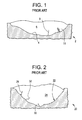
- a substrate 2 includes a cavity 4 having a diameter of approximately 0.54". Cavity 4 is filled with a prior art filler metal 6 which, in the exemplary embodiment shown, takes the form of a super alloy H230. Poor fusion weldablity between filler metal 6 and substrate 2 resulted in strain age cracking (SAC).
- SAC strain age cracking
- the SAC occurred in filler metal 6 adjacent to a weld metal fusion boundary (WMATFB) region or the region between filler metal 6 and substrate 2. As shown, the SAC resulted in the formation of cracks 9 and 11 having a length that exceeds desired parameters. Cracks of such magnitude could result in filler metal 6 becoming dislodged from cavity 4. If dislodged, filler metal 6 may cause damage to turbomachine components.
- WMATFB weld metal fusion boundary
- FIG. 2 illustrates a substrate 20 including a cavity 22 having a diameter of approximately 0.50".
- Cavity 22 is filled with another prior art filler metal, which, in the exemplary embodiment shown, takes the form of Nimonic C263.
- SAC strain age cracking
- the SAC occurred in filler metal 24 adjacent to the WMATFB region. Additional cracking may also occur in other regions of filler metal 24 as a result of SAC.
- the SAC resulted in the formation of cracks 28, 30, and 32.
- Crack 28 has a length of approximately 0.041
- crack 30 has a length of approximately 0.032
- crack 32 has a length of approximately 0.56".
- Cracks 28, 30, and 32 exceed desired crack length limits. In a manner similar to that described above, cracks of such magnitude could result in filler metal 24 becoming dislodged from cavity 22.
- FIG. 3 illustrates a substrate 40 having a cavity 43 that is approximately 0.50" in diameter.
- Cavity 43 is filled with a filler metal 45 having a filler metal chemistry in accordance with an exemplary embodiment.
- Filler metal 45 is resistant to SAC. That is, while filler metal 45 does exhibit a number of cracks 47-52, each crack 47-52 is substantially smaller than the desired crack length limit. For example, crack 47 is approximately 0.020" in length, crack 48 is approximately 0.010" in length, crack 49 is approximately 0.014" in length, crack 50 is approximately 0.010" in length, crack 51 is approximately 0.012" in length, and crack 52 is approximately 0.008" in length.
- filler metal 45 can be employed to repair cavities that were previously considered unrepairable using conventional methods and filler metals.
- filler metal 45 includes a filler metal chemistry having an amount of chromium of between about 9.0 and about 16% by weight, an amount of cobalt of between about 7.0% and about 14% by weight, an amount of molybdenum of between about 10% and about 20% by weight, an amount of iron of between about 1.0 % and about 5.0 % by weight, an amount of aluminum of between about 0.05 % and about 0.75 % by weight, an amount of titanium of between about 0.5 % and about 2.0 % by weight, an amount of manganese not to exceed 0.8 % by weight, an amount of carbon of between 0.02 % and about 0.10 % by weight, an amount of titanium+aluminum of between about 0.55 % and 2.75 % by weight, and the remainder including an amount of nickel.
- the amount of chromium is between about 11 % and about 14% by weight
- the amount of cobalt is between about 10% and about 11% by weight
- the amount of molybdenum is between about 14% and about 16% by weight
- the amount of iron is between about 2.0 % and about 4.0 % by weight
- the amount of aluminum is between about 0.15 % and about 0.3% by weight
- the amount of titanium is between about 1.0 % and about 1.2% by weight
- the amount of carbon is between 0.02 % and about 0.10 % by weight
- the amount of titanium+aluminum is between about 1.2 % and 1.4% by weight, with the remainder including an amount of nickel.
- the amount of chromium is about 12.5 % by weight
- the amount of cobalt is about 10.5 % by weight
- the amount of molybdenum is about 15.0 % by weight
- the amount of iron is about 3.0 % by weight
- the amount of aluminum is about 0.25 % by weight
- the amount of titanium is about 1.1 % by weight
- the amount of carbon is about 0.06 % by weight
- the amount of titanium+aluminum is about 1.65 % by weight with the remainder including an amount of nickel.
- the particular filler metal chemistry for filler metal 45 allows for the repair cavities, pits etc that are larger than were previously possible. More specifically, the particular filler metal chemistry has been shown to exhibit acceptable strength, wear and adhesion properties when used to repair cavities of up to 1" or more in diameter. By allowing for repair of larger cavities, pits etc, the particular filler metal chemistry allows for the repair and re-use of turbomachine components that would previously have been discarded. Thus, the particular filler metal chemistry leads to a substantial cost savings. At this point it should be understood that while discussed in terms of the repair of turbomachinery, the particular filler metal chemistry can be used to repair a wide array of components.
- filler metal 45 is compatible with a wide range of materials such as steels, stainless steels and other super alloys such as GTDIIITM, GTD444TM and R108TM. That is, the filler metal in accordance with the exemplary embodiment can be employed to join a first member formed stainless steel with a second member formed from stainless steel. The filler metal in accordance with the exemplary embodiment can likewise be employed to join a first member formed from a super alloy including one of GTD111TM, GTD444TM and R108TM, with second member formed from a super alloys including one of GTD111TM, GTD444TM, and R108TM.
Landscapes
- Chemical & Material Sciences (AREA)
- Engineering & Computer Science (AREA)
- Mechanical Engineering (AREA)
- Materials Engineering (AREA)
- Metallurgy (AREA)
- Organic Chemistry (AREA)
- Structures Of Non-Positive Displacement Pumps (AREA)
- Powder Metallurgy (AREA)
Abstract
Description
- The subject matter disclosed herein relates to the art of metal joining and, more particularly, to a filler rod metal chemistry for joining components.
- High strength and oxidation resistant alloys such as nickel-based super alloys are widely used in the construction of turbomachines. Super alloys possess strength, weight, durability, and temperature properties desirable for use in many turbomachine components. However, in general, super alloys have poor fusion weldability due to a tendency for liquation cracking and strain age cracking (SAC). SAC is closely related to gamma prime volume fraction, which is a function of Aluminum (Al) and titanium (Ti) content. An increase in the gamma prime fraction and, in particular Al content, increases the tendency for SAC. SAC generally occurs in a weld metal adjacent to a fusion boundary (WMATFB) region and/or propagates into a heat-affected zone (HAZ) of a base metal. Material in the WMATFB region includes base metal resulting from dilution and filler metal added during welding. As such, the WMATFB region should include a chemistry that falls within a weldable material region to avoid, or at least lower, a tendency towards SAC.
- If the WMATFB region chemistry falls within the weldable material region, cracking tendency is low. In a tungsten inert gas (TIG) welding process for example, a typical dilution ratio is about 30:70 which means 30% of the WMATFB region includes base metal and 70% of the WMATFB region includes filler metal. Accordingly, filler metal for welding a particular alloy should possess certain chemical composition and mechanical properties at elevated temperatures.
- According to one aspect of the exemplary embodiment, a filler metal chemistry includes an amount of chromium weight of between about 9.0 % and about 16 % by weight, an amount of cobalt of between about 7.0 % and about 14 % by weight, an amount of molybdenum of between about 10 % and about 20 % by weight, an amount of iron of between about 1.0 % and about 5.0 % by weight, an amount of aluminum of between about 0.05 % and about 0.75 % by weight, an amount of titanium of between about 0.5 % and about 2.0 % by weight, an amount of manganese not to exceed 0.8 % by weight, an amount of carbon of between 0.02 % and about 0.10 % by weight, an amount of titanium+aluminum of between about 0.55 % and 2.75 % by weight, and balance nickel.
- According to another aspect of the exemplary embodiment, a method of joining metals includes joining a first alloy to a second alloy using a filler metal including an amount of chromium of between about 9.0 and about 16% by weight, an amount of cobalt by weight of between about 7.0% and about 14% by weight, an amount of molybdenum of between about 10% and about 20% by weight, an amount of iron of between about 1.0 % and about 5.0 % by weight, an amount of aluminum of between about 0.05 % and about 0.75 % by weight, an amount of titanium of between about 0.5 % and about 2.0 % by weight, an amount of manganese not to exceed 0.8 % by weight, an amount of carbon of between 0.02 % and about 0.10 % by weight, an amount of titanium+aluminum of between about 0.55 % and 2.75 % by weight, and an amount of nickel.
- These and other advantages and features will become more apparent from the following description taken in conjunction with the drawings.
- The subject matter, which is regarded as the invention, is particularly pointed out and distinctly claimed in the claims at the conclusion of the specification. The foregoing and other features, and advantages of the invention are apparent from the following detailed description taken in conjunction with the accompanying drawings in which:
-
FIG. 1 is a partial cross-sectional view of a substrate having a cavity filled with filler metal in accordance with the prior art; -
FIG. 2 is a partial cross-sectional view of a substrate having a cavity filled with another filler metal of the prior art; and -
FIG. 3 is a partial cross-sectional view of a substrate having a cavity filled with a filler metal in accordance with an exemplary embodiment. - The detailed description explains embodiments of the invention, together with advantages and features, by way of example with reference to the drawings.
- Substrates, particularly surfaces of turbomachinery, develop pits, cavities and the like. Impurities carried by inlet air, or developed by combustion pass through various portions of a turbomachine. The impurities often times become deposited on internal turbomachine surfaces and, over time, eventually form pits, cavities or the like. Other impurities may create cavities or pits by impacting the internal surfaces at high velocity. If the size of the cavity or pit exceeds a desired threshold, the substrate must be repaired or replaced. Repairing the substrate is desirable due to the high cost of turbomachine components.
- Previously, cavities and/or pits having a diameter greater than about 0.250" were considered unrepairable. Current filler metal chemistry, limits repair to cavities under 0.250". Cavities over 0.250" could not be properly repaired without experiencing cracks that could lead to component failure or turbomachine damage. For example, as shown in
FIG. 1 , asubstrate 2 includes a cavity 4 having a diameter of approximately 0.54". Cavity 4 is filled with a priorart filler metal 6 which, in the exemplary embodiment shown, takes the form of a super alloy H230. Poor fusion weldablity betweenfiller metal 6 andsubstrate 2 resulted in strain age cracking (SAC). The SAC occurred infiller metal 6 adjacent to a weld metal fusion boundary (WMATFB) region or the region betweenfiller metal 6 andsubstrate 2. As shown, the SAC resulted in the formation ofcracks filler metal 6 becoming dislodged from cavity 4. If dislodged,filler metal 6 may cause damage to turbomachine components. -
FIG. 2 illustrates asubstrate 20 including a cavity 22 having a diameter of approximately 0.50". Cavity 22 is filled with another prior art filler metal, which, in the exemplary embodiment shown, takes the form of Nimonic C263. Once again, poor fusion weldability betweenfiller metal 24 andsubstrate 20 resulted in strain age cracking (SAC). The SAC occurred infiller metal 24 adjacent to the WMATFB region. Additional cracking may also occur in other regions offiller metal 24 as a result of SAC. As shown, the SAC resulted in the formation ofcracks crack 30 has a length of approximately 0.032", andcrack 32 has a length of approximately 0.56".Cracks filler metal 24 becoming dislodged from cavity 22. -
FIG. 3 illustrates asubstrate 40 having a cavity 43 that is approximately 0.50" in diameter. Cavity 43 is filled with afiller metal 45 having a filler metal chemistry in accordance with an exemplary embodiment.Filler metal 45 is resistant to SAC. That is, whilefiller metal 45 does exhibit a number of cracks 47-52, each crack 47-52 is substantially smaller than the desired crack length limit. For example,crack 47 is approximately 0.020" in length,crack 48 is approximately 0.010" in length,crack 49 is approximately 0.014" in length,crack 50 is approximately 0.010" in length,crack 51 is approximately 0.012" in length, andcrack 52 is approximately 0.008" in length. Experience has shown that such cracks are less likely to lead to filler metal failure. As such,filler metal 45 can be employed to repair cavities that were previously considered unrepairable using conventional methods and filler metals. - In accordance with the exemplary embodiment,
filler metal 45 includes a filler metal chemistry having an amount of chromium of between about 9.0 and about 16% by weight, an amount of cobalt of between about 7.0% and about 14% by weight, an amount of molybdenum of between about 10% and about 20% by weight, an amount of iron of between about 1.0 % and about 5.0 % by weight, an amount of aluminum of between about 0.05 % and about 0.75 % by weight, an amount of titanium of between about 0.5 % and about 2.0 % by weight, an amount of manganese not to exceed 0.8 % by weight, an amount of carbon of between 0.02 % and about 0.10 % by weight, an amount of titanium+aluminum of between about 0.55 % and 2.75 % by weight, and the remainder including an amount of nickel. - In accordance with one aspect of the exemplary embodiment, the amount of chromium is between about 11 % and about 14% by weight, the amount of cobalt is between about 10% and about 11% by weight, the amount of molybdenum is between about 14% and about 16% by weight, the amount of iron is between about 2.0 % and about 4.0 % by weight, the amount of aluminum is between about 0.15 % and about 0.3% by weight, the amount of titanium is between about 1.0 % and about 1.2% by weight, the amount of carbon is between 0.02 % and about 0.10 % by weight, and the amount of titanium+aluminum is between about 1.2 % and 1.4% by weight, with the remainder including an amount of nickel.
- In accordance with another aspect of the exemplary embodiment the amount of chromium is about 12.5 % by weight, the amount of cobalt is about 10.5 % by weight, the amount of molybdenum is about 15.0 % by weight, the amount of iron is about 3.0 % by weight, the amount of aluminum is about 0.25 % by weight, the amount of titanium is about 1.1 % by weight, the amount of carbon is about 0.06 % by weight, and the amount of titanium+aluminum is about 1.65 % by weight with the remainder including an amount of nickel.
- The particular filler metal chemistry for
filler metal 45 allows for the repair cavities, pits etc that are larger than were previously possible. More specifically, the particular filler metal chemistry has been shown to exhibit acceptable strength, wear and adhesion properties when used to repair cavities of up to 1" or more in diameter. By allowing for repair of larger cavities, pits etc, the particular filler metal chemistry allows for the repair and re-use of turbomachine components that would previously have been discarded. Thus, the particular filler metal chemistry leads to a substantial cost savings. At this point it should be understood that while discussed in terms of the repair of turbomachinery, the particular filler metal chemistry can be used to repair a wide array of components. That is,filler metal 45 is compatible with a wide range of materials such as steels, stainless steels and other super alloys such as GTDIII™, GTD444™ and R108™. That is, the filler metal in accordance with the exemplary embodiment can be employed to join a first member formed stainless steel with a second member formed from stainless steel. The filler metal in accordance with the exemplary embodiment can likewise be employed to join a first member formed from a super alloy including one of GTD111™, GTD444™ and R108™, with second member formed from a super alloys including one of GTD111™, GTD444™, and R108™. - As used herein the term "comprises" encompasses the more restrictive terms "consisting essentially of" and "consisting of".
- While the invention has been described in detail in connection with only a limited number of embodiments, it should be readily understood that the invention is not limited to such disclosed embodiments. Rather, the invention can be modified to incorporate any number of variations, alterations, substitutions or equivalent arrangements not heretofore described, but which are commensurate with the spirit and scope of the invention. Additionally, while various embodiments of the invention have been described, it is to be understood that aspects of the invention may include only some of the described embodiments. Accordingly, the invention is not to be seen as limited by the foregoing description, but is only limited by the scope of the appended claims.
Claims (15)
- A filler metal chemistry comprising:an amount of chromium of between about 9.0 and about 16% by weight;an amount of cobalt by weight of between about 7.0% and about 14% by weight;an amount of molybdenum of between about 10% and about 20% by weight;an amount of iron of between about 1.0 % and about 5.0 % by weight;an amount of aluminum of between about 0.05 % and about 0.75 % by weight;an amount of titanium of between about 0.5 % and about 2.0 % by weight;an amount of manganese not to exceed 0.8 % by weight;an amount of carbon of between 0.02 % and about 0.10 % by weight;an amount of titanium+aluminum of between about 0.55 % and 2.75 % by weight; andan amount of nickel.
- The filler metal chemistry according to claim 1, wherein the amount of chromium is between about 11% and about 14% by weight.
- The filler metal chemistry according to claim 1 or claim 2, wherein the amount of chromium is about 12.5 % by weight.
- The filler metal chemistry according to any preceding claim, wherein the amount of cobalt is between about 10% and about 11% by weight.
- The filler metal chemistry according to any preceding claim, wherein the amount of cobalt is about 10.5 % by weight.
- The filler metal chemistry according to any preceding claim, wherein the amount of molybdenum is between about 14% and about 16% by weight.
- The filler metal chemistry according to any preceding claim, wherein the amount of molybdenum is about 15.0 % by weight.
- The filler metal chemistry according to any preceding claim, wherein the amount of iron is between about 2.0 % and about 4.0 % by weight, preferably about 3.0 % by weight.
- The filler metal chemistry according to any preceding claim, wherein the amount of aluminum is between about 0.15 % and about 0.3% by weight, preferably about 0.25 % by weight.
- The filler metal chemistry according to any preceding claim, wherein the amount of titanium is between about 1.0 % and about 1.2% by weight, preferably about 1.1 % by weight.
- The filler metal chemistry according to any preceding claim, wherein the amount of carbon is between 0.02 % and about 0.10 % by weight, preferably about 0.06 % by weight.
- The filler metal chemistry according to any preceding claim, wherein the amount of titanium+aluminum is between about 1.2 % and 1.4% by weight, preferably about 1.65 % by weight.
- A method of joining metals, the method comprising:joining a first alloy to a second alloy using a filler metal comprising:an amount of chromium of between about 9.0 and about 16% by weight, an amount of cobalt by weight of between about 7.0% and about 14% by weight, an amount of molybdenum of between about 10% and about 20% by weight, an amount of iron of between about 1.0 % and about 5.0 % by weight, an amount of aluminum of between about 0.05 % and about 0.75 % by weight, an amount of titanium of between about 0.5 % and about 2.0 % by weight, an amount of manganese not to exceed 0.8 % by weight, an amount of carbon of between 0.02 % and about 0.10 % by weight, an amount of titanium+aluminum of between about 0.55 % and 2.75 % by weight, and an amount of nickel.
- The method of claim 13, wherein joining the first alloy to the second alloy includes joining a first super alloy to a second super alloy.
- The method of claim 14, wherein joining the first super alloy to the second super alloy includes joining a first alloy including one of GTD111, GTD444 and R108, and a second alloy including one of GTD111™, GTD444™, and R108™.
Applications Claiming Priority (1)
| Application Number | Priority Date | Filing Date | Title |
|---|---|---|---|
| US13/219,993 US20130048700A1 (en) | 2011-08-29 | 2011-08-29 | Filler metal chemistry for improved weldability of super alloys |
Publications (2)
| Publication Number | Publication Date |
|---|---|
| EP2564978A1 true EP2564978A1 (en) | 2013-03-06 |
| EP2564978B1 EP2564978B1 (en) | 2018-04-18 |
Family
ID=46940244
Family Applications (1)
| Application Number | Title | Priority Date | Filing Date |
|---|---|---|---|
| EP12181179.8A Not-in-force EP2564978B1 (en) | 2011-08-29 | 2012-08-21 | Filler metal chemistry for improved weldability of super alloys |
Country Status (3)
| Country | Link |
|---|---|
| US (1) | US20130048700A1 (en) |
| EP (1) | EP2564978B1 (en) |
| JP (1) | JP2013046931A (en) |
Cited By (1)
| Publication number | Priority date | Publication date | Assignee | Title |
|---|---|---|---|---|
| EP3167978B1 (en) | 2015-11-15 | 2020-03-04 | General Electric Company | Casting method and article |
Citations (6)
| Publication number | Priority date | Publication date | Assignee | Title |
|---|---|---|---|---|
| US3632319A (en) * | 1969-07-11 | 1972-01-04 | Gen Electric | Diffusion bonding of superalloy members |
| JPH08174269A (en) * | 1994-12-28 | 1996-07-09 | Mitsubishi Heavy Ind Ltd | Filler for Ni-based high Cr alloy |
| EP1410872A1 (en) * | 2002-10-16 | 2004-04-21 | Hitachi, Ltd. | Welding material, gas turbine blade or nozzle and a method of repairing a gas turbine blade or nozzle |
| EP1777312A1 (en) * | 2005-10-24 | 2007-04-25 | Siemens Aktiengesellschaft | Welding material, use of the welding material and process of welding |
| EP2008757A1 (en) * | 2006-04-14 | 2008-12-31 | Mitsubishi Materials Corporation | WIRE FOR Ni-BASE HEAT-RESISTANT ALLOY WELDING |
| EP2305415A1 (en) * | 2008-07-30 | 2011-04-06 | Mitsubishi Heavy Industries, Ltd. | Welding material for ni-based alloy |
Family Cites Families (4)
| Publication number | Priority date | Publication date | Assignee | Title |
|---|---|---|---|---|
| GB1070099A (en) * | 1965-06-25 | 1967-05-24 | Int Nickel Ltd | Welding high-temperature alloys |
| JPH0651239B2 (en) * | 1985-08-02 | 1994-07-06 | 大同特殊鋼株式会社 | Ni-based alloy powder for powder overlay |
| JPH05337684A (en) * | 1992-06-12 | 1993-12-21 | Kobe Steel Ltd | Material for powder plasma welding |
| JP2001288554A (en) * | 2000-03-31 | 2001-10-19 | Toshiba Corp | Repair material, repair method of heat-resistant alloy member, and high-temperature part repaired by this method |
-
2011
- 2011-08-29 US US13/219,993 patent/US20130048700A1/en not_active Abandoned
-
2012
- 2012-08-21 EP EP12181179.8A patent/EP2564978B1/en not_active Not-in-force
- 2012-08-29 JP JP2012188324A patent/JP2013046931A/en active Pending
Patent Citations (6)
| Publication number | Priority date | Publication date | Assignee | Title |
|---|---|---|---|---|
| US3632319A (en) * | 1969-07-11 | 1972-01-04 | Gen Electric | Diffusion bonding of superalloy members |
| JPH08174269A (en) * | 1994-12-28 | 1996-07-09 | Mitsubishi Heavy Ind Ltd | Filler for Ni-based high Cr alloy |
| EP1410872A1 (en) * | 2002-10-16 | 2004-04-21 | Hitachi, Ltd. | Welding material, gas turbine blade or nozzle and a method of repairing a gas turbine blade or nozzle |
| EP1777312A1 (en) * | 2005-10-24 | 2007-04-25 | Siemens Aktiengesellschaft | Welding material, use of the welding material and process of welding |
| EP2008757A1 (en) * | 2006-04-14 | 2008-12-31 | Mitsubishi Materials Corporation | WIRE FOR Ni-BASE HEAT-RESISTANT ALLOY WELDING |
| EP2305415A1 (en) * | 2008-07-30 | 2011-04-06 | Mitsubishi Heavy Industries, Ltd. | Welding material for ni-based alloy |
Non-Patent Citations (3)
| Title |
|---|
| EOS: "Material data sheet EOS NickelAlloy IN625", October 2010 (2010-10-01), XP002685694, Retrieved from the Internet <URL:http://www.detekt.com.tw/download/eos/4%E6%9D%90%E6%96%99%E7%A8%AE%E9%A1%9E/Metal/NiAll-IN625-M270_Material_data_sheet_10-10_en.pdf> [retrieved on 20121022] * |
| M.B. HENDERSON, D. ARRELLB, M. HEOBEL, R. LARSSONB AND G. MARCHANTC: "Nickel-Based Superalloy Welding Practices for Industrial Gas Turbine Applications", 20 November 2002 (2002-11-20), XP002685693, Retrieved from the Internet <URL:http://www.msm.cam.ac.uk/phase-trans/2002/papers/APNickelWeldv2.pdf> [retrieved on 20121022] * |
| THYSSENKRUPP VDM: "Nicrofer® 5120 CoTi - alloy C-263 Material Data Sheet No 4020", February 1993 (1993-02-01), XP002685695, Retrieved from the Internet <URL:http://www.thyssenkrupp-vdm.com/downloads/materialdatenblaetter/?tx_ttnews%5Bcat%5D=28> [retrieved on 20121022] * |
Cited By (2)
| Publication number | Priority date | Publication date | Assignee | Title |
|---|---|---|---|---|
| EP3167978B1 (en) | 2015-11-15 | 2020-03-04 | General Electric Company | Casting method and article |
| EP3167978B2 (en) † | 2015-11-15 | 2022-12-28 | General Electric Company | Casting method and article |
Also Published As
| Publication number | Publication date |
|---|---|
| EP2564978B1 (en) | 2018-04-18 |
| JP2013046931A (en) | 2013-03-07 |
| US20130048700A1 (en) | 2013-02-28 |
Similar Documents
| Publication | Publication Date | Title |
|---|---|---|
| JP4288304B1 (en) | Turbine rotor and method of manufacturing turbine rotor | |
| EP2902516B1 (en) | A weld filler for nickel-base superalloys | |
| JP4912533B2 (en) | Electron beam welding method using shims | |
| KR20150080611A (en) | Pre-sintered preform repair of turbine blades | |
| US9346132B2 (en) | Metal chemistry for improved weldability of super alloys | |
| EP3219434B1 (en) | Repair of superalloys by weld forced crack and braze repair | |
| CN101495265A (en) | Erosion preventive method and member with erosion preventive section | |
| US20110062220A1 (en) | Superalloy composition and method of forming a turbine engine component | |
| US20130323533A1 (en) | Repaired superalloy components and methods for repairing superalloy components | |
| US7533795B2 (en) | Welding process | |
| EP4105443A1 (en) | Hybrid superalloy article and method of manufacture thereof | |
| CN102744512A (en) | Welded component, a welded gas turbine component, and a process of welding a component | |
| JP6838846B2 (en) | Welding material and welding method | |
| US20120294729A1 (en) | Cold metal transfer hardfacing of buckets | |
| CN103857491B (en) | The bonding layer of high Cr steel turbine rotor or upper strata weld part, this weld part resurfacing welding material and the manufacture method in this built-up welding portion | |
| EP3034229A1 (en) | Weld filler for superalloys | |
| CN104511702A (en) | Welding material for welding of superalloys | |
| US12055056B2 (en) | Hybrid superalloy article and method of manufacture thereof | |
| US20120251840A1 (en) | Nickel-base weld materials, processes of using, and components formed therewith | |
| EP2564978A1 (en) | Filler metal chemistry for improved weldability of super alloys | |
| US10072504B2 (en) | Alloy, welded article and welding process | |
| US20180209288A1 (en) | Braze system, brazed article, and method for forming a brazed article | |
| JP2011231410A (en) | LOW THERMAL EXPANSION Ni-BASE SUPERALLOY | |
| JP2001012202A (en) | Different kind materials welded turbine rotor and manufacture thereof | |
| JPWO2020174525A1 (en) | Welding repair method for precipitation strengthening casting mixture |
Legal Events
| Date | Code | Title | Description |
|---|---|---|---|
| PUAI | Public reference made under article 153(3) epc to a published international application that has entered the european phase |
Free format text: ORIGINAL CODE: 0009012 |
|
| AK | Designated contracting states |
Kind code of ref document: A1 Designated state(s): AL AT BE BG CH CY CZ DE DK EE ES FI FR GB GR HR HU IE IS IT LI LT LU LV MC MK MT NL NO PL PT RO RS SE SI SK SM TR |
|
| AX | Request for extension of the european patent |
Extension state: BA ME |
|
| 17P | Request for examination filed |
Effective date: 20130906 |
|
| RBV | Designated contracting states (corrected) |
Designated state(s): AL AT BE BG CH CY CZ DE DK EE ES FI FR GB GR HR HU IE IS IT LI LT LU LV MC MK MT NL NO PL PT RO RS SE SI SK SM TR |
|
| GRAP | Despatch of communication of intention to grant a patent |
Free format text: ORIGINAL CODE: EPIDOSNIGR1 |
|
| INTG | Intention to grant announced |
Effective date: 20171107 |
|
| GRAS | Grant fee paid |
Free format text: ORIGINAL CODE: EPIDOSNIGR3 |
|
| GRAA | (expected) grant |
Free format text: ORIGINAL CODE: 0009210 |
|
| AK | Designated contracting states |
Kind code of ref document: B1 Designated state(s): AL AT BE BG CH CY CZ DE DK EE ES FI FR GB GR HR HU IE IS IT LI LT LU LV MC MK MT NL NO PL PT RO RS SE SI SK SM TR |
|
| REG | Reference to a national code |
Ref country code: GB Ref legal event code: FG4D |
|
| REG | Reference to a national code |
Ref country code: CH Ref legal event code: EP |
|
| REG | Reference to a national code |
Ref country code: AT Ref legal event code: REF Ref document number: 989910 Country of ref document: AT Kind code of ref document: T Effective date: 20180515 |
|
| REG | Reference to a national code |
Ref country code: IE Ref legal event code: FG4D |
|
| REG | Reference to a national code |
Ref country code: DE Ref legal event code: R096 Ref document number: 602012045260 Country of ref document: DE |
|
| REG | Reference to a national code |
Ref country code: FR Ref legal event code: PLFP Year of fee payment: 7 |
|
| REG | Reference to a national code |
Ref country code: NL Ref legal event code: MP Effective date: 20180418 |
|
| REG | Reference to a national code |
Ref country code: LT Ref legal event code: MG4D |
|
| PG25 | Lapsed in a contracting state [announced via postgrant information from national office to epo] |
Ref country code: NL Free format text: LAPSE BECAUSE OF FAILURE TO SUBMIT A TRANSLATION OF THE DESCRIPTION OR TO PAY THE FEE WITHIN THE PRESCRIBED TIME-LIMIT Effective date: 20180418 |
|
| PG25 | Lapsed in a contracting state [announced via postgrant information from national office to epo] |
Ref country code: AL Free format text: LAPSE BECAUSE OF FAILURE TO SUBMIT A TRANSLATION OF THE DESCRIPTION OR TO PAY THE FEE WITHIN THE PRESCRIBED TIME-LIMIT Effective date: 20180418 Ref country code: ES Free format text: LAPSE BECAUSE OF FAILURE TO SUBMIT A TRANSLATION OF THE DESCRIPTION OR TO PAY THE FEE WITHIN THE PRESCRIBED TIME-LIMIT Effective date: 20180418 Ref country code: LT Free format text: LAPSE BECAUSE OF FAILURE TO SUBMIT A TRANSLATION OF THE DESCRIPTION OR TO PAY THE FEE WITHIN THE PRESCRIBED TIME-LIMIT Effective date: 20180418 Ref country code: PL Free format text: LAPSE BECAUSE OF FAILURE TO SUBMIT A TRANSLATION OF THE DESCRIPTION OR TO PAY THE FEE WITHIN THE PRESCRIBED TIME-LIMIT Effective date: 20180418 Ref country code: SE Free format text: LAPSE BECAUSE OF FAILURE TO SUBMIT A TRANSLATION OF THE DESCRIPTION OR TO PAY THE FEE WITHIN THE PRESCRIBED TIME-LIMIT Effective date: 20180418 Ref country code: NO Free format text: LAPSE BECAUSE OF FAILURE TO SUBMIT A TRANSLATION OF THE DESCRIPTION OR TO PAY THE FEE WITHIN THE PRESCRIBED TIME-LIMIT Effective date: 20180718 Ref country code: BG Free format text: LAPSE BECAUSE OF FAILURE TO SUBMIT A TRANSLATION OF THE DESCRIPTION OR TO PAY THE FEE WITHIN THE PRESCRIBED TIME-LIMIT Effective date: 20180718 Ref country code: FI Free format text: LAPSE BECAUSE OF FAILURE TO SUBMIT A TRANSLATION OF THE DESCRIPTION OR TO PAY THE FEE WITHIN THE PRESCRIBED TIME-LIMIT Effective date: 20180418 |
|
| PGFP | Annual fee paid to national office [announced via postgrant information from national office to epo] |
Ref country code: IT Payment date: 20180719 Year of fee payment: 7 Ref country code: FR Payment date: 20180720 Year of fee payment: 7 Ref country code: DE Payment date: 20180719 Year of fee payment: 7 |
|
| PG25 | Lapsed in a contracting state [announced via postgrant information from national office to epo] |
Ref country code: HR Free format text: LAPSE BECAUSE OF FAILURE TO SUBMIT A TRANSLATION OF THE DESCRIPTION OR TO PAY THE FEE WITHIN THE PRESCRIBED TIME-LIMIT Effective date: 20180418 Ref country code: GR Free format text: LAPSE BECAUSE OF FAILURE TO SUBMIT A TRANSLATION OF THE DESCRIPTION OR TO PAY THE FEE WITHIN THE PRESCRIBED TIME-LIMIT Effective date: 20180719 Ref country code: RS Free format text: LAPSE BECAUSE OF FAILURE TO SUBMIT A TRANSLATION OF THE DESCRIPTION OR TO PAY THE FEE WITHIN THE PRESCRIBED TIME-LIMIT Effective date: 20180418 Ref country code: LV Free format text: LAPSE BECAUSE OF FAILURE TO SUBMIT A TRANSLATION OF THE DESCRIPTION OR TO PAY THE FEE WITHIN THE PRESCRIBED TIME-LIMIT Effective date: 20180418 |
|
| PGFP | Annual fee paid to national office [announced via postgrant information from national office to epo] |
Ref country code: GB Payment date: 20180720 Year of fee payment: 7 |
|
| REG | Reference to a national code |
Ref country code: AT Ref legal event code: MK05 Ref document number: 989910 Country of ref document: AT Kind code of ref document: T Effective date: 20180418 |
|
| PG25 | Lapsed in a contracting state [announced via postgrant information from national office to epo] |
Ref country code: PT Free format text: LAPSE BECAUSE OF FAILURE TO SUBMIT A TRANSLATION OF THE DESCRIPTION OR TO PAY THE FEE WITHIN THE PRESCRIBED TIME-LIMIT Effective date: 20180820 |
|
| REG | Reference to a national code |
Ref country code: DE Ref legal event code: R097 Ref document number: 602012045260 Country of ref document: DE |
|
| PG25 | Lapsed in a contracting state [announced via postgrant information from national office to epo] |
Ref country code: SK Free format text: LAPSE BECAUSE OF FAILURE TO SUBMIT A TRANSLATION OF THE DESCRIPTION OR TO PAY THE FEE WITHIN THE PRESCRIBED TIME-LIMIT Effective date: 20180418 Ref country code: AT Free format text: LAPSE BECAUSE OF FAILURE TO SUBMIT A TRANSLATION OF THE DESCRIPTION OR TO PAY THE FEE WITHIN THE PRESCRIBED TIME-LIMIT Effective date: 20180418 Ref country code: DK Free format text: LAPSE BECAUSE OF FAILURE TO SUBMIT A TRANSLATION OF THE DESCRIPTION OR TO PAY THE FEE WITHIN THE PRESCRIBED TIME-LIMIT Effective date: 20180418 Ref country code: EE Free format text: LAPSE BECAUSE OF FAILURE TO SUBMIT A TRANSLATION OF THE DESCRIPTION OR TO PAY THE FEE WITHIN THE PRESCRIBED TIME-LIMIT Effective date: 20180418 Ref country code: CZ Free format text: LAPSE BECAUSE OF FAILURE TO SUBMIT A TRANSLATION OF THE DESCRIPTION OR TO PAY THE FEE WITHIN THE PRESCRIBED TIME-LIMIT Effective date: 20180418 Ref country code: RO Free format text: LAPSE BECAUSE OF FAILURE TO SUBMIT A TRANSLATION OF THE DESCRIPTION OR TO PAY THE FEE WITHIN THE PRESCRIBED TIME-LIMIT Effective date: 20180418 |
|
| PLBE | No opposition filed within time limit |
Free format text: ORIGINAL CODE: 0009261 |
|
| STAA | Information on the status of an ep patent application or granted ep patent |
Free format text: STATUS: NO OPPOSITION FILED WITHIN TIME LIMIT |
|
| PG25 | Lapsed in a contracting state [announced via postgrant information from national office to epo] |
Ref country code: SM Free format text: LAPSE BECAUSE OF FAILURE TO SUBMIT A TRANSLATION OF THE DESCRIPTION OR TO PAY THE FEE WITHIN THE PRESCRIBED TIME-LIMIT Effective date: 20180418 |
|
| 26N | No opposition filed |
Effective date: 20190121 |
|
| PG25 | Lapsed in a contracting state [announced via postgrant information from national office to epo] |
Ref country code: MC Free format text: LAPSE BECAUSE OF FAILURE TO SUBMIT A TRANSLATION OF THE DESCRIPTION OR TO PAY THE FEE WITHIN THE PRESCRIBED TIME-LIMIT Effective date: 20180418 |
|
| REG | Reference to a national code |
Ref country code: CH Ref legal event code: PL |
|
| PG25 | Lapsed in a contracting state [announced via postgrant information from national office to epo] |
Ref country code: CH Free format text: LAPSE BECAUSE OF NON-PAYMENT OF DUE FEES Effective date: 20180831 Ref country code: LU Free format text: LAPSE BECAUSE OF NON-PAYMENT OF DUE FEES Effective date: 20180821 Ref country code: LI Free format text: LAPSE BECAUSE OF NON-PAYMENT OF DUE FEES Effective date: 20180831 |
|
| REG | Reference to a national code |
Ref country code: BE Ref legal event code: MM Effective date: 20180831 |
|
| PG25 | Lapsed in a contracting state [announced via postgrant information from national office to epo] |
Ref country code: SI Free format text: LAPSE BECAUSE OF FAILURE TO SUBMIT A TRANSLATION OF THE DESCRIPTION OR TO PAY THE FEE WITHIN THE PRESCRIBED TIME-LIMIT Effective date: 20180418 |
|
| PG25 | Lapsed in a contracting state [announced via postgrant information from national office to epo] |
Ref country code: BE Free format text: LAPSE BECAUSE OF NON-PAYMENT OF DUE FEES Effective date: 20180831 |
|
| PG25 | Lapsed in a contracting state [announced via postgrant information from national office to epo] |
Ref country code: MT Free format text: LAPSE BECAUSE OF NON-PAYMENT OF DUE FEES Effective date: 20180821 |
|
| REG | Reference to a national code |
Ref country code: DE Ref legal event code: R119 Ref document number: 602012045260 Country of ref document: DE |
|
| PG25 | Lapsed in a contracting state [announced via postgrant information from national office to epo] |
Ref country code: TR Free format text: LAPSE BECAUSE OF FAILURE TO SUBMIT A TRANSLATION OF THE DESCRIPTION OR TO PAY THE FEE WITHIN THE PRESCRIBED TIME-LIMIT Effective date: 20180418 |
|
| GBPC | Gb: european patent ceased through non-payment of renewal fee |
Effective date: 20190821 |
|
| PG25 | Lapsed in a contracting state [announced via postgrant information from national office to epo] |
Ref country code: HU Free format text: LAPSE BECAUSE OF FAILURE TO SUBMIT A TRANSLATION OF THE DESCRIPTION OR TO PAY THE FEE WITHIN THE PRESCRIBED TIME-LIMIT; INVALID AB INITIO Effective date: 20120821 |
|
| PG25 | Lapsed in a contracting state [announced via postgrant information from national office to epo] |
Ref country code: IE Free format text: LAPSE BECAUSE OF NON-PAYMENT OF DUE FEES Effective date: 20180821 Ref country code: MK Free format text: LAPSE BECAUSE OF NON-PAYMENT OF DUE FEES Effective date: 20180418 Ref country code: CY Free format text: LAPSE BECAUSE OF FAILURE TO SUBMIT A TRANSLATION OF THE DESCRIPTION OR TO PAY THE FEE WITHIN THE PRESCRIBED TIME-LIMIT Effective date: 20180418 |
|
| PG25 | Lapsed in a contracting state [announced via postgrant information from national office to epo] |
Ref country code: DE Free format text: LAPSE BECAUSE OF NON-PAYMENT OF DUE FEES Effective date: 20200303 Ref country code: FR Free format text: LAPSE BECAUSE OF NON-PAYMENT OF DUE FEES Effective date: 20190831 Ref country code: IS Free format text: LAPSE BECAUSE OF FAILURE TO SUBMIT A TRANSLATION OF THE DESCRIPTION OR TO PAY THE FEE WITHIN THE PRESCRIBED TIME-LIMIT Effective date: 20180818 |
|
| PG25 | Lapsed in a contracting state [announced via postgrant information from national office to epo] |
Ref country code: GB Free format text: LAPSE BECAUSE OF NON-PAYMENT OF DUE FEES Effective date: 20190821 Ref country code: IT Free format text: LAPSE BECAUSE OF NON-PAYMENT OF DUE FEES Effective date: 20190821 |