EP2564688A1 - Vegetated panel and associated vegetated wall - Google Patents
Vegetated panel and associated vegetated wall Download PDFInfo
- Publication number
- EP2564688A1 EP2564688A1 EP20110179419 EP11179419A EP2564688A1 EP 2564688 A1 EP2564688 A1 EP 2564688A1 EP 20110179419 EP20110179419 EP 20110179419 EP 11179419 A EP11179419 A EP 11179419A EP 2564688 A1 EP2564688 A1 EP 2564688A1
- Authority
- EP
- European Patent Office
- Prior art keywords
- vegetated
- panel
- wall
- growth media
- frame
- Prior art date
- Legal status (The legal status is an assumption and is not a legal conclusion. Google has not performed a legal analysis and makes no representation as to the accuracy of the status listed.)
- Ceased
Links
- 239000001963 growth medium Substances 0.000 claims abstract description 108
- 230000000295 complement effect Effects 0.000 claims abstract description 4
- XLYOFNOQVPJJNP-UHFFFAOYSA-N water Substances O XLYOFNOQVPJJNP-UHFFFAOYSA-N 0.000 claims description 54
- 239000011229 interlayer Substances 0.000 claims description 49
- 230000002262 irrigation Effects 0.000 claims description 15
- 238000003973 irrigation Methods 0.000 claims description 15
- 239000010410 layer Substances 0.000 claims description 15
- 239000000463 material Substances 0.000 claims description 14
- 229910001335 Galvanized steel Inorganic materials 0.000 claims description 3
- 239000002131 composite material Substances 0.000 claims description 3
- 239000008397 galvanized steel Substances 0.000 claims description 3
- 241000196324 Embryophyta Species 0.000 description 26
- 239000011490 mineral wool Substances 0.000 description 5
- 239000002245 particle Substances 0.000 description 5
- 239000004033 plastic Substances 0.000 description 4
- 229920003023 plastic Polymers 0.000 description 4
- 239000004744 fabric Substances 0.000 description 3
- 239000007788 liquid Substances 0.000 description 3
- 230000018109 developmental process Effects 0.000 description 2
- 230000000694 effects Effects 0.000 description 2
- 239000011491 glass wool Substances 0.000 description 2
- 230000005484 gravity Effects 0.000 description 2
- 229910052500 inorganic mineral Inorganic materials 0.000 description 2
- 239000002609 medium Substances 0.000 description 2
- 239000011707 mineral Substances 0.000 description 2
- 239000011148 porous material Substances 0.000 description 2
- 239000000758 substrate Substances 0.000 description 2
- RYGMFSIKBFXOCR-UHFFFAOYSA-N Copper Chemical compound [Cu] RYGMFSIKBFXOCR-UHFFFAOYSA-N 0.000 description 1
- 241000218922 Magnoliophyta Species 0.000 description 1
- 239000011230 binding agent Substances 0.000 description 1
- 229910052802 copper Inorganic materials 0.000 description 1
- 239000010949 copper Substances 0.000 description 1
- 229920003020 cross-linked polyethylene Polymers 0.000 description 1
- 239000004703 cross-linked polyethylene Substances 0.000 description 1
- 238000005034 decoration Methods 0.000 description 1
- 238000005553 drilling Methods 0.000 description 1
- 230000002708 enhancing effect Effects 0.000 description 1
- 239000002657 fibrous material Substances 0.000 description 1
- 239000006260 foam Substances 0.000 description 1
- 239000003365 glass fiber Substances 0.000 description 1
- 230000001939 inductive effect Effects 0.000 description 1
- 230000014759 maintenance of location Effects 0.000 description 1
- 239000002184 metal Substances 0.000 description 1
- 229910052751 metal Inorganic materials 0.000 description 1
- 230000035699 permeability Effects 0.000 description 1
- 231100000208 phytotoxic Toxicity 0.000 description 1
- 230000000885 phytotoxic effect Effects 0.000 description 1
- 230000008635 plant growth Effects 0.000 description 1
- 230000002940 repellent Effects 0.000 description 1
- 239000005871 repellent Substances 0.000 description 1
- 239000011435 rock Substances 0.000 description 1
- 238000007665 sagging Methods 0.000 description 1
- 230000001932 seasonal effect Effects 0.000 description 1
- 239000007787 solid Substances 0.000 description 1
- 239000004575 stone Substances 0.000 description 1
- 239000000126 substance Substances 0.000 description 1
- 231100000331 toxic Toxicity 0.000 description 1
- 230000002588 toxic effect Effects 0.000 description 1
- 230000001960 triggered effect Effects 0.000 description 1
- 239000002699 waste material Substances 0.000 description 1
- 210000002268 wool Anatomy 0.000 description 1
Images


Classifications
-
- A—HUMAN NECESSITIES
- A01—AGRICULTURE; FORESTRY; ANIMAL HUSBANDRY; HUNTING; TRAPPING; FISHING
- A01G—HORTICULTURE; CULTIVATION OF VEGETABLES, FLOWERS, RICE, FRUIT, VINES, HOPS OR SEAWEED; FORESTRY; WATERING
- A01G9/00—Cultivation in receptacles, forcing-frames or greenhouses; Edging for beds, lawn or the like
- A01G9/02—Receptacles, e.g. flower-pots or boxes; Glasses for cultivating flowers
- A01G9/022—Pots for vertical horticulture
- A01G9/025—Containers and elements for greening walls
-
- Y—GENERAL TAGGING OF NEW TECHNOLOGICAL DEVELOPMENTS; GENERAL TAGGING OF CROSS-SECTIONAL TECHNOLOGIES SPANNING OVER SEVERAL SECTIONS OF THE IPC; TECHNICAL SUBJECTS COVERED BY FORMER USPC CROSS-REFERENCE ART COLLECTIONS [XRACs] AND DIGESTS
- Y02—TECHNOLOGIES OR APPLICATIONS FOR MITIGATION OR ADAPTATION AGAINST CLIMATE CHANGE
- Y02P—CLIMATE CHANGE MITIGATION TECHNOLOGIES IN THE PRODUCTION OR PROCESSING OF GOODS
- Y02P60/00—Technologies relating to agriculture, livestock or agroalimentary industries
- Y02P60/20—Reduction of greenhouse gas [GHG] emissions in agriculture, e.g. CO2
Definitions
- the invention relates to a vegetated panel comprising at least two growth media for holding plants.
- This invention is in particular applicable to placing plants on vertical walls. It may be internal walls or external walls.
- the invention also relates to a vegetated wall comprising such vegetated panels.
- the vegetated panels comprise growth media for cultivation of plants.
- the plants are introduced into growth media that may be themselves contained in frame, and are cultivated up to an adequate development stage in order to cover totally or partially said frame or developed plants are directly introduced into growth media.
- a vegetated wall generally comprises many vegetated panels.
- a problem is to fix the panels on the wall.
- one panel may have a weight of up to 50kg and comprises also at an upper end irrigation means that impose a complex fixing of the panels.
- An object of the present invention is to provide an improved vegetated panel which can be securely fixed to a host wall while ensuring a good irrigation of the whole vegetated panels.
- one subject of the invention is a vegetated panel for receiving plants, comprising at least two growth media for plants and comprising a frame maintaining said growth media, characterized in that said frame is provided with first fixing or hanging means able to cooperate with complementary support axis of second hanging means, in order to fix said vegetated panel to a host wall to be equipped with said vegetated panel.
- the vegetated panel according to the invention may also comprise one or more of the following characteristics, taken separately or in combination:
- the invention also relates to a vegetated wall comprising one or more vegetated panels as described above, and a hanging system of said at least one vegetated panel for fixing said at least one vegetated panel on a host wall, said hanging system comprising :
- the vegetated wall may also comprise one or more of the following characteristics, taken separately or in combination:
- the invention relates to a vegetated panel 1 shown schematically in figures 1 to 3 , for receiving plants.
- This invention is in particular applicable to placing plants on vertical walls. It may be internal walls or external walls, in order to form a vegetated wall 3. Such a vegetated wall 3 may be provided inside or outside a building.
- one or more panels 1 are fixed to a host wall 5 ( figure 4 ) through a hanging system 7 schematically shown at figure 5a .
- such a vegetated wall 3 may comprise more than one vegetated panels 1.
- the vegetated wall 3 comprises four vegetated panels 1.
- the host wall 5 ( figure 4 ) may be an internal or an external wall of a building.
- the vegetated panels 1 are vertically superposed one over the other.
- Panel 1 may also be aligned horizontally as shown in figure 6 .
- a vegetated panel 1 comprises several growth media 9 stacked one over the other in position of use.
- Each row of the vegetated panel 1 comprises for example one or two growth media 9, and the top media and bottom media are possibly thicker than the central ones, for example to properly fill in the frame mentioned later on.
- the growth media 9 are vertically superposed in position of use.
- a panel 1 with several stacked growth media 9 may have a parallelepipedic shape.
- This parallelepipedic panel 1 may be around 25 to 240 cm high h. Preferably, the panel 1 has a height h under 1m.
- the panel 1 may be from 20 to 70 cm, notably around 60 cm, large 1.
- a growth medium 9 has for example an essentially rectangular shape.
- the shape of the growth media 9 and then the panel 1 may be adapted to conform to the geometry of the locations designed to receive the vegetated panel 1.
- Each growth medium 9 can hold plants.
- a growth medium 9 is provided with holes 11 for receiving plants, as it can be seen from figure 2 .
- the growth media 9 may be provided with blind holes 11 according to the illustrated example of figure 2 .
- a growth medium 9 may have a 6,6 cm thickness and the holes 11 may be 6 cm deep.
- this example is not limiting.
- the holes 11 may be aligned along the longitudinal axis of the rectangular growth medium 9.
- each growth medium 9 has two holes 11.
- this example is illustrative and a growth medium 9 can be provided with less or more holes 11 depending on the application.
- Such a hole 11 may be provided by drilling with a tubular saw.
- seeds may be introduced into the holes 11 to fill and are cultivated until an adequate development for rooting is reached.
- a vegetated panel 1 can be introduced on request, immediately starting from cultivated plants.
- the plants can be of any kind, hardy plants, seasonal flowering plants, or even a combination of the two types.
- plant are put into the holes 11 and are grown up during 1-2 month in the panel in a horizontal position that allows the roots of the plants to fix themselves in the growth media.
- the panel may be put in a water bath for irrigation of the plants.
- Another solution is to directly put the panel 1 vertical, and then sprinkle, for example by placing a supply duct 13 on the first growth medium 9 above ( figure 4 ).
- a growth medium 9 advantageously comprises mineral materials, in particular fibres.
- a growth medium material comprises rock (or stone) wool.
- glass wool may be used.
- the fibres such as rock wool fibres
- the fibres are crimped. This non directed orientation of the fibres contribute to the retaining of water and good functioning of the panel.
- a growth medium 9 has a volumic mass of 30-80kg/m 3 or lower, for example of 70 kg/m 3 .
- This volumic mass is generally between 30 and 45 kg/m 3 for the glass wool/fibres made medium and between 45 and 80 kg/m 3 for the rock wool/fibres made medium, and notably lower or equal to 50 kg/m 3 .
- the growth media/interlayer(s) assembly can be covered by a layer or envelope, for example formed from a web or fabric 8 or film, notably plastic made, for protecting and/or holding the assembly and/or preventing roots to go out of the panel and/or for giving a given aesthetic aspect to the vegetated panel, for example for giving the same color than the support of the assembly or for printing a logo, etc, the layer or envelope being on at least one side of the panel, generally front, and preferably being on both main side or surrounding all the assembly mentioned above.
- a layer or envelope for example formed from a web or fabric 8 or film, notably plastic made, for protecting and/or holding the assembly and/or preventing roots to go out of the panel and/or for giving a given aesthetic aspect to the vegetated panel, for example for giving the same color than the support of the assembly or for printing a logo, etc
- the layer or envelope being on at least one side of the panel, generally front, and preferably being on both main side or surrounding all the assembly mentioned above.
- This layer or envelope namely fabric 8 at the same time generally presents holes 8' to let out the plants themselves
- the mineral fibres may be black or an additional element, namely the fabric 8 ( figure 2 ) (which can be also black), may be added on the external face of the growth media 9, that means the face being seen. This black appearance improves the aesthetic appearance.
- the growth media 9 of the panel 1 can be of the same or different sizes. Notably the growth media 9 may have different thickness according to the position, top or bottom for example, in the panel. Further, the growth media 9 can be one or several on each row of the panel between which interlayer(s) 15 (described below) may be placed.
- the vegetated panel 1 may indeed comprise advantageously an interlayer 15 ( figures 1 and 2 ) between two growth media 9.
- sandwich modules are made with each time two growth media 9 and interlayer 15 inserted between both growth media 9.
- an interlayer 15 may comprise one or more strata.
- each growth medium, or layer or row of growth media is separated from the one below by at least one interlayer.
- the separated layers of growth media are approximately horizontal when the panel is in position of use.
- Each interlayer 15 prevents direct contact between both growth media 9, to prevent notably capillary phenomenon, the concerned growth media 9 being those intended to be vertically superposed one compared to one another, the panel being intended to be placed vertically with growth media vertically superposed.
- the interlayer 15 is thus made so as to prevent notably most or all of the liquid in one media to flow through the capillary, notably under gravity.
- the interlayer is made in a different material from the growth media 9, this material not enhancing water flowing, notably different from a fibrous or porous material of the type inducing capillary effects.
- the interlayer 15 is also chosen water permeable in so far as it lets a part of water (the water in excess) in a first growth medium flow to a second growth medium.
- the first growth medium is the upper in position of use, and the second growth medium is below the first one in position of use.
- the water permeability of an interlayer 15 is advantageously such that the interlayer 15 lets flow the water in excess in the upper growth medium 9 to the growth medium 9 below.
- the pF1 (water retention capacity) of the material(s) forming the interlayer 15 is preferably lower than 10% (10% water content, which means the fraction of the volume of substrate that is occupied with water).
- the pF1 is determined according to standard EN 13041 (1999) by subjecting samples to pull forces.
- a depression expressed as a function of the logarithm of the height of the water column (in cm) also called pF
- the percentage of the volume of the substrate which is occupied by the liquid is defined, the pF1 corresponding practically to the condition of maximum retention and being established equal to 1 (or 10 cm on the water column).
- the pF2 of the interlayer is also preferably lower than 10%, and the pF0 (free drainage) is also preferably lower than 10%.
- a growth medium 9 may be able to reach a predetermined maximal moisture content above which said water flows out into interlayer 15 below.
- this predetermined maximal moisture content is from 20 to 90%, notably around 60% or 70%.
- Rock wool is for example able to reach a 20-90%, notably around 70%, moisture content. Above this maximal threshold, the water in excess streams below. This water in excess can then be distributed to the growth medium 9 below through the interlayer 15. As said before, the interlayer 15 is water permeable to let flow water in excess in the upper growth medium 9 to the growth medium 9 below.
- the interlayer 15 also prevents the sagging of growth media 9 on the one(s) underneath over time once the panel 1 is put in its vertical use position.
- the interlayer is thus advantageously mostly or entirely solid, it advantageously covers most of the adjacent surfaces of the growth media between which it is placed. It may cover at least 50%, preferably at least 75%, notably more than 90%, and generally, approximately all of the adjacent surfaces of the growth media 9 between which is placed.
- Such an interlayer 15 may have a thickness around 1 to 3.5 cm.
- the interlayer 15 generally presents an approximate constant thickness throughout its surface.
- the interlayer 15 can be made of one or rather several components or layers. Generally and advantageously, it comprises at least one layer of particles or flakes, held together by at least a binder.
- the interlayer 15 can also comprises at least a veil or porous structure or structure with voids on at least one side.
- the interlayer 15 or particles or flakes can be water repellent treated, which prevents the interlayer from water retention.
- the interlayer 15 may be made of recycled material, notably plastic.
- the particles notably can be advantageously made from recycled material, notably plastic, providing also economic and ecological advantages.
- the interlayer 15 material may be made from waste from XPE foam and/or other plastics made products which are cut or trimmed into pieces.
- XPE means Cross-linked polyethylene.
- the interlayer material may comprise XPE as a main material for example forming at least 75% of the interlayer 15.
- the interlayer 15 is in a preferred embodiment a XPE-flakes structure.
- Such a XPE-flakes structure provides open structure between the XPE-flakes, that enables a maximum water flowing.
- the interlayer 15 is water permeable to let flow water in excess in the upper growth medium 9 to the growth medium 9 below.
- this interlayer 15 acts as a separative layer between two growth media 9.
- the roots from a growth medium 9 can not come into contact with the roots from another growth medium 9.
- At least one component is made or treated such as it resist roots, notably either thanks to a pore or mesh size wide enough to let water flow but too small to let roots go through, or thanks to a treatment, generally chemical, to make it phytotoxic, that means toxic on plant growth, for example a treatment or covering with a metal like copper, etc.
- the distinct particles and voids or significant spaces between said particles prevent the capillary phenomena whereas the veil prevents the passage of roots and simultaneously spreads the liquid coming from one growth media and which is transmitted so as to homogeneously wet the second growth media, underneath in position of use.
- the intermediate layer prevents a capillary water flow effect meaning that would let nearly all water flow from the upper growth medium 9 down to the growth medium 9 directly by capillary.
- the interlayer 15 ensures a water distributor for the growth medium 9 below.
- the water is distributed to the whole growth media 9 by gravity and through each interlayer 15.
- water is distributed to the growth medium 9 below only when the upper growth medium 9 has reached the maximal predetermined moisture content.
- the upper growth medium 9 keeps moisture content. Indeed, all the water does not immediately flow down by capillary and then accumulate in the lowest growth medium 9, such as when the growth media 9 touch each other.
- the interlayer 15 ensures a regular and suitable distribution of water to the growth media 9 below.
- the irrigation may be provided first by a flat cultivation and then the panel 1 is put vertical.
- an irrigation device may sprinkle the growth media 9.
- water is supplied only to the upper growth medium 9 through the supply duct 13 schematically represented on figure 4 .
- the panel 1 may comprise a moisture meter (not shown) for measuring the moisture content of the growth media 9.
- This moisture meter may be able to trigger an irrigation device when a predetermined moisture content for irrigation is reached.
- said predetermined moisture content for irrigation is generally around 40% or 50%.
- the panel 1 is sprinkled, by instance through said supply duct 13 supplying water only to the first growth medium 9. And then, water is regularly distributed to the growth media 9 below through interlayers 15 when reached for example a 60% or 70%moisture content.
- Water may also be provided in case of dryness.
- the moisture meter (not shown) may be able to trigger a warning when the moisture content of a growth medium 9 reaches a predetermined minimal moisture content, for example around 40%.
- Such a situation may happen in particularly sunny days and/or when it is very windy.
- the panel 1 When the warning is triggered, the panel 1 is irrigated in a more consistent manner. For example, water may be given for a longer period than in normal functioning or for example with more flow.
- the various given threshold for moisture content are not limiting. Those 40% minimal moisture content, 50% moisture content for irrigation, and 60% or 70% maximal moisture content are for example suited for rock wool growth media 9.
- Those thresholds may be adapted depending on the density and the fibres structure of another material chosen for growth media 9.
- the growth media 9 may be changed for example every five years.
- the vegetated panel 1 comprises a frame 17 ( figures 2-3 ) for holding the growth media 9, and eventually the interlayers 15 between two growth media 9.
- the frame 17 may be in several parts, notably a front part and a back part, assembled together.
- This frame 17 may be a metallic frame 17.
- the frame 17 may be a galvanized steel frame 17.
- the frame material may alternatively comprise a composite, advantageously ultraviolet and thermal stable and resistant to water.
- the frame is substantially parallelepipedic for holding the whole panel 1 when the panel 1 is substantially parallelepipedic and can be made from a front part and a back part tight together thanks for example to screws 14 (cf figure 1 ).
- the frame 17 has front openings 19, for example substantially rectangular.
- Those openings 19 may be dimensioned so that the holes 11 are free while the frame 17 covers partially the growth media 9 and covers partially or preferably totally the interlayers 15.
- an example of such an opening 19 place is shown schematically in dashed lines on figure 2 .
- an interlayer 15 place is shown schematically with dashed lines.
- the frame 17 can also present apertures 10 ( figure 2 ) on the back, front and back openings being notably provided for aesthetic reasons and for making the panel lighter, while letting plants go out.
- the frame 17 has apertures 21 corresponding to holes 11 to let the plants go through these apertures 21.
- the holes 11 are free and the rest of the growth media 9 are covered by the frame 17 as well as the interlayers 15.
- horizontal lines 18 define the border lines on extremities of a panel 1.
- the frame 17 is provided with fixing or hanging mean(s) or part(s) 25 cooperating with support(s) for hanging the vegetated panel on walls to be equipped with said vegetated panel.
- Said support(s) is/are fixed on wall to be equipped and is/are formed from beam(s) an/or rail(s), and said fixing or hanging mean(s) or part(s) are hooking part(s) provided on the frame for hanging on the support(s).
- the hanging system 7 ( figure 5a ) is provided on one hand on the panels 1 and on the other hand for example on the host wall 5 ( figure 4 ).
- the hanging system 7 comprises first 25 and second hanging means 27, 31 provided on the panels 1 and on the host wall 5.
- the first hanging means is provided on the frame 17 of the panels 1, and the second hanging means is provided on the host wall 5.
- An insulative layer 23 may be provided between the host wall 5 and the panels 1.
- the second hanging means of the hanging system 7 can be provided on this insulative layer 23.
- the first hanging means 25 are able to be placed on support axis 31 of said second hanging means.
- the first hanging means 25 are able to be placed on support axis 31 of fixation rails 27 of said second hanging means.
- the hanging system 7 may comprise hooking parts 25 cooperating with fixation rails 27.
- the hooking parts 25 are hold by the frames 17 of panels 1.
- the fixation rails 27 may be fixed on the host wall 5 or the insulative layer 23.
- the fixation rails 27 may have a substantial ladder shape with two vertical legs 29 which are joined each other by support axis 31.
- the support axis 31 are regularly spaced.
- the support axis 31 have a complementary shape to the hooking parts 25.
- the support axis 31 are transversal rods which have a cross section with a counter hook shape.
- the hooking parts 25 engage this counter hook shape.
- a single irrigation device may be provided for the whole wall 3 when interlayers 15 ( figures 1-2 ) separate the growth media 9 while being water permeable.
- the single irrigation device may be provided to give water to some of the panels.
- each panel 1 may be provided with openings 33 ( figure 7 ) facing the frame 17 of the panel 1 below, in order to let the water in excess in the first panel 1 flow down to the panel 1 below.
- Additional ducts 13 may be provided at the top of each panel 1 to redistribute the water in excess in the upper panel 1 flowing down through the openings 33.
- At least one collector 35 ( figure 4 ) below the lowest panel 1 may collect a part of water, such as the water in excess, after water distribution to the whole growth media 9 through interlayers 15 of each panel 1 of the wall 3.
- the collector 35 may be a gutter.
- this hanging system 7 provided on the frame 17 is suitable with a vegetated panel 1 needing irrigation.
- the panels 1 can be easily placed or removed. And, the growth media 9 can easily be replaced.
- the vegetated panels according to the invention are notably suitable for inside or advantageously outside decoration of walls of a building.
Landscapes
- Life Sciences & Earth Sciences (AREA)
- Environmental Sciences (AREA)
- Cultivation Receptacles Or Flower-Pots, Or Pots For Seedlings (AREA)
- Cultivation Of Plants (AREA)
Abstract
- said frame (17) is provided with first hanging means (25) able to cooperate with complementary support axis (31) of second hanging means, in order to fix said vegetated panel to a host wall (5) to be equipped with said vegetated panel
Description
- The invention relates to a vegetated panel comprising at least two growth media for holding plants.
- This invention is in particular applicable to placing plants on vertical walls. It may be internal walls or external walls. The invention also relates to a vegetated wall comprising such vegetated panels.
- The vegetated panels comprise growth media for cultivation of plants.
- The plants are introduced into growth media that may be themselves contained in frame, and are cultivated up to an adequate development stage in order to cover totally or partially said frame or developed plants are directly introduced into growth media.
- A vegetated wall generally comprises many vegetated panels.
- A problem is to fix the panels on the wall.
- Indeed, one panel may have a weight of up to 50kg and comprises also at an upper end irrigation means that impose a complex fixing of the panels.
- An object of the present invention is to provide an improved vegetated panel which can be securely fixed to a host wall while ensuring a good irrigation of the whole vegetated panels.
- To this end, one subject of the invention is a vegetated panel for receiving plants, comprising at least two growth media for plants and comprising a frame maintaining said growth media, characterized in that said frame is provided with first fixing or hanging means able to cooperate with complementary support axis of second hanging means, in order to fix said vegetated panel to a host wall to be equipped with said vegetated panel.
- The vegetated panel according to the invention may also comprise one or more of the following characteristics, taken separately or in combination:
- said second hanging means is fixed on host wall to be equipped and comprises fixation rails;
- said first hanging means comprises hooking parts;
- said fixation rails have a substantial ladder shape with two legs and a predetermined number of transversal rods joining said two legs, and wherein said transversal rods have a cross section with a substantial counter hook shape;
- said frame comprises apertures associated to holes of growth media for receiving plants and through which an associated plant can go;
- recesses are provided on said frame so that holes of said growth media for receiving plants and at least a portion of each growth medium are free;
- said frame material comprises galvanized steel or a composite, advantageously ultraviolet and thermal stable and resistant to water;
- said growth media are vertically superposed, and are separated by an interlayer, said interlayer both :
- preventing direct contact between two growth media, and

- being water permeable.

-
- The invention also relates to a vegetated wall comprising one or more vegetated panels as described above, and a hanging system of said at least one vegetated panel for fixing said at least one vegetated panel on a host wall, said hanging system comprising :
- first hanging means provided on the frame of said at least one vegetated panel,
- second hanging means fixed to the host wall comprising fixation rails.
- The vegetated wall may also comprise one or more of the following characteristics, taken separately or in combination:
- said first hanging means comprise hooking parts;
- said fixation rails have a substantial ladder shape with two legs and a predetermined number of transversal rods joining said two legs;
- said transversal rods are regularly spaced;
- said transversal rods have a cross section with a substantial counter hook shape;
- said vegetated wall comprises at least one or more vegetated panels;
- said vegetated wall comprises an insulative layer between said host wall and said at least one vegetated panel;
- said vegetated wall comprises a single irrigation device for the whole vegetated panels or some of them;
- a vegetated panel is received in a frame having openings communicating with the vegetated panel below, so that water can flow from an upper vegetated panel to the vegetated panel below;
- said vegetated wall comprises at least a collector under the whole vegetated panels to collect the water in excess.
- Other characteristics and advantages of the invention will emerge more clearly on reading the following description, which is given as a non-limiting illustrative example, and the attached drawings, among which:
-
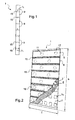
figure 1 is a side view of a vegetated panel, -
figure 2 is a schematic back view of the vegetated panel offigure 1 , -
figure 3 is a schematic front view of a frame of a vegetated panel offigures 1 and 2 -
figure 4 is a schematic side view of vegetated wall comprising at least a vegetated panel and a collector of the water in excess, -
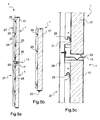
figure 5a is a side view of a hanging device of a vegetated panel, -
figure 5b is a side view of a frame of a vegetated panel with hooking parts of the hanging device offigure 5a , -
figure 5c is an enlarged view offigure 5a , -
figure 6 is a schematic front view of a vegetated wall comprising four vegetated panels as infigures 1 to 3 , and -
figure 7 is a bottom view of a frame of a vegetated panel. - The invention relates to a
vegetated panel 1 shown schematically infigures 1 to 3 , for receiving plants. - This invention is in particular applicable to placing plants on vertical walls. It may be internal walls or external walls, in order to form a
vegetated wall 3. Such avegetated wall 3 may be provided inside or outside a building. - To that purpose, one or
more panels 1 are fixed to a host wall 5 (figure 4 ) through ahanging system 7 schematically shown atfigure 5a . - More particularly, such a
vegetated wall 3 may comprise more than onevegetated panels 1. In the embodiment offigure 6 , thevegetated wall 3 comprises fourvegetated panels 1. - The host wall 5 (
figure 4 ) may be an internal or an external wall of a building. - The
vegetated panels 1 are vertically superposed one over the other. -
Further panels 1 may also be aligned horizontally as shown infigure 6 . - Back to
figures 1 to 3 , avegetated panel 1 comprisesseveral growth media 9 stacked one over the other in position of use. Each row of thevegetated panel 1 comprises for example one or twogrowth media 9, and the top media and bottom media are possibly thicker than the central ones, for example to properly fill in the frame mentioned later on. - The
growth media 9 are vertically superposed in position of use. - At each level of the
panel 1, there can be onegrowth medium 9. - Alternatively, there can be more than one
growth medium 9. - As it can be seen from
figures 2 and3 , apanel 1 with severalstacked growth media 9, may have a parallelepipedic shape. - This
parallelepipedic panel 1 may be around 25 to 240 cm high h. Preferably, thepanel 1 has a height h under 1m. - The
panel 1 may be from 20 to 70 cm, notably around 60 cm, large 1. - A
growth medium 9 has for example an essentially rectangular shape. - Of course the shape of the
growth media 9 and then thepanel 1 may be adapted to conform to the geometry of the locations designed to receive thevegetated panel 1. - Each
growth medium 9 can hold plants. For that, agrowth medium 9 is provided withholes 11 for receiving plants, as it can be seen fromfigure 2 . Thegrowth media 9 may be provided withblind holes 11 according to the illustrated example offigure 2 . By instance, agrowth medium 9 may have a 6,6 cm thickness and theholes 11 may be 6 cm deep. Of course, this example is not limiting. - And, the
holes 11 may be aligned along the longitudinal axis of therectangular growth medium 9. - In the embodiment of
figure 2 , eachgrowth medium 9 has twoholes 11. Of course, this example is illustrative and agrowth medium 9 can be provided with less ormore holes 11 depending on the application. - Such a
hole 11 may be provided by drilling with a tubular saw. - Those holes 11 can thus accommodate different types of plantings.
- For example, seeds may be introduced into the
holes 11 to fill and are cultivated until an adequate development for rooting is reached. - According to another solution, young plants are directly placed into each
hole 11, which allows a savings of time for rooting. - It is also possible to place developed plants in these
holes 11, which allows thepanel 1 to be put into service very quickly. - In this case, a
vegetated panel 1 can be introduced on request, immediately starting from cultivated plants. The plants can be of any kind, hardy plants, seasonal flowering plants, or even a combination of the two types. - Preferentially, plant are put into the
holes 11 and are grown up during 1-2 month in the panel in a horizontal position that allows the roots of the plants to fix themselves in the growth media. During this phase, the panel may be put in a water bath for irrigation of the plants. - Another solution, is to directly put the
panel 1 vertical, and then sprinkle, for example by placing asupply duct 13 on thefirst growth medium 9 above (figure 4 ). - According to a suitable embodiment, a
growth medium 9 advantageously comprises mineral materials, in particular fibres. By instance, a growth medium material comprises rock (or stone) wool. - Alternatively, glass wool may be used.
- More particularly, the fibres, such as rock wool fibres, are crimped. This non directed orientation of the fibres contribute to the retaining of water and good functioning of the panel.
- According to a suitable embodiment, a
growth medium 9 has a volumic mass of 30-80kg/m3 or lower, for example of 70 kg/m3. This volumic mass is generally between 30 and 45 kg/m3 for the glass wool/fibres made medium and between 45 and 80 kg/m3 for the rock wool/fibres made medium, and notably lower or equal to 50 kg/m3. - Thanks to this, only few operators are needed for handling.
- Advantageously, the growth media/interlayer(s) assembly can be covered by a layer or envelope, for example formed from a web or
fabric 8 or film, notably plastic made, for protecting and/or holding the assembly and/or preventing roots to go out of the panel and/or for giving a given aesthetic aspect to the vegetated panel, for example for giving the same color than the support of the assembly or for printing a logo, etc, the layer or envelope being on at least one side of the panel, generally front, and preferably being on both main side or surrounding all the assembly mentioned above. - This layer or envelope, namely
fabric 8, at the same time generally presents holes 8' to let out the plants themselves - Further, the mineral fibres may be black or an additional element, namely the fabric 8 (
figure 2 ) (which can be also black), may be added on the external face of thegrowth media 9, that means the face being seen. This black appearance improves the aesthetic appearance. - The
growth media 9 of thepanel 1 can be of the same or different sizes. Notably thegrowth media 9 may have different thickness according to the position, top or bottom for example, in the panel. Further, thegrowth media 9 can be one or several on each row of the panel between which interlayer(s) 15 (described below) may be placed. - The
vegetated panel 1 may indeed comprise advantageously an interlayer 15 (figures 1 and 2 ) between twogrowth media 9. Thus, sandwich modules are made with each time twogrowth media 9 andinterlayer 15 inserted between bothgrowth media 9. - In the described embodiment, an
interlayer 15 may comprise one or more strata. - For several layers of growth media generally, each growth medium, or layer or row of growth media is separated from the one below by at least one interlayer. The separated layers of growth media are approximately horizontal when the panel is in position of use.
- Each
interlayer 15 prevents direct contact between bothgrowth media 9, to prevent notably capillary phenomenon, theconcerned growth media 9 being those intended to be vertically superposed one compared to one another, the panel being intended to be placed vertically with growth media vertically superposed. Theinterlayer 15 is thus made so as to prevent notably most or all of the liquid in one media to flow through the capillary, notably under gravity. - The interlayer is made in a different material from the
growth media 9, this material not enhancing water flowing, notably different from a fibrous or porous material of the type inducing capillary effects. - Moreover, simultaneously, the
interlayer 15 is also chosen water permeable in so far as it lets a part of water (the water in excess) in a first growth medium flow to a second growth medium. - Preferably, the first growth medium is the upper in position of use, and the second growth medium is below the first one in position of use.
- The water permeability of an
interlayer 15 is advantageously such that theinterlayer 15 lets flow the water in excess in theupper growth medium 9 to thegrowth medium 9 below. - The pF1 (water retention capacity) of the material(s) forming the
interlayer 15 is preferably lower than 10% (10% water content, which means the fraction of the volume of substrate that is occupied with water). The pF1 is determined according to standard EN 13041 (1999) by subjecting samples to pull forces. Thus for a depression expressed as a function of the logarithm of the height of the water column (in cm), also called pF, the percentage of the volume of the substrate which is occupied by the liquid is defined, the pF1 corresponding practically to the condition of maximum retention and being established equal to 1 (or 10 cm on the water column). For the pF equal to 2 (pF2), which in practice corresponds to the highest degree of pull which can be exerted by plants, the pF2 of the interlayer is also preferably lower than 10%, and the pF0 (free drainage) is also preferably lower than 10%. - In this case, a
growth medium 9 may be able to reach a predetermined maximal moisture content above which said water flows out intointerlayer 15 below. - For example, this predetermined maximal moisture content is from 20 to 90%, notably around 60% or 70%.
- Rock wool is for example able to reach a 20-90%, notably around 70%, moisture content. Above this maximal threshold, the water in excess streams below. This water in excess can then be distributed to the
growth medium 9 below through theinterlayer 15. As said before, theinterlayer 15 is water permeable to let flow water in excess in theupper growth medium 9 to thegrowth medium 9 below. - Preferably, the
interlayer 15 also prevents the sagging ofgrowth media 9 on the one(s) underneath over time once thepanel 1 is put in its vertical use position. Notably, the interlayer is thus advantageously mostly or entirely solid, it advantageously covers most of the adjacent surfaces of the growth media between which it is placed. It may cover at least 50%, preferably at least 75%, notably more than 90%, and generally, approximately all of the adjacent surfaces of thegrowth media 9 between which is placed. - Such an
interlayer 15 may have a thickness around 1 to 3.5 cm. Theinterlayer 15 generally presents an approximate constant thickness throughout its surface. - The
interlayer 15 can be made of one or rather several components or layers. Generally and advantageously, it comprises at least one layer of particles or flakes, held together by at least a binder. - The
interlayer 15 can also comprises at least a veil or porous structure or structure with voids on at least one side. - The
interlayer 15 or particles or flakes can be water repellent treated, which prevents the interlayer from water retention. - The
interlayer 15 may be made of recycled material, notably plastic. The particles notably can be advantageously made from recycled material, notably plastic, providing also economic and ecologic advantages. - In a suitable embodiment, the
interlayer 15 material may be made from waste from XPE foam and/or other plastics made products which are cut or trimmed into pieces. XPE means Cross-linked polyethylene. - Notably, the interlayer material may comprise XPE as a main material for example forming at least 75% of the
interlayer 15. - Thus, the
interlayer 15 is in a preferred embodiment a XPE-flakes structure. - Such a XPE-flakes structure provides open structure between the XPE-flakes, that enables a maximum water flowing.
- Thus, as said before, the
interlayer 15 is water permeable to let flow water in excess in theupper growth medium 9 to thegrowth medium 9 below. - Moreover, this
interlayer 15 acts as a separative layer between twogrowth media 9. Thus, the roots from agrowth medium 9 can not come into contact with the roots from anothergrowth medium 9. - Indeed, at least one component, generally the veil, is made or treated such as it resist roots, notably either thanks to a pore or mesh size wide enough to let water flow but too small to let roots go through, or thanks to a treatment, generally chemical, to make it phytotoxic, that means toxic on plant growth, for example a treatment or covering with a metal like copper, etc.
- Thus, the distinct particles and voids or significant spaces between said particles prevent the capillary phenomena whereas the veil prevents the passage of roots and simultaneously spreads the liquid coming from one growth media and which is transmitted so as to homogeneously wet the second growth media, underneath in position of use.
- Thus, the intermediate layer prevents a capillary water flow effect meaning that would let nearly all water flow from the
upper growth medium 9 down to thegrowth medium 9 directly by capillary. - On the contrary, the
interlayer 15 ensures a water distributor for thegrowth medium 9 below. The water is distributed to thewhole growth media 9 by gravity and through eachinterlayer 15. - Indeed, when water streams down from the
upper growth medium 9, for example having reached a 60% or 70% moisture content, then water flows throughinterlayer 15, and then into thegrowth medium 9 below. - Thus, water is distributed to the
growth medium 9 below only when theupper growth medium 9 has reached the maximal predetermined moisture content. Thus, theupper growth medium 9 keeps moisture content. Indeed, all the water does not immediately flow down by capillary and then accumulate in thelowest growth medium 9, such as when thegrowth media 9 touch each other. - According to this embodiment, the
interlayer 15 ensures a regular and suitable distribution of water to thegrowth media 9 below. - As said previously, the irrigation may be provided first by a flat cultivation and then the
panel 1 is put vertical. Or, an irrigation device may sprinkle thegrowth media 9. - In this later case, due to each interlayer 15 ensuring a suitable water distribution to the
growth medium 9 below, a single irrigation device is needed for thewhole growth media 9. - For example, water is supplied only to the
upper growth medium 9 through thesupply duct 13 schematically represented onfigure 4 . - Only for the first time in order to wet the panel, water may be supplied for two hours.
- In normal functioning, it is generally only necessary to sprinkle again only one time a day for a couple of minutes in order to compensate water lost during day. This is preferably done by night.
- Furthermore, in a more developed embodiment, the
panel 1 may comprise a moisture meter (not shown) for measuring the moisture content of thegrowth media 9. - This moisture meter may be able to trigger an irrigation device when a predetermined moisture content for irrigation is reached. As an example, said predetermined moisture content for irrigation is generally around 40% or 50%.
- Thus, when the moisture content reaches for example 50%, the
panel 1 is sprinkled, by instance through saidsupply duct 13 supplying water only to thefirst growth medium 9. And then, water is regularly distributed to thegrowth media 9 below throughinterlayers 15 when reached for example a 60% or 70%moisture content. - Water may also be provided in case of dryness. In this case, the moisture meter (not shown) may be able to trigger a warning when the moisture content of a
growth medium 9 reaches a predetermined minimal moisture content, for example around 40%. - Such a situation may happen in particularly sunny days and/or when it is very windy.
- When the warning is triggered, the
panel 1 is irrigated in a more consistent manner. For example, water may be given for a longer period than in normal functioning or for example with more flow. - The various given threshold for moisture content are not limiting. Those 40% minimal moisture content, 50% moisture content for irrigation, and 60% or 70% maximal moisture content are for example suited for rock
wool growth media 9. - Those thresholds may be adapted depending on the density and the fibres structure of another material chosen for
growth media 9. - Furthermore, by separating the
growth media 9 from each other thanks to the interlayers 15 (figures 1-2 ), it thus is possible to easily replace agrowth medium 9 by another. Theentire panel 1 is not necessary to be changed. - The
growth media 9 may be changed for example every five years. - Furthermore, the
vegetated panel 1 according to the invention comprises a frame 17 (figures 2-3 ) for holding thegrowth media 9, and eventually theinterlayers 15 between twogrowth media 9. - If appropriate, the
frame 17 may be in several parts, notably a front part and a back part, assembled together. - This
frame 17 may be ametallic frame 17. In particular, theframe 17 may be a galvanizedsteel frame 17. The frame material may alternatively comprise a composite, advantageously ultraviolet and thermal stable and resistant to water. - The frame is substantially parallelepipedic for holding the
whole panel 1 when thepanel 1 is substantially parallelepipedic and can be made from a front part and a back part tight together thanks for example to screws 14 (cffigure 1 ). - According to a first embodiment shown on
figure 3 , theframe 17 hasfront openings 19, for example substantially rectangular. - Those
openings 19 may be dimensioned so that theholes 11 are free while theframe 17 covers partially thegrowth media 9 and covers partially or preferably totally theinterlayers 15. - To clarify this point, an example of such an
opening 19 place is shown schematically in dashed lines onfigure 2 . Similarly, onfigure 3 aninterlayer 15 place is shown schematically with dashed lines. - The
frame 17 can also present apertures 10 (figure 2 ) on the back, front and back openings being notably provided for aesthetic reasons and for making the panel lighter, while letting plants go out. - According to a second embodiment shown on
figure 6 , theframe 17 hasapertures 21 corresponding toholes 11 to let the plants go through theseapertures 21. Theholes 11 are free and the rest of thegrowth media 9 are covered by theframe 17 as well as theinterlayers 15. - On
figure 6 ,horizontal lines 18 define the border lines on extremities of apanel 1. - Moreover, the
frame 17 is provided with fixing or hanging mean(s) or part(s) 25 cooperating with support(s) for hanging the vegetated panel on walls to be equipped with said vegetated panel. Said support(s) is/are fixed on wall to be equipped and is/are formed from beam(s) an/or rail(s), and said fixing or hanging mean(s) or part(s) are hooking part(s) provided on the frame for hanging on the support(s). - Thus the hanging system 7 (
figure 5a ) is provided on one hand on thepanels 1 and on the other hand for example on the host wall 5 (figure 4 ). - The hanging
system 7 comprises first 25 and second hanging means 27, 31 provided on thepanels 1 and on thehost wall 5. - More precisely, the first hanging means is provided on the
frame 17 of thepanels 1, and the second hanging means is provided on thehost wall 5. - An
insulative layer 23 may be provided between thehost wall 5 and thepanels 1. In this case, the second hanging means of the hangingsystem 7 can be provided on thisinsulative layer 23. - The first hanging means 25 are able to be placed on
support axis 31 of said second hanging means. - In the described embodiment, the first hanging means 25 are able to be placed on
support axis 31 of fixation rails 27 of said second hanging means. - For that, the hanging
system 7 may comprise hookingparts 25 cooperating with fixation rails 27. - According to the illustrated embodiment of
figures 5a-5c , the hookingparts 25 are hold by theframes 17 ofpanels 1. And, the fixation rails 27 may be fixed on thehost wall 5 or theinsulative layer 23. - The fixation rails 27 may have a substantial ladder shape with two
vertical legs 29 which are joined each other bysupport axis 31. In the illustrated embodiment, thesupport axis 31 are regularly spaced. - The
support axis 31 have a complementary shape to the hookingparts 25. - By instance, the
support axis 31 are transversal rods which have a cross section with a counter hook shape. Thus, the hookingparts 25 engage this counter hook shape. - Further, a single irrigation device may be provided for the
whole wall 3 when interlayers 15 (figures 1-2 ) separate thegrowth media 9 while being water permeable. - The single irrigation device may be provided to give water to some of the panels.
- In this case, the
frames 17 of eachpanel 1 may be provided with openings 33 (figure 7 ) facing theframe 17 of thepanel 1 below, in order to let the water in excess in thefirst panel 1 flow down to thepanel 1 below. - Additional ducts 13 (
figure 5a ) may be provided at the top of eachpanel 1 to redistribute the water in excess in theupper panel 1 flowing down through theopenings 33. - At least one collector 35 (
figure 4 ) below thelowest panel 1 may collect a part of water, such as the water in excess, after water distribution to thewhole growth media 9 throughinterlayers 15 of eachpanel 1 of thewall 3. - The
collector 35 may be a gutter. - With such a hanging device with hooking
parts 25, thegrowth media 9 are secured to thehost wall 5. - Moreover, this hanging
system 7 provided on theframe 17 is suitable with avegetated panel 1 needing irrigation. - The
panels 1 can be easily placed or removed. And, thegrowth media 9 can easily be replaced. - Furthermore, with
growth media 9 of rock wool of 50 kg/m3 density few operators are needed for handling. - The vegetated panels according to the invention are notably suitable for inside or advantageously outside decoration of walls of a building.
Claims (15)
- Vegetated panel for receiving plants, comprising at least two growth media (9) for plants and comprising a frame (17) maintaining said growth media (9), characterized in that said frame (17) is provided with first hanging means (25) able to cooperate with complementary support axis (31) of second hanging means, in order to fix said vegetated panel to a host wall (5) to be equipped with said vegetated panel.
- Vegetated panel according to claim 1, wherein said second hanging means is fixed on host wall (5) to be equipped and comprises fixation rails (27).
- Vegetated panel according to claim 1 or 2, wherein said first hanging means (25) comprises hooking parts.
- Vegetated panel according to claim 3, wherein :- said fixation rails (27) have a substantial ladder shape with two legs (29) and a predetermined number of support axis (31) joining said two legs (29), and wherein- said support axis (31) have a cross section with a substantial counter hook shape.
- Vegetated panel according to one of claims 1 to 4, wherein said frame (17) comprises apertures (21) associated to holes (11) of growth media (9) for receiving plants and through which an associated plant can go.
- Vegetated panel according to one of the preceding claims, wherein said frame (17) material comprises galvanized steel or composite.
- Vegetated panel according to one of the preceding claims, wherein said growth media (9) are vertically superposed, and are separated by an interlayer (15), said interlayer (15):- preventing direct contact between two growth media (9), and- being water permeable.
- Vegetated wall characterized in that it comprises at least one vegetated panel (1) according to one of the preceding claims, and a hanging system (7) of said at least one vegetated panel (1) for fixing said at least one vegetated panel (1) on a host wall (5), said hanging system (7) comprising :- first hanging means (25) provided on the frame (17) of said at least one vegetated panel (1),- second hanging means fixed to the host wall (5) comprising support axis (31).
- Vegetated wall according to the preceding claim, wherein said first hanging means (25) comprise hooking parts.
- Vegetated wall according to claim 8 or 9, wherein said second hanging means comprise fixation rails (27) having a substantial ladder shape with two legs (29) and a predetermined number of support axis (31) joining said two legs (29).
- Vegetated wall according to claim 10, wherein said support axis (31) are regularly spaced.
- Vegetated wall according to one of claims 8 to 11, wherein said support axis (31) have a cross section with a substantial counter hook shape.
- Vegetated wall according to one of claims 8 to 12, wherein it comprises an insulative layer (23) between said host wall (5) and said at least one vegetated panel (1).
- Vegetated wall according to one of claims 8 to 13, wherein it comprises a single irrigation device for the whole vegetated panels (1).
- Vegetated wall according to the preceding claim, wherein a vegetated panel (1) is received in a frame (17) having openings (33) communicating with the vegetated panel (1) below, so that water can flow from an upper vegetated panel (1) to the vegetated panel (1) below.
Priority Applications (2)
| Application Number | Priority Date | Filing Date | Title |
|---|---|---|---|
| EP20110179419 EP2564688A1 (en) | 2011-08-30 | 2011-08-30 | Vegetated panel and associated vegetated wall |
| NL2009384A NL2009384C2 (en) | 2011-08-30 | 2012-08-29 | Vegetated panel and associated vegetated wall. |
Applications Claiming Priority (1)
| Application Number | Priority Date | Filing Date | Title |
|---|---|---|---|
| EP20110179419 EP2564688A1 (en) | 2011-08-30 | 2011-08-30 | Vegetated panel and associated vegetated wall |
Publications (1)
| Publication Number | Publication Date |
|---|---|
| EP2564688A1 true EP2564688A1 (en) | 2013-03-06 |
Family
ID=44772738
Family Applications (1)
| Application Number | Title | Priority Date | Filing Date |
|---|---|---|---|
| EP20110179419 Ceased EP2564688A1 (en) | 2011-08-30 | 2011-08-30 | Vegetated panel and associated vegetated wall |
Country Status (2)
| Country | Link |
|---|---|
| EP (1) | EP2564688A1 (en) |
| NL (1) | NL2009384C2 (en) |
Cited By (6)
| Publication number | Priority date | Publication date | Assignee | Title |
|---|---|---|---|---|
| CN103404388A (en) * | 2013-08-23 | 2013-11-27 | 北京化工大学 | Water-delivering curtain wall device for plants |
| CN104515033A (en) * | 2013-09-27 | 2015-04-15 | 立晶光电(厦门)有限公司 | Combined panel lamp |
| CN108718786A (en) * | 2018-05-16 | 2018-11-02 | 重庆珈昌生态农业发展有限公司 | A kind of building vertical planting building and its cultivation of green plants |
| WO2019101692A1 (en) | 2017-11-22 | 2019-05-31 | Saint-Gobain Weber | Method for producing blocks of lightweight aggregates that can produce a vegetative cover |
| FR3120493A1 (en) * | 2021-03-15 | 2022-09-16 | Vert-Tical Nord | Modular culture support for vegetated wall promoting runoff |
| EP4663005A1 (en) | 2024-06-10 | 2025-12-17 | SingularGreen S.L. | Multi-layer cultivation configuration for vertical gardens and sloping vegetated surfaces |
Families Citing this family (2)
| Publication number | Priority date | Publication date | Assignee | Title |
|---|---|---|---|---|
| US20220330501A1 (en) * | 2021-04-19 | 2022-10-20 | Terra Studio Ltd. | Plant apparatus |
| CN117365038A (en) * | 2023-10-10 | 2024-01-09 | 北京挚诚华腾建设工程有限公司 | A water-proof integrated exterior wall insulation decorative panel |
Citations (8)
| Publication number | Priority date | Publication date | Assignee | Title |
|---|---|---|---|---|
| FR2601552A1 (en) * | 1986-07-16 | 1988-01-22 | Chaudouet Marcel | Assembly of window-boxes, with a water tank, for the vertical garnishing of French windows and balconies with flowers |
| EP0393735A1 (en) * | 1989-03-17 | 1990-10-24 | Rockwool/ Grodan B.V. | Wall on which vegetation can grow |
| FR2747265A1 (en) * | 1996-04-11 | 1997-10-17 | Blanc Patrick | DEVICE FOR GROUNDLESS CULTIVATION OF PLANTS ON A SUBSTANTIALLY VERTICAL SURFACE |
| EP1690448A1 (en) * | 2005-02-11 | 2006-08-16 | Limeparts | Device for growing plants on a building façade |
| FR2902283A1 (en) * | 2006-06-14 | 2007-12-21 | Claude Caillet | Vegetal wall system for soilless plant cultivation, has tubs, supported in rail, with frontal faces closed by grille, bank sheet fixed on lock rail to mask rail end, and textile fabric interposed between grille and substrate |
| US20080000153A1 (en) * | 2005-01-07 | 2008-01-03 | Nobuo Sugiyama | Temporary Structural Body for Seeding and Planting |
| US20100083571A1 (en) * | 2008-10-07 | 2010-04-08 | Green Living Technologies, Llc | Vegetation support system |
| AT509190A4 (en) * | 2010-06-17 | 2011-07-15 | Glanz Markus | PLANTABLE FACADE SYSTEM |
-
2011
- 2011-08-30 EP EP20110179419 patent/EP2564688A1/en not_active Ceased
-
2012
- 2012-08-29 NL NL2009384A patent/NL2009384C2/en active
Patent Citations (8)
| Publication number | Priority date | Publication date | Assignee | Title |
|---|---|---|---|---|
| FR2601552A1 (en) * | 1986-07-16 | 1988-01-22 | Chaudouet Marcel | Assembly of window-boxes, with a water tank, for the vertical garnishing of French windows and balconies with flowers |
| EP0393735A1 (en) * | 1989-03-17 | 1990-10-24 | Rockwool/ Grodan B.V. | Wall on which vegetation can grow |
| FR2747265A1 (en) * | 1996-04-11 | 1997-10-17 | Blanc Patrick | DEVICE FOR GROUNDLESS CULTIVATION OF PLANTS ON A SUBSTANTIALLY VERTICAL SURFACE |
| US20080000153A1 (en) * | 2005-01-07 | 2008-01-03 | Nobuo Sugiyama | Temporary Structural Body for Seeding and Planting |
| EP1690448A1 (en) * | 2005-02-11 | 2006-08-16 | Limeparts | Device for growing plants on a building façade |
| FR2902283A1 (en) * | 2006-06-14 | 2007-12-21 | Claude Caillet | Vegetal wall system for soilless plant cultivation, has tubs, supported in rail, with frontal faces closed by grille, bank sheet fixed on lock rail to mask rail end, and textile fabric interposed between grille and substrate |
| US20100083571A1 (en) * | 2008-10-07 | 2010-04-08 | Green Living Technologies, Llc | Vegetation support system |
| AT509190A4 (en) * | 2010-06-17 | 2011-07-15 | Glanz Markus | PLANTABLE FACADE SYSTEM |
Cited By (8)
| Publication number | Priority date | Publication date | Assignee | Title |
|---|---|---|---|---|
| CN103404388A (en) * | 2013-08-23 | 2013-11-27 | 北京化工大学 | Water-delivering curtain wall device for plants |
| CN103404388B (en) * | 2013-08-23 | 2014-09-10 | 北京化工大学 | Water-delivering curtain wall device for plants |
| CN104515033A (en) * | 2013-09-27 | 2015-04-15 | 立晶光电(厦门)有限公司 | Combined panel lamp |
| WO2019101692A1 (en) | 2017-11-22 | 2019-05-31 | Saint-Gobain Weber | Method for producing blocks of lightweight aggregates that can produce a vegetative cover |
| CN108718786A (en) * | 2018-05-16 | 2018-11-02 | 重庆珈昌生态农业发展有限公司 | A kind of building vertical planting building and its cultivation of green plants |
| FR3120493A1 (en) * | 2021-03-15 | 2022-09-16 | Vert-Tical Nord | Modular culture support for vegetated wall promoting runoff |
| WO2022195216A1 (en) * | 2021-03-15 | 2022-09-22 | Vert-Tical Nord | Modular cultivation support for a green wall promoting trickling |
| EP4663005A1 (en) | 2024-06-10 | 2025-12-17 | SingularGreen S.L. | Multi-layer cultivation configuration for vertical gardens and sloping vegetated surfaces |
Also Published As
| Publication number | Publication date |
|---|---|
| NL2009384C2 (en) | 2014-03-12 |
| NL2009384A (en) | 2013-03-04 |
Similar Documents
| Publication | Publication Date | Title |
|---|---|---|
| EP2564688A1 (en) | Vegetated panel and associated vegetated wall | |
| EP2564689B1 (en) | Vegetated panel and associated vegetated wall | |
| AU2010314895B2 (en) | Plant wall and modules for growing plants | |
| Jim | Greenwall classification and critical design-management assessments | |
| CN101326891B (en) | Structure pour mur vegetalise | |
| KR101779010B1 (en) | Rainwater storage-type flowerpot bench | |
| JP2010239878A (en) | Wall surface greening device | |
| EP3011826A1 (en) | A green wall and rainwater drainage module and assembly, and a method of draining rainwater | |
| US20110146151A1 (en) | Growth device for crop and cladding or construction part manufactured therewith | |
| JP4877974B2 (en) | Vertical surface planting equipment | |
| JP2006129846A (en) | Planting block tray for wall greening equipment | |
| KR101508736B1 (en) | Vegetation plate using fixing-frame and soil-mat and the green structure therewith | |
| JP2011097883A (en) | Elevation surface greening panel unit | |
| JP4604148B2 (en) | Watering equipment for wall greening equipment | |
| JP4657683B2 (en) | Wall greening equipment | |
| DE202024105159U1 (en) | device for greening a wall | |
| JP4946134B2 (en) | Thermal environment reduction device | |
| KR101142352B1 (en) | Apparatus for greeb wall and constructing method thereof | |
| JP4963990B2 (en) | Water retention drainage base material and greening structure using it | |
| KR20100055039A (en) | An afforestation device for rooftop | |
| JP5149857B2 (en) | Rainwater-based plant cultivation equipment | |
| JP5231134B2 (en) | Wall greening panel and wall greening structure using it | |
| JP5027200B2 (en) | Greening panel | |
| KR101642741B1 (en) | Vegetation noise barriers | |
| JP2010045976A5 (en) |
Legal Events
| Date | Code | Title | Description |
|---|---|---|---|
| PUAI | Public reference made under article 153(3) epc to a published international application that has entered the european phase |
Free format text: ORIGINAL CODE: 0009012 |
|
| AK | Designated contracting states |
Kind code of ref document: A1 Designated state(s): AL AT BE BG CH CY CZ DE DK EE ES FI FR GB GR HR HU IE IS IT LI LT LU LV MC MK MT NL NO PL PT RO RS SE SI SK SM TR |
|
| AX | Request for extension of the european patent |
Extension state: BA ME |
|
| 17P | Request for examination filed |
Effective date: 20130904 |
|
| RBV | Designated contracting states (corrected) |
Designated state(s): AL AT BE BG CH CY CZ DE DK EE ES FI FR GB GR HR HU IE IS IT LI LT LU LV MC MK MT NL NO PL PT RO RS SE SI SK SM TR |
|
| 17Q | First examination report despatched |
Effective date: 20131016 |
|
| STAA | Information on the status of an ep patent application or granted ep patent |
Free format text: STATUS: THE APPLICATION HAS BEEN REFUSED |
|
| 18R | Application refused |
Effective date: 20170703 |