EP2562959B1 - Verfahren und Vorrichtung zur Steuerung von Bitraten- und Leistungszuständen in Breitband-Zugangsnetzen auf der Grundlage von Verkehrsbedarfsinformationen aus Kundennetzen - Google Patents
Verfahren und Vorrichtung zur Steuerung von Bitraten- und Leistungszuständen in Breitband-Zugangsnetzen auf der Grundlage von Verkehrsbedarfsinformationen aus Kundennetzen Download PDFInfo
- Publication number
- EP2562959B1 EP2562959B1 EP11178289.2A EP11178289A EP2562959B1 EP 2562959 B1 EP2562959 B1 EP 2562959B1 EP 11178289 A EP11178289 A EP 11178289A EP 2562959 B1 EP2562959 B1 EP 2562959B1
- Authority
- EP
- European Patent Office
- Prior art keywords
- network
- customer
- access network
- activity
- access
- Prior art date
- Legal status (The legal status is an assumption and is not a legal conclusion. Google has not performed a legal analysis and makes no representation as to the accuracy of the status listed.)
- Active
Links
Images

Classifications
-
- H—ELECTRICITY
- H04—ELECTRIC COMMUNICATION TECHNIQUE
- H04L—TRANSMISSION OF DIGITAL INFORMATION, e.g. TELEGRAPHIC COMMUNICATION
- H04L12/00—Data switching networks
- H04L12/02—Details
- H04L12/10—Current supply arrangements
-
- H—ELECTRICITY
- H04—ELECTRIC COMMUNICATION TECHNIQUE
- H04L—TRANSMISSION OF DIGITAL INFORMATION, e.g. TELEGRAPHIC COMMUNICATION
- H04L12/00—Data switching networks
- H04L12/28—Data switching networks characterised by path configuration, e.g. LAN [Local Area Networks] or WAN [Wide Area Networks]
- H04L12/2854—Wide area networks, e.g. public data networks
- H04L12/2856—Access arrangements, e.g. Internet access
- H04L12/2869—Operational details of access network equipments
-
- H—ELECTRICITY
- H04—ELECTRIC COMMUNICATION TECHNIQUE
- H04L—TRANSMISSION OF DIGITAL INFORMATION, e.g. TELEGRAPHIC COMMUNICATION
- H04L47/00—Traffic control in data switching networks
- H04L47/70—Admission control; Resource allocation
- H04L47/76—Admission control; Resource allocation using dynamic resource allocation, e.g. in-call renegotiation requested by the user or requested by the network in response to changing network conditions
-
- H—ELECTRICITY
- H04—ELECTRIC COMMUNICATION TECHNIQUE
- H04Q—SELECTING
- H04Q11/00—Selecting arrangements for multiplex systems
- H04Q11/0001—Selecting arrangements for multiplex systems using optical switching
- H04Q11/0062—Network aspects
- H04Q11/0067—Provisions for optical access or distribution networks, e.g. Gigabit Ethernet Passive Optical Network (GE-PON), ATM-based Passive Optical Network (A-PON), PON-Ring
-
- H—ELECTRICITY
- H04—ELECTRIC COMMUNICATION TECHNIQUE
- H04Q—SELECTING
- H04Q11/00—Selecting arrangements for multiplex systems
- H04Q11/0001—Selecting arrangements for multiplex systems using optical switching
- H04Q11/0062—Network aspects
- H04Q2011/0064—Arbitration, scheduling or medium access control aspects
-
- H—ELECTRICITY
- H04—ELECTRIC COMMUNICATION TECHNIQUE
- H04Q—SELECTING
- H04Q11/00—Selecting arrangements for multiplex systems
- H04Q11/0001—Selecting arrangements for multiplex systems using optical switching
- H04Q11/0062—Network aspects
- H04Q2011/0079—Operation or maintenance aspects
-
- H—ELECTRICITY
- H04—ELECTRIC COMMUNICATION TECHNIQUE
- H04Q—SELECTING
- H04Q11/00—Selecting arrangements for multiplex systems
- H04Q11/0001—Selecting arrangements for multiplex systems using optical switching
- H04Q11/0062—Network aspects
- H04Q2011/0088—Signalling aspects
Definitions
- the invention relates to a first object.
- the present invention relates to the general field of telecommunications and refers in particular to the broadband access network in connection with connected customer networks, in particular there is an overall control between the customer and access network with the aim to establish an improved energy efficiency of the network operation.
- Fig. 1 The arrangement and topology of network elements on which the invention is based is in Fig. 1 shown.
- DSL digital subscriber line
- ADSL2 / ADSL2 + asymmetric DSL
- VDSL2 very high bit rate DSL
- PON systems passive optical network
- the access network is bordered by customer networks, which can vary in size: as home networks (in the case of private customers) and as corporate networks (in the case of corporate customers).
- DSL for copper-based access network
- DSL-L2 for copper-based access network
- bit rate reduced activity
- This DSL-L2 mode is standardized for ADSL2 / ADSL2 + and is implemented but has not yet been exploited due to quality of service issues and line stability in large operator networks.
- VDSL2 standardization of such performance modes has not yet taken place, but is planned for the near future.
- Ethernet components are commonly used in customer networks, both corporate and home networks.
- performance management in the ONU is also handled autonomously in relation to the bit rate: here, using cross-level control with information from the customer network, better energy efficiency is expected because the ONUs are then put into the active or inactive state in good time can, based on the external information from the customer network.
- the subject of the present invention is a method which makes it possible to load-adaptively control the associated connection in the access network with regard to the performance modes on the basis of information supplied from the customer network.
- the procedure and the methods are explained in this description of the invention by way of example with reference to an embodiment with home network and access network; the explanations can in principle be transferred to all types of customer and access networks which have a power management functionality limited only to the reference area of the respective network segment without interaction between the participating network segments.
- the present invention describes a method for overarching the control of the different power modes in access networks in conjunction with the power modes in customer networks.
- Systems, methods, and apparatus of the present invention provide a method and suggestion for the practical implementation of cross-control between customer and access networks that allow for reliable, stable operation of these networks in different performance states, thereby saving energy.
- Signaling information from the customer network is used to control the power states in the access network.
- Energy Efficient Ethernet messages are used to control the power states on the access line (eg, DSL or PON).
- the access network being connected to a customer network via a customer network node.
- the access network is thereby terminated to the customer network by a customer network node (NT) and to the secondary network by an access node (LT).
- the speed can be influenced between these two access nodes, e.g. by reducing the bit rate, or by modifying the modulation method so that energy can be saved. It is also conceivable that certain components may be switched to stand-by or other approaches that increase efficiency may be implemented.
- the access network may be, for example, DSL, or an optical PON variant.
- the customer network node (HGW) usually comprises a CPU, a memory, a power supply unit and an evaluation unit.
- the customer network node may have a variety of interfaces.
- network interfaces such as Ethernet interfaces, W-LAN interfaces, DECT interfaces can be given to a variety of devices. So it is possible to connect an Internet phone, a network attached storage (NAS), PCs and other components.
- NAS network attached storage
- the detection of an activity pattern can be done, for example, by analyzing and counting the transmitted packets, taking into account their function, size and content. If, for example, only status packets are sent, with a low payload, it may be possible to determine these as rather low network activity. If, on the other hand, large amounts of data are received from the network with a large payload / payload, such as multi-media streaming, or FTP, or other file downloads, then a higher load can be assumed. Thus, analyzes based on the protocol can also be carried out. If, for example, FTP data packets are sent, or multimedia system data (RTP), then a higher load can be assumed.
- FTP data packets are sent, or multimedia system data (RTP)
- the evaluation unit may monitor energy efficient Ethernet standard messages to determine low activity or high activity based on their number.
- the number of sleep packets or wake packets can be monitored according to the Energy Efficient Ethernet standard. to detect low or high activity.
- the downshifting of the speed can be communicated between the customer network node and the access node by a specific protocol, or by means of existing synchronization techniques.
- This refers to the communication between HGW and DSLAM (or OLT) and not between the HGWs of the participants). It is possible to use existing techniques for this purpose (as it already happens, for example, when negotiating the L0 and L2 modes in DSL), or it can also be used to develop a new (simple) signaling protocol. In this way, the activity between HGW and DSLAM / OLT can then be signaled in each case (that is to say, for example, an expected increase in the bitrate requirement from the home network in the near future).
- FIG. 1 shows in schematic form the network topology, which is based on the above statements and the description of the principle of the invention: network elements of a customer network are connected via a customer network node to the access network.
- the customer network node contains an NT (network termination) with respect to the access network and the LT (line termination) is represented by the access network node.
- the customer network can z.
- office network typical network elements (PC, laptops, VoIP phones, servers, printers, etc.) are connected to the customer's network node, which can be represented by a switch, or a router.
- the customer network may be a home network;
- the customer network node is a home gateway (HGW, also called Residential Gateway (RGW), or Integrated Access Device (IAD), and typical connected devices may be PC, laptop, printer, telephone, but also elements of consumer electronics, such as. Set-top boxes and TVs. All of these arrangements have in common that adaptation of the performance modes is at best local - limited to the respective network segment - in customer networks autonomous - link-based - mechanisms can be used (eg EEE).
- EEE autonomous - link-based - mechanisms
- the mentioned power states of the DSL and PON technology can be used.
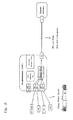
- FIG. 2 shows in schematic form the basic, hierarchical structure of the interaction of customer and access network using the example of a private customer network with Home Gateway (HGW) as a central customer network node and an access network line, for example by DSL technology (copper double wire) or by PON Systems (over fiber) is assumed.
- HGW Home Gateway
- various terminals are connected via corresponding interfaces in the customer network, eg. PC (personal computer), NAS (Network Attached Storage), STB (set-top box for IP-TV) and IP phone and possibly DECT phones or wirelessly connected devices (WiFi).
- the devices connected to the HGW via Ethernet interfaces use the technology of Energy Efficient Ethernet [3]; the basic structure and the sequence of EEE signals is for supporting information in FIG.
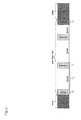
- EEE has sleep messages that terminate an active period and put into sleep mode, and wake messages that announce an active period after a quiet phase. These messages are for internal communication and control of the Ethernet Connection (EEE) nodes involved.
- Ethernet Connection There are several types of Ethernet traffic: Traffic can stay internally in the customer or home network - eg. B. from the PC to the NAS - or he can externally over the access network and z. B. to the Internet.
- internal traffic that works EEE protocol and is used.
- the access connection is used (in the example DSL or PON).
- the wake and sleep signals are used to control the power states on the access line:
- the access line can be switched to a low power and bit rate state (L2 mode in DSL or PON power saving state). This can be achieved by counting the number of quiet periods (or refresh packets) by the evaluation unit during the transition from high-traffic to low-traffic times starting from a sleep packet and, upon reaching an adjustable threshold (number), the information to the Access line is given to switch to low bit rate mode and power. In this way, the timing of a changeover can be determined more reliably and, if necessary, a higher energy saving can be achieved than with previous approaches.
- the wake messages are evaluated: If a wake message is observed, the number of active periods is determined by the evaluation unit and above a certain adjustable threshold (number) the access line is switched to the normal mode with high bitrate and associated power (L0 mode in DSL, normal mode in PON). Since the Ethernet communication is bursty, the first data bursts can still be transmitted in the low power mode of the access line (with buffering). Then, the access line according to the present invention is switched to the normal mode according to the described control mechanism. For systems that can affect neighboring systems, such as: B. the DSL systems through the crosstalk, is also in this way the Improved line stability, since the defined switching with evaluation of the control information between the power states, the time-varying crosstalk interference can be better predicted and compensated.
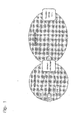
- FIG. 3 shows an embodiment of the in FIG. 2 illustrated principle as an arrangement of the network levels home network and access network with DSL-based copper access network.
- HGW home network node
- IP phone, STB, NAS, PC or DECT phone and radio-based WiFi terminal connected.
- the connection to the DSLAM (digital subscriber line access multiplexer) as an access network node is established via a DSL connection from the WAN interface (wide area network) or NT (DSL modem) via the copper pair.
- WAN interface wide area network
- NT DSL modem
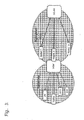
- FIG. 4 shows an embodiment of the in FIG. 2 illustrated principle as arrangement of the network levels home network and access network with PON-based fiber optic access network.
- HGW home network node
- IP telephone, STB, NAS, PC, or even DECT telephone and radio-based WiFi terminal connected.
- the connection to the OLT (optical line termination) as an access network node is made by means of a PON connection from the WAN interface (Wide Area Network) or NT (ONT, optical network termination) via the optical fiber of the optical distribution network with l: m coupler.
- WAN interface Wide Area Network
- NT optical network termination
- FIG. 5 Illustratively shows the Energy Efficient Ethernet messages underlying the described exemplary technical working principle of the present invention.
Landscapes
- Engineering & Computer Science (AREA)
- Computer Networks & Wireless Communication (AREA)
- Signal Processing (AREA)
- Small-Scale Networks (AREA)
Priority Applications (3)
| Application Number | Priority Date | Filing Date | Title |
|---|---|---|---|
| PL11178289T PL2562959T3 (pl) | 2011-08-22 | 2011-08-22 | Sposób i urządzenie do sterowania stanami przepływności i mocy w szerokopasmowych sieciach dostępowych na podstawie informacji o zapotrzebowaniu na ruch z sieci klienckiej |
| EP11178289.2A EP2562959B1 (de) | 2011-08-22 | 2011-08-22 | Verfahren und Vorrichtung zur Steuerung von Bitraten- und Leistungszuständen in Breitband-Zugangsnetzen auf der Grundlage von Verkehrsbedarfsinformationen aus Kundennetzen |
| ES11178289T ES2429864T3 (es) | 2011-08-22 | 2011-08-22 | Método y dispositivo para controlar la velocidad de bits y los estados de potencia en redes de acceso de banda ancha basado en la demanda de información del uso del tráfico de redes de clientes |
Applications Claiming Priority (1)
| Application Number | Priority Date | Filing Date | Title |
|---|---|---|---|
| EP11178289.2A EP2562959B1 (de) | 2011-08-22 | 2011-08-22 | Verfahren und Vorrichtung zur Steuerung von Bitraten- und Leistungszuständen in Breitband-Zugangsnetzen auf der Grundlage von Verkehrsbedarfsinformationen aus Kundennetzen |
Publications (2)
| Publication Number | Publication Date |
|---|---|
| EP2562959A1 EP2562959A1 (de) | 2013-02-27 |
| EP2562959B1 true EP2562959B1 (de) | 2013-08-21 |
Family
ID=44533988
Family Applications (1)
| Application Number | Title | Priority Date | Filing Date |
|---|---|---|---|
| EP11178289.2A Active EP2562959B1 (de) | 2011-08-22 | 2011-08-22 | Verfahren und Vorrichtung zur Steuerung von Bitraten- und Leistungszuständen in Breitband-Zugangsnetzen auf der Grundlage von Verkehrsbedarfsinformationen aus Kundennetzen |
Country Status (3)
| Country | Link |
|---|---|
| EP (1) | EP2562959B1 (pl) |
| ES (1) | ES2429864T3 (pl) |
| PL (1) | PL2562959T3 (pl) |
Families Citing this family (1)
| Publication number | Priority date | Publication date | Assignee | Title |
|---|---|---|---|---|
| EP2874350B1 (de) * | 2013-11-13 | 2018-08-08 | Deutsche Telekom AG | Dynamische zuteilung und virtualisierung von netzressourcen im zugangsnetz und in kundennetzen |
Citations (2)
| Publication number | Priority date | Publication date | Assignee | Title |
|---|---|---|---|---|
| US6850533B2 (en) * | 1997-12-31 | 2005-02-01 | At&T Corp. | Network server platform (NSP) for a hybrid coaxial/twisted pair local loop network service architecture |
| EP2393235A2 (en) * | 2010-06-04 | 2011-12-07 | Broadcom Corporation | Method and system for energy efficient based service optimization by a broadband gateway |
Family Cites Families (5)
| Publication number | Priority date | Publication date | Assignee | Title |
|---|---|---|---|---|
| US7406299B1 (en) * | 1999-10-15 | 2008-07-29 | Nortel Networks Limited | Wireless communications method, system and terminal therefor utilising a plurality of simultaneous, data bearing, communications links for conveying data between a plurality of base stations and a terminal |
| EP2107734A1 (en) * | 2008-03-31 | 2009-10-07 | British Telecmmunications public limited campany | Data communications |
| US8281173B2 (en) * | 2009-03-12 | 2012-10-02 | Broadcom Corporation | System and method for enabling fallback states for energy efficient ethernet |
| EP2330773B1 (en) * | 2009-11-25 | 2017-01-04 | Alcatel Lucent | Method for waking up a customer premises equipment, central office, network terminating unit and customer premises equipment for an access network |
| US8797891B2 (en) * | 2010-02-16 | 2014-08-05 | Comcast Cable Communications, Llc | System and method for capacity planning on a high speed data network |
-
2011
- 2011-08-22 PL PL11178289T patent/PL2562959T3/pl unknown
- 2011-08-22 ES ES11178289T patent/ES2429864T3/es active Active
- 2011-08-22 EP EP11178289.2A patent/EP2562959B1/de active Active
Patent Citations (3)
| Publication number | Priority date | Publication date | Assignee | Title |
|---|---|---|---|---|
| US6850533B2 (en) * | 1997-12-31 | 2005-02-01 | At&T Corp. | Network server platform (NSP) for a hybrid coaxial/twisted pair local loop network service architecture |
| EP2393235A2 (en) * | 2010-06-04 | 2011-12-07 | Broadcom Corporation | Method and system for energy efficient based service optimization by a broadband gateway |
| US20110299549A1 (en) * | 2010-06-04 | 2011-12-08 | Wael Diab | Method and system for energy efficient based service optimization by a broadband gateway |
Also Published As
| Publication number | Publication date |
|---|---|
| ES2429864T3 (es) | 2013-11-18 |
| EP2562959A1 (de) | 2013-02-27 |
| PL2562959T3 (pl) | 2014-03-31 |
Similar Documents
| Publication | Publication Date | Title |
|---|---|---|
| Baliga et al. | Energy consumption in optical IP networks | |
| DE202012013443U1 (de) | Optimierung von Service-und Anwendungsschichten durch Lichtwellenleiterübertragung mit variabler Geschwindigkeit | |
| TWI558144B (zh) | 對乙太網無源光網路介質訪問控制流量進行分速率的方法以及物理層晶片 | |
| KR101050119B1 (ko) | 오디오 비디오 브리징을 이용하는 에너지 효율적인 네트워크를 관리하기 위한 방법 및 시스템 | |
| US8514712B1 (en) | Non-stop VoIP support | |
| DE102014206997B4 (de) | Verfahren zur Energieeinsparung bei Mehrkanaleinrichtungen | |
| DE102007060522B4 (de) | Aufrechterhaltung der Kommunikation zwischen Netzknoten, die eine Paketattacke erfahren | |
| CN102082727A (zh) | 一种ptn网络业务流量管理的方法 | |
| US9680717B2 (en) | Processing of data for the management of placement on standby | |
| CN101789880A (zh) | 基于IP接入网实现上行QoS的方法和多业务接入网关 | |
| Anand et al. | POINT: An intent-driven framework for integrated packet-optical in-band network telemetry | |
| EP2608460B1 (en) | Method and device for sending messages | |
| WO2007133830A3 (en) | 1000base-t transmission over 2-pair | |
| CN203368502U (zh) | 一种远程存取运行日志记录和电路测试装置 | |
| CN106464379A (zh) | 一种无源光网络中唤醒光网络单元的方法、设备和系统 | |
| DE102004005016B4 (de) | Verfahren zur Steuerung der Transportkapazität für Datenübertragung über ein Netzwerk und Netzwerk | |
| Triki et al. | Is it worth adapting sub-wavelength switching control plane to traffic variations? | |
| US9356699B2 (en) | Dynamic readjustment of energy efficient network control policy parameters in an optical network unit based on a SIEPON protocol | |
| EP2562959A1 (de) | Verfahren und Vorrichtung zur Steuerung von Bitraten- und Leistungszuständen in Breitband-Zugangsnetzen auf der Grundlage von Verkehrsbedarfsinformationen aus Kundennetzen | |
| US20090245102A1 (en) | Network backup system and method | |
| EP2938004B1 (de) | Headend sowie system und verfahren zur ausfalltoleranten anbindung von breitband-powerline-endgeräten mittels dieses headends an ein backbone-netzwerk | |
| US20240356827A1 (en) | Energy savings through automatic adjustment of link speed | |
| EP2563075B1 (de) | Verfahren und Vorrichtung zur Lastadaptiven, übergreifenden Steuerung von Betriebszuständen in konvergenten Fest- und Mobilfunknetzen mit dem Ziel einer verbesserten Energieeffizienz | |
| US9351057B2 (en) | Service provisioning enabled management in SIEPON switching subsystem | |
| CN100583817C (zh) | 一种数字家庭网络QoS保障的方法 |
Legal Events
| Date | Code | Title | Description |
|---|---|---|---|
| PUAI | Public reference made under article 153(3) epc to a published international application that has entered the european phase |
Free format text: ORIGINAL CODE: 0009012 |
|
| 17P | Request for examination filed |
Effective date: 20120201 |
|
| AK | Designated contracting states |
Kind code of ref document: A1 Designated state(s): AL AT BE BG CH CY CZ DE DK EE ES FI FR GB GR HR HU IE IS IT LI LT LU LV MC MK MT NL NO PL PT RO RS SE SI SK SM TR |
|
| AX | Request for extension of the european patent |
Extension state: BA ME |
|
| GRAP | Despatch of communication of intention to grant a patent |
Free format text: ORIGINAL CODE: EPIDOSNIGR1 |
|
| INTG | Intention to grant announced |
Effective date: 20130405 |
|
| GRAS | Grant fee paid |
Free format text: ORIGINAL CODE: EPIDOSNIGR3 |
|
| GRAA | (expected) grant |
Free format text: ORIGINAL CODE: 0009210 |
|
| AK | Designated contracting states |
Kind code of ref document: B1 Designated state(s): AL AT BE BG CH CY CZ DE DK EE ES FI FR GB GR HR HU IE IS IT LI LT LU LV MC MK MT NL NO PL PT RO RS SE SI SK SM TR |
|
| REG | Reference to a national code |
Ref country code: GB Ref legal event code: FG4D Free format text: NOT ENGLISH |
|
| REG | Reference to a national code |
Ref country code: CH Ref legal event code: EP |
|
| REG | Reference to a national code |
Ref country code: AT Ref legal event code: REF Ref document number: 628627 Country of ref document: AT Kind code of ref document: T Effective date: 20130915 |
|
| REG | Reference to a national code |
Ref country code: IE Ref legal event code: FG4D Free format text: LANGUAGE OF EP DOCUMENT: GERMAN |
|
| REG | Reference to a national code |
Ref country code: DE Ref legal event code: R096 Ref document number: 502011001200 Country of ref document: DE Effective date: 20131017 |
|
| REG | Reference to a national code |
Ref country code: SE Ref legal event code: TRGR |
|
| REG | Reference to a national code |
Ref country code: ES Ref legal event code: FG2A Ref document number: 2429864 Country of ref document: ES Kind code of ref document: T3 Effective date: 20131118 |
|
| REG | Reference to a national code |
Ref country code: NO Ref legal event code: T2 Effective date: 20130821 |
|
| REG | Reference to a national code |
Ref country code: NL Ref legal event code: VDEP Effective date: 20130821 |
|
| REG | Reference to a national code |
Ref country code: LT Ref legal event code: MG4D |
|
| PG25 | Lapsed in a contracting state [announced via postgrant information from national office to epo] |
Ref country code: IS Free format text: LAPSE BECAUSE OF FAILURE TO SUBMIT A TRANSLATION OF THE DESCRIPTION OR TO PAY THE FEE WITHIN THE PRESCRIBED TIME-LIMIT Effective date: 20131221 Ref country code: CY Free format text: LAPSE BECAUSE OF FAILURE TO SUBMIT A TRANSLATION OF THE DESCRIPTION OR TO PAY THE FEE WITHIN THE PRESCRIBED TIME-LIMIT Effective date: 20130918 Ref country code: LT Free format text: LAPSE BECAUSE OF FAILURE TO SUBMIT A TRANSLATION OF THE DESCRIPTION OR TO PAY THE FEE WITHIN THE PRESCRIBED TIME-LIMIT Effective date: 20130821 Ref country code: HR Free format text: LAPSE BECAUSE OF FAILURE TO SUBMIT A TRANSLATION OF THE DESCRIPTION OR TO PAY THE FEE WITHIN THE PRESCRIBED TIME-LIMIT Effective date: 20130821 Ref country code: PT Free format text: LAPSE BECAUSE OF FAILURE TO SUBMIT A TRANSLATION OF THE DESCRIPTION OR TO PAY THE FEE WITHIN THE PRESCRIBED TIME-LIMIT Effective date: 20131223 |
|
| BERE | Be: lapsed |
Owner name: DEUTSCHE TELEKOM A.G. Effective date: 20130831 |
|
| PG25 | Lapsed in a contracting state [announced via postgrant information from national office to epo] |
Ref country code: LV Free format text: LAPSE BECAUSE OF FAILURE TO SUBMIT A TRANSLATION OF THE DESCRIPTION OR TO PAY THE FEE WITHIN THE PRESCRIBED TIME-LIMIT Effective date: 20130821 Ref country code: GR Free format text: LAPSE BECAUSE OF FAILURE TO SUBMIT A TRANSLATION OF THE DESCRIPTION OR TO PAY THE FEE WITHIN THE PRESCRIBED TIME-LIMIT Effective date: 20131122 |
|
| PG25 | Lapsed in a contracting state [announced via postgrant information from national office to epo] |
Ref country code: CY Free format text: LAPSE BECAUSE OF FAILURE TO SUBMIT A TRANSLATION OF THE DESCRIPTION OR TO PAY THE FEE WITHIN THE PRESCRIBED TIME-LIMIT Effective date: 20130821 |
|
| PG25 | Lapsed in a contracting state [announced via postgrant information from national office to epo] |
Ref country code: EE Free format text: LAPSE BECAUSE OF FAILURE TO SUBMIT A TRANSLATION OF THE DESCRIPTION OR TO PAY THE FEE WITHIN THE PRESCRIBED TIME-LIMIT Effective date: 20130821 Ref country code: SK Free format text: LAPSE BECAUSE OF FAILURE TO SUBMIT A TRANSLATION OF THE DESCRIPTION OR TO PAY THE FEE WITHIN THE PRESCRIBED TIME-LIMIT Effective date: 20130821 Ref country code: DK Free format text: LAPSE BECAUSE OF FAILURE TO SUBMIT A TRANSLATION OF THE DESCRIPTION OR TO PAY THE FEE WITHIN THE PRESCRIBED TIME-LIMIT Effective date: 20130821 Ref country code: RO Free format text: LAPSE BECAUSE OF FAILURE TO SUBMIT A TRANSLATION OF THE DESCRIPTION OR TO PAY THE FEE WITHIN THE PRESCRIBED TIME-LIMIT Effective date: 20130821 Ref country code: NL Free format text: LAPSE BECAUSE OF FAILURE TO SUBMIT A TRANSLATION OF THE DESCRIPTION OR TO PAY THE FEE WITHIN THE PRESCRIBED TIME-LIMIT Effective date: 20130821 Ref country code: CZ Free format text: LAPSE BECAUSE OF FAILURE TO SUBMIT A TRANSLATION OF THE DESCRIPTION OR TO PAY THE FEE WITHIN THE PRESCRIBED TIME-LIMIT Effective date: 20130821 |
|
| REG | Reference to a national code |
Ref country code: IE Ref legal event code: MM4A |
|
| PG25 | Lapsed in a contracting state [announced via postgrant information from national office to epo] |
Ref country code: MC Free format text: LAPSE BECAUSE OF FAILURE TO SUBMIT A TRANSLATION OF THE DESCRIPTION OR TO PAY THE FEE WITHIN THE PRESCRIBED TIME-LIMIT Effective date: 20130821 Ref country code: BE Free format text: LAPSE BECAUSE OF NON-PAYMENT OF DUE FEES Effective date: 20130831 |
|
| PLBE | No opposition filed within time limit |
Free format text: ORIGINAL CODE: 0009261 |
|
| STAA | Information on the status of an ep patent application or granted ep patent |
Free format text: STATUS: NO OPPOSITION FILED WITHIN TIME LIMIT |
|
| 26N | No opposition filed |
Effective date: 20140522 |
|
| PG25 | Lapsed in a contracting state [announced via postgrant information from national office to epo] |
Ref country code: IE Free format text: LAPSE BECAUSE OF NON-PAYMENT OF DUE FEES Effective date: 20130822 |
|
| REG | Reference to a national code |
Ref country code: DE Ref legal event code: R097 Ref document number: 502011001200 Country of ref document: DE Effective date: 20140522 |
|
| REG | Reference to a national code |
Ref country code: CH Ref legal event code: PL |
|
| PG25 | Lapsed in a contracting state [announced via postgrant information from national office to epo] |
Ref country code: CH Free format text: LAPSE BECAUSE OF NON-PAYMENT OF DUE FEES Effective date: 20140831 Ref country code: LI Free format text: LAPSE BECAUSE OF NON-PAYMENT OF DUE FEES Effective date: 20140831 |
|
| PG25 | Lapsed in a contracting state [announced via postgrant information from national office to epo] |
Ref country code: SM Free format text: LAPSE BECAUSE OF FAILURE TO SUBMIT A TRANSLATION OF THE DESCRIPTION OR TO PAY THE FEE WITHIN THE PRESCRIBED TIME-LIMIT Effective date: 20130821 |
|
| PG25 | Lapsed in a contracting state [announced via postgrant information from national office to epo] |
Ref country code: TR Free format text: LAPSE BECAUSE OF FAILURE TO SUBMIT A TRANSLATION OF THE DESCRIPTION OR TO PAY THE FEE WITHIN THE PRESCRIBED TIME-LIMIT Effective date: 20130821 Ref country code: MT Free format text: LAPSE BECAUSE OF FAILURE TO SUBMIT A TRANSLATION OF THE DESCRIPTION OR TO PAY THE FEE WITHIN THE PRESCRIBED TIME-LIMIT Effective date: 20130821 |
|
| PG25 | Lapsed in a contracting state [announced via postgrant information from national office to epo] |
Ref country code: MK Free format text: LAPSE BECAUSE OF FAILURE TO SUBMIT A TRANSLATION OF THE DESCRIPTION OR TO PAY THE FEE WITHIN THE PRESCRIBED TIME-LIMIT Effective date: 20130821 Ref country code: SI Free format text: LAPSE BECAUSE OF NON-PAYMENT OF DUE FEES Effective date: 20140110 Ref country code: HU Free format text: LAPSE BECAUSE OF FAILURE TO SUBMIT A TRANSLATION OF THE DESCRIPTION OR TO PAY THE FEE WITHIN THE PRESCRIBED TIME-LIMIT; INVALID AB INITIO Effective date: 20110822 Ref country code: LU Free format text: LAPSE BECAUSE OF NON-PAYMENT OF DUE FEES Effective date: 20130822 Ref country code: BG Free format text: LAPSE BECAUSE OF FAILURE TO SUBMIT A TRANSLATION OF THE DESCRIPTION OR TO PAY THE FEE WITHIN THE PRESCRIBED TIME-LIMIT Effective date: 20130821 Ref country code: RS Free format text: LAPSE BECAUSE OF FAILURE TO SUBMIT A TRANSLATION OF THE DESCRIPTION OR TO PAY THE FEE WITHIN THE PRESCRIBED TIME-LIMIT Effective date: 20131121 Ref country code: FI Free format text: LAPSE BECAUSE OF NON-PAYMENT OF DUE FEES Effective date: 20130822 |
|
| REG | Reference to a national code |
Ref country code: FR Ref legal event code: PLFP Year of fee payment: 6 |
|
| REG | Reference to a national code |
Ref country code: FR Ref legal event code: PLFP Year of fee payment: 7 |
|
| REG | Reference to a national code |
Ref country code: AT Ref legal event code: MM01 Ref document number: 628627 Country of ref document: AT Kind code of ref document: T Effective date: 20160822 |
|
| PG25 | Lapsed in a contracting state [announced via postgrant information from national office to epo] |
Ref country code: AT Free format text: LAPSE BECAUSE OF NON-PAYMENT OF DUE FEES Effective date: 20160822 |
|
| REG | Reference to a national code |
Ref country code: FR Ref legal event code: PLFP Year of fee payment: 8 |
|
| PG25 | Lapsed in a contracting state [announced via postgrant information from national office to epo] |
Ref country code: AL Free format text: LAPSE BECAUSE OF FAILURE TO SUBMIT A TRANSLATION OF THE DESCRIPTION OR TO PAY THE FEE WITHIN THE PRESCRIBED TIME-LIMIT Effective date: 20130821 |
|
| PGFP | Annual fee paid to national office [announced via postgrant information from national office to epo] |
Ref country code: ES Payment date: 20250917 Year of fee payment: 15 |
|
| PGFP | Annual fee paid to national office [announced via postgrant information from national office to epo] |
Ref country code: DE Payment date: 20250819 Year of fee payment: 15 |
|
| PGFP | Annual fee paid to national office [announced via postgrant information from national office to epo] |
Ref country code: NO Payment date: 20250820 Year of fee payment: 15 |
|
| PGFP | Annual fee paid to national office [announced via postgrant information from national office to epo] |
Ref country code: PL Payment date: 20250812 Year of fee payment: 15 Ref country code: IT Payment date: 20250829 Year of fee payment: 15 |
|
| PGFP | Annual fee paid to national office [announced via postgrant information from national office to epo] |
Ref country code: GB Payment date: 20250822 Year of fee payment: 15 |
|
| PGFP | Annual fee paid to national office [announced via postgrant information from national office to epo] |
Ref country code: FR Payment date: 20250821 Year of fee payment: 15 |
|
| PGFP | Annual fee paid to national office [announced via postgrant information from national office to epo] |
Ref country code: SE Payment date: 20250821 Year of fee payment: 15 |