EP2560135A1 - Systems and methods for data anomaly detection - Google Patents
Systems and methods for data anomaly detection Download PDFInfo
- Publication number
- EP2560135A1 EP2560135A1 EP12180732A EP12180732A EP2560135A1 EP 2560135 A1 EP2560135 A1 EP 2560135A1 EP 12180732 A EP12180732 A EP 12180732A EP 12180732 A EP12180732 A EP 12180732A EP 2560135 A1 EP2560135 A1 EP 2560135A1
- Authority
- EP
- European Patent Office
- Prior art keywords
- energy consumption
- consumption data
- algorithm
- data
- computer
- Prior art date
- Legal status (The legal status is an assumption and is not a legal conclusion. Google has not performed a legal analysis and makes no representation as to the accuracy of the status listed.)
- Ceased
Links
Images
Classifications
-
- G—PHYSICS
- G06—COMPUTING OR CALCULATING; COUNTING
- G06Q—INFORMATION AND COMMUNICATION TECHNOLOGY [ICT] SPECIALLY ADAPTED FOR ADMINISTRATIVE, COMMERCIAL, FINANCIAL, MANAGERIAL OR SUPERVISORY PURPOSES; SYSTEMS OR METHODS SPECIALLY ADAPTED FOR ADMINISTRATIVE, COMMERCIAL, FINANCIAL, MANAGERIAL OR SUPERVISORY PURPOSES, NOT OTHERWISE PROVIDED FOR
- G06Q10/00—Administration; Management
- G06Q10/06—Resources, workflows, human or project management; Enterprise or organisation planning; Enterprise or organisation modelling
- G06Q10/063—Operations research, analysis or management
- G06Q10/0631—Resource planning, allocation, distributing or scheduling for enterprises or organisations
-
- G—PHYSICS
- G06—COMPUTING OR CALCULATING; COUNTING
- G06Q—INFORMATION AND COMMUNICATION TECHNOLOGY [ICT] SPECIALLY ADAPTED FOR ADMINISTRATIVE, COMMERCIAL, FINANCIAL, MANAGERIAL OR SUPERVISORY PURPOSES; SYSTEMS OR METHODS SPECIALLY ADAPTED FOR ADMINISTRATIVE, COMMERCIAL, FINANCIAL, MANAGERIAL OR SUPERVISORY PURPOSES, NOT OTHERWISE PROVIDED FOR
- G06Q10/00—Administration; Management
- G06Q10/04—Forecasting or optimisation specially adapted for administrative or management purposes, e.g. linear programming or "cutting stock problem"
-
- H—ELECTRICITY
- H02—GENERATION; CONVERSION OR DISTRIBUTION OF ELECTRIC POWER
- H02J—CIRCUIT ARRANGEMENTS OR SYSTEMS FOR SUPPLYING OR DISTRIBUTING ELECTRIC POWER; SYSTEMS FOR STORING ELECTRIC ENERGY
- H02J3/00—Circuit arrangements for AC mains or AC distribution networks
-
- H—ELECTRICITY
- H02—GENERATION; CONVERSION OR DISTRIBUTION OF ELECTRIC POWER
- H02J—CIRCUIT ARRANGEMENTS OR SYSTEMS FOR SUPPLYING OR DISTRIBUTING ELECTRIC POWER; SYSTEMS FOR STORING ELECTRIC ENERGY
- H02J3/00—Circuit arrangements for AC mains or AC distribution networks
- H02J3/003—Load forecast, e.g. methods or systems for forecasting future load demand
-
- H—ELECTRICITY
- H02—GENERATION; CONVERSION OR DISTRIBUTION OF ELECTRIC POWER
- H02J—CIRCUIT ARRANGEMENTS OR SYSTEMS FOR SUPPLYING OR DISTRIBUTING ELECTRIC POWER; SYSTEMS FOR STORING ELECTRIC ENERGY
- H02J2203/00—Indexing scheme relating to details of circuit arrangements for AC mains or AC distribution networks
- H02J2203/20—Simulating, e g planning, reliability check, modelling or computer assisted design [CAD]
-
- Y—GENERAL TAGGING OF NEW TECHNOLOGICAL DEVELOPMENTS; GENERAL TAGGING OF CROSS-SECTIONAL TECHNOLOGIES SPANNING OVER SEVERAL SECTIONS OF THE IPC; TECHNICAL SUBJECTS COVERED BY FORMER USPC CROSS-REFERENCE ART COLLECTIONS [XRACs] AND DIGESTS
- Y02—TECHNOLOGIES OR APPLICATIONS FOR MITIGATION OR ADAPTATION AGAINST CLIMATE CHANGE
- Y02E—REDUCTION OF GREENHOUSE GAS [GHG] EMISSIONS, RELATED TO ENERGY GENERATION, TRANSMISSION OR DISTRIBUTION
- Y02E60/00—Enabling technologies; Technologies with a potential or indirect contribution to GHG emissions mitigation
-
- Y—GENERAL TAGGING OF NEW TECHNOLOGICAL DEVELOPMENTS; GENERAL TAGGING OF CROSS-SECTIONAL TECHNOLOGIES SPANNING OVER SEVERAL SECTIONS OF THE IPC; TECHNICAL SUBJECTS COVERED BY FORMER USPC CROSS-REFERENCE ART COLLECTIONS [XRACs] AND DIGESTS
- Y02—TECHNOLOGIES OR APPLICATIONS FOR MITIGATION OR ADAPTATION AGAINST CLIMATE CHANGE
- Y02P—CLIMATE CHANGE MITIGATION TECHNOLOGIES IN THE PRODUCTION OR PROCESSING OF GOODS
- Y02P90/00—Enabling technologies with a potential contribution to greenhouse gas [GHG] emissions mitigation
- Y02P90/80—Management or planning
- Y02P90/82—Energy audits or management systems therefor
-
- Y—GENERAL TAGGING OF NEW TECHNOLOGICAL DEVELOPMENTS; GENERAL TAGGING OF CROSS-SECTIONAL TECHNOLOGIES SPANNING OVER SEVERAL SECTIONS OF THE IPC; TECHNICAL SUBJECTS COVERED BY FORMER USPC CROSS-REFERENCE ART COLLECTIONS [XRACs] AND DIGESTS
- Y04—INFORMATION OR COMMUNICATION TECHNOLOGIES HAVING AN IMPACT ON OTHER TECHNOLOGY AREAS
- Y04S—SYSTEMS INTEGRATING TECHNOLOGIES RELATED TO POWER NETWORK OPERATION, COMMUNICATION OR INFORMATION TECHNOLOGIES FOR IMPROVING THE ELECTRICAL POWER GENERATION, TRANSMISSION, DISTRIBUTION, MANAGEMENT OR USAGE, i.e. SMART GRIDS
- Y04S10/00—Systems supporting electrical power generation, transmission or distribution
- Y04S10/50—Systems or methods supporting the power network operation or management, involving a certain degree of interaction with the load-side end user applications
-
- Y—GENERAL TAGGING OF NEW TECHNOLOGICAL DEVELOPMENTS; GENERAL TAGGING OF CROSS-SECTIONAL TECHNOLOGIES SPANNING OVER SEVERAL SECTIONS OF THE IPC; TECHNICAL SUBJECTS COVERED BY FORMER USPC CROSS-REFERENCE ART COLLECTIONS [XRACs] AND DIGESTS
- Y04—INFORMATION OR COMMUNICATION TECHNOLOGIES HAVING AN IMPACT ON OTHER TECHNOLOGY AREAS
- Y04S—SYSTEMS INTEGRATING TECHNOLOGIES RELATED TO POWER NETWORK OPERATION, COMMUNICATION OR INFORMATION TECHNOLOGIES FOR IMPROVING THE ELECTRICAL POWER GENERATION, TRANSMISSION, DISTRIBUTION, MANAGEMENT OR USAGE, i.e. SMART GRIDS
- Y04S40/00—Systems for electrical power generation, transmission, distribution or end-user application management characterised by the use of communication or information technologies, or communication or information technology specific aspects supporting them
- Y04S40/20—Information technology specific aspects, e.g. CAD, simulation, modelling, system security
Definitions
- Embodiments of the invention relate generally to data anomaly detection, and more specifically to detecting and removing data anomalies for assessing baseline energy consumption.
- Baseline energy consumption patterns can be used for measuring and verifying as well as determining incentive payments for demand response programs.
- Power plants often assess a consumer's baseline energy consumption by using formulaic approaches that average consumption over a specified time period.
- the consumption data may be chosen based on historical time periods, similar weather, or other characteristics similar to the specified time period.
- anomalous data may adversely affect the assessment. As such, finding ways to detect and remove anomalous data continues to be a priority.
- Disclosed embodiments may include a system.
- the system may be operable to receive energy consumption data of a location; select, based at least in part on a collection period of the energy consumption data, an algorithm for detecting anomalies in the energy consumption data; perform the algorithm on the energy consumption data to detect the anomalies in the energy consumption data; and determine an energy consumption baseline for the location based at least in part on a result of the algorithm.
- Disclosed embodiments may also include a computer-readable media.
- the computer-readable media may store computer-executable instructions that, when executed by at least one processor, configure the at least one processor to perform operations comprising: receiving, from a data provider, energy consumption data of a facility of a customer; determining a collection period of the energy consumption data; selecting, based at least in part on the collection period of the energy consumption data, an algorithm for detecting anomalies in the energy consumption data; performing the algorithm on the energy consumption data to detect the anomalies in the energy consumption data; determining an energy consumption baseline for the location based at least in part on a result of the algorithm; labeling, based at least in part on the result of the algorithm, the detected anomalies; and filtering the detected anomalies from the energy consumption.
- a power provider may be configured to receive and/or record power consumption data from a consumer.
- the power provider may wish to assess baseline consumption patterns for the consumer while accounting for anomalous data, such as caused by vacation days, days home sick from work, days with guests or other company, etc.
- the power provider may be configured to utilize historical energy consumption data, previously received and/or stored, to detect and label the days with abnormally high and/or low power consumption.
- the consumption data may be associated with a particular time period (e.g., daily, hourly, or shorter).
- the power provider may perform anomaly detection based on attribute-based, distribution-based, and/or regression-based algorithms.
- the power provider or other service may perform a linear regression (e.g., adaptive piecewise linear regression) to identify the correlation between energy consumption and temperature at the premise.
- the regression may deliver up to three pieces of linear functions which may describe the correlation between normal energy consumption and temperature.
- the parameters of each piecewise linear function may be calculated by minimizing the residual sum of squares.
- the determination of the number of pieces may be based on F-statistics.
- the provider or service may then determine a method of anomaly detection based on the available consumption data. Some of the methods may have higher data requests than others. For example, a distribution-based method may request at least hourly data. There may also be trade-offs between different methods based on the data availability, purpose of the anomaly detection, and/or based on desired accuracy.
- attributes for the data may be generated.
- the provider or service may perform anomaly detection based on a determined method.
- the anomaly detection method may be selected based on the granularity of the data.
- a distribution-based algorithm may be used when the granularity of the consumption data is roughly sixty minutes or less.
- other time periods may enable the distribution-based algorithm as well, including but not limited to, roughly sixty seconds or less, etc.
- a regression-based algorithm or an attribute-based algorithm may be selected when the granularity of the consumption data is more than sixty minutes. Again, other time periods may enable the regression-based algorithm as well, including but not limited to, roughly sixty seconds or less, etc.
- selecting between either the regression-based or the attribute-based algorithms may be based on whether a threshold value exists from prior knowledge or historical data. That is, the regression-based algorithm may be used when a threshold value exists from prior knowledge or historical data while the attribute-based algorithm may be used when no threshold value exists. Additionally, the regression-based algorithm may be based on a correlation between energy consumption at the location and temperature at the location, while the attribute-based algorithm may be based on clustering pre-generated, daily-level summary attributes. In some aspects, combinations of the above algorithms may be utilized in any order.
- the provider or service may further label and/or filter the anomalous data from the sample. That is, days within the sample that have abnormally high and/or low energy consumption may be removed from the consumption data. Further, in some aspects, the provider or service may generate a baseline consumption pattern based on the filtered consumption data.
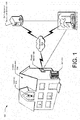
- FIG. 1 depicts an illustrative architecture 100 in which techniques for performing anomaly detection and removal may be implemented.
- the architecture 100 may include a power provider 102, a power consumer 104, and an anomaly detection service 106.
- the power provider 102 may be electrically coupled to the power consumer 104 via a power meter 108, or other device for monitoring and/or recording consumption data of the power consumer 104.
- the electrical coupling may include a power line or other means for providing electricity to the power consumer 104, such that the power consumer 104 may consume electricity for things such as lighting, for example via light(s) 110 and/or air conditioning (A/C) 112. Other electrical appliances may also be powered via the electricity provided by the power provider 102.
- the power meter 108 may be configured to monitor, receive, record, and/or transmit the consumption data related to the appliances or other household needs of the power consumer 104.
- the power provider 102 may also be electrically coupled to the anomaly detection service 106, such that the anomaly detection service 106 is powered by the power provider.
- the anomaly detection service 106 may reside locally at the power provider 102 or may be remote.
- the power provider 102, the power consumer 104, and/or the anomaly detection service 106 may be communicatively coupled over a private or public network (such as the Internet), or a plurality of networks 114.
- the power meter 108 may be communicatively coupled to the power provider 102, the power consumer 104, and/or the anomaly detection service 106 over the network(s) 114.
- the technical effects of certain embodiments of the invention may include detecting anomalous consumption days within consumer consumption data, thus allowing more accurate baseline settings and/or demand response assessments. Additionally, by detecting anomalous days, demand response programs can better establish baselines for billing consumers (and identify potential gaming of the system by consumers) as well as provide better assessments of customer response to demand response events.
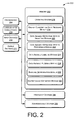
- the computing device 200 comprises at least a memory 202 and one or more processing units (or processor(s)) 204.
- the processor(s) 204 may be implemented as appropriate in hardware, software, firmware, or combinations thereof.
- Software or firmware implementations of the processor(s) 204 may include computer-executable or machine-executable instructions written in any suitable programming language to perform the various functions described.
- Memory 202 may store program instructions that are loadable and executable on the processor(s) 204, as well as data generated during the execution of these programs.
- memory 202 may be volatile (such as random access memory (RAM)) and/or non-volatile (such as read-only memory (ROM), flash memory, etc.).
- RAM random access memory
- ROM read-only memory
- the computing device or server may also include additional removable storage 206 and/or non-removable storage 208 including, but not limited to, magnetic storage, optical disks, and/or tape storage.
- the disk drives and their associated computer-readable media may provide non-volatile storage of computer-readable instructions, data structures, program modules, and other data for the computing devices.
- the memory 202 may include multiple different types of memory, such as static random access memory (SRAM), dynamic random access memory (DRAM), or ROM.
- SRAM static random access memory
- DRAM dynamic random access memory
- ROM read-only memory
- Memory 202, removable storage 206, and non-removable storage 208 are all examples of computer-readable storage media.
- computer-readable storage media may include volatile and non-volatile, removable and non-removable media implemented in any method or technology for storage of information such as computer-readable instructions, data structures, program modules or other data.
- Memory 202, removable storage 206, and non-removable storage 208 are all examples of computer storage media.
- Additional types of computer storage media include, but are not limited to, programmable random access memory (PRAM), SRAM, DRAM, RAM, ROM, electrically erasable programmable read-only memory (EEPROM), flash memory or other memory technology, compact disc read-only memory (CD-ROM), digital versatile discs (DVD) or other optical storage, magnetic cassettes, magnetic tape, magnetic disk storage or other magnetic storage devices, or any other medium which can be used to store the desired information and which can accessed by the server or other computing device. Combinations of any of the above should also be included within the scope of computer-readable media.
- computer-readable communication media may include computer-readable instructions, program modules, or other data transmitted within a data signal, such as a carrier wave or other transmission.
- computer-readable storage media does not include computer-readable communication media.
- the memory 202 may include an operating system 216 and one or more application programs or services for implementing the features disclosed herein including an energy consumption data receiving module 218.
- the energy consumption data receiving module 218, as described above, may be configured to receive consumption data associated with a power consumer, such as but not limited to the power consumer 104 of FIG. 1 .
- the energy consumption data receiving module 218 may be configured to receive and/or store consumption data of a specified time period (e.g., a year, month, week, day, hour, or the like), data based on weather conditions, data based on date/time, and/or consumer appliance data.
- the memory 202 may also include an anomaly labeling module 224, an anomaly filtering module 226, a baseline determination module 228, and an energy usage estimation module 230.
- the anomaly labeling module 224 may be configured to label the anomalies detected by the anomaly detection method performing module 222. For example, if a distribution-based algorithm was selected and performed by the anomaly detection method selection module 220 and the anomaly detection method performing module 222, respectively, certain days within the consumption data may have been detected as containing anomalous data. That is, days one and nine of a ten day sample, for example, may contain data not indicative of "normal" power consumption for the consumer being monitored. In this case, the anomaly labeling module 224 would label days one and nine as anomalous.
- Various instructions, methods, and techniques described herein may be considered in the general context of computer-executable instructions, such as program modules, executed by one or more computers or other devices.
- program modules include routines, programs, objects, components, data structures, etc., for performing particular tasks or implementing particular abstract data types.
- These program modules and the like may be executed as native code or may be downloaded and executed, such as in a virtual machine or other just-in-time compilation execution environment.
- the functionality of the program modules may be combined or distributed as desired in various embodiments.
- An implementation of these modules and techniques may be stored on some form of computer-readable storage media.
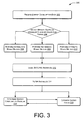
- FIG. 3 is a flow diagram of an illustrative process 300 for performing anomaly detection, as described with reference to FIGS. 1 and 2 .
- the illustrative power provider 102, the illustrative anomaly detection service 106, the illustrative power meter 108, or the example computing environment 200 may perform any or all of the operations of process 300.
- This process is illustrated as a logical flow graph, each operation of which represents a sequence of operations that can be implemented in hardware, software, or a combination thereof.
- the operations represent computer-executable instructions stored on one or more computer-readable storage media that, when executed by one or more processors, perform the recited operations.
- computer-executable instructions include routines, programs, objects, components, data structures, and the like that perform particular functions or implement particular abstract data types.
- routines programs, objects, components, data structures, and the like that perform particular functions or implement particular abstract data types.
- the order in which the operations are described is not intended to be construed as a limitation, and any number of the described operations can be combined in any order and/or in parallel to implement the process.
- the process 300 may begin at block 302 in which the process 300 may receive energy consumption data from a power consumer 104, a power meter 108, an anomaly detection service 106, and/or a power provider 102.
- the process 300 may determine, based on a granularity and/or collection period of the received data, a method or algorithm to be selected. In some examples, the process 300 may determine whether the granularity of the consumption data is more or less than sixty minutes. That is, whether the data is associated with hourly readings, daily readings, or the like. The process 300 may also determine whether a threshold exists within historical data associated with the consumption data.
- the process 300 may proceed to perform a distribution-based method at block 306. In some examples, when the process 300 determines that the granularity of the consumption data is less than sixty minutes or when a threshold value exists within the historical data, the process may proceed to perform a regression-based method at block 308. Alternatively, in some examples, when the process 300 determines that the granularity of the consumption data is less than sixty minutes or when a threshold value does not exist within the historical data, the process may proceed to perform an attribute-based method at block 310.
Landscapes
- Business, Economics & Management (AREA)
- Engineering & Computer Science (AREA)
- Human Resources & Organizations (AREA)
- Strategic Management (AREA)
- Economics (AREA)
- Entrepreneurship & Innovation (AREA)
- Marketing (AREA)
- General Business, Economics & Management (AREA)
- Game Theory and Decision Science (AREA)
- Development Economics (AREA)
- Theoretical Computer Science (AREA)
- Operations Research (AREA)
- Quality & Reliability (AREA)
- Tourism & Hospitality (AREA)
- Physics & Mathematics (AREA)
- General Physics & Mathematics (AREA)
- Educational Administration (AREA)
- Power Engineering (AREA)
- Remote Monitoring And Control Of Power-Distribution Networks (AREA)
- Management, Administration, Business Operations System, And Electronic Commerce (AREA)
- Supply And Distribution Of Alternating Current (AREA)
- Power Sources (AREA)
- Debugging And Monitoring (AREA)
Applications Claiming Priority (1)
| Application Number | Priority Date | Filing Date | Title |
|---|---|---|---|
| US13/213,899 US8781767B2 (en) | 2011-08-19 | 2011-08-19 | Systems and methods for data anomaly detection |
Publications (1)
| Publication Number | Publication Date |
|---|---|
| EP2560135A1 true EP2560135A1 (en) | 2013-02-20 |
Family
ID=47189699
Family Applications (1)
| Application Number | Title | Priority Date | Filing Date |
|---|---|---|---|
| EP12180732A Ceased EP2560135A1 (en) | 2011-08-19 | 2012-08-16 | Systems and methods for data anomaly detection |
Country Status (6)
| Country | Link |
|---|---|
| US (1) | US8781767B2 (enExample) |
| EP (1) | EP2560135A1 (enExample) |
| JP (1) | JP5996966B2 (enExample) |
| AU (1) | AU2012216257A1 (enExample) |
| BR (1) | BR102012020440A2 (enExample) |
| CA (1) | CA2786359A1 (enExample) |
Cited By (1)
| Publication number | Priority date | Publication date | Assignee | Title |
|---|---|---|---|---|
| EP2866190A1 (en) * | 2013-10-24 | 2015-04-29 | General Electric Company | Systems and methods for detecting, correcting, and validating bad data in data streams |
Families Citing this family (13)
| Publication number | Priority date | Publication date | Assignee | Title |
|---|---|---|---|---|
| US10088335B2 (en) * | 2012-04-13 | 2018-10-02 | International Business Machines Corporation | Anomaly detection using usage data for metering system |
| WO2015119607A1 (en) * | 2014-02-06 | 2015-08-13 | Hewlett-Packard Development Company, L.P. | Resource management |
| JP6301791B2 (ja) | 2014-09-17 | 2018-03-28 | 株式会社東芝 | 配電網の故障予兆診断システムおよびその方法 |
| CN104616211A (zh) * | 2015-02-06 | 2015-05-13 | 宁波永耀信息科技有限公司 | 基于水电用量比值聚类的异常水电用户检测方法及系统 |
| CN104657912A (zh) * | 2015-02-06 | 2015-05-27 | 宁波永耀信息科技有限公司 | 基于水电量比和支持向量聚类异常用户检测方法及系统 |
| US11062230B2 (en) | 2017-02-28 | 2021-07-13 | International Business Machines Corporation | Detecting data anomalies |
| EP3376446A1 (en) * | 2017-03-18 | 2018-09-19 | Tata Consultancy Services Limited | Method and system for anomaly detection, missing data imputation and consumption prediction in energy data |
| US10776231B2 (en) | 2018-11-29 | 2020-09-15 | International Business Machines Corporation | Adaptive window based anomaly detection |
| CN110390301A (zh) * | 2019-07-24 | 2019-10-29 | 厦门理工学院 | 一种从海量历史谐波数据中查找异常数据的智能识别方法 |
| US12055602B2 (en) * | 2019-11-14 | 2024-08-06 | Vigyanlabs Innovations Private Limited | System and method of monitoring electrical devices to detect anomaly in the electrical devices |
| CN112650741B (zh) * | 2020-12-29 | 2023-07-14 | 平安消费金融有限公司 | 异常数据的识别与修正方法、系统、设备及可读存储介质 |
| CN113484468A (zh) * | 2021-06-25 | 2021-10-08 | 广州市广软科技有限公司 | 基于四分位数算法的机动车环保检测分析方法和系统 |
| CN114069644B (zh) * | 2021-12-06 | 2023-08-15 | 国网山东省电力公司汶上县供电公司 | 一种基于数据匹配算法的电力需求响应方法、系统、介质及设备 |
Citations (4)
| Publication number | Priority date | Publication date | Assignee | Title |
|---|---|---|---|---|
| US20030101009A1 (en) * | 2001-10-30 | 2003-05-29 | Johnson Controls Technology Company | Apparatus and method for determining days of the week with similar utility consumption profiles |
| JP2005102428A (ja) * | 2003-09-25 | 2005-04-14 | Kansai Electric Power Co Inc:The | 消費電力量監視による異常検知装置 |
| US7343267B1 (en) * | 2006-09-21 | 2008-03-11 | International Business Machines Corporation | Methods and systems for statistical based monitoring and power management |
| US20090144122A1 (en) * | 2007-11-30 | 2009-06-04 | Sap Ag | System and Method for Transaction Log Cleansing and Aggregation |
Family Cites Families (10)
| Publication number | Priority date | Publication date | Assignee | Title |
|---|---|---|---|---|
| JPH08322147A (ja) * | 1995-05-25 | 1996-12-03 | Hitachi Ltd | 電力需要予測システム |
| US6816811B2 (en) * | 2001-06-21 | 2004-11-09 | Johnson Controls Technology Company | Method of intelligent data analysis to detect abnormal use of utilities in buildings |
| US7146288B1 (en) | 2002-07-18 | 2006-12-05 | Johnson Controls Technology Company | System and method for estimating quantization error in sampled data |
| US7519485B2 (en) | 2005-12-21 | 2009-04-14 | Sterling Planet, Inc. | Method and apparatus for determining energy savings by using a baseline energy use model that incorporates a neural network algorithm |
| US7881889B2 (en) | 2005-12-21 | 2011-02-01 | Barclay Kenneth B | Method and apparatus for determining energy savings by using a baseline energy use model that incorporates an artificial intelligence algorithm |
| WO2009039500A1 (en) | 2007-09-20 | 2009-03-26 | Sterling Planet, Inc. | Method and apparatus for determining energy savings by using a baseline energy use model that incorporates an artificial intelligence algorithm |
| US8626889B2 (en) | 2008-02-22 | 2014-01-07 | Hewlett-Packard Development Company, L.P. | Detecting anomalies in a sensor-networked environment |
| US8600556B2 (en) | 2009-06-22 | 2013-12-03 | Johnson Controls Technology Company | Smart building manager |
| US8532839B2 (en) | 2009-06-22 | 2013-09-10 | Johnson Controls Technology Company | Systems and methods for statistical control and fault detection in a building management system |
| US8788097B2 (en) | 2009-06-22 | 2014-07-22 | Johnson Controls Technology Company | Systems and methods for using rule-based fault detection in a building management system |
-
2011
- 2011-08-19 US US13/213,899 patent/US8781767B2/en not_active Expired - Fee Related
-
2012
- 2012-08-15 BR BR102012020440-1A patent/BR102012020440A2/pt not_active Application Discontinuation
- 2012-08-15 JP JP2012180001A patent/JP5996966B2/ja not_active Expired - Fee Related
- 2012-08-16 EP EP12180732A patent/EP2560135A1/en not_active Ceased
- 2012-08-16 AU AU2012216257A patent/AU2012216257A1/en not_active Abandoned
- 2012-08-16 CA CA2786359A patent/CA2786359A1/en not_active Withdrawn
Patent Citations (4)
| Publication number | Priority date | Publication date | Assignee | Title |
|---|---|---|---|---|
| US20030101009A1 (en) * | 2001-10-30 | 2003-05-29 | Johnson Controls Technology Company | Apparatus and method for determining days of the week with similar utility consumption profiles |
| JP2005102428A (ja) * | 2003-09-25 | 2005-04-14 | Kansai Electric Power Co Inc:The | 消費電力量監視による異常検知装置 |
| US7343267B1 (en) * | 2006-09-21 | 2008-03-11 | International Business Machines Corporation | Methods and systems for statistical based monitoring and power management |
| US20090144122A1 (en) * | 2007-11-30 | 2009-06-04 | Sap Ag | System and Method for Transaction Log Cleansing and Aggregation |
Cited By (1)
| Publication number | Priority date | Publication date | Assignee | Title |
|---|---|---|---|---|
| EP2866190A1 (en) * | 2013-10-24 | 2015-04-29 | General Electric Company | Systems and methods for detecting, correcting, and validating bad data in data streams |
Also Published As
| Publication number | Publication date |
|---|---|
| JP2013048545A (ja) | 2013-03-07 |
| BR102012020440A2 (pt) | 2014-03-18 |
| US8781767B2 (en) | 2014-07-15 |
| NZ601885A (en) | 2014-02-28 |
| JP5996966B2 (ja) | 2016-09-21 |
| US20130046493A1 (en) | 2013-02-21 |
| AU2012216257A1 (en) | 2013-03-07 |
| CA2786359A1 (en) | 2013-02-19 |
Similar Documents
| Publication | Publication Date | Title |
|---|---|---|
| US8781767B2 (en) | Systems and methods for data anomaly detection | |
| US20240045659A1 (en) | Systems and methods for utilizing machine learning to identify non-technical loss | |
| US10452983B2 (en) | Determining an anomalous state of a system at a future point in time | |
| US9864659B2 (en) | Scheduling and executing a backup | |
| EP2290328B1 (en) | Utility management system | |
| JP6463847B2 (ja) | センサ状態を決定するシステム | |
| US8730042B2 (en) | Systems and methods for detecting tampering associated with a utility meter | |
| US20140047096A1 (en) | System and method for adaptive baseline calculation | |
| US8739172B2 (en) | Generating a virtual machine placement plan for an identified seasonality of segments of an aggregated resource usage | |
| EP4235331B1 (en) | Detecting diagnostic events in a thermal system | |
| US20150186907A1 (en) | Data mining | |
| US20140188778A1 (en) | Computer-Implemented System for Detecting Anomaly Conditions in a Fleet of Assets and Method of Using the Same | |
| US10088335B2 (en) | Anomaly detection using usage data for metering system | |
| US20200082307A1 (en) | Real-time matching of users to enterprise interfaces and artifacts | |
| US9170909B2 (en) | Automatic parallel performance profiling systems and methods | |
| KR102042102B1 (ko) | 태양광 모듈의 전력 데이터 관리 향상을 위한 검침 데이터 보정 방법 및 장치 | |
| US20110066442A1 (en) | Influencing Consumer Behavior Modification with Utility Consumption Disaggregation | |
| CN103154904A (zh) | 操作管理设备、操作管理方法和程序 | |
| US20140136679A1 (en) | Efficient network bandwidth utilization in a distributed processing system | |
| US11599956B2 (en) | Energy efficiency data collection service | |
| KR20190088395A (ko) | 전력 사용량 기반의 매출 예측 시스템 및 그 방법 | |
| US20200003812A1 (en) | Using telemetry signals to estimate greenhouse gas emissions for computer servers | |
| NZ601885B (en) | Systems and methods for data anomaly detection | |
| JP6753919B2 (ja) | 電力使用量に基づいた売上予測システムおよびその方法 | |
| US20140013265A1 (en) | Time frame based data analysis |
Legal Events
| Date | Code | Title | Description |
|---|---|---|---|
| PUAI | Public reference made under article 153(3) epc to a published international application that has entered the european phase |
Free format text: ORIGINAL CODE: 0009012 |
|
| AK | Designated contracting states |
Kind code of ref document: A1 Designated state(s): AL AT BE BG CH CY CZ DE DK EE ES FI FR GB GR HR HU IE IS IT LI LT LU LV MC MK MT NL NO PL PT RO RS SE SI SK SM TR |
|
| AX | Request for extension of the european patent |
Extension state: BA ME |
|
| 17P | Request for examination filed |
Effective date: 20130820 |
|
| RBV | Designated contracting states (corrected) |
Designated state(s): AL AT BE BG CH CY CZ DE DK EE ES FI FR GB GR HR HU IE IS IT LI LT LU LV MC MK MT NL NO PL PT RO RS SE SI SK SM TR |
|
| 17Q | First examination report despatched |
Effective date: 20160511 |
|
| 18R | Application refused |
Effective date: 20180318 |