EP2559655A2 - Method for synthesizing nanoelectrode materials using an ultra-fast combustion method, and nanoelectrode materials synthesized by the method - Google Patents
Method for synthesizing nanoelectrode materials using an ultra-fast combustion method, and nanoelectrode materials synthesized by the method Download PDFInfo
- Publication number
- EP2559655A2 EP2559655A2 EP11769102A EP11769102A EP2559655A2 EP 2559655 A2 EP2559655 A2 EP 2559655A2 EP 11769102 A EP11769102 A EP 11769102A EP 11769102 A EP11769102 A EP 11769102A EP 2559655 A2 EP2559655 A2 EP 2559655A2
- Authority
- EP
- European Patent Office
- Prior art keywords
- based compound
- group
- compound
- nano scale
- scale electrode
- Prior art date
- Legal status (The legal status is an assumption and is not a legal conclusion. Google has not performed a legal analysis and makes no representation as to the accuracy of the status listed.)
- Granted
Links
Images


Classifications
-
- H—ELECTRICITY
- H01—ELECTRIC ELEMENTS
- H01M—PROCESSES OR MEANS, e.g. BATTERIES, FOR THE DIRECT CONVERSION OF CHEMICAL ENERGY INTO ELECTRICAL ENERGY
- H01M4/00—Electrodes
- H01M4/02—Electrodes composed of, or comprising, active material
- H01M4/13—Electrodes for accumulators with non-aqueous electrolyte, e.g. for lithium-accumulators; Processes of manufacture thereof
- H01M4/131—Electrodes based on mixed oxides or hydroxides, or on mixtures of oxides or hydroxides, e.g. LiCoOx
-
- C—CHEMISTRY; METALLURGY
- C01—INORGANIC CHEMISTRY
- C01B—NON-METALLIC ELEMENTS; COMPOUNDS THEREOF; METALLOIDS OR COMPOUNDS THEREOF NOT COVERED BY SUBCLASS C01C
- C01B25/00—Phosphorus; Compounds thereof
- C01B25/16—Oxyacids of phosphorus; Salts thereof
- C01B25/26—Phosphates
- C01B25/45—Phosphates containing plural metal, or metal and ammonium
-
- H—ELECTRICITY
- H01—ELECTRIC ELEMENTS
- H01M—PROCESSES OR MEANS, e.g. BATTERIES, FOR THE DIRECT CONVERSION OF CHEMICAL ENERGY INTO ELECTRICAL ENERGY
- H01M4/00—Electrodes
- H01M4/02—Electrodes composed of, or comprising, active material
- H01M4/36—Selection of substances as active materials, active masses, active liquids
- H01M4/362—Composites
- H01M4/366—Composites as layered products
-
- H—ELECTRICITY
- H01—ELECTRIC ELEMENTS
- H01M—PROCESSES OR MEANS, e.g. BATTERIES, FOR THE DIRECT CONVERSION OF CHEMICAL ENERGY INTO ELECTRICAL ENERGY
- H01M4/00—Electrodes
- H01M4/02—Electrodes composed of, or comprising, active material
- H01M4/36—Selection of substances as active materials, active masses, active liquids
- H01M4/58—Selection of substances as active materials, active masses, active liquids of inorganic compounds other than oxides or hydroxides, e.g. sulfides, selenides, tellurides, halogenides or LiCoFy; of polyanionic structures, e.g. phosphates, silicates or borates
- H01M4/5825—Oxygenated metallic salts or polyanionic structures, e.g. borates, phosphates, silicates, olivines
-
- H—ELECTRICITY
- H01—ELECTRIC ELEMENTS
- H01M—PROCESSES OR MEANS, e.g. BATTERIES, FOR THE DIRECT CONVERSION OF CHEMICAL ENERGY INTO ELECTRICAL ENERGY
- H01M4/00—Electrodes
- H01M4/02—Electrodes composed of, or comprising, active material
- H01M4/36—Selection of substances as active materials, active masses, active liquids
- H01M4/58—Selection of substances as active materials, active masses, active liquids of inorganic compounds other than oxides or hydroxides, e.g. sulfides, selenides, tellurides, halogenides or LiCoFy; of polyanionic structures, e.g. phosphates, silicates or borates
- H01M4/583—Carbonaceous material, e.g. graphite-intercalation compounds or CFx
- H01M4/587—Carbonaceous material, e.g. graphite-intercalation compounds or CFx for inserting or intercalating light metals
-
- H—ELECTRICITY
- H01—ELECTRIC ELEMENTS
- H01M—PROCESSES OR MEANS, e.g. BATTERIES, FOR THE DIRECT CONVERSION OF CHEMICAL ENERGY INTO ELECTRICAL ENERGY
- H01M4/00—Electrodes
- H01M4/02—Electrodes composed of, or comprising, active material
- H01M4/62—Selection of inactive substances as ingredients for active masses, e.g. binders, fillers
- H01M4/624—Electric conductive fillers
- H01M4/625—Carbon or graphite
-
- B—PERFORMING OPERATIONS; TRANSPORTING
- B82—NANOTECHNOLOGY
- B82B—NANOSTRUCTURES FORMED BY MANIPULATION OF INDIVIDUAL ATOMS, MOLECULES, OR LIMITED COLLECTIONS OF ATOMS OR MOLECULES AS DISCRETE UNITS; MANUFACTURE OR TREATMENT THEREOF
- B82B3/00—Manufacture or treatment of nanostructures by manipulation of individual atoms or molecules, or limited collections of atoms or molecules as discrete units
-
- H—ELECTRICITY
- H01—ELECTRIC ELEMENTS
- H01M—PROCESSES OR MEANS, e.g. BATTERIES, FOR THE DIRECT CONVERSION OF CHEMICAL ENERGY INTO ELECTRICAL ENERGY
- H01M10/00—Secondary cells; Manufacture thereof
- H01M10/05—Accumulators with non-aqueous electrolyte
- H01M10/052—Li-accumulators
-
- H—ELECTRICITY
- H10—SEMICONDUCTOR DEVICES; ELECTRIC SOLID-STATE DEVICES NOT OTHERWISE PROVIDED FOR
- H10D—INORGANIC ELECTRIC SEMICONDUCTOR DEVICES
- H10D64/00—Electrodes of devices having potential barriers
- H10D64/01—Manufacture or treatment
- H10D64/011—Manufacture or treatment of electrodes ohmically coupled to a semiconductor
-
- Y—GENERAL TAGGING OF NEW TECHNOLOGICAL DEVELOPMENTS; GENERAL TAGGING OF CROSS-SECTIONAL TECHNOLOGIES SPANNING OVER SEVERAL SECTIONS OF THE IPC; TECHNICAL SUBJECTS COVERED BY FORMER USPC CROSS-REFERENCE ART COLLECTIONS [XRACs] AND DIGESTS
- Y02—TECHNOLOGIES OR APPLICATIONS FOR MITIGATION OR ADAPTATION AGAINST CLIMATE CHANGE
- Y02E—REDUCTION OF GREENHOUSE GAS [GHG] EMISSIONS, RELATED TO ENERGY GENERATION, TRANSMISSION OR DISTRIBUTION
- Y02E60/00—Enabling technologies; Technologies with a potential or indirect contribution to GHG emissions mitigation
- Y02E60/10—Energy storage using batteries
Definitions
- Lithium transition metal compounds such as LiCoO 2 , LiMn 2 O 4 , LiNiO 2 , Li(Mn,Ni,Co)O 2 , LiMnO 2 , or LiFePO 4 , may be mainly used as positive electrode active materials of the lithium secondary batteries. Lithium ions of these materials are intercalated into and deintercalated from crystalline structures to cause electrochemical reactions.
- LiCoO 2 The commonest material of positive electrode materials capable of causing improvements in price, safety, and capacity and producing the maximum effects, among battery materials, is LiCoO 2 .
- LiCoO 2 has good conductivity and high performance, since LiCoO 2 is expensive and problematic in safety, materials to replace cobalt (Co)-containing positive electrode materials are being studied.
- LiFePO 4 which has a theoretical capacity of about 170 mAh/g, provides theoretical capacities according to conditions and is superior to LiCoO 2 in terms of price and safety.
- LiFePO 4 is low conductivity.
- LiFePO 4 itself has low electrical conductivity, and large particles of LiFePO 4 have low ionic conductivity.
- research has been conducted on various methods, for example: a method of improving a diffusion speed of lithium ions by synthesizing uniformly distributed small-sized particles to enhance rate capability, or a method of coating LiFePO 4 with carbon (C) to improve electrical conductivity.
- the present disclosure is directed to a method of synthesizing nano scale electrode materials and nano scale electrode materials synthesized using the method, by which nano scale electrode materials having good crystallinity and uniform particles may be obtained by merely performing a synthesis process at room temperature without a post-processing process and other additional processes, which were necessary to elevate crystallinity in a conventional synthesis method. Also, the present disclosure is directed to a method of synthesizing nano scale electrode materials having nanocrystalline structures and nano scale electrode materials synthesized using the method, by which the nano scale electrode materials are uniformly coated with carbon (C) simultaneously with synthesis of nano scale electrode materials.
- C carbon
- the present disclosure is directed to a method of synthesizing nano scale electrode materials, and nano scale electrode materials synthesized using the method, which can have highly competitive prices, in which production efficiency can be greatly increased to reduce price and enable scaling-up, and which can aim at ensuring high stability and improving ionic conductivity in expectation of high discharge capacity when the nano scale electrode materials are applied to positive electrode active materials serving as electrode materials.
- the present disclosure is directed to a method of synthesizing nano scale electrode materials, nano scale electrode materials synthesized using the method, and secondary batteries, which have electrochemically stable characteristics (e.g., discharge capacity is not greatly reduced in spite of a high initial discharge capacity and large numbers of charging and discharging operations) and enable production of large-capacity batteries for hybrid automobiles in which safety is essential, and batteries related to renewable energy.
- electrochemically stable characteristics e.g., discharge capacity is not greatly reduced in spite of a high initial discharge capacity and large numbers of charging and discharging operations
- One aspect of the present disclosure provides a method of synthesizing nano scale electrode materials.
- the method includes preparing a reaction solution by mixing a polyol solvent, a transition metal compound, a polyacid anionic compound, a lithium (Li)-based compound, and a combustible liquid, burning the reaction solution, and obtaining nano scale electrode materials by retrieving particles remaining after the burning of the reaction solution.
- the transition metal compound, the polyacid anionic compound, and Li-based compound are contained in the prepared reaction solution at a molar ratio of 1: 1: 1.
- the polyol solvent is at least one selected from the group consisting of ethylene glycol (EG), diethylene glycol (DEG), tetraethylene glycol (TTEG), propylene glycol (PG), and butylene glycol (BG).
- EG ethylene glycol
- DEG diethylene glycol
- TTEG tetraethylene glycol
- PG propylene glycol
- BG butylene glycol
- the transition metal compound is at least one selected from the group consisting of an iron (Fe)-based compound, a manganese (Mn)-based compound, a nickel (Ni)-based compound, a cobalt (Co)-based compound, a titanium (Ti)-based compound, and a vanadium (V)-based compound.
- the Fe-based compound is at least one selected from the group consisting of Fe(CH 3 COO) 2 , Fe(NO 3 ) 2 , FeC 2 O 2 , FeSO 4 , FeC, FeI 2 , and FeF 2 .
- the Mn-based compound is at least one selected from the group consisting of Mn(CH 3 COO) 2 , Mn(NO 3 ) 2 , MnSO 4 , MnC 2 O 2 , MnCl 2 , MnI 2 , and MnF 2 .
- the Ni-based compound is at least one selected from the group consisting of Ni(CH 3 COO) 2 , Ni(NO 3 ) 2 , NiSO 4 , NiC 2 O 2 , NiCl 2 , NiI 2 , and NiF 2 .
- the Co-based compound is at least one selected from the group consisting of Co(CH 3 COO) 2 , Co(NO 3 ) 2 , CoSO 4 , CoC 2 O 2 , CoCl 2 , CoI 2 , and CoF 2 .
- the Ti-based compound is at least one selected from the group consisting of TiH 2 or titanium isopropoxide (TTIP).
- the V-based compound is at least one selected from the group consisting of V(CH 3 COO) 2 , V(NO 3 ) 2 , VSO 4 , VC 2 O 2 , VCl 2 , VI 2 , and VF 2 .
- the polyacid anionic compound is a phosphoric acid ionic compound or a sulfuric acid ionic compound.
- the phosphoric acid ionic compound is at least one selected from the group consisting of NH 4 H 2 PO 4 , H 3 PO 4 , (NH 4 ) 2 HPO 4 , and (NH 4 ) 3 PO 4 .
- the sulfuric acid ionic compound is at least one selected from the group consisting of H 2 SO 4 , (NH 4 ) 2 SO 4 , FeSO 4 , MnSO 4 , NiSO 4 , CoSO 4 , VSO 4 , and TiSO 4 .
- the Li-based compound is at least one selected from the group consisting of CH 3 COOLi, LiOH, LiNO 3 , LiCO 3 , Li 3 PO 4 , and LiF.
- the combustible liquid is at least one selected from the group consisting of ethanol, methanol, acetone, painting oil, acete aldehyde, thinner, kerosene, and gasoline.
- Another aspect of the present disclosure provides a nano scale electrode material obtained using any one of the above-described synthesis methods.
- the nano scale electrode material is one selected from the group consisting of LiFePO 4 , LiCoPO 4 , LiNiPO 4 , LiTiPO 4 , Li x V y (PO 4 ) z , Li x Ti y (PO 4 ) z , Li x V y (PO 4 ) y , LiVPO 4 F, Li x Fe y (SO 4 ) z , Li x Mn y (SO 4 ) z , Li x Co y (SO 4 ) z , Li x Ni y (SO 4 ) z , Li x Ti y (SO 4 ) z , and Li x V y (SO 4 ) z .
- each of x, y, and z is an integer.
- the nano scale electrode material has a nanocrystalline structure coated with carbon (C).
- the nanocrystalline structure includes a carbon coating layer with a thickness of about 2 nm to about 3 nm.
- Another aspect of the present disclosure provides a secondary battery including the above-described nano scale electrode material.
- the present disclosure has the following excellent effects.
- nano scale electrode materials having high crystallinity and uniform particles can be synthesized.
- electrode materials having nanocrystalline structures can be uniformly coated with carbon simultaneously with synthesis of the electrode materials.
- the present disclosure since the present disclosure has highly competitive prices and greatly increases production efficiency, price reduction and scaling-up can be enabled. Also, when applied to positive electrode active materials serving as electrode materials, the present disclosure can aim at ensuring high stability and improving ionic conductivity in expectation of high discharge capacity.
- the present disclosure provides electrochemically stable characteristics (e.g., discharge capacity is not greatly reduced in spite of a high initial discharge capacity and large numbers of charging and discharging operations) and enables production of large-capacity batteries for hybrid automobiles in which safety is essential, and batteries related to renewable energy.
- FIG. 1 is a schematic diagram illustrating a method of synthesizing a nano scale electrode material according to the present disclosure
- FIG. 2 is a graph showing an X-ray diffraction (XRD) pattern of LiFePO 4 , which is a nano scale electrode material synthesized using a method of synthesizing a nano scale electrode material according to Example 1 of the present disclosure;
- XRD X-ray diffraction
- FIGS. 3 and 4 are scanning electron microscope (SEM) images of LiFePO 4 and LiMnPO 4 , which are nano scale electrode materials 1 and 2 synthesized using methods of synthesizing nano scale electrode materials according to Examples 1 and 2 of the present disclosure;
- FIG. 5 are a field emission-transmission electron microscope (FE-TEM) image (a) of LiFePO 4 , which is the nano scale electrode material 1 synthesized using the method of synthesizing the nano scale electrode material according to Example 1 of the present disclosure and an enlarged image (b) of a boundary between particles of LiFePO 4 shown in the image (a);
- FE-TEM field emission-transmission electron microscope
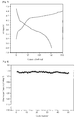
- FIG. 6 is a graph showing initial discharge capacity characteristics of a secondary battery manufactured according to Example 3 of the present disclosure.
- FIG. 7 is a graph showing initial discharge capacity characteristics of a secondary battery manufactured according to Example 4 of the present disclosure.
- FIG. 8 is a graph showing discharge capacity characteristics per cycle of a secondary battery manufactured according to Example 3 of the present disclosure.
- first and second are used herein to describe various elements, these elements should not be limited by these terms. Terms are only used to distinguish one component from other components. Therefore, a component referred to as a first component in one embodiment can be referred to as a second component in another embodiment.
- the present disclosure is characterized by performing only a synthesis process using an ultrafast combustion method at room temperature with no post-processing process or other additional processes that were conventionally necessary to increase crystallinity, so that nano scale electrode materials having high crystallinity and uniform particles coated with carbon can be synthesized.
- a method of synthesizing nano scale electrode materials includes preparing a reaction solution by mixing a polyol solvent, a transition metal compound, a polyacid anionic compound, a lithium (Li)-based compound, and a combustible liquid, and burning the reaction solution.
- the burning of the reaction solution includes pouring the reaction solution on a flat substrate heated to a temperature of about 25 °C to about 300 °C to spread the reaction solution and lighting the reaction solution on fire to completely burn the reaction solution.
- the preparation of the reaction solution may include preparing the polyol solvent and manufacturing the reaction solution by mixing the polyol solvent with the transition metal compound, the polyacid anionic compound, a Li-based compound solution, and the combustible liquid.
- the polyol solvent not only acts as both a solvent and a stabilizer but also serves to prevent growth of particles. Since the polyol solvent produces a reducing atmosphere at a boiling point, the polyol solvent plays an important role in maintaining the oxidation number of a transition metal.
- the polyol solvent used in the present disclosure is not specifically limited as long as the polyol solvent is a material (polyol) containing at least two hydroxyl (-OH) groups per molecule.
- the polyol solvent used in the present disclosure is preferably at least one selected from the group consisting of ethylene glycol (EG), diethylene glycol (DEG), tetraethylene glycol (TTEG), propylene glycol (PG), and butylene glycol (BG).
- the transition metal compound used in the present disclosure is not specifically limited but preferably any transition metal compound selected from the group consisting of an iron (Fe)-based compound, a manganese (Mn)-based compound, a nickel (Ni)-based compound, a cobalt (Co)-based compound, a titanium (Ti)-based compound, and a vanadium (V)-based compound.
- the Fe-based compound is at least one selected from the group consisting of Fe(CH 3 COO) 2 , Fe(NO 3 ) 2 , FeC 2 O 2 , FeSO 4 , FeCl 2 , FeI 2 , and FeF 2 .
- the Mn-based compound is at least one selected from the group consisting of Mn(CH 3 COO) 2 , Mn(NO 3 ) 2 , MnSO 4 , MnC 2 O 2 , MnC, MnI 2 , and MnF 2 .
- the Ni-based compound is at least one selected from the group consisting of Ni(CH 3 COO) 2 , Ni(NO 3 ) 2 , NiSO 4 , NiC 2 O 2 , NiCl 2 , NiI 2 , and NiF 2 .
- the Co-based compound is at least one selected from the group consisting of Co(CH 3 COO) 2 , Co(NO 3 ) 2 , CoSO 4 , CoC 2 O 2 , CoCl 2 , CoI 2 , and CoF 2 .
- the Ti-based compound is at least one selected from the group consisting of TiH 2 or titanium isopropoxide (TTIP).
- the V-based compound is at least one selected from the group consisting of V(CH 3 COO) 2 , V(NO 3 ) 2 , VSO 4 , VC 2 O 2 , VCl 2 , VI 2 , and VF 2 .
- polyacid anionic compound may be used with no particular limitation when the polyacid anionic compound is any compound containing polyacid anions.
- the polyacid anionic compound may be a phosphoric acid ionic compound or a sulfuric acid ionic compound.
- At least one selected from the group consisting of NH 4 H 2 PO 4 , H 3 PO 4 , (NH 4 ) 2 HPO 4 , and (NH 4 ) 3 PO 4 may be used as the phosphoric acid ionic compound, and at least one selected from the group consisting of H 2 SO 4 , (NH 4 ) 2 SO 4 , FeSO 4 , MnSO 4 , NiSO 4 , CoSO 4 , VSO 4 , and TiSO 4 may be used as the sulfuric acid ionic compound.
- the Li-based compound is not specifically limited and may be any Li-containing compound.
- the Li-based compound may include at least one material selected from the group consisting of CH 3 COOLi, LiOH, LiNO 3 , LiCO 3 , Li 3 PO 4 , and LiF.
- the combustible liquid contained in the reaction solution generates much heat during the burning of the reaction solution and becomes energy required to form particles. Also, the combustible liquid plays an important role in elevating crystallinity.
- the combustible liquid used in the present disclosure is not specifically limited, but is preferably at least one selected from the group consisting of ethanol, methanol, acetone, painting oil, acete aldehyde, thinner, kerosene, and gasoline.
- the transition metal compound, the polyacid anionic compound, and Li-based compound are preferably contained in a stoichiometrically prepared reaction solution at a molar ratio of 1:1:1.
- the combustible liquid is preferably contained at such a content as to enable complete combustion of the polyol solvent and other compounds included in the reaction solution.
- the polyol solvent and the combustible liquid are contained at a weight ratio of less than 20:1, the content of the combustible liquid is too low to completely burn the reaction solution.
- the burning of the reaction solution includes burning the reaction solution obtained by mixing the polyol solvent, the transition metal compound, the polyacid anionic compound, the lithium-based compound, and the combustible liquid to obtain a particle resultant product coated with carbon (C).
- the burning of the reaction solution is preferably performed by pouring the reaction solution on a flat substrate heated to a temperature of about 25 °C to about 300 °C to spread the reaction solution and lighting the reaction solution on fire.
- a heating plate apparatus e.g., a hot plate
- a heating plate apparatus capable of controlling a temperature and maintaining a predetermined temperature may be used to lower thermal conduction and use heat and temperature as energy for generating particles without the loss of the heat and temperature.
- a heating plate apparatus e.g., a hot plate
- it takes only several seconds to several minutes to perform combustion only a very short time is required to manufacture nano scale electrode materials, thereby markedly increasing productivity.
- a method of synthesizing nano scale electrode materials according to the present disclosure may be used to synthesize various carbon-coated electrode materials having nanocrystalline structures by merely burning a mixture of a polyol solvent with combustible liquids.
- various resultant products may include LiFePO 4 , LiCoPO 4 , LiNiPO 4 , LiV(PO 4 ), LiTi(PO 4 ), LiVPO 4 F, LiFe(SO 4 ), LiMn(SO 4 ), LiCo(SO 4 ), LiNi(SO 4 ), LiTi(SO 4 ) and LiV(SO 4 ) and have nanocrystalline structures, such as Li x V y (PO 4 ) z , Li x Ti y (PO 4 ) z , Li x V y (PO 4 ) y , LiVPO 4 F, Li x Fe y (SO 4 ) z , Li x Mn y (SO 4 ) z , Li x Co y
- electrode materials having nanocrystalline structures may be synthesized without annealing resultant products as a post-processing process.
- carbon-coated electrode materials may be synthesized without additional processes, such as cleaning, filtering, and drying processes, after a combustion process. After preparing a reaction solution containing a polyol solvent and a combustible liquid, a combustion time of only several seconds to several minutes is consumed to synthesize the electrode materials so that manufacturing costs can be greatly saved.
- nano scale electrode materials used in the present disclosure refer to electrode materials having nanoscale crystalline structures.
- a nanoscale range broadly refers to a range of about 1 mm or less, normally refers to a range of several hundred nm or less, preferably refers to a range of about 100 nm or less, and more preferably refers to a range of about 10 nm to about 50 nm.
- a reaction solution was prepared by adding Fe(CH 3 COO) 2 serving as a transition metal compound, H 3 PO 4 serving as a phosphoric acid ionic compound, CH 3 COOLi serving as a lithium-based compound, and thinner serving as a combustible liquid to a tetra ethylene glycol (TTEG) solvent.
- Fe(CH 3 COO) 2 , H 3 PO 4 , and CH 3 COOLi were mixed at a molar ratio of 1:1:1, and the thinner was mixed at a content of about 1/5 the total solution. That is, TTEG and the thinner were mixed at a weight ratio of 5:1.
- reaction solution was poured on a flat heating plate heated to a temperature of about 100 °C to uniformly spread the reaction solution, and the reaction solution was lit on fire and completely burnt. Subsequently, after the resolution solution was completely burnt and the fire was naturally extinguished, particles were retrieved from the heating plate to obtain LiFePO 4 , which was nano scale electrode material 1.
- Example 2 The same method as in Example 1 was performed except that Mn(CH 3 COO) 2 was used as a transition metal compound, thereby obtaining LiMnPO 4 , which was nano scale electrode material 2.
- Fe(CH 3 COO) 2 serving as a transition metal compound, H 3 PO 4 serving as a phosphoric acid ionic compound, and CH 3 COOLi serving as a lithium-based compound were used as in Example 1 and synthesized using a commercially available solid-state reaction method [i.e., mixing reagents having lithium (Li), iron (Fe), and phosphorus (P) sources, ball-milling the mixture for several tens of hours, and annealing the mixture at a high temperature of about 600 °C to about 700 °C to improve crystallinity] to obtain LiFePO 4 , which was a comparative electrode material.
- a commercially available solid-state reaction method i.e., mixing reagents having lithium (Li), iron (Fe), and phosphorus (P) sources, ball-milling the mixture for several tens of hours, and annealing the mixture at a high temperature of about 600 °C to about 700 °C to improve crystallinity
- X-ray diffraction (XRD) patterns of LiFePO 4 which was the nano scale electrode material 1 obtained in Example 1 of the present disclosure, were analyzed and are shown in FIG. 2 .
- LiFePO 4 having olivine structures may be synthesized without performing an additional annealing process.
- LiFePO 4 and LiMnPO 4 were observed using a scanning electron microscope (SEM), and SEM images of LiFePO 4 and LiMnPO 4 are shown in FIGS. 3 and 4 .
- nano scale electrode materials 1 and 2 synthesized using a method of synthesizing nano scale electrode materials according to the present disclosure include nanoscale particles, which are uniformly distributed, and most of the particles have pebble shapes.
- nano scale electrode materials 1 and 2 had sizes of about 20 nm to about 50 nm.
- LiFePO 4 was obtained using a field emission-transmission electron microscope (FE-TEM), and FE-TEM images of LiFePO 4 are shown in FIG. 5 .
- FE-TEM field emission-transmission electron microscope
- FIG. 5(a) is an FE-TEM image of the nano scale electrode material 1 synthesized according to Example 1 of the present disclosure
- FIG. 5(b) is an enlarged view of a boundary between particles of the nano scale electrode material 1 shown in FIG. 5(a) .
- LiFePO 4 having olivine structures which had high crystallinity and were coated with a nanoscale carbon layer, were synthesized using a method of synthesizing nano scale electrode materials according to the present disclosure.
- LiFePO 4 obtained in Example 1 carbon black, and a polytetrafluoroethylene (PTFE) binder were mixed at a ratio of 1:1:1. Thereafter, the mixture was compressed using a stainless steel mesh and dried in a vacuum state at a temperature of about 180 °C for five hours to manufacture a secondary electrode. The dried mixture was used as a cathode, a lithium metal was used as an anode, and a mixture obtained by mixing ethylene carbonate with dimethyl carbonate (DMC) containing 1M of LiPF 6 at a ratio of 1:1 was used as an electrolyte, thereby manufacturing the secondary battery.
- DMC dimethyl carbonate
- Example 3 The same method as in Example 3 was performed except that LiMnPO 4 obtained in Example 2 was used, thereby manufacturing a secondary battery.
- the secondary batteries had a capacity of about 152 mAh/g when charged, and had a capacity of about 170 mAh/g when discharged. That is, it can be seen that the secondary batteries had a discharge capacity approximately equal to a theoretical capacity of about 170 mAh/g. Also, FIG. 6 shows that the secondary battery measured in Example 3 had a very good voltage plateau and an excellent electrochemical characteristic.
- a discharge capacity characteristic of the secondary battery manufactured in Example 3 was measured within a voltage range of about 2.5 V to about 4.2 V at a current speed of about 0.1 mA/cm 2 for 50 cycles and analyzed, and measurement results are shown in FIG. 8 .
- the discharge capacity characteristic was not degraded but maintained almost constant while charging and discharging operations were performed over 50 cycles. It can be seen that the secondary battery had a very high average discharge capacity of about 168 mAh/g.
- a nano scale electrode material obtained using an ultrafast combustion technique according to a method of synthesizing nano scale electrode materials of the present disclosure has such a high crystallinity as to overcome low electrical conductivity and a low diffusion rate of lithium ions and contains uniformly distributed particles coated with nanoscale carbon.
Landscapes
- Chemical & Material Sciences (AREA)
- General Chemical & Material Sciences (AREA)
- Chemical Kinetics & Catalysis (AREA)
- Electrochemistry (AREA)
- Inorganic Chemistry (AREA)
- Composite Materials (AREA)
- Organic Chemistry (AREA)
- Crystallography & Structural Chemistry (AREA)
- Engineering & Computer Science (AREA)
- Materials Engineering (AREA)
- Battery Electrode And Active Subsutance (AREA)
- Physical Or Chemical Processes And Apparatus (AREA)
- Electrolytic Production Of Non-Metals, Compounds, Apparatuses Therefor (AREA)
- Catalysts (AREA)
Abstract
Description
- This application claims priority to Korean Patent Application No.
10-2010-0034889 filed on April 15, 2010 - Recently, rapid developments of the electronics industry, various information communications including mobile communications, and mobile information technology (IT) products has led to an increase in the use of secondary batteries. Owing to techniques for producing hybrid automobiles, the demand for batteries having larger capacities and higher energy densities has started to increase. As a result, lithium (Li) secondary batteries having the highest performance, among batteries having large capacities and high energy densities, have been required more and more. To meet these requirements, it has become more necessary to improve performance of active materials among electrode materials.
- Three essential components of lithium secondary batteries are a positive electrode, a negative electrode, and an electrolyte. Lithium transition metal compounds, such as LiCoO2, LiMn2O4, LiNiO2, Li(Mn,Ni,Co)O2, LiMnO2, or LiFePO4, may be mainly used as positive electrode active materials of the lithium secondary batteries. Lithium ions of these materials are intercalated into and deintercalated from crystalline structures to cause electrochemical reactions.
- As application fields of lithium secondary batteries start from small-sized electronic products and cover a wide range, the efficiency of industrial activity of portable and mobile electronic products and hybrid automobiles has greatly improved. However, due to some disadvantages of batteries, such as thermal instability, high prices, and long manufacturing times, a large amount of research has been conducted into developing cheap, safe materials, reducing manufacturing process times, and improving economical efficiency.
- The commonest material of positive electrode materials capable of causing improvements in price, safety, and capacity and producing the maximum effects, among battery materials, is LiCoO2. Although LiCoO2 has good conductivity and high performance, since LiCoO2 is expensive and problematic in safety, materials to replace cobalt (Co)-containing positive electrode materials are being studied. Among powerful candidates, LiFePO4, which has a theoretical capacity of about 170 mAh/g, provides theoretical capacities according to conditions and is superior to LiCoO2 in terms of price and safety.
- However, the biggest disadvantage of LiFePO4 is low conductivity. LiFePO4 itself has low electrical conductivity, and large particles of LiFePO4 have low ionic conductivity. To solve this problem, research has been conducted on various methods, for example: a method of improving a diffusion speed of lithium ions by synthesizing uniformly distributed small-sized particles to enhance rate capability, or a method of coating LiFePO4 with carbon (C) to improve electrical conductivity.
- However, to synthesize LiFePO4 having high crystallinity using a conventional method, such as a solid-state reaction, a sol-gel reaction, thermal synthesis, or a co-precipitation reaction, an annealing process should be performed at a high temperature. Also, a polyol method involves a cleaning process, a filtering process, and a drying process. Accordingly, a synthesis process may be complicated, incur high costs, and degrade time efficiency.
- The present disclosure is directed to a method of synthesizing nano scale electrode materials and nano scale electrode materials synthesized using the method, by which nano scale electrode materials having good crystallinity and uniform particles may be obtained by merely performing a synthesis process at room temperature without a post-processing process and other additional processes, which were necessary to elevate crystallinity in a conventional synthesis method. Also, the present disclosure is directed to a method of synthesizing nano scale electrode materials having nanocrystalline structures and nano scale electrode materials synthesized using the method, by which the nano scale electrode materials are uniformly coated with carbon (C) simultaneously with synthesis of nano scale electrode materials. Furthermore, the present disclosure is directed to a method of synthesizing nano scale electrode materials, and nano scale electrode materials synthesized using the method, which can have highly competitive prices, in which production efficiency can be greatly increased to reduce price and enable scaling-up, and which can aim at ensuring high stability and improving ionic conductivity in expectation of high discharge capacity when the nano scale electrode materials are applied to positive electrode active materials serving as electrode materials. In addition, the present disclosure is directed to a method of synthesizing nano scale electrode materials, nano scale electrode materials synthesized using the method, and secondary batteries, which have electrochemically stable characteristics (e.g., discharge capacity is not greatly reduced in spite of a high initial discharge capacity and large numbers of charging and discharging operations) and enable production of large-capacity batteries for hybrid automobiles in which safety is essential, and batteries related to renewable energy.
- The technical objectives of the present disclosure are not limited to the above disclosure; other objectives may become apparent to those of ordinary skill in the art based on the following descriptions.
- One aspect of the present disclosure provides a method of synthesizing nano scale electrode materials. The method includes preparing a reaction solution by mixing a polyol solvent, a transition metal compound, a polyacid anionic compound, a lithium (Li)-based compound, and a combustible liquid, burning the reaction solution, and obtaining nano scale electrode materials by retrieving particles remaining after the burning of the reaction solution.
- The transition metal compound, the polyacid anionic compound, and Li-based compound are contained in the prepared reaction solution at a molar ratio of 1: 1: 1.
- The polyol solvent is at least one selected from the group consisting of ethylene glycol (EG), diethylene glycol (DEG), tetraethylene glycol (TTEG), propylene glycol (PG), and butylene glycol (BG).
- The transition metal compound is at least one selected from the group consisting of an iron (Fe)-based compound, a manganese (Mn)-based compound, a nickel (Ni)-based compound, a cobalt (Co)-based compound, a titanium (Ti)-based compound, and a vanadium (V)-based compound.
- The Fe-based compound is at least one selected from the group consisting of Fe(CH3COO)2, Fe(NO3)2, FeC2O2, FeSO4, FeC, FeI2, and FeF2. The Mn-based compound is at least one selected from the group consisting of Mn(CH3COO)2, Mn(NO3)2, MnSO4, MnC2O2, MnCl2, MnI2, and MnF2.
- The Ni-based compound is at least one selected from the group consisting of Ni(CH3COO)2, Ni(NO3)2, NiSO4, NiC2O2, NiCl2, NiI2, and NiF2.
- The Co-based compound is at least one selected from the group consisting of Co(CH3COO)2, Co(NO3)2, CoSO4, CoC2O2, CoCl2, CoI2, and CoF2.
- The Ti-based compound is at least one selected from the group consisting of TiH2 or titanium isopropoxide (TTIP).
- The V-based compound is at least one selected from the group consisting of V(CH3COO)2, V(NO3)2, VSO4, VC2O2, VCl2, VI2, and VF2.
- The polyacid anionic compound is a phosphoric acid ionic compound or a sulfuric acid ionic compound.
- The phosphoric acid ionic compound is at least one selected from the group consisting of NH4H2PO4, H3PO4, (NH4)2HPO4, and (NH4)3PO4.
- The sulfuric acid ionic compound is at least one selected from the group consisting of H2SO4, (NH4)2SO4, FeSO4, MnSO4, NiSO4, CoSO4, VSO4, and TiSO4.
- The Li-based compound is at least one selected from the group consisting of CH3COOLi, LiOH, LiNO3, LiCO3, Li3PO4, and LiF.
- The combustible liquid is at least one selected from the group consisting of ethanol, methanol, acetone, painting oil, acete aldehyde, thinner, kerosene, and gasoline.
- Another aspect of the present disclosure provides a nano scale electrode material obtained using any one of the above-described synthesis methods.
- The nano scale electrode material is one selected from the group consisting of LiFePO4, LiCoPO4, LiNiPO4, LiTiPO4, LixVy(PO4)z, LixTiy(PO4)z, LixVy(PO4)y, LiVPO4F, LixFey(SO4)z, LixMny(SO4)z, LixCoy(SO4)z, LixNiy(SO4)z, LixTiy(SO4)z, and LixVy(SO4)z. Herein, each of x, y, and z is an integer.
- The nano scale electrode material has a nanocrystalline structure coated with carbon (C).
- The nanocrystalline structure includes a carbon coating layer with a thickness of about 2 nm to about 3 nm.
- Another aspect of the present disclosure provides a secondary battery including the above-described nano scale electrode material.
- The present disclosure has the following excellent effects.
- Initially, according to the present disclosure, by merely performing a synthesis process at room temperature without a post-processing process and other additional processes that were conventionally necessary to increase crystallinity, nano scale electrode materials having high crystallinity and uniform particles can be synthesized.
- Unlike a conventional synthesis method involving an artificial carbon coating process through an intricate process of adding a new tertiary material to improve conductivity of an electrode material, according to the present disclosure, electrode materials having nanocrystalline structures can be uniformly coated with carbon simultaneously with synthesis of the electrode materials.
- In addition, since the present disclosure has highly competitive prices and greatly increases production efficiency, price reduction and scaling-up can be enabled. Also, when applied to positive electrode active materials serving as electrode materials, the present disclosure can aim at ensuring high stability and improving ionic conductivity in expectation of high discharge capacity.
- Furthermore, the present disclosure provides electrochemically stable characteristics (e.g., discharge capacity is not greatly reduced in spite of a high initial discharge capacity and large numbers of charging and discharging operations) and enables production of large-capacity batteries for hybrid automobiles in which safety is essential, and batteries related to renewable energy.
- Exemplary embodiments can be understood in more detail from the following description taken in conjunction with the accompanying drawings, in which:
-
FIG. 1 is a schematic diagram illustrating a method of synthesizing a nano scale electrode material according to the present disclosure; -
FIG. 2 is a graph showing an X-ray diffraction (XRD) pattern of LiFePO 4 , which is a nano scale electrode material synthesized using a method of synthesizing a nano scale electrode material according to Example 1 of the present disclosure; -
FIGS. 3 and4 are scanning electron microscope (SEM) images of LiFePO 4 and LiMnPO4, which are nanoscale electrode materials -
FIG. 5 are a field emission-transmission electron microscope (FE-TEM) image (a) of LiFePO4, which is the nanoscale electrode material 1 synthesized using the method of synthesizing the nano scale electrode material according to Example 1 of the present disclosure and an enlarged image (b) of a boundary between particles of LiFePO4 shown in the image (a); -
FIG. 6 is a graph showing initial discharge capacity characteristics of a secondary battery manufactured according to Example 3 of the present disclosure; -
FIG. 7 is a graph showing initial discharge capacity characteristics of a secondary battery manufactured according to Example 4 of the present disclosure; and -
FIG. 8 is a graph showing discharge capacity characteristics per cycle of a secondary battery manufactured according to Example 3 of the present disclosure. - Exemplary embodiments will be described in detail with reference to the accompanying drawings. Since the present disclosure may have modified embodiments, preferred embodiments are illustrated in the drawings and are described in the detailed description of the invention. However, this does not limit the present disclosure within specific embodiments and it should be understood that the present disclosure covers all the modifications, equivalents, and replacements within the idea and technical scope of the present disclosure. In the drawings, the dimensions and size of each structure may be exaggerated, omitted, or schematically illustrated for convenience in description and clarity.
- It will be understood that although the terms of first and second are used herein to describe various elements, these elements should not be limited by these terms. Terms are only used to distinguish one component from other components. Therefore, a component referred to as a first component in one embodiment can be referred to as a second component in another embodiment.
- In the following description, the technical terms are used only for explaining a specific exemplary embodiment while not limiting the present disclosure. The terms of a singular form may include plural forms unless referred to the contrary. The meaning of 'include', 'have', or 'comprise' specifies a property, a step, a function, an element, or a combination thereof, but does not exclude other properties, steps, functions, elements, or combinations thereof.
- Unless terms used in the present description are defined differently, the terms should be construed as having the one or more meanings known to those skilled in the art. Terms that are generally used and have been defined in dictionaries should be construed as having meanings matched with contextual meanings in the art. In this description, unless defined clearly, terms are not ideally or excessively construed as formal meanings.
- The present disclosure is characterized by performing only a synthesis process using an ultrafast combustion method at room temperature with no post-processing process or other additional processes that were conventionally necessary to increase crystallinity, so that nano scale electrode materials having high crystallinity and uniform particles coated with carbon can be synthesized.
- Accordingly, a method of synthesizing nano scale electrode materials according to the present disclosure includes preparing a reaction solution by mixing a polyol solvent, a transition metal compound, a polyacid anionic compound, a lithium (Li)-based compound, and a combustible liquid, and burning the reaction solution. Here, the burning of the reaction solution includes pouring the reaction solution on a flat substrate heated to a temperature of about 25 °C to about 300 °C to spread the reaction solution and lighting the reaction solution on fire to completely burn the reaction solution.
- More specifically, initially, the preparation of the reaction solution may include preparing the polyol solvent and manufacturing the reaction solution by mixing the polyol solvent with the transition metal compound, the polyacid anionic compound, a Li-based compound solution, and the combustible liquid.
- In the present disclosure, the polyol solvent not only acts as both a solvent and a stabilizer but also serves to prevent growth of particles. Since the polyol solvent produces a reducing atmosphere at a boiling point, the polyol solvent plays an important role in maintaining the oxidation number of a transition metal.
- Therefore, the polyol solvent used in the present disclosure is not specifically limited as long as the polyol solvent is a material (polyol) containing at least two hydroxyl (-OH) groups per molecule. However, the polyol solvent used in the present disclosure is preferably at least one selected from the group consisting of ethylene glycol (EG), diethylene glycol (DEG), tetraethylene glycol (TTEG), propylene glycol (PG), and butylene glycol (BG).
- In addition, the transition metal compound used in the present disclosure is not specifically limited but preferably any transition metal compound selected from the group consisting of an iron (Fe)-based compound, a manganese (Mn)-based compound, a nickel (Ni)-based compound, a cobalt (Co)-based compound, a titanium (Ti)-based compound, and a vanadium (V)-based compound. More preferably, the Fe-based compound is at least one selected from the group consisting of Fe(CH3COO)2, Fe(NO3)2, FeC2O2, FeSO4, FeCl2, FeI2, and FeF2. The Mn-based compound is at least one selected from the group consisting of Mn(CH3COO)2, Mn(NO3)2, MnSO4, MnC2O2, MnC, MnI2, and MnF2. The Ni-based compound is at least one selected from the group consisting of Ni(CH3COO)2, Ni(NO3)2, NiSO4, NiC2O2, NiCl2, NiI2, and NiF2. The Co-based compound is at least one selected from the group consisting of Co(CH3COO)2, Co(NO3)2, CoSO4, CoC2O2, CoCl2, CoI2, and CoF2. The Ti-based compound is at least one selected from the group consisting of TiH2 or titanium isopropoxide (TTIP). The V-based compound is at least one selected from the group consisting of V(CH3COO)2, V(NO3)2, VSO4, VC2O2, VCl2, VI2, and VF2.
- Furthermore, the polyacid anionic compound may be used with no particular limitation when the polyacid anionic compound is any compound containing polyacid anions. The polyacid anionic compound may be a phosphoric acid ionic compound or a sulfuric acid ionic compound. More preferably, at least one selected from the group consisting of NH4H2PO4, H3PO4, (NH4)2HPO4, and (NH4)3PO4 may be used as the phosphoric acid ionic compound, and at least one selected from the group consisting of H2SO4, (NH4)2SO4, FeSO4, MnSO4, NiSO4, CoSO4, VSO4, and TiSO4 may be used as the sulfuric acid ionic compound.
- In addition, the Li-based compound is not specifically limited and may be any Li-containing compound. Preferably, the Li-based compound may include at least one material selected from the group consisting of CH3COOLi, LiOH, LiNO3, LiCO3, Li3PO4, and LiF.
- Furthermore, the combustible liquid contained in the reaction solution generates much heat during the burning of the reaction solution and becomes energy required to form particles. Also, the combustible liquid plays an important role in elevating crystallinity. The combustible liquid used in the present disclosure is not specifically limited, but is preferably at least one selected from the group consisting of ethanol, methanol, acetone, painting oil, acete aldehyde, thinner, kerosene, and gasoline.
- In this case, the transition metal compound, the polyacid anionic compound, and Li-based compound are preferably contained in a stoichiometrically prepared reaction solution at a molar ratio of 1:1:1. The combustible liquid is preferably contained at such a content as to enable complete combustion of the polyol solvent and other compounds included in the reaction solution. When the polyol solvent and the combustible liquid are contained at a weight ratio of less than 20:1, the content of the combustible liquid is too low to completely burn the reaction solution.
- Next, the burning of the reaction solution includes burning the reaction solution obtained by mixing the polyol solvent, the transition metal compound, the polyacid anionic compound, the lithium-based compound, and the combustible liquid to obtain a particle resultant product coated with carbon (C). Accordingly, although any apparatus capable of a combustion reaction may be variously used with no particular limitation, as shown in
FIG. 1 , the burning of the reaction solution is preferably performed by pouring the reaction solution on a flat substrate heated to a temperature of about 25 °C to about 300 °C to spread the reaction solution and lighting the reaction solution on fire. More preferably, a heating plate apparatus (e.g., a hot plate) capable of controlling a temperature and maintaining a predetermined temperature may be used to lower thermal conduction and use heat and temperature as energy for generating particles without the loss of the heat and temperature. In this case, since it takes only several seconds to several minutes to perform combustion, only a very short time is required to manufacture nano scale electrode materials, thereby markedly increasing productivity. - As described above, a method of synthesizing nano scale electrode materials according to the present disclosure may be used to synthesize various carbon-coated electrode materials having nanocrystalline structures by merely burning a mixture of a polyol solvent with combustible liquids. For example, various resultant products may include LiFePO4, LiCoPO4, LiNiPO4, LiV(PO4), LiTi(PO4), LiVPO4F, LiFe(SO4), LiMn(SO4), LiCo(SO4), LiNi(SO4), LiTi(SO4) and LiV(SO4) and have nanocrystalline structures, such as LixVy(PO4)z, LixTiy(PO4)z, LixVy(PO4)y, LiVPO4F, LixFey(SO4)z, LixMny(SO4)z, LixCoy(SO4)z, LixNiy(SO4)z, LixTiy(SO4)z, and LixVy(SO4)z. In this case, the nano scale electrode materials may be manufactured by adjusting a molar ratio of the reaction solution with no particular limitation when each of x, y, and z is an integer.
- Therefore, in a method of synthesizing nano scale electrode materials according to the present disclosure, electrode materials having nanocrystalline structures may be synthesized without annealing resultant products as a post-processing process. Also, carbon-coated electrode materials may be synthesized without additional processes, such as cleaning, filtering, and drying processes, after a combustion process. After preparing a reaction solution containing a polyol solvent and a combustible liquid, a combustion time of only several seconds to several minutes is consumed to synthesize the electrode materials so that manufacturing costs can be greatly saved.
- Meanwhile, nano scale electrode materials used in the present disclosure refer to electrode materials having nanoscale crystalline structures. In the present disclosure, a nanoscale range broadly refers to a range of about 1 mm or less, normally refers to a range of several hundred nm or less, preferably refers to a range of about 100 nm or less, and more preferably refers to a range of about 10 nm to about 50 nm.
- Example 1
- A reaction solution was prepared by adding Fe(CH3COO)2 serving as a transition metal compound, H3PO4 serving as a phosphoric acid ionic compound, CH3COOLi serving as a lithium-based compound, and thinner serving as a combustible liquid to a tetra ethylene glycol (TTEG) solvent. In this case, Fe(CH3COO)2, H3PO4, and CH3COOLi were mixed at a molar ratio of 1:1:1, and the thinner was mixed at a content of about 1/5 the total solution. That is, TTEG and the thinner were mixed at a weight ratio of 5:1.
- Thereafter, about 25 ml of the reaction solution was poured on a flat heating plate heated to a temperature of about 100 °C to uniformly spread the reaction solution, and the reaction solution was lit on fire and completely burnt. Subsequently, after the resolution solution was completely burnt and the fire was naturally extinguished, particles were retrieved from the heating plate to obtain LiFePO4, which was nano
scale electrode material 1. - Example 2
- The same method as in Example 1 was performed except that Mn(CH3COO)2 was used as a transition metal compound, thereby obtaining LiMnPO4, which was nano
scale electrode material 2. - Comparative Example
- Fe(CH3COO)2 serving as a transition metal compound, H3PO4 serving as a phosphoric acid ionic compound, and CH3COOLi serving as a lithium-based compound were used as in Example 1 and synthesized using a commercially available solid-state reaction method [i.e., mixing reagents having lithium (Li), iron (Fe), and phosphorus (P) sources, ball-milling the mixture for several tens of hours, and annealing the mixture at a high temperature of about 600 °C to about 700 °C to improve crystallinity] to obtain LiFePO4, which was a comparative electrode material.
- Experimental Example 1
- X-ray diffraction (XRD) patterns of LiFePO4, which was the nano
scale electrode material 1 obtained in Example 1 of the present disclosure, were analyzed and are shown inFIG. 2 . - Referring to
FIG. 2 , it can be seen that all peaks of the XRD patterns of the nanoscale electrode material 1 have rhombic olivine structures. - Therefore, it can be seen that, in a method of synthesizing nano scale electrode materials according to the present disclosure, LiFePO4 having olivine structures may be synthesized without performing an additional annealing process.
- Experimental example 2
- To confirm the crystalline structures and sizes of nano
scale electrode materials FIGS. 3 and4 . - Referring to
FIGS. 3 and4 , it can be observed that nanoscale electrode materials scale electrode materials - Experimental Example 3
- To confirm whether the nano
scale electrode material 1 obtained in Example 1 of the present disclosure was coated with a carbon layer, LiFePO4 was obtained using a field emission-transmission electron microscope (FE-TEM), and FE-TEM images of LiFePO4 are shown inFIG. 5 . -
FIG. 5(a) is an FE-TEM image of the nanoscale electrode material 1 synthesized according to Example 1 of the present disclosure, andFIG. 5(b) is an enlarged view of a boundary between particles of the nanoscale electrode material 1 shown inFIG. 5(a) . - Referring to
FIG. 5(b) , it can be confirmed that the boundary between the particles was uniformly coated with a 2 to 3-nm noncrystalline layer assumed to be a carbon layer. - Therefore, it can be seen from
FIG. 5 that LiFePO4 having olivine structures, which had high crystallinity and were coated with a nanoscale carbon layer, were synthesized using a method of synthesizing nano scale electrode materials according to the present disclosure. - Experimental Example 4
- The carbon contents of the nano
scale electrode material 1 obtained in Example 1 and the comparative electrode material obtained in Comparative Example 1 were analyzed and are shown in Table 1. -
[Table 1] Sample C H N Nano scale electrode material 1 (LiFePO4) 4.911(%) 0.448(%) 0(%) Comparative electrode material (LiFePO4) 0.855(%) 0.013(%) 0(%) - Referring to Table 1, it can be seen that the carbon content of '4CiFePO4(LiFePO4), which was nano
scale electrode material 1 synthesized in Example 1 of the present disclosure, was about five times greater than the carbon content of LiFePO4, which was the comparative electrode material synthesized using a commercially available solid-state reaction method. From this result, it can be indirectly inferred that a noncrystalline layer formed at the boundary shown in (b) ofFIG. 5 was a carbon layer. - Example 3
- LiFePO4 obtained in Example 1, carbon black, and a polytetrafluoroethylene (PTFE) binder were mixed at a ratio of 1:1:1. Thereafter, the mixture was compressed using a stainless steel mesh and dried in a vacuum state at a temperature of about 180 °C for five hours to manufacture a secondary electrode. The dried mixture was used as a cathode, a lithium metal was used as an anode, and a mixture obtained by mixing ethylene carbonate with dimethyl carbonate (DMC) containing 1M of LiPF6 at a ratio of 1:1 was used as an electrolyte, thereby manufacturing the secondary battery.
- Example 4
- The same method as in Example 3 was performed except that LiMnPO4 obtained in Example 2 was used, thereby manufacturing a secondary battery.
- Experimental Example 5
- Initial discharge capacity characteristics of the secondary batteries manufactured in Examples 3 and 4 were measured within a voltage range of about 2.5 V to about 4.2 V for one cycle at a current speed of about 0.1 mA/cm2, and measurement results are respectively shown in curves of
FIGS. 6 and7 . - Referring to
FIGS. 6 and7 , it can be confirmed that the secondary batteries had a capacity of about 152 mAh/g when charged, and had a capacity of about 170 mAh/g when discharged. That is, it can be seen that the secondary batteries had a discharge capacity approximately equal to a theoretical capacity of about 170 mAh/g. Also,FIG. 6 shows that the secondary battery measured in Example 3 had a very good voltage plateau and an excellent electrochemical characteristic. - Experimental Example 6
- A discharge capacity characteristic of the secondary battery manufactured in Example 3 was measured within a voltage range of about 2.5 V to about 4.2 V at a current speed of about 0.1 mA/cm2 for 50 cycles and analyzed, and measurement results are shown in
FIG. 8 . - Referring to
FIG. 8 , it can be seen that the discharge capacity characteristic was not degraded but maintained almost constant while charging and discharging operations were performed over 50 cycles. It can be seen that the secondary battery had a very high average discharge capacity of about 168 mAh/g. - Therefore, it can be concluded that a nano scale electrode material obtained using an ultrafast combustion technique according to a method of synthesizing nano scale electrode materials of the present disclosure has such a high crystallinity as to overcome low electrical conductivity and a low diffusion rate of lithium ions and contains uniformly distributed particles coated with nanoscale carbon.
- Although exemplary embodiments have been described it will be readily understood by those skilled in the art that various modifications and changes can be made thereto without departing from the spirit and scope of the present disclosure defined by the appended claims.
Claims (20)
- A method of synthesizing nano scale electrode materials, the method comprising:forming a reaction solution by mixing a polyol solvent, a transition metal compound, a polyacid anionic compound, a lithium (Li)-based compound, and a combustible liquid;burning the reaction solution; andobtaining nano scale electrode materials by retrieving particles remaining after the burning of the reaction solution.
- The method of claim 1, wherein the transition metal compound, the polyacid anionic compound, and the Li-based compound are contained in the prepared reaction solution at a molar ratio of 1:1:1.
- The method of claim 1, wherein the polyol solvent is at least one selected from the group consisting of ethylene glycol (EG), diethylene glycol (DEG), tetraethylene glycol (TTEG), propylene glycol (PG), and butylene glycol (BG).
- The method of claim 1, wherein the transition metal compound is at least one selected from the group consisting of an iron (Fe)-based compound, a manganese (Mn)-based compound, a nickel (Ni)-based compound, a cobalt (Co)-based compound, a titanium (Ti)-based compound, and a vanadium (V)-based compound.
- The method of claim 4, wherein the Fe-based compound is at least one selected from the group consisting of Fe(CH3COO)2, Fe(NO3)2, FeC2O2, FeSO4, FeCl2, FeI2, and FeF2.
- The method of claim 4, wherein the Mn-based compound is at least one selected from the group consisting of Mn(CH3COO)2, Mn(NO3)2, MnSO4, MnC2O2, MnCl2, MnI2, and MnF2.
- The method of claim 4, wherein the Ni-based compound is at least one selected from the group consisting of Ni(CH3COO)2, Ni(NO3)2, NiSO4, NiC2O2, NiCl2, NiI2, and NiF2.
- The method of claim 4, wherein the Co-based compound is at least one selected from the group consisting of Co(CH3COO)2, Co(NO3)2, CoSO4, CoC2O2, CoCl2, CoI2, and CoF2.
- The method of claim 4, wherein the Ti-based compound is at least one selected from the group consisting of TiH2 or titanium isopropoxide (TTIP).
- The method of claim 4, wherein the V-based compound is at least one selected from the group consisting of V(CH3COO)2, V(NO3)2, VSO4, VC2O2, VCl2, VI2, and VF2.
- The method of claim 1, wherein the polyacid anionic compound is a phosphoric acid ionic compound or a sulfuric acid ionic compound.
- The method of claim 11, wherein the phosphoric acid ionic compound is at least one selected from the group consisting of NH4H2PO4, H3PO4, (NH4)2HPO4, and (NH4)3PO4.
- The method of claim 11, wherein the sulfuric acid ionic compound is at least one selected from the group consisting of H2SO4, (NH4)2SO4, FeSO4, MnSO4, NiSO4, CoSO4, VSO4, and TiSO4.
- The method of claim 1, wherein the Li-based compound is at least one selected from the group consisting of CH3COOLi, LiOH, LiNO3, LiCO3, Li3PO4, and LiF.
- The method of claim 1, wherein the combustible liquid is at least one selected from the group consisting of ethanol, methanol, acetone, painting oil, acete aldehyde, thinner, kerosene, and gasoline.
- A nano scale electrode material obtained using the methods of claim 1.
- The nano scale electrode material of claim 16, which is one selected from the group consisting of LiFePO4, LiCoPO4, LiNiPO4, LiTiPO4, LixVy(PO4)z, LixTiy(PO4)z, LixVy(PO4)y, LiVPO4F, LixFey(SO4)z, LixMny(SO4)z, LixCoy(SO4)z, LixNiy(SO4)z, LixTiy(SO4)z, and LixVy(SO4)z,
wherein each of x, y and z is an integer. - The nano scale electrode material of claim 16, which has a nanocrystalline structure coated with carbon (C).
- The nano scale electrode material of claim 18, wherein the nanocrystalline structure includes a carbon coating layer with a thickness of about 2 nm to about 3 nm.
- A secondary battery comprising the nano scale electrode material of claim 16.
Applications Claiming Priority (2)
| Application Number | Priority Date | Filing Date | Title |
|---|---|---|---|
| KR1020100034889A KR100999163B1 (en) | 2010-04-15 | 2010-04-15 | Synthesis method of nanoelectrode material using super fast combustion method and nanoelectrode material synthesized by the method |
| PCT/KR2011/002674 WO2011129636A2 (en) | 2010-04-15 | 2011-04-14 | Method for synthesizing nanoelectrode materials using an ultra-fast combustion method, and nanoelectrode materials synthesized by the method |
Publications (3)
| Publication Number | Publication Date |
|---|---|
| EP2559655A2 true EP2559655A2 (en) | 2013-02-20 |
| EP2559655A4 EP2559655A4 (en) | 2013-12-18 |
| EP2559655B1 EP2559655B1 (en) | 2019-06-12 |
Family
ID=43512494
Family Applications (1)
| Application Number | Title | Priority Date | Filing Date |
|---|---|---|---|
| EP11769102.2A Active EP2559655B1 (en) | 2010-04-15 | 2011-04-14 | Method for synthesizing nanoelectrode materials using an ultra-fast combustion method, and nanoelectrode materials synthesized by the method |
Country Status (5)
| Country | Link |
|---|---|
| US (1) | US9190657B2 (en) |
| EP (1) | EP2559655B1 (en) |
| KR (1) | KR100999163B1 (en) |
| CN (1) | CN102971249B (en) |
| WO (1) | WO2011129636A2 (en) |
Cited By (1)
| Publication number | Priority date | Publication date | Assignee | Title |
|---|---|---|---|---|
| WO2015067316A1 (en) * | 2013-11-08 | 2015-05-14 | MAX-PLANCK-Gesellschaft zur Förderung der Wissenschaften e.V. | Method of manufacturing an electrode material, electrode material and vehicle comprising a battery including such an electrode material |
Families Citing this family (8)
| Publication number | Priority date | Publication date | Assignee | Title |
|---|---|---|---|---|
| KR101500967B1 (en) * | 2012-12-05 | 2015-03-10 | (주)에너지와공조 | Methods of producing cathode active material coated with carbon |
| KR101533770B1 (en) * | 2012-12-05 | 2015-07-03 | (주)에너지와공조 | Nano electrode material synthetic method using flame spraying thermal synthesis and the flame spraying synthesis apparatus by the same method |
| JP6252858B2 (en) * | 2014-04-25 | 2017-12-27 | 株式会社豊田自動織機 | Positive electrode for lithium ion secondary battery and lithium ion secondary battery |
| KR101746479B1 (en) * | 2015-07-16 | 2017-06-13 | 전남대학교산학협력단 | Method for preparing electrode material using ion exchange, electrode material prepared thereby, and battery including the electrode material |
| CN108807882B (en) * | 2018-05-24 | 2022-04-26 | 江西师范大学 | A preparation method of Fe2O3/Fe3O4@C/G composite material with porous octahedral structure |
| CN109920997B (en) * | 2019-03-20 | 2022-11-15 | 南通百川新材料有限公司 | A lithium cobalt phosphate material for all-solid-state batteries and its manufacturing method |
| KR102260303B1 (en) * | 2019-10-10 | 2021-06-03 | 전남대학교산학협력단 | Transition Metal Electrochemical Catalyst Using Synthetic Rapid Combustion and Synthesis Method thereof |
| KR102602749B1 (en) * | 2021-02-19 | 2023-11-15 | 전남대학교산학협력단 | carbon coated NMTVP nano-composite cathode material and method for manufacturing cathode material as sodium ion batteries |
Family Cites Families (13)
| Publication number | Priority date | Publication date | Assignee | Title |
|---|---|---|---|---|
| CA2320661A1 (en) * | 2000-09-26 | 2002-03-26 | Hydro-Quebec | New process for synthesizing limpo4 materials with olivine structure |
| WO2006130739A2 (en) * | 2005-05-31 | 2006-12-07 | The Regents Of The University Of California | Graphitized carbon coatings for composite electrodes |
| KR20070096063A (en) * | 2005-11-21 | 2007-10-02 | 김재국 | Electrode material using polyol process and its synthesis method |
| KR100795982B1 (en) * | 2007-03-26 | 2008-01-21 | 김재국 | Electrode material using polyol process and its synthesis method |
| KR100795978B1 (en) | 2007-03-26 | 2008-01-21 | 김재국 | Electrode material using polyol process and its synthesis method |
| JP5263807B2 (en) * | 2007-09-12 | 2013-08-14 | 国立大学法人福井大学 | Method for producing lithium iron phosphate powder for electrode |
| US20090117020A1 (en) * | 2007-11-05 | 2009-05-07 | Board Of Regents, The University Of Texas System | Rapid microwave-solvothermal synthesis and surface modification of nanostructured phospho-olivine cathodes for lithium ion batteries |
| CN101453019B (en) * | 2007-12-07 | 2011-01-26 | 比亚迪股份有限公司 | Positive electrode active material containing lithium iron phosphate, preparation method thereof, positive electrode and battery |
| CA2623407A1 (en) * | 2008-02-28 | 2009-08-28 | Hydro-Quebec | Composite electrode material |
| CN101544492B (en) * | 2008-03-26 | 2013-02-13 | 微宏动力系统(湖州)有限公司 | Method for preparing composite inorganic metal oxide |
| KR20090108955A (en) * | 2008-04-14 | 2009-10-19 | 한국기초과학지원연구원 | Method for manufacturing carbon-coated cathode active material electrode material by chitosan addition |
| US9682861B2 (en) * | 2009-05-04 | 2017-06-20 | Meecotech, Inc. | Electrode active composite materials and methods of making thereof |
| US9558860B2 (en) * | 2010-09-10 | 2017-01-31 | Samsung Electronics Co., Ltd. | Graphene-enhanced anode particulates for lithium ion batteries |
-
2010
- 2010-04-15 KR KR1020100034889A patent/KR100999163B1/en active Active
-
2011
- 2011-04-14 WO PCT/KR2011/002674 patent/WO2011129636A2/en not_active Ceased
- 2011-04-14 EP EP11769102.2A patent/EP2559655B1/en active Active
- 2011-04-14 CN CN201180018939.5A patent/CN102971249B/en active Active
- 2011-04-14 US US13/641,441 patent/US9190657B2/en active Active
Cited By (1)
| Publication number | Priority date | Publication date | Assignee | Title |
|---|---|---|---|---|
| WO2015067316A1 (en) * | 2013-11-08 | 2015-05-14 | MAX-PLANCK-Gesellschaft zur Förderung der Wissenschaften e.V. | Method of manufacturing an electrode material, electrode material and vehicle comprising a battery including such an electrode material |
Also Published As
| Publication number | Publication date |
|---|---|
| EP2559655B1 (en) | 2019-06-12 |
| KR100999163B1 (en) | 2010-12-07 |
| EP2559655A4 (en) | 2013-12-18 |
| CN102971249A (en) | 2013-03-13 |
| WO2011129636A2 (en) | 2011-10-20 |
| US20130177810A1 (en) | 2013-07-11 |
| CN102971249B (en) | 2015-04-08 |
| US9190657B2 (en) | 2015-11-17 |
| WO2011129636A3 (en) | 2012-03-15 |
Similar Documents
| Publication | Publication Date | Title |
|---|---|---|
| US9190657B2 (en) | Method for synthesizing nano scale electrode materials using an ultra-fast combustion method, and nano scale electrode materials synthesized by the method | |
| KR101292757B1 (en) | Cathod active material of full gradient, method for preparing the same, lithium secondary battery comprising the same | |
| CN108336326B (en) | Positive electrode active material for lithium secondary battery, method for producing same, and lithium secondary battery | |
| US10141566B2 (en) | Lithium secondary battery including a coated cathode material and solid electrolyte, and method of preparing the same | |
| JP4524339B2 (en) | Method for producing positive electrode active material for lithium secondary battery | |
| KR100274236B1 (en) | Cathode Active Material for Lithium Secondary Battery and Manufacturing Method Thereof | |
| CN104603061B (en) | Carbon applies the preparation method of lithium iron phosphate nano powder | |
| EP2784853B1 (en) | Lithium transistion metal titanate with a spinel structure, method for its manufacturing, its use, Li-ion cell and battery | |
| EP2683007A1 (en) | Electrode active substance and method for producing same | |
| KR20160021013A (en) | Lithium secondary battery and preparation method thereof | |
| JP2006134852A (en) | Method of manufacturing crystalline material nano particulate anode active material using self-blending eutectic method for high output lithium secondary battery | |
| Tong et al. | Tuning the structural disordering in hierarchical LiNi0. 5Mn1. 5O4 microrods for stable high-rate electrode performance | |
| KR102217593B1 (en) | Manufacturing method of surface treated positive active material precusor for lithium rich rechargeable batteries, and positive active material precusor, positive active material made by the same | |
| US9011810B2 (en) | Method for synthesizing electrode material using polyol process | |
| CN104396055B (en) | Method for the positive electrode active materials for producing carbon coating | |
| KR20190067465A (en) | Positive active material for all solid secondary battery and manufacturing method thereof | |
| JP7163624B2 (en) | Positive electrode active material for lithium ion secondary battery, method for producing the same, and lithium ion secondary battery using the positive electrode active material | |
| KR100795978B1 (en) | Electrode material using polyol process and its synthesis method | |
| KR101685460B1 (en) | Manufacturing Method Of Positive Active Material For Lithium Secondary Battery To Form A Carbon Coating Layer By Using A Carboxylic Acid, The Positive Active Material By The Same And Lithium Secondary Battery Using The Positive Active Material | |
| KR20110054888A (en) | Manufacturing method of negative electrode material for lithium secondary battery and negative electrode material for lithium secondary battery manufactured according to such manufacturing method | |
| US8889297B2 (en) | Nanocomposite cathode active material for lithium secondary batteries, method for preparing the same and lithium secondary batteries comprising the same | |
| CN104364941A (en) | Method for synthesizing nanoelectrode material using thermal synthesis technique by flame spraying/throwing, and flame spraying/throwing synthesis apparatus for this method | |
| KR101181323B1 (en) | Method for preparing electrode material using polyol process, electrode material prepared thereby, and battery including the electrode material | |
| JP2024005520A (en) | Positive electrode active material for Li-ion secondary battery and method for manufacturing the same | |
| KR20260001788A (en) | Manufacturing method of cathode active material for lithium secondary battery |
Legal Events
| Date | Code | Title | Description |
|---|---|---|---|
| PUAI | Public reference made under article 153(3) epc to a published international application that has entered the european phase |
Free format text: ORIGINAL CODE: 0009012 |
|
| 17P | Request for examination filed |
Effective date: 20121112 |
|
| AK | Designated contracting states |
Kind code of ref document: A2 Designated state(s): AL AT BE BG CH CY CZ DE DK EE ES FI FR GB GR HR HU IE IS IT LI LT LU LV MC MK MT NL NO PL PT RO RS SE SI SK SM TR |
|
| DAX | Request for extension of the european patent (deleted) | ||
| RIC1 | Information provided on ipc code assigned before grant |
Ipc: H01M 4/62 20060101ALI20131106BHEP Ipc: H01M 4/587 20100101ALI20131106BHEP Ipc: H01M 4/36 20060101ALI20131106BHEP Ipc: C01B 25/45 20060101AFI20131106BHEP Ipc: H01M 4/58 20100101ALI20131106BHEP Ipc: H01M 10/052 20100101ALN20131106BHEP |
|
| A4 | Supplementary search report drawn up and despatched |
Effective date: 20131115 |
|
| STAA | Information on the status of an ep patent application or granted ep patent |
Free format text: STATUS: EXAMINATION IS IN PROGRESS |
|
| 17Q | First examination report despatched |
Effective date: 20170721 |
|
| REG | Reference to a national code |
Ref country code: DE Ref legal event code: R079 Ref document number: 602011059665 Country of ref document: DE Free format text: PREVIOUS MAIN CLASS: B82B0003000000 Ipc: C01B0025450000 |
|
| RIC1 | Information provided on ipc code assigned before grant |
Ipc: H01M 4/587 20100101ALI20180430BHEP Ipc: C01B 25/45 20060101AFI20180430BHEP Ipc: H01M 4/58 20100101ALI20180430BHEP Ipc: H01M 4/62 20060101ALI20180430BHEP Ipc: B82B 3/00 20060101ALN20180430BHEP Ipc: H01L 21/28 20060101ALI20180430BHEP Ipc: H01M 4/36 20060101ALI20180430BHEP Ipc: H01M 10/052 20100101ALN20180430BHEP |
|
| RIC1 | Information provided on ipc code assigned before grant |
Ipc: H01M 4/62 20060101ALI20180509BHEP Ipc: H01M 4/58 20100101ALI20180509BHEP Ipc: C01B 25/45 20060101AFI20180509BHEP Ipc: H01L 21/28 20060101ALI20180509BHEP Ipc: B82B 3/00 20060101ALN20180509BHEP Ipc: H01M 4/587 20100101ALI20180509BHEP Ipc: H01M 10/052 20100101ALN20180509BHEP Ipc: H01M 4/36 20060101ALI20180509BHEP |
|
| RIC1 | Information provided on ipc code assigned before grant |
Ipc: H01L 21/28 20060101ALI20180514BHEP Ipc: B82B 3/00 20060101ALN20180514BHEP Ipc: H01M 4/58 20100101ALI20180514BHEP Ipc: H01M 4/62 20060101ALI20180514BHEP Ipc: H01M 4/587 20100101ALI20180514BHEP Ipc: C01B 25/45 20060101AFI20180514BHEP Ipc: H01M 4/36 20060101ALI20180514BHEP Ipc: H01M 10/052 20100101ALN20180514BHEP |
|
| GRAP | Despatch of communication of intention to grant a patent |
Free format text: ORIGINAL CODE: EPIDOSNIGR1 |
|
| STAA | Information on the status of an ep patent application or granted ep patent |
Free format text: STATUS: GRANT OF PATENT IS INTENDED |
|
| INTG | Intention to grant announced |
Effective date: 20181115 |
|
| GRAS | Grant fee paid |
Free format text: ORIGINAL CODE: EPIDOSNIGR3 |
|
| GRAA | (expected) grant |
Free format text: ORIGINAL CODE: 0009210 |
|
| STAA | Information on the status of an ep patent application or granted ep patent |
Free format text: STATUS: THE PATENT HAS BEEN GRANTED |
|
| AK | Designated contracting states |
Kind code of ref document: B1 Designated state(s): AL AT BE BG CH CY CZ DE DK EE ES FI FR GB GR HR HU IE IS IT LI LT LU LV MC MK MT NL NO PL PT RO RS SE SI SK SM TR |
|
| REG | Reference to a national code |
Ref country code: GB Ref legal event code: FG4D |
|
| REG | Reference to a national code |
Ref country code: CH Ref legal event code: EP |
|
| REG | Reference to a national code |
Ref country code: AT Ref legal event code: REF Ref document number: 1142327 Country of ref document: AT Kind code of ref document: T Effective date: 20190615 |
|
| REG | Reference to a national code |
Ref country code: DE Ref legal event code: R096 Ref document number: 602011059665 Country of ref document: DE |
|
| REG | Reference to a national code |
Ref country code: IE Ref legal event code: FG4D |
|
| REG | Reference to a national code |
Ref country code: NL Ref legal event code: MP Effective date: 20190612 |
|
| REG | Reference to a national code |
Ref country code: LT Ref legal event code: MG4D |
|
| PG25 | Lapsed in a contracting state [announced via postgrant information from national office to epo] |
Ref country code: ES Free format text: LAPSE BECAUSE OF FAILURE TO SUBMIT A TRANSLATION OF THE DESCRIPTION OR TO PAY THE FEE WITHIN THE PRESCRIBED TIME-LIMIT Effective date: 20190612 Ref country code: HR Free format text: LAPSE BECAUSE OF FAILURE TO SUBMIT A TRANSLATION OF THE DESCRIPTION OR TO PAY THE FEE WITHIN THE PRESCRIBED TIME-LIMIT Effective date: 20190612 Ref country code: LT Free format text: LAPSE BECAUSE OF FAILURE TO SUBMIT A TRANSLATION OF THE DESCRIPTION OR TO PAY THE FEE WITHIN THE PRESCRIBED TIME-LIMIT Effective date: 20190612 Ref country code: FI Free format text: LAPSE BECAUSE OF FAILURE TO SUBMIT A TRANSLATION OF THE DESCRIPTION OR TO PAY THE FEE WITHIN THE PRESCRIBED TIME-LIMIT Effective date: 20190612 Ref country code: NO Free format text: LAPSE BECAUSE OF FAILURE TO SUBMIT A TRANSLATION OF THE DESCRIPTION OR TO PAY THE FEE WITHIN THE PRESCRIBED TIME-LIMIT Effective date: 20190912 Ref country code: SE Free format text: LAPSE BECAUSE OF FAILURE TO SUBMIT A TRANSLATION OF THE DESCRIPTION OR TO PAY THE FEE WITHIN THE PRESCRIBED TIME-LIMIT Effective date: 20190612 Ref country code: AL Free format text: LAPSE BECAUSE OF FAILURE TO SUBMIT A TRANSLATION OF THE DESCRIPTION OR TO PAY THE FEE WITHIN THE PRESCRIBED TIME-LIMIT Effective date: 20190612 |
|
| PG25 | Lapsed in a contracting state [announced via postgrant information from national office to epo] |
Ref country code: LV Free format text: LAPSE BECAUSE OF FAILURE TO SUBMIT A TRANSLATION OF THE DESCRIPTION OR TO PAY THE FEE WITHIN THE PRESCRIBED TIME-LIMIT Effective date: 20190612 Ref country code: GR Free format text: LAPSE BECAUSE OF FAILURE TO SUBMIT A TRANSLATION OF THE DESCRIPTION OR TO PAY THE FEE WITHIN THE PRESCRIBED TIME-LIMIT Effective date: 20190913 Ref country code: BG Free format text: LAPSE BECAUSE OF FAILURE TO SUBMIT A TRANSLATION OF THE DESCRIPTION OR TO PAY THE FEE WITHIN THE PRESCRIBED TIME-LIMIT Effective date: 20190912 Ref country code: RS Free format text: LAPSE BECAUSE OF FAILURE TO SUBMIT A TRANSLATION OF THE DESCRIPTION OR TO PAY THE FEE WITHIN THE PRESCRIBED TIME-LIMIT Effective date: 20190612 |
|
| REG | Reference to a national code |
Ref country code: AT Ref legal event code: MK05 Ref document number: 1142327 Country of ref document: AT Kind code of ref document: T Effective date: 20190612 |
|
| PG25 | Lapsed in a contracting state [announced via postgrant information from national office to epo] |
Ref country code: CZ Free format text: LAPSE BECAUSE OF FAILURE TO SUBMIT A TRANSLATION OF THE DESCRIPTION OR TO PAY THE FEE WITHIN THE PRESCRIBED TIME-LIMIT Effective date: 20190612 Ref country code: RO Free format text: LAPSE BECAUSE OF FAILURE TO SUBMIT A TRANSLATION OF THE DESCRIPTION OR TO PAY THE FEE WITHIN THE PRESCRIBED TIME-LIMIT Effective date: 20190612 Ref country code: PT Free format text: LAPSE BECAUSE OF FAILURE TO SUBMIT A TRANSLATION OF THE DESCRIPTION OR TO PAY THE FEE WITHIN THE PRESCRIBED TIME-LIMIT Effective date: 20191014 Ref country code: EE Free format text: LAPSE BECAUSE OF FAILURE TO SUBMIT A TRANSLATION OF THE DESCRIPTION OR TO PAY THE FEE WITHIN THE PRESCRIBED TIME-LIMIT Effective date: 20190612 Ref country code: NL Free format text: LAPSE BECAUSE OF FAILURE TO SUBMIT A TRANSLATION OF THE DESCRIPTION OR TO PAY THE FEE WITHIN THE PRESCRIBED TIME-LIMIT Effective date: 20190612 Ref country code: SK Free format text: LAPSE BECAUSE OF FAILURE TO SUBMIT A TRANSLATION OF THE DESCRIPTION OR TO PAY THE FEE WITHIN THE PRESCRIBED TIME-LIMIT Effective date: 20190612 Ref country code: AT Free format text: LAPSE BECAUSE OF FAILURE TO SUBMIT A TRANSLATION OF THE DESCRIPTION OR TO PAY THE FEE WITHIN THE PRESCRIBED TIME-LIMIT Effective date: 20190612 |
|
| PG25 | Lapsed in a contracting state [announced via postgrant information from national office to epo] |
Ref country code: IT Free format text: LAPSE BECAUSE OF FAILURE TO SUBMIT A TRANSLATION OF THE DESCRIPTION OR TO PAY THE FEE WITHIN THE PRESCRIBED TIME-LIMIT Effective date: 20190612 Ref country code: SM Free format text: LAPSE BECAUSE OF FAILURE TO SUBMIT A TRANSLATION OF THE DESCRIPTION OR TO PAY THE FEE WITHIN THE PRESCRIBED TIME-LIMIT Effective date: 20190612 Ref country code: IS Free format text: LAPSE BECAUSE OF FAILURE TO SUBMIT A TRANSLATION OF THE DESCRIPTION OR TO PAY THE FEE WITHIN THE PRESCRIBED TIME-LIMIT Effective date: 20191012 |
|
| REG | Reference to a national code |
Ref country code: DE Ref legal event code: R097 Ref document number: 602011059665 Country of ref document: DE |
|
| PG25 | Lapsed in a contracting state [announced via postgrant information from national office to epo] |
Ref country code: TR Free format text: LAPSE BECAUSE OF FAILURE TO SUBMIT A TRANSLATION OF THE DESCRIPTION OR TO PAY THE FEE WITHIN THE PRESCRIBED TIME-LIMIT Effective date: 20190612 |
|
| PLBE | No opposition filed within time limit |
Free format text: ORIGINAL CODE: 0009261 |
|
| STAA | Information on the status of an ep patent application or granted ep patent |
Free format text: STATUS: NO OPPOSITION FILED WITHIN TIME LIMIT |
|
| PG25 | Lapsed in a contracting state [announced via postgrant information from national office to epo] |
Ref country code: DK Free format text: LAPSE BECAUSE OF FAILURE TO SUBMIT A TRANSLATION OF THE DESCRIPTION OR TO PAY THE FEE WITHIN THE PRESCRIBED TIME-LIMIT Effective date: 20190612 Ref country code: PL Free format text: LAPSE BECAUSE OF FAILURE TO SUBMIT A TRANSLATION OF THE DESCRIPTION OR TO PAY THE FEE WITHIN THE PRESCRIBED TIME-LIMIT Effective date: 20190612 |
|
| 26N | No opposition filed |
Effective date: 20200313 |
|
| PG25 | Lapsed in a contracting state [announced via postgrant information from national office to epo] |
Ref country code: SI Free format text: LAPSE BECAUSE OF FAILURE TO SUBMIT A TRANSLATION OF THE DESCRIPTION OR TO PAY THE FEE WITHIN THE PRESCRIBED TIME-LIMIT Effective date: 20190612 Ref country code: IS Free format text: LAPSE BECAUSE OF FAILURE TO SUBMIT A TRANSLATION OF THE DESCRIPTION OR TO PAY THE FEE WITHIN THE PRESCRIBED TIME-LIMIT Effective date: 20200224 |
|
| PG2D | Information on lapse in contracting state deleted |
Ref country code: IS |
|
| PG25 | Lapsed in a contracting state [announced via postgrant information from national office to epo] |
Ref country code: MC Free format text: LAPSE BECAUSE OF FAILURE TO SUBMIT A TRANSLATION OF THE DESCRIPTION OR TO PAY THE FEE WITHIN THE PRESCRIBED TIME-LIMIT Effective date: 20190612 |
|
| REG | Reference to a national code |
Ref country code: CH Ref legal event code: PL |
|
| PG25 | Lapsed in a contracting state [announced via postgrant information from national office to epo] |
Ref country code: LU Free format text: LAPSE BECAUSE OF NON-PAYMENT OF DUE FEES Effective date: 20200414 Ref country code: LI Free format text: LAPSE BECAUSE OF NON-PAYMENT OF DUE FEES Effective date: 20200430 Ref country code: CH Free format text: LAPSE BECAUSE OF NON-PAYMENT OF DUE FEES Effective date: 20200430 |
|
| REG | Reference to a national code |
Ref country code: BE Ref legal event code: MM Effective date: 20200430 |
|
| PG25 | Lapsed in a contracting state [announced via postgrant information from national office to epo] |
Ref country code: BE Free format text: LAPSE BECAUSE OF NON-PAYMENT OF DUE FEES Effective date: 20200430 |
|
| PG25 | Lapsed in a contracting state [announced via postgrant information from national office to epo] |
Ref country code: IE Free format text: LAPSE BECAUSE OF NON-PAYMENT OF DUE FEES Effective date: 20200414 |
|
| PG25 | Lapsed in a contracting state [announced via postgrant information from national office to epo] |
Ref country code: MT Free format text: LAPSE BECAUSE OF FAILURE TO SUBMIT A TRANSLATION OF THE DESCRIPTION OR TO PAY THE FEE WITHIN THE PRESCRIBED TIME-LIMIT Effective date: 20190612 Ref country code: CY Free format text: LAPSE BECAUSE OF FAILURE TO SUBMIT A TRANSLATION OF THE DESCRIPTION OR TO PAY THE FEE WITHIN THE PRESCRIBED TIME-LIMIT Effective date: 20190612 |
|
| PG25 | Lapsed in a contracting state [announced via postgrant information from national office to epo] |
Ref country code: MK Free format text: LAPSE BECAUSE OF FAILURE TO SUBMIT A TRANSLATION OF THE DESCRIPTION OR TO PAY THE FEE WITHIN THE PRESCRIBED TIME-LIMIT Effective date: 20190612 |
|
| PGFP | Annual fee paid to national office [announced via postgrant information from national office to epo] |
Ref country code: FR Payment date: 20250325 Year of fee payment: 15 |
|
| PGFP | Annual fee paid to national office [announced via postgrant information from national office to epo] |
Ref country code: GB Payment date: 20250325 Year of fee payment: 15 |
|
| PGFP | Annual fee paid to national office [announced via postgrant information from national office to epo] |
Ref country code: DE Payment date: 20250327 Year of fee payment: 15 |