EP2559590A2 - Systems and methods for accessing charging capabilities of electric vehicle charging stations - Google Patents
Systems and methods for accessing charging capabilities of electric vehicle charging stations Download PDFInfo
- Publication number
- EP2559590A2 EP2559590A2 EP12180847A EP12180847A EP2559590A2 EP 2559590 A2 EP2559590 A2 EP 2559590A2 EP 12180847 A EP12180847 A EP 12180847A EP 12180847 A EP12180847 A EP 12180847A EP 2559590 A2 EP2559590 A2 EP 2559590A2
- Authority
- EP
- European Patent Office
- Prior art keywords
- electric vehicle
- mobile device
- vehicle charging
- charging station
- unique identifier
- Prior art date
- Legal status (The legal status is an assumption and is not a legal conclusion. Google has not performed a legal analysis and makes no representation as to the accuracy of the status listed.)
- Ceased
Links
Images


Classifications
-
- B—PERFORMING OPERATIONS; TRANSPORTING
- B60—VEHICLES IN GENERAL
- B60L—PROPULSION OF ELECTRICALLY-PROPELLED VEHICLES; SUPPLYING ELECTRIC POWER FOR AUXILIARY EQUIPMENT OF ELECTRICALLY-PROPELLED VEHICLES; ELECTRODYNAMIC BRAKE SYSTEMS FOR VEHICLES IN GENERAL; MAGNETIC SUSPENSION OR LEVITATION FOR VEHICLES; MONITORING OPERATING VARIABLES OF ELECTRICALLY-PROPELLED VEHICLES; ELECTRIC SAFETY DEVICES FOR ELECTRICALLY-PROPELLED VEHICLES
- B60L53/00—Methods of charging batteries, specially adapted for electric vehicles; Charging stations or on-board charging equipment therefor; Exchange of energy storage elements in electric vehicles
- B60L53/30—Constructional details of charging stations
-
- B—PERFORMING OPERATIONS; TRANSPORTING
- B60—VEHICLES IN GENERAL
- B60L—PROPULSION OF ELECTRICALLY-PROPELLED VEHICLES; SUPPLYING ELECTRIC POWER FOR AUXILIARY EQUIPMENT OF ELECTRICALLY-PROPELLED VEHICLES; ELECTRODYNAMIC BRAKE SYSTEMS FOR VEHICLES IN GENERAL; MAGNETIC SUSPENSION OR LEVITATION FOR VEHICLES; MONITORING OPERATING VARIABLES OF ELECTRICALLY-PROPELLED VEHICLES; ELECTRIC SAFETY DEVICES FOR ELECTRICALLY-PROPELLED VEHICLES
- B60L53/00—Methods of charging batteries, specially adapted for electric vehicles; Charging stations or on-board charging equipment therefor; Exchange of energy storage elements in electric vehicles
- B60L53/30—Constructional details of charging stations
- B60L53/305—Communication interfaces
-
- B—PERFORMING OPERATIONS; TRANSPORTING
- B60—VEHICLES IN GENERAL
- B60L—PROPULSION OF ELECTRICALLY-PROPELLED VEHICLES; SUPPLYING ELECTRIC POWER FOR AUXILIARY EQUIPMENT OF ELECTRICALLY-PROPELLED VEHICLES; ELECTRODYNAMIC BRAKE SYSTEMS FOR VEHICLES IN GENERAL; MAGNETIC SUSPENSION OR LEVITATION FOR VEHICLES; MONITORING OPERATING VARIABLES OF ELECTRICALLY-PROPELLED VEHICLES; ELECTRIC SAFETY DEVICES FOR ELECTRICALLY-PROPELLED VEHICLES
- B60L53/00—Methods of charging batteries, specially adapted for electric vehicles; Charging stations or on-board charging equipment therefor; Exchange of energy storage elements in electric vehicles
- B60L53/60—Monitoring or controlling charging stations
- B60L53/65—Monitoring or controlling charging stations involving identification of vehicles or their battery types
-
- G—PHYSICS
- G06—COMPUTING OR CALCULATING; COUNTING
- G06K—GRAPHICAL DATA READING; PRESENTATION OF DATA; RECORD CARRIERS; HANDLING RECORD CARRIERS
- G06K5/00—Methods or arrangements for verifying the correctness of markings on a record carrier; Column detection devices
-
- G—PHYSICS
- G07—CHECKING-DEVICES
- G07F—COIN-FREED OR LIKE APPARATUS
- G07F15/00—Coin-freed apparatus with meter-controlled dispensing of liquid, gas or electricity
- G07F15/003—Coin-freed apparatus with meter-controlled dispensing of liquid, gas or electricity for electricity
- G07F15/005—Coin-freed apparatus with meter-controlled dispensing of liquid, gas or electricity for electricity dispensed for the electrical charging of vehicles
-
- B—PERFORMING OPERATIONS; TRANSPORTING
- B60—VEHICLES IN GENERAL
- B60L—PROPULSION OF ELECTRICALLY-PROPELLED VEHICLES; SUPPLYING ELECTRIC POWER FOR AUXILIARY EQUIPMENT OF ELECTRICALLY-PROPELLED VEHICLES; ELECTRODYNAMIC BRAKE SYSTEMS FOR VEHICLES IN GENERAL; MAGNETIC SUSPENSION OR LEVITATION FOR VEHICLES; MONITORING OPERATING VARIABLES OF ELECTRICALLY-PROPELLED VEHICLES; ELECTRIC SAFETY DEVICES FOR ELECTRICALLY-PROPELLED VEHICLES
- B60L2240/00—Control parameters of input or output; Target parameters
- B60L2240/70—Interactions with external data bases, e.g. traffic centres
-
- Y—GENERAL TAGGING OF NEW TECHNOLOGICAL DEVELOPMENTS; GENERAL TAGGING OF CROSS-SECTIONAL TECHNOLOGIES SPANNING OVER SEVERAL SECTIONS OF THE IPC; TECHNICAL SUBJECTS COVERED BY FORMER USPC CROSS-REFERENCE ART COLLECTIONS [XRACs] AND DIGESTS
- Y02—TECHNOLOGIES OR APPLICATIONS FOR MITIGATION OR ADAPTATION AGAINST CLIMATE CHANGE
- Y02T—CLIMATE CHANGE MITIGATION TECHNOLOGIES RELATED TO TRANSPORTATION
- Y02T10/00—Road transport of goods or passengers
- Y02T10/60—Other road transportation technologies with climate change mitigation effect
- Y02T10/70—Energy storage systems for electromobility, e.g. batteries
-
- Y—GENERAL TAGGING OF NEW TECHNOLOGICAL DEVELOPMENTS; GENERAL TAGGING OF CROSS-SECTIONAL TECHNOLOGIES SPANNING OVER SEVERAL SECTIONS OF THE IPC; TECHNICAL SUBJECTS COVERED BY FORMER USPC CROSS-REFERENCE ART COLLECTIONS [XRACs] AND DIGESTS
- Y02—TECHNOLOGIES OR APPLICATIONS FOR MITIGATION OR ADAPTATION AGAINST CLIMATE CHANGE
- Y02T—CLIMATE CHANGE MITIGATION TECHNOLOGIES RELATED TO TRANSPORTATION
- Y02T10/00—Road transport of goods or passengers
- Y02T10/60—Other road transportation technologies with climate change mitigation effect
- Y02T10/7072—Electromobility specific charging systems or methods for batteries, ultracapacitors, supercapacitors or double-layer capacitors
-
- Y—GENERAL TAGGING OF NEW TECHNOLOGICAL DEVELOPMENTS; GENERAL TAGGING OF CROSS-SECTIONAL TECHNOLOGIES SPANNING OVER SEVERAL SECTIONS OF THE IPC; TECHNICAL SUBJECTS COVERED BY FORMER USPC CROSS-REFERENCE ART COLLECTIONS [XRACs] AND DIGESTS
- Y02—TECHNOLOGIES OR APPLICATIONS FOR MITIGATION OR ADAPTATION AGAINST CLIMATE CHANGE
- Y02T—CLIMATE CHANGE MITIGATION TECHNOLOGIES RELATED TO TRANSPORTATION
- Y02T10/00—Road transport of goods or passengers
- Y02T10/60—Other road transportation technologies with climate change mitigation effect
- Y02T10/72—Electric energy management in electromobility
-
- Y—GENERAL TAGGING OF NEW TECHNOLOGICAL DEVELOPMENTS; GENERAL TAGGING OF CROSS-SECTIONAL TECHNOLOGIES SPANNING OVER SEVERAL SECTIONS OF THE IPC; TECHNICAL SUBJECTS COVERED BY FORMER USPC CROSS-REFERENCE ART COLLECTIONS [XRACs] AND DIGESTS
- Y02—TECHNOLOGIES OR APPLICATIONS FOR MITIGATION OR ADAPTATION AGAINST CLIMATE CHANGE
- Y02T—CLIMATE CHANGE MITIGATION TECHNOLOGIES RELATED TO TRANSPORTATION
- Y02T90/00—Enabling technologies or technologies with a potential or indirect contribution to GHG emissions mitigation
- Y02T90/10—Technologies relating to charging of electric vehicles
- Y02T90/12—Electric charging stations
-
- Y—GENERAL TAGGING OF NEW TECHNOLOGICAL DEVELOPMENTS; GENERAL TAGGING OF CROSS-SECTIONAL TECHNOLOGIES SPANNING OVER SEVERAL SECTIONS OF THE IPC; TECHNICAL SUBJECTS COVERED BY FORMER USPC CROSS-REFERENCE ART COLLECTIONS [XRACs] AND DIGESTS
- Y02—TECHNOLOGIES OR APPLICATIONS FOR MITIGATION OR ADAPTATION AGAINST CLIMATE CHANGE
- Y02T—CLIMATE CHANGE MITIGATION TECHNOLOGIES RELATED TO TRANSPORTATION
- Y02T90/00—Enabling technologies or technologies with a potential or indirect contribution to GHG emissions mitigation
- Y02T90/10—Technologies relating to charging of electric vehicles
- Y02T90/14—Plug-in electric vehicles
-
- Y—GENERAL TAGGING OF NEW TECHNOLOGICAL DEVELOPMENTS; GENERAL TAGGING OF CROSS-SECTIONAL TECHNOLOGIES SPANNING OVER SEVERAL SECTIONS OF THE IPC; TECHNICAL SUBJECTS COVERED BY FORMER USPC CROSS-REFERENCE ART COLLECTIONS [XRACs] AND DIGESTS
- Y02—TECHNOLOGIES OR APPLICATIONS FOR MITIGATION OR ADAPTATION AGAINST CLIMATE CHANGE
- Y02T—CLIMATE CHANGE MITIGATION TECHNOLOGIES RELATED TO TRANSPORTATION
- Y02T90/00—Enabling technologies or technologies with a potential or indirect contribution to GHG emissions mitigation
- Y02T90/10—Technologies relating to charging of electric vehicles
- Y02T90/16—Information or communication technologies improving the operation of electric vehicles
-
- Y—GENERAL TAGGING OF NEW TECHNOLOGICAL DEVELOPMENTS; GENERAL TAGGING OF CROSS-SECTIONAL TECHNOLOGIES SPANNING OVER SEVERAL SECTIONS OF THE IPC; TECHNICAL SUBJECTS COVERED BY FORMER USPC CROSS-REFERENCE ART COLLECTIONS [XRACs] AND DIGESTS
- Y02—TECHNOLOGIES OR APPLICATIONS FOR MITIGATION OR ADAPTATION AGAINST CLIMATE CHANGE
- Y02T—CLIMATE CHANGE MITIGATION TECHNOLOGIES RELATED TO TRANSPORTATION
- Y02T90/00—Enabling technologies or technologies with a potential or indirect contribution to GHG emissions mitigation
- Y02T90/10—Technologies relating to charging of electric vehicles
- Y02T90/16—Information or communication technologies improving the operation of electric vehicles
- Y02T90/167—Systems integrating technologies related to power network operation and communication or information technologies for supporting the interoperability of electric or hybrid vehicles, i.e. smartgrids as interface for battery charging of electric vehicles [EV] or hybrid vehicles [HEV]
-
- Y—GENERAL TAGGING OF NEW TECHNOLOGICAL DEVELOPMENTS; GENERAL TAGGING OF CROSS-SECTIONAL TECHNOLOGIES SPANNING OVER SEVERAL SECTIONS OF THE IPC; TECHNICAL SUBJECTS COVERED BY FORMER USPC CROSS-REFERENCE ART COLLECTIONS [XRACs] AND DIGESTS
- Y04—INFORMATION OR COMMUNICATION TECHNOLOGIES HAVING AN IMPACT ON OTHER TECHNOLOGY AREAS
- Y04S—SYSTEMS INTEGRATING TECHNOLOGIES RELATED TO POWER NETWORK OPERATION, COMMUNICATION OR INFORMATION TECHNOLOGIES FOR IMPROVING THE ELECTRICAL POWER GENERATION, TRANSMISSION, DISTRIBUTION, MANAGEMENT OR USAGE, i.e. SMART GRIDS
- Y04S30/00—Systems supporting specific end-user applications in the sector of transportation
- Y04S30/10—Systems supporting the interoperability of electric or hybrid vehicles
- Y04S30/14—Details associated with the interoperability, e.g. vehicle recognition, authentication, identification or billing
Definitions
- Embodiments of the invention relate generally to electric vehicle charging stations, and more particularly to systems and methods for accessing charging capabilities of electric vehicle charging stations.
- Electric vehicle charging stations are typically used to provide charging points for electric vehicles or hybrid electric vehicles. As electric vehicle and hybrid electric vehicle usage increases, controlled access to the charging capabilities of electric vehicle charging stations may be needed.
- Disclosed embodiments may include systems and methods for accessing charging capabilities of electric vehicle charging stations.
- a method for accessing charging capabilities of electric vehicle charging stations can include registering a unique identifier of a mobile device with an electric vehicle charging station operator; transmitting a readable code to the electric vehicle charging station operator with the mobile device, wherein the readable code is associated with a particular electric vehicle charging station having a readable code; and receiving an indication that a consumer associated with the unique identifier of the mobile device can access charging capabilities associated with the electric vehicle charging station.
- the method can include associating a consumer with a mobile device, wherein the mobile device comprises a unique identifier; associating the electric vehicle charging station with a particular readable code; receiving communications from the mobile device, wherein the communications comprise the readable code associated with the particular electric vehicle charging station having the readable code, and wherein the communications further comprise the unique identifier associated with the mobile device; and verifying a consumer associated with the unique identifier of the mobile device can access charging capabilities associated with the electric vehicle charging station.
- a system for accessing charging capabilities of an electric vehicle charging station can include a computer processor.
- the system can also include a memory operable to store computer-executable instructions operable to receive a readable code associated with an electric vehicle charging station, and further receive a unique identifier associated with a mobile device; and based at least in part on the readable code and unique identifier, authorize a consumer associated with the mobile device to access charging capabilities associated with the electric vehicle charging station.
- Illustrative embodiments of the invention are directed to, among other things, systems and methods for accessing charging capabilities of electric vehicle charging stations. Certain embodiments of the invention may be directed towards verifying that a consumer associated with a unique identifier of a mobile device can access charging capabilities associated with an electric vehicle charging station. For example, the unique identifier of the mobile device may be registered with an electric vehicle charging station operator. The electric vehicle charging station operator may then associate the unique identifier of the mobile device with a consumer authorized to access charging capabilities of the electric vehicle charging station. The mobile device may transmit the unique identifier of the mobile device and a readable code of the electric vehicle charging station to the electric vehicle charging station operator. The electric vehicle charging station operator may then verify that a consumer associated with the unique identifier of the mobile device can access charging capabilities associated with the electric vehicle charging station. Upon verification, the consumer may be granted access to the charging capabilities of the electric vehicle charging station.
- a consumer may register a unique identifier of a mobile device with an electric vehicle charging station operator; transmit a readable code to the electric vehicle charging station operator with the mobile device, wherein the readable code is associated with a particular electric vehicle charging station having a readable code; and receive an indication that a consumer associated with the unique identifier of the mobile device can access charging capabilities associated with the electric vehicle charging station.
- an electric vehicle charging station operator may associate a consumer with a mobile device, wherein the mobile device comprises a unique identifier; associate the electric vehicle charging station with a particular readable code; receive communications from the mobile device, wherein the communications comprise the readable code associated with the particular electric vehicle charging station having the readable code, and wherein the communications further comprise the unique identifier associated with the mobile device; and verify a consumer associated with the unique identifier of the mobile device can access charging capabilities associated with the electric vehicle charging station.
- the unique identifier of the mobile device may be a media access control address.
- the readable code may be a quick response (QR) code, a bar code, or an encrypted identification code.
- the mobile device may be a smartphone, a mobile phone, a tablet device, or a handheld communication device. In other aspects, some or all communication may be performed on a secure platform.
- Certain embodiments of the invention can provide a technical solution to facilitating access to charging capabilities of an electric vehicle charging station.
- a unique identifier for a mobile device associated with a consumer, and a readable code for a electric vehicle charging station can be associated together for purposes of authorizing a consumer's access to charging capabilities managed by the electric vehicle charging station.
- certain embodiments of the invention can encourage and facilitate access to charging capabilities of an electric vehicle charging station.
- FIG. 1 provides an illustrative overview of a system, such as one computing device 100, according to an embodiment of the invention.
- the computing device 100 may be configured as any suitable computing device capable of implementing the disclosed features, and accompanying methods, such as, but not limited to, those described with reference to FIG. 1 .
- suitable computing devices may include personal computers (PCs), servers, server farms, data centers, or any other device capable of storing and executing all or part of the disclosed features.
- PCs personal computers
- servers server farms, data centers, or any other device capable of storing and executing all or part of the disclosed features.
- the computing device 100 comprises at least a memory 102 and one or more processing units (or processor(s)) 104.
- the processor(s) 104 may be implemented as appropriate in hardware, software, firmware, or combinations thereof.
- Software or firmware implementations of the processor(s) 104 may include computer-executable or machine-executable instructions written in any suitable programming language to perform the various functions described.
- the processor 104 may be associated with a network, a server, a computer or a mobile device.
- Memory 102 may store program instructions that are loadable and executable on the processor(s) 104, as well as data generated during the execution of these programs.
- memory 102 may be volatile (such as random access memory (RAM)) and/or non-volatile (such as read-only memory (ROM), flash memory, etc.).
- RAM random access memory
- ROM read-only memory
- the computing device or server may also include additional removable storage 106 and/or non-removable storage 108 including, but not limited to, magnetic storage, optical disks, and/or tape storage.
- the disk drives and their associated computer-readable media may provide non-volatile storage of computer-readable instructions, data structures, program modules, and other data for the computing devices.
- the memory 102 may include multiple different types of memory, such as static random access memory (SRAM), dynamic random access memory (DRAM), or ROM.
- SRAM static random access memory
- DRAM dynamic random access memory
- ROM read-only memory
- Memory 102, removable storage 106, and non-removable storage 108 are all examples of computer-readable storage media.
- computer-readable storage media may include volatile and non-volatile, removable and non-removable media implemented in any method or technology for storage of information such as computer-readable instructions, data structures, program modules or other data.
- Memory 102, removable storage 106, and non-removable storage 108 are all examples of computer storage media.
- Additional types of computer storage media include, but are not limited to, programmable random access memory (PRAM), SRAM, DRAM, RAM, ROM, electrically erasable programmable read-only memory (EEPROM), flash memory or other memory technology, compact disc read-only memory (CD-ROM), digital versatile discs (DVD) or other optical storage, magnetic cassettes, magnetic tape, magnetic disk storage or other magnetic storage devices, or any other medium which can be used to store the desired information and which can be accessed by the server or other computing device. Combinations of any of above should also be included within the scope of computer-readable media.
- computer-readable communication media may include computer-readable instructions, program modules, or other data transmitted within a data signal, such as a carrier wave, or other transmission.
- the computing device 100 may also contain communication connection(s) 110 that allow the computing device 100 to communicate with a stored database, another computing device or server, user terminals, and/or other devices on a network 128.
- the computing device 100 may also include input device(s) 112 such as a keyboard, mouse, pen, voice input device, touch input device, etc., and output device(s) 114, such as a display, speakers, printer, etc.
- the memory 102 may include an operating system 116 and one or more application programs or services for implementing the features disclosed herein including a registration module 118.
- the registration module 118 may be configured to receive data regarding a unique identifier associated with a mobile device, such as, but not limited to, a media access control (MAC) address. Additionally, the registration module 118 may store the unique identifier associated with the mobile device in the memory 102. In one aspect, the registration module 118 may receive the unique identifier associated with the mobile device through a website, kiosk, or other portal or network 126 accessible to the computing device 100.
- MAC media access control
- the memory 102 may also include a readable code association module 120.
- the readable code association module 120 may be configured to associate a readable code with an electric vehicle charging station.
- the readable code association module 120 may also store the readable code associated with the electric vehicle charging station in the memory 102.
- the memory 102 may further include a unique identifier association module 122.
- the unique identifier association module 122 may be configured to associate a unique identifier of a mobile device, as registered in registration module 118, with a consumer having access to charging capabilities associated with an electric vehicle charging station.
- the unique identifier association module 122 may also store the unique identifier of a mobile device associated with the consumer in the memory 102.
- the memory 102 may include a verification module 124.
- the verification module 124 may be configured to verify that a unique identifier of a mobile device, as registered in registration module 118, is associated with a consumer having access to charging capabilities associated with an electric vehicle charging station, as associated in unique identifier association module 122.
- the memory 102 may also include an access authorization module 126.
- the access authorization module 126 may be configured to provide access to charging capabilities associated with an electric vehicle charging station upon verification in unique identifier verification module 124.
- program modules include routines, programs, objects, components, data structures, etc., for performing particular tasks or implementing particular abstract data types.
- program modules and the like may be executed as native code or may be downloaded and executed, such as in a virtual machine or other just-in-time compilation execution environment.
- functionality of the program modules may be combined or distributed as desired in various embodiments.
- An implementation of these modules and techniques may be stored on some form of computer-readable storage media.
- the example computing device 100 shown in FIG. 1 is provided by way of example only. Numerous other operating environments, system architectures, and device configurations are possible. Accordingly, embodiments of the present disclosure should not be construed as being limited to any particular operating environment, system architecture, or device configuration.
- FIG. 2 is a schematic illustrating details of an example data flow 200 for facilitating access to charging capabilities of an electric vehicle charging station.
- the example data flow 200 utilizes an electric vehicle charging station 202, a readable code 204 associated with the electric vehicle charging station 202, and a mobile device 206 for providing access to the charging capabilities 211 of the electric vehicle charging station 202.
- the data flow 200 can facilitate verifying that a consumer 207 associated with a unique identifier 205 of the mobile device 206 can access charging capabilities 211 associated with the electric vehicle charging station 202.
- the data flow 200 begins by a consumer, such as 207, using a mobile device, such as 206, to scan a readable code 204 of the electric vehicle charging station 202.
- the mobile device 206 can receive the readable code 204 or otherwise transmit the readable code 204 via a network 216 to a server or other processor-based device, such as a server at the electric vehicle charging station operator 208.
- the server at the electric vehicle charging station operator 208 can verify that the unique identifier 205 of the mobile device 206 is associated with a consumer 207 having access to charging capabilities 211 associated with the electric vehicle charging station 202.
- the readable code 204 can be a quick response (QR) code
- the unique identifier 205 of the mobile device 206 can be a media access control (MAC) address
- the mobile device 206 can be a smartphone.
- QR quick response
- any readable code may be used, including, but not limited to, a bar code or an encrypted identification code.
- any unique identifier may be used, including, but not limited to, a phone number or IP address.
- any mobile device may be used, including, but not limited to, a mobile phone, a tablet device, or a handheld communication device.
- the readable code 204 may be disposed on or about the electric vehicle charging station 202.
- the mobile device 206 may scan the readable code 204 using a camera or other device capable of reading, sensing, detecting, or receiving a code.
- the unique identifier 205 of the mobile device 206 and the readable code 204 of the electric vehicle charging station 202 are transmitted 210 to an electric vehicle charging station operator 212.
- the electric vehicle charging station operator 212 may then verify 214 that the unique identifier of the mobile device 206 is associated with a consumer having access to charging capabilities of the electric vehicle charging station 202. Upon verification, access may be granted 216 to the charging capabilities of the electric vehicle charging station 202.
- an electric vehicle 208 may be charged using the charging capabilities 211 of the electric vehicle charging station 202. Conversely, if the unique identifier 205 of the mobile device 206 is not associated with a consumer 207 having access to charging capabilities 211 of the electric vehicle charging station 202, access to the utility account is denied 218.
- FIG. 3 illustrates an example flow diagram of a method 300 for implementing other aspects for accessing charging capabilities of electric vehicle charging stations, as discussed above.
- the illustrative computing device 100 of FIG. 1 and/or one or more modules of the illustrative computing device 100 may perform the described operations of method 300.
- the method 300 may begin at block 302 of FIG. 3 in which the method 300 can include the registration of a unique identifier of a mobile device with an electric vehicle charging station operator. Further, at block 304, the method 300 can include transmitting a readable code to the electric vehicle charging station operator with the mobile device, wherein the readable code is associated with a particular electric vehicle charging station having a readable code. At block 306, the method 300 can include receiving an indication that a consumer associated with the unique identifier of the mobile device can access charging capabilities associated with the electric vehicle charging station.
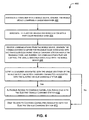
- FIG. 4 illustrates another example flow diagram of a method 400 for implementing other aspects for accessing charging capabilities of electric vehicle charging stations, as discussed above.
- the illustrative computing device 100 of FIG. 1 and/or one or more modules of the illustrative computing device 100 may perform the described operations of method 400.
- the method 400 may begin at block 402 of FIG. 4 in which the method 400 can include associating a consumer with a mobile device, wherein the mobile device comprises a unique identifier. Further, at block 404, the method 400 can include associating an electric vehicle charging station with a particular readable code. At block 406, the method 400 can include receiving communications from the mobile device, wherein the communications comprise the readable code associated with the particular electric vehicle charging station having the readable code, and wherein the communications further comprise the unique identifier associated with the mobile device. Moreover, at block 408, the method 400 can include verifying a consumer associated with the unique identifier of the mobile device can access charging capabilities associated with the electric vehicle charging station.
- the consumer may be granted access to the charging capabilities of the electric vehicle charging station. Once a consumer is granted access to the charging capabilities of the electric vehicle charging station, the consumer can charge an electric vehicle. Conversely, at block 412, if the unique identifier of the mobile device is not associated with a consumer having access to charging capabilities of the electric vehicle charging station, access is denied to the charging capabilities of the electric vehicle charging station.
- Illustrative systems and methods are described for providing access to a consumer utility account by verifying that the readable code of the utility meter is associated with a unique identifier of the mobile device. Some or all of these systems and methods may, but need not, be implemented at least partially by architectures such as those shown in FIG. 1 above.
Landscapes
- Engineering & Computer Science (AREA)
- Power Engineering (AREA)
- Transportation (AREA)
- Mechanical Engineering (AREA)
- Physics & Mathematics (AREA)
- General Physics & Mathematics (AREA)
- Theoretical Computer Science (AREA)
- Electric Propulsion And Braking For Vehicles (AREA)
- Charge And Discharge Circuits For Batteries Or The Like (AREA)
Abstract
Description
- Embodiments of the invention relate generally to electric vehicle charging stations, and more particularly to systems and methods for accessing charging capabilities of electric vehicle charging stations.
- Electric vehicle charging stations are typically used to provide charging points for electric vehicles or hybrid electric vehicles. As electric vehicle and hybrid electric vehicle usage increases, controlled access to the charging capabilities of electric vehicle charging stations may be needed.
- Some or all of the above needs and/or problems may be addressed by certain embodiments of the invention. Disclosed embodiments may include systems and methods for accessing charging capabilities of electric vehicle charging stations. According to one embodiment of the invention, there is disclosed a method for accessing charging capabilities of electric vehicle charging stations. The method can include registering a unique identifier of a mobile device with an electric vehicle charging station operator; transmitting a readable code to the electric vehicle charging station operator with the mobile device, wherein the readable code is associated with a particular electric vehicle charging station having a readable code; and receiving an indication that a consumer associated with the unique identifier of the mobile device can access charging capabilities associated with the electric vehicle charging station.
- According to another embodiment of the invention, there is disclosed another method for accessing charging capabilities of electric vehicle charging stations. The method can include associating a consumer with a mobile device, wherein the mobile device comprises a unique identifier; associating the electric vehicle charging station with a particular readable code; receiving communications from the mobile device, wherein the communications comprise the readable code associated with the particular electric vehicle charging station having the readable code, and wherein the communications further comprise the unique identifier associated with the mobile device; and verifying a consumer associated with the unique identifier of the mobile device can access charging capabilities associated with the electric vehicle charging station.
- Further, according to another embodiment of the invention, there is disclosed a system for accessing charging capabilities of an electric vehicle charging station. The system can include a computer processor. The system can also include a memory operable to store computer-executable instructions operable to receive a readable code associated with an electric vehicle charging station, and further receive a unique identifier associated with a mobile device; and based at least in part on the readable code and unique identifier, authorize a consumer associated with the mobile device to access charging capabilities associated with the electric vehicle charging station.
- Other embodiments, aspects, and features of the invention will become apparent to those skilled in the art from the following detailed description, the accompanying drawings, and the appended claims.
- Reference will now be made to the accompanying drawings, which are not necessarily drawn to scale, and wherein:
-
FIG. 1 is a block diagram of a computer environment showing an illustrative system for accessing charging capabilities of an electric vehicle charging station, according to an embodiment of the invention. -
FIG. 2 is a schematic illustrating details of an example data flow for accessing charging capabilities of an electric vehicle charging station, according to an embodiment of the invention. -
FIG. 3 is a flow diagram illustrating details of an example method for accessing charging capabilities of an electric vehicle charging station, according to an embodiment of the invention. -
FIG. 4 is a flow diagram illustrating details of another example method for accessing charging capabilities of an electric vehicle charging station, according to an embodiment of the invention. - Illustrative embodiments of the invention will now be described more fully hereinafter with reference to the accompanying drawings, in which some, but not all embodiments of the invention are shown. The invention may be embodied in many different forms and should not be construed as limited to the embodiments set forth herein; rather, these embodiments are provided so that this disclosure will satisfy applicable legal requirements. Like numbers refer to like elements throughout.
- Illustrative embodiments of the invention are directed to, among other things, systems and methods for accessing charging capabilities of electric vehicle charging stations. Certain embodiments of the invention may be directed towards verifying that a consumer associated with a unique identifier of a mobile device can access charging capabilities associated with an electric vehicle charging station. For example, the unique identifier of the mobile device may be registered with an electric vehicle charging station operator. The electric vehicle charging station operator may then associate the unique identifier of the mobile device with a consumer authorized to access charging capabilities of the electric vehicle charging station. The mobile device may transmit the unique identifier of the mobile device and a readable code of the electric vehicle charging station to the electric vehicle charging station operator. The electric vehicle charging station operator may then verify that a consumer associated with the unique identifier of the mobile device can access charging capabilities associated with the electric vehicle charging station. Upon verification, the consumer may be granted access to the charging capabilities of the electric vehicle charging station.
- In some embodiments, a consumer may register a unique identifier of a mobile device with an electric vehicle charging station operator; transmit a readable code to the electric vehicle charging station operator with the mobile device, wherein the readable code is associated with a particular electric vehicle charging station having a readable code; and receive an indication that a consumer associated with the unique identifier of the mobile device can access charging capabilities associated with the electric vehicle charging station.
- Further, in some embodiments, an electric vehicle charging station operator may associate a consumer with a mobile device, wherein the mobile device comprises a unique identifier; associate the electric vehicle charging station with a particular readable code; receive communications from the mobile device, wherein the communications comprise the readable code associated with the particular electric vehicle charging station having the readable code, and wherein the communications further comprise the unique identifier associated with the mobile device; and verify a consumer associated with the unique identifier of the mobile device can access charging capabilities associated with the electric vehicle charging station.
- In some aspects, the unique identifier of the mobile device may be a media access control address. In other aspects, the readable code may be a quick response (QR) code, a bar code, or an encrypted identification code. In still other aspects, the mobile device may be a smartphone, a mobile phone, a tablet device, or a handheld communication device. In other aspects, some or all communication may be performed on a secure platform.
- Certain embodiments of the invention can provide a technical solution to facilitating access to charging capabilities of an electric vehicle charging station. In one embodiment, a unique identifier for a mobile device associated with a consumer, and a readable code for a electric vehicle charging station, can be associated together for purposes of authorizing a consumer's access to charging capabilities managed by the electric vehicle charging station. In this manner, certain embodiments of the invention can encourage and facilitate access to charging capabilities of an electric vehicle charging station.
-
FIG. 1 provides an illustrative overview of a system, such as onecomputing device 100, according to an embodiment of the invention. Thecomputing device 100 may be configured as any suitable computing device capable of implementing the disclosed features, and accompanying methods, such as, but not limited to, those described with reference toFIG. 1 . By way of example and not limitation, suitable computing devices may include personal computers (PCs), servers, server farms, data centers, or any other device capable of storing and executing all or part of the disclosed features. - In one illustrative configuration, the
computing device 100 comprises at least amemory 102 and one or more processing units (or processor(s)) 104. The processor(s) 104 may be implemented as appropriate in hardware, software, firmware, or combinations thereof. Software or firmware implementations of the processor(s) 104 may include computer-executable or machine-executable instructions written in any suitable programming language to perform the various functions described. Moreover, theprocessor 104 may be associated with a network, a server, a computer or a mobile device. -
Memory 102 may store program instructions that are loadable and executable on the processor(s) 104, as well as data generated during the execution of these programs. Depending on the configuration and type ofcomputing device 100,memory 102 may be volatile (such as random access memory (RAM)) and/or non-volatile (such as read-only memory (ROM), flash memory, etc.). The computing device or server may also include additionalremovable storage 106 and/or non-removablestorage 108 including, but not limited to, magnetic storage, optical disks, and/or tape storage. The disk drives and their associated computer-readable media may provide non-volatile storage of computer-readable instructions, data structures, program modules, and other data for the computing devices. In some implementations, thememory 102 may include multiple different types of memory, such as static random access memory (SRAM), dynamic random access memory (DRAM), or ROM. -
Memory 102,removable storage 106, and non-removablestorage 108 are all examples of computer-readable storage media. For example, computer-readable storage media may include volatile and non-volatile, removable and non-removable media implemented in any method or technology for storage of information such as computer-readable instructions, data structures, program modules or other data.Memory 102,removable storage 106, and non-removablestorage 108 are all examples of computer storage media. Additional types of computer storage media that may be present include, but are not limited to, programmable random access memory (PRAM), SRAM, DRAM, RAM, ROM, electrically erasable programmable read-only memory (EEPROM), flash memory or other memory technology, compact disc read-only memory (CD-ROM), digital versatile discs (DVD) or other optical storage, magnetic cassettes, magnetic tape, magnetic disk storage or other magnetic storage devices, or any other medium which can be used to store the desired information and which can be accessed by the server or other computing device. Combinations of any of above should also be included within the scope of computer-readable media. - Alternatively, computer-readable communication media may include computer-readable instructions, program modules, or other data transmitted within a data signal, such as a carrier wave, or other transmission.
- The
computing device 100 may also contain communication connection(s) 110 that allow thecomputing device 100 to communicate with a stored database, another computing device or server, user terminals, and/or other devices on anetwork 128. Thecomputing device 100 may also include input device(s) 112 such as a keyboard, mouse, pen, voice input device, touch input device, etc., and output device(s) 114, such as a display, speakers, printer, etc. - Turning to the contents of the
memory 102 in more detail, thememory 102 may include anoperating system 116 and one or more application programs or services for implementing the features disclosed herein including aregistration module 118. Theregistration module 118 may be configured to receive data regarding a unique identifier associated with a mobile device, such as, but not limited to, a media access control (MAC) address. Additionally, theregistration module 118 may store the unique identifier associated with the mobile device in thememory 102. In one aspect, theregistration module 118 may receive the unique identifier associated with the mobile device through a website, kiosk, or other portal ornetwork 126 accessible to thecomputing device 100. - The
memory 102 may also include a readablecode association module 120. The readablecode association module 120 may be configured to associate a readable code with an electric vehicle charging station. The readablecode association module 120 may also store the readable code associated with the electric vehicle charging station in thememory 102. - The
memory 102 may further include a uniqueidentifier association module 122. The uniqueidentifier association module 122 may be configured to associate a unique identifier of a mobile device, as registered inregistration module 118, with a consumer having access to charging capabilities associated with an electric vehicle charging station. The uniqueidentifier association module 122 may also store the unique identifier of a mobile device associated with the consumer in thememory 102. - Additionally, the
memory 102 may include averification module 124. Theverification module 124 may be configured to verify that a unique identifier of a mobile device, as registered inregistration module 118, is associated with a consumer having access to charging capabilities associated with an electric vehicle charging station, as associated in uniqueidentifier association module 122. - The
memory 102 may also include anaccess authorization module 126. Theaccess authorization module 126 may be configured to provide access to charging capabilities associated with an electric vehicle charging station upon verification in uniqueidentifier verification module 124. - Various instructions, methods and techniques described herein may be considered in the general context of computer-executable instructions, such as program modules, executed by one or more computers or other devices. Generally, program modules include routines, programs, objects, components, data structures, etc., for performing particular tasks or implementing particular abstract data types. These program modules and the like may be executed as native code or may be downloaded and executed, such as in a virtual machine or other just-in-time compilation execution environment. Typically, the functionality of the program modules may be combined or distributed as desired in various embodiments. An implementation of these modules and techniques may be stored on some form of computer-readable storage media.
- The
example computing device 100 shown inFIG. 1 is provided by way of example only. Numerous other operating environments, system architectures, and device configurations are possible. Accordingly, embodiments of the present disclosure should not be construed as being limited to any particular operating environment, system architecture, or device configuration. -
FIG. 2 is a schematic illustrating details of anexample data flow 200 for facilitating access to charging capabilities of an electric vehicle charging station. Theexample data flow 200 utilizes an electricvehicle charging station 202, areadable code 204 associated with the electricvehicle charging station 202, and amobile device 206 for providing access to the chargingcapabilities 211 of the electricvehicle charging station 202. In one aspect, thedata flow 200 can facilitate verifying that aconsumer 207 associated with aunique identifier 205 of themobile device 206 can access chargingcapabilities 211 associated with the electricvehicle charging station 202. - The
data flow 200 begins by a consumer, such as 207, using a mobile device, such as 206, to scan areadable code 204 of the electricvehicle charging station 202. Themobile device 206 can receive thereadable code 204 or otherwise transmit thereadable code 204 via anetwork 216 to a server or other processor-based device, such as a server at the electric vehicle chargingstation operator 208. The server at the electric vehicle chargingstation operator 208 can verify that theunique identifier 205 of themobile device 206 is associated with aconsumer 207 having access to chargingcapabilities 211 associated with the electricvehicle charging station 202. In the particular implementation shown inFIG. 2 , thereadable code 204 can be a quick response (QR) code, theunique identifier 205 of themobile device 206 can be a media access control (MAC) address, and themobile device 206 can be a smartphone. One may appreciate, however, that any readable code may be used, including, but not limited to, a bar code or an encrypted identification code. One may also appreciate that any unique identifier may be used, including, but not limited to, a phone number or IP address. One may further appreciate that any mobile device may be used, including, but not limited to, a mobile phone, a tablet device, or a handheld communication device. - Still referring to
FIG. 2 , in one aspect, thereadable code 204 may be disposed on or about the electricvehicle charging station 202. Themobile device 206 may scan thereadable code 204 using a camera or other device capable of reading, sensing, detecting, or receiving a code. Theunique identifier 205 of themobile device 206 and thereadable code 204 of the electricvehicle charging station 202 are transmitted 210 to an electric vehicle chargingstation operator 212. The electric vehicle chargingstation operator 212 may then verify 214 that the unique identifier of themobile device 206 is associated with a consumer having access to charging capabilities of the electricvehicle charging station 202. Upon verification, access may be granted 216 to the charging capabilities of the electricvehicle charging station 202. Upon receiving access, anelectric vehicle 208 may be charged using thecharging capabilities 211 of the electricvehicle charging station 202. Conversely, if theunique identifier 205 of themobile device 206 is not associated with aconsumer 207 having access to chargingcapabilities 211 of the electricvehicle charging station 202, access to the utility account is denied 218. -
FIG. 3 illustrates an example flow diagram of amethod 300 for implementing other aspects for accessing charging capabilities of electric vehicle charging stations, as discussed above. In one example, theillustrative computing device 100 ofFIG. 1 and/or one or more modules of theillustrative computing device 100, alone or in combination, may perform the described operations ofmethod 300. - In this particular implementation, the
method 300 may begin atblock 302 ofFIG. 3 in which themethod 300 can include the registration of a unique identifier of a mobile device with an electric vehicle charging station operator. Further, atblock 304, themethod 300 can include transmitting a readable code to the electric vehicle charging station operator with the mobile device, wherein the readable code is associated with a particular electric vehicle charging station having a readable code. Atblock 306, themethod 300 can include receiving an indication that a consumer associated with the unique identifier of the mobile device can access charging capabilities associated with the electric vehicle charging station. -
FIG. 4 illustrates another example flow diagram of amethod 400 for implementing other aspects for accessing charging capabilities of electric vehicle charging stations, as discussed above. In one example, theillustrative computing device 100 ofFIG. 1 and/or one or more modules of theillustrative computing device 100, alone or in combination, may perform the described operations ofmethod 400. - In this particular implementation, the
method 400 may begin atblock 402 ofFIG. 4 in which themethod 400 can include associating a consumer with a mobile device, wherein the mobile device comprises a unique identifier. Further, atblock 404, themethod 400 can include associating an electric vehicle charging station with a particular readable code. Atblock 406, themethod 400 can include receiving communications from the mobile device, wherein the communications comprise the readable code associated with the particular electric vehicle charging station having the readable code, and wherein the communications further comprise the unique identifier associated with the mobile device. Moreover, atblock 408, themethod 400 can include verifying a consumer associated with the unique identifier of the mobile device can access charging capabilities associated with the electric vehicle charging station. Upon verification, atblock 410, the consumer may be granted access to the charging capabilities of the electric vehicle charging station. Once a consumer is granted access to the charging capabilities of the electric vehicle charging station, the consumer can charge an electric vehicle. Conversely, atblock 412, if the unique identifier of the mobile device is not associated with a consumer having access to charging capabilities of the electric vehicle charging station, access is denied to the charging capabilities of the electric vehicle charging station. - Illustrative systems and methods are described for providing access to a consumer utility account by verifying that the readable code of the utility meter is associated with a unique identifier of the mobile device. Some or all of these systems and methods may, but need not, be implemented at least partially by architectures such as those shown in
FIG. 1 above. - Although embodiments have been described in language specific to structural features and/or methodological acts, it is to be understood that the disclosure is not necessarily limited to the specific features or acts described. Rather, the specific features and acts are disclosed as illustrative forms of implementing the embodiments.
Claims (16)
- A method for accessing charging capabilities (211) of electric vehicle charging stations (202), comprising:registering a unique identifier (205) of a mobile device (206) with an electric vehicle charging station operator (212);transmitting (210) a readable code (204) to the electric vehicle charging station operator (210) with the mobile device (206), wherein the readable code (204) is associated with a particular electric vehicle charging station (202) having a readable code (204); andreceiving (210) an indication that a consumer (207) associated with the unique identifier (205) of the mobile device (206) can access (216) charging capabilities (211) associated with the electric vehicle charging station (202).
- The method of Claim 1, further comprising:upon or after receipt of the indication, authorizing (216) charging of an electric vehicle.
- The method of Claim 1 or Claim 2, wherein the unique identifier (205) of the mobile device (206) is a media access control address.
- The method of Claim 1, 2 or 3, wherein the readable code (204) comprises a quick response (QR) code, a bar code, or an encrypted identification code.
- The method of any one of Claims 1 to 4, wherein the mobile device (206) is a smartphone, a mobile phone, a tablet device, or a handheld communication device.
- The method of any one of Claims 1 to 5, wherein registering, transmitting, and receiving are performed using communications via a secure platform.
- A method for accessing charging capabilities (211) of electric vehicle charging stations (202), comprising:associating a consumer (207) with a mobile device (206), wherein the mobile device (206) comprises a unique identifier (205);associating the electric vehicle charging station (202) with a particular readable code (204);receiving communications from the mobile device (206), wherein the communications comprise the readable code (204) associated with the particular electric vehicle charging station (202) having the readable code (204), and wherein the communications further comprise the unique identifier (205) associated with the mobile device (206); andverifying (214) a consumer (207) associated with the unique identifier (205) of the mobile device (206) can access (216) charging capabilities (211) associated with the electric vehicle charging station (202).
- The method of Claim 7, further comprising:upon or after verifying (214) the consumer (207) associated with the unique identifier (205) of the mobile device (206) can access charging capabilities (211) associated with the electric vehicle charging station (202), authorizing (216) charging of a electric vehicle by the electric vehicle charging station (202).
- The method of Claim 8, further comprising:upon or after allowing access (216) to charging capabilities (211) associated with the electric vehicle charging station (202), billing the consumer (207).
- The method of Claim 7, 8 or 9, wherein the unique identifier (205) of a mobile device (206) is a media access control address.
- The method of any one of Claims 7 to 10, wherein the readable code (204) comprises a quick response (QR) code, a bar code, or an encrypted identification code.
- The method of any one of Claims 7 to 11, wherein the mobile device (206) comprises a smartphone, a mobile phone, a tablet device, or a handheld communication device.
- The method of any one of Claims 7 to 12, wherein the communications are performed via a secure platform.
- An system for accessing charging capabilities (211) of electric vehicle charging stations (202), comprising:a computer processor (104); anda memory (102) operable to store computer-executable instructions operable to:receive a readable code associated with an electric vehicle charging station (202), and further receive a unique identifier associated with a mobile device (206); andbased at least in part on the readable code and unique identifier, authorize a consumer associated with the mobile device (206) to access charging capabilities associated with the electric vehicle charging station (202).
- The system of Claim 14, wherein the computer processor (104) is associated with a server or a computer.
- The system of Claim 14 or Claim 15, wherein the computer processor (104) is associated with the mobile device (206).
Priority Applications (1)
| Application Number | Priority Date | Filing Date | Title |
|---|---|---|---|
| EP22190882.5A EP4144573A1 (en) | 2011-08-19 | 2012-08-17 | Systems and methods for accessing charging capabilities of electric vehicle charging stations |
Applications Claiming Priority (1)
| Application Number | Priority Date | Filing Date | Title |
|---|---|---|---|
| US13/213,747 US8500013B2 (en) | 2011-08-19 | 2011-08-19 | Systems and methods for accessing charging capabilities of electric vehicle charging stations |
Related Child Applications (1)
| Application Number | Title | Priority Date | Filing Date |
|---|---|---|---|
| EP22190882.5A Division EP4144573A1 (en) | 2011-08-19 | 2012-08-17 | Systems and methods for accessing charging capabilities of electric vehicle charging stations |
Publications (2)
| Publication Number | Publication Date |
|---|---|
| EP2559590A2 true EP2559590A2 (en) | 2013-02-20 |
| EP2559590A3 EP2559590A3 (en) | 2017-12-06 |
Family
ID=47076075
Family Applications (2)
| Application Number | Title | Priority Date | Filing Date |
|---|---|---|---|
| EP22190882.5A Pending EP4144573A1 (en) | 2011-08-19 | 2012-08-17 | Systems and methods for accessing charging capabilities of electric vehicle charging stations |
| EP12180847.1A Ceased EP2559590A3 (en) | 2011-08-19 | 2012-08-17 | Systems and methods for accessing charging capabilities of electric vehicle charging stations |
Family Applications Before (1)
| Application Number | Title | Priority Date | Filing Date |
|---|---|---|---|
| EP22190882.5A Pending EP4144573A1 (en) | 2011-08-19 | 2012-08-17 | Systems and methods for accessing charging capabilities of electric vehicle charging stations |
Country Status (6)
| Country | Link |
|---|---|
| US (2) | US8500013B2 (en) |
| EP (2) | EP4144573A1 (en) |
| JP (1) | JP2013070597A (en) |
| AU (1) | AU2012216256A1 (en) |
| BR (1) | BR102012020446A2 (en) |
| CA (1) | CA2786188A1 (en) |
Cited By (4)
| Publication number | Priority date | Publication date | Assignee | Title |
|---|---|---|---|---|
| WO2016066455A1 (en) * | 2014-10-29 | 2016-05-06 | Bayerische Motoren Werke Aktiengesellschaft | Method and base unit for inductively charging electric and hybrid vehicles |
| WO2019007342A1 (en) * | 2017-07-03 | 2019-01-10 | 上海蔚来汽车有限公司 | Charging device sharing method and system |
| US10949843B2 (en) | 2017-05-22 | 2021-03-16 | Hussein Talaat Mouftah | Methods and systems for conjugated authentication and authorization |
| US12266029B2 (en) | 2023-07-31 | 2025-04-01 | T-Mobile Usa, Inc. | Reducing carbon emissions of a vehicle in a parking garage |
Families Citing this family (17)
| Publication number | Priority date | Publication date | Assignee | Title |
|---|---|---|---|---|
| US8604750B2 (en) | 2010-02-23 | 2013-12-10 | Optimization Technologies, Inc. | Electric vehicle charging stations with touch screen user interface |
| US8500013B2 (en) * | 2011-08-19 | 2013-08-06 | General Electric Company | Systems and methods for accessing charging capabilities of electric vehicle charging stations |
| US9436944B2 (en) * | 2012-08-29 | 2016-09-06 | Optimization Technologies, Inc. | Electric vehicle charging station mobile device payment system |
| US20140067493A1 (en) * | 2012-08-29 | 2014-03-06 | Optimization Technologies, Inc. | System for combining payment for electric vehicle charging and parking |
| EP3010287B1 (en) | 2013-07-31 | 2022-01-19 | Samsung Electronics Co., Ltd. | Method and device for connecting single ap device among multiple ap devices on same network to terminal |
| DE102013222092A1 (en) * | 2013-10-30 | 2015-04-30 | Bayerische Motoren Werke Aktiengesellschaft | Recognition of machine codes with an on-board camera of a vehicle |
| US9315109B2 (en) | 2013-11-02 | 2016-04-19 | At&T Intellectual Property I, L.P. | Methods, systems, and products for charging batteries |
| CN105207287B (en) * | 2015-09-09 | 2018-08-14 | 深圳智链物联科技有限公司 | A kind of charging pile management system and method |
| CN105128690A (en) * | 2015-09-23 | 2015-12-09 | 青岛特锐德电气股份有限公司 | Electric automobile with wireless reading function and charging system |
| WO2018101501A1 (en) * | 2016-11-30 | 2018-06-07 | (주)클린일렉스앤컴퍼니 | System and method for electric vehicle charging service |
| DE102016224421B4 (en) * | 2016-12-08 | 2018-08-02 | Audi Ag | Method for operating an output device of a motor vehicle, storage medium, mobile, portable terminal and data server device |
| US20200134742A1 (en) * | 2018-10-27 | 2020-04-30 | OpConnect, Inc. | System for authorizing electric vehicle charging and payment through vehicle infotainment device |
| CN110061539A (en) * | 2019-04-02 | 2019-07-26 | 深圳小黄电智能科技有限公司 | A kind of shared charge control method and shared charging terminal |
| DE102019111273A1 (en) * | 2019-05-02 | 2020-11-05 | innogy eMobility Solutions GmbH | Procedure for starting a charging process at a charging station |
| US11568164B2 (en) * | 2021-05-11 | 2023-01-31 | Ford Global Technologies, Llc | Enhanced contactless vehicle codes |
| DE102021208808A1 (en) | 2021-08-11 | 2023-02-16 | Volkswagen Aktiengesellschaft | Method for electrically charging an electrical energy store of an at least partially electrically operated motor vehicle, computer program product and charging system |
| DE102022200004A1 (en) | 2022-01-03 | 2023-07-06 | Volkswagen Aktiengesellschaft | Method for operating a charging system with multiple charging units, and charging system with multiple charging units |
Citations (3)
| Publication number | Priority date | Publication date | Assignee | Title |
|---|---|---|---|---|
| DE10025017A1 (en) * | 1999-06-21 | 2000-12-28 | Deutsche Telekom Mobil | Mobile telephone with integral reader |
| WO2009098687A2 (en) * | 2008-02-06 | 2009-08-13 | Cellopark Technologies Ltd. | A system and method for the controlled recharge of batteries in electric powered vehicles |
| WO2011049887A1 (en) * | 2009-10-19 | 2011-04-28 | Liberty Plug-Ins, Inc. | Improved method and apparatus for parking lot metering |
Family Cites Families (33)
| Publication number | Priority date | Publication date | Assignee | Title |
|---|---|---|---|---|
| US5270522A (en) | 1990-07-12 | 1993-12-14 | Bone Jr Wilburn I | Dynamic barcode label system |
| US5559894A (en) | 1993-06-28 | 1996-09-24 | Lubliner; David J. | Automated meter inspection and reading |
| US5926015A (en) | 1994-07-25 | 1999-07-20 | Pharr; Robert S. | Machine readable display unit |
| US5870140A (en) | 1996-09-25 | 1999-02-09 | Harbour Management Services Limited | System for remote meter viewing and reporting |
| US6512919B2 (en) | 1998-12-14 | 2003-01-28 | Fujitsu Limited | Electronic shopping system utilizing a program downloadable wireless videophone |
| US6529883B1 (en) | 1999-08-20 | 2003-03-04 | Motorola, Inc. | Prepayment energy metering system with two-way smart card communications |
| US6614204B2 (en) * | 2001-12-21 | 2003-09-02 | Nicholas J. Pellegrino | Charging station for hybrid powered vehicles |
| JP4107001B2 (en) * | 2002-07-25 | 2008-06-25 | 富士電機リテイルシステムズ株式会社 | Usage promotion system for target devices |
| US7784684B2 (en) | 2002-08-08 | 2010-08-31 | Fujitsu Limited | Wireless computer wallet for physical point of sale (POS) transactions |
| US7216108B2 (en) | 2002-08-14 | 2007-05-08 | Itron, Inc. | Transferable meter licenses using smartcard technology |
| US7747534B2 (en) | 2002-09-24 | 2010-06-29 | Elster Electricity, Llc | Utility power meter, metering system and method |
| US8332266B2 (en) | 2003-04-23 | 2012-12-11 | Pitney Bowes Inc. | System and method for managing business machine assets |
| JP2004326469A (en) * | 2003-04-25 | 2004-11-18 | Canon Electronics Inc | Automatic vending machine management system |
| DE10331084A1 (en) | 2003-07-09 | 2005-03-24 | Aloys Wobben | motor vehicle |
| US7118032B2 (en) | 2003-08-15 | 2006-10-10 | Lockheed Martin Corporation | Portable transaction terminal having an image recognition system |
| US20060259866A1 (en) | 2004-07-20 | 2006-11-16 | Balaji Prasad | Virtual user interface for multiple user devices |
| US7379791B2 (en) | 2004-08-03 | 2008-05-27 | Uscl Corporation | Integrated metrology systems and information and control apparatus for interaction with integrated metrology systems |
| US7869576B1 (en) * | 2005-04-28 | 2011-01-11 | Techradium, Inc. | Power management system for a plurality of at least partially rechargeable vehicles |
| US7520419B2 (en) * | 2005-12-21 | 2009-04-21 | Bml Medrecordsalert Llc | Method for transmitting medical information identified by a unique identifier |
| US7693609B2 (en) | 2007-09-05 | 2010-04-06 | Consolidated Edison Company Of New York, Inc. | Hybrid vehicle recharging system and method of operation |
| US8046257B2 (en) | 2007-12-02 | 2011-10-25 | Contactless Data, Inc. | System and method for distribution, redemption and processing of electronic coupons |
| US8301500B2 (en) * | 2008-04-02 | 2012-10-30 | Global 1 Enterprises | Ghosting payment account data in a mobile telephone payment transaction system |
| AU2009249272B2 (en) | 2008-05-18 | 2014-11-20 | Google Llc | Secured electronic transaction system |
| US8019483B2 (en) * | 2008-10-01 | 2011-09-13 | Current Communications Services, Llc | System and method for managing the distributed generation of power by a plurality of electric vehicles |
| US8004426B2 (en) * | 2008-10-14 | 2011-08-23 | Verizon Patent And Licensing Inc. | Systems and methods for recording parking space information |
| US8935112B2 (en) * | 2009-02-17 | 2015-01-13 | Chargepoint, Inc. | System and method for managing electric vehicles |
| US8533362B2 (en) | 2009-08-07 | 2013-09-10 | Cooper Technologies Company | Methods and apparatus related to an adapter between a premise network and an advanced metering infrastructure (AMI) network |
| DE102009039650A1 (en) * | 2009-09-02 | 2011-03-10 | Elektro-Bauelemente Gmbh | Method and device for powering an electrically operable vehicle |
| US11183001B2 (en) * | 2010-01-29 | 2021-11-23 | Chargepoint, Inc. | Electric vehicle charging station host definable pricing |
| US10255601B2 (en) | 2010-02-25 | 2019-04-09 | Visa International Service Association | Multifactor authentication using a directory server |
| KR101025807B1 (en) * | 2010-10-01 | 2011-04-04 | 박상구 | Authentication method and certificate server |
| US20120191600A1 (en) * | 2011-01-24 | 2012-07-26 | General Electric Company | Method and system for payment of charges associated with charging an electric vehicle |
| US8500013B2 (en) * | 2011-08-19 | 2013-08-06 | General Electric Company | Systems and methods for accessing charging capabilities of electric vehicle charging stations |
-
2011
- 2011-08-19 US US13/213,747 patent/US8500013B2/en active Active
-
2012
- 2012-08-15 BR BRBR102012020446-0A patent/BR102012020446A2/en not_active IP Right Cessation
- 2012-08-15 JP JP2012180004A patent/JP2013070597A/en active Pending
- 2012-08-16 CA CA2786188A patent/CA2786188A1/en not_active Abandoned
- 2012-08-16 AU AU2012216256A patent/AU2012216256A1/en not_active Abandoned
- 2012-08-17 EP EP22190882.5A patent/EP4144573A1/en active Pending
- 2012-08-17 EP EP12180847.1A patent/EP2559590A3/en not_active Ceased
-
2013
- 2013-07-08 US US13/936,476 patent/US20130292469A1/en not_active Abandoned
Patent Citations (3)
| Publication number | Priority date | Publication date | Assignee | Title |
|---|---|---|---|---|
| DE10025017A1 (en) * | 1999-06-21 | 2000-12-28 | Deutsche Telekom Mobil | Mobile telephone with integral reader |
| WO2009098687A2 (en) * | 2008-02-06 | 2009-08-13 | Cellopark Technologies Ltd. | A system and method for the controlled recharge of batteries in electric powered vehicles |
| WO2011049887A1 (en) * | 2009-10-19 | 2011-04-28 | Liberty Plug-Ins, Inc. | Improved method and apparatus for parking lot metering |
Cited By (4)
| Publication number | Priority date | Publication date | Assignee | Title |
|---|---|---|---|---|
| WO2016066455A1 (en) * | 2014-10-29 | 2016-05-06 | Bayerische Motoren Werke Aktiengesellschaft | Method and base unit for inductively charging electric and hybrid vehicles |
| US10949843B2 (en) | 2017-05-22 | 2021-03-16 | Hussein Talaat Mouftah | Methods and systems for conjugated authentication and authorization |
| WO2019007342A1 (en) * | 2017-07-03 | 2019-01-10 | 上海蔚来汽车有限公司 | Charging device sharing method and system |
| US12266029B2 (en) | 2023-07-31 | 2025-04-01 | T-Mobile Usa, Inc. | Reducing carbon emissions of a vehicle in a parking garage |
Also Published As
| Publication number | Publication date |
|---|---|
| US20130043306A1 (en) | 2013-02-21 |
| CA2786188A1 (en) | 2013-02-19 |
| AU2012216256A1 (en) | 2013-03-07 |
| EP2559590A3 (en) | 2017-12-06 |
| US20130292469A1 (en) | 2013-11-07 |
| JP2013070597A (en) | 2013-04-18 |
| US8500013B2 (en) | 2013-08-06 |
| BR102012020446A2 (en) | 2014-05-13 |
| EP4144573A1 (en) | 2023-03-08 |
Similar Documents
| Publication | Publication Date | Title |
|---|---|---|
| US8500013B2 (en) | Systems and methods for accessing charging capabilities of electric vehicle charging stations | |
| EP2560139A1 (en) | Systems and methods for energy managment between a utility provider and a consumer | |
| US8775305B2 (en) | Card-present on-line transactions | |
| US10833859B2 (en) | Automating verification using secure encrypted phone verification | |
| US12159284B2 (en) | Index of usability for a replacement payment card | |
| US11186196B2 (en) | Managing the provisioning of electricity for an electric vehicle | |
| US11316693B2 (en) | Trusted platform module-based prepaid access token for commercial IoT online services | |
| JP6752969B2 (en) | Methods, devices and servers for account login | |
| CN104516783A (en) | Authority control method and device | |
| CN111124600B (en) | Data processing method, device, equipment and medium | |
| US20160275603A1 (en) | Service processing method, device, and terminal | |
| CN105046482A (en) | Mobile terminal payment method, device, and system | |
| CN103810636A (en) | Method and device for processing car insurance participation information and car insurance participation information processing platform | |
| US20180018656A1 (en) | Dispensing payment cards via a vending facility | |
| US20200134742A1 (en) | System for authorizing electric vehicle charging and payment through vehicle infotainment device | |
| CN104737126A (en) | Fulfillment of applications to devices | |
| CN107784557A (en) | A kind of method of sharing articles, equipment and computer-readable storage medium | |
| CN110248356B (en) | Information acquisition method and device | |
| US20160104326A1 (en) | Electronic device and toll collection method | |
| US10841109B2 (en) | Bundling over-the-top services with third party services | |
| CN110401925A (en) | A kind of generation method and device of communication message | |
| KR20170108602A (en) | Method for providing comparative estimation service of vehicle servicing | |
| CN114926247A (en) | Unmanned vehicle service method and device and unmanned vehicle | |
| US20240386443A1 (en) | Export license agency service system and method and computer program for the same | |
| CN117670348A (en) | Subway payment equipment terminal operating system based on embedded architecture |
Legal Events
| Date | Code | Title | Description |
|---|---|---|---|
| PUAI | Public reference made under article 153(3) epc to a published international application that has entered the european phase |
Free format text: ORIGINAL CODE: 0009012 |
|
| AK | Designated contracting states |
Kind code of ref document: A2 Designated state(s): AL AT BE BG CH CY CZ DE DK EE ES FI FR GB GR HR HU IE IS IT LI LT LU LV MC MK MT NL NO PL PT RO RS SE SI SK SM TR |
|
| AX | Request for extension of the european patent |
Extension state: BA ME |
|
| RAP1 | Party data changed (applicant data changed or rights of an application transferred) |
Owner name: FISCHER, JENS PETER |
|
| RAP1 | Party data changed (applicant data changed or rights of an application transferred) |
Owner name: GENERAL ELECTRIC COMPANY |
|
| PUAL | Search report despatched |
Free format text: ORIGINAL CODE: 0009013 |
|
| AK | Designated contracting states |
Kind code of ref document: A3 Designated state(s): AL AT BE BG CH CY CZ DE DK EE ES FI FR GB GR HR HU IE IS IT LI LT LU LV MC MK MT NL NO PL PT RO RS SE SI SK SM TR |
|
| AX | Request for extension of the european patent |
Extension state: BA ME |
|
| RIC1 | Information provided on ipc code assigned before grant |
Ipc: B60L 11/18 20060101AFI20171102BHEP |
|
| STAA | Information on the status of an ep patent application or granted ep patent |
Free format text: STATUS: REQUEST FOR EXAMINATION WAS MADE |
|
| 17P | Request for examination filed |
Effective date: 20180606 |
|
| RBV | Designated contracting states (corrected) |
Designated state(s): AL AT BE BG CH CY CZ DE DK EE ES FI FR GB GR HR HU IE IS IT LI LT LU LV MC MK MT NL NO PL PT RO RS SE SI SK SM TR |
|
| STAA | Information on the status of an ep patent application or granted ep patent |
Free format text: STATUS: EXAMINATION IS IN PROGRESS |
|
| 17Q | First examination report despatched |
Effective date: 20200817 |
|
| STAA | Information on the status of an ep patent application or granted ep patent |
Free format text: STATUS: THE APPLICATION HAS BEEN REFUSED |
|
| 18R | Application refused |
Effective date: 20220630 |