EP2557885A1 - Method of handling random access procedure associated to cell deactivation - Google Patents
Method of handling random access procedure associated to cell deactivation Download PDFInfo
- Publication number
- EP2557885A1 EP2557885A1 EP12180029A EP12180029A EP2557885A1 EP 2557885 A1 EP2557885 A1 EP 2557885A1 EP 12180029 A EP12180029 A EP 12180029A EP 12180029 A EP12180029 A EP 12180029A EP 2557885 A1 EP2557885 A1 EP 2557885A1
- Authority
- EP
- European Patent Office
- Prior art keywords
- random access
- access procedure
- secondary cell
- deactivation
- scell
- Prior art date
- Legal status (The legal status is an assumption and is not a legal conclusion. Google has not performed a legal analysis and makes no representation as to the accuracy of the status listed.)
- Granted
Links
Images




Classifications
-
- H—ELECTRICITY
- H04—ELECTRIC COMMUNICATION TECHNIQUE
- H04W—WIRELESS COMMUNICATION NETWORKS
- H04W74/00—Wireless channel access
- H04W74/08—Non-scheduled access, e.g. ALOHA
- H04W74/0833—Random access procedures, e.g. with 4-step access
-
- H—ELECTRICITY
- H04—ELECTRIC COMMUNICATION TECHNIQUE
- H04L—TRANSMISSION OF DIGITAL INFORMATION, e.g. TELEGRAPHIC COMMUNICATION
- H04L1/00—Arrangements for detecting or preventing errors in the information received
- H04L1/12—Arrangements for detecting or preventing errors in the information received by using return channel
- H04L1/16—Arrangements for detecting or preventing errors in the information received by using return channel in which the return channel carries supervisory signals, e.g. repetition request signals
- H04L1/18—Automatic repetition systems, e.g. Van Duuren systems
- H04L1/1812—Hybrid protocols; Hybrid automatic repeat request [HARQ]
-
- H—ELECTRICITY
- H04—ELECTRIC COMMUNICATION TECHNIQUE
- H04L—TRANSMISSION OF DIGITAL INFORMATION, e.g. TELEGRAPHIC COMMUNICATION
- H04L1/00—Arrangements for detecting or preventing errors in the information received
- H04L1/12—Arrangements for detecting or preventing errors in the information received by using return channel
- H04L1/16—Arrangements for detecting or preventing errors in the information received by using return channel in which the return channel carries supervisory signals, e.g. repetition request signals
- H04L1/18—Automatic repetition systems, e.g. Van Duuren systems
- H04L1/1829—Arrangements specially adapted for the receiver end
- H04L1/1835—Buffer management
-
- H—ELECTRICITY
- H04—ELECTRIC COMMUNICATION TECHNIQUE
- H04L—TRANSMISSION OF DIGITAL INFORMATION, e.g. TELEGRAPHIC COMMUNICATION
- H04L5/00—Arrangements affording multiple use of the transmission path
- H04L5/0001—Arrangements for dividing the transmission path
- H04L5/0003—Two-dimensional division
- H04L5/0005—Time-frequency
- H04L5/0007—Time-frequency the frequencies being orthogonal, e.g. OFDM(A) or DMT
- H04L5/001—Time-frequency the frequencies being orthogonal, e.g. OFDM(A) or DMT the frequencies being arranged in component carriers
-
- H—ELECTRICITY
- H04—ELECTRIC COMMUNICATION TECHNIQUE
- H04W—WIRELESS COMMUNICATION NETWORKS
- H04W72/00—Local resource management
- H04W72/20—Control channels or signalling for resource management
- H04W72/23—Control channels or signalling for resource management in the downlink direction of a wireless link, i.e. towards a terminal
- H04W72/231—Control channels or signalling for resource management in the downlink direction of a wireless link, i.e. towards a terminal the control data signalling from the layers above the physical layer, e.g. RRC or MAC-CE signalling
-
- H—ELECTRICITY
- H04—ELECTRIC COMMUNICATION TECHNIQUE
- H04W—WIRELESS COMMUNICATION NETWORKS
- H04W74/00—Wireless channel access
- H04W74/002—Transmission of channel access control information
-
- H—ELECTRICITY
- H04—ELECTRIC COMMUNICATION TECHNIQUE
- H04W—WIRELESS COMMUNICATION NETWORKS
- H04W74/00—Wireless channel access
- H04W74/04—Scheduled access
Definitions
- the application relates to a method utilized in a wireless communication system, and more particularly, to a method of handling random access procedure associated to cell deactivation in a wireless communication system.
- LTE-Advanced system Toward advanced high-speed wireless communication system, such as transmitting data in a higher peak data rate, LTE-Advanced system is standardized by the 3rd Generation Partnership Project (3GPP) as an enhancement of Long-Term Evolution (LTE) system.
- 3GPP 3rd Generation Partnership Project
- LTE-Advanced system targets faster switching between power states, improves performance at the cell edge, and includes subjects, such as bandwidth extension, coordinated multipoint transmission/reception (COMP), uplink multiple input multiple output (MIMO), etc.
- CMP coordinated multipoint transmission/reception
- MIMO uplink multiple input multiple output
- carrier aggregation is introduced to the LTE-Advanced system for extension to wider bandwidth, where two or more component carriers are aggregated, for supporting wider transmission bandwidths (for example up to 100MHz) and for spectrum aggregation.
- carrier aggregation capability multiple component carriers are aggregated into overall wider bandwidth, where a user equipment (UE) can establish multiple links corresponding to the multiple component carriers for simultaneously receiving and transmitting.
- the UE In carrier aggregation, the UE only has one radio resource control (RRC) connection with the network.
- RRC radio resource control
- PCell This cell is referred to as a primary cell (PCell).
- the component carrier corresponding to the PCell is the Downlink Primary Component Carrier (DL PCC) while in the uplink it is the Uplink Primary Component Carrier (UL PCC).
- DL PCC Downlink Primary Component Carrier
- U PCC Uplink Primary Component Carrier
- SCell secondary cell
- the PCell i.e. the UL and DL PCC
- the SCell may be activated or deactivated according to specific conditions (e.g. an amount of data for transmission).
- the UE shall not monitor the physical downlink control channel (PDCCH) of the SCell and shall not receive any downlink assignments or uplink grants associated to the SCell. Further, the UE shall not transmit on uplink shared channel (UL-SCH) on the SCell and not transmit sounding reference signal (SRS) on the SCell.
- the network activates and deactivates the SCell by sending the Activation/Deactivation command. The UE starts a deactivation timer for the SCell when the SCell is activated, wherein the SCell is deactivated when the deactivation timer expires.
- timing alignment group contains at least one serving cell with configured UL, and the mapping of each serving cell to a timing alignment group is configured by the serving evolved base station (eNB).
- a random access (RA) procedure is used.
- the UE needs to monitor PDCCH to receive message 2 of the RA procedure (i.e. random access response) and/or message 4 (i.e. contention resolution).
- the UE may not monitor the PDCCH on the SCell or for the SCell. According to the current 3GPP specification, the UE may perform power ramping, and retransmits message 1 (i.e. random access preamble) again and again.
- message 1 i.e. random access preamble
- the application aims at providing a method of handling random access procedure associated to cell deactivation in a wireless communication system in order to solve the abovementioned problems.
- the claimed method of handling random access procedure associated to cell deactivation for a mobile device in a wireless communication system comprises activating a secondary cell configured by a network of the wireless communication system, performing a random access procedure for the activated secondary cell, and when the secondary cell is deactivated during the random access procedure, continuously performing the random access procedure.
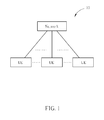
- Fig. 1 is a schematic diagram of a wireless communication system 10.
- the wireless communication system 10 is a Long-Term Evolution advanced (LTE-Advanced) system or other mobile communication systems, and is briefly composed of a network and a plurality of user equipments (UEs).
- the network and the UEs are simply utilized for illustrating the structure of the wireless communication system 10.
- the network may be an evolved universal terrestrial radio access network (E-UTRAN) comprising a plurality of evolved base stations (eNBs).
- E-UTRAN evolved universal terrestrial radio access network
- eNBs evolved base stations
- the UEs can be devices such as mobile phones, computer systems, a camera, a television, a hand-held video game device, a musical device, a wireless sensor, etc.
- a UE may be a fixed computing device operating in a mobile environment, such as a bus, a train, an airplane, a boat, a car, etc.
- the network and the UE can be seen as a transmitter or receiver according to transmission direction, e.g., for uplink (UL), the UE is the transmitter and the network is the receiver, and for downlink (DL), the network is the transmitter and the UE is the receiver.
- UL uplink
- DL downlink
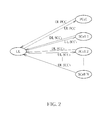
- Fig. 2 is a schematic diagram of a UE and multiple cells in the wireless communication system 10.
- the UE communicates with one primary cell (PCell) and several secondary cells (SCells), as SCell 1-SCell N shown in Fig. 2 .
- the component carrier corresponding to the PCell is the downlink primary component carrier (DL PCC) while in the uplink it is the uplink primary component carrier (UL PCC).
- DL PCC downlink primary component carrier
- UL PCC uplink primary component carrier
- SCells can be configured to form together with the PCell a set of serving cells.
- the component carrier corresponding to a SCell is a downlink secondary component carrier (DL SCC) while in the uplink it is an uplink secondary component carrier (UL SCC).
- DL SCC downlink secondary component carrier
- UL SCC uplink secondary component carrier
- Fig. 3 illustrates a schematic diagram of an exemplary communication device 30.
- the communication device 30 can be the UE shown in Fig. 1 , but is not limited herein.
- the communication device 30 may include a processing means 300 such as a microprocessor or Application Specific Integrated Circuit (ASIC), a storage unit 310 and a communication interfacing unit 320.
- the storage unit 310 may be any data storage device that can store program code 314, for access by the processing means 300. Examples of the storage unit 310 include but are not limited to a subscriber identity module (SIM), read-only memory (ROM), flash memory, random-access memory (RAM), CD-ROMs, magnetic tape, hard disk, and optical data storage device.
- SIM subscriber identity module
- ROM read-only memory
- RAM random-access memory
- CD-ROMs magnetic tape
- hard disk hard disk
- optical data storage device optical data storage device.
- the communication interfacing unit 320 is preferably a radio transceiver and can exchange wireless signals with the network (i.e.
- Fig. 4 illustrates a flowchart of an exemplary process 40.
- the process 40 is utilized in a UE for handling random access procedure upon SCell deactivation.
- the process 40 can be compiled into the program code 314 and includes the following steps:
- the UE when the UE performs the random access procedure for the SCell but the SCell is deactivated during the random access procedure, the UE continuously performs the random access procedure. In this situation, the UE may consider that the random access procedure is prioritized over SCell deactivation.
- a UE is configured with the PCell, and SCell 1-N.
- the UE activates the SCell 1, the UE starts a deactivation timer for the SCell 1.
- the UE performs a random access procedure for the SCell 1 (or for a timing alignment group (TAG)) for acquiring uplink timing alignment.
- TAG timing alignment group
- the UE receives a PDCCH order from the network, which triggers the UE to perform a random access procedure for the SCell 1 (or for a timing alignment group (TAG)), or UE triggers a contention-based random access procedure for the SCell 1 (or for a timing alignment group (TAG)).
- the UE continuously monitors the physical downlink control channel (PDCCH) in associated subframes for the random access procedure if the SCell 1 is deactivated (e.g., the deactivation timer for the SCell 1 expires during the random access procedure or the UE receives a signaling (e.g., Activation/Deactivation command) for deactivating the SCell 1 from the network during the random access procedure).
- PDCCH physical downlink control channel
- the associated subframes may be the subframes the network may send RA message 2 (i.e. random access response) and/or RA message 4 (contention resolution).
- the associated subframes may not be on the SCell.
- the network may send the RA message 2 and/or RA message 4 on the PCell or on the other SCell.
- the network and/or UE may reactivate the SCell(s) which was deactivated, and restart the associated deactivation timer(s).
- the network and/or UE may continue the random access procedure on the SCell 1.
- the network and/or UE may continue the on-going random access procedure or start a new random access procedure on another SCell. For example, the network and/or UE may choose another activated SCell 2 from the same TAG, and perform a random access procedure on the activated SCell 2 for uplink timing adjustment.
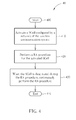
- Fig. 6 illustrates a flowchart of an exemplary process 60.
- the process 60 is utilized in a UE for handling random access procedure upon SCell deactivation.
- the process 60 can be compiled into the program code 314 and includes the following steps:
- the UE when the UE performs the random access procedure for the SCell but the SCell is deactivated during the random access procedure, the UE stops or aborts the ongoing random access procedure. In this situation, the UE may consider that the SCell deactivation is prioritized over the random access procedure.
- a UE is configured with the PCell, and SCell 1-N.
- the UE activates the SCell 1, the UE starts a deactivation timer for the SCell 1.
- the UE performs a random access procedure for the SCell 1 (or for a timing alignment group (TAG)) for acquiring uplink timing alignment.
- TAG timing alignment group
- the UE receives a PDCCH order from the network, which triggers the UE to perform a random access procedure for the SCell 1 (or for a timing alignment group (TAG)), or UE triggers a contention-based random access procedure for the SCell 1 (or for a timing alignment group (TAG)).
- the UE stops or aborts the random access procedure if the SCell 1 is deactivated (e.g. the deactivation timer for the SCell 1 expires during the random access procedure or the UE receives a signaling (e.g. MAC Activation/Deactivation command) for deactivating the SCell 1 from the network during the random access procedure).
- a signaling e.g. MAC Activation/Deactivation command
- the UE may discard explicitly signalled ra-PreambleIndex which indicates the index of a PRACH within a system frame, and/or ra-PRACH-MaskIndex for indicating subframes which can be transmitted a random access preamble of the random access procedure.
- the UE may flush the HARQ buffer used for transmission of the MAC PDU in the message 3 buffer.
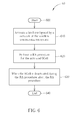
- FIG. 8 illustrates a flowchart of an exemplary process 80.
- the process 80 is utilized in a network for handling random access procedure on SCell.
- the process 80 can be compiled into the program code 314 and includes the following steps:
- the prioritization between the random access procedure and SCell deactivation is determined by the network.
- the network transmits a signalling (e.g. by RRC signalling or by PDCCH order) for indicating the prioritization to the UE, so that the UE can determine whether to continuously performs the random access procedure (namely the process 40) or stop/aborts the random access procedure (namely the process 60) according to the prioritization.
- a signalling e.g. by RRC signalling or by PDCCH order
- a UE is configured with the PCell, and SCell 1-N.
- the UE activates the SCell 1, the UE starts a deactivation timer for the SCell 1.
- the UE performs a random access procedure for the SCell 1 (or for a timing alignment group (TAG)) for acquiring uplink timing alignment.
- TAG timing alignment group
- the UE receives a PDCCH order from the network, which triggers the UE to perform a random access procedure for the SCell 1 (or for a timing alignment group (TAG)), or UE triggers a contention-based random access procedure for the SCell 1 (or for a timing alignment group (TAG)).
- the prioritization between the random access procedure and SCell deactivation may be provided by the network. In some embodiments, the prioritization may be provided by RRC Connection Reconfiguration message or PDCCH order which initiates the random access procedure. If the random access procedure has higher priority than the SCell deactivation, the UE continuously monitors PDCCH in associated subframes (TTIs) for the random access procedure when the SCell 1 is deactivated (e.g.
- the deactivation timer for the SCell 1 expires during the random access procedure or the UE receives a signaling (e.g. MAC Activation/Deactivation command) for deactivating the SCell from the network during the random access procedure). Moreover, if the random access procedure is successfully completed, the network and/or UE may reactivate the SCell which was deactivated, and/or restart the associated deactivation timer.
- a signaling e.g. MAC Activation/Deactivation command
- the UE stops or aborts the random access procedure when the SCell 1 is deactivated (e.g. the deactivation timer for the SCell 1 expires during the random access procedure or the UE receives a signaling (e.g. MAC Activation/Deactivation command) for deactivating the SCell 1 from the network during the random access procedure).
- a signaling e.g. MAC Activation/Deactivation command
- the prioritization between the random access procedure and SCell deactivation may have a default value, and the network may provide a signalling to modify the prioritization.
- the default prioritization may be that the random access procedure has higher priority than the SCell deactivation.
- the network may send a signalling to modify the prioritization. For example, if the network sends a signaling (e.g., MAC Activation/Deactivation command) for deactivating the SCell, the signalling may implicitly indicate that the SCell deactivation has a higher priority than the random access procedure.
- a signaling e.g., MAC Activation/Deactivation command
- the UE deactivates the SCell, and stops or aborts the random access procedure.
- a signaling e.g., MAC Activation/Deactivation command
- the abovementioned steps of the processes including suggested steps can be realized by means that could be hardware, firmware known as a combination of a hardware device and computer instructions and data that reside as read-only software on the hardware device, or an electronic system.
- hardware can include analog, digital and mixed circuits known as microcircuit, microchip, or silicon chip.
- the electronic system can include system on chip (SOC), system in package (Sip), computer on module (COM), and the communication device 20.
- SOC system on chip
- Sip system in package
- COM computer on module
- the present invention provides methods for handling random access procedure upon SCell deactivation.
- the UE keeps the random access procedure running if the SCell deactivation occurs during the random access procedure.
- the UE stops/aborts the random access procedure if the SCell deactivation occurs during the random access procedure.
Landscapes
- Engineering & Computer Science (AREA)
- Signal Processing (AREA)
- Computer Networks & Wireless Communication (AREA)
- Mobile Radio Communication Systems (AREA)
Abstract
Description
- The application relates to a method utilized in a wireless communication system, and more particularly, to a method of handling random access procedure associated to cell deactivation in a wireless communication system.
- Toward advanced high-speed wireless communication system, such as transmitting data in a higher peak data rate, LTE-Advanced system is standardized by the 3rd Generation Partnership Project (3GPP) as an enhancement of Long-Term Evolution (LTE) system. LTE-Advanced system targets faster switching between power states, improves performance at the cell edge, and includes subjects, such as bandwidth extension, coordinated multipoint transmission/reception (COMP), uplink multiple input multiple output (MIMO), etc.
- For bandwidth extension, carrier aggregation is introduced to the LTE-Advanced system for extension to wider bandwidth, where two or more component carriers are aggregated, for supporting wider transmission bandwidths (for example up to 100MHz) and for spectrum aggregation. According to carrier aggregation capability, multiple component carriers are aggregated into overall wider bandwidth, where a user equipment (UE) can establish multiple links corresponding to the multiple component carriers for simultaneously receiving and transmitting. In carrier aggregation, the UE only has one radio resource control (RRC) connection with the network. At RRC connection establishment/re-establishment/handover, one serving cell provides the Non-Access Stratum (NAS) mobility information, and at RRC connection re-establishment/handover, one serving cell provides the security input. This cell is referred to as a primary cell (PCell). In the downlink, the component carrier corresponding to the PCell is the Downlink Primary Component Carrier (DL PCC) while in the uplink it is the Uplink Primary Component Carrier (UL PCC). In addition, cells other than the PCell are named secondary cell (SCell).
- Note that, the PCell (i.e. the UL and DL PCC) is always activated, whereas the SCell may be activated or deactivated according to specific conditions (e.g. an amount of data for transmission). When a SCell is deactivated, the UE shall not monitor the physical downlink control channel (PDCCH) of the SCell and shall not receive any downlink assignments or uplink grants associated to the SCell. Further, the UE shall not transmit on uplink shared channel (UL-SCH) on the SCell and not transmit sounding reference signal (SRS) on the SCell. In addition, the network activates and deactivates the SCell by sending the Activation/Deactivation command. The UE starts a deactivation timer for the SCell when the SCell is activated, wherein the SCell is deactivated when the deactivation timer expires.
- According to the prior art, it is possible to configure a UE of a PCell and one SCell or more SCells. Therefore, multiple timing alignments, each for synchronization with a serving base station on uplink timing for preventing signals transmitted from the UE from colliding with those sent from other UEs under the coverage of the base station, are needed for PCell and SCell or more SCells. Note that, serving cells having uplink to which the same timing alignment applies are grouped in a timing alignment group (TAG). Each timing alignment group contains at least one serving cell with configured UL, and the mapping of each serving cell to a timing alignment group is configured by the serving evolved base station (eNB). To obtain initial UL time alignment for a SCell not group together with the PCell, a random access (RA) procedure is used. When the RA procedure on the SCell is performed, the UE needs to monitor PDCCH to receive
message 2 of the RA procedure (i.e. random access response) and/or message 4 (i.e. contention resolution). - However, there is no guideline of how to handle the RA procedure if the SCell is deactivated during the RA procedure. For example, if a SCell is deactivated, the UE may not monitor the PDCCH on the SCell or for the SCell. According to the current 3GPP specification, the UE may perform power ramping, and retransmits message 1 (i.e. random access preamble) again and again.
- This in mind, the application aims at providing a method of handling random access procedure associated to cell deactivation in a wireless communication system in order to solve the abovementioned problems.
- This is achieved by a method of handling random access procedure associated to cell deactivation according to
claims 1, 7 and 12. The dependent claims pertain to corresponding further developments and improvements. - As will be seen more clearly from the detailed description following below, the claimed method of handling random access procedure associated to cell deactivation for a mobile device in a wireless communication system comprises activating a secondary cell configured by a network of the wireless communication system, performing a random access procedure for the activated secondary cell, and when the secondary cell is deactivated during the random access procedure, continuously performing the random access procedure.
-
-
Fig. 1 illustrates a schematic diagram of an exemplary wireless communication system. -
Fig. 2 is a schematic diagram of a user equipment and multiple cells in a wireless communication system inFig. 1 . -
Fig. 3 illustrates a schematic diagram of an exemplary communication device. -
Fig. 4 is a flowchart of an exemplary process. -
Fig. 5 is a flowchart according to a first embodiment of the present invention. -
Fig. 6 is a flowchart of an exemplary process. -
Fig. 7 is a flowchart according to a second embodiment of the present invention. -
Fig. 8 is a flowchart of an exemplary process. -
Fig. 9 is a flowchart according to third embodiment of the present invention. - Please refer to
Fig. 1 , which is a schematic diagram of awireless communication system 10. Thewireless communication system 10 is a Long-Term Evolution advanced (LTE-Advanced) system or other mobile communication systems, and is briefly composed of a network and a plurality of user equipments (UEs). InFig. 1 , the network and the UEs are simply utilized for illustrating the structure of thewireless communication system 10. Practically, the network may be an evolved universal terrestrial radio access network (E-UTRAN) comprising a plurality of evolved base stations (eNBs). The UEs can be devices such as mobile phones, computer systems, a camera, a television, a hand-held video game device, a musical device, a wireless sensor, etc. In some applications, a UE may be a fixed computing device operating in a mobile environment, such as a bus, a train, an airplane, a boat, a car, etc. Further, the network and the UE can be seen as a transmitter or receiver according to transmission direction, e.g., for uplink (UL), the UE is the transmitter and the network is the receiver, and for downlink (DL), the network is the transmitter and the UE is the receiver. - Please refer to
Fig. 2 , which is a schematic diagram of a UE and multiple cells in thewireless communication system 10. The UE communicates with one primary cell (PCell) and several secondary cells (SCells), as SCell 1-SCell N shown inFig. 2 . In the downlink, the component carrier corresponding to the PCell is the downlink primary component carrier (DL PCC) while in the uplink it is the uplink primary component carrier (UL PCC). Depending on UE capabilities, SCells can be configured to form together with the PCell a set of serving cells. In the downlink, the component carrier corresponding to a SCell is a downlink secondary component carrier (DL SCC) while in the uplink it is an uplink secondary component carrier (UL SCC). -
Fig. 3 illustrates a schematic diagram of anexemplary communication device 30. Thecommunication device 30 can be the UE shown inFig. 1 , but is not limited herein. Thecommunication device 30 may include a processing means 300 such as a microprocessor or Application Specific Integrated Circuit (ASIC), astorage unit 310 and acommunication interfacing unit 320. Thestorage unit 310 may be any data storage device that can storeprogram code 314, for access by the processing means 300. Examples of thestorage unit 310 include but are not limited to a subscriber identity module (SIM), read-only memory (ROM), flash memory, random-access memory (RAM), CD-ROMs, magnetic tape, hard disk, and optical data storage device. Thecommunication interfacing unit 320 is preferably a radio transceiver and can exchange wireless signals with the network (i.e. PCell or SCell 1-SCell N) according to processing results of the processing means 300. - Please refer to
Fig. 4 , which illustrates a flowchart of anexemplary process 40. Theprocess 40 is utilized in a UE for handling random access procedure upon SCell deactivation. Theprocess 40 can be compiled into theprogram code 314 and includes the following steps: - Step 400: Start.
- Step 410: Activate a SCell configured by a network of the wireless communication system.
- Step 420: Perform a random access procedure for the activated SCell.
- Step 430: When the SCell is deactivated during the random access procedure, continuously perform the random access procedure.
- Step 440: End.
- According to the
process 40, when the UE performs the random access procedure for the SCell but the SCell is deactivated during the random access procedure, the UE continuously performs the random access procedure. In this situation, the UE may consider that the random access procedure is prioritized over SCell deactivation. - Take an example based on the
process 40. Please refer toFig. 2 andFig. 5 , which is a flowchart according to an embodiment. A UE is configured with the PCell, and SCell 1-N. When the UE activates theSCell 1, the UE starts a deactivation timer for theSCell 1. In addition, the UE performs a random access procedure for the SCell 1 (or for a timing alignment group (TAG)) for acquiring uplink timing alignment. For example, the UE receives a PDCCH order from the network, which triggers the UE to perform a random access procedure for the SCell 1 (or for a timing alignment group (TAG)), or UE triggers a contention-based random access procedure for the SCell 1 (or for a timing alignment group (TAG)). The UE continuously monitors the physical downlink control channel (PDCCH) in associated subframes for the random access procedure if theSCell 1 is deactivated (e.g., the deactivation timer for theSCell 1 expires during the random access procedure or the UE receives a signaling (e.g., Activation/Deactivation command) for deactivating theSCell 1 from the network during the random access procedure). Note that, the associated subframes may be the subframes the network may send RA message 2 (i.e. random access response) and/or RA message 4 (contention resolution). In addition, the associated subframes may not be on the SCell. For example, the network may send theRA message 2 and/or RA message 4 on the PCell or on the other SCell. Besides, if the random access procedure is successfully completed, the network and/or UE may reactivate the SCell(s) which was deactivated, and restart the associated deactivation timer(s). - In some embodiments, if the
SCell 1 on which the random access procedure is performed is deactivated (e.g., the deactivation timer for theSCell 1 expires during the random access procedure or the UE receives a signaling (e.g., MAC Activation/Deactivation command) for deactivating theSCell 1 from the network during the random access procedure), the network and/or UE may continue the random access procedure on theSCell 1. In other embodiments, if theSCell 1 on which the random access procedure is performed is deactivated (e.g., the deactivation timer for theSCell 1 expires during the random access procedure or the UE receives a signaling (e.g., MAC Activation/Deactivation command) for deactivating theSCell 1 from the network during the random access procedure), the network and/or UE may continue the on-going random access procedure or start a new random access procedure on another SCell. For example, the network and/or UE may choose another activatedSCell 2 from the same TAG, and perform a random access procedure on the activatedSCell 2 for uplink timing adjustment. - Please refer to
Fig. 6 , which illustrates a flowchart of anexemplary process 60. Theprocess 60 is utilized in a UE for handling random access procedure upon SCell deactivation. Theprocess 60 can be compiled into theprogram code 314 and includes the following steps: - Step 600: Start.
- Step 610: Activate a secondary cell configured by a network of the wireless communication system.
- Step 620: Perform a random access procedure for the activated secondary cell.
- Step 630: When the secondary cell is deactivated during the random access procedure, abort the random access procedure.
- Step 640: End.
- According to the
process 60, when the UE performs the random access procedure for the SCell but the SCell is deactivated during the random access procedure, the UE stops or aborts the ongoing random access procedure. In this situation, the UE may consider that the SCell deactivation is prioritized over the random access procedure. - Take an example based on the
process 60. Please refer toFig. 2 andFig. 7 , which is a flowchart according to an embodiment. A UE is configured with the PCell, and SCell 1-N. When the UE activates theSCell 1, the UE starts a deactivation timer for theSCell 1. In addition, the UE performs a random access procedure for the SCell 1 (or for a timing alignment group (TAG)) for acquiring uplink timing alignment. For example, the UE receives a PDCCH order from the network, which triggers the UE to perform a random access procedure for the SCell 1 (or for a timing alignment group (TAG)), or UE triggers a contention-based random access procedure for the SCell 1 (or for a timing alignment group (TAG)). The UE stops or aborts the random access procedure if theSCell 1 is deactivated (e.g. the deactivation timer for theSCell 1 expires during the random access procedure or the UE receives a signaling (e.g. MAC Activation/Deactivation command) for deactivating theSCell 1 from the network during the random access procedure). As to the stop of the random access procedure, the UE may discard explicitly signalled ra-PreambleIndex which indicates the index of a PRACH within a system frame, and/or ra-PRACH-MaskIndex for indicating subframes which can be transmitted a random access preamble of the random access procedure. In addition, the UE may flush the HARQ buffer used for transmission of the MAC PDU in the message 3 buffer. - Please refer to
Fig. 8 , which illustrates a flowchart of anexemplary process 80. Theprocess 80 is utilized in a network for handling random access procedure on SCell. Theprocess 80 can be compiled into theprogram code 314 and includes the following steps: - Step 800: Start.
- Step 810: Configure a secondary cell for a UE of the wireless communication system.
- Step 820: Provide a signaling for indicating the priority between a random access procedure and a deactivation of the secondary cell, to the UE.
- Step 830: End.
- According to the
process 80, the prioritization between the random access procedure and SCell deactivation is determined by the network. In addition, the network transmits a signalling (e.g. by RRC signalling or by PDCCH order) for indicating the prioritization to the UE, so that the UE can determine whether to continuously performs the random access procedure (namely the process 40) or stop/aborts the random access procedure (namely the process 60) according to the prioritization. - Take an example based on the
process 80. Please refer toFig. 2 andFig. 9 , which is a flowchart according to an embodiment. A UE is configured with the PCell, and SCell 1-N. When the UE activates theSCell 1, the UE starts a deactivation timer for theSCell 1. In addition, the UE performs a random access procedure for the SCell 1 (or for a timing alignment group (TAG)) for acquiring uplink timing alignment. For example, the UE receives a PDCCH order from the network, which triggers the UE to perform a random access procedure for the SCell 1 (or for a timing alignment group (TAG)), or UE triggers a contention-based random access procedure for the SCell 1 (or for a timing alignment group (TAG)). The prioritization between the random access procedure and SCell deactivation may be provided by the network. In some embodiments, the prioritization may be provided by RRC Connection Reconfiguration message or PDCCH order which initiates the random access procedure. If the random access procedure has higher priority than the SCell deactivation, the UE continuously monitors PDCCH in associated subframes (TTIs) for the random access procedure when theSCell 1 is deactivated (e.g. the deactivation timer for theSCell 1 expires during the random access procedure or the UE receives a signaling (e.g. MAC Activation/Deactivation command) for deactivating the SCell from the network during the random access procedure). Moreover, if the random access procedure is successfully completed, the network and/or UE may reactivate the SCell which was deactivated, and/or restart the associated deactivation timer. - On the other hand, if the SCell deactivation has higher priority than the random access procedure, the UE stops or aborts the random access procedure when the
SCell 1 is deactivated (e.g. the deactivation timer for theSCell 1 expires during the random access procedure or the UE receives a signaling (e.g. MAC Activation/Deactivation command) for deactivating theSCell 1 from the network during the random access procedure). - In other embodiments, the prioritization between the random access procedure and SCell deactivation may have a default value, and the network may provide a signalling to modify the prioritization. For example, the default prioritization may be that the random access procedure has higher priority than the SCell deactivation. In other words, when the deactivation timer for the
SCell 1 expires during the random access procedure, the UE may continuously perform the random access procedure. In some cases, the network may send a signalling to modify the prioritization. For example, if the network sends a signaling (e.g., MAC Activation/Deactivation command) for deactivating the SCell, the signalling may implicitly indicate that the SCell deactivation has a higher priority than the random access procedure. In other words, if the UE receives a signaling (e.g., MAC Activation/Deactivation command) for deactivating the SCell from the network during the random access procedure, the UE deactivates the SCell, and stops or aborts the random access procedure. - Please note that, the abovementioned steps of the processes including suggested steps can be realized by means that could be hardware, firmware known as a combination of a hardware device and computer instructions and data that reside as read-only software on the hardware device, or an electronic system. Examples of hardware can include analog, digital and mixed circuits known as microcircuit, microchip, or silicon chip. Examples of the electronic system can include system on chip (SOC), system in package (Sip), computer on module (COM), and the communication device 20.
- In conclusion, the present invention provides methods for handling random access procedure upon SCell deactivation. The UE keeps the random access procedure running if the SCell deactivation occurs during the random access procedure. Or, the UE stops/aborts the random access procedure if the SCell deactivation occurs during the random access procedure.
Claims (15)
- A method of handling random access procedure associated to cell deactivation for a mobile device in a wireless communication system, characterized by the method comprising:activating a secondary cell configured by a network of the wireless communication system;performing a random access procedure for the activated secondary cell; andwhen the secondary cell is deactivated during the random access procedure, continuously performing the random access procedure.
- The method of claim 1, characterized in that when the secondary cell is deactivated during the random access procedure, continuously performing the random access procedure comprises:when the secondary cell is deactivated during the random access procedure, monitoring a physical downlink control channel (PDCCH) in associated subframes for the random access procedure.
- The method of claim 2, characterized in that the associated subframes is a subframe that the network sends a random access response of the random access procedure and/or contention resolution of the random access procedure.
- The method of claim 1, further comprising:reactivating the secondary cell when the random access procedure is successfully completed.
- The method of claim 1, further comprising:receiving a signaling for indicating that the random access procedure has higher priority than a deactivation of the secondary cell, from the network.
- The method of claim 1, characterized in that the secondary cell is deactivated during the random access procedure due to a deactivation timer for the secondary cell expiry during the random access procedure, or a signaling for deactivating the secondary cell is received from the network during the random access procedure.
- A method of handling random access procedure associated to cell deactivation for a mobile device in a wireless communication system, characterized by the method comprising:activating a secondary cell configured by a network of the wireless communication system;performing a random access procedure for the activated secondary cell; andwhen the secondary cell is deactivated during the random access procedure, aborting the random access procedure.
- The method of claim 7, characterized in that when the secondary cell is deactivated during the random access procedure, aborting the random access procedure comprises:discarding explicitly signaled random access preamble index and/or random access physical random access channel mask index for indicating subframes which can be transmitted a random access preamble of the random access procedure.
- The method of claim 7, characterized in that when the secondary cell is deactivated during the random access procedure, aborting the random access procedure comprises:flushing a Hybrid Automatic Repeat Request (HARQ) buffer used for transmission of the MAC PDU in the message 3 buffer.
- The method of claim 7, further comprising:receiving a signaling for indicating that a deactivation of the secondary cell has higher priority than the random access procedure, from the network.
- The method of claim 7, characterized in that the secondary cell is deactivated during the random access procedure due to a deactivation timer for the secondary cell expiry during the random access procedure, or a signaling for deactivating the secondary cell is received from the network during the random access procedure.
- A method of handling random access procedure associated to cell deactivation for a network in a wireless communication system, characterized by the method comprising:configuring a secondary cell for a mobile device of the wireless communication system; andproviding a signaling for indicating the priority between a random access procedure and a deactivation of the secondary cell, to the mobile device.
- The method of claim 12, characterized in that the signaling is a RRC signaling.
- The method of claim 12, characterized in that the signaling is a physical downlink control channel (PDCCH) order which initiates the random access procedure.
- The method of claim 12, characterized in that the signaling is an Activation/Deactivation command.
Applications Claiming Priority (2)
| Application Number | Priority Date | Filing Date | Title |
|---|---|---|---|
| US201161522255P | 2011-08-11 | 2011-08-11 | |
| US13/568,119 US8824408B2 (en) | 2011-08-11 | 2012-08-06 | Method of handling random access procedure associated to cell deactivation |
Publications (2)
| Publication Number | Publication Date |
|---|---|
| EP2557885A1 true EP2557885A1 (en) | 2013-02-13 |
| EP2557885B1 EP2557885B1 (en) | 2017-09-27 |
Family
ID=46796294
Family Applications (1)
| Application Number | Title | Priority Date | Filing Date |
|---|---|---|---|
| EP12180029.6A Active EP2557885B1 (en) | 2011-08-11 | 2012-08-10 | Method of handling random access procedure associated to cell deactivation |
Country Status (6)
| Country | Link |
|---|---|
| US (1) | US8824408B2 (en) |
| EP (1) | EP2557885B1 (en) |
| JP (1) | JP2013042500A (en) |
| KR (1) | KR101461456B1 (en) |
| CN (1) | CN102958191B (en) |
| TW (1) | TWI461087B (en) |
Cited By (4)
| Publication number | Priority date | Publication date | Assignee | Title |
|---|---|---|---|---|
| EP2640149A3 (en) * | 2012-03-16 | 2014-07-30 | Acer Incorporated | Apparatuses and methods for handling random access procedures |
| CN105900371A (en) * | 2014-01-09 | 2016-08-24 | 华为技术有限公司 | Carrier aggregation of TDD and FDD subframes for uplink HARQ feedback |
| CN113365885A (en) * | 2018-12-21 | 2021-09-07 | 大众汽车股份公司 | Method for deactivating a motor vehicle, deactivation system for a motor vehicle and motor vehicle |
| DE102021212411A1 (en) | 2021-11-04 | 2023-05-04 | Carl Zeiss Microscopy Gmbh | Adjustable aperture for an optical beam path |
Families Citing this family (42)
| Publication number | Priority date | Publication date | Assignee | Title |
|---|---|---|---|---|
| US7940746B2 (en) | 2004-08-24 | 2011-05-10 | Comcast Cable Holdings, Llc | Method and system for locating a voice over internet protocol (VoIP) device connected to a network |
| EP2358278B1 (en) | 2008-12-08 | 2021-05-12 | Acist Medical Systems, Inc. | System and catheter for image guidance and methods thereof |
| US8395985B2 (en) | 2011-07-25 | 2013-03-12 | Ofinno Technologies, Llc | Time alignment in multicarrier OFDM network |
| EP2768157B1 (en) * | 2011-10-10 | 2021-12-01 | Samsung Electronics Co., Ltd. | Operating method for wireless communication system using improved carrier aggregation technology and device therefor |
| US8995405B2 (en) | 2012-01-25 | 2015-03-31 | Ofinno Technologies, Llc | Pathloss reference configuration in a wireless device and base station |
| US9237537B2 (en) | 2012-01-25 | 2016-01-12 | Ofinno Technologies, Llc | Random access process in a multicarrier base station and wireless device |
| US8964683B2 (en) | 2012-04-20 | 2015-02-24 | Ofinno Technologies, Llc | Sounding signal in a multicarrier wireless device |
| US8526389B2 (en) | 2012-01-25 | 2013-09-03 | Ofinno Technologies, Llc | Power scaling in multicarrier wireless device |
| US20130242892A1 (en) * | 2012-03-16 | 2013-09-19 | Acer Incorporated | Apparatuses and methods for handling random access procedures |
| JP2013197944A (en) * | 2012-03-21 | 2013-09-30 | Ntt Docomo Inc | Radio base station and mobile station |
| US11943813B2 (en) | 2012-04-01 | 2024-03-26 | Comcast Cable Communications, Llc | Cell grouping for wireless communications |
| US9084270B2 (en) | 2012-04-01 | 2015-07-14 | Ofinno Technologies, Llc | Radio access for a wireless device and base station |
| WO2013151651A1 (en) | 2012-04-01 | 2013-10-10 | Dinan Esmael Hejazi | Cell group configuration in a wireless device and base station with timing advance groups |
| US8958342B2 (en) | 2012-04-17 | 2015-02-17 | Ofinno Technologies, Llc | Uplink transmission power in a multicarrier wireless device |
| US11252679B2 (en) | 2012-04-16 | 2022-02-15 | Comcast Cable Communications, Llc | Signal transmission power adjustment in a wireless device |
| US8964593B2 (en) | 2012-04-16 | 2015-02-24 | Ofinno Technologies, Llc | Wireless device transmission power |
| US11582704B2 (en) | 2012-04-16 | 2023-02-14 | Comcast Cable Communications, Llc | Signal transmission power adjustment in a wireless device |
| EP2839705B1 (en) | 2012-04-16 | 2017-09-06 | Comcast Cable Communications, LLC | Cell group configuration for uplink transmission in a multicarrier wireless device and base station with timing advance groups |
| US11825419B2 (en) | 2012-04-16 | 2023-11-21 | Comcast Cable Communications, Llc | Cell timing in a wireless device and base station |
| US9179425B2 (en) | 2012-04-17 | 2015-11-03 | Ofinno Technologies, Llc | Transmit power control in multicarrier communications |
| US11622372B2 (en) | 2012-06-18 | 2023-04-04 | Comcast Cable Communications, Llc | Communication device |
| US9113387B2 (en) | 2012-06-20 | 2015-08-18 | Ofinno Technologies, Llc | Handover signalling in wireless networks |
| US9084228B2 (en) | 2012-06-20 | 2015-07-14 | Ofinno Technologies, Llc | Automobile communication device |
| US9179457B2 (en) | 2012-06-20 | 2015-11-03 | Ofinno Technologies, Llc | Carrier configuration in wireless networks |
| US11882560B2 (en) | 2012-06-18 | 2024-01-23 | Comcast Cable Communications, Llc | Carrier grouping in multicarrier wireless networks |
| US9107206B2 (en) | 2012-06-18 | 2015-08-11 | Ofinne Technologies, LLC | Carrier grouping in multicarrier wireless networks |
| US8971298B2 (en) | 2012-06-18 | 2015-03-03 | Ofinno Technologies, Llc | Wireless device connection to an application server |
| US9210619B2 (en) | 2012-06-20 | 2015-12-08 | Ofinno Technologies, Llc | Signalling mechanisms for wireless device handover |
| CN104919748B (en) * | 2013-01-18 | 2018-01-26 | 瑞典爱立信有限公司 | Method and node for the activation of detection service cell |
| CN105580292B (en) | 2013-09-24 | 2019-01-08 | Lg电子株式会社 | For the communication between the MAC and PHY of the parallel random access procedure of dual link |
| CN105794272B (en) * | 2013-10-28 | 2019-03-08 | Lg电子株式会社 | Method and apparatus for wireless communication |
| US9615344B2 (en) * | 2013-12-19 | 2017-04-04 | Qualcomm Incorporated | Enhanced random access procedure for air-to-ground communications |
| US10390385B2 (en) * | 2014-04-29 | 2019-08-20 | Lg Electronics Inc. | Method and apparatus for handling secondary cell deactivation timer in wireless communication system |
| CN109561879B (en) | 2016-05-19 | 2022-03-29 | 阿西斯特医疗系统有限公司 | Position sensing in intravascular procedures |
| JP6963567B2 (en) | 2016-05-19 | 2021-11-10 | アシスト・メディカル・システムズ,インコーポレイテッド | Position detection in intravascular processes |
| WO2018023494A1 (en) * | 2016-08-03 | 2018-02-08 | Telefonaktiebolaget Lm Ericsson (Publ) | Method, device and computer program for primary cell change |
| EP3527039B1 (en) | 2016-10-11 | 2025-12-10 | Nec Corporation | Method, session management function node, user plane function node, and user equipment for session management parameters maintenance and computer readable recording medium therein |
| EP3632018B1 (en) * | 2017-05-24 | 2024-10-09 | Motorola Mobility LLC | Performing an action based on a number of transmissions reaching a threshold |
| RU2732488C1 (en) * | 2017-06-16 | 2020-09-17 | Нокиа Текнолоджиз Ой | Communication device, method of communication and computer program |
| ES2759624T3 (en) * | 2017-12-13 | 2020-05-11 | Asustek Comp Inc | BWP idle timer handling method and apparatus during a random access procedure in a wireless communication system |
| EP3866376B1 (en) | 2018-01-09 | 2022-09-07 | Beijing Xiaomi Mobile Software Co., Ltd. | Physical and mac layer processes in a wireless device |
| WO2022137853A1 (en) * | 2020-12-23 | 2022-06-30 | 日本電気株式会社 | User equipment, wireless access network node, and methods therefor |
Citations (1)
| Publication number | Priority date | Publication date | Assignee | Title |
|---|---|---|---|---|
| WO2011063244A2 (en) * | 2009-11-19 | 2011-05-26 | Interdigital Patent Holdings, Inc. | Component carrier activation/deactivation in multi-carrier systems |
Family Cites Families (17)
| Publication number | Priority date | Publication date | Assignee | Title |
|---|---|---|---|---|
| US20100074201A1 (en) * | 2008-09-22 | 2010-03-25 | Chih-Hsiang Wu | Method for improving uplink signaling transmission for a wireless communications system and related communication device |
| JP5504339B2 (en) * | 2009-06-18 | 2014-05-28 | インターデイジタル パテント ホールディングス インコーポレイテッド | Operation in discontinuous reception mode using carrier aggregation |
| PL2908585T3 (en) | 2009-06-19 | 2017-12-29 | Interdigital Patent Holdings, Inc. | Signaling uplink control information in lte-a |
| CN102812761B (en) | 2010-01-08 | 2016-04-27 | 交互数字专利控股公司 | Maintain time alignment with multiple uplink carriers |
| AU2011233851B2 (en) * | 2010-04-01 | 2015-01-22 | Samsung Electronics Co., Ltd. | Enhanced random access mechanism in wireless communication system |
| US8582638B2 (en) * | 2010-04-30 | 2013-11-12 | Blackberry Limited | System and method for channel state feedback in carrier aggregation |
| US20120113831A1 (en) | 2010-04-30 | 2012-05-10 | Interdigital Patent Holdings, Inc. | Determination of Carriers and Multiplexing for Uplink Control Information Transmission |
| EP2595333B1 (en) | 2010-07-16 | 2018-11-28 | LG Electronics Inc. | Method for transmitting control information and apparatus for same |
| EP2597798A4 (en) | 2010-07-21 | 2014-02-26 | Lg Electronics Inc | METHOD AND APPARATUS FOR TRANSMITTING AND RECEIVING RETURN ON CHANNEL STATE INFORMATION |
| US20120082107A1 (en) * | 2010-10-05 | 2012-04-05 | Ou Meng-Hui | Method and apparatus for implicit scell deactivation in a wireless communication system |
| US8837358B2 (en) | 2010-10-18 | 2014-09-16 | Nokia Siemens Networks Oy | UL ACK/NACK for inter-radio access technology carrier aggregation |
| US20120113827A1 (en) * | 2010-11-08 | 2012-05-10 | Sharp Laboratories Of America, Inc. | Dynamic simultaneous pucch and pusch switching for lte-a |
| WO2012091443A2 (en) | 2010-12-28 | 2012-07-05 | 엘지전자 주식회사 | Method and device for transmitting/receiving signal in tdd-based wireless communication system |
| WO2012110493A1 (en) | 2011-02-14 | 2012-08-23 | Nokia Siemens Networks Oy | Multiplexing of ack/nack and channel state information on uplink control channel |
| WO2012124969A2 (en) | 2011-03-13 | 2012-09-20 | 엘지전자 주식회사 | Method for transmitting/receiving signal and device therefor |
| KR101840200B1 (en) | 2011-03-21 | 2018-03-20 | 엘지전자 주식회사 | Transmission method and reception method for uplink signal, user equipment, and base station |
| US9137804B2 (en) | 2011-06-21 | 2015-09-15 | Mediatek Inc. | Systems and methods for different TDD configurations in carrier aggregation |
-
2012
- 2012-08-06 US US13/568,119 patent/US8824408B2/en active Active
- 2012-08-10 EP EP12180029.6A patent/EP2557885B1/en active Active
- 2012-08-10 TW TW101128975A patent/TWI461087B/en active
- 2012-08-10 JP JP2012178481A patent/JP2013042500A/en active Pending
- 2012-08-10 KR KR1020120087869A patent/KR101461456B1/en active Active
- 2012-08-13 CN CN201210288720.3A patent/CN102958191B/en active Active
Patent Citations (1)
| Publication number | Priority date | Publication date | Assignee | Title |
|---|---|---|---|---|
| WO2011063244A2 (en) * | 2009-11-19 | 2011-05-26 | Interdigital Patent Holdings, Inc. | Component carrier activation/deactivation in multi-carrier systems |
Non-Patent Citations (2)
| Title |
|---|
| CMCC: "DL and UL linking in CA", 3GPP DRAFT; R2-102423 DL AND UL LINKING IN CA, 3RD GENERATION PARTNERSHIP PROJECT (3GPP), MOBILE COMPETENCE CENTRE ; 650, ROUTE DES LUCIOLES ; F-06921 SOPHIA-ANTIPOLIS CEDEX ; FRANCE, vol. RAN WG2, no. Beijing, china; 20100412, 6 April 2010 (2010-04-06), XP050422675 * |
| ERICSSON ET AL: "Random Access Failure Handling on SCell", 3GPP DRAFT; R2-120482 - RANDOM ACCESS FAILURE HANDLING ON SCELL, 3RD GENERATION PARTNERSHIP PROJECT (3GPP), MOBILE COMPETENCE CENTRE ; 650, ROUTE DES LUCIOLES ; F-06921 SOPHIA-ANTIPOLIS CEDEX ; FRANCE, vol. RAN WG2, no. Dresden, Germany; 20120206 - 20120210, 31 January 2012 (2012-01-31), XP050565411 * |
Cited By (6)
| Publication number | Priority date | Publication date | Assignee | Title |
|---|---|---|---|---|
| EP2640149A3 (en) * | 2012-03-16 | 2014-07-30 | Acer Incorporated | Apparatuses and methods for handling random access procedures |
| US8934346B2 (en) | 2012-03-16 | 2015-01-13 | Acer Incorporated | Apparatuses and methods for handling random access procedures |
| CN105900371A (en) * | 2014-01-09 | 2016-08-24 | 华为技术有限公司 | Carrier aggregation of TDD and FDD subframes for uplink HARQ feedback |
| CN113365885A (en) * | 2018-12-21 | 2021-09-07 | 大众汽车股份公司 | Method for deactivating a motor vehicle, deactivation system for a motor vehicle and motor vehicle |
| CN113365885B (en) * | 2018-12-21 | 2023-08-22 | 大众汽车股份公司 | Method for deactivating a motor vehicle, deactivation system for a motor vehicle, and motor vehicle |
| DE102021212411A1 (en) | 2021-11-04 | 2023-05-04 | Carl Zeiss Microscopy Gmbh | Adjustable aperture for an optical beam path |
Also Published As
| Publication number | Publication date |
|---|---|
| CN102958191A (en) | 2013-03-06 |
| JP2013042500A (en) | 2013-02-28 |
| KR20130018192A (en) | 2013-02-20 |
| US8824408B2 (en) | 2014-09-02 |
| EP2557885B1 (en) | 2017-09-27 |
| US20130039294A1 (en) | 2013-02-14 |
| KR101461456B1 (en) | 2014-11-13 |
| TWI461087B (en) | 2014-11-11 |
| TW201309074A (en) | 2013-02-16 |
| CN102958191B (en) | 2017-03-22 |
Similar Documents
| Publication | Publication Date | Title |
|---|---|---|
| EP2557885B1 (en) | Method of handling random access procedure associated to cell deactivation | |
| EP2627134B1 (en) | Method of timing reference management | |
| US8923251B2 (en) | Method of handling uplink time alignment | |
| EP2549822B1 (en) | Method of handling random access response | |
| EP2391046B1 (en) | Method of handling component carrier activation and deactivation and communication device thereof | |
| US9750051B2 (en) | Wireless communication system and method of wireless communication | |
| US10165600B2 (en) | User terminal, radio communication system and radio communication method for improved power allocation to physical random access channels in dual connectivity | |
| US9736737B2 (en) | Method of handling random access procedure with deactivation timer | |
| US8665810B2 (en) | Method of performing uplink transmission and related communication device | |
| US9426840B2 (en) | Method of applying discontinuous reception operation and related communication device | |
| EP3276867A1 (en) | Device and method handling transmission in unlicensed band | |
| US20120113919A1 (en) | Method of Handling Power Headroom Reporting for Activated Serving Cell with Configured Uplink | |
| CN101686489A (en) | Method of improving uplink signaling transmission and related communication device | |
| EP2418895B1 (en) | Method of handling power headroom reporting for uplink carrier aggregation and communication device thereof | |
| EP2618606A2 (en) | Method of reference cell change | |
| EP2645791B1 (en) | Method of preventing random access response collision | |
| EP2645792B1 (en) | Method of random access response reception |
Legal Events
| Date | Code | Title | Description |
|---|---|---|---|
| PUAI | Public reference made under article 153(3) epc to a published international application that has entered the european phase |
Free format text: ORIGINAL CODE: 0009012 |
|
| AK | Designated contracting states |
Kind code of ref document: A1 Designated state(s): AL AT BE BG CH CY CZ DE DK EE ES FI FR GB GR HR HU IE IS IT LI LT LU LV MC MK MT NL NO PL PT RO RS SE SI SK SM TR |
|
| AX | Request for extension of the european patent |
Extension state: BA ME |
|
| 17P | Request for examination filed |
Effective date: 20130813 |
|
| RBV | Designated contracting states (corrected) |
Designated state(s): AL AT BE BG CH CY CZ DE DK EE ES FI FR GB GR HR HU IE IS IT LI LT LU LV MC MK MT NL NO PL PT RO RS SE SI SK SM TR |
|
| STAA | Information on the status of an ep patent application or granted ep patent |
Free format text: STATUS: EXAMINATION IS IN PROGRESS |
|
| 17Q | First examination report despatched |
Effective date: 20170127 |
|
| GRAP | Despatch of communication of intention to grant a patent |
Free format text: ORIGINAL CODE: EPIDOSNIGR1 |
|
| STAA | Information on the status of an ep patent application or granted ep patent |
Free format text: STATUS: GRANT OF PATENT IS INTENDED |
|
| RIC1 | Information provided on ipc code assigned before grant |
Ipc: H04L 5/00 20060101ALN20170329BHEP Ipc: H04W 74/04 20090101ALI20170329BHEP Ipc: H04W 74/08 20090101AFI20170329BHEP |
|
| INTG | Intention to grant announced |
Effective date: 20170420 |
|
| GRAS | Grant fee paid |
Free format text: ORIGINAL CODE: EPIDOSNIGR3 |
|
| GRAA | (expected) grant |
Free format text: ORIGINAL CODE: 0009210 |
|
| STAA | Information on the status of an ep patent application or granted ep patent |
Free format text: STATUS: THE PATENT HAS BEEN GRANTED |
|
| AK | Designated contracting states |
Kind code of ref document: B1 Designated state(s): AL AT BE BG CH CY CZ DE DK EE ES FI FR GB GR HR HU IE IS IT LI LT LU LV MC MK MT NL NO PL PT RO RS SE SI SK SM TR |
|
| REG | Reference to a national code |
Ref country code: GB Ref legal event code: FG4D |
|
| REG | Reference to a national code |
Ref country code: CH Ref legal event code: EP |
|
| REG | Reference to a national code |
Ref country code: AT Ref legal event code: REF Ref document number: 933098 Country of ref document: AT Kind code of ref document: T Effective date: 20171015 |
|
| REG | Reference to a national code |
Ref country code: IE Ref legal event code: FG4D |
|
| REG | Reference to a national code |
Ref country code: DE Ref legal event code: R096 Ref document number: 602012037732 Country of ref document: DE |
|
| PG25 | Lapsed in a contracting state [announced via postgrant information from national office to epo] |
Ref country code: SE Free format text: LAPSE BECAUSE OF FAILURE TO SUBMIT A TRANSLATION OF THE DESCRIPTION OR TO PAY THE FEE WITHIN THE PRESCRIBED TIME-LIMIT Effective date: 20170927 Ref country code: NO Free format text: LAPSE BECAUSE OF FAILURE TO SUBMIT A TRANSLATION OF THE DESCRIPTION OR TO PAY THE FEE WITHIN THE PRESCRIBED TIME-LIMIT Effective date: 20171227 Ref country code: FI Free format text: LAPSE BECAUSE OF FAILURE TO SUBMIT A TRANSLATION OF THE DESCRIPTION OR TO PAY THE FEE WITHIN THE PRESCRIBED TIME-LIMIT Effective date: 20170927 Ref country code: HR Free format text: LAPSE BECAUSE OF FAILURE TO SUBMIT A TRANSLATION OF THE DESCRIPTION OR TO PAY THE FEE WITHIN THE PRESCRIBED TIME-LIMIT Effective date: 20170927 Ref country code: LT Free format text: LAPSE BECAUSE OF FAILURE TO SUBMIT A TRANSLATION OF THE DESCRIPTION OR TO PAY THE FEE WITHIN THE PRESCRIBED TIME-LIMIT Effective date: 20170927 |
|
| REG | Reference to a national code |
Ref country code: NL Ref legal event code: MP Effective date: 20170927 |
|
| REG | Reference to a national code |
Ref country code: LT Ref legal event code: MG4D |
|
| REG | Reference to a national code |
Ref country code: AT Ref legal event code: MK05 Ref document number: 933098 Country of ref document: AT Kind code of ref document: T Effective date: 20170927 |
|
| PG25 | Lapsed in a contracting state [announced via postgrant information from national office to epo] |
Ref country code: RS Free format text: LAPSE BECAUSE OF FAILURE TO SUBMIT A TRANSLATION OF THE DESCRIPTION OR TO PAY THE FEE WITHIN THE PRESCRIBED TIME-LIMIT Effective date: 20170927 Ref country code: GR Free format text: LAPSE BECAUSE OF FAILURE TO SUBMIT A TRANSLATION OF THE DESCRIPTION OR TO PAY THE FEE WITHIN THE PRESCRIBED TIME-LIMIT Effective date: 20171228 Ref country code: LV Free format text: LAPSE BECAUSE OF FAILURE TO SUBMIT A TRANSLATION OF THE DESCRIPTION OR TO PAY THE FEE WITHIN THE PRESCRIBED TIME-LIMIT Effective date: 20170927 Ref country code: BG Free format text: LAPSE BECAUSE OF FAILURE TO SUBMIT A TRANSLATION OF THE DESCRIPTION OR TO PAY THE FEE WITHIN THE PRESCRIBED TIME-LIMIT Effective date: 20171227 |
|
| PG25 | Lapsed in a contracting state [announced via postgrant information from national office to epo] |
Ref country code: NL Free format text: LAPSE BECAUSE OF FAILURE TO SUBMIT A TRANSLATION OF THE DESCRIPTION OR TO PAY THE FEE WITHIN THE PRESCRIBED TIME-LIMIT Effective date: 20170927 |
|
| PG25 | Lapsed in a contracting state [announced via postgrant information from national office to epo] |
Ref country code: ES Free format text: LAPSE BECAUSE OF FAILURE TO SUBMIT A TRANSLATION OF THE DESCRIPTION OR TO PAY THE FEE WITHIN THE PRESCRIBED TIME-LIMIT Effective date: 20170927 Ref country code: CZ Free format text: LAPSE BECAUSE OF FAILURE TO SUBMIT A TRANSLATION OF THE DESCRIPTION OR TO PAY THE FEE WITHIN THE PRESCRIBED TIME-LIMIT Effective date: 20170927 Ref country code: RO Free format text: LAPSE BECAUSE OF FAILURE TO SUBMIT A TRANSLATION OF THE DESCRIPTION OR TO PAY THE FEE WITHIN THE PRESCRIBED TIME-LIMIT Effective date: 20170927 |
|
| PG25 | Lapsed in a contracting state [announced via postgrant information from national office to epo] |
Ref country code: SM Free format text: LAPSE BECAUSE OF FAILURE TO SUBMIT A TRANSLATION OF THE DESCRIPTION OR TO PAY THE FEE WITHIN THE PRESCRIBED TIME-LIMIT Effective date: 20170927 Ref country code: SK Free format text: LAPSE BECAUSE OF FAILURE TO SUBMIT A TRANSLATION OF THE DESCRIPTION OR TO PAY THE FEE WITHIN THE PRESCRIBED TIME-LIMIT Effective date: 20170927 Ref country code: AT Free format text: LAPSE BECAUSE OF FAILURE TO SUBMIT A TRANSLATION OF THE DESCRIPTION OR TO PAY THE FEE WITHIN THE PRESCRIBED TIME-LIMIT Effective date: 20170927 Ref country code: IT Free format text: LAPSE BECAUSE OF FAILURE TO SUBMIT A TRANSLATION OF THE DESCRIPTION OR TO PAY THE FEE WITHIN THE PRESCRIBED TIME-LIMIT Effective date: 20170927 Ref country code: IS Free format text: LAPSE BECAUSE OF FAILURE TO SUBMIT A TRANSLATION OF THE DESCRIPTION OR TO PAY THE FEE WITHIN THE PRESCRIBED TIME-LIMIT Effective date: 20180127 Ref country code: EE Free format text: LAPSE BECAUSE OF FAILURE TO SUBMIT A TRANSLATION OF THE DESCRIPTION OR TO PAY THE FEE WITHIN THE PRESCRIBED TIME-LIMIT Effective date: 20170927 |
|
| REG | Reference to a national code |
Ref country code: DE Ref legal event code: R097 Ref document number: 602012037732 Country of ref document: DE |
|
| REG | Reference to a national code |
Ref country code: FR Ref legal event code: PLFP Year of fee payment: 7 |
|
| PG25 | Lapsed in a contracting state [announced via postgrant information from national office to epo] |
Ref country code: DK Free format text: LAPSE BECAUSE OF FAILURE TO SUBMIT A TRANSLATION OF THE DESCRIPTION OR TO PAY THE FEE WITHIN THE PRESCRIBED TIME-LIMIT Effective date: 20170927 |
|
| PLBE | No opposition filed within time limit |
Free format text: ORIGINAL CODE: 0009261 |
|
| STAA | Information on the status of an ep patent application or granted ep patent |
Free format text: STATUS: NO OPPOSITION FILED WITHIN TIME LIMIT |
|
| PG25 | Lapsed in a contracting state [announced via postgrant information from national office to epo] |
Ref country code: PL Free format text: LAPSE BECAUSE OF FAILURE TO SUBMIT A TRANSLATION OF THE DESCRIPTION OR TO PAY THE FEE WITHIN THE PRESCRIBED TIME-LIMIT Effective date: 20170927 |
|
| 26N | No opposition filed |
Effective date: 20180628 |
|
| PG25 | Lapsed in a contracting state [announced via postgrant information from national office to epo] |
Ref country code: SI Free format text: LAPSE BECAUSE OF FAILURE TO SUBMIT A TRANSLATION OF THE DESCRIPTION OR TO PAY THE FEE WITHIN THE PRESCRIBED TIME-LIMIT Effective date: 20170927 |
|
| PG25 | Lapsed in a contracting state [announced via postgrant information from national office to epo] |
Ref country code: MC Free format text: LAPSE BECAUSE OF FAILURE TO SUBMIT A TRANSLATION OF THE DESCRIPTION OR TO PAY THE FEE WITHIN THE PRESCRIBED TIME-LIMIT Effective date: 20170927 |
|
| REG | Reference to a national code |
Ref country code: CH Ref legal event code: PL |
|
| PG25 | Lapsed in a contracting state [announced via postgrant information from national office to epo] |
Ref country code: LU Free format text: LAPSE BECAUSE OF NON-PAYMENT OF DUE FEES Effective date: 20180810 Ref country code: CH Free format text: LAPSE BECAUSE OF NON-PAYMENT OF DUE FEES Effective date: 20180831 Ref country code: LI Free format text: LAPSE BECAUSE OF NON-PAYMENT OF DUE FEES Effective date: 20180831 |
|
| REG | Reference to a national code |
Ref country code: BE Ref legal event code: MM Effective date: 20180831 |
|
| REG | Reference to a national code |
Ref country code: DE Ref legal event code: R082 Ref document number: 602012037732 Country of ref document: DE Representative=s name: BECKER, KURIG, STRAUS, DE Ref country code: DE Ref legal event code: R081 Ref document number: 602012037732 Country of ref document: DE Owner name: ACER INCORPORATED, TW Free format text: FORMER OWNER: INDUSTRIAL TECHNOLOGY RESEARCH INSTITUTE, CHUTUNG, HSINCHU, TW Ref country code: DE Ref legal event code: R082 Ref document number: 602012037732 Country of ref document: DE Representative=s name: BECKER-KURIG-STRAUS PATENTANWAELTE PARTNERSCHA, DE Ref country code: DE Ref legal event code: R082 Ref document number: 602012037732 Country of ref document: DE Representative=s name: 2K PATENT- UND RECHTSANWAELTE PARTNERSCHAFT MB, DE |
|
| REG | Reference to a national code |
Ref country code: IE Ref legal event code: MM4A |
|
| PG25 | Lapsed in a contracting state [announced via postgrant information from national office to epo] |
Ref country code: IE Free format text: LAPSE BECAUSE OF NON-PAYMENT OF DUE FEES Effective date: 20180810 |
|
| REG | Reference to a national code |
Ref country code: GB Ref legal event code: 732E Free format text: REGISTERED BETWEEN 20190704 AND 20190710 |
|
| PG25 | Lapsed in a contracting state [announced via postgrant information from national office to epo] |
Ref country code: BE Free format text: LAPSE BECAUSE OF NON-PAYMENT OF DUE FEES Effective date: 20180831 |
|
| REG | Reference to a national code |
Ref country code: DE Ref legal event code: R082 Ref document number: 602012037732 Country of ref document: DE Representative=s name: STRAUS, ALEXANDER, DIPL.-CHEM.UNIV. DR.PHIL., DE Ref country code: DE Ref legal event code: R082 Ref document number: 602012037732 Country of ref document: DE Representative=s name: 2K PATENT- UND RECHTSANWAELTE PARTNERSCHAFT MB, DE |
|
| PG25 | Lapsed in a contracting state [announced via postgrant information from national office to epo] |
Ref country code: MT Free format text: LAPSE BECAUSE OF NON-PAYMENT OF DUE FEES Effective date: 20180810 |
|
| PG25 | Lapsed in a contracting state [announced via postgrant information from national office to epo] |
Ref country code: TR Free format text: LAPSE BECAUSE OF FAILURE TO SUBMIT A TRANSLATION OF THE DESCRIPTION OR TO PAY THE FEE WITHIN THE PRESCRIBED TIME-LIMIT Effective date: 20170927 |
|
| PG25 | Lapsed in a contracting state [announced via postgrant information from national office to epo] |
Ref country code: PT Free format text: LAPSE BECAUSE OF FAILURE TO SUBMIT A TRANSLATION OF THE DESCRIPTION OR TO PAY THE FEE WITHIN THE PRESCRIBED TIME-LIMIT Effective date: 20170927 Ref country code: HU Free format text: LAPSE BECAUSE OF FAILURE TO SUBMIT A TRANSLATION OF THE DESCRIPTION OR TO PAY THE FEE WITHIN THE PRESCRIBED TIME-LIMIT; INVALID AB INITIO Effective date: 20120810 |
|
| PG25 | Lapsed in a contracting state [announced via postgrant information from national office to epo] |
Ref country code: CY Free format text: LAPSE BECAUSE OF FAILURE TO SUBMIT A TRANSLATION OF THE DESCRIPTION OR TO PAY THE FEE WITHIN THE PRESCRIBED TIME-LIMIT Effective date: 20170927 Ref country code: MK Free format text: LAPSE BECAUSE OF NON-PAYMENT OF DUE FEES Effective date: 20170927 |
|
| PG25 | Lapsed in a contracting state [announced via postgrant information from national office to epo] |
Ref country code: AL Free format text: LAPSE BECAUSE OF FAILURE TO SUBMIT A TRANSLATION OF THE DESCRIPTION OR TO PAY THE FEE WITHIN THE PRESCRIBED TIME-LIMIT Effective date: 20170927 |
|
| REG | Reference to a national code |
Ref country code: DE Ref legal event code: R082 Ref document number: 602012037732 Country of ref document: DE Representative=s name: STRAUS, ALEXANDER, DIPL.-CHEM.UNIV. DR.PHIL., DE |
|
| PGFP | Annual fee paid to national office [announced via postgrant information from national office to epo] |
Ref country code: DE Payment date: 20250702 Year of fee payment: 14 |
|
| PGFP | Annual fee paid to national office [announced via postgrant information from national office to epo] |
Ref country code: GB Payment date: 20250703 Year of fee payment: 14 |
|
| PGFP | Annual fee paid to national office [announced via postgrant information from national office to epo] |
Ref country code: FR Payment date: 20250703 Year of fee payment: 14 |