EP2557347A2 - Dichtung und Dichtungsanordnung damit - Google Patents
Dichtung und Dichtungsanordnung damit Download PDFInfo
- Publication number
- EP2557347A2 EP2557347A2 EP20120005190 EP12005190A EP2557347A2 EP 2557347 A2 EP2557347 A2 EP 2557347A2 EP 20120005190 EP20120005190 EP 20120005190 EP 12005190 A EP12005190 A EP 12005190A EP 2557347 A2 EP2557347 A2 EP 2557347A2
- Authority
- EP
- European Patent Office
- Prior art keywords
- sealing
- seal according
- ring
- support body
- support
- Prior art date
- Legal status (The legal status is an assumption and is not a legal conclusion. Google has not performed a legal analysis and makes no representation as to the accuracy of the status listed.)
- Granted
Links
Images


Classifications
-
- F—MECHANICAL ENGINEERING; LIGHTING; HEATING; WEAPONS; BLASTING
- F16—ENGINEERING ELEMENTS AND UNITS; GENERAL MEASURES FOR PRODUCING AND MAINTAINING EFFECTIVE FUNCTIONING OF MACHINES OR INSTALLATIONS; THERMAL INSULATION IN GENERAL
- F16L—PIPES; JOINTS OR FITTINGS FOR PIPES; SUPPORTS FOR PIPES, CABLES OR PROTECTIVE TUBING; MEANS FOR THERMAL INSULATION IN GENERAL
- F16L21/00—Joints with sleeve or socket
- F16L21/02—Joints with sleeve or socket with elastic sealing rings between pipe and sleeve or between pipe and socket, e.g. with rolling or other prefabricated profiled rings
- F16L21/035—Joints with sleeve or socket with elastic sealing rings between pipe and sleeve or between pipe and socket, e.g. with rolling or other prefabricated profiled rings placed around the spigot end before connection
-
- F—MECHANICAL ENGINEERING; LIGHTING; HEATING; WEAPONS; BLASTING
- F02—COMBUSTION ENGINES; HOT-GAS OR COMBUSTION-PRODUCT ENGINE PLANTS
- F02B—INTERNAL-COMBUSTION PISTON ENGINES; COMBUSTION ENGINES IN GENERAL
- F02B33/00—Engines characterised by provision of pumps for charging or scavenging
- F02B33/44—Passages conducting the charge from the pump to the engine inlet, e.g. reservoirs
-
- F—MECHANICAL ENGINEERING; LIGHTING; HEATING; WEAPONS; BLASTING
- F02—COMBUSTION ENGINES; HOT-GAS OR COMBUSTION-PRODUCT ENGINE PLANTS
- F02M—SUPPLYING COMBUSTION ENGINES IN GENERAL WITH COMBUSTIBLE MIXTURES OR CONSTITUENTS THEREOF
- F02M35/00—Combustion-air cleaners, air intakes, intake silencers, or induction systems specially adapted for, or arranged on, internal-combustion engines
- F02M35/10—Air intakes; Induction systems
- F02M35/10091—Air intakes; Induction systems characterised by details of intake ducts: shapes; connections; arrangements
- F02M35/10144—Connections of intake ducts to each other or to another device
-
- F—MECHANICAL ENGINEERING; LIGHTING; HEATING; WEAPONS; BLASTING
- F02—COMBUSTION ENGINES; HOT-GAS OR COMBUSTION-PRODUCT ENGINE PLANTS
- F02M—SUPPLYING COMBUSTION ENGINES IN GENERAL WITH COMBUSTIBLE MIXTURES OR CONSTITUENTS THEREOF
- F02M35/00—Combustion-air cleaners, air intakes, intake silencers, or induction systems specially adapted for, or arranged on, internal-combustion engines
- F02M35/10—Air intakes; Induction systems
- F02M35/1015—Air intakes; Induction systems characterised by the engine type
- F02M35/10157—Supercharged engines
-
- F—MECHANICAL ENGINEERING; LIGHTING; HEATING; WEAPONS; BLASTING
- F02—COMBUSTION ENGINES; HOT-GAS OR COMBUSTION-PRODUCT ENGINE PLANTS
- F02M—SUPPLYING COMBUSTION ENGINES IN GENERAL WITH COMBUSTIBLE MIXTURES OR CONSTITUENTS THEREOF
- F02M35/00—Combustion-air cleaners, air intakes, intake silencers, or induction systems specially adapted for, or arranged on, internal-combustion engines
- F02M35/10—Air intakes; Induction systems
- F02M35/10314—Materials for intake systems
- F02M35/10321—Plastics; Composites; Rubbers
-
- F—MECHANICAL ENGINEERING; LIGHTING; HEATING; WEAPONS; BLASTING
- F16—ENGINEERING ELEMENTS AND UNITS; GENERAL MEASURES FOR PRODUCING AND MAINTAINING EFFECTIVE FUNCTIONING OF MACHINES OR INSTALLATIONS; THERMAL INSULATION IN GENERAL
- F16J—PISTONS; CYLINDERS; SEALINGS
- F16J15/00—Sealings
- F16J15/02—Sealings between relatively-stationary surfaces
- F16J15/021—Sealings between relatively-stationary surfaces with elastic packing
- F16J15/028—Sealings between relatively-stationary surfaces with elastic packing the packing being mechanically expanded against the sealing surface
-
- F—MECHANICAL ENGINEERING; LIGHTING; HEATING; WEAPONS; BLASTING
- F16—ENGINEERING ELEMENTS AND UNITS; GENERAL MEASURES FOR PRODUCING AND MAINTAINING EFFECTIVE FUNCTIONING OF MACHINES OR INSTALLATIONS; THERMAL INSULATION IN GENERAL
- F16J—PISTONS; CYLINDERS; SEALINGS
- F16J15/00—Sealings
- F16J15/02—Sealings between relatively-stationary surfaces
- F16J15/06—Sealings between relatively-stationary surfaces with solid packing compressed between sealing surfaces
- F16J15/061—Sealings between relatively-stationary surfaces with solid packing compressed between sealing surfaces with positioning means
-
- F—MECHANICAL ENGINEERING; LIGHTING; HEATING; WEAPONS; BLASTING
- F16—ENGINEERING ELEMENTS AND UNITS; GENERAL MEASURES FOR PRODUCING AND MAINTAINING EFFECTIVE FUNCTIONING OF MACHINES OR INSTALLATIONS; THERMAL INSULATION IN GENERAL
- F16L—PIPES; JOINTS OR FITTINGS FOR PIPES; SUPPORTS FOR PIPES, CABLES OR PROTECTIVE TUBING; MEANS FOR THERMAL INSULATION IN GENERAL
- F16L21/00—Joints with sleeve or socket
- F16L21/02—Joints with sleeve or socket with elastic sealing rings between pipe and sleeve or between pipe and socket, e.g. with rolling or other prefabricated profiled rings
- F16L21/022—Joints with sleeve or socket with elastic sealing rings between pipe and sleeve or between pipe and socket, e.g. with rolling or other prefabricated profiled rings used with sleeves or nipples for pipes of the same diameter, or with reduction pieces
-
- F—MECHANICAL ENGINEERING; LIGHTING; HEATING; WEAPONS; BLASTING
- F16—ENGINEERING ELEMENTS AND UNITS; GENERAL MEASURES FOR PRODUCING AND MAINTAINING EFFECTIVE FUNCTIONING OF MACHINES OR INSTALLATIONS; THERMAL INSULATION IN GENERAL
- F16L—PIPES; JOINTS OR FITTINGS FOR PIPES; SUPPORTS FOR PIPES, CABLES OR PROTECTIVE TUBING; MEANS FOR THERMAL INSULATION IN GENERAL
- F16L27/00—Adjustable joints; Joints allowing movement
- F16L27/10—Adjustable joints; Joints allowing movement comprising a flexible connection only
- F16L27/1017—Joints with sleeve or socket
-
- F—MECHANICAL ENGINEERING; LIGHTING; HEATING; WEAPONS; BLASTING
- F16—ENGINEERING ELEMENTS AND UNITS; GENERAL MEASURES FOR PRODUCING AND MAINTAINING EFFECTIVE FUNCTIONING OF MACHINES OR INSTALLATIONS; THERMAL INSULATION IN GENERAL
- F16L—PIPES; JOINTS OR FITTINGS FOR PIPES; SUPPORTS FOR PIPES, CABLES OR PROTECTIVE TUBING; MEANS FOR THERMAL INSULATION IN GENERAL
- F16L27/00—Adjustable joints; Joints allowing movement
- F16L27/10—Adjustable joints; Joints allowing movement comprising a flexible connection only
- F16L27/113—Adjustable joints; Joints allowing movement comprising a flexible connection only the ends of the pipe being interconnected by a rigid sleeve
-
- Y—GENERAL TAGGING OF NEW TECHNOLOGICAL DEVELOPMENTS; GENERAL TAGGING OF CROSS-SECTIONAL TECHNOLOGIES SPANNING OVER SEVERAL SECTIONS OF THE IPC; TECHNICAL SUBJECTS COVERED BY FORMER USPC CROSS-REFERENCE ART COLLECTIONS [XRACs] AND DIGESTS
- Y02—TECHNOLOGIES OR APPLICATIONS FOR MITIGATION OR ADAPTATION AGAINST CLIMATE CHANGE
- Y02T—CLIMATE CHANGE MITIGATION TECHNOLOGIES RELATED TO TRANSPORTATION
- Y02T10/00—Road transport of goods or passengers
- Y02T10/10—Internal combustion engine [ICE] based vehicles
- Y02T10/12—Improving ICE efficiencies
Definitions
- the invention relates to a seal, comprising a tubular support body and two annular sealing body, wherein the support body is sealed on both sides in each case by one of the sealing body on the outer peripheral side sealing.
- Such a seal is generally known and designed, for example, as a plug-in piece for sealing two housing or pipe connections to media such as gases or liquids under pressure and temperature.
- the sealing body of the prior art seal consist of an elastomeric material.
- sealing bodies made of elastomeric materials are not suitable because elastomeric sealing bodies are damaged / destroyed at the high temperatures mentioned during the service life.
- the invention has for its object to further develop a seal of the known type such that it seals reliably even in temperature ranges between 200 ° C and 300 ° C for a long service life.
- At least one of the sealing body consists of a non-elastomeric high temperature resistant sealing material.
- the sealing body can also be used in temperature ranges between 200 ° C and 300 ° C and has consistently in this temperature range consistently good performance for a long service life.
- high-temperature resistant is understood to mean the resistance of the sealing material at temperatures of more than 200 ° C.
- both sealing bodies each consist of a non-elastomeric high temperature resistant sealing material. It is advantageous that the entire seal can be used permanently in a temperature range> 200 ° C for use. Such conditions are z. For example, if the seal is used in charge air systems of trucks or cars. The seal then reliably seals two housing or pipe connections to hot and over-pressurized gases flowing through the charge air system.
- the sealing bodies can each consist of PTFE.
- PTFE is a high-temperature resistant sealing material in the sense described above, which can be used in temperature ranges above 200 ° C to about 300 ° C with consistently good performance characteristics during a long service life.
- PTFE is resistant to most media to be sealed.
- the sealing body may be formed as equal parts. It is advantageous that the seal is a total of easy and inexpensive to produce. For a seal only one type of sealing body needs to be manufactured and stored. When manufacturing the seal, the use of the common parts minimizes the risk of assembly errors.
- the sealing body can be positively connected to the support body. Such a form fit can be achieved by snapped into the outer periphery of the support body sealing body.
- a positive connection is much easier and cheaper to produce. Due to the positive connection between the Dichtkörpem and the support body and materials such as PTFE can easily be used, which can not connect because of their material properties usually with a support body / only bad cohesively.
- the sealing body can be snapped into the outer circumference of the support body. Elaborate mounting devices for mounting the seal is not required.
- the sealing bodies are pushed frontally over the outer circumference of the support body and z. B. snapped behind a locking lug in the subsequent undercut in the outer periphery of the support body.
- the sealing bodies may each have an inner sealing lip, which sealingly surrounds the outer circumference of the support body and in each case an outer sealing lip, wherein the outer sealing lips are each sealingly engageable with an inner periphery of a machine element enclosing the respective end face of the support body. Static sealed by the inner sealing lips which surround the outer periphery of the support body under elastic bias sealing.
- the elastic bias is due to the assembly due to the sliding of the sealing body on the support body.
- the outer sealing lips are reshaped by means of a tool and preferably calibrated under temperature.
- the sealing against the two machine elements enclosing the support body takes place via a low initial prestressing of the outer sealing lips, this initial prestressing being assisted during the intended use of the seal under the influence of temperature by a memory effect of the sealing material.
- Memory effect refers to the material-related endeavor of an elastically deformed component to return to its production-related form.
- the inner and the outer sealing lip of the respective sealing body can, viewed in the longitudinal section of the seal, be substantially C-shaped into one another and each form a sealing lip arrangement.
- the sealing lip arrangements can in each case be open axially in the direction of the corresponding end face of the supporting body, which is enclosed by the respective sealing body.
- the simple geometry of the sealing lip arrangement is simple and inexpensive to produce.
- an inner and an outer sealing lip, which form the sealing arrangement preferably integrally formed into one another and formed of the same material are.
- the seal thus has a simple and low-profile construction and is particularly easy to install.
- the sealing bodies may each have a support body for attachment to the support body, wherein the sealing lips are connected to the corresponding support body.
- the support body ensures the connection of the sealing body with the support body.
- the support body may be formed by a support ring / guide ring.
- the support ring / guide ring can be arranged on the respective end side of the support body axially facing away from the sealing lips and connected thereto.
- the support ring / guide ring not only has the task of receiving the two sealing lips.
- Each sealing body is held by the snapped into the outer periphery of the support body support ring / guide ring in position relative to the support body.
- On the outer circumference of the support ring / guide ring serves to center the seal in the two machine elements, which are sealingly connected together by the seal.
- the support ring / guide ring and the sealing lips can form a unit that is integrally formed of the same material, both the sealing lip assembly, consisting of an inner and an outer sealing lip, and the support ring / guide ring can then for example consist of a PTFE material.
- the support ring / guide ring is characterized also high temperature resistant, and a separate attachment of the sealing lip assembly on the support ring / guide ring is not required by the one-piece.
- the support ring / guide ring may be enclosed radially on the outside by an O-ring of elastomeric material.
- the O-ring can be arranged in a radially outwardly open installation groove of the support ring / guide ring. It is advantageous that the static tightness is ensured even at very low temperatures.
- the support body is formed by a clamping ring.
- the clamping ring can be arranged radially between the inner and the outer sealing lip.
- the clamping ring may be formed substantially L-shaped, consist of a metallic material and enclose the interposition of the inner sealing lip the outer periphery of the support body.
- the inner and the outer sealing lip of the respective sealing body viewed in the longitudinal section of the seal, are substantially C-shaped merging into each other and each form a sealing lip arrangement.
- the inner sealing lip is pressed sealingly by means of the clamping ring to the outer periphery of the support body under elastic bias, while the outer sealing lip bears sealingly against the inner circumference of the machine element to be sealed.
- the clamping ring can be designed as a spreading spring which acts in the radial direction. Such a configuration is particularly advantageous in the case of a seal under cold conditions. Even at freezing temperatures this ensures a particularly reliable seal.
- the support body may consist of a metallic material. Supporting body made of such a material are temperature resistant and easy and inexpensive to produce.
- Deviating from the support body can also consist of a high temperature resistant polymeric material. It is advantageous that such a support body is resistant to corrosion.
- the invention also relates to a sealing arrangement, comprising a seal as described above, wherein each sealing body is enclosed on the outer peripheral side by a respective machine element, wherein the respective outer sealing lips of the sealing body sealingly contact the inner circumference of the respective machine element.
- a seal assembly is for example part of a charge air system of a truck or car. In the case of the two machine elements, which are connected by the seal, in such a case is about ....
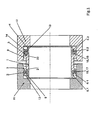
- Fig. 1 to 4 in each case an embodiment of a seal is shown, wherein the seals are each part of a seal assembly.
- the seal comprises in each of the embodiments shown here a tubular support body 1, which consists of a metallic material.
- the support body 1 has on the outer peripheral side in the region of its two end faces 9, 10 each have a groove-shaped, in the radial direction outwardly open recess in which the respective annular sealing body 2, 3 are arranged.
- the sealing bodies 2, 3 enclose the supporting body 1 in each case in a sealing manner.
- High-temperature resistant means a resistance of the materials used to at least 300 ° C.
- the sealing bodies 2, 3 consist in the embodiments shown here in each case of PTFE, that is a non-elastomeric sealing material which is resistant to high temperatures.
- Each of the sealing bodies 2, 3 has a radially inner sealing lip 5.1, 5.2, which surrounds the outer circumference 4 of the supporting body 1 in a sealing manner.
- the sealing bodies 2, 3 comprise radially outer sealing lips 6.1, 6.2, wherein these radially outer sealing lips 6.1, 6.2 touch the inner circumference 7, 8 of the machine elements 11, 12 in a sealing manner and wherein the machine elements 11, 12 enclose the supporting body 1 on the outer peripheral side.
- the inner and the outer Sealing lips 5.1, 6.1; 5.2, 6.2 are C-shaped merge into each other and formed of the same material and each axially open in the direction of the corresponding end face 9, 10.
- a first embodiment is shown.
- the assembly of the sealing body 2, 3 on the support body 1 is carried out such that the sealing body 2, 3 are pushed in the axial direction, starting from the respective end face 9, 10, on the outer circumference 4 of the support body 1 until they form fit in the groove-shaped recess in the outer periphery 4 of the support body 1 snap.
- the respective inner lips 6.1, 6.2 are deformed by means of an assembly tool, so that the machine elements 11, 12 are mounted on the deformed sealing lips 6.1, 6.2 can.
- the outer sealing lips 6.1, 6.2 are also on the inner circumference 7, 8 of the respective machine elements 11, 12 sealingly.
- the sealing lip arrangements 13, 14, which by the sealing lips 5.1, 6.1; 5.2, 6.2 are formed, are fixed to the support bodies 15, 16, wherein the support body 15, 16 are formed in the embodiment shown by support rings / guide rings 17, 18.
- the support rings / guide rings 17, 18 are integrally merging with each other and of the same material with the sealing lips 5.1, 6.1; 5.2, 6.2, so that the support rings / guide rings 17, 18 in the embodiment shown consist of PTFE.
- Radially inside the support rings / guide rings 17, 18 are arranged under elastic bias on the outer circumference 4 of the support body 1; radially on the outside are the support rings / guide rings 17, 18 the inner circumference 7, 8 of the respective machine element 11, 12 either with a small assigned radial distance adjacent or the support rings / guide rings 17, 18 touch the respective inner periphery 7, 8 only loosely fitting. Due to this small radial distance or the loosely fitting assignment of the support rings / guide rings 17, 18 to the respective inner circumference 7, 8 operational thermal expansion can be compensated without causing leaks in the outer sealing lips 6.1, 6.2.
- the outer circumference of the support rings / guide rings 17, 18 also serves to center the seal in the machine elements 11, 12. Production-related deviations of the installation space, such as an axial offset or misalignment of the parts relative to each other, can be compensated.
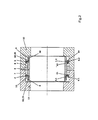
- a second embodiment of a seal assembly with seal is shown, which differs from the embodiment according to Fig. 1 characterized in that the support body 15, 16 are formed by clamping rings 19, 20.
- the clamping rings 19, 20 are made of a metallic material, are arranged in the radial direction between the inner 5.1, 5.2 and the outer sealing lip 6.1, 6.2 and clamp the inner sealing lips 5.1, 5.2 on the outer circumference 4 of the support body 1 a sealing.
- Both the support rings / guide rings 17, 18 from the embodiment Fig. 1 as well as the clamping rings 19, 20 from the embodiment Fig. 2 provide an additional seal on the radial flanges 21, 22 of the support body.
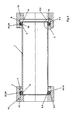
- a third embodiment of a seal according to the invention is shown in a seal assembly according to the invention, wherein the support rings / guide rings 17, 18 are radially outside each enclosed by an O-ring 23, 24 of elastomeric material.
- the O-rings 23, 24 are each arranged in a radially outwardly open installation groove 25, 26 of the support ring / guide ring 17, 18 and sealed against the machine elements 11, 12 from. Even at freezing temperatures this ensures a particularly secure static seal.
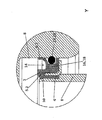
- a fourth embodiment of a seal according to the invention is shown in a seal assembly according to the invention, wherein the seal of Fig. 4 from the embodiment according to Fig. 2 essentially differs by the shape of the clamping rings 19, 20.
- the clamping rings 19, 20 are in Fig. 4 each formed as spreading springs 27, 28, which are considered in cross-section substantially C-shaped, according to the respectively associated sealing lip assemblies 13, 14.
- the spreading springs 27, 28 ensure that the sealing lips 5.1, 6.1; 5.2, 6.2 of the respective sealing lip arrangements 13, 14 are spread in the radial direction, thereby achieving an improved contact pressure on the surfaces to be sealed and thereby improved sealing. This spreading is positively noticeable especially when sealing under cold. Even at freezing temperatures, a reliable seal is guaranteed.
- the respective inner sealing lips 5.1, 5.2 are axially extended in the direction of the respectively adjacent end faces 9, 10 of the support body 1 and in the radial direction inwardly around the end faces 9, 10 around. This ensures that the end faces 9, 10 of the support body 1 do not come into direct contact with the respective axially adjacent machine elements 11, 12.
- Such a shielding of the end faces 9, 10 of the support body 1 of the machine elements 11, 12 by the extended and radially inwardly drawn inner sealing lips 5.1, 5.2 can also in the other embodiments according to Fig. 1 to Fig. 3 to apply.
Landscapes
- Engineering & Computer Science (AREA)
- General Engineering & Computer Science (AREA)
- Mechanical Engineering (AREA)
- Chemical & Material Sciences (AREA)
- Combustion & Propulsion (AREA)
- Sealing With Elastic Sealing Lips (AREA)
- Gasket Seals (AREA)
- Sealing Of Bearings (AREA)
Abstract
Description
- Die Erfindung betrifft eine Dichtung, umfassend einen rohrförmigen Tragkörper und zwei ringförmige Dichtkörper, wobei der Tragkörper stirnseitig beiderseits jeweils von einem der Dichtkörper außenumfangsseitig dichtend umschlossen ist.
- Eine solche Dichtung ist allgemein bekannt und beispielsweise als Steckstück ausgebildet, zur Abdichtung zweier Gehäuse- oder Rohranschlüsse gegenüber Medien wie Gasen oder Flüssigkeiten unter Druck und Temperatur. Die Dichtkörper der vorbekannten Dichtung bestehen dabei aus einem elastomeren Werkstoff. Für Anwendungen, bei denen die Dichtung hohen Temperaturen zwischen 200°C und 300°C ausgesetzt ist, sind Dichtkörper aus elastomeren Werkstoffen nicht geeignet, weil elastomere Dichtkörper bei den genannten hohen Temperaturen während der Gebrauchsdauer beschädigt/zerstört werden.
- Der Erfindung liegt die Aufgabe zugrunde, eine Dichtung der vorbekannten Art derart weiterzuentwickeln, dass diese auch in Temperaturbereichen zwischen 200°C und 300°C während einer langen Gebrauchsdauer zuverlässig abdichtet.
- Diese Aufgabe wird erfindungsgemäß mit den Merkmalen von Anspruch 1 gelöst. Auf vorteilhafte Ausgestaltungen nehmen die Unteransprüche Bezug.
- Zur Lösung der Aufgabe ist es vorgesehen, dass zumindest einer der Dichtkörper aus einem nicht-elastomeren hochtemperaturbeständigen Dichtungswerkstoff besteht. Durch die Verwendung des nicht-elastomeren hochtemperaturbeständigen Dichtungswerkstoffs kann der Dichtkörper auch in Temperaturbereichen zwischen 200°C und 300°C zur Anwendung gelangen und weist auch in diesem Temperaturbereich gleichbleibend gute Gebrauchseigenschaften während einer langen Gebrauchsdauer auf.
- Unter der Bezeichnung "hochtemperaturbeständig" wird die Beständigkeit des Dichtungswerkstoffs bei Temperaturen von mehr als 200°C verstanden.
- Bevorzugt bestehen beide Dichtkörper jeweils aus einem nicht-elastomeren hochtemperaturbeständigen Dichtungswerkstoff. Dabei ist von Vorteil, dass die gesamte Dichtung dauerhaft in einem Temperaturbereich >200°C zur Anwendung gelangen kann. Solche Bedingungen liegen z. B. dann vor, wenn die Dichtung in Ladeluftsystemen von Lkw oder Pkw eingesetzt wird. Die Dichtung dichtet dann zwei Gehäuse- oder Rohranschlüsse gegenüber heißen und unter einem Überdruck stehenden Gasen verlässlich ab, die durch das Ladeluftsystem strömen.
- Die Dichtkörper können jeweils aus PTFE bestehen. PTFE ist ein hochtemperaturbeständiger Dichtungswerkstoff im zuvor beschriebenen Sinne, der auch in Temperaturbereichen über 200°C bis etwa 300°C mit gleichbleibend guten Gebrauchseigenschaften während einer langen Gebrauchsdauer eingesetzt werden kann. Außerdem ist PTFE gegen die meisten abzudichtenden Medien beständig.
- Bevorzugt können die Dichtkörper als Gleichteile ausgebildet sein. Hierbei ist von Vorteil, dass die Dichtung insgesamt einfach und kostengünstig herstellbar ist. Für eine Dichtung braucht nur ein Typ Dichtkörper hergestellt und gelagert zu werden. Bei der Herstellung der Dichtung ist durch die Verwendung der Gleichteile die Gefahr von Montagefehlern auf ein Minimum begrenzt.
- Die Dichtkörper können formschlüssig mit dem Tragkörper verbunden sein. Ein solcher Formschluss kann durch in den Außenumfang des Tragkörpers eingeschnappte Dichtkörper erreicht werden. Im Gegensatz zu einer stoffschlüssigen Verbindung, wie sie beispielsweise bei einem Gummi-Metall-Bauteil vorliegt, bestehend aus einem Tragkörper und elastomeren Dichtkörpem, ist ein Formschluss wesentlich einfacher und kostengünstiger herstellbar. Durch die formschlüssige Verbindung zwischen den Dichtkörpem und dem Tragkörper können auch Werkstoffe wie PTFE problemlos zur Anwendung gelangen, die sich wegen ihrer Werkstoffeigenschaften üblicherweise mit einem Tragkörper nicht/nur schlecht stoffschlüssig verbinden lassen.
- Die Dichtkörper können in den Außenumfang des Tragkörpers einschnappbar sein. Aufwändiger Montagevorrichtungen zur Montage der Dichtung bedarf es dafür nicht. Die Dichtkörper werden stirnseitig über den Außenumfang des Tragkörpers geschoben und z. B. hinter einer Rastnase in die anschließende Hinterschneidung im Außenumfang des Tragkörpers eingeschnappt.
- Die Dichtkörper können jeweils eine innere Dichtlippe aufweisen, die den Außenumfang des Tragkörpers dichtend umschließt und jeweils eine äußere Dichtlippe, wobei die äußeren Dichtlippen jeweils an einen Innenumfang eines die jeweilige Stirnseite des Tragkörpers umschließenden Maschinenelements dichtend anlegbar sind. Statisch abgedichtet wird durch die inneren Dichtlippen, die den Außenumfang des Tragkörpers unter elastischer Vorspannung dichtend umschließen. Die elastische Vorspannung erfolgt montagebedingt durch das Aufschieben der Dichtkörper auf den Tragkörper. Die äußeren Dichtlippen werden demgegenüber mittels eines Werkzeugs umgeformt und vorzugsweise unter Temperatur kalibriert. Die Abdichtung gegenüber den beiden den Tragkörper umschließenden Maschinenelementen erfolgt über eine geringe Initialvorspannung der äußeren Dichtlippen, wobei diese Initialvorspannung während der bestimmungsgemäßen Verwendung der Dichtung unter Temperatureinfluss durch einen Memory-Effekt des Dichtungswerkstoffs unterstützt wird. Memory-Effekt bezeichnet das werkstoffbedingte Bestreben eines elastisch verformten Bauteils in seine herstellungsbedingte Form zurückzukehren.
- Die innere und die äußere Dichtlippe der jeweiligen Dichtkörper können, im Längsschnitt der Dichtung betrachtet, im Wesentlichen C-förmig ineinander übergehend ausgebildet sein und jeweils eine Dichtlippenanordnung bilden.
- Die Dichtlippenanordnungen können jeweils axial in Richtung der entsprechenden Stirnseite des Tragkörpers, die von dem jeweiligen Dichtkörper umschlossen ist, offen sein. Die einfache Geometrie der Dichtlippenanordnung ist einfach und kostengünstig herstellbar. Außerdem ist von Vorteil, dass eine innere und eine äußere Dichtlippe, die die Dichtungsanordnung bilden, bevorzugt einstückig ineinander übergehend und materialeinheitlich ausgebildet sind. Die Dichtung weist dadurch einen einfachen und teilearmen Aufbau auf und ist besonders einfach montierbar.
- Die Dichtkörper können jeweils einen Stützkörper zur Befestigung am Tragkörper aufweisen, wobei die Dichtlippen mit dem entsprechenden Stützkörper verbunden sind. Der Stützkörper sorgt für die Verbindung der Dichtkörper mit dem Tragkörper.
- Nach einer ersten Ausgestaltung kann der Stützkörper durch einen Stützring/Führungsring gebildet sein.
- Der Stützring/Führungsring kann auf der der jeweiligen Stirnseite des Tragkörpers axial abgewandten Seite der Dichtlippen angeordnet und mit diesem verbunden sein. Der Stützring/Führungsring hat nicht nur die Aufgabe, die beiden Dichtlippen aufzunehmen. Jeder Dichtkörper wird durch den in den Außenumfang des Tragkörpers eingeschnappten Stützring/Führungsring in seiner Position relativ zum Tragkörper gehalten. Außenumfangsseitig dient der Stützring/Führungsring der Zentrierung der Dichtung in den beiden Maschinenelementen, die durch die Dichtung dichtend miteinander verbunden werden.
- Der Stützring/Führungsring und die Dichtlippen können eine Einheit bilden, die einstückig und materialeinheitlich ausgebildet ist, Sowohl die Dichtlippenanordnung, bestehend aus einer inneren und einer äußeren Dichtlippe, als auch der Stützring/Führungsring können dann beispielsweise aus einem PTFE-Werkstoff bestehen. Der Stützring/Führungsring ist dadurch ebenfalls hochtemperaturbeständig, und einer separaten Befestigung der Dichtlippenanordnung am Stützring/Führungsring bedarf es durch die Einstückigkeit nicht.
- Der Stützring/Führungsring kann radial außenseitig von einem O-Ring aus elastomerem Werkstoff umschlossen sein.
- Der O-Ring kann in einer radial nach außen offenen Einbaunut des Stützrings/Führungsrings angeordnet sein. Hierbei ist von Vorteil, dass die statische Dichtheit auch bei besonders tiefen Temperaturen sichergestellt ist.
- Nach einer anderen Ausgestaltung kann es vorgesehen sein, dass der Stützkörper durch einen Klemmring gebildet ist.
- Der Klemmring kann radial zwischen der inneren und der äußeren Dichtlippe angeordnet sein.
- Bevorzugt kann der Klemmring im Wesentlichen L-förmig ausgebildet sein, aus einem metallischen Werkstoff bestehen und unter Zwischenfügung der inneren Dichtlippe den Außenumfang des Tragkörpers umschließen. Auch in diesem Fall kann es vorgesehen sein, dass die innere und die äußere Dichtlippe der jeweiligen Dichtkörper, im Längsschnitt der Dichtung betrachtet, im Wesentlichen C-förmig ineinander übergehend ausgebildet sind und jeweils eine Dichtlippenanordnung bilden. Zur Befestigung einer solchen Dichtlippenanordnung auf dem Außenumfang des Tragkörpers ist der Klemmring vorgesehen. Die innere Dichtlippe wird mittels des Klemmrings an den Außenumfang des Tragkörpers unter elastischer Vorspannung dichtend angepresst, während die äußere Dichtlippe sich dichtend an den Innenumfang des abzudichtenden Maschinenelements anlegt.
- Der Klemmring kann als in radialer Richtung wirksame Spreizfeder ausgebildet sein. Eine solche Ausgestaltung ist besonders bei einer Abdichtung unter Kälte von hervorzuhebendem Vorteil. Auch bei Minusgraden ist dadurch eine besonders zuverlässige Abdichtung gewährleistet.
- Der Tragkörper kann aus einem metallischen Werkstoff bestehen. Tragkörper aus einem solchen Werkstoff sind temperaturbeständig sowie einfach und kostengünstig herstellbar.
- Davon abweichend kann der Tragkörper auch aus einem hochtemperaturbeständigen polymeren Werkstoff bestehen. Dabei ist von Vorteil, dass ein solcher Tragkörper gegen Korrosion beständig ist.
- Die Erfindung betrifft außerdem eine Dichtungsanordnung, umfassend eine Dichtung wie zuvor beschrieben, wobei jeder Dichtkörper von jeweils einem Maschinenelement außenumfangsseitig dichtend umschlossen ist, wobei die jeweils äußeren Dichtlippen der Dichtkörper den Innenumfang des jeweiligen Maschinenelements dichtend berühren. Eine Dichtungsanordnung ist beispielsweise Bestandteil eines Ladeluftsystems eines Lkw oder Pkw. Bei den beiden Maschinenelementen, die durch die Dichtung miteinander verbunden sind, handelt es sich in einem solchen Fall um ....
- Vier Ausführungsbeispiele der erfindungsgemäßen Dichtung und der erfindungsgemäßen Dichtungsanordnung werden nachfolgend anhand der
Fig. 1 bis 4 näher beschrieben. Diese zeigen jeweils in schematischer Darstellung: - Fig. 1
- ein erstes Ausführungsbeispiel einer erfindungsgemäßen Dichtung in einer erfindungsgemäßen Dichtungsanordnung, bei dem die Stützkörper durch Stützringe/Führungsringe gebildet sind, wobei die Dichtlippen der Dichtkörper einstückig mit den Stützringen/Führungsringen verbunden sind,
- Fig. 2
- ein zweites Ausführungsbeispiel einer erfindungsgemäßen Dichtung in einer erfindungsgemäßen Dichtungsanordnung, wobei die Stützkörper durch Klemmringe gebildet sind, die die Dichtlippen auf dem Tragkörper festlegen.
- Fig. 3
- ein drittes Ausführungsbeispiel einer erfindungsgemäßen Dichtung in einer erfindungsgemäßen Dichtungsanordnung, wobei die Stützringe/Führungsringe radial außenseitig jeweils von einem O-Ring aus elastomerem Werkstoff umschlossen sind.
- Fig. 4
- ein viertes Ausführungsbeispiel einer erfindungsgemäßen Dichtung in einer erfindungsgemäßen Dichtungsanordnung, wobei die Klemmringe als in radialer Richtung wirksame Spreizfedern ausgebildet sind.
- In den
Fig. 1 bis 4 ist jeweils ein Ausführungsbeispiel einer Dichtung gezeigt, wobei die Dichtungen jeweils Bestandteil einer Dichtungsanordnung sind. - Die Dichtung umfasst in jedem der hier gezeigten Ausführungsbeispiele einen rohrförmigen Tragkörper 1, der aus einem metallischen Werkstoff besteht. Der Tragkörper 1 weist außenumfangsseitig im Bereich seiner beiden Stirnseiten 9, 10 jeweils eine nutförmige, in radialer Richtung nach außen offene Vertiefung auf, in der die jeweiligen ringförmigen Dichtkörper 2, 3 angeordnet sind. Die Dichtkörper 2, 3 umschließen den Tragkörper 1 jeweils dichtend.
- Die hier gezeigten Dichtungsanordnungen werden in Ladeluftsystemen von Lkw oder Pkw verwendet. Für diese Anwendung ist es erforderlich, dass die verwendeten Materialien hochtemperaturbeständig sind. Unter hochtemperaturbeständig wird eine Beständigkeit der verwendeten Werkstoffe bis zumindest 300°C verstanden.
- Aus diesem Grund scheiden elastomere Werkstoffe für die ringförmigen Dichtkörper 2, 3 aus.
- Die Dichtkörper 2, 3 bestehen in den hier gezeigten Ausführungsbeispielen jeweils aus PTFE, also einem nicht-elastomeren Dichtungswerkstoff, der hochtemperaturbeständig ist.
- Jeder der Dichtkörper 2, 3 hat eine radial innere Dichtlippe 5.1, 5.2, die den Außenumfang 4 des Tragkörpers 1 dichtend umschließt. Außerdem umfassen die Dichtkörper 2, 3 radial äußere Dichtlippen 6.1, 6.2, wobei diese radial äußeren Dichtlippen 6.1, 6.2 den Innenumfang 7, 8 der Maschinenelemente 11, 12 dichtend berühren und wobei die Maschinenelemente 11, 12 den Tragkörper 1 außenumfangsseitig umschließen. Die inneren und die äußeren Dichtlippen 5.1, 6.1; 5.2, 6.2 sind C-förmig ineinander übergehend und materialeinheitlich ausgebildet und axial jeweils in Richtung der entsprechenden Stirnseite 9, 10 offen.
- In
Fig. 1 ist ein erstes Ausführungsbeispiel gezeigt. Die Montage der Dichtkörper 2, 3 auf den Tragkörper 1 erfolgt derart, dass die Dichtkörper 2, 3 in axialer Richtung, ausgehend von der jeweiligen Stirnseite 9, 10, auf den Außenumfang 4 des Tragkörpers 1 aufgeschoben werden, bis sie formschlüssig in die nutförmige Vertiefung im Außenumfang 4 des Tragkörpers 1 einschnappen. Dabei legen sich die inneren Dichtlippen 5.1, 5.2 montagebedingt in korrekter Position dichtend auf den Außenumfang 4 des Tragkörpers 1. Die jeweiligen Außenlippen 6.1, 6.2 werden mittels eines Montagewerkzeugs umgeformt, so dass die Maschinenelemente 11, 12 über die umgeformten Dichtlippen 6.1, 6.2 montiert werden können. Während der bestimmungsgemäßen Verwendung liegen die äußeren Dichtlippen 6.1, 6.2 ebenfalls am Innenumfang 7, 8 der jeweiligen Maschinenelemente 11, 12 dichtend an. - Die Dichtlippenanordnungen 13, 14, die durch die Dichtlippen 5.1, 6.1; 5.2, 6.2 gebildet sind, sind an den Stützkörpern 15, 16 festgelegt, wobei die Stützkörper 15, 16 in dem gezeigten Ausführungsbeispiel durch Stützringe/Führungsringe 17, 18 gebildet sind. Die Stützringe/Führungsringe17, 18 sind einstückig ineinander übergehend und materialeinheitlich mit den Dichtlippen 5.1, 6.1; 5.2, 6.2 ausgebildet, so dass auch die Stützringe/Führungsringe 17, 18 in dem gezeigten Ausführungsbeispiel aus PTFE bestehen.
- Radial innenseitig sind die Stützringe/Führungsringe 17, 18 unter elastischer Vorspannung auf dem Außenumfang 4 des Tragkörpers 1 angeordnet; radial außenseitig sind die Stützringe/Führungsringe 17, 18 dem Innenumfang 7, 8 des jeweiligen Maschinenelements 11, 12 entweder mit einem geringen radialen Abstand benachbart zugeordnet oder die Stützringe/Führungsringe 17, 18 berühren den jeweiligen Innenumfang 7, 8 nur lose anliegend. Durch diesen geringen radialen Abstand oder die lose anliegende Zuordnung der Stützringe/Führungsringe 17, 18 zum jeweiligen Innenumfang 7, 8 können betriebsbedingte Wärmedehnungen kompensiert werden, ohne dass es zu Undichtigkeiten im Bereich der äußeren Dichtlippen 6.1, 6.2 kommt. Der Außenumfang der Stützringe/Führungsringe 17, 18 dient außerdem der Zentrierung der Dichtung in den Maschinenelementen 11, 12. Herstellungsbedingte Abweichungen des Einbauraumes, wie beispielsweise ein Achsversatz oder Schiefstellungen der Teile relativ zueinander, können dadurch ausgeglichen werden.
- In
Fig. 2 ist ein zweites Ausführungsbeispiel einer Dichtungsanordnung mit Dichtung gezeigt, das sich von dem Ausführungsbeispiel gemäßFig. 1 dadurch unterscheidet, dass die Stützkörper 15, 16 durch Klemmringe 19, 20 gebildet sind. Die Klemmringe 19, 20 bestehen aus einem metallischen Werkstoff, sind in radialer Richtung zwischen der inneren 5.1, 5.2 und der äußeren Dichtlippe 6.1, 6.2 angeordnet und klemmen die inneren Dichtlippen 5.1, 5.2 auf dem Außenumfang 4 des Tragkörpers 1 dichtend ein. - Sowohl die Stützringe/Führungsringe 17, 18 aus dem Ausführungsbeispiel
Fig. 1 als auch die Klemmringe 19, 20 aus dem AusführungsbeispielFig. 2 sorgen für eine zusätzliche Abdichtung an den Radialflanschen 21, 22 des Tragkörpers 1. - In
Fig. 1 berühren die aus dem Dichtungswerkstoff bestehenden Stützringe/Führungsringe 17, 18 die entsprechenden Radialflansche 21, 22; inFig. 2 sorgen die Klemmringe 19, 20 dafür, dass die Übergangsbereiche der Dichtlippenanordnungen 13, 14 zwischen den inneren Dichtlippen 5.1, 5.2 und den äußeren Dichtlippen 6.1, 6.2 unter axialer Vorspannung dichtend an die Radialflansche 21, 22 angedrückt werden. - In
Fig. 3 ist ein drittes Ausführungsbeispiel einer erfindungsgemäßen Dichtung in einer erfindungsgemäßen Dichtungsanordnung gezeigt, wobei die Stützringe/Führungsringe 17, 18 radial außenseitig jeweils von einem O-Ring 23, 24 aus elastomerem Werkstoff umschlossen sind. Die O-Ringe 23, 24 sind jeweils in einer radial nach außen offenen Einbaunut 25, 26 des Stützrings/Führungsrings 17, 18 angeordnet und dichten gegenüber den Maschinenelementen 11, 12 ab. Auch bei Minusgraden ist dadurch eine besonders sichere statische Abdichtung gewährleistet. - In
Fig. 4 ist ein viertes Ausführungsbeispiel einer erfindungsgemäßen Dichtung in einer erfindungsgemäßen Dichtungsanordnung gezeigt, wobei sich die Dichtung ausFig. 4 vom Ausführungsbeispiel gemäßFig. 2 im Wesentlichen durch die Gestalt der Klemmringe 19, 20 unterscheidet. Die Klemmringe 19, 20 sind inFig. 4 jeweils als Spreizfedern 27, 28 ausgebildet, die im Querschnitt betrachtet im Wesentlichen C-förmig ausgebildet sind, entsprechend den jeweils dazugehörenden Dichtlippenanordnungen 13, 14. Die Spreizfedern 27, 28 sorgen dafür, dass die Dichtlippen 5.1, 6.1; 5.2, 6.2 der jeweiligen Dichtlippenanordnungen 13, 14 in radialer Richtung aufgespreizt werden, um dadurch eine verbesserte Anpressung an die abzudichtenden Flächen und dadurch eine verbesserte Abdichtung zu erreichen. Diese Aufspreizung macht sich besonders bei Abdichtung unter Kälte positiv bemerkbar. Auch bei Minusgraden ist eine zuverlässige Abdichtung gewährleistet. - Im hier gezeigten Ausführungsbeispiel sind die jeweils inneren Dichtlippen 5.1, 5.2 axial in Richtung der jeweils benachbarten Stirnseiten 9, 10 des Tragkörpers 1 verlängert und in radialer Richtung nach innen um die Stirnseiten 9, 10 herum gezogen. Dadurch ist sichergestellt, dass die Stirnseiten 9, 10 des Tragkörpers 1 nicht direkt mit den jeweils axial angrenzenden Maschinenelementen 11, 12 in Berührung kommen.
- Eine solche Abschirmung der Stirnseiten 9, 10 des Tragkörpers 1 von den Maschinenelementen 11, 12 durch die verlängerten und radial nach innen herum gezogenen inneren Dichtlippen 5.1, 5.2 kann auch bei den anderen Ausführungsbeispielen gemäß
Fig. 1 bis Fig. 3 zur Anwendung gelangen.
Claims (21)
- Dichtung, umfassend einen rohrförmigen Tragkörper (1) und zwei ringförmige Dichtkörper (2, 3), wobei der Tragkörper (1) stimseitig beiderseits jeweils von einem der Dichtkörper (2, 3) aussenumfangsseitig dichtend umschlossen ist, dadurch gekennzeichnet, dass zumindest einer der Dichtkörper (2, 3) aus einem nicht-elastomeren hochtemperaturbeständigen Dichtungswerkstoff besteht.
- Dichtung nach Anspruch 1, dadurch gekennzeichnet, dass beide Dichtkörper (2, 3) jeweils aus einem nicht-elastomeren hochtemperaturbeständigen Dichtungswerkstoff bestehen.
- Dichtung nach einem der Ansprüche 1 oder 2, dadurch gekennzeichnet, das die Dichtkörper (2, 3) jeweils aus PTFE bestehen.
- Dichtung nach einem der Ansprüche 1 bis 3, dadurch gekennzeichnet, dass die Dichtkörper (2, 3) als Gleichteile ausgebildet sind.
- Dichtung nach einem der Ansprüche 1 bis 4, dadurch gekennzeichnet, dass die Dichtkörper (2, 3) formschlüssig mit dem Tragkörper (1) verbunden sind.
- Dichtung nach einem der Ansprüche 1 bis 5, dadurch gekennzeichnet, dass die Dichtkörper (2, 3) in den Außenumfang (4) des Tragkörpers (1) einschnappbar sind.
- Dichtung nach einem der Ansprüche 1 bis 6, dadurch gekennzeichnet, dass die Dichtkörper (2, 3) jeweils eine innere Dichtlippe (5.1, 5.2) aufweisen, die den Außenumfang (4) des Tragkörpers (1) dichtend umschließt und jeweils eine äußere Dichtlippe (6.1, 6.2) und dass die äußeren Dichtlippen (6.1, 6.2) jeweils an einen Innenumfang (7, 8) eines die jeweilige Stirnseite (9, 10) des Tragkörpers (1) umschließenden Maschinenelements (11, 12) dichtend anlegbar sind.
- Dichtung nach Anspruch 7, dadurch gekennzeichnet, dass die innere (5.1, 5.2) und die äußere Dichtlippe (6.1, 6.2) der jeweiligen Dichtkörper (2, 3), im Längsschnitt der Dichtung betrachtet, im Wesentlichen C-förmig ineinander übergehend ausgebildet sind und jeweils eine Dichtlippenanordnung (13, 14) bilden.
- Dichtung nach Anspruch 8, dadurch gekennzeichnet, dass die Dichtlippenanordnungen (13, 14) jeweils axial in Richtung der entsprechenden Stirnseite (9, 10) des Tragkörpers (1), die von dem jeweiligen Dichtkörper (2, 3) umschlossen ist, offen sind.
- Dichtung nach einem der Ansprüche 1 bis 9, dadurch gekennzeichnet, das die Dichtkörper (2, 3) jeweils einen Stützkörper (15, 16) zur Befestigung am Tragkörper (1) aufweisen und dass die Dichtlippen (5.1, 6.1; 5.2, 6.2) mit dem entsprechenden Stützkörper (15, 16) verbunden sind.
- Dichtung nach Anspruch 10, dadurch gekennzeichnet, dass der Stützkörper (15, 16) durch einen Stützring/Führungsring (17, 18) gebildet ist.
- Dichtung nach Anspruch 11, dadurch gekennzeichnet, dass der Stützring/Führungsring (17, 18) auf der der jeweiligen Stirnseite (9, 10) des Tragkörpers (1) axial abgewandten Seite der Dichtlippen (5.1, 6.1; 5.2, 6.2) angeordnet und mit diesen verbunden ist.
- Dichtung nach einem der Ansprüche 11 oder 12, dadurch gekennzeichnet, dass der Stützring/Führungsring (17, 18) und die Dichtlippen (5.1,6.1; 5.2, 6.2) einstückig und materialeinheitlich ausgebildet sind.
- Dichtung nach einem der Ansprüche 11 bis 13, dadurch gekennzeichnet, dass der Stützring/Führungsring (17, 18) radial außenseitig von einem O-Ring (23, 24) aus elastomerem Werkstoff umschlossen ist.
- Dichtung nach Anspruch 14, dadurch gekennzeichnet, dass der O-Ring (23, 24) in einer radial nach außen offenen Einbaunut (25, 26) des Stütznngs/Führungsrings (17, 18) angeordnet ist.
- Dichtung nach Anspruch 10, dadurch gekennzeichnet, dass der Stützkörper (15, 16) durch einen Klemmring (19, 20) gebildet ist.
- Dichtung nach Anspruch 16, dadurch gekennzeichnet, dass der Klemmring (19, 20) radial zwischen der inneren (5.1, 5.2) und der äußeren Dichtlippe (6.1, 6.2) angeordnet ist.
- Dichtung nach einem der Ansprüche 16 oder 17, dadurch gekennzeichnet, dass der Klemmring (19, 20) im Wesentlichen L-förmig ausgebildet ist, aus einem metallischen Werkstoff besteht und unter Zwischenfügung der inneren Dichtlippe (5.1, 5.2) den Außenumfang (4) des Tragkörpers (1) umschließt.
- Dichtung nach einem der Ansprüche 16 oder 17, dadurch gekennzeichnet, dass der Klemmring (19, 20) als in radialer Richtung wirksame Spreizfeder (27, 28) ausgebildet ist.
- Dichtung nach einem der Ansprüche 1 bis 19, dadurch gekennzeichnet, dass der Tragkörper (1) aus einem metallischen Werkstoff besteht.
- Dichtungsanordnung, umfassend eine Dichtung nach einem der Ansprüche 1 bis 20, dadurch gekennzeichnet, dass jeder Dichtkörper (2, 3) von jeweils einem Maschinenelement (11, 12) aussenumfangsseitig dichtend umschlossen ist und dass die jeweils äußeren Dichtlippen (6.1, 6.2) der Dichtkörper (2, 3) den Innenumfang (7, 8) des jeweiligen Maschinenelements (11, 12) dichtend berühren.
Applications Claiming Priority (1)
| Application Number | Priority Date | Filing Date | Title |
|---|---|---|---|
| DE201110109675 DE102011109675A1 (de) | 2011-08-08 | 2011-08-08 | Dichtung und Dichtungsandordnung damit |
Publications (3)
| Publication Number | Publication Date |
|---|---|
| EP2557347A2 true EP2557347A2 (de) | 2013-02-13 |
| EP2557347A3 EP2557347A3 (de) | 2014-01-22 |
| EP2557347B1 EP2557347B1 (de) | 2015-12-30 |
Family
ID=46639267
Family Applications (1)
| Application Number | Title | Priority Date | Filing Date |
|---|---|---|---|
| EP12005190.9A Active EP2557347B1 (de) | 2011-08-08 | 2012-07-13 | Dichtung und Dichtungsanordnung damit |
Country Status (5)
| Country | Link |
|---|---|
| US (1) | US9016698B2 (de) |
| EP (1) | EP2557347B1 (de) |
| CN (1) | CN102927273B (de) |
| BR (1) | BR102012019776B1 (de) |
| DE (1) | DE102011109675A1 (de) |
Cited By (1)
| Publication number | Priority date | Publication date | Assignee | Title |
|---|---|---|---|---|
| EP2910830A3 (de) * | 2014-01-03 | 2015-12-23 | Carl Freudenberg KG | Schwachlast-Doppelklappendichtungsanordnung |
Families Citing this family (11)
| Publication number | Priority date | Publication date | Assignee | Title |
|---|---|---|---|---|
| DE202011110961U1 (de) * | 2011-08-15 | 2017-11-02 | Elringklinger Ag | Dichtung zum Abdichten eines Dichtspalts |
| DE102013000014A1 (de) * | 2013-01-02 | 2014-07-03 | Abb Technology Ag | Hydraulikverbindungsbuchse, Hydraulikverbindung und Hydraulikstopfen |
| DE102014000465A1 (de) * | 2014-01-16 | 2015-07-16 | Mtu Friedrichshafen Gmbh | Ladeluftleitung |
| CN114857269A (zh) * | 2014-03-21 | 2022-08-05 | 美国圣戈班性能塑料公司 | 旋转轴密封件 |
| CN106104110B (zh) | 2014-03-27 | 2018-07-24 | 美国圣戈班性能塑料公司 | 旋转轴外壳和密封件 |
| EP3482054A1 (de) * | 2016-07-07 | 2019-05-15 | BorgWarner Inc. | Vorrichtung zum verbinden von zwei turbinengehäusen eines zweistufigen turboladersystems |
| DE102019102934A1 (de) * | 2019-02-06 | 2020-08-06 | Carl Freudenberg Kg | Steckstück und Verwendung des Steckstücks |
| CN109869552A (zh) * | 2019-04-19 | 2019-06-11 | 中国航发湖南动力机械研究所 | 一种空气管路连接装置 |
| CN115391954B (zh) * | 2022-09-05 | 2026-03-17 | 中车长春轨道客车股份有限公司 | 密封与承载结构的解耦设计方法及一种支撑结构 |
| DE102022132760A1 (de) * | 2022-12-09 | 2024-06-20 | Carl Freudenberg Kg | Steckverbinder |
| CN116146804A (zh) * | 2023-04-06 | 2023-05-23 | 重庆溯联塑胶股份有限公司 | 自动容差的连接装置 |
Family Cites Families (14)
| Publication number | Priority date | Publication date | Assignee | Title |
|---|---|---|---|---|
| FR2031924A5 (de) | 1969-02-13 | 1970-11-20 | Commissariat Energie Atomique | |
| US3873105A (en) * | 1972-04-21 | 1975-03-25 | Armco Steel Corp | High pressure joint and sealing ring therefor |
| US3903584A (en) * | 1972-05-08 | 1975-09-09 | Aeroquip Corp | Method of manufacture of spring for composite sealing ring |
| US5106129A (en) * | 1990-10-09 | 1992-04-21 | Delaware Capital Formation, Inc. | Flexible coupling for transferring a fluid between two fluid conduits |
| DE19902953B4 (de) * | 1999-01-26 | 2005-11-24 | Carl Freudenberg Kg | Steckstück |
| US6709024B1 (en) * | 2000-09-27 | 2004-03-23 | General Electric Company | Method and apparatus for assembling couplings for transferring fluids |
| JP2003120327A (ja) | 2001-10-04 | 2003-04-23 | Mitsubishi Heavy Ind Ltd | ガスタービンおよびこれに用いるチューブシール |
| US6905144B2 (en) * | 2003-07-02 | 2005-06-14 | Delaware Capital Formation | Spring-loaded ‘L’-shaped seal ring |
| WO2006038328A1 (ja) | 2004-09-30 | 2006-04-13 | Eagle Engineering Aerospace Co., Ltd. | シール部品 |
| US7360592B2 (en) * | 2005-04-20 | 2008-04-22 | Baker Hughes Incorporated | Compliant cladding seal/hanger |
| JP4872727B2 (ja) | 2007-03-14 | 2012-02-08 | 三菱マテリアル株式会社 | 耐圧容器のシール構造 |
| US7883094B2 (en) * | 2008-08-19 | 2011-02-08 | Delaware Capital Formation, Inc. | Offset stacked sealing system |
| US8490409B2 (en) * | 2009-10-01 | 2013-07-23 | Pratt & Whitney Canada Corp. | Bleed air transfer tube |
| CN101963230A (zh) * | 2010-06-01 | 2011-02-02 | 诸城市中泰机械有限公司 | 托轮密封装置 |
-
2011
- 2011-08-08 DE DE201110109675 patent/DE102011109675A1/de not_active Ceased
-
2012
- 2012-07-13 EP EP12005190.9A patent/EP2557347B1/de active Active
- 2012-08-01 US US13/563,819 patent/US9016698B2/en active Active
- 2012-08-01 CN CN201210272735.0A patent/CN102927273B/zh active Active
- 2012-08-07 BR BR102012019776A patent/BR102012019776B1/pt active IP Right Grant
Non-Patent Citations (1)
| Title |
|---|
| None |
Cited By (3)
| Publication number | Priority date | Publication date | Assignee | Title |
|---|---|---|---|---|
| EP2910830A3 (de) * | 2014-01-03 | 2015-12-23 | Carl Freudenberg KG | Schwachlast-Doppelklappendichtungsanordnung |
| US9945482B2 (en) | 2014-01-03 | 2018-04-17 | Freudenberg-Nok General Partnership | Low load dual flap seal assembly |
| US10767762B2 (en) | 2014-01-03 | 2020-09-08 | Freudenberg-Nok General Partnership | Low load dual flap seal assembly |
Also Published As
| Publication number | Publication date |
|---|---|
| US20130038028A1 (en) | 2013-02-14 |
| EP2557347A3 (de) | 2014-01-22 |
| CN102927273B (zh) | 2016-03-02 |
| BR102012019776A2 (pt) | 2014-10-21 |
| CN102927273A (zh) | 2013-02-13 |
| BR102012019776B1 (pt) | 2020-04-07 |
| DE102011109675A1 (de) | 2013-02-14 |
| EP2557347B1 (de) | 2015-12-30 |
| US9016698B2 (en) | 2015-04-28 |
Similar Documents
| Publication | Publication Date | Title |
|---|---|---|
| EP2557347B1 (de) | Dichtung und Dichtungsanordnung damit | |
| DE102013101983B4 (de) | Klappenvorrichtung für eine Verbrennungskraftmaschine | |
| WO2017144047A1 (de) | Anschlussstutzen und wärmemanagementmodul mit einem solchen | |
| EP3458746B1 (de) | Rotationsdichtungsanordnung mit druckaktivierbarer rotationsdichtung sowie rotationsdichtung | |
| DE112014001073T5 (de) | Verbindungsstück | |
| EP2957809A1 (de) | Kupplungselement zur flexiblen verbindung zweier elemente zur führung von medien | |
| WO2009015806A1 (de) | Dichtelement | |
| WO2016030505A1 (de) | Ventilanordnung | |
| EP2807350B1 (de) | Dichtung für eine einrichtung zum nachbehandeln von abgasen einer brennkraftmaschine | |
| EP4437257A1 (de) | Dichtung und fluidventil mit einer solchen dichtung | |
| DE19548249C2 (de) | Steckstück | |
| EP1024322A2 (de) | Steckstück | |
| DE102011087954A1 (de) | Einspritzventil, insbesondere für eine Brennkraftmaschine | |
| AT501851B1 (de) | Verbindung von leitungen für hochdruckmedien | |
| DE102016100598A1 (de) | Anordnung zum fluiddichten Anschließen einer Rohrleitung sowie Ausgleichselement für die Anordnung | |
| EP2466172B1 (de) | Dichtring | |
| DE102013012194A1 (de) | Verbindungssystem | |
| DE102013216773A1 (de) | Radialwellendichtring zur Abdichtung eines Gehäuseteils eines Kraftfahrzeugmotors oder -getriebes gegen eine Welle | |
| EP2037161A1 (de) | Dichtung mit integriertem Sensor und Dichtungsanordnung mit dieser Dichtung | |
| DE102022100474A1 (de) | Flanschdichtung und Dichtungsanordnung, die eine solche Flanschdichtung umfasst | |
| DE102021115383A1 (de) | Dichtungselement für ein Drehschieberventil und Drehschieberventil mit einem solchen | |
| EP4077999A1 (de) | Steckverbinderanordnung | |
| AT512392B1 (de) | Dichtungselement | |
| DE102016011138A1 (de) | Dichtvorrichtung zum Abdichten von Rohrflanschen | |
| DE102008033932B4 (de) | Dichtung |
Legal Events
| Date | Code | Title | Description |
|---|---|---|---|
| PUAI | Public reference made under article 153(3) epc to a published international application that has entered the european phase |
Free format text: ORIGINAL CODE: 0009012 |
|
| AK | Designated contracting states |
Kind code of ref document: A2 Designated state(s): AL AT BE BG CH CY CZ DE DK EE ES FI FR GB GR HR HU IE IS IT LI LT LU LV MC MK MT NL NO PL PT RO RS SE SI SK SM TR |
|
| AX | Request for extension of the european patent |
Extension state: BA ME |
|
| PUAL | Search report despatched |
Free format text: ORIGINAL CODE: 0009013 |
|
| AK | Designated contracting states |
Kind code of ref document: A3 Designated state(s): AL AT BE BG CH CY CZ DE DK EE ES FI FR GB GR HR HU IE IS IT LI LT LU LV MC MK MT NL NO PL PT RO RS SE SI SK SM TR |
|
| AX | Request for extension of the european patent |
Extension state: BA ME |
|
| RIC1 | Information provided on ipc code assigned before grant |
Ipc: F16L 27/10 20060101ALI20131216BHEP Ipc: F02M 35/10 20060101ALI20131216BHEP Ipc: F16L 21/02 20060101AFI20131216BHEP Ipc: F02B 33/44 20060101ALI20131216BHEP Ipc: F16L 21/035 20060101ALI20131216BHEP |
|
| 17P | Request for examination filed |
Effective date: 20140718 |
|
| RBV | Designated contracting states (corrected) |
Designated state(s): AL AT BE BG CH CY CZ DE DK EE ES FI FR GB GR HR HU IE IS IT LI LT LU LV MC MK MT NL NO PL PT RO RS SE SI SK SM TR |
|
| 17Q | First examination report despatched |
Effective date: 20141212 |
|
| REG | Reference to a national code |
Ref country code: DE Ref legal event code: R079 Ref document number: 502012005553 Country of ref document: DE Free format text: PREVIOUS MAIN CLASS: F16L0021035000 Ipc: F16L0021020000 |
|
| GRAP | Despatch of communication of intention to grant a patent |
Free format text: ORIGINAL CODE: EPIDOSNIGR1 |
|
| RIC1 | Information provided on ipc code assigned before grant |
Ipc: F02B 33/44 20060101ALI20150430BHEP Ipc: F16J 15/06 20060101ALI20150430BHEP Ipc: F16J 15/02 20060101ALI20150430BHEP Ipc: F02M 35/10 20060101ALI20150430BHEP Ipc: F16L 21/02 20060101AFI20150430BHEP Ipc: F16L 27/10 20060101ALI20150430BHEP Ipc: F16L 21/035 20060101ALI20150430BHEP |
|
| INTG | Intention to grant announced |
Effective date: 20150526 |
|
| GRAS | Grant fee paid |
Free format text: ORIGINAL CODE: EPIDOSNIGR3 |
|
| GRAA | (expected) grant |
Free format text: ORIGINAL CODE: 0009210 |
|
| AK | Designated contracting states |
Kind code of ref document: B1 Designated state(s): AL AT BE BG CH CY CZ DE DK EE ES FI FR GB GR HR HU IE IS IT LI LT LU LV MC MK MT NL NO PL PT RO RS SE SI SK SM TR |
|
| REG | Reference to a national code |
Ref country code: GB Ref legal event code: FG4D Free format text: NOT ENGLISH |
|
| REG | Reference to a national code |
Ref country code: CH Ref legal event code: EP |
|
| REG | Reference to a national code |
Ref country code: AT Ref legal event code: REF Ref document number: 767653 Country of ref document: AT Kind code of ref document: T Effective date: 20160115 |
|
| REG | Reference to a national code |
Ref country code: IE Ref legal event code: FG4D Free format text: LANGUAGE OF EP DOCUMENT: GERMAN |
|
| REG | Reference to a national code |
Ref country code: DE Ref legal event code: R096 Ref document number: 502012005553 Country of ref document: DE |
|
| REG | Reference to a national code |
Ref country code: SE Ref legal event code: TRGR |
|
| REG | Reference to a national code |
Ref country code: NL Ref legal event code: FP |
|
| REG | Reference to a national code |
Ref country code: LT Ref legal event code: MG4D |
|
| PG25 | Lapsed in a contracting state [announced via postgrant information from national office to epo] |
Ref country code: HR Free format text: LAPSE BECAUSE OF FAILURE TO SUBMIT A TRANSLATION OF THE DESCRIPTION OR TO PAY THE FEE WITHIN THE PRESCRIBED TIME-LIMIT Effective date: 20151230 Ref country code: LT Free format text: LAPSE BECAUSE OF FAILURE TO SUBMIT A TRANSLATION OF THE DESCRIPTION OR TO PAY THE FEE WITHIN THE PRESCRIBED TIME-LIMIT Effective date: 20151230 Ref country code: NO Free format text: LAPSE BECAUSE OF FAILURE TO SUBMIT A TRANSLATION OF THE DESCRIPTION OR TO PAY THE FEE WITHIN THE PRESCRIBED TIME-LIMIT Effective date: 20160330 |
|
| PG25 | Lapsed in a contracting state [announced via postgrant information from national office to epo] |
Ref country code: GR Free format text: LAPSE BECAUSE OF FAILURE TO SUBMIT A TRANSLATION OF THE DESCRIPTION OR TO PAY THE FEE WITHIN THE PRESCRIBED TIME-LIMIT Effective date: 20160331 Ref country code: RS Free format text: LAPSE BECAUSE OF FAILURE TO SUBMIT A TRANSLATION OF THE DESCRIPTION OR TO PAY THE FEE WITHIN THE PRESCRIBED TIME-LIMIT Effective date: 20151230 Ref country code: FI Free format text: LAPSE BECAUSE OF FAILURE TO SUBMIT A TRANSLATION OF THE DESCRIPTION OR TO PAY THE FEE WITHIN THE PRESCRIBED TIME-LIMIT Effective date: 20151230 Ref country code: LV Free format text: LAPSE BECAUSE OF FAILURE TO SUBMIT A TRANSLATION OF THE DESCRIPTION OR TO PAY THE FEE WITHIN THE PRESCRIBED TIME-LIMIT Effective date: 20151230 |
|
| REG | Reference to a national code |
Ref country code: FR Ref legal event code: PLFP Year of fee payment: 5 |
|
| PG25 | Lapsed in a contracting state [announced via postgrant information from national office to epo] |
Ref country code: IT Free format text: LAPSE BECAUSE OF FAILURE TO SUBMIT A TRANSLATION OF THE DESCRIPTION OR TO PAY THE FEE WITHIN THE PRESCRIBED TIME-LIMIT Effective date: 20151230 Ref country code: ES Free format text: LAPSE BECAUSE OF FAILURE TO SUBMIT A TRANSLATION OF THE DESCRIPTION OR TO PAY THE FEE WITHIN THE PRESCRIBED TIME-LIMIT Effective date: 20151230 Ref country code: CZ Free format text: LAPSE BECAUSE OF FAILURE TO SUBMIT A TRANSLATION OF THE DESCRIPTION OR TO PAY THE FEE WITHIN THE PRESCRIBED TIME-LIMIT Effective date: 20151230 |
|
| PG25 | Lapsed in a contracting state [announced via postgrant information from national office to epo] |
Ref country code: PT Free format text: LAPSE BECAUSE OF FAILURE TO SUBMIT A TRANSLATION OF THE DESCRIPTION OR TO PAY THE FEE WITHIN THE PRESCRIBED TIME-LIMIT Effective date: 20160502 Ref country code: EE Free format text: LAPSE BECAUSE OF FAILURE TO SUBMIT A TRANSLATION OF THE DESCRIPTION OR TO PAY THE FEE WITHIN THE PRESCRIBED TIME-LIMIT Effective date: 20151230 Ref country code: SK Free format text: LAPSE BECAUSE OF FAILURE TO SUBMIT A TRANSLATION OF THE DESCRIPTION OR TO PAY THE FEE WITHIN THE PRESCRIBED TIME-LIMIT Effective date: 20151230 Ref country code: RO Free format text: LAPSE BECAUSE OF FAILURE TO SUBMIT A TRANSLATION OF THE DESCRIPTION OR TO PAY THE FEE WITHIN THE PRESCRIBED TIME-LIMIT Effective date: 20151230 Ref country code: SM Free format text: LAPSE BECAUSE OF FAILURE TO SUBMIT A TRANSLATION OF THE DESCRIPTION OR TO PAY THE FEE WITHIN THE PRESCRIBED TIME-LIMIT Effective date: 20151230 Ref country code: PL Free format text: LAPSE BECAUSE OF FAILURE TO SUBMIT A TRANSLATION OF THE DESCRIPTION OR TO PAY THE FEE WITHIN THE PRESCRIBED TIME-LIMIT Effective date: 20151230 Ref country code: IS Free format text: LAPSE BECAUSE OF FAILURE TO SUBMIT A TRANSLATION OF THE DESCRIPTION OR TO PAY THE FEE WITHIN THE PRESCRIBED TIME-LIMIT Effective date: 20160430 |
|
| REG | Reference to a national code |
Ref country code: DE Ref legal event code: R097 Ref document number: 502012005553 Country of ref document: DE |
|
| PG25 | Lapsed in a contracting state [announced via postgrant information from national office to epo] |
Ref country code: DK Free format text: LAPSE BECAUSE OF FAILURE TO SUBMIT A TRANSLATION OF THE DESCRIPTION OR TO PAY THE FEE WITHIN THE PRESCRIBED TIME-LIMIT Effective date: 20151230 |
|
| PLBE | No opposition filed within time limit |
Free format text: ORIGINAL CODE: 0009261 |
|
| STAA | Information on the status of an ep patent application or granted ep patent |
Free format text: STATUS: NO OPPOSITION FILED WITHIN TIME LIMIT |
|
| 26N | No opposition filed |
Effective date: 20161003 |
|
| PG25 | Lapsed in a contracting state [announced via postgrant information from national office to epo] |
Ref country code: BE Free format text: LAPSE BECAUSE OF NON-PAYMENT OF DUE FEES Effective date: 20160731 |
|
| PG25 | Lapsed in a contracting state [announced via postgrant information from national office to epo] |
Ref country code: SI Free format text: LAPSE BECAUSE OF FAILURE TO SUBMIT A TRANSLATION OF THE DESCRIPTION OR TO PAY THE FEE WITHIN THE PRESCRIBED TIME-LIMIT Effective date: 20151230 |
|
| REG | Reference to a national code |
Ref country code: CH Ref legal event code: PL |
|
| GBPC | Gb: european patent ceased through non-payment of renewal fee |
Effective date: 20160713 |
|
| PG25 | Lapsed in a contracting state [announced via postgrant information from national office to epo] |
Ref country code: MC Free format text: LAPSE BECAUSE OF FAILURE TO SUBMIT A TRANSLATION OF THE DESCRIPTION OR TO PAY THE FEE WITHIN THE PRESCRIBED TIME-LIMIT Effective date: 20151230 |
|
| PG25 | Lapsed in a contracting state [announced via postgrant information from national office to epo] |
Ref country code: LI Free format text: LAPSE BECAUSE OF NON-PAYMENT OF DUE FEES Effective date: 20160731 Ref country code: CH Free format text: LAPSE BECAUSE OF NON-PAYMENT OF DUE FEES Effective date: 20160731 |
|
| REG | Reference to a national code |
Ref country code: IE Ref legal event code: MM4A |
|
| PG25 | Lapsed in a contracting state [announced via postgrant information from national office to epo] |
Ref country code: GB Free format text: LAPSE BECAUSE OF NON-PAYMENT OF DUE FEES Effective date: 20160713 |
|
| REG | Reference to a national code |
Ref country code: FR Ref legal event code: PLFP Year of fee payment: 6 |
|
| PG25 | Lapsed in a contracting state [announced via postgrant information from national office to epo] |
Ref country code: IE Free format text: LAPSE BECAUSE OF NON-PAYMENT OF DUE FEES Effective date: 20160713 |
|
| PG25 | Lapsed in a contracting state [announced via postgrant information from national office to epo] |
Ref country code: LU Free format text: LAPSE BECAUSE OF NON-PAYMENT OF DUE FEES Effective date: 20160713 |
|
| PG25 | Lapsed in a contracting state [announced via postgrant information from national office to epo] |
Ref country code: CY Free format text: LAPSE BECAUSE OF FAILURE TO SUBMIT A TRANSLATION OF THE DESCRIPTION OR TO PAY THE FEE WITHIN THE PRESCRIBED TIME-LIMIT Effective date: 20151230 Ref country code: HU Free format text: LAPSE BECAUSE OF FAILURE TO SUBMIT A TRANSLATION OF THE DESCRIPTION OR TO PAY THE FEE WITHIN THE PRESCRIBED TIME-LIMIT; INVALID AB INITIO Effective date: 20120713 |
|
| PG25 | Lapsed in a contracting state [announced via postgrant information from national office to epo] |
Ref country code: MT Free format text: LAPSE BECAUSE OF FAILURE TO SUBMIT A TRANSLATION OF THE DESCRIPTION OR TO PAY THE FEE WITHIN THE PRESCRIBED TIME-LIMIT Effective date: 20151230 Ref country code: TR Free format text: LAPSE BECAUSE OF FAILURE TO SUBMIT A TRANSLATION OF THE DESCRIPTION OR TO PAY THE FEE WITHIN THE PRESCRIBED TIME-LIMIT Effective date: 20151230 Ref country code: MK Free format text: LAPSE BECAUSE OF FAILURE TO SUBMIT A TRANSLATION OF THE DESCRIPTION OR TO PAY THE FEE WITHIN THE PRESCRIBED TIME-LIMIT Effective date: 20151230 |
|
| REG | Reference to a national code |
Ref country code: FR Ref legal event code: PLFP Year of fee payment: 7 |
|
| PG25 | Lapsed in a contracting state [announced via postgrant information from national office to epo] |
Ref country code: BG Free format text: LAPSE BECAUSE OF FAILURE TO SUBMIT A TRANSLATION OF THE DESCRIPTION OR TO PAY THE FEE WITHIN THE PRESCRIBED TIME-LIMIT Effective date: 20151230 |
|
| REG | Reference to a national code |
Ref country code: AT Ref legal event code: MM01 Ref document number: 767653 Country of ref document: AT Kind code of ref document: T Effective date: 20170713 |
|
| PG25 | Lapsed in a contracting state [announced via postgrant information from national office to epo] |
Ref country code: AL Free format text: LAPSE BECAUSE OF FAILURE TO SUBMIT A TRANSLATION OF THE DESCRIPTION OR TO PAY THE FEE WITHIN THE PRESCRIBED TIME-LIMIT Effective date: 20151230 |
|
| PG25 | Lapsed in a contracting state [announced via postgrant information from national office to epo] |
Ref country code: AT Free format text: LAPSE BECAUSE OF NON-PAYMENT OF DUE FEES Effective date: 20170713 |
|
| P01 | Opt-out of the competence of the unified patent court (upc) registered |
Effective date: 20230606 |
|
| PGFP | Annual fee paid to national office [announced via postgrant information from national office to epo] |
Ref country code: NL Payment date: 20250724 Year of fee payment: 14 |
|
| PGFP | Annual fee paid to national office [announced via postgrant information from national office to epo] |
Ref country code: DE Payment date: 20250728 Year of fee payment: 14 |
|
| PGFP | Annual fee paid to national office [announced via postgrant information from national office to epo] |
Ref country code: FR Payment date: 20250725 Year of fee payment: 14 |
|
| PGFP | Annual fee paid to national office [announced via postgrant information from national office to epo] |
Ref country code: SE Payment date: 20250725 Year of fee payment: 14 |