EP2555548A1 - Mobile communication method and gateway apparatus - Google Patents
Mobile communication method and gateway apparatus Download PDFInfo
- Publication number
- EP2555548A1 EP2555548A1 EP11765783A EP11765783A EP2555548A1 EP 2555548 A1 EP2555548 A1 EP 2555548A1 EP 11765783 A EP11765783 A EP 11765783A EP 11765783 A EP11765783 A EP 11765783A EP 2555548 A1 EP2555548 A1 EP 2555548A1
- Authority
- EP
- European Patent Office
- Prior art keywords
- gateway apparatus
- mobile station
- signal
- received
- proxy binding
- Prior art date
- Legal status (The legal status is an assumption and is not a legal conclusion. Google has not performed a legal analysis and makes no representation as to the accuracy of the status listed.)
- Withdrawn
Links
Images




Classifications
-
- H—ELECTRICITY
- H04—ELECTRIC COMMUNICATION TECHNIQUE
- H04W—WIRELESS COMMUNICATION NETWORKS
- H04W60/00—Affiliation to network, e.g. registration; Terminating affiliation with the network, e.g. de-registration
-
- H—ELECTRICITY
- H04—ELECTRIC COMMUNICATION TECHNIQUE
- H04L—TRANSMISSION OF DIGITAL INFORMATION, e.g. TELEGRAPHIC COMMUNICATION
- H04L61/00—Network arrangements, protocols or services for addressing or naming
- H04L61/45—Network directories; Name-to-address mapping
- H04L61/4505—Network directories; Name-to-address mapping using standardised directories; using standardised directory access protocols
- H04L61/4511—Network directories; Name-to-address mapping using standardised directories; using standardised directory access protocols using domain name system [DNS]
-
- H—ELECTRICITY
- H04—ELECTRIC COMMUNICATION TECHNIQUE
- H04L—TRANSMISSION OF DIGITAL INFORMATION, e.g. TELEGRAPHIC COMMUNICATION
- H04L61/00—Network arrangements, protocols or services for addressing or naming
- H04L61/50—Address allocation
- H04L61/5007—Internet protocol [IP] addresses
- H04L61/5014—Internet protocol [IP] addresses using dynamic host configuration protocol [DHCP] or bootstrap protocol [BOOTP]
-
- H—ELECTRICITY
- H04—ELECTRIC COMMUNICATION TECHNIQUE
- H04L—TRANSMISSION OF DIGITAL INFORMATION, e.g. TELEGRAPHIC COMMUNICATION
- H04L61/00—Network arrangements, protocols or services for addressing or naming
- H04L61/50—Address allocation
- H04L61/5092—Address allocation by self-assignment, e.g. picking addresses at random and testing if they are already in use
-
- H—ELECTRICITY
- H04—ELECTRIC COMMUNICATION TECHNIQUE
- H04W—WIRELESS COMMUNICATION NETWORKS
- H04W80/00—Wireless network protocols or protocol adaptations to wireless operation
- H04W80/04—Network layer protocols, e.g. mobile IP [Internet Protocol]
-
- H—ELECTRICITY
- H04—ELECTRIC COMMUNICATION TECHNIQUE
- H04W—WIRELESS COMMUNICATION NETWORKS
- H04W88/00—Devices specially adapted for wireless communication networks, e.g. terminals, base stations or access point devices
- H04W88/16—Gateway arrangements
-
- H—ELECTRICITY
- H04—ELECTRIC COMMUNICATION TECHNIQUE
- H04W—WIRELESS COMMUNICATION NETWORKS
- H04W92/00—Interfaces specially adapted for wireless communication networks
- H04W92/16—Interfaces between hierarchically similar devices
- H04W92/24—Interfaces between hierarchically similar devices between backbone network devices
Definitions
- the present invention relates to a mobile communication method and a gateway apparatus.
- a DNSv6 address In TS 23.401/TS23.402/TS24.008 of 3GPP standards, there has been known a method of notifying a mobile station UE of an IP address of DNSv6 (Domain Name System version 6) (hereinafter, a DNSv6 address).
- DNSv6 Domain Name System version 6
- a gateway apparatus P-GW (a PDN Gateway) is configured to notify a mobile station UE of a DNSv6 address through PCO (Protocol Configuration Option) exchanged between the mobile station UE and the gateway apparatus P-GW.
- PCO Protocol Configuration Option
- the gateway apparatus P-GW is configured to notify the mobile station UE of RA (Routing Advertisement) (not shown).
- the gateway apparatus P-GW sets "ON" for "O Flag” in RA when the gateway apparatus P-GW does not notify the mobile station of a DNSv6 address.
- the mobile station is configured to acquire the DNSv6 address in accordance with a DHCPv6 (Dynamic Host Configuration Protocol version 6) when the mobile station UE receives the RA in which "O Flag" is set to "ON” (see, RFC4861).
- DHCPv6 Dynamic Host Configuration Protocol version 6
- a gateway apparatus S-GW is configured to notify a mobile station UE of RA as shown in Fig. 11 .
- the gateway apparatus S-GW does not have means for knowing whether or not the gateway apparatus P-GW notifies the mobile station UE of the DNSv6 address allocation through the PCO.
- the setting of "O Flag" in RA transmitted by the gateway apparatus S-GW is determined by the network setting or the like which is made in advance.
- the gateway apparatus P-GW notifies the mobile station UE of a DNSv6 address through the PCO, the mobile station tries to acquire a DNSv6 address with the DHCPv6 according to the thereafter received "O Flag" set to "ON,” which results in performing unnecessary procedures.
- O Flag set to "ON”
- the mobile station UE when the mobile station UE is a data card type and is connected with a PC (Personal Computer) or the like, the PC receives RA and executes the DHCP procedures based on the "O Flag" in the RA.
- PC Personal Computer
- the PC may acquire a DNSv6 address different from the DNSv6 address notified by the mobile station UE (the DNSv6 address received by the mobile station UE from the gateway apparatus P-GW through the PCO).
- the gateway apparatus P-GW has to manage the DNSv6 address allocated to each mobile station UE in preparation for receiving a DHCP request signal from the mobile station UE.
- the present invention has been made with a view to the foregoing problems, and has an objective to provide a mobile communication method and a gateway apparatus, which can solve the problems in the EPC network employing the above-described PMIPv6.
- a mobile communication method including a step A of transmitting a predetermined signal from a first gateway apparatus to a second gateway apparatus when the first gateway apparatus receives a connection request transmitted by a mobile station, a step B of transmitting a response signal to the first gateway apparatus from the second gateway apparatus in response to the reception of the predetermined signal, the response signal containing setting information indicating whether DNS address information is allocated to the mobile station, and a step C of instructing, by the first gateway apparatus, the mobile station that there is no need to acquire DNS address information using a DHCP request signal, when the received setting information indicates that DNS address information is allocated to the mobile station.
- a mobile communication method including a step A of transmitting a predetermined signal from a first gateway apparatus to a second gateway apparatus when the first gateway apparatus receives a connection request transmitted by a mobile station, a step B of transmitting a response signal to the received predetermined signal to the first gateway apparatus from the second gateway apparatus, and a step C of instructing, by the first gateway apparatus, the mobile station that there is no need to acquire DNS address information using a DHCP request signal when DNS address information is contained in the received response signal.
- a gateway apparatus functioning as a second gateway apparatus connected with a first gateway apparatus, including a predetermined signal receiver configured to receive a predetermined signal from the first gateway apparatus, and a response signal transmitter configured to transmit a response signal containing setting information indicating whether DNS address information is allocated to the mobile station to the first gateway apparatus, in response to the reception of the predetermined signal.
- a gateway apparatus functioning as a first gateway apparatus connected with a second gateway apparatus, including a predetermined signal transmitter configured to transmit a predetermined signal to the second gateway apparatus, when a connection request transmitted by a mobile station is received; and an instruction unit configured to instruct the mobile station that there is no need to acquire DNS address information using a DHCP request signal, when setting information contained in a response signal received from the second gateway apparatus as a response to the predetermined signal indicates that DNS address information is allocated to the mobile station.
- a gateway apparatus functioning as a first gateway apparatus connected with a second gateway apparatus, including a predetermined signal transmitter configured to transmit a predetermined signal to the second gateway apparatus when a connection request transmitted by a mobile station is received, and an instruction unit configured to instruct the mobile station that there is no need to acquire DNS address information using a DHCP request signal when DNS address information is contained in a response signal received from the second gateway apparatus as a response to the predetermined signal.
- the present invention can provide a mobile communication method and a gateway apparatus, which can solve the problems in the EPC network employing the above-described PMIPv6.
- a mobile communication system according to a first embodiment of the present invention is described.
- the mobile communication system includes a radio access system (E-UTRAN: Evolved Universal Terrestrial Radio Access Network) in the LTE (Long Term Evolution) scheme, a mobile management node MME (Mobile Management Entity), a gateway apparatus S-GW, a gateway apparatus P-GW, and a DNS server.
- E-UTRAN Evolved Universal Terrestrial Radio Access Network
- LTE Long Term Evolution
- MME Mobile Management Entity
- the mobile communication system according to the present embodiment is a mobile communication system in the EPC network employing a PMIPv6.
- the present invention is applicable to the EPC network which employs a PMIPv6 and accepts other radio access systems (e.g., a radio access system in a 3GPP2 scheme and a radio access system in the WLAN scheme).
- radio access systems e.g., a radio access system in a 3GPP2 scheme and a radio access system in the WLAN scheme.
- the gateway apparatus P-GW includes a Proxy Binding Update receiver 11, a Proxy Binding Acknowledgement transmitter 12, a DHCP request signal receiver 13, and a DHCP response signal transmitter 14.
- the Proxy Binding Update receiver 11 is configured to receive "Proxy Binding Update" from the gateway apparatus S-GW.
- the Proxy Binding Acknowledgement transmitter 12 is configured to transmit "Proxy Binding Acknowledgement" to the gateway apparatus S-GW through PCO in response to the reception of the "Proxy Binding Update".
- the "Proxy Binding Acknowledgement” contains "O flag setting information” indicating whether a DNSv6 address is allocated to a mobile station UE.
- the Proxy Binding Acknowledgement transmitter 12 may be configured to transmit "O Flag setting information" with an information element, e.g., "DNSv6 Address Allocation Indication", capable of being inserted into the "Proxy Binding Acknowledgement" in Table 5.1.1.2-2 in 3GPP standards TS29.275 as "Mobility Option.”
- an information element e.g., "DNSv6 Address Allocation Indication”
- the Proxy Binding Acknowledgement transmitter 12 may set "unnecessary" for the "O Flag setting information".
- the Proxy Binding Acknowledgement transmitter 12 may set "necessary" for the "O Flag setting information.”
- the Proxy Binding Acknowledgement transmitter 12 does not need to contain the "O Flag setting information" in the "Proxy Binding Acknowledgement.”
- the Proxy Binding Acknowledgement transmitter 12 may determine which one of "necessary” and “unnecessary” should be set in the "O Flag setting information".
- the Proxy Binding Acknowledgement transmitter 12 may be configured to always set either "necessary” or “unnecessary” in the "O Flag setting information.”
- the DHCP request signal receiver 13 is configured to receive a DHCP request signal containing a DNS information request transmitted by the mobile station UE.
- the DHCP response signal transmitter 14 is configured to transmit a DHCP response signal containing DNS information (a DNSv6 address) to the mobile station UE in response to the DHCP request signal containing the DNS information request received by the DHCP request signal receiver 13.
- DNS information a DNSv6 address
- the gateway apparatus S-GW includes a connection request receiver 21, a Proxy Binding Update transmitter 22, a Proxy Binding Acknowledgement transmitter 23, a connection response transmitter 24, and a RA transmitter 25.
- the connection request receiver 21 is configured to receive a connection request (e.g., an Attach Request or the like) transmitted by the mobile station UE via a mobile management node MME.
- a connection request e.g., an Attach Request or the like
- the Proxy Binding Update transmitter 22 is configured to transmit "Proxy Binding Update" to the gateway apparatus P-GW.
- the Proxy Binding Acknowledgement receiver 23 is configured to receive the "Proxy Binding Acknowledgement" transmitted by the gateway apparatus P-GW.
- connection response transmitter 24 is configured to transmit a connection response (e.g., an Attach Accept or the like) to the mobile station UE via the mobile management node MME.
- a connection response e.g., an Attach Accept or the like
- the RA transmitter 25 is configured to transmit RA containing "O Flag" for which "ON” or “OFF” is set to the mobile station UE when the Proxy Binding Acknowledgement receiver 23 receives the "Proxy Binding Acknowledgement.”
- the RA transmitter 25 can gives an instruction to acquire a DNSv6 address using the DHCP request signal by transmitting RA containing the "O Flag" for which "ON" is set to the mobile station UE.
- the RA transmitter 25 can gives such an instruction that acquisition of a DNSv6 address using the DHCP request signal is not needed by transmitting RA containing the "O Flag" for which "OFF" is set to the mobile station UE.
- the RA transmitter 25 is configured to determine which one of "ON” and “OFF” should be set in the “ “O Flag” of the RA based on the "O Flag setting information" contained in the "Proxy Binding Acknowledgement" received by the Proxy Binding Acknowledgement receiver 23.
- the RA transmitter 25 may be configured to set “ON" for the "O Flag.”
- the RA transmitter 25 may be configured to set "OFF" for the "O Flag".
- the RA transmitter 25 may be configured to set “OFF” in the "O Flag” with respect to the mobile station UE when the "O Flag setting information" is not contained in the "Proxy Binding Acknowledge” received by the Proxy Binding Acknowledgement receiver 23.
- a mobile station UE transmits a connection request in the mobile communication system according to the present embodiment.
- the gateway apparatus S-GW transmits "Proxy Binding Update" to the gateway apparatus P-GW at step S1002.
- the gateway apparatus P-GW sets either "necessary” or “unnecessary” for the "O Flag setting information" before transmitting "Proxy Binding Acknowledgement” containing such "O Flag setting information" to the gateway apparatus S-GW.
- the gateway apparatus S-GW having received such "Proxy Binding Acknowledgement” transmits a connection response to the mobile station UE via the mobile management node MME.
- the gateway apparatus S-GW sets either "ON” or “OFF” for the "O Flag” before transmitting RA containing such "O Flag” to the mobile station UE.
- the mobile station UE When "ON” is set in the "O Flag" contained in the received RA, the mobile station UE transmits a DHCP request signal containing the DNS information request to the gateway apparatus P-GW at step S1006.
- the mobile station UE when "OFF" is set in the "O Flag" contained in the received RA, the mobile station UE does not transmit a DHCP request signal containing the DNS information request to the gateway apparatus P-GW.
- the gateway apparatus P-GW transmits a DHCP response request signal containing the DNS information (the DNSv6 address) to the mobile station UE.
- the gateway apparatus P-GW determines whether or not a DNSv6 address is allocated to the mobile station according to PCO at step S102.
- the gateway apparatus P-GW sets "unnecessary" for the "O Flag setting information" at step S103.
- the gateway apparatus P-GW sets "necessary" for the "O Flag setting information" at step S104.
- the gateway apparatus P-GW may determine which one of "necessary” and “unnecessary” should be set in the "O Flag setting information.”
- the gateway apparatus S-GW determines the setting contents of the "O Flag setting information" contained in the received "Proxy Binding Acknowledgement” at step S202.
- the gateway apparatus S-GW sets "ON" for the "O Flag” in RA to be transmitted at step S203.
- the gateway apparatus S-GW sets "OFF” for the "O Flag" in RA to be transmitted at step S204.
- the gateway apparatus S-GW may set “OFF” for the "O Flag” in RA to be transmitted.
- the gateway apparatus S-GW can set "OFF” for the "O Flag” in RA.
- the mobile communication system can avoid unnecessary execution of DHCP procedures in the EPC network employing the PMIPv6, and thus can avoid unnecessary consumption of radio resources and network resources.
- the mobile communication system can prevent the PC from acquiring a DNSv6 address different from the DNSv6 address transmitted by the mobile station UE (the DNSv6 address received through the PCO) even when the mobile station UE is a data card type and is connected with the PC or the like.
- the gateway apparatus P-GW does not need to manage the DNSv6 address allocated to each mobile station UE in preparation for receiving the DHCP request signal from the mobile station UE.
- a mobile communication system according to a second embodiment of the invention is described.
- the mobile communication system according to the present embodiment is described below by paying attention to differences from the mobile communication system according to the above-described first embodiment.
- a mobile station UE transmits a connection request in the mobile communication system according to the present embodiment.
- the gateway apparatus S-GW when the mobile station UE transmits a connection request to the gateway apparatus S-GW via the mobile management node MME at step S2001, the gateway apparatus S-GW having received such connection request transmits "Proxy Binding Update" to the gateway apparatus P-GW at step S2002.
- the Proxy Binding Acknowledgement transmitter 12 of the gateway apparatus P-GW transmits "Proxy Binding Acknowledgement" which does not contain such "O Flag setting information" to the gateway apparatus S-GW.
- the gateway apparatus S-GW having received such "Proxy Binding Acknowledgement" transmits a connection response to the mobile station UE via the mobile management node MME.
- the Proxy Binding Acknowledgement receiver 23 of the gateway apparatus S-GW analyses the contents of the "Proxy Binding Acknowledgement” and determines whether or not a DNSv6 address is contained in such "Proxy Binding Acknowledgement.”
- Proxy Binding Acknowledgement receiver 23 of the gateway apparatus S-GW determines whether or not "PCO (a DNS Server IPv6 Address) " is contained in the "Proxy Binding Acknowledgement”.
- the RA transmitter 25 of the gateway apparatus S-GW sets either "ON” or “OFF” for the "O Flag” based on the determination result before transmitting RA containing such "O Flag” to the mobile station UE.
- the RA transmitter 25 of the gateway apparatus S-GW sets "OFF” for the "O Flag.”
- the RA transmitter 25 of the gateway apparatus S-GW sets "ON" for the "O Flag".
- the mobile station UE When "ON” is set in the "O Flag" contained in the received RA, the mobile station UE transmits a DHCP request signal containing the DNS information request to the gateway apparatus P-GW at step S2006.
- the mobile station UE when "OFF" is set in the "O Flag" contained in the received RA, the mobile station UE does not transmit the DHCP request signal containing the DNS information request to the gateway apparatus P-GW.
- the gateway apparatus P-GW transmits a DHCP response request signal containing the DNS information (the DNSv6 address) to the mobile station UE.
- the gateway apparatus S-GW determines whether or not "PCO (a DNS Server IPv6Address) " is contained in the received "Proxy Binding Acknowledgement" at step S302.
- the gateway apparatus S-GW sets "OFF” for the "O Flag” at step S303.
- the gateway apparatus S-GW sets "ON” for the "O Flag” at step S304.
- a first characteristic of the present embodiment includes a step A in which a gateway apparatus S-GW (a first gateway apparatus) transmits "Proxy Binding Update (a predetermined signal)" to a gateway apparatus P-GW (a second gateway apparatus) when receiving a connection request transmitted by a mobile station UE, a step B in which the gateway apparatus P-GW transmits "Proxy Binding Acknowledgement (a response signal)" containing "O Flag setting information (setting information)” indicating whether or not a DNSv6 address (DNS address information) is allocated to the mobile station UE to the gateway apparatus S-GW in response to the reception of the "Proxy Binding Update", and a step C in which the gateway apparatus S-GW instructs the mobile station UE that there is no need to acquire a DNSv6 address using a DHCP request signal with "O Flag” in RA when the received "O Flag setting information” indicates that a DNSv6 address is allocated to the mobile station UE.
- the gateway apparatus S-GW may instruct the mobile station UE to acquire a DNSv6 address using the DHCP request signal with the "O Flag" in RA when the "O Flag setting information" is not contained in the received "Proxy Binding Acknowledgement.”
- a second characteristic of the present invention includes a step A in which the gateway apparatus S-GW transmits "Proxy Binding Update" to the gateway apparatus P-GW when receiving a connection request transmitted by the mobile station UE, a step B in which the gateway apparatus P-GW transmits "Proxy Binding Acknowledgement" to the gateway apparatus S-GW in response to the received "Proxy Binding Update,” and a step C in which the gateway apparatus S-GW instructs the mobile station UE that there is no need to acquire a DNSv6 address using the DHCP request signal with the "O Flag" in RA when DNSv6 address is contained in the received "Proxy Binding Acknowledgement.”
- a third characteristic of the present embodiment is a gateway apparatus P-GW including a Proxy Binding Update receiver (a predetermined signal receiver) 11 configured to receive "Proxy Binding Update” from the gateway apparatus S-GW and a Proxy Binding Acknowledgement transmitter (a response signal transmitter) 12 configured to transmit "Proxy Binding Acknowledgement” containing "O Flag setting information" indicating whether or not a DNSv6 address is allocated to the mobile station UE to the gateway apparatus S-GW in response to the reception of the "Proxy Binding Update.”
- Proxy Binding Update receiver a predetermined signal receiver
- Proxy Binding Acknowledgement transmitter a response signal transmitter
- a fourth characteristic of the present embodiment is a gateway apparatus S-GW including a Proxy Binding Update transmitter (a predetermined signal transmitter) 22 configured to transmit "Proxy Binding Update" to the gateway apparatus P-GW when a connection request transmitted by the mobile station UE is received and a RA transmitter (an instruction unit) 25 configured to instruct the mobile station UE that there is no need to acquire DNSv6 address using the DHCP request signal with the "O Flag" in RA when the "O Flag setting information" contained in the "Proxy Binding Acknowledgement" received from the gateway apparatus P-GW as a response to the "Proxy Binding Update" indicates that a DNSv6 address is allocated to the mobile station UE.
- Proxy Binding Update transmitter a predetermined signal transmitter
- RA transmitter an instruction unit
- the RA transmitter 25 may be configured to instruct the mobile station UE to acquire a DNSv6 address using the DHCP request signal with the "O Flag" in RA when the "O Flag setting information" is not contained in the received "Proxy Binding Acknowledgement.”
- a fifth characteristic of the present embodiment is a gateway apparatus S-GW including a Proxy Binding Update transmitter 11 configured to transmit "Proxy Binding Update" to the gateway apparatus P-GW when a connection request transmitted by the mobile station UE is received and a RA transmitter 25 configured to instruct the mobile station UE that there is no need to acquire a DNSv6 address using the DHCP request signal with the "O Flag" in RA when a DNSv6 address is contained in the "Proxy Binding Acknowledgement" received from the gateway apparatus P-GW in response to the "Proxy Binding Update.”
- gateway apparatus S-GW operations of the above-described gateway apparatus S-GW, the gateway apparatus P-GW, and the mobile station UE may be implemented by hardware or may be implemented by a software module executed by a processor, or may be implemented in combination of the both.
- the software module may be provided any form of recording medium such as a RAM (Random Access Memory), a flash memory, a ROM (Read Only Memory), an EPROM (Erasable Programmable ROM), an EEPROM (Electronically Erasable and Programmable ROM), a register, a hard disk, removable disk, or a CD-ROM.
- a RAM Random Access Memory
- flash memory a ROM (Read Only Memory)
- EPROM Erasable Programmable ROM
- EEPROM Electrically Erasable and Programmable ROM
- register a hard disk, removable disk, or a CD-ROM.
- Such recording medium is connected with a processor so that the processor can read and write information on the recording medium.
- such recording medium may be integrated on the processor.
- such recording medium and the processor may be provided inside ASI.
- Such ASIC may be provided in the gateway apparatus S-GW, the gateway apparatus P-GW, and the mobile station UE.
- such recording medium and processor may be provided in the gateway apparatus S-GW, the gateway apparatus P-GW, and the mobile station UE as a discrete component.
- the present invention can provide a mobile communication method and a gateway apparatus, which can solve problems in the EPC network employing the above-described PMIPv6.
Landscapes
- Engineering & Computer Science (AREA)
- Computer Networks & Wireless Communication (AREA)
- Signal Processing (AREA)
- Mobile Radio Communication Systems (AREA)
Abstract
Description
- The present invention relates to a mobile communication method and a gateway apparatus.
- In TS 23.401/TS23.402/TS24.008 of 3GPP standards, there has been known a method of notifying a mobile station UE of an IP address of DNSv6 (Domain Name System version 6) (hereinafter, a DNSv6 address).
- According to this method, as shown in
Fig. 10 , a gateway apparatus P-GW (a PDN Gateway) is configured to notify a mobile station UE of a DNSv6 address through PCO (Protocol Configuration Option) exchanged between the mobile station UE and the gateway apparatus P-GW. - Also, in an EPC (Evolved Packet Core) network employing a GTP (GPRS Tunneling Protocol) described in TS23.401 of 3GPP standards, the gateway apparatus P-GW is configured to notify the mobile station UE of RA (Routing Advertisement) (not shown).
- Accordingly, the gateway apparatus P-GW sets "ON" for "O Flag" in RA when the gateway apparatus P-GW does not notify the mobile station of a DNSv6 address.
- Here, the mobile station is configured to acquire the DNSv6 address in accordance with a DHCPv6 (Dynamic Host Configuration Protocol version 6) when the mobile station UE receives the RA in which "O Flag" is set to "ON" (see, RFC4861).
- On the other hand, in an EPC network employing a PMIPv6 (Proxy Mobile IP version 6) described in TS23.402 of 3GPP standards, a gateway apparatus S-GW is configured to notify a mobile station UE of RA as shown in
Fig. 11 . -
- NON-PATENT DOCUMENT 1:
- 3GPP TS23.401
- NON-PATENT DOCUMENT 2:
- 3GPP TS23.402
- NON-PATENT DOCUMENT 3:
- 3GPP TS24.008
- In the EPC network employing the PMIPv6, the gateway apparatus S-GW does not have means for knowing whether or not the gateway apparatus P-GW notifies the mobile station UE of the DNSv6 address allocation through the PCO.
- For this reason, the setting of "O Flag" in RA transmitted by the gateway apparatus S-GW is determined by the network setting or the like which is made in advance.
- In general, the notification of the DNSv6 address through the PCO is an optional function. Thus, it is assumed that "O Flag" is always set to "ON" in RA.
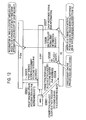
- In such a case, as shown in
Fig. 12 , although the gateway apparatus P-GW notifies the mobile station UE of a DNSv6 address through the PCO, the mobile station tries to acquire a DNSv6 address with the DHCPv6 according to the thereafter received "O Flag" set to "ON," which results in performing unnecessary procedures. Thus, there is a problem that radio resources and network resources are unnecessarily consumed. - Also, as shown in
Fig. 12 , when the mobile station UE is a data card type and is connected with a PC (Personal Computer) or the like, the PC receives RA and executes the DHCP procedures based on the "O Flag" in the RA. - Accordingly, there is a problem that, in the DHCP procedures, the PC may acquire a DNSv6 address different from the DNSv6 address notified by the mobile station UE (the DNSv6 address received by the mobile station UE from the gateway apparatus P-GW through the PCO).
- Furthermore, as shown in
Fig. 12 , there is a problem that the gateway apparatus P-GW has to manage the DNSv6 address allocated to each mobile station UE in preparation for receiving a DHCP request signal from the mobile station UE. - For this reason, the present invention has been made with a view to the foregoing problems, and has an objective to provide a mobile communication method and a gateway apparatus, which can solve the problems in the EPC network employing the above-described PMIPv6.
- The first feature of the present invention is summarized in that a mobile communication method, including a step A of transmitting a predetermined signal from a first gateway apparatus to a second gateway apparatus when the first gateway apparatus receives a connection request transmitted by a mobile station, a step B of transmitting a response signal to the first gateway apparatus from the second gateway apparatus in response to the reception of the predetermined signal, the response signal containing setting information indicating whether DNS address information is allocated to the mobile station, and a step C of instructing, by the first gateway apparatus, the mobile station that there is no need to acquire DNS address information using a DHCP request signal, when the received setting information indicates that DNS address information is allocated to the mobile station.
- The second feature of the present invention is summarized in that a mobile communication method, including a step A of transmitting a predetermined signal from a first gateway apparatus to a second gateway apparatus when the first gateway apparatus receives a connection request transmitted by a mobile station, a step B of transmitting a response signal to the received predetermined signal to the first gateway apparatus from the second gateway apparatus, and a step C of instructing, by the first gateway apparatus, the mobile station that there is no need to acquire DNS address information using a DHCP request signal when DNS address information is contained in the received response signal.
- The third feature of the present invention is summarized in that a gateway apparatus functioning as a second gateway apparatus connected with a first gateway apparatus, including a predetermined signal receiver configured to receive a predetermined signal from the first gateway apparatus, and a response signal transmitter configured to transmit a response signal containing setting information indicating whether DNS address information is allocated to the mobile station to the first gateway apparatus, in response to the reception of the predetermined signal.
- The fourth feature of the present invention is summarized in that a gateway apparatus functioning as a first gateway apparatus connected with a second gateway apparatus, including a predetermined signal transmitter configured to transmit a predetermined signal to the second gateway apparatus, when a connection request transmitted by a mobile station is received; and an instruction unit configured to instruct the mobile station that there is no need to acquire DNS address information using a DHCP request signal, when setting information contained in a response signal received from the second gateway apparatus as a response to the predetermined signal indicates that DNS address information is allocated to the mobile station.
- The fifth feature of the present invention is summarized in that a gateway apparatus functioning as a first gateway apparatus connected with a second gateway apparatus, including a predetermined signal transmitter configured to transmit a predetermined signal to the second gateway apparatus when a connection request transmitted by a mobile station is received, and an instruction unit configured to instruct the mobile station that there is no need to acquire DNS address information using a DHCP request signal when DNS address information is contained in a response signal received from the second gateway apparatus as a response to the predetermined signal.
- As described above, the present invention can provide a mobile communication method and a gateway apparatus, which can solve the problems in the EPC network employing the above-described PMIPv6.
-
- [
Fig. 1] Fig. 1 is an entire configuration diagram of a mobile communication system according to a first embodiment of the present invention. - [
Fig. 2] Fig. 2 is a functional block diagram of a gateway apparatus P-GW according to the first embodiment of the invention. - [
Fig. 3] Fig. 3 is a drawing showing an example of an information element capable of being inserted into "Proxy Binding Acknowledgement" as "Mobility Option", which is transmitted by the gateway apparatus P-GW according to the first embodiment of the invention. - [
Fig. 4] Fig. 4 is a functional block diagram of a gateway apparatus S-GW according to the first embodiment of the invention. - [
Fig. 5] Fig. 5 is a drawing for illustrating an operation of the mobile communication system according to the first embodiment of the invention. - [
Fig. 6] Fig. 6 is a flowchart for illustrating an operation of the gateway apparatus P-GW according to the first embodiment of the invention. - [
Fig. 7] Fig. 7 is a flowchart for illustrating an operation of the gateway apparatus S-GW according to the first embodiment of the invention. - [
Fig. 8] Fig. 8 is a drawing for illustrating an operation of a mobile communication system according to a second embodiment of the invention. - [
Fig. 9] Fig. 9 is a flowchart for illustrating an operation of the gateway apparatus S-GW according to the second embodiment of the invention. - [
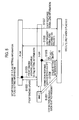
Fig. 10] Fig. 10 is a drawing for illustrating an operation of a conventional mobile communication system. - [
Fig. 11] Fig. 11 is a drawing for illustrating an operation of the conventional mobile communication system. - [
Fig. 12] Fig. 12 is a drawing for illustrating a problem of the conventional mobile communication system. - Referring to
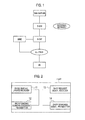
Figs. 1 to 7 , a mobile communication system according to a first embodiment of the present invention is described. - As shown in
Fig. 1 , the mobile communication system according the present embodiment includes a radio access system (E-UTRAN: Evolved Universal Terrestrial Radio Access Network) in the LTE (Long Term Evolution) scheme, a mobile management node MME (Mobile Management Entity), a gateway apparatus S-GW, a gateway apparatus P-GW, and a DNS server. - Note that the mobile communication system according to the present embodiment is a mobile communication system in the EPC network employing a PMIPv6.
- Also, the present invention is applicable to the EPC network which employs a PMIPv6 and accepts other radio access systems (e.g., a radio access system in a 3GPP2 scheme and a radio access system in the WLAN scheme).
- As shown in
Fig. 2 , the gateway apparatus P-GW includes a ProxyBinding Update receiver 11, a ProxyBinding Acknowledgement transmitter 12, a DHCPrequest signal receiver 13, and a DHCPresponse signal transmitter 14. - The Proxy
Binding Update receiver 11 is configured to receive "Proxy Binding Update" from the gateway apparatus S-GW. - The Proxy
Binding Acknowledgement transmitter 12 is configured to transmit "Proxy Binding Acknowledgement" to the gateway apparatus S-GW through PCO in response to the reception of the "Proxy Binding Update". The "Proxy Binding Acknowledgement" contains "O flag setting information" indicating whether a DNSv6 address is allocated to a mobile station UE. - For example, as shown in
Fig. 3 , the ProxyBinding Acknowledgement transmitter 12 may be configured to transmit "O Flag setting information" with an information element, e.g., "DNSv6 Address Allocation Indication", capable of being inserted into the "Proxy Binding Acknowledgement" in Table 5.1.1.2-2 in 3GPP standards TS29.275 as "Mobility Option." - Here, when the DNSv6 address is allocated to the mobile station UE through the PCO, the Proxy
Binding Acknowledgement transmitter 12 may set "unnecessary" for the "O Flag setting information". - On the other hand, when the DNSv6 address is not allocated to the mobile station UE through the PCO, the Proxy
Binding Acknowledgement transmitter 12 may set "necessary" for the "O Flag setting information." - Note that, when the DNSv6 address is not allocated to the mobile station UE through the PCO, the Proxy
Binding Acknowledgement transmitter 12 does not need to contain the "O Flag setting information" in the "Proxy Binding Acknowledgement." - Also, for each APN, the Proxy
Binding Acknowledgement transmitter 12 may determine which one of "necessary" and "unnecessary" should be set in the "O Flag setting information". - For example, when the mobile station UE transmits a connection request to a specific APN, the Proxy
Binding Acknowledgement transmitter 12 may be configured to always set either "necessary" or "unnecessary" in the "O Flag setting information." - The DHCP
request signal receiver 13 is configured to receive a DHCP request signal containing a DNS information request transmitted by the mobile station UE. - The DHCP
response signal transmitter 14 is configured to transmit a DHCP response signal containing DNS information (a DNSv6 address) to the mobile station UE in response to the DHCP request signal containing the DNS information request received by the DHCPrequest signal receiver 13. - As shown in
Fig. 4 , the gateway apparatus S-GW includes aconnection request receiver 21, a Proxy BindingUpdate transmitter 22, a Proxy BindingAcknowledgement transmitter 23, aconnection response transmitter 24, and aRA transmitter 25. - The
connection request receiver 21 is configured to receive a connection request (e.g., an Attach Request or the like) transmitted by the mobile station UE via a mobile management node MME. - When the
connection request receiver 21 receives a connection request, the Proxy BindingUpdate transmitter 22 is configured to transmit "Proxy Binding Update" to the gateway apparatus P-GW. - The Proxy Binding
Acknowledgement receiver 23 is configured to receive the "Proxy Binding Acknowledgement" transmitted by the gateway apparatus P-GW. - When the Proxy Binding
Acknowledgement receiver 23 receives the "Proxy Binding Acknowledgement", theconnection response transmitter 24 is configured to transmit a connection response (e.g., an Attach Accept or the like) to the mobile station UE via the mobile management node MME. - The
RA transmitter 25 is configured to transmit RA containing "O Flag" for which "ON" or "OFF" is set to the mobile station UE when the Proxy BindingAcknowledgement receiver 23 receives the "Proxy Binding Acknowledgement." - For example, the
RA transmitter 25 can gives an instruction to acquire a DNSv6 address using the DHCP request signal by transmitting RA containing the "O Flag" for which "ON" is set to the mobile station UE. - On the other hand, the
RA transmitter 25 can gives such an instruction that acquisition of a DNSv6 address using the DHCP request signal is not needed by transmitting RA containing the "O Flag" for which "OFF" is set to the mobile station UE. - Here, the
RA transmitter 25 is configured to determine which one of "ON" and "OFF" should be set in the " "O Flag" of the RA based on the "O Flag setting information" contained in the "Proxy Binding Acknowledgement" received by the Proxy BindingAcknowledgement receiver 23. - For example, when "necessary" is set in the "O Flag setting information", the
RA transmitter 25 may be configured to set "ON" for the "O Flag." - On the other hand, when "unnecessary" is set in the "O Flag setting information", the
RA transmitter 25 may be configured to set "OFF" for the "O Flag". - Note that the
RA transmitter 25 may be configured to set "OFF" in the "O Flag" with respect to the mobile station UE when the "O Flag setting information" is not contained in the "Proxy Binding Acknowledge" received by the Proxy BindingAcknowledgement receiver 23. - Hereinafter, referring to
Figs. 5 to 7 , an operation of the mobile communication system according to the present modification is described. - Firstly, referring to
Fig. 5 , the description is given to an operation in which a mobile station UE transmits a connection request in the mobile communication system according to the present embodiment. - As shown in
Fig. 5 , when the mobile station UE transmits a connection request to the gateway apparatus S-GW via the mobile management node MME at step S1001, the gateway apparatus S-GW transmits "Proxy Binding Update" to the gateway apparatus P-GW at step S1002. - At step S1003, the gateway apparatus P-GW sets either "necessary" or "unnecessary" for the "O Flag setting information" before transmitting "Proxy Binding Acknowledgement" containing such "O Flag setting information" to the gateway apparatus S-GW.
- At step S1004, the gateway apparatus S-GW having received such "Proxy Binding Acknowledgement" transmits a connection response to the mobile station UE via the mobile management node MME.
- At step S1005, the gateway apparatus S-GW sets either "ON" or "OFF" for the "O Flag" before transmitting RA containing such "O Flag" to the mobile station UE.
- When "ON" is set in the "O Flag" contained in the received RA, the mobile station UE transmits a DHCP request signal containing the DNS information request to the gateway apparatus P-GW at step S1006.
- Here, when "OFF" is set in the "O Flag" contained in the received RA, the mobile station UE does not transmit a DHCP request signal containing the DNS information request to the gateway apparatus P-GW.
- At step S1007, the gateway apparatus P-GW transmits a DHCP response request signal containing the DNS information (the DNSv6 address) to the mobile station UE.
- Secondly, referring to
Fig. 6 , the description is given to an operation of the gateway apparatus P-GW according to the present embodiment. - As shown in
Fig. 6 , when receiving "Proxy Binding Update" at step S101, the gateway apparatus P-GW determines whether or not a DNSv6 address is allocated to the mobile station according to PCO at step S102. - When the DNSv6 address is allocated to the mobile station UE through the PCO, the gateway apparatus P-GW sets "unnecessary" for the "O Flag setting information" at step S103.
- On the other hand, when the DNSv6 address is not allocated to the mobile station UE through the PCO, the gateway apparatus P-GW sets "necessary" for the "O Flag setting information" at step S104.
- Note that at step S102, for each APN which is a target of the connection request made by the mobile station UE, the gateway apparatus P-GW may determine which one of "necessary" and "unnecessary" should be set in the "O Flag setting information."
- Thirdly, referring to
Fig. 7 , the description is given to an operation of the gateway apparatus S-GW according to the present embodiment. - As shown in
Fig. 7 , when receiving the "Proxy Binding Acknowledgement" at step S201, the gateway apparatus S-GW determines the setting contents of the "O Flag setting information" contained in the received "Proxy Binding Acknowledgement" at step S202. - When "necessary" is set in the "O Flag setting information", the gateway apparatus S-GW sets "ON" for the "O Flag" in RA to be transmitted at step S203.
- On the other hand, when "unnecessary" is set in the "O Flag setting information", the gateway apparatus S-GW sets "OFF" for the "O Flag" in RA to be transmitted at step S204.
- Note that at step S202, when the "O Flag setting information" is not contained in the received "Proxy Binding Acknowledgement, " the gateway apparatus S-GW may set "OFF" for the "O Flag" in RA to be transmitted. According to the mobile communication system according to the present embodiment, when the mobile station UE is notified of the DNSv6 address allocation through the PCO, the gateway apparatus S-GW can set "OFF" for the "O Flag" in RA.
- Accordingly, the mobile communication system according to the present embodiment can avoid unnecessary execution of DHCP procedures in the EPC network employing the PMIPv6, and thus can avoid unnecessary consumption of radio resources and network resources.
- Also, in the DHCP procedures, the mobile communication system according to the present embodiment can prevent the PC from acquiring a DNSv6 address different from the DNSv6 address transmitted by the mobile station UE (the DNSv6 address received through the PCO) even when the mobile station UE is a data card type and is connected with the PC or the like.
- Furthermore, according to the mobile communication system according to the embodiment, the gateway apparatus P-GW does not need to manage the DNSv6 address allocated to each mobile station UE in preparation for receiving the DHCP request signal from the mobile station UE.
- Referring to
Figs. 8 and9 , a mobile communication system according to a second embodiment of the invention is described. The mobile communication system according to the present embodiment is described below by paying attention to differences from the mobile communication system according to the above-described first embodiment. - Firstly, referring to
Fig. 8 , the description is given to an operation in which a mobile station UE transmits a connection request in the mobile communication system according to the present embodiment. - As shown in
Fig. 8 , when the mobile station UE transmits a connection request to the gateway apparatus S-GW via the mobile management node MME at step S2001, the gateway apparatus S-GW having received such connection request transmits "Proxy Binding Update" to the gateway apparatus P-GW at step S2002. - At step S2003, the Proxy Binding
Acknowledgement transmitter 12 of the gateway apparatus P-GW transmits "Proxy Binding Acknowledgement" which does not contain such "O Flag setting information" to the gateway apparatus S-GW. - At step S2004, the gateway apparatus S-GW having received such "Proxy Binding Acknowledgement" transmits a connection response to the mobile station UE via the mobile management node MME.
- At step S2005, the Proxy Binding
Acknowledgement receiver 23 of the gateway apparatus S-GW analyses the contents of the "Proxy Binding Acknowledgement" and determines whether or not a DNSv6 address is contained in such "Proxy Binding Acknowledgement." - Specifically, the Proxy Binding
Acknowledgement receiver 23 of the gateway apparatus S-GW determines whether or not "PCO (a DNS Server IPv6 Address) " is contained in the "Proxy Binding Acknowledgement". - Then, the
RA transmitter 25 of the gateway apparatus S-GW sets either "ON" or "OFF" for the "O Flag" based on the determination result before transmitting RA containing such "O Flag" to the mobile station UE. - In other words, when it is determined that the DNSv6 address is contained in the "Proxy Binding Acknowledgement", the
RA transmitter 25 of the gateway apparatus S-GW sets "OFF" for the "O Flag." - On the other hand, when it is determined that the DNSv6 address is not contained in the "Proxy Binding Acknowledgement," the
RA transmitter 25 of the gateway apparatus S-GW sets "ON" for the "O Flag". - When "ON" is set in the "O Flag" contained in the received RA, the mobile station UE transmits a DHCP request signal containing the DNS information request to the gateway apparatus P-GW at step S2006.
- Here, when "OFF" is set in the "O Flag" contained in the received RA, the mobile station UE does not transmit the DHCP request signal containing the DNS information request to the gateway apparatus P-GW.
- At step S2007, the gateway apparatus P-GW transmits a DHCP response request signal containing the DNS information (the DNSv6 address) to the mobile station UE.
- Secondly, referring to
Fig. 9 , the description is given to an operation of the gateway apparatus S-GW according to the present embodiment. - As shown in
Fig. 9 , when receiving the "Proxy Binding Acknowledgement" at step S301, the gateway apparatus S-GW determines whether or not "PCO (a DNS Server IPv6Address) " is contained in the received "Proxy Binding Acknowledgement" at step S302. - When the "PCO (the DNS Server IPv6Address) " is contained, the gateway apparatus S-GW sets "OFF" for the "O Flag" at step S303.
- On the other hand, when the "PCO (the DNS Server IPv6Address) " is not contained, the gateway apparatus S-GW sets "ON" for the "O Flag" at step S304.
- The characteristics of the above-described embodiments may be expressed as follows.
- A first characteristic of the present embodiment includes a step A in which a gateway apparatus S-GW (a first gateway apparatus) transmits "Proxy Binding Update (a predetermined signal)" to a gateway apparatus P-GW (a second gateway apparatus) when receiving a connection request transmitted by a mobile station UE, a step B in which the gateway apparatus P-GW transmits "Proxy Binding Acknowledgement (a response signal)" containing "O Flag setting information (setting information)" indicating whether or not a DNSv6 address (DNS address information) is allocated to the mobile station UE to the gateway apparatus S-GW in response to the reception of the "Proxy Binding Update", and a step C in which the gateway apparatus S-GW instructs the mobile station UE that there is no need to acquire a DNSv6 address using a DHCP request signal with "O Flag" in RA when the received "O Flag setting information" indicates that a DNSv6 address is allocated to the mobile station UE.
- In the first characteristic of the present embodiment, in the step C, the gateway apparatus S-GW may instruct the mobile station UE to acquire a DNSv6 address using the DHCP request signal with the "O Flag" in RA when the "O Flag setting information" is not contained in the received "Proxy Binding Acknowledgement."
- A second characteristic of the present invention includes a step A in which the gateway apparatus S-GW transmits "Proxy Binding Update" to the gateway apparatus P-GW when receiving a connection request transmitted by the mobile station UE, a step B in which the gateway apparatus P-GW transmits "Proxy Binding Acknowledgement" to the gateway apparatus S-GW in response to the received "Proxy Binding Update," and a step C in which the gateway apparatus S-GW instructs the mobile station UE that there is no need to acquire a DNSv6 address using the DHCP request signal with the "O Flag" in RA when DNSv6 address is contained in the received "Proxy Binding Acknowledgement."
- A third characteristic of the present embodiment is a gateway apparatus P-GW including a Proxy Binding Update receiver (a predetermined signal receiver) 11 configured to receive "Proxy Binding Update" from the gateway apparatus S-GW and a Proxy Binding Acknowledgement transmitter (a response signal transmitter) 12 configured to transmit "Proxy Binding Acknowledgement" containing "O Flag setting information" indicating whether or not a DNSv6 address is allocated to the mobile station UE to the gateway apparatus S-GW in response to the reception of the "Proxy Binding Update."
- A fourth characteristic of the present embodiment is a gateway apparatus S-GW including a Proxy Binding Update transmitter (a predetermined signal transmitter) 22 configured to transmit "Proxy Binding Update" to the gateway apparatus P-GW when a connection request transmitted by the mobile station UE is received and a RA transmitter (an instruction unit) 25 configured to instruct the mobile station UE that there is no need to acquire DNSv6 address using the DHCP request signal with the "O Flag" in RA when the "O Flag setting information" contained in the "Proxy Binding Acknowledgement" received from the gateway apparatus P-GW as a response to the "Proxy Binding Update" indicates that a DNSv6 address is allocated to the mobile station UE.
- In the fourth characteristic of the present embodiment, the
RA transmitter 25 may be configured to instruct the mobile station UE to acquire a DNSv6 address using the DHCP request signal with the "O Flag" in RA when the "O Flag setting information" is not contained in the received "Proxy Binding Acknowledgement." - A fifth characteristic of the present embodiment is a gateway apparatus S-GW including a Proxy Binding
Update transmitter 11 configured to transmit "Proxy Binding Update" to the gateway apparatus P-GW when a connection request transmitted by the mobile station UE is received and aRA transmitter 25 configured to instruct the mobile station UE that there is no need to acquire a DNSv6 address using the DHCP request signal with the "O Flag" in RA when a DNSv6 address is contained in the "Proxy Binding Acknowledgement" received from the gateway apparatus P-GW in response to the "Proxy Binding Update." - Note that operations of the above-described gateway apparatus S-GW, the gateway apparatus P-GW, and the mobile station UE may be implemented by hardware or may be implemented by a software module executed by a processor, or may be implemented in combination of the both.
- The software module may be provided any form of recording medium such as a RAM (Random Access Memory), a flash memory, a ROM (Read Only Memory), an EPROM (Erasable Programmable ROM), an EEPROM (Electronically Erasable and Programmable ROM), a register, a hard disk, removable disk, or a CD-ROM.
- Such recording medium is connected with a processor so that the processor can read and write information on the recording medium. Also, such recording medium may be integrated on the processor. Or, such recording medium and the processor may be provided inside ASI. Such ASIC may be provided in the gateway apparatus S-GW, the gateway apparatus P-GW, and the mobile station UE. Also, such recording medium and processor may be provided in the gateway apparatus S-GW, the gateway apparatus P-GW, and the mobile station UE as a discrete component.
- As described above, the present invention has been described in detail using the above-described embodiments. However, it will be apparent for those who are in the art that the present invention is not limited to the embodiments described herein. The present invention can be implemented as amendments and modified aspects without departing from the scope and spirit thereof, which is defined by the description of the scope of claims. Accordingly, the description herein intends only an illustration and does not mean any limitation to the invention.
- As described above, the present invention can provide a mobile communication method and a gateway apparatus, which can solve problems in the EPC network employing the above-described PMIPv6.
-
- P-GW, S-GW
- gateway apparatus
- 11
- Proxy Binding Update receiver
- 12
- Proxy Binding Acknowledgement transmitter
- 13
- DHCP request signal receiver
- 14
- DHCP response signal transmitter
- 21
- connection request receiver
- 22
- Proxy Binding Update transmitter
- 23
- Proxy Binding Acknowledgement receiver
- 24
- connection response transmitter
- 25
- RA transmitter
Claims (7)
- A mobile communication method, comprising:a step A of transmitting a predetermined signal from a first gateway apparatus to a second gateway apparatus when the first gateway apparatus receives a connection request transmitted by a mobile station;a step B of transmitting a response signal to the first gateway apparatus from the second gateway apparatus in response to the reception of the predetermined signal, the response signal containing setting information indicating whether DNS address information is allocated to the mobile station; anda step C of instructing, by the first gateway apparatus, the mobile station that there is no need to acquire DNS address information using a DHCP request signal, when the received setting information indicates that DNS address information is allocated to the mobile station.
- The mobile communication method according to claim 1, wherein in the step C, the first gateway apparatus instructs the mobile station to acquire DNS address information using the DHCP request signal when the setting information is not contained in the received response signal.
- A mobile communication method, comprising:a step A of transmitting a predetermined signal from a first gateway apparatus to a second gateway apparatus when the first gateway apparatus receives a connection request transmitted by a mobile station;a step B of transmitting a response signal to the received predetermined signal to the first gateway apparatus from the second gateway apparatus; anda step C of instructing, by the first gateway apparatus, the mobile station that there is no need to acquire DNS address information using a DHCP request signal when DNS address information is contained in the received response signal.
- A gateway apparatus functioning as a second gateway apparatus connected with a first gateway apparatus, comprising:a predetermined signal receiver configured to receive a predetermined signal from the first gateway apparatus; anda response signal transmitter configured to transmit a response signal containing setting information indicating whether DNS address information is allocated to the mobile station to the first gateway apparatus, in response to the reception of the predetermined signal.
- A gateway apparatus functioning as a first gateway apparatus connected with a second gateway apparatus, comprising:a predetermined signal transmitter configured to transmit a predetermined signal to the second gateway apparatus, when a connection request transmitted by a mobile station is received; andan instruction unit configured to instruct the mobile station that there is no need to acquire DNS address information using a DHCP request signal, when setting information contained in a response signal received from the second gateway apparatus as a response to the predetermined signal indicates that DNS address information is allocated to the mobile station.
- The gateway apparatus according to claim 5, wherein the instruction unit instructs the mobile station to acquire DNS address information using the DHCP request signal when the setting information is not contained in the received response signal.
- A gateway apparatus functioning as a first gateway apparatus connected with a second gateway apparatus, comprising:a predetermined signal transmitter configured to transmit a predetermined signal to the second gateway apparatus when a connection request transmitted by a mobile station is received; andan instruction unit configured to instruct the mobile station that there is no need to acquire DNS address information using a DHCP request signal when DNS address information is contained in a response signal received from the second gateway apparatus as a response to the predetermined signal.
Applications Claiming Priority (2)
| Application Number | Priority Date | Filing Date | Title |
|---|---|---|---|
| JP2010083258A JP5200051B2 (en) | 2010-03-31 | 2010-03-31 | Mobile communication method and gateway device |
| PCT/JP2011/058295 WO2011125883A1 (en) | 2010-03-31 | 2011-03-31 | Mobile communication method and gateway apparatus |
Publications (2)
| Publication Number | Publication Date |
|---|---|
| EP2555548A1 true EP2555548A1 (en) | 2013-02-06 |
| EP2555548A4 EP2555548A4 (en) | 2014-06-04 |
Family
ID=44762821
Family Applications (1)
| Application Number | Title | Priority Date | Filing Date |
|---|---|---|---|
| EP11765783.3A Withdrawn EP2555548A4 (en) | 2010-03-31 | 2011-03-31 | MOBILE COMMUNICATION METHOD AND GATEWAY DEVICE |
Country Status (4)
| Country | Link |
|---|---|
| US (1) | US20130058278A1 (en) |
| EP (1) | EP2555548A4 (en) |
| JP (1) | JP5200051B2 (en) |
| WO (1) | WO2011125883A1 (en) |
Families Citing this family (2)
| Publication number | Priority date | Publication date | Assignee | Title |
|---|---|---|---|---|
| WO2013038588A1 (en) * | 2011-09-16 | 2013-03-21 | パナソニック株式会社 | Communication control method, communication terminal, and network device |
| CN105165040B (en) * | 2013-10-25 | 2018-10-19 | 华为技术有限公司 | A kind of distribution method, the apparatus and system of IP address and IP parameters |
Family Cites Families (11)
| Publication number | Priority date | Publication date | Assignee | Title |
|---|---|---|---|---|
| JP2003348130A (en) * | 2002-05-27 | 2003-12-05 | Hitachi Ltd | Address assignment method and communication continuation method for mobile terminals |
| KR100864158B1 (en) * | 2007-01-29 | 2008-10-16 | 주식회사 케이티 | Temporary Address Generation / Assignment Method and Wireless Resource Allocation Method in Mobile Internet Network |
| WO2008127662A1 (en) * | 2007-04-12 | 2008-10-23 | Marvell World Trade Ltd. | Packet data network connectivity domain selection and bearer setup |
| US8483174B2 (en) * | 2007-04-20 | 2013-07-09 | Qualcomm Incorporated | Method and apparatus for providing gateway relocation |
| US8289862B2 (en) * | 2007-06-27 | 2012-10-16 | Futurewei Technologies, Inc. | Method and apparatus for dynamic LMA assignment in proxy mobile IPv6 protocol |
| US8634344B2 (en) * | 2007-08-06 | 2014-01-21 | Marvell World Trade Ltd. | Dynamic internet protocol addressing solutions with network-based mobility |
| JP5025734B2 (en) * | 2007-11-30 | 2012-09-12 | シャープ株式会社 | Broadcast receiver |
| CN101919301A (en) * | 2007-12-07 | 2010-12-15 | 思达伦特网络有限责任公司 | Providing mobility management using emulation |
| US8358602B2 (en) * | 2008-06-27 | 2013-01-22 | Cisco Technology, Inc. | Method and system for supporting packet data network communications |
| JP4962451B2 (en) * | 2008-09-01 | 2012-06-27 | 日本電気株式会社 | Load balancing method and DHCP server device |
| JPWO2010052918A1 (en) * | 2008-11-07 | 2012-04-05 | パナソニック株式会社 | HANDOVER CONTROL SYSTEM, USER TERMINAL, SIGNALING RELAY DEVICE, AND SESSION CONTROL DEVICE |
-
2010
- 2010-03-31 JP JP2010083258A patent/JP5200051B2/en not_active Expired - Fee Related
-
2011
- 2011-03-31 EP EP11765783.3A patent/EP2555548A4/en not_active Withdrawn
- 2011-03-31 WO PCT/JP2011/058295 patent/WO2011125883A1/en not_active Ceased
- 2011-03-31 US US13/638,875 patent/US20130058278A1/en not_active Abandoned
Non-Patent Citations (10)
| Title |
|---|
| "3rd Generation Partnership Project; Technical Specification Group Services and System Aspects; Architecture enhancements for non-3GPP accesses (Release 9)", 3GPP STANDARD; 3GPP TS 23.402, 3RD GENERATION PARTNERSHIP PROJECT (3GPP), MOBILE COMPETENCE CENTRE ; 650, ROUTE DES LUCIOLES ; F-06921 SOPHIA-ANTIPOLIS CEDEX ; FRANCE, no. V9.4.0, 25 March 2010 (2010-03-25), pages 1-198, XP050402067, [retrieved on 2010-03-25] * |
| ERICSSON: "Corrections in Clause 13a (IMS interworking)", 3GPP DRAFT; C3-081749_MR004_29061_IMSINTERWORKING_PA2, 3RD GENERATION PARTNERSHIP PROJECT (3GPP), MOBILE COMPETENCE CENTRE ; 650, ROUTE DES LUCIOLES ; F-06921 SOPHIA-ANTIPOLIS CEDEX ; FRANCE, vol. CT WG3, no. Phoenix; 20081006 - 20081010, 29 September 2008 (2008-09-29), XP050589293, [retrieved on 2008-09-29] * |
| JEONG J ET AL: "IPv6 Host Configuration of DNS Server Information Approaches; rfc4339.txt", 20060201, 1 February 2006 (2006-02-01), XP015044777, ISSN: 0000-0003 * |
| JEONG J ET AL: "IPv6 Router Advertisement Option for DNS Configuration; rfc5006.txt", 20070901, 1 September 2007 (2007-09-01), XP015055078, ISSN: 0000-0003 * |
| MOTOROLA: "Pseudo-CR on Corrections and removing text not related to NAS", 3GPP DRAFT; C1-084344, 3RD GENERATION PARTNERSHIP PROJECT (3GPP), MOBILE COMPETENCE CENTRE ; 650, ROUTE DES LUCIOLES ; F-06921 SOPHIA-ANTIPOLIS CEDEX ; FRANCE, no. Phoenix; 20081013, 13 October 2008 (2008-10-13), XP050309418, [retrieved on 2008-10-13] * |
| NTT DOCOMO: "DNSv6 address allocation in PMIPv6", 3GPP DRAFT; S2-101934_DNSV6 ADDRESS WITH PMIPV6_R3(REL8), 3RD GENERATION PARTNERSHIP PROJECT (3GPP), MOBILE COMPETENCE CENTRE ; 650, ROUTE DES LUCIOLES ; F-06921 SOPHIA-ANTIPOLIS CEDEX ; FRANCE, vol. SA WG2, no. Elbonia; 20100412 - 20100415, 9 April 2010 (2010-04-09), XP050630715, [retrieved on 2010-04-09] * |
| NTT DOCOMO: "DNSv6 address allocation in PMIPv6", 3GPP DRAFT; S2-101935_DNSV6 ADDRESS WITH PMIPV6_R3(REL9), 3RD GENERATION PARTNERSHIP PROJECT (3GPP), MOBILE COMPETENCE CENTRE ; 650, ROUTE DES LUCIOLES ; F-06921 SOPHIA-ANTIPOLIS CEDEX ; FRANCE, vol. SA WG2, no. Elbonia; 20100412 - 20100415, 9 April 2010 (2010-04-09), XP050630716, [retrieved on 2010-04-09] * |
| NTT DOCOMO: "Router Advertisement control for PMIPv6", 3GPP DRAFT; S2-102101_ROUTER ADVERTISEMENT CONTROL FOR PMIPV6, 3RD GENERATION PARTNERSHIP PROJECT (3GPP), MOBILE COMPETENCE CENTRE ; 650, ROUTE DES LUCIOLES ; F-06921 SOPHIA-ANTIPOLIS CEDEX ; FRANCE, vol. SA WG2, no. Kyoto; 20100510, 28 April 2010 (2010-04-28), XP050434300, [retrieved on 2010-04-28] * |
| PARK S ET AL: "Considerations on M and O Flags of IPv6 Router Advertisement; draft-ietf-ipv6-ra-mo-flags-01.txt", 20050326, vol. ipv6, no. 1, 26 March 2005 (2005-03-26), XP015038443, ISSN: 0000-0004 * |
| See also references of WO2011125883A1 * |
Also Published As
| Publication number | Publication date |
|---|---|
| WO2011125883A1 (en) | 2011-10-13 |
| US20130058278A1 (en) | 2013-03-07 |
| EP2555548A4 (en) | 2014-06-04 |
| JP5200051B2 (en) | 2013-05-15 |
| JP2011217114A (en) | 2011-10-27 |
Similar Documents
| Publication | Publication Date | Title |
|---|---|---|
| US9219643B2 (en) | Node and method for the handling of serving gateway partial failure | |
| US9332530B2 (en) | Mobile communication method and mobile station | |
| EP2377355B1 (en) | Assignment of a common network address to multiple network interfaces of a computing device | |
| KR101896234B1 (en) | Restoration of mobile terminating cs services in case of failure of a ps core network entity in a mobile communication system | |
| US20190364467A1 (en) | Method and communication entity for proving a communication connection | |
| US9661482B2 (en) | Mobile communication method, radio base station and mobility management node | |
| JP5317941B2 (en) | Mobile communication method and gateway device | |
| CN103370981A (en) | Mobile communication method and mobility management node | |
| US20130343325A1 (en) | Mobile communication method | |
| CN101534500B (en) | An addressing method, network element equipment and network system | |
| EP2410793A1 (en) | Mobile communication method, base transceiver station, radio network controller, core network, and gateway | |
| EP2627122A1 (en) | Mobile communication method, mobile management node, serving gateway apparatus, packet data network gateway apparatus, policy control apparatus, and packet switch | |
| EP2157818A1 (en) | A method for deleting mobility management entity's information and device thereof | |
| JP5438042B2 (en) | Mobile communication method, subscriber management server and server | |
| EP2555548A1 (en) | Mobile communication method and gateway apparatus | |
| EP2299769A1 (en) | Mobile communication method and mobile station | |
| JPWO2011055793A1 (en) | Mobile communication system, radio network controller, core network device, mobile communication terminal, and mobile communication method | |
| US9408131B2 (en) | Mobile communication method and mobile communication system | |
| US7471953B2 (en) | Location services for unlicensed mobile access | |
| EP2675217A1 (en) | Mobile communication system, mobile communication method, packet data network gateway, and in-area gateway | |
| US20130308546A1 (en) | Mobile station, communication application, and mobile communication method | |
| US11412352B2 (en) | Method for allocating UE identity, network device, UE, and computer storage medium | |
| US9749838B2 (en) | PMIP protocol enhancement | |
| US9363295B2 (en) | Mobile communication method and application server apparatus | |
| EP2469928A1 (en) | Mobile communication method and radio access network device |
Legal Events
| Date | Code | Title | Description |
|---|---|---|---|
| PUAI | Public reference made under article 153(3) epc to a published international application that has entered the european phase |
Free format text: ORIGINAL CODE: 0009012 |
|
| 17P | Request for examination filed |
Effective date: 20121015 |
|
| AK | Designated contracting states |
Kind code of ref document: A1 Designated state(s): AL AT BE BG CH CY CZ DE DK EE ES FI FR GB GR HR HU IE IS IT LI LT LU LV MC MK MT NL NO PL PT RO RS SE SI SK SM TR |
|
| DAX | Request for extension of the european patent (deleted) | ||
| A4 | Supplementary search report drawn up and despatched |
Effective date: 20140508 |
|
| RIC1 | Information provided on ipc code assigned before grant |
Ipc: H04W 80/04 20090101ALI20140430BHEP Ipc: H04W 92/24 20090101ALI20140430BHEP Ipc: H04W 8/26 20090101AFI20140430BHEP Ipc: H04L 29/08 20060101ALI20140430BHEP |
|
| STAA | Information on the status of an ep patent application or granted ep patent |
Free format text: STATUS: THE APPLICATION IS DEEMED TO BE WITHDRAWN |
|
| 18D | Application deemed to be withdrawn |
Effective date: 20141209 |