EP2554547B1 - Transition-metal catalyzed synthesis of diboranes(4) - Google Patents
Transition-metal catalyzed synthesis of diboranes(4) Download PDFInfo
- Publication number
- EP2554547B1 EP2554547B1 EP20110176448 EP11176448A EP2554547B1 EP 2554547 B1 EP2554547 B1 EP 2554547B1 EP 20110176448 EP20110176448 EP 20110176448 EP 11176448 A EP11176448 A EP 11176448A EP 2554547 B1 EP2554547 B1 EP 2554547B1
- Authority
- EP
- European Patent Office
- Prior art keywords
- transition metal
- catalyst
- formula
- reaction
- diborane
- Prior art date
- Legal status (The legal status is an assumption and is not a legal conclusion. Google has not performed a legal analysis and makes no representation as to the accuracy of the status listed.)
- Not-in-force
Links
Images
Classifications
-
- C—CHEMISTRY; METALLURGY
- C07—ORGANIC CHEMISTRY
- C07F—ACYCLIC, CARBOCYCLIC OR HETEROCYCLIC COMPOUNDS CONTAINING ELEMENTS OTHER THAN CARBON, HYDROGEN, HALOGEN, OXYGEN, NITROGEN, SULFUR, SELENIUM OR TELLURIUM
- C07F5/00—Compounds containing elements of Groups 3 or 13 of the Periodic Table
- C07F5/02—Boron compounds
- C07F5/022—Boron compounds without C-boron linkages
Definitions
- the invention relates to a porcess for the preparation of diborane(4) compounds.
- This class of compounds constitutes an important precursor for organoboronic esters, which are versatile reagents for the formation of carbon-carbon bonds.
- bromobis(dimethylamino)borane is synthesized in two steps. Subsequently, the formation of a boron-boron-bond is achieved by reductive coupling with Na/K to yield tetrakis(dimethylamino)diborane (B 2 (NMe 2 ) 4 ).
- B 2 (NMe 2 ) 4 bis(catecholato)diborane (B 2 Cat 2 ) and bis(pinacolato)diborane (B 2 Pin 2 ) can be obtained by the reaction of B 2 (NMe 2 ) 4 with the corresponding diols ( T. ishiyama, M. Murata, T. A.
- chlorocatecholborane can be used as a starting material for the synthesis of B 2 Cat 2 .
- the boron-boron bond is formed by reductive coupling with sodium amalgam.
- B 2 Pin 2 is not accessible on this reaction pathway ( N. R. Anastasi, K. M. Waltz, W. L. Weerakoon, J. F. Hartwig, Organometallics 2003, 22, 365-369 ).
- the present invention relates to a process for the preparation of diboranes(4), comprising the step of coupling two compounds of the general formula (II), which may be identical or different, wherein R a is a group independently selected from divalent alkyl, divalent cycloalkyl or divalent aryl. via homogeneous or heterogeneous catalysis in the presence of a catalyst comprising a transition metal selected from Ni, Pd and Pt, to form a diborane(4) of the general formula (I) wherein R a is as defined above.
- alkyl as used in the above definition and the following preferred embodiments, encompasses straight and branched alkyl moieties. Unless indicated otherwise, preferred examples of alkyl groups have 1 to 6 carbon atoms (C 1-6 alkyl), in particular 1 to 4 carbon atoms (C 1-4 alkyl), and include methyl, ethyl, propyl (e.g., n-propyl, or isopropyl) and butyl (e.g., n-butyl, isobutyl, tert-butyl, or sec-butyl).
- the divalent alkyl group R a it is preferred that the divalent alkyl group contains a linear chain with 2 to 6, preferably 2 to 4 carbon atoms extending from one group Z to the other, and the total number of carbon atoms, including branches, is preferably 2 to 10.
- cycloalkyl refers to a cyclic alkyl moiety.
- Preferred examples of suitable alkyl groups have 4 to 10 carbon atoms, in particular 5 or 6 carbon atoms, and include cyclopentyl and cyclohexyl.
- aryl refers to an aromatic ring system, including single rings and condensed rings, which preferably has 6 to 10 carbon atoms. Particular examples are a phenyl or a naphthyl group.
- Preferred boranes of formula (IIa) are 2-methyl-2,4-pentanediolborane, neopentylglycolborane, catecholborane and pinacolborane, of which catecholborane (HBCat) and pinacolborane (HBPin) are particularly preferred.
- one type or a mixture of two or more types of compounds of formula (II) may be used as a starting material for the coupling reaction.
- reaction proceeds via heterogeneous or homogeneous catalysis.
- transition metal compounds containing a metal selected from Pt, Pd and Ni can be used as a catalyst for homogeneous catalysis.
- the transition metal compound can be a salt of the transition metal, such as a halogenide, e.g. a chloride.
- a complex of one of the above transition metals is used as a catalyst for homogeneous catalysis.
- the transition metal complex preferably contains an optionally substituted cyclopentadienyl ligand, such as cyclopentadienyl (Cp) or pentamethylcyclopentadienyl (Cp*), or a phosphino ligand, especially a chelating ligand combining two phosphino groups, such as bis(diphenylphosphino)methane (dppm) or bis(dicyclohexylphosphino)ethane (dcpe).
- a chelating phosphino ligand is preferably present in the complexes of Ni, Pd and Pt.
- Preferred examples of catalysts for homogeneous catalysis are [(dppm)PtCl 2 ] ( T. G. Appleton, M. A. Bennett, I. B. Tomkins, J. Chem. Soc. , Dalton Trans. 1976, 439-446 ), [(dcpe)PtCl 2 ] ( M. hackett, G. M. Whitesides, J. Am. Chem. Soc. 1988, 110, 1449-1462 ), [(dcpe)PdCl 2 ] ( P. Diversi, G. Ingrosso, A. Lucherini, T. Lumini, F. Marchetti, V. Adovasio, M. Nardelli, J. Chem.
- a transition metal selected from Pt, Pd and Ni can be used which is generally in elemental form. Most preferred metals for the heterogeneous catalysis are selected from Pd and Pt.
- a metal powder may be used.
- the metal supported on a carrier such as carbon (e.g. charcoal), a ceramic support (e.g. alumina, silica or combinations thereof), or another inorganic carrier, such as BaSO 4 , BaCO 3 , CaCO 3 , SrSO 4 or SrCO 3 .
- the support is typically a particulate support or a support in the form of pellets.
- Especially preferred heterogeneous catalysts are Rh/alumina Pt/charcoal, Pt/alumina, Pd/charcoal and Pd/alumina.
- the amount of the transition metal on the support is preferably 0.1 to 20 wt%, more preferably 0.5 to 15 wt% based on the total weight of the catalyst including the support.
- the catalyst is generally employed in an amount of 0.001 to 5 mol%, preferably 0.001 to 1 mol%, in terms of the ratio of the moles of metal to the moles of the starting compound (II) used.
- the turnover-numbers (TON) for the formation of diborane(4) may be improved if the borane is used in large excess. It is therefore preferable to keep the amount of the catalyst relatively low in the reaction mixture.
- catalyst loadings in the range of 0.001 to 0.5 mol % , in particular 0.002 to 0.1 mol% and most preferably 0.002 to 0.05 mol% (in terms of the ratio of the moles of metal to the moles of the starting compound (II)) are typically used.
- a preferred range for the catalyst loading is 0.01 to 0.1 mol%.
- the coupling reaction in accordance with the process of the present invention may be carried out in a solvent, but is preferably carried out without a solvent, i.e. by contacting the neat starting compound of formula (II) with the catalyst.
- the reaction temperature of the reductive coupling reaction according to the present invention is not particularly limited.
- the reaction temperature is chosen to be in a range of from 50 to 150 °C, more preferably from 80 to 120 °C and most preferably between 100 and 115 °C.
- higher temperatures can be chosen.
- a reaction temperature of from 100 to 120°C is preferred, more preferably 105 to 110 °C.
- the reaction time for the coupling reaction according to the present invention is not particularly limited.
- the reaction time is between 0.5 h and 3 days, more preferably between 3 and 30 h, most preferably between 6 and 24 h.
- excess starting material may be removed, e.g. via vacuum distillation, and may be collected in a cooling trap to be reused.
- the desired diborane(4) can be recovered, e.g., via sublimation, and can be purified, if needed, via recrystallization or other methods known to the skilled person.
- formed product is continuously removed, in part or completely, from the reaction mixture.
- This can be achieved, e.g., by allowing the starting compounds of formula (II) to pass a reaction zone where they are in contact with the catalyst, favorably in a heterogeneously catalyzed reaction such that the catalyst can be conveniently held in place in the reaction zone.
- the mixure of starting compounds of formula (II) and diborane(4) of formula (I) can be subjected to a separation process to separate these components from each other.
- the starting compounds of formula (II) can be distilled from the mixture and can be recycled to the reaction zone.
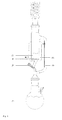
- Fig. 1 shows an exemplary schematic reaction setup on a laboratory scale for implementing the process in accordance with the present invention such that the formed product can be continuously removed.
- the starting borane of formula (II) can be placed in a vessel (e.g. a flask) (A) and be diluted with a high boiling solvent, e.g. mesitylene, in order to minimize its decomposition during heating.
- a high boiling solvent e.g. mesitylene
- the decomposition of the starting borane, such as HBPin (pinacolborane) can be further minimized by adding between 1 and 10 mol% of NEt 3 or other Lewis-bases such as pyridine or alkyl phosphines (preferably PiPr 3 and PtBu 3 ).
- the starting borane is then distilled from this mixture (B) and condensed into a reaction chamber (C) which can be heated, e.g.
- D a heating fluid
- the distilled borane of formula (II) entering into the reaction chamber is neat, as dilution with co-distilled solvent can impair the coupling reaction.
- a stationary catalyst is provided, which can be contacted by the borane of formula (II).
- the catalyst can be placed on a tray (E) which is permeable for liquids, and forms a reaction mixture with the borane of formula (I). Under these conditions, heterogeneous catalysts e.g. in the form of carrier pellets can be favourably used.
- a flow regulator such as a Teflon stop cock
- a continuous flow of the reaction mixture containing the diborane(4) of formula (I) resulting from the coupling reaction back into the flask (A) is maintained.
- the diboranes(4) can be removed from the actual reaction mixture and TONs of more than 1000 are achieved. After removing excess borane and the solvent in vacuo, the diboranes(4) can be isolated as described above.
- the diborane By adding a further catalyst to the reaction mixture containing the resulting diborane(4) of formula (I), the diborane can be reacted in situ with unsaturated compounds, such as compounds containing multiple carbon-carbon, carbon-nitrogen or nitrogen-nitrogen bonds.
- the catalysts should be added at the beginning of the reaction in order to remove the diborane(4) from the reaction mixture continuously.
- Possible catalysts useful for this purpose are complexes of Pt(0), Rh(0), and Ir(0), which can transfer the diborane(4) to unsaturated compounds that do not react with HBPin or HBCat.
- a number of advantages are associated with the process for the preparation of diborane(4) according to the present invention.
- only one step is needed, with a rather easily accessible borane as a starting material.
- solvents are needed only for the isolation of the product, whereas the reaction itself may be conducted in neat borane.
- Another important advantage is that the catalysts used for the dehydrocoupling are much easier to handle than the alkali metals needed for the reductive coupling employed in the prior art.
- only small quantities of byproduct are formed, which reduces the amount of the resulting waste material to a minimum and diminishes the necessity of purification of the resulting product.
- Recrystallization from diethyl ether affords B 2 Cat 2 , which can occasionally contain a smaller amount of the catecholato-bridged byproduct B 2 Cat 3 .
- This byproduct can be destroyed by adding some drops of water to the product dissolved in diethyl ether or dichloromethane, which turns the initially clear solution cloudy. After filtration, the solvent is removed, leaving catechol as the only impurity. Further purification is achieved by sublimation at 120 °C and 4 ⁇ 10 -2 mbar within 60 minutes. During this sublimation, pure B 2 Cat 2 (4.36 g, 18.3 mmol) is collected on a sublimation finger, which is heated to 55 °C, whereas the catechol precipitates at the cooler wall of the flask. Alternatively, catechol can be removed by further recrystallization from diethyl ether and crystallizing at -30 °C.
- B 2 Cat 2 has been prepared using other heterogeneous catalysts, as shown in table 1.
- Table 1 Example Catalyst (loading [mol%]) Turnover-Number 1 Platinum charcoal (0.006%) 350 2* Titanium powder (0.4%) 13 3* Zirconium powder (0.4%) 3 4* Hafnium powder (0.4%) 13 5 Palladium charcoal (0.05%) 35 6 Platinum charcoal (0.05%) 105 7 Platinum on alumina (0.05%) 95 8 Palladium charcoal (0.025%) 75 9 Platinum charcoal (0.025%) 190 10 Platinum on alumina (0.025%) 220
- B 2 Cat 2 was prepared using the catalysts shown in table 2.
- Table 2 Example Catalyst (loading [mol%]) Turnover-Number 11* [Cp 2 TiCl 2 ] (0.05%) 130 12* [Cp 2 ZrCl 2 ] (0.05%) 200 13* [Cp* 2 HfCl 2 ] (0.05%) 164 14* [CpTiCl 3 ] (0.05%) 106 15* HfCl 4 (0.05%) 48 16* Hfl 4 (0.05%) 59 17 [(dppm)PtCl 2 ] (0.05%) 90 18 [(dcpe)PtCl 2 ] (0.05%) 65 19 [(dcpe)PdCl 2 ] (0.05%) 75 20 [(dcpe)NiCl 2 ] (0.05%) 35
- group-4-compounds are the best catalysts, with a maximum TON of 200.
- HBPin pinacolborane, 85.0 g, 513 mmol
- platinum on alumina 100 mg, 25.6 ⁇ mol
- Excess HBPin is removed in vacuo and collected in a cooling trap for reuse.
- Subsequent sublimation affords a white crude product consisting of B 2 Pin 2 and (PinB) 2 O.
- Isolation of B 2 Pin 2 is achieved by dissolving the crude product in pentane and extracting with dilute hydrochloric acid. After removing the solvent, pure B 2 Pin 2 is obtained. In case further purification is necessary, this can be achieved by sublimation at 65 °C and 4 ⁇ 10 -2 mbar within 60 minutes.
- B 2 Pin 2 has been prepared using other heterogeneous catalysts as shown in table 3.
- Table 3 Example Catalyst (loading [mol%]) Turnover-Number 25 Platinum on alumina (0.005%) 90 26 Palladium charcoal (0.025%) 60 27 Platinum charcoal (0.025%) 60
- a TON (turnover number) of 90 can be achieved with platinum on alumina, whereas platinum and palladium charcoal afford TONs of 60 each.
- HBPin 3-5 mL HBPin is in contact with the catalyst (effective catalyst loading in the reaction chamber 0.015-0.025 mol%).
- the reaction time can be extended to more than one week, since no significant loss in catalyst activity is observed.
- reaction times of 20-50 hours are most favorable. Excess HBPin and mesitylene were removed in vacuo and the resulting crude product was purified as described above, yielding 1.36 g (6.06 mmol, TON 1050) B 2 Pin 2 .
- B 2 Pin 2 has been prepared using other heterogeneous catalysts, as shown in table 4.
- Table 4 Examples marked with * are reference examples)
- Example 2 Cat 2 has been prepared using heterogeneous catalysts, whereas TONs of up to 9200 were achieved, as shown in table 5.
- Table 5 Examples marked with * are reference examples)
Landscapes
- Chemical & Material Sciences (AREA)
- Organic Chemistry (AREA)
- Organic Low-Molecular-Weight Compounds And Preparation Thereof (AREA)
- Low-Molecular Organic Synthesis Reactions Using Catalysts (AREA)
Description
- The invention relates to a porcess for the preparation of diborane(4) compounds. This class of compounds constitutes an important precursor for organoboronic esters, which are versatile reagents for the formation of carbon-carbon bonds.
- The current synthesis of diboranes(4) was established by Brotherton in 1960 (R. J. Brotherton, A. L. McCloskey, L. L. Petterson, H. Steinberg, J. Am. Chem. Soc. 1960, 82, 6242-6245) and has been modified several times during the past decades (C. N. Welch, S. G. Shore, Inorg. Chem. 1968, 7, 225-230; P. Nguyen, G. Lesley, N. J. Taylor, T. B. Marder, N. L. Pickett, W. Clegg, M. R. J. Elsegood, N. C. Norman, Inorg. Chem. 1994, 33, 4623-4624; D. Loderer, H. Nöth, H. Pommerening, W. Rattay, H. Schick, Chem. Ber. 1994, 127, 1605-1611; W. Clegg, M.R. J. Elsegood, F. J. Lawlor, N. C. Norman, N. L. Pickett, E. G. Robins, A. J. Scott, P. Nguyen, N. J. Taylor, T. B. Marder, Inorg. Chem. 1998, 37, 5289-5293; T. Ishiyama, M. Murata, T. A. Ahiko, N. Miyaura, Org. Synth. 2000, 77, 176-185; H. A. Ali, I. Goldberg, M. Srebnik, Eur. J. Inorg. Chem. 2002, 73-78). Starting from borontribromide, bromobis(dimethylamino)borane is synthesized in two steps. Subsequently, the formation of a boron-boron-bond is achieved by reductive coupling with Na/K to yield tetrakis(dimethylamino)diborane (B2(NMe2)4). Bis(catecholato)diborane (B2Cat2) and bis(pinacolato)diborane (B2Pin2) can be obtained by the reaction of B2(NMe2)4 with the corresponding diols (T. ishiyama, M. Murata, T. A. Ahiko, N. Miyaura, Org. Synth. 2000, 77, 176-185; R. J. Brotherton, A. L. McCloskey, J. L. Boone, H. M. Manasevit, J. Am. Chem. Soc. 1960, 82, 6245-6248; H. Nöth, Z. Naturforsch. B: Chem. Sci. 1984, 39B, 1463-1466).

- Alternatively, chlorocatecholborane can be used as a starting material for the synthesis of B2Cat2. In this case, the boron-boron bond is formed by reductive coupling with sodium amalgam. B2Pin2 is not accessible on this reaction pathway (N. R. Anastasi, K. M. Waltz, W. L. Weerakoon, J. F. Hartwig, Organometallics 2003, 22, 365-369).
- However, these syntheses imply several disadvantages, especially in regard to the large-scale production of diboranes(4). For example, very reactive or toxic reagents are required for the reductive coupling. Furthermore, as this is a multistep-synthesis, it is quite time consuming and each step produces waste material, which makes the commercially available diboranes(4) rather expensive.
- Marder et al. (W. H. Lam, K. C. Lam, Z. Lin, S. Shimada, R. N. Perutz, T. B. Marder, Dalton Trans. 2004, 1556-1562) conducted a theoretical study of reaction pathways for the rhodium phosphine-catalysed borylation of C-H bonds with pinacolborane (HBPin). Therein, they also examined the dehydrodimerisation of HBPin to B2Pin2 + H2 in the presence of a [(PiPr3)2Rh(Cl)(N2)] catalyst. According to their theoretical calculations, there is no thermodynamic driving force for this reaction. However, experimental data indicate an equilibrium between HBPin and B2Pin2 (S. Shimada, A. S. Batsanov, J. A. K. Howard, T. B. Marder, Angew. Chem. 2001, 113, 2226-2229; Angew. Chem. Int. Ed. Engl. 2001, 40, 2168-2171).
- In view of the prior art, it was an object of the present invention to provide a process for the preparation of diboranes(4) which uses less reactive and less toxic reagents, is fast and simple and produces less waste material.
- The present inventors have surprisingly found that these objects can be achieved by a process for the preparation of compounds of the general formula (I) (hereinafter also called "diboranes(4)") by coupling of the corresponding boranes of the general formula (II) in the presence of a homogeneous or heterogeneous catalyst as described hereinafter.
- Accordingly, the present invention relates to a process for the preparation of diboranes(4), comprising the step of coupling two compounds of the general formula (II), which may be identical or different,

to form a diborane(4) of the general formula (I)
- The term "alkyl" as used in the above definition and the following preferred embodiments, encompasses straight and branched alkyl moieties. Unless indicated otherwise, preferred examples of alkyl groups have 1 to 6 carbon atoms (C1-6 alkyl), in particular 1 to 4 carbon atoms (C1-4 alkyl), and include methyl, ethyl, propyl (e.g., n-propyl, or isopropyl) and butyl (e.g., n-butyl, isobutyl, tert-butyl, or sec-butyl). Specifically for the divalent alkyl group Ra it is preferred that the divalent alkyl group contains a linear chain with 2 to 6, preferably 2 to 4 carbon atoms extending from one group Z to the other, and the total number of carbon atoms, including branches, is preferably 2 to 10.
- The term "cycloalkyl", as used in the above definition and the following preferred embodiments, refers to a cyclic alkyl moiety. Preferred examples of suitable alkyl groups have 4 to 10 carbon atoms, in particular 5 or 6 carbon atoms, and include cyclopentyl and cyclohexyl.
- The term "aryl", as used in the above definition and the following preferred embodiments, refers to an aromatic ring system, including single rings and condensed rings, which preferably has 6 to 10 carbon atoms. Particular examples are a phenyl or a naphthyl group.
- Preferred boranes of formula (IIa) are 2-methyl-2,4-pentanediolborane, neopentylglycolborane, catecholborane and pinacolborane, of which catecholborane (HBCat) and pinacolborane (HBPin) are particularly preferred.
- In the process in accordance with the invention, one type or a mixture of two or more types of compounds of formula (II) may be used as a starting material for the coupling reaction. However, in terms of the control of the obtained structure, it is preferable to use only one type of compound of formula (II). Thus, it is made sure that two identical compounds of formula (II) are coupled in the process in accordance with the invention.
- The compounds of formula (II) are conveniently accessible via processes described in the literature, e.g. as discussed above, or in H. C. Newsom, W. G. Woods, Inorg. Chem. 1968, 7, 177-178 and H. Noeth, W. A. Dorochov, P. Fritz, F. Pfab, Z. Anorg. Allg. Chem. 1962, 318, 293-303; R. Köster, H. Bellut, S. Hattori, Justus Liebigs Ann. Chem. 1969, 720, 1-22; H. C. Brown, S. K. Gupta, J. Am. Chem. Soc. 1975, 97, 5249-5255; D. Männig, H. Nöth, J. Chem. Soc. Dalton Trans. 1985, 1689-1692; J. V. B. Kanth, M. Periasamy, H. C. Brown, Org. Process Res. Dev. 2000, 4, 550-553; N. Praveen Ganesh, S. D'Hondt, P. Y. Chavant, J. Org. Chem. 2007, 72, 4510-4514 or B. M. Rosen, C. Huang, V. Percec, Org. Lett. 2008, 10, 2597-2600.
- As noted above, the reaction proceeds via heterogeneous or homogeneous catalysis.
- As a catalyst for homogeneous catalysis, transition metal compounds containing a metal selected from Pt, Pd and Ni can be used. The transition metal compound can be a salt of the transition metal, such as a halogenide, e.g. a chloride. Preferably, a complex of one of the above transition metals is used as a catalyst for homogeneous catalysis. The transition metal complex preferably contains an optionally substituted cyclopentadienyl ligand, such as cyclopentadienyl (Cp) or pentamethylcyclopentadienyl (Cp*), or a phosphino ligand, especially a chelating ligand combining two phosphino groups, such as bis(diphenylphosphino)methane (dppm) or bis(dicyclohexylphosphino)ethane (dcpe). A chelating phosphino ligand is preferably present in the complexes of Ni, Pd and Pt.
- Preferred examples of catalysts for homogeneous catalysis are [(dppm)PtCl2] (T. G. Appleton, M. A. Bennett, I. B. Tomkins, J. Chem. Soc. , Dalton Trans. 1976, 439-446), [(dcpe)PtCl2] (M. Hackett, G. M. Whitesides, J. Am. Chem. Soc. 1988, 110, 1449-1462), [(dcpe)PdCl2] (P. Diversi, G. Ingrosso, A. Lucherini, T. Lumini, F. Marchetti, V. Adovasio, M. Nardelli, J. Chem. Soc., Dalton Trans. 1988, 133-140) and [(dcpe)NiCl2] (I. M. Angulo, E. Bouwman, R. van Gorkum, S. M. Lok, M. Lutz, A. L. Spek, J. Mol. Catal. A: Chem. 2003, 202, 97-106). [(dppm)PtCl2] is particularly preferred.
- As a catalyst for heterogeneous catalysis, a transition metal selected from Pt, Pd and Ni can be used which is generally in elemental form. Most preferred metals for the heterogeneous catalysis are selected from Pd and Pt. For example, a metal powder may be used. However, it is preferred to use the metal supported on a carrier, such as carbon (e.g. charcoal), a ceramic support (e.g. alumina, silica or combinations thereof), or another inorganic carrier, such as BaSO4, BaCO3, CaCO3, SrSO4 or SrCO3. The support is typically a particulate support or a support in the form of pellets. Especially preferred heterogeneous catalysts are Rh/alumina Pt/charcoal, Pt/alumina, Pd/charcoal and Pd/alumina. In case of a supported catalyst, the amount of the transition metal on the support is preferably 0.1 to 20 wt%, more preferably 0.5 to 15 wt% based on the total weight of the catalyst including the support.
- The catalyst is generally employed in an amount of 0.001 to 5 mol%, preferably 0.001 to 1 mol%, in terms of the ratio of the moles of metal to the moles of the starting compound (II) used.
- It has been found that the turnover-numbers (TON) for the formation of diborane(4) may be improved if the borane is used in large excess. It is therefore preferable to keep the amount of the catalyst relatively low in the reaction mixture. For example, for the heterogeneous catalysis, catalyst loadings in the range of 0.001 to 0.5 mol % , in particular 0.002 to 0.1 mol% and most preferably 0.002 to 0.05 mol% (in terms of the ratio of the moles of metal to the moles of the starting compound (II)) are typically used. For the homogeneous catalysis, a preferred range for the catalyst loading is 0.01 to 0.1 mol%.
- The coupling reaction in accordance with the process of the present invention may be carried out in a solvent, but is preferably carried out without a solvent, i.e. by contacting the neat starting compound of formula (II) with the catalyst.
- The reaction temperature of the reductive coupling reaction according to the present invention is not particularly limited. Preferably, the reaction temperature is chosen to be in a range of from 50 to 150 °C, more preferably from 80 to 120 °C and most preferably between 100 and 115 °C. However, for compounds of formula (II) which are stable under heat, higher temperatures can be chosen. For example, in case catecholborane or pinacolborane are used, a reaction temperature of from 100 to 120°C is preferred, more preferably 105 to 110 °C.
- The reaction time for the coupling reaction according to the present invention is not particularly limited. Preferably, the reaction time is between 0.5 h and 3 days, more preferably between 3 and 30 h, most preferably between 6 and 24 h.
- At the end of the reductive coupling reaction, excess starting material may be removed, e.g. via vacuum distillation, and may be collected in a cooling trap to be reused. From the remaining solid, the desired diborane(4) can be recovered, e.g., via sublimation, and can be purified, if needed, via recrystallization or other methods known to the skilled person.
- In accordance with a preferred variant of the process in accordance with the invention, formed product is continuously removed, in part or completely, from the reaction mixture. This can be achieved, e.g., by allowing the starting compounds of formula (II) to pass a reaction zone where they are in contact with the catalyst, favorably in a heterogeneously catalyzed reaction such that the catalyst can be conveniently held in place in the reaction zone. After passing the reaction zone, the mixure of starting compounds of formula (II) and diborane(4) of formula (I) can be subjected to a separation process to separate these components from each other. For example, the starting compounds of formula (II) can be distilled from the mixture and can be recycled to the reaction zone.
-
Fig. 1 shows an exemplary schematic reaction setup on a laboratory scale for implementing the process in accordance with the present invention such that the formed product can be continuously removed. - In this exemplary embodiment, the starting borane of formula (II) can be placed in a vessel (e.g. a flask) (A) and be diluted with a high boiling solvent, e.g. mesitylene, in order to minimize its decomposition during heating. The decomposition of the starting borane, such as HBPin (pinacolborane), can be further minimized by adding between 1 and 10 mol% of NEt3 or other Lewis-bases such as pyridine or alkyl phosphines (preferably PiPr3 and PtBu3). The starting borane is then distilled from this mixture (B) and condensed into a reaction chamber (C) which can be heated, e.g. by a glass jacket containing a heating fluid (D). It is preferred that the distilled borane of formula (II) entering into the reaction chamber is neat, as dilution with co-distilled solvent can impair the coupling reaction. Inside the reaction chamber, a stationary catalyst is provided, which can be contacted by the borane of formula (II). For example, the catalyst can be placed on a tray (E) which is permeable for liquids, and forms a reaction mixture with the borane of formula (I). Under these conditions, heterogeneous catalysts e.g. in the form of carrier pellets can be favourably used. Via a flow regulator (F), such as a Teflon stop cock, a continuous flow of the reaction mixture containing the diborane(4) of formula (I) resulting from the coupling reaction back into the flask (A) is maintained. Via this equipment, the diboranes(4) can be removed from the actual reaction mixture and TONs of more than 1000 are achieved. After removing excess borane and the solvent in vacuo, the diboranes(4) can be isolated as described above.
- By adding a further catalyst to the reaction mixture containing the resulting diborane(4) of formula (I), the diborane can be reacted in situ with unsaturated compounds, such as compounds containing multiple carbon-carbon, carbon-nitrogen or nitrogen-nitrogen bonds.
- The catalysts should be added at the beginning of the reaction in order to remove the diborane(4) from the reaction mixture continuously. Possible catalysts useful for this purpose are complexes of Pt(0), Rh(0), and Ir(0), which can transfer the diborane(4) to unsaturated compounds that do not react with HBPin or HBCat.
- A number of advantages are associated with the process for the preparation of diborane(4) according to the present invention. In contrast to the conventional method, only one step is needed, with a rather easily accessible borane as a starting material. Furthermore, solvents are needed only for the isolation of the product, whereas the reaction itself may be conducted in neat borane. Another important advantage is that the catalysts used for the dehydrocoupling are much easier to handle than the alkali metals needed for the reductive coupling employed in the prior art. Finally, only small quantities of byproduct are formed, which reduces the amount of the resulting waste material to a minimum and diminishes the necessity of purification of the resulting product.
- In a typical reaction, neat HBCat (catecholborane, 105 g, 872 mmol) is heated with platinum charcoal (10 wt% platinum, 100 mg, 51.3 µmol, loading: 0.006 mol%) to 105 °C, while a light stream of dry argon is passed through the solution. After 20 h, excess HBCat is removed in vacuo and collected in a cooling trap for reuse. The remaining black solid is sublimed at 125°C and 4·10-2 mbar for 10 h to yield a solid colorless crude product consisting of B2Cat2 and several byproducts. Recrystallization from diethyl ether affords B2Cat2, which can occasionally contain a smaller amount of the catecholato-bridged byproduct B2Cat3. This byproduct can be destroyed by adding some drops of water to the product dissolved in diethyl ether or dichloromethane, which turns the initially clear solution cloudy. After filtration, the solvent is removed, leaving catechol as the only impurity. Further purification is achieved by sublimation at 120 °C and 4·10-2 mbar within 60 minutes. During this sublimation, pure B2Cat2 (4.36 g, 18.3 mmol) is collected on a sublimation finger, which is heated to 55 °C, whereas the catechol precipitates at the cooler wall of the flask. Alternatively, catechol can be removed by further recrystallization from diethyl ether and crystallizing at -30 °C.
- In the same way as in Example 1, B2Cat2 has been prepared using other heterogeneous catalysts, as shown in table 1.
Table 1 (Examples marked with * are reference examples) Example Catalyst (loading [mol%]) Turnover-Number 1 Platinum charcoal (0.006%) 350 2* Titanium powder (0.4%) 13 3* Zirconium powder (0.4%) 3 4* Hafnium powder (0.4%) 13 5 Palladium charcoal (0.05%) 35 6 Platinum charcoal (0.05%) 105 7 Platinum on alumina (0.05%) 95 8 Palladium charcoal (0.025%) 75 9 Platinum charcoal (0.025%) 190 10 Platinum on alumina (0.025%) 220 - Under heterogeneous conditions, a maximum turnover-number of 350 is obtained by the reaction of 0.006 mol% platinum charcoal (10wt% platinum) with neat HBCat. Platinum on alumina and palladium charcoal can also be used as heterogeneous catalysts, affording different TONs depending on the catalyst loading. Group-4-metal powders also catalyze the formation of B2Cat2, but the efficiency of the process is not as high.
- In a similar reaction as in Example 1, except for adding a transition metal compound as indicated in table 2 to the neat HBCat instead of an elemental metal to perform homogeneous catalysis, B2Cat2 was prepared using the catalysts shown in table 2.
Table 2 (Examples marked with * are reference examples) Example Catalyst (loading [mol%]) Turnover-Number 11* [Cp2TiCl2] (0.05%) 130 12* [Cp2ZrCl2] (0.05%) 200 13* [Cp*2HfCl2] (0.05%) 164 14* [CpTiCl3] (0.05%) 106 15* HfCl4 (0.05%) 48 16* Hfl4 (0.05%) 59 17 [(dppm)PtCl2] (0.05%) 90 18 [(dcpe)PtCl2] (0.05%) 65 19 [(dcpe)PdCl2] (0.05%) 75 20 [(dcpe)NiCl2] (0.05%) 35 21 [(dppm)PtCl2] (0.025%) 160 22 [(dcpe)PtCl2] (0.025%) 90 23 [(dcpe)PdCl2] (0.025%) 90 24 [(dcpe)NiCl2] (0.025%) 50 - Under these conditions, group-4-compounds are the best catalysts, with a maximum TON of 200. Among the late transition metal compounds, [(dppm)PtCl2] turned out to be the most effective catalyst, with a maximum TON of 160 (see table 2; Cp = cyclopentadienyl, Cp* = pentamethylcyclopentadienyl, dppm = bis(diphenylphosphino)methane), dcpe = bis(dicyclohexylphosphino)ethane).
- In a typical reaction, neat HBPin (pinacolborane, 85.0 g, 513 mmol) is heated with platinum on alumina (100 mg, 25.6 µmol) to 105 °C for several hours and monitored by GC. Excess HBPin is removed in vacuo and collected in a cooling trap for reuse. Subsequent sublimation affords a white crude product consisting of B2Pin2 and (PinB)2O. Isolation of B2Pin2 is achieved by dissolving the crude product in pentane and extracting with dilute hydrochloric acid. After removing the solvent, pure B2Pin2 is obtained. In case further purification is necessary, this can be achieved by sublimation at 65 °C and 4·10-2 mbar within 60 minutes.
- In the same way as in Example 25, B2Pin2 has been prepared using other heterogeneous catalysts as shown in table 3.
Table 3 Example Catalyst (loading [mol%]) Turnover-Number 25 Platinum on alumina (0.005%) 90 26 Palladium charcoal (0.025%) 60 27 Platinum charcoal (0.025%) 60 - A TON (turnover number) of 90 can be achieved with platinum on alumina, whereas platinum and palladium charcoal afford TONs of 60 each.
- Using the reaction setup illustrated in
Fig. 1 , a mixture of HBPin (17.6 g, 20 mL, 138 mmol), NEt3 (7.23 mmol) and 100 mL mesitylene was heated to ca. 160 °C. The neat borane was thus distilled into the reaction chamber equipped with platinum on alumina (0.5 wt%, 200 mg, 5.13 µmol). A constant reaction temperature of 120 °C was maintained by a glass jacket heated with polyethylene glycol 400. Via a Teflon stop cock, the flow of borane back into the flask was regulated, so that a constant volume of ca. 3-5 mL HBPin is in contact with the catalyst (effective catalyst loading in the reaction chamber 0.015-0.025 mol%). In general, the reaction time can be extended to more than one week, since no significant loss in catalyst activity is observed. However, in order to avoid an excessive decomposition of HBPin, reaction times of 20-50 hours are most favorable. Excess HBPin and mesitylene were removed in vacuo and the resulting crude product was purified as described above, yielding 1.36 g (6.06 mmol, TON 1050) B2Pin2. - In the same way as in Example 28, B2Pin2 has been prepared using other heterogeneous catalysts, as shown in table 4.
Table 4 (Examples marked with * are reference examples) Example Catalyst (loading [mol%]) Turnover-Number 28 Platinum on alumina 1050 29* Rhodium on alumina 284 30 Palladium on alumina 513 - In the same way as in Example 28, B2Cat2 has been prepared using heterogeneous catalysts, whereas TONs of up to 9200 were achieved, as shown in table 5.
Table 5 (Examples marked with * are reference examples) Example Catalyst (loading [mol%]) Turnover-Number 31 Platinum on alumina 9200 32* Rhodium on alumina 6500
Claims (13)
- A process for the preparation of a diborane(4), comprising the step of coupling two compounds of the general formula (II), which may be identical or different,

via homogeneous or heterogeneous catalysis in the presence of a catalyst comprising a transition metal selected from Ni, Pd and Pt,
to form a diborane(4) of the general formula (I)
- The process of claim 1 wherein the compounds of formula (II) are coupled via heterogeneous catalysis in the presence of an elemental transition metal as a catalyst.
- The process of claim 2 wherein the transition metal is supported on a carrier.
- The process of claim 3 wherein the amount of the transition metal is 0.1 to 20 wt% based on the total weight of the supported catalyst.
- The process of claim 1 wherein the compounds of formula (II) are coupled via homogeneous catalysis in the presence of a transition metal compound as a catalyst.
- The process of claim 5 wherein the transition metal compound is a transition metal complex.
- The process of claim 6, wherein the complex comprises a ligand selected from cyclopentadienyl, pentamethylcyclopentadienyl, bis((diphenylphosphino)methane), and bis(dicyclohexylphosphino)ethane.
- The process of claim 5 wherein the transition metal compound is a transition metal salt.
- The process of any of claims 5 to 8, wherein the transition metal compound comprises a metal selected from Group 4 of the periodic table.
- The process of any of claims 1 to 9 wherein the catalyst is employed in an amount of 0.001 to 5 mol%, based on the total amount of the compound formula (II) used in the coupling reaction.
- The process of any of claims 1 to 10 wherein the catalyst is contacted with the neat compound of formula (II).
- The process of any of claims 1 to 11, wherein the diborane(4) of formula (I) is removed from the reaction mixture while the reaction proceeds.
- The process of any of claims 1 to 12, wherein only one type of compound of formula (II) is used in the coupling reaction.
Priority Applications (1)
| Application Number | Priority Date | Filing Date | Title |
|---|---|---|---|
| EP20110176448 EP2554547B1 (en) | 2011-08-03 | 2011-08-03 | Transition-metal catalyzed synthesis of diboranes(4) |
Applications Claiming Priority (1)
| Application Number | Priority Date | Filing Date | Title |
|---|---|---|---|
| EP20110176448 EP2554547B1 (en) | 2011-08-03 | 2011-08-03 | Transition-metal catalyzed synthesis of diboranes(4) |
Publications (2)
| Publication Number | Publication Date |
|---|---|
| EP2554547A1 EP2554547A1 (en) | 2013-02-06 |
| EP2554547B1 true EP2554547B1 (en) | 2015-04-29 |
Family
ID=44644969
Family Applications (1)
| Application Number | Title | Priority Date | Filing Date |
|---|---|---|---|
| EP20110176448 Not-in-force EP2554547B1 (en) | 2011-08-03 | 2011-08-03 | Transition-metal catalyzed synthesis of diboranes(4) |
Country Status (1)
| Country | Link |
|---|---|
| EP (1) | EP2554547B1 (en) |
Families Citing this family (1)
| Publication number | Priority date | Publication date | Assignee | Title |
|---|---|---|---|---|
| CN120289966A (en) * | 2025-06-13 | 2025-07-11 | 双枪科技股份有限公司 | A modified PET material and its application in preparing catering supplies |
-
2011
- 2011-08-03 EP EP20110176448 patent/EP2554547B1/en not_active Not-in-force
Also Published As
| Publication number | Publication date |
|---|---|
| EP2554547A1 (en) | 2013-02-06 |
Similar Documents
| Publication | Publication Date | Title |
|---|---|---|
| Yamamoto et al. | Interaction of palladium (0) complexes with allylic acetates, allyl ethers, allyl phenyl chalcogenides, allylic alcohols, and allylamines. Oxidative addition, condensation, disproportionation, and. pi.-complex formation | |
| Budiman et al. | Copper‐Catalysed suzuki‐miyaura cross‐coupling of highly fluorinated aryl boronate esters with aryl iodides and bromides and Fluoroarene− arene π‐stacking interactions in the products | |
| Sahoo et al. | Synthesis of low oxidation state zinc (i) complexes and their catalytic studies in the dehydroborylation of terminal alkynes | |
| CN1275984A (en) | Method for preparing organic boronic acid derivatives using diboronic acid | |
| Kohlmann et al. | Suzuki–Miyaura Cross‐Coupling Reactions of Highly Fluorinated Arylboronic Esters: Catalytic Studies and Stoichiometric Model Reactions on the Transmetallation Step | |
| Lemouzy et al. | Stereospecific Synthesis of α‐and β‐Hydroxyalkyl P‐Stereogenic Phosphine–Boranes and Functionalized Derivatives: Evidence of the P O Activation in the BH3‐Mediated Reduction | |
| Welch et al. | Reactions of phosphines with electron deficient boranes | |
| CN107930696B (en) | Application of rare earth trimethyl cyclopentadienyl complex in catalyzing hydroboration reaction of imine and borane | |
| Brown et al. | Iron catalysed Negishi cross-coupling using simple ethyl-monophosphines | |
| Chamberlain et al. | The chemistry of sterically crowded aryl-oxide ligands. Part 2. Cyclotantalation of 2, 6-di-tert-butylphenoxide | |
| EP0599633B1 (en) | Boronic ester synthesis | |
| Schumann et al. | Organometallic compounds of the lanthanides XCVII. Synthesis and crystal structures of monomeric bis (ethyltetramethylcyclopentadienyl) amide and alkyl derivatives of the lanthanides | |
| Alonso‐Moreno et al. | Well‐Defined Regioselective Iminopyridine Rhodium Catalysts for Anti‐Markovnikov Addition of Aromatic Primary Amines to 1‐Octyne | |
| US6878830B2 (en) | Catalytic boronate ester synthesis from boron reagents and hydrocarbons | |
| EP2554547A1 (en) | Transition-metal catalyzed synthesis of diboranes(4) | |
| Frost et al. | Rhodium catalysed conjugate addition of a chiral alkenyltrifluoroborate salt: the enantioselective synthesis of hermitamides A and B | |
| US9192927B2 (en) | Method for the preparation of palladium(I) tri-tert-butylphosphine bromide dimer and process for its use in isomerization reactions | |
| Nishihara et al. | Synthesis and reactivity of boryloxorhodium complexes. Relevance to intermolecular transmetalation from boron to rhodium in Rh-catalyzed reactions | |
| Wang et al. | Synthesis of a phosphapyracene via metal-mediated cyclization: structural and reactivity effects of acenaphthene precursors | |
| Amouri | Metal-stabilized o-quinone methides, thioquinones, and selenoquinones: Trapping important reactive intermediates and beyond | |
| Pietruszka et al. | 1, 1, 2, 2-Tetraphenyl-1, 2-ethanediol: A new protecting group for the synthesis of cyclopropylboronic esters | |
| Fernandez et al. | Catalytic tandem organic sequences through selective boron addition chemistry | |
| JP4964760B2 (en) | Bisphosphite and method for producing aldehyde compound using the bisphosphite and Group 8-10 metal compound | |
| Kitschke et al. | Intramolecular C–O insertion of a germanium (II) salicyl alcoholate: A combined experimental and theoretical study | |
| EP4293031B1 (en) | Refining method for phosphorus compound |
Legal Events
| Date | Code | Title | Description |
|---|---|---|---|
| PUAI | Public reference made under article 153(3) epc to a published international application that has entered the european phase |
Free format text: ORIGINAL CODE: 0009012 |
|
| AK | Designated contracting states |
Kind code of ref document: A1 Designated state(s): AL AT BE BG CH CY CZ DE DK EE ES FI FR GB GR HR HU IE IS IT LI LT LU LV MC MK MT NL NO PL PT RO RS SE SI SK SM TR |
|
| AX | Request for extension of the european patent |
Extension state: BA ME |
|
| 17P | Request for examination filed |
Effective date: 20130806 |
|
| RBV | Designated contracting states (corrected) |
Designated state(s): AL AT BE BG CH CY CZ DE DK EE ES FI FR GB GR HR HU IE IS IT LI LT LU LV MC MK MT NL NO PL PT RO RS SE SI SK SM TR |
|
| 17Q | First examination report despatched |
Effective date: 20131021 |
|
| GRAP | Despatch of communication of intention to grant a patent |
Free format text: ORIGINAL CODE: EPIDOSNIGR1 |
|
| GRAJ | Information related to disapproval of communication of intention to grant by the applicant or resumption of examination proceedings by the epo deleted |
Free format text: ORIGINAL CODE: EPIDOSDIGR1 |
|
| GRAP | Despatch of communication of intention to grant a patent |
Free format text: ORIGINAL CODE: EPIDOSNIGR1 |
|
| INTG | Intention to grant announced |
Effective date: 20140703 |
|
| INTG | Intention to grant announced |
Effective date: 20140711 |
|
| GRAS | Grant fee paid |
Free format text: ORIGINAL CODE: EPIDOSNIGR3 |
|
| GRAP | Despatch of communication of intention to grant a patent |
Free format text: ORIGINAL CODE: EPIDOSNIGR1 |
|
| INTG | Intention to grant announced |
Effective date: 20150305 |
|
| GRAA | (expected) grant |
Free format text: ORIGINAL CODE: 0009210 |
|
| AK | Designated contracting states |
Kind code of ref document: B1 Designated state(s): AL AT BE BG CH CY CZ DE DK EE ES FI FR GB GR HR HU IE IS IT LI LT LU LV MC MK MT NL NO PL PT RO RS SE SI SK SM TR |
|
| REG | Reference to a national code |
Ref country code: GB Ref legal event code: FG4D |
|
| REG | Reference to a national code |
Ref country code: CH Ref legal event code: EP |
|
| REG | Reference to a national code |
Ref country code: AT Ref legal event code: REF Ref document number: 724386 Country of ref document: AT Kind code of ref document: T Effective date: 20150515 |
|
| REG | Reference to a national code |
Ref country code: IE Ref legal event code: FG4D |
|
| REG | Reference to a national code |
Ref country code: DE Ref legal event code: R096 Ref document number: 602011016047 Country of ref document: DE Effective date: 20150611 |
|
| REG | Reference to a national code |
Ref country code: FR Ref legal event code: PLFP Year of fee payment: 5 |
|
| REG | Reference to a national code |
Ref country code: NL Ref legal event code: VDEP Effective date: 20150429 |
|
| REG | Reference to a national code |
Ref country code: AT Ref legal event code: MK05 Ref document number: 724386 Country of ref document: AT Kind code of ref document: T Effective date: 20150429 |
|
| REG | Reference to a national code |
Ref country code: LT Ref legal event code: MG4D |
|
| PG25 | Lapsed in a contracting state [announced via postgrant information from national office to epo] |
Ref country code: NL Free format text: LAPSE BECAUSE OF FAILURE TO SUBMIT A TRANSLATION OF THE DESCRIPTION OR TO PAY THE FEE WITHIN THE PRESCRIBED TIME-LIMIT Effective date: 20150429 |
|
| PG25 | Lapsed in a contracting state [announced via postgrant information from national office to epo] |
Ref country code: ES Free format text: LAPSE BECAUSE OF FAILURE TO SUBMIT A TRANSLATION OF THE DESCRIPTION OR TO PAY THE FEE WITHIN THE PRESCRIBED TIME-LIMIT Effective date: 20150429 Ref country code: HR Free format text: LAPSE BECAUSE OF FAILURE TO SUBMIT A TRANSLATION OF THE DESCRIPTION OR TO PAY THE FEE WITHIN THE PRESCRIBED TIME-LIMIT Effective date: 20150429 Ref country code: LT Free format text: LAPSE BECAUSE OF FAILURE TO SUBMIT A TRANSLATION OF THE DESCRIPTION OR TO PAY THE FEE WITHIN THE PRESCRIBED TIME-LIMIT Effective date: 20150429 Ref country code: PT Free format text: LAPSE BECAUSE OF FAILURE TO SUBMIT A TRANSLATION OF THE DESCRIPTION OR TO PAY THE FEE WITHIN THE PRESCRIBED TIME-LIMIT Effective date: 20150831 Ref country code: FI Free format text: LAPSE BECAUSE OF FAILURE TO SUBMIT A TRANSLATION OF THE DESCRIPTION OR TO PAY THE FEE WITHIN THE PRESCRIBED TIME-LIMIT Effective date: 20150429 Ref country code: NO Free format text: LAPSE BECAUSE OF FAILURE TO SUBMIT A TRANSLATION OF THE DESCRIPTION OR TO PAY THE FEE WITHIN THE PRESCRIBED TIME-LIMIT Effective date: 20150729 |
|
| PGFP | Annual fee paid to national office [announced via postgrant information from national office to epo] |
Ref country code: DE Payment date: 20150625 Year of fee payment: 5 Ref country code: GB Payment date: 20150828 Year of fee payment: 5 |
|
| PG25 | Lapsed in a contracting state [announced via postgrant information from national office to epo] |
Ref country code: IS Free format text: LAPSE BECAUSE OF FAILURE TO SUBMIT A TRANSLATION OF THE DESCRIPTION OR TO PAY THE FEE WITHIN THE PRESCRIBED TIME-LIMIT Effective date: 20150829 Ref country code: RS Free format text: LAPSE BECAUSE OF FAILURE TO SUBMIT A TRANSLATION OF THE DESCRIPTION OR TO PAY THE FEE WITHIN THE PRESCRIBED TIME-LIMIT Effective date: 20150429 Ref country code: LV Free format text: LAPSE BECAUSE OF FAILURE TO SUBMIT A TRANSLATION OF THE DESCRIPTION OR TO PAY THE FEE WITHIN THE PRESCRIBED TIME-LIMIT Effective date: 20150429 Ref country code: GR Free format text: LAPSE BECAUSE OF FAILURE TO SUBMIT A TRANSLATION OF THE DESCRIPTION OR TO PAY THE FEE WITHIN THE PRESCRIBED TIME-LIMIT Effective date: 20150730 Ref country code: AT Free format text: LAPSE BECAUSE OF FAILURE TO SUBMIT A TRANSLATION OF THE DESCRIPTION OR TO PAY THE FEE WITHIN THE PRESCRIBED TIME-LIMIT Effective date: 20150429 |
|
| PGFP | Annual fee paid to national office [announced via postgrant information from national office to epo] |
Ref country code: FR Payment date: 20150824 Year of fee payment: 5 |
|
| PG25 | Lapsed in a contracting state [announced via postgrant information from national office to epo] |
Ref country code: EE Free format text: LAPSE BECAUSE OF FAILURE TO SUBMIT A TRANSLATION OF THE DESCRIPTION OR TO PAY THE FEE WITHIN THE PRESCRIBED TIME-LIMIT Effective date: 20150429 Ref country code: DK Free format text: LAPSE BECAUSE OF FAILURE TO SUBMIT A TRANSLATION OF THE DESCRIPTION OR TO PAY THE FEE WITHIN THE PRESCRIBED TIME-LIMIT Effective date: 20150429 |
|
| REG | Reference to a national code |
Ref country code: DE Ref legal event code: R097 Ref document number: 602011016047 Country of ref document: DE |
|
| PG25 | Lapsed in a contracting state [announced via postgrant information from national office to epo] |
Ref country code: CZ Free format text: LAPSE BECAUSE OF FAILURE TO SUBMIT A TRANSLATION OF THE DESCRIPTION OR TO PAY THE FEE WITHIN THE PRESCRIBED TIME-LIMIT Effective date: 20150429 Ref country code: RO Free format text: LAPSE BECAUSE OF NON-PAYMENT OF DUE FEES Effective date: 20150429 Ref country code: PL Free format text: LAPSE BECAUSE OF FAILURE TO SUBMIT A TRANSLATION OF THE DESCRIPTION OR TO PAY THE FEE WITHIN THE PRESCRIBED TIME-LIMIT Effective date: 20150429 Ref country code: SK Free format text: LAPSE BECAUSE OF FAILURE TO SUBMIT A TRANSLATION OF THE DESCRIPTION OR TO PAY THE FEE WITHIN THE PRESCRIBED TIME-LIMIT Effective date: 20150429 |
|
| PLBE | No opposition filed within time limit |
Free format text: ORIGINAL CODE: 0009261 |
|
| STAA | Information on the status of an ep patent application or granted ep patent |
Free format text: STATUS: NO OPPOSITION FILED WITHIN TIME LIMIT |
|
| PG25 | Lapsed in a contracting state [announced via postgrant information from national office to epo] |
Ref country code: LU Free format text: LAPSE BECAUSE OF FAILURE TO SUBMIT A TRANSLATION OF THE DESCRIPTION OR TO PAY THE FEE WITHIN THE PRESCRIBED TIME-LIMIT Effective date: 20150803 Ref country code: MC Free format text: LAPSE BECAUSE OF FAILURE TO SUBMIT A TRANSLATION OF THE DESCRIPTION OR TO PAY THE FEE WITHIN THE PRESCRIBED TIME-LIMIT Effective date: 20150429 |
|
| REG | Reference to a national code |
Ref country code: CH Ref legal event code: PL |
|
| 26N | No opposition filed |
Effective date: 20160201 |
|
| PG25 | Lapsed in a contracting state [announced via postgrant information from national office to epo] |
Ref country code: LI Free format text: LAPSE BECAUSE OF NON-PAYMENT OF DUE FEES Effective date: 20150831 Ref country code: CH Free format text: LAPSE BECAUSE OF NON-PAYMENT OF DUE FEES Effective date: 20150831 Ref country code: IT Free format text: LAPSE BECAUSE OF FAILURE TO SUBMIT A TRANSLATION OF THE DESCRIPTION OR TO PAY THE FEE WITHIN THE PRESCRIBED TIME-LIMIT Effective date: 20150429 |
|
| PG25 | Lapsed in a contracting state [announced via postgrant information from national office to epo] |
Ref country code: SI Free format text: LAPSE BECAUSE OF FAILURE TO SUBMIT A TRANSLATION OF THE DESCRIPTION OR TO PAY THE FEE WITHIN THE PRESCRIBED TIME-LIMIT Effective date: 20150429 |
|
| REG | Reference to a national code |
Ref country code: IE Ref legal event code: MM4A |
|
| PG25 | Lapsed in a contracting state [announced via postgrant information from national office to epo] |
Ref country code: IE Free format text: LAPSE BECAUSE OF NON-PAYMENT OF DUE FEES Effective date: 20150803 |
|
| PG25 | Lapsed in a contracting state [announced via postgrant information from national office to epo] |
Ref country code: BE Free format text: LAPSE BECAUSE OF FAILURE TO SUBMIT A TRANSLATION OF THE DESCRIPTION OR TO PAY THE FEE WITHIN THE PRESCRIBED TIME-LIMIT Effective date: 20150429 |
|
| REG | Reference to a national code |
Ref country code: DE Ref legal event code: R119 Ref document number: 602011016047 Country of ref document: DE |
|
| PG25 | Lapsed in a contracting state [announced via postgrant information from national office to epo] |
Ref country code: MT Free format text: LAPSE BECAUSE OF FAILURE TO SUBMIT A TRANSLATION OF THE DESCRIPTION OR TO PAY THE FEE WITHIN THE PRESCRIBED TIME-LIMIT Effective date: 20150429 |
|
| GBPC | Gb: european patent ceased through non-payment of renewal fee |
Effective date: 20160803 |
|
| REG | Reference to a national code |
Ref country code: FR Ref legal event code: ST Effective date: 20170428 |
|
| PG25 | Lapsed in a contracting state [announced via postgrant information from national office to epo] |
Ref country code: SM Free format text: LAPSE BECAUSE OF FAILURE TO SUBMIT A TRANSLATION OF THE DESCRIPTION OR TO PAY THE FEE WITHIN THE PRESCRIBED TIME-LIMIT Effective date: 20150429 Ref country code: BG Free format text: LAPSE BECAUSE OF FAILURE TO SUBMIT A TRANSLATION OF THE DESCRIPTION OR TO PAY THE FEE WITHIN THE PRESCRIBED TIME-LIMIT Effective date: 20150429 Ref country code: HU Free format text: LAPSE BECAUSE OF FAILURE TO SUBMIT A TRANSLATION OF THE DESCRIPTION OR TO PAY THE FEE WITHIN THE PRESCRIBED TIME-LIMIT; INVALID AB INITIO Effective date: 20110803 |
|
| PG25 | Lapsed in a contracting state [announced via postgrant information from national office to epo] |
Ref country code: CY Free format text: LAPSE BECAUSE OF FAILURE TO SUBMIT A TRANSLATION OF THE DESCRIPTION OR TO PAY THE FEE WITHIN THE PRESCRIBED TIME-LIMIT Effective date: 20150429 Ref country code: SE Free format text: LAPSE BECAUSE OF FAILURE TO SUBMIT A TRANSLATION OF THE DESCRIPTION OR TO PAY THE FEE WITHIN THE PRESCRIBED TIME-LIMIT Effective date: 20150429 |
|
| PG25 | Lapsed in a contracting state [announced via postgrant information from national office to epo] |
Ref country code: FR Free format text: LAPSE BECAUSE OF NON-PAYMENT OF DUE FEES Effective date: 20160831 Ref country code: DE Free format text: LAPSE BECAUSE OF NON-PAYMENT OF DUE FEES Effective date: 20170301 Ref country code: GB Free format text: LAPSE BECAUSE OF NON-PAYMENT OF DUE FEES Effective date: 20160803 |
|
| PG25 | Lapsed in a contracting state [announced via postgrant information from national office to epo] |
Ref country code: TR Free format text: LAPSE BECAUSE OF FAILURE TO SUBMIT A TRANSLATION OF THE DESCRIPTION OR TO PAY THE FEE WITHIN THE PRESCRIBED TIME-LIMIT Effective date: 20150429 |
|
| PG25 | Lapsed in a contracting state [announced via postgrant information from national office to epo] |
Ref country code: MK Free format text: LAPSE BECAUSE OF FAILURE TO SUBMIT A TRANSLATION OF THE DESCRIPTION OR TO PAY THE FEE WITHIN THE PRESCRIBED TIME-LIMIT Effective date: 20150429 |
|
| PG25 | Lapsed in a contracting state [announced via postgrant information from national office to epo] |
Ref country code: AL Free format text: LAPSE BECAUSE OF FAILURE TO SUBMIT A TRANSLATION OF THE DESCRIPTION OR TO PAY THE FEE WITHIN THE PRESCRIBED TIME-LIMIT Effective date: 20150429 |