EP2553571B1 - System und verfahren zur verkapselung und aktivierung des schutzes durch verschiedene variationen bei software-bibliotheken - Google Patents
System und verfahren zur verkapselung und aktivierung des schutzes durch verschiedene variationen bei software-bibliotheken Download PDFInfo
- Publication number
- EP2553571B1 EP2553571B1 EP10848642.4A EP10848642A EP2553571B1 EP 2553571 B1 EP2553571 B1 EP 2553571B1 EP 10848642 A EP10848642 A EP 10848642A EP 2553571 B1 EP2553571 B1 EP 2553571B1
- Authority
- EP
- European Patent Office
- Prior art keywords
- security
- library
- optimization
- transformations
- code
- Prior art date
- Legal status (The legal status is an assumption and is not a legal conclusion. Google has not performed a legal analysis and makes no representation as to the accuracy of the status listed.)
- Active
Links
Images



Classifications
-
- G—PHYSICS
- G06—COMPUTING OR CALCULATING; COUNTING
- G06F—ELECTRIC DIGITAL DATA PROCESSING
- G06F21/00—Security arrangements for protecting computers, components thereof, programs or data against unauthorised activity
- G06F21/10—Protecting distributed programs or content, e.g. vending or licensing of copyrighted material ; Digital rights management [DRM]
- G06F21/12—Protecting executable software
-
- G—PHYSICS
- G06—COMPUTING OR CALCULATING; COUNTING
- G06F—ELECTRIC DIGITAL DATA PROCESSING
- G06F21/00—Security arrangements for protecting computers, components thereof, programs or data against unauthorised activity
- G06F21/50—Monitoring users, programs or devices to maintain the integrity of platforms, e.g. of processors, firmware or operating systems
- G06F21/52—Monitoring users, programs or devices to maintain the integrity of platforms, e.g. of processors, firmware or operating systems during program execution, e.g. stack integrity ; Preventing unwanted data erasure; Buffer overflow
- G06F21/54—Monitoring users, programs or devices to maintain the integrity of platforms, e.g. of processors, firmware or operating systems during program execution, e.g. stack integrity ; Preventing unwanted data erasure; Buffer overflow by adding security routines or objects to programs
-
- G—PHYSICS
- G06—COMPUTING OR CALCULATING; COUNTING
- G06F—ELECTRIC DIGITAL DATA PROCESSING
- G06F21/00—Security arrangements for protecting computers, components thereof, programs or data against unauthorised activity
- G06F21/60—Protecting data
- G06F21/62—Protecting access to data via a platform, e.g. using keys or access control rules
- G06F21/6209—Protecting access to data via a platform, e.g. using keys or access control rules to a single file or object, e.g. in a secure envelope, encrypted and accessed using a key, or with access control rules appended to the object itself
-
- G—PHYSICS
- G06—COMPUTING OR CALCULATING; COUNTING
- G06F—ELECTRIC DIGITAL DATA PROCESSING
- G06F2221/00—Indexing scheme relating to security arrangements for protecting computers, components thereof, programs or data against unauthorised activity
- G06F2221/21—Indexing scheme relating to G06F21/00 and subgroups addressing additional information or applications relating to security arrangements for protecting computers, components thereof, programs or data against unauthorised activity
- G06F2221/2145—Inheriting rights or properties, e.g., propagation of permissions or restrictions within a hierarchy
-
- G—PHYSICS
- G06—COMPUTING OR CALCULATING; COUNTING
- G06F—ELECTRIC DIGITAL DATA PROCESSING
- G06F2221/00—Indexing scheme relating to security arrangements for protecting computers, components thereof, programs or data against unauthorised activity
- G06F2221/21—Indexing scheme relating to G06F21/00 and subgroups addressing additional information or applications relating to security arrangements for protecting computers, components thereof, programs or data against unauthorised activity
- G06F2221/2149—Restricted operating environment
Definitions
- the present disclosure is directed to methods and systems for protecting software from tampering.
- the present disclosure is directed to a method and system for protecting software libraries.
- a software library provides a set of well-defined Application Program Interfaces (APIs), and comprises an implementation of specific functionality, invokable via those APIs.
- APIs Application Program Interfaces
- the library is packaged as a single entity.
- the library model has a number of benefits. These include the ability to permit multi-party development, since a library separates the originating software party from the integrating software party, encapsulating the partially complete software in a reusable module. Encapsulation of software in modular libraries also encourages the re-use of code. And, although not a specific design requirement, libraries also permit a degree of source code protection as they are pre-compiled, usually object form, modules. However, a determined attacker may be able to reverse-engineer the executables that are created from the library.
- the present disclosure provides a method of creating a library of software modules containing multiple diverse instances of the software modules.
- the method can be embodied as a computer program product.
- the invention is as defined in the appended claims.
- the method comprises generating an abstracted intermediate representation of the software modules from library source-code files.
- Generation of the intermediate representation can, for example, include discarding lexical and syntactical content, where the lexical and syntactical content includes platform-dependent content or platform-independent content.
- the intermediate representation can be encrypted, such as by using symmetric key encryption.
- the intermediate representation is then packaged with metadata describing security and optimization defaults for security and optimization transformations to be applied to the software modules.
- a plurality of diverse instances of the software modules are then generated by applying distinct security and optimization transformations to the intermediate representation to generate each instance, and the plurality of diverse instances are packaged in a software library.
- the method can further comprise compiling the source-code instance to generate an object-code instance of the software modules.
- the generation of the plurality of diverse instances of the software modules can comprise performing, for each diverse instance, steps of applying a distinct set of security and optimization transformations to the intermediate representation; and converting the instance of the intermediate representation to a source-code instance of the software modules.
- Application of the security and optimization transformations such as program transformations, in particular data-flow and/or control-flow transformations, can comprise applying security and optimization transformations determined by user-supplied security and optimization decisions, and can further comprise determining if the user-supplied security and optimization decisions are consistent with the security and optimization defaults.
- a plurality of diverse object-code instances, and metadata describing the security and optimization transformations applied to each instance can be packaged in the software library.
- the method can further comprise linking one of the plurality of object-code instances to a compiled application object-file to provide an executable program image, and can further comprise determining whether the distinct security and optimization transformations applied to the object-code instance are consistent with security and optimization transformations applied to a second object code instance, such as by comparing metadata describing the security and optimization transformations applied to each instance.
- the method can further comprise constraining distinct security and optimization transformations in view of security and optimization transformations applied to a library having a second intermediate representation.
- the present invention provides an improved software library model, and method of its creation.
- a "flexible” library which defines the packaging of software into modules using an abstract intermediate representation, is disclosed.
- the flexible library can allow selection of security transformations and performance attributes to be made by the end-user (the integrating party), rather than the library creator.
- the flexible library contains an abstract representation of the software modules, the library can also be provisioned to contain an arbitrary number of named “instances” representing specific sets of values for security and performance decisions, along with the corresponding native object-code resulting from those decisions.
- the collection of software modules can be packaged in the form of a flexible library that permits security transformations and performance optimizations to be chosen by the end-user rather than the creator of the software modules, and furthermore permits distribution of software modules in a completely platform-independent manner while avoiding the disclosure of proprietary information, such as source-files.
- One advantage of the flexible library format is that it can be provisioned into a wholly contained, unlimited number of diverse instances providing the ability to create differing executables that resist differential attacks.
- a further limitation of traditional software libraries is that object-code is inherently targeted to a single platform, typically a combination of the hardware architecture and the operating system. This is generally true even if the source-code for the software library itself has been written in a completely platform-independent fashion. If it is desired to provide a software library which is portable, in other words, that can be used on arbitrary combinations of hardware architecture and operating system, the end-user is forced to rebuild the library on the platform of choice, using platform-specific compiler and library tooling. This necessitates the distribution of the library source-code, which is unacceptable for at least two reasons. First, it exposes the proprietary information of the software library, such as the source code, algorithms and design choices of the library creator; and second, it burdens the end-user with the need to understand the details of how to build the library itself.
- program transformations have been shown to be an effective approach to resistance to reverse engineering and tampering attacks to software. Additionally, the diversification of such security transformations can be a further barrier to differential attacks, collusion, and other comparison threats. A large plurality of program instances reduces an attacker's ability to retrieve program information purely through comparison means.
- the method and system of the present disclosure can apply both program transformation and diversification to software libraries.
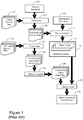
- Figure 1 shows the typical workflow of creating and using a traditional software library incorporating security transformations.
- the library source-files 102, or library modules are first processed by a "transcoder" 104, which does source-to-source translation of the library modules 102, generating transformed source-files 106 that incorporate security and optimization transformations, such as program transformations, based on user-determined security decisions 108.
- security and optimization transformations such as program transformations, based on user-determined security decisions 108.
- US Patent No. 6,594,761 issued July 15, 2003 and US Patent No. 6,842,862, issued January 11, 2005
- US Patent No. 6,779,114, issued August 17, 2004 describes control flow transform techniques that can be used to protect software.
- the contents of each of US Patent No. 6,594,761 , US Patent No. 6,842,862 and US Patent No. 6,779,114 are incorporated herein by reference in their entirety.
- the transformed source-files are then processed by the native compiler 110, generating object-code that incorporate speed/size performance tradeoffs base on user-determined optimization decisions 112.
- the resulting native object-code 114 is packaged and distributed as a software library 116, which is then immutable as far as the end-user (the integrating software party) is concerned.
- a similar process is applied to application source-files 118, or application modules.
- the application modules 118 are input to a transcoder 120 to generate transformed application source files 122, based on security decisions, (not shown) provided by the integrating party.
- the transformed files 122 are compiled by a native compiler 124 to provide transformed native object files 126.
- the transformed native object files 126 and the library 116 are then listed by a native linker 128 to provide a native executable 130, or a shared library. If the security and performance decisions of the software library need to be revisited, the library will have to be re-built and re-distributed.
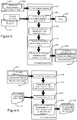
- Figure 2 shows the workflow in creating and using a flexible library software library according to the present disclosure.
- the library source-files 202 are processed by a flexible library creation tool 204, which includes transcoding capabilities.
- a flexible library creation tool 204 which includes transcoding capabilities.
- an unprovisioned flexible library 206 is created.
- the unprovisioned flexible library 206 contains an intermediate representation 208 of the source files.
- the intermediate representation contains configuration parameters 210, such as default values and/or range-limits for both security and optimization decisions.
- the configuration parameters 210 may be specified (on a per-source-file or global basis), and are recorded in the flexible library 206, along with the intermediate representation 208 of the original source-files 202.
- the distributed "unprovisioned" flexible library 206 is not in a state which can directly be used by the end-user to create an executable application, since it only includes the abstract intermediate representation 208 of the library implementation, and does not include object-code.
- the intermediate representation 208 fully encapsulates all "front-end" aspects of traditional compilation, including the result of any high-level language pre-processing, such as conditional compilation, include-files, etc, and the full content of all source files 202.
- the intermediate representation 208 is fully portable, in that target machine/platform dependencies, such as the content and layout of files in the file-system, are eliminated, which makes it possible to distribute and use the flexible library 206 without access to the original library build-environment.
- the intermediate representation 208 is akin to standard compiler representations, containing high-level assembly code for an infinitely capable target processor. Furthermore the intermediate representation 208 contains extensions for security-oriented program transformations, such as the data-flow and control-flow transformations referenced above, which can apply to specific entities in the program code.
- the abstract intermediate representation 208 is combined with configuration parameters 210 regarding default values, option ranges, and the like to form the unprovisioned flexible library 206.
- the disclosed solution can use an encryption scheme to protect an unprovisioned library.
- Both the intermediate representation and configuration parameters can be encrypted using a symmetric key cipher (e.g. AES) at library creation time.
- AES symmetric key cipher
- Such an implementation can make use of White-Box Cryptography (see U.S. Patent No. 7,397,916, issued July 8, 2008 , and U.S. Application No. 11/020,313, filed December 10, 2001 , the contents of which are incorporated herein by reference in their entirety) to conceal keys during execution.
- the unencrypted intermediate representation 208 is never in plain sight.
- the intermediate representation 208 is in a transformed and encrypted state upon use in the provisioning stage. This encrypted state can use a randomly generated session key.
- unprovisioned flexible libraries 206 are created by a dedicated flexible library creation tool 204.
- the inputs to the flexible library creation tool 204 are a set of library source-files 202, and optionally, a set of security and optimization defaults 210.
- Figure 3 illustrates the workflow performed by the flexible library Creation tool in detail.
- the library source-files 202 are first processed to generate the abstract representation 208 that fully captures the semantic content of the source-files 202, while discarding most lexical and syntactic aspects, such as, for example, platform-dependent aspects such as the location of included files on the machine's file-system (step 302 ).
- the abstract representation 208 is sufficiently detailed that it can fully reconstitute source-code of precisely equivalent functionality, without reference to the original source-code itself.
- the library creator then has the option of providing configuration parameters 210, such as default values, range-limits, or locked values, for both security and optimization parameters. These values are converted to metadata, which will reside in the unprovisioned flexible library 206, and will later be combined with input from the user of the flexible library to determine a final set of security and optimization decisions. Finally, the abstract representation and the metadata are packaged together as a single file, which is now the unprovisioned flexible library 206.
- configuration parameters 210 such as default values, range-limits, or locked values
- provisioning The process of selecting security and optimization decisions, applying them to the abstract representation, and generating object-code is called “provisioning", and results in a “provisioned” flexible library 212.
- This function is performed by the flexible library provisioning tool 214, which takes as input the unprovisioned flexible library 206, a set of security and optimization decisions 216, and a native compiler 218.
- the default and/or range-limits chosen as configuration parameters 210 can be combined with the security and optimization decisions 216 of the provisioning step to determine the final security and optimization criteria.
- This provides convenience to the end-user, in that the library creator can provide sensible default values for security/optimization criteria, minimizing the amount of detail that must be specified when provisioning, and prevents specification of incorrect/undesirable security/optimization criteria, via range-limits and/or locked values that may be provided to forbid specific provision-time values, e.g. completely turning off security transformations for a secure library. It has the additional benefit that critical sections of the software which incorporate sensitive proprietary information can be protected against reverse-engineering by the end-user since they can be forced to have sufficient levels of security transforms to prevent such attacks.
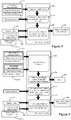
- FIG 4 illustrates the workflow performed by the flexible library provisioning tool 214 in greater detail.
- the flexible library contents are first unpacked, and in particular, the abstract representation of the library and associated metadata are extracted (step 420 ).
- any user-selected security and optimization decisions 216 are combined with the configuration parameters 210, such as defaults, range-limits, and locked values determined by the library creator and described in the flexible library metadata included in the unprovisioned flexible library 206 (step 404 ).
- the user-selected security/optimization decisions 216 may be in conflict with the constraints imposed by the library creator, in which case an error notification 406 can be issued and the provisioning halted.
- a final set of security/optimization decisions is constructed by combining them with the default and range-limits from the metadata (step 408 ).
- the abstract representation 208 is then processed to apply program transformations, such as code and data transforms, as determined by the set of security decisions generated in step 408 (step 410 ).
- the processed abstract representation is then converted to source-code (step 412 ).
- the result of this is a set of transformed source-code, which can then be compiled by the native-compiler 218 supplied by the user to generate a set of object-code (step 414 ). Note that the optimization decisions generated above can be used as options to the native-compiler, allowing the user to tune performance parameters of the resulting object-code.
- each flexible library instance 220 can be provided with a unique name, selected by the user, allowing the coexistence of multiple provisioned instances, each with different program transformations, in particular data- and code-transformations.
- the flexible library can be implemented in a mode where the native compiler is not involved at all.
- the provisioning process implemented by provisioning tool 214a can be interrupted after generation of the transformed source-files (see steps 402-412), and the native-compilation step 414 omitted.
- the transformed source-code and metadata can be inserted into a provisioned flexible library 504.
- the resulting flexible library instance 506 contains transformed source-code, rather than object-code, along with metadata describing the transformations that were applied.
- the provisioned flexible library 504 containing diverse instances 506 contains security transformed source code that can be later processed by a native compiler, outside of the flexible library context. This is an added flexibility to the model that has benefits for an application targeted to multiple platforms.
- the flexible library also supports the ability to apply security transformations across the boundary of the library, extending into the calling application code, and taking into account the nature of that calling code.
- Traditional software libraries can only support an API which is fixed, since correct functioning of application code is ensured by adherence to the library API as described in fixed header-files.
- the flexible library model allows each diverse instance of the provisioned library to have a different set of security transformations applied to the library API. This is accomplished by utilizing the metadata stored in provisioned flexible library instances that describe the precise parameters of all program transformations, in particular data- and code-transformations, applied, especially those that participate in the API of the library. If an application author wishes to make use of a flexible library with a transformed API, the application code can then be processed with the provisioned flexible library instance as an additional input to the source-to-source transcoder.
- FIG 6 illustrates the functioning of the transcoder tool 230 (shown in Figure 2 ) as it process application source-files in the presence of a flexible library.
- the transcoder tool 230 unpacks the metadata from a specified flexible library instance (step 602 ).
- the transcoder tool 230 can thus obtain and determine a complete description of the program transformations, in particular data- and code-transformations, that were actually applied to the library API (step 604 ).
- step 606 Once the application source-code files 232 have been processed by the transcoder tool 230 (step 606), corresponding transformations can be applied to the application source code files 232 to ensure that correct functioning is maintained (step 608 ), resulting in correctly functioning application source files 234.
- the transformed application source files 234 can be compiled by a native compiler 236 to provide transformed native object-code files 238.
- a native compiler 236 to provide transformed native object-code files 238.
- the modifications to a known transcoder, such as those described in US Patent No. 6,594,761 , US Patent No. 6,842,862 and US Patent No. 6,779,114 are relatively minor, since the application of the transformation is just an extension of existing mechanisms to "force" external security transformations to specific values which support multiple, separate transcoding domains.
- the advantage of the flexible library approach is that it is both convenient to use, since the flexible library maintains the information, not the user, and less error-prone, since the metadata is referred to by the flexible library instance-name, which will also be used to refer to the transformed object-code at link-time.
- the flexible library can be extended to handle multiple, interdependent flexible libraries, such that even though the libraries invoke each other's interfaces, suitable security transforms can be chosen to cover all the flexible libraries in a consistent manner.
- the application code itself can be packaged as an interdependent flexible library, allowing the security transformations on the all involved flexible libraries to take into account the nature of the application code using those libraries. This is supported by provisioning each interdependent flexible library against all the other flexible libraries, so that metadata describing security transforms across the library APIs can be read in and taken into account by the flexible library provisioning tool 214b, as shown in Figure 7 .
- the process for provisioning multiple, interdependent, flexible libraries is very similar to provisioning of a single flexible library, except that multiple flexible libraries 206a, 206b are passed to the provisioning tool 214b.
- Each flexible library is provisioned in turn, but the security transforms applied are constrained to be consistent with each of the other flexible libraries, as described by the metadata stored in each instance.
- the first flexible library is provisioned (steps 702-712 ) as described above in relation to Figure 5 , and a new provisioned instance 212a is created.
- the second flexible library is then provisioned (steps 714-722 ), with the security transforms from the first flexible library being taken into account (see step 714 ). This forces any program transformations, in particular data- or code-transformations, across the API between the first and second flexible libraries 212a, 212b to be applied in a consistent manner. This process may be extended to arbitrarily many interdependent flexible libraries.
- the flexible library linker 240 is responsible for verifying the consistency of the application code and the flexible library instance from the provisioned flexible library 212, unpacking the appropriate object-code, and invoking a native linker 242 to generate a final executable 244.
- FIG. 8 illustrates the operation of the flexible library linker 240 in greater detail.
- the flexible library linker 240 takes as its command-line the full set of native-linker options that the user would provide if they were building their application with a native linker, though any flexible libraries can be separately identified as such by using special syntax which gives both the flexible library filename and the desired instance-name.
- Any flexible library involved is first unpacked (step 802 ), and the specified instance 220 (from among many provisioned instances) is extracted.
- the object-code in the specified instance is then packaged as a temporary native library (step 804 ) by invoking a native librarian tool 806.
- the native linker 242 is invoked (step 806 ), passing in appropriate native linker options 803, and any user specified native objects 810, such as object-code, libraries, and options, along with the temporary native-libraries corresponding to each flexible library as generated in step 804, to generate the native executable 244.
- native linker options 803 any user specified native objects 810, such as object-code, libraries, and options, along with the temporary native-libraries corresponding to each flexible library as generated in step 804, to generate the native executable 244.
- the flexible library linker 240 can be much more powerful than a native linker, since it can detect erroneous uses of security transforms that would normally result in an executable application that simply failed to execute properly. It can do this because the provisioned flexible library instances store metadata describing the exact nature of the program transformations, in particular data- and code-transformations, that were applied by the transcoder tool 230, particularly those which affect the APIs at the library boundary. Taking advantage of this feature of the flexible library linker 240 requires the use of multiple flexible libraries, such as when the application code and the library code are in separate flexible libraries.
- Figure 9 illustrates the operation of the flexible library linker 240a when multiple flexible libraries are in use.
- the flexible linker 240a unpacks the contents of multiple provisioned flexible libraries 212c, 212d (step 902 ). Consistency checking of the security transformation metadata can then be performed (step 904 ). If no error 906 is indicated, native libraries can be generated (step 908 ) and linked (step 910 ) as described above.
- Flexible libraries can support three general use-cases, in increasing order of sophistication.
- a first use-case securing of application code (transcoding) and provisioning of the flexible library are performed independently.
- the library API is either not transformed, or is transformed in a "fixed" manner, which may be described to the application code via external metadata.
- application code is transcoded with reference to a previously provisioned flexible library.
- the library API can be arbitrarily transformed, and the application will correctly take account of the transformations for each API invocation, but the nature of application does not affect library transformations.
- both the application code and the library modules are in the form of flexible libraries, and both flexible libraries are provisioned together. Thus, the library and application code are secured/transformed in a completely integrated manner.
- Diversity means the creation of differing programs by randomly choosing the program transformations, in particular data and control-flow transformations, that are applied to the program code. For each transformation applied, the choices of transform family and sets of characteristic constants are selected randomly, driven through a seeded Pseudo Random Number Generator (PRNG).
- PRNG seeded Pseudo Random Number Generator
- data transformations at the interface (i.e. API) of the library may also be selected randomly.
- the described flexible library has a number of advantages over conventional libraries.
- Security transformations and performance optimizations for an implementation may be selected, within bounds set by the library creator, at the discretion of the end-user (the party integrating the library into an application). This allows the end-user to perform security versus performance tuning.
- the library source-code is written in a portable language dialect (such as ISO C), and care is taken to avoid dependencies on platform-specific APIs, the resulting flexible library can be provisioned to arbitrary platforms, and will be fully portable. This allows for target-independent libraries to be distributed.
- a flexible library may contain multiple provisioned instances, each reflecting different sets of security and optimization decisions.
- a flexible library can also provide protection of proprietary information, since the abstract representation can be encrypted, and thus will not expose the library source-code to unintended recipients.
- Multiple interdependent flexible libraries may be utilized, particularly encapsulating the application code in flexible library form, allowing security transforms that take into account the application context.
- the flexible library provisioning tool 214 and linker tool 240 can also be used to detect many sorts of errors, such as mismatches of security transforms across API boundaries, etc., that would previously have only shown up as runtime errors.
- Embodiments of the disclosure can be represented as a computer program product stored in a machine-readable medium (also referred to as a computer-readable medium, a processor-readable medium, or a computer usable medium having a computer-readable program code embodied therein).
- the machine-readable medium can be any suitable tangible, non-transitory medium, including magnetic, optical, or electrical storage medium including a diskette, compact disk read only memory (CD-ROM), memory device (volatile or non-volatile), or similar storage mechanism.
- the machine-readable medium can contain various sets of instructions, code sequences, configuration information, or other data, which, when executed, cause a processor to perform steps in a method according to an embodiment of the disclosure.
Landscapes
- Engineering & Computer Science (AREA)
- Theoretical Computer Science (AREA)
- Software Systems (AREA)
- Computer Security & Cryptography (AREA)
- Computer Hardware Design (AREA)
- Physics & Mathematics (AREA)
- General Engineering & Computer Science (AREA)
- General Physics & Mathematics (AREA)
- General Health & Medical Sciences (AREA)
- Health & Medical Sciences (AREA)
- Bioethics (AREA)
- Multimedia (AREA)
- Technology Law (AREA)
- Stored Programmes (AREA)
- Devices For Executing Special Programs (AREA)
Claims (14)
- Verfahren zum Erzeugen einer Bibliothek von Softwaremodulen, welche mehrere einzigartige Instanzen der Softwaremodule enthält; umfassend:Erzeugen einer Zwischendarstellung der Softwaremodule aus Bibliothek-Quellcode-Dateien;Verpacken der Zwischendarstellung mit Metadaten, welche Sicherheits-und Optimierungsstandards für Sicherheits- und Optimierungstransformationen beschreiben, welche auf die Softwaremodule anzuwenden sind;Bestimmen, ob von einem Benutzer gelieferte Sicherheits- und Optimierungsentscheidungen mit den Sicherheits- und Optimierungsstandards konsistent sind,als Reaktion auf das Bestimmen, dass die von einem Benutzer gelieferten Sicherheits- und Optimierungsentscheidungen mit den Sicherheits- und Optimierungsstandards konsistent sind, Erzeugen einer Mehrzahl einzigartiger Instanzen der Softwaremodule, indem für jede einzigartige Instanz, ein entsprechend unterschiedlicher Satz von Sicherheits- und Optimierungstransformationen auf die Zwischendarstellung angewendet wird, wobei jeder unterschiedliche Satz von Sicherheits- und Optimierungstransformationen auf einer Kombination der Metadaten und der von einem Benutzer gelieferten Sicherheits- und Optimierungsentscheidungen basiert; undVerpacken der Mehrzahl einzigartiger Instanzen in einer Software-Bibliothek.
- Verfahren nach Anspruch 1, wobei das Erzeugen der Mehrzahl einzigartiger Instanzen der Softwaremodule ferner umfasst
Konvertieren jeder einzigartigen Instanz der Zwischendarstellung zu einer entsprechenden Quellcode-Instanz der Softwaremodule. - Verfahren nach Anspruch 2, ferner umfassend Kompilieren der Quellcode-Instanzen, um entsprechende Objektcode-Instanzen der Softwaremodule zu erzeugen.
- Verfahren nach Anspruch 1, wobei das Erzeugen der Zwischendarstellung ein Ablegen von lexikalischem und syntaktischem Inhalt umfasst.
- Verfahren nach Anspruch 4, wobei der lexikalische und syntaktische Inhalt plattformabhängigen Inhalt umfasst.
- Verfahren nach Anspruch 4, wobei der lexikalische und syntaktische Inhalt plattformunabhängigen Inhalt umfasst.
- Verfahren nach Anspruch 1, wobei das Anwenden eines entsprechend unterschiedlichen Satzes von Sicherheits- und Optimierungstransformationen ein Anwenden von Programmtransformationen umfasst, wobei die Programmtransformationen optional eines oder beides umfassen aus:Datenfluss-Transformationen, undSteuerfluss-Transformationen.
- Verfahren nach Anspruch 1, wobei das Verpacken ein Verpacken einer Mehrzahl einzigartiger Objektcode-Instanzen und Metadaten umfasst, welche den Satz von Sicherheits- und Optimierungstransformationen beschreiben, welcher auf jede Instanz angewendet wird.
- Verfahren nach Anspruch 8, ferner umfassend Verknüpfen einer der Mehrzahl von Objektcode-Instanzen mit einer kompilierten Anwendung-Objektdatei, um ein ausführbares Programmbild bereitzustellen.
- Verfahren nach Anspruch 9, ferner umfassend Bestimmen, ob der unterschiedliche Satz von Sicherheits- und Optimierungstransformationen, welcher auf die Objektcode-Instanz angewendet wird, mit Sicherheits- und Optimierungstransformationen konsistent ist, welche auf eine zweite Objektcode-Instanz angewendet werden, und wobei optional das Bestimmen, ob der unterschiedliche Satz von Sicherheits- und Optimierungstransformationen, welcher auf die Objektcode-Instanz angewendet wird, konsistent ist, ein Vergleichen von Metadaten umfasst, welche die Sicherheits- und Optimierungstransformationen beschreiben, welche auf jede Instanz angewendet werden.
- Verfahren nach Anspruch 1, ferner umfassend Einschränken des unterschiedlichen Satzes von Sicherheits- und Optimierungstransformationen im Hinblick auf Sicherheits- und Optimierungstransformationen, welche auf eine Bibliothek angewendet werden, welche eine zweite Zwischendarstellung aufweist.
- Verfahren Anspruch 1, ferner umfassend Verschlüsseln der Zwischendarstellung.
- Computerprogramm, welches wenn auf einem Prozessor ausgeführt, den Prozessor dazu veranlasst, ein Verfahren nach einem der vorhergehenden Ansprüche durchzuführen.
- System, welches dazu eingerichtet ist, das Verfahren nach einem der Ansprüche 1 bis 12 auszuführen.
Priority Applications (1)
| Application Number | Priority Date | Filing Date | Title |
|---|---|---|---|
| EP20216109.7A EP3812894B1 (de) | 2010-03-31 | 2010-03-31 | System und verfahren zur verkapselung und aktivierung des schutzes durch verschiedene variationen bei software-bibliotheken |
Applications Claiming Priority (1)
| Application Number | Priority Date | Filing Date | Title |
|---|---|---|---|
| PCT/CA2010/000451 WO2011120123A1 (en) | 2010-03-31 | 2010-03-31 | A system and method for encapsulating and enabling protection through diverse variations in software libraries |
Related Child Applications (1)
| Application Number | Title | Priority Date | Filing Date |
|---|---|---|---|
| EP20216109.7A Division EP3812894B1 (de) | 2010-03-31 | 2010-03-31 | System und verfahren zur verkapselung und aktivierung des schutzes durch verschiedene variationen bei software-bibliotheken |
Publications (3)
| Publication Number | Publication Date |
|---|---|
| EP2553571A1 EP2553571A1 (de) | 2013-02-06 |
| EP2553571A4 EP2553571A4 (de) | 2014-05-07 |
| EP2553571B1 true EP2553571B1 (de) | 2020-12-23 |
Family
ID=44711252
Family Applications (2)
| Application Number | Title | Priority Date | Filing Date |
|---|---|---|---|
| EP10848642.4A Active EP2553571B1 (de) | 2010-03-31 | 2010-03-31 | System und verfahren zur verkapselung und aktivierung des schutzes durch verschiedene variationen bei software-bibliotheken |
| EP20216109.7A Active EP3812894B1 (de) | 2010-03-31 | 2010-03-31 | System und verfahren zur verkapselung und aktivierung des schutzes durch verschiedene variationen bei software-bibliotheken |
Family Applications After (1)
| Application Number | Title | Priority Date | Filing Date |
|---|---|---|---|
| EP20216109.7A Active EP3812894B1 (de) | 2010-03-31 | 2010-03-31 | System und verfahren zur verkapselung und aktivierung des schutzes durch verschiedene variationen bei software-bibliotheken |
Country Status (7)
| Country | Link |
|---|---|
| US (2) | US9892272B2 (de) |
| EP (2) | EP2553571B1 (de) |
| JP (1) | JP5555803B2 (de) |
| KR (1) | KR20140053757A (de) |
| CN (1) | CN102947835B (de) |
| CA (1) | CA2792782C (de) |
| WO (1) | WO2011120123A1 (de) |
Families Citing this family (31)
| Publication number | Priority date | Publication date | Assignee | Title |
|---|---|---|---|---|
| EP2553571B1 (de) | 2010-03-31 | 2020-12-23 | Irdeto B.V. | System und verfahren zur verkapselung und aktivierung des schutzes durch verschiedene variationen bei software-bibliotheken |
| US20120090021A1 (en) * | 2010-10-12 | 2012-04-12 | Ansca, Inc. | Platform Specific Application Building |
| US9141360B1 (en) | 2011-03-16 | 2015-09-22 | Google Inc. | Web application module translation service |
| US8844032B2 (en) * | 2012-03-02 | 2014-09-23 | Sri International | Method and system for application-based policy monitoring and enforcement on a mobile device |
| US9910684B2 (en) * | 2013-03-25 | 2018-03-06 | Hewlett Packard Enterprise Development Lp | Extensible firmware abstraction |
| CN106416119B (zh) | 2014-03-31 | 2019-10-11 | 爱迪德技术有限公司 | 保护软件项目 |
| GB201405755D0 (en) * | 2014-03-31 | 2014-05-14 | Irdeto Bv | Optimizing and protecting software |
| WO2016118216A2 (en) * | 2014-11-06 | 2016-07-28 | Intertrust Technologies Corporation | Secure application distribution systems and methods |
| FR3030818B1 (fr) * | 2014-12-23 | 2016-12-23 | Valeo Comfort & Driving Assistance | Procede de transmission securisee d'une cle virtuelle et methode d'authentification d'un terminal mobile |
| US9690552B2 (en) * | 2014-12-27 | 2017-06-27 | Intel Corporation | Technologies for low-level composable high performance computing libraries |
| GB201505553D0 (en) | 2015-03-31 | 2015-05-13 | Irdeto Bv | Online advertisements |
| WO2016162075A1 (en) * | 2015-04-09 | 2016-10-13 | Longsand Limited | Removing library objects from a static library |
| US20170041386A1 (en) * | 2015-08-05 | 2017-02-09 | International Business Machines Corporation | Provisioning a target hosting environment |
| KR102063966B1 (ko) * | 2015-10-21 | 2020-01-09 | 엘에스산전 주식회사 | Plc 명령어 컴파일 최적화 방법 |
| CN107301121A (zh) * | 2016-04-15 | 2017-10-27 | 电信科学技术研究院 | 一种编译器自动验证方法及装置 |
| US10423408B2 (en) | 2016-06-02 | 2019-09-24 | International Business Machines Corporation | Identifying and isolating library code in software applications |
| CN106548049A (zh) * | 2016-12-09 | 2017-03-29 | 武汉斗鱼网络科技有限公司 | 一种代码处理方法和装置 |
| CA3047009A1 (en) | 2016-12-15 | 2018-06-21 | Irdeto B.V. | Software integrity verification |
| GB201703864D0 (en) | 2017-03-10 | 2017-04-26 | Irdeto Bv | Secured system operation |
| CN107657154B (zh) * | 2017-09-18 | 2018-08-17 | 北京深思数盾科技股份有限公司 | 一种目标程序的保护方法、装置、设备及存储介质 |
| US10402178B2 (en) * | 2018-01-26 | 2019-09-03 | Accenture Global Solutions Limited | Cross platform content management and distribution system |
| US11176300B2 (en) | 2018-02-03 | 2021-11-16 | Irdeto B.V. | Systems and methods for creating individualized processing chips and assemblies |
| EP3561617A1 (de) * | 2018-04-24 | 2019-10-30 | Siemens Aktiengesellschaft | Automatisierungskomponentenkonfiguration |
| US10797868B2 (en) | 2018-05-31 | 2020-10-06 | Irdeto B.V. | Shared secret establishment |
| US11206130B2 (en) * | 2018-07-31 | 2021-12-21 | Nxp B.V. | Customizing cryptographic keys between multiple hosts |
| US11263316B2 (en) | 2019-08-20 | 2022-03-01 | Irdeto B.V. | Securing software routines |
| US12443398B2 (en) | 2019-10-02 | 2025-10-14 | Nvidia Corporation | Kernel fusion for machine learning |
| KR102301243B1 (ko) * | 2020-06-15 | 2021-09-13 | 주식회사 스틸리언 | 화이트박스 암호를 이용한 데이터 암호화/복호화 방법 및 장치 |
| CN116028057A (zh) * | 2021-10-27 | 2023-04-28 | 北京字节跳动网络技术有限公司 | 代码管理的方法和装置 |
| US12367038B2 (en) * | 2021-11-16 | 2025-07-22 | Massachusetts Institute Of Technology | System and method for analyzing and steering use of third-party libraries |
| EP4339835A1 (de) | 2022-09-16 | 2024-03-20 | Irdeto B.V. | Schutz eines maschinenlernmodells |
Family Cites Families (22)
| Publication number | Priority date | Publication date | Assignee | Title |
|---|---|---|---|---|
| US6920143B1 (en) * | 1998-03-12 | 2005-07-19 | Brooktrout, Inc. | Computer telephony system using multiple hardware platforms to provide telephony services |
| US6594761B1 (en) | 1999-06-09 | 2003-07-15 | Cloakware Corporation | Tamper resistant software encoding |
| US6779114B1 (en) | 1999-08-19 | 2004-08-17 | Cloakware Corporation | Tamper resistant software-control flow encoding |
| CA2327911A1 (en) | 2000-12-08 | 2002-06-08 | Cloakware Corporation | Obscuring functions in computer software |
| US20040158820A1 (en) * | 2003-02-11 | 2004-08-12 | Moore John Wesley | System for generating an application framework and components |
| US7822685B1 (en) * | 2003-04-09 | 2010-10-26 | Cisco Technology, Inc. | Method and system for digital rights management brokering and digital asset security transcoding |
| KR100568228B1 (ko) * | 2003-05-20 | 2006-04-07 | 삼성전자주식회사 | 고유번호를 이용한 프로그램 탬퍼 방지 방법과 난독처리된 프로그램 업그레이드 방법, 상기 방법을 위한 장치 |
| US7487498B2 (en) * | 2003-11-12 | 2009-02-03 | Microsoft Corporation | Strategy for referencing code resources |
| US20050235357A1 (en) * | 2004-04-19 | 2005-10-20 | Securemedia International | Preventing cloning of high value software using embedded hardware and software functionality |
| US7412700B2 (en) * | 2004-05-18 | 2008-08-12 | Oracle International Corporation | Product packaging and installation mechanism |
| GB2420638A (en) * | 2004-11-24 | 2006-05-31 | Hewlett Packard Development Co | Method of substituting code fragments in Internal Representation |
| US7472375B2 (en) * | 2005-03-29 | 2008-12-30 | Intel Corporation | Creating managed code from native code |
| JP5399601B2 (ja) * | 2005-05-31 | 2014-01-29 | 日本電気株式会社 | 実装コード開発システム、及び実装コード開発プログラム |
| US9128727B2 (en) * | 2006-08-09 | 2015-09-08 | Microsoft Technology Licensing, Llc | Generation of managed assemblies for networks |
| JP2009009537A (ja) * | 2006-09-11 | 2009-01-15 | Renesas Technology Corp | プログラム作成方法及び情報処理装置ならびにマイコン |
| US7827549B2 (en) * | 2006-09-15 | 2010-11-02 | Symantec Corporation | Method and system for creating and executing generic software packages |
| US9352111B2 (en) | 2007-04-19 | 2016-05-31 | Advanced Circulatory Systems, Inc. | Systems and methods to increase survival with favorable neurological function after cardiac arrest |
| US8312425B2 (en) * | 2008-03-31 | 2012-11-13 | International Business Machines Corporation | Dynamic template instantiation |
| US9117071B2 (en) * | 2009-06-03 | 2015-08-25 | Apple Inc. | Methods and apparatuses for secure compilation |
| US8635606B2 (en) * | 2009-10-13 | 2014-01-21 | Empire Technology Development Llc | Dynamic optimization using a resource cost registry |
| EP2553571B1 (de) | 2010-03-31 | 2020-12-23 | Irdeto B.V. | System und verfahren zur verkapselung und aktivierung des schutzes durch verschiedene variationen bei software-bibliotheken |
| US8549502B2 (en) * | 2010-06-21 | 2013-10-01 | Microsoft Corporation | Compiler with user-defined type inference rules |
-
2010
- 2010-03-31 EP EP10848642.4A patent/EP2553571B1/de active Active
- 2010-03-31 CN CN201080065896.1A patent/CN102947835B/zh active Active
- 2010-03-31 JP JP2013501568A patent/JP5555803B2/ja not_active Expired - Fee Related
- 2010-03-31 WO PCT/CA2010/000451 patent/WO2011120123A1/en not_active Ceased
- 2010-03-31 KR KR1020127028138A patent/KR20140053757A/ko not_active Abandoned
- 2010-03-31 CA CA2792782A patent/CA2792782C/en not_active Expired - Fee Related
- 2010-03-31 US US13/634,388 patent/US9892272B2/en active Active
- 2010-03-31 EP EP20216109.7A patent/EP3812894B1/de active Active
-
2017
- 2017-10-08 US US15/727,605 patent/US10185837B2/en active Active
Non-Patent Citations (3)
| Title |
|---|
| ANONYMOUS: "Hardening - Debian Wiki", 31 August 2009 (2009-08-31), XP055482115, Retrieved from the Internet <URL:https://web.archive.org/web/20090831045018/http://wiki.debian.org:80/Hardening> [retrieved on 20180607] * |
| ANONYMOUS: "Multi-Architecture Builds", 1 December 2002 (2002-12-01), XP055482096, Retrieved from the Internet <URL:https://web.archive.org/web/20021201165251/http://make.paulandlesley.org:80/multi-arch.html> [retrieved on 20180607] * |
| ANONYMOUS: "Use a single Visual Studio solution to build both x86 and x64 at the same time? - Stack Overflow", 16 October 2009 (2009-10-16), XP055482098, Retrieved from the Internet <URL:https://stackoverflow.com/questions/1574075/use-a-single-visual-studio-solution-to-build-both-x86-and-x64-at-the-same-time/1580825?utm_medium=organic&utm_source=google_rich_qa&utm_campaign=google_rich_qa> [retrieved on 20180607] * |
Also Published As
| Publication number | Publication date |
|---|---|
| US9892272B2 (en) | 2018-02-13 |
| CN102947835A (zh) | 2013-02-27 |
| CN102947835B (zh) | 2016-04-13 |
| WO2011120123A1 (en) | 2011-10-06 |
| JP2013524322A (ja) | 2013-06-17 |
| EP3812894A1 (de) | 2021-04-28 |
| EP2553571A1 (de) | 2013-02-06 |
| US20130014274A1 (en) | 2013-01-10 |
| US20180032746A1 (en) | 2018-02-01 |
| KR20140053757A (ko) | 2014-05-08 |
| US10185837B2 (en) | 2019-01-22 |
| CA2792782C (en) | 2018-01-02 |
| EP2553571A4 (de) | 2014-05-07 |
| CA2792782A1 (en) | 2011-10-06 |
| JP5555803B2 (ja) | 2014-07-23 |
| EP3812894B1 (de) | 2024-02-07 |
Similar Documents
| Publication | Publication Date | Title |
|---|---|---|
| EP2553571B1 (de) | System und verfahren zur verkapselung und aktivierung des schutzes durch verschiedene variationen bei software-bibliotheken | |
| CN103460217B (zh) | 用于保护应用程序的方法及其装置 | |
| CN106462677B (zh) | 一种保护软件项目的方法和装置 | |
| JP5460699B2 (ja) | ソフトウェアアプリケーションのホワイトボックス実装を生成するためのシステムおよび方法 | |
| US7313824B1 (en) | Method for protecting digital content from unauthorized use by automatically and dynamically integrating a content-protection agent | |
| US10255443B2 (en) | Method, apparatus, system and non-transitory computer readable medium for code protection | |
| US20180373848A1 (en) | A build system with plugins for encryption of application components | |
| JP6815386B2 (ja) | アプリケーションのコードを保護するためのシステム、方法およびプログラム | |
| KR20120032477A (ko) | 화이트박스 암호화를 사용하는 연동 바이너리 보호 방법 | |
| KR20070055377A (ko) | 보호된 실행 프로그램의 작성을 위한 기록 매체, 방법 및장치 | |
| CN111290780B (zh) | 一种自动化上传SDK到maven仓库的方法 | |
| KR20190060179A (ko) | 공통 중간 언어를 위한 보안 제공 장치와 방법, 및 보안 실행 장치와 방법 | |
| JP2011154412A (ja) | Sdk使用制限付加装置及び使用制限付ソフトウェア開発システム | |
| Gossen et al. | Securing C/C++ applications with a SEcube™-based model-driven approach | |
| JP6917150B2 (ja) | コード保護方法およびコンピュータプログラム | |
| JP5387089B2 (ja) | プログラム及びプログラム実行装置 | |
| KR101436741B1 (ko) | 프로그램 보안 솔루션 적용 방법 및 시스템 | |
| EP3398103B1 (de) | Bausystem | |
| Parsa et al. | Seamless secure development of systems: From modeling to enforcement of access control policies | |
| Botezatu et al. | Some Questions About. Net Framework and Related Topics |
Legal Events
| Date | Code | Title | Description |
|---|---|---|---|
| PUAI | Public reference made under article 153(3) epc to a published international application that has entered the european phase |
Free format text: ORIGINAL CODE: 0009012 |
|
| 17P | Request for examination filed |
Effective date: 20121012 |
|
| AK | Designated contracting states |
Kind code of ref document: A1 Designated state(s): AT BE BG CH CY CZ DE DK EE ES FI FR GB GR HR HU IE IS IT LI LT LU LV MC MK MT NL NO PL PT RO SE SI SK SM TR |
|
| DAX | Request for extension of the european patent (deleted) | ||
| A4 | Supplementary search report drawn up and despatched |
Effective date: 20140407 |
|
| RIC1 | Information provided on ipc code assigned before grant |
Ipc: G06F 9/44 20060101AFI20140429BHEP Ipc: G06F 9/45 20060101ALI20140429BHEP Ipc: G06F 21/10 20130101ALI20140429BHEP |
|
| RAP1 | Party data changed (applicant data changed or rights of an application transferred) |
Owner name: IRDETO B.V. |
|
| STAA | Information on the status of an ep patent application or granted ep patent |
Free format text: STATUS: EXAMINATION IS IN PROGRESS |
|
| 17Q | First examination report despatched |
Effective date: 20170330 |
|
| RAP1 | Party data changed (applicant data changed or rights of an application transferred) |
Owner name: IRDETO B.V. |
|
| REG | Reference to a national code |
Ref country code: DE Ref legal event code: R079 Ref document number: 602010066223 Country of ref document: DE Free format text: PREVIOUS MAIN CLASS: G06F0009440000 Ipc: G06F0021620000 |
|
| GRAP | Despatch of communication of intention to grant a patent |
Free format text: ORIGINAL CODE: EPIDOSNIGR1 |
|
| STAA | Information on the status of an ep patent application or granted ep patent |
Free format text: STATUS: GRANT OF PATENT IS INTENDED |
|
| RIC1 | Information provided on ipc code assigned before grant |
Ipc: G06F 21/62 20130101AFI20200618BHEP |
|
| INTG | Intention to grant announced |
Effective date: 20200703 |
|
| GRAS | Grant fee paid |
Free format text: ORIGINAL CODE: EPIDOSNIGR3 |
|
| GRAA | (expected) grant |
Free format text: ORIGINAL CODE: 0009210 |
|
| STAA | Information on the status of an ep patent application or granted ep patent |
Free format text: STATUS: THE PATENT HAS BEEN GRANTED |
|
| AK | Designated contracting states |
Kind code of ref document: B1 Designated state(s): AT BE BG CH CY CZ DE DK EE ES FI FR GB GR HR HU IE IS IT LI LT LU LV MC MK MT NL NO PL PT RO SE SI SK SM TR |
|
| REG | Reference to a national code |
Ref country code: GB Ref legal event code: FG4D |
|
| REG | Reference to a national code |
Ref country code: DE Ref legal event code: R096 Ref document number: 602010066223 Country of ref document: DE |
|
| REG | Reference to a national code |
Ref country code: AT Ref legal event code: REF Ref document number: 1348423 Country of ref document: AT Kind code of ref document: T Effective date: 20210115 |
|
| REG | Reference to a national code |
Ref country code: IE Ref legal event code: FG4D |
|
| REG | Reference to a national code |
Ref country code: NL Ref legal event code: FP |
|
| PG25 | Lapsed in a contracting state [announced via postgrant information from national office to epo] |
Ref country code: FI Free format text: LAPSE BECAUSE OF FAILURE TO SUBMIT A TRANSLATION OF THE DESCRIPTION OR TO PAY THE FEE WITHIN THE PRESCRIBED TIME-LIMIT Effective date: 20201223 Ref country code: NO Free format text: LAPSE BECAUSE OF FAILURE TO SUBMIT A TRANSLATION OF THE DESCRIPTION OR TO PAY THE FEE WITHIN THE PRESCRIBED TIME-LIMIT Effective date: 20210323 Ref country code: GR Free format text: LAPSE BECAUSE OF FAILURE TO SUBMIT A TRANSLATION OF THE DESCRIPTION OR TO PAY THE FEE WITHIN THE PRESCRIBED TIME-LIMIT Effective date: 20210324 |
|
| REG | Reference to a national code |
Ref country code: AT Ref legal event code: MK05 Ref document number: 1348423 Country of ref document: AT Kind code of ref document: T Effective date: 20201223 |
|
| PG25 | Lapsed in a contracting state [announced via postgrant information from national office to epo] |
Ref country code: SE Free format text: LAPSE BECAUSE OF FAILURE TO SUBMIT A TRANSLATION OF THE DESCRIPTION OR TO PAY THE FEE WITHIN THE PRESCRIBED TIME-LIMIT Effective date: 20201223 Ref country code: LV Free format text: LAPSE BECAUSE OF FAILURE TO SUBMIT A TRANSLATION OF THE DESCRIPTION OR TO PAY THE FEE WITHIN THE PRESCRIBED TIME-LIMIT Effective date: 20201223 Ref country code: BG Free format text: LAPSE BECAUSE OF FAILURE TO SUBMIT A TRANSLATION OF THE DESCRIPTION OR TO PAY THE FEE WITHIN THE PRESCRIBED TIME-LIMIT Effective date: 20210323 |
|
| PG25 | Lapsed in a contracting state [announced via postgrant information from national office to epo] |
Ref country code: HR Free format text: LAPSE BECAUSE OF FAILURE TO SUBMIT A TRANSLATION OF THE DESCRIPTION OR TO PAY THE FEE WITHIN THE PRESCRIBED TIME-LIMIT Effective date: 20201223 |
|
| REG | Reference to a national code |
Ref country code: LT Ref legal event code: MG9D |
|
| PG25 | Lapsed in a contracting state [announced via postgrant information from national office to epo] |
Ref country code: LT Free format text: LAPSE BECAUSE OF FAILURE TO SUBMIT A TRANSLATION OF THE DESCRIPTION OR TO PAY THE FEE WITHIN THE PRESCRIBED TIME-LIMIT Effective date: 20201223 Ref country code: RO Free format text: LAPSE BECAUSE OF FAILURE TO SUBMIT A TRANSLATION OF THE DESCRIPTION OR TO PAY THE FEE WITHIN THE PRESCRIBED TIME-LIMIT Effective date: 20201223 Ref country code: PT Free format text: LAPSE BECAUSE OF FAILURE TO SUBMIT A TRANSLATION OF THE DESCRIPTION OR TO PAY THE FEE WITHIN THE PRESCRIBED TIME-LIMIT Effective date: 20210423 Ref country code: SK Free format text: LAPSE BECAUSE OF FAILURE TO SUBMIT A TRANSLATION OF THE DESCRIPTION OR TO PAY THE FEE WITHIN THE PRESCRIBED TIME-LIMIT Effective date: 20201223 Ref country code: SM Free format text: LAPSE BECAUSE OF FAILURE TO SUBMIT A TRANSLATION OF THE DESCRIPTION OR TO PAY THE FEE WITHIN THE PRESCRIBED TIME-LIMIT Effective date: 20201223 Ref country code: CZ Free format text: LAPSE BECAUSE OF FAILURE TO SUBMIT A TRANSLATION OF THE DESCRIPTION OR TO PAY THE FEE WITHIN THE PRESCRIBED TIME-LIMIT Effective date: 20201223 Ref country code: EE Free format text: LAPSE BECAUSE OF FAILURE TO SUBMIT A TRANSLATION OF THE DESCRIPTION OR TO PAY THE FEE WITHIN THE PRESCRIBED TIME-LIMIT Effective date: 20201223 |
|
| PG25 | Lapsed in a contracting state [announced via postgrant information from national office to epo] |
Ref country code: AT Free format text: LAPSE BECAUSE OF FAILURE TO SUBMIT A TRANSLATION OF THE DESCRIPTION OR TO PAY THE FEE WITHIN THE PRESCRIBED TIME-LIMIT Effective date: 20201223 Ref country code: PL Free format text: LAPSE BECAUSE OF FAILURE TO SUBMIT A TRANSLATION OF THE DESCRIPTION OR TO PAY THE FEE WITHIN THE PRESCRIBED TIME-LIMIT Effective date: 20201223 |
|
| REG | Reference to a national code |
Ref country code: DE Ref legal event code: R097 Ref document number: 602010066223 Country of ref document: DE |
|
| PG25 | Lapsed in a contracting state [announced via postgrant information from national office to epo] |
Ref country code: IS Free format text: LAPSE BECAUSE OF FAILURE TO SUBMIT A TRANSLATION OF THE DESCRIPTION OR TO PAY THE FEE WITHIN THE PRESCRIBED TIME-LIMIT Effective date: 20210423 |
|
| PG25 | Lapsed in a contracting state [announced via postgrant information from national office to epo] |
Ref country code: IT Free format text: LAPSE BECAUSE OF FAILURE TO SUBMIT A TRANSLATION OF THE DESCRIPTION OR TO PAY THE FEE WITHIN THE PRESCRIBED TIME-LIMIT Effective date: 20201223 Ref country code: MC Free format text: LAPSE BECAUSE OF FAILURE TO SUBMIT A TRANSLATION OF THE DESCRIPTION OR TO PAY THE FEE WITHIN THE PRESCRIBED TIME-LIMIT Effective date: 20201223 |
|
| PLBE | No opposition filed within time limit |
Free format text: ORIGINAL CODE: 0009261 |
|
| REG | Reference to a national code |
Ref country code: CH Ref legal event code: PL |
|
| STAA | Information on the status of an ep patent application or granted ep patent |
Free format text: STATUS: NO OPPOSITION FILED WITHIN TIME LIMIT |
|
| GBPC | Gb: european patent ceased through non-payment of renewal fee |
Effective date: 20210331 |
|
| PG25 | Lapsed in a contracting state [announced via postgrant information from national office to epo] |
Ref country code: ES Free format text: LAPSE BECAUSE OF FAILURE TO SUBMIT A TRANSLATION OF THE DESCRIPTION OR TO PAY THE FEE WITHIN THE PRESCRIBED TIME-LIMIT Effective date: 20201223 Ref country code: DK Free format text: LAPSE BECAUSE OF FAILURE TO SUBMIT A TRANSLATION OF THE DESCRIPTION OR TO PAY THE FEE WITHIN THE PRESCRIBED TIME-LIMIT Effective date: 20201223 |
|
| 26N | No opposition filed |
Effective date: 20210924 |
|
| REG | Reference to a national code |
Ref country code: BE Ref legal event code: MM Effective date: 20210331 |
|
| PG25 | Lapsed in a contracting state [announced via postgrant information from national office to epo] |
Ref country code: GB Free format text: LAPSE BECAUSE OF NON-PAYMENT OF DUE FEES Effective date: 20210331 Ref country code: IE Free format text: LAPSE BECAUSE OF NON-PAYMENT OF DUE FEES Effective date: 20210331 Ref country code: FR Free format text: LAPSE BECAUSE OF NON-PAYMENT OF DUE FEES Effective date: 20210331 Ref country code: CH Free format text: LAPSE BECAUSE OF NON-PAYMENT OF DUE FEES Effective date: 20210331 Ref country code: LI Free format text: LAPSE BECAUSE OF NON-PAYMENT OF DUE FEES Effective date: 20210331 Ref country code: LU Free format text: LAPSE BECAUSE OF NON-PAYMENT OF DUE FEES Effective date: 20210331 |
|
| PG25 | Lapsed in a contracting state [announced via postgrant information from national office to epo] |
Ref country code: SI Free format text: LAPSE BECAUSE OF FAILURE TO SUBMIT A TRANSLATION OF THE DESCRIPTION OR TO PAY THE FEE WITHIN THE PRESCRIBED TIME-LIMIT Effective date: 20201223 |
|
| PG25 | Lapsed in a contracting state [announced via postgrant information from national office to epo] |
Ref country code: IS Free format text: LAPSE BECAUSE OF FAILURE TO SUBMIT A TRANSLATION OF THE DESCRIPTION OR TO PAY THE FEE WITHIN THE PRESCRIBED TIME-LIMIT Effective date: 20210423 |
|
| PG25 | Lapsed in a contracting state [announced via postgrant information from national office to epo] |
Ref country code: BE Free format text: LAPSE BECAUSE OF NON-PAYMENT OF DUE FEES Effective date: 20210331 |
|
| PG25 | Lapsed in a contracting state [announced via postgrant information from national office to epo] |
Ref country code: HU Free format text: LAPSE BECAUSE OF FAILURE TO SUBMIT A TRANSLATION OF THE DESCRIPTION OR TO PAY THE FEE WITHIN THE PRESCRIBED TIME-LIMIT; INVALID AB INITIO Effective date: 20100331 Ref country code: CY Free format text: LAPSE BECAUSE OF FAILURE TO SUBMIT A TRANSLATION OF THE DESCRIPTION OR TO PAY THE FEE WITHIN THE PRESCRIBED TIME-LIMIT Effective date: 20201223 |
|
| PG25 | Lapsed in a contracting state [announced via postgrant information from national office to epo] |
Ref country code: MK Free format text: LAPSE BECAUSE OF FAILURE TO SUBMIT A TRANSLATION OF THE DESCRIPTION OR TO PAY THE FEE WITHIN THE PRESCRIBED TIME-LIMIT Effective date: 20201223 |
|
| PG25 | Lapsed in a contracting state [announced via postgrant information from national office to epo] |
Ref country code: MT Free format text: LAPSE BECAUSE OF FAILURE TO SUBMIT A TRANSLATION OF THE DESCRIPTION OR TO PAY THE FEE WITHIN THE PRESCRIBED TIME-LIMIT Effective date: 20201223 |
|
| PGFP | Annual fee paid to national office [announced via postgrant information from national office to epo] |
Ref country code: DE Payment date: 20250318 Year of fee payment: 16 |
|
| PGFP | Annual fee paid to national office [announced via postgrant information from national office to epo] |
Ref country code: NL Payment date: 20250320 Year of fee payment: 16 |
|
| PG25 | Lapsed in a contracting state [announced via postgrant information from national office to epo] |
Ref country code: TR Free format text: LAPSE BECAUSE OF FAILURE TO SUBMIT A TRANSLATION OF THE DESCRIPTION OR TO PAY THE FEE WITHIN THE PRESCRIBED TIME-LIMIT Effective date: 20201223 |