EP2553570B1 - Verfahren zur verknüpfung und ladung für den schutz von applikationen - Google Patents
Verfahren zur verknüpfung und ladung für den schutz von applikationen Download PDFInfo
- Publication number
- EP2553570B1 EP2553570B1 EP10848641.6A EP10848641A EP2553570B1 EP 2553570 B1 EP2553570 B1 EP 2553570B1 EP 10848641 A EP10848641 A EP 10848641A EP 2553570 B1 EP2553570 B1 EP 2553570B1
- Authority
- EP
- European Patent Office
- Prior art keywords
- object code
- instance
- instances
- random
- modules
- Prior art date
- Legal status (The legal status is an assumption and is not a legal conclusion. Google has not performed a legal analysis and makes no representation as to the accuracy of the status listed.)
- Active
Links
Images




Classifications
-
- G—PHYSICS
- G06—COMPUTING OR CALCULATING; COUNTING
- G06F—ELECTRIC DIGITAL DATA PROCESSING
- G06F9/00—Arrangements for program control, e.g. control units
- G06F9/06—Arrangements for program control, e.g. control units using stored programs, i.e. using an internal store of processing equipment to receive or retain programs
- G06F9/44—Arrangements for executing specific programs
- G06F9/445—Program loading or initiating
- G06F9/44521—Dynamic linking or loading; Link editing at or after load time, e.g. Java class loading
-
- G—PHYSICS
- G06—COMPUTING OR CALCULATING; COUNTING
- G06F—ELECTRIC DIGITAL DATA PROCESSING
- G06F21/00—Security arrangements for protecting computers, components thereof, programs or data against unauthorised activity
- G06F21/10—Protecting distributed programs or content, e.g. vending or licensing of copyrighted material ; Digital rights management [DRM]
- G06F21/12—Protecting executable software
-
- G—PHYSICS
- G06—COMPUTING OR CALCULATING; COUNTING
- G06F—ELECTRIC DIGITAL DATA PROCESSING
- G06F21/00—Security arrangements for protecting computers, components thereof, programs or data against unauthorised activity
- G06F21/10—Protecting distributed programs or content, e.g. vending or licensing of copyrighted material ; Digital rights management [DRM]
- G06F21/12—Protecting executable software
- G06F21/14—Protecting executable software against software analysis or reverse engineering, e.g. by obfuscation
-
- G—PHYSICS
- G06—COMPUTING OR CALCULATING; COUNTING
- G06F—ELECTRIC DIGITAL DATA PROCESSING
- G06F21/00—Security arrangements for protecting computers, components thereof, programs or data against unauthorised activity
- G06F21/50—Monitoring users, programs or devices to maintain the integrity of platforms, e.g. of processors, firmware or operating systems
- G06F21/51—Monitoring users, programs or devices to maintain the integrity of platforms, e.g. of processors, firmware or operating systems at application loading time, e.g. accepting, rejecting, starting or inhibiting executable software based on integrity or source reliability
-
- G—PHYSICS
- G06—COMPUTING OR CALCULATING; COUNTING
- G06F—ELECTRIC DIGITAL DATA PROCESSING
- G06F8/00—Arrangements for software engineering
- G06F8/40—Transformation of program code
- G06F8/54—Link editing before load time
Definitions
- the present disclosure is directed to methods and systems for protecting software from tampering.
- the present disclosure is directed to methods and systems for protecting application software at linking and loading.
- the source files are first processed by a pre-compiler, which does source-to-source security transformations of the software modules, generating transformed source-files that incorporate transformations based on user-determined security decisions.
- the transformed source-files are then processed by the native compiler, generating object-code.
- the resulting native object-code (possibly packaged as a static-library) is then immutable as far as the end-user is concerned, and must be processed by a linker to produce either an executable binary, or a dynamic-library. Libraries are integrated into a program by a linker.
- the output of the linker (specifically, the layout of the software modules in memory) is generated automatically, and is a deterministic function of the input software modules, optimized for runtime performance. If it is desired to modify the memory layout, most linkers require the use of complex metadata, which is generally beyond the scope of any but the most advanced of users.
- the present disclosure provides a software linker or software loader that can modify the content of the binary output code in several ways, all of which provide security through diversity in the resulting executable/dynamic-library.
- Three specific embodiments are disclosed.
- the first involves memory image relocations.
- the result of the linker can be randomized base-address assignments and layouts for each segment or section of relocatable code, as opposed to the deterministic decisions made by traditional linkers. This effort can be a significant barrier to attacks based on the predictable location of sections.
- the second involves selective construction. Individual code modules can be made available in multiple, diverse forms, separately provisioned, in a large container library. The linker will randomly select code instances for the final executable. This effort can thwart differential attacks.
- the third involves late-binding of constants.
- Program transformations such as data and control-flow security transforms, have operation parameters characterized through chosen constants. These parameters can be treated similarly to relocation addresses, and chosen at link-time, resulting in diversification of transformations at execution-time. This effort can also be used against differential attacks and can also enable renewability efforts through orchestrated updates.
- the linker or loader accepts options to control the scope of its actions, and a random-seed parameter, which allows creation of predictably diverse output images.
- a random-seed parameter which allows creation of predictably diverse output images.
- a method of applying security transformations to object-code at build-time or load-time comprises specifying a random seed as input to a pseudo-random number generator.
- a distinct instance of an executable module, or executable program image is then generated by applying diversification operations to a plurality of compiled software modules by applying the random seed as input to the pseudo-random number generator to make a random selection of instances of each of the plurality of compiled software modules from sets of distinct instances of each of the plurality of compiled software modules, and to determine a random layout of the selected instances of the compiled software modules.
- the selected instances of the compiled software modules are then combined in accordance with the random layout to generate the distinct instance of the executable module. Symbols within the distinct instance of the executable module are then resolved.
- a method of generating a plurality of diverse instances of an executable program image For each desired instance of the executable program image, a random seed is specified as input to a pseudo-random number generator. A distinct instance of the executable program image is then generated by applying diversification operations to a plurality of compiled software modules by applying the random seed as input to the pseudo-random number generator to make a random selection of instances of each of the plurality of compiled software modules from sets of distinct instances of each of the plurality of compiled software modules, and to determine a random layout of the selected instances of the compiled software modules. The selected instances of the compiled software modules are then combined in accordance with the random layout to generate a distinct instance of the executable program image. Symbols within the distinct instance of the executable program image are then resolved.
- the random selection can involve making a random selection from a diversely provisioned library containing a plurality of instantiated modules.
- Each instantiated module in the diversely provisioned library can be instantiated with distinct security characteristics, and making the random selection can further comprise embedding an asset rating for the plurality of compiled software modules and a profile weighting for call sites within the plurality of compiled software modules, and constraining the random selection based on the asset rating and the profile weighting.
- Determining the random layout can comprise breaking the selected instances of the compiled software modules into separate code portions, and randomizing location of the code portions within a memory image. Randomizing the location of the code portions can comprise intermingling code portions from different ones of the selected instances of the compiled software modules, or intermingling code portions from different ones of the selected instances of the compiled software modules with data portions.
- Applying the diversification operations can further comprise late binding of security transformation constants by applying the random seed as input to the pseudo-random number generator to randomly determine the security transformation constants in accordance with metadata regarding security transformations applied to the selected instances of the compiled software modules.
- the security transformations can be selected from program transformations, in particular data-flow transformations and control-flow transformations.
- a method of generating a plurality of diverse instances of an executable program image For each desired instance of the executable program image or the dynamic library, a random seed is specified as input to a pseudo-random number generator to generate a random choice.
- a plurality of compiled software modules are then transformed by applying diversification operations, determined by the random choice, to the plurality of compiled software modules, and by resolving symbols associated with the plurality of compiled software modules.
- An instance of the executable program image having a distinct configuration determined by the resolved symbols is then generated.
- Transforming the plurality of compiled software modules can comprise resolving the symbols to provide a randomized memory image layout of the plurality of software modules, or resolving the symbols to provide a randomized selection of distinct instances of the plurality of software modules.
- a linker or loader for providing a plurality of diverse distinct instances of executable modules encapsulated at build-time.
- the loader or linker comprises a pseudo-random number generator configured to cause a processor to generate a distinct random choice for each diverse distinct instance of each executable module at run-time, and a run-time module to cause the processor to transform a plurality of compiled software modules. This transformation is achieved by transforming a plurality of compiled software modules by applying diversification operations, determined by the random choice, thereto; resolving symbols associated with the plurality of compiled software modules; and generating an instance of an executable program image having a distinct configuration determined by the resolved symbols upon each invocation of the program.
- a loader for generating a plurality of diverse instances of an executable program image.
- the loader comprises a pseudo-random number generator configured to cause a processor to generate a distinct random choice for each desired instance of the executable program image; and a run-time module to cause the processor to generate a distinct instance of the executable program image.
- the distinct instance is generated by applying diversification operations to a plurality of compiled software modules by applying the random choice to make a selection of instances of each of the plurality of compiled software modules from sets of distinct instances of each of the plurality of compiled software modules, and to determine a random layout of the selected instances of the compiled software modules; combining the selected instances of the compiled software modules in accordance with the random layout to generate a distinct instance of the executable program image ; and resolving symbols within the distinct instance of the executable program image.
- the random layout can include, for example, random address assignment at run-time loading.
- the selection of instances of each of the plurality of compiled software modules can be based on runtime conditions, such as detecting an unauthorized breach.
- This disclosure describes a method whereby the security transformations of a software module can be deferred until link or load-time, providing several benefits over conventional source-to-source security transformations.
- These deferred security transformations can be applied in a very light-weight manner and create many opportunities for diversity in the resulting executable program, enhancing security, while at the same time minimizing the impact on execution performance and correctness, and reducing the complexity of debugging.
- linkers and linker technology have existed for many years and provide the ability to combine a collection of previously compiled software modules into a single executable binary or dynamic-library.
- the primary job of the linker is to combine compiled software modules into a single memory image, deciding where each module should reside in memory, and "fixing up” or relocating any inter-module address references (such as subroutine calls) so that they are correct, given the memory layout chosen.
- linker technology Over the years the main innovations for linker technology have been limited to improving performance, providing the ability to target different processors and operating systems, and support for advanced programming languages.
- a linker or link editor is a program that takes one or more objects generated by a compiler and combines them into a single executable program.
- Computer programs typically comprise several parts or modules; all these parts/modules need not be contained within a single object file, and in such case refer to each other by means of symbols.
- an object file can contain three kinds of symbols: defined symbols, which allow it to be called by other modules; undefined symbols, which call the other modules where these symbols are defined; and local symbols, used internally within the object file to facilitate relocation.
- the linker combines these files into a unified executable program, resolving the symbols as it goes along.
- Linkers can take objects from a collection of objects or subroutines, termed a library. Some linkers do not include the whole library in the output; they only include its symbols that are referenced from other object files or libraries. The linker also takes care of arranging the objects in a program's address space. This may involve relocating code that assumes a specific base address to another base. Since a compiler seldom knows where an object will reside, it often assumes a fixed base location (for example, zero). Relocating machine code may involve, for example, re-targeting of absolute jumps, loads and stores. The executable output by the linker may need another relocation pass when it is finally loaded into memory, just prior to execution.
- Dynamic linking involves loading the subroutines of a library into an application program at runtime, rather than linking them in at compile time; the subroutines remain as separate files on disk. Only a minimum amount of work is done at compile time by the linker; it only records the library routines the program needs and the index names or numbers of the routines in the library. The majority of the work of linking is done at the time the application is loaded (load-time) or during execution (run-time). The necessary linking functionality, termed a loader, is actually part of the underlying operating system. At the appropriate time the loader finds the relevant libraries on disk and adds the relevant data from the libraries to the process's memory space.
- the link-step can be used as a means to combine a plurality of diverse implementations, resisting a set of class attacks, and provides the basis for revisiting traditional linker techniques.
- Introducing diversity at link-time has the benefits of being light-weight. There is no need to re-run expensive compilation steps, making it practical to generate huge numbers of diverse instances correctly. Each instance will have predictable performance. Since the code is largely fixed (already compiled), this kind of diversity is unlikely to introduce large variation in execution performance. This will also lead to a reduced testing effort, since the code of one diverse instance is representative of the behaviour of all other diverse instances: thorough testing of one diverse instance can be assumed to represent the behaviour of all other diverse instances.
- the present disclosure provides a software linker or loader, and associated linking and loading methods, that can generate the content of the binary output code in several ways, all of which provide security through diversity in the resulting executable/dynamic-library.
- Three specific diversification operations that can be applied to the object-code are described.
- the diversification operations can be applied separately, or combined, in any suitable manner depending on design requirements.
- the extended linker tooling accepts options to control the scope of its actions, and a seed as input to a pseudo-random number generator (PRNG), which allows creation of predictably diverse output images.
- PRNG pseudo-random number generator
- Figure 1 shows a security driven linker 100 that is enabled to perform the three diversification operations discussed in greater detail below: memory relocations 102, selective construction 104 based on diversely instantiated libraries and object modules 106, and late-binding of transformation constants 108, all determined in accordance with inputs 110, such as a seed to a PRNG, and optional security targets and performance constraints.
- the result of the diversification operations is a security-enhanced instance 112 of a product binary, or output image, that is resistant to tampering, or a number of different instances 112 of an output image determined by changing the inputs 110.
- the output image 112 is described as an executable program image, a memory image, an executable module, or a dynamic library.
- a traditional linker will predictably locate its input software modules in the output memory image, based on their ordering on the command-line, and on their interdependencies (which modules references which other modules). Moreover, it will typically ensure that similar kinds of memory segments are grouped together, e.g., putting all constant string-data in one memory segment. This is done for convenience (simpler relocation algorithms), ease of debugging, and to maximize runtime performance of the resulting executable image due to cache locality.
- a first disclosed diversification operation involves memory image relocations 102.
- the result of the linker can be randomized base-address assignments, 0x..A, 0x..F, etc. and randomized layouts for each segment or section of relocatable code, as opposed to the deterministic decisions made by traditional linkers. This effort can be a significant barrier to attacks based on the predictable location of sections.
- the linker 100 can, upon request and based on inputs 110, such as the seed for the PRNG, ensure that each output image 112 has a completely new memory image layout (i.e.
- each segment or section of relocatable code is randomly determined by the random seed parameter), and can moreover inter-mix, or intermingle, memory segments of different types, i.e. data and code, throughout the memory image.
- each externally visible entity (such as functions or global variables) must be provided exactly once in the set of input software modules. Otherwise, the entity is considered to be "multiply defined", and an error will be issued.
- a second diversification operation involves "mix and match" linking, or selective construction 104 based on diversely instantiated object modules within each library 106 .
- Libraries 106 can be created with a plurality of implementation modules. For example, multiple versions, or instances (Mod A1, Mod A2, ...; Mod B1, Mod B2...; Obj1, Obj2, ...), of a program module can be created. Each instance of a given program module performs the same functional behavior.
- the multiple, diverse instances (Mod A1, Mod A2, ...; Mod B1, Mod B2...; Obj1, Obj2, ...) can be separately provisioned, in a large container library. Since all instances provide the same functionality, the present linker 100 can randomly select specific instances for the final executable. This effort can thwart differential attacks, which attempt to gain information through comparisons.
- the linker 100 can support a mode in which one of a set of multiple, diverse instances of a given externally visible entity (typically a function) will be selected, again based on the random choice determined by the seed. If many functions are available in many diverse instances (each with their own set of security transforms), the number of possible, diverse output images is the product of the number of such functions and instances. This gives tremendous scope for creating large numbers of diverse instances, and moreover, since each instance can involve considerably different implementations of individual functions, the ability to apply knowledge gained from reverse-engineering one instance to any other instance is minimized.
- a function typically a function
- the multiple instances can not only have diverse implementations to thwart differential analysis; but can also be created to have different performance and/or security characteristics (see inputs 110 ).
- the linker 100 can choose to use a highly protected, yet slower implementation in a non-time critical area or process. In a time critical area or process, the linker can choose to trade-off the security aspects with a high-performance implementation. Given the right input of security and performance goals, as determined by design considerations, combined with the proper characterization of implementations and algorithm analysis information, the linker 100 has the opportunity to balance the constraints by mixing and matching the functional implementations.
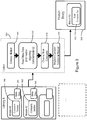
- Figure 2 depicts an optimization method for balancing security versus performance, which proceeds as follows.
- the user provides information regarding high value assets in the application. This includes adding a rating of critical assets versus less critical assets (i.e. an asset rating). Examples of these critical assets can include: the cryptographic keys in the system, node-locking computations, and rights management logic.
- weightings are assigned to call-sites based upon profiling. Either dynamic or static source level profiling is produced for the application at the function and basic-block level. Dynamic profiling is likely preferred, but in its absence static profiling can be produced by a source-level analyzer (e.g. compiler or pre-compiler) by propagating estimates on loop frequencies through a call-graph.
- a source-level analyzer e.g. compiler or pre-compiler
- a profile weighting may be associated.
- the asset ratings and profile weightings are embedded with the appropriate object and library modules. For example, the information produced contained in the asset ratings and profile weightings are carried through the compilation and library creation stages, so that they can be embedded as extra information associated with the modules in the library.
- the linker 100 uses the embedded information to select modules, optimizing for the security/performance target using a constraint-based solution algorithm. There are many known approaches to constraint-solving.
- control-flow transformations maps the control-flow of a given program into a new control-flow form, using a number of functions to control the flow. These functions also carry with them a set of chosen constants.
- the constants are chosen randomly (and consistently among each other).
- the set of constants become a distinguishing factor for the program instance and are necessary for the program to function correctly.
- the precise values of these constants are chosen by the mapping tool (i.e. the transcoder), based on the characteristics of the transformation functions.
- the mapping tool i.e. the transcoder
- the linker can, by analogy with a traditional linker's relocation ability, modify the characteristic constant sets for the program transformations, such as data and control-flow transformations. These sets are generated by a PRNG (Pseudo-Random Number Generator) which is initialized by a seed.
- PRNG Physical-Random Number Generator
- the possible values for the constants in each set are very large, resulting in a tremendous range for diversity in the resulting executable or dynamic-library.
- FIG. 3 a method for selecting constants at link-time is shown.
- the linker 300 is in communication with Library A, provisioning a plurality of software modules (Module A1, Module A2, ). Each software module includes a constant section 302 and metadata 304 regarding the characteristics of the security transformations.
- the linker 300 first selects a module (step 310 ), and then reads the metadata 304 associated with the selected module (step 312 ). Based on the metadata, the linker 300 chooses new constants (step 314 ), and replaces the constant section with the new set of constants 320 in the product binary 322 (step 316 ).
- each set of constants does not affect the correct behaviour of the application (assuming that the set satisfies the mathematical constraints given in the metadata), the verification of performance/correctness for such diverse instances is straightforward.
- One consistent set of constants is expected to behave the same as a second consistent set of constants.
- This form of link-time diversity thus represents a good trade-off between minimal overhead to the user and maximum security against differential attacks. It is also ideally suited for providing renewability in fielded applications, where the application binary is periodically updated with new sets of characteristic constants, meaning that any attacker does not have the luxury of a fixed binary image to analyze.
- a loader can also be thought of as a linker that is invoked at run-time. All of the above techniques which describe build-time, or load-time, linking features can also be considered to be invoked at run-time. The advantage of performing such features at runtime is the ability to insert other secure protection techniques, as well as to react to conditions in the field.
- a loader is shown in Figures 4 and 5 . Figure 4 shows the selection from diverse instances of modules to load into the product binary, while Figure 5 shows random address assignment at run-time loading.
- the multiple, diverse instances of software modules can be separately provisioned in dynamic libraries, such as Dynamic Library A and Dynamic Library B.
- the instances can be further characterized by separate implementation factors or criteria. For example, certain instances can be characterized as having a high security level, such as the "Strong Protection" of modules Mod A1 and Mod A2, or they can be characterized by their speed of execution, such as the "Fast" modules Mod A3, Mod A4.
- the loader 400 requires a run-time source of entropy 402 and a pseudo-random number generator (PRNG), which controls a diverse module selector 404 to make pseudo-random decisions, and ensures that the behaviour, or output executable 406 of the run-time loader is different each time it is invoked.
- PRNG pseudo-random number generator
- the run-time loader 400 can choose from the variety of implementations found in the dynamic libraries, based on run-time conditions. For example, if a breach management module discovered that an attack was happening (e.g. the process is being emulated and debugged), it could signal to the loader to load an implementation with the highest security levels and protection capabilities present (i.e.
- multiple, diverse instances of software modules can again be separately provisioned in dynamic libraries, such as Dynamic Library A, Dynamic Library B and Dynamic Library C
- the run-time loader 500 again includes a run-time source of entropy 502 and a pseudo-random number generator (PRNG), which controls a diverse module selector 504 to make pseudo-random decisions.
- PRNG pseudo-random number generator
- the diverse selector module 504 can be implemented to function as described above in relation to memory image relocations and selective construction.
- each selected module can be assigned a random address as it is loaded at run-time.
- the executable 506 could be composed in such a manner that the majority of its functionality is made up of dynamic library modules. As modules are loaded at varying times of execution, in addition to the modules being selected from a diverse set of choices, the modules are also loaded at random addresses in memory. This presents a significant obstacle for an attacker running a debugging or emulation session. As the program is executing, not only is there an unpredictably diverse module being loaded, but the location of the module is also unpredictable and non-repeatable.
- a dynamic library (e.g..dll on Windows, .so on Linux, .dylib on Mac) is typically created by a native linker and can be closely compared to a directly executable image.
- Traditionally a large majority of the symbols in the dynamic entity have already been resolved by the time the library is created. It is ready for execution by the time it has been created.
- the dynamic library does need to be loaded into an executing program before it is run. It is at this point that the loader has an opportunity to relocate some symbols before the execution of the library. All unresolved symbols in the dynamic library are resolved just before execution. Because the library is created by the linker, it cannot contain ambiguously defined symbols. It is essentially ready for execution, apart from a small number of relocatable symbols.
- a dynamic library creation mechanism provides multiple alternative modules (i.e. functions and data): AltMod A1, AltMod A2, ....; AltMod B1, AltMod B2, ....
- Each alternative module presents an optional equivalent to the original instances of the respective modules (Mod A1, Mod A2, ...; Mod B1, Mod B2...; Obj1, Obj2, ).
- the creation of the library requires a linker 600 which encapsulates alternative modules in the product dynamic library 602 . It also carries a table pointing to the alternative modules. Subsequently, at run-time an appropriately implemented loader can make a random choice among alternative, diverse modules by querying the table, as detailed above.
- Embodiments of the disclosure can be represented as a computer program product stored in a machine-readable medium (also referred to as a computer-readable medium, a processor-readable medium, or a computer usable medium having a computer-readable program code embodied therein).
- the machine-readable medium can be any suitable tangible, non-transitory medium, including magnetic, optical, or electrical storage medium including a diskette, compact disk read only memory (CD-ROM), memory device (volatile or non-volatile), or similar storage mechanism.
- the machine-readable medium can contain various sets of instructions, code sequences, configuration information, or other data, which, when executed, cause a processor to perform steps in a method according to an embodiment of the disclosure.
Landscapes
- Engineering & Computer Science (AREA)
- Software Systems (AREA)
- Theoretical Computer Science (AREA)
- Computer Security & Cryptography (AREA)
- General Engineering & Computer Science (AREA)
- Physics & Mathematics (AREA)
- General Physics & Mathematics (AREA)
- Computer Hardware Design (AREA)
- Multimedia (AREA)
- Technology Law (AREA)
- Stored Programmes (AREA)
- Storage Device Security (AREA)
- Devices For Executing Special Programs (AREA)
Claims (15)
- Computerimplementiertes Verfahren zum Erzeugen einer Instanz eines ausführbaren Programms, wobei das Verfahren umfasst:Angeben eines zufälligen Startwerts als Eingabe in einen Pseudo-Zufallszahlen-Erzeuger;Erzeugen einer konkreten Instanz (112) des ausführbaren Programms, wobei das ausführbare Programm aus einer Mehrzahl von Objektcodemodulen erzeugt wird, mittels:eines zufälligen Auswählens einer konkreten Instanz für jedes Objektcodemodul aus der Mehrzahl von Objektcodemodulen aus einer Mehrzahl von konkreten Instanzen (106) von diesem Objektcodemodul durch Anwenden des zufälligen Startwerts als Eingabe in den Pseudo-Zufallszahlen-Erzeuger, wobei jede konkrete Instanz der Mehrzahl von konkreten Instanzen dazu eingerichtet ist, das gleiche Funktionsverhalten auszuführen;eines Bestimmens eines zufälligen Speicherbildlayouts der Mehrzahl von ausgewählten Instanzen von Objektcodemodulen durch Anwenden des zufälligen Startwerts als Eingabe in den Pseudo-Zufallszahlen-Erzeuger; undeines Kombinierens der Mehrzahl von ausgewählten Instanzen von Objektcodemodulen in Übereinstimmung mit dem zufälligen Speicherbildlayout, um die konkrete Instanz des ausführbaren Programms zu erzeugen; undeines Auflösens von Symbolen innerhalb der konkreten Instanz des ausführbaren Programms.
- Verfahren nach Anspruch 1, wobei die Mehrzahl von konkreten Instanzen jedes Objektcodemoduls eine vielfältig bereitgestellte Bibliothek umfasst, welche eine Mehrzahl von instanziierten Objektcodemodulen beinhaltet.
- Verfahren nach Anspruch 2, wobei jedes instanziierte Objektcodemodul in der vielfältig bereitgestellten Bibliothek mit konkreten Sicherheitscharakteristika instanziiert ist, und wobei das Auswählen ferner umfasst:Einbetten einer Asset-Bewertung für die Mehrzahl von Objektcodemodulen und ein Gewichten eines Profils für Aufrufstellen innerhalb der Mehrzahl von Objektcodemodulen; undEinschränken der Auswahl auf Grundlage der Anlagenbewertung und der Gewichtung des Profils.
- Verfahren nach Anspruch 1, wobei das Bestimmen des zufälligen Speicherbildlayouts ein Aufteilen jedes der Mehrzahl von Objektcodemodulen in separate Codeabschnitte und ein zufälliges Anordnen einer Position der Codeabschnitte innerhalb eines Speicherbilds umfasst.
- Verfahren nach Anspruch 4, wobei das zufällige Anordnen der Position der Codeabschnitte ein Vermischen von Codeabschnitten aus verschiedenen Objektcodemodulen aus der Mehrzahl von Objektcodemodulen umfasst.
- Verfahren nach Anspruch 4, wobei das zufällige Anordnen der Position der Abschnitte ein Vermischen von Codeabschnitten aus verschiedenen Objektcodemodulen aus der Mehrzahl von Objektcodemodulen mit Datenabschnitten umfasst.
- Verfahren nach Anspruch 1, wobei das Erzeugen einer konkreten Instanz eines ausführbaren Programms ferner eine späte Bindung von Sicherheitstransformationskonstanten umfasst, mittels:
eines Anwendens des zufälligen Startwerts als eine Eingabe in den Pseudo-Zufallszahlen-Erzeuger, um die Sicherheitstransformationskonstanten für jedes Objektcodemodul aus der Mehrzahl von Objektcodemodulen auf Grundlage von Metadaten zufällig zu bestimmen, welche sich auf Sicherheitstransformationen beziehen, welche auf diese Instanz des Objektcodemoduls angewendet werden. - Verfahren nach Anspruch 7, wobei die Sicherheitstransformationen Programmtransformationen sind, und wobei die Programmtransformationen Datenflusstransformationen oder Steuer-/Regelflusstransformationen sind.
- Verfahren nach einem der vorhergehenden Ansprüche, wobei die Instanz des ausführbaren Programms zur Erstellungszeit oder Ladezeit oder Laufzeit erzeugt wird.
- Verfahren nach einem der vorhergehenden Ansprüche, wobei das zufällige Speicherbildlayout eine zufällige Adresszuordnung bei einem Laufzeitladen umfasst.
- Verfahren nach einem der vorhergehenden Ansprüche, wobei die Auswahl von Instanzen jedes der Mehrzahl von kompilierten Softwaremodulen ferner auf Laufzeitbedingungen basiert, und wobei optional die Laufzeitbedingungen ein Erfassen eines unbefugten Verstoßes umfassen.
- Verfahren zum Erzeugen einer Mehrzahl von konkreten Instanzen eines ausführbaren Programms, wobei das Verfahren umfasst:
Erzeugen der gewünschten Instanz des ausführbaren Programms durch Ausführen eines Verfahrens nach einem der vorhergehenden Ansprüche für jede gewünschte Instanz des ausführbaren Programms. - Computerprogramm, welches wenn es durch einen Prozessor ausgeführt wird, den Prozessor veranlasst, ein Verfahren nach einem der vorhergehenden Ansprüche auszuführen.
- Computerprogramm nach Anspruch 13, wobei das Computerprogramm ein Ladeprogramm oder ein Verlinkungsprogramm ist.
- Vorrichtung, welche dazu eingerichtet ist, ein Verfahren nach einem der Ansprüche 1 bis 12 auszuführen.
Applications Claiming Priority (1)
| Application Number | Priority Date | Filing Date | Title |
|---|---|---|---|
| PCT/CA2010/000450 WO2011120122A1 (en) | 2010-03-31 | 2010-03-31 | Method for linking and loading to protect applications |
Publications (3)
| Publication Number | Publication Date |
|---|---|
| EP2553570A1 EP2553570A1 (de) | 2013-02-06 |
| EP2553570A4 EP2553570A4 (de) | 2014-04-09 |
| EP2553570B1 true EP2553570B1 (de) | 2018-08-15 |
Family
ID=44711251
Family Applications (1)
| Application Number | Title | Priority Date | Filing Date |
|---|---|---|---|
| EP10848641.6A Active EP2553570B1 (de) | 2010-03-31 | 2010-03-31 | Verfahren zur verknüpfung und ladung für den schutz von applikationen |
Country Status (7)
| Country | Link |
|---|---|
| US (1) | US9639377B2 (de) |
| EP (1) | EP2553570B1 (de) |
| JP (1) | JP5735629B2 (de) |
| KR (1) | KR20140053756A (de) |
| CN (1) | CN102939587B (de) |
| CA (1) | CA2792304C (de) |
| WO (1) | WO2011120122A1 (de) |
Families Citing this family (31)
| Publication number | Priority date | Publication date | Assignee | Title |
|---|---|---|---|---|
| US9645992B2 (en) | 2010-08-21 | 2017-05-09 | Oracle International Corporation | Methods and apparatuses for interaction with web applications and web application data |
| US9128732B2 (en) * | 2012-02-03 | 2015-09-08 | Apple Inc. | Selective randomization for non-deterministically compiled code |
| US9722972B2 (en) | 2012-02-26 | 2017-08-01 | Oracle International Corporation | Methods and apparatuses for secure communication |
| DE102012024250B4 (de) * | 2012-08-02 | 2023-04-13 | Masktech International Gmbh | Verfahren zur Bereitstellung von Chips mit hoher Kopierschutzfunktion, insbesondere für digitale Authentifizierungssysteme, wie Chipkarten oder dergleichen, sowie danach hergestellte Chips |
| US9129112B2 (en) | 2013-03-15 | 2015-09-08 | Oracle International Corporation | Methods, systems and machine-readable media for providing security services |
| US9344422B2 (en) | 2013-03-15 | 2016-05-17 | Oracle International Corporation | Method to modify android application life cycle to control its execution in a containerized workspace environment |
| JP6479758B2 (ja) | 2013-03-15 | 2019-03-06 | オラクル・インターナショナル・コーポレイション | コンピュータ上におけるアプリケーション間の信頼性の確立 |
| US9268552B1 (en) * | 2013-06-18 | 2016-02-23 | Ayla Networks, Inc. | Patching improvement for executables in memory constrained devices |
| CN103885785A (zh) * | 2014-04-09 | 2014-06-25 | 南京长观信息科技有限公司 | 一种描述3d场景中大批量随机同类对象的方法 |
| US10019569B2 (en) * | 2014-06-27 | 2018-07-10 | Qualcomm Incorporated | Dynamic patching for diversity-based software security |
| KR101695639B1 (ko) * | 2014-08-13 | 2017-01-16 | (주)잉카엔트웍스 | 클라우드 기반의 애플리케이션 보안 서비스 제공 방법 및 시스템 |
| CN105335286B (zh) * | 2014-08-15 | 2018-02-16 | 阿里巴巴集团控股有限公司 | 一种静态库测试方法及装置 |
| JP6464256B2 (ja) | 2014-09-24 | 2019-02-06 | オラクル・インターナショナル・コーポレイション | Androidアプリケーションのライフサイクルを変更することによって、コンテナ化ワークスペース環境内でアプリケーションの実行を管理する方法 |
| US10353793B2 (en) | 2014-11-05 | 2019-07-16 | Oracle International Corporation | Identifying improvements to memory usage of software programs |
| US9552192B2 (en) * | 2014-11-05 | 2017-01-24 | Oracle International Corporation | Context-based generation of memory layouts in software programs |
| US10275154B2 (en) | 2014-11-05 | 2019-04-30 | Oracle International Corporation | Building memory layouts in software programs |
| US20210319125A1 (en) * | 2016-08-18 | 2021-10-14 | Yongxin Zhou | Software protection via keyed relational randomization |
| CN107015491B (zh) * | 2017-04-13 | 2019-05-14 | 北京机械设备研究所 | 一种顺序控制方法 |
| US12007908B2 (en) * | 2017-12-14 | 2024-06-11 | Arris Enterprises Llc | Method and apparatus to dynamically encode data at runtime |
| CN110134428B (zh) * | 2018-02-09 | 2024-02-06 | 中兴通讯股份有限公司 | 一种安全防护方法及装置 |
| US11113392B2 (en) * | 2018-08-14 | 2021-09-07 | RunSafe Security, Inc. | Executable binary code insertion |
| TWI768255B (zh) | 2019-10-28 | 2022-06-21 | 瑞昱半導體股份有限公司 | 雲端部署開機映像的電子裝置、開機映像的雲端部署系統及其方法 |
| CN112784275B (zh) * | 2019-11-01 | 2024-09-03 | 瑞昱半导体股份有限公司 | 电子装置、开机映像的云端部署系统及其方法 |
| US11720474B2 (en) * | 2020-12-21 | 2023-08-08 | RunSafe Security, Inc. | System and methods for post mortem debugging of transformed binaries |
| US12050668B1 (en) * | 2021-01-08 | 2024-07-30 | Take-Two Interactive Software, Inc. | Method and system for obfuscating and protecting game logic and variables during video game compilation |
| US11539503B2 (en) | 2021-03-03 | 2022-12-27 | Red Hat, Inc. | Container management for cryptanalysis attack protection |
| US12621161B1 (en) * | 2021-05-04 | 2026-05-05 | Northrop Grumman Systems Corporation | Automated software build capacity incorporating code generated in software development environments with varying levels of security |
| US11662987B2 (en) | 2021-08-06 | 2023-05-30 | International Business Machines Corporation | Logically splitting object code into modules with lazy loading of content |
| CN113867720B (zh) * | 2021-09-29 | 2024-12-24 | 上海同星智能科技有限公司 | 软件平台用第三方程序库函数互调方法及互调系统 |
| EP4167111B1 (de) * | 2021-10-12 | 2024-05-01 | Planora Oy | Verfahren und vorrichtung zur herstellung einer einmaligen software |
| CN115794260B (zh) * | 2023-02-06 | 2023-05-05 | 湖南高至科技有限公司 | 一种简单的dsp软件库动态加载方法 |
Family Cites Families (14)
| Publication number | Priority date | Publication date | Assignee | Title |
|---|---|---|---|---|
| US7565665B2 (en) | 1998-09-09 | 2009-07-21 | Microsoft Corporation | Efficient linking and loading for late binding and platform retargeting |
| US6801999B1 (en) * | 1999-05-20 | 2004-10-05 | Microsoft Corporation | Passive and active software objects containing bore resistant watermarking |
| US6594761B1 (en) | 1999-06-09 | 2003-07-15 | Cloakware Corporation | Tamper resistant software encoding |
| US6779114B1 (en) | 1999-08-19 | 2004-08-17 | Cloakware Corporation | Tamper resistant software-control flow encoding |
| US7287166B1 (en) * | 1999-09-03 | 2007-10-23 | Purdue Research Foundation | Guards for application in software tamperproofing |
| KR100568228B1 (ko) * | 2003-05-20 | 2006-04-07 | 삼성전자주식회사 | 고유번호를 이용한 프로그램 탬퍼 방지 방법과 난독처리된 프로그램 업그레이드 방법, 상기 방법을 위한 장치 |
| US7454745B2 (en) * | 2003-07-31 | 2008-11-18 | International Business Machines Corporation | Automated semantic-based updates to modified code base |
| EP1758395A1 (de) | 2004-06-28 | 2007-02-28 | Matsushita Electric Industrial Co., Ltd. | Programmerstellungsanordnung, programmtestanordnung, programmausführunsanordnung, informationverarbeitungsystem |
| US20060179421A1 (en) * | 2005-02-09 | 2006-08-10 | International Business Machines Corporation | Dynamic interface binding using XML transformations |
| US7567971B2 (en) * | 2005-05-20 | 2009-07-28 | International Business Machines Corporation | Generic symbol referencing mechanism |
| US20070245323A1 (en) * | 2006-04-13 | 2007-10-18 | Apple Computer, Inc. | Sharing compiled versions of files |
| US20080016314A1 (en) | 2006-07-12 | 2008-01-17 | Lixin Li | Diversity-based security system and method |
| US7724918B2 (en) * | 2006-11-22 | 2010-05-25 | International Business Machines Corporation | Data obfuscation of text data using entity detection and replacement |
| US20130124849A1 (en) * | 2009-08-26 | 2013-05-16 | Joseph D. Steele | System And Method For Individualizing Content For A Consumer |
-
2010
- 2010-03-31 EP EP10848641.6A patent/EP2553570B1/de active Active
- 2010-03-31 JP JP2013501567A patent/JP5735629B2/ja not_active Expired - Fee Related
- 2010-03-31 WO PCT/CA2010/000450 patent/WO2011120122A1/en not_active Ceased
- 2010-03-31 CA CA2792304A patent/CA2792304C/en not_active Expired - Fee Related
- 2010-03-31 KR KR1020127028136A patent/KR20140053756A/ko not_active Ceased
- 2010-03-31 US US13/634,724 patent/US9639377B2/en active Active
- 2010-03-31 CN CN201080065909.5A patent/CN102939587B/zh active Active
Non-Patent Citations (1)
| Title |
|---|
| None * |
Also Published As
| Publication number | Publication date |
|---|---|
| JP2013524321A (ja) | 2013-06-17 |
| JP5735629B2 (ja) | 2015-06-17 |
| WO2011120122A1 (en) | 2011-10-06 |
| EP2553570A1 (de) | 2013-02-06 |
| CA2792304A1 (en) | 2011-10-06 |
| CN102939587B (zh) | 2016-08-03 |
| CA2792304C (en) | 2018-07-31 |
| CN102939587A (zh) | 2013-02-20 |
| US20130014275A1 (en) | 2013-01-10 |
| US9639377B2 (en) | 2017-05-02 |
| EP2553570A4 (de) | 2014-04-09 |
| KR20140053756A (ko) | 2014-05-08 |
Similar Documents
| Publication | Publication Date | Title |
|---|---|---|
| CA2792304C (en) | Method for linking and loading to protect applications | |
| Bell et al. | Phosphor: Illuminating dynamic data flow in commodity jvms | |
| EP2962193B1 (de) | Compiler-basierende obfuskation | |
| US8176473B2 (en) | Transformations for software obfuscation and individualization | |
| US8429637B2 (en) | System and method for conditional expansion obfuscation | |
| EP2598987B1 (de) | System und verfahren für effizienten einsatz von höchst unterschiedlichen programminstanzen für den widerstand gegenüber verschiedenen angriffen | |
| KR20070062606A (ko) | 플랫폼 독립적인 동적 링킹 | |
| US9535672B2 (en) | Selective compiling method, device, and corresponding computer program product | |
| Mohamed et al. | Understanding the security of linux ebpf subsystem | |
| Van Cleemput et al. | Adaptive compiler strategies for mitigating timing side channel attacks | |
| US7418699B2 (en) | Method and system for performing link-time code optimization without additional code analysis | |
| EP1889155A2 (de) | Aufruf von spätschrankenfunktionen aus einer externen programmumgebung aus | |
| Murphy et al. | Software profiling options and their effects on security based diversification | |
| Joshi et al. | Trading off a vulnerability: does software obfuscation increase the risk of rop attacks | |
| JP4727366B2 (ja) | 情報処理装置、情報処理システム、プログラムおよび記録媒体 | |
| US10417015B2 (en) | Modified JVM with multi-tenant application domains and class differentiation | |
| Jones et al. | Enforcing IRM security policies: Two case studies | |
| WO2019149630A1 (en) | Method for protecting an executable code | |
| Daynes et al. | Sharing the runtime representation of classes across class loaders | |
| US11783013B2 (en) | Protected processing of operations | |
| Li et al. | Towards a generic framework for automating extensive analysis of android applications | |
| Noor et al. | Understanding the Security of Linux eBPF Subsystem | |
| Chakraborty et al. | Embedded software security through key-based control flow obfuscation | |
| Bell et al. | Phosphor: Illuminating dynamic data flow in the jvm | |
| US20250165227A1 (en) | Protecting Software |
Legal Events
| Date | Code | Title | Description |
|---|---|---|---|
| PUAI | Public reference made under article 153(3) epc to a published international application that has entered the european phase |
Free format text: ORIGINAL CODE: 0009012 |
|
| 17P | Request for examination filed |
Effective date: 20121012 |
|
| AK | Designated contracting states |
Kind code of ref document: A1 Designated state(s): AT BE BG CH CY CZ DE DK EE ES FI FR GB GR HR HU IE IS IT LI LT LU LV MC MK MT NL NO PL PT RO SE SI SK SM TR |
|
| DAX | Request for extension of the european patent (deleted) | ||
| A4 | Supplementary search report drawn up and despatched |
Effective date: 20140312 |
|
| RIC1 | Information provided on ipc code assigned before grant |
Ipc: G06F 9/45 20060101ALI20140306BHEP Ipc: G06F 7/58 20060101ALI20140306BHEP Ipc: G06F 21/14 20130101ALI20140306BHEP Ipc: G06F 9/445 20060101AFI20140306BHEP Ipc: G06F 21/51 20130101ALI20140306BHEP |
|
| RAP1 | Party data changed (applicant data changed or rights of an application transferred) |
Owner name: IRDETO B.V. |
|
| 17Q | First examination report despatched |
Effective date: 20151029 |
|
| STAA | Information on the status of an ep patent application or granted ep patent |
Free format text: STATUS: EXAMINATION IS IN PROGRESS |
|
| REG | Reference to a national code |
Ref country code: DE Ref legal event code: R079 Ref document number: 602010052863 Country of ref document: DE Free format text: PREVIOUS MAIN CLASS: G06F0009440000 Ipc: G06F0009445000 |
|
| GRAP | Despatch of communication of intention to grant a patent |
Free format text: ORIGINAL CODE: EPIDOSNIGR1 |
|
| STAA | Information on the status of an ep patent application or granted ep patent |
Free format text: STATUS: GRANT OF PATENT IS INTENDED |
|
| RIC1 | Information provided on ipc code assigned before grant |
Ipc: G06F 21/51 20130101ALI20180214BHEP Ipc: G06F 8/54 20180101ALI20180214BHEP Ipc: G06F 7/58 20060101ALI20180214BHEP Ipc: G06F 21/14 20130101ALI20180214BHEP Ipc: G06F 9/445 20180101AFI20180214BHEP |
|
| INTG | Intention to grant announced |
Effective date: 20180306 |
|
| GRAS | Grant fee paid |
Free format text: ORIGINAL CODE: EPIDOSNIGR3 |
|
| GRAA | (expected) grant |
Free format text: ORIGINAL CODE: 0009210 |
|
| STAA | Information on the status of an ep patent application or granted ep patent |
Free format text: STATUS: THE PATENT HAS BEEN GRANTED |
|
| AK | Designated contracting states |
Kind code of ref document: B1 Designated state(s): AT BE BG CH CY CZ DE DK EE ES FI FR GB GR HR HU IE IS IT LI LT LU LV MC MK MT NL NO PL PT RO SE SI SK SM TR |
|
| REG | Reference to a national code |
Ref country code: CH Ref legal event code: EP Ref country code: GB Ref legal event code: FG4D Ref country code: AT Ref legal event code: REF Ref document number: 1030549 Country of ref document: AT Kind code of ref document: T Effective date: 20180815 |
|
| REG | Reference to a national code |
Ref country code: IE Ref legal event code: FG4D |
|
| REG | Reference to a national code |
Ref country code: DE Ref legal event code: R096 Ref document number: 602010052863 Country of ref document: DE |
|
| REG | Reference to a national code |
Ref country code: NL Ref legal event code: FP |
|
| REG | Reference to a national code |
Ref country code: LT Ref legal event code: MG4D |
|
| REG | Reference to a national code |
Ref country code: AT Ref legal event code: MK05 Ref document number: 1030549 Country of ref document: AT Kind code of ref document: T Effective date: 20180815 |
|
| PG25 | Lapsed in a contracting state [announced via postgrant information from national office to epo] |
Ref country code: BG Free format text: LAPSE BECAUSE OF FAILURE TO SUBMIT A TRANSLATION OF THE DESCRIPTION OR TO PAY THE FEE WITHIN THE PRESCRIBED TIME-LIMIT Effective date: 20181115 Ref country code: LT Free format text: LAPSE BECAUSE OF FAILURE TO SUBMIT A TRANSLATION OF THE DESCRIPTION OR TO PAY THE FEE WITHIN THE PRESCRIBED TIME-LIMIT Effective date: 20180815 Ref country code: AT Free format text: LAPSE BECAUSE OF FAILURE TO SUBMIT A TRANSLATION OF THE DESCRIPTION OR TO PAY THE FEE WITHIN THE PRESCRIBED TIME-LIMIT Effective date: 20180815 Ref country code: IS Free format text: LAPSE BECAUSE OF FAILURE TO SUBMIT A TRANSLATION OF THE DESCRIPTION OR TO PAY THE FEE WITHIN THE PRESCRIBED TIME-LIMIT Effective date: 20181215 Ref country code: NO Free format text: LAPSE BECAUSE OF FAILURE TO SUBMIT A TRANSLATION OF THE DESCRIPTION OR TO PAY THE FEE WITHIN THE PRESCRIBED TIME-LIMIT Effective date: 20181115 Ref country code: SE Free format text: LAPSE BECAUSE OF FAILURE TO SUBMIT A TRANSLATION OF THE DESCRIPTION OR TO PAY THE FEE WITHIN THE PRESCRIBED TIME-LIMIT Effective date: 20180815 Ref country code: GR Free format text: LAPSE BECAUSE OF FAILURE TO SUBMIT A TRANSLATION OF THE DESCRIPTION OR TO PAY THE FEE WITHIN THE PRESCRIBED TIME-LIMIT Effective date: 20181116 Ref country code: FI Free format text: LAPSE BECAUSE OF FAILURE TO SUBMIT A TRANSLATION OF THE DESCRIPTION OR TO PAY THE FEE WITHIN THE PRESCRIBED TIME-LIMIT Effective date: 20180815 |
|
| PG25 | Lapsed in a contracting state [announced via postgrant information from national office to epo] |
Ref country code: HR Free format text: LAPSE BECAUSE OF FAILURE TO SUBMIT A TRANSLATION OF THE DESCRIPTION OR TO PAY THE FEE WITHIN THE PRESCRIBED TIME-LIMIT Effective date: 20180815 Ref country code: LV Free format text: LAPSE BECAUSE OF FAILURE TO SUBMIT A TRANSLATION OF THE DESCRIPTION OR TO PAY THE FEE WITHIN THE PRESCRIBED TIME-LIMIT Effective date: 20180815 |
|
| RAP2 | Party data changed (patent owner data changed or rights of a patent transferred) |
Owner name: IRDETO B.V. |
|
| PG25 | Lapsed in a contracting state [announced via postgrant information from national office to epo] |
Ref country code: EE Free format text: LAPSE BECAUSE OF FAILURE TO SUBMIT A TRANSLATION OF THE DESCRIPTION OR TO PAY THE FEE WITHIN THE PRESCRIBED TIME-LIMIT Effective date: 20180815 Ref country code: PL Free format text: LAPSE BECAUSE OF FAILURE TO SUBMIT A TRANSLATION OF THE DESCRIPTION OR TO PAY THE FEE WITHIN THE PRESCRIBED TIME-LIMIT Effective date: 20180815 Ref country code: CZ Free format text: LAPSE BECAUSE OF FAILURE TO SUBMIT A TRANSLATION OF THE DESCRIPTION OR TO PAY THE FEE WITHIN THE PRESCRIBED TIME-LIMIT Effective date: 20180815 Ref country code: RO Free format text: LAPSE BECAUSE OF FAILURE TO SUBMIT A TRANSLATION OF THE DESCRIPTION OR TO PAY THE FEE WITHIN THE PRESCRIBED TIME-LIMIT Effective date: 20180815 Ref country code: IT Free format text: LAPSE BECAUSE OF FAILURE TO SUBMIT A TRANSLATION OF THE DESCRIPTION OR TO PAY THE FEE WITHIN THE PRESCRIBED TIME-LIMIT Effective date: 20180815 Ref country code: ES Free format text: LAPSE BECAUSE OF FAILURE TO SUBMIT A TRANSLATION OF THE DESCRIPTION OR TO PAY THE FEE WITHIN THE PRESCRIBED TIME-LIMIT Effective date: 20180815 |
|
| REG | Reference to a national code |
Ref country code: DE Ref legal event code: R097 Ref document number: 602010052863 Country of ref document: DE |
|
| PG25 | Lapsed in a contracting state [announced via postgrant information from national office to epo] |
Ref country code: SM Free format text: LAPSE BECAUSE OF FAILURE TO SUBMIT A TRANSLATION OF THE DESCRIPTION OR TO PAY THE FEE WITHIN THE PRESCRIBED TIME-LIMIT Effective date: 20180815 Ref country code: DK Free format text: LAPSE BECAUSE OF FAILURE TO SUBMIT A TRANSLATION OF THE DESCRIPTION OR TO PAY THE FEE WITHIN THE PRESCRIBED TIME-LIMIT Effective date: 20180815 Ref country code: SK Free format text: LAPSE BECAUSE OF FAILURE TO SUBMIT A TRANSLATION OF THE DESCRIPTION OR TO PAY THE FEE WITHIN THE PRESCRIBED TIME-LIMIT Effective date: 20180815 |
|
| PLBE | No opposition filed within time limit |
Free format text: ORIGINAL CODE: 0009261 |
|
| STAA | Information on the status of an ep patent application or granted ep patent |
Free format text: STATUS: NO OPPOSITION FILED WITHIN TIME LIMIT |
|
| 26N | No opposition filed |
Effective date: 20190516 |
|
| PG25 | Lapsed in a contracting state [announced via postgrant information from national office to epo] |
Ref country code: SI Free format text: LAPSE BECAUSE OF FAILURE TO SUBMIT A TRANSLATION OF THE DESCRIPTION OR TO PAY THE FEE WITHIN THE PRESCRIBED TIME-LIMIT Effective date: 20180815 |
|
| PG25 | Lapsed in a contracting state [announced via postgrant information from national office to epo] |
Ref country code: MC Free format text: LAPSE BECAUSE OF FAILURE TO SUBMIT A TRANSLATION OF THE DESCRIPTION OR TO PAY THE FEE WITHIN THE PRESCRIBED TIME-LIMIT Effective date: 20180815 |
|
| REG | Reference to a national code |
Ref country code: CH Ref legal event code: PL |
|
| GBPC | Gb: european patent ceased through non-payment of renewal fee |
Effective date: 20190331 |
|
| PG25 | Lapsed in a contracting state [announced via postgrant information from national office to epo] |
Ref country code: LU Free format text: LAPSE BECAUSE OF NON-PAYMENT OF DUE FEES Effective date: 20190331 |
|
| REG | Reference to a national code |
Ref country code: BE Ref legal event code: MM Effective date: 20190331 |
|
| PG25 | Lapsed in a contracting state [announced via postgrant information from national office to epo] |
Ref country code: GB Free format text: LAPSE BECAUSE OF NON-PAYMENT OF DUE FEES Effective date: 20190331 Ref country code: IE Free format text: LAPSE BECAUSE OF NON-PAYMENT OF DUE FEES Effective date: 20190331 Ref country code: LI Free format text: LAPSE BECAUSE OF NON-PAYMENT OF DUE FEES Effective date: 20190331 Ref country code: CH Free format text: LAPSE BECAUSE OF NON-PAYMENT OF DUE FEES Effective date: 20190331 |
|
| PG25 | Lapsed in a contracting state [announced via postgrant information from national office to epo] |
Ref country code: FR Free format text: LAPSE BECAUSE OF NON-PAYMENT OF DUE FEES Effective date: 20190331 Ref country code: BE Free format text: LAPSE BECAUSE OF NON-PAYMENT OF DUE FEES Effective date: 20190331 |
|
| PG25 | Lapsed in a contracting state [announced via postgrant information from national office to epo] |
Ref country code: TR Free format text: LAPSE BECAUSE OF FAILURE TO SUBMIT A TRANSLATION OF THE DESCRIPTION OR TO PAY THE FEE WITHIN THE PRESCRIBED TIME-LIMIT Effective date: 20180815 |
|
| PG25 | Lapsed in a contracting state [announced via postgrant information from national office to epo] |
Ref country code: MT Free format text: LAPSE BECAUSE OF NON-PAYMENT OF DUE FEES Effective date: 20190331 Ref country code: PT Free format text: LAPSE BECAUSE OF FAILURE TO SUBMIT A TRANSLATION OF THE DESCRIPTION OR TO PAY THE FEE WITHIN THE PRESCRIBED TIME-LIMIT Effective date: 20181215 |
|
| PG25 | Lapsed in a contracting state [announced via postgrant information from national office to epo] |
Ref country code: CY Free format text: LAPSE BECAUSE OF FAILURE TO SUBMIT A TRANSLATION OF THE DESCRIPTION OR TO PAY THE FEE WITHIN THE PRESCRIBED TIME-LIMIT Effective date: 20180815 |
|
| PG25 | Lapsed in a contracting state [announced via postgrant information from national office to epo] |
Ref country code: HU Free format text: LAPSE BECAUSE OF FAILURE TO SUBMIT A TRANSLATION OF THE DESCRIPTION OR TO PAY THE FEE WITHIN THE PRESCRIBED TIME-LIMIT; INVALID AB INITIO Effective date: 20100331 |
|
| PG25 | Lapsed in a contracting state [announced via postgrant information from national office to epo] |
Ref country code: MK Free format text: LAPSE BECAUSE OF FAILURE TO SUBMIT A TRANSLATION OF THE DESCRIPTION OR TO PAY THE FEE WITHIN THE PRESCRIBED TIME-LIMIT Effective date: 20180815 |
|
| PGFP | Annual fee paid to national office [announced via postgrant information from national office to epo] |
Ref country code: DE Payment date: 20260320 Year of fee payment: 17 |
|
| PGFP | Annual fee paid to national office [announced via postgrant information from national office to epo] |
Ref country code: NL Payment date: 20260323 Year of fee payment: 17 |