EP2551917A1 - Solar-cell backside protection sheet and solar-cell module provided with same - Google Patents
Solar-cell backside protection sheet and solar-cell module provided with same Download PDFInfo
- Publication number
- EP2551917A1 EP2551917A1 EP11759161A EP11759161A EP2551917A1 EP 2551917 A1 EP2551917 A1 EP 2551917A1 EP 11759161 A EP11759161 A EP 11759161A EP 11759161 A EP11759161 A EP 11759161A EP 2551917 A1 EP2551917 A1 EP 2551917A1
- Authority
- EP
- European Patent Office
- Prior art keywords
- film
- solar cell
- back side
- equal
- protective sheet
- Prior art date
- Legal status (The legal status is an assumption and is not a legal conclusion. Google has not performed a legal analysis and makes no representation as to the accuracy of the status listed.)
- Granted
Links
- 230000001681 protective effect Effects 0.000 claims abstract description 74
- 239000006096 absorbing agent Substances 0.000 claims abstract description 62
- 229920000092 linear low density polyethylene Polymers 0.000 claims abstract description 53
- 239000004707 linear low-density polyethylene Substances 0.000 claims abstract description 53
- 239000002245 particle Substances 0.000 claims abstract description 37
- JOYRKODLDBILNP-UHFFFAOYSA-N Ethyl urethane Chemical compound CCOC(N)=O JOYRKODLDBILNP-UHFFFAOYSA-N 0.000 claims abstract description 27
- 229920005989 resin Polymers 0.000 claims abstract description 24
- 239000011347 resin Substances 0.000 claims abstract description 24
- 239000000945 filler Substances 0.000 claims abstract description 16
- 239000012790 adhesive layer Substances 0.000 claims abstract description 10
- 239000005038 ethylene vinyl acetate Substances 0.000 claims description 20
- 229920001200 poly(ethylene-vinyl acetate) Polymers 0.000 claims description 20
- GWEVSGVZZGPLCZ-UHFFFAOYSA-N Titan oxide Chemical compound O=[Ti]=O GWEVSGVZZGPLCZ-UHFFFAOYSA-N 0.000 claims description 15
- VTYYLEPIZMXCLO-UHFFFAOYSA-L Calcium carbonate Chemical compound [Ca+2].[O-]C([O-])=O VTYYLEPIZMXCLO-UHFFFAOYSA-L 0.000 claims description 12
- XLOMVQKBTHCTTD-UHFFFAOYSA-N Zinc monoxide Chemical compound [Zn]=O XLOMVQKBTHCTTD-UHFFFAOYSA-N 0.000 claims description 12
- 238000002834 transmittance Methods 0.000 claims description 12
- -1 polyethylene terephthalate Polymers 0.000 claims description 9
- 229920000139 polyethylene terephthalate Polymers 0.000 claims description 8
- 239000005020 polyethylene terephthalate Substances 0.000 claims description 8
- UQSXHKLRYXJYBZ-UHFFFAOYSA-N Iron oxide Chemical compound [Fe]=O UQSXHKLRYXJYBZ-UHFFFAOYSA-N 0.000 claims description 6
- VYPSYNLAJGMNEJ-UHFFFAOYSA-N Silicium dioxide Chemical compound O=[Si]=O VYPSYNLAJGMNEJ-UHFFFAOYSA-N 0.000 claims description 6
- 229910000019 calcium carbonate Inorganic materials 0.000 claims description 6
- 239000011787 zinc oxide Substances 0.000 claims description 5
- OKTJSMMVPCPJKN-UHFFFAOYSA-N Carbon Chemical compound [C] OKTJSMMVPCPJKN-UHFFFAOYSA-N 0.000 claims description 4
- YCKRFDGAMUMZLT-UHFFFAOYSA-N Fluorine atom Chemical compound [F] YCKRFDGAMUMZLT-UHFFFAOYSA-N 0.000 claims description 4
- 229910052799 carbon Inorganic materials 0.000 claims description 4
- 239000011737 fluorine Substances 0.000 claims description 4
- 229910052731 fluorine Inorganic materials 0.000 claims description 4
- OGIDPMRJRNCKJF-UHFFFAOYSA-N titanium oxide Inorganic materials [Ti]=O OGIDPMRJRNCKJF-UHFFFAOYSA-N 0.000 claims description 4
- 229910000420 cerium oxide Inorganic materials 0.000 claims description 3
- BMMGVYCKOGBVEV-UHFFFAOYSA-N oxo(oxoceriooxy)cerium Chemical compound [Ce]=O.O=[Ce]=O BMMGVYCKOGBVEV-UHFFFAOYSA-N 0.000 claims description 3
- RVTZCBVAJQQJTK-UHFFFAOYSA-N oxygen(2-);zirconium(4+) Chemical compound [O-2].[O-2].[Zr+4] RVTZCBVAJQQJTK-UHFFFAOYSA-N 0.000 claims description 3
- 239000000377 silicon dioxide Substances 0.000 claims description 3
- 229910001928 zirconium oxide Inorganic materials 0.000 claims description 3
- 238000002845 discoloration Methods 0.000 abstract description 25
- 230000002708 enhancing effect Effects 0.000 abstract description 7
- 238000003851 corona treatment Methods 0.000 description 36
- 229920002799 BoPET Polymers 0.000 description 32
- 239000012939 laminating adhesive Substances 0.000 description 32
- 239000011342 resin composition Substances 0.000 description 30
- 229920002620 polyvinyl fluoride Polymers 0.000 description 28
- 239000000853 adhesive Substances 0.000 description 24
- 230000001070 adhesive effect Effects 0.000 description 24
- 238000000034 method Methods 0.000 description 24
- 238000009820 dry lamination Methods 0.000 description 18
- 229920002635 polyurethane Polymers 0.000 description 17
- 239000007787 solid Substances 0.000 description 17
- 239000000126 substance Substances 0.000 description 17
- RTTZISZSHSCFRH-UHFFFAOYSA-N 1,3-bis(isocyanatomethyl)benzene Chemical compound O=C=NCC1=CC=CC(CN=C=O)=C1 RTTZISZSHSCFRH-UHFFFAOYSA-N 0.000 description 16
- 150000002148 esters Chemical class 0.000 description 16
- 239000000203 mixture Substances 0.000 description 16
- 229920013716 polyethylene resin Polymers 0.000 description 16
- 239000002033 PVDF binder Substances 0.000 description 6
- 239000010410 layer Substances 0.000 description 6
- 229920002981 polyvinylidene fluoride Polymers 0.000 description 6
- 230000000694 effects Effects 0.000 description 5
- 239000000463 material Substances 0.000 description 5
- 238000012360 testing method Methods 0.000 description 4
- 238000000354 decomposition reaction Methods 0.000 description 3
- 239000011521 glass Substances 0.000 description 3
- 239000000565 sealant Substances 0.000 description 3
- 230000035882 stress Effects 0.000 description 3
- 229910052782 aluminium Inorganic materials 0.000 description 2
- XAGFODPZIPBFFR-UHFFFAOYSA-N aluminium Chemical compound [Al] XAGFODPZIPBFFR-UHFFFAOYSA-N 0.000 description 2
- 238000010586 diagram Methods 0.000 description 2
- 230000007613 environmental effect Effects 0.000 description 2
- 238000011156 evaluation Methods 0.000 description 2
- 238000001125 extrusion Methods 0.000 description 2
- 229910052809 inorganic oxide Inorganic materials 0.000 description 2
- 238000010030 laminating Methods 0.000 description 2
- 239000011112 polyethylene naphthalate Substances 0.000 description 2
- 230000002123 temporal effect Effects 0.000 description 2
- ZXDDPOHVAMWLBH-UHFFFAOYSA-N 2,4-Dihydroxybenzophenone Chemical compound OC1=CC(O)=CC=C1C(=O)C1=CC=CC=C1 ZXDDPOHVAMWLBH-UHFFFAOYSA-N 0.000 description 1
- 239000004952 Polyamide Substances 0.000 description 1
- 239000004698 Polyethylene Substances 0.000 description 1
- 239000004721 Polyphenylene oxide Substances 0.000 description 1
- 239000004743 Polypropylene Substances 0.000 description 1
- 239000004793 Polystyrene Substances 0.000 description 1
- 230000002411 adverse Effects 0.000 description 1
- 230000032683 aging Effects 0.000 description 1
- 239000003795 chemical substances by application Substances 0.000 description 1
- 230000006866 deterioration Effects 0.000 description 1
- 238000004299 exfoliation Methods 0.000 description 1
- 239000011888 foil Substances 0.000 description 1
- 238000009434 installation Methods 0.000 description 1
- 238000003475 lamination Methods 0.000 description 1
- 238000004519 manufacturing process Methods 0.000 description 1
- 229910001507 metal halide Inorganic materials 0.000 description 1
- 150000005309 metal halides Chemical class 0.000 description 1
- 238000012986 modification Methods 0.000 description 1
- 230000004048 modification Effects 0.000 description 1
- TWNQGVIAIRXVLR-UHFFFAOYSA-N oxo(oxoalumanyloxy)alumane Chemical compound O=[Al]O[Al]=O TWNQGVIAIRXVLR-UHFFFAOYSA-N 0.000 description 1
- 229920003207 poly(ethylene-2,6-naphthalate) Polymers 0.000 description 1
- 229920003229 poly(methyl methacrylate) Polymers 0.000 description 1
- 229920002239 polyacrylonitrile Polymers 0.000 description 1
- 229920002647 polyamide Polymers 0.000 description 1
- 229920006289 polycarbonate film Polymers 0.000 description 1
- 229920000728 polyester Polymers 0.000 description 1
- 229920006267 polyester film Polymers 0.000 description 1
- 229920000570 polyether Polymers 0.000 description 1
- 229920000573 polyethylene Polymers 0.000 description 1
- 229920001721 polyimide Polymers 0.000 description 1
- 239000004926 polymethyl methacrylate Substances 0.000 description 1
- 229920005862 polyol Polymers 0.000 description 1
- 229920000098 polyolefin Polymers 0.000 description 1
- 150000003077 polyols Chemical class 0.000 description 1
- 229920001155 polypropylene Polymers 0.000 description 1
- 229920002223 polystyrene Polymers 0.000 description 1
- 239000004814 polyurethane Substances 0.000 description 1
- 239000004800 polyvinyl chloride Substances 0.000 description 1
- 229920000915 polyvinyl chloride Polymers 0.000 description 1
- 238000012545 processing Methods 0.000 description 1
- 230000000717 retained effect Effects 0.000 description 1
- 239000002356 single layer Substances 0.000 description 1
- 238000004381 surface treatment Methods 0.000 description 1
- 238000009823 thermal lamination Methods 0.000 description 1
Images
Classifications
-
- H—ELECTRICITY
- H10—SEMICONDUCTOR DEVICES; ELECTRIC SOLID-STATE DEVICES NOT OTHERWISE PROVIDED FOR
- H10F—INORGANIC SEMICONDUCTOR DEVICES SENSITIVE TO INFRARED RADIATION, LIGHT, ELECTROMAGNETIC RADIATION OF SHORTER WAVELENGTH OR CORPUSCULAR RADIATION
- H10F77/00—Constructional details of devices covered by this subclass
- H10F77/93—Interconnections
- H10F77/933—Interconnections for devices having potential barriers
- H10F77/935—Interconnections for devices having potential barriers for photovoltaic devices or modules
- H10F77/939—Output lead wires or elements
-
- B—PERFORMING OPERATIONS; TRANSPORTING
- B32—LAYERED PRODUCTS
- B32B—LAYERED PRODUCTS, i.e. PRODUCTS BUILT-UP OF STRATA OF FLAT OR NON-FLAT, e.g. CELLULAR OR HONEYCOMB, FORM
- B32B17/00—Layered products essentially comprising sheet glass, or glass, slag, or like fibres
- B32B17/06—Layered products essentially comprising sheet glass, or glass, slag, or like fibres comprising glass as the main or only constituent of a layer, next to another layer of a specific material
- B32B17/10—Layered products essentially comprising sheet glass, or glass, slag, or like fibres comprising glass as the main or only constituent of a layer, next to another layer of a specific material of synthetic resin
- B32B17/10005—Layered products essentially comprising sheet glass, or glass, slag, or like fibres comprising glass as the main or only constituent of a layer, next to another layer of a specific material of synthetic resin laminated safety glass or glazing
- B32B17/10009—Layered products essentially comprising sheet glass, or glass, slag, or like fibres comprising glass as the main or only constituent of a layer, next to another layer of a specific material of synthetic resin laminated safety glass or glazing characterized by the number, the constitution or treatment of glass sheets
- B32B17/10018—Layered products essentially comprising sheet glass, or glass, slag, or like fibres comprising glass as the main or only constituent of a layer, next to another layer of a specific material of synthetic resin laminated safety glass or glazing characterized by the number, the constitution or treatment of glass sheets comprising only one glass sheet
-
- B—PERFORMING OPERATIONS; TRANSPORTING
- B32—LAYERED PRODUCTS
- B32B—LAYERED PRODUCTS, i.e. PRODUCTS BUILT-UP OF STRATA OF FLAT OR NON-FLAT, e.g. CELLULAR OR HONEYCOMB, FORM
- B32B17/00—Layered products essentially comprising sheet glass, or glass, slag, or like fibres
- B32B17/06—Layered products essentially comprising sheet glass, or glass, slag, or like fibres comprising glass as the main or only constituent of a layer, next to another layer of a specific material
- B32B17/10—Layered products essentially comprising sheet glass, or glass, slag, or like fibres comprising glass as the main or only constituent of a layer, next to another layer of a specific material of synthetic resin
- B32B17/10005—Layered products essentially comprising sheet glass, or glass, slag, or like fibres comprising glass as the main or only constituent of a layer, next to another layer of a specific material of synthetic resin laminated safety glass or glazing
- B32B17/1055—Layered products essentially comprising sheet glass, or glass, slag, or like fibres comprising glass as the main or only constituent of a layer, next to another layer of a specific material of synthetic resin laminated safety glass or glazing characterized by the resin layer, i.e. interlayer
- B32B17/10788—Layered products essentially comprising sheet glass, or glass, slag, or like fibres comprising glass as the main or only constituent of a layer, next to another layer of a specific material of synthetic resin laminated safety glass or glazing characterized by the resin layer, i.e. interlayer containing ethylene vinylacetate
-
- B—PERFORMING OPERATIONS; TRANSPORTING
- B32—LAYERED PRODUCTS
- B32B—LAYERED PRODUCTS, i.e. PRODUCTS BUILT-UP OF STRATA OF FLAT OR NON-FLAT, e.g. CELLULAR OR HONEYCOMB, FORM
- B32B27/00—Layered products comprising a layer of synthetic resin
- B32B27/06—Layered products comprising a layer of synthetic resin as the main or only constituent of a layer, which is next to another layer of the same or of a different material
- B32B27/08—Layered products comprising a layer of synthetic resin as the main or only constituent of a layer, which is next to another layer of the same or of a different material of synthetic resin
-
- B—PERFORMING OPERATIONS; TRANSPORTING
- B32—LAYERED PRODUCTS
- B32B—LAYERED PRODUCTS, i.e. PRODUCTS BUILT-UP OF STRATA OF FLAT OR NON-FLAT, e.g. CELLULAR OR HONEYCOMB, FORM
- B32B27/00—Layered products comprising a layer of synthetic resin
- B32B27/18—Layered products comprising a layer of synthetic resin characterised by the use of special additives
-
- B—PERFORMING OPERATIONS; TRANSPORTING
- B32—LAYERED PRODUCTS
- B32B—LAYERED PRODUCTS, i.e. PRODUCTS BUILT-UP OF STRATA OF FLAT OR NON-FLAT, e.g. CELLULAR OR HONEYCOMB, FORM
- B32B27/00—Layered products comprising a layer of synthetic resin
- B32B27/32—Layered products comprising a layer of synthetic resin comprising polyolefins
-
- B—PERFORMING OPERATIONS; TRANSPORTING
- B32—LAYERED PRODUCTS
- B32B—LAYERED PRODUCTS, i.e. PRODUCTS BUILT-UP OF STRATA OF FLAT OR NON-FLAT, e.g. CELLULAR OR HONEYCOMB, FORM
- B32B27/00—Layered products comprising a layer of synthetic resin
- B32B27/36—Layered products comprising a layer of synthetic resin comprising polyesters
-
- B—PERFORMING OPERATIONS; TRANSPORTING
- B32—LAYERED PRODUCTS
- B32B—LAYERED PRODUCTS, i.e. PRODUCTS BUILT-UP OF STRATA OF FLAT OR NON-FLAT, e.g. CELLULAR OR HONEYCOMB, FORM
- B32B7/00—Layered products characterised by the relation between layers; Layered products characterised by the relative orientation of features between layers, or by the relative values of a measurable parameter between layers, i.e. products comprising layers having different physical, chemical or physicochemical properties; Layered products characterised by the interconnection of layers
- B32B7/04—Interconnection of layers
- B32B7/12—Interconnection of layers using interposed adhesives or interposed materials with bonding properties
-
- H—ELECTRICITY
- H10—SEMICONDUCTOR DEVICES; ELECTRIC SOLID-STATE DEVICES NOT OTHERWISE PROVIDED FOR
- H10F—INORGANIC SEMICONDUCTOR DEVICES SENSITIVE TO INFRARED RADIATION, LIGHT, ELECTROMAGNETIC RADIATION OF SHORTER WAVELENGTH OR CORPUSCULAR RADIATION
- H10F19/00—Integrated devices, or assemblies of multiple devices, comprising at least one photovoltaic cell covered by group H10F10/00, e.g. photovoltaic modules
- H10F19/80—Encapsulations or containers for integrated devices, or assemblies of multiple devices, having photovoltaic cells
- H10F19/85—Protective back sheets
-
- B—PERFORMING OPERATIONS; TRANSPORTING
- B32—LAYERED PRODUCTS
- B32B—LAYERED PRODUCTS, i.e. PRODUCTS BUILT-UP OF STRATA OF FLAT OR NON-FLAT, e.g. CELLULAR OR HONEYCOMB, FORM
- B32B2457/00—Electrical equipment
- B32B2457/12—Photovoltaic modules
-
- Y—GENERAL TAGGING OF NEW TECHNOLOGICAL DEVELOPMENTS; GENERAL TAGGING OF CROSS-SECTIONAL TECHNOLOGIES SPANNING OVER SEVERAL SECTIONS OF THE IPC; TECHNICAL SUBJECTS COVERED BY FORMER USPC CROSS-REFERENCE ART COLLECTIONS [XRACs] AND DIGESTS
- Y02—TECHNOLOGIES OR APPLICATIONS FOR MITIGATION OR ADAPTATION AGAINST CLIMATE CHANGE
- Y02E—REDUCTION OF GREENHOUSE GAS [GHG] EMISSIONS, RELATED TO ENERGY GENERATION, TRANSMISSION OR DISTRIBUTION
- Y02E10/00—Energy generation through renewable energy sources
- Y02E10/50—Photovoltaic [PV] energy
-
- Y—GENERAL TAGGING OF NEW TECHNOLOGICAL DEVELOPMENTS; GENERAL TAGGING OF CROSS-SECTIONAL TECHNOLOGIES SPANNING OVER SEVERAL SECTIONS OF THE IPC; TECHNICAL SUBJECTS COVERED BY FORMER USPC CROSS-REFERENCE ART COLLECTIONS [XRACs] AND DIGESTS
- Y10—TECHNICAL SUBJECTS COVERED BY FORMER USPC
- Y10T—TECHNICAL SUBJECTS COVERED BY FORMER US CLASSIFICATION
- Y10T428/00—Stock material or miscellaneous articles
- Y10T428/25—Web or sheet containing structurally defined element or component and including a second component containing structurally defined particles
-
- Y—GENERAL TAGGING OF NEW TECHNOLOGICAL DEVELOPMENTS; GENERAL TAGGING OF CROSS-SECTIONAL TECHNOLOGIES SPANNING OVER SEVERAL SECTIONS OF THE IPC; TECHNICAL SUBJECTS COVERED BY FORMER USPC CROSS-REFERENCE ART COLLECTIONS [XRACs] AND DIGESTS
- Y10—TECHNICAL SUBJECTS COVERED BY FORMER USPC
- Y10T—TECHNICAL SUBJECTS COVERED BY FORMER US CLASSIFICATION
- Y10T428/00—Stock material or miscellaneous articles
- Y10T428/25—Web or sheet containing structurally defined element or component and including a second component containing structurally defined particles
- Y10T428/256—Heavy metal or aluminum or compound thereof
- Y10T428/257—Iron oxide or aluminum oxide
-
- Y—GENERAL TAGGING OF NEW TECHNOLOGICAL DEVELOPMENTS; GENERAL TAGGING OF CROSS-SECTIONAL TECHNOLOGIES SPANNING OVER SEVERAL SECTIONS OF THE IPC; TECHNICAL SUBJECTS COVERED BY FORMER USPC CROSS-REFERENCE ART COLLECTIONS [XRACs] AND DIGESTS
- Y10—TECHNICAL SUBJECTS COVERED BY FORMER USPC
- Y10T—TECHNICAL SUBJECTS COVERED BY FORMER US CLASSIFICATION
- Y10T428/00—Stock material or miscellaneous articles
- Y10T428/25—Web or sheet containing structurally defined element or component and including a second component containing structurally defined particles
- Y10T428/258—Alkali metal or alkaline earth metal or compound thereof
-
- Y—GENERAL TAGGING OF NEW TECHNOLOGICAL DEVELOPMENTS; GENERAL TAGGING OF CROSS-SECTIONAL TECHNOLOGIES SPANNING OVER SEVERAL SECTIONS OF THE IPC; TECHNICAL SUBJECTS COVERED BY FORMER USPC CROSS-REFERENCE ART COLLECTIONS [XRACs] AND DIGESTS
- Y10—TECHNICAL SUBJECTS COVERED BY FORMER USPC
- Y10T—TECHNICAL SUBJECTS COVERED BY FORMER US CLASSIFICATION
- Y10T428/00—Stock material or miscellaneous articles
- Y10T428/25—Web or sheet containing structurally defined element or component and including a second component containing structurally defined particles
- Y10T428/259—Silicic material
Definitions
- the present invention relates generally to a back side protective sheet for a solar cell disposed on a back side of a solar cell module and to a solar cell module comprising the back side protective sheet. More particularly, the present invention relates to a back side protective sheet for a solar cell, which has weather resistance, and to a solar cell module comprising the back side protective sheet.
- a transparent glass plate is disposed on a front side thereof and, for example, a laminated sheet of aluminum foil and a resin film, a laminated sheet of resin films, or the like is disposed on a back side thereof.
- a back side protective sheet for a solar cell is adhered, by using a hot-press, to an outer surface of an ethylene-vinyl acetate copolymer (EVA) resin as a filler used to seal solar cell elements.
- EVA ethylene-vinyl acetate copolymer
- Patent Literature 1 Japanese Patent Application Laid-Open Publication No. 2008-211034 has proposed a back side protective sheet for a solar cell capable of enhancing adherence to the EVA resin as the filler used to seal the solar cell elements, of maintaining the weather resistance over a long period of time, and of reducing a weight.
- This back side protective sheet for a solar cell includes: a first film which contains linear low-density polyethylene having a density greater than or equal to 0.91 g/cm 3 and less than or equal to 0.93 g/cm 3 ; and a second film which contains polyvinylidene fluoride and polymethyl methacrylate and is laminated on the first film.
- Patent Literature 2 Japanese Patent Application Laid-Open Publication No. 2008-270647 has proposed a back side protective sheet for a solar cell, which has transparency and is capable of suppressing a reduction in adherence of an inside of the sheet and yellow discoloration of the sheet even with the back side protective sheet for a solar cell being installed outdoors.
- the above-mentioned transparent base material film is formed of polyethylene naphthalate
- the above-mentioned inorganic oxide layer has a film thickness greater than or equal to 50 ⁇ and less than or equal to 3000 ⁇
- the above-mentioned adhesive layer contains an organic ultraviolet absorbing agent greater than or equal to 0.1 parts by weight and less than or equal to 10 parts by weight with respect to 100 parts by weight of a solid content of the resin which constitutes the adhesive layer.
- the organic ultraviolet absorbing agent is inferior in temporal and environmental stability, decomposition or the like of the ultraviolet absorbing agent may be caused due to aging.
- the corona treatment which is one of surface treatments and employs plasma discharge has the problem of decomposing unstable substances because high energy is applied to the films. Because it is likely that the organic ultraviolet absorbing agent contained in the resin films vaporizes or decomposes when coming into a high-temperature state, the organic ultraviolet absorbing agent may be adversely affected by the corona treatment on the spot, or early aged deterioration thereof may occur. Accordingly, since in the conducted corona treatment, the decomposition or the like of the ultraviolet absorbing agent is caused, it is likely that intrinsic properties of the ultraviolet absorbing agent cannot be sufficiently exhibited.
- objects of the present invention are to provide a back side protective sheet for a solar cell capable of enhancing adherence to an EVA resin as a filler used to seal solar cell elements and of preventing yellow discoloration over a long period of time; and a solar cell module including the back side protective sheet for a solar cell.
- a back side protective sheet for a solar cell is a back side protective sheet for a solar cell, disposed on a back side of a solar cell module, and includes: a first film containing linear low-density polyethylene having a density greater than or equal to 0.91 g/cm 3 and less than or equal to 0.93 g/cm 3 and an inorganic ultraviolet absorbing agent; and a second film laminated on the first film, with a urethane adhesive layer being interposed therebetween.
- An average particle diameter of the inorganic ultraviolet absorbing agent is greater than or equal to 0.1 ⁇ m and less than or equal to 5 ⁇ m.
- the first film contains the inorganic ultraviolet absorbing agent greater than or equal to 0.1% by mass and less than or equal to 30% by mass.
- the inorganic ultraviolet absorbing agent is one kind selected from the group consisting of a titanium oxide, a zinc oxide, a zirconium oxide, a calcium carbonate, a cerium oxide, silica, an iron oxide, and carbon.
- an ultraviolet transmittance of the first film is less than or equal to 20%.
- a thickness of the first film is greater than or equal to 5 ⁇ m and less than or equal to 200 ⁇ m.
- the second film includes: polyethylene terephthalate disposed on a side of the first film; and a fluorine-based film laminated on the polyethylene terephthalate film.
- a solar cell module includes: a filler being constituted of an ethylene-vinyl acetate copolymer resin being disposed to seal solar cell elements; and the back side protective sheet for a solar cell, having any of the above-described features, which is fixedly attached on an outer surface of the filler of a back side of the solar cell module.
- a first film containing linear low-density polyethylene having a density greater than or equal to 0.91 g/cm 3 and less than or equal to 0.93 g/cm 3 is excellent in adherence to a filler being constituted of an ethylene-vinyl acetate copolymer resin disposed to seal solar cell elements and is capable of maintaining the adherence over time.
- a filler being constituted of an ethylene-vinyl acetate copolymer resin disposed to seal solar cell elements and is capable of maintaining the adherence over time.
- temporal and environmental stability of an inorganic ultraviolet absorbing agent contained in the first film is high, decomposition is hardly caused and yellow discoloration of the back side protective sheet can be prevented over a long period of time.
- yellow discoloration of a urethane adhesive layer used to laminate and fixedly attach the first and second films can be prevented over a long period of time.
- adherence of the back side protective sheet and an EVA resin as a filler used to seal solar cell elements can be enhanced and a reduction in an output, caused by the yellow discoloration, can be prevented over a long period of time.
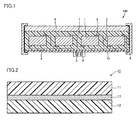
- Fig. 1 is a schematic diagram illustrating a cross section structure of a solar cell module to which a back side protective sheet for a solar cell, as one embodiment according to the present invention, is applied.
- a multitude of solar cell elements 1 are arranged in the solar cell module 100. These solar cell elements 1 are electrically connected to each other via electrodes 2 by connection wires 3. In the whole solar cell module 100, terminals 5 are led out to a back side thereof by lead wires 4, and the terminals 5 are housed in a terminal box 6.
- a filler 7 constituted of an ethylene-vinyl acetate copolymer (EVA) resin is disposed to seal the multitude of solar cell elements 1.
- EVA ethylene-vinyl acetate copolymer
- the back side protective sheet 10 for a solar cell is fixedly attached on an outer surface of the filler 7, which is located on an installation surface side of the solar cell module 100.
- a frame member 9 formed of aluminum is attached via a sealant.
- Fig. 2 shows a cross section view of the back side protective sheet for a solar cell, as the one embodiment according to the present invention.
- a first film 11 and a second film 12 are laminated in order from an inner layer disposed on a side (inner side) relatively close to the solar cell module 100. Between the first film 11 and the second film 12, a urethane adhesive layer 13 is disposed. The first film 11 is fixedly attached so as to abut a surface of the filler 7. This attachment is conducted by using a hot-press. The second film 12 is disposed in an outermost layer of the back side protective sheet 10 for a solar cell.
- the first film 11 contains linear low-density polyethylene having a density greater than or equal to 0.91 g/cm 3 and less than or equal to 0.93 g/cm 3 and an inorganic ultraviolet absorbing agent.
- the first film 11 is capable of enhancing adherence to a sealant of an EVA resin or the like by using the linear low-density polyethylene having the density greater than or equal to 0.91 g/cm 3 and less than or equal to 0.93 g/cm 3 .
- the inorganic ultraviolet absorbing agent contained in the first film 11 although there are a titanium oxide, a zinc oxide, a zirconium oxide, a calcium carbonate, a cerium oxide, an aluminum oxide, silica, an iron oxide, carbon, and the like, the titanium oxide or the carbon is preferably used.
- a preferable average particle diameter of the ultraviolet absorbing agent is 0.1 through 5 ⁇ m. If the average particle diameter of the ultraviolet absorbing agent exceeds 5 ⁇ m, dispersibility inside the first film 11 is worsened and thus, it is likely that an even ultraviolet absorbing effect cannot be attained. In addition, if the average particle diameter of the ultraviolet absorbing agent is less than 0.1 ⁇ m, a price per unit weight is increased.
- the first film 11 contains the inorganic ultraviolet absorbing agent whose content is greater than or equal to 0.1% by mass and less than or equal to 30% by mass. If the content of the inorganic ultraviolet absorbing agent is less than 0.1% by mass, the ultraviolet absorbing effect is not sufficient and thus, it is likely the yellow discoloration of the back side protective sheet 10 for a solar cell is caused. In addition, if the content of the inorganic ultraviolet absorbing agent exceeds 30% by mass, it is likely that the adherence to the sealant is reduced.
- an ultraviolet transmittance of the first film 11 is less than or equal to 20%. If the ultraviolet transmittance of the first film 11 exceeds 20%, the ultraviolet absorbing effect is not sufficient and thus, it is likely that the yellow discoloration of the back side protective sheet 10 for a solar cell is caused. Although a lower limit of the ultraviolet transmittance is not particularly limited, ordinarily, the lower limit is approximately 1%.
- a thickness of the first film 11 is greater than or equal to 5 ⁇ m and less than or equal to 200 ⁇ m in order to sufficiently contain the inorganic ultraviolet absorbing agent, and it is more preferable that the thickness of the first film 11 is greater than or equal to 30 ⁇ m and less than or equal to 180 ⁇ m. If the thickness of the first film 11 is less than 5 ⁇ m, the inorganic ultraviolet absorbing agent cannot be sufficiently contained therein.
- a polyester film such as polyethylene naphthalate (PEN) and polyethylene terephthalate (PET); a fluorine-based film such as polyvinylidene fluoride (PVDF) and polyvinyl fluoride (PVF); a polyolefin film such as polyethylene and polypropylene; a polystyrene film; a polyamide film; a polyvinyl chloride film; a polycarbonate film; a polyacrylonitrile film; a polyimide film; or the like can be used.
- a laminated film may constitute the second film 12, instead of a single-layer film.
- the laminated film constitutes the second film 12
- a film excellent in the weather resistance and a film excellent in the electrical insulating properties are laminated.
- the film excellent in the electrical insulating properties is laminated on a side of the first film.
- the fluorine-based film in particular, whose thickness is greater than or equal to 20 ⁇ m and less than or equal to 150 ⁇ m is used.
- the polyethylene terephthalate (PET) in particular, whose thickness is greater than or equal to 100 ⁇ m and less than or equal to 250 ⁇ m is preferably used.
- the first film 11 and the second film 12 are laminated by using an urethane adhesive and employing a dry lamination method.
- urethane adhesive although there are a two-part curable urethane adhesive, a polyether urethane adhesive, a polyester polyurethane polyol adhesive, and the like, in particular, it is preferable that the two-part curable urethane adhesive is used.
- the first film 11 and the second film 12 can be laminated by employing the heretofore known method.
- a method in which the first film 11 and the second film 12 are laminated with the adhesive layer 13 interposed therebetween as shown in Fig. 2 by using the urethane adhesive and employing the dry lamination method is employed.
- a co-extrusion method, an extrusion coat method, a thermal lamination method using an anchor coat agent, or the like may be adopted to laminate the first film 11 and the second film 12.
- test samples of examples and comparison examples of the back side protective sheet for a solar cell were prepared as described below.
- Titanium oxide (TiO 2 ) particles as an inorganic ultraviolet absorbing agent, having an average particle diameter of 0.3 ⁇ m and a weight of 25 kg were added to a polyethylene resin (manufactured by Tamapoly Co., Ltd.) having a density of 0.914 g/cm 3 and a weight of 100 kg, and the resultant was sufficiently kneaded, thereby preparing an LLDPE resin composition.
- This prepared LLDPE resin composition was extruded by means of an extruder, thereby preparing a first film 11 having a thickness of 60 ⁇ m and a content of the inorganic ultraviolet absorbing agent of 20% by mass.
- One side of the first film 11 was subjected to corona treatment.
- a PET film (manufactured by TOYOBO Co., Ltd. and having a product name: TOYOBO ESTER FILM E5000), as a film excellent in electrical insulating properties, having a thickness of 125 ⁇ m and a PVF film (manufactured by DuPont Co., Ltd. and having a product name: Tedlar), as a film excellent in weather resistance, having a thickness of 38 ⁇ m were prepared. These films were laminated, thereby preparing a second film 12.
- a side of the one side of the first film 11, subjected to the corona treatment, and a side of the PET film of the second film 12 were bonded by using a dry laminating adhesive and employing a dry lamination method.
- a dry laminating adhesive a urethane adhesive that was a mixture of a product named "TAKELAC A315" (100 parts by weight) and a product named “TAKENATE A50” (10 parts by weight), both of which were manufactured by Mitsui Chemicals Polyurethanes Co., Ltd., was used with a solid content coated amount of 3 g/m 2 .
- a back side protective sheet 10 for a solar cell as an example according to the present invention was prepared.
- Titanium oxide (TiO 2 ) particles as an inorganic ultraviolet absorbing agent, having an average particle diameter of 0.3 ⁇ m and a weight of 0.2 kg were added to a polyethylene resin (manufactured by Tamapoly Co., Ltd.) having a density of 0.914 g/cm 3 and a weight of 100 kg, and the resultant was sufficiently kneaded, thereby preparing an LLDPE resin composition.
- This prepared LLDPE resin composition was extruded by means of an extruder, thereby preparing a first film 11 having a thickness of 100 ⁇ m and a content of the inorganic ultraviolet absorbing agent of 0.2% by mass.
- One side of the first film 11 was subjected to corona treatment.
- a PET film (manufactured by TOYOBO Co., Ltd. and having a product name: TOYOBO ESTER FILM E5000), as a film excellent in electrical insulating properties, having a thickness of 125 ⁇ m and a PVF film (manufactured by DuPont Co., Ltd. and having a product name: Tedlar), as a film excellent in weather resistance, having a thickness of 38 ⁇ m were prepared. These films were laminated, thereby preparing a second film 12.
- a side of the one side of the first film 11, subjected to the corona treatment, and a side of the PET film of the second film 12 were bonded by using a dry laminating adhesive and employing a dry lamination method.
- a dry laminating adhesive a urethane adhesive that was a mixture of a product named "TAKELAC A315" (100 parts by weight) and a product named “TAKENATE A50” (10 parts by weight), both of which were manufactured by Mitsui Chemicals Polyurethanes Co., Ltd., was used with a solid content coated amount of 3 g/m 2 .
- a back side protective sheet 10 for a solar cell as an example according to the present invention was prepared.
- Titanium oxide (TiO 2 ) particles as an inorganic ultraviolet absorbing agent, having an average particle diameter of 0.3 ⁇ m and a weight of 0.1 kg kg were added to a polyethylene resin (manufactured by Tamapoly Co., Ltd.) having a density of 0.914 g/cm 3 and a weight of 100 kg, and the resultant was sufficiently kneaded, thereby preparing an LLDPE resin composition.
- This prepared LLDPE resin composition was extruded by means of an extruder, thereby preparing a first film 11 having a thickness of 150 ⁇ m and a content of the inorganic ultraviolet absorbing agent of 0.1% by mass.
- One side of the first film 11 was subjected to corona treatment.
- a PET film (manufactured by TOYOBO Co., Ltd. and having a product name: TOYOBO ESTER FILM E5000), as a film excellent in electrical insulating properties, having a thickness of 125 ⁇ m and a PVF film (manufactured by DuPont Co., Ltd. and having a product name: Tedlar), as a film excellent in weather resistance, having a thickness of 38 ⁇ m were prepared. These films were laminated, thereby preparing a second film 12.
- a side of the one side of the first film 11, subjected to the corona treatment, and a side of the PET film of the second film 12 were bonded by using a dry laminating adhesive and employing a dry lamination method.
- a dry laminating adhesive a urethane adhesive that was a mixture of a product named "TAKELAC A315" (100 parts by weight) and a product named “TAKENATE A50” (10 parts by weight), both of which were manufactured by Mitsui Chemicals Polyurethanes Co., Ltd., was used with a solid content coated amount of 3 g/m 2 .
- a back side protective sheet 10 for a solar cell as an example according to the present invention was prepared.
- Titanium oxide (TiO 2 ) particles as an inorganic ultraviolet absorbing agent, having an average particle diameter of 0.2 ⁇ m and a weight of 25 kg were added to a polyethylene resin (manufactured by Tamapoly Co., Ltd.) having a density of 0.914 g/cm 3 and a weight of 100 kg, and the resultant was sufficiently kneaded, thereby preparing an LLDPE resin composition.
- This prepared LLDPE resin composition was extruded by means of an extruder, thereby preparing a first film 11 having a thickness of 60 ⁇ m and a content of the inorganic ultraviolet absorbing agent of 20% by mass.
- One side of the first film 11 was subjected to corona treatment.
- a PET film (manufactured by TOYOBO Co., Ltd. and having a product name: TOYOBO ESTER FILM E5000), as a film excellent in electrical insulating properties, having a thickness of 125 ⁇ m and a PVDF film (manufactured by DENKI KAGAKU KOGYO KABUSHIKI KAISHA), as a film excellent in weather resistance, having a thickness of 40 ⁇ m were prepared. These films were laminated, thereby preparing a second film 12.
- a side of the one side of the first film 11, subjected to the corona treatment, and a side of the PET film of the second film 12 were bonded by using a dry laminating adhesive and employing a dry lamination method.
- a dry laminating adhesive a urethane adhesive that was a mixture of a product named "TAKELAC A315" (100 parts by weight) and a product named “TAKENATE A50” (10 parts by weight), both of which were manufactured by Mitsui Chemicals Polyurethanes Co., Ltd., was used with a solid content coated amount of 3 g/m 2 .
- a back side protective sheet 10 for a solar cell as an example according to the present invention was prepared.
- Titanium oxide (TiO 2 ) particles as an inorganic ultraviolet absorbing agent, having an average particle diameter of 0.2 ⁇ m and a weight of 25 kg were added to a polyethylene resin (manufactured by Tamapoly Co., Ltd.) having a density of 0.914 g/cm 3 and a weight of 100 kg, and the resultant was sufficiently kneaded, thereby preparing an LLDPE resin composition.
- This prepared LLDPE resin composition was extruded by means of an extruder, thereby preparing a first film 11 having a thickness of 100 ⁇ m and a content of the inorganic ultraviolet absorbing agent of 20% by mass.
- One side of the first film 11 was subjected to corona treatment.
- a PET film (manufactured by TOYOBO Co., Ltd. and having a product name: TOYOBO ESTER FILM E5000), as a film excellent in electrical insulating properties, having a thickness of 125 ⁇ m and a PVDF film (manufactured by DENKI KAGAKU KOGYO KABUSHIKI KAISHA), as a film excellent in weather resistance, having a thickness of 40 ⁇ m were prepared. These films were laminated, thereby preparing a second film 12.
- a side of the one side of the first film 11, subjected to the corona treatment, and a side of the PET film of the second film 12 were bonded by using a dry laminating adhesive and employing a dry lamination method.
- a dry laminating adhesive a urethane adhesive that was a mixture of a product named "TAKELAC A315" (100 parts by weight) and a product named “TAKENATE A50” (10 parts by weight), both of which were manufactured by Mitsui Chemicals Polyurethanes Co., Ltd., was used with a solid content coated amount of 3 g/m 2 .
- a back side protective sheet 10 for a solar cell as an example according to the present invention was prepared.
- Titanium oxide (TiO 2 ) particles as an inorganic ultraviolet absorbing agent, having an average particle diameter of 0.2 ⁇ m and a weight of 0.5 kg were added to a polyethylene resin (manufactured by Tamapoly Co., Ltd.) having a density of 0.914 g/cm 3 and a weight of 100 kg, and the resultant was sufficiently kneaded, thereby preparing an LLDPE resin composition.
- This prepared LLDPE resin composition was extruded by means of an extruder, thereby preparing a first film 11 having a thickness of 150 ⁇ m and a content of the inorganic ultraviolet absorbing agent of 0.5% by mass.
- One side of the first film 11 was subjected to corona treatment.
- a PET film (manufactured by TOYOBO Co., Ltd. and having a product name: TOYOBO ESTER FILM E5000), as a film excellent in electrical insulating properties, having a thickness of 125 ⁇ m and a PVDF film (manufactured by DENKI KAGAKU KOGYO KABUSHIKI KAISHA), as a film excellent in weather resistance, having a thickness of 40 ⁇ m were prepared. These films were laminated, thereby preparing a second film 12.
- a side of the one side of the first film 11, subjected to the corona treatment, and a side of the PET film of the second film 12 were bonded by using a dry laminating adhesive and employing a dry lamination method.
- a dry laminating adhesive a urethane adhesive that was a mixture of a product named "TAKELAC A315" (100 parts by weight) and a product named “TAKENATE A50” (10 parts by weight), both of which were manufactured by Mitsui Chemicals Polyurethanes Co., Ltd., was used with a solid content coated amount of 3 g/m 2 .
- a back side protective sheet 10 for a solar cell as an example according to the present invention was prepared.
- Titanium oxide (TiO 2 ) particles as an inorganic ultraviolet absorbing agent, having an average particle diameter of 0.3 ⁇ m and a weight of 43 kg were added to a polyethylene resin (manufactured by Tamapoly Co., Ltd.) having a density of 0.914 g/cm 3 and a weight of 100 kg, and the resultant was sufficiently kneaded, thereby preparing an LLDPE resin composition.
- This prepared LLDPE resin composition was extruded by means of an extruder, thereby preparing a first film 11 having a thickness of 60 ⁇ m and a content of the inorganic ultraviolet absorbing agent of 30% by mass.
- One side of the first film 11 was subjected to corona treatment.
- a PET film (manufactured by TOYOBO Co., Ltd. and having a product name: TOYOBO ESTER FILM E5000), as a film excellent in electrical insulating properties, having a thickness of 125 ⁇ m and a PVF film (manufactured by DuPont Co., Ltd. and having a product name: Tedlar), as a film excellent in weather resistance, having a thickness of 38 ⁇ m were prepared. These films were laminated, thereby preparing a second film 12.
- a side of the one side of the first film 11, subjected to the corona treatment, and a side of the PET film of the second film 12 were bonded by using a dry laminating adhesive and employing a dry lamination method.
- a dry laminating adhesive a urethane adhesive that was a mixture of a product named "TAKELAC A315" (100 parts by weight) and a product named “TAKENATE A50” (10 parts by weight), both of which were manufactured by Mitsui Chemicals Polyurethanes Co., Ltd., was used with a solid content coated amount of 3 g/m 2 .
- a back side protective sheet 10 for a solar cell as an example according to the present invention was prepared.
- Calcium carbonate (CaCO 3 ) particles as an inorganic ultraviolet absorbing agent, having an average particle diameter of 5 ⁇ m and a weight of 43 kg were added to a polyethylene resin (manufactured by Tamapoly Co., Ltd.) having a density of 0.914 g/cm 3 and a weight of 100 kg, and the resultant was sufficiently kneaded, thereby preparing an LLDPE resin composition.
- This prepared LLDPE resin composition was extruded by means of an extruder, thereby preparing a first film 11 having a thickness of 60 ⁇ m and a content of the inorganic ultraviolet absorbing agent of 30% by mass.
- One side of the first film 11 was subjected to corona treatment.
- a PET film (manufactured by TOYOBO Co., Ltd. and having a product name: TOYOBO ESTER FILM E5000), as a film excellent in electrical insulating properties, having a thickness of 125 ⁇ m and a PVF film (manufactured by DuPont Co., Ltd. and having a product name: Tedlar), as a film excellent in weather resistance, having a thickness of 38 ⁇ m were prepared. These films were laminated, thereby preparing a second film 12.
- a side of the one side of the first film 11, subjected to the corona treatment, and a side of the PET film of the second film 12 were bonded by using a dry laminating adhesive and employing a dry lamination method.
- a dry laminating adhesive a urethane adhesive that was a mixture of a product named "TAKELAC A315" (100 parts by weight) and a product named “TAKENATE A50” (10 parts by weight), both of which were manufactured by Mitsui Chemicals Polyurethanes Co., Ltd., was used with a solid content coated amount of 3 g/m 2 .
- a back side protective sheet 10 for a solar cell as an example according to the present invention was prepared.
- Zinc oxide (ZnO) particles as an inorganic ultraviolet absorbing agent, having an average particle diameter of 0.3 ⁇ m and a weight of 11 kg were added to a polyethylene resin (manufactured by Tamapoly Co., Ltd.) having a density of 0.914 g/cm 3 and a weight of 100 kg, and the resultant was sufficiently kneaded, thereby preparing an LLDPE resin composition.
- This prepared LLDPE resin composition was extruded by means of an extruder, thereby preparing a first film 11 having a thickness of 60 ⁇ m and a content of the inorganic ultraviolet absorbing agent of 10% by mass.
- One side of the first film 11 was subjected to corona treatment.
- a PET film (manufactured by TOYOBO Co., Ltd. and having a product name: TOYOBO ESTER FILM E5000), as a film excellent in electrical insulating properties, having a thickness of 125 ⁇ m and a PVF film (manufactured by DuPont Co., Ltd. and having a product name: Tedlar), as a film excellent in weather resistance, having a thickness of 38 ⁇ m were prepared. These films were laminated, thereby preparing a second film 12.
- a side of the one side of the first film 11, subjected to the corona treatment, and a side of the PET film of the second film 12 were bonded by using a dry laminating adhesive and employing a dry lamination method.
- a dry laminating adhesive a urethane adhesive that was a mixture of a product named "TAKELAC A315" (100 parts by weight) and a product named “TAKENATE A50” (10 parts by weight), both of which were manufactured by Mitsui Chemicals Polyurethanes Co., Ltd., was used with a solid content coated amount of 3 g/m 2 .
- a back side protective sheet 10 for a solar cell as an example according to the present invention was prepared.
- Zinc oxide (ZnO) particles as an inorganic ultraviolet absorbing agent, having an average particle diameter of 0.3 ⁇ m and a weight of 43 kg were added to a polyethylene resin (manufactured by Tamapoly Co., Ltd.) having a density of 0.914 g/cm 3 and a weight of 100 kg, and the resultant was sufficiently kneaded, thereby preparing an LLDPE resin composition.
- This prepared LLDPE resin composition was extruded by means of an extruder, thereby preparing a first film 11 having a thickness of 60 ⁇ m and a content of the inorganic ultraviolet absorbing agent of 30% by mass.
- One side of the first film 11 was subjected to corona treatment.
- a PET film (manufactured by TOYOBO Co., Ltd. and having a product name: TOYOBO ESTER FILM E5000), as a film excellent in electrical insulating properties, having a thickness of 125 ⁇ m and a PVF film (manufactured by DuPont Co., Ltd. and having a product name: Tedlar), as a film excellent in weather resistance, having a thickness of 38 ⁇ m were prepared. These films were laminated, thereby preparing a second film 12.
- a side of the one side of the first film 11, subjected to the corona treatment, and a side of the PET film of the second film 12 were bonded by using a dry laminating adhesive and employing a dry lamination method.
- a dry laminating adhesive a urethane adhesive that was a mixture of a product named "TAKELAC A315" (100 parts by weight) and a product named “TAKENATE A50” (10 parts by weight), both of which were manufactured by Mitsui Chemicals Polyurethanes Co., Ltd., was used with a solid content coated amount of 3 g/m 2 .
- a back side protective sheet 10 for a solar cell as an example according to the present invention was prepared.
- Particles of 2,4-dihydroxybenzophenone, as an organic ultraviolet absorbing agent, having an average particle diameter of 0.3 ⁇ m and a weight of 3.1 kg were added to a polyethylene resin (manufactured by Tamapoly Co., Ltd.) having a density of 0.914 g/cm 3 and a weight of 100 kg, and the resultant was sufficiently kneaded, thereby preparing an LLDPE resin composition.
- This prepared LLDPE resin composition was extruded by means of an extruder, thereby preparing a first film 11 having a thickness of 60 ⁇ m and a content of the inorganic ultraviolet absorbing agent of 3% by mass.
- One side of the first film 11 was subjected to corona treatment.
- a PET film (manufactured by TOYOBO Co., Ltd. and having a product name: TOYOBO ESTER FILM E5000), as a film excellent in electrical insulating properties, having a thickness of 125 ⁇ m and a PVF film (manufactured by DuPont Co., Ltd. and having a product name: Tedlar), as a film excellent in weather resistance, having a thickness of 38 ⁇ m were prepared. These films were laminated, thereby preparing a second film 12.
- a side of the one side of the first film 11, subjected to the corona treatment, and a side of the PET film of the second film 12 were bonded by using a dry laminating adhesive and employing a dry lamination method.
- a dry laminating adhesive a urethane adhesive that was a mixture of a product named "TAKELAC A315" (100 parts by weight) and a product named “TAKENATE A50” (10 parts by weight), both of which were manufactured by Mitsui Chemicals Polyurethanes Co., Ltd., was used with a solid content coated amount of 3 g/m 2 .
- a back side protective sheet 10 for a solar cell as a comparison example of the present invention was prepared.
- a polyethylene resin manufactured by Tamapoly Co., Ltd.
- a density of 0.914 g/cm 3 was extruded by means of an extruder, thereby preparing a first film 11 having a thickness of 60 ⁇ m.
- One side of the first film 11 was subjected to corona treatment.
- a PET film (manufactured by TOYOBO Co., Ltd. and having a product name: TOYOBO ESTER FILM E5000), as a film excellent in electrical insulating properties, having a thickness of 125 ⁇ m and a PVF film (manufactured by DuPont Co., Ltd. and having a product name: Tedlar), as a film excellent in weather resistance, having a thickness of 38 ⁇ m were prepared. These films were laminated, thereby preparing a second film 12.
- a side of the one side of the first film 11, subjected to the corona treatment, and a side of the PET film of the second film 12 were bonded by using a dry laminating adhesive and employing a dry lamination method.
- a dry laminating adhesive a urethane adhesive that was a mixture of a product named "TAKELAC A315" (100 parts by weight) and a product named “TAKENATE A50” (10 parts by weight), both of which were manufactured by Mitsui Chemicals Polyurethanes Co., Ltd., was used with a solid content coated amount of 3 g/m 2 .
- a back side protective sheet 10 for a solar cell as a comparison example of the present invention was prepared.
- Titanium oxide (TiO 2 ) particles as an inorganic ultraviolet absorbing agent, having an average particle diameter of 0.3 ⁇ m and a weight of 5 g were added to a polyethylene resin (manufactured by Tamapoly Co., Ltd.) having a density of 0.914 g/cm 3 and a weight of 100 kg, and the resultant was sufficiently kneaded, thereby preparing an LLDPE resin composition.
- This prepared LLDPE resin composition was extruded by means of an extruder, thereby preparing a first film 11 having a thickness of 60 ⁇ m and a content of the inorganic ultraviolet absorbing agent of 0.005% by mass.
- One side of the first film 11 was subjected to corona treatment.
- a PET film (manufactured by TOYOBO Co., Ltd. and having a product name: TOYOBO ESTER FILM E5000), as a film excellent in electrical insulating properties, having a thickness of 125 ⁇ m and a PVF film (manufactured by DuPont Co., Ltd. and having a product name: Tedlar), as a film excellent in weather resistance, having a thickness of 38 ⁇ m were prepared. These films were laminated, thereby preparing a second film 12.
- a side of the one side of the first film 11, subjected to the corona treatment, and a side of the PET film of the second film 12 were bonded by using a dry laminating adhesive and employing a dry lamination method.
- a dry laminating adhesive a urethane adhesive that was a mixture of a product named "TAKELAC A315" (100 parts by weight) and a product named “TAKENATE A50” (10 parts by weight), both of which were manufactured by Mitsui Chemicals Polyurethanes Co., Ltd., was used with a solid content coated amount of 3 g/m 2 .
- a back side protective sheet 10 for a solar cell as a comparison example of the present invention was prepared.
- Titanium oxide (TiO 2 ) particles as an inorganic ultraviolet absorbing agent, having an average particle diameter of 0.3 ⁇ m and a weight of 45 kg were added to a polyethylene resin (manufactured by Tamapoly Co., Ltd.) having a density of 0.914 g/cm , 3 and a weight of 100 kg, and the resultant was sufficiently kneaded, thereby preparing an LLDPE resin composition.
- This prepared LLDPE resin composition was extruded by means of an extruder, thereby preparing a first film 11 having a thickness of 30 ⁇ m and a content of the inorganic ultraviolet absorbing agent of 31% by mass.
- One side of the first film 11 was subjected to corona treatment.
- a PET film (manufactured by TOYOBO Co., Ltd. and having a product name: TOYOBO ESTER FILM E5000), as a film excellent in electrical insulating properties, having a thickness of 125 ⁇ m and a PVF film (manufactured by DuPont Co., Ltd. and having a product name: Tedlar), as a film excellent in weather resistance, having a thickness of 38 ⁇ m were prepared. These films were laminated, thereby preparing a second film 12.
- a side of the one side of the first film 11, subjected to the corona treatment, and a side of the PET film of the second film 12 were bonded by using a dry laminating adhesive and employing a dry lamination method.
- a dry laminating adhesive a urethane adhesive that was a mixture of a product named "TAKELAC A315" (100 parts by weight) and a product named “TAKENATE A50” (10 parts by weight), both of which were manufactured by Mitsui Chemicals Polyurethanes Co., Ltd., was used with a solid content coated amount of 3 g/m 2 .
- a back side protective sheet 10 for a solar cell as a comparison example of the present invention was prepared.
- Titanium oxide (TiO 2 ) particles as an inorganic ultraviolet absorbing agent, having an average particle diameter of 0.05 ⁇ m and a weight of 100 g were added to a polyethylene resin (manufactured by Tamapoly Co., Ltd.) having a density of 0.914 g/cm 3 and a weight of 100 kg, and the resultant was sufficiently kneaded, thereby preparing an LLDPE resin composition.
- This prepared LLDPE resin composition was extruded by means of an extruder, thereby preparing a first film 11 having a thickness of 30 ⁇ m and a content of the inorganic ultraviolet absorbing agent of 0.1% by mass.
- One side of the first film 11 was subjected to corona treatment.
- a PET film (manufactured by TOYOBO Co., Ltd. and having a product name: TOYOBO ESTER FILM E5000), as a film excellent in electrical insulating properties, having a thickness of 125 ⁇ m and a PVF film (manufactured by DuPont Co., Ltd. and having a product name: Tedlar), as a film excellent in weather resistance, having a thickness of 38 ⁇ m were prepared. These films were laminated, thereby preparing a second film 12.
- a side of the one side of the first film 11, subjected to the corona treatment, and a side of the PET film of the second film 12 were bonded by using a dry laminating adhesive and employing a dry lamination method.
- a dry laminating adhesive a urethane adhesive that was a mixture of a product named "TAKELAC A315" (100 parts by weight) and a product named “TAKENATE A50” (10 parts by weight), both of which were manufactured by Mitsui Chemicals Polyurethanes Co., Ltd., was used with a solid content coated amount of 3 g/m 2 .
- a back side protective sheet 10 for a solar cell as a comparison example of the present invention was prepared.
- Titanium oxide (TiO 2 ) particles as an inorganic ultraviolet absorbing agent, having an average particle diameter of 6 ⁇ m and a weight of 100 g were added to a polyethylene resin (manufactured by Tamapoly Co., Ltd.) having a density of 0.914 g/cm 3 and a weight of 100 kg, and the resultant was sufficiently kneaded, thereby preparing an LLDPE resin composition.
- This prepared LLDPE resin composition was extruded by means of an extruder, thereby preparing a first film 11 having a thickness of 30 ⁇ m and a content of the inorganic ultraviolet absorbing agent of 0.1% by mass.
- One side of the first film 11 was subjected to corona treatment.
- a PET film (manufactured by TOYOBO Co., Ltd. and having a product name: TOYOBO ESTER FILM E5000), as a film excellent in electrical insulating properties, having a thickness of 125 ⁇ m and a PVF film (manufactured by DuPont Co., Ltd. and having a product name: Tedlar), as a film excellent in weather resistance, having a thickness of 38 ⁇ m were prepared. These films were laminated, thereby preparing a second film 12.
- a side of the one side of the first film 11, subjected to the corona treatment, and a side of the PET film of the second film 12 were bonded by using a dry laminating adhesive and employing a dry lamination method.
- a dry laminating adhesive a urethane adhesive that was a mixture of a product named "TAKELAC A315" (100 parts by weight) and a product named “TAKENATE A50” (10 parts by weight), both of which were manufactured by Mitsui Chemicals Polyurethanes Co., Ltd., was used with a solid content coated amount of 3 g/m 2
- a back side protective sheet 10 for a solar cell as a comparison example of the present invention was prepared.
- An ultraviolet transmittance of each of the first films 11 was obtained as follows. First, by using a multi-purpose spectrophotometer manufactured by JASCO Corporation, each of the first films 11 was irradiated with ultraviolet rays each having a wavelength of 300 through 600 nm, and a transmittance in a range of these wavelengths was measured. Next, a transmittance with respect to a wavelength of 350 nm was measured and evaluated as the ultraviolet transmittance.
- a side of each of the first films 11 of the obtained back side protective sheets 10 for solar cells was irradiated with ultraviolet rays.
- the side thereof was irradiated with the ultraviolet rays under the irradiation conditions of 100 mW/cm 2 and 15 hours by using a metal halide lamp "EYE Super UV Tester SUV-W151 (manufactured by Iwasaki Electric Co., Ltd.)".
- Yellow discoloration after the irradiation of the ultraviolet rays was evaluated by using a value ⁇ b* which was measured from the side of each of the first films 11.
- the value ⁇ b* indicates a difference between a value b* before the irradiation and a value b* after the irradiation.
- the test samples used for the evaluation of the yellow discoloration I were retained at a temperature of 85C° in an atmosphere of a relative humidity of 85% for 3000 hours, and thereafter, in a manner similar to the manner in which the yellow discoloration I was evaluated, yellow discoloration was evaluated by using a value ⁇ b* which was measured from the side of each of the first films 11.
- the value ⁇ b* indicates a difference between the value b* before the irradiation, used for the evaluation of the yellow discoloration I, and a value b* after the irradiation and after the retaining for 3000 hours. This value ⁇ b* was evaluated as "yellow discoloration II".
- each of the dummy solar cell modules was prepared by laminating in order an EVA resin (manufactured by Bridgestone Corporation and having a product name: S-11) having a thickness of 0.5 mm and an area of 20 cm ⁇ 20 cm and each of the back side protective sheets 10 for solar cells, obtained in Examples 1 through 10 and Comparison Examples 1 through 6, having an area of 20 cm ⁇ 20 cm on a glass plate having a thickness of 3 mm and an area of 20 cm ⁇ 20 cm so as to superpose respective sides on one another.
- These laminated bodies were subjected to defoaming processing at a temperature of 150C° for 5 minutes and pressurized at a temperature of 150C° for 15 minutes by using an atmospheric press, thereby preparing the dummy solar cell modules.
- a test specimen which had one open portion and a width of 15 mm was prepared by making, from a surface side of each of the back side protective sheets 10 for solar cells of the dummy solar cell modules toward each of the EVA resins, a cut which had a depth of (a thickness of each of the back side protective sheets 10 for solar cells + 5 ⁇ m), a width of 15 mm, and a length of 18 cm, and the test specimen was pulled at a pulling speed of 100 mm/minute. At this time, rupture stress values were measured and each of the rupture stress values was evaluated as an adhesion force (N/15 mm) between each of the EVA resins and each of the back side protective sheets 10 for solar cells.
- each of the examples according to the present invention is capable of enhancing the adherence to the EVA resin as the filler used to seal the solar cell elements and of preventing the yellow discoloration over a long period of time.
- a back side protective sheet for a solar cell according to the present invention is used so as to be disposed on a back side of a solar cell module and is capable of enhancing adherence to an EVA resin as a filler used to seal solar cell elements and of preventing yellow discoloration a long period of time.
Landscapes
- Laminated Bodies (AREA)
- Photovoltaic Devices (AREA)
- Compositions Of Macromolecular Compounds (AREA)
Abstract
Description
- The present invention relates generally to a back side protective sheet for a solar cell disposed on a back side of a solar cell module and to a solar cell module comprising the back side protective sheet. More particularly, the present invention relates to a back side protective sheet for a solar cell, which has weather resistance, and to a solar cell module comprising the back side protective sheet.
- Because of the nature of a solar cell module, it is often the case that a solar cell module is installed outdoors. Therefore, in order to protect solar cell elements, electrodes, wires, and the like, for example, a transparent glass plate is disposed on a front side thereof and, for example, a laminated sheet of aluminum foil and a resin film, a laminated sheet of resin films, or the like is disposed on a back side thereof.
- A back side protective sheet for a solar cell is adhered, by using a hot-press, to an outer surface of an ethylene-vinyl acetate copolymer (EVA) resin as a filler used to seal solar cell elements. For example, Japanese Patent Application Laid-Open Publication No.
2008-211034 - However, as problems regarding the weather resistance of the back side protective sheet for a solar cell, which should be solved, in addition to a problem of a reduction in adherence to the EVA resin, there are a problem of poor appearance caused by yellow discoloration of the back side protective sheet for a solar cell and a problem of a reduction in an output.
- For example, Japanese Patent Application Laid-Open Publication No.
2008-270647 - However, there is the concern regarding the hazardousness caused on the human body by the organic ultraviolet absorbing agent. In addition, since as compared with an inorganic ultraviolet absorbing agent, the organic ultraviolet absorbing agent is inferior in temporal and environmental stability, decomposition or the like of the ultraviolet absorbing agent may be caused due to aging.
- Furthermore, upon the lamination process conducted during manufacturing of the back side protective sheet, for the purpose of enhancing mutual adhesiveness of resin films, surfaces of the resin films are subjected to a corona treatment. The corona treatment which is one of surface treatments and employs plasma discharge has the problem of decomposing unstable substances because high energy is applied to the films. Because it is likely that the organic ultraviolet absorbing agent contained in the resin films vaporizes or decomposes when coming into a high-temperature state, the organic ultraviolet absorbing agent may be adversely affected by the corona treatment on the spot, or early aged deterioration thereof may occur. Accordingly, since in the conducted corona treatment, the decomposition or the like of the ultraviolet absorbing agent is caused, it is likely that intrinsic properties of the ultraviolet absorbing agent cannot be sufficiently exhibited.
-
- Patent Literature 1: Japanese Patent Application Laid-Open Publication No.
2008-211034 - Patent Literature 2: Japanese Patent Application Laid-Open Publication No.
2008-270647 - Therefore, objects of the present invention are to provide a back side protective sheet for a solar cell capable of enhancing adherence to an EVA resin as a filler used to seal solar cell elements and of preventing yellow discoloration over a long period of time; and a solar cell module including the back side protective sheet for a solar cell.
- A back side protective sheet for a solar cell according to the present invention is a back side protective sheet for a solar cell, disposed on a back side of a solar cell module, and includes: a first film containing linear low-density polyethylene having a density greater than or equal to 0.91 g/cm3 and less than or equal to 0.93 g/cm3 and an inorganic ultraviolet absorbing agent; and a second film laminated on the first film, with a urethane adhesive layer being interposed therebetween. An average particle diameter of the inorganic ultraviolet absorbing agent is greater than or equal to 0.1 µm and less than or equal to 5 µm. The first film contains the inorganic ultraviolet absorbing agent greater than or equal to 0.1% by mass and less than or equal to 30% by mass.
- It is preferable that in the back side protective sheet for a solar cell according to the present invention, the inorganic ultraviolet absorbing agent is one kind selected from the group consisting of a titanium oxide, a zinc oxide, a zirconium oxide, a calcium carbonate, a cerium oxide, silica, an iron oxide, and carbon.
- In addition, it is preferable that in the back side protective sheet for a solar cell according to the present invention, an ultraviolet transmittance of the first film is less than or equal to 20%.
- Furthermore, it is preferable that in the back side protective sheet for a solar cell according to the present invention, a thickness of the first film is greater than or equal to 5 µm and less than or equal to 200 µm.
- It is preferable that in the back side protective sheet for a solar cell according to the present invention, the second film includes: polyethylene terephthalate disposed on a side of the first film; and a fluorine-based film laminated on the polyethylene terephthalate film.
- A solar cell module according to the present invention includes: a filler being constituted of an ethylene-vinyl acetate copolymer resin being disposed to seal solar cell elements; and the back side protective sheet for a solar cell, having any of the above-described features, which is fixedly attached on an outer surface of the filler of a back side of the solar cell module.
- In a back side protective sheet for a solar cell according to the present invention, a first film containing linear low-density polyethylene having a density greater than or equal to 0.91 g/cm3 and less than or equal to 0.93 g/cm3 is excellent in adherence to a filler being constituted of an ethylene-vinyl acetate copolymer resin disposed to seal solar cell elements and is capable of maintaining the adherence over time. In addition, since temporal and environmental stability of an inorganic ultraviolet absorbing agent contained in the first film is high, decomposition is hardly caused and yellow discoloration of the back side protective sheet can be prevented over a long period of time. In particular, yellow discoloration of a urethane adhesive layer used to laminate and fixedly attach the first and second films can be prevented over a long period of time.
- Hence, according to the present invention, adherence of the back side protective sheet and an EVA resin as a filler used to seal solar cell elements can be enhanced and a reduction in an output, caused by the yellow discoloration, can be prevented over a long period of time.
-
-
Fig. 1 is a schematic diagram illustrating a cross section structure of a solar cell module to which a back side protective sheet for a solar cell, as one embodiment according to the present invention, is applied. -
Fig. 2 shows a cross section view of the back side protective sheet for a solar cell, as the one embodiment according to the present invention. -
Fig. 1 is a schematic diagram illustrating a cross section structure of a solar cell module to which a back side protective sheet for a solar cell, as one embodiment according to the present invention, is applied. - As shown in
Fig. 1 , a multitude ofsolar cell elements 1 are arranged in thesolar cell module 100. Thesesolar cell elements 1 are electrically connected to each other viaelectrodes 2 byconnection wires 3. In the wholesolar cell module 100,terminals 5 are led out to a back side thereof by lead wires 4, and theterminals 5 are housed in aterminal box 6. Afiller 7 constituted of an ethylene-vinyl acetate copolymer (EVA) resin is disposed to seal the multitude ofsolar cell elements 1. On an outer surface of thefiller 7, which is located on a light receiving surface side of thesolar cell module 100, atransparent glass layer 8 is fixedly attached. On an outer surface of thefiller 7, which is located on an installation surface side of thesolar cell module 100, the back sideprotective sheet 10 for a solar cell is fixedly attached. On side surfaces of thesolar cell module 100, a frame member 9 formed of aluminum is attached via a sealant. -
Fig. 2 shows a cross section view of the back side protective sheet for a solar cell, as the one embodiment according to the present invention. - As shown in
Fig. 2 , in the back sideprotective sheet 10 for a solar cell, afirst film 11 and asecond film 12 are laminated in order from an inner layer disposed on a side (inner side) relatively close to thesolar cell module 100. Between thefirst film 11 and thesecond film 12, a urethaneadhesive layer 13 is disposed. Thefirst film 11 is fixedly attached so as to abut a surface of thefiller 7. This attachment is conducted by using a hot-press. Thesecond film 12 is disposed in an outermost layer of the back sideprotective sheet 10 for a solar cell. Thefirst film 11 contains linear low-density polyethylene having a density greater than or equal to 0.91 g/cm3 and less than or equal to 0.93 g/cm3 and an inorganic ultraviolet absorbing agent. - The
first film 11 is capable of enhancing adherence to a sealant of an EVA resin or the like by using the linear low-density polyethylene having the density greater than or equal to 0.91 g/cm3 and less than or equal to 0.93 g/cm3. As the inorganic ultraviolet absorbing agent contained in thefirst film 11, although there are a titanium oxide, a zinc oxide, a zirconium oxide, a calcium carbonate, a cerium oxide, an aluminum oxide, silica, an iron oxide, carbon, and the like, the titanium oxide or the carbon is preferably used. - A preferable average particle diameter of the ultraviolet absorbing agent is 0.1 through 5 µm. If the average particle diameter of the ultraviolet absorbing agent exceeds 5 µm, dispersibility inside the
first film 11 is worsened and thus, it is likely that an even ultraviolet absorbing effect cannot be attained. In addition, if the average particle diameter of the ultraviolet absorbing agent is less than 0.1 µm, a price per unit weight is increased. - In order for the
first film 11 to sufficiently exhibit, to the back sideprotective sheet 10 for a solar cell, the ultraviolet absorbing effect for preventing the yellow discoloration and to maintain the adherence to the ethylene-vinyl acetate copolymer (EVA) resin, it is preferable that thefirst film 11 contains the inorganic ultraviolet absorbing agent whose content is greater than or equal to 0.1% by mass and less than or equal to 30% by mass. If the content of the inorganic ultraviolet absorbing agent is less than 0.1% by mass, the ultraviolet absorbing effect is not sufficient and thus, it is likely the yellow discoloration of the back sideprotective sheet 10 for a solar cell is caused. In addition, if the content of the inorganic ultraviolet absorbing agent exceeds 30% by mass, it is likely that the adherence to the sealant is reduced. - It is preferable that an ultraviolet transmittance of the
first film 11 is less than or equal to 20%. If the ultraviolet transmittance of thefirst film 11 exceeds 20%, the ultraviolet absorbing effect is not sufficient and thus, it is likely that the yellow discoloration of the back sideprotective sheet 10 for a solar cell is caused. Although a lower limit of the ultraviolet transmittance is not particularly limited, ordinarily, the lower limit is approximately 1%. - It is preferable that a thickness of the
first film 11 is greater than or equal to 5 µm and less than or equal to 200 µm in order to sufficiently contain the inorganic ultraviolet absorbing agent, and it is more preferable that the thickness of thefirst film 11 is greater than or equal to 30 µm and less than or equal to 180 µm. If the thickness of thefirst film 11 is less than 5 µm, the inorganic ultraviolet absorbing agent cannot be sufficiently contained therein. - Weather resistance and electrical insulating properties are required of the
second film 12. A polyester film such as polyethylene naphthalate (PEN) and polyethylene terephthalate (PET); a fluorine-based film such as polyvinylidene fluoride (PVDF) and polyvinyl fluoride (PVF); a polyolefin film such as polyethylene and polypropylene; a polystyrene film; a polyamide film; a polyvinyl chloride film; a polycarbonate film; a polyacrylonitrile film; a polyimide film; or the like can be used. In addition, a laminated film may constitute thesecond film 12, instead of a single-layer film. - In a case where the laminated film constitutes the
second film 12, it is preferable that a film excellent in the weather resistance and a film excellent in the electrical insulating properties are laminated. In this case, the film excellent in the electrical insulating properties is laminated on a side of the first film. As the film excellent in the weather resistance, it is preferable that the fluorine-based film, in particular, whose thickness is greater than or equal to 20 µm and less than or equal to 150 µm is used. As the film excellent in the electrical insulating properties, the polyethylene terephthalate (PET), in particular, whose thickness is greater than or equal to 100 µm and less than or equal to 250 µm is preferably used. - The
first film 11 and thesecond film 12 are laminated by using an urethane adhesive and employing a dry lamination method. As the urethane adhesive, although there are a two-part curable urethane adhesive, a polyether urethane adhesive, a polyester polyurethane polyol adhesive, and the like, in particular, it is preferable that the two-part curable urethane adhesive is used. - The
first film 11 and thesecond film 12 can be laminated by employing the heretofore known method. For example, as described above, a method in which thefirst film 11 and thesecond film 12 are laminated with theadhesive layer 13 interposed therebetween as shown inFig. 2 by using the urethane adhesive and employing the dry lamination method is employed. In addition to the above-mentioned method, a co-extrusion method, an extrusion coat method, a thermal lamination method using an anchor coat agent, or the like may be adopted to laminate thefirst film 11 and thesecond film 12. - Test samples of examples and comparison examples of the back side protective sheet for a solar cell were prepared as described below.
- Titanium oxide (TiO2) particles, as an inorganic ultraviolet absorbing agent, having an average particle diameter of 0.3 µm and a weight of 25 kg were added to a polyethylene resin (manufactured by Tamapoly Co., Ltd.) having a density of 0.914 g/cm3 and a weight of 100 kg, and the resultant was sufficiently kneaded, thereby preparing an LLDPE resin composition. This prepared LLDPE resin composition was extruded by means of an extruder, thereby preparing a
first film 11 having a thickness of 60 µm and a content of the inorganic ultraviolet absorbing agent of 20% by mass. One side of thefirst film 11 was subjected to corona treatment. - A PET film (manufactured by TOYOBO Co., Ltd. and having a product name: TOYOBO ESTER FILM E5000), as a film excellent in electrical insulating properties, having a thickness of 125 µm and a PVF film (manufactured by DuPont Co., Ltd. and having a product name: Tedlar), as a film excellent in weather resistance, having a thickness of 38 µm were prepared. These films were laminated, thereby preparing a
second film 12. - A side of the one side of the
first film 11, subjected to the corona treatment, and a side of the PET film of thesecond film 12 were bonded by using a dry laminating adhesive and employing a dry lamination method. As the dry laminating adhesive, a urethane adhesive that was a mixture of a product named "TAKELAC A315" (100 parts by weight) and a product named "TAKENATE A50" (10 parts by weight), both of which were manufactured by Mitsui Chemicals Polyurethanes Co., Ltd., was used with a solid content coated amount of 3 g/m2. As described above, a back sideprotective sheet 10 for a solar cell as an example according to the present invention was prepared. - Titanium oxide (TiO2) particles, as an inorganic ultraviolet absorbing agent, having an average particle diameter of 0.3 µm and a weight of 0.2 kg were added to a polyethylene resin (manufactured by Tamapoly Co., Ltd.) having a density of 0.914 g/cm3 and a weight of 100 kg, and the resultant was sufficiently kneaded, thereby preparing an LLDPE resin composition. This prepared LLDPE resin composition was extruded by means of an extruder, thereby preparing a
first film 11 having a thickness of 100 µm and a content of the inorganic ultraviolet absorbing agent of 0.2% by mass. One side of thefirst film 11 was subjected to corona treatment. - A PET film (manufactured by TOYOBO Co., Ltd. and having a product name: TOYOBO ESTER FILM E5000), as a film excellent in electrical insulating properties, having a thickness of 125 µm and a PVF film (manufactured by DuPont Co., Ltd. and having a product name: Tedlar), as a film excellent in weather resistance, having a thickness of 38 µm were prepared. These films were laminated, thereby preparing a
second film 12. - A side of the one side of the
first film 11, subjected to the corona treatment, and a side of the PET film of thesecond film 12 were bonded by using a dry laminating adhesive and employing a dry lamination method. As the dry laminating adhesive, a urethane adhesive that was a mixture of a product named "TAKELAC A315" (100 parts by weight) and a product named "TAKENATE A50" (10 parts by weight), both of which were manufactured by Mitsui Chemicals Polyurethanes Co., Ltd., was used with a solid content coated amount of 3 g/m2. As described above, a back sideprotective sheet 10 for a solar cell as an example according to the present invention was prepared. - Titanium oxide (TiO2) particles, as an inorganic ultraviolet absorbing agent, having an average particle diameter of 0.3 µm and a weight of 0.1 kg kg were added to a polyethylene resin (manufactured by Tamapoly Co., Ltd.) having a density of 0.914 g/cm3 and a weight of 100 kg, and the resultant was sufficiently kneaded, thereby preparing an LLDPE resin composition. This prepared LLDPE resin composition was extruded by means of an extruder, thereby preparing a
first film 11 having a thickness of 150 µm and a content of the inorganic ultraviolet absorbing agent of 0.1% by mass. One side of thefirst film 11 was subjected to corona treatment. - A PET film (manufactured by TOYOBO Co., Ltd. and having a product name: TOYOBO ESTER FILM E5000), as a film excellent in electrical insulating properties, having a thickness of 125 µm and a PVF film (manufactured by DuPont Co., Ltd. and having a product name: Tedlar), as a film excellent in weather resistance, having a thickness of 38 µm were prepared. These films were laminated, thereby preparing a
second film 12. - A side of the one side of the
first film 11, subjected to the corona treatment, and a side of the PET film of thesecond film 12 were bonded by using a dry laminating adhesive and employing a dry lamination method. As the dry laminating adhesive, a urethane adhesive that was a mixture of a product named "TAKELAC A315" (100 parts by weight) and a product named "TAKENATE A50" (10 parts by weight), both of which were manufactured by Mitsui Chemicals Polyurethanes Co., Ltd., was used with a solid content coated amount of 3 g/m2. As described above, a back sideprotective sheet 10 for a solar cell as an example according to the present invention was prepared. - Titanium oxide (TiO2) particles, as an inorganic ultraviolet absorbing agent, having an average particle diameter of 0.2 µm and a weight of 25 kg were added to a polyethylene resin (manufactured by Tamapoly Co., Ltd.) having a density of 0.914 g/cm3 and a weight of 100 kg, and the resultant was sufficiently kneaded, thereby preparing an LLDPE resin composition. This prepared LLDPE resin composition was extruded by means of an extruder, thereby preparing a
first film 11 having a thickness of 60 µm and a content of the inorganic ultraviolet absorbing agent of 20% by mass. One side of thefirst film 11 was subjected to corona treatment. - A PET film (manufactured by TOYOBO Co., Ltd. and having a product name: TOYOBO ESTER FILM E5000), as a film excellent in electrical insulating properties, having a thickness of 125 µm and a PVDF film (manufactured by DENKI KAGAKU KOGYO KABUSHIKI KAISHA), as a film excellent in weather resistance, having a thickness of 40 µm were prepared. These films were laminated, thereby preparing a
second film 12. - A side of the one side of the
first film 11, subjected to the corona treatment, and a side of the PET film of thesecond film 12 were bonded by using a dry laminating adhesive and employing a dry lamination method. As the dry laminating adhesive, a urethane adhesive that was a mixture of a product named "TAKELAC A315" (100 parts by weight) and a product named "TAKENATE A50" (10 parts by weight), both of which were manufactured by Mitsui Chemicals Polyurethanes Co., Ltd., was used with a solid content coated amount of 3 g/m2. As described above, a back sideprotective sheet 10 for a solar cell as an example according to the present invention was prepared. - Titanium oxide (TiO2) particles, as an inorganic ultraviolet absorbing agent, having an average particle diameter of 0.2 µm and a weight of 25 kg were added to a polyethylene resin (manufactured by Tamapoly Co., Ltd.) having a density of 0.914 g/cm3 and a weight of 100 kg, and the resultant was sufficiently kneaded, thereby preparing an LLDPE resin composition. This prepared LLDPE resin composition was extruded by means of an extruder, thereby preparing a
first film 11 having a thickness of 100 µm and a content of the inorganic ultraviolet absorbing agent of 20% by mass. One side of thefirst film 11 was subjected to corona treatment. - A PET film (manufactured by TOYOBO Co., Ltd. and having a product name: TOYOBO ESTER FILM E5000), as a film excellent in electrical insulating properties, having a thickness of 125 µm and a PVDF film (manufactured by DENKI KAGAKU KOGYO KABUSHIKI KAISHA), as a film excellent in weather resistance, having a thickness of 40 µm were prepared. These films were laminated, thereby preparing a
second film 12. - A side of the one side of the
first film 11, subjected to the corona treatment, and a side of the PET film of thesecond film 12 were bonded by using a dry laminating adhesive and employing a dry lamination method. As the dry laminating adhesive, a urethane adhesive that was a mixture of a product named "TAKELAC A315" (100 parts by weight) and a product named "TAKENATE A50" (10 parts by weight), both of which were manufactured by Mitsui Chemicals Polyurethanes Co., Ltd., was used with a solid content coated amount of 3 g/m2. As described above, a back sideprotective sheet 10 for a solar cell as an example according to the present invention was prepared. - Titanium oxide (TiO2) particles, as an inorganic ultraviolet absorbing agent, having an average particle diameter of 0.2 µm and a weight of 0.5 kg were added to a polyethylene resin (manufactured by Tamapoly Co., Ltd.) having a density of 0.914 g/cm3 and a weight of 100 kg, and the resultant was sufficiently kneaded, thereby preparing an LLDPE resin composition. This prepared LLDPE resin composition was extruded by means of an extruder, thereby preparing a
first film 11 having a thickness of 150 µm and a content of the inorganic ultraviolet absorbing agent of 0.5% by mass. One side of thefirst film 11 was subjected to corona treatment. - A PET film (manufactured by TOYOBO Co., Ltd. and having a product name: TOYOBO ESTER FILM E5000), as a film excellent in electrical insulating properties, having a thickness of 125 µm and a PVDF film (manufactured by DENKI KAGAKU KOGYO KABUSHIKI KAISHA), as a film excellent in weather resistance, having a thickness of 40 µm were prepared. These films were laminated, thereby preparing a
second film 12. - A side of the one side of the
first film 11, subjected to the corona treatment, and a side of the PET film of thesecond film 12 were bonded by using a dry laminating adhesive and employing a dry lamination method. As the dry laminating adhesive, a urethane adhesive that was a mixture of a product named "TAKELAC A315" (100 parts by weight) and a product named "TAKENATE A50" (10 parts by weight), both of which were manufactured by Mitsui Chemicals Polyurethanes Co., Ltd., was used with a solid content coated amount of 3 g/m2. As described above, a back sideprotective sheet 10 for a solar cell as an example according to the present invention was prepared. - Titanium oxide (TiO2) particles, as an inorganic ultraviolet absorbing agent, having an average particle diameter of 0.3 µm and a weight of 43 kg were added to a polyethylene resin (manufactured by Tamapoly Co., Ltd.) having a density of 0.914 g/cm3 and a weight of 100 kg, and the resultant was sufficiently kneaded, thereby preparing an LLDPE resin composition. This prepared LLDPE resin composition was extruded by means of an extruder, thereby preparing a
first film 11 having a thickness of 60 µm and a content of the inorganic ultraviolet absorbing agent of 30% by mass. One side of thefirst film 11 was subjected to corona treatment. - A PET film (manufactured by TOYOBO Co., Ltd. and having a product name: TOYOBO ESTER FILM E5000), as a film excellent in electrical insulating properties, having a thickness of 125 µm and a PVF film (manufactured by DuPont Co., Ltd. and having a product name: Tedlar), as a film excellent in weather resistance, having a thickness of 38 µm were prepared. These films were laminated, thereby preparing a
second film 12. - A side of the one side of the
first film 11, subjected to the corona treatment, and a side of the PET film of thesecond film 12 were bonded by using a dry laminating adhesive and employing a dry lamination method. As the dry laminating adhesive, a urethane adhesive that was a mixture of a product named "TAKELAC A315" (100 parts by weight) and a product named "TAKENATE A50" (10 parts by weight), both of which were manufactured by Mitsui Chemicals Polyurethanes Co., Ltd., was used with a solid content coated amount of 3 g/m2. As described above, a back sideprotective sheet 10 for a solar cell as an example according to the present invention was prepared. - Calcium carbonate (CaCO3) particles, as an inorganic ultraviolet absorbing agent, having an average particle diameter of 5 µm and a weight of 43 kg were added to a polyethylene resin (manufactured by Tamapoly Co., Ltd.) having a density of 0.914 g/cm3 and a weight of 100 kg, and the resultant was sufficiently kneaded, thereby preparing an LLDPE resin composition. This prepared LLDPE resin composition was extruded by means of an extruder, thereby preparing a
first film 11 having a thickness of 60 µm and a content of the inorganic ultraviolet absorbing agent of 30% by mass. One side of thefirst film 11 was subjected to corona treatment. - A PET film (manufactured by TOYOBO Co., Ltd. and having a product name: TOYOBO ESTER FILM E5000), as a film excellent in electrical insulating properties, having a thickness of 125 µm and a PVF film (manufactured by DuPont Co., Ltd. and having a product name: Tedlar), as a film excellent in weather resistance, having a thickness of 38 µm were prepared. These films were laminated, thereby preparing a
second film 12. - A side of the one side of the
first film 11, subjected to the corona treatment, and a side of the PET film of thesecond film 12 were bonded by using a dry laminating adhesive and employing a dry lamination method. As the dry laminating adhesive, a urethane adhesive that was a mixture of a product named "TAKELAC A315" (100 parts by weight) and a product named "TAKENATE A50" (10 parts by weight), both of which were manufactured by Mitsui Chemicals Polyurethanes Co., Ltd., was used with a solid content coated amount of 3 g/m2. As described above, a back sideprotective sheet 10 for a solar cell as an example according to the present invention was prepared. - Zinc oxide (ZnO) particles, as an inorganic ultraviolet absorbing agent, having an average particle diameter of 0.3 µm and a weight of 11 kg were added to a polyethylene resin (manufactured by Tamapoly Co., Ltd.) having a density of 0.914 g/cm3 and a weight of 100 kg, and the resultant was sufficiently kneaded, thereby preparing an LLDPE resin composition. This prepared LLDPE resin composition was extruded by means of an extruder, thereby preparing a
first film 11 having a thickness of 60 µm and a content of the inorganic ultraviolet absorbing agent of 10% by mass. One side of thefirst film 11 was subjected to corona treatment. - A PET film (manufactured by TOYOBO Co., Ltd. and having a product name: TOYOBO ESTER FILM E5000), as a film excellent in electrical insulating properties, having a thickness of 125 µm and a PVF film (manufactured by DuPont Co., Ltd. and having a product name: Tedlar), as a film excellent in weather resistance, having a thickness of 38 µm were prepared. These films were laminated, thereby preparing a
second film 12. - A side of the one side of the
first film 11, subjected to the corona treatment, and a side of the PET film of thesecond film 12 were bonded by using a dry laminating adhesive and employing a dry lamination method. As the dry laminating adhesive, a urethane adhesive that was a mixture of a product named "TAKELAC A315" (100 parts by weight) and a product named "TAKENATE A50" (10 parts by weight), both of which were manufactured by Mitsui Chemicals Polyurethanes Co., Ltd., was used with a solid content coated amount of 3 g/m2. As described above, a back sideprotective sheet 10 for a solar cell as an example according to the present invention was prepared. - Zinc oxide (ZnO) particles, as an inorganic ultraviolet absorbing agent, having an average particle diameter of 0.3 µm and a weight of 43 kg were added to a polyethylene resin (manufactured by Tamapoly Co., Ltd.) having a density of 0.914 g/cm3 and a weight of 100 kg, and the resultant was sufficiently kneaded, thereby preparing an LLDPE resin composition. This prepared LLDPE resin composition was extruded by means of an extruder, thereby preparing a
first film 11 having a thickness of 60 µm and a content of the inorganic ultraviolet absorbing agent of 30% by mass. One side of thefirst film 11 was subjected to corona treatment. - A PET film (manufactured by TOYOBO Co., Ltd. and having a product name: TOYOBO ESTER FILM E5000), as a film excellent in electrical insulating properties, having a thickness of 125 µm and a PVF film (manufactured by DuPont Co., Ltd. and having a product name: Tedlar), as a film excellent in weather resistance, having a thickness of 38 µm were prepared. These films were laminated, thereby preparing a
second film 12. - A side of the one side of the
first film 11, subjected to the corona treatment, and a side of the PET film of thesecond film 12 were bonded by using a dry laminating adhesive and employing a dry lamination method. As the dry laminating adhesive, a urethane adhesive that was a mixture of a product named "TAKELAC A315" (100 parts by weight) and a product named "TAKENATE A50" (10 parts by weight), both of which were manufactured by Mitsui Chemicals Polyurethanes Co., Ltd., was used with a solid content coated amount of 3 g/m2. As described above, a back sideprotective sheet 10 for a solar cell as an example according to the present invention was prepared. - Particles of 2,4-dihydroxybenzophenone, as an organic ultraviolet absorbing agent, having an average particle diameter of 0.3 µm and a weight of 3.1 kg were added to a polyethylene resin (manufactured by Tamapoly Co., Ltd.) having a density of 0.914 g/cm3 and a weight of 100 kg, and the resultant was sufficiently kneaded, thereby preparing an LLDPE resin composition. This prepared LLDPE resin composition was extruded by means of an extruder, thereby preparing a
first film 11 having a thickness of 60 µm and a content of the inorganic ultraviolet absorbing agent of 3% by mass. One side of thefirst film 11 was subjected to corona treatment. - A PET film (manufactured by TOYOBO Co., Ltd. and having a product name: TOYOBO ESTER FILM E5000), as a film excellent in electrical insulating properties, having a thickness of 125 µm and a PVF film (manufactured by DuPont Co., Ltd. and having a product name: Tedlar), as a film excellent in weather resistance, having a thickness of 38 µm were prepared. These films were laminated, thereby preparing a
second film 12. - A side of the one side of the
first film 11, subjected to the corona treatment, and a side of the PET film of thesecond film 12 were bonded by using a dry laminating adhesive and employing a dry lamination method. As the dry laminating adhesive, a urethane adhesive that was a mixture of a product named "TAKELAC A315" (100 parts by weight) and a product named "TAKENATE A50" (10 parts by weight), both of which were manufactured by Mitsui Chemicals Polyurethanes Co., Ltd., was used with a solid content coated amount of 3 g/m2. As described above, a back sideprotective sheet 10 for a solar cell as a comparison example of the present invention was prepared. - A polyethylene resin (manufactured by Tamapoly Co., Ltd.) having a density of 0.914 g/cm3 was extruded by means of an extruder, thereby preparing a
first film 11 having a thickness of 60 µm. One side of thefirst film 11 was subjected to corona treatment. - A PET film (manufactured by TOYOBO Co., Ltd. and having a product name: TOYOBO ESTER FILM E5000), as a film excellent in electrical insulating properties, having a thickness of 125 µm and a PVF film (manufactured by DuPont Co., Ltd. and having a product name: Tedlar), as a film excellent in weather resistance, having a thickness of 38 µm were prepared. These films were laminated, thereby preparing a
second film 12. - A side of the one side of the
first film 11, subjected to the corona treatment, and a side of the PET film of thesecond film 12 were bonded by using a dry laminating adhesive and employing a dry lamination method. As the dry laminating adhesive, a urethane adhesive that was a mixture of a product named "TAKELAC A315" (100 parts by weight) and a product named "TAKENATE A50" (10 parts by weight), both of which were manufactured by Mitsui Chemicals Polyurethanes Co., Ltd., was used with a solid content coated amount of 3 g/m2. As described above, a back sideprotective sheet 10 for a solar cell as a comparison example of the present invention was prepared. - Titanium oxide (TiO2) particles, as an inorganic ultraviolet absorbing agent, having an average particle diameter of 0.3 µm and a weight of 5 g were added to a polyethylene resin (manufactured by Tamapoly Co., Ltd.) having a density of 0.914 g/cm3 and a weight of 100 kg, and the resultant was sufficiently kneaded, thereby preparing an LLDPE resin composition. This prepared LLDPE resin composition was extruded by means of an extruder, thereby preparing a
first film 11 having a thickness of 60 µm and a content of the inorganic ultraviolet absorbing agent of 0.005% by mass. One side of thefirst film 11 was subjected to corona treatment. - A PET film (manufactured by TOYOBO Co., Ltd. and having a product name: TOYOBO ESTER FILM E5000), as a film excellent in electrical insulating properties, having a thickness of 125 µm and a PVF film (manufactured by DuPont Co., Ltd. and having a product name: Tedlar), as a film excellent in weather resistance, having a thickness of 38 µm were prepared. These films were laminated, thereby preparing a
second film 12. - A side of the one side of the
first film 11, subjected to the corona treatment, and a side of the PET film of thesecond film 12 were bonded by using a dry laminating adhesive and employing a dry lamination method. As the dry laminating adhesive, a urethane adhesive that was a mixture of a product named "TAKELAC A315" (100 parts by weight) and a product named "TAKENATE A50" (10 parts by weight), both of which were manufactured by Mitsui Chemicals Polyurethanes Co., Ltd., was used with a solid content coated amount of 3 g/m2. As described above, a back sideprotective sheet 10 for a solar cell as a comparison example of the present invention was prepared. - Titanium oxide (TiO2) particles, as an inorganic ultraviolet absorbing agent, having an average particle diameter of 0.3 µm and a weight of 45 kg were added to a polyethylene resin (manufactured by Tamapoly Co., Ltd.) having a density of 0.914 g/cm, 3 and a weight of 100 kg, and the resultant was sufficiently kneaded, thereby preparing an LLDPE resin composition. This prepared LLDPE resin composition was extruded by means of an extruder, thereby preparing a
first film 11 having a thickness of 30 µm and a content of the inorganic ultraviolet absorbing agent of 31% by mass. One side of thefirst film 11 was subjected to corona treatment. - A PET film (manufactured by TOYOBO Co., Ltd. and having a product name: TOYOBO ESTER FILM E5000), as a film excellent in electrical insulating properties, having a thickness of 125 µm and a PVF film (manufactured by DuPont Co., Ltd. and having a product name: Tedlar), as a film excellent in weather resistance, having a thickness of 38 µm were prepared. These films were laminated, thereby preparing a
second film 12. - A side of the one side of the
first film 11, subjected to the corona treatment, and a side of the PET film of thesecond film 12 were bonded by using a dry laminating adhesive and employing a dry lamination method. As the dry laminating adhesive, a urethane adhesive that was a mixture of a product named "TAKELAC A315" (100 parts by weight) and a product named "TAKENATE A50" (10 parts by weight), both of which were manufactured by Mitsui Chemicals Polyurethanes Co., Ltd., was used with a solid content coated amount of 3 g/m2. As described above, a back sideprotective sheet 10 for a solar cell as a comparison example of the present invention was prepared. - Titanium oxide (TiO2) particles, as an inorganic ultraviolet absorbing agent, having an average particle diameter of 0.05 µm and a weight of 100 g were added to a polyethylene resin (manufactured by Tamapoly Co., Ltd.) having a density of 0.914 g/cm3 and a weight of 100 kg, and the resultant was sufficiently kneaded, thereby preparing an LLDPE resin composition. This prepared LLDPE resin composition was extruded by means of an extruder, thereby preparing a
first film 11 having a thickness of 30 µm and a content of the inorganic ultraviolet absorbing agent of 0.1% by mass. One side of thefirst film 11 was subjected to corona treatment. - A PET film (manufactured by TOYOBO Co., Ltd. and having a product name: TOYOBO ESTER FILM E5000), as a film excellent in electrical insulating properties, having a thickness of 125 µm and a PVF film (manufactured by DuPont Co., Ltd. and having a product name: Tedlar), as a film excellent in weather resistance, having a thickness of 38 µm were prepared. These films were laminated, thereby preparing a
second film 12. - A side of the one side of the
first film 11, subjected to the corona treatment, and a side of the PET film of thesecond film 12 were bonded by using a dry laminating adhesive and employing a dry lamination method. As the dry laminating adhesive, a urethane adhesive that was a mixture of a product named "TAKELAC A315" (100 parts by weight) and a product named "TAKENATE A50" (10 parts by weight), both of which were manufactured by Mitsui Chemicals Polyurethanes Co., Ltd., was used with a solid content coated amount of 3 g/m2. As described above, a back sideprotective sheet 10 for a solar cell as a comparison example of the present invention was prepared. - Titanium oxide (TiO2) particles, as an inorganic ultraviolet absorbing agent, having an average particle diameter of 6 µm and a weight of 100 g were added to a polyethylene resin (manufactured by Tamapoly Co., Ltd.) having a density of 0.914 g/cm3 and a weight of 100 kg, and the resultant was sufficiently kneaded, thereby preparing an LLDPE resin composition. This prepared LLDPE resin composition was extruded by means of an extruder, thereby preparing a
first film 11 having a thickness of 30 µm and a content of the inorganic ultraviolet absorbing agent of 0.1% by mass. One side of thefirst film 11 was subjected to corona treatment. - A PET film (manufactured by TOYOBO Co., Ltd. and having a product name: TOYOBO ESTER FILM E5000), as a film excellent in electrical insulating properties, having a thickness of 125 µm and a PVF film (manufactured by DuPont Co., Ltd. and having a product name: Tedlar), as a film excellent in weather resistance, having a thickness of 38 µm were prepared. These films were laminated, thereby preparing a
second film 12. - A side of the one side of the
first film 11, subjected to the corona treatment, and a side of the PET film of thesecond film 12 were bonded by using a dry laminating adhesive and employing a dry lamination method. As the dry laminating adhesive, a urethane adhesive that was a mixture of a product named "TAKELAC A315" (100 parts by weight) and a product named "TAKENATE A50" (10 parts by weight), both of which were manufactured by Mitsui Chemicals Polyurethanes Co., Ltd., was used with a solid content coated amount of 3 g/m2 As described above, a back sideprotective sheet 10 for a solar cell as a comparison example of the present invention was prepared. - Yellow discoloration of each of the back side
protective sheets 10 for solar cells prepared as described above; and ultraviolet transmittance and yellow discoloration of each of thefirst films 11 thereof were evaluated as described below. - An ultraviolet transmittance of each of the
first films 11 was obtained as follows. First, by using a multi-purpose spectrophotometer manufactured by JASCO Corporation, each of thefirst films 11 was irradiated with ultraviolet rays each having a wavelength of 300 through 600 nm, and a transmittance in a range of these wavelengths was measured. Next, a transmittance with respect to a wavelength of 350 nm was measured and evaluated as the ultraviolet transmittance. - A side of each of the
first films 11 of the obtained back sideprotective sheets 10 for solar cells was irradiated with ultraviolet rays. The side thereof was irradiated with the ultraviolet rays under the irradiation conditions of 100 mW/cm2 and 15 hours by using a metal halide lamp "EYE Super UV Tester SUV-W151 (manufactured by Iwasaki Electric Co., Ltd.)". Yellow discoloration after the irradiation of the ultraviolet rays was evaluated by using a value Δb* which was measured from the side of each of thefirst films 11. The value Δb* indicates a difference between a value b* before the irradiation and a value b* after the irradiation. This value Δb* was evaluated as "yellow discoloration I". In order to measure the values b*, a colorimeter, Multi-Angle Spectrophotometer X-Rite MA68II model manufactured by X-Rite, Incorporated, was used. - The test samples used for the evaluation of the yellow discoloration I were retained at a temperature of 85C° in an atmosphere of a relative humidity of 85% for 3000 hours, and thereafter, in a manner similar to the manner in which the yellow discoloration I was evaluated, yellow discoloration was evaluated by using a value Δb* which was measured from the side of each of the
first films 11. The value Δb* indicates a difference between the value b* before the irradiation, used for the evaluation of the yellow discoloration I, and a value b* after the irradiation and after the retaining for 3000 hours. This value Δb* was evaluated as "yellow discoloration II". - By using the obtained back side
protective sheets 10 for solar cells, dummy solar cell modules were prepared. Specifically, each of the dummy solar cell modules was prepared by laminating in order an EVA resin (manufactured by Bridgestone Corporation and having a product name: S-11) having a thickness of 0.5 mm and an area of 20 cm × 20 cm and each of the back sideprotective sheets 10 for solar cells, obtained in Examples 1 through 10 and Comparison Examples 1 through 6, having an area of 20 cm × 20 cm on a glass plate having a thickness of 3 mm and an area of 20 cm × 20 cm so as to superpose respective sides on one another. These laminated bodies were subjected to defoaming processing at a temperature of 150C° for 5 minutes and pressurized at a temperature of 150C° for 15 minutes by using an atmospheric press, thereby preparing the dummy solar cell modules. - A test specimen which had one open portion and a width of 15 mm was prepared by making, from a surface side of each of the back side
protective sheets 10 for solar cells of the dummy solar cell modules toward each of the EVA resins, a cut which had a depth of (a thickness of each of the back sideprotective sheets 10 for solar cells + 5 µm), a width of 15 mm, and a length of 18 cm, and the test specimen was pulled at a pulling speed of 100 mm/minute. At this time, rupture stress values were measured and each of the rupture stress values was evaluated as an adhesion force (N/15 mm) between each of the EVA resins and each of the back sideprotective sheets 10 for solar cells. Here, in a case where this rupture stress value exceeds 40 (N/15 mm), a rupture of each of the back side protective sheets occurs before an exfoliation between each of the EVA resin and each of the back side protective sheets occurs. Therefore, an accurate adhesion force cannot be evaluated. In such a case, an adhesion force was evaluated as being 40 (N/15 mm) or more.
The results obtained as above are shown in Table 1 and Table 2. -
[Table 1] First Film Second Film Total Thickness (µm) Material Thickness (µm) Ultraviolet Absorbing Agent Ultraviolet Transmittance Material Content Particle Diameter Material (% by mass) (µm) (%) [Numerical Value = Thickness (µm)] Comparison Example 1 LLDPE 60 2.4-dihydroxybenzophenone 3 0.3 10 125PET+38PVF 229 Comparison Example 2 LLDPE 60 None 85 125PET+38PVF 229 Comparison Example 3 LLDPE 60 T1O2 0.005 0.3 80 125PET+38PVF 229 Comparison Example 4 LLDPE 30 T1O2 31 0.3 < 1 125PET+38PVF 199 Comparison Example 5 LLDPE 30 T1O2 0.1 0.05 82 125PET+38PVF 199 Comparison Example 6 LLDPE 30 T1O2 0.1 6 78 125PET+38PVF 199 Example 1 LLDPE 60 T1O2 20 0.3 < 1 125PET+38PVF 229 Example 2 LLDPE 100 T1O2 0.2 0.3 15 125PET+38PVF 269 Example 3 LLDPE 150 T1O2 0 1 0.3 18 125PET+38PVF 319 Example 4 LLDPE 60 T1O2 20 0.2 < 1 125PET+40PVDF 231 Example 5 LLDPE 100 T1O2 20 0.2 < 1 125PET+40PVDF 271 Example 6 LLDPE 150 T1O2 0.5 0.2 < 1 125PET+40PVDF 321 Example 7 LLDPE 60 T1O2 30 0.3 < 1 125PET+38PVF 229 Example 8 LLDPE 60 CaCO3 30 5 10 125PET+38PVF 229 Example 9 LLDPE 60 ZnO 10 0.3 7 125PET+38PVF 229 Example 10 LLDPE 60 ZnO 30 0.3 3 125PET+38PVF 229 -
[Table 2] Back Side Protective Sheet Dummy Solar Cell Module Yellow Discoloration I Δb* Yellow Discoloration II Δb* Adhesion Force (N/15 mm) Comparison Example 1 5.1 15.4 40 or more Comparison Example 2 38.6 - 40 or more Comparison Example 3 33.3 - 40 or more Comparison Example 4 0.3 0.4 35 Comparison Example 5 31.5 - 40 or more Comparison Example 6 28.6 - 40 or more Example 1 0.4 0.4 40 or more Example 2 11.1 11.5 40 or more Example 3 10.1 10.8 40 or more Example 4 0.3 0.3 40 or more Example 5 0.3 0.3 40 or more Example 6 0.3 0.3 40 or more Example 7 0.3 0.3 40 or more Example 8 4.2 4.5 40 or more Example 9 2.1 2.2 40 or more Example 10 0.5 0.6 40 or more - From the results shown in Table 1 and Table 2, it can be seen that each of the examples according to the present invention is capable of enhancing the adherence to the EVA resin as the filler used to seal the solar cell elements and of preventing the yellow discoloration over a long period of time.
- The described embodiment and examples are to be considered in all respects only as illustrative and not restrictive. It is intended that the scope of the invention is, therefore, indicated by the appended claims rather than the foregoing description of the embodiment and examples and that all modifications and variations coming within the meaning and equivalency range of the appended claims are embraced within their scope.
- A back side protective sheet for a solar cell according to the present invention is used so as to be disposed on a back side of a solar cell module and is capable of enhancing adherence to an EVA resin as a filler used to seal solar cell elements and of preventing yellow discoloration a long period of time.
- 10: back side protective sheet for a solar cell, 11: first film, 12: second film, 100: solar cell module.
Claims (6)
- A back side protective sheet (10) for a solar cell, being disposed on a back side of a solar cell module (100), comprising:a first film (11) containing linear low-density polyethylene having a density greater than or equal to 0.91 g/cm3 and less than or equal to 0.93 g/cm3 and an inorganic ultraviolet absorbing agent; anda second film (12) being laminated on the first film (11), with a urethane adhesive layer being interposed therebetween,the inorganic ultraviolet absorbing agent having an average particle diameter greater than or equal to 0.1 µm and less than or equal to 5 µm,the first film (11) containing the inorganic ultraviolet absorbing agent greater than or equal to 0.1% by mass and less than or equal to 30% by mass.
- The back side protective sheet (10) for a solar cell according to claim 1, wherein the inorganic ultraviolet absorbing agent is one kind selected from the group consisting of a titanium oxide, a zinc oxide, a zirconium oxide, a calcium carbonate, a cerium oxide, silica, an iron oxide, and carbon.
- The back side protective sheet (10) for a solar cell according to claim 1, wherein an ultraviolet transmittance of the first film (11) is less than or equal to 20%.
- The back side protective sheet (10) for a solar cell according to claim 1, wherein a thickness of the first film (11) is greater than or equal to 5 µm and less than or equal to 200 µm.
- The back side protective sheet (10) for a solar cell according to claim 1, wherein the second film (12) includes: polyethylene terephthalate being disposed on a side of the first film (11); and a fluorine-based film being laminated on the polyethylene terephthalate film.
- A solar cell module (100) comprising:a filler (7) being constituted of an ethylene-vinyl acetate copolymer resin being disposed to seal solar cell elements (1); andthe back side protective sheet (10) for a solar cell according to claim 1 being fixedly attached on an outer surface of the filler (7) of a back side of the solar cell module (100).
Applications Claiming Priority (2)
| Application Number | Priority Date | Filing Date | Title |
|---|---|---|---|
| JP2010065600 | 2010-03-23 | ||
| PCT/JP2011/054843 WO2011118353A1 (en) | 2010-03-23 | 2011-03-03 | Solar-cell backside protection sheet and solar-cell module provided with same |
Publications (3)
| Publication Number | Publication Date |
|---|---|
| EP2551917A1 true EP2551917A1 (en) | 2013-01-30 |
| EP2551917A4 EP2551917A4 (en) | 2014-06-11 |
| EP2551917B1 EP2551917B1 (en) | 2018-05-09 |
Family
ID=44672921
Family Applications (1)
| Application Number | Title | Priority Date | Filing Date |
|---|---|---|---|
| EP11759161.0A Not-in-force EP2551917B1 (en) | 2010-03-23 | 2011-03-03 | Solar-cell backside protection sheet and solar-cell module provided with same |
Country Status (6)
| Country | Link |
|---|---|
| US (1) | US20120285534A1 (en) |
| EP (1) | EP2551917B1 (en) |
| JP (1) | JPWO2011118353A1 (en) |
| CN (1) | CN102812561A (en) |
| TW (1) | TWI501406B (en) |
| WO (1) | WO2011118353A1 (en) |
Cited By (1)
| Publication number | Priority date | Publication date | Assignee | Title |
|---|---|---|---|---|
| CN106409954A (en) * | 2016-10-28 | 2017-02-15 | 倪明仿 | Flexible photovoltaic cell product and preparation method thereof |
Families Citing this family (4)
| Publication number | Priority date | Publication date | Assignee | Title |
|---|---|---|---|---|
| CN102544151A (en) * | 2011-12-31 | 2012-07-04 | 苏州幸福新能源科技有限责任公司 | Novel E film for solar backboard |
| CN103107208B (en) * | 2013-01-24 | 2015-12-23 | 3M材料技术(合肥)有限公司 | For the electrode isolation structure of solar module |
| CN108859353B (en) * | 2015-12-07 | 2020-07-14 | 永新股份(黄山)包装有限公司 | Preparation method of PE composite film and solar backboard comprising PE composite film |
| CN107184153A (en) * | 2016-03-14 | 2017-09-22 | 东莞市吉欧特环保科技有限公司 | Vacuum cleaner |
Family Cites Families (14)
| Publication number | Priority date | Publication date | Assignee | Title |
|---|---|---|---|---|
| JP2002069399A (en) * | 2000-08-31 | 2002-03-08 | Sekisui Chem Co Ltd | Adhesive film |
| US20060166023A1 (en) * | 2002-09-06 | 2006-07-27 | Dai Nippon Printing Co., Ltd. | Backside protective sheet for solar battery module and solar battery module using the same |
| JP2006077075A (en) * | 2004-09-08 | 2006-03-23 | Sumitomo Metal Mining Co Ltd | Resin composition, transparent resin molding for ultraviolet shielding, and transparent resin laminate for ultraviolet shielding |
| JP2006210405A (en) * | 2005-01-25 | 2006-08-10 | Dainippon Printing Co Ltd | Solar cell module |
| JP2006270025A (en) * | 2005-02-22 | 2006-10-05 | Toray Ind Inc | Thermoplastic resin sheet for solar cell and solar cell |
| JP2007129015A (en) * | 2005-11-02 | 2007-05-24 | Dainippon Printing Co Ltd | Solar cell module and back surface protection sheet for solar cell module |
| JP4662151B2 (en) * | 2005-11-29 | 2011-03-30 | 大日本印刷株式会社 | Filler for solar cell module, solar cell module using the same, and method for producing filler for solar cell module |
| TWI374548B (en) * | 2006-03-21 | 2012-10-11 | Toray Industries | Polyester resin sheet for solar cell, laminate formed by using the same, protective sheet inside the solar cell and module thereof |
| EP1898470B1 (en) * | 2006-08-30 | 2011-07-27 | Keiwa Inc. | Use of a back sheet for photovoltaic modules and resulting photovoltaic module |
| JP5301107B2 (en) * | 2006-08-31 | 2013-09-25 | 恵和株式会社 | Back sheet for solar cell module and solar cell module using the same |
| JP5237569B2 (en) * | 2007-02-27 | 2013-07-17 | 東洋アルミニウム株式会社 | Solar cell back surface protection sheet and solar cell module including the same |
| JP4992530B2 (en) | 2007-04-24 | 2012-08-08 | 凸版印刷株式会社 | Back protection sheet for solar cells |
| WO2011090023A1 (en) * | 2010-01-20 | 2011-07-28 | 東レ株式会社 | Backside sealing sheet for solar cell module, and solar cell module |
| TWI527705B (en) * | 2010-08-31 | 2016-04-01 | 東麗薄膜先端加工股份有限公司 | Back surface protection sheet for solar battery module and solar battery module using same |
-
2011
- 2011-03-03 CN CN2011800152140A patent/CN102812561A/en active Pending
- 2011-03-03 US US13/522,421 patent/US20120285534A1/en not_active Abandoned
- 2011-03-03 EP EP11759161.0A patent/EP2551917B1/en not_active Not-in-force
- 2011-03-03 WO PCT/JP2011/054843 patent/WO2011118353A1/en not_active Ceased
- 2011-03-03 JP JP2012506906A patent/JPWO2011118353A1/en active Pending
- 2011-03-22 TW TW100109678A patent/TWI501406B/en not_active IP Right Cessation
Cited By (2)
| Publication number | Priority date | Publication date | Assignee | Title |
|---|---|---|---|---|
| CN106409954A (en) * | 2016-10-28 | 2017-02-15 | 倪明仿 | Flexible photovoltaic cell product and preparation method thereof |
| CN106409954B (en) * | 2016-10-28 | 2018-01-16 | 倪明仿 | Flexible photovoltaic battery product and preparation method |
Also Published As
| Publication number | Publication date |
|---|---|
| EP2551917B1 (en) | 2018-05-09 |
| TW201203560A (en) | 2012-01-16 |
| US20120285534A1 (en) | 2012-11-15 |
| WO2011118353A1 (en) | 2011-09-29 |
| CN102812561A (en) | 2012-12-05 |
| EP2551917A4 (en) | 2014-06-11 |
| JPWO2011118353A1 (en) | 2013-07-04 |
| TWI501406B (en) | 2015-09-21 |
Similar Documents
| Publication | Publication Date | Title |
|---|---|---|
| EP2117050B1 (en) | Backside protective sheet for a solar cell and solar cell module comprising the same | |
| EP2571061A1 (en) | Backside protective sheet for solar cell and solar cell module comprising same | |
| EP2415599B1 (en) | Laminated polyester film for protection of solar cell undersides | |
| EP2551917B1 (en) | Solar-cell backside protection sheet and solar-cell module provided with same | |
| EP1995789A1 (en) | Polyester resin sheet for solar cell, laminate thereof, solar cell backside protection sheet, and module | |
| EP2476552A1 (en) | Polyester film, and solar-cell back sheet and solar cell each including same | |
| CN103765609B (en) | Solar cell backplane and solar cell module | |
| EP2811534B1 (en) | Backside protective sheet for solar cell modules, and solar cell module | |
| JP2006179557A (en) | Sheet member for solar cell | |
| JP6287829B2 (en) | LAMINATED SHEET AND METHOD FOR MANUFACTURING SAME, SOLAR CELL BACK SHEET, SOLAR CELL MODULE, AND SOLAR CELL BACK SHEET | |
| TWI535045B (en) | Solar cell back protective sheet and solar battery module therewith | |
| WO2018034117A1 (en) | Laminate, solar cell rear surface protection sheet using same, and solar cell module | |
| KR20120119295A (en) | Olefin film for solar cell module | |
| WO2013065811A1 (en) | Backside protective sheet for solar cell modules, and solar cell module | |
| JP6008620B2 (en) | Back protection sheet for solar cells | |
| EP3961725A1 (en) | Backside protective sheet for solar cell modules, and solar cell module | |
| CN105706251B (en) | Backside protective sheet used for solar batteries | |
| KR102687364B1 (en) | Transparent backsheet for bifacial photovoltaic module and bifacial photovoltaic module including the same | |
| EP3570331A1 (en) | Back sheet and encapsulant for solar cells and solar cell module comprising the same | |
| JP2016004978A (en) | White laminated polyester film for solar cell backsheet and method for producing the same, solar cell backsheet, and solar cell module | |
| JP6519234B2 (en) | Backsheet for solar cell module and solar cell module | |
| WO2012133369A1 (en) | Laminated sheet and solar cell using same | |
| JP2016195157A (en) | Back protection sheet for solar cells | |
| JP2010010189A (en) | Back sheet for solar cell module having excellent weatherability |
Legal Events
| Date | Code | Title | Description |
|---|---|---|---|
| PUAI | Public reference made under article 153(3) epc to a published international application that has entered the european phase |
Free format text: ORIGINAL CODE: 0009012 |
|
| 17P | Request for examination filed |
Effective date: 20120919 |
|
| AK | Designated contracting states |
Kind code of ref document: A1 Designated state(s): AL AT BE BG CH CY CZ DE DK EE ES FI FR GB GR HR HU IE IS IT LI LT LU LV MC MK MT NL NO PL PT RO RS SE SI SK SM TR |
|
| DAX | Request for extension of the european patent (deleted) | ||
| A4 | Supplementary search report drawn up and despatched |
Effective date: 20140512 |
|
| RIC1 | Information provided on ipc code assigned before grant |
Ipc: B32B 7/12 20060101ALI20140506BHEP Ipc: B32B 27/36 20060101ALI20140506BHEP Ipc: B32B 27/20 20060101ALI20140506BHEP Ipc: B32B 17/10 20060101ALI20140506BHEP Ipc: H01L 31/048 20140101AFI20140506BHEP Ipc: B32B 27/08 20060101ALI20140506BHEP Ipc: B32B 27/32 20060101ALI20140506BHEP |
|
| REG | Reference to a national code |
Ref country code: DE Ref legal event code: R079 Ref document number: 602011048243 Country of ref document: DE Free format text: PREVIOUS MAIN CLASS: H01L0031042000 Ipc: H01L0031049000 |
|
| GRAP | Despatch of communication of intention to grant a patent |
Free format text: ORIGINAL CODE: EPIDOSNIGR1 |
|
| STAA | Information on the status of an ep patent application or granted ep patent |
Free format text: STATUS: GRANT OF PATENT IS INTENDED |
|
| RIC1 | Information provided on ipc code assigned before grant |
Ipc: B32B 27/32 20060101ALI20171113BHEP Ipc: B32B 27/36 20060101ALI20171113BHEP Ipc: B32B 27/08 20060101ALI20171113BHEP Ipc: B32B 27/20 20060101ALI20171113BHEP Ipc: H01L 31/049 20140101AFI20171113BHEP Ipc: B32B 17/10 20060101ALI20171113BHEP Ipc: B32B 7/12 20060101ALI20171113BHEP |
|
| INTG | Intention to grant announced |
Effective date: 20171201 |
|
| GRAS | Grant fee paid |
Free format text: ORIGINAL CODE: EPIDOSNIGR3 |
|
| GRAA | (expected) grant |
Free format text: ORIGINAL CODE: 0009210 |
|
| STAA | Information on the status of an ep patent application or granted ep patent |
Free format text: STATUS: THE PATENT HAS BEEN GRANTED |
|
| AK | Designated contracting states |
Kind code of ref document: B1 Designated state(s): AL AT BE BG CH CY CZ DE DK EE ES FI FR GB GR HR HU IE IS IT LI LT LU LV MC MK MT NL NO PL PT RO RS SE SI SK SM TR |
|
| REG | Reference to a national code |
Ref country code: GB Ref legal event code: FG4D |
|
| REG | Reference to a national code |
Ref country code: CH Ref legal event code: EP Ref country code: AT Ref legal event code: REF Ref document number: 998302 Country of ref document: AT Kind code of ref document: T Effective date: 20180515 |
|
| REG | Reference to a national code |
Ref country code: IE Ref legal event code: FG4D |
|
| REG | Reference to a national code |
Ref country code: DE Ref legal event code: R096 Ref document number: 602011048243 Country of ref document: DE |
|
| REG | Reference to a national code |
Ref country code: NL Ref legal event code: MP Effective date: 20180509 |
|
| REG | Reference to a national code |
Ref country code: LT Ref legal event code: MG4D |
|
| PG25 | Lapsed in a contracting state [announced via postgrant information from national office to epo] |
Ref country code: BG Free format text: LAPSE BECAUSE OF FAILURE TO SUBMIT A TRANSLATION OF THE DESCRIPTION OR TO PAY THE FEE WITHIN THE PRESCRIBED TIME-LIMIT Effective date: 20180809 Ref country code: FI Free format text: LAPSE BECAUSE OF FAILURE TO SUBMIT A TRANSLATION OF THE DESCRIPTION OR TO PAY THE FEE WITHIN THE PRESCRIBED TIME-LIMIT Effective date: 20180509 Ref country code: NO Free format text: LAPSE BECAUSE OF FAILURE TO SUBMIT A TRANSLATION OF THE DESCRIPTION OR TO PAY THE FEE WITHIN THE PRESCRIBED TIME-LIMIT Effective date: 20180809 Ref country code: LT Free format text: LAPSE BECAUSE OF FAILURE TO SUBMIT A TRANSLATION OF THE DESCRIPTION OR TO PAY THE FEE WITHIN THE PRESCRIBED TIME-LIMIT Effective date: 20180509 Ref country code: ES Free format text: LAPSE BECAUSE OF FAILURE TO SUBMIT A TRANSLATION OF THE DESCRIPTION OR TO PAY THE FEE WITHIN THE PRESCRIBED TIME-LIMIT Effective date: 20180509 Ref country code: SE Free format text: LAPSE BECAUSE OF FAILURE TO SUBMIT A TRANSLATION OF THE DESCRIPTION OR TO PAY THE FEE WITHIN THE PRESCRIBED TIME-LIMIT Effective date: 20180509 |
|
| PG25 | Lapsed in a contracting state [announced via postgrant information from national office to epo] |
Ref country code: LV Free format text: LAPSE BECAUSE OF FAILURE TO SUBMIT A TRANSLATION OF THE DESCRIPTION OR TO PAY THE FEE WITHIN THE PRESCRIBED TIME-LIMIT Effective date: 20180509 Ref country code: NL Free format text: LAPSE BECAUSE OF FAILURE TO SUBMIT A TRANSLATION OF THE DESCRIPTION OR TO PAY THE FEE WITHIN THE PRESCRIBED TIME-LIMIT Effective date: 20180509 Ref country code: RS Free format text: LAPSE BECAUSE OF FAILURE TO SUBMIT A TRANSLATION OF THE DESCRIPTION OR TO PAY THE FEE WITHIN THE PRESCRIBED TIME-LIMIT Effective date: 20180509 Ref country code: GR Free format text: LAPSE BECAUSE OF FAILURE TO SUBMIT A TRANSLATION OF THE DESCRIPTION OR TO PAY THE FEE WITHIN THE PRESCRIBED TIME-LIMIT Effective date: 20180810 Ref country code: HR Free format text: LAPSE BECAUSE OF FAILURE TO SUBMIT A TRANSLATION OF THE DESCRIPTION OR TO PAY THE FEE WITHIN THE PRESCRIBED TIME-LIMIT Effective date: 20180509 |
|
| REG | Reference to a national code |
Ref country code: AT Ref legal event code: MK05 Ref document number: 998302 Country of ref document: AT Kind code of ref document: T Effective date: 20180509 |
|
| PG25 | Lapsed in a contracting state [announced via postgrant information from national office to epo] |
Ref country code: PL Free format text: LAPSE BECAUSE OF FAILURE TO SUBMIT A TRANSLATION OF THE DESCRIPTION OR TO PAY THE FEE WITHIN THE PRESCRIBED TIME-LIMIT Effective date: 20180509 Ref country code: DK Free format text: LAPSE BECAUSE OF FAILURE TO SUBMIT A TRANSLATION OF THE DESCRIPTION OR TO PAY THE FEE WITHIN THE PRESCRIBED TIME-LIMIT Effective date: 20180509 Ref country code: AT Free format text: LAPSE BECAUSE OF FAILURE TO SUBMIT A TRANSLATION OF THE DESCRIPTION OR TO PAY THE FEE WITHIN THE PRESCRIBED TIME-LIMIT Effective date: 20180509 Ref country code: EE Free format text: LAPSE BECAUSE OF FAILURE TO SUBMIT A TRANSLATION OF THE DESCRIPTION OR TO PAY THE FEE WITHIN THE PRESCRIBED TIME-LIMIT Effective date: 20180509 Ref country code: SK Free format text: LAPSE BECAUSE OF FAILURE TO SUBMIT A TRANSLATION OF THE DESCRIPTION OR TO PAY THE FEE WITHIN THE PRESCRIBED TIME-LIMIT Effective date: 20180509 Ref country code: RO Free format text: LAPSE BECAUSE OF FAILURE TO SUBMIT A TRANSLATION OF THE DESCRIPTION OR TO PAY THE FEE WITHIN THE PRESCRIBED TIME-LIMIT Effective date: 20180509 Ref country code: CZ Free format text: LAPSE BECAUSE OF FAILURE TO SUBMIT A TRANSLATION OF THE DESCRIPTION OR TO PAY THE FEE WITHIN THE PRESCRIBED TIME-LIMIT Effective date: 20180509 |
|
| REG | Reference to a national code |
Ref country code: DE Ref legal event code: R097 Ref document number: 602011048243 Country of ref document: DE |
|
| PG25 | Lapsed in a contracting state [announced via postgrant information from national office to epo] |
Ref country code: IT Free format text: LAPSE BECAUSE OF FAILURE TO SUBMIT A TRANSLATION OF THE DESCRIPTION OR TO PAY THE FEE WITHIN THE PRESCRIBED TIME-LIMIT Effective date: 20180509 Ref country code: SM Free format text: LAPSE BECAUSE OF FAILURE TO SUBMIT A TRANSLATION OF THE DESCRIPTION OR TO PAY THE FEE WITHIN THE PRESCRIBED TIME-LIMIT Effective date: 20180509 |
|
| PLBE | No opposition filed within time limit |
Free format text: ORIGINAL CODE: 0009261 |
|
| STAA | Information on the status of an ep patent application or granted ep patent |
Free format text: STATUS: NO OPPOSITION FILED WITHIN TIME LIMIT |
|
| 26N | No opposition filed |
Effective date: 20190212 |
|
| PG25 | Lapsed in a contracting state [announced via postgrant information from national office to epo] |
Ref country code: SI Free format text: LAPSE BECAUSE OF FAILURE TO SUBMIT A TRANSLATION OF THE DESCRIPTION OR TO PAY THE FEE WITHIN THE PRESCRIBED TIME-LIMIT Effective date: 20180509 |
|
| PG25 | Lapsed in a contracting state [announced via postgrant information from national office to epo] |
Ref country code: MC Free format text: LAPSE BECAUSE OF FAILURE TO SUBMIT A TRANSLATION OF THE DESCRIPTION OR TO PAY THE FEE WITHIN THE PRESCRIBED TIME-LIMIT Effective date: 20180509 |
|
| REG | Reference to a national code |
Ref country code: CH Ref legal event code: PL |
|
| GBPC | Gb: european patent ceased through non-payment of renewal fee |
Effective date: 20190303 |
|
| PG25 | Lapsed in a contracting state [announced via postgrant information from national office to epo] |
Ref country code: AL Free format text: LAPSE BECAUSE OF FAILURE TO SUBMIT A TRANSLATION OF THE DESCRIPTION OR TO PAY THE FEE WITHIN THE PRESCRIBED TIME-LIMIT Effective date: 20180509 Ref country code: LU Free format text: LAPSE BECAUSE OF NON-PAYMENT OF DUE FEES Effective date: 20190303 |
|
| REG | Reference to a national code |
Ref country code: BE Ref legal event code: MM Effective date: 20190331 |
|
| PG25 | Lapsed in a contracting state [announced via postgrant information from national office to epo] |
Ref country code: IE Free format text: LAPSE BECAUSE OF NON-PAYMENT OF DUE FEES Effective date: 20190303 Ref country code: GB Free format text: LAPSE BECAUSE OF NON-PAYMENT OF DUE FEES Effective date: 20190303 Ref country code: LI Free format text: LAPSE BECAUSE OF NON-PAYMENT OF DUE FEES Effective date: 20190331 Ref country code: CH Free format text: LAPSE BECAUSE OF NON-PAYMENT OF DUE FEES Effective date: 20190331 |
|
| PG25 | Lapsed in a contracting state [announced via postgrant information from national office to epo] |
Ref country code: BE Free format text: LAPSE BECAUSE OF NON-PAYMENT OF DUE FEES Effective date: 20190331 Ref country code: FR Free format text: LAPSE BECAUSE OF NON-PAYMENT OF DUE FEES Effective date: 20190331 |
|
| PG25 | Lapsed in a contracting state [announced via postgrant information from national office to epo] |
Ref country code: TR Free format text: LAPSE BECAUSE OF FAILURE TO SUBMIT A TRANSLATION OF THE DESCRIPTION OR TO PAY THE FEE WITHIN THE PRESCRIBED TIME-LIMIT Effective date: 20180509 |
|
| PGFP | Annual fee paid to national office [announced via postgrant information from national office to epo] |
Ref country code: DE Payment date: 20200218 Year of fee payment: 10 |
|
| PG25 | Lapsed in a contracting state [announced via postgrant information from national office to epo] |
Ref country code: MT Free format text: LAPSE BECAUSE OF NON-PAYMENT OF DUE FEES Effective date: 20190303 Ref country code: PT Free format text: LAPSE BECAUSE OF FAILURE TO SUBMIT A TRANSLATION OF THE DESCRIPTION OR TO PAY THE FEE WITHIN THE PRESCRIBED TIME-LIMIT Effective date: 20180910 |
|
| PG25 | Lapsed in a contracting state [announced via postgrant information from national office to epo] |
Ref country code: CY Free format text: LAPSE BECAUSE OF FAILURE TO SUBMIT A TRANSLATION OF THE DESCRIPTION OR TO PAY THE FEE WITHIN THE PRESCRIBED TIME-LIMIT Effective date: 20180509 |
|
| PG25 | Lapsed in a contracting state [announced via postgrant information from national office to epo] |
Ref country code: IS Free format text: LAPSE BECAUSE OF FAILURE TO SUBMIT A TRANSLATION OF THE DESCRIPTION OR TO PAY THE FEE WITHIN THE PRESCRIBED TIME-LIMIT Effective date: 20180909 |
|
| PG25 | Lapsed in a contracting state [announced via postgrant information from national office to epo] |
Ref country code: HU Free format text: LAPSE BECAUSE OF FAILURE TO SUBMIT A TRANSLATION OF THE DESCRIPTION OR TO PAY THE FEE WITHIN THE PRESCRIBED TIME-LIMIT; INVALID AB INITIO Effective date: 20110303 |
|
| REG | Reference to a national code |
Ref country code: DE Ref legal event code: R119 Ref document number: 602011048243 Country of ref document: DE |
|
| PG25 | Lapsed in a contracting state [announced via postgrant information from national office to epo] |
Ref country code: DE Free format text: LAPSE BECAUSE OF NON-PAYMENT OF DUE FEES Effective date: 20211001 |
|
| PG25 | Lapsed in a contracting state [announced via postgrant information from national office to epo] |
Ref country code: MK Free format text: LAPSE BECAUSE OF FAILURE TO SUBMIT A TRANSLATION OF THE DESCRIPTION OR TO PAY THE FEE WITHIN THE PRESCRIBED TIME-LIMIT Effective date: 20180509 |