EP2551263A1 - Thiosulfonate compound, reversibly cationizing agent for proteins and/or peptides, and method for solubilization - Google Patents
Thiosulfonate compound, reversibly cationizing agent for proteins and/or peptides, and method for solubilization Download PDFInfo
- Publication number
- EP2551263A1 EP2551263A1 EP11759536A EP11759536A EP2551263A1 EP 2551263 A1 EP2551263 A1 EP 2551263A1 EP 11759536 A EP11759536 A EP 11759536A EP 11759536 A EP11759536 A EP 11759536A EP 2551263 A1 EP2551263 A1 EP 2551263A1
- Authority
- EP
- European Patent Office
- Prior art keywords
- protein
- peptide
- solubilization
- proteins
- denatured
- Prior art date
- Legal status (The legal status is an assumption and is not a legal conclusion. Google has not performed a legal analysis and makes no representation as to the accuracy of the status listed.)
- Granted
Links
- 102000004169 proteins and genes Human genes 0.000 title claims abstract description 173
- 108090000623 proteins and genes Proteins 0.000 title claims abstract description 172
- 108090000765 processed proteins & peptides Proteins 0.000 title claims abstract description 87
- 238000000034 method Methods 0.000 title claims abstract description 71
- 238000005063 solubilization Methods 0.000 title claims abstract description 52
- 230000007928 solubilization Effects 0.000 title claims abstract description 52
- -1 Thiosulfonate compound Chemical class 0.000 title claims abstract description 41
- 102000004196 processed proteins & peptides Human genes 0.000 title abstract description 17
- 230000002441 reversible effect Effects 0.000 claims abstract description 56
- 150000001768 cations Chemical class 0.000 claims abstract description 18
- 125000001453 quaternary ammonium group Chemical group 0.000 claims abstract description 10
- 230000003381 solubilizing effect Effects 0.000 claims description 13
- 125000002947 alkylene group Chemical group 0.000 claims description 12
- 239000012266 salt solution Substances 0.000 claims description 10
- 125000002496 methyl group Chemical group [H]C([H])([H])* 0.000 claims description 9
- 239000000203 mixture Substances 0.000 claims description 8
- 210000004748 cultured cell Anatomy 0.000 claims description 7
- 125000000217 alkyl group Chemical group 0.000 claims description 3
- 125000004805 propylene group Chemical group [H]C([H])([H])C([H])([*:1])C([H])([H])[*:2] 0.000 claims description 2
- 238000000746 purification Methods 0.000 abstract description 17
- 238000011084 recovery Methods 0.000 abstract description 5
- 235000018102 proteins Nutrition 0.000 description 160
- 239000003795 chemical substances by application Substances 0.000 description 47
- 210000004027 cell Anatomy 0.000 description 25
- 239000003153 chemical reaction reagent Substances 0.000 description 23
- 206010028980 Neoplasm Diseases 0.000 description 21
- 201000011510 cancer Diseases 0.000 description 21
- 238000006243 chemical reaction Methods 0.000 description 19
- 150000001875 compounds Chemical class 0.000 description 19
- 239000002504 physiological saline solution Substances 0.000 description 19
- 208000034953 Twin anemia-polycythemia sequence Diseases 0.000 description 18
- 102000007469 Actins Human genes 0.000 description 17
- 108010085238 Actins Proteins 0.000 description 17
- XLYOFNOQVPJJNP-UHFFFAOYSA-N water Substances O XLYOFNOQVPJJNP-UHFFFAOYSA-N 0.000 description 17
- 239000002904 solvent Substances 0.000 description 15
- 210000001519 tissue Anatomy 0.000 description 13
- 230000003834 intracellular effect Effects 0.000 description 12
- 238000000502 dialysis Methods 0.000 description 11
- 102000016943 Muramidase Human genes 0.000 description 9
- 108010014251 Muramidase Proteins 0.000 description 9
- 108010062010 N-Acetylmuramoyl-L-alanine Amidase Proteins 0.000 description 9
- 229960000274 lysozyme Drugs 0.000 description 9
- 239000004325 lysozyme Substances 0.000 description 9
- 235000010335 lysozyme Nutrition 0.000 description 9
- 239000000243 solution Substances 0.000 description 8
- QCVGEOXPDFCNHA-UHFFFAOYSA-N 5,5-dimethyl-2,4-dioxo-1,3-oxazolidine-3-carboxamide Chemical compound CC1(C)OC(=O)N(C(N)=O)C1=O QCVGEOXPDFCNHA-UHFFFAOYSA-N 0.000 description 7
- 102000002322 Egg Proteins Human genes 0.000 description 7
- 108010000912 Egg Proteins Proteins 0.000 description 7
- 210000000969 egg white Anatomy 0.000 description 7
- 235000014103 egg white Nutrition 0.000 description 7
- 238000004108 freeze drying Methods 0.000 description 7
- 239000000126 substance Substances 0.000 description 7
- 238000010257 thawing Methods 0.000 description 7
- WEVYAHXRMPXWCK-UHFFFAOYSA-N Acetonitrile Chemical compound CC#N WEVYAHXRMPXWCK-UHFFFAOYSA-N 0.000 description 6
- LFQSCWFLJHTTHZ-UHFFFAOYSA-N Ethanol Chemical compound CCO LFQSCWFLJHTTHZ-UHFFFAOYSA-N 0.000 description 6
- 239000003638 chemical reducing agent Substances 0.000 description 6
- VHJLVAABSRFDPM-QWWZWVQMSA-N dithiothreitol Chemical compound SC[C@@H](O)[C@H](O)CS VHJLVAABSRFDPM-QWWZWVQMSA-N 0.000 description 6
- 230000002209 hydrophobic effect Effects 0.000 description 6
- 102000039446 nucleic acids Human genes 0.000 description 6
- 108020004707 nucleic acids Proteins 0.000 description 6
- 150000007523 nucleic acids Chemical class 0.000 description 6
- 238000011282 treatment Methods 0.000 description 6
- 241000588724 Escherichia coli Species 0.000 description 5
- 102100022430 Melanocyte protein PMEL Human genes 0.000 description 5
- 229920002873 Polyethylenimine Polymers 0.000 description 5
- 101800001271 Surface protein Proteins 0.000 description 5
- 238000002835 absorbance Methods 0.000 description 5
- 230000002776 aggregation Effects 0.000 description 5
- 238000004220 aggregation Methods 0.000 description 5
- 102000036639 antigens Human genes 0.000 description 5
- 108091007433 antigens Proteins 0.000 description 5
- 210000004443 dendritic cell Anatomy 0.000 description 5
- 230000000694 effects Effects 0.000 description 5
- 238000002474 experimental method Methods 0.000 description 5
- 229960000789 guanidine hydrochloride Drugs 0.000 description 5
- PJJJBBJSCAKJQF-UHFFFAOYSA-N guanidinium chloride Chemical compound [Cl-].NC(N)=[NH2+] PJJJBBJSCAKJQF-UHFFFAOYSA-N 0.000 description 5
- 201000001441 melanoma Diseases 0.000 description 5
- 230000008569 process Effects 0.000 description 5
- 238000004007 reversed phase HPLC Methods 0.000 description 5
- FAPWRFPIFSIZLT-UHFFFAOYSA-M Sodium chloride Chemical compound [Na+].[Cl-] FAPWRFPIFSIZLT-UHFFFAOYSA-M 0.000 description 4
- 235000001014 amino acid Nutrition 0.000 description 4
- 150000001413 amino acids Chemical class 0.000 description 4
- 238000004458 analytical method Methods 0.000 description 4
- 230000000890 antigenic effect Effects 0.000 description 4
- 125000000151 cysteine group Chemical group N[C@@H](CS)C(=O)* 0.000 description 4
- 238000009169 immunotherapy Methods 0.000 description 4
- 230000004962 physiological condition Effects 0.000 description 4
- 238000011160 research Methods 0.000 description 4
- 125000003396 thiol group Chemical group [H]S* 0.000 description 4
- 238000001262 western blot Methods 0.000 description 4
- 101000756632 Homo sapiens Actin, cytoplasmic 1 Proteins 0.000 description 3
- 230000002378 acidificating effect Effects 0.000 description 3
- 230000009471 action Effects 0.000 description 3
- 230000004071 biological effect Effects 0.000 description 3
- 239000000356 contaminant Substances 0.000 description 3
- LOKCTEFSRHRXRJ-UHFFFAOYSA-I dipotassium trisodium dihydrogen phosphate hydrogen phosphate dichloride Chemical compound P(=O)(O)(O)[O-].[K+].P(=O)(O)([O-])[O-].[Na+].[Na+].[Cl-].[K+].[Cl-].[Na+] LOKCTEFSRHRXRJ-UHFFFAOYSA-I 0.000 description 3
- 229940079593 drug Drugs 0.000 description 3
- 239000003814 drug Substances 0.000 description 3
- 238000010828 elution Methods 0.000 description 3
- 238000011156 evaluation Methods 0.000 description 3
- 125000000524 functional group Chemical group 0.000 description 3
- RWSXRVCMGQZWBV-WDSKDSINSA-N glutathione Chemical compound OC(=O)[C@@H](N)CCC(=O)N[C@@H](CS)C(=O)NCC(O)=O RWSXRVCMGQZWBV-WDSKDSINSA-N 0.000 description 3
- 210000003000 inclusion body Anatomy 0.000 description 3
- 239000006166 lysate Substances 0.000 description 3
- 239000000463 material Substances 0.000 description 3
- 239000002953 phosphate buffered saline Substances 0.000 description 3
- 238000001556 precipitation Methods 0.000 description 3
- 238000010992 reflux Methods 0.000 description 3
- 238000000926 separation method Methods 0.000 description 3
- 238000006467 substitution reaction Methods 0.000 description 3
- ZQOCDOFDUXPNGM-UHFFFAOYSA-N 3-(4-methylimidazol-1-yl)-5-(trifluoromethyl)benzoic acid Chemical compound C1=NC(C)=CN1C1=CC(C(O)=O)=CC(C(F)(F)F)=C1 ZQOCDOFDUXPNGM-UHFFFAOYSA-N 0.000 description 2
- LKKMLIBUAXYLOY-UHFFFAOYSA-N 3-Amino-1-methyl-5H-pyrido[4,3-b]indole Chemical compound N1C2=CC=CC=C2C2=C1C=C(N)N=C2C LKKMLIBUAXYLOY-UHFFFAOYSA-N 0.000 description 2
- 102000001301 EGF receptor Human genes 0.000 description 2
- 108060006698 EGF receptor Proteins 0.000 description 2
- 108010024636 Glutathione Proteins 0.000 description 2
- VEXZGXHMUGYJMC-UHFFFAOYSA-N Hydrochloric acid Chemical compound Cl VEXZGXHMUGYJMC-UHFFFAOYSA-N 0.000 description 2
- 102100031413 L-dopachrome tautomerase Human genes 0.000 description 2
- 101710093778 L-dopachrome tautomerase Proteins 0.000 description 2
- CHJJGSNFBQVOTG-UHFFFAOYSA-N N-methyl-guanidine Natural products CNC(N)=N CHJJGSNFBQVOTG-UHFFFAOYSA-N 0.000 description 2
- 238000005481 NMR spectroscopy Methods 0.000 description 2
- ISWSIDIOOBJBQZ-UHFFFAOYSA-N Phenol Chemical compound OC1=CC=CC=C1 ISWSIDIOOBJBQZ-UHFFFAOYSA-N 0.000 description 2
- 102000007056 Recombinant Fusion Proteins Human genes 0.000 description 2
- 108010008281 Recombinant Fusion Proteins Proteins 0.000 description 2
- XSQUKJJJFZCRTK-UHFFFAOYSA-N Urea Chemical compound NC(N)=O XSQUKJJJFZCRTK-UHFFFAOYSA-N 0.000 description 2
- 238000010521 absorption reaction Methods 0.000 description 2
- ZRALSGWEFCBTJO-UHFFFAOYSA-N anhydrous guanidine Natural products NC(N)=N ZRALSGWEFCBTJO-UHFFFAOYSA-N 0.000 description 2
- 239000000427 antigen Substances 0.000 description 2
- 230000001420 bacteriolytic effect Effects 0.000 description 2
- 208000036815 beta tubulin Diseases 0.000 description 2
- 230000015572 biosynthetic process Effects 0.000 description 2
- 238000002619 cancer immunotherapy Methods 0.000 description 2
- 239000004202 carbamide Substances 0.000 description 2
- 125000004432 carbon atom Chemical group C* 0.000 description 2
- 125000002091 cationic group Chemical group 0.000 description 2
- 238000007385 chemical modification Methods 0.000 description 2
- 238000004925 denaturation Methods 0.000 description 2
- 230000036425 denaturation Effects 0.000 description 2
- SWSQBOPZIKWTGO-UHFFFAOYSA-N dimethylaminoamidine Natural products CN(C)C(N)=N SWSQBOPZIKWTGO-UHFFFAOYSA-N 0.000 description 2
- 230000002255 enzymatic effect Effects 0.000 description 2
- 229960004198 guanidine Drugs 0.000 description 2
- 150000004820 halides Chemical class 0.000 description 2
- 238000004128 high performance liquid chromatography Methods 0.000 description 2
- 230000036571 hydration Effects 0.000 description 2
- 238000006703 hydration reaction Methods 0.000 description 2
- 125000001165 hydrophobic group Chemical group 0.000 description 2
- 230000001965 increasing effect Effects 0.000 description 2
- 150000002632 lipids Chemical class 0.000 description 2
- 238000012986 modification Methods 0.000 description 2
- 230000000704 physical effect Effects 0.000 description 2
- 238000002360 preparation method Methods 0.000 description 2
- 238000012545 processing Methods 0.000 description 2
- 230000009257 reactivity Effects 0.000 description 2
- 102000005962 receptors Human genes 0.000 description 2
- 108020003175 receptors Proteins 0.000 description 2
- 239000011780 sodium chloride Substances 0.000 description 2
- 238000002415 sodium dodecyl sulfate polyacrylamide gel electrophoresis Methods 0.000 description 2
- 241000894007 species Species 0.000 description 2
- 210000000278 spinal cord Anatomy 0.000 description 2
- 206010041823 squamous cell carcinoma Diseases 0.000 description 2
- 238000003786 synthesis reaction Methods 0.000 description 2
- 230000001225 therapeutic effect Effects 0.000 description 2
- GWIKYPMLNBTJHR-UHFFFAOYSA-M thiosulfonate group Chemical group S(=S)(=O)[O-] GWIKYPMLNBTJHR-UHFFFAOYSA-M 0.000 description 2
- QMXCRMQIVATQMR-UHFFFAOYSA-N (2,5-dioxopyrrolidin-1-yl) 3-pyridin-2-ylsulfanylpropanoate Chemical compound O=C1CCC(=O)N1OC(=O)CCSC1=CC=CC=N1 QMXCRMQIVATQMR-UHFFFAOYSA-N 0.000 description 1
- ATWLRNODAYAMQS-UHFFFAOYSA-N 1,1-dibromopropane Chemical compound CCC(Br)Br ATWLRNODAYAMQS-UHFFFAOYSA-N 0.000 description 1
- VEFLKXRACNJHOV-UHFFFAOYSA-N 1,3-dibromopropane Chemical compound BrCCCBr VEFLKXRACNJHOV-UHFFFAOYSA-N 0.000 description 1
- 238000005160 1H NMR spectroscopy Methods 0.000 description 1
- QKNYBSVHEMOAJP-UHFFFAOYSA-N 2-amino-2-(hydroxymethyl)propane-1,3-diol;hydron;chloride Chemical compound Cl.OCC(N)(CO)CO QKNYBSVHEMOAJP-UHFFFAOYSA-N 0.000 description 1
- KCXVZYZYPLLWCC-UHFFFAOYSA-N EDTA Chemical compound OC(=O)CN(CC(O)=O)CCN(CC(O)=O)CC(O)=O KCXVZYZYPLLWCC-UHFFFAOYSA-N 0.000 description 1
- 102000004190 Enzymes Human genes 0.000 description 1
- 108090000790 Enzymes Proteins 0.000 description 1
- 241000588722 Escherichia Species 0.000 description 1
- 241000206602 Eukaryota Species 0.000 description 1
- 208000001382 Experimental Melanoma Diseases 0.000 description 1
- 108010053070 Glutathione Disulfide Proteins 0.000 description 1
- 101001131829 Homo sapiens P protein Proteins 0.000 description 1
- 108091005461 Nucleic proteins Proteins 0.000 description 1
- 229910019142 PO4 Inorganic materials 0.000 description 1
- 230000004913 activation Effects 0.000 description 1
- 239000002671 adjuvant Substances 0.000 description 1
- 125000000539 amino acid group Chemical group 0.000 description 1
- 210000004102 animal cell Anatomy 0.000 description 1
- 150000001450 anions Chemical class 0.000 description 1
- 230000003466 anti-cipated effect Effects 0.000 description 1
- 238000013459 approach Methods 0.000 description 1
- 238000010420 art technique Methods 0.000 description 1
- 230000001580 bacterial effect Effects 0.000 description 1
- 230000008901 benefit Effects 0.000 description 1
- 239000002775 capsule Substances 0.000 description 1
- 150000001720 carbohydrates Chemical group 0.000 description 1
- 239000003054 catalyst Substances 0.000 description 1
- 229920006317 cationic polymer Polymers 0.000 description 1
- 238000004113 cell culture Methods 0.000 description 1
- 230000005754 cellular signaling Effects 0.000 description 1
- 238000003776 cleavage reaction Methods 0.000 description 1
- 238000004440 column chromatography Methods 0.000 description 1
- 239000000470 constituent Substances 0.000 description 1
- 238000007796 conventional method Methods 0.000 description 1
- 125000004122 cyclic group Chemical group 0.000 description 1
- 210000000805 cytoplasm Anatomy 0.000 description 1
- 230000003247 decreasing effect Effects 0.000 description 1
- 238000007872 degassing Methods 0.000 description 1
- 229940029030 dendritic cell vaccine Drugs 0.000 description 1
- 150000004985 diamines Chemical class 0.000 description 1
- 238000010790 dilution Methods 0.000 description 1
- 239000012895 dilution Substances 0.000 description 1
- 238000010494 dissociation reaction Methods 0.000 description 1
- 230000005593 dissociations Effects 0.000 description 1
- 238000004090 dissolution Methods 0.000 description 1
- 238000009826 distribution Methods 0.000 description 1
- 238000000921 elemental analysis Methods 0.000 description 1
- 230000003028 elevating effect Effects 0.000 description 1
- 230000008030 elimination Effects 0.000 description 1
- 238000003379 elimination reaction Methods 0.000 description 1
- 238000005516 engineering process Methods 0.000 description 1
- 229940088598 enzyme Drugs 0.000 description 1
- 230000008014 freezing Effects 0.000 description 1
- 238000007710 freezing Methods 0.000 description 1
- 238000001641 gel filtration chromatography Methods 0.000 description 1
- 238000002523 gelfiltration Methods 0.000 description 1
- 229960003180 glutathione Drugs 0.000 description 1
- YPZRWBKMTBYPTK-BJDJZHNGSA-N glutathione disulfide Chemical compound OC(=O)[C@@H](N)CCC(=O)N[C@H](C(=O)NCC(O)=O)CSSC[C@@H](C(=O)NCC(O)=O)NC(=O)CC[C@H](N)C(O)=O YPZRWBKMTBYPTK-BJDJZHNGSA-N 0.000 description 1
- 239000001963 growth medium Substances 0.000 description 1
- 229910052736 halogen Inorganic materials 0.000 description 1
- 230000036541 health Effects 0.000 description 1
- 125000005842 heteroatom Chemical group 0.000 description 1
- 102000047119 human OCA2 Human genes 0.000 description 1
- 238000000338 in vitro Methods 0.000 description 1
- 230000003993 interaction Effects 0.000 description 1
- 150000002500 ions Chemical class 0.000 description 1
- 230000002427 irreversible effect Effects 0.000 description 1
- 229920002521 macromolecule Polymers 0.000 description 1
- 230000007246 mechanism Effects 0.000 description 1
- 230000008018 melting Effects 0.000 description 1
- 238000002844 melting Methods 0.000 description 1
- XNEFVTBPCXGIRX-UHFFFAOYSA-N methanesulfinic acid Chemical compound CS(O)=O XNEFVTBPCXGIRX-UHFFFAOYSA-N 0.000 description 1
- 230000009456 molecular mechanism Effects 0.000 description 1
- DMQSHEKGGUOYJS-UHFFFAOYSA-N n,n,n',n'-tetramethylpropane-1,3-diamine Chemical compound CN(C)CCCN(C)C DMQSHEKGGUOYJS-UHFFFAOYSA-N 0.000 description 1
- 229910052757 nitrogen Inorganic materials 0.000 description 1
- IJGRMHOSHXDMSA-UHFFFAOYSA-N nitrogen Substances N#N IJGRMHOSHXDMSA-UHFFFAOYSA-N 0.000 description 1
- QJGQUHMNIGDVPM-UHFFFAOYSA-N nitrogen group Chemical group [N] QJGQUHMNIGDVPM-UHFFFAOYSA-N 0.000 description 1
- YPZRWBKMTBYPTK-UHFFFAOYSA-N oxidized gamma-L-glutamyl-L-cysteinylglycine Natural products OC(=O)C(N)CCC(=O)NC(C(=O)NCC(O)=O)CSSCC(C(=O)NCC(O)=O)NC(=O)CCC(N)C(O)=O YPZRWBKMTBYPTK-UHFFFAOYSA-N 0.000 description 1
- NBIIXXVUZAFLBC-UHFFFAOYSA-K phosphate Chemical compound [O-]P([O-])([O-])=O NBIIXXVUZAFLBC-UHFFFAOYSA-K 0.000 description 1
- 239000010452 phosphate Substances 0.000 description 1
- 125000002467 phosphate group Chemical group [H]OP(=O)(O[H])O[*] 0.000 description 1
- 229920000642 polymer Polymers 0.000 description 1
- 230000007420 reactivation Effects 0.000 description 1
- 238000006722 reduction reaction Methods 0.000 description 1
- 230000002829 reductive effect Effects 0.000 description 1
- 150000003839 salts Chemical class 0.000 description 1
- 238000005464 sample preparation method Methods 0.000 description 1
- 230000007017 scission Effects 0.000 description 1
- 238000007086 side reaction Methods 0.000 description 1
- 150000003384 small molecules Chemical class 0.000 description 1
- JFTZUZWJGUCSTE-UHFFFAOYSA-M sodium;methyl-oxido-oxo-sulfanylidene-$l^{6}-sulfane Chemical compound [Na+].CS([O-])(=O)=S JFTZUZWJGUCSTE-UHFFFAOYSA-M 0.000 description 1
- 239000007787 solid Substances 0.000 description 1
- 238000000527 sonication Methods 0.000 description 1
- 235000000346 sugar Nutrition 0.000 description 1
- 150000008163 sugars Chemical class 0.000 description 1
- 238000001308 synthesis method Methods 0.000 description 1
- TYGWCEIEKOTZLO-UHFFFAOYSA-M trimethyl(3-methylsulfonothioyloxypropyl)azanium;bromide Chemical compound [Br-].C[N+](C)(C)CCCOS(C)(=O)=S TYGWCEIEKOTZLO-UHFFFAOYSA-M 0.000 description 1
- 229960005486 vaccine Drugs 0.000 description 1
- 238000012795 verification Methods 0.000 description 1
- DGVVWUTYPXICAM-UHFFFAOYSA-N β‐Mercaptoethanol Chemical compound OCCS DGVVWUTYPXICAM-UHFFFAOYSA-N 0.000 description 1
Images




Classifications
-
- C—CHEMISTRY; METALLURGY
- C07—ORGANIC CHEMISTRY
- C07C—ACYCLIC OR CARBOCYCLIC COMPOUNDS
- C07C381/00—Compounds containing carbon and sulfur and having functional groups not covered by groups C07C301/00 - C07C337/00
- C07C381/04—Thiosulfonates
-
- C—CHEMISTRY; METALLURGY
- C07—ORGANIC CHEMISTRY
- C07K—PEPTIDES
- C07K1/00—General methods for the preparation of peptides, i.e. processes for the organic chemical preparation of peptides or proteins of any length
- C07K1/14—Extraction; Separation; Purification
- C07K1/145—Extraction; Separation; Purification by extraction or solubilisation
-
- C—CHEMISTRY; METALLURGY
- C07—ORGANIC CHEMISTRY
- C07K—PEPTIDES
- C07K2/00—Peptides of undefined number of amino acids; Derivatives thereof
Definitions
- the present invention relates to a thiosulfonate compound, a reversible cationization agent for proteins and/or peptides as well as a method for solubilization. More specifically, the present invention relates to a novel thiosulfonate compound, a reversible cationization agent for protein and/or peptide using the above compound, and a method for solubilization.
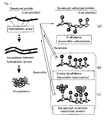
- Fig. 1(a) is an example in which an irreversible cationization reagent has been used, in this case, reconstitution (refolding) after solubilization is not possible.
- a "reversible (denaturing) cationization" technique which confers a positive charge through a reversible disulfide bond (SS bond)
- SS bond reversible disulfide bond
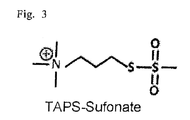
- TAPS-sulfonate trimethylammoniopropyl methanethiosulfonate bromide
- PKI polyethyleneimine
- PEI derivatives for instance, PEI-SPDP (mixed reaction reagent of polyethyleneimine and N-succinimidyl-3-(2-pyridylthio)propionate), and the like, are described in Patent Literatures 1 and 2.
- TAPS-sulfonate (refer to Fig. 3 ) can introduce only one cation onto a Cys residue at one location, hence the solubility of proteins in a larger amount may sometimes not be sufficient, from the point of Solubility Index (SI) shown in Fig. 2 .
- SI Solubility Index
- PEI derivatives described in Patent Literatures 1 and 2, and the like are thought to be useful in the cationization of proteins with high hydrophobicity (insoluble), as a multitude of cations can be introduced.
- reagents such as PEI-SPDP are extremely useful for introducing multivalent positive charges, as they are derivatives of macromolecular compounds, the molecular weight and structure (branching degree) are not uniform, and there are problems such as hetero distribution of the electric charge of the protein is formed after cationization, small amounts of SH groups remain as complete cationization is not possible due to steric hindrances. Further, in addition to a quantitative cationization being difficult, there is also a problem that they have a tendency to condense when freeze-dried.
- denatured reversibly cationized proteins that is to say, reversibly cationized denatured proteins obtained by prior art methods dissolve well in pure water
- their solubility is low in physiological salt solutions and culture media that can be used in cell culture, resolution of the problem is desired.
- efficient solubilization methods are sought for recombinant proteins expressed in bacterial hosts, total protein extracted in denatured state from living cells (such as cancer cells) or tissues, and the like, such methods have not been established yet.
- cancer antigenic proteins is desirable in immunotherapy of cancer, solubilizing the entirety thereof is not straightforward with prior art freeze-thawing method.
- the present invention was devised in view of the above situation, and an object thereof is to provide a novel thiosulfonate compound, a reversible cationization agent for protein and/or peptide, which can reversibly cationized a wider range of proteins and peptides with high stability of quality and accurately and are useful for purification and recovery at high degree, as well as, a solubilization method for protein and/or peptide using the above agent.
- a thiosulfonate compound having within one molecule three or more cations derived from a quaternary ammonium group was an unprecedented novel compound and could solve aptly the problems described above. Owing to its ability to introduce three or more cations derived from a quaternary ammonium group onto a Cys residue at one location that a protein possesses, such a compound can manifest mainly four action effects below:
- the present inventors discovered that these action effects were exerted when the compound is applied not only to proteins but also to peptides, and that the novel compound of the present invention was useful as a reagent for reversibly-cationizing proteins and/or peptides, that is to say, a reversible cationization agent for proteins and/or peptides.
- the compound is useful as a reversible cationization agent for highly hydrophobic proteins and/or peptides in denatured state, and concretely, for recombinant proteins produced by Escherichia coli or the like, total protein and peptide from animal cells, and the like.
- this reversible cationization agent is useful as a solubilizer of proteins and/or peptides, and methods for solubilizing a protein and/or a peptide using the solubilizer is an extremely useful technique in fields that handle proteins and/or peptides.
- a technique of the present invention being useful in both basic research and clinical fields such as application to analysis of intracellular proteins and cancer immunotherapy using dendritic cells, it is thought that the application range of chemical research, medical treatments or the like is broad.
- the technique can be said to have tremendous potentiality and expandability, such as, it may contribute to improving therapeutic effects, for instance, in administration to tissues such as spinal cord, immunotherapy of cancer, or the like, using cancer cells or cancer tissues and dendritic cells, by preparing the target dendritic cell vaccine more efficiently.
- the present invention is a thiosulfonate compound having within one molecule three or more cations derived from a quaternary ammonium group.
- the present invention is also a reversible cationization agent for reversibly-cationizing a protein and/or a peptide, the reversible cationization agent being a reversible cationization agent for a protein and/or a peptide containing the above thiosulfonate compound.
- the present invention is also a method for solubilizing a protein and/or a peptide, the solubilization method being a solubilization method for a protein and/or a peptide using the above reversible cationization agent for protein and/or peptide. Then, the present invention is also a method for solubilizing a mixture of denatured total protein extracted from a cultured cell and/or a living tissue in a physiological salt solution, the solubilization method being a solubilization method using the above reversible cationization agent for a protein and/or a peptide.
- the present invention will be detailed below.
- the thiosulfonate compound of the present invention is a compound having within one molecule three or more cations derived from a quaternary ammonium group, and, having a thiosulfonate group.
- a chemical form having a halogen ion or the like as a paired anion is suitable.
- the structure of the compound of the present invention can be confirmed by NMR or elemental analysis, or the like.
- the thiosulfonate compound is preferably represented by the following general formula (1):
- R 1 may be identical or different from one another and represents an alkylene group having 2 to 20 carbons; R 2 represents a lower alkyl group; and n is an integer of 3 or greater.
- n represents the number of cations derived from the quaternary ammonium group. It is believed that, if this number of cations is excessive, cationizing protein and/or peptide quantitatively becomes difficult due to steric hindrance or the like. Consequently, when using the thiosulfonate compound of the present invention as a reversible cationization agent and a solubilizer, or the like, for a protein and/or a peptide, n is preferably 3 to 10 from the relationship between the quantifiability of the reaction with the protein and/or the peptide and the application range of the solubilizable protein and/or peptide. More preferably, n is 3 to 8, further preferably 3 to 5 and particularly preferably 3.
- R 1 in general formula (1) is identical or different from one another, and represents an alkylene group with 2 to 20 carbons.
- Such an alkylene group may be a straight chain alkylene group or may be either of alkylene groups having branched chain or cyclic chain.
- R 1 is a straight chain alkylene group or a lower alkylene group having a branched chain.
- the alkylene group represented by R 1 described above becomes inconsistent with the purpose of a case where the compound is used as a reversible cationization agent, a solubilizer, or the like, for a protein and/or a peptide, that is to say, the purpose of elevating hydrophilicity with cationization, thus, it is suitable that the number of carbon atoms is 10 or less.
- the number of carbons of the alkylene group represented by R 1 is selected from 2 to 10, preferably 2 to 6 and more preferably 2 to 4.
- R 1 a straight alkylene is desirable and a propylene group is particularly desirable.
- R 1 the bonding order thereof within the structure of the compound represented by general formula (1) is arbitrary.
- R 2 a methyl group is desirable.
- the molecular weight of the thiosulfonate compound for instance, to be 300 to 3,000 is suitable. Of this, to be 300 to 2,000 is more desirable, taking steric hindrance or the like into consideration when using the compound as a reversible cationization agent, a solubilizer, or the like, for a protein and/or a peptide. Further desirable is 300 to 1,000.
- the molecular weight referred to here is a value calculated as the sum total of the atomic weights of the constituting elements.
- the compound in a preparation method (synthesis method) for the thiosulfonate compound, can be obtained, for instance, by reacting an ammonioalkyl halide having one or more cation derived from a quaternary ammonium group within one molecule (for instance, (3-bromopropyl)trimethylammonium bromide and the like) with a trialkyl diamine such as trimethyldiamine or triethyldiamine, then, reacting a dihaloalkane such as dibromopropane, and next, reacting a thiosulfonate salt such as methane thiosulfonic acid sodium salt.
- the reaction may be carried out by changing the number of cations of the ammonioalkyl halide according to the number of cations derived from the quaternary ammonium group in the target thiosulfonate compound.
- the reversible cationization agent for a protein and/or a peptide of the present invention contains the thiosulfonate compound of the present invention. That is to say, the thiosulfonate compound of the present invention is used in the reversible cationization agent for protein and/or peptides.
- a reversible cationization agent is extremely efficacious for the reversible cationization of highly hydrophobic denatured protein or peptide.
- the agent is less likely to be affected by steric hindrance or the like, reacting with the entirety of the Cys residues becomes possible.
- the reversible cationization agent of the present invention allows for a quantitative treatment, cationization by introducing cations onto cysteine residues of protein and peptide accurately, and solubilization become possible. Further, probably related to these advantages, not only solubilization is possible even under conditions other than water, such as physiological saline, where solubilization of denatured protein, highly hydrophobic peptide or the like is difficult, solubilization, purification and recovery from cells or tissues of denatured total protein and peptide containing no nucleic acids are possible in physiological saline.
- the target protein or peptide can be isolated and purified, as necessary by refolding in vitro or intracellularly. Therefore, the application range, such as the studies of the biochemistry, medical treatment, and others, is thought to be broad. For instance, it is thought that contribution to improving therapeutic effects is possible, in administration to tissues such as spinal cord, immunotherapy of cancer, or the like, using cancer cells or cancer tissues and dendritic cells, by preparing the target dendritic cells more efficiently. Particularly in immunotherapy of cancer, while it is desirable to solubilize a cancer antigenic protein efficiently, solubilizing the entirety thereof is not straightforward with conventional freeze-thawing methods.
- the reversible cationization agent for a protein and/or a peptide of the present invention may further contain or may not contain one, two or more species of constituents other than the thiosulfonate compound.
- reversibly-cationizing a protein and/or a peptide means introducing a positive charge through a reversible bond, and, for instance, the form of disulfidizing a mercapto group that a protein and/or a peptide possesses to introduce a positive charge may be cited.
- a protein and/or a peptide means a compound generated by two or more amino acids being bonded by a peptide bond, and for instance, may be a conjugated protein and/or peptide comprising a bonded carbohydrate chain, lipid, phosphate group or the like.
- proteins and/or peptides for instance, peptides, enzymes, antibodies, and other proteins and/or peptides, or the like, having functionality (biological activity such as medicinal action) and being useful as medicines/drugs can be used, and as the molecular weight thereof, to be 100 to 1,000,000 is desirable.
- the reversible cationization agent can be used in the solubilization of protein and/or peptide in any form, using it in the solubilization of a protein and/or a denatured peptide is suitable. That is to say, it is desirable that the protein and/or peptide to be reversibly cationized by the reversible cationization agent is a denatured protein and/or a peptide (a denatured protein and/or a denatured peptide). This allows the manifestation of the effects described above to be observed more.
- a state in which the inherent tertiary structure corresponding to the natural state (native state) that a protein and/or a peptide molecule exhibits under approximately physiological conditions has been lost without being accompanied by a cleavage of a covalent bond may be cited.
- protein and/or peptide in such a state for instance, protein and/or peptide for which the acquisition of those in native state is difficult; protein and/or peptide for which denaturation/precipitation occurs in the process of cationizing the protein and/or the peptide in order to introduce them into a cell; protein and/or peptide expressed as inclusion bodies in Escherichia coli or the like; and the like, may be cited.
- to be one having a mercapto group is desirable, and those having a cysteine residue are suitable.
- the reversible cationization agent for protein and/or peptide is used. It is suitable for the solubilization method particularly to be a method for solubilizing a denatured protein and/or a peptide. That is to say, it is desirable that the protein and/or peptide to be solubilized by the solubilization method is a denatured protein and/or a peptide (a denatured protein and/or a denatured peptide). This allows the manifestation of the effects described above to be observed more. As denaturing agents, for instance, urea and guanidine hydrochloride can be used.
- the solubilization method it is suitable to react the protein and/or the peptide to be solubilized (the target protein and/or peptide) with the reversible cationization agent.
- the amount of reversible cationization agent used in this reversible cationization reaction it is preferably set so that the reversible cationization agent is at a molar concentration of 1 to 100-fold with respect to the molar concentration of the mercapto groups that the target protein and/or peptide possesses. More desirable is 1.1 to 2-fold.
- the solubilization method it is also desirable to carry out the reversible cationization reaction in the presence of a denaturing agent and a reducing agent, or, to react a reducing agent after the reversible cationization reaction.
- reducing agent for instance, using DTT (dithiothreitol) and ⁇ -mercaptoethanol is suitable.
- adding and reacting 1.1 to 2-fold amounts of reversible cationization agent is desirable, by taking into consideration the total molar concentration of the reducing agent contained in the reaction solution and the mercapto groups that the protein and/or the peptide possesses.
- the temperature when carrying out the reversible cationization reaction 5 to 40°C is suitable. More desirable is 25°C.
- the reversibly cationized protein and/or peptide can be purified by ordinary techniques such as dialysis and column chromatography.
- the purification is preferably carried out under acidic conditions. With the disulfide bonds are stabilized sufficiently, and the solubility and yield of the obtained reversibly-cationized protein and/or peptide being improved by carrying out dialysis under acidic conditions, for instance, when introducing the reversibly cationized protein and/or peptide into a cell, activation inside the cell can be carried out easily.
- solubilizing the total protein derived from living tissues or cultured cells as materials it is desirable to have as materials the total protein from which nucleic acids have been removed beforehand by applying the Trizol reagent (phenol/guanidine isothiocyanate, manufactured by Invitrogen) or the like, and the solubilization procedure therefor follows the reversibly-denaturing-cationizing method. While pure water is a desirable solvent for these denatured reversibly cationized proteins, when there is a need for substitution to a physiological salt solution, high solubility can be maintained by devising dialysis procedures and purification methods.
- Trizol reagent phenol/guanidine isothiocyanate, manufactured by Invitrogen
- a protein, or the like to be solubilized in a variety of salt solutions by applying a multistep protocol comprising combining a plurality of protocols used for the solubilization, purification, and the like, of proteins (for instance, dialysis, HPLC and the luke).
- protocols and conditions are known to those of ordinary skill in the art.
- the number and combination of protocols are not limited in particular.
- the product may be concentrated by freeze-drying, or the like, in the middle of solubilization or after finishing solubilization.
- the obtained product can, as-is, be conserved stably in a reconstitutable state.
- the freeze-dried product can as necessary be reconstituted with a suitable solvent and used, or purified further. It has been confirmed that if the solubilizer of the present invention is used, there is almost no drop in the quality due to freeze-drying (data not shown).
- the reversible cationization agent may as necessary be dissociated from the reversibly cationized protein and/or peptide.
- the dissociation of the reversible cationization agent can be carried out using the SH/SS exchange reaction in the presence of a catalyst; in addition, the agent may dissociate spontaneously in the reductive environment within the cytoplasm, or the like.
- the reversible cationization agent dissociates in the process of this SH/SS exchange reaction.
- the "refolding rate" in Experimental Example 1 described below has been evaluated with the bacteriolytic activity (enzymatic activity) exhibited by the lysozyme.
- the present invention provides a method for solubilizing a mixture of denatured total protein extracted from a cultured cell and/or a living tissue in a physiological salt solution.
- a solubilization method using a reversible cationization agent for a protein and/or a peptide containing a thiosulfonate compound having a group represented by the general formula (1) is desirable. That is to say, a solubilization method, which is a method for solubilizing a mixture of denatured total protein extracted from cultured cells and/or living tissues in a physiological salt solution, which solubilization method uses the reversible cationization agent for protein and/or peptide, is also one among the present invention.
- the thiosulfonate compound is preferably a thiosulfonate compound in which R 2 in general formula (1) is a methyl group.
- R 2 in general formula (1) is a methyl group.
- it is suitable for the solubilization method to combine and use as necessary one, two or more of the purification protocols described above.
- the novel thiosulfonate compound of the present invention has a constitution such as described above, it can reversibly cationized a wider range of proteins and peptides with high stability of quality and accuracy, is useful for purification and recovery at high degree, and is a compound that is extremely excellent as a reversible cationization agent for protein and/or peptide.
- Methods for solubilizing a protein and/or a peptide using such reversible cationization agent are useful in both basic research and clinical fields, such as application to analysis of intracellular proteins, reagents and drugs for studies characterized in that a protein is introduced into a cell, and use of a cell given an artificial function by introducing a protein with the present method, and moreover cancer immunotherapy which introduces an antigenic protein into dendritic cells or an organism, hence it is thought that the application range of chemical research, medical treatments or the like is broad.
- TAP3S-Sulfonate was carried out according to the schemes indicated by general formulae (i) to (iii). A concrete description is given below.
- DTT Dithiothreitol
- TAPS-sulfonate or TAP3S-Sulfonate was each added so as to have 3-fold molar amounts of DTT, and reacted at 37°C for 30 minutes.
- dialysis was carried out thoroughly against pure water and the denatured reversibly cationized HEL obtained in the soluble fraction was used to carry out physical property evaluation.
- Experimental Example 2 demonstration experiment for solubilization technique for insoluble protein As expected also from the Solubility Index described in Fig. 2 , solubility in denatured state is extremely low for a protein containing a multitude of hydrophobic residues.
- human P Actin (refer to Table 1) serving as one such model protein, a verification experiment for the solubilization by denatured reversible cationization was proceeded.
- the amino acid composition of human ( ⁇ Actin protein is shown in Table 1.
- SI Solubility Index
- the demonstration experiment was carried out as follows: When centrifugal separation was carried out after bacteriolysis by sonication, human ⁇ Actin expressed in Escherichia coli was recovered as an insoluble fraction (inclusion body); at this time point, 90% or greater purity was observed in an analysis by SDS-PAGE.
- This human ⁇ Actin was dissolved in 6 M guanidine hydrochloride, DTT was added so as to have 30 mM final concentration and treated at 37°C for 2 hours, thereby reducing the protein completely.
- TAPS-sulfonate and TAP3S-Sulfonate were added so that the final concentrations were 90 mM respectively, reacted at 37°C for 30 minutes, then, dialysis was carried out thoroughly against pure water, thereby to obtain denatured reversibly cationized ⁇ Actin.
- T1 TAPS-modified Actin
- T3 TAP3-modified Actin As280 (absorbance of protein) 0.79 0.707 ABS320 (aggregation index of protein) 0.143 0.085
- Each modified ⁇ actin solution was subjected to separation and purification by linear concentration gradient elution with 1 to 80% acetonitrile in the presence of 0.1% hydrochloric acid using reversed phase HPLC (capsule pack C1, Shiseido Co., Ltd.), and was freeze-dried. Protein obtained after the freeze-drying was dissolved in a small amount of pure water, and a solvent was prepared to be 0.15 M physiological saline. The resulting samples each were centrifuged at 10,000 rpm for 5 minutes. The absorbance of an soluble fraction was determined.
- T1 TAPS-modified ⁇ Actin
- T3 TAP3S-modified ⁇ Actin Preparation condition
- ABS 280 ABS280/ABS320
- ABS 280/ABS320 A: Dialysis 0(all insolubilized) - 0.343 14.3
- B Gel filtration purification O(all insolubilized) - 0.972 13.5
- C HPLC purification 0(all insolubilized) - 0.814 22.0
- the intracellular total protein treated by the two-stage dialysis protocol was confirmed to demonstrate high solubility also in physiological saline by the reversibly-denaturing-cationizing method (refer to Fig. 7 ).
- the solubility almost not decreasing even in physiological saline, the proteins cationized with TAP3S-Sulfonate were confirmed to be of extremely high usefulness in case there is a necessity of maintaining physiological conditions of a cell, such as when adding them to cultured cell.
- Lysates were prepared, comprising the total proteins contained in human epidermoid carcinoma-derived cell line A431 and mouse melanoma B16-F10 cell, which were cationized using TAP3S-Sulfonate by the procedure indicated in Fig. 6 and dissolved in physiological saline.
- the proteins contained in the respective lysates were quantified by Western-blotting (W.B.) using anti- ⁇ -tubulin antibodies (Cell signaling Technology: #2146), anti-EGF receptor antibodies (manufactured by Sigma: E2760), anti-TRP2 antibodies (manufactured by Santa cruz biotechnology: SC-25544) and anti-gp100 antibodies (manufactured by Santa cruz biotechnology: SC-33590).
- antigen proteins corresponding to these antibodies were confirmed to be dissolved (refer to Fig. 8 ).
- the present technique can be claimed to be a strong technique also in preparing a vaccine for cancer treatment from a cancer cell.
Landscapes
- Chemical & Material Sciences (AREA)
- Organic Chemistry (AREA)
- General Health & Medical Sciences (AREA)
- Life Sciences & Earth Sciences (AREA)
- Biochemistry (AREA)
- Biophysics (AREA)
- Health & Medical Sciences (AREA)
- Genetics & Genomics (AREA)
- Medicinal Chemistry (AREA)
- Molecular Biology (AREA)
- Proteomics, Peptides & Aminoacids (AREA)
- Analytical Chemistry (AREA)
- Peptides Or Proteins (AREA)
- Organic Low-Molecular-Weight Compounds And Preparation Thereof (AREA)
- Medicines That Contain Protein Lipid Enzymes And Other Medicines (AREA)
Abstract
Description
- The present invention relates to a thiosulfonate compound, a reversible cationization agent for proteins and/or peptides as well as a method for solubilization. More specifically, the present invention relates to a novel thiosulfonate compound, a reversible cationization agent for protein and/or peptide using the above compound, and a method for solubilization.
- With their tertiary structures often collapsing (denaturing) under non-physiological conditions, proteins and peptides sometimes give rise to precipitations that are insoluble in water. For instance, the molecular mechanism of aggregations of a protein is thought to be one whereby hydrophobic amino acid residues, which are buried inside the molecule for a protein in the native structure, become exposed with denaturation and, with the intermolecular hydrophobic interactions becoming stronger, aggregation is enhanced (reefer to
Fig. 1 , left). As one approach to confer high solubility to a protein with low solubility in water such as a protein in a denatured state, a technique has been developed, whereby a functional group with high hydrophilicity is introduced using chemical modification methods. As this functional group with high hydrophilicity, one processing an electric charge is suitable, and in particular a functional group carrying a positive charge (cation) is advantageous (refer toFig. 1 right and Non-Patent Literature 1). - At right of
Fig. 1(a) is an example in which an irreversible cationization reagent has been used, in this case, reconstitution (refolding) after solubilization is not possible. In contrast, if a "reversible (denaturing) cationization" technique, which confers a positive charge through a reversible disulfide bond (SS bond), is used on the Cys (cysteine) residues inside the protein, as inside the dotted line at right ofFig. 1 ((b), (c)), it is also possible to dissociate the reagent used in the cationization with a reducing agent as necessary (refer to Non-Patent Literature 2). - As reagents for cationizing a protein reversibly, for instance, TAPS-sulfonate (trimethylammoniopropyl methanethiosulfonate bromide) has been developed and commercialized (refer to Non-Patent
Literatures 3 and 4). This reagent can add a univalent quaternary ammonium ion to a protein in denatured state through an SS bond. In addition, derivatives of a polymer having a cationic group (cationic polymer) such as polyethyleneimine (PEI) have been described (refer for instance toPatent Literatures 1 to 3). As PEI derivatives, for instance, PEI-SPDP (mixed reaction reagent of polyethyleneimine and N-succinimidyl-3-(2-pyridylthio)propionate), and the like, are described inPatent Literatures -
- Patent Literature 1: Japanese Patent Application Publication No.
2005-120017 - Patent Literature 2: Japanese Patent Application Publication No.
2004-049214 - Patent Literature 3: Japanese Patent Application Publication No.
2008-115150 -
- Non Patent Literature 1: Journal of Biochemistry, UK, Oxford Univ. Press, 1994, No. 116, p. 852
- Non Patent Literature 2: Biotechnology and Applied Biochemistry, USA, Academic Press Inc., 1998, No. 28, p. 207
- Non Patent Literature 3: Hidenori Yamada, "Application to protein engineering of TAPS-sulfonate, a novel cationic SH protection reagent -purification and refolding of an exogenous protein having an SS bond produced by Escherichia coli-", Wako Pure Chemical Newsletter, Wako Pure Chemical Industries, Ltd., 2000, Volume 68, No. 1, p. 28-30
- Non Patent Literature 4: "solubilization of protein from inclusion bodies and refolding adjuvant "TAPS-sulfonate"", [online], Katayama Chemical Industries, Co., Ltd., [retrieved Feb. 17, 2010], internet <URL: http://katayamakagaku.co.jp/products/lifescience/>
- As mentioned above, a variety of reagents for cationizing proteins reversibly have been developed.
However, being a univalent cationization reagent, TAPS-sulfonate (refer toFig. 3 ) can introduce only one cation onto a Cys residue at one location, hence the solubility of proteins in a larger amount may sometimes not be sufficient, from the point of Solubility Index (SI) shown inFig. 2 .
In addition, PEI derivatives described inPatent Literatures - Moreover, while denatured reversibly cationized proteins (that is to say, reversibly cationized denatured proteins) obtained by prior art methods dissolve well in pure water, there is a problem that their solubility is low in physiological salt solutions and culture media that can be used in cell culture, resolution of the problem is desired. Further, while efficient solubilization methods are sought for recombinant proteins expressed in bacterial hosts, total protein extracted in denatured state from living cells (such as cancer cells) or tissues, and the like, such methods have not been established yet. In particular, while effectively solubilizing cancer antigenic proteins is desirable in immunotherapy of cancer, solubilizing the entirety thereof is not straightforward with prior art freeze-thawing method.
- The present invention was devised in view of the above situation, and an object thereof is to provide a novel thiosulfonate compound, a reversible cationization agent for protein and/or peptide, which can reversibly cationized a wider range of proteins and peptides with high stability of quality and accurately and are useful for purification and recovery at high degree, as well as, a solubilization method for protein and/or peptide using the above agent.
- After various studies on reagents that may cationize a protein reversibly, the present inventors and the like, discovered that a thiosulfonate compound having within one molecule three or more cations derived from a quaternary ammonium group was an unprecedented novel compound and could solve aptly the problems described above. Owing to its ability to introduce three or more cations derived from a quaternary ammonium group onto a Cys residue at one location that a protein possesses, such a compound can manifest mainly four action effects below:
- (1) solubilization of hydrophobic proteins becomes facilitated, allowing high solubility to be conferred to a wider range of proteins in denatured state.
- (2) In the novel compound of the present invention, since structurally the number of cations per molecule is defined and this compound is less likely to be affected by steric hindrance or the like and moreover is enabled to react with the entirety of the Cys residues, the electric charges are allowed for a definite and quantitative treatment and cationization can be carried out by introducing cations onto cysteine residues of proteins and peptides accurately, whereby solubilization is enabled.
- (3) Denatured proteins that have been reversibly cationized by conventional methods, while demonstrating high solubility in pure water, do not display sufficient solubility when the ionic strength of the solvent rises. However, cationized denatured proteins obtained by using the novel compound of the present invention demonstrate high solubility even in physiological salt solutions such as physiological saline, and may withstand concentration processes such as freeze-drying.
- (4) Using the novel compound of the present invention (preferably in combination with a further high-degree solubilization protocol such as reverse-phase HPLC), it is possible to solubilize intracellular total protein containing no nucleic acids (preferably total intracellular protein in denatured state) reversibly. In addition, as mentioned above in (3), since cationized proteins demonstrate high solubility even in physiological saline, high-purity purification, recovery, and the like, of proteins under physiological conditions are possible. In addition, the cationized proteins may withstand operations such as reversible hydration after freeze-drying.
- Further, the present inventors discovered that these action effects were exerted when the compound is applied not only to proteins but also to peptides, and that the novel compound of the present invention was useful as a reagent for reversibly-cationizing proteins and/or peptides, that is to say, a reversible cationization agent for proteins and/or peptides. Particularly among them, the compound is useful as a reversible cationization agent for highly hydrophobic proteins and/or peptides in denatured state, and concretely, for recombinant proteins produced by Escherichia coli or the like, total protein and peptide from animal cells, and the like. In addition, this reversible cationization agent is useful as a solubilizer of proteins and/or peptides, and methods for solubilizing a protein and/or a peptide using the solubilizer is an extremely useful technique in fields that handle proteins and/or peptides. With such a technique of the present invention being useful in both basic research and clinical fields such as application to analysis of intracellular proteins and cancer immunotherapy using dendritic cells, it is thought that the application range of chemical research, medical treatments or the like is broad. The technique can be said to have tremendous potentiality and expandability, such as, it may contribute to improving therapeutic effects, for instance, in administration to tissues such as spinal cord, immunotherapy of cancer, or the like, using cancer cells or cancer tissues and dendritic cells, by preparing the target dendritic cell vaccine more efficiently.
- That is to say, the present invention is a thiosulfonate compound having within one molecule three or more cations derived from a quaternary ammonium group.
In addition, the present invention is also a reversible cationization agent for reversibly-cationizing a protein and/or a peptide, the reversible cationization agent being a reversible cationization agent for a protein and/or a peptide containing the above thiosulfonate compound.
Further, the present invention is also a method for solubilizing a protein and/or a peptide, the solubilization method being a solubilization method for a protein and/or a peptide using the above reversible cationization agent for protein and/or peptide.
Then, the present invention is also a method for solubilizing a mixture of denatured total protein extracted from a cultured cell and/or a living tissue in a physiological salt solution, the solubilization method being a solubilization method using the above reversible cationization agent for a protein and/or a peptide.
The present invention will be detailed below. - The thiosulfonate compound of the present invention is a compound having within one molecule three or more cations derived from a quaternary ammonium group, and, having a thiosulfonate group. In addition, a chemical form having a halogen ion or the like as a paired anion is suitable. The structure of the compound of the present invention can be confirmed by NMR or elemental analysis, or the like.
The thiosulfonate compound is preferably represented by the following general formula (1): -

- In general formula (1), n represents the number of cations derived from the quaternary ammonium group. It is believed that, if this number of cations is excessive, cationizing protein and/or peptide quantitatively becomes difficult due to steric hindrance or the like. Consequently, when using the thiosulfonate compound of the present invention as a reversible cationization agent and a solubilizer, or the like, for a protein and/or a peptide, n is preferably 3 to 10 from the relationship between the quantifiability of the reaction with the protein and/or the peptide and the application range of the solubilizable protein and/or peptide. More preferably, n is 3 to 8, further preferably 3 to 5 and particularly preferably 3.
- In addition, R1 in general formula (1) is identical or different from one another, and represents an alkylene group with 2 to 20 carbons. Such an alkylene group may be a straight chain alkylene group or may be either of alkylene groups having branched chain or cyclic chain. When using the thiosulfonate compound of the present invention as a reversible cationization agent, a solubilizer, or the like, for a protein and/or a peptide, it is suitable that R1 is a straight chain alkylene group or a lower alkylene group having a branched chain. This takes into consideration the possibility that, reactivity between the thiosulfonate compound and the protein and/or peptide becomes insufficient due to increasing steric hindrance, thereby influencing usability (for instance, processes such as freeze-drying cannot be used).
- Due to the hydrophobicity of the thiosulfonate compound being more elevated with the number of carbon atoms being greater, the alkylene group represented by R1 described above becomes inconsistent with the purpose of a case where the compound is used as a reversible cationization agent, a solubilizer, or the like, for a protein and/or a peptide, that is to say, the purpose of elevating hydrophilicity with cationization, thus, it is suitable that the number of carbon atoms is 10 or less. In addition, also taking stability into consideration, the number of carbons of the alkylene group represented by R1 is selected from 2 to 10, preferably 2 to 6 and more preferably 2 to 4. As R1, a straight alkylene is desirable and a propylene group is particularly desirable. When R1 is different from one another, the bonding order thereof within the structure of the compound represented by general formula (1) is arbitrary.
As the lower alkyl group represented by R2, a methyl group is desirable. - As the molecular weight of the thiosulfonate compound, for instance, to be 300 to 3,000 is suitable. Of this, to be 300 to 2,000 is more desirable, taking steric hindrance or the like into consideration when using the compound as a reversible cationization agent, a solubilizer, or the like, for a protein and/or a peptide. Further desirable is 300 to 1,000.
The molecular weight referred to here is a value calculated as the sum total of the atomic weights of the constituting elements. - In a preparation method (synthesis method) for the thiosulfonate compound, the compound can be obtained, for instance, by reacting an ammonioalkyl halide having one or more cation derived from a quaternary ammonium group within one molecule (for instance, (3-bromopropyl)trimethylammonium bromide and the like) with a trialkyl diamine such as trimethyldiamine or triethyldiamine, then, reacting a dihaloalkane such as dibromopropane, and next, reacting a thiosulfonate salt such as methane thiosulfonic acid sodium salt. The reaction may be carried out by changing the number of cations of the ammonioalkyl halide according to the number of cations derived from the quaternary ammonium group in the target thiosulfonate compound.
- The reversible cationization agent for a protein and/or a peptide of the present invention contains the thiosulfonate compound of the present invention. That is to say, the thiosulfonate compound of the present invention is used in the reversible cationization agent for protein and/or peptides. Compared to conventional reagents, such a reversible cationization agent is extremely efficacious for the reversible cationization of highly hydrophobic denatured protein or peptide. In addition, from the fact that, structurally, the number of cations per molecule is defined, and, the agent is less likely to be affected by steric hindrance or the like, reacting with the entirety of the Cys residues becomes possible. From the fact that, thusly, the reversible cationization agent of the present invention, with the electric charges being defined, allows for a quantitative treatment, cationization by introducing cations onto cysteine residues of protein and peptide accurately, and solubilization become possible. Further, probably related to these advantages, not only solubilization is possible even under conditions other than water, such as physiological saline, where solubilization of denatured protein, highly hydrophobic peptide or the like is difficult, solubilization, purification and recovery from cells or tissues of denatured total protein and peptide containing no nucleic acids are possible in physiological saline. This is to say, the target protein or peptide can be isolated and purified, as necessary by refolding in vitro or intracellularly. Therefore, the application range, such as the studies of the biochemistry, medical treatment, and others, is thought to be broad. For instance, it is thought that contribution to improving therapeutic effects is possible, in administration to tissues such as spinal cord, immunotherapy of cancer, or the like, using cancer cells or cancer tissues and dendritic cells, by preparing the target dendritic cells more efficiently. Particularly in immunotherapy of cancer, while it is desirable to solubilize a cancer antigenic protein efficiently, solubilizing the entirety thereof is not straightforward with conventional freeze-thawing methods. For instance, in the example performed taking as a model in which a mouse melanoma cell was treated by the freeze-thawing method, it confirmed that approximately 50% of the cancer antigenic protein gp100 became insoluble after freeze-thawing (refer to Fig. 9). It was verified that, if the solubilization technique developed by the present invention is applied to this problem, solubilization of total intracellular protein is possible, and each protein among the EGF receptor, TRP2 and gyp100, which may actually become a cancer antigen, can be solubilized in physiological saline, quantitatively (refer to
Fig. 8 ).
As long as it contains the thiosulfonate compound of the present invention, the reversible cationization agent for a protein and/or a peptide of the present invention may further contain or may not contain one, two or more species of constituents other than the thiosulfonate compound. - Here, in the present invention, reversibly-cationizing a protein and/or a peptide means introducing a positive charge through a reversible bond, and, for instance, the form of disulfidizing a mercapto group that a protein and/or a peptide possesses to introduce a positive charge may be cited.
- In addition, in the present invention, a protein and/or a peptide means a compound generated by two or more amino acids being bonded by a peptide bond, and for instance, may be a conjugated protein and/or peptide comprising a bonded carbohydrate chain, lipid, phosphate group or the like. As such proteins and/or peptides, for instance, peptides, enzymes, antibodies, and other proteins and/or peptides, or the like, having functionality (biological activity such as medicinal action) and being useful as medicines/drugs can be used, and as the molecular weight thereof, to be 100 to 1,000,000 is desirable.
- While the reversible cationization agent can be used in the solubilization of protein and/or peptide in any form, using it in the solubilization of a protein and/or a denatured peptide is suitable. That is to say, it is desirable that the protein and/or peptide to be reversibly cationized by the reversible cationization agent is a denatured protein and/or a peptide (a denatured protein and/or a denatured peptide). This allows the manifestation of the effects described above to be observed more.
- As the denatured state, a state in which the inherent tertiary structure corresponding to the natural state (native state) that a protein and/or a peptide molecule exhibits under approximately physiological conditions has been lost without being accompanied by a cleavage of a covalent bond may be cited. As protein and/or peptide in such a state, for instance, protein and/or peptide for which the acquisition of those in native state is difficult; protein and/or peptide for which denaturation/precipitation occurs in the process of cationizing the protein and/or the peptide in order to introduce them into a cell; protein and/or peptide expressed as inclusion bodies in Escherichia coli or the like; and the like, may be cited. Among them, to be one having a mercapto group is desirable, and those having a cysteine residue are suitable.
- In the protein and/or peptide solubilization method of the present invention, the reversible cationization agent for protein and/or peptide is used. It is suitable for the solubilization method particularly to be a method for solubilizing a denatured protein and/or a peptide. That is to say, it is desirable that the protein and/or peptide to be solubilized by the solubilization method is a denatured protein and/or a peptide (a denatured protein and/or a denatured peptide). This allows the manifestation of the effects described above to be observed more. As denaturing agents, for instance, urea and guanidine hydrochloride can be used.
- In the solubilization method, it is suitable to react the protein and/or the peptide to be solubilized (the target protein and/or peptide) with the reversible cationization agent. As the amount of reversible cationization agent used in this reversible cationization reaction, it is preferably set so that the reversible cationization agent is at a molar concentration of 1 to 100-fold with respect to the molar concentration of the mercapto groups that the target protein and/or peptide possesses. More desirable is 1.1 to 2-fold.
- In the solubilization method, it is also desirable to carry out the reversible cationization reaction in the presence of a denaturing agent and a reducing agent, or, to react a reducing agent after the reversible cationization reaction. As reducing agent, for instance, using DTT (dithiothreitol) and β-mercaptoethanol is suitable. However, when the reversible cationization reaction is carried out in the presence of a reducing agent, adding and reacting 1.1 to 2-fold amounts of reversible cationization agent is desirable, by taking into consideration the total molar concentration of the reducing agent contained in the reaction solution and the mercapto groups that the protein and/or the peptide possesses. In addition, as the temperature when carrying out the reversible cationization reaction, 5 to 40°C is suitable. More desirable is 25°C.
- In addition, with the solubilization method, after the reversible cationization reaction, the reversibly cationized protein and/or peptide can be purified by ordinary techniques such as dialysis and column chromatography. The purification is preferably carried out under acidic conditions. With the disulfide bonds are stabilized sufficiently, and the solubility and yield of the obtained reversibly-cationized protein and/or peptide being improved by carrying out dialysis under acidic conditions, for instance, when introducing the reversibly cationized protein and/or peptide into a cell, activation inside the cell can be carried out easily. In addition, when using a protein and/or a peptide expressed by Escherichia coli, contaminants derived from Escherichia coli (nucleic acids, sugars and lipids) are readily insolubilized under acidic conditions, allowing subsequent purification to be carried out even more readily. Purifying under the conditions of
pH 6 or lower is more desirable. - In addition, when solubilizing the total protein derived from living tissues or cultured cells as materials, it is desirable to have as materials the total protein from which nucleic acids have been removed beforehand by applying the Trizol reagent (phenol/guanidine isothiocyanate, manufactured by Invitrogen) or the like, and the solubilization procedure therefor follows the reversibly-denaturing-cationizing method. While pure water is a desirable solvent for these denatured reversibly cationized proteins, when there is a need for substitution to a physiological salt solution, high solubility can be maintained by devising dialysis procedures and purification methods. For instance, in the event a precipitation has occurred by adding salt in physiological concentrations to a solvent of a denatured reversibly cationized protein dissolved in pure water, redissolving this in a denaturing agent such as urea and guanidine hydrochloride and dialyzing against the physiological salt solution to which substitution is desired allows the solubility with respect to the target salt solution to be increased. In addition, it is also possible to increase the solubility by purifying to high purity using reverse-phase HPLC car the like.
- Thusly, using the cationization agent of the present invention allows a protein, or the like, to be solubilized in a variety of salt solutions by applying a multistep protocol comprising combining a plurality of protocols used for the solubilization, purification, and the like, of proteins (for instance, dialysis, HPLC and the luke). Such protocols and conditions are known to those of ordinary skill in the art. In addition, the number and combination of protocols are not limited in particular.
- In the solubilization method of the present invention, the product may be concentrated by freeze-drying, or the like, in the middle of solubilization or after finishing solubilization. In the freeze-dried case, the obtained product can, as-is, be conserved stably in a reconstitutable state. The freeze-dried product can as necessary be reconstituted with a suitable solvent and used, or purified further. It has been confirmed that if the solubilizer of the present invention is used, there is almost no drop in the quality due to freeze-drying (data not shown).
- Further with the solubilization method, the reversible cationization agent may as necessary be dissociated from the reversibly cationized protein and/or peptide. The dissociation of the reversible cationization agent can be carried out using the SH/SS exchange reaction in the presence of a catalyst; in addition, the agent may dissociate spontaneously in the reductive environment within the cytoplasm, or the like.
- For instance, when an egg-white lysozyme is used as the protein and/or peptide, while it is desirable to carry out the SH/SS exchange reaction in a solvent in which oxidized glutathione : reduced glutathione = 1:4 (molar amount ratio) has been mixed, the reversible cationization agent dissociates in the process of this SH/SS exchange reaction. While the egg-white lysozyme in the active conformation has four sets of SS bonds present within one molecule such that there is the necessity of refolding in the correct combination, since the egg-white lysozyme in the active conformation is to be the structure with the lowest free energy (= stable), the molecule in which, ultimately, the reversible cationization agents having dissociated, the correct four sets of SS bonds have been formed, is to manifest a biological activity. The "refolding rate" in Experimental Example 1 described below has been evaluated with the bacteriolytic activity (enzymatic activity) exhibited by the lysozyme.
- As described above, the present invention provides a method for solubilizing a mixture of denatured total protein extracted from a cultured cell and/or a living tissue in a physiological salt solution. In such a solubilization method, using a reversible cationization agent for a protein and/or a peptide containing a thiosulfonate compound having a group represented by the general formula (1) is desirable.
That is to say, a solubilization method, which is a method for solubilizing a mixture of denatured total protein extracted from cultured cells and/or living tissues in a physiological salt solution, which solubilization method uses the reversible cationization agent for protein and/or peptide, is also one among the present invention.
The thiosulfonate compound is preferably a thiosulfonate compound in which R2 in general formula (1) is a methyl group. In addition, it is suitable for the solubilization method to combine and use as necessary one, two or more of the purification protocols described above. - Since the novel thiosulfonate compound of the present invention has a constitution such as described above, it can reversibly cationized a wider range of proteins and peptides with high stability of quality and accuracy, is useful for purification and recovery at high degree, and is a compound that is extremely excellent as a reversible cationization agent for protein and/or peptide. Methods for solubilizing a protein and/or a peptide using such reversible cationization agent are useful in both basic research and clinical fields, such as application to analysis of intracellular proteins, reagents and drugs for studies characterized in that a protein is introduced into a cell, and use of a cell given an artificial function by introducing a protein with the present method, and moreover cancer immunotherapy which introduces an antigenic protein into dendritic cells or an organism, hence it is thought that the application range of chemical research, medical treatments or the like is broad.
-
-
Fig. 1 is a conceptual view showing an example of prior art technique, which shows that proteins dissolved in a denaturing agent (Fig. 1 , upper left) associate and become insoluble in water in the absence of a denaturing agent (Fig. 1 , lower left), and if hydrophilicity in excess of the hydrophobicity of the denatured proteins is conferred by cationization, high solubility in water is conferred (Fig. 1 right). -
Fig. 2 is a figure explaining the Solubility Index, which predicts the solubility of the cationized denatured protein. -
Fig. 3 shows the chemical structural formula of TAPS-Sulfonate, an example of conventional reversible cationization reagent. -
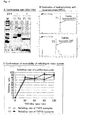
Fig. 4 shows the analytical results for hen egg-white lysozyme (HEL) which was denatured and cationized reversibly with TAPS-Sulfonate (T1), a conventional reversible cationization reagent, and, TAP3S-Sulfonate (T3), a novel sulfonate compound of the present invention, respectively. -
Fig. 5 shows an example of processing conditions allowing total protein extracted from a cell to retain high water solubility still in denatured state. -
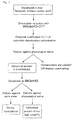
Fig. 6 shows an example of two-stage dialysis protocol whereby denatured total intracellular protein is solubilized in physiological saline to a high degree. -
Fig. 7 shows the solubility by the two-stage dialysis protocol described inFig. 6 of the denatured total intracellular protein. -
Fig. 8 shows the results from using TAP3S-Sulfonate in the procedure indicated inFig. 6 to cationize the total protein contained in human epidermoid carcinoma-derived cell line A431 and mouse melanoma B16-F10 cell and prepare a lysate in physiological saline, and quantitating the proteins contained therein by Western blotting (W.B.) using anti-β-tubulin antibody, anti-EGF receptor antibody, anti-TRP2 antibody and anti-gp100 antibody. - Fig. 9 shows the results from disrupting mouse melanoma B16-F10 cell by freeze-thawing in phosphate-buffered physiological saline (PBS) and fractionating to obtain a soluble fraction and an insoluble fraction, and quantitating the amounts of gp100 protein contained therein by Western blotting (W.B.) using anti-gp100 antibody. In the
figure, (1) to (4 ) correspond tolanes 1 to 4 of the W.B. - Hereafter, the present invention will be described in further detail by giving examples; however, the present invention is not limited only to the examples. Unless explicitly stated otherwise, "%" means "mol%".
- The synthesis of the novel compound of the present invention TAP3S-Sulfonate was carried out according to the schemes indicated by general formulae (i) to (iii). A concrete description is given below.
-

- The reaction of the general formula (i) was as follows:
- 35.1 g (134 mmol) of TAP-Br ((3-bromopropyl)trimethylammonium bromide, J. Biochem., 116, 852-857 (1994)) was weighed out and dissolved in 500 ml of ethanol, 87.5 g (672 mmol) of N,N,N',N'-tetramethyl-1,3-diaminopropane was added and
(CH3) 3N+CH2CH2CH2N+ (CH3) 2CH2CH2CH2N (CH3) 2·2Br- was obtained by reacting at 85°C for 20 hours while refluxing. Yield amount: 113 mmol (yield 86%). - The reaction of the general formula (ii) was as follows:
- 40.89 g (104.5 mmol) of
(CH3) 3N+CH2CH2CH2N+ (CH3) 2CH2CH2CH2N (CH3) 2·2Br- was weighed and dissolved in 500 ml of ethanol, 100 ml (979 mmol) of 1,3-dibromopropane was added, and TAP3-Br was obtained by reacting at 85°C while refluxing for 2 days. Yield amount: 68.8 mmol (yield: 66%). - The reaction of the general formula (iii) was as follows:
- 31.37 g (52.9 mmol) of TAP3-Br was weighed out and dissolved in 500 ml of ethanol, 7.096 g (52.9 mmol) of CH3SO2SNa was added and TAP3S-Sulfonate was obtained by reacting at 85°C while refluxing for 2 days. The product was confirmed by NMR.
1H-NMR (300 MHz, D20) : δ 3.57-3.33 (m,10H), 3.50 (s,3H), 3.30 (t, J=6.8 Hz, 2H), 3.15 (s, 6H), 3.14 (ds, 15H), 2.40-2.18 (m,6H)
Yield amount: 30 mmol) (yield 56%) - Experimental Example 1: reactivity with protein and physical property evaluation of TAP3S-Sulfonate
With hen egg-white lysozyme (HEL, molecular weight: 14.3 kDa, 8 Cys residues/mol) serving as a model protein, capability comparison was carried out between TAPS-sulfonate (conventional cationization reagent described inNon-Patent Literature
10 mg of HEL was dissolved in 1 ml of 6M guanidine hydrochloride, 0.1 M Tris-HCl and 1 mM EDTA pH 8.5; degassing and nitrogen substitution were carried out. Next, 5 mg (0.03 mmol) of Dithiothreitol (DTT) was added, after a reduction reaction at 37°C for 90 minutes, TAPS-sulfonate or TAP3S-Sulfonate was each added so as to have 3-fold molar amounts of DTT, and reacted at 37°C for 30 minutes. For the obtained reaction solution, dialysis was carried out thoroughly against pure water and the denatured reversibly cationized HEL obtained in the soluble fraction was used to carry out physical property evaluation. Analysis of each sample was carried out by SDS-PAGE, and, as a result, both TAPS-sulfonate and TAP3S-Sulfonate were found to be bonded quantitatively to the protein through an SS bond (refer toFig. 4A ). - In addition, when reverse-phase HPLC (C18 column) was used and elution was carried out with a linear concentration gradient of acetonitrile, the elution time was shortened in when cationization was performed with TAP3S-Sulfonate, confirming that hydrophilicity was improved (refer to
Fig. 4B ). Further, when refolding was carried out in a redox system that uses glutathione denatured reversibly cationized HEL of both TAPS-sulfonate and TAP3S-Sulfonate on the order of 90% re-activation rate (Note 1) was obtained for both, suggesting that, with the present reagent, no side-reaction had proceeded other than the chemical modification through SS bond (refer toFig. 4C ).
Note 1: While the egg-white lysozyme in the active conformation has four sets of SS bonds present within one molecule such that there is the necessity of refolding in the correct combination, since the egg-white lysozyme in the active conformation is to be the structure with the lowest free energy (= stable), the molecule in which, ultimately, the cationizing agents having dissociated, the correct four sets of SS bonds have been formed, manifests a biological activity. The "refolding rate" in the present experiment was evaluated with the bacteriolytic activity (enzymatic activity) exhibited by the lysozyme. - Experimental Example 2: demonstration experiment for solubilization technique for insoluble protein
As expected also from the Solubility Index described inFig. 2 , solubility in denatured state is extremely low for a protein containing a multitude of hydrophobic residues. With human P Actin (refer to Table 1) serving as one such model protein, a verification experiment for the solubilization by denatured reversible cationization was proceeded. The amino acid composition of human (β Actin protein is shown in Table 1. -
[Table 1] Molecular weight 43.3 kDa The number of hydrophobic residue (W,I,L,F) 72 (per molecule) Positively charged amino acid (In the case of pH5, K,R,H) 48 (per molecule) Negatively charged amino acid (In the case of pH5, D,E) 49 (per molecule) Cys capable of being subjected to denatured reversible cationization reaction 6 (per molecule) - Here, when calculating the Solubility Index (SI) of human β Actin at
pH 5, it is done in the following manner, and from the property that dissolving is facilitated when a large negative or positive value is displayed, the case where cationization is performed with TAP3S-Sulfonate is anticipated to be the most advantageous solubility.


- The demonstration experiment was carried out as follows:
When centrifugal separation was carried out after bacteriolysis by sonication, human β Actin expressed in Escherichia coli was recovered as an insoluble fraction (inclusion body); at this time point, 90% or greater purity was observed in an analysis by SDS-PAGE. This human β Actin was dissolved in 6 M guanidine hydrochloride, DTT was added so as to have 30 mM final concentration and treated at 37°C for 2 hours, thereby reducing the protein completely. Next, TAPS-sulfonate and TAP3S-Sulfonate were added so that the final concentrations were 90 mM respectively, reacted at 37°C for 30 minutes, then, dialysis was carried out thoroughly against pure water, thereby to obtain denatured reversibly cationized β Actin. - The solubility of each sample was evaluated by measuring the absorbance at 280 nm and 320 nm (refer to Table 2). As a result, while denatured reversibly cationized β Actin from both were soluble present in pure water, the absorption at 320 nm was relatively high for the TAPS-modified β Actin protein, suggesting that aggregation has been proceeding in the solvent. The solubility of denatured reversibly cationized β Actin protein in pure water (absorption after 4-fold dilution) is shown in Table 2.
-
[Table 2] T1: TAPS-modified Actin T3: TAP3-modified Actin As280 (absorbance of protein) 0.79 0.707 ABS320 (aggregation index of protein) 0.143 0.085 - Next, experiments were carried out under the following conditions A to C for dissolving in physiological saline (0.15M NaCl) the denatured reversibly cationized β Actin protein that has been dissolved in pure water. The conditions A to C are shown in Table 3.
-
[Table 3] A A 0.3 M NaCl solution with pH of 5.5 and each modified β actin solution were mixed in the ratio 1:1 and the mixture was allowed to stand for 30 minutes. The mixture was centrifuged at 10,000 rpm for 5 minutes. The absorbance of an soluble fraction was determined. B A solvent of each modified β actin solution was replaced by 0.15 M physiological saline using gel filtration chromatography (NapS column, GE health care) that was balanced with 0.15 M physiological saline (pH 5.5). The solution was centrifuged at 10,000 rpm for 5 minutes. The absorbance of an soluble fraction was determined. C Each modified β actin solution was subjected to separation and purification by linear concentration gradient elution with 1 to 80% acetonitrile in the presence of 0.1% hydrochloric acid using reversed phase HPLC (capsule pack C1, Shiseido Co., Ltd.), and was freeze-dried. Protein obtained after the freeze-drying was dissolved in a small amount of pure water, and a solvent was prepared to be 0.15 M physiological saline. The resulting samples each were centrifuged at 10,000 rpm for 5 minutes. The absorbance of an soluble fraction was determined. - Evaluation results of the solubility in physiological saline of the denatured reversibly cationized β Actin protein prepared with the purification conditions of A to C are compiled in Table 4. As it is also apparent from this result, it was confirmed that, while solubilization was almost not possible with the TAPS-modification of the conventional type, satisfactory solubilization was possible with the TAP3S-modification using the novel reagent of the present invention. In addition, it was confirmed that, if the protein was purified to high-purity using reverse-phase HPLC, hydration was readily possible also from a solid body after freeze-drying, and, the protein existed in an ideal dissolution state, with aggregation in solution also being suppressed to extremely low levels. The relationship between the solubility of the denatured reversibly cationized β Actin protein in physiological saline and the sample preparation method is shown in Table 4.
-
[Table 4] T1: TAPS-modified β Actin T3: TAP3S-modified β Actin Preparation condition ABS 280 ABS280/ABS320 ABS 280 ABS280/ABS320 A: Dialysis 0(all insolubilized) - 0.343 14.3 B: Gel filtration purification O(all insolubilized) - 0.972 13.5 C: HPLC purification 0(all insolubilized) - 0.814 22.0 - While the mechanism whereby the solubility increases widely through reverse-phase column purification is being analyzed, the species of counter ion and elimination of small molecule contaminants (such as methanesulfinic acid) are thought to be the keys. This paves the way for enhanced solubility of the denatured reversibly cationized protein.
- Experimental Example 3: application to solubilization, technique for intracellular total protein, 1
In order to develop a technique for solubilizing entirety the total protein in cancer cells or the like, the effectiveness of the present reagent was verified. With living tissues such as cancer cells serving as materials, when cationizing proteins contained therein, it was clear that nucleic acids contained in large amounts in living tissues, as they possess strongly negative electric charges, electrostatically associate with and insolubilize the cationized protein.
Thus, it was decided to apply the Trizol reagent (phenol/guanidine isothiocyanate; manufactured by Invitrogen), which allows nucleic acids and proteins to be separated/purified quantitatively from living tissues, to extract nucleic acid-free total protein. In order to examine the solubilization conditions for the denatured proteins acquired with this technique, when the total protein was treated with the technique shown inFig. 5 , mixtures of unmodified denatured proteins were found to dissolve adequately in water. Such observations related to the solubility of denatured proteins, while not thought to have been reported, are inferred to be those of intrinsic properties demonstrated by intracellular proteins of eukaryotes, and are extremely interesting observations protein-scientifically. While mouse B16 melanoma was used as the cultured cell ofFig. 5 , the results were almost the same when other human cancer cells (HeLa, A431, or the like) were used. - With regard to the intracellular total protein extracted using the Trizol reagent, after dissolving with 6 M guanidine hydrochloride, cationization reactions with TAPS-sulfonate and TAP3S-Sulfonate respectively were carried out by the method described previously; however, the respectively cationized proteins could not demonstrate high solubility in physiological saline. Thus, taking as a reference the fact that the process of eliminating contaminants by reverse-phase column purification contributed to solubility-improvement in the examination of the solubilization conditions for the β Actin protein described previously, the two-stage dialysis protocol indicated in
Fig 6 was developed. - As a result of these examinations, the intracellular total protein treated by the two-stage dialysis protocol was confirmed to demonstrate high solubility also in physiological saline by the reversibly-denaturing-cationizing method (refer to
Fig. 7 ). In particular, the solubility almost not decreasing even in physiological saline, the proteins cationized with TAP3S-Sulfonate were confirmed to be of extremely high usefulness in case there is a necessity of maintaining physiological conditions of a cell, such as when adding them to cultured cell. - Experimental Example 4: application to solubilization technique for intracellular total protein, 2
(1) Lysates were prepared, comprising the total proteins contained in human epidermoid carcinoma-derived cell line A431 and mouse melanoma B16-F10 cell, which were cationized using TAP3S-Sulfonate by the procedure indicated inFig. 6 and dissolved in physiological saline. The proteins contained in the respective lysates were quantified by Western-blotting (W.B.) using anti-β-tubulin antibodies (Cell signaling Technology: #2146), anti-EGF receptor antibodies (manufactured by Sigma: E2760), anti-TRP2 antibodies (manufactured by Santa cruz biotechnology: SC-25544) and anti-gp100 antibodies (manufactured by Santa cruz biotechnology: SC-33590). As a result, antigen proteins corresponding to these antibodies were confirmed to be dissolved (refer toFig. 8 ). It was confirmed that, by applying the present technique, dissolving completely the total protein contained inside a cancer cell in physiological saline was possible and that each antigen among EGF receptor, TRP2 and gp100, which are actually known as cancer antigen proteins, were dissolved. The present technique can be claimed to be a strong technique also in preparing a vaccine for cancer treatment from a cancer cell. - (2) For comparison purposes, by way of a freeze-thawing method, which repeats five times freezing at -80°C and melting at 37°C the interior of a mouse melanoma B16-F10 cell in phosphate-buffered saline (PBS), cells were disrupted, then, fractionated by centrifugal separation into a soluble fraction and an insoluble fraction, and the amount of gp100 protein that each contains was quantified by Western blotting (W.B.) using anti-gp100 antibodies (manufactured by Santa cruz biotechnology: SC-33590). As a result, it was confirmed that approximately 50% of the cancer antigen protein gp100 became insoluble after freeze-thawing (refer to Fig. 9).
Claims (10)
- A thiosulfonate compound having within one molecule three or more cations derived from a quaternary ammonium group.
- The thiosulfonate compound according to claim 1, represented by the following general formula (1):
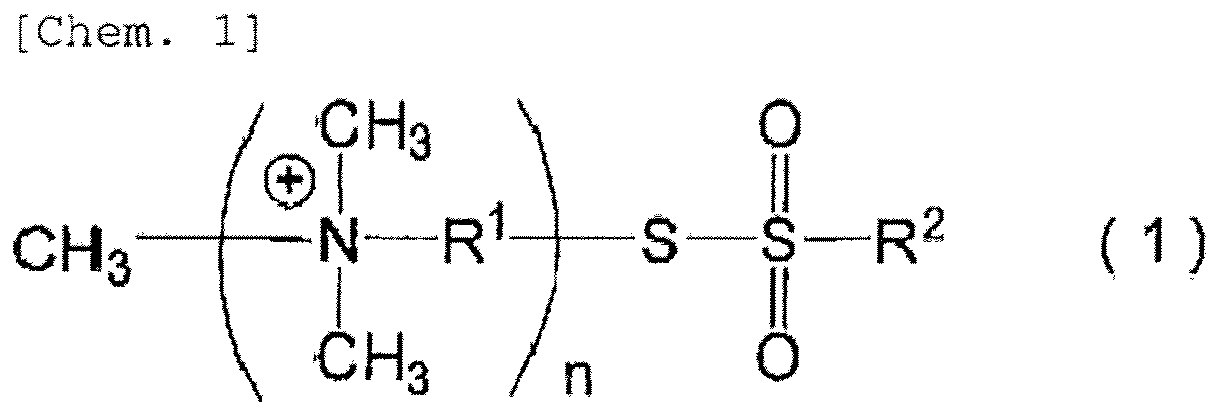
- The thiosulfonate compound according to claim 2, wherein R1 in the general formula (1) is a linear alkylene group having 2 to 6 carbons.
- The thiosulfonate compound according to claim 3, wherein the R1 is a propylene group.
- The thiosulfonate compound according to any of claims 2 to 4, wherein n in the general formula (1) is 3.
- The thiosulfonate compound according to any of claims 2 to 5, wherein R2 in the general formula (1) is a methyl group.
- A reversible cationization agent for reversibly-cationizing a protein and/or a peptide,
the reversible cationization agent containing the thiosulfonate compound according to any of claims 1 to 6. - A method for protein and/or peptide solubilization using the reversible cationization agent according to claim 7.
- The method for protein and/or peptide solubilization according to claim 8, wherein the protein and/or the peptide are denatured protein and/or peptide.
- A method for solubilization for solubilizing a mixture of denatured total protein extracted from a cultured cell and/or a living tissue in a physiological salt solution,
the solubilization method using the reversible cationization agent according to claim 7.
Applications Claiming Priority (2)
| Application Number | Priority Date | Filing Date | Title |
|---|---|---|---|
| JP2010070804 | 2010-03-25 | ||
| PCT/JP2011/057238 WO2011118731A1 (en) | 2010-03-25 | 2011-03-24 | Thiosulfonate compound, reversibly cationizing agent for proteins and/or peptides, and method for solubilization |
Publications (3)
| Publication Number | Publication Date |
|---|---|
| EP2551263A1 true EP2551263A1 (en) | 2013-01-30 |
| EP2551263A4 EP2551263A4 (en) | 2015-08-12 |
| EP2551263B1 EP2551263B1 (en) | 2017-07-12 |
Family
ID=44673276
Family Applications (1)
| Application Number | Title | Priority Date | Filing Date |
|---|---|---|---|
| EP11759536.3A Not-in-force EP2551263B1 (en) | 2010-03-25 | 2011-03-24 | Thiosulfonate compound, reversibly cationizing agent for proteins and/or peptides, and method for solubilization |
Country Status (5)
| Country | Link |
|---|---|
| US (1) | US8653240B2 (en) |
| EP (1) | EP2551263B1 (en) |
| JP (1) | JP5713006B2 (en) |
| CA (1) | CA2794217C (en) |
| WO (1) | WO2011118731A1 (en) |
Cited By (1)
| Publication number | Priority date | Publication date | Assignee | Title |
|---|---|---|---|---|
| EP2833143B1 (en) * | 2012-03-30 | 2019-04-24 | Medinet Co., Ltd. | Method for producing reagent for antibody detection and use thereof |
Family Cites Families (6)
| Publication number | Priority date | Publication date | Assignee | Title |
|---|---|---|---|---|
| JPH1156386A (en) * | 1997-08-08 | 1999-03-02 | Sumitomo Pharmaceut Co Ltd | Method for regenerating recombinant BDNF |
| JP2004049214A (en) | 2001-11-29 | 2004-02-19 | Nippon Shokubai Co Ltd | Method for introducing protein or peptide into cell |
| JP2005120017A (en) | 2003-10-16 | 2005-05-12 | Nippon Shokubai Co Ltd | Method for intracellularly introducing denatured protein formed by reversible cationization and activating the same |
| JP2007314526A (en) * | 2006-04-27 | 2007-12-06 | Ai Bio Chips:Kk | Membrane protein solubilizing agent and membrane protein solubilizing method |
| WO2008001888A1 (en) * | 2006-06-30 | 2008-01-03 | National University Corporation Hokkaido University | Method for pre-treatment of serum for analysis of sugar chain |
| JP5097412B2 (en) | 2006-10-13 | 2012-12-12 | 株式会社日本触媒 | Protein intracellular introduction agent |
-
2011
- 2011-03-24 CA CA2794217A patent/CA2794217C/en not_active Expired - Fee Related
- 2011-03-24 WO PCT/JP2011/057238 patent/WO2011118731A1/en not_active Ceased
- 2011-03-24 EP EP11759536.3A patent/EP2551263B1/en not_active Not-in-force
- 2011-03-24 JP JP2012507073A patent/JP5713006B2/en not_active Expired - Fee Related
- 2011-03-24 US US13/636,789 patent/US8653240B2/en not_active Expired - Fee Related
Cited By (1)
| Publication number | Priority date | Publication date | Assignee | Title |
|---|---|---|---|---|
| EP2833143B1 (en) * | 2012-03-30 | 2019-04-24 | Medinet Co., Ltd. | Method for producing reagent for antibody detection and use thereof |
Also Published As
| Publication number | Publication date |
|---|---|
| EP2551263A4 (en) | 2015-08-12 |
| CA2794217C (en) | 2018-01-02 |
| CA2794217A1 (en) | 2011-09-29 |
| US8653240B2 (en) | 2014-02-18 |
| JP5713006B2 (en) | 2015-05-07 |
| US20130096278A1 (en) | 2013-04-18 |
| JPWO2011118731A1 (en) | 2013-07-04 |
| WO2011118731A1 (en) | 2011-09-29 |
| EP2551263B1 (en) | 2017-07-12 |
Similar Documents
| Publication | Publication Date | Title |
|---|---|---|
| Pasut et al. | State of the art in PEGylation: the great versatility achieved after forty years of research | |
| Knowles et al. | Chemical interactions of polyethylene glycols (PEGs) and glycerol with protein functional groups: applications to effects of PEG and glycerol on protein processes | |
| CN109152844A (en) | The bioconjugates containing sulfonamide connector for treatment | |
| EP2682407B1 (en) | Hemoglobin-albumin complex, and artificial plasma expander and artificial oxygen carrier, each containing same | |
| McMullen et al. | Motif-based zwitterionic peptides impact their structure and immunogenicity | |
| TW201533061A (en) | Sugar chain-polypeptide complex | |
| CN107056929A (en) | Porcine somatotropin polypeptide and its purposes by modification | |
| US9915653B2 (en) | Facile laboratory method for localising biomolecules to the surface of cells and viruses | |
| BR112012020855B1 (en) | method for producing a biomolecule conjugate | |
| Rauwolf et al. | Insights on alanine and arginine binding to silica with atomic resolution | |
| US8653240B2 (en) | Thiosulfonate compound, reversible cationization agent for protein and/or peptide, and method for solubilization | |
| AU2010242374B2 (en) | Method for solubilizing insoluble protein and/or peptide | |
| JP6134081B1 (en) | Peptide composition | |
| WO2016136707A1 (en) | Polysaccharide derivative having membrane-permeable peptide chain | |
| ES2389775T3 (en) | Production and purification of protein A without using components of animal origin | |
| US10316311B2 (en) | Antibody-urease conjugates | |
| WO2006040980A1 (en) | Lecithinized superoxide dismutase composition and process for producing the same | |
| Zhao et al. | Membrane combined with hydrophilic macromolecules enhances protein refolding at high concentration | |
| WO1992014832A1 (en) | Processes for purifying human bcdf | |
| Yang et al. | Chemical Modification of Cysteine with 3-Arylpropriolonitrile Improves the In Vivo Stability of Albumin-Conjugated Urate Oxidase Therapeutic Protein | |
| CN110551179B (en) | A kind of modified anti-HIV polypeptide and preparation method and use thereof | |
| Gette et al. | Prolonged self-assembly of H. pylori ferritin globules at physiological conditions | |
| RU2656140C2 (en) | Method for obtaining a hybrid protein containing a fused protein analogue of an interferon gamma conjugated with oligosaccharide | |
| RU2749509C1 (en) | Targeted colony-stimulating agent | |
| CN111788220A (en) | In vivo sustained release of recombinant coagulation factor VIII and preparation method thereof |
Legal Events
| Date | Code | Title | Description |
|---|---|---|---|
| PUAI | Public reference made under article 153(3) epc to a published international application that has entered the european phase |
Free format text: ORIGINAL CODE: 0009012 |
|
| 17P | Request for examination filed |
Effective date: 20121010 |
|
| AK | Designated contracting states |
Kind code of ref document: A1 Designated state(s): AL AT BE BG CH CY CZ DE DK EE ES FI FR GB GR HR HU IE IS IT LI LT LU LV MC MK MT NL NO PL PT RO RS SE SI SK SM TR |
|
| DAX | Request for extension of the european patent (deleted) | ||
| RA4 | Supplementary search report drawn up and despatched (corrected) |
Effective date: 20150710 |
|
| RIC1 | Information provided on ipc code assigned before grant |
Ipc: C07C 381/04 20060101AFI20150706BHEP Ipc: C07K 1/14 20060101ALI20150706BHEP |
|
| 17Q | First examination report despatched |
Effective date: 20160926 |
|
| GRAP | Despatch of communication of intention to grant a patent |
Free format text: ORIGINAL CODE: EPIDOSNIGR1 |
|
| RIC1 | Information provided on ipc code assigned before grant |
Ipc: C07C 381/04 20060101AFI20170316BHEP Ipc: C07K 1/14 20060101ALI20170316BHEP |
|
| INTG | Intention to grant announced |
Effective date: 20170330 |
|
| GRAS | Grant fee paid |
Free format text: ORIGINAL CODE: EPIDOSNIGR3 |
|
| GRAA | (expected) grant |
Free format text: ORIGINAL CODE: 0009210 |
|
| AK | Designated contracting states |
Kind code of ref document: B1 Designated state(s): AL AT BE BG CH CY CZ DE DK EE ES FI FR GB GR HR HU IE IS IT LI LT LU LV MC MK MT NL NO PL PT RO RS SE SI SK SM TR |
|
| REG | Reference to a national code |
Ref country code: GB Ref legal event code: FG4D |
|
| REG | Reference to a national code |
Ref country code: CH Ref legal event code: EP |
|
| REG | Reference to a national code |
Ref country code: AT Ref legal event code: REF Ref document number: 908175 Country of ref document: AT Kind code of ref document: T Effective date: 20170715 |
|
| REG | Reference to a national code |
Ref country code: IE Ref legal event code: FG4D |
|
| REG | Reference to a national code |
Ref country code: DE Ref legal event code: R096 Ref document number: 602011039513 Country of ref document: DE |
|
| REG | Reference to a national code |
Ref country code: NL Ref legal event code: MP Effective date: 20170712 |
|
| REG | Reference to a national code |
Ref country code: LT Ref legal event code: MG4D |
|
| REG | Reference to a national code |
Ref country code: AT Ref legal event code: MK05 Ref document number: 908175 Country of ref document: AT Kind code of ref document: T Effective date: 20170712 |
|
| PG25 | Lapsed in a contracting state [announced via postgrant information from national office to epo] |
Ref country code: NO Free format text: LAPSE BECAUSE OF FAILURE TO SUBMIT A TRANSLATION OF THE DESCRIPTION OR TO PAY THE FEE WITHIN THE PRESCRIBED TIME-LIMIT Effective date: 20171012 Ref country code: SE Free format text: LAPSE BECAUSE OF FAILURE TO SUBMIT A TRANSLATION OF THE DESCRIPTION OR TO PAY THE FEE WITHIN THE PRESCRIBED TIME-LIMIT Effective date: 20170712 Ref country code: AT Free format text: LAPSE BECAUSE OF FAILURE TO SUBMIT A TRANSLATION OF THE DESCRIPTION OR TO PAY THE FEE WITHIN THE PRESCRIBED TIME-LIMIT Effective date: 20170712 Ref country code: LT Free format text: LAPSE BECAUSE OF FAILURE TO SUBMIT A TRANSLATION OF THE DESCRIPTION OR TO PAY THE FEE WITHIN THE PRESCRIBED TIME-LIMIT Effective date: 20170712 Ref country code: FI Free format text: LAPSE BECAUSE OF FAILURE TO SUBMIT A TRANSLATION OF THE DESCRIPTION OR TO PAY THE FEE WITHIN THE PRESCRIBED TIME-LIMIT Effective date: 20170712 Ref country code: NL Free format text: LAPSE BECAUSE OF FAILURE TO SUBMIT A TRANSLATION OF THE DESCRIPTION OR TO PAY THE FEE WITHIN THE PRESCRIBED TIME-LIMIT Effective date: 20170712 Ref country code: HR Free format text: LAPSE BECAUSE OF FAILURE TO SUBMIT A TRANSLATION OF THE DESCRIPTION OR TO PAY THE FEE WITHIN THE PRESCRIBED TIME-LIMIT Effective date: 20170712 |
|
| PG25 | Lapsed in a contracting state [announced via postgrant information from national office to epo] |
Ref country code: IS Free format text: LAPSE BECAUSE OF FAILURE TO SUBMIT A TRANSLATION OF THE DESCRIPTION OR TO PAY THE FEE WITHIN THE PRESCRIBED TIME-LIMIT Effective date: 20171112 Ref country code: PL Free format text: LAPSE BECAUSE OF FAILURE TO SUBMIT A TRANSLATION OF THE DESCRIPTION OR TO PAY THE FEE WITHIN THE PRESCRIBED TIME-LIMIT Effective date: 20170712 Ref country code: GR Free format text: LAPSE BECAUSE OF FAILURE TO SUBMIT A TRANSLATION OF THE DESCRIPTION OR TO PAY THE FEE WITHIN THE PRESCRIBED TIME-LIMIT Effective date: 20171013 Ref country code: BG Free format text: LAPSE BECAUSE OF FAILURE TO SUBMIT A TRANSLATION OF THE DESCRIPTION OR TO PAY THE FEE WITHIN THE PRESCRIBED TIME-LIMIT Effective date: 20171012 Ref country code: LV Free format text: LAPSE BECAUSE OF FAILURE TO SUBMIT A TRANSLATION OF THE DESCRIPTION OR TO PAY THE FEE WITHIN THE PRESCRIBED TIME-LIMIT Effective date: 20170712 Ref country code: RS Free format text: LAPSE BECAUSE OF FAILURE TO SUBMIT A TRANSLATION OF THE DESCRIPTION OR TO PAY THE FEE WITHIN THE PRESCRIBED TIME-LIMIT Effective date: 20170712 Ref country code: ES Free format text: LAPSE BECAUSE OF FAILURE TO SUBMIT A TRANSLATION OF THE DESCRIPTION OR TO PAY THE FEE WITHIN THE PRESCRIBED TIME-LIMIT Effective date: 20170712 |
|
| REG | Reference to a national code |
Ref country code: DE Ref legal event code: R097 Ref document number: 602011039513 Country of ref document: DE |
|
| PG25 | Lapsed in a contracting state [announced via postgrant information from national office to epo] |
Ref country code: RO Free format text: LAPSE BECAUSE OF FAILURE TO SUBMIT A TRANSLATION OF THE DESCRIPTION OR TO PAY THE FEE WITHIN THE PRESCRIBED TIME-LIMIT Effective date: 20170712 Ref country code: CZ Free format text: LAPSE BECAUSE OF FAILURE TO SUBMIT A TRANSLATION OF THE DESCRIPTION OR TO PAY THE FEE WITHIN THE PRESCRIBED TIME-LIMIT Effective date: 20170712 Ref country code: DK Free format text: LAPSE BECAUSE OF FAILURE TO SUBMIT A TRANSLATION OF THE DESCRIPTION OR TO PAY THE FEE WITHIN THE PRESCRIBED TIME-LIMIT Effective date: 20170712 |
|
| PGFP | Annual fee paid to national office [announced via postgrant information from national office to epo] |
Ref country code: DE Payment date: 20180309 Year of fee payment: 8 |
|
| PLBE | No opposition filed within time limit |
Free format text: ORIGINAL CODE: 0009261 |
|
| STAA | Information on the status of an ep patent application or granted ep patent |
Free format text: STATUS: NO OPPOSITION FILED WITHIN TIME LIMIT |
|
| PG25 | Lapsed in a contracting state [announced via postgrant information from national office to epo] |
Ref country code: SK Free format text: LAPSE BECAUSE OF FAILURE TO SUBMIT A TRANSLATION OF THE DESCRIPTION OR TO PAY THE FEE WITHIN THE PRESCRIBED TIME-LIMIT Effective date: 20170712 Ref country code: IT Free format text: LAPSE BECAUSE OF FAILURE TO SUBMIT A TRANSLATION OF THE DESCRIPTION OR TO PAY THE FEE WITHIN THE PRESCRIBED TIME-LIMIT Effective date: 20170712 Ref country code: SM Free format text: LAPSE BECAUSE OF FAILURE TO SUBMIT A TRANSLATION OF THE DESCRIPTION OR TO PAY THE FEE WITHIN THE PRESCRIBED TIME-LIMIT Effective date: 20170712 Ref country code: EE Free format text: LAPSE BECAUSE OF FAILURE TO SUBMIT A TRANSLATION OF THE DESCRIPTION OR TO PAY THE FEE WITHIN THE PRESCRIBED TIME-LIMIT Effective date: 20170712 |
|
| 26N | No opposition filed |
Effective date: 20180413 |
|
| PG25 | Lapsed in a contracting state [announced via postgrant information from national office to epo] |
Ref country code: SI Free format text: LAPSE BECAUSE OF FAILURE TO SUBMIT A TRANSLATION OF THE DESCRIPTION OR TO PAY THE FEE WITHIN THE PRESCRIBED TIME-LIMIT Effective date: 20170712 |
|
| REG | Reference to a national code |
Ref country code: CH Ref legal event code: PL |
|
| GBPC | Gb: european patent ceased through non-payment of renewal fee |
Effective date: 20180324 |
|
| PG25 | Lapsed in a contracting state [announced via postgrant information from national office to epo] |
Ref country code: MC Free format text: LAPSE BECAUSE OF FAILURE TO SUBMIT A TRANSLATION OF THE DESCRIPTION OR TO PAY THE FEE WITHIN THE PRESCRIBED TIME-LIMIT Effective date: 20170712 |
|
| REG | Reference to a national code |
Ref country code: BE Ref legal event code: MM Effective date: 20180331 |
|
| REG | Reference to a national code |
Ref country code: IE Ref legal event code: MM4A |
|
| PG25 | Lapsed in a contracting state [announced via postgrant information from national office to epo] |
Ref country code: LU Free format text: LAPSE BECAUSE OF NON-PAYMENT OF DUE FEES Effective date: 20180324 |
|
| PG25 | Lapsed in a contracting state [announced via postgrant information from national office to epo] |
Ref country code: IE Free format text: LAPSE BECAUSE OF NON-PAYMENT OF DUE FEES Effective date: 20180324 |
|
| PG25 | Lapsed in a contracting state [announced via postgrant information from national office to epo] |
Ref country code: GB Free format text: LAPSE BECAUSE OF NON-PAYMENT OF DUE FEES Effective date: 20180324 Ref country code: BE Free format text: LAPSE BECAUSE OF NON-PAYMENT OF DUE FEES Effective date: 20180331 Ref country code: LI Free format text: LAPSE BECAUSE OF NON-PAYMENT OF DUE FEES Effective date: 20180331 Ref country code: CH Free format text: LAPSE BECAUSE OF NON-PAYMENT OF DUE FEES Effective date: 20180331 |
|
| PG25 | Lapsed in a contracting state [announced via postgrant information from national office to epo] |
Ref country code: FR Free format text: LAPSE BECAUSE OF NON-PAYMENT OF DUE FEES Effective date: 20180331 |
|
| REG | Reference to a national code |
Ref country code: DE Ref legal event code: R119 Ref document number: 602011039513 Country of ref document: DE |
|
| PG25 | Lapsed in a contracting state [announced via postgrant information from national office to epo] |
Ref country code: MT Free format text: LAPSE BECAUSE OF NON-PAYMENT OF DUE FEES Effective date: 20180324 Ref country code: DE Free format text: LAPSE BECAUSE OF NON-PAYMENT OF DUE FEES Effective date: 20191001 |
|
| PG25 | Lapsed in a contracting state [announced via postgrant information from national office to epo] |
Ref country code: TR Free format text: LAPSE BECAUSE OF FAILURE TO SUBMIT A TRANSLATION OF THE DESCRIPTION OR TO PAY THE FEE WITHIN THE PRESCRIBED TIME-LIMIT Effective date: 20170712 |
|
| PG25 | Lapsed in a contracting state [announced via postgrant information from national office to epo] |
Ref country code: PT Free format text: LAPSE BECAUSE OF FAILURE TO SUBMIT A TRANSLATION OF THE DESCRIPTION OR TO PAY THE FEE WITHIN THE PRESCRIBED TIME-LIMIT Effective date: 20170712 Ref country code: HU Free format text: LAPSE BECAUSE OF FAILURE TO SUBMIT A TRANSLATION OF THE DESCRIPTION OR TO PAY THE FEE WITHIN THE PRESCRIBED TIME-LIMIT; INVALID AB INITIO Effective date: 20110324 |
|
| PG25 | Lapsed in a contracting state [announced via postgrant information from national office to epo] |
Ref country code: MK Free format text: LAPSE BECAUSE OF NON-PAYMENT OF DUE FEES Effective date: 20170712 Ref country code: CY Free format text: LAPSE BECAUSE OF FAILURE TO SUBMIT A TRANSLATION OF THE DESCRIPTION OR TO PAY THE FEE WITHIN THE PRESCRIBED TIME-LIMIT Effective date: 20170712 |
|
| PG25 | Lapsed in a contracting state [announced via postgrant information from national office to epo] |
Ref country code: AL Free format text: LAPSE BECAUSE OF FAILURE TO SUBMIT A TRANSLATION OF THE DESCRIPTION OR TO PAY THE FEE WITHIN THE PRESCRIBED TIME-LIMIT Effective date: 20170712 |