EP2551251A1 - Columnar aluminum titanate and method for producing same - Google Patents
Columnar aluminum titanate and method for producing same Download PDFInfo
- Publication number
- EP2551251A1 EP2551251A1 EP10848418A EP10848418A EP2551251A1 EP 2551251 A1 EP2551251 A1 EP 2551251A1 EP 10848418 A EP10848418 A EP 10848418A EP 10848418 A EP10848418 A EP 10848418A EP 2551251 A1 EP2551251 A1 EP 2551251A1
- Authority
- EP
- European Patent Office
- Prior art keywords
- aluminum titanate
- source
- columnar
- number average
- axis length
- Prior art date
- Legal status (The legal status is an assumption and is not a legal conclusion. Google has not performed a legal analysis and makes no representation as to the accuracy of the status listed.)
- Granted
Links
- 229910000505 Al2TiO5 Inorganic materials 0.000 title claims abstract description 145
- AABBHSMFGKYLKE-SNAWJCMRSA-N propan-2-yl (e)-but-2-enoate Chemical compound C\C=C\C(=O)OC(C)C AABBHSMFGKYLKE-SNAWJCMRSA-N 0.000 title claims abstract description 130
- 238000004519 manufacturing process Methods 0.000 title claims abstract description 18
- FYYHWMGAXLPEAU-UHFFFAOYSA-N Magnesium Chemical compound [Mg] FYYHWMGAXLPEAU-UHFFFAOYSA-N 0.000 claims abstract description 23
- 239000011777 magnesium Substances 0.000 claims abstract description 23
- 229910052749 magnesium Inorganic materials 0.000 claims abstract description 23
- 229910052782 aluminium Inorganic materials 0.000 claims abstract description 16
- XAGFODPZIPBFFR-UHFFFAOYSA-N aluminium Chemical compound [Al] XAGFODPZIPBFFR-UHFFFAOYSA-N 0.000 claims abstract description 16
- RTAQQCXQSZGOHL-UHFFFAOYSA-N Titanium Chemical compound [Ti] RTAQQCXQSZGOHL-UHFFFAOYSA-N 0.000 claims abstract description 15
- 239000010936 titanium Substances 0.000 claims abstract description 15
- 229910052719 titanium Inorganic materials 0.000 claims abstract description 14
- 239000000203 mixture Substances 0.000 claims description 34
- 239000000463 material Substances 0.000 claims description 15
- 238000010304 firing Methods 0.000 claims description 10
- XUIMIQQOPSSXEZ-UHFFFAOYSA-N Silicon Chemical compound [Si] XUIMIQQOPSSXEZ-UHFFFAOYSA-N 0.000 claims description 9
- 238000003801 milling Methods 0.000 claims description 9
- 239000010703 silicon Substances 0.000 claims description 9
- 229910052710 silicon Inorganic materials 0.000 claims description 9
- 238000002156 mixing Methods 0.000 claims description 8
- 238000000034 method Methods 0.000 claims description 7
- 238000005245 sintering Methods 0.000 claims description 3
- GWEVSGVZZGPLCZ-UHFFFAOYSA-N Titan oxide Chemical compound O=[Ti]=O GWEVSGVZZGPLCZ-UHFFFAOYSA-N 0.000 description 39
- 239000002245 particle Substances 0.000 description 38
- 230000000052 comparative effect Effects 0.000 description 29
- TWNQGVIAIRXVLR-UHFFFAOYSA-N oxo(oxoalumanyloxy)alumane Chemical compound O=[Al]O[Al]=O TWNQGVIAIRXVLR-UHFFFAOYSA-N 0.000 description 17
- OGIDPMRJRNCKJF-UHFFFAOYSA-N titanium oxide Inorganic materials [Ti]=O OGIDPMRJRNCKJF-UHFFFAOYSA-N 0.000 description 16
- 238000002441 X-ray diffraction Methods 0.000 description 14
- VTHJTEIRLNZDEV-UHFFFAOYSA-L magnesium dihydroxide Chemical compound [OH-].[OH-].[Mg+2] VTHJTEIRLNZDEV-UHFFFAOYSA-L 0.000 description 13
- 239000000347 magnesium hydroxide Substances 0.000 description 13
- 229910001862 magnesium hydroxide Inorganic materials 0.000 description 13
- 239000011148 porous material Substances 0.000 description 11
- VYPSYNLAJGMNEJ-UHFFFAOYSA-N Silicium dioxide Chemical compound O=[Si]=O VYPSYNLAJGMNEJ-UHFFFAOYSA-N 0.000 description 9
- PNEYBMLMFCGWSK-UHFFFAOYSA-N aluminium oxide Inorganic materials [O-2].[O-2].[O-2].[Al+3].[Al+3] PNEYBMLMFCGWSK-UHFFFAOYSA-N 0.000 description 9
- 229910052593 corundum Inorganic materials 0.000 description 9
- 239000000395 magnesium oxide Substances 0.000 description 9
- CPLXHLVBOLITMK-UHFFFAOYSA-N magnesium oxide Inorganic materials [Mg]=O CPLXHLVBOLITMK-UHFFFAOYSA-N 0.000 description 9
- AXZKOIWUVFPNLO-UHFFFAOYSA-N magnesium;oxygen(2-) Chemical compound [O-2].[Mg+2] AXZKOIWUVFPNLO-UHFFFAOYSA-N 0.000 description 9
- 229910052814 silicon oxide Inorganic materials 0.000 description 9
- 229910001845 yogo sapphire Inorganic materials 0.000 description 9
- 239000004927 clay Substances 0.000 description 8
- XLYOFNOQVPJJNP-UHFFFAOYSA-N water Substances O XLYOFNOQVPJJNP-UHFFFAOYSA-N 0.000 description 8
- 238000001878 scanning electron micrograph Methods 0.000 description 6
- OKTJSMMVPCPJKN-UHFFFAOYSA-N Carbon Chemical compound [C] OKTJSMMVPCPJKN-UHFFFAOYSA-N 0.000 description 5
- 235000014113 dietary fatty acids Nutrition 0.000 description 5
- 239000000194 fatty acid Substances 0.000 description 5
- 229930195729 fatty acid Natural products 0.000 description 5
- 150000004665 fatty acids Chemical class 0.000 description 5
- 229910002804 graphite Inorganic materials 0.000 description 5
- 239000010439 graphite Substances 0.000 description 5
- 229920000609 methyl cellulose Polymers 0.000 description 5
- 239000001923 methylcellulose Substances 0.000 description 5
- 239000000344 soap Substances 0.000 description 5
- 150000001875 compounds Chemical class 0.000 description 4
- LYCAIKOWRPUZTN-UHFFFAOYSA-N Ethylene glycol Chemical compound OCCO LYCAIKOWRPUZTN-UHFFFAOYSA-N 0.000 description 3
- 239000011230 binding agent Substances 0.000 description 3
- 239000003795 chemical substances by application Substances 0.000 description 3
- 239000002270 dispersing agent Substances 0.000 description 3
- 230000000694 effects Effects 0.000 description 3
- 239000000843 powder Substances 0.000 description 3
- XEEYBQQBJWHFJM-UHFFFAOYSA-N Iron Chemical compound [Fe] XEEYBQQBJWHFJM-UHFFFAOYSA-N 0.000 description 2
- 238000005452 bending Methods 0.000 description 2
- 238000006243 chemical reaction Methods 0.000 description 2
- 238000001035 drying Methods 0.000 description 2
- 238000002844 melting Methods 0.000 description 2
- 230000008018 melting Effects 0.000 description 2
- 230000035939 shock Effects 0.000 description 2
- 239000001856 Ethyl cellulose Substances 0.000 description 1
- ZZSNKZQZMQGXPY-UHFFFAOYSA-N Ethyl cellulose Chemical compound CCOCC1OC(OC)C(OCC)C(OCC)C1OC1C(O)C(O)C(OC)C(CO)O1 ZZSNKZQZMQGXPY-UHFFFAOYSA-N 0.000 description 1
- 239000004698 Polyethylene Substances 0.000 description 1
- 239000004372 Polyvinyl alcohol Substances 0.000 description 1
- 229910010252 TiO3 Inorganic materials 0.000 description 1
- WNROFYMDJYEPJX-UHFFFAOYSA-K aluminium hydroxide Chemical compound [OH-].[OH-].[OH-].[Al+3] WNROFYMDJYEPJX-UHFFFAOYSA-K 0.000 description 1
- DIZPMCHEQGEION-UHFFFAOYSA-H aluminium sulfate (anhydrous) Chemical compound [Al+3].[Al+3].[O-]S([O-])(=O)=O.[O-]S([O-])(=O)=O.[O-]S([O-])(=O)=O DIZPMCHEQGEION-UHFFFAOYSA-H 0.000 description 1
- SNAAJJQQZSMGQD-UHFFFAOYSA-N aluminum magnesium Chemical compound [Mg].[Al] SNAAJJQQZSMGQD-UHFFFAOYSA-N 0.000 description 1
- 230000015572 biosynthetic process Effects 0.000 description 1
- 230000015556 catabolic process Effects 0.000 description 1
- 239000003054 catalyst Substances 0.000 description 1
- 238000000354 decomposition reaction Methods 0.000 description 1
- 238000006731 degradation reaction Methods 0.000 description 1
- 239000011363 dried mixture Substances 0.000 description 1
- 229920001249 ethyl cellulose Polymers 0.000 description 1
- 235000019325 ethyl cellulose Nutrition 0.000 description 1
- 238000011156 evaluation Methods 0.000 description 1
- 238000000227 grinding Methods 0.000 description 1
- 229910052742 iron Inorganic materials 0.000 description 1
- ZLNQQNXFFQJAID-UHFFFAOYSA-L magnesium carbonate Chemical compound [Mg+2].[O-]C([O-])=O ZLNQQNXFFQJAID-UHFFFAOYSA-L 0.000 description 1
- 239000001095 magnesium carbonate Substances 0.000 description 1
- 229910000021 magnesium carbonate Inorganic materials 0.000 description 1
- 150000002681 magnesium compounds Chemical class 0.000 description 1
- 238000005259 measurement Methods 0.000 description 1
- 229910052751 metal Inorganic materials 0.000 description 1
- 239000002184 metal Substances 0.000 description 1
- 150000002739 metals Chemical class 0.000 description 1
- -1 polyethylene Polymers 0.000 description 1
- 229920000573 polyethylene Polymers 0.000 description 1
- 229920002451 polyvinyl alcohol Polymers 0.000 description 1
- 239000011369 resultant mixture Substances 0.000 description 1
- 238000007789 sealing Methods 0.000 description 1
- 150000003377 silicon compounds Chemical class 0.000 description 1
- 239000006104 solid solution Substances 0.000 description 1
- 239000000243 solution Substances 0.000 description 1
- 239000002904 solvent Substances 0.000 description 1
- 239000000126 substance Substances 0.000 description 1
- LLZRNZOLAXHGLL-UHFFFAOYSA-J titanic acid Chemical compound O[Ti](O)(O)O LLZRNZOLAXHGLL-UHFFFAOYSA-J 0.000 description 1
- 239000002023 wood Substances 0.000 description 1
Images



Classifications
-
- C—CHEMISTRY; METALLURGY
- C01—INORGANIC CHEMISTRY
- C01G—COMPOUNDS CONTAINING METALS NOT COVERED BY SUBCLASSES C01D OR C01F
- C01G23/00—Compounds of titanium
- C01G23/003—Titanates
-
- C—CHEMISTRY; METALLURGY
- C04—CEMENTS; CONCRETE; ARTIFICIAL STONE; CERAMICS; REFRACTORIES
- C04B—LIME, MAGNESIA; SLAG; CEMENTS; COMPOSITIONS THEREOF, e.g. MORTARS, CONCRETE OR LIKE BUILDING MATERIALS; ARTIFICIAL STONE; CERAMICS; REFRACTORIES; TREATMENT OF NATURAL STONE
- C04B35/00—Shaped ceramic products characterised by their composition; Ceramics compositions; Processing powders of inorganic compounds preparatory to the manufacturing of ceramic products
- C04B35/01—Shaped ceramic products characterised by their composition; Ceramics compositions; Processing powders of inorganic compounds preparatory to the manufacturing of ceramic products based on oxide ceramics
- C04B35/46—Shaped ceramic products characterised by their composition; Ceramics compositions; Processing powders of inorganic compounds preparatory to the manufacturing of ceramic products based on oxide ceramics based on titanium oxides or titanates
- C04B35/462—Shaped ceramic products characterised by their composition; Ceramics compositions; Processing powders of inorganic compounds preparatory to the manufacturing of ceramic products based on oxide ceramics based on titanium oxides or titanates based on titanates
- C04B35/478—Shaped ceramic products characterised by their composition; Ceramics compositions; Processing powders of inorganic compounds preparatory to the manufacturing of ceramic products based on oxide ceramics based on titanium oxides or titanates based on titanates based on aluminium titanates
-
- C—CHEMISTRY; METALLURGY
- C04—CEMENTS; CONCRETE; ARTIFICIAL STONE; CERAMICS; REFRACTORIES
- C04B—LIME, MAGNESIA; SLAG; CEMENTS; COMPOSITIONS THEREOF, e.g. MORTARS, CONCRETE OR LIKE BUILDING MATERIALS; ARTIFICIAL STONE; CERAMICS; REFRACTORIES; TREATMENT OF NATURAL STONE
- C04B38/00—Porous mortars, concrete, artificial stone or ceramic ware; Preparation thereof
- C04B38/0006—Honeycomb structures
-
- C—CHEMISTRY; METALLURGY
- C01—INORGANIC CHEMISTRY
- C01P—INDEXING SCHEME RELATING TO STRUCTURAL AND PHYSICAL ASPECTS OF SOLID INORGANIC COMPOUNDS
- C01P2002/00—Crystal-structural characteristics
- C01P2002/50—Solid solutions
-
- C—CHEMISTRY; METALLURGY
- C01—INORGANIC CHEMISTRY
- C01P—INDEXING SCHEME RELATING TO STRUCTURAL AND PHYSICAL ASPECTS OF SOLID INORGANIC COMPOUNDS
- C01P2002/00—Crystal-structural characteristics
- C01P2002/70—Crystal-structural characteristics defined by measured X-ray, neutron or electron diffraction data
- C01P2002/72—Crystal-structural characteristics defined by measured X-ray, neutron or electron diffraction data by d-values or two theta-values, e.g. as X-ray diagram
-
- C—CHEMISTRY; METALLURGY
- C01—INORGANIC CHEMISTRY
- C01P—INDEXING SCHEME RELATING TO STRUCTURAL AND PHYSICAL ASPECTS OF SOLID INORGANIC COMPOUNDS
- C01P2004/00—Particle morphology
- C01P2004/01—Particle morphology depicted by an image
- C01P2004/03—Particle morphology depicted by an image obtained by SEM
-
- C—CHEMISTRY; METALLURGY
- C01—INORGANIC CHEMISTRY
- C01P—INDEXING SCHEME RELATING TO STRUCTURAL AND PHYSICAL ASPECTS OF SOLID INORGANIC COMPOUNDS
- C01P2004/00—Particle morphology
- C01P2004/54—Particles characterised by their aspect ratio, i.e. the ratio of sizes in the longest to the shortest dimension
-
- C—CHEMISTRY; METALLURGY
- C01—INORGANIC CHEMISTRY
- C01P—INDEXING SCHEME RELATING TO STRUCTURAL AND PHYSICAL ASPECTS OF SOLID INORGANIC COMPOUNDS
- C01P2004/00—Particle morphology
- C01P2004/60—Particles characterised by their size
- C01P2004/61—Micrometer sized, i.e. from 1-100 micrometer
-
- C—CHEMISTRY; METALLURGY
- C04—CEMENTS; CONCRETE; ARTIFICIAL STONE; CERAMICS; REFRACTORIES
- C04B—LIME, MAGNESIA; SLAG; CEMENTS; COMPOSITIONS THEREOF, e.g. MORTARS, CONCRETE OR LIKE BUILDING MATERIALS; ARTIFICIAL STONE; CERAMICS; REFRACTORIES; TREATMENT OF NATURAL STONE
- C04B2111/00—Mortars, concrete or artificial stone or mixtures to prepare them, characterised by specific function, property or use
- C04B2111/00474—Uses not provided for elsewhere in C04B2111/00
- C04B2111/00793—Uses not provided for elsewhere in C04B2111/00 as filters or diaphragms
-
- C—CHEMISTRY; METALLURGY
- C04—CEMENTS; CONCRETE; ARTIFICIAL STONE; CERAMICS; REFRACTORIES
- C04B—LIME, MAGNESIA; SLAG; CEMENTS; COMPOSITIONS THEREOF, e.g. MORTARS, CONCRETE OR LIKE BUILDING MATERIALS; ARTIFICIAL STONE; CERAMICS; REFRACTORIES; TREATMENT OF NATURAL STONE
- C04B2111/00—Mortars, concrete or artificial stone or mixtures to prepare them, characterised by specific function, property or use
- C04B2111/00474—Uses not provided for elsewhere in C04B2111/00
- C04B2111/0081—Uses not provided for elsewhere in C04B2111/00 as catalysts or catalyst carriers
-
- C—CHEMISTRY; METALLURGY
- C04—CEMENTS; CONCRETE; ARTIFICIAL STONE; CERAMICS; REFRACTORIES
- C04B—LIME, MAGNESIA; SLAG; CEMENTS; COMPOSITIONS THEREOF, e.g. MORTARS, CONCRETE OR LIKE BUILDING MATERIALS; ARTIFICIAL STONE; CERAMICS; REFRACTORIES; TREATMENT OF NATURAL STONE
- C04B2235/00—Aspects relating to ceramic starting mixtures or sintered ceramic products
- C04B2235/02—Composition of constituents of the starting material or of secondary phases of the final product
- C04B2235/30—Constituents and secondary phases not being of a fibrous nature
- C04B2235/32—Metal oxides, mixed metal oxides, or oxide-forming salts thereof, e.g. carbonates, nitrates, (oxy)hydroxides, chlorides
- C04B2235/3205—Alkaline earth oxides or oxide forming salts thereof, e.g. beryllium oxide
- C04B2235/3206—Magnesium oxides or oxide-forming salts thereof
-
- C—CHEMISTRY; METALLURGY
- C04—CEMENTS; CONCRETE; ARTIFICIAL STONE; CERAMICS; REFRACTORIES
- C04B—LIME, MAGNESIA; SLAG; CEMENTS; COMPOSITIONS THEREOF, e.g. MORTARS, CONCRETE OR LIKE BUILDING MATERIALS; ARTIFICIAL STONE; CERAMICS; REFRACTORIES; TREATMENT OF NATURAL STONE
- C04B2235/00—Aspects relating to ceramic starting mixtures or sintered ceramic products
- C04B2235/02—Composition of constituents of the starting material or of secondary phases of the final product
- C04B2235/30—Constituents and secondary phases not being of a fibrous nature
- C04B2235/32—Metal oxides, mixed metal oxides, or oxide-forming salts thereof, e.g. carbonates, nitrates, (oxy)hydroxides, chlorides
- C04B2235/3217—Aluminum oxide or oxide forming salts thereof, e.g. bauxite, alpha-alumina
-
- C—CHEMISTRY; METALLURGY
- C04—CEMENTS; CONCRETE; ARTIFICIAL STONE; CERAMICS; REFRACTORIES
- C04B—LIME, MAGNESIA; SLAG; CEMENTS; COMPOSITIONS THEREOF, e.g. MORTARS, CONCRETE OR LIKE BUILDING MATERIALS; ARTIFICIAL STONE; CERAMICS; REFRACTORIES; TREATMENT OF NATURAL STONE
- C04B2235/00—Aspects relating to ceramic starting mixtures or sintered ceramic products
- C04B2235/02—Composition of constituents of the starting material or of secondary phases of the final product
- C04B2235/30—Constituents and secondary phases not being of a fibrous nature
- C04B2235/32—Metal oxides, mixed metal oxides, or oxide-forming salts thereof, e.g. carbonates, nitrates, (oxy)hydroxides, chlorides
- C04B2235/3231—Refractory metal oxides, their mixed metal oxides, or oxide-forming salts thereof
- C04B2235/3232—Titanium oxides or titanates, e.g. rutile or anatase
-
- C—CHEMISTRY; METALLURGY
- C04—CEMENTS; CONCRETE; ARTIFICIAL STONE; CERAMICS; REFRACTORIES
- C04B—LIME, MAGNESIA; SLAG; CEMENTS; COMPOSITIONS THEREOF, e.g. MORTARS, CONCRETE OR LIKE BUILDING MATERIALS; ARTIFICIAL STONE; CERAMICS; REFRACTORIES; TREATMENT OF NATURAL STONE
- C04B2235/00—Aspects relating to ceramic starting mixtures or sintered ceramic products
- C04B2235/02—Composition of constituents of the starting material or of secondary phases of the final product
- C04B2235/30—Constituents and secondary phases not being of a fibrous nature
- C04B2235/32—Metal oxides, mixed metal oxides, or oxide-forming salts thereof, e.g. carbonates, nitrates, (oxy)hydroxides, chlorides
- C04B2235/3231—Refractory metal oxides, their mixed metal oxides, or oxide-forming salts thereof
- C04B2235/3232—Titanium oxides or titanates, e.g. rutile or anatase
- C04B2235/3234—Titanates, not containing zirconia
-
- C—CHEMISTRY; METALLURGY
- C04—CEMENTS; CONCRETE; ARTIFICIAL STONE; CERAMICS; REFRACTORIES
- C04B—LIME, MAGNESIA; SLAG; CEMENTS; COMPOSITIONS THEREOF, e.g. MORTARS, CONCRETE OR LIKE BUILDING MATERIALS; ARTIFICIAL STONE; CERAMICS; REFRACTORIES; TREATMENT OF NATURAL STONE
- C04B2235/00—Aspects relating to ceramic starting mixtures or sintered ceramic products
- C04B2235/02—Composition of constituents of the starting material or of secondary phases of the final product
- C04B2235/30—Constituents and secondary phases not being of a fibrous nature
- C04B2235/34—Non-metal oxides, non-metal mixed oxides, or salts thereof that form the non-metal oxides upon heating, e.g. carbonates, nitrates, (oxy)hydroxides, chlorides
- C04B2235/3418—Silicon oxide, silicic acids or oxide forming salts thereof, e.g. silica sol, fused silica, silica fume, cristobalite, quartz or flint
-
- C—CHEMISTRY; METALLURGY
- C04—CEMENTS; CONCRETE; ARTIFICIAL STONE; CERAMICS; REFRACTORIES
- C04B—LIME, MAGNESIA; SLAG; CEMENTS; COMPOSITIONS THEREOF, e.g. MORTARS, CONCRETE OR LIKE BUILDING MATERIALS; ARTIFICIAL STONE; CERAMICS; REFRACTORIES; TREATMENT OF NATURAL STONE
- C04B2235/00—Aspects relating to ceramic starting mixtures or sintered ceramic products
- C04B2235/02—Composition of constituents of the starting material or of secondary phases of the final product
- C04B2235/50—Constituents or additives of the starting mixture chosen for their shape or used because of their shape or their physical appearance
- C04B2235/54—Particle size related information
- C04B2235/5418—Particle size related information expressed by the size of the particles or aggregates thereof
- C04B2235/5436—Particle size related information expressed by the size of the particles or aggregates thereof micrometer sized, i.e. from 1 to 100 micron
-
- C—CHEMISTRY; METALLURGY
- C04—CEMENTS; CONCRETE; ARTIFICIAL STONE; CERAMICS; REFRACTORIES
- C04B—LIME, MAGNESIA; SLAG; CEMENTS; COMPOSITIONS THEREOF, e.g. MORTARS, CONCRETE OR LIKE BUILDING MATERIALS; ARTIFICIAL STONE; CERAMICS; REFRACTORIES; TREATMENT OF NATURAL STONE
- C04B2235/00—Aspects relating to ceramic starting mixtures or sintered ceramic products
- C04B2235/70—Aspects relating to sintered or melt-casted ceramic products
- C04B2235/74—Physical characteristics
- C04B2235/78—Grain sizes and shapes, product microstructures, e.g. acicular grains, equiaxed grains, platelet-structures
- C04B2235/788—Aspect ratio of the grains
-
- C—CHEMISTRY; METALLURGY
- C04—CEMENTS; CONCRETE; ARTIFICIAL STONE; CERAMICS; REFRACTORIES
- C04B—LIME, MAGNESIA; SLAG; CEMENTS; COMPOSITIONS THEREOF, e.g. MORTARS, CONCRETE OR LIKE BUILDING MATERIALS; ARTIFICIAL STONE; CERAMICS; REFRACTORIES; TREATMENT OF NATURAL STONE
- C04B2235/00—Aspects relating to ceramic starting mixtures or sintered ceramic products
- C04B2235/70—Aspects relating to sintered or melt-casted ceramic products
- C04B2235/80—Phases present in the sintered or melt-cast ceramic products other than the main phase
-
- C—CHEMISTRY; METALLURGY
- C04—CEMENTS; CONCRETE; ARTIFICIAL STONE; CERAMICS; REFRACTORIES
- C04B—LIME, MAGNESIA; SLAG; CEMENTS; COMPOSITIONS THEREOF, e.g. MORTARS, CONCRETE OR LIKE BUILDING MATERIALS; ARTIFICIAL STONE; CERAMICS; REFRACTORIES; TREATMENT OF NATURAL STONE
- C04B2235/00—Aspects relating to ceramic starting mixtures or sintered ceramic products
- C04B2235/70—Aspects relating to sintered or melt-casted ceramic products
- C04B2235/80—Phases present in the sintered or melt-cast ceramic products other than the main phase
- C04B2235/81—Materials characterised by the absence of phases other than the main phase, i.e. single phase materials
-
- C—CHEMISTRY; METALLURGY
- C04—CEMENTS; CONCRETE; ARTIFICIAL STONE; CERAMICS; REFRACTORIES
- C04B—LIME, MAGNESIA; SLAG; CEMENTS; COMPOSITIONS THEREOF, e.g. MORTARS, CONCRETE OR LIKE BUILDING MATERIALS; ARTIFICIAL STONE; CERAMICS; REFRACTORIES; TREATMENT OF NATURAL STONE
- C04B2235/00—Aspects relating to ceramic starting mixtures or sintered ceramic products
- C04B2235/70—Aspects relating to sintered or melt-casted ceramic products
- C04B2235/96—Properties of ceramic products, e.g. mechanical properties such as strength, toughness, wear resistance
- C04B2235/9607—Thermal properties, e.g. thermal expansion coefficient
-
- Y—GENERAL TAGGING OF NEW TECHNOLOGICAL DEVELOPMENTS; GENERAL TAGGING OF CROSS-SECTIONAL TECHNOLOGIES SPANNING OVER SEVERAL SECTIONS OF THE IPC; TECHNICAL SUBJECTS COVERED BY FORMER USPC CROSS-REFERENCE ART COLLECTIONS [XRACs] AND DIGESTS
- Y10—TECHNICAL SUBJECTS COVERED BY FORMER USPC
- Y10T—TECHNICAL SUBJECTS COVERED BY FORMER US CLASSIFICATION
- Y10T428/00—Stock material or miscellaneous articles
- Y10T428/29—Coated or structually defined flake, particle, cell, strand, strand portion, rod, filament, macroscopic fiber or mass thereof
- Y10T428/2982—Particulate matter [e.g., sphere, flake, etc.]
Definitions
- This invention relates to columnar aluminum titanate, a method for producing the same, and a sintered body using the columnar aluminum titanate.
- Aluminum titanate has low thermal expansivity, excellent thermal shock resistance and a high melting point. Therefore, aluminum titanate has been expected as a porous material used such as for a catalyst support for automobile exhaust gas treatment or a diesel particulate filter (DPF), and developed in various ways.
- DPF diesel particulate filter
- Patent Literature 1 proposes that in order to obtain a sintered aluminum titanate body stable at high temperatures, the surface of a green body made of aluminum titanate is coated with an oxide or solid solution of one or more metals selected from magnesium, iron, silicon, titanium, and aluminum.
- Patent Literature 2 proposes that in order to produce a sintered aluminum titanate body stable at high temperatures, a magnesium compound and a silicon compound are added to aluminum titanate, the resultant mixture is then formed into a green body, and the greed body is sintered.
- Patent Literature 3 proposes that in order to a sintered aluminum titanate body having high strength without impairing high melting point and low thermal expansivity characteristics possessed by aluminum titanate and less degradation in mechanical strength due to repeated thermal history, a substance formed by adding magnesium oxide and silicon oxide to aluminum titanate is sintered.
- Patent Literatures 4 and 5 propose a method for producing a sintered aluminum magnesium titanate body in which not less than 10% by mole to less than 100% by mole magnesium is contained in the total amount of magnesium and aluminum.
- An object of the present invention is to provide columnar aluminum titanate capable of providing a sintered body having a low coefficient of thermal expansion, a high porosity, and high mechanical strength, a production method of the same, and a sintered body of the columnar aluminum titanate.
- a sintered aluminum titanate body can be obtained which has a low coefficient of thermal expansion, a large pore diameter, and high mechanical strength.
- the columnar aluminum titanate of the present invention preferably contains magnesium.
- the magnesium content is preferably within the range of 0.5% to 2.0% by weight relative to the total amount of titanium and aluminum in terms of their respective oxides. If the magnesium content is below 0.5 in oxide terms, the resultant sintered body may not achieve a low coefficient of thermal expansion and high mechanical strength. On the other hand, if the magnesium content is above 2.0% by weight in oxide terms, the aluminum titanate may not have any columnar shape.
- the columnar aluminum titanate of the present invention preferably has a number average major-axis length of 17 ⁇ m or more and a number average minor-axis length of 15 ⁇ m or less. Within these ranges, a sintered body can be obtained which has a lower coefficient of thermal expansion, a higher porosity, and higher mechanical strength. No particular limitation is placed on the upper limit of the number average major-axis length, but it is generally not more than 50 ⁇ m. No particular limitation is also placed on the lower limit of the number average minor-axis length, but it is generally not less than 3 ⁇ m.
- the number average major-axis length and the number average minor-axis length can be measured by a flow particle image analyzer, for example.
- a production method of the present invention is a method that can produce the columnar aluminum titanate of the present invention, and is characterized by including the steps of: mixing a source material containing a titanium source, an aluminum source, and a magnesium source while mechanochemically milling the source material; and firing the milled mixture obtained.
- a milled mixture which is obtained by mixing a source material containing a titanium source, an aluminum source, and a magnesium source while mechanochemically milling the source material.
- a source material containing a titanium source, an aluminum source, and a magnesium source By firing such a milled mixture, columnar aluminum titanate can be produced which has an average aspect ratio of 1.5 or more, preferably 1.6 or more.
- the temperature for firing the milled mixture is preferably within the temperature range of 1300°C to 1600°C. By firing the milled mixture within this temperature range, the columnar aluminum titanate of the present invention can be more efficiently produced.
- the firing time is preferably performed for 0.5 to 20 hours.
- an example of the mechanochemical milling is a method of milling the source material while giving it physical impact.
- a specific example thereof is milling using a vibration mill. It can be assumed that by performing a milling process using a vibration mill, a disorder of atomic arrangement and a reduction of interatomic distance are concurrently caused by shear stress due to frictional grinding of the powder mixture, and this causes atom transfer at contact points between different kinds of particles, resulting in the formation of a metastable phase. Thus, a high reaction activity milled mixture is obtained. By firing the high reaction activity milled mixture, the columnar aluminum titanate of the present invention can be produced.
- the mechanochemical milling in the present invention is performed in a dry process using neither water nor solvent.
- the source material used in the present invention contains a titanium source, an aluminum source, and a magnesium source.
- the titanium source that can be used include compounds containing titanium oxide, and specific examples thereof include titanium oxide, rutile ores, wet cake of titanium hydroxide, and aqueous titania.
- Examples of the aluminum source that can be used include compounds that can produce aluminum oxide by heat application, and specific examples thereof include aluminum oxide, aluminum hydroxide, and aluminum sulfate. Of these, aluminum oxide is particularly preferably used.
- magnesium source examples include compounds that can produce magnesium oxide by heat application, and specific examples thereof include magnesium hydroxide, magnesium oxide, and magnesium carbonate. Of these, magnesium hydroxide and magnesium oxide are particularly preferably used.
- the magnesium source is preferably contained in the source material to give a content of 0.5% to 2.0% by weight relative to the total amount of the titanium source and the aluminum source in terms of their respective oxides. If the magnesium content is below 0.5% by weight, a sintered body having a low coefficient of thermal expansion and high mechanical strength may not be obtained. On the other hand, if the magnesium content is above 2.0% by weight, columnar aluminum titanate having an average aspect ratio of 1. 5 or more may not be obtained.
- a silicon source may be further contained in the source material.
- silicon source examples include silicon oxide and silicon. Of these, silicon oxide is particularly preferably used.
- the content of the silicon source in the source material is preferably within the range of 0.5% to 10% by weight relative to the total amount of the titanium source and the aluminum source in terms of their respective oxides. If the content of the silicon source is within the above range, columnar aluminum titanate can be more stably produced.
- a sintered aluminum titanate body of the present invention is characterized by being obtained by sintering a green body containing the above columnar aluminum titanate of the present invention or columnar aluminum titanate produced by the above production method of the present invention.
- the sintered aluminum titanate body of the present invention is obtained by sintering a green body containing the above columnar aluminum titanate of the present invention or columnar aluminum titanate produced by the above method of the present invention, it has a low coefficient of thermal expansion, a large pore diameter, and high mechanical strength.
- the above columnar aluminum titanate of the present invention or columnar aluminum titanate produced by the above method of the present invention has a low coefficient of thermal expansion and may have a negative coefficient of thermal expansion.
- columnar aluminum titanate having a negative coefficient of thermal expansion it can be used in mixture with aluminum titanate having a positive coefficient of thermal expansion to control the coefficient of thermal expansion of the resultant sintered body closer to zero.
- the purpose of use of columnar aluminum titanate is not limited to the control of coefficient of thermal expansion; for other purposes, different kinds of columnar aluminum titanates of the present invention may be used in a mixture or columnar aluminum titanate of the present invention may be used in mixture with not-inventive aluminum titanate.
- a sintered body may be produced by mixing columnar aluminum titanate of the present invention and a compound other than aluminum titanate.
- the sintered aluminum titanate body in the present invention can be produced by preparing a mixture composition in which, for example, a pore forming agent, a binder, a dispersant, and water are added to aluminum titanate, forming the mixture composition into a green body providing a honeycomb structure, for example, by using an extruder, sealing one of two end openings of each cell of the honeycomb structure so that the cell end openings at each end of the honeycomb structure are arranged in a checkered pattern, drying the obtained green body and then firing the green body.
- the firing temperature is, for example, 1400°C to 1600°C.
- Examples of the pore forming agent include graphite, wood powder, and polyethylene.
- Examples of the binder include methylcellulose, ethylcellulose, and polyvinyl alcohol.
- Examples of the dispersant include fatty acid soap and ethylene glycol. The amounts of pore forming agent, binder, dispersant, and water can be appropriately controlled.
- the columnar aluminum titanate of the present invention has a low coefficient of thermal expansion and an aspect ratio of 1.5 or more, a sintered body having a low coefficient of thermal expansion, a large pore diameter, and high mechanical strength can be obtained using the columnar aluminum titanate of the present invention.
- the columnar aluminum titanate of the present invention can be efficiently produced.
- An amount of 500 g of the milled mixture obtained in the above manner was packed into a crucible and then fired at 1500°C for four hours in an electric furnace.
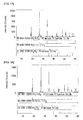
- FIG. 13 An X-ray diffraction pattern chart of the obtained product is shown in FIG. 13 .
- the obtained product was Al 2 TiO 5 .
- the peaks shown at the bottom of Fig. 13 are those of Al 2 TiO 5 from JCPDS.
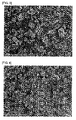
- Fig. 1 is a photograph from the scanning electron microscope (SEM) showing the obtained aluminum titanate. As is obvious from Fig. 1 , columnar aluminum titanate was obtained.
- Fig. 7 shows particle images measured by the flow particle image analyzer. The number average major-axis length was 21.7 ⁇ m, the number average minor-axis length was 12.6 ⁇ m, and the average aspect ratio was 1.72.
- the amount of magnesium hydroxide added and the magnesium content in aluminum titanate in this example are 0.87% by weight in terms of magnesium oxide relative to the total amount of titanium oxide and aluminum oxide.
- An amount of 500 g of the milled mixture obtained in the above manner was packed into a crucible and then fired at 1500°C for four hours in an electric furnace.
- FIG. 14 An X-ray diffraction pattern chart of the obtained product is shown in FIG. 14 .
- the obtained product was Al 2 TiO 5 .
- the peaks shown at the bottom of Fig. 14 are those of Al 2 TiO 5 from JCPDS.
- Fig. 2 is a photograph from the scanning electron microscope (SEM) showing the obtained aluminum titanate. As is obvious from Fig. 2 , columnar aluminum titanate was obtained.
- Fig. 8 shows particle images measured by the flow particle image analyzer. The number average major-axis length was 19.5 ⁇ m, the number average minor-axis length was 11.8 ⁇ m, and the average aspect ratio was 1.65.
- the amount of magnesium hydroxide added and the magnesium content in aluminum titanate in this example are 1.71% by weight in terms of magnesium oxide relative to the total amount of titanium oxide and aluminum oxide.
- An amount of 500 g of the milled mixture obtained in the above manner was packed into a crucible and then fired at 1500°C for four hours in an electric furnace.
- FIG. 15 An X-ray diffraction pattern chart of the obtained product is shown in FIG. 15 .
- the obtained product was Al 2 TiO 5 .
- the peaks shown at the bottom of Fig. 15 are those of Al 2 TiO 5 from JCPDS.
- Fig. 3 is a photograph from the scanning electron microscope (SEM) showing the obtained aluminum titanate.
- SEM scanning electron microscope
- Fig. 9 shows particle images measured by the flow particle image analyzer.
- the number average major-axis length was 12.3 ⁇ m
- the number average minor-axis length was 8.3 ⁇ m
- the average aspect ratio was 1.48.
- the amount of magnesium hydroxide added and the magnesium content in aluminum titanate in this comparative example are 2.62% by weight in terms of magnesium oxide relative to the total amount of titanium oxide and aluminum oxide.
- FIG. 16 An X-ray diffraction pattern chart of the obtained product is shown in FIG. 16 .
- the obtained product was a mixture of Al 2 TiO 5 , TiO 2 , and Al 2 O 3 .
- the peaks shown in the lower part of Fig. 16 are those of Al 2 O 3 (aluminum oxide), TiO 2 (rutile titanium oxide) and Al 2 TiO 3 (aluminum titanate) from JCPDS in order from the bottom.
- Fig. 4 is a photograph from the scanning electron microscope (SEM) showing the obtained aluminum titanate.
- SEM scanning electron microscope
- Fig. 10 shows particle images measured by the flow particle image analyzer. The number average major-axis length was 11.5 ⁇ m, the number average minor-axis length was 7.9 ⁇ m, and the average aspect ratio was 1.46.
- the amount of magnesium hydroxide added and the magnesium content in aluminum titanate in this comparative example are 0.87% by weight in terms of magnesium oxide relative to the total amount of titanium oxide and aluminum oxide.
- FIG. 17 An X-ray diffraction pattern chart of the obtained product is shown in FIG. 17 .
- the obtained product was a mixture of Al 2 TiO 5 , TiO 2 , and Al 2 O 3 .
- the peaks shown in the lower part of Fig. 17 are those of Al 2 O 3 (aluminum oxide), TiO 2 (rutile titanium oxide) and Al 2 TiO 5 (aluminum titanate) from JCPDS in order from the bottom.
- Fig. 5 is a photograph from the scanning electron microscope (SEM) showing the obtained aluminum titanate.
- SEM scanning electron microscope
- Fig. 11 shows particle images measured by the flow particle image analyzer.
- the number average major-axis length was 11.4 ⁇ m
- the number average minor-axis length was 7.8 ⁇ m
- the average aspect ratio was 1.47.
- the amount of magnesium hydroxide added and the magnesium content in aluminum titanate in this comparative example are 1.71% by weight in terms of magnesium oxide relative to the total amount of titanium oxide and aluminum oxide.
- the milled mixture obtained in the above manner was dried at 110°C, and 500 g of the dried mixture was packed into a crucible and then fired at 1500°C for four hours in an electric furnace.
- FIG. 18 An X-ray diffraction pattern chart of the obtained product is shown in FIG. 18 .
- the obtained product was a mixture of Al 2 TiO 5 , TiO 2 , and Al 2 O 3 .
- the peaks shown in the lower part of Fig. 18 are those of Al 2 O 3 (aluminum oxide), TiO 2 (rutile titanium oxide) and Al 2 TiO 5 (aluminum titanate) from JCPDS in order from the bottom.
- Fig. 6 is a photograph from the scanning electron microscope (SEM) showing the obtained aluminum titanate.
- SEM scanning electron microscope
- Fig. 12 shows particle images measured by the flow particle image analyzer. The number average major-axis length was 11.7 ⁇ m, the number average minor-axis length was 8.1 ⁇ m, and the average aspect ratio was 1.44.
- Table 1 shows the X-ray diffraction results, the number average major-axis lengths, the number average minor-axis lengths, and the average aspect ratios of the products of aluminum titanate of Examples 1 and 2 and Comparative Examples 1, 2, 3, and 4 obtained in the above manners.
- Compounded into 100 parts by weight of the columnar aluminum titanate particles obtained in Example 1 were 20 parts by weight of graphite, 10 parts by weight of methylcellulose, and 0.5 parts by weight of fatty acid soap. A suitable amount of water was also added to the mixture, and the mixture was then kneaded to obtain an extrudable clay.
- the obtained clay was extruded and formed into a honeycomb structure by an extruder, and the obtained green body was next dried by a microwave dryer and a hot-air dryer and then fired at 1500°C to obtain a sintered aluminum titanate body.
- Compounded into 100 parts by weight of the columnar aluminum titanate particles obtained in Example 2 were 20 parts by weight of graphite, 10 parts by weight of methylcellulose, and 0.5 parts by weight of fatty acid soap. A suitable amount of water was also added to the mixture, and the mixture was then kneaded to obtain an extrudable clay.
- the obtained clay was extruded and formed into a honeycomb structure by an extruder, and the obtained green body was next dried by a microwave dryer and a hot-air dryer and then fired at 1500°C to obtain a sintered aluminum titanate body.
- Example 1 An amount of 70 parts by weight of the columnar aluminum titanate particles obtained in Example 1 were mixed with 30 parts by weight of the granular aluminum titanate particles obtained in Comparative Example 4. Compounded into 100 parts by weight of the resultant mixed aluminum titanate particles were 20 parts by weight of graphite, 10 parts by weight of methylcellulose, and 0.5 parts by weight of fatty acid soap. A suitable amount of water was also added to the mixture, and the mixture was then kneaded to obtain an extrudable clay.
- the obtained clay was extruded and formed into a honeycomb structure by an extruder, and the obtained green body was next dried by a microwave dryer and a hot-air dryer and then fired at 1500°C to obtain a sintered aluminum titanate body.
- Compounded into 100 parts by weight of the granular aluminum titanate particles obtained in Comparative Example 4 were 20 parts by weight of graphite, 10 parts by weight of methylcellulose, and 0.5 parts by weight of fatty acid soap. A suitable amount of water was also added to the mixture, and the mixture was then kneaded to obtain an extrudable clay.
- the obtained clay was extruded and formed into a honeycomb structure by an extruder, and the obtained green body was next dried by a microwave dryer and a hot-air dryer and then fired at 1500°C to obtain a sintered aluminum titanate body.
- the sintered aluminum titanate bodies obtained in Examples 3 to 5 and Comparative Example 5 were measured in terms of porosity, pore diameter, bending strength, and coefficient of thermal expansion.
- the porosity, pore diameter, bending strength, and coefficient of thermal expansion were measured in conformity with JIS R1634, JIS R1655, JIS R1601, and JIS R1618, respectively. The measurement results are shown in Table 2.
- the sintered aluminum titanate bodies of Examples 3 to 5 produced using columnar aluminum titanate of the present invention have larger pore diameters, higher mechanical strength, and lower coefficients of thermal expansion than the sintered aluminum titanate body of Comparative Example 5. It can be therefore seen that the sintered aluminum titanate body of the present invention has low thermal expansivity, excellent thermal shock resistance, high mechanical strength, and high efficiency of particulate capture.
- the thermal expansivity of the sintered body can be controlled by mixing columnar aluminum titanate with conventional granular aluminum titanate.
Landscapes
- Chemical & Material Sciences (AREA)
- Engineering & Computer Science (AREA)
- Organic Chemistry (AREA)
- Ceramic Engineering (AREA)
- Materials Engineering (AREA)
- Structural Engineering (AREA)
- Geology (AREA)
- Inorganic Chemistry (AREA)
- General Life Sciences & Earth Sciences (AREA)
- Environmental & Geological Engineering (AREA)
- Manufacturing & Machinery (AREA)
- Life Sciences & Earth Sciences (AREA)
- Compositions Of Oxide Ceramics (AREA)
- Inorganic Compounds Of Heavy Metals (AREA)
Abstract
Description
- This invention relates to columnar aluminum titanate, a method for producing the same, and a sintered body using the columnar aluminum titanate.
- Aluminum titanate has low thermal expansivity, excellent thermal shock resistance and a high melting point. Therefore, aluminum titanate has been expected as a porous material used such as for a catalyst support for automobile exhaust gas treatment or a diesel particulate filter (DPF), and developed in various ways.
- Patent Literature 1 proposes that in order to obtain a sintered aluminum titanate body stable at high temperatures, the surface of a green body made of aluminum titanate is coated with an oxide or solid solution of one or more metals selected from magnesium, iron, silicon, titanium, and aluminum.
- Patent Literature 2 proposes that in order to produce a sintered aluminum titanate body stable at high temperatures, a magnesium compound and a silicon compound are added to aluminum titanate, the resultant mixture is then formed into a green body, and the greed body is sintered.
- Patent Literature 3 proposes that in order to a sintered aluminum titanate body having high strength without impairing high melting point and low thermal expansivity characteristics possessed by aluminum titanate and less degradation in mechanical strength due to repeated thermal history, a substance formed by adding magnesium oxide and silicon oxide to aluminum titanate is sintered.
- Patent Literatures 4 and 5 propose a method for producing a sintered aluminum magnesium titanate body in which not less than 10% by mole to less than 100% by mole magnesium is contained in the total amount of magnesium and aluminum.
-
- Patent Literature 1:
JP-A S56-41883 - Patent Literature 2:
JP-A S57-3767 - Patent Literature 3:
JP-A H01-249657 - Patent Literature 4:
WO 2004/039747 - Patent Literature 5:
WO 2005/105704 - An object of the present invention is to provide columnar aluminum titanate capable of providing a sintered body having a low coefficient of thermal expansion, a high porosity, and high mechanical strength, a production method of the same, and a sintered body of the columnar aluminum titanate.
- Columnar aluminum titanate of the present invention is characterized by having an average aspect ratio (= (number average major-axis length)/(number average minor-axis length)) of 1.5 or more, preferably 1.6 or more.
- With the use of the columnar aluminum titanate of the present invention having an average aspect ratio of 1.5 or more, preferably 1.6 or more, a sintered aluminum titanate body can be obtained which has a low coefficient of thermal expansion, a large pore diameter, and high mechanical strength.
- No particular limitation is placed on the upper limit of the average aspect ratio, but it is generally not more than 5.
- The columnar aluminum titanate of the present invention preferably contains magnesium. The magnesium content is preferably within the range of 0.5% to 2.0% by weight relative to the total amount of titanium and aluminum in terms of their respective oxides. If the magnesium content is below 0.5 in oxide terms, the resultant sintered body may not achieve a low coefficient of thermal expansion and high mechanical strength. On the other hand, if the magnesium content is above 2.0% by weight in oxide terms, the aluminum titanate may not have any columnar shape.
- The columnar aluminum titanate of the present invention preferably has a number average major-axis length of 17 µm or more and a number average minor-axis length of 15 µm or less. Within these ranges, a sintered body can be obtained which has a lower coefficient of thermal expansion, a higher porosity, and higher mechanical strength. No particular limitation is placed on the upper limit of the number average major-axis length, but it is generally not more than 50 µm. No particular limitation is also placed on the lower limit of the number average minor-axis length, but it is generally not less than 3 µm. The number average major-axis length and the number average minor-axis length can be measured by a flow particle image analyzer, for example.
- A production method of the present invention is a method that can produce the columnar aluminum titanate of the present invention, and is characterized by including the steps of: mixing a source material containing a titanium source, an aluminum source, and a magnesium source while mechanochemically milling the source material; and firing the milled mixture obtained.
- In the production method of the present invention, a milled mixture is used which is obtained by mixing a source material containing a titanium source, an aluminum source, and a magnesium source while mechanochemically milling the source material. By firing such a milled mixture, columnar aluminum titanate can be produced which has an average aspect ratio of 1.5 or more, preferably 1.6 or more.
- The temperature for firing the milled mixture is preferably within the temperature range of 1300°C to 1600°C. By firing the milled mixture within this temperature range, the columnar aluminum titanate of the present invention can be more efficiently produced.
- No particular limitation is placed on the firing time but the firing is preferably performed for 0.5 to 20 hours.
- In the production method of the present invention, an example of the mechanochemical milling is a method of milling the source material while giving it physical impact. A specific example thereof is milling using a vibration mill. It can be assumed that by performing a milling process using a vibration mill, a disorder of atomic arrangement and a reduction of interatomic distance are concurrently caused by shear stress due to frictional grinding of the powder mixture, and this causes atom transfer at contact points between different kinds of particles, resulting in the formation of a metastable phase. Thus, a high reaction activity milled mixture is obtained. By firing the high reaction activity milled mixture, the columnar aluminum titanate of the present invention can be produced.
- The mechanochemical milling in the present invention is performed in a dry process using neither water nor solvent.
- No particular limitation is placed on the time of mixing involved in the mechanochemical milling, but it is generally preferably within the range of 0.1 to 6 hours.
- The source material used in the present invention contains a titanium source, an aluminum source, and a magnesium source. Examples of the titanium source that can be used include compounds containing titanium oxide, and specific examples thereof include titanium oxide, rutile ores, wet cake of titanium hydroxide, and aqueous titania.
- Examples of the aluminum source that can be used include compounds that can produce aluminum oxide by heat application, and specific examples thereof include aluminum oxide, aluminum hydroxide, and aluminum sulfate. Of these, aluminum oxide is particularly preferably used.
- The mixing ratio of the titanium source and the aluminum source is basically Ti:Al=1:2 (in molar ratio). However, a change of plus or minus about 10% in content of each source will present no problem.
- Examples of the magnesium source that can be used include compounds that can produce magnesium oxide by heat application, and specific examples thereof include magnesium hydroxide, magnesium oxide, and magnesium carbonate. Of these, magnesium hydroxide and magnesium oxide are particularly preferably used.
- The magnesium source is preferably contained in the source material to give a content of 0.5% to 2.0% by weight relative to the total amount of the titanium source and the aluminum source in terms of their respective oxides. If the magnesium content is below 0.5% by weight, a sintered body having a low coefficient of thermal expansion and high mechanical strength may not be obtained. On the other hand, if the magnesium content is above 2.0% by weight, columnar aluminum titanate having an average aspect ratio of 1. 5 or more may not be obtained.
- Furthermore, in the production method of the present invention, a silicon source may be further contained in the source material.
- By containing a silicon source in the source material, the decomposition of aluminum titanate can be reduced, whereby columnar aluminum titanate excellent in high-temperature stability can be produced.
- Examples of the silicon source include silicon oxide and silicon. Of these, silicon oxide is particularly preferably used. The content of the silicon source in the source material is preferably within the range of 0.5% to 10% by weight relative to the total amount of the titanium source and the aluminum source in terms of their respective oxides. If the content of the silicon source is within the above range, columnar aluminum titanate can be more stably produced.
- A sintered aluminum titanate body of the present invention is characterized by being obtained by sintering a green body containing the above columnar aluminum titanate of the present invention or columnar aluminum titanate produced by the above production method of the present invention.
- Since the sintered aluminum titanate body of the present invention is obtained by sintering a green body containing the above columnar aluminum titanate of the present invention or columnar aluminum titanate produced by the above method of the present invention, it has a low coefficient of thermal expansion, a large pore diameter, and high mechanical strength.
- The above columnar aluminum titanate of the present invention or columnar aluminum titanate produced by the above method of the present invention has a low coefficient of thermal expansion and may have a negative coefficient of thermal expansion. When columnar aluminum titanate having a negative coefficient of thermal expansion is used, it can be used in mixture with aluminum titanate having a positive coefficient of thermal expansion to control the coefficient of thermal expansion of the resultant sintered body closer to zero. In the sintered aluminum titanate body of the present invention, the purpose of use of columnar aluminum titanate is not limited to the control of coefficient of thermal expansion; for other purposes, different kinds of columnar aluminum titanates of the present invention may be used in a mixture or columnar aluminum titanate of the present invention may be used in mixture with not-inventive aluminum titanate. Alternatively, a sintered body may be produced by mixing columnar aluminum titanate of the present invention and a compound other than aluminum titanate.
- The sintered aluminum titanate body in the present invention can be produced by preparing a mixture composition in which, for example, a pore forming agent, a binder, a dispersant, and water are added to aluminum titanate, forming the mixture composition into a green body providing a honeycomb structure, for example, by using an extruder, sealing one of two end openings of each cell of the honeycomb structure so that the cell end openings at each end of the honeycomb structure are arranged in a checkered pattern, drying the obtained green body and then firing the green body. The firing temperature is, for example, 1400°C to 1600°C.
- Examples of the pore forming agent include graphite, wood powder, and polyethylene. Examples of the binder include methylcellulose, ethylcellulose, and polyvinyl alcohol. Examples of the dispersant include fatty acid soap and ethylene glycol. The amounts of pore forming agent, binder, dispersant, and water can be appropriately controlled.
- Since the columnar aluminum titanate of the present invention has a low coefficient of thermal expansion and an aspect ratio of 1.5 or more, a sintered body having a low coefficient of thermal expansion, a large pore diameter, and high mechanical strength can be obtained using the columnar aluminum titanate of the present invention.
- In the production method of the present invention, the columnar aluminum titanate of the present invention can be efficiently produced.
-
- [
Fig. 1] Fig. 1 is a scanning electron micrograph showing columnar aluminum titanate of Example 1 of the present invention. - [
Fig. 2] Fig. 2 is a scanning electron micrograph showing columnar aluminum titanate of Example 2 of the present invention. - [
Fig. 3] Fig. 3 is a scanning electron micrograph showing granular aluminum titanate of Comparative Example 1. - [
Fig. 4] Fig. 4 is a scanning electron micrograph showing granular aluminum titanate of Comparative Example 2. - [
Fig. 5] Fig. 5 is a scanning electron micrograph showing granular aluminum titanate of Comparative Example 3. - [
Fig. 6] Fig. 6 is a scanning electron micrograph showing granular aluminum titanate of Comparative Example 4. - [
Fig. 7] Fig. 7 shows particle images measured by a flow particle image analyzer in Example 1 of the present invention. - [
Fig. 8] Fig. 8 shows particle images measured by a flow particle image analyzer in Example 2 of the present invention. - [
Fig. 9] Fig. 9 shows particle images measured by a flow particle image analyzer in Comparative Example 1. - [
Fig. 10] Fig. 10 shows particle images measured by a flow particle image analyzer in Comparative Example 2. - [
Fig. 11] Fig. 11 shows particle images measured by a flow particle image analyzer in Comparative Example 3. - [
Fig. 12] Fig. 12 shows particle images measured by a flow particle image analyzer in Comparative Example 4. - [
Fig. 13] Fig. 13 is a graph showing an X-ray diffraction pattern chart of columnar aluminum titanate of Example 1 of the present invention. - [
Fig. 14] Fig. 14 is a graph showing an X-ray diffraction pattern chart of columnar aluminum titanate of Example 2 of the present invention. - [
Fig. 15] Fig. 15 is a graph showing an X-ray diffraction pattern chart of granular aluminum titanate of Comparative Example 1. - [
Fig. 16] Fig. 16 is a graph showing an X-ray diffraction pattern chart of granular aluminum titanate of Comparative Example 2. - [
Fig. 17] Fig. 17 is a graph showing an X-ray diffraction pattern chart of granular aluminum titanate of Comparative Example 3. - [
Fig. 18] Fig. 18 is a graph showing an X-ray diffraction pattern chart of granular aluminum titanate of Comparative Example 4. - Hereinafter, the present invention will be described in detail with reference to specific examples, but is not limited by the following examples.
- An amount of 360.0 g of titanium oxide, 411.1 g of aluminum oxide, 9.7 g of magnesium hydroxide, and 19.2 g of silicon oxide were mixed for 2.0 hours while being milled by a vibration mill.
- An amount of 500 g of the milled mixture obtained in the above manner was packed into a crucible and then fired at 1500°C for four hours in an electric furnace.
- An X-ray diffraction pattern chart of the obtained product is shown in
FIG. 13 . As shown inFIG. 13 , the obtained product was Al2TiO5. The peaks shown at the bottom ofFig. 13 are those of Al2TiO5 from JCPDS. - The obtained aluminum titanate was observed with a scanning electron microscope.
Fig. 1 is a photograph from the scanning electron microscope (SEM) showing the obtained aluminum titanate. As is obvious fromFig. 1 , columnar aluminum titanate was obtained. - Furthermore, the obtained aluminum titanate was measured, by a flow particle image analyzer, in terms of number average major-axis length, number average minor-axis length, and average aspect ratio (=(number average major-axis length)/(number average minor-axis length)).
Fig. 7 shows particle images measured by the flow particle image analyzer. The number average major-axis length was 21.7 µm, the number average minor-axis length was 12.6 µm, and the average aspect ratio was 1.72. - The amount of magnesium hydroxide added and the magnesium content in aluminum titanate in this example are 0.87% by weight in terms of magnesium oxide relative to the total amount of titanium oxide and aluminum oxide.
- An amount of 355.7 g of titanium oxide, 406.1 g of aluminum oxide, 18.8 g of magnesium hydroxide, and 19.0 g of silicon oxide were mixed for 2.0 hours while being milled by a vibration mill.
- An amount of 500 g of the milled mixture obtained in the above manner was packed into a crucible and then fired at 1500°C for four hours in an electric furnace.
- An X-ray diffraction pattern chart of the obtained product is shown in
FIG. 14 . As shown inFIG. 14 , the obtained product was Al2TiO5. The peaks shown at the bottom ofFig. 14 are those of Al2TiO5 from JCPDS. - The obtained aluminum titanate was observed with a scanning electron microscope.
Fig. 2 is a photograph from the scanning electron microscope (SEM) showing the obtained aluminum titanate. As is obvious fromFig. 2 , columnar aluminum titanate was obtained. - Furthermore, the obtained aluminum titanate was measured, by a flow particle image analyzer, in terms of number average major-axis length, number average minor-axis length, and average aspect ratio (=(number average major-axis length)/(number average minor-axis length)).
Fig. 8 shows particle images measured by the flow particle image analyzer. The number average major-axis length was 19.5 µm, the number average minor-axis length was 11.8 µm, and the average aspect ratio was 1.65. - The amount of magnesium hydroxide added and the magnesium content in aluminum titanate in this example are 1.71% by weight in terms of magnesium oxide relative to the total amount of titanium oxide and aluminum oxide.
- An amount of 351. 5 g of titanium oxide, 401.3 g of aluminum oxide, 28.5 g of magnesium hydroxide, and 18.7 g of silicon oxide were mixed for 2.0 hours while being milled by a vibration mill.
- An amount of 500 g of the milled mixture obtained in the above manner was packed into a crucible and then fired at 1500°C for four hours in an electric furnace.
- An X-ray diffraction pattern chart of the obtained product is shown in
FIG. 15 . As shown inFIG. 15 , the obtained product was Al2TiO5. The peaks shown at the bottom ofFig. 15 are those of Al2TiO5 from JCPDS. - The obtained aluminum titanate was observed with a scanning electron microscope.
Fig. 3 is a photograph from the scanning electron microscope (SEM) showing the obtained aluminum titanate. As is obvious fromFig. 3 , it can be seen that aluminum titanate obtained in this comparative example is not columnar, unlike Examples 1 and 2, but granular. - Furthermore, the obtained aluminum titanate was measured, by a flow particle image analyzer, in terms of number average maj or-axis length, number average minor-axis length, and average aspect ratio (=(number average major-axis length)/(number average minor-axis length)).
Fig. 9 shows particle images measured by the flow particle image analyzer. The number average major-axis length was 12.3 µm, the number average minor-axis length was 8.3 µm, and the average aspect ratio was 1.48. - The amount of magnesium hydroxide added and the magnesium content in aluminum titanate in this comparative example are 2.62% by weight in terms of magnesium oxide relative to the total amount of titanium oxide and aluminum oxide.
- An amount of 360.0 g of titanium oxide, 411.1 g of aluminum oxide, 9.7 g of magnesium hydroxide, and 19.2 g of silicon oxide were mixed for 0.5 hours by a Henschel mixer.
- An amount of 500 g of the mixture obtained in the above manner was packed into a crucible and then fired at 1500°C for four hours in an electric furnace.
- An X-ray diffraction pattern chart of the obtained product is shown in
FIG. 16 . As shown inFIG. 16 , the obtained product was a mixture of Al2TiO5, TiO2, and Al2O3. The peaks shown in the lower part ofFig. 16 are those of Al2O3 (aluminum oxide), TiO2 (rutile titanium oxide) and Al2TiO3 (aluminum titanate) from JCPDS in order from the bottom. - The obtained aluminum titanate was observed with a scanning electron microscope.
Fig. 4 is a photograph from the scanning electron microscope (SEM) showing the obtained aluminum titanate. As is obvious fromFig. 4 , it can be seen that aluminum titanate obtained in this comparative example is not columnar, unlike Examples 1 and 2, but granular. - Furthermore, the obtained aluminum titanate was measured, by a flow particle image analyzer, in terms of number average major-axis length, number average minor-axis length, and average aspect ratio (=(number average major-axis length)/(number average minor-axis length)).
Fig. 10 shows particle images measured by the flow particle image analyzer. The number average major-axis length was 11.5 µm, the number average minor-axis length was 7.9 µm, and the average aspect ratio was 1.46. - The amount of magnesium hydroxide added and the magnesium content in aluminum titanate in this comparative example are 0.87% by weight in terms of magnesium oxide relative to the total amount of titanium oxide and aluminum oxide.
- An amount of 355.7 g of titanium oxide, 406.1 g of aluminum oxide, 18.8 g of magnesium hydroxide, and 19. 0 g of silicon oxide were mixed for 0.5 hours by a Henschel mixer.
- An amount of 500 g of the mixture obtained in the above manner was packed into a crucible and then fired at 1500°C for four hours in an electric furnace.
- An X-ray diffraction pattern chart of the obtained product is shown in
FIG. 17 . As shown inFIG. 17 , the obtained product was a mixture of Al2TiO5, TiO2, and Al2O3. The peaks shown in the lower part ofFig. 17 are those of Al2O3 (aluminum oxide), TiO2 (rutile titanium oxide) and Al2TiO5 (aluminum titanate) from JCPDS in order from the bottom. - The obtained aluminum titanate was observed with a scanning electron microscope.
Fig. 5 is a photograph from the scanning electron microscope (SEM) showing the obtained aluminum titanate. As is obvious fromFig. 5 , it can be seen that aluminum titanate obtained in this comparative example is not columnar, unlike Examples 1 and 2, but granular. - Furthermore, the obtained aluminum titanate was measured, by a flow particle image analyzer, in terms of number average major-axis length, number average minor-axis length, and average aspect ratio (=(number average major-axis length)/(number average minor-axis length)).
Fig. 11 shows particle images measured by the flow particle image analyzer. The number average major-axis length was 11.4 µm, the number average minor-axis length was 7.8 µm, and the average aspect ratio was 1.47. - The amount of magnesium hydroxide added and the magnesium content in aluminum titanate in this comparative example are 1.71% by weight in terms of magnesium oxide relative to the total amount of titanium oxide and aluminum oxide.
- An amount of 302. 3 g of titanium oxide, 423. 2 g of aluminum oxide, 29.6 g of silicon oxide, and 323.7 g of water were mixed for three hours while being milled by a ball mill.
- The milled mixture obtained in the above manner was dried at 110°C, and 500 g of the dried mixture was packed into a crucible and then fired at 1500°C for four hours in an electric furnace.
- An X-ray diffraction pattern chart of the obtained product is shown in
FIG. 18 . As shown inFIG. 18 , the obtained product was a mixture of Al2TiO5, TiO2, and Al2O3. The peaks shown in the lower part ofFig. 18 are those of Al2O3 (aluminum oxide), TiO2 (rutile titanium oxide) and Al2TiO5 (aluminum titanate) from JCPDS in order from the bottom. - The obtained aluminum titanate was observed with a scanning electron microscope.
Fig. 6 is a photograph from the scanning electron microscope (SEM) showing the obtained aluminum titanate. As is obvious fromFig. 6 , it can be seen that aluminum titanate obtained in this comparative example is not columnar, unlike Examples 1 and 2, but granular. - Furthermore, the obtained aluminum titanate was measured, by a flow particle image analyzer, in terms of number average major-axis length, number average minor-axis length, and average aspect ratio (=(number average major-axis length)/(number average minor-axis length)).
Fig. 12 shows particle images measured by the flow particle image analyzer. The number average major-axis length was 11.7 µm, the number average minor-axis length was 8.1 µm, and the average aspect ratio was 1.44. - Table 1 shows the X-ray diffraction results, the number average major-axis lengths, the number average minor-axis lengths, and the average aspect ratios of the products of aluminum titanate of Examples 1 and 2 and Comparative Examples 1, 2, 3, and 4 obtained in the above manners.
-
[Table 1] Powder Characteristics Amount of Magnesium Hydroxide Added in Terms of MgC Mixing Method X-Ray Diffraction Major-Axis Length Minor-Axis Length Aspect Radio (wt%) (µm) (µm) Ex. 1 0.87 Vibration mill Al2TiO5 21.7 12.6 1.72 Ex. 2 1.71 Vibration mill Al2TiO5 19.5 11.8 1.65 Comp.Ex.1 2.62 Vibration mill Al2TiO5 12.3 8.3 1.48 Comp.Ex.2 0.87 Henschel Al2TiO5+TiO2+Al2O3 11.5 79 1.46 Comp.Ex.3 1.71 Henschel Al2TiO5+TiO2Al2O3 11.4 7.8 1.47 Comp.Ex.4 0.00 Wet ball mill Al2TiO5+TiO2+Al2O3 11.7 8.1 1.44 - Compounded into 100 parts by weight of the columnar aluminum titanate particles obtained in Example 1 were 20 parts by weight of graphite, 10 parts by weight of methylcellulose, and 0.5 parts by weight of fatty acid soap. A suitable amount of water was also added to the mixture, and the mixture was then kneaded to obtain an extrudable clay.
- The obtained clay was extruded and formed into a honeycomb structure by an extruder, and the obtained green body was next dried by a microwave dryer and a hot-air dryer and then fired at 1500°C to obtain a sintered aluminum titanate body.
- Compounded into 100 parts by weight of the columnar aluminum titanate particles obtained in Example 2 were 20 parts by weight of graphite, 10 parts by weight of methylcellulose, and 0.5 parts by weight of fatty acid soap. A suitable amount of water was also added to the mixture, and the mixture was then kneaded to obtain an extrudable clay.
- The obtained clay was extruded and formed into a honeycomb structure by an extruder, and the obtained green body was next dried by a microwave dryer and a hot-air dryer and then fired at 1500°C to obtain a sintered aluminum titanate body.
- An amount of 70 parts by weight of the columnar aluminum titanate particles obtained in Example 1 were mixed with 30 parts by weight of the granular aluminum titanate particles obtained in Comparative Example 4. Compounded into 100 parts by weight of the resultant mixed aluminum titanate particles were 20 parts by weight of graphite, 10 parts by weight of methylcellulose, and 0.5 parts by weight of fatty acid soap. A suitable amount of water was also added to the mixture, and the mixture was then kneaded to obtain an extrudable clay.
- The obtained clay was extruded and formed into a honeycomb structure by an extruder, and the obtained green body was next dried by a microwave dryer and a hot-air dryer and then fired at 1500°C to obtain a sintered aluminum titanate body.
- Compounded into 100 parts by weight of the granular aluminum titanate particles obtained in Comparative Example 4 were 20 parts by weight of graphite, 10 parts by weight of methylcellulose, and 0.5 parts by weight of fatty acid soap. A suitable amount of water was also added to the mixture, and the mixture was then kneaded to obtain an extrudable clay.
- The obtained clay was extruded and formed into a honeycomb structure by an extruder, and the obtained green body was next dried by a microwave dryer and a hot-air dryer and then fired at 1500°C to obtain a sintered aluminum titanate body.
- The sintered aluminum titanate bodies obtained in Examples 3 to 5 and Comparative Example 5 were measured in terms of porosity, pore diameter, bending strength, and coefficient of thermal expansion. The porosity, pore diameter, bending strength, and coefficient of thermal expansion were measured in conformity with JIS R1634, JIS R1655, JIS R1601, and JIS R1618, respectively. The measurement results are shown in Table 2.
-
[Table 2] Sintered Body Characteristics Porosity Pore Diameter Strength CTE (%) (µm) (MPa) × 10-6/°C Ex. 3 39.2 8.4 7.5 -1.2 Ex. 4 40.3 7.9 7.4 -1.0 Ex. 5 39.0 7.1 6.5 0.1 Comp. Ex. 5 38.7 4.6 4.3 2.1 - As shown in Table 2, it can be seen that the sintered aluminum titanate bodies of Examples 3 to 5 produced using columnar aluminum titanate of the present invention have larger pore diameters, higher mechanical strength, and lower coefficients of thermal expansion than the sintered aluminum titanate body of Comparative Example 5. It can be therefore seen that the sintered aluminum titanate body of the present invention has low thermal expansivity, excellent thermal shock resistance, high mechanical strength, and high efficiency of particulate capture.
- In addition, as is obvious from Example 5, the thermal expansivity of the sintered body can be controlled by mixing columnar aluminum titanate with conventional granular aluminum titanate.
Claims (9)
- Columnar aluminum titanate having an average aspect ratio (=(number average major-axis length)/(number average minor-axis length)) of 1.5 or more.
- Columnar aluminum titanate according to claim 1, wherein the magnesium content is within the range of 0.5% to 2.0% by weight relative to the total amount of titanium and aluminum in terms of their respective oxides.
- Columnar aluminum titanate according to claim 1 or 2, having a number average major-axis length of 17 µm or more and a number average minor-axis length of 15 µm or less.
- A method for producing the columnar aluminum titanate according to any one of claims 1 to 3, the method comprising the steps of:mixing a source material containing a titanium source, an aluminum source, and a magnesium source while mechanochemically milling the source material; andfiring the milled mixture obtained.
- The method for producing the columnar aluminum titanate according to claim 4, wherein the milled mixture is fired within the temperature range of 1300°C to 1600°C.
- The method for producing the columnar aluminum titanate according to claim 4 or 5, wherein the magnesium source is contained in the source material to give a content of 0.5% to 2.0% by weight relative to the total amount of the titanium source and the aluminum source in terms of their respective oxides.
- The method for producing the columnar aluminum titanate according to any one of claims 4 to 6, wherein a silicon source is further contained in the source material.
- The method for producing the columnar aluminum titanate according to claim 7, wherein the silicon source is contained in the source material to give a content of 0.5% to 10% by weight relative to the total amount of the titanium source and the aluminum source in terms of their respective oxides.
- A sintered aluminum titanate body obtained by sintering a green body containing the columnar aluminum titanate according to any one of claims 1 to 3 or columnar aluminum titanate produced by the method according to any one of claims 4 to 8.
Applications Claiming Priority (1)
| Application Number | Priority Date | Filing Date | Title |
|---|---|---|---|
| PCT/JP2010/055376 WO2011118025A1 (en) | 2010-03-26 | 2010-03-26 | Columnar aluminum titanate and method for producing same |
Publications (3)
| Publication Number | Publication Date |
|---|---|
| EP2551251A1 true EP2551251A1 (en) | 2013-01-30 |
| EP2551251A4 EP2551251A4 (en) | 2015-06-17 |
| EP2551251B1 EP2551251B1 (en) | 2018-05-30 |
Family
ID=44672614
Family Applications (1)
| Application Number | Title | Priority Date | Filing Date |
|---|---|---|---|
| EP10848418.9A Not-in-force EP2551251B1 (en) | 2010-03-26 | 2010-03-26 | Columnar aluminum titanate and method for producing same |
Country Status (4)
| Country | Link |
|---|---|
| US (1) | US8859447B2 (en) |
| EP (1) | EP2551251B1 (en) |
| CN (1) | CN102811972B (en) |
| WO (1) | WO2011118025A1 (en) |
Families Citing this family (3)
| Publication number | Priority date | Publication date | Assignee | Title |
|---|---|---|---|---|
| JP5587420B2 (en) * | 2010-10-04 | 2014-09-10 | 大塚化学株式会社 | Exhaust gas purification filter and manufacturing method thereof |
| US9475734B2 (en) * | 2012-05-31 | 2016-10-25 | Corning Incorporated | Shrinkage control in aluminum titanate using carbonates |
| CN112552711B (en) * | 2020-12-25 | 2022-03-22 | 江苏特丰新材料科技有限公司 | Preparation process of near-infrared high-reflectivity titanium white pigment aluminum magnesium titanate |
Family Cites Families (15)
| Publication number | Priority date | Publication date | Assignee | Title |
|---|---|---|---|---|
| JPS5641883A (en) | 1979-09-13 | 1981-04-18 | Nippon Toki Kk | High temperature stable aluminum titanate product |
| JPS573767A (en) | 1980-06-04 | 1982-01-09 | Nippon Toki Kk | High temperature-stable high strength aluminium titanate sintered body |
| JPS6411162A (en) | 1987-07-04 | 1989-01-13 | Denki Kagaku Kogyo Kk | Polymer concrete |
| JP2828986B2 (en) | 1988-03-31 | 1998-11-25 | 株式会社東芝 | Ceramic sintered body |
| JPH03242371A (en) * | 1990-02-21 | 1991-10-29 | Ngk Insulators Ltd | Production of ceramics material for insert |
| JPH04305054A (en) * | 1991-03-29 | 1992-10-28 | Ngk Insulators Ltd | Aluminum titanate structure and production thereof |
| JPH08290963A (en) | 1995-04-21 | 1996-11-05 | Matsushita Electric Ind Co Ltd | Low thermal expansion material and exhaust gas filter using the same |
| WO1997000340A1 (en) * | 1995-06-14 | 1997-01-03 | Otsuka Kagaku Kabushiki Kaisha | Titanate whisker and process for the production thereof |
| USRE42352E1 (en) | 2002-11-01 | 2011-05-10 | Ohcera Co., Ltd. | Method for producing aluminum magnesium titanate sintered product |
| JP2004250249A (en) * | 2003-02-18 | 2004-09-09 | Inax Corp | Plastic ceramics, and production method therefor |
| JP5230935B2 (en) | 2004-04-28 | 2013-07-10 | オーセラ株式会社 | Aluminum magnesium titanate crystal structure and manufacturing method thereof |
| CN101456729A (en) * | 2007-12-11 | 2009-06-17 | 王碧君 | Method for preparing high strength aluminum titanate ceramic |
| JP2009184903A (en) * | 2008-01-09 | 2009-08-20 | Sumitomo Chemical Co Ltd | Manufacturing method of aluminum titanate ceramics |
| KR20110020235A (en) | 2008-06-18 | 2011-03-02 | 스미또모 가가꾸 가부시끼가이샤 | Manufacturing method of aluminum titanate-based ceramics |
| JP4774445B2 (en) * | 2009-03-16 | 2011-09-14 | 日本碍子株式会社 | Method for producing aluminum titanate ceramics |
-
2010
- 2010-03-26 EP EP10848418.9A patent/EP2551251B1/en not_active Not-in-force
- 2010-03-26 US US13/583,114 patent/US8859447B2/en not_active Expired - Fee Related
- 2010-03-26 CN CN201080065580.2A patent/CN102811972B/en not_active Expired - Fee Related
- 2010-03-26 WO PCT/JP2010/055376 patent/WO2011118025A1/en not_active Ceased
Non-Patent Citations (1)
| Title |
|---|
| See references of WO2011118025A1 * |
Also Published As
| Publication number | Publication date |
|---|---|
| WO2011118025A1 (en) | 2011-09-29 |
| US8859447B2 (en) | 2014-10-14 |
| EP2551251A4 (en) | 2015-06-17 |
| CN102811972A (en) | 2012-12-05 |
| EP2551251B1 (en) | 2018-05-30 |
| US20120329634A1 (en) | 2012-12-27 |
| CN102811972B (en) | 2015-03-25 |
Similar Documents
| Publication | Publication Date | Title |
|---|---|---|
| EP2281783A1 (en) | Porous aluminum titanate, sintered body of the same, and method for producing the same | |
| CN100427432C (en) | Method for producing aluminum magnesium titanate sintered body | |
| CA2382312C (en) | Mullite bodies and methods of forming mullite bodies | |
| CN1280235C (en) | Method for producing aluminum titanate sintered compact | |
| CN1946653A (en) | Magnesium aluminum titanate crystal structure and method for producing same | |
| EP2671857A1 (en) | Silicon carbide material, honeycomb structure and electric-heating type catalyst carrier | |
| WO2011145387A1 (en) | Si-SiC-BASED COMPOSITE MATERIAL AND PROCESS FOR PRODUCTION THEREOF, HONEYCOMB STRUCTURE, HEAT-CONDUCTIVE MATERIAL, AND HEAT EXCHANGER | |
| JP5587420B2 (en) | Exhaust gas purification filter and manufacturing method thereof | |
| JP2011005417A (en) | Honeycomb filter and method of manufacturing the same | |
| EP2551251B1 (en) | Columnar aluminum titanate and method for producing same | |
| JP5365794B2 (en) | Ceramic filter for supporting catalyst and method for manufacturing the same | |
| JP5274209B2 (en) | Columnar aluminum titanate and method for producing the same | |
| JP5695127B2 (en) | Method for producing columnar aluminum titanate powder | |
| JP5380706B2 (en) | Columnar aluminum titanate, method for producing the same, and honeycomb structure | |
| JP5380707B2 (en) | Columnar aluminum titanate, method for producing the same, and honeycomb structure | |
| WO2010150609A1 (en) | Honeycomb filter | |
| JP2014024740A (en) | Ceramic sintered body, and member for heat treatment | |
| JP5188267B2 (en) | Heat resistant ceramics and insulation | |
| JP5603765B2 (en) | Silicon carbide heating element manufacturing method, silicon carbide heating element, honeycomb manufacturing method, and honeycomb | |
| JP2023148282A (en) | Molded body of inorganic oxide powder and method for producing the same | |
| JPWO2004067147A1 (en) | Manufacturing method of silicon nitride honeycomb filter | |
| JP2001261442A (en) | Production process of recrystallized silicon carbide |
Legal Events
| Date | Code | Title | Description |
|---|---|---|---|
| PUAI | Public reference made under article 153(3) epc to a published international application that has entered the european phase |
Free format text: ORIGINAL CODE: 0009012 |
|
| 17P | Request for examination filed |
Effective date: 20120831 |
|
| AK | Designated contracting states |
Kind code of ref document: A1 Designated state(s): AT BE BG CH CY CZ DE DK EE ES FI FR GB GR HR HU IE IS IT LI LT LU LV MC MK MT NL NO PL PT RO SE SI SK SM TR |
|
| DAX | Request for extension of the european patent (deleted) | ||
| RA4 | Supplementary search report drawn up and despatched (corrected) |
Effective date: 20150519 |
|
| RIC1 | Information provided on ipc code assigned before grant |
Ipc: C01G 23/00 20060101ALI20150512BHEP Ipc: C04B 35/478 20060101AFI20150512BHEP |
|
| REG | Reference to a national code |
Ref country code: DE Ref legal event code: R079 Ref document number: 602010051047 Country of ref document: DE Free format text: PREVIOUS MAIN CLASS: C04B0035478000 Ipc: C01G0023000000 |
|
| GRAP | Despatch of communication of intention to grant a patent |
Free format text: ORIGINAL CODE: EPIDOSNIGR1 |
|
| STAA | Information on the status of an ep patent application or granted ep patent |
Free format text: STATUS: GRANT OF PATENT IS INTENDED |
|
| RIC1 | Information provided on ipc code assigned before grant |
Ipc: C04B 35/478 20060101ALI20170915BHEP Ipc: C01G 23/00 20060101AFI20170915BHEP Ipc: C04B 111/00 20060101ALI20170915BHEP Ipc: C04B 38/00 20060101ALI20170915BHEP |
|
| INTG | Intention to grant announced |
Effective date: 20171017 |
|
| GRAJ | Information related to disapproval of communication of intention to grant by the applicant or resumption of examination proceedings by the epo deleted |
Free format text: ORIGINAL CODE: EPIDOSDIGR1 |
|
| STAA | Information on the status of an ep patent application or granted ep patent |
Free format text: STATUS: REQUEST FOR EXAMINATION WAS MADE |
|
| INTC | Intention to grant announced (deleted) | ||
| GRAR | Information related to intention to grant a patent recorded |
Free format text: ORIGINAL CODE: EPIDOSNIGR71 |
|
| GRAS | Grant fee paid |
Free format text: ORIGINAL CODE: EPIDOSNIGR3 |
|
| STAA | Information on the status of an ep patent application or granted ep patent |
Free format text: STATUS: GRANT OF PATENT IS INTENDED |
|
| GRAA | (expected) grant |
Free format text: ORIGINAL CODE: 0009210 |
|
| STAA | Information on the status of an ep patent application or granted ep patent |
Free format text: STATUS: THE PATENT HAS BEEN GRANTED |
|
| INTG | Intention to grant announced |
Effective date: 20180416 |
|
| AK | Designated contracting states |
Kind code of ref document: B1 Designated state(s): AT BE BG CH CY CZ DE DK EE ES FI FR GB GR HR HU IE IS IT LI LT LU LV MC MK MT NL NO PL PT RO SE SI SK SM TR |
|
| REG | Reference to a national code |
Ref country code: GB Ref legal event code: FG4D |
|
| REG | Reference to a national code |
Ref country code: CH Ref legal event code: EP |
|
| REG | Reference to a national code |
Ref country code: AT Ref legal event code: REF Ref document number: 1003408 Country of ref document: AT Kind code of ref document: T Effective date: 20180615 |
|
| REG | Reference to a national code |
Ref country code: IE Ref legal event code: FG4D |
|
| REG | Reference to a national code |
Ref country code: DE Ref legal event code: R096 Ref document number: 602010051047 Country of ref document: DE |
|
| REG | Reference to a national code |
Ref country code: NL Ref legal event code: MP Effective date: 20180530 |
|
| REG | Reference to a national code |
Ref country code: LT Ref legal event code: MG4D |
|
| PG25 | Lapsed in a contracting state [announced via postgrant information from national office to epo] |
Ref country code: BG Free format text: LAPSE BECAUSE OF FAILURE TO SUBMIT A TRANSLATION OF THE DESCRIPTION OR TO PAY THE FEE WITHIN THE PRESCRIBED TIME-LIMIT Effective date: 20180830 Ref country code: CY Free format text: LAPSE BECAUSE OF FAILURE TO SUBMIT A TRANSLATION OF THE DESCRIPTION OR TO PAY THE FEE WITHIN THE PRESCRIBED TIME-LIMIT Effective date: 20180530 Ref country code: LT Free format text: LAPSE BECAUSE OF FAILURE TO SUBMIT A TRANSLATION OF THE DESCRIPTION OR TO PAY THE FEE WITHIN THE PRESCRIBED TIME-LIMIT Effective date: 20180530 Ref country code: FI Free format text: LAPSE BECAUSE OF FAILURE TO SUBMIT A TRANSLATION OF THE DESCRIPTION OR TO PAY THE FEE WITHIN THE PRESCRIBED TIME-LIMIT Effective date: 20180530 Ref country code: SE Free format text: LAPSE BECAUSE OF FAILURE TO SUBMIT A TRANSLATION OF THE DESCRIPTION OR TO PAY THE FEE WITHIN THE PRESCRIBED TIME-LIMIT Effective date: 20180530 Ref country code: ES Free format text: LAPSE BECAUSE OF FAILURE TO SUBMIT A TRANSLATION OF THE DESCRIPTION OR TO PAY THE FEE WITHIN THE PRESCRIBED TIME-LIMIT Effective date: 20180530 Ref country code: NO Free format text: LAPSE BECAUSE OF FAILURE TO SUBMIT A TRANSLATION OF THE DESCRIPTION OR TO PAY THE FEE WITHIN THE PRESCRIBED TIME-LIMIT Effective date: 20180830 |
|
| PG25 | Lapsed in a contracting state [announced via postgrant information from national office to epo] |
Ref country code: LV Free format text: LAPSE BECAUSE OF FAILURE TO SUBMIT A TRANSLATION OF THE DESCRIPTION OR TO PAY THE FEE WITHIN THE PRESCRIBED TIME-LIMIT Effective date: 20180530 Ref country code: HR Free format text: LAPSE BECAUSE OF FAILURE TO SUBMIT A TRANSLATION OF THE DESCRIPTION OR TO PAY THE FEE WITHIN THE PRESCRIBED TIME-LIMIT Effective date: 20180530 Ref country code: GR Free format text: LAPSE BECAUSE OF FAILURE TO SUBMIT A TRANSLATION OF THE DESCRIPTION OR TO PAY THE FEE WITHIN THE PRESCRIBED TIME-LIMIT Effective date: 20180831 |
|
| REG | Reference to a national code |
Ref country code: AT Ref legal event code: MK05 Ref document number: 1003408 Country of ref document: AT Kind code of ref document: T Effective date: 20180530 |
|
| PG25 | Lapsed in a contracting state [announced via postgrant information from national office to epo] |
Ref country code: NL Free format text: LAPSE BECAUSE OF FAILURE TO SUBMIT A TRANSLATION OF THE DESCRIPTION OR TO PAY THE FEE WITHIN THE PRESCRIBED TIME-LIMIT Effective date: 20180530 |
|
| PG25 | Lapsed in a contracting state [announced via postgrant information from national office to epo] |
Ref country code: SK Free format text: LAPSE BECAUSE OF FAILURE TO SUBMIT A TRANSLATION OF THE DESCRIPTION OR TO PAY THE FEE WITHIN THE PRESCRIBED TIME-LIMIT Effective date: 20180530 Ref country code: RO Free format text: LAPSE BECAUSE OF FAILURE TO SUBMIT A TRANSLATION OF THE DESCRIPTION OR TO PAY THE FEE WITHIN THE PRESCRIBED TIME-LIMIT Effective date: 20180530 Ref country code: PL Free format text: LAPSE BECAUSE OF FAILURE TO SUBMIT A TRANSLATION OF THE DESCRIPTION OR TO PAY THE FEE WITHIN THE PRESCRIBED TIME-LIMIT Effective date: 20180530 Ref country code: CZ Free format text: LAPSE BECAUSE OF FAILURE TO SUBMIT A TRANSLATION OF THE DESCRIPTION OR TO PAY THE FEE WITHIN THE PRESCRIBED TIME-LIMIT Effective date: 20180530 Ref country code: AT Free format text: LAPSE BECAUSE OF FAILURE TO SUBMIT A TRANSLATION OF THE DESCRIPTION OR TO PAY THE FEE WITHIN THE PRESCRIBED TIME-LIMIT Effective date: 20180530 Ref country code: EE Free format text: LAPSE BECAUSE OF FAILURE TO SUBMIT A TRANSLATION OF THE DESCRIPTION OR TO PAY THE FEE WITHIN THE PRESCRIBED TIME-LIMIT Effective date: 20180530 Ref country code: DK Free format text: LAPSE BECAUSE OF FAILURE TO SUBMIT A TRANSLATION OF THE DESCRIPTION OR TO PAY THE FEE WITHIN THE PRESCRIBED TIME-LIMIT Effective date: 20180530 |
|
| PG25 | Lapsed in a contracting state [announced via postgrant information from national office to epo] |
Ref country code: IT Free format text: LAPSE BECAUSE OF FAILURE TO SUBMIT A TRANSLATION OF THE DESCRIPTION OR TO PAY THE FEE WITHIN THE PRESCRIBED TIME-LIMIT Effective date: 20180530 Ref country code: SM Free format text: LAPSE BECAUSE OF FAILURE TO SUBMIT A TRANSLATION OF THE DESCRIPTION OR TO PAY THE FEE WITHIN THE PRESCRIBED TIME-LIMIT Effective date: 20180530 |
|
| REG | Reference to a national code |
Ref country code: DE Ref legal event code: R097 Ref document number: 602010051047 Country of ref document: DE |
|
| PLBE | No opposition filed within time limit |
Free format text: ORIGINAL CODE: 0009261 |
|
| STAA | Information on the status of an ep patent application or granted ep patent |
Free format text: STATUS: NO OPPOSITION FILED WITHIN TIME LIMIT |
|
| 26N | No opposition filed |
Effective date: 20190301 |
|
| PG25 | Lapsed in a contracting state [announced via postgrant information from national office to epo] |
Ref country code: SI Free format text: LAPSE BECAUSE OF FAILURE TO SUBMIT A TRANSLATION OF THE DESCRIPTION OR TO PAY THE FEE WITHIN THE PRESCRIBED TIME-LIMIT Effective date: 20180530 |
|
| REG | Reference to a national code |
Ref country code: DE Ref legal event code: R119 Ref document number: 602010051047 Country of ref document: DE |
|
| PG25 | Lapsed in a contracting state [announced via postgrant information from national office to epo] |
Ref country code: MC Free format text: LAPSE BECAUSE OF FAILURE TO SUBMIT A TRANSLATION OF THE DESCRIPTION OR TO PAY THE FEE WITHIN THE PRESCRIBED TIME-LIMIT Effective date: 20180530 |
|
| REG | Reference to a national code |
Ref country code: CH Ref legal event code: PL |
|
| GBPC | Gb: european patent ceased through non-payment of renewal fee |
Effective date: 20190326 |
|
| PG25 | Lapsed in a contracting state [announced via postgrant information from national office to epo] |
Ref country code: LU Free format text: LAPSE BECAUSE OF NON-PAYMENT OF DUE FEES Effective date: 20190326 |
|
| REG | Reference to a national code |
Ref country code: BE Ref legal event code: MM Effective date: 20190331 |
|
| PG25 | Lapsed in a contracting state [announced via postgrant information from national office to epo] |
Ref country code: CH Free format text: LAPSE BECAUSE OF NON-PAYMENT OF DUE FEES Effective date: 20190331 Ref country code: IE Free format text: LAPSE BECAUSE OF NON-PAYMENT OF DUE FEES Effective date: 20190326 Ref country code: GB Free format text: LAPSE BECAUSE OF NON-PAYMENT OF DUE FEES Effective date: 20190326 Ref country code: LI Free format text: LAPSE BECAUSE OF NON-PAYMENT OF DUE FEES Effective date: 20190331 Ref country code: DE Free format text: LAPSE BECAUSE OF NON-PAYMENT OF DUE FEES Effective date: 20191001 |
|
| PG25 | Lapsed in a contracting state [announced via postgrant information from national office to epo] |
Ref country code: BE Free format text: LAPSE BECAUSE OF NON-PAYMENT OF DUE FEES Effective date: 20190331 Ref country code: FR Free format text: LAPSE BECAUSE OF NON-PAYMENT OF DUE FEES Effective date: 20190331 |
|
| PG25 | Lapsed in a contracting state [announced via postgrant information from national office to epo] |
Ref country code: TR Free format text: LAPSE BECAUSE OF FAILURE TO SUBMIT A TRANSLATION OF THE DESCRIPTION OR TO PAY THE FEE WITHIN THE PRESCRIBED TIME-LIMIT Effective date: 20180530 |
|
| PG25 | Lapsed in a contracting state [announced via postgrant information from national office to epo] |
Ref country code: PT Free format text: LAPSE BECAUSE OF FAILURE TO SUBMIT A TRANSLATION OF THE DESCRIPTION OR TO PAY THE FEE WITHIN THE PRESCRIBED TIME-LIMIT Effective date: 20181001 Ref country code: MT Free format text: LAPSE BECAUSE OF NON-PAYMENT OF DUE FEES Effective date: 20190326 |
|
| PG25 | Lapsed in a contracting state [announced via postgrant information from national office to epo] |
Ref country code: IS Free format text: LAPSE BECAUSE OF FAILURE TO SUBMIT A TRANSLATION OF THE DESCRIPTION OR TO PAY THE FEE WITHIN THE PRESCRIBED TIME-LIMIT Effective date: 20180930 |
|
| PG25 | Lapsed in a contracting state [announced via postgrant information from national office to epo] |
Ref country code: HU Free format text: LAPSE BECAUSE OF FAILURE TO SUBMIT A TRANSLATION OF THE DESCRIPTION OR TO PAY THE FEE WITHIN THE PRESCRIBED TIME-LIMIT; INVALID AB INITIO Effective date: 20100326 |
|
| PG25 | Lapsed in a contracting state [announced via postgrant information from national office to epo] |
Ref country code: MK Free format text: LAPSE BECAUSE OF FAILURE TO SUBMIT A TRANSLATION OF THE DESCRIPTION OR TO PAY THE FEE WITHIN THE PRESCRIBED TIME-LIMIT Effective date: 20180530 |