EP2549966B1 - Compression textile comprising chitosan coated fibres - Google Patents
Compression textile comprising chitosan coated fibres Download PDFInfo
- Publication number
- EP2549966B1 EP2549966B1 EP11709733.7A EP11709733A EP2549966B1 EP 2549966 B1 EP2549966 B1 EP 2549966B1 EP 11709733 A EP11709733 A EP 11709733A EP 2549966 B1 EP2549966 B1 EP 2549966B1
- Authority
- EP
- European Patent Office
- Prior art keywords
- skin
- chitosan
- garment
- fibre
- compression
- Prior art date
- Legal status (The legal status is an assumption and is not a legal conclusion. Google has not performed a legal analysis and makes no representation as to the accuracy of the status listed.)
- Active
Links
Images





Classifications
-
- A—HUMAN NECESSITIES
- A61—MEDICAL OR VETERINARY SCIENCE; HYGIENE
- A61H—PHYSICAL THERAPY APPARATUS, e.g. DEVICES FOR LOCATING OR STIMULATING REFLEX POINTS IN THE BODY; ARTIFICIAL RESPIRATION; MASSAGE; BATHING DEVICES FOR SPECIAL THERAPEUTIC OR HYGIENIC PURPOSES OR SPECIFIC PARTS OF THE BODY
- A61H99/00—Subject matter not provided for in other groups of this subclass
-
- A—HUMAN NECESSITIES
- A61—MEDICAL OR VETERINARY SCIENCE; HYGIENE
- A61F—FILTERS IMPLANTABLE INTO BLOOD VESSELS; PROSTHESES; DEVICES PROVIDING PATENCY TO, OR PREVENTING COLLAPSING OF, TUBULAR STRUCTURES OF THE BODY, e.g. STENTS; ORTHOPAEDIC, NURSING OR CONTRACEPTIVE DEVICES; FOMENTATION; TREATMENT OR PROTECTION OF EYES OR EARS; BANDAGES, DRESSINGS OR ABSORBENT PADS; FIRST-AID KITS
- A61F13/00—Bandages or dressings; Absorbent pads
- A61F13/06—Bandages or dressings; Absorbent pads specially adapted for feet or legs; Corn-pads; Corn-rings
- A61F13/08—Elastic stockings; for contracting aneurisms
-
- D—TEXTILES; PAPER
- D01—NATURAL OR MAN-MADE THREADS OR FIBRES; SPINNING
- D01F—CHEMICAL FEATURES IN THE MANUFACTURE OF ARTIFICIAL FILAMENTS, THREADS, FIBRES, BRISTLES OR RIBBONS; APPARATUS SPECIALLY ADAPTED FOR THE MANUFACTURE OF CARBON FILAMENTS
- D01F1/00—General methods for the manufacture of artificial filaments or the like
- D01F1/02—Addition of substances to the spinning solution or to the melt
- D01F1/10—Other agents for modifying properties
-
- A—HUMAN NECESSITIES
- A61—MEDICAL OR VETERINARY SCIENCE; HYGIENE
- A61F—FILTERS IMPLANTABLE INTO BLOOD VESSELS; PROSTHESES; DEVICES PROVIDING PATENCY TO, OR PREVENTING COLLAPSING OF, TUBULAR STRUCTURES OF THE BODY, e.g. STENTS; ORTHOPAEDIC, NURSING OR CONTRACEPTIVE DEVICES; FOMENTATION; TREATMENT OR PROTECTION OF EYES OR EARS; BANDAGES, DRESSINGS OR ABSORBENT PADS; FIRST-AID KITS
- A61F13/00—Bandages or dressings; Absorbent pads
- A61F2013/00361—Plasters
- A61F2013/00902—Plasters containing means
- A61F2013/00927—Plasters containing means with biological activity, e.g. enzymes for debriding wounds or others, collagen or growth factors
- A61F2013/00931—Plasters containing means with biological activity, e.g. enzymes for debriding wounds or others, collagen or growth factors chitin
Definitions
- the present invention relates to a compression textile, e.g. a compression bandage or garment, which comprises at least one chitosan-containing fibre.
- the compression textile is suitable for medical applications, but also for non-medical applications in the field of wellness and sport.
- Medical compression garments are garments which are mainly made from elastic knitted fabric. Their aim is to provide a pressure or compressive force, respectively, to a human skin, especially to a limb such as an arm or leg, for e.g. the treatment of venous diseases and lymphatic disorders.
- Medical compression garments are elastic garments that can, for example, be used to compress a leg below the knee, an entire leg, an arm, a hand and so on. They can be designed as stockings, socks, pants, arm sleeves, gloves etc.
- Patients with diseases like the above-mentioned venous diseases and lymphatic disorders are usually required to apply some form of elastic compressive orthese during an entire day for a long period of their lifetime and it is therefore desirable to provide an orthese in the form of a garment, in particular in the form of a medical compression garment.
- Patients are generally more compliant with wearing the medical compression garment if it is comfortable to wear. Subsequently, the better the comfort of the used fabric of the garment, the better the treatment compliance can be obtained.
- Medical compression garments and their fabrication must comply with normative requirements and specifications such as the German norm RAL-GZ 387/1 or the French norm NF G30-102. These norms impose technical requirements for ensuring medical efficacy of the medical compression garments. Criteria to be checked and requirements to be met are the used materials, the mechanical properties and the physical performance, i.e. the compressive effect of the medical compression garments. Medical compression garments and methods for their manufacture are e.g. disclosed in EP-A-1 895 036 (Ganzoni Management AG), US-patent 7 400 938 (Ganzoni Management AG), US2007/0000027 (Ganzoni Management AG) and WO2006/047153 (BSN-JOBST INC).
- Compression garments may also be used for non-medical applications such as wellness or sport, e.g. to increase performance and recovery.
- Medical bandages are used in place of compression stockings when the limb dimensions are very unusual and standard medical compression stockings cannot fit properly. Medical bandages are e.g. described in EP-A-1 759 676 (Ganzoni Management AG).
- EP-A-1 759 676 Ganzoni Management AG.
- textiles comprising a chitosan-containing fibre provide substantial improvements for such parameters.
- Chitosan is obtained by deacetylation of chitin, which is a naturally occurring glycan produced in invertebrates, e.g. marine and terrestrial insects, arthropodia or crustaceans as well as funghi. Chitosan is a polycation which can be incorporated into fibres and textiles. The incorporation of chitosan into textile fibres has e.g. been described in WO2004/007818 (Lenzing AG), WO2009/092121 (Lenzing AG) and AT 008388 U2 (Lenzing AG).
- the present invention relates to a compression textile comprising at least one chitosan-containing fibre.
- the textiles may be a flat or circular knitted textiles.
- the knitting construction may be of any known type, e.g. rib, terry loop, float stitch, plain stitch, tuck stitch etc.
- the textiles may be compression garments, e.g. selected from compression stockings, compression socks, compression leggings, compression arm sleeves (with or without mitten), compression calf sleeves, compression tights, compression gloves, compression tops (T-shirts, long sleeve shirts, tank tops) or compression shorts.
- compression textiles may be stretch bandages, e.g. short stretch bandages (bandages that can be extended by approximately 70% of length by stretching) or long stretch bandages (bandages that can be extended by 150% of length or more by stretching).
- the incorporation of chitosan into compression or to a medical textile has e.g. been described in WO2008/053159 perspectively US2003/134120 .
- the compression textiles may be medical textiles, e.g. textiles for phlebologic or lymphologic applications, textiles for scar formation reduction, or textiles for diabetes patients. Specific applications are anti-thrombosis garments, e.g.
- leggings or stockings for use in hospital, textiles for patients with skin traumata, e.g. burn injuries, compression garments, e.g. stockings of class 1, 2, 3 and 4, particularly for patients with dry and/or sensitive skin, e.g. after ulcer treatment.
- the textiles are also suitable as anti-diabetic stockings, in patients suffering from lymph oedema or for the prophylaxis or treatment of cellulite. It is well-known that patients suffering from diabetes, e.g. diabetes mellitus type 1 or diabetes mellitus type 2 often have oedema, particularly lower extremity oedema.
- the textiles of the invention are also suitable for non-medical applications, e.g. for wellness or sport applications.
- the textile may fulfil requirements of national norms, e.g. norms in European countries, for medical compression garments, e.g. stockings.
- the textile may be in accordance with RAL norm class 1, i.e. a pressure of 18-21 mm Hg (24-28 hPa), class 2, i.e. a pressure of 23-32 mm Hg (31-43 hPa), class 3, i.e. a pressure of 34-46 mm Hg (45-61 hPa) or class 4, i.e. a pressure of at least 49 mm Hg (at least 65 hPa).
- RAL norm class 1 i.e. a pressure of 18-21 mm Hg (24-28 hPa)
- class 2 i.e. a pressure of 23-32 mm Hg (31-43 hPa)
- class 3 i.e. a pressure of 34-46 mm Hg (45-61 hPa) or class 4, i.e.
- the pressure may be in the range of 5-15 mm Hg (6-20 hPa).
- the indicated pressure ranges preferably refer to the pressure at the ankle area.
- the pressure may be in the range of 10-27 mm Hg, preferably 10-25 mm Hg, at the ankle area.
- the pressure values for the textiles may be determined by standard methods, e.g. involving the use of a HOSY meter. For stockings, the pressure values are determined at the ankle level.
- the compression textiles of the invention are particularly suitable in persons having sensitive skin, dermatitis, aging skin and/or dry skin.
- the textiles may be used on injured or undamaged skin.
- the textile of the invention comprises at least one chitosan-containing fibre.
- the chitosan-containing fibre is a cellulose-based fibre, e.g. a viscose, modal, polynosic or lyocell fibre, which contains chitosan at least on a part of its surface or a yarn obtained from such a fibre.
- the chitosan-containing fibre is a cellulose-based fibre, e.g. a viscose, modal, polynosic or lyocell fibre, which contains chitosan only on its surface or a yarn obtained from such a fibre.
- Such fibres may be prepared by techniques as disclosed in WO2004/007818 or WO2009/092121 .
- the chitosan-containing fibre is a lyocell fibre coated with chitosan or a yarn obtained from such a fibre.
- a fibre is commercially available as Tencel C from Lenzing AG, for example Tencel C1 and Tencel C2.
- the chitosan content of the fibre may be in the range from 0.1-25%, preferably from 0.3-15% by weight based on the total weight of the fibre. In some embodiments, the chitosan content is from 0.3-0.6% by weight and in other embodiments, the chitosan content is from 0.7-1.5% by weight.
- the Tencel C fibre (or another chitosan-containing fibre) may be spun to a yarn with a yarn count of Nm20 to Nm225 (dtex 500 to dtex 44), optionally together with other fibres as explained in detail below.
- the yarns may be ring yarns, compact yarns, OE-roto yarns etc.
- Such yarns may comprise 100% Tencel C (or another chitosan-containing fibre) or a mixture (of the chitosan-containing fibre), wherein the amount of chitosan-containing component in the mixture or thread is at least 3%, 10%, 20%, 30%, 40%, 50% or higher based on the total weight of the mixture or thread.
- the chitosan-coated fibre or a blend thereof with one or more other fibres covers an elastic yarn, e.g. a synthetic yarn such as Lycra, Creora, Roica or Dorlastan, or a spandex yarn, or a natural elastic yarn such as rubber.
- the compression textile may comprise ply yarns from single ply yarns up to multiple ply yarns and covered ply yarns of 100% Tencel C (or another chitosan-containing fibre) or a mixture or a thread of the chitosan-containing fibre with at least one further fibre with at least one different component, e.g.
- the compression textile may comprise single and/or double covered yarns for covering an elastic fibre such as elastane or elastodien.
- These yarns may comprise in 100% Tencel C (or another chitosan-containing component) or a mixture or thread (of the chitosan-containing fibre with at least one further fibre), with at least one different component, e.g.
- the compression textile may comprise core-spun yarns as a wrap spinning for an elastic fibre such as elastane or elastodien.
- These yarns may comprise 100% Tencel C (or another chitosan-containing component) or a mixture or thread of the chitosan-containing component with at least one different component, e.g.
- chitosan-containing component in the mixture or thread is at least 3%, 10%, 20%, 30%, 40%, 50% or higher based on the total weight of the mixture or thread.
- the compression textile may comprise core-yarns as false twist with 100% Tencel C (or another chitosan-containing compound) or a mixture of the chitosan-containing component with at least one different component, e.g. selected from bamboo, wool, cotton, linnen, silk, polyamide, polyester, polyacrylnitrile, polypropylene, viscose, modal, micromodal, elastane and/or elastodien, wherein the amount of chitosan-containing component in the mixture is at least 3%, 10%, 20%, 30%, 40%, 50% or higher based on the total weight of the mixture.
- Tencel C or another chitosan-containing compound
- a mixture of the chitosan-containing component with at least one different component e.g. selected from bamboo, wool, cotton, linnen, silk, polyamide, polyester, polyacrylnitrile, polypropylene, viscose, modal, micromodal, elastane and/or elastodien, where
- the compression textile may comprise an elasto twist yarn as a wrap spinning for an elastic fibre such as elastane or elastodien.
- These yarns may comprise 100% Tencel C (or another chitosan component) or a mixture of the chitosan-containing component with at least one different component, e.g. selected from bamboo, wool, cotton, linnen, silk, polyamide, polyester, polyacrylnitrile, polypropylene, viscose, modal, micro- modal with elastane and/or elastodien, wherein the amount of chitosan-containing component in the mixture is at least 3%, 10%, 20%, 30%, 40%, 50% or higher based on the total weight of the mixture.
- the compression textiles may comprise unblended chitosan-containing fibres or fibre mixtures of Tencel C (or another chitosan-containing component) in mixtures with other components, such as bamboo, wool, cotton, linnen, silk, polyamide, polyester, polyacrylnitrile, polypropylene, viscose, modal and/or micromodal, wherein the amount of chitosan-containing component in the mixture is at least 3%, 10%, 20%, 30%, 40%, 50% or higher based on the total weight of the mixture.
- Suitable knitting techniques for the manufacture of the inventive textiles are flat knitting with one and more needle beds, gauge range E3 to E22, circular knitting, e.g. with one-cylinder hosiery machines and large-scale circular knitting machines, single- and double jersey machines and body- and tubular textile fabric machines.
- Suitable knitting constructions are patters with yarns as specified above with Tencel C (or another chitosan-containing component) processed as stitch, inlaid, loop or floating stitch having the following constructions and patterns: right-left, left-left, right-right, rib, imitated rib, floated stitch, jacquard patterns, plated patterns, lace patterns, tuck loop (e.g. micromesh), terry loop, stripe patterns, single- and double jersey.
- Tencel C (or another chitosan-containing component) could be used in the understocking of the Sigvaris Ulcer X kit.
- the elastic inlaid yarn of this understocking has a 224 Nm cotton yarn as outer covering yarn (i.e.
- the compression textile according to the invention comprising at least one chitosan-containing fibre thus is also suitably used as an under-article which is in direct contact with the skin.
- under-articles are articles, e.g. socks, stockings, knee socks, tights and the like, designed to be slipped on first and thus to be in direct contact with the skin of the patient.
- Such articles are designed first of all to improve the comfort of the wearer's skin, but can equally advantageously exhibit different properties intended, for example, to yield light support or to reinforce the support action of the main article.
- the main innovation of the aforementioned under-articles resides in the fact that they can be more easily slipped on by the user and can provide increased comfort.
- Suitable under-articles are for example described in EP 1 613 256 .
- Tencel C (or another chitosan-containing component) can be used on an inlaid yarn, which may be an elastic fibre such as lycra covered with the chitosan-containing component and optionally further fibres such as polyamide, e.g. PA 6.6.
- This inlaid yarn may be used together with a loop yarn, e.g. an elastic fibre such as lycra, which may be covered with a further fibre, e.g. a polyamide fibre such as PA 6.6.
- the loop yarn may also be coated with a chitosan-containing component.
- the chitosan-containing fibre or the chitosan-containing fibre mixture or thread
- the chitosan-containing fibre is in direct skin contact in order to provide high efficacy.
- the compression textile may contain the chitosan-containing fibre in its entirety or only in portions thereof.
- the chitosan-containing fibre may e.g. be present in product parts where there is a particular risk of skin irritation, such as top bands, sewing areas, reverses and/or belts.
- the chitosan-containing fibres as described above such as Tencel C may be used in the form of an above-described compression textile as an agent for treating and/or preventing oedema, particularly lower extremity oedema, in patients suffering from diabetes.
- the moisture management properties of textile samples were determined by micro computer tomography measurements.
- Tubing (19.5 cm x 10.8 cm) consisting of a loop yarn (lycra double covered with polyamide 6.6) and an inlaid yarn (lycra double covered with PA 6.6 and the chitosan-containing fibre Tencel C2).
- Tubing (19.5 cm x 10.8 cm) consisting of a loop yarn (lycra double covered with PA 6.6) and an inlaid yarn (lycra double covered with PA 6.6 and cotton).
- Fig. 1 microscopic photographs (magnification > 20 times) of Sample 1 (A) and Sample 2 (B) are shown.
- the Tencel C or cotton, respectively, containing inlaid yarns and the polyamide containing loop yarn are indicated.
- Computerised tomography is a layer-selective radiographic process by which a three-dimensional image can be reconstructed with the aid of a number of sectional photographs corresponding to process one-dimensional projections at different angles. Each projection corresponds to the integration of the attenuation coefficient along the X-ray beam, and by combining the data from different angles, it is possible to reconstruct the two- or three-dimensional image of a sample.
- the tomograph used is a ⁇ CT 80 from Scanco Medical AG, Bassersdorf, Switzerland.
- the X-ray anode voltage was 55 kV. For objects up to 74 mm in diameter, this device allows one to scan around the object with either 37 or 74 ⁇ m resolution, but with different imaging times.
- the lower resolution was chosen (in all three directions) for faster skin speed to allow a sufficient temporal resolution.
- a total of 104 projections per 180° were taken and each projection required an X-ray exposure of 200 ms.
- the two-dimensional detector of the ⁇ CT 80 gives 52 slices in a single term, resulting in a image time of 3 min/stack of 50 slices and two stacks were measured per time point, giving a total imaging time of 6 minutes.
- the described method is also suitable for representing and quantifying the moisture content in tissues.
- the structure according to M. Weder et al., Textile Research Journal, vol. 76(1), 18-26 has been chosen.
- the samples were introduced into a holder and adjusted to 35°C.
- Tencel C2 containing fibre stores water closer to the skin, i.e. at the inner side of the tubing than cotton.
- Tencel C containing fibres provide an increased skin hydration at a low sweating rate.
- Sample 1 (Tencel C) has a lower drying time.
- the moisture regulation properties of textile samples were determined by corneometry and tewametry.
- a CM 825 PC Corneometer (Courage + Khazaka, Cologne, Germany) is used to measure the water content.
- the face of the sensor is coated with a special glass, which allows axial movement and it has a range of at least 3 mm.
- the principle of measurement requires that the surface of the measuring device sits evenly at a constant pressure on the skin. To ensure that this is as reproducible as possible, the face of the measuring head is very small with an area of 7 x7 mm 2 .
- the inner movable part - the active face - is pressed onto the skin with a pressure of 3.5 N by means of a spring. This guarantees standardised measurements, irrespective of the investigator.
- the measuring head In order to carry out a measurement, the measuring head is pressed onto the required part of the skin. After one second the measured value is recorded and processed by the computer.
- the value measured by the CM 825 Corneometer specifies the degree of moisture of the skin surface.
- a Tewameter (Courage + Khazaka, Cologne, Germany) is used for measuring the transepidermal water loss which is a reliable tool for judging the integrity of the skin barrier.
- the most important part of the Tewameter is the probe, consisting of a cylindrical tube, which is open at the top and bottom and which is placed on the surface to be measured.
- Two capacitive moisture sensors installed in the cylindrical tube measure the moisture of the air at two defined distances above the surface.
- the water vapour is given in g/m 2 x h. Evaporation rates from 0 to 300 g/m 2 x h can be recorded by this device.
- the stockings were worn by 31 test persons for 14 days for about 10 hours per day. The stockings were randomly distributed. Each test person wore a cotton stocking on one leg and a Tencel C stocking on the other leg.
- transepidermal loss of water after removal of the stocking was determined directly on the skin by tewametry.
- the results are shown in Fig. 3 . It can be seen that the transepidermal water loss with the compression stocking containing Tencel C is markedly lower (about 8%) compared to the transepidermal water loss with the compression stocking containing cotton (10.8%).
- wearing of a Tencel C containing stocking leads to a decreased water loss of about 0.5 g/m 2 skin.
- the skin roughness was evaluated by fast optical in vivo topometry of human skin (FOITS).
- the stockings were worn by 31 test persons for 14 days for a minimum of eight hours per day. The stockings were randomly distributed. Each test person wore cotton stockings on one leg and a Tencel C stocking on the other leg. Creaming of the legs was not allowed one week before the start of the study and during the study.
- FOITS is an optical measurement procedure which uses a combination of gray code and phase shift technique (Breuckmann B. (1993), Schmyak für undmine Messtechnik in der vonntechnik, Franzis, Ober). In less than one second, one can measure the absolute space coordinates of all object points in the selected image area with great exactitude.
- the FOITS-measurement system consists of a projection unit and a CCD camera. Both are fixed under a so-called triangulation angle.
- Concerning the gray code method grids with a rectangular brightness distribution by different numbers of lines are projected. The number of lines is doubled at each new projection. This gives a clearly defined hierarchy of lines for each image point.
- phase shift technique only one grid with a sinus-like intensity distribution is projected several times with different phase positions.
- the roughness parameters Rz and Ra were determined using twelve separate lines of a length of 20 mm for the analysis.
- Rz means average depth of roughness and is the arithmetic means of Rmax in five successive single measuring sections of the total length of measurement.
- Ra means the arithmetic mean roughness and specifies the absolute amounts of all variances in the roughness profile from the centreline over the total distance.
- Example 3 see Example 3, except that the study included only 30 test persons.
- the Cutometer (Courage and Khazaka, Cologne, Germany) is a vacuum generator with electronic control elements to which the actual measuring probe is connected. Pressure tubing connects the probe and the vacuum generator. The head of the probe is pressed onto the skin. A spring loaded part ensures that constant pressure to the skin is applied.
- the displacement of the skin into the probe due to the vacuum is measured optically and transmitted to a PC that is connected to the set-up.
- the Cutometer sucks an area of skin of approximately 2 mm in diameter in a defined vacuum and then, without friction, optically measures the depth of the skin penetrates into the probe.
- the instrument For a standard test, the instrument generates a vacuum of 300 mbar which is applied to the skin as a sudden jump function. The vacuum is turned off after 5 seconds (on time), also as a sudden jump function and is applied again after another 5 seconds (off time). One measuring cycle is performed in this way.
- the standard parameters R 0 to R 7 can be calculated from the measuring curves.
- the parameters result from the below calculations.
- R 0 shows the maximum displacement of the skin after the first suck. It incorporates the elastic stretch of the skin, as well as the plastic portion, which is characterized by a non-linear curve shape.
- R 1 shows the remaining displacement of the skin when the vacuum has been turned of for five seconds after the first suck. This parameter therefore shows the remaining plastic deformation of the skin after the first suck. It gives information about the ability of the skin to come back in its original state.
- the R 2 firmness parameter is a combination of R 0 and R 1 .
- R 2 R 0 ⁇ R 1 / R 0
- This parameter reflects the ratio of the decrease in displacement after the first suck and the total displacement in the first suck (Gross Elasticity).
- R 3 reflects the maximum displacement of the skin after the last suck. It, therefore, incorporates an additional effect compared with R 0 , namely a wear effect caused by repeated displacement of the skin.
- This parameter equals R 0 if the measuring cycle is carried out only once.
- R 4 reflects the remaining displacement after the last suck, and therefore corresponds to R 1 plus the wear effect from repeated suction. R 4 equals R 1 if one measuring cycle is done.
- the R 5 parameter (Net Elasticity) reflects the elastic portions of the first curve.
- R 5 U R / U E
- R 5 comprises UE, the linear proportion of the first curve, and UR, the linear decrease when the vacuum has been turned off after the first suck.
- UV is the plastic portion of the first curve.
- R 6 therefore, represents the inelastic portion of stretch versus the elastic portion of stretch in the first curve.
- the higher R 6 the more plastic the skin.
- the lower R 6 the more elastic the skin.
- parameter R 0 , R 1 , R 2 , R 5 and R 7 are analysed on a statistical basis.
- a positive product effect is documented by a decrease of parameter R 0 and R 1 and an increase of parameter R 2 , R 5 and R 7 .
- the skin pH value was determined by a pH meter.
- the skin pH meter pH 905 (Courage and Khazaka, Cologne, Germany) is used for pH measurements directly on the skin surface. Due to the excretions of skin, skin surface represents almost an aqueous solution. The measurement of skin pH is performed with a glass electrode that reacts on the activity of [H+] ions. The potential of the glass electrode is linearly dependent on the pH value of the measuring solution.
- the pH value of healthy skin is about 4.4 to 5.5 at room temperature (20°C and 40-60% air humidity).
- test persons 12 healthy test persons wore the Tencel C2 (chitosan) medical compression stocking on one leg and the cotton-containing comparison stocking on the other leg.
- the test persons completed a defined physical stress on the treadmill (treadmill ergometry).
- different measurements regarding the skin climate and the evaluation of the skin barrier function e.g. a measurement of the skin moisture, evaporation of water, and skin temperature, were carried out.
- test persons All experiments were carried out in an air-conditioned testing room (20-24°C, average humidity of 60%). The test persons first of all completed a 20-minute acclimatization phase. The test persons walked 15 minutes on the treadmill at a speed of 3 km/h and a slope of 12°.
- the transepidermal water loss provides information regarding the skin permeability and its barrier function.
- TEWL was measured using a Tewameter TM300 (Courage and Khazaka) as described above.
- Figure 7 shows a correlation between the TEWL value U2 before treadmill treatment and the TEWL value U3 after treadmill treatment.
- Figure 7 indicates that the physical stress caused by treadmill treatment results in increased perspiration (perspiratio sensibilis) and an increased TEWL value in case of both compression stockings.
- the moisture content of the stratum corneum is measured via corneometry as described above.
- the stratum corneum is a suitable indicator due to its specific storage capacity.
- Table 4 Skin moisture parameters Stocking Size U1 U4 U5 Cotton Minimum 33.40 31.50 34.80 l.q . 38.95 42.85 43.00 Median 41.00 45.65 45.05 u.q . 47.33 56.00 50.53 Maximum 56.10 60.30 57.30 Tencel C Minimum 25.20 32.30 34.40 l.q . 38.38 43.83 40.83 Median 40.65 45.05 43.50 u.q . 44.63 51.98 52.03 Maximum 49.90 57.20 59.80
- a correlation between U1 and U4 shows that an increase in skin moisture is observed in both types of stockings, However, the increase of the skin moisture is lower when wearing Tencel C2 stockings than when wearing cotton stockings.
- the corneometry data thus, confirm the result of the TEWL measurements that Tencel C tends to cause less perspiration/skin moisture.
- the sensors were applied onto the skin, below the stocking. The measured temperatures are shown in Table 5.
- the weight of the medical compression stockings has been determined before and after the treadmill treatment.
- the measurements have been carried out in closed plastic bags (to avoid moisture loss by evaporation) and by means of highly precise laboratory scales.
Landscapes
- Health & Medical Sciences (AREA)
- Engineering & Computer Science (AREA)
- Life Sciences & Earth Sciences (AREA)
- Animal Behavior & Ethology (AREA)
- General Health & Medical Sciences (AREA)
- Public Health (AREA)
- Veterinary Medicine (AREA)
- Biomedical Technology (AREA)
- Heart & Thoracic Surgery (AREA)
- Vascular Medicine (AREA)
- Physical Education & Sports Medicine (AREA)
- Pain & Pain Management (AREA)
- Epidemiology (AREA)
- Rehabilitation Therapy (AREA)
- General Chemical & Material Sciences (AREA)
- Chemical & Material Sciences (AREA)
- Chemical Kinetics & Catalysis (AREA)
- Manufacturing & Machinery (AREA)
- Textile Engineering (AREA)
- Treatments For Attaching Organic Compounds To Fibrous Goods (AREA)
- Socks And Pantyhose (AREA)
- Pharmaceuticals Containing Other Organic And Inorganic Compounds (AREA)
- Multicomponent Fibers (AREA)
- Materials For Medical Uses (AREA)
Description
- The present invention relates to a compression textile, e.g. a compression bandage or garment, which comprises at least one chitosan-containing fibre. The compression textile is suitable for medical applications, but also for non-medical applications in the field of wellness and sport.
- Medical compression garments (abbreviated by MCG) are garments which are mainly made from elastic knitted fabric. Their aim is to provide a pressure or compressive force, respectively, to a human skin, especially to a limb such as an arm or leg, for e.g. the treatment of venous diseases and lymphatic disorders. Medical compression garments are elastic garments that can, for example, be used to compress a leg below the knee, an entire leg, an arm, a hand and so on. They can be designed as stockings, socks, pants, arm sleeves, gloves etc.
- Patients with diseases like the above-mentioned venous diseases and lymphatic disorders are usually required to apply some form of elastic compressive orthese during an entire day for a long period of their lifetime and it is therefore desirable to provide an orthese in the form of a garment, in particular in the form of a medical compression garment. Patients are generally more compliant with wearing the medical compression garment if it is comfortable to wear. Subsequently, the better the comfort of the used fabric of the garment, the better the treatment compliance can be obtained.
- Medical compression garments and their fabrication must comply with normative requirements and specifications such as the German norm RAL-GZ 387/1 or the French norm NF G30-102. These norms impose technical requirements for ensuring medical efficacy of the medical compression garments. Criteria to be checked and requirements to be met are the used materials, the mechanical properties and the physical performance, i.e. the compressive effect of the medical compression garments.
Medical compression garments and methods for their manufacture are e.g. disclosed inEP-A-1 895 036 (Ganzoni Management AG),US-patent 7 400 938 (Ganzoni Management AG),US2007/0000027 (Ganzoni Management AG) andWO2006/047153 (BSN-JOBST INC). Compression garments may also be used for non-medical applications such as wellness or sport, e.g. to increase performance and recovery.
Medical bandages are used in place of compression stockings when the limb dimensions are very unusual and standard medical compression stockings cannot fit properly. Medical bandages are e.g. described inEP-A-1 759 676 (Ganzoni Management AG). There is a need to improve property of compression textiles, e.g. with regard to their bacteriological properties, the wearing compliance and the water-retention properties on the skin.
According to the present invention it was found that textiles comprising a chitosan-containing fibre provide substantial improvements for such parameters.
Chitosan is obtained by deacetylation of chitin, which is a naturally occurring glycan produced in invertebrates, e.g. marine and terrestrial insects, arthropodia or crustaceans as well as funghi. Chitosan is a polycation which can be incorporated into fibres and textiles. The incorporation of chitosan into textile fibres has e.g. been described inWO2004/007818 (Lenzing AG),WO2009/092121 (Lenzing AG) and AT 008388 U2 (Lenzing AG). - Thus, in a first aspect, the present invention relates to a compression textile comprising at least one chitosan-containing fibre.
The textiles may be a flat or circular knitted textiles. The knitting construction may be of any known type, e.g. rib, terry loop, float stitch, plain stitch, tuck stitch etc. The textiles may be compression garments, e.g. selected from compression stockings, compression socks, compression leggings, compression arm sleeves (with or without mitten), compression calf sleeves, compression tights, compression gloves, compression tops (T-shirts, long sleeve shirts, tank tops) or compression shorts. These garments are all characterized in that they contain elastic fibres, particularly more than 5%, more particularly more than 15% by weight of elastic fibres.
Further, compression textiles may be stretch bandages, e.g. short stretch bandages (bandages that can be extended by approximately 70% of length by stretching) or long stretch bandages (bandages that can be extended by 150% of length or more by stretching). The incorporation of chitosan into compression or to a medical textile has e.g. been described inWO2008/053159 perspectivelyUS2003/134120 . The compression textiles may be medical textiles, e.g. textiles for phlebologic or lymphologic applications, textiles for scar formation reduction, or textiles for diabetes patients. Specific applications are anti-thrombosis garments, e.g. leggings or stockings, for use in hospital, textiles for patients with skin traumata, e.g. burn injuries, compression garments, e.g. stockings ofclass diabetes mellitus type 1 ordiabetes mellitus type 2 often have oedema, particularly lower extremity oedema. - On the other hand, the textiles of the invention are also suitable for non-medical applications, e.g. for wellness or sport applications.
- In some embodiments, the textile may fulfil requirements of national norms, e.g. norms in European countries, for medical compression garments, e.g. stockings. For example, the textile may be in accordance with
RAL norm class 1, i.e. a pressure of 18-21 mm Hg (24-28 hPa),class 2, i.e. a pressure of 23-32 mm Hg (31-43 hPa), class 3, i.e. a pressure of 34-46 mm Hg (45-61 hPa) or class 4, i.e. a pressure of at least 49 mm Hg (at least 65 hPa). Further, the textile may be in accordance with AFNORclass 1, i.e. a pressure of 10-15 mm Hg (13-20 hPa),class 2, i.e. a pressure of 15-20 mm Hg (20-27 hPa), class 3, i.e. a pressure of 20-36 mm Hg (27-48 hPa) or class 4, i.e. a pressure of at least 36 mm Hg (at least 48 hPa).
For non-medical, e.g. sport applications, the pressure may be in the range of 5-15 mm Hg (6-20 hPa). - The indicated pressure ranges preferably refer to the pressure at the ankle area.
- In case the compression garments, e.g. stockings, are used for patients suffering from diabetes having e.g. lymph oedema, the pressure may be in the range of 10-27 mm Hg, preferably 10-25 mm Hg, at the ankle area.
- The pressure values for the textiles may be determined by standard methods, e.g. involving the use of a HOSY meter. For stockings, the pressure values are determined at the ankle level.
- The compression textiles of the invention are particularly suitable in persons having sensitive skin, dermatitis, aging skin and/or dry skin. The textiles may be used on injured or undamaged skin.
- The textile of the invention comprises at least one chitosan-containing fibre. In a particular embodiment of the present invention, the chitosan-containing fibre is a cellulose-based fibre, e.g. a viscose, modal, polynosic or lyocell fibre, which contains chitosan at least on a part of its surface or a yarn obtained from such a fibre. In a further particular embodiment the chitosan-containing fibre is a cellulose-based fibre, e.g. a viscose, modal, polynosic or lyocell fibre, which contains chitosan only on its surface or a yarn obtained from such a fibre. Such fibres may be prepared by techniques as disclosed in
WO2004/007818 orWO2009/092121 . - In a preferred embodiment the chitosan-containing fibre is a lyocell fibre coated with chitosan or a yarn obtained from such a fibre. Such a fibre is commercially available as Tencel C from Lenzing AG, for example Tencel C1 and Tencel C2. Generally, the chitosan content of the fibre may be in the range from 0.1-25%, preferably from 0.3-15% by weight based on the total weight of the fibre. In some embodiments, the chitosan content is from 0.3-0.6% by weight and in other embodiments, the chitosan content is from 0.7-1.5% by weight.
The Tencel C fibre (or another chitosan-containing fibre) may be spun to a yarn with a yarn count of Nm20 to Nm225 (dtex 500 to dtex 44), optionally together with other fibres as explained in detail below. The yarns may be ring yarns, compact yarns, OE-roto yarns etc.
Such yarns may comprise 100% Tencel C (or another chitosan-containing fibre) or a mixture (of the chitosan-containing fibre), wherein the amount of chitosan-containing component in the mixture or thread is at least 3%, 10%, 20%, 30%, 40%, 50% or higher based on the total weight of the mixture or thread. - The chitosan-coated fibre or a blend thereof with one or more other fibres covers an elastic yarn, e.g. a synthetic yarn such as Lycra, Creora, Roica or Dorlastan, or a spandex yarn, or a natural elastic yarn such as rubber.
In one embodiment, the compression textile may comprise ply yarns from single ply yarns up to multiple ply yarns and covered ply yarns of 100% Tencel C (or another chitosan-containing fibre) or a mixture or a thread of the chitosan-containing fibre with at least one further fibre with at least one different component, e.g. a component selected from bamboo, wool, cotton, linnen, silk, polyamide, polyester, polyacrylnitrile, polypropylene, viscose, modal and/or micromodal with elastane and/or elastodien, wherein the amount of chitosan-containing component in the mixture or thread is at least 3%, 10%, 20%, 30%, 40%, 50% or higher based on the total weight of the mixture or thread. - In a further embodiment, the compression textile may comprise single and/or double covered yarns for covering an elastic fibre such as elastane or elastodien. These yarns may comprise in 100% Tencel C (or another chitosan-containing component) or a mixture or thread (of the chitosan-containing fibre with at least one further fibre), with at least one different component, e.g. a component selected from bamboo, wool, cotton, linnen, silk, polyamide, polyester, polyacrylnitrile, polypropylene, viscose, modal, micromodal with elastane and/or elastodien, wherein the amount of chitosan-containing component in the mixture or thread is at least 3%, 10%, 20%, 30%, 40%, 50% or higher based on the total weight of the mixture or thread.
- In still a further embodiment, the compression textile may comprise core-spun yarns as a wrap spinning for an elastic fibre such as elastane or elastodien. These yarns may comprise 100% Tencel C (or another chitosan-containing component) or a mixture or thread of the chitosan-containing component with at least one different component, e.g. selected from bamboo, wool, cotton, linnen, silk, polyamide, polyester, polyacrylnitrile, polypropylene, viscose, modal, micromodal, elastane and/or elastodien, wherein the amount of chitosan-containing component in the mixture or thread is at least 3%, 10%, 20%, 30%, 40%, 50% or higher based on the total weight of the mixture or thread.
- In still a further embodiment, the compression textile may comprise core-yarns as false twist with 100% Tencel C (or another chitosan-containing compound) or a mixture of the chitosan-containing component with at least one different component, e.g. selected from bamboo, wool, cotton, linnen, silk, polyamide, polyester, polyacrylnitrile, polypropylene, viscose, modal, micromodal, elastane and/or elastodien, wherein the amount of chitosan-containing component in the mixture is at least 3%, 10%, 20%, 30%, 40%, 50% or higher based on the total weight of the mixture.
- In still a further embodiment, the compression textile may comprise an elasto twist yarn as a wrap spinning for an elastic fibre such as elastane or elastodien. These yarns may comprise 100% Tencel C (or another chitosan component) or a mixture of the chitosan-containing component with at least one different component, e.g. selected from bamboo, wool, cotton, linnen, silk, polyamide, polyester, polyacrylnitrile, polypropylene, viscose, modal, micro- modal with elastane and/or elastodien, wherein the amount of chitosan-containing component in the mixture is at least 3%, 10%, 20%, 30%, 40%, 50% or higher based on the total weight of the mixture.
- The compression textiles may comprise unblended chitosan-containing fibres or fibre mixtures of Tencel C (or another chitosan-containing component) in mixtures with other components, such as bamboo, wool, cotton, linnen, silk, polyamide, polyester, polyacrylnitrile, polypropylene, viscose, modal and/or micromodal, wherein the amount of chitosan-containing component in the mixture is at least 3%, 10%, 20%, 30%, 40%, 50% or higher based on the total weight of the mixture.
- Suitable knitting techniques for the manufacture of the inventive textiles are flat knitting with one and more needle beds, gauge range E3 to E22, circular knitting, e.g. with one-cylinder hosiery machines and large-scale circular knitting machines, single- and double jersey machines and body- and tubular textile fabric machines.
- Suitable knitting constructions are patters with yarns as specified above with Tencel C (or another chitosan-containing component) processed as stitch, inlaid, loop or floating stitch having the following constructions and patterns: right-left, left-left, right-right, rib, imitated rib, floated stitch, jacquard patterns, plated patterns, lace patterns, tuck loop (e.g. micromesh), terry loop, stripe patterns, single- and double jersey.
For example, Tencel C (or another chitosan-containing component) could be used in the understocking of the Sigvaris Ulcer X kit. Indeed, the elastic inlaid yarn of this understocking has a 224 Nm cotton yarn as outer covering yarn (i.e. in contact with the skin of the wearer). The smoothness of Tencel C should also improve the donning thanks to reduction of friction.
The properties of Tencel C also improve healing of the affected skin.
The compression textile according to the invention comprising at least one chitosan-containing fibre thus is also suitably used as an under-article which is in direct contact with the skin. Such "under-articles" are articles, e.g. socks, stockings, knee socks, tights and the like, designed to be slipped on first and thus to be in direct contact with the skin of the patient. Such articles are designed first of all to improve the comfort of the wearer's skin, but can equally advantageously exhibit different properties intended, for example, to yield light support or to reinforce the support action of the main article. In any case, the main innovation of the aforementioned under-articles resides in the fact that they can be more easily slipped on by the user and can provide increased comfort. Suitable under-articles are for example described inEP 1 613 256 - The compression textiles comprising a chitosan-containing fibre have advantageous properties such as:
- antibacterial/bacteriostatic activity, e.g. an improvement of the microbial skin flora,
- high wearing comfort, e.g. smoothness and softness, and compliance, e.g. anti-itching, reduction of skin abrasion and reduction of friction,
- skin moisture management, e.g. water retention, humidity absorption,
- skin thermoregulation,
- skin healing and protection.
- In the manufacture of the compression textile it is advantageous that the chitosan-containing fibre (or the chitosan-containing fibre mixture or thread) is in direct skin contact in order to provide high efficacy.
- The compression textile may contain the chitosan-containing fibre in its entirety or only in portions thereof. The chitosan-containing fibre may e.g. be present in product parts where there is a particular risk of skin irritation, such as top bands, sewing areas, reverses and/or belts.
- In another aspect of the invention, the chitosan-containing fibres as described above such as Tencel C may be used in the form of an above-described compression textile as an agent for treating and/or preventing oedema, particularly lower extremity oedema, in patients suffering from diabetes.
- Further, the invention is explained in more detail by the following examples.
- The moisture management properties of textile samples were determined by micro computer tomography measurements.
- Tubing (19.5 cm x 10.8 cm) consisting of a loop yarn (lycra double covered with polyamide 6.6) and an inlaid yarn (lycra double covered with PA 6.6 and the chitosan-containing fibre Tencel C2).
- Total components: 34% elastane, 52% PA 6.6, 14% Tencel C2 (based on the total weight).
- Tubing (19.5 cm x 10.8 cm) consisting of a loop yarn (lycra double covered with PA 6.6) and an inlaid yarn (lycra double covered with PA 6.6 and cotton).
- Total components: 34% elastane, 52% PA 6.6, 14% cotton (based on the total weight).
- In
Fig. 1 , microscopic photographs (magnification > 20 times) of Sample 1 (A) and Sample 2 (B) are shown. The Tencel C or cotton, respectively, containing inlaid yarns and the polyamide containing loop yarn are indicated. - Computerised tomography (CT) is a layer-selective radiographic process by which a three-dimensional image can be reconstructed with the aid of a number of sectional photographs corresponding to process one-dimensional projections at different angles. Each projection corresponds to the integration of the attenuation coefficient along the X-ray beam, and by combining the data from different angles, it is possible to reconstruct the two- or three-dimensional image of a sample. The tomograph used is a µCT 80 from Scanco Medical AG, Bassersdorf, Switzerland. The X-ray anode voltage was 55 kV. For objects up to 74 mm in diameter, this device allows one to scan around the object with either 37 or 74 µm resolution, but with different imaging times. The lower resolution was chosen (in all three directions) for faster skin speed to allow a sufficient temporal resolution. A total of 104 projections per 180° were taken and each projection required an X-ray exposure of 200 ms. The two-dimensional detector of the µCT 80 gives 52 slices in a single term, resulting in a image time of 3 min/stack of 50 slices and two stacks were measured per time point, giving a total imaging time of 6 minutes.
- The described method is also suitable for representing and quantifying the moisture content in tissues. In order to simulate sweating, the structure according to M. Weder et al., Textile Research Journal, vol. 76(1), 18-26, has been chosen.
- The samples were introduced into a holder and adjusted to 35°C.
- In order to simulate sweating, water was introduced from a reservoir at two different rates, i.e. 1.25 g/h ("low sweating rate" corresponding to normal activity) and 2.25 g/h ("high sweating rate" corresponding to sport activity).
- The measurements were carried out in three phases:
- acclimatisation (without sweating)
- physical activity (with sweating)
- recovery (without sweating)
- The results at a low sweating rate are shown in Table 1:
Table 1 Low sweating rate (a) Sample 1: made with Tencel C2 2: made with cotton Supplied water (g) 1.28 1.28 Outer side (mg) 45 60 Inner side (mg) 70 50 Total (mg) 120 115 Max water (vol%) 11 11 - It can be seen that the Tencel C2 containing fibre stores water closer to the skin, i.e. at the inner side of the tubing than cotton. Thus, Tencel C containing fibres provide an increased skin hydration at a low sweating rate.
- The results at a higher sweat rate are shown in Table 2:
Table 2 Higher sweating rate (b) Sample 1: made with Tencel C2 2: made with cotton Supplied water (g) 2.52 2.53 Outer side (mg) 285 340 Inner side (mg) 235 240 Total (mg) 520 580 Max water (vol%) 52 55 - At a high sweating rate water is sucked away from the inner side and deposited on the outer side for both samples. The skin side is rather dry. Sample 1 (Tencel C) has a lower drying time.
- From Tables 1 and 2 it can be gathered that the presence of a chitosan-containing fibre such as Tencel C in a compression textile results in differential moisture regulation properties depending on the sweat rate.
- The moisture regulation properties of textile samples were determined by corneometry and tewametry.
-
- Sample 1: compression stocking comprising a chitosan fibre, i.e. Tencel C2 (colour white)
- Sample 2: compression stocking comprising a cotton fibre (colour beige)
- A CM 825 PC Corneometer (Courage + Khazaka, Cologne, Germany) is used to measure the water content.
- The face of the sensor is coated with a special glass, which allows axial movement and it has a range of at least 3 mm. The principle of measurement requires that the surface of the measuring device sits evenly at a constant pressure on the skin. To ensure that this is as reproducible as possible, the face of the measuring head is very small with an area of 7 x7 mm2. The inner movable part - the active face - is pressed onto the skin with a pressure of 3.5 N by means of a spring. This guarantees standardised measurements, irrespective of the investigator.
- In order to carry out a measurement, the measuring head is pressed onto the required part of the skin. After one second the measured value is recorded and processed by the computer.
- The value measured by the CM 825 Corneometer specifies the degree of moisture of the skin surface.
- A Tewameter (Courage + Khazaka, Cologne, Germany) is used for measuring the transepidermal water loss which is a reliable tool for judging the integrity of the skin barrier. The measuring method is based on Fick's law saying that the concentration of water vapour at various distances above a surface is directly related to the quantity evaporated by area and time:

- dm/dt = diffusion current (water transported per time)
- dc/dx = density gradient
- D = diffusion constant or water vapour in air
- A = surface
- The most important part of the Tewameter is the probe, consisting of a cylindrical tube, which is open at the top and bottom and which is placed on the surface to be measured. Two capacitive moisture sensors installed in the cylindrical tube measure the moisture of the air at two defined distances above the surface. The water vapour is given in g/m2 x h. Evaporation rates from 0 to 300 g/m2 x h can be recorded by this device.
- The stockings were worn by 31 test persons for 14 days for about 10 hours per day. The stockings were randomly distributed. Each test person wore a cotton stocking on one leg and a Tencel C stocking on the other leg.
- It was found that the chitosan fibre-containing stocking exhibited advantageous properties even after a short time of wear. These advantageous properties were as follows:
- In 41% of the test persons the skin showed a marked improvement with Tencel C compared to cotton, e.g. less ragades, wrinkles and hyperkeratoses (in 31% of the test persons there was no difference between both stockings and in 16% of the test persons, the cotton stocking led to skin improvements).
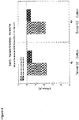
- In both stockings, the skin hydration was decreased. The respective results of corneometric measurements are shown in
Fig. 2 . The decrease in skin hydration for the stocking containing Tencel C, however, was lower (12.4%) than with cotton (14.8%). Thus, Tencel C2 improves skin hydration compared to cotton. - In a further experiment the transepidermal loss of water after removal of the stocking was determined directly on the skin by tewametry. The results are shown in
Fig. 3 . It can be seen that the transepidermal water loss with the compression stocking containing Tencel C is markedly lower (about 8%) compared to the transepidermal water loss with the compression stocking containing cotton (10.8%). Thus, wearing of a Tencel C containing stocking leads to a decreased water loss of about 0.5 g/m2 skin. - Further, it was found that wearing of compression stockings containing Tencel C leads to a smoothing of skin of about 2% compared to the starting value. The wearing of compression stockings containing cotton did result in a smoothing of the skin.
- The results demonstrate that wearing of compression stockings containing Tencel C leads to an improvement in skin quality, particularly higher water retention and higher smoothness of the skin.
- The skin roughness was evaluated by fast optical in vivo topometry of human skin (FOITS).
-
- Sample 1: Compression stocking comprising Tencel C2 (colour white)
- Sample 2: Compression stocking comprising a cotton fibre (colour beige)
- The stockings were worn by 31 test persons for 14 days for a minimum of eight hours per day. The stockings were randomly distributed. Each test person wore cotton stockings on one leg and a Tencel C stocking on the other leg. Creaming of the legs was not allowed one week before the start of the study and during the study.
- FOITS is an optical measurement procedure which uses a combination of gray code and phase shift technique (Breuckmann B. (1993), Bildverarbeitung und optische Messtechnik in der industriellen Praxis, Franzis, München). In less than one second, one can measure the absolute space coordinates of all object points in the selected image area with great exactitude. The FOITS-measurement system consists of a projection unit and a CCD camera. Both are fixed under a so-called triangulation angle. Concerning the gray code method, grids with a rectangular brightness distribution by different numbers of lines are projected. The number of lines is doubled at each new projection. This gives a clearly defined hierarchy of lines for each image point. Regarding the phase shift technique, only one grid with a sinus-like intensity distribution is projected several times with different phase positions. A detailed description can be found in Breuckmann B., Bildverarbeitung und optische Messtechnik in der industriellen Praxis, Franzis, München, 1993, and Rohr M., Schrader K. 1998, Fast optical in vivo topometry of human skins (FOITS), SOFW-Journal 124, 52-59. A CCD camera with a horizontal and vertical resolution in x and y direction of about 30 µm is used. The measurement has been carried out via contactless direct skin measurement of an area of inspection of 1200 mm2. The area of measurement (depth-sharpness) was 20 mm. The dissolution in x and y direction was each approx. 30 µm. The dissolution in z direction was 4 µm. The time to digitise the fine structure was about 300 ms.
- The roughness parameters Rz and Ra (according to DIN 4768) were determined using twelve separate lines of a length of 20 mm for the analysis.
- Rz means average depth of roughness and is the arithmetic means of Rmax in five successive single measuring sections of the total length of measurement.
- Ra means the arithmetic mean roughness and specifies the absolute amounts of all variances in the roughness profile from the centreline over the total distance.
- The results of the skin roughness measurements via FOITS are shown in
Figure 4 . Using the Tencel C2 stocking, the average depth of roughness Rz as well as the arithmetic mean roughness Ra showed a difference of about 2.3 %-points compared to the starting value, which indicates a reduction of the skin roughness. In case of the cotton stockings, a reduction of the skin roughness of only about 0.5 %-points was observed. These results show that Tencel C2 stockings considerably reduce the skin roughness compared to conventional cotton stockings. - The effects on skin elasticity of the textile samples were determined by cutometry.
- see Example 3
- see Example 3, except that the study included only 30 test persons.
- The Cutometer (Courage and Khazaka, Cologne, Germany) is a vacuum generator with electronic control elements to which the actual measuring probe is connected. Pressure tubing connects the probe and the vacuum generator. The head of the probe is pressed onto the skin. A spring loaded part ensures that constant pressure to the skin is applied.
- The displacement of the skin into the probe due to the vacuum is measured optically and transmitted to a PC that is connected to the set-up. The Cutometer sucks an area of skin of approximately 2 mm in diameter in a defined vacuum and then, without friction, optically measures the depth of the skin penetrates into the probe. For a standard test, the instrument generates a vacuum of 300 mbar which is applied to the skin as a sudden jump function. The vacuum is turned off after 5 seconds (on time), also as a sudden jump function and is applied again after another 5 seconds (off time). One measuring cycle is performed in this way.
- The standard parameters R0 to R7 can be calculated from the measuring curves. The parameters result from the below calculations.
- R0 shows the maximum displacement of the skin after the first suck. It incorporates the elastic stretch of the skin, as well as the plastic portion, which is characterized by a non-linear curve shape.
- An improvement in skin firmness is indicated by a decrease of R0.
- R1 shows the remaining displacement of the skin when the vacuum has been turned of for five seconds after the first suck. This parameter therefore shows the remaining plastic deformation of the skin after the first suck. It gives information about the ability of the skin to come back in its original state.
- The R2 firmness parameter is a combination of R0 and R1.

- This parameter reflects the ratio of the decrease in displacement after the first suck and the total displacement in the first suck (Gross Elasticity).
- The greater R2 is, the less plastic deformation remains.
- R3 reflects the maximum displacement of the skin after the last suck. It, therefore, incorporates an additional effect compared with R0, namely a wear effect caused by repeated displacement of the skin.
- This parameter equals R0 if the measuring cycle is carried out only once.
- R4 reflects the remaining displacement after the last suck, and therefore corresponds to R1 plus the wear effect from repeated suction. R4 equals R1 if one measuring cycle is done.
- The R5 parameter (Net Elasticity) reflects the elastic portions of the first curve.

- R5 comprises UE, the linear proportion of the first curve, and UR, the linear decrease when the vacuum has been turned off after the first suck. The closer R5 to 1 (100%), the more elastic the skin is.
-

- Here UV is the plastic portion of the first curve. R6, therefore, represents the inelastic portion of stretch versus the elastic portion of stretch in the first curve. The higher R6, the more plastic the skin. The lower R6, the more elastic the skin.
- Parameter R7 represents a kind of spontaneous elasticity. Namely, the elastic portion after the vacuum has been turned off for the first time is related to the total displacement of the first suck. The closer R7 to 1 (100%) the more elastic the skin. The lower R7, the more inelastic the skin.

- In this study, parameter R0, R1, R2, R5 and R7 are analysed on a statistical basis. A positive product effect is documented by a decrease of parameter R0 and R1 and an increase of parameter R2, R5 and R7.
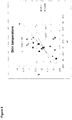
- In
Figure 5 , the results of the Cutometry measurements are shown. In all experiments, the values of the parameters R2, R5 and R7 are reduced compared to the starting value. As can be seen from the legs treated with Tencel C2, the R2, R5 and R7 parameters only varied slightly with respect to their starting value as compared to the experiments done with cotton-treated legs. These results show that the Tencel C2 stockings almost maintain the skin elasticity during wearing, whereas skin elasticity is markedly reduced when wearing conventional cotton stockings. Thus, using Tencel C2 stockings, a higher skin elasticity can be maintained as it is the case when using cotton stockings. - The skin pH value was determined by a pH meter.
- see Example 3
- see Example 3
- The skin pH meter pH 905 (Courage and Khazaka, Cologne, Germany) is used for pH measurements directly on the skin surface. Due to the excretions of skin, skin surface represents almost an aqueous solution. The measurement of skin pH is performed with a glass electrode that reacts on the activity of [H+] ions. The potential of the glass electrode is linearly dependent on the pH value of the measuring solution.
- The pH value of healthy skin is about 4.4 to 5.5 at room temperature (20°C and 40-60% air humidity).
- In
Figure 6 , the Δ-deviation from the skin pH value before and after wearing Tencel C2 or cotton stockings is indicated. As can be seen from the Figure, there is almost no difference in pH value in case of Tencel C2-treated skin and cotton-treated skin. - Test of skin trophy, skin microclimate and wearing comfort of Tencel C2 containing stockings in comparison to conventional cotton stockings.
- 12 healthy test persons wore the Tencel C2 (chitosan) medical compression stocking on one leg and the cotton-containing comparison stocking on the other leg. The test persons completed a defined physical stress on the treadmill (treadmill ergometry). In connection with the treadmill ergometry, different measurements regarding the skin climate and the evaluation of the skin barrier function, e.g. a measurement of the skin moisture, evaporation of water, and skin temperature, were carried out.
- All experiments were carried out in an air-conditioned testing room (20-24°C, average humidity of 60%). The test persons first of all completed a 20-minute acclimatization phase. The test persons walked 15 minutes on the treadmill at a speed of 3 km/h and a slope of 12°.
- The
abbreviations 1 to 5 used below refer to the respective examination times: - U1: before treadmill, without stocking
- U2: before treadmill, with stocking
- U3: after treadmill, with stocking
- U4: after treadmill, without stocking
- U5: 5 minutes after treadmill, without stocking.
- The transepidermal water loss (TEWL) provides information regarding the skin permeability and its barrier function. TEWL was measured using a Tewameter TM300 (Courage and Khazaka) as described above.
- The obtained TEWL values are summarised in Table 3.
Table 3: Describing statistic of the examined TEWL values Stocking Size U1 U2 U3 U4 U5 Cotton Minimum 2.40 2.30 7.00 9.30 7.00 l.q. 4.70 5.98 14.38 17.45 9.05 Median 6.75 7.85 19.10 28.05 13.95 u.q. 9.23 11.40 24.28 38.40 25.25 Maximum 10.00 16.60 34.90 55.20 37.30 Tencel C Minimum 4.20 3.30 11.40 9.90 6.70 l.q. 5.18 6.28 13.53 24.38 8.10 Median 8.20 10.55 18.45 30.80 13.25 u.q. 11.88 14.00 20.23 38.40 23.50 Maximum 13.20 18.40 25.70 48.70 37.50 l.q. = lower quartile; u.q. = upper quartile -
Figure 7 shows a correlation between the TEWL value U2 before treadmill treatment and the TEWL value U3 after treadmill treatment.Figure 7 indicates that the physical stress caused by treadmill treatment results in increased perspiration (perspiratio sensibilis) and an increased TEWL value in case of both compression stockings. - There is a higher increase of the TEWL value for the cotton stockings than for the Tencel C stockings. This can be explained by the fact that Tencel C can partially absorb and retain moisture such that the water vapour emission measured at the outer surface of the compression stocking is lower in Tencel C2 stockings as compared to cotton stockings.
- The moisture content of the stratum corneum is measured via corneometry as described above. The stratum corneum is a suitable indicator due to its specific storage capacity.
The values for the skin moisture in the stratum corneum are shown in Table 4.Table 4: Skin moisture parameters Stocking Size U1 U4 U5 Cotton Minimum 33.40 31.50 34.80 l.q. 38.95 42.85 43.00 Median 41.00 45.65 45.05 u.q. 47.33 56.00 50.53 Maximum 56.10 60.30 57.30 Tencel C Minimum 25.20 32.30 34.40 l.q. 38.38 43.83 40.83 Median 40.65 45.05 43.50 u.q. 44.63 51.98 52.03 Maximum 49.90 57.20 59.80 - A correlation between U1 and U4 shows that an increase in skin moisture is observed in both types of stockings, However, the increase of the skin moisture is lower when wearing Tencel C2 stockings than when wearing cotton stockings.
- When comparing the values measured at the time points U1 and U5, a similar result is obtained.
- The corneometry data, thus, confirm the result of the TEWL measurements that Tencel C tends to cause less perspiration/skin moisture.
- The sensors were applied onto the skin, below the stocking. The measured temperatures are shown in Table 5.
- In
Figure 8 , the relationship between U2 and U5 is schemattically displayed. Therein the slope of temperature increase is lower when wearing Tencel C2 stockings compared to the temperature increase when wearing cotton stockings. - The lower increase of the body temperature when wearing Tencel C2 stockings correlates with the lower TEWL value and the lower moisture increase (
Figure 8 ).Table 5: Describing statistic of the temperature parameters Stocking Size U1 U2 U3 U4 U5 Cotton Minimum 30.3 29.8 29.8 30.8 30.9 l.q. 30.6 30.95 30.78 31.2 31.25 Median 31.3 31.25 31.95 31.8 32.35 u.q. 31.7 31.73 32.63 32.33 32.88 Maximum 32.7 32.9 33.4 34.1 33.8 Tencel C Minimum 29.8 29.8 29.8 30.6 30.8 l.q. 30.73 30.85 30.75 31.25 30.98 Median 31.1 31.15 32 31.75 32.1 u.q. 31.63 31.48 32.23 32.33 32.4 Maximum 31.8 31.8 32.7 32.8 33.2 - The weight of the medical compression stockings has been determined before and after the treadmill treatment. The measurements have been carried out in closed plastic bags (to avoid moisture loss by evaporation) and by means of highly precise laboratory scales.
- In
Figure 9 , a correlation between the moisture increase of the Tencel C2 stockings (Δweight) and conventional cotton stockings after physical stress (treadmill) is shown. There is a clear deviation from the diagonal (Δweight tencel = Δweight cotton) suggesting that Tencel C absorbes more moisture.
Claims (13)
- Compression garment comprising at least one chitosan-containing fibre, wherein the chitosan-containing fibre is a cellulose-based fibre, e.g. a viscose, modal, polynosic or lyocell fibre, the surface of which is at least partially coated with chitosan, wherein the chitosan-coated fibre covers an elastic yarn.
- The garment of claim 1, which is a stocking, arm sleeve, calf sleeve, glove, sock, leggings, top or shorts.
- The garment of claim 1 or 2, which is a garment for phlebologic or lymphologic applications for scar formation reduction or for diabetes patients.
- The garment of any of claims 1-3, wherein the fibre has a content of 0.1-25% by weight of chitosan.
- The garment of any of claims of 1-4, wherein the elastic yarn is a synthetic yarn such as Lycra, Creora, Roica or Dorlastan, or a spandex yarn, or a natural elastic yarn such as rubber.
- The garment of any of claims 1-5, wherein the chitosan-coated fibre is blended with a further component, e.g. a component selected from bamboo, wool, cotton, linnen, silk, polyamide, polyester, polyacrylnitrile, polypropylene, viscose, modal, micro modal with elastane or elastodien.
- The garment of claim 6, wherein the amount of the chitosan-coated fibre in the blend is at least 3%, 10%, 20%, 30%, 40%, 50% by weight or higher, based on the total weight of the blend.
- The garment of any of claims 1-7 for use for the improvement of the microbial skin flora.
- The garment of any of claims 1-7 for use for the improvement of skin moisture regulation.
- The garment of any of claims 1-7 for use for the improvement of skin thermoregulation.
- The garment of any of claims 1-7 for use for the improvement of skin healing and protection.
- Use of a compression garment of any one of claims 1-7 as an under-article, such as socks, stockings, knee socks, tights, which is in direct contact with the skin.
- The garment of any of claims 1-7 for use for treating and/or preventing oedema in patients suffering from diabetes.
Priority Applications (1)
| Application Number | Priority Date | Filing Date | Title |
|---|---|---|---|
| EP11709733.7A EP2549966B1 (en) | 2010-03-25 | 2011-03-23 | Compression textile comprising chitosan coated fibres |
Applications Claiming Priority (3)
| Application Number | Priority Date | Filing Date | Title |
|---|---|---|---|
| EP10157830A EP2368532A1 (en) | 2010-03-25 | 2010-03-25 | Compression textile comprising chitosan coated fibres |
| EP11709733.7A EP2549966B1 (en) | 2010-03-25 | 2011-03-23 | Compression textile comprising chitosan coated fibres |
| PCT/EP2011/054476 WO2011117310A1 (en) | 2010-03-25 | 2011-03-23 | Compression textile comprising chitosan coated fibres |
Publications (2)
| Publication Number | Publication Date |
|---|---|
| EP2549966A1 EP2549966A1 (en) | 2013-01-30 |
| EP2549966B1 true EP2549966B1 (en) | 2018-03-28 |
Family
ID=42358612
Family Applications (2)
| Application Number | Title | Priority Date | Filing Date |
|---|---|---|---|
| EP10157830A Withdrawn EP2368532A1 (en) | 2010-03-25 | 2010-03-25 | Compression textile comprising chitosan coated fibres |
| EP11709733.7A Active EP2549966B1 (en) | 2010-03-25 | 2011-03-23 | Compression textile comprising chitosan coated fibres |
Family Applications Before (1)
| Application Number | Title | Priority Date | Filing Date |
|---|---|---|---|
| EP10157830A Withdrawn EP2368532A1 (en) | 2010-03-25 | 2010-03-25 | Compression textile comprising chitosan coated fibres |
Country Status (6)
| Country | Link |
|---|---|
| US (1) | US10149799B2 (en) |
| EP (2) | EP2368532A1 (en) |
| CN (1) | CN102970951A (en) |
| BR (1) | BR112012024302A2 (en) |
| CA (1) | CA2793146C (en) |
| WO (1) | WO2011117310A1 (en) |
Families Citing this family (17)
| Publication number | Priority date | Publication date | Assignee | Title |
|---|---|---|---|---|
| EP2540263A1 (en) | 2011-06-29 | 2013-01-02 | Sigvaris Inc. | Graduated compression garments |
| US8899277B2 (en) * | 2012-08-03 | 2014-12-02 | Shin Era Technology Co., Ltd. | Manufacturing method of medical textiles woven from chitosan containing high wet modulus rayon fibre |
| CN103046199A (en) * | 2012-12-17 | 2013-04-17 | 吴江市金平华纺织有限公司 | Compound fabric preparation process |
| CN103205835B (en) * | 2013-01-16 | 2015-01-21 | 江苏悦达纺织集团有限公司 | Nano-silver antibacterial shirt fabric and preparation method for same |
| US9936751B1 (en) | 2013-03-14 | 2018-04-10 | Francesco Mignone | Towel/absorptive arm sleeve and means of hands free toweling |
| CN104490519A (en) * | 2014-12-19 | 2015-04-08 | 苏州全润医疗科技有限公司 | Multifunctional medical bandage |
| CN105495709A (en) * | 2015-12-14 | 2016-04-20 | 江苏新芳科技集团股份有限公司 | Thermal underwear fabric |
| US10292860B2 (en) | 2015-12-18 | 2019-05-21 | Richard W. Bush | Thermal therapy sheet |
| GR1009378B (en) * | 2017-05-18 | 2018-10-09 | Εμμανουηλ Αντωνιου Αρβανιτακης | Corrective sock |
| CN108324430A (en) * | 2018-01-29 | 2018-07-27 | 海宁市力天袜业有限公司 | One kind is for treating cirsoid Medical stocking |
| WO2020106353A1 (en) * | 2018-09-18 | 2020-05-28 | Trustees Of Tufts College | Thread-based real-time monitoring of bodily fluids |
| US20210337903A1 (en) * | 2018-10-15 | 2021-11-04 | Pinaki R. Majhi | Composite fabric of water retentive and antimicrobial materials for sustained skin hydration |
| CN110284228A (en) * | 2019-06-28 | 2019-09-27 | 湖南莎丽袜业股份有限公司 | A kind of socks ramee and bamboo fibre complex yarn and preparation method thereof |
| USD942632S1 (en) * | 2020-05-19 | 2022-02-01 | Sigvaris Ag | Compression bandage for medical purposes |
| ES2973292T3 (en) | 2020-12-03 | 2024-06-19 | Lidermed S A | TATTOO PROTECTIVE BANDAGE AND USE AS A TATTOO PROTECTOR |
| EP4260708A1 (en) * | 2022-04-13 | 2023-10-18 | Eidgenössisches Departement für Wirtschaft, Bildung und Forschung (WBF) Agroscope | Surface-ripened vegan food product and method of making thereof |
| FR3157073A1 (en) * | 2023-12-26 | 2025-06-27 | Barbara DESCLAUX | CLOTHING ITEM TO PROTECT AN INJURED AREA OF SKIN |
Citations (8)
| Publication number | Priority date | Publication date | Assignee | Title |
|---|---|---|---|---|
| US20030134120A1 (en) * | 2001-12-24 | 2003-07-17 | Ibeks Technologies Co., Ltd. | Natural fiber coated with chitosan and a method for producing the same |
| CN2684597Y (en) * | 2004-02-24 | 2005-03-16 | 大来运动器材有限公司 | Smart Healthy Thermal Socks |
| US20060085894A1 (en) * | 2004-10-26 | 2006-04-27 | Bsn-Jobst, Inc. | Compression garment with integral donning aid |
| US20070283483A1 (en) * | 2006-03-23 | 2007-12-13 | Jacober Alan M | Therapeutic sock for diabetics |
| WO2008053159A2 (en) * | 2006-11-03 | 2008-05-08 | Medlock Medical Limited | Multi directional stretch tubular bandages |
| US20080195016A1 (en) * | 2005-03-22 | 2008-08-14 | Emilio Bottini | Multi-Ply Technical Composite Which Is Breathable And Moisturising, Releases Active Constituents And Promotes Their Absorption, And Can Be Uses As A Medical Aid Or To Make Clothing Or Structures That Come Into Direct Contact With Healthy Or Diseased Skin |
| WO2009092121A1 (en) * | 2008-01-22 | 2009-07-30 | Lenzing Aktiengesellschaft | Method for treating cellulose moldings |
| WO2010031091A1 (en) * | 2008-09-22 | 2010-03-25 | Lenzing Aktiengesellschaft | Method for treating cellulose moldings |
Family Cites Families (44)
| Publication number | Priority date | Publication date | Assignee | Title |
|---|---|---|---|---|
| US2613520A (en) | 1950-03-02 | 1952-10-14 | Margaret E Schaefer | Knitted footwear |
| US3889494A (en) | 1970-11-23 | 1975-06-17 | Kendall & Co | Stocking with compensated knee pressure |
| US3856008A (en) | 1970-12-16 | 1974-12-24 | Jobst Institute | Elastic garment for imposing pressure on underlying body regions |
| DE2413332A1 (en) | 1974-03-20 | 1975-09-25 | Peter De Dr Med Vos | Knee-length elasticated support stocking - which may be worn more than ten hours when lying down gives graded pressure along its length |
| SE510157C2 (en) | 1988-05-20 | 1999-04-26 | Kendall & Co | Therapeutic socks |
| JPH0768648B2 (en) * | 1991-02-20 | 1995-07-26 | 富士紡績株式会社 | Modified cellulose regenerated fiber |
| US6237251B1 (en) | 1991-08-21 | 2001-05-29 | Reebok International Ltd. | Athletic shoe construction |
| GB2260686B (en) | 1991-09-25 | 1995-08-23 | Brevet Hospital Products | A graduated compression stocking |
| FI924408A0 (en) * | 1992-09-30 | 1992-09-30 | Novasso Oy | MODIFIED VISKOSFIBRER OCH FOERFARANDE FOER DESS FRAMSTAELLNING. |
| EP0752839B1 (en) * | 1994-03-30 | 1998-05-20 | Smith & Nephew plc | Medical articles |
| JP2822174B2 (en) * | 1996-03-01 | 1998-11-11 | オーミケンシ株式会社 | Method for producing chitin chitosan fiber and structure |
| JPH10292205A (en) | 1997-04-10 | 1998-11-04 | Kanemasu:Kk | Socks |
| ES2196326T3 (en) * | 1997-04-11 | 2003-12-16 | Bristol Myers Squibb Co | TRICOTED SUIT FOR WOUNDS. |
| GB9712696D0 (en) * | 1997-06-18 | 1997-08-20 | Smith & Nephew | Bandage |
| US6835678B2 (en) * | 2000-05-04 | 2004-12-28 | Kimberly-Clark Worldwide, Inc. | Ion sensitive, water-dispersible fabrics, a method of making same and items using same |
| WO2003106756A2 (en) * | 2002-06-17 | 2003-12-24 | The Procter & Gamble Company | Methods for improving dimensional stability and/or durable press properties of elastic fabrics and elastic fabrics with improved properties |
| AT411769B (en) * | 2002-07-12 | 2004-05-25 | Chemiefaser Lenzing Ag | METHOD FOR PRODUCING CELLULOSIC MOLDED BODIES |
| GB0305260D0 (en) * | 2003-03-07 | 2003-04-09 | Ssl Int Plc | Wound management fibres |
| FR2853525B1 (en) | 2003-04-11 | 2005-06-10 | Gsl Holding | ARTICLE OR SUB-ARTICLE OF CONTENTION |
| US7007517B2 (en) | 2004-08-02 | 2006-03-07 | Menzies—Southern Hosiery Mills, Inc. | Knit sock |
| GB2416781A (en) * | 2004-08-04 | 2006-02-08 | Lightex Ltd | Breathable fabric |
| WO2006032096A1 (en) * | 2004-09-23 | 2006-03-30 | Skins Compression Garments Pty Limited | Compression garments and a method of manufacture |
| US20070033711A1 (en) | 2005-03-02 | 2007-02-15 | Karl Achtelstetter | Sock, especially athletic sock |
| ITBO20050140A1 (en) | 2005-03-11 | 2006-09-12 | Lucio Lenzi | FABRIC WITH ACTIVE PRINCIPLES AND RELATED METHOD OF RECHARGING ACTIVE INGREDIENTS |
| FR2887141B1 (en) | 2005-06-16 | 2008-04-18 | Innothera Topic Internat Sa | COMPRESSIVE ORTHESIS TRICOTEE OF THE LOWER MEMBER FOR THE TREATMENT OF CHRONIC VENOUS INSUFFICIENCY |
| GB0513552D0 (en) * | 2005-07-01 | 2005-08-10 | Bristol Myers Squibb Co | Bandage |
| DE102005033720A1 (en) * | 2005-07-15 | 2007-01-18 | Karl Otto Braun Kg | In the warp direction, longitudinally elastic bandage |
| SI1759676T1 (en) * | 2005-09-06 | 2014-02-28 | Sigvaris Management Ag | Knitted bandage |
| US7441419B1 (en) | 2005-10-07 | 2008-10-28 | Carolon Company | Therapeutic compression and cushion sock and method of making |
| AT8388U3 (en) | 2006-01-26 | 2007-06-15 | Chemiefaser Lenzing Ag | USE OF A CELLULOSE FIBER |
| DE102006032223A1 (en) * | 2006-07-07 | 2007-07-12 | Paul Hartmann Ag | Compressive or support stockings for legs for venous leg ulcers have under-stocking and over-stocking with foot and shank regions to apply steady pressure |
| PL1878822T3 (en) | 2006-07-12 | 2010-04-30 | Ganzoni Man Ag | Method for manufacturing a medical compression garment comprising the assignement of states to stitches of a fabric |
| EP1895036B1 (en) | 2006-08-28 | 2009-10-07 | Ganzoni Management AG | Knit construction for a medical compression garment |
| DE102006048313A1 (en) | 2006-10-02 | 2008-04-03 | Paul Hartmann Ag | Compression stocking has an elasticated construction with pocket for inserting variable pressure element |
| KR20090039032A (en) | 2007-10-17 | 2009-04-22 | 최성원 | Socks for boots |
| CN101969801B (en) * | 2008-01-15 | 2014-04-09 | 英威达技术有限公司 | Garment with altered stress profile |
| AT506406B1 (en) | 2008-03-11 | 2009-09-15 | Lenzing Plastics Gmbh | HIGH TEMPERATURE RESISTANT TWO COMPONENT INSULATION MATERIAL, METHOD FOR THE PRODUCTION THEREOF AND THE USE THEREOF |
| WO2009135155A2 (en) * | 2008-05-01 | 2009-11-05 | Invista Technologies S.A R.L. | Garment bands including polymer compositions |
| US20100056973A1 (en) | 2008-08-28 | 2010-03-04 | Farrow Medical Innovations, Inc. | Therapeutic Compression Garments |
| CA2735391A1 (en) * | 2008-08-28 | 2010-03-04 | Andover Healthcare, Inc. | Silver based antimicrobial compositions and articles |
| AT507387A1 (en) | 2008-09-22 | 2010-04-15 | Chemiefaser Lenzing Ag | USE OF LYOCELL FIBERS AND ARTICLES CONTAINING LYOCELL FIBERS |
| US9433814B2 (en) * | 2009-06-19 | 2016-09-06 | Tau Orthopedics, Llc | Toning garment with integrated damper |
| CN201617188U (en) | 2009-11-20 | 2010-11-03 | 国家康复辅具研究中心 | Diabetic Foot Care Socks |
| KR20130007581A (en) | 2010-03-25 | 2013-01-18 | 렌찡 악티엔게젤샤프트 | Uses of Cellulose Fibers |
-
2010
- 2010-03-25 EP EP10157830A patent/EP2368532A1/en not_active Withdrawn
-
2011
- 2011-03-23 WO PCT/EP2011/054476 patent/WO2011117310A1/en not_active Ceased
- 2011-03-23 US US13/637,133 patent/US10149799B2/en not_active Expired - Fee Related
- 2011-03-23 EP EP11709733.7A patent/EP2549966B1/en active Active
- 2011-03-23 CA CA2793146A patent/CA2793146C/en not_active Expired - Fee Related
- 2011-03-23 CN CN2011800161455A patent/CN102970951A/en active Pending
- 2011-03-23 BR BR112012024302A patent/BR112012024302A2/en not_active Application Discontinuation
Patent Citations (8)
| Publication number | Priority date | Publication date | Assignee | Title |
|---|---|---|---|---|
| US20030134120A1 (en) * | 2001-12-24 | 2003-07-17 | Ibeks Technologies Co., Ltd. | Natural fiber coated with chitosan and a method for producing the same |
| CN2684597Y (en) * | 2004-02-24 | 2005-03-16 | 大来运动器材有限公司 | Smart Healthy Thermal Socks |
| US20060085894A1 (en) * | 2004-10-26 | 2006-04-27 | Bsn-Jobst, Inc. | Compression garment with integral donning aid |
| US20080195016A1 (en) * | 2005-03-22 | 2008-08-14 | Emilio Bottini | Multi-Ply Technical Composite Which Is Breathable And Moisturising, Releases Active Constituents And Promotes Their Absorption, And Can Be Uses As A Medical Aid Or To Make Clothing Or Structures That Come Into Direct Contact With Healthy Or Diseased Skin |
| US20070283483A1 (en) * | 2006-03-23 | 2007-12-13 | Jacober Alan M | Therapeutic sock for diabetics |
| WO2008053159A2 (en) * | 2006-11-03 | 2008-05-08 | Medlock Medical Limited | Multi directional stretch tubular bandages |
| WO2009092121A1 (en) * | 2008-01-22 | 2009-07-30 | Lenzing Aktiengesellschaft | Method for treating cellulose moldings |
| WO2010031091A1 (en) * | 2008-09-22 | 2010-03-25 | Lenzing Aktiengesellschaft | Method for treating cellulose moldings |
Also Published As
| Publication number | Publication date |
|---|---|
| CA2793146A1 (en) | 2011-09-29 |
| BR112012024302A2 (en) | 2016-05-24 |
| WO2011117310A1 (en) | 2011-09-29 |
| EP2368532A1 (en) | 2011-09-28 |
| CA2793146C (en) | 2018-05-01 |
| US20130131563A1 (en) | 2013-05-23 |
| CN102970951A (en) | 2013-03-13 |
| EP2549966A1 (en) | 2013-01-30 |
| US10149799B2 (en) | 2018-12-11 |
Similar Documents
| Publication | Publication Date | Title |
|---|---|---|
| CA2793146C (en) | Compression textile comprising chitosan coated fibres | |
| JP4987975B2 (en) | Compression stockings or support stockings | |
| AU2016203458B2 (en) | Fabrics, compression garments and compression garment systems | |
| EP3632245B1 (en) | Compression stocking | |
| US20080264512A1 (en) | Low friction fabric | |
| Yıldız | A novel technique to determine pressure in pressure garments for hypertrophic burn scars and comfort properties | |
| US7169122B2 (en) | Placebo-type compression orthosis | |
| AU2009349693B2 (en) | Improved fabric for preventing and reducing skin wounds | |
| Liu et al. | Technical knitting and ergonomical design of 3D seamless compression hosiery and pressure performances in vivo and in vitro | |
| KR20130027127A (en) | Socks for diabetic patients | |
| PT1369512E (en) | Fabric suitable to provide a barrier effect against magnetic and electromagnetic fields and/or metallotherapy effects | |
| CA2827750C (en) | Graduated compression garments | |
| CN102940316A (en) | Antibacterial deodorization partial pressure decreasing type pressure socks | |
| Oğlakcioğlu et al. | A novel medical bandage with enhanced clothing comfort | |
| Encan et al. | Effect of yarn type on performance of diabetic socks | |
| Rogina-Car et al. | Tencel with a microbial barrier for medical bras | |
| US20210337903A1 (en) | Composite fabric of water retentive and antimicrobial materials for sustained skin hydration | |
| Macintyre et al. | Elastic fabrics for use in pressure garments–comfort properties | |
| Milosavljević et al. | Contribution of textile technology to the development of modern compression bandages | |
| JP2007063723A (en) | Stockings or cylindrical lower limb supporter | |
| Arabbaeva | ANALYTICAL REVIEW OF THE CURRENT STATE OF CREATION OF HOSPITAL CLOTHING FOR PATIENTS WITH SKIN DISEASES | |
| NidaOğlakcıoğlu et al. | EFFECT OF LAUNDRY CYCLES ON PRESSURE CHARACTERISTICS OF MEDICAL COMPRESSION STOCKINGS | |
| Nguyen et al. | Determination of the Pressure of Knitted abdominal Bandage of Women Legging Pants Using Laplace Laws | |
| Kahaduwa | DEVELOPMENT OF KNITTED COMPRESSION GARMENT SUITABLE TO TREAT VARICOSE VEINS |
Legal Events
| Date | Code | Title | Description |
|---|---|---|---|
| PUAI | Public reference made under article 153(3) epc to a published international application that has entered the european phase |
Free format text: ORIGINAL CODE: 0009012 |
|
| 17P | Request for examination filed |
Effective date: 20120926 |
|
| AK | Designated contracting states |
Kind code of ref document: A1 Designated state(s): AL AT BE BG CH CY CZ DE DK EE ES FI FR GB GR HR HU IE IS IT LI LT LU LV MC MK MT NL NO PL PT RO RS SE SI SK SM TR |
|
| DAX | Request for extension of the european patent (deleted) | ||
| STAA | Information on the status of an ep patent application or granted ep patent |
Free format text: STATUS: EXAMINATION IS IN PROGRESS |
|
| 17Q | First examination report despatched |
Effective date: 20170223 |
|
| GRAP | Despatch of communication of intention to grant a patent |
Free format text: ORIGINAL CODE: EPIDOSNIGR1 |
|
| STAA | Information on the status of an ep patent application or granted ep patent |
Free format text: STATUS: GRANT OF PATENT IS INTENDED |
|
| INTG | Intention to grant announced |
Effective date: 20171010 |
|
| RIN1 | Information on inventor provided before grant (corrected) |
Inventor name: MATHIEU, FLORENCE Inventor name: KRUEHNER, ULRIKE Inventor name: ETTNER, NORBERT Inventor name: PAHMEIER, ANDREA Inventor name: BERTAUX HEGEMANN, EMILIE |
|
| GRAS | Grant fee paid |
Free format text: ORIGINAL CODE: EPIDOSNIGR3 |
|
| GRAA | (expected) grant |
Free format text: ORIGINAL CODE: 0009210 |
|
| STAA | Information on the status of an ep patent application or granted ep patent |
Free format text: STATUS: THE PATENT HAS BEEN GRANTED |
|
| AK | Designated contracting states |
Kind code of ref document: B1 Designated state(s): AL AT BE BG CH CY CZ DE DK EE ES FI FR GB GR HR HU IE IS IT LI LT LU LV MC MK MT NL NO PL PT RO RS SE SI SK SM TR |
|
| REG | Reference to a national code |
Ref country code: GB Ref legal event code: FG4D |
|
| REG | Reference to a national code |
Ref country code: CH Ref legal event code: EP |
|
| REG | Reference to a national code |
Ref country code: CH Ref legal event code: NV Representative=s name: E. BLUM AND CO. AG PATENT- UND MARKENANWAELTE , CH |
|
| REG | Reference to a national code |
Ref country code: AT Ref legal event code: REF Ref document number: 982722 Country of ref document: AT Kind code of ref document: T Effective date: 20180415 |
|
| REG | Reference to a national code |
Ref country code: IE Ref legal event code: FG4D |
|
| REG | Reference to a national code |
Ref country code: DE Ref legal event code: R096 Ref document number: 602011046896 Country of ref document: DE |
|
| PG25 | Lapsed in a contracting state [announced via postgrant information from national office to epo] |
Ref country code: FI Free format text: LAPSE BECAUSE OF FAILURE TO SUBMIT A TRANSLATION OF THE DESCRIPTION OR TO PAY THE FEE WITHIN THE PRESCRIBED TIME-LIMIT Effective date: 20180328 Ref country code: NO Free format text: LAPSE BECAUSE OF FAILURE TO SUBMIT A TRANSLATION OF THE DESCRIPTION OR TO PAY THE FEE WITHIN THE PRESCRIBED TIME-LIMIT Effective date: 20180628 Ref country code: HR Free format text: LAPSE BECAUSE OF FAILURE TO SUBMIT A TRANSLATION OF THE DESCRIPTION OR TO PAY THE FEE WITHIN THE PRESCRIBED TIME-LIMIT Effective date: 20180328 Ref country code: LT Free format text: LAPSE BECAUSE OF FAILURE TO SUBMIT A TRANSLATION OF THE DESCRIPTION OR TO PAY THE FEE WITHIN THE PRESCRIBED TIME-LIMIT Effective date: 20180328 |
|
| REG | Reference to a national code |
Ref country code: NL Ref legal event code: MP Effective date: 20180328 |
|
| REG | Reference to a national code |
Ref country code: LT Ref legal event code: MG4D |
|
| PG25 | Lapsed in a contracting state [announced via postgrant information from national office to epo] |
Ref country code: BG Free format text: LAPSE BECAUSE OF FAILURE TO SUBMIT A TRANSLATION OF THE DESCRIPTION OR TO PAY THE FEE WITHIN THE PRESCRIBED TIME-LIMIT Effective date: 20180628 Ref country code: GR Free format text: LAPSE BECAUSE OF FAILURE TO SUBMIT A TRANSLATION OF THE DESCRIPTION OR TO PAY THE FEE WITHIN THE PRESCRIBED TIME-LIMIT Effective date: 20180629 Ref country code: SE Free format text: LAPSE BECAUSE OF FAILURE TO SUBMIT A TRANSLATION OF THE DESCRIPTION OR TO PAY THE FEE WITHIN THE PRESCRIBED TIME-LIMIT Effective date: 20180328 Ref country code: LV Free format text: LAPSE BECAUSE OF FAILURE TO SUBMIT A TRANSLATION OF THE DESCRIPTION OR TO PAY THE FEE WITHIN THE PRESCRIBED TIME-LIMIT Effective date: 20180328 Ref country code: RS Free format text: LAPSE BECAUSE OF FAILURE TO SUBMIT A TRANSLATION OF THE DESCRIPTION OR TO PAY THE FEE WITHIN THE PRESCRIBED TIME-LIMIT Effective date: 20180328 |
|
| PG25 | Lapsed in a contracting state [announced via postgrant information from national office to epo] |
Ref country code: PL Free format text: LAPSE BECAUSE OF FAILURE TO SUBMIT A TRANSLATION OF THE DESCRIPTION OR TO PAY THE FEE WITHIN THE PRESCRIBED TIME-LIMIT Effective date: 20180328 Ref country code: EE Free format text: LAPSE BECAUSE OF FAILURE TO SUBMIT A TRANSLATION OF THE DESCRIPTION OR TO PAY THE FEE WITHIN THE PRESCRIBED TIME-LIMIT Effective date: 20180328 Ref country code: AL Free format text: LAPSE BECAUSE OF FAILURE TO SUBMIT A TRANSLATION OF THE DESCRIPTION OR TO PAY THE FEE WITHIN THE PRESCRIBED TIME-LIMIT Effective date: 20180328 Ref country code: RO Free format text: LAPSE BECAUSE OF FAILURE TO SUBMIT A TRANSLATION OF THE DESCRIPTION OR TO PAY THE FEE WITHIN THE PRESCRIBED TIME-LIMIT Effective date: 20180328 Ref country code: NL Free format text: LAPSE BECAUSE OF FAILURE TO SUBMIT A TRANSLATION OF THE DESCRIPTION OR TO PAY THE FEE WITHIN THE PRESCRIBED TIME-LIMIT Effective date: 20180328 Ref country code: ES Free format text: LAPSE BECAUSE OF FAILURE TO SUBMIT A TRANSLATION OF THE DESCRIPTION OR TO PAY THE FEE WITHIN THE PRESCRIBED TIME-LIMIT Effective date: 20180328 |
|
| PG25 | Lapsed in a contracting state [announced via postgrant information from national office to epo] |
Ref country code: CZ Free format text: LAPSE BECAUSE OF FAILURE TO SUBMIT A TRANSLATION OF THE DESCRIPTION OR TO PAY THE FEE WITHIN THE PRESCRIBED TIME-LIMIT Effective date: 20180328 Ref country code: SM Free format text: LAPSE BECAUSE OF FAILURE TO SUBMIT A TRANSLATION OF THE DESCRIPTION OR TO PAY THE FEE WITHIN THE PRESCRIBED TIME-LIMIT Effective date: 20180328 Ref country code: SK Free format text: LAPSE BECAUSE OF FAILURE TO SUBMIT A TRANSLATION OF THE DESCRIPTION OR TO PAY THE FEE WITHIN THE PRESCRIBED TIME-LIMIT Effective date: 20180328 |
|
| PG25 | Lapsed in a contracting state [announced via postgrant information from national office to epo] |
Ref country code: PT Free format text: LAPSE BECAUSE OF FAILURE TO SUBMIT A TRANSLATION OF THE DESCRIPTION OR TO PAY THE FEE WITHIN THE PRESCRIBED TIME-LIMIT Effective date: 20180730 |
|
| REG | Reference to a national code |
Ref country code: DE Ref legal event code: R097 Ref document number: 602011046896 Country of ref document: DE |
|
| PG25 | Lapsed in a contracting state [announced via postgrant information from national office to epo] |
Ref country code: DK Free format text: LAPSE BECAUSE OF FAILURE TO SUBMIT A TRANSLATION OF THE DESCRIPTION OR TO PAY THE FEE WITHIN THE PRESCRIBED TIME-LIMIT Effective date: 20180328 |
|
| PLBE | No opposition filed within time limit |
Free format text: ORIGINAL CODE: 0009261 |
|
| STAA | Information on the status of an ep patent application or granted ep patent |
Free format text: STATUS: NO OPPOSITION FILED WITHIN TIME LIMIT |
|
| 26N | No opposition filed |
Effective date: 20190103 |
|
| PG25 | Lapsed in a contracting state [announced via postgrant information from national office to epo] |
Ref country code: SI Free format text: LAPSE BECAUSE OF FAILURE TO SUBMIT A TRANSLATION OF THE DESCRIPTION OR TO PAY THE FEE WITHIN THE PRESCRIBED TIME-LIMIT Effective date: 20180328 |
|
| PG25 | Lapsed in a contracting state [announced via postgrant information from national office to epo] |
Ref country code: MC Free format text: LAPSE BECAUSE OF FAILURE TO SUBMIT A TRANSLATION OF THE DESCRIPTION OR TO PAY THE FEE WITHIN THE PRESCRIBED TIME-LIMIT Effective date: 20180328 |
|
| GBPC | Gb: european patent ceased through non-payment of renewal fee |
Effective date: 20190323 |
|
| PG25 | Lapsed in a contracting state [announced via postgrant information from national office to epo] |
Ref country code: LU Free format text: LAPSE BECAUSE OF NON-PAYMENT OF DUE FEES Effective date: 20190323 |
|
| REG | Reference to a national code |
Ref country code: BE Ref legal event code: MM Effective date: 20190331 |
|
| PG25 | Lapsed in a contracting state [announced via postgrant information from national office to epo] |
Ref country code: IE Free format text: LAPSE BECAUSE OF NON-PAYMENT OF DUE FEES Effective date: 20190323 Ref country code: GB Free format text: LAPSE BECAUSE OF NON-PAYMENT OF DUE FEES Effective date: 20190323 |
|
| PG25 | Lapsed in a contracting state [announced via postgrant information from national office to epo] |
Ref country code: BE Free format text: LAPSE BECAUSE OF NON-PAYMENT OF DUE FEES Effective date: 20190331 Ref country code: FR Free format text: LAPSE BECAUSE OF NON-PAYMENT OF DUE FEES Effective date: 20190331 |
|
| PG25 | Lapsed in a contracting state [announced via postgrant information from national office to epo] |
Ref country code: TR Free format text: LAPSE BECAUSE OF FAILURE TO SUBMIT A TRANSLATION OF THE DESCRIPTION OR TO PAY THE FEE WITHIN THE PRESCRIBED TIME-LIMIT Effective date: 20180328 |
|
| PG25 | Lapsed in a contracting state [announced via postgrant information from national office to epo] |
Ref country code: MT Free format text: LAPSE BECAUSE OF NON-PAYMENT OF DUE FEES Effective date: 20190323 |
|
| REG | Reference to a national code |
Ref country code: AT Ref legal event code: UEP Ref document number: 982722 Country of ref document: AT Kind code of ref document: T Effective date: 20180328 |
|
| PG25 | Lapsed in a contracting state [announced via postgrant information from national office to epo] |
Ref country code: CY Free format text: LAPSE BECAUSE OF FAILURE TO SUBMIT A TRANSLATION OF THE DESCRIPTION OR TO PAY THE FEE WITHIN THE PRESCRIBED TIME-LIMIT Effective date: 20180328 |
|
| PG25 | Lapsed in a contracting state [announced via postgrant information from national office to epo] |
Ref country code: IS Free format text: LAPSE BECAUSE OF FAILURE TO SUBMIT A TRANSLATION OF THE DESCRIPTION OR TO PAY THE FEE WITHIN THE PRESCRIBED TIME-LIMIT Effective date: 20180728 |
|
| PG25 | Lapsed in a contracting state [announced via postgrant information from national office to epo] |
Ref country code: HU Free format text: LAPSE BECAUSE OF FAILURE TO SUBMIT A TRANSLATION OF THE DESCRIPTION OR TO PAY THE FEE WITHIN THE PRESCRIBED TIME-LIMIT; INVALID AB INITIO Effective date: 20110323 |
|
| PG25 | Lapsed in a contracting state [announced via postgrant information from national office to epo] |
Ref country code: MK Free format text: LAPSE BECAUSE OF FAILURE TO SUBMIT A TRANSLATION OF THE DESCRIPTION OR TO PAY THE FEE WITHIN THE PRESCRIBED TIME-LIMIT Effective date: 20180328 |
|
| PGFP | Annual fee paid to national office [announced via postgrant information from national office to epo] |
Ref country code: DE Payment date: 20250225 Year of fee payment: 15 |
|
| PGFP | Annual fee paid to national office [announced via postgrant information from national office to epo] |
Ref country code: AT Payment date: 20250320 Year of fee payment: 15 |
|
| PGFP | Annual fee paid to national office [announced via postgrant information from national office to epo] |
Ref country code: IT Payment date: 20250325 Year of fee payment: 15 |
|
| PGFP | Annual fee paid to national office [announced via postgrant information from national office to epo] |
Ref country code: CH Payment date: 20250401 Year of fee payment: 15 |