EP2548940A1 - Lubricating oil composition for high-temperature applications - Google Patents
Lubricating oil composition for high-temperature applications Download PDFInfo
- Publication number
- EP2548940A1 EP2548940A1 EP11756377A EP11756377A EP2548940A1 EP 2548940 A1 EP2548940 A1 EP 2548940A1 EP 11756377 A EP11756377 A EP 11756377A EP 11756377 A EP11756377 A EP 11756377A EP 2548940 A1 EP2548940 A1 EP 2548940A1
- Authority
- EP
- European Patent Office
- Prior art keywords
- lubricating oil
- oil composition
- temperature applications
- composition
- antioxidant
- Prior art date
- Legal status (The legal status is an assumption and is not a legal conclusion. Google has not performed a legal analysis and makes no representation as to the accuracy of the status listed.)
- Granted
Links
- 0 *c1cc(*)c(*)cc1* Chemical compound *c1cc(*)c(*)cc1* 0.000 description 1
Images

Classifications
-
- C—CHEMISTRY; METALLURGY
- C10—PETROLEUM, GAS OR COKE INDUSTRIES; TECHNICAL GASES CONTAINING CARBON MONOXIDE; FUELS; LUBRICANTS; PEAT
- C10M—LUBRICATING COMPOSITIONS; USE OF CHEMICAL SUBSTANCES EITHER ALONE OR AS LUBRICATING INGREDIENTS IN A LUBRICATING COMPOSITION
- C10M169/00—Lubricating compositions characterised by containing as components a mixture of at least two types of ingredient selected from base-materials, thickeners or additives, covered by the preceding groups, each of these compounds being essential
- C10M169/04—Mixtures of base-materials and additives
-
- C—CHEMISTRY; METALLURGY
- C10—PETROLEUM, GAS OR COKE INDUSTRIES; TECHNICAL GASES CONTAINING CARBON MONOXIDE; FUELS; LUBRICANTS; PEAT
- C10M—LUBRICATING COMPOSITIONS; USE OF CHEMICAL SUBSTANCES EITHER ALONE OR AS LUBRICATING INGREDIENTS IN A LUBRICATING COMPOSITION
- C10M2205/00—Organic macromolecular hydrocarbon compounds or fractions, whether or not modified by oxidation as ingredients in lubricant compositions
- C10M2205/02—Organic macromolecular hydrocarbon compounds or fractions, whether or not modified by oxidation as ingredients in lubricant compositions containing acyclic monomers
- C10M2205/026—Butene
-
- C—CHEMISTRY; METALLURGY
- C10—PETROLEUM, GAS OR COKE INDUSTRIES; TECHNICAL GASES CONTAINING CARBON MONOXIDE; FUELS; LUBRICANTS; PEAT
- C10M—LUBRICATING COMPOSITIONS; USE OF CHEMICAL SUBSTANCES EITHER ALONE OR AS LUBRICATING INGREDIENTS IN A LUBRICATING COMPOSITION
- C10M2205/00—Organic macromolecular hydrocarbon compounds or fractions, whether or not modified by oxidation as ingredients in lubricant compositions
- C10M2205/02—Organic macromolecular hydrocarbon compounds or fractions, whether or not modified by oxidation as ingredients in lubricant compositions containing acyclic monomers
- C10M2205/026—Butene
- C10M2205/0265—Butene used as base material
-
- C—CHEMISTRY; METALLURGY
- C10—PETROLEUM, GAS OR COKE INDUSTRIES; TECHNICAL GASES CONTAINING CARBON MONOXIDE; FUELS; LUBRICANTS; PEAT
- C10M—LUBRICATING COMPOSITIONS; USE OF CHEMICAL SUBSTANCES EITHER ALONE OR AS LUBRICATING INGREDIENTS IN A LUBRICATING COMPOSITION
- C10M2205/00—Organic macromolecular hydrocarbon compounds or fractions, whether or not modified by oxidation as ingredients in lubricant compositions
- C10M2205/02—Organic macromolecular hydrocarbon compounds or fractions, whether or not modified by oxidation as ingredients in lubricant compositions containing acyclic monomers
- C10M2205/028—Organic macromolecular hydrocarbon compounds or fractions, whether or not modified by oxidation as ingredients in lubricant compositions containing acyclic monomers containing aliphatic monomers having more than four carbon atoms
-
- C—CHEMISTRY; METALLURGY
- C10—PETROLEUM, GAS OR COKE INDUSTRIES; TECHNICAL GASES CONTAINING CARBON MONOXIDE; FUELS; LUBRICANTS; PEAT
- C10M—LUBRICATING COMPOSITIONS; USE OF CHEMICAL SUBSTANCES EITHER ALONE OR AS LUBRICATING INGREDIENTS IN A LUBRICATING COMPOSITION
- C10M2205/00—Organic macromolecular hydrocarbon compounds or fractions, whether or not modified by oxidation as ingredients in lubricant compositions
- C10M2205/02—Organic macromolecular hydrocarbon compounds or fractions, whether or not modified by oxidation as ingredients in lubricant compositions containing acyclic monomers
- C10M2205/028—Organic macromolecular hydrocarbon compounds or fractions, whether or not modified by oxidation as ingredients in lubricant compositions containing acyclic monomers containing aliphatic monomers having more than four carbon atoms
- C10M2205/0285—Organic macromolecular hydrocarbon compounds or fractions, whether or not modified by oxidation as ingredients in lubricant compositions containing acyclic monomers containing aliphatic monomers having more than four carbon atoms used as base material
-
- C—CHEMISTRY; METALLURGY
- C10—PETROLEUM, GAS OR COKE INDUSTRIES; TECHNICAL GASES CONTAINING CARBON MONOXIDE; FUELS; LUBRICANTS; PEAT
- C10M—LUBRICATING COMPOSITIONS; USE OF CHEMICAL SUBSTANCES EITHER ALONE OR AS LUBRICATING INGREDIENTS IN A LUBRICATING COMPOSITION
- C10M2207/00—Organic non-macromolecular hydrocarbon compounds containing hydrogen, carbon and oxygen as ingredients in lubricant compositions
- C10M2207/02—Hydroxy compounds
- C10M2207/023—Hydroxy compounds having hydroxy groups bound to carbon atoms of six-membered aromatic rings
- C10M2207/026—Hydroxy compounds having hydroxy groups bound to carbon atoms of six-membered aromatic rings with tertiary alkyl groups
-
- C—CHEMISTRY; METALLURGY
- C10—PETROLEUM, GAS OR COKE INDUSTRIES; TECHNICAL GASES CONTAINING CARBON MONOXIDE; FUELS; LUBRICANTS; PEAT
- C10M—LUBRICATING COMPOSITIONS; USE OF CHEMICAL SUBSTANCES EITHER ALONE OR AS LUBRICATING INGREDIENTS IN A LUBRICATING COMPOSITION
- C10M2207/00—Organic non-macromolecular hydrocarbon compounds containing hydrogen, carbon and oxygen as ingredients in lubricant compositions
- C10M2207/26—Overbased carboxylic acid salts
-
- C—CHEMISTRY; METALLURGY
- C10—PETROLEUM, GAS OR COKE INDUSTRIES; TECHNICAL GASES CONTAINING CARBON MONOXIDE; FUELS; LUBRICANTS; PEAT
- C10M—LUBRICATING COMPOSITIONS; USE OF CHEMICAL SUBSTANCES EITHER ALONE OR AS LUBRICATING INGREDIENTS IN A LUBRICATING COMPOSITION
- C10M2207/00—Organic non-macromolecular hydrocarbon compounds containing hydrogen, carbon and oxygen as ingredients in lubricant compositions
- C10M2207/26—Overbased carboxylic acid salts
- C10M2207/262—Overbased carboxylic acid salts derived from hydroxy substituted aromatic acids, e.g. salicylates
-
- C—CHEMISTRY; METALLURGY
- C10—PETROLEUM, GAS OR COKE INDUSTRIES; TECHNICAL GASES CONTAINING CARBON MONOXIDE; FUELS; LUBRICANTS; PEAT
- C10M—LUBRICATING COMPOSITIONS; USE OF CHEMICAL SUBSTANCES EITHER ALONE OR AS LUBRICATING INGREDIENTS IN A LUBRICATING COMPOSITION
- C10M2207/00—Organic non-macromolecular hydrocarbon compounds containing hydrogen, carbon and oxygen as ingredients in lubricant compositions
- C10M2207/28—Esters
- C10M2207/282—Esters of (cyclo)aliphatic oolycarboxylic acids
-
- C—CHEMISTRY; METALLURGY
- C10—PETROLEUM, GAS OR COKE INDUSTRIES; TECHNICAL GASES CONTAINING CARBON MONOXIDE; FUELS; LUBRICANTS; PEAT
- C10M—LUBRICATING COMPOSITIONS; USE OF CHEMICAL SUBSTANCES EITHER ALONE OR AS LUBRICATING INGREDIENTS IN A LUBRICATING COMPOSITION
- C10M2207/00—Organic non-macromolecular hydrocarbon compounds containing hydrogen, carbon and oxygen as ingredients in lubricant compositions
- C10M2207/28—Esters
- C10M2207/283—Esters of polyhydroxy compounds
- C10M2207/2835—Esters of polyhydroxy compounds used as base material
-
- C—CHEMISTRY; METALLURGY
- C10—PETROLEUM, GAS OR COKE INDUSTRIES; TECHNICAL GASES CONTAINING CARBON MONOXIDE; FUELS; LUBRICANTS; PEAT
- C10M—LUBRICATING COMPOSITIONS; USE OF CHEMICAL SUBSTANCES EITHER ALONE OR AS LUBRICATING INGREDIENTS IN A LUBRICATING COMPOSITION
- C10M2207/00—Organic non-macromolecular hydrocarbon compounds containing hydrogen, carbon and oxygen as ingredients in lubricant compositions
- C10M2207/28—Esters
- C10M2207/285—Esters of aromatic polycarboxylic acids
- C10M2207/2855—Esters of aromatic polycarboxylic acids used as base material
-
- C—CHEMISTRY; METALLURGY
- C10—PETROLEUM, GAS OR COKE INDUSTRIES; TECHNICAL GASES CONTAINING CARBON MONOXIDE; FUELS; LUBRICANTS; PEAT
- C10M—LUBRICATING COMPOSITIONS; USE OF CHEMICAL SUBSTANCES EITHER ALONE OR AS LUBRICATING INGREDIENTS IN A LUBRICATING COMPOSITION
- C10M2207/00—Organic non-macromolecular hydrocarbon compounds containing hydrogen, carbon and oxygen as ingredients in lubricant compositions
- C10M2207/28—Esters
- C10M2207/287—Partial esters
- C10M2207/289—Partial esters containing free hydroxy groups
-
- C—CHEMISTRY; METALLURGY
- C10—PETROLEUM, GAS OR COKE INDUSTRIES; TECHNICAL GASES CONTAINING CARBON MONOXIDE; FUELS; LUBRICANTS; PEAT
- C10M—LUBRICATING COMPOSITIONS; USE OF CHEMICAL SUBSTANCES EITHER ALONE OR AS LUBRICATING INGREDIENTS IN A LUBRICATING COMPOSITION
- C10M2215/00—Organic non-macromolecular compounds containing nitrogen as ingredients in lubricant Compositions
- C10M2215/02—Amines, e.g. polyalkylene polyamines; Quaternary amines
- C10M2215/06—Amines, e.g. polyalkylene polyamines; Quaternary amines having amino groups bound to carbon atoms of six-membered aromatic rings
- C10M2215/064—Di- and triaryl amines
-
- C—CHEMISTRY; METALLURGY
- C10—PETROLEUM, GAS OR COKE INDUSTRIES; TECHNICAL GASES CONTAINING CARBON MONOXIDE; FUELS; LUBRICANTS; PEAT
- C10M—LUBRICATING COMPOSITIONS; USE OF CHEMICAL SUBSTANCES EITHER ALONE OR AS LUBRICATING INGREDIENTS IN A LUBRICATING COMPOSITION
- C10M2215/00—Organic non-macromolecular compounds containing nitrogen as ingredients in lubricant Compositions
- C10M2215/22—Heterocyclic nitrogen compounds
- C10M2215/221—Six-membered rings containing nitrogen and carbon only
- C10M2215/222—Triazines
-
- C—CHEMISTRY; METALLURGY
- C10—PETROLEUM, GAS OR COKE INDUSTRIES; TECHNICAL GASES CONTAINING CARBON MONOXIDE; FUELS; LUBRICANTS; PEAT
- C10M—LUBRICATING COMPOSITIONS; USE OF CHEMICAL SUBSTANCES EITHER ALONE OR AS LUBRICATING INGREDIENTS IN A LUBRICATING COMPOSITION
- C10M2215/00—Organic non-macromolecular compounds containing nitrogen as ingredients in lubricant Compositions
- C10M2215/22—Heterocyclic nitrogen compounds
- C10M2215/223—Five-membered rings containing nitrogen and carbon only
-
- C—CHEMISTRY; METALLURGY
- C10—PETROLEUM, GAS OR COKE INDUSTRIES; TECHNICAL GASES CONTAINING CARBON MONOXIDE; FUELS; LUBRICANTS; PEAT
- C10M—LUBRICATING COMPOSITIONS; USE OF CHEMICAL SUBSTANCES EITHER ALONE OR AS LUBRICATING INGREDIENTS IN A LUBRICATING COMPOSITION
- C10M2219/00—Organic non-macromolecular compounds containing sulfur, selenium or tellurium as ingredients in lubricant compositions
- C10M2219/02—Sulfur-containing compounds obtained by sulfurisation with sulfur or sulfur-containing compounds
-
- C—CHEMISTRY; METALLURGY
- C10—PETROLEUM, GAS OR COKE INDUSTRIES; TECHNICAL GASES CONTAINING CARBON MONOXIDE; FUELS; LUBRICANTS; PEAT
- C10M—LUBRICATING COMPOSITIONS; USE OF CHEMICAL SUBSTANCES EITHER ALONE OR AS LUBRICATING INGREDIENTS IN A LUBRICATING COMPOSITION
- C10M2219/00—Organic non-macromolecular compounds containing sulfur, selenium or tellurium as ingredients in lubricant compositions
- C10M2219/09—Heterocyclic compounds containing no sulfur, selenium or tellurium compounds in the ring
-
- C—CHEMISTRY; METALLURGY
- C10—PETROLEUM, GAS OR COKE INDUSTRIES; TECHNICAL GASES CONTAINING CARBON MONOXIDE; FUELS; LUBRICANTS; PEAT
- C10M—LUBRICATING COMPOSITIONS; USE OF CHEMICAL SUBSTANCES EITHER ALONE OR AS LUBRICATING INGREDIENTS IN A LUBRICATING COMPOSITION
- C10M2223/00—Organic non-macromolecular compounds containing phosphorus as ingredients in lubricant compositions
- C10M2223/02—Organic non-macromolecular compounds containing phosphorus as ingredients in lubricant compositions having no phosphorus-to-carbon bonds
- C10M2223/04—Phosphate esters
-
- C—CHEMISTRY; METALLURGY
- C10—PETROLEUM, GAS OR COKE INDUSTRIES; TECHNICAL GASES CONTAINING CARBON MONOXIDE; FUELS; LUBRICANTS; PEAT
- C10M—LUBRICATING COMPOSITIONS; USE OF CHEMICAL SUBSTANCES EITHER ALONE OR AS LUBRICATING INGREDIENTS IN A LUBRICATING COMPOSITION
- C10M2223/00—Organic non-macromolecular compounds containing phosphorus as ingredients in lubricant compositions
- C10M2223/02—Organic non-macromolecular compounds containing phosphorus as ingredients in lubricant compositions having no phosphorus-to-carbon bonds
- C10M2223/04—Phosphate esters
- C10M2223/045—Metal containing thio derivatives
-
- C—CHEMISTRY; METALLURGY
- C10—PETROLEUM, GAS OR COKE INDUSTRIES; TECHNICAL GASES CONTAINING CARBON MONOXIDE; FUELS; LUBRICANTS; PEAT
- C10M—LUBRICATING COMPOSITIONS; USE OF CHEMICAL SUBSTANCES EITHER ALONE OR AS LUBRICATING INGREDIENTS IN A LUBRICATING COMPOSITION
- C10M2223/00—Organic non-macromolecular compounds containing phosphorus as ingredients in lubricant compositions
- C10M2223/02—Organic non-macromolecular compounds containing phosphorus as ingredients in lubricant compositions having no phosphorus-to-carbon bonds
- C10M2223/04—Phosphate esters
- C10M2223/047—Thioderivatives not containing metallic elements
-
- C—CHEMISTRY; METALLURGY
- C10—PETROLEUM, GAS OR COKE INDUSTRIES; TECHNICAL GASES CONTAINING CARBON MONOXIDE; FUELS; LUBRICANTS; PEAT
- C10M—LUBRICATING COMPOSITIONS; USE OF CHEMICAL SUBSTANCES EITHER ALONE OR AS LUBRICATING INGREDIENTS IN A LUBRICATING COMPOSITION
- C10M2229/00—Organic macromolecular compounds containing atoms of elements not provided for in groups C10M2205/00, C10M2209/00, C10M2213/00, C10M2217/00, C10M2221/00 or C10M2225/00 as ingredients in lubricant compositions
- C10M2229/02—Unspecified siloxanes; Silicones
-
- C—CHEMISTRY; METALLURGY
- C10—PETROLEUM, GAS OR COKE INDUSTRIES; TECHNICAL GASES CONTAINING CARBON MONOXIDE; FUELS; LUBRICANTS; PEAT
- C10N—INDEXING SCHEME ASSOCIATED WITH SUBCLASS C10M RELATING TO LUBRICATING COMPOSITIONS
- C10N2030/00—Specified physical or chemical properties which is improved by the additive characterising the lubricating composition, e.g. multifunctional additives
- C10N2030/06—Oiliness; Film-strength; Anti-wear; Resistance to extreme pressure
-
- C—CHEMISTRY; METALLURGY
- C10—PETROLEUM, GAS OR COKE INDUSTRIES; TECHNICAL GASES CONTAINING CARBON MONOXIDE; FUELS; LUBRICANTS; PEAT
- C10N—INDEXING SCHEME ASSOCIATED WITH SUBCLASS C10M RELATING TO LUBRICATING COMPOSITIONS
- C10N2030/00—Specified physical or chemical properties which is improved by the additive characterising the lubricating composition, e.g. multifunctional additives
- C10N2030/08—Resistance to extreme temperature
-
- C—CHEMISTRY; METALLURGY
- C10—PETROLEUM, GAS OR COKE INDUSTRIES; TECHNICAL GASES CONTAINING CARBON MONOXIDE; FUELS; LUBRICANTS; PEAT
- C10N—INDEXING SCHEME ASSOCIATED WITH SUBCLASS C10M RELATING TO LUBRICATING COMPOSITIONS
- C10N2030/00—Specified physical or chemical properties which is improved by the additive characterising the lubricating composition, e.g. multifunctional additives
- C10N2030/10—Inhibition of oxidation, e.g. anti-oxidants
-
- C—CHEMISTRY; METALLURGY
- C10—PETROLEUM, GAS OR COKE INDUSTRIES; TECHNICAL GASES CONTAINING CARBON MONOXIDE; FUELS; LUBRICANTS; PEAT
- C10N—INDEXING SCHEME ASSOCIATED WITH SUBCLASS C10M RELATING TO LUBRICATING COMPOSITIONS
- C10N2030/00—Specified physical or chemical properties which is improved by the additive characterising the lubricating composition, e.g. multifunctional additives
- C10N2030/74—Noack Volatility
-
- C—CHEMISTRY; METALLURGY
- C10—PETROLEUM, GAS OR COKE INDUSTRIES; TECHNICAL GASES CONTAINING CARBON MONOXIDE; FUELS; LUBRICANTS; PEAT
- C10N—INDEXING SCHEME ASSOCIATED WITH SUBCLASS C10M RELATING TO LUBRICATING COMPOSITIONS
- C10N2040/00—Specified use or application for which the lubricating composition is intended
- C10N2040/02—Bearings
-
- C—CHEMISTRY; METALLURGY
- C10—PETROLEUM, GAS OR COKE INDUSTRIES; TECHNICAL GASES CONTAINING CARBON MONOXIDE; FUELS; LUBRICANTS; PEAT
- C10N—INDEXING SCHEME ASSOCIATED WITH SUBCLASS C10M RELATING TO LUBRICATING COMPOSITIONS
- C10N2040/00—Specified use or application for which the lubricating composition is intended
- C10N2040/04—Oil-bath; Gear-boxes; Automatic transmissions; Traction drives
-
- C—CHEMISTRY; METALLURGY
- C10—PETROLEUM, GAS OR COKE INDUSTRIES; TECHNICAL GASES CONTAINING CARBON MONOXIDE; FUELS; LUBRICANTS; PEAT
- C10N—INDEXING SCHEME ASSOCIATED WITH SUBCLASS C10M RELATING TO LUBRICATING COMPOSITIONS
- C10N2040/00—Specified use or application for which the lubricating composition is intended
- C10N2040/38—Conveyors or chain belts
Definitions
- the present invention relates to a lubricating oil composition for high-temperature applications, and more specifically to one to be used for a chain, a roller chain, a chain conveyor, a bearing and the like.
- a lubricating oil composition that contains a polyol ester synthetic oil and a diphenylamine derivative having a C 12 -C 72 fatty acid and/or an aryl alkyl group having a number average molecular weight of 400 to 800 (see Patent Literature 1).
- Patent Literature 1 JP-A-2005-314650
- the lubricating oil does not always exhibit sufficient characteristics under high temperatures.
- the lubricating oil composition may become solid under high temperatures, or an antioxidant may become sludge to cause an oil path to be clogged.
- An object of the invention is to provide a lubricating oil composition for high-temperature applications, in which, under high temperatures and in a thin film, an amount of evaporation of the lubricating oil composition is restrained and fluidity thereof is kept for a long time.
- the invention provides a lubricating oil composition for high-temperature applications as follows:
- the invention can provide a lubricating oil composition for high-temperature applications, in which, under high temperatures and in a thin film, the amount of evaporation of the lubricating oil composition is restrained and fluidity thereof is kept for a long time.
- a lubricating oil composition for high-temperature applications contains (A) a pyromellitate ester, (B) a sulfur-containing triazine antioxidant, and (C) a thiophosphoric acid ester antioxidant.
- a lubricating oil composition for high-temperature applications contains (A) a pyromellitate ester, (B) a sulfur-containing triazine antioxidant, and (C) a thiophosphoric acid ester antioxidant.
- the component (A) forming the lubricating oil composition for high-temperature applications of the invention (hereinafter, referred to as "the composition") is a pyromellitate ester and corresponds to a base oil of the composition.
- a pyromellitate tetraester represented by the following formula (1) is preferably used.
- all functional groups of R 1 to R 4 are hydrocarbyl groups, which may be mutually the same or different. Each of these functional groups are preferably an alkyl group having 6 to 16 carbon atoms, more preferably 6 to 10 carbon atoms, in terms of evaporativity restraint and fluidity.
- Examples of the pyromellitate tetraester represented by the formula (1) include tetra-n-octyl pyromellitate, tetra-3,5,5-trimethylhexyl pyromellitate, tetra-undecyl pyromellitate, and tetraisostearyl pyromellitate.
- the alkyl group preferably has a linear structure in terms of evaporativity restraint.
- a content rate of the component (A) in the composition is preferably in a range of 10 mass% to 99 mass% of a total amount of the composition, more preferably in a range of 20 mass% to 96 mass%. When the content rate falls within the above range, the composition is excellent in a balance between evaporativity restraint and fluidity.
- the base oil of the composition further contains polybutene or a polyalphaolefin in terms of thickening effects.
- the composition can be effectively prevented from dropping off a chain and a gear even under high temperatures.
- Polybutene is exemplified by a mixture of polyisobutylene and poly-n-butene formed by polymerization of olefins having 4 carbon atoms, preferably having a number average molecular weight of 300 to 1500. Polybutene or polyisobutylene having a number average molecular weight of 400 to 1300 is particularly preferable.
- the mass average molecular weight (Mn) can be measured by gel-chromatography. A polymer formed by 100% polyisobutylene or 100% poly-n-butene may be used as polybutene.
- a known alpha-olefin oligomer can be used as it is, or can be used after hydrogenation:
- alpha-olefin 1-octene, 1-decene, 1-dodecene and 1-tetradecene are usable.
- an oligomerization catalyst a typically used BF3 complex catalyst, solid acid catalyst or metallocene complex catalyst for general purpose may be used.
- a typical nickel catalyst such as sponge nickel and nickel diatomite and a noble metal catalyst such as palladium activated carbon or ruthenium activated carbon are preferable. Any types of catalysts including a support catalyst and a complex catalyst are usable.
- the above polyalphaolefin preferably has a kinematic viscosity at 100 degrees C approximately in a range of 10 mm 2 /s to 400 mm 2 /s.
- a content of either one is preferably 40 mass% or less.
- a content of the mixture of polybutene and the polyalphaolefin is also preferably 40 mass% or less.
- the component (B) forming the composition is a sulfur-containing triazine antioxidant.
- the sulfur-containing triazine antioxidant is preferably exemplified by 2,6-di-tert-butyl-4-(4,6-bis(octylthio)-1,3,5-triazine-2-ylamino)phenol.
- the component (B) exhibits a low evaporativity, and also exhibits excellent anti-oxidation effect and sludge formation prevention effect even under high temperatures by being contained together with a later-described component (C).
- a content rate of the component (B) in the composition is preferably in a range of 0.01 mass% to 5 mass% of the total amount of the composition, more preferably in a range of 0.1 mass% to 3 mass%.
- the component (C) forming the composition is a thiophosphoric acid ester antioxidant.
- a thiophosphoric acid ester include a thiophosphite and a thiophosphate, particularly preferably, an alkyl thiophosphite and an aryl thiophosphate, examples of which include trilauryl trithiophosphite, triphenyl thiophosphate, trinonylphenyl thiophosphate and triphenyl phosphorothioate.
- the component (C) exhibits a low evaporativity, and also exhibits excellent anti-oxidation effect and wear resistance even under high temperatures by being contained together with the aforementioned component (B).
- a content rate of the component (C) in the composition is preferably in a range of 0.01 mass% to 10 mass% of the total amount of the composition, more preferably in a range of 0.5 mass% to 5 mass%, in terms of the above effects.
- the amine antioxidant is exemplified by a diphenylamine antioxidant, examples of which include diphenylamine, monooctyl diphenylamine, monononyl diphenylamine, 4,4'-dibutyl diphenylamine, 4,4'-dihexyl diphenylamine, 4,4'-dioctyl diphenylamine, 4,4'-dinonyl diphenylamine, tetrabutyl diphenylamine, tetrahexyl diphenylamine, tetraoctyl diphenylamine, tetranonyl diphenylamine, and 4,4'-bis( ⁇ , ⁇ -dimethylbenzyl)diphenylamine.
- a diphenylamine antioxidant examples of which include diphenylamine, monooctyl diphenylamine, monononyl diphenylamine, 4,4'-dibutyl diphenylamine, 4,4
- the amine antioxidant is also exemplified by a naphthylamine antioxidant, examples of which include ⁇ -naphthylamine, phenyl- ⁇ -naphthylamine, butylpheny- ⁇ -naphthylamine, hexylphenyl- ⁇ -naphthylamine, octylphenyl- ⁇ -naphthylamine, and nonylphenyl- ⁇ -naphthylamine.
- the diphenylamine antioxidant is preferred to the naphthylamine antioxidant in terms of the effects.
- a content rate of the component (D) in the composition is preferably in a range of 0.01 mass% to 10 mass% of the total amount of the composition, more preferably in a range of 0.1 mass% to 5 mass%, in terms of the above effects.
- a phenol antioxidant is preferably contained as the component (E) in terms of the anti-oxidation effect and the sludge formation prevention effect.
- the phenol antioxidant include 2,6-di-tert-butyl-4-methylphenol, 2,6-di-tert-butyl-4-ethylphenol, 2,4,6-tri-tert-butylphenol, 2,6-di-tert-butyl-4-hydroxymethylphenol, 2,6-di-tert-butylphenol, 2,4-dimethyl-6-tert-butylphenol, 2,6-di-tert-butyl-4-(N,N-dimethylaminomethyl) phenol, 2,6-di-tert-amyl-4-methylphenol, 4,4'-methylenebis(2,6-di-tert-butylphenol), 4,4'-bis(2,6-di-tert-butylphenol), 4,4'-bis(2-methyl-6-tert-butylphenol), 2,
- the composition exhibits more excellent anti-oxidation effect and wear resistance even under high temperatures by containing a zinc dithiophosphate antioxidant as the component (F).
- the zinc dithiophosphate antioxidant is exemplified by ZnDTP represented by the following formula (2).
- R 5 , R 6 , R 7 and R 8 each represent a primary or secondary alkyl group having 3 to 22 carbon atoms or a substituent selected from alkylaryl groups substituted by an alkyl group having 3 to 18 carbon atoms.
- R 5 , R 6 , R 7 and R 8 may be mutually the same or different.
- one of the ZnDTP may be used alone or two or more thereof may be used in combination.
- ZnDTP containing zinc dithiophosphate of a secondary alkyl group as the main component is preferable for enhancing wear resistance.
- ZnDTP examples of the ZnDTP are zinc dipropyl dithiophosphate, zinc dibutyl dithiophosphate, zinc dipentyl dithiophosphate, zinc dihexyl dithiophosphate, zinc diisopentyl dithiophosphate, zinc diethylhexyl dithiophosphate, zinc dioctyl dithiophosphate, zinc dinonyl dithiophosphate, zinc didecyl dithiophosphate, zinc didodecyl dithiophosphate, zinc dipropylphenyl dithiophosphate, zinc dipentylphenyl dithiophosphate, zinc dipropylmethylphenyl dithiophosphate, zinc dinonylphenyl dithiophosphate, zinc didodecylphenyl dithiophosphate and zinc didodecylphenyl dithiophosphate.
- a content rate of the component (F) in the composition is preferably in a range of 0.01 mass% to 10 mass% of
- the composition may further contain various additives such as a detergent dispersant, a metal deactivator, and an antifoaming agent as long as the effects of the invention are not impaired.
- the detergent dispersant is classified into a metal detergent and an ashless dispersant.
- the ashless dispersant include polybutenyl succinimide, polybutenyl benzylamine, and polybutenyl amine, each of which has a polybutenyl group having a number average molecular weight of 900 to 3500, and a derivative of a boron-modified substance and the like of those.
- One of the ashless dispersants may be contained alone or any two or more thereof may be contained in combination.
- a content of the ashless dispersant(s) is typically in a range of 0.01 mass% to 10 mass% of the total amount of the composition.
- the metal detergent include a sulfonate, a phenate, a salicylate and a naphthenate of an alkali metal (e.g., sodium (Na) and potassium (K)) or an alkaline earth metal (e.g., calcium (Ca) and magnesium (Mg)).
- an alkali metal e.g., sodium (Na) and potassium (K)
- an alkaline earth metal e.g., calcium (Ca) and magnesium (Mg)
- One of the metal detergents may be used alone, or two or more thereof may be used in combination.
- a total base number and a content of the metal detergent(s) may be selected as needed depending on required performance of the lubricating oil.
- the total base number is typically 500 mgKOH/g or less according to a perchloric acid method, desirably in a range of 10 mgKOH/g to 400 mgKOH/g.
- a content of the metal detergent(s) is typically in a range of 0.1 mass% to 10 mass% or more of the total amount of the composition.
- the metal deactivator examples include benzotriazole, a triazole derivative, a benzotriazole derivative and a thiadiazole derivative.
- a content of the metal deactivator is typically in a range of 0.01 mass% to 3 mass% or more of the total amount of the composition.
- the antifoaming agent a liquid silicone is suitable, and a methylsilicone, a fluorosilicone, a polyacrylate and the like are usable.
- a content of the antifoaming agent is preferably in a range of 0.0005 mass% to 0.1 mass% of the total amount of the composition.
- the amount of evaporation is significantly reducible and fluidity is maintainable for a long time, under high temperatures and in a thin film.
- the lubricating oil composition is suitably applicable to a chain, a chain roller, a chain conveyor, a bearing and the like used in a high-temperature furnace, a drying furnace, panelboard manufacturing equipment, a chemical fiber tenter, a resin film tenter and the like.
- Blend compositions are shown in Table 1.
- the friction test for the sample oils was conducted with a ball-on-disc SRV reciprocating tester (manufactured by Optimol Ltd.) under the following conditions.
- a container and a thermostat air bath for the thermal stability test of lubricating oils (JIS K 2540) were used.
- a sample oil (1g) was put in the container and was left to stand still for 20 hours at three temperatures of 190 degrees, 210 degrees C and 230 degrees C. Subsequently, a residue of the sample oil was measured. The residue was divided by the original amount of the sample oil, and the obtained value was represented in percentage to provide a residual oil rate (%). Note that air was arranged to flow into the thermostat air bath at a flow rate of 10 L/hr.
- a metal spiral spring 10 (a diameter of a wire: 0.3 mm, an outer diameter: 3 mm, an entire length: 20 mm, a spring constant: 90 N/m) was mounted in a stainless-steel container 20 of a 50 mm inner diameter and a 10 mm depth. Subsequently, the spiral spring 10 was rolled over while being coated by a 0.5 g sample oil L, so that the sample oil L was entirely adhered to a spiral portion of the spiral spring 10 (i.e., a spiral portion of the spiral spring 10 was entirely covered with an oil film of the sample oil).
- the spiral spring 10 together with the stainless-steel container 20, was left to stand still for 20 hours within a thermostat air bath (i.e., the air bath used in the thin film residue test) in which the temperature was set at 250 degrees C. Subsequently, the spiral spring 10 was taken out of the air bath and was brought back to ordinary temperatures. At this stage, the sample oil L adhering to the spiral spring 10 was half dried. Next, as shown in Fig. 2 , the spiral spring 10 to which half-dried sample oil L' adhered was hanged on a hanging bar 40. A plastic container 30 having a mass of 50 g was hanged at the bottom of the spiral spring 10.
- a thermostat air bath i.e., the air bath used in the thin film residue test
- a weight having a mass of 10 g was put into the plastic container 30 one by one until the spiral spring 10 suddenly began to be stretched (i.e., until the half-dried sample oil L' was cracked or broken).
- the spiral spring 10 suddenly began to be stretched, a mass of the weight and the container 30 was calculated.
- the spring is stretched to the maximum soon after the empty plastic container 30 (mass of 50 g) is hanged. Note that the spring adhesion test was conducted only for the sample oils of Example 5, Comparative 1 and Comparative 2.
- Comparatives 1 and 2 since the component (A) is not used as the base oil, the amount of evaporation is extremely large and fluidity declines in a short period of time in a thin film and under high temperatures. Moreover, lubricity and wear resistance are also poor. In Comparative 3, since the component (B) is not contained as an additive, fluidity under high temperatures declines in a short period of time. In Comparative 4, since the component (C) is not contained as an additive, lubricity and wear resistance are poor.
Landscapes
- Chemical & Material Sciences (AREA)
- Chemical Kinetics & Catalysis (AREA)
- General Chemical & Material Sciences (AREA)
- Oil, Petroleum & Natural Gas (AREA)
- Organic Chemistry (AREA)
- Lubricants (AREA)
Abstract
Description
- The present invention relates to a lubricating oil composition for high-temperature applications, and more specifically to one to be used for a chain, a roller chain, a chain conveyor, a bearing and the like.
- There are a lot of sliding portions such as a chain, a gear and a bearing inside a tenter used for manufacturing an optical film and a food-packaging film. Since a lubricating oil used in such sliding portions is exposed to high temperatures, an amount of evaporation of the lubricating oil significantly affects a life time of a device. In other words, under such high temperatures, since the lubricating oil loses an inherent viscosity to form a thin film, it is necessary to restrain the amount of evaporation of the lubricating oil in order to keep lubricity thereof. In order to restrain the amount of evaporation, a high-molecular and highly viscous lubricating oil has been typically used for high-temperature applications.
- However, such a lubricating oil causes a large power loss although having a small amount of evaporation, which makes overall performance of the lubricating oil unfavorable. Moreover, when such a lubricating oil is exposed to high temperatures while forming a thin film, the lubricating oil becomes solid though a large amount of residue remains. Thus, the lubricating oil not only loses characteristics as a liquid but also blocks a flow of the lubricating oil in a form of a solid sludge, which causes a poor lubrication of the sliding portions. Although such a disadvantage can be simply solved by increasing the amount of the lubricating oil in use, such a solution is not favorable in terms of costs and an environmental aspect. Consequently, as the lubricating oil used under high temperatures, a lubricating oil whose evaporation amount under high temperatures is restrained and whose fluidity is kept for a long time has been demanded. Moreover, in a tenter for manufacturing an optical film, a food-packaging film, a film for a solar battery panel and the like, since scattering of the lubricating oil on a product is extremely disfavored, reduction of the amount of the lubricating oil in use has also been demanded. Further, reduction of electrical power required for operating the device has also been demanded in terms of energy saving.
Accordingly, as such a lubricating oil for high-temperature applications, there has been proposed a lubricating oil composition that contains a polyol ester synthetic oil and a diphenylamine derivative having a C12-C72 fatty acid and/or an aryl alkyl group having a number average molecular weight of 400 to 800 (see Patent Literature 1). - Patent Literature 1:
JP-A-2005-314650 - However, even in the lubricating oil composition disclosed in Patent Literature 1, the lubricating oil does not always exhibit sufficient characteristics under high temperatures. For instance, the lubricating oil composition may become solid under high temperatures, or an antioxidant may become sludge to cause an oil path to be clogged.
- An object of the invention is to provide a lubricating oil composition for high-temperature applications, in which, under high temperatures and in a thin film, an amount of evaporation of the lubricating oil composition is restrained and fluidity thereof is kept for a long time.
- In order to solve the above problem(s), the invention provides a lubricating oil composition for high-temperature applications as follows:
- (1) a lubricating oil composition for high-temperature applications according to an aspect of the invention containing (A) a pyromellitate ester, (B) a sulfur-containing triazine antioxidant, and (C) a thiophosphoric acid ester antioxidant;
- (2) the lubricating oil composition according to the above aspect of the invention further containing (D) an amine antioxidant;
- (3) the lubricating oil composition according to the above aspect of the invention further containing (E) a phenol antioxidant;
- (4) the lubricating oil composition according to the above aspect of the invention further containing (F) a zinc dithiophosphate antioxidant;
- (5) the lubricating oil composition according to the above aspect of the invention, in which a content of the component (A) is 20 mass% or more of a total amount of the composition;
- (6) the lubricating oil composition according to the above aspect of the invention further containing at least one of polybutene and a polyalphaolefin;
- (7) the lubricating oil composition according to the above aspect of the invention, in which the lubricating oil composition is used under the atmosphere of the temperature of 200 degrees C or more; and
- (8) the lubricating oil composition according to the above aspect of the invention, in which the lubricating oil composition is applied to one of a chain, a gear and a bearing.
- The invention can provide a lubricating oil composition for high-temperature applications, in which, under high temperatures and in a thin film, the amount of evaporation of the lubricating oil composition is restrained and fluidity thereof is kept for a long time.
-
-
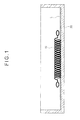
Fig. 1 is a schematic view showing that a sample oil is adhered to a spiral spring in Examples of the invention. -
Fig. 2 is a schematic view showing a spring adhesion test in Examples of the invention. - A lubricating oil composition for high-temperature applications according to the invention contains (A) a pyromellitate ester, (B) a sulfur-containing triazine antioxidant, and (C) a thiophosphoric acid ester antioxidant. The invention will be described below in detail.
- The component (A) forming the lubricating oil composition for high-temperature applications of the invention (hereinafter, referred to as "the composition") is a pyromellitate ester and corresponds to a base oil of the composition. For instance, a pyromellitate tetraester represented by the following formula (1) is preferably used.
-

- In the pyromellitate tetraester represented by the formula (1), all functional groups of R1 to R4 are hydrocarbyl groups, which may be mutually the same or different. Each of these functional groups are preferably an alkyl group having 6 to 16 carbon atoms, more preferably 6 to 10 carbon atoms, in terms of evaporativity restraint and fluidity.
Examples of the pyromellitate tetraester represented by the formula (1) include tetra-n-octyl pyromellitate, tetra-3,5,5-trimethylhexyl pyromellitate, tetra-undecyl pyromellitate, and tetraisostearyl pyromellitate. The alkyl group preferably has a linear structure in terms of evaporativity restraint.
A content rate of the component (A) in the composition is preferably in a range of 10 mass% to 99 mass% of a total amount of the composition, more preferably in a range of 20 mass% to 96 mass%. When the content rate falls within the above range, the composition is excellent in a balance between evaporativity restraint and fluidity. - It is preferable that the base oil of the composition further contains polybutene or a polyalphaolefin in terms of thickening effects. When the base oil further contains polybutene or a polyalphaolefin, the composition can be effectively prevented from dropping off a chain and a gear even under high temperatures.
Polybutene is exemplified by a mixture of polyisobutylene and poly-n-butene formed by polymerization of olefins having 4 carbon atoms, preferably having a number average molecular weight of 300 to 1500. Polybutene or polyisobutylene having a number average molecular weight of 400 to 1300 is particularly preferable. The mass average molecular weight (Mn) can be measured by gel-chromatography. A polymer formed by 100% polyisobutylene or 100% poly-n-butene may be used as polybutene. - As the polyalphaolefin, a known alpha-olefin oligomer can be used as it is, or can be used after hydrogenation: As the alpha-olefin, 1-octene, 1-decene, 1-dodecene and 1-tetradecene are usable. As an oligomerization catalyst, a typically used BF3 complex catalyst, solid acid catalyst or metallocene complex catalyst for general purpose may be used. For hydrogenating the oligomer, a typical nickel catalyst such as sponge nickel and nickel diatomite and a noble metal catalyst such as palladium activated carbon or ruthenium activated carbon are preferable. Any types of catalysts including a support catalyst and a complex catalyst are usable. The above polyalphaolefin preferably has a kinematic viscosity at 100 degrees C approximately in a range of 10 mm2/s to 400 mm2/s.
When either polybutene or the polyalphaolefin is used alone, a content of either one is preferably 40 mass% or less. When both polybutene and the polyalphaolefin are used in a mixture, a content of the mixture of polybutene and the polyalphaolefin is also preferably 40 mass% or less. - The component (B) forming the composition is a sulfur-containing triazine antioxidant. The sulfur-containing triazine antioxidant is preferably exemplified by 2,6-di-tert-butyl-4-(4,6-bis(octylthio)-1,3,5-triazine-2-ylamino)phenol.
The component (B) exhibits a low evaporativity, and also exhibits excellent anti-oxidation effect and sludge formation prevention effect even under high temperatures by being contained together with a later-described component (C).
A content rate of the component (B) in the composition is preferably in a range of 0.01 mass% to 5 mass% of the total amount of the composition, more preferably in a range of 0.1 mass% to 3 mass%. - The component (C) forming the composition is a thiophosphoric acid ester antioxidant. Examples of a thiophosphoric acid ester include a thiophosphite and a thiophosphate, particularly preferably, an alkyl thiophosphite and an aryl thiophosphate, examples of which include trilauryl trithiophosphite, triphenyl thiophosphate, trinonylphenyl thiophosphate and triphenyl phosphorothioate.
The component (C) exhibits a low evaporativity, and also exhibits excellent anti-oxidation effect and wear resistance even under high temperatures by being contained together with the aforementioned component (B).
A content rate of the component (C) in the composition is preferably in a range of 0.01 mass% to 10 mass% of the total amount of the composition, more preferably in a range of 0.5 mass% to 5 mass%, in terms of the above effects. - By blending an amine antioxidant as the component (D) in the composition, the anti-oxidation effect and the sludge formation prevention effect can be enhanced. The amine antioxidant is exemplified by a diphenylamine antioxidant, examples of which include diphenylamine, monooctyl diphenylamine, monononyl diphenylamine, 4,4'-dibutyl diphenylamine, 4,4'-dihexyl diphenylamine, 4,4'-dioctyl diphenylamine, 4,4'-dinonyl diphenylamine, tetrabutyl diphenylamine, tetrahexyl diphenylamine, tetraoctyl diphenylamine, tetranonyl diphenylamine, and 4,4'-bis(α,α-dimethylbenzyl)diphenylamine. The amine antioxidant is also exemplified by a naphthylamine antioxidant, examples of which include α-naphthylamine, phenyl-α-naphthylamine, butylpheny-α-naphthylamine, hexylphenyl-α-naphthylamine, octylphenyl-α-naphthylamine, and nonylphenyl-α-naphthylamine. Among the above, the diphenylamine antioxidant is preferred to the naphthylamine antioxidant in terms of the effects.
A content rate of the component (D) in the composition is preferably in a range of 0.01 mass% to 10 mass% of the total amount of the composition, more preferably in a range of 0.1 mass% to 5 mass%, in terms of the above effects. - In the invention, a phenol antioxidant is preferably contained as the component (E) in terms of the anti-oxidation effect and the sludge formation prevention effect. Preferable examples of the phenol antioxidant include 2,6-di-tert-butyl-4-methylphenol, 2,6-di-tert-butyl-4-ethylphenol, 2,4,6-tri-tert-butylphenol, 2,6-di-tert-butyl-4-hydroxymethylphenol, 2,6-di-tert-butylphenol, 2,4-dimethyl-6-tert-butylphenol, 2,6-di-tert-butyl-4-(N,N-dimethylaminomethyl) phenol, 2,6-di-tert-amyl-4-methylphenol, 4,4'-methylenebis(2,6-di-tert-butylphenol), 4,4'-bis(2,6-di-tert-butylphenol), 4,4'-bis(2-methyl-6-tert-butylphenol), 2,2'-methylenebis(4-ethyl-6-tert-butylphenol), 2,2'-methylenebis(4-methyl-6-tert-butylphenol), 4,4'-butylidenebis(3-methyl-6-tert-butylphenol), 4,4'isopropylidenebis(2,6-di-tert-butylphenol), 2,2'-methylenebis(4-methyl-6-nonylphenol), 2,2'-isobutylidenebis(4,6-dimethylphenol), 2,2'-methylenebis(4-methyl-6-cyclohexylphenol), 2,4-dimethyl-6-tert-butylphenol, 4,4'-thiobis(2-methyl-6-tert-butylphenol), 4,4'-thiobis(3-methyl-6-tert-butylphenol), 2,2'-thiobis(4-methyl-6-tert-butylphenol), bis(3-methyl-4-hydroxy-5-tert-butylbenzyl) sulfide, bis(3,5-di-tert-butyl-4-hydroxybenzyl) sulfide, 2,2'-thio-diethylenebis[3-(3,5-di-tert-butyl-4-hydroxyphenyl) propionate], tridecyl-3-(3,5-di-tert-butyl-4-hydroxyphenyl) propionate, pentaerythrityl-tetraxis[3-(3,5-di-tert-butyl-4-hydroxyphenyl) propionate], octyl-3-(3,5-di-tert-butyl-4-hydroxyphenyl) propionate, octadecyl-3-(3,5-di-tert-butyl-4-hydroxyphenyl) propionate, and octyl-3-(3-methyl-5-tert-butyl-4-hydroxyphenyl) propionate.
A content rate of the component (E) in the composition is preferably in a range of 0.01 mass% to 10 mass% of the total amount of the composition, more preferably in a range of 0.1 mass% to 5 mass%, in terms of the above effects. - In the invention, the composition exhibits more excellent anti-oxidation effect and wear resistance even under high temperatures by containing a zinc dithiophosphate antioxidant as the component (F).
The zinc dithiophosphate antioxidant is exemplified by ZnDTP represented by the following formula (2). -

- In the formula (2), R5, R6, R7 and R8 each represent a primary or secondary alkyl group having 3 to 22 carbon atoms or a substituent selected from alkylaryl groups substituted by an alkyl group having 3 to 18 carbon atoms. R5, R6, R7 and R8 may be mutually the same or different.
In the invention, one of the ZnDTP may be used alone or two or more thereof may be used in combination. Particularly, ZnDTP containing zinc dithiophosphate of a secondary alkyl group as the main component is preferable for enhancing wear resistance.
Examples of the ZnDTP are zinc dipropyl dithiophosphate, zinc dibutyl dithiophosphate, zinc dipentyl dithiophosphate, zinc dihexyl dithiophosphate, zinc diisopentyl dithiophosphate, zinc diethylhexyl dithiophosphate, zinc dioctyl dithiophosphate, zinc dinonyl dithiophosphate, zinc didecyl dithiophosphate, zinc didodecyl dithiophosphate, zinc dipropylphenyl dithiophosphate, zinc dipentylphenyl dithiophosphate, zinc dipropylmethylphenyl dithiophosphate, zinc dinonylphenyl dithiophosphate, zinc didodecylphenyl dithiophosphate and zinc didodecylphenyl dithiophosphate.
A content rate of the component (F) in the composition is preferably in a range of 0.01 mass% to 10 mass% of the total amount of the composition, more preferably in a range of 0.02 mass% to 5 mass%, in terms of the above effects. - The composition may further contain various additives such as a detergent dispersant, a metal deactivator, and an antifoaming agent as long as the effects of the invention are not impaired.
The detergent dispersant is classified into a metal detergent and an ashless dispersant. Examples of the ashless dispersant include polybutenyl succinimide, polybutenyl benzylamine, and polybutenyl amine, each of which has a polybutenyl group having a number average molecular weight of 900 to 3500, and a derivative of a boron-modified substance and the like of those. One of the ashless dispersants may be contained alone or any two or more thereof may be contained in combination. A content of the ashless dispersant(s) is typically in a range of 0.01 mass% to 10 mass% of the total amount of the composition. Examples of the metal detergent include a sulfonate, a phenate, a salicylate and a naphthenate of an alkali metal (e.g., sodium (Na) and potassium (K)) or an alkaline earth metal (e.g., calcium (Ca) and magnesium (Mg)). One of the metal detergents may be used alone, or two or more thereof may be used in combination. A total base number and a content of the metal detergent(s) may be selected as needed depending on required performance of the lubricating oil. The total base number is typically 500 mgKOH/g or less according to a perchloric acid method, desirably in a range of 10 mgKOH/g to 400 mgKOH/g. A content of the metal detergent(s) is typically in a range of 0.1 mass% to 10 mass% or more of the total amount of the composition. - Examples of the metal deactivator include benzotriazole, a triazole derivative, a benzotriazole derivative and a thiadiazole derivative. A content of the metal deactivator is typically in a range of 0.01 mass% to 3 mass% or more of the total amount of the composition.
As the antifoaming agent, a liquid silicone is suitable, and a methylsilicone, a fluorosilicone, a polyacrylate and the like are usable. A content of the antifoaming agent is preferably in a range of 0.0005 mass% to 0.1 mass% of the total amount of the composition. - In the lubricating oil composition for high-temperature applications according to the invention, the amount of evaporation is significantly reducible and fluidity is maintainable for a long time, under high temperatures and in a thin film. The lubricating oil composition is suitably applicable to a chain, a chain roller, a chain conveyor, a bearing and the like used in a high-temperature furnace, a drying furnace, panelboard manufacturing equipment, a chemical fiber tenter, a resin film tenter and the like.
- Next, the invention will be further described in detail with reference to Examples and Comparatives, which by no means limit the invention.
- Base oils and additives described below were mixed at a predetermined content to prepare a lubricating oil composition, which was provided as a sample oil. Blend compositions are shown in Table 1.
-
- (1.1) Base Oil
- Base Oil 1: Pyromellitate Ester (Component A)
- (a tetraester mixture containing a linear alkyl group having 6 to 10 carbon atoms)
- Base Oil 2: Trimellitic Acid Ester
- (a triester containing a linear alkyl group having 10 carbon atoms as an alcohol residue)
- Base Oil 3: Polyalphaolefin (PAO)
- (Kinematic Viscosity at 100 degrees C: 10 mm2/s)
- Base Oil 4: Polybutene
- (Kinematic Viscosity at 100 degrees C: 800 mm2/s)
-
- (1.2) Additive
- (1.2.1) Sulfur-containing Triazine Antioxidant (Component B): 2,6-di-tert-butyl-4-(4,6-bis(octylthio)-1,3,5-triazine-2-ylamino)phenol
- (1.2.2) Thiophosphoric Acid Ester Antioxidant (Component C): trinonylphenylthiophosphate
- (1.2.3) Amine Antioxidant (Component D): 4-4'-bis(α,α-dimethylbenzyl)diphenylamine
- (1.2.4) Phenol Antioxidant (Component E): octadecyl-3-(3,5-di-tert-butyl-4-hydroxyphenyl)propionate
- (1.2.5) Zinc Dithiophosphate Antioxidant (Component F): ZnDTP (an alkyl group: a primary hexyl group
- (1.2.6) Other Additives:
- Detergent Dispersant: Ca salicylate
- Metal deactivator: benzotriazole
- Antifoaming Agent: silicone antifoaming agent
-


- The above sample oils were evaluated according to the following method. Results are shown in Table 1.
- The friction test for the sample oils was conducted with a ball-on-disc SRV reciprocating tester (manufactured by Optimol Ltd.) under the following conditions.
- 1) Test Piece
- Ball material: 10 mm diameter, 52100 steel, Rc=60±2, Ra=0.025±0.005 µm
- Disc material: 24 mm diameter, 7.85 mm thickness, 52100 steel, Rc=60±2, Rz=0.5 µm
- 2) Amplitude: 1 mm
- 3) Frequency: 50 Hz
- 4) Load: 200 N
- 5) Temperature: 190 degrees C
- 6) Testing time: 1 hour
- 7) Measurement items: coefficient of kinetic friction and wear scar width after the test
- 8) Measurement method: While a test ball (steel ball) was reciprocated on the test piece, a coefficient of kinetic friction was measured. A wear scar size on the test piece was measured in the X (lateral) direction and the Y (longitudinal) direction using a microscope, and the obtained values were averaged to provide a wear width (µm).
- A container and a thermostat air bath for the thermal stability test of lubricating oils (JIS K 2540) were used. A sample oil (1g) was put in the container and was left to stand still for 20 hours at three temperatures of 190 degrees, 210 degrees C and 230 degrees C. Subsequently, a residue of the sample oil was measured. The residue was divided by the original amount of the sample oil, and the obtained value was represented in percentage to provide a residual oil rate (%). Note that air was arranged to flow into the thermostat air bath at a flow rate of 10 L/hr.
- In the above test, after calculating the residual oil rate, the container was inclined by 45 degrees. Fluidity of the residual oil (thin film residue) was evaluated based on the following scale.
- A: The residual oil does not adhere and drops off the container within 15 minutes.
- B: A part of the residual oil adheres while another part thereof drops off the container within 15 minutes.
- C: The residual oil adheres and does not drop off the container even after the elapse of 15 minutes.
- As shown in
Fig. 1 , a metal spiral spring 10 (a diameter of a wire: 0.3 mm, an outer diameter: 3 mm, an entire length: 20 mm, a spring constant: 90 N/m) was mounted in a stainless-steel container 20 of a 50 mm inner diameter and a 10 mm depth. Subsequently, thespiral spring 10 was rolled over while being coated by a 0.5 g sample oil L, so that the sample oil L was entirely adhered to a spiral portion of the spiral spring 10 (i.e., a spiral portion of thespiral spring 10 was entirely covered with an oil film of the sample oil). Next, thespiral spring 10, together with the stainless-steel container 20, was left to stand still for 20 hours within a thermostat air bath (i.e., the air bath used in the thin film residue test) in which the temperature was set at 250 degrees C. Subsequently, thespiral spring 10 was taken out of the air bath and was brought back to ordinary temperatures. At this stage, the sample oil L adhering to thespiral spring 10 was half dried.
Next, as shown inFig. 2 , thespiral spring 10 to which half-dried sample oil L' adhered was hanged on a hangingbar 40. Aplastic container 30 having a mass of 50 g was hanged at the bottom of thespiral spring 10. A weight having a mass of 10 g was put into theplastic container 30 one by one until thespiral spring 10 suddenly began to be stretched (i.e., until the half-dried sample oil L' was cracked or broken). When thespiral spring 10 suddenly began to be stretched, a mass of the weight and thecontainer 30 was calculated. In terms of the lubricating oil, it is preferable that the spring is stretched to the maximum soon after the empty plastic container 30 (mass of 50 g) is hanged.
Note that the spring adhesion test was conducted only for the sample oils of Example 5, Comparative 1 and Comparative 2. - From the results of Table 1, in all the sample oils of Examples 1 to 5 according to the invention, lubricity and wear resistance at high temperatures are, of course, excellent and the amount of evaporation is restrained in a thin film and under high temperatures while fluidity is kept for a long time. Accordingly, by using the lubricating oil composition for high-temperature applications according to the invention, a life time and a maintenance interval of a high thermal device (e.g., a chain and a bearing driven in an oven) can be prolonged. Moreover, reduction of power consumption required for operating the high thermal device can contribute to cost saving and energy saving.
On the other hand, in Comparatives 1 and 2, since the component (A) is not used as the base oil, the amount of evaporation is extremely large and fluidity declines in a short period of time in a thin film and under high temperatures. Moreover, lubricity and wear resistance are also poor. In Comparative 3, since the component (B) is not contained as an additive, fluidity under high temperatures declines in a short period of time. In Comparative 4, since the component (C) is not contained as an additive, lubricity and wear resistance are poor. -
- 10
- spiral spring
- 20
- stainless-steel container
- 30
- plastic container
- 40
- hanging bar
- L
- sample oil
- L'
- half-dried sample oil
Claims (8)
- A lubricating oil composition for high-temperature applications, comprising:(A) a pyromellitate ester;(B) a sulfur-containing triazine antioxidant; and(C) a thiophosphoric acid ester antioxidant.
- The lubricating oil composition for high-temperature applications according to claim 1, further comprising: (D) an amine antioxidant.
- The lubricating oil composition for high-temperature applications according to claim 1 or 2, further comprising: (E) a phenol antioxidant.
- The lubricating oil composition for high-temperature applications according to any one of claims 1 to 3, further comprising: (F) a zinc dithiophosphate antioxidant.
- The lubricating oil composition for high-temperature applications according to any one of claims 1 to 4, wherein
a content of the component (A) is 20 mass% or more of a total amount of the composition. - The lubricating oil composition for high-temperature applications according to any one of claims 1 to 5, further comprising: at least one of polybutene and a polyalphaolefin.
- The lubricating oil composition for high-temperature applications according to any one of claims 1 to 6, wherein
the lubricating oil composition is used under the atmosphere of the temperature of 200 degrees C or more. - The lubricating oil composition for high-temperature applications according to any one of claims 1 to 7, wherein
the lubricating oil composition is applied to one of a chain, a gear and a bearing.
Applications Claiming Priority (2)
| Application Number | Priority Date | Filing Date | Title |
|---|---|---|---|
| JP2010064315A JP5623765B2 (en) | 2010-03-19 | 2010-03-19 | High temperature lubricating oil composition |
| PCT/JP2011/056337 WO2011115193A1 (en) | 2010-03-19 | 2011-03-17 | Lubricating oil composition for high-temperature applications |
Publications (3)
| Publication Number | Publication Date |
|---|---|
| EP2548940A1 true EP2548940A1 (en) | 2013-01-23 |
| EP2548940A4 EP2548940A4 (en) | 2013-09-04 |
| EP2548940B1 EP2548940B1 (en) | 2019-11-06 |
Family
ID=44649276
Family Applications (1)
| Application Number | Title | Priority Date | Filing Date |
|---|---|---|---|
| EP11756377.5A Active EP2548940B1 (en) | 2010-03-19 | 2011-03-17 | Lubricating oil composition for high-temperature applications |
Country Status (5)
| Country | Link |
|---|---|
| US (1) | US9068136B2 (en) |
| EP (1) | EP2548940B1 (en) |
| JP (1) | JP5623765B2 (en) |
| CN (1) | CN102791842A (en) |
| WO (1) | WO2011115193A1 (en) |
Cited By (1)
| Publication number | Priority date | Publication date | Assignee | Title |
|---|---|---|---|---|
| EP2975103A4 (en) * | 2013-03-14 | 2016-11-16 | Idemitsu Kosan Co | HIGH TEMPERATURE LUBRICATING COMPOSITION |
Families Citing this family (4)
| Publication number | Priority date | Publication date | Assignee | Title |
|---|---|---|---|---|
| JP5898287B2 (en) * | 2014-09-25 | 2016-04-06 | 出光興産株式会社 | High temperature lubricating oil composition |
| JP7193923B2 (en) * | 2018-03-30 | 2022-12-21 | 出光興産株式会社 | lubricating oil composition |
| CN116685663B (en) | 2020-12-23 | 2025-07-25 | 路博润公司 | Benzazepine compounds as antioxidants for lubricating compositions |
| WO2025132945A1 (en) * | 2023-12-20 | 2025-06-26 | Infineum International Limited | Lubricant compositions containing aralkyl substituted diphenylamine antioxidant |
Family Cites Families (10)
| Publication number | Priority date | Publication date | Assignee | Title |
|---|---|---|---|---|
| US4543420A (en) * | 1984-10-15 | 1985-09-24 | Exxon Research & Engineering Co. | Pyromellitate plasticizers and vinyl chloride |
| JPH10130673A (en) * | 1996-10-25 | 1998-05-19 | New Japan Chem Co Ltd | Lube base oil |
| JP2000001681A (en) * | 1998-06-12 | 2000-01-07 | New Japan Chem Co Ltd | Lubricating base oil |
| JP3997627B2 (en) * | 1998-10-26 | 2007-10-24 | 新日本理化株式会社 | Lubricating oil composition for chains |
| US6726855B1 (en) * | 1998-12-02 | 2004-04-27 | Uniroyal Chemical Company, Inc. | Lubricant compositions comprising multiple antioxidants |
| JP4049916B2 (en) * | 1998-12-25 | 2008-02-20 | 出光興産株式会社 | High temperature lubricating oil composition |
| JP2000290676A (en) * | 1999-04-05 | 2000-10-17 | Idemitsu Kosan Co Ltd | Metalworking oil composition |
| JP4310286B2 (en) | 2004-03-31 | 2009-08-05 | 三菱重工業株式会社 | Lubricating oil composition |
| US7732386B2 (en) * | 2005-10-25 | 2010-06-08 | Chevron U.S.A. Inc. | Rust inhibitor for highly paraffinic lubricating base oil |
| JP4999311B2 (en) * | 2005-11-01 | 2012-08-15 | 出光興産株式会社 | Lubricating oil composition |
-
2010
- 2010-03-19 JP JP2010064315A patent/JP5623765B2/en active Active
-
2011
- 2011-03-17 CN CN2011800145170A patent/CN102791842A/en active Pending
- 2011-03-17 EP EP11756377.5A patent/EP2548940B1/en active Active
- 2011-03-17 US US13/635,996 patent/US9068136B2/en active Active
- 2011-03-17 WO PCT/JP2011/056337 patent/WO2011115193A1/en not_active Ceased
Cited By (1)
| Publication number | Priority date | Publication date | Assignee | Title |
|---|---|---|---|---|
| EP2975103A4 (en) * | 2013-03-14 | 2016-11-16 | Idemitsu Kosan Co | HIGH TEMPERATURE LUBRICATING COMPOSITION |
Also Published As
| Publication number | Publication date |
|---|---|
| JP2011195716A (en) | 2011-10-06 |
| JP5623765B2 (en) | 2014-11-12 |
| CN102791842A (en) | 2012-11-21 |
| US9068136B2 (en) | 2015-06-30 |
| EP2548940B1 (en) | 2019-11-06 |
| EP2548940A4 (en) | 2013-09-04 |
| WO2011115193A1 (en) | 2011-09-22 |
| US20130012417A1 (en) | 2013-01-10 |
Similar Documents
| Publication | Publication Date | Title |
|---|---|---|
| EP2975103A1 (en) | High-temperature lubricant composition | |
| JP6310857B2 (en) | Grease composition | |
| EP2548940B1 (en) | Lubricating oil composition for high-temperature applications | |
| JP5629587B2 (en) | Lubricating oil composition for automatic transmission | |
| KR20010099607A (en) | High performance lubricating oils | |
| EP2905323A1 (en) | Lubricating oil composition | |
| EP2966153A1 (en) | Lubricating-oil composition | |
| CN101617033A (en) | lubricating oil composition | |
| US20110077183A1 (en) | Lubricant composition | |
| EP2246412A1 (en) | Lubricant composition and continuously variable transmission | |
| JPWO2013062008A1 (en) | Lubricating oil composition | |
| EP3098289A1 (en) | Metalworking oil composition | |
| US20170175029A1 (en) | Lubricating-oil composition | |
| EP3178911B1 (en) | Lubricating oil composition | |
| JP5898287B2 (en) | High temperature lubricating oil composition | |
| EP3425032B1 (en) | Lubricating oil composition | |
| JP2012107143A (en) | Lubricant composition | |
| JP5122353B2 (en) | Worm gear oil composition and worm gear unit | |
| JP5373568B2 (en) | Lubricating oil composition for ball screw | |
| JP2017210509A (en) | Gas engine oil composition | |
| EP3031887A1 (en) | Transmission fluid | |
| EP4317371B1 (en) | Lubricating oil composition | |
| AU2024309309A1 (en) | Lubricating oil composition | |
| JP2025007800A (en) | Lubricating Oil Composition |
Legal Events
| Date | Code | Title | Description |
|---|---|---|---|
| PUAI | Public reference made under article 153(3) epc to a published international application that has entered the european phase |
Free format text: ORIGINAL CODE: 0009012 |
|
| 17P | Request for examination filed |
Effective date: 20121009 |
|
| AK | Designated contracting states |
Kind code of ref document: A1 Designated state(s): AL AT BE BG CH CY CZ DE DK EE ES FI FR GB GR HR HU IE IS IT LI LT LU LV MC MK MT NL NO PL PT RO RS SE SI SK SM TR |
|
| DAX | Request for extension of the european patent (deleted) | ||
| A4 | Supplementary search report drawn up and despatched |
Effective date: 20130806 |
|
| RIC1 | Information provided on ipc code assigned before grant |
Ipc: C10N 40/32 20060101ALI20130731BHEP Ipc: C10M 169/04 20060101AFI20130731BHEP Ipc: C10N 10/04 20060101ALI20130731BHEP Ipc: C10N 40/04 20060101ALI20130731BHEP Ipc: C10M 107/02 20060101ALI20130731BHEP Ipc: C10N 30/10 20060101ALI20130731BHEP Ipc: C10M 105/36 20060101ALI20130731BHEP Ipc: C10M 129/10 20060101ALI20130731BHEP Ipc: C10M 133/12 20060101ALI20130731BHEP Ipc: C10M 137/10 20060101ALI20130731BHEP Ipc: C10M 107/08 20060101ALI20130731BHEP Ipc: C10N 40/02 20060101ALI20130731BHEP Ipc: C10M 135/30 20060101ALI20130731BHEP |
|
| 17Q | First examination report despatched |
Effective date: 20140624 |
|
| GRAP | Despatch of communication of intention to grant a patent |
Free format text: ORIGINAL CODE: EPIDOSNIGR1 |
|
| STAA | Information on the status of an ep patent application or granted ep patent |
Free format text: STATUS: GRANT OF PATENT IS INTENDED |
|
| INTG | Intention to grant announced |
Effective date: 20190606 |
|
| GRAS | Grant fee paid |
Free format text: ORIGINAL CODE: EPIDOSNIGR3 |
|
| GRAA | (expected) grant |
Free format text: ORIGINAL CODE: 0009210 |
|
| STAA | Information on the status of an ep patent application or granted ep patent |
Free format text: STATUS: THE PATENT HAS BEEN GRANTED |
|
| AK | Designated contracting states |
Kind code of ref document: B1 Designated state(s): AL AT BE BG CH CY CZ DE DK EE ES FI FR GB GR HR HU IE IS IT LI LT LU LV MC MK MT NL NO PL PT RO RS SE SI SK SM TR |
|
| REG | Reference to a national code |
Ref country code: GB Ref legal event code: FG4D |
|
| REG | Reference to a national code |
Ref country code: CH Ref legal event code: EP Ref country code: AT Ref legal event code: REF Ref document number: 1198724 Country of ref document: AT Kind code of ref document: T Effective date: 20191115 |
|
| REG | Reference to a national code |
Ref country code: IE Ref legal event code: FG4D |
|
| REG | Reference to a national code |
Ref country code: DE Ref legal event code: R096 Ref document number: 602011063199 Country of ref document: DE |
|
| REG | Reference to a national code |
Ref country code: NL Ref legal event code: MP Effective date: 20191106 |
|
| REG | Reference to a national code |
Ref country code: LT Ref legal event code: MG4D |
|
| PG25 | Lapsed in a contracting state [announced via postgrant information from national office to epo] |
Ref country code: LV Free format text: LAPSE BECAUSE OF FAILURE TO SUBMIT A TRANSLATION OF THE DESCRIPTION OR TO PAY THE FEE WITHIN THE PRESCRIBED TIME-LIMIT Effective date: 20191106 Ref country code: SE Free format text: LAPSE BECAUSE OF FAILURE TO SUBMIT A TRANSLATION OF THE DESCRIPTION OR TO PAY THE FEE WITHIN THE PRESCRIBED TIME-LIMIT Effective date: 20191106 Ref country code: LT Free format text: LAPSE BECAUSE OF FAILURE TO SUBMIT A TRANSLATION OF THE DESCRIPTION OR TO PAY THE FEE WITHIN THE PRESCRIBED TIME-LIMIT Effective date: 20191106 Ref country code: NL Free format text: LAPSE BECAUSE OF FAILURE TO SUBMIT A TRANSLATION OF THE DESCRIPTION OR TO PAY THE FEE WITHIN THE PRESCRIBED TIME-LIMIT Effective date: 20191106 Ref country code: BG Free format text: LAPSE BECAUSE OF FAILURE TO SUBMIT A TRANSLATION OF THE DESCRIPTION OR TO PAY THE FEE WITHIN THE PRESCRIBED TIME-LIMIT Effective date: 20200206 Ref country code: FI Free format text: LAPSE BECAUSE OF FAILURE TO SUBMIT A TRANSLATION OF THE DESCRIPTION OR TO PAY THE FEE WITHIN THE PRESCRIBED TIME-LIMIT Effective date: 20191106 Ref country code: PT Free format text: LAPSE BECAUSE OF FAILURE TO SUBMIT A TRANSLATION OF THE DESCRIPTION OR TO PAY THE FEE WITHIN THE PRESCRIBED TIME-LIMIT Effective date: 20200306 Ref country code: GR Free format text: LAPSE BECAUSE OF FAILURE TO SUBMIT A TRANSLATION OF THE DESCRIPTION OR TO PAY THE FEE WITHIN THE PRESCRIBED TIME-LIMIT Effective date: 20200207 Ref country code: NO Free format text: LAPSE BECAUSE OF FAILURE TO SUBMIT A TRANSLATION OF THE DESCRIPTION OR TO PAY THE FEE WITHIN THE PRESCRIBED TIME-LIMIT Effective date: 20200206 Ref country code: ES Free format text: LAPSE BECAUSE OF FAILURE TO SUBMIT A TRANSLATION OF THE DESCRIPTION OR TO PAY THE FEE WITHIN THE PRESCRIBED TIME-LIMIT Effective date: 20191106 Ref country code: PL Free format text: LAPSE BECAUSE OF FAILURE TO SUBMIT A TRANSLATION OF THE DESCRIPTION OR TO PAY THE FEE WITHIN THE PRESCRIBED TIME-LIMIT Effective date: 20191106 |
|
| PG25 | Lapsed in a contracting state [announced via postgrant information from national office to epo] |
Ref country code: HR Free format text: LAPSE BECAUSE OF FAILURE TO SUBMIT A TRANSLATION OF THE DESCRIPTION OR TO PAY THE FEE WITHIN THE PRESCRIBED TIME-LIMIT Effective date: 20191106 Ref country code: RS Free format text: LAPSE BECAUSE OF FAILURE TO SUBMIT A TRANSLATION OF THE DESCRIPTION OR TO PAY THE FEE WITHIN THE PRESCRIBED TIME-LIMIT Effective date: 20191106 Ref country code: IS Free format text: LAPSE BECAUSE OF FAILURE TO SUBMIT A TRANSLATION OF THE DESCRIPTION OR TO PAY THE FEE WITHIN THE PRESCRIBED TIME-LIMIT Effective date: 20200306 |
|
| PG25 | Lapsed in a contracting state [announced via postgrant information from national office to epo] |
Ref country code: AL Free format text: LAPSE BECAUSE OF FAILURE TO SUBMIT A TRANSLATION OF THE DESCRIPTION OR TO PAY THE FEE WITHIN THE PRESCRIBED TIME-LIMIT Effective date: 20191106 |
|
| PG25 | Lapsed in a contracting state [announced via postgrant information from national office to epo] |
Ref country code: CZ Free format text: LAPSE BECAUSE OF FAILURE TO SUBMIT A TRANSLATION OF THE DESCRIPTION OR TO PAY THE FEE WITHIN THE PRESCRIBED TIME-LIMIT Effective date: 20191106 Ref country code: RO Free format text: LAPSE BECAUSE OF FAILURE TO SUBMIT A TRANSLATION OF THE DESCRIPTION OR TO PAY THE FEE WITHIN THE PRESCRIBED TIME-LIMIT Effective date: 20191106 Ref country code: DK Free format text: LAPSE BECAUSE OF FAILURE TO SUBMIT A TRANSLATION OF THE DESCRIPTION OR TO PAY THE FEE WITHIN THE PRESCRIBED TIME-LIMIT Effective date: 20191106 Ref country code: EE Free format text: LAPSE BECAUSE OF FAILURE TO SUBMIT A TRANSLATION OF THE DESCRIPTION OR TO PAY THE FEE WITHIN THE PRESCRIBED TIME-LIMIT Effective date: 20191106 |
|
| REG | Reference to a national code |
Ref country code: DE Ref legal event code: R097 Ref document number: 602011063199 Country of ref document: DE |
|
| REG | Reference to a national code |
Ref country code: AT Ref legal event code: MK05 Ref document number: 1198724 Country of ref document: AT Kind code of ref document: T Effective date: 20191106 |
|
| PG25 | Lapsed in a contracting state [announced via postgrant information from national office to epo] |
Ref country code: SK Free format text: LAPSE BECAUSE OF FAILURE TO SUBMIT A TRANSLATION OF THE DESCRIPTION OR TO PAY THE FEE WITHIN THE PRESCRIBED TIME-LIMIT Effective date: 20191106 Ref country code: SM Free format text: LAPSE BECAUSE OF FAILURE TO SUBMIT A TRANSLATION OF THE DESCRIPTION OR TO PAY THE FEE WITHIN THE PRESCRIBED TIME-LIMIT Effective date: 20191106 |
|
| PLBE | No opposition filed within time limit |
Free format text: ORIGINAL CODE: 0009261 |
|
| STAA | Information on the status of an ep patent application or granted ep patent |
Free format text: STATUS: NO OPPOSITION FILED WITHIN TIME LIMIT |
|
| 26N | No opposition filed |
Effective date: 20200807 |
|
| PG25 | Lapsed in a contracting state [announced via postgrant information from national office to epo] |
Ref country code: MC Free format text: LAPSE BECAUSE OF FAILURE TO SUBMIT A TRANSLATION OF THE DESCRIPTION OR TO PAY THE FEE WITHIN THE PRESCRIBED TIME-LIMIT Effective date: 20191106 |
|
| REG | Reference to a national code |
Ref country code: CH Ref legal event code: PL |
|
| PG25 | Lapsed in a contracting state [announced via postgrant information from national office to epo] |
Ref country code: SI Free format text: LAPSE BECAUSE OF FAILURE TO SUBMIT A TRANSLATION OF THE DESCRIPTION OR TO PAY THE FEE WITHIN THE PRESCRIBED TIME-LIMIT Effective date: 20191106 Ref country code: AT Free format text: LAPSE BECAUSE OF FAILURE TO SUBMIT A TRANSLATION OF THE DESCRIPTION OR TO PAY THE FEE WITHIN THE PRESCRIBED TIME-LIMIT Effective date: 20191106 |
|
| REG | Reference to a national code |
Ref country code: BE Ref legal event code: MM Effective date: 20200331 |
|
| PG25 | Lapsed in a contracting state [announced via postgrant information from national office to epo] |
Ref country code: LU Free format text: LAPSE BECAUSE OF NON-PAYMENT OF DUE FEES Effective date: 20200317 |
|
| PG25 | Lapsed in a contracting state [announced via postgrant information from national office to epo] |
Ref country code: IE Free format text: LAPSE BECAUSE OF NON-PAYMENT OF DUE FEES Effective date: 20200317 Ref country code: IT Free format text: LAPSE BECAUSE OF FAILURE TO SUBMIT A TRANSLATION OF THE DESCRIPTION OR TO PAY THE FEE WITHIN THE PRESCRIBED TIME-LIMIT Effective date: 20191106 Ref country code: CH Free format text: LAPSE BECAUSE OF NON-PAYMENT OF DUE FEES Effective date: 20200331 Ref country code: LI Free format text: LAPSE BECAUSE OF NON-PAYMENT OF DUE FEES Effective date: 20200331 Ref country code: FR Free format text: LAPSE BECAUSE OF NON-PAYMENT OF DUE FEES Effective date: 20200331 |
|
| PG25 | Lapsed in a contracting state [announced via postgrant information from national office to epo] |
Ref country code: BE Free format text: LAPSE BECAUSE OF NON-PAYMENT OF DUE FEES Effective date: 20200331 |
|
| GBPC | Gb: european patent ceased through non-payment of renewal fee |
Effective date: 20200317 |
|
| PG25 | Lapsed in a contracting state [announced via postgrant information from national office to epo] |
Ref country code: GB Free format text: LAPSE BECAUSE OF NON-PAYMENT OF DUE FEES Effective date: 20200317 |
|
| PG25 | Lapsed in a contracting state [announced via postgrant information from national office to epo] |
Ref country code: TR Free format text: LAPSE BECAUSE OF FAILURE TO SUBMIT A TRANSLATION OF THE DESCRIPTION OR TO PAY THE FEE WITHIN THE PRESCRIBED TIME-LIMIT Effective date: 20191106 Ref country code: MT Free format text: LAPSE BECAUSE OF FAILURE TO SUBMIT A TRANSLATION OF THE DESCRIPTION OR TO PAY THE FEE WITHIN THE PRESCRIBED TIME-LIMIT Effective date: 20191106 Ref country code: CY Free format text: LAPSE BECAUSE OF FAILURE TO SUBMIT A TRANSLATION OF THE DESCRIPTION OR TO PAY THE FEE WITHIN THE PRESCRIBED TIME-LIMIT Effective date: 20191106 |
|
| PG25 | Lapsed in a contracting state [announced via postgrant information from national office to epo] |
Ref country code: MK Free format text: LAPSE BECAUSE OF FAILURE TO SUBMIT A TRANSLATION OF THE DESCRIPTION OR TO PAY THE FEE WITHIN THE PRESCRIBED TIME-LIMIT Effective date: 20191106 |
|
| PGFP | Annual fee paid to national office [announced via postgrant information from national office to epo] |
Ref country code: DE Payment date: 20250128 Year of fee payment: 15 |