EP2548639A1 - Erkennung von Prozesstemperaturanomalien in Rohrreaktoren - Google Patents
Erkennung von Prozesstemperaturanomalien in Rohrreaktoren Download PDFInfo
- Publication number
- EP2548639A1 EP2548639A1 EP20120174060 EP12174060A EP2548639A1 EP 2548639 A1 EP2548639 A1 EP 2548639A1 EP 20120174060 EP20120174060 EP 20120174060 EP 12174060 A EP12174060 A EP 12174060A EP 2548639 A1 EP2548639 A1 EP 2548639A1
- Authority
- EP
- European Patent Office
- Prior art keywords
- temperature
- process according
- reactor
- thermocouples
- less
- Prior art date
- Legal status (The legal status is an assumption and is not a legal conclusion. Google has not performed a legal analysis and makes no representation as to the accuracy of the status listed.)
- Granted
Links
Images


Classifications
-
- B—PERFORMING OPERATIONS; TRANSPORTING
- B01—PHYSICAL OR CHEMICAL PROCESSES OR APPARATUS IN GENERAL
- B01J—CHEMICAL OR PHYSICAL PROCESSES, e.g. CATALYSIS OR COLLOID CHEMISTRY; THEIR RELEVANT APPARATUS
- B01J19/00—Chemical, physical or physico-chemical processes in general; Their relevant apparatus
- B01J19/0006—Controlling or regulating processes
- B01J19/0013—Controlling the temperature of the process
-
- B—PERFORMING OPERATIONS; TRANSPORTING
- B01—PHYSICAL OR CHEMICAL PROCESSES OR APPARATUS IN GENERAL
- B01J—CHEMICAL OR PHYSICAL PROCESSES, e.g. CATALYSIS OR COLLOID CHEMISTRY; THEIR RELEVANT APPARATUS
- B01J19/00—Chemical, physical or physico-chemical processes in general; Their relevant apparatus
- B01J19/0006—Controlling or regulating processes
- B01J19/002—Avoiding undesirable reactions or side-effects, e.g. avoiding explosions, or improving the yield by suppressing side-reactions
-
- C—CHEMISTRY; METALLURGY
- C08—ORGANIC MACROMOLECULAR COMPOUNDS; THEIR PREPARATION OR CHEMICAL WORKING-UP; COMPOSITIONS BASED THEREON
- C08F—MACROMOLECULAR COMPOUNDS OBTAINED BY REACTIONS ONLY INVOLVING CARBON-TO-CARBON UNSATURATED BONDS
- C08F210/00—Copolymers of unsaturated aliphatic hydrocarbons having only one carbon-to-carbon double bond
- C08F210/16—Copolymers of ethene with alpha-alkenes, e.g. EP rubbers
-
- B—PERFORMING OPERATIONS; TRANSPORTING
- B01—PHYSICAL OR CHEMICAL PROCESSES OR APPARATUS IN GENERAL
- B01J—CHEMICAL OR PHYSICAL PROCESSES, e.g. CATALYSIS OR COLLOID CHEMISTRY; THEIR RELEVANT APPARATUS
- B01J2219/00—Chemical, physical or physico-chemical processes in general; Their relevant apparatus
- B01J2219/00049—Controlling or regulating processes
- B01J2219/00051—Controlling the temperature
-
- B—PERFORMING OPERATIONS; TRANSPORTING
- B01—PHYSICAL OR CHEMICAL PROCESSES OR APPARATUS IN GENERAL
- B01J—CHEMICAL OR PHYSICAL PROCESSES, e.g. CATALYSIS OR COLLOID CHEMISTRY; THEIR RELEVANT APPARATUS
- B01J2219/00—Chemical, physical or physico-chemical processes in general; Their relevant apparatus
- B01J2219/00049—Controlling or regulating processes
- B01J2219/00191—Control algorithm
- B01J2219/00193—Sensing a parameter
- B01J2219/00195—Sensing a parameter of the reaction system
- B01J2219/002—Sensing a parameter of the reaction system inside the reactor
-
- B—PERFORMING OPERATIONS; TRANSPORTING
- B01—PHYSICAL OR CHEMICAL PROCESSES OR APPARATUS IN GENERAL
- B01J—CHEMICAL OR PHYSICAL PROCESSES, e.g. CATALYSIS OR COLLOID CHEMISTRY; THEIR RELEVANT APPARATUS
- B01J2219/00—Chemical, physical or physico-chemical processes in general; Their relevant apparatus
- B01J2219/00049—Controlling or regulating processes
- B01J2219/00191—Control algorithm
- B01J2219/00222—Control algorithm taking actions
- B01J2219/00227—Control algorithm taking actions modifying the operating conditions
- B01J2219/00229—Control algorithm taking actions modifying the operating conditions of the reaction system
-
- B—PERFORMING OPERATIONS; TRANSPORTING
- B01—PHYSICAL OR CHEMICAL PROCESSES OR APPARATUS IN GENERAL
- B01J—CHEMICAL OR PHYSICAL PROCESSES, e.g. CATALYSIS OR COLLOID CHEMISTRY; THEIR RELEVANT APPARATUS
- B01J2219/00—Chemical, physical or physico-chemical processes in general; Their relevant apparatus
- B01J2219/00049—Controlling or regulating processes
- B01J2219/00245—Avoiding undesirable reactions or side-effects
- B01J2219/00259—Preventing runaway of the chemical reaction
- B01J2219/00261—Predicting runaway of the chemical reaction
-
- C—CHEMISTRY; METALLURGY
- C08—ORGANIC MACROMOLECULAR COMPOUNDS; THEIR PREPARATION OR CHEMICAL WORKING-UP; COMPOSITIONS BASED THEREON
- C08F—MACROMOLECULAR COMPOUNDS OBTAINED BY REACTIONS ONLY INVOLVING CARBON-TO-CARBON UNSATURATED BONDS
- C08F110/00—Homopolymers of unsaturated aliphatic hydrocarbons having only one carbon-to-carbon double bond
- C08F110/02—Ethene
-
- C—CHEMISTRY; METALLURGY
- C08—ORGANIC MACROMOLECULAR COMPOUNDS; THEIR PREPARATION OR CHEMICAL WORKING-UP; COMPOSITIONS BASED THEREON
- C08F—MACROMOLECULAR COMPOUNDS OBTAINED BY REACTIONS ONLY INVOLVING CARBON-TO-CARBON UNSATURATED BONDS
- C08F2400/00—Characteristics for processes of polymerization
- C08F2400/02—Control or adjustment of polymerization parameters
Definitions
- the present invention relates to the high pressure polymerization of ethylene homopolymers and co-polymers.
- a "decomp” decomposition of the monomer(s) in the tubular reactor.
- Decomps result in reactor downtime, lost production, and increased wear on reactor components.
- a number of strategies have been devised to modify reactor conditions in order to prevent the occurrence of a decomp in the reactor.
- the present invention provides a method to detect process temperature anomalies associated with an increased likelihood in conditions leading to decomposition of a polymerizing mixture of 100 to 60 weight % of one or more C 2-8 alpha olefins and 0 to 40 weight % of one or more monomers selected from the group consisting of vinyl acetate; C 3-6 ethylenically unsaturated carboxylic acids and C 1-4 alkyl esters thereof in the presence of one or more initiators selected from the group consisting of oxygen, hydrogen peroxide, organic peroxides, persulfates, perborates, percarbonates, organic azo compounds at pressures from 80 to 310 MPa and temperatures from 130 to 350°C in a tubular reactor having n thermocouples along the length of the reactor where n is a whole number between 100 and 350 comprising :
- thermocouples if across two or more thermocouples there is temperature excursion greater than 3 ⁇ above the mean temperature and the moving range also exceeds a predetermined threshold for a given thermocouple steps are taken to reduce the rate of reaction. These steps may include:
- reaction temperature is from 150 to 340°C.
- the pressure is from 200 to 290 MPa.
- step i) not less than 300 measurements are taken to establish the mean reaction temperature and standard deviation.
- step ii) the frequency of analyzing the temperature data is not less than once every thirty seconds.
- step ii) the temperature excursion must be observed over not less than 3 thermocouples.
- step ii) the sequential segments of temperature process data covering not less than 45 seconds.
- the data are analyzed using a microprocessor.
- microprocessor is part of a process control system controlling the reaction process.
- the mean temperature is from 200 to 340 °C.
- the mixture comprises 100 to 80 weight % of one or more C 2-8 alpha olefins and 0 to 20 weight % of one or more compounds selected from the group consisting of vinyl acetate and C 3-6 ethylenically unsaturated carboxylic acids and C 1-4 alkyl esters thereof.
- the monomer mixture comprises ethylene and propylene.
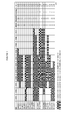
- Figure 1 summarizes the performance of the roller detector when validated against historical sets of high speed process data (i.e. temperature measurements).
- the program had a success rate of 85% in detecting the process temperature anomalies seen on individual thermocouples. All of these cases would have been correctly identified as "rollers”.
- Figure 2 shows a series of high speed process temperature measurements showing a typical "roller" event.
- FIG. 3 shows the high speed process temperature measurements for 1 thermocouple from Figure 1 . Note the temperature excursion above the upper control limit (UCL) for this thermocouple.
- UCL upper control limit
- Figure 4 shows the moving range values for the same thermocouple from Figure 3 . Note the upper control limit excursions.
- roller means a temperature excursion travelling through the reactor which may indicate an increased likelihood of a decomp occurring.
- Polyethylene was originally produced industrially using a high pressure process. Although the process has been modified over time it essentially comprises compressing ethylene to a high enough pressure so that it becomes a supercritical fluid. Typically the pressures range from about 80 to 310 MPa (e.g. about 11,500 psi to about 45,000 psi) preferably from about 200 to 300 MPa (about 30,000 psi to about 43,500 psi) and the temperature ranges from 130° C to 350° C, typically from 150° C to 340° C.
- the supercritical ethylene together with one or more of initiators, chain transfer agent and optional comonomers are fed to a high pressure reactor.
- the reactor may be a tubular reactor. Tubular reactors may have a length from about 200 m to about 1500 m, and a diameter from about 20 mm to about 100 mm.
- Thermocouples are along the length of the reactor typically spaced at a distance from 5 to 15, preferably 8 to 12, most preferably from 8 to 11 meters. Generally there may be from 100 and 350 thermocouples, typically from 120 to 300 thermocouples spaced along the length of the reactor. The spacing of the thermocouples may not always be uniform along the length of the reactor.
- tubular reactors there are a number of injection points spaced along the tubular reactor where additional components such as initiators, chain transfer agents, and monomers (preferably cold monomers), may be added to the reactor.
- additional components such as initiators, chain transfer agents, and monomers (preferably cold monomers)
- monomers preferably cold monomers
- the design and operation of tubular reactors is illustrated by a number of patents including for example United States patent 3,334,081 issued Aug. 1, 1967 to Madgwick et al , assigned to Union Carbide Corporation; United States Patent 3,399,185 Issued Aug. 27, 1968 to Schappert assigned to Koppers Company, Inc., United States Patent 3,917,577 issued Nov. 4, 1975 to Trieschmann et al. assigned to Badische Anilin & Soda-Fabrik Aktiengesellschaft; and United States patent 4,135,044 issued Jan. 16, 1979 to Beals assigned to Exxon Research & Engineering Co.
- the initiator or mixture of initiators, is injected into the reactor in amounts from 100 to about 500 ppm, preferably from about 125 to 425, (based on the weight of the reactants).
- the initiator(s) may be selected from the group consisting of oxygen, peroxides, persulphates, perborates, percarbonates, nitriles, and sulphides (methyl vinyl sulphide).
- Some free radical initiators can be selected from the list given in Ehrlich, P., et al., Fundamentals of the Free-Radical Polymerization of Ethylene, Advances in Polymer Science, Vol. 7, pp. 386-448, (1970 ).
- Non-limiting examples of some free radical producing substances include oxygen (air); peroxide compounds such as hydrogen peroxide, decanoyl peroxide, t-butyl peroxy neodecanoate, t-butyl peroxypivalate, 3,5,5-trimethyl hexanoyl peroxide, diethyl peroxide, t-butyl peroxy-2-ethyl hexanoate, t-butyl peroxy isobutyrate, benzoyl peroxide, t-butyl peroxy acetate, t-butyl peroxy benzoate, di-t-butyl peroxide, and 1,1,3,3-tetramethyl butyl hydroperoxide; alkali metal persulfates, perborates and percarbonates; and azo compounds such as azo bis isobutyronitrite.
- initiators are selected from the group consisting oxygen (air) and organic peroxides.
- chain transfer agent (sometimes referred to as a telogen or a modifier) is also present in the reactants.
- the chain transfer agent may be added at one or more points along the tubular reactor.
- Some chain transfer agents include the saturated aliphatic aldehydes, such as formaldehyde, acetaldehyde and the like, the saturated aliphatic ketones, such as acetone, diethyl ketone, diamyl ketone, and the like, the saturated aliphatic alcohols, such as methanol, ethanol, propanol, and the like, paraffins or cycloparafins such as pentane, hexane, cyclohexane, and the like, aromatic compounds such as toluene, diethylbenzene, xylene, and the like, and other compounds which act as chain terminating agents such as carbon tetrachloride, chloroform, etc.
- the chain transfer agent may be used in amounts from about 0.20 to 2, preferably from 0.24 to 1 mole percent based on the total ethylene feed to the reactor.
- the feed may be entirely ethylene or may be a mixture of ethylene and one or more comonomers.
- the comonomers if present are present in amounts of less than about 20 weight %, preferably less than 10 weight %, typically for copolymers without a functional group less than 5 weight % based on the total weight of the feed.
- Some comonomers that may be copolymerized with ethylene under high pressure conditions include:
- Additional potential comonomers include:
- the ethylene and comonomer, preferably a C 4-6 alpha olefin, initiator and chain transfer agent are pressurized to the required pressure and are fed to the reactor, typically at several injection points.
- sufficient temperature readings are taken over a period of time of not less than thirty seconds and generally not more than about 10 minutes, preferably not more than 5 minutes, through the thermocouples to establish the mean temperature, standard deviation, and moving range for each thermocouple for that given time period.
- the raw data for a given period may or may not then be divided into shorter time sequences (say 30 second periods) to establish initial limits.
- thermocouple For each thermocouple:
- the ( ⁇ T will be between 0.5 and 1.3, preferably between 0.7 and 1 °C.
- thermocouples If the control limits for both (i) and (ii) are not met on 2 or more adjacent thermocouples then that data set is used to recalculate the mean temperature and the standard deviation for each thermocouple. This provides a thirty second recalculation for a rolling calculation for the mean temperature and the standard deviation of the reaction.
- reactor conditions e.g. temperatures, initiator feed rate, cooling water temperature, pressure etc.
- control limits for both (i) and (ii) are met on 2 or more typically 4, preferably 5 or more, preferably closely spaced (in some instances adjacent) thermocouples then there is a greater than 85, preferably greater than 90% probability that conditions leading to an increased likelihood of a decomp exist.
- Steps are immediately taken to reduce the rate of reaction.
- the coolant temperature could be decreased, or the inlet temperature of the reactants could be decreased by not less than 5°C, preferably not less than 10 °C or the reactor peak temperatures decreased.
- thermocouples In order to implement the present invention it is necessary to have the output from the thermocouples connected to a high speed central processing unit (e.g. computer) programmed to calculate the mean temperature and the standard deviation and calculate the temperature control limits for each thermocouple and additionally to calculate the absolute temperature difference between sequential measurements and to compare those measurements to those control limits over two or more thermocouples. As noted above this is calculated at a frequency of not less than 10 times, typically from 10 to 100 , preferably form 15 to 80 per second for a given time interval (e.g. from 30 seconds to 5 minutes). At a frequency of 15 measurements per second for a 30 second interval there would be 450 data points for each thermocouple. While the above is described in terms of numbers the calculations may be normalized.
- a high speed central processing unit e.g. computer
- thermocouples provided a good method of detecting the presence of these rollers. That is when both sets of control limits are exceeded.
- Figure 1 is a table of plant data compared to the calculations of the present invention showing when rollers had been observed by the plant (shaded areas) and where they were calculated based on the present invention. The value at the bottom right of the table is the average accuracy of the predictive method of the present invention. - 85%.
- Figure 1 shows the validation of the process of the present invention. However this is likely a minimum because it is calculated using individual thermocouples and it does not discount situation where multiple rollers occurred in the same data set, or the fact that at least 3 other thermocouples detected a roller.
- Figures 2 , 3 , and 4 illustrate the types of events which may be detected by the present invention.
- Figure 2 shows a series of high speed process temperature measurements showing a typical "roller" event.
- the chart lines are for different spaced apart thermocouples.
- FIG. 3 shows the high speed process temperature measurements for 1 thermocouple from Figure 1 . Note the temperature excursion above the upper control limit (UCL) for this thermocouple. This show one of the conditions for detection of a roller having been met.
- UCL upper control limit
- Figure 4 shows the moving range values for the same thermocouple from Figure 3 . Note the upper control limit excursions. This shows the second condition has been met.
Landscapes
- Chemical & Material Sciences (AREA)
- Organic Chemistry (AREA)
- Chemical Kinetics & Catalysis (AREA)
- Health & Medical Sciences (AREA)
- Medicinal Chemistry (AREA)
- Polymers & Plastics (AREA)
- Addition Polymer Or Copolymer, Post-Treatments, Or Chemical Modifications (AREA)
Applications Claiming Priority (1)
| Application Number | Priority Date | Filing Date | Title |
|---|---|---|---|
| US13/135,987 US8755947B2 (en) | 2011-07-19 | 2011-07-19 | Roller detection |
Publications (2)
| Publication Number | Publication Date |
|---|---|
| EP2548639A1 true EP2548639A1 (de) | 2013-01-23 |
| EP2548639B1 EP2548639B1 (de) | 2015-09-09 |
Family
ID=46458223
Family Applications (1)
| Application Number | Title | Priority Date | Filing Date |
|---|---|---|---|
| EP12174060.9A Active EP2548639B1 (de) | 2011-07-19 | 2012-06-28 | Erkennung von Prozesstemperaturanomalien in Rohrreaktoren |
Country Status (3)
| Country | Link |
|---|---|
| US (1) | US8755947B2 (de) |
| EP (1) | EP2548639B1 (de) |
| ES (1) | ES2551781T3 (de) |
Citations (9)
| Publication number | Priority date | Publication date | Assignee | Title |
|---|---|---|---|---|
| US3079372A (en) | 1958-09-22 | 1963-02-26 | Union Carbide Corp | Process control system |
| US3334081A (en) | 1960-08-29 | 1967-08-01 | Union Carbide Corp | Polymerization process |
| US3399185A (en) | 1965-03-01 | 1968-08-27 | Koppers Co Inc | Preparation of polyethylene having improved optical properties |
| US3781256A (en) | 1970-11-27 | 1973-12-25 | Stamicarbon | Process and installation for the preparation of homo-or copolymers of ethylene |
| US3917577A (en) | 1968-09-20 | 1975-11-04 | Basf Ag | Continuous production of ethylene homopolymers |
| US4008049A (en) * | 1970-07-09 | 1977-02-15 | Dart Industries Inc. | Apparatus for controlling operational parameters in polymerization equipment |
| US4135044A (en) | 1977-08-08 | 1979-01-16 | Exxon Research & Engineering Co. | Process for achieving high conversions in the production of polyethylene |
| US4339412A (en) | 1979-04-25 | 1982-07-13 | Societe Chimique Des Charbonnages - Cdf Chimie | Apparatus for reducing the chances of ignition and explosion due to the decomposition of high-pressure industrial process gases |
| US4804725A (en) | 1986-12-04 | 1989-02-14 | Basf Aktiengesellschaft | Reduction of the emission of hydrocarbons in pressure-reduction processes in high pressure polymerization reactors |
Family Cites Families (3)
| Publication number | Priority date | Publication date | Assignee | Title |
|---|---|---|---|---|
| US4114442A (en) * | 1976-09-03 | 1978-09-19 | Avicon Development Group | Temperature monitoring system |
| US7947797B2 (en) * | 2005-09-14 | 2011-05-24 | Univation Technologies, Llc | Method for operating a gas-phase reactor at or near maximum production rates while controlling polymer stickiness |
| CN102239188A (zh) * | 2008-10-07 | 2011-11-09 | 陶氏环球技术有限责任公司 | 使用高活性链转移剂制造的具有改进的光学性质的高压低密度聚乙烯树脂 |
-
2011
- 2011-07-19 US US13/135,987 patent/US8755947B2/en active Active
-
2012
- 2012-06-28 ES ES12174060.9T patent/ES2551781T3/es active Active
- 2012-06-28 EP EP12174060.9A patent/EP2548639B1/de active Active
Patent Citations (9)
| Publication number | Priority date | Publication date | Assignee | Title |
|---|---|---|---|---|
| US3079372A (en) | 1958-09-22 | 1963-02-26 | Union Carbide Corp | Process control system |
| US3334081A (en) | 1960-08-29 | 1967-08-01 | Union Carbide Corp | Polymerization process |
| US3399185A (en) | 1965-03-01 | 1968-08-27 | Koppers Co Inc | Preparation of polyethylene having improved optical properties |
| US3917577A (en) | 1968-09-20 | 1975-11-04 | Basf Ag | Continuous production of ethylene homopolymers |
| US4008049A (en) * | 1970-07-09 | 1977-02-15 | Dart Industries Inc. | Apparatus for controlling operational parameters in polymerization equipment |
| US3781256A (en) | 1970-11-27 | 1973-12-25 | Stamicarbon | Process and installation for the preparation of homo-or copolymers of ethylene |
| US4135044A (en) | 1977-08-08 | 1979-01-16 | Exxon Research & Engineering Co. | Process for achieving high conversions in the production of polyethylene |
| US4339412A (en) | 1979-04-25 | 1982-07-13 | Societe Chimique Des Charbonnages - Cdf Chimie | Apparatus for reducing the chances of ignition and explosion due to the decomposition of high-pressure industrial process gases |
| US4804725A (en) | 1986-12-04 | 1989-02-14 | Basf Aktiengesellschaft | Reduction of the emission of hydrocarbons in pressure-reduction processes in high pressure polymerization reactors |
Non-Patent Citations (1)
| Title |
|---|
| EHRLICH, P. ET AL.: "Fundamentals of the Free-Radical Polymerization of Ethylene, Advances", POLYMER SCIENCE, vol. 7, 1970, pages 386 - 448 |
Also Published As
| Publication number | Publication date |
|---|---|
| EP2548639B1 (de) | 2015-09-09 |
| US20130022498A1 (en) | 2013-01-24 |
| ES2551781T3 (es) | 2015-11-23 |
| US8755947B2 (en) | 2014-06-17 |
Similar Documents
| Publication | Publication Date | Title |
|---|---|---|
| EP3262084B1 (de) | Hochdruckpolymerisierungsverfahren von ethylenisch ungesättigten monomeren | |
| CN103261241B (zh) | 监测乙烯或乙烯与共聚单体在管状反应器中在高压下的聚合的方法 | |
| US9631035B2 (en) | Process for separating components of a reaction mixture obtained by high-pressure polymerization of ethylenically unsaturated monomers | |
| KR20090024163A (ko) | 폴리에틸렌 공중합체의 제조 방법 | |
| US20060167193A1 (en) | Regulation of the continuous ethylene polymerization process in a high-pressure reactor | |
| EP3898708B1 (de) | Hochdruckpolymerisierungsverfahren von ethylenisch ungesättigten monomeren in einem polymerisationsreaktor | |
| US9637568B2 (en) | Process for separating components of a reaction mixture obtained by high-pressure polymerization of ethylenically unsaturated monomers with improved level control | |
| CN102666608B (zh) | 由基于模型的预测控制器控制的高压反应器中乙烯均聚物或共聚物制备工艺 | |
| EP3356025B1 (de) | Schnelle druckentspannung einer reaktorsystems | |
| US20040181015A1 (en) | Method for high pressure polymerization of ethylene | |
| EP2548639B1 (de) | Erkennung von Prozesstemperaturanomalien in Rohrreaktoren | |
| CA2778037C (en) | Detection of temperature anomalies in a high pressure polymerization process to prevent decomposition | |
| EP4389273A1 (de) | Röhrenreaktor mit einer thermoelementvorrichtung zur messung einer temperatur in dem röhrenreaktor | |
| JP3189333B2 (ja) | ポリオレフィンの製造方法 | |
| EP1564222A1 (de) | Polyolefinproduktion mit hoher Olefin-Konzentration | |
| EP4663665A1 (de) | Hochdruckpolymerisation von ethylenhomopolymeren oder -copolymeren mit verbesserter prozesssteuerung | |
| WO2024137203A1 (en) | Initiator injection line for high pressure polymerization |
Legal Events
| Date | Code | Title | Description |
|---|---|---|---|
| PUAI | Public reference made under article 153(3) epc to a published international application that has entered the european phase |
Free format text: ORIGINAL CODE: 0009012 |
|
| AK | Designated contracting states |
Kind code of ref document: A1 Designated state(s): AL AT BE BG CH CY CZ DE DK EE ES FI FR GB GR HR HU IE IS IT LI LT LU LV MC MK MT NL NO PL PT RO RS SE SI SK SM TR |
|
| AX | Request for extension of the european patent |
Extension state: BA ME |
|
| 17P | Request for examination filed |
Effective date: 20130614 |
|
| RBV | Designated contracting states (corrected) |
Designated state(s): AL AT BE BG CH CY CZ DE DK EE ES FI FR GB GR HR HU IE IS IT LI LT LU LV MC MK MT NL NO PL PT RO RS SE SI SK SM TR |
|
| GRAP | Despatch of communication of intention to grant a patent |
Free format text: ORIGINAL CODE: EPIDOSNIGR1 |
|
| INTG | Intention to grant announced |
Effective date: 20150413 |
|
| GRAS | Grant fee paid |
Free format text: ORIGINAL CODE: EPIDOSNIGR3 |
|
| GRAA | (expected) grant |
Free format text: ORIGINAL CODE: 0009210 |
|
| AK | Designated contracting states |
Kind code of ref document: B1 Designated state(s): AL AT BE BG CH CY CZ DE DK EE ES FI FR GB GR HR HU IE IS IT LI LT LU LV MC MK MT NL NO PL PT RO RS SE SI SK SM TR |
|
| REG | Reference to a national code |
Ref country code: GB Ref legal event code: FG4D |
|
| REG | Reference to a national code |
Ref country code: AT Ref legal event code: REF Ref document number: 747655 Country of ref document: AT Kind code of ref document: T Effective date: 20150915 Ref country code: CH Ref legal event code: EP |
|
| REG | Reference to a national code |
Ref country code: IE Ref legal event code: FG4D |
|
| REG | Reference to a national code |
Ref country code: DE Ref legal event code: R096 Ref document number: 602012010257 Country of ref document: DE |
|
| REG | Reference to a national code |
Ref country code: ES Ref legal event code: FG2A Ref document number: 2551781 Country of ref document: ES Kind code of ref document: T3 Effective date: 20151123 |
|
| REG | Reference to a national code |
Ref country code: NL Ref legal event code: FP |
|
| PG25 | Lapsed in a contracting state [announced via postgrant information from national office to epo] |
Ref country code: LT Free format text: LAPSE BECAUSE OF FAILURE TO SUBMIT A TRANSLATION OF THE DESCRIPTION OR TO PAY THE FEE WITHIN THE PRESCRIBED TIME-LIMIT Effective date: 20150909 Ref country code: NO Free format text: LAPSE BECAUSE OF FAILURE TO SUBMIT A TRANSLATION OF THE DESCRIPTION OR TO PAY THE FEE WITHIN THE PRESCRIBED TIME-LIMIT Effective date: 20151209 Ref country code: LV Free format text: LAPSE BECAUSE OF FAILURE TO SUBMIT A TRANSLATION OF THE DESCRIPTION OR TO PAY THE FEE WITHIN THE PRESCRIBED TIME-LIMIT Effective date: 20150909 Ref country code: GR Free format text: LAPSE BECAUSE OF FAILURE TO SUBMIT A TRANSLATION OF THE DESCRIPTION OR TO PAY THE FEE WITHIN THE PRESCRIBED TIME-LIMIT Effective date: 20151210 Ref country code: FI Free format text: LAPSE BECAUSE OF FAILURE TO SUBMIT A TRANSLATION OF THE DESCRIPTION OR TO PAY THE FEE WITHIN THE PRESCRIBED TIME-LIMIT Effective date: 20150909 |
|
| REG | Reference to a national code |
Ref country code: LT Ref legal event code: MG4D |
|
| REG | Reference to a national code |
Ref country code: AT Ref legal event code: MK05 Ref document number: 747655 Country of ref document: AT Kind code of ref document: T Effective date: 20150909 |
|
| PG25 | Lapsed in a contracting state [announced via postgrant information from national office to epo] |
Ref country code: HR Free format text: LAPSE BECAUSE OF FAILURE TO SUBMIT A TRANSLATION OF THE DESCRIPTION OR TO PAY THE FEE WITHIN THE PRESCRIBED TIME-LIMIT Effective date: 20150909 Ref country code: RS Free format text: LAPSE BECAUSE OF FAILURE TO SUBMIT A TRANSLATION OF THE DESCRIPTION OR TO PAY THE FEE WITHIN THE PRESCRIBED TIME-LIMIT Effective date: 20150909 Ref country code: SE Free format text: LAPSE BECAUSE OF FAILURE TO SUBMIT A TRANSLATION OF THE DESCRIPTION OR TO PAY THE FEE WITHIN THE PRESCRIBED TIME-LIMIT Effective date: 20150909 |
|
| PG25 | Lapsed in a contracting state [announced via postgrant information from national office to epo] |
Ref country code: SK Free format text: LAPSE BECAUSE OF FAILURE TO SUBMIT A TRANSLATION OF THE DESCRIPTION OR TO PAY THE FEE WITHIN THE PRESCRIBED TIME-LIMIT Effective date: 20150909 Ref country code: IT Free format text: LAPSE BECAUSE OF FAILURE TO SUBMIT A TRANSLATION OF THE DESCRIPTION OR TO PAY THE FEE WITHIN THE PRESCRIBED TIME-LIMIT Effective date: 20150909 Ref country code: EE Free format text: LAPSE BECAUSE OF FAILURE TO SUBMIT A TRANSLATION OF THE DESCRIPTION OR TO PAY THE FEE WITHIN THE PRESCRIBED TIME-LIMIT Effective date: 20150909 Ref country code: CZ Free format text: LAPSE BECAUSE OF FAILURE TO SUBMIT A TRANSLATION OF THE DESCRIPTION OR TO PAY THE FEE WITHIN THE PRESCRIBED TIME-LIMIT Effective date: 20150909 Ref country code: IS Free format text: LAPSE BECAUSE OF FAILURE TO SUBMIT A TRANSLATION OF THE DESCRIPTION OR TO PAY THE FEE WITHIN THE PRESCRIBED TIME-LIMIT Effective date: 20160109 |
|
| REG | Reference to a national code |
Ref country code: FR Ref legal event code: PLFP Year of fee payment: 5 |
|
| PG25 | Lapsed in a contracting state [announced via postgrant information from national office to epo] |
Ref country code: PL Free format text: LAPSE BECAUSE OF FAILURE TO SUBMIT A TRANSLATION OF THE DESCRIPTION OR TO PAY THE FEE WITHIN THE PRESCRIBED TIME-LIMIT Effective date: 20150909 Ref country code: PT Free format text: LAPSE BECAUSE OF FAILURE TO SUBMIT A TRANSLATION OF THE DESCRIPTION OR TO PAY THE FEE WITHIN THE PRESCRIBED TIME-LIMIT Effective date: 20160111 Ref country code: AT Free format text: LAPSE BECAUSE OF FAILURE TO SUBMIT A TRANSLATION OF THE DESCRIPTION OR TO PAY THE FEE WITHIN THE PRESCRIBED TIME-LIMIT Effective date: 20150909 Ref country code: RO Free format text: LAPSE BECAUSE OF FAILURE TO SUBMIT A TRANSLATION OF THE DESCRIPTION OR TO PAY THE FEE WITHIN THE PRESCRIBED TIME-LIMIT Effective date: 20150909 |
|
| REG | Reference to a national code |
Ref country code: DE Ref legal event code: R097 Ref document number: 602012010257 Country of ref document: DE |
|
| PLBE | No opposition filed within time limit |
Free format text: ORIGINAL CODE: 0009261 |
|
| STAA | Information on the status of an ep patent application or granted ep patent |
Free format text: STATUS: NO OPPOSITION FILED WITHIN TIME LIMIT |
|
| 26N | No opposition filed |
Effective date: 20160610 |
|
| PG25 | Lapsed in a contracting state [announced via postgrant information from national office to epo] |
Ref country code: SI Free format text: LAPSE BECAUSE OF FAILURE TO SUBMIT A TRANSLATION OF THE DESCRIPTION OR TO PAY THE FEE WITHIN THE PRESCRIBED TIME-LIMIT Effective date: 20150909 Ref country code: DK Free format text: LAPSE BECAUSE OF FAILURE TO SUBMIT A TRANSLATION OF THE DESCRIPTION OR TO PAY THE FEE WITHIN THE PRESCRIBED TIME-LIMIT Effective date: 20150909 |
|
| PG25 | Lapsed in a contracting state [announced via postgrant information from national office to epo] |
Ref country code: BE Free format text: LAPSE BECAUSE OF FAILURE TO SUBMIT A TRANSLATION OF THE DESCRIPTION OR TO PAY THE FEE WITHIN THE PRESCRIBED TIME-LIMIT Effective date: 20150909 |
|
| PG25 | Lapsed in a contracting state [announced via postgrant information from national office to epo] |
Ref country code: MC Free format text: LAPSE BECAUSE OF FAILURE TO SUBMIT A TRANSLATION OF THE DESCRIPTION OR TO PAY THE FEE WITHIN THE PRESCRIBED TIME-LIMIT Effective date: 20150909 |
|
| REG | Reference to a national code |
Ref country code: CH Ref legal event code: PL |
|
| REG | Reference to a national code |
Ref country code: IE Ref legal event code: MM4A |
|
| PG25 | Lapsed in a contracting state [announced via postgrant information from national office to epo] |
Ref country code: LI Free format text: LAPSE BECAUSE OF NON-PAYMENT OF DUE FEES Effective date: 20160630 Ref country code: CH Free format text: LAPSE BECAUSE OF NON-PAYMENT OF DUE FEES Effective date: 20160630 |
|
| REG | Reference to a national code |
Ref country code: FR Ref legal event code: PLFP Year of fee payment: 6 |
|
| PG25 | Lapsed in a contracting state [announced via postgrant information from national office to epo] |
Ref country code: IE Free format text: LAPSE BECAUSE OF NON-PAYMENT OF DUE FEES Effective date: 20160628 |
|
| REG | Reference to a national code |
Ref country code: FR Ref legal event code: PLFP Year of fee payment: 7 |
|
| PG25 | Lapsed in a contracting state [announced via postgrant information from national office to epo] |
Ref country code: SM Free format text: LAPSE BECAUSE OF FAILURE TO SUBMIT A TRANSLATION OF THE DESCRIPTION OR TO PAY THE FEE WITHIN THE PRESCRIBED TIME-LIMIT Effective date: 20150909 Ref country code: HU Free format text: LAPSE BECAUSE OF FAILURE TO SUBMIT A TRANSLATION OF THE DESCRIPTION OR TO PAY THE FEE WITHIN THE PRESCRIBED TIME-LIMIT; INVALID AB INITIO Effective date: 20120628 Ref country code: CY Free format text: LAPSE BECAUSE OF FAILURE TO SUBMIT A TRANSLATION OF THE DESCRIPTION OR TO PAY THE FEE WITHIN THE PRESCRIBED TIME-LIMIT Effective date: 20150909 |
|
| PG25 | Lapsed in a contracting state [announced via postgrant information from national office to epo] |
Ref country code: TR Free format text: LAPSE BECAUSE OF FAILURE TO SUBMIT A TRANSLATION OF THE DESCRIPTION OR TO PAY THE FEE WITHIN THE PRESCRIBED TIME-LIMIT Effective date: 20150909 Ref country code: MT Free format text: LAPSE BECAUSE OF NON-PAYMENT OF DUE FEES Effective date: 20160630 Ref country code: MK Free format text: LAPSE BECAUSE OF FAILURE TO SUBMIT A TRANSLATION OF THE DESCRIPTION OR TO PAY THE FEE WITHIN THE PRESCRIBED TIME-LIMIT Effective date: 20150909 Ref country code: LU Free format text: LAPSE BECAUSE OF NON-PAYMENT OF DUE FEES Effective date: 20160628 |
|
| PG25 | Lapsed in a contracting state [announced via postgrant information from national office to epo] |
Ref country code: BG Free format text: LAPSE BECAUSE OF FAILURE TO SUBMIT A TRANSLATION OF THE DESCRIPTION OR TO PAY THE FEE WITHIN THE PRESCRIBED TIME-LIMIT Effective date: 20150909 |
|
| PG25 | Lapsed in a contracting state [announced via postgrant information from national office to epo] |
Ref country code: AL Free format text: LAPSE BECAUSE OF FAILURE TO SUBMIT A TRANSLATION OF THE DESCRIPTION OR TO PAY THE FEE WITHIN THE PRESCRIBED TIME-LIMIT Effective date: 20150909 |
|
| PGFP | Annual fee paid to national office [announced via postgrant information from national office to epo] |
Ref country code: NL Payment date: 20250520 Year of fee payment: 14 |
|
| PGFP | Annual fee paid to national office [announced via postgrant information from national office to epo] |
Ref country code: DE Payment date: 20250520 Year of fee payment: 14 |
|
| PGFP | Annual fee paid to national office [announced via postgrant information from national office to epo] |
Ref country code: GB Payment date: 20250520 Year of fee payment: 14 |
|
| PGFP | Annual fee paid to national office [announced via postgrant information from national office to epo] |
Ref country code: FR Payment date: 20250520 Year of fee payment: 14 |
|
| PGFP | Annual fee paid to national office [announced via postgrant information from national office to epo] |
Ref country code: ES Payment date: 20250701 Year of fee payment: 14 |