EP2546357A1 - A new classifier for the molecular classification of multiple myeloma. - Google Patents
A new classifier for the molecular classification of multiple myeloma. Download PDFInfo
- Publication number
- EP2546357A1 EP2546357A1 EP11173971A EP11173971A EP2546357A1 EP 2546357 A1 EP2546357 A1 EP 2546357A1 EP 11173971 A EP11173971 A EP 11173971A EP 11173971 A EP11173971 A EP 11173971A EP 2546357 A1 EP2546357 A1 EP 2546357A1
- Authority
- EP
- European Patent Office
- Prior art keywords
- gene
- patients
- risk
- multiple myeloma
- patient
- Prior art date
- Legal status (The legal status is an assumption and is not a legal conclusion. Google has not performed a legal analysis and makes no representation as to the accuracy of the status listed.)
- Withdrawn
Links
Images


Classifications
-
- C—CHEMISTRY; METALLURGY
- C12—BIOCHEMISTRY; BEER; SPIRITS; WINE; VINEGAR; MICROBIOLOGY; ENZYMOLOGY; MUTATION OR GENETIC ENGINEERING
- C12Q—MEASURING OR TESTING PROCESSES INVOLVING ENZYMES, NUCLEIC ACIDS OR MICROORGANISMS; COMPOSITIONS OR TEST PAPERS THEREFOR; PROCESSES OF PREPARING SUCH COMPOSITIONS; CONDITION-RESPONSIVE CONTROL IN MICROBIOLOGICAL OR ENZYMOLOGICAL PROCESSES
- C12Q1/00—Measuring or testing processes involving enzymes, nucleic acids or microorganisms; Compositions therefor; Processes of preparing such compositions
- C12Q1/68—Measuring or testing processes involving enzymes, nucleic acids or microorganisms; Compositions therefor; Processes of preparing such compositions involving nucleic acids
- C12Q1/6813—Hybridisation assays
-
- C—CHEMISTRY; METALLURGY
- C12—BIOCHEMISTRY; BEER; SPIRITS; WINE; VINEGAR; MICROBIOLOGY; ENZYMOLOGY; MUTATION OR GENETIC ENGINEERING
- C12Q—MEASURING OR TESTING PROCESSES INVOLVING ENZYMES, NUCLEIC ACIDS OR MICROORGANISMS; COMPOSITIONS OR TEST PAPERS THEREFOR; PROCESSES OF PREPARING SUCH COMPOSITIONS; CONDITION-RESPONSIVE CONTROL IN MICROBIOLOGICAL OR ENZYMOLOGICAL PROCESSES
- C12Q1/00—Measuring or testing processes involving enzymes, nucleic acids or microorganisms; Compositions therefor; Processes of preparing such compositions
- C12Q1/68—Measuring or testing processes involving enzymes, nucleic acids or microorganisms; Compositions therefor; Processes of preparing such compositions involving nucleic acids
- C12Q1/6876—Nucleic acid products used in the analysis of nucleic acids, e.g. primers or probes
- C12Q1/6883—Nucleic acid products used in the analysis of nucleic acids, e.g. primers or probes for diseases caused by alterations of genetic material
- C12Q1/6886—Nucleic acid products used in the analysis of nucleic acids, e.g. primers or probes for diseases caused by alterations of genetic material for cancer
-
- C—CHEMISTRY; METALLURGY
- C12—BIOCHEMISTRY; BEER; SPIRITS; WINE; VINEGAR; MICROBIOLOGY; ENZYMOLOGY; MUTATION OR GENETIC ENGINEERING
- C12Q—MEASURING OR TESTING PROCESSES INVOLVING ENZYMES, NUCLEIC ACIDS OR MICROORGANISMS; COMPOSITIONS OR TEST PAPERS THEREFOR; PROCESSES OF PREPARING SUCH COMPOSITIONS; CONDITION-RESPONSIVE CONTROL IN MICROBIOLOGICAL OR ENZYMOLOGICAL PROCESSES
- C12Q1/00—Measuring or testing processes involving enzymes, nucleic acids or microorganisms; Compositions therefor; Processes of preparing such compositions
- C12Q1/68—Measuring or testing processes involving enzymes, nucleic acids or microorganisms; Compositions therefor; Processes of preparing such compositions involving nucleic acids
- C12Q1/6813—Hybridisation assays
- C12Q1/6834—Enzymatic or biochemical coupling of nucleic acids to a solid phase
- C12Q1/6837—Enzymatic or biochemical coupling of nucleic acids to a solid phase using probe arrays or probe chips
-
- C—CHEMISTRY; METALLURGY
- C12—BIOCHEMISTRY; BEER; SPIRITS; WINE; VINEGAR; MICROBIOLOGY; ENZYMOLOGY; MUTATION OR GENETIC ENGINEERING
- C12Q—MEASURING OR TESTING PROCESSES INVOLVING ENZYMES, NUCLEIC ACIDS OR MICROORGANISMS; COMPOSITIONS OR TEST PAPERS THEREFOR; PROCESSES OF PREPARING SUCH COMPOSITIONS; CONDITION-RESPONSIVE CONTROL IN MICROBIOLOGICAL OR ENZYMOLOGICAL PROCESSES
- C12Q2600/00—Oligonucleotides characterized by their use
- C12Q2600/112—Disease subtyping, staging or classification
-
- C—CHEMISTRY; METALLURGY
- C12—BIOCHEMISTRY; BEER; SPIRITS; WINE; VINEGAR; MICROBIOLOGY; ENZYMOLOGY; MUTATION OR GENETIC ENGINEERING
- C12Q—MEASURING OR TESTING PROCESSES INVOLVING ENZYMES, NUCLEIC ACIDS OR MICROORGANISMS; COMPOSITIONS OR TEST PAPERS THEREFOR; PROCESSES OF PREPARING SUCH COMPOSITIONS; CONDITION-RESPONSIVE CONTROL IN MICROBIOLOGICAL OR ENZYMOLOGICAL PROCESSES
- C12Q2600/00—Oligonucleotides characterized by their use
- C12Q2600/118—Prognosis of disease development
-
- C—CHEMISTRY; METALLURGY
- C12—BIOCHEMISTRY; BEER; SPIRITS; WINE; VINEGAR; MICROBIOLOGY; ENZYMOLOGY; MUTATION OR GENETIC ENGINEERING
- C12Q—MEASURING OR TESTING PROCESSES INVOLVING ENZYMES, NUCLEIC ACIDS OR MICROORGANISMS; COMPOSITIONS OR TEST PAPERS THEREFOR; PROCESSES OF PREPARING SUCH COMPOSITIONS; CONDITION-RESPONSIVE CONTROL IN MICROBIOLOGICAL OR ENZYMOLOGICAL PROCESSES
- C12Q2600/00—Oligonucleotides characterized by their use
- C12Q2600/158—Expression markers
Definitions
- the present invention is in the field of molecular diagnostics and relates to a method for classifying samples obtained from patients diagnosed with multiple myeloma.
- the invention also relates to a method for determining the prognosis of an individual diagnosed with multiple myeloma as well as a method for the prediction of the response to treatment of an individual diagnosed with multiple myeloma.
- MM Multiple myeloma
- OS Median overall survival
- ISS International Staging System
- MM Based on cytogenetics, two classes of MM can be distinguished with implications for MM biology and prognosis.
- Hyperdiploid MM ⁇ 60% of patients, characterized by trisomies of multiple odd chromosomes (3, 5, 7, 9, 11, 15, 19, and 21) has a relatively good prognosis.
- Non-hyperdiploid MM ⁇ 40% of cases, is characterized by recurrent translocations involving the immunoglobulin heavy chain gene at 14q32, resulting in transcriptional activation of CCND1, CCND3, MAF, MAFB, or FGFR3/MMSET.
- UAMS University of Arkansas for Medical Sciences
- MM a number of classifications for myeloma consists of seven distinct gene expression clusters, including translocation clusters MS, MF, and CD-1/2, as well as a hyperdiploid cluster (HY), a cluster with proliferation-associated genes (PR), and a cluster characterized by low percentage of bone disease (LB).
- HY hyperdiploid cluster
- PR proliferation-associated genes
- LB low percentage of bone disease
- the aim of this study was to develop a prognostic signature, based upon gene expression profiles (GEPs) of MM patients, treated with either standard induction treatment or bortezomib induction, followed in both cases by high-dose melphalan and maintenance.
- GEPs gene expression profiles
- a classifier comprising a 92 gene set capable of distinguishing between patients with a high risk and patients with a low risk.
- the classifier yielded excellent results wherein the classification in the low risk group identified patients with a good overall survival, whereas the group identified as high risk showed significantly worse overall survival rates.
- the invention therefore relates to a method for determining the disease outcome or the prognosis of a patient diagnosed with multiple myeloma by classifying said patient into a high risk or a low risk category, said method comprising the steps of
- a classifier comprising a 92 gene set capable of distinguishing between patients with a high risk and patients with a low risk.
- the classifier yielded excellent results wherein the classification in the low risk group identified patients with a good overall survival, whereas the group identified as high risk showed significantly worse overall survival rates.
- the classifier was validated in an experimental setting wherein patients with poor overall survival (OS) were distinguished from patients with standard OS. Therefore, an SPCA model was built using the HOVON65/GMMG-HD4 data as a training set (see the experimental section below). A number of 1088 probe sets were found to be associated with progression-free survival (PFS) in a univariate Cox regression analysis (FDR ⁇ 10%). Based on these probe sets, we developed a classifier with 92 probe sets (table 1). This classifier will be termed the EMC-92-gene signature.
- HOVON65/GMMG-HD4 Three datasets were available for this analysis: HOVON65/GMMG-HD4, APEX and MRC-IX.
- Multivariate analysis on the HOVON65/GMMG-HD4 study demonstrates that together with the EMC-92-signature, del(17p), ⁇ 2 m[ ⁇ 3 ⁇ 5mg/L] and allogenic transplantation were significantly related to shorter survival, whereas WHO status [0] was found to be significantly related to longer survival.
- APEX albumin level
- ISS and IgG isotype were found to be significantly related.
- MRC-IX mainly ISS related covariants were found.
- the EMC-92 gene classifier exclusively identified 31 patients correctly as high risk patients, which were missed by the UAMS-17 gene classifier (50% survival rate of 11, 24 and 51 months for the shared high risk group, intermediate high risk group and standard risk groups, respectively). Moreover, the UAMS-17 gene classifier exclusively identified 10 patients as high risk patients with a lower hazard ratio as compared to the 31 patients classified as high-risk by the EMC92 gene classifier.
- the superiority of the EMC-92 classifier was even clearer in the APEX population.
- 24 patients were exclusively identified as high risk in the EMC-92 classifier, which were missed in the UAMS-17 classifier.
- These 24 patients formed a group whose overall survival after 20 months was 14% whereas the high risk population identified in both the EMC-92 and UAMS-17 classifier showed an overall survival of 25% after 20 months.
- the UAMS-70-gene, MRC-IX-6-gene signature, GPI score, the Millennium and IFM signature were applied to the datasets.
- the EMC-92 gene classifier had the highest hazard ratios and lowest p values of all classifiers.
- prognosis of MM patients is mainly based on ISS-stage and interphase fluorescence in situ hybridization (FISH).
- FISH interphase fluorescence in situ hybridization
- Previous classifiers include the UAMS-17/70-gene and MRC-IX-6-gene classifiers, both capable of predicting in independent datasets [11, 14]. In contrast, the Millennium and the IFM signatures demonstrate less solid performance in independent validation sets [12, 13].
- the EMC-92 gene expression signature presented herein is highly discriminative for patients with high-risk versus standard-risk MM across different (induction) regimes.
- Validation in UAMS TT2 (thalidomide-based) [17], TT3(bortezomibbased) [18] and MRC-IX trial (thalidomide maintenance in both young and elderly patients) [19, 20] showed high performance in these independent test environments. This is true for both the continuous fit of the model -which is a goodness-of-fit indicator- as well as the dichotomized output into high-risk/standard-risk which is a requirement for practical use in a clinical setting.
- the EMC-92-gene high-risk signature remains a strong predictor for early death. Still there is strong evidence that ISS staging (serum albumin and ⁇ 2 m levels) turns out to be another major contributor for explaining survival related variance in the presence of the signature. Therefore incorporating ISS into the signature could potentially lead to an even better prediction of survival.
- HY hyperdiploid patients with a generally favourable prognosis
- MS and MF represent patients with translocations t(4;14) and t(14;16/20) which are usually though to have an unfavorable prognosis
- PR represents the proliferation cluster, which was shown to be associated with poor prognosis [8, 11, 15].
- pathway analysis of the EMC-92-gene signature demonstrated cell cycle regulation to be among the main functions found.
- chromosomal location of 1 q was highly enriched (table 1) as was previously shown for the UAMS-17-gene signature [11].
- probe sets located on chromosome 4 are enriched. These probe sets were found to be scattered over the entire chromosome and not only at the distal end of the p arm where MMSET and FGFR3 are located. Chromosome 4 has previously not been considered a risk factor, but a low frequency of multiple gains and/or losses affecting this chromosome has been reported [30].
- the EMC-92-gene signature was compared to the UAMS-17/70-gene, MRC-IX-6-gene, GPI score, IFM and Millennium classifiers.
- the EMC-92-gene signature turns out to have the best dichotomized performance on its validation sets. Moreover, in comparison to other classifiers the proportion of high-risk patients is higher. One would expect that differences between high-risk and standard-risk become less pronounced as the high-risk proportion increases. It should be mentioned that even at this high proportion, differences in survival time are larger for the EMC-92 as compared to other classifiers selecting smaller risk groups.
- the EMC-92-gene signature had the strongest discriminative ability.
- the invention relates to a method for determining the disease outcome or the prognosis of a patient diagnosed with multiple myeloma by classifying said patient into a high risk or a low risk category, said method comprising the steps of
- a preferred threshold value is 0,827.
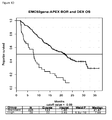
- FIG. 1 Performance of the EMC-92 classifier in predicting overall survival. High risk signature on four validation sets with a fixed cut-off value of 0,827.
- TT3 208)(GSE2658) [11]
- the HOVON65/GMMG-HD4 data was used as a training set. This multicenter trial compared the efficacy of bortezomib (PAD) to standard treatment (VAD) in newly diagnosed patients. Patients were randomized to induction treatment with three VAD or PAD cycles [16] For a total of 290 patients both follow-up and GEPs were available [9].
- PAD bortezomib
- VAD standard treatment
- TT2 and TT3 were derived from clinical trials performed in newly diagnosed patients both treated with a complex regimen.
- the first was a randomized prospective treatmenttrial in which patients were randomly assigned to receive or not to receive thalidomide during all phases of treatment [17].
- the latter was carried out by the same group according to the same regimen but with the addition of bortezomib to the thalidomide arm [18].
- TT3 is a very small set with only 15 OS events but is included here for completeness.
- the MRC-IX trial included both younger and older newly diagnosed patients.
- treatment consisted of induction with vincristine or no vincristine followed by transplantation.
- Older patients were treated initially with a thalidomide vs. melphalan based treatment. Maintenance for both young and old patients was a comparison of thalidomide vs. no thalidomide [19, 20].
- the trial and dataset denoted here as APEX consisted of the three trials APEX, SUMMIT and CREST. These trials aimed at testing the efficacy of bortezomib in relapse cases [21 - 23].
- the IFM dataset on which the IFM signature was based has not been evaluated due to an incompatible GEP platform [13].
- Affymetrix GeneChip ® Human Genome U133 Plus 2 ⁇ 0 Array was used in the HOVON65/GMMG-HD4, TT2, TT3 and MRC-IX whereas Affymetrix HG U133 A/B chips was used in the APEX study.
- probe sets present on both platforms were included.
- a lower probe set expression boundary was set to the 5% lowest expression for the bioB hybridization controls in the HOVON65/GMMG-HD4 set. Probe sets with a lower expression in ⁇ 95% of the HOVON65/GMMG-HD4 patients were excluded. All data were MAS5 normalized, log 2 transformed and mean-variance scaled.
- HOVON65/GMMG-HD4 molecular classification was performed previously [9]. To assign a cluster label to new validation samples, an Euclidean nearest neighbor algorithm was used with HOVON65/GMMG-HD4 being the reference set.
- the HOVON65/GMMG-HD4 was used as a training set for building a GEP based survival classifier.
- the model was built using a Supervised Principal Component Analysis (SPCA) framework. All calculations were performed in the R statistical environment using the survival package for survival analysis.
- SPCA Supervised Principal Component Analysis
- All calculations were performed in the R statistical environment using the survival package for survival analysis.
- the maxstat package was used to determine the optimal cut-off value for high-risk.
Landscapes
- Chemical & Material Sciences (AREA)
- Life Sciences & Earth Sciences (AREA)
- Organic Chemistry (AREA)
- Health & Medical Sciences (AREA)
- Proteomics, Peptides & Aminoacids (AREA)
- Engineering & Computer Science (AREA)
- Zoology (AREA)
- Wood Science & Technology (AREA)
- Immunology (AREA)
- Analytical Chemistry (AREA)
- Genetics & Genomics (AREA)
- Physics & Mathematics (AREA)
- General Engineering & Computer Science (AREA)
- Biotechnology (AREA)
- Microbiology (AREA)
- Molecular Biology (AREA)
- General Health & Medical Sciences (AREA)
- Biophysics (AREA)
- Bioinformatics & Cheminformatics (AREA)
- Biochemistry (AREA)
- Pathology (AREA)
- Oncology (AREA)
- Hospice & Palliative Care (AREA)
- Measuring Or Testing Involving Enzymes Or Micro-Organisms (AREA)
- Investigating Or Analysing Biological Materials (AREA)
Abstract
The present invention is in the field of molecular diagnostics and relates to a method for classifying samples obtained from patients diagnosed with multiple myeloma into three newly defined clusters. The invention also relates to a method for determining the prognosis of an individual diagnosed with multiple myeloma as well as a method for the prediction of the response to treatment of an individual diagnosed with multiple myeloma. More in particular, the invention provides a method for determining the disease outcome or the prognosis of a patient diagnosed with multiple myeloma by classifying said patient into a high risk or a low risk category, based on a 92 gene classifier.
Description
- The present invention is in the field of molecular diagnostics and relates to a method for classifying samples obtained from patients diagnosed with multiple myeloma. The invention also relates to a method for determining the prognosis of an individual diagnosed with multiple myeloma as well as a method for the prediction of the response to treatment of an individual diagnosed with multiple myeloma.
- Multiple myeloma (MM) is characterized by accumulation of malignant monoclonal plasma cells in the bone marrow. Median overall survival (OS) is 3 to 4 years but varies widely between patients. Currently, the International Staging System (ISS), based on serum β2m and albumin is clinically widely used to classify MM patients into three prognostic categories. [1]
- Based on cytogenetics, two classes of MM can be distinguished with implications for MM biology and prognosis. Hyperdiploid MM, ∼60% of patients, characterized by trisomies of multiple odd chromosomes (3, 5, 7, 9, 11, 15, 19, and 21) has a relatively good prognosis. Non-hyperdiploid MM, ∼40% of cases, is characterized by recurrent translocations involving the immunoglobulin heavy chain gene at 14q32, resulting in transcriptional activation of CCND1, CCND3, MAF, MAFB, or FGFR3/MMSET. [2, 3] Translocation t(11;14), involving CCND1, confers a relatively favourable prognosis whereas translocation t(4;14), involving FGFR3 and MMSET, has poor prognosis. [4, 5] The translocations t(14;16) and t(14;20), involving the MAF oncogenes also confer a poor prognosis, although recently this has been debated [6]. In addition, del(17p), del(13q) and 1 q-gain detected with conventional karyotyping were reported to be associated with poor prognosis. [7]
- Based on gene expression analysis, a number of classifications for MM have been published which include the University of Arkansas for Medical Sciences (UAMS) classification and more recently a classification by our own group. The UAMS molecular classification of myeloma consists of seven distinct gene expression clusters, including translocation clusters MS, MF, and CD-1/2, as well as a hyperdiploid cluster (HY), a cluster with proliferation-associated genes (PR), and a cluster characterized by low percentage of bone disease (LB). [8] Our classification of MM resulted in three additional clusters: NFκB, CTA and PRL3. [9]
- Gene expression is able to explain an even larger amount of variance in survival compared to ISS and cytogenetics. One of the first survival signatures based on gene expression was the UAMS-70-gene classifier, and the further refined UAMS-17-gene classifier. [10, 11]. Other classifiers include the Millennium signature, the MRC-IX-6-gene signature, and the IFM classifier. [12-14] In addition signatures were reported to predict plasma cell proliferation such as the recently published gene expression proliferation index (GPI). [15]
- The aim of this study was to develop a prognostic signature, based upon gene expression profiles (GEPs) of MM patients, treated with either standard induction treatment or bortezomib induction, followed in both cases by high-dose melphalan and maintenance.
- We present herein a classifier comprising a 92 gene set capable of distinguishing between patients with a high risk and patients with a low risk. In a survival analysis of newly diagnosed multiple myeloma (MM) patients, the classifier yielded excellent results wherein the classification in the low risk group identified patients with a good overall survival, whereas the group identified as high risk showed significantly worse overall survival rates.
- The invention therefore relates to a method for determining the disease outcome or the prognosis of a patient diagnosed with multiple myeloma by classifying said patient into a high risk or a low risk category, said method comprising the steps of
- a) providing a gene chip comprising probes for the detection of at least the 92 gene set according to table 1,
- b) contacting the gene chip with a sample comprising mRNA from a patient,
- c) determining the expression levels of the 92 gene set in the sample,
- d) normalizing the expression levels using mean/variance normalization in order to obtain the normalized expression value
- e) multiply the normalized expression value with the beta value according to table 1 to obtain the calculated value for an individual probe,
- f) determine an EMC-92 score by summation of the calculated values of the individual probes,
wherein an EMC-92 score above a predetermined threshold indicates that the patient is to be classified in the high risk category and a score at or below the predetermined threshold indicates that the patient is to be classified in the low risk category. - We present herein a classifier comprising a 92 gene set capable of distinguishing between patients with a high risk and patients with a low risk. In a survival analysis of newly diagnosed multiple myeloma (MM) patients, the classifier yielded excellent results wherein the classification in the low risk group identified patients with a good overall survival, whereas the group identified as high risk showed significantly worse overall survival rates.
- The classifier was validated in an experimental setting wherein patients with poor overall survival (OS) were distinguished from patients with standard OS. Therefore, an SPCA model was built using the HOVON65/GMMG-HD4 data as a training set (see the experimental section below). A number of 1088 probe sets were found to be associated with progression-free survival (PFS) in a univariate Cox regression analysis (FDR <10%). Based on these probe sets, we developed a classifier with 92 probe sets (table 1). This classifier will be termed the EMC-92-gene signature.
Table 1 # Probes Beta Gene Chromosome Band 1 226217_at -0,0319 SLC30A7 1 p21.2 2 208967_s_at 0,0113 AK2 1 p35.1 3 202553_s_at 0,0054 SYF2 1 p36.11 4 217728_at 0,0773 S100A6 1 q21.3 5 223381_at -0,0070 NUF2 1 q23.3 6 218365_s_at 0,0035 DARS2 1 q25.1 7 211963_s_at 0,0303 ARPC5 1 q25.3 8 222680_s_at 0,0205 DTL 1 q32.3 9 221826_at 0,0200 ANGEL2 1 q32.3 10 201795_at 0,0067 LBR 1 q42.12 11 202813_at 0,0548 TARBP1 1 q42.2 12 202322_s_at 0,0129 GGPS1 1 q42.3 13 202728_s_at -0,1105 LTBP1 2 p22.3 14 209683_at -0,0561 FAM49A 2 p24.2 15 201930_at -0,0090 MCM6 2 q21.3 16 228416_at -0,0778 ACVR2A 2 q22.3 17 206204_at 0,0477 GRB14 2 q24.3 18 215177_s_at -0,0768 ITGA6 2 q31.1 19 224009_x_at -0,0520 DHRS9 2 q31.1 20 AFFX-HUMISG F3A/M97935_MA_at 0,0525 STAT1 2 q32.2 21 222154_s_at 0,0154 SPATS2L 2 q33.1 22 207618_s_at 0,0746 BCS1L 2 q35 23 239054_at -0,1088 SFMBT1 3 p21.1 24 217852_s_at 0,0008 ARL8B 3 p26.1 25 219510_at -0,0097 POLQ 3 q13.33 26 202107_s_at 0,0225 MCM2 3 q21.3 27 220351_at 0,0420 CCRL1 3 q22.1 28 208942_s_at -0,0997 SEC62 3 q26.2 29 233437_at 0,0446 GABRA4 4 p12 30 225366_at 0,0140 PGM2 4 p14 31 218662_s_at -0,0176 NCAPG 4 p15.31 32 204379_s_at 0,0594 FGFR3 4 p16.3 33 201307_at 0,0165 SEPT11 4 q21.1 34 202542_s_at 0,0870 AIMP1 4 q24 35 205046_at 0,0087 CENPE 4 q24 36 226218_at -0,0644 IL7R 5 p13.2 37 202532_s_at -0,0006 DHFR 5 q14.1 38 226742_at -0,0345 SAR1B 5 q31.1 39 231738_at 0,0686 PCDHB7 5 q31.3 40 214150_x_at -0,0349 ATP6V0E1 5 q35.1 41 201555_at -0,0052 MCM3 6 p12.2 42 209026_x_at 0,0255 TUBB 6 p21.33 43 211714_x_at 0,0221 TUBB 6 p21.33 44 213002_at -0,0418 MARCKS 6 p22.2 45 221041_s_at -0,0520 SLC17A5 6 q13 46 217824_at -0,0041 NCUBE1 6 q15 47 223811_s_at 0,0556 SUN1/GET4 7 p22.3 48 202842_s_at -0,0626 DNAJB9 7 q31.1 49 208232_x_at -0,0493 Unknown 8 p12 50 208732_at -0,0618 RAB2A 8 q12.1 51 201398_s_at -0,0254 TRAM1 8 q13.3 52 233399_x_at -0,0184 ZNF252 8 q24.3 53 200775_s_at 0,0163 HNRNPK 9 q21.32 54 230034_x_at -0,0330 MRPL41 9 q34.3 55 204026_s_at 0,0046 ZWINT 10 q21.1 56 243018_at 0,0407 Unknown 11 p14.1 57 222713_s_at 0,0278 FANCF 11 p14.3 58 221755_at 0,0396 EHBP1L1 11 q13.1 59 231210_at 0,0093 C11orf85 11 q13.1 60 202884_s_at 0,0714 PPP2R1B 11 q23.1 61 219550_at 0,0559 ROBO3 11 q24.2 62 238780_s_at -0,0529 Unknown 11 q24.3 63 208747_s_at -0,0874 C1S 12 p13.31 64 38158_at 0,0423 ESPL1 12 q13.13 65 217732_s_at -0,0252 ITM2B 13 q14.2 66 214482_at 0,0861 ZBTB25 14 q23.3 67 200701_at -0,0210 NPC2 14 q24.3 68 238662_at 0,0490 ATPBD4 15 q14 69 217548_at -0,0423 C15orf38 15 q26.1 70 213007_at -0,0106 FANCI 15 q26.1 71 231989_s_at 0,0730 SMG1 16 p12.3 72 238116_at 0,0661 DYNLRB2 16 q23.2 73 212282_at 0,0530 TMEM97 17 q11.2 74 203145_at -0,0002 SPAG5 17 q11.2 75 201292_at -0,0372 TOP2A 17 q21.2 76 210334_x_at 0,0175 BIRC5 17 q25.3 77 212055_at 0,0384 C18orf10 18 q12.2 78 242180_at -0,0585 TSPAN16 19 p13.2 79 208904_s_at -0,0334 RPS28 19 p13.2 80 213350_at 0,0056 RPS11 19 q13.3 81 200875_s_at 0,0437 NOP56 20 p13 82 212788_x_at -0,0164 FTL 19 p13 83 215181_at -0,0342 CDH22 20 q13.12 84 221677_s_at 0,0126 DONSON 21 q22.11 85 201102_s_at 0,0349 PFKL 21 q22.3 86 208667_s_at -0,0390 ST13 22 q13.2 87 216473_x_at -0,0576 DUX4 4/10 q35.2 / q26.3 88 200933_x_at -0,0323 RPS4X X q13.1 89 218355_at 0,0116 KIF4A X q13.1 90 221606_s_at 0,0208 HMGN5 X q21.1 91 225601_at 0,0750 HMGB3 X q28 92 214612_x_at 0,0496 MAGEA6 X q28 - A dichotomizing cut-off threshold was based on the clinically relevant definition of high-risk patients as those patients who have an overall survival of less than 2 years. This amounted to a proportion of 21.7% in the training set and a cut-off value of 0.827.Within all four data sets TT2(n=351)[11], TT3(n=208)[11], MRC-IX(n=247)[14] and APEX(n=264)[12] the EMC-92-gene signature discriminated a high-risk group, which was significantly set apart from the standard-risk group (
Figures 1a to d ). - In datasets containing newly diagnosed patients, the EMC-92-gene signature selected a high-risk population of 17.7% on average, with a significantly shorter OS and hazard-ratios of 3.52 (p=2.5x10-8=;TT2), 2.7 (p=0.07=2;TT3) and 2.38 (p=3.6x10-6=;MRC-IX). In the relapse setting the EMC-92-gene signature also filtered out high-risk patients with a large hazard-ratio of 3.14 (p=5.3x10-9=; APEX). The proportion of high-risk patients in this latter study was lower compared to the MRC-IX and TT2 studies, but not significantly (15.9%,n=264 vs. 19.6%,n=; p = 0.2)(Table 1.1).
- In a multivariate covariant analysis the EMC-92-gene signature was independent of most standard prognostic factors and clinical characteristics. Three datasets were available for this analysis: HOVON65/GMMG-HD4, APEX and MRC-IX. Multivariate analysis on the HOVON65/GMMG-HD4 study demonstrates that together with the EMC-92-signature, del(17p), β2m[≥3·5mg/L] and allogenic transplantation were significantly related to shorter survival, whereas WHO status [0] was found to be significantly related to longer survival. In the APEX, albumin level, ISS and IgG isotype were found to be significantly related. For the MRC-IX, mainly ISS related covariants were found. WHO[2], 1q gain and IGHsplit showed a clear contribution. IGHsplit indicates all patients with cytogenetic aberration of the IGH locus. Age had a small but significant hazard-ratio here. In all three datasets the EMC-92-gene signature remained a strong predictor for survival after correction for available variables.
- The samples in all four validation sets were assigned a molecular cluster label by nearest neighbor classification. Logistic regression for association between the molecular clusters and high-risk outcome revealed a significant relation between high-risk classification and the MF, MS, PR and HY clusters.
- Comparing the UAMS-17-gene and EMC-92-gene set in independent datasets (i. E. TT3, MRC-IX and APEX), a significantly higher proportion of patients was classified as high-risk by the EMC-92-gene signature (p=0.009). Moreover the estimated hazard-ratios (high-risk/standard-risk) were higher in the EMC-92-gene classifier with the exception of the TT3 study.
- In the MRCIX study population, the EMC-92 gene classifier exclusively identified 31 patients correctly as high risk patients, which were missed by the UAMS-17 gene classifier (50% survival rate of 11, 24 and 51 months for the shared high risk group, intermediate high risk group and standard risk groups, respectively). Moreover, the UAMS-17 gene classifier exclusively identified 10 patients as high risk patients with a lower hazard ratio as compared to the 31 patients classified as high-risk by the EMC92 gene classifier.
- The superiority of the EMC-92 classifier was even clearer in the APEX population. Here, 24 patients were exclusively identified as high risk in the EMC-92 classifier, which were missed in the UAMS-17 classifier. These 24 patients formed a group whose overall survival after 20 months was 14% whereas the high risk population identified in both the EMC-92 and UAMS-17 classifier showed an overall survival of 25% after 20 months.
- In addition, the UAMS-70-gene, MRC-IX-6-gene signature, GPI score, the Millennium and IFM signature were applied to the datasets. In a pair wise multivariate analysis based on the pooled independent datasets, including two classifiers at a time and correcting for study and age, the EMC-92 gene classifier had the highest hazard ratios and lowest p values of all classifiers.
- The intersection of high-risk patients between the EMC-92-gene and UAMS-17-gene classifiers was ∼8% of the total population. About 14% of patients were classified as high-risk by either one of these classifiers. The intersecting high-risk group showed the largest differences compared to the intersecting standard-risk group as indicated by the hazard-ratios (HR=5.40; p=3.1x10⁻³ ;TT3), (HR=3.84; p=5x10 -7;MRC-IX) and (HR=3.39;p=1.9x10 -5;APEX). The 14% of patients uniquely classified as high-risk by either signature, showed an intermediate hazard-ratio. For the UAMS-17-gene high-risk group this resulted in hazard-ratios of 4.08(p=7.6x10 -2), 1.92(p=7.7x10 -2) and 2.31 (p=2.3x10 -2 ) for the TT3, MRX-IX and APEX. The EMC-92-gene high-risk group gave hazard-ratios of 0 (p=1.0 no events), 1.98(p=2.9x10⁻³⁴ ) and 3.21 (p=1.6x10⁻⁶ ) for the TT3, MRX-IX and APEX.
- In clinical practice, prognosis of MM patients is mainly based on ISS-stage and interphase fluorescence in situ hybridization (FISH). Several chromosomal aberrations detected by FISH have prognostic implications [25]. Del(17p) is considered the most important, associated with unfavorable outcome and present in 9% of patients [26, 27]. Still 60% of patients with this deletion do not display a specific poor outcome [28]. The combination of chromosomal aberration, t(4;14), del(17p) and ISS have further delineated patients with a poor prognosis [29].
- Previously, in the UAMS classification, the MS, MF and PR clusters showed lower PFS and OS, whereas clusters HY, LB, CD-1 and CD-2 were associated with longer PFS and OS [8]. Here, we evaluated the variability in PFS and OS in the GEP-based clusters of the HOVON65 classification. VAD treated patients demonstrate significant differences in PFS and OS between clusters with a clearly reduced survival for the MF subgroup, whereas in bortezomib (PAD) treated patients no significant difference were found.
- Bortezomib based treatment has been shown to overcome certain adverse prognostic markers such as del(13q) resulting in better PFS and OS in patients with poor prognostic markers such as ISS-3, del(17p), and t(4;14) [16]. Both chromosomal markers and the HOVON65 GEP based classification vary with treatment and are not applicable for diagnosing high-risk patients accurately. Therefore, a high-risk GEP signature was developed.
- Previous classifiers include the UAMS-17/70-gene and MRC-IX-6-gene classifiers, both capable of predicting in independent datasets [11, 14]. In contrast, the Millennium and the IFM signatures demonstrate less solid performance in independent validation sets [12, 13].
- The EMC-92 gene expression signature presented herein, is highly discriminative for patients with high-risk versus standard-risk MM across different (induction) regimes. Validation in UAMS TT2 (thalidomide-based) [17], TT3(bortezomibbased) [18] and MRC-IX trial (thalidomide maintenance in both young and elderly patients) [19, 20] showed high performance in these independent test environments. This is true for both the continuous fit of the model -which is a goodness-of-fit indicator- as well as the dichotomized output into high-risk/standard-risk which is a requirement for practical use in a clinical setting.
- In multivariate analyses, the EMC-92-gene high-risk signature remains a strong predictor for early death. Still there is strong evidence that ISS staging (serum albumin and β2m levels) turns out to be another major contributor for explaining survival related variance in the presence of the signature. Therefore incorporating ISS into the signature could potentially lead to an even better prediction of survival.
- Patients classified as high-risk are overrepresented within the molecular MF, MS and PR clusters and underrepresented within the HY cluster. This correlates well with previous data: HY represents hyperdiploid patients with a generally favourable prognosis; on the other hand, MS and MF represent patients with translocations t(4;14) and t(14;16/20) which are usually though to have an unfavorable prognosis. Finally, PR represents the proliferation cluster, which was shown to be associated with poor prognosis [8, 11, 15]. In relation to this, pathway analysis of the EMC-92-gene signature demonstrated cell cycle regulation to be among the main functions found.
- In the EMC-92-gene signature as well as the set of genes linked to survival in the univariate analysis, chromosomal location of 1 q was highly enriched (table 1) as was previously shown for the UAMS-17-gene signature [11]. Also probe sets located on chromosome 4 are enriched. These probe sets were found to be scattered over the entire chromosome and not only at the distal end of the p arm where MMSET and FGFR3 are located. Chromosome 4 has previously not been considered a risk factor, but a low frequency of multiple gains and/or losses affecting this chromosome has been reported [30].
- The EMC-92-gene signature was compared to the UAMS-17/70-gene, MRC-IX-6-gene, GPI score, IFM and Millennium classifiers. The EMC-92-gene signature turns out to have the best dichotomized performance on its validation sets. Moreover, in comparison to other classifiers the proportion of high-risk patients is higher. One would expect that differences between high-risk and standard-risk become less pronounced as the high-risk proportion increases. It should be mentioned that even at this high proportion, differences in survival time are larger for the EMC-92 as compared to other classifiers selecting smaller risk groups.
- In a multivariate analysis combining the signatures, the EMC-92-gene signature had the strongest discriminative ability.
- In conclusion, we developed a high-risk signature highly discriminative for patients with high-risk versus standard-risk MM, irrespective of treatment regime, age and relapse setting. Use of this signature in the clinical setting may lead to a more informed treatment choice and potentially better outcome for the patient.
- In conclusion, our study concerns the development of a robust high-risk signature, incorporates most known prognostic markers, clinical, cytogenetic and GEP based, and shows the developed EMC-92-gene signature to be the strongest independent prognostic marker for poor survival known. This EMC-92-gene signature is able to select out a high-risk group of MM patients for whom in the future alternative, more intensive treatments should be sought.
- Hence, the invention relates to a method for determining the disease outcome or the prognosis of a patient diagnosed with multiple myeloma by classifying said patient into a high risk or a low risk category, said method comprising the steps of
- a) providing a gene chip comprising probes for the detection of at least the 92 gene set according to table 1,
- b) contacting the gene chip with a sample comprising mRNA from a patient,
- c) determining the expression levels of the 92 gene set in the sample,
- d) normalizing the expression levels using mean/variance normalization in order to obtain the normalized expression value,
- e) multiply the normalized expression value with the beta value according to table 1 to obtain the calculated value for an individual probe,
- f) determine an EMC-92 score by summation of the calculated values of the individual probes,
wherein an EMC-92 score above a predetermined threshold indicates that the patient is to be classified in the high risk category and a score at or below the threshold indicates that the patient is to be classified in the low risk category. - As further detailed herein, a preferred threshold value is 0,827.
-
Figure 1 Performance of the EMC-92 classifier in predicting overall survival. High risk signature on four validation sets with a fixed cut-off value of 0,827. A: UAMS Total Therapy 2. B: UAMS Total Therapy 3. C: MRC-IX. D: APEX. - Five previously described datasets were used, of which both survival as well as GEPs of purified plasma cells obtained from bone marrow aspirates of myeloma patients, were available. These are HOVON65/GMMG-HD4 (N=320)(GSE19784) [9], Total Therapy 2 (TT2)(n=351) [11], TT3 (n=208)(GSE2658) [11], MRC-IX (n=247)(GSE15695) [14], and APEX (n=264)(GSE9782) [12].
- The HOVON65/GMMG-HD4 data was used as a training set. This multicenter trial compared the efficacy of bortezomib (PAD) to standard treatment (VAD) in newly diagnosed patients. Patients were randomized to induction treatment with three VAD or PAD cycles [16] For a total of 290 patients both follow-up and GEPs were available [9].
- The other four independent datasets were used as validation. Two datasets, TT2 and TT3, were derived from clinical trials performed in newly diagnosed patients both treated with a complex regimen. The first was a randomized prospective treatmenttrial in which patients were randomly assigned to receive or not to receive thalidomide during all phases of treatment [17]. The latter, was carried out by the same group according to the same regimen but with the addition of bortezomib to the thalidomide arm [18]. TT3 is a very small set with only 15 OS events but is included here for completeness.
- The MRC-IX trial included both younger and older newly diagnosed patients. For younger patients treatment consisted of induction with vincristine or no vincristine followed by transplantation. Older patients were treated initially with a thalidomide vs. melphalan based treatment. Maintenance for both young and old patients was a comparison of thalidomide vs. no thalidomide [19, 20]. The trial and dataset denoted here as APEX consisted of the three trials APEX, SUMMIT and CREST. These trials aimed at testing the efficacy of bortezomib in relapse cases [21 - 23].
- The IFM dataset on which the IFM signature was based has not been evaluated due to an incompatible GEP platform [13].
- Two types of Affymetrix gene expression platforms were used. The Affymetrix GeneChip® Human Genome U133 Plus 2·0 Array was used in the HOVON65/GMMG-HD4, TT2, TT3 and MRC-IX whereas Affymetrix HG U133 A/B chips was used in the APEX study. To allow for validation across different studies, only probe sets present on both platforms were included. A lower probe set expression boundary was set to the 5% lowest expression for the bioB hybridization controls in the HOVON65/GMMG-HD4 set. Probe sets with a lower expression in ≥95% of the HOVON65/GMMG-HD4 patients were excluded. All data were MAS5 normalized, log2 transformed and mean-variance scaled.
- The HOVON65/GMMG-HD4 molecular classification was performed previously [9]. To assign a cluster label to new validation samples, an Euclidean nearest neighbor algorithm was used with HOVON65/GMMG-HD4 being the reference set.
- The HOVON65/GMMG-HD4 was used as a training set for building a GEP based survival classifier. The model was built using a Supervised Principal Component Analysis (SPCA) framework. All calculations were performed in the R statistical environment using the survival package for survival analysis. The maxstat package was used to determine the optimal cut-off value for high-risk.
- Data were analyzed using Ingenuity Pathway Analysis (Ingenuity Systems®, www. Ingenuity. Com). Both the gene set corresponding to the SPCA based survival classifier as well as the gene set generated by the initial univariate ranking
- (FDR<10%) were analyzed. Probe sets present in both the HG U133 Plus 2·0 and A/B platforms were used as a reference. P-values were derived from right-tailed Fisher exact tests corrected for multiple testing using Benjamini Hochberg correction.
-
- 1. Greipp PR, San Miguel J, Durie BG, Crowley JJ, Barlogie B, Blade J, et al. International staging system for multiple myeloma. J Clin Oncol. 2005 May 20;23(15):3412-20.
- 2. Bergsagel PL, Kuehl WM. Molecular Pathogenesis and a Consequent Classification of Multiple Myeloma. J Clin Oncol. 2005 .
- 3. Fonseca R, Debes-Marun CS, Picken EB, Dewald GW, Bryant SC, Winkler JM, et al. The recurrent IgH translocations are highly associated with nonhyperdiploid variant multiple myeloma. Blood. 2003 Oct 1;102(7):2562-7.
- 4. Fonseca R, Hoyer JD, Aguayo P, Jalal SM, Ahmann GJ, Rajkumar SV, et al. Clinical significance of the translocation (11;14)(q13;q32) in multiple myeloma. Leuk Lymphoma. 1999;35(5-6):599-605.
- 5. Keats JJ, Reiman T, Maxwell CA, Taylor BJ, Larratt LM, Mant MJ, et al. In multiple myeloma, t(4;14)(p16;q32) is an adverse prognostic factor irrespective of FGFR3 expression. Blood. 2003 .
- 6. Avet-Loiseau H, Malard F, Campion L, Magrangeas F, Sebban C, Lioure B, et al. Translocation t(14;16) and multiple myeloma: is it really an independent prognostic factor? Blood. 2011 .
- 7. Cremer FW, Bila J, Buck I, Kartal M, Hose D, Ittrich C, et al. Delineation of distinct subgroups of multiple myeloma and a model for clonal evolution based on interphase cytogenetics. Genes, chromosomes & cancer. 2005 Oct;44(2):194-203.
- 8. Zhan F, Huang Y, Colla S, Stewart JP, Hanamura I, Gupta S, et al. The molecular classification of multiple myeloma. Blood. 2006 .
- 9. Broyl A, Hose D, Lokhorst H, de Knegt Y, Peeters J, Jauch A, et al. Gene expression profiling for molecular classification of multiple myeloma in newly diagnosed patients. Blood. 2010 Oct 7;116(14):2543-53.
- 10. Chng WJ, Kuehl WM, Bergsagel PL, Fonseca R. Translocation t(4;14) retains prognostic significance even in the setting of high-risk molecular signature. Leukemia. 2008 Feb;22(2):459-61.
- 11. Shaughnessy JD, Jr., Zhan F, Burington BE, Huang Y, Colla S, Hanamura I, et al. A validated gene expression model of high-risk multiple myeloma is defined by deregulated expression of genes mapping to chromosome 1. Blood. 2007 .
- 12. Mulligan G, Mitsiades C, Bryant B, Zhan F, Chng WJ, Roels S, et al. Gene expression profiling and correlation with outcome in clinical trials of the proteasome inhibitor bortezomib. Blood. 2007 .
- 13. Decaux O, Lode L, Magrangeas F, Charbonnel C, Gouraud W, Jezequel P, et al. Prediction of survival in multiple myeloma based on gene expression profiles reveals cell cycle and chromosomal instability signatures in high-risk patients and hyperdiploid signatures in low-risk patients: a study of the Intergroupe Francophone du Myelome. J Clin Oncol. 2008 .
- 14. Dickens NJ, Walker BA, Leone PE, Johnson DC, Brito JL, Zeisig A, et al. Homozygous deletion mapping in myeloma samples identifies genes and an expression signature relevant to pathogenesis and outcome. Clin Cancer Res. 2010 .
- 15. Hose D, Reme T, Hielscher T, Moreaux J, Messner T, Seckinger A, et al. Proliferation is a central independent prognostic factor and target for personalized and risk-adapted treatment in multiple myeloma. Haematologica. 2011 Jan;96(1):87-95.
- 16. Sonneveld P, Schmidt-Wolf I, van der Holt B, Jarari Le, Bertsch U, Salwender H, et al. HOVON-65/GMMG-HD4 Randomized Phase III Trial Comparing Bortezomib, Doxorubicin, Dexamethasone (PAD) Vs VAD Followed by High-Dose Melphalan (HDM) and Maintenance with Bortezomib or Thalidomide In Patients with Newly Diagnosed Multiple Myeloma (MM). Blood. 2010 Nov 19;116(21):40-.
- 17. Barlogie B, Pineda-Roman M, van Rhee F, Haessler J, Anaissie E, Hollmig K, et al. Thalidomide arm of Total Therapy 2 improves complete remission duration and survival in myeloma patients with metaphase cytogenetic abnormalities. Blood. 2008 .
- 18. Pineda-Roman M, Zangari M, Haessler J, Anaissie E, Tricot G, van Rhee F, et al. Sustained complete remissions in multiple myeloma linked to bortezomib in total therapy 3: comparison with total therapy 2. British journal of haematology. 2008 Mar;140(6):625-34.
- 19. Morgan GJ, Davies FE, Gregory WM, Bell SE, Szubert AJ, Navarro-Coy N, et al. Thalidomide Maintenance Significantly Improves Progression-Free Survival (PFS) and Overall Survival (OS) of Myeloma Patients When Effective Relapse Treatments Are Used: MRC Myeloma IX Results. Blood. 2010 Nov 19;116(21):623-.
- 20. Morgan GJ, Davies FE, Owen RG, Rawstron AC, Bell S, Cocks K, et al. Thalidomide Combinations Improve Response Rates; Results from the MRC IX Study. Blood. 2007 Nov 16;110(11):3593-.
- 21. Jagannath S, Barlogie B, Berenson J, Siegel D, Irwin D, Richardson PG, et al. A phase 2 study of two doses of bortezomib in relapsed or refractory myeloma. British journal of haematology. 2004 Oct;127(2):165-72.
- 22. Richardson PG, Barlogie B, Berenson J, Singhal S, Jagannath S, Irwin D, et al. A phase 2 study of bortezomib in relapsed, refractory myeloma. The New England journal of medicine. 2003 Jun 26;348(26):2609-17.
- 23. Richardson PG, Sonneveld P, Schuster MW, Irwin D, Stadtmauer EA, Facon T, et al. Bortezomib or high-dose dexamethasone for relapsed multiple myeloma. The New England journal of medicine. 2005 Jun 16;352(24):2487-98.
- 24. Bair E, Hastie T, Paul D, Tibshirani R. Prediction by Supervised Principal Components. J Amer Statistical Assoc. 2006 Mar 1;101(473):119-37.
- 25. Avet-Loiseau H, Magrangeas F, Moreau P, Attal M, Facon T, Anderson K, et al. Molecular Heterogeneity of Multiple Myeloma: Pathogenesis, Prognosis, and Therapeutic Implications. J Clin Oncol. 2011 May 10;29(14):1893-7.
- 26. Avet-Loiseau H, Attal M, Moreau P, Charbonnel C, Garban F, Hulin C, et al. Genetic abnormalities and survival in multiple myeloma: the experience of the Intergroupe Francophone du Myelome. Blood. 2007 .
- 27. Fonseca R, Bergsagel PL, Drach J, Shaughnessy J, Gutierrez N, Stewart AK, et al. International Myeloma Working Group molecular classification of multiple myeloma: spotlight review. Leukemia. 2009 Dec;23(12):2210-21.
- 28. Avet-Loiseau H, Leleu X, Roussel M, Moreau P, Guerin-Charbonnel C, Caillot D, et al. Bortezomib plus dexamethasone induction improves outcome of patients with t(4;14) myeloma but not outcome of patients with del(17p). J Clin Oncol. 2010 .
- 29. Neben K, Jauch A, Bertsch U, Heiss C, Hielscher T, Seckinger A, et al. Combining information regarding chromosomal aberrations t(4;14) and del(17p13) with the International Staging System classification allows stratification of myeloma patients undergoing autologous stem cell transplantation. Haematologica. 2010 Jul;95(7):1150-7.
- 30. Carrasco DR, Tonon G, Huang Y, Zhang Y, Sinha R, Feng B, et al. High-resolution genomic profiles define distinct clinico-pathogenetic subgroups of multiple myeloma patients. Cancer Cell. 2006;9(4):313-25.
Claims (5)
- Method for determining the disease outcome or the prognosis of a patient diagnosed with multiple myeloma by classifying said patient into a high risk or a low risk category, said method comprising the steps ofa) providing a gene chip comprising probes for the detection of at least the 92 gene set according to table 1,b) contacting the gene chip with a sample comprising mRNA from a patient,c) determining the expression level of each individual gene from the 92 gene set in the sample,d) normalizing the expression levels using mean/variance normalization in order to obtain the normalized expression value,e) multiply the normalized expression value with the beta value according to table 1 to obtain the calculated value for an individual probe,f) determine an EMC-92 score by summation of the calculated values of the individual probes,wherein an EMC-92 score above a predetermined threshold indicates that the patient is to be classified in the high risk category and a score at or below the predetermined threshold indicates that the patient is to be classified in the low risk category.
- Method according to claim 1 wherein the predetermined threshold is 0,827.
- Method according to claim 1 wherein the sample comprises plasma cells.
- Method according to claims 1 or 2 wherein each individual gene is detected with at least one probe.
- Method according to claim 3 wherein each individual gene is detected with a multitude of probes.
Priority Applications (21)
| Application Number | Priority Date | Filing Date | Title |
|---|---|---|---|
| EP11173971A EP2546357A1 (en) | 2011-07-14 | 2011-07-14 | A new classifier for the molecular classification of multiple myeloma. |
| NZ619896A NZ619896A (en) | 2011-07-14 | 2012-07-12 | A new classifier for the molecular classification of multiple myeloma |
| JP2014519565A JP6026529B2 (en) | 2011-07-14 | 2012-07-12 | A novel classification index for molecular classification of multiple myeloma |
| PT127337657T PT2732048T (en) | 2011-07-14 | 2012-07-12 | A new classifier for the molecular classification of multiple myeloma |
| EP12733765.7A EP2732048B1 (en) | 2011-07-14 | 2012-07-12 | A new classifier for the molecular classification of multiple myeloma |
| PCT/EP2012/063722 WO2013007795A1 (en) | 2011-07-14 | 2012-07-12 | A new classifier for the molecular classification of multiple myeloma |
| DK12733765.7T DK2732048T3 (en) | 2011-07-14 | 2012-07-12 | NEW CLASSIFICANT FOR MOLECULAR CLASSIFICATION OF MULTIPLE MYELOMA |
| BR112014000648A BR112014000648B1 (en) | 2011-07-14 | 2012-07-12 | method for determining the outcome of the disease or the prognosis of a patient diagnosed with multiple myeloma by classifying the patient into a high risk or low risk category |
| PL12733765T PL2732048T3 (en) | 2011-07-14 | 2012-07-12 | A new classifier for the molecular classification of multiple myeloma |
| MX2014000440A MX346314B (en) | 2011-07-14 | 2012-07-12 | A new classifier for the molecular classification of multiple myeloma. |
| CA2841536A CA2841536C (en) | 2011-07-14 | 2012-07-12 | A new classifier for the molecular classification of multiple myeloma |
| AU2012282437A AU2012282437B2 (en) | 2011-07-14 | 2012-07-12 | A new classifier for the molecular classification of multiple myeloma |
| US14/232,176 US9976185B2 (en) | 2011-07-14 | 2012-07-12 | Classifier for the molecular classification of multiple myeloma |
| KR1020147000834A KR101933742B1 (en) | 2011-07-14 | 2012-07-12 | A new classifier for the molecular classification of multiple myeloma |
| EA201400131A EA032730B1 (en) | 2011-07-14 | 2012-07-12 | Method for prognosticating the disease outcome of a patient diagnosed with multiple myeloma |
| ES12733765.7T ES2633165T3 (en) | 2011-07-14 | 2012-07-12 | New classifier for the molecular classification of multiple myeloma |
| IL230164A IL230164A (en) | 2011-07-14 | 2013-12-25 | Classifier for the molecular classification of multiple myeloma |
| ZA2014/00159A ZA201400159B (en) | 2011-07-14 | 2014-01-08 | A new classifier for the molecular classification of multiple myeloma |
| CL2014000103A CL2014000103A1 (en) | 2011-07-14 | 2014-01-14 | Method to determine the prognosis of a disease or the prognosis of a patient diagnosed with multiple myeloma. |
| US15/959,703 US10815532B2 (en) | 2011-07-14 | 2018-04-23 | Classifier for the molecular classification of multiple myeloma |
| US17/029,564 US20210010091A1 (en) | 2011-07-14 | 2020-09-23 | Classifier for the molecular classification of multiple myeloma |
Applications Claiming Priority (1)
| Application Number | Priority Date | Filing Date | Title |
|---|---|---|---|
| EP11173971A EP2546357A1 (en) | 2011-07-14 | 2011-07-14 | A new classifier for the molecular classification of multiple myeloma. |
Publications (1)
| Publication Number | Publication Date |
|---|---|
| EP2546357A1 true EP2546357A1 (en) | 2013-01-16 |
Family
ID=46506441
Family Applications (2)
| Application Number | Title | Priority Date | Filing Date |
|---|---|---|---|
| EP11173971A Withdrawn EP2546357A1 (en) | 2011-07-14 | 2011-07-14 | A new classifier for the molecular classification of multiple myeloma. |
| EP12733765.7A Active EP2732048B1 (en) | 2011-07-14 | 2012-07-12 | A new classifier for the molecular classification of multiple myeloma |
Family Applications After (1)
| Application Number | Title | Priority Date | Filing Date |
|---|---|---|---|
| EP12733765.7A Active EP2732048B1 (en) | 2011-07-14 | 2012-07-12 | A new classifier for the molecular classification of multiple myeloma |
Country Status (18)
| Country | Link |
|---|---|
| US (3) | US9976185B2 (en) |
| EP (2) | EP2546357A1 (en) |
| JP (1) | JP6026529B2 (en) |
| KR (1) | KR101933742B1 (en) |
| AU (1) | AU2012282437B2 (en) |
| BR (1) | BR112014000648B1 (en) |
| CA (1) | CA2841536C (en) |
| CL (1) | CL2014000103A1 (en) |
| DK (1) | DK2732048T3 (en) |
| EA (1) | EA032730B1 (en) |
| ES (1) | ES2633165T3 (en) |
| IL (1) | IL230164A (en) |
| MX (1) | MX346314B (en) |
| NZ (1) | NZ619896A (en) |
| PL (1) | PL2732048T3 (en) |
| PT (1) | PT2732048T (en) |
| WO (1) | WO2013007795A1 (en) |
| ZA (1) | ZA201400159B (en) |
Cited By (2)
| Publication number | Priority date | Publication date | Assignee | Title |
|---|---|---|---|---|
| WO2017138810A3 (en) * | 2016-02-12 | 2017-11-02 | Skylinedx B.V. | Predicting response to immunomodulatory drugs (imids) in multiple myeloma patients |
| WO2018186740A1 (en) | 2017-04-04 | 2018-10-11 | Skylinedx B.V | Method for identifying gene expression signatures |
Families Citing this family (8)
| Publication number | Priority date | Publication date | Assignee | Title |
|---|---|---|---|---|
| EP2546357A1 (en) | 2011-07-14 | 2013-01-16 | Erasmus University Medical Center Rotterdam | A new classifier for the molecular classification of multiple myeloma. |
| US10973820B2 (en) | 2017-12-13 | 2021-04-13 | Facio Intellectual Property B.V. | Compounds for treatment of diseases related to DUX4 expression |
| US12235271B2 (en) | 2018-04-28 | 2025-02-25 | Beijing Normal University | Molecular typing of multiple myeloma and application |
| CN110218789B (en) * | 2019-04-22 | 2022-10-04 | 曾文炳 | Gene probe composition and kit for predicting overall survival rate of multiple myeloma patients |
| TW202112368A (en) | 2019-06-13 | 2021-04-01 | 荷蘭商法西歐知識產權股份有限公司 | Inhibitor combinations for treatment of diseases related to dux4 expression |
| US20230271953A1 (en) | 2019-11-29 | 2023-08-31 | Facio Intellectual Property B.V. | Novel compounds for treatment of diseases related to DUX4 expression |
| CA3159250A1 (en) | 2019-11-29 | 2021-06-03 | Facio Intellectual Property B.V. | New compounds for treatment of diseases related to dux4 expression |
| CN120945052A (en) * | 2025-08-05 | 2025-11-14 | 中国人民解放军海军特色医学中心 | Gene combinations and assessment methods for evaluating the prognosis of multiple myeloma and the risk of PRMM |
Citations (3)
| Publication number | Priority date | Publication date | Assignee | Title |
|---|---|---|---|---|
| EP1964930A1 (en) * | 2007-02-28 | 2008-09-03 | Institut National De La Sante Et De La Recherche Medicale (Inserm) | Molecular classifier for prognosis in multiple myeloma |
| US20080274911A1 (en) * | 2006-11-07 | 2008-11-06 | Burington Bart E | Gene expression profiling based identification of genomic signature of high-risk multiple myeloma and uses thereof |
| WO2010064016A2 (en) * | 2008-12-05 | 2010-06-10 | The Institute Of Cancer Research: Royal Cancer Hospital | Methods for determining a prognosis in multiple myeloma |
Family Cites Families (5)
| Publication number | Priority date | Publication date | Assignee | Title |
|---|---|---|---|---|
| US20070015146A1 (en) * | 2001-05-22 | 2007-01-18 | Gene Logic, Inc. | Molecular nephrotoxicology modeling |
| CA2466483A1 (en) * | 2001-11-07 | 2003-07-03 | John D. Shaughnessy | Diagnosis prognosis and identification of potential therapeutic targets of multiple myeloma based on gene expression profiling |
| EP2087139B1 (en) * | 2006-11-07 | 2017-01-04 | The Board of Trustees of the University of Arkansas | Gene expression profiling based identification of genomic signatures of high-risk multiple myeloma |
| WO2010151731A1 (en) * | 2009-06-26 | 2010-12-29 | University Of Utah Research Foundation | Materials and methods for the identification of drug-resistant cancers and treatment of same |
| EP2546357A1 (en) | 2011-07-14 | 2013-01-16 | Erasmus University Medical Center Rotterdam | A new classifier for the molecular classification of multiple myeloma. |
-
2011
- 2011-07-14 EP EP11173971A patent/EP2546357A1/en not_active Withdrawn
-
2012
- 2012-07-12 JP JP2014519565A patent/JP6026529B2/en active Active
- 2012-07-12 ES ES12733765.7T patent/ES2633165T3/en active Active
- 2012-07-12 PT PT127337657T patent/PT2732048T/en unknown
- 2012-07-12 NZ NZ619896A patent/NZ619896A/en unknown
- 2012-07-12 WO PCT/EP2012/063722 patent/WO2013007795A1/en not_active Ceased
- 2012-07-12 DK DK12733765.7T patent/DK2732048T3/en active
- 2012-07-12 CA CA2841536A patent/CA2841536C/en active Active
- 2012-07-12 BR BR112014000648A patent/BR112014000648B1/en not_active IP Right Cessation
- 2012-07-12 PL PL12733765T patent/PL2732048T3/en unknown
- 2012-07-12 EP EP12733765.7A patent/EP2732048B1/en active Active
- 2012-07-12 MX MX2014000440A patent/MX346314B/en active IP Right Grant
- 2012-07-12 US US14/232,176 patent/US9976185B2/en active Active
- 2012-07-12 KR KR1020147000834A patent/KR101933742B1/en active Active
- 2012-07-12 EA EA201400131A patent/EA032730B1/en not_active IP Right Cessation
- 2012-07-12 AU AU2012282437A patent/AU2012282437B2/en active Active
-
2013
- 2013-12-25 IL IL230164A patent/IL230164A/en active IP Right Grant
-
2014
- 2014-01-08 ZA ZA2014/00159A patent/ZA201400159B/en unknown
- 2014-01-14 CL CL2014000103A patent/CL2014000103A1/en unknown
-
2018
- 2018-04-23 US US15/959,703 patent/US10815532B2/en active Active
-
2020
- 2020-09-23 US US17/029,564 patent/US20210010091A1/en not_active Abandoned
Patent Citations (3)
| Publication number | Priority date | Publication date | Assignee | Title |
|---|---|---|---|---|
| US20080274911A1 (en) * | 2006-11-07 | 2008-11-06 | Burington Bart E | Gene expression profiling based identification of genomic signature of high-risk multiple myeloma and uses thereof |
| EP1964930A1 (en) * | 2007-02-28 | 2008-09-03 | Institut National De La Sante Et De La Recherche Medicale (Inserm) | Molecular classifier for prognosis in multiple myeloma |
| WO2010064016A2 (en) * | 2008-12-05 | 2010-06-10 | The Institute Of Cancer Research: Royal Cancer Hospital | Methods for determining a prognosis in multiple myeloma |
Non-Patent Citations (31)
| Title |
|---|
| AVET-LOISEAU H, ATTAL M, MOREAU P, CHARBONNEL C, GARBAN F, HULIN C ET AL.: "Genetic abnormalities and survival in multiple myeloma: the experience of the Intergroupe Francophone du Myelome", BLOOD., vol. 109, no. 8, 15 April 2007 (2007-04-15), pages 3489 - 95 |
| AVET-LOISEAU H, LELEU X, ROUSSEL M, MOREAU P, GUERIN-CHARBONNEL C, CAILLOT D ET AL.: "Bortezomib plus dexamethasone induction improves outcome of patients with t(4;14) myeloma but not outcome of patients with del(17p", J CLIN ONCOL., vol. 28, no. 30, 20 October 2010 (2010-10-20), pages 4630 - 4 |
| AVET-LOISEAU H, MAGRANGEAS F, MOREAU P, ATTAL M, FACON T, ANDERSON K ET AL.: "Molecular Heterogeneity of Multiple Myeloma: Pathogenesis, Prognosis, and Therapeutic Implications", J CLIN ONCOL., vol. 29, no. 14, 10 May 2011 (2011-05-10), pages 1893 - 7 |
| AVET-LOISEAU H, MALARD F, CAMPION L, MAGRANGEAS F, SEBBAN C, LIOURE B ET AL.: "Translocation t(14;16) and multiple myeloma: is it really an independent prognostic factor", BLOOD., vol. 117, no. 6, 10 February 2011 (2011-02-10), pages 2009 - 11 |
| BAIR E, HASTIE T, PAUL D, TIBSHIRANI R.: "Prediction by Supervised Principal Components", J AMER STATISTICAL ASSOC., vol. 101, no. 473, 1 March 2006 (2006-03-01), pages 119 - 37 |
| BARLOGIE B, PINEDA-ROMAN M, VAN RHEE F, HAESSLER J, ANAISSIE E, HOLLMIG K ET AL.: "Thalidomide arm of Total Therapy 2 improves complete remission duration and survival in myeloma patients with metaphase cytogenetic abnormalities", BLOOD., vol. 112, no. 8, 15 October 2008 (2008-10-15), pages 3115 - 21 |
| BERGSAGEL PL, KUEHL WM.: "Molecular Pathogenesis and a Consequent Classification of Multiple Myeloma", J CLIN ONCOL., vol. 23, no. 26, 10 September 2005 (2005-09-10), pages 6333 - 8 |
| BROYL A, HOSE D, LOKHORST H, DE KNEGT Y, PEETERS J, JAUCH A ET AL.: "Gene expression profiling for molecular classification of multiple myeloma in newly diagnosed patients", BLOOD., vol. 116, no. 14, 7 October 2010 (2010-10-07), pages 2543 - 53 |
| CARRASCO DR, TONON G, HUANG Y, ZHANG Y, SINHA R, FENG B ET AL.: "resolution genomic profiles define distinct clinico-pathogenetic subgroups of multiple myeloma patients", CANCER CELL., vol. 9, no. 4, 2006, pages 313 - 25 |
| CHNG WJ, KUEHL WM, BERGSAGEL PL, FONSECA R.: "Translocation t(4;14) retains prognostic significance even in the setting of high-risk molecular signature", LEUKEMIA., vol. 22, no. 2, February 2008 (2008-02-01), pages 459 - 61 |
| CREMER FW, BILA J, BUCK, KARTAL M, HOSE D, ITTRICH C ET AL.: "Delineation of distinct subgroups of multiple myeloma and a model for clonal evolution based on interphase cytogenetics", GENES, CHROMOSOMES & CANCER., vol. 44, no. 2, October 2005 (2005-10-01), pages 194 - 203 |
| DECAUX 0, LODE L, MAGRANGEAS F, CHARBONNEL C, GOURAUD W, JEZEQUEL P ET AL.: "Prediction of survival in multiple myeloma based on gene expression profiles reveals cell cycle and chromosomal instability signatures in high-risk patients and hyperdiploid signatures in low-risk patients: a study of the Intergroupe Francophone du Myelome", J CLIN ONCOL., vol. 26, no. 29, 10 October 2008 (2008-10-10), pages 4798 - 805 |
| DECAUX OLIVIER ET AL: "Prediction of survival in multiple myeloma based on gene expression profiles reveals cell cycle and chromosomal instability signatures in high-risk patients and hyperdiploid signatures in low-risk patients: a study of the Intergroupe Francophone du Myélome.", JOURNAL OF CLINICAL ONCOLOGY : OFFICIAL JOURNAL OF THE AMERICAN SOCIETY OF CLINICAL ONCOLOGY, vol. 26, no. 29, 10 October 2008 (2008-10-10), pages 4798 - 4805, XP002667014, ISSN: 1527-7755 * |
| DICKENS NJ, WALKER BA, LEONE PE, JOHNSON DC, BRITO JL, ZEISIG A ET AL.: "Homozygous deletion mapping in myeloma samples identifies genes and an expression signature relevant to pathogenesis and outcome", CLIN CANCER RES., vol. 16, no. 6, 15 March 2010 (2010-03-15), pages 1856 - 64 |
| FONSECA R, BERGSAGEL PL, DRACH J, SHAUGHNESSY J, GUTIERREZ N, STEWART AK ET AL.: "International Myeloma Working Group molecular classification of multiple myeloma: spotlight review", LEUKEMIA., vol. 23, no. 12, December 2009 (2009-12-01), pages 2210 - 21 |
| FONSECA R, DEBES-MARUN CS, PICKEN EB, DEWALD GW, BRYANT SC, WINKLER JM ET AL.: "The recurrent IgH translocations are highly associated with nonhyperdiploid variant multiple myeloma", BLOOD., vol. 102, no. 7, 1 October 2003 (2003-10-01), pages 2562 - 7 |
| FONSECA R, HOYER JD, AGUAYO P, JALAL SM, AHMANN GJ, RAJKUMAR SV ET AL.: "Clinical significance of the translocation (11;14)(q13;q32) in multiple myeloma", LEUK LYMPHOMA., vol. 35, no. 5-6, 1999, pages 599 - 605 |
| GREIPP PR, SAN MIGUEL J, DURIE BG, CROWLEY JJ, BARLOGIE B, BLADE J ET AL.: "International staging system for multiple myeloma", J CLIN ONCOL., vol. 23, no. 15, 20 May 2005 (2005-05-20), pages 3412 - 20 |
| HOSE D, REME T, HIELSCHER T, MOREAUX J, MESSNER T, SECKINGER A ET AL.: "Proliferation is a central independent prognostic factor and target for personalized and risk-adapted treatment in multiple myeloma", HAEMATOLOGICA., vol. 96, no. 1, January 2011 (2011-01-01), pages 87 - 95 |
| JAGANNATH S, BARLOGIE B, BERENSON J, SIEGEL D, IRWIN D, RICHARDSON PG ET AL.: "phase 2 study of two doses of bortezomib in relapsed or refractory myeloma", BRITISH JOURNAL OF HAEMATOLOGY., vol. 127, no. 2, October 2004 (2004-10-01), pages 165 - 72 |
| KEATS JJ, REIMAN T, MAXWELL CA, TAYLOR BJ, LARRATT LM, MANT MJ ET AL.: "In multiple myeloma, t(4;14)(p16;q32) is an adverse prognostic factor irrespective of FGFR3 expression", BLOOD., vol. 101, no. 4, 15 February 2003 (2003-02-15), pages 1520 - 9 |
| MORGAN GJ, DAVIES FE, GREGORY WM, BELL SE, SZUBERT AJ, NAVARRO-COY N ET AL.: "Thalidomide Maintenance Significantly Improves Progression-Free Survival (PFS) and Overall Survival (OS) of Myeloma Patients When Effective Relapse Treatments Are Used: MRC Myeloma IX Results", BLOOD., vol. 116, no. 21, 19 November 2010 (2010-11-19), pages 623 |
| MORGAN GJ, DAVIES FE, OWEN RG, RAWSTRON AC, BELL S, COCKS K ET AL.: "Thalidomide Combinations Improve Response Rates; Results from the MRC IX Study", BLOOD., vol. 110, no. 11, 16 November 2007 (2007-11-16), pages 3593 |
| MULLIGAN G, MITSIADES C, BRYANT B, ZHAN F, CHNG WJ, ROELS S ET AL.: "Gene expression profiling and correlation with outcome in clinical trials of the proteasome inhibitor bortezomib", BLOOD., vol. 109, no. 8, 15 April 2007 (2007-04-15), pages 3177 - 88 |
| NEBEN K, JAUCH A, BERTSCH U, HEISS C, HIELSCHER T, SECKINGER A ET AL.: "Combining information regarding chromosomal aberrations t(4;14) and del(17p13) with the International Staging System classification allows stratification of myeloma patients undergoing autologous stem cell transplantation", HAEMATOLOGICA., vol. 95, no. 7, July 2010 (2010-07-01), pages 1150 - 7 |
| PINEDA-ROMAN M, ZANGARI M, HAESSLER J, ANAISSIE E, TRICOT G, VAN RHEE F ET AL.: "Sustained complete remissions in multiple myeloma linked to bortezomib in total therapy 3: comparison with total therapy 2", BRITISH JOURNAL OF HAEMATOLOGY., vol. 140, no. 6, March 2008 (2008-03-01), pages 625 - 34 |
| RICHARDSON PG, BARLOGIE B, BERENSON J, SINGHAL S, JAGANNATH S, IRWIN D ET AL.: "A phase 2 study of bortezomib in relapsed, refractory myeloma", THE NEW ENGLAND JOURNAL OF MEDICINE., vol. 348, no. 26, 26 June 2003 (2003-06-26), pages 2609 - 17 |
| RICHARDSON PG, SONNEVELD P, SCHUSTER MW, IRWIN D, STADTMAUER EA, FACON T ET AL.: "Bortezomib or high-dose dexamethasone for relapsed multiple myeloma", THE NEW ENGLAND JOURNAL OF MEDICINE., vol. 352, no. 24, 16 June 2005 (2005-06-16), pages 2487 - 98 |
| SHAUGHNESSY JD, JR., ZHAN F, BURINGTON BE, HUANG Y, COLLA S, HANAMURA ET AL.: "A validated gene expression model of high-risk multiple myeloma is defined by deregulated expression of genes mapping to chromosome 1", BLOOD., vol. 109, no. 6, 15 March 2007 (2007-03-15), pages 2276 - 84 |
| SONNEVELD P, SCHMIDT-WOLF I, VAN DER HOLT B, JARARI LE, BERTSCH U, SALWENDER H ET AL.: "HOVON-65/GMMG-HD4 Randomized Phase III Trial Comparing Bortezomib, Doxorubicin, Dexamethasone (PAD) Vs VAD Followed by High-Dose Melphalan (HDM) and Maintenance with Bortezomib or Thalidomide In Patients with Newly Diagnosed Multiple Myeloma (MM", BLOOD., vol. 116, no. 21, 19 November 2010 (2010-11-19), pages 40 |
| ZHAN F, HUANG Y, COLLA S, STEWART JP, HANAMURA , GUPTA S ET AL.: "The molecular classification of multiple myeloma", BLOOD., vol. 108, no. 6, 15 September 2006 (2006-09-15), pages 2020 - 8 |
Cited By (2)
| Publication number | Priority date | Publication date | Assignee | Title |
|---|---|---|---|---|
| WO2017138810A3 (en) * | 2016-02-12 | 2017-11-02 | Skylinedx B.V. | Predicting response to immunomodulatory drugs (imids) in multiple myeloma patients |
| WO2018186740A1 (en) | 2017-04-04 | 2018-10-11 | Skylinedx B.V | Method for identifying gene expression signatures |
Also Published As
| Publication number | Publication date |
|---|---|
| PL2732048T3 (en) | 2017-10-31 |
| JP2014520540A (en) | 2014-08-25 |
| NZ619896A (en) | 2016-04-29 |
| BR112014000648B1 (en) | 2020-04-07 |
| EP2732048B1 (en) | 2017-05-10 |
| DK2732048T3 (en) | 2017-08-07 |
| JP6026529B2 (en) | 2016-11-16 |
| US20210010091A1 (en) | 2021-01-14 |
| BR112014000648A2 (en) | 2017-02-14 |
| AU2012282437B2 (en) | 2016-04-21 |
| US10815532B2 (en) | 2020-10-27 |
| KR101933742B1 (en) | 2018-12-28 |
| US9976185B2 (en) | 2018-05-22 |
| EP2732048A1 (en) | 2014-05-21 |
| ES2633165T3 (en) | 2017-09-19 |
| CA2841536A1 (en) | 2013-01-17 |
| KR20140044364A (en) | 2014-04-14 |
| IL230164A (en) | 2017-12-31 |
| US20180237866A1 (en) | 2018-08-23 |
| US20140221313A1 (en) | 2014-08-07 |
| PT2732048T (en) | 2017-07-18 |
| MX346314B (en) | 2017-03-15 |
| ZA201400159B (en) | 2017-09-27 |
| EA201400131A1 (en) | 2014-04-30 |
| CL2014000103A1 (en) | 2014-07-04 |
| AU2012282437A1 (en) | 2014-01-23 |
| WO2013007795A1 (en) | 2013-01-17 |
| CA2841536C (en) | 2020-09-22 |
| EA032730B1 (en) | 2019-07-31 |
| MX2014000440A (en) | 2014-07-09 |
Similar Documents
| Publication | Publication Date | Title |
|---|---|---|
| EP2732048B1 (en) | A new classifier for the molecular classification of multiple myeloma | |
| US10597729B2 (en) | Use of gene expression profiling to predict survival in cancer patient | |
| Rose-Zerilli et al. | ATM mutation rather than BIRC3 deletion and/or mutation predicts reduced survival in 11q-deleted chronic lymphocytic leukemia: data from the UK LRF CLL4 trial | |
| EP2087139B1 (en) | Gene expression profiling based identification of genomic signatures of high-risk multiple myeloma | |
| WO2014165753A1 (en) | Methods and compositions for diagnosis of glioblastoma or a subtype thereof | |
| WO2017132749A1 (en) | Method for identifying high-risk aml patients | |
| JP2005524388A (en) | Single nucleotide polymorphisms of paclitaxel responsiveness prediction and their combination | |
| HK1197598A (en) | A new classifier for the molecular classification of multiple myeloma | |
| HK1197598B (en) | A new classifier for the molecular classification of multiple myeloma | |
| US20240327923A1 (en) | Marker Set and Its Use for the Identification of a Disease Based on PCL-Like Transcriptomic Status | |
| Haferlach | Number of RUNX1 mutations, wild-type allele loss and additional mutations impact on prognosis in adult RUNX1-mutated AML | |
| US20230108495A1 (en) | Risk-stratification of meningioma patients | |
| EP3169815A1 (en) | Methods and devices for predicting anthracycline treatment efficacy | |
| EP3411517B1 (en) | Method for identifying high-risk aml patients | |
| KR20230060494A (en) | Novel biomarker for predicting prognosis of peripheral T-cell lymphoma and uses thereof | |
| PL et al. | The varied distribution and impact of RAS codon and other key DNA alterations across the translocation cyclin D subgroups in multiple myeloma |
Legal Events
| Date | Code | Title | Description |
|---|---|---|---|
| PUAI | Public reference made under article 153(3) epc to a published international application that has entered the european phase |
Free format text: ORIGINAL CODE: 0009012 |
|
| AK | Designated contracting states |
Kind code of ref document: A1 Designated state(s): AL AT BE BG CH CY CZ DE DK EE ES FI FR GB GR HR HU IE IS IT LI LT LU LV MC MK MT NL NO PL PT RO RS SE SI SK SM TR |
|
| AX | Request for extension of the european patent |
Extension state: BA ME |
|
| STAA | Information on the status of an ep patent application or granted ep patent |
Free format text: STATUS: THE APPLICATION IS DEEMED TO BE WITHDRAWN |
|
| 18D | Application deemed to be withdrawn |
Effective date: 20130717 |