EP2543670A1 - Pyrazolopyrimidine derivative - Google Patents
Pyrazolopyrimidine derivative Download PDFInfo
- Publication number
- EP2543670A1 EP2543670A1 EP11750798A EP11750798A EP2543670A1 EP 2543670 A1 EP2543670 A1 EP 2543670A1 EP 11750798 A EP11750798 A EP 11750798A EP 11750798 A EP11750798 A EP 11750798A EP 2543670 A1 EP2543670 A1 EP 2543670A1
- Authority
- EP
- European Patent Office
- Prior art keywords
- substituent
- optionally
- pyrazolo
- dermatitis
- pyrimidine
- Prior art date
- Legal status (The legal status is an assumption and is not a legal conclusion. Google has not performed a legal analysis and makes no representation as to the accuracy of the status listed.)
- Granted
Links
- 0 CCC1C(C2)C2CC*1 Chemical compound CCC1C(C2)C2CC*1 0.000 description 12
- GGRIMJRHPTZOGJ-QMMMGPOBSA-N CC(C=C1)=CC[C@H]1NC Chemical compound CC(C=C1)=CC[C@H]1NC GGRIMJRHPTZOGJ-QMMMGPOBSA-N 0.000 description 1
- MOQVETNDPIKHTH-UHFFFAOYSA-N CNC(C=CC(C1)I)=C1Cl Chemical compound CNC(C=CC(C1)I)=C1Cl MOQVETNDPIKHTH-UHFFFAOYSA-N 0.000 description 1
- LWKUFNOBVNIWMB-UHFFFAOYSA-N CNc(cc(cc1)F)c1Cl Chemical compound CNc(cc(cc1)F)c1Cl LWKUFNOBVNIWMB-UHFFFAOYSA-N 0.000 description 1
- KMHLGVTVACLEJE-UHFFFAOYSA-N Cc(cc(cc1)F)c1N Chemical compound Cc(cc(cc1)F)c1N KMHLGVTVACLEJE-UHFFFAOYSA-N 0.000 description 1
Classifications
-
- C—CHEMISTRY; METALLURGY
- C07—ORGANIC CHEMISTRY
- C07D—HETEROCYCLIC COMPOUNDS
- C07D487/00—Heterocyclic compounds containing nitrogen atoms as the only ring hetero atoms in the condensed system, not provided for by groups C07D451/00 - C07D477/00
- C07D487/02—Heterocyclic compounds containing nitrogen atoms as the only ring hetero atoms in the condensed system, not provided for by groups C07D451/00 - C07D477/00 in which the condensed system contains two hetero rings
- C07D487/04—Ortho-condensed systems
-
- A—HUMAN NECESSITIES
- A61—MEDICAL OR VETERINARY SCIENCE; HYGIENE
- A61K—PREPARATIONS FOR MEDICAL, DENTAL OR TOILETRY PURPOSES
- A61K31/00—Medicinal preparations containing organic active ingredients
- A61K31/33—Heterocyclic compounds
- A61K31/395—Heterocyclic compounds having nitrogen as a ring hetero atom, e.g. guanethidine or rifamycins
- A61K31/495—Heterocyclic compounds having nitrogen as a ring hetero atom, e.g. guanethidine or rifamycins having six-membered rings with two or more nitrogen atoms as the only ring heteroatoms, e.g. piperazine or tetrazines
- A61K31/505—Pyrimidines; Hydrogenated pyrimidines, e.g. trimethoprim
- A61K31/519—Pyrimidines; Hydrogenated pyrimidines, e.g. trimethoprim ortho- or peri-condensed with heterocyclic rings
-
- A—HUMAN NECESSITIES
- A61—MEDICAL OR VETERINARY SCIENCE; HYGIENE
- A61P—SPECIFIC THERAPEUTIC ACTIVITY OF CHEMICAL COMPOUNDS OR MEDICINAL PREPARATIONS
- A61P17/00—Drugs for dermatological disorders
-
- A—HUMAN NECESSITIES
- A61—MEDICAL OR VETERINARY SCIENCE; HYGIENE
- A61P—SPECIFIC THERAPEUTIC ACTIVITY OF CHEMICAL COMPOUNDS OR MEDICINAL PREPARATIONS
- A61P17/00—Drugs for dermatological disorders
- A61P17/02—Drugs for dermatological disorders for treating wounds, ulcers, burns, scars, keloids, or the like
-
- A—HUMAN NECESSITIES
- A61—MEDICAL OR VETERINARY SCIENCE; HYGIENE
- A61P—SPECIFIC THERAPEUTIC ACTIVITY OF CHEMICAL COMPOUNDS OR MEDICINAL PREPARATIONS
- A61P17/00—Drugs for dermatological disorders
- A61P17/04—Antipruritics
-
- A—HUMAN NECESSITIES
- A61—MEDICAL OR VETERINARY SCIENCE; HYGIENE
- A61P—SPECIFIC THERAPEUTIC ACTIVITY OF CHEMICAL COMPOUNDS OR MEDICINAL PREPARATIONS
- A61P17/00—Drugs for dermatological disorders
- A61P17/06—Antipsoriatics
-
- A—HUMAN NECESSITIES
- A61—MEDICAL OR VETERINARY SCIENCE; HYGIENE
- A61P—SPECIFIC THERAPEUTIC ACTIVITY OF CHEMICAL COMPOUNDS OR MEDICINAL PREPARATIONS
- A61P17/00—Drugs for dermatological disorders
- A61P17/10—Anti-acne agents
-
- A—HUMAN NECESSITIES
- A61—MEDICAL OR VETERINARY SCIENCE; HYGIENE
- A61P—SPECIFIC THERAPEUTIC ACTIVITY OF CHEMICAL COMPOUNDS OR MEDICINAL PREPARATIONS
- A61P29/00—Non-central analgesic, antipyretic or antiinflammatory agents, e.g. antirheumatic agents; Non-steroidal antiinflammatory drugs [NSAID]
-
- A—HUMAN NECESSITIES
- A61—MEDICAL OR VETERINARY SCIENCE; HYGIENE
- A61P—SPECIFIC THERAPEUTIC ACTIVITY OF CHEMICAL COMPOUNDS OR MEDICINAL PREPARATIONS
- A61P31/00—Antiinfectives, i.e. antibiotics, antiseptics, chemotherapeutics
- A61P31/02—Local antiseptics
-
- A—HUMAN NECESSITIES
- A61—MEDICAL OR VETERINARY SCIENCE; HYGIENE
- A61P—SPECIFIC THERAPEUTIC ACTIVITY OF CHEMICAL COMPOUNDS OR MEDICINAL PREPARATIONS
- A61P31/00—Antiinfectives, i.e. antibiotics, antiseptics, chemotherapeutics
- A61P31/04—Antibacterial agents
-
- A—HUMAN NECESSITIES
- A61—MEDICAL OR VETERINARY SCIENCE; HYGIENE
- A61P—SPECIFIC THERAPEUTIC ACTIVITY OF CHEMICAL COMPOUNDS OR MEDICINAL PREPARATIONS
- A61P31/00—Antiinfectives, i.e. antibiotics, antiseptics, chemotherapeutics
- A61P31/12—Antivirals
- A61P31/20—Antivirals for DNA viruses
- A61P31/22—Antivirals for DNA viruses for herpes viruses
-
- A—HUMAN NECESSITIES
- A61—MEDICAL OR VETERINARY SCIENCE; HYGIENE
- A61P—SPECIFIC THERAPEUTIC ACTIVITY OF CHEMICAL COMPOUNDS OR MEDICINAL PREPARATIONS
- A61P35/00—Antineoplastic agents
-
- A—HUMAN NECESSITIES
- A61—MEDICAL OR VETERINARY SCIENCE; HYGIENE
- A61P—SPECIFIC THERAPEUTIC ACTIVITY OF CHEMICAL COMPOUNDS OR MEDICINAL PREPARATIONS
- A61P37/00—Drugs for immunological or allergic disorders
- A61P37/02—Immunomodulators
-
- A—HUMAN NECESSITIES
- A61—MEDICAL OR VETERINARY SCIENCE; HYGIENE
- A61P—SPECIFIC THERAPEUTIC ACTIVITY OF CHEMICAL COMPOUNDS OR MEDICINAL PREPARATIONS
- A61P37/00—Drugs for immunological or allergic disorders
- A61P37/08—Antiallergic agents
-
- C—CHEMISTRY; METALLURGY
- C07—ORGANIC CHEMISTRY
- C07D—HETEROCYCLIC COMPOUNDS
- C07D487/00—Heterocyclic compounds containing nitrogen atoms as the only ring hetero atoms in the condensed system, not provided for by groups C07D451/00 - C07D477/00
- C07D487/02—Heterocyclic compounds containing nitrogen atoms as the only ring hetero atoms in the condensed system, not provided for by groups C07D451/00 - C07D477/00 in which the condensed system contains two hetero rings
- C07D487/10—Spiro-condensed systems
-
- C—CHEMISTRY; METALLURGY
- C07—ORGANIC CHEMISTRY
- C07D—HETEROCYCLIC COMPOUNDS
- C07D491/00—Heterocyclic compounds containing in the condensed ring system both one or more rings having oxygen atoms as the only ring hetero atoms and one or more rings having nitrogen atoms as the only ring hetero atoms, not provided for by groups C07D451/00 - C07D459/00, C07D463/00, C07D477/00 or C07D489/00
- C07D491/02—Heterocyclic compounds containing in the condensed ring system both one or more rings having oxygen atoms as the only ring hetero atoms and one or more rings having nitrogen atoms as the only ring hetero atoms, not provided for by groups C07D451/00 - C07D459/00, C07D463/00, C07D477/00 or C07D489/00 in which the condensed system contains two hetero rings
- C07D491/10—Spiro-condensed systems
- C07D491/107—Spiro-condensed systems with only one oxygen atom as ring hetero atom in the oxygen-containing ring
-
- C—CHEMISTRY; METALLURGY
- C07—ORGANIC CHEMISTRY
- C07D—HETEROCYCLIC COMPOUNDS
- C07D519/00—Heterocyclic compounds containing more than one system of two or more relevant hetero rings condensed among themselves or condensed with a common carbocyclic ring system not provided for in groups C07D453/00 or C07D455/00
Definitions
- the present invention relates to a pyrazolopyrimidine derivative or a pharmaceutically acceptable salt thereof useful as an agent for the prevention and/or treatment of skin diseases, and the like.
- Pyrazolo[1,5-a]pyrimidine derivatives are known to be useful as corticotrophin-releasing factor receptor antagonist (patent documents 1 and 2), adenosine enhancer (patent document 3), angiotensin II antagonist (patent document 4), tyrosine kinase inhibitor (patent documents 5 and 6), HMG-CoA inhibitor (patent document 7), NAD(H)oxidase inhibitor (patent document 8), adenosine A 2A receptor agonist (patent documents 9 and 10), therapeutic drug for prostatic hyperplasia (patent document 11), therapeutic drug for cerebral circulatory disturbance (patent document 12), anti-obesity drug (patent document 13), anti-inflammatory drug (patent document 14) and therapeutic drug for skin diseases (patent document 15).
- An object of the present invention is to provide a pyrazolopyrimidine derivative or a pharmaceutically acceptable salt thereof useful as an agent for the prevention and/or treatment of skin diseases, or the like.
- the present invention relates to the following (1) - (33).
- R 1 represents -NR 1a R 1b (wherein R 1a and R 1b are the same or different and each represents a hydrogen atom, lower alkyl optionally having substituent(s), cycloalkyl optionally having substituent(s), lower alkoxy optionally having substituent(s), lower alkanoyl optionally having substituent(s), aryl optionally having substituent(s), aralkyl optionally having substituent(s), an aromatic heterocyclic group optionally having substituent(s) or an aliphatic heterocyclic group optionally having substituent(s), or R 1a and R 1b form, together with the adjacent nitrogen atom, a nitrogen-containing heterocyclic group optionally having substituent(s)), -OR 1c (wherein R 1c represents a hydrogen atom, lower alkyl optionally having substituent(s), cycloalkyl optionally having substituent(s), aryl optionally having substituent(s), aralkyl optionally having substituent(s), an aromatic heterocycl
- R 5a is as defined for the aforementioned R 5 , --- represents a single bond or a double bond, R 9a and R 9b are the same or different and each represents a hydrogen atom or lower alkyl optionally having substituent(s), or R 9a and R 9b form, together with the respectively adjacent carbon atoms, an aliphatic ring optionally having substituent(s) or an aromatic ring optionally having substituent(s).
- R z represents lower alkyl optionally having substituent(s), cycloalkyl optionally having substituent(s), aryl optionally having substituent(s), an aromatic heterocyclic group optionally having substituent(s) or an aliphatic heterocyclic group optionally having substituent(s)
- R 5b and R 7b are the same or different and each represents halogen, hydroxy, lower alkyl optionally having substituent(s) or lower alkoxy optionally having substituent(s)
- nb represents an integer of 0 - 2
- nc represents an integer of 0 - 2 when nb is 2, respective R 5b are the same or different, when nc is 2, respective R 7b are the same or different
- R 3 represents -S(O) 2 R 13a [wherein R 13a represents hydroxy, lower alkoxy optionally having substituent(s), -NR 13b R 13c (wherein R 13b and R 13c are the same or different and each represents a hydrogen atom, lower alkyl
- R 1A represents lower alkyl optionally having substituent(s), an aralkyl optionally having substituent(s), cycloalkyl optionally having substituent(s), aryl optionally having substituent(s), an aromatic heterocyclic group optionally having substituent(s) or an aliphatic heterocyclic group optionally having substituent(s),
- R 2A represents
- nA represents an integer of 0 - 2, and when nA is 2, respective R 5A s may be the same or different, kA, mA and L A are as defined for the aforementioned k, m and 1, respectively, R 5A represents halogen or lower alkyl, R 6A represents cycloalkyl optionally having substituent(s), aryl optionally having substituent(s), an aromatic heterocyclic group optionally having substituent(s) or an aliphatic heterocyclic group optionally having substituent(s), X A represents a nitrogen atom or -CR 8A (wherein R 8A represents a hydrogen atom, halogen or lower alkyl, or forms a bond together with R 7A ), and R 7A forms a bond together with R 8A , or represents a hydrogen atom, halogen or lower alkyl],
- naA and R 5aA are as defined for the aforementioned nA and R 5A , respectively, maA and kaA are as defined for the aforementioned ma and ka, respectively, R 9aA and R 9bA form, together with the respectively adjacent carbon atoms, an aromatic ring optionally having substituent(s),
- Y A represents -CHR 10aA -CHR 10bA - (wherein R 10aA and R 10bA are the same or different and each represents a hydrogen atom, hydroxy, lower alkyl optionally having substituent(s) or lower alkoxy optionally having substituent (s)),
- -CR 10cA CR 10dA - (wherein R 10cA and R 10dA are the same or different and each represents a hydrogen atom or lower alkyl optionally having substituent(s)), -Z aA -CR 11aA R 11bA - [wherein R 11aA and R 11bA are the same or different and each represents a hydrogen
- R zA represents lower alkyl optionally having substituent(s), cycloalkyl optionally having substituent(s), aryl optionally having substituent(s), an aromatic heterocyclic group optionally having substituent(s) or an aliphatic heterocyclic group optionally having substituent(s)
- R 5bA and R 7bA are the same or different and each represents halogen, hydroxy, lower alkyl optionally having substituent(s) or lower alkoxy optionally having substituent(s)
- nbA represents an integer of 0 - 2
- ncA represents an integer of 0 - 2 when nbA is 2, respective R 5bA are the same or different and when ncA is 2, respective R 7bA are the same or different
- R 13A represents a hydrogen atom, lower alkyl optionally having substituent(s), cycloalkyl optionally having substituent(s), aralkyl optionally having substituent(s), aryl optionally having substituent(s), an aromatic
- nA, mA, kA, R 5A , R 6A , R 7A , L A and X A are each as defined above).
- naA, maA, kaA, R 5aA , R 9aA , R 9bA and Y A are each as defined above).
- R zA , R 5bA , R 7bA , nbA and ncA are each as defined above.
- the present invention provides a pyrazolopyrimidine derivative or a pharmaceutically acceptable salt thereof useful as an agent for the prevention and/or treatment of skin diseases, and the like.
- the compounds represented by the formula (I) and the formula (IA) are referred to as Compound (I) and Compound (IA), respectively.
- Examples of the lower alkyl, and the lower alkyl moiety of the lower alkoxy, the lower alkoxycarbonyl, the lower alkanoyl, the N-mono-lower alkylamino and the N,N-di-lower alkylamino include straight chain or branched alkyl having 1 10 carbon atoms, more specifically, methyl, ethyl, propyl, isopropyl, butyl, isobutyl, sec-butyl, tert-butyl, pentyl, isopentyl, neopentyl, hexyl, heptyl, octyl, nonyl, decyl and the like.
- the alkylene has the same meaning as the group formed by removing one hydrogen atom from the aforementioned lower alkyl.
- Examples of the cycloalkyl, and the cycloalkyl moiety of the N-cycloalkylamino include cycloalkyl having 3 - 8 carbon atoms, and more specific examples thereof include cyclopropyl, cyclobutyl, cyclopentyl, cyclohexyl, cycloheptyl, cyclooctyl and the like.
- Examples of the aryl, and the aryl moiety of the N-mono-arylamino and the N,N-diarylamino include aryl having 6 - 14 carbon atoms, and more specific examples thereof include phenyl, naphthyl, azulenyl, anthryl, pentalenyl, indenyl, biphenylenyl and the like.
- the alkylene moiety of the aralkyl has the same meaning as the group formed by removing one hydrogen atom from the aforementioned lower alkyl, and the aryl moiety is as defined for the aforementioned aryl.
- the aliphatic heterocyclic group include a 3-to 7-membered monocyclic aliphatic heterocyclic group containing at least one atom selected from a nitrogen atom, an oxygen atom and a sulfur atom, a bicyclic or tricyclic condensed aliphatic heterocyclic group containing at least one atom selected from a nitrogen atom, an oxygen atom and a sulfur atom, wherein 3- to 8-membered rings are condensed, and the like, and more specific examples thereof include aziridinyl, azetidinyl, pyrrolidinyl, piperidino, piperidinyl, azepanyl, 1,2,5,6-tetrahydropyridyl, imidazolidinyl, pyrazo
- aromatic heterocyclic group examples include a 5-membered or 6-membered monocyclic aromatic heterocyclic group containing at least one atom selected from a nitrogen atom, an oxygen atom and a sulfur atom, a bicyclic or tricyclic condensed aromatic heterocyclic group containing at least one atom selected from a nitrogen atom, an oxygen atom and a sulfur atom, wherein 3- to 8-membered rings are condensed, and the like, and more specific examples thereof include furyl, thienyl, pyrrolyl, imidazolyl, pyrazolyl, oxazolyl, isoxazolyl, oxadiazolyl, thiazolyl, isothiazolyl, thiadiazolyl, triazolyl, tetrazolyl, pyridyl, pyridazinyl, pyrimidinyl, pyrazinyl, triazinyl, benzofuranyl, benzothiophenyl, be
- Examples of the nitrogen-containing heterocyclic group formed together with the adjacent nitrogen atom thereto include a 5-membered or 6-membered monocyclic heterocyclic group containing at least one nitrogen atom (said monocyclic heterocyclic group may contain any other of a nitrogen atom, an oxygen atom or a sulfur atom), a bicyclic or tricyclic condensed heterocyclic group containing at least one nitrogen atom (said condensed heterocyclic group may contain any other of a nitrogen atom, an oxygen atom or a sulfur atom), wherein 3- to 8-membered rings are condensed, and the like, and more specific examples thereof include aziridinyl, azetidinyl, pyrrolidinyl, piperidino, azepanyl, pyrrolinyl, imidazolidinyl, imidazolyl, pyrazolidinyl, pyrazolinyl, pyrazolyl, piperazinyl, homopiperazinyl, ox
- Examples of the aliphatic ring include aliphatic rings corresponding to the aforementioned cycloalkyl and aliphatic heterocyclic group.
- Examples of the aliphatic ring having at least one double bond include aliphatic rings having one or more double bond from among the aforementioned aliphatic ring, and more specific examples thereof include 1,2,5,6-tetrahydropyridine, tetrahydro-2H-pyran, 2H-oxazone, 2H-thioxazone, dihydroindoline, dihydroisoindoline, dihydrobenzofuran, dihydrobenzooxazoline, dihydrobenzothioxazoline, dihydro-2H-chromane, dihydro-1H-chromane, dihydro-2H-thiochromane, dihydro-1H-thiochromane, dihydrobenzodioxane and the like.
- aromatic ring examples include aromatic rings corresponding to the aforementioned aryl and aromatic heterocyclic group.
- the halogen means each atom of fluorine, chlorine, bromine or iodine.
- the substituent(s) (substituent group-1) in the lower alkyl optionally having substituent(s), the lower alkoxy optionally having substituent(s), the N-mono-lower alkylamino optionally having substituent(s), the N,N-di-lower alkylamino optionally having substituent(s), the lower alkoxycarbonyl optionally having substituent(s) and the lower alkanoyl optionally having substituent(s) are the same or different and examples thereof include 1 to 3 substituents selected from the group consisting of halogen; sulfanyl; nitro; cyano; C 3-8 cycloalkyl optionally having 1 to 3 substituents selected from the following substituent group C; an aliphatic heterocyclic group optionally having 1 to 3 substituent
- Examples of the substituent in the lower alkoxy optionally having substituent(s), the lower alkoxycarbonyl optionally having substituent(s) and the lower alkanoyl optionally having substituent(s) also include C 6-14 aryl optionally having 1 to 3 substituents selected from the following substituent group B, in addition to the aforementioned substituent group-1.
- the substituent(s) in the aryl optionally having substituent(s), the N-mono-arylamino optionally having substituent(s), the N,N-diarylamino optionally having substituent(s), the phenyl optionally having substituent(s), the aralkyl optionally having substituent(s), the aromatic heterocyclic group optionally having substituent(s), the aromatic ring optionally having substituent(s) and the benzene ring optionally having substituent(s) are the same or different and examples thereof include 1 to 3 substituents selected from the group consisting of C 1-10 alkyl optionally having 1 to 3 substituents selected from the following substituent group A, C 6-14 aryl optionally having 1 to 3 substituents selected from the following substituent group B and the substituents of the aforementioned substituent group-1.
- the substituent in the aryl optionally having substituent(s) include C 4-8 cycloalkyl ring condensing with the aryl moiety of the substituted aryl and optionally having 1 to 3 substituents selected from the following substituent group C, or aliphatic heterocyclic ring condensing with the aryl moiety of the substituted aryl and optionally having 1 to 3 substituents selected from the following substituent group C, in addition to the above substituent(s).
- the substituent in the phenyl optionally having substituent(s) include C 4-8 cycloalkyl ring condensing with the phenyl moiety of the substituted phenyl and optionally having 1 to 3 substituents selected from the following substituent group C, or aliphatic heterocyclic ring condensing with the phenyl moiety of the substituted phenyl and optionally having 1 to 3 substituents selected from the following substituent group C, in addition to the above substituent(s).
- the substituent in the aryl moiety of the aralkyl optionally having substituent(s) include C 4-8 cycloalkyl ring condensing with the aryl moiety of the substituted aralkyl and optionally having 1 to 3 substituents selected from the following substituent group C, or aliphatic heterocycle ring condensing with the aryl moiety of the substituted aralkyl and optionally having 1 to 3 substituents selected from the following substituent group C, in addition to the above substituent(s).
- the substituent(s) in the cycloalkyl optionally having substituent(s), the N-cyclialkylamino optionally having substituent(s), the aliphatic heterocyclic group optionally having substituent(s), the aliphatic ring having at least one double bond optionally having substituent(s), the nitrogen-containing heterocyclic group optionally having substituent(s), which is formed together with the adjacent nitrogen atom, and the aliphatic ring optionally having substituent(s) are the same or different and examples thereof include 1 to 3 substituents selected from the group consisting of oxo, C 1-10 alkyl optionally having 1 to 3 substituents selected from the following substituent group A, C 6-14 aryl optionally having 1 to 3 substituents selected from the following substituent group B and the substituents of the aforementioned substituent group-1.
- the substituent in the cycloalkyl optionally having substituent(s) include benzene ring condensing with the cycloalkyl moiety of the substituted cycloalkyl and optionally having 1 to 3 substituents selected from the following substituent group B, in addition to the above substituent(s).
- the substituent group A means the group consisting of halogen; hydroxy; sulfanyl; nitro; cyano; carboxy; carbamoyl; C 3-8 cycloalkyl; C 6-14 aryl optionally having 1 to 3 substituents selected from the group consisting of halogen, hydroxy, amino, nitro, carboxy, C 1-10 alkoxycarbonyl, C 1-10 alkoxy and trifluoromethyl (substituent group a); an aliphatic heterocyclic group; an aromatic heterocyclic group; C 1-10 alkoxy optionally having 1 to 3 substituents selected from the group consisting of halogen, hydroxy, amino, carboxy, C 1-10 alkoxy, C 1-10 alkylamino, di-C 1-10 alkylamino and C 1-10 alkoxycarbonyl (substituent group b); C 3 - 8 cycloalkoxy; C 6-14 aryloxy optionally having 1 to 3 substituents selected from the aforementioned substituent group
- the substituent group B means the group consisting of C 1-10 alkyl, trifluoromethyl and the substituents of the aforementioned substituent group A.
- the substituent group C means the group consisting of oxo, C 1-10 alkyl, trifluoromethyl and the substituents of the aforementioned substituent group A.
- Examples of the C 1-10 alkyl and the C 1-10 alkyl moiety of the C 1-10 alkoxy, the C 2-11 alkanoyloxy, the C 1-10 alkylsulfanyl, the C 2-11 alkanoyl, the C 1-10 alkoxycarbonyl, the C 1-10 alkylcarbamoyl, the di-C 1 - 10 alkylcarbamoyl, the C 1 - 10 alkylsulfonyl, the C 1-10 alkylsulfonyloxy, the C 1-10 alkylamino and the di-C 1-10 alkylamino shown here include the groups exemplified as the aforementioned lower alkyl. Two C 1-10 alkyl moieties of di-C 1-10 alkylcarbamoyl and di-C 1-10 alkylamino may be the same or different.
- Examples of the C 3-8 cycloalkyl and the C 3-8 cycloalkyl moiety of the C 3-8 cycloalkoxy and the C 3-8 cycloalkylcarbonyl include the groups exemplified as the aforementioned cycloalkyl.
- Examples of the aryl condensed with the C 4-8 cycloalkyl ring and the moiety formed by removing the alkylene moiety from the aralkyl of which aryl moiety is condensed with the C 4-8 cycloalkyl ring include a cycloalkyl-condensed aryl having 8 to 16 carbon atoms, and more specific examples thereof include indanyl, 1,2,3,4-tetrahydronaphthalenyl and the like.
- Examples of the phenyl condensed with the C 4-8 cycloalkyl ring include a cycloalkyl-condensed phenyl having 8 to 12 carbon atoms, and more specific examples thereof include indanyl, 1,2,3,4-tetrahydronaphthalenyl and the like.
- Examples of the cycloalkyl condensed with the benzene ring include a benzene ring-condensed cycloalkyl having 8 to 12 carbon atoms, and more specific examples thereof include indanyl, 1,2,3,4-tetrahydronaphthalenyl and the like.
- Examples of the C 6-14 aryl, and the aryl moiety of the C 6-14 aryloxy, the C 6-14 arylamino, the C 6-14 arylsulfanyl, the C 7-15 aroyl, the C 7-15 aroyloxy, the C 6-14 aryloxycarbonyl, the C 6-14 arylsulfonyl, the C 6-14 arylsulfonyloxy and the C 6-14 arylcarbamoyl include the groups exemplified as the aforementioned aryl.
- Examples of the aryl moiety of the C 7-16 aralkyloxy, the C 7-16 aralkyl and the C 7-16 aralkyloxycarbonyl include the group exemplified as the aforementioned aryl, and examples of the alkylene moiety thereof include C 1-10 alkylene and more specific examples thereof include the group formed by removing one hydrogen atom from the aforementioned lower alkyl and the like.
- Examples of the aliphatic heterocyclic group and the aliphatic heterocyclic group moiety of the aliphatic heterocyclylcarbonyl include the groups exemplified as the aforementioned aliphatic heterocyclic group.
- Examples of the aromatic heterocyclic group and the aromatic heterocyclic group moiety of the aromatic heterocyclylcarbonyl include the groups exemplified as the aforementioned aromatic heterocyclic group.
- Examples of the aryl condensed with the aliphatic heterocycle and the moiety formed by removing the alkylene moiety from the aralkyl of which aryl moiety is condensed with the aliphatic heterocycle include aryl condensed with a 4- to 7-membered monocyclic aliphatic heterocyclic group containing at least one atom selected from a nitrogen atom, an oxygen atom and a sulfur atom, and more specific examples thereof include dihydrobenzofuranyl, dihydroisobenzofuranyl, indolinyl, isoindolinyl, chromanyl, isochromanyl and the like.
- phenyl condensed with the aliphatic heterocycle examples include phenyl condensed with a 4- to 7-membered monocyclic aliphatic heterocyclic group containing at least one atom selected from a nitrogen atom, an oxygen atom and a sulfur atom, and more specific examples thereof include dihydrobenzofuranyl, dihydroisobenzofuranyl, indolinyl, isoindolinyl, chromanyl, isochromanyl and the like.
- halogen examples include the atom exemplified as the aforementioned halogen.
- R 1 is preferably NR 1a R 1b (wherein R 1a and R 1b are each as defined above), more preferably, one of R 1a and R 1b is a hydrogen atom, and the other is lower alkyl optionally having substituent(s), cycloalkyl optionally having substituent(s), aralkyl optionally having substituent(s), aryl optionally having substituent(s), an aromatic heterocyclic group optionally having substituent(s) or an aliphatic heterocyclic group optionally having substituent(s), and more preferably, one of R 1a and R 1b is a hydrogen atom, and the other is aralkyl optionally having substituent(s) or aryl optionally having substituent(s) (wherein the substituent(s) in the aralkyl optionally having substituent(s) or the aryl optionally having substituent(s) is preferably lower alkyl or halogen, and the number of substituents(s) is preferably
- R 5 is preferably lower alkyl optionally having substituent(s), more preferably lower alkyl, R 6 is preferably aryl optionally having substituent(s) or an aromatic heterocyclic group optionally having substituent(s), more preferably aryl optionally having substituent(s), still more preferably phenyl optionally having substituent(s),
- R 7 is preferably a hydrogen atom or lower alkyl
- X is preferably a nitrogen atom or CR 8a (wherein R 8a represents a hydrogen atom, halogen or lower alkyl), more preferably CR 8a (wherein R 8a is as defined above)
- L is preferably a single bond
- k and m are each preferably 1, and n is preferably 0 or 1, more preferably 0.
- R 2 is
- R 5a is preferably lower alkyl optionally having substituent(s), more preferably lower alkyl.
- R 9a and R 9b preferably form, together with the respectively adjacent carbon atom, an aromatic ring optionally having substituent(s), more preferably form, together with the respectively adjacent carbon atom, a benzene ring optionally having substituent(s),
- ka and ma are each preferably 1, and na is preferably 0 or 1, more preferably 0.
- R 2 is
- R z is preferably aryl optionally having substituent(s) or an aromatic heterocyclic group optionally having substituent(s), more preferably aryl optionally having substituent(s), still more preferably phenyl optionally having substituent(s),
- R 5b and R 7b are the same or different and each is preferably halogen, hydroxy or lower alkyl optionally having substituent(s), more preferably halogen or lower alkyl optionally having substituent(s), still more preferably lower alkyl optionally having substituent(s), and nb is preferably 0 and nc is preferably 0.
- R 3 is preferably the following (A) or (B).
- R 1A is preferably aryl optionally having substituent(s) or an aromatic heterocyclic group optionally having substituent(s), more preferably aryl optionally having substituent(s), still more preferably phenyl optionally having substituent(s) (wherein the substituent(s) in the aryl optionally having substituent(s) or the phenyl optionally having substituent(s) is preferably lower alkyl or halogen, and the number of substituents(s) is preferably 2 or 3). And it is also more preferable embodiment when R 1A is an aromatic heterocyclic group optionally having substituent(s).
- L 1 is preferably a single bond.
- R 5A is preferably lower alkyl
- R 6A is preferably aryl optionally having substituent(s) or an aromatic heterocyclic group optionally having substituent(s), more preferably aryl optionally having substituent(s), still more preferably phenyl optionally having substituent(s),
- L A is preferably a single bond
- R 7A is preferably a hydrogen atom or lower alkyl
- X A is preferably a nitrogen atom or -CR 8Aa (wherein R 8Aa represents a hydrogen atom, halogen or lower alkyl), more preferably -CR 8Aa (wherein R 8Aa is as defined above),
- nA and kA are each preferably 1, and nA is preferably 0 or 1, more preferably 0.
- R 5aA is preferably lower alkyl
- kaA and maA are each preferably 1
- R 9aA and R 9bA preferably form, each together with the adjacent carbon atom, a benzene ring optionally having substituent(s)
- naA is preferably 0 or 1, more preferably 0.
- R zA is preferably aryl optionally having substituent(s) or an aromatic heterocyclic group optionally having substituent(s), more preferably aryl optionally having substituent(s), still more preferably phenyl optionally having substituent(s),
- R 5bA and R 7bA are the same or different and each is preferably halogen, hydroxy or lower alkyl optionally having substituent(s), more preferably halogen or lower alkyl optionally having substituent(s), still more preferably lower alkyl optionally having substituent(s), and nbA is preferably 0 and ncA is preferably 0.
- R 13A is preferably a hydrogen atom or lower alkyl optionally having substituent(s), more preferably a hydrogen atom.
- R 13B is preferably lower alkyl optionally having substituent(s), lower alkoxy optionally having substituent(s) or COR 13e1 (wherein R 13e1 is as defined above), more preferably lower alkyl, halogen-substituted lower alkyl (wherein the halogen moiety of the halogen-substituted lower alkyl is as defined for the aforementioned halogen and the lower alkyl moiety is as defined for the aforementioned alkylene) or COR 13e2 (wherein R 13e2 is as defined above) .
- R 4A is preferably a hydrogen atom.
- Compound (IA) a compound, wherein two or more of the above-mentioned preferable substituent embodiments are combined, is preferable.
- Compound (IA) described in (3)-(16) of [Means of Solving the Problems] of which substituents are limited according to the above-mentioned preferable embodiments of the substituents are preferable.
- Compound (IA) described in (3)-(16) of [Means of Solving the Problems] of which substituents are limited according to combinations of two or more above-mentioned preferable embodiments of the substituents are more preferable.
- the pharmaceutically acceptable salts of Compound (I) and (IA) comprise, for example, pharmaceutically acceptable acid addition salts, metal salts, ammonium salts, organic amine addition salts, amino acid addition salts and the like.
- pharmaceutically acceptable acid addition salts of Compounds (I) and (IA) include, but are not limited to, inorganic acid salts such as hydrochloride, hydrobromide, nitrate, sulfate, phosphate and the like, organic acid salts such as acetate, oxalate, maleate, fumarate, citrate, benzoate, methanesulfonate and the like.
- Examples of the pharmaceutically acceptable metal salts include, but are not limited to, sodium salt, potassium salt, magnesium salt, calcium salt, aluminum salt, zinc salt and the like.
- Examples of the pharmaceutically acceptable ammonium salt include, but are not limited to, ammonium salt, tetramethylammonium salt and the like.
- Examples of the pharmaceutically acceptable organic amine addition salt include, but are not limited to, addition salts of morpholine, piperidine and the like.
- Examples of the pharmaceutically acceptable amino acid addition salt include, but are not limited to, addition salts of lysine, glycine, phenylalanine, aspartic acid, glutamic acid and the like.
- the pharmaceutically acceptable salts of Compounds (I) and (IA) include quaternary ammonium salt.
- the quaternary ammonium salt means one wherein the nitrogen atom in the compound is quaternarized by Rx (Rx is lower alkyl or lower alkyl substituted phenyl where lower alkyl is as defined above).
- the pharmaceutically acceptable salts of Compounds (I) and (IA) also include N-oxide. N-oxide is a compound wherein the nitrogen atom in the compound is oxidized.
- the skin diseases refer to those where the lesion appears on the skin.
- Specific examples thereof include, but are not limited to, acne vulgaris, drug eruption, contact dermatitis, dermatitis due to venomous moth, pollen dermatitis, urticaria, psoriasis, atopic dermatitis, candidal dermatitis, seborrheic dermatitis, eczema, Stevens-Johnson syndrome, toxic epidermal necrosis, erythema multiforme, erythema nodosum, granuloma annulare, pityriasis rosea, rosacea, lichen planus, lichen pilaris (keratosis pilaris), photosensitivity, solar dermatitis, miliaria, herpes simplex, Kaposi's varicelliform eruption, impetigo contagiosa, staphylococcal scalded skin syndrome, erysipelas, slap cheek,
- dermatitis refers to, from among the aforementioned skin diseases, one wherein immune system is endogenously or exogenously activated to cause skin symptoms.
- Specific examples thereof include, but are not limited to, acne vulgaris, contact dermatitis, atopic dermatitis, pollen dermatitis, psoriasis, drug eruption, lupus erythematosus, seborrheic dermatitis, eczema, Stevens-Johnson syndrome, toxic epidermal necrosis and the like.
- the treatment in the present invention refers to reversing the progression of, mitigating or inhibiting the disease or condition to be applied, or one or more symptoms of such disease or condition. Moreover, it includes application to inhibit progression before remission of disease, or when the symptom is mild. In skin diseases, aggravation and remission may be repeated regularly or chronically.
- the agent for prevention and/or treatment are/is also used for extending the remission period and preventing aggravation.
- the agent for prevention is also used for preventing the onset of a disease.
- the aggravation used in the present description refers to aggravation of the symptoms of a disease.
- the remission used in the present description refers to a temporary or permanent reduction or disappearance of the symptoms of a disease.
- the present invention also includes a prodrug of Compounds (I) and (IA).
- the prodrug of Compounds (I) and (IA) are a compound that can be converted to Compound (I) or (IA) by a reaction by an enzyme, gastric acid and the like in the body.
- a suitable prodrug may be selected from a known literature (for example, Iyakuhin no Kaihatsu, Hirokawa Shoten, 1990, vol. 7, p.
- prodrug of Compounds (I) and (IA) when Compounds (I) and (IA) have amino, a compound wherein the amino is acylated, alkylated or phosphorylated, when Compounds (I) and (IA) have hydroxy, a compound wherein the hydroxy is acylated, alkylated, phosphorylated or borated, when Compounds (I) and (IA) have carboxy, a compound wherein the carboxy is esterified or amidated, and the like can be mentioned.
- the prodrug of Compounds (I) and (IA) may be any of hydrate, non-hydrate and solvate, and may form a salt with a pharmaceutically acceptable acid or base, like in the case of Compounds (I) and (IA).
- a preferable compound used in the present description is a compound having desirable properties in one or more items from various evaluation items required for an agent for the prevention and/or treatment of skin diseases, pharmaceutical products or object of use, such as pharmacological activity, as well as physical stability, stability under physiological conditions, safety to the body and the like.
- Compounds (I) and (IA) of the present invention, and pharmaceutically acceptable salts thereof may show an unpreferable action on living organisms. Even in such a case, the usefulness of an agent for the prevention and/or treatment, and a pharmaceutical product of the present invention can be exhibited while reducing an unpreferable action by using appropriate dose and administration method.
- the Compounds (I) and (IA) of the present invention include those possibly having a stereoisomer such as geometric isomer, optical isomer and the like, tautomer and the like.
- the present invention encompasses all possible isomers and mixtures thereof including them, and the mixing ratio thereof may be any.
- the Compounds (I) and (IA) of the present invention, and pharmaceutically acceptable salts thereof may be present as adducts with water or various solvent, and the present invention also encompasses such adducts.
- a part or all of the respective atoms in Compound (I) and Compound (IA) may be substituted by respective, corresponding isotope atom(s), and the present invention also encompasses such compounds substituted by isotope atoms.
- a part or all of hydrogen atoms in Compound (I) may be a hydrogen atom having an atomic weight of 2 (deuterium atom).
- a compound incorporating a radioisotope such as 3 H (tritium) or 14 C from among the isotopes is useful for examining the tissue distribution of a compound and screening for an agent for the prevention and/or treatment of skin diseases.
- a compound wherein a part or all of the respective atoms in Compound (I) is/are substituted by respective, corresponding isotope atom(s) can be produced using a commercially available building block and in the same manner as in each of the above-mentioned production methods.
- the compound wherein a part or all of the hydrogen atoms in Compound (I) is/are substituted by deuterium atom(s) can be synthesized by, for example, 1) a method using deuterium peroxide, to deuterate carboxylic acid and the like under basic conditions (see US Patent No.
- the isotope atom used in the present description refers to an atom having an atomic value or a mass number different from those generally found naturally.
- Examples of the isotope in the compound of the present invention include 2 H, 3 H, 13 C, 14 C, 15 N, 17 O, 18 O, 31 P, 32 P, 35 S, 18 F and 36 Cl, and the like.
- the inert solvent used in the present description is an organic or inorganic solvent, which is liquid at room temperature or reaction temperature, and shows no change in the chemical structure after reaction.
- THF tetrahydrofuran
- dioxane carbon tetrachloride
- acetone ethyl acetate, methyl acetate
- isopropyl acetate diethyl ether
- ethylene glycol triethylene glycol
- glyme diglyme
- 1,2-dimethoxyethane DME
- acetonitrile methanol, ethanol, butanol, 2-propanol
- methylene chloride chloroform
- benzene water, toluene
- pyridine N,N-dimethylformamide
- DMF dimethylimidazole
- N-methylpyrrolidine N-methylpyrrolidinone
- dimethylpropyleneurea hexane, pentane, nitrobenzene, dimethyl sulfoxide(DMSO), diphenyl ether, Dowtherm A (registered trade mark), polychlorinated diphenyl
- R 16 represents lower alkyl (the lower alkyl is as defined above)
- R 17 represents a hydrogen atom or lower alkyl (the lower alkyl is as defined above)
- R 19 is as defined for the aforementioned R 13d
- X 2 represents a chlorine atom, a bromine atom or hydroxy
- X 1 represents a leaving group.
- Examples of the leaving group include sulfonyloxy such as benzenesulfonyloxy, methanesulfonyloxy, p-toluenesulfonyloxy and the like, groups formed by removing one hydrogen atom from carboxylic acid such as lower alkanoyloxy (lower alkanoyl moiety of said lower alkanoyloxy is as defined for the aforementioned lower alkanoyl), arylcarbonyloxy (aryl moiety of said arylcarbonyloxy is as defined for the aforementioned aryl), aromatic heterocyclecarbonyloxy (aromatic heterocycle moiety of said aromatic heterocyclecarbonyloxy is as defined for the aforementioned aromatic heterocyclic group) and the like, a chlorine atom, a bromine atom, an iodine atom, a fluorine atom and the like]
- Compound (iii) can be obtained by reacting compound (ii) with 0.5 - 50 equivalents, preferably a solvent amount, of a leaving group-introducing reagent in an inert solvent or without solvent at a temperature between -30 °C and 150 °C for 15 min - 24 hr.
- a suitable reagent can be selected according to the leaving group to be used.
- X 1 is a halogen atom such as a chlorine atom, a bromine atom and the like
- phosphorus oxychloride, phosphorus oxybromide, phosphorus pentachloride, trichloroacetyl chloride, phosphorus trichloride, phosphorus tribromide, acetyl chloride, thionyl chloride or the like can be used.
- 0.5 - 3 equivalents of, for example, N,N-diisopropylethylamine, N,N-diethylaniline or the like may be added.
- the reaction is performed using phosphorus oxychloride without solvent at a temperature between 80 °C and 120 °C.
- Compound (ii) can be synthesized by a known method [for example, the method described in Journal of Medicinal Chemistry, vol. 49, page 2526, 2006 ] or a method analogous thereto.
- Compound (v) can be obtained by reacting compound (iii) with 0.5 - 10 equivalents, preferably 1 - 3 equivalents, of compound (iv) in an inert solvent or without solvent for 15 min - 24 hr at a temperature between the melting point and the boiling point of the solvent to be used, and using a base where necessary, and by, when further necessary, irradiating a microwave having an energy of 100 - 500 (W) under pressurization conditions of 1 - 20 atm.
- Examples of the base include sodium hydroxide, potassium carbonate, sodium hydrogen carbonate, barium hydroxide, cesium carbonate, potassium hydroxide, sodium methoxide, potassium ethoxide, lithium hydroxide, lithium hexamethyldisilasane, sodium hydride, potassium hydride, n-butyllithium, lithium diisopropylamide, potassium tert-butoxide, triethylamine, N,N-diisopropylethylamine, tributylamine, dicyclohexylmethylamine, N-methylmorpholine, pyridine, N-methylpiperidine, 2,6-di-tert-butylpyridine, 1,8-Diazabicyclo[5.4.0]undec-7-ene (DBU), 1,5-Diazabicyclo[4.3.0]non-5-ene (DBN), 4-(dimethylamino)pyridine, Amberlyst A-21 (manufactured by ROHM AND HAAS J
- the microwave refers to 1 GHz - 1 THz electromagnetic wave, and 2450 MHz is preferably used.
- the irradiation energy is more preferably 300 W.
- DMF, N,N-dimethylacetamide or acetonitrile is used as an inert solvent
- potassium carbonate, triethylamine or N,N-diisopropylethylamine is used as a base, and the reaction is performed at a temperature between 50 °C and 120 °C for 1 - 24 hr.
- Compound (vi) can be obtained by reacting compound (v) with 0.5 - 10 equivalents, preferably 1 - 3 equivalents, of a sulfonylating agent in an inert solvent or without solvent for 15 min - 48 hr at a temperature between -30 °C and the boiling point of the solvent to be used.
- Examples of the inert solvent include 1,2-dichloroethane, chloroform, methylene chloride, sulfolane, ethyl acetate and the like, and these can be used singly or in the form of a mixture. Among these, 1,2-dichloroethane or methylene chloride is preferable.
- Examples of the sulfonylating agent include chlorosulfonic acid, fuming sulfuric acid, sulfur trioxide, sulfur dioxide and the like.
- Compound (viii) can be obtained from compound (vi) by the following method.
- Compound (vi) is treated with 1 - 20 equivalents, preferably 1 - 5 equivalents, of an acid halogenating agent in an inert solvent or without solvent for 15 min - 48 hr, preferably 1 - 18 hr, at a temperature between -20 °C and the boiling point of the solvent to be used to give a sulfonic acid halide of compound (vi).
- 0.01 - 0.5 equivalents of DMF, pyridine and the like may be added as necessary.
- the obtained sulfonic acid halide is reacted with 0.5 - 5 equivalents, preferably 1 - 2.5 equivalents, of compound (vii) in the presence of 1 - 10 equivalents, preferably 1 - 5 equivalents, of a base in an inert solvent at a temperature between -20 °C and the boiling point of the solvent to be used, preferably between -10 °C and 30 °C, for 15 min - 48 hr, preferably 1 - 10 hr, to give compound (viii-b) wherein R 17 is lower alkyl.
- Examples of the inert solvent to be used for the reaction to give a sulfonic acid halide include 1,2-dichloroethane, chloroform, methylene chloride, pyridine, THF, DME, toluene, DMF, dioxane, ethyl acetate and the like, and these can be used singly or in the form of a mixture. Among these, 1,2-dichloroethane, methylene chloride or toluene is preferable.
- Examples of the acid halogenating agent include thionyl chloride, oxalyl chloride, phosphorus oxychloride and the like.
- Examples of the inert solvent to be used for the reaction of sulfonic acid halide and compound (vii) include 1,2-dichloroethane, chloroform, methylene chloride, pyridine, THF, DME, toluene, DMF, dioxane, ethyl acetate and the like, and these can be used singly or in the form of a mixture. Among these, 1,2-dichloroethane, methylene chloride or DMF is preferable.
- Examples of the base include pyridine, triethylamine, 4-(dimethylamino)pyridine, N,N-diisopropylethylamine, aqueous sodium hydrogen carbonate solution, aqueous sodium hydroxide solution and the like. Of these, triethylamine is preferable.
- Compound (viii-a) wherein R 17 is a hydrogen atom can be obtained by treating compound (viii-b) wherein R 17 is lower alkyl with 0.5 - 50 equivalents of a suitable base in a solvent or without solvent for 5 min - 48 hr at a temperature between -30 °C and the boiling point of the solvent to be used, preferably 0 °C and the boiling point of the solvent to be used.
- the solvent include water, methanol, ethanol, THF, DME, DMF, DMSO, dioxane, acetonitrile, pyridine and the like, and these can be used singly or in the form of a mixture.
- Examples of the base include sodium hydroxide, potassium carbonate, sodium hydrogen carbonate, potassium hydroxide, lithium hydroxide, sodium methoxide, potassium ethoxide, lithium iodide/pyridine and the like. Of these, lithium hydroxide or lithium iodide/pyridine is preferable.
- Compound (I-b) which is Compound (I) wherein R 3 is -S(O) 2 R 13j (wherein R 13j represents lower alkoxy optionally having substituent(s), the lower alkoxy is as defined for the aforementioned lower alkoxy, and the substituent of the substituted lower alkoxy is as defined above) can be produced according to the following reaction.
- step 5 After compound A is produced, which the 3-position substituent (-SO 3 H) of compound (vi) is protected, compound A is reacted in the same manner as in step 5 to give compound B which the 6-position substituent (COOR 16 ) of compound A is conversed into amide. And then, the 3-position substituent of compound B (protected -SO 3 H group) is deprotected to give Compound (I-a).
- a sulfonic acid halide of compound (vi) is obtained and reacted with lower alcohol optionally having substituent(s) to give compound C which is compound (vi) wherein the 3-position substituent is -S(O) 2 R 13j (wherein R 13j is as defined above). And then, compound C is reacted in the same manner as in step 5 to give Compound (I-b).
- the protection and deprotection of the 3-position substituent can be performed by, for example, the method described in the aforementioned " Protective groups in Organic Synthesis, third edition, T. W. Greene, John Wiley & Sons Inc. 1999 " and the like, and the like, and the like.
- Compound (I-1) can be obtained by reacting compound (viii-a) or compound (viii-b) with compound (ix) according to the following ⁇ method 1> - ⁇ method 4>.
- Compound (viii-a) wherein R 17 is a hydrogen atom is treated with 1 - 20 equivalents, preferably 1 - 5 equivalents, of an acid halogenating agent in an inert solvent or without solvent at a temperature between -20 °C and the boiling point of the solvent to be used, preferably between -10 °C and 30 °C, for 15 min - 48 hr, preferably 1 - 18 hr, to give an acid halide of compound (viii-a).
- 0.01 - 0.5 equivalent of DMF, pyridine or the like may be added as necessary.
- the obtained acid halide is reacted with 0.5 - 2 equivalents, preferably 1 - 1.2 equivalents, of compound (ix) in an inert solvent in the presence of 1 - 5 equivalents, preferably 1 - 3 equivalents, of a base at a temperature between -20 °C and the boiling point of the solvent to be used, preferably between -10 °C and 30 °C, for 15 min - 48 hr, preferably 1 - 10 hr, to give Compound (I-1).
- Examples of the inert solvent to be used in the reaction to obtain acid halide include chloroform, methylene chloride, pyridine, THF, DME, toluene, DMF, dioxane, ethyl acetate and the like, and these can be used singly or in the form of a mixture. Among these, methylene chloride or toluene is preferable.
- Examples of the acid halogenating agent include thionyl chloride, oxalyl chloride and the like.
- Examples of the inert solvent to be used for the reaction of acid halide with compound (ix) include chloroform, methylene chloride, pyridine, THF, DME, toluene, DMF, dioxane, ethyl acetate and the like, and these can be used singly or in the form of a mixture. Among these, methylene chloride or DMF is preferable.
- Examples of the base include pyridine, triethylamine, 4-(dimethylamino)pyridine, N,N-diisopropylethylamine, aqueous sodium hydrogen carbonate solution, aqueous sodium hydroxide solution and the like. Among these, triethylamine is preferable.
- the obtained mixed acid anhydride is reacted with 0.5 - 2 equivalents, preferably 1 - 1.2 equivalents, of compound (ix) at a temperature between -30 °C and 40 °C, preferably between -30 °C and 30 °C, for 5 min - 24 hr, preferably 10 min - 2 hr, to give Compound (I-1).
- inert solvent examples include chloroform, methylene chloride, pyridine, THF, DME, toluene, DMF, dioxane, acetonitrile, ethyl acetate and the like, and these can be used singly or in the form of a mixture. Among these, THF, DMF or acetonitrile is preferable.
- base examples include pyridine, triethylamine, 4-(dimethylamino)pyridine, N-methylmorpholine, N,N-diisopropylethylamine and the like. Among these, N-methylmorpholine or triethylamine is preferable.
- Examples of the reagent for synthesizing mixed acid anhydride include isobutyl chloroformate, ethyl chloroformate, pivaloyl chloride, tosyl chloride, mesyl chloride and the like. Among these, isobutyl chloroformate or mesyl chloride is preferable.
- 0.5 - 2 equivalents of, for example, 1-hydroxybenzotriazole (HOBt) or hydrate thereof (HOBt ⁇ H 2 O), or 3-hydroxy-4-oxo-3,4-dihydro-1,2,3-benzotriazine and the like may be added.
- Examples of the inert solvent include chloroform, methylene chloride, pyridine, THF, DME, toluene, DMF, DMSO, dioxane, acetonitrile, ethyl acetate and the like, and these can be used singly or in the form of a mixture. Among these, methylene chloride, DMF, THF or acetonitrile is preferable.
- Examples of the base include pyridine, triethylamine, 4-(dimethylamino)pyridine, N-methylmorpholine, N,N-diisopropylethylamine and the like. Among these, N,N-diisopropylethylamine or triethylamine is preferable.
- the condensing agent examples include 1,3-dicyclohexylcarbodiimide, 1-ethyl-3-[3-(dimethylamino)propyl]carbodiimide or hydrochloride thereof, 1,1'-carbonyldiimidazole, 1,3-diisopropylcarbodiimide, diphenylphosphoryl azide, 2-chloro-1-methylpyridinium iodide, 1-benzotriazolyl mesylate, 1-benzotriazolyl tosylate, 1-benzotriazolyl benzenesulfonate, benzotriazol-1-yloxytripyrrolidinophosphonium hexafluorophosphate, 1-propylphosphonic acid anhydride cyclic trimer and the like.
- 1,1'-carbonyldiimidazole or benzotriazol-1-yloxytripyrrolidinophosphonium hexafluorophosphate is preferable.
- inert solvent examples include THF, diethyl ether, toluene, benzene, hexane, pentane and the like, and these can be used singly or in the form of a mixture.
- organometallic compound examples include n-butyllithium, sec-butyllithium, trimethylaluminum and the like. Among these, n-butyllithium or trimethylaluminum is preferable.
- Compound (I-1c) wherein R 13b is a hydrogen atom can also be obtained by treating Compound (I-1b) wherein R 13b is tert-butyl with 0.5 - 50 equivalents or a solvent amount of an acid in an inert solvent or without solvent, at a temperature between -30 °C and the boiling point of the solvent to be used, preferably between 0 °C and the boiling point of the solvent to be used, for 5 min - 48 hr. In this case, 0.5 - 3 equivalents of p-anisole or triethylsilane may be added.
- Examples of the inert solvent include chloroform, methylene chloride, 1,2-dichloroethane, toluene, dioxane, ethyl acetate and the like, and these can be used singly or in the form of a mixture. Among these, methylene chloride or 1,2-dichloroethane is preferable.
- Examples of the acid include hydrochloric acid, sulfuric acid, trifluoroacetic acid, acetic acid and the like. Among these, trifluoroacetic acid is preferable.
- Compound (I-2) can be obtained by reacting Compound (I-1c) wherein R 13b is a hydrogen atom with compound (x) (the following ⁇ method 1> - ⁇ method 4>).
- Compound (I-1c) is reacted with 1 - 20 equivalents, preferably 1 - 5 equivalents, of compound (x) wherein X 2 is a chlorine atom or a bromine atom, in an inert solvent or without solvent, in the presence of 1 - 20 equivalents, preferably 1 - 5 equivalents, of a base, at a temperature between -20 °C and the boiling point of the solvent to be used, preferably between -10 °C and 50 °C, for 15 min - 48 hr, preferably 1 - 18 hr, to give Compound (1-2).
- Examples of the inert solvent include chloroform, methylene chloride, pyridine, THF, DME, toluene, DMF, dioxane, ethyl acetate and the like, and these can be used singly or in the form of a mixture.
- pyridine, methylene chloride or DMF is preferable.
- Examples of the base include pyridine, triethylamine, 4-(dimethylamino)pyridine, 2,6-lutidine, N,N-diisopropylethylamine, aqueous sodium hydrogen carbonate solution, aqueous sodium hydroxide solution and the like.
- triethylamine, pyridine or 4-(dimethylamino)pyridine is preferable.
- Compound (x) wherein X 2 is hydroxy is treated with 1 - 20 equivalents, preferably 1 - 5 equivalents, of an acid halogenating agent in an inert solvent or without solvent, at a temperature between -20 °C and the boiling point of the solvent to be used, preferably between -10 °C and 30 °C, for 15 min - 48 hr, preferably 1 - 18 hr to give acid halide of compound (x).
- 0.01 - 0.5 equivalents of DMF, pyridine and the like may be added as necessary.
- the obtained acid halide is reacted with 0.5 - 2 equivalents, preferably 1 - 1.2 equivalents, of Compound (I-1c) in an inert solvent, in the presence of 1 - 20 equivalents, preferably 1 - 5 equivalents, of a base, at a temperature between -20 °C and the boiling point of the solvent to be used, preferably between - 10 °C and 50 °C, for 15 min - 48 hr, preferably 1 - 18 hr, to give Compound (I-2).
- Examples of the inert solvent used for the reaction to obtain acid halide include chloroform, methylene chloride, pyridine, THF, DME, toluene, DMF, dioxane, ethyl acetate and the like, and these can be used singly or in the form of a mixture. Among these, methylene chloride or toluene is preferable.
- Examples of the acid halogenating agent include thionyl chloride, oxalyl chloride and the like.
- Examples of the inert solvent used for the reaction of acid halide and Compound (I-1c) include chloroform, methylene chloride, pyridine, THF, DME, toluene, DMF, dioxane, ethyl acetate and the like, and these can be used singly or in the form of a mixture.
- pyridine, methylene chloride or DMF is preferable.
- Examples of the base include pyridine, triethylamine, 4-(dimethylamino)pyridine, 2,6-lutidine, N,N-diisopropylethylamine, aqueous sodium hydrogen carbonate solution, aqueous sodium hydroxide solution and the like.
- triethylamine, pyridine or 4-(dimethylamino)pyridine is preferable.
- the obtained mixed acid anhydride is reacted with 0.5 - 2 equivalents, preferably 1 - 1.2 equivalents, of Compound (I-1c) at a temperature between -30 °C and 40 °C, preferably between -30 °C and 30 °C, for 5 min - 24 hr, preferably 10 min - 2 hr, to give Compound (1-2).
- inert solvent examples include chloroform, methylene chloride, pyridine, THF, DME, toluene, DMF, dioxane, acetonitrile, ethyl acetate and the like, and these can be used singly or in the form of a mixture. Among these, THF, DMF or acetonitrile is preferable.
- base examples include pyridine, triethylamine, 4-(dimethylamino)pyridine, N-methylmorpholine, N,N-diisopropylethylamine and the like. Among these, N-methylmorpholine or triethylamine is preferable.
- Examples of the reagent for synthesizing mixed acid anhydride include isobutyl chloroformate, ethyl chloroformate, pivaloyl chloride, tosyl chloride, mesyl chloride and the like. Among these, isobutyl chloroformate or mesyl chloride is preferable.
- Examples of the inert solvent include chloroform, methylene chloride, pyridine, THF, DME, toluene, DMF, DMSO, dioxane, acetonitrile, ethyl acetate and the like, and these can be used singly or in the form of a mixture. Among these, methylene chloride, DMF, THF or acetonitrile is preferable.
- Examples of the base include pyridine, triethylamine, 4-(dimethylamino)pyridine, N-methylmorpholine, N,N-diisopropylethylamine, DBU, DBN and the like. Among these, DBU, N,N-diisopropylethylamine or triethylamine is preferable.
- the condensing agent examples include 1,3-dicyclohexylcarbodiimide, 1-ethyl-3-[3-(dimethylamino)propyl]carbodiimide or hydrochloride thereof, 1,1'-carbonyldiimidazole, 1,3-diisopropylcarbodiimide, diphenylphosphoryl azide, 2-chloro-1-methylpyridinium iodide, 1-benzotriazolyl mesylate, 1-benzotriazolyl tosylate, 1-benzotriazolyl benzenesulfonate, benzotriazol-1-yloxytripyrrolidinophosphonium hexafluorophosphate, 1-propylphosphonic acid anhydride cyclic trimer and the like.
- R 20 represents lower alkyl optionally having substituent(s) (the lower alkyl is as defined above, and the substituent of the substituted lower alkyl is as defined above) or aryl optionally having substituent(s) (the aryl is as defined above, and the substituent of the substituted aryl is as defined above)]
- a conversion reaction of each of R 1 , R 4 , R 5 , R 6 , R 7 , R 13b , R 13d and R 20 can be performed during step 1 of the production method.
- Compound (I-3) can be obtained by reacting Compound (I-1a) which is Compound (I-1) wherein R 13c is a hydrogen atom with 0.5 - 50 equivalents, preferably 3 - 20 equivalents, of compound (xi) or an equivalent thereof in an inert solvent or without solvent, in the presence of 1 - 20 equivalents, preferable 1 - 5 equivalents, of a base, at a temperature between -30 °C and 150 °C for 15 min - 48 hr.
- Examples of the inert solvent include chloroform, methylene chloride, THF, DME, toluene, DMF, dioxane, ethyl acetate, acetone, methylethyl ketone and the like, and these can be used singly or in the form of a mixture. Among these, dioxane, acetone or methylethylketone is preferable.
- Examples of the base include pyridine, triethylamine, 4-(dimethylamino)pyridine, 2,6-lutidine, N,N-diisopropylethylamine, sodium carbonate, potassium carbonate and the like. Among these, potassium carbonate or N,N-diisopropylethylamine is preferable.
- R z , R 5b , R 7b , nb and nc are each as defined above, and by a method similar to the above-mentioned production methods 1 and 2.
- Each functional group in Compound (I) and Compound (IA) can also be converted by a known method [e.g., the method described in Comprehensive Organic Transformations 2nd edition, R.C. Larock, Vch Verlagsgesellschaft Mbh, 1999 and the like] or similar methods thereto.
- the intermediates and the desired compounds in the above-mentioned respective production methods can be isolated and purified by applying separation purification methods usually used in the synthetic organic chemistry such as filtration, extraction, washing, drying, concentration, recrystallization, various chromatographies or the like.
- intermediates can also be subjected to a next reaction without particular purification.
- a salt of Compound (I) or (IA) is to be obtained, Compound (I) or (IA) obtained in the form of a salt can be directly purified.
- Compound (I) or (IA) may be dissolved or suspended in a suitable solvent, and an acid or base is added thereto to form a salt, which may be isolated and purified.
- Table 1-1 Compound No. ⁇ R 1 ⁇ R 4 ⁇ R 3 a-1 ⁇ H a-2 ⁇ H a-3 ⁇ H a-4 ⁇ H a-5 ⁇ H a-6 ⁇ H a-7 ⁇ H a-8 ⁇ H a-9 ⁇ H a-10 ⁇ H
- Table 1-3 Compound No. ⁇ R 1 ⁇ R 4 ⁇ R 3 a-21 ⁇ H a-22 ⁇ H a-23 ⁇ H a-24 ⁇ H a-25 ⁇ H a-26 ⁇ H a-27 ⁇ H a-28 ⁇ H a-29 ⁇ H a-30 ⁇ H
- Table 1-4 Compound No. ⁇ R 1 ⁇ R 4 ⁇ R 3 a-31 ⁇ H a-32 ⁇ H a-33 ⁇ H a-34 ⁇ H a-35 ⁇ H a-36 ⁇ H a-37 ⁇ H a-38 ⁇ H a-39 ⁇ H
- Table 1-5 Compound No. ⁇ R 1 ⁇ R 4 ⁇ R 3 a-40 ⁇ H a-41 ⁇ H a-42 ⁇ H
- Table 1-6 Compound No. ⁇ R 1 ⁇ R 4 ⁇ R 3 a-43 ⁇ H a-44 ⁇ H a-45 ⁇ H a-46 ⁇ H a-47 ⁇ H a-48 ⁇ H a-49 ⁇ H a-50 ⁇ H
- Table 1-7 Compound No. ⁇ R 1 ⁇ R 4 ⁇ R 3 a-51 ⁇ H a-52 ⁇ H a-53 ⁇ H a-54 ⁇ H a-55 ⁇ H a-56 ⁇ H a-57 ⁇ H a-58 ⁇ H a-59 ⁇ H
- Table 1-8 Compound No. ⁇ R 1 ⁇ R 4 ⁇ R 3 a-60 ⁇ H a-61 ⁇ H
- Test Example 1 Suppressive action on dinitrofluorobenzene-induced ear edema reaction in mouse
- mice Male, supplied by CHARLES RIVER LABORATORIES JAPAN, INC
- mice Male, supplied by CHARLES RIVER LABORATORIES JAPAN, INC
- the animals were housed and bred in plastic cages (6 mice per cage) in a breeding chamber set at room temperature 19 - 25°C, humidity 30 - 70%, 12 hr illumination per day (7 a.m. - 7 p.m.), with free access to a commercially available solid feed and water.
- test compound dissolved in acetone to the concentration of 1% (w/v%) was applied to the front and the back of the auricle 1 hr before and 3 hr after the induction of reaction each by 10 ⁇ L (total 20 ⁇ L). After the application, the applied part was air-dried by a dryer.
- a group administered with the test compound by coating was taken as a test compound administration group, and a group administered with acetone (solvent) by coating instead of the test compound was taken as a solvent administration group.
- a group free of sensitization and induction of reaction and administered with acetone by coating instead of the test compound was taken as a normal group.
- the thickness of the auricle was measured immediately before induction of reaction and 24 hr after the induction with a dial thickness gauge (manufactured by OZAKI MFG. CO., LTD., G-1A), and the difference between them was taken as ear edema.
- the ear edema suppressive rate (%) was calculated according to the following formula. The results are shown in Table 2.
- ear edema suppressive rate % value of solvent administration group - value of test compound administration group value of solvent administration group - value of normal group ⁇ X ⁇ 100
- Test Example 2 Suppressive action on dinitrofluorobenzene-induced ear edema reaction in mouse
- mice Male, supplied by CHARLES RIVER LABORATORIES JAPAN, INC
- mice Male, supplied by CHARLES RIVER LABORATORIES JAPAN, INC
- the animals were housed and bred in plastic cages (6 mice per cage) in a breeding chamber set at room temperature 19 - 25°C, humidity 30 - 70%, 12 hr illumination per day (7 a.m. - 7 p.m.), with free access to a commercially available solid feed and water.
- test compound dissolved in 50% acetone/50% ethanol (w/v%) to the concentration of 1% (w/v%) was applied to the front and the back of the auricle 1 hr before and 3 hr after the induction of reaction each by 10 ⁇ L (total 20 ⁇ L). After the application, the applied part was air-dried by a dryer.
- a group administered with the test compound by coating was taken as a test compound administration group, and a group administered with 50% acetone/50% ethanol (w/v%) (solvent) by coating instead of the test compound was taken as a solvent administration group.
- a group free of sensitization and induction of reaction and administered with 50% acetone/50% ethanol (w/v%) by coating instead of the test compound was taken as a normal group.
- the thickness of the auricle was measured immediately before induction of reaction and 24 hr after the induction with a dial thickness gauge (manufactured by OZAKI MFG. CO., LTD., G-1A), and the difference between them was taken as ear edema.
- the ear edema suppressive rate (%) was calculated according to the following formula. The results are shown in Table 2.
- ear edema suppressive rate % value of solvent administration group - value of test compound administration group value of solvent administration group - value of normal group X 100
- the compound of the present invention was found to have an action to suppress ear edema and treat skin diseases.
- the Compounds (I) and (IA) of the present invention and pharmaceutically acceptable salts thereof can be administered alone as they are, generally, they are desirably provided as various pharmaceutical preparations. In addition, such pharmaceutical preparations are used for animals and humans.
- the pharmaceutical preparation relating to the present invention can contain, as an active ingredient, Compounds (I) and (IA) of the present invention or a pharmaceutically acceptable salt thereof alone or as a mixture with an active ingredient for any other treatment.
- the pharmaceutical preparation can be produced by mixing the active ingredient with one or more kinds of pharmaceutically acceptable carriers (e.g., diluent, solvent, excipient or the like) according to any method well known in the technical field of pharmaceutical science.
- pharmaceutically acceptable carriers e.g., diluent, solvent, excipient or the like
- a route most effective for the treatment is desirably employed, which may be an oral or parenteral route such as intravenous route, external route or the like.
- the dosage form may be, for example, tablet, injection, ointment or the like. Tablet can be produced by using an excipient such as lactose or the like, a disintegrant such as starch or the like, a lubricant such as magnesium stearate or the like, a binder such as hydroxypropylcellulose or the like, and is suitable for oral administration.
- Injection or the like can be produced by using a diluent such as a salt solution, a glucose solution or a mixture of salt solution and a glucose solution or the like, or a solvent or the like.
- Ointment can be produced from a base such as petrolatum and the like and an additive such as stearyl alcohol and the like.
- the dose and administration frequency of Compounds (I) and (IA) of the present invention or a pharmaceutically acceptable salt thereof varies depending on the mode of administration, age and body weight of patients, nature and severity of the symptom to be treated or the like, it is generally within the range of 0.01 to 1000 mg, preferably 0.05 to 100 mg, for oral administration to an adult, which is administered at once or in several portions a day. In the case of intravenous administration, external administration or the like, 0.001 to 1000 mg, preferably 0.01 to 100 mg, is administered to an adult at once or in several portions a day. However, these doses and administration frequencies vary depending on the aforementioned various conditions.
- 6-Ethoxycarbonyl-7-(4-fluoro-2-methylphenylamino)pyrazolo[1,5-a]pyrimidine-3-sulfonic acid (0.400 g, 1.01 mmol) obtained in step 2 was dissolved in 1,2-dichloroethane (4 mL), thionyl chloride (0.29 mL, 4.05 mmol) and DMF (0.024 mL, 0.304 mmol) were added, and the mixture was heated under reflux for 2 hr.
- the reaction mixture was concentrated under reduced pressure, the obtained residue was dissolved in methylene chloride (4 mL), tert-butylamine (0.21 mL, 2.02 mmol) and triethylamine (0.35 mL, 2.53 mmol) were added dropwise and the mixture was stirred at room temperature for 2 hr. 1 mol/L hydrochloric acid was added dropwise to the reaction mixture, and the mixture was extracted 3 times with chloroform. The combined organic layer was dried over anhydrous magnesium sulfate, and concentrated under reduced pressure to give the title compound (0.29 g, 63%).
- N-tert-Butyl-7-(4-fluoro-2-methylphenylamino)-6-(4-phenylpiperidine-1-carbonyl)pyrazolo[1,5-a]pyrimidine-3-sulfonamide (0.874 g, 1.548 mmol) obtained in step 4 was dissolved in trifluoroacetic acid (13 mL), anisole (0.4 mL) was added, and the mixture was stirred at room temperature overnight. The reaction mixture was concentrated under reduced pressure, the obtained residue was purified by silica gel column chromatography (chloroform /methanol 10/1) to give the title compound (0.442 g, 56%).
- Cyclopropanecarboxylic acid (0.066 g, 0.768 mmol) was dissolved in DMF (0.8 mL), and 1,1'-carbonyldiimidazole (0.125 g, 0.768 mmol) was added.
- Example 2 step 1 Using ethyl 3-(N-ethylsulfamoyl)-7-(4-fluoro-2-methylphenylamino)pyrazolo[1,5-a]pyrimidine-6-carboxylate (0.483 g, 1.145 mmol) obtained in Example 2 step 1 and 4-(4-fluorophenyl)piperidine hydrochloride (0.099 g, 0.458 mmol) instead of 4-phenylpiperidine, and in the same manner as in Example 1 step 4, the title compound (0.020 g, 3%) was obtained.
- Example 1 step 2 6-ethoxycarbonyl-7-(4-fluoro-2-methylphenylamino)pyrazolo[1,5-a]pyrimidine-3-sulfonic acid (0.400 g, 1.145 mmol) obtained in Example 1 step 2 and cyclopropylamine (0.261 g, 4.580 mmol) instead of tert-butylamine, and in the same manner as in Example 1 step 3, the title compound (0.496 g, 100%) was obtained.
- Example 6 step 3 Using ethyl 3-(N-tert-butylsulfamoyl)-7-(2-chlorophenylamino)pyrazolo[1,5-a]pyrimidine-6-carboxylate (4.25 g, 8.82 mmol) obtained in Example 6 step 3 and 4-(4-fluorophenyl)piperidine (1.87 g, 10.46 mmol) instead of 4-phenylpiperidine, and in the same manner as in Example 1 step 4, the title compound (2.42 g, 59%) was obtained.
- Example 9 step 2 Using 7-(2-chlorophenylamino)-6-[4-(4-fluorophenyl)piperidine-1-carbonyl]pyrazolo[1,5-a]pyrimidine-3-sulfonamide (0.080 g, 0.151 mmol) obtained in Example 9 step 2 and in the same manner as in Example 7, the title compound (0.106 g, 94%) was obtained.
- Example 6 step 2 Using 7-(2-chlorophenylamino)-6-(ethoxycarbonyl)pyrazolo[1,5-a]pyrimidine-3-sulfonic acid (0.400 g, 1.008 mmol) obtained in Example 6 step 2 and 2-methoxyethylamine (0.303 g, 4.032 mmol) instead of tert-butylamine, and in the same manner as in Example 1 step 3, the title compound (0.459 g, 100%) was obtained.
- Example 12 step 5 Using 7-(2-chloro-5-methylphenylamino)-6-[4-(4-fluorophenyl)piperidine-1-carbonyl]pyrazolo[1,5-a]pyrimidine-3-sulfonamide (0.08 g, 0.147 mmol) obtained in Example 12 step 5 and propionic acid (0.055 mL, 0.737 mmol) instead of cyclopropanecarboxylic acid, and in the same manner as in Example 1 step 6, the title compound (0.081 g, 92%) was obtained.
- Example 12 step 5 Using 7-(2-chloro-5-methylphenylamino)-6-[4-(4-fluorophenyl)piperidine-1-carbonyl]pyrazolo[1,5-a]pyrimidine-3-sulfonamide (0.08 g, 0.147 mmol) obtained in Example 12 step 5 and in the same manner as in Example 7, the title compound (0.056 g, 62%) was obtained.
- Example 12 step 2 Using 7-(2-chloro-5-methylphenylamino)-6-(ethoxycarbonyl)pyrazolo[1,5-a]pyrimidine-3-sulfonic acid (0.72 g, 1.75 mmol) obtained in Example 12 step 2 and ethylamine (2.0 mol/L THF solution; 3.5 m, 7.01 mmol) instead of tert-butylamine, and in the same manner as in Example 1 step 3, the title compound (0.67 g, 87%) was obtained.
- Example 19 step 5 Using 7-(2,4-dichlorophenylamino)-6-4-(4-fluorophenyl)piperidine-1-carbonyl]pyrazolo[1,5-a]pyrimidine-3-sulfonamide (0.050 g, 0.089 mmol) obtained in Example 19 step 5 and in the same manner as in Example 7, the title compound (0.038 g, 67%) was obtained.
- Example 22 step 5 Using 7-(2,5-dichlorophenylamino)-6-[4-(4-fluorophenyl)piperidine-1-carbonyl]pyrazolo[1,5-a]pyrimidine-3-sulfonamide (0.050 g, 0.089 mmol) obtained in Example 22 step 5 and in the same manner as in Example 7, the title compound (0.034 g, 60%) was obtained.
- Example 22 step 5 Using 7-(2,5-dichlorophenylamino)-6-[4-4-fluorophenyl)piperidine-1-carbonyl]pyrazolo[1,5-a]pyrimidine-3-sulfonamide (0.07 g, 0.12 mmol) obtained in Example 22 step 5 and acetic acid (0.036 mL, 0.62 mmol) instead of cyclopropanecarboxylic acid, and in the same manner as in Example 1 step 6, the title compound (0.048 g, 64%) was obtained.
- Example 22 step 5 Using 7-(2,5-dichlorophenylamino)-6-[4-(4-fluorophenyl)piperidine-1-carbonyl]pyrazolo[1,5-a]pyrimidine-3-sulfonamide (0.07 g, 0.12 mmol) obtained in Example 22 step 5 and 3-methyloxetane-3-carboxylic acid (0.072 g, 0.62 mmol) instead of cyclopropanecarboxylic acid, and in the same manner as in Example 1 step 6, the title compound (0.063 g, 76%) was obtained.
- Example 22 step 5 Using 7-(2,5-dichlorophenylamino)-6-[4-(4-fluorophenyl)piperidine-1-carbonyl]pyrazolo[1,5-a]pyrimidine-3-sulfonamide (0.10 g, 0.18 mmol) obtained in Example 22 step 5 and formic acid (0.033 mL, 0.89 mmol) instead of cyclopropanecarboxylic acid, and in the same manner as in Example 1 step 6, the title compound (0.037 g, 34%) was obtained.
- Example 27 step 1 Using 7-(2,5-dichlorophenylamino)-6-[4-(4-fluorophenyl)piperidihe-1-carbonyl]pyrazolo[1,5-a]pyrimidine-3-sulfonic acid (0.15 g, 0.27 mmol) obtained in Example 27 step 1 and O-ethylhydroxylamine hydrochloride (0.104 g, 1.06 mmol) instead of tert-butylamine, and in the same manner as in Example 1 step 3, the title compound (0.036 g, 22%) was obtained.
- Example 33 step 5 Using 7-(5-chloro-2-fluorophenylamino)-6-[4-(4-fluorophenyl)piperidine-1-carbonyl]pyrazolo[1,5-a]pyrimidine-3-sulfonamide (0.050 g, 0.091 mmol) obtained in Example 33 step 5 and in the same manner as in Example 7, the title compound (0.039 g, 68%) was obtained.
- Example 35 step 5 Using 7-(2,5-difluorophenylamino)-6-[4-(4-fluorophenyl)piperidine-1-carbonyl]pyrazolo[1,5-a]pyrimidine-3-sulfonamide (0.050 g, 0.094 mmol) obtained in Example 35 step 5 and propionic acid (0.035 mL, 0.471 mmol) instead of cyclopropanecarboxylic acid, and in the same manner as in Example 1 step 6, the title compound (0.048 g, 86%) was obtained.
- 2,2-Difluorocyclopropanecarboxylic acid (0.067 g, 0.552 mmol) was dissolved in 1,4-dioxane (2 mL), diphenylphosphoryl azide (0.182 g, 0.66 mmol) and triethylamine (0.092 mL, 0.66 mmol) were added, and the mixture was heated under reflux for 2 hr.
- Example 40 step 5 Using 7-(2-chloro-4-fluoro-5-methylphenylamino)-6-[4-(4-fluorophenyl)piperidine-1-carbonyl]pyrazolo[1,5-a]pyrimidine-3-sulfonamide (0.050 g, 0.089 mmol) obtained in Example 40 step 5 and in the same manner as in Example 1 step 6, the title compound (0.054 g, 96%) was obtained.
- Example 40 step 5 Using 7-(2-chloro-4-fluoro-5-methylphenylamino)-6-[4-(4-fluorophenyl)piperidine-1-carbonyl]pyrazolo[1,5-a]pyrimidine-3-sulfonamide (0.050 g, 0.089 mmol) obtained in Example 40 step 5 and in the same manner as in Example 7, the title compound (0.050 g, 88%) was obtained.
- Example 1 step 3 Using ethyl 3-(N-tert-butylsulfamoyl)-7-(4-fluoro-2-methylphenylamino)pyrazolo[1,5-a]pyrimidine-6-carboxylate (1.70 g, 3.78 mmol) obtained in Example 1 step 3 and 3H-spiroisobenzofuran-1,4'-piperidine hydrochloride (0.83 g, 3.67 mmol) instead of 4-phenylpiperidine, and in the same manner as in Example 1 step 4, the title compound (0.44 g, 30%) was obtained.
- Example 12 step 3 Using ethyl 3-(N-tert-butylsulfamoyl)-7-(2-chloro-5-methylphenylamino)pyrazolo[1,5-a]pyrimidine-6-carboxylate (1.00 g, 2.14 mmol) obtained in Example 12 step 3 and 3H-spiroisobenzofuran-1,4'-piperidine hydrochloride (0.50 g, 2.23 mmol) instead of 4-phenylpiperidine, and in the same manner as in Example 1 step 4, the title compound (0.41 g, 31%) was obtained.
- Example 15 step 1 Using ethyl 7-(2-chloro-5-methylphenylamino)-3-(N-ethylsulfamoyl)pyrazolo[1,5-a]pyrimidine-6-carboxylate (0.156 g, 0.359 mmol) obtained in Example 15 step 1 and 3H-spiroisobenzofuran-1,4'-piperidine hydrochloride (0.083 g, 0.366 mmol) instead of 4-phenylpiperidine, and in the same manner as in Example 1 step 4, the title compound (0.035 g, 17%) was obtained.
- Example 16 step 2 Using 7-(4-chloro-2-methylphenylamino)-6-(ethoxycarbonyl)pyrazolo[1,5-a]pyrimidine-3-sulfonic acid (3.59 g, 8.74 mmol) obtained in Example 16 step 2 and in the same manner as in Example 1 step 3, the title compound (3.96 g, 99%) was obtained.
- Example 46 step 3 Using 7-(4-chloro-2-methylphenylamino)-6-[3H-spiro(isobenzofuran-1,4'-piperidine)-l-carbonyl]pyrazolo[1,5-a]pyrimidine-3-sulfonamide (0.080 g, 0.145 mmol) obtained in Example 46 step 3 and in the same manner as in Example 7, the title compound (0.090 g, 99%) was obtained.
- Example 48 step 5 Using 7-(2-fluoro-4-methylphenylamino)-6-[3H-spiro(isobenzofuran-1,4'-piperidine)-1-carbonyl]pyrazolo[1,5-a]pyrimidine-3-sulfonamide (0.08 g, 0.15 mmol) obtained in Example 48 step 5 and in the same manner as in Example 7, the title compound (0.037 g, 40%) was obtained.
- Example 51 step 2 Using 7-(2-fluoro-5-methylphenylamino)-6-[3H-spiro(isobenzofuran-1,4'-piperidine)-1-carbonyl]pyrazolo[1,5-a]pyrimidine-3-sulfonamide (0.10 g, 0.19 mmol) obtained in Example 51 step 2 and in the same manner as in Example 1 step 6, the title compound (0.040 g, 57%) was obtained.
- Example 22 step 3 Using ethyl 3-(N-tert-butylsulfamoyl)-7-(2,5-dichlorophenylamino)pyrazolo[1,5-a]pyrimidine-6-carboxylate (2.36 g, 4.89 mmol) obtained in Example 22 step 3 and 3H-spiroisobenzofuran-1,4'-piperidine hydrochloride (1.48 g, 6.55 mmol) instead of 4-phenylpiperidine, and in the same manner as in Example 1 step 4, the title compound (1.95 g, 71%) was obtained.
- Example 53 step 2 Using 7-(2,5-dichlorophenylamino)-6-[3H-spiro(isobenzofuran-1,4'-piperidine)-1-carbonyl]pyrazolo[1,5-a]pyrimidine-3-sulfonamide (0.05 g, 0.087 mmol) obtained in Example 53 step 2 and in the same manner as in Example 1 step 6, the title compound (0.022 g, 39%) was obtained.
- Example 44 step 2 Using 7-(2-chloro-5-methylphenylamino)-6-[3H-spiro(isobenzofuran-1,4'-piperidine)-1-carbonyl]pyrazolo[1,5-a]pyrimidine-3-sulfonamide (0.07 g, 0.13 mmol) obtained in Example 44 step 2 and acetic acid (0.036 mL, 0.63mmol) instead of cyclopropanecarboxylic acid, and in the same manner as in Example 1 step 6, the title compound (0.027 g, 39%) was obtained.
- Example 44 step 2 Using 7-(2-chloro-5-methylphenylamino)-6-[3H-spiro(isobenzofuran-1,4'-piperidine)-1-carbonyl]pyrazolo[1,5-a]pyrimidine-3-sulfonamide (0.07 g, 0.13 mmol) obtained in Example 44 step 2 and propionic acid (0.047 mL, 0.63mmol) instead of cyclopropanecarboxylic acid, and in the same manner as in Example 1 step 6, the title compound (0.052 g, 67%) was obtained.
- Example 44 step 2 Using 7-(2-chloro-5-methylphenylamino)-6-[3H-spiro(isobenzofuran-1,4'-piperidine)-1-carbonyl]pyrazolo[1,5-a]pyrimidine-3-sulfonamide (0.07 g, 0.13 mmol) obtained in Example 44 step 2 and cyclobutanecarboxylic acid (0.061 mL, 0.63mmol) instead of cyclopropanecarboxylic acid, and in the same manner as in Example 1 step 6, the title compound (0.049 g, 61%) was obtained.
- Example 44 step 2 Using 7-(2-chloro-5-methylphenylamino)-6-[3H-spiro(isobenzofuran-1,4'-piperidine)-1-carbonyl]pyrazolo[1,5-a]pyrimidine-3-sulfonamide (0.07 g, 0.13 mmol) obtained in Example 44 step 2 and 3-methyloxetane-3-carboxylic acid (0.073 g, 0.63mmol) instead of cyclopropanecarboxylic acid, and in the same manner as in Example 1 step 6, the title compound (0.050 g, 61%) was obtained.
- Example 48 step 5 Using 7-(2-fluoro-4-methylphenylamino)-6-[3H-spiro(isobenzofuran-1,4'-piperidine)-1-carbonyl]pyrazolo[1,5-a]pyrimidine-3-sulfonamide (0.1 g, 0.18 mmol) obtained in Example 48 step 5 and in the same manner as in Example 37, the title compound (0.012 g, 10%) was obtained.
- Example 12 step 3 Using ethyl 3-(N-tert-butylsulfamoyl)-7-(2-chloro-5-methylphenylamino)pyrazolo[1,5-a]pyrimidine-6-carboxylate (0.184 g, 0.395 mmol) obtained in Example 12 step 3 and 2-(4-fluorophenyl)-2,6-diazospiro[3,3]heptane (0.065 g, 0.336 mmol) obtained in Reference Example 1 instead of 4-phenylpiperidine, and in the same manner as in Example 1 step 4, the title compound (0.104 g, 50%) was obtained.
- Example 60 step 2 Using 7-(2-chloro-5-methylphenylamino)-6-[6-(4-fluorophenyl)-2,6-diazaspiro[3,3]heptane-2-carbonyl]pyrazolo[1,5-a]pyrimidine-3-sulfonamide (0.010 g, 0.018 mmol) obtained in Example 60 step 2 and in the same manner as in Example 7, the title compound (0.0073 g, 65%) was obtained.
- 6-(tert-Butoxycarbonyl)-6-aza-2-azospiro[3,3]heptane oxalate ( Organic Letters, vol. 10, page 3525, 2008 ; 0.050 g, 0.103 mmol) was dissolved in toluene (2.5 mL), 1-bromo-4-fluorobenzene (0.036 g, 0.206 mmol), tris(dibenzylideneacetone)dipalladium(0) (0.009 g, 0.010 mmol), ( ⁇ )-BINAP (0.019 g, 0.031 mmol), potassium tert-butoxide (0.069 g, 0.617 mmol) and triethylamine (0.005 g, 0.051 mmol) were added, and the mixture was stirred at 110 °C for 24 hr.
- the reaction mixture was allowed to cool to room temperature and filtered through celite.
- tert-Butyl 6-(4-fluorophenyl)-2,6-diazaspiro[3,3]heptane-2-carboxylate (0.029 g, 0.098 mmol) obtained in step 1 was dissolved in dichloromethane (0.3 mL), and trifluoroacetic acid (0.11 mL, 1.467 mmol) was added. The mixture was stirred at room temperature for 5 hr, and saturated aqueous sodium hydrogen carbonate solution was added to quench the reaction. The organic layer was separated, and the aqueous layer was extracted with chloroform.
- the present invention provides a pyrazolopyrimidine derivative or a pharmaceutically acceptable salt thereof useful as an agent for the prevention and/or treatment of skin diseases, and the like.
Landscapes
- Health & Medical Sciences (AREA)
- Chemical & Material Sciences (AREA)
- Organic Chemistry (AREA)
- Life Sciences & Earth Sciences (AREA)
- Veterinary Medicine (AREA)
- Public Health (AREA)
- General Health & Medical Sciences (AREA)
- Animal Behavior & Ethology (AREA)
- Medicinal Chemistry (AREA)
- Pharmacology & Pharmacy (AREA)
- General Chemical & Material Sciences (AREA)
- Nuclear Medicine, Radiotherapy & Molecular Imaging (AREA)
- Chemical Kinetics & Catalysis (AREA)
- Engineering & Computer Science (AREA)
- Bioinformatics & Cheminformatics (AREA)
- Dermatology (AREA)
- Virology (AREA)
- Communicable Diseases (AREA)
- Oncology (AREA)
- Immunology (AREA)
- Pulmonology (AREA)
- Biotechnology (AREA)
- Molecular Biology (AREA)
- Pain & Pain Management (AREA)
- Rheumatology (AREA)
- Epidemiology (AREA)
- Pharmaceuticals Containing Other Organic And Inorganic Compounds (AREA)
- Nitrogen Condensed Heterocyclic Rings (AREA)
- Nitrogen And Oxygen Or Sulfur-Condensed Heterocyclic Ring Systems (AREA)
Abstract
{wherein R1 represents -NR1aR1b (wherein R1a and R1b are the same or different and each is a hydrogen atom, aralkyl, or the like), or the like,
R2 represents formula (Ya)
[wherein k and m each represents an integer of 0 - 2, n represents an integer of 0 - 4, L represents a single bond or the like, R5 represents halogen or the like, R6 represents aryl or the like, X represents -CR8 (wherein R8 represents a hydrogen atom or the like), or the like, and R7 represents a hydrogen or the like], or the like,
R3 represents -SO2R13a [wherein R13a represents lower alkoxy, - NR13dC(=O)R13e (wherein R13d represents a hydrogen atom or the like, and R13e represents lower alkyl or the like), or the like], or the like, and
R4 represents a hydrogen atom or the like}, or a pharmaceutically acceptable salt thereof, useful as a prevention and/or therapeutic agent for skin diseases, and the like.
Description
- The present invention relates to a pyrazolopyrimidine derivative or a pharmaceutically acceptable salt thereof useful as an agent for the prevention and/or treatment of skin diseases, and the like.
- Pyrazolo[1,5-a]pyrimidine derivatives are known to be useful as corticotrophin-releasing factor receptor antagonist (patent documents 1 and 2), adenosine enhancer (patent document 3), angiotensin II antagonist (patent document 4), tyrosine kinase inhibitor (patent documents 5 and 6), HMG-CoA inhibitor (patent document 7), NAD(H)oxidase inhibitor (patent document 8), adenosine A2A receptor agonist (patent documents 9 and 10), therapeutic drug for prostatic hyperplasia (patent document 11), therapeutic drug for cerebral circulatory disturbance (patent document 12), anti-obesity drug (patent document 13), anti-inflammatory drug (patent document 14) and therapeutic drug for skin diseases (patent document 15).
-
- patent documents 1:
WO00/59908 - patent document 2:
JP-A-2000-38350 - patent document 3:
JP-A-10-101672 - patent document 4:
JP-A-7-157485 - patent document 5:
WO00/53605 - patent document 6:
WO98/54093 - patent document 7:
JP-A-4-270285 - patent document 8:
WO03/091 - patent document 9:
WO02/4048 - patent document 10:
WO2004/110454 - patent document 11:
JP-A-5-112571 - patent document 12:
EP-A-0328700 - patent document 13:
WO00/44754 - patent document 14:
JP-A-9-169762 - patent document 15:
WO2009/041663 - An object of the present invention is to provide a pyrazolopyrimidine derivative or a pharmaceutically acceptable salt thereof useful as an agent for the prevention and/or treatment of skin diseases, or the like.
- The present invention relates to the following (1) - (33). (1) A pyrazolopyrimidine derivative represented by the formula (I)
-

- {wherein R1 represents -NR1aR1b (wherein R1a and R1b are the same or different and each represents a hydrogen atom, lower alkyl optionally having substituent(s), cycloalkyl optionally having substituent(s), lower alkoxy optionally having substituent(s), lower alkanoyl optionally having substituent(s), aryl optionally having substituent(s), aralkyl optionally having substituent(s), an aromatic heterocyclic group optionally having substituent(s) or an aliphatic heterocyclic group optionally having substituent(s), or R1a and R1b form, together with the adjacent nitrogen atom, a nitrogen-containing heterocyclic group optionally having substituent(s)), -OR1c (wherein R1c represents a hydrogen atom, lower alkyl optionally having substituent(s), cycloalkyl optionally having substituent(s), aryl optionally having substituent(s), aralkyl optionally having substituent(s), an aromatic heterocyclic group optionally having substituent(s) or an aliphatic heterocyclic group optionally having substituent(s)) or -SR1d (wherein R1d is as defined for the aforementioned R1c), R2 represents
-

- [wherein k and m each represents an integer of 0 - 2 (wherein the total of k and m is not more than 3),
n represents an integer of 0 - 4, and when n is 2, 3 or 4, respective R5 may be the same or different,
L represents a single bond, alkylene, C(=O) or SO2,
R5 represents halogen, hydroxy, lower alkyl optionally having substituent(s) or lower alkoxy optionally having substituent(s),
R6 represents lower alkyl optionally having substituent(s), cycloalkyl optionally having substituent(s), aryl optionally having substituent(s), an aromatic heterocyclic group optionally having substituent(s) or an aliphatic heterocyclic group optionally having substituent(s),
X represents a nitrogen atom or -CR8 (wherein R8 represents a hydrogen atom, halogen, hydroxy, cyano, lower alkyl optionally having substituent(s) or lower alkoxy optionally having substituent(s), or forms a bond together with R7) , and R7 forms a bond together with R8, or represents a hydrogen atom, halogen, hydroxy, lower alkyl optionally having substituent(s) or lower alkoxy optionally having substituent(s)], -

- [wherein ka, ma and na are as defined for the aforementioned k, m and n, respectively,
R5a is as defined for the aforementioned R5,
--- represents a single bond or a double bond,
R9a and R9b are the same or different and each represents a hydrogen atom or lower alkyl optionally having substituent(s), or R9a and R9b form, together with the respectively adjacent carbon atoms, an aliphatic ring optionally having substituent(s) or an aromatic ring optionally having substituent(s).
Y represents -CHR10a-CHR10b- (wherein R10 and R10b are the same or different and each represents a hydrogen atom, hydroxy, lower alkyl optionally having substituent(s) or lower alkoxy optionally having substituent(s), or R10 and R10b form, together with the respectively adjacent carbon atoms, an aliphatic ring optionally having substituent(s)), -CR10c=CR10d- (wherein R10c and R10d are the same or different and each represents a hydrogen atom or lower alkyl optionally having substituent(s), or R10c and R10d form, together with the respectively adjacent carbon atoms, an aliphatic ring having at least one double bond and optionally having substituent(s) or an aromatic ring optionally having substituent(s)), -Za-CR11aR11b- [wherein R11a and R11b are the same or different and each represents a hydrogen atom or lower alkyl optionally having substituent(s), or R11a and R11b form carbonyl together with the adjacent carbon atom, Za represents C (=O) , O, S, SO, SO2 or NR12 (wherein R12 represents a hydrogen atom, lower alkyl optionally having substituent(s), lower alkanoyl optionally having substituent(s), lower alkoxycarbonyl optionally having substituent(s) or aralkyl optionally having substituent(s))], or -CR11cR11d-Zb- (wherein R11c, R11d and Zb are as defined for the aforementioned R11a, R11b and Za , respectively)], or -

- (wherein Rz represents lower alkyl optionally having substituent(s), cycloalkyl optionally having substituent(s), aryl optionally having substituent(s), an aromatic heterocyclic group optionally having substituent(s) or an aliphatic heterocyclic group optionally having substituent(s), R5b and R7b are the same or different and each represents halogen, hydroxy, lower alkyl optionally having substituent(s) or lower alkoxy optionally having substituent(s), nb represents an integer of 0 - 2, nc represents an integer of 0 - 2, when nb is 2, respective R5b are the same or different, when nc is 2, respective R7b are the same or different),
R3 represents -S(O)2R13a [wherein R13a represents hydroxy, lower alkoxy optionally having substituent(s), -NR13bR13c (wherein R13b and R13c are the same or different and each represents a hydrogen atom, lower alkyl optionally having substituent(s), lower alkoxy optionally having substituent(s), cycloalkyl optionally having substituent(s), aralkyl optionally having substituent(s), aryl optionally having substituent(s), an aromatic heterocyclic group optionally having substituent(s) or an aliphatic heterocyclic group optionally having substituent(s), or R13b and R13c form, together with the adjacent nitrogen atom, a nitrogen-containing heterocyclic group optionally having substituent(s)), -NR13dC(=O)R13e (wherein R13d represents a hydrogen atom, lower alkyl optionally having substituent(s), cycloalkyl optionally having substituent(s), aralkyl optionally having substituent(s), aryl optionally having substituent(s), an aromatic heterocyclic group optionally having substituent(s) or an aliphatic heterocyclic group optionally having substituent(s), R13e represents a hydrogen atom, lower alkyl optionally having substituent(s), cycloalkyl optionally having substituent(s), aralkyl optionally having substituent(s), lower alkoxy optionally having substituent(s), N-mono-lower alkylamino optionally having substituent(s), N,N-di-lower alkylamino optionally having substituent(s), N-cycloalkylamino optionally having substituent(s), N-mono-arylamino optionally having substituent(s), N,N-di-arylamino optionally having substituent(s), aryl optionally having substituent(s), an aromatic heterocyclic group optionally having substituent(s) or an aliphatic heterocyclic group optionally having substituent(s)), -NR13fC(=S)R13g (wherein R13f and R13g are as defined for the aforementioned R13d and R13e, respectively) or - NR13hS(O)2R14 (wherein R13h is as defined for the aforementioned R13d, R14 represents lower alkyl optionally having substituent(s), cycloalkyl optionally having substituent(s), N-mono-lower alkylamino optionally having substituent(s), N,N-di-lower alkylamino optionally having substituent(s), aryl optionally having substituent(s), aralkyl optionally having substituent(s), an aromatic heterocyclic group optionally having substituent(s) or an aliphatic heterocyclic group optionally having substituent(s))], and
R4 represents a hydrogen atom, halogen, lower alkyl optionally having substituent(s), aralkyl optionally having substituent(s), -NR15aR15b (wherein R15a and R15b are as defined for the aforementioned R1a and R1b, respectively), -OR15c (wherein R15c is as defined for the aforementioned R1c), or - SR15d (wherein R15d is as defined for the aforementioned R1c)} or a pharmaceutically acceptable salt thereof.
(2) A pyrazolopyrimidine derivative represented by the formula (IA) -

- {wherein
L1 represents a single bond or methylene,
R1A represents lower alkyl optionally having substituent(s), an aralkyl optionally having substituent(s), cycloalkyl optionally having substituent(s), aryl optionally having substituent(s), an aromatic heterocyclic group optionally having substituent(s) or an aliphatic heterocyclic group optionally having substituent(s),
R2A represents -

- [wherein nA represents an integer of 0 - 2, and when nA is 2, respective R5As may be the same or different,
kA, mA and LA are as defined for the aforementioned k, m and 1, respectively,
R5A represents halogen or lower alkyl,
R6A represents cycloalkyl optionally having substituent(s), aryl optionally having substituent(s), an aromatic heterocyclic group optionally having substituent(s) or an aliphatic heterocyclic group optionally having substituent(s), XA represents a nitrogen atom or -CR8A (wherein R8A represents a hydrogen atom, halogen or lower alkyl, or forms a bond together with R7A), and
R7A forms a bond together with R8A, or represents a hydrogen atom, halogen or lower alkyl], -

- [wherein naA and R5aA are as defined for the aforementioned nA and R5A , respectively,
maA and kaA are as defined for the aforementioned ma and ka, respectively,
R9aA and R9bA form, together with the respectively adjacent carbon atoms, an aromatic ring optionally having substituent(s),
YA represents -CHR10aA-CHR10bA- (wherein R10aA and R10bA are the same or different and each represents a hydrogen atom, hydroxy, lower alkyl optionally having substituent(s) or lower alkoxy optionally having substituent (s)), -CR10cA=CR10dA- (wherein R10cA and R10dA are the same or different and each represents a hydrogen atom or lower alkyl optionally having substituent(s)), -ZaA-CR11aAR11bA- [wherein R11aA and R11bA are the same or different and each represents a hydrogen atom or lower alkyl optionally having substituent(s), or R11aA and R11bA form carbonyl together with the adjacent carbon atom, ZaA represents C(=O), O, S, SO, SO2 or NR12A (wherein R12A represents a hydrogen atom, lower alkyl optionally having substituent(s), lower alkanoyl optionally having substituent(s), lower alkoxycarbonyl optionally having substituent(s) or aralkyl optionally having substituent(s))], or -CR11cAR11dA-ZbA- (wherein R11cA, R11dA and ZbA are as defined for the aforementioned R11aA, R11bA and ZaA, respectively)}, or -

- (wherein RzA represents lower alkyl optionally having substituent(s), cycloalkyl optionally having substituent(s), aryl optionally having substituent(s), an aromatic heterocyclic group optionally having substituent(s) or an aliphatic heterocyclic group optionally having substituent(s), R5bA and R7bA are the same or different and each represents halogen, hydroxy, lower alkyl optionally having substituent(s) or lower alkoxy optionally having substituent(s), nbA represents an integer of 0 - 2, ncA represents an integer of 0 - 2, when nbA is 2, respective R5bA are the same or different and when ncA is 2, respective R7bA are the same or different), R13A represents a hydrogen atom, lower alkyl optionally having substituent(s), cycloalkyl optionally having substituent(s), aralkyl optionally having substituent(s), aryl optionally having substituent(s), an aromatic heterocyclic group optionally having substituent(s) or an aliphatic heterocyclic group optionally having substituent(s), or R13A and R13B form, together with the adjacent nitrogen atom, a nitrogen-containing heterocyclic group optionally having substituent(s), R13B represents a hydrogen atom, lower alkyl optionally having substituent(s), lower alkoxy optionally having substituent(s), cycloalkyl optionally having substituent(s), aralkyl optionally having substituent(s), aryl optionally having substituent(s), an aromatic heterocyclic group optionally having substituent(s), an aliphatic heterocyclic group optionally having substituent(s) or COR13e1 (wherein R13e1 is as defined for the aforementioned R13e), or R13B and R13A form, together with the adjacent nitrogen atom, a nitrogen-containing heterocyclic group optionally having substituent(s), and
R4A represents a hydrogen atom or lower alkyl optionally having substituent(s)},
or a pharmaceutically acceptable salt thereof. - (3) The pyrazolopyrimidine derivative or the pharmaceutically acceptable salt thereof according to the aforementioned (2), wherein L1 is a single bond.
- (4) The pyrazolopyrimidine derivative or the pharmaceutically acceptable salt thereof according to the aforementioned (2) or (3), wherein R1A is aryl optionally having substituent(s).
- (5) The pyrazolopyrimidine derivative or the pharmaceutically acceptable salt thereof according to the aforementioned (2) or (3), wherein R1A is phenyl optionally having substituent(s).
- (6) The pyrazolopyrimidine derivative or the pharmaceutically acceptable salt thereof according to the aforementioned (2) or (3), wherein R1A is an aromatic heterocyclic group optionally having substituent(s).
- (7) The pyrazolopyrimidine derivative or the pharmaceutically acceptable salt thereof according to any of the aforementioned (2)-(6), wherein R4A is a hydrogen atom.
- (8) The pyrazolopyrimidine derivative or the pharmaceutically acceptable salt thereof according to any of the aforementioned (2)-(7), wherein R13A is a hydrogen atom, and R13B is lower alkyl optionally having substituent(s).
- (9) The pyrazolopyrimidine derivative or the pharmaceutically acceptable salt thereof according to any of the aforementioned (2)-(7), wherein R13A is a hydrogen atom, and R13B is COR13e1 (wherein R13e1 is as defined above).
- (10) The pyrazolopyrimidine derivative or the pharmaceutically acceptable salt thereof according to any of the aforementioned (2)-(7), wherein R13A is a hydrogen atom, and R13B is COR13e2 (wherein R13e2 represents lower alkyl optionally having substituent(s), cycloalkyl optionally having substituent(s), N-mono-lower alkylamino optionally having substituent(s) or N-mono-arylamino optionally having substituent(s)).
- (11) The pyrazolopyrimidine derivative or the pharmaceutically acceptable salt thereof according to any of the aforementioned (2)-(10), wherein R2A is
-

- (wherein nA, mA, kA, R5A, R6A, R7A, LA and XA are each as defined above)).
- (12) The pyrazolopyrimidine derivative or the pharmaceutically acceptable salt thereof according to the aforementioned (11), wherein R6A is phenyl optionally having substituent(s).
- (13) The pyrazolopyrimidine derivative or the pharmaceutically acceptable salt thereof according to any of the aforementioned (2)-(10), wherein R2A is
-
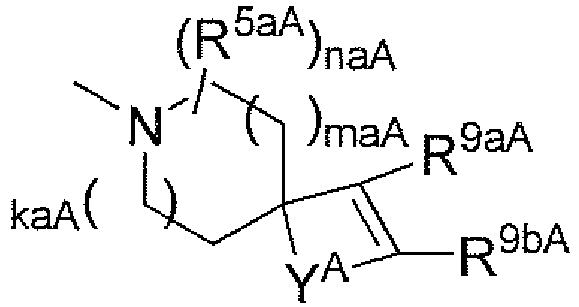
- (wherein naA, maA, kaA, R5aA, R9aA, R9bA and YA are each as defined above).
- (14) The pyrazolopyrimidine derivative or the pharmaceutically acceptable salt thereof according to the aforementioned (13), wherein R9aA and R9bA form, together with the respectively adjacent carbon atom, a benzene ring optionally having substituent(s), YA is -CHR10aA-CHR10bA- (wherein R10aA and R10bA are each as defined above), -CR10cA=CR10dA- (wherein R10cA and R10dA are each as defined above), -O-CR11aAR11bA- (wherein R11aA and R11bA are each as defined above) or -CR11cAR11dA-O- (wherein R11cA and R11dA are each as defined above).
- (15) The pyrazolopyrimidine derivative or the pharmaceutically acceptable salt thereof according to any of the aforementioned (2) - (10), wherein R2A is
-

- (wherein RzA, R5bA, R7bA, nbA and ncA are each as defined above).
- (16) The pyrazolopyrimidine derivative or the pharmaceutically acceptable salt thereof according to the aforementioned (15), wherein RzA is phenyl optionally having substituent(s).
- (17) A medicament comprising, as an active ingredient, the pyrazolopyrimidine derivative or the pharmaceutically acceptable salt thereof according to any of the aforementioned (1)-(16).
- (18) An agent for the prevention and/or treatment of a skin disease comprising, as an active ingredient, the pyrazolopyrimidine derivative or the pharmaceutically acceptable salt thereof according to any of the aforementioned (1)-(16).
- (19) The agent for the prevention and/or treatment of a skin disease according to the aforementioned (18), wherein the skin disease is a skin disease selected from acne vulgaris, drug eruption, contact dermatitis, dermatitis due to venomous moth, pollen dermatitis, urticaria, psoriasis, atopic dermatitis, candidal dermatitis, seborrheic dermatitis, eczema, Stevens-Johnson syndrome, toxic epidermal necrosis, erythema multiforme, erythema nodosum, granuloma annulare, pityriasis rosea, rosacea, lichen planus, lichen pilaris (keratosis pilaris), photosensitivity, solar dermatitis, miliaria, herpes simplex, Kaposi's varicelliform eruption, impetigo contagiosa, staphylococcal scalded skin syndrome, erysipelas, slap cheek, lupus erythematosus, keloid, Hailey-Hailey disease, scabies and linear dermatitis.
- (20) The agent for the prevention and/or treatment of a skin disease according to the aforementioned (18), wherein the skin disease is dermatitis.
- (21) The agent for the prevention and/or treatment of a skin disease according to the aforementioned (18), wherein the skin disease is a skin disease selected from contact dermatitis and atopic dermatitis.
- (22) A method for the prevention and/or treatment of a skin disease, comprising a step of administering an effective amount of the pyrazolopyrimidine derivative or the pharmaceutically acceptable salt thereof according to any of the aforementioned (1)-(16) to a subject in need thereof.
- (23) The method according to the aforementioned (22), wherein the skin disease is a skin disease selected from acne vulgaris, drug eruption, contact dermatitis, dermatitis due to venomous moth, pollen dermatitis, urticaria, psoriasis, atopic dermatitis, candidal dermatitis, seborrheic dermatitis, eczema, Stevens-Johnson syndrome, toxic epidermal necrosis, erythema multiforme, erythema nodosum, granuloma annulare, pityriasis rosea, rosacea, lichen planus, lichen pilaris (keratosis pilaris), photosensitivity, solar dermatitis, miliaria, herpes simple, Kaposi's varicelliform eruption, impetigo contagiosa, staphylococcal scalded skin syndrome, erysipelas, slap cheek, lupus erythematosus, keloid, Hailey-Hailey disease, scabies and linear dermatitis.
- (24) The method according to the aforementioned (22), wherein the skin disease is dermatitis.
- (25) The method according to the aforementioned (22), wherein the skin disease is a skin disease selected from contact dermatitis and atopic dermatitis.
- (26) The pyrazolopyrimidine derivative or the pharmaceutically acceptable salt thereof according to any of the aforementioned (1)-(16) for use in prevention and/or treatment of a skin disease.
- (27) The pyrazolopyrimidine derivative or the pharmaceutically acceptable salt thereof according to the aforementioned (26), wherein the skin disease is a skin disease selected from acne vulgaris, drug eruption, contact dermatitis, dermatitis due to venomous moth, pollen dermatitis, urticaria, psoriasis, atopic dermatitis, candidal dermatitis, seborrheic dermatitis, eczema, Stevens-Johnson syndrome, toxic epidermal necrosis, erythema multiforme, erythema nodosum, granuloma annulare, pityriasis rosea, rosacea, lichen planus, lichen pilaris (keratosis pilaris), photosensitivity, solar dermatitis, miliaria, herpes simplex, Kaposi's varicelliform eruption, impetigo contagiosa, staphylococcal scalded skin syndrome, erysipelas, slap cheek, lupus erythematosus, keloid, Hailey-Hailey disease, scabies and linear dermatitis.
- (28) The pyrazolopyrimidine derivative or the pharmaceutically acceptable salt thereof according to the aforementioned (26), wherein the skin disease is dermatitis.
- (29) The pyrazolopyrimidine derivative or the pharmaceutically acceptable salt thereof according to the aforementioned (26), wherein the skin disease is a skin disease selected from contact dermatitis and atopic dermatitis.
- (30) Use of the pyrazolopyrimidine derivative or the pharmaceutically acceptable salt thereof according to any of the aforementioned (1)-(16) for the manufacture of an agent for the prevention and/or treatment of a skin disease.
- (31) The use according to the aforementioned (30), wherein the skin disease is a skin disease selected from acne vulgaris, drug eruption, contact dermatitis, dermatitis due to venomous moth, pollen dermatitis, urticaria, psoriasis, atopic dermatitis, candidal dermatitis, seborrheic dermatitis, eczema, Stevens-Johnson syndrome, toxic epidermal necrosis, erythema multiforme, erythema nodosum, granuloma annulare, pityriasis rosea, rosacea, lichen planus, lichen pilaris (keratosis pilaris), photosensitivity, solar dermatitis, miliaria, herpes simplex, Kaposi's varicelliform eruption, impetigo contagiosa, staphylococcal scalded skin syndrome, erysipelas, slap cheek, lupus erythematosus, keloid, Hailey-Hailey disease, scabies and linear dermatitis.
- (32) The use according to the aforementioned (30), wherein the skin disease is dermatitis.
- (33) The use according to the aforementioned (30), wherein the skin disease is a skin disease selected from contact dermatitis and atopic dermatitis.
- The present invention provides a pyrazolopyrimidine derivative or a pharmaceutically acceptable salt thereof useful as an agent for the prevention and/or treatment of skin diseases, and the like.
- In the present description, the compounds represented by the formula (I) and the formula (IA) are referred to as Compound (I) and Compound (IA), respectively. The same applies to the compounds having other formula numbers.
In the definition of each group in the formula (I) and the formula (IA),
Examples of the lower alkyl, and the lower alkyl moiety of the lower alkoxy, the lower alkoxycarbonyl, the lower alkanoyl, the N-mono-lower alkylamino and the N,N-di-lower alkylamino include straight chain or branched alkyl having 1 10 carbon atoms, more specifically, methyl, ethyl, propyl, isopropyl, butyl, isobutyl, sec-butyl, tert-butyl, pentyl, isopentyl, neopentyl, hexyl, heptyl, octyl, nonyl, decyl and the like. Two lower alkyl moieties of the N,N-di-lower alkylamino may be the same or different. - The alkylene has the same meaning as the group formed by removing one hydrogen atom from the aforementioned lower alkyl.
Examples of the cycloalkyl, and the cycloalkyl moiety of the N-cycloalkylamino include cycloalkyl having 3 - 8 carbon atoms, and more specific examples thereof include cyclopropyl, cyclobutyl, cyclopentyl, cyclohexyl, cycloheptyl, cyclooctyl and the like.
Examples of the aryl, and the aryl moiety of the N-mono-arylamino and the N,N-diarylamino include aryl having 6 - 14 carbon atoms, and more specific examples thereof include phenyl, naphthyl, azulenyl, anthryl, pentalenyl, indenyl, biphenylenyl and the like. - The alkylene moiety of the aralkyl has the same meaning as the group formed by removing one hydrogen atom from the aforementioned lower alkyl, and the aryl moiety is as defined for the aforementioned aryl.
Examples of the aliphatic heterocyclic group include a 3-to 7-membered monocyclic aliphatic heterocyclic group containing at least one atom selected from a nitrogen atom, an oxygen atom and a sulfur atom, a bicyclic or tricyclic condensed aliphatic heterocyclic group containing at least one atom selected from a nitrogen atom, an oxygen atom and a sulfur atom, wherein 3- to 8-membered rings are condensed, and the like, and more specific examples thereof include aziridinyl, azetidinyl, pyrrolidinyl, piperidino, piperidinyl, azepanyl, 1,2,5,6-tetrahydropyridyl, imidazolidinyl, pyrazolidinyl, piperazinyl, homopiperazinyl, pyrazolinyl, oxiranyl, tetrahydrofuranyl, tetrahydro-2H-pyranyl, 5,6-dihydro-2H-pyranyl, oxazolidinyl, morpholino, morpholinyl, thioxazolidinyl, thiomorpholinyl, 2H-oxazolyl, 2H-thioxazolyl, dihydroindolyl, dihydroisoindolyl, dihydrobenzofuranyl, benzimidazolidinyl, dihydrobenzooxazolyl, dihydrobenzothioxazolyl, benzodioxolinyl, tetrahydroquinolyl, tetrahydroisoquinolyl, dihydro-2H-chromanyl, dihydro-1H-chromanyl, dihydro-2H-thiochromanyl, dihydro-1H-thiochromanyl, tetrahydroquinoxalinyl, tetrahydroquinazolinyl, dihydrobenzodioxanyl, oxetanyl and the like. - Examples of the aromatic heterocyclic group include a 5-membered or 6-membered monocyclic aromatic heterocyclic group containing at least one atom selected from a nitrogen atom, an oxygen atom and a sulfur atom, a bicyclic or tricyclic condensed aromatic heterocyclic group containing at least one atom selected from a nitrogen atom, an oxygen atom and a sulfur atom, wherein 3- to 8-membered rings are condensed, and the like, and more specific examples thereof include furyl, thienyl, pyrrolyl, imidazolyl, pyrazolyl, oxazolyl, isoxazolyl, oxadiazolyl, thiazolyl, isothiazolyl, thiadiazolyl, triazolyl, tetrazolyl, pyridyl, pyridazinyl, pyrimidinyl, pyrazinyl, triazinyl, benzofuranyl, benzothiophenyl, benzoxazolyl, benzothiazolyl, isoindolyl, indolyl, indazolyl, benzimidazolyl, benzotriazolyl, oxazolopyrimidinyl, thiazolopyrimidinyl, pyrrolopyridinyl, pyrrolopyrimidinyl, imidazopyridinyl, purinyl, quinolinyl, isoquinolinyl, cinnolinyl, phthalazinyl, quinazolinyl, quinoxalinyl, naphthyridinyl, azepinyl, diazepinyl, pyranyl, oxepinyl, thiopyranyl, thiepinyl, furazanyl, oxadiazolyl, oxazinyl, oxadiazinyl, oxazepinyl, oxadiazepinyl, thiazinyl, thiadiazinyl, thiazepinyl, thiadiazepinyl, indolizinyl, isobenzofuranyl, isobenzothiophenyl, dithianaphthalenyl, quinolizinyl, pteridinyl, benzoxazolidinyl, chromenyl, benzoxepinyl, benzoxadiazepinyl, benzothiepinyl, benzothiazepinyl, benzothiadiazepinyl, benzothiepinyl, benzothiazepinyl, benzoazepinyl, benzodiazepinyl, benzofurazanyl, benzothiadiazolinyl, carbazolyl, β-carbolinyl, acrydinyl, phenazinyl, dibenzofuranyl, xanthenyl, dibenzothiophenyl, phenothiazinyl, phenoxazinyl, phenoxathinyl, thianthrenyl, phenanthridinyl, phenanthrolinyl, perimidinyl and the like.
- Examples of the nitrogen-containing heterocyclic group formed together with the adjacent nitrogen atom thereto include a 5-membered or 6-membered monocyclic heterocyclic group containing at least one nitrogen atom (said monocyclic heterocyclic group may contain any other of a nitrogen atom, an oxygen atom or a sulfur atom), a bicyclic or tricyclic condensed heterocyclic group containing at least one nitrogen atom (said condensed heterocyclic group may contain any other of a nitrogen atom, an oxygen atom or a sulfur atom), wherein 3- to 8-membered rings are condensed, and the like, and more specific examples thereof include aziridinyl, azetidinyl, pyrrolidinyl, piperidino, azepanyl, pyrrolinyl, imidazolidinyl, imidazolyl, pyrazolidinyl, pyrazolinyl, pyrazolyl, piperazinyl, homopiperazinyl, oxazolidinyl, 2H-oxazolyl, thioxazolidinyl, 2H-thioxazolyl, morpholino, thiomorpholinyl, dihydroindolyl, dihydroisoindolyl, indolyl, isoindolyl, tetrahydroquinolyl, tetrahydroisoquinolyl, dihydrobenzooxazolyl, dihydrobenzothioxazolyl, benzimidazolidinyl, benzimidazolyl, dihydroindazolyl, indazolyl, benzotriazolyl, pyrrolopyridinyl, pyrrolopyrimidinyl, imidazopyridinyl, purinyl and the like.
- Examples of the aliphatic ring include aliphatic rings corresponding to the aforementioned cycloalkyl and aliphatic heterocyclic group.
Examples of the aliphatic ring having at least one double bond include aliphatic rings having one or more double bond from among the aforementioned aliphatic ring, and more specific examples thereof include 1,2,5,6-tetrahydropyridine, tetrahydro-2H-pyran, 2H-oxazone, 2H-thioxazone, dihydroindoline, dihydroisoindoline, dihydrobenzofuran, dihydrobenzooxazoline, dihydrobenzothioxazoline, dihydro-2H-chromane, dihydro-1H-chromane, dihydro-2H-thiochromane, dihydro-1H-thiochromane, dihydrobenzodioxane and the like. - Examples of the aromatic ring include aromatic rings corresponding to the aforementioned aryl and aromatic heterocyclic group.
The halogen means each atom of fluorine, chlorine, bromine or iodine.
The substituent(s) (substituent group-1) in the lower alkyl optionally having substituent(s), the lower alkoxy optionally having substituent(s), the N-mono-lower alkylamino optionally having substituent(s), the N,N-di-lower alkylamino optionally having substituent(s), the lower alkoxycarbonyl optionally having substituent(s) and the lower alkanoyl optionally having substituent(s) are the same or different and examples thereof include 1 to 3 substituents selected from the group consisting of halogen; sulfanyl; nitro; cyano; C3-8 cycloalkyl optionally having 1 to 3 substituents selected from the following substituent group C; an aliphatic heterocyclic group optionally having 1 to 3 substituents selected from the following substituent group C; an aromatic heterocyclic group optionally having 1 to 3 substituents selected from the following substituent group B; C1-10 alkylsulfanyl optionally having 1 to 3 substituents selected from the following substituent group A; C6-14 arylsulfanyl optionally having 1 to 3 substituents selected from the following substituent group B; C1-10 alkylsulfonyl optionally having 1 to 3 substituents selected from the following substituent group A; C6-14 arylsulfonyl optionally having 1 to 3 substituents selected from the following substituent group B; OR16 (wherein R16 represents a hydrogen atom, C1-10 alkyl optionally having 1 to 3 substituents selected from the following substituent group A, C3-8 cycloalkyl optionally having 1 to 3 substituents selected from the following substituent group C, C6-14 aryl optionally having 1 to 3 substituents selected from the following substituent group B, C7-16 aralkyl optionally having 1 to 3 substituents selected from the following substituent group B, an aromatic heterocyclic group optionally having 1 to 3 substituents selected from the following substituent group B, C2-11 alkanoyl optionally having 1 to 3 substituents selected from the following substituent group A, C7-15 aroyl optionally having 1 to 3 substituents selected from the following substituent group B, C1-10 alkylsulfonyl optionally having 1 to 3 substituents selected from the following substituent group A or C6-14 arylsulfonyl optionally having 1 to 3 substituents selected from the following substituent group B); C(=O)R17a (wherein R17a represents amino, hydroxy, C1-10 alkyl optionally having 1 to 3 substituents selected from the following substituent group A, C3-8 cycloalkyl optionally having 1 to 3 substituents selected from the following substituent group C, C6-14 aryl optionally having 1 to 3 substituents selected from the following substituent group B, an aliphatic heterocyclic group optionally having 1 to 3 substituents selected from the following substituent group C, an aromatic heterocyclic group optionally having 1 to 3 substituents selected from the following substituent group B, C1-10 alkoxy optionally having 1 to 3 substituents selected from the following substituent group A, C6-14 aryloxy optionally having 1 to 3 substituents selected from the following substituent group B, C1-10 alkylamino optionally having 1 to 3 substituents selected from the following substituent group A, di-C1-10 alkylamino optionally having 1 to 3 substituents selected from the following substituent group A or C6-14 arylamino optionally having 1 to 3 substituents selected from the following substituent group B) : and -NR18aR18b (wherein R18a and R18b are the same or different and each represents a hydrogen atom, formyl, C1-10 alkyl optionally having 1 to 3 substituents selected from the following substituent group A, C3-8 cycloalkyl optionally having 1 to 3 substituents selected from the following substituent group C, C6-14 aryl optionally having 1 to 3 substituents selected from the following substituent group B, an aliphatic heterocyclic group optionally having 1 to 3 substituents selected from the following substituent group C, an aromatic heterocyclic group optionally having 1 to 3 substituents selected from the following substituent group B, C2-11 alkanoyl optionally having 1 to 3 substituents selected from the following substituent group As C7-15 aroyl optionally having 1 to 3 substituents selected from the following substituent group B, C1-10 alkoxycarbonyl optionally having 1 to 3 substituents selected from the following substituent group A, C1-10 alkylsulfonyl optionally having 1 to 3 substituents selected from the following substituent group A or C6-14 arylsulfonyl optionally having 1 to 3 substituents selected from the following substituent group B). Examples of the substituent in the lower alkoxy optionally having substituent(s), the lower alkoxycarbonyl optionally having substituent(s) and the lower alkanoyl optionally having substituent(s) also include C6-14 aryl optionally having 1 to 3 substituents selected from the following substituent group B, in addition to the aforementioned substituent group-1. - The substituent(s) in the aryl optionally having substituent(s), the N-mono-arylamino optionally having substituent(s), the N,N-diarylamino optionally having substituent(s), the phenyl optionally having substituent(s), the aralkyl optionally having substituent(s), the aromatic heterocyclic group optionally having substituent(s), the aromatic ring optionally having substituent(s) and the benzene ring optionally having substituent(s) are the same or different and examples thereof include 1 to 3 substituents selected from the group consisting of C1-10 alkyl optionally having 1 to 3 substituents selected from the following substituent group A, C6-14 aryl optionally having 1 to 3 substituents selected from the following substituent group B and the substituents of the aforementioned substituent group-1. The substituent in the aryl optionally having substituent(s) include C4-8 cycloalkyl ring condensing with the aryl moiety of the substituted aryl and optionally having 1 to 3 substituents selected from the following substituent group C, or aliphatic heterocyclic ring condensing with the aryl moiety of the substituted aryl and optionally having 1 to 3 substituents selected from the following substituent group C, in addition to the above substituent(s). The substituent in the phenyl optionally having substituent(s) include C4-8 cycloalkyl ring condensing with the phenyl moiety of the substituted phenyl and optionally having 1 to 3 substituents selected from the following substituent group C, or aliphatic heterocyclic ring condensing with the phenyl moiety of the substituted phenyl and optionally having 1 to 3 substituents selected from the following substituent group C, in addition to the above substituent(s). The substituent in the aryl moiety of the aralkyl optionally having substituent(s) include C4-8 cycloalkyl ring condensing with the aryl moiety of the substituted aralkyl and optionally having 1 to 3 substituents selected from the following substituent group C, or aliphatic heterocycle ring condensing with the aryl moiety of the substituted aralkyl and optionally having 1 to 3 substituents selected from the following substituent group C, in addition to the above substituent(s).
- The substituent(s) in the cycloalkyl optionally having substituent(s), the N-cyclialkylamino optionally having substituent(s), the aliphatic heterocyclic group optionally having substituent(s), the aliphatic ring having at least one double bond optionally having substituent(s), the nitrogen-containing heterocyclic group optionally having substituent(s), which is formed together with the adjacent nitrogen atom, and the aliphatic ring optionally having substituent(s) are the same or different and examples thereof include 1 to 3 substituents selected from the group consisting of oxo, C1-10 alkyl optionally having 1 to 3 substituents selected from the following substituent group A, C6-14 aryl optionally having 1 to 3 substituents selected from the following substituent group B and the substituents of the aforementioned substituent group-1. The substituent in the cycloalkyl optionally having substituent(s) include benzene ring condensing with the cycloalkyl moiety of the substituted cycloalkyl and optionally having 1 to 3 substituents selected from the following substituent group B, in addition to the above substituent(s).
- The substituent group A means the group consisting of halogen; hydroxy; sulfanyl; nitro; cyano; carboxy; carbamoyl; C3-8 cycloalkyl; C6-14 aryl optionally having 1 to 3 substituents selected from the group consisting of halogen, hydroxy, amino, nitro, carboxy, C1-10 alkoxycarbonyl, C1-10 alkoxy and trifluoromethyl (substituent group a); an aliphatic heterocyclic group; an aromatic heterocyclic group; C1-10 alkoxy optionally having 1 to 3 substituents selected from the group consisting of halogen, hydroxy, amino, carboxy, C1-10 alkoxy, C1-10 alkylamino, di-C1-10 alkylamino and C1-10 alkoxycarbonyl (substituent group b); C3-8 cycloalkoxy; C6-14 aryloxy optionally having 1 to 3 substituents selected from the aforementioned substituent group a; C7-16 aralkyloxy optionally having 1 to 3 substituents selected from the aforementioned substituent group a; C2-11 alkanoyloxy; C7-15 aroyloxy; C1-10 alkylsulfonyloxy; trifluoromethanesulfonyloxy; C6-14 arylsulfonyloxy; p-toluenesulfonyloxy; C1-10 alkylsulfanyl; C6-14 arylsulfanyl; - NR19aR19b (wherein R19a and R19b are the same or different and each represents a hydrogen atom; formyl; C1-10 alkyl optionally having 1 to 3 substituents selected from the aforementioned substituent group b; C3-8 cycloalkyl; C6-14 aryl optionally having 1 to 3 substituents selected from the aforementioned substituent group a; an aromatic heterocyclic group; C7-16 aralkyl optionally having 1 to 3 substituents selected from the aforementioned substituent group a; C2-11 alkanoyl; C7-15 aroyl; C1-10 alkoxycarbonyl; C7-16 aralkyloxycarbonyl; C1-10 alkylsulfonyl; trifluoromethanesulfonyl; C6-14 arylsulfonyl or p-toluenesulfonyl); C2-11 alkanoyl; C3-8 cycloalkylcarbonyl; C7-15 aroyl; aliphatic heterocyclylcarbonyl; aromatic heterocyclylcarbonyl; C1-10 alkoxycarbonyl; C6-14 aryloxycarbonyl; C7-16 aralkyloxycarbonyl; C1-10 alkylcarbamoyl; di-C1-10 alkylcarbamoyl and C6-14 arylcarbamoyl.
- The substituent group B means the group consisting of C1-10 alkyl, trifluoromethyl and the substituents of the aforementioned substituent group A.
The substituent group C means the group consisting of oxo, C1-10 alkyl, trifluoromethyl and the substituents of the aforementioned substituent group A.
Examples of the C1-10 alkyl and the C1-10 alkyl moiety of the C1-10 alkoxy, the C2-11 alkanoyloxy, the C1-10 alkylsulfanyl, the C2-11 alkanoyl, the C1-10 alkoxycarbonyl, the C1-10 alkylcarbamoyl, the di-C1-10 alkylcarbamoyl, the C1-10 alkylsulfonyl, the C1-10 alkylsulfonyloxy, the C1-10 alkylamino and the di-C1-10 alkylamino shown here include the groups exemplified as the aforementioned lower alkyl. Two C1-10 alkyl moieties of di-C1-10 alkylcarbamoyl and di-C1-10 alkylamino may be the same or different. - Examples of the C3-8 cycloalkyl and the C3-8 cycloalkyl moiety of the C3-8 cycloalkoxy and the C3-8 cycloalkylcarbonyl include the groups exemplified as the aforementioned cycloalkyl.
Examples of the aryl condensed with the C4-8 cycloalkyl ring and the moiety formed by removing the alkylene moiety from the aralkyl of which aryl moiety is condensed with the C4-8 cycloalkyl ring include a cycloalkyl-condensed aryl having 8 to 16 carbon atoms, and more specific examples thereof include indanyl, 1,2,3,4-tetrahydronaphthalenyl and the like. - Examples of the phenyl condensed with the C4-8 cycloalkyl ring include a cycloalkyl-condensed phenyl having 8 to 12 carbon atoms, and more specific examples thereof include indanyl, 1,2,3,4-tetrahydronaphthalenyl and the like.
Examples of the cycloalkyl condensed with the benzene ring include a benzene ring-condensed cycloalkyl having 8 to 12 carbon atoms, and more specific examples thereof include indanyl, 1,2,3,4-tetrahydronaphthalenyl and the like. - Examples of the C6-14 aryl, and the aryl moiety of the C6-14 aryloxy, the C6-14 arylamino, the C6-14 arylsulfanyl, the C7-15 aroyl, the C7-15 aroyloxy, the C6-14 aryloxycarbonyl, the C6-14 arylsulfonyl, the C6-14 arylsulfonyloxy and the C6-14 arylcarbamoyl include the groups exemplified as the aforementioned aryl.
Examples of the aryl moiety of the C7-16 aralkyloxy, the C7-16 aralkyl and the C7-16 aralkyloxycarbonyl include the group exemplified as the aforementioned aryl, and examples of the alkylene moiety thereof include C1-10 alkylene and more specific examples thereof include the group formed by removing one hydrogen atom from the aforementioned lower alkyl and the like. - Examples of the aliphatic heterocyclic group and the aliphatic heterocyclic group moiety of the aliphatic heterocyclylcarbonyl include the groups exemplified as the aforementioned aliphatic heterocyclic group.
Examples of the aromatic heterocyclic group and the aromatic heterocyclic group moiety of the aromatic heterocyclylcarbonyl include the groups exemplified as the aforementioned aromatic heterocyclic group.
Examples of the aryl condensed with the aliphatic heterocycle and the moiety formed by removing the alkylene moiety from the aralkyl of which aryl moiety is condensed with the aliphatic heterocycle include aryl condensed with a 4- to 7-membered monocyclic aliphatic heterocyclic group containing at least one atom selected from a nitrogen atom, an oxygen atom and a sulfur atom, and more specific examples thereof include dihydrobenzofuranyl, dihydroisobenzofuranyl, indolinyl, isoindolinyl, chromanyl, isochromanyl and the like. - Examples of the phenyl condensed with the aliphatic heterocycle include phenyl condensed with a 4- to 7-membered monocyclic aliphatic heterocyclic group containing at least one atom selected from a nitrogen atom, an oxygen atom and a sulfur atom, and more specific examples thereof include dihydrobenzofuranyl, dihydroisobenzofuranyl, indolinyl, isoindolinyl, chromanyl, isochromanyl and the like.
Examples of the halogen include the atom exemplified as the aforementioned halogen. - In each group of Compound (I),
R1 is preferably NR1aR1b (wherein R1a and R1b are each as defined above), more preferably, one of R1a and R1b is a hydrogen atom, and the other is lower alkyl optionally having substituent(s), cycloalkyl optionally having substituent(s), aralkyl optionally having substituent(s), aryl optionally having substituent(s), an aromatic heterocyclic group optionally having substituent(s) or an aliphatic heterocyclic group optionally having substituent(s), and more preferably, one of R1a and R1b is a hydrogen atom, and the other is aralkyl optionally having substituent(s) or aryl optionally having substituent(s) (wherein the substituent(s) in the aralkyl optionally having substituent(s) or the aryl optionally having substituent(s) is preferably lower alkyl or halogen, and the number of substituents(s) is preferably 2 or 3). In addition, it is also more preferable that one of R1a and R1b is a hydrogen atom, and the other is an aromatic heterocyclic group optionally having substituent(s). - When R2 is
-

- R5 is preferably lower alkyl optionally having substituent(s), more preferably lower alkyl,
R6 is preferably aryl optionally having substituent(s) or an aromatic heterocyclic group optionally having substituent(s), more preferably aryl optionally having substituent(s), still more preferably phenyl optionally having substituent(s), - R7 is preferably a hydrogen atom or lower alkyl,
X is preferably a nitrogen atom or CR8a (wherein R8a represents a hydrogen atom, halogen or lower alkyl), more preferably CR8a (wherein R8a is as defined above),
L is preferably a single bond, - k and m are each preferably 1, and
n is preferably 0 or 1, more preferably 0.
When R2 is -

- R5a is preferably lower alkyl optionally having substituent(s), more preferably lower alkyl.
R9a and R9b preferably form, together with the respectively adjacent carbon atom, an aromatic ring optionally having substituent(s), more preferably form, together with the respectively adjacent carbon atom, a benzene ring optionally having substituent(s), - Y is preferably -CHR10a-CHR10b- (wherein R10a and R10b are each as defined above), -CR10c=CR10d- (wherein R10c and R10d are each as defined above), -O-CR11aR11b- (wherein R11a and R11b are each as defined above) or -CR11cR11d-O- (wherein R11c and R11d are each as defined above), more preferably -CHR10aa-CHR10ba-(wherein R10aa and R10ba are the same or different and each represents a hydrogen atom or lower alkyl), -CR10ca=CR10da-(wherein R10ca and R10da are the same or different and each represents a hydrogen atom or lower alkyl), -O-CR11aaR11ba-(wherein R11aa and R11ba are the same or different and each represents a hydrogen atom or lower alkyl), or -CR11caR11da-O-(wherein R11ca and R11da are the same or different and each represents a hydrogen atom or lower alkyl),
- ka and ma are each preferably 1, and
na is preferably 0 or 1, more preferably 0.
When R2 is -

- Rz is preferably aryl optionally having substituent(s) or an aromatic heterocyclic group optionally having substituent(s), more preferably aryl optionally having substituent(s), still more preferably phenyl optionally having substituent(s),
- R5b and R7b are the same or different and each is preferably halogen, hydroxy or lower alkyl optionally having substituent(s), more preferably halogen or lower alkyl optionally having substituent(s), still more preferably lower alkyl optionally having substituent(s), and
nb is preferably 0 and nc is preferably 0. - R3 is preferably the following (A) or (B).
- (A) S(O)2NR13bR13c (wherein R13b and R13c are each as defined above), and it is more preferably when R13b is a hydrogen atom and R13c is lower alkyl optionally having substituent(s), lower alkoxy optionally having substituent(s) or cycloalkyl optionally having substituent(s).
- (B) S(O)2NR13dC(=O)R13e (wherein R13d and R13e are each as defined above), and it is more preferably when R13d is a hydrogen atom and R13e is lower alkyl optionally having substituent(s), cycloalkyl optionally having substituent(s), lower alkoxy optionally having substituent(s), N-mono-lower alkylamino optionally having substituent(s), N,N-di-lower alkylamino optionally having substituent(s), N-cycloalkylamino optionally having substituent(s), N-mono-arylamino optionally having substituent(s) or N,N-di-arylamino optionally having substituent(s).
- As Compound (I), a compound, wherein two or more of the above-mentioned preferable substituent embodiments are combined, is preferable.
In each group of Compound (IA),
R1A is preferably aryl optionally having substituent(s) or an aromatic heterocyclic group optionally having substituent(s), more preferably aryl optionally having substituent(s), still more preferably phenyl optionally having substituent(s) (wherein the substituent(s) in the aryl optionally having substituent(s) or the phenyl optionally having substituent(s) is preferably lower alkyl or halogen, and the number of substituents(s) is preferably 2 or 3). And it is also more preferable embodiment when R1A is an aromatic heterocyclic group optionally having substituent(s). - L1 is preferably a single bond.
When R2A is -

- R5A is preferably lower alkyl,
R6A is preferably aryl optionally having substituent(s) or an aromatic heterocyclic group optionally having substituent(s), more preferably aryl optionally having substituent(s), still more preferably phenyl optionally having substituent(s), - LA is preferably a single bond,
R7A is preferably a hydrogen atom or lower alkyl,
XA is preferably a nitrogen atom or -CR8Aa (wherein R8Aa represents a hydrogen atom, halogen or lower alkyl), more preferably -CR8Aa (wherein R8Aa is as defined above), - mA and kA are each preferably 1, and
nA is preferably 0 or 1, more preferably 0.
When R2A is -

- R5aA is preferably lower alkyl,
kaA and maA are each preferably 1,
R9aA and R9bA preferably form, each together with the adjacent carbon atom, a benzene ring optionally having substituent(s), - YA is preferably -CHR10aA-CHR10bA- (wherein R10aA and R10bA are each as defined above), -CR10cA=CR10dA- (wherein R10CA and R10dA are each as defined above), -O-CR11aAR11bA- (wherein R11aA and R11bA are each as defined above) or -CR11cAR11dA-O- (wherein R11cA and R11dA are each as defined above), more preferably -CHR10aAa-CHR10bAa- (wherein R10aAa and R10bAa are the same or different and each represents a hydrogen atom or lower alkyl), -CR10cAa=CR10dAa-(wherein R10cAa and R10dAa are the same or different and each represents a hydrogen atom or lower alkyl), -O-CR11aAaR11bAa-(wherein R11aAa and R11bAa are the same or different and each represents a hydrogen atom or lower alkyl) or -CR11cAaR11dAa-O-(wherein R11cAa and R11dAa are the same or different and each represents a hydrogen atom or lower alkyl), and
- naA is preferably 0 or 1, more preferably 0.
When R2 is -

- RzA is preferably aryl optionally having substituent(s) or an aromatic heterocyclic group optionally having substituent(s), more preferably aryl optionally having substituent(s), still more preferably phenyl optionally having substituent(s),
- R5bA and R7bA are the same or different and each is preferably halogen, hydroxy or lower alkyl optionally having substituent(s), more preferably halogen or lower alkyl optionally having substituent(s), still more preferably lower alkyl optionally having substituent(s), and
nbA is preferably 0 and ncA is preferably 0. - R13A is preferably a hydrogen atom or lower alkyl optionally having substituent(s), more preferably a hydrogen atom.
R13B is preferably lower alkyl optionally having substituent(s), lower alkoxy optionally having substituent(s) or COR13e1 (wherein R13e1 is as defined above), more preferably lower alkyl, halogen-substituted lower alkyl (wherein the halogen moiety of the halogen-substituted lower alkyl is as defined for the aforementioned halogen and the lower alkyl moiety is as defined for the aforementioned alkylene) or COR13e2 (wherein R13e2 is as defined above) . - R4A is preferably a hydrogen atom.
As Compound (IA), a compound, wherein two or more of the above-mentioned preferable substituent embodiments are combined, is preferable. In addition, Compound (IA) described in (3)-(16) of [Means of Solving the Problems] of which substituents are limited according to the above-mentioned preferable embodiments of the substituents, are preferable. Furthermore, Compound (IA) described in (3)-(16) of [Means of Solving the Problems] of which substituents are limited according to combinations of two or more above-mentioned preferable embodiments of the substituents, are more preferable. - The pharmaceutically acceptable salts of Compound (I) and (IA) comprise, for example, pharmaceutically acceptable acid addition salts, metal salts, ammonium salts, organic amine addition salts, amino acid addition salts and the like. Examples of the pharmaceutically acceptable acid addition salts of Compounds (I) and (IA) include, but are not limited to, inorganic acid salts such as hydrochloride, hydrobromide, nitrate, sulfate, phosphate and the like, organic acid salts such as acetate, oxalate, maleate, fumarate, citrate, benzoate, methanesulfonate and the like. Examples of the pharmaceutically acceptable metal salts include, but are not limited to, sodium salt, potassium salt, magnesium salt, calcium salt, aluminum salt, zinc salt and the like. Examples of the pharmaceutically acceptable ammonium salt include, but are not limited to, ammonium salt, tetramethylammonium salt and the like. Examples of the pharmaceutically acceptable organic amine addition salt include, but are not limited to, addition salts of morpholine, piperidine and the like. Examples of the pharmaceutically acceptable amino acid addition salt include, but are not limited to, addition salts of lysine, glycine, phenylalanine, aspartic acid, glutamic acid and the like.
- The pharmaceutically acceptable salts of Compounds (I) and (IA) include quaternary ammonium salt. The quaternary ammonium salt means one wherein the nitrogen atom in the compound is quaternarized by Rx (Rx is lower alkyl or lower alkyl substituted phenyl where lower alkyl is as defined above).
The pharmaceutically acceptable salts of Compounds (I) and (IA) also include N-oxide. N-oxide is a compound wherein the nitrogen atom in the compound is oxidized. Using the Compounds (I) and (IA) which is not N-oxide, and in the any oxidation method, for example, by using m-chloroperbenzoic acid, air oxidization, an oxidation reagent such as liver extract and the like, the N-oxide of Compounds (I) and (IA) can be obtained. - In the present invention, the skin diseases refer to those where the lesion appears on the skin. Specific examples thereof include, but are not limited to, acne vulgaris, drug eruption, contact dermatitis, dermatitis due to venomous moth, pollen dermatitis, urticaria, psoriasis, atopic dermatitis, candidal dermatitis, seborrheic dermatitis, eczema, Stevens-Johnson syndrome, toxic epidermal necrosis, erythema multiforme, erythema nodosum, granuloma annulare, pityriasis rosea, rosacea, lichen planus, lichen pilaris (keratosis pilaris), photosensitivity, solar dermatitis, miliaria, herpes simplex, Kaposi's varicelliform eruption, impetigo contagiosa, staphylococcal scalded skin syndrome, erysipelas, slap cheek, lupus erythematosus, keloid, Hailey-Hailey disease, scabies and linear dermatitis and the like.
- In the present invention, dermatitis refers to, from among the aforementioned skin diseases, one wherein immune system is endogenously or exogenously activated to cause skin symptoms. Specific examples thereof include, but are not limited to, acne vulgaris, contact dermatitis, atopic dermatitis, pollen dermatitis, psoriasis, drug eruption, lupus erythematosus, seborrheic dermatitis, eczema, Stevens-Johnson syndrome, toxic epidermal necrosis and the like.
- The treatment in the present invention refers to reversing the progression of, mitigating or inhibiting the disease or condition to be applied, or one or more symptoms of such disease or condition. Moreover, it includes application to inhibit progression before remission of disease, or when the symptom is mild. In skin diseases, aggravation and remission may be repeated regularly or chronically. The agent for prevention and/or treatment are/is also used for extending the remission period and preventing aggravation. The agent for prevention is also used for preventing the onset of a disease.
- The aggravation used in the present description refers to aggravation of the symptoms of a disease.
The remission used in the present description refers to a temporary or permanent reduction or disappearance of the symptoms of a disease.
The present invention also includes a prodrug of Compounds (I) and (IA). The prodrug of Compounds (I) and (IA) are a compound that can be converted to Compound (I) or (IA) by a reaction by an enzyme, gastric acid and the like in the body. As the prodrug, many kinds are known, and a suitable prodrug may be selected from a known literature (for example, Iyakuhin no Kaihatsu, Hirokawa Shoten, 1990, vol. 7, p. 163) and synthesized by a known method. For example, as a prodrug of Compounds (I) and (IA), when Compounds (I) and (IA) have amino, a compound wherein the amino is acylated, alkylated or phosphorylated, when Compounds (I) and (IA) have hydroxy, a compound wherein the hydroxy is acylated, alkylated, phosphorylated or borated, when Compounds (I) and (IA) have carboxy, a compound wherein the carboxy is esterified or amidated, and the like can be mentioned. The prodrug of Compounds (I) and (IA) may be any of hydrate, non-hydrate and solvate, and may form a salt with a pharmaceutically acceptable acid or base, like in the case of Compounds (I) and (IA). - A preferable compound used in the present description is a compound having desirable properties in one or more items from various evaluation items required for an agent for the prevention and/or treatment of skin diseases, pharmaceutical products or object of use, such as pharmacological activity, as well as physical stability, stability under physiological conditions, safety to the body and the like.
Compounds (I) and (IA) of the present invention, and pharmaceutically acceptable salts thereof may show an unpreferable action on living organisms. Even in such a case, the usefulness of an agent for the prevention and/or treatment, and a pharmaceutical product of the present invention can be exhibited while reducing an unpreferable action by using appropriate dose and administration method. - The Compounds (I) and (IA) of the present invention include those possibly having a stereoisomer such as geometric isomer, optical isomer and the like, tautomer and the like.
The present invention encompasses all possible isomers and mixtures thereof including them, and the mixing ratio thereof may be any.
The Compounds (I) and (IA) of the present invention, and pharmaceutically acceptable salts thereof may be present as adducts with water or various solvent, and the present invention also encompasses such adducts. - A part or all of the respective atoms in Compound (I) and Compound (IA) may be substituted by respective, corresponding isotope atom(s), and the present invention also encompasses such compounds substituted by isotope atoms. For example, a part or all of hydrogen atoms in Compound (I) may be a hydrogen atom having an atomic weight of 2 (deuterium atom). A compound incorporating a radioisotope such as 3H (tritium) or 14C from among the isotopes is useful for examining the tissue distribution of a compound and screening for an agent for the prevention and/or treatment of skin diseases.
- For example, a compound wherein a part or all of the respective atoms in Compound (I) is/are substituted by respective, corresponding isotope atom(s) can be produced using a commercially available building block and in the same manner as in each of the above-mentioned production methods. In addition, the compound wherein a part or all of the hydrogen atoms in Compound (I) is/are substituted by deuterium atom(s) can be synthesized by, for example, 1) a method using deuterium peroxide, to deuterate carboxylic acid and the like under basic conditions (see
US Patent No. 3849458 ), 2) a method using an iridium complex as a catalyst, to deuterate alcohol, carboxylic acid and the like by using deuterium oxide as a deuterium source [see Journal of the American Chemical Society (J. Am. Chem. Soc.), Vol. 124, No. 10, 2092 (2002)], 3) a method using palladium carbon as a catalyst, to deuterate fatty acid by using only a deuterium gas as a deuterium source [see LIPIDS, Vol. 9, No. 11, 913(1974)], 4) a method using metals such as platinum, palladium, rhodium, ruthenium, iridium and the like as catalysts, to deuterate acrylic acid, methyl acrylate, methacrylic acid, methyl methacrylate and the like by using deuterium oxide, or deuterium oxide and deuterium gas, as a deuterium source (seeJP-B-5-19536 JP-A-61-277648 JP-A-61-275241 JP-A-63-198638 - The isotope atom used in the present description refers to an atom having an atomic value or a mass number different from those generally found naturally. Examples of the isotope in the compound of the present invention include 2H, 3H, 13C, 14C, 15N, 17O, 18O, 31P, 32P, 35S, 18F and 36Cl, and the like.
The inert solvent used in the present description is an organic or inorganic solvent, which is liquid at room temperature or reaction temperature, and shows no change in the chemical structure after reaction. Specific examples thereof include, but are not limited to, tetrahydrofuran (THF), dioxane, carbon tetrachloride, acetone, ethyl acetate, methyl acetate, isopropyl acetate, diethyl ether, ethylene glycol, triethylene glycol, glyme, diglyme, 1,2-dimethoxyethane (DME), acetonitrile, methanol, ethanol, butanol, 2-propanol, methylene chloride, chloroform, benzene, water, toluene, pyridine, N,N-dimethylformamide (DMF), dimethylimidazole, N-methylpyrrolidine, N-methylpyrrolidinone, dimethylpropyleneurea, hexane, pentane, nitrobenzene, dimethyl sulfoxide(DMSO), diphenyl ether, Dowtherm A (registered trade mark), polychlorinated diphenyl, tetralin, heptane, octane, xylene, methylethylketone, methylisobutylketone, N,N-dimethylacetamide, sulfolane, 1,2-dichloroethane and the like. - The production methods of Compound (I) are explained in the following.
In the production methods shown below, when the defined groups change under the conditions of the production methods or are inappropriate for performing the production methods, the desired compound can be produced by performing the methods for the introduction and removal of the protecting groups conventionally performed in the synthetic organic chemistry (e.g., methods described in Protective Groups in Organic Synthesis, third edition, T.W. Greene, John Wiley & Sons Inc., 1999 etc.) or the like. If necessary, the order of the reaction steps can also be changed. -

- [wherein R1, R4, R5, R6, R7, R3b, R13c, X, L, k, m and n are each as defined above, R16 represents lower alkyl (the lower alkyl is as defined above), R17 represents a hydrogen atom or lower alkyl (the lower alkyl is as defined above), R18 represents - C(=O)R13e (wherein R13e is as defined above), -C(=S)R13g (wherein R13g is as defined above) or -S(O)2R14 (wherein R14 is as defined above), R19 is as defined for the aforementioned R13d, X2 represents a chlorine atom, a bromine atom or hydroxy, and X1 represents a leaving group. Examples of the leaving group include sulfonyloxy such as benzenesulfonyloxy, methanesulfonyloxy, p-toluenesulfonyloxy and the like, groups formed by removing one hydrogen atom from carboxylic acid such as lower alkanoyloxy (lower alkanoyl moiety of said lower alkanoyloxy is as defined for the aforementioned lower alkanoyl), arylcarbonyloxy (aryl moiety of said arylcarbonyloxy is as defined for the aforementioned aryl), aromatic heterocyclecarbonyloxy (aromatic heterocycle moiety of said aromatic heterocyclecarbonyloxy is as defined for the aforementioned aromatic heterocyclic group) and the like, a chlorine atom, a bromine atom, an iodine atom, a fluorine atom and the like]
A conversion reaction of R1, R4, R5, R6, R7, R13b, R13c, R16, R17, R18, R19, X1 and X2 can be performed during any step of (step 1) - (step 6) in the present production method. - Compound (iii) can be obtained by reacting compound (ii) with 0.5 - 50 equivalents, preferably a solvent amount, of a leaving group-introducing reagent in an inert solvent or without solvent at a temperature between -30 °C and 150 °C for 15 min - 24 hr.
- As the leaving group-introducing reagent, a suitable reagent can be selected according to the leaving group to be used. For example, when X1 is a halogen atom such as a chlorine atom, a bromine atom and the like, phosphorus oxychloride, phosphorus oxybromide, phosphorus pentachloride, trichloroacetyl chloride, phosphorus trichloride, phosphorus tribromide, acetyl chloride, thionyl chloride or the like can be used. In this case, 0.5 - 3 equivalents of, for example, N,N-diisopropylethylamine, N,N-diethylaniline or the like may be added.
- Preferably, the reaction is performed using phosphorus oxychloride without solvent at a temperature between 80 °C and 120 °C.
Compound (ii) can be synthesized by a known method [for example, the method described in Journal of Medicinal Chemistry, vol. 49, page 2526, 2006] or a method analogous thereto. - Compound (v) can be obtained by reacting compound (iii) with 0.5 - 10 equivalents, preferably 1 - 3 equivalents, of compound (iv) in an inert solvent or without solvent for 15 min - 24 hr at a temperature between the melting point and the boiling point of the solvent to be used, and using a base where necessary, and by, when further necessary, irradiating a microwave having an energy of 100 - 500 (W) under pressurization conditions of 1 - 20 atm.
- Examples of the base include sodium hydroxide, potassium carbonate, sodium hydrogen carbonate, barium hydroxide, cesium carbonate, potassium hydroxide, sodium methoxide, potassium ethoxide, lithium hydroxide, lithium hexamethyldisilasane, sodium hydride, potassium hydride, n-butyllithium, lithium diisopropylamide, potassium tert-butoxide, triethylamine, N,N-diisopropylethylamine, tributylamine, dicyclohexylmethylamine, N-methylmorpholine, pyridine, N-methylpiperidine, 2,6-di-tert-butylpyridine, 1,8-Diazabicyclo[5.4.0]undec-7-ene (DBU), 1,5-Diazabicyclo[4.3.0]non-5-ene (DBN), 4-(dimethylamino)pyridine, Amberlyst A-21 (manufactured by ROHM AND HAAS JAPAN KK.), AG 1-X8 (manufactured by Bio-Rad, Richmond, CA), polyvinyl pyridine, morpholinomethylpolystyrene and the like.
- The microwave refers to 1 GHz - 1 THz electromagnetic wave, and 2450 MHz is preferably used.
The irradiation energy is more preferably 300 W.
Preferably, DMF, N,N-dimethylacetamide or acetonitrile is used as an inert solvent, potassium carbonate, triethylamine or N,N-diisopropylethylamine is used as a base, and the reaction is performed at a temperature between 50 °C and 120 °C for 1 - 24 hr. - Compound (vi) can be obtained by reacting compound (v) with 0.5 - 10 equivalents, preferably 1 - 3 equivalents, of a sulfonylating agent in an inert solvent or without solvent for 15 min - 48 hr at a temperature between -30 °C and the boiling point of the solvent to be used.
- Examples of the inert solvent include 1,2-dichloroethane, chloroform, methylene chloride, sulfolane, ethyl acetate and the like, and these can be used singly or in the form of a mixture. Among these, 1,2-dichloroethane or methylene chloride is preferable.
Examples of the sulfonylating agent include chlorosulfonic acid, fuming sulfuric acid, sulfur trioxide, sulfur dioxide and the like. - Compound (viii) can be obtained from compound (vi) by the following method.
- Compound (vi) is treated with 1 - 20 equivalents, preferably 1 - 5 equivalents, of an acid halogenating agent in an inert solvent or without solvent for 15 min - 48 hr, preferably 1 - 18 hr, at a temperature between -20 °C and the boiling point of the solvent to be used to give a sulfonic acid halide of compound (vi). In this case, 0.01 - 0.5 equivalents of DMF, pyridine and the like may be added as necessary. The obtained sulfonic acid halide is reacted with 0.5 - 5 equivalents, preferably 1 - 2.5 equivalents, of compound (vii) in the presence of 1 - 10 equivalents, preferably 1 - 5 equivalents, of a base in an inert solvent at a temperature between -20 °C and the boiling point of the solvent to be used, preferably between -10 °C and 30 °C, for 15 min - 48 hr, preferably 1 - 10 hr, to give compound (viii-b) wherein R17 is lower alkyl.
- Examples of the inert solvent to be used for the reaction to give a sulfonic acid halide include 1,2-dichloroethane, chloroform, methylene chloride, pyridine, THF, DME, toluene, DMF, dioxane, ethyl acetate and the like, and these can be used singly or in the form of a mixture. Among these, 1,2-dichloroethane, methylene chloride or toluene is preferable.
Examples of the acid halogenating agent include thionyl chloride, oxalyl chloride, phosphorus oxychloride and the like. - Examples of the inert solvent to be used for the reaction of sulfonic acid halide and compound (vii) include 1,2-dichloroethane, chloroform, methylene chloride, pyridine, THF, DME, toluene, DMF, dioxane, ethyl acetate and the like, and these can be used singly or in the form of a mixture. Among these, 1,2-dichloroethane, methylene chloride or DMF is preferable.
Examples of the base include pyridine, triethylamine, 4-(dimethylamino)pyridine, N,N-diisopropylethylamine, aqueous sodium hydrogen carbonate solution, aqueous sodium hydroxide solution and the like. Of these, triethylamine is preferable. - Compound (viii-a) wherein R17 is a hydrogen atom can be obtained by treating compound (viii-b) wherein R17 is lower alkyl with 0.5 - 50 equivalents of a suitable base in a solvent or without solvent for 5 min - 48 hr at a temperature between -30 °C and the boiling point of the solvent to be used, preferably 0 °C and the boiling point of the solvent to be used.
Examples of the solvent include water, methanol, ethanol, THF, DME, DMF, DMSO, dioxane, acetonitrile, pyridine and the like, and these can be used singly or in the form of a mixture. - Examples of the base include sodium hydroxide, potassium carbonate, sodium hydrogen carbonate, potassium hydroxide, lithium hydroxide, sodium methoxide, potassium ethoxide, lithium iodide/pyridine and the like. Of these, lithium hydroxide or lithium iodide/pyridine is preferable.
For example, Compound (I-a) which is Compound (I) wherein R3 is -SO3H, and Compound (I-b) which is Compound (I) wherein R3 is -S(O)2R13j (wherein R13j represents lower alkoxy optionally having substituent(s), the lower alkoxy is as defined for the aforementioned lower alkoxy, and the substituent of the substituted lower alkoxy is as defined above) can be produced according to the following reaction. - After compound A is produced, which the 3-position substituent (-SO3H) of compound (vi) is protected, compound A is reacted in the same manner as in step 5 to give compound B which the 6-position substituent (COOR16) of compound A is conversed into amide. And then, the 3-position substituent of compound B (protected -SO3H group) is deprotected to give Compound (I-a). According to the former paragraph of step 4, a sulfonic acid halide of compound (vi) is obtained and reacted with lower alcohol optionally having substituent(s) to give compound C which is compound (vi) wherein the 3-position substituent is -S(O)2R13j (wherein R13j is as defined above). And then, compound C is reacted in the same manner as in step 5 to give Compound (I-b).
- In the production of Compound (I-a), the protection and deprotection of the 3-position substituent can be performed by, for example, the method described in the aforementioned "Protective groups in Organic Synthesis, third edition, T. W. Greene, John Wiley & Sons Inc. 1999" and the like, and the like.
- Compound (I-1) can be obtained by reacting compound (viii-a) or compound (viii-b) with compound (ix) according to the following <method 1> - <method 4>.
- Compound (viii-a) wherein R17 is a hydrogen atom is treated with 1 - 20 equivalents, preferably 1 - 5 equivalents, of an acid halogenating agent in an inert solvent or without solvent at a temperature between -20 °C and the boiling point of the solvent to be used, preferably between -10 °C and 30 °C, for 15 min - 48 hr, preferably 1 - 18 hr, to give an acid halide of compound (viii-a). In this case, 0.01 - 0.5 equivalent of DMF, pyridine or the like may be added as necessary. The obtained acid halide is reacted with 0.5 - 2 equivalents, preferably 1 - 1.2 equivalents, of compound (ix) in an inert solvent in the presence of 1 - 5 equivalents, preferably 1 - 3 equivalents, of a base at a temperature between -20 °C and the boiling point of the solvent to be used, preferably between -10 °C and 30 °C, for 15 min - 48 hr, preferably 1 - 10 hr, to give Compound (I-1).
- Examples of the inert solvent to be used in the reaction to obtain acid halide include chloroform, methylene chloride, pyridine, THF, DME, toluene, DMF, dioxane, ethyl acetate and the like, and these can be used singly or in the form of a mixture. Among these, methylene chloride or toluene is preferable.
Examples of the acid halogenating agent include thionyl chloride, oxalyl chloride and the like. - Examples of the inert solvent to be used for the reaction of acid halide with compound (ix) include chloroform, methylene chloride, pyridine, THF, DME, toluene, DMF, dioxane, ethyl acetate and the like, and these can be used singly or in the form of a mixture. Among these, methylene chloride or DMF is preferable.
Examples of the base include pyridine, triethylamine, 4-(dimethylamino)pyridine, N,N-diisopropylethylamine, aqueous sodium hydrogen carbonate solution, aqueous sodium hydroxide solution and the like. Among these, triethylamine is preferable. - Compound (viii-a) wherein R17 is a hydrogen atom is reacted with 1 - 20 equivalents, preferably 1 - 5 equivalents, of a reagent for synthesizing mixed acid anhydride in an inert solvent or without solvent in the presence of 1 - 5 equivalents, preferably 1 - 3 equivalents, of a base at a temperature between -30 °C and 40 °C, preferably between -30 °C and 0 °C, for 5 min - 24 hr, preferably 10 min - 2 hr, to give a mixed acid anhydride of compound (viii-a). The obtained mixed acid anhydride is reacted with 0.5 - 2 equivalents, preferably 1 - 1.2 equivalents, of compound (ix) at a temperature between -30 °C and 40 °C, preferably between -30 °C and 30 °C, for 5 min - 24 hr, preferably 10 min - 2 hr, to give Compound (I-1).
- Examples of the inert solvent include chloroform, methylene chloride, pyridine, THF, DME, toluene, DMF, dioxane, acetonitrile, ethyl acetate and the like, and these can be used singly or in the form of a mixture. Among these, THF, DMF or acetonitrile is preferable.
Examples of the base include pyridine, triethylamine, 4-(dimethylamino)pyridine, N-methylmorpholine, N,N-diisopropylethylamine and the like. Among these, N-methylmorpholine or triethylamine is preferable. - Examples of the reagent for synthesizing mixed acid anhydride include isobutyl chloroformate, ethyl chloroformate, pivaloyl chloride, tosyl chloride, mesyl chloride and the like. Among these, isobutyl chloroformate or mesyl chloride is preferable.
- Compound (viii-a) wherein R17 is a hydrogen atom is reacted with 0.5 - 10 equivalents, preferably 0.5 - 5 equivalents, of compound (ix) in an inert solvent or without solvent, in the presence of 1 - 20 equivalents, preferably 1 - 10 equivalents, or in the absence of a base, in the presence of 1 - 20 equivalents, preferably 1 - 5 equivalents, of a condensing agent, at a temperature between -30 °C and 60 °C, preferably between -30 °C and 40 °C, for 30 min - 72 hr, preferably 1 - 18 hr to give Compound (I-1). In this case, 0.5 - 2 equivalents of, for example, 1-hydroxybenzotriazole (HOBt) or hydrate thereof (HOBt·H2O), or 3-hydroxy-4-oxo-3,4-dihydro-1,2,3-benzotriazine and the like may be added.
- Examples of the inert solvent include chloroform, methylene chloride, pyridine, THF, DME, toluene, DMF, DMSO, dioxane, acetonitrile, ethyl acetate and the like, and these can be used singly or in the form of a mixture. Among these, methylene chloride, DMF, THF or acetonitrile is preferable.
Examples of the base include pyridine, triethylamine, 4-(dimethylamino)pyridine, N-methylmorpholine, N,N-diisopropylethylamine and the like. Among these, N,N-diisopropylethylamine or triethylamine is preferable. - Examples of the condensing agent include 1,3-dicyclohexylcarbodiimide, 1-ethyl-3-[3-(dimethylamino)propyl]carbodiimide or hydrochloride thereof, 1,1'-carbonyldiimidazole, 1,3-diisopropylcarbodiimide, diphenylphosphoryl azide, 2-chloro-1-methylpyridinium iodide, 1-benzotriazolyl mesylate, 1-benzotriazolyl tosylate, 1-benzotriazolyl benzenesulfonate, benzotriazol-1-yloxytripyrrolidinophosphonium hexafluorophosphate, 1-propylphosphonic acid anhydride cyclic trimer and the like. Among these, 1,1'-carbonyldiimidazole or benzotriazol-1-yloxytripyrrolidinophosphonium hexafluorophosphate is preferable.
- Compound (viii-b) wherein R17 is lower alkyl is reacted with 1 - 20 equivalents of compound (ix) in an inert solvent or without solvent, in the presence of 1 - 10 equivalents of an organometallic compound for 15 min - 48 hr, preferably 1 - 18 hr, at a temperature between -78 °C and the boiling point of the solvent to be used, preferably between -30 °C and the boiling point of the solvent to be used, to give Compound (I-1).
- Examples of the inert solvent include THF, diethyl ether, toluene, benzene, hexane, pentane and the like, and these can be used singly or in the form of a mixture.
Examples of the organometallic compound include n-butyllithium, sec-butyllithium, trimethylaluminum and the like. Among these, n-butyllithium or trimethylaluminum is preferable. - Compound (I-1c) wherein R13b is a hydrogen atom can also be obtained by treating Compound (I-1b) wherein R13b is tert-butyl with 0.5 - 50 equivalents or a solvent amount of an acid in an inert solvent or without solvent, at a temperature between -30 °C and the boiling point of the solvent to be used, preferably between 0 °C and the boiling point of the solvent to be used, for 5 min - 48 hr. In this case, 0.5 - 3 equivalents of p-anisole or triethylsilane may be added.
- Examples of the inert solvent include chloroform, methylene chloride, 1,2-dichloroethane, toluene, dioxane, ethyl acetate and the like, and these can be used singly or in the form of a mixture. Among these, methylene chloride or 1,2-dichloroethane is preferable.
Examples of the acid include hydrochloric acid, sulfuric acid, trifluoroacetic acid, acetic acid and the like. Among these, trifluoroacetic acid is preferable. - Compound (I-2) can be obtained by reacting Compound (I-1c) wherein R13b is a hydrogen atom with compound (x) (the following <method 1> - <method 4>).
- Compound (I-1c) is reacted with 1 - 20 equivalents, preferably 1 - 5 equivalents, of compound (x) wherein X2 is a chlorine atom or a bromine atom, in an inert solvent or without solvent, in the presence of 1 - 20 equivalents, preferably 1 - 5 equivalents, of a base, at a temperature between -20 °C and the boiling point of the solvent to be used, preferably between -10 °C and 50 °C, for 15 min - 48 hr, preferably 1 - 18 hr, to give Compound (1-2).
- Examples of the inert solvent include chloroform, methylene chloride, pyridine, THF, DME, toluene, DMF, dioxane, ethyl acetate and the like, and these can be used singly or in the form of a mixture. Among these, pyridine, methylene chloride or DMF is preferable.
Examples of the base include pyridine, triethylamine, 4-(dimethylamino)pyridine, 2,6-lutidine, N,N-diisopropylethylamine, aqueous sodium hydrogen carbonate solution, aqueous sodium hydroxide solution and the like. Among these, triethylamine, pyridine or 4-(dimethylamino)pyridine is preferable. - Compound (x) wherein X2 is hydroxy is treated with 1 - 20 equivalents, preferably 1 - 5 equivalents, of an acid halogenating agent in an inert solvent or without solvent, at a temperature between -20 °C and the boiling point of the solvent to be used, preferably between -10 °C and 30 °C, for 15 min - 48 hr, preferably 1 - 18 hr to give acid halide of compound (x). In this case, 0.01 - 0.5 equivalents of DMF, pyridine and the like may be added as necessary. The obtained acid halide is reacted with 0.5 - 2 equivalents, preferably 1 - 1.2 equivalents, of Compound (I-1c) in an inert solvent, in the presence of 1 - 20 equivalents, preferably 1 - 5 equivalents, of a base, at a temperature between -20 °C and the boiling point of the solvent to be used, preferably between - 10 °C and 50 °C, for 15 min - 48 hr, preferably 1 - 18 hr, to give Compound (I-2).
- Examples of the inert solvent used for the reaction to obtain acid halide include chloroform, methylene chloride, pyridine, THF, DME, toluene, DMF, dioxane, ethyl acetate and the like, and these can be used singly or in the form of a mixture. Among these, methylene chloride or toluene is preferable.
Examples of the acid halogenating agent include thionyl chloride, oxalyl chloride and the like. - Examples of the inert solvent used for the reaction of acid halide and Compound (I-1c) include chloroform, methylene chloride, pyridine, THF, DME, toluene, DMF, dioxane, ethyl acetate and the like, and these can be used singly or in the form of a mixture. Among these, pyridine, methylene chloride or DMF is preferable.
Examples of the base include pyridine, triethylamine, 4-(dimethylamino)pyridine, 2,6-lutidine, N,N-diisopropylethylamine, aqueous sodium hydrogen carbonate solution, aqueous sodium hydroxide solution and the like. Among these, triethylamine, pyridine or 4-(dimethylamino)pyridine is preferable. - Compound (x) wherein X2 is hydroxy is reacted with 1 - 20 equivalents, preferably 1 - 5 equivalents, of a reagent for synthesizing mixed acid anhydride in an inert solvent or without solvent, in the presence of 1 - 5 equivalents, preferably 1 - 3 equivalents, of a base, at a temperature between -30 °C and 40 °C, preferably between -30 °C and 0 °C for 5 min - 24 hr, preferably 10 min - 2 hr, to give a mixed acid anhydride of compound (x). The obtained mixed acid anhydride is reacted with 0.5 - 2 equivalents, preferably 1 - 1.2 equivalents, of Compound (I-1c) at a temperature between -30 °C and 40 °C, preferably between -30 °C and 30 °C, for 5 min - 24 hr, preferably 10 min - 2 hr, to give Compound (1-2).
- Examples of the inert solvent include chloroform, methylene chloride, pyridine, THF, DME, toluene, DMF, dioxane, acetonitrile, ethyl acetate and the like, and these can be used singly or in the form of a mixture. Among these, THF, DMF or acetonitrile is preferable.
Examples of the base include pyridine, triethylamine, 4-(dimethylamino)pyridine, N-methylmorpholine, N,N-diisopropylethylamine and the like. Among these, N-methylmorpholine or triethylamine is preferable. - Examples of the reagent for synthesizing mixed acid anhydride include isobutyl chloroformate, ethyl chloroformate, pivaloyl chloride, tosyl chloride, mesyl chloride and the like. Among these, isobutyl chloroformate or mesyl chloride is preferable.
- Compound (x) wherein X2 is hydroxy is reacted with 0.3 - 20 equivalents, preferably 0.1 - 10 equivalents, of compound (I-1c) in an inert solvent or without solvent in the presence or absence of 1 - 20 equivalents, preferably 1 - 10 equivalents, of a base in the presence of 1 - 20 equivalents, preferably 1 - 5 equivalents, of a condensing agent at a temperature between -30 °C and 100 °C, preferably between 0 °C and 80 °C, for 30 min - 72 hr, preferably 1 - 30 hr, to give Compound (1-2). In this case, 0.5 - 2 equivalents of, for example, HOBt, HOBt·H2O, 3-hydroxy-4-oxo-3,4-dihydro-1,2,3-benzotriazine or the like may be added.
- Examples of the inert solvent include chloroform, methylene chloride, pyridine, THF, DME, toluene, DMF, DMSO, dioxane, acetonitrile, ethyl acetate and the like, and these can be used singly or in the form of a mixture. Among these, methylene chloride, DMF, THF or acetonitrile is preferable.
Examples of the base include pyridine, triethylamine, 4-(dimethylamino)pyridine, N-methylmorpholine, N,N-diisopropylethylamine, DBU, DBN and the like. Among these, DBU, N,N-diisopropylethylamine or triethylamine is preferable. - Examples of the condensing agent include 1,3-dicyclohexylcarbodiimide, 1-ethyl-3-[3-(dimethylamino)propyl]carbodiimide or hydrochloride thereof, 1,1'-carbonyldiimidazole, 1,3-diisopropylcarbodiimide, diphenylphosphoryl azide, 2-chloro-1-methylpyridinium iodide, 1-benzotriazolyl mesylate, 1-benzotriazolyl tosylate, 1-benzotriazolyl benzenesulfonate, benzotriazol-1-yloxytripyrrolidinophosphonium hexafluorophosphate, 1-propylphosphonic acid anhydride cyclic trimer and the like. Among these, 1-ethyl-3-[3-(dimethylamino)propyl]carbodiimide or hydrochloride thereof or 1,1'-carbonyldiimidazole is preferable.
-
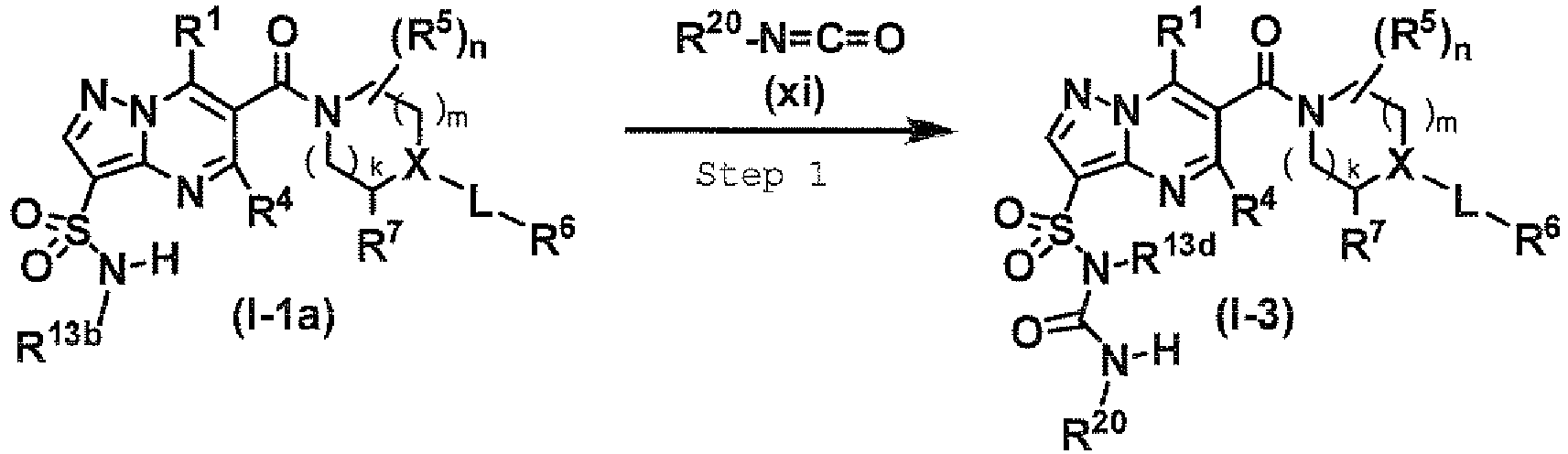
- [wherein R1, R4, R5, R6, R7, R13b, R13d, X, L, k, m and n are each as defined above, R20 represents lower alkyl optionally having substituent(s) (the lower alkyl is as defined above, and the substituent of the substituted lower alkyl is as defined above) or aryl optionally having substituent(s) (the aryl is as defined above, and the substituent of the substituted aryl is as defined above)]
A conversion reaction of each of R1, R4, R5, R6, R7, R13b, R13d and R20 can be performed during step 1 of the production method. - Compound (I-3) can be obtained by reacting Compound (I-1a) which is Compound (I-1) wherein R13c is a hydrogen atom with 0.5 - 50 equivalents, preferably 3 - 20 equivalents, of compound (xi) or an equivalent thereof in an inert solvent or without solvent, in the presence of 1 - 20 equivalents, preferable 1 - 5 equivalents, of a base, at a temperature between -30 °C and 150 °C for 15 min - 48 hr.
- Examples of the inert solvent include chloroform, methylene chloride, THF, DME, toluene, DMF, dioxane, ethyl acetate, acetone, methylethyl ketone and the like, and these can be used singly or in the form of a mixture. Among these, dioxane, acetone or methylethylketone is preferable.
Examples of the base include pyridine, triethylamine, 4-(dimethylamino)pyridine, 2,6-lutidine, N,N-diisopropylethylamine, sodium carbonate, potassium carbonate and the like. Among these, potassium carbonate or N,N-diisopropylethylamine is preferable. - The following Compound (1-4), (1-5) and (I-6) can be obtained using the corresponding cyclic amine, compound (XX)
-

- (wherein ---, R5a, R9a, R9b, Y, ka, ma and na are each as defined above), and by a method similar to the above-mentioned production methods 1 and 2.
-

- (wherein ---, R1, R4, R5a, R9a, R9b, R13b, R13c, R13d, R18, R19, R20, Y, ka, ma and na are each as defined above)
The following Compounds (I-9), (I-10) and (I-11) can be obtained using the corresponding amine, compound (XXX) -
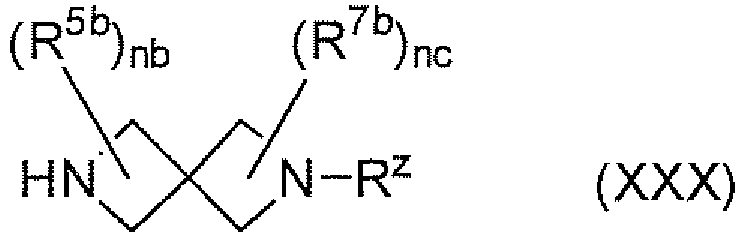
- wherein Rz, R5b, R7b, nb and nc are each as defined above, and by a method similar to the above-mentioned production methods 1 and 2.
-

- (wherein R1, R4, R5b, R7b, Rz, R13b, R13c, R13d, R18, R19, R20, nb and nc are each as defined above)
Each functional group in Compound (I) and Compound (IA) can also be converted by a known method [e.g., the method described in Comprehensive Organic Transformations 2nd edition, R.C. Larock, Vch Verlagsgesellschaft Mbh, 1999 and the like] or similar methods thereto. - The intermediates and the desired compounds in the above-mentioned respective production methods can be isolated and purified by applying separation purification methods usually used in the synthetic organic chemistry such as filtration, extraction, washing, drying, concentration, recrystallization, various chromatographies or the like. In addition, intermediates can also be subjected to a next reaction without particular purification.
When a salt of Compound (I) or (IA) is to be obtained, Compound (I) or (IA) obtained in the form of a salt can be directly purified. When it is obtained in a free form, Compound (I) or (IA) may be dissolved or suspended in a suitable solvent, and an acid or base is added thereto to form a salt, which may be isolated and purified. - Specific examples of the structural formulas of Compounds (I) and (IA) obtained by the present invention are shown in Table 1-1 to Table 1-8. However, the compounds of the present invention are not limited thereto.
-
[Table 1-1] Table 1-1 
Compound No. ←R1 
←R4 ←R3 a-1 

←H 
a-2 

←H 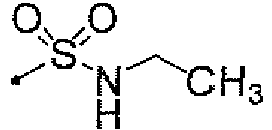
a-3 

←H 
a-4 

←H 
a-5 

←H 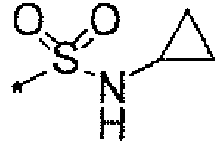
a-6 

←H 
a-7 

←H 
a-8 

←H 
a-9 

←H 
a-10 

←H 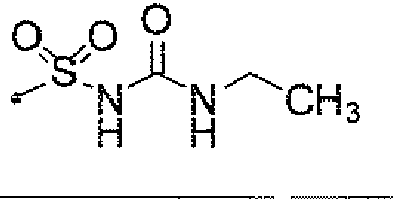
-
[Table 1-2] Table 1-2 
Compound No. ←R1 
←R4 ←R3 a-11 

←H 
a-12 

←H 
a-13 

←H 
a-14 

←H 
a-15 

←H 
a-16 

←H 
a-17 

←H 
a-18 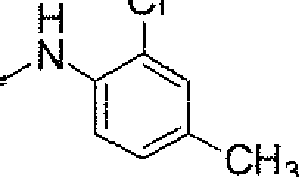

←H 
a-19 

←H 
a-20 

←H 
-
[Table 1-3] Table 1-3 
Compound No. ←R1 
←R4 ←R3 a-21 

←H 
a-22 

←H 
a-23 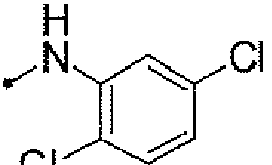

←H 
a-24 
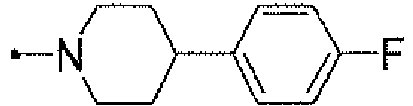
←H 
a-25 

←H 
a-26 

←H 
a-27 

←H 
a-28 

←H 
a-29 

←H 
a-30 

←H 
-
[Table 1-4] Table 1-4 
Compound No. ←R1 
←R4 ←R3 a-31 

←H 
a-32 

←H 
a-33 

←H 
a-34 

←H 
a-35 

←H 
a-36 

←H 
a-37 

←H 
a-38 

←H 
a-39 

←H 
-
[Table 1-5] Table 1-5 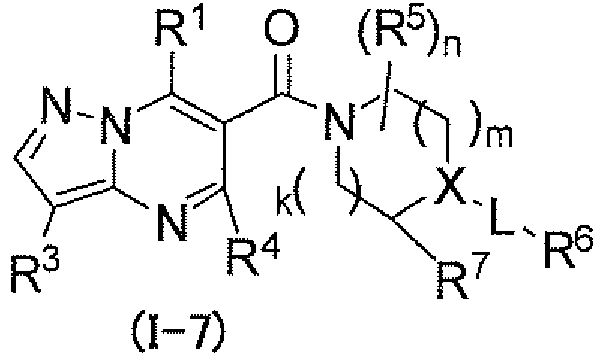
Compound No. ←R1 
←R4 ←R3 a-40 

←H 
a-41 

←H 
a-42 

←H 
-
[Table 1-6] Table 1-6 
Compound No. ←R1 
←R4 ←R3 a-43 

←H 
a-44 

←H 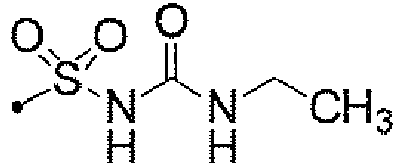
a-45 

←H 
a-46 

←H 
a-47 

←H 
a-48 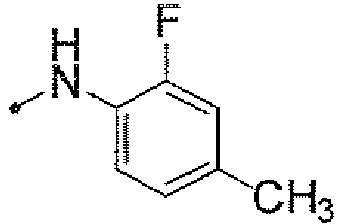

←H 
a-49 

←H 
a-50 

←H 
-
[Table 1-7] Table 1-7 
Compound No. ←R1 
←R4 ←R3 a-51 

←H 
a-52 

←H 
a-53 

←H 
a-54 

←H 
a-55 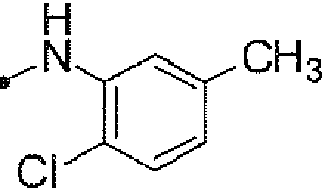
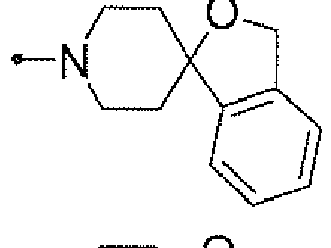
←H 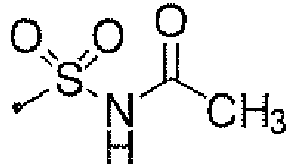
a-56 

←H 
a-57 

←H 
a-58 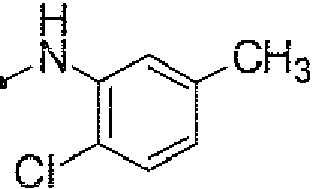

←H 
a-59 

←H 
-
[Table 1-8] Table 1-8 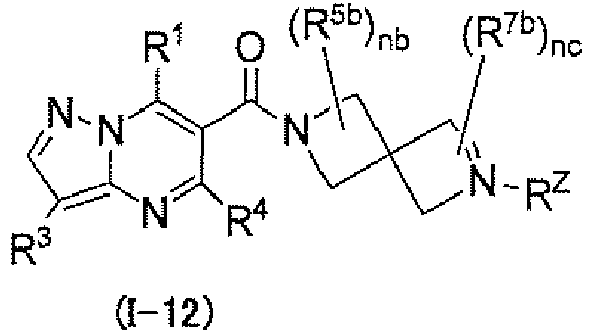
Compound No. ←R1 
←R4 ←R3 a-60 

←H 
a-61 

←H 
- Next, the pharmacological action of the representative compound is specifically explained by Test Examples.
- 5-Week to 6-week old BALB/c mice (female, supplied by CHARLES RIVER LABORATORIES JAPAN, INC) were purchased and, after quarantine and habituation, those showing satisfactory body weight increase and free of abnormal appearance were used to start the test from 7 weeks of age. The animals were housed and bred in plastic cages (6 mice per cage) in a breeding chamber set at room temperature 19 - 25°C, humidity 30 - 70%, 12 hr illumination per day (7 a.m. - 7 p.m.), with free access to a commercially available solid feed and water.
- One day before the test, the abdomen was shaved, and a solution of dinitrofluorobenzene (manufactured by Nacalai Tesque) in acetone (manufactured by Wako Pure Chemical Industries, Ltd.) {concentration 0.5% [weight (w)/volume (v)%]} was applied to the shaved part of BALB/c mice by 100 µL for sensitization. On day 5 after sensitization, a dinitrofluorobenzene-acetone solution [concentration 0.2% (w/v%)] was applied to the front and the back of the auricle by 10 µL each (total 20 µL) to induce reaction. A test compound dissolved in acetone to the concentration of 1% (w/v%) was applied to the front and the back of the auricle 1 hr before and 3 hr after the induction of reaction each by 10 µL (total 20 µL). After the application, the applied part was air-dried by a dryer.
- A group administered with the test compound by coating was taken as a test compound administration group, and a group administered with acetone (solvent) by coating instead of the test compound was taken as a solvent administration group. In addition, a group free of sensitization and induction of reaction and administered with acetone by coating instead of the test compound was taken as a normal group. The thickness of the auricle was measured immediately before induction of reaction and 24 hr after the induction with a dial thickness gauge (manufactured by OZAKI MFG. CO., LTD., G-1A), and the difference between them was taken as ear edema. The ear edema suppressive rate (%) was calculated according to the following formula. The results are shown in Table 2.
-

-
[Table 2] compound No. ear edema suppressive rate (%) a-6 30 a-14 25 a-43 40 - 5-Week old BALB/c mice (female, supplied by CHARLES RIVER LABORATORIES JAPAN, INC) were purchased and, after quarantine and habituation, those showing satisfactory body weight increase and free of abnormal appearance were used to start the test from 7 weeks of age. The animals were housed and bred in plastic cages (6 mice per cage) in a breeding chamber set at room temperature 19 - 25°C, humidity 30 - 70%, 12 hr illumination per day (7 a.m. - 7 p.m.), with free access to a commercially available solid feed and water.
- One day before the test, the abdomen was shaved, and a solution of dinitrofluorobenzene (manufactured by Nacalai Tesque) in acetone (manufactured by Wako Pure Chemical Industries, Ltd.) {concentration 0.5% [weight (w)/volume (v)%]} was applied to the shaved part of BALB/c mice by 100 µL for sensitization. On day 5 after sensitization, a dinitrofluorobenzene-acetone solution [concentration 0.2% (w/v%)] was applied to the front and the back of the auricle by 10 µL each (total 20 µL) to induce reaction. A test compound dissolved in 50% acetone/50% ethanol (w/v%) to the concentration of 1% (w/v%) was applied to the front and the back of the auricle 1 hr before and 3 hr after the induction of reaction each by 10 µL (total 20 µL). After the application, the applied part was air-dried by a dryer.
- A group administered with the test compound by coating was taken as a test compound administration group, and a group administered with 50% acetone/50% ethanol (w/v%) (solvent) by coating instead of the test compound was taken as a solvent administration group. In addition, a group free of sensitization and induction of reaction and administered with 50% acetone/50% ethanol (w/v%) by coating instead of the test compound was taken as a normal group. The thickness of the auricle was measured immediately before induction of reaction and 24 hr after the induction with a dial thickness gauge (manufactured by OZAKI MFG. CO., LTD., G-1A), and the difference between them was taken as ear edema. The ear edema suppressive rate (%) was calculated according to the following formula. The results are shown in Table 2.
-

-
[Table 3] compound No. ear edema suppressive rate (%) a-22 16 a-27 47 a-40 32 a-60 5 - From the above results, the compound of the present invention was found to have an action to suppress ear edema and treat skin diseases.
The Compounds (I) and (IA) of the present invention and pharmaceutically acceptable salts thereof can be administered alone as they are, generally, they are desirably provided as various pharmaceutical preparations. In addition, such pharmaceutical preparations are used for animals and humans. - The pharmaceutical preparation relating to the present invention can contain, as an active ingredient, Compounds (I) and (IA) of the present invention or a pharmaceutically acceptable salt thereof alone or as a mixture with an active ingredient for any other treatment. Moreover, the pharmaceutical preparation can be produced by mixing the active ingredient with one or more kinds of pharmaceutically acceptable carriers (e.g., diluent, solvent, excipient or the like) according to any method well known in the technical field of pharmaceutical science.
- As the administration route, a route most effective for the treatment is desirably employed, which may be an oral or parenteral route such as intravenous route, external route or the like.
The dosage form may be, for example, tablet, injection, ointment or the like.
Tablet can be produced by using an excipient such as lactose or the like, a disintegrant such as starch or the like, a lubricant such as magnesium stearate or the like, a binder such as hydroxypropylcellulose or the like, and is suitable for oral administration. - Injection or the like can be produced by using a diluent such as a salt solution, a glucose solution or a mixture of salt solution and a glucose solution or the like, or a solvent or the like.
Ointment can be produced from a base such as petrolatum and the like and an additive such as stearyl alcohol and the like.
The dose and administration frequency of Compounds (I) and (IA) of the present invention or a pharmaceutically acceptable salt thereof varies depending on the mode of administration, age and body weight of patients, nature and severity of the symptom to be treated or the like, it is generally within the range of 0.01 to 1000 mg, preferably 0.05 to 100 mg, for oral administration to an adult, which is administered at once or in several portions a day. In the case of intravenous administration, external administration or the like, 0.001 to 1000 mg, preferably 0.01 to 100 mg, is administered to an adult at once or in several portions a day. However, these doses and administration frequencies vary depending on the aforementioned various conditions. - The present invention is explained in more detail in the following by Examples and Reference Examples, which are not to be construed as limitative.
The proton nuclear magnetic resonance spectrum (1H NMR) used in the Examples and Reference Examples were measured at 270 MHz or 300 MHz, and exchanging protons may not be clearly observed depending on the compound and measurement conditions. The indication of the multiplicity of the signals is conventional, where br means an apparently broad signal. - Ethyl 7-hydroxypyrazolo[1,5-a]pyrimidine-6-carboxylate (Journal of Medicinal Chemistry, vol. 49, page 2526, 2006) (3.20 g, 15.5 mmol) was dissolved in phosphorus oxychloride (30 mL), N,N-diisopropylethylamine (5.4 mL, 30.9 mmol) was added, and the mixture was stirred with heating at 100 °C for 3 hr. After confirmation of consumption the starting materials, phosphorus oxychloride was evaporated under reduced pressure, and the residue was dissolved in ethyl acetate. The solution was added dropwise to a saturated aqueous sodium hydrogen carbonate solution under ice-cooling. To the saturated aqueous sodium hydrogen carbonate solution was added ethyl acetate, and the mixture was extracted 3 times. The combined organic layer was dried over anhydrous magnesium sulfate, and concentrated under reduced pressure.
- The obtained residue was dissolved in N,N-dimethylacetamide (30 mL), 4-fluoro-2-methylaniline (2.2 mL, 20.1 mmol) and N,N-diisopropylethylamine (5.4 mL, 30.9 mmol) were added, and the mixture was stirred with heating at 80 °C for 2 hr. After cooling, to the reaction mixture was added dropwise 5% aqueous citric acid solution, chloroform was added, and the mixture was extracted 3 times. The combined organic layer was dried over anhydrous magnesium sulfate, and concentrated under reduced pressure. The obtained residue was purified by silica gel column chromatography (hexane/ethyl acetate=2/1) to give the title compound (3.14 g, 65%).
ESI-MS m/z: 315 (M+H)+; 1H-NMR (CDCl3, δ): 1.42 (t, J = 7.2 Hz, 3H), 2.22 (s, 3H), 4.38 (q, J = 7.2 Hz, 2H), 6.46 (d, J = 2.3 Hz, 1H), 6.55-7.09 (m, 3H), 7.83 (d, J = 2.3 Hz, 1H), 8.83 (s, 1H), 10.69 (s, 1H). - Ethyl 7-(4-fluoro-2-methylphenylamino)pyrazolo[1,5-a]pyrimidine-6-carboxylate (0.500 g, 1.59 mmol) obtained in step 1 was dissolved in methylene chloride (6 mL), chlorosulfonic acid (0.21 mL, 3.19 mmol) was added, and the mixture was stirred at room temperature overnight. The reaction mixture was concentrated under reduced pressure, a 1/1 mixed solvent of diisopropyl ether and 2-propanol was added, and the mixture was stirred at room temperature for 1 hr. The resulting crystals were suction filtered and washed with 2-propanol to give the title compound (0.580 g, 92%). ESI-MS m/z: 395 (M+H)+; 1H-NMR (CDCl3, δ): 1.13 (t, J = 7.2 Hz, 3H), 2.29 (s, 3H), 3.94 (q, J = 7.2 Hz, 2H), 6.96-7.46 (m, 4H), 8.28 (s, 1H), 8.50 (s, 1H).
- 6-Ethoxycarbonyl-7-(4-fluoro-2-methylphenylamino)pyrazolo[1,5-a]pyrimidine-3-sulfonic acid (0.400 g, 1.01 mmol) obtained in step 2 was dissolved in 1,2-dichloroethane (4 mL), thionyl chloride (0.29 mL, 4.05 mmol) and DMF (0.024 mL, 0.304 mmol) were added, and the mixture was heated under reflux for 2 hr. The reaction mixture was concentrated under reduced pressure, the obtained residue was dissolved in methylene chloride (4 mL), tert-butylamine (0.21 mL, 2.02 mmol) and triethylamine (0.35 mL, 2.53 mmol) were added dropwise and the mixture was stirred at room temperature for 2 hr. 1 mol/L hydrochloric acid was added dropwise to the reaction mixture, and the mixture was extracted 3 times with chloroform. The combined organic layer was dried over anhydrous magnesium sulfate, and concentrated under reduced pressure to give the title compound (0.29 g, 63%).
ESI-MS m/z: 450 (M+H)+; 1H-NMR (CDCl3, δ): 1.22 (s, 9H), 1.44 (t, J = 7.2 Hz, 3H), 2.18 (s, 3H), 4.43 (q, J = 7.2 Hz, 2H), 6.82-7.12 (m, 4H), 8.06 (s, 1H), 9.01 (s, 1H), 10.90 (s, 1H). - Ethyl 3-(N-tert-butylsulfamoyl)-7-(4-fluoro-2-methylphenylamino)pyrazolo[1,5-a]pyrimidine-6-carboxylate (0.28 g, 0.624 mmol) obtained in step 3 was dissolved in ethanol (2 mL), 2 mol/L aqueous sodium hydroxide solution (2 mL) was added, and the mixture was stirred with heating at 80 °C for 4 hr. Under ice-cooling, 2 mol/L hydrochloric acid was added dropwise to adjust the reaction mixture to pH 1, and the mixture was extracted 3 times with chloroform. The combined organic layer was dried over anhydrous magnesium sulfate, and concentrated under reduced pressure.
- The residue (0.265 g) obtained above was dissolved in DMF (3 mL), 1-ethyl-3-[3-(dimethylamino)propyl]carbodiimide hydrochloride (0.142 g, 0.748 mmol), 1-hydroxybenzotriazole monohydrate (0.113 g, 0.748 mmol) and 4-phenylpiperidine (0.120 g, 0.748 mmol) were added, and the mixture was stirred at room temperature overnight. To the reaction mixture was added dropwise saturated aqueous sodium hydrogen carbonate solution, and the mixture was extracted 3 times with chloroform. The combined organic layer was dried over anhydrous magnesium sulfate, and concentrated under reduced pressure. The obtained residue was purified by silica gel column chromatography (chloroform/methanol=9/1) to give the title compound (0.143 g, 41%).
ESI-MS m/z: 565 (M+H)+; 1H-NMR (CDCl3, δ): 1.28 (s, 9H), 1.39-1.58 (m, 2H), 1.77-1.89 (m, 2H), 2.40 (s, 3H), 2.59-2.74 (m, 1H), 3.85-4.26 (m, 4H), 5.04 (s, 1H), 6.89-7.40 (m, 8H), 8.16 (s, 1H), 8.35 (s, 1H), 8.39 (s, 1H). - N-tert-Butyl-7-(4-fluoro-2-methylphenylamino)-6-(4-phenylpiperidine-1-carbonyl)pyrazolo[1,5-a]pyrimidine-3-sulfonamide (0.874 g, 1.548 mmol) obtained in step 4 was dissolved in trifluoroacetic acid (13 mL), anisole (0.4 mL) was added, and the mixture was stirred at room temperature overnight. The reaction mixture was concentrated under reduced pressure, the obtained residue was purified by silica gel column chromatography (chloroform /methanol=10/1) to give the title compound (0.442 g, 56%).
ESI-MS m/z: 509 (M+H)+; 1H-NMR (DMSO-d6, δ): 1.57-1.71 (m, 4H), 2.27 (s, 3H), 2.64-2.73 (m, 1H), 3.78-3.82 (m, 2H), 4.01-4.05 (m, 2H), 7.05-7.33 (m, 10H), 8.28(s, 1H), 8.45 (s, 1H), 10.04 (s, 1H). - Cyclopropanecarboxylic acid (0.066 g, 0.768 mmol) was dissolved in DMF (0.8 mL), and 1,1'-carbonyldiimidazole (0.125 g, 0.768 mmol) was added. After stirring at room temperature for 30 min, 7-(4-fluoro-2-methylphenylamino)-6-(4-phenylpiperidine-1-carbonyl)pyrazolo[1,5-a]pyrimidine-3-sulfonamide (0.078 g, 0.154 mmol) obtained in step 5 and 1,8-diazabicyclo[5.4.0]undeca-7-en (0.140 g, 0.922 mmol) were added, and the mixture was stirred at 80 °C for 3 hr. 5% Aqueous citric acid solution was added to quench the reaction, and the precipitated crystals were collected by filtration. The obtained crystals were purified by silica gel column chromatography (chloroform/methanol=10/1) to give the title compound (0.026 g, 29%).
ESI-MS m/z: 577 (M+H)+; 1H-NMR (CDCl3, δ): 0.82-0.90 (m, 2H), 1.00-1.06 (m, 2H), 1.44-1.55 (m, 2H), 1.56-1.61 (m, 1H), 1.80-1.85 (m, 2H), 2.39 (s, 3H), 2.61-2.71 (m, 1H), 3.83-4.15 (m, 4H), 6.96 (td, J = 8.2, 2.5 Hz, 1H), 7.08 (dd, J = 9.1, 2.8 Hz, 1H), 7.14-7.23 (m, 4H), 7.30-7.36 (m, 2H), 8.23 (s, 1H), 8.44 (s, 1H), 8.61 (s, 1H), 9.54 (s, 1H). - Using 6-ethoxycarbonyl-7-(4-fluoro-2-methylphenylamino)pyrazolo[1,5-a]pyrimidine-3-sulfonic acid (0.500 g, 1.268 mmol) obtained in Example 1 step 2 and ethylamine (2.0 mol/L THF solution; 2.5 mL, 5.071 mmol) instead of tert-butylamine, and in the same manner as in Example 1 step 3, the title compound (0.178 g, 33%) was obtained.
- Using ethyl 3-(N-ethylsulfamoyl)-7-(4-fluoro-2-methylphenylamino)pyrazolo[1,5-a]pyrimidine-6-carboxylate (0.178 g, 0.423 mmol) obtained in step 1 and in the same manner as in Example 1 step 4, the title compound (0.057 g, 25%) was obtained.
ESI-MS m/z: 537 (M+H)+; 1H-NMR (CDCl3, δ): 1.17 (t, J = 7.3 Hz, 3H), 1.43-1.55 (m, 2H), 1.80-1.86 (m, 2H), 2.40 (s, 3H), 2.62-2.71 (m, 1H), 3.02-3.12 (m, 2H), 3.75-4.00 (m, 4H), 4.94 (t, J = 5.8 Hz, 1H), 6.96 (td, J = 8.3, 3.0 Hz, 1H), 7.08 (dd, J = 8.8, 2.8 Hz, 1H), 7.14-7.36 (m, 6H), 8.17 (s, 1H), 8.33 (s, 1H), 8.43(s, 1H). - Using ethyl 3-(N-ethylsulfamoyl)-7-(4-fluoro-2-methylphenylamino)pyrazolo[1,5-a]pyrimidine-6-carboxylate (0.483 g, 1.145 mmol) obtained in Example 2 step 1 and 4-(4-fluorophenyl)piperidine hydrochloride (0.099 g, 0.458 mmol) instead of 4-phenylpiperidine, and in the same manner as in Example 1 step 4, the title compound (0.020 g, 3%) was obtained.
ESI-MS m/z: 555 (M+H)+; 1H-NMR (CDCl3, δ): 1.17 (t, J = 7.3 Hz, 3H), 1.42-1.52 (m, 2H), 1.78-1.84 (m, 2H), 2.40 (s, 3H), 2.61-2.70 (m, 1H), 3.02-3.12 (m, 2H), 3.93-4.19 (m, 4H), 5.04 (s, 1H), 6.87-7.20 (m, 7H), 8.20 (s, 1H), 8.32 (s, 1H), 8.43 (s, 1H). - Using 6-ethoxycarbonyl-7-(4-fluoro-2-methylphenylamino)pyrazolo[1,5-a]pyrimidine-3-sulfonic acid (0.970 g, 2.460 mmol) obtained in Example 1 step 2 and 2,2,2-trifluoroethylamine (0.975 g, 9.838 mmol) instead of tert-butylamine, and in the same manner as in Example 1 step 3, the title compound (1.024 g, 87%) was obtained.
- Using ethyl 7-(4-fluoro-2-methylphenylamino)-3-[N-(2,2,2-trifluoroethyl)sulfamoyl]pyrazolo[1,5-a]pyrimidine-6-carboxylate (0.142 g, 0.298 mmol) obtained in step 1 and 4-(4-fluorophenyl)piperidine hydrochloride (0.072 g, 0.335 mmol) instead of 4-phenylpiperidine, and in the same manner as in Example 1 step 4, the title compound (0.028 g, 21%) was obtained.
ESI-MS m/z: 609 (M+H)+; 1H-NMR (CDCl3, δ): 1.39-1.52 (m, 2H), 1.79-1.84 (m, 2H), 2.39 (s, 3H), 2.60-2.69 (m, 1H), 3.69-3.80 (m, 2H), 4.11-4.30 (m, 4H), 5.68 (s, 1H), 6.91-7.20 (m, 7H), 8.19 (s, 1H), 8.33 (s, 1H), 8.41 (s, 1H). - Using 6-ethoxycarbonyl-7-(4-fluoro-2-methylphenylamino)pyrazolo[1,5-a]pyrimidine-3-sulfonic acid (0.400 g, 1.145 mmol) obtained in Example 1 step 2 and cyclopropylamine (0.261 g, 4.580 mmol) instead of tert-butylamine, and in the same manner as in Example 1 step 3, the title compound (0.496 g, 100%) was obtained.
- Using ethyl 3-(N-cyclopropylsulfamoyl)-7-(4-fluoro-2-methylphenylamino)-pyrazolo[1,5-a]pyrimidine-6-carboxylate (0.496 g, 1.145 mmol) obtained in step 1 and 4-(4-fluorophenyl)piperidine hydrochloride (0.072 g, 0.335 mmol) instead of 4-phenylpiperidine, and in the same manner as in Example 1 step 4, the title compound (0.0283 g, 3%) was obtained.
ESI-MS m/z: 567 (M+H)+; 1H-NMR (CDCl3, δ): 0.61-0.64 (m, 2H), 0.72-0.76 (m, 2H), 1.38-1.51 (m, 2H), 1.78-1.83 (m, 2H), 2.25-2.30 (m, 1H), 2.40 (s, 3H), 2.61-2.69 (m, 1H), 4.07-4.23 (m, 4H), 5.49 (s, 1H), 6.91-7.20 (m, 7H), 8.19 (s, 1H), 8.33 (s, 1H), 8.48 (s, 1H). - Using ethyl 7-hydroxypyrazolo[1,5-a]pyrimidine-6-carboxylate (3.00 g, 14.5mmol) and 2-chloroaniline (2.77 g, 21.7 mmol) instead of 4-fluoro-2-methylaniline, and in the same manner as in Example 1 step 1, the title compound (1.44 g, 31%) was obtained.
- Using ethyl 7-(2-chlorophenylamino)pyrazolo[1,5-a]pyrimidine-6-carboxylate (1.44 g, 4.55 mmol) obtained in step 1 and in the same manner as in Example 1 step 2, the title compound (1.70 g, 94%) was obtained.
- Using 7-(2-chlorophenylamino)-6-(ethoxycarbonyl)pyrazolo[1,5-a]pyrimidine-3-sulfonic acid (1.70 g, 4.30 mmol) obtained in step 2 and in the same manner as in Example 1 step 3, the title compound (1.94 g, 100%) was obtained.
- Using ethyl 3-(N-tert-butylsulfamoyl)-7-(2-chlorophenylamino)pyrazolo[1,5-a]pyrimidine-6-carboxylate (1.94 g, 4.30 mmol) obtained in step 3 and in the same manner as in Example 1 step 4, the title compound (0.804 g, 33%) was obtained.
- Using N-tert-butyl-7-(2-chlorophenylamino)-6-(4-phenylpiperidine-1-carbonyl)pyrazolo[1,5-a]pyrimidine-3-sulfonamide (0.804 g, 1.417 mmol) obtained in step 4 and in the same manner as in Example 1 step 5, the title compound (0.499 g, 69%) was obtained.
- Using 7-(2-chlorophenylamino)-6-(4-phenylpiperidine-1-carbonyl)pyrazolo[1,5-a]pyrimidine-3-sulfonamide (0.050 g, 0.098 mmol) obtained in step 5 and in the same manner as in Example 1 step 6, the title compound (0.034 g, 29%) was obtained.
ESI-MS m/z: 579 (M+H)+; 1H-NMR (CDCl3, δ) : 0.84-0.90 (m, 2H), 1.01-1.06 (m, 2H), 1.36-1.50 (m, 2H), 1.56-1.59 (m, 1H), 1.76-1.81 (m, 2H), 2.56-2.64 (m, 1H), 3.61-3.74 (m, 2H), 4.12-4.32 (m, 2H), 7.11-7.14 (m, 2H), 7.20-7.42 (m, 6H), 7.54-7.59 (m, 1H), 8.53 (s, 1H), 8.62 (s, 1H), 8.64 (s, 1H), 9.47 (s, 1H). - 7-(2-Chlorophenylamino)-6-(4-phenylpiperidine-1-carbonyl)pyrazolo[1,5-a]pyrimidine-3-sulfonamide (0.050 g, 0.098 mmol) obtained in Example 6 step 5 was dissolved in acetone (0.5 mL), potassium carbonate (0.041 g, 0.293 mmol) and ethylisocyanate (0.017 g, 0.245 mmol) were added, and the mixture was stirred at 50 °C for 2 hr. Saturated aqueous ammonium chloride solution was added to quench the reaction, and the mixture was extracted 3 times with ethyl acetate. The organic layers were combined, washed with saturated brine, dried over anhydrous sodium sulfate, and concentrated under reduced pressure. The obtained residue was purified by silica gel column chromatography (chloroform/methanol=99/1) to give the title compound (0.027 g, 48%).
ESI-MS m/z: 582 (M+H)+; 1H-NMR (CDCl3, δ) : 1.16 (t, J = 7.3 Hz, 3H), 1.35-1.47 (m, 2H), 1.77-1.81 (m, 2H), 2.57-2.65 (m, 1H), 3.22-3.31 (m, 2H), 3.72-3.85 (m, 2H), 4.15-4.30 (m, 2H), 6.71 (s, 1H), 7.11-7.14 (m, 2H), 7.20-7.44 (m, 6H), 7.55-7.61 (m, 1H), 7.95 (s, 1H) , 8.45 (s, 1H) , 8.52 (s, 2H). - 7-(2-Chlorophenylamino)-6-(4-phenylpiperidine-1-carbonyl)pyrazolo[1,5-a]pyrimidine-3-sulfonamide (0.070 g, 0.137 mmol) obtained in Example 6 step 5 was dissolved in dichloromethane (0.7 mL), and the solution was cooled to 0 °C. Pyridine (0.325 g, 4.110 mmol) and methyl chloroformate (0.350 g, 3.699 mmol)) were added, the mixture was stirred at room temperature for 48 hr, and 1 mol/L hydrochloric acid was added to quench the reaction. The organic layer was separated, and the aqueous layer was extracted twice with chloroform. The organic layers were combined, washed with saturated brine, dried over anhydrous sodium sulfate, and concentrated under reduced pressure. The obtained residue was purified by silica gel column chromatography (chloroform/methanol=99/1) to give the title compound (0.031 g, 40%).
ESI-MS m/z: 569 (M+H)+; 1H-NMR (CDCl3, δ) : 1.35-1.51 (m, 2H), 1.76-1.81 (m, 2H), 2.56-2.65 (m, 1H), 3.70 (s, 3H), 4.06-4.40 (m, 4H), 7.11-7.14 (m, 2H), 7.20-7.43 (m, 6H), 7.57 (dd, J = 6.8, 2.4 Hz, 1H), 8.49 (s, 1H), 8.53 (s, 1H), 8.59 (s,1H), 8.63 (s, 1H). - Using ethyl 3-(N-tert-butylsulfamoyl)-7-(2-chlorophenylamino)pyrazolo[1,5-a]pyrimidine-6-carboxylate (4.25 g, 8.82 mmol) obtained in Example 6 step 3 and 4-(4-fluorophenyl)piperidine (1.87 g, 10.46 mmol) instead of 4-phenylpiperidine, and in the same manner as in Example 1 step 4, the title compound (2.42 g, 59%) was obtained.
- Using N-tert-butyl-7-(2-chlorophenylamino)-6-[4-(4-fluorophenyl)piperidine-1-carbonyl]pyrazolo[1,5-a]pyrimidine-3-sulfonamide (2.24 g, 4.14 mmol) obtained in step 1 and in the same manner as in Example 1 step 5, the title compound (1.49 g, 68%) was obtained.
- Using 7-(2-chlorophenylamino)-6-[4-(4-fluorophenyl)piperidine-1-carbonyl]pyrazolo[1,5-a]pyrimidine-3-sulfonamide (0.080 g, 0.151 mmol) obtained in step 2 and in the same manner as in Example 1 step 6, the title compound (0.080 g, 89%) was obtained.
ESI-MS m/z: 597 (M+H)+; 1H-NMR (DMSO-d6, δ) : 0.64-0.82 (m, 4H) , 1.40-1.78 (m, 4H), 1.98-2.23 (m, 1H), 2.62-2.75 (m, 1H), 2.93-3.08 (m, 1H), 3.37-3.43 (m, 1H), 3.76-4.02 (m, 2H), 7.09-7.55 (m, 8H), 8.36 (s, 1H), 8.56 (s, 1H), 10.40 (s, 1H). - Using 7-(2-chlorophenylamino)-6-[4-(4-fluorophenyl)piperidine-1-carbonyl]pyrazolo[1,5-a]pyrimidine-3-sulfonamide (0.080 g, 0.151 mmol) obtained in Example 9 step 2 and in the same manner as in Example 7, the title compound (0.106 g, 94%) was obtained.
ESI-MS m/z: 600 (M+H)+; 1H-NMR (DMSO-d6, δ) : 0.94 (t, J = 7.1 Hz, 3H), 1.21-1.69 (m, 4H), 2.07-2.23 (m, 1H) , 2.64-2.74 (m, 1H), 2.93-3.03 (m, 2H), 3.01-3.07 (m, 1H), 3.75-4.04 (m, 2H), 5.70 (s, 1H), 6.39 (t, J = 5.6 Hz, 1H) , 7.09-7.57 (m, 8H), 8.34 (s, 1H), 8.56 (s, 1H), 10.42 (s, 1H). - Using 7-(2-chlorophenylamino)-6-(ethoxycarbonyl)pyrazolo[1,5-a]pyrimidine-3-sulfonic acid (0.400 g, 1.008 mmol) obtained in Example 6 step 2 and 2-methoxyethylamine (0.303 g, 4.032 mmol) instead of tert-butylamine, and in the same manner as in Example 1 step 3, the title compound (0.459 g, 100%) was obtained.
- Using ethyl 7-(2-chlorophenylamino)-3-[N-(2-methoxyethyl)sulfamoyl]pyrazolo[1,5-a]pyrimidine-6-carboxylate (0.459 g, 1.008 mmol) obtained in step 1 and 4-(4-fluorophenyl)piperidine (0.158 g, 0.881 mmol) instead of 4-phenylpiperidine, and in the same manner as in Example 1 step 4, the title compound (0.086 g, 15%) was obtained.
ESI-MS m/z: 587 (M+H)+; 1H-NMR (CDCl3, δ) : 1.31-1.45 (m, 2H) , 1.74-1.79 (m, 2H), 2.55-2.64 (m, 1H), 3.20-3.26 (m, 2H), 3.30 (s, 3H), 3.49 (t, J = 5.1 Hz, 2H), 3.89-4.26 (m, 4H), 5.37 (t, J = 5.9 Hz, 1H), 6.96-7.10 (m, 4H), 7.28-7.42 (m, 3H), 7.54-7.57 (m, 1H), 8.44 (s, 1H), 8.49 (s, 1H), 8.49 (s, 1H) . - Using ethyl 7-hydroxypyrazolo[1,5-a]pyrimidine-6-carboxylate (5.00 g, 24.1 mmol) and 2-chloro-5-methylaniline (8.54 g, 60.3 mmol) instead of 4-fluoro-2-methylaniline, and in the same manner as in Example 1 step 1, the title compound (2.94 g, 37%) was obtained.
- Using ethyl 7-(2-chloro-5-methylphenyl-amino)pyrazolo[1,5-a]pyrimidine-6-carboxylate (2.94 g, 8.89 mmol) obtained in step 1 and in the same manner as in Example 1 step 2, the title compound (3.60 g, 99%) was obtained.
- Using 7-(2-chloro-5-methylphenylamino)-6-(ethoxycarbonyl)pyrazolo[1,5-a]pyrimidine-3-sulfonic acid (3.00 g, 7.30 mmol) obtained in step 2 and in the same manner as in Example 1 step 3, the title compound (3.30 g, 97%) was obtained.
- Using ethyl 3-(N-tert-butylsulfamoyl)-7-(2-chloro-5-methylphenylamino)pyrazolo[1,5-a]pyrimidine-6-carboxylate (2.31 g, 4.96 mmol) obtained in step 3 and 4-(4-fluorophenyl)piperidine (0.92 g, 5.14 mmol) instead of 4-phenylpiperidine, and in the same manner as in Example 1 step 4, the title compound (0.85 g, 41%) was obtained.
- Using N-tert-butyl-7-(2-chloro-5-methylphenylamino)-6-[4-(4-fluorophenyl)piperidine-1-carbonyl]pyrazolo[1,5-a]pyrimidine-3-sulfonamide (0.85 g, 1.42 mmol) obtained in step 4 and in the same manner as in Example 1 step 5, the title compound (0.42 g, 55%) was obtained.
- Using 7-(2-chloro-5-methylphenylamino)-6-[4-(4-fluorophenyl)piperidine-1-carbonyl]pyrazolo[1,5-a]pyrimidine-3-sulfonamide (0.08 g, 0.147 mmol) obtained in step 5 and in the same manner as in Example 1 step 6, the title compound (0.072 g, 80%) was obtained.
ESI-MS m/z: 611 (M+H)+; 1H-NMR (CDCl3, δ) ; 0.82-0.89 (m, 2H), 1.00-1.06 (m, 2H), 1.31-1.48 (m, 2H), 1.56-1.59 (m, 1H), 1.71-1.76 (m, 2H), 2.35 (s, 3H), 2.52-2.56 (m, 1H) , 3.61-3.74 (m, 2H), 4.12-4.32 (m, 2H), 6.94-7.13 (m, 5H), 7.22 (br s,1H) 7.42 (d, J = 8.3 Hz, 1H), 8.50 (br s, 1H), 8.65 (s, 1H) , 8.76 (s, 1H) , 9.77 (br s, 1H) . - Using 7-(2-chloro-5-methylphenylamino)-6-[4-(4-fluorophenyl)piperidine-1-carbonyl]pyrazolo[1,5-a]pyrimidine-3-sulfonamide (0.08 g, 0.147 mmol) obtained in Example 12 step 5 and propionic acid (0.055 mL, 0.737 mmol) instead of cyclopropanecarboxylic acid, and in the same manner as in Example 1 step 6, the title compound (0.081 g, 92%) was obtained.
ESI-MS m/z: 599 (M+H)+; 1H-NMR (CDCl3, δ) : 1.08 (d, J = 7.3 Hz, 3H), 1.35-1.48 (m, 2H), 1.71-1.76 (m, 2H), 2.36 (s, 3H), 2.37 (q, J = 7.3 Hz, 2H), 2.52-2.61 (m, 1H), 3.61-3.74 (m, 2H), 4.12-4.32 (m, 2H), 6.94-7.14 (m, 5H), 7.23 (br s, 1H), 7.42 (d, J = 8.3 Hz, 1H), 8.52 (br s, 1H), 8.68 (s, 1H), 8.75 (s, 1H), 9.80 (brs, 1H) . - Using 7-(2-chloro-5-methylphenylamino)-6-[4-(4-fluorophenyl)piperidine-1-carbonyl]pyrazolo[1,5-a]pyrimidine-3-sulfonamide (0.08 g, 0.147 mmol) obtained in Example 12 step 5 and in the same manner as in Example 7, the title compound (0.056 g, 62%) was obtained.
ESI-MS m/z: 614 (M+H)+; 1H-NMR (CDCl3, δ): 1.16 (d, J = 7.3 Hz, 3H), 1.35-1.39 (m, 2H), 1.72-1.77 (m, 2H), 2.37 (s, 3H), 2.54-2.61 (m, 1H), 3.21-3.31 (m, 2H), 3.61-3.74 (m, 2H), 4.12-4.32 (m, 2H), 6.70 (br s, 1H) , 6.95-7.14 (m, 5H), 7.24-7.26 (m, 1H), 7.42 (d, J = 8.9 Hz, 1H), 7.97 (br s, 1H), 8.45 (s, 1H), 8.49 (br s, 1H), 8.56 (s, 1H). - Using 7-(2-chloro-5-methylphenylamino)-6-(ethoxycarbonyl)pyrazolo[1,5-a]pyrimidine-3-sulfonic acid (0.72 g, 1.75 mmol) obtained in Example 12 step 2 and ethylamine (2.0 mol/L THF solution; 3.5 m, 7.01 mmol) instead of tert-butylamine, and in the same manner as in Example 1 step 3, the title compound (0.67 g, 87%) was obtained.
- Using ethyl 7-(2-chloro-5-methylphenylamino)-3-(N-ethylsulfamoyl)pyrazolo[1,5-a]pyrimidine-6-carboxylate (0.084 g, 0.205 mmol) obtained in step 1 and 4-(4-fluorophenyl)piperidine (0.030 g, 0.183 mmol) instead of 4-phenylpiperidine, and in the same manner as in Example 1 step 4, the title compound (0.019 g, 16%) was obtained.
ESI-MS m/z: 571 (M + H)+; 1H-NMR (CDCl3, δ) : 1.17 (t, J = 7.3 Hz, 3H), 1.20-1.43 (m, 2H), 1.62-1.80 (m, 2H), 2.37 (s, 3H), 2.52-2.62 (m, 1H), 3.03-3.10 (m, 2H), 3.20-4.40 (m, 4H), 4.97 (br t, J = 6.0 Hz, 1H), 6.90-7.27 (m, 6H), 7.37 (d, J = 8.3 Hz, 1H) , 8.45 (s, 1H), 8.46 (s, 1H) , 8.50 (s, 1H). - Using ethyl 7-hydroxypyrazolo[1,5-a]pyrimidine-6-carboxylate (5.00 g, 24.1 mmol) and 4-chloro-2-methylaniline (5.13 g, 36.2 mmol) instead of 4-fluoro-2-methylaniline, and in the same manner as in Example 1 step 1, the title compound (3.80 g, 48%) was obtained.
- Using ethyl 7-(4-chloro-2-methylphenylamino)pyrazolo[1,5-a]pyrimidine-6-carboxylate (3.80 g, 11.5 mmol) obtained in step 1 and in the same manner as in Example 1 step 2, the title compound (4.58 g, 97%) was obtained.
- Using 7-(4-chloro-2-methylphenylamino)-6-(ethoxycarbonyl)pyrazolo[1,5-a]pyrimidine-3-sulfonic acid (1.00 g, 2.43 mmol) obtained in step 2 and ethylamine (2.0 mol/L THF solution; 4.9 mL, 9.74 mmol) instead of tert-butylamine, and in the same manner as in Example 1 step 3, the title compound (1.01 g, 95%) was obtained.
- Using ethyl 7-(4-chloro-2-methylphenylamino)-3-(N-ethylsulfamoyl)pyrazolo[1,5-a]pyrimidine-6-carboxylate (0.33 g, 0.77 mmol) obtained in step 3 and 4-(4-fluorophenyl)piperidine (0.26 g, 1.44 mmol) instead of 4-phenylpiperidine, and in the same manner as in Example 1 step 4, the title compound (0.029 g, 6%) was obtained.
ESI-MS m/z: 569 (M - H)-: 1H-NMR (CDCl3, δ): 1.16 (t, J = 7.3 Hz, 3H), 1.30-1.50 (m, 2H), 1.72-1.87 (m, 2H), 2.39 (s, 3H), 2.58-2.80 (m, 1H), 3.02-3.12 (m, 2H), 3.25-4.03 (m, 2H), 4.05-4.28 (m, 2H) , 4.90 (t, J = 5.9 Hz, 1H) , 6.95-7.30 (m, 6H), 7.37 (s, 1H) , 8.19 (s, 1H) , 8.34 (s, 1H), 8.43 (s, 1H). - 7-(4-Fluoro-2-methylphenylamino)-6-(4-phenylpiperidine-1-carbonyl)pyrazolo[1,5-a]pyrimidine-3-sulfonamide (0.098 g, 0.175 mmol) obtained in Example 1 step 5 was dissolved in pyridine (2 mL), 4-(dimethylamino)pyridine (0.023 g, 0.189 mmol) and acetyl chloride (0.25 mL, 3.50 mmol)) were added, and the mixture was stirred with heating at 50 °C for 2 hr. 1 mol/L Hydrochloric acid was added dropwise to the reaction mixture, and the mixture was extracted 3 times with chloroform. The combined organic layer was dried over anhydrous magnesium sulfate, and concentrated under reduced pressure. The obtained residue was purified by silica gel column chromatography (chloroform/methanol=9/1) to give the title compound (0.013 g, 14%).
ESI-MS m/z: 551 (M+H)+; 1H-NMR (CDCl3, δ) : 1.44-1.62 (m, 2H), 1.72-1.91 (m, 2H), 2.10 (s, 3H), 2.40 (s, 3H), 2.56-2.76 (m, 1H), 3.63-4.43 (m, 4H), 6.91-7.04 (m, 1H), 7.04-7.37 (m, 7H), 8.28 (s, 1H) , 8.48 (s, 1H), 8.63 (s, 1H) , 10.21 (s, 1H) . - Using ethyl 7-hydroxypyrazolo[1,5-a]pyrimidine-6-carboxylate (15.0 g, 72.4 mmol) and 2-chloro-4-methylaniline (20.5 g, 144.7 mmol) instead of 4-fluoro-2-methylaniline, and in the same manner as in Example 1 step 1, the title compound (8.37 g, 35%) was obtained.
- Using ethyl 7-(2-chloro-4-methylphenylamino)pyrazolo[1,5-a]pyrimidine-6-carboxylate (8.37 g, 25.3 mmol) obtained in step 1 and in the same manner as in Example 1 step 2, the title compound (10.7 g, 100%) was obtained.
- Using 6-ethoxycarbonyl-7-(2-chloro-4-methylphenylamino)pyrazolo[1,5-a]pyrimidine-3-sulfonic acid (10.66 g, 25.3 mmol) obtained in step 2 and in the same manner as in Example 1 step 3, the title compound (11.17 g, 95%) was obtained.
- Using ethyl 3-(N-tert-butylsulfamoyl)-7-(2-chloro-4-methylphenylamino)pyrazolo[1,5-a]pyrimidine-6-carboxylate (11.17 g, 24.0 mmol) obtained in step 3 and 4-(4-fluorophenyl)piperidine (5.93 g, 33.09 mmol) instead of 4-phenylpiperidine, and in the same manner as in Example 1 step 4, the title compound (8.33 g, 63%) was obtained.
- Using N-tert-butyl-7-(2-chloro-4-methylphenylamino)-6-[4-(4-fluorophenyl)piperidine-1-carbonyl]pyrazolo[1,5-a]pyrimidine-3-sulfonamide (3.80 g, 6.34 mmol) obtained in step 4 and in the same manner as in Example 1 step 5, the title compound (2.22 g, 64%) was obtained.
- Using 7-(2-chloro-4-methylphenylamino)-6-[4-(4-fluorophenyl)piperidine-1-carbonyl]pyrazolo[1,5-a]pyrimidine-3-sulfonamide (0.050 g, 0.092 mmol) obtained in step 5 as a starting material and propionic acid (0.034 mL, 0.460 mmol) instead of cyclopropanecarboxylic acid, and in the same manner as in Example 1 step 6, the title compound (0.052 g, 93%) was obtained.
ESI-MS m/z: 599 (M + H)+; 1H-NMR (CDCl3, δ) : 1.09 (t, J = 7.4 Hz, 3H), 1.31-1.43 (m, 2H), 1.74-1.79 (m, 2H), 2.35 (q, J = 7.5 Hz, 2H), 2.39 (s, 3H), 2.56-2.65 (m, 1H), 3.41-3.52 (m, 4H), 6.96-7.29 (m, 6H), 7.36 (s, 1H), 8.44 (s, 1H), 8.53 (s, 1H), 8.65 (s, 1H) . - Using ethyl 7-hydroxypyrazolo[1,5-a]pyrimidine-6-carboxylate (7.50 g, 36.2 mmol) and 2,4-dichloroaniline (5.30 g, 32.6 mmol) instead of 4-fluoro-2-methylaniline, and in the same manner as in Example 1 step 1, the title compound (9.09 g, 72%) was obtained.
- Using ethyl 7-(2,4-dichlorophenylamino)pyrazolo[1,5-a]pyrimidine-6-carboxylate (9.09 g, 25.9 mmol) obtained in step 1 and in the same manner as in Example 1 step 2, the title compound (8.69 g, 78%) was obtained.
- Using 6-ethoxycarbonyl-7-(2,4-dichlorophenylamino)pyrazolo[1,5-a]pyrimidine-3-sulfonic acid (8.69 g, 20.2 mmol) obtained in step 2 and in the same manner as in Example 1 step 3, the title compound (7.74 g, 79%) was obtained.
- Using ethyl 3-(N-tert-butylsulfamoyl)-7-(2,4-dichlorophenylamino)pyrazolo[1,5-a]pyrimidine-6-carboxylate (2.98 g, 6.13 mmol) obtained in step 3 and 4-(4-fluorophenyl)piperidine (1.5 g, 8.18 mmol) instead of 4-phenylpiperidine, and in the same manner as in Example 1 step 4, the title compound (1.57 g, 41%) was obtained.
- Using N-tert-butyl-7-(2,4-dichlorophenylamino)-6-[4-(4-fluorophenyl)piperidine-1-carbonyl]pyrazolo[1,5-a]pyrimidine-3-sulfonamide (1.57 g, 2.53 mmol) obtained in step 4 and in the same manner as in Example 1 step 5, the title compound (1.30 g, 91%) was obtained.
- Using 7-(2,4-dichlorophenylamino)-6-[4-(4-fluorophenyl)piperidine-1-carbonyl]pyrazolo[1,5-a]pyrimidine-3-sulfonamide (0.050 g, 0.089 mmol) obtained in step 5 and propionic acid (0.033 mL, 0.444 mmol) instead of cyclopropanecarboxylic acid, and in the same manner as in Example 1 step 6, the title compound (0.034 g, 62%) was obtained.
ESI-MS m/z: 619 (M + H)+; 1H-NMR (CDCl3, δ): 1.08 (t, J = 7.5 Hz, 3H), 1.37-1.48 (m, 2H), 1.79-1.83 (m, 2H), 2.36 (q, J = 7.5 Hz, 2H), 2.61-2.69 (m, 1H), 4.09-4.35 (m, 4H), 6.97-7,13 (m, 4H), 7.32-7.35 (m, 2H), 7.57 (s, 1H) , 8.48 (s, 1H), 8.60 (s, 1H) , 8.67 (s, 1H), 9.47 (s, 1H). - Using 7-(2,4-dichlorophenylamino)-6-4-(4-fluorophenyl)piperidine-1-carbonyl]pyrazolo[1,5-a]pyrimidine-3-sulfonamide (0.050 g, 0.089 mmol) obtained in Example 19 step 5 and in the same manner as in Example 7, the title compound (0.038 g, 67%) was obtained.
ESI-MS m/z: 634 (M + H)+; 1H-NMR (CDCl3, δ) : 1.15 (t, J = 7.3 Hz, 3H), 1.35-1.48 (m, 2H), 1.80-1.84 (m, 2H), 2.62-2.70 (m, 1H), 3.21-3.30 (m, 2H), 4.00-4.11 (m, 4H), 6.66-6.69 (m, 1H), 6.98-7.13 (m, 4H), 7.34-7.36 (m, 2H), 7.55 (d, J = 0.7 Hz, 1H), 8.16 (s, 1H), 8.44 (s, 1H), 8.49 (s, 1H), 8.49 (s, 1H). - Using ethyl 7-hydroxypyrazolo[1,5-a]pyrimidine-6-carboxylate (5.0 g, 24.1 mmol) and 2-chloro-4-fluoroaniline (2.81 g, 19.3 mmol) instead of 4-fluoro-2-methylaniline, and in the same manner as in Example 1 step 1, the title compound (5.56 g, 69%) was obtained.
- Using ethyl 7-(2-chloro-4-fluorophenylamino)pyrazolo[1,5-a]pyrimidine-6-carboxylate (5.55 g, 16.6 mmol) obtained in step 1 and in the same manner as in Example 1 step 2, the title compound (6.09 g, 88%) was obtained.
- Using 6-ethoxycarbonyl-7-(2-chloro-4-fluorophenylamino)pyrazolo[1,5-a]pyrimidine-3-sulfonic acid (6.09 g, 14.7 mmol) obtained in step 2 and in the same manner as in Example 1 step 3, the title compound (4.98 g, 72%) was obtained.
- Using ethyl 3-(N-tert-butylsulfamoyl)-7-(2-chloro-4-fluorophenylamino)pyrazolo[1,5-a]pyrimidine-6-carboxylate (4.98 g, 10.60 mmol) obtained in step 3 and 4-(4-fluorophenyl)piperidine (1.43 g, 7.97 mmol) instead of 4-phenylpiperidine, and in the same manner as in Example 1 step 4, the title compound (2.95 g, 93%) was obtained.
- Using N-tert-butyl-7-(2-chloro-4-fluorophenylamino)-6-[4-(4-fluorophenyl)piperidine-1-carbonyl]pyrazolo[1,5-a]pyrimidine-3-sulfonamide (2.95 g, 4.89 mmol) obtained in step 4 and in the same manner as in Example 1 step 5, the title compound (2.24 g, 84%) was obtained.
- Using 7-(2-chloro-4-fluorophenylamino)-6-[4-(4-fluorophenyl)piperidine-1-carbonyl]pyrazolo[1,5-a]pyrimidine-3-sulfonamide (0.10 g, 0.18 mmol) obtained in step 5 and cyclopropylisocyanate (0.046 g, 0.549 mmol) instead of ethylisocyanate, and in the same manner as in Example 7, the title compound (0.055 g, 47%) was obtained.
ESI-MS m/z: 630 (M + H)+; 1H-NMR (DMSO-d6, δ) : 0.28-0.36 (m, 2H) 0.52-0.65 (m, 2H), 1.20-1.90 (m, 4H), 2.20-2.28 (m, 1H), 2.40-2.44 (m, 1H), 2.72-2.78 (m, 1H), 3.00-3.05 (m, 1H), 3.72-4.12 (m, 2H), 6.53-6.55 (m, 1H), 7.05-7.62 (m, 7H), 8.37 (s, 1H), 8.58 (s, 1H), 10.35-10.62 (m, 2H). - Using ethyl 7-hydroxypyrazolo[1,5-a]pyrimidine-6-carboxylate (7.50 g, 36.2 mmol) and 2,5-dichloroaniline (5.30 g, 32.6 mmol) instead of 4-fluoro-2-methylaniline, and in the same manner as in Example 1 step 1, the title compound (8.64 g, 68%) was obtained.
- Using ethyl 7-(2,5-dichlorophenylamino)pyrazolo[1,5-a]pyrimidine-6-carboxylate (8.64 g, 24.6 mmol) obtained in step 1 and in the same manner as in Example 1 step 2, the title compound (9.51 g, 90%) was obtained.
- Using 6-ethoxycarbonyl-7-(2,5-dichlorophenylamino)pyrazolo[1,5-a]pyrimidine-3-sulfonic acid (9.51 g, 22.1 mmol) obtained in step 2 and in the same manner as in Example 1 step 3, the title compound (8.52 g, 79%) was obtained.
- Using ethyl 3-(N-tert-butylsulfamoyl)-7-(2,5-dichlorophenylamino)pyrazolo[1,5-a]pyrimidine-6-carboxylate (2.95 g, 6.06 mmol) obtained in step 3 and 4-(4-fluorophenyl)piperidine (1.5 g, 8.18 mmol) instead of 4-phenylpiperidine, and in the same manner as in Example 1 step 4, the title compound (2.35 g, 70%) was obtained.
- Using N-tert-butyl-7-(2,5-dichlorophenylamino)-6-[4-(4-fluorophenyl)piperidine-1-carbonyl]pyrazolo[1,5-a]pyrimidine-3-sulfonamide (2.35 g, 3.79 mmol) obtained in step 4 and in the same manner as in Example 1 step 5, the title compound (1.56 g, 73%) was obtained.
- Using 7-(2,5-dichlorophenylamino)-6-[4-(4-fluorophenyl)piperidine-1-carbonyl]pyrazolo[1,5-a]pyrimidine-3-sulfonamide (0.050 g, 0.089 mmol) obtained in step 5 and propionic acid (0.033 mL, 0.444 mmol) instead of cyclopropanecarboxylic acid, and in the same manner as in Example 1 step 6, the title compound (0.050 g, 92%) was obtained.
ESI-MS m/z: 619 (M + H)+; 1H-NMR (CDCl3, δ) : 1.09 (t, J = 7.3 Hz, 3H), 1.46-1.56 (m, 2H), 1.81-1.87 (m, 2H), 2.36 (q, J = 7.5 Hz, 2H), 2.62-2.70 (m, 1H), 4.23-4.53 (m, 4H), 6.96-7.02 (m, 2H), 7.09-7.14 (m, 2H), 7.26-7.33 (m, 2H), 7.49 (d, J = 8.4 Hz, 1H) , 8.64 (s, 1H) , 8.66 (s, 1H). - Using 7-(2,5-dichlorophenylamino)-6-[4-(4-fluorophenyl)piperidine-1-carbonyl]pyrazolo[1,5-a]pyrimidine-3-sulfonamide (0.050 g, 0.089 mmol) obtained in Example 22 step 5 and in the same manner as in Example 7, the title compound (0.034 g, 60%) was obtained.
ESI-MS m/z: 634 (M + H)+; 1H NMR (CDCl3, δ): 1.15 (t, J = 7.3 Hz, 3H), 1.46-1.57 (m, 2H), 1.83-1.88 (m, 2H), 2.63-2.72 (m, 1H), 3.20-3.30 (m, 2H), 3.95-4.30 (m, 4H), 6.60-6.63 (m, 1H), 6.97-7.03 (m, 2H), 7.10-7.15 (m, 2H), 7.26-7.33 (m, 2H), 7.48 (d, J = 8.4 Hz, 1H), 8.45 (s, 1H), 8.57 (s, 1H), 8.58 (br s, 1H). - Using 7-(2,5-dichlorophenylamino)-6-[4-4-fluorophenyl)piperidine-1-carbonyl]pyrazolo[1,5-a]pyrimidine-3-sulfonamide (0.07 g, 0.12 mmol) obtained in Example 22 step 5 and acetic acid (0.036 mL, 0.62 mmol) instead of cyclopropanecarboxylic acid, and in the same manner as in Example 1 step 6, the title compound (0.048 g, 64%) was obtained.
ESI-MS m/z: 605 (M + H)+; 1H-NMR (DMSO-d6, δ) : 1.25-1.83 (m, 4H), 1.93 (s, 3H), 2.22-2.28 (m, 1H), 2.70-2.78 (m, 1H), 3.05-3.10 (m, 1H), 3.84-4.18 (m, 2H), 7.05-7.72 (m, 7H), 8.42 (s, 1H), 8.63 (s, 1H), 10.49 (br s, 1H), 12.17 (br s, 1H). - Using 7-(2,5-dichlorophenylamino)-6-[4-(4-fluorophenyl)piperidine-1-carbonyl]pyrazolo[1,5-a]pyrimidine-3-sulfonamide (0.07 g, 0.12 mmol) obtained in Example 22 step 5 and 3-methyloxetane-3-carboxylic acid (0.072 g, 0.62 mmol) instead of cyclopropanecarboxylic acid, and in the same manner as in Example 1 step 6, the title compound (0.063 g, 76%) was obtained.
ESI-MS m/z: 661 (M + H)+; 1H-NMR (DMSO-d6, δ) : 1.31-1.80 (m, 4H), 1.46 (s, 3H), 2.22-2.29 (m, 1H), 2.66-2.78 (m, 1H), 3.02-3.11 (m, 1H), 3.87-3.95 (m, 1H), 4.03-4.10 (m, 1H), 4.22 (d, J = 6.2 Hz, 2H), 4.63 (d, J = 6.2 Hz, 2H), 7.07-7.37 (m, 4H), 7.44 (d, J = 8.2 Hz, 1H) , 7.59 (d, J = 8.4 Hz, 1H) , 7.67 (s, 1H) , 8.43 (s, 1H), 8.69 (s, 1H), 10.53 (s, 1H), 12.30 (br s, 1H). - Using 7-(2,5-dichlorophenylamino)-6-[4-(4-fluorophenyl)piperidine-1-carbonyl]pyrazolo[1,5-a]pyrimidine-3-sulfonamide (0.10 g, 0.18 mmol) obtained in Example 22 step 5 and formic acid (0.033 mL, 0.89 mmol) instead of cyclopropanecarboxylic acid, and in the same manner as in Example 1 step 6, the title compound (0.037 g, 34%) was obtained.
ESI-MS m/z: 591 (M + H)+; 1H-NMR (DMSO-d6, δ) : 1.20-1.80 (m, 4H), 2.23-2.29 (m, 1H), 2.50-2.58 (m, 1H), 2.70-2.74 (m, 1H), 3.05-3.12 (m, 1H), 3.85-4.20 (m, 2H), 7.10-7.75 (m, 7H), 8.47 (s, 1H), 8.70 (s, 1H), 8.82 (br s, 1H), 10.55 (br s, 1H). - Using 6-ethoxycarbonyl-7-(2,5-dichlorophenylamino)pyrazolo[1,5-a]pyrimidine-3-sulfonic acid (0.5 g, 1.16 mmol) obtained in Example 22 step 2 and 4-(4-fluorophenyl)piperidine (1.42 g, 7.94 mmol) instead of 4-phenylpiperidine, and in the same manner as in Example 1 step 4, the title compound (0.57 g, 63%) was obtained.
- Using 7-(2,5-dichlorophenylamino)-6-[4-(4-fluorophenyl)piperidine-1-carbonyl]pyrazolo[1,5-a]pyrimidine-3-sulfonic acid (0.15 g, 0.27 mmol) obtained in step 1 and O-methylhydroxylamine hydrochloride (0.089 g, 1.06 mmol) instead of tert-butylamine, and in the same manner as in Example 1 step 3, the title compound (0.069 g, 44%) was obtained.
ESI-MS m/z: 593 (M + H)+; 1H-NMR (DMSO-d6, 5): 1.20-1.81 (m, 4H), 2.23-2.29 (m, 1H), 2.68-2.74 (m, 1H), 3.07-3.12 (m, 1H), 3.67 (s, 3H), 3.81-4.20 (m, 2H), 7.10-7.75 (m, 7H), 8.44 (s, 1H), 8.57 (s, 1H), 10.26 (s, 1H), 10.46 (s, 1H). - Using 7-(2,5-dichlorophenylamino)-6-[4-(4-fluorophenyl)piperidihe-1-carbonyl]pyrazolo[1,5-a]pyrimidine-3-sulfonic acid (0.15 g, 0.27 mmol) obtained in Example 27 step 1 and O-ethylhydroxylamine hydrochloride (0.104 g, 1.06 mmol) instead of tert-butylamine, and in the same manner as in Example 1 step 3, the title compound (0.036 g, 22%) was obtained.
ESI-MS m/z: 607 (M + H)+; 1H-NMR (DMSO-d6, δ): 1.01 (t, J = 7.3 Hz, 3H), 1.20-1.81 (m, 4H), 2.23-2.29 (m, 1H), 2.68-2.74 (m, 1H), 3.07-3.12 (m, 1H), 3.92 (q, J = 7.3 Hz, 2H), 3.81-4.20 (m, 2H), 7.10-7.75 (m, 7H), 8.43 (s, 1H) , 8.56 (s, 1H) , 10.10 (s, 1H), 10.46 (s, 1H). - Using ethyl 7-hydroxypyrazolo[1,5-a]pyrimidine-6-carboxylate (5.0 g, 24.1 mmol) and 2-chloro-5-trifluoromethylaniline (4.25 g, 21.7 mmol) instead of 4-fluoro-2-methylaniline, and in the same manner as in Example 1 step 1, the title compound (6.49 g, 70%) was obtained.
- Using ethyl 7-(2-chloro-5-trifluoromethylphenylamino)pyrazolo[1,5-a]pyrimidine-6-carboxylate (6.49 g, 16.9 mmol) obtained in step 1 and in the same manner as in Example 1 step 2, the title compound (7.26 g, 93%) was obtained.
- Using 6-ethoxycarbonyl-7-(2-chloro-5-trifluoromethylphenylamino)pyrazolo[1,5-a]pyrimidine-3-sulfonic acid (7.26 g, 15.6 mmol) obtained in step 2 and in the same manner as in Example 1 step 3, the title compound (5.44 g, 69%) was obtained.
- Using ethyl 3-(N-tert-butylsulfamoyl)-7-(2-chloro-5-trifluoromethylphenylamino)pyrazolo[1,5-a]pyrimidine-6-carboxylate (2.87 g, 5.52 mmol) obtained in step 3 and 4-(4-fluorophenyl)piperidine (1.37 g, 7.62 mmol) instead of 4-phenylpiperidine, and in the same manner as in Example 1 step 4, the title compound (2.63 g, 79%) was obtained.
- Using N-tert-butyl-7-(2-chloro-5-trifluoromethylphenylamino)-6-[4-(4-fluorophenyl)piperidine-1-carbonyl]pyrazolo[1,5-a]pyrimidine-3-sulfonamide (2.63 g, 4.03 mmol) obtained in step 4 and in the same manner as in Example 1 step 5, the title compound (1.30 g, 54%) was obtained.
- Using 7-(2-chloro-5-trifluoromethylphenylamino)-6-[4-(4-fluorophenyl)piperidine-l-carbonyl]pyrazolo[1,5-a]pyrimidine-3-sulfonamide (0.050 g, 0.084 mmol) obtained in step 5 and propionic acid (0.031 mL, 0.419 mmol) instead of cyclopropanecarboxylic acid, and in the same manner as in Example 1 step 6, the title compound (0.048 g, 87%) was obtained.
ESI-MS m/z: 653 (M + H)+; 1H NMR (CDCl3, δ) : 1.09 (t, J = 7.3 Hz, 3H), 1.42-1.54 (m, 2H), 1.78-1.83 (m, 2H), 2.37 (q, J = 7.5 Hz, 2H), 2.59-2.67 (m, 1H), 3.40-3.55 (m, 4H), 6.95-7.01 (m, 2H), 7.07-7.12 (m, 2H), 7.55-7.60 (m, 2H), 7.70 (d, J = 8.1 Hz, 1H), 8.67 (s, 1H), 8.85 (s, 1H). - Using ethyl 7-hydroxypyrazolo[1,5-a]pyrimidine-6-carboxylate (3.5 g, 16.9 mmol) and 2-chloro-5-fluoroaniline (2.21 g, 15.2 mmol) instead of 4-fluoro-2-methylaniline, and in the same manner as in Example 1 step 1, the title compound (4.27 g, 75%) was obtained
- Using ethyl 7-(2-chloro-5-fluorophenylamino)pyrazolo[1,5-a]pyrimidine-6-carboxylate (4.27 g, 12.8 mmol) obtained in step 1 and in the same manner as in Example 1 step 2, the title compound (4.75 g, 90%) was obtained.
- Using 6-ethoxycarbonyl-7-(2-chloro-5-fluorophenylamino)pyrazolo[1,5-a]pyrimidine-3-sulfonic acid (4.75 g, 11.5 mmol) obtained in step 2 and in the same manner as in Example 1 step 3, the title compound (4.16 g, 77%) was obtained.
- Using ethyl 3-(N-tert-butylsulfamoyl)-7-(2-chloro-5-fluorophenylamino)pyrazolo[1,5-a]pyrimidine-6-carboxylate (4.16 g, 8.85 mmol) obtained in step 3 and 4-(4-fluorophenyl)piperidine (2.04 g, 11.4 mmol) instead of 4-phenylpiperidine, and in the same manner as in Example 1 step 4, the title compound (3.54 g, 77%) was obtained.
- Using N-tert-butyl-7-(2-chloro-5-fluorophenylamino)-6-[4-(4-fluorophenyl)piperidine-1-carbonyl]pyrazolo[1,5-a]pyrimidine-3-sulfonamide (3.54 g, 5.87 mmol) obtained in step 4 and in the same manner as in Example 1 step 5, the title compound (2.71 g, 84%) was obtained.
- Using 7-(2-chloro-5-fluorophenylamino)-6-[4-(4-fluorophenyl)piperidine-1-carbonyl]pyrazolo[1,5-a]pyrimidine-3-sulfonamide (0.050 g, 0.091 mmol) obtained in step 5 and in the same manner as in Example 7, the title compound (0.053 g, 93%) was obtained.
ESI-MS m/z: 617 (M + H)+; 1H NMR (CDCl3, δ): 1.15 (t, J = 7.3 Hz, 3H), 1.42-1.55 (m, 2H), 1.81-1.87 (m, 2H), 2.63-2.72 (m, 1H), 3.21-3.30 (m, 2H), 3.97-4.24 (m, 4H), 6.62-6.65 (m, 1H), 6.97-7.14 (m, 6H), 7.49-7.53 (m, 1H), 8.45 (s, 1H), 8.54 (s, 1H), 8.59 (s, 1H). - Using ethyl 7-hydroxypyrazolo[1,5-a]pyrimidine-6-carboxylate (5.0 g, 24.1 mmol) and 2-fluoro-5-methylaniline (2.43 g, 19.3 mmol) instead of 4-fluoro-2-methylaniline, and in the same manner as in Example 1 step 1, the title compound (3.80 g, 50%) was obtained.
- Using ethyl 7-(2-fluoro-5-methylphenylamino)pyrazolo[1,5-a]pyrimidine-6-carboxylate (3.80 g, 12.1 mmol) obtained in step 1 and in the same manner as in Example 1 step 2, the title compound (3.53 g, 74%) was obtained.
- Using 6-ethoxycarbonyl-7-(2-fluoro-5-methylphenylamino)pyrazolo[1,5-a]pyrimidine-3-sulfonic acid (3.53 g, 8.95 mmol) obtained in step 2 and in the same manner as in Example 1 step 3, the title compound (2.59 g, 64%) was obtained.
- Using ethyl 3-(N-tert-butylsulfamoyl)-7-(2-fluoro-5-methylphenylamino)pyrazolo[1,5-a]pyrimidine-6-carboxylate (1.29 g, 2.89 mmol) obtained in step 3 and 4-(4-fluorophenyl)piperidine (0.73 g, 4.06 mmol) instead of 4-phenylpiperidine, and in the same manner as in Example 1 step 4, the title compound (1.40 g, 95%) was obtained.
- Using N-tert-butyl-7-(2-fluoro-5-methylphenylamino)-6-[4-(4-fluorophenyl)piperidine-1-carbonyl]pyrazolo[1,5-a]pyrimidine-3-sulfonamide (1.40 g, 2.40 mmol) obtained in step 4 and in the same manner as in Example 1 step 5, the title compound (1.06 g, 84%) was obtained.
- Using 7-(2-fluoro-5-methylphenylamino)-6-[4-(4-fluorophenyl)piperidine-1-carbonyl)pyrazolo[1,5-a]pyrimidine-3-sulfonamide (0.10 g, 0.19 mmol) obtained in step 5 and propionic acid (0.071 mL, 0.95 mmol) instead of cyclopropanecarboxylic acid, and in the same manner as in Example 1 step 6, the title compound (0.032 g, 40%) was obtained.
ESI-MS m/z: 583 (M + H)+; 1H-NMR (DMSO-d6, δ): 0.89 (t, J = 7.4 Hz, 3H), 1.00-1.78 (m, 4H), 2.05-2.11 (m, 1H), 2.22 (q, J = 7.4 Hz, 2H), 2.28 (s, 3H), 2.67-2.72 (m, 1H), 2.92-2.98 (m, 1H), 3.70-4.13 (m, 2H), 7.03-7.35 (m, 7H), 8.38 (s, 1H), 8.62 (s, 1H), 10. 39 (s, 1H), 12.11 (br s, 1H). - Using 7-(2-fluoro-5-methylphenylamino)-6-[4-(4-fluorophenyl)piperidine-1-carbonyl]pyrazolo[1,5-a]pyrimidine-3-sulfonamide (0.10 g, 0.19 mmol) obtained in Example 31 step 5 and cyclopropylisocyanate (0.048 g, 0.57 mmol) instead of ethylisocyanate, and in the same manner as in Example 7, the title compound (0.053 g, 62%) was obtained.
ESI-MS m/z: 610 (M + H)+; 1H-NMR (DMSO-d6, δ): 0.31-0.37 (m, 2H), 0.52-0.59 (m, 2H), 1.00-1.78 (m, 4H), 2.04-2.09 (m, 1H), 2.29 (s, 3H), 2.38-2.44 (m, 1H), 2.68-2.72 (m, 1H), 2.92-2.97 (m, 1H), 3.66-4.10 (m, 2H), 6.52-6.57 (m, 1H), 7.04-7.35 (m, 7H), 8.38 (s, 1H), 8.57 (s, 1H), 10.30-10.60 (m, 2H). - Using ethyl 7-hydroxypyrazolo[1,5-a]pyrimidine-6-carboxylate (2.0 g, 9.65 mmol) and 5-chloro-2-fluoroaniline (1.26 g, 8.69 mmol) instead of 4-fluoro-2-methylaniline, and in the same manner as in Example 1 step 1, the title compound (2.07 g, 64%) was obtained.
- Using ethyl 7-(5-chloro-2-fluorophenylamino)pyrazolo[1,5-a]pyrimidine-6-carboxylate (2.07 g, 6.18 mmol) obtained in step 1 and in the same manner as in Example 1 step 2, the title compound (2.19 g, 85%) was obtained.
- Using 6-ethoxycarbonyl-7-(5-chloro-2-fluorophenylamino)pyrazolo[1,5-a]pyrimidine-3-sulfonic acid (2.19 g, 5.28 mmol) obtained in step 2 and in the same manner as in Example 1 step 3, the title compound (1.82 g, 73%) was obtained.
- Using ethyl 3-(N-tert-butylsulfamoyl)-7-(5-chloro-2-fluorophenylamino)pyrazolo[1,5-a]pyrimidine-6-carboxylate (1.82 g, 3.87 mmol) obtained in step 3 and 4-(4-fluorophenyl)piperidine (0.88 g, 4.89 mmol) instead of 4-phenylpiperidine, and in the same manner as in Example 1 step 4, the title compound (0.92 g, 47%) was obtained.
- Using N-tert-butyl-7-(5-chloro-2-fluorophenylamino)-6-[4-(4-fluorophenyl)piperidine-1-carbonyl]pyrazolo[1,5-a]pyrimidine-3-sulfonamide (0.92 g, 1.53 mmol) obtained in step 4 and in the same manner as in Example 1 step 5, the title compound (0.72 g, 86%) was obtained.
- Using 7-(5-chloro-2-fluorophenylamino)-6-[4-(4-fluorophenyl)piperidine-1-carbonyl]pyrazolo[1,5-a]pyrimidine-3-sulfonamide (0.050 g, 0.091 mmol) obtained in step 5 and acetic acid (0.026 mL, 0.457 mmol) instead of cyclopropanecarboxylic acid, and in the same manner as in Example 1 step 6, the title compound (0.047 g, 87%) was obtained.
ESI-MS m/z: 589 (M + H)+; 1H NMR (CDCl3, δ) : 1.47-1.55 (m, 2H), 1.85-1.89 (m, 2H), 2.11 (s, 3H), 2.65-2.74 (m, 1H), 3.31-3.60 (m, 4H), 6.98-7.03 (m, 2H), 7.11-7.24 (m, 3H), 7.30-7.36 (m, 2H), 8.48 (s, 1H), 8.59 (s, 1H), 8.64 (s, 1H). - Using 7-(5-chloro-2-fluorophenylamino)-6-[4-(4-fluorophenyl)piperidine-1-carbonyl]pyrazolo[1,5-a]pyrimidine-3-sulfonamide (0.050 g, 0.091 mmol) obtained in Example 33 step 5 and in the same manner as in Example 7, the title compound (0.039 g, 68%) was obtained.
ESI-MS m/z: 618 (M + H)+; 1H NMR (CDCl3, δ) : 1.14 (t, J = 7.2 Hz, 3H), 1.48-1.&0 (m, 2H), 1.86-1.90 (m, 2H), 2.66-2.75 (m, 1H), 3.20-3.29 (m, 2H), 3.98-4.30 (m, 4H), 6.63-6.66 (m, 1H), 6.98-7.04 (m, 2H), 7.11-7.20 (m, 3H), 7.29-7.34 (m, 2H), 8.44 (s, 1H), 8.51 (s, 1H), 8.53 (s, 1H). - Using ethyl 7-hydroxypyrazolo[1,5-a]pyrimidine-6-carboxylate (2.0 g, 9.65 mmol) and 2,5-difluoroaniline (1.12 g, 8.69 mmol) instead of 4-fluoro-2-methylaniline, and in the same manner as in Example 1 step 1, the title compound (1.72 g, 56%) was obtained.
- Using ethyl 7-(2,5-difluorophenylamino)pyrazolo[1,5-a]pyrimidine-6-carboxylate (1.72 g, 5.40 mmol) obtained in step 1 and in the same manner as in Example 1 step 2, the title compound (1.86 g, 86%) was obtained.
- Using 6-ethoxycarbonyl-7-(2,5-difluorophenylamino)pyrazolo[1,5-a]pyrimidine-3-sulfonic acid (1.86 g, 4.67 mmol) obtained in step 2 and in the same manner as in Example 1 step 3, the title compound (1.38 g, 65%) was obtained.
- Using ethyl 3-(N-tert-butylsulfamoyl)-7-(2,5-difluorophenylamino)pyrazolo[1,5-a]pyrimidine-6-carboxylate (1.38 g, 3.04 mmol) obtained in step 3 and 4-(4-fluorophenyl)piperidine (0.70 g, 3.88 mmol) instead of 4-phenylpiperidine, and in the same manner as in Example 1 step 4, the title compound (0.64 g, 43%) was obtained.
- Using N-tert-butyl-7-(2,5-difluorophenylamino)-6-[4-(4-fluorophenyl)piperidine-1-carbonyl]pyrazolo[1,5-a]pyrimidine-3-sulfonamide (0.64 g, 1.10 mmol) obtained in step 4 and in the same manner as in Example 1 step 5, the title compound (0.51 g, 88%) was obtained.
- Using 7-(2,5-difluorophenylamino)-6-[4-(4-fluorophenyl)piperidine-1-carbonyl]pyrazolo[1,5-a]pyrimidine-3-sulfonamide (0.050 g, 0.094 mmol) obtained in step 5 and acetic acid (0.027 mL, 0.471 mmol) instead of cyclopropanecarboxylic acid, and in the same manner as in Example 1 step 6, the title compound (0.046 g, 84%) was obtained.
ESI-MS m/z: 573 (M + H)+; 1H NMR (CDCl3, δ): 1.48-1.58 (m, 2H), 1.83-1.89 (m, 2H), 2.10 (s, 3H), 2.65-2.73 (m, 1H), 3.38-3.56 (m, 4H), 6.91-7.24 (m, 7H), 8.49 (s, 1H). 8.56 (s, 1H), 8.64 (s, 1H). - Using 7-(2,5-difluorophenylamino)-6-[4-(4-fluorophenyl)piperidine-1-carbonyl]pyrazolo[1,5-a]pyrimidine-3-sulfonamide (0.050 g, 0.094 mmol) obtained in Example 35 step 5 and propionic acid (0.035 mL, 0.471 mmol) instead of cyclopropanecarboxylic acid, and in the same manner as in Example 1 step 6, the title compound (0.048 g, 86%) was obtained.
ESI-MS m/z: 587 (M + H)+; 1H NMR (CDCl3, δ) : 1.08 (t, J = 7.5 Hz, 3H), 1.47-1.58 (m, 2H), 1.83-1.87 (m, 2H), 2.35 (q, J = 7.5 Hz, 2H), 2.64-2.73 (m, 1H), 3.41-3.58 (m, 4H), 6.91-7.24 (m, 7H), 8.55 (s, 1H), 8.65 (s, 1H) . - 2,2-Difluorocyclopropanecarboxylic acid (0.067 g, 0.552 mmol) was dissolved in 1,4-dioxane (2 mL), diphenylphosphoryl azide (0.182 g, 0.66 mmol) and triethylamine (0.092 mL, 0.66 mmol) were added, and the mixture was heated under reflux for 2 hr. The reaction solution was allowed to cool, 7-(2-chloro-5-methylphenylamino)-6-[4-(4-fluorophenyl)piperidine-1-carbonyl]pyrazolo[1,5-a]pyrimidine-3-sulfonamide (0.10 g, 0.18 mmol) obtained in Example 12 step 5 and potassium carbonate were added, and the mixture was stirred at 50 °C for 3 hr. 5% Aqueous citric acid solution was added to quench the reaction, and the precipitated crystals were collected by filtration. The obtained crystals were purified by silica gel column chromatography (chloroform/methanol=10/1) to give the title compound (0.014 g, 11%).
ESI-MS m/z: 662 (M + H)+; 1H-NMR (DMSO-d6, δ) : 0.96-1.90 (m, 5H), 2.07-2.12 (m, 1H), 2.31 (s, 3H), 2.68-2.72 (m, 1H), 2.94-2.98 (m, 1H), 3.13-3.15 (m, 1H), 3.76-3.80 (m, 1H), 3.98-4.01 (m, 1H), 6.84 (br s, 1H), 7.03-7.52 (m, 8H), 8.37 (s, 1H), 8.59 (s, 1H), 10.34 (s, 1H), 10.87 (br s, 1H). - Using ethyl 7-hydroxypyrazolo[1,5-a]pyrimidine-6-carboxylate (5.0 g, 24.1 mmol) and 2,3-dichloroaniline (3.13 g, 19.3 mmol) instead of 4-fluoro-2-methylaniline, and in the same manner as in Example 1 step 1, the title compound (5.36 g, 63%) was obtained.
- Using ethyl 7-(2,3-dichlorophenylaminono)pyrazolo[1,5-a]pyrimidine-6-carboxylate (5.36 g, 15.3 mmol) obtained in step 1 and in the same manner as in Example 1 step 2, the title compound (6.00 g, 91%) was obtained.
- Using 6-ethoxycarbonyl-7-(2,3-dichlorophenylamino)pyrazolo[1,5-a]pyrimidine-3-sulfonic acid (6.00 g, 13.9 mmol) obtained in step 2 and in the same manner as in Example 1 step 3, the title compound (4.56 g, 67%) was obtained.
- Using ethyl 3-(N-tert-butylsulfamoyl)-7-(2,3-dichlorophenylamino)pyrazolo[1,5-a]pyrimidine-6-carboxylate (4.56 g, 9.38 mmol) obtained in step 3 and 4-(4-fluorophenyl)piperidine (2.31 g, 12.9 mmol) instead of 4-phenylpiperidine, and in the same manner as in Example 1 step 4, the title compound (4.52 g, 85%) was obtained.
- Using N-tert-butyl-7-(2,3-dichlorophenylamino)-6-[4-(4-fluorophenyl)piperidine-1-carbonyl]pyrazolo[1,5-a]pyrimidine-3-sulfonamide (4.52 g, 7.30 mmol) obtained in step 4 and in the same manner as in Example 1 step 5, the title compound (2.78 g, 68%) was obtained.
- Using 7-(2,3-dichlorophenylamino)-6-[4-(4-fluorophenyl)piperidine-1-carbonyl]pyrazolo[1,5-a]pyrimidine-3-sulfonamide (0.050 g, 0.089 mmol) obtained in step 5 and acetic acid (0.025 mL, 0.444 mmol) instead of cyclopropanecarboxylic acid, and in the same manner as in Example 1 step 6, the title compound (0.033 g, 61%) was obtained.
ESI-MS m/z: 605 (M + H) +; 1H NMR (CDCl3, δ) : 1.27-1.42 (m, 2H), 1.76-1.81 (m, 2H), 2.12 (s, 3H), 2.56-2.65 (m, 1H), 3.61-3.93 (m, 4H), 6.91-7.11 (m, 4H), 7.28-7.36 (m, 2H), 7.50 (dd, J = 7.3, 2.2 Hz, 1H), 8.61 (s, 1H), 8.62 (s, 1H), 8.66 (s, 1H), 9.50 (s, 1H). - Using ethyl 7-hydroxypyrazolo[1,5-a]pyrimidine-6-carboxylate (3.0 g, 14.5 mmol) and 3,4-dichloroaniline (1.88 g, 11.6 mmol) instead of 4-fluoro-2-methylaniline, and in the same manner as in Example 1 step 1, the title compound (2.90 g, 57%) was obtained.
- Using ethyl 7-(3,4-dichlorophenylamino)pyrazolo[1,5-a]pyrimidine-6-carboxylate (2.90 g, 8.26 mmol) obtained in step 1 and in the same manner as in Example 1 step 2, the title compound (3.36 g, 94%) was obtained.
- Using 5-ethoxycarbanyl-7-(3,4-dichlorophenylamino)pyrazolo[1,5-a]pyrimidine-3-sulfonic acid (3.36 g, 7.79 mmol) obtained in step 2 and in the same manner as in Example 1 step 3, the title compound (1.40 g, 37%) was obtained.
- Using ethyl 3-(N-tert-butylsulfamoyl)-7-(3,4-dichlorophenylamino)pyrazolo[1,5-a]pyrimidine-6-carboxylate (1.40 g, 2.88 mmol) obtained in step 3 and 4-(4-fluorophenyl)piperidine (0.48 g, 2.65 mmol) instead of 4-phenylpiperidine, and in the same manner as in Example 1 step 4, the title compound (0.35 g, 32%) was obtained.
- Using N-tert-butyl-7-(3,4-dichlorophenylamino)-6-[4-(4-fluorophenyl)piperidine-1-carbonyl]pyrazolo[1,5-a]pyrimidine-3-sulfonamide (0.35 g, 0.569 mmol) obtained in step 4 and in the same manner as in Example 1 step 5, the title compound (0.25 g, 79%) was obtained.
- Using 7-(3,4-dichlorophenylamino)-6-[4-(4-fluorophenyl)piperidine-1-carbonyl]pyrazolo[1,5-a]pyrimidine-3-sulfonamide (0.050 g, 0.089 mmol) obtained in step 5 and in the same manner as in Example 7, the title compound (0.054 g, 60%) was obtained.
ESI-MS m/z: 631 (M + H) +; 1H NMR (CDCl3, δ): 0.85-0.88 (m, 2H), 0.94-0.98 (m, 2H), 1.38-1.55 (m, 2H), 1.56-1.63 (m, 1H); 1. 81-1.89 (m, 2H), 2.64-2.73 (m, 1H), 4.22-4.38 (m, 4H), 6.98-7.04 (m, 2H), 7.12-7.21 (m, 3H), 7.41 (d, J = 2.6 Hz, 1H), 7.54 (d, J = 8.4 Hz, 1H), 8.41 (s, 1H), 8.59 (s, 1H). - Using ethyl 7-hydroxypyrazolo[1,5-a]pyrimidine-6-carboxylate (4.35 g, 21.0 mmol) and 2-chloro-4-fluoro-5-methylaniline (3.02 g, 18.9 mmol) instead of 4-fluoro-2-methylaniline, and in the same manner as in Example 1 step 1, the title compound (5.54 g, 76%) was obtained.
- Using ethyl 7-(2-chloro-4-fluoro-5-methylphenylamino)pyrazolo[1,5-a]pyrimidine-6-carboxylate (5.54 g, 15.9 mmol) obtained in step 1 and in the same manner as in Example 1 step 2, the title compound (5.92 g, 87%) was obtained.
- Using 6-ethoxycarbonyl-7-(2-chloro-4-fluoro-5-methylprenylamino)pyrazolo[1,5-a]pyrimidine-3-sulfonic acid (5.92 g, 13.8 mmol) obtained in step 2 and in the same manner as in Example 1 step 3, the title compound (5.14 g, 77%) was obtained.
- Using ethyl 3-(N-tert-butylsulfamoyl)-7-(2-chloro-4-fluoro-5-methylphenylamino)pyrazolo[1,5-a]pyrimidine-6-carboxylate (2.94 g, 6.07 mmol) obtained in step 3 and 4-(4-fluorophenyl)piperidine (1.18 g, 6.58 mmol) instead of 4-phenylpiperidine, and in the same manner as in Example 1 step 4, the title compound (0.90 g, 33%) was obtained.
- Using N-tert-butyl-7-(2-chloro-4-fluoro-5-methylphenylamino)-6-[4-(4-fluorophenyl)piperidine-1-carbonyl]Pyrazolo[1,5-a]pyrimidine-3-sulfonamide (0.90 g, 1.45 mmol) obtained in step 4 and in the same manner as in Example 1 step 5, the title compound (0.59 g, 73%) was obtained.
- Using 7-(2-chloro-4-fluoro-5-methylphenylamino)-6-[4-(4-fluorophenyl)piperidine-1-carbonyl]pyrazolo[1,5-a]pyrimidine-3-sulfonamide (0.050 g, 0.089 mmol) obtained in step 5 and propionic acid (0.033 mL, 0.446 mmol) instead of cyclopropanecarboxylic acid, and in the same manner as in Example 1 step 6, the title compound (0.052 g, 95%) was obtained.
ESI-MS m/z: 617 (M + H)+; 1H NMR (CDCl3, δ) : 1.09 (t, J = 7.5 Hz, 3H), 1.34-1.47 (m, 2H), 1.76-1.82 (m, 2H), 2.29 (d, J = 1.5 Hz, 3H), 2.35 (q, J = 7.5 Hz, 2H), 2.57-2.67 (m, 1H), 3.46-3.83 (m, 4H), 6.96-7.02 (m, 2H), 7.07-7.11 (m, 2H), 7.22-7.29 (m, 2H), 8.57 (s, 1H), 8.65 (s, 1H). - Using 7-(2-chloro-4-fluoro-5-methylphenylamino)-6-[4-(4-fluorophenyl)piperidine-1-carbonyl]pyrazolo[1,5-a]pyrimidine-3-sulfonamide (0.050 g, 0.089 mmol) obtained in Example 40 step 5 and in the same manner as in Example 1 step 6, the title compound (0.054 g, 96%) was obtained.
ESI-MS m/z: 629 (M + H)+: 1H NMR (CDCl3, δ): 0.83-0.90 (m, 2H), 1.00-1.05 (m, 2H), 1.37-1.48 (m, 2H), 1.56-1.63 (m, 1H), 1.77-1.82 (m, 2H), 2.29 (d, J = 1.5 Hz, 3H), 2.58-2.67 (m, 1H), 3.43-3.64 (m, 4H), 6.96-7.02 (m, 2H), 7.07-7.11 (m, 2H), 7.21-7.29 (m, 2H), 8.59 (s, 1H), 8.62 (s, 1H) . - Using 7-(2-chloro-4-fluoro-5-methylphenylamino)-6-[4-(4-fluorophenyl)piperidine-1-carbonyl]pyrazolo[1,5-a]pyrimidine-3-sulfonamide (0.050 g, 0.089 mmol) obtained in Example 40 step 5 and in the same manner as in Example 7, the title compound (0.050 g, 88%) was obtained.
ESI-MS m/z : 632 (M + H) +; 1H NMR (CDCl3, δ): 1.16 (t, J = 7.1 Hz, 3H), 1.35-1.47 (m, 2H), 1.77-1.83 (m, 2H), 2.30 (d, J = 1.5 Hz, 3H), 2.58-2.67 (m, 1H), 3.20-3.31 (m, 2H), 4.07-4.24 (m, 4H), 6.70 (s, 1H), 6.97-7.03 (m, 2H), 7.07-7.12 (m, 2H), 7.20-7.32 (m, 2H), 8.00 (s, 1H), 8.39 (s, 1H), 8.43 (s, 1H), 8.48 (s, 1H). - Using ethyl 3-(N-tert-butylsulfamoyl)-7-(4-fluoro-2-methylphenylamino)pyrazolo[1,5-a]pyrimidine-6-carboxylate (1.70 g, 3.78 mmol) obtained in Example 1 step 3 and 3H-spiroisobenzofuran-1,4'-piperidine hydrochloride (0.83 g, 3.67 mmol) instead of 4-phenylpiperidine, and in the same manner as in Example 1 step 4, the title compound (0.44 g, 30%) was obtained.
- Using N-tert-butyl-7-(4-fluoro-2-methylphenylamino)-6-[3H-spiro(isobenzofuran-1,4'-piperidine)-1-carbonyl]piperidine-1-carbonyl]pyrazolo[1,5-a]pyrimidine-3-sulfonamide (0.44 g, 0.742 mmol) obtained in step 1 and in the same manner as in Example 1 step 5, the title compound (0.25 g, 63%) was obtained.
- Using 7-(4-fluoro-2-methylphenylamino)-6-[3H-spiro(isobenzofuran-1,4'-piperidine)-1-carbonyl]pyrazolo[1,5-a]pyrimidine-3-sulfonamide (0.05 g, 0.093 mmol) obtained in step 2 and in the same manner as in Example 7, the title compound (0.034 g, 60%) was obtained.
ESI-MS m/z: 608 (M + H)+; 1H-NMR (CDCl3, δ) : 1.15 (t, J = 7.6 Hz, 3H), 1.40-1.75 (m, 4H), 2.39 (s, 3H), 3.21-3.21 (m, 2H), 3.40-4.30 (m, 4H), 5.07 (s, 2H), 6.66 (br s, 1H), 6.97-7.12 (m, 3H), 7.18-7.32 (m, 5H), 8.23 (br s, 1H), 8.41 (s, 1H), 8.43 (s, 1H) . - Using ethyl 3-(N-tert-butylsulfamoyl)-7-(2-chloro-5-methylphenylamino)pyrazolo[1,5-a]pyrimidine-6-carboxylate (1.00 g, 2.14 mmol) obtained in Example 12 step 3 and 3H-spiroisobenzofuran-1,4'-piperidine hydrochloride (0.50 g, 2.23 mmol) instead of 4-phenylpiperidine, and in the same manner as in Example 1 step 4, the title compound (0.41 g, 31%) was obtained.
- Using N-tert-butyl-7-(2-chloro-5-methylphenylamino)-6-[3H-spiro(isobenzofuran-1,4'-piperidine)-1-carbonyl]piperidine-1-carbonyl]pyrazolo[1,5-a]pyrimidine-3-sulfonamide (0.41 g, 0.673 mmol) obtained in step 1 and in the same manner as in Example 1 step 5, the title compound (0.20 g, 54%) was obtained.
- Using 7-(2-chloro-5-methylphenylamino)-6-[3H-spiro(isobenzofuran-1,4'-piperidine)-1-carbonyl]pyrazolo[1,5-a]pyrimidine-3-sulfonamide (0.085 g, 0.162 mmol) obtained in step 2 and in the same manner as in Example 7, the title compound (0.077 g, 48%) was obtained.
ESI-MS m/z: 624 (M + H)+: 1H-NMR (CDCl3, δ): 1.15 (t, J = 7.2 Hz, 3H), 1.40-1.80 (m, 4H), 2.38 (s, 3H), 2.40-4.30 (m, 4H), 3.26 (m, 2H), 5.03 (s, 2H), 6.66 (br-s, 1H), 6.99-7.35 (m, 6H), 7.46 (d, J = 8.1 Hz, 1H), 8.45 (s, 1H), 8.50 (br s, 1H), 8.60 (s, 1H). - Using ethyl 7-(2-chloro-5-methylphenylamino)-3-(N-ethylsulfamoyl)pyrazolo[1,5-a]pyrimidine-6-carboxylate (0.156 g, 0.359 mmol) obtained in Example 15 step 1 and 3H-spiroisobenzofuran-1,4'-piperidine hydrochloride (0.083 g, 0.366 mmol) instead of 4-phenylpiperidine, and in the same manner as in Example 1 step 4, the title compound (0.035 g, 17%) was obtained.
ESI-MS m/z: 581 (M + H)+; 1H-NMR (DMSO-d6, δ): 1.02 (t, J = 7.3 Hz, 3H), 1.45-2.00 (m, 4H), 2.33 (s, 3H), 2.93-2.99 (m, 2H), 3.00-3.10 (m, 1H), 3.10-3.40 (m, 1H), 3.58-4.00 (m, 2H), 4.99 (s, 2H), 7.12-7.38 (m, 5H), 7.38-7.52 (m, 2H), 8.41 (s, 1H), 8.48 (s, 1H), 10.21 (br s, 1H). - Using 7-(4-chloro-2-methylphenylamino)-6-(ethoxycarbonyl)pyrazolo[1,5-a]pyrimidine-3-sulfonic acid (3.59 g, 8.74 mmol) obtained in Example 16 step 2 and in the same manner as in Example 1 step 3, the title compound (3.96 g, 99%) was obtained.
- Using ethyl 3-(N-tert-butylsulfamoyl)-7-(4-chloro-2-methylphenylamino)pyrazolo[1,5-a]pyrimidine-6-carboxylate (1.21 g, 2.59 mmol) obtained in step 1 and 3H-spiroisobenzofuran-1,4'-piperidine (0.696 g, 3.08 mmol) instead of 4-phenylpiperidine, and in the same manner as in Example 1 step 4, the title compound (0.974 g, 62%) was obtained.
- Using N-tert-butyl-7-(4-chloro-2-methylphenylamino)-6-[3H-spiro(isobenzofuran-1,4'-piperidine)-1-carbonyl]pyrazolo[1,5-a]pyrimidine-3-sulfonamide (0.85 g, 1.42 mmol) obtained in step 2 and in the same manner as in Example 1 step 5, the title compound (0.42 g, 55%) was obtained.
- Using 7-(4-chloro-2-methylphenylamino)-6-[3H-spiro(isobenzofuran-1,4'-piperidine)-1-carbonyl]pyrazolo[1,5-a]pyrimidine-3-sulfonamide (0.080 g, 0.145 mmol) obtained in step 3 and in the same manner as in Example 1 step 6, the title compound (0.080 g, 89%) was obtained.
ESI-MS m/z: 619 (M - H) -; 1H-NMR (CDCl3, δ) : 0.83-0.87 (m, 2H), 1.01-1.04 (m, 2H), 1.39-1.95 (m, 5H), 2.39 (s, 3H), 3.15-4.30 (m, 4H), 5.07 (s, 2H), 7.05-7.40 (m, 7H), 8.26 (br s, 1H), 8.58 (s, 1H), 8.62 (s, 1H). - Using 7-(4-chloro-2-methylphenylamino)-6-[3H-spiro(isobenzofuran-1,4'-piperidine)-l-carbonyl]pyrazolo[1,5-a]pyrimidine-3-sulfonamide (0.080 g, 0.145 mmol) obtained in Example 46 step 3 and in the same manner as in Example 7, the title compound (0.090 g, 99%) was obtained.
ESI-MS m/z: 622 (M - H)-; 1H-NMR (CDCl3, δ) : 1.14 (t, J = 7.2 Hz, 3H), 1.90-2.10 (m, 4H), 2.39 (s, 3H), 3.20-3.26 (m, 2H), 3.40-4.30 (m, 4H), 5.07 (s, 2H), 6.65 (br s, 1H), 7.07-7.43 (m, 7H), 8.28 (br s, 1H), 8.42 (s, 1H), 8.43 (s, 1H). - Using ethyl 7-hydroxypyrazolo[1,5-a]pyrimidine-6-carboxylate (5.0 g, 24.1 mmol) and 4-methyl-2-fluoroaniline (6.04 g, 48.3 mmol) instead of 4-fluoro-2-methylaniline, and in the same manner as in Example 1 step 1, the title compound (4.05 g, 53%) was obtained.
- Using ethyl 7-(2-fluoro-4-methylphenylamino)pyrazolo[1,5-a]pyrimidine-6-carboxylate (4.05 g, 12.9mmol) obtained in step 1 and in the same manner as in Example 1 step 2, the title compound (5.31 g, 100%) was obtained.
- Using 6-ethoxycarbonyl-7-(2-fluoro-4-methylphenylamino)pyrazolo[1,5-a]pyrimidine-3-sulfonic acid (5.31 g, 12.9 mmol) obtained in step 2 and in the same manner as in Example 1 step 3, the title compound (5.88 g, 99%) was obtained.
- Using ethyl 3-(N-tert-butylsulfamoyl)-7-(2-fluoro-4-methylphenylamino)pyrazolo[1,5-a]pyrimidine-6-carboxylate (2.94 g, 6.4 mmol) obtained in step 3 and 3H-spiroisobenzofuran-1,4'-piperidine hydrochloride (1.61 g, 7.12 mmol) instead of 4-phenylpiperidine, and in the same manner as in Example 1 step 4, the title compound (1.03 g, 25%) was obtained.
- Using N-tert-butyl-7-(2-fluoro-4-methylphenylamino)-6-[3H-spiro(isobenzofuran-1,4'-piperidine)-1-carbonyl]pyrazalo[1,5-a]pyrimidine-3-sulfonamide (1.03 g, 1.74 mmol) obtained in step 4 and in the same manner as in Example 1 step 5, the title compound (0.81 g, 87%) was obtained.
- Using 7-(2-fluoro-4-methylphenylamino)-6-[3H-spiro(isobenzofuran-1,4'-piperidine)-1-carbonyl]pyrazolo[1,5-alpyrimidine-3-sulfonamide (0.10 g, 0.19 mmol) obtained in step 5 and propionic acid (0.069 mL, 0.93 mmol) instead of cyclopropanecarboxylic acid, and in the same manner as in Example 1 step 6, the title compound (0.057 g, 52%) was obtained.
ESI-MS m/z: 593 3 (M + H)+; 1H-NMR (DMSO-d6, δ): 0.88 (t, J = 7.4 Hz, 3H), 1.40-2.00 (m, 4H), 2.23 (q, J = 7.4 Hz, 2H) ; 2.36 (s, 3H), 2.40 (m, 1H), 3.10-3.96 (m, 2H), 5.01 (s, 2H), 6.37 (br t, J = 5.3 Hz, 1H), 7.05-7.40 (m, 7H), 8.42 (s, 1H), 8.62 (s, 1H), 10. 37 (s, 1H), 12.11 (s, 1H). - Using 7-(2-fluoro-4-methylphenylamino)-6-[3H-spiro(isobenzofuran-1,4'-piperidine)-1-carbonyl]pyrazolo[1,5-a]pyrimidine-3-sulfonamide (0.08 g, 0.15 mmol) obtained in Example 48 step 5 and in the same manner as in Example 7, the title compound (0.037 g, 40%) was obtained.
ESI-MS m/z: 608 (M + H)+; 1H-NMR (DMSO-d6, δ): 0.94 (t, J = 7.3 Hz, 3H), 1.40-2.00 (m, 4H), 2.36 (s, 3H), 2.92-3.02 (m, 2H), 3.09-3.40 (m, 2H), 3.60-3.95 (m, 2H), 5.00 (s, 2H), 6.37 (br t, J = 5.3 Hz, 1H), 7.05 (d, J = 7.6 Hz, 1H), 7.16 (d, J = 10.6 Hz, 1H), 7.22-7.38 (m, 5H), 8.41 (s, 1H), 8.57 (s, 1H), 10.34 (s, 1H), 10.58 (s, 1H). - Using ethyl 3-(N-tert-butylsulfamoyl)-7-(2-chloro-4-fluorophenylamino)pyrazolo[1,5-a]pyrimidine-6-carboxylate (2.50 g, 5.30 mmol) obtained in Example 21 step 3 and 3H-spiroisobenzofuran-1,4'-piperidine hydrochloride (1.84 g, 8.16 mmol) instead of 4-phenylpiperidine, and in the same manner as in Example 1 step 4, the title compound (2.45 g, 79%) was obtained.
- Using N-tert-butyl-7-(2-chloro-4-fluorophenylamino)-6-[3H-spiro(isobenzofuran-1,4'-piperidine)-1-carbonyl]piperidine-1-carbonyl]pyrazolo[1,5-a]pyrimidine-3-sulfonamide (2.45 g, 4.00 mmol) obtained in step 1 and in the same manner as in Example 1 step 5, the title compound (1.72 g, 77%) was obtained.
- Using 7-(2-chloro-4-fluorophenylamino)-6-[3H-spiro(isobenzofuran-1,4'-piperidine)-1-carbonyl]pyrazolo[1,5-a]pyrimidine-3-sulfonamide (0.10 g, 0.18 mmol) obtained in step 2 and propionic acid (0.067 mL, 0.90 mmol) instead of cyclopropanecarboxylic acid, and in the same manner as in Example 1 step 6, the title compound (0.085 g, 77%) was obtained.
ESI-MS m/z: 613 (M + H)+; 1H-NMR (DMSO-d6, δ): 0.89 (t, J = 7.4 Hz, 3H), 1.45-2.05 (m, 4H), 2.22 (q, J = 7.4 Hz, 2H), 2.43-2.47 (m, 1H), 3.26-3.30 (m, 1H), 3.58-4.00 (m, 2H), 5.01 (s, 2H), 7.23-7.72 (m, 7H), 8.44 (s, 1H), 8.62 (s, 1H), 10.42 (br s, 1H). - Using ethyl 3-(N-tert-butylsulfamoyl)-7-2-fluoro-5-methylphenylamino)pyrazolo[1,5-a]pyrimidine-6-carboxylate (1.29 g, 5.76 mmol) obtained in Example 31 step 3 and 3H-spiroi-sobenzofuran-1,4'-piperidine hydrochloride (0.92 g, 4.06 mmol) instead of 4-phenylpiperidine, and in the same manner as in Example 1 step 4, the title compound (1.40 g, 81%) was obtained.
- Using N-tert-butyl-7-(2-fluoro-5-methylphenylamino)-6-[3H-spiro(isobenzofuran-1,4'-piperidine)-1-carbonyl]piperidine-1-carbonyl]pyrazolo[1,5-a]pyrimidine-3-sulfonamide (1.40 g, 2.36 mmol) obtained in step 1 and in the same manner as in Example 1 step 5, the title compound (0.84 g, 67%) was obtained.
- Using 7-(2-fluoro-5-methylphenylamino)-6-[3H-spiro(isobenzofuran-1,4'-piperidine)-1-carbonyl]pyrazolo[1,5-a]pyrimidine-3-sulfonamide (0.10 g, 0.19 mmol) obtained in step 2 and propionic acid (0.069 mL, 0.93 mmol) instead of cyclopropanecarboxylic acid, and in the same manner as in Example 1 step 6, the title compound (0.041 g, 59%) was obtained.
ESI-MS m/z: 583 (M + H)+; 1H-NMR (DMSO-d6, δ): 0.89 (t, J = 7.6 Hz, 3H), 1.42-2.00 (m, 4H), 2.22 (q, J = 6.6 Hz, 2H), 2.24-2.30 (m, 1H), 2.32 (s, 3H), 3.10-4.00 (m, 3H), 5.00 (s, 2H), 7.14-7.35 (m, 7H), 8.44 (s, 1H), 8.63 (s, 1H), 10.42 (s, 1H), 12.12 (s, 1H). - Using 7-(2-fluoro-5-methylphenylamino)-6-[3H-spiro(isobenzofuran-1,4'-piperidine)-1-carbonyl]pyrazolo[1,5-a]pyrimidine-3-sulfonamide (0.10 g, 0.19 mmol) obtained in Example 51 step 2 and in the same manner as in Example 1 step 6, the title compound (0.040 g, 57%) was obtained.
ESI-MS m/z: 605 (M + H)+; 1H-NMR (DMSO-d6, δ) : 0.60-0.86 (m, 4H), 1.45-1.98 (m, 5H), 2.31 (s, 3H), 2.32-2.36 (m, 1H), 3.10-3.96 (m, 3H), 5.00 (s, 2H), 7.12-7.40 (m, 7H), 8.44 (s, 1H), 8.58 (s, 1H), 10.41 (br s, 1H), 12.42 (br s, 1H). - Using ethyl 3-(N-tert-butylsulfamoyl)-7-(2,5-dichlorophenylamino)pyrazolo[1,5-a]pyrimidine-6-carboxylate (2.36 g, 4.89 mmol) obtained in Example 22 step 3 and 3H-spiroisobenzofuran-1,4'-piperidine hydrochloride (1.48 g, 6.55 mmol) instead of 4-phenylpiperidine, and in the same manner as in Example 1 step 4, the title compound (1.95 g, 71%) was obtained.
- Using N-tert-butyl-7-(2,5-dichlorophenylamino)-6-[3H-spiro(isobenzofuran-1,4'-piperidine)-1-carbonyl]piperidine-1-carbonyl]pyrazolo[1,5-a]pyrimidine-3-sulfonamide (1.95 g, 3.10 mmol) obtained in step 1 and in the same manner as in Example 1 step 5, the title compound (1.68 g, 95%) was obtained.
- Using 7-(2,5-dichlorophenylamino)-6-[3H-spiro(isobenzofuran-1,4'-piperidine)-1-carbonyl]pyrazolo[1,5-a]pyrimidine-3-sulfonamide (0.05 g, 0.087 mmol) obtained in step 2 and propionic acid (0.032 mL, 0.436 mmol) instead of cyclopropanecarboxylic acid, and in the same manner as in Example 1 step 6, the title compound (0.027 g, 49%) was obtained.
ESI-MS m/z: 629 (M + H)+; 1H NMR (CDCl3, δ): 1.09 (t, J = 7.3 Hz, 3H), 1.68-1.82 (m, 4H), 2.38 (q, J = 7.5 MHz, 2H), 3.32-3.68 (m, 4H), 5.06 (s, 2H), 7.08-7.11 (m, 1H), 7.19-7.37 (m, 5H), 7.53 (d, J = 8.4 Hz, 1H), 8.52 (s, 1H), 8.68 (s, 1H), 8.85 (s, 1H), 9.55 (s, 1H). - Using 7-(2,5-dichlorophenylamino)-6-[3H-spiro(isobenzofuran-1,4'-piperidine)-1-carbonyl]pyrazolo[1,5-a]pyrimidine-3-sulfonamide (0.05 g, 0.087 mmol) obtained in Example 53 step 2 and in the same manner as in Example 1 step 6, the title compound (0.022 g, 39%) was obtained.
ESI-MS m/z: 641 (M + H)+; 1H NMR (CDCl3, δ): 0.84-0.90 (m, 2H), 1.00-1.05 (m, 2H), 1.65-1.70 (m, 1H), 1.73-1.81 (m, 4H), 3.39-3.63 (m, 4H), 5.06 (s, 2H), 7.08-7.11 (m, 1H), 7.20-7.36 (m, 5H), 7.52 (d, J = 8.4 Hz, 1H), 8.50 (s, 1H), 8.65 (s, 1H), 8.88 (s, 1H), 9.59 (s, 1H). - Using 7-(2-chloro-5-methylphenylamino)-6-[3H-spiro(isobenzofuran-1,4'-piperidine)-1-carbonyl]pyrazolo[1,5-a]pyrimidine-3-sulfonamide (0.07 g, 0.13 mmol) obtained in Example 44 step 2 and acetic acid (0.036 mL, 0.63mmol) instead of cyclopropanecarboxylic acid, and in the same manner as in Example 1 step 6, the title compound (0.027 g, 39%) was obtained.
ESI-MS m/z: 595 (M + H)+; 1H-NMR (DMSO-d6, δ) : 1.60-1.90 (m, 3H), 1.92 (s, 3H), 2.33 (s, 3H), 2.28-2.32 (m, 3H), 3.15-3.50 (m, 2H), 3.65-73 (m, 1H), 3.88-3.92 (m, 1H), 4.99 (s, 2H), 7.20-7.40 (m, 7H), 7.46 (d, J = 8.4 Hz, 1H), 8.43 (s, 1H), 8.61 (s, 1H), 10.36 (br s, 1H). - Using 7-(2-chloro-5-methylphenylamino)-6-[3H-spiro(isobenzofuran-1,4'-piperidine)-1-carbonyl]pyrazolo[1,5-a]pyrimidine-3-sulfonamide (0.07 g, 0.13 mmol) obtained in Example 44 step 2 and propionic acid (0.047 mL, 0.63mmol) instead of cyclopropanecarboxylic acid, and in the same manner as in Example 1 step 6, the title compound (0.052 g, 67%) was obtained.
ESI-MS m/z: 609 (M + H)+; 1H-NMR (DMSO-d6, δ): 0.89 (t, J = 7.3 Hz, 3H),1.42-2.00 (m, 4H), 2.23 (q, J = 7.4 Hz, 2H), 2.33 (s, 3H), 3.15-3.40 (m, 2H), 3.62-3.67 (m, 1H), 3.88-3.92 (m, 1H), 4.99 (s, 2H), 7.18-7.36 (m, 6H), 7.47 (d, J = 8.4 Hz, 1H), 8.44 (s, 1H), 8.63 (s, 1H), 10.37 (s, 1H), 12.13 (s, 1H). - Using 7-(2-chloro-5-methylphenylamino)-6-[3H-spiro(isobenzofuran-1,4'-piperidine)-1-carbonyl]pyrazolo[1,5-a]pyrimidine-3-sulfonamide (0.07 g, 0.13 mmol) obtained in Example 44 step 2 and cyclobutanecarboxylic acid (0.061 mL, 0.63mmol) instead of cyclopropanecarboxylic acid, and in the same manner as in Example 1 step 6, the title compound (0.049 g, 61%) was obtained.
ESI-MS m/z: 634 (M + H)+; 1H-NMR (DMSO-d6, δ) : 1.46-2.15 (m, 11H), 2.33 (s, 3H), 3.05-3.35 (m, 2H), 3.62-3.67 (m, 1H), 3.88-3.90 (m, 1H), 4.99 (s, 2H), 7.19-7.36 (m, 6H), 7.47 (d, J = 8.2 Hz, 1H), 8.42 (s, 1H), 8.63 (s, 1H), 10.37 (s, 1H), 12.01 (s, 1H). - Using 7-(2-chloro-5-methylphenylamino)-6-[3H-spiro(isobenzofuran-1,4'-piperidine)-1-carbonyl]pyrazolo[1,5-a]pyrimidine-3-sulfonamide (0.07 g, 0.13 mmol) obtained in Example 44 step 2 and 3-methyloxetane-3-carboxylic acid (0.073 g, 0.63mmol) instead of cyclopropanecarboxylic acid, and in the same manner as in Example 1 step 6, the title compound (0.050 g, 61%) was obtained.
ESI-MS m/z: 651 (M + H)+; 1H-NMR (DMSO-d6, δ) : 1.38-1.98 (m, 4H), 1.46 (s, 3H), 2.33 (s, 3H), 3.20-3.24 (m, 1H), 3.50-3.73 (m, 2H), 3.86-3.90 (m, 1H), 4.20-4.24 (m, 2H), 4.62-4.66 (m, 2H), 4.99 (s, 2H), 7.18-7.39 (m, 6H), 7.47 (d, J = 8.2 Hz, 1H), 8.45 (s, 1H), 8.68 (s, 1H), 10.40 (s, 1H), 12.30 (br s, 1H). - Using 7-(2-fluoro-4-methylphenylamino)-6-[3H-spiro(isobenzofuran-1,4'-piperidine)-1-carbonyl]pyrazolo[1,5-a]pyrimidine-3-sulfonamide (0.1 g, 0.18 mmol) obtained in Example 48 step 5 and in the same manner as in Example 37, the title compound (0.012 g, 10%) was obtained.
ESI-MS m/z: 672 (M + H)+; 1H-NMR (DMSO-d6, δ): 0.75-1.30 (m, 1H), 1.34-1.47 (m, 1H), 1.50-1.85 (m, 6H), 2.38 (s, 3H), 3.00-4.25 (m, 3H), 5.03 (s, 2H), 6.90-7.35 (m, 8H), 7.47 (d, J = 8.2 Hz, 1H), 8.50 (s, 1H), 8.52 (br s, 1H), 8.76 (br s, 1H). - Using ethyl 3-(N-tert-butylsulfamoyl)-7-(2-chloro-5-methylphenylamino)pyrazolo[1,5-a]pyrimidine-6-carboxylate (0.184 g, 0.395 mmol) obtained in Example 12 step 3 and 2-(4-fluorophenyl)-2,6-diazospiro[3,3]heptane (0.065 g, 0.336 mmol) obtained in Reference Example 1 instead of 4-phenylpiperidine, and in the same manner as in Example 1 step 4, the title compound (0.104 g, 50%) was obtained.
- Using N-tert-butyl-7-(2-chloro-5-methylphenylamino)-5-[6-(4-fluorophenyl)-2,6-diazaspiro[3,3]heptane-2-carbonyl]piperidine-1-carbonyl]pyrazolo[1,5-a]pyrimidine-3-sulfonamide (0.104 g, 0.169 mmol) obtained in step 1 and in the same manner as in Example 1 step 5, the title compound (0.058 g, 62%) was obtained.
- Using 7-(2-chloro-5-methylphenylamino)-6-[6-(4-fluorophenyl)-2,6-diazaspiro[3,3]heptane-2-carbonyl]pyrazolo[1,5-a]pyrimidine-3-sulfonamide (0.045 g, 0.081 mmol) obtained in step 2 and propionic acid (0.030 mL, 0.405 mmol) instead of cyclopropanecarboxylic acid, and in the same manner as in Example 1 step 6, the title compound (0.027 g, 54%) was obtained.
ESI-MS m/z: 612 (M + H)+; 1H NMR (CDCl3, δ): 1.07 (t, J = 7.5 Hz, 3H), 2.30 (q, J = 7.6 Hz, 2H), 2.36 (s, 3H), 3.85 (s, 7H), 4.10-4.22 (m, 1H), 6.36-6.40 (m, 2H), 6.89-6.96 (m, 2H), 7.11-7.13 (m, 2H), 7.15 (s, 1H), 7.43 (d, J = 8.1 Hz, 1H), 8.52 (s, 1H), 8.58 (s, 1H). - Using 7-(2-chloro-5-methylphenylamino)-6-[6-(4-fluorophenyl)-2,6-diazaspiro[3,3]heptane-2-carbonyl]pyrazolo[1,5-a]pyrimidine-3-sulfonamide (0.010 g, 0.018 mmol) obtained in Example 60 step 2 and in the same manner as in Example 7, the title compound (0.0073 g, 65%) was obtained.
ESI-MS m/z: 627 (M + H)+; 1H NMR (CDCl3, δ): 1.14 (t, J = 7.1 Hz, 3H), 2.36 (s, 3H), 2.52-2.69 (m, 2H), 3.21-3.29 (m, 2H), 3.86-4.37 (m, 6H), 6.41-6.45 (m, 2H), 6.70 (s, 1H), 6.91-6.97 (m, 2H), 7.11-7.14 (m, 2H), 7.39 (d, J = 8.8 Hz, 1H), 8.32 (s, 1H), 8.59 (s, 1H), 9.89 (s, 1H). - 6-(tert-Butoxycarbonyl)-6-aza-2-azospiro[3,3]heptane oxalate (Organic Letters, vol. 10, page 3525, 2008; 0.050 g, 0.103 mmol) was dissolved in toluene (2.5 mL), 1-bromo-4-fluorobenzene (0.036 g, 0.206 mmol), tris(dibenzylideneacetone)dipalladium(0) (0.009 g, 0.010 mmol), (±)-BINAP (0.019 g, 0.031 mmol), potassium tert-butoxide (0.069 g, 0.617 mmol) and triethylamine (0.005 g, 0.051 mmol) were added, and the mixture was stirred at 110 °C for 24 hr. The reaction mixture was allowed to cool to room temperature and filtered through celite. The filtrate was concentrated under reduced pressure, and the obtained residue was purified by silica gel column chromatography (hexane/ethyl acetate=3/1) to give the title compound (0.029 g, 48%).
- tert-Butyl 6-(4-fluorophenyl)-2,6-diazaspiro[3,3]heptane-2-carboxylate (0.029 g, 0.098 mmol) obtained in step 1 was dissolved in dichloromethane (0.3 mL), and trifluoroacetic acid (0.11 mL, 1.467 mmol) was added. The mixture was stirred at room temperature for 5 hr, and saturated aqueous sodium hydrogen carbonate solution was added to quench the reaction. The organic layer was separated, and the aqueous layer was extracted with chloroform. The organic layers were combined, washed with saturated brine, dried over anhydrous sodium sulfate, and concentrated under reduced pressure to give the title compound (0.013 g, 68%).
ESI-MS m/z: 193 (M + H)+; 1H-NMR (CDCl3, δ): 2.51 (s, 1H), 3.81-3.98 (m, 8H), 6.34-6.44 (m, 2H), 6.87-6.95 (m, 2H). - The present invention provides a pyrazolopyrimidine derivative or a pharmaceutically acceptable salt thereof useful as an agent for the prevention and/or treatment of skin diseases, and the like.
Claims (33)
- A pyrazolopyrimidine derivative represented by the formula (I)
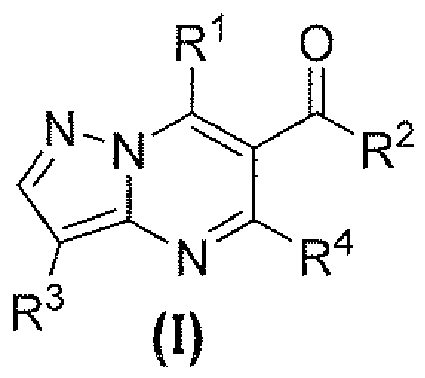
R2 represents
n represents an integer of 0 - 4, and when n is 2, 3 or 4,
respective R5 may be the same or different,
L represents a single bond, alkylene, C(=O) or SO2,
R5 represents halogen, hydroxy, lower alkyl optionally having substituent(s) or lower alkoxy optionally having substituent(s),
R6 represents lower alkyl optionally having substituent(s), cycloalkyl optionally having substituent(s), aryl optionally having substituent(s), an aromatic heterocyclic group optionally having substituent(s) or an aliphatic heterocyclic group optionally having substituent(s),
X represents a nitrogen atom or -CR6 (wherein R8 represents a hydrogen atom, halogen, hydroxy, cyano, lower alkyl optionally having substituent(s) or lower alkoxy optionally having substituent(s), or forms a bond together with R7), and
R7 forms a bond together with R8, or represents a hydrogen atom, halogen, hydroxy, lower alkyl optionally having substituent(s) or lower alkoxy optionally having substituent(s)],
R5a is as defined for the aforementioned R5,
--- represents a single bond or a double bond,
R9a and R9b are the same or different and each represents a hydrogen atom or lower alkyl optionally having substituent(s), or R9a and R9b form, together with the respectively adjacent carbon atoms, an aliphatic ring optionally having substituent(s) or an aromatic ring optionally having substituent(s),
Y represents -CHR10a-CHR10b- (wherein R10a and R10b are the same or different and each represents a hydrogen atom, hydroxy, lower alkyl optionally having substituent(s) or lower alkoxy optionally having substituent(s), or R10a and R10b form, together with the respectively adjacent carbon atoms, an aliphatic ring optionally having substituent(s)), -CR10c=CR10d- (wherein R10c and R10d are the same or different and each represents a hydrogen atom or lower alkyl optionally having substituent(s), or R10c and R10d form, together with the respectively adjacent carbon atoms, an aliphatic ring having at least one double bond and optionally having substituent(s) or an aromatic ring optionally having substituent(s)), -Za-CR11aR11b- [wherein R11a and R11b are the same or different and each represents a hydrogen atom or lower alkyl optionally having substituent(s), or R11a and R11b form carbonyl together with the adjacent carbon atom, Za represents C (=O) , O, S, SO, SO2 or NR12 (wherein R12 represents a hydrogen atom, lower alkyl optionally having substituent(s), lower alkanoyl optionally having substituent(s), lower alkoxycarbonyl optionally having substituent(s) or aralkyl optionally having substituent(s))], or -CR11cR11d-Zb- (wherein R11c, R11d and Zb are as defined for the aforementioned R11a, R11b and Za, respectively)], or
R3 represents -S(O)2R13a [wherein R13a represents hydroxy, lower alkoxy optionally having substituent(s), -NR13bR13c (wherein R13b and R13c are the same or different and each represents a hydrogen atom, lower alkyl optionally having substituent(s), lower alkoxy optionally having substituent(s), cycloalkyl optionally having substituent(s), aralkyl optionally having substituent(s), aryl optionally having substituent(s), an aromatic heterocyclic group optionally having substituent(s) or an aliphatic heterocyclic group optionally having substituent(s), or R13b and R13c form, together with the adjacent nitrogen atom, a nitrogen-containing heterocyclic group optionally having substituent(s)), -NR13dC(=O)R13e (wherein R13d represents a hydrogen atom, lower alkyl optionally having substituent(s), cycloalkyl optionally having substituent(s), aralkyl optionally having substituent(s), aryl optionally having substituent(s), an aromatic heterocyclic group optionally having substituent(s) or an aliphatic heterocyclic group optionally having substituent(s), R13e represents a hydrogen atom, lower alkyl optionally having substituent(s), cycloalkyl optionally having substituent(s), aralkyl optionally having substituent(s), lower alkoxy optionally having substituent(s), N-mono-lower alkylamino optionally having substituent(s), N,N-di-lower alkylamino optionally having substituent(s), N-cycloalkylamino optionally having substituent(s), N-mono-arylamino optionally having substituent(s), N,N-di-arylamino optionally having substituent(s), aryl optionally having substituent(s), an aromatic heterocyclic group optionally having substituent(s) or an aliphatic heterocyclic group optionally having substituent(s)), -NR13fC(=S)R13g (wherein R13f and R13g are as defined for the aforementioned R13d and R13e, respectively) or - NR13hS(O)2R14 (wherein R13h is as defined for the aforementioned R13d, R14 represents lower alkyl optionally having substituent(s), cycloalkyl optionally having substituent(s), N-mono-lower alkylamino optionally having substituent(s), N,N-di-lower alkylamino optionally having substituent(s), aryl optionally having substituent(s), aralkyl optionally having substituent(s), an aromatic heterocyclic group optionally having substituent(s) or an aliphatic heterocyclic group optionally having substituent(s))], and
R4 represents a hydrogen atom, halogen, lower alkyl optionally having substituent(s), aralkyl optionally having substituent(s), -NR15aR15b (wherein R15a and R15b are as defined for the aforementioned R1a and R1e, respectively), -OR15c (wherein R15c is as defined for the aforementioned R1c), or - SR15d (wherein R15d is as defined for the aforementioned R1c) } or a pharmaceutically acceptable salt thereof. - A pyrazolopyrimidine derivative represented by the formula (IA)

L1 represents a single bond or methylene,
R1A represents lower alkyl optionally having substituent(s), an aralkyl optionally having substituent(s), cycloalkyl optionally having substituent(s), aryl optionally having substituent(s), an aromatic heterocyclic group optionally having substituent(s) or an aliphatic heterocyclic group optionally having substituent(s),
R2A represents
kA, mA and LA are as defined for the aforementioned k, m and l, respectively,
R5A represents halogen or lower alkyl,
R6A represents cycloalkyl optionally having substituent(s), aryl optionally having substituent(s), an aromatic heterocyclic group optionally having substituent(s) or an aliphatic heterocyclic group optionally having substituent(s), XA represents a nitrogen atom or -CR8A (wherein R8A represents a hydrogen atom, halogen or lower alkyl, or forms a bond together with R7A), and
R7A forms a bond together with R8A, or represents a hydrogen atom, halogen or lower alkyl],
maA and kaA are as defined for the aforementioned ma and ka, respectively,
R9aA and R9bA form, together with the respectively adjacent carbon atoms, an aromatic ring optionally having substituent(s),
YA represents -CHR10aA-CHR10bA- (wherein R10aA and R10bA are the same or different and each represents a hydrogen atom, hydroxy, lower alkyl optionally having substituent(s) or lower alkoxy optionally having substituent(s)), -CR10cA=CR10dA- (wherein R10cA and R10dA are the same or different and each represents a hydrogen atom or lower alkyl optionally having substituent(s)), -ZaA-CR11aAR11bA- [wherein R11aA and R11bA are the same or different and each represents a hydrogen atom or lower alkyl optionally having substituent(s), or R11aA and R11bA form carbonyl together with the adjacent carbon atom, ZaA represents C(=O), O, S, SO, SO2 or NR12A (wherein R12A represents a hydrogen atom, lower alkyl optionally having substituent(s), lower alkanoyl optionally having substituent(s), lower alkoxycarbonyl optionally having substituent(s) or aralkyl optionally having substituent(s))], or -CR11cAR11dA-ZbA- (wherein R11cA, R11dA and ZbA are as defined for the aforementioned R11aA, R11bA and ZaA, respectively)}, or
and
R4A represents a hydrogen atom or lower alkyl optionally having substituent(s)},
or a pharmaceutically acceptable salt thereof. - The pyrazolopyrimidine derivative or the pharmaceutically acceptable salt thereof according to claim 2, wherein L1 is a single bond.
- The pyrazolopyrimidine derivative or the pharmaceutically acceptable salt thereof according to claim 2 or 3, wherein R1A is aryl optionally having substituent(s).
- The pyrazolopyrimidine derivative or the pharmaceutically acceptable salt thereof according to claim 2 or 3, wherein R1A is phenyl optionally having substituent(s).
- The pyrazolopyrimidine derivative or the pharmaceutically acceptable salt thereof according to claim 2 or 3, wherein R1A is an aromatic heterocyclic group optionally having substituent(s).
- The pyrazolopyrimidine derivative or the pharmaceutically acceptable salt thereof according to any one of claims 2 to 6, wherein R4A is a hydrogen atom.
- The pyrazolopyrimidine derivative or the pharmaceutically acceptable salt thereof according to any one of claims 2 to 7, wherein R13A is a hydrogen atom, and R13B is lower alkyl optionally having substituent(s).
- The pyrazolopyrimidine derivative or the pharmaceutically acceptable salt thereof according to any one of claims 2 to 7, wherein R13A is a hydrogen atom, and R13B is COR13e1 (wherein R13e1 is as defined above).
- The pyrazolopyrimidine derivative or the pharmaceutically acceptable salt thereof according to any one of claims 2 to 7, wherein R13A is a hydrogen atom, and R13B is COR13e2 (wherein R13e2 represents lower alkyl optionally having substituent(s), cycloalkyl optionally having substituent(s), N-mono-lower alkylamino optionally having substituent(s) or N-mono-arylamino optionally having substituent(s)).
- The pyrazolopyrimidine derivative or the pharmaceutically acceptable salt thereof according to any one of claims 2 to 10, wherein R2A is

- The pyrazolopyrimidine derivative or the pharmaceutically acceptable salt thereof according to claim 11, wherein R6A is phenyl optionally having substituent(s).
- The pyrazolopyrimidine derivative or the pharmaceutically acceptable salt thereof according to any one of claims 2 to 10, wherein R2A is

- The pyrazolopyrimidine derivative or the pharmaceutically acceptable salt thereof according to claim 13, wherein R9aA and R9bA form, together with the respectively adjacent carbon atom,
a benzene ring optionally having substituent(s), YA is -CHR10aA-CHR10bA- (wherein R10aA and R10bA are each as defined above), - CR10cA=CR10dA - (wherein R10cA and R10dA are each as defined above), -O-CR11aAR11bA- (wherein R11aA and R11bA are each as defined above) or -CR11cAR11dA-O- (wherein R11cA and R11dA are each as defined above). - The pyrazolopyrimidine derivative or the pharmaceutically acceptable salt thereof according to any one of claims 2 to 10, wherein R2A is

- The pyrazolopyrimidine derivative or the pharmaceutically acceptable salt thereof according to claim 15, wherein RzA is phenyl optionally having substituent(s).
- A medicament comprising, as an active ingredient, the pyrazolopyrimidine derivative or the pharmaceutically acceptable salt thereof according to any one of claims 1 to 16.
- An agent for the prevention and/or treatment of a skin disease comprising, as an active ingredient, the pyrazolopyrimidine derivative or the pharmaceutically acceptable salt thereof according to any one of claims 1 to 16.
- The agent for the prevention and/or treatment of a skin disease according to claim 18, wherein the skin disease is a skin disease selected from acne vulgaris, drug eruption, contact dermatitis, dermatitis due to venomous moth, pollen dermatitis, urticaria, psoriasis, atopic dermatitis, candidal dermatitis, seborrheic dermatitis, eczema, Stevens-Johnson syndrome, toxic epidermal necrosis, erythema multiforme, erythema nodosum, granuloma annulare, pityriasis rosea, rosacea, lichen planus, lichen pilaris (keratosis pilaris), photosensitivity, solar dermatitis, miliaria, herpes simplex, Kaposi's varicelliform eruption, impetigo contagiosa, staphylococcal scalded skin syndrome, erysipelas, slap cheek, lupus erythematosus, keloid, Hailey-Hailey disease, scabies and linear dermatitis.
- The agent for the prevention and/or treatment of a skin disease according to claim 18, wherein the skin disease is dermatitis.
- The agent for the prevention and/or treatment of a skin disease according to claim 18, wherein the skin disease is a skin disease selected from contact dermatitis and atopic dermatitis.
- A method for the prevention and/or treatment of a skin disease, comprising a step of administering an effective amount of the pyrazolopyrimidine derivative or the pharmaceutically acceptable salt thereof according to any one of claims 1 to 16 to a subject in need thereof.
- The method according to claim 22, wherein the skin disease is a skin disease selected from acne vulgaris, drug eruption, contact dermatitis, dermatitis due to venomous moth, pollen dermatitis, urticaria, psoriasis, atopic dermatitis, candidal dermatitis, seborrheic dermatitis, eczema, Stevens-Johnson syndrome, toxic epidermal necrosis, erythema multiforme, erythema nodosum, granuloma annulare, pityriasis rosea, rosacea, lichen planus, lichen pilaris (keratosis pilaris), photosensitivity, solar dermatitis, miliaria, herpes simplex,
Kaposi's varicelliform eruption, impetigo contagiosa, staphylococcal scalded skin syndrome, erysipelas, slap cheek, lupus erythematosus, keloid, Hailey-Hailey disease, scabies and linear dermatitis. - The method according to claim 22, wherein the skin disease is dermatitis.
- The method according to claim 22, wherein the skin disease is a skin disease selected from contact dermatitis and atopic dermatitis.
- The pyrazolopyrimidine derivative or the pharmaceutically acceptable salt thereof according to any one of claims 1 to 16 for use in prevention and/or treatment of a skin disease.
- The pyrazolopyrimidine derivative or the pharmaceutically acceptable salt thereof according to claim 26, wherein the skin disease is a skin disease selected from acne vulgaris, drug eruption, contact dermatitis, dermatitis due to venomous moth, pollen dermatitis, urticaria, psoriasis, atopic dermatitis, candidal dermatitis, seborrheic dermatitis, eczema, Stevens-Johnson syndrome, toxic epidermal necrosis, erythema multiforme, erythema nodosum, granuloma annulare, pityriasis rosea, rosacea, lichen planus, lichen pilaris (keratosis pilaris), photosensitivity, solar dermatitis, miliaria, herpes simplex, Kaposi's varicelliform eruption, impetigo contagiosa, staphylococcal scalded skin syndrome, erysipelas, slap cheek, lupus erythematosus, keloid, Hailey-Hailey disease, scabies and linear dermatitis.
- The pyrazolopyrimidine derivative or the pharmaceutically acceptable salt thereof according to claim 26, wherein the skin disease is dermatitis.
- The pyrazolopyrimidine derivative or the pharmaceutically acceptable salt thereof according to claim 26, wherein the skin disease is a skin disease selected from contact dermatitis and atopic dermatitis.
- Use of the pyrazolopyrimidine derivative or the pharmaceutically acceptable salt thereof according to any one of claims 1 to 16 for the manufacture of an agent for the prevention and/or treatment of a skin disease.
- The use according to claim 30, wherein the skin disease is a skin disease selected from acne vulgaris, drug eruption, contact dermatitis, dermatitis due to venomous moth, pollen dermatitis, urticaria, psoriasis, atopic dermatitis, candidal dermatitis, seborrheic dermatitis, eczema, Stevens-Johnson syndrome, toxic epidermal necrosis, erythema multiforme, erythema nodosum, granuloma annulare, pityriasis rosea, rosacea, lichen planus, lichen pilaris (keratosis pilaris), photosensitivity, solar dermatitis, miliaria, herpes simplex, Kaposi's varicelliform eruption, impetigo contagiosa, staphylococcal scalded skin syndrome, erysipelas, slap cheek, lupus erythematosus, keloid, Hailey-Hailey disease, scabies and linear dermatitis.
- The use according to claim 30, wherein the skin disease is dermatitis.
- The use according to claim 30, wherein the skin disease is a skin disease selected from contact dermatitis and atopic dermatitis.
Applications Claiming Priority (2)
| Application Number | Priority Date | Filing Date | Title |
|---|---|---|---|
| JP2010049827 | 2010-03-05 | ||
| PCT/JP2011/055031 WO2011108689A1 (en) | 2010-03-05 | 2011-03-04 | Pyrazolopyrimidine derivative |
Publications (4)
| Publication Number | Publication Date |
|---|---|
| EP2543670A1 true EP2543670A1 (en) | 2013-01-09 |
| EP2543670A4 EP2543670A4 (en) | 2013-07-31 |
| EP2543670B1 EP2543670B1 (en) | 2016-05-04 |
| EP2543670B8 EP2543670B8 (en) | 2016-07-13 |
Family
ID=44542334
Family Applications (1)
| Application Number | Title | Priority Date | Filing Date |
|---|---|---|---|
| EP11750798.8A Active EP2543670B8 (en) | 2010-03-05 | 2011-03-04 | Pyrazolopyrimidine derivative |
Country Status (12)
| Country | Link |
|---|---|
| US (1) | US8815874B2 (en) |
| EP (1) | EP2543670B8 (en) |
| JP (1) | JP5688404B2 (en) |
| KR (1) | KR101473545B1 (en) |
| CN (1) | CN102791712B (en) |
| AU (1) | AU2011221849B2 (en) |
| CA (1) | CA2792102C (en) |
| ES (1) | ES2585287T3 (en) |
| MY (1) | MY183861A (en) |
| SG (1) | SG183915A1 (en) |
| TW (1) | TWI516489B (en) |
| WO (1) | WO2011108689A1 (en) |
Cited By (10)
| Publication number | Priority date | Publication date | Assignee | Title |
|---|---|---|---|---|
| EP2781216A4 (en) * | 2011-09-02 | 2015-05-27 | Kyowa Hakko Kirin Co Ltd | Chemokine receptor activity regulator |
| WO2019092170A1 (en) * | 2017-11-09 | 2019-05-16 | Inflazome Limited | Novel sulfonamide carboxamide compounds |
| US10538487B2 (en) | 2015-02-16 | 2020-01-21 | The University Of Queensland | Sulfonylureas and related compounds and use of same |
| US11465992B2 (en) | 2017-07-07 | 2022-10-11 | Inflazome Limited | Sulfonamide carboxamide compounds |
| US11542255B2 (en) | 2017-08-15 | 2023-01-03 | Inflazome Limited | Sulfonylureas and sulfonylthioureas as NLRP3 inhibitors |
| US11613542B2 (en) | 2017-08-15 | 2023-03-28 | Inflazome Limited | Sulfonylureas and sulfonylthioureas as NLRP3 inhibitors |
| US11840543B2 (en) | 2017-05-24 | 2023-12-12 | The University Of Queensland | Compounds and uses |
| US11905252B2 (en) | 2018-03-02 | 2024-02-20 | Inflazome Limited | Compounds |
| US11926600B2 (en) | 2017-08-15 | 2024-03-12 | Inflazome Limited | Sulfonylureas and sulfonylthioureas as NLRP3 inhibitors |
| US12221434B2 (en) | 2017-11-09 | 2025-02-11 | Inflazome Limited | Sulfonamide carboxamide compounds |
Families Citing this family (2)
| Publication number | Priority date | Publication date | Assignee | Title |
|---|---|---|---|---|
| TW201501713A (en) | 2013-03-01 | 2015-01-16 | Kyowa Hakko Kirin Co Ltd | Agent for preventing and/or treating ocular inflammatory disease |
| IL282254B2 (en) | 2018-10-30 | 2025-08-01 | Kronos Bio Inc | Compounds, compositions, and methods for modulating CDK9 activity |
Family Cites Families (16)
| Publication number | Priority date | Publication date | Assignee | Title |
|---|---|---|---|---|
| JPS6360985A (en) | 1986-08-08 | 1988-03-17 | Yoshitomi Pharmaceut Ind Ltd | 4,7-dihydropyrazolo(1,5-a)pyrimidine derivative |
| JPH04270285A (en) | 1988-11-14 | 1992-09-25 | Nissan Chem Ind Ltd | Pyrazolopryrimidine-based mevalonolactiones |
| US5420128A (en) | 1990-10-09 | 1995-05-30 | Otsuka Pharmaceutical Co., Ltd. | Pyrimidine derivatives, method of manufacturing the same, and androgen inhibitor |
| JPH05112571A (en) | 1990-10-19 | 1993-05-07 | Otsuka Pharmaceut Co Ltd | Pyrimidine derivative |
| JPH07157485A (en) | 1993-12-02 | 1995-06-20 | Nkk Corp | Fused pyrimidinone derivatives and angiotensin II antagonists containing them |
| JP3479708B2 (en) | 1995-12-20 | 2003-12-15 | 株式会社大塚製薬工場 | Benzoic acid derivative |
| JPH10101672A (en) | 1996-08-06 | 1998-04-21 | Otsuka Pharmaceut Factory Inc | Adenosine enhancer |
| JP2002501532A (en) | 1997-05-30 | 2002-01-15 | メルク エンド カンパニー インコーポレーテッド | Novel angiogenesis inhibitors |
| JP2000038350A (en) | 1998-05-18 | 2000-02-08 | Yoshitomi Pharmaceut Ind Ltd | Diabetes treatment |
| EP1149835A4 (en) | 1999-01-29 | 2002-08-21 | Sumitomo Chemical Co | FAT ACCUMULATION INHIBITORS |
| US6245759B1 (en) | 1999-03-11 | 2001-06-12 | Merck & Co., Inc. | Tyrosine kinase inhibitors |
| AU4203500A (en) | 1999-04-06 | 2000-10-23 | Du Pont Pharmaceuticals Company | Pyrazolopyrimidines as crf antagonists |
| US7067520B2 (en) | 2000-11-17 | 2006-06-27 | Ishihara Sangyo Kaisha, Ltd. | Preventive or therapeutic medicines for diabetes containing fused-heterocyclic compounds or their salts |
| KR20040097375A (en) * | 2002-04-23 | 2004-11-17 | 시오노기 앤드 컴파니, 리미티드 | Pyrazolo[1, 5-a]pyrimidine derivative and NAD(P)H oxidase inhibitor containing the same |
| WO2004110454A1 (en) | 2003-06-13 | 2004-12-23 | Ishihara Sangyo Kaisha, Ltd. | COMPOSITION FOR TREATMENT FOR OR PREVENTION OF DISEASE NECESSITATING ADMINISTRATION OF ADENOSINE A2a RECEPTOR AGONIST |
| US8729264B2 (en) | 2007-09-28 | 2014-05-20 | Kyowa Hakko Kirin Co., Ltd. | Agent for prevention and/or treatment of skin diseases |
-
2011
- 2011-03-04 ES ES11750798.8T patent/ES2585287T3/en active Active
- 2011-03-04 US US13/582,992 patent/US8815874B2/en active Active
- 2011-03-04 SG SG2012065702A patent/SG183915A1/en unknown
- 2011-03-04 CA CA2792102A patent/CA2792102C/en not_active Expired - Fee Related
- 2011-03-04 EP EP11750798.8A patent/EP2543670B8/en active Active
- 2011-03-04 KR KR1020127025922A patent/KR101473545B1/en not_active Expired - Fee Related
- 2011-03-04 CN CN201180012618.4A patent/CN102791712B/en not_active Expired - Fee Related
- 2011-03-04 WO PCT/JP2011/055031 patent/WO2011108689A1/en not_active Ceased
- 2011-03-04 AU AU2011221849A patent/AU2011221849B2/en not_active Ceased
- 2011-03-04 MY MYPI2012003947A patent/MY183861A/en unknown
- 2011-03-04 TW TW100107297A patent/TWI516489B/en not_active IP Right Cessation
- 2011-03-04 JP JP2012503275A patent/JP5688404B2/en active Active
Non-Patent Citations (2)
| Title |
|---|
| No further relevant documents disclosed * |
| See also references of WO2011108689A1 * |
Cited By (14)
| Publication number | Priority date | Publication date | Assignee | Title |
|---|---|---|---|---|
| EP2781216A4 (en) * | 2011-09-02 | 2015-05-27 | Kyowa Hakko Kirin Co Ltd | Chemokine receptor activity regulator |
| US10538487B2 (en) | 2015-02-16 | 2020-01-21 | The University Of Queensland | Sulfonylureas and related compounds and use of same |
| US11130731B2 (en) | 2015-02-16 | 2021-09-28 | The Provost, Fellows, Foundation Scholars, And The Other Members Of Board, Of The College Of The Holy And Undivided Trinity Of Queen Elizabeth Near Dublin | Sulfonylureas and related compounds and use of same |
| US11840543B2 (en) | 2017-05-24 | 2023-12-12 | The University Of Queensland | Compounds and uses |
| US11981667B2 (en) | 2017-07-07 | 2024-05-14 | Inflazome Limited | Sulfonamide carboxamide compounds |
| US11465992B2 (en) | 2017-07-07 | 2022-10-11 | Inflazome Limited | Sulfonamide carboxamide compounds |
| US11926600B2 (en) | 2017-08-15 | 2024-03-12 | Inflazome Limited | Sulfonylureas and sulfonylthioureas as NLRP3 inhibitors |
| US11542255B2 (en) | 2017-08-15 | 2023-01-03 | Inflazome Limited | Sulfonylureas and sulfonylthioureas as NLRP3 inhibitors |
| US11613542B2 (en) | 2017-08-15 | 2023-03-28 | Inflazome Limited | Sulfonylureas and sulfonylthioureas as NLRP3 inhibitors |
| CN111315733A (en) * | 2017-11-09 | 2020-06-19 | 英夫拉索姆有限公司 | Novel sulfonamide carboxamide compounds |
| WO2019092170A1 (en) * | 2017-11-09 | 2019-05-16 | Inflazome Limited | Novel sulfonamide carboxamide compounds |
| US12012392B2 (en) | 2017-11-09 | 2024-06-18 | Inflazome Limited | Sulfonamide carboxamide compounds |
| US12221434B2 (en) | 2017-11-09 | 2025-02-11 | Inflazome Limited | Sulfonamide carboxamide compounds |
| US11905252B2 (en) | 2018-03-02 | 2024-02-20 | Inflazome Limited | Compounds |
Also Published As
| Publication number | Publication date |
|---|---|
| US8815874B2 (en) | 2014-08-26 |
| TW201144315A (en) | 2011-12-16 |
| WO2011108689A1 (en) | 2011-09-09 |
| EP2543670B1 (en) | 2016-05-04 |
| TWI516489B (en) | 2016-01-11 |
| JPWO2011108689A1 (en) | 2013-06-27 |
| KR20120137401A (en) | 2012-12-20 |
| AU2011221849A1 (en) | 2012-10-25 |
| EP2543670A4 (en) | 2013-07-31 |
| US20130102620A1 (en) | 2013-04-25 |
| KR101473545B1 (en) | 2014-12-16 |
| CA2792102C (en) | 2015-06-09 |
| CA2792102A1 (en) | 2011-09-09 |
| AU2011221849B2 (en) | 2015-04-02 |
| ES2585287T3 (en) | 2016-10-04 |
| CN102791712A (en) | 2012-11-21 |
| MY183861A (en) | 2021-03-17 |
| CN102791712B (en) | 2015-07-01 |
| SG183915A1 (en) | 2012-10-30 |
| EP2543670B8 (en) | 2016-07-13 |
| JP5688404B2 (en) | 2015-03-25 |
Similar Documents
| Publication | Publication Date | Title |
|---|---|---|
| US8815874B2 (en) | Pyrazolopyrimidine derivative | |
| US12595265B2 (en) | Inhibitors of activin receptor-like kinase | |
| HK1199207A1 (en) | Chemokine receptor activity regulator | |
| EP2206714B1 (en) | Agent for prevention and/or treatment of skin diseases | |
| CN115504980B (en) | Pyrimidine nitrogen-containing six-membered aromatic heterocyclic compound and application thereof | |
| EP4055013B1 (en) | Wdr5 inhibitors and modulators | |
| CN111788182A (en) | Antagonists of muscarinic acetylcholine receptor M4 | |
| WO2023134656A1 (en) | Peptidyl nitrile compound and use thereof | |
| JP7812861B2 (en) | Tricyclic pyrimidines as cyclin-dependent kinase 7 (cdk7) inhibitors | |
| AU2013318283A1 (en) | Dihydropyrrolidino-pyrimidines as kinase inhibitors | |
| CA3216629A1 (en) | Preparation of substituted 1,2-diaminoheterocyclic compound derivatives and their use as pharmaceutical agents | |
| JPWO2008108309A1 (en) | Fused pyridine derivative | |
| HK1178158A (en) | Pyrazolopyrimidine derivative | |
| CA3204133A1 (en) | Indole derivatives as kinase inhibitors | |
| EA045845B1 (en) | ANTIVIRAL DRUGS FOR TREATMENT AND PREVENTION OF HIV INFECTION | |
| EA040675B1 (en) | ACTIVIN-LIKE RECEPTOR KINASE INHIBITORS | |
| HK1230176A1 (en) | Tetrahydropyridopyrazines modulators of gpr6 | |
| HK1230176B (en) | Tetrahydropyridopyrazines modulators of gpr6 |
Legal Events
| Date | Code | Title | Description |
|---|---|---|---|
| PUAI | Public reference made under article 153(3) epc to a published international application that has entered the european phase |
Free format text: ORIGINAL CODE: 0009012 |
|
| 17P | Request for examination filed |
Effective date: 20121004 |
|
| AK | Designated contracting states |
Kind code of ref document: A1 Designated state(s): AL AT BE BG CH CY CZ DE DK EE ES FI FR GB GR HR HU IE IS IT LI LT LU LV MC MK MT NL NO PL PT RO RS SE SI SK SM TR |
|
| DAX | Request for extension of the european patent (deleted) | ||
| A4 | Supplementary search report drawn up and despatched |
Effective date: 20130701 |
|
| RIC1 | Information provided on ipc code assigned before grant |
Ipc: A61K 31/519 20060101ALI20130625BHEP Ipc: C07D 487/10 20060101ALI20130625BHEP Ipc: C07D 491/107 20060101ALI20130625BHEP Ipc: A61P 17/00 20060101ALI20130625BHEP Ipc: A61P 37/08 20060101ALI20130625BHEP Ipc: A61P 17/10 20060101ALI20130625BHEP Ipc: C07D 519/00 20060101ALI20130625BHEP Ipc: A61P 17/04 20060101ALI20130625BHEP Ipc: C07D 487/04 20060101AFI20130625BHEP Ipc: A61P 17/02 20060101ALI20130625BHEP Ipc: A61P 17/06 20060101ALI20130625BHEP |
|
| REG | Reference to a national code |
Ref country code: HK Ref legal event code: DE Ref document number: 1178158 Country of ref document: HK |
|
| 17Q | First examination report despatched |
Effective date: 20140625 |
|
| GRAP | Despatch of communication of intention to grant a patent |
Free format text: ORIGINAL CODE: EPIDOSNIGR1 |
|
| INTG | Intention to grant announced |
Effective date: 20151020 |
|
| GRAS | Grant fee paid |
Free format text: ORIGINAL CODE: EPIDOSNIGR3 |
|
| GRAA | (expected) grant |
Free format text: ORIGINAL CODE: 0009210 |
|
| AK | Designated contracting states |
Kind code of ref document: B1 Designated state(s): AL AT BE BG CH CY CZ DE DK EE ES FI FR GB GR HR HU IE IS IT LI LT LU LV MC MK MT NL NO PL PT RO RS SE SI SK SM TR |
|
| GRAT | Correction requested after decision to grant or after decision to maintain patent in amended form |
Free format text: ORIGINAL CODE: EPIDOSNCDEC |
|
| REG | Reference to a national code |
Ref country code: GB Ref legal event code: FG4D |
|
| REG | Reference to a national code |
Ref country code: CH Ref legal event code: EP |
|
| REG | Reference to a national code |
Ref country code: AT Ref legal event code: REF Ref document number: 796814 Country of ref document: AT Kind code of ref document: T Effective date: 20160515 |
|
| REG | Reference to a national code |
Ref country code: IE Ref legal event code: FG4D |
|
| REG | Reference to a national code |
Ref country code: DE Ref legal event code: R096 Ref document number: 602011026199 Country of ref document: DE |
|
| REG | Reference to a national code |
Ref country code: NL Ref legal event code: MP Effective date: 20160504 |
|
| REG | Reference to a national code |
Ref country code: LT Ref legal event code: MG4D |
|
| REG | Reference to a national code |
Ref country code: ES Ref legal event code: FG2A Ref document number: 2585287 Country of ref document: ES Kind code of ref document: T3 Effective date: 20161004 |
|
| PG25 | Lapsed in a contracting state [announced via postgrant information from national office to epo] |
Ref country code: FI Free format text: LAPSE BECAUSE OF FAILURE TO SUBMIT A TRANSLATION OF THE DESCRIPTION OR TO PAY THE FEE WITHIN THE PRESCRIBED TIME-LIMIT Effective date: 20160504 Ref country code: NO Free format text: LAPSE BECAUSE OF FAILURE TO SUBMIT A TRANSLATION OF THE DESCRIPTION OR TO PAY THE FEE WITHIN THE PRESCRIBED TIME-LIMIT Effective date: 20160804 Ref country code: NL Free format text: LAPSE BECAUSE OF FAILURE TO SUBMIT A TRANSLATION OF THE DESCRIPTION OR TO PAY THE FEE WITHIN THE PRESCRIBED TIME-LIMIT Effective date: 20160504 Ref country code: LT Free format text: LAPSE BECAUSE OF FAILURE TO SUBMIT A TRANSLATION OF THE DESCRIPTION OR TO PAY THE FEE WITHIN THE PRESCRIBED TIME-LIMIT Effective date: 20160504 |
|
| REG | Reference to a national code |
Ref country code: AT Ref legal event code: MK05 Ref document number: 796814 Country of ref document: AT Kind code of ref document: T Effective date: 20160504 |
|
| PG25 | Lapsed in a contracting state [announced via postgrant information from national office to epo] |
Ref country code: LV Free format text: LAPSE BECAUSE OF FAILURE TO SUBMIT A TRANSLATION OF THE DESCRIPTION OR TO PAY THE FEE WITHIN THE PRESCRIBED TIME-LIMIT Effective date: 20160504 Ref country code: GR Free format text: LAPSE BECAUSE OF FAILURE TO SUBMIT A TRANSLATION OF THE DESCRIPTION OR TO PAY THE FEE WITHIN THE PRESCRIBED TIME-LIMIT Effective date: 20160805 Ref country code: RS Free format text: LAPSE BECAUSE OF FAILURE TO SUBMIT A TRANSLATION OF THE DESCRIPTION OR TO PAY THE FEE WITHIN THE PRESCRIBED TIME-LIMIT Effective date: 20160504 Ref country code: HR Free format text: LAPSE BECAUSE OF FAILURE TO SUBMIT A TRANSLATION OF THE DESCRIPTION OR TO PAY THE FEE WITHIN THE PRESCRIBED TIME-LIMIT Effective date: 20160504 Ref country code: PT Free format text: LAPSE BECAUSE OF FAILURE TO SUBMIT A TRANSLATION OF THE DESCRIPTION OR TO PAY THE FEE WITHIN THE PRESCRIBED TIME-LIMIT Effective date: 20160905 Ref country code: SE Free format text: LAPSE BECAUSE OF FAILURE TO SUBMIT A TRANSLATION OF THE DESCRIPTION OR TO PAY THE FEE WITHIN THE PRESCRIBED TIME-LIMIT Effective date: 20160504 |
|
| PG25 | Lapsed in a contracting state [announced via postgrant information from national office to epo] |
Ref country code: RO Free format text: LAPSE BECAUSE OF FAILURE TO SUBMIT A TRANSLATION OF THE DESCRIPTION OR TO PAY THE FEE WITHIN THE PRESCRIBED TIME-LIMIT Effective date: 20160504 Ref country code: DK Free format text: LAPSE BECAUSE OF FAILURE TO SUBMIT A TRANSLATION OF THE DESCRIPTION OR TO PAY THE FEE WITHIN THE PRESCRIBED TIME-LIMIT Effective date: 20160504 Ref country code: SK Free format text: LAPSE BECAUSE OF FAILURE TO SUBMIT A TRANSLATION OF THE DESCRIPTION OR TO PAY THE FEE WITHIN THE PRESCRIBED TIME-LIMIT Effective date: 20160504 Ref country code: CZ Free format text: LAPSE BECAUSE OF FAILURE TO SUBMIT A TRANSLATION OF THE DESCRIPTION OR TO PAY THE FEE WITHIN THE PRESCRIBED TIME-LIMIT Effective date: 20160504 Ref country code: EE Free format text: LAPSE BECAUSE OF FAILURE TO SUBMIT A TRANSLATION OF THE DESCRIPTION OR TO PAY THE FEE WITHIN THE PRESCRIBED TIME-LIMIT Effective date: 20160504 |
|
| REG | Reference to a national code |
Ref country code: DE Ref legal event code: R097 Ref document number: 602011026199 Country of ref document: DE |
|
| PG25 | Lapsed in a contracting state [announced via postgrant information from national office to epo] |
Ref country code: BE Free format text: LAPSE BECAUSE OF FAILURE TO SUBMIT A TRANSLATION OF THE DESCRIPTION OR TO PAY THE FEE WITHIN THE PRESCRIBED TIME-LIMIT Effective date: 20160504 Ref country code: AT Free format text: LAPSE BECAUSE OF FAILURE TO SUBMIT A TRANSLATION OF THE DESCRIPTION OR TO PAY THE FEE WITHIN THE PRESCRIBED TIME-LIMIT Effective date: 20160504 Ref country code: SM Free format text: LAPSE BECAUSE OF FAILURE TO SUBMIT A TRANSLATION OF THE DESCRIPTION OR TO PAY THE FEE WITHIN THE PRESCRIBED TIME-LIMIT Effective date: 20160504 Ref country code: PL Free format text: LAPSE BECAUSE OF FAILURE TO SUBMIT A TRANSLATION OF THE DESCRIPTION OR TO PAY THE FEE WITHIN THE PRESCRIBED TIME-LIMIT Effective date: 20160504 |
|
| REG | Reference to a national code |
Ref country code: FR Ref legal event code: PLFP Year of fee payment: 7 |
|
| PLBE | No opposition filed within time limit |
Free format text: ORIGINAL CODE: 0009261 |
|
| STAA | Information on the status of an ep patent application or granted ep patent |
Free format text: STATUS: NO OPPOSITION FILED WITHIN TIME LIMIT |
|
| 26N | No opposition filed |
Effective date: 20170207 |
|
| PG25 | Lapsed in a contracting state [announced via postgrant information from national office to epo] |
Ref country code: SI Free format text: LAPSE BECAUSE OF FAILURE TO SUBMIT A TRANSLATION OF THE DESCRIPTION OR TO PAY THE FEE WITHIN THE PRESCRIBED TIME-LIMIT Effective date: 20160504 |
|
| REG | Reference to a national code |
Ref country code: CH Ref legal event code: PL |
|
| PG25 | Lapsed in a contracting state [announced via postgrant information from national office to epo] |
Ref country code: MC Free format text: LAPSE BECAUSE OF FAILURE TO SUBMIT A TRANSLATION OF THE DESCRIPTION OR TO PAY THE FEE WITHIN THE PRESCRIBED TIME-LIMIT Effective date: 20160504 |
|
| REG | Reference to a national code |
Ref country code: IE Ref legal event code: MM4A |
|
| PG25 | Lapsed in a contracting state [announced via postgrant information from national office to epo] |
Ref country code: LU Free format text: LAPSE BECAUSE OF NON-PAYMENT OF DUE FEES Effective date: 20170304 |
|
| PG25 | Lapsed in a contracting state [announced via postgrant information from national office to epo] |
Ref country code: CH Free format text: LAPSE BECAUSE OF NON-PAYMENT OF DUE FEES Effective date: 20170331 Ref country code: LI Free format text: LAPSE BECAUSE OF NON-PAYMENT OF DUE FEES Effective date: 20170331 Ref country code: IE Free format text: LAPSE BECAUSE OF NON-PAYMENT OF DUE FEES Effective date: 20170304 |
|
| REG | Reference to a national code |
Ref country code: FR Ref legal event code: PLFP Year of fee payment: 8 |
|
| PG25 | Lapsed in a contracting state [announced via postgrant information from national office to epo] |
Ref country code: MT Free format text: LAPSE BECAUSE OF NON-PAYMENT OF DUE FEES Effective date: 20170304 |
|
| PG25 | Lapsed in a contracting state [announced via postgrant information from national office to epo] |
Ref country code: AL Free format text: LAPSE BECAUSE OF FAILURE TO SUBMIT A TRANSLATION OF THE DESCRIPTION OR TO PAY THE FEE WITHIN THE PRESCRIBED TIME-LIMIT Effective date: 20160504 |
|
| PG25 | Lapsed in a contracting state [announced via postgrant information from national office to epo] |
Ref country code: HU Free format text: LAPSE BECAUSE OF FAILURE TO SUBMIT A TRANSLATION OF THE DESCRIPTION OR TO PAY THE FEE WITHIN THE PRESCRIBED TIME-LIMIT; INVALID AB INITIO Effective date: 20110304 |
|
| PG25 | Lapsed in a contracting state [announced via postgrant information from national office to epo] |
Ref country code: BG Free format text: LAPSE BECAUSE OF FAILURE TO SUBMIT A TRANSLATION OF THE DESCRIPTION OR TO PAY THE FEE WITHIN THE PRESCRIBED TIME-LIMIT Effective date: 20160504 |
|
| REG | Reference to a national code |
Ref country code: HK Ref legal event code: WD Ref document number: 1178158 Country of ref document: HK |
|
| PG25 | Lapsed in a contracting state [announced via postgrant information from national office to epo] |
Ref country code: CY Free format text: LAPSE BECAUSE OF NON-PAYMENT OF DUE FEES Effective date: 20160504 |
|
| PG25 | Lapsed in a contracting state [announced via postgrant information from national office to epo] |
Ref country code: MK Free format text: LAPSE BECAUSE OF FAILURE TO SUBMIT A TRANSLATION OF THE DESCRIPTION OR TO PAY THE FEE WITHIN THE PRESCRIBED TIME-LIMIT Effective date: 20160504 |
|
| REG | Reference to a national code |
Ref country code: DE Ref legal event code: R082 Ref document number: 602011026199 Country of ref document: DE Representative=s name: VOSSIUS & PARTNER PATENTANWAELTE RECHTSANWAELT, DE Ref country code: DE Ref legal event code: R081 Ref document number: 602011026199 Country of ref document: DE Owner name: KYOWA KIRIN CO., LTD., JP Free format text: FORMER OWNER: KYOWA HAKKO KIRIN CO., LTD., TOKYO, JP |
|
| REG | Reference to a national code |
Ref country code: ES Ref legal event code: PC2A Owner name: KYOWA KIRIN CO., LTD. Effective date: 20200212 |
|
| PG25 | Lapsed in a contracting state [announced via postgrant information from national office to epo] |
Ref country code: TR Free format text: LAPSE BECAUSE OF FAILURE TO SUBMIT A TRANSLATION OF THE DESCRIPTION OR TO PAY THE FEE WITHIN THE PRESCRIBED TIME-LIMIT Effective date: 20160504 |
|
| PG25 | Lapsed in a contracting state [announced via postgrant information from national office to epo] |
Ref country code: IS Free format text: LAPSE BECAUSE OF FAILURE TO SUBMIT A TRANSLATION OF THE DESCRIPTION OR TO PAY THE FEE WITHIN THE PRESCRIBED TIME-LIMIT Effective date: 20160904 |
|
| P01 | Opt-out of the competence of the unified patent court (upc) registered |
Effective date: 20230522 |
|
| PGFP | Annual fee paid to national office [announced via postgrant information from national office to epo] |
Ref country code: ES Payment date: 20250403 Year of fee payment: 15 |
|
| PGFP | Annual fee paid to national office [announced via postgrant information from national office to epo] |
Ref country code: GB Payment date: 20260202 Year of fee payment: 16 |
|
| PGFP | Annual fee paid to national office [announced via postgrant information from national office to epo] |
Ref country code: DE Payment date: 20260128 Year of fee payment: 16 |
|
| PGFP | Annual fee paid to national office [announced via postgrant information from national office to epo] |
Ref country code: IT Payment date: 20260220 Year of fee payment: 16 |
|
| PGFP | Annual fee paid to national office [announced via postgrant information from national office to epo] |
Ref country code: FR Payment date: 20260209 Year of fee payment: 16 |