EP2541455A2 - Methode und Verfahren für PIN-Eingaben bei konsistentem Software-Stack auf Geldautomaten - Google Patents
Methode und Verfahren für PIN-Eingaben bei konsistentem Software-Stack auf Geldautomaten Download PDFInfo
- Publication number
- EP2541455A2 EP2541455A2 EP12185227A EP12185227A EP2541455A2 EP 2541455 A2 EP2541455 A2 EP 2541455A2 EP 12185227 A EP12185227 A EP 12185227A EP 12185227 A EP12185227 A EP 12185227A EP 2541455 A2 EP2541455 A2 EP 2541455A2
- Authority
- EP
- European Patent Office
- Prior art keywords
- self
- control software
- signal
- consistency
- keyboard
- Prior art date
- Legal status (The legal status is an assumption and is not a legal conclusion. Google has not performed a legal analysis and makes no representation as to the accuracy of the status listed.)
- Granted
Links
Images


Classifications
-
- G—PHYSICS
- G07—CHECKING-DEVICES
- G07F—COIN-FREED OR LIKE APPARATUS
- G07F19/00—Complete banking systems; Coded card-freed arrangements adapted for dispensing or receiving monies or the like and posting such transactions to existing accounts, e.g. automatic teller machines
- G07F19/20—Automatic teller machines [ATMs]
- G07F19/206—Software aspects at ATMs
-
- G—PHYSICS
- G06—COMPUTING OR CALCULATING; COUNTING
- G06F—ELECTRIC DIGITAL DATA PROCESSING
- G06F21/00—Security arrangements for protecting computers, components thereof, programs or data against unauthorised activity
- G06F21/50—Monitoring users, programs or devices to maintain the integrity of platforms, e.g. of processors, firmware or operating systems
- G06F21/55—Detecting local intrusion or implementing counter-measures
- G06F21/552—Detecting local intrusion or implementing counter-measures involving long-term monitoring or reporting
-
- G—PHYSICS
- G06—COMPUTING OR CALCULATING; COUNTING
- G06F—ELECTRIC DIGITAL DATA PROCESSING
- G06F21/00—Security arrangements for protecting computers, components thereof, programs or data against unauthorised activity
- G06F21/50—Monitoring users, programs or devices to maintain the integrity of platforms, e.g. of processors, firmware or operating systems
- G06F21/57—Certifying or maintaining trusted computer platforms, e.g. secure boots or power-downs, version controls, system software checks, secure updates or assessing vulnerabilities
-
- G—PHYSICS
- G06—COMPUTING OR CALCULATING; COUNTING
- G06F—ELECTRIC DIGITAL DATA PROCESSING
- G06F21/00—Security arrangements for protecting computers, components thereof, programs or data against unauthorised activity
- G06F21/50—Monitoring users, programs or devices to maintain the integrity of platforms, e.g. of processors, firmware or operating systems
- G06F21/57—Certifying or maintaining trusted computer platforms, e.g. secure boots or power-downs, version controls, system software checks, secure updates or assessing vulnerabilities
- G06F21/575—Secure boot
-
- G—PHYSICS
- G07—CHECKING-DEVICES
- G07F—COIN-FREED OR LIKE APPARATUS
- G07F19/00—Complete banking systems; Coded card-freed arrangements adapted for dispensing or receiving monies or the like and posting such transactions to existing accounts, e.g. automatic teller machines
- G07F19/20—Automatic teller machines [ATMs]
- G07F19/211—Software architecture within ATMs or in relation to the ATM network
-
- G—PHYSICS
- G06—COMPUTING OR CALCULATING; COUNTING
- G06F—ELECTRIC DIGITAL DATA PROCESSING
- G06F2221/00—Indexing scheme relating to security arrangements for protecting computers, components thereof, programs or data against unauthorised activity
- G06F2221/21—Indexing scheme relating to G06F21/00 and subgroups addressing additional information or applications relating to security arrangements for protecting computers, components thereof, programs or data against unauthorised activity
- G06F2221/2101—Auditing as a secondary aspect
-
- G—PHYSICS
- G06—COMPUTING OR CALCULATING; COUNTING
- G06F—ELECTRIC DIGITAL DATA PROCESSING
- G06F2221/00—Indexing scheme relating to security arrangements for protecting computers, components thereof, programs or data against unauthorised activity
- G06F2221/21—Indexing scheme relating to G06F21/00 and subgroups addressing additional information or applications relating to security arrangements for protecting computers, components thereof, programs or data against unauthorised activity
- G06F2221/2153—Using hardware token as a secondary aspect
-
- Y—GENERAL TAGGING OF NEW TECHNOLOGICAL DEVELOPMENTS; GENERAL TAGGING OF CROSS-SECTIONAL TECHNOLOGIES SPANNING OVER SEVERAL SECTIONS OF THE IPC; TECHNICAL SUBJECTS COVERED BY FORMER USPC CROSS-REFERENCE ART COLLECTIONS [XRACs] AND DIGESTS
- Y04—INFORMATION OR COMMUNICATION TECHNOLOGIES HAVING AN IMPACT ON OTHER TECHNOLOGY AREAS
- Y04S—SYSTEMS INTEGRATING TECHNOLOGIES RELATED TO POWER NETWORK OPERATION, COMMUNICATION OR INFORMATION TECHNOLOGIES FOR IMPROVING THE ELECTRICAL POWER GENERATION, TRANSMISSION, DISTRIBUTION, MANAGEMENT OR USAGE, i.e. SMART GRIDS
- Y04S40/00—Systems for electrical power generation, transmission, distribution or end-user application management characterised by the use of communication or information technologies, or communication or information technology specific aspects supporting them
- Y04S40/20—Information technology specific aspects, e.g. CAD, simulation, modelling, system security
Definitions
- the invention relates to a method and a device for checking the consistency of a control software of a control computer of a self-service machine, with a trusted domain, which is arranged within the self-service machine.
- these keyboards are switched from the software, which runs on a control computer, into a "security mode".
- This mode causes codes of the numeric keys to be stored in the safety memory and a defined replacement code to be reported to the control computer per keystroke.
- "plain text mode” the numerical code is signaled to the control computer when a key is pressed.
- a keyboard as used in the present invention consists essentially of a firmware having on the one hand an operating program that performs the basic input and output, and on the other hand a sequencer responsible for putting the keyboard in the correct mode switch.
- the self-service machine operates a control computer, which is designed in a possible embodiment as a personal computer, or corresponding components used. On it runs a control software that communicates with the keyboard. The control software works together via the basic input and output system (also operating program), whereas the sequencer determines the state of the keyboard in dependence on other parameters.
- control computer or its control software takes place within a security domain.
- control of modern ATMs the "state of the art" is carried out by commercially available PCs, equipped, for example. with a Windows operating system and peripherals that are connected via standard interfaces such as USB (Universal Serial Bus) or RS232 (Serial Interface) for communication with the PC.
- standard interfaces such as USB (Universal Serial Bus) or RS232 (Serial Interface) for communication with the PC.
- USB Universal Serial Bus
- RS232 Serial Interface
- the protection mechanism which is intended to protect the ATM control software runs under the same operating system with potential weak links. Of the Mechanism can be disabled by a technician equipped with appropriate rights.
- All Windows-based PC executable programs must be captured by the protection mechanism. For example, a program may not be able to inject code through a buffer overflow. This means that at least all known programs must be checked.
- non-executable files e.g. Image files
- screen prompts PIN prompt
- virus scanners is a further disadvantage since a central function for the distribution of the signatures is needed, and this can not recognize specially developed for the ATM malicious software.
- a hard disk encryption can be considered, this protects the system in the off state, but can not check the consistency of the software.
- the aim of this invention is to limit the possibility of plain text input so that it is only possible if the control software is consistent. For this, it is necessary in a first step to check the consistency of the software. Another option is to give the user an indication of the consistency of the software of the control computer of the self-service machine by an LED signaling the consistency of the control software. It is also conceivable that the keyboard switches off the system via relays or the keyboard is deactivated. Yet another task is the verification of the consistency of the software of the control computer.
- a trustworthy domain is used, which is arranged within the self-service machine.
- the secure domain is an additional operating system that runs either on its own hardware, such as a processor card in the control computer of the self-service machine, or as an integrated operating system, the before starting the Control software is running. It is also conceivable to operate a virtual computer on the control computer, which represents the secure domain. However, the virtualization host must be as hardware-based as possible to avoid submitting corrupted code.
- the secure domain may be stored on a secure storage area, such as a smart card or crypto-card, which is first invoked at boot time, to then perform a check on the hard disk or the disk of the control computer. The release of the information of the smart card or crypto card can be done either by a service technician when the self-service machine boots, or based on the hardware detection or the serial numbers of the control computer.
- the secure domain checks the consistency of the control software and, in the event of an inconsistency, generates an inhibit signal that is used to limit the functionality of the self-service machine.
- the consistency check can be done by signatures and / or hash values that manages the secure domain.
- the administration can also take place via a secure / encrypted area of the smart card.
- the smart card may e.g. be stored in the vault.
- the secure domain generates a disable signal for a peripheral component to limit its functionality.
- This blocking signal can be a secure software flag that is provided with a signature so that the origin can be determined, or via a dedicated line.
- a peripheral component enable signal is generated to enable its full functionality.
- a blocking signal is generated which limits the functionality of the peripheral component.
- the corresponding signature or encryption of the signals can be generated by means of a smart card, which is arranged in the self-service machine, and which is preferably stored in a vault.
- a smart card which is arranged in the self-service machine, and which is preferably stored in a vault.
- the physical arrangement of the smart card in the vault of the ATM unauthorized access to the smart card and their manipulation is difficult.
- the peripheral component is a keyboard or payout unit as used in ATMs.
- the following describes a possible procedure with respect to a keyboard. It is understood that similar or identical processes are also possible for other components of the ATM. The following example is therefore not a restriction.
- the keyboard has a sequencer that only allows plaintext input when the enable signal is present.
- the keyboard also with a restart in a is defined state, the keyboard is in a mains current in a mode that does not allow plain text input.
- the user is indicated that an input is in a plain text mode.
- a light is provided on the device, which is arranged next to the keyboard or in the area of the keyboard, and which shows the user that data is now transmitted in unencrypted form.
- the user himself can recognize that he is entering a possible PIN in clear text, which indicates an inconsistency of the machine.
- the keyboard via an additional interface, for example to the power supply, the entire system goes down.
- control software is checked on the data medium. Only if the check is successful will the boot process continue and the control software will be started.
- a process is started which checks the consistency of the control software once or cyclically during operation.
- This process can be arranged within the control software, eg a service in the Windows operating system, or a process running on a Parallel operating system works.
- the self-service machine includes a control computer, which is controlled by a control software.
- a control software This may be e.g. to a conventional PC action, which is connected via serial interfaces with external components.
- a trusted domain is designed as hardware, software or a combination thereof.
- the secure domain checks the consistency of the control software.
- a blocking signal is transmitted to a peripheral component via a dedicated connection or via a common memory area.
- the component has a sequence control which limits the functionality of the self-service machine and / or the peripheral component.
- Another part of the invention is a self-service machine keyboard having a scheduler that allows plaintext input and encrypted keyboard input.
- a signal input is given, which can be constructed logically or physically, with a flow control, a plain text input only allowed when an enable signal is applied to the signal input.
- an encrypted value or a signed value is transmitted via the standard communication channel, such as USB, RS232, etc.
- the transfer takes place via a different channel.
- the basic idea is to create a trusted domain 1 on the control computer of the PC, as in FIG. 1 will be shown. Its task is to check the consistency of the control software 2, which is solely responsible for the smooth operation of an ATM. In the event that a consistency or inconsistency is detected, a disable or enable signal is generated for a peripheral component 8. For example, the signal can be used to unlock the keyboard, or to lock the Ausierecontrollers and associated with the cash dispenser or similar.
- the unlocking or blocking signal is preferably generated by a smart card that is tamper-proof housed in the vault of the ATM. Characteristic of the solution is a gradual check for integrity during a pre-boot phase and the actual operating phase. The graduated examination should increase the performance.
- the goal is to create a system that can be used by many, even less trusted people.
- Gentoo Linux there is the hardened project, which builds a kernel version and other system services that can provide a secure Linux system to third-party users.
- Other operating systems are conceivable.
- the idea behind this solution is, in a first step in a pre-boot phase, to check a few files that are responsible for the behavior of domain 1. These files then represent a process that is started when Windows is started. Particularly advantageous is the check by a malware-resistant instance. In addition, this first instance can also be checked with mechanisms of the Trusted Computing concept. Another advantage is that the pre-boot phase is accelerated because only a few files are checked.
- the boot sequence is controlled eg by a standard boot loader 3, can also be specified by the Bios of the computer. The latter will load after the network A system based on Unix.
- a daemon 5 is started which uses a list 110 to list all files assigned to domain 1 checked for consistency 50.
- a signal 21 is set for the boot loader; as a result, the Windows operating system is started in a second step 13. In the event of inconsistency, the boot process is aborted.
- a service 20 starts a checksum program 7, which checks the consistency of the control software 2.
- the check can be done once before the actual operating phase of the ATM and then cyclically in the operating phase. Or an examination takes place exclusively in the operating phase. In the case of the latter, it is advantageous that, when inconsistency is found, the operation of a component is restricted or even switched off. It is particularly advantageous if the control software is equipped with a certificate. The certificate can be checked against a key that is stored in security domain 1.
- mechanisms of the trusted computing concept can be used here, in which a corresponding crypto chip is arranged on the motherboard of the computer.
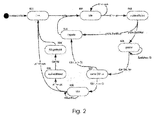
- the smart card has a protective mechanism which protects against the reintroduction of old checksums 15, see embodiment ( Fig. 2 ). Furthermore, the smart card has a mechanism that generates a signal for a positive or negative certificate check. Furthermore, the card has a secret that shares it with a peripheral component 8, another that shares it with the checksum program 7. Encrypted security protocols 15, 16 can be realized via these secrets. With inconsistent control software, the signal to the Switch off the example PIN input keyboard can be used. It is also conceivable to shut down the entire machine or disable other components.
- Fig. 2 Based on Fig. 2 an embodiment is shown. It must be prevented that invalid checksums are introduced into the system. Checksums generated by an unauthorized person are recognized in the system due to authentication mechanisms such as digital signatures and then rejected. The import of old signature states is detected by suitable metadata, such as ascending serial numbers.
- the authentication check of the checksum (s) is supported or secured by the chip card. Such measures thus prevent the insertion of manipulated checksum data, the manipulation or re-importing of individual checksums, as well as the manipulation or re-loading of complete sets of checksums for the entire system.
- the state machine of a chip card outlined here by way of example prevents the re-importing of checksums and, associated with this, a renewed generation of a release or blocking signal.
- state 500 After power up, state 500, an internal counter is incremented and persisted.
- State 501 the card is waiting for the authentication of the checksum program (7 (A ')).
- State 502 if authentication is positive the instance is authenticated and the Certificate Check can be performed.
- Condition 503 there is a negative certificate check.
- state 505 there is a positive certificate check, a checksum information is taken from the certificate and buffered.
- the card releases the current Payer, which is returned to the card by 7 for the next checksum check. State 507, the card waits for the checksum (s) / counterclaim that 7 has detected.
- State 506 in the case of positive authentication, the instance is authenticated and the signal S2 can be interrogated. State 504, in this state, the signal S2 is cleared and the count is automatically increased.
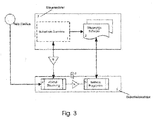
- the security keyboard 203 has, in addition to the operating program 205, a sequence control 204, which sets a signal S1 206 for the operating program. If the operating program recognizes S1, the plain text input is permitted. In addition, by the set signal S1 206, for example, an LED 208 can be switched on for the end user and thus signal a consistent control program.
- the signal is only asserted when a security domain 201 has verified the integrity of an application 202 on the control computer 207 and sends a signal S2 209 to the scheduler 204. At a power off and power on, the signal S1 206 falls back. By the latter is to be ensured that the operating program of the keyboard always after switching on the Clear text input is disabled.
- the signal S2 209 is preferably embedded in a security protocol to prevent so-called "replay attacks". The security protocol can be found in the prior art.
Landscapes
- Engineering & Computer Science (AREA)
- Software Systems (AREA)
- Theoretical Computer Science (AREA)
- Computer Security & Cryptography (AREA)
- Physics & Mathematics (AREA)
- General Physics & Mathematics (AREA)
- Computer Hardware Design (AREA)
- General Engineering & Computer Science (AREA)
- Business, Economics & Management (AREA)
- Finance (AREA)
- Accounting & Taxation (AREA)
- Storage Device Security (AREA)
- Financial Or Insurance-Related Operations Such As Payment And Settlement (AREA)
- Input From Keyboards Or The Like (AREA)
- Stored Programmes (AREA)
Abstract
- Überprüfen der Steuerungssoftware (2) auf deren Konsistenz, durch die vertrauenswürdige Domäne (1)
- im Falle einer Inkonsistenz wird ein Sperrsignal erzeugt, das zur Einschränkung der Funktionalität des SB-Automaten verwendet wird.
Description
- Die Erfindung betrifft ein Verfahren und eine Vorrichtung zur Überprüfung der Konsistenz einer Steuerungssoftware eines Steuerrechners eines SB-Automaten, mit einer vertrauenswürdigen Domäne, die innerhalb des SB-Automaten angeordnet ist.
- Zu Benutzereingaben an unbedienten Terminals, wie z.B. Geldausgabeautomaten, werden vorzugsweise Sicherheitstastaturen verwendet. Sicherheitstastaturen sind Peripheriegeräte bestehend aus einem Prozessor, Speicher, Kommunikationseinrichtung, Sicherheitsschaltung und Software (Firmware). Diese Tastaturen sind in einem Geldautomaten mit einem Steuerrechner, z.B. handelsüblicher PC mit Anzeigeeinheit über eine Standardschnittstelle, z.B. USB, RS232, verbunden. Die Sicherheitstastaturen haben folgende grundsätzliche Aufgaben
- 1. Eingaben der Geheimzahl (PIN) eines Bankkunden
- 2. Eingaben sonstiger numerischer Werte (z.B. Betragseingaben)
- 3. Schutz der eingegebenen und gespeicherten PIN
- 4. Ausführung kryptographischer Funktionen
- Für die Eingabe der PIN werden diese Tastaturen von der Software, die auf einem Steuerrechner abläuft, in einen "Sicherheits-Modus" geschaltet. Dieser Modus bewirkt, dass Codes der Zifferntasten im Sicherheitsspeicher gespeichert werden und ein definierter Ersetzungscode pro Tastendruck an den Steuerrechner gemeldet wird. Im Umkehrschluss wird im "Klartext-Modus" der Zifferncode bei einem Tastendruck an den Steuerrechner gemeldet.
- Diese Kombination von Klartext- und Sicherheits- Modus ist eine bekannte potentielle Schwachstelle, die zum Ausspionieren der PIN genutzt werden konnte. Zum Beispiel könnte eine schadhafte Software auf dem Steuerrechner einem Benutzer die Aufforderung zur PIN- Eingabe geben. In diesem Fall würde die Tastatur nicht in den Sicherheits- Modus geschaltet und die übermittelten Klartext- Codes, die die PIN repräsentieren, durch die schadhafte Software gesammelt werden.
- Grundsätzlich ist es denkbar, die Verschlüsselung der Tastatur dauerhaft vorzunehmen, jedoch gibt es aufgrund der Anforderung der Betreiber die Möglichkeit der Klartextübertragung. So wird die Verschlüsselung immer dann genutzt, wenn PINs übertragen werden. Wird jedoch der Betrag der Transaktion angefordert, wird eine Anwendung des Betreibers/der Bank genutzt, die auf den SB-Automaten aufspielbar ist, so wird der Betrag im Klartext übertragen. Eine Tastatur wie sie bei der vorliegenden Erfindung eingesetzt wird, besteht im wesentlichen aus einer Firmware, die einerseits ein Betriebsprogramm aufweist, dass die Basis-Ein- und Ausgabe vornimmt, und andererseits eine Ablaufsteuerung, die dafür verantwortlich ist, die Tastatur in den richtigen Modus umzuschalten. In dem SB-Automat arbeitet ein Steuerrechner, der in einer möglichen Ausführungsform als Personal-Computer ausgebildet ist, beziehungsweise entsprechende Komponenten verwendet. Auf diesem läuft eine Steuerungssoftware, die mit der Tastatur kommuniziert. Die Steuerungssoftware arbeitet über das Basis-Ein- und Ausgabe-System (auch Betriebsprogramm) zusammen, wohingegen die Ablaufsteuerung den Zustand der Tastatur in Abhängigkeit von anderen Parametern bestimmt.
- Die Konsistenz des Steuerrechners bzw. dessen Steuerungssoftware erfolgt innerhalb einer Sicherheitsdomäne. Hierbei ist zu beachten, dass die Steuerung moderner Geldautomaten dem "Stand der Technik" nach durch handelsübliche PCs erfolgt, ausgestattet z.B. mit einem Windows Betriebssystem und Peripheriegeräten die über Standard-Schnittstellen wie USB (Universal Serial Bus) oder RS232 (Serial Interface) zur Kommunikation mit dem PC verbunden sind. Bedingt durch den hohen Standardisierungsgrad entstehen potentielle Schwachstellen die zur Infiltrierung mit schadhafter Software genutzt werden können. Als Beispiel sei an dieser Stelle das Einschleusen einer schadhaften Software mittels USB-Memory-Stick durch einen ServiceTechniker genannt.
- Verschiedene Anwendungs- Szenarien mittels schadhafter Software sind bekannt und können als "Stand der Technik" betrachtet werden.
- Dem "Stand der Technik" entsprechende Schutzmechanismen für Windows basierende PCs haben für den Einsatz auf Geldautomaten Nachteile. Schutzmechanismen sind z.B. Virenscanner oder solche die die Integrität von Software Modulen messen (Integrity Client). Die Schwachstelle hierbei ist jedoch das gemeinsame Betriebssystem.
- Der Schutzmechanismus der die Steuersoftware des Geldautomaten schützen soll, läuft unter demselben, mit potentiellen Schwachstellen behafteten Betriebssystem. Der Mechanismus ist durch einen Techniker, der mit entsprechenden Rechten ausgestattet ist, abschaltbar.
- Ferner ist ein schlechtes Laufzeitverhalten gegeben. Signatur basierende Systeme haben ungewollten Einfluss auf Transaktionszeiten der Geldautomaten- Anwendung. Die Wartezeit auf eine Auszahlung erhöht sich, da permanent die gesamte Software des Steuerrechners geprüft werden muss. Werden Signaturprüfungen in der Einschaltphase durchgeführt, so verlängert sich diese Phase signifikant in einen unakzeptablen Bereich.
- Alle auf einem Windows basierenden PC ablauffähigen Programme müssen von dem Schutzmechanismus erfasst werden. Zum Beispiel darf es einem Programm nicht möglich sein, durch einen "Buffer Overflow", Code zu injizieren. Dieses bedeutet, dass mindestens alle bekannten Programme geprüft werden müssen. Für die Software des Geldautomaten ist es wichtig, dass auch nicht ausführbare Dateien, z.B. Bilddateien, geprüft werden müssen. Zum Beispiel werden vielfach Bildschirmaufforderungen (PIN-Eingabeaufforderung) in einer Bilddatei abgelegt. Durch die Vielzahl unterschiedlicher Programme und Dateien von verschiedenen Herausgebern sind zentrale Lösungen fast unvermeidbar. Diese Lösungen erlauben weniger Flexibilität im Software Change Management für den Hersteller der Geldautomaten Software.
- Der Einsatz von Virenscannern stellt einen weiteren Nachteil dar, da eine zentrale Funktion zur Verteilung der Signaturen benötigt wird, und diese kann speziell für den Geldautomaten entwickelte Schadsoftware nicht erkennen.
- Weitere Schutzmaßnahmen können durch einen Integrity- Client, erreicht werden. Dieser bildet zwar einen sehr guten Schutz zur Laufzeit, bietet jedoch keinen Schutz im ausgeschalteten Zustand.
- Als eine weitere Alternative kann eine Festplattenverschlüsselung betrachtet werden, diese schützt das System im ausgeschalteten Zustand, kann jedoch nicht die Konsistenz der Software prüfen.
- Ziel dieser Erfindung ist es, die Möglichkeit einer Klartexteingabe so zu beschränken, dass diese nur dann möglich ist, wenn die Steuersoftware konsistent ist. Hierfür ist es in einem ersten Schritt notwendig die Konsistenz der Software zu prüfen. Eine weitere Option ist es, dem Benutzer einen Hinweis auf die Konsistenz der Software des Steuerrechners des SB-Automaten zu geben, indem eine LED die Konsistenz der Steuerungssoftware signalisiert. Es ist auch denkbar, dass die Tastatur über Relais das System abschaltet bzw. die Tastatur deaktiviert wird. Noch eine weitere Aufgabe ist die Überprüfung der Konsistenz der Software des Steuerrechners.
- Gelöst werden die Aufgaben durch eine Erfindung mit den Merkmalen der unabhängigen Ansprüche. Die Unteransprüche stellen vorteilhafte Ausgestaltungen dar.
- Bei dem erfinderischen Verfahren zur Überprüfung der Konsistenz einer Steuerungssoftware eines Steuerrechners eines SB-Automaten, bei dem es sich in einer möglichen Ausführungsform um einen Geldautomaten handelt, wird eine vertrauenswürdige Domäne eingesetzt, die innerhalb des SB-Automaten angeordnet ist.
- In einer möglichen Ausführungsform handelt es sich bei der sicheren Domäne, um ein zusätzliches Betriebssystem, das entweder auf einer eigenen Hardware läuft, wie zum Beispiel als Prozessorsteckkarte im Steuerrechner des SB-Automaten, oder als integriertes Betriebssystem, das vor dem Starten der Steuerungssoftware ausgeführt wird. Es ist auch denkbar einen virtuellen Rechner auf dem Steuerungsrechner zu betreiben, der die sichere Domäne darstellt. Dabei muss jedoch der Virtualisierungs-Host möglichst hardwarebasiert sein, damit ein Unterschieben von schadhaftem Code vermieden wird. So kann z.B. die sichere Domäne auf einem gesicherten Speicherbereich abgelegt sein, wie zum Beispiel einer Smartcard oder Krypto-Card, die beim Booten zuerst aufgerufen wird, um dann eine Überprüfung der Festplatte beziehungsweise des Datenträgers des Steuerrechners durchzuführen. Die Freigabe der Informationen der Smartcard oder Krypto-Card kann entweder durch einen Servicetechniker erfolgen, wenn der SB-Automat bootet, oder auf der Basis der Hardwareerkennung beziehungsweise der Seriennummern des Steuerrechners.
- Die sichere Domäne überprüft die Steuerungssoftware auf deren Konsistenz, und im Falle einer Inkonsistenz wird ein Sperrsignal erzeugt, das zur Einschränkung der Funktionalität des SB-Automaten verwendet wird. Die Überprüfung der Konsistenz kann durch Signaturen und/oder Hashwerte erfolgen, die die sichere Domäne verwaltet. Die Verwaltung kann ebenfalls über einen gesicherten/verschlüsselten Bereich der Smart-Card erfolgen. Die Smart-Card kann z.B. im Tresor abgelegt sein.
- Um die Belastung gerade beim Start des Systems zu verringern, werden dabei nicht alle Dateibereiche beziehungsweise nicht der vollständige Datenträger des Steuerrechners überprüft, sondern lediglich relevante Bereich. Es ist auch denkbar, dass lediglich die Dateien überprüft werden, die ein bestimmtes Veränderungsdatum aufweisen oder die gerade erst verändert wurde. Eine Selektion der überprüfenden Dateien beziehungsweise Informationen ist möglich. Es ist ebenfalls möglich, dass die sichere Domäne mit neuen Informationen beziehungsweise neuen Hashs, Signaturen versehen wird, falls ein Update der Steuerungssoftware erfolgt ist. Die Bereitstellung von solchen Informationen kann auf unterschiedlichen Wegen erfolgen.
- Die sichere Domäne erzeugt ein Sperrsignal für eine Peripheriekomponente, um deren Funktionalität zu beschränken. Dieses Sperrsignal kann ein gesicherter Software-Flag sein, der mit einer Signatur versehen ist, damit die Herkunft bestimmt werden kann, oder über eine dezidierte Leitung erfolgen. Im Falle einer Konsistenz wird ein Freigabesignal für die Peripheriekomponente erzeugt, um deren volle Funktionalität zu aktivieren. Im Falle einer Inkonsistenz wird ein Sperrsignal erzeugt, das die Funktionalität der Peripheriekomponente einschränkt.
- Die entsprechende Signatur oder Verschlüsselung der Signale kann mit Hilfe einer Smart Card erzeugt werden, die im SB-Automaten angeordnet ist, und die vorzugsweise in einem Tresor abgelegt ist. Durch die physikalische Anordnung der Smartcard im Tresor des Geldautomaten wird ein unberechtigter Zugriff auf die Smartcard und deren Manipulation erschwert.
- In einer möglichen Ausführungsform ist die Peripheriekomponente eine Tastatur oder eine Auszahlungseinheit, wie sie in Geldautomaten eingesetzt werden. Im Folgenden wird ein möglicher Ablauf in Bezug auf eine Tastatur beschrieben. Es versteht sich, dass ähnliche oder identische Abläufe auch für andere Komponenten des SB Automaten möglich sind. Das folgende Beispiel stellt somit keine Beschränkung dar.
- So weist die Tastatur eine Ablaufsteuerung auf, die eine Klartexteingabe nur dann erlaubt, wenn das Freigabesignal vorliegt. Damit die Tastatur auch bei einem Neustart in einer definierten Zustand ist, setzt sich die Tastatur bei einem Netzstromaus in einen Modus, der keine Klartexteingabe erlaubt.
- Zusätzlich wird dem Benutzer angezeigt, dass eine Eingabe in einem Klartextmodus erfolgt. Hierbei kann z.B. auf dem Gerät eine Leuchte vorgesehen seien, die neben der Tastatur oder im Bereich der Tastatur angeordnet ist, und die dem Benutzer zeigt, dass nun unverschlüsselt Daten übermittelt werden. Hierdurch kann bei einem möglichen Angriff auf das Gerät der Benutzer selber erkennen, dass er einen möglichen PIN unverschlüsselt eingibt, was auf eine Inkonsistenz des Automaten hinweist. Es ist auch denkbar, dass bei einem Hinweis auf eine Inkonsistenz und der Übermittlung eines entsprechenden Signals, die Tastatur über eine weitere Schnittstelle, zum Beispiel zum Netzteil, das gesamte System runterfährt.
- Es gibt grundsätzlich mehrere zeitliche Ansätze, die eine Überprüfung der Steuerungssoftware durch die sichere Domäne verfolgen.
In einer ersten Phase wird vor dem Starten der Steuerungssoftware, z.B. in der Pre-Bootphase die Steuerungssoftware auf dem Datenträger überprüft. Nur wenn die Überprüfung erfolgreich ist, wird der Boot-Prozess fortgeführt und die Steuerungssoftware gestartet. - In der zweiten Phase wird nach dem Booten der Steuerungssoftware ein Prozess gestartet, der die Konsistenz der Steuerungssoftware während des Betriebs einmalig oder zyklisch überprüft. Dieser Prozess kann innerhalb der Steuerungssoftware angeordnet sein, z.B. ein Dienst im Windows-Betriebssystem, oder ein Prozess, der auf einem Parallelen-Betriebssystem arbeitet.
- Ein weiterer Teil der Erfindung ist der SB-Automat, dieser umfasst einen Steuerrechner, der durch eine Steuerungssoftware gesteuert wird. Hierbei kann es sich z.B. um einen herkömmlichen PC-Handeln, der über serielle Schnittstellen mit externen Komponenten verbunden ist. Innerhalb des PCs ist eine vertrauenswürdige Domäne als Hardware, Software oder einer Kombination davon ausgebildet. Wie bereits oben ausgeführt prüft die sichere Domäne die Steuerungssoftware auf Konsistenz. Im Falle einer Inkonsistenz wird an eine Peripheriekomponente über eine dezidierte Verbindung oder über einen gemeinsamen Arbeitsspeicherbereich ein Sperrsignal übertragen. Die Komponente weist eine Ablaufsteuerung auf, die die Funktionalität des SB-Automaten und/oder der Peripheriekomponente beschränkt.
- Ein weiterer Teil der Erfindung ist eine SB-Automat-Tastatur, die eine Ablaufsteuerung aufweist, die eine Klartexteingabe und eine verschlüsselte Tastatureingabe erlaubt. Hierbei ist ein Signaleingang gegeben, der logisch oder physikalisch aufgebaut sein kann, wobei eine Ablaufsteuerung, eine Klartexteingabe nur dann erlaubt, wenn ein Freigabesignal am Signaleingang anliegt. Bei einem logischen Signaleingang wird ein verschlüsselter Wert oder ein signierter Wert über den Standardkommunikationskanal übertragen, wie USB, RS232 etc. Bei einem physikalischen Signaleingang erfolgt die Übergabe über einen anderen Kanal.
- Im Folgenden wird auf die Figuren eingegangen, die kurz beschrieben werden, und worauf sich die folgende Beschreibung von möglichen Ausführungsbeispielen bezieht.
-
Figur 1 zeigt einen SB-Automaten mit einer Steuerungssoftware und einer sicheren Domäne, die mit einem externen Gerät verbunden ist; -
Figur 2 zeigt einen Zustandsautomat einer Chipkarte, die die Checksummen der Steuerungssoftware verwaltet; -
Figur 3 zeigt einen SB-Automaten mit einer Tastatur, die eine Ablaufsteuerung aufweist; -
Figur 4 zeigt einen Zustandsautomat der Ablaufsteuerung. - Die grundsätzliche Idee liegt darin eine vertrauenswürdige Domäne 1 auf dem Steuerrechner des PCs zu schaffen, wie in
Figur 1 gezeigt wird. Diese hat die Aufgabe die Steuerungssoftware 2, die ausschließlich für den reibungslosen Betrieb eines Geldautomaten zuständig ist, auf dessen Konsistenz zu prüfen. Im Falle, dass eine Konsistenz oder Inkonsistenz festgestellt ist, wird ein Sperr- oder Freigabesignal für eine Peripheriekomponente 8 erzeugt. Beispielsweise kann das Signal zur Freischaltung der Tastatur, oder zum Sperren des Auszahlcontrollers und damit verbunden der Geldausgabe o.a. genutzt werden. Das Freischalt- oder Sperrsignal wird bevorzugt durch eine Smart Card erzeugt, die manipulationssicher im Tresor des Geldautomaten untergebracht ist. Kennzeichnend für die Lösung ist eine stufenweise Prüfung auf Integrität während einer Pre-Bootphase und der eigentlichen Betriebsphase. Durch die abgestufte Prüfung soll eine erhöhte Performanz erreicht werden. - Auf dem Steuerrechner 100 wird zum eigentlichen Windows Betriebssystem 6 ein weiteres speziell gehärtetes Betriebssystem auf Unix Basis 4 installiert. Unter Härten versteht man in der Computertechnik, die Sicherheit eines Systems zu erhöhen, indem nur dedizierte Software eingesetzt wird, die für den Betrieb des Systems notwendig ist und deren unter Sicherheitsaspekten korrekter Ablauf garantiert werden kann. Das System soll dadurch besser vor externen Angriffen geschützt sein. Das Bundesamt für Sicherheit in der Informationstechnik bezeichnet als Härten in der IT-Sicherheit "[...] die Entfernung aller Softwarebestandteile und Funktionen, die zur Erfüllung der vorgesehenen Aufgabe durch das Programm nicht zwingend notwendig sind."[2].
- Ziel ist es, ein System zu schaffen, das von vielen, auch weniger vertrauenswürdigen Personen benutzt werden kann. Beispielsweise gibt es für Gentoo Linux das hardened-Projekt, das eine Kernel-Version sowie weitere Systemdienste zusammenstellt, mit denen ein sicheres Linux-System auch für fremde Nutzer bereitgestellt werden kann. Andere Betriebssysteme sind denkbar. Die Idee hinter dieser Lösung ist, in einem ersten Schritt in einer Pre-Bootphase, wenige Dateien die für das Verhalten der Domäne 1 verantwortlich sind, zu prüfen. Diese Dateien stellen dann einen Prozess dar, der gestartet wird, wenn Windows gestartet wurde. Besonders vorteilhaft ist die Überprüfung durch eine Schadsoftware- resistente Instanz. Zusätzlich kann diese erste Instanz auch mit Mechanismen des Trusted Computing Konzeptes überprüft werden. Ein weiterer Vorteil ist, dass die Pre-Bootphase beschleunigt wird da nur wenige Dateien geprüft werden. Die Boot- Reihenfolge wird z.B. durch einen Standard Boot- Lader 3 gesteuert, kann auch vom Bios des Rechners vorgegeben werden. Letzterer wird nach dem Netz- Ein 10 das Unix basierende System laden. In einem Initialisierungsprozess 19 wird ein Dämon 5 gestartet, der anhand einer Liste 110 alle der Domäne 1 zugeordneten Dateien auf deren Konsistenz 50 überprüft 12. Im Fall der positiven Überprüfung wird ein Signal 21 für den Boot- Lader gesetzt; aufgrund dessen in einem zweiten Schritt das Windows Betriebssystem gestartet wird 13. Im Fall der Inkonsistenz wird der Bootvorgang abgebrochen.
- Nach der zweiten Bootphase werden durch das Windows Betriebssystem bestimmte Services gestartet. Ein Service 20 startet ein Checksummenprogramm 7, welches die Konsistenz der Steuerungssoftware 2 prüft. Die Prüfung kann einmalig vor der eigentlichen Betriebsphase des Geldautomaten erfolgt sein und dann zyklisch in der Betriebsphase erfolgen. Oder eine Prüfung erfolgt ausschließlich in der Betriebsphase. Bei letzteren ist es vorteilhaft das bei festgestellter Inkonsistenz der Betrieb einer Komponente eingeschränkt oder sogar abgeschaltet wird. Besonders vorteilhaft ist es, wenn die Steuerungssoftware mit einem Zertifikat ausgestattet ist. Das Zertifikat kann gegen einen Schlüssel geprüft werden, der in der Sicherheitsdomäne 1 abgelegt ist. Optional können auch hier Mechanismen des Trusted Computing Konzeptes genutzt werden, bei dem ein entsprechender CryptoChip auf dem Motherboard des Rechners angeordnet ist.
- Vorteilhafter ist eine Überprüfung durch eine Smart Card 9 die im Tresor des Geldautomaten untergebracht ist. Die Smart Card verfügt über einen Schutzmechanismus, der gegen das Wiedereinspielen von alten Prüfsummen schützt 15, siehe Ausführungsbeispiel (
Fig. 2 ). Des Weiteren verfügt die Smart Card über einen Mechanismus der ein Signal bei positiver oder negativer Zertifikatsprüfung erzeugt. Weiterhin besitzt die Karte ein Geheimnis das sie mit einer Peripheriekomponente 8 teilt, ein weiteres das sie mit dem Checksummenprogramm 7 teilt. Über diese Geheimnisse können verschlüsselte Sicherheitsprotokolle 15, 16 realisiert werden. Bei inkonsistenter Steuerungssoftware kann das Signal zum Abschalten der z.B. PIN-Eingabetastatur genutzt werden. Es ist auch denkbar, den gesamten Automaten herunterzufahren oder andere Komponenten abzuschalten. - Anhand der
Fig. 2 wird ein Ausführungsbeispiel gezeigt. Es muss verhindert werden, dass ungültige Prüfsummen in das System eingebracht werden. Von einem Unbefugten erzeugte Prüfsummen werden im System aufgrund von Authentisierungsmechanismen wie z.B. digitalen Signaturen erkannt und dann abgewiesen. Das Einspielen alter Signaturstände wird durch geeignete Metadaten wie z.B. aufsteigende Seriennummern erkannt. - Diese werden beispielsweise von der Chipkarte erzeugt, gespeichert und kontrolliert. Hier können Verfahren aus dem Stand der Technik genutzt werden (Challenge-ResponseVerfahren).
- Die Authentisierungsprüfung der Prüfsumme(n) wird durch die Chipkarte unterstützt bzw. abgesichert. Derartige Maßnahmen verhindern also das Einspielen manipulierter Prüfsummendaten, das Manipulieren bzw. Wiedereinspielen einzelner Prüfsummen, sowie das Manipulieren bzw. Wiedereinspielen ganzer Sätze von Prüfsummen für das gesamte System.
- Der hier beispielhaft skizzierte Zustandsautomat einer Chipkarte verhindert das erneute Einspielen von Checksummen und damit verbunden ein erneutes Erzeugen eines Freigabe- oder Sperrsignales. Nach dem Einschalten, Zustand 500, wird ein interner Zahler erhöht und persistent gespeichert. Zustand 501, die Karte wartet auf die Authentisierung des Checksummenprogramms (7(A')). Zustand 502, bei positiver Authentisierung ist die Instanz authentifiziert und die Zertifikatsprüfung kann ausgeführt werden. Zustand 503, es liegt eine negative Zertifikatsprüfung vor.
- Im Zustand 505 liegt eine positive Zertifikatsprüfung vor, es wird eine Checksummeninformation aus dem Zertifikat entnommen und zwischengespeichert.
- Die Karte gibt den aktuellen Zahlerstand frei, dieser wird von 7 zur folgenden Prüfung der Checksummen an die Karte zurückgegeben. Zustand 507, die Karte wartet auf die Prüfsumme(n)/ Zahlerstand die 7 ermittelt hat.
- Zustand 508, nach positiver Prüfung der Informationen i, CI und CS1 ... n wird eine Freigabe oder Sperrinformation (S2) erzeugt und auf die Authentisierung der Instanz (8(A")) gewartet.
- Zustand 506, bei positiver Authentisierung ist die Instanz authentifiziert und es kann das Signal S2 abgefragt werden. Zustand 504, in diesem Zustand ist das Signal S2 gelöscht und der Zählerstand wird automatisch erhöht.
- In der
Fig. 3 wird nochmal auf die Kombination des SB-Automaten und der Tastatur eingegangen. Die Sicherheitstastatur 203 besitzt neben dem Betriebsprogramm 205 eine Ablaufsteuerung 204, die ein Signal S1 206 für das Betriebsprogramm setzt. Erkennt das Betriebsprogramm das S1 gesetzt ist, so wird die Klartexteingabe zugelassen. Zusätzlich kann durch das gesetzte Signal S1 206 z.B. eine LED 208 für den Endbenutzer eingeschaltet werden und damit ein konsistentes Steuerungsprogramm signalisieren. Das Signal wird nur dann gesetzt, wenn eine Sicherheits- Domäne 201 die Integrität einer Anwendung 202 auf dem Steuerrechner 207 geprüft hat und ein Signal S2 209 an die Ablaufsteuerung 204 sendet. Bei einem Netz-Aus und Netz-Ein fällt das Signal S1 206 zurück. Durch letzteres soll gewährleistet werden das das Betriebsprogramm der Tastatur immer nach dem Einschalten die Klartexteingabe unterbindet. Das Signal S2 209 wird vorzugsweise in ein Sicherheitsprotokoll eingebettet, um sogenannte "Replay-Attacken" zu verhindern. Das Sicherheitsprotokoll kann dem Stand der Technik entnommen werden.
Claims (20)
- Verfahren zur Überprüfung der Konsistenz einer Steuerungssoftware eines Steuerrechners eines SB-Automaten, mit einer vertrauenswürdigen Domäne (1), die innerhalb des SB-Automaten angeordnet ist, umfassend die Schritte:- Überprüfen der Steuerungssoftware (2) auf deren Konsistenz, durch die vertrauenswürdige Domäne (1)- im Falle einer Inkonsistenz wird ein Sperrsignal erzeugt, das zur Einschränkung der Funktionalität des SB-Automaten verwendet wird.
- Verfahren nach dem vorhergehenden Anspruch, wobei das Sperrsignal für eine Peripheriekomponente (8) erzeugt wird, um deren Funktionalität zu beschränken;- im Falle einer Konsistenz wird ein Freigabesignal für die Peripheriekomponente (8) erzeugt, um deren volle Funktionalität zu aktivieren,- im Falle einer Inkonsistenz wird ein Sperrsignal erzeugt, das die Funktionalität der Peripheriekomponente einschränkt.
- Das Verfahren nach dem vorhergehenden Anspruch, wobei das Freigabesignal und/oder das Sperrsignal mit Hilfe einer Smart Card erzeugt werden, die im SB-Automaten angeordnet ist, und die vorzugsweise in einem Tresor abgelegt ist.
- Das Verfahren nach einem oder mehreren der vorhergehenden Ansprüche, wobei die Peripheriekomponente eine Tastatur oder eine Auszahlungseinheit ist, wie sie in einem Geldautomaten eingesetzt werden.
- Das Verfahren nach dem vorhergehenden Anspruch, wobei die Tastatur eine Ablaufsteuerung aufweist, die eine Klartexteingabe nur dann erlaubt, wenn das Freigabesignal vorliegt und wobei vorzugsweise bei einem Netz-Aus und einem erneuten Start der Tastatur, diese keine Klartexteingabe erlaubt.
- Das Verfahren nach einem oder mehreren der vorhergehenden drei Ansprüche, wobei ein optisches und/oder akustisches Signal für den Benutzer ersichtlich ausgegeben wird, wenn eine Klartexteingabe erfolgt.
- Das Verfahren nach einem oder mehreren der vorhergehenden Ansprüche, wobei die vertrauenswürdige Domäne ein gehärtetes Betriebssystem ist, das parallel zur Steuerungssoftware auf dem Steuerungsrechner installiert ist, und das die Steuerungssoftware auf Konsistenz überprüft.
- Das Verfahren nach einem oder mehreren der vorhergehenden zwei Ansprüche, wobei in der Pre-Bootphase die Steuerungssoftware überprüft wird und/oder wobei nach dem Booten der Steuerungssoftware ein Prozess gestartet wird, der die Konsistenz der Steuerungssoftware während des Betriebs einmalig oder zyklisch überprüft.
- Das Verfahren nach einem oder mehreren der vorhergehenden Ansprüche, wobei die Steuerungssoftware mit einem Zertifikat ausgestattet ist, und wobei das Zertifikat durch die Sicherheitsdomäne geprüft wird, um festzustellen, ob die Steuerungssoftware korrumpiert ist und wobei vorzugsweise die Steuerungssoftware durch eine Smart-Card überprüft wird, die in einem Tresor angeordnet ist.
- SB-Automat umfassend:- einen Steuerrechner, der durch eine Steuerungssoftware gesteuert wird;- eine vertrauenswürdige Domäne (1), die innerhalb des SB-Automaten angeordnet ist, und die die Steuerungssoftware auf Konsistenz prüft, und die so ausgebildet ist, dass im Falle einer Inkonsistenz ein Sperrsignal erzeugbar ist und/oder im Falle einer Konsistenz ein Freigabesignal erzeugbar ist, das zur Einschränkung der Funktionalität des SB-Automaten verwendet wird.
- SB-Automat nach dem vorhergehenden SB-Automat-Anspruch, umfassend eine Peripheriekomponente (8) die Mittel aufweist um das Sperrsignal zu empfangen, und die eine Ablaufsteuerung aufweist, um die Funktionalität des SB-Automaten und/oder der Peripheriekomponente zu beschränken, wobei die Ablaufsteuerung so ausgebildet ist, dass im Falle einer Konsistenz die volle Funktionalität der Peripheriekomponente (8) aktiviert wird, und im Falle einer Inkonsistenz ein Sperrsignal erzeugt wird, das die Funktionalität der Peripheriekomponente einschränkt.
- SB-Automat nach dem vorhergehenden SB-Automat-Anspruch, umfassend eine Smart Card, die das Freigabesignal und/oder das Sperrsignal verarbeiten, wobei die Smart Card vorzugsweise in einem Tresor abgelegt ist.
- SB-Automat-nach einem oder mehreren der vorhergehenden SB-Automat-Ansprüche, wobei die Peripheriekomponente eine Tastatur oder ein Auszahlungseinheit ist, wie sie in einem Geldautomaten eingesetzt werden.
- SB-Automat-nach dem vorhergehenden SB-Automat-Anspruch, wobei die Ablaufsteuerung der Tastatur eine Klartexteingabe nur dann erlaubt, wenn das Freigabesignal vorliegt und wobei bei einem Netz-Aus und einem erneuten Starten der Tastatur, diese keine Klartexteingabe erlaubt, solange bis ein Freigabesignal vorliegt.
- SB-Automat-nach einem oder mehreren der vorhergehenden drei Ansprüche, wobei ein optischer und/oder akustischer Signalgeber für den Benutzer vorhanden ist, der aktiviert ist, wenn eine Klartexteingabe erfolgt.
- SB-Automat nach einem oder mehreren der vorhergehenden Ansprüche, wobei die vertrauenswürdige Domäne ein gehärtetes Betriebssystem ist, das parallel zur Steuerungssoftware auf dem Steuerungsrechner installiert ist, und das die Steuerungssoftware auf Konsistenz überprüft.
- SB-Automat-nach einem oder mehreren der vorhergehenden zwei Ansprüche, wobei in der Pre-Bootphase die Steuerungssoftware überprüft wird und/oder durch einen Prozess, der nach dem Booten der Steuerungssoftware gestartet ist, der die Konsistenz der Steuerungssoftware während des Betriebs einmalig oder zyklisch überprüft.
- SB-Automat nach einem oder mehreren der vorhergehenden SB-Automat-Ansprüche, wobei die Steuerungssoftware mit einem Zertifikat ausgestattet ist, und wobei das Zertifikat durch die vertrauenswürdige Domäne geprüft wird, um festzustellen, ob die Steuerungssoftware konsistent ist und wobei vorzugsweise die Steuerungssoftware durch eine Smart-Card überprüft wird, die in einem Tresor angeordnet ist.
- SB-Automat-Tastatur, die eine Ablaufsteuerung aufweist, die eine Klartexteingabe und eine verschlüsselte Tastatureingabe erlaubt, gekennzeichnet durch einen Signaleingang und eine Ablaufsteuerung, die eine Klartexteingabe nur dann erlaubt, wenn ein Freigabesignal am Signaleingang anliegt und wobei bei einem Netz-Aus und einem erneuten Start der Tastatur, diese keine Klartexteingabe erlaubt, solange bis ein Freigabesignal am Signaleingang anliegt.
- SB-Automat-Tastatur einem oder mehreren der vorhergehenden zwei Ansprüche, wobei über einen Signalausgang ein optisches und/oder akustisches Signal für den Benutzer ausgegeben wird, wenn eine Klartexteingabe erfolgt.
Applications Claiming Priority (2)
| Application Number | Priority Date | Filing Date | Title |
|---|---|---|---|
| DE102010000482A DE102010000482A1 (de) | 2010-02-19 | 2010-02-19 | Methode und Verfahren für PIN-Eingaben bei konsistentem Software-Stack auf Geldautomaten |
| EP11704745.6 | 2011-02-03 |
Related Parent Applications (2)
| Application Number | Title | Priority Date | Filing Date |
|---|---|---|---|
| EP11704745.6 Division | 2011-02-03 | ||
| EP11704745.6 Division | 2010-02-19 | 2011-02-03 |
Publications (3)
| Publication Number | Publication Date |
|---|---|
| EP2541455A2 true EP2541455A2 (de) | 2013-01-02 |
| EP2541455A3 EP2541455A3 (de) | 2014-04-16 |
| EP2541455B1 EP2541455B1 (de) | 2020-04-22 |
Family
ID=43901337
Family Applications (1)
| Application Number | Title | Priority Date | Filing Date |
|---|---|---|---|
| EP12185227.1A Active EP2541455B1 (de) | 2010-02-19 | 2011-02-03 | Methode und Verfahren für PIN-Eingaben bei konsistentem Software-Stack auf Geldautomaten |
Country Status (5)
| Country | Link |
|---|---|
| US (1) | US10062241B2 (de) |
| EP (1) | EP2541455B1 (de) |
| CN (1) | CN102792308B (de) |
| DE (1) | DE102010000482A1 (de) |
| WO (1) | WO2011101249A2 (de) |
Families Citing this family (8)
| Publication number | Priority date | Publication date | Assignee | Title |
|---|---|---|---|---|
| US8762876B2 (en) * | 2012-06-21 | 2014-06-24 | Google Inc. | Secure data entry via a virtual keyboard |
| DE102012111080B4 (de) | 2012-11-16 | 2014-09-18 | Löwen Entertainment GmbH | Geldausgabeeinheit |
| US9584532B2 (en) * | 2014-10-31 | 2017-02-28 | Ncr Corporation | Enterprise intrusion detection and remediation |
| US20160364553A1 (en) * | 2015-06-09 | 2016-12-15 | Intel Corporation | System, Apparatus And Method For Providing Protected Content In An Internet Of Things (IOT) Network |
| JP6310157B2 (ja) | 2015-08-26 | 2018-04-11 | 日立オムロンターミナルソリューションズ株式会社 | 自動取引装置及びその制御方法 |
| US11790736B2 (en) * | 2019-06-24 | 2023-10-17 | Diebold Nixdorf, Incorporated | Remotely upgradable automated banking machine |
| JP2021099693A (ja) | 2019-12-23 | 2021-07-01 | グローリー株式会社 | 有価媒体処理装置 |
| ES2956553T3 (es) * | 2020-02-03 | 2023-12-22 | Siemens Mobility GmbH | Procedimiento para identificar y verificar un software de control de un vehículo ferroviario |
Family Cites Families (20)
| Publication number | Priority date | Publication date | Assignee | Title |
|---|---|---|---|---|
| US1004098A (en) | 1904-07-15 | 1911-09-26 | United Shoe Machinery Ab | Channel-cementing machine. |
| US1017948A (en) | 1908-07-13 | 1912-02-20 | Pittsfield Spark Coil Company | Switch for ignition systems. |
| GB9523922D0 (en) * | 1995-11-23 | 1996-01-24 | At & T Global Inf Solution | Method of authenticating an application program and a system therefor |
| WO2000048061A1 (en) | 1999-02-15 | 2000-08-17 | Hewlett-Packard Company | Protection of the configuration of modules in computing apparatus |
| US20040103317A1 (en) | 2002-11-22 | 2004-05-27 | Burns William D. | Method and apparatus for protecting secure credentials on an untrusted computer platform |
| US7309004B1 (en) * | 2002-12-26 | 2007-12-18 | Diebold Self-Service Systems, Division Of Diebold, Incorporated | Cash dispensing automated banking machine firmware authentication system and method |
| US8100323B1 (en) * | 2002-12-26 | 2012-01-24 | Diebold Self-Service Systems Division Of Diebold, Incorporated | Apparatus and method for verifying components of an ATM |
| US7493429B2 (en) * | 2003-07-08 | 2009-02-17 | Microsoft Corporation | Communication of information via a side-band channel, and use of same to verify positional relationship |
| US7591014B2 (en) * | 2005-03-04 | 2009-09-15 | Microsoft Corporation | Program authentication on environment |
| US7565535B2 (en) * | 2005-05-06 | 2009-07-21 | Microsoft Corporation | Systems and methods for demonstrating authenticity of a virtual machine using a security image |
| US20070113062A1 (en) * | 2005-11-15 | 2007-05-17 | Colin Osburn | Bootable computer system circumventing compromised instructions |
| CN101320326A (zh) | 2006-12-29 | 2008-12-10 | Ncr公司 | 使用单一操作员应用程序驱动多显示器界面 |
| US7861921B1 (en) | 2007-01-11 | 2011-01-04 | Diebold Self-Service Systems Division Of Diebold, Incorporated | Cash dispensing automated banking machine system and method |
| FR2914457B1 (fr) * | 2007-03-30 | 2009-09-04 | Ingenico Sa | Procede et dispositif de visualisation securitaire |
| GB0707150D0 (en) * | 2007-04-13 | 2007-05-23 | Hewlett Packard Development Co | Dynamic trust management |
| DE102007019541A1 (de) | 2007-04-25 | 2008-10-30 | Wincor Nixdorf International Gmbh | Verfahren und System zum Authentifizieren eines Benutzers |
| JP4359636B2 (ja) | 2007-07-06 | 2009-11-04 | 京セラミタ株式会社 | 認証装置、認証方法及び認証プログラム |
| DE102008021046A1 (de) * | 2008-04-26 | 2009-10-29 | Wincor Nixdorf International Gmbh | Verfahren zur Inbetriebnahme einer Tastatur eines Selbstbedienungsterminals |
| IL192043A0 (en) | 2008-06-10 | 2009-02-11 | Human Interface Security Ltd | User interface for secure data entry |
| DE102009032355A1 (de) | 2009-07-08 | 2011-01-20 | Wincor Nixdorf International Gmbh | Verfahren und Vorrichtung zur Authentisierung von Komponenten innerhalb eines Geldautomaten |
-
2010
- 2010-02-19 DE DE102010000482A patent/DE102010000482A1/de not_active Withdrawn
-
2011
- 2011-02-03 US US13/579,442 patent/US10062241B2/en active Active
- 2011-02-03 EP EP12185227.1A patent/EP2541455B1/de active Active
- 2011-02-03 WO PCT/EP2011/051510 patent/WO2011101249A2/de not_active Ceased
- 2011-02-03 CN CN201180009963.2A patent/CN102792308B/zh active Active
Non-Patent Citations (1)
| Title |
|---|
| None |
Also Published As
| Publication number | Publication date |
|---|---|
| WO2011101249A3 (de) | 2011-11-24 |
| CN102792308B (zh) | 2015-12-16 |
| US10062241B2 (en) | 2018-08-28 |
| US20130036467A1 (en) | 2013-02-07 |
| CN102792308A (zh) | 2012-11-21 |
| DE102010000482A1 (de) | 2011-08-25 |
| EP2541455A3 (de) | 2014-04-16 |
| WO2011101249A2 (de) | 2011-08-25 |
| EP2541455B1 (de) | 2020-04-22 |
Similar Documents
| Publication | Publication Date | Title |
|---|---|---|
| DE69819485T2 (de) | Verfahren und vorrichtung zur sicheren verarbeitung kryptographischer schlüssel | |
| EP2541455B1 (de) | Methode und Verfahren für PIN-Eingaben bei konsistentem Software-Stack auf Geldautomaten | |
| DE60129967T2 (de) | Auf biometrie basierende beglaubigung in einer nichtflüchtigen speichervorrichtung | |
| DE69725833T2 (de) | Gesicherte zweiteilige Benutzer-Authentifizierung in einem Rechnernetz | |
| DE69733123T2 (de) | Verfahren und vorrichtung zur verhinderung eines unbefugten schreibzugriffes zu einem geschützten nichtflüchtigen speicher | |
| DE69717063T2 (de) | Verfahren und System zur sicheren Datenverarbeitung | |
| DE112018002031B4 (de) | Sichern einer betriebssystemkonfiguration unter verwendung von hardware | |
| DE60001222T2 (de) | Rechenvorrichtung und -verfahren mit gesicherter authentikationseinrichtung | |
| EP1818844B1 (de) | Verfahren zur Benutzung von Sicherheitstoken | |
| DE112005002985B4 (de) | Verfahren zum Einrichten einer vertrauenswürdigen Ablaufumgebung in einem Computer | |
| DE69724946T2 (de) | Programmvermietungssystem und Verfahren zur Vermietung von Programmen | |
| DE69815599T2 (de) | Verfahren und Vorrichtung zum Schutz von Anwendungsdaten in sicheren Speicherbereichen | |
| EP2823429B1 (de) | Pc absicherung durch bios/(u) efi erweiterungen | |
| DE112009004762T5 (de) | System und verfahren zum durchführen einer verwaltunosoperation | |
| US20080052539A1 (en) | Inline storage protection and key devices | |
| DE102011056191A1 (de) | Vorrichtung zum Schutz von Sicherheitstoken gegen Malware | |
| DE102021110766B3 (de) | Forensik-Modul und eingebettetes System | |
| DE69032346T2 (de) | Verfahren und System zur Sicherung von Datenendgeräten | |
| EP2911080A1 (de) | Verfahren und Vorrichtung zum sicheren Initialisieren eines Computers | |
| DE69712656T2 (de) | Elektronische Einrichtung zur Erzeugung einer sicheren Zeitreferenz zum Schutz einer Software | |
| EP1362272B1 (de) | Verfahren und anordnung für ein rechte-ticket-system zur erhöhung der sicherheit bei der zugangskontrolle zu rechnerrecourcen | |
| EP4330842B1 (de) | Forensik-modul und eingebettetes system | |
| EP2299380A1 (de) | Wechselspeichermedium für einen Computer, Verwendung eines Wechselspeichermediums und Verfahren zum Starten und Betreiben eines Computers | |
| EP0947072A1 (de) | Verfahren zur elektronisch gesicherten speicherung von daten in einer datenbank | |
| DE102009048756A1 (de) | Verfahren und Anordnung zur Verbesserung der Sicherheit von verschlüsselten Computerdaten |
Legal Events
| Date | Code | Title | Description |
|---|---|---|---|
| PUAI | Public reference made under article 153(3) epc to a published international application that has entered the european phase |
Free format text: ORIGINAL CODE: 0009012 |
|
| AK | Designated contracting states |
Kind code of ref document: A2 Designated state(s): AL AT BE BG CH CY CZ DE DK EE ES FI FR GB GR HR HU IE IS IT LI LT LU LV MC MK MT NL NO PL PT RO RS SE SI SK SM TR |
|
| AX | Request for extension of the european patent |
Extension state: BA ME |
|
| RIC1 | Information provided on ipc code assigned before grant |
Ipc: G06F 21/00 20130101AFI20130221BHEP Ipc: G07F 19/00 20060101ALI20130221BHEP |
|
| PUAL | Search report despatched |
Free format text: ORIGINAL CODE: 0009013 |
|
| AK | Designated contracting states |
Kind code of ref document: A3 Designated state(s): AL AT BE BG CH CY CZ DE DK EE ES FI FR GB GR HR HU IE IS IT LI LT LU LV MC MK MT NL NO PL PT RO RS SE SI SK SM TR |
|
| AX | Request for extension of the european patent |
Extension state: BA ME |
|
| RIC1 | Information provided on ipc code assigned before grant |
Ipc: G06F 21/55 20130101AFI20140310BHEP Ipc: G07F 19/00 20060101ALI20140310BHEP Ipc: G06F 21/57 20130101ALI20140310BHEP |
|
| 17P | Request for examination filed |
Effective date: 20141008 |
|
| RBV | Designated contracting states (corrected) |
Designated state(s): AL AT BE BG CH CY CZ DE DK EE ES FI FR GB GR HR HU IE IS IT LI LT LU LV MC MK MT NL NO PL PT RO RS SE SI SK SM TR |
|
| STAA | Information on the status of an ep patent application or granted ep patent |
Free format text: STATUS: EXAMINATION IS IN PROGRESS |
|
| 17Q | First examination report despatched |
Effective date: 20170706 |
|
| GRAP | Despatch of communication of intention to grant a patent |
Free format text: ORIGINAL CODE: EPIDOSNIGR1 |
|
| STAA | Information on the status of an ep patent application or granted ep patent |
Free format text: STATUS: GRANT OF PATENT IS INTENDED |
|
| INTG | Intention to grant announced |
Effective date: 20191205 |
|
| GRAS | Grant fee paid |
Free format text: ORIGINAL CODE: EPIDOSNIGR3 |
|
| GRAA | (expected) grant |
Free format text: ORIGINAL CODE: 0009210 |
|
| STAA | Information on the status of an ep patent application or granted ep patent |
Free format text: STATUS: THE PATENT HAS BEEN GRANTED |
|
| AK | Designated contracting states |
Kind code of ref document: B1 Designated state(s): AL AT BE BG CH CY CZ DE DK EE ES FI FR GB GR HR HU IE IS IT LI LT LU LV MC MK MT NL NO PL PT RO RS SE SI SK SM TR |
|
| REG | Reference to a national code |
Ref country code: GB Ref legal event code: FG4D Free format text: NOT ENGLISH |
|
| REG | Reference to a national code |
Ref country code: CH Ref legal event code: EP |
|
| REG | Reference to a national code |
Ref country code: IE Ref legal event code: FG4D Free format text: LANGUAGE OF EP DOCUMENT: GERMAN |
|
| REG | Reference to a national code |
Ref country code: DE Ref legal event code: R096 Ref document number: 502011016638 Country of ref document: DE |
|
| REG | Reference to a national code |
Ref country code: AT Ref legal event code: REF Ref document number: 1261069 Country of ref document: AT Kind code of ref document: T Effective date: 20200515 |
|
| REG | Reference to a national code |
Ref country code: LT Ref legal event code: MG4D |
|
| REG | Reference to a national code |
Ref country code: NL Ref legal event code: MP Effective date: 20200422 |
|
| PG25 | Lapsed in a contracting state [announced via postgrant information from national office to epo] |
Ref country code: NL Free format text: LAPSE BECAUSE OF FAILURE TO SUBMIT A TRANSLATION OF THE DESCRIPTION OR TO PAY THE FEE WITHIN THE PRESCRIBED TIME-LIMIT Effective date: 20200422 Ref country code: PT Free format text: LAPSE BECAUSE OF FAILURE TO SUBMIT A TRANSLATION OF THE DESCRIPTION OR TO PAY THE FEE WITHIN THE PRESCRIBED TIME-LIMIT Effective date: 20200824 Ref country code: LT Free format text: LAPSE BECAUSE OF FAILURE TO SUBMIT A TRANSLATION OF THE DESCRIPTION OR TO PAY THE FEE WITHIN THE PRESCRIBED TIME-LIMIT Effective date: 20200422 Ref country code: NO Free format text: LAPSE BECAUSE OF FAILURE TO SUBMIT A TRANSLATION OF THE DESCRIPTION OR TO PAY THE FEE WITHIN THE PRESCRIBED TIME-LIMIT Effective date: 20200722 Ref country code: GR Free format text: LAPSE BECAUSE OF FAILURE TO SUBMIT A TRANSLATION OF THE DESCRIPTION OR TO PAY THE FEE WITHIN THE PRESCRIBED TIME-LIMIT Effective date: 20200723 Ref country code: FI Free format text: LAPSE BECAUSE OF FAILURE TO SUBMIT A TRANSLATION OF THE DESCRIPTION OR TO PAY THE FEE WITHIN THE PRESCRIBED TIME-LIMIT Effective date: 20200422 Ref country code: IS Free format text: LAPSE BECAUSE OF FAILURE TO SUBMIT A TRANSLATION OF THE DESCRIPTION OR TO PAY THE FEE WITHIN THE PRESCRIBED TIME-LIMIT Effective date: 20200822 Ref country code: SE Free format text: LAPSE BECAUSE OF FAILURE TO SUBMIT A TRANSLATION OF THE DESCRIPTION OR TO PAY THE FEE WITHIN THE PRESCRIBED TIME-LIMIT Effective date: 20200422 |
|
| PG25 | Lapsed in a contracting state [announced via postgrant information from national office to epo] |
Ref country code: HR Free format text: LAPSE BECAUSE OF FAILURE TO SUBMIT A TRANSLATION OF THE DESCRIPTION OR TO PAY THE FEE WITHIN THE PRESCRIBED TIME-LIMIT Effective date: 20200422 Ref country code: BG Free format text: LAPSE BECAUSE OF FAILURE TO SUBMIT A TRANSLATION OF THE DESCRIPTION OR TO PAY THE FEE WITHIN THE PRESCRIBED TIME-LIMIT Effective date: 20200722 Ref country code: RS Free format text: LAPSE BECAUSE OF FAILURE TO SUBMIT A TRANSLATION OF THE DESCRIPTION OR TO PAY THE FEE WITHIN THE PRESCRIBED TIME-LIMIT Effective date: 20200422 Ref country code: LV Free format text: LAPSE BECAUSE OF FAILURE TO SUBMIT A TRANSLATION OF THE DESCRIPTION OR TO PAY THE FEE WITHIN THE PRESCRIBED TIME-LIMIT Effective date: 20200422 |
|
| PG25 | Lapsed in a contracting state [announced via postgrant information from national office to epo] |
Ref country code: AL Free format text: LAPSE BECAUSE OF FAILURE TO SUBMIT A TRANSLATION OF THE DESCRIPTION OR TO PAY THE FEE WITHIN THE PRESCRIBED TIME-LIMIT Effective date: 20200422 |
|
| REG | Reference to a national code |
Ref country code: DE Ref legal event code: R097 Ref document number: 502011016638 Country of ref document: DE |
|
| PG25 | Lapsed in a contracting state [announced via postgrant information from national office to epo] |
Ref country code: CZ Free format text: LAPSE BECAUSE OF FAILURE TO SUBMIT A TRANSLATION OF THE DESCRIPTION OR TO PAY THE FEE WITHIN THE PRESCRIBED TIME-LIMIT Effective date: 20200422 Ref country code: ES Free format text: LAPSE BECAUSE OF FAILURE TO SUBMIT A TRANSLATION OF THE DESCRIPTION OR TO PAY THE FEE WITHIN THE PRESCRIBED TIME-LIMIT Effective date: 20200422 Ref country code: DK Free format text: LAPSE BECAUSE OF FAILURE TO SUBMIT A TRANSLATION OF THE DESCRIPTION OR TO PAY THE FEE WITHIN THE PRESCRIBED TIME-LIMIT Effective date: 20200422 Ref country code: EE Free format text: LAPSE BECAUSE OF FAILURE TO SUBMIT A TRANSLATION OF THE DESCRIPTION OR TO PAY THE FEE WITHIN THE PRESCRIBED TIME-LIMIT Effective date: 20200422 Ref country code: IT Free format text: LAPSE BECAUSE OF FAILURE TO SUBMIT A TRANSLATION OF THE DESCRIPTION OR TO PAY THE FEE WITHIN THE PRESCRIBED TIME-LIMIT Effective date: 20200422 Ref country code: SM Free format text: LAPSE BECAUSE OF FAILURE TO SUBMIT A TRANSLATION OF THE DESCRIPTION OR TO PAY THE FEE WITHIN THE PRESCRIBED TIME-LIMIT Effective date: 20200422 |
|
| PG25 | Lapsed in a contracting state [announced via postgrant information from national office to epo] |
Ref country code: PL Free format text: LAPSE BECAUSE OF FAILURE TO SUBMIT A TRANSLATION OF THE DESCRIPTION OR TO PAY THE FEE WITHIN THE PRESCRIBED TIME-LIMIT Effective date: 20200422 Ref country code: SK Free format text: LAPSE BECAUSE OF FAILURE TO SUBMIT A TRANSLATION OF THE DESCRIPTION OR TO PAY THE FEE WITHIN THE PRESCRIBED TIME-LIMIT Effective date: 20200422 |
|
| PLBE | No opposition filed within time limit |
Free format text: ORIGINAL CODE: 0009261 |
|
| STAA | Information on the status of an ep patent application or granted ep patent |
Free format text: STATUS: NO OPPOSITION FILED WITHIN TIME LIMIT |
|
| 26N | No opposition filed |
Effective date: 20210125 |
|
| PG25 | Lapsed in a contracting state [announced via postgrant information from national office to epo] |
Ref country code: SI Free format text: LAPSE BECAUSE OF FAILURE TO SUBMIT A TRANSLATION OF THE DESCRIPTION OR TO PAY THE FEE WITHIN THE PRESCRIBED TIME-LIMIT Effective date: 20200422 |
|
| PG25 | Lapsed in a contracting state [announced via postgrant information from national office to epo] |
Ref country code: MC Free format text: LAPSE BECAUSE OF FAILURE TO SUBMIT A TRANSLATION OF THE DESCRIPTION OR TO PAY THE FEE WITHIN THE PRESCRIBED TIME-LIMIT Effective date: 20200422 |
|
| REG | Reference to a national code |
Ref country code: BE Ref legal event code: MM Effective date: 20210228 |
|
| PG25 | Lapsed in a contracting state [announced via postgrant information from national office to epo] |
Ref country code: LU Free format text: LAPSE BECAUSE OF NON-PAYMENT OF DUE FEES Effective date: 20210203 Ref country code: LI Free format text: LAPSE BECAUSE OF NON-PAYMENT OF DUE FEES Effective date: 20210228 Ref country code: CH Free format text: LAPSE BECAUSE OF NON-PAYMENT OF DUE FEES Effective date: 20210228 |
|
| PG25 | Lapsed in a contracting state [announced via postgrant information from national office to epo] |
Ref country code: IE Free format text: LAPSE BECAUSE OF NON-PAYMENT OF DUE FEES Effective date: 20210203 |
|
| REG | Reference to a national code |
Ref country code: AT Ref legal event code: MM01 Ref document number: 1261069 Country of ref document: AT Kind code of ref document: T Effective date: 20210203 |
|
| PG25 | Lapsed in a contracting state [announced via postgrant information from national office to epo] |
Ref country code: AT Free format text: LAPSE BECAUSE OF NON-PAYMENT OF DUE FEES Effective date: 20210203 |
|
| PG25 | Lapsed in a contracting state [announced via postgrant information from national office to epo] |
Ref country code: BE Free format text: LAPSE BECAUSE OF NON-PAYMENT OF DUE FEES Effective date: 20210228 |
|
| REG | Reference to a national code |
Ref country code: FR Ref legal event code: PLFP Year of fee payment: 13 |
|
| REG | Reference to a national code |
Ref country code: GB Ref legal event code: 732E Free format text: REGISTERED BETWEEN 20230323 AND 20230329 |
|
| PG25 | Lapsed in a contracting state [announced via postgrant information from national office to epo] |
Ref country code: RO Free format text: LAPSE BECAUSE OF FAILURE TO SUBMIT A TRANSLATION OF THE DESCRIPTION OR TO PAY THE FEE WITHIN THE PRESCRIBED TIME-LIMIT Effective date: 20200422 |
|
| PG25 | Lapsed in a contracting state [announced via postgrant information from national office to epo] |
Ref country code: HU Free format text: LAPSE BECAUSE OF FAILURE TO SUBMIT A TRANSLATION OF THE DESCRIPTION OR TO PAY THE FEE WITHIN THE PRESCRIBED TIME-LIMIT; INVALID AB INITIO Effective date: 20110203 Ref country code: CY Free format text: LAPSE BECAUSE OF FAILURE TO SUBMIT A TRANSLATION OF THE DESCRIPTION OR TO PAY THE FEE WITHIN THE PRESCRIBED TIME-LIMIT Effective date: 20200422 |
|
| REG | Reference to a national code |
Ref country code: GB Ref legal event code: 732E Free format text: REGISTERED BETWEEN 20230525 AND 20230601 |
|
| REG | Reference to a national code |
Ref country code: DE Ref legal event code: R081 Ref document number: 502011016638 Country of ref document: DE Owner name: DIEBOLD NIXDORF SYSTEMS GMBH, DE Free format text: FORMER OWNER: WINCOR NIXDORF INTERNATIONAL GMBH, 33106 PADERBORN, DE |
|
| PG25 | Lapsed in a contracting state [announced via postgrant information from national office to epo] |
Ref country code: MK Free format text: LAPSE BECAUSE OF FAILURE TO SUBMIT A TRANSLATION OF THE DESCRIPTION OR TO PAY THE FEE WITHIN THE PRESCRIBED TIME-LIMIT Effective date: 20200422 |
|
| PG25 | Lapsed in a contracting state [announced via postgrant information from national office to epo] |
Ref country code: MT Free format text: LAPSE BECAUSE OF FAILURE TO SUBMIT A TRANSLATION OF THE DESCRIPTION OR TO PAY THE FEE WITHIN THE PRESCRIBED TIME-LIMIT Effective date: 20200422 |
|
| PG25 | Lapsed in a contracting state [announced via postgrant information from national office to epo] |
Ref country code: TR Free format text: LAPSE BECAUSE OF FAILURE TO SUBMIT A TRANSLATION OF THE DESCRIPTION OR TO PAY THE FEE WITHIN THE PRESCRIBED TIME-LIMIT Effective date: 20200422 |
|
| PGFP | Annual fee paid to national office [announced via postgrant information from national office to epo] |
Ref country code: GB Payment date: 20260122 Year of fee payment: 16 |
|
| PGFP | Annual fee paid to national office [announced via postgrant information from national office to epo] |
Ref country code: DE Payment date: 20260121 Year of fee payment: 16 |
|
| PGFP | Annual fee paid to national office [announced via postgrant information from national office to epo] |
Ref country code: FR Payment date: 20260121 Year of fee payment: 16 |