EP2538368A2 - Barcodes and near field communications - Google Patents
Barcodes and near field communications Download PDFInfo
- Publication number
- EP2538368A2 EP2538368A2 EP12164584A EP12164584A EP2538368A2 EP 2538368 A2 EP2538368 A2 EP 2538368A2 EP 12164584 A EP12164584 A EP 12164584A EP 12164584 A EP12164584 A EP 12164584A EP 2538368 A2 EP2538368 A2 EP 2538368A2
- Authority
- EP
- European Patent Office
- Prior art keywords
- nfc
- mobile device
- mobile
- barcodes
- converter application
- Prior art date
- Legal status (The legal status is an assumption and is not a legal conclusion. Google has not performed a legal analysis and makes no representation as to the accuracy of the status listed.)
- Granted
Links
Images
Classifications
-
- G—PHYSICS
- G06—COMPUTING OR CALCULATING; COUNTING
- G06K—GRAPHICAL DATA READING; PRESENTATION OF DATA; RECORD CARRIERS; HANDLING RECORD CARRIERS
- G06K1/00—Methods or arrangements for marking the record carrier in digital fashion
- G06K1/14—Methods or arrangements for marking the record carrier in digital fashion by transferring data from a similar or dissimilar record carrier
- G06K1/18—Methods or arrangements for marking the record carrier in digital fashion by transferring data from a similar or dissimilar record carrier by transferring data from one type of record carrier on to another type of record carrier, e.g. from magnetic tape to punched card
Definitions
- Kiosks exist to reduce the number of enterprise personnel required, and to reducing queues. These automated kiosks allow consumers to perform transactions with an enterprise or agency with little to no human intervention.
- QR code Quick Response code
- the QR code can also be used to acquire additional information about something of interest and can even be linked to profiles or products and/or individuals.
- NFC Near Field Communications
- NFC is a set of short-range wireless technologies, which are beginning to be embedded in portable devices of consumers, such as cellular phones.
- NFC can be used for access control, information collection and exchange, loyalty transactions, coupon gathering, payment processing, and the like.
- NFC can also be used to power passive target objects, such as tags on billboards, displays, and/or products for purposes of transacting with the target objects.
- NFC can be used with peer-to-peer transacting when two devices are equipped to communicate using NFC.
- an enterprise may only be able to support barcode processing whereas the consumer's mobile phone is equipped with NFC capabilities.
- an enterprise is equipped to handle NFC capabilities but the consumer's mobile phone has a barcode for a given transaction.
- a processor-implemented method programmed in a non-transitory processor-readable medium and to execute on one or more processors configured to execute the method, comprising: configuring a mobile converter application for a target mobile device; distributing the mobile converter application to the target mobile device; and initiating the mobile converter application on the target mobile device, the mobile converter application resident in the target mobile device: for converting barcodes to Near Field Communication (NFC) codes and the NFC codes to the barcodes for automated transactions or for remotely acquiring conversions for the barcodes to NFC codes and the NFC codes to the barcodes.
- NFC Near Field Communication
- Configuring may further include providing a preference setting with the mobile converter application that automatically performs the conversions without action of a user for the target mobile device.
- Configuring may further include providing a popup interface window during operation of the mobile converter application that manually prompts a user for the target mobile device on whether to automatically perform the conversions, the popup interface initiated by delivery of a particular barcode or a particular NFC code or by the target mobile device being placed in communication with an NFC reader.
- Configuring may further include providing processing within the mobile converter application that monitors the target mobile device to automatically detect when a particular barcode or a particular NFC code is received on the target mobile device.
- Configuring may further include providing the mobile converter application with a detection mechanism to identify information embedded in a particular barcode as an instruction to automatically convert the particular barcode to an equivalent NFC code.
- Distributing may further include pushing the mobile converter application over a wireless or cellular network to the target mobile device.
- Distributing may further include prefabricating the mobile converter application within the target mobile device for sale with the target mobile device.
- Distributing may further include installing the mobile converter application via a wired connection to a processing device connected via the wired connection to the target mobile device.
- Initiating may further include providing over a network connection a license key to the mobile converter application that loads and initiates the mobile converter application on the target mobile device.
- Providing may further include receiving payment from a user before providing the license key that activates the mobile converter application.
- a system comprising: a mobile converter distribution server; and a mobile converter application implemented and programmed within a non-transitory computer-readable medium and for execution on a mobile device; the mobile converter distribution server configured to configure an instance of the mobile converter application and configured to distribute the instance to the mobile device, the mobile converter application configured to: (i) automatically detect a presence of newly received barcodes or newly received Near Field Communication (NFC) codes on the mobile device; (ii) convert the received barcodes into equivalent NFC codes; (iii) convert the received NFC codes into equivalent barcodes; and (iv) provide particular ones of the equivalent barcodes or the equivalent NFC codes on demand to facilitate an automated transaction with the mobile device.
- NFC Near Field Communication
- the mobile converter application may be configured to acquire conversions for the equivalent barcodes or the equivalent NFC codes from a remote service provided by a barcode or NFC code issuer.
- a processor-implemented method programmed in a non-transitory processor-readable medium and to execute on one or more processors configured to execute the method, comprising: detecting a presence of a newly received barcode or Near Field Communication (NFC) code on a mobile device; determining to convert the barcode to an equivalent NFC code or to convert the NFC code to an equivalent barcode; and acquiring the equivalent barcode or the equivalent NFC code when requested to participate in an electronic transaction from the mobile device.
- NFC Near Field Communication
- Detecting may further include monitoring applications that process on the mobile device to discover the newly received barcode or the newly received NFC code on the mobile device.
- Detecting may further include monitoring what is being displayed on a display window of the mobile device to discover the newly received barcode or the newly received NFC code.
- Detecting may further include evaluating policy to determine how to discover the newly received barcode or the newly received NFC code on the mobile device.
- Determining may further include accessing a preference for a user of the mobile device to determine whether to automatically convert to the equivalent barcode or to automatically convert to the equivalent NFC code.
- Determining may further include providing a popup interface to a user of the mobile device to receive confirmation to automatically convert to the equivalent barcode or to automatically convert to the equivalent NFC code.
- Acquiring may further include determining to provide the equivalent NFC code when the mobile device is placed in close proximity to another NFC-enabled device.
- Acquiring may further include determining to display the equivalent bar code on a display of the mobile device when instructed to do so by a user of the mobile device.
- a system comprising: a mobile converter distribution server; and a mobile converter application implemented and programmed within a non-transitory computer-readable medium and for execution on a mobile device; the mobile converter distribution server configured to configure an instance of the mobile converter application and configured to distribute the instance to the mobile device, the mobile converter application configured to automatically detect a presence of newly received barcodes or newly received Near Field Communication (NFC) codes on the mobile device, the mobile converter application configured to convert the received barcodes into equivalent NFC codes and configured to convert the received NFC codes into equivalent barcodes or the mobile converter application configured to acquire conversions for the equivalent barcodes or the equivalent NFC codes from a remote service provided by a barcode or NFC code issuer, and the mobile converter application configured to provide particular ones of the equivalent barcodes or the equivalent NFC codes on demand to facilitate an automated transaction with the mobile device.
- NFC Near Field Communication
- the mobile converter application may be configured to interact with a remote third-party service to provide security validation of the barcodes and the NFC codes, via digital signatures and/or encryption.
- NFC Near Field Communications
- a mobile converter application is configured for processing on a target mobile device.
- the mobile converter application is distributed to the target mobile device.
- the mobile converter application is initiated on the target mobile device; the mobile converter application resident in the mobile device: for converting barcodes to Near Field Communication (NFC) codes and the NFC codes to the barcodes for automated transactions or for remotely acquiring conversions for the barcodes to NFC codes and NFC codes to the barcodes.
- NFC Near Field Communication
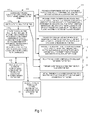
- FIG. 1 is a diagram of a method for transaction via interoperability of barcodes and NFC is provided, according to an example embodiment
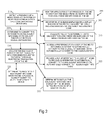
- FIG. 2 is a diagram of another method for transaction via interoperability of barcodes and NFC is provided, according to an example embodiment.
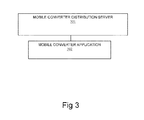
- FIG. 3 is a diagram of a barcode and NFC interoperability transacting system, according to an example embodiment.
- the embodiments herein provide a barcode to NFC conversion application (and vice-versa ), which can run on a user's mobile device or on a remote device (such as a server of cloud environment) over a suitable communication medium, such as but not limited to a 3G or 4G wireless network and the like.
- a suitable communication medium such as but not limited to a 3G or 4G wireless network and the like.
- a standalone application can be used that consumers download to their NFC-enabled device.
- the barcode can be augmented to have built in codes that automatically initiate a conversion application resident on the mobile device.
- the barcode can be augmented to have its own application that will undertake the conversion to the appropriate codes for the NFC device.
- the embodiments herein can also be developed to undertake the reverse from the NFC code, i.e. if an organization issues an NFC code to a consumer's mobile device, the application can then use that to create a barcode that can be displayed on the mobile device and allow interoperability.
- the techniques herein allow a source organization just to issue a barcode, which can then be used on all technologies hence minimizing issuing complexity but maximizing adoption and allowing the consumer ease of interoperability. Users can then use mixed technology environments - e.g. barcode at security, NFC at the airline lounge and boarding, etc.
- the consumer's mobile device includes an application that interfaces with a remote server or cloud environment for purposes of converting between barcodes and NFC codes and/or vice versa.
- the remote server or cloud environment can be provided by barcode and/or NFC code issuers or providers. In some cases, this can be provided by a third-party service that is independent of the barcode and/or NFC code issuer or provider.
- remote processing with a remote server or cloud environment can be used to provide security and/or encryption services for the barcodes and/or NFC codes.
- the embodiments herein are also applicable in other industries: retail where the barcode can be a coupon and used in a store with barcode readers or one with NFC readers, the same in financial or medical for accessing an appointment in a branch or clinic, etc.
- FIG. 1 is a diagram of a method 100 for transaction via interoperability of barcodes and NFC, according to an example embodiment.
- the method 100 (hereinafter “interoperability manager") is implemented as instructions programmed and residing on a non-transitory computer-readable (processor-readable) storage medium and executed by one or more processors.
- the processors are specifically configured and programmed to process the interoperability manager.
- the interoperability manager may operate over a network.
- the network is wireless or a combination of wired and wireless.
- the interoperability manager executes, once deployed and initiated, as a barcode to NFC and an NFC to barcode conversion application on a mobile device, such as a phone, a laptop, and/or a tablet.
- the mobile device is enabled for barcode and NFC processing.
- the interoperability manager can be pre-installed on the mobile device and distributed with the sale of the mobile device or the interoperability manager can be downloaded wirelessly from a remote location over a wireless network connection and installed on the mobile device.
- the interoperability manager configures the mobile converter application to subsequently interact with the interoperability manager or another third-party remote service for purposes of performing the conversions on behalf of the mobile device and remote from the mobile device.
- the interoperability manager configures a mobile converter application for a target mobile device.
- the target mobile device can be such things as a satellite phone, a cellular phone, a tablet (iPad®, etc.), and the like.
- the interoperability manager appropriately configures the mobile converter application for deployment to and subsequent execution on the target mobile device and its processing environment.
- the interoperability manager provides a preference setting with the mobile conversion application that automatically performs the conversions (as discussed below with reference to the processing at 130) without action of a user for the target mobile device.
- the interoperability manager provides a popup interface window during operation of the mobile converter application that manually prompts a user for the target mobile device on whether to automatically perform the conversions (discussed below with reference to the processing at 130). That is, when a new barcode or a new Near Field Communication (NFC) is detected on the target mobile device, the mobile converter application can prompt the user for action to take (either convert or not convert).
- the actual popup window can be initiated by delivery of the barcode or NFC code to the mobile device or by the mobile device being placed near an NFC reader so as to establish a communication link between the NFC reader and the mobile device.
- the interoperability manager provides processing within the mobile converter application that monitors the target mobile device to automatically detect when a particular barcode or a particular NFC code is received on the target mobile device.
- the interoperability manager provides the mobile converter application with a detection mechanism to identify information embedded in a particular barcode as an instruction to automatically convert the particular barcode to an equivalent NFC code.
- the interoperability manager distributes the mobile converter application to the target mobile device. This distribution can occur in a variety of manners.
- the interoperability manager pushes the mobile converter application over a wireless or cellular network to the target mobile device.
- the wireless network can be WiFi, Radio Frequency (RF), Bluetooth (trade mark), or satellite based.
- the cellular network is a data channel used by cellular carriers to distribute data wirelessly to mobile phones.
- the interoperability manager prefabricates the mobile converter application within the target mobile device for sale and/or distribution of the target mobile device.
- the target mobile device can be manufactured and initially configured with the mobile converter application.
- the interoperability manager installs the mobile converter application via a wired connection to a processing device connected via the wired connection to the target mobile device.
- the target mobile device can be connected, such as via a Universal Serial Bus (USB) to another device, such as a computer and the mobile converter application can be installed on the target mobile device from the computer.
- USB Universal Serial Bus
- the interoperability manager initiates the mobile converter application on the target mobile device.
- the mobile converter application is resident in the target mobile device for converting barcodes to NFC codes and for converting NFC codes to barcodes for automated transactions that a user engages in with the target mobile device or the mobile converter application is configured to communicate with a remote server or cloud environment to perform the conversions remote from the mobile device on behalf of the user.
- the interoperability manager provides over a network connection a license key to the mobile converter application that loads and initiates the mobile converter application on the target mobile device.
- the interoperability manager receives payment from a user before providing a license key that activates the mobile converter application.
- FIG. 2 is a diagram of another method 200 for transaction via interoperability of barcodes and NFC is provided, according to an example embodiment.
- the method 200 (hereinafter “mobile converter app") is implemented as instructions and programmed within a non-transitory computer-readable (processor-readable) storage medium that executes on one or more processors of a mobile device, the processors of the mobile device are specifically configured to execute the mobile converter app.
- the mobile converter app is operational over a network; the network is wireless or a combination of wired and wireless.
- P2P peer-to-peer
- the mobile converter app again describes processing actions from the perspective of the customer's mobile device.
- the processing is associated with transacting with a device at an endpoint location; the mobile converter app is initially configured and perhaps acquired by the method 100 of the FIG. 1 .
- the mobile converter app detects a presence of a newly received barcode or NFC code on a mobile device.
- the detection of the newly received barcode or NFC code can occur in a variety of manners.
- the mobile converter app monitors applications that process on the mobile device to discover the newly received barcode or the newly received NFC code on the mobile device.
- the mobile converter app monitors what is being displayed on a display window of the mobile device to discover the newly received barcode or the newly received NFC code.
- the mobile converter app evaluates a policy to determine how to discover the newly received barcode or the newly received NFC code on the mobile device.
- the mobile converter app determines to convert the barcode to an equivalent NFC code to convert the NFC code to an equivalent barcode.
- the mobile converter app access a preference for a user of the mobile device to determine whether to automatically convert to the equivalent barcode or to automatically convert to the equivalent NFC code.
- a default preference or a profile for the user provides an indication to the mobile converter app to automatically perform the conversions for interoperability between barcodes and NFC codes.
- the mobile converter app provides a popup interface to a user of the mobile device to receive a confirmation to automatically convert to the equivalent barcode or to automatically convert to the equivalent NFC code.
- the decision on whether to convert or not to convert is vested in the user via interaction with the popup interface.
- the mobile converter app acquires the equivalent barcode or the equivalent NFC code when requested to participate in an electronic transaction from the mobile device. Acquisition can occur remote from the mobile device or directly via processing on the mobile device. This can occur in a variety of manners.
- the mobile converter app determines to provide the equivalent NFC code when the mobile device is placed in close proximity to another NFC-enabled device. This can occur when the mobile device physically touches the NFC-enabled device as well.
- the mobile converter app determines to display the equivalent barcode on a display of the mobile device when instructed to do so by a user of the mobile device. That is, the user can use the mobile converter app to manually instruct the mobile converter app to supply the equivalent barcode.
- FIG. 3 is a diagram of a barcode and NFC interoperability transacting system 300, according to an example embodiment.
- the barcode and NFC interoperability transacting system 300 includes one or more processors that are specifically configured to perform, inter alia, the processing associated with the methods 100 and 200 of the FIGS. 1 and 2 , respectively.
- the barcode and NFC interoperability transacting system 300 is operational over a network and the network can be wireless or a combination of wired and wireless.
- the network is the Internet.
- the network is a cellular network. It may also be that the network uses both the Internet and a cellular network. It is also noted that direct transactions at a point-of-sale terminal do not require any network connectivity. So, some operations of the barcode and NFC interoperability transacting system 300 may require no network connectivity at all.
- the barcode and NFC interoperability transacting system 300 includes a mobile converter distribution server 301 and a mobile converter application 302. Each of these and their interactions with one another will now be discussed in turn.
- the mobile converter distribution server 301 is one or more processing devices.
- the mobile converter distribution server 301 is accessible over a network, such as the Internet or a cellular network.
- the mobile converter distribution server 301 includes a variety of applications, such as the interoperability manager, discussed above with reference to the method 100 of the FIG. 1 .
- the mobile converter distribution server 301 is configured to configure an instance of the mobile converter application 302 and configured to distribute the instance of the mobile converter application 302 to a mobile device for deployment.
- the mobile converter application 302 is implemented and programmed within a non-transitory computer-readable medium and for execution on the mobile device. Example aspects of the mobile converter application 302 were presented above with reference to the methods 100 and 200 of the FIGS. 1 and 2 , respectively.
- the mobile converter application 302 is configured to automatically detect a presence of newly received barcodes or newly received NFC codes on the mobile device.
- the mobile converter application 302 also configured to convert the received barcodes into equivalent NFC codes and configured to convert the received NFC codes into equivalent barcodes.
- the mobile converter application 302 is alternatively configured to interact with a barcode and/or NFC issuer to remotely perform the conversions. Further, the mobile converter application 302 configured to provide particular ones of the equivalent barcodes or the equivalent NFC codes on demand to facilitate an automated transaction with the mobile device.
- the mobile converter application 302 is also configured to interact with a remote third-party service to provide security validation of the barcodes and the NFC codes, via digital signatures and/or encryption.
Landscapes
- Physics & Mathematics (AREA)
- General Physics & Mathematics (AREA)
- Engineering & Computer Science (AREA)
- Theoretical Computer Science (AREA)
- Telephone Function (AREA)
- Mobile Radio Communication Systems (AREA)
Abstract
Description
- Consumers are increasingly using automated mechanisms to perform everyday transactions. Kiosks exist to reduce the number of enterprise personnel required, and to reducing queues. These automated kiosks allow consumers to perform transactions with an enterprise or agency with little to no human intervention.
- By and large, the use of barcodes and Quick Response code (a QR code is a type of barcode) is becoming commonplace. Barcodes traditionally were used to uniquely label products, now barcodes can also be used to transact for services with enterprises or agencies. The QR code can also be used to acquire additional information about something of interest and can even be linked to profiles or products and/or individuals. In fact, there are many uses today for barcodes and QR codes; also, to provide security many barcodes are often digitally signed and/or encrypted.
- Yet, still another technology is emerging in the industry to automate transactions of consumers. This technology is referred to as Near Field Communications (NFC). NFC is a set of short-range wireless technologies, which are beginning to be embedded in portable devices of consumers, such as cellular phones. NFC can be used for access control, information collection and exchange, loyalty transactions, coupon gathering, payment processing, and the like. NFC can also be used to power passive target objects, such as tags on billboards, displays, and/or products for purposes of transacting with the target objects. Moreover, NFC can be used with peer-to-peer transacting when two devices are equipped to communicate using NFC.
- Many organizations are already investing in the provision of barcodes to mobile devices to allow consumers to use the barcode in place of the printer paper based equivalent; as an example, many airlines send a 2D (two-dimensional) barcode to a customer's mobile phone. This allows the consumer to get through security and board the flight. Adoption has been limited thus far and many airports have yet to invest in the bar code scanning at the security checkpoint, although this is on the increase. This highlights the impact on technology adoption (and hence associated cost reductions, ease of use, etc.) when more than one system is running in parallel. This problem will be further compounded as many enterprises move to NFC technologies - consumers using the NFC capability in their mobile device to pass security and board their flight when there may be three systems in place. Additionally as part of the traveler's journey they may need to use paper, barcode or NFC to access other services - airline lounges, kiosks to change seats, gate desk for standby upgrades, etc. These may all stem from the same purchase, for example a business-class return ticket where one sheet of paper was all that was required.
- So, the problem is at different locations and at different times an enterprise may only be able to support barcode processing whereas the consumer's mobile phone is equipped with NFC capabilities. In another scenario, an enterprise is equipped to handle NFC capabilities but the consumer's mobile phone has a barcode for a given transaction.
- According to a first aspect of the invention there is provided a processor-implemented method programmed in a non-transitory processor-readable medium and to execute on one or more processors configured to execute the method, comprising: configuring a mobile converter application for a target mobile device; distributing the mobile converter application to the target mobile device; and initiating the mobile converter application on the target mobile device, the mobile converter application resident in the target mobile device: for converting barcodes to Near Field Communication (NFC) codes and the NFC codes to the barcodes for automated transactions or for remotely acquiring conversions for the barcodes to NFC codes and the NFC codes to the barcodes.
- Configuring may further include providing a preference setting with the mobile converter application that automatically performs the conversions without action of a user for the target mobile device.
- Configuring may further include providing a popup interface window during operation of the mobile converter application that manually prompts a user for the target mobile device on whether to automatically perform the conversions, the popup interface initiated by delivery of a particular barcode or a particular NFC code or by the target mobile device being placed in communication with an NFC reader.
- Configuring may further include providing processing within the mobile converter application that monitors the target mobile device to automatically detect when a particular barcode or a particular NFC code is received on the target mobile device.
- Configuring may further include providing the mobile converter application with a detection mechanism to identify information embedded in a particular barcode as an instruction to automatically convert the particular barcode to an equivalent NFC code.
- Distributing may further include pushing the mobile converter application over a wireless or cellular network to the target mobile device.
- Distributing may further include prefabricating the mobile converter application within the target mobile device for sale with the target mobile device.
- Distributing may further include installing the mobile converter application via a wired connection to a processing device connected via the wired connection to the target mobile device.
- Initiating may further include providing over a network connection a license key to the mobile converter application that loads and initiates the mobile converter application on the target mobile device.
- Providing may further include receiving payment from a user before providing the license key that activates the mobile converter application.
- According to a second aspect of the invention there is provided a system comprising: a mobile converter distribution server; and a mobile converter application implemented and programmed within a non-transitory computer-readable medium and for execution on a mobile device; the mobile converter distribution server configured to configure an instance of the mobile converter application and configured to distribute the instance to the mobile device, the mobile converter application configured to: (i) automatically detect a presence of newly received barcodes or newly received Near Field Communication (NFC) codes on the mobile device; (ii) convert the received barcodes into equivalent NFC codes; (iii) convert the received NFC codes into equivalent barcodes; and (iv) provide particular ones of the equivalent barcodes or the equivalent NFC codes on demand to facilitate an automated transaction with the mobile device.
- Instead of being configured to (ii) convert the received barcodes into equivalent NFC codes, and (iii) convert the received NFC codes into equivalent barcodes, the mobile converter application may be configured to acquire conversions for the equivalent barcodes or the equivalent NFC codes from a remote service provided by a barcode or NFC code issuer.
- According to a third aspect of the present invention there is provided a processor-implemented method programmed in a non-transitory processor-readable medium and to execute on one or more processors configured to execute the method, comprising: detecting a presence of a newly received barcode or Near Field Communication (NFC) code on a mobile device; determining to convert the barcode to an equivalent NFC code or to convert the NFC code to an equivalent barcode; and acquiring the equivalent barcode or the equivalent NFC code when requested to participate in an electronic transaction from the mobile device.
- Detecting may further include monitoring applications that process on the mobile device to discover the newly received barcode or the newly received NFC code on the mobile device.
- Detecting may further include monitoring what is being displayed on a display window of the mobile device to discover the newly received barcode or the newly received NFC code.
- Detecting may further include evaluating policy to determine how to discover the newly received barcode or the newly received NFC code on the mobile device.
- Determining may further include accessing a preference for a user of the mobile device to determine whether to automatically convert to the equivalent barcode or to automatically convert to the equivalent NFC code.
- Determining may further include providing a popup interface to a user of the mobile device to receive confirmation to automatically convert to the equivalent barcode or to automatically convert to the equivalent NFC code.
- Acquiring may further include determining to provide the equivalent NFC code when the mobile device is placed in close proximity to another NFC-enabled device.
- Acquiring may further include determining to display the equivalent bar code on a display of the mobile device when instructed to do so by a user of the mobile device.
- According to a fourth aspect of the present invention there is provided a system comprising: a mobile converter distribution server; and a mobile converter application implemented and programmed within a non-transitory computer-readable medium and for execution on a mobile device; the mobile converter distribution server configured to configure an instance of the mobile converter application and configured to distribute the instance to the mobile device, the mobile converter application configured to automatically detect a presence of newly received barcodes or newly received Near Field Communication (NFC) codes on the mobile device, the mobile converter application configured to convert the received barcodes into equivalent NFC codes and configured to convert the received NFC codes into equivalent barcodes or the mobile converter application configured to acquire conversions for the equivalent barcodes or the equivalent NFC codes from a remote service provided by a barcode or NFC code issuer, and the mobile converter application configured to provide particular ones of the equivalent barcodes or the equivalent NFC codes on demand to facilitate an automated transaction with the mobile device.
- The mobile converter application may be configured to interact with a remote third-party service to provide security validation of the barcodes and the NFC codes, via digital signatures and/or encryption.
- In various embodiments, techniques for interoperability between barcodes and Near Field Communications (NFC) are presented. According to an embodiment, a method for transaction via interoperability of barcodes and NFC is discussed.
- Specifically, a mobile converter application is configured for processing on a target mobile device. Next, the mobile converter application is distributed to the target mobile device. The mobile converter application is initiated on the target mobile device; the mobile converter application resident in the mobile device: for converting barcodes to Near Field Communication (NFC) codes and the NFC codes to the barcodes for automated transactions or for remotely acquiring conversions for the barcodes to NFC codes and NFC codes to the barcodes.
- These and other aspects of the present invention will become apparent from the following specific description, given by way of example only, with reference to the accompanying drawings, in which:
-
FIG. 1 is a diagram of a method for transaction via interoperability of barcodes and NFC is provided, according to an example embodiment; -
FIG. 2 is a diagram of another method for transaction via interoperability of barcodes and NFC is provided, according to an example embodiment; and -
FIG. 3 is a diagram of a barcode and NFC interoperability transacting system, according to an example embodiment. - The embodiments herein provide a barcode to NFC conversion application (and vice-versa), which can run on a user's mobile device or on a remote device (such as a server of cloud environment) over a suitable communication medium, such as but not limited to a 3G or 4G wireless network and the like. This can be achieved in a number of ways:
- For example, a standalone application can be used that consumers download to their NFC-enabled device. The barcode can be augmented to have built in codes that automatically initiate a conversion application resident on the mobile device. The barcode can be augmented to have its own application that will undertake the conversion to the appropriate codes for the NFC device.
- Moreover, the embodiments herein can also be developed to undertake the reverse from the NFC code, i.e. if an organization issues an NFC code to a consumer's mobile device, the application can then use that to create a barcode that can be displayed on the mobile device and allow interoperability.
- The techniques herein allow a source organization just to issue a barcode, which can then be used on all technologies hence minimizing issuing complexity but maximizing adoption and allowing the consumer ease of interoperability. Users can then use mixed technology environments - e.g. barcode at security, NFC at the airline lounge and boarding, etc.
- In an alternative approach, the consumer's mobile device includes an application that interfaces with a remote server or cloud environment for purposes of converting between barcodes and NFC codes and/or vice versa. In this case, the remote server or cloud environment can be provided by barcode and/or NFC code issuers or providers. In some cases, this can be provided by a third-party service that is independent of the barcode and/or NFC code issuer or provider.
- In still other situations, remote processing with a remote server or cloud environment can be used to provide security and/or encryption services for the barcodes and/or NFC codes.
- The embodiments herein are also applicable in other industries: retail where the barcode can be a coupon and used in a store with barcode readers or one with NFC readers, the same in financial or medical for accessing an appointment in a branch or clinic, etc.
- It is within this initial context that specific embodiments are now discussed with reference to the
FIGS. 1-3 . -
FIG. 1 is a diagram of amethod 100 for transaction via interoperability of barcodes and NFC, according to an example embodiment. The method 100 (hereinafter "interoperability manager") is implemented as instructions programmed and residing on a non-transitory computer-readable (processor-readable) storage medium and executed by one or more processors. The processors are specifically configured and programmed to process the interoperability manager. In an embodiment, the interoperability manager may operate over a network. The network is wireless or a combination of wired and wireless. - In an embodiment, the interoperability manager executes, once deployed and initiated, as a barcode to NFC and an NFC to barcode conversion application on a mobile device, such as a phone, a laptop, and/or a tablet. The mobile device is enabled for barcode and NFC processing. Moreover, in some cases the interoperability manager can be pre-installed on the mobile device and distributed with the sale of the mobile device or the interoperability manager can be downloaded wirelessly from a remote location over a wireless network connection and installed on the mobile device.
- In another embodiment, the interoperability manager configures the mobile converter application to subsequently interact with the interoperability manager or another third-party remote service for purposes of performing the conversions on behalf of the mobile device and remote from the mobile device.
- At 110, the interoperability manager configures a mobile converter application for a target mobile device. The target mobile device can be such things as a satellite phone, a cellular phone, a tablet (iPad®, etc.), and the like. Depending on the operating system of the target mobile device and the resources available from that operating system, the interoperability manager appropriately configures the mobile converter application for deployment to and subsequent execution on the target mobile device and its processing environment.
- According to an embodiment, at 111, the interoperability manager provides a preference setting with the mobile conversion application that automatically performs the conversions (as discussed below with reference to the processing at 130) without action of a user for the target mobile device.
- In another instance, at 112, the interoperability manager provides a popup interface window during operation of the mobile converter application that manually prompts a user for the target mobile device on whether to automatically perform the conversions (discussed below with reference to the processing at 130). That is, when a new barcode or a new Near Field Communication (NFC) is detected on the target mobile device, the mobile converter application can prompt the user for action to take (either convert or not convert). The actual popup window can be initiated by delivery of the barcode or NFC code to the mobile device or by the mobile device being placed near an NFC reader so as to establish a communication link between the NFC reader and the mobile device.
- In yet another situation, at 113, the interoperability manager provides processing within the mobile converter application that monitors the target mobile device to automatically detect when a particular barcode or a particular NFC code is received on the target mobile device.
- In another scenario, at 114, the interoperability manager provides the mobile converter application with a detection mechanism to identify information embedded in a particular barcode as an instruction to automatically convert the particular barcode to an equivalent NFC code.
- At 120, the interoperability manager distributes the mobile converter application to the target mobile device. This distribution can occur in a variety of manners.
- For example, at 121, the interoperability manager pushes the mobile converter application over a wireless or cellular network to the target mobile device. The wireless network can be WiFi, Radio Frequency (RF), Bluetooth (trade mark), or satellite based. The cellular network is a data channel used by cellular carriers to distribute data wirelessly to mobile phones.
- In another distribution technique, at 122, the interoperability manager prefabricates the mobile converter application within the target mobile device for sale and/or distribution of the target mobile device. In other words, the target mobile device can be manufactured and initially configured with the mobile converter application.
- In still another technique, at 123, the interoperability manager installs the mobile converter application via a wired connection to a processing device connected via the wired connection to the target mobile device. Here, the target mobile device can be connected, such as via a Universal Serial Bus (USB) to another device, such as a computer and the mobile converter application can be installed on the target mobile device from the computer.
- At 130, the interoperability manager initiates the mobile converter application on the target mobile device. The mobile converter application is resident in the target mobile device for converting barcodes to NFC codes and for converting NFC codes to barcodes for automated transactions that a user engages in with the target mobile device or the mobile converter application is configured to communicate with a remote server or cloud environment to perform the conversions remote from the mobile device on behalf of the user.
- According to an embodiment, at 131, the interoperability manager provides over a network connection a license key to the mobile converter application that loads and initiates the mobile converter application on the target mobile device.
- In another situation, at 132, the interoperability manager receives payment from a user before providing a license key that activates the mobile converter application.
-
FIG. 2 is a diagram of anothermethod 200 for transaction via interoperability of barcodes and NFC is provided, according to an example embodiment. The method 200 (hereinafter "mobile converter app") is implemented as instructions and programmed within a non-transitory computer-readable (processor-readable) storage medium that executes on one or more processors of a mobile device, the processors of the mobile device are specifically configured to execute the mobile converter app. In an embodiment, the mobile converter app is operational over a network; the network is wireless or a combination of wired and wireless. Although it is noted that transactions performed by the mobile do not require any network connectivity whatsoever and can occur in peer-to-peer (P2P) connections. - The mobile converter app again describes processing actions from the perspective of the customer's mobile device. The processing is associated with transacting with a device at an endpoint location; the mobile converter app is initially configured and perhaps acquired by the
method 100 of theFIG. 1 . - At 210, the mobile converter app detects a presence of a newly received barcode or NFC code on a mobile device. The detection of the newly received barcode or NFC code can occur in a variety of manners.
- For example, 211, the mobile converter app monitors applications that process on the mobile device to discover the newly received barcode or the newly received NFC code on the mobile device.
- In another case, at 212, the mobile converter app monitors what is being displayed on a display window of the mobile device to discover the newly received barcode or the newly received NFC code.
- In still another situation, at 213, the mobile converter app evaluates a policy to determine how to discover the newly received barcode or the newly received NFC code on the mobile device.
- At 220, the mobile converter app determines to convert the barcode to an equivalent NFC code to convert the NFC code to an equivalent barcode.
- According to an embodiment, at 221, the mobile converter app access a preference for a user of the mobile device to determine whether to automatically convert to the equivalent barcode or to automatically convert to the equivalent NFC code. In other words, a default preference or a profile for the user provides an indication to the mobile converter app to automatically perform the conversions for interoperability between barcodes and NFC codes.
- In an embodiment, at 222, the mobile converter app provides a popup interface to a user of the mobile device to receive a confirmation to automatically convert to the equivalent barcode or to automatically convert to the equivalent NFC code. Here, the decision on whether to convert or not to convert is vested in the user via interaction with the popup interface.
- At 230, the mobile converter app acquires the equivalent barcode or the equivalent NFC code when requested to participate in an electronic transaction from the mobile device. Acquisition can occur remote from the mobile device or directly via processing on the mobile device. This can occur in a variety of manners.
- For example, at 231, the mobile converter app determines to provide the equivalent NFC code when the mobile device is placed in close proximity to another NFC-enabled device. This can occur when the mobile device physically touches the NFC-enabled device as well.
- In another situation, at 232, the mobile converter app determines to display the equivalent barcode on a display of the mobile device when instructed to do so by a user of the mobile device. That is, the user can use the mobile converter app to manually instruct the mobile converter app to supply the equivalent barcode.
-
FIG. 3 is a diagram of a barcode and NFC interoperability transacting system 300, according to an example embodiment. The barcode and NFC interoperability transacting system 300 includes one or more processors that are specifically configured to perform, inter alia, the processing associated with themethods FIGS. 1 and2 , respectively. Furthermore and in an embodiment, the barcode and NFC interoperability transacting system 300 is operational over a network and the network can be wireless or a combination of wired and wireless. In an embodiment, the network is the Internet. In another case, the network is a cellular network. It may also be that the network uses both the Internet and a cellular network. It is also noted that direct transactions at a point-of-sale terminal do not require any network connectivity. So, some operations of the barcode and NFC interoperability transacting system 300 may require no network connectivity at all. - The barcode and NFC interoperability transacting system 300 includes a mobile
converter distribution server 301 and amobile converter application 302. Each of these and their interactions with one another will now be discussed in turn. - The mobile
converter distribution server 301 is one or more processing devices. The mobileconverter distribution server 301 is accessible over a network, such as the Internet or a cellular network. The mobileconverter distribution server 301 includes a variety of applications, such as the interoperability manager, discussed above with reference to themethod 100 of theFIG. 1 . - The mobile
converter distribution server 301 is configured to configure an instance of themobile converter application 302 and configured to distribute the instance of themobile converter application 302 to a mobile device for deployment. - The
mobile converter application 302 is implemented and programmed within a non-transitory computer-readable medium and for execution on the mobile device. Example aspects of themobile converter application 302 were presented above with reference to themethods FIGS. 1 and2 , respectively. - The
mobile converter application 302 is configured to automatically detect a presence of newly received barcodes or newly received NFC codes on the mobile device. Themobile converter application 302 also configured to convert the received barcodes into equivalent NFC codes and configured to convert the received NFC codes into equivalent barcodes. In some instances, themobile converter application 302 is alternatively configured to interact with a barcode and/or NFC issuer to remotely perform the conversions. Further, themobile converter application 302 configured to provide particular ones of the equivalent barcodes or the equivalent NFC codes on demand to facilitate an automated transaction with the mobile device. - In an embodiment, the
mobile converter application 302 is also configured to interact with a remote third-party service to provide security validation of the barcodes and the NFC codes, via digital signatures and/or encryption. - The above description is illustrative, and not restrictive. Many other embodiments will be apparent to those of skill in the art upon reviewing the above description. The scope of embodiments should therefore be determined with reference to the appended claims, along with the full scope of equivalents to which such claims are entitled.
- The Abstract is provided to comply with 37 C.F.R. §1.72(b) and will allow the reader to quickly ascertain the nature and gist of the technical disclosure. It is submitted with the understanding that it will not be used to interpret or limit the scope or meaning of the claims.
- In the foregoing description of the embodiments, various features are grouped together in a single embodiment for the purpose of streamlining the disclosure. This method of disclosure is not to be interpreted as reflecting that the claimed embodiments have more features than are expressly recited in each claim. Rather, as the following claims reflect, inventive subject matter lies in less than all features of a single disclosed embodiment. Thus the following claims are hereby incorporated into the Description of the Embodiments, with each claim standing on its own as a separate exemplary embodiment.
Claims (14)
- A processor-implemented method programmed in a non-transitory processor-readable medium and to execute on one or more processors configured to execute the method, the method comprising:configuring a mobile converter application (302) for a target mobile device;distributing the mobile converter application (302) to the target mobile device; andinitiating the mobile converter application (302) on the target mobile device, the mobile converter application (302) resident in the target mobile device: for converting barcodes to Near Field Communication (NFC) codes and the NFC codes to the barcodes for automated transactions or for remotely acquiring conversions for the barcodes to NFC codes and the NFC codes to the barcodes.
- The method of claim 1, wherein configuring further includes providing a preference setting with the mobile converter application (302) that automatically performs the conversions without action of a user for the target mobile device.
- The method of claim 1, wherein configuring further includes providing a popup interface window during operation of the mobile converter application (302) that manually prompts a user for the target mobile device on whether to automatically perform the conversions, the popup interface initiated by delivery of a particular barcode or a particular NFC code or by the target mobile device being placed in communication with an NFC reader.
- The method of any of claims 1 to 3, wherein configuring further includes providing processing within the mobile converter application (302) that monitors the target mobile device to automatically detect when a particular barcode or a particular NFC code is received on the target mobile device.
- The method of any preceding claim, wherein configuring further includes providing the mobile converter application (302) with a detection mechanism to identify information embedded in a particular barcode as an instruction to automatically convert the particular barcode to an equivalent NFC code.
- The method of any preceding claim, wherein distributing further includes pushing the mobile converter application (302) over a wireless or cellular network to the target mobile device.
- The method of any of claims 1 to 5, wherein distributing further includes prefabricating the mobile converter application (302) within the target mobile device for sale with the target mobile device.
- The method of any of claims 1 to 5, wherein distributing further includes installing the mobile converter application (302) via a wired connection to a processing device connected via the wired connection to the target mobile device.
- The method of any preceding claim, wherein initiating further includes providing over a network connection a license key to the mobile converter application (302) that loads and initiates the mobile converter application (302) on the target mobile device.
- The method of claim 9, wherein providing further includes receiving payment from a user before providing the license key that activates the mobile converter application (302).
- A system comprising:a mobile converter distribution server (301); anda mobile converter application (302) implemented and programmed within a non-transitory computer-readable medium and for execution on a mobile device;the mobile converter distribution server (301) configured to configure an instance of the mobile converter application (302) and configured to distribute the instance to the mobile device;wherein the mobile converter application (302) is configured to: (i) automatically detect the presence of newly received barcodes or newly received Near Field Communication (NFC) codes on the mobile device; (ii) convert the received barcodes into equivalent NFC codes; (iii) convert the received NFC codes into equivalent barcodes; and (iv) provide particular ones of the equivalent barcodes or the equivalent NFC codes on demand to facilitate an automated transaction with the mobile device.
- A system according to claim 11, wherein the mobile converter application (302), instead of being configured to (ii) convert the received barcodes into equivalent NFC codes, and (iii) convert the received NFC codes into equivalent barcodes, is configured to acquire conversions for the equivalent barcodes or the equivalent NFC codes from a remote service provided by a barcode or NFC code issuer.
- The system of claim 11 or 12, wherein the mobile converter application (302) is configured to interact with a remote third-party service to provide security validation of the barcodes and the NFC codes, via digital signatures.
- The system of any of claims 11 to 13, wherein the mobile converter application (302) is configured to interact with a remote third-party service to provide security validation of the barcodes and the NFC codes, via encryption.
Applications Claiming Priority (1)
| Application Number | Priority Date | Filing Date | Title |
|---|---|---|---|
| US13/165,361 US8831511B2 (en) | 2011-06-21 | 2011-06-21 | Techniques for interoperability between barcodes and near field communications |
Publications (3)
| Publication Number | Publication Date |
|---|---|
| EP2538368A2 true EP2538368A2 (en) | 2012-12-26 |
| EP2538368A3 EP2538368A3 (en) | 2013-10-02 |
| EP2538368B1 EP2538368B1 (en) | 2019-12-18 |
Family
ID=46022104
Family Applications (1)
| Application Number | Title | Priority Date | Filing Date |
|---|---|---|---|
| EP12164584.0A Active EP2538368B1 (en) | 2011-06-21 | 2012-04-18 | Barcodes and near field communications |
Country Status (2)
| Country | Link |
|---|---|
| US (1) | US8831511B2 (en) |
| EP (1) | EP2538368B1 (en) |
Cited By (1)
| Publication number | Priority date | Publication date | Assignee | Title |
|---|---|---|---|---|
| FR3095872A1 (en) * | 2016-07-19 | 2020-11-13 | Advanced Track & Trace | PROCEDURE AND DEVICE FOR TRANSLATION OF DATA FROM A FIRST CODE TO A SECOND CODE |
Families Citing this family (12)
| Publication number | Priority date | Publication date | Assignee | Title |
|---|---|---|---|---|
| US9165231B2 (en) * | 2011-08-24 | 2015-10-20 | Ricoh Company, Ltd. | Image recognition in passive RFID devices |
| US8931687B2 (en) * | 2011-08-31 | 2015-01-13 | Ncr Corporation | Techniques for optimization of barcodes |
| US10402781B2 (en) | 2011-09-15 | 2019-09-03 | Dell Products L.P. | Multidimensional barcodes for information handling system service information |
| US8746548B2 (en) | 2011-09-15 | 2014-06-10 | Dell Products L.P. | Dynamic multidimensional barcodes for information handling system service information |
| US8833661B2 (en) | 2011-09-15 | 2014-09-16 | Dell Products L.P. | Multidimensional barcodes for information handling system manufacture, assembly and service |
| US8494838B2 (en) * | 2011-11-10 | 2013-07-23 | Globili Llc | Systems, methods and apparatus for dynamic content management and delivery |
| US8827149B1 (en) | 2013-03-14 | 2014-09-09 | Dell Products L.P. | Automated information handling system component compatibility |
| US9654905B2 (en) | 2015-04-07 | 2017-05-16 | International Business Machines Corporation | Enabling near field communications using indicators |
| EP3281295B1 (en) | 2015-04-10 | 2021-05-12 | Razer (Asia-Pacific) Pte Ltd. | Mobile radio communication devices, communication devices, methods for controlling a mobile radio communication device, and methods for controlling a communication device |
| US11216713B2 (en) | 2020-03-16 | 2022-01-04 | Lundy Smith | Post printing RF tag assignment |
| CN119137617A (en) * | 2021-11-08 | 2024-12-13 | 莫利服务有限公司 | System and method providing an integrated platform for secure product labeling, verification, and enforcement |
| US11733934B1 (en) * | 2022-03-11 | 2023-08-22 | Kyocera Document Solutions Inc. | Near field wireless communication of printer job settings |
Family Cites Families (4)
| Publication number | Priority date | Publication date | Assignee | Title |
|---|---|---|---|---|
| JP4736398B2 (en) * | 2004-10-22 | 2011-07-27 | 日本電気株式会社 | Authentication method between secret terminals, secret information delivery method, apparatus, system, and program |
| US8174378B2 (en) * | 2005-03-18 | 2012-05-08 | Richman Technology Corporation | Human guard enhancing multiple site security system |
| US20070250383A1 (en) * | 2006-04-20 | 2007-10-25 | Preston Tollinger | Paying for placement for advertising on mobile devices |
| EP2184710B1 (en) * | 2008-11-04 | 2013-09-25 | Sony Corporation | Method for generating an electronic coupon, coupon holding device, system for generating an electronic coupon, electronic coupon and computer program product |
-
2011
- 2011-06-21 US US13/165,361 patent/US8831511B2/en active Active
-
2012
- 2012-04-18 EP EP12164584.0A patent/EP2538368B1/en active Active
Non-Patent Citations (1)
| Title |
|---|
| None |
Cited By (1)
| Publication number | Priority date | Publication date | Assignee | Title |
|---|---|---|---|---|
| FR3095872A1 (en) * | 2016-07-19 | 2020-11-13 | Advanced Track & Trace | PROCEDURE AND DEVICE FOR TRANSLATION OF DATA FROM A FIRST CODE TO A SECOND CODE |
Also Published As
| Publication number | Publication date |
|---|---|
| US20120329386A1 (en) | 2012-12-27 |
| US8831511B2 (en) | 2014-09-09 |
| EP2538368A3 (en) | 2013-10-02 |
| EP2538368B1 (en) | 2019-12-18 |
Similar Documents
| Publication | Publication Date | Title |
|---|---|---|
| US8831511B2 (en) | Techniques for interoperability between barcodes and near field communications | |
| US20230045220A1 (en) | System and method for price matching through receipt capture | |
| US20240296438A1 (en) | Multi-source transaction processing | |
| US7971782B1 (en) | Multi-point transaction system | |
| US8981896B2 (en) | On-vehicle ticketing and validation | |
| US11132696B2 (en) | Computerized optimization of customer service queue based on customer device detection | |
| US9652762B2 (en) | Proximity-based transaction device selection | |
| EP3563328B1 (en) | Partial data object acquisition and processing | |
| US9922313B2 (en) | Techniques to custom define transaction sessions | |
| US20140058891A1 (en) | Method and system for providing information by using store terminal | |
| AU2017290124A1 (en) | Expedited processing of electronic payment transactions | |
| US10229402B2 (en) | Communication method, controller, and system for managing communications within checkout system | |
| JP2016066158A (en) | Order processing system, order processing unit, order processing method, and order processing program | |
| CN104657854B (en) | Allow the wireless power source of payment transaction | |
| EP4227877B1 (en) | Electronic transaction processing systems and methods | |
| Manikandan et al. | KARE-Presto canteen management system with an Android application | |
| US10154395B2 (en) | Terminal and service providing device, electronic wallet system comprising the same, control method thereof, and non-transitory computer readable storage medium having computer program recorded thereon | |
| EP4029790B1 (en) | Touch-free check-in kiosk | |
| KR101396111B1 (en) | Branch terminal, management server, banking terminal using local wireless communications, and banking method and apparatus including the same | |
| EP3022680B1 (en) | Barcode to magnetic media converter | |
| CN107205078B (en) | Method and device for managing wearable intelligent equipment | |
| US10296922B2 (en) | Techniques for customized deployment of offers | |
| US20170193492A1 (en) | User equipment, service providing device, payment system comprising the same, control method thereof, and non-transitory computer-readable storage medium storing computer program recorded thereon | |
| KR20140076210A (en) | Terminal, system for offering receipt and method thereof | |
| HK1241096B (en) | Data application method and system of rfid tags |
Legal Events
| Date | Code | Title | Description |
|---|---|---|---|
| PUAI | Public reference made under article 153(3) epc to a published international application that has entered the european phase |
Free format text: ORIGINAL CODE: 0009012 |
|
| AK | Designated contracting states |
Kind code of ref document: A2 Designated state(s): AL AT BE BG CH CY CZ DE DK EE ES FI FR GB GR HR HU IE IS IT LI LT LU LV MC MK MT NL NO PL PT RO RS SE SI SK SM TR |
|
| AX | Request for extension of the european patent |
Extension state: BA ME |
|
| PUAL | Search report despatched |
Free format text: ORIGINAL CODE: 0009013 |
|
| AK | Designated contracting states |
Kind code of ref document: A3 Designated state(s): AL AT BE BG CH CY CZ DE DK EE ES FI FR GB GR HR HU IE IS IT LI LT LU LV MC MK MT NL NO PL PT RO RS SE SI SK SM TR |
|
| AX | Request for extension of the european patent |
Extension state: BA ME |
|
| RIC1 | Information provided on ipc code assigned before grant |
Ipc: G06K 1/18 20060101AFI20130823BHEP |
|
| 17P | Request for examination filed |
Effective date: 20140402 |
|
| RBV | Designated contracting states (corrected) |
Designated state(s): AL AT BE BG CH CY CZ DE DK EE ES FI FR GB GR HR HU IE IS IT LI LT LU LV MC MK MT NL NO PL PT RO RS SE SI SK SM TR |
|
| STAA | Information on the status of an ep patent application or granted ep patent |
Free format text: STATUS: EXAMINATION IS IN PROGRESS |
|
| 17Q | First examination report despatched |
Effective date: 20180206 |
|
| RAP1 | Party data changed (applicant data changed or rights of an application transferred) |
Owner name: NCR CORPORATION |
|
| GRAP | Despatch of communication of intention to grant a patent |
Free format text: ORIGINAL CODE: EPIDOSNIGR1 |
|
| STAA | Information on the status of an ep patent application or granted ep patent |
Free format text: STATUS: GRANT OF PATENT IS INTENDED |
|
| INTG | Intention to grant announced |
Effective date: 20190805 |
|
| GRAS | Grant fee paid |
Free format text: ORIGINAL CODE: EPIDOSNIGR3 |
|
| GRAA | (expected) grant |
Free format text: ORIGINAL CODE: 0009210 |
|
| STAA | Information on the status of an ep patent application or granted ep patent |
Free format text: STATUS: THE PATENT HAS BEEN GRANTED |
|
| AK | Designated contracting states |
Kind code of ref document: B1 Designated state(s): AL AT BE BG CH CY CZ DE DK EE ES FI FR GB GR HR HU IE IS IT LI LT LU LV MC MK MT NL NO PL PT RO RS SE SI SK SM TR |
|
| REG | Reference to a national code |
Ref country code: GB Ref legal event code: FG4D |
|
| REG | Reference to a national code |
Ref country code: CH Ref legal event code: EP |
|
| REG | Reference to a national code |
Ref country code: IE Ref legal event code: FG4D |
|
| REG | Reference to a national code |
Ref country code: DE Ref legal event code: R096 Ref document number: 602012066507 Country of ref document: DE |
|
| REG | Reference to a national code |
Ref country code: AT Ref legal event code: REF Ref document number: 1215401 Country of ref document: AT Kind code of ref document: T Effective date: 20200115 |
|
| REG | Reference to a national code |
Ref country code: GB Ref legal event code: 746 Effective date: 20200115 |
|
| REG | Reference to a national code |
Ref country code: DE Ref legal event code: R084 Ref document number: 602012066507 Country of ref document: DE |
|
| REG | Reference to a national code |
Ref country code: NL Ref legal event code: MP Effective date: 20191218 |
|
| PG25 | Lapsed in a contracting state [announced via postgrant information from national office to epo] |
Ref country code: BG Free format text: LAPSE BECAUSE OF FAILURE TO SUBMIT A TRANSLATION OF THE DESCRIPTION OR TO PAY THE FEE WITHIN THE PRESCRIBED TIME-LIMIT Effective date: 20200318 Ref country code: FI Free format text: LAPSE BECAUSE OF FAILURE TO SUBMIT A TRANSLATION OF THE DESCRIPTION OR TO PAY THE FEE WITHIN THE PRESCRIBED TIME-LIMIT Effective date: 20191218 Ref country code: SE Free format text: LAPSE BECAUSE OF FAILURE TO SUBMIT A TRANSLATION OF THE DESCRIPTION OR TO PAY THE FEE WITHIN THE PRESCRIBED TIME-LIMIT Effective date: 20191218 Ref country code: LV Free format text: LAPSE BECAUSE OF FAILURE TO SUBMIT A TRANSLATION OF THE DESCRIPTION OR TO PAY THE FEE WITHIN THE PRESCRIBED TIME-LIMIT Effective date: 20191218 Ref country code: NO Free format text: LAPSE BECAUSE OF FAILURE TO SUBMIT A TRANSLATION OF THE DESCRIPTION OR TO PAY THE FEE WITHIN THE PRESCRIBED TIME-LIMIT Effective date: 20200318 Ref country code: GR Free format text: LAPSE BECAUSE OF FAILURE TO SUBMIT A TRANSLATION OF THE DESCRIPTION OR TO PAY THE FEE WITHIN THE PRESCRIBED TIME-LIMIT Effective date: 20200319 Ref country code: LT Free format text: LAPSE BECAUSE OF FAILURE TO SUBMIT A TRANSLATION OF THE DESCRIPTION OR TO PAY THE FEE WITHIN THE PRESCRIBED TIME-LIMIT Effective date: 20191218 |
|
| REG | Reference to a national code |
Ref country code: LT Ref legal event code: MG4D |
|
| PG25 | Lapsed in a contracting state [announced via postgrant information from national office to epo] |
Ref country code: HR Free format text: LAPSE BECAUSE OF FAILURE TO SUBMIT A TRANSLATION OF THE DESCRIPTION OR TO PAY THE FEE WITHIN THE PRESCRIBED TIME-LIMIT Effective date: 20191218 Ref country code: RS Free format text: LAPSE BECAUSE OF FAILURE TO SUBMIT A TRANSLATION OF THE DESCRIPTION OR TO PAY THE FEE WITHIN THE PRESCRIBED TIME-LIMIT Effective date: 20191218 |
|
| PG25 | Lapsed in a contracting state [announced via postgrant information from national office to epo] |
Ref country code: AL Free format text: LAPSE BECAUSE OF FAILURE TO SUBMIT A TRANSLATION OF THE DESCRIPTION OR TO PAY THE FEE WITHIN THE PRESCRIBED TIME-LIMIT Effective date: 20191218 |
|
| PG25 | Lapsed in a contracting state [announced via postgrant information from national office to epo] |
Ref country code: EE Free format text: LAPSE BECAUSE OF FAILURE TO SUBMIT A TRANSLATION OF THE DESCRIPTION OR TO PAY THE FEE WITHIN THE PRESCRIBED TIME-LIMIT Effective date: 20191218 Ref country code: RO Free format text: LAPSE BECAUSE OF FAILURE TO SUBMIT A TRANSLATION OF THE DESCRIPTION OR TO PAY THE FEE WITHIN THE PRESCRIBED TIME-LIMIT Effective date: 20191218 Ref country code: PT Free format text: LAPSE BECAUSE OF FAILURE TO SUBMIT A TRANSLATION OF THE DESCRIPTION OR TO PAY THE FEE WITHIN THE PRESCRIBED TIME-LIMIT Effective date: 20200513 Ref country code: NL Free format text: LAPSE BECAUSE OF FAILURE TO SUBMIT A TRANSLATION OF THE DESCRIPTION OR TO PAY THE FEE WITHIN THE PRESCRIBED TIME-LIMIT Effective date: 20191218 Ref country code: CZ Free format text: LAPSE BECAUSE OF FAILURE TO SUBMIT A TRANSLATION OF THE DESCRIPTION OR TO PAY THE FEE WITHIN THE PRESCRIBED TIME-LIMIT Effective date: 20191218 |
|
| PG25 | Lapsed in a contracting state [announced via postgrant information from national office to epo] |
Ref country code: SK Free format text: LAPSE BECAUSE OF FAILURE TO SUBMIT A TRANSLATION OF THE DESCRIPTION OR TO PAY THE FEE WITHIN THE PRESCRIBED TIME-LIMIT Effective date: 20191218 Ref country code: IS Free format text: LAPSE BECAUSE OF FAILURE TO SUBMIT A TRANSLATION OF THE DESCRIPTION OR TO PAY THE FEE WITHIN THE PRESCRIBED TIME-LIMIT Effective date: 20200418 Ref country code: SM Free format text: LAPSE BECAUSE OF FAILURE TO SUBMIT A TRANSLATION OF THE DESCRIPTION OR TO PAY THE FEE WITHIN THE PRESCRIBED TIME-LIMIT Effective date: 20191218 |
|
| REG | Reference to a national code |
Ref country code: DE Ref legal event code: R097 Ref document number: 602012066507 Country of ref document: DE |
|
| REG | Reference to a national code |
Ref country code: AT Ref legal event code: MK05 Ref document number: 1215401 Country of ref document: AT Kind code of ref document: T Effective date: 20191218 |
|
| PLBE | No opposition filed within time limit |
Free format text: ORIGINAL CODE: 0009261 |
|
| STAA | Information on the status of an ep patent application or granted ep patent |
Free format text: STATUS: NO OPPOSITION FILED WITHIN TIME LIMIT |
|
| PG25 | Lapsed in a contracting state [announced via postgrant information from national office to epo] |
Ref country code: DK Free format text: LAPSE BECAUSE OF FAILURE TO SUBMIT A TRANSLATION OF THE DESCRIPTION OR TO PAY THE FEE WITHIN THE PRESCRIBED TIME-LIMIT Effective date: 20191218 Ref country code: ES Free format text: LAPSE BECAUSE OF FAILURE TO SUBMIT A TRANSLATION OF THE DESCRIPTION OR TO PAY THE FEE WITHIN THE PRESCRIBED TIME-LIMIT Effective date: 20191218 |
|
| 26N | No opposition filed |
Effective date: 20200921 |
|
| PG25 | Lapsed in a contracting state [announced via postgrant information from national office to epo] |
Ref country code: AT Free format text: LAPSE BECAUSE OF FAILURE TO SUBMIT A TRANSLATION OF THE DESCRIPTION OR TO PAY THE FEE WITHIN THE PRESCRIBED TIME-LIMIT Effective date: 20191218 Ref country code: MC Free format text: LAPSE BECAUSE OF FAILURE TO SUBMIT A TRANSLATION OF THE DESCRIPTION OR TO PAY THE FEE WITHIN THE PRESCRIBED TIME-LIMIT Effective date: 20191218 Ref country code: SI Free format text: LAPSE BECAUSE OF FAILURE TO SUBMIT A TRANSLATION OF THE DESCRIPTION OR TO PAY THE FEE WITHIN THE PRESCRIBED TIME-LIMIT Effective date: 20191218 |
|
| REG | Reference to a national code |
Ref country code: CH Ref legal event code: PL |
|
| PG25 | Lapsed in a contracting state [announced via postgrant information from national office to epo] |
Ref country code: LI Free format text: LAPSE BECAUSE OF NON-PAYMENT OF DUE FEES Effective date: 20200430 Ref country code: CH Free format text: LAPSE BECAUSE OF NON-PAYMENT OF DUE FEES Effective date: 20200430 Ref country code: IT Free format text: LAPSE BECAUSE OF FAILURE TO SUBMIT A TRANSLATION OF THE DESCRIPTION OR TO PAY THE FEE WITHIN THE PRESCRIBED TIME-LIMIT Effective date: 20191218 Ref country code: LU Free format text: LAPSE BECAUSE OF NON-PAYMENT OF DUE FEES Effective date: 20200418 |
|
| REG | Reference to a national code |
Ref country code: BE Ref legal event code: MM Effective date: 20200430 |
|
| PG25 | Lapsed in a contracting state [announced via postgrant information from national office to epo] |
Ref country code: BE Free format text: LAPSE BECAUSE OF NON-PAYMENT OF DUE FEES Effective date: 20200430 Ref country code: PL Free format text: LAPSE BECAUSE OF FAILURE TO SUBMIT A TRANSLATION OF THE DESCRIPTION OR TO PAY THE FEE WITHIN THE PRESCRIBED TIME-LIMIT Effective date: 20191218 |
|
| PG25 | Lapsed in a contracting state [announced via postgrant information from national office to epo] |
Ref country code: IE Free format text: LAPSE BECAUSE OF NON-PAYMENT OF DUE FEES Effective date: 20200418 |
|
| PG25 | Lapsed in a contracting state [announced via postgrant information from national office to epo] |
Ref country code: TR Free format text: LAPSE BECAUSE OF FAILURE TO SUBMIT A TRANSLATION OF THE DESCRIPTION OR TO PAY THE FEE WITHIN THE PRESCRIBED TIME-LIMIT Effective date: 20191218 Ref country code: MT Free format text: LAPSE BECAUSE OF FAILURE TO SUBMIT A TRANSLATION OF THE DESCRIPTION OR TO PAY THE FEE WITHIN THE PRESCRIBED TIME-LIMIT Effective date: 20191218 Ref country code: CY Free format text: LAPSE BECAUSE OF FAILURE TO SUBMIT A TRANSLATION OF THE DESCRIPTION OR TO PAY THE FEE WITHIN THE PRESCRIBED TIME-LIMIT Effective date: 20191218 |
|
| PG25 | Lapsed in a contracting state [announced via postgrant information from national office to epo] |
Ref country code: MK Free format text: LAPSE BECAUSE OF FAILURE TO SUBMIT A TRANSLATION OF THE DESCRIPTION OR TO PAY THE FEE WITHIN THE PRESCRIBED TIME-LIMIT Effective date: 20191218 |
|
| P01 | Opt-out of the competence of the unified patent court (upc) registered |
Effective date: 20230507 |
|
| REG | Reference to a national code |
Ref country code: DE Ref legal event code: R081 Ref document number: 602012066507 Country of ref document: DE Owner name: NCR VOYIX CORP., ATLANTA, US Free format text: FORMER OWNER: NCR CORPORATION, ATLANTA, GA, US |
|
| PGFP | Annual fee paid to national office [announced via postgrant information from national office to epo] |
Ref country code: DE Payment date: 20250429 Year of fee payment: 14 |
|
| PGFP | Annual fee paid to national office [announced via postgrant information from national office to epo] |
Ref country code: GB Payment date: 20250428 Year of fee payment: 14 |
|
| PGFP | Annual fee paid to national office [announced via postgrant information from national office to epo] |
Ref country code: FR Payment date: 20250425 Year of fee payment: 14 |