EP2534771B1 - Distributed database access for spectrum access - Google Patents
Distributed database access for spectrum access Download PDFInfo
- Publication number
- EP2534771B1 EP2534771B1 EP11742603.1A EP11742603A EP2534771B1 EP 2534771 B1 EP2534771 B1 EP 2534771B1 EP 11742603 A EP11742603 A EP 11742603A EP 2534771 B1 EP2534771 B1 EP 2534771B1
- Authority
- EP
- European Patent Office
- Prior art keywords
- white space
- space data
- request
- copy
- portable wireless
- Prior art date
- Legal status (The legal status is an assumption and is not a legal conclusion. Google has not performed a legal analysis and makes no representation as to the accuracy of the status listed.)
- Active
Links
Images


Classifications
-
- H—ELECTRICITY
- H04—ELECTRIC COMMUNICATION TECHNIQUE
- H04W—WIRELESS COMMUNICATION NETWORKS
- H04W16/00—Network planning, e.g. coverage or traffic planning tools; Network deployment, e.g. resource partitioning or cells structures
- H04W16/14—Spectrum sharing arrangements between different networks
-
- H—ELECTRICITY
- H04—ELECTRIC COMMUNICATION TECHNIQUE
- H04W—WIRELESS COMMUNICATION NETWORKS
- H04W4/00—Services specially adapted for wireless communication networks; Facilities therefor
-
- H—ELECTRICITY
- H04—ELECTRIC COMMUNICATION TECHNIQUE
- H04W—WIRELESS COMMUNICATION NETWORKS
- H04W4/00—Services specially adapted for wireless communication networks; Facilities therefor
- H04W4/50—Service provisioning or reconfiguring
-
- H—ELECTRICITY
- H04—ELECTRIC COMMUNICATION TECHNIQUE
- H04W—WIRELESS COMMUNICATION NETWORKS
- H04W48/00—Access restriction; Network selection; Access point selection
- H04W48/08—Access restriction or access information delivery, e.g. discovery data delivery
- H04W48/14—Access restriction or access information delivery, e.g. discovery data delivery using user query or user detection
-
- H—ELECTRICITY
- H04—ELECTRIC COMMUNICATION TECHNIQUE
- H04W—WIRELESS COMMUNICATION NETWORKS
- H04W72/00—Local resource management
- H04W72/02—Selection of wireless resources by user or terminal
-
- H—ELECTRICITY
- H04—ELECTRIC COMMUNICATION TECHNIQUE
- H04W—WIRELESS COMMUNICATION NETWORKS
- H04W72/00—Local resource management
- H04W72/04—Wireless resource allocation
- H04W72/044—Wireless resource allocation based on the type of the allocated resource
- H04W72/0453—Resources in frequency domain, e.g. a carrier in FDMA
-
- H—ELECTRICITY
- H04—ELECTRIC COMMUNICATION TECHNIQUE
- H04W—WIRELESS COMMUNICATION NETWORKS
- H04W72/00—Local resource management
- H04W72/20—Control channels or signalling for resource management
-
- H—ELECTRICITY
- H04—ELECTRIC COMMUNICATION TECHNIQUE
- H04W—WIRELESS COMMUNICATION NETWORKS
- H04W72/00—Local resource management
- H04W72/50—Allocation or scheduling criteria for wireless resources
- H04W72/53—Allocation or scheduling criteria for wireless resources based on regulatory allocation policies
-
- H—ELECTRICITY
- H04—ELECTRIC COMMUNICATION TECHNIQUE
- H04W—WIRELESS COMMUNICATION NETWORKS
- H04W8/00—Network data management
- H04W8/005—Discovery of network devices, e.g. terminals
-
- H—ELECTRICITY
- H04—ELECTRIC COMMUNICATION TECHNIQUE
- H04W—WIRELESS COMMUNICATION NETWORKS
- H04W88/00—Devices specially adapted for wireless communication networks, e.g. terminals, base stations or access point devices
- H04W88/02—Terminal devices
Definitions
- Wireless transmissions are used for wireless networking among computing devices as well as in other settings, such as to support broadcast of radio and television content.
- different portions of the frequency spectrum available for wireless communication are allocated to different uses.
- the frequency spectrum has been divided administratively into two primary sectors: the licensed spectrum and the unlicensed spectrum.
- the licensed spectrum consists of frequencies that are available for license to organizations, such as commercial broadcasters, for exclusive use by those organizations.
- a portion of the spectrum also known as a "frequency band,” "band,” or “channel”
- the unlicensed spectrum has been allocated for free use by the public-though, typically, use of the unlicensed spectrum requires operating in accordance with some regulations, such as maximum power output regulations, that are designed to minimize interference between users.
- the 300-320 MHz band may be assigned to the first organization and the 330-350 MHz band granted to the second organization, leaving the 320-330 MHz band as "white space.”
- white space may be used by unlicensed transmitters as if the unused portions were a part of the unlicensed spectrum. Such use of the white space, however, is predicated on using techniques that prevent unlicensed users from interfering with licensed users.
- devices of unlicensed users can avoid interference with licensed users of the licensed spectrum either by monitoring a band to determine that it is not in use or by consulting a database of unassigned bands applicable to the geographic location of the unlicensed user.
- US patent application US 2009/217333 A1 discusses a wireless client device which discovers vacant DTV channels using location information acquired from a Dynamic Host Configuration Protocol (DHCP) server, wherein, a wireless client device can discover vacant DTV channels either through direct communication with a local DHCP server and a remote primary user database server, or from an access device that communicates with a local DHCP server and a remote primary user database server.
- DHCP Dynamic Host Configuration Protocol
- US patent application US 2009/268674 A1 discloses a method for identifying a white space at a first wireless node by taking a channel access factor into account wherein the identified white spaces can be shared with other wireless nodes.
- the channel access factor could represent a hash function value.
- US patent application US 2008/130519 A1 discloses a new media access control (MAC) protocol for cognitive wireless networks which allows each of multiple nodes to determine utilization of a communication spectrum.
- the nodes collaborate to achieve a combined view of spectrum utilization in their local vicinity, in which scheduled users and empty time segments are mapped across a wide range of frequencies.
- MAC media access control
- Access to white space data is improved by configuring portable wireless devices to respond to requests for white space data from other nearby portable wireless devices. Accordingly, a portable wireless device seeking to identify a channel of the licensed spectrum available for unlicensed use may send a request to one or more nearby devices. Information received from one or more nearby devices in response to such a request may allow the device requesting the white space data to select an unused channel or to otherwise be configured with transmission and reception parameters to communicate using the identified unlicensed white space.
- another device in the vicinity of the requesting device may respond, indicating that it is available to act as a proxy through which the requesting device can establish a connection to a trusted source of the white space data.
- the requesting device may then download the white space data from the trusted source using a connection through the other device acting as a proxy. That connection may be secured, between the requesting device and the trusted source, which may allow the requesting device to rely in the data without making a further connection to the trusted source.
- the requesting device may optionally share the white space data from the trusted source with other nearby devices, such as by broadcasting the data obtained from the trusted source or sending updates to those devices that initially responded to the request for white space data.
- aspects of such a technique for making white space data available to portable wireless devices may be implemented in a portable wireless device, that requests white space data, responds to requests for white space data or both.
- Other aspects may be implemented as a system, comprising at least one device that requests white space data and at least one device that responds to such a request.
- aspects may also be implemented as a method of operating a portable wireless devices to request or respond to a request for white space data.
- aspects may be implemented as computer-executable instructions, recorded in at least one computer readable medium, that, when executed by a processor associated with a portable wireless device, performs such a method.
- portable wireless devices may be expanded by enabling the wireless device to obtain a copy of white space data, identifying available channels in a licensed spectrum, through interaction with nearby other portable wireless devices.
- white space data With the white space data, a portable wireless device can select a channel in a licensed spectrum in a way that complies with Federal Communications Commission (FCC) requirements for unlicensed use of white space.
- FCC Federal Communications Commission
- the device may have greater options for communication, increasing the likelihood that a user of the portable device will experience fast and reliable communications.
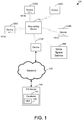
- FIG. 1 is a block diagram of an operating environment 100 according to some embodiments.
- Operating environment 100 may be any location, such as a public place or an office within an enterprise in which multiple devices, illustrated as device devices 120A...120E are close enough to a device 110 that device 110 can communicate wirelessly with each of the devices 120A...120E.
- each of devices 110 and 120A...120E may be regarded as a wireless client, as opposed to an access point of other infrastructure component of a wireless network. Accordingly, these devices may be portable wireless devices, such the number of devices within environment 100 may change as devices are moved in and out of the environment.
- the client devices collaborate so that any device in the environment may have access to white space data.
- device 110 requests white space data from other devices in its vicinity, which in this case are devices 120A...120E. While five such devices 120A...120E are shown in FIG. 1 , any suitable number of receiving devices 120A...120E may be present in operating environment 100.
- Requesting device 100 may request white space data in order to communicate wirelessly in a white space channel which, in accordance with FCC regulations, may be selected from a database of white space channels identifying unused channels in the licensed spectrum within environment 100.
- device 110 may initiate a request for white space data in response to user input indicating a desire to connect to a service, illustrated as white space service 150, to which a connection may be established using a channel in the white space.
- device 110 may seek to communicate in the white space in response to a determination that communication at a desired data rate cannot be accommodated within the unlicensed spectrum. It is known, for example, that attenuation of radio signals is a function of the frequency of signals. Portions of the unlicensed spectrum above 2 GHz, such as about 2.4 GHz, are widely used for unlicensed communication between computers.
- white space in a licensed spectrum used for digital TV transmission may be on the order of less than 1 GHz, such as around 700 MHz.
- Transmission in the unlicensed spectrum may be attenuated by approximately a factor of 10 more than if the licensed spectrum were used, limiting the range and/or data rate of communications in the unlicensed spectrum.
- requesting device 110 may obtain white space data if it does not already store a copy of suitable white space data indentifying available channels.
- requesting device 110 is either not configured in advance with a white space database identifying available white space channels or may have a database that may not be appropriate for use.
- requesting device 110 may have a copy of a white space database that is out of date or not appropriate for the current location of requesting device 110.
- device 110 may attempt to obtain the white space data by communicating with other wireless devices in the environment 100. Accordingly, device 110 may transmit a request to one or more other wireless devices. A device receiving such a request may respond in ways that facilitate device 110 receiving white space data. In this example, devices 120A... 120E act as receiving devices receiving a request from device 110 for white space data.
- database server 140 may serve as a trusted source of a white space database 141.
- Database server 140 may be a server hosted by a governmental agency, standards bureau or other quasi governmental agency that is certified as having accurate and up to date information concerning white space allocation, at least in a particular geographic location.
- requesting device 110 does not have direct communication with server 140. Though requesting device 110 may be able to communicate with server 140 if it could select an appropriate white space channel, requesting device 110 may be unable to directly connect to server 140 before it selects a white space channel. Yet, requesting device would use data stored in server 140 to select such a channel, creating a bootstrapping problem.
- requesting device 110 may request that one or more receiving devices 120A... 120E participate in providing white space data to requesting device 110.
- Receiving devices 120A...120E may participate in providing white space data in one or more ways. For example, one or more receiving devices may provide a copy of white space data they store.
- a receiving device that has an established network connection to a server or other computer location from which white space data can be obtained may act as a proxy to allow requesting device 110 to communicate, using the network connection already established, with the server to obtain the data.
- each receiving device may have a local copy of white space database 141.
- receiving devices 120A... 120E one or more of these devices may transmit their copy of the white space data.
- receiving devices 120A, 120B and 120D each have a copy 141A, 141B and 141D, respectively. In this scenario, receiving devices 120A, 120B and 120D each may respond to the request.
- requesting device 110 may employ a mechanism to synthesize the data.
- requesting device 110 may use time information associated with each copy of the data to select a most recent copy.
- This time information may take any suitable form, such as version information, which can indicate a time at which a trusted source created or last updated a white space database from which the data was copied.
- the time information can be in the form of a time stamp, indicating when a database was created or when a receiving device received a copy of the data.
- the time information may be communicated to the requesting device 110.
- Requesting device 110 may use the time information to identify the most up-to-date version it receives to select a white space channel.
- identifying white space data to select a channel in this way may be conditioned on criteria, such the most up-to-date version having a time value indicating a time within a threshold amount of time prior to the time in which it is to be used.
- the most up-to-date version may only be used if it has a time stamp indicating that it was copied from a trusted source less than three days before the time of use.
- Another criteria may be that the most up-to-date version is more up to date than the next most recent version by at least some threshold amount of time. For example, the most up-to-date version has a time stamp at least one day later than the next most recent version.
- requesting device 110 may synthesize the data received from multiple receiving devices and select a channel based on synthesized data. In some embodiments, requesting device 110 may always synthesize data when multiple copies are received. In other embodiments, requesting device 110 may be triggered to synthesize data when none of the received copies of the white space data meet criteria for use as a most up-to-date copy.
- the selected channel may be used by requesting device 110 to establish white space communication.
- the selected channel may be used as a temporary channel assignment. The suitability of the temporary channel assignment may be validated. If validated, that channel assignment may be used for further communication. If not, another channel may be selected.
- requesting device may use the initial channel assignment to form a connection with server 140, which is a trusted source of the white space data.
- Requesting device 110 may then download a trusted copy of the white space data from server 140 to validate the initial channel assignment.
- requesting device 110 may download a full white space data for a geographic region. That database may be used to select a channel, which may be the same or different than the initial channel selection, for white space communication.
- receiving devices 120A...120E may facilitate an indirect connection between requesting device 110 and server 140.
- device 120E may have a connection to network 130 from which database server 140 is accessible.
- Receiving device 120E may then act as a proxy, allowing requesting device 110 to form a connection to server 140 through a connection that receiving device 120E may form with server 140.
- Network 130 may be the Internet or any other suitable network from which database server 140 is accessible.
- device 120E may connect to network 130 using a white space channel.
- device 120E may simply relay packets between requesting device 110 and server 140.
- requesting device 110 can use any suitable protocol to communicate with server 140.
- the protocol for communication may involve creating a security association, which may allow requesting device to authenticate server 140 as a trusted source of white space data and/or ensure that white space data from server 140 is not altered, unintentionally or maliciously, by receiving device 120E or other intermediary device.
- requesting device 110 may validate that a channel selected based on this data is available for use.
- the validation step may be omitted.
- White space service 150 may be any suitable type of service accessible over a white space channel.
- service 150 may provide access to a network such as network 130.
- service 150 provides Internet access over a white space channel.
- requesting device 110 and receiving devices 120A...120E may be portable electronic devices.
- Such devices are susceptible of having out-of-date white space data. Because such devices may move from location to location, white space data they store may become out of date simply due to the passage of time while the device is not connected to a network over which the device can download updated copies of the white space data. Copies of data may also become out of date as the portable devices move from one location to another.
- techniques described herein for obtaining white space data may be employed with any computing device with a wireless network interface adapted for communication in a licensed spectrum.
- FIG. 2 is a block diagram of requesting device 110 according to some embodiments.
- requesting device 110 is a device seeking a copy of the white space data that may be used at the device's location. Once the copy is obtained by requesting device 110, the device may be configured to access a white space service.
- Requesting device 110 may be implemented with any suitable device capable of wireless communication.
- requesting device 110 may be implemented as a personal digital assistant (PDA), laptop, mobile phone, smartphone, or any other suitable wireless communications device.
- PDA personal digital assistant
- requesting device 110 may include processor 201, memory 203, wireless network interfaces 205A and 205B, user interface 207, obtaining module 209, combining module 211, connecting module 213, and location module 215.
- Processor 201 may be any one or more processors as are known in the art or any other suitable processing device.
- processor 201 may include any of a central processing unit (CPU), digital signal processor (DSP), controller, addressable controller, general or special purpose microprocessor, microcontroller, addressable microprocessor, programmable processor, programmable controller, dedicated processor, dedicated controller, or any other suitable processing device.
- Processor 201 may execute computer executable instructions to control the components of requesting device 110 to obtain white space data and to identify and communicate in a white space channel using techniques as described herein.
- Memory 203 may be integrated into processor 201 and/or may include "off-chip" memory that may be accessible to processor 201, for example, via a memory bus (not shown).
- Memory 203 may store software modules that when executed by processor 201 perform a desired function. For example, in some embodiments obtaining module 209, combining module 211, connecting module 213, and location module 215 may be software modules stored in memory 203. Though, modules 209-215 may be implemented in any suitable way.
- Memory 203 may be any suitable type of computer-readable storage medium such as, for example and not limitation, RAM, a nanotechnology-based memory, one or more floppy discs, compact discs, optical discs, volatile and non-volatile memory devices, magnetic tapes, flash memories, hard disk drive, circuit configurations in Field Programmable Gate Arrays, or other semiconductor devices, or other tangible computer storage medium.
- RAM random access memory
- nanotechnology-based memory such as, for example and not limitation, RAM, a nanotechnology-based memory, one or more floppy discs, compact discs, optical discs, volatile and non-volatile memory devices, magnetic tapes, flash memories, hard disk drive, circuit configurations in Field Programmable Gate Arrays, or other semiconductor devices, or other tangible computer storage medium.
- Requesting device 110 may also include one or more network interfaces for wired and/or wireless communication.
- requesting device 110 has network interfaces 205A and 205B.
- Network interfaces 205A-205B may be any suitable combination of hardware and software configured to communicate over a network.
- each network interface 205A and 205B may be implemented as a network interface driver and a network interface card (NIC) including a wireless transmitter and receiver, or equivalently a transceiver.
- the driver may be configured to receive instructions from other components of requesting device 110 to perform operations with the NIC.
- the NIC may be configured to generate and receive signals for communication over a wireless network or directly with other wireless devices.
- Requesting device 110 may include one or more wireless network interfaces over which a request for white space data may be transmitted and one or more responses may be received.
- Requesting device 110 may also include one or more wireless network interfaces that can be configured for white space communication once a channel is selected. The wireless network interfaces through which white space data is obtained and through which white space communication occurs may be the same or different interfaces.
- requesting device 110 may send requests for white space data and receive responses using the unlicensed spectrum.
- the unlicensed spectrum may use a higher range of frequencies than the licensed spectrum. Accordingly, separate wireless network interfaces may be employed to obtain white space data and to perform white space communications.
- requesting device 110 may use frequencies conventionally used for BLUETOOTH® communications or IEEE 802.11 communications to transmit a request for white space data and to receive responses.
- requesting device 110 may use frequencies in the spectrum allocated for digital TV transmissions for white space communication. Separate network interfaces may be present to support communications in these different frequency ranges. Accordingly, requesting device 110 is illustrated to contain two wireless network interfaces 205A and 205B.
- a NIC may include multiple transceivers to accommodate communication over a wide range of spectrum.
- Wireless network interfaces 205A and 205B may be implemented using a software defined radio that, using such a wideband NIC, can be programmed appropriately for communicating at frequencies used to obtain white space data and for white space communication.
- white space data may be obtained based on the present location of the requesting device.
- requesting device 110 may include a component that determines its location, such as location module 215.
- Location module 215 may be implemented using any suitable combination of hardware and software. It should be appreciated that the location of device 110 need only be accurate enough for the purpose of identifying suitable white space data. In some circumstance, different white space databases are defined for different geographic regions. Typical broadcasts of a licensed spectrum service cover tens or hundreds of square miles. Accordingly, the ability to determine the requesting device's location to within a few miles may be sufficiently accurate. In many cases being able to identify a city, metropolitan area, or even a country in which requesting device 100 is located may be sufficient for the purpose of identifying an appropriate white space database.
- Location module 215 may determine the location of requesting device 110 in any suitable way. Several examples of location module 215 are now provided. These examples are illustrative and not intended to be exhaustive because the current location may be determined in any suitable way.
- location module 215 may utilize a global navigation satellite service (GNSS) to determine the current location of computing device 100 from navigational satellites.
- GNSSs include the United States' Global Positioning Service (GPS), the European Union's Galileo positioning system (scheduled for 1012), the Russian's GLONASS system, and China's Compass system. Though, any suitable GNSS may be supported.
- location module 215 may analyze wireless beacons to determine the current location of requesting device 100. Such beacons may be received through wireless network interface 205A or 205B or obtained in any other suitable way. How the beacon represents information that may be used to determine the current location may depends on the source of the beacon signal. For example, public land mobile networks (PLMN) each have a unique identifier known as Location Area Identity (LAI). The LAI includes a mobile country code (MCC) which is standardized. As another example, IEEE 802.11d beacon signals include a country code. Because compliance with 802.11d is voluntary and the country code is set by users, the beacon signal analyzing service may be configured to test for agreement between multiple beacon signals from several networks before relying on the country code indicated by IEEE 802.11d beacons.
- PLMN public land mobile networks
- MCC mobile country code
- IEEE 802.11d beacon signals include a country code. Because compliance with 802.11d is voluntary and the country code is set by users, the beacon signal analyzing service may be configured to test for agreement between multiple beacon
- location module 215 may use signals from cellular communications towers to determine the current location of requesting device 110. For example, the principle of triangulation may be used to identify the current location of requesting device 110.
- location module 215 may prompt the user to designate the current location.
- the user entry module may prompt the user to provide the current location in any suitable way. For example, by displaying a map through user interface 207 and having the user indicate her location on the map using a pointing device. In some embodiments, successive designations may be used by zooming the map in on an area near the previous designation. In some embodiments, the user simply enters, for example, the name of a city or country which is the current location. Though, the user may be prompted in any suitable way.
- Obtaining module 209, combining module 211, and connecting module 213 are modules that may be used to obtain the white space data, identify an available white space channel, and configure requesting device 110 for white space communication, such as by communicating with a white space service, respectively. These modules may be implemented in any suitable combination of hardware and software. Module 209, 211 and 213 may be used to implement method 400 and sub-method 450, which are subsequently discussed with reference to FIGs. 4A-B .
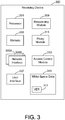
- FIG. 3 is a block diagram of a receiving device 320 according to some embodiments.
- Receiving device 320 is representative of one of the receiving devices 120A...120E. Though, it should be appreciated that receiving devices 120A... 120E may have the same or different configurations.
- Receiving device 320 may have a processor 301, memory 303, wireless network interface 305, and user interface 307.
- a portable computing devices may sometimes act as a requesting device and may sometimes act as a receiving device. Accordingly, the components illustrated in FIG. 3 may have similar form and function as the corresponding components discussed above with reference to FIG. 2 .
- receiving device 320 may include components that were not discussed above in connection with FIG. 2 .
- Requesting device 320 may also have white space data 315 stored in a computer storage medium.
- the white space data stored on each device that can act as a receiving device or a requesting device may be a full white space database, indicating all known channel assignments in a licensed spectrum, in a format copied from an authoritative source for white space data, such as server 140 ( FIG. 1 ).
- white space data 315 may be a subset of available data.
- server 140 may store channel assignments for multiple geographic locations and a receiving device 320 may store only the channel assignments applicable to its current location. Further, to identify a channel for white space communication, it is not a requirement that all channel assignments be known. Accordingly, white space data 315 may indicate available channels rather than channel assignments. In scenarios in which there are multiple available channels, white space data 315 may indicate only a subset of available channels.
- Version identifier 317 may indicate a version of a white space database from which white space data 315 was copied.
- version identifier 317 may indicate a version number and/or a time at which white space data 315 was downloaded from an authoritative white space database source, such as database server 140 ( FIG. 1 ).
- white space data 315 may contain an indicator of a geographic region for which the white space data is valid.
- FIG. 3 illustrates a single copy of white space data, representing the most up-to-date white space data stored on the device.
- receiving device 320 may have other copies of the white space data corresponding to different geographic regions (not shown).
- Receiving device 320 may include components that enable the receiving device to receive and respond to requests for white space data from other devices.
- Responding module 309, proxy module 311, and access control module 313 are modules that may be used to control how the white space data is provided to a requesting device (e.g., requesting device 110, FIGs. 1-2 ).
- Modules 309, 311 and 313 may be implemented in any suitable combination of hardware and software.
- responding module 309 responds to requests for a copy of the white space data 315.
- Responding module 309 may monitor communications received through a network interface 305A or 305B for a communication indicating a request from a requesting device.
- any suitable approach may be used to trigger operation of responding module 309.
- responding module may use known programming techniques to register with a network interface or other suitable component to receive a notification when a communication with a header or other field containing a value identifying the communication as a request.
- Proxy module 311 may establish and control a proxy connection between a database server and the requesting device. Proxy module 311 may operate in any suitable way. For example, receiving device 320 may receive messages over a wireless network interface 305A or 305B that are commands from a requesting device to obtain white space data. Proxy module 311 may monitor for these commands, be notified of these commands or be triggered in any other suitable way to respond to such commands. Regardless, in responding to such a command, proxy module 311 may send a request to an authoritative source of white space data, such as server 140 ( FIG. 1 ). Proxy module 311 may then forward all or a portion of the response from the source to the requesting module.
- an authoritative source of white space data such as server 140 ( FIG. 1 ). Proxy module 311 may then forward all or a portion of the response from the source to the requesting module.
- proxy module 311 may act as a conduit for communication between a requesting device and source of white space data.
- any message from a receiving device may be forwarded, without processing, to the server.
- proxy module 311 may include a component at a relatively low level of a network stack within receiving device 320.
- proxy module 311 may receive input identifying a location of an authoritative source of white space data. Proxy module 311 would then forward any received message, including an indicator that it is a request for white space data, to the authoritative source.
- Modules 309 and 311 may be configured to implement method 500 and sub-method 550 which are subsequently discussed with reference to FIGs. 5A-B .
- a user of a wireless device may configure the device so that, upon receiving a wireless communication formatted as a request for white space data, the receiving device responds to the request if it has white space data to share or has a network connection through which it can act as a proxy.
- Programming a wireless device to operate in this fashion may promote other users to similarly configure their devices to respond to requests, which may increase the likelihood that a device will be able to obtain white space data as a result of the cooperative action of multiple wireless devices operating in a region.
- receiving device 320 may include a mechanism to limit the amount of resources devoted to responding to requests for white space data.
- receiving device 320 includes access control module 313.
- Access control module 313 may limit the amount of time responding module 309 uses responding to requests for the white space database. For example, access control module 313 may limit responding module 309 to consuming less than 1, 3, 5 or 10 percent of its processing power, network bandwidth or other resource used in responding to requests for white space data. Though, other techniques for limiting resource usage may be employed. As another example, access control module 313 may limit how long a proxy connection will be maintained (e.g., 0.5 sec.). As another example, access control module 313 may force the requesting device to wait a certain amount of time, potentially determined randomly, before the requesting device may use receiving the device's resources or the receiving device may set a time after responding to a request for white space data until it will respond to another request for white space data.
- the nature of the limitations and the value of limitations on amount of resources a receiving device devotes to collaborating with other devices requesting white space data may be determined by a policy.
- the policy may be derived in any suitable way. For example, a default policy may be included in an operating system of the device. Alternatively, the policy may be set or modified by user input or other suitable form of input.
- Access control module 313 may operate in any suitable way. For example, it may issue a command that suppresses and later enables operation of responding module 309 and/or proxy module 311. Though, as yet another example, in response to a request to act as a proxy to form a connection with a server that can provide white space data, access control module 313 may delegate the connection to another receiving device. Though, it should be appreciated that access control module 313 may limit access to responding device 320 in any suitable way.
- receiving device 110 and requesting device 320 have been described separately, in some embodiments, a single device may be configured to operate as either requesting device 110 or receiving device 320 depending on the circumstances. For example, once a device has obtained a copy of the white space data, the device may then respond to a request from another device by providing the white space data. As another example, a device receiving a copy of the white space data from the database server may advertise to other devices in the environment that an up-to-date copy of the white space data is available.
- FIG. 4A is a flow chart of a method 400 of connecting a wireless device to a white space service.
- Method 400 may be performed, for example, by operation of requesting device 110 shown in FIG. 2 . Though, method 400 may be implemented in any suitable way.
- the protocol may involve initially transmitting, at step 401 a low power attention sequence.
- the attention sequence may have a duration such that a receiving device that is only periodically monitoring for requests may detect that a requesting device is preparing to transmit a request such that the receiving device may monitor for the request.
- the request may be encoded as an information element in an 802.11 beacon signal or other control communication according to 802.11 or any other suitable standard.
- Devices that operate according to a standard may be configured to detect beacons or control communications sent according to that standard.
- a receiving device may detect a wireless transmission containing a request, without an attention sequence such as is illustrated by step 401.
- the requesting device may wirelessly transmit into the operating environment a request for white space data.
- the request may be encoded in any suitable way that allows a receiving device to recognize it as a request.
- the request may contain other information used in obtaining white space data through interaction with other devices. For example, the request may identify the geographic region of the requesting device.
- the request may indicate whether the device wishes to connect to a database server through a proxy device or to receive a copy of the database directly from a locally stored repository of a device receiving the transmitted request (receiving device). If multiple sources of the white space data are acceptable, a preference may be specified by the request.
- security requirements are indicated. The security requirements may, for example, indicate how the requesting device will authenticate a received copy of the white space data.
- the request is transmitted on an unlicensed, public channel.
- a Wi-Fi control message such as a probe request or an IEEE 802.11 beacon signal, with an information element (IE) specifying the request
- IEEE 802.11 operates at unlicensed frequencies such as in the 2.4, 3.6 and 5 GHz bands.
- the request is transmitted in a band between 1.8 GHz and 3 GHz.
- the transmitted request may be repeated periodically while waiting to receive a response to the request.
- the request is transmitted on several different unlicensed channels.
- one or more copies of the white space data are received at the requesting device.
- one or more receiving devices may respond to the request by providing a copy of the white space data.
- the white space data is received by the requesting device from a white space database server with the device directly receiving the request acting as a proxy.
- the white space data may be received over an open or a secure wireless channel between the devices.
- the received copies of the white space data are authenticated. For example, a secure channel may be established for receiving the copy of the data using keys associated with a trusted source. Though, any suitable form of authentication may be used.
- Each received copy of the white space data may indicate a version of the database and a geographic region in which the data may be used.
- the data may also indicate which frequency bands are being used in the geographic region.
- the data may provide a listing of the licensed channels being used.
- the white space data may indicate which licensed channels are available as white space. For example, if TV "channel 2" is not being used, the white space data may indicate that that 54 to 60 MHz is an available white space channel.
- White space channels may be available in sub-bands of the licensed television spectrum which extends from about 50 to 810 MHz. An available channel may be identified in any suitable way, such as by channel number or frequency range.
- the "channel" designated for use as white space need not correspond to a channel that could be assigned to a licensed user.
- the white space channel could correspond to any suitable range of frequencies, which could have a bandwidth greater or less than that of licensed user.
- the identification of a white space channel may include information other than a range of frequencies.
- the white space data may indicate that a licensed channel is only being used at select times.
- step 407 a determination is made whether multiple copies of the white space data have been received that need to be synthesized. If not, method 400 continues to step 411. If multiple copies to have been received, method 400 continues to step 409.
- the copies are synthesized to identify available channels in the white space spectrum.
- sub-method 450 of synthesizing copies of the white space data is performed. Though, it should be appreciated that receipt of multiple databases may be resolved in any suitable way. Sub-method 450 is subsequently discussed with reference to FIG. 4B . After performing a suitable synthesis of the white space data at step 409, method 400 continues to step 411.
- transmission and reception parameters are selected based on the white space data.
- the parameters may enable the device to communicate using the white space without interfering with licensed broadcasts.
- the transmission and reception parameters are selected by selecting a white space channel.
- the channel may be chosen from among the channels indicated as available by the copy or synthesized copy of the white space data.
- the channel or channels may be chosen in any suitable way.
- the requesting device makes a selection from among all channels indicated in the white space data to be available based on a quality metric. For example, the requesting device may attempt to connect to a server using different channels until a connection is established on one of the channels.
- the device may select a channel having preferred operating characteristics. For example, the device may choose a channel having preferred propagating characteristics or a channel that is furthest in frequency from licensed channels currently in use. In some embodiments, a channel is selected by input from the user.
- white space communication may be performed over the channel.
- the selected channel may act as an interim channel used to verify that the white space data received from other devices is accurate. Accordingly, at step 413, the selected white space channel may be used to connect to a trusted source of white space data.
- the interim channel is used to connect to a white space database server.
- the device may connect to the database server through a white space service that provides a connection to the Internet.
- connection to the white space database server may be formed directly or through a network other than the Internet.
- up-to-date white space data may be downloaded from the white space database server. After downloading an up-to-date copy from the database server, any copies obtained by bootstrapping the device may be discarded. The up-to-date copy may be used for further identification of available white space channels.
- the device may broadcast the up-to-date white space data to other devices in the environment or otherwise indicate the availability of the up-to-date data.
- the up-to-date white space data may be broadcast in ways similar to which data copies were received at step 405.
- the data may be broadcast over unlicensed spectrum.
- the broadcast may be sent in any suitable way. In this way, devices in the environment may update their locally stored copies of the white space data with the broadcast up-to-date version.
- an available white space channel is selected using the up-to-date copy of the white space data obtained at step 415 from the white space database server. This selected channel may thereafter be used for white space communication, including for communication with a white space service.
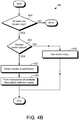
- sub-method 450 for synthesizing multiple copies of white space data is now discussed with reference to FIG. 4B .
- a copy of the data may be deemed “recent” if it was obtained from an authoritative source within some threshold time preceding the time at which the data is to be used to select a channel.
- threshold time may be any suitable value such as a day, 2 days, or a week.
- sub-method 450 may indicate an error, ending the method. Though, any suitable action may be taken if no received copies are recent.
- method 400 may return to step 403 and rebroadcast a request for the white space data.
- a requesting device may initiate actions to obtain white space data in other ways, such as by identifying a nearby device that has an active network connection and can act as a proxy for a connection to an authoritative source of white space data.
- sub-method 450 proceeds to step 453 where it is determined whether multiple recent copies of the white space data are available. If not, a determination is made at step 455 to use the one recent copy of the white space data and sub-method 450 ends. Method 400 may continue at step 411 using the identified recent copy of the white space data.
- sub-method 450 continues to step 457 at which some or all of the received copies are selected for synthesis. In some embodiments, all of the recent copies are selected. In another embodiment, only a subset of the recent copies are selected. For example, another threshold time may be used to determine which copies of the white space data should be selected based on distance from the requesting device or time since the data was obtained from an authoritative source. Though, the copies to synthesize may be selected in any suitable way.
- the selected copies are synthesized to identify the available white space channels.
- the available channels are identified as the intersection of available channels among all the selected copies. That is, only channels indicated as available by all the selected copies of the white space data are identified as available in the synthesized data. Equivalently, any channel identified by any of the selected copies as unavailable may be deemed unavailable when forming the synthesized data, even if one or more of the other copies indicate the channel is available. It should be appreciated that any copies of the white space data that were not selected at step 457 are ignored. Of course, if only one copy of the data is selected at step 457, that copy is used to identify the available channels.
- sub-method 450 ends and method 400 may continue at step 411.
- any suitable method may be used. For example, in some embodiments, the most up-to-date version of the white space data may be used and all others ignored. As another example, if a copy of the white space data has been received from the database server using a receiving device as a proxy, all other copies may be ignored. As yet another example, the method may identify available channels from the first copy of the database received and ignore all subsequent copies.
- obtaining module 209 of requesting device 110 may be configured to perform steps 401 through 407 of method 400.
- Combining module 211 may be configured to perform step 409 (method 450).
- Connecting module 213 may be configured to perform step 411 through 419.
- modules 209-213 of requesting device 110 may be configured in any suitable way.
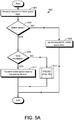
- Method 500 may be performed, for example, by operation of any of the receiving devices 120A...120E shown in FIG. 1 , such as receiving device 320 shown in FIG. 3 . Though, method 500 may be implemented in any suitable way.
- a receiving device may receive a wireless transmission representing a request for white space data.
- the receiving device may monitor a channel for such a request, detect the request within a communication that the receiving device may otherwise be monitoring or detect the request in any suitable way.
- receiving the request at step 501 may occur as part of processing those messages.
- the receiving device determines whether it is within limits imposed for processing requests for white space data. For example, an operator of the receiving device may configure the device to limit the amount of resources devoted to responding to requests. The limits may be specified as an amount of time, a portion of processor or bandwidth use, or any other resource that may be consumed by responding to white space data requests.
- method 500 may ignore any requests for white space data, as indicated by step 505. It should be appreciated that step 505 may not entail express actions and could alternatively involve ending processing of a request. Also, step 505 need not be performed in exactly the order indicated. Requests could be ignored, for example, by turning off a receiver in a NIC or other action that precludes reception of a request.
- step 509 If it is determined that the white space data is not available at step 509, other steps may be taken by the receiving device to participate in a collaborative process with the requesting device that enables the requesting device to obtain a copy of white space data.
- the method continues to step 513 where the receiving devices may be configured to act as a proxy through which the white space data may be downloaded from a white space database server.
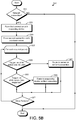
- operation of the receiving device as a proxy at step 509 may be performed in accordance with sub-method 550, shown in FIG. 5B .
- sub-method 550 a determination is made as to whether a network connection exists over which the receiving device may access a database server. If no such network connection exists, sub-method 550 ends.
- sub-method 550 continues to step 553.
- routing messages includes forwarding the messages without modification such that end-to-end security can be used.
- step 557 For each packet received (step 557) a determination is made whether the packet is tagged as a white space request (step 559). If so, at step 561 the tagged white space request packet is routed using the second connection to the database server.
- the packet is not tagged as a white space request, it is further determined at step 563 if the packet is tagged as a white space data response. If so, at step 565 the white space data response packet is routed using the first connection to the requesting device.
- sub-method 550 After appropriate treatment of the packet, it is determined whether another packet related to the operation of the receiving device as proxy has been or is expected to be received. If so, sub-method 550 returns to step 557 to begin processing a next received packet. If no further packets related to operation of the receiving device as proxy remain, sub-method 550 may end. Optionally, the first and/or second connection may be terminated and resources related to these connections may be freed.
- Sub-method 550 illustrates some embodiments in which a receiving device operates as a proxy between the requesting device and the database server.
- a receiving device may be configured to act as a proxy in any suitable way.
- the receiving device also retains a copy of the white space data received from the database server.
- only changes with respect to a locally stored copy of the white space data are downloaded from the proxy server. The changes may be applied to the local copy which is then forwarded to the requesting device.
- the receiving device may determine if the local copy of the white space data is out dated, and if so, form the proxy connection such that a new version of the database may be provided to both the requesting device and the receiving device.
- responding module 309, proxy module 311 and access control module 313 of receiving device 320 may be configured to perform some or all of steps method 500 and sub-method 550.
- modules 309-313 may be configured in any suitable way.
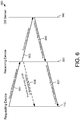
- FIG. 6 is a signaling diagram 600 illustrating exchange of messages between requesting device 110, receiving device 320 and database server 140 according to some embodiments. Reference is made to methods 400 and 500 for details of the signaling and processing performed by requesting device 110 and receiving device 120, respectfully.
- Signal 601 is sent from requesting device 110 to receiving device 320.
- Signal 601 contains a request that a copy of the white space database be provided to requesting device 110 (step 403, FIG. 4A , step 501, FIG. 5A ).
- receiving device 320 transmits signal 609 to requesting device 110.
- Signal 609 includes a copy of the white space database locally stored by receiving device 320 (step 511, FIG. 5A ).
- signaling diagram 600 may omit some signaling that may occur. Additional signaling may, for example, be used to establish connectivity between the devices, provide authenticating information, and to acknowledge receipt of received information.
- a request for white space data may contain different or additional information than described above.
- the request may specify the location of requesting device 110. The location may be used by the receiving device to identify a local repository of white space data to which it should connect or to identify white space data applicable to a particular location that responds to the request.
- a receiving device may participate in obtaining white space data for a requesting device. For example, it was described that a receiving device may either provide a copy of data from a local store or acting as a proxy to allow the requesting device to connect to a source of the data. These techniques may be used singly or together. Alternatively or additionally, other techniques may be used. For example, if a receiving device does not have a copy of the white space data, it may in turn issue a request to other devices that may be nearby.
- database server 140 is only shown with one white space database 141, which may be a geographically limited database containing channel assignments in the licensed spectrum in environment 100 ( FIG. 1 ). However, it should be appreciated that the database server may store white space data for geographic regions other than that in which requesting device 110 resides. In such a scenario, location information in a request may indicate which copy is provided.
- modules performing the methods for sharing white space data may be implemented as part of the operating systems of the receiving device and the request device. Though, the modules illustrated in FIGs. 2 and 3 may be in any suitable portion of the devices.
- the above-described embodiments of the present invention can be implemented in any of numerous ways.
- the embodiments may be implemented using hardware, software or a combination thereof.
- the software code can be executed on any suitable processor or collection of processors, whether provided in a single computer or distributed among multiple computers.
- a computer may be embodied in any of a number of forms, such as a rack-mounted computer, a desktop computer, a laptop computer, or a tablet computer. Additionally, a computer may be embedded in a device not generally regarded as a computer but with suitable processing capabilities, including a Personal Digital Assistant (PDA), a smart phone or any other suitable portable or fixed electronic device.
- PDA Personal Digital Assistant
- a computer may have one or more input and output devices. These devices can be used, among other things, to present a user interface. Examples of output devices that can be used to provide a user interface include printers or display screens for visual presentation of output and speakers or other sound generating devices for audible presentation of output. Examples of input devices that can be used for a user interface include keyboards, and pointing devices, such as mice, touch pads, and digitizing tablets. As another example, a computer may receive input information through speech recognition or in other audible format.
- Such computers may be interconnected by one or more networks in any suitable form, including as a local area network or a wide area network, such as an enterprise network or the Internet.
- networks may be based on any suitable technology and may operate according to any suitable protocol and may include wireless networks, wired networks or fiber optic networks.
- the various methods or processes outlined herein may be coded as software that is executable on one or more processors that employ any one of a variety of operating systems or platforms. Additionally, such software may be written using any of a number of suitable programming languages and/or programming or scripting tools, and also may be compiled as executable machine language code or intermediate code that is executed on a framework or virtual machine.
- the invention may be embodied as a computer readable medium (or multiple computer readable media) (e.g., a computer memory, one or more floppy discs, compact discs, optical discs, magnetic tapes, flash memories, circuit configurations in Field Programmable Gate Arrays or other semiconductor devices, or other non-transitory, tangible computer storage medium) encoded with one or more programs that, when executed on one or more computers or other processors, perform methods that implement the various embodiments of the invention discussed above.
- the computer readable medium or media can be transportable, such that the program or programs stored thereon can be loaded onto one or more different computers or other processors to implement various aspects of the present invention as discussed above.
- program or “software” are used herein in a generic sense to refer to any type of computer code or set of computer-executable instructions that can be employed to program a computer or other processor to implement various aspects of the present invention as discussed above. Additionally, it should be appreciated that according to one aspect of this embodiment, one or more computer programs that when executed perform methods of the present invention need not reside on a single computer or processor, but may be distributed in a modular fashion amongst a number of different computers or processors to implement various aspects of the present invention.
- Computer-executable instructions may be in many forms, such as program modules, executed by one or more computers or other devices.
- program modules include routines, programs, objects, components, data structures, etc. that perform particular tasks or implement particular abstract data types.
- functionality of the program modules may be combined or distributed as desired in various embodiments.
- data structures may be stored in computer-readable media in any suitable form.
- data structures may be shown to have fields that are related through location in the data structure. Such relationships may likewise be achieved by assigning storage for the fields with locations in a computer-readable medium that conveys relationship between the fields.
- any suitable mechanism may be used to establish a relationship between information in fields of a data structure, including through the use of pointers, tags or other mechanisms that establish relationship between data elements.
- the invention may be embodied as a method, of which an example has been provided.
- the acts performed as part of the method may be ordered in any suitable way. Accordingly, embodiments may be constructed in which acts are performed in an order different than illustrated, which may include performing some acts simultaneously, even though shown as sequential acts in illustrative embodiments.
Landscapes
- Engineering & Computer Science (AREA)
- Computer Networks & Wireless Communication (AREA)
- Signal Processing (AREA)
- Computer Security & Cryptography (AREA)
- Databases & Information Systems (AREA)
- Mobile Radio Communication Systems (AREA)
Applications Claiming Priority (2)
| Application Number | Priority Date | Filing Date | Title |
|---|---|---|---|
| US12/703,490 US8812011B2 (en) | 2010-02-10 | 2010-02-10 | Distributed database access for spectrum access |
| PCT/US2011/022291 WO2011100103A2 (en) | 2010-02-10 | 2011-01-24 | Distributed database access for spectrum access |
Publications (3)
| Publication Number | Publication Date |
|---|---|
| EP2534771A2 EP2534771A2 (en) | 2012-12-19 |
| EP2534771A4 EP2534771A4 (en) | 2017-08-23 |
| EP2534771B1 true EP2534771B1 (en) | 2019-02-27 |
Family
ID=44354092
Family Applications (1)
| Application Number | Title | Priority Date | Filing Date |
|---|---|---|---|
| EP11742603.1A Active EP2534771B1 (en) | 2010-02-10 | 2011-01-24 | Distributed database access for spectrum access |
Country Status (7)
| Country | Link |
|---|---|
| US (1) | US8812011B2 (enExample) |
| EP (1) | EP2534771B1 (enExample) |
| JP (1) | JP5765716B2 (enExample) |
| KR (1) | KR101775179B1 (enExample) |
| CN (1) | CN102742182B (enExample) |
| AU (1) | AU2011216135B2 (enExample) |
| WO (1) | WO2011100103A2 (enExample) |
Families Citing this family (31)
| Publication number | Priority date | Publication date | Assignee | Title |
|---|---|---|---|---|
| JP5565082B2 (ja) | 2009-07-31 | 2014-08-06 | ソニー株式会社 | 送信電力決定方法、通信装置及びプログラム |
| JP5531767B2 (ja) * | 2009-07-31 | 2014-06-25 | ソニー株式会社 | 送信電力制御方法、通信装置及びプログラム |
| JP5429036B2 (ja) | 2009-08-06 | 2014-02-26 | ソニー株式会社 | 通信装置、送信電力制御方法、及びプログラム |
| US8583129B2 (en) | 2010-03-19 | 2013-11-12 | Lg Electronics Inc. | Method and apparatus for acquiring available channel information in a wireless local area network system |
| JP5629374B2 (ja) * | 2010-07-09 | 2014-11-19 | ウィ−ラン・インコーポレイテッドWI−LAN Inc. | 構造化データベースを使用するtvホワイトスペースデバイス |
| US8406780B2 (en) * | 2011-01-14 | 2013-03-26 | Intel Mobile Communications GmbH | LTE operation in white spaces |
| US8457882B2 (en) * | 2011-04-19 | 2013-06-04 | Honeywell International Inc. | Systems and methods for navigation in a GPS-denied environment |
| DE102011080380A1 (de) * | 2011-08-03 | 2013-02-07 | Robert Bosch Gmbh | Verfahren zum automatisierten Zuweisen von Frequenzbereichen |
| US20130045736A1 (en) * | 2011-08-17 | 2013-02-21 | Louis H. Libin | System, method and product for verifying the allocation of locally unused radio frequencies |
| GB2496646A (en) | 2011-11-17 | 2013-05-22 | Renesas Mobile Corp | Mapping a feedback (ACK/NACK) radio resource |
| US9852432B2 (en) | 2011-12-12 | 2017-12-26 | International Business Machines Corporation | Customizing a presentation based on preferences of an audience |
| US20130151624A1 (en) * | 2011-12-12 | 2013-06-13 | International Business Machines Corporation | Context-Sensitive Collaboration Channels |
| US9588652B2 (en) | 2011-12-12 | 2017-03-07 | International Business Machines Corporation | Providing feedback for screen sharing |
| US9124657B2 (en) | 2011-12-14 | 2015-09-01 | International Business Machines Corporation | Dynamic screen sharing for optimal performance |
| US9141264B2 (en) | 2011-12-14 | 2015-09-22 | International Business Machines Corporation | Variable refresh rates for portions of shared screens |
| US9009178B2 (en) | 2011-12-28 | 2015-04-14 | Nokia Corporation | Method and apparatus for regulatory database protocol discovery |
| US9363812B2 (en) | 2012-02-01 | 2016-06-07 | Qualcomm Incorporated | Method and apparatus for white space operation by a mobile entity |
| US9071976B2 (en) * | 2012-05-31 | 2015-06-30 | Intel Mobile Communications GmbH | Communication network device, communication device, method for managing communication resource allocation and method for communication resource allocation |
| US8938272B2 (en) * | 2012-08-06 | 2015-01-20 | Microsoft Corporation | Channel reporting for television whitespace |
| US10542305B2 (en) | 2012-12-03 | 2020-01-21 | Nbcuniversal Media, Llc | Flexible broadcast system and method |
| CN103874075A (zh) * | 2012-12-18 | 2014-06-18 | 华为技术有限公司 | 白频谱资源获取方法、白频谱资源请求设备及系统 |
| JP6015428B2 (ja) * | 2012-12-24 | 2016-10-26 | 株式会社デンソー | 無線通信装置、および無線通信方法 |
| CN103106105A (zh) * | 2013-02-20 | 2013-05-15 | 东莞宇龙通信科技有限公司 | 网络设备任务处理方法和系统 |
| EP2770789B1 (en) | 2013-02-21 | 2016-09-07 | Deutsche Telekom AG | Contextual and predictive prioritization of spectrum access |
| CN104969598B (zh) * | 2013-12-13 | 2019-04-19 | 华为技术有限公司 | 一种利用白频谱通信的方法及设备 |
| US10070443B2 (en) | 2014-09-25 | 2018-09-04 | Sharp Laboratories Of America, Inc. | Method and apparatus for unlicensed communications band access |
| US9363743B2 (en) * | 2014-10-10 | 2016-06-07 | Blackberry Limited | Utilizing Wi-Fi country code to assist cellular network selection |
| CN106304090B (zh) * | 2015-05-13 | 2021-11-23 | 索尼公司 | 动态频谱接入系统中抑制干扰的方法和设备 |
| JP6808760B2 (ja) * | 2016-06-24 | 2021-01-06 | ノキア テクノロジーズ オサケユイチア | 分散動的スペクトル割当てのための方法、ソース装置およびパワーノード |
| US12342175B2 (en) | 2018-09-28 | 2025-06-24 | Sony Corporation | Information processing device and information processing method |
| JP7291608B2 (ja) * | 2019-11-05 | 2023-06-15 | ルネサスエレクトロニクス株式会社 | 路側無線機および無線通信システム |
Family Cites Families (24)
| Publication number | Priority date | Publication date | Assignee | Title |
|---|---|---|---|---|
| US20020002611A1 (en) | 2000-04-17 | 2002-01-03 | Mark Vange | System and method for shifting functionality between multiple web servers |
| JP2003032725A (ja) * | 2001-07-18 | 2003-01-31 | Ntt Docomo Inc | 移動通信システムにおける無線基地局選択方法及びシステム並びに無線基地局 |
| US6738599B2 (en) * | 2001-09-07 | 2004-05-18 | Nokia Corporation | Assembly, and associated method, for facilitating channel frequency selection in a communication system utilizing a dynamic frequency selection scheme |
| US20060160543A1 (en) | 2002-03-14 | 2006-07-20 | Alex Mashinsky | Method and system for dynamic spectrum allocation and management |
| GB2411793A (en) * | 2004-03-02 | 2005-09-07 | Agilent Technologies Inc | Disseminating control information to a wireless communications device |
| JP4772582B2 (ja) * | 2006-04-28 | 2011-09-14 | 株式会社東芝 | コグニティブ無線システム |
| US7813373B2 (en) * | 2006-05-25 | 2010-10-12 | Motorola, Inc. | Systems, methods and apparatus for detecting time slot interference and recovering from time slot interference in an ad hoc wireless communication network |
| US7876786B2 (en) * | 2006-12-01 | 2011-01-25 | Microsoft Corporation | Dynamic time-spectrum block allocation for cognitive radio networks |
| US8879573B2 (en) * | 2006-12-01 | 2014-11-04 | Microsoft Corporation | Media access control (MAC) protocol for cognitive wireless networks |
| US7881726B2 (en) * | 2007-07-31 | 2011-02-01 | Motorola, Inc. | Method and apparatus for spectrum sharing between an incumbent communications system and a cognitive radio system |
| JP5213476B2 (ja) * | 2008-02-19 | 2013-06-19 | 株式会社トヨタIt開発センター | 無線通信方法及び無線通信システム |
| US8077710B2 (en) * | 2008-02-27 | 2011-12-13 | Sharp Laboratories Of America, Inc. | Method and system for discovering vacant DTV channels using DHCP server location |
| US8861502B2 (en) * | 2008-03-03 | 2014-10-14 | Qualcomm Incorporated | Assisted initial network acquisition and system determination |
| US8761792B2 (en) | 2008-03-27 | 2014-06-24 | At&T Mobility Ii Llc | Management of preemptable communications resources |
| US8699360B2 (en) | 2008-03-31 | 2014-04-15 | Motorola Solutions, Inc. | Communications system for exchanging spectrum sensing measurements through a drop box and method of using same |
| US7995526B2 (en) * | 2008-04-23 | 2011-08-09 | Honeywell International Inc. | Apparatus and method for medium access control in wireless communication networks |
| US8145230B2 (en) | 2008-04-30 | 2012-03-27 | Motorola Solutions, Inc. | Context-image distributed spectrum allocation scheme for cognitive radios |
| US8140085B2 (en) * | 2008-09-30 | 2012-03-20 | Motorola Solutions, Inc. | Method and apparatus for optimizing spectrum utilization by a cognitive radio network |
| JP5182020B2 (ja) * | 2008-11-05 | 2013-04-10 | 富士通株式会社 | 移動端末装置、通信システム及び無線通信条件設定方法 |
| WO2010084801A1 (ja) * | 2009-01-26 | 2010-07-29 | ソニー株式会社 | 通信制御方法、通信装置、及びプログラム |
| US8254844B2 (en) * | 2009-05-29 | 2012-08-28 | Motorola Solutions, Inc. | Method and apparatus for utilizing a transmission polarization to reduce interference with a primary incumbent signal |
| US8644230B2 (en) * | 2009-11-23 | 2014-02-04 | At&T Intellectual Property I, L.P. | Method and apparatus for providing communication over a white space channel without causing interference to digital television systems |
| US10172114B2 (en) * | 2009-12-11 | 2019-01-01 | Nokia Technologies Oy | Apparatus and associated methods for determining available channels based on predicted movement |
| US8463229B2 (en) * | 2010-01-27 | 2013-06-11 | Nokia Corporation | Coexistence for cognitive radio |
-
2010
- 2010-02-10 US US12/703,490 patent/US8812011B2/en active Active
-
2011
- 2011-01-24 EP EP11742603.1A patent/EP2534771B1/en active Active
- 2011-01-24 WO PCT/US2011/022291 patent/WO2011100103A2/en not_active Ceased
- 2011-01-24 AU AU2011216135A patent/AU2011216135B2/en not_active Ceased
- 2011-01-24 KR KR1020127020939A patent/KR101775179B1/ko not_active Expired - Fee Related
- 2011-01-24 JP JP2012552888A patent/JP5765716B2/ja not_active Expired - Fee Related
- 2011-01-24 CN CN201180009034.1A patent/CN102742182B/zh not_active Expired - Fee Related
Non-Patent Citations (1)
| Title |
|---|
| None * |
Also Published As
| Publication number | Publication date |
|---|---|
| KR101775179B1 (ko) | 2017-09-19 |
| WO2011100103A2 (en) | 2011-08-18 |
| AU2011216135B2 (en) | 2014-04-03 |
| EP2534771A4 (en) | 2017-08-23 |
| CN102742182A (zh) | 2012-10-17 |
| JP2013520079A (ja) | 2013-05-30 |
| JP5765716B2 (ja) | 2015-08-19 |
| CN102742182B (zh) | 2019-04-19 |
| US20110195667A1 (en) | 2011-08-11 |
| AU2011216135A1 (en) | 2012-08-02 |
| KR20120125290A (ko) | 2012-11-14 |
| US8812011B2 (en) | 2014-08-19 |
| WO2011100103A3 (en) | 2012-01-12 |
| EP2534771A2 (en) | 2012-12-19 |
Similar Documents
| Publication | Publication Date | Title |
|---|---|---|
| AU2011216135B2 (en) | Distributed database access for spectrum access | |
| US11900167B2 (en) | Query processing using multiple indices | |
| US9271156B2 (en) | Location determination for white space utilization | |
| US8909241B2 (en) | Wireless device and communication method | |
| JP6452722B2 (ja) | 目標携帯デバイス位置特定方法、装置、プログラム及び記録媒体 | |
| AU2010318605B2 (en) | Location integration in software defined radio | |
| US20150071268A1 (en) | Regulatory compliance for wireless devices | |
| US20190149992A1 (en) | Methods and apparatus for obtaining a service | |
| US20130331117A1 (en) | Method and apparatus for white space database discovery | |
| AU2015253622B2 (en) | Apparatus and method for distributing rule ownership among devices in a system | |
| US9775189B2 (en) | System and method for reducing control data traffic in a white space network | |
| US20240314684A1 (en) | AI-Based Selection of Network and Initial Access in 5G/6G | |
| US10298695B2 (en) | Cognitive connectivity management | |
| HK1176476A (en) | Distributed database access for spectrum access | |
| KR101946820B1 (ko) | 듀얼 주파수 대역에서 트리플 모드로 동작하는 무선통신 장치 및 운용 방법 |
Legal Events
| Date | Code | Title | Description |
|---|---|---|---|
| PUAI | Public reference made under article 153(3) epc to a published international application that has entered the european phase |
Free format text: ORIGINAL CODE: 0009012 |
|
| 17P | Request for examination filed |
Effective date: 20120712 |
|
| AK | Designated contracting states |
Kind code of ref document: A2 Designated state(s): AL AT BE BG CH CY CZ DE DK EE ES FI FR GB GR HR HU IE IS IT LI LT LU LV MC MK MT NL NO PL PT RO RS SE SI SK SM TR |
|
| DAX | Request for extension of the european patent (deleted) | ||
| RAP1 | Party data changed (applicant data changed or rights of an application transferred) |
Owner name: MICROSOFT TECHNOLOGY LICENSING, LLC |
|
| A4 | Supplementary search report drawn up and despatched |
Effective date: 20170721 |
|
| RIC1 | Information provided on ipc code assigned before grant |
Ipc: H04W 92/18 20090101ALN20170717BHEP Ipc: H04B 7/26 20060101ALN20170717BHEP Ipc: H04W 4/00 20090101ALN20170717BHEP Ipc: H04W 16/14 20090101AFI20170717BHEP Ipc: H04W 48/14 20090101ALI20170717BHEP |
|
| REG | Reference to a national code |
Ref country code: DE Ref legal event code: R079 Ref document number: 602011056605 Country of ref document: DE Free format text: PREVIOUS MAIN CLASS: H04B0007260000 Ipc: H04W0016140000 |
|
| RIC1 | Information provided on ipc code assigned before grant |
Ipc: H04W 4/50 20180101ALN20180726BHEP Ipc: H04W 8/00 20090101ALN20180726BHEP Ipc: H04W 48/14 20090101ALI20180726BHEP Ipc: H04W 16/14 20090101AFI20180726BHEP Ipc: H04W 4/00 20090101ALN20180726BHEP Ipc: H04W 92/18 20090101ALN20180726BHEP Ipc: H04B 7/26 20060101ALN20180726BHEP |
|
| GRAP | Despatch of communication of intention to grant a patent |
Free format text: ORIGINAL CODE: EPIDOSNIGR1 |
|
| STAA | Information on the status of an ep patent application or granted ep patent |
Free format text: STATUS: GRANT OF PATENT IS INTENDED |
|
| RIC1 | Information provided on ipc code assigned before grant |
Ipc: H04W 48/14 20090101ALI20180823BHEP Ipc: H04W 16/14 20090101AFI20180823BHEP Ipc: H04W 4/00 20090101ALN20180823BHEP Ipc: H04W 92/18 20090101ALN20180823BHEP Ipc: H04B 7/26 20060101ALN20180823BHEP Ipc: H04W 8/00 20090101ALN20180823BHEP Ipc: H04W 4/50 20180101ALN20180823BHEP |
|
| INTG | Intention to grant announced |
Effective date: 20180904 |
|
| RIC1 | Information provided on ipc code assigned before grant |
Ipc: H04W 48/14 20090101ALI20180824BHEP Ipc: H04W 4/50 20180101ALN20180824BHEP Ipc: H04W 16/14 20090101AFI20180824BHEP Ipc: H04W 8/00 20090101ALN20180824BHEP Ipc: H04W 4/00 20090101ALN20180824BHEP Ipc: H04W 92/18 20090101ALN20180824BHEP Ipc: H04B 7/26 20060101ALN20180824BHEP |
|
| GRAS | Grant fee paid |
Free format text: ORIGINAL CODE: EPIDOSNIGR3 |
|
| GRAA | (expected) grant |
Free format text: ORIGINAL CODE: 0009210 |
|
| STAA | Information on the status of an ep patent application or granted ep patent |
Free format text: STATUS: THE PATENT HAS BEEN GRANTED |
|
| AK | Designated contracting states |
Kind code of ref document: B1 Designated state(s): AL AT BE BG CH CY CZ DE DK EE ES FI FR GB GR HR HU IE IS IT LI LT LU LV MC MK MT NL NO PL PT RO RS SE SI SK SM TR |
|
| REG | Reference to a national code |
Ref country code: GB Ref legal event code: FG4D |
|
| REG | Reference to a national code |
Ref country code: CH Ref legal event code: EP |
|
| REG | Reference to a national code |
Ref country code: DE Ref legal event code: R096 Ref document number: 602011056605 Country of ref document: DE |
|
| REG | Reference to a national code |
Ref country code: AT Ref legal event code: REF Ref document number: 1103155 Country of ref document: AT Kind code of ref document: T Effective date: 20190315 |
|
| REG | Reference to a national code |
Ref country code: IE Ref legal event code: FG4D |
|
| REG | Reference to a national code |
Ref country code: NL Ref legal event code: FP |
|
| REG | Reference to a national code |
Ref country code: LT Ref legal event code: MG4D |
|
| PG25 | Lapsed in a contracting state [announced via postgrant information from national office to epo] |
Ref country code: FI Free format text: LAPSE BECAUSE OF FAILURE TO SUBMIT A TRANSLATION OF THE DESCRIPTION OR TO PAY THE FEE WITHIN THE PRESCRIBED TIME-LIMIT Effective date: 20190227 Ref country code: NO Free format text: LAPSE BECAUSE OF FAILURE TO SUBMIT A TRANSLATION OF THE DESCRIPTION OR TO PAY THE FEE WITHIN THE PRESCRIBED TIME-LIMIT Effective date: 20190527 Ref country code: LT Free format text: LAPSE BECAUSE OF FAILURE TO SUBMIT A TRANSLATION OF THE DESCRIPTION OR TO PAY THE FEE WITHIN THE PRESCRIBED TIME-LIMIT Effective date: 20190227 Ref country code: PT Free format text: LAPSE BECAUSE OF FAILURE TO SUBMIT A TRANSLATION OF THE DESCRIPTION OR TO PAY THE FEE WITHIN THE PRESCRIBED TIME-LIMIT Effective date: 20190627 Ref country code: SE Free format text: LAPSE BECAUSE OF FAILURE TO SUBMIT A TRANSLATION OF THE DESCRIPTION OR TO PAY THE FEE WITHIN THE PRESCRIBED TIME-LIMIT Effective date: 20190227 |
|
| PG25 | Lapsed in a contracting state [announced via postgrant information from national office to epo] |
Ref country code: RS Free format text: LAPSE BECAUSE OF FAILURE TO SUBMIT A TRANSLATION OF THE DESCRIPTION OR TO PAY THE FEE WITHIN THE PRESCRIBED TIME-LIMIT Effective date: 20190227 Ref country code: HR Free format text: LAPSE BECAUSE OF FAILURE TO SUBMIT A TRANSLATION OF THE DESCRIPTION OR TO PAY THE FEE WITHIN THE PRESCRIBED TIME-LIMIT Effective date: 20190227 Ref country code: GR Free format text: LAPSE BECAUSE OF FAILURE TO SUBMIT A TRANSLATION OF THE DESCRIPTION OR TO PAY THE FEE WITHIN THE PRESCRIBED TIME-LIMIT Effective date: 20190528 Ref country code: IS Free format text: LAPSE BECAUSE OF FAILURE TO SUBMIT A TRANSLATION OF THE DESCRIPTION OR TO PAY THE FEE WITHIN THE PRESCRIBED TIME-LIMIT Effective date: 20190627 Ref country code: LV Free format text: LAPSE BECAUSE OF FAILURE TO SUBMIT A TRANSLATION OF THE DESCRIPTION OR TO PAY THE FEE WITHIN THE PRESCRIBED TIME-LIMIT Effective date: 20190227 Ref country code: BG Free format text: LAPSE BECAUSE OF FAILURE TO SUBMIT A TRANSLATION OF THE DESCRIPTION OR TO PAY THE FEE WITHIN THE PRESCRIBED TIME-LIMIT Effective date: 20190527 |
|
| REG | Reference to a national code |
Ref country code: AT Ref legal event code: MK05 Ref document number: 1103155 Country of ref document: AT Kind code of ref document: T Effective date: 20190227 |
|
| PG25 | Lapsed in a contracting state [announced via postgrant information from national office to epo] |
Ref country code: DK Free format text: LAPSE BECAUSE OF FAILURE TO SUBMIT A TRANSLATION OF THE DESCRIPTION OR TO PAY THE FEE WITHIN THE PRESCRIBED TIME-LIMIT Effective date: 20190227 Ref country code: EE Free format text: LAPSE BECAUSE OF FAILURE TO SUBMIT A TRANSLATION OF THE DESCRIPTION OR TO PAY THE FEE WITHIN THE PRESCRIBED TIME-LIMIT Effective date: 20190227 Ref country code: ES Free format text: LAPSE BECAUSE OF FAILURE TO SUBMIT A TRANSLATION OF THE DESCRIPTION OR TO PAY THE FEE WITHIN THE PRESCRIBED TIME-LIMIT Effective date: 20190227 Ref country code: IT Free format text: LAPSE BECAUSE OF FAILURE TO SUBMIT A TRANSLATION OF THE DESCRIPTION OR TO PAY THE FEE WITHIN THE PRESCRIBED TIME-LIMIT Effective date: 20190227 Ref country code: RO Free format text: LAPSE BECAUSE OF FAILURE TO SUBMIT A TRANSLATION OF THE DESCRIPTION OR TO PAY THE FEE WITHIN THE PRESCRIBED TIME-LIMIT Effective date: 20190227 Ref country code: CZ Free format text: LAPSE BECAUSE OF FAILURE TO SUBMIT A TRANSLATION OF THE DESCRIPTION OR TO PAY THE FEE WITHIN THE PRESCRIBED TIME-LIMIT Effective date: 20190227 Ref country code: SK Free format text: LAPSE BECAUSE OF FAILURE TO SUBMIT A TRANSLATION OF THE DESCRIPTION OR TO PAY THE FEE WITHIN THE PRESCRIBED TIME-LIMIT Effective date: 20190227 Ref country code: AL Free format text: LAPSE BECAUSE OF FAILURE TO SUBMIT A TRANSLATION OF THE DESCRIPTION OR TO PAY THE FEE WITHIN THE PRESCRIBED TIME-LIMIT Effective date: 20190227 |
|
| REG | Reference to a national code |
Ref country code: DE Ref legal event code: R097 Ref document number: 602011056605 Country of ref document: DE |
|
| PG25 | Lapsed in a contracting state [announced via postgrant information from national office to epo] |
Ref country code: SM Free format text: LAPSE BECAUSE OF FAILURE TO SUBMIT A TRANSLATION OF THE DESCRIPTION OR TO PAY THE FEE WITHIN THE PRESCRIBED TIME-LIMIT Effective date: 20190227 Ref country code: PL Free format text: LAPSE BECAUSE OF FAILURE TO SUBMIT A TRANSLATION OF THE DESCRIPTION OR TO PAY THE FEE WITHIN THE PRESCRIBED TIME-LIMIT Effective date: 20190227 |
|
| PG25 | Lapsed in a contracting state [announced via postgrant information from national office to epo] |
Ref country code: AT Free format text: LAPSE BECAUSE OF FAILURE TO SUBMIT A TRANSLATION OF THE DESCRIPTION OR TO PAY THE FEE WITHIN THE PRESCRIBED TIME-LIMIT Effective date: 20190227 |
|
| PLBE | No opposition filed within time limit |
Free format text: ORIGINAL CODE: 0009261 |
|
| STAA | Information on the status of an ep patent application or granted ep patent |
Free format text: STATUS: NO OPPOSITION FILED WITHIN TIME LIMIT |
|
| REG | Reference to a national code |
Ref country code: DE Ref legal event code: R082 Ref document number: 602011056605 Country of ref document: DE Representative=s name: GRUENECKER PATENT- UND RECHTSANWAELTE PARTG MB, DE |
|
| 26N | No opposition filed |
Effective date: 20191128 |
|
| PG25 | Lapsed in a contracting state [announced via postgrant information from national office to epo] |
Ref country code: SI Free format text: LAPSE BECAUSE OF FAILURE TO SUBMIT A TRANSLATION OF THE DESCRIPTION OR TO PAY THE FEE WITHIN THE PRESCRIBED TIME-LIMIT Effective date: 20190227 |
|
| PG25 | Lapsed in a contracting state [announced via postgrant information from national office to epo] |
Ref country code: TR Free format text: LAPSE BECAUSE OF FAILURE TO SUBMIT A TRANSLATION OF THE DESCRIPTION OR TO PAY THE FEE WITHIN THE PRESCRIBED TIME-LIMIT Effective date: 20190227 |
|
| PG25 | Lapsed in a contracting state [announced via postgrant information from national office to epo] |
Ref country code: MC Free format text: LAPSE BECAUSE OF FAILURE TO SUBMIT A TRANSLATION OF THE DESCRIPTION OR TO PAY THE FEE WITHIN THE PRESCRIBED TIME-LIMIT Effective date: 20190227 |
|
| REG | Reference to a national code |
Ref country code: CH Ref legal event code: PL |
|
| REG | Reference to a national code |
Ref country code: BE Ref legal event code: MM Effective date: 20200131 |
|
| PG25 | Lapsed in a contracting state [announced via postgrant information from national office to epo] |
Ref country code: LU Free format text: LAPSE BECAUSE OF NON-PAYMENT OF DUE FEES Effective date: 20200124 |
|
| PG25 | Lapsed in a contracting state [announced via postgrant information from national office to epo] |
Ref country code: BE Free format text: LAPSE BECAUSE OF NON-PAYMENT OF DUE FEES Effective date: 20200131 Ref country code: LI Free format text: LAPSE BECAUSE OF NON-PAYMENT OF DUE FEES Effective date: 20200131 Ref country code: CH Free format text: LAPSE BECAUSE OF NON-PAYMENT OF DUE FEES Effective date: 20200131 |
|
| PG25 | Lapsed in a contracting state [announced via postgrant information from national office to epo] |
Ref country code: IE Free format text: LAPSE BECAUSE OF NON-PAYMENT OF DUE FEES Effective date: 20200124 |
|
| PG25 | Lapsed in a contracting state [announced via postgrant information from national office to epo] |
Ref country code: MT Free format text: LAPSE BECAUSE OF FAILURE TO SUBMIT A TRANSLATION OF THE DESCRIPTION OR TO PAY THE FEE WITHIN THE PRESCRIBED TIME-LIMIT Effective date: 20190227 Ref country code: CY Free format text: LAPSE BECAUSE OF FAILURE TO SUBMIT A TRANSLATION OF THE DESCRIPTION OR TO PAY THE FEE WITHIN THE PRESCRIBED TIME-LIMIT Effective date: 20190227 |
|
| PG25 | Lapsed in a contracting state [announced via postgrant information from national office to epo] |
Ref country code: MK Free format text: LAPSE BECAUSE OF FAILURE TO SUBMIT A TRANSLATION OF THE DESCRIPTION OR TO PAY THE FEE WITHIN THE PRESCRIBED TIME-LIMIT Effective date: 20190227 |
|
| P01 | Opt-out of the competence of the unified patent court (upc) registered |
Effective date: 20230505 |
|
| PGFP | Annual fee paid to national office [announced via postgrant information from national office to epo] |
Ref country code: NL Payment date: 20231219 Year of fee payment: 14 Ref country code: FR Payment date: 20231219 Year of fee payment: 14 |
|
| REG | Reference to a national code |
Ref country code: NL Ref legal event code: MM Effective date: 20250201 |
|
| PG25 | Lapsed in a contracting state [announced via postgrant information from national office to epo] |
Ref country code: NL Free format text: LAPSE BECAUSE OF NON-PAYMENT OF DUE FEES Effective date: 20250201 |
|
| PG25 | Lapsed in a contracting state [announced via postgrant information from national office to epo] |
Ref country code: FR Free format text: LAPSE BECAUSE OF NON-PAYMENT OF DUE FEES Effective date: 20250131 |
|
| PGFP | Annual fee paid to national office [announced via postgrant information from national office to epo] |
Ref country code: GB Payment date: 20251220 Year of fee payment: 16 |
|
| PGFP | Annual fee paid to national office [announced via postgrant information from national office to epo] |
Ref country code: DE Payment date: 20251217 Year of fee payment: 16 |