EP2533013A1 - Method for route planning - Google Patents
Method for route planning Download PDFInfo
- Publication number
- EP2533013A1 EP2533013A1 EP12168633A EP12168633A EP2533013A1 EP 2533013 A1 EP2533013 A1 EP 2533013A1 EP 12168633 A EP12168633 A EP 12168633A EP 12168633 A EP12168633 A EP 12168633A EP 2533013 A1 EP2533013 A1 EP 2533013A1
- Authority
- EP
- European Patent Office
- Prior art keywords
- information
- route
- driving
- time
- vehicle
- Prior art date
- Legal status (The legal status is an assumption and is not a legal conclusion. Google has not performed a legal analysis and makes no representation as to the accuracy of the status listed.)
- Granted
Links
Images

Classifications
-
- G—PHYSICS
- G01—MEASURING; TESTING
- G01C—MEASURING DISTANCES, LEVELS OR BEARINGS; SURVEYING; NAVIGATION; GYROSCOPIC INSTRUMENTS; PHOTOGRAMMETRY OR VIDEOGRAMMETRY
- G01C21/00—Navigation; Navigational instruments not provided for in groups G01C1/00 - G01C19/00
- G01C21/26—Navigation; Navigational instruments not provided for in groups G01C1/00 - G01C19/00 specially adapted for navigation in a road network
- G01C21/34—Route searching; Route guidance
- G01C21/3453—Special cost functions, i.e. other than distance or default speed limit of road segments
-
- G—PHYSICS
- G01—MEASURING; TESTING
- G01C—MEASURING DISTANCES, LEVELS OR BEARINGS; SURVEYING; NAVIGATION; GYROSCOPIC INSTRUMENTS; PHOTOGRAMMETRY OR VIDEOGRAMMETRY
- G01C21/00—Navigation; Navigational instruments not provided for in groups G01C1/00 - G01C19/00
- G01C21/26—Navigation; Navigational instruments not provided for in groups G01C1/00 - G01C19/00 specially adapted for navigation in a road network
- G01C21/34—Route searching; Route guidance
- G01C21/3453—Special cost functions, i.e. other than distance or default speed limit of road segments
- G01C21/3484—Personalized, e.g. from learned user behaviour or user-defined profiles
-
- G—PHYSICS
- G01—MEASURING; TESTING
- G01C—MEASURING DISTANCES, LEVELS OR BEARINGS; SURVEYING; NAVIGATION; GYROSCOPIC INSTRUMENTS; PHOTOGRAMMETRY OR VIDEOGRAMMETRY
- G01C21/00—Navigation; Navigational instruments not provided for in groups G01C1/00 - G01C19/00
- G01C21/26—Navigation; Navigational instruments not provided for in groups G01C1/00 - G01C19/00 specially adapted for navigation in a road network
- G01C21/34—Route searching; Route guidance
- G01C21/3407—Route searching; Route guidance specially adapted for specific applications
- G01C21/343—Calculating itineraries
-
- G—PHYSICS
- G01—MEASURING; TESTING
- G01C—MEASURING DISTANCES, LEVELS OR BEARINGS; SURVEYING; NAVIGATION; GYROSCOPIC INSTRUMENTS; PHOTOGRAMMETRY OR VIDEOGRAMMETRY
- G01C21/00—Navigation; Navigational instruments not provided for in groups G01C1/00 - G01C19/00
- G01C21/26—Navigation; Navigational instruments not provided for in groups G01C1/00 - G01C19/00 specially adapted for navigation in a road network
- G01C21/34—Route searching; Route guidance
- G01C21/3453—Special cost functions, i.e. other than distance or default speed limit of road segments
- G01C21/3476—Special cost functions, i.e. other than distance or default speed limit of road segments using point of interest [POI] information, e.g. a route passing visible POIs
-
- G—PHYSICS
- G08—SIGNALLING
- G08G—TRAFFIC CONTROL SYSTEMS
- G08G1/00—Traffic control systems for road vehicles
- G08G1/09—Arrangements for giving variable traffic instructions
- G08G1/0962—Arrangements for giving variable traffic instructions having an indicator mounted inside the vehicle, e.g. giving voice messages
- G08G1/0968—Systems involving transmission of navigation instructions to the vehicle
- G08G1/096833—Systems involving transmission of navigation instructions to the vehicle where different aspects are considered when computing the route
Definitions
- the present invention relates to a method for route planning and a route planning system which are particularly suited to commercial traffic.
- aids to planning and following a route for a vehicle comprise not only systems which are accessible via the Internet but also navigation equipment which is fitted in vehicles for planning and following a route.
- US-2010/0145609 describes a method for route planning based on type of vehicle, viz. whether it is powered by a combustion engine or is a hybrid vehicle. A route depending on vehicle type is thus recommended.
- US-2008/0133120 refers to a method for determining and issuing a sequence of driving instructions which indicate fuel-saving routes calculated with regard to vehicle specifications, geography of the terrain and complexity of the route.
- US-2010/0010732 refers to a method for planning a vehicle route which comprises identifying fuel requirements on the basis of identified alternative routes or route segments, using information about the navigation, the vehicle and its power train.
- DE-102007059761 describes a method and a system for planning a route from starting point to destination, including time for breaks, using information about parking locations (for breaks) as input values for the system.
- DE-19933345 describes a method and device for route planning which use map information stored on, for example, a CD ROM, comprising information about service stations, fuel stations, break locations etc.
- the route planning caters for the driver having to take breaks at regular intervals, so it includes interruptions for them.
- a tachograph is a device which continuously records vehicle speed and driving and rest times and has by law to be installed in heavy trucks and buses involved in commercial traffic (there are exceptions).
- a driver is allowed to drive a maximum of 4 hours and 30 minutes without a break. A break of at least 45 minutes must then be taken. Maximum driving time is 9 hours, or up to of 10 hours per day twice a week. These rules are for safety reasons, to ensure that drivers do not become too tired and that competition does not lead to unacceptable working conditions. There are also rules about weekly rest, about shortening of daily or weekly rest periods and about cases where two persons are in the vehicle at the same time, where the vehicle takes a ferry, where the driver helps load/unload etc.
- the object of the present invention is to indicate an improved method for route planning which is particularly suitable for use by vehicles in commercial traffic, e.g. trucks and buses.
- the present invention is based on traditional route planning but with the addition of conditions for route adaptation to the conditions prevailing in commercial traffic.
- the proposed route planning provides not only a geographical route but also advice about what speed is optimum, where breaks and rests should be taken and also where any refuelling should take place.
- Calculating the route's speed profile involves for example catering for:
- Break and rest locations are determined and calculated so as to make optimum use of driving time along the route.
- One scenario is that optimisation aims at driving time being fully used up when the destination is reached. Certain cases (chosen by the driver or the planner) need more or less spare time, for example:
- Route planning according to the present invention thus caters for the specific conditions which prevail in commercial traffic with driving time limitations, and the aim is to ensure that each journey makes as effective use of resources as possible with regard to fuel, time etc.
- the method is intended to be applied in route planning for a vehicle, preferably a vehicle in commercial traffic, e.g. a truck or bus, and comprises reading information in about the locations of the route's starting point and final destination. This may be done by input by the driver or by whoever plans routes for the truck or bus.
- the vehicle's current location may preferably also be read in, e.g. from a GPS system.
- Information is also read in about starting time and/or desired time of arrival at final destination. This information may likewise be entered by the driver or by whoever plans the vehicle's routes. It may also comprise information about current time. It may according to an embodiment comprise information about access at final destination, e.g. opening times (slot times), i.e. a range of times for loading/unloading, and times for marshalling, loading or unloading.
- slot times i.e. a range of times for loading/unloading, and times for marshalling, loading or unloading.
- information about the sections of road between starting point and final destination is also read in. It preferably comprises information about one or more of the following parameters: speed limits, road topography, fuel stations, break locations, ferry charges, ferry timetables, bridge charges, bridge opening times, road tolls, time-limited environmental zones, etc.
- vehicle-specific information is also read in, i.e. information about the vehicle's fuel consumption, current amount of fuel on board, current information about any cargo, e.g. whether it comprises dangerous goods not allowed to be carried in certain areas.
- vehicle-specific information may also comprise more details about the vehicle's engine power.
- the method further comprises reading information in about driving and rest times during a driving shift, as prescribed by regulations on driving times.
- regulations on driving times An example of such regulations discussed above, Regulation 561/2006/EC from the European Union, adopted on 11 April 2007, governs driving and rest times applicable to commercial drivers.
- driving time information is read in from the driver's driver card, with the result that the driving time information comprises also information about driving and rest times for the particular driver.
- the method uses the information read in, i.e. location information, time information, road information, vehicle-specific information and driving time information, as a basis for calculating an optimum route for the vehicle.
- the method comprises continuously calculating an optimum route and altering it as necessary, e.g. upon receiving information about queues along the planned route which may prompt a so-called triggered recalculation of the route.
- One scenario is optimisation with a view to driving time being fully used up when the final destination is reached, as in criterion A above.
- the order of priority is A, B, C, i.e. giving first priority to time, second priority to fuel consumption and third priority to economy.
- the route may be divided into a number of sections with a specific predetermined order of priority calculated for each section.
- the order of priority may thus cover the whole route or vary between different sections of it. On certain sections as low a fuel consumption as possible might for example be a higher priority.
- Another order of priority might put overall economy of the journey, i.e. criterion C, first.
- Prioritisation is for example done by calculating a number of alternative routes, e.g. by known calculation methods using geographical data, followed by applying the above criteria A, B and C to each of the routes calculated.
- the various alternatives are then weighted, e.g. by point scoring, with high scores for high-priority criteria, on the basis of the order of priority determined.
- Break and rest locations are for example determined and calculated so as to make optimum use of driving time along the route. Certain cases (which may be chosen by the driver or the planner) need more or less spare time at final destination, e.g. if loading or unloading is to take place there, if marshalling is to take place, if there is to be a further journey to a rest location or if the vehicle is to be put to some other use.
- driver is presented with driving instructions to enable him/her to follow the calculated route.
- These instructions may for example comprise a geographical route, speed instructions, times and locations for refuelling, breaks and rest.
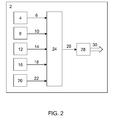
- the present invention relates also to a route planning system for a vehicle, described below with reference to the schematic block diagram in Figure 2 .
- the route planning system 2 comprises:
- the read-out unit is adapted to generating a driving time signal 22 containing said driving time information.
- the route planning unit further comprises a planning unit 24 to which said position signal 6, time signal 10, road information signal 14, vehicle signal 18 and driving time signal 22 are arranged to be conveyed, and which is adapted to calculating an optimum route for the vehicle on the basis of the information contained in them.
- the calculated route is conveyed by a route signal 26 to a presentation unit 28 adapted to presenting driving instructions 30 to the driver as support to enable him/her to follow the calculated route.
- the driving instructions are for example presented graphically on the presentation unit and comprise for example a geographical route, speed instructions, times and locations for refuelling, breaks and rest.
- the driving instructions may also be connected directly to the vehicle's tachograph, enabling it to influence the vehicle's speed directly. This may be in combination with presentation of the driving instructions on the presentation unit.
- Route optimisation is achieved as described above in relation to the method.
- Route planning using the method and the route planning system need not take place on board the vehicle but may for example be done at a haulage company's planning centre.
- the method and the system are preferably installed on board the vehicle.
- the present invention may be implemented in the form of software or one more items of hardware or a combination of software and hardware.
- the invention then comprises a computer programme product with programme code for performing the various steps of the method according to the invention when the programme code is run on a computer.
- An optimum route with associated speed profile is calculated according to the invention for a journey between Södertälje and Amsterdam.
- the method devises two alternative routes, one of them using a ferry from Gothenburg to Kiel, the other via the ⁇ resund bridge. Travelling via the bridge is cheaper despite the longer road run and the bridge charges, but makes the journey too long for a single driving shift, so it would have to include a halt for overnight rest.
- taking the ferry makes the journey quicker in that the driver can take his/her night rest on board the ferry and drive on immediately when it reaches Kiel. Weighing up the various priorities shows that the ferry is the optimum choice in that the journey is completed more quickly and the truck can then undertake another journey.
- the system recommends taking the daily rest somewhat earlier than necessary to enable the driver to refuel in Sweden, where the fuel is less expensive.
Landscapes
- Engineering & Computer Science (AREA)
- Radar, Positioning & Navigation (AREA)
- Remote Sensing (AREA)
- Physics & Mathematics (AREA)
- General Physics & Mathematics (AREA)
- Automation & Control Theory (AREA)
- Mathematical Physics (AREA)
- Health & Medical Sciences (AREA)
- General Health & Medical Sciences (AREA)
- Social Psychology (AREA)
- Navigation (AREA)
- Traffic Control Systems (AREA)
Abstract
reading in location information comprising the route's starting point and final destination,
reading in time information comprising starting time and/or desired time of arrival at final destination,
reading in road information about sections of road between starting point and final destination,
reading in vehicle-specific information. The method further comprises reading in driving time information comprising driving and rest times during a driving shift as prescribed by the regulations for a driver's driving times,
calculating an optimum route for the vehicle on the basis of said information read in, and
presenting driving instructions to the driver for following the calculated route.
Description
- The present invention relates to a method for route planning and a route planning system which are particularly suited to commercial traffic.
- There are currently a number of aids to planning and following a route for a vehicle. They comprise not only systems which are accessible via the Internet but also navigation equipment which is fitted in vehicles for planning and following a route.
- Within this technical field there are a number of patent specifications referring to systems which are particularly based on geographical data and vehicle fuel consumption.
-
US-2010/0145609 describes a method for route planning based on type of vehicle, viz. whether it is powered by a combustion engine or is a hybrid vehicle. A route depending on vehicle type is thus recommended. -
US-2008/0133120 refers to a method for determining and issuing a sequence of driving instructions which indicate fuel-saving routes calculated with regard to vehicle specifications, geography of the terrain and complexity of the route. -
US-2010/0010732 refers to a method for planning a vehicle route which comprises identifying fuel requirements on the basis of identified alternative routes or route segments, using information about the navigation, the vehicle and its power train. -
DE-102007059761 describes a method and a system for planning a route from starting point to destination, including time for breaks, using information about parking locations (for breaks) as input values for the system. - Finally,
DE-19933345 describes a method and device for route planning which use map information stored on, for example, a CD ROM, comprising information about service stations, fuel stations, break locations etc. The route planning caters for the driver having to take breaks at regular intervals, so it includes interruptions for them. - The known systems for route planning are not particularly suited to the conditions which apply in commercial traffic, in which there is close regulation inter alia of driving and rest times and vehicles are for example required to have a tachograph on board. A tachograph is a device which continuously records vehicle speed and driving and rest times and has by law to be installed in heavy trucks and buses involved in commercial traffic (there are exceptions). There are two ways of recording the information; the older way uses a paper chart (analogue tachograph) but from 2005 a computer memory in the tachograph in conjunction with a driver card in the form of a smart card has been used to store the information (digital tachograph).
- The purpose of requiring tachographs is to be able to monitor driving and rest times. It also makes it possible to monitor vehicle speeds. In Sweden, the maximum speed for trucks is 80 km/h (90 km/h on expressways and motorways) and for buses 90 km/h. The maximum speed for trucks with trailers is 80 km/h everywhere, even on expressways and motorways.
- Regulation (EEC) No 3821/85 of 20 December 1985 made the use of tachographs a legal requirement in the EEC from 29 September 1986. A "European Agreement concerning the Work of Crews of Vehicles Engaged in International Road Transport" (AETR) came into force on 31 July 1985. Regulation 561/2006/EC from the European Union, adopted on 11 April 2007, governs driving and rest times applicable to commercial drivers. These times can be monitored by employers, police and other authorities by means of the tachograph.
- In other words, in virtually all European countries, tachographs must by law be installed in vehicles covered by the EU's driving and rest times. This applies to most vehicle combinations with a total weight over 3.5 tonnes.
- A driver is allowed to drive a maximum of 4 hours and 30 minutes without a break. A break of at least 45 minutes must then be taken. Maximum driving time is 9 hours, or up to of 10 hours per day twice a week. These rules are for safety reasons, to ensure that drivers do not become too tired and that competition does not lead to unacceptable working conditions. There are also rules about weekly rest, about shortening of daily or weekly rest periods and about cases where two persons are in the vehicle at the same time, where the vehicle takes a ferry, where the driver helps load/unload etc.
- There has been tachograph tampering, e.g. interfering with the chart or installing devices which cause the tachograph to register a truck as stationary when it is actually in motion. This has lead to the introduction of digital tachographs with personal driver cards. This type of tachograph reads the vehicle's speed via an encrypted electronic interface and also stores this information in encrypted form. Drivers are only allowed to own one driver card each and must insert it in the tachograph so that all activities can be recorded.
- The object of the present invention is to indicate an improved method for route planning which is particularly suitable for use by vehicles in commercial traffic, e.g. trucks and buses.
- The above objects are achieved with the invention defined by the independent claims.
- Preferred embodiments are defined by the dependent claims.
- The present invention is based on traditional route planning but with the addition of conditions for route adaptation to the conditions prevailing in commercial traffic. The proposed route planning provides not only a geographical route but also advice about what speed is optimum, where breaks and rests should be taken and also where any refuelling should take place.
- Calculating the route's speed profile involves for example catering for:
- When the vehicle is to reach its destination.
- Running time information about regulated driving and rest times, derived for example from the driver card.
- Breaks and halts.
- Time-critical portions of the route, e.g. bridge opening times, ferries and time-limited environmental zones.
- Break and rest locations are determined and calculated so as to make optimum use of driving time along the route. One scenario is that optimisation aims at driving time being fully used up when the destination is reached. Certain cases (chosen by the driver or the planner) need more or less spare time, for example:
- If loading or unloading is to take place at destination.
- Marshalling.
- Further journey to rest location.
- Other use of vehicle.
- Any available fuel information has also to be taken into account so that breaks and refuelling can take place at the same location.
- Route planning according to the present invention thus caters for the specific conditions which prevail in commercial traffic with driving time limitations, and the aim is to ensure that each journey makes as effective use of resources as possible with regard to fuel, time etc.
-
-
Figure 1 is a flowchart illustrating the method according to the present invention. -
Figure 2 is a simplified block diagram of the route planning system according to the present invention. - The method according to the present invention will now be described in detail with reference to the flowchart in
Figure 1 . - The method is intended to be applied in route planning for a vehicle, preferably a vehicle in commercial traffic, e.g. a truck or bus, and comprises reading information in about the locations of the route's starting point and final destination. This may be done by input by the driver or by whoever plans routes for the truck or bus. The vehicle's current location may preferably also be read in, e.g. from a GPS system.
- Information is also read in about starting time and/or desired time of arrival at final destination. This information may likewise be entered by the driver or by whoever plans the vehicle's routes. It may also comprise information about current time. It may according to an embodiment comprise information about access at final destination, e.g. opening times (slot times), i.e. a range of times for loading/unloading, and times for marshalling, loading or unloading.
- According to the method, information about the sections of road between starting point and final destination is also read in. It preferably comprises information about one or more of the following parameters: speed limits, road topography, fuel stations, break locations, ferry charges, ferry timetables, bridge charges, bridge opening times, road tolls, time-limited environmental zones, etc.
- So-called vehicle-specific information is also read in, i.e. information about the vehicle's fuel consumption, current amount of fuel on board, current information about any cargo, e.g. whether it comprises dangerous goods not allowed to be carried in certain areas. The vehicle-specific information may also comprise more details about the vehicle's engine power.
- The method further comprises reading information in about driving and rest times during a driving shift, as prescribed by regulations on driving times. An example of such regulations discussed above, Regulation 561/2006/EC from the European Union, adopted on 11 April 2007, governs driving and rest times applicable to commercial drivers.
- According to an embodiment, driving time information is read in from the driver's driver card, with the result that the driving time information comprises also information about driving and rest times for the particular driver.
- The method uses the information read in, i.e. location information, time information, road information, vehicle-specific information and driving time information, as a basis for calculating an optimum route for the vehicle.
- According to an embodiment, during each driving shift the method comprises continuously calculating an optimum route and altering it as necessary, e.g. upon receiving information about queues along the planned route which may prompt a so-called triggered recalculation of the route.
- Route optimisation is based on a predetermined order of priority of the following criteria:
- A) time - defined by one or more from among completing the journey in a single driving shift for the driver, the journey taking the shortest time possible, utilisation of all the available time during a driving shift;
- B) fuel consumption - defined as endeavouring to achieve low fuel consumption on parts and/or the whole of the route;
- C) economy - defined as aiming at low overall cost for the journey.
- The above are merely examples of criteria which might be used in setting the order of priority.
- One scenario is optimisation with a view to driving time being fully used up when the final destination is reached, as in criterion A above.
- According to an embodiment, the order of priority is A, B, C, i.e. giving first priority to time, second priority to fuel consumption and third priority to economy. The route may be divided into a number of sections with a specific predetermined order of priority calculated for each section. The order of priority may thus cover the whole route or vary between different sections of it. On certain sections as low a fuel consumption as possible might for example be a higher priority. Another order of priority might put overall economy of the journey, i.e. criterion C, first.
- Prioritisation is for example done by calculating a number of alternative routes, e.g. by known calculation methods using geographical data, followed by applying the above criteria A, B and C to each of the routes calculated. The various alternatives are then weighted, e.g. by point scoring, with high scores for high-priority criteria, on the basis of the order of priority determined.
- Break and rest locations are for example determined and calculated so as to make optimum use of driving time along the route. Certain cases (which may be chosen by the driver or the planner) need more or less spare time at final destination, e.g. if loading or unloading is to take place there, if marshalling is to take place, if there is to be a further journey to a rest location or if the vehicle is to be put to some other use.
- Finally, the driver is presented with driving instructions to enable him/her to follow the calculated route. These instructions may for example comprise a geographical route, speed instructions, times and locations for refuelling, breaks and rest.
- The present invention relates also to a route planning system for a vehicle, described below with reference to the schematic block diagram in
Figure 2 . - The
route planning system 2 comprises: - A
position unit 4 adapted to generating location information comprising the route's starting point and final destination and to delivering aposition signal 6 containing it. The position unit may also generate a current location for the vehicle, received for example from a GPS system. - A
time unit 8 adapted to generating information about starting time and desired time of arrival at final destination, and to delivering atime signal 10 containing it. The time information may also comprise information about access, e.g. opening times, at final destination, and times for marshalling, loading or unloading. - A
road information unit 12 adapted to generating information about sections of road between starting point and final destination and to delivering aroad information signal 14 containing it. The road information unit may for example obtain information from a map database which contains geographical information, information about speed limits, fuel stations, break locations, ferry charges, ferry timetables, bridge charges, bridge opening times, road tolls, time-limited environmental zones etc. - A
vehicle unit 16 adapted to generating vehicle-specific information and to delivering avehicle signal 18 containing it. The vehicle-specific information comprises for example information about fuel consumption, amount of fuel on board, and cargo, and may also comprise information about the vehicle's engine power. Theroute planning system 2 further comprises a read-outunit 20 for reading out information about driving and rest times prescribed by regulations, e.g. the Regulation cited above. The driving time information is preferably read in from the driver's driver card, e.g. via the tachograph, with the result that the driving time information also comprises information about driving and rest times for the particular driver. - The read-out unit is adapted to generating a
driving time signal 22 containing said driving time information. The route planning unit further comprises aplanning unit 24 to which saidposition signal 6,time signal 10,road information signal 14,vehicle signal 18 and drivingtime signal 22 are arranged to be conveyed, and which is adapted to calculating an optimum route for the vehicle on the basis of the information contained in them. The calculated route is conveyed by aroute signal 26 to apresentation unit 28 adapted to presenting drivinginstructions 30 to the driver as support to enable him/her to follow the calculated route. The driving instructions are for example presented graphically on the presentation unit and comprise for example a geographical route, speed instructions, times and locations for refuelling, breaks and rest. - The driving instructions may also be connected directly to the vehicle's tachograph, enabling it to influence the vehicle's speed directly. This may be in combination with presentation of the driving instructions on the presentation unit.
- Route optimisation is achieved as described above in relation to the method.
- Route planning using the method and the route planning system need not take place on board the vehicle but may for example be done at a haulage company's planning centre. In applications where it is desired to continuously alter and optimise the route during the journey by taking new information into account, the method and the system are preferably installed on board the vehicle.
- The present invention may be implemented in the form of software or one more items of hardware or a combination of software and hardware. The invention then comprises a computer programme product with programme code for performing the various steps of the method according to the invention when the programme code is run on a computer.
- To further clarify how optimisation might work using the method and the route planning system according to the present invention, we now describe an example of a scenario.
- An optimum route with associated speed profile is calculated according to the invention for a journey between Södertälje and Amsterdam. First, the method devises two alternative routes, one of them using a ferry from Gothenburg to Kiel, the other via the Öresund bridge. Travelling via the bridge is cheaper despite the longer road run and the bridge charges, but makes the journey too long for a single driving shift, so it would have to include a halt for overnight rest. In contrast, taking the ferry makes the journey quicker in that the driver can take his/her night rest on board the ferry and drive on immediately when it reaches Kiel. Weighing up the various priorities shows that the ferry is the optimum choice in that the journey is completed more quickly and the truck can then undertake another journey.
- When the system has thus decided in favour of taking the ferry, it plans the route to Gothenburg as fuel-economisingly as possible but with a margin for catching the ferry. However, on the way to Gothenburg the truck becomes stuck in a queue and the system then calculates a new optimum route to deal with this new situation. It initially calculates that the truck should continue to the ferry, but after a while it finds that this would no longer be possible even when driving at full speed. As the next ferry goes the day after, taking the bridge route instead is then calculated as the optimum solution.
- Down in Malmö, the system recommends taking the daily rest somewhat earlier than necessary to enable the driver to refuel in Sweden, where the fuel is less expensive.
- The present invention is not restricted to the preferred embodiments described above. Sundry alternatives, modifications and equivalents may be used. The above embodiments are therefore not to be regarded as limiting the invention's protective scope which is defined by the attached claims.
Claims (22)
- A method pertaining to route planning for a vehicle, comprising reading in location information comprising the route's starting point and final destination;
reading in time information comprising starting time and/or desired time of arrival at final destination,
reading in road information about sections of road between starting point and final destination,
reading in vehicle-specific information,
characterised in that said method further comprises
reading in driving time information comprising driving and rest times during a driving shift as prescribed by the regulations for a driver's driving times,
calculating an optimum route for the vehicle on the basis of said information read in, and
presenting driving instructions to the driver for following the calculated route. - A method according to claim 1, in which route optimisation takes a predetermined order of priority into account.
- A method according to claim 1 or 2, which continuously during the driving shift calculates an optimum route and alters the route as necessary.
- A method according to any one of the foregoing claims, in which the driving instructions comprise a geographical route, speed instructions, times and places for refuelling, breaks and rest.
- A method according to any one of the foregoing claims, in which said driving time information is read in from the driver's driver card, with the result that the driving time information comprises also information about driving and rest times for the particular driver.
- A method according to any one of the foregoing claims, in which said time information comprises information about access, e.g. opening times, at final destination, and times for marshalling, loading or unloading.
- A method according to any one of the foregoing claims, in which said vehicle-specific information comprises information about fuel consumption, amount of fuel on board, and cargo.
- A method according to any one of the foregoing claims, in which said road information about sections of road between starting point and final destination comprises information about one or more from among speed limits, road topography, fuel stations, break locations, ferry charges, ferry timetables, bridge charges, bridge opening times, road tolls and time-limited environmental zones.
- A method according to claim 2, in which said prioritisation is based on the following criteria:A) time - defined by one or more from among completing the journey in a single driving shift for the driver, the journey taking the shortest time possible, utilisation of all the available time during a driving shift;B) fuel consumption - defined as endeavouring to achieve low fuel consumption on parts and/or the whole of the route;C) economy - defined as aiming at low overall cost for the journey.
- A method according to claim 9, in which prioritisation is by calculating a number of alternative routes and then choosing among them on the basis of a specified order of priority.
- A method according to any one of claims 2, 9 and 10, in which the route is divided into a number of sections for each of which the calculated route has a specific predetermined order of priority.
- A route planning system (2) for a vehicle, comprising:- a position unit (4) adapted to generating location information comprising the route's starting point and final destination and to delivering a position signal (6) containing said information;- a time unit (8) adapted to generating information about starting time and desired time of arrival at final destination, and to delivering a time signal (10) containing said information; .- a road information unit (12) adapted to generating information about sections of road between starting point and final destination and to delivering a road information signal (14) containing said information; .- a vehicle unit (16) adapted to generating vehicle-specific information and to delivering a vehicle signal containing this information,characterised in that the route planning system (2) further comprises:- a read-out unit (20) for reading out driving time information comprising driving and rest times prescribed by the regulations for a driver's driving times, and adapted to generating a driving time signal (22) comprising said driving time information,- a planning unit (24) to which said position signal (6), time signal (10), road information signal (14), vehicle signal (18) and driving time signal (22) are arranged to be conveyed, and which is adapted to calculating an optimum route for the vehicle on the basis of the information contained in said signals, and- a presentation unit (28) adapted to presenting driving instructions to the driver for following the calculated route.
- The route planning system according to claim 12, in which route optimisation takes a predetermined order of priority into account.
- The route planning system according to claim 12 or 13, in which the planning unit is adapted to continuously during the driving shift calculating an optimum route and altering the route as necessary.
- The route planning system according to any one of claims 12-14, in which the driving instructions comprise a geographical route, speed instructions, times and places for refuelling, breaks and rest.
- The route planning system according to any one of claims 12-15, in which said driving time information is read in from the driver's driver card, with the result that the driving time information comprises also information about driving and rest times for the particular driver.
- The route planning system according to any one of claims 12-16, in which said time information comprises information about access, e.g. opening times, at final destination, and times for marshalling, loading or unloading.
- The route planning system according to any one of claims 12-17, in which said vehicle-specific information comprises information about fuel consumption, amount of fuel on board, and cargo.
- The route planning system according to any one of claims 12-18, in which said road information about sections of road between starting point and final destination comprises information about one or more from among speed limits, road topography, fuel stations, break locations, ferry charges, ferry timetables, bridge charges, bridge opening times, road tolls, time-limited environmental zones.
- The route planning system according to claim 13, in which said prioritisation is based on the following criteria:A) time - defined by one or more from among completing the journey in a single driving shift for the driver, the journey taking the shortest time possible, utilisation of all the available time during a driving shift;B) fuel consumption - defined as endeavouring to achieve low fuel consumption on parts and/or the whole of the route;C) economy - defined as aiming at low overall cost for the journey.
- The route planning system according to claim 20, in which prioritisation is done by calculating a number of alternative routes and then choosing among them on the basis of a specified order of priority.
- The route planning system according to any one of claims 12-21, in which the route is divided into a number of sections for each of which the calculated route has a specific predetermined order of priority.
Applications Claiming Priority (1)
| Application Number | Priority Date | Filing Date | Title |
|---|---|---|---|
| SE1150530A SE1150530A1 (en) | 2011-06-10 | 2011-06-10 | Method of route planning |
Publications (2)
| Publication Number | Publication Date |
|---|---|
| EP2533013A1 true EP2533013A1 (en) | 2012-12-12 |
| EP2533013B1 EP2533013B1 (en) | 2015-08-05 |
Family
ID=46201399
Family Applications (1)
| Application Number | Title | Priority Date | Filing Date |
|---|---|---|---|
| EP12168633.1A Active EP2533013B1 (en) | 2011-06-10 | 2012-05-21 | Method for route planning |
Country Status (3)
| Country | Link |
|---|---|
| EP (1) | EP2533013B1 (en) |
| BR (1) | BR102012013292B1 (en) |
| SE (1) | SE1150530A1 (en) |
Cited By (7)
| Publication number | Priority date | Publication date | Assignee | Title |
|---|---|---|---|---|
| WO2014168556A1 (en) * | 2013-04-08 | 2014-10-16 | Scania Cv Ab | Navigation in accordance with permitted driving times |
| EP2789980A3 (en) * | 2013-04-08 | 2014-10-22 | Scania CV AB (publ) | Planning of driving and driving interruptions based on points of interest |
| WO2016061048A1 (en) * | 2014-10-13 | 2016-04-21 | Gorlin Marc | Peer to peer delivery system |
| US9626729B2 (en) * | 2014-12-22 | 2017-04-18 | Amplisine Labs, LLC | Oil-field trucking dispatch |
| CN110015289A (en) * | 2018-01-09 | 2019-07-16 | 卢卡斯汽车股份有限公司 | Control system and control method for the motor vehicles with database |
| WO2020069730A1 (en) | 2018-10-02 | 2020-04-09 | Volvo Truck Corporation | A method for operating a vehicle |
| CN113222282A (en) * | 2021-05-31 | 2021-08-06 | 北京京东乾石科技有限公司 | Method and device for determining conveying path, readable storage medium and electronic equipment |
Citations (8)
| Publication number | Priority date | Publication date | Assignee | Title |
|---|---|---|---|---|
| DE19933345A1 (en) | 1999-07-16 | 2001-01-18 | Bosch Gmbh Robert | Method for route planning and drivers guidance to destination plans breaks at appropriate intervals |
| US6807481B1 (en) * | 2002-10-11 | 2004-10-19 | Ralph F Gastelum | Computerized log and compliance system for truck drivers |
| US20080133120A1 (en) | 2006-11-30 | 2008-06-05 | Romanick Ian D | Method for determining and outputting travel instructions for most fuel-efficient route |
| DE102007059761A1 (en) | 2007-12-12 | 2009-06-18 | Daimler Ag | Route planning and guidance system, helping lorry drivers and fleet operators especially, allows input of known car park utilization at intermediate stopping points |
| WO2009126071A1 (en) * | 2008-04-11 | 2009-10-15 | Volvo Technology Corporation | Method and system for modifying a drive plan of a vehicle towards a destination |
| US20100010732A1 (en) | 2008-07-09 | 2010-01-14 | Hartman Peter G | Method for vehicle route planning |
| US20100057358A1 (en) * | 2008-08-28 | 2010-03-04 | TeleType Co., Inc. | Portable gps map device for commercial vehicle industry |
| US20100145609A1 (en) | 2008-12-05 | 2010-06-10 | International Business Machines Corporation | Energy and emission responsive routing for vehicles |
Family Cites Families (1)
| Publication number | Priority date | Publication date | Assignee | Title |
|---|---|---|---|---|
| EP1901037B1 (en) * | 2006-09-13 | 2018-02-14 | Continental Automotive GmbH | Method for determining driving time |
-
2011
- 2011-06-10 SE SE1150530A patent/SE1150530A1/en unknown
-
2012
- 2012-05-21 EP EP12168633.1A patent/EP2533013B1/en active Active
- 2012-06-01 BR BR102012013292-3A patent/BR102012013292B1/en active IP Right Grant
Patent Citations (8)
| Publication number | Priority date | Publication date | Assignee | Title |
|---|---|---|---|---|
| DE19933345A1 (en) | 1999-07-16 | 2001-01-18 | Bosch Gmbh Robert | Method for route planning and drivers guidance to destination plans breaks at appropriate intervals |
| US6807481B1 (en) * | 2002-10-11 | 2004-10-19 | Ralph F Gastelum | Computerized log and compliance system for truck drivers |
| US20080133120A1 (en) | 2006-11-30 | 2008-06-05 | Romanick Ian D | Method for determining and outputting travel instructions for most fuel-efficient route |
| DE102007059761A1 (en) | 2007-12-12 | 2009-06-18 | Daimler Ag | Route planning and guidance system, helping lorry drivers and fleet operators especially, allows input of known car park utilization at intermediate stopping points |
| WO2009126071A1 (en) * | 2008-04-11 | 2009-10-15 | Volvo Technology Corporation | Method and system for modifying a drive plan of a vehicle towards a destination |
| US20100010732A1 (en) | 2008-07-09 | 2010-01-14 | Hartman Peter G | Method for vehicle route planning |
| US20100057358A1 (en) * | 2008-08-28 | 2010-03-04 | TeleType Co., Inc. | Portable gps map device for commercial vehicle industry |
| US20100145609A1 (en) | 2008-12-05 | 2010-06-10 | International Business Machines Corporation | Energy and emission responsive routing for vehicles |
Cited By (8)
| Publication number | Priority date | Publication date | Assignee | Title |
|---|---|---|---|---|
| WO2014168556A1 (en) * | 2013-04-08 | 2014-10-16 | Scania Cv Ab | Navigation in accordance with permitted driving times |
| EP2789980A3 (en) * | 2013-04-08 | 2014-10-22 | Scania CV AB (publ) | Planning of driving and driving interruptions based on points of interest |
| WO2016061048A1 (en) * | 2014-10-13 | 2016-04-21 | Gorlin Marc | Peer to peer delivery system |
| US9626729B2 (en) * | 2014-12-22 | 2017-04-18 | Amplisine Labs, LLC | Oil-field trucking dispatch |
| CN110015289A (en) * | 2018-01-09 | 2019-07-16 | 卢卡斯汽车股份有限公司 | Control system and control method for the motor vehicles with database |
| WO2020069730A1 (en) | 2018-10-02 | 2020-04-09 | Volvo Truck Corporation | A method for operating a vehicle |
| US12123724B2 (en) | 2018-10-02 | 2024-10-22 | Volvo Autonomous Solutions AB | Method for operating a vehicle |
| CN113222282A (en) * | 2021-05-31 | 2021-08-06 | 北京京东乾石科技有限公司 | Method and device for determining conveying path, readable storage medium and electronic equipment |
Also Published As
| Publication number | Publication date |
|---|---|
| BR102012013292A2 (en) | 2013-11-05 |
| EP2533013B1 (en) | 2015-08-05 |
| BR102012013292B1 (en) | 2020-09-15 |
| SE1150530A1 (en) | 2012-12-11 |
Similar Documents
| Publication | Publication Date | Title |
|---|---|---|
| EP2533013B1 (en) | Method for route planning | |
| US20250013976A1 (en) | Systems for Routing and Controlling Vehicles for Freight | |
| EP2136184B1 (en) | Traffic scheduling system | |
| EP3083329B1 (en) | Autonomous driving comparison and evaluation | |
| US9428195B1 (en) | Back-end event risk assessment with historical coaching profiles | |
| US11269326B2 (en) | Monitoring and tracking mode of operation of vehicles to determine services | |
| US8515662B2 (en) | Computer-supported monitoring of an energy consumption of a means of transportation | |
| US12181293B1 (en) | Autonomous vehicle taxi/delivery service | |
| WO2014168556A1 (en) | Navigation in accordance with permitted driving times | |
| US20190236382A1 (en) | Roadside image tracking system | |
| JP7186511B2 (en) | Information management program, information management system and information management method | |
| CN110782051A (en) | Method and system for reminding service requester | |
| JP5401184B2 (en) | Car insurance premium determination device for transportation business and car insurance premium determination program for transportation business | |
| US20200256687A1 (en) | System For Determining A Risk Of An Accident On A Driving Route | |
| JP5854764B2 (en) | Taxi vehicle control device | |
| JP6670973B1 (en) | Safe driving point reward system | |
| EP4462078A1 (en) | Systems and methods for planning a route using costs based on operator safety scores and identified hazardous zones | |
| JP7540422B2 (en) | Traffic management device, system, and traffic management method | |
| JPH0962884A (en) | Operation information collection device and vehicle operation management system using the same | |
| US6456911B1 (en) | Traffic support system | |
| Sabounghi | Intelligent vehicle highway system-The universal close-range road/vehicle communication system concept-The enhanced AVI and its CVO applications | |
| GB2591816A (en) | A method and system for vehicle maintenance | |
| JP6023555B2 (en) | On-vehicle equipment, crew time calculation method, and program | |
| US20210095983A1 (en) | Method and system for reducing the environmental pollution due to a transport route | |
| Knipling et al. | Potential Safety Benefits of Motor Carrier Operational Efficiencies |
Legal Events
| Date | Code | Title | Description |
|---|---|---|---|
| PUAI | Public reference made under article 153(3) epc to a published international application that has entered the european phase |
Free format text: ORIGINAL CODE: 0009012 |
|
| AK | Designated contracting states |
Kind code of ref document: A1 Designated state(s): AL AT BE BG CH CY CZ DE DK EE ES FI FR GB GR HR HU IE IS IT LI LT LU LV MC MK MT NL NO PL PT RO RS SE SI SK SM TR |
|
| AX | Request for extension of the european patent |
Extension state: BA ME |
|
| 17P | Request for examination filed |
Effective date: 20130612 |
|
| RBV | Designated contracting states (corrected) |
Designated state(s): AL AT BE BG CH CY CZ DE DK EE ES FI FR GB GR HR HU IE IS IT LI LT LU LV MC MK MT NL NO PL PT RO RS SE SI SK SM TR |
|
| 17Q | First examination report despatched |
Effective date: 20140422 |
|
| GRAP | Despatch of communication of intention to grant a patent |
Free format text: ORIGINAL CODE: EPIDOSNIGR1 |
|
| INTG | Intention to grant announced |
Effective date: 20150223 |
|
| GRAS | Grant fee paid |
Free format text: ORIGINAL CODE: EPIDOSNIGR3 |
|
| GRAA | (expected) grant |
Free format text: ORIGINAL CODE: 0009210 |
|
| AK | Designated contracting states |
Kind code of ref document: B1 Designated state(s): AL AT BE BG CH CY CZ DE DK EE ES FI FR GB GR HR HU IE IS IT LI LT LU LV MC MK MT NL NO PL PT RO RS SE SI SK SM TR |
|
| REG | Reference to a national code |
Ref country code: GB Ref legal event code: FG4D |
|
| REG | Reference to a national code |
Ref country code: CH Ref legal event code: EP |
|
| REG | Reference to a national code |
Ref country code: AT Ref legal event code: REF Ref document number: 740973 Country of ref document: AT Kind code of ref document: T Effective date: 20150815 |
|
| REG | Reference to a national code |
Ref country code: IE Ref legal event code: FG4D |
|
| REG | Reference to a national code |
Ref country code: DE Ref legal event code: R096 Ref document number: 602012009266 Country of ref document: DE |
|
| REG | Reference to a national code |
Ref country code: SE Ref legal event code: TRGR |
|
| REG | Reference to a national code |
Ref country code: AT Ref legal event code: MK05 Ref document number: 740973 Country of ref document: AT Kind code of ref document: T Effective date: 20150805 |
|
| REG | Reference to a national code |
Ref country code: LT Ref legal event code: MG4D |
|
| REG | Reference to a national code |
Ref country code: NL Ref legal event code: MP Effective date: 20150805 |
|
| PG25 | Lapsed in a contracting state [announced via postgrant information from national office to epo] |
Ref country code: GR Free format text: LAPSE BECAUSE OF FAILURE TO SUBMIT A TRANSLATION OF THE DESCRIPTION OR TO PAY THE FEE WITHIN THE PRESCRIBED TIME-LIMIT Effective date: 20151106 Ref country code: LV Free format text: LAPSE BECAUSE OF FAILURE TO SUBMIT A TRANSLATION OF THE DESCRIPTION OR TO PAY THE FEE WITHIN THE PRESCRIBED TIME-LIMIT Effective date: 20150805 Ref country code: FI Free format text: LAPSE BECAUSE OF FAILURE TO SUBMIT A TRANSLATION OF THE DESCRIPTION OR TO PAY THE FEE WITHIN THE PRESCRIBED TIME-LIMIT Effective date: 20150805 Ref country code: LT Free format text: LAPSE BECAUSE OF FAILURE TO SUBMIT A TRANSLATION OF THE DESCRIPTION OR TO PAY THE FEE WITHIN THE PRESCRIBED TIME-LIMIT Effective date: 20150805 Ref country code: NO Free format text: LAPSE BECAUSE OF FAILURE TO SUBMIT A TRANSLATION OF THE DESCRIPTION OR TO PAY THE FEE WITHIN THE PRESCRIBED TIME-LIMIT Effective date: 20151105 |
|
| PG25 | Lapsed in a contracting state [announced via postgrant information from national office to epo] |
Ref country code: PT Free format text: LAPSE BECAUSE OF FAILURE TO SUBMIT A TRANSLATION OF THE DESCRIPTION OR TO PAY THE FEE WITHIN THE PRESCRIBED TIME-LIMIT Effective date: 20151207 Ref country code: AT Free format text: LAPSE BECAUSE OF FAILURE TO SUBMIT A TRANSLATION OF THE DESCRIPTION OR TO PAY THE FEE WITHIN THE PRESCRIBED TIME-LIMIT Effective date: 20150805 Ref country code: IS Free format text: LAPSE BECAUSE OF FAILURE TO SUBMIT A TRANSLATION OF THE DESCRIPTION OR TO PAY THE FEE WITHIN THE PRESCRIBED TIME-LIMIT Effective date: 20151205 Ref country code: RS Free format text: LAPSE BECAUSE OF FAILURE TO SUBMIT A TRANSLATION OF THE DESCRIPTION OR TO PAY THE FEE WITHIN THE PRESCRIBED TIME-LIMIT Effective date: 20150805 Ref country code: PL Free format text: LAPSE BECAUSE OF FAILURE TO SUBMIT A TRANSLATION OF THE DESCRIPTION OR TO PAY THE FEE WITHIN THE PRESCRIBED TIME-LIMIT Effective date: 20150805 Ref country code: HR Free format text: LAPSE BECAUSE OF FAILURE TO SUBMIT A TRANSLATION OF THE DESCRIPTION OR TO PAY THE FEE WITHIN THE PRESCRIBED TIME-LIMIT Effective date: 20150805 Ref country code: ES Free format text: LAPSE BECAUSE OF FAILURE TO SUBMIT A TRANSLATION OF THE DESCRIPTION OR TO PAY THE FEE WITHIN THE PRESCRIBED TIME-LIMIT Effective date: 20150805 |
|
| PG25 | Lapsed in a contracting state [announced via postgrant information from national office to epo] |
Ref country code: NL Free format text: LAPSE BECAUSE OF FAILURE TO SUBMIT A TRANSLATION OF THE DESCRIPTION OR TO PAY THE FEE WITHIN THE PRESCRIBED TIME-LIMIT Effective date: 20150805 |
|
| REG | Reference to a national code |
Ref country code: FR Ref legal event code: PLFP Year of fee payment: 5 |
|
| PG25 | Lapsed in a contracting state [announced via postgrant information from national office to epo] |
Ref country code: EE Free format text: LAPSE BECAUSE OF FAILURE TO SUBMIT A TRANSLATION OF THE DESCRIPTION OR TO PAY THE FEE WITHIN THE PRESCRIBED TIME-LIMIT Effective date: 20150805 Ref country code: CZ Free format text: LAPSE BECAUSE OF FAILURE TO SUBMIT A TRANSLATION OF THE DESCRIPTION OR TO PAY THE FEE WITHIN THE PRESCRIBED TIME-LIMIT Effective date: 20150805 Ref country code: SK Free format text: LAPSE BECAUSE OF FAILURE TO SUBMIT A TRANSLATION OF THE DESCRIPTION OR TO PAY THE FEE WITHIN THE PRESCRIBED TIME-LIMIT Effective date: 20150805 Ref country code: DK Free format text: LAPSE BECAUSE OF FAILURE TO SUBMIT A TRANSLATION OF THE DESCRIPTION OR TO PAY THE FEE WITHIN THE PRESCRIBED TIME-LIMIT Effective date: 20150805 Ref country code: IT Free format text: LAPSE BECAUSE OF FAILURE TO SUBMIT A TRANSLATION OF THE DESCRIPTION OR TO PAY THE FEE WITHIN THE PRESCRIBED TIME-LIMIT Effective date: 20150805 |
|
| REG | Reference to a national code |
Ref country code: DE Ref legal event code: R097 Ref document number: 602012009266 Country of ref document: DE |
|
| PG25 | Lapsed in a contracting state [announced via postgrant information from national office to epo] |
Ref country code: RO Free format text: LAPSE BECAUSE OF FAILURE TO SUBMIT A TRANSLATION OF THE DESCRIPTION OR TO PAY THE FEE WITHIN THE PRESCRIBED TIME-LIMIT Effective date: 20150805 |
|
| PLBE | No opposition filed within time limit |
Free format text: ORIGINAL CODE: 0009261 |
|
| STAA | Information on the status of an ep patent application or granted ep patent |
Free format text: STATUS: NO OPPOSITION FILED WITHIN TIME LIMIT |
|
| 26N | No opposition filed |
Effective date: 20160509 |
|
| PG25 | Lapsed in a contracting state [announced via postgrant information from national office to epo] |
Ref country code: BE Free format text: LAPSE BECAUSE OF NON-PAYMENT OF DUE FEES Effective date: 20160531 Ref country code: SI Free format text: LAPSE BECAUSE OF FAILURE TO SUBMIT A TRANSLATION OF THE DESCRIPTION OR TO PAY THE FEE WITHIN THE PRESCRIBED TIME-LIMIT Effective date: 20150805 |
|
| PG25 | Lapsed in a contracting state [announced via postgrant information from national office to epo] |
Ref country code: LU Free format text: LAPSE BECAUSE OF FAILURE TO SUBMIT A TRANSLATION OF THE DESCRIPTION OR TO PAY THE FEE WITHIN THE PRESCRIBED TIME-LIMIT Effective date: 20160521 Ref country code: BE Free format text: LAPSE BECAUSE OF FAILURE TO SUBMIT A TRANSLATION OF THE DESCRIPTION OR TO PAY THE FEE WITHIN THE PRESCRIBED TIME-LIMIT Effective date: 20150805 |
|
| REG | Reference to a national code |
Ref country code: CH Ref legal event code: PL |
|
| PG25 | Lapsed in a contracting state [announced via postgrant information from national office to epo] |
Ref country code: CH Free format text: LAPSE BECAUSE OF NON-PAYMENT OF DUE FEES Effective date: 20160531 Ref country code: LI Free format text: LAPSE BECAUSE OF NON-PAYMENT OF DUE FEES Effective date: 20160531 |
|
| REG | Reference to a national code |
Ref country code: IE Ref legal event code: MM4A |
|
| REG | Reference to a national code |
Ref country code: FR Ref legal event code: PLFP Year of fee payment: 6 |
|
| PG25 | Lapsed in a contracting state [announced via postgrant information from national office to epo] |
Ref country code: IE Free format text: LAPSE BECAUSE OF NON-PAYMENT OF DUE FEES Effective date: 20160521 |
|
| REG | Reference to a national code |
Ref country code: FR Ref legal event code: PLFP Year of fee payment: 7 |
|
| PG25 | Lapsed in a contracting state [announced via postgrant information from national office to epo] |
Ref country code: SM Free format text: LAPSE BECAUSE OF FAILURE TO SUBMIT A TRANSLATION OF THE DESCRIPTION OR TO PAY THE FEE WITHIN THE PRESCRIBED TIME-LIMIT Effective date: 20150805 Ref country code: HU Free format text: LAPSE BECAUSE OF FAILURE TO SUBMIT A TRANSLATION OF THE DESCRIPTION OR TO PAY THE FEE WITHIN THE PRESCRIBED TIME-LIMIT; INVALID AB INITIO Effective date: 20120521 Ref country code: CY Free format text: LAPSE BECAUSE OF FAILURE TO SUBMIT A TRANSLATION OF THE DESCRIPTION OR TO PAY THE FEE WITHIN THE PRESCRIBED TIME-LIMIT Effective date: 20150805 |
|
| PG25 | Lapsed in a contracting state [announced via postgrant information from national office to epo] |
Ref country code: MC Free format text: LAPSE BECAUSE OF FAILURE TO SUBMIT A TRANSLATION OF THE DESCRIPTION OR TO PAY THE FEE WITHIN THE PRESCRIBED TIME-LIMIT Effective date: 20150805 Ref country code: MK Free format text: LAPSE BECAUSE OF FAILURE TO SUBMIT A TRANSLATION OF THE DESCRIPTION OR TO PAY THE FEE WITHIN THE PRESCRIBED TIME-LIMIT Effective date: 20150805 Ref country code: TR Free format text: LAPSE BECAUSE OF FAILURE TO SUBMIT A TRANSLATION OF THE DESCRIPTION OR TO PAY THE FEE WITHIN THE PRESCRIBED TIME-LIMIT Effective date: 20150805 Ref country code: MT Free format text: LAPSE BECAUSE OF NON-PAYMENT OF DUE FEES Effective date: 20160531 |
|
| PG25 | Lapsed in a contracting state [announced via postgrant information from national office to epo] |
Ref country code: BG Free format text: LAPSE BECAUSE OF FAILURE TO SUBMIT A TRANSLATION OF THE DESCRIPTION OR TO PAY THE FEE WITHIN THE PRESCRIBED TIME-LIMIT Effective date: 20150805 |
|
| PG25 | Lapsed in a contracting state [announced via postgrant information from national office to epo] |
Ref country code: AL Free format text: LAPSE BECAUSE OF FAILURE TO SUBMIT A TRANSLATION OF THE DESCRIPTION OR TO PAY THE FEE WITHIN THE PRESCRIBED TIME-LIMIT Effective date: 20150805 |
|
| REG | Reference to a national code |
Ref country code: FR Ref legal event code: PLFP Year of fee payment: 12 |
|
| P01 | Opt-out of the competence of the unified patent court (upc) registered |
Effective date: 20230516 |
|
| PGFP | Annual fee paid to national office [announced via postgrant information from national office to epo] |
Ref country code: DE Payment date: 20250402 Year of fee payment: 14 |
|
| PGFP | Annual fee paid to national office [announced via postgrant information from national office to epo] |
Ref country code: GB Payment date: 20250401 Year of fee payment: 14 |
|
| PGFP | Annual fee paid to national office [announced via postgrant information from national office to epo] |
Ref country code: FR Payment date: 20250401 Year of fee payment: 14 |
|
| PGFP | Annual fee paid to national office [announced via postgrant information from national office to epo] |
Ref country code: SE Payment date: 20250411 Year of fee payment: 14 |