EP2532148B1 - Messung und abstimmung von freisprechanlagen - Google Patents
Messung und abstimmung von freisprechanlagen Download PDFInfo
- Publication number
- EP2532148B1 EP2532148B1 EP10705220.1A EP10705220A EP2532148B1 EP 2532148 B1 EP2532148 B1 EP 2532148B1 EP 10705220 A EP10705220 A EP 10705220A EP 2532148 B1 EP2532148 B1 EP 2532148B1
- Authority
- EP
- European Patent Office
- Prior art keywords
- telephone
- measurement
- hands free
- over
- audio interface
- Prior art date
- Legal status (The legal status is an assumption and is not a legal conclusion. Google has not performed a legal analysis and makes no representation as to the accuracy of the status listed.)
- Active
Links
Images



Classifications
-
- H—ELECTRICITY
- H04—ELECTRIC COMMUNICATION TECHNIQUE
- H04M—TELEPHONIC COMMUNICATION
- H04M1/00—Substation equipment, e.g. for use by subscribers
- H04M1/24—Arrangements for testing
Definitions
- the present invention relates to wireless telephone systems, and more specifically to an arrangement for measuring and tuning hands free telephone systems.
- Hands Free Telephone Systems can be used with little or no use of the hands, leaving the user's hands free for other tasks (such as driving).
- the HFTS is connected to a conventional mobile telephone which in turn is connected to the wireless telephone network.
- the HFTS may exchange audio signals with the mobile telephone over a wireless connection (e.g. Bluetooth), or alternatively, the telephone device may be snapped into a fixed cradle and get the audio signals over a solid connection (electrical contacts).
- the mobile telephone is represented by a network access device (NAD) which might be integrated together with the hardware for the HFTS within the same unit.
- NAD network access device
- FIG 1 shows an example of a typical vehicle application where a vehicle enclosure 100 contains the vehicle's speakers 104 that reproduce the audio of a telephone call and an embedded phone microphone 105 that is placed somewhere in the vehicle enclosure 100 to capture the caller's voice.
- HFTS 101 is connected to the vehicle speakers 104 and phone microphone 105, and also by a Bluetooth connection to a conventional mobile telephone 102 in the vehicle.
- the mobile telephone 102 is connected to the wireless telephone network 103 over a digital radio communication link where a radiofrequency (RF) signal is transmitted.
- the mobile telephone 102 encodes the audio signals for transmission to the telephone network 103 using a speech codec which accomplishes both source coding and channel coding.
- RF radiofrequency
- speech codecs include without limitation the enhanced variable rate codec (EVRC) of the CDMA network that is used in North America and the adaptive multirate codec (AMR) and the enhanced full-rate codec (EFR) which are both used for the GSM network in Europe.
- EVRC enhanced variable rate codec
- AMR adaptive multirate codec
- EFR enhanced full-rate codec
- HFTS 101 replaces the speaker and microphone of the mobile phone 102, many of the same audio issues arise that conventional mobile phones and land phones have to deal with, for example, echo cancellation and noise suppression.
- HFTS 101 also incorporates a signal processing unit that, in part, aims to enhance the signal quality of the system dealing with issues such as disturbances to the microphone signal by background noise, coupling of the loudspeaker output back to the phone microphone 105 (echo component), and other audio interferences.
- the signal processing unit might also include multi-channel signal processing such as beam forming and/or multi-channel echo cancellation.
- a phone call made from the vehicle enclosure 100 may have to deal with high levels of ambient noise entering into the call.
- any acoustic optimization solution must not only clearly transmit the caller's voice, but also remove these high levels of noise.
- An overview of the signal processing methods that can be applied within HFTS 101 can be found, for example, in Acoustic Echo and Noise Control, E. Hänsler and G. Schmidt, Wiley 2004 .
- a measurement system that replaces the actual wireless telephone network 103 with a network simulator that communicates with the mobile telephone 102 over the same interface as the actual network does.
- the network simulator decodes the encoded speech signal received from the mobile phone 102 and it encodes the return signal sent back to the mobile phone 102 using the codec type and its parameters that are specified by the network.
- Evaluation of the HFTS 101 is typically based on the VDA standard ( Verband der Automobilindustrie e. V. (VDA): VDA Specification for Car Hands-free Terminals, Edition 1.6, Nov. 2008 ), which provides a widely recognized specification that aims to ensure a comfortable conversational quality to the user.
- the VDA standard specifies, for example, the signal levels in the send and receive directions, and the required echo suppression performance.
- FIG. 2 shows a typical example of an HFTS measurement arrangement based on using the VDA standard.
- the HFTS 101 transmits and receives audio signals to and from the mobile phone 102.
- the actual wireless telephone network is replaced by a network simulator 201 which communicates with the mobile phone 102 over the same interface as the actual network.
- Measurement system 202 receives the audio signal of the mobile phone 102 from the network simulator 201 and also may generate a return audio signal back through the network simulator 201 to the mobile phone 102.
- the measurement system 202 also is connected to a special measurement speaker 204 and a measurement microphone 203 which are temporarily placed inside the vehicle for the measurements.
- the measurement speaker 204 can simulate a local talker (e.g. by a head-and-torso simulator, HATS), and with the measurement microphone 203 the local audio output of the HFTS 101 can be evaluated.
- HATS head-and-torso simulator
- FIG. 2 also shows further details of the HFTS 101 which typically includes an analog-to-digital converter (ADC) 207 that digitizes the incoming analog microphone signal for signal processing unit 210, and a digital-to-analog converter (DAC) 208 that generates an analog speaker output signal, which also may go to an external amplifier 209 before it is output by the vehicle speaker 104.
- ADC analog-to-digital converter
- DAC digital-to-analog converter
- Sample rate converters (SRC) 205 convert the digital data stream to and from the Bluetooth interface 206 to be compatible with the Bluetooth codec that reduces the amount of errors and/or the amount of data.
- SRC Bluetooth rate converters
- the connection between the HFTS 101 and the mobile phone 102 can be realized in other specific ways such as Wireless LAN, infrared, hardwire interface where the mobile phone 102 is clamped in a cradle with a plug having electrical contacts.
- the mobile phone 102 may be integrated into a network access device (NAD) together in the same unit with the hardware for the HFTS 101.
- NAD network access device
- the connection between the mobile phone 102 and the network simulator 201 uses a speech codec 211 which performs source coding to reduce the amount of information and channel coding to make the transmission robust to errors.
- the speech codec 211 loses signal information and thus reduces the quality of the speech signal.
- a hands free device evaluation system is provided in the patent application JP 2004 282419 A .
- This system comprises a data collection part which collects simulation results from a telephone line network side simulating part which is connected to a portable telephone terminal connection terminal of a hands free device.
- An example for a test setup with a hands free telephone is provided in the article " The VDA specification for car hands free: A step towards improved speech quality in car type environments.”, Balduin W. et al., 24.-25. November 2003 .
- This test setup comprises a system simulator which connects a measurement system to a hands free telephone.
- EP 2296356 A2 a prior unpublished patent application forming part of the state of the art under Article 54(3) EPC, discloses a method and device for analysing and calibrating acoustic characteristics of a motor vehicle hands-free kit, involving establishing two data channels between two radio interfaces by a data processing device for transmission of audio data between a hands-free device and the processing device, and transmission of control commands and measured values between the processing and hands-free devices.
- Frequency response of a hands-free microphone signal is adjusted by determining frequency-dependent amplification values to correct the signal such that the values are transmitted to the hands-free device.
- the values are stored in a microphone equalizer of the hands-free device.
- the VDA standard specifies that the HFTS audio signals are analysed after transmission over a simulated network as described above.
- standard state-of-the-art measurement systems require expensive hardware (in particular the network simulator).
- those measurement standards evaluate only the signals that are observable on the far-end side (audio signals to/from the network simulator) and on the near-end side (audio signals within the car enclosure). But these signals give only limited insight into the behavior of the hands-free telephone system, as the behavior of the mobile telephone also is included.
- Embodiments of the present invention are directed to measuring performance characteristics of a hands free telephone system.
- There is a measurement system which is coupleable over a telephone audio interface directly to the hands free telephone system for measuring the performance characteristics.
- the present invention provides an arrangement for measuring performance characteristics of a hands free telephone system, as defined in claim 1.
- the measurement system includes a mobile phone simulation module for simulating operation of a mobile phone interaction with the hands free telephone system over the telephone audio interface and a telephone network simulation module for simulating operation of a wireless telephone network interaction with the hands free telephone system over the telephone audio interface.
- a simulation model database containing simulation models representing different specific telephone and/or network components (different devices, different types of connections and networks-e.g., Bluetooth, TCP/IP, etc.) which are selectable for use by the measurement system.
- Some embodiments may also have a modification module coupleable over the telephone audio interface for modifying operating parameters of the hands free telephone system.
- the measurement system and the modification module may operate iteratively to optimize the performance characteristics, and the iterations maybe controllable either manually and/or by software. And the iterations may be based on changing between different simulation models for specific network components. In some specific embodiments, the iterations may be performed without disruption to the interface connection between the measurement system and the hands free telephone system.
- Embodiments of the present invention also include a corresponding method for measuring performance characteristics of a hands free telephone system.
- the performance characteristics are measured with a measurement system implemented as computer processes functioning in a computer processor and coupled directly over a telephone audio interface to the hands free telephone system, for example, using Bluetooth or TCP/IP.
- measuring the performance characteristics includes using a mobile phone simulation module to simulate operation of a mobile phone interaction with the hands free telephone system over the telephone audio interface and using a telephone network simulation module to simulate operation of a wireless telephone network interaction with the hands free telephone system over the telephone audio interface.
- Simulation models may be provided that represent specific network components which are selectable for use by the measurement system.
- a modification module may be coupled over the telephone audio interface to modify operating parameters of the hands free telephone system.
- the measurement system and the modification module may operate iteratively to optimize the performance characteristics, and the iterations may be controlled manually or by software.
- the iterations may be based on changing between different simulation models for specific network components.
- the iterations may be performed without disruption to the interface connection between the measurement system and the hands free telephone system.
- Embodiments of the present invention also include a computer program product implemented in a computer readable storage medium for measuring performance characteristics of a hands free telephone system.
- the product includes program code for measuring the performance characteristics with a measurement system coupled directly over a telephone audio interface to the hands free telephone system.
- Embodiments of the present invention are directed to measuring performance characteristics of a hands free telephone system.
- the signals are not picked up after the network simulator as in the prior art, but instead embodiments of the present invention measure the signals that are communicated between the hands-free telephone system and the mobile telephone. Instead of an actual mobile phone, a calibrated audio device with the same interface is used.
- Figure 3 shows an example of a typical embodiment where a measurement system 301 is coupled over a telephone audio interface 206 directly to the hands free telephone system HFTS 101 for measuring the performance characteristics of the HFTS.
- the telephone audio interface 206 specifically is a bi-directional Bluetooth link between the HFTS 101 and the measurement system 301.
- the core of the measurement system 301 is a measurement module 304 that controls and evaluates the different measurements of the operating parameters of the HFTS 101.
- the measurement module 304 controls the measurement microphone 203 and the measurement speaker 204 within the vehicle enclosure 100 (simulation of the near-end speaker e.g. by a head-and-torso simulator) much as in prior systems. But, for measuring and controlling the far-end side, the measurement system 301 gets much closer to the HFTS 101 -whereas prior measurement systems accessed the audio interface of the network simulator, here the measurement system 301 directly accesses the output signal of the HFTS 101 over the Bluetooth audio interface 206.
- the mobile phone is modeled by a mobile phone simulation module 302 that simulates the operation of a mobile phone interaction with the HFTS 101 over the telephone audio interface 206.
- the mobile phone simulation module 302 may include a gain factor and/or a frequency response and/or a delay and/or additional signal processing.
- Telephone network simulation module 303 models the wireless telephone network within the measurement system 301 by simulating operation of a wireless telephone network interaction with the HFTS 101 over the telephone audio interface 206.
- telephone network simulation module 303 may specifically model a bit error rate of the channel and/or may include the application of a speech codec.
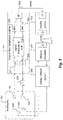
- Figure 4 shows further details of such a measurement system 301 partitioned into software 401 and hardware 402.
- a device simulation model database 404 contains multiple simulation models representing different specific network devices-e.g., Nokia, Samsung, etc.-which are selectable for use by the measurement system 301 with the mobile phone simulation module 302.
- a network simulation model database 403 contains multiple simulation models representing different specific wireless telephone network connections e.g., Bluetooth, TCP/IP, CDMA, GSM, 3G, 4G, etc.-which are selectable for use by the measurement system 301 with the telephone network simulation module 303.
- the hardware 402 e.g., a sound card
- ADC analogue-to-digital
- DAC digital-to-analogue
- the lower side the hardware 402 may be connected over a digital interface to the software 401 part of the measurement system 301, while on the upper side, the hardware 402 may be connected over an analogue interface to the measurement speaker 204 and the measurement microphone 203 within the vehicle enclosure 100 and to a Bluetooth module which forms the telephone audio interface 206.
- the telephone audio interface 206 can also be connected directly to the digital signals.
- the Bluetooth module telephone audio interface 206 is connected over a radio link to the HFTS 101.
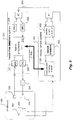
- Figure 5 shows another embodiment wherein the measurement system 301 includes a measurement and tuning module 501 for modifying operating parameters of the signal processing unit 210 in the HFTS 101 over tuning path 502 based on analysis of the measurements that are made.
- the measurement and tuning module 501 operates iteratively to alternate between a measurement mode and a tuning/modification mode to optimize the performance characteristics of the HFTS 101, preferably without disruption to the connection over the telephone audio interface 206 between the measurement system 301 and the HFTS 101.
- the iterations maybe based on changing between different simulation models for specific network components (e.g., from simulation model database 403 and/or 404 ).
- the iterations of the measurement and tuning module 501 may be controllable either manually and/or by software.
- the tasks of measurement and tuning the operating parameters of the HFTS 101 is combined in a single arrangement that operates iteratively in two different steps: (1) evaluate the system is with one ore more measurements (e.g. tests according to the VDA standard), and (2) the modify operating parameters of the HFTS 101 to improve performance compared to the measurements.
- This arrangement stands in sharp contrast to the prior art where two different software applications are needed to measure the system (step 1) and then to modify the operating parameters (step 2).
- the VDA testing according to the prior art uses professional products that do not allow tuning for a specific HFTS.
- an HFTS 101 might include a debug interface that allows to parameters to be modified from outside by an external software application (e.g., the measurement system 301 ). This process can be specific to various different devices so that the parameter settings are best suited for covering a number of different phones.
- the measurement system 301 exchanges data with it, for example, over a serial interface, Ethernet connection (TCP/IP), or an existing Bluetooth connection either using a different Bluetooth profile or using the same profile and sending special audio signals to the HFTS 101 which it can interpret.
- the measurement system 301 can play DTMF tones which are detected by the HFTS 101, and the HFTS 101 then reacts depending on the series of DTMF tones.
- the measurement and tuning module 501 of the measurement system 301 may be a generic one that is adapted to the telephone audio interface 206 of various different HFTS 101 using specific software plug-ins for tuning.
- the benefits of such embodiments include greatly reduced hardware costs for the measurement setup, particularly, the expensive separate network simulator device is now obsolete.
- the system is convenient to transport and much simpler to setup than a full VDA measurement system as in the prior art, resulting in greater flexibility for on site support.
- a real mobile telephone has to be used. These telephones each have specific individual behaviors so the result of a measurement depends on the type of telephone and the specific telephone device, and tests with different mobile telephones each require their own separate telephone and to establish a new call.
- embodiments of the present invention do not need or use an actual telephone for measuring the system since the telephone and the wireless network can both be simulated within the measurement system. And if simulation models for several mobile telephones are available, then no additional effort has to be spent to setup new calls. A series of different phones can be measured in a minimum of time. This simplifies tuning the HFTS for different phone types.
- the measurement system of embodiments such as those described above also get the input signals closer to the hands-free telephone system-no manipulation by a telephone and no transmission over a network is used.
- the audio signals would be coded and decoded by a speech codec which loses information and thereby loses signal quality.
- different specific codecs can be applied to simulate a specific network.
- the described embodiments of the present invention measurement system and its setup are not standardized. And only a portion of the signal transmission channels is represented by real devices with the remaining parts being simulated, so the results could potentially be further away from actual conditions than with a conventional VDA setup.
- the network simulator of the conventional VDA arrangement also is simulated and not the actual system (no internal signal processing and no network transitions are simulated). In the end, use of simulation modules as described above offers the potential for adequately realistic modeling.
- Embodiments of the invention may be implemented in whole or in part in any conventional computer programming language.
- preferred embodiments may be implemented in a procedural programming language (e.g., "C") or an object oriented programming language (e.g ., "C++", Python).
- Alternative embodiments of the invention may be implemented as pre-programmed hardware elements, other related components, or as a combination of hardware and software components.
- Embodiments can be implemented in whole or in part as a computer program product for use with a computer system.
- Such implementation may include a series of computer instructions fixed either on a tangible medium, such as a computer readable medium (e.g., a diskette, CD-ROM, ROM, or fixed disk) or transmittable to a computer system, via a modem or other interface device, such as a communications adapter connected to a network over a medium.
- the medium may be either a tangible medium (e.g ., optical or analog communications lines) or a medium implemented with wireless techniques (e.g ., microwave, infrared or other transmission techniques).
- the series of computer instructions embodies all or part of the functionality previously described herein with respect to the system.
- Such computer instructions can be written in a number of programming languages for use with many computer architectures or operating systems. Furthermore, such instructions may be stored in any memory device, such as semiconductor, magnetic, optical or other memory devices, and maybe transmitted using any communications technology, such as optical, infrared, microwave, or other transmission technologies. It is expected that such a computer program product may be distributed as a removable medium with accompanying printed or electronic documentation (e.g ., shrink wrapped software), preloaded with a computer system (e.g. , on system ROM or fixed disk), or distributed from a server or electronic bulletin board over the network (e.g ., the Internet or World Wide Web).
- printed or electronic documentation e.g ., shrink wrapped software
- some embodiments of the invention may be implemented as a combination of both computer architectures or operating systems.
- such instructions may be stored in any memory device, such as semiconductor, magnetic, optical or other memory devices, and may be transmitted using any communications technology, such as optical, infrared, microwave, or other transmission technologies.
- a computer program product may be distributed as a removable medium with accompanying printed or electronic documentation (e.g ., shrink wrapped software), preloaded with a computer system (e.g ., on system ROM or fixed disk), or distributed from a server or electronic bulletin board over the network (e.g., the Internet or World Wide Web).
- embodiments of the invention may be implemented as a combination of both software (e.g., a computer program product) and hardware. Still other embodiments of the invention are implemented as entirely hardware, or entirely software (e.g ., a computer program product).
Landscapes
- Engineering & Computer Science (AREA)
- Signal Processing (AREA)
- Telephone Function (AREA)
Claims (13)
- Anordnung zum Messen von Leistungsmerkmalen eines Freisprech-Telefonsystems (101), die Anordnung umfassend:ein Messmikrofon (203) und einen Messlautsprecher (204) innerhalb eines Fahrzeuggehäuses (100);ein Messsystem (301), das das Messmikrofon (203) und den Messlautsprecher (204) steuert und über eine Telefon-Audio-Schnittstelle direkt mit dem Freisprech-Telefonsystem zum Messen der Leistungsmerkmale koppelbar ist,wobei das Messsystem (301) Folgendes beinhaltet: ein Mobiltelefon-Simulationsmodul (302) zum Simulieren des Betriebs einer Interaktion des Mobiltelefons mit dem Freisprech-Telefonsystem (101) über die Telefon-Audio-Schnittstelle; und ein Telefonnetz-Simulationsmodul (303) zum Simulieren des Betriebs einer Interaktion des Drahtlostelefonnetzes mit dem Freisprech-Telefonsystem (101) über die Telefon-Audio-Schnittstelle (206).
- Anordnung nach Anspruch 1, ferner umfassend:
eine Simulationsmodell-Datenbank (403), die eine Vielzahl von Simulationsmodellen enthält, die spezifische Netzwerkkomponenten darstellen, die zur Verwendung durch das Messsystem (301) auswählbar sind. - Anordnung nach Anspruch 1, ferner umfassend:ein Änderungsmodul, das mit dem Freisprech-Telefonsystem (101) koppelbar (501) ist, um dessen Betriebsparameter zu ändern,wobei das Messsystem (301) und das Änderungsmodul vorzugsweise iterativ arbeiten, um die Leistungsmerkmale zu optimieren.
- Anordnung nach Anspruch 3, wobei Iterationen manuell steuerbar sind, oder wobei Iterationen über Software steuerbar sind.
- Anordnung nach Anspruch 3, wobei Iterationen auf einer Änderung zwischen verschiedenen Simulationsmodellen für bestimmte Netzwerkkomponenten basieren, wobei die Iterationen vorzugsweise ohne Unterbrechung der Schnittstellenverbindung zwischen dem Messsystem (301) und dem Freisprech-Telefonsystem (101) durchgeführt werden.
- Anordnung nach Anspruch 1, wobei das Koppeln über die Telefon-Audio-Schnittstelle (206) auf einer Bluetooth-Anordnung basiert, oder wobei das Koppeln über die Telefon-Audio-Schnittstelle auf einer TCP/IP-Anordnung basiert.
- Verfahren zum Messen von Leistungsmerkmalen eines Freisprech-Telefonsystems (101), das Verfahren umfassend:Messen der Leistungsmerkmale mit einem Messsystem (301), das als eine Vielzahl von in einem Computerprozessor funktionierenden Computerprozessen implementiert ist,wobei ein Messmikrofon (203) und ein Messlautsprecher (204) in einem Fahrzeuggehäuse (100) gesteuert werden und direkt über eine Telefon-Audio-Schnittstelle (206) mit dem Freisprech-Telefonsystem (101) gekoppelt sind,wobei das Messen der Leistungsmerkmale Folgendes beinhaltet: Verwenden eines Mobiltelefon-Simulationsmoduls (302) zum Simulieren des Betriebs einer Interaktion des Mobiltelefons mit dem Freisprech-Telefonsystem (101) über die Telefon-Audio-Schnittstelle (206); und Verwenden eines Telefonnetz-Simulationsmoduls (303) zum Simulieren des Betriebs einer Interaktion des Drahtlostelefonnetzes mit dem Freisprech-Telefonsystem (101) über die Telefon-Audio-Schnittstelle (206).
- Verfahren nach Anspruch 7, ferner umfassend:
Bereitstellen einer Vielzahl von Simulationsmodellen (403), die spezifische Netzwerkkomponenten darstellen, die zur Verwendung durch das Messsystem (301) auswählbar sind. - Verfahren nach Anspruch 7, ferner umfassend:Verwenden eines Änderungsmoduls (501) zum Ändern von Betriebsparametern des Freisprech-Telefonsystems (101),wobei das Messsystem (301) und das Änderungsmodul vorzugsweise iterativ arbeiten, um die Leistungsmerkmale zu optimieren.
- Verfahren nach Anspruch 9, wobei die Iterationen manuell steuerbar sind, oder wobei die Iterationen über Software steuerbar sind.
- Verfahren nach Anspruch 9, wobei die Iterationen auf der Änderung zwischen verschiedenen Simulationsmodellen für bestimmte Netzwerkkomponenten basieren,
wobei die Iterationen vorzugsweise ohne Unterbrechung der Schnittstellenverbindung zwischen dem Messsystem (301) und dem Freisprech-Telefonsystem (101) durchgeführt werden. - Verfahren nach Anspruch 7, wobei das Koppeln über die Telefon-Audio-Schnittstelle (206) auf einer Bluetooth-Anordnung basiert, oder wobei das Koppeln über die Telefon-Audio-Schnittstelle (206) auf einer TCP/IP-Anordnung basiert.
- Computerlesbares Speichermedium, umfassend Anweisungen, die, wenn sie von einem Computer ausgeführt werden, den Computer dazu veranlassen, das Verfahren nach einem der Ansprüche 7 bis 12 auszuführen.
Applications Claiming Priority (1)
| Application Number | Priority Date | Filing Date | Title |
|---|---|---|---|
| PCT/US2010/023261 WO2011096927A1 (en) | 2010-02-05 | 2010-02-05 | Measurement and tuning of hands free telephone systems |
Publications (3)
| Publication Number | Publication Date |
|---|---|
| EP2532148A1 EP2532148A1 (de) | 2012-12-12 |
| EP2532148B1 true EP2532148B1 (de) | 2019-08-28 |
| EP2532148B8 EP2532148B8 (de) | 2020-06-17 |
Family
ID=42732115
Family Applications (1)
| Application Number | Title | Priority Date | Filing Date |
|---|---|---|---|
| EP10705220.1A Active EP2532148B8 (de) | 2010-02-05 | 2010-02-05 | Messung und abstimmung von freisprechanlagen |
Country Status (3)
| Country | Link |
|---|---|
| US (1) | US10326867B2 (de) |
| EP (1) | EP2532148B8 (de) |
| WO (1) | WO2011096927A1 (de) |
Families Citing this family (5)
| Publication number | Priority date | Publication date | Assignee | Title |
|---|---|---|---|---|
| TWI459753B (zh) * | 2012-07-31 | 2014-11-01 | Pegatron Corp | 網路音訊測試系統及其網路音訊測試之方法 |
| EP2835989B1 (de) | 2013-08-09 | 2019-05-01 | Samsung Electronics Co., Ltd | System zur Abstimmung von Audioverarbeitungsmerkmalen und Verfahren dafür |
| ITTO20130974A1 (it) * | 2013-11-29 | 2015-05-30 | Magneti Marelli Spa | Sistema per sottoporre a test l'interazione wireless fra un sistema di riproduzione di segnali audio e un telefono mobile, relativo procedimento e prodotto informatico |
| TWI558154B (zh) * | 2014-01-09 | 2016-11-11 | 緯創資通股份有限公司 | 音訊檢測方法及裝置 |
| US10530917B2 (en) | 2018-03-08 | 2020-01-07 | 2236008 Ontario Inc. | System for automating tuning hands-free systems |
Citations (1)
| Publication number | Priority date | Publication date | Assignee | Title |
|---|---|---|---|---|
| EP2296356A2 (de) * | 2009-09-11 | 2011-03-16 | Dietmar Ruwisch | Verfahren und Vorrichtung zur Analyse und Abstimmung akustischer Eigenschaften einer Kfz-Freisprecheinrichtung |
Family Cites Families (9)
| Publication number | Priority date | Publication date | Assignee | Title |
|---|---|---|---|---|
| DE19709203C2 (de) | 1997-03-06 | 2000-06-29 | Siemens Ag | Verfahren zum Erzeugen von Meßsignalen für Meßsysteme zum Messen der Übertragungseigenschaften von sich gegenseitig durch Übersprechen beeinflussenden Übertragungsstrecken in elektrischen Nachrichtensystemen, insbesondere von Freisprecheinrichtungen |
| FR2791849B1 (fr) * | 1999-03-31 | 2001-06-29 | Cit Alcatel | Noeud et station embarquee permettant d'etablir a tout moment une communication vers un passager d'un vehicule |
| US20030069010A1 (en) * | 2001-10-10 | 2003-04-10 | Srinivasa Eravelli | Systems and techniques for testing a communications device |
| US20030130005A1 (en) * | 2002-01-04 | 2003-07-10 | Weisshaar Bernhard P. | Method of selecting a communication interface to transmit data in a wireless communication network |
| JP3929920B2 (ja) | 2003-03-17 | 2007-06-13 | クラリオン株式会社 | ハンズフリー装置評価装置およびハンズフリー装置の調整方法 |
| TW200532560A (en) * | 2003-11-13 | 2005-10-01 | Qualcomm Inc | System and method for dynamically simulating devices at a computing device |
| ATE498276T1 (de) * | 2006-07-24 | 2011-02-15 | Harman Becker Automotive Sys | System und verfahren zum kalibrieren einer freisprechanlage |
| US8433953B1 (en) * | 2007-08-13 | 2013-04-30 | The Mathworks, Inc. | Automatic configuration of a test environment |
| US8213928B2 (en) * | 2008-11-24 | 2012-07-03 | Delphi Technologies, Inc. | Test apparatus and method for testing interoperability of wireless communication devices |
-
2010
- 2010-02-05 US US13/518,404 patent/US10326867B2/en active Active
- 2010-02-05 WO PCT/US2010/023261 patent/WO2011096927A1/en not_active Ceased
- 2010-02-05 EP EP10705220.1A patent/EP2532148B8/de active Active
Patent Citations (1)
| Publication number | Priority date | Publication date | Assignee | Title |
|---|---|---|---|---|
| EP2296356A2 (de) * | 2009-09-11 | 2011-03-16 | Dietmar Ruwisch | Verfahren und Vorrichtung zur Analyse und Abstimmung akustischer Eigenschaften einer Kfz-Freisprecheinrichtung |
Also Published As
| Publication number | Publication date |
|---|---|
| US10326867B2 (en) | 2019-06-18 |
| EP2532148B8 (de) | 2020-06-17 |
| EP2532148A1 (de) | 2012-12-12 |
| US20120278041A1 (en) | 2012-11-01 |
| WO2011096927A1 (en) | 2011-08-11 |
Similar Documents
| Publication | Publication Date | Title |
|---|---|---|
| US9813536B2 (en) | System for testing wireless interaction between a system for reproducing audio signals and a mobile phone, and corresponding method and computer program product | |
| US7548625B2 (en) | System and method of audio testing of acoustic devices | |
| JP5173032B2 (ja) | デジタル・キャリブレーション・ジェネレータを用いた試験システム | |
| US10326867B2 (en) | Measurement and tuning of hands free telephone systems | |
| US20130243204A1 (en) | Sound quality testing method and system | |
| EP3537732B1 (de) | System zur automatisierung der abstimmung von freisprecheinrichtungen | |
| CN101132594A (zh) | 移动通信终端的音频测试系统及其测试方法 | |
| US20140365212A1 (en) | Receiver Intelligibility Enhancement System | |
| EP2056634A2 (de) | System und Verfahren zur Bestimmung einer End-to-End-Sprachqualität von mobilen Telefonvorrichtungen | |
| CN102263866B (zh) | 使用固定回波消除滤波器系数的方法和音频通信装置 | |
| CN110636432A (zh) | 麦克风测试方法及相关设备 | |
| CN102651671A (zh) | 一种新型的手机音频测试方法 | |
| JP2002232548A (ja) | 携帯電話機端末、および携帯電話機端末の音響試験用周辺装置 | |
| CN101720097A (zh) | 一种移动终端音频自动调试的方法及系统 | |
| CN113938231B (zh) | 基于开源架构的信道模拟仪、信道模拟方法、电子设备和非瞬时性计算机存储介质 | |
| US7778829B2 (en) | Real time monitoring and control for audio devices | |
| CN107528956A (zh) | 语音质量测试的方法及装置 | |
| CN209561002U (zh) | 一种语音测试设备 | |
| KR100339974B1 (ko) | 이동 통신 단말기의 통화 품질 측정 시스템 | |
| CN113225660A (zh) | 一种基于pc软件的麦克风与扬声器测试分析系统及方法 | |
| CN111031464A (zh) | 麦克风测试方法、系统、电子设备及存储介质 | |
| CN107846691B (zh) | 一种mos测量方法、装置及分析仪 | |
| CN109587617A (zh) | 一种智能化的汽车音响配置方法及系统 | |
| CN109951590B (zh) | 一种专网终端音频隔离度自动测试方法及终端 | |
| CN117560449A (zh) | 语音质量测试系统及方法 |
Legal Events
| Date | Code | Title | Description |
|---|---|---|---|
| PUAI | Public reference made under article 153(3) epc to a published international application that has entered the european phase |
Free format text: ORIGINAL CODE: 0009012 |
|
| 17P | Request for examination filed |
Effective date: 20120807 |
|
| AK | Designated contracting states |
Kind code of ref document: A1 Designated state(s): AT BE BG CH CY CZ DE DK EE ES FI FR GB GR HR HU IE IS IT LI LT LU LV MC MK MT NL NO PL PT RO SE SI SK SM TR |
|
| DAX | Request for extension of the european patent (deleted) | ||
| 17Q | First examination report despatched |
Effective date: 20160126 |
|
| STAA | Information on the status of an ep patent application or granted ep patent |
Free format text: STATUS: EXAMINATION IS IN PROGRESS |
|
| GRAP | Despatch of communication of intention to grant a patent |
Free format text: ORIGINAL CODE: EPIDOSNIGR1 |
|
| STAA | Information on the status of an ep patent application or granted ep patent |
Free format text: STATUS: GRANT OF PATENT IS INTENDED |
|
| INTG | Intention to grant announced |
Effective date: 20181017 |
|
| GRAJ | Information related to disapproval of communication of intention to grant by the applicant or resumption of examination proceedings by the epo deleted |
Free format text: ORIGINAL CODE: EPIDOSDIGR1 |
|
| STAA | Information on the status of an ep patent application or granted ep patent |
Free format text: STATUS: EXAMINATION IS IN PROGRESS |
|
| GRAP | Despatch of communication of intention to grant a patent |
Free format text: ORIGINAL CODE: EPIDOSNIGR1 |
|
| STAA | Information on the status of an ep patent application or granted ep patent |
Free format text: STATUS: GRANT OF PATENT IS INTENDED |
|
| INTC | Intention to grant announced (deleted) | ||
| INTG | Intention to grant announced |
Effective date: 20190318 |
|
| GRAS | Grant fee paid |
Free format text: ORIGINAL CODE: EPIDOSNIGR3 |
|
| GRAA | (expected) grant |
Free format text: ORIGINAL CODE: 0009210 |
|
| STAA | Information on the status of an ep patent application or granted ep patent |
Free format text: STATUS: THE PATENT HAS BEEN GRANTED |
|
| AK | Designated contracting states |
Kind code of ref document: B1 Designated state(s): AT BE BG CH CY CZ DE DK EE ES FI FR GB GR HR HU IE IS IT LI LT LU LV MC MK MT NL NO PL PT RO SE SI SK SM TR |
|
| REG | Reference to a national code |
Ref country code: GB Ref legal event code: FG4D |
|
| REG | Reference to a national code |
Ref country code: CH Ref legal event code: EP |
|
| REG | Reference to a national code |
Ref country code: DE Ref legal event code: R096 Ref document number: 602010060753 Country of ref document: DE |
|
| REG | Reference to a national code |
Ref country code: AT Ref legal event code: REF Ref document number: 1173861 Country of ref document: AT Kind code of ref document: T Effective date: 20190915 |
|
| REG | Reference to a national code |
Ref country code: IE Ref legal event code: FG4D |
|
| REG | Reference to a national code |
Ref country code: NL Ref legal event code: FP |
|
| REG | Reference to a national code |
Ref country code: LT Ref legal event code: MG4D |
|
| PG25 | Lapsed in a contracting state [announced via postgrant information from national office to epo] |
Ref country code: NO Free format text: LAPSE BECAUSE OF FAILURE TO SUBMIT A TRANSLATION OF THE DESCRIPTION OR TO PAY THE FEE WITHIN THE PRESCRIBED TIME-LIMIT Effective date: 20191128 Ref country code: FI Free format text: LAPSE BECAUSE OF FAILURE TO SUBMIT A TRANSLATION OF THE DESCRIPTION OR TO PAY THE FEE WITHIN THE PRESCRIBED TIME-LIMIT Effective date: 20190828 Ref country code: PT Free format text: LAPSE BECAUSE OF FAILURE TO SUBMIT A TRANSLATION OF THE DESCRIPTION OR TO PAY THE FEE WITHIN THE PRESCRIBED TIME-LIMIT Effective date: 20191230 Ref country code: LT Free format text: LAPSE BECAUSE OF FAILURE TO SUBMIT A TRANSLATION OF THE DESCRIPTION OR TO PAY THE FEE WITHIN THE PRESCRIBED TIME-LIMIT Effective date: 20190828 Ref country code: HR Free format text: LAPSE BECAUSE OF FAILURE TO SUBMIT A TRANSLATION OF THE DESCRIPTION OR TO PAY THE FEE WITHIN THE PRESCRIBED TIME-LIMIT Effective date: 20190828 Ref country code: SE Free format text: LAPSE BECAUSE OF FAILURE TO SUBMIT A TRANSLATION OF THE DESCRIPTION OR TO PAY THE FEE WITHIN THE PRESCRIBED TIME-LIMIT Effective date: 20190828 Ref country code: BG Free format text: LAPSE BECAUSE OF FAILURE TO SUBMIT A TRANSLATION OF THE DESCRIPTION OR TO PAY THE FEE WITHIN THE PRESCRIBED TIME-LIMIT Effective date: 20191128 |
|
| PG25 | Lapsed in a contracting state [announced via postgrant information from national office to epo] |
Ref country code: GR Free format text: LAPSE BECAUSE OF FAILURE TO SUBMIT A TRANSLATION OF THE DESCRIPTION OR TO PAY THE FEE WITHIN THE PRESCRIBED TIME-LIMIT Effective date: 20191129 Ref country code: LV Free format text: LAPSE BECAUSE OF FAILURE TO SUBMIT A TRANSLATION OF THE DESCRIPTION OR TO PAY THE FEE WITHIN THE PRESCRIBED TIME-LIMIT Effective date: 20190828 Ref country code: IS Free format text: LAPSE BECAUSE OF FAILURE TO SUBMIT A TRANSLATION OF THE DESCRIPTION OR TO PAY THE FEE WITHIN THE PRESCRIBED TIME-LIMIT Effective date: 20191228 Ref country code: ES Free format text: LAPSE BECAUSE OF FAILURE TO SUBMIT A TRANSLATION OF THE DESCRIPTION OR TO PAY THE FEE WITHIN THE PRESCRIBED TIME-LIMIT Effective date: 20190828 |
|
| REG | Reference to a national code |
Ref country code: AT Ref legal event code: MK05 Ref document number: 1173861 Country of ref document: AT Kind code of ref document: T Effective date: 20190828 |
|
| PG25 | Lapsed in a contracting state [announced via postgrant information from national office to epo] |
Ref country code: TR Free format text: LAPSE BECAUSE OF FAILURE TO SUBMIT A TRANSLATION OF THE DESCRIPTION OR TO PAY THE FEE WITHIN THE PRESCRIBED TIME-LIMIT Effective date: 20190828 |
|
| PG25 | Lapsed in a contracting state [announced via postgrant information from national office to epo] |
Ref country code: IT Free format text: LAPSE BECAUSE OF FAILURE TO SUBMIT A TRANSLATION OF THE DESCRIPTION OR TO PAY THE FEE WITHIN THE PRESCRIBED TIME-LIMIT Effective date: 20190828 Ref country code: RO Free format text: LAPSE BECAUSE OF FAILURE TO SUBMIT A TRANSLATION OF THE DESCRIPTION OR TO PAY THE FEE WITHIN THE PRESCRIBED TIME-LIMIT Effective date: 20190828 Ref country code: PL Free format text: LAPSE BECAUSE OF FAILURE TO SUBMIT A TRANSLATION OF THE DESCRIPTION OR TO PAY THE FEE WITHIN THE PRESCRIBED TIME-LIMIT Effective date: 20190828 Ref country code: AT Free format text: LAPSE BECAUSE OF FAILURE TO SUBMIT A TRANSLATION OF THE DESCRIPTION OR TO PAY THE FEE WITHIN THE PRESCRIBED TIME-LIMIT Effective date: 20190828 Ref country code: DK Free format text: LAPSE BECAUSE OF FAILURE TO SUBMIT A TRANSLATION OF THE DESCRIPTION OR TO PAY THE FEE WITHIN THE PRESCRIBED TIME-LIMIT Effective date: 20190828 Ref country code: EE Free format text: LAPSE BECAUSE OF FAILURE TO SUBMIT A TRANSLATION OF THE DESCRIPTION OR TO PAY THE FEE WITHIN THE PRESCRIBED TIME-LIMIT Effective date: 20190828 |
|
| PG25 | Lapsed in a contracting state [announced via postgrant information from national office to epo] |
Ref country code: CZ Free format text: LAPSE BECAUSE OF FAILURE TO SUBMIT A TRANSLATION OF THE DESCRIPTION OR TO PAY THE FEE WITHIN THE PRESCRIBED TIME-LIMIT Effective date: 20190828 Ref country code: SM Free format text: LAPSE BECAUSE OF FAILURE TO SUBMIT A TRANSLATION OF THE DESCRIPTION OR TO PAY THE FEE WITHIN THE PRESCRIBED TIME-LIMIT Effective date: 20190828 Ref country code: SK Free format text: LAPSE BECAUSE OF FAILURE TO SUBMIT A TRANSLATION OF THE DESCRIPTION OR TO PAY THE FEE WITHIN THE PRESCRIBED TIME-LIMIT Effective date: 20190828 Ref country code: IS Free format text: LAPSE BECAUSE OF FAILURE TO SUBMIT A TRANSLATION OF THE DESCRIPTION OR TO PAY THE FEE WITHIN THE PRESCRIBED TIME-LIMIT Effective date: 20200224 |
|
| REG | Reference to a national code |
Ref country code: CH Ref legal event code: PK Free format text: BERICHTIGUNG B8 |
|
| RAP2 | Party data changed (patent owner data changed or rights of a patent transferred) |
Owner name: CERENCE OPERATING COMPANY |
|
| REG | Reference to a national code |
Ref country code: DE Ref legal event code: R097 Ref document number: 602010060753 Country of ref document: DE |
|
| PLBE | No opposition filed within time limit |
Free format text: ORIGINAL CODE: 0009261 |
|
| STAA | Information on the status of an ep patent application or granted ep patent |
Free format text: STATUS: NO OPPOSITION FILED WITHIN TIME LIMIT |
|
| PG2D | Information on lapse in contracting state deleted |
Ref country code: IS |
|
| 26N | No opposition filed |
Effective date: 20200603 |
|
| PG25 | Lapsed in a contracting state [announced via postgrant information from national office to epo] |
Ref country code: SI Free format text: LAPSE BECAUSE OF FAILURE TO SUBMIT A TRANSLATION OF THE DESCRIPTION OR TO PAY THE FEE WITHIN THE PRESCRIBED TIME-LIMIT Effective date: 20190828 |
|
| REG | Reference to a national code |
Ref country code: CH Ref legal event code: PL |
|
| GBPC | Gb: european patent ceased through non-payment of renewal fee |
Effective date: 20200205 |
|
| REG | Reference to a national code |
Ref country code: BE Ref legal event code: MM Effective date: 20200229 |
|
| PG25 | Lapsed in a contracting state [announced via postgrant information from national office to epo] |
Ref country code: LU Free format text: LAPSE BECAUSE OF NON-PAYMENT OF DUE FEES Effective date: 20200205 Ref country code: MC Free format text: LAPSE BECAUSE OF FAILURE TO SUBMIT A TRANSLATION OF THE DESCRIPTION OR TO PAY THE FEE WITHIN THE PRESCRIBED TIME-LIMIT Effective date: 20190828 |
|
| PG25 | Lapsed in a contracting state [announced via postgrant information from national office to epo] |
Ref country code: LI Free format text: LAPSE BECAUSE OF NON-PAYMENT OF DUE FEES Effective date: 20200229 Ref country code: CH Free format text: LAPSE BECAUSE OF NON-PAYMENT OF DUE FEES Effective date: 20200229 |
|
| PG25 | Lapsed in a contracting state [announced via postgrant information from national office to epo] |
Ref country code: FR Free format text: LAPSE BECAUSE OF NON-PAYMENT OF DUE FEES Effective date: 20200229 Ref country code: GB Free format text: LAPSE BECAUSE OF NON-PAYMENT OF DUE FEES Effective date: 20200205 Ref country code: IE Free format text: LAPSE BECAUSE OF NON-PAYMENT OF DUE FEES Effective date: 20200205 |
|
| PG25 | Lapsed in a contracting state [announced via postgrant information from national office to epo] |
Ref country code: BE Free format text: LAPSE BECAUSE OF NON-PAYMENT OF DUE FEES Effective date: 20200229 |
|
| PG25 | Lapsed in a contracting state [announced via postgrant information from national office to epo] |
Ref country code: MT Free format text: LAPSE BECAUSE OF FAILURE TO SUBMIT A TRANSLATION OF THE DESCRIPTION OR TO PAY THE FEE WITHIN THE PRESCRIBED TIME-LIMIT Effective date: 20190828 Ref country code: CY Free format text: LAPSE BECAUSE OF FAILURE TO SUBMIT A TRANSLATION OF THE DESCRIPTION OR TO PAY THE FEE WITHIN THE PRESCRIBED TIME-LIMIT Effective date: 20190828 |
|
| PG25 | Lapsed in a contracting state [announced via postgrant information from national office to epo] |
Ref country code: MK Free format text: LAPSE BECAUSE OF FAILURE TO SUBMIT A TRANSLATION OF THE DESCRIPTION OR TO PAY THE FEE WITHIN THE PRESCRIBED TIME-LIMIT Effective date: 20190828 |
|
| PGFP | Annual fee paid to national office [announced via postgrant information from national office to epo] |
Ref country code: NL Payment date: 20251215 Year of fee payment: 17 |
|
| PGFP | Annual fee paid to national office [announced via postgrant information from national office to epo] |
Ref country code: DE Payment date: 20251210 Year of fee payment: 17 |