EP2526150B1 - Nanocomposite hydrogel and method for preparing it, for industrial and medical applications - Google Patents
Nanocomposite hydrogel and method for preparing it, for industrial and medical applications Download PDFInfo
- Publication number
- EP2526150B1 EP2526150B1 EP11734292.3A EP11734292A EP2526150B1 EP 2526150 B1 EP2526150 B1 EP 2526150B1 EP 11734292 A EP11734292 A EP 11734292A EP 2526150 B1 EP2526150 B1 EP 2526150B1
- Authority
- EP
- European Patent Office
- Prior art keywords
- ncc
- hydrophilic
- methacrylate
- polymer
- nanocomposite
- Prior art date
- Legal status (The legal status is an assumption and is not a legal conclusion. Google has not performed a legal analysis and makes no representation as to the accuracy of the status listed.)
- Not-in-force
Links
Images


Classifications
-
- C—CHEMISTRY; METALLURGY
- C08—ORGANIC MACROMOLECULAR COMPOUNDS; THEIR PREPARATION OR CHEMICAL WORKING-UP; COMPOSITIONS BASED THEREON
- C08J—WORKING-UP; GENERAL PROCESSES OF COMPOUNDING; AFTER-TREATMENT NOT COVERED BY SUBCLASSES C08B, C08C, C08F, C08G or C08H
- C08J3/00—Processes of treating or compounding macromolecular substances
- C08J3/24—Crosslinking, e.g. vulcanising, of macromolecules
-
- A—HUMAN NECESSITIES
- A61—MEDICAL OR VETERINARY SCIENCE; HYGIENE
- A61L—METHODS OR APPARATUS FOR STERILISING MATERIALS OR OBJECTS IN GENERAL; DISINFECTION, STERILISATION OR DEODORISATION OF AIR; CHEMICAL ASPECTS OF BANDAGES, DRESSINGS, ABSORBENT PADS OR SURGICAL ARTICLES; MATERIALS FOR BANDAGES, DRESSINGS, ABSORBENT PADS OR SURGICAL ARTICLES
- A61L15/00—Chemical aspects of, or use of materials for, bandages, dressings or absorbent pads
- A61L15/16—Bandages, dressings or absorbent pads for physiological fluids such as urine or blood, e.g. sanitary towels, tampons
- A61L15/22—Bandages, dressings or absorbent pads for physiological fluids such as urine or blood, e.g. sanitary towels, tampons containing macromolecular materials
- A61L15/225—Mixtures of macromolecular compounds
-
- A—HUMAN NECESSITIES
- A61—MEDICAL OR VETERINARY SCIENCE; HYGIENE
- A61L—METHODS OR APPARATUS FOR STERILISING MATERIALS OR OBJECTS IN GENERAL; DISINFECTION, STERILISATION OR DEODORISATION OF AIR; CHEMICAL ASPECTS OF BANDAGES, DRESSINGS, ABSORBENT PADS OR SURGICAL ARTICLES; MATERIALS FOR BANDAGES, DRESSINGS, ABSORBENT PADS OR SURGICAL ARTICLES
- A61L15/00—Chemical aspects of, or use of materials for, bandages, dressings or absorbent pads
- A61L15/16—Bandages, dressings or absorbent pads for physiological fluids such as urine or blood, e.g. sanitary towels, tampons
- A61L15/22—Bandages, dressings or absorbent pads for physiological fluids such as urine or blood, e.g. sanitary towels, tampons containing macromolecular materials
- A61L15/24—Macromolecular compounds obtained by reactions only involving carbon-to-carbon unsaturated bonds; Derivatives thereof
-
- A—HUMAN NECESSITIES
- A61—MEDICAL OR VETERINARY SCIENCE; HYGIENE
- A61L—METHODS OR APPARATUS FOR STERILISING MATERIALS OR OBJECTS IN GENERAL; DISINFECTION, STERILISATION OR DEODORISATION OF AIR; CHEMICAL ASPECTS OF BANDAGES, DRESSINGS, ABSORBENT PADS OR SURGICAL ARTICLES; MATERIALS FOR BANDAGES, DRESSINGS, ABSORBENT PADS OR SURGICAL ARTICLES
- A61L15/00—Chemical aspects of, or use of materials for, bandages, dressings or absorbent pads
- A61L15/16—Bandages, dressings or absorbent pads for physiological fluids such as urine or blood, e.g. sanitary towels, tampons
- A61L15/22—Bandages, dressings or absorbent pads for physiological fluids such as urine or blood, e.g. sanitary towels, tampons containing macromolecular materials
- A61L15/28—Polysaccharides or their derivatives
-
- A—HUMAN NECESSITIES
- A61—MEDICAL OR VETERINARY SCIENCE; HYGIENE
- A61L—METHODS OR APPARATUS FOR STERILISING MATERIALS OR OBJECTS IN GENERAL; DISINFECTION, STERILISATION OR DEODORISATION OF AIR; CHEMICAL ASPECTS OF BANDAGES, DRESSINGS, ABSORBENT PADS OR SURGICAL ARTICLES; MATERIALS FOR BANDAGES, DRESSINGS, ABSORBENT PADS OR SURGICAL ARTICLES
- A61L27/00—Materials for grafts or prostheses or for coating grafts or prostheses
- A61L27/40—Composite materials, i.e. containing one material dispersed in a matrix of the same or different material
- A61L27/44—Composite materials, i.e. containing one material dispersed in a matrix of the same or different material having a macromolecular matrix
- A61L27/48—Composite materials, i.e. containing one material dispersed in a matrix of the same or different material having a macromolecular matrix with macromolecular fillers
-
- B—PERFORMING OPERATIONS; TRANSPORTING
- B82—NANOTECHNOLOGY
- B82Y—SPECIFIC USES OR APPLICATIONS OF NANOSTRUCTURES; MEASUREMENT OR ANALYSIS OF NANOSTRUCTURES; MANUFACTURE OR TREATMENT OF NANOSTRUCTURES
- B82Y30/00—Nanotechnology for materials or surface science, e.g. nanocomposites
-
- C—CHEMISTRY; METALLURGY
- C08—ORGANIC MACROMOLECULAR COMPOUNDS; THEIR PREPARATION OR CHEMICAL WORKING-UP; COMPOSITIONS BASED THEREON
- C08F—MACROMOLECULAR COMPOUNDS OBTAINED BY REACTIONS ONLY INVOLVING CARBON-TO-CARBON UNSATURATED BONDS
- C08F251/00—Macromolecular compounds obtained by polymerising monomers on to polysaccharides or derivatives thereof
- C08F251/02—Macromolecular compounds obtained by polymerising monomers on to polysaccharides or derivatives thereof on to cellulose or derivatives thereof
-
- C—CHEMISTRY; METALLURGY
- C08—ORGANIC MACROMOLECULAR COMPOUNDS; THEIR PREPARATION OR CHEMICAL WORKING-UP; COMPOSITIONS BASED THEREON
- C08J—WORKING-UP; GENERAL PROCESSES OF COMPOUNDING; AFTER-TREATMENT NOT COVERED BY SUBCLASSES C08B, C08C, C08F, C08G or C08H
- C08J5/00—Manufacture of articles or shaped materials containing macromolecular substances
- C08J5/005—Reinforced macromolecular compounds with nanosized materials, e.g. nanoparticles, nanofibres, nanotubes, nanowires, nanorods or nanolayered materials
-
- A—HUMAN NECESSITIES
- A61—MEDICAL OR VETERINARY SCIENCE; HYGIENE
- A61L—METHODS OR APPARATUS FOR STERILISING MATERIALS OR OBJECTS IN GENERAL; DISINFECTION, STERILISATION OR DEODORISATION OF AIR; CHEMICAL ASPECTS OF BANDAGES, DRESSINGS, ABSORBENT PADS OR SURGICAL ARTICLES; MATERIALS FOR BANDAGES, DRESSINGS, ABSORBENT PADS OR SURGICAL ARTICLES
- A61L2400/00—Materials characterised by their function or physical properties
- A61L2400/12—Nanosized materials, e.g. nanofibres, nanoparticles, nanowires, nanotubes; Nanostructured surfaces
-
- C—CHEMISTRY; METALLURGY
- C08—ORGANIC MACROMOLECULAR COMPOUNDS; THEIR PREPARATION OR CHEMICAL WORKING-UP; COMPOSITIONS BASED THEREON
- C08J—WORKING-UP; GENERAL PROCESSES OF COMPOUNDING; AFTER-TREATMENT NOT COVERED BY SUBCLASSES C08B, C08C, C08F, C08G or C08H
- C08J2300/00—Characterised by the use of unspecified polymers
- C08J2300/14—Water soluble or water swellable polymers, e.g. aqueous gels
Definitions
- the invention generally relates to novel nanocomposite hydrogels, and a method of preparing nanocomposite hydrogels, and more specifically to the application of nanocrystalline cellulose (NCC) as both crosslinker and reinforcement domain in polymer hydrogels.
- NCC nanocrystalline cellulose
- the approach relies on free radical polymerization to form the hydrogels using a variety of hydrophilic vinyl monomers.
- This invention is suitable for developing applications in medicine, engineering materials, sensors, and consumer products (e.g. highly absorbent hygiene products).
- Polymer hydrogels are crosslinked hydrophilic polymer networks that swell when absorbing large amounts of water. Hydrogels have been investigated extensively in the past several decades for a large variety of applications, such as drug delivery, tissue engineering or stimuli-responsive sensor. 1-6 In general, hydrogels are soft and brittle. However, there are applications that require significant mechanical loads, for example, medical implants, and some electrochemical devices. 7 Designing hydrogels for a multitude of novel and existing applications require them to possess sufficient mechanical strength, as well as retain their original properties, such as stimuli responsiveness and fast diffusion.
- hydrogels there are many hydrogels with very high mechanical strengths. 7
- Many marine plants, such as kelp are polysaccharide hydrogels reinforced with polymeric or inorganic fibres. In the human body, cartilage, cornea, and the dermis are all fibre reinforced hydrogels. These fibres reinforce the hydrogels by acting as the load-bearing components.
- topological gels have figure-of-eight crosslinkers which are able to slide along the polymer chains.
- these gels are highly stretchable and can absorb large amounts of water.
- the polymer chains are crosslinked by nanoparticles, for instance, inorganic clay, instead of organic crosslinking agents.
- the nanocomposite hydrogels are also highly stretchable and have very good tensile strength.
- Double network hydrogels have two interpenetrating polymer networks: one is a highly crosslinked rigid polymer matrix, while the other one is a loosely crosslinked flexible polymer matrix. 10 These double network hydrogels have very high hardness and toughness.
- CN 1710012 of Guangzhou Chemistry Inst. describes nano cellulose solid - solid phrase change material comprising a polyethylene glycol and cross-linking agent and method of production.
- novel devices for example medical devices and absorbent hygiene devices formed from the nanocomposite hydrogel of the invention.
- nanocomposite hydrogel of the invention as an engineering material.
- nanocomposite hydrogel of the invention as a drug delivery system in medical applications.
- nanocomposite hydrogel of the invention as a stimuli-responsive sensor.
- nanocomposite hydrogel of the invention for medical implants.
- nanocomposite hydrogel of the invention in tissue engineering.
- the nanocomposite hydrogel comprises a hydrophilic polymer, in particular a hydrophilic polymer derived from polymerization of a hydrophilic vinyl monomer, which polymer is crosslinked by a crosslinker comprising nanocrystalline cellulose (NCC).
- a hydrophilic polymer in particular a hydrophilic polymer derived from polymerization of a hydrophilic vinyl monomer, which polymer is crosslinked by a crosslinker comprising nanocrystalline cellulose (NCC).
- NCC nanocrystalline cellulose
- Nanocrystalline cellulose is extracted as a colloidal suspension by acid hydrolysis of typically chemical wood pulps, but other cellulosic materials, such as bacteria, cellulose-containing sea animals (e.g. tunicate), or cotton can be used.
- NCC is constituted of cellulose, a linear polymer of ⁇ (l->4) linked D-glucose units, the chains of which arrange themselves to form crystalline and amorphous domains.
- NCC obtained via hydrolytic extraction has a degree of polymerization (DP) in the range 90 ⁇ DP ⁇ 110, and 3.7-6.7 sulphate groups per 100 anhydroglucose units.
- NCC comprise crystallites whose physical dimension ranges between 5-10 nm in cross-section and 20-100 nm in length, depending on the raw material used in the extraction. These charged crystallites can be suspended in water, or other solvents if appropriately derivatized, or self assemble to form solid materials via air, spray- or freeze-drying. When dried, NCC forms an agglomeration of parallelepiped rod-like structures, which possess cross-sections in the nanometer range (5-20 nm), while their lengths are orders of magnitude larger (100-1000 nm) resulting in high aspect ratios. NCC is also characterized by high crystallinity (>80%, and most likely between 85 and 97%) approaching the theoretical limit of the cellulose chains.
- Crystallinity defined as the crystalline fraction of the sample, strongly influences the physical and chemical behaviour of NCC.
- the crystallinity of NCC directly influences the accessibility for chemical derivatization, swelling and water-binding properties.
- the crosslinker comprises a modified NCC in which a modifier has a first functional group coupled with a hydroxyl group of the NCC, and a second functional group coupled to the polymer, in accordance with Claim 1.
- the modifier is a vinyl monomer having a functional group, by way of example there may be mentioned glycidyl methacrylate.
- a group of chemicals can appropriately be selected to function as modifiers for the NCC. Some examples are: trimethylsilyl methacrylate, 2- (trimethylsilyloxy)ethyl methacrylate, 2-aminoethyl methacrylate, 2-isocyanatoethyl methacrylate, 2-chloroethyl acrylate, 3-(trimethoxysilyl)propyl acrylate, glycidyl acrylate, vinyl isocyanate, 2-aminoethyl vinyl ether, and vinyltrimethoxysilane.
- Suitable hydrophilic monomers include, by way of example, acrylic acid, acrylamide (AM), vinyl-2-pyrrolidinone, N-isopropylacrylamide (NIP AM), and N-vinylformamide (NVF).
- the following group of hydrophilic monomers can also be identified for polymer formation. ⁇ -ethylacrylic acid, methacrylic acid, 2-acrylamido-2-methyl-1-propanesulfonic acid, hydroxypolyethoxy (10) allyl ether, 2-hydroxyethyl acrylate, 3-sulfopropyl acrylate potassium salt, poly(ethylene glycol) acrylate, tetrahydrofurfuryl acrylate, and methacrylamide.
- hydrophilic polymer is a hydrophilic copolymer, and hence as suitable combinations for the copolymerization reaction.
- Suitable comonomer combinations for copolymerization to produce the hydrophilic polymer are for example, acrylamide and acrylic acid, acrylamide and methacrylic acid, N-isopropylacrylamide and acrylic acid, N- isopropylacrylamide and poly(ethylene glycol) acrylate, and poly(ethylene glycol) acrylate and acrylamide.
- the polymerization of the hydrophilic vinyl monomer can be a homopolymerization of a vinyl monomer or a homopolymerization of a vinyl monomer and a comonomer.
- hydrophilic monomers and hydrophilic comonomers are employed to form the crosslinked network which should be able to swell in aqueous media.
- the first functional group may be any group that will react or couple with a group on the NCC such as a hydroxyl group, to couple the modifier to the NCC; and the second functional group may be any group that will react or couple with a group on the polymer or the monomer forming the polymer.
- the first functional group may be any group that will react or couple with a group on the NCC such as a hydroxyl group, to couple the modifier to the NCC; and the second functional group may be any group that will react or couple with a group on the polymer or the monomer forming the polymer.
- Persons in the art will be able to select modifiers with suitable functional groups for coupling with the NCC and hydrophilic polymer or monomer for forming such polymer.
- monomers for the polymer formation having suitable functional groups for coupling with the second functional group of a modifier.
- NCC nanocrystalline cellulose
- the preparation of the NCC nanocomposite hydrogel involves a two step process. The first step is NCC modification to render it a suitable crosslinker, and the second is in situ polymerization of hydrophilic vinyl monomers with the modified NCC to make nanocomposite hydrogels.
- Hydrogels of the invention possess excellent mechanical strength while retaining their original properties, such as stimuli responsiveness and fast diffusion, and as such can be developed in a great number of hydrogel-based new applications.
- NCC nanocrystalline
- a variety of hydrophilic vinyl monomers are suitable, such as acrylic acid, acrylamide (AM), vinylpyrrolidone, N-isopropylacrylamide (NIPAM), N-vinylformamide (NVF) etc. Since there is no crosslinking spot on NCC during the polymerization, NCC must first be modified to function as a crosslinker. The modification is performed by following a procedure whereby a vinyl monomer with functional groups, for example glycidyl methacrylate (GMA), is used to react with the hydroxyl groups on NCC, which results in NCC coupled with the methacrylate group.
- GMA glycidyl methacrylate
- the nanocomposite hydrogel is prepared by using the modified NCC and hydrophilic monomers, such as acrylamide, initiated with free radical initiators, such as potassium persulfate.
- modified NCC hydrophilic monomers
- free radical initiators such as potassium persulfate.
- nanocomposite hydrogels prepared from the modified NCC are much stronger than the hydrogels prepared from a regular organic crosslinker, for instance, N , N' -Methylenebisacrylamide (BIS).
- BIOS N , N' -Methylenebisacrylamide
- the water swelling ability of the resulting nanocomposite hydrogel is reversible, which indicates that the diffusion property of the hydrogel is retained while the mechanical properties are enhanced.
- the molecular weight or polymer chain length between NCC particles can be controlled by two principal factors: (i) NCC concentration, and (ii) the density of grafted modifiers on the NCC surface.
- NCC concentration can also affect the mechanical strength of the resulting hydrogel.
- the above described method is not limited to the use of acrylamide as the monomer.
- the choice of different monomers is dependent on the final application.
- the nanocomposite hydrogels can be pH responsive, temperature sensitive, electrochemically sensitive, etc. Enhancing the mechanical strength will widen the potential application for hydrogels into a wide range of engineering materials and medical systems.
- Table 1 Size and surface charge of modified NCC prepared using the indicated conditions.
- Sample Number A B C D NCC Reaction conditions NCC:GMA weight ratio 1:0.146, 48 hours at room temp.
- Table 2 Swelling ratios of NCC-based nanocomposite and BIS-based hydrogels.
- the modification of NCC by GMA is controlled using different reaction conditions. It is illustrated in Table 1 that the surface charge of the modified NCC is decreased compared to the original NCC. Moreover, the modified NCC becomes smaller in size than the original NCC. This is likely because the catalyst, DMAP, is a base, which will possibly hydrolyze the NCC to make it smaller and decrease the surface charge.
- FT-IR Fourier transform infra-red
- the mechanical properties of the hydrogels can be analyzed using an Instron, or any other, tensile testing machine at an extension rate of 100 mm/min.
- the gauge length was set to 30 mm, and the test specimen is a solid cylinder with a diameter of 11.46 mm.
- the initial cross section is used to calculate the tensile strength and modulus.
- FIG. 3 displays typical tensile responses of (1) NCC-based nanocomposite hydrogel prepared according to this invention, and (2) hydrogel prepared using an organic crosslinker, BIS.
- the NCC-based nanocomposite hydrogel exhibits a characteristically different behaviour to that of hydrogels produced using organic crosslinkers.
- the NCC-based nanocomposite hydrogel shows a clear inflexion point at about 100% strain, indicating transition from linear elastic to plastic response.
- This elastic-plastic behaviour indicates that the NCC-based nanocomposite hydrogels (1) have the ability to absorb a significant amount of energy (highly tough material), (2) are stiff (high modulus), and (3) have high tensile strength in the plastic range (over 7 times higher than the elastic range).
- This significant plastic response for NCC-based nanocomposite hydrogels is a unique feature made possible by the NCC reinforcing mechanism.
- FIG. 4 depicts the tensile strength response as a function of increasing NCC (or BIS) contents in NCC-based nanocomposite hydrogels, and hydrogels prepared using an organic crosslinker, respectively. It is evident that the tensile strength increases with increasing BIS content (solid squares), reaches a peak at -0.015 MPa, then decreases. The tensile strength for the NCC-based nanocomposite hydrogel, however, increases steadily with increasing NCC content (solid triangles). For instance, at 50% w/w NCC loading on the monomer, the tensile strength reaches 0.126 MPa, more than 8 times higher than that for the regular hydrogel.
- NCC or BIS
- TMA Q 400 Thermal Mechanical Analyzer
- FIG. 5 depicts the compression modulus of the hydrogels as a function of crosslinking densities or NCC loading as weight percentage onto the monomer.
- the compression modulus increases with increasing crosslinker concentration and the data follow a logarithm response levelling off at ⁇ 9 kPa.
- the compression modulus for the NCC-based nanocomposite hydrogel however, exponentially increases with increasing NCC loading (solid triangles). The results also indicate that increasing modified NCC loading in the nanocomposite hydrogel will enhance the compression modulus at a much faster rate than in the case of BIS-based hydrogels.
- the swelling properties of the hydrogels are measured by soaking the prepared hydrogels in DI water for 3 days, and comparing the weights of the hydrogels before and after swelling.
- the swelling ratio is defined as the ratio of the weight after soaking to that before soaking.
- Table 2 clearly shows that the NCC nanocomposite hydrogels have higher swelling ratios than the regular hydrogels. It is also found that the swelling of the NCC-based nanocomposite hydrogels is reversible if dried and re-soaked in water.
Landscapes
- Chemical & Material Sciences (AREA)
- Health & Medical Sciences (AREA)
- Engineering & Computer Science (AREA)
- Materials Engineering (AREA)
- Epidemiology (AREA)
- General Health & Medical Sciences (AREA)
- Medicinal Chemistry (AREA)
- Veterinary Medicine (AREA)
- Public Health (AREA)
- Chemical Kinetics & Catalysis (AREA)
- Life Sciences & Earth Sciences (AREA)
- Animal Behavior & Ethology (AREA)
- Polymers & Plastics (AREA)
- Nanotechnology (AREA)
- Hematology (AREA)
- Organic Chemistry (AREA)
- Composite Materials (AREA)
- Dermatology (AREA)
- Crystallography & Structural Chemistry (AREA)
- Oral & Maxillofacial Surgery (AREA)
- Manufacturing & Machinery (AREA)
- Physics & Mathematics (AREA)
- Condensed Matter Physics & Semiconductors (AREA)
- General Physics & Mathematics (AREA)
- Transplantation (AREA)
- Graft Or Block Polymers (AREA)
- Compositions Of Macromolecular Compounds (AREA)
- Materials For Medical Uses (AREA)
- Addition Polymer Or Copolymer, Post-Treatments, Or Chemical Modifications (AREA)
- Processes Of Treating Macromolecular Substances (AREA)
- Polymerisation Methods In General (AREA)
Description
- The invention generally relates to novel nanocomposite hydrogels, and a method of preparing nanocomposite hydrogels, and more specifically to the application of nanocrystalline cellulose (NCC) as both crosslinker and reinforcement domain in polymer hydrogels. The approach relies on free radical polymerization to form the hydrogels using a variety of hydrophilic vinyl monomers. This invention is suitable for developing applications in medicine, engineering materials, sensors, and consumer products (e.g. highly absorbent hygiene products).
- Polymer hydrogels are crosslinked hydrophilic polymer networks that swell when absorbing large amounts of water. Hydrogels have been investigated extensively in the past several decades for a large variety of applications, such as drug delivery, tissue engineering or stimuli-responsive sensor.1-6 In general, hydrogels are soft and brittle. However, there are applications that require significant mechanical loads, for example, medical implants, and some electrochemical devices.7 Designing hydrogels for a multitude of novel and existing applications require them to possess sufficient mechanical strength, as well as retain their original properties, such as stimuli responsiveness and fast diffusion.
- In nature, there are many hydrogels with very high mechanical strengths.7 Many marine plants, such as kelp, are polysaccharide hydrogels reinforced with polymeric or inorganic fibres. In the human body, cartilage, cornea, and the dermis are all fibre reinforced hydrogels. These fibres reinforce the hydrogels by acting as the load-bearing components.
- Recently, three new hydrogels with good mechanical properties have been reported: topological gels, nanocomposite gels, and double network gels. The topological gels have figure-of-eight crosslinkers which are able to slide along the polymer chains. As a result, these gels are highly stretchable and can absorb large amounts of water. For nanocomposite gels, the polymer chains are crosslinked by nanoparticles, for instance, inorganic clay, instead of organic crosslinking agents.9 The nanocomposite hydrogels are also highly stretchable and have very good tensile strength. Double network hydrogels have two interpenetrating polymer networks: one is a highly crosslinked rigid polymer matrix, while the other one is a loosely crosslinked flexible polymer matrix.10 These double network hydrogels have very high hardness and toughness.
- Goetz, Lee et al, in "Carbohydrate Polymers", Vo.75, 2009, Pages 85 -89 describes development of novel cellulose nanocomposites, wherein cellulose nanowhiskers are crosslinked with poly(methyl vinyl ether-co-maleic acid) and poly(ethylene glycol).
-
CN 1710012 of Guangzhou Chemistry Inst. describes nano cellulose solid - solid phrase change material comprising a polyethylene glycol and cross-linking agent and method of production. - In one aspect of the invention, there is provided a nanocomposite hydrogel in accordance with
Claim 1. - In another aspect of the invention, there is provided a method of preparing a nanocomposite hydrogel in accordance with
Claim 6. - In other aspects of the invention, there is provided novel devices, for example medical devices and absorbent hygiene devices formed from the nanocomposite hydrogel of the invention.
- In still other aspects of the invention, there is provided use of the nanocomposite hydrogel of the invention as an engineering material.
- In still other aspects of the invention, there is provided use of the nanocomposite hydrogel of the invention as a drug delivery system in medical applications.
- In still other aspects of the invention, there is provided use of the nanocomposite hydrogel of the invention as a stimuli-responsive sensor.
- In still other aspects of the invention, there is provided use of the nanocomposite hydrogel of the invention for medical implants.
- In still other aspects of the invention, there is provided use of the nanocomposite hydrogel of the invention in tissue engineering.
- The nanocomposite hydrogel comprises a hydrophilic polymer, in particular a hydrophilic polymer derived from polymerization of a hydrophilic vinyl monomer, which polymer is crosslinked by a crosslinker comprising nanocrystalline cellulose (NCC).
- Nanocrystalline cellulose (NCC) is extracted as a colloidal suspension by acid hydrolysis of typically chemical wood pulps, but other cellulosic materials, such as bacteria, cellulose-containing sea animals (e.g. tunicate), or cotton can be used. NCC is constituted of cellulose, a linear polymer of β(l->4) linked D-glucose units, the chains of which arrange themselves to form crystalline and amorphous domains. NCC obtained via hydrolytic extraction has a degree of polymerization (DP) in the range 90 ≤ DP ≤ 110, and 3.7-6.7 sulphate groups per 100 anhydroglucose units. NCC comprise crystallites whose physical dimension ranges between 5-10 nm in cross-section and 20-100 nm in length, depending on the raw material used in the extraction. These charged crystallites can be suspended in water, or other solvents if appropriately derivatized, or self assemble to form solid materials via air, spray- or freeze-drying. When dried, NCC forms an agglomeration of parallelepiped rod-like structures, which possess cross-sections in the nanometer range (5-20 nm), while their lengths are orders of magnitude larger (100-1000 nm) resulting in high aspect ratios. NCC is also characterized by high crystallinity (>80%, and most likely between 85 and 97%) approaching the theoretical limit of the cellulose chains. Hydrogen bonding between cellulose chains can stabilize the local structure in NCC, and plays a key role in the formation of crystalline domains. Crystallinity, defined as the crystalline fraction of the sample, strongly influences the physical and chemical behaviour of NCC. For example, the crystallinity of NCC directly influences the accessibility for chemical derivatization, swelling and water-binding properties.
- In particular, the crosslinker comprises a modified NCC in which a modifier has a first functional group coupled with a hydroxyl group of the NCC, and a second functional group coupled to the polymer, in accordance with
Claim 1. - The modifier is a vinyl monomer having a functional group, by way of example there may be mentioned glycidyl methacrylate. Based on their molecular structures, a group of chemicals can appropriately be selected to function as modifiers for the NCC. Some examples are: trimethylsilyl methacrylate, 2- (trimethylsilyloxy)ethyl methacrylate, 2-aminoethyl methacrylate, 2-isocyanatoethyl methacrylate, 2-chloroethyl acrylate, 3-(trimethoxysilyl)propyl acrylate, glycidyl acrylate, vinyl isocyanate, 2-aminoethyl vinyl ether, and vinyltrimethoxysilane.
- Suitable hydrophilic monomers include, by way of example, acrylic acid, acrylamide (AM), vinyl-2-pyrrolidinone, N-isopropylacrylamide (NIP AM), and N-vinylformamide (NVF). The following group of hydrophilic monomers can also be identified for polymer formation. α-ethylacrylic acid, methacrylic acid, 2-acrylamido-2-methyl-1-propanesulfonic acid, hydroxypolyethoxy (10) allyl ether, 2-hydroxyethyl acrylate, 3-sulfopropyl acrylate potassium salt, poly(ethylene glycol) acrylate, tetrahydrofurfuryl acrylate, and methacrylamide. Furthermore, in principle all of the aforementioned monomers can also be chosen as comonomers, so that the hydrophilic polymer is a hydrophilic copolymer, and hence as suitable combinations for the copolymerization reaction. Suitable comonomer combinations for copolymerization to produce the hydrophilic polymer are for example, acrylamide and acrylic acid, acrylamide and methacrylic acid, N-isopropylacrylamide and acrylic acid, N-isopropylacrylamide and poly(ethylene glycol) acrylate, and poly(ethylene glycol) acrylate and acrylamide.
- Thus the polymerization of the hydrophilic vinyl monomer can be a homopolymerization of a vinyl monomer or a homopolymerization of a vinyl monomer and a comonomer.
- In the case of a copolymerization, in order to make a good hydrogel, hydrophilic monomers and hydrophilic comonomers are employed to form the crosslinked network which should be able to swell in aqueous media.
- It will be understood that the first functional group may be any group that will react or couple with a group on the NCC such as a hydroxyl group, to couple the modifier to the NCC; and the second functional group may be any group that will react or couple with a group on the polymer or the monomer forming the polymer. Persons in the art will be able to select modifiers with suitable functional groups for coupling with the NCC and hydrophilic polymer or monomer for forming such polymer. Similarly persons in the art will be able to select monomers for the polymer formation having suitable functional groups for coupling with the second functional group of a modifier.
- It will be understood that while reference is made to a monomer for polymer formation, it is within the invention to additionally employ comonomers so as to produce crosslinked copolymers rather than crosslinked homopolymers; in such case the comonomers need not participate in the crosslinking although this is also possible. In this way hydrogels of a variety of desired characteristics can be produced by selection of hydrophilic monomers, modifiers and optional comonomers.
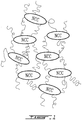
- Furthermore a method for the preparation of nanocomposite hydrogels with nanocrystalline cellulose (NCC) as the crosslinker and reinforcement domain is provided. Each NCC nanoparticle attaches to at least two units of the modifier. The NCC is expected to be completely randomly distributed within the hydrogel structure. The prepared hydrogel has high mechanical strength while maintaining the original properties. Compared to clay-based nanocomposite hydrogels, NCC is biodegradable and biocompatible. This makes the NCC-based hydrogels more promising for the medical related applications since biodegradability and biocompatibility are critical. The preparation of the NCC nanocomposite hydrogel involves a two step process. The first step is NCC modification to render it a suitable crosslinker, and the second is in situ polymerization of hydrophilic vinyl monomers with the modified NCC to make nanocomposite hydrogels.
- Hydrogels of the invention possess excellent mechanical strength while retaining their original properties, such as stimuli responsiveness and fast diffusion, and as such can be developed in a great number of hydrogel-based new applications.
- In specific embodiments of this invention, free radical polymerization is used for forming nanocrystalline (NCC) based nanocomposite hydrogels. A variety of hydrophilic vinyl monomers are suitable, such as acrylic acid, acrylamide (AM), vinylpyrrolidone, N-isopropylacrylamide (NIPAM), N-vinylformamide (NVF) etc. Since there is no crosslinking spot on NCC during the polymerization, NCC must first be modified to function as a crosslinker. The modification is performed by following a procedure whereby a vinyl monomer with functional groups, for example glycidyl methacrylate (GMA), is used to react with the hydroxyl groups on NCC, which results in NCC coupled with the methacrylate group. Then, the nanocomposite hydrogel is prepared by using the modified NCC and hydrophilic monomers, such as acrylamide, initiated with free radical initiators, such as potassium persulfate. Following the procedure of this invention, nanocomposite hydrogels prepared from the modified NCC are much stronger than the hydrogels prepared from a regular organic crosslinker, for instance, N,N'-Methylenebisacrylamide (BIS).11 The water swelling ability of the resulting nanocomposite hydrogel is reversible, which indicates that the diffusion property of the hydrogel is retained while the mechanical properties are enhanced. The molecular weight or polymer chain length between NCC particles can be controlled by two principal factors: (i) NCC concentration, and (ii) the density of grafted modifiers on the NCC surface. The higher the NCC concentration and the density of grafted modifier on NCC surface are, the shorter the polymer chains will be. Conversely, the lower the NCC concentration and the density of grafted modifier on NCC surface are, the longer the polymer chains become. However, the NCC concentration can also affect the mechanical strength of the resulting hydrogel.
- The above described method is not limited to the use of acrylamide as the monomer. The choice of different monomers is dependent on the final application. For different monomer systems, the nanocomposite hydrogels can be pH responsive, temperature sensitive, electrochemically sensitive, etc. Enhancing the mechanical strength will widen the potential application for hydrogels into a wide range of engineering materials and medical systems.
- Detailed description of the specific steps which may be employed for the preparation of NCC-based nanocomposite hydrogels is described below.
- 1. Surface modification of NCC with a vinyl monomer possessing suitable functional groups: NCC suspension in water with a certain concentration, for example 4.38 %wt, is used. The pH of the NCC suspension is adjusted to neutral, and the NCC suspension is then dried using an appropriate technique, for instance spray or freeze drying. Several grams of freeze dried NCC, typically 1 to 10 g, for example 5 g is resuspended in 50 to 500 ml of an appropriate solvent, for example dimethyl sulfoxide (DMSO), preferably 100 ml, with stirring for 10 mins to 4 hours until NCC is fully suspended. The choice of solvent is only limited by the fact that the NCC suspension must be fully dispersed. The NCC suspension is then ultrasonicated for 10 to 60 mins. Desired amount of a catalyst, for example 1 g of 4-Dimethylaminopyridine (DMAP), is added into the suspension, and the suspension is further bubbled with nitrogen for 10 to 60 mins to get rid of dissolved oxygen. The reaction is started by introducing the required amount, for instance 0.73 g, of a suitable vinyl monomer with functional groups, for example glycidyl methacrylate (GMA), into the suspension. The reaction can be performed at any temperature ranging from room temperature up to the degradation temperature of NCC; 50°C is used in this case. The reaction time can range from 4 hours to several days, and 48 hours is applied here. The reaction time, temperature, ratio of GMA to NCC will determine the modification degree. After the reaction, some deionized (DI) water, 100 ml in this case, is introduced into the suspension and the pH of the system is adjusted to 7-8. The obtained suspension is dialyzed against DI water for 3 to 10 days, 7 days in this case. After dialysis, the suspension is ultrasonicated for 30 mins and filtered through, for example, Whatman No. 42 filter paper. Finally, the pH of the modified NCC suspension is adjusted to 7-8 and freeze dried.
- 2. Preparation of NCC-based nanocomposite hydrogels: The calculated amount of modified NCC and acrylamide are dissolved in DI water while stirring until fully dissolved, typically 10 mins to 60 mins, and then ultrasonicated for 10 to 30 mins. The suspension is then filtered through a 0.45 µm needle filter. The desired amount of a suitable catalyst, for instance N,N,N',N'-Tetramethylethylenediamine (TEMED), to assist with the generation of free radicals from the initiator is added to the NCC suspension, and the suspension is bubbled with nitrogen for at least 30 mins. The calculated amount of a suitable initiator, for example potassium persulfate (KPS), is dissolved in DI water and bubbled with nitrogen at the same time. To start the reaction, the KPS solution is introduced to the NCC suspension in an ice-water bath. The in situ free-radical polymerization is allowed to proceed at room temperature for 1 to 5 days, for example 2 days, until the reaction is finished in nitrogen atmosphere. The molar ratio of the monomer (acrylamide), initiator (KPS), and catalyst (TEMED) is kept constant in this specific sample at 381:1:2.35. Different NCC to acrylamide ratios can used to optimize the effect of NCC concentration on nanocomposite hydrogel mechanical properties. The molar ratio of other reactants can also be adjusted within a reasonable range to control the properties of the prepared NCC hydrogels.
-
-
FIG. 1 : is a schematic of how NCC functions as a crosslinker in the described nanocomposite hydrogels. Each nanoparticle attaches to at least two units of the modifier. The NCC is expected to be completely randomly distributed within the hydrogel structure. -
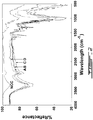
FIG. 2 : is an FT-IR spectra of modified NCC according to the conditions described in Table 1; -
FIG. 3 : is a plot showing the tensile behaviour of NCC-based nanocomposite (open triangles) and BIS-based (solid line) hydrogels; -
FIG. 4 : is a plot showing the tensile strength response to increasing nanoreinforcement/crosslinker loading for NCC-based nanocomposite (solid triangle) and BIS-based (solid square) hydrogels; and -
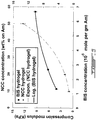
FIG. 5 : is a plot showing the compression modulus as a function of nanoreinforcement/crosslinker loading for NCC-based nanocomposite (solid triangle) and BIS-based (solid square) hydrogels. -
Table 1: Size and surface charge of modified NCC prepared using the indicated conditions. Sample Number A B C D NCC Reaction conditions NCC:GMA weight ratio 1:0.146, 48 hours at room temp. NCC:GMA weight ratio 1:0.146, 24 hours at 50°C NCC:GMA weight ratio 1:0.146, 48 hours at 50°C NCC:GMA weight ratio 1:0.292, 48 hours at 50°C Diameter (nm) 37.7±1.3 37.9±1.1 36.6±0.7 38.4±1.0 45.5±1.2 Surface charge (electrophoretic mobility m2/(V.s)) -3.217±0.253 -3.335±0.208 -3.941±0.366 -3.344±0.29 -4.439 Table 2: Swelling ratios of NCC-based nanocomposite and BIS-based hydrogels. Samples 1.33×10⁻⁵ mol/g Am BIS 2.66×10⁻⁵ mol/g Am BIS 6.66×10⁻⁵ mol/ g Am BIS 10 wt% NCC on Am 20 wt% NCC on Am 50 wt% NCC on Am Swelling ratio 2.70±0.11 2.35±0.05 1.88±0.01 4.15±0.04 3.886±0.13 2.23±0.21 - The modification of NCC by GMA is controlled using different reaction conditions. It is illustrated in Table 1 that the surface charge of the modified NCC is decreased compared to the original NCC. Moreover, the modified NCC becomes smaller in size than the original NCC. This is likely because the catalyst, DMAP, is a base, which will possibly hydrolyze the NCC to make it smaller and decrease the surface charge. To confirm the grafting of GMA onto NCC, Fourier transform infra-red (FT-IR) examination is carried out to check the modified NCC samples. As demonstrated in
FIG. 2 , the peak at about 1720 cm-1 represents the vibration of carbonyl group on methacrylate, which indicates that the methacrylate group is grafted onto NCC. - The mechanical properties of the hydrogels can be analyzed using an Instron, or any other, tensile testing machine at an extension rate of 100 mm/min. The gauge length was set to 30 mm, and the test specimen is a solid cylinder with a diameter of 11.46 mm. The initial cross section is used to calculate the tensile strength and modulus.
-
FIG. 3 displays typical tensile responses of (1) NCC-based nanocomposite hydrogel prepared according to this invention, and (2) hydrogel prepared using an organic crosslinker, BIS. The NCC-based nanocomposite hydrogel exhibits a characteristically different behaviour to that of hydrogels produced using organic crosslinkers. The NCC-based nanocomposite hydrogel shows a clear inflexion point at about 100% strain, indicating transition from linear elastic to plastic response. This elastic-plastic behaviour indicates that the NCC-based nanocomposite hydrogels (1) have the ability to absorb a significant amount of energy (highly tough material), (2) are stiff (high modulus), and (3) have high tensile strength in the plastic range (over 7 times higher than the elastic range). This significant plastic response for NCC-based nanocomposite hydrogels is a unique feature made possible by the NCC reinforcing mechanism. -
FIG. 4 depicts the tensile strength response as a function of increasing NCC (or BIS) contents in NCC-based nanocomposite hydrogels, and hydrogels prepared using an organic crosslinker, respectively. It is evident that the tensile strength increases with increasing BIS content (solid squares), reaches a peak at -0.015 MPa, then decreases. The tensile strength for the NCC-based nanocomposite hydrogel, however, increases steadily with increasing NCC content (solid triangles). For instance, at 50% w/w NCC loading on the monomer, the tensile strength reaches 0.126 MPa, more than 8 times higher than that for the regular hydrogel. - Compression tests are carried out using a Thermal Mechanical Analyzer (TMA Q 400) under an expansion probe. The height of the sample is about 6 mm and the diameter of the probe is 2.795 mm. The measurement is done by applying an initial force of 0.01 N and a force ramp 0.1 N/min to 1.2 N. Compressions between 0.5 to 2.5 mm are used to calculate the compressive modulus.
-
FIG. 5 depicts the compression modulus of the hydrogels as a function of crosslinking densities or NCC loading as weight percentage onto the monomer. For example, for the BIS hydrogel (solid squares) the compression modulus increases with increasing crosslinker concentration and the data follow a logarithm response levelling off at ∼9 kPa. The compression modulus for the NCC-based nanocomposite hydrogel, however, exponentially increases with increasing NCC loading (solid triangles). The results also indicate that increasing modified NCC loading in the nanocomposite hydrogel will enhance the compression modulus at a much faster rate than in the case of BIS-based hydrogels. - The swelling properties of the hydrogels are measured by soaking the prepared hydrogels in DI water for 3 days, and comparing the weights of the hydrogels before and after swelling. The swelling ratio is defined as the ratio of the weight after soaking to that before soaking. Table 2 clearly shows that the NCC nanocomposite hydrogels have higher swelling ratios than the regular hydrogels. It is also found that the swelling of the NCC-based nanocomposite hydrogels is reversible if dried and re-soaked in water.
-
- 1. Yoshida, R., Design of functional polymer gels and their application to biomimetic materials. Current Organic Chemistry 2005, 9, (16), 1617-1641.
- 2. Tokarev, I.; Minko, S., Stimuli-responsive hydrogel thin films. .
- 3. Peppas, N. A.; Hilt, J. Z.; Khademhosseini, A.; Langer, R., Hydrogels in biology and medicine: From molecular principles to bionanotechnology. Advanced Materials 2006, 18, (11), 1345-1360.
- 4. Hoare, T. R.; Kohane, D. S., Hydrogels in drug delivery: Progress and challenges. Polymer 2008, 49, (8), 1993-2007.
- 5. Richter, A.; Paschew, G.; Klatt, S.; Lienig, J.; Arndt, K. F.; Adler, H. J. P., Review on hydrogel-based pH sensors and microsensors. .
- 6. He, C. L.; Kim, S. W.; Lee, D. S., In situ gelling stimuli-sensitive block copolymer hydrogels for drug delivery. Journal of Controlled Release 2008, 127, (3), 189-207.
- 7. Calvert, P., Hydrogels for Soft Machines. Advanced Materials 2009, 21, (7), 743-756.
- 8. Okumura, Y.; Ito, K., The polyrotaxane gel: A topological gel by figure-of-eight cross-links. Advanced Materials 2001, 13, (7), 485-+.
- 9. Haraguchi, K., Nanocomposite hydrogels. Current Opinion in Solid State & Materials Science 2007, 11, (3-4), 47-54.
- 10. Gong, J. P.; Katsuyama, Y.; Kurokawa, T.; Osada, Y., Double-network hydrogels with extremely high mechanical strength. -+.
- 11. Haraguchi, K.; Takehisa, T.; Fan, S., Effects of clay content on the properties of nanocomposite hydrogels composed of poly(N-isopropylacrylamide) and clay. Macromolecules 2002, 35, (27), 10162-10171.
Claims (13)
- A nanocomposite hydrogel comprising a hydrophilic polymer derived from polymerization of a hydrophilic vinyl monomer which polymerizes to form the hydrophilic polymer of the hydrogel, crosslinked by a crosslinker comprising nanocrystalline cellulose (NCC), wherein said crosslinker comprises a modified NCC in which a modifier has a first functional group coupled with a hydroxyl group of the NCC, and a second functional group coupled to said polymer, wherein said modifier is selected from the group consisting of glycidyl methacrylate, trimethylsilyl methacrylate, 2-(trimethylsilyloxy)ethyl methacrylate, 2-aminoethyl methacrylate, 2-isocyanatoethyl methacrylate, 2-chloroethyl acrylate, 3-(trimethoxysily)propyl acrylate, glvcidylacrylate, vinyl isocyanate, 2-aminoethyl vinyl ether, and vinyltrimethoxysilane.
- A nanocomposite hydrogel according to claim 1, wherein said hydrophilic polymer is a homopolymer derived from homopolymerization of a hydrophilic vinyl monomer.
- A nanocomposite hydrogel according to claim 1, wherein said hydrophilic polymer is derived from copolymerization of a hydrophilic vinyl monomer and a comonomer for said hydrophilic vinyl monomer.
- A nanocomposite hydrogel according to claim 1, wherein said hydrophilic polymer is derived from polymerization of a hydrophilic monomer selected from acrylic acid, acrylamide (AM) and vinylpyrrolidone, N-isopropylacrylamide (NIPAM), and N-vinylformamide (NVF).
- A nanocomposite hydrogel according to any one of claims 1 to 4, wherein said modifier is glycidyl methacrylate.
- A method of preparing a nanocomposite hydrogel comprising: polymerizing a hydrophilic vinyl monomer to form a hydrophilic polymer in the presence of a crosslinker for said polymer, which comprises a modified nanocrystalline cellulose (NCC) in which a modifier has a first functional group coupled with a hydroxyl group of the NCC, and a second functional group coupled to said polymer, wherein said modifier is selected from the group consisting of glycidyl methacrylate, trimethylsilyl methacrylate, 2-(trimethylsilyloxy)ethyl methacrylate, 2-aminoethyl methacrylate, 2-isocyanatoethyl methacrylate, 2-chloroethyl acrylate, 3-(trimethoxysilyl)propyl acrylate, glycidyl acrylate, vinyl isocyanate. 2-aminoethyl vinyl ether, and vinyltrimethoxysilane.
- A method according to claim 6, wherein said polymerizing comprises homopolymerization of said hydrophilic vinyl monomer.
- A method according to claim 6, wherein said polymerizing comprises copolymerization of said hydrophilic vinyl monomer and a comonomer.
- A method according to any one of claims 6 to 8, wherein send hydrophilic vinyl monomer is selected from acrylic acid, acrylamide (AM) and vinylpyrrolidone, N- isopropylacrylamide (NIPAM), and N-vinylformamide (NVF).
- A method according to any one of claims 6 to 8, wherein said modifier is glycidyl methacrylate.
- A medical device formed from the nanocomposite hydrogel of any one of claims 1 to 5.
- A medical device according to claim 11 selected from a drug delivery system for medical applications; a stimuli-responsive sensor, a medical implant or a tissue engineered material.
- An absorbent hygiene device formed from the nanocomposite hydrogel of any one of claims 1 to 5.
Applications Claiming Priority (2)
| Application Number | Priority Date | Filing Date | Title |
|---|---|---|---|
| US28231910P | 2010-01-22 | 2010-01-22 | |
| PCT/CA2011/000071 WO2011088562A1 (en) | 2010-01-22 | 2011-01-20 | Nanocomposite hydrogel and method for preparing it, for industrial and medical applications |
Publications (3)
| Publication Number | Publication Date |
|---|---|
| EP2526150A1 EP2526150A1 (en) | 2012-11-28 |
| EP2526150A4 EP2526150A4 (en) | 2014-07-02 |
| EP2526150B1 true EP2526150B1 (en) | 2018-04-25 |
Family
ID=44306343
Family Applications (1)
| Application Number | Title | Priority Date | Filing Date |
|---|---|---|---|
| EP11734292.3A Not-in-force EP2526150B1 (en) | 2010-01-22 | 2011-01-20 | Nanocomposite hydrogel and method for preparing it, for industrial and medical applications |
Country Status (10)
| Country | Link |
|---|---|
| US (1) | US8828434B2 (en) |
| EP (1) | EP2526150B1 (en) |
| JP (1) | JP2013517353A (en) |
| CN (1) | CN102834454A (en) |
| AU (1) | AU2011207070A1 (en) |
| BR (1) | BR112012018018A2 (en) |
| CA (1) | CA2786738C (en) |
| CL (1) | CL2012002028A1 (en) |
| RU (1) | RU2012136136A (en) |
| WO (1) | WO2011088562A1 (en) |
Families Citing this family (48)
| Publication number | Priority date | Publication date | Assignee | Title |
|---|---|---|---|---|
| WO2011100818A1 (en) | 2010-02-18 | 2011-08-25 | Fpinnovations | Thermoplastic nanocomposite material based on nanocrystalline cellulose (ncc) |
| CA2848337C (en) | 2011-09-13 | 2018-04-24 | Celluforce Inc. | Ncc-based supramolecular materials for thermoplastic and thermoset polymer composites |
| US20150072902A1 (en) * | 2012-04-13 | 2015-03-12 | Schlumberger Technology Corporation | Fluids and Methods Including Nanocellulose |
| US20130274149A1 (en) * | 2012-04-13 | 2013-10-17 | Schlumberger Technology Corporation | Fluids and methods including nanocellulose |
| US20140074231A1 (en) * | 2012-09-07 | 2014-03-13 | Regents Of The University Of Minnesota | Biocompatible compositions and methods of manufacture |
| CA2890653C (en) * | 2012-11-12 | 2019-01-08 | Celluforce Inc. | Ncc as functional scaffold for amine-cured epoxy nanocomposite materials of tunable properties |
| CA2901498A1 (en) * | 2013-02-20 | 2014-08-28 | Celluforce Inc. | Tunable and responsive photonic hydrogels comprising nanocrystalline cellulose |
| US9656914B2 (en) | 2013-05-01 | 2017-05-23 | Ecolab Usa Inc. | Rheology modifying agents for slurries |
| US9410288B2 (en) * | 2013-08-08 | 2016-08-09 | Ecolab Usa Inc. | Use of nanocrystaline cellulose and polymer grafted nanocrystaline cellulose for increasing retention in papermaking process |
| US9303360B2 (en) | 2013-08-08 | 2016-04-05 | Ecolab Usa Inc. | Use of nanocrystaline cellulose and polymer grafted nanocrystaline cellulose for increasing retention in papermaking process |
| US9034145B2 (en) | 2013-08-08 | 2015-05-19 | Ecolab Usa Inc. | Use of nanocrystaline cellulose and polymer grafted nanocrystaline cellulose for increasing retention, wet strength, and dry strength in papermaking process |
| CA2926009C (en) * | 2013-10-01 | 2020-10-06 | Ecolab Usa Inc. | Use of nanocrystaline cellulose and polymer grafted nanocrystaline cellulose for increasing retention, wet strength, and dry strength in papermaking process |
| US9834730B2 (en) | 2014-01-23 | 2017-12-05 | Ecolab Usa Inc. | Use of emulsion polymers to flocculate solids in organic liquids |
| US20160369121A1 (en) * | 2014-03-27 | 2016-12-22 | Melodea Ltd. | Nanocrystaline cellulose as absorbent and encapsulation material |
| AU2015320328B2 (en) | 2014-09-26 | 2020-03-05 | Renmatix, Inc. | Cellulose-containing compositions and methods of making same |
| FI20146134A (en) * | 2014-12-22 | 2016-06-23 | Kemira Oyj | Process for the production of laminated polymer network material, manufactured product and use of the product |
| US10442181B2 (en) | 2015-07-22 | 2019-10-15 | Ricoh Company, Ltd. | Hydrogel object and method of manufacturing hydrogel object |
| JP6945272B2 (en) * | 2015-07-22 | 2021-10-06 | 株式会社リコー | Three-dimensional model and its manufacturing method |
| BR112018004894B1 (en) | 2015-09-29 | 2021-03-16 | Kimberly-Clark Worldwide, Inc | substrate and method for its manufacture |
| WO2017066540A1 (en) | 2015-10-15 | 2017-04-20 | Ecolab Usa Inc. | Nanocrystalline cellulose and polymer-grafted nanocrystalline cellulose as rheology modifying agents for magnesium oxide and lime slurries |
| CN108778346B (en) * | 2016-01-10 | 2022-02-11 | 斯迈索尼卡股份有限公司 | Ultrasound gel with improved viscosity and stability |
| CN109843984B (en) | 2016-10-25 | 2022-07-22 | 金伯利-克拉克环球有限公司 | Porous, moisture-triggered shrinkable material |
| CN106675527B (en) * | 2017-01-05 | 2019-08-27 | 江南大学 | A kind of nano-cellulose composite hydrogel-based phase change material and its preparation method and application |
| WO2018132582A1 (en) | 2017-01-12 | 2018-07-19 | Carnegie Mellon University | Surfactant assisted formation of a catalyst complex for emulsion atom transfer radical polymerization processes |
| US11478435B2 (en) | 2017-02-22 | 2022-10-25 | Smilesonica Inc. | Artificial saliva, related methods, and uses |
| CN107043441B (en) * | 2017-04-24 | 2019-09-10 | 武汉大学 | Ascidian Cellulose nanocrystal body/polyalcohol hydrogel and its preparation method and application |
| WO2019010336A1 (en) | 2017-07-05 | 2019-01-10 | Renmatix, Inc. | Manufacture, isolation, purification, and uses of small particle size cellulose particles and compositions |
| WO2019018150A1 (en) | 2017-07-17 | 2019-01-24 | Ecolab USA, Inc. | Rheology-modifying agents for slurries |
| CN107337752A (en) * | 2017-09-09 | 2017-11-10 | 吉林大学 | A kind of preparation method of high intensity temperature sensitive type flexible actuator |
| BR112020016748B1 (en) | 2018-03-22 | 2023-10-17 | Kimberly-Clark Worldwide, Inc. | DISPOSABLE ABSORBENT PRODUCT, AND METHOD FOR MANUFACTURING A DISPOSABLE ABSORBENT PRODUCT |
| US20210147641A1 (en) | 2018-04-03 | 2021-05-20 | Renmatix, Inc. | Composites containing cellulose-based compositions |
| CN108752530A (en) * | 2018-05-09 | 2018-11-06 | 同济大学 | It can the temperature-sensitive hydrogel materials of load cells, temperature-sensitive hydrogel and the preparation method and application thereof |
| WO2020031186A1 (en) * | 2018-08-06 | 2020-02-13 | Yissum Research Development Company Of The Hebrew University Of Jerusalem Ltd. | Cellulose-based topical formulations |
| CN112805033A (en) * | 2018-08-14 | 2021-05-14 | 华盛顿大学 | Zwitter-ion double-network hydrogel |
| CA3111835C (en) * | 2018-09-07 | 2023-01-10 | Fpinnovations | All-cellulose super absorbent hydrogels and method of producing same |
| JP7027289B2 (en) * | 2018-09-27 | 2022-03-01 | 鹿島建設株式会社 | Expansion and contraction device and installation method of expansion and contraction device |
| CN109503765B (en) * | 2018-11-19 | 2021-07-02 | 华南理工大学 | Preparation method of cellulose ion conductive hydrogel and prepared hydrogel |
| CN111434698A (en) * | 2019-01-14 | 2020-07-21 | 中国科学院宁波材料技术与工程研究所 | Preparation method of 3D printing hydrogel and application of prepared hydrogel |
| CN110698581A (en) * | 2019-11-07 | 2020-01-17 | 中国人民大学 | Waterproof easily-stripped wound dressing and preparation method thereof |
| CN112210090A (en) * | 2020-10-16 | 2021-01-12 | 淄博宏达助剂有限公司 | Mxene-polyacrylic acid composite hydrogel and preparation method thereof |
| CN113087925B (en) * | 2021-03-15 | 2022-07-05 | 武汉大学 | A stimuli-responsive hydrogel and a method for rapidly and efficiently preparing the stimuli-responsive hydrogel |
| US20250091285A1 (en) * | 2022-01-16 | 2025-03-20 | Michael George BUTLER | Digitally-controlled wall-building systems having an improved construction sequence |
| FI131803B1 (en) * | 2022-05-24 | 2025-12-08 | Aabo Akademi | Ink formulation, method of producing the same and uses of the ink formulation |
| CN115466408A (en) * | 2022-08-12 | 2022-12-13 | 齐鲁工业大学 | Preparation method of multifunctional conductive composite hydrogel based on nanocellulose |
| CN115305601B (en) * | 2022-09-02 | 2023-09-12 | 南开大学 | A method for preparing high-strength and high-tenacity artificial spider silk based on double cross-linked network |
| CN115746208B (en) * | 2022-12-16 | 2025-03-14 | 中国林业科学研究院林产化学工业研究所 | A cellulose/acrylamide ultra-stretchable, adhesive hydrogel and preparation method thereof |
| CN116041738B (en) * | 2023-01-10 | 2023-08-22 | 东北林业大学 | A preparation method of multi-fluorescent cellulose-based hydrogel based on excitation wavelength dependence and its application in multi-mode four-dimensional anti-counterfeiting |
| CN117752552B (en) * | 2023-12-26 | 2024-07-12 | 上海世领制药有限公司 | Hydrophilic whitening agent, silica gel composition, whitening and freckle-removing patch and preparation method thereof |
Family Cites Families (7)
| Publication number | Priority date | Publication date | Assignee | Title |
|---|---|---|---|---|
| JPS51125468A (en) | 1975-03-27 | 1976-11-01 | Sanyo Chem Ind Ltd | Method of preparing resins of high water absorbency |
| US4194877A (en) * | 1977-11-28 | 1980-03-25 | United States Of America | Dye-containing polymer composition |
| US20050037082A1 (en) * | 2003-08-13 | 2005-02-17 | Wan-Kei Wan | Poly(vinyl alcohol)-bacterial cellulose nanocomposite |
| US20080146701A1 (en) * | 2003-10-22 | 2008-06-19 | Sain Mohini M | Manufacturing process of cellulose nanofibers from renewable feed stocks |
| CN1312249C (en) * | 2005-06-29 | 2007-04-25 | 中国科学院广州化学研究所 | Nano cellulose solid-solid phase transition material and its preparing method |
| RU2298022C2 (en) | 2005-07-20 | 2007-04-27 | Александр Львович Буянов | Composite material capable of forming hydrogel, and hydrogel |
| WO2011100818A1 (en) * | 2010-02-18 | 2011-08-25 | Fpinnovations | Thermoplastic nanocomposite material based on nanocrystalline cellulose (ncc) |
-
2011
- 2011-01-20 JP JP2012549218A patent/JP2013517353A/en active Pending
- 2011-01-20 BR BR112012018018A patent/BR112012018018A2/en not_active IP Right Cessation
- 2011-01-20 CA CA2786738A patent/CA2786738C/en active Active
- 2011-01-20 AU AU2011207070A patent/AU2011207070A1/en not_active Abandoned
- 2011-01-20 EP EP11734292.3A patent/EP2526150B1/en not_active Not-in-force
- 2011-01-20 CN CN201180006583.3A patent/CN102834454A/en active Pending
- 2011-01-20 RU RU2012136136/05A patent/RU2012136136A/en not_active Application Discontinuation
- 2011-01-20 US US13/010,020 patent/US8828434B2/en active Active
- 2011-01-20 WO PCT/CA2011/000071 patent/WO2011088562A1/en not_active Ceased
-
2012
- 2012-07-20 CL CL2012002028A patent/CL2012002028A1/en unknown
Non-Patent Citations (1)
| Title |
|---|
| None * |
Also Published As
| Publication number | Publication date |
|---|---|
| CL2012002028A1 (en) | 2012-11-30 |
| US20110182990A1 (en) | 2011-07-28 |
| CN102834454A (en) | 2012-12-19 |
| WO2011088562A1 (en) | 2011-07-28 |
| RU2012136136A (en) | 2014-02-27 |
| BR112012018018A2 (en) | 2016-05-03 |
| AU2011207070A1 (en) | 2012-08-09 |
| US8828434B2 (en) | 2014-09-09 |
| EP2526150A4 (en) | 2014-07-02 |
| CA2786738C (en) | 2014-06-17 |
| JP2013517353A (en) | 2013-05-16 |
| CA2786738A1 (en) | 2011-07-28 |
| EP2526150A1 (en) | 2012-11-28 |
Similar Documents
| Publication | Publication Date | Title |
|---|---|---|
| US8828434B2 (en) | Nanocomposite hydrogel and method for preparing it, for industrial and medical applications | |
| Zhang et al. | High-mechanical strength carboxymethyl chitosan-based hydrogel film for antibacterial wound dressing | |
| Qamruzzaman et al. | An overview on starch-based sustainable hydrogels: Potential applications and aspects | |
| Zhang et al. | Tunicate cellulose nanocrystals reinforced nanocomposite hydrogels comprised by hybrid cross-linked networks | |
| Zhao et al. | Mechanically strong and thermosensitive macromolecular microsphere composite poly (N-isopropylacrylamide) hydrogels | |
| Bai et al. | Construction of an ultrahigh strength hydrogel with excellent fatigue resistance based on strong dipole–dipole interaction | |
| Puza et al. | Physical entanglement hydrogels: ultrahigh water content but good toughness and stretchability | |
| Chen et al. | Responsiveness, swelling, and mechanical properties of PNIPA nanocomposite hydrogels reinforced by nanocellulose | |
| Wu et al. | Facile in-situ fabrication of novel organic nanoparticle hydrogels with excellent mechanical properties | |
| Sugawara et al. | Composite hydrogels reinforced by cellulose-based supramolecular filler | |
| Yang et al. | Fabrication of a highly elastic nanocomposite hydrogel by surface modification of cellulose nanocrystals | |
| Dehbari et al. | In situ polymerized hyperbranched polymer reinforced poly (acrylic acid) hydrogels | |
| Wang et al. | Microsphere-structured hydrogel crosslinked by polymerizable protein-based nanospheres | |
| Zhong et al. | Tough superabsorbent poly (acrylic acid) nanocomposite physical hydrogels fabricated by a dually cross-linked single network strategy | |
| Chen et al. | A novel multifunction of wearable ionic conductive hydrogel sensor for promoting infected wound healing | |
| Jahandideh et al. | A green strategy to endow superabsorbents with stretchability and self-healability | |
| Chauhan et al. | Hydrogel based materials: A progressive approach towards advancement in biomedical applications | |
| Xia et al. | Stretchy and strong polyurethane–urea supramolecular (PUUS) hydrogels with various stimulus-responsive behaviours: the effect of chain-extenders | |
| JP2005232402A (en) | Polymer composite, its stretched product and process for producing polymer composite | |
| CN110423363B (en) | Preparation method and application of high-strength ultrahigh-elasticity hydrogel | |
| JP5059407B2 (en) | Gel, production method thereof, water-absorbent resin, lubricant, and cell culture substrate | |
| Cai et al. | Double physical network hydrogels with rapid self-recovery and multistimuli-responsive shape memory effects based on low-methoxyl pectin and host-guest interactions | |
| He et al. | Flexible and recoverable ion-conductive hydrogels with cross-linked triple network for highly sensitive wearable Motion-monitoring sensors | |
| Ruiz et al. | Structure-properties relationships of defined CNF single-networks crosslinked by telechelic PEGs | |
| Masci et al. | Synthesis and characterization of thermoresponsive N-isopropylacrylamide/methacrylated pullulan hydrogels |
Legal Events
| Date | Code | Title | Description |
|---|---|---|---|
| PUAI | Public reference made under article 153(3) epc to a published international application that has entered the european phase |
Free format text: ORIGINAL CODE: 0009012 |
|
| 17P | Request for examination filed |
Effective date: 20120709 |
|
| AK | Designated contracting states |
Kind code of ref document: A1 Designated state(s): AL AT BE BG CH CY CZ DE DK EE ES FI FR GB GR HR HU IE IS IT LI LT LU LV MC MK MT NL NO PL PT RO RS SE SI SK SM TR |
|
| DAX | Request for extension of the european patent (deleted) | ||
| A4 | Supplementary search report drawn up and despatched |
Effective date: 20140603 |
|
| RIC1 | Information provided on ipc code assigned before grant |
Ipc: C08J 5/00 20060101ALI20140526BHEP Ipc: A61L 27/52 20060101ALI20140526BHEP Ipc: C08L 51/02 20060101AFI20140526BHEP Ipc: A61L 15/60 20060101ALI20140526BHEP Ipc: A61L 15/28 20060101ALI20140526BHEP Ipc: C08J 3/24 20060101ALI20140526BHEP Ipc: B82Y 30/00 20110101ALI20140526BHEP Ipc: C08J 3/075 20060101ALI20140526BHEP Ipc: A61L 15/22 20060101ALI20140526BHEP Ipc: A61L 27/48 20060101ALI20140526BHEP Ipc: A61L 15/24 20060101ALI20140526BHEP |
|
| 17Q | First examination report despatched |
Effective date: 20160829 |
|
| STAA | Information on the status of an ep patent application or granted ep patent |
Free format text: STATUS: EXAMINATION IS IN PROGRESS |
|
| REG | Reference to a national code |
Ref country code: DE Ref legal event code: R079 Ref document number: 602011047804 Country of ref document: DE Free format text: PREVIOUS MAIN CLASS: C08L0051020000 Ipc: A61L0027480000 |
|
| GRAP | Despatch of communication of intention to grant a patent |
Free format text: ORIGINAL CODE: EPIDOSNIGR1 |
|
| STAA | Information on the status of an ep patent application or granted ep patent |
Free format text: STATUS: GRANT OF PATENT IS INTENDED |
|
| RIC1 | Information provided on ipc code assigned before grant |
Ipc: A61L 15/22 20060101ALI20171106BHEP Ipc: C08J 5/00 20060101ALI20171106BHEP Ipc: C08F 251/02 20060101ALI20171106BHEP Ipc: C08J 3/24 20060101ALI20171106BHEP Ipc: B82Y 30/00 20110101ALI20171106BHEP Ipc: A61L 27/48 20060101AFI20171106BHEP Ipc: A61L 15/28 20060101ALI20171106BHEP Ipc: A61L 15/24 20060101ALI20171106BHEP |
|
| INTG | Intention to grant announced |
Effective date: 20171123 |
|
| GRAA | (expected) grant |
Free format text: ORIGINAL CODE: 0009210 |
|
| GRAS | Grant fee paid |
Free format text: ORIGINAL CODE: EPIDOSNIGR3 |
|
| STAA | Information on the status of an ep patent application or granted ep patent |
Free format text: STATUS: THE PATENT HAS BEEN GRANTED |
|
| AK | Designated contracting states |
Kind code of ref document: B1 Designated state(s): AL AT BE BG CH CY CZ DE DK EE ES FI FR GB GR HR HU IE IS IT LI LT LU LV MC MK MT NL NO PL PT RO RS SE SI SK SM TR |
|
| REG | Reference to a national code |
Ref country code: GB Ref legal event code: FG4D |
|
| REG | Reference to a national code |
Ref country code: CH Ref legal event code: EP |
|
| REG | Reference to a national code |
Ref country code: AT Ref legal event code: REF Ref document number: 992192 Country of ref document: AT Kind code of ref document: T Effective date: 20180515 |
|
| REG | Reference to a national code |
Ref country code: IE Ref legal event code: FG4D |
|
| REG | Reference to a national code |
Ref country code: DE Ref legal event code: R096 Ref document number: 602011047804 Country of ref document: DE |
|
| REG | Reference to a national code |
Ref country code: NL Ref legal event code: MP Effective date: 20180425 |
|
| REG | Reference to a national code |
Ref country code: LT Ref legal event code: MG4D |
|
| PG25 | Lapsed in a contracting state [announced via postgrant information from national office to epo] |
Ref country code: NL Free format text: LAPSE BECAUSE OF FAILURE TO SUBMIT A TRANSLATION OF THE DESCRIPTION OR TO PAY THE FEE WITHIN THE PRESCRIBED TIME-LIMIT Effective date: 20180425 |
|
| PG25 | Lapsed in a contracting state [announced via postgrant information from national office to epo] |
Ref country code: ES Free format text: LAPSE BECAUSE OF FAILURE TO SUBMIT A TRANSLATION OF THE DESCRIPTION OR TO PAY THE FEE WITHIN THE PRESCRIBED TIME-LIMIT Effective date: 20180425 Ref country code: SE Free format text: LAPSE BECAUSE OF FAILURE TO SUBMIT A TRANSLATION OF THE DESCRIPTION OR TO PAY THE FEE WITHIN THE PRESCRIBED TIME-LIMIT Effective date: 20180425 Ref country code: FI Free format text: LAPSE BECAUSE OF FAILURE TO SUBMIT A TRANSLATION OF THE DESCRIPTION OR TO PAY THE FEE WITHIN THE PRESCRIBED TIME-LIMIT Effective date: 20180425 Ref country code: NO Free format text: LAPSE BECAUSE OF FAILURE TO SUBMIT A TRANSLATION OF THE DESCRIPTION OR TO PAY THE FEE WITHIN THE PRESCRIBED TIME-LIMIT Effective date: 20180725 Ref country code: PL Free format text: LAPSE BECAUSE OF FAILURE TO SUBMIT A TRANSLATION OF THE DESCRIPTION OR TO PAY THE FEE WITHIN THE PRESCRIBED TIME-LIMIT Effective date: 20180425 Ref country code: BG Free format text: LAPSE BECAUSE OF FAILURE TO SUBMIT A TRANSLATION OF THE DESCRIPTION OR TO PAY THE FEE WITHIN THE PRESCRIBED TIME-LIMIT Effective date: 20180725 Ref country code: LT Free format text: LAPSE BECAUSE OF FAILURE TO SUBMIT A TRANSLATION OF THE DESCRIPTION OR TO PAY THE FEE WITHIN THE PRESCRIBED TIME-LIMIT Effective date: 20180425 |
|
| PG25 | Lapsed in a contracting state [announced via postgrant information from national office to epo] |
Ref country code: GR Free format text: LAPSE BECAUSE OF FAILURE TO SUBMIT A TRANSLATION OF THE DESCRIPTION OR TO PAY THE FEE WITHIN THE PRESCRIBED TIME-LIMIT Effective date: 20180726 Ref country code: HR Free format text: LAPSE BECAUSE OF FAILURE TO SUBMIT A TRANSLATION OF THE DESCRIPTION OR TO PAY THE FEE WITHIN THE PRESCRIBED TIME-LIMIT Effective date: 20180425 Ref country code: LV Free format text: LAPSE BECAUSE OF FAILURE TO SUBMIT A TRANSLATION OF THE DESCRIPTION OR TO PAY THE FEE WITHIN THE PRESCRIBED TIME-LIMIT Effective date: 20180425 Ref country code: RS Free format text: LAPSE BECAUSE OF FAILURE TO SUBMIT A TRANSLATION OF THE DESCRIPTION OR TO PAY THE FEE WITHIN THE PRESCRIBED TIME-LIMIT Effective date: 20180425 |
|
| REG | Reference to a national code |
Ref country code: AT Ref legal event code: MK05 Ref document number: 992192 Country of ref document: AT Kind code of ref document: T Effective date: 20180425 |
|
| PG25 | Lapsed in a contracting state [announced via postgrant information from national office to epo] |
Ref country code: PT Free format text: LAPSE BECAUSE OF FAILURE TO SUBMIT A TRANSLATION OF THE DESCRIPTION OR TO PAY THE FEE WITHIN THE PRESCRIBED TIME-LIMIT Effective date: 20180827 |
|
| REG | Reference to a national code |
Ref country code: DE Ref legal event code: R097 Ref document number: 602011047804 Country of ref document: DE |
|
| PG25 | Lapsed in a contracting state [announced via postgrant information from national office to epo] |
Ref country code: CZ Free format text: LAPSE BECAUSE OF FAILURE TO SUBMIT A TRANSLATION OF THE DESCRIPTION OR TO PAY THE FEE WITHIN THE PRESCRIBED TIME-LIMIT Effective date: 20180425 Ref country code: RO Free format text: LAPSE BECAUSE OF FAILURE TO SUBMIT A TRANSLATION OF THE DESCRIPTION OR TO PAY THE FEE WITHIN THE PRESCRIBED TIME-LIMIT Effective date: 20180425 Ref country code: EE Free format text: LAPSE BECAUSE OF FAILURE TO SUBMIT A TRANSLATION OF THE DESCRIPTION OR TO PAY THE FEE WITHIN THE PRESCRIBED TIME-LIMIT Effective date: 20180425 Ref country code: AT Free format text: LAPSE BECAUSE OF FAILURE TO SUBMIT A TRANSLATION OF THE DESCRIPTION OR TO PAY THE FEE WITHIN THE PRESCRIBED TIME-LIMIT Effective date: 20180425 Ref country code: DK Free format text: LAPSE BECAUSE OF FAILURE TO SUBMIT A TRANSLATION OF THE DESCRIPTION OR TO PAY THE FEE WITHIN THE PRESCRIBED TIME-LIMIT Effective date: 20180425 Ref country code: SK Free format text: LAPSE BECAUSE OF FAILURE TO SUBMIT A TRANSLATION OF THE DESCRIPTION OR TO PAY THE FEE WITHIN THE PRESCRIBED TIME-LIMIT Effective date: 20180425 |
|
| PG25 | Lapsed in a contracting state [announced via postgrant information from national office to epo] |
Ref country code: IT Free format text: LAPSE BECAUSE OF FAILURE TO SUBMIT A TRANSLATION OF THE DESCRIPTION OR TO PAY THE FEE WITHIN THE PRESCRIBED TIME-LIMIT Effective date: 20180425 Ref country code: SM Free format text: LAPSE BECAUSE OF FAILURE TO SUBMIT A TRANSLATION OF THE DESCRIPTION OR TO PAY THE FEE WITHIN THE PRESCRIBED TIME-LIMIT Effective date: 20180425 |
|
| PLBE | No opposition filed within time limit |
Free format text: ORIGINAL CODE: 0009261 |
|
| STAA | Information on the status of an ep patent application or granted ep patent |
Free format text: STATUS: NO OPPOSITION FILED WITHIN TIME LIMIT |
|
| 26N | No opposition filed |
Effective date: 20190128 |
|
| PG25 | Lapsed in a contracting state [announced via postgrant information from national office to epo] |
Ref country code: SI Free format text: LAPSE BECAUSE OF FAILURE TO SUBMIT A TRANSLATION OF THE DESCRIPTION OR TO PAY THE FEE WITHIN THE PRESCRIBED TIME-LIMIT Effective date: 20180425 |
|
| PG25 | Lapsed in a contracting state [announced via postgrant information from national office to epo] |
Ref country code: MC Free format text: LAPSE BECAUSE OF FAILURE TO SUBMIT A TRANSLATION OF THE DESCRIPTION OR TO PAY THE FEE WITHIN THE PRESCRIBED TIME-LIMIT Effective date: 20180425 |
|
| REG | Reference to a national code |
Ref country code: CH Ref legal event code: PL |
|
| PG25 | Lapsed in a contracting state [announced via postgrant information from national office to epo] |
Ref country code: LU Free format text: LAPSE BECAUSE OF NON-PAYMENT OF DUE FEES Effective date: 20190120 |
|
| REG | Reference to a national code |
Ref country code: BE Ref legal event code: MM Effective date: 20190131 |
|
| REG | Reference to a national code |
Ref country code: IE Ref legal event code: MM4A |
|
| PG25 | Lapsed in a contracting state [announced via postgrant information from national office to epo] |
Ref country code: BE Free format text: LAPSE BECAUSE OF NON-PAYMENT OF DUE FEES Effective date: 20190131 Ref country code: AL Free format text: LAPSE BECAUSE OF FAILURE TO SUBMIT A TRANSLATION OF THE DESCRIPTION OR TO PAY THE FEE WITHIN THE PRESCRIBED TIME-LIMIT Effective date: 20180425 |
|
| PG25 | Lapsed in a contracting state [announced via postgrant information from national office to epo] |
Ref country code: LI Free format text: LAPSE BECAUSE OF NON-PAYMENT OF DUE FEES Effective date: 20190131 Ref country code: CH Free format text: LAPSE BECAUSE OF NON-PAYMENT OF DUE FEES Effective date: 20190131 |
|
| PG25 | Lapsed in a contracting state [announced via postgrant information from national office to epo] |
Ref country code: IE Free format text: LAPSE BECAUSE OF NON-PAYMENT OF DUE FEES Effective date: 20190120 |
|
| PG25 | Lapsed in a contracting state [announced via postgrant information from national office to epo] |
Ref country code: TR Free format text: LAPSE BECAUSE OF FAILURE TO SUBMIT A TRANSLATION OF THE DESCRIPTION OR TO PAY THE FEE WITHIN THE PRESCRIBED TIME-LIMIT Effective date: 20180425 |
|
| PG25 | Lapsed in a contracting state [announced via postgrant information from national office to epo] |
Ref country code: MT Free format text: LAPSE BECAUSE OF NON-PAYMENT OF DUE FEES Effective date: 20190120 |
|
| PG25 | Lapsed in a contracting state [announced via postgrant information from national office to epo] |
Ref country code: CY Free format text: LAPSE BECAUSE OF FAILURE TO SUBMIT A TRANSLATION OF THE DESCRIPTION OR TO PAY THE FEE WITHIN THE PRESCRIBED TIME-LIMIT Effective date: 20180425 |
|
| PG25 | Lapsed in a contracting state [announced via postgrant information from national office to epo] |
Ref country code: IS Free format text: LAPSE BECAUSE OF FAILURE TO SUBMIT A TRANSLATION OF THE DESCRIPTION OR TO PAY THE FEE WITHIN THE PRESCRIBED TIME-LIMIT Effective date: 20180825 |
|
| PG25 | Lapsed in a contracting state [announced via postgrant information from national office to epo] |
Ref country code: HU Free format text: LAPSE BECAUSE OF FAILURE TO SUBMIT A TRANSLATION OF THE DESCRIPTION OR TO PAY THE FEE WITHIN THE PRESCRIBED TIME-LIMIT; INVALID AB INITIO Effective date: 20110120 |
|
| PG25 | Lapsed in a contracting state [announced via postgrant information from national office to epo] |
Ref country code: MK Free format text: LAPSE BECAUSE OF FAILURE TO SUBMIT A TRANSLATION OF THE DESCRIPTION OR TO PAY THE FEE WITHIN THE PRESCRIBED TIME-LIMIT Effective date: 20180425 |
|
| PGFP | Annual fee paid to national office [announced via postgrant information from national office to epo] |
Ref country code: GB Payment date: 20221214 Year of fee payment: 13 Ref country code: FR Payment date: 20221216 Year of fee payment: 13 |
|
| PGFP | Annual fee paid to national office [announced via postgrant information from national office to epo] |
Ref country code: DE Payment date: 20221215 Year of fee payment: 13 |
|
| P01 | Opt-out of the competence of the unified patent court (upc) registered |
Effective date: 20230531 |
|
| REG | Reference to a national code |
Ref country code: DE Ref legal event code: R119 Ref document number: 602011047804 Country of ref document: DE |
|
| GBPC | Gb: european patent ceased through non-payment of renewal fee |
Effective date: 20240120 |
|
| PG25 | Lapsed in a contracting state [announced via postgrant information from national office to epo] |
Ref country code: DE Free format text: LAPSE BECAUSE OF NON-PAYMENT OF DUE FEES Effective date: 20240801 |
|
| PG25 | Lapsed in a contracting state [announced via postgrant information from national office to epo] |
Ref country code: GB Free format text: LAPSE BECAUSE OF NON-PAYMENT OF DUE FEES Effective date: 20240120 |
|
| PG25 | Lapsed in a contracting state [announced via postgrant information from national office to epo] |
Ref country code: FR Free format text: LAPSE BECAUSE OF NON-PAYMENT OF DUE FEES Effective date: 20240131 |
|
| PG25 | Lapsed in a contracting state [announced via postgrant information from national office to epo] |
Ref country code: GB Free format text: LAPSE BECAUSE OF NON-PAYMENT OF DUE FEES Effective date: 20240120 Ref country code: FR Free format text: LAPSE BECAUSE OF NON-PAYMENT OF DUE FEES Effective date: 20240131 Ref country code: DE Free format text: LAPSE BECAUSE OF NON-PAYMENT OF DUE FEES Effective date: 20240801 |