EP2525598B1 - Verfahren und vorrichtung zur rückkopplung von mehrträgerkanalinformationen - Google Patents
Verfahren und vorrichtung zur rückkopplung von mehrträgerkanalinformationen Download PDFInfo
- Publication number
- EP2525598B1 EP2525598B1 EP10841989.6A EP10841989A EP2525598B1 EP 2525598 B1 EP2525598 B1 EP 2525598B1 EP 10841989 A EP10841989 A EP 10841989A EP 2525598 B1 EP2525598 B1 EP 2525598B1
- Authority
- EP
- European Patent Office
- Prior art keywords
- information
- downlink carriers
- carriers
- channel information
- downlink
- Prior art date
- Legal status (The legal status is an assumption and is not a legal conclusion. Google has not performed a legal analysis and makes no representation as to the accuracy of the status listed.)
- Active
Links
Images



Classifications
-
- H—ELECTRICITY
- H04—ELECTRIC COMMUNICATION TECHNIQUE
- H04L—TRANSMISSION OF DIGITAL INFORMATION, e.g. TELEGRAPHIC COMMUNICATION
- H04L1/00—Arrangements for detecting or preventing errors in the information received
- H04L1/0001—Systems modifying transmission characteristics according to link quality, e.g. power backoff
- H04L1/0023—Systems modifying transmission characteristics according to link quality, e.g. power backoff characterised by the signalling
- H04L1/0026—Transmission of channel quality indication
-
- H—ELECTRICITY
- H04—ELECTRIC COMMUNICATION TECHNIQUE
- H04L—TRANSMISSION OF DIGITAL INFORMATION, e.g. TELEGRAPHIC COMMUNICATION
- H04L1/00—Arrangements for detecting or preventing errors in the information received
- H04L1/0001—Systems modifying transmission characteristics according to link quality, e.g. power backoff
- H04L1/0023—Systems modifying transmission characteristics according to link quality, e.g. power backoff characterised by the signalling
- H04L1/0028—Formatting
- H04L1/0029—Reduction of the amount of signalling, e.g. retention of useful signalling or differential signalling
-
- H—ELECTRICITY
- H04—ELECTRIC COMMUNICATION TECHNIQUE
- H04L—TRANSMISSION OF DIGITAL INFORMATION, e.g. TELEGRAPHIC COMMUNICATION
- H04L1/00—Arrangements for detecting or preventing errors in the information received
- H04L1/0001—Systems modifying transmission characteristics according to link quality, e.g. power backoff
- H04L1/0023—Systems modifying transmission characteristics according to link quality, e.g. power backoff characterised by the signalling
- H04L1/0028—Formatting
- H04L1/003—Adaptive formatting arrangements particular to signalling, e.g. variable amount of bits
-
- H—ELECTRICITY
- H04—ELECTRIC COMMUNICATION TECHNIQUE
- H04L—TRANSMISSION OF DIGITAL INFORMATION, e.g. TELEGRAPHIC COMMUNICATION
- H04L1/00—Arrangements for detecting or preventing errors in the information received
- H04L1/0001—Systems modifying transmission characteristics according to link quality, e.g. power backoff
- H04L1/0023—Systems modifying transmission characteristics according to link quality, e.g. power backoff characterised by the signalling
- H04L1/0028—Formatting
- H04L1/0031—Multiple signaling transmission
-
- H—ELECTRICITY
- H04—ELECTRIC COMMUNICATION TECHNIQUE
- H04L—TRANSMISSION OF DIGITAL INFORMATION, e.g. TELEGRAPHIC COMMUNICATION
- H04L5/00—Arrangements affording multiple use of the transmission path
- H04L5/003—Arrangements for allocating sub-channels of the transmission path
- H04L5/0053—Allocation of signalling, i.e. of overhead other than pilot signals
-
- H—ELECTRICITY
- H04—ELECTRIC COMMUNICATION TECHNIQUE
- H04L—TRANSMISSION OF DIGITAL INFORMATION, e.g. TELEGRAPHIC COMMUNICATION
- H04L1/00—Arrangements for detecting or preventing errors in the information received
- H04L1/004—Arrangements for detecting or preventing errors in the information received by using forward error control
- H04L1/0056—Systems characterized by the type of code used
- H04L1/0067—Rate matching
-
- H—ELECTRICITY
- H04—ELECTRIC COMMUNICATION TECHNIQUE
- H04L—TRANSMISSION OF DIGITAL INFORMATION, e.g. TELEGRAPHIC COMMUNICATION
- H04L1/00—Arrangements for detecting or preventing errors in the information received
- H04L1/004—Arrangements for detecting or preventing errors in the information received by using forward error control
- H04L1/0056—Systems characterized by the type of code used
- H04L1/0071—Use of interleaving
-
- H—ELECTRICITY
- H04—ELECTRIC COMMUNICATION TECHNIQUE
- H04L—TRANSMISSION OF DIGITAL INFORMATION, e.g. TELEGRAPHIC COMMUNICATION
- H04L1/00—Arrangements for detecting or preventing errors in the information received
- H04L1/004—Arrangements for detecting or preventing errors in the information received by using forward error control
- H04L1/0072—Error control for data other than payload data, e.g. control data
-
- H—ELECTRICITY
- H04—ELECTRIC COMMUNICATION TECHNIQUE
- H04L—TRANSMISSION OF DIGITAL INFORMATION, e.g. TELEGRAPHIC COMMUNICATION
- H04L1/00—Arrangements for detecting or preventing errors in the information received
- H04L1/12—Arrangements for detecting or preventing errors in the information received by using return channel
- H04L1/16—Arrangements for detecting or preventing errors in the information received by using return channel in which the return channel carries supervisory signals, e.g. repetition request signals
- H04L1/1607—Details of the supervisory signal
- H04L1/1664—Details of the supervisory signal the supervisory signal being transmitted together with payload signals; piggybacking
-
- H—ELECTRICITY
- H04—ELECTRIC COMMUNICATION TECHNIQUE
- H04L—TRANSMISSION OF DIGITAL INFORMATION, e.g. TELEGRAPHIC COMMUNICATION
- H04L1/00—Arrangements for detecting or preventing errors in the information received
- H04L1/12—Arrangements for detecting or preventing errors in the information received by using return channel
- H04L1/16—Arrangements for detecting or preventing errors in the information received by using return channel in which the return channel carries supervisory signals, e.g. repetition request signals
- H04L1/1607—Details of the supervisory signal
- H04L1/1671—Details of the supervisory signal the supervisory signal being transmitted together with control information
-
- H—ELECTRICITY
- H04—ELECTRIC COMMUNICATION TECHNIQUE
- H04W—WIRELESS COMMUNICATION NETWORKS
- H04W24/00—Supervisory, monitoring or testing arrangements
- H04W24/10—Scheduling measurement reports ; Arrangements for measurement reports
Definitions
- the present invention relates to the field of communication technologies and particularly to a method and device for feeding back channel information of a plurality of carriers.
- a system supports transmission over a single carrier, and therefore a User Equipment (UE) also measures a channel quality of a single downlink carrier and feeds back a measurement result including Rank Indication (RI) information, Channel Quality Indictor (CQI) information, Precoding Matrix Indication (PMI) information, etc.
- RI Rank Indication
- CQI Channel Quality Indictor
- PMI Precoding Matrix Indication
- a specific feedback can be fed back periodically over a Physical Uplink Control Channel (PUCCH) or non-periodically over a Physical Uplink Shared Channel (PUSCH).
- PUCCH Physical Uplink Control Channel
- PUSCH Physical Uplink Shared Channel
- each transmission mode As particularly specified below, where a UE adopts in a certain transmission mode a specific feedback mode configured by a base station in upper-layer signaling.
- Transmission modes correspond to feedback modes as follows:
- An RI is fed back only in the transmission modes 3 and 4; and an RI (Rank Indication) is 1-bit information when a base station configures two antenna ports, and the RI is 2-bit information when the base station configures four antenna ports.
- a UE feeds back over a PUSCH a CQI/PMI, of which a length in bits is dependent upon a specific feedback mode and the number of sub-bands defined in a system, and the UE parses firstly RI information over the PUSCH and then CQI/PMI information in a format corresponding to the index of a rank.
- the feedback mode 2-0 is a "UE selected sub-bands without any PMI" mode including wideband CQI information of one codeword (four bits) and information of one differential CQI (two bits) indicating M UE selected sub-bands, where L is indication information of sub-band indexes of M sub-bands selected from N sub-bands, and both values of N and M depend upon a system bandwidth as standard-specified, as depicted in Table 3 below: Table 3 Field Bit width Wideband CQI codeword 4 Sub-band differential CQI 2 Position of the M selected sub-bands L
- the feedback mode 3-0 is a "Upper-layer configured sub-bands without any PMI" mode including information of one wideband CQI (four bits) and information of N differential sub-band CQIs (each of two bits), as depicted in Table 5 below: Table 5 Field Bit width Wideband CQI codeword 4 Sub-band differential CQI 2N
- Sub-band differential CQI codeword 1 0 2N 0 2N Pre-coding matrix indication 2 1 4 4
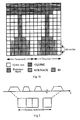
- RI information is encoded separately, CQI plus PMI information is encoded separately, and ACK or NACK information is also encoded separately, and such uplink control information is multiplexed together with uplink data, as illustrated in Fig.1a .
- uplink data symbols are mapped to a physical resource by firstly mapping the CPI/PMI information and then mapping the uplink data onto the remaining resource.
- the ACK/NACK and RI information is mapped by puncturing the uplink data so that the ACK/NACK is placed in four columns of symbols on both sides of a pilot firstly in the time domain and then in the frequency domain in an order from low frequency to high frequency and the RI information is mapped to four columns of symbols immediately next to the ACK/NACK firstly in the time domain and then in the frequency domain in an order from low frequency to high frequency, as illustrated in Fig.1b .
- non-periodical transmission of a CQI/PMI/RI over a PUSCH is triggered by 1-bit CQI Request information in the DCI format 0.
- AUE receives this information bit in the DCI format 0, which is set to 1, and then inserts the related CQI/PMI/RI information, organized in an feedback mode configured in advance as described above, into the PUSCH for transmission; otherwise, such information will not be transmitted.
- a feedback mode in the LTE R9 is defined the same as in the LTE R8, and a detailed description thereof will be omitted here.
- LTE-A LTE-Advanced
- resources of a plurality of LTE carriers have to be connected for use to support a wider system bandwidth than the LTE system, and particularly a plurality of consecutive LTE carriers are aggregated to provide the LTE-A with a larger transmission bandwidth, or a plurality of inconsecutive LTE carriers are aggregated to provide the LTE-A with a larger transmission bandwidth.
- Fig.2 illustrates an example of aggregating inconsecutive carriers.
- a currently investigated demand of the LTE-A system has been established as supported aggregation of at most five component carriers and UE supported concurrent reception/transmission of data over at most five component carriers.
- Symmetric and asymmetric uplink and downlink carrier aggregation can be configured from the perspective of a system (that is, symmetric or asymmetric uplink and downlink carrier configuration can be supported in the system) or assigned per UE (that is, a UE is assigned with symmetric or asymmetric uplink and downlink carrier configuration).
- Fig.3a and Fig.3b where an arrowed connection between an uplink carrier and a downlink carrier represents a pairing relationship between them so that a downlink carrier can be paired with one or more uplink carriers and an uplink carrier can also be paired with one or more downlink carriers.
- This pairing relationship can be system-based (that is, there is only a group of pairing relationships in a system) or UE-based (that is, different users can be configured with different pairing relationships).
- the technology of aggregating a plurality of carrier parts to assign a spectrum resource due to limited spectrum resources where the plurality of carrier parts may be distributed consecutively or inconsecutively over the spectrum resources and a characteristic of each carrier part shall comply with a fundamental requirement in the current LTE standard.
- a base station has to obtain a feedback of channel information of a plurality of carriers measured by a UE to thereby perform multi-carrier scheduling.
- the channel information can include, for example, RI information, wideband CQI/PMI information, sub-band CQI information, etc.
- the LTE Rel-8/9 protocol supports a channel information feedback of only a single carrier, and there is no design solution available to a non-periodical feedback of channel information of a plurality of carriers in the case of LTE-A carrier aggregation.
- the article of " DRAFT3GPP TS 36.212 V8.7.0 (2009-05 )" discloses that error detection is provided on UL-SCH transport blocks through a Cyclic Redundancy Check (CRC). The entire transport block is used to calculate CRC parity bits.
- CRC Cyclic Redundancy Check
- the article further discloses channel quality information formats for higher layer configured sub-band CQI reports, where CQI is measured and formatted, and CQI is configured by upper layer. Multiple CQI reports are encoded jointly, while separated from RI and ACK/NACK.
- the article discloses CQI request and resource block assignment/allocation.
- the invention provides a method and device for feeding back channel information of a plurality of carriers to perform a non-periodical feedback of channel information of a plurality of carriers.
- An embodiment of the invention provides a method for feeding back channel information of a plurality of carriers, which includes:
- An embodiment of the invention provides a device for feeding back channel information of a plurality of carriers, which includes:
- An embodiment of the invention provides a method for scheduling a feedback of channel information, which includes:
- An embodiment of the invention provides a device for scheduling a feedba ck of channel information, which includes:
- a UE measures channel information over a plurality of downlink carriers; and upon reception of an instruction to trigger a feedback of channel information transmitted from a base station, the UE transmits to the base station the measured channel information of corresponding downlink carriers in an obtained set of downlink carriers required to be measured and fed back to thereby feed back the channel information of the plurality of carriers.
- a base station in order to feed back channel information of a plurality of carriers, notifies in advance a UE of a set of downlink carriers required to be measured and fed back; the base station transmits to a UE a message, which is used for triggering downlink channel information to be measured, to trigger the UE to measure channels of the downlink carriers; and upon reception of an instruction transmitted from a base station to trigger a feedback of channel information, the UE transmits to the base station the measured channel information of the corresponding downlink carriers in the obtained set of downlink carriers required to be measured and fed back.
- a method for scheduling a feedback of channel information of a plurality of carriers performed at the base station side includes the steps of:
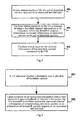
- Step 401 A base station notifies a UE of a set of downlink carriers required to be measured and fed back.
- the base station can transmit the set of downlink carriers to the UE in upper-layer signaling.
- Step 402 The base station transmits to the UE a message to trigger downlink channel information to be measured, where the downlink channel information is channel information of downlink carriers in the set of downlink carriers.
- the message to trigger the downlink channel information to be measured can be a Downlink Control Information (DCI) message, e.g., the DCI format 0.
- DCI Downlink Control Information
- Step 403 The base station receives the channel information of the downlink carriers measured by the UE.
- step 403 extracted data symbols over a physical resource are de-interleaved, de-multiplexed and decoded to obtain the channel information of the respective downlink carriers.
- a method for scheduling a feedback of channel information of a plurality of carriers performed at the UE side includes the steps of:
- Step 501 A UE measures channel information over a plurality of downlink carriers.
- Step 502 Upon reception of an instruction to trigger a feedback of channel information transmitted from a base station, the UE transmits to the base station the measured channel information of corresponding downlink carriers in an obtained set of downlink carriers required to be measured and fed back.
- the set of downlink carriers required to be measured and fed back can be configured for the UE by the base station in upper-layer signaling, for example, the base station transmits in advance to the UE the upper-layer signaling including the set of downlink carriers required to be measured and fed back, and the upper-layer signaling can be, for example, Radio Resource Control (RRC) signaling.
- RRC Radio Resource Control
- the channel information of the downlink carriers can include several types of channel feedback information, and if the instruction to trigger a feedback of channel information can include a carrier indicator to indicate uplink carriers occupied for feeding back the respective types of channel information of the downlink carriers, then the UE can transmit the measured channel information of the downlink carriers to the base station over the corresponding uplink carriers.
- the channel information of the downlink carriers can include one or more of three types of channel feedback information of a CQI, a PMI and an RI.
- the UE receives pairing condition information, of the downlink carriers and uplink carriers, notified from the base station and the UE can transmit the measured channel information of the downlink carriers to the base station over the corresponding uplink carriers paired with the downlink carriers.
- the instruction to trigger a feedback of channel information can be the DCI format 0.
- the UE can perform multiplexing and interleaving processes on the measured channel information of the downlink carriers and uplink data to be transmitted and map uplink data symbols obtained after the interleaving process onto a corresponding physical resource for transmission.
- the UE can perform the multiplexing and interleaving processes on the measured channel information of the downlink carriers and the uplink data to be transmitted in a variety of implementations:
- a code block concatenation process is performed on channel-encoded and rate-matched service data, and the CQI/PMI information of the respective downlink carriers is channel-encoded separately; the separately channel-encoded CQI/PMI information of the respective downlink carriers and the code block concatenation-processed service data are multiplexed; and the interleaving process is performed on the multiplexed data, the separately encoded RI information of the respective downlink carriers and separately encoded ACK/NACK information.
- the uplink data symbols are mapped onto the physical resource, firstly the separate CQI/PMI information of the respective carriers are mapped sequentially onto the physical resource per Resource Element (RE) firstly in the time domain and then in the frequency domain while different resource elements are occupied for the CQI/PMI information of the respective carriers, the uplink data is mapped onto the remaining physical resource, and the ACK/NACK and RI information is mapped onto the physical resource by puncturing the uplink data.
- RE Resource Element
- the RI information is mapped onto Single Carrier-Frequency Division Multiple Access (SC-FDMA) symbols on both sides of a DMRS (Demodulation Reference Signal) according to a rule already specified in the LTE R8 by mapping the RI information of the different carriers to different resource elements in an order from low frequency to high frequency while the different resource elements are occupied for the RI information of the respective carriers.
- SC-FDMA Single Carrier-Frequency Division Multiple Access
- a code block concatenation process is performed on channel-encoded and rate-matched service data, and the CQI/PMI information of the downlink carriers in the set of downlink carriers is encoded jointly; the jointly encoded CQI/PMI information of the downlink carriers and the code block concatenation-processed service data are multiplexed; and the interleaving process is performed on the multiplexed data, the jointly encoded RI information of the downlink carriers and separately encoded ACK/NACK information.
- the uplink data symbols are mapped onto the physical resource, firstly the joint CQI/PMI information of the respective carriers are mapped sequentially onto the physical resource per RE firstly in the time domain and then in the frequency domain while the same resource elements are occupied for the CQI/PMI information of the respective carriers, the uplink data is mapped onto the remaining physical resource, and the ACK/NACK and RI information is mapped onto the physical resource by puncturing the uplink data while the same resource elements are occupied for the joint RI information of the respective carriers.
- a code block concatenation process is performed on channel-encoded and rate-matched service data, and the CQI/PMI information of the downlink carriers in the set of downlink carriers is encoded jointly; the jointly encoded CQI/PMI information of the downlink carriers and the code block concatenation-processed service data are multiplexed; and the interleaving process is performed on the multiplexed data, the separately encoded RI information of the respective downlink carriers and separately encoded ACK/NACK information.
- the uplink data symbols are mapped onto the physical resource, firstly the joint CQI/PMI information of the respective carriers are mapped sequentially onto the physical resource per RE firstly in the time domain and then in the frequency domain while the same resource elements are occupied for the CQI/PMI information of the respective carriers, the uplink data is mapped onto the remaining physical resource, and the ACK/NACK and RI information is mapped onto the physical resource by puncturing the uplink data while the different resource elements are occupied for the RI information of the respective carriers.
- Fig.6 illustrating a schematic structural diagram of a device for scheduling a feedback of channel information according to an embodiment of the invention, which includes a first transmitting unit 61, a second transmitting unit 62 and a receiving unit 63.
- the first transmitting unit 61 is configured to notify a UE of a set of downlink carriers required to be measured and fed back;
- the second transmitting unit 62 is configured to transmit to the UE a message to trigger downlink channel information to be measured, where the downlink channel information is channel information of downlink carriers in the set of downlink carriers;
- the receiving unit 63 is configured to receive the channel information of the downlink carriers measured by the UE.
- the first transmitting unit 61 is configured to transmit the set of downlink carriers to the UE in upper-layer signaling.
- the upper-layer signaling can be RRC signaling.
- the message to trigger the downlink channel information to be measured can be a DCI message.
- the receiving unit 63 can de-interleave, de-multiplex and decode extracted data symbols over a physical resource to obtain the channel information of the respective downlink carriers.
- a device for feeding back channel information of a plurality of carriers includes:
- a first receiving unit 71 configured to receive a set of downlink carriers, required to be measured and fed back, transmitted from a base station;
- a second receiving unit 72 configured to receive an instruction to trigger a feed back of channel information transmitted from the base station
- a measuring unit 73 configured to measure channel information over a plurality of downlink carriers
- a feeding-back unit 74 configured, upon reception of the instruction to trigger a feedback of channel information transmitted from the base station, to transmit to the base station the measured channel information of the corresponding downlink carriers in an set of downlink carriers required to be measured and fed back.
- the first receiving unit 71 is configured to obtain the set of downlink carriers required to be measured and fed back from received upper-layer signaling transmitted from the base station.
- the channel information of the downlink carriers includes several types of channel feedback information
- the instruction to trigger a feedback of channel information includes a carrier indicator to indicate uplink carriers occupied for feeding back the respective types of channel information of the downlink carriers, and then the feeding-back unit 74 is configured to transmit the measured channel information of the downlink carriers to the base station over the corresponding uplink carriers.
- the channel information of the downlink carriers includes one or more of three types of channel feedback information of a CQI, a PMI and an RI.
- the feeding-back unit is configured to transmit the measured channel information of the downlink carriers to the base over corresponding uplink carriers paired with the downlink carriers according to pairing condition information, of the downlink carriers and the uplink carriers, notified from the base station.
- the instruction to trigger a feedback of channel information is the Downlink Control Information (DCI) format 0.
- DCI Downlink Control Information
- the feeding-back unit 74 can perform multiplexing and interleaving processes on the measured channel information of the downlink carriers and uplink data to be transmitted, and map uplink data symbols obtained after the interleaving process onto a corresponding physical resource for transmission.
- the feeding-back unit 74 can perform a code block concatenation process on channel-encoded and rate-matched service data and channel-encode separately the CQI/PMI information of the respective downlink carriers; multiplex the separately channel-encoded CQI/PMI information of the respective downlink carriers and the code block concatenation-processed service data; and perform the interleaving process on the multiplexed data, the separately encoded RI information of the respective downlink carriers and separately encoded ACK/NACK information.
- the feeding-back unit 74 When the uplink data symbols are mapped onto the physical resource, the feeding-back unit 74 firstly maps the separate CQI/PMI information of the respective carriers sequentially onto the physical resource per RE firstly in the time domain and then in the frequency domain while different resource elements are occupied for the CQI/PMI information of the respective carriers, maps the uplink data onto the remaining physical resource and maps the ACK/NACK and RI information onto the physical resource by puncturing the uplink data.
- the feeding-back unit 74 can perform a code block concatenation process on channel-encoded and rate-matched service data and encode jointly the CQI/PMI information of the downlink carriers in the set of downlink carriers; multiplex the jointly encoded CQI/PMI information of the downlink carriers and the code block concatenation-processed service data; and perform the interleaving process on the multiplexed data, the jointly encoded RI information of the downlink carriers and separately encoded ACK/NACK information.
- the feeding-back unit 74 When the uplink data symbols are mapped onto the physical resource, the feeding-back unit 74 firstly maps the joint CQI/PMI information of the respective carriers sequentially onto the physical resource per RE firstly in the time domain and then in the frequency domain while the same resource elements are occupied for the CQI/PMI information of the respective carriers, maps the uplink data onto the remaining physical resource and maps the ACK/NACK and RI information onto the physical resource by puncturing the uplink data while the same resource elements are occupied for the joint RI information of the respective carriers.
- the feeding-back unit 74 can perform a code block concatenation process on channel-encoded and rate-matched service data and encode jointly the CQI/PMI information of the downlink carriers in the set of downlink carriers; multiplex the jointly encoded CQI/PMI information of the downlink carriers and the code block concatenation-processed service data; and perform the interleaving process on the multiplexed data, the separately encoded RI information of the respective downlink carriers and separately encoded ACK/NACK information.
- the feeding-back unit 74 When the uplink data symbols are mapped onto the physical resource, the feeding-back unit 74 firstly maps the joint CQI/PMI information of the respective carriers sequentially onto the physical resource per RE firstly in the time domain and then in the frequency domain while the same resource elements are occupied for the CQI/PMI information of the respective carriers, maps the uplink data onto the remaining physical resource and maps the ACK/NACK and RI information onto the physical resource by puncturing the uplink data while different resource elements are occupied for the RI information of the respective carriers.
- a UE uses a non-periodical CQI/PMI/RI to feed back a requirement to support a plurality of carriers when a UE is configured with enabled carrier aggregation in an LTE-A system.
- a base station will configure different Downlink Component Carriers (DL CCs) with non-periodical feedback modes, and the feedback modes of the respective CCs may be the same or different. Specific modes are the same as in the LTE R8/9.
- DL CCs Downlink Component Carriers
- the base station can pre-configure in upper-layer signaling a set of DL CCs required to be measured and fed back by the UE in a non-periodical feedback mode and use 1-bit CQI Request signaling in the DCI format 0 to trigger a CQI/PMI/RI feedback of respective CCs in the set; and also a Carrier Indication Field (CIF) in the DCI format 0 indicates a specific UL CC over which a CQI/PMI/RI feedback is transmitted; and if the CIF is absent, then feedback information is transmitted over a UL CC paired with a DL CC where the DCI format 0 resides.
- CQI Request signaling in the DCI format 0 to trigger a CQI/PMI/RI feedback of respective CCs in the set
- CIF Carrier Indication Field
- the upper-layer signaling can be UE-specific RRC signaling.
- the UE feeds back CQI/PMI/RI information of the corresponding set of DL CCs over the Uplink Component Carriers (UL CCs) configured by upper-layer in response to the trigger of the DCI format 0.
- UL CCs Uplink Component Carriers
- the CQI Request signaling in the DCI format is extended to a plurality of bits to indicate specific DL CCs for which CQI/PMI/RI information is required to be included in a non-periodical feedback, for example, aggregation of at most five DL CCs is supported in the LTE-A, and then 5-bit CQI Request information indicates in a bitmap mode specific DL CCs for which the channel information is included in a non-periodical feedback. That is, the set of downlink carriers required to be measured and fed back is indicated in a plurality of bits extended in the Channel Quality Indication (CQI) request signaling of the DCI format 0, in a bitmap mode.
- CQI Channel Quality Indication
- the channel information of all the DL CCs paired with a UL CC is fed back over the UL CC when the base station schedules the UE to perform a non-periodical feedback of the channel information.
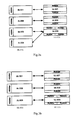
- the UE When the UE determines the set of DL CCs required to be fed back, the UE will multiplex the feedback information and uplink data. Specifically multi-carrier extension is performed based upon the LTE R8. As illustrated in Fig.8a , a code block concatenation process is performed on channel-encoded and rate-matched service data, and the CQI/PMI information of the respective downlink carriers is channel-encoded separately; the separately channel-encoded CQI/PMI information of the respective downlink carriers and the code block concatenation-processed service data are multiplexed; and an interleaving process is performed on the multiplexed data, the separately encoded RI information of the respective downlink carriers and separately encoded ACK/NACK information.
- the CQI/PMI information of the respective DL CCs in the set of DL CCs is encoded separately in a feedback mode configured by an upper-layer, and a specific encoding mode is the same as in the LTE R8/R9, and then a multiplexing operation is performed uniformly on the CQI/PMI information and the uplink data. Multiplexing is performed to ensure the CQI/PMI information preceding the uplink data and sequential mapping of the CQI/PMI information of the different DL CCs (firstly in the time domain and then in the frequency domain).
- Data sequences by multiplexing the data and the control information and the RI information of the respective DL CCs go into a channel interleaver, and an input of the interleaver ensures that RIs still be located at the same symbol locations as in the LTE R8 and different resource elements be occupied for the RI information of the respective carriers as well as different resource elements be occupied for the CQI/PMI information of the respective carriers.
- the RI information of the different carriers is mapped to different resource elements in an order from low frequency to high frequency.
- the CQI/PMI information of the respective carriers is encoded separately, and also the RI information of the respective carriers is encoded separately.
- the CQI/PMI information of the respective carriers can be encoded jointly, and also the RI information of the respective carriers can be encoded jointly.
- the CQI/PMI information must be encoded separately from the RI information to thereby ensure higher reliability of the RI information.
- the CQI/PMI information of the respective carriers is encoded jointly, and also the RI information of the respective carriers is encoded jointly.
- a code block concatenation process is performed on channel-encoded and rate-matched service data, and the CQI/PMI information of the downlink carriers in the set of downlink carriers is encoded jointly; the jointly encoded CQI/PMI information of the downlink carriers and the code block concatenation-processed service data are multiplexed; and an interleaving process is performed on the multiplexed data, the jointly encoded RI information of the downlink carriers and separately encoded ACK/NACK information.
- the mapping process when the uplink data symbols are mapped onto the physical resource, firstly the joint CQI/PMI information of the respective carriers are mapped sequentially onto the physical resource per RE firstly in the time domain and then in the frequency domain while the same resource elements are occupied for the CQI/PMI information of the respective carriers, the uplink data is mapped onto the remaining physical resource, and the ACK/NACK and RI information is mapped onto the physical resource by puncturing the uplink data while the same resource elements are occupied for the joint RI information of the respective carriers.
- the CQI/PMI information of the respective carriers is encoded jointly, and also the RI information of the respective carriers is encoded separately.
- a code block concatenation process is performed on channel-encoded and rate-matched service data, and the CQI/PMI information of the downlink carriers in the set of downlink carriers is encoded jointly; the jointly encoded CQI/PMI information of the downlink carriers and the code block concatenation-processed service data are multiplexed; and an interleaving process is performed on the multiplexed data, the separately encoded RI information of the respective downlink carriers and separately encoded ACK/NACK information.
- the mapping process firstly the joint CQI/PMI information of the respective carriers are mapped sequentially onto the physical resource per RE firstly in the time domain and then in the frequency domain while the same resource elements are occupied for the CQI/PMI information of the respective carriers, the uplink data is mapped onto the remaining physical resource, and the ACK/NACK and RI information is mapped onto the physical resource by puncturing the uplink data while different resource elements are occupied for the RI information of the respective carriers.
- CQI/PMI/RI information of a plurality of carriers can be fed back over a non-periodical PUSCH, and the channel information of the plurality of carriers can be multiplexed with uplink data and then transmitted to a base station.
- the CQI/PMI information of the respective CCs can be encoded separately and also RI information of the respective CCs can be encoded separately;
- the CQI/PMI information of the respective CCs can be encoded jointly and also RI information of the respective CCs can be encoded jointly; or the CQI/PMI information of the respective CCs can be encoded jointly and RI information of the respective CCs can be encoded separately.
- the embodiment of the invention can be embodied as a method, a system or a computer program product. Therefore the invention can be embodied in the form of an all-hardware embodiment, an all-software embodiment or an embodiment of software and hardware in combination. Furthermore the invention can be embodied in the form of a computer program product embodied in one or more computer useable storage mediums (including but not limited to a disk memory, a CD-ROM, an optical memory, etc.) in which computer useable program codes are contained.
- a computer useable storage mediums including but not limited to a disk memory, a CD-ROM, an optical memory, etc.
- These computer program instructions can also be stored into a computer readable memory capable of directing the computer or the other programmable data processing device to operate in a specific manner so that the instructions stored in the computer readable memory create an article of manufacture including instruction means which perform the functions specified in the flow(s) of the flow chart and/or the block(s) of the block diagram.
Landscapes
- Engineering & Computer Science (AREA)
- Signal Processing (AREA)
- Computer Networks & Wireless Communication (AREA)
- Quality & Reliability (AREA)
- Mobile Radio Communication Systems (AREA)
Claims (12)
- Verfahren zum Rückkoppeln von Kanalinformationen einer Vielzahl von Trägern, das die folgenden Schritte aufweist:Messen von Kanalinformationen durch eine Benutzereinrichtung über eine Vielzahl von Abwärtsstreckenträgern (501); undbeim Empfang eines Befehls, der von einer Basisstation gesendet wird, eine Rückkopplung von Kanalinformationen auszulösen, Senden durch die Benutzereinrichtung an die Basisstation der gemessenen Kanalinformationen von entsprechenden Abwärtsstreckenträgern in einem Satz von Abwärtsstreckenträgern, die gemessen und rückgekoppelt werden sollen (502),wobei das Senden der gemessenen Kanalinformationen der Abwärtsstreckenträger durch die Benutzereinrichtung an die Basisstation aufweist:Durchführen von Multiplex- und Verschachtelungsprozessen durch die Benutzereinrichtung an den gemessenen Kanalinformationen der Abwärtsstreckenträger und zu sendenden Aufwärtsstreckendaten; undAbbilden von Aufwärtsstreckendatensymbolen, die nach dem Verschachtelungsprozess erhalten werden, auf eine entsprechende physikalische Ressource zum Senden, dadurch gekennzeichnet, dass:das Durchführen der Multiplex- und Verschachtelungsprozesse an den gemessenen Kanalinformationen der Abwärtsstreckenträger und den zu sendenden Aufwärtsstreckendaten durch die Benutzereinrichtung aufweist:Durchführen eines Codeblock-Verkettungsprozesses an kanalcodierten und ratenangepassten Dienstdaten, gemeinsames Codieren von Kanalqualitätsanzeige(CQI)-Informationen der Abwärtsstreckenträger im Satz der Abwärtsstreckenträger, und gemeinsames Codieren von Vorcodierungsmatrixanzeige(PMI)-Informationen der Abwärtsstreckenträger im Satz der Abwärtsstreckenträger;Multiplexen der gemeinsam codierten Kanalqualitätsanzeige(CQI)-Informationen der Abwärtsstreckenträger, der gemeinsam codierten PMI-Information der Abwärtsstreckenträger und der durch Codeblock-Verkettung verarbeiteten Dienstdaten; undDurchführen des Verschachtelungsprozesses an den gemultiplexten Daten, gemeinsam codierten Ranganzeige-(RI)-Informationen der Abwärtsstreckenträger und getrennt codierten ACK/NACK-Informationen.
- Verfahren nach Anspruch 1, wobei der Satz der Abwärtsstreckenträger, die gemessen und rückgekoppelt werden sollen, aus einer empfangenen Signalisierung der oberen Schicht erhalten wird, die von der Basisstation gesendet wird.
- Verfahren nach Anspruch 1, wobei die Kanalinformationen der Abwärtsstreckenträger mehrere Arten von Kanalrückkopplungsinformationen aufweisen, und der Befehl, eine Rückkopplung von Kanalinformationen auszulösen, einen Trägerindikator aufweist, um Aufwärtsstreckenträger anzuzeigen, die zum Rückkoppeln der jeweiligen Arten von Kanalinformationen der Abwärtsstreckenträger belegt werden, und dann die Benutzereinrichtung die gemessenen Kanalinformationen der entsprechenden Abwärtsstreckenträger an die Basisstation über die entsprechenden Aufwärtsstreckenträger sendet; oder
die Benutzereinrichtung ferner Paarungsbedingungsinformation der Abwärtsstreckenträger und Aufwärtsstreckenträger empfängt, die von der Basisstation gemeldet werden, und dann die Benutzereinrichtung die gemessenen Kanalinformationen der entsprechenden Abwärtsstreckenträger an die Basisstation über die entsprechenden Aufwärtsstreckenträger sendet, die mit den Abwärtsstreckenträgern gepaart sind. - Verfahren nach Anspruch 1, wobei der Befehl, um eine Rückkopplung von Kanalinformationen auszulösen, ein Abwärtsstrecken-Steuerinformations(DCI)-Format 0 ist.
- Verfahren nach Anspruch 4, wobei der Satz der Abwärtsstreckenträger, die gemessen und rückgekoppelt werden sollen, in einer Vielzahl von Bits angezeigt werden, die in einer Kanalqualitätsanzeige(CQI)- Anforderungssignalisierung des DCI-Formats 0 in einem Bitmap-Modus erweitert werden.
- Verfahren nach einem der Ansprüche 1 bis 5, wobei die Kanalinformationen der Abwärtsstreckenträger einen oder mehrere von drei Arten von Kanalrückkopplungsinformationen einer Kanalqualitätsanzeige (CQI), einer Vorcodierungsmatrixanzeige (PMI) und einer Ranganzeige (RI) aufweisen.
- Verfahren nach Anspruch 1, wobei das Abbilden der Aufwärtsstreckendatensymbole, die nach dem Verschachtelungsprozess erhalten werden, auf die entsprechende physikalische Ressource zum Senden aufweist: wenn die Aufwärtsstreckendatensymbole auf die physikalische Ressource abgebildet werden, als erstes Abbilden der gemeinsamen CQI-Informationen und der gemeinsamen PMI-Informationen der jeweiligen Träger sequentiell auf die physikalische Ressource pro RE als erstes im Zeitbereich und dann im Frequenzbereich, während dieselben Ressourcenelemente für die CQI/PMI-Informationen der jeweiligen Träger belegt werden, Abbilden der Aufwärtsstreckendaten auf die verbleibende physikalische Ressource und Abbilden der ACK/NACK- und RI-Informationen auf die physikalische Ressource durch Punktieren der Aufwärtsstreckendaten, während dieselben Ressourcenelemente für die gemeinsam codierten RI-Informationen der jeweiligen Träger belegt werden.
- Vorrichtung zur Rückkopplung von Kanalinformationen einer Vielzahl von Trägern, die Folgendes aufweist:eine erste Empfangseinheit (71), die konfiguriert ist, einen Satz von Abwärtsstreckenträgern zu empfangen, die gemessen und rückgekoppelt werden sollen, die von einer Basisstation gesendet werden;eine zweite Empfangseinheit (72), die konfiguriert ist, einen Befehl zu empfangen, der von der Basisstation gesendet wird, um eine Rückkopplung von Kanalinformationen auszulösen;eine Messeinheit (73), die konfiguriert ist, Kanalinformationen über eine Vielzahl von Abwärtsstreckenträgern zu messen; undeine Rückkopplungseinheit (74), die konfiguriert ist, beim Empfang des Befehls, der von der Basisstation gesendet wird, eine Rückkopplung von Kanalinformationen auszulösen, an die Basisstation die gemessenen Kanalinformationen der entsprechenden Abwärtsstreckenträger in einem Satz von Abwärtsstreckenträgern zu senden, die gemessen und rückgekoppelt werden sollen,wobei die Rückkopplungseinheit (74) konfiguriert ist, Multiplex- und Verschachtelungsprozesse an den gemessenen Kanalinformationen der Abwärtsstreckenträger und zu sendenden Aufwärtsstreckendaten durchzuführen; und Aufwärtsstreckendatensymbole, die nach dem Verschachtelungsprozess erhalten werden, auf eine entsprechende physikalische Ressource zum Senden abzubilden, dadurch gekennzeichnet, dass:die Rückkopplungseinheit (74) konfiguriert ist, einen Codeblock-Verkettungsprozess an kanalcodierten und ratenangepassten Dienstdaten durchzuführen, Kanalqualitätsanzeige(CQI)-Informationen der Abwärtsstreckenträger im Satz der Abwärtsstreckenträger gemeinsam zu codieren und Vorcodierungsmatrixanzeige- (PMI)-Informationen der Abwärtsstreckenträger im Satz der Abwärtsstreckenträger gemeinsam zu codieren; die gemeinsam codierten CQI-Informationen der Abwärtsstreckenträger, die gemeinsam codierten PMI-Informationen der Abwärtsstreckenträger und die durch Codeblock-Verkettung verarbeiteten Dienstdaten zu multiplexen; und den Verschachtelungsprozess an den gemultiplexten Daten, gemeinsam codierten Ranganzeige- (RI)-Informationen der Abwärtsstreckenträger und getrennt codierten ACK/NACK-Informationen durchzuführen.
- Verfahren zum Planen einer Rückkopplung von Kanalinformationen, das die folgenden Schritte aufweist:Benachrichtigen einer Benutzereinrichtung durch eine Basisstation von einem Satz Abwärtsstreckenträger, die gemessen und rückgekoppelt werden sollen (401);Senden einer Nachricht durch die Basisstation an die Benutzereinrichtung, eine Messung von Abwärtsstrecken-Kanalinformationen auszulösen, wobei die Abwärtsstrecken-Kanalinformationen Kanalinformationen von Abwärtsstreckenträgern im Satz der Abwärtsstreckenträger sind (402); undEmpfangen der Kanalinformationen der Abwärtsstreckenträger durch die Basisstation, die durch die Benutzereinrichtung gemessen werden (403),wobei das Empfangen der Kanalinformationen der Abwärtsstreckenträger durch die Basisstation, die durch die Benutzereinrichtung gemessen werden (403), aufweist:Empfangen durch die Basisstation der Kanalinformationen der Abwärtsstreckenträger durch eine entsprechende physikalische Ressource, nach dem Durchführen von Multiplex- und Verschachtelungsprozessen an den gemessenen Kanalinformationen der Abwärtsstreckenträger und zu sendenden Aufwärtsstreckendaten durch die Benutzereinrichtung; und Abbilden von Aufwärtsstreckendatensymbolen, die nach dem Verschachtelungsprozess erhalten werden, auf die entsprechende physikalische Ressource zum Senden, dadurch gekennzeichnet, dass:das Durchführen der Multiplex- und Verschachtelungsprozesse an den gemessenen Kanalinformationen der Abwärtsstreckenträger und den zu sendenden Aufwärtsstreckendaten durch die Benutzereinrichtung aufweist:Durchführen eines Codeblock-Verkettungsprozesses an kanalcodierten und ratenangepassten Dienstdaten, gemeinsames Codieren von Kanalqualitätsanzeige(CQI)-Informationen der Abwärtsstreckenträger im Satz der Abwärtsstreckenträger, und gemeinsames Codieren von Vorcodierungsmatrixanzeige(PMI)-Informationen der Abwärtsstreckenträger im Satz der Abwärtsstreckenträger;Multiplexen der gemeinsam codierten CQI-Informationen der Abwärtsstreckenträger, der gemeinsam codierten PMI-Informationen der Abwärtsstreckenträger und der durch Codeblock-Verkettung verarbeiteten Dienstdaten; undDurchführen des Verschachtelungsprozesses an den gemultiplexten Daten, gemeinsam codierten Ranganzeige-(RI)-Informationen der Abwärtsstreckenträger und getrennt codierten ACK/NACK-Informationen.
- Verfahren nach Anspruch 9, wobei das Benachrichtigen der Benutzereinrichtung durch die Basisstation vom Satz der Abwärtsstreckenträger, die gemessen und rückgekoppelt werden sollen (401), aufweist:Senden des Satzes der Abwärtsstreckenträger an die Benutzereinrichtung in einer Signalisierung der oberen Schicht durch die Basisstation, wobei die Signalisierung der oberen Schicht eine RRC-Signalisierung ist.
- Verfahren nach Anspruch 9, wobei das Empfangen der Kanalinformationen der Abwärtsstreckenträger durch die Basisstation, die durch die Benutzereinrichtung gemessen werden (403), aufweist:Entschachteln, Demultiplexen und Decodieren von extrahierten Datensymbolen über eine physikalische Ressource, um die Kanalinformationen der jeweiligen Abwärtsstreckenträger zu erhalten.
- Vorrichtung zur Planung einer Rückkopplung von Kanalinformationen, die Folgendes aufweist:eine erste Sendeeinheit (61), die konfiguriert ist, eine Benutzereinrichtung von einem Satz von Abwärtsstreckenträgern zu benachrichtigen, die gemessen und rückgekoppelt werden sollen;eine zweite Sendeeinheit (62), die konfiguriert ist, an die Benutzereinrichtung eine Nachricht zu senden, eine Messung von Abwärtsstrecken-Kanalinformationen auszulösen, wobei die Abwärtsstrecken-Kanalinformationen Kanalinformationen von Abwärtsstreckenträgern im Satz der Abwärtsstreckenträger sind; undeine Empfangseinheit (63), die konfiguriert ist, die Kanalinformationen der Abwärtsstreckenträger zu empfangen, die durch die Benutzereinrichtung gemessen werden,wobei die Empfangseinheit (63) konfiguriert ist, die Kanalinformationen der Abwärtsstreckenträger durch eine entsprechende physikalische Ressource zu empfangen, nach dem Durchführen von Multiplex- und Verschachtelungsprozessen an den gemessenen Kanalinformationen der Abwärtsstreckenträger und zu sendenden Aufwärtsstreckendaten durch die Benutzereinrichtung; und Abbilden der Aufwärtsstreckendatensymbole, die nach dem Verschachtelungsprozess erhalten werden, auf die entsprechende physikalische Ressource zum Senden, dadurch gekennzeichnet, dass:das Durchführen der Multiplex- und Verschachtelungsprozesse an den gemessenen Kanalinformationen der Abwärtsstreckenträger und den zu sendenden Aufwärtsstreckendaten durch die Benutzereinrichtung aufweist:Durchführen eines Codeblock-Verkettungsprozesses an kanalcodierten und ratenangepassten Dienstdaten, gemeinsames Codieren von Kanalqualitätsanzeige(CQI)-Informationen der Abwärtsstreckenträger im Satz der Abwärtsstreckenträger, und gemeinsames Codieren von Vorcodierungsmatrixanzeige(PMI)-Informationen der Abwärtsstreckenträger im Satz der Abwärtsstreckenträger;Multiplexen der gemeinsam codierten CQI-Informationen der Abwärtsstreckenträger, der gemeinsam codierten PMI-Informationen der Abwärtsstreckenträger und der durch Codeblock-Verkettung verarbeiteten Dienstdaten; undDurchführen des Verschachtelungsprozesses an den gemultiplexten Daten, gemeinsam codierten Ranganzeige-(RI)-Informationen der Abwärtsstreckenträger und getrennt codierten ACK/NACK-Informationen.
Applications Claiming Priority (2)
| Application Number | Priority Date | Filing Date | Title |
|---|---|---|---|
| CN201010033773.1A CN102082625B (zh) | 2010-01-11 | 2010-01-11 | 一种反馈多载波信道信息的方法及装置 |
| PCT/CN2010/080575 WO2011082646A1 (zh) | 2010-01-11 | 2010-12-31 | 一种反馈多载波信道信息的方法及装置 |
Publications (3)
| Publication Number | Publication Date |
|---|---|
| EP2525598A1 EP2525598A1 (de) | 2012-11-21 |
| EP2525598A4 EP2525598A4 (de) | 2013-05-15 |
| EP2525598B1 true EP2525598B1 (de) | 2015-02-18 |
Family
ID=44088388
Family Applications (1)
| Application Number | Title | Priority Date | Filing Date |
|---|---|---|---|
| EP10841989.6A Active EP2525598B1 (de) | 2010-01-11 | 2010-12-31 | Verfahren und vorrichtung zur rückkopplung von mehrträgerkanalinformationen |
Country Status (4)
| Country | Link |
|---|---|
| US (1) | US9148248B2 (de) |
| EP (1) | EP2525598B1 (de) |
| CN (1) | CN102082625B (de) |
| WO (1) | WO2011082646A1 (de) |
Families Citing this family (23)
| Publication number | Priority date | Publication date | Assignee | Title |
|---|---|---|---|---|
| KR101455143B1 (ko) * | 2010-03-31 | 2014-10-27 | 후아웨이 테크놀러지 컴퍼니 리미티드 | 통신 방법 및 장치 |
| CN102215591B (zh) | 2010-04-06 | 2013-12-04 | 华为技术有限公司 | 一种信道状态信息的传输方法及用户设备及基站 |
| JP5668139B2 (ja) * | 2010-07-26 | 2015-02-12 | エルジー エレクトロニクス インコーポレイティド | マルチキャリアアグリゲーションを支援する無線接続システムにおいて非周期的チャネル状態情報フィードバック方法 |
| CN102291223B (zh) * | 2011-08-05 | 2014-03-12 | 电信科学技术研究院 | 信道状态信息反馈指示及反馈方法和设备 |
| CN102291764A (zh) * | 2011-08-05 | 2011-12-21 | 电信科学技术研究院 | 配置测量信息和进行上报的方法、系统及设备 |
| CN102263613B (zh) * | 2011-08-08 | 2018-04-20 | 中兴通讯股份有限公司 | 一种信道状态信息反馈方法和装置 |
| CN103650403B (zh) * | 2011-08-10 | 2018-01-19 | 富士通株式会社 | 信道状态信息的上报方法、用户设备及基站 |
| KR102117024B1 (ko) | 2012-11-28 | 2020-06-01 | 삼성전자 주식회사 | 무선 통신 시스템의 통신 방법 및 장치 |
| EP2739107B1 (de) * | 2012-11-28 | 2019-01-02 | Samsung Electronics Co., Ltd | Verfahren und Vorrichtung zur Kommunikationsdurchführung in einem drahtlosen Kommunikationssystem |
| CN103905165B (zh) | 2012-12-28 | 2017-10-31 | 电信科学技术研究院 | 应答反馈信息的发送和接收方法及设备 |
| CN104125040A (zh) * | 2013-04-28 | 2014-10-29 | 华为技术有限公司 | 一种上行控制信息的传输方法及用户设备 |
| CN104135355A (zh) * | 2013-05-03 | 2014-11-05 | 索尼公司 | 通信装置、通信系统和通信方法 |
| CN114257341B (zh) * | 2013-05-24 | 2023-08-29 | 中兴通讯股份有限公司 | 信道状态信息反馈方法和终端 |
| US10433200B2 (en) * | 2014-12-09 | 2019-10-01 | Lg Electronics Inc. | Method for terminal for reporting channel status information in wireless communication system supporting carrier aggregation, and apparatus for the method |
| CN107466452B (zh) * | 2015-04-08 | 2020-07-03 | Lg 电子株式会社 | 报告信道状态的方法及其装置 |
| EP4236545A3 (de) * | 2015-07-30 | 2023-09-13 | Apple Inc. | Ofdma-basiertes multiplexen von uplink-steuerinformationen |
| CN113949484B (zh) * | 2015-08-14 | 2023-04-11 | 中兴通讯股份有限公司 | Dmrs端口或映射关系的通知、确定方法及装置 |
| US11412534B2 (en) | 2016-11-04 | 2022-08-09 | Qualcomm Incorporated | System and method for mapping uplink control information |
| EP3641253A4 (de) * | 2017-06-15 | 2021-01-06 | NTT DoCoMo, Inc. | Benutzerendgerät und drahtloskommunikationsverfahren |
| CN110166179B (zh) * | 2018-02-12 | 2022-07-29 | 华为技术有限公司 | 指示方法,网络设备及用户设备 |
| CN110972157B (zh) * | 2018-09-28 | 2021-10-15 | 华为技术有限公司 | 信息处理方法和终端设备 |
| EP3925118A1 (de) * | 2019-02-15 | 2021-12-22 | Telefonaktiebolaget LM Ericsson (publ) | Bestätigungssignalisierung für funkzugangsnetzwerke |
| US11877173B2 (en) * | 2020-05-20 | 2024-01-16 | Qualcomm Incorporated | Optimization of channel quality indicator (CQI) feedback for multiple component carriers |
Family Cites Families (11)
| Publication number | Priority date | Publication date | Assignee | Title |
|---|---|---|---|---|
| CN101005343A (zh) * | 2006-01-20 | 2007-07-25 | 华为技术有限公司 | 一种多载波信道资源的分配方法及系统 |
| US20080219370A1 (en) * | 2007-03-06 | 2008-09-11 | Texas Instruments Incorporated | User equipment feedback structures for mimo ofdma |
| US8797889B2 (en) * | 2007-04-13 | 2014-08-05 | Telefonaktiebolaget LML Ericsson (Publ) | Multi-carrier CQI feedback method and apparatus |
| WO2009002087A1 (en) * | 2007-06-25 | 2008-12-31 | Lg Electronics Inc. | Method of transmitting feedback data in multiple antenna system |
| KR100925444B1 (ko) * | 2008-05-27 | 2009-11-06 | 엘지전자 주식회사 | 상향링크 채널을 통해 데이터와 제어 정보를 포함하는 상향링크 신호를 전송하는 방법 |
| CN101621359A (zh) * | 2008-07-04 | 2010-01-06 | 华为技术有限公司 | 一种发送信道质量指示的方法、装置及系统 |
| US8406171B2 (en) * | 2008-08-01 | 2013-03-26 | Texas Instruments Incorporated | Network MIMO reporting, control signaling and transmission |
| KR101638900B1 (ko) * | 2008-08-05 | 2016-07-12 | 엘지전자 주식회사 | 무선 통신 시스템에서 하향링크 멀티 캐리어에 대한 제어정보를 전송하는 방법 |
| US8483076B2 (en) * | 2008-08-18 | 2013-07-09 | Qualcomm Incorporated | A-periodic PUCCH transmission on PUSCH |
| KR101678686B1 (ko) * | 2009-05-14 | 2016-11-24 | 엘지전자 주식회사 | 무선 통신 시스템에서 cqi 전송 방법 및 장치 |
| CN101594209A (zh) * | 2009-06-18 | 2009-12-02 | 中兴通讯股份有限公司 | 反馈状态的发送方法及终端 |
-
2010
- 2010-01-11 CN CN201010033773.1A patent/CN102082625B/zh active Active
- 2010-12-31 EP EP10841989.6A patent/EP2525598B1/de active Active
- 2010-12-31 WO PCT/CN2010/080575 patent/WO2011082646A1/zh not_active Ceased
- 2010-12-31 US US13/521,662 patent/US9148248B2/en active Active
Also Published As
| Publication number | Publication date |
|---|---|
| US9148248B2 (en) | 2015-09-29 |
| CN102082625B (zh) | 2014-10-22 |
| US20130039197A1 (en) | 2013-02-14 |
| EP2525598A1 (de) | 2012-11-21 |
| CN102082625A (zh) | 2011-06-01 |
| WO2011082646A1 (zh) | 2011-07-14 |
| EP2525598A4 (de) | 2013-05-15 |
Similar Documents
| Publication | Publication Date | Title |
|---|---|---|
| EP2525598B1 (de) | Verfahren und vorrichtung zur rückkopplung von mehrträgerkanalinformationen | |
| EP2482609B1 (de) | Übertragungsverfahren und übertragungssystem für downlink-steuerinformationen | |
| EP3529929B1 (de) | Verfahren und vorrichtung zum multiplexing von kanalstatusinformationen | |
| KR102488581B1 (ko) | 채널상태정보 보고를 위한 상향링크 컨트롤 정보 맵핑 방법 및 장치 | |
| EP2556618B1 (de) | Rückkopplung von steuerinformationen für mehreren trägern | |
| US10735985B2 (en) | Channel state measurement and reporting | |
| JP6019091B2 (ja) | アップリンク制御情報のためのユーザ機器、基地局装置、および集積回路 | |
| EP2575278B1 (de) | Anzeigeverfahren, basisstation und system für ein csi-feedback | |
| KR101558961B1 (ko) | 멀티-캐리어 동작을 위한 ack/nack 전송 | |
| US8724564B2 (en) | Method for transmitting control information about downlink multiple carriers in a wireless communication system | |
| EP3042520B1 (de) | Downlink-übertragungsverfahren und benutzerendgerätausrüstung | |
| EP2498561B1 (de) | Konfiguration von uplink-steuerkanalressourcen | |
| CA2904521C (en) | Transmission of acknowledgementinformation in adaptively configured tdd communication systems | |
| EP2584825A2 (de) | Verfahren und vorrichtung zur übertragung von kanalstatusinformationen | |
| KR101569598B1 (ko) | 업링크 제어 정보 전송 방법과 단말기, 코드 심볼 개수 확정 방법과 장치 | |
| US20150155928A1 (en) | Method and apparatus for transmitting channel state information in wireless communication system | |
| US20130258986A1 (en) | Method and apparatus for transmitting channel status information in carrier aggregation system | |
| US20110188594A1 (en) | Method and apparatus for transmitting signals | |
| US10028288B2 (en) | Apparatus and method for providing carrier information | |
| EP3043504A2 (de) | Aperiodische downlink-kanal qualitätsberichterstattung in einem funkverbindungssystem unter verwendung von träger aggregation | |
| KR20160138393A (ko) | 기계타입통신을 지원하는 무선 접속 시스템에서 채널상태정보 전송 방법 및 장치 | |
| KR20150009583A (ko) | 채널 상태 정보를 피드백하기 위한 방법, 사용자 장비, 및 시스템 | |
| HK1206880A1 (en) | Method and system for uplink harq and csi multiplexing for carrier aggregation | |
| CN110999115A (zh) | 用于在无线通信系统中测量并报告信号的方法及装置 | |
| EP3493436B1 (de) | Basisstationsvorrichtung, endgerätevorrichtung und kommunikationsverfahren |
Legal Events
| Date | Code | Title | Description |
|---|---|---|---|
| PUAI | Public reference made under article 153(3) epc to a published international application that has entered the european phase |
Free format text: ORIGINAL CODE: 0009012 |
|
| 17P | Request for examination filed |
Effective date: 20120813 |
|
| AK | Designated contracting states |
Kind code of ref document: A1 Designated state(s): AL AT BE BG CH CY CZ DE DK EE ES FI FR GB GR HR HU IE IS IT LI LT LU LV MC MK MT NL NO PL PT RO RS SE SI SK SM TR |
|
| DAX | Request for extension of the european patent (deleted) | ||
| A4 | Supplementary search report drawn up and despatched |
Effective date: 20130415 |
|
| RIC1 | Information provided on ipc code assigned before grant |
Ipc: H04L 5/00 20060101ALI20130409BHEP Ipc: H04L 1/00 20060101ALI20130409BHEP Ipc: H04W 24/10 20090101AFI20130409BHEP |
|
| 17Q | First examination report despatched |
Effective date: 20140220 |
|
| RIC1 | Information provided on ipc code assigned before grant |
Ipc: H04L 1/16 20060101ALI20140707BHEP Ipc: H04L 5/00 20060101ALI20140707BHEP Ipc: H04W 24/10 20090101AFI20140707BHEP Ipc: H04L 1/00 20060101ALI20140707BHEP |
|
| GRAP | Despatch of communication of intention to grant a patent |
Free format text: ORIGINAL CODE: EPIDOSNIGR1 |
|
| INTG | Intention to grant announced |
Effective date: 20140901 |
|
| GRAS | Grant fee paid |
Free format text: ORIGINAL CODE: EPIDOSNIGR3 |
|
| GRAA | (expected) grant |
Free format text: ORIGINAL CODE: 0009210 |
|
| AK | Designated contracting states |
Kind code of ref document: B1 Designated state(s): AL AT BE BG CH CY CZ DE DK EE ES FI FR GB GR HR HU IE IS IT LI LT LU LV MC MK MT NL NO PL PT RO RS SE SI SK SM TR |
|
| REG | Reference to a national code |
Ref country code: GB Ref legal event code: FG4D |
|
| REG | Reference to a national code |
Ref country code: CH Ref legal event code: EP |
|
| REG | Reference to a national code |
Ref country code: AT Ref legal event code: REF Ref document number: 711084 Country of ref document: AT Kind code of ref document: T Effective date: 20150315 |
|
| REG | Reference to a national code |
Ref country code: IE Ref legal event code: FG4D |
|
| REG | Reference to a national code |
Ref country code: DE Ref legal event code: R096 Ref document number: 602010022396 Country of ref document: DE Effective date: 20150402 |
|
| REG | Reference to a national code |
Ref country code: NL Ref legal event code: VDEP Effective date: 20150218 |
|
| REG | Reference to a national code |
Ref country code: AT Ref legal event code: MK05 Ref document number: 711084 Country of ref document: AT Kind code of ref document: T Effective date: 20150218 |
|
| REG | Reference to a national code |
Ref country code: LT Ref legal event code: MG4D |
|
| PG25 | Lapsed in a contracting state [announced via postgrant information from national office to epo] |
Ref country code: FI Free format text: LAPSE BECAUSE OF FAILURE TO SUBMIT A TRANSLATION OF THE DESCRIPTION OR TO PAY THE FEE WITHIN THE PRESCRIBED TIME-LIMIT Effective date: 20150218 Ref country code: HR Free format text: LAPSE BECAUSE OF FAILURE TO SUBMIT A TRANSLATION OF THE DESCRIPTION OR TO PAY THE FEE WITHIN THE PRESCRIBED TIME-LIMIT Effective date: 20150218 Ref country code: SE Free format text: LAPSE BECAUSE OF FAILURE TO SUBMIT A TRANSLATION OF THE DESCRIPTION OR TO PAY THE FEE WITHIN THE PRESCRIBED TIME-LIMIT Effective date: 20150218 Ref country code: NO Free format text: LAPSE BECAUSE OF FAILURE TO SUBMIT A TRANSLATION OF THE DESCRIPTION OR TO PAY THE FEE WITHIN THE PRESCRIBED TIME-LIMIT Effective date: 20150518 Ref country code: LT Free format text: LAPSE BECAUSE OF FAILURE TO SUBMIT A TRANSLATION OF THE DESCRIPTION OR TO PAY THE FEE WITHIN THE PRESCRIBED TIME-LIMIT Effective date: 20150218 Ref country code: ES Free format text: LAPSE BECAUSE OF FAILURE TO SUBMIT A TRANSLATION OF THE DESCRIPTION OR TO PAY THE FEE WITHIN THE PRESCRIBED TIME-LIMIT Effective date: 20150218 |
|
| PG25 | Lapsed in a contracting state [announced via postgrant information from national office to epo] |
Ref country code: IS Free format text: LAPSE BECAUSE OF FAILURE TO SUBMIT A TRANSLATION OF THE DESCRIPTION OR TO PAY THE FEE WITHIN THE PRESCRIBED TIME-LIMIT Effective date: 20150618 Ref country code: GR Free format text: LAPSE BECAUSE OF FAILURE TO SUBMIT A TRANSLATION OF THE DESCRIPTION OR TO PAY THE FEE WITHIN THE PRESCRIBED TIME-LIMIT Effective date: 20150519 Ref country code: LV Free format text: LAPSE BECAUSE OF FAILURE TO SUBMIT A TRANSLATION OF THE DESCRIPTION OR TO PAY THE FEE WITHIN THE PRESCRIBED TIME-LIMIT Effective date: 20150218 Ref country code: AT Free format text: LAPSE BECAUSE OF FAILURE TO SUBMIT A TRANSLATION OF THE DESCRIPTION OR TO PAY THE FEE WITHIN THE PRESCRIBED TIME-LIMIT Effective date: 20150218 Ref country code: RS Free format text: LAPSE BECAUSE OF FAILURE TO SUBMIT A TRANSLATION OF THE DESCRIPTION OR TO PAY THE FEE WITHIN THE PRESCRIBED TIME-LIMIT Effective date: 20150218 Ref country code: NL Free format text: LAPSE BECAUSE OF FAILURE TO SUBMIT A TRANSLATION OF THE DESCRIPTION OR TO PAY THE FEE WITHIN THE PRESCRIBED TIME-LIMIT Effective date: 20150218 |
|
| PG25 | Lapsed in a contracting state [announced via postgrant information from national office to epo] |
Ref country code: CZ Free format text: LAPSE BECAUSE OF FAILURE TO SUBMIT A TRANSLATION OF THE DESCRIPTION OR TO PAY THE FEE WITHIN THE PRESCRIBED TIME-LIMIT Effective date: 20150218 Ref country code: SK Free format text: LAPSE BECAUSE OF FAILURE TO SUBMIT A TRANSLATION OF THE DESCRIPTION OR TO PAY THE FEE WITHIN THE PRESCRIBED TIME-LIMIT Effective date: 20150218 Ref country code: EE Free format text: LAPSE BECAUSE OF FAILURE TO SUBMIT A TRANSLATION OF THE DESCRIPTION OR TO PAY THE FEE WITHIN THE PRESCRIBED TIME-LIMIT Effective date: 20150218 Ref country code: DK Free format text: LAPSE BECAUSE OF FAILURE TO SUBMIT A TRANSLATION OF THE DESCRIPTION OR TO PAY THE FEE WITHIN THE PRESCRIBED TIME-LIMIT Effective date: 20150218 Ref country code: RO Free format text: LAPSE BECAUSE OF FAILURE TO SUBMIT A TRANSLATION OF THE DESCRIPTION OR TO PAY THE FEE WITHIN THE PRESCRIBED TIME-LIMIT Effective date: 20150218 |
|
| REG | Reference to a national code |
Ref country code: DE Ref legal event code: R097 Ref document number: 602010022396 Country of ref document: DE |
|
| PG25 | Lapsed in a contracting state [announced via postgrant information from national office to epo] |
Ref country code: PL Free format text: LAPSE BECAUSE OF FAILURE TO SUBMIT A TRANSLATION OF THE DESCRIPTION OR TO PAY THE FEE WITHIN THE PRESCRIBED TIME-LIMIT Effective date: 20150218 |
|
| PLBE | No opposition filed within time limit |
Free format text: ORIGINAL CODE: 0009261 |
|
| STAA | Information on the status of an ep patent application or granted ep patent |
Free format text: STATUS: NO OPPOSITION FILED WITHIN TIME LIMIT |
|
| PG25 | Lapsed in a contracting state [announced via postgrant information from national office to epo] |
Ref country code: IT Free format text: LAPSE BECAUSE OF FAILURE TO SUBMIT A TRANSLATION OF THE DESCRIPTION OR TO PAY THE FEE WITHIN THE PRESCRIBED TIME-LIMIT Effective date: 20150218 |
|
| REG | Reference to a national code |
Ref country code: FR Ref legal event code: PLFP Year of fee payment: 6 |
|
| 26N | No opposition filed |
Effective date: 20151119 |
|
| PG25 | Lapsed in a contracting state [announced via postgrant information from national office to epo] |
Ref country code: SI Free format text: LAPSE BECAUSE OF FAILURE TO SUBMIT A TRANSLATION OF THE DESCRIPTION OR TO PAY THE FEE WITHIN THE PRESCRIBED TIME-LIMIT Effective date: 20150218 |
|
| PG25 | Lapsed in a contracting state [announced via postgrant information from national office to epo] |
Ref country code: MC Free format text: LAPSE BECAUSE OF FAILURE TO SUBMIT A TRANSLATION OF THE DESCRIPTION OR TO PAY THE FEE WITHIN THE PRESCRIBED TIME-LIMIT Effective date: 20150218 Ref country code: LU Free format text: LAPSE BECAUSE OF FAILURE TO SUBMIT A TRANSLATION OF THE DESCRIPTION OR TO PAY THE FEE WITHIN THE PRESCRIBED TIME-LIMIT Effective date: 20151231 |
|
| REG | Reference to a national code |
Ref country code: CH Ref legal event code: PL |
|
| REG | Reference to a national code |
Ref country code: IE Ref legal event code: MM4A |
|
| PG25 | Lapsed in a contracting state [announced via postgrant information from national office to epo] |
Ref country code: LI Free format text: LAPSE BECAUSE OF NON-PAYMENT OF DUE FEES Effective date: 20151231 Ref country code: IE Free format text: LAPSE BECAUSE OF NON-PAYMENT OF DUE FEES Effective date: 20151231 Ref country code: CH Free format text: LAPSE BECAUSE OF NON-PAYMENT OF DUE FEES Effective date: 20151231 |
|
| REG | Reference to a national code |
Ref country code: FR Ref legal event code: PLFP Year of fee payment: 7 |
|
| PG25 | Lapsed in a contracting state [announced via postgrant information from national office to epo] |
Ref country code: BG Free format text: LAPSE BECAUSE OF FAILURE TO SUBMIT A TRANSLATION OF THE DESCRIPTION OR TO PAY THE FEE WITHIN THE PRESCRIBED TIME-LIMIT Effective date: 20150218 Ref country code: SM Free format text: LAPSE BECAUSE OF FAILURE TO SUBMIT A TRANSLATION OF THE DESCRIPTION OR TO PAY THE FEE WITHIN THE PRESCRIBED TIME-LIMIT Effective date: 20150218 Ref country code: HU Free format text: LAPSE BECAUSE OF FAILURE TO SUBMIT A TRANSLATION OF THE DESCRIPTION OR TO PAY THE FEE WITHIN THE PRESCRIBED TIME-LIMIT; INVALID AB INITIO Effective date: 20101231 |
|
| PG25 | Lapsed in a contracting state [announced via postgrant information from national office to epo] |
Ref country code: CY Free format text: LAPSE BECAUSE OF FAILURE TO SUBMIT A TRANSLATION OF THE DESCRIPTION OR TO PAY THE FEE WITHIN THE PRESCRIBED TIME-LIMIT Effective date: 20150218 |
|
| PG25 | Lapsed in a contracting state [announced via postgrant information from national office to epo] |
Ref country code: MT Free format text: LAPSE BECAUSE OF FAILURE TO SUBMIT A TRANSLATION OF THE DESCRIPTION OR TO PAY THE FEE WITHIN THE PRESCRIBED TIME-LIMIT Effective date: 20150218 |
|
| REG | Reference to a national code |
Ref country code: FR Ref legal event code: PLFP Year of fee payment: 8 |
|
| PG25 | Lapsed in a contracting state [announced via postgrant information from national office to epo] |
Ref country code: TR Free format text: LAPSE BECAUSE OF FAILURE TO SUBMIT A TRANSLATION OF THE DESCRIPTION OR TO PAY THE FEE WITHIN THE PRESCRIBED TIME-LIMIT Effective date: 20150218 Ref country code: MK Free format text: LAPSE BECAUSE OF FAILURE TO SUBMIT A TRANSLATION OF THE DESCRIPTION OR TO PAY THE FEE WITHIN THE PRESCRIBED TIME-LIMIT Effective date: 20150218 Ref country code: PT Free format text: LAPSE BECAUSE OF FAILURE TO SUBMIT A TRANSLATION OF THE DESCRIPTION OR TO PAY THE FEE WITHIN THE PRESCRIBED TIME-LIMIT Effective date: 20150218 |
|
| PG25 | Lapsed in a contracting state [announced via postgrant information from national office to epo] |
Ref country code: AL Free format text: LAPSE BECAUSE OF FAILURE TO SUBMIT A TRANSLATION OF THE DESCRIPTION OR TO PAY THE FEE WITHIN THE PRESCRIBED TIME-LIMIT Effective date: 20150218 |
|
| REG | Reference to a national code |
Ref country code: DE Ref legal event code: R081 Ref document number: 602010022396 Country of ref document: DE Owner name: DATANG MOBILE COMMUNICATIONS EQUIPMENT CO., LT, CN Free format text: FORMER OWNER: CHINA ACADEMY OF TELECOMMUNICATIONS TECHNOLOGY, HAIDIAN, DISTRICT BEIJING, CN |
|
| REG | Reference to a national code |
Ref country code: BE Ref legal event code: PD Owner name: DATANG MOBILE COMMUNICATIONS EQUIPMENT CO., LTD.; CN Free format text: DETAILS ASSIGNMENT: CHANGE OF OWNER(S), ASSIGNMENT; FORMER OWNER NAME: CHINA ACADEMY OF TELECOMMUNICATIONS TECHNOLOGY Effective date: 20210816 |
|
| REG | Reference to a national code |
Ref country code: GB Ref legal event code: 732E Free format text: REGISTERED BETWEEN 20211007 AND 20211013 |
|
| P01 | Opt-out of the competence of the unified patent court (upc) registered |
Effective date: 20230512 |
|
| PGFP | Annual fee paid to national office [announced via postgrant information from national office to epo] |
Ref country code: DE Payment date: 20251211 Year of fee payment: 16 |
|
| PGFP | Annual fee paid to national office [announced via postgrant information from national office to epo] |
Ref country code: GB Payment date: 20251219 Year of fee payment: 16 |
|
| PGFP | Annual fee paid to national office [announced via postgrant information from national office to epo] |
Ref country code: FR Payment date: 20251222 Year of fee payment: 16 |
|
| PGFP | Annual fee paid to national office [announced via postgrant information from national office to epo] |
Ref country code: BE Payment date: 20251219 Year of fee payment: 16 |