EP2523697B1 - Nouveau pansement comprenant des agglomerats de particules capables de gelifier ou se solubiliser rapidement. - Google Patents
Nouveau pansement comprenant des agglomerats de particules capables de gelifier ou se solubiliser rapidement. Download PDFInfo
- Publication number
- EP2523697B1 EP2523697B1 EP11704285.3A EP11704285A EP2523697B1 EP 2523697 B1 EP2523697 B1 EP 2523697B1 EP 11704285 A EP11704285 A EP 11704285A EP 2523697 B1 EP2523697 B1 EP 2523697B1
- Authority
- EP
- European Patent Office
- Prior art keywords
- dressing
- agglomerates
- wound
- adhesive
- hydrocolloid
- Prior art date
- Legal status (The legal status is an assumption and is not a legal conclusion. Google has not performed a legal analysis and makes no representation as to the accuracy of the status listed.)
- Not-in-force
Links
Images
Classifications
-
- A—HUMAN NECESSITIES
- A61—MEDICAL OR VETERINARY SCIENCE; HYGIENE
- A61L—METHODS OR APPARATUS FOR STERILISING MATERIALS OR OBJECTS IN GENERAL; DISINFECTION, STERILISATION OR DEODORISATION OF AIR; CHEMICAL ASPECTS OF BANDAGES, DRESSINGS, ABSORBENT PADS OR SURGICAL ARTICLES; MATERIALS FOR BANDAGES, DRESSINGS, ABSORBENT PADS OR SURGICAL ARTICLES
- A61L15/00—Chemical aspects of, or use of materials for, bandages, dressings or absorbent pads
- A61L15/16—Bandages, dressings or absorbent pads for physiological fluids such as urine or blood, e.g. sanitary towels, tampons
- A61L15/42—Use of materials characterised by their function or physical properties
- A61L15/58—Adhesives
-
- A—HUMAN NECESSITIES
- A61—MEDICAL OR VETERINARY SCIENCE; HYGIENE
- A61F—FILTERS IMPLANTABLE INTO BLOOD VESSELS; PROSTHESES; DEVICES PROVIDING PATENCY TO, OR PREVENTING COLLAPSING OF, TUBULAR STRUCTURES OF THE BODY, e.g. STENTS; ORTHOPAEDIC, NURSING OR CONTRACEPTIVE DEVICES; FOMENTATION; TREATMENT OR PROTECTION OF EYES OR EARS; BANDAGES, DRESSINGS OR ABSORBENT PADS; FIRST-AID KITS
- A61F13/00—Bandages or dressings; Absorbent pads
- A61F13/02—Adhesive bandages or dressings
-
- A—HUMAN NECESSITIES
- A61—MEDICAL OR VETERINARY SCIENCE; HYGIENE
- A61F—FILTERS IMPLANTABLE INTO BLOOD VESSELS; PROSTHESES; DEVICES PROVIDING PATENCY TO, OR PREVENTING COLLAPSING OF, TUBULAR STRUCTURES OF THE BODY, e.g. STENTS; ORTHOPAEDIC, NURSING OR CONTRACEPTIVE DEVICES; FOMENTATION; TREATMENT OR PROTECTION OF EYES OR EARS; BANDAGES, DRESSINGS OR ABSORBENT PADS; FIRST-AID KITS
- A61F13/00—Bandages or dressings; Absorbent pads
- A61F13/02—Adhesive bandages or dressings
- A61F13/0203—Adhesive bandages or dressings with fluid retention members
- A61F13/0206—Adhesive bandages or dressings with fluid retention members with absorbent fibrous layers, e.g. woven or non-woven absorbent pads or island dressings
- A61F13/0209—Adhesive bandages or dressings with fluid retention members with absorbent fibrous layers, e.g. woven or non-woven absorbent pads or island dressings comprising superabsorbent material
-
- A—HUMAN NECESSITIES
- A61—MEDICAL OR VETERINARY SCIENCE; HYGIENE
- A61F—FILTERS IMPLANTABLE INTO BLOOD VESSELS; PROSTHESES; DEVICES PROVIDING PATENCY TO, OR PREVENTING COLLAPSING OF, TUBULAR STRUCTURES OF THE BODY, e.g. STENTS; ORTHOPAEDIC, NURSING OR CONTRACEPTIVE DEVICES; FOMENTATION; TREATMENT OR PROTECTION OF EYES OR EARS; BANDAGES, DRESSINGS OR ABSORBENT PADS; FIRST-AID KITS
- A61F13/00—Bandages or dressings; Absorbent pads
- A61F13/02—Adhesive bandages or dressings
- A61F13/0203—Adhesive bandages or dressings with fluid retention members
- A61F13/0213—Adhesive bandages or dressings with fluid retention members the fluid retention member being a layer of hydrocolloid, gel forming material
-
- A—HUMAN NECESSITIES
- A61—MEDICAL OR VETERINARY SCIENCE; HYGIENE
- A61F—FILTERS IMPLANTABLE INTO BLOOD VESSELS; PROSTHESES; DEVICES PROVIDING PATENCY TO, OR PREVENTING COLLAPSING OF, TUBULAR STRUCTURES OF THE BODY, e.g. STENTS; ORTHOPAEDIC, NURSING OR CONTRACEPTIVE DEVICES; FOMENTATION; TREATMENT OR PROTECTION OF EYES OR EARS; BANDAGES, DRESSINGS OR ABSORBENT PADS; FIRST-AID KITS
- A61F13/00—Bandages or dressings; Absorbent pads
- A61F13/02—Adhesive bandages or dressings
- A61F13/0203—Adhesive bandages or dressings with fluid retention members
- A61F13/022—Adhesive bandages or dressings with fluid retention members having more than one layer with different fluid retention characteristics
Definitions
- the present invention relates to a new repositionable dressing comprising an adhesive hydrocolloid mass for the treatment of wounds such as exudative wounds, burns, superficial, deep, chronic or acute dermo-epidermal lesions and in particular to the treatment of the ampoule .
- Dressings comprising hydrocolloids have been known for more than 20 years. They consist of a support on which is deposited an adhesive mass comprising hydrocolloids. These include, as examples, the products marketed under the names ALGOPLAQUE ® by Laboratoires Urgo and Comfeel ® by Coloplast. Dressings comprising an adhesive mass comprising hydrocolloids, specifically intended for the treatment of the ampoule, are also known and marketed for example under the names Urgo Treatment Ampoules ® by Laboratoires URGO and Compeed ® by Johnson & Johnson.
- these dressings contain relatively large amounts (of the order of 20 to 50% by weight) of hydrocolloids.
- these dressings are designed to hold in place without the aid of a complementary adhesive tape, by adhering directly to the skin.
- the adhesive mass of these known dressings usually consists of a hydrophobic continuous phase in which is dispersed a discontinuous phase of hydrocolloid particles intended to absorb the exudates of the wound.
- these dressings have a significant initial adhesive power. This is even more true for dressings intended for the treatment of ampoules which must be positioned in curved or hard-to-reach areas and which are subjected to high mechanical stresses during their use.
- these dressings can not be easily repositioned when they are placed on the skin of the patient. Indeed, the removal of these dressings is very painful because the dressing adheres to the wound or bulb, as long as it has not absorbed exudates which may require a relatively long time of about 15 minutes or more.
- these dressings are all the more difficult to put in place that they are generally very thin, and, in the case of dressings for the treatment of the ampoule, of small dimensions and that they must be positioned in hard to reach places: toes, arches, heels, etc.
- the document EP 0 621 042 discloses a hydrocolloid dressing whose adhesive layer comprises a three-dimensional network consisting of polymeric filaments coated with an insoluble adhesive material in water and interconnecting them within which are dispersed hydrocolloids. This polymeric network is intended to maintain the integrity and cohesion of the dressing even when it has absorbed a large amount of liquid.
- the object of the present invention is to solve the new technical problem consisting in the provision of an adhesive hydrocolloid dressing of a new design, which can be painlessly removed immediately after its installation to be repositioned one or more times, while retaining its adhesion, cohesion and absorption properties over time.
- the agglomerates of the aforementioned particles will form an intermediate layer not adhering to the wound immediately (a few seconds at the most) after the first placement of the dressing. thus allowing, in case of need, to remove the dressing from the wound without pain and to reposition it.
- the dressing retains the same adhesion to shrinkage profile, the same absorption properties as a dressing of the same constitution but not including these agglomerates.
- migration exudates beyond or around the part of the surface of the adhesive mass covered by the layer formed after gelation or solubilization of the agglomerates which could have altered the adhesive properties or the absorption and cohesion properties of the dressing by creating an absorption differential between these two zones.
- these agglomerates may contain particles of active substances which will be rapidly released and which will facilitate the healing of the ampoule or the wound.
- the dressing according to the present invention can be easily obtained by simply depositing the previously formed particle agglomerates onto the wound-contacting surface of an adhesive dressing containing hydrocolloids.
- the adhesive masses containing hydrocolloids that can be used for the manufacture of the dressing according to the invention are those usually used by those skilled in the art for the manufacture of hydrocolloid adhesive dressings.
- the adhesive masses of the dressings according to the invention have a tackiness of at least 150 cN / cm, and preferably between 200 cN / cm and 8 N / cm, measured on a steel plate according to the standard European standard EN 1939 (90 ° measurement, speed of 100 mm / min).
- these adhesive masses will consist of an elastomeric matrix containing hydrocolloid particles and one (or more) compound (s) intended to confer adhesion properties to said mass known (s) under the name of "tackifier (s)".
- elastomeric matrix is meant here a composition comprising one (or more) elastomer (s) chosen from poly (styrene-olefin-styrene) block copolymers, the olefin blocks of which may consist of isoprene units. butadiene, ethylene-butylene, ethylene-propylene and mixtures thereof.
- poly (styrene-isoprene-styrene) triblock copolymers abbreviated to: poly (SIS)
- poly (SIS) poly (SIS) triblock copolymer blends and poly (styrene-isoprene) diblock copolymers.
- poly (SIS) having a styrene content of between 14 and 52% and preferably between 14 and 30% by weight, based on the weight of said poly (SIS).
- triblock poly (SIS) preferred include in particular the products sold under the names KRATON ® D-1111CS, KRATON ® D-1107 or KRATON ® 1161, VECTOR VECTOR ® ® 4114 and 4113.
- Poly (styrene-butadiene-styrene) triblock copolymers can also be used in the context of the invention.
- copolymers poly (styrene-butadiene-styrene) which may be mentioned in particular the product sold under the name KRATON ® D-1102 from Kraton.
- the elastomers forming the elastomeric matrix will be present, within the adhesive mass of the dressings according to the invention in an amount of 10 to 30% by weight, and preferably from 15 to 25% by weight, of the total weight of the adhesive mass.
- the aforementioned elastomeric matrix incorporates one (or more) hydrocolloid (s).
- hydrocolloid is meant herein any compound usually used by those skilled in the art for its ability to absorb hydrophilic liquids such as water, saline or exudates from a wound.
- hydrocolloid By way of example of a hydrocolloid that may be used in the context of the invention, mention may be made of pectin, alginates, natural plant gums such as in particular Karaya gum, cellulose derivatives such as, in particular, carboxymethylcelluloses and their alkali metal salts, in particular sodium or calcium salts, as well as synthetic polymers based on acrylic acid salts, known under the name "superabsorbents", such as in particular the products sold by BASF under the name LUQUASORB ® 1003 or by Ciba Specialty chemicals under the name Salcare ® SC91. Of course, mixtures of these products can be used as hydrocolloids.
- these compounds are present within the elastomeric mass and although they may gel on contact with the exudates, their possible gelation is likely to occur only after a relatively long lapse of time, which may reach several times. hours, so that these compounds are not likely to solve the problem of repositioning the dressing.
- hydrocolloids preferred in the context of the present invention are the alkali metal salts of carboxymethylcellulose, and in particular sodium carboxymethylcellulose.
- the amount of hydrocolloid (s) incorporated in the elastomeric matrix will be adapted according to the desired level of absorption.
- the amount of hydrocolloid (s) may be of the order of 2 to 50% by weight, based on the total weight of the adhesive mass.
- hydrocolloid amount of between 20 and 50% by weight, based on the total weight of the adhesive mass, if it is desired to produce an absorbent dressing of the type of those described.
- a hydrocolloid amount of between 20 and 50% by weight, based on the total weight of the adhesive mass, if it is desired to produce an absorbent dressing of the type of those described.
- the elastomeric matrix containing hydrocolloid particles is made adhesive by the addition of so-called "tackifying" products such as those which are customarily used by those skilled in the art in the preparation of pressure-sensitive adhesives based on elastomers and in particular poly (styrene-olefin-styrene) block copolymers.
- tackifying products such as those which are customarily used by those skilled in the art in the preparation of pressure-sensitive adhesives based on elastomers and in particular poly (styrene-olefin-styrene) block copolymers.
- one (or more) tackifying product (s) may be used which will be incorporated into the hydrocolloid mass in a large proportion of the order of 1 to 70% by weight. relative to the total weight of the adhesive mass, which will be determined according to the nature and the relative proportion of the other constituents of the latter, to obtain the desired adhesive power for the final composition.
- the tackifying product (s) will represent (represent) from 10 to 40% by weight of the total weight of the hydrocolloid mass.
- tackifying products that may be used in the context of the present invention may be chosen from tackifying resins, low molecular weight polyisobutylenes, low molecular weight polybutenes or mixtures thereof.
- tackifying resins that can be used according to the invention, mention may be made of modified polyterpene or terpenes resins, rosin resins, hydrocarbon resins, mixtures of cyclic, aromatic and aliphatic resin, etc., or mixtures of these resins.
- tackifying resins may be used alone or in admixture with other tackifiers, preferably in a proportion of 20 to 50% by weight, and more particularly from 25 to 35% by weight, relative to the total weight of the adhesive mass.
- low molecular weight polybutenes may be used according to the invention include for example the products marketed by BP Chimie under the name NAPVIS ® and in particular the product sold under the name NAPVIS ® 10.
- polybutenes can be used alone or as a mixture with other tackifiers, preferably in a proportion of 5 to 30% by weight, and more particularly 8 to 15% by weight, based on the total weight of the adhesive mass.
- polyisobutylenes of low molecular weight that can be used according to the invention, mention may be made of polyisobutylenes having a molecular weight of the order of 40,000 to 80,000 daltons, for example the products sold by BASF under the name OPPANOL ® and in particular the products sold under the names OPPANOL ® B12 and OPPANOL ® B15.
- polyisobutylenes may be used alone or as a mixture with other tackifiers, preferably in a proportion of 5 to 30% by weight, and more particularly 8 to 15% by weight, based on the total weight of the adhesive mass.
- hydrocolloid adhesive masses which exhibit elasticity, adhesion, stability over time and optimized cohesion properties.
- Such compounds are, for example, stabilizers such as, in particular, antioxidants, plasticizers such as, in particular, polybutenes or plasticizing oils, or agents which make it possible to improve cohesion, such as in particular butyl rubbers or high molecular weight polyisobutylenes.
- polyisobutylenes of high molecular weight which can be used according to the invention to improve the cohesion of the adhesive mass
- polyisobutylenes of high molecular weight may be used alone or in a mixture, preferably in a proportion of 2 to 20% by weight, and more particularly 5 to 15% by weight, based on the total weight of the adhesive mass.
- stabilizer is meant here any compound capable of ensuring the stability vis-à-vis the oxygen (antioxidant), heat, ozone and ultraviolet radiation compounds used in the formulation of adhesive hydrocolloid masses, in particular tackifying resins and block copolymers. These Stabilizing compounds are well known and may be used alone or in admixture.
- phenolic antioxidants include, for example the products marketed by Ciba-Geigy under the names IRGANOX ® 1010, Irganox ® 565 and Irganox ® 1076 and the sulfur-containing antioxidants such as zinc dibutyldithiocarbamate marketed by AKZO under the name PERKACIT ® ZDBC.
- These compounds can be used alone or as a mixture, preferably in a proportion of 0 to 2% by weight, and more particularly from 0.1 to 0.6% by weight, based on the total weight of the hydrocolloid mass.
- BP Chemicals under the trade name NAPVIS ® 10, plasticizing oils or phthalate derivatives such as dioctyl phthalate.
- plasticizing oils is particularly preferred in the context of the present invention.
- plasticizing oil is meant here mineral or vegetable oils commonly used by those skilled in the art to plasticize styrene-olefin-styrene block copolymers used in the composition of hydrocolloid adhesive masses.
- mineral oils generally consist of mixtures in variable proportions of compounds of paraffinic, naphthenic or aromatic nature.
- mineral plasticizing oil marketed under the name ONDINA ® 68.
- plasticizing compounds may be used alone or as a mixture, preferably in a proportion of 5 to 20% by weight, and more particularly 7 to 15% by weight, based on the total weight of the hydrocolloid mass.
- the hydrocolloid adhesive mass of the dressings according to the invention may also comprise one or more surfactant compound (s) in an amount of less than or equal to 10% by weight, preferably less than or equal to 5% by weight, based on the weight total hydrocolloid mass.
- a preferred surface active compound in the context of the present invention is the compound sold under the name AcResin ®.
- polysorbate 80 such as the product sold by the company SEPPIC under the name Montanox 80 ®.
- the expression "agglomerate of particles” is intended to denote a set of particles of small size, that is to say having an average size of between 500 nm and 1000 ⁇ m, preferably between 1 ⁇ m and 500 microns, bonded together, preferably in a multilayer arrangement, for example in the form of raspberry.
- Each agglomerate generally has an average size of between 5 and 2,000 ⁇ m and will therefore consist of about 10 to 10,000 particles, preferably about 100 to 1,000 particles.
- Such agglomerates of particles may be prepared, in a manner known per se, by wet granulation processes such as in particular by spray drying or in a fluidized air bed, generally using water or an aqueous mixture as binder.
- the particles forming the agglomerates consist mainly, that is to say at least 90%, and preferably at least 95%, of a material chosen from polysaccharides, proteins and synthetic polymers, and capable of solubilizing or gelling in less than 10 seconds and more preferably in less than 1 second in contact with the exudates of the wound.
- material capable of solubilizing is meant any material capable of dissolving in the exudates of the wound forming a homogeneous solution.
- material capable of gelling any material capable of forming a gel in contact with the exudates of the wound, ie a substance having a viscosity greater than that of water, for example greater than 10 -3 Pa. and preferably greater than 10 -2 Pa.s.
- gums such as, in particular, gum arabic, xanthan gum or acacia gum
- pullulan dextrans
- cellulose cellulose derivatives such as in particular methylcellulose, hydroxypropylmethylcellulose, hydroxypropylcellulose, hydroxyethylcellulose, sugars, pectin, alginates, carrageenans, agar-agar.
- proteins that may be used according to the invention, mention may be made of gelatin, albumin, collagen and casein.
- the agglomerates used in the context of the present invention may consist of particles of different types, depending on the desired degree of solubility, strength or temperature resistance.
- the agglomerates contain one (or more) active substance (s).
- active substances In the case where a plurality of active substances is used, they may be incorporated either individually in separate agglomerates or as a mixture within the same agglomerate.
- the active substances that may be used in the context of the present invention may be chosen from antifungals, antimicrobials or antibacterials such as silver sulfadiazine, pH regulators, healing accelerators such as hyaluronic acid, vitamins, moisturizers, trace elements, local anesthetics, scavengers, menthol, methyl salicylate, hormones, anti-inflammatories and mixtures of these compounds.
- a preferred active substance in the context of the invention is hyaluronic acid.
- the agglomerates are arranged, uniformly or not, on the surface of the hydrocolloid adhesive mass intended to come into contact with the wound. In other words, these agglomerates will not be present inside the hydrocolloid adhesive mass.
- the agglomerates will cover between 5 and 90%, and preferably between 10 and 60%, of the surface of the adhesive mass coming into contact with the wound, depending on the intended application.
- the rate of recovery of the surface of the adhesive mass in contact with the wound will be of the order of 10% to 50% for a dressing intended for the treatment of the ampoule and of the order of 20% to 70% for a dressing intended for the treatment of pressure ulcers or the ulcer.
- agglomerates may be incorporated in the dressing according to the invention by any method for depositing them on the surface of the hydrocolloid adhesive mass.
- this operation can be advantageously carried out by dusting the agglomerates on the surface of the hydrocolloid adhesive mass by means of a powder dispenser known to those skilled in the art.
- the agglomerates previously formed will be arranged only at the level of the dressing area intended to come into contact with the area of the wound to be treated.
- the agglomerates may be deposited at the level of the areas intended to form the central part of the dressings or distributed regularly or not on the surface of these areas.
- the agglomerates may be deposited in any geometric shape, for example a square, rectangular, oval or striated shape.
- the deposition operation can be performed by means of a stencil to obtain the desired shape.
- the amount of agglomerates deposited may vary in large proportions and will generally be between 5 and 500 grams per square meter of dressing, preferably between 10 and 150 g / m 2 .
- the dressings of the invention may be of different types but will preferably include a carrier.
- the adhesive mass carrying the agglomerates can be complexed with a carrier of the type used in the dressings marketed by the company Urgo Laboratories under the names Algoplaque ® , or by Convatec under the name Duoderm ® or by the company Coloplast under the Comfeel ® name.
- a carrier of the type used in the dressings marketed by the company Urgo Laboratories under the names Algoplaque ® , or by Convatec under the name Duoderm ® or by the company Coloplast under the Comfeel ® name.
- Such dressings are described in the documents FR 2 392 076 , FR 2,495,473 , WO 98/10801 and EP 264 299 .
- the dressing according to the invention may comprise a support such as a film formed of one or more layers and of a variable thickness of 5 to 150 ⁇ m; a nonwoven or a foam having a thickness of 10 to 500 microns on which the hydrocolloid adhesive mass has been coated, continuously or non-continuously.
- foam-shaped supports that can be used in the context of the invention, mention may be made of foams made of polyethylene, polyurethane or PVC, for example.
- nonwoven supports that can be used in the context of the invention, mention may be made of nonwovens made of polypropylene, polyethylene, polyurethane, polyamide, or polyester, for example.
- supports in the form of movies including polyurethane films such as films marketed by Smith and Nephew company under the LASSO reference ® made from the polyurethane marketed by the company BF GOODRICH under the name ESTANE ® ; low density polyethylene films such as for example the films marketed by SOPAL; based films thermoplastic polyester copolymer polyether such as the products marketed by DUPONT DE NEMOURS under the name Hytrel ®; or complex films combining a polyurethane film and a nonwoven.
- polyurethane films such as films marketed by Smith and Nephew company under the LASSO reference ® made from the polyurethane marketed by the company BF GOODRICH under the name ESTANE ® ; low density polyethylene films such as for example the films marketed by SOPAL; based films thermoplastic polyester copolymer polyether such as the products marketed by DUPONT DE NEMOURS under the name Hytrel ®; or complex films combining a polyurethane
- the dressing may comprise an absorbent layer disposed between the support and the adhesive hydrocolloid mass.
- This absorbent layer may consist of any type of absorbent material such as for example a foam (such as in particular a polyurethane foam), a nonwoven, a superabsorbent polymer layer, or a combination of these materials.
- the dressings made from the hydrocolloid adhesive mass according to the invention may be in any geometric form, for example square, rectangular, circular or oval. Similarly, their size may be any and will be adapted according to the surface of the part to be treated or protected. For example, a dressing for the treatment of the ampoule will be in a rectangular shape of about 7 cm in length and 4 cm in width while a dressing for the treatment of ulcer will be in a square shape of 10 cm. cm of side.
- the surface of the hydrocolloid adhesive mass carrying the agglomerates may be covered with a protective film or film intended to be removed, for example by peeling, before the dressing is placed on the wound and / or on the skin. skin.
- the assembly thus formed may itself be packaged in a tight protection formed for example by means of polyethylene-aluminum complexes or in blisters.
- a hydrocolloid adhesive mass was prepared consisting of the following compounds (amount expressed by weight per 100 grams of mass). No. compounds Quantity (in weight per 100 grams) 1 elastomer 14.144 Block copolymer Styrene-Isoprene-Styrene / Isoprene Styrene (marketed under the name Vector ® 4114A by Dexco Polymers LP) 2 Agent improving cohesion 3,536 Polyisobutene (marketed under the name Oppanol ® B12SFN by BASF) 3 plasticizer 12.376 Mineral oil (marketed under the name Ondina ® 933 by Shell) 4 surfactant 6,542 UV Crosslinkable Acrylic Ester Copolymer (marketed under the name AcResin ® A258UV by BASF) 5 Tackifying resin 26.521 Synthetic hydrocarbon resin (marketed under the name Wingtack ® 86 by Safic Alcan) 6 hydrocolloid 35.714 Carboxymethyl cellulose (sold under the name CMC Blanose ® 7H4XF
- This hydrocolloid adhesive mass was prepared by carrying out the following process:
- the emptying of the mixer was performed at the 80 th minute.
- the adhesive hydrocolloid mass was heated to a temperature of the order of 110 to 130 ° C, and then coated on a support consisting of a polyurethane film having a thickness of 30 microns.
- the complex formed of the hydrocolloid mass and the support was then cut into individual dressings, covered, at the level of the free adhesive hydrocolloid surface, protective fins of silicone polyester.
- Maltodextrin agglomerates were prepared by spraying an aqueous solution onto a maltodextrin powder in a fluidized air bed granulator.
- agglomerates having a general structure of "raspberry" type having an average size of about 400 ⁇ m were obtained.
- the hydrocolloid adhesive mass prepared in Example 1 was heated to a temperature of the order of 110 to 130 ° C, and then coated on a support consisting of a polyurethane film having a thickness of 30 microns.
- the complex formed by the hydrocolloid adhesive mass and the polyurethane film was cut into individual dressings.
- the hydrocolloid adhesive mass was then deposited on the free surface (not bonded to the support) of the maltodextrin agglomerates.
- agglomerates were deposited in an amount of between 100 and 150 g / m 2 .
- the surface of the adhesive hydrocolloid mass carrying the agglomerates was covered with silicone polyester protective fins.
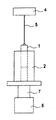
- probe-tack aims at measuring the detachment of a cylindrical probe applied to an adhesive with a pressure stress P 0 for a given time t under temperature conditions and predetermined humidity.
- This dressing was covered with a double-sided adhesive tape on the support side.
- a pressure roller was used to adhere said tape to the surface of the dressing.
- Circular samples of the same surface as the probe were cut into the assembly thus constituted by the dressing and the aforementioned adhesive tape using a circular punch of 30 mm diameter.
- Maltodextrin agglomerates such as those prepared in Example 2 were coated on the surface of these samples (the excess agglomerates having been removed to uniformly cover the surface of the sample).
- the "probe tack" test has shown that the adhesiveness to the removal of a hydrocolloid adhesive dressing according to the invention is much lower than that of a standard dressing without agglomerates.
- the hydrocolloid adhesive mass of the dressing When the hydrocolloid adhesive mass of the dressing carries agglomerates, the adhesiveness to shrinkage thereof becomes minimal when it comes into contact with physiological saline, even in a very small amount.
- a dressing according to the invention ie comprising a hydrocolloid adhesive mass carrying agglomerates of water-soluble or gellifiable particles at its surface intended to come into contact with the wound, can be easily repositioned after a first application, and within seconds after said first application.
Landscapes
- Health & Medical Sciences (AREA)
- Animal Behavior & Ethology (AREA)
- Veterinary Medicine (AREA)
- Engineering & Computer Science (AREA)
- Public Health (AREA)
- General Health & Medical Sciences (AREA)
- Life Sciences & Earth Sciences (AREA)
- Biomedical Technology (AREA)
- Heart & Thoracic Surgery (AREA)
- Vascular Medicine (AREA)
- Chemical & Material Sciences (AREA)
- Epidemiology (AREA)
- Materials Engineering (AREA)
- Hematology (AREA)
- Dispersion Chemistry (AREA)
- Materials For Medical Uses (AREA)
Priority Applications (1)
| Application Number | Priority Date | Filing Date | Title |
|---|---|---|---|
| PL11704285T PL2523697T3 (pl) | 2010-01-14 | 2011-01-13 | Nowy opatrunek zawierający aglomeraty cząstek mające zdolność szybkiego żelowania lub rozpuszczania się |
Applications Claiming Priority (2)
| Application Number | Priority Date | Filing Date | Title |
|---|---|---|---|
| FR1050221A FR2955032B1 (fr) | 2010-01-14 | 2010-01-14 | Nouveau pansement comprenant des agglomerats de particules capables de gelifier ou se solubuliser rapidement |
| PCT/FR2011/050062 WO2011086329A1 (fr) | 2010-01-14 | 2011-01-13 | Nouveau pansement comprenant des agglomerats de particules capables de gelifier ou se solubiliser rapidement. |
Publications (2)
| Publication Number | Publication Date |
|---|---|
| EP2523697A1 EP2523697A1 (fr) | 2012-11-21 |
| EP2523697B1 true EP2523697B1 (fr) | 2014-12-03 |
Family
ID=42542778
Family Applications (1)
| Application Number | Title | Priority Date | Filing Date |
|---|---|---|---|
| EP11704285.3A Not-in-force EP2523697B1 (fr) | 2010-01-14 | 2011-01-13 | Nouveau pansement comprenant des agglomerats de particules capables de gelifier ou se solubiliser rapidement. |
Country Status (9)
| Country | Link |
|---|---|
| US (1) | US8992491B2 (pl) |
| EP (1) | EP2523697B1 (pl) |
| CN (1) | CN102711851B (pl) |
| BR (1) | BR112012016428A2 (pl) |
| CA (1) | CA2785911C (pl) |
| ES (1) | ES2531841T3 (pl) |
| FR (1) | FR2955032B1 (pl) |
| PL (1) | PL2523697T3 (pl) |
| WO (1) | WO2011086329A1 (pl) |
Families Citing this family (5)
| Publication number | Priority date | Publication date | Assignee | Title |
|---|---|---|---|---|
| CN103191461B (zh) * | 2013-04-26 | 2015-09-16 | 华熙福瑞达生物医药有限公司 | 一种含透明质酸的伤口护理用敷料 |
| CN104130434B (zh) * | 2013-05-02 | 2018-01-12 | 3M创新有限公司 | 水胶体敷料及其制备方法 |
| CN106039382B (zh) * | 2016-05-25 | 2019-06-04 | 东华大学 | 一种葡聚糖基透明水凝胶敷料及其制备方法 |
| CN109836596B (zh) * | 2019-03-04 | 2021-11-02 | 湖北工业大学 | 强氢键作用高强度与高粘附的支链淀粉复合水凝胶的制备方法 |
| CN110078944A (zh) * | 2019-05-17 | 2019-08-02 | 长春工业大学 | 一种低温抗冻导电自愈合粘韧蛋白质基水凝胶的制备方法 |
Family Cites Families (22)
| Publication number | Priority date | Publication date | Assignee | Title |
|---|---|---|---|---|
| US3598123A (en) * | 1969-04-01 | 1971-08-10 | Alza Corp | Bandage for administering drugs |
| US3742951A (en) * | 1971-08-09 | 1973-07-03 | Alza Corp | Bandage for controlled release of vasodilators |
| GB1576522A (en) | 1977-05-24 | 1980-10-08 | Colorplast International A S | Sealing material for ostomy devices |
| DK147035C (da) | 1980-12-05 | 1984-09-03 | Coloplast As | Hudplade |
| DK154747C (da) | 1986-10-17 | 1989-05-08 | Coloplast As | Bandage med en hudvenlig, vandabsorberende klaebeskive der paa den ene flade er fast forbundet med en ikke-klaebende daekfilm og paa den anden med et aftageligt beskyttelsesdaekke |
| DE69124687T2 (de) | 1990-10-01 | 1997-07-31 | Hollister Inc | Wundverband mit profilierter klebeschicht |
| US5681579A (en) * | 1993-03-22 | 1997-10-28 | E.R. Squibb & Sons, Inc. | Polymeric support wound dressing |
| DK44193D0 (da) * | 1993-04-20 | 1993-04-20 | Euromed I S | Saarforbinding og klaebemiddel til en saarforbinding eller lignende |
| US5462538A (en) * | 1993-12-16 | 1995-10-31 | Mcneil-Ppc, Inc. | Molten adhesive fibers and products made therefrom |
| US5653699A (en) * | 1994-09-13 | 1997-08-05 | Polymedica Industries, Inc. | Spyrosorbent wound dressings for exudate management |
| FR2753380B1 (fr) | 1996-09-16 | 1998-12-04 | Lhd Lab Hygiene Dietetique | Nouvelle masse adhesive hydrophile |
| US6171985B1 (en) * | 1997-12-01 | 2001-01-09 | 3M Innovative Properties Company | Low trauma adhesive article |
| FR2775903B1 (fr) | 1998-03-12 | 2001-06-08 | Lhd Lab Hygiene Dietetique | Masse hydrocolloide a absorption accrue des les premieres heures d'utilisation |
| US20050208114A1 (en) * | 1998-03-24 | 2005-09-22 | Petito George D | Composition and method for healing tissues |
| US6878385B2 (en) * | 1999-01-12 | 2005-04-12 | Jentec, Inc. | Wrinkle-resistant dressing and gently adhesive composition thereof |
| FR2790763B1 (fr) | 1999-03-09 | 2001-06-01 | Lhd Lab Hygiene Dietetique | Nouvelle masse adhesive hydrocolloide presentant une meilleure resistance a la degradation de sa capacite d'absorption apres radiosterilisation |
| WO2005065079A2 (en) * | 2003-11-10 | 2005-07-21 | Angiotech International Ag | Medical implants and fibrosis-inducing agents |
| CN101244286A (zh) * | 2007-02-13 | 2008-08-20 | 中国科学院上海应用物理研究所 | 一种水凝胶敷料及其制备方法 |
| ES2395877T3 (es) * | 2007-06-19 | 2013-02-15 | Rynel, Inc. | Materiales que comprenden partículas poliméricas solubles en agua y métodos para prepararlos y usarlos |
| CN101569758A (zh) | 2008-12-31 | 2009-11-04 | 褚加冕 | 一种医用水胶体敷料的制备方法 |
| CN102625677B (zh) * | 2009-08-21 | 2016-05-18 | 3M创新有限公司 | 使用吸水性应力分布材料来减轻组织创伤的方法和产品 |
| FR2955033B1 (fr) | 2010-01-14 | 2012-03-02 | Urgo Lab | Nouveau pansement comprenant un voile de microfibres ou de nanofibres capable de gelifier ou se solubiliser |
-
2010
- 2010-01-14 FR FR1050221A patent/FR2955032B1/fr not_active Expired - Fee Related
-
2011
- 2011-01-13 EP EP11704285.3A patent/EP2523697B1/fr not_active Not-in-force
- 2011-01-13 US US13/521,147 patent/US8992491B2/en not_active Expired - Fee Related
- 2011-01-13 PL PL11704285T patent/PL2523697T3/pl unknown
- 2011-01-13 WO PCT/FR2011/050062 patent/WO2011086329A1/fr not_active Ceased
- 2011-01-13 CA CA2785911A patent/CA2785911C/fr not_active Expired - Fee Related
- 2011-01-13 ES ES11704285.3T patent/ES2531841T3/es active Active
- 2011-01-13 CN CN201180006226.7A patent/CN102711851B/zh not_active Expired - Fee Related
- 2011-01-13 BR BR112012016428A patent/BR112012016428A2/pt not_active IP Right Cessation
Also Published As
| Publication number | Publication date |
|---|---|
| WO2011086329A1 (fr) | 2011-07-21 |
| PL2523697T3 (pl) | 2015-05-29 |
| EP2523697A1 (fr) | 2012-11-21 |
| FR2955032B1 (fr) | 2012-03-02 |
| CN102711851B (zh) | 2015-04-01 |
| BR112012016428A2 (pt) | 2015-11-24 |
| US8992491B2 (en) | 2015-03-31 |
| CN102711851A (zh) | 2012-10-03 |
| FR2955032A1 (fr) | 2011-07-15 |
| CA2785911C (fr) | 2017-07-25 |
| CA2785911A1 (fr) | 2011-07-21 |
| US20130018335A1 (en) | 2013-01-17 |
| ES2531841T3 (es) | 2015-03-20 |
| HK1178822A1 (en) | 2013-09-19 |
Similar Documents
| Publication | Publication Date | Title |
|---|---|---|
| EP2523698B1 (fr) | Nouveau pansement comprenant un voile de microfibres ou de nanofibres capable de gelifier ou se solubiliser | |
| EP1061965B1 (fr) | Masse adhesive hydrocolloide utilisable a des fins medicales | |
| EP0927051B1 (fr) | Nouvelle masse adhesive hydrophile | |
| EP2523697B1 (fr) | Nouveau pansement comprenant des agglomerats de particules capables de gelifier ou se solubiliser rapidement. | |
| CA2877067C (fr) | Pansement interface autoporte | |
| EP2563414B1 (fr) | Pansement ampoule comprenant au moins deux resines tackifiantes | |
| EP1165717B1 (fr) | Nouvelle masse adhesive hydrocolloide presentant une meilleure resistance a la degradation de sa capacite d'absorption apres radiosterilisation | |
| FR2959418A1 (fr) | Pansement ampoule comprenant une masse adhesive hydrocolloide | |
| EP3233003B1 (fr) | Pansement comprenant un support et une matrice elastomerique hydrophobe | |
| EP3515386B1 (fr) | Pansement absorbant comprenant un non-tisse superabsorbant hydrodelitable | |
| CA3087114A1 (fr) | Composition presentant une excellente permeabilite a la vapeur d'eau | |
| HK1178822B (en) | Novel bandage including agglomerates of particles suitable for rapidly gelling or solubilising | |
| FR2759379A1 (fr) | Nouvelle masse adhesive hydrophile | |
| WO2017017386A1 (fr) | Pansement comprenant un support et une matrice elastomerique hydrophobe. |
Legal Events
| Date | Code | Title | Description |
|---|---|---|---|
| PUAI | Public reference made under article 153(3) epc to a published international application that has entered the european phase |
Free format text: ORIGINAL CODE: 0009012 |
|
| 17P | Request for examination filed |
Effective date: 20120704 |
|
| AK | Designated contracting states |
Kind code of ref document: A1 Designated state(s): AL AT BE BG CH CY CZ DE DK EE ES FI FR GB GR HR HU IE IS IT LI LT LU LV MC MK MT NL NO PL PT RO RS SE SI SK SM TR |
|
| DAX | Request for extension of the european patent (deleted) | ||
| REG | Reference to a national code |
Ref country code: HK Ref legal event code: DE Ref document number: 1178822 Country of ref document: HK |
|
| 17Q | First examination report despatched |
Effective date: 20140226 |
|
| GRAP | Despatch of communication of intention to grant a patent |
Free format text: ORIGINAL CODE: EPIDOSNIGR1 |
|
| INTG | Intention to grant announced |
Effective date: 20140624 |
|
| GRAS | Grant fee paid |
Free format text: ORIGINAL CODE: EPIDOSNIGR3 |
|
| GRAA | (expected) grant |
Free format text: ORIGINAL CODE: 0009210 |
|
| AK | Designated contracting states |
Kind code of ref document: B1 Designated state(s): AL AT BE BG CH CY CZ DE DK EE ES FI FR GB GR HR HU IE IS IT LI LT LU LV MC MK MT NL NO PL PT RO RS SE SI SK SM TR |
|
| REG | Reference to a national code |
Ref country code: GB Ref legal event code: FG4D Free format text: NOT ENGLISH |
|
| REG | Reference to a national code |
Ref country code: AT Ref legal event code: REF Ref document number: 698988 Country of ref document: AT Kind code of ref document: T Effective date: 20141215 Ref country code: CH Ref legal event code: EP |
|
| REG | Reference to a national code |
Ref country code: IE Ref legal event code: FG4D Free format text: LANGUAGE OF EP DOCUMENT: FRENCH |
|
| REG | Reference to a national code |
Ref country code: DE Ref legal event code: R096 Ref document number: 602011011881 Country of ref document: DE Effective date: 20150115 |
|
| REG | Reference to a national code |
Ref country code: ES Ref legal event code: FG2A Ref document number: 2531841 Country of ref document: ES Kind code of ref document: T3 Effective date: 20150320 |
|
| REG | Reference to a national code |
Ref country code: NL Ref legal event code: VDEP Effective date: 20141203 |
|
| REG | Reference to a national code |
Ref country code: AT Ref legal event code: MK05 Ref document number: 698988 Country of ref document: AT Kind code of ref document: T Effective date: 20141203 |
|
| PG25 | Lapsed in a contracting state [announced via postgrant information from national office to epo] |
Ref country code: LT Free format text: LAPSE BECAUSE OF FAILURE TO SUBMIT A TRANSLATION OF THE DESCRIPTION OR TO PAY THE FEE WITHIN THE PRESCRIBED TIME-LIMIT Effective date: 20141203 Ref country code: NL Free format text: LAPSE BECAUSE OF FAILURE TO SUBMIT A TRANSLATION OF THE DESCRIPTION OR TO PAY THE FEE WITHIN THE PRESCRIBED TIME-LIMIT Effective date: 20141203 Ref country code: NO Free format text: LAPSE BECAUSE OF FAILURE TO SUBMIT A TRANSLATION OF THE DESCRIPTION OR TO PAY THE FEE WITHIN THE PRESCRIBED TIME-LIMIT Effective date: 20150303 Ref country code: FI Free format text: LAPSE BECAUSE OF FAILURE TO SUBMIT A TRANSLATION OF THE DESCRIPTION OR TO PAY THE FEE WITHIN THE PRESCRIBED TIME-LIMIT Effective date: 20141203 |
|
| REG | Reference to a national code |
Ref country code: LT Ref legal event code: MG4D |
|
| PG25 | Lapsed in a contracting state [announced via postgrant information from national office to epo] |
Ref country code: RS Free format text: LAPSE BECAUSE OF FAILURE TO SUBMIT A TRANSLATION OF THE DESCRIPTION OR TO PAY THE FEE WITHIN THE PRESCRIBED TIME-LIMIT Effective date: 20141203 Ref country code: HR Free format text: LAPSE BECAUSE OF FAILURE TO SUBMIT A TRANSLATION OF THE DESCRIPTION OR TO PAY THE FEE WITHIN THE PRESCRIBED TIME-LIMIT Effective date: 20141203 Ref country code: CY Free format text: LAPSE BECAUSE OF FAILURE TO SUBMIT A TRANSLATION OF THE DESCRIPTION OR TO PAY THE FEE WITHIN THE PRESCRIBED TIME-LIMIT Effective date: 20141203 Ref country code: AT Free format text: LAPSE BECAUSE OF FAILURE TO SUBMIT A TRANSLATION OF THE DESCRIPTION OR TO PAY THE FEE WITHIN THE PRESCRIBED TIME-LIMIT Effective date: 20141203 Ref country code: SE Free format text: LAPSE BECAUSE OF FAILURE TO SUBMIT A TRANSLATION OF THE DESCRIPTION OR TO PAY THE FEE WITHIN THE PRESCRIBED TIME-LIMIT Effective date: 20141203 Ref country code: LV Free format text: LAPSE BECAUSE OF FAILURE TO SUBMIT A TRANSLATION OF THE DESCRIPTION OR TO PAY THE FEE WITHIN THE PRESCRIBED TIME-LIMIT Effective date: 20141203 Ref country code: GR Free format text: LAPSE BECAUSE OF FAILURE TO SUBMIT A TRANSLATION OF THE DESCRIPTION OR TO PAY THE FEE WITHIN THE PRESCRIBED TIME-LIMIT Effective date: 20150304 |
|
| REG | Reference to a national code |
Ref country code: PL Ref legal event code: T3 |
|
| REG | Reference to a national code |
Ref country code: HK Ref legal event code: GR Ref document number: 1178822 Country of ref document: HK |
|
| PG25 | Lapsed in a contracting state [announced via postgrant information from national office to epo] |
Ref country code: SK Free format text: LAPSE BECAUSE OF FAILURE TO SUBMIT A TRANSLATION OF THE DESCRIPTION OR TO PAY THE FEE WITHIN THE PRESCRIBED TIME-LIMIT Effective date: 20141203 Ref country code: PT Free format text: LAPSE BECAUSE OF FAILURE TO SUBMIT A TRANSLATION OF THE DESCRIPTION OR TO PAY THE FEE WITHIN THE PRESCRIBED TIME-LIMIT Effective date: 20150403 Ref country code: CZ Free format text: LAPSE BECAUSE OF FAILURE TO SUBMIT A TRANSLATION OF THE DESCRIPTION OR TO PAY THE FEE WITHIN THE PRESCRIBED TIME-LIMIT Effective date: 20141203 Ref country code: RO Free format text: LAPSE BECAUSE OF FAILURE TO SUBMIT A TRANSLATION OF THE DESCRIPTION OR TO PAY THE FEE WITHIN THE PRESCRIBED TIME-LIMIT Effective date: 20141203 Ref country code: EE Free format text: LAPSE BECAUSE OF FAILURE TO SUBMIT A TRANSLATION OF THE DESCRIPTION OR TO PAY THE FEE WITHIN THE PRESCRIBED TIME-LIMIT Effective date: 20141203 |
|
| REG | Reference to a national code |
Ref country code: CH Ref legal event code: PL |
|
| PG25 | Lapsed in a contracting state [announced via postgrant information from national office to epo] |
Ref country code: LU Free format text: LAPSE BECAUSE OF FAILURE TO SUBMIT A TRANSLATION OF THE DESCRIPTION OR TO PAY THE FEE WITHIN THE PRESCRIBED TIME-LIMIT Effective date: 20150113 Ref country code: IS Free format text: LAPSE BECAUSE OF FAILURE TO SUBMIT A TRANSLATION OF THE DESCRIPTION OR TO PAY THE FEE WITHIN THE PRESCRIBED TIME-LIMIT Effective date: 20150403 |
|
| REG | Reference to a national code |
Ref country code: DE Ref legal event code: R097 Ref document number: 602011011881 Country of ref document: DE |
|
| PG25 | Lapsed in a contracting state [announced via postgrant information from national office to epo] |
Ref country code: MC Free format text: LAPSE BECAUSE OF FAILURE TO SUBMIT A TRANSLATION OF THE DESCRIPTION OR TO PAY THE FEE WITHIN THE PRESCRIBED TIME-LIMIT Effective date: 20141203 |
|
| PLBE | No opposition filed within time limit |
Free format text: ORIGINAL CODE: 0009261 |
|
| STAA | Information on the status of an ep patent application or granted ep patent |
Free format text: STATUS: NO OPPOSITION FILED WITHIN TIME LIMIT |
|
| PG25 | Lapsed in a contracting state [announced via postgrant information from national office to epo] |
Ref country code: CH Free format text: LAPSE BECAUSE OF NON-PAYMENT OF DUE FEES Effective date: 20150131 Ref country code: LI Free format text: LAPSE BECAUSE OF NON-PAYMENT OF DUE FEES Effective date: 20150131 Ref country code: DK Free format text: LAPSE BECAUSE OF FAILURE TO SUBMIT A TRANSLATION OF THE DESCRIPTION OR TO PAY THE FEE WITHIN THE PRESCRIBED TIME-LIMIT Effective date: 20141203 |
|
| REG | Reference to a national code |
Ref country code: IE Ref legal event code: MM4A |
|
| 26N | No opposition filed |
Effective date: 20150904 |
|
| REG | Reference to a national code |
Ref country code: FR Ref legal event code: PLFP Year of fee payment: 6 |
|
| PG25 | Lapsed in a contracting state [announced via postgrant information from national office to epo] |
Ref country code: IE Free format text: LAPSE BECAUSE OF NON-PAYMENT OF DUE FEES Effective date: 20150113 |
|
| PG25 | Lapsed in a contracting state [announced via postgrant information from national office to epo] |
Ref country code: SI Free format text: LAPSE BECAUSE OF FAILURE TO SUBMIT A TRANSLATION OF THE DESCRIPTION OR TO PAY THE FEE WITHIN THE PRESCRIBED TIME-LIMIT Effective date: 20141203 |
|
| REG | Reference to a national code |
Ref country code: FR Ref legal event code: TP Owner name: URGO RECHERCHE INNOVATION ET DEVELOPPEMENT, FR Effective date: 20160805 |
|
| PG25 | Lapsed in a contracting state [announced via postgrant information from national office to epo] |
Ref country code: MT Free format text: LAPSE BECAUSE OF FAILURE TO SUBMIT A TRANSLATION OF THE DESCRIPTION OR TO PAY THE FEE WITHIN THE PRESCRIBED TIME-LIMIT Effective date: 20141203 |
|
| REG | Reference to a national code |
Ref country code: FR Ref legal event code: PLFP Year of fee payment: 7 |
|
| PG25 | Lapsed in a contracting state [announced via postgrant information from national office to epo] |
Ref country code: HU Free format text: LAPSE BECAUSE OF FAILURE TO SUBMIT A TRANSLATION OF THE DESCRIPTION OR TO PAY THE FEE WITHIN THE PRESCRIBED TIME-LIMIT; INVALID AB INITIO Effective date: 20110113 Ref country code: BG Free format text: LAPSE BECAUSE OF FAILURE TO SUBMIT A TRANSLATION OF THE DESCRIPTION OR TO PAY THE FEE WITHIN THE PRESCRIBED TIME-LIMIT Effective date: 20141203 Ref country code: SM Free format text: LAPSE BECAUSE OF FAILURE TO SUBMIT A TRANSLATION OF THE DESCRIPTION OR TO PAY THE FEE WITHIN THE PRESCRIBED TIME-LIMIT Effective date: 20141203 |
|
| PG25 | Lapsed in a contracting state [announced via postgrant information from national office to epo] |
Ref country code: TR Free format text: LAPSE BECAUSE OF FAILURE TO SUBMIT A TRANSLATION OF THE DESCRIPTION OR TO PAY THE FEE WITHIN THE PRESCRIBED TIME-LIMIT Effective date: 20141203 |
|
| REG | Reference to a national code |
Ref country code: FR Ref legal event code: PLFP Year of fee payment: 8 |
|
| PG25 | Lapsed in a contracting state [announced via postgrant information from national office to epo] |
Ref country code: MK Free format text: LAPSE BECAUSE OF FAILURE TO SUBMIT A TRANSLATION OF THE DESCRIPTION OR TO PAY THE FEE WITHIN THE PRESCRIBED TIME-LIMIT Effective date: 20141203 |
|
| PG25 | Lapsed in a contracting state [announced via postgrant information from national office to epo] |
Ref country code: AL Free format text: LAPSE BECAUSE OF FAILURE TO SUBMIT A TRANSLATION OF THE DESCRIPTION OR TO PAY THE FEE WITHIN THE PRESCRIBED TIME-LIMIT Effective date: 20141203 |
|
| PGFP | Annual fee paid to national office [announced via postgrant information from national office to epo] |
Ref country code: TR Payment date: 20190128 Year of fee payment: 9 |
|
| PGFP | Annual fee paid to national office [announced via postgrant information from national office to epo] |
Ref country code: IT Payment date: 20210122 Year of fee payment: 11 Ref country code: FR Payment date: 20210125 Year of fee payment: 11 |
|
| PGFP | Annual fee paid to national office [announced via postgrant information from national office to epo] |
Ref country code: BE Payment date: 20210127 Year of fee payment: 11 Ref country code: ES Payment date: 20210201 Year of fee payment: 11 Ref country code: GB Payment date: 20210128 Year of fee payment: 11 Ref country code: DE Payment date: 20210127 Year of fee payment: 11 |
|
| PG25 | Lapsed in a contracting state [announced via postgrant information from national office to epo] |
Ref country code: PL Free format text: LAPSE BECAUSE OF NON-PAYMENT OF DUE FEES Effective date: 20200113 |
|
| REG | Reference to a national code |
Ref country code: DE Ref legal event code: R119 Ref document number: 602011011881 Country of ref document: DE |
|
| GBPC | Gb: european patent ceased through non-payment of renewal fee |
Effective date: 20220113 |
|
| REG | Reference to a national code |
Ref country code: BE Ref legal event code: MM Effective date: 20220131 |
|
| PG25 | Lapsed in a contracting state [announced via postgrant information from national office to epo] |
Ref country code: GB Free format text: LAPSE BECAUSE OF NON-PAYMENT OF DUE FEES Effective date: 20220113 Ref country code: DE Free format text: LAPSE BECAUSE OF NON-PAYMENT OF DUE FEES Effective date: 20220802 |
|
| PG25 | Lapsed in a contracting state [announced via postgrant information from national office to epo] |
Ref country code: FR Free format text: LAPSE BECAUSE OF NON-PAYMENT OF DUE FEES Effective date: 20220131 Ref country code: BE Free format text: LAPSE BECAUSE OF NON-PAYMENT OF DUE FEES Effective date: 20220131 |
|
| PG25 | Lapsed in a contracting state [announced via postgrant information from national office to epo] |
Ref country code: IT Free format text: LAPSE BECAUSE OF NON-PAYMENT OF DUE FEES Effective date: 20220113 |
|
| REG | Reference to a national code |
Ref country code: ES Ref legal event code: FD2A Effective date: 20230303 |
|
| PG25 | Lapsed in a contracting state [announced via postgrant information from national office to epo] |
Ref country code: ES Free format text: LAPSE BECAUSE OF NON-PAYMENT OF DUE FEES Effective date: 20220114 |