EP2521079A2 - Elektronische Vorrichtung und Verfahren zur Konferenzbenachrichtigung - Google Patents
Elektronische Vorrichtung und Verfahren zur Konferenzbenachrichtigung Download PDFInfo
- Publication number
- EP2521079A2 EP2521079A2 EP12167862A EP12167862A EP2521079A2 EP 2521079 A2 EP2521079 A2 EP 2521079A2 EP 12167862 A EP12167862 A EP 12167862A EP 12167862 A EP12167862 A EP 12167862A EP 2521079 A2 EP2521079 A2 EP 2521079A2
- Authority
- EP
- European Patent Office
- Prior art keywords
- electronic device
- observer
- calendar event
- organizer
- calendar
- Prior art date
- Legal status (The legal status is an assumption and is not a legal conclusion. Google has not performed a legal analysis and makes no representation as to the accuracy of the status listed.)
- Withdrawn
Links
Images







Classifications
-
- G—PHYSICS
- G06—COMPUTING OR CALCULATING; COUNTING
- G06Q—INFORMATION AND COMMUNICATION TECHNOLOGY [ICT] SPECIALLY ADAPTED FOR ADMINISTRATIVE, COMMERCIAL, FINANCIAL, MANAGERIAL OR SUPERVISORY PURPOSES; SYSTEMS OR METHODS SPECIALLY ADAPTED FOR ADMINISTRATIVE, COMMERCIAL, FINANCIAL, MANAGERIAL OR SUPERVISORY PURPOSES, NOT OTHERWISE PROVIDED FOR
- G06Q10/00—Administration; Management
- G06Q10/10—Office automation; Time management
- G06Q10/109—Time management, e.g. calendars, reminders, meetings or time accounting
Definitions
- the present disclosure relates generally to meeting scheduling and notifying interested parties of such scheduling.
- Portable electronic devices including, for example, smart telephones and wireless PDAs are becoming increasingly common and typically integrate functions of personal information management such as calendaring and data communications such as e-mail, World Wide Web browsing and telecommunications in a single device.
- Such devices run on a wide variety of networks from data-only networks such as Mobitex and DataTAC to complex voice and data networks such as GSM/GPRS, CDMA, EDGE, UMTS and CDMA2000 networks.
- Some portable electronic devices allow the user of the device to schedule meetings with invitees by creating a new calendar event and entering information such as the time of the meeting, the location and contact information of the invitees.
- An electronic message is then sent to the invitees in the form of an invitation to the meeting, typically via electronic mail (e-mail).
- Such electronic invitations provide the invitee with the option to accept or decline the invitation to the meeting. If accepted, the meeting is stored as a calendar event in the electronic calendar of the invitee.
- an interested party of a meeting taking place For example, a person may wish to be advised that a particular meeting is taking place and may even be interested in the outcome. However, that person does not wish to be present at the meeting.
- the organizer of the meeting can choose to simply add the interested party as an invitee and expect the invitee to decline the meeting invitation. Unfortunately, when the meeting invitation is declined, the meeting information is not saved for the interested party to view later.
- the organizer can send a separate e-mail to the interested party, after scheduling of the meeting, to advise the party of the meeting particulars. Of course, this requires that a separate e-mail be sent, duplicating much of the information already input when scheduling the meeting. Further, these efforts must be repeated in the event of changes to the meeting schedule.
- a method of providing a meeting notification includes adding an observer to a calendar event in a calendar graphical user interface at an organizer electronic device, saving the calendar event associated with the observer at the organizer electronic device, and sending an observer electronic message from the organizer electronic device to an observer electronic device.
- the observer electronic message may include the calendar event for storage at the observer electronic device with a period time, associated with the calendar event, indicated as free time.
- a electronic device including a housing, a display mounted within the housing, a user input device mounted within the housing, a memory mounted within the housing, a communications system for effecting communication to and from the electronic device, a microprocessor within the housing and connected to the memory, the user input device, the display, and the communications system, and an application for execution by the microprocessor.
- the application may be for adding an observer to a calendar event in a calendar graphical user interface displayed on the display, saving the calendar event associated with the observer in the memory, and sending an observer electronic message to an observer electronic device via the communications system, the observer electronic message including the calendar event for storage at the observer electronic device with a period of time, associated with the calendar event, automatically indicated as free time.
- a computer program product for a electronic device, the computer program product including a computer-readable medium having computer-readable code embodied therein for receiving a create-new-calendar-event command and, in response, providing a create-new-calendar-event graphical user interface at the electronic device, receiving event details including an event invitee, adding an observer to the calendar event, saving the calendar event associated with the observer at the organizer electronic device, sending an invitee electronic message from the organizer electronic device to an event invitee electronic device, the invitee electronic message including an invitation for the calendar event, and sending an observer electronic message to an observer electronic device, the observer electronic message including the calendar event for storage at the observer electronic device with a period of time, associated with the calendar event, automatically indicated as free time.
- an observer can be added to any calendar event to advise the observer (or observers) of the scheduling of the calendar event.
- a manager can be advised of a meeting that the manager does not wish to attend but wishes to be advised of progress of.
- the observer is not sent an invitation.
- the observer may be sent an electronic notification that includes the calendar event for storage at the observer electronic device with a period of time, associated with the calendar event, indicated as free time.
- the observer may be able to schedule other calendar events, such as meetings or appointments on the electronic device, that overlap with the calendar event for which the user is designated an observer, without conflicts arising.
- any meeting updates and any notes that are added to the meeting may be sent to the observer by way of an update message.
- Figure 1 is a front view of an exemplary portable electronic device according to an embodiment
- Figure 2 is a block diagram of certain components, including internal components within the portable electronic device of Figure 1 ;
- Figure 3 is an exemplary menu screen displayed on a display of the portable electronic device of Figure 1 ;
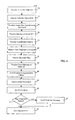
- Figure 4 is a flowchart showing the steps in a method of providing a meeting notification according to an embodiment
- Figures 5 to 11 show exemplary screens displayed on the display of the portable electronic device at various steps in the method of Figure 4 ;
- Figure 12 is a flowchart showing the steps in a method of providing a meeting notification according to another embodiment
- Figures 13 to 17 show exemplary screens displayed on the display of the portable electronic device at various steps in the method of Figure 12 ;
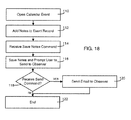
- Figure 18 is a flowchart showing the steps in a method of providing a meeting notification according to another embodiment
- Figures 19 and 20 show exemplary screens displayed on the display of the portable electronic device at steps in the method of Figure 18 ;
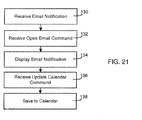
- Figure 21 is a flowchart showing steps in a method of providing a meeting notification according to another embodiment
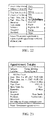
- Figures 22 and 23 show exemplary screens displayed on the display of the portable electronic device at steps in the method of Figure 21 ;
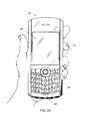
- Figure 24 is a front view of an exemplary portable electronic device, according to another embodiment.
- Figure 25 is a flowchart showing steps in a method of providing a meeting notification according to another embodiment
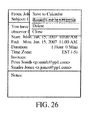
- Figure 26 shows an exemplary screen displayed on the display of the portable electronic device at steps in the method of Figure 25 ;
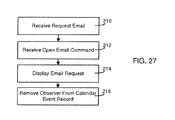
- Figure 27 is another flowchart showing steps in a method of providing a meeting notification according to another embodiment.
- Figures 28 and 29 are exemplary screens displayed on the display of the portable electronic device at steps in the method of Figure 27 .
- an exemplary electronic device in accordance with an embodiment is indicated generally by the numeral 20.
- the electronic device 20 is a portable electronic device 20 based on the computing environment and functionality of a hand-held wireless communication device. It will be understood, however, that the electronic device is not limited to a hand-held wireless communication device. Other electronic devices are possible, such as cellular telephones, smart telephones, laptop computers and desktop computers.
- the portable electronic device 20 includes a housing 22 that frames an LCD display 24, a speaker 26, an LED indicator 28, a trackwheel 30, an exit key 32, a keypad 34, and a microphone 36.
- the trackwheel 30 and the exit key 32 can be inwardly depressed along the path of arrow "A" as a means to provide additional user-input.
- the housing 22 is made from a suitable material as will occur to those skilled in the art and can be stored, for example, in a holster (not shown) that includes an attachment for attaching to a user's belt.
- the portable electronic device 20 is based on a microcomputer that includes a microprocessor 38 connected to a random access memory (RAM) unit 40 and a persistent storage device, which in the present embodiment is a flash memory 42 that is responsible for various non-volatile storage functions of the portable electronic device 20.
- Operating system software 50 executable by the microprocessor 38 is stored in the flash memory 42. It will be appreciated, however, that the operating system software 50 can be stored in other types of memory such as read-only memory (ROM).
- software applications 52 including Personal Information Manager (PIM) applications are stored in the persistent storage device 42 for execution by the microprocessor 38 for carrying out various functions.
- PIM Personal Information Manager
- the microprocessor 38 receives input from various input devices including the trackwheel 30, the exit key 32, and the keypad 34, and outputs to various output devices including the LCD display 24, the speaker 26 and the LED indicator 28.
- the microprocessor 38 also interacts with on/off circuitry 54 for powering up the portable electronic device 20 and powering down the portable electronic device 20, and an internal timer 56.
- the portable electronic device 20 is a two-way RF communication device having voice and data communication capabilities.
- the portable electronic device 20 also includes Internet communication capabilities.
- Two-way RF communication is facilitated by a communications subsystem 46 that is used to connect to and operate with a data-only network such as Mobitex or DataTAC, or a complex voice and data network such as a GSM/GPRS, CDMA, EDGE, UMTS or CDMA2000 network, via the antenna 48.
- a data-only network such as Mobitex or DataTAC
- a complex voice and data network such as a GSM/GPRS, CDMA, EDGE, UMTS or CDMA2000 network
- the flash memory 42 stores a plurality of applications executable by the microprocessor 38 that enable the portable electronic device 20 to perform certain operations including the communication operations referred to above.
- Applications software is provided including, for example, PIM applications such as an electronic mail (messages) application, an address book application, a tasks application, and a calendar application, as well as other applications such as a Web browser application, an options application and a profiles application.
- a received signal such as a text message or Web page download is processed by the communications subsystem 46 and input to the microprocessor 38 for further processing of the received signal for output to the LCD display 24.
- a user of the portable electronic device 20 can also compose data items within a software application such as an e-mail messaging application using the keypad 34, for example, in conjunction with the trackwheel 30 and the LCD display 24. Such composed items can then be transmitted over the communications network through the communications subsystem 46 and antenna 48.
- a short-range communications subsystem can also be provided for communication between the portable electronic device 20 and other devices or systems.
- Such short-range communications subsystems include, for example, an infrared device as well as associated components and circuitry, and a BluetoothTM communication system.
- a rechargeable battery 62 such as a Li-ion battery is provided for powering the portable electronic device 20.
- the user can power down the portable electronic device 20 to a power-off or low-power state by pressing a power on/off button (not shown).
- the device can be powered up or powered down using a combination of buttons that activate the on/off circuitry 54.
- the portable electronic device 20 includes an internal timer 56 that can also deliver an interrupt on the interrupt line 58 to power up the portable electronic device 20 when the portable electronic device 20 is in a power-down state and to power down the device when the portable electronic device 20 is in the power-up state.
- the internal timer 56 is responsible for keeping track of the date and time when the portable electronic device 20 is turned off.
- a main oscillator 60 is also provided for generating a relatively high-frequency (MHz) clock signal compared to that generated by the oscillator that is part of the internal timer 56 (tens of kHz).
- the main oscillator 60 includes circuitry that operates when the portable electronic device is on for providing a clock signal to the microprocessor 38 and other components.
- the exemplary menu screen includes a display clock that is updated according to the circuitry of the main oscillator 60 and a list of applications including an electronic mail (Messages) application, a Web browser, an Address book, a Tasks application, a Calendar application, a Profiles application and an Options application.
- Messages electronic mail
- Each of the displayed applications in the list is selectable by, for example, scrolling to the desired application using the trackwheel 30 and pressing inwardly on the trackwheel 30 in the direction of arrow "A".
- the Calendar application is used for providing a graphical user interface (GUI) for the user to create calendar events and for storage of the calendar events in a database at the flash memory 42, when executed by the processor 38.
- GUI graphical user interface
- the Calendar application is used for creating, displaying and storing calendar events such as appointments, lectures, exams, movies, meetings, performances, dinners, ceremonies, etc. as described below.
- Each calendar event includes a variety of information including a name, a date and time of the event as well as a user-selectable reminder time for the event.
- the calendar event can include a reminder such as an audible alarm, a visual alarm or even a kinetic alarm such as a vibration, set for a user-selected time prior to the start time of the event to thereby remind the user of the event.
- the calendar events are viewed using a calendar view in the Calendar application.
- the calendar view can be any one of a month view, a week view, a day view and an agenda view. Selection of a calendar event in the calendar view results in display of the particulars of that event.
- the Messages application is used for data communication between electronic devices, in the form of SMS (Short Message Service) messages or e-mail messages.
- a user of the portable electronic device 20 can compose, for example, e-mail messages within the Messages application using the keypad 34, for example, in conjunction with the trackwheel 30 and the LCD display 24. Such composed items can then be transmitted over the communications network through the communications subsystem 46 and antenna 48.
- messages, such as e-mail messages can be received at the portable electronic device 20, via the antenna 48 and communications subsystem 46, further processed at the microprocessor 38 for display on the LCD display 24 using the Messages application.
- the method includes adding an observer to a calendar event in a calendar graphical user interface displayed on the LCD display 24 at a portable electronic device 20 of an organizer of the calendar event.
- the calendar event is saved associated with the observer at the organizer portable electronic device 20, and sent to a portable electronic device of an observer via an electronic message from the organizer portable electronic device 20.
- the electronic message includes the calendar event for storage at the observer portable electronic device with a period of time, associated with the calendar event, indicated as free time in a calendar view.
- Figure 3 shows an exemplary menu screen that is displayed on the LCD display 24 of the portable electronic device 20.
- Execution of the calendar application results in the display of a default calendar view, as shown in Figure 5 .
- the default calendar view is the day view. It will be appreciated that other views such as the week, month or agenda view can be displayed depending on the default view or can be selected for display.
- calendar events such as meetings or appointments that are calendared within a time period that falls within the calendar view and are saved in the flash memory 42, are displayed on the LCD display 24 of the portable electronic device 20.
- calendar events such as meetings or appointments that are calendared within a time period that falls within the calendar view and are saved in the flash memory 42.
- a user of the portable electronic device 20 wishes to schedule a meeting at a particular time.
- this person is referred to as the meeting organizer herein.
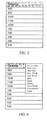
- the meeting organizer presses inwardly on the trackwheel 30 in the direction of arrow "A", resulting in the display of the submenu of user-selectable options, as shown in Figure 6 .
- These options include, for example, "Go To Date”, “Prev Day”, “Next Day”, “Prev Week”, “Next Week”, “New”, “Open”, “Delete”, "View Week”, “View Month”, and “Close”, as shown in Figure 5 .
- Selection of the "Go To Date” option provides a user-editable date field for the user to specify a date for displaying on the LCD display 24.
- Selection of the "Prev Day” option results in the display of the schedule for the day prior to that displayed in Figure 5 .
- selection of the "Next Day” option results in the display of the schedule for the day following that displayed in Figure 5 .
- Selection of the "Prev Week” option results in the display of the schedule for the week prior to the day displayed in Figure 5 .
- Selection of the "Next Week” option results in the display of the schedule for the week following the day displayed in Figure 5 .
- Selection of the "New” option provides a graphical user interface for composition of a new event for addition to the calendar display.
- Selection of the "Open” option results in the display of details of any selected calendar event on the LCD display 24.
- Selection of the "Delete” option deletes a selected calendar event.
- Selection of the "View Week” option results in the display of the weekly schedule for the week including the day displayed in Figure 5 .
- Selection of the "View Month” option results in the display of the monthly schedule for the month including the day displayed in Figure 5 .
- Selection of the "Close” option closes the Calendar application.
- selection of the "New" option from the submenu displayed in Figure 6 acts as a create-new-appointment command (step 74) and provides a graphical user interface for composition of a new calendar event for addition to the calendar display (step 76).
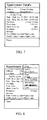
- An exemplary graphical user interface for composition of a new calendar event is show in Figure 7 .
- the exemplary graphical user interface shown in Figure 7 includes fields for user-entry of event details, many of which are shown in Figure 7 , populated with data entered by the meeting organizer using the input devices such as the trackwheel 30 and the keypad 34.
- Event details are received upon user entry (step 78). These event details include, for example, the subject "Group Meeting”, the location "Board Room 1 ", a start date and time, an end date and time and a duration, as indicated in Figure 7 .
- the time zone is EST (Eastern Standard Time) and a reminder is set for 15 minutes prior to the start time of the meeting.
- Two invitees are included in the list of invitees. It will be appreciated that these invitees are added, by for example, user-selection of an "Add Invitee" option from a submenu, as shown in Figure 8 , followed by user entry of the an e-mail address of an invitee using the keypad 34.
- the invitee information can be added by selection of a contact from the Address book contacts stored at the portable electronic device 20, as will occur to those skilled in the art.
- the meeting organizer begins entry of the name of the invitee and is provided with a list of matching names from the Address book contacts, for selection. The meeting organizer can then select the appropriate name using the trackwheel 30 or continue entry of an e-mail address using the keypad 34 (step 84).
- the user adds an observer to the calendar event by selection of an "Add Observer” option from the submenu shown in Figure 8 .
- the submenu shown in Figure 8 is displayed in response to user depression of the trackwheel 30 in the present example. It will be appreciated that each submenu can be displayed as a result of any suitable user-interaction with the portable electronic device 20.
- the add observer command is received (step 80) and an "Observers" field is added to the appointment details (step 82).
- the meeting organizer begins entry of the name of the observer and is provided with a list of matching names from the Address book contacts, for selection.
- the meeting organizer can then select the appropriate name using the trackwheel 30 or continue entry of an e-mail address using the keypad 34.
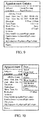
- the observer is added to the appointment details (step 86), as shown in Figure 9 .
- a send command is received at the portable electronic device 20 (step 88) and an invitation is sent to each of the meeting invitees (step 90).
- the invitation is sent electronically, via e-mail, for example, which is received at an electronic device of the invitee. Opening of the e-mail results in the display of the calendar event along with options to accept the invitation or decline the invitation.
- Acceptance of an invitation results in the storage of the calendar event in memory of the electronic device of the invitee, for display in a calendar view and for reminding the invitee of the meeting.
- the duration of the calendar event is displayed as busy time.
- the invitee determines that there is a conflict given that the duration is shown as busy time.
- the invitee declines the invitation, the meeting is not saved at the electronic device of the invitee.
- a message can be sent to the meeting organizer to advise that the invitation has been accepted or declined.
- the portable electronic device 20 of the meeting organizer determines at step 90 that there is a meeting observer added to the calendar event (step 92).
- a notification is therefore also sent to the meeting observer (step 94) via e-mail, for example, which is received at the electronic device of the observer.
- the notification for the observer differs from that sent to the invitee in that there is no invitation to attend the meeting.
- the observer is also not presented with any options to accept or decline the meeting.
- the e-mail received by the observer includes the calendar event for storage at the electronic device of the observer with the duration of the calendar event between the start time and end time automatically indicated as free time.
- calendar event is also stored in the flash memory 42 at the portable electronic device 20 of the meeting organizer for display in a calendar view, as shown in Figure 11 .
- the e-mail notification sent from the portable electronic device 20 of the meeting organizer is received at a portable electronic device of the observer (step 100).
- the portable electronic device of the observer is similar to that of the portable electronic device of the meeting organizer. It will be appreciated, however that it is not necessary that the portable electronic devices are the same. These electronic devices can differ.
- the user selects the Messages application resulting in the display of a list of received electronic messages such as that shown in Figure 13 .
- a list of received electronic messages such as that shown in Figure 13 .
- the observer then scrolls to the e-mail and selects an open command from an e-mail submenu, for example.
- the electronic notification message sent from the portable electronic device 20 of the meeting organizer is displayed at the observer portable electronic device (step 104).
- An exemplary electronic notification message is shown in Figure 14 .
- the electronic notification message indicates that the observer has been designated as an observer for the meeting. There is no option provided for accepting or declining the meeting and there is no message that is sent from the observer portable electronic device 20 to the meeting organizer portable electronic device 20 to indicate that the meeting has been accepted or declined.
- the notification received by the observer is not an invitation to the meeting.
- the meeting observer can select an option to store the calendar event for storage in a calendar view by selection of a "Save to Calendar” option from a submenu when viewing the electronic message, as shown in Figure 15 .
- the calendar event can be automatically saved at the observer portable electronic device.
- the calendar event is stored in the memory at the observer portable electronic device (step 108).
- execution of the Calendar application by, for example, selection of the calendar application from a menu screen such as that shown in Figure 3 , results in the display of a default calendar view.
- the default calendar view is a day view for the date of the calendar event ("Group Meeting"), as shown in Figure 16 .
- Selection of the "Group Meeting” from the calendar view results in the display of the event details as shown in Figure 17 .
- the "Show Time As” field indicates that the time is shown as free at the observer portable electronic device.
- the observer is free to schedule other calendar events such as meetings or appointments during that time period without conflict.
- a reminder can be provided, however. It is also contemplated that rather than a reminder prior to the start of the meeting, a reminder can be issued for the observer at the scheduled end of the meeting.
- the meeting organizer may wish to make amendments or changes to the calendar event. For example, at the end of the "Group Meeting", the meeting organizer may wish to make a note or summary of the meeting for storage in association with the calendar event. From the calendar screen shown in Figure 11 , the meeting organizer opens the calendar event by, for example, scrolling to the "Group Meeting” and pressing inwardly on the trackwheel 30, followed by selection of an "Open” option from a calendar submenu, resulting in the display of the calendar event, as shown in Figure 9 (step 110). In the present example, the meeting organizer scrolls to the "Notes" field and adds notes to the field to summarize the outcome of the meeting (step 112). It will be appreciated that any notes can be added. Furthermore, the amendments or changes are not limited to the "Notes" field. For example, the time may require changing if not all required attendees can attend at the time initially proposed by the meeting organizer.
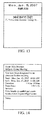
- the organizer After adding the notes to the "Group Meeting" calendar event, the organizer saves the notes to the calendar event by selecting the "Save” option from a list of options in a calendar event submenu, as shown in Figure 19 .
- the calendar event Upon receipt of the save command (step 114), the calendar event is stored with the added notes and the meeting organizer is prompted to select one of a "Yes” and a "No” option for sending the changes to the observer, as shown in Figure 20 (step 116).
- the changes can be sent automatically upon saving the changes to the calendared record. Alternatively, the changes can be sent to all of the invitees and the observers for the calendar event, either by prompting the organizer or automatically.
- selection of the "Yes” option acts as a send command (step 118) and causes an electronic message including the changes made to the calendar event, to be sent by, for example, e-mail, to the observer (step 120).
- Selection of the "No” option ends the subroutine without sending the changes to the observer.
- the electronic mail notification sent at step 120 is received at the portable electronic device of the observer (step 130) and results in a message displayed in the list of received electronic messages.
- the open e-mail command is received (step 132) as a result of the observer opening the e-mail, as described above with reference to Figure 13 , and results in the display of the e-mail similar to that shown in Figure 14 .
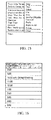
- This e-mail includes the meeting notes (as shown in Figure 22 ) (step 134).
- the meeting outcome is provided in the notes added by the meeting organizer at the end of the meeting.
- the observer can update the calendar event by selection of an "Update Calendar” option from a submenu list of options (step 136), causing the previously saved calendar event to be updated by overwriting the changed calendar event including the notes over the previously saved calendar event.
- the notes are saved for later viewing by the observer, as shown in Figure 23 .
- an observer is added to the event details upon creation of the new calendar event. It is possible, however, that no observer is added to the calendar event until after the event is created and saved. Thus, either the original meeting organizer or another person, such as one of the invitees, takes on an organizer role and adds the observer to the calendar event after scheduling. Rather than creating a new calendar event, the observer is added by changing the calendar event to include the observer. In this case, the observer receives an e-mail notification upon saving of the edited calendar event, rather than upon saving of a new calendar event.
- the portable electronic device of Figure 1 is shown for exemplary purposes only. Other portable electronic devices such as that shown in Figure 24 are possible.
- FIG 24 another exemplary portable electronic device 20 is shown.
- the portable electronic device 20 includes a housing 22 that frames an LCD display 24.
- the portable electronic device 20 includes a trackball 31, rather than a trackwheel.
- the trackball can be depressed as a means to provide additional user-input.
- the microprocessor 38 receives input from the trackball 31 which is used for user selection of features from a list or a table on the LCD display 24 of the portable electronic device 22. Selection is carried out by rolling the trackball to roll a cursor (or highlighted region), for example, to the desired selection and pressing inwardly on the trackball.
- the portable electronic device 20 shown in Figure 24 includes many other features, including, for example, a key pad 34 and other features similar to those described above with reference to Figure 1 . It will also be appreciated that reference is made to a trackwheel in the above description for exemplary purposes only, and a trackball 31 such as that shown in Figure 24 can be used.
- the notification is also sent to the meeting observer (step 94) via e-mail, for example, which is received at the electronic device of the observer.
- the notification for the observer differs from that sent to the invitee in that there is no invitation to attend the meeting.
- the e-mail received by the observer includes the calendar event for storage at the electronic device of the observer with the duration of the calendar event between the start time and end time indicated as free time. In the present example, however, the observer is given the option of requesting to be removed as an observer.
- the e-mail notification sent from the portable electronic device 20 of the meeting organizer is received at a portable electronic device of the observer (step 200).
- the user selects the Messages application resulting in the display of a list of received electronic messages such as that shown in Figure 13 . In the example shown in Figure 13 , only one e-mail message is shown in the list.
- the observer then scrolls to the e-mail and selects an open command from an e-mail submenu, for example.
- the electronic notification message sent from the portable electronic device 20 of the meeting organizer is displayed at the observer portable electronic device (step 204).
- FIG 14 An exemplary electronic notification message is shown in Figure 14 .
- the electronic notification message indicates that the observer has been designated as an observer for the meeting.
- the meeting observer can select an option to store the calendar event for storage in a calendar view by selection of a "Save to Calendar” option from a submenu when viewing the electronic message, as shown in Figure 26 .
- the observer can select an option to request removal as an observer by selecting the "Remove me as Observer” option. Selection of the "Remove me as Observer” option (step 206) results in a request to be removed as an observer, being sent to the portable electronic device of the meeting organizer (step 208).
- the calendar event is not stored in memory at the observer portable electronic device since the observer has requested to be removed as an observer.
- the steps shown and described are carried out by routines or subroutines of the portable electronic device. Coding of software for carrying out such steps is well within the scope of a person of ordinary skill in the art.
- the request to be removed as an observer is received via e-mail at the portable electronic device 20 of the observer at step 210.
- the organizer selects the Messages application resulting in the display of a list of received electronic messages.
- the organizer scrolls to the e-mail and selects an open command from an e-mail submenu, for example.
- the request to be removed as an observer sent from the portable electronic device of the "observer” is displayed at the portable electronic device 20 of the organizer (step 214).
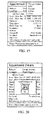
- An exemplary electronic notification message is shown in Figure 28 .
- the request indicates that the observer has requested to be removed as an observer.
- the observer is automatically removed from the calendar event (step 216).
- the name of the observer that has asked to be removed is removed from the list of observers, as shown in Figure 29 .
- only one observer was designated and thus, there are no observers listed in the calendar event shown in Figure 29 . It will be appreciated that after the "observer" has requested to be removed as an observer, no further updates regarding changes to the calendar event or the addition of notes, are provided to the observer.
Landscapes
- Business, Economics & Management (AREA)
- Human Resources & Organizations (AREA)
- Engineering & Computer Science (AREA)
- Strategic Management (AREA)
- Entrepreneurship & Innovation (AREA)
- Operations Research (AREA)
- Economics (AREA)
- Marketing (AREA)
- Data Mining & Analysis (AREA)
- Quality & Reliability (AREA)
- Tourism & Hospitality (AREA)
- Physics & Mathematics (AREA)
- General Business, Economics & Management (AREA)
- General Physics & Mathematics (AREA)
- Theoretical Computer Science (AREA)
- Management, Administration, Business Operations System, And Electronic Commerce (AREA)
- User Interface Of Digital Computer (AREA)
- Calculators And Similar Devices (AREA)
Applications Claiming Priority (1)
| Application Number | Priority Date | Filing Date | Title |
|---|---|---|---|
| EP07101626A EP1953689A1 (de) | 2007-02-02 | 2007-02-02 | Elektronische Vorrichtung und Verfahren zur Konferenzbenachrichtigung |
Related Parent Applications (1)
| Application Number | Title | Priority Date | Filing Date |
|---|---|---|---|
| EP07101626.5 Division | 2007-02-02 |
Publications (2)
| Publication Number | Publication Date |
|---|---|
| EP2521079A2 true EP2521079A2 (de) | 2012-11-07 |
| EP2521079A3 EP2521079A3 (de) | 2012-11-21 |
Family
ID=38283017
Family Applications (2)
| Application Number | Title | Priority Date | Filing Date |
|---|---|---|---|
| EP12167862A Withdrawn EP2521079A3 (de) | 2007-02-02 | 2007-02-02 | Elektronische Vorrichtung und Verfahren zur Konferenzbenachrichtigung |
| EP07101626A Ceased EP1953689A1 (de) | 2007-02-02 | 2007-02-02 | Elektronische Vorrichtung und Verfahren zur Konferenzbenachrichtigung |
Family Applications After (1)
| Application Number | Title | Priority Date | Filing Date |
|---|---|---|---|
| EP07101626A Ceased EP1953689A1 (de) | 2007-02-02 | 2007-02-02 | Elektronische Vorrichtung und Verfahren zur Konferenzbenachrichtigung |
Country Status (2)
| Country | Link |
|---|---|
| EP (2) | EP2521079A3 (de) |
| CA (1) | CA2617772C (de) |
Family Cites Families (2)
| Publication number | Priority date | Publication date | Assignee | Title |
|---|---|---|---|---|
| US4807154A (en) * | 1987-01-29 | 1989-02-21 | International Business Machines Corporation | Method for developing automatic replies in an interactive electronic calendaring system |
| EP1696374A1 (de) * | 2005-02-24 | 2006-08-30 | Research In Motion Limited | Verfahren für ein elektronisches Kalendersystem zum Benachrichtigen einer zu einem Ereignis eingeladenen Person über Änderungen dieses Ereignisses |
-
2007
- 2007-02-02 EP EP12167862A patent/EP2521079A3/de not_active Withdrawn
- 2007-02-02 EP EP07101626A patent/EP1953689A1/de not_active Ceased
-
2008
- 2008-01-10 CA CA2617772A patent/CA2617772C/en active Active
Non-Patent Citations (1)
| Title |
|---|
| None |
Also Published As
| Publication number | Publication date |
|---|---|
| EP1953689A1 (de) | 2008-08-06 |
| CA2617772A1 (en) | 2008-08-02 |
| CA2617772C (en) | 2017-10-31 |
| EP2521079A3 (de) | 2012-11-21 |
Similar Documents
| Publication | Publication Date | Title |
|---|---|---|
| US9552571B2 (en) | Electronic device and method of meeting notification | |
| US11907499B2 (en) | Electronic device and method of messaging meeting invitees | |
| US20080195455A1 (en) | Electronic device and method of scheduling calendar events | |
| US20080195619A1 (en) | Electronic device and method of sharing calendar-event information | |
| EP2521080A2 (de) | Elektronische Vorrichtung und Verfahren zur Steuerung einer elektronischen Vorrichtung für Aktualisierungen von Kalenderereignissen | |
| US20100205569A1 (en) | Agenda determination in an electronic device | |
| US20080186807A1 (en) | Electronic device and method of controlling an electronic device for calendar event updates | |
| US8316253B2 (en) | Automatic power-up of portable electronic device based on time-dependent event | |
| US7930651B2 (en) | Agenda display in an electronic device | |
| US20080191896A1 (en) | Electronic device and method of adding parties to a calendar event | |
| US20080059890A1 (en) | Conflict checking and notification in an electronic device | |
| EP1956531A1 (de) | Elektronische Vorrichtung und Verfahren zum Hinzufügen von Partys zu Kalenderereignissen | |
| EP1956532A1 (de) | Elektronische Vorrichtung und Verfahren zur gemeinsamen Nutzung von Kalenderereignisinformationen | |
| US20090037842A1 (en) | Electronic device and method of controlling the electronic device | |
| CA2617772C (en) | Electronic device and method of meeting notification | |
| EP1956533A1 (de) | Elektronische Vorrichtung und Verfahren zur Zeitplanung von Kalenderereignissen | |
| EP2023584A1 (de) | Elektronische Vorrichtung und Steuerungsverfahren dafür | |
| WO2008025118A1 (en) | Conflict checking and notification in an electronic device | |
| CA2595386C (en) | Electronic device and method of messaging meeting invitees | |
| EP2209083A1 (de) | Agenda-Bestimmung in einem elektronischen Gerät |
Legal Events
| Date | Code | Title | Description |
|---|---|---|---|
| PUAL | Search report despatched |
Free format text: ORIGINAL CODE: 0009013 |
|
| PUAI | Public reference made under article 153(3) epc to a published international application that has entered the european phase |
Free format text: ORIGINAL CODE: 0009012 |
|
| 17P | Request for examination filed |
Effective date: 20120514 |
|
| AC | Divisional application: reference to earlier application |
Ref document number: 1953689 Country of ref document: EP Kind code of ref document: P |
|
| AK | Designated contracting states |
Kind code of ref document: A2 Designated state(s): AT BE BG CH CY CZ DE DK EE ES FI FR GB GR HU IE IS IT LI LT LU LV MC NL PL PT RO SE SI SK TR |
|
| AX | Request for extension of the european patent |
Extension state: AL BA HR MK RS |
|
| AK | Designated contracting states |
Kind code of ref document: A3 Designated state(s): AT BE BG CH CY CZ DE DK EE ES FI FR GB GR HU IE IS IT LI LT LU LV MC NL PL PT RO SE SI SK TR |
|
| AX | Request for extension of the european patent |
Extension state: AL BA HR MK RS |
|
| RIC1 | Information provided on ipc code assigned before grant |
Ipc: G06Q 10/10 20120101AFI20121019BHEP |
|
| STAA | Information on the status of an ep patent application or granted ep patent |
Free format text: STATUS: THE APPLICATION HAS BEEN WITHDRAWN |
|
| 18W | Application withdrawn |
Effective date: 20130513 |